



Braids with shaved sides and back have a sharper outline than most braided styles, and that sharpness is exactly why they look so good when they’re done well. The cut gives the braids room to breathe. The braid pattern gets to be the star instead of hiding inside a wall of hair.
There’s a catch, though. Once the sides and nape are shaved, every parting line matters more, every braid has to sit with purpose, and any tension mistake shows up fast. That’s why these styles can look expensive and clean or feel busy and awkward if the shape is off by even half an inch.
The best versions use the shave as a frame, not a gimmick. Sometimes that means a tight cornrow pattern that follows the head shape. Sometimes it means a pile of box braids on top with a bare nape. Sometimes it means a braid pattern that curves into the fade so the whole style feels deliberate, not patched together.
1. Classic Feed-In Cornrows With a Low Fade
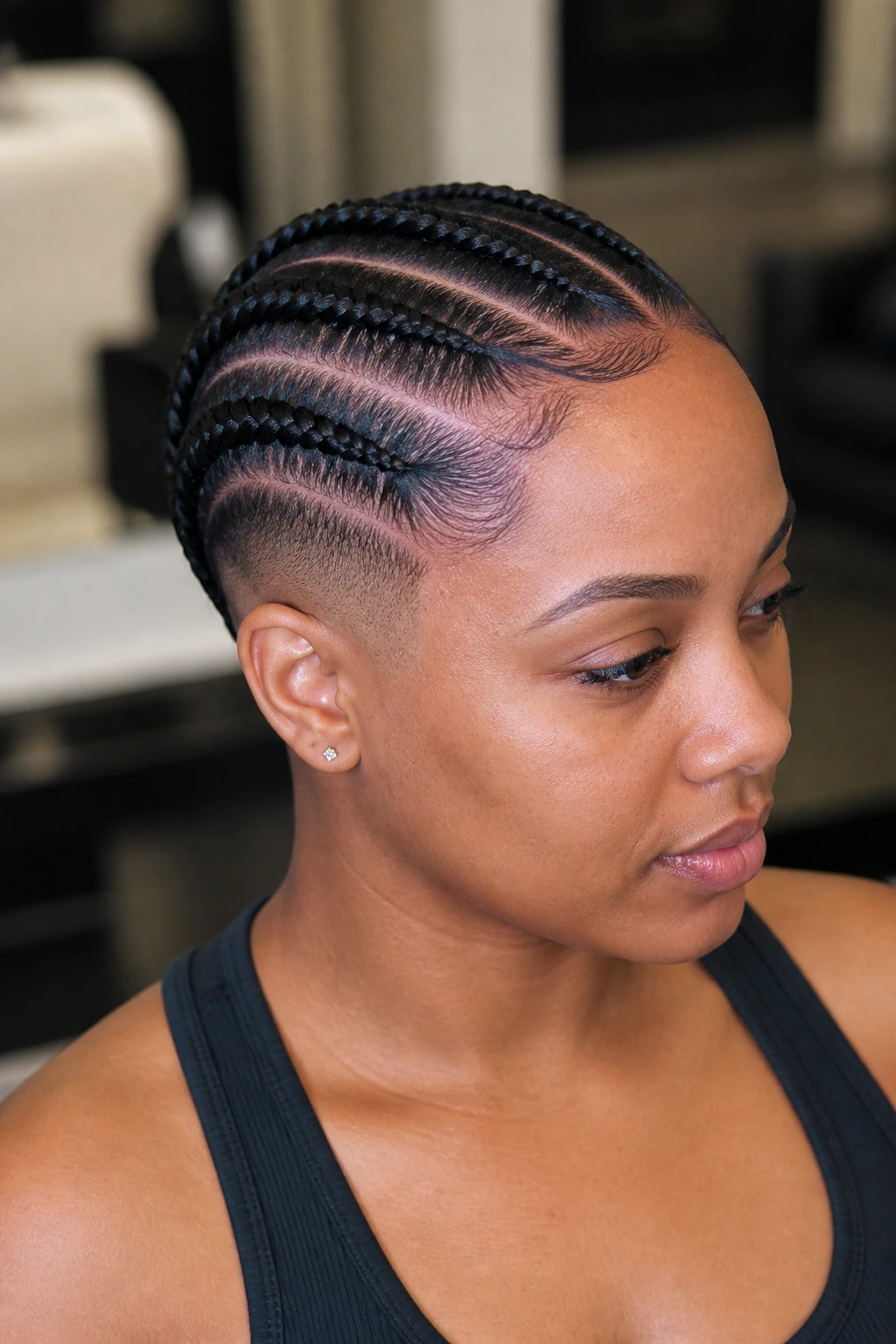
A clean row of feed-in cornrows is still one of the smartest ways to wear braids with shaved sides and back. The low fade keeps the outline neat, while the cornrows give you structure right on top where the eye naturally lands.
What makes this style work is the balance. The braids stay close to the scalp, so they don’t fight the fade, and the feed-in method makes each row look smooth at the root instead of bulky. That matters a lot when the sides are short, because a thick start can make the whole style feel too heavy up top.
Ask for straight parts if you want a crisp, boxy feel. Ask for curved parts if you want the rows to follow the head a little more softly. Either way, keep the braid count moderate; six to ten rows usually looks cleaner than cramming in too many tiny parts.
Best for: people who want a sharp, low-fuss style that can handle a week of real life.
Watch for: too much edge gel at the hairline. It clogs the scalp fast.
2. Jumbo Box Braids Over a Tapered Nape
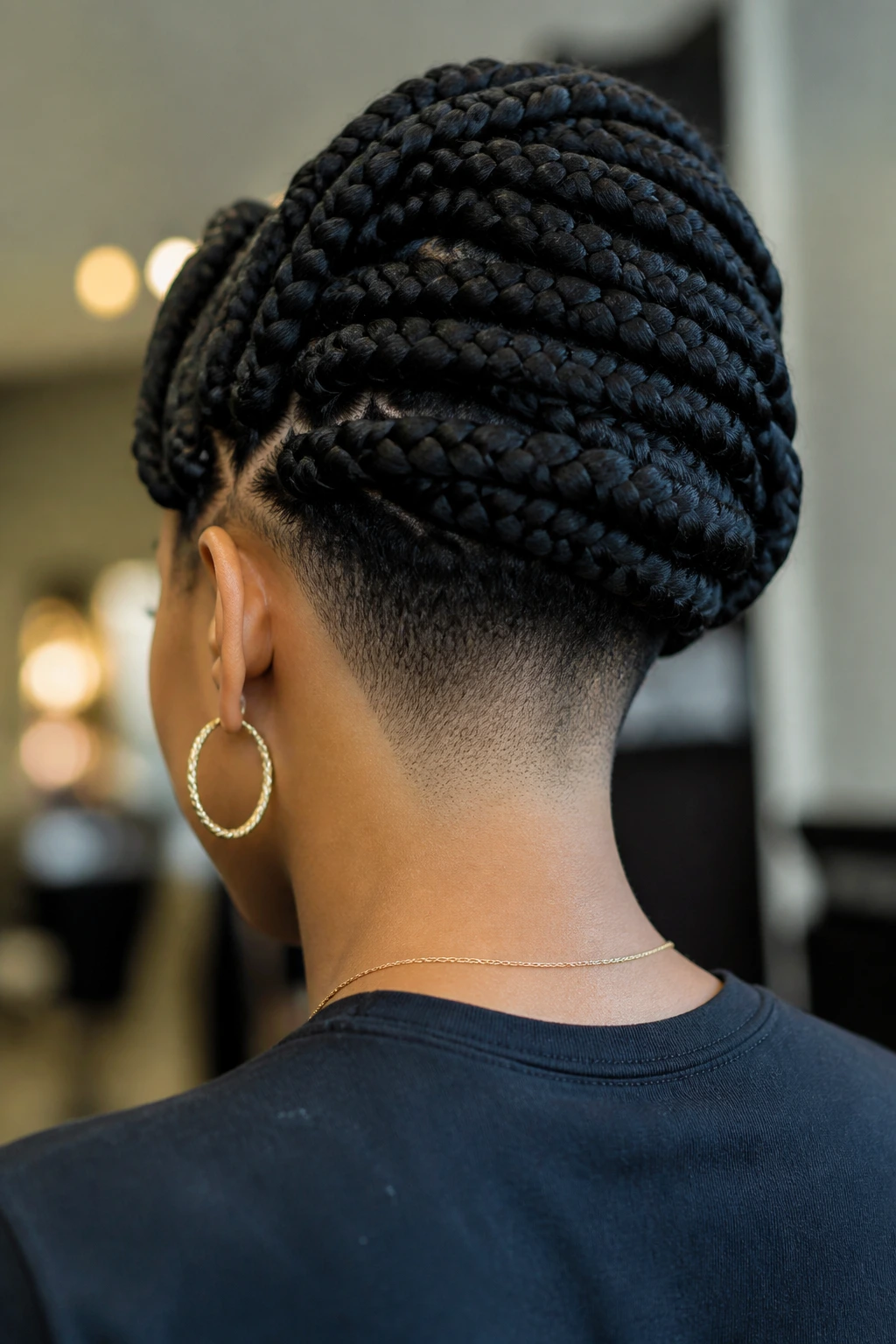
Want more movement on top? Jumbo box braids do that job without making the cut feel crowded. A tapered nape leaves the back neat, and the larger braids keep the crown from looking flat or thin.
The key is proportion. Big braids and a close shave can look bold in a good way, but if the braids are too long and too many, the style starts to drag the face down. Four to eight jumbo braids is often enough. You get weight, swing, and that nice clean reveal at the neckline.
What to ask your stylist
- Keep the part sizes even, because jumbo braids show sloppy sections fast.
- Leave enough crown hair to anchor the braids securely.
- Taper the back rather than shaving it bluntly if you want a softer grow-out.
- Use lighter extension hair so the style does not pull at the roots by day three.
These are the braids I like on people who want a style that says “put together” without acting precious about it. The grown-out look can still be neat if the base is tidy. That’s the whole trick.
3. Fulani Braids With a Clean Nape Shave
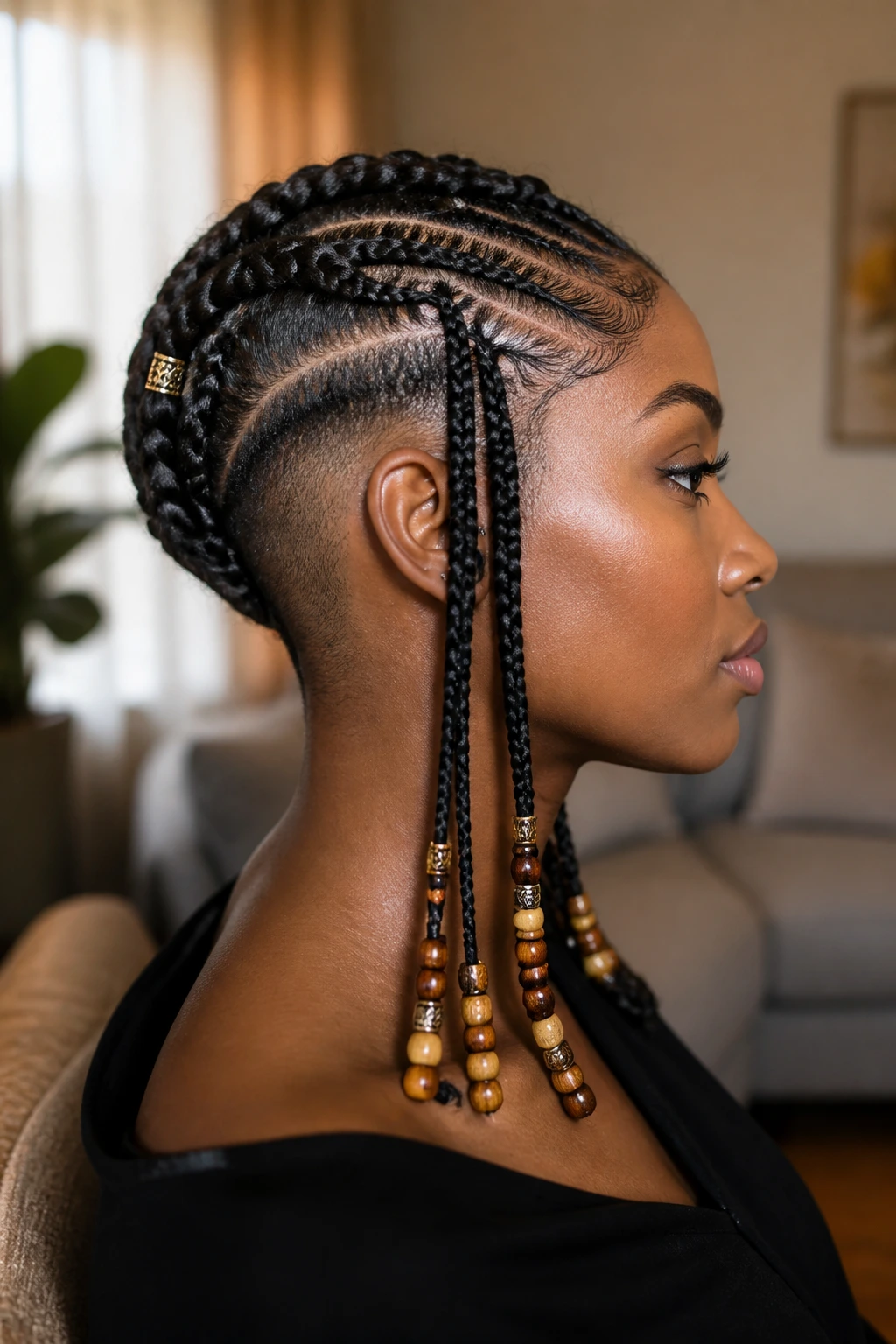
Fulani braids look especially good when the back is shaved because the style already has a lot going on visually. The center braid, side braids, and face-framing pieces create a pattern, and the open nape keeps it from feeling crowded.
A clean nape shave also helps the beads, cuffs, or wrapped ends stand out. Without that open space, the style can read as heavy. With it, each detail gets a little room to land. That’s why this version feels polished even when you dress it up with accessories.
If you like jewelry in the hair, this is one of the easiest styles to personalize. A few wooden beads change the whole mood. So do gold cuffs. Keep the accessories on the braids, not at the roots, or the look starts to feel fussy.
Good face match: oval, round, and heart-shaped faces tend to wear this well because the braids pull the eye upward.
Small warning: don’t braid the front too tight just to make the parting look perfect. A neat line is nice. A sore scalp is not.
4. Stitch Braids Into a Braided Ponytail Mohawk
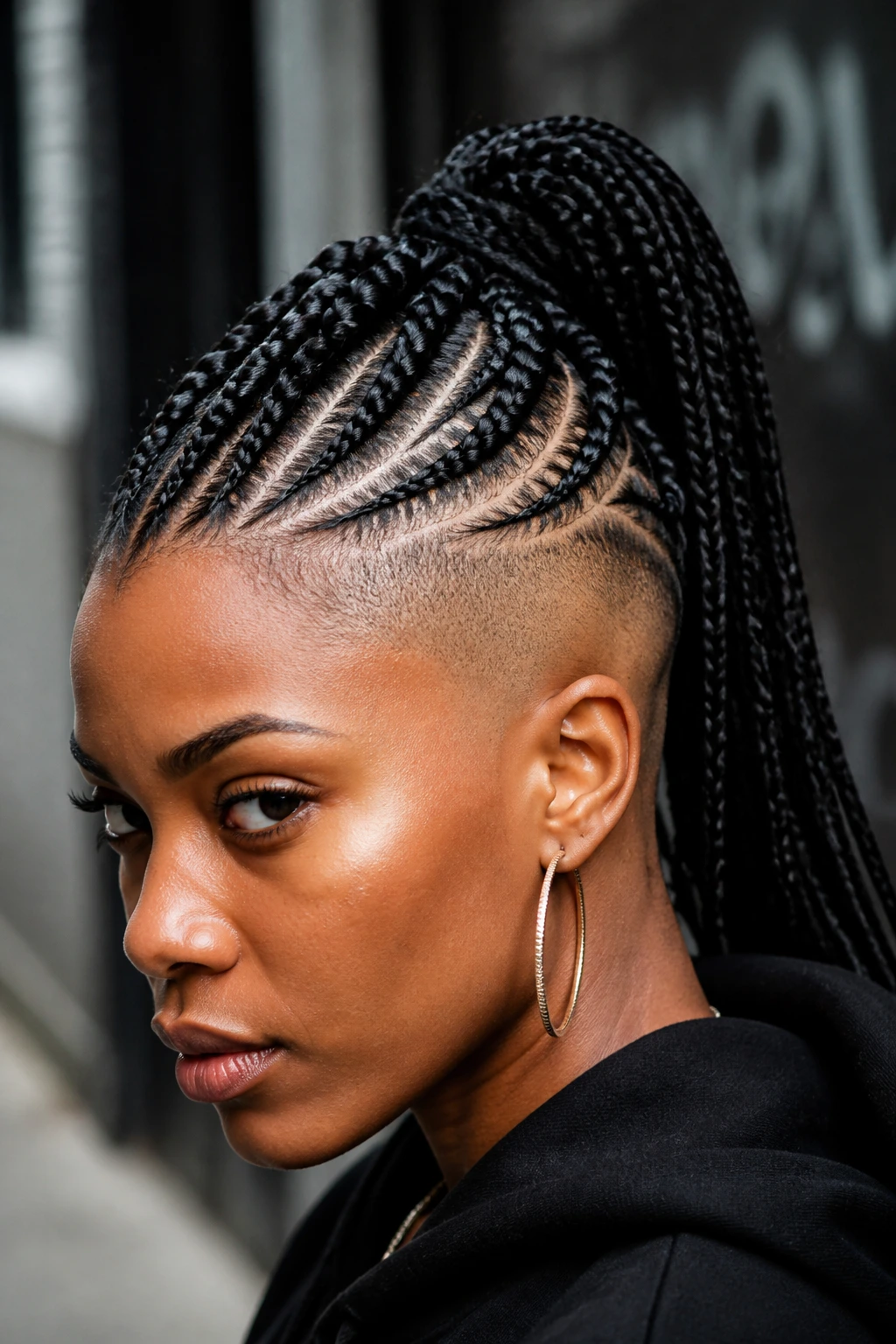
Stitch braids are the style people choose when they want the parting itself to do some of the work. The clean, segmented rows create a graphic look, and the shaved sides turn that into a braids-and-mohawk shape that feels strong without being messy.
The ponytail placement matters here. If it sits too low, the whole style can sag and lose its edge. If it sits high enough to lift the braids away from the head, the silhouette gets cleaner and more dramatic. That’s the version I’d pick.
You can keep the tail braided all the way down, or gather it into a wrapped ponytail with a few loose ends left out. Both work. The first feels sharper. The second feels a little more relaxed.
H3: Why this version stands out
The stitch pattern gives you visible lines from front to crown, and the shaved sides make those lines easier to read from across the room. It’s a style with attitude, but it still looks controlled when the sections are precise.
If you’ve ever wanted braids that read almost architectural, this is the one.
5. Lemonade Braids With a Side and Back Undercut
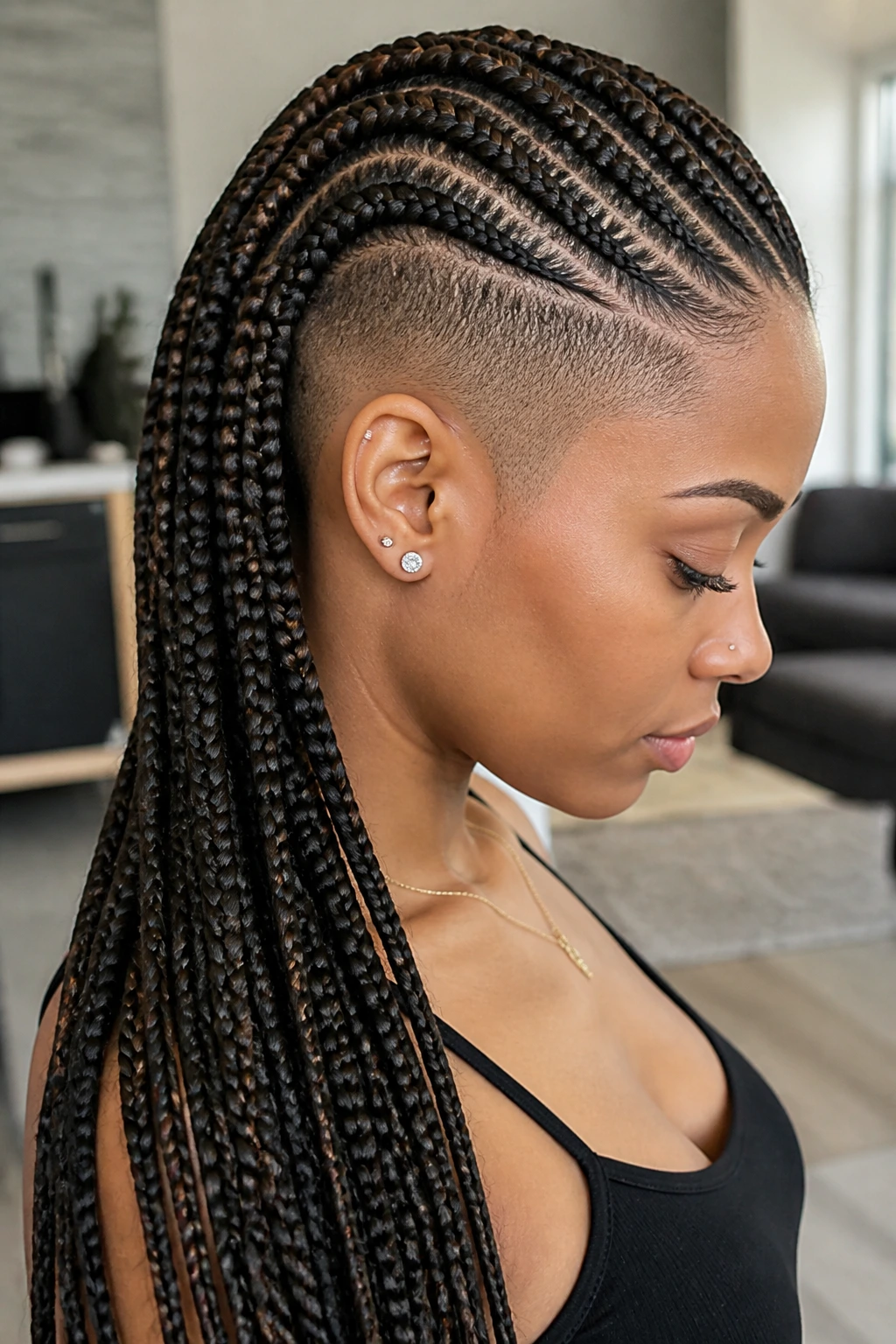
Lemonade braids have that long, sweeping shape that moves across the head, and a side-and-back undercut gives them a clean stage to sit on. The contrast is the whole point. Long diagonal braids on top. Bare sides underneath. No clutter.
This style works especially well if you want something that feels feminine and sharp at the same time. The braids drape close to the face, which softens the look, while the shaved sections keep it from getting too sweet. The result is a little rebellious, a little polished.
A side part deep enough to show off the undercut is usually the move here. If the part is too shallow, you lose the drama. If the braid lengths are too uneven, the shape gets sloppy, and that’s a shame because the style depends on those lines looking clean.
Pro tip: keep the shaved areas fresh. A faded line around the ear and nape makes this style look intentional, not grown out.
This is one of those looks that can carry bold earrings, a sharp brow, or a plain T-shirt and still do its job.
6. Goddess Braids With a Soft Temple Fade
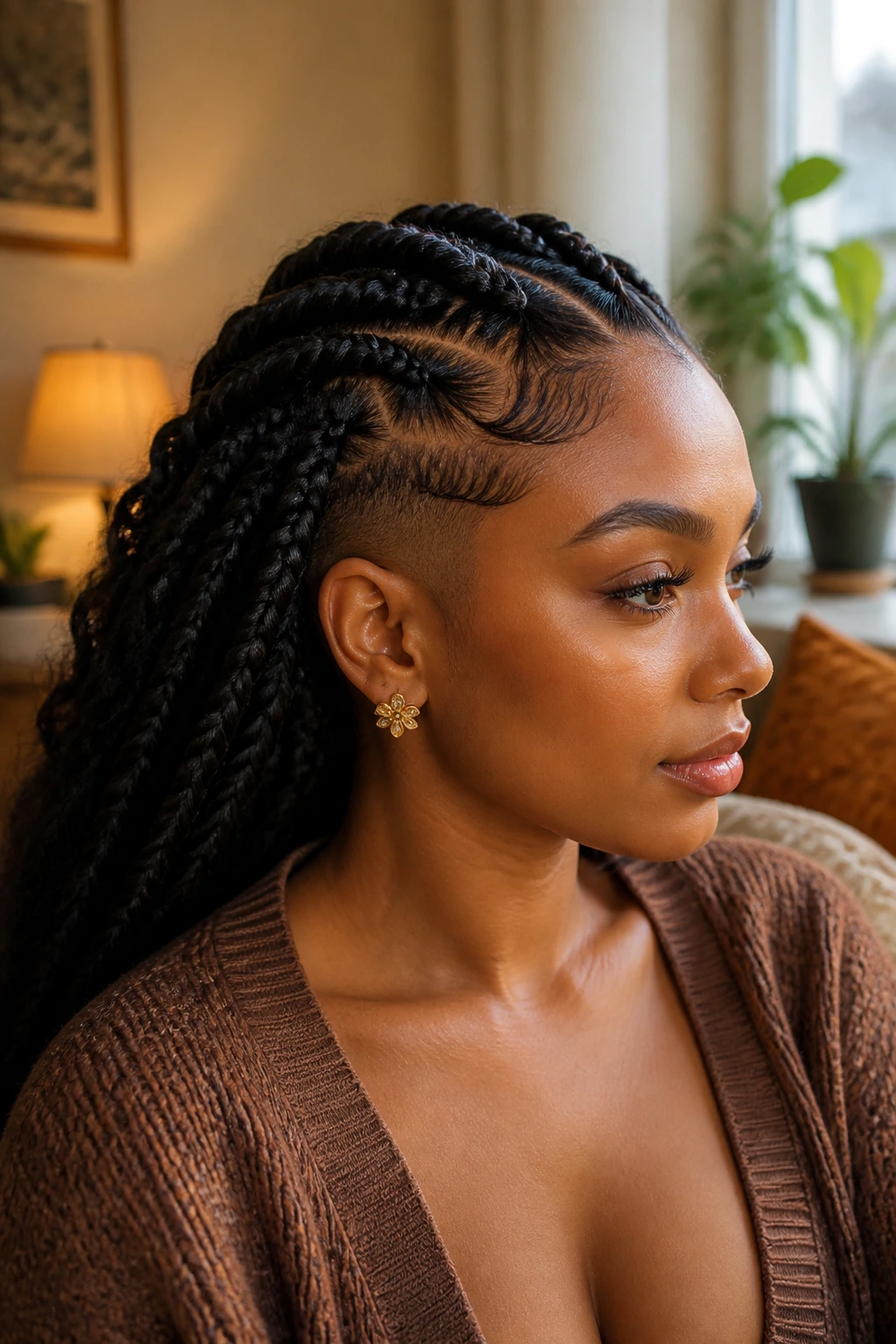
Goddess braids are thicker, smoother, and a little more forgiving than tiny cornrows, which makes them a smart match for shaved sides and back. A soft temple fade keeps the edges light so the braids don’t feel boxed in.
What I like here is the texture contrast. The braids are plush and rounded, while the fade keeps the perimeter clean. That mix keeps the style from looking too hard. If your face likes a little softness near the temples, this version is a solid bet.
You can run the braids straight back, curve them around the head, or even tuck the ends into a low braided bun. The style changes depending on where the braids stop, which is part of the fun. It’s not a one-note look.
A few details that matter
- Use a neat feed-in at the base so the braids don’t bulge.
- Ask for a soft fade rather than a skin-tight chop if you want a gentler finish.
- Keep the braid thickness consistent from row to row.
- Oil the exposed scalp lightly, not heavily.
The line between elegant and clunky is thinner than people think here. Stay close to the head, and it works.
7. Tribal Braids With Beads and a Close Back Shave
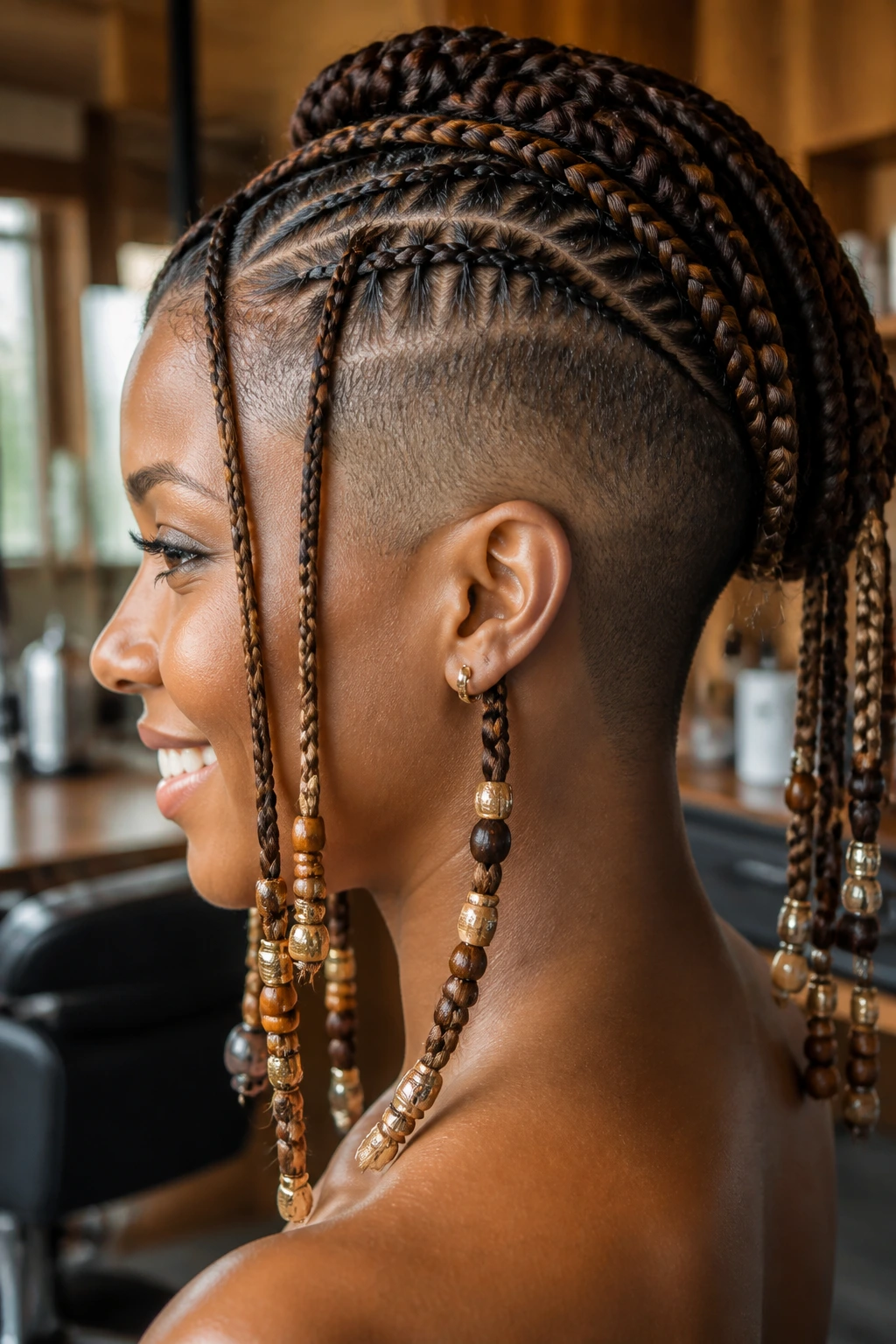
Tribal braids have an easy rhythm to them. They usually mix braid sizes, parting shapes, and accessories, which makes them ideal when the back is shaved close and you want the top to feel full of life. The open nape keeps all the visual noise from turning into actual noise.
Beads are not optional if you want the full effect. A few at the ends can change the movement of the braids and make the whole style sound and swing differently when you walk. That little bit of motion matters. Without it, tribal braids can feel too static.
How to keep it from looking busy
- Stick to two or three bead styles, not five.
- Let one braid size dominate and use the others as accents.
- Keep the back shave low and clean, so the accessories read better.
- Avoid overloading the edges with gel and decorations at the same time.
There’s a reason this style keeps showing up on people who like hair with personality. It has shape, sound, and a bit of swagger, but it still sits neatly if the parting is done well.
And yes, it grows out nicely too. That helps.
8. Knotless Braids With a Tapered Drop Fade
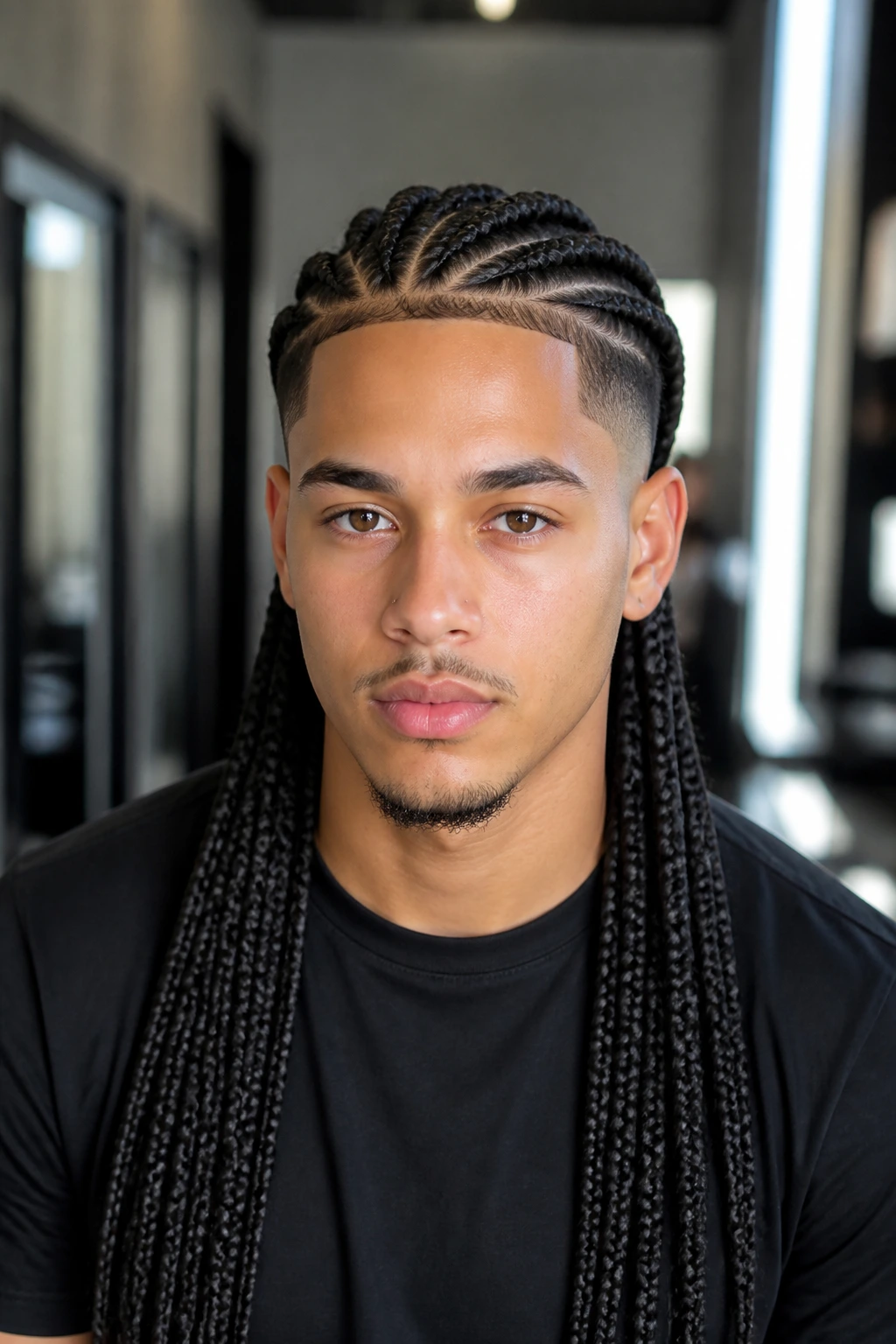
Knotless braids are the calm, sleek answer to people who want length without the usual heavy knot at the root. Add a tapered drop fade, and you get a shape that feels lighter around the ears and back of the head.
That lighter root is not just about comfort. It also helps the style sit flatter, which matters when the sides are short. Thick knots can look bulky next to a fade; knotless roots slide in more naturally. The whole braid line reads smoother from the first inch.
A drop fade can be a little cleaner than a straight fade because it follows the shape of the head and drops lower behind the ear. That gives the braids room to fan out on top without making the nape feel crowded.
If your scalp is sensitive, this is one of the kinder options. It still takes time to install, and it still needs care, but it usually feels easier to live with than a style with hard root knots everywhere.
The look is neat. The wear is better. That’s a rare combination.
9. Triangle-Part Braids With a Bald Nape
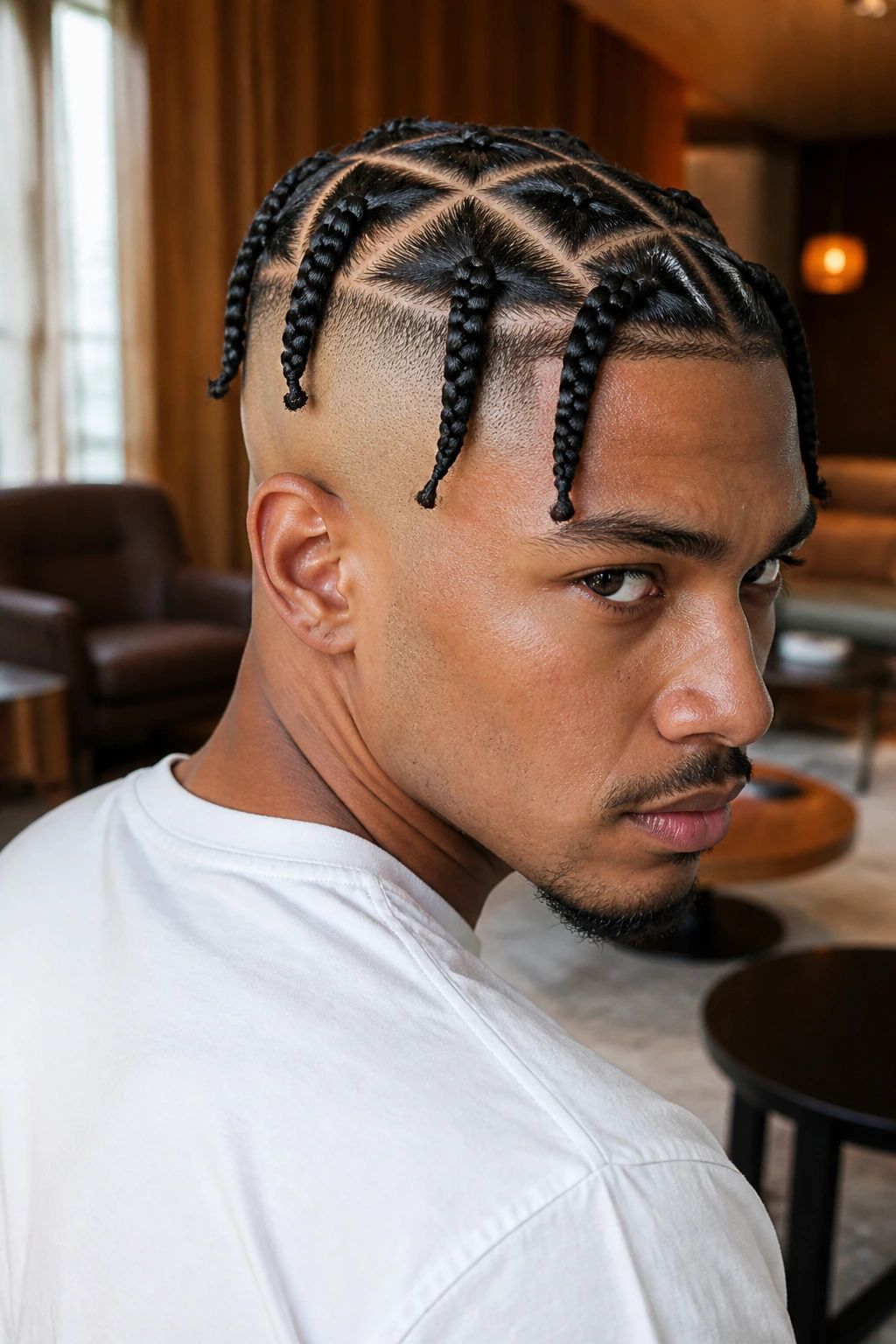
Triangle parts give braids a little twist without changing the braid itself. The geometry is the point. Once you pair that with a bald nape, the parts become the detail people notice first because there’s nowhere for them to hide.
This is a good style for anyone who likes structure. Square parts can feel classic. Triangle parts feel sharper and a bit more deliberate. On a shaved-back base, they read almost like pattern work.
A bald nape makes this style feel cleaner than a full taper sometimes does. There’s no visual fuzz at the neckline. The braids seem to rise out of the crown and stop cleanly, which is a strong look if you like contrast.
H3: Best way to wear it
Use medium-size braids if you want the triangle parts to show. Tiny braids can hide the shape. Jumbo braids can swallow it. Medium is the sweet spot.
This style is also a nice choice if you want a braided look that still feels modern without leaning on accessories or color. The parting does the talking.
10. Micro Braids With an Undercut Frame
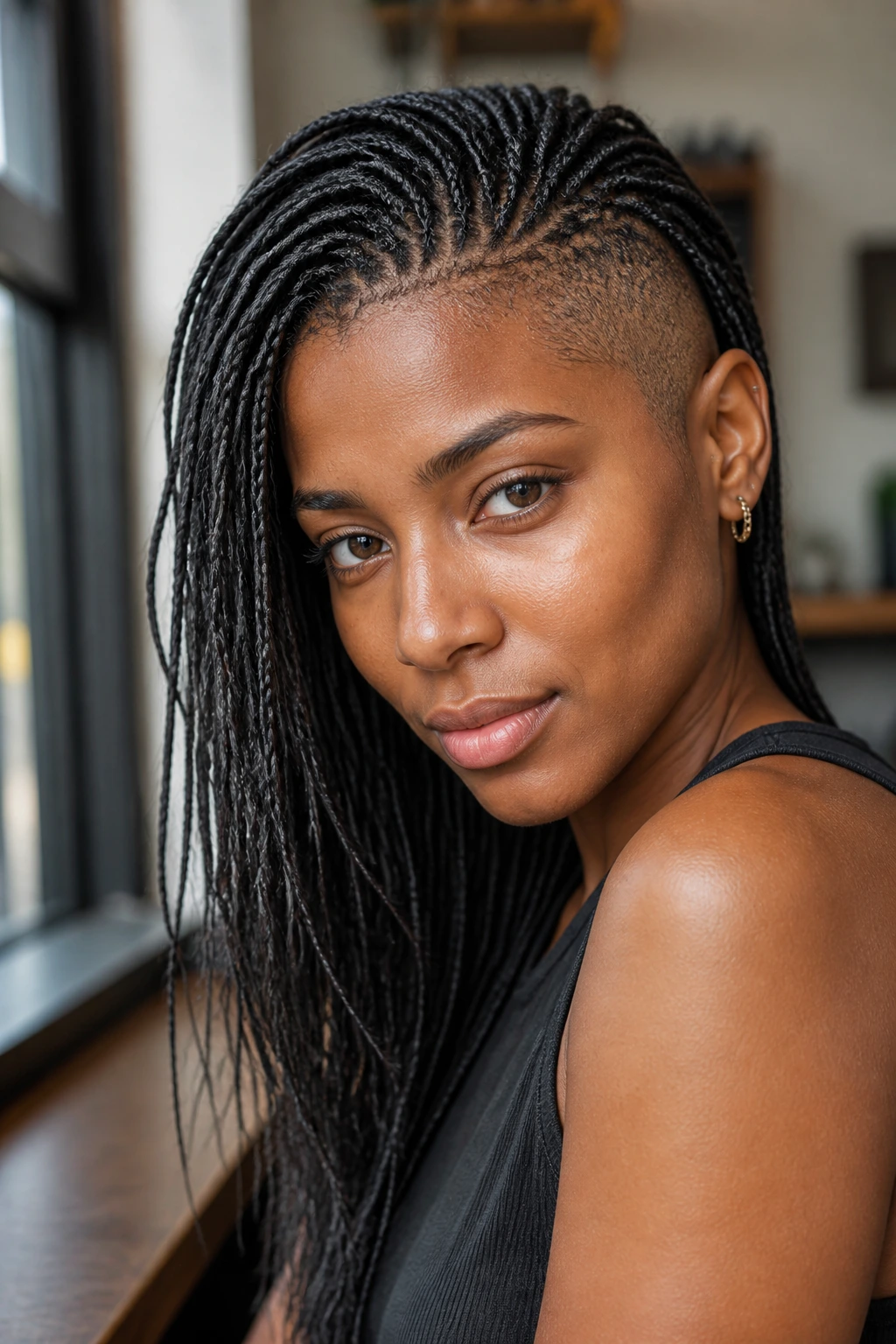
Micro braids are a long game. They take time, they need patience, and they look best when the cut around them is controlled instead of fluffy. An undercut frame gives them that control and keeps the style from spreading wider than it should.
The payoff is movement. Tiny braids sway in a way larger braids can’t mimic, and the shaved sides make that movement stand out even more. The contrast is almost delicate, which is funny because the installation itself is anything but delicate.
Micro braids are best for people who want long wear and don’t mind a careful maintenance routine. You need to be gentle when washing, cautious when detangling, and disciplined about keeping the scalp clean. Heavy buildup will show.
A clean undercut also makes the style easier to refresh. As the braids settle, the shaved sides keep the shape from turning puffy. That matters more than people admit.
If you want a braid style that feels airy but still serious, this one has a lot going for it.
11. Braided High Top Knot With Shaved Sides
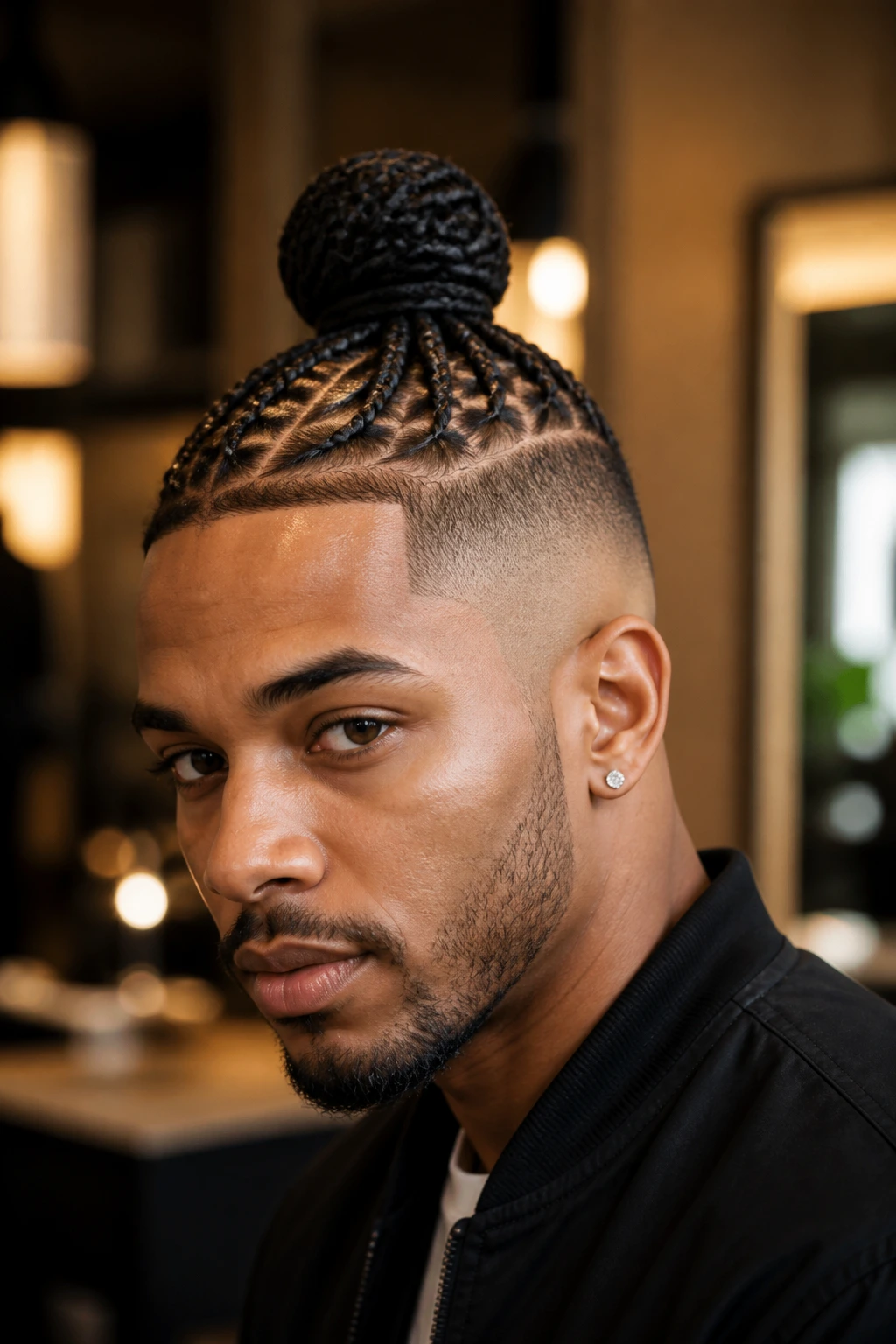
A high top knot changes the whole mood of braids with shaved sides and back. The shaved areas drop the visual weight, and the bun pulls the eye straight up. That gives you height without bulk.
This style works because it clears space around the face. The braids can be pulled into one wrapped knot, or left as a braided bun with ends tucked neatly under. Either way, the silhouette gets cleaner the higher you place it. Low placement loses the point.
What makes it look polished
- Keep the braids tight enough at the crown so the knot sits flat.
- Pin the bun from several directions so it doesn’t tilt by the second day.
- Leave the fade crisp around the ears and neckline.
- Match the braid thickness all the way around the bun.
This is a strong option for formal wear, gym days, or any time you want your hair out of the way but still styled. It can look sleek with a blazer or relaxed with a tank top. That range is why people keep coming back to it.
And yes, it’s a little dramatic. That’s part of the appeal.
12. Halo Crown Braid With a Hidden Back Shave
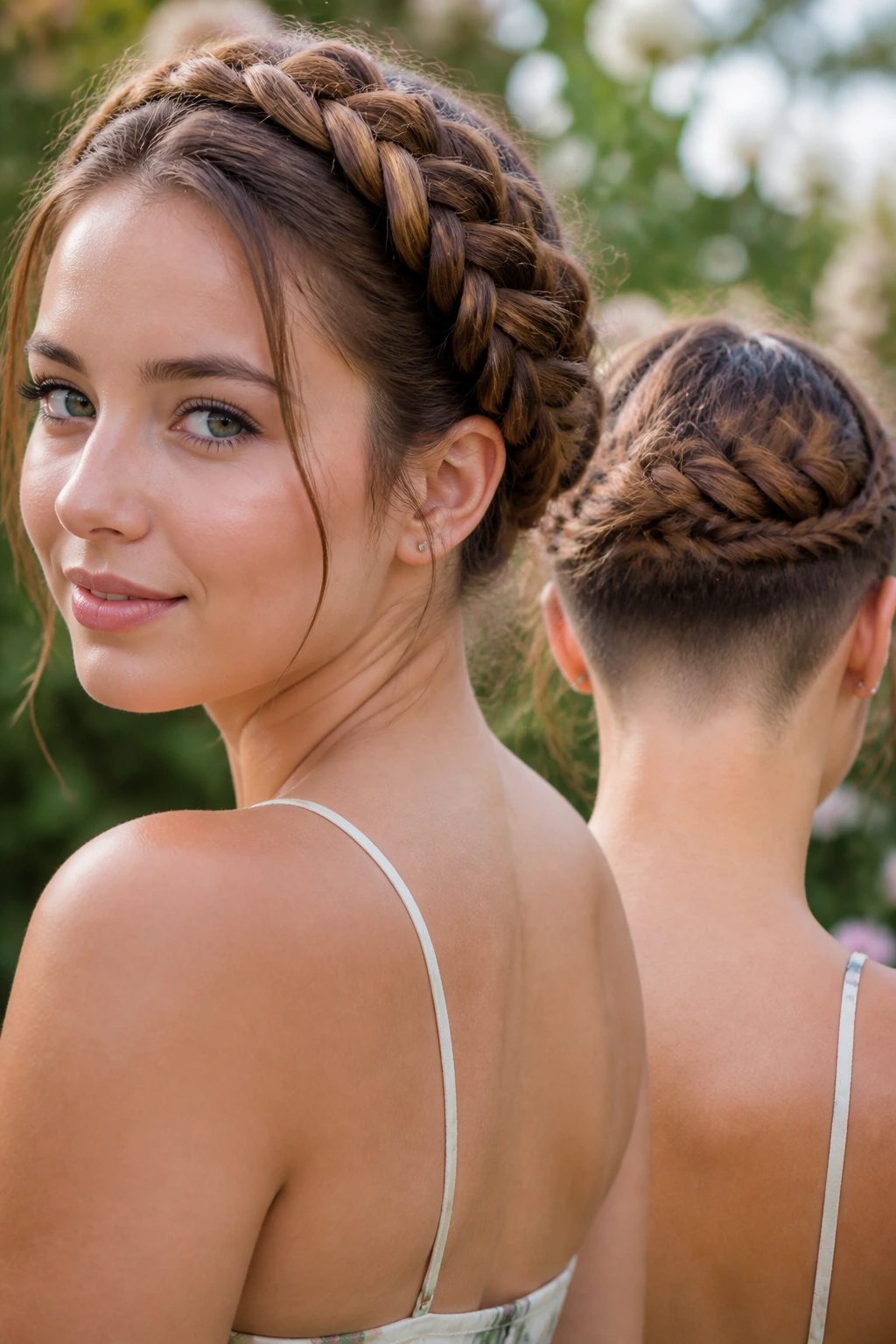
A halo braid usually reads soft and romantic, but the hidden back shave gives it a secret edge. From the front, people see a braid wrapped around the head like a crown. From the back, they get a clean surprise.
That contrast is what keeps the style from feeling too expected. The halo shape already frames the face in a nice way, so you do not need much else up front. A shaved nape keeps the back light and stops the braid from looking overly heavy or old-fashioned.
If you like styles that look different from every angle, this one is worth a serious look. It has a nice profile in photos, but it also looks good in motion because the braid line sits close to the head and doesn’t puff out at the sides.
A hidden shave is smart if your workplace or routine needs you to look neat from the front while keeping a little personality underneath. That sounds like a small thing. It isn’t.
The style feels tidy, but not plain. That’s the sweet spot.
13. French Braids Into a Low Bun With a Side Shave
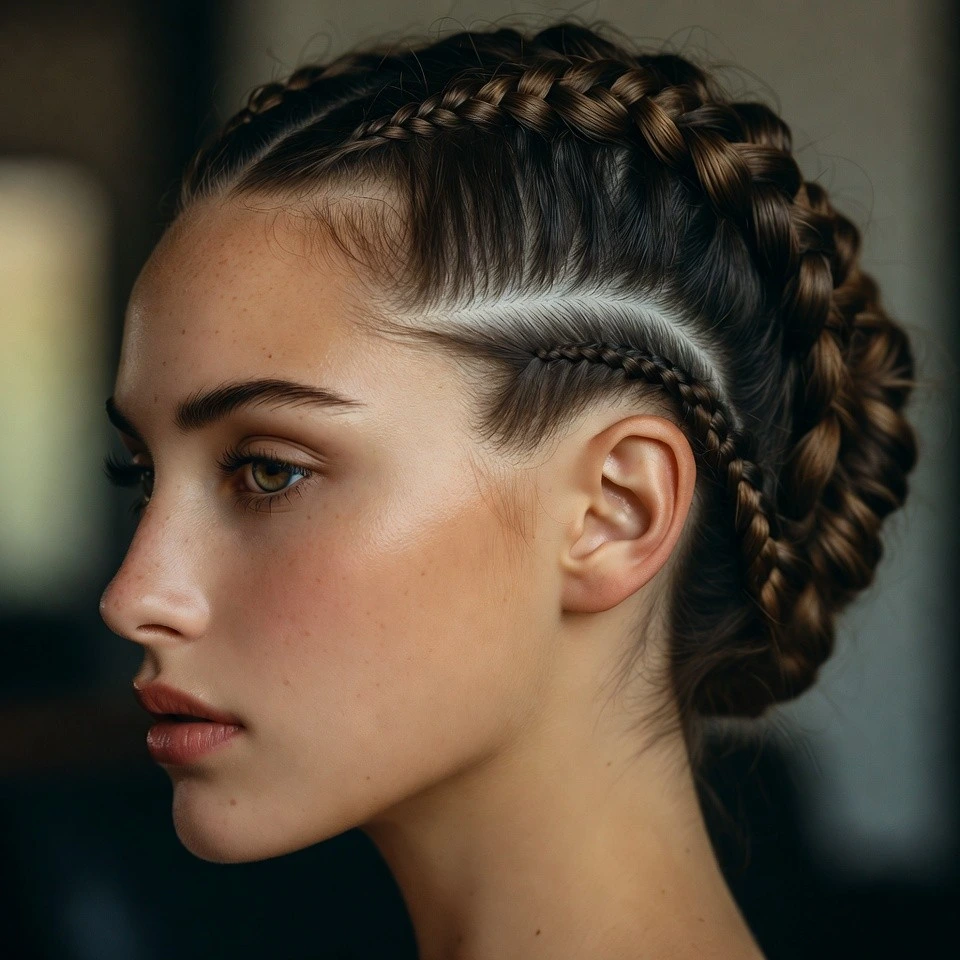
French braids get a little more interesting when one side is shaved close. The braid path can stay centered, or it can lean slightly toward the shaved side before gathering into a low bun. Either way, the side shave acts like a clean line on the canvas.
The low bun keeps the finish calm. It does not need to be slicked to death. A smooth wrap and a few tidy pins are enough. If the bun sits too high, it starts to fight the cut. Keep it low and the shape stays elegant.
This is a good choice when you want something grown-up without looking plain. The braid pattern gives texture, the bun gives control, and the shaved side gives the whole style a little bite. That combination is harder to overdo than people think.
Ask for this if you want: a style that can move from day wear to dressier settings without a full restyle.
It also grows out nicely, which matters more than people admit when a cut and a braid are sharing the same head.
14. Zigzag Cornrows With a Graphic Back Detail
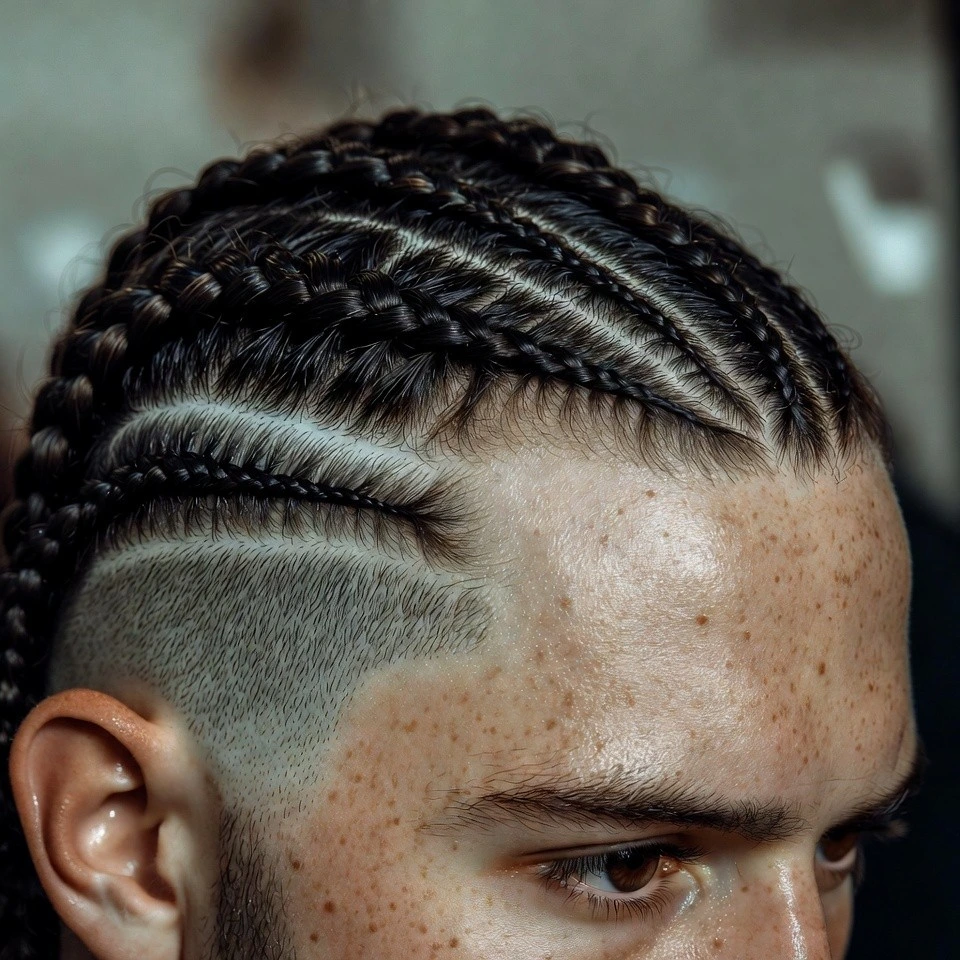
Zigzag cornrows are not subtle, and that is the point. The parting line itself becomes the design, while the shaved back lets the pattern finish cleanly instead of disappearing into loose hair.
This style needs a steady hand. If the zigzags wobble, the whole effect falls apart. Clean parting space helps because there is less hair density to fight through, so the lines can stay visible and sharp. That is one of the hidden advantages of pairing braids with a shaved back.
You can keep the braids compact or let them end in a small ponytail at the crown. I prefer the compact version here because the parting is the star. Too much length can distract from the actual pattern.
The detail people miss
The shaved back should echo the parting, not clash with it. A clean neckline and a simple fade make the zigzag read as intentional. A rough back crop makes it look accidental. Small difference. Big effect.
This style is a good fit for anyone who likes their hair to look a little graphic, a little engineered, and not at all shy.
15. Two Big Feed-Ins With a Mid Fade
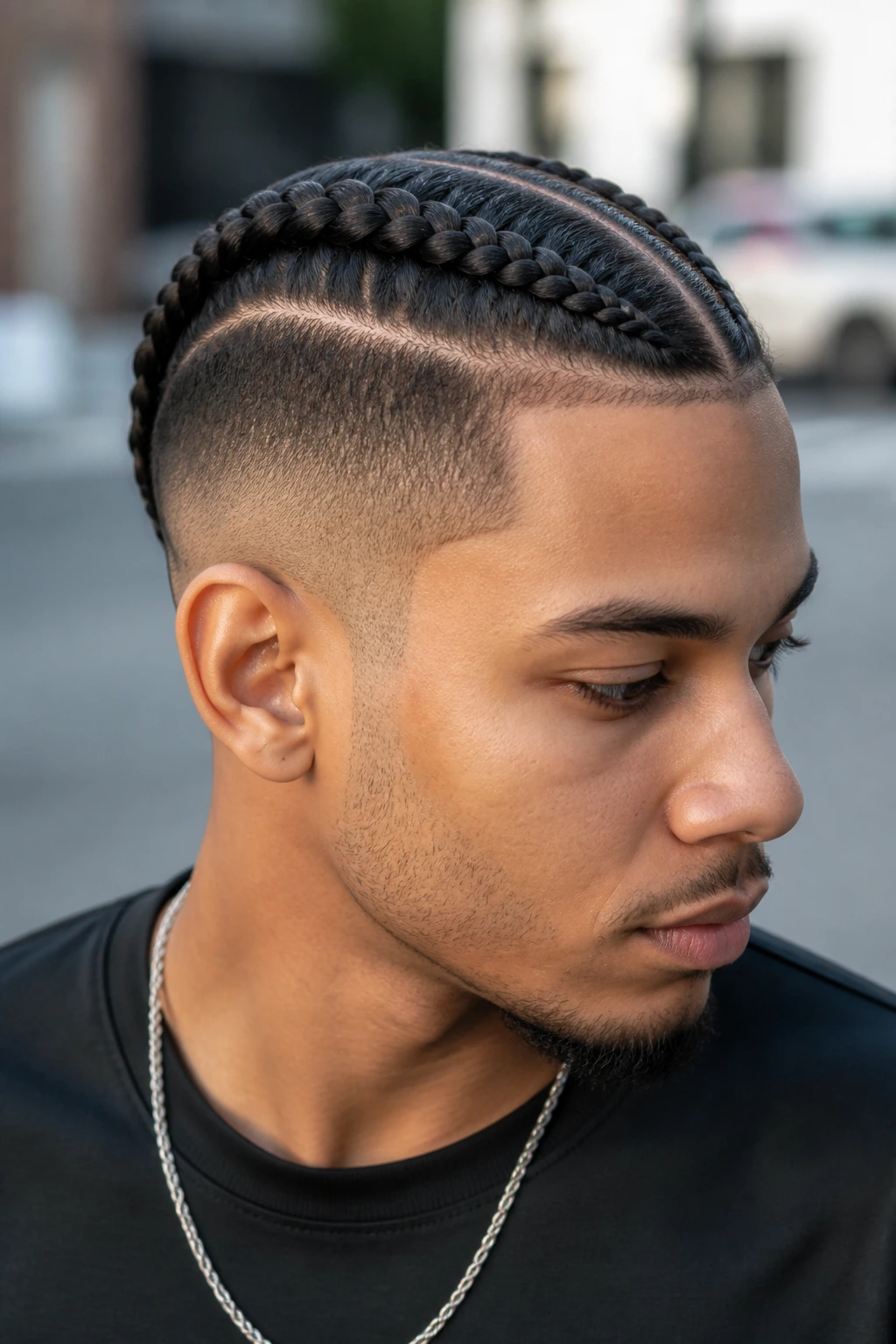
Two big feed-in braids are the low-drama option that still has presence. The mid fade keeps the sides neat, while the large braids give the top enough weight to feel finished.
There is something nice about restraint here. Not every braid style needs eight rows and beads and color and a hard part. Sometimes two braids are enough, especially when they’re thick, smooth, and placed with care. The shape is simple, which means the details have to be good.
A mid fade gives this style a balanced outline. It leaves enough hair on the sides to soften the transition, but not so much that the braids look boxed in. If the fade is too high, the style can feel severe. If it’s too low, the braids can look like they’re floating.
This is one of the easiest looks to style with hats, hoops, and collars because the braids sit in a clear lane. Nothing fights them.
Honestly, I think this is one of the most underrated braid looks on the list. It looks easy. It is not careless.
16. Braided Bob With Tapered Sides and Neckline
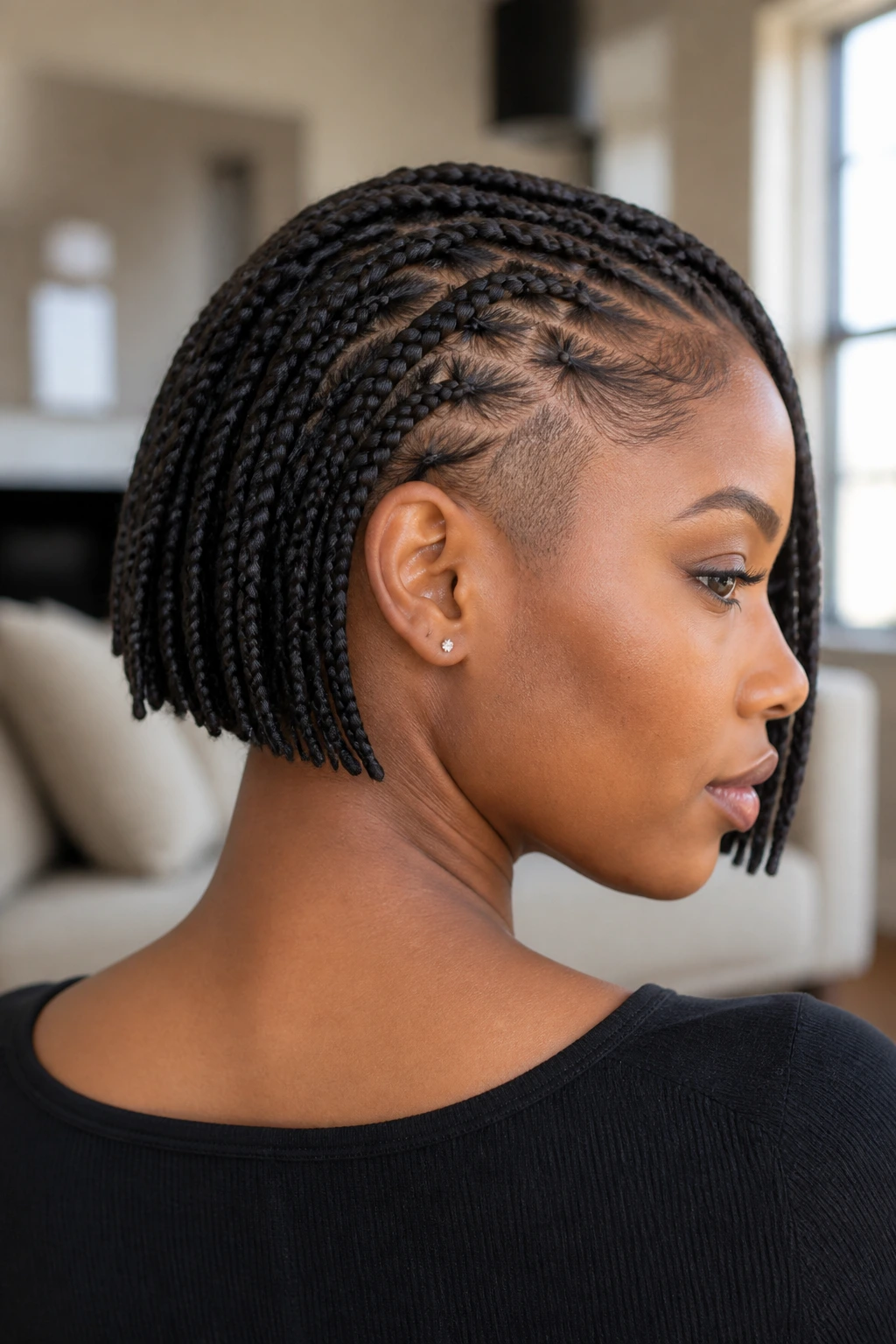
A braided bob brings the length down, which makes the shaved sides and neckline feel even sharper. Short braids don’t compete with the cut, so the shape stays crisp from root to tip.
The bob length also makes the style easier to wear every day. It swings less, snags less, and usually feels lighter than long braids. That can be a relief if you want the look of braids without the constant tug of heavy length on the scalp.
Tapered sides help the bob sit like a shape, not a pile. The neckline matters here too. If the back is cut cleanly, the bob reads polished. If the neckline is fuzzy, the whole style looks half-finished.
What to keep in mind
- Keep the braid ends even around chin or collarbone length.
- Don’t let the bob get too blunt unless you want a sharp, graphic look.
- A soft taper around the ears keeps the outline cleaner.
- Moisturize the exposed nape so it doesn’t look dry next to the braids.
This style suits people who want movement, structure, and less hair to manage. That’s a pretty practical trio.
17. Men’s Box Braids With a Sharp Skin Fade
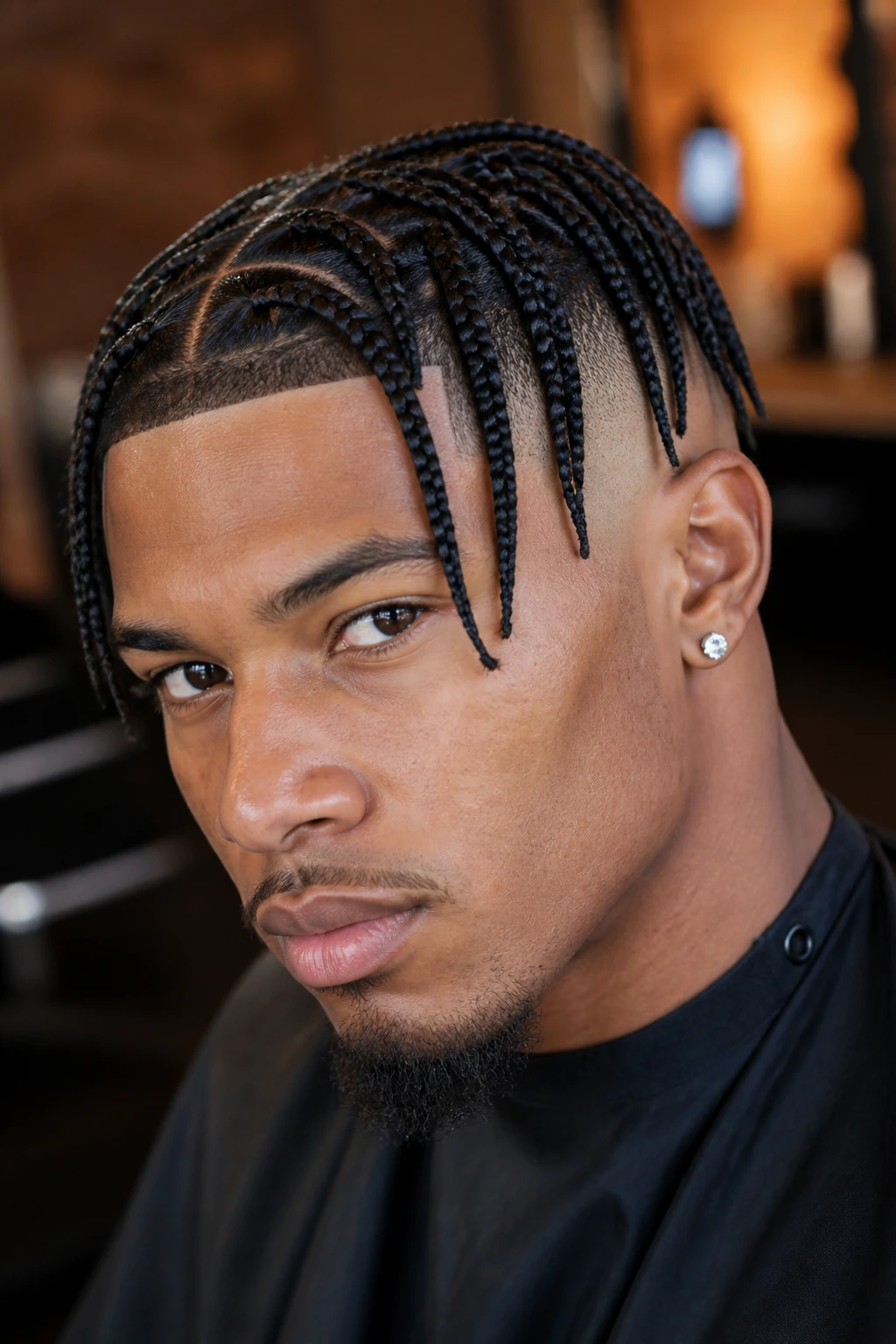
Box braids and a skin fade make a strong pair because each one gives the other more contrast. The braids bring texture and length; the fade brings clean skin and a hard edge around the sides and back.
A sharp skin fade can make medium box braids look more defined than they would on a full head of hair. The exposed sides remove visual clutter. The braids look intentional, not crowded. That matters when the braid size is medium to large, because the fade keeps the style from getting bulky.
There’s a sweet spot with length here. Too short, and the braids can look stubby. Too long, and they start to overpower the fade. Shoulder length or a little above usually feels balanced, though the right length depends on your face and how much movement you want.
This style works cleanly with a line-up at the forehead, but the line-up should stay neat rather than overly carved. When the braid pattern is already doing a lot, the haircut can afford to be simple.
It’s a solid look. No fuss, no confusion.
18. Ghana Braids With a Curved Side Shave
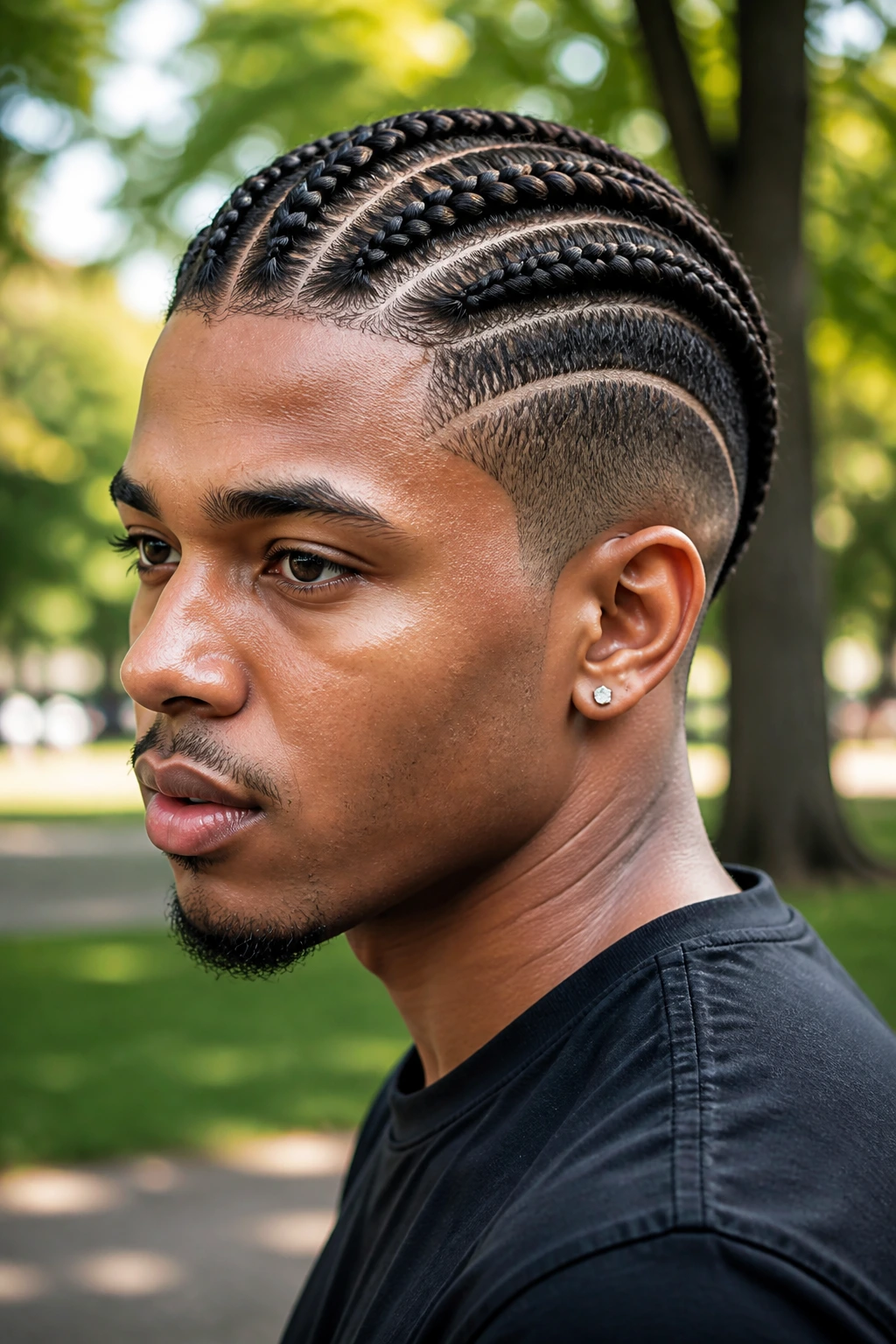
Ghana braids pull hair in a thicker, smoother direction than smaller cornrows, and a curved side shave gives that thickness a place to end gracefully. Straight cuts can look harsh beside Ghana braids. Curves feel better.
That curved shave is what turns the style from a basic braid set into something more shaped. The line follows the head instead of cutting it off. The result is cleaner from the temple down to the ear, especially if the braids sweep back rather than straight back.
This is a good choice if you want a braid style with presence but not a lot of tiny detail work. Ghana braids already have a strong body. The shave just helps frame them.
A useful way to think about it
If the braids are the architecture, the shaved side is the border around it. The border should support the structure, not compete with it. Curved lines do that well.
The style holds up nicely when the braids are medium thick and the parting is even. Uneven roots are much easier to notice on Ghana braids because the thick sections carry so much visual weight.
19. Cornrow Crown With a Closed Back Undercut
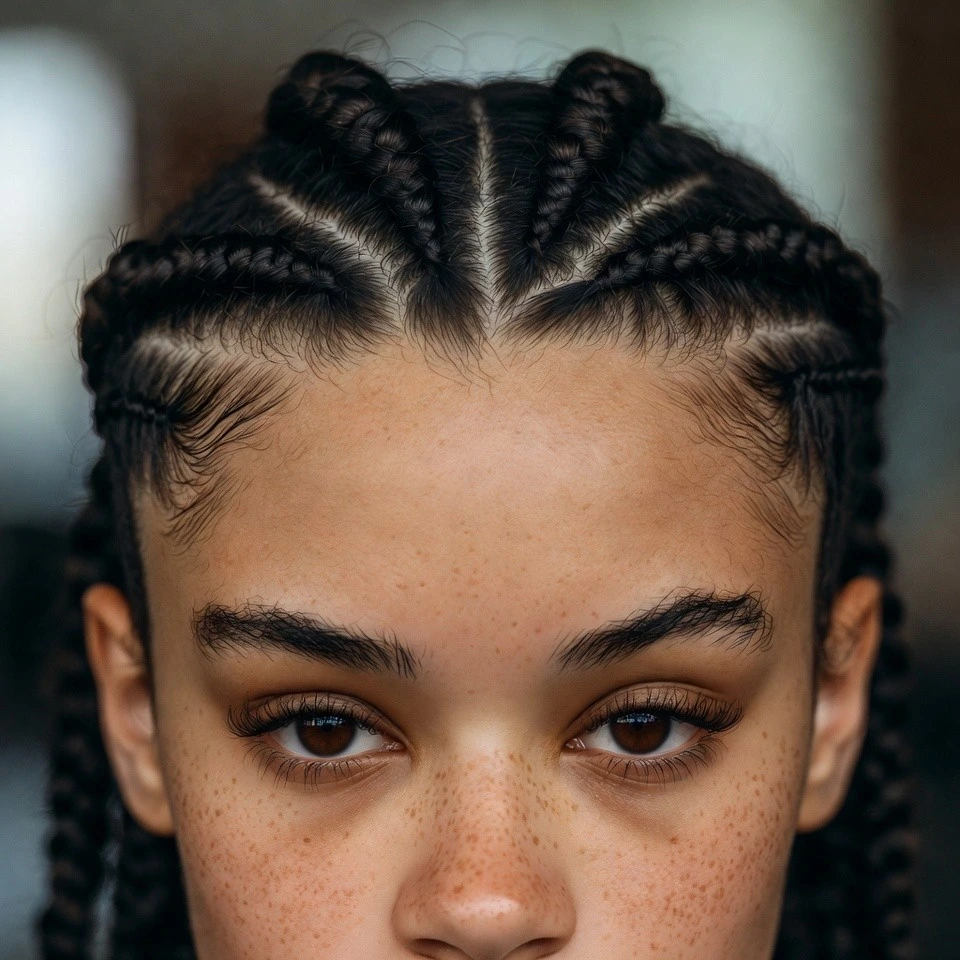
A cornrow crown around the head feels regal in the plainest, best sense of the word. Add a closed back undercut, and the look becomes tighter, cleaner, and easier to maintain than a full braid halo.
This style is especially useful when you want your braids to stay close to the scalp but still make a shape. The crown line keeps the eye moving in a circle, and the shaved back makes the circle feel complete rather than crowded. That negative space matters. It keeps the style from becoming heavy.
The back undercut should be clipped cleanly enough that the braids seem to rise away from it. If the fade is patchy, the crown loses its neat finish. A good taper or close shave keeps the back visually quiet so the braid work stands out.
H3: Best use case
Pick this when you want a style that looks controlled from every angle. It works for daily wear, but it also photographs well because the outline stays readable from the side and back.
The crown shape can be plain or detailed, depending on the parting. Either way, the overall effect is tidy and strong.
20. Braided Top Knot With Shaved Sides and Neckline
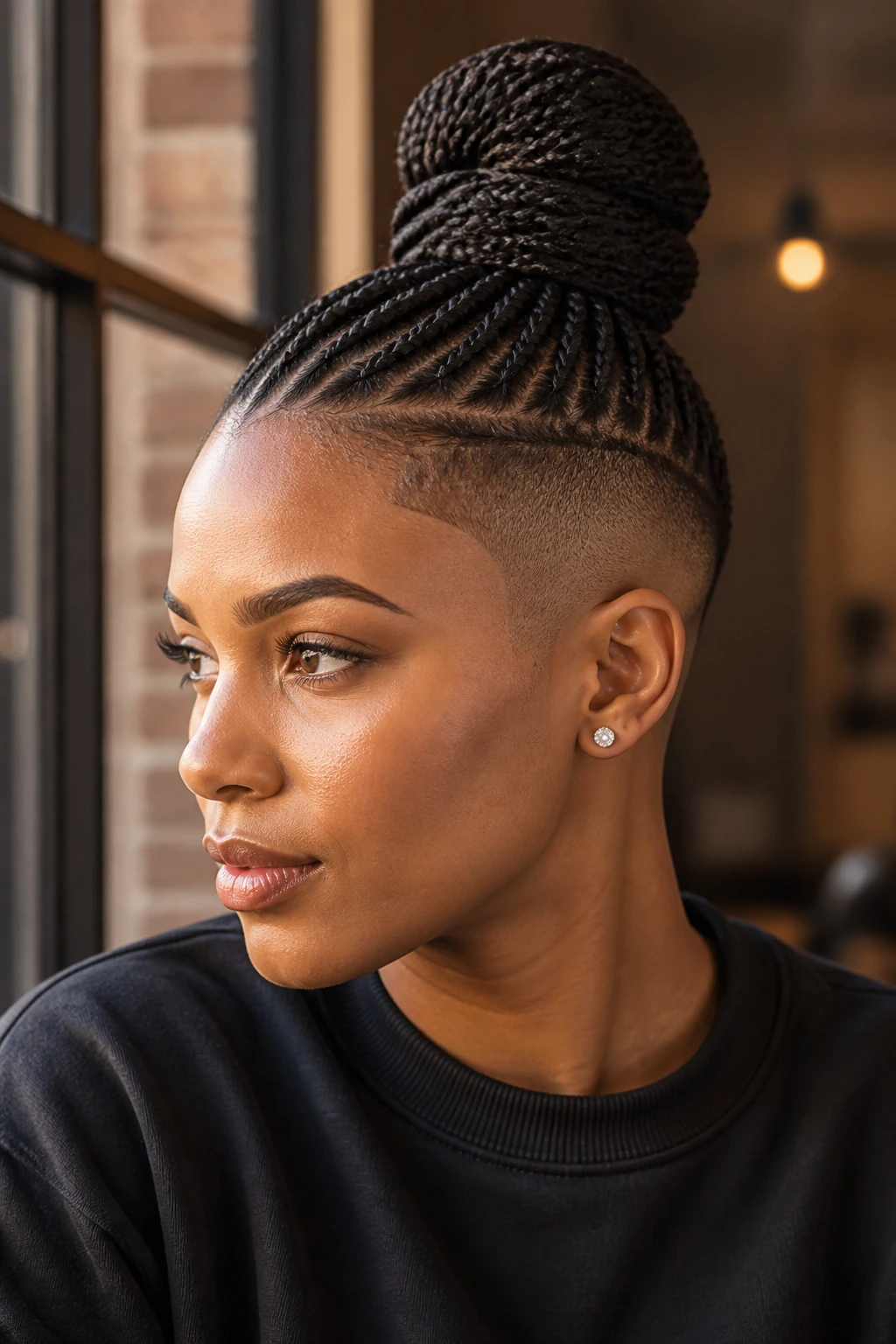
This is the style that gets straight to the point. Braids on top. Shaved sides. Clean neckline. All the extra weight disappears, and the top knot becomes the whole story.
What makes it so effective is the vertical shape. The braids are gathered upward, so the head looks longer and cleaner. The shaved sides and back keep the silhouette from spreading out. That gives the top knot a crisp edge, especially when the knot is wrapped rather than loosely stacked.
You can keep the braids thin for a sleeker knot or make them medium size for a fuller shape. Thin braids give you more control. Medium braids give you more volume. Both work, but don’t mix braid sizes unless you’re going for a more casual finish.
This is a practical style for active days, but it also has enough structure to look sharp with earrings or a strong brow. It’s one of those looks that doesn’t need much else.
If you want a braid style with shaved sides and back that feels clean even when life is not, this is hard to beat.
Final Thoughts
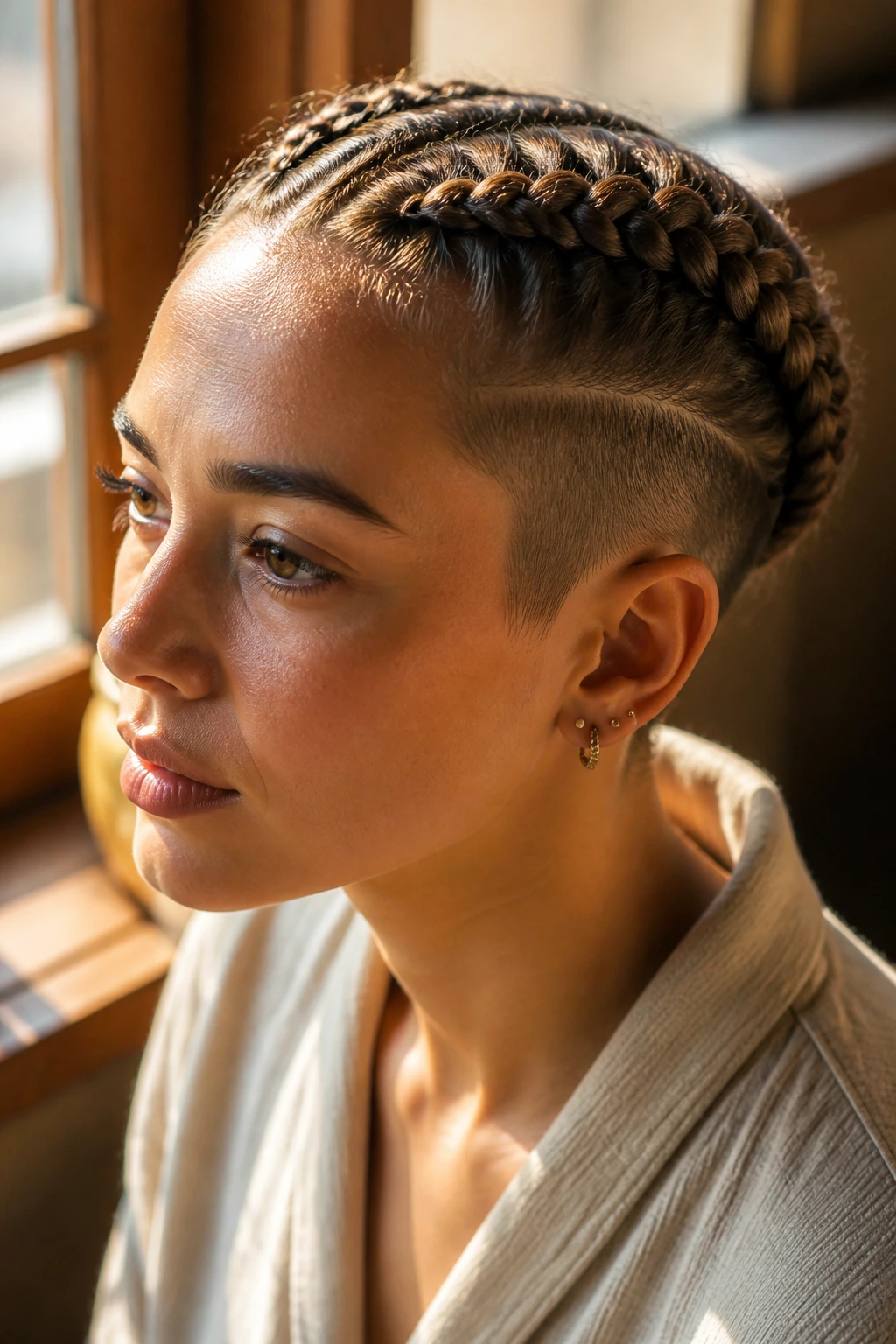
The best braid styles with shaved sides and back all do the same basic thing: they use empty space well. That space around the ears and nape is not there to be filled. It’s there to frame the braid pattern and keep the whole shape readable.
A good cut matters as much as the braids. If the fade is tidy, the parts are precise, and the braid size matches the head shape, the style holds together. If any of those pieces is off, the look can slide fast.
Pick the version that fits how you wear your hair, not just how it looks in a mirror for thirty seconds. That part saves a lot of regret later.
