



Long hair gives a braid more drama, but it also gives it more to manage. A style that looks neat on shoulder-length hair can sag, loosen, or puff out once there’s extra length hanging below the nape.
That’s why braids for long hair are a little different from the pretty Pinterest version people imagine. The best ones don’t just look good in the mirror. They hold their shape when you move, when you toss a coat over your shoulders, when a few layers slip loose, and when the hair at the ends starts doing its own thing.
Braiding long hair is part technique, part patience. The first inch matters more than most people think. If the base is loose, the whole style slumps. If the tension is too harsh, your scalp will complain halfway through the day. There’s a sweet spot, and once you feel it, the rest gets easier.
Some of the styles below are fast and practical. Some are formal. A few are protective and built to last. All 30 are worth knowing if your hair has length to spare and you want more than the same old single plait.
1. Classic Three-Strand Braid
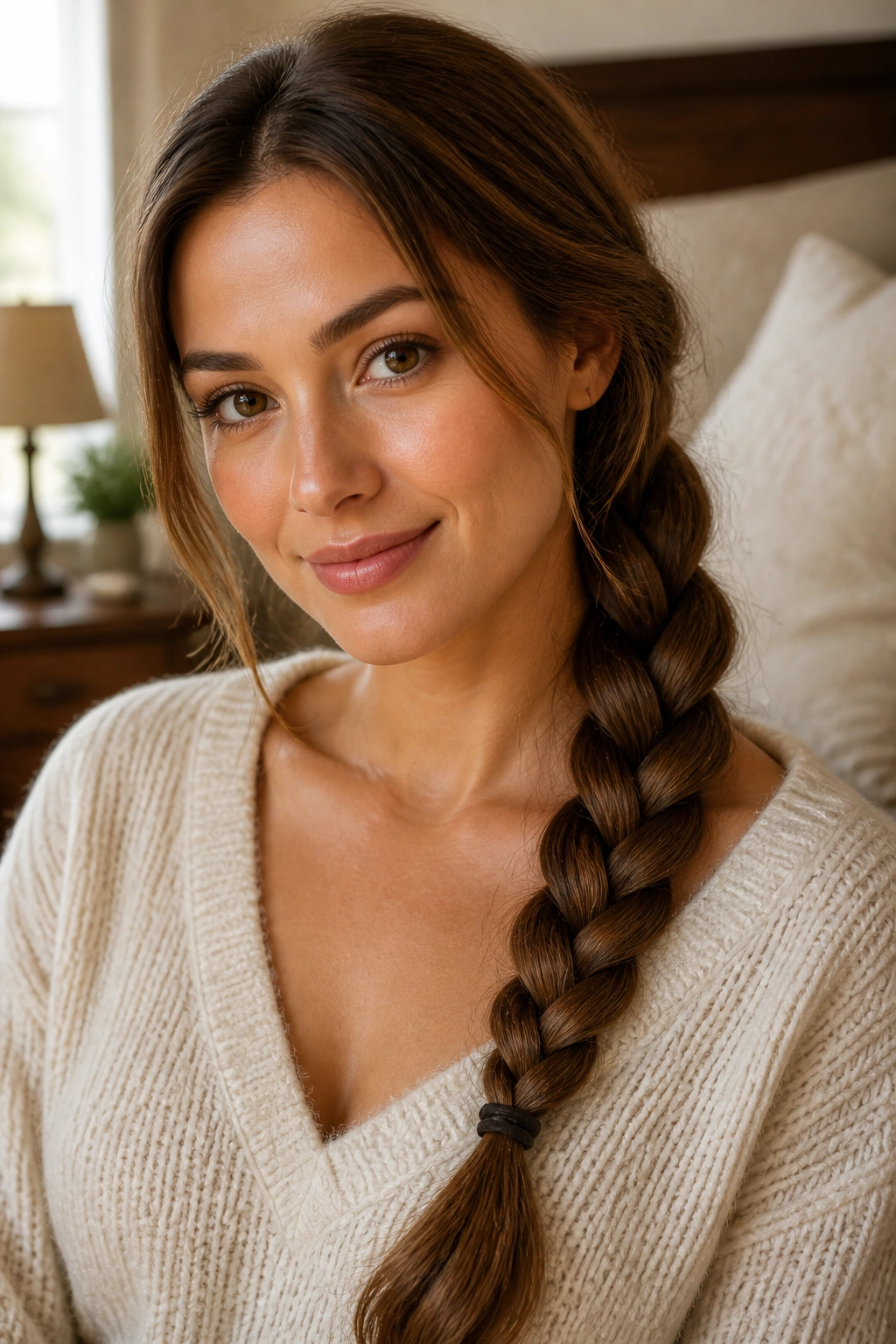
The plain three-strand braid is still the one I trust when I want hair to behave. It’s the style most people learn first, but long hair gives it a different personality: fuller, heavier, and a little more dramatic when it’s pulled over one shoulder.
Why it still matters
On long hair, the three-strand braid shows you exactly how your sections are behaving. If one side keeps slipping, the braid starts to twist. If the ends are uneven, the tail looks messy fast. That makes it a useful checkpoint, not just a basic style.
A good version feels snug at the crown and relaxed through the length. Tight at the roots, soft at the tail. That balance matters.
- Best for daily wear, errands, school, or sleep.
- Works on straight, wavy, or curly hair.
- Holds better with a light cream or mousse than with heavy oil.
- Looks fuller if you gently tug the outer edges after braiding.
My favorite trick: keep the first two crosses tight, then ease up a little as you go. The braid looks cleaner and won’t pull your scalp all afternoon.
2. French Braid
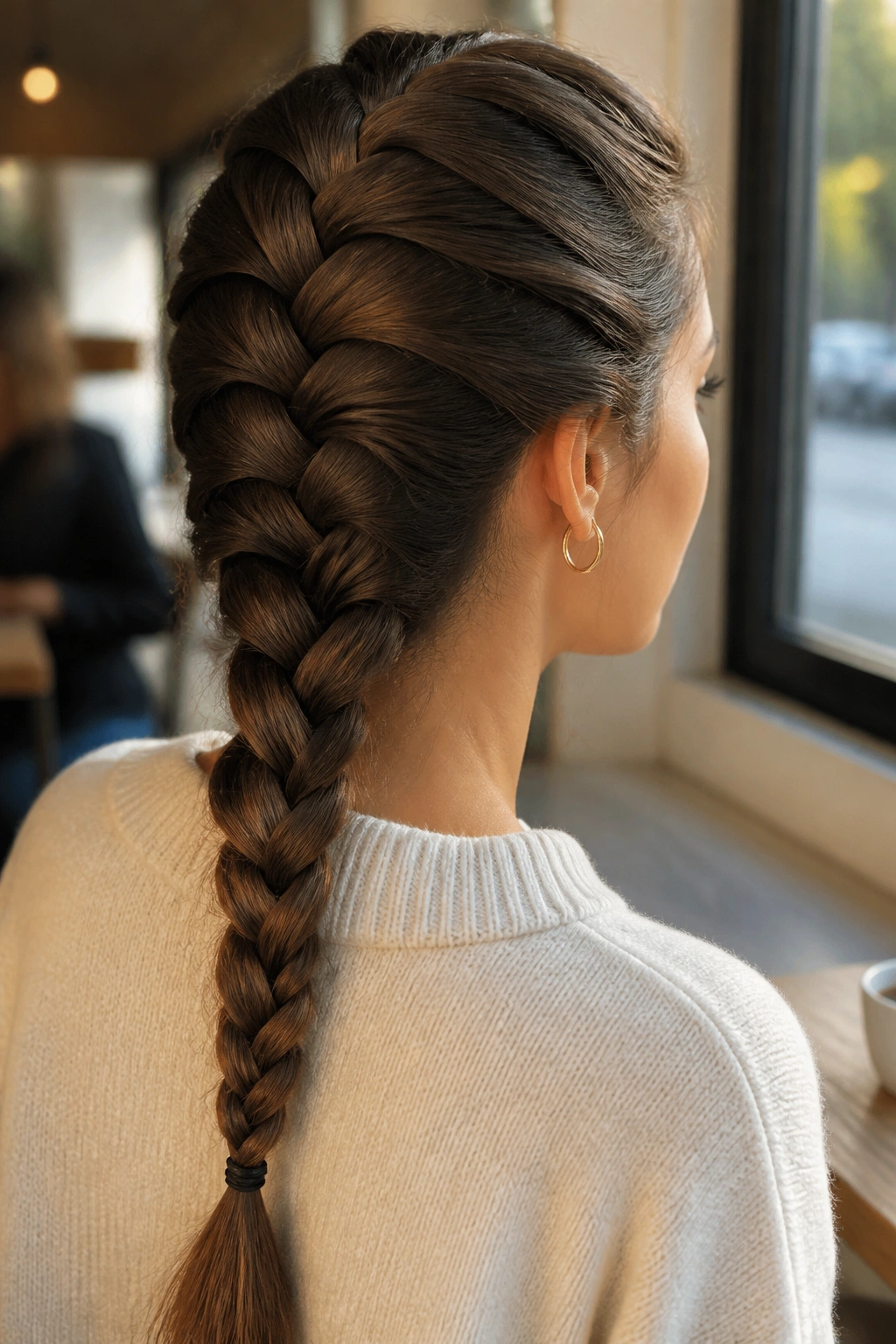
A French braid is the style I reach for when I want long hair pinned close to the head without feeling stiff. It gathers hair as it goes, which means layers, flyaways, and stubborn shorter pieces all get pulled into one line.
That makes it one of the most useful braids for long hair. The extra length gives the braid a long, elegant tail after the woven section ends, so the whole style feels intentional rather than practical.
What makes it work
The secret is not speed. It’s even sectioning. If you keep the side sections roughly the same width, the braid lays flat and the center ridge stays smooth. On long hair, uneven grabs show up fast, especially near the back of the head where you can’t see what you’re doing.
Wear it tight for workouts or a commute. Loosen the weave a little for a softer daytime look. Either way, the braid should sit like a spine down the center of the head, not drift off to one side.
3. Dutch Braid
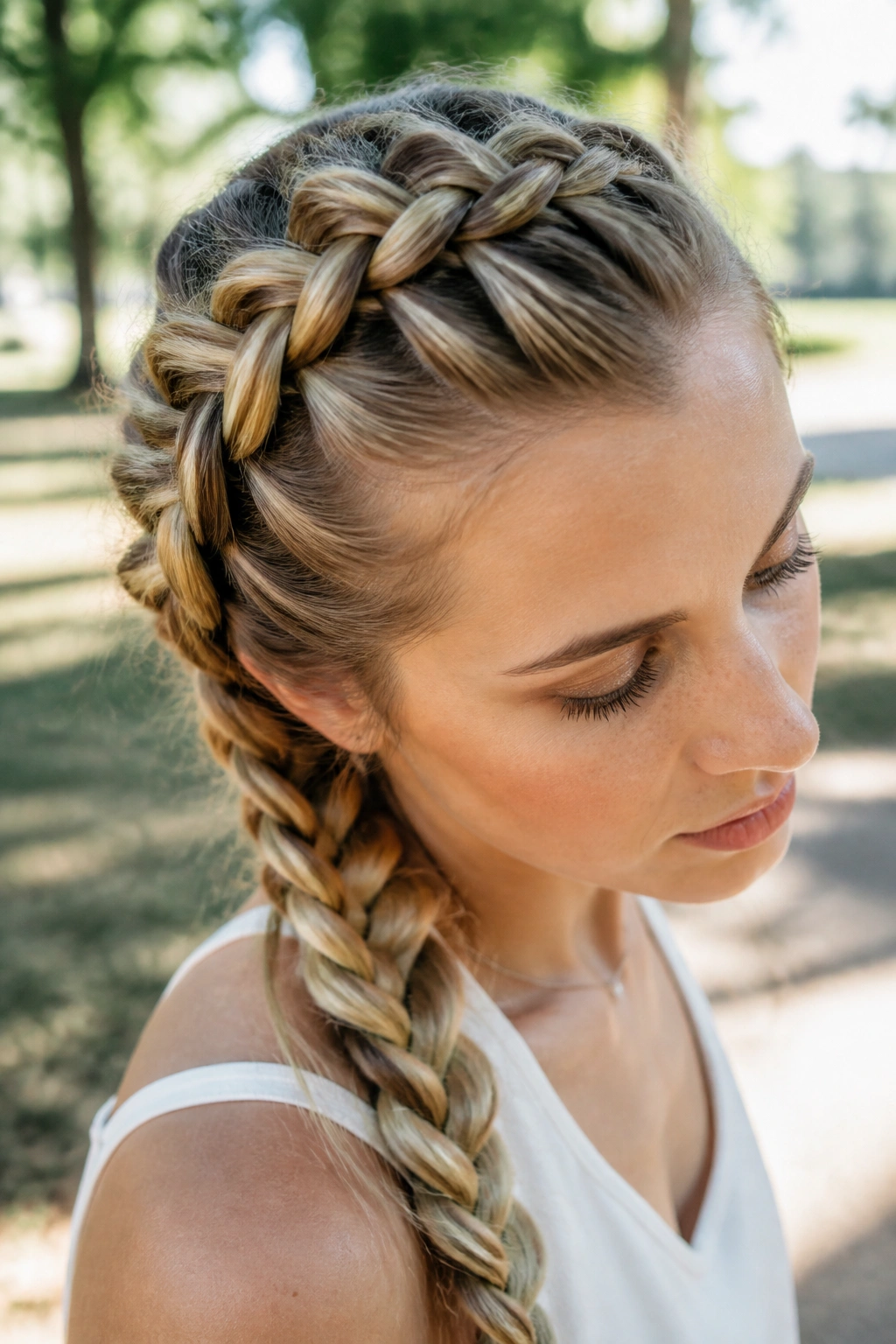
A Dutch braid flips the French braid inside out, and that small change gives it a bigger visual payoff. Instead of sinking into the hair, the braid sits on top of it like a raised rope, which is why long hair makes it look so bold.
Why do people love it? Because the pattern shows up immediately. You do not need perfect color or highlights for the texture to stand out. The raised sections catch light and shadow on their own.
How to get the shape right
Keep your hands close to the scalp and cross the strands under, not over. That’s the part people fumble. Once the first few passes are clean, the braid starts building that ridged look that long hair handles so well.
- Best on hair that has a little grip, not just freshly washed silk.
- Great for gym days or long errands.
- Looks especially good with long layers because the raised braid keeps the shape visible.
- Finishes with a thick tail that can be wrapped, pinned, or left down.
If your goal is a braid that reads from across the room, this is a strong pick.
4. Fishtail Braid
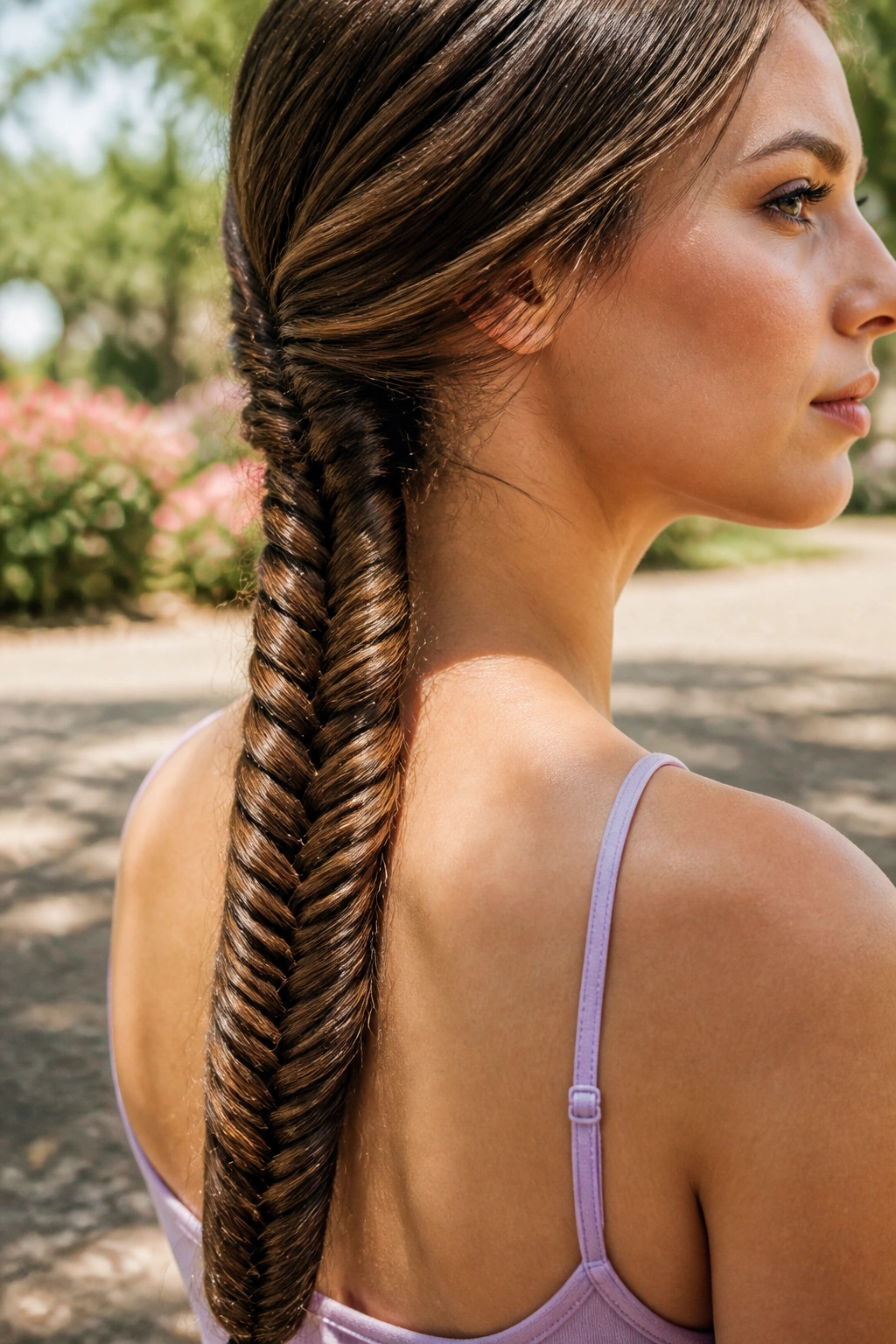
A fishtail braid looks fancier than it is, which is part of its charm. You split the hair into two sections and keep taking tiny pieces from the outside of each side. Slow work, yes. But long hair rewards that patience with a dense, textured pattern that looks almost woven.
The style shines on long hair because the extra length lets the braid show off its detail. On shorter hair, the pattern can blur together. On long hair, every small crossover stacks into a clean, fish-scale effect.
What to watch for
Small sections make a neater fishtail. Bigger sections make a chunkier, looser version. Both work. I prefer the tighter one for polished looks and the looser one for weekend wear.
A fishtail likes a little texture spray or dry shampoo. Too much slip and the tiny pieces slide apart before you’re halfway down. Too little control and the braid fluffs out in odd places.
5. Rope Braid
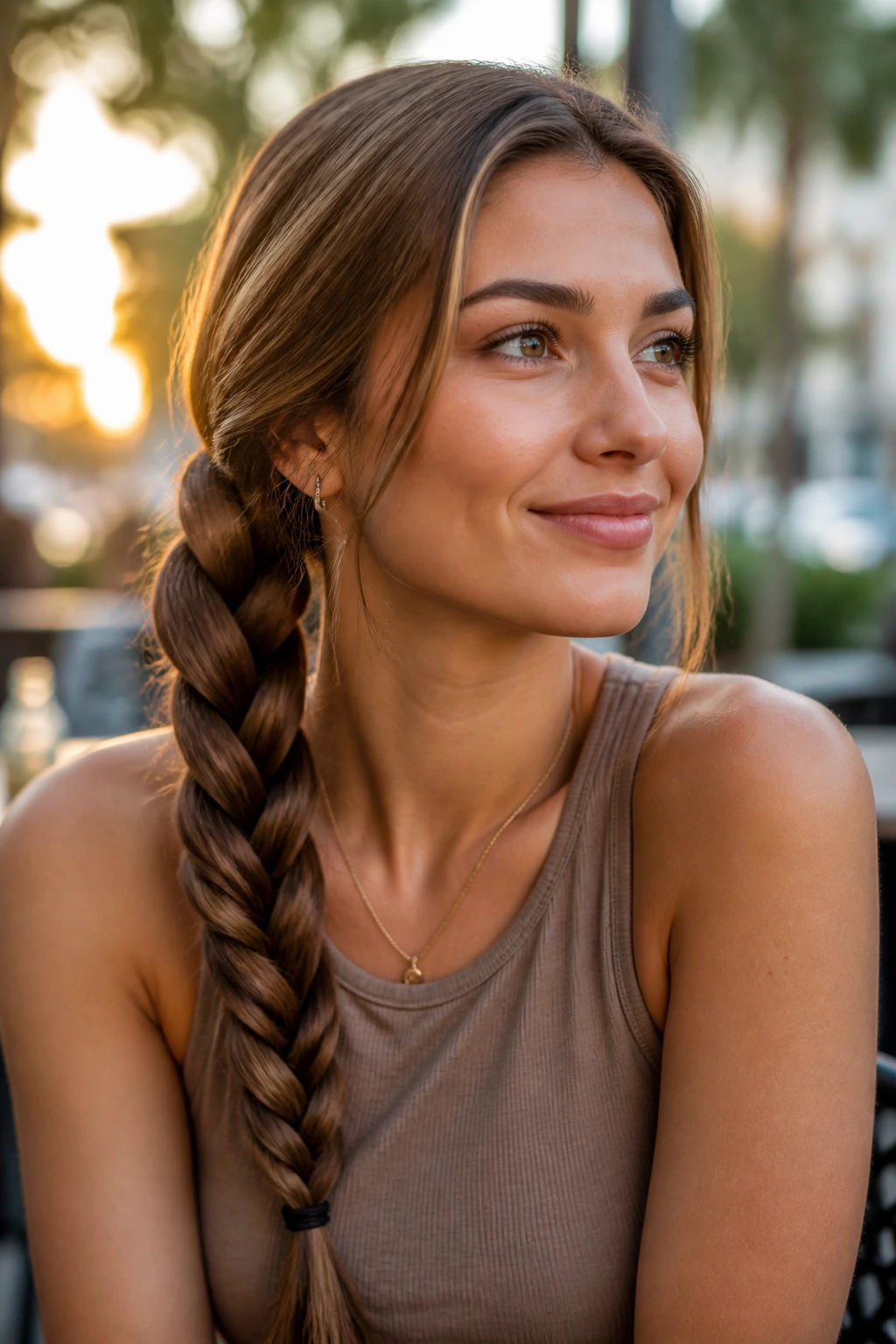
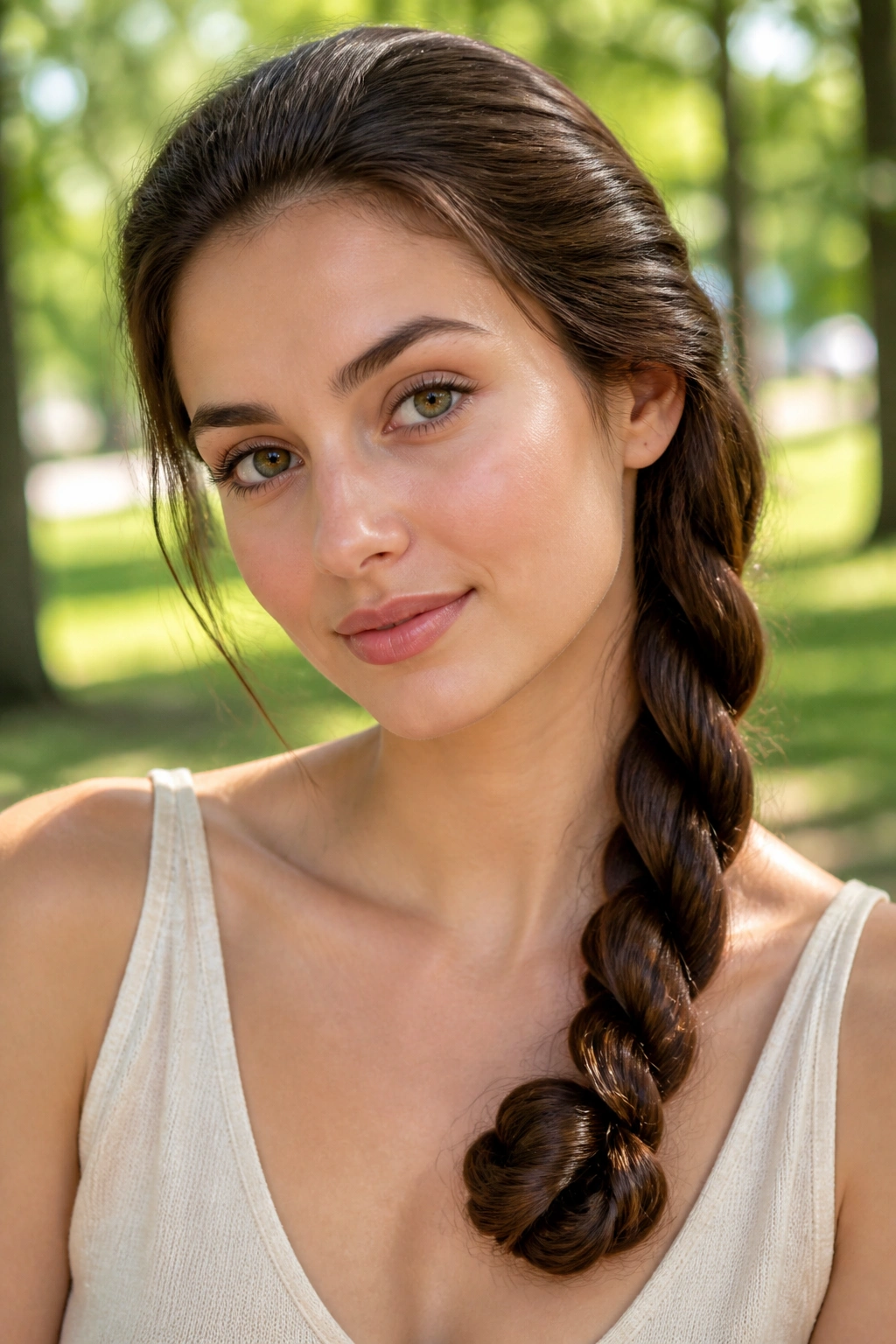
A rope braid is fast, glossy, and a little underrated. You only need two sections, and you twist them in the same direction before wrapping them around each other in the opposite direction. That twist-on-twist motion gives the braid a spiraled look that long hair handles beautifully.
It’s one of the best braids for long hair when you’re short on time. Thick hair gets a clean coil. Fine hair gets a shiny rope that looks fuller than it really is.
The part people miss
The two strands have to be twisted evenly before they’re crossed. If one side is looser, the whole braid starts to corkscrew in a crooked way. That’s fine if you want something messy. Not so fine if you want a clean finish.
Try it low and tucked over one shoulder. Try it into a ponytail. Try two rope braids if your hair is long enough to swing nicely at the ends. It’s a simple style, but not a boring one.
6. Side Braid
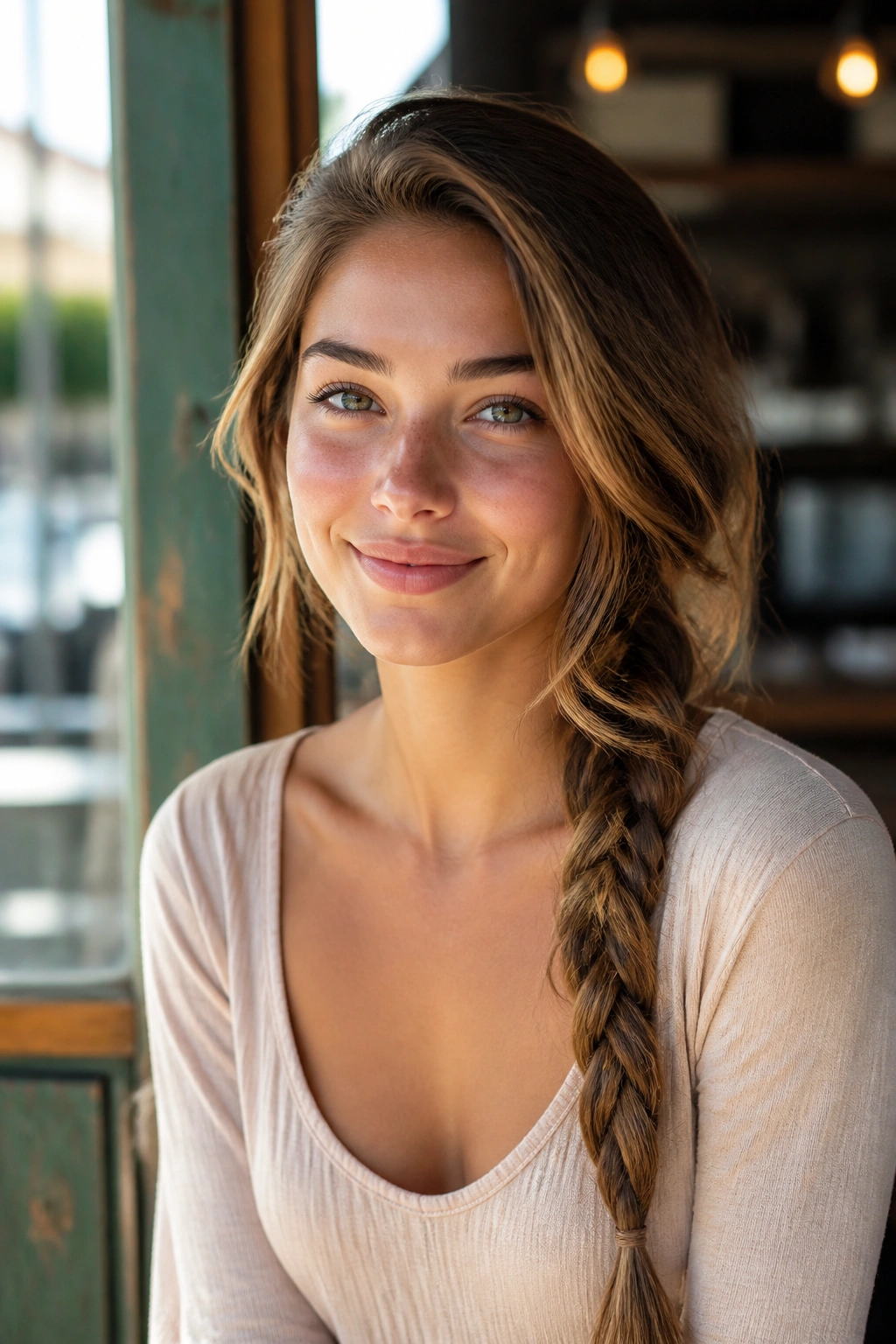
A side braid changes the mood of long hair immediately. Pull everything over one shoulder and the braid feels softer, more relaxed, and a little more romantic than a braid hanging straight down the back.
What I like about this style is its honesty. It doesn’t try to be formal unless you dress it up. On long hair, the side drape creates a heavy rope of hair that looks fuller and more relaxed than a center-back braid.
When to reach for it
- On days when your hair feels heavy and you want it off your neck.
- When you want a braid that shows off length without feeling severe.
- With scarves, earrings, or coats that sit awkwardly on a straight-back braid.
A side braid also hides small mistakes better than a centered one. If one section is a little messy, the asymmetry makes it look deliberate. That’s handy, because perfect symmetry is overrated anyway.
7. Double Braids
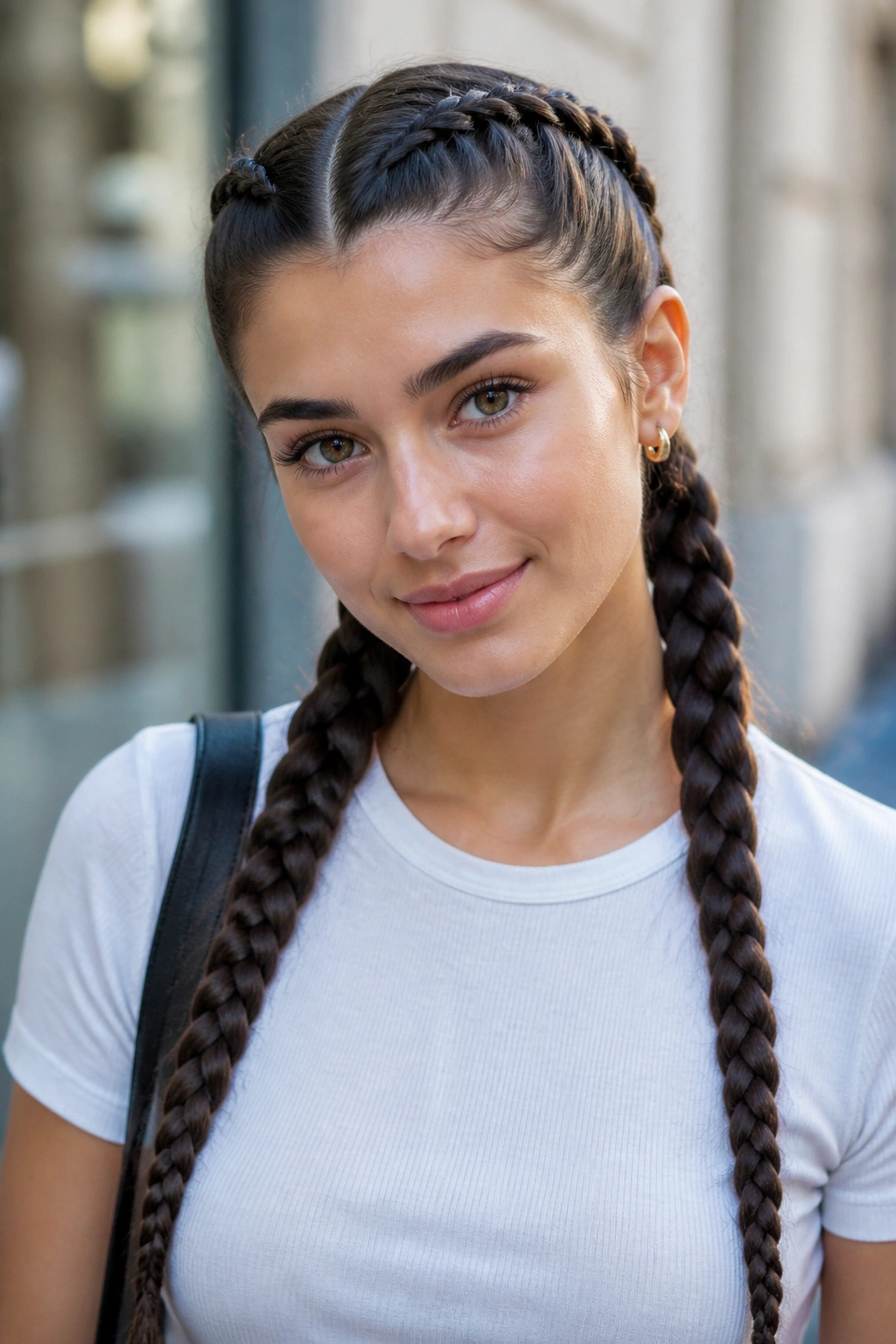
Two braids are better than one when long hair starts getting in the way. The weight gets split, the scalp feels less tugged, and the finished look has a balanced, practical feel that still looks tidy.
This is the style I recommend to anyone whose hair gets tangled the minute they turn their head. It keeps everything contained, and the two tails don’t fight each other the way one thick braid sometimes does.
Why long hair helps here
The extra length gives each braid a proper tail, so you don’t end up with tiny ends poking out too soon. You can wear them low, mid-height, or as pigtails that sit farther back on the head.
A center part keeps the look clean. A slightly zigzag part makes it softer. If your hair is thick, don’t make each braid too large. Smaller sections hold better and reduce that stretched feeling at the roots.
8. Boxer Braids
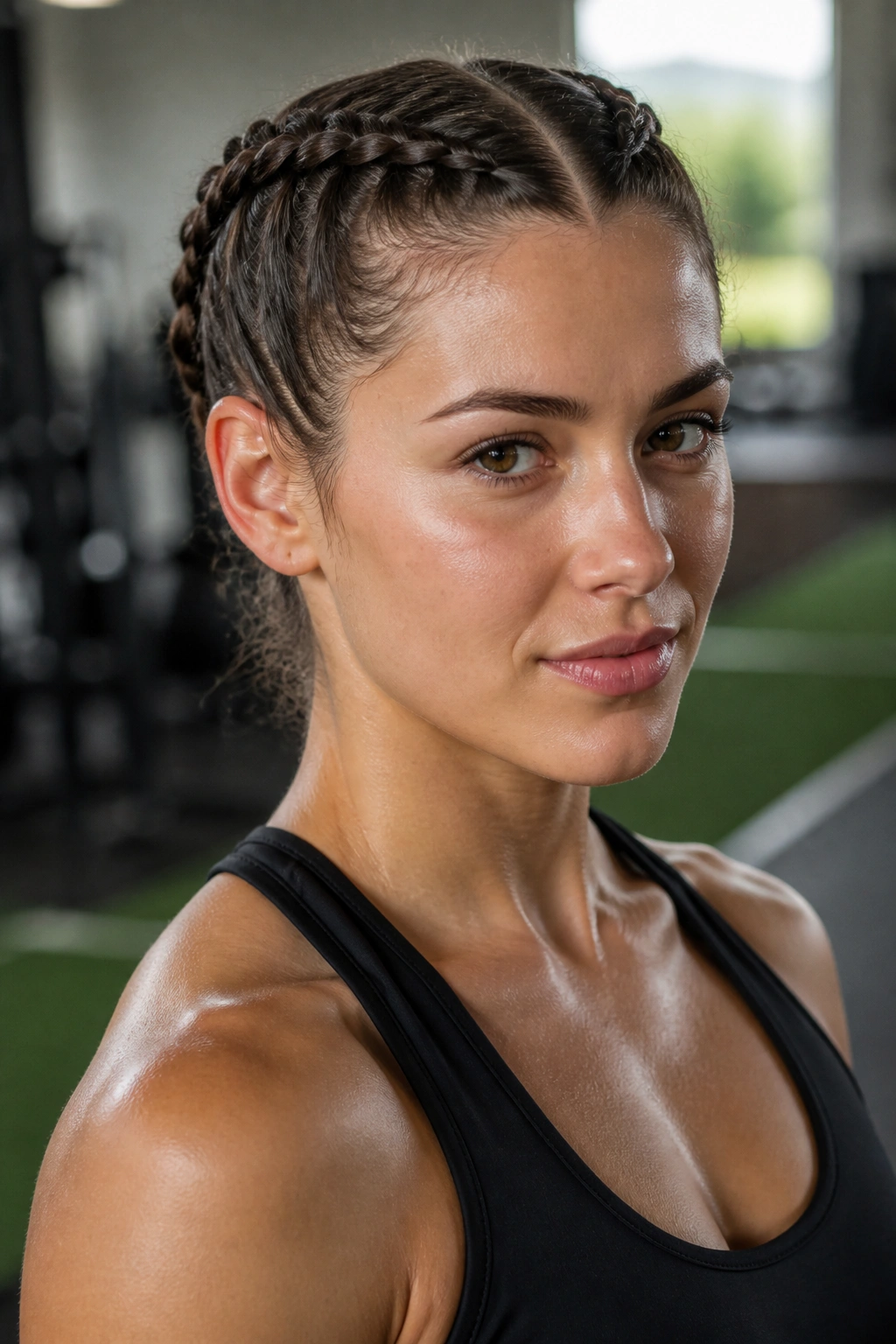
Boxer braids are built for staying power. They’re essentially tight Dutch braids worn in a pair, close to the scalp and firm enough to survive a long day without falling apart.
Long hair makes them especially useful because the length gets controlled from root to tip. That matters when you’re dealing with sweat, wind, or hair that tangles just by existing.
The feel of a good boxer braid
The braid should hug the head without creating a sore line along the hairline. That line between secure and too tight is thin. If you can feel your temples throbbing, the braid is too harsh.
They’re great for workouts, travel, and busy days when you do not want to touch your hair again. I’d avoid a ton of product here. A little gel on the roots is enough. Too much makes the hair crunchy and hard to adjust.
9. Waterfall Braid
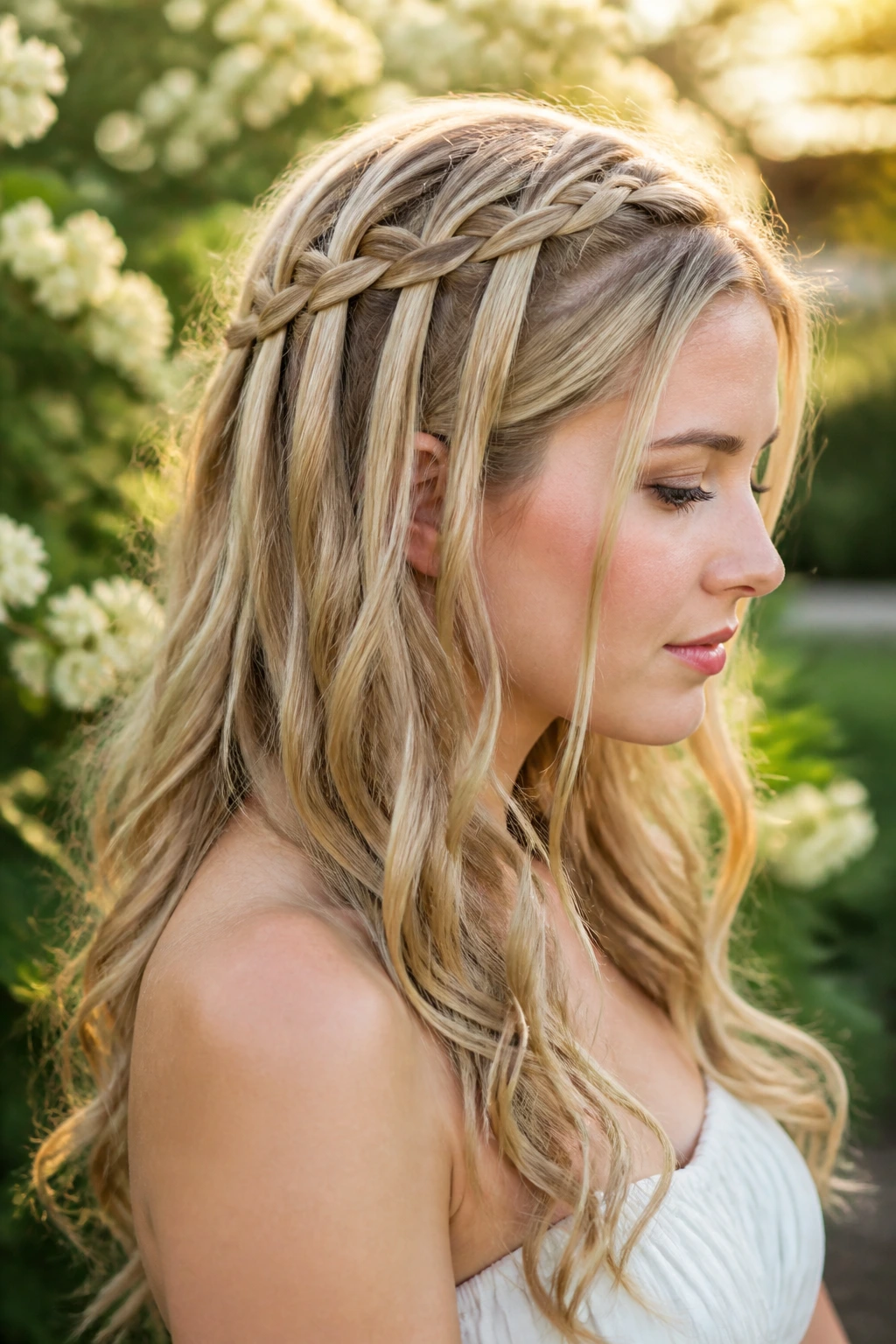
A waterfall braid is all about showing off length while leaving some hair free to move. Small sections drop out of the weave like little streams, which is where the style gets its name.
It works especially well on long hair because the loose pieces have room to fall and blend. On short hair, the effect can feel cramped. On long hair, it looks airy and deliberate.
Best use case
Half-up styles. Wavy hair. Soft texture. That’s where this braid likes to live.
You braid across the head, drop one strand each time, and pick up a new piece from above. The rhythm sounds fussy at first, but once you get it, it’s one of those styles that looks more complicated than it is.
A waterfall braid is picky about frizz. If the hair is fluffy all over, the falls blur. If the hair is smooth with a little bend, the braid stays crisp and the dropped sections read as part of the design.
10. Halo Braid
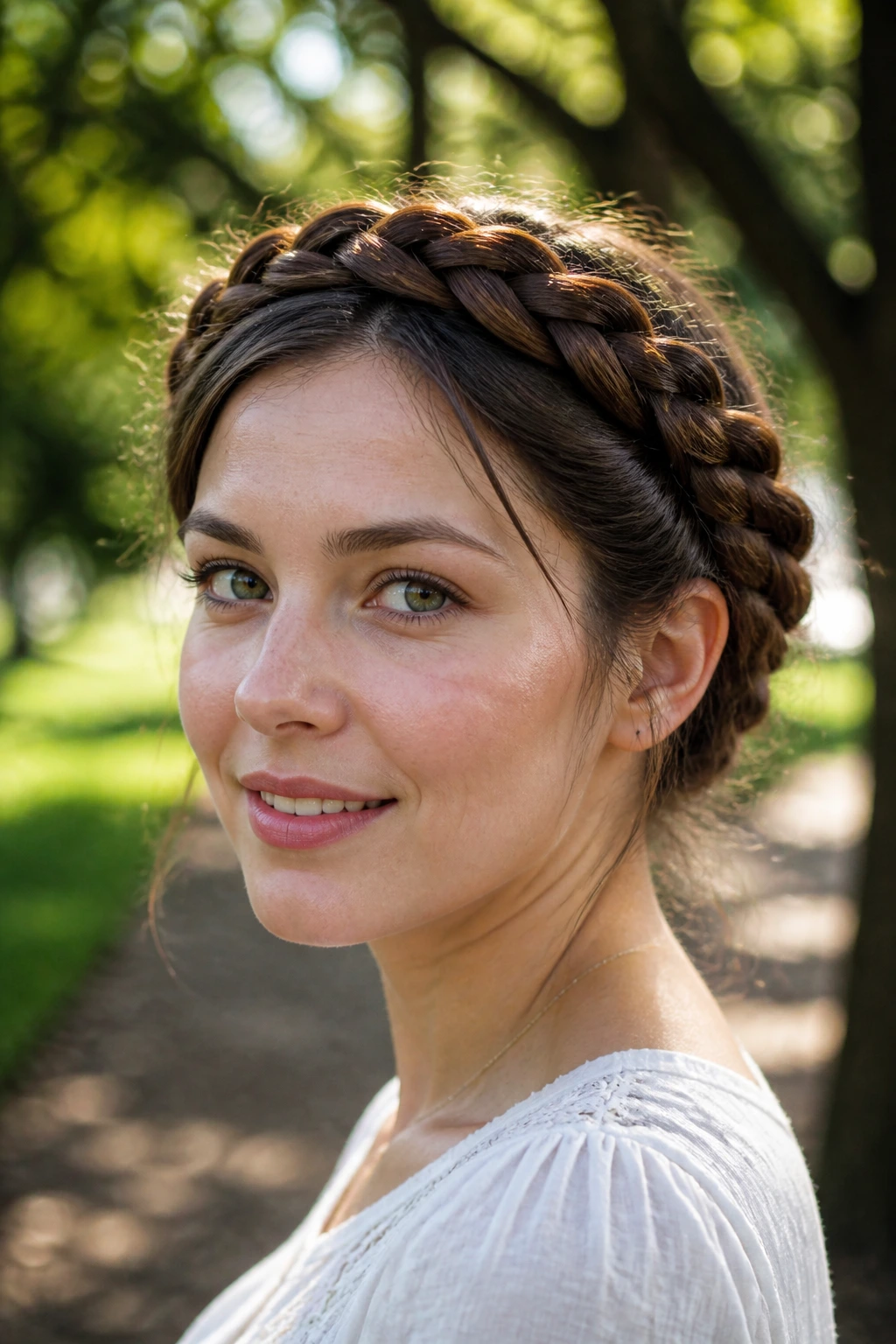
A halo braid wraps around the head like a circle, and long hair gives it the material it needs to complete the loop without looking skimpy. That’s the big win here. You get fullness all the way around, not just a decorative strip at the front.
This is a strong style for formal events, but it can also look surprisingly calm on an ordinary day. There’s something satisfying about hair completely out of the face without being shoved into a harsh bun.
How it wears
The braid usually travels along the perimeter of the head and tucks itself in near the opposite side. Pins do the heavy lifting here. If your hair is slippery, use them. If your hair is coarse, the braid may hold on its own better than you expect.
A halo braid looks best when the crown has a little softness. Too much pulling makes it stiff and cartoonish. Leave a few wisps near the ears if you want it to feel less severe.
11. Crown Braid
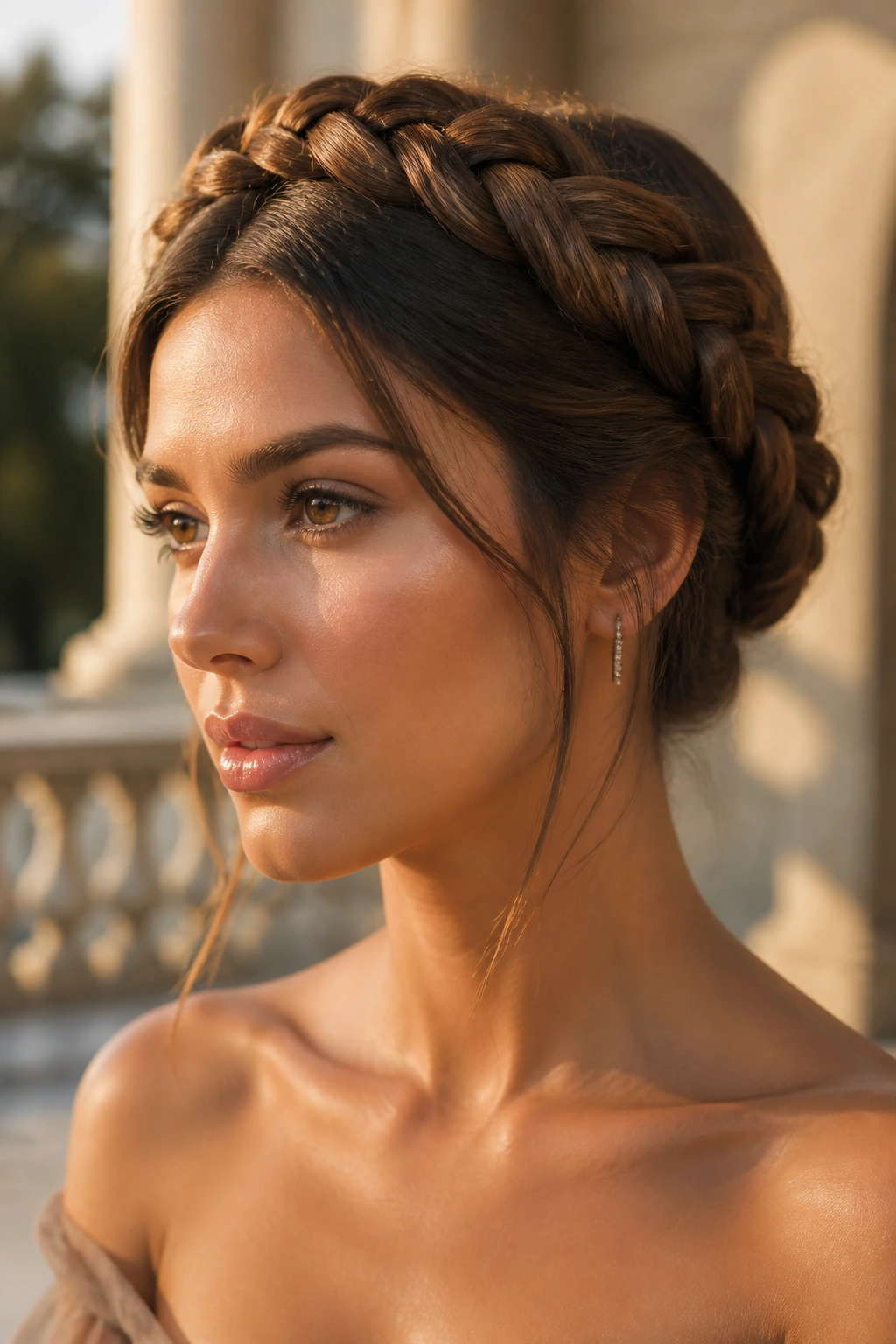
A crown braid and a halo braid get confused all the time, but I don’t treat them as the same thing. A crown braid usually feels more structured, often built from two braids or from a braid that wraps just across the top and sides of the head rather than the whole perimeter.
Long hair gives it thickness. Without enough length, the wrap can look thin or stop short. With long hair, the braid has enough body to sit like an actual crown instead of a narrow strip.
What makes it different
A crown braid tends to sit a little higher and can leave the back lower or tucked in a way that feels more styled than soft. That makes it useful for weddings, dinners, and anything that wants polish.
I like this style when I want the hair up but not trapped. It still has shape from every angle. And yes, a little teasing at the roots helps if your hair lies flat and refuses to cooperate.
12. Milkmaid Braids
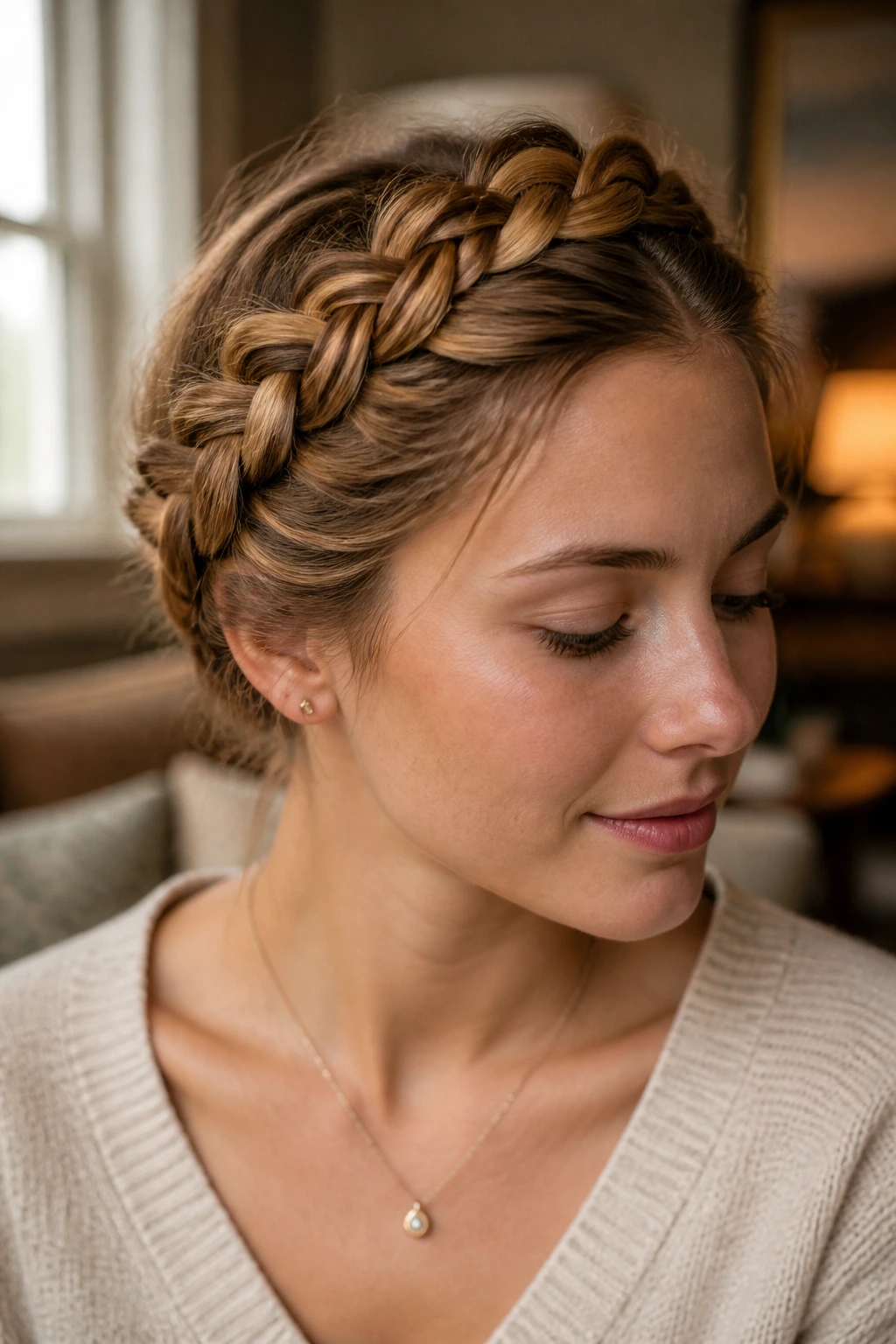
Milkmaid braids are old-fashioned in the best way. Two braids get crossed over the top of the head and pinned in place, which creates a soft band of hair that feels both practical and a little storybook.
Long hair is what makes this style work so well. You need enough length to braid both sides and still have enough left to wrap around the crown. Shorter lengths can fake it. Long hair does it properly.
The practical bit
Make two low braids first. Then bring them up and over, tucking the ends under the opposite braid. Pins go in at the hidden points, not just on top where they can slide out.
This style is especially good when you want all the hair off the neck but still want a softer shape than a bun. It’s also one of the better braids for second- or third-day hair, because a little grit helps the braids stay put.
13. Pull-Through Braid
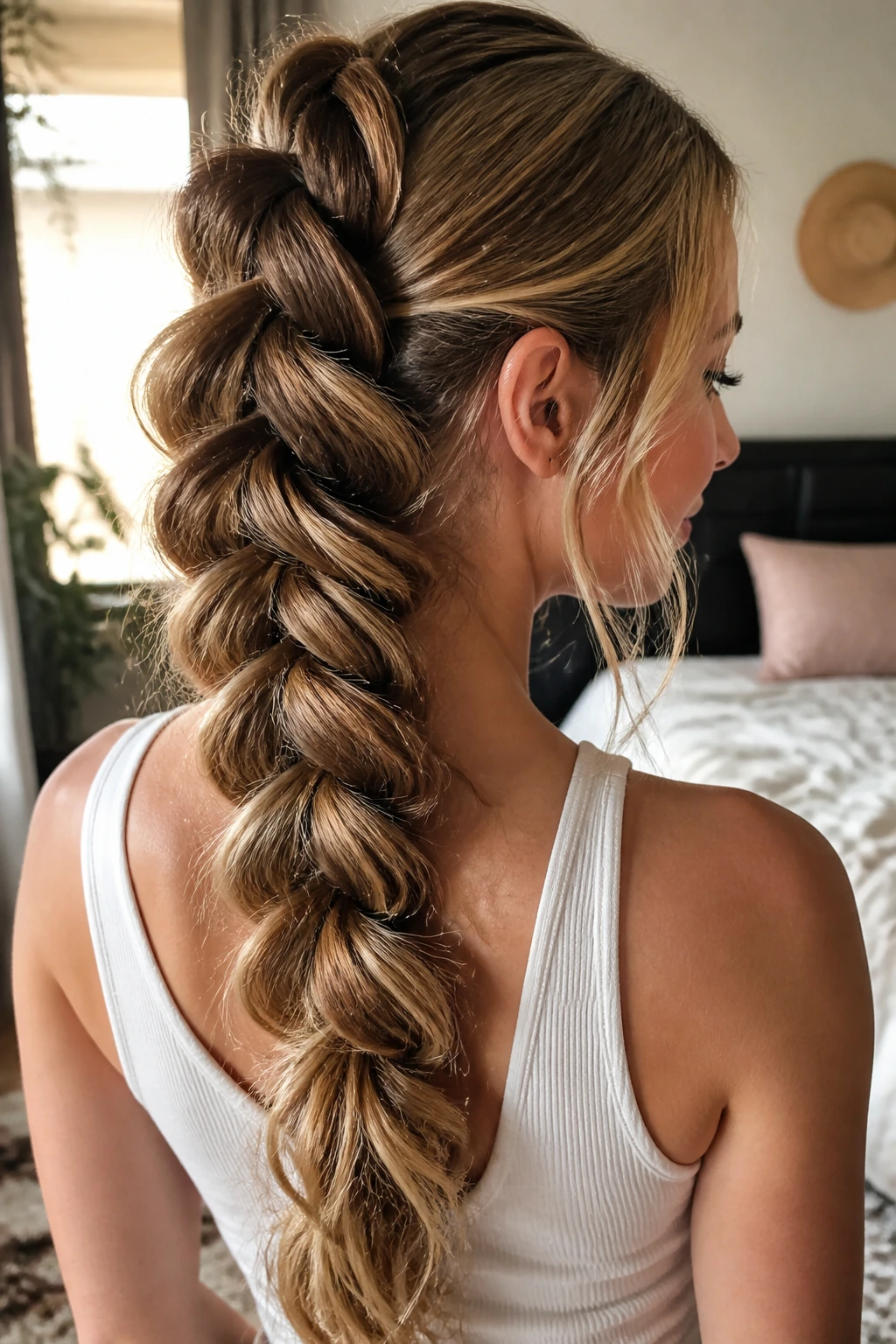
A pull-through braid is one of the best tricks for long hair if you want bulk without real braiding skill. It’s built from ponytails stacked into sections, then pulled through each other to create the look of a thick braid.
The payoff is volume. A lot of it. Fine long hair can suddenly look heavy and full. Thick hair can look almost exaggerated, in a good way.
Why it works
Each elastic creates a little segment, and long hair makes the chain look longer and more dramatic. If you pancake the sections slightly, the braid looks even fatter.
Use clear elastics if you want the structure to disappear. Use matching elastics if you want less fuss. The only real downside is removal. Do not rush it or you’ll snag the ends. This style is gorgeous, but it does ask for patience when the day is over.
14. Four-Strand Braid
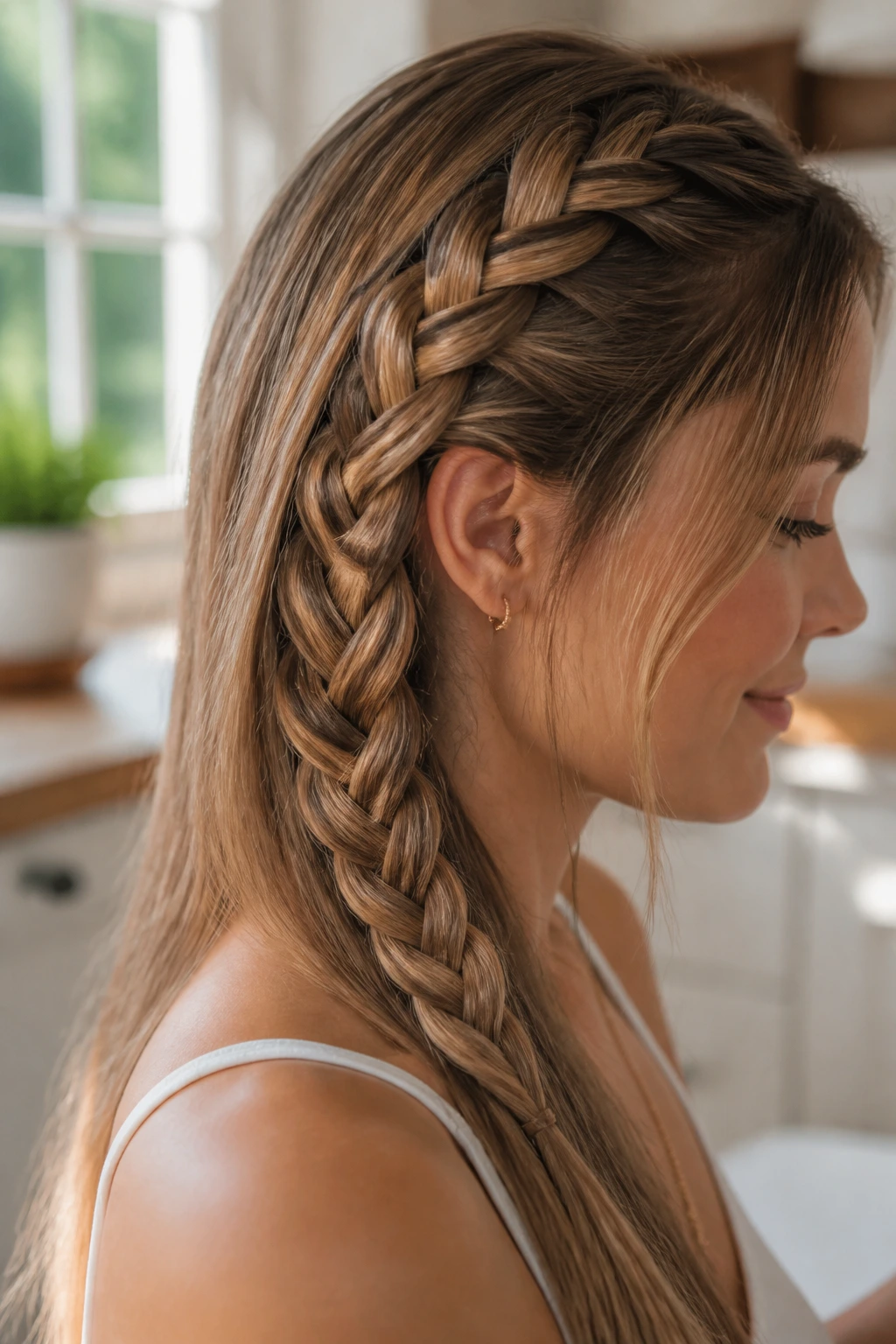
A four-strand braid has a flatter, more woven look than a basic plait. It’s one of those styles people assume is hard until they try it twice and realize the pattern just needs a little concentration.
Long hair gives the braid room to show its structure. The extra length turns the weave into a long ribbon of texture instead of a short knot of pattern.
What to notice
- It lays flatter than a three-strand braid.
- The edges look a little more precise.
- The finished tail has a neat, almost tailored feel.
I like this braid for hair that has some thickness, because the pattern reads more clearly. If your hair is fine, the strands can feel slippery and the braid may loosen unless you add grip first. A little texturizing spray at the roots makes a bigger difference than people expect.
15. Five-Strand Braid
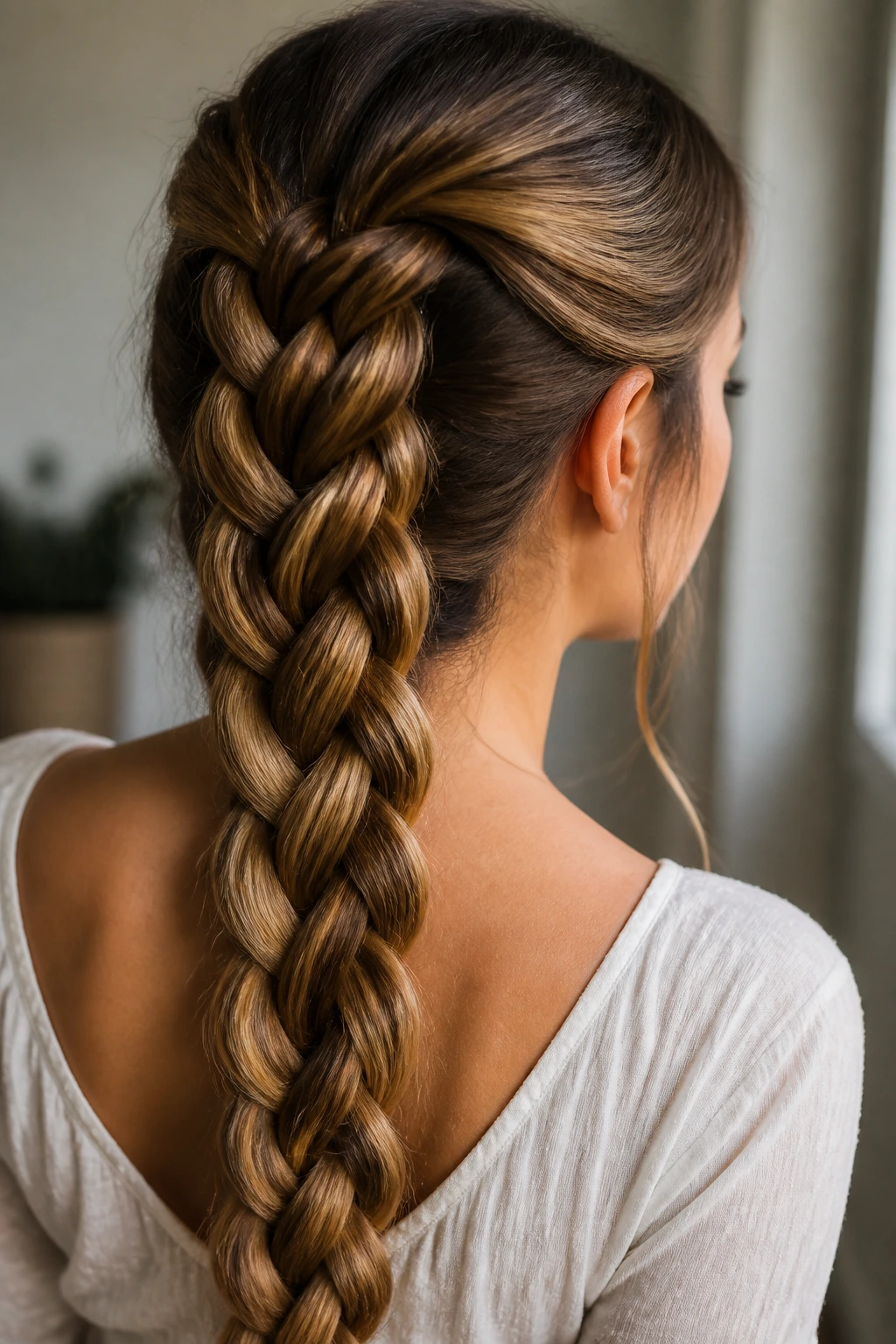
Five strands sound like a challenge, and honestly, sometimes they are. But the result is worth it when you want a braid that looks wide, intricate, and a little more deliberate than the usual options.
Long hair is the reason this braid pays off. The extra length lets the pattern continue far enough down the back for the detail to matter. On short hair, the work can disappear before the braid gets a chance to show off.
A braid with patience
Keep the strands separated cleanly. That’s the whole game. If your sections start merging, the pattern gets muddy fast. I find it easiest to practice on damp hair with a comb nearby, because clean parting matters more here than with a simpler plait.
It’s a good special-occasion braid when you want something that feels handmade. Not flashy. Just carefully done. And that reads well on long hair, which can carry a lot of texture without looking busy.
16. Lace Braid
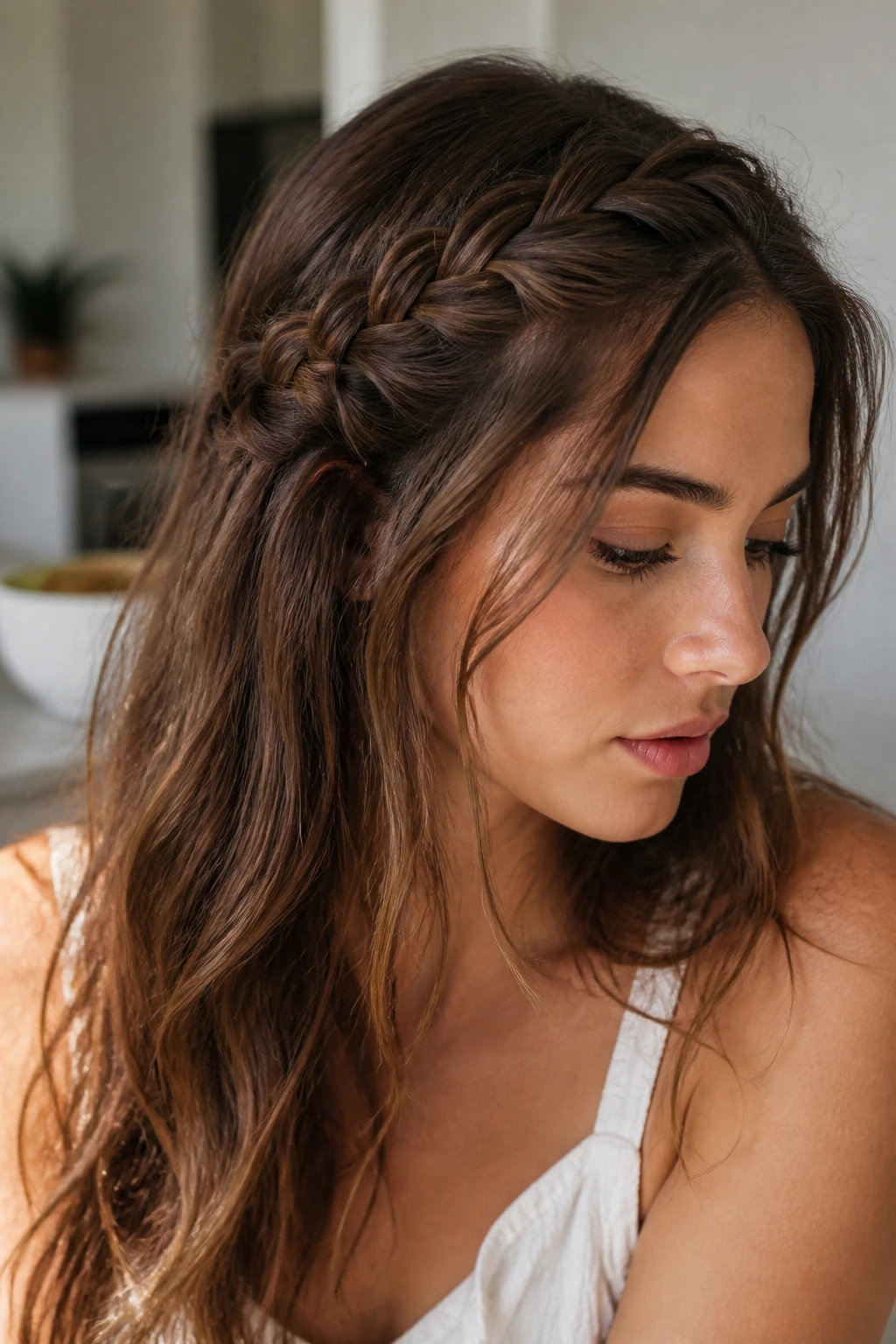
A lace braid is a side-fed braid that picks up hair from only one side as it moves along. That one-sided structure makes it useful for long hair that has layers near the front, because it gathers those pieces neatly without pulling everything back too hard.
It’s one of the best styles for face-framing sections. You get control, but not a wall of hair around the face.
How I’d wear it
Start near the hairline and work down the side of the head. Feed in small amounts from the top while the bottom strand stays open. The braid hugs the scalp at first, then loosens into a longer tail.
This is a nice choice when you want part of your hair down and part of it out of your face. It also works well for hot days, because the front stays tidy while the length still moves around your shoulders. A lace braid can look fragile. That’s the charm.
17. Ribbon Braid
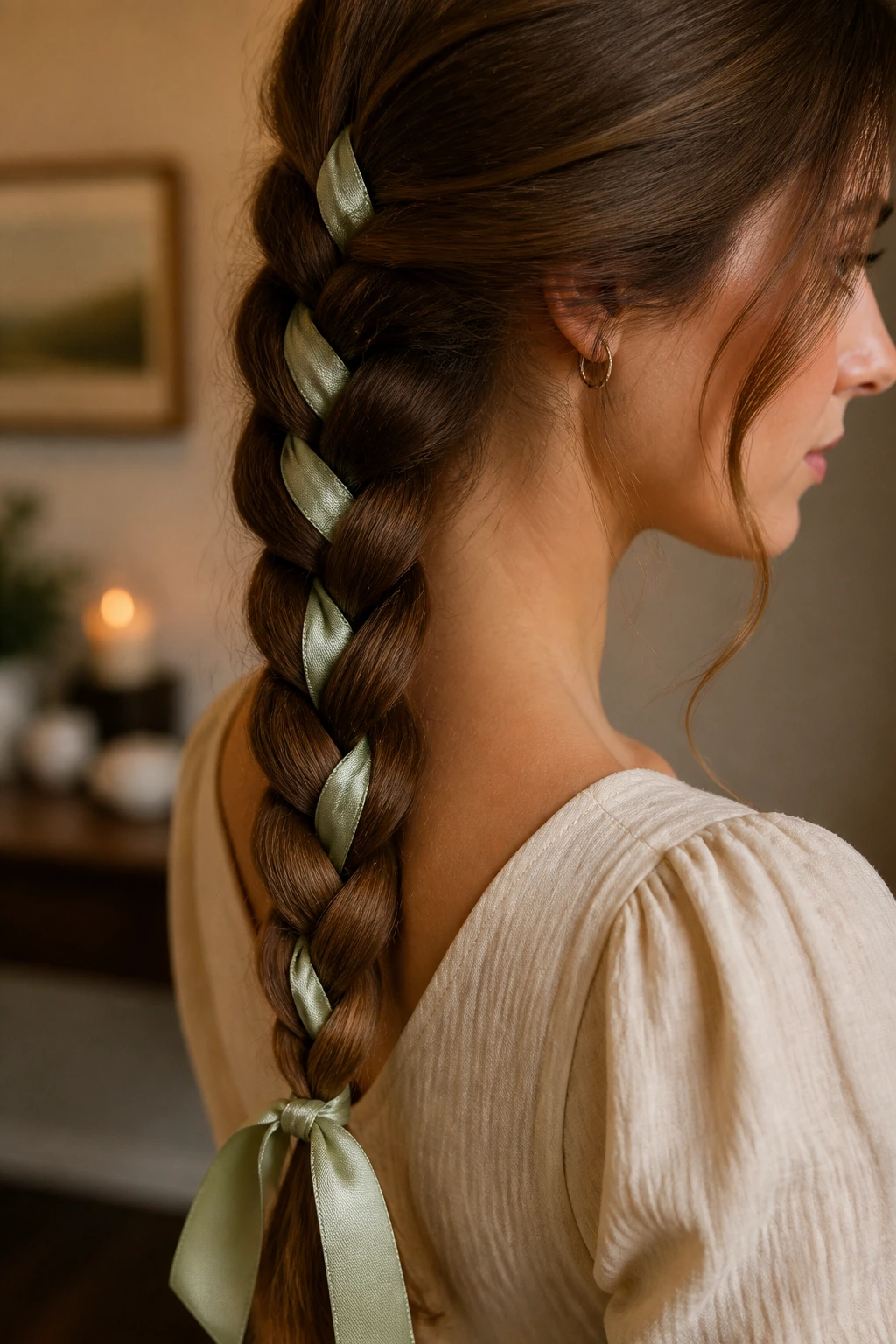
A ribbon braid turns a braid into an accessory rather than just a hairstyle. You weave a scarf, strip, or ribbon through the strands, and the color becomes part of the pattern.
Long hair helps because the ribbon has space to trail and show. On short hair, the effect can feel cramped. On long hair, the braid looks like it belongs to the outfit instead of sitting on top of it.
Good reasons to try it
- It makes plain hair feel dressed up fast.
- It adds color without dye.
- It works with satin ribbon, velvet ribbon, or even a thin scarf.
The trick is choosing a ribbon that does not slip too much. Satin looks pretty but can slide if your hair is silky. A slightly textured ribbon grips better. I like this style on long loose waves or a straight braid with a little pancake at the end. It’s simple, but it has personality.
18. Snake Braid
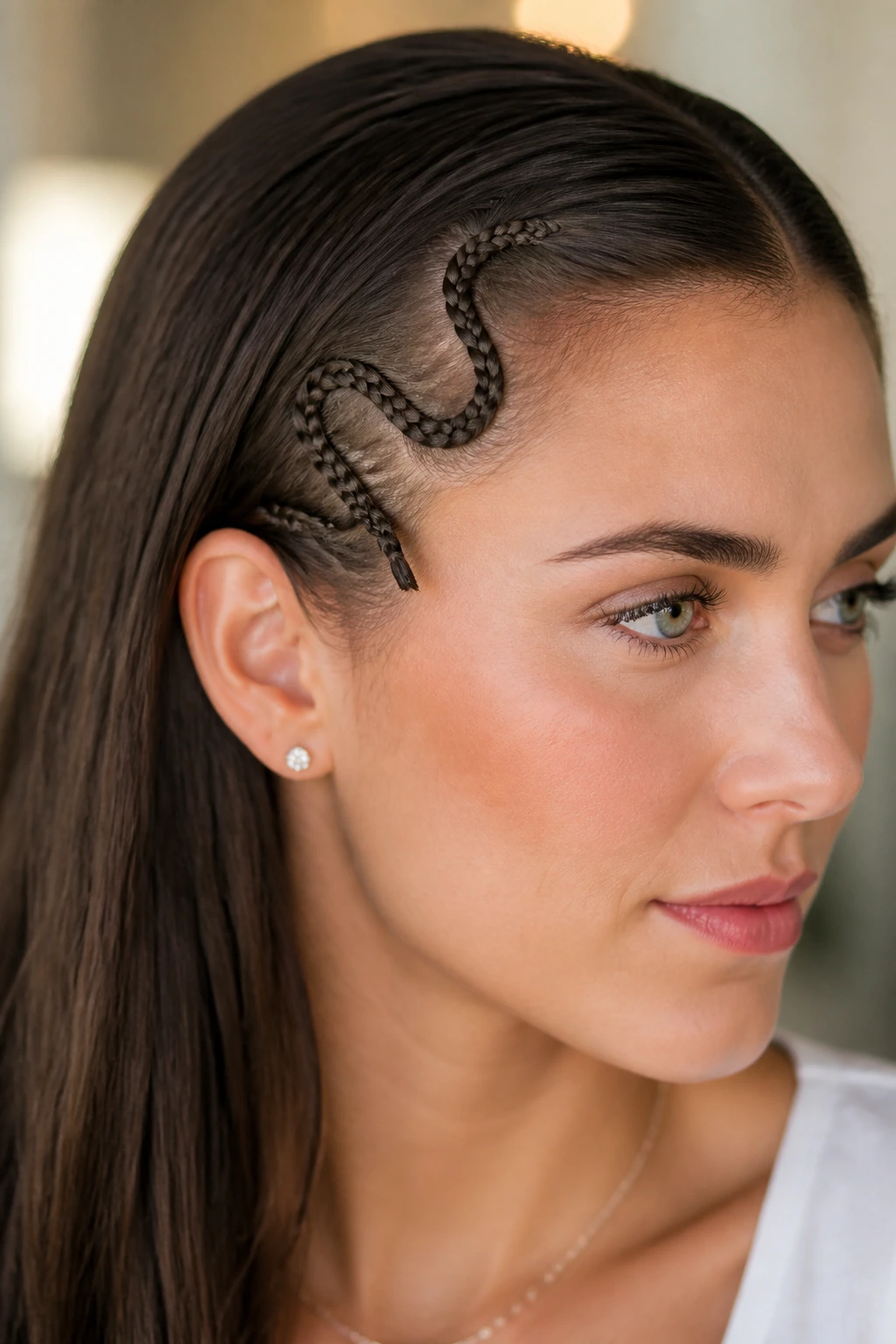
A snake braid is a tiny braid with a bit of drama in the finish. You braid a small section, loosen one strand, then push or wrap the braid so it curls into a snake-like shape. It’s more of an accent than a full-head style, which is why long hair works so well with it.
Think of it as jewelry made from hair. One small braid can sit across a bun, tuck into a ponytail, or trace a line near the temple.
Where it fits
It works best when the rest of the hair is either smooth or deliberately simple. If everything is busy, the snake braid gets lost. If the base is clean, the shape stands out.
This is the kind of detail I’d use for parties, photos, or any day when plain hair needs one interesting twist. Long hair gives you enough length to form the loop without the braid springing back or collapsing.
19. Ladder Braid
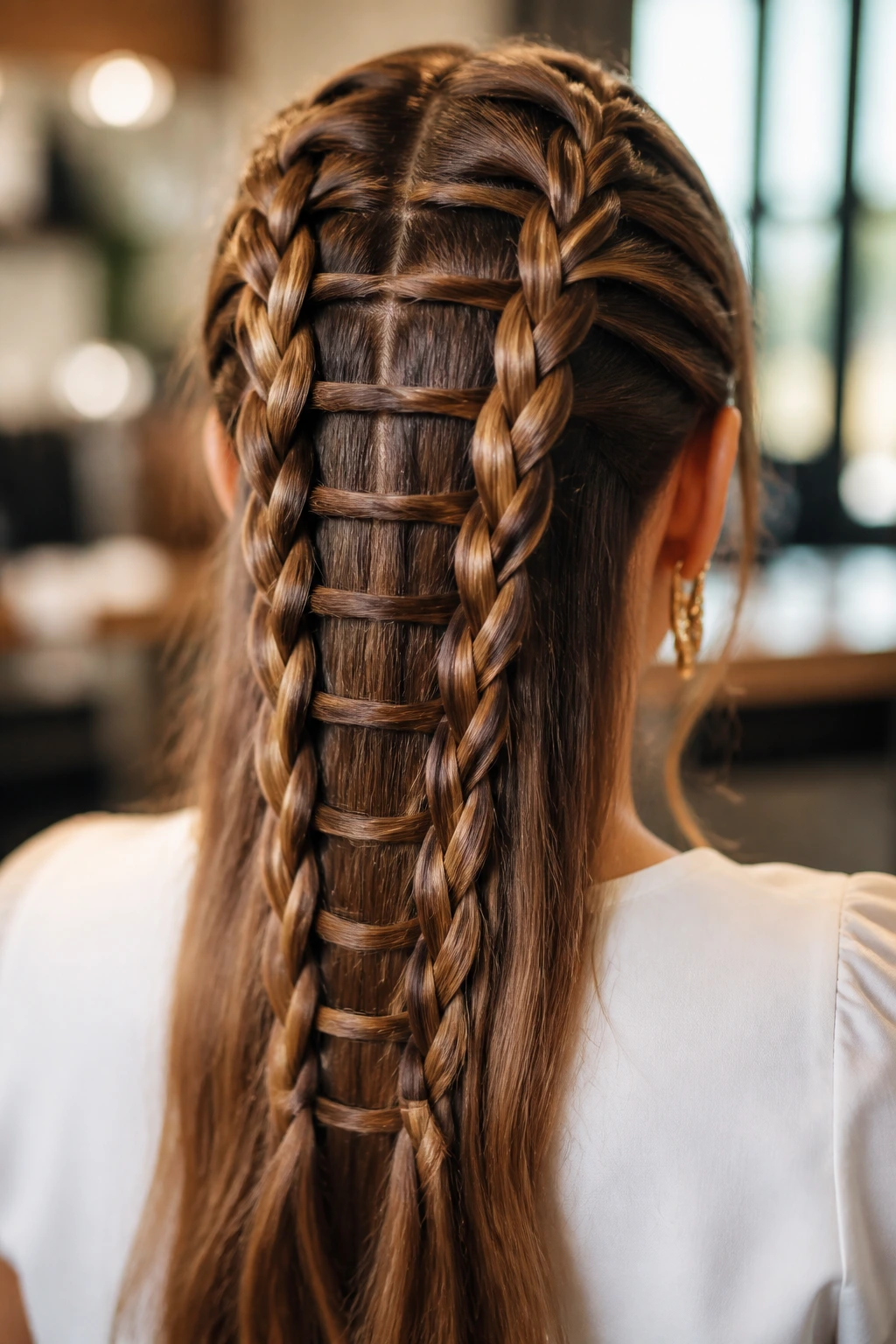
A ladder braid is more decorative than practical, and I mean that as a compliment. It usually uses two braid sections with small cross-pieces between them, creating the look of little rungs running across the hair.
Long hair gives the ladder room to stretch. That matters, because the design needs vertical length to read clearly. On shorter hair, it can look cramped. On long hair, it becomes a genuine statement piece.
What makes it special
This braid is best when you want people to notice the work, not just the final shape. It takes time. It needs clean partings. It also tends to work better when the hair has a little texture so the small sections do not slip apart while you’re connecting the sides.
I would use this for events where the hairstyle is supposed to be part of the outfit. It’s not a quick grocery-store braid. It’s the one you choose when you want the back of the head to matter.
20. Mermaid Braid
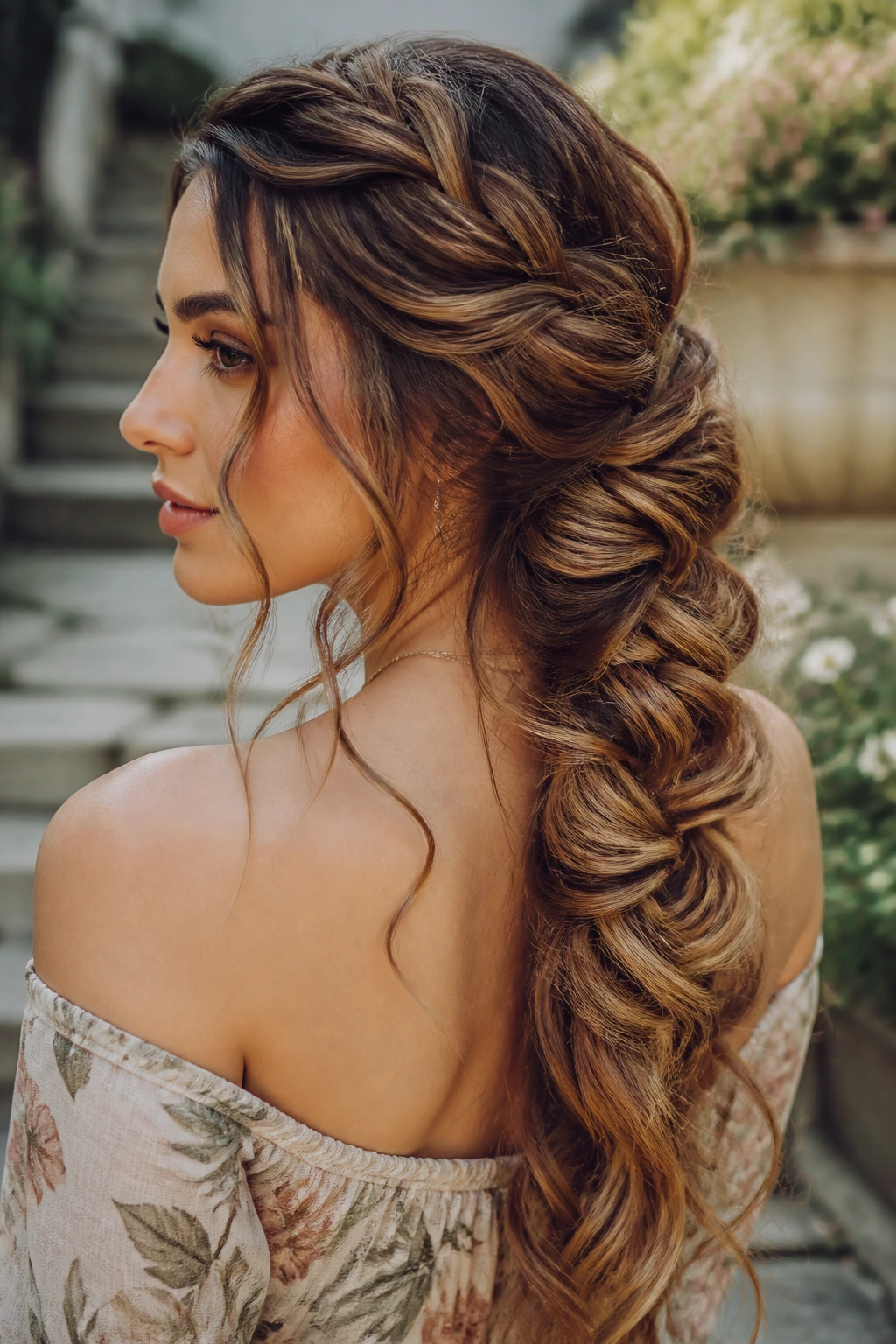
A mermaid braid usually means a soft, oversized braid with a loose, cascading feel. It often borrows from a Dutch or pull-apart base, then gets loosened until the braid looks full and almost floating.
That’s where long hair helps most. The extra length gives the style its dreamy sweep. Without length, the effect can fall flat and look like a standard braid with extra fluff.
Best way to wear it
Waves help. A little bend in the hair makes the braid look softer and more natural. Straight hair can work too, but it often needs more pancaking and more careful section spreading to avoid a skinny tail.
I like this one for dressy outfits that still want movement. It is not a stiff braid. It wants to sway. If you over-tighten it, you lose the whole point.
21. French Rope Braid
A French rope braid takes the clean sectioning of a French braid and pairs it with a twisting motion instead of a three-strand weave. The result is sleek, controlled, and a little more architectural than a loose twist.
Long hair gives this style a strong downward line. The braid doesn’t just sit on the head. It trails, which makes the twist feel longer and more polished.
What to expect
The front section gets gathered smoothly, then the rope action begins as you continue downward. If your hair is layered, keep the sections neat near the hairline or shorter pieces will pop out and blur the shape.
This braid is excellent for days when you want something secure but not bulky. It also tucks well into low buns or ponytails. A plain rope braid is easy. A French rope braid feels a little more finished.
22. Braided Ponytail
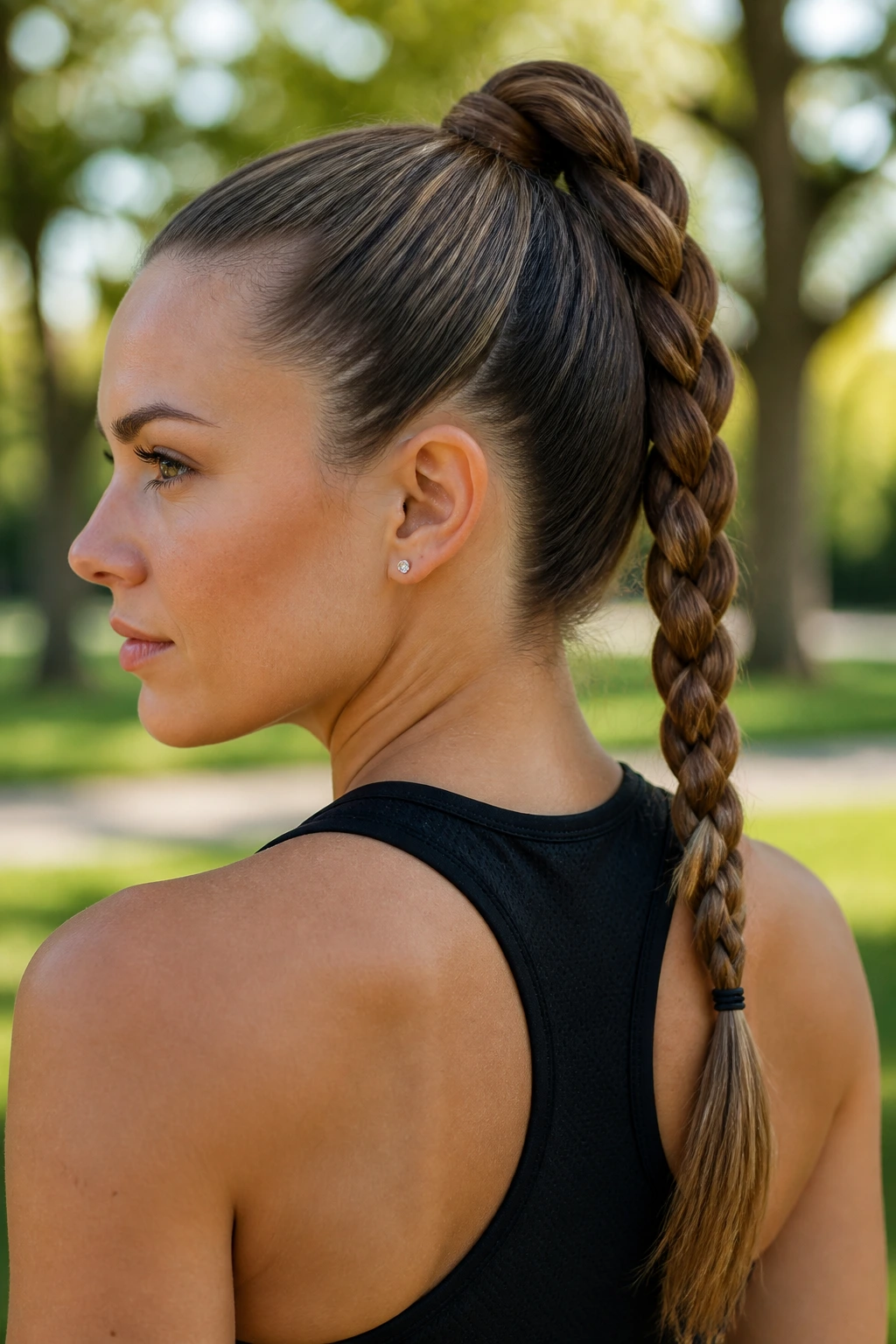
A braided ponytail is exactly what it sounds like: the braid begins at a ponytail base or runs through the ponytail itself. The beauty of long hair here is simple. You get height, length, and a clean tail that doesn’t fall limp after an hour.
The style can be sporty, sleek, or dressed up depending on how tight the base is. A tight elastic at the crown makes it sharper. A lower base feels calmer.
Why I like it
It keeps the weight of long hair under control without hiding the length. That’s rare. Most updos sacrifice drama. This one keeps both.
If you want it to look polished, wrap a small section of hair around the elastic before the braid starts. If you want it practical, skip that and go straight into the plait. Either way, the ponytail stays off the neck, and the braid gives the whole thing a finished shape.
23. Braided Bun
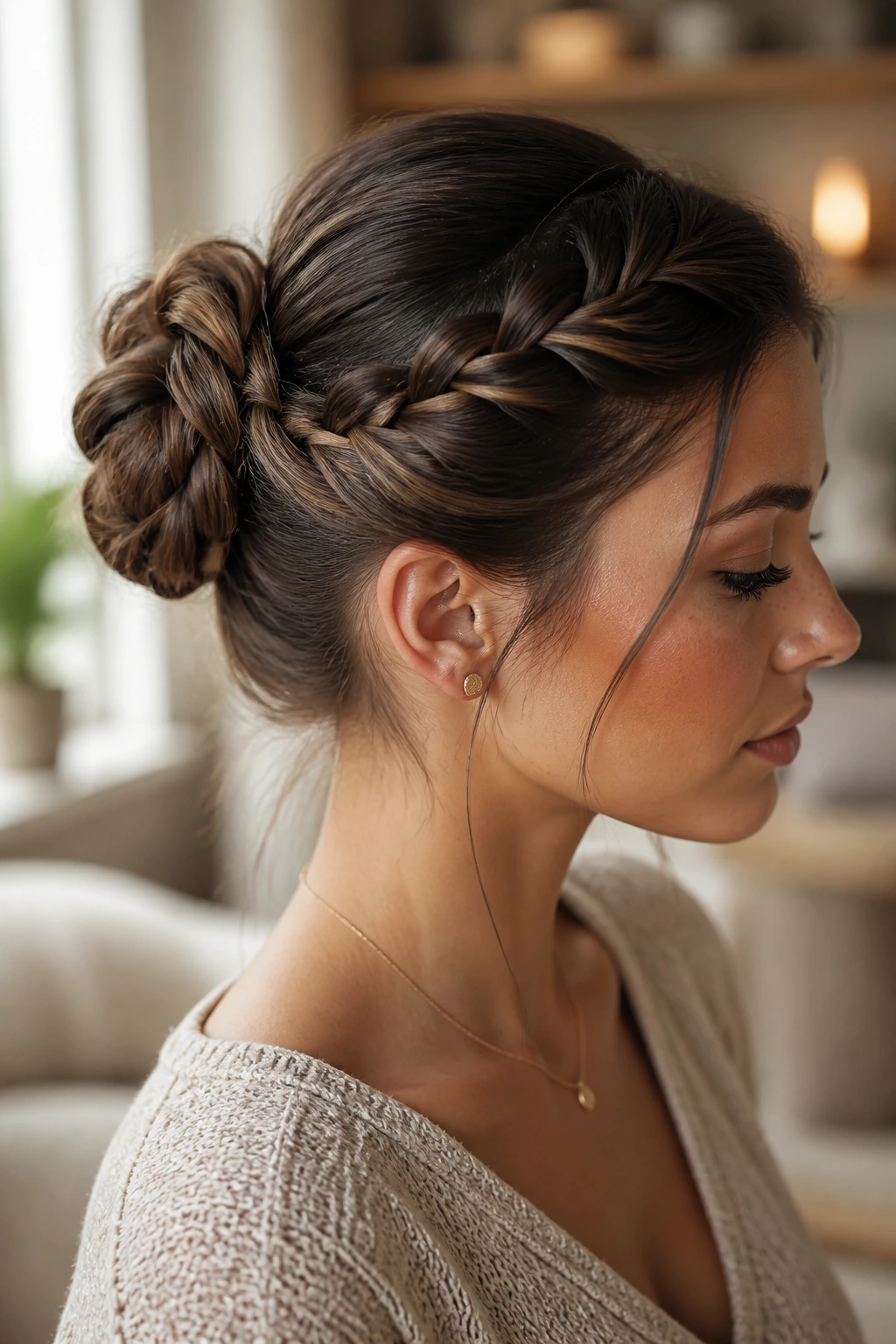
A braided bun is the style I reach for when long hair needs to disappear neatly. First you braid it, then you coil the braid into a bun and pin it down. The braid adds grip, which helps the bun hold better than loose hair ever would.
The braid is the structure. The bun is the finish. That’s why this style lasts. The long length gives you enough material to build a substantial bun instead of a tiny knot at the back of the head.
A few practical notes
Low braided buns feel elegant and stay put. Higher ones look more playful but can feel heavier if your hair is thick. If the braid tail is long, tuck the ends under the coil and pin them at more than one angle so they do not poke out later.
This is one of the easiest ways to make long hair feel manageable for events, work, or travel. It’s not flashy. It is dependable, which is its own kind of style.
24. Goddess Braids
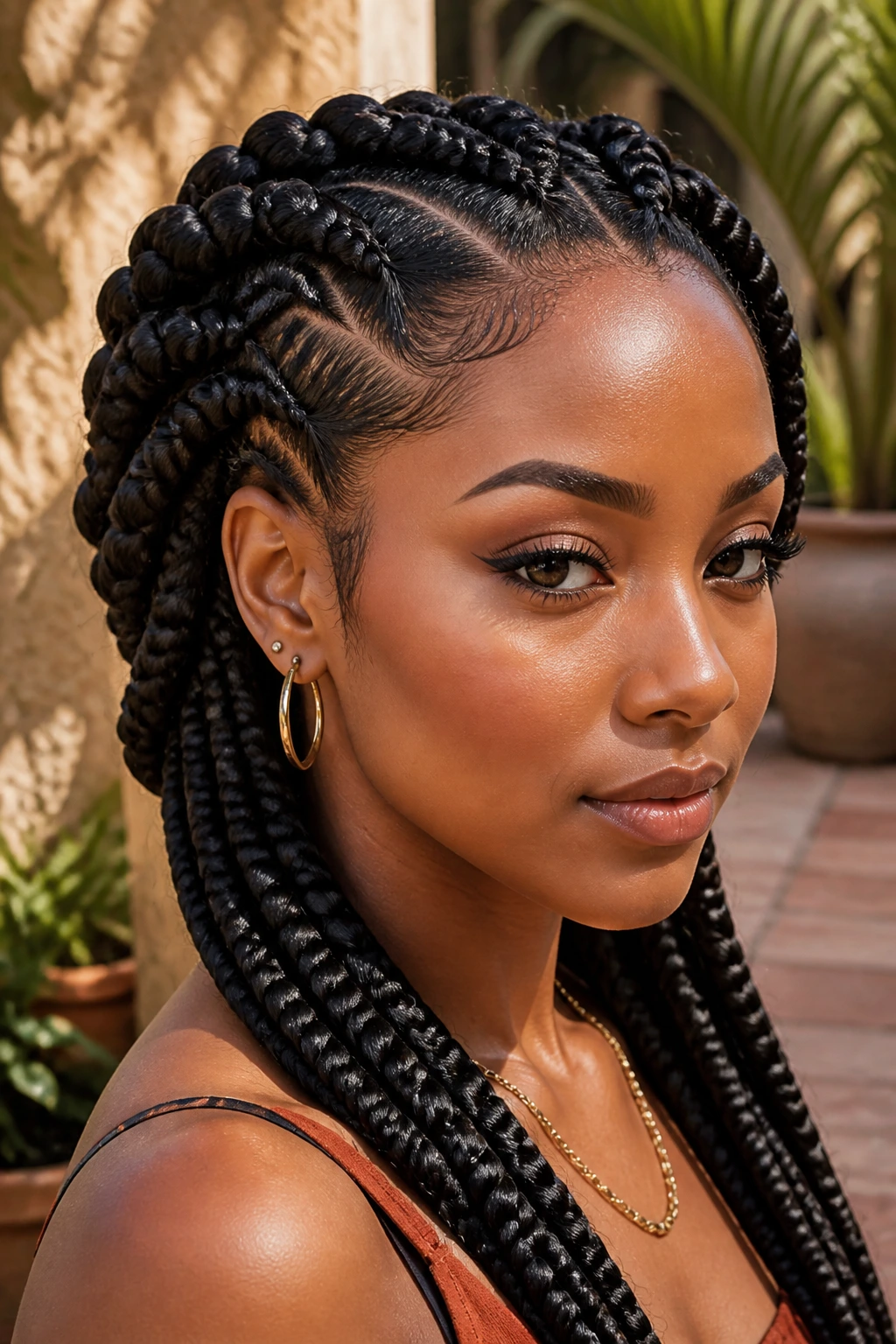
Goddess braids are large, sculpted braids with plenty of visual weight. They usually sit close to the scalp and stand out because the sections are broader and more pronounced than in finer cornrow styles.
Long hair gives goddess braids extra length and a stronger finish at the ends. The braids can sweep back, fall to one side, or gather into a low tie depending on the look you want.
Why they stand out
The size is the point. These braids are not meant to hide. They’re meant to be seen. Clean parting makes a huge difference here, and so does tension that is firm without being harsh.
I like this style when the hair needs to stay protected for a while but still look deliberate. It is one of the more dramatic braids for long hair, and it holds that shape in a way that smaller braids sometimes cannot.
25. Cornrow Braids
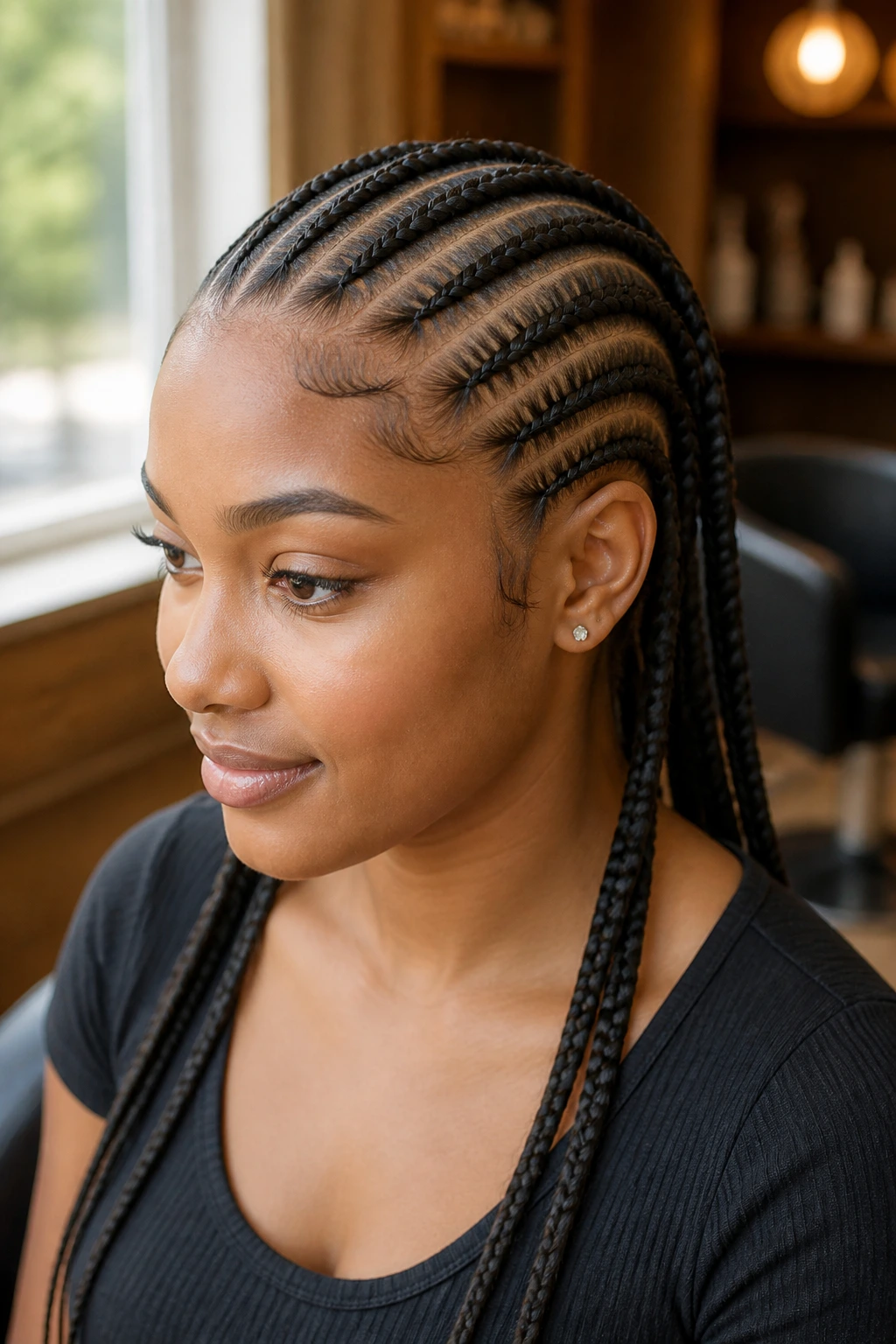
Cornrows are close-to-scalp braids that run in straight lines or curved parts across the head. They’re practical, neat, and incredibly useful when long hair needs to be contained for more than a day or two.
The visual appeal comes from the parting. The braid itself is small, but the rows create the pattern. On long hair, that pattern stretches farther and the style has room to settle without puffing up as fast.
What matters most
Clean sections. Clean sections again. If the parts are sloppy, the whole head looks unfinished. The rows should sit close enough to the scalp to hold, but not so tight that they feel painful by lunchtime.
Cornrows can be worn straight back, curved, or in geometric lines. If you want a low-drama version, keep the pattern simple. If you want a stronger look, vary the direction of the rows. Either way, this is a classic protective style for long hair.
26. Feed-In Braids
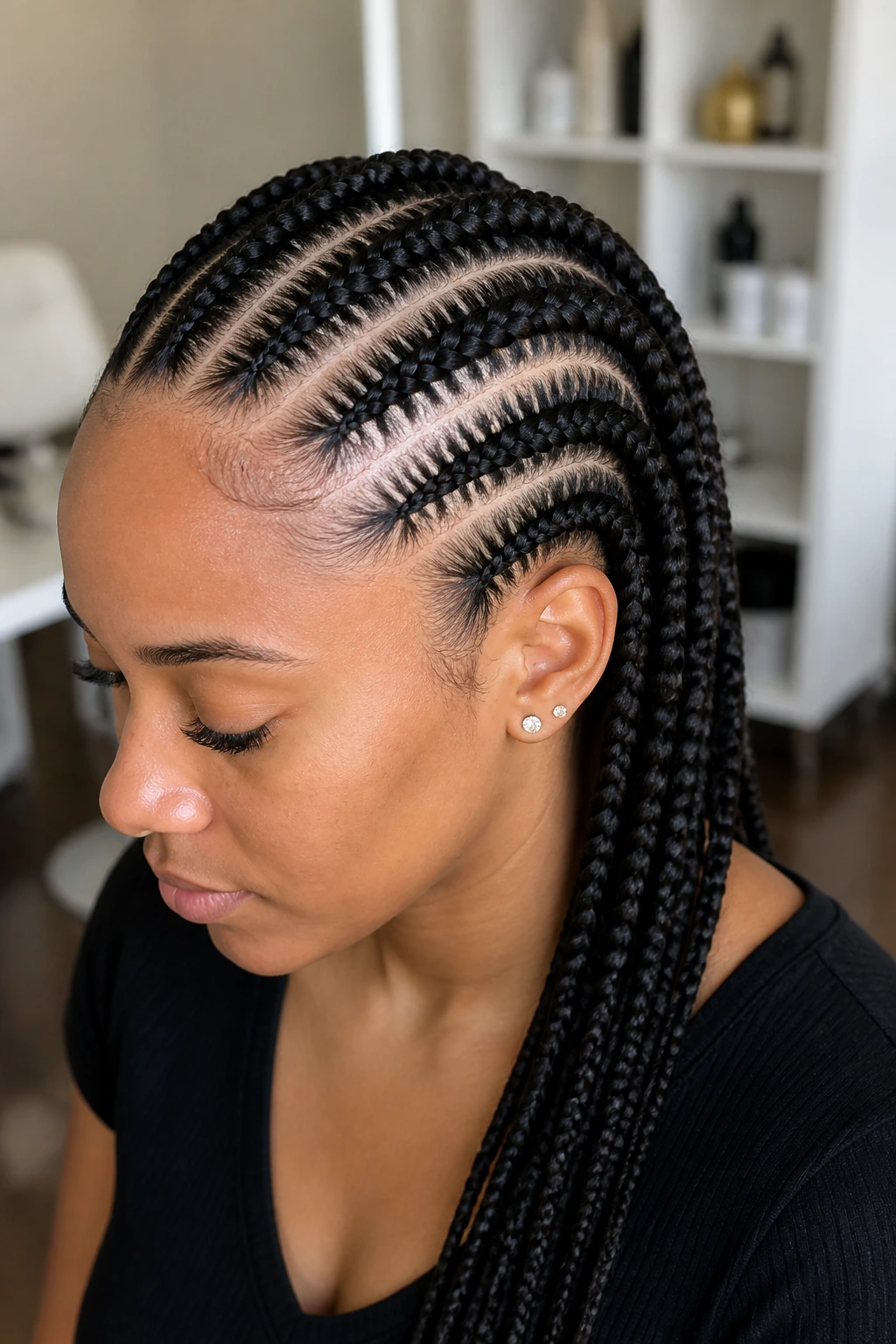
Feed-in braids are built by adding hair gradually so the base stays smaller and the braid gets thicker in a controlled way. That gradual change is the reason they look so smooth. There’s no sudden jump in bulk at the root.
Long hair helps because there is already a good amount of length to work with, so the braid can build elegantly instead of starting too heavy. When done well, the braids look natural and balanced from the scalp outward.
The real benefit
Less tension at the start. That’s the part people feel first. A feed-in braid can sit flatter and feel more comfortable than a braid that begins with a huge chunk of hair all at once.
They’re useful for long-term wear, formal styles, and protective styling that still needs a soft finish. The parting needs to be clean, but the growth pattern is forgiving if the braids are done with care. This is one of those styles that rewards precision.
27. Stitch Braids
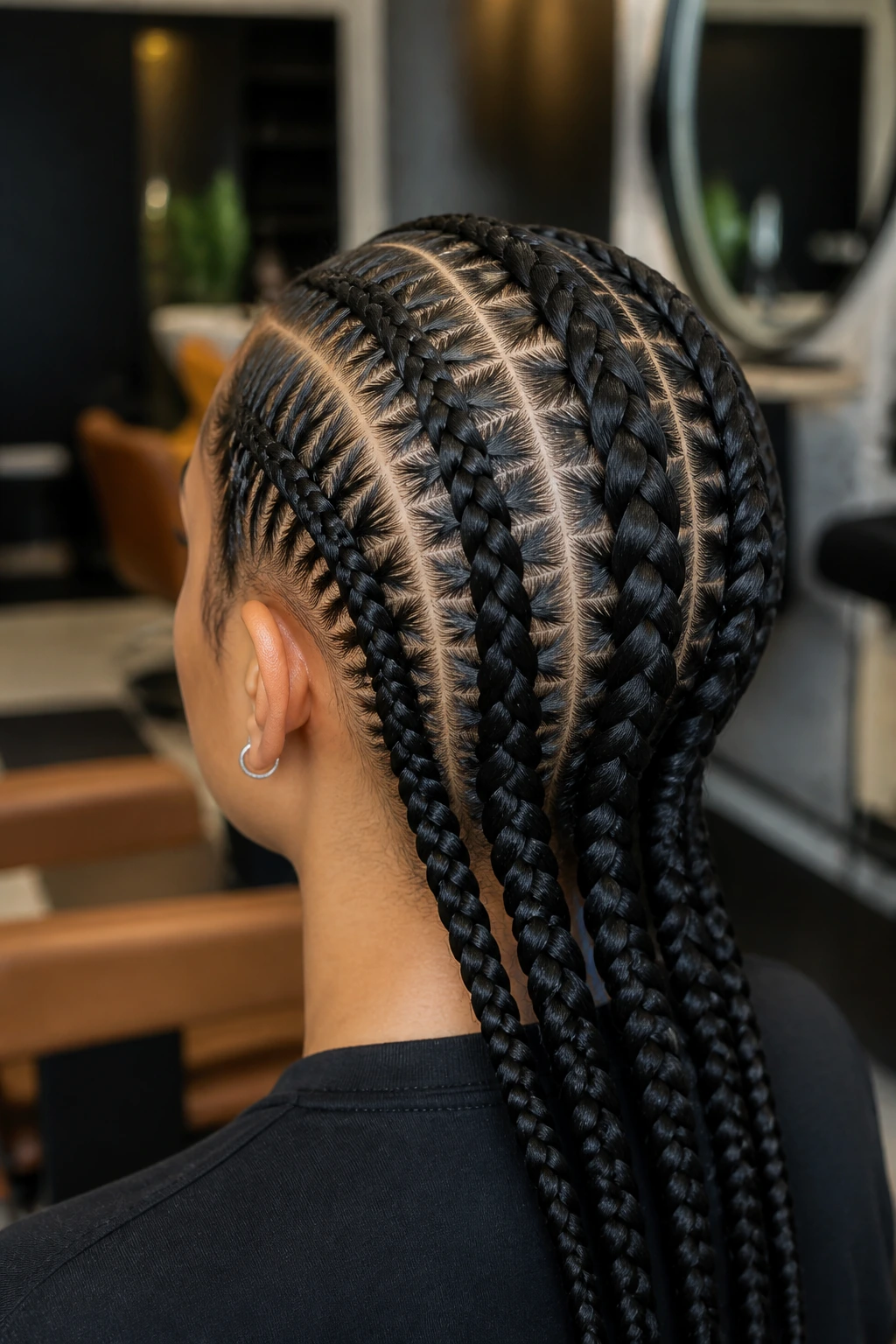
Stitch braids are known for their sharp, precise parting. The sections are laid out in clean “stitches” before the braid begins, which gives the whole style a crisp, graphic feel.
Long hair makes the rows look longer and more dramatic, especially when the braids run straight back or curve cleanly along the scalp. It’s a style that looks engineered, in the best sense.
What to keep in mind
The part lines matter as much as the braids themselves. If those lines are uneven, the style loses its impact fast. A rat-tail comb helps. So does patience.
Stitch braids can be worn plain or with extensions, and both versions look strong on long hair. They’re a good choice if you like structure and do not mind a style that feels intentional rather than soft. Some braid styles whisper. This one has edges.
28. Lemonade Braids
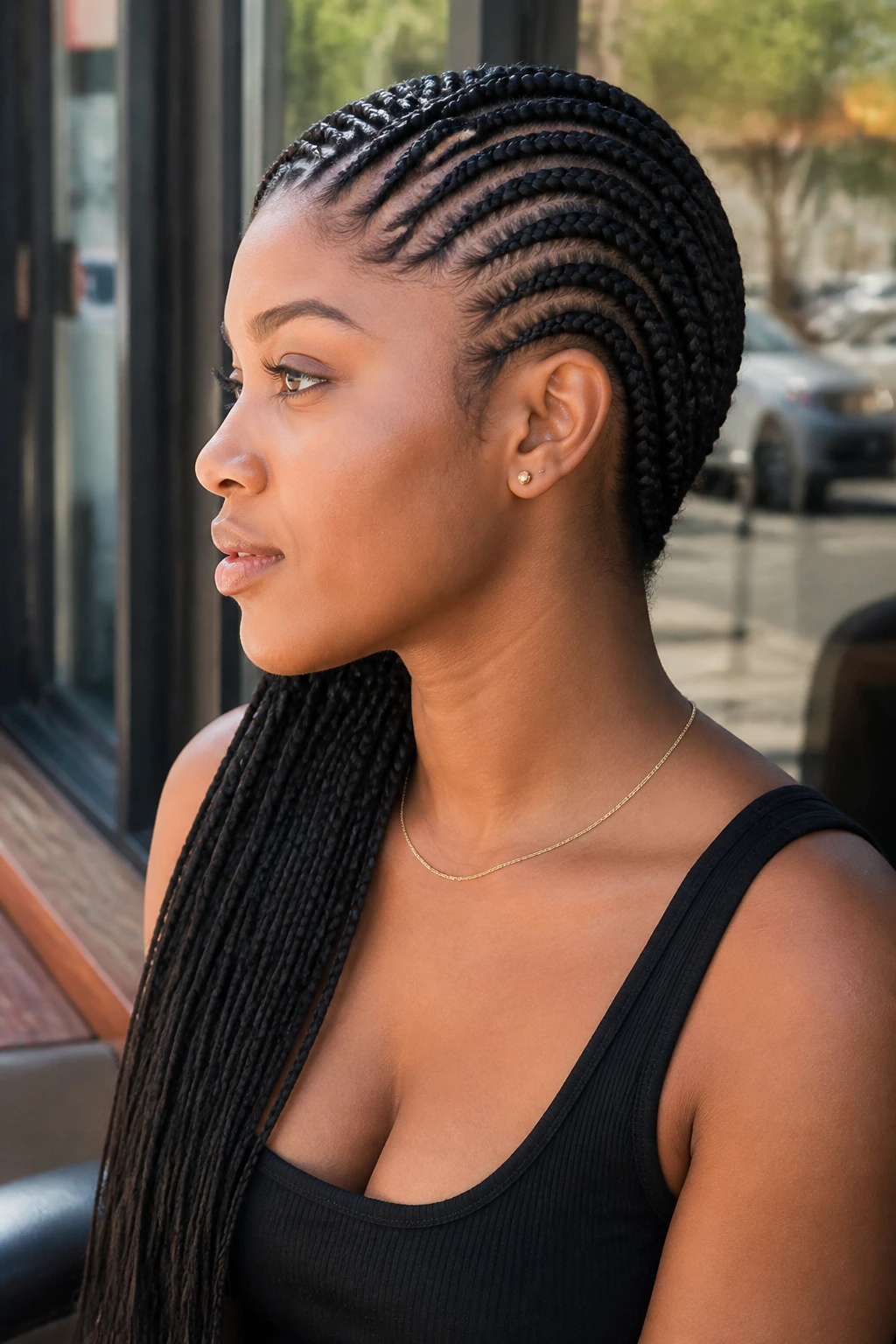
Lemonade braids sweep to the side, usually in slim rows that angle across the scalp and fall over one shoulder. The side flow is what gives them their character. They feel sleek, directional, and a little more playful than straight-back rows.
Long hair is a good match because the braids can trail farther and keep their shape after they leave the scalp. The length gives the style movement, which is half the appeal.
What makes them stand apart
Unlike symmetrical cornrows, lemonade braids lean into the angle. That makes them a nice choice when you want the face to stay open and the hair to move away from the center of the head.
I like them when the goal is clean lines with a bit of attitude. They can be simple or detailed, thick or thin, but the side-swept pattern is what you remember. If you want a braid style that changes the silhouette fast, this is it.
29. Infinity Braid
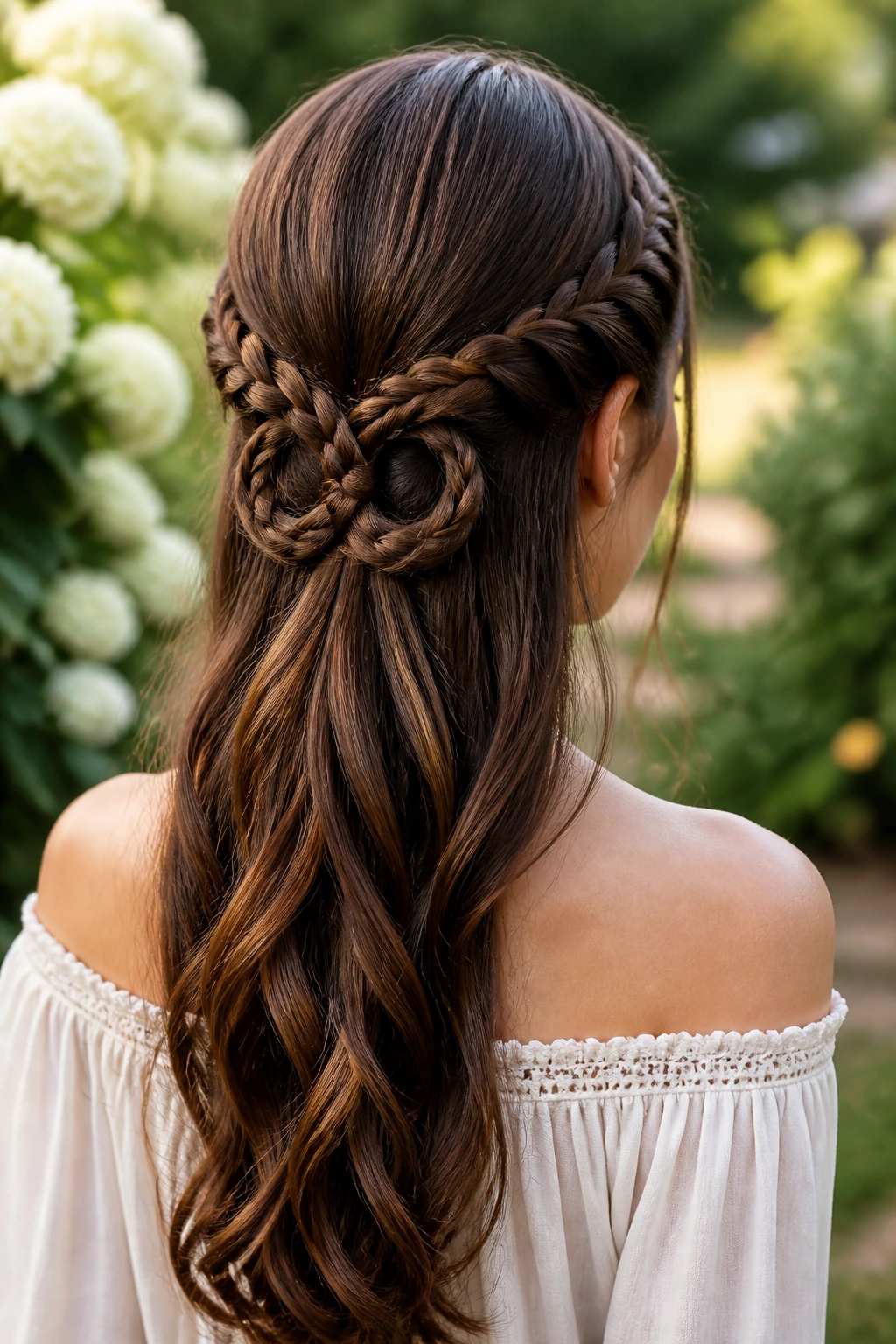
An infinity braid uses a looping pattern that makes the braid look like it twists around itself in a figure-eight. The finish is decorative and a little hypnotic, which is exactly why long hair suits it so well.
The extra length lets the looping pattern continue without looking crowded. On shorter hair, the shape can feel compressed. On long hair, each twist has room to breathe.
A style for people who like detail
This one is not the fastest braid on the list. It rewards careful hands and clean sections. If you rush the loops, the infinity shape gets muddy and the braid starts to look like a loose twist instead of a deliberate pattern.
It works nicely as an accent braid, a half-up detail, or a full braid down the back if you’re patient. The charm is in the repeat pattern. Once you see it, you see it everywhere.
30. Pull-Apart Braid
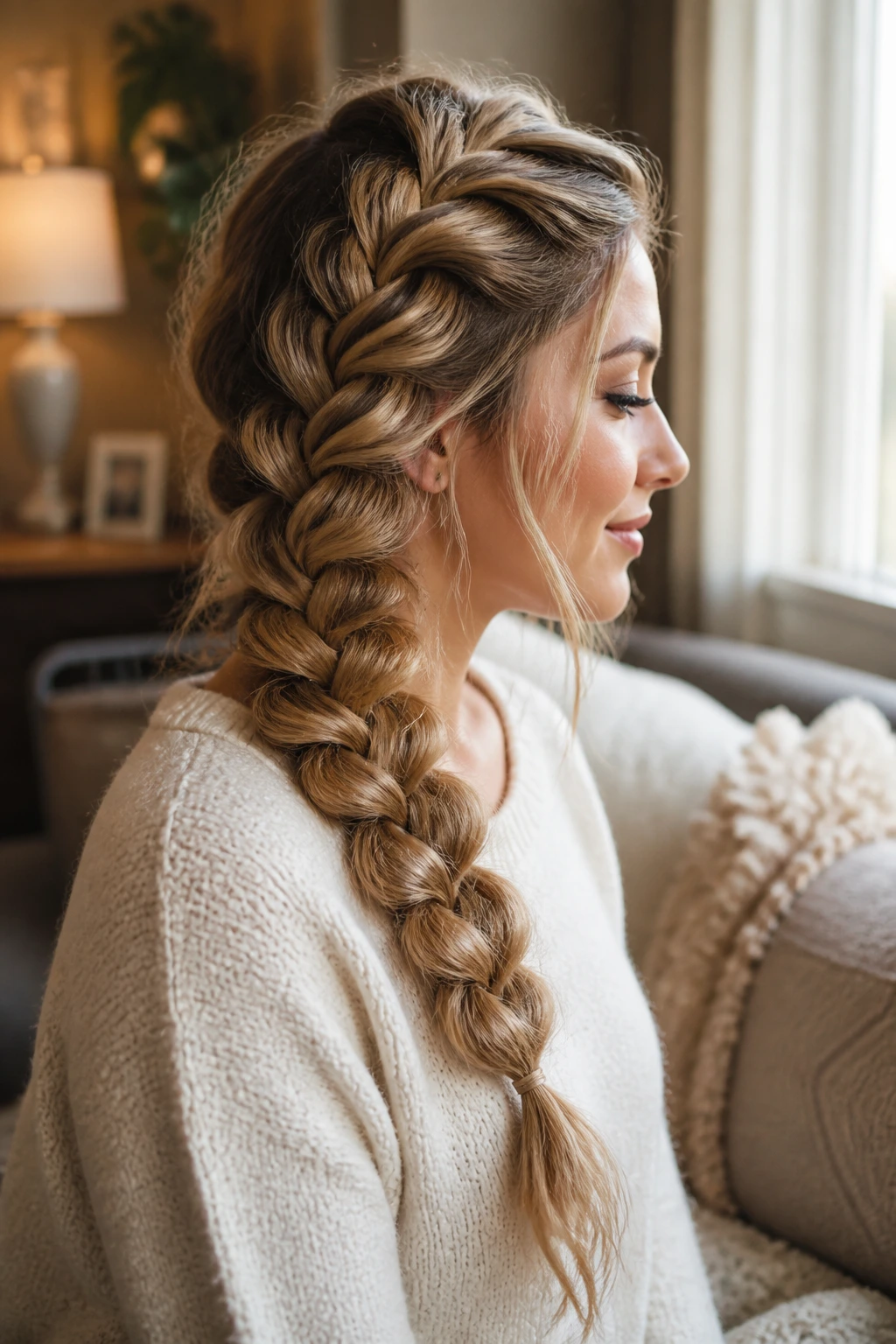
A pull-apart braid is the one I recommend when you want a braid to look wider, softer, and fuller after it’s finished. You braid normally, then gently tug the outer edges to open the sections. The braid gets bigger. Fast.
Long hair is perfect for this because there’s enough length to expand without falling apart. The braid can become broad and airy instead of tight and narrow.
How to make it look good
Braid first, loosen second. Do not start with a loose braid and hope it turns into something later. The structure has to be there before you pull it apart. Once it is, use your fingers to pinch the edges outward section by section.
This is a smart choice for parties, photos, and any day when you want maximum shape from a simple base braid. It can make fine hair look thicker and thick hair look almost cloudlike. A little messy? Yes. That’s the point.
Final Notes
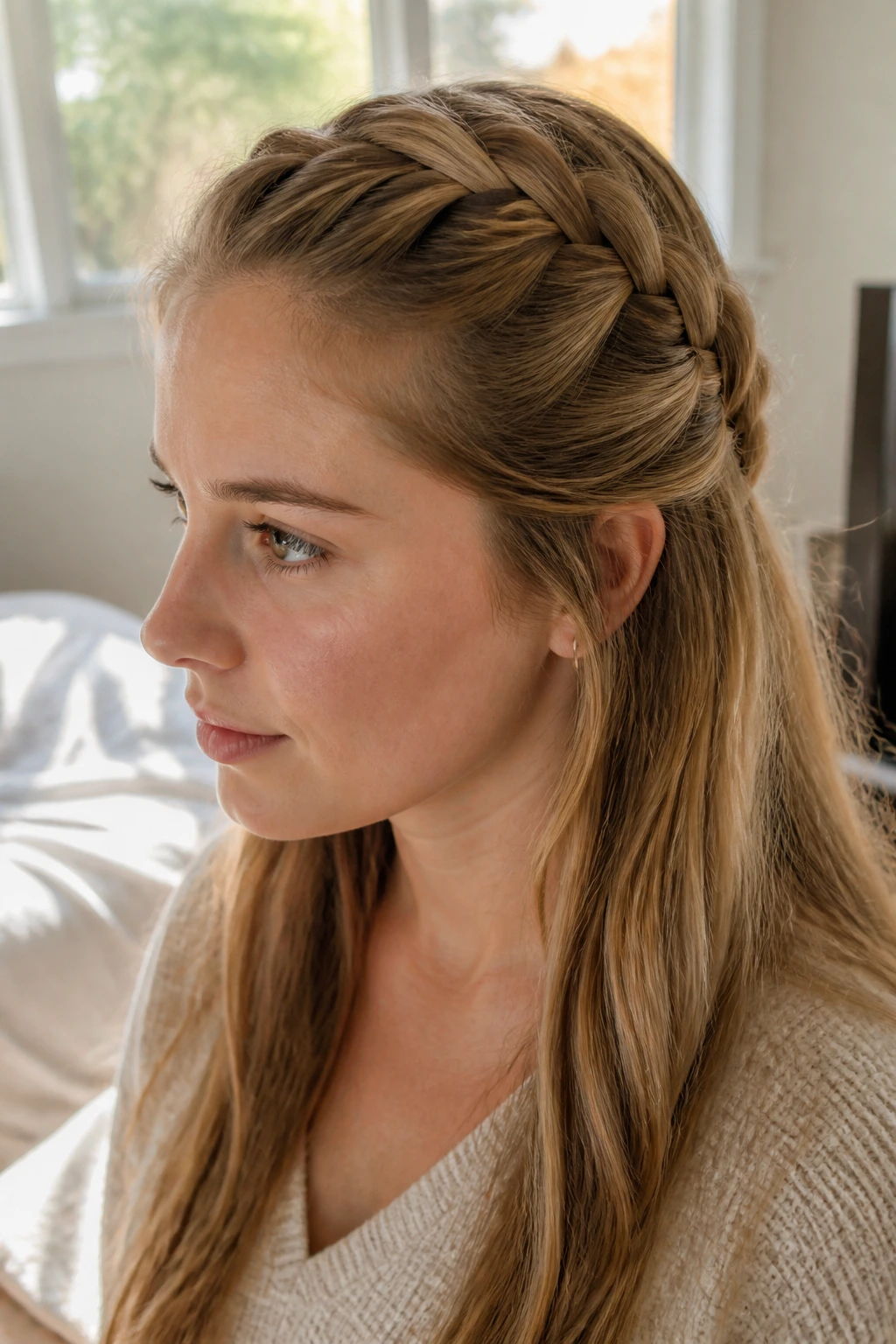
Long hair gives you more room to play, but it also punishes lazy sectioning. The prettiest braids on long hair usually come from clean parts, steady hands, and a little restraint with product. Too much gloss can make everything slip. Too much tension makes the scalp hate you by noon.
I’m partial to braids that hold their shape without looking stiff. French, Dutch, pull-through, and side braids stay in heavy rotation for that reason. But the protective styles earn their place too, especially when the hair needs a break from constant brushing and detangling.
If you’re choosing just one place to start, start with the braid you’ll actually repeat. That’s the one that earns its spot. The rest can wait until your hands stop thinking so hard and start doing the work on their own.
