



Short braids for round faces work best when they create lines, not circles. A deep side part, a little crown height, or braids that land below the jaw can make a face look longer and more defined without asking you to wear heavy, waist-skimming hair.
A blunt braid line that stops right at the cheek often does the opposite. It can make the widest part of the face feel wider than it is, even when the style itself is beautiful. That’s why the shape matters more than the braid type.
You do not need long hair to fix it. Chin-length bobs, collarbone grazers, slim feed-ins, and side-swept rows can all do the job, and they’re usually easier to live with than giant braids that pull on your scalp all week.
The sweet spot is pretty simple: keep the eye moving up, down, or diagonally. Straight across the cheeks? Skip it.
1. Side-Parted Box Braids Bob for Round Faces
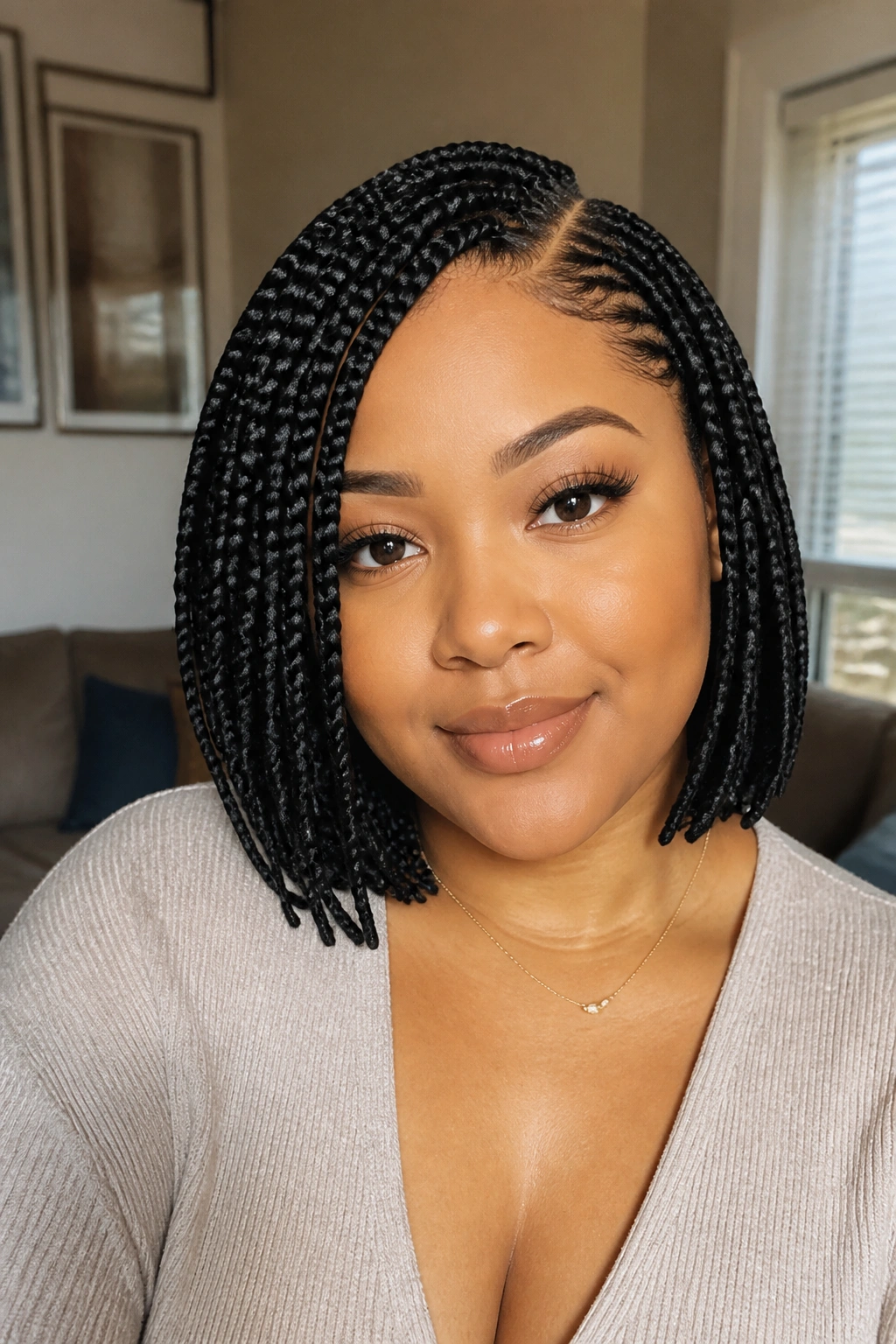
A side-parted bob is one of those styles that looks calm on the surface and quietly does a lot of work underneath. The side part breaks the face symmetry, and that alone can make a round face feel a little longer.
The length matters here. I like this look best when the braids land just below the chin or barely skim the top of the shoulders. If they stop right at cheek level, the whole effect gets softer in a way that can flatten the face shape instead of sharpening it.
Why It Flatters So Well
A clean side part creates a diagonal line across the scalp, which is doing more than people give it credit for. Diagonal lines draw the eye away from the widest part of the face, and that subtle shift changes the whole mood of the style.
- Ask for braids that fall 1 to 2 inches below the jaw.
- Keep the part about 1.5 to 2 inches off center.
- Let the longer side tuck behind one ear.
- Choose medium-size box braids if you want a neat, balanced finish.
Best tip: if your cheeks are full, let the front braids stay slim. That small detail stops the style from feeling heavy at the sides.
2. Chin-Grazing Knotless Braids for Round Faces
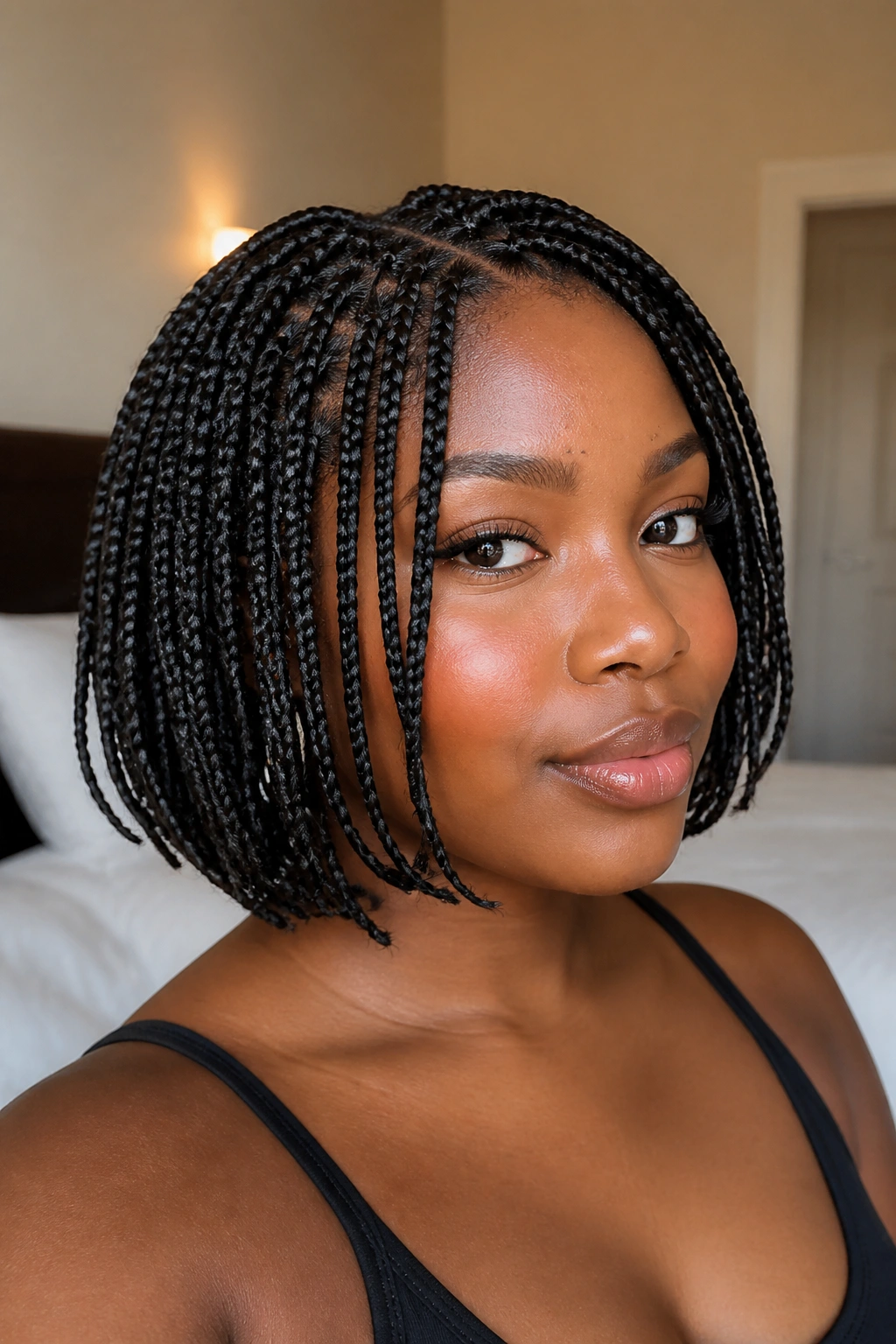
Knotless braids are one of the easiest ways to make a round face look a little more refined without making the style look stiff. The feed-in start sits flatter at the scalp, so the whole braid line feels lighter and less bulky near the temples.
That matters more than people think. A lot of face-shaping comes from what happens around the hairline, and knotless braids are good at keeping that area clean while still giving you shape at the bottom.
A chin-grazing length works especially well if the ends swing inward just a bit. It keeps the line close to the face without cutting it off at the cheekbones, which is where many short braid styles get awkward.
I’d ask for smaller braids at the front and a little more fullness in the back. That gives you movement without crowding the sides. If you want a low-effort style that still looks polished in photos, this one sits near the top of my list.
3. Fulani Braids With Face-Framing Cornrows
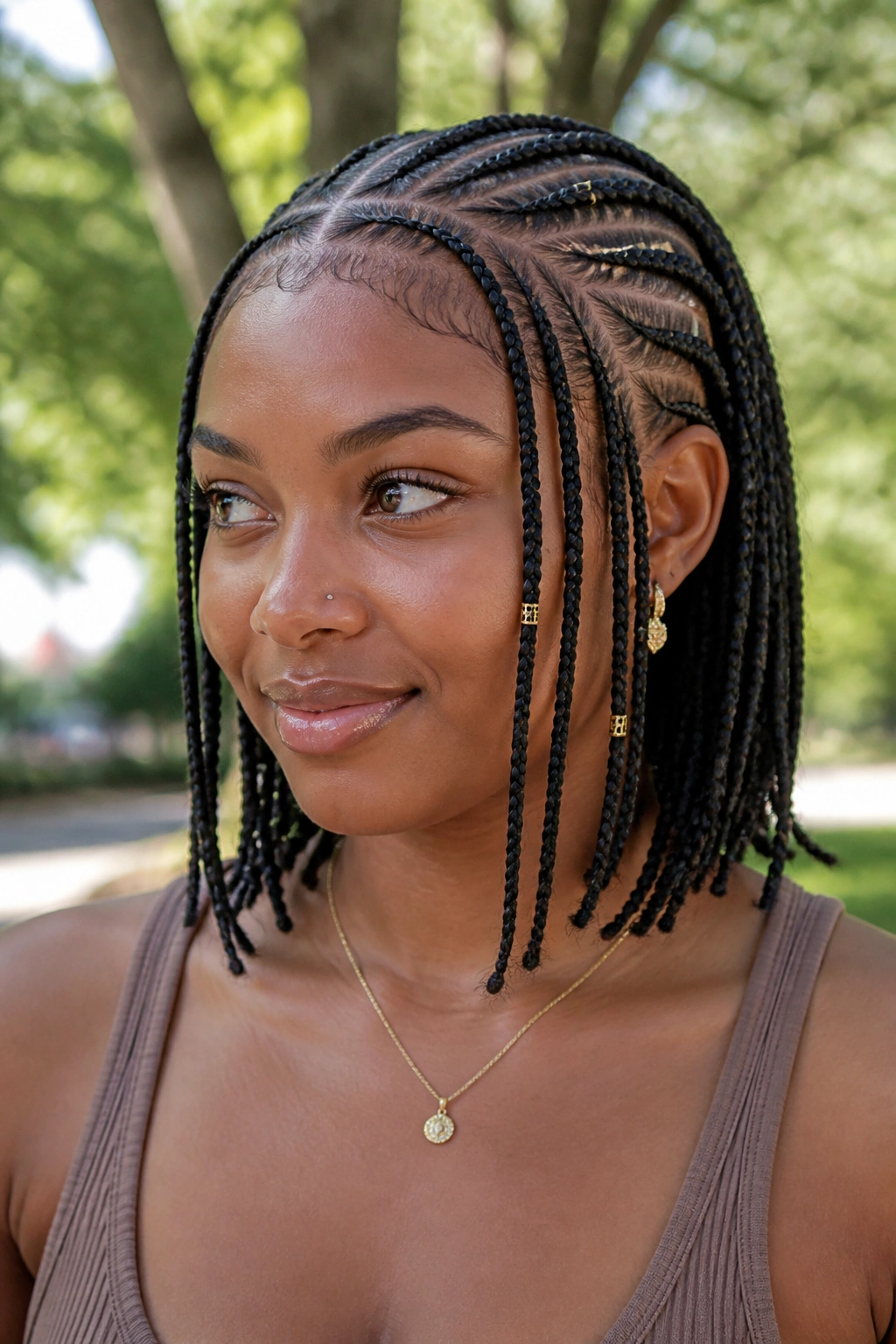
Why do Fulani braids work so well on round faces? Because they mix a center line with side detail, and that combination keeps the eye moving. You get structure in the middle, then a bit of softness at the temples.
The trick is not to crowd the sides with too much braid. A few slim cornrows near the hairline are enough. Add one narrow braid down the center, then let the rest fall into short lengths that skim the collarbone or sit just above it.
How to Wear It
Keep the face-framing rows thin. Thick side rows can sit like bars across the widest part of the face, and that’s not the look you want.
- Use one central braid or a very narrow center braid.
- Place beads near the ends, not clustered at the temple.
- Leave the front rows slightly curved instead of dead straight.
- Keep the hanging lengths below the cheekbone if possible.
That last point is the one people miss. Beads, cuffs, and string look lovely, but they should decorate the ends. Not the cheeks.
4. Curled-End Goddess Braids
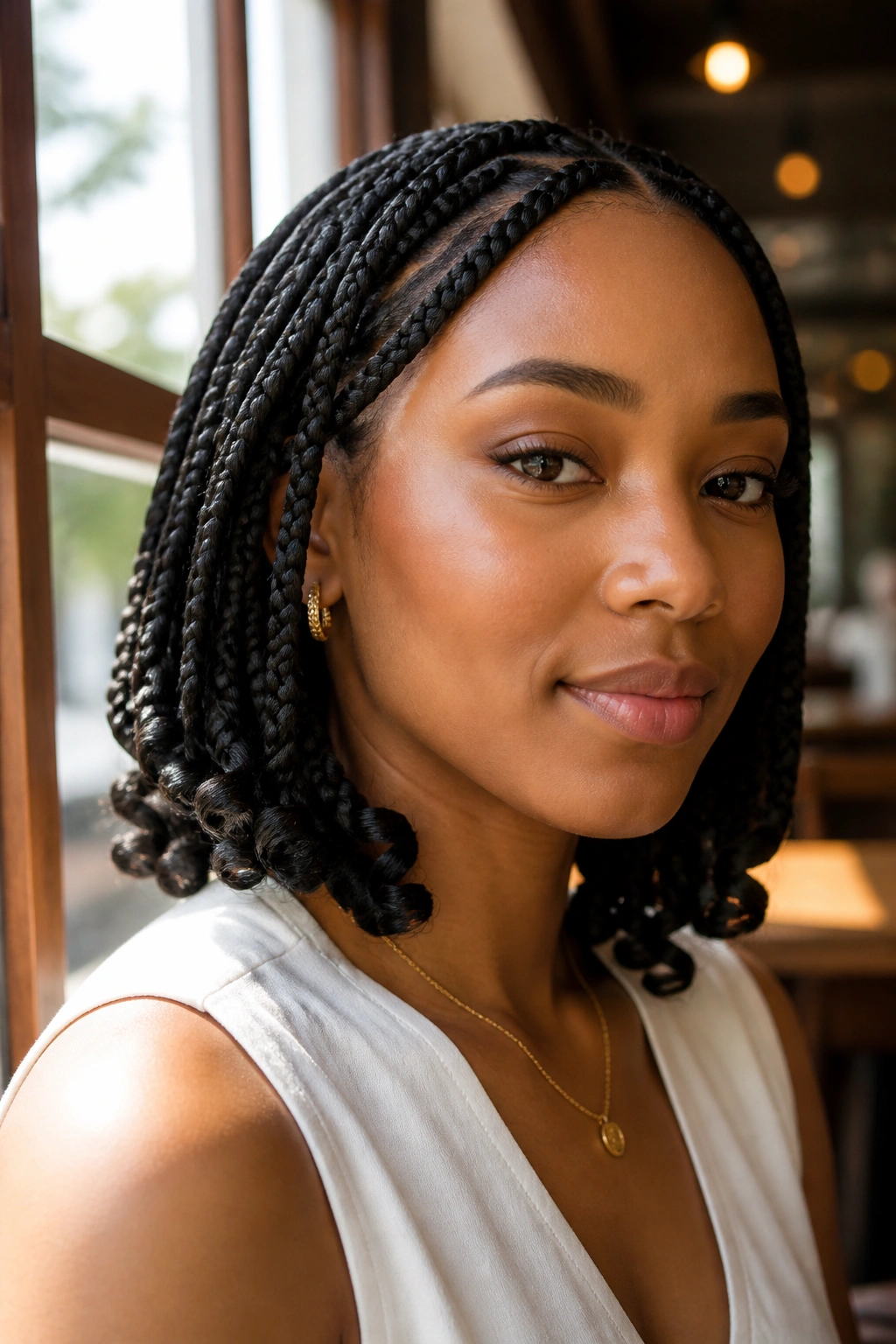
Picture a braided style that ends at the collarbone, then drops into loose curls that move around the neck. That’s the charm of goddess braids on a round face: the curls break up the lower edge so the style never feels boxy.
The braid itself gives you a neat frame. The curls soften it. Together, they keep the face from looking pinned in by a hard braid line, which is a common problem with short styles that stop all at once.
- Ask for medium goddess braids rather than giant chunky ones.
- Keep the braid ends curled with a 3/4-inch wand or rods if your hair supports it.
- Let the curls sit below the jaw, not at cheek height.
- Use a light mousse to keep the curl pattern tidy.
I’m partial to this style when someone wants softness without losing shape. It feels a little romantic, but not fussy. And that balance is hard to beat.
5. Triangle-Part Braided Bob
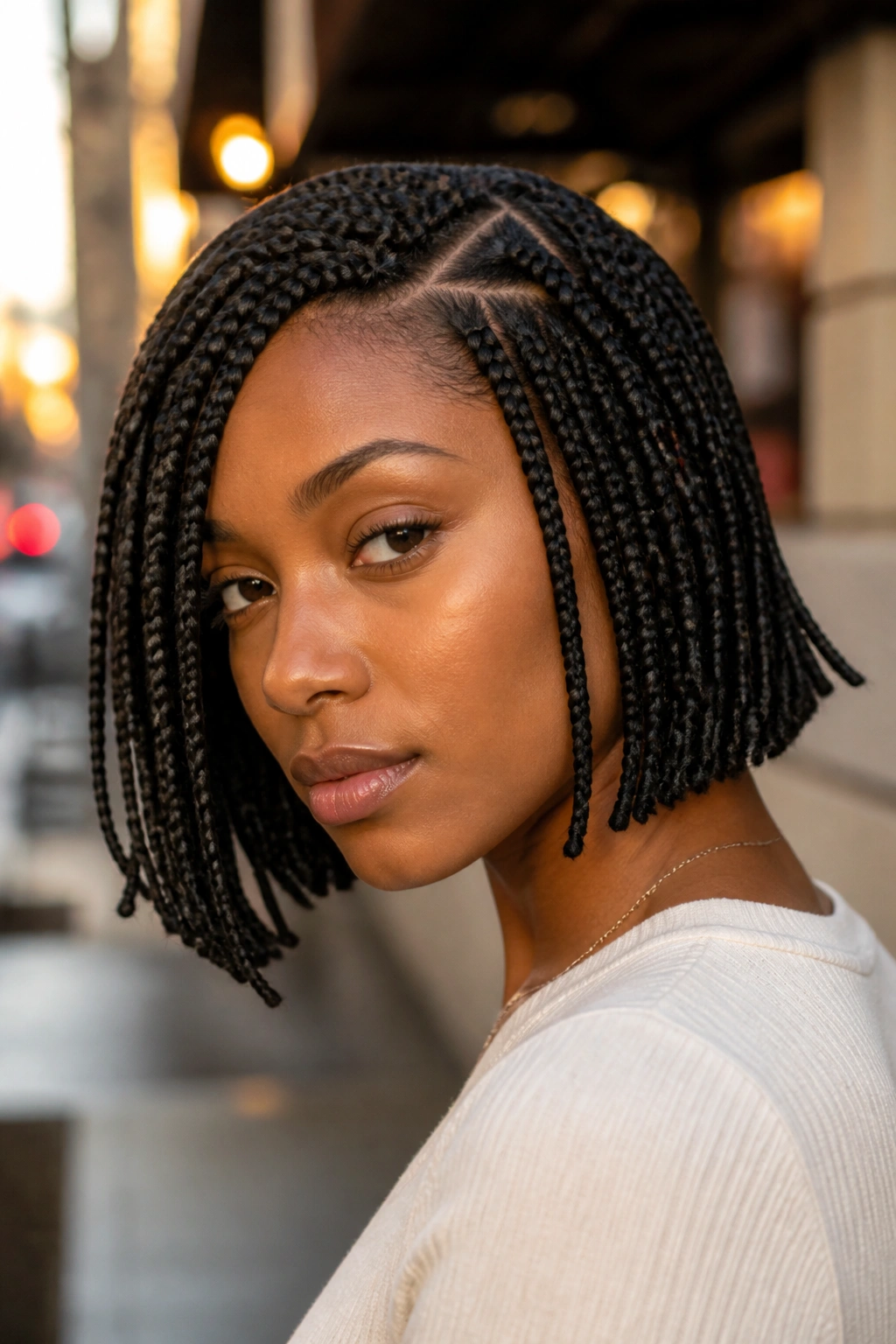
The parting does half the work. Triangle parts change the look before the braids even move, because the scalp pattern stops reading as a plain grid and starts pulling the eye in different directions.
On a round face, that matters. A triangle-part bob feels less static than square parts, and the small angles help the style look more deliberate. The bob length should sit just below the jaw or at the base of the neck, where the face naturally narrows a bit.
I like this look when the braids are kept neat and the ends are blunt. Too much curl at the sides can blur the effect. The shape is doing the heavy lifting here, so don’t fight it with extra fluff.
A triangle-part braided bob also has a nice side effect: it looks more textured in person than it does in flat photos. There’s a little movement in the scalp pattern, and that saves the style from feeling too expected.
6. Lemonade Braids With Tucked Ends
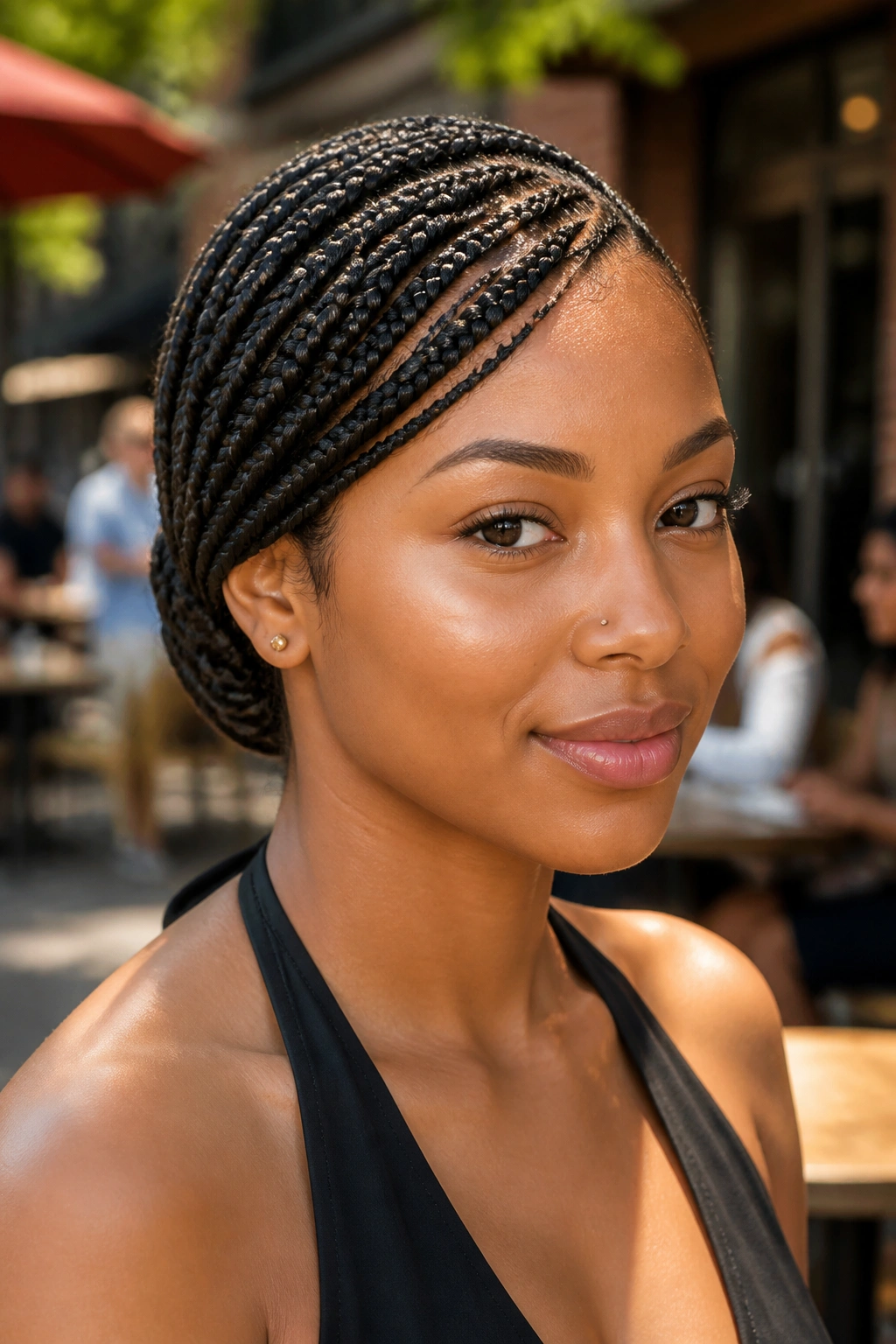
Unlike a center-part bob, lemonade braids sweep all the way to one side, and that angled fall is exactly why they can suit a round face so well. The shape gives you length across the forehead and movement away from the cheeks.
The tucked ends keep the style neat. If the braids stop and flare out at the sides, you lose that clean line. A tucked finish under the nape, or even a pinned-under end, keeps the silhouette slim.
This is the braid style I’d point to if you want attitude. It has a little edge, but not in a loud way. The line is strong, and strong lines flatter round faces because they stop the look from feeling too circular.
Best for: people who like side parts, people who wear hoops, and anyone who wants a braid style that looks sharp with very little styling in the morning.
7. Half-Up Short Box Braids
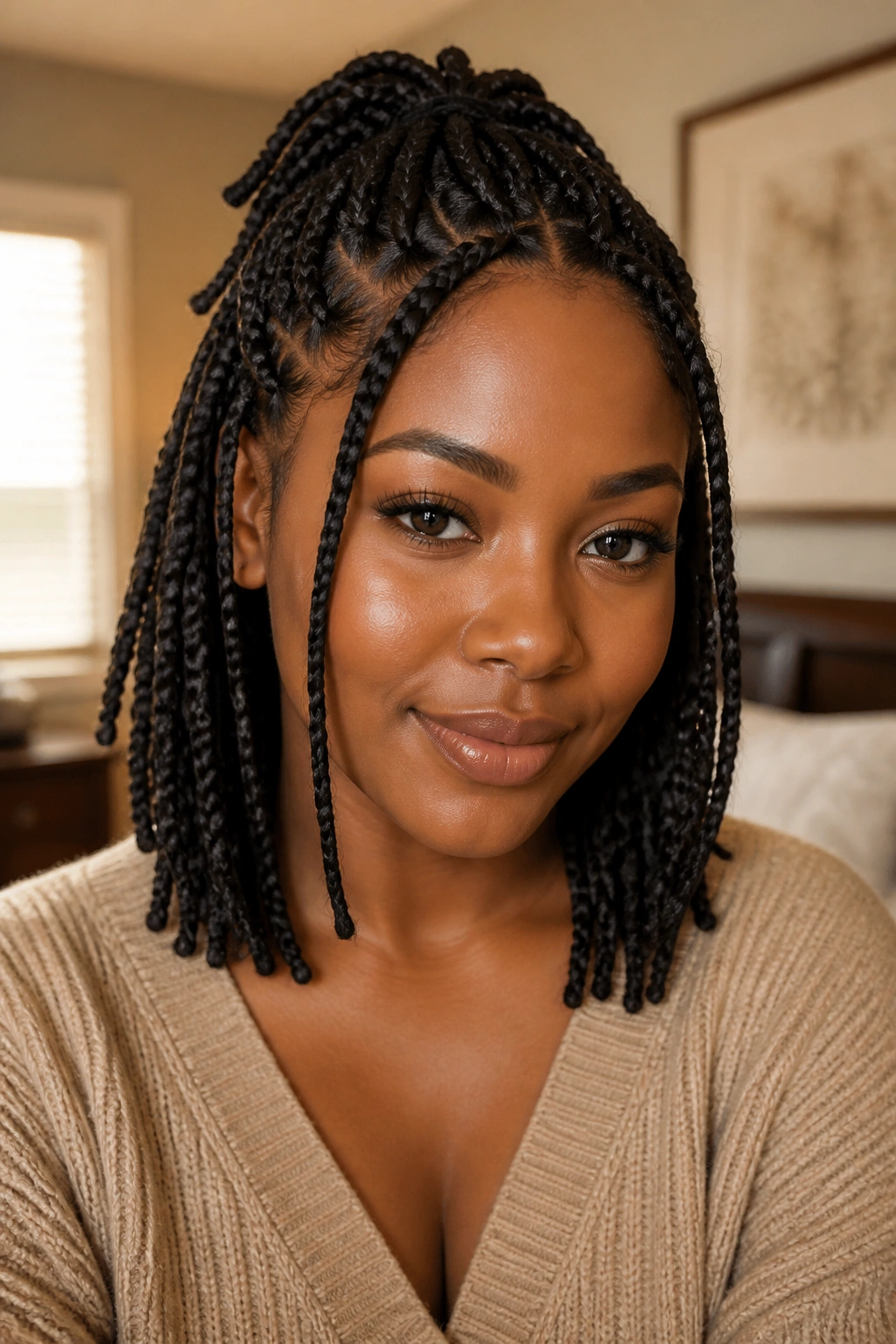
A half-up style is useful when you want short braids but still need some lift. Pulling the top section up creates height at the crown, and that height helps lengthen a round face without making the braids any longer.
The key is restraint. Don’t yank the top too tight. A small puff or knot at the crown works better than a hard, slicked-back lift, because the goal is shape, not tension.
Why It Flatters a Round Face
The lifted top shifts the eye upward, while the lower half keeps some movement around the jaw. That combination is clean and easy to wear.
- Keep the braids 8 to 10 inches if you want a true short style.
- Leave two thin front pieces loose if you want softness.
- Secure the half-up section just above the crown.
- Avoid thick edges pulled hard backward.
A lot of people overdo this look. They go too high, too tight, too glossy. That’s not the move. A looser half-up shape gives the face room to breathe.
8. Side-Swept Feed-In Cornrows
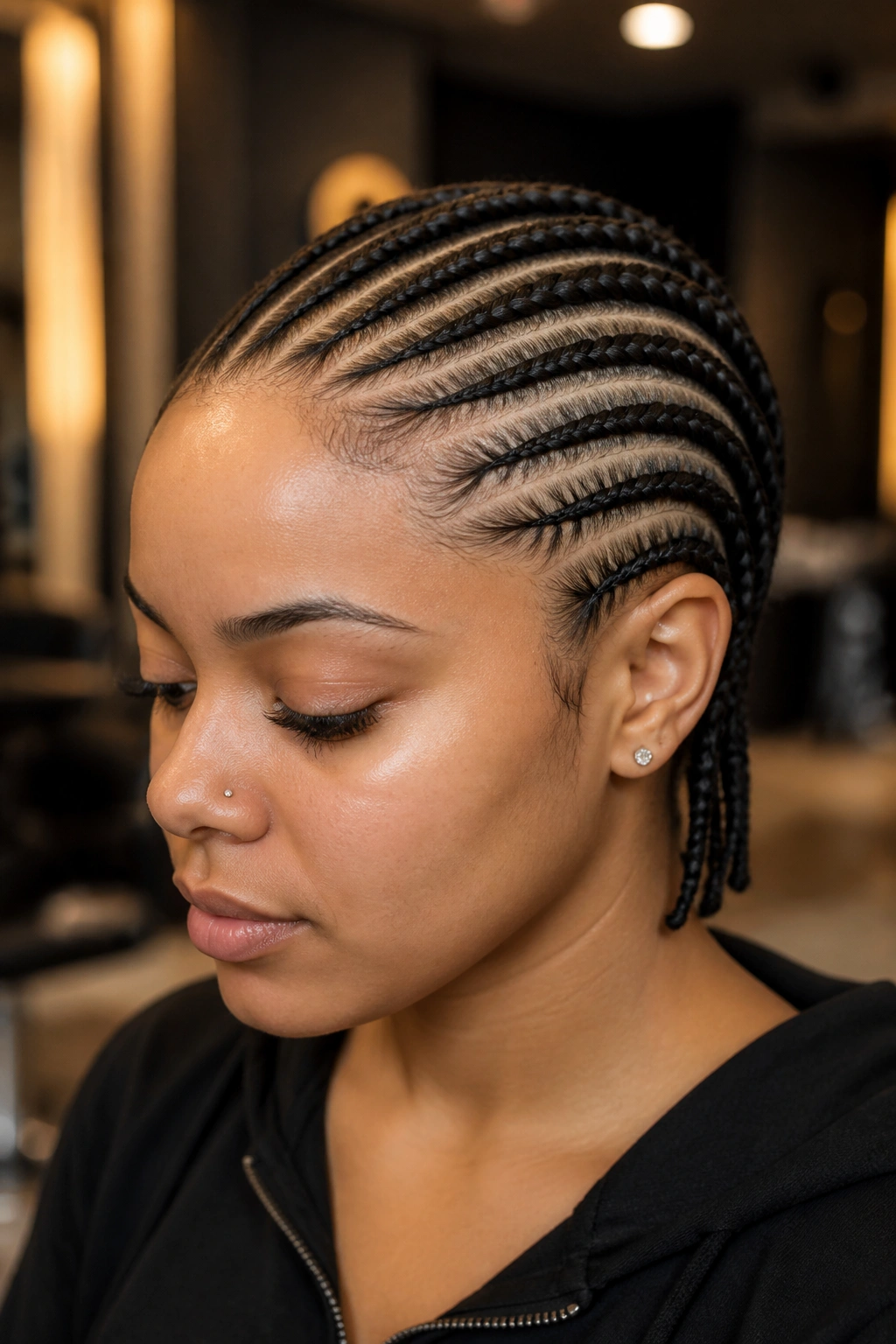
Feed-in cornrows can be the sharpest short-braid choice for a round face if the rows travel sideways instead of straight back. Straight rows are tidy, but they can make the head read wider. Side movement changes that.
The feed-in technique also helps the braids sit flatter at the start, which keeps the look close to the scalp and lighter around the temples. That’s useful if you want a style that doesn’t puff out at the sides.
I like this look with five to seven slim rows, all angled toward the opposite ear. You don’t need a crowded pattern. You need direction. Keep the ends short, tucked, or curled under if you want a cleaner finish.
This style feels especially good on days when you want structure. It’s neat, fast to style, and strong enough to hold its shape without extra accessories.
9. Braided Pixie With Micro Cornrows
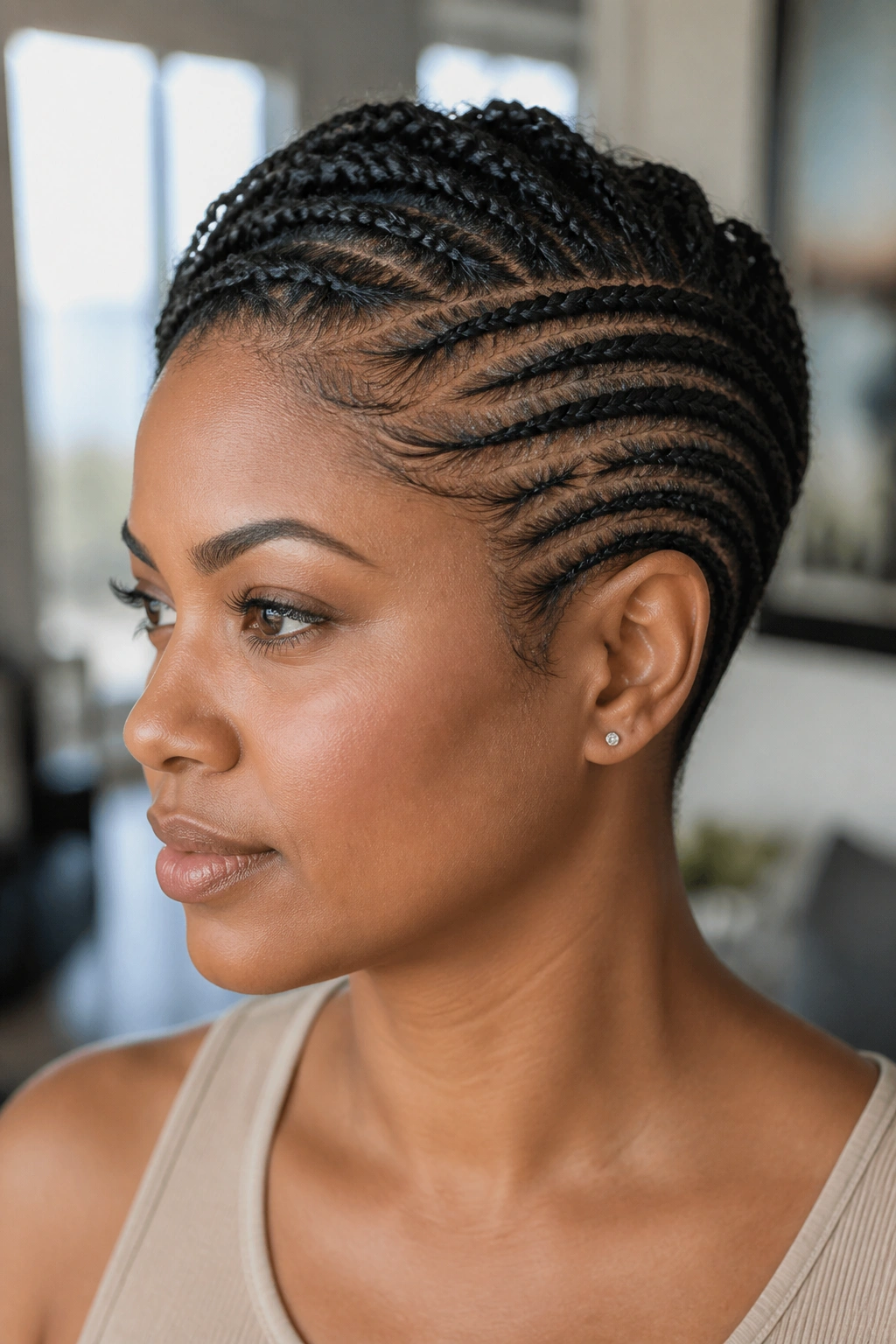
Why does a braided pixie work when some short styles don’t? Because it keeps the bulk up top and the sides close to the head. That lets the face stay open instead of boxed in.
Micro cornrows are tiny, and tiny details matter here. A slim braid pattern on top can add texture without adding width, which is the part that often trips up round faces in short hairstyles. If the sides are already tapered or neatly braided down, the whole look gets even cleaner.
How to Ask for It
Tell your stylist you want a cropped finish with a little crown height. That phrase helps more than saying “short braids” alone.
- Keep the braids fine and close-set.
- Leave the top slightly longer than the sides.
- Ask for a soft side part if you want more shape.
- Skip heavy accessories near the temples.
This isn’t the style for someone who wants swingy ends. It is for someone who likes precision. And honestly, it can look incredibly cool when the parting is crisp.
10. Short Tribal Braids With Beads
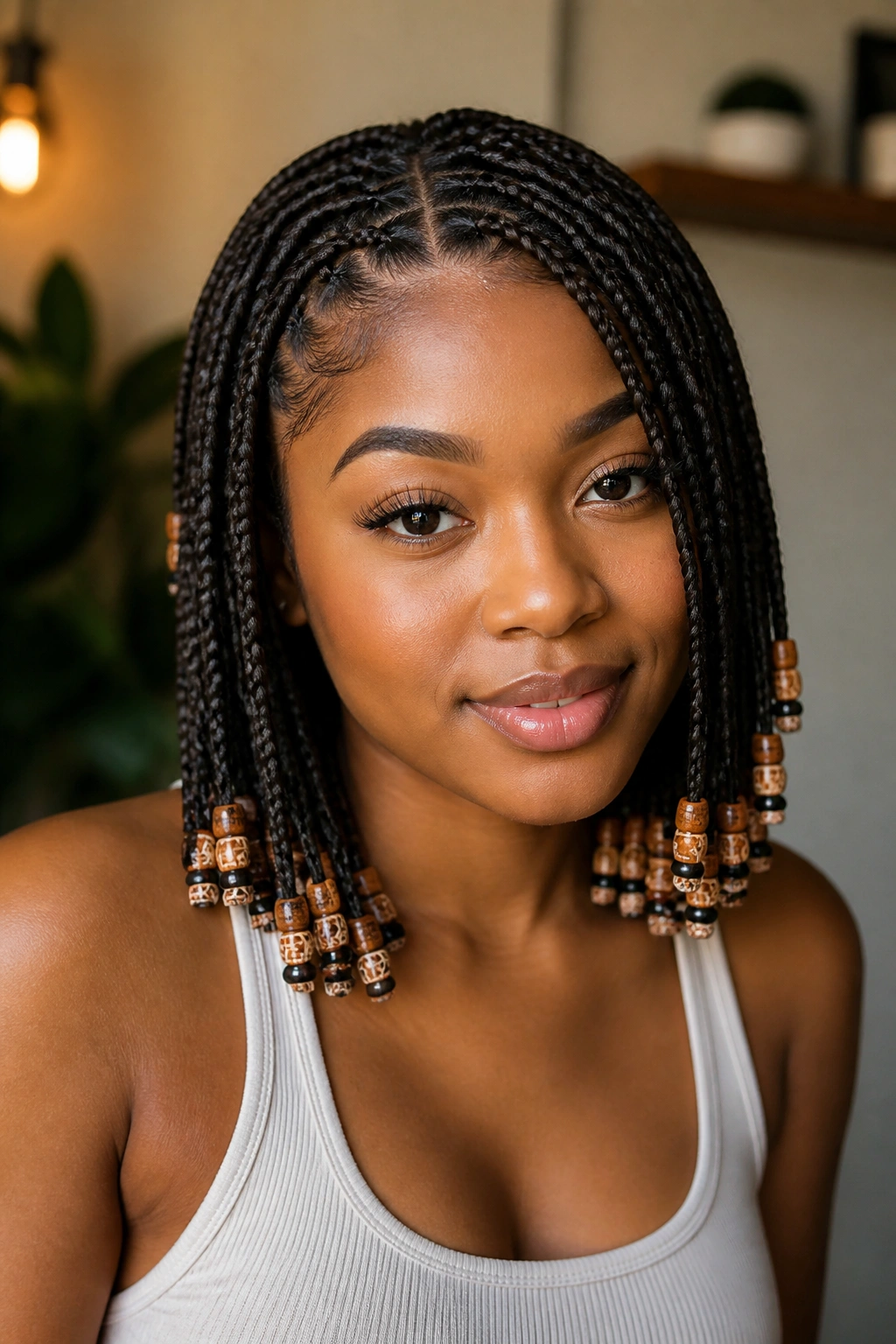
A short tribal braid style can look amazing on a round face when the beads stay low and the braid lines stay clean. The danger is piling too much decoration near the cheeks, which can make the sides feel crowded.
I like the beads best when they sit near the ends, close to the collarbone or just below it. That keeps the ornament where the face narrows. Put the visual weight at the bottom, not the widest part of the face.
- Use a few beads on selected braids, not every braid.
- Keep the braid count moderate, around 6 to 10 rows.
- Place the longest pieces below the jawline.
- Choose beads with a little weight so they swing, not stick.
That swinging motion matters. It gives the face a vertical pull. And if you’ve ever had a short braid style that felt too dense around the mouth, you’ll know how much that small shift helps.
11. Layered Bob Braids With Curled Ends
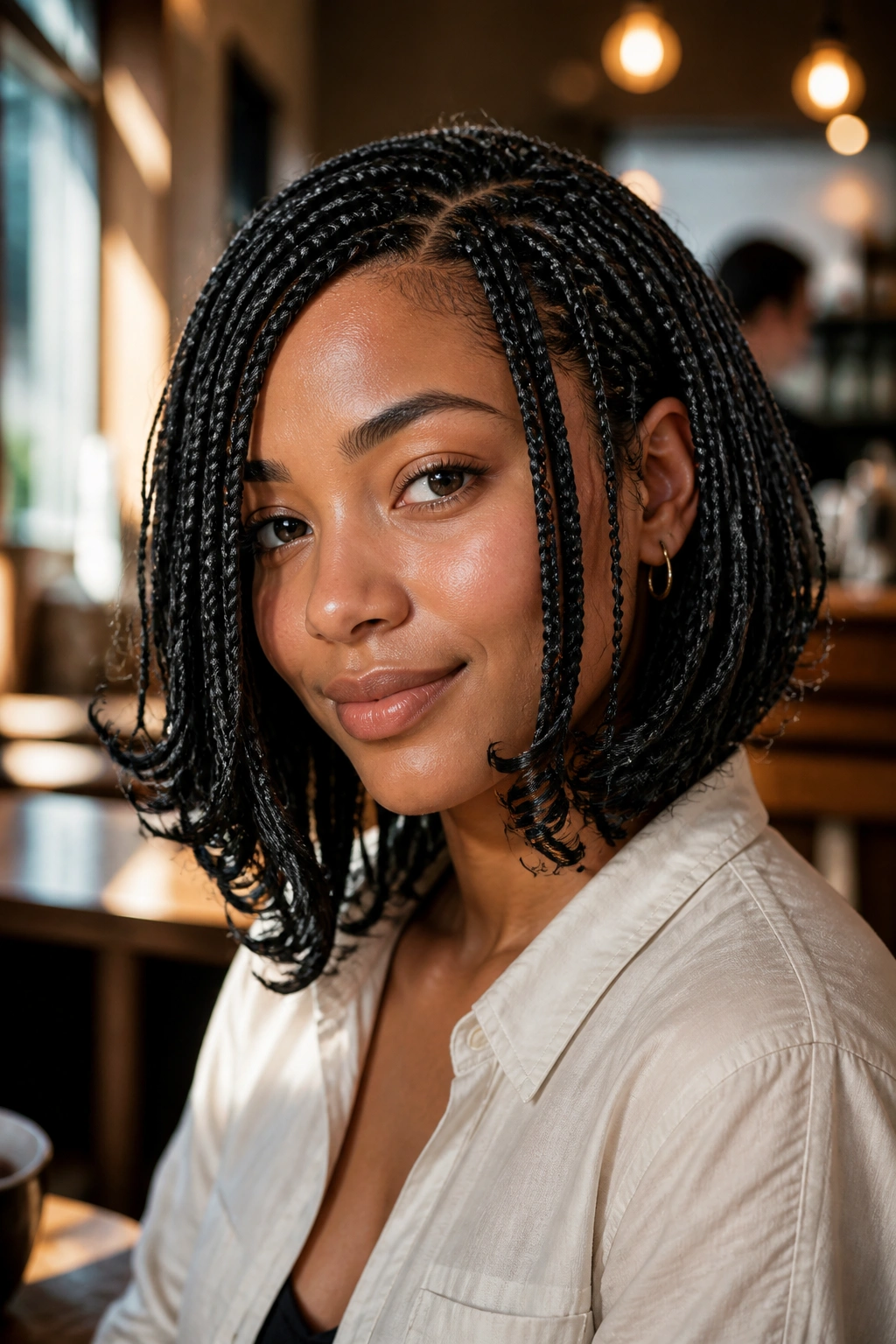
Layered bob braids are one of my favorite tricks for a round face, and not because they’re flashy. They work because the eye notices the changing lengths before it notices the face width.
A bob that’s all one length can sit flat. A layered bob moves. The front pieces can land a little lower, the nape can stay tighter, and the ends can curl just enough to keep the outline soft.
I’d keep the layers subtle. Too much contrast between the front and back starts to look choppy. You want a gentle slope, not a sharp staircase. That small difference makes the style feel tailored instead of accidental.
This is a good choice if you wear earrings or glasses. The layered shape leaves space around the face, so the accessories can show without competing with the braids. Little things. They add up.
12. Short Ghana Braids With a Deep Side Part
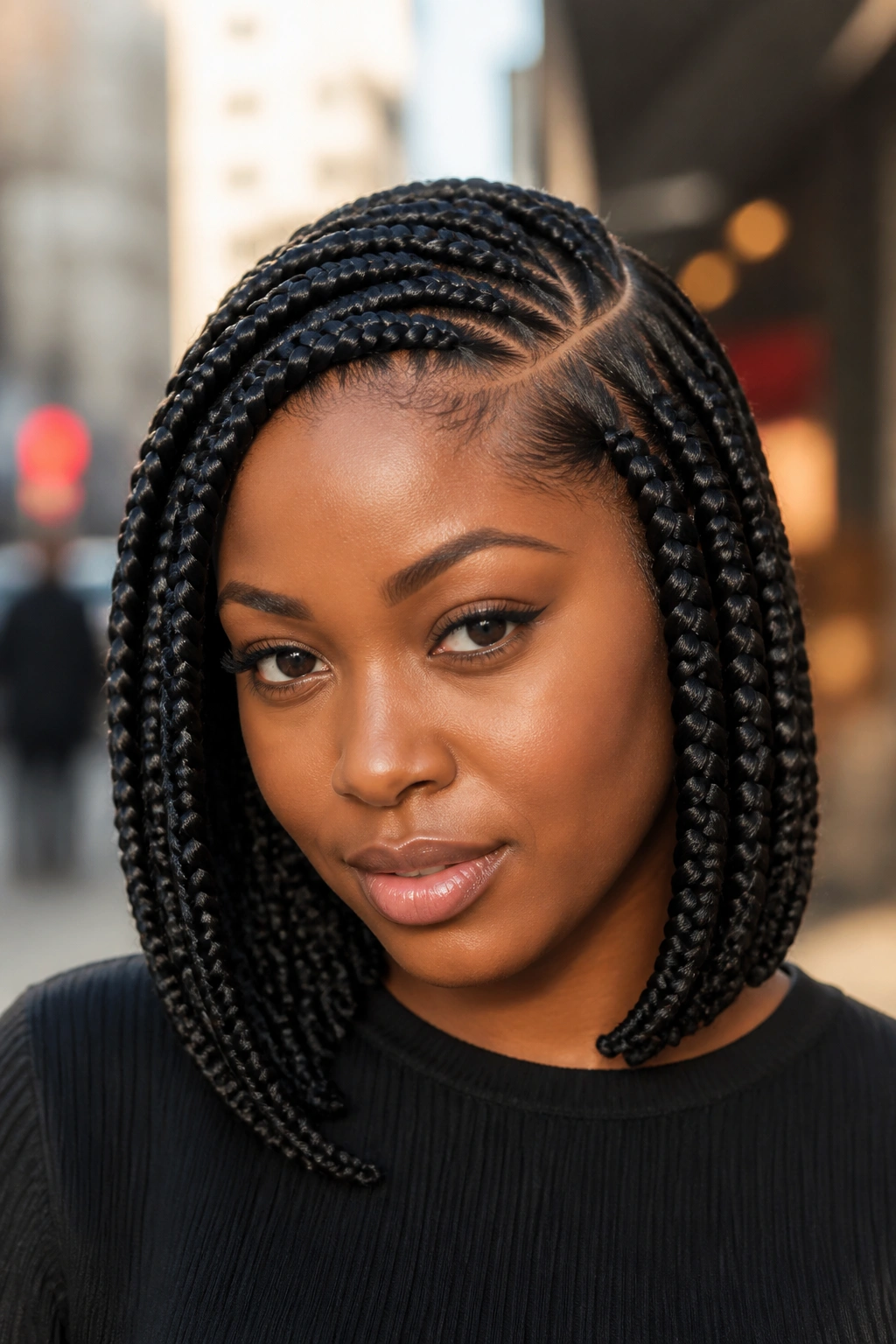
Ghana braids are thicker at the base than standard cornrows, so a deep side part gives them somewhere to go. Without that side shift, the style can feel too even across the head, which is not ideal for a round face.
The deep part breaks the symmetry and creates a long diagonal line from the hairline toward the crown. That line is doing real work. It keeps the shape from spreading across the cheeks and gives the style a stronger outline.
This one is best if you like a bolder braid pattern. Four to six broad braids are often enough. I’d avoid packing in too many thick rows, because that can start to weigh the look down.
If you want the ends tucked under or stopped at collarbone length, even better. The short finish keeps the style clean, and the side part keeps it from feeling broad. That’s the whole trick, really.
13. Braided Crown With Loose Front Pieces
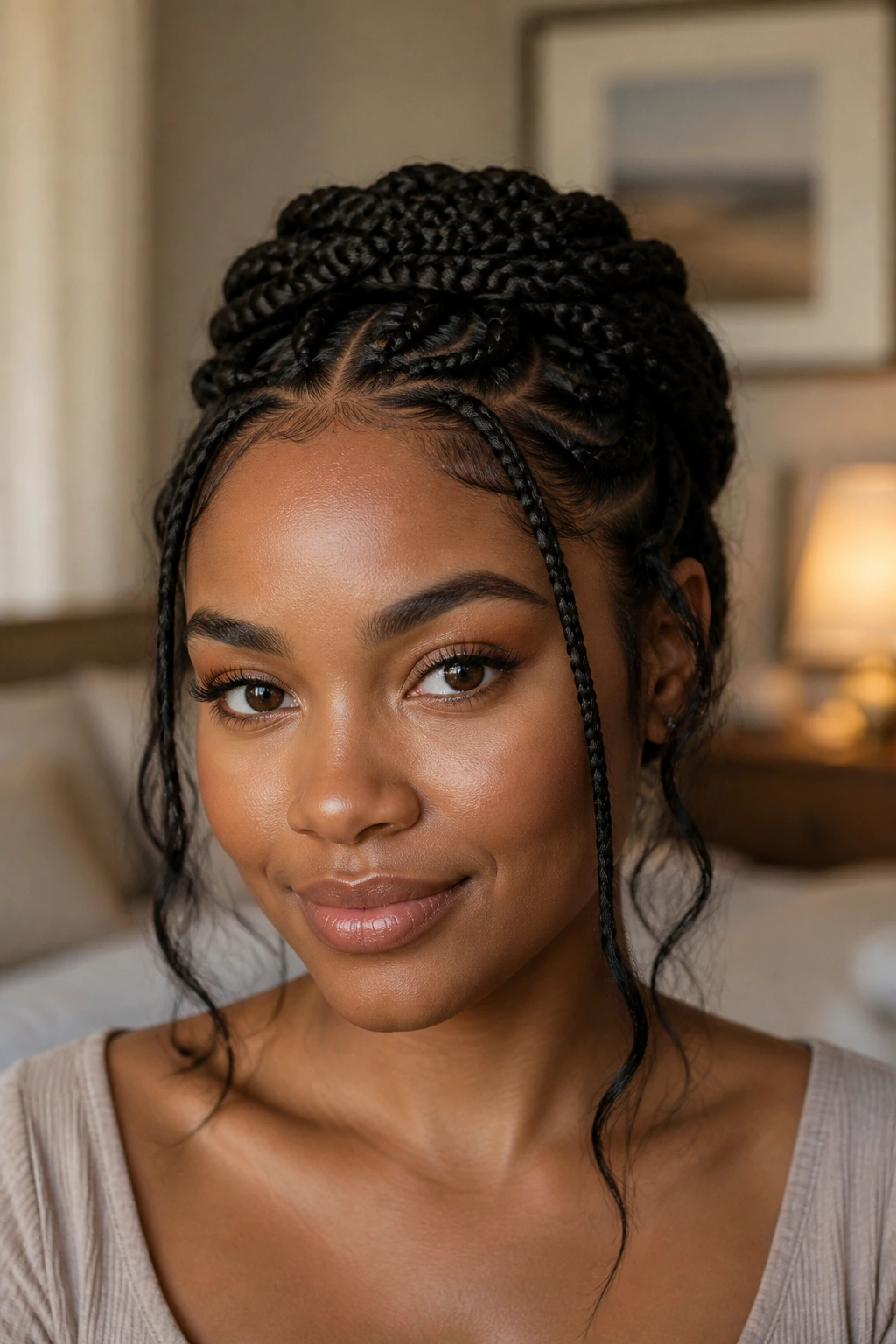
A braided crown can be a smart move for a round face when the front stays soft. The crown itself pulls the eye upward and around, but the loose front pieces stop the style from feeling too closed in.
The look needs balance. Too much hair pinned back from the temples can make the face look exposed and wide. Leave a couple of narrow pieces free near the cheekbones, and let them fall in a gentle curve instead of hanging straight.
Why It Works
The braid line sits high, which gives the face length. The loose pieces create a frame, which keeps the whole look from reading severe.
- Keep the crown braid light, not thick and heavy.
- Leave two slim front strands out.
- Let those strands land below the cheekbone.
- Keep the crown secure, but not tight.
This style is especially nice when you want something that feels dressed up without extra effort. It looks polished, but it still has a little softness around the face.
14. Zigzag-Part Knotless Braids
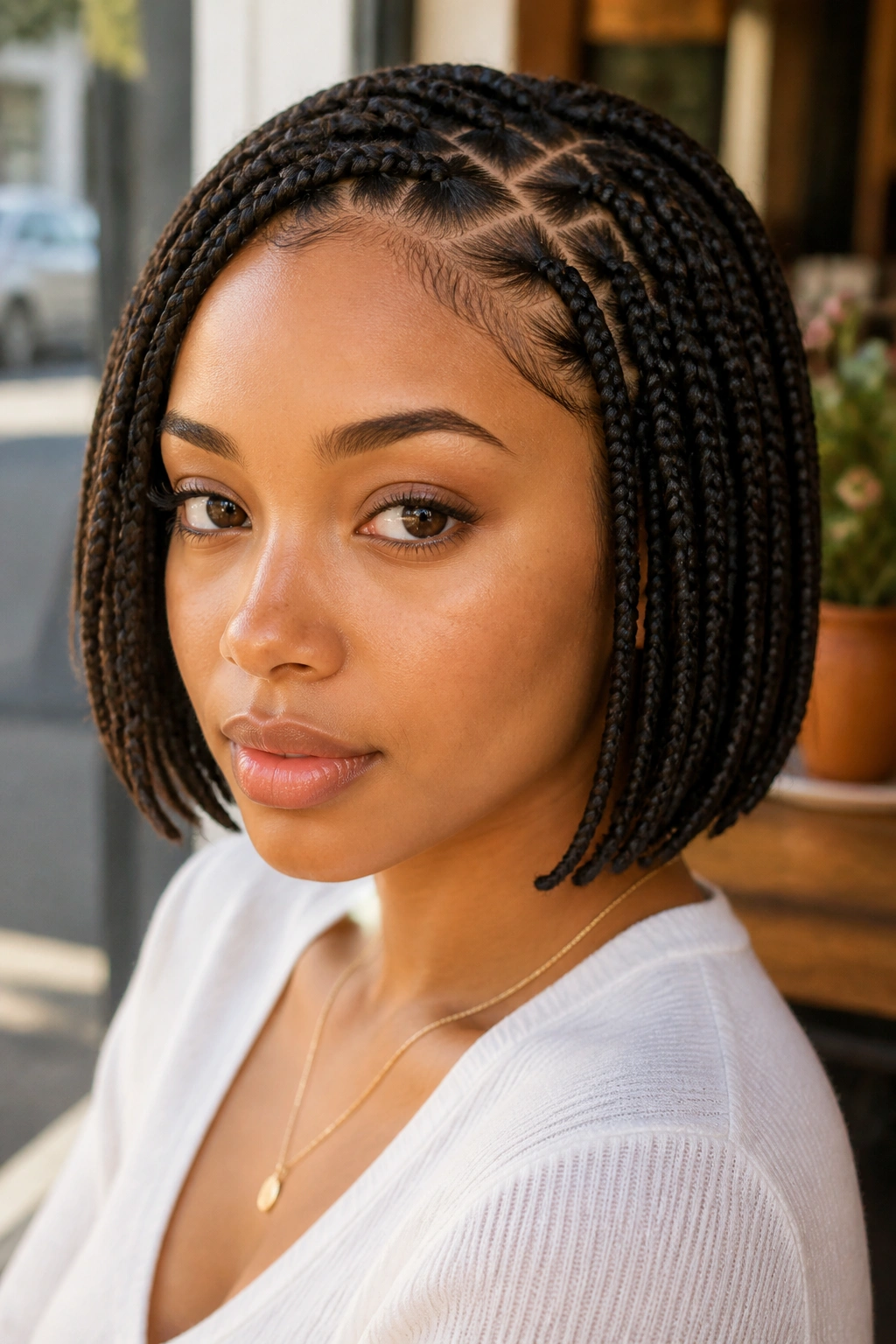
A zigzag part can do more for a round face than changing braid size. The part itself disrupts the straight horizontal feel that can make a face look wider, and that tiny change adds movement right at the scalp.
Knotless braids make the pattern even lighter because the base sits flatter. So you get a style that looks detailed without stacking too much bulk near the hairline. That’s the part to be careful with.
The zigzag does not need to be wild. A subtle pattern is enough. You just want the eye to travel instead of landing in one blunt place. That wandering motion makes the face feel longer, especially when the braids fall to chin or collarbone length.
I’d use this style if you like structure but don’t want the parting to feel plain. It’s one of those looks that seems simple from a distance and gets more interesting the closer you look.
15. Bob-Length Boho Braids With Scattered Curls
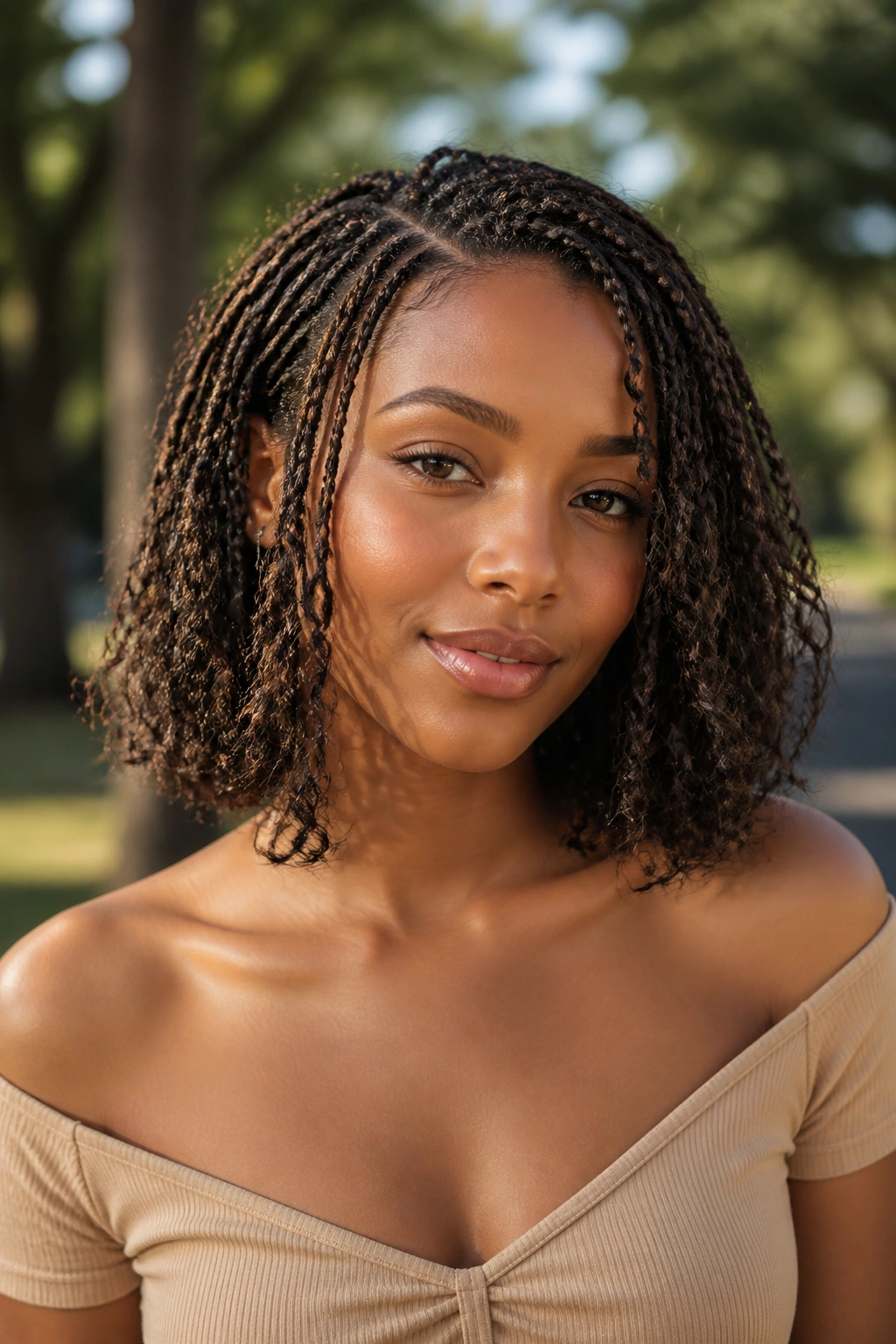
What makes boho braids feel lighter on a round face? The loose curls break up the solid braid line, so the style never feels too hard around the cheeks. That little bit of softness changes everything.
The key is restraint again. A few curly pieces are enough. You do not want every braid exploding with curls at cheek level, because then the face gets crowded. Keep the curls sparse, and let them start lower, closer to the neck.
How to Wear It
Think of the curls as punctuation, not the whole sentence.
- Keep the bob collarbone length or just above.
- Add curls below the cheekbone.
- Use a few pieces only, not every braid.
- Choose a soft side part if you want extra length.
This style works well if you like a relaxed finish. It’s not overly neat, which is part of the appeal. The movement makes the face look less round without turning the whole thing into a stiff, sculpted shape.
16. Braided Mohawk With Tapered Sides
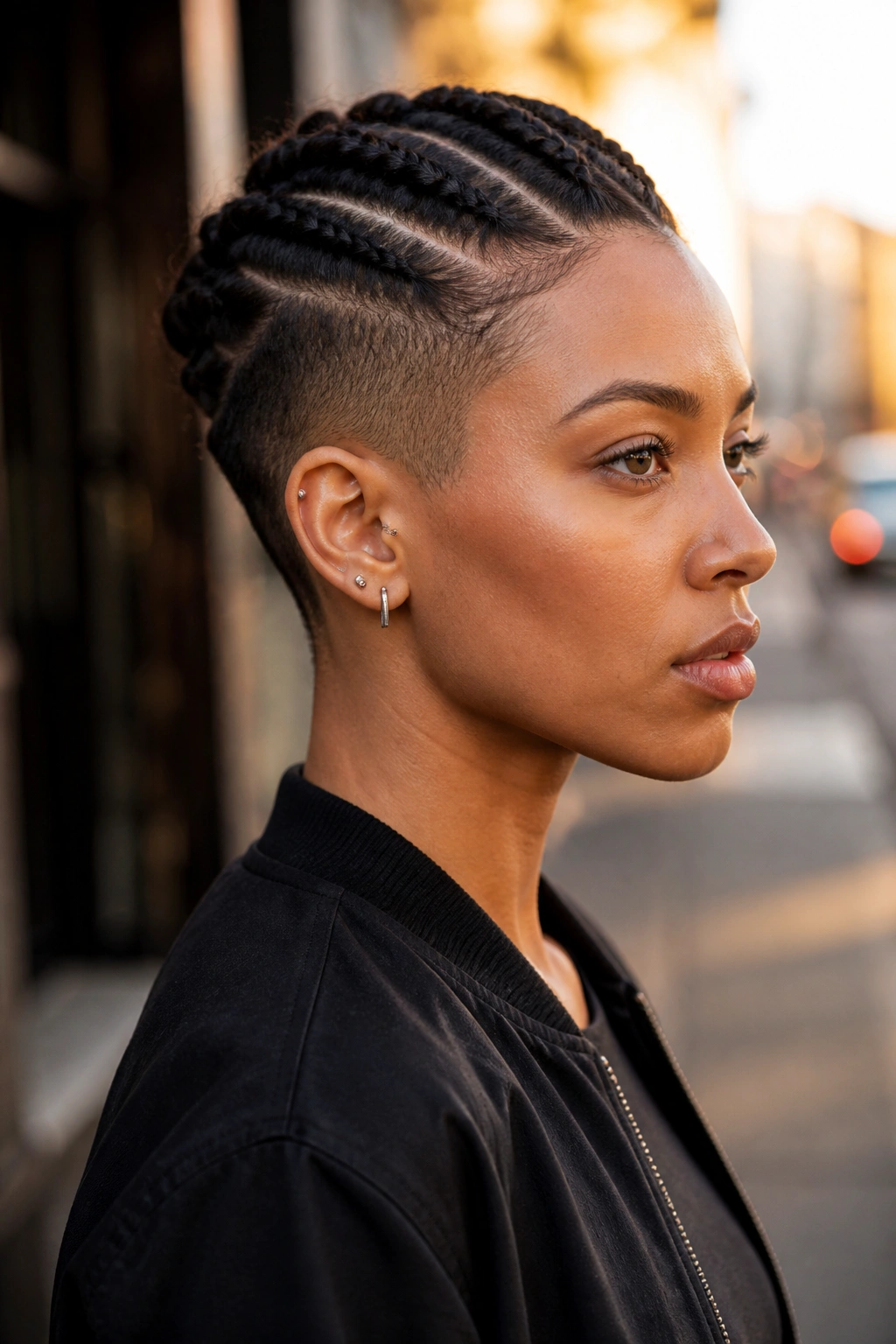
A braided mohawk is the boldest style on this list, and it flatters a round face because it pushes the visual weight straight up the middle. That center line gives you height, which is exactly what a round face tends to want.
The tapered sides matter just as much. If the sides stay too full, the style loses its shape and starts looking broad. Keep them close, clean, or tightly braided down so the middle section can stay the focus.
- Ask for a narrow center braid strip.
- Keep the side braids flat and neat.
- Let the top section sit slightly higher than the sides.
- Stop the length at the neck or collarbone for a sharp finish.
It’s a stronger look. No getting around that. But if you like contrast and want a braid style that does not blend into the background, this one has a lot of personality.
17. Small Box Braids With Color at the Ends
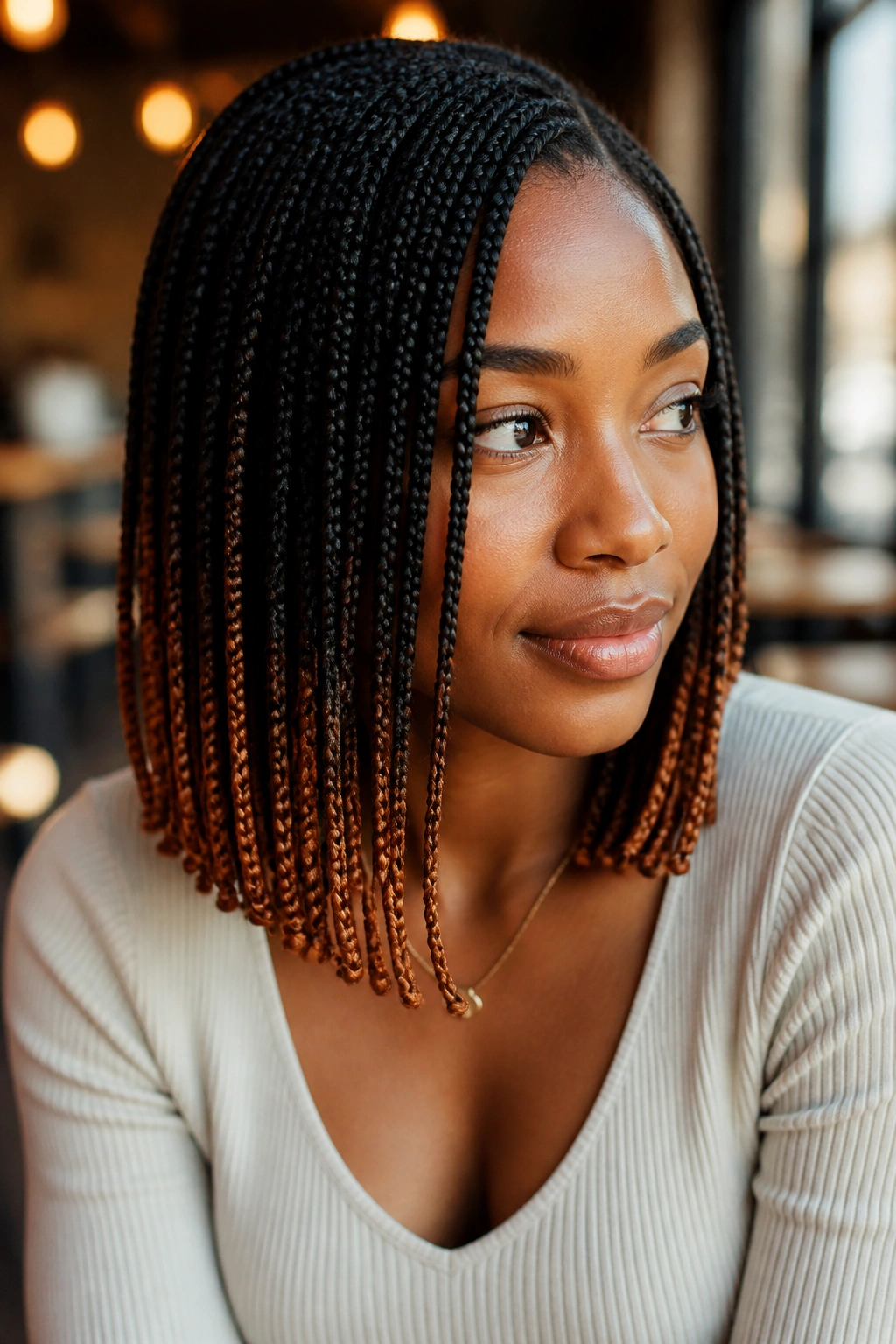
Color at the ends can help a round face because it pulls attention downward, away from the cheeks and toward the line of the braids. The trick is keeping the roots calm so the face doesn’t get crowded up top.
I like this best with small box braids that stop at the collarbone or a touch below. Then you can add copper, honey, burgundy, or caramel at the lower half. That lighter finish gives the style some shine without widening the hairline.
The color placement matters more than the color itself. If the brightest section sits near the jaw, the face can look broader. If the brightness sits lower, the look feels longer. Small shift. Big payoff.
This is a good choice if you want something expressive but not noisy. The braids stay neat, and the color gives the ends enough life to keep the whole style from feeling flat.
18. Double Pigtail Braids With a Low Tie-Off
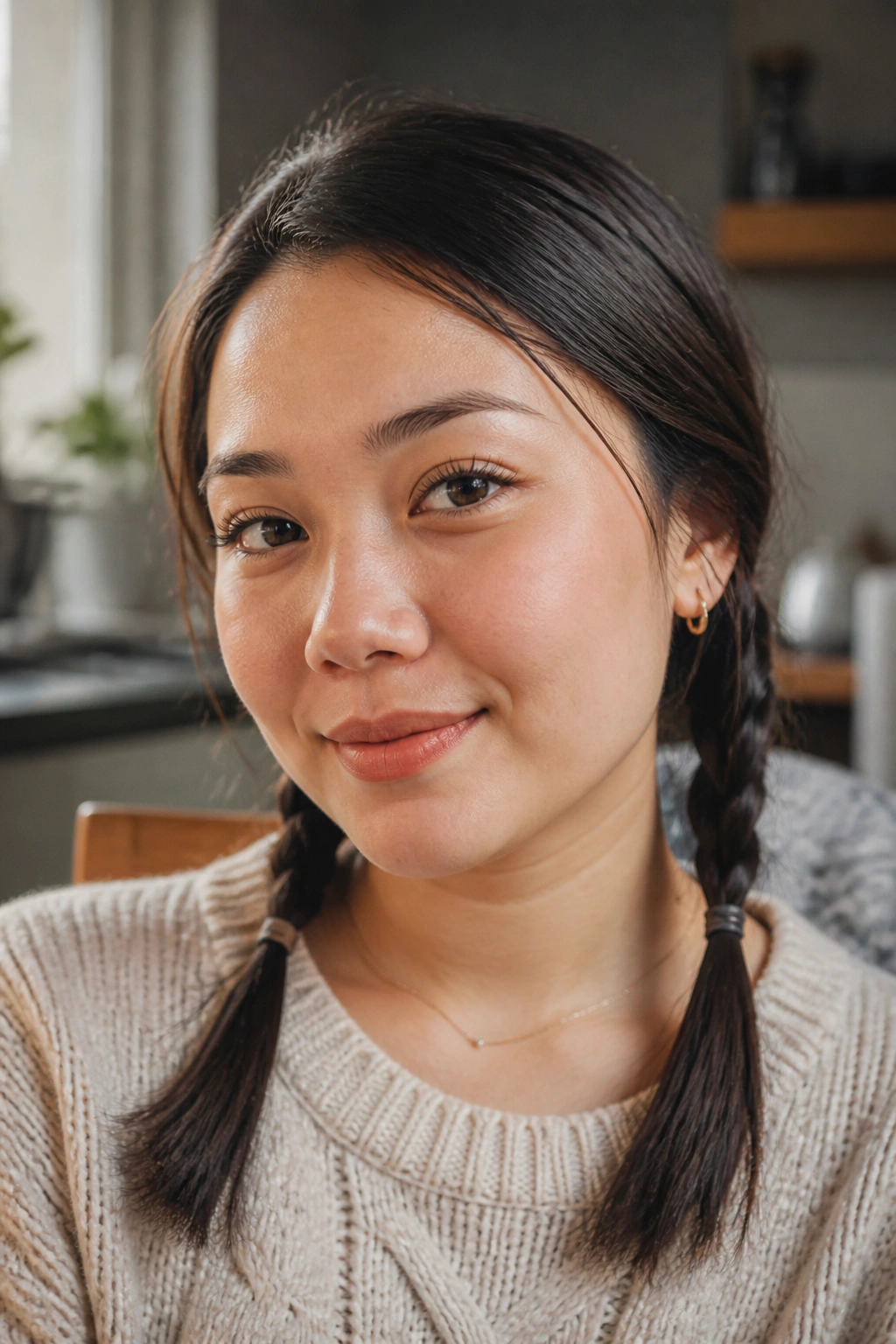
Two braids can look juvenile when they sit too high and too tight. Keep them low, though, and they change completely. A low tie-off, especially with a slightly off-center part, can make pigtail braids feel cleaner and much friendlier to a round face.
The reason is simple: the eye follows the lines downward instead of outward. That keeps the face from feeling wide at the sides. It also gives the style a little softness, which helps when the braid ends are short.
This version works best when the braids are slim and the ends are tucked or tied near the nape. If you leave them flared out at the sides, they can add width where you do not want it.
I’d wear this with casual clothes, hoops, or a simple neckline. It’s an easy style, but it doesn’t have to look childish. The placement changes everything.
19. Short Cornrow Bob for Round Faces
A short cornrow bob can be a great answer when you want something close to the scalp but still shaped with intention. The rows sit neatly, and if they’re curved instead of straight, they help the face feel less broad.
Why It Works
Curved rows guide the eye around the face rather than across it. That small arc does a lot of visual work, especially when the bob ends just below the jaw.
- Ask for 6 to 8 rows if you want a clean look.
- Let the rows arc slightly toward the cheekbones.
- Keep the ends at the nape or collarbone.
- Avoid extra width right at the temples.
This style is one of my favorites for warmer weather because it stays tidy without needing much fuss. It also looks neat with earrings, which is never a bad thing.
Best tip: if you want the face to look longer, do not let the rows stop abruptly at the cheeks. That’s where the line gets too blunt.
20. Soft Side-Swept Braided Bob for Round Faces
A soft side-swept braided bob is the safest bet if you want a style that flatters a round face without making a big production out of it. It borrows the length of a bob, the angle of a side part, and just enough softness to keep the face open.
What I like about this one is how forgiving it is. It works with box braids, knotless braids, or even slim feed-ins, as long as the sweep lands in the right place. The front should fall a little longer than the back, and the side with less hair should stay clean and close.
That asymmetry is the whole point. The style does not need a dramatic flip or extra curls. It just needs a gentle diagonal line and enough length to drop below the jaw.
If you only try one short braided shape for a round face, make it this one. Tell your braider to keep the longest pieces below the chin and let the part sit a touch off center. That small shift changes the balance more than adding extra braid length ever will.
