



There is a specific kind of magic that happens when you sit in a braider’s chair. You start the day with a head of loose, textured hair and, several hours later, you leave feeling like an entirely new person. It is not just about the change in look; it is about the hours of conversation, the rhythmic sound of synthetic hair being parted, and the sheer confidence that comes from knowing your protective style is flawless. Box braids are more than a trend. They are a rite of passage, a reliable staple for hair growth, and one of the most versatile ways to express yourself without damaging your natural strands.
Finding the right style in a sea of options can feel overwhelming. Do you want something that hits your waist, or are you craving the chic, cropped look of a bob? Maybe your scalp is sensitive, and you need to pivot away from the traditional knot to something smoother. The beauty of this style lies in its adaptability. Whether you are prepping for a summer vacation, getting ready for a professional setting, or just wanting a break from daily styling, there is a configuration that fits your lifestyle.
The following list covers a wide spectrum of options. We are looking at everything from the weight and maintenance requirements of jumbo braids to the intricate, tiny details of micro-braids. Take your time scanning through these. Think about your face shape, your patience for sitting in the chair, and how much weight your neck can comfortably handle. Let’s get into the styles that are defining the modern standard for braided hair.
1. Classic Mid-Back Box Braids
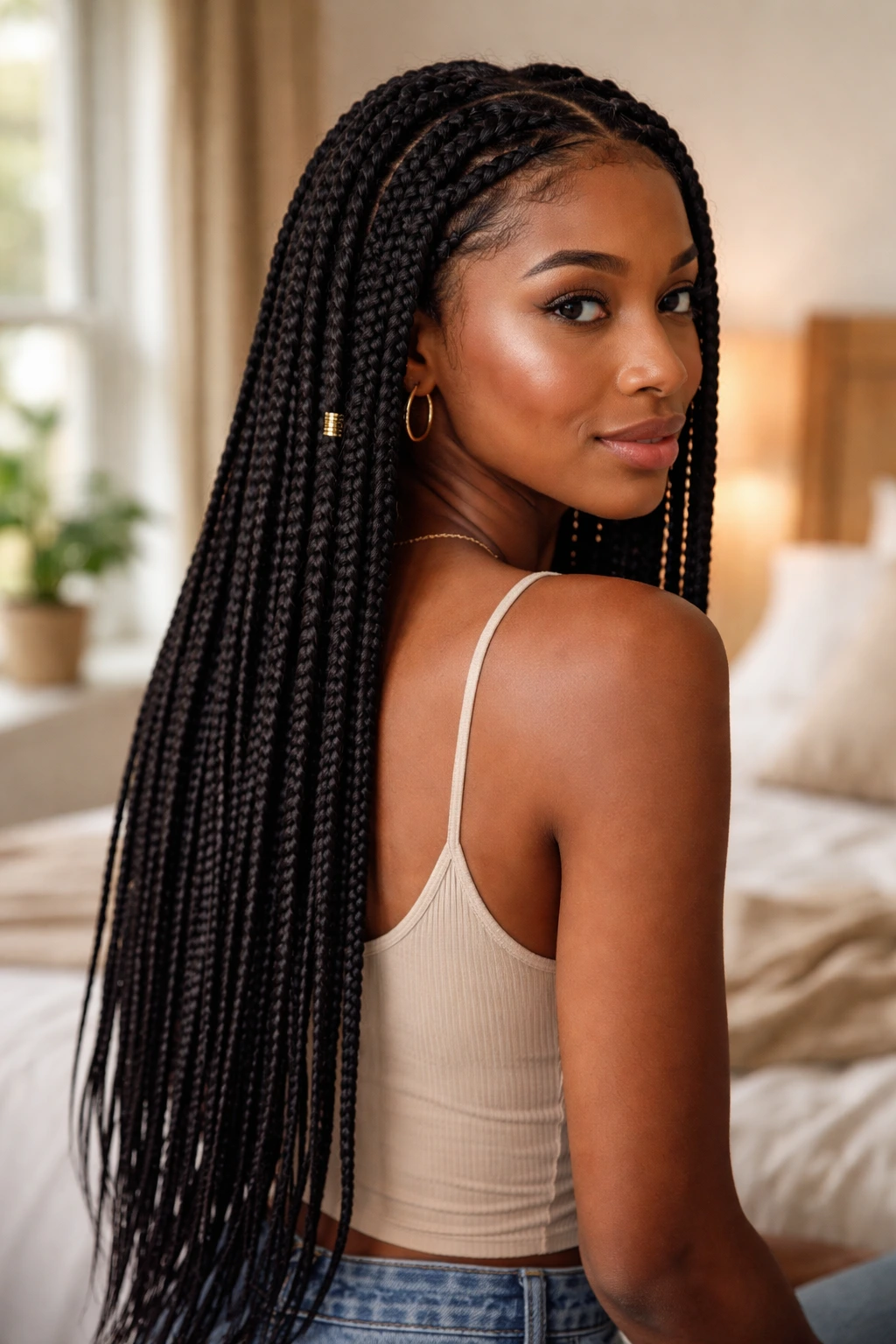
This is the baseline, the style against which all others are measured. Mid-back braids offer a perfect equilibrium between drama and manageability. They are long enough to provide that swing and movement that makes you feel powerful, but they do not drag on the floor or tangle as easily as waist-length or thigh-length options. You will find that these take a moderate amount of time to install—usually five to seven hours depending on the braider’s speed and the size of your sections.
Why They Work
The main draw here is the versatility. You can pull them up into a top knot, throw them into a high pony, or let them fall over one shoulder without feeling like you are carrying a heavy load. Because they hit right around the bra strap, they are significantly less likely to snag on your bag straps or coat collars.
Practical Maintenance
- Sleep with a satin bonnet to keep the frizz down.
- Apply a lightweight mousse every few days to maintain the crispness of the parts.
- Use a light oil spray to keep the scalp hydrated.
Expert Note: If you want a more natural look, ask your braider to leave the last two inches of the hair unbraided and curled with hot water. This adds a softer, more tapered finish than a blunt, burned end.
2. Jumbo Box Braids
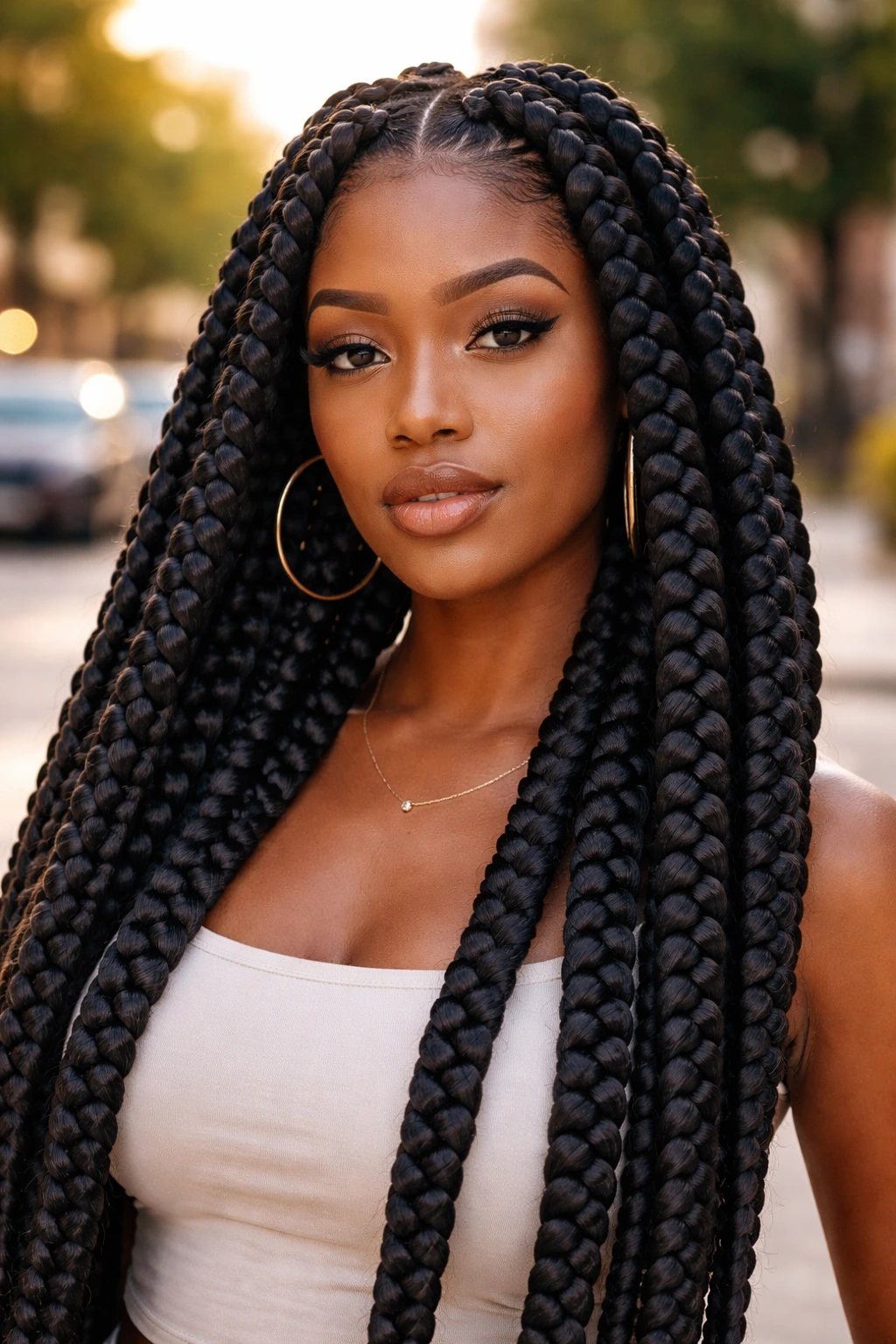
When you are short on time but high on style, jumbo braids are the answer. These feature significantly larger sections, which means the installation process is cut in half. You are looking at three to four hours in the chair, which is a massive relief if you struggle with sitting still. The finished look is bold, graphic, and makes a serious statement.
The Trade-Offs
Size comes with weight. Because each braid contains more synthetic hair to achieve that thick, chunky look, the overall tension on your head can be higher. This is not the best style if you have extremely fine hair or are prone to traction alopecia around the hairline. You need a strong base to hold the weight of these braids securely.
Styling Tips
Since the braids are so thick, you cannot do complex updos. Stick to simple styles like a half-up, half-down look or a singular low ponytail. The chunky look pairs perfectly with gold or silver cuffs placed sporadically along the length of the braids to add a touch of metallic shine.
3. Knotless Box Braids
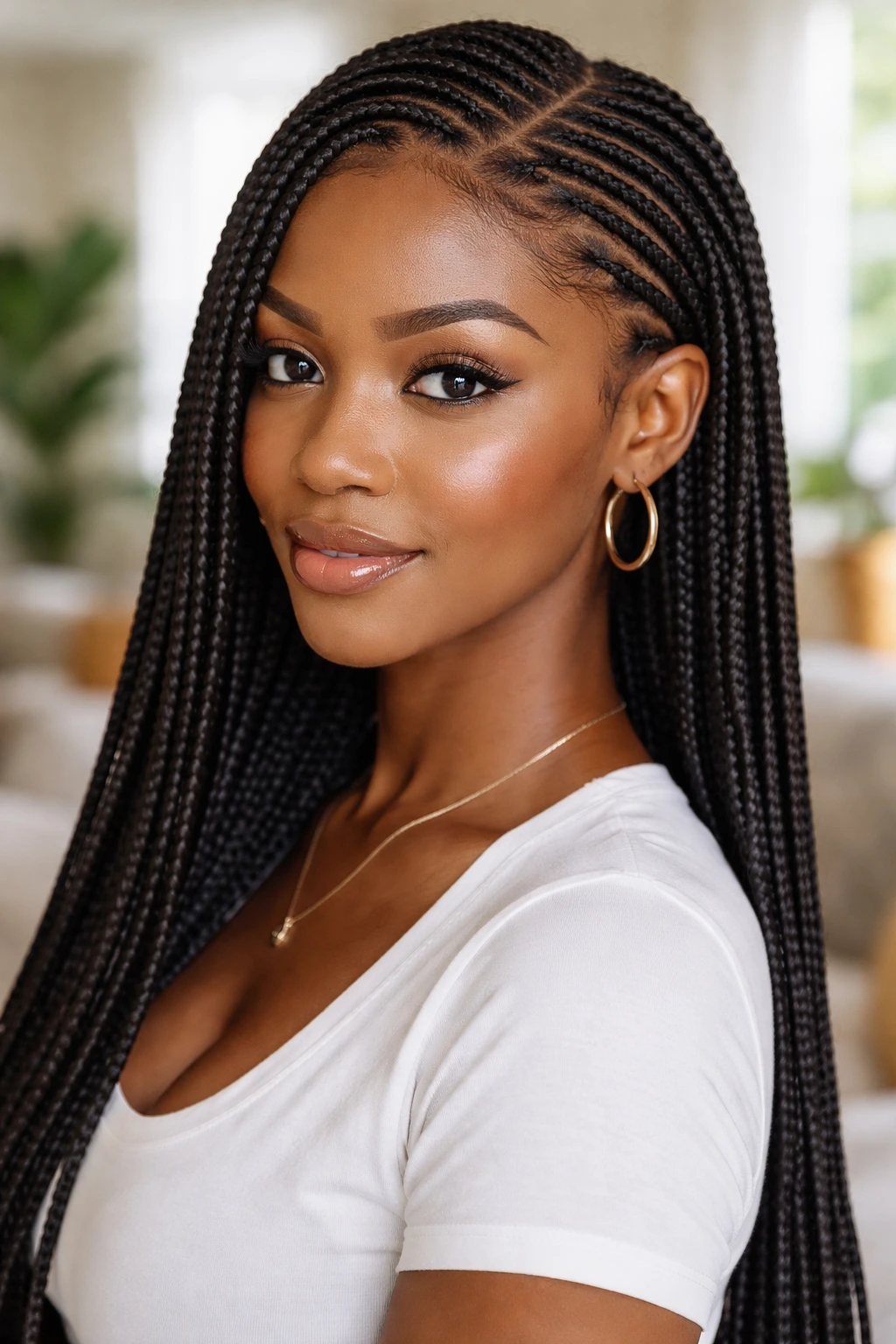
This is arguably the most significant development in braiding history. Unlike traditional box braids that start with a knot of synthetic hair pressed against your scalp, the knotless technique feeds the synthetic hair into your natural hair gradually. The result is a flat, seamless braid that looks like it is growing directly from your scalp.
Why They Are Different
The lack of a knot at the root makes the hair feel instantly weightless. You do not get that “tight” feeling where you have to take an ibuprofen the second you leave the salon. There is no bulky lump of hair at the base, which allows for effortless styling from day one. You can pull your hair back into a ponytail immediately without feeling like you are tugging on your roots.
What to Watch For
Because they are so smooth, they can slip out faster than traditional braids if your hair is very silky or freshly conditioned. Make sure your hair is properly stretched before the appointment to give the braider something to grip onto.
4. Bob-Length Box Braids
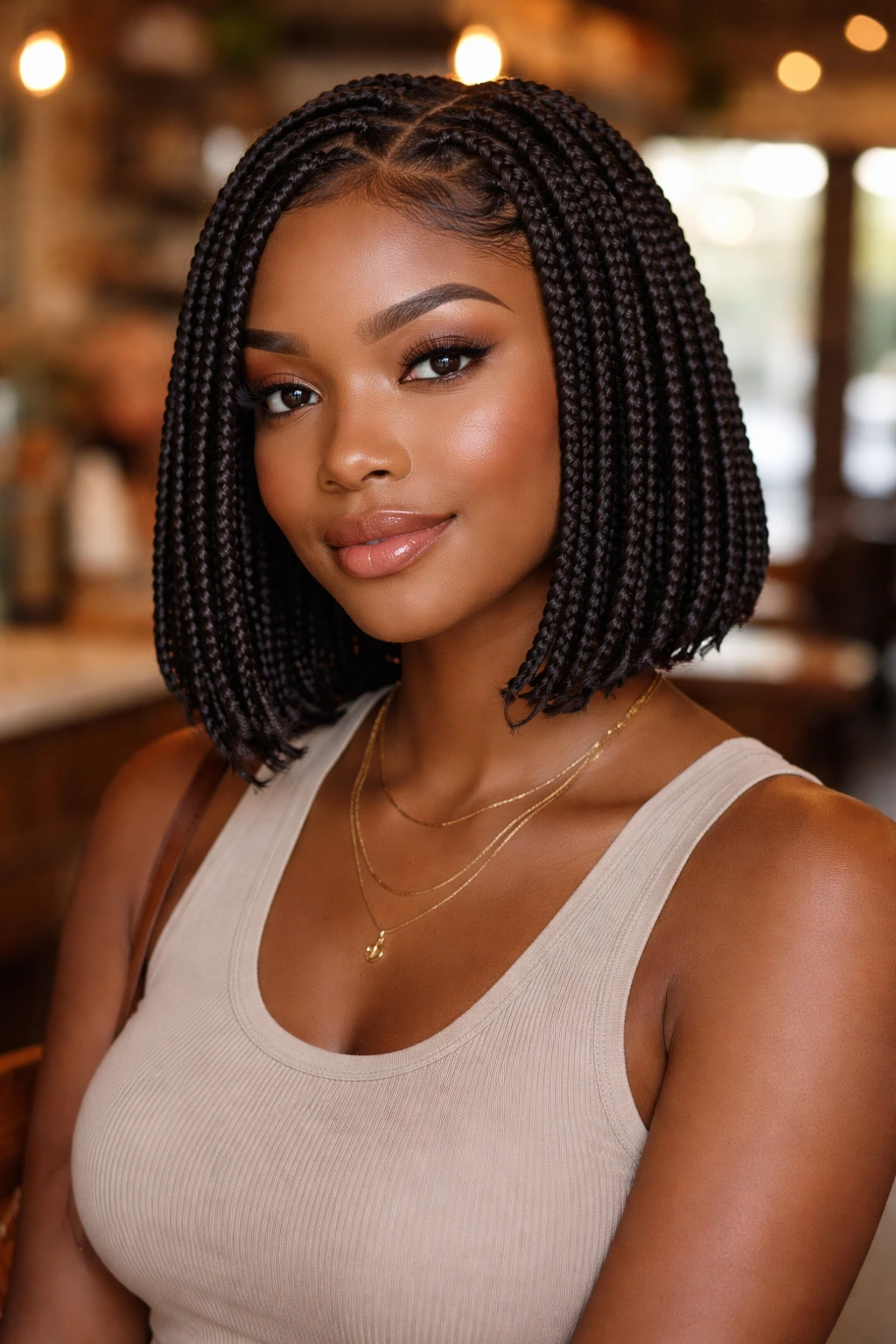
There is something undeniably chic about a box braid bob. It cuts away the excess, keeping the focus entirely on your face and your neck. This is a fantastic option for warmer months when you do not want hair sticking to your back, or for professionals who want a style that feels clean and structured.
Styling Characteristics
- Chin-length or shoulder-length cuts.
- Can be worn with a blunt cut or with feathered, tapered ends.
- Extremely low maintenance because the weight is minimized.
Pro tip: A bob style looks incredible with a side part. It frames the face and gives the braids a sophisticated, asymmetrical vibe. You can easily dress this up with statement earrings, as there is no long hair to hide them.
5. Box Braid High Ponytail
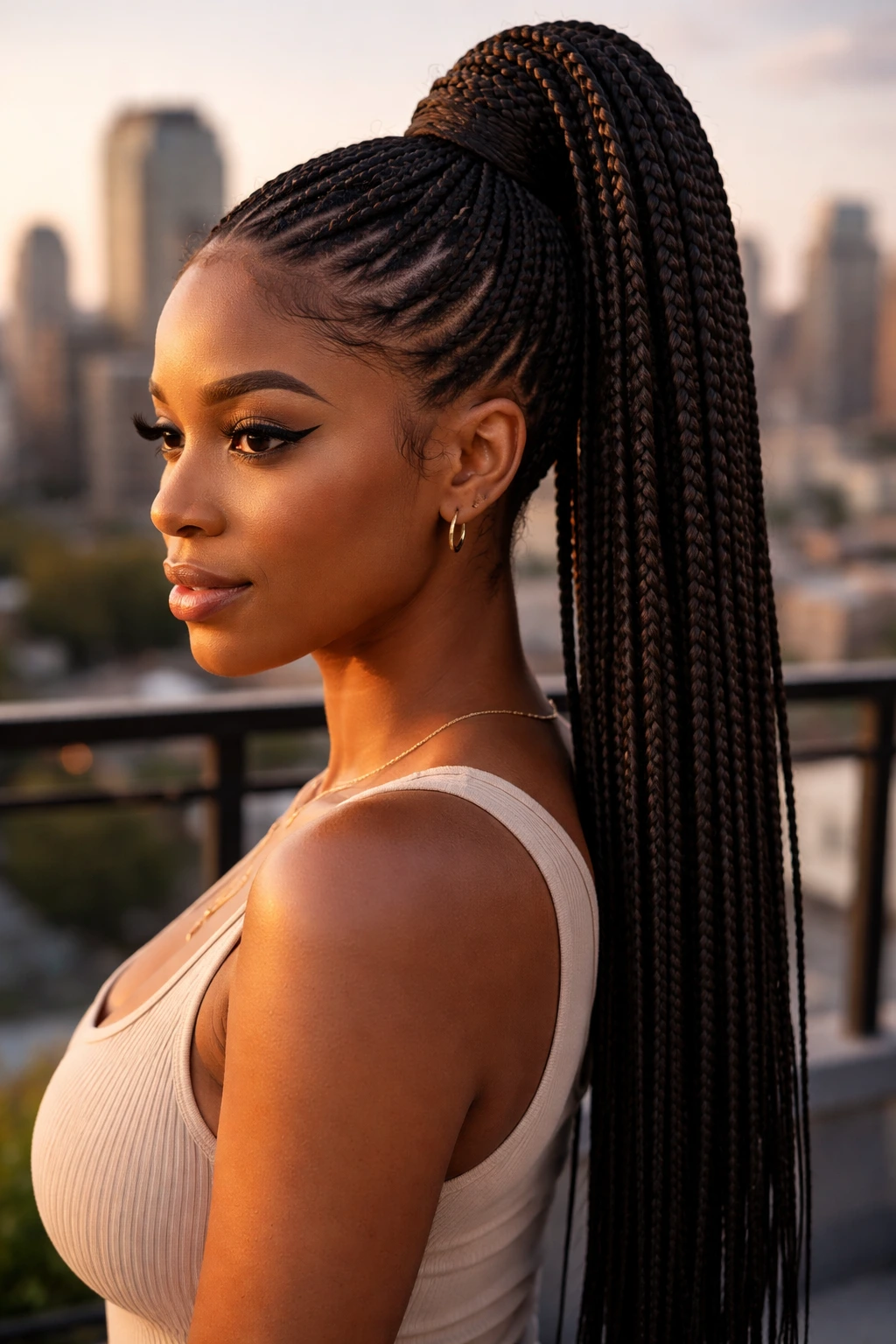
If you are going for a high-fashion, snatched look, the high ponytail braid style is your go-to. This is not just about pulling your hair up; it is about the intentional parting at the nape of the neck so that the hair lays flat when gathered high. This style is all about tension management.
Construction Matters
Your braider needs to ensure that the perimeter braids are laid in the direction you want the ponytail to go. If they braid them straight down, you will have a hard time pulling them up without causing pulling and discomfort. Ensure you communicate that you plan to wear it up before they start the base.
Longevity
This style is best for the first two weeks after an install. Over time, as your natural hair grows out, the base of the ponytail will lose its tension and start to sag. This is a high-maintenance look but pays off with its clean, sharp aesthetic.
6. Goddess Box Braids
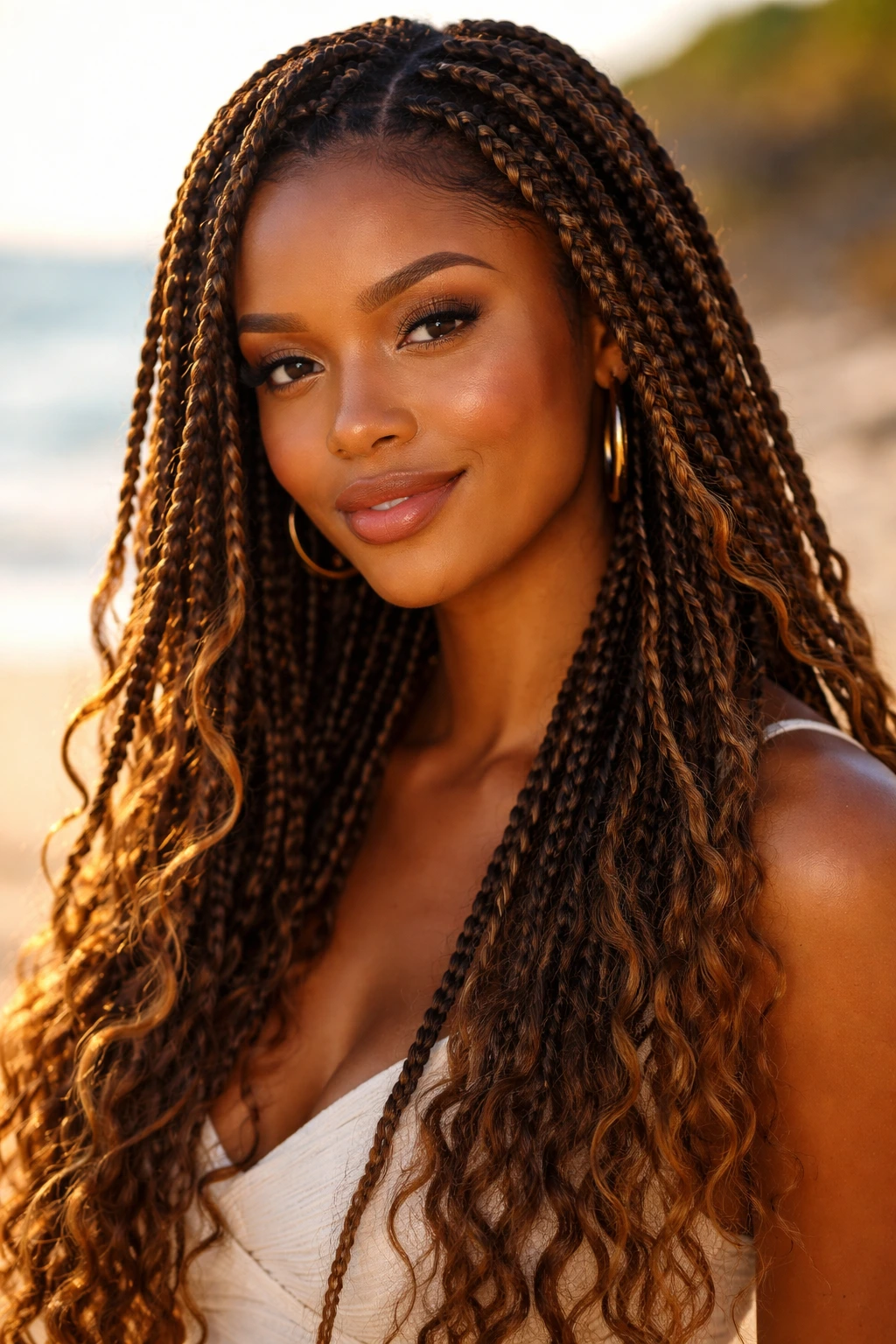
Goddess braids are characterized by curly, loose strands of hair left out throughout the length of the braid. This is the ultimate “boho” look. It softens the stark, geometric lines of traditional box braids by introducing texture and volume that dances around your face.
The Real-World Reality
They are gorgeous, but they are high maintenance. Those loose curls are prone to tangling, especially if they are synthetic. You will need to keep a detangling spray and a small brush in your bag at all times to keep the loose hair from matting into the braid itself.
Why People Love Them
They provide a more organic, romantic aesthetic. They take the “toughness” out of a standard braid style and replace it with a flowing, ethereal quality. If you want a style that looks like it belongs on a beach vacation or a summer festival, this is it.
7. Box Braids with Curly Ends
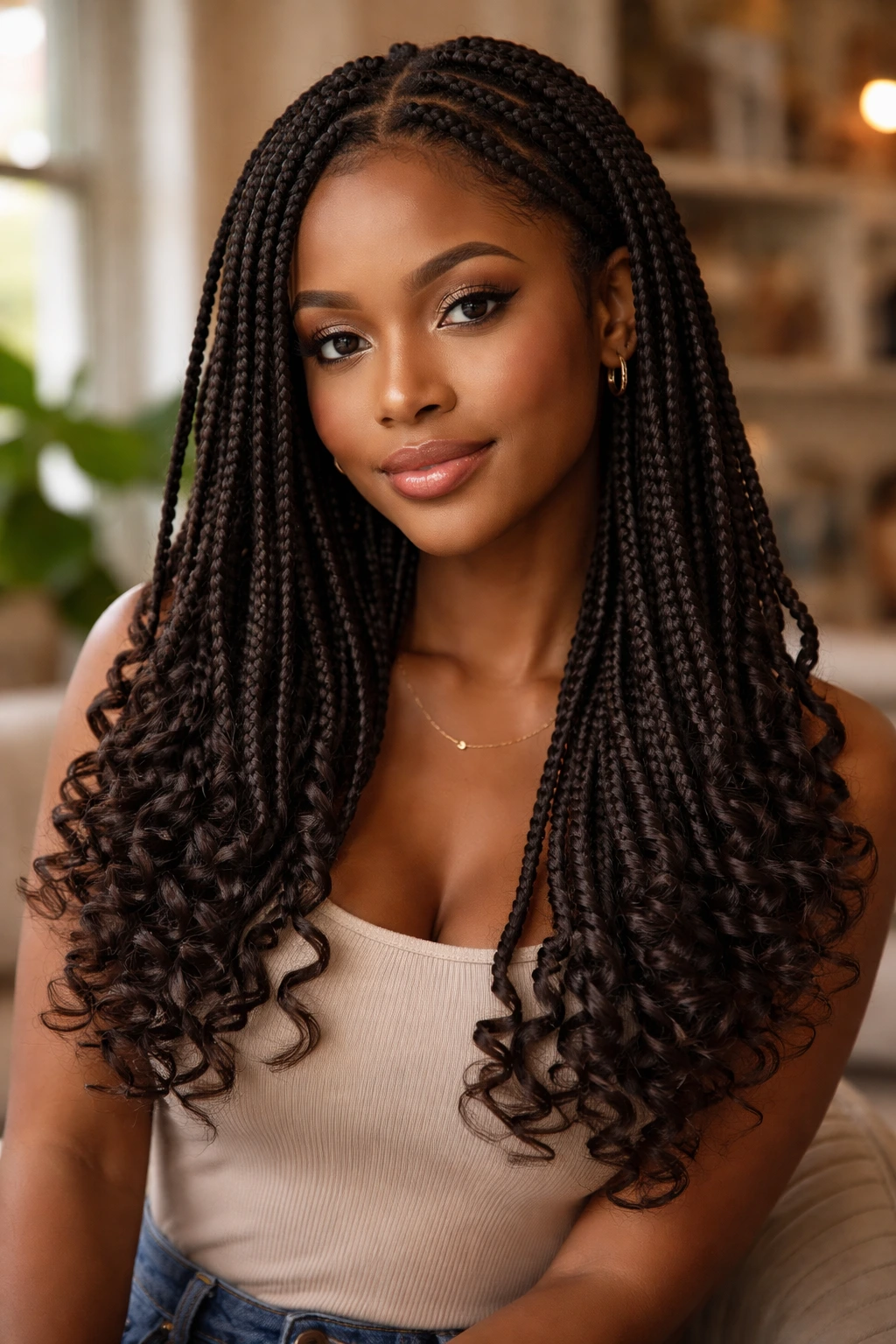
This is a subtle variation that makes a massive impact. Instead of burning or dipping the ends of your braids to seal them, you leave them loose and curl them. It creates a flicked-out, playful finish that swings when you walk.
Technique Details
- The braider secures the braid about two or three inches from the bottom with a clear elastic or a tiny knot.
- The remaining hair is wrapped around a perm rod and dipped in boiling water to lock in the curl.
- You can choose tight ringlets or loose waves depending on the rod size.
This style is perfect for those who want a bit of flair without the high-maintenance upkeep of the full “goddess” curly strands. The curls stay bouncy for a long time if you wrap your hair at night.
8. Ombré Box Braids
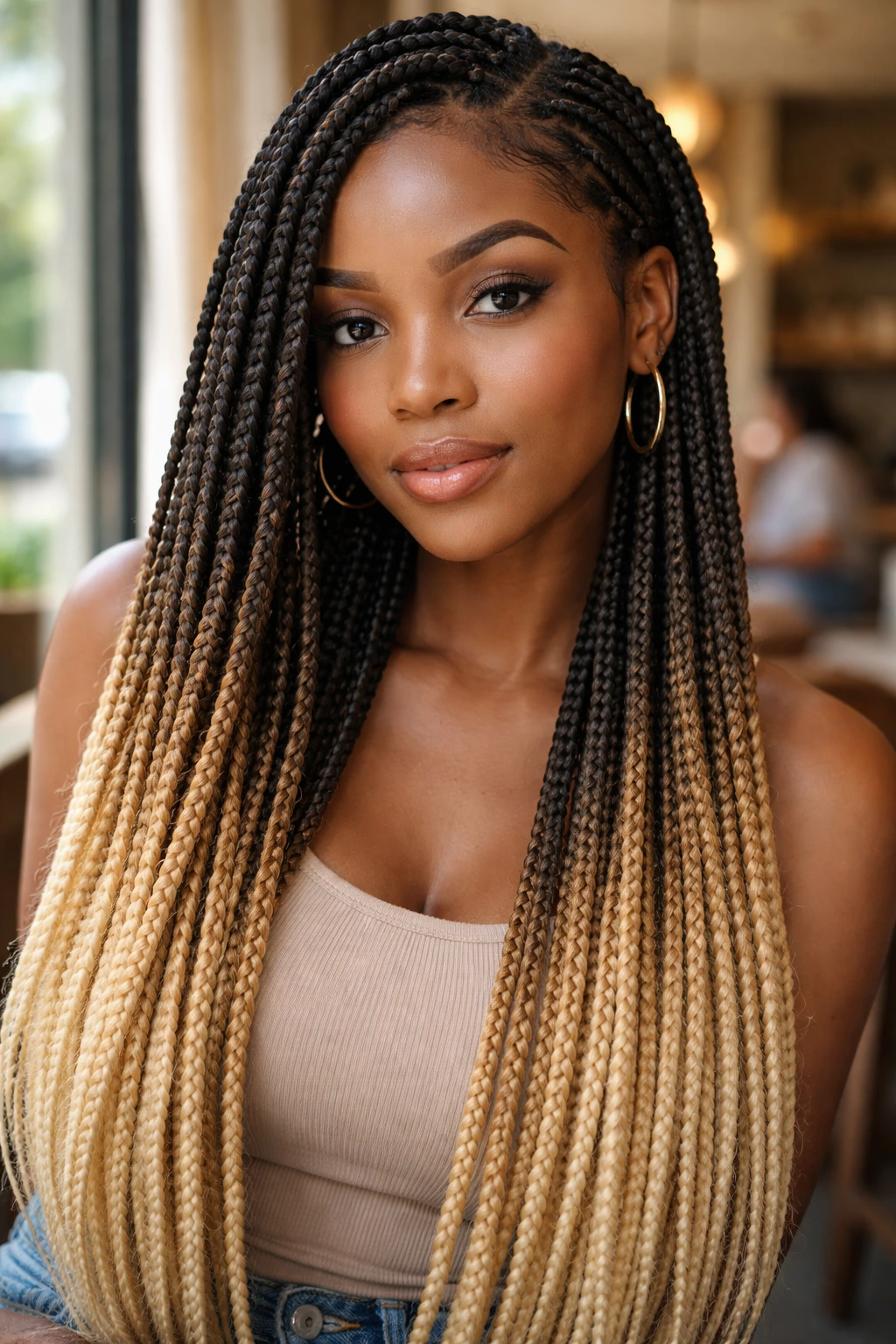
Ombré is a classic color technique, and it translates beautifully to braids. You can have the roots match your natural hair color and gradually transition to a lighter shade, like honey blonde, copper, or even a soft pink.
Color Theory
The benefit of ombré in braids is that you do not have to dye your natural hair. The synthetic hair does all the work. It creates depth and prevents the braids from looking like a solid block of color, which can sometimes look flat against certain skin tones.
Selection Advice
If you are doing this for the first time, stick to colors that complement your undertones. Warm skin tones usually look stunning with honey, copper, or caramel ombré. Cool undertones often pop with silver, platinum, or violet fades.
9. Bohemian Box Braids
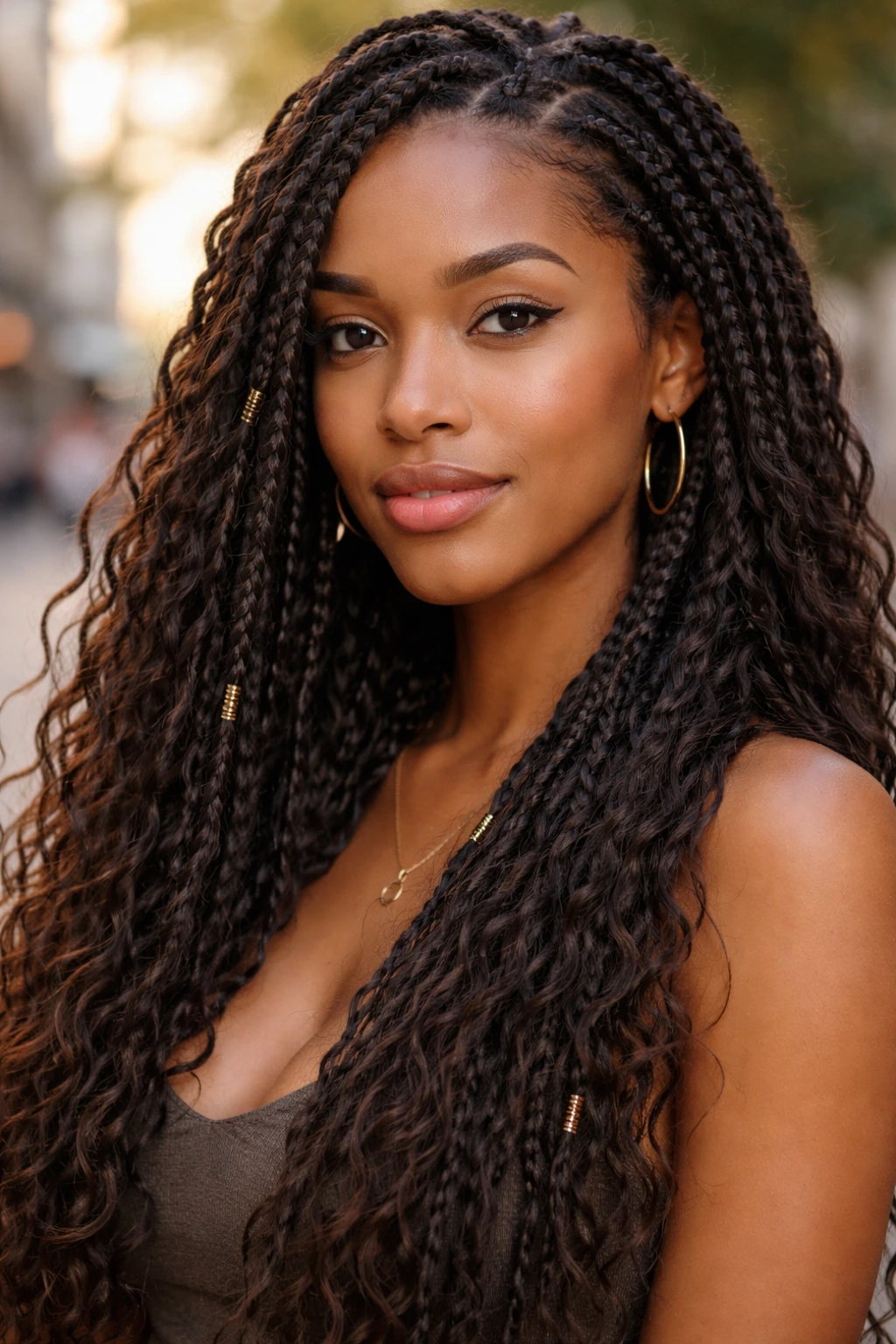
Often confused with Goddess braids, Bohemian braids typically involve a more “undone” and tousled look. The goal is to look like you just walked off a runway in Paris. They are voluminous, messy-on-purpose, and incredibly full of life.
How to Achieve the Look
- Use human hair for the loose curls instead of synthetic.
- Ask for “distressed” or “aged” looking braids where the texture is not perfectly uniform.
- Allow more hair to be left out at the ends and the mid-shafts.
This is a premium style. Because you are using human hair for the curls, the cost of the hair is higher, and the maintenance is different—you can actually use styling products on the curls just like you would on your own hair.
10. Waist-Length Box Braids
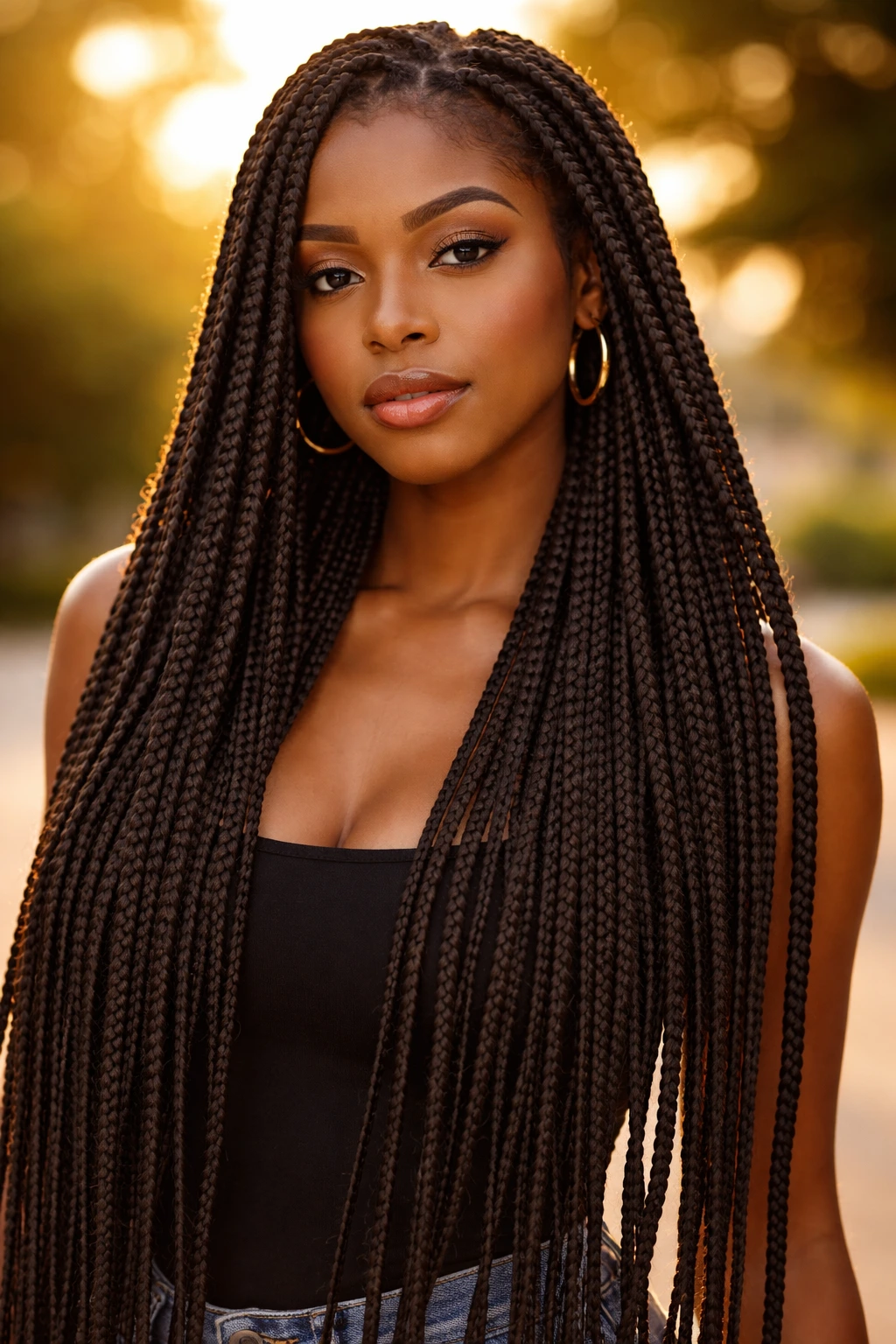
If you want the “mermaid” effect, waist-length is the standard. These braids are dramatic, heavy, and undeniably eye-catching. There is something about hair that hits your waist that instantly elevates an outfit, whether it is a simple t-shirt or a formal gown.
Dealing with the Length
The weight is the biggest factor here. You need to be prepared for the fact that these are going to be heavy for the first three days. Keep your neck relaxed, and avoid heavy updos that add more pull to the scalp.
Practical Tips
- When you go to the bathroom, move the hair to the front so it does not hang into anything.
- Wear lighter clothing—waist-length braids can make you feel warmer, especially in humid weather.
- Sleep with them in a high, loose bun to prevent them from tangling while you toss and turn.
11. Triangle Part Box Braids
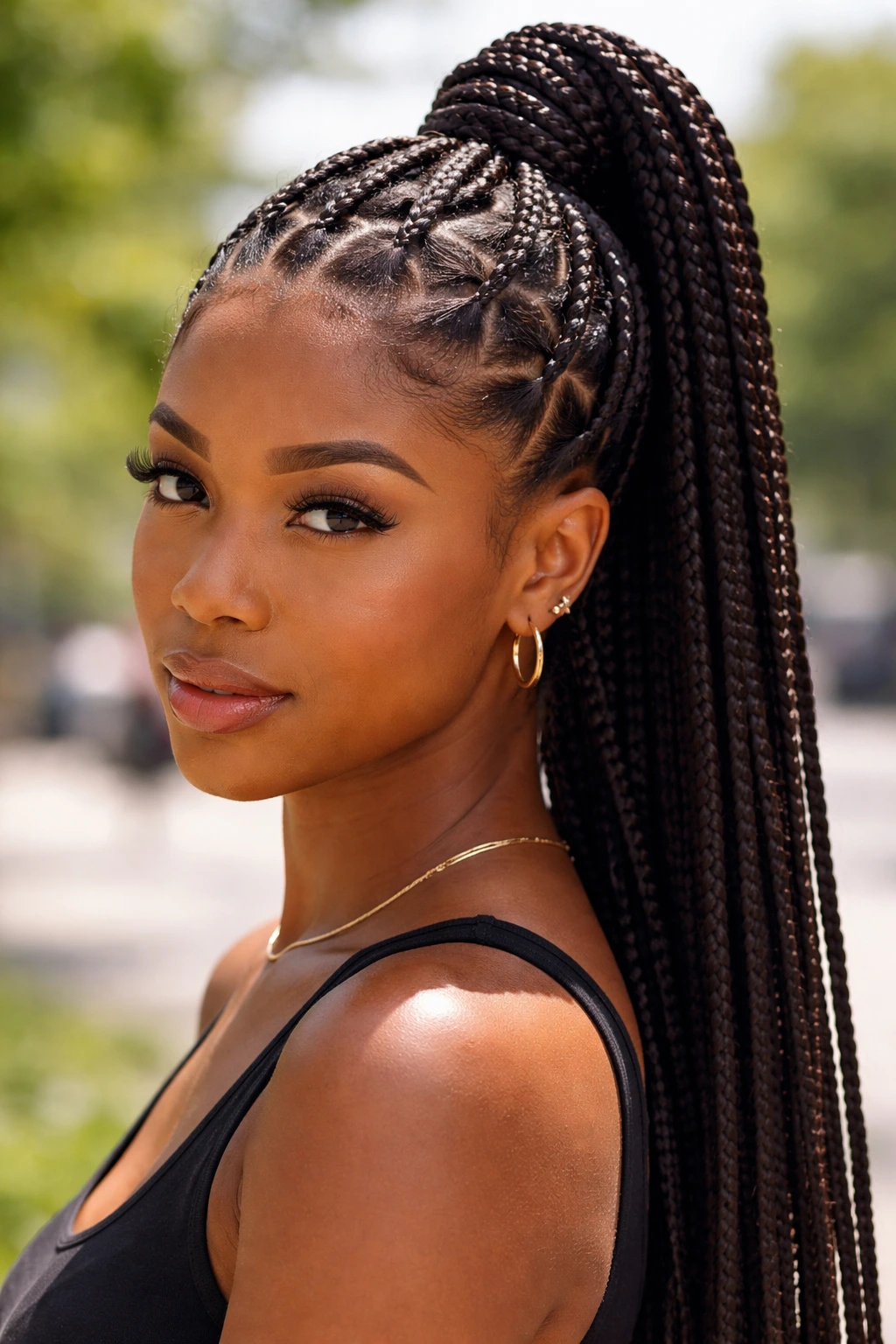
The parting pattern matters just as much as the braid itself. Traditional square parts are reliable, but triangle parts add a layer of graphic interest that draws the eye. They look particularly sharp when the braids are worn in a high ponytail.
Why This Style Succeeds
Triangle parts change the way the hair lays. Because the base is a triangle, the hair tends to fall in a more fluid, organic direction rather than the rigid lines of a square grid. It gives a more modern, edgier feel to a traditional protective style.
Warning: This style requires more precise sectioning. Your braider needs to be skilled at clean parting. If the parts are crooked, the whole geometric effect is lost.
12. Feed-in Box Braids
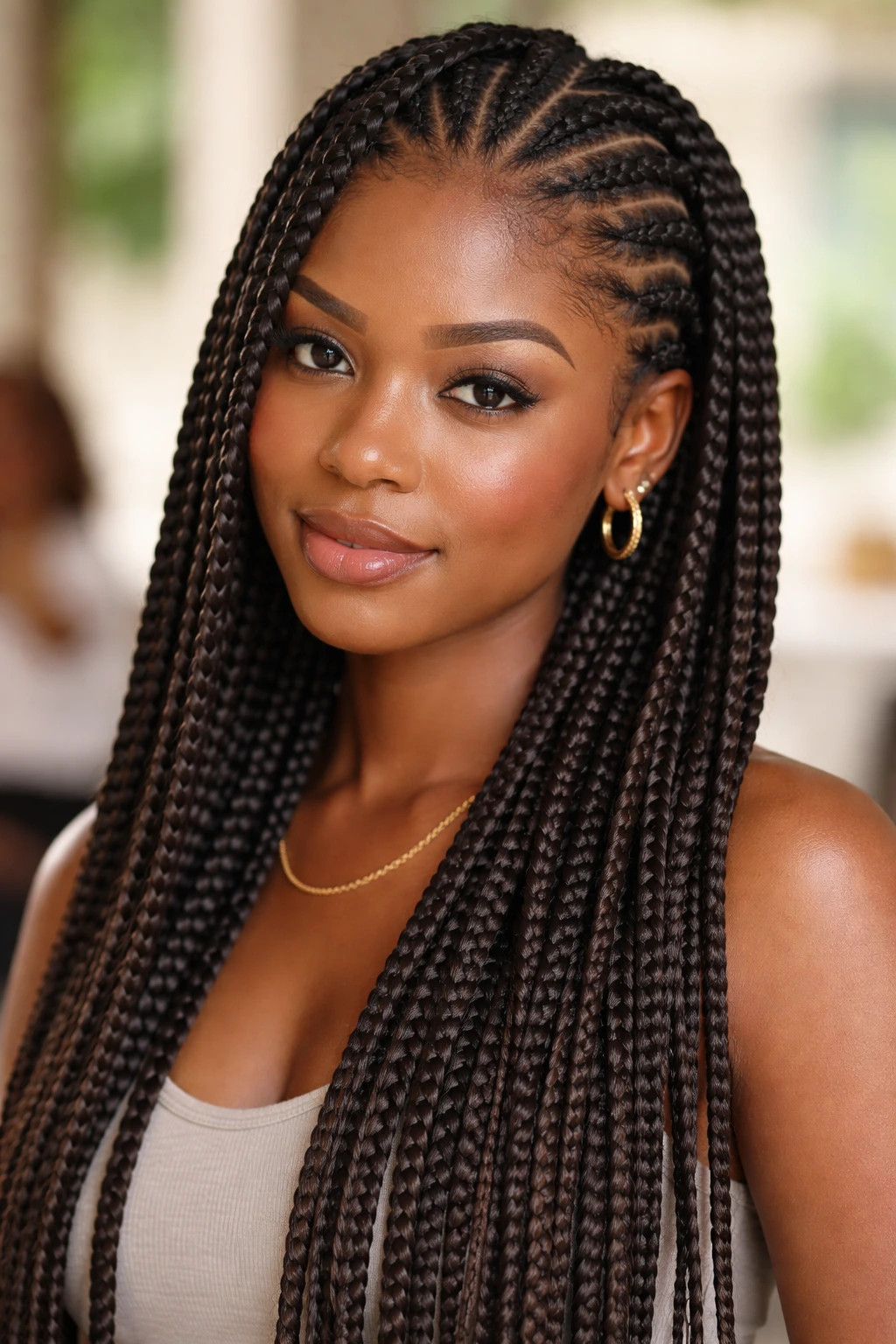
Feed-in braids are a technique rather than a specific end look, but they are a vital tool for achieving a natural-looking start. By feeding the synthetic hair into your own braided hair as you go, you create a seamless transition at the root.
The Natural Illusion
This is the closest you can get to the look of box braids while ensuring they are tight and secure. Because the synthetic hair is blended in, you do not get that “wiggy” look where the braid thickness changes abruptly at the scalp.
Perfect For
Anyone with shorter natural hair. If your natural hair is barely past your shoulders, feed-in techniques allow you to start the braid close to the scalp and build it into a long, thick braid using the synthetic additions.
13. Shaved Side Box Braids
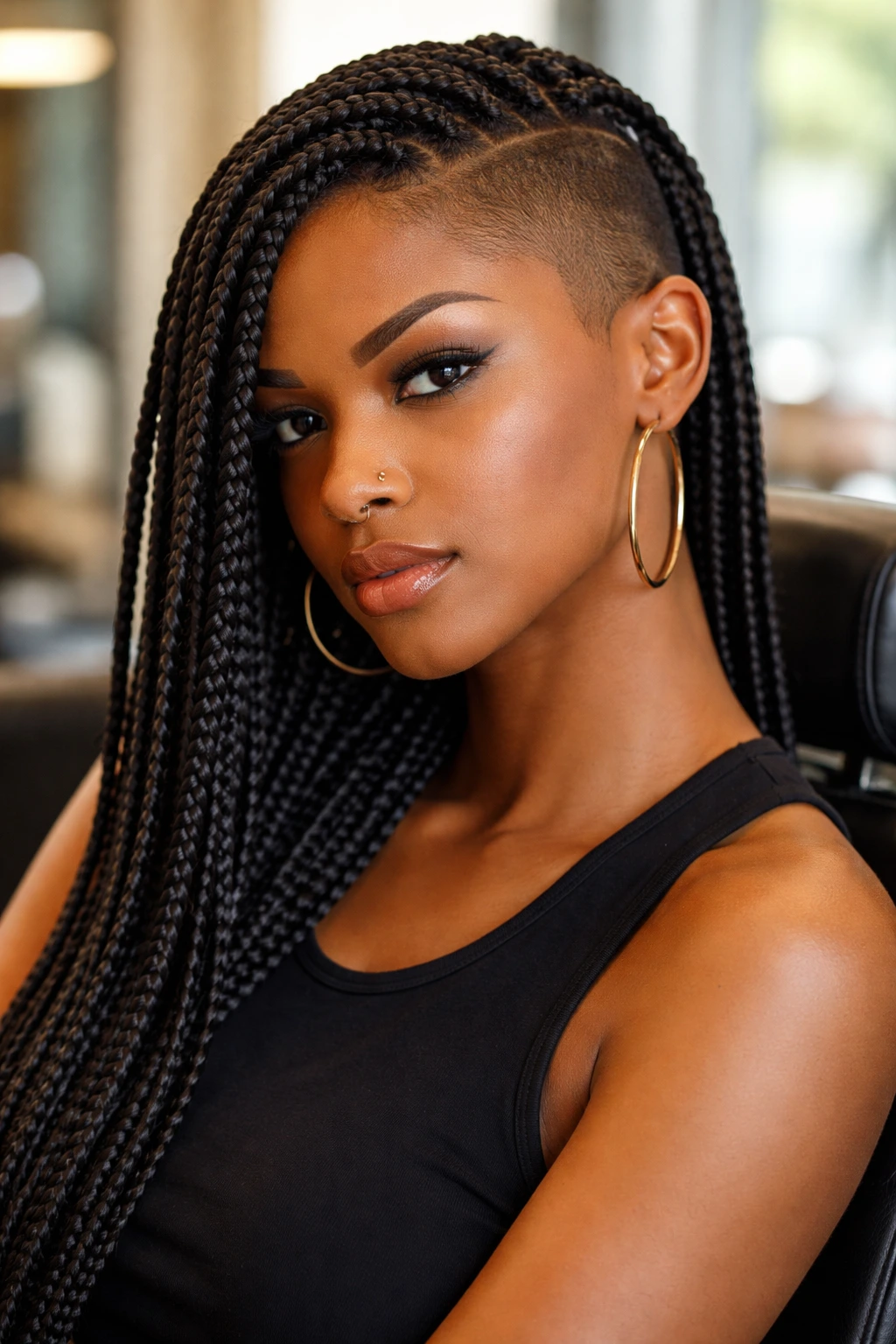
Sometimes you want a style that feels a bit more rebellious. Shaving one or both sides of your head and braiding the rest into box braids creates a high-contrast look that is sleek and daring.
Why It Works
It removes the bulk from the sides of your head, which helps with headaches and keeps the style feeling cool. It also allows you to focus the length on the top and back, making for a very flattering, face-framing silhouette.
Maintenance
You will need to keep up with the shave. If you let it grow out, the transition between your natural hair growth and the braids can look messy. Factor in a quick trip to the barber or a DIY touch-up every two weeks.
14. Half-Up Half-Down Box Braids
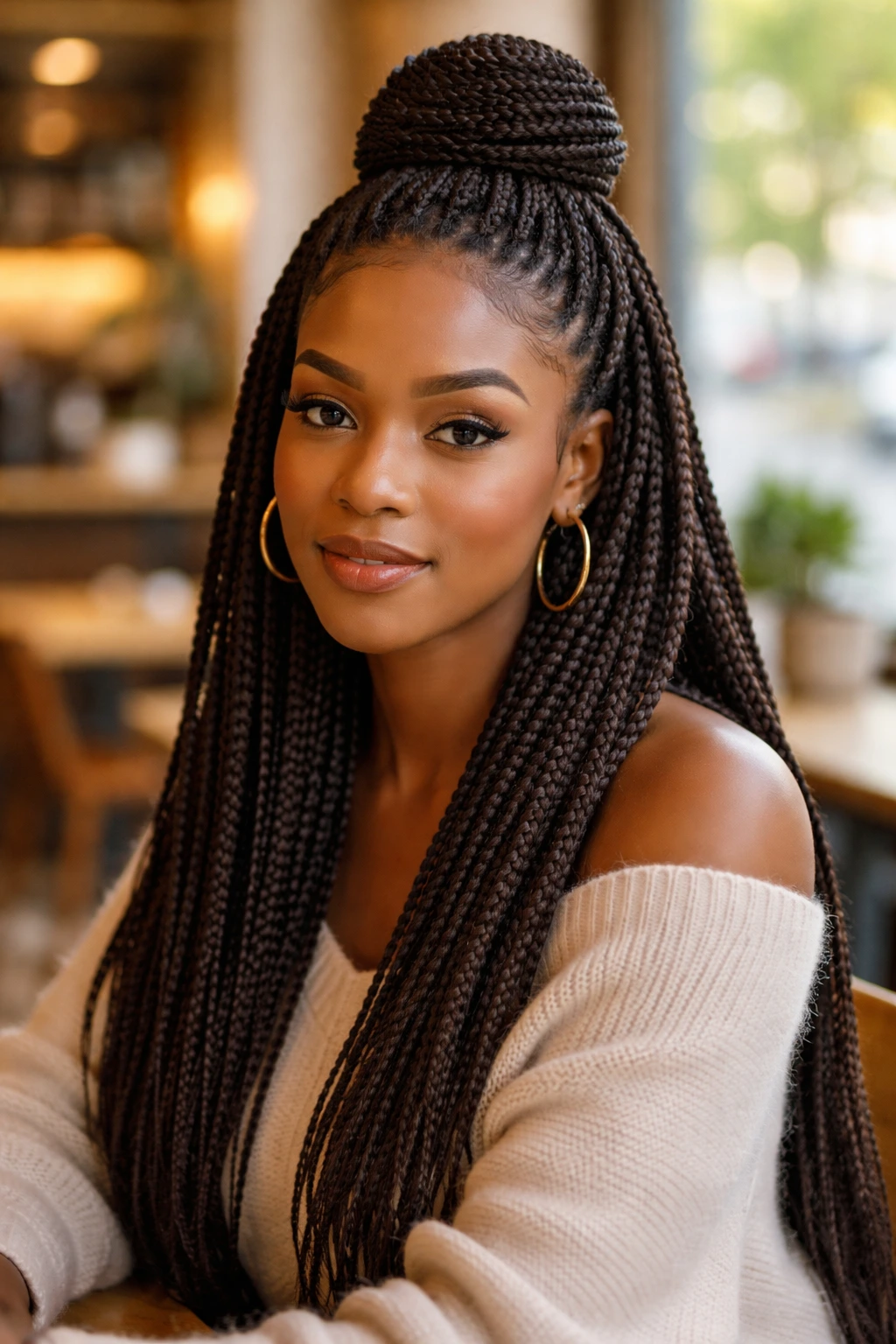
This is the ultimate day-to-day style. It keeps the hair out of your face while still allowing you to show off the length and volume of your braids. It is sophisticated enough for the office but relaxed enough for a casual weekend.
Styling Variation
- The “top knot” half-up: Gathering the front section into a tight, high bun.
- The “half-pony”: Using a large scrunchie or a piece of wrapped hair to secure the top section.
- The “braided half-up”: Braiding the top section together before securing it.
This style is excellent for giving your edges a break. You aren’t pulling back all the hair, so the tension on the hairline is significantly reduced compared to a full high-pony.
15. Blonde Box Braids
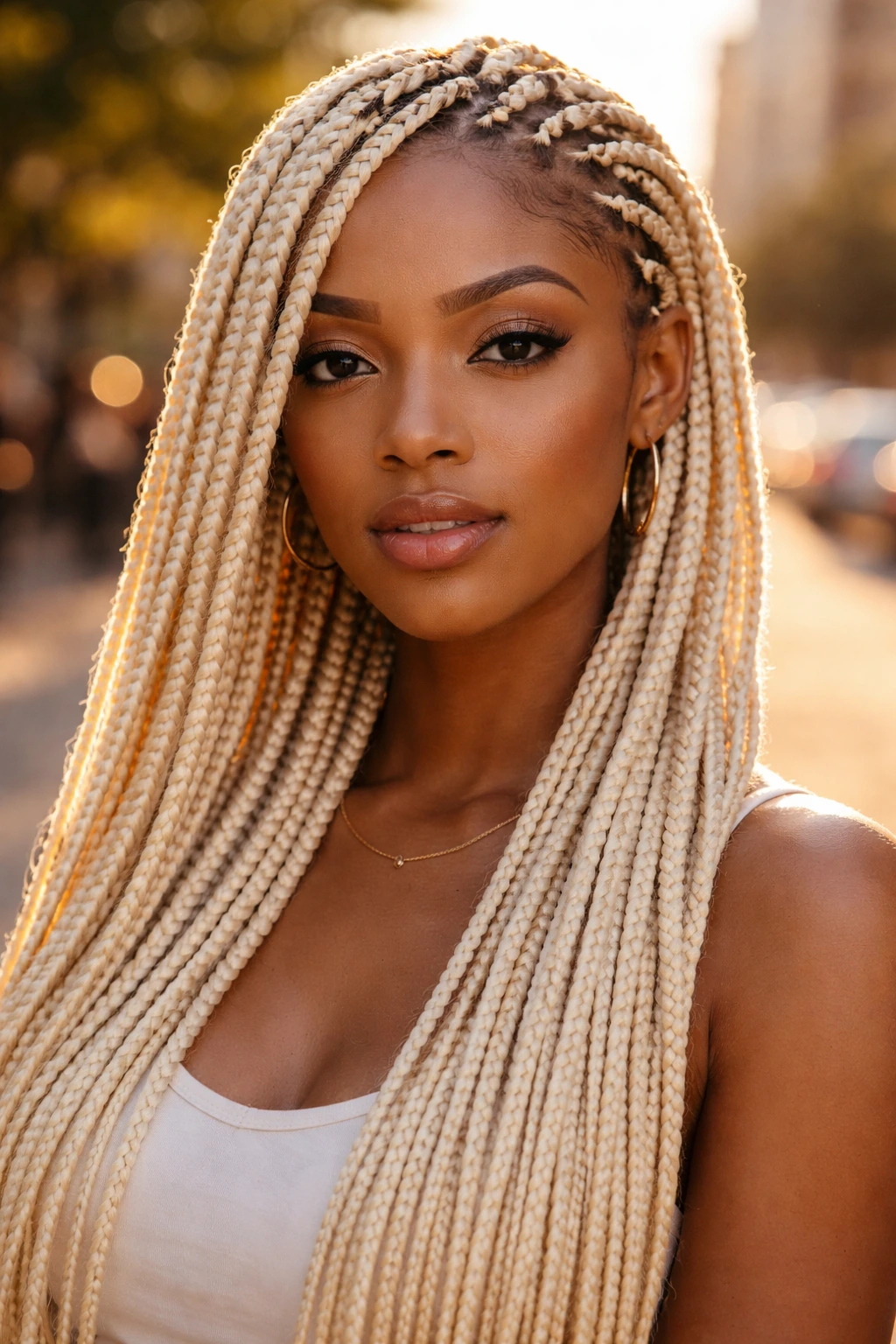
Blonde braids have become a massive statement. Whether it is a warm, honey blonde or a stark, icy platinum, light colors against darker skin tones create a stunning visual pop.
Choosing Your Shade
- If you have warm undertones, go for golden blonde or honey.
- If you have cool undertones, opt for platinum, ash blonde, or white.
- If you are nervous about going full blonde, try a mix of blonde and brown—this is called “honey brown” or “dark blonde” and offers a softer transition.
Care for Light Hair
Lighter synthetic hair can look dirty faster than dark hair. Use a clear, residue-free mousse and avoid heavy oils that might attract dust and make the light hair look dull.
16. Two-Tone Box Braids
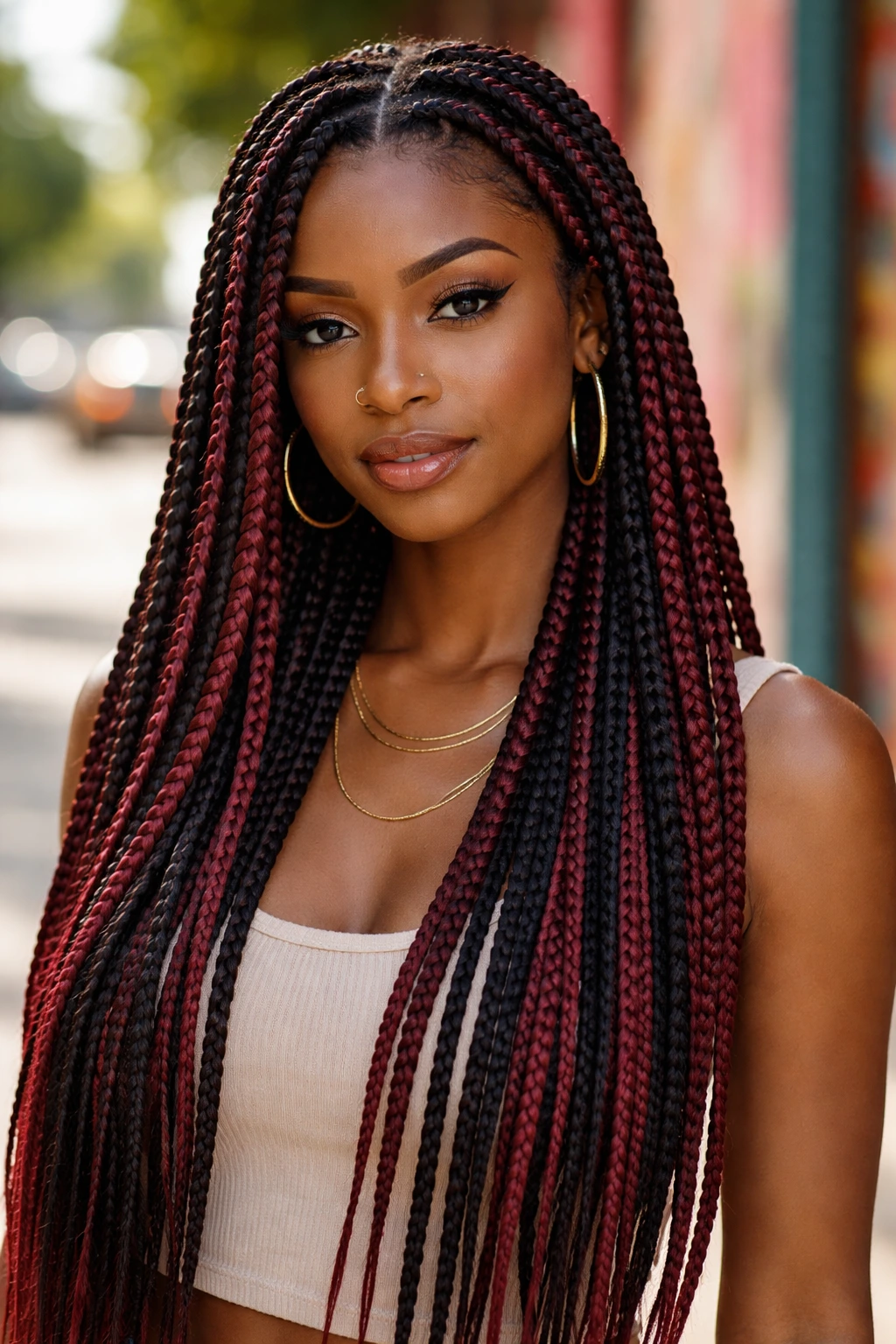
If you cannot decide on one color, why not have two? Two-tone braids, often achieved by mixing two different colors of synthetic hair in each braid, create a multi-dimensional look.
Why This Style Wins
It adds depth. A single color, especially in a flat tone, can sometimes look like a solid helmet. By mixing a darker color with a lighter one, you mimic the natural highlights that real hair has. It makes the braids look fuller and more expensive.
Color Combinations
- Black and burgundy (a classic).
- Dark brown and honey blonde (for a sun-kissed effect).
- Black and silver (for a bold, high-contrast look).
17. Mini Box Braids
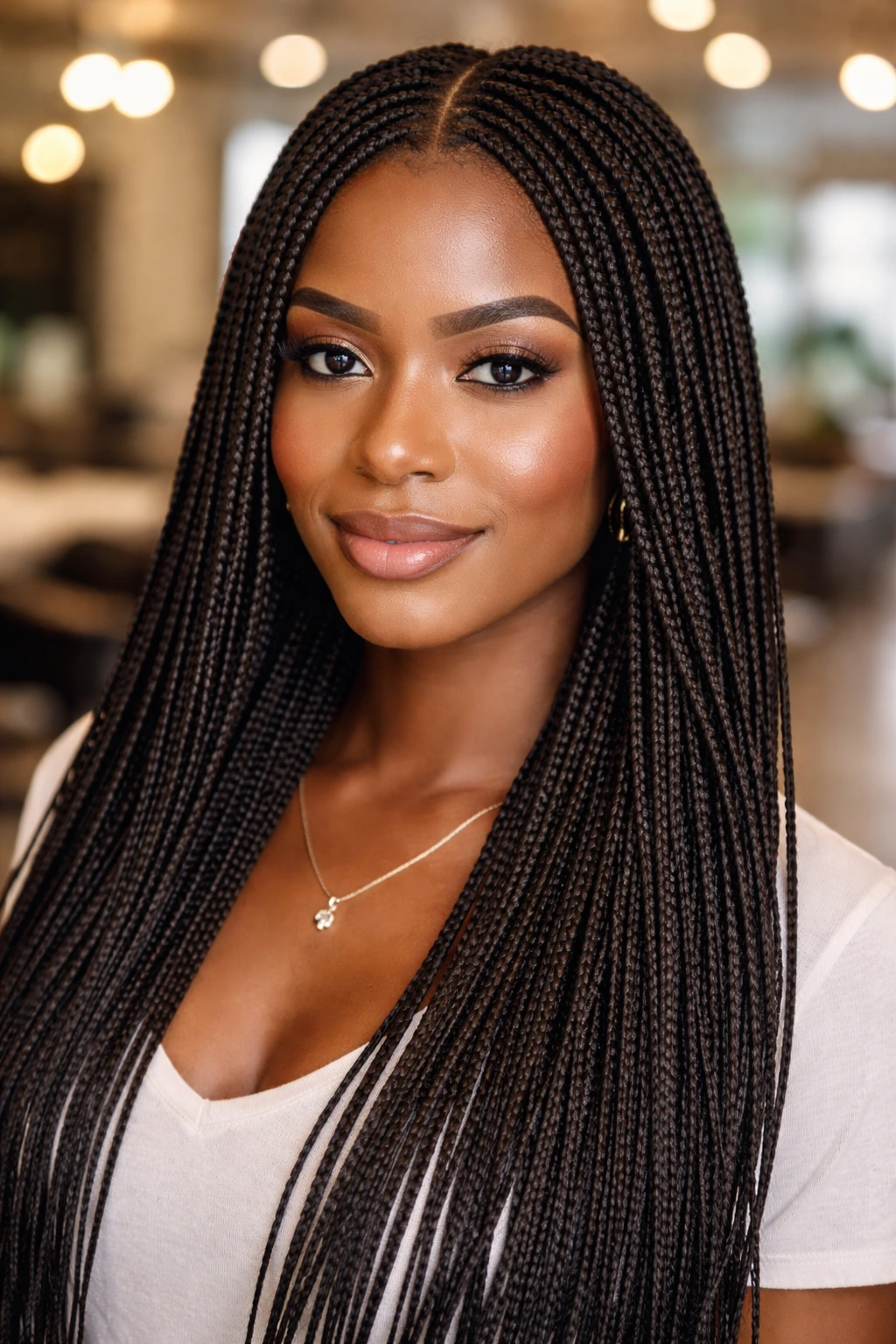
These are the marathon of braids. They are tiny, numerous, and take an incredible amount of time to install—sometimes up to 10 or 12 hours. However, the result is a style that looks and moves exactly like natural hair.
The Aesthetic
Mini braids offer the highest level of versatility. Because the braids are so small, they act like individual strands of hair. You can style them in updos, braids, twists, or leave them down, and they lay perfectly flat just like natural hair would.
The Downside
The weight adds up quickly. Even though each braid is thin, having hundreds of them on your head can get heavy. Also, removal is a time-consuming process that you should not rush. Plan to spend a full day both installing and removing these.
18. Box Braids with Beads and Cuffs
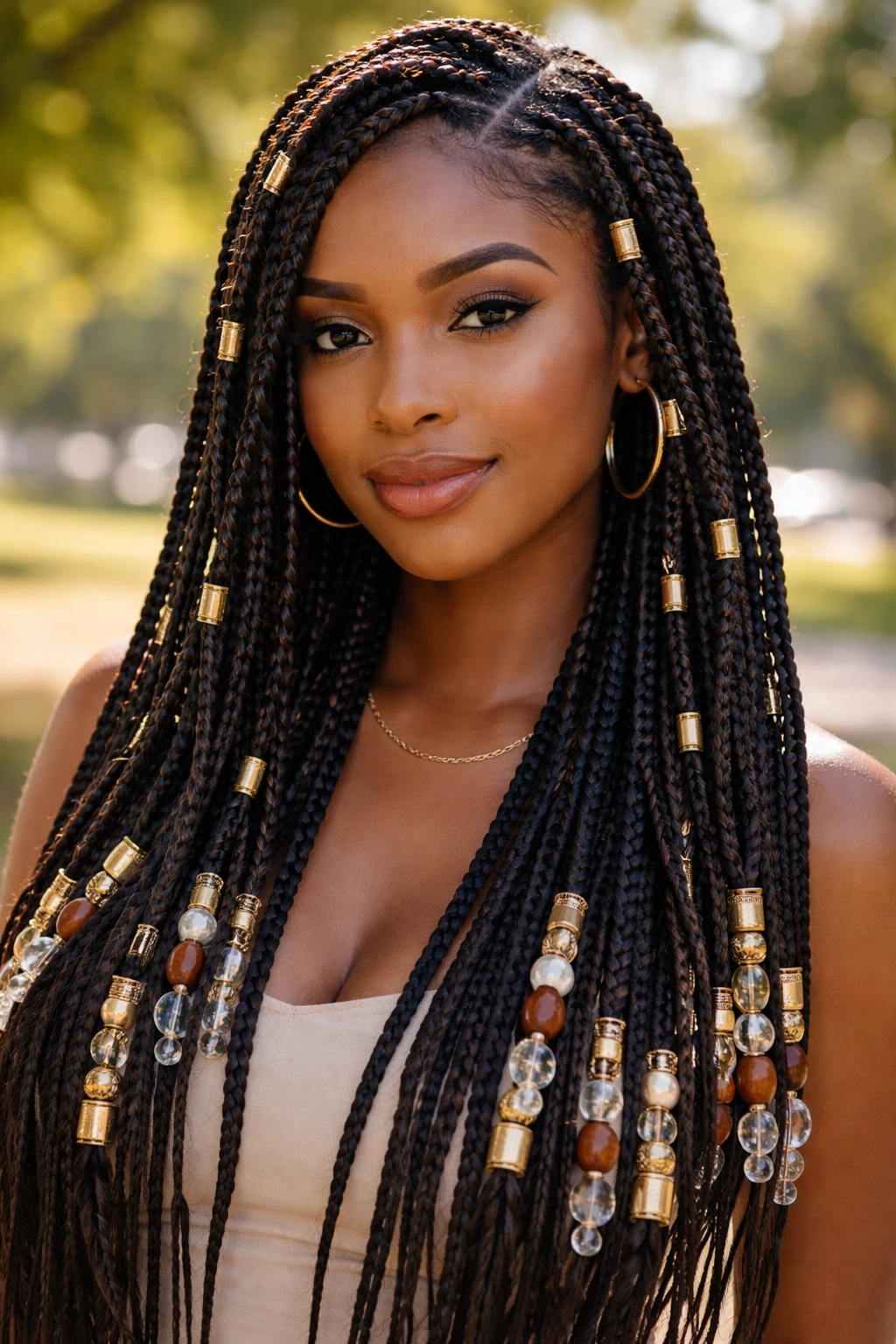
Accessorizing your braids is the quickest way to make them your own. Beads and cuffs are not just decorative; they have a history rooted in culture and tradition. They add a rhythmic, clicking sound when you move, and they act as jewelry for your hair.
Types of Accessories
- Wood beads: Great for a more natural, earthy look.
- Gold or silver cuffs: Perfect for a sleek, modern aesthetic.
- Glass or clear beads: Classic, nostalgic, and fun.
Advice: Do not go overboard. Placing a cuff or a bead on every single braid can be overwhelming and heavy. Focus them around the face, at the ends, or create a pattern in one or two sections to keep it tasteful.
19. Layered Box Braids
Layering is a technique usually reserved for haircuts, but it works wonders for braids too. By having the braider add shorter pieces of hair throughout the style, you create a layered effect that frames the face and reduces the weight at the bottom.
Why It’s Effective
It stops the braids from looking like a uniform curtain. Layering adds movement. When you walk, the braids swing differently because they are different lengths. It makes the hair look lighter and more “lived-in” rather than freshly stiff.
Styling
These are easier to style in ponytails because the shorter layers create a softer look around the face rather than a harsh, pulled-back aesthetic.
20. Burgundy Box Braids
Burgundy is the ultimate “cool girl” color. It is sophisticated, unexpected, and somehow manages to act as a neutral. It looks fantastic on almost every skin tone, providing a rich, wine-colored hue that glows in the sun.
Why It Stays Popular
It is not as loud as bright red, but it is much more interesting than basic brown or black. It feels like a high-fashion choice. If you are bored with your usual routine, switching to a deep burgundy is the easiest way to refresh your look without going into “wild color” territory.
21. Pulled-Back Box Braids
This style is all about the edges. To achieve this, your braider will often braid the hair away from the face, possibly incorporating some “stitch” parting techniques to create clean lines that lead toward the back of the head.
The Benefit
This is a protective style for your edges. If you have been over-styling your front hair, pulling it back in a clean, neat braid pattern relieves that constant stress. It is a very mature, polished look that works well for professional environments.
Maintenance
Keep your edges hydrated. Since they are pulled back and exposed, they can dry out. Use a light edge control or a simple moisturizer to keep the hairs smooth and prevent breakage at the hairline.
22. Criss-Cross Parting Box Braids
The parting pattern is where the art is. Criss-cross sections create a lattice pattern on the scalp that looks complex and intricate. This is a head-turning style that looks best when viewed from the back or top.
Technical Precision
This requires a high level of skill. You want a braider who takes their time with the lines. If the lines are shaky, the illusion of the “lattice” disappears. Because the parts are so unique, you do not need to over-accessorize—the parting pattern is the accessory itself.
23. Senegalese Twist Box Braids
While technically a twist, many people classify this under the “box braid” umbrella because of the way they are installed. Senegalese twists use synthetic hair wrapped tightly around the natural hair to create a smooth, rope-like appearance.
Texture Difference
Unlike a braid, which has a visible pattern, a twist is smooth. This makes it look sleeker and perhaps a bit more “polished.” They tend to be a bit heavier than standard braids, so if you are sensitive to weight, opt for a shorter length.
Durability
Twists can unravel if not done correctly. Ensure your braider seals the ends properly—usually with a hot water dip—and consider using a little bit of braid gel or mousse to keep the twists tight as they grow out.
24. Box Braids with Side Part
A side part is the easiest way to change your whole face shape. A sharp, deep side part instantly adds glamour and shifts the focus to your cheekbones.
Versatility
Even if your braids are already installed, you can often “train” them to fall to one side. However, if you know you want a permanent side part, ask your braider to section the hair that way from the very start. It makes the hair lay flat and prevents those annoying flyaways that happen when you try to force center-parted hair to one side.
The Look
This works perfectly with bob lengths or long, waist-length styles. It’s elegant, classic, and never goes out of style.
25. Wrapped-Base Box Braids
This is a specific technique where the base of the braid is wrapped with hair before the rest of the braid is started. It creates a very clean, “finished” look at the scalp. It feels much more secure and provides a bit of extra cushion where the braid meets the skin.
Why It’s Premium
This is the hallmark of a high-end braiding job. It looks intentional and very neat. If you are going to an event or want your braids to look “fresh” for as long as possible, ask for the wrapped base. It prevents the synthetic hair from looking “fuzzy” at the root and helps the style hold its shape for a longer period.
Final Thoughts
Choosing your next braided style is not just about the pictures you see on a screen. It is about assessing your hair health, your schedule, and your tolerance for tension. Braids are a commitment, and a good protective style should serve you, not burden you. Remember that no matter which style you pick, the health of your natural hair underneath is the most important factor.
Keep your scalp clean, moisturize your hair even while it is braided, and do not be afraid to take your braids down when the time is right. Your hair needs a break, and your scalp needs to breathe. When you treat your braids with the same care you treat your natural hair, the results—growth, retention, and confidence—speak for themselves. Enjoy the process of the install, cherish the time in the chair, and wear your style with the confidence that comes from knowing you look good.
