



Hazelnut hair color can look flat on cool skin tones if it leans too gold. Push it smoky, ash, or beige, though, and it suddenly does something much better: it softens redness, gives the hair more depth, and makes the whole face look calmer.
That balance matters more than people think. Cool skin usually carries pink, blue, or rosy undertones, so the sweetest hazelnut shades stay on the brown side of the fence — mushroom, taupe, mocha, espresso, beige-brown, all of that. Orange-heavy caramel can fight your complexion. So can a copper gloss that looked fine in the salon chair and a little loud in daylight.
Placement changes the feel too. A one-tone hazelnut can look rich on short hair or dense hair, while balayage, root smudges, and thin ribbons of light give movement without pushing the shade into brass. That’s the real trick here. Not making hazelnut lighter. Making it cooler, cleaner, and more flattering.
Some of these looks are quiet and polished. Some are brighter around the face. A few are built for grow-out, which is a nice thing to care about when you do not want to sit in a salon chair every few weeks.
1. Smoky Hazelnut Melt
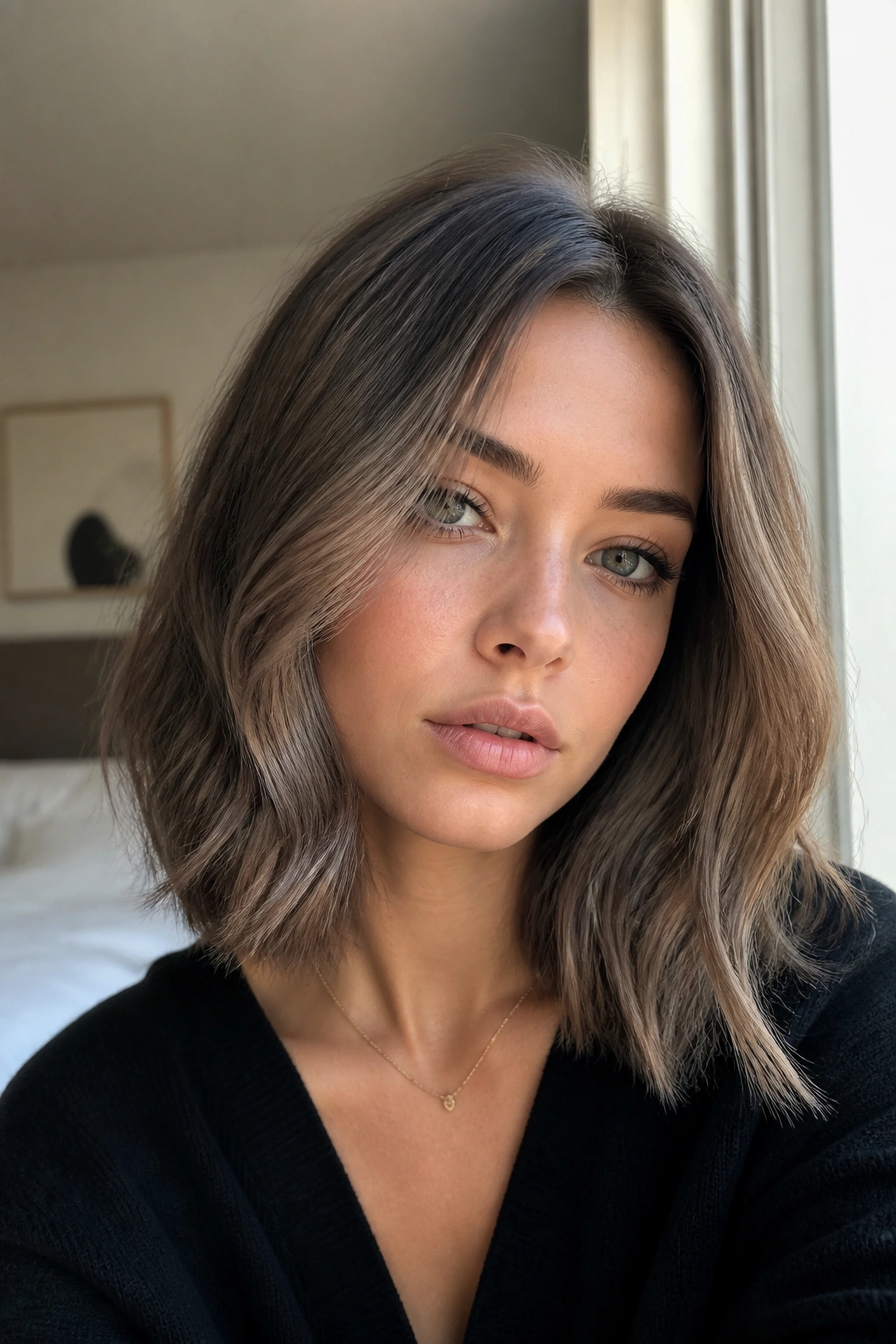
Smoky hazelnut is the version I reach for when someone wants brunette depth without warmth creeping in at the edges. The color starts with a level 5 or 6 brown, then softens into ash-beige mids that never tip orange. On cool skin, that smoke-brown finish looks steady and refined instead of muddy.
Why It Flatters Cool Skin
The ash in the formula keeps the shade from fighting pink undertones. A little bit of beige helps the color stay soft, so the hair still looks shiny rather than flat. I like this one on shoulder-length cuts, where the color has room to fade slowly from roots to ends.
- Ask for a smoky level 5 base with level 6 to 7 hazelnut ribbons.
- Keep the lightest pieces around the face and top layers.
- Finish with a cool beige gloss, not a gold toner.
- Best on hair that already sits in the medium-brown range.
Tip: If your ends pull orange fast, keep the brightest pieces a half-inch farther from the ends than you think you need.
2. Ash-Toned Hazelnut Balayage
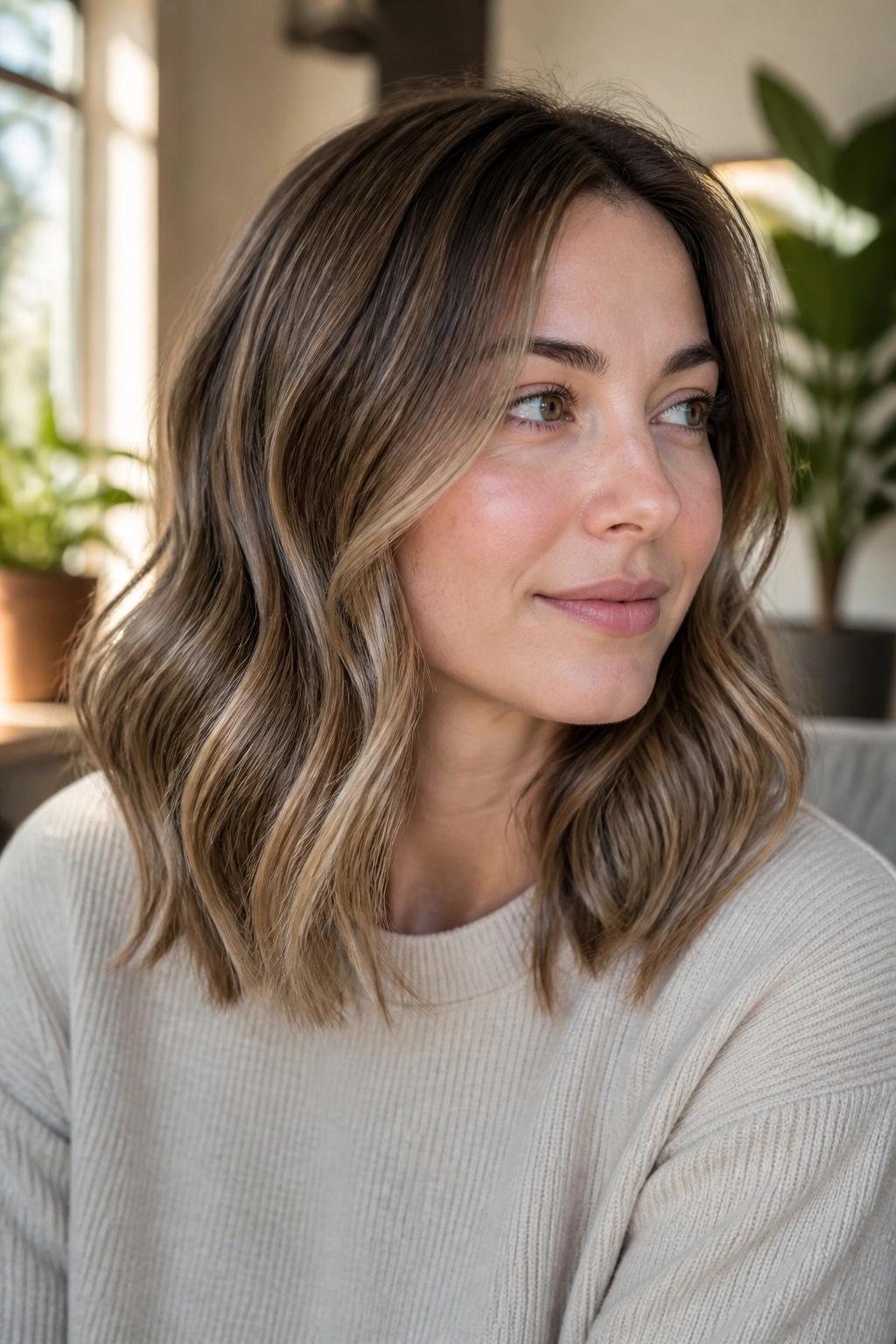
Ash-toned hazelnut balayage is the softer choice when you want dimension but not a big color shift. Hand-painted pieces move through the mid-lengths and stay cooler than classic caramel, which matters a lot on fair or rosy skin. The effect is breezy, not streaky.
This look works because balayage leaves your natural brown in play. That gives the hazelnut room to breathe. If your hair is fine, the contrast can make it look denser. If it’s thick, the color keeps the length from feeling heavy.
I like this style on waves. The bends catch the ash-brown pieces and make them look like tiny changes in shade, not obvious stripes. That is the whole point. Quiet contrast, nothing flashy.
3. Mushroom Hazelnut Bob
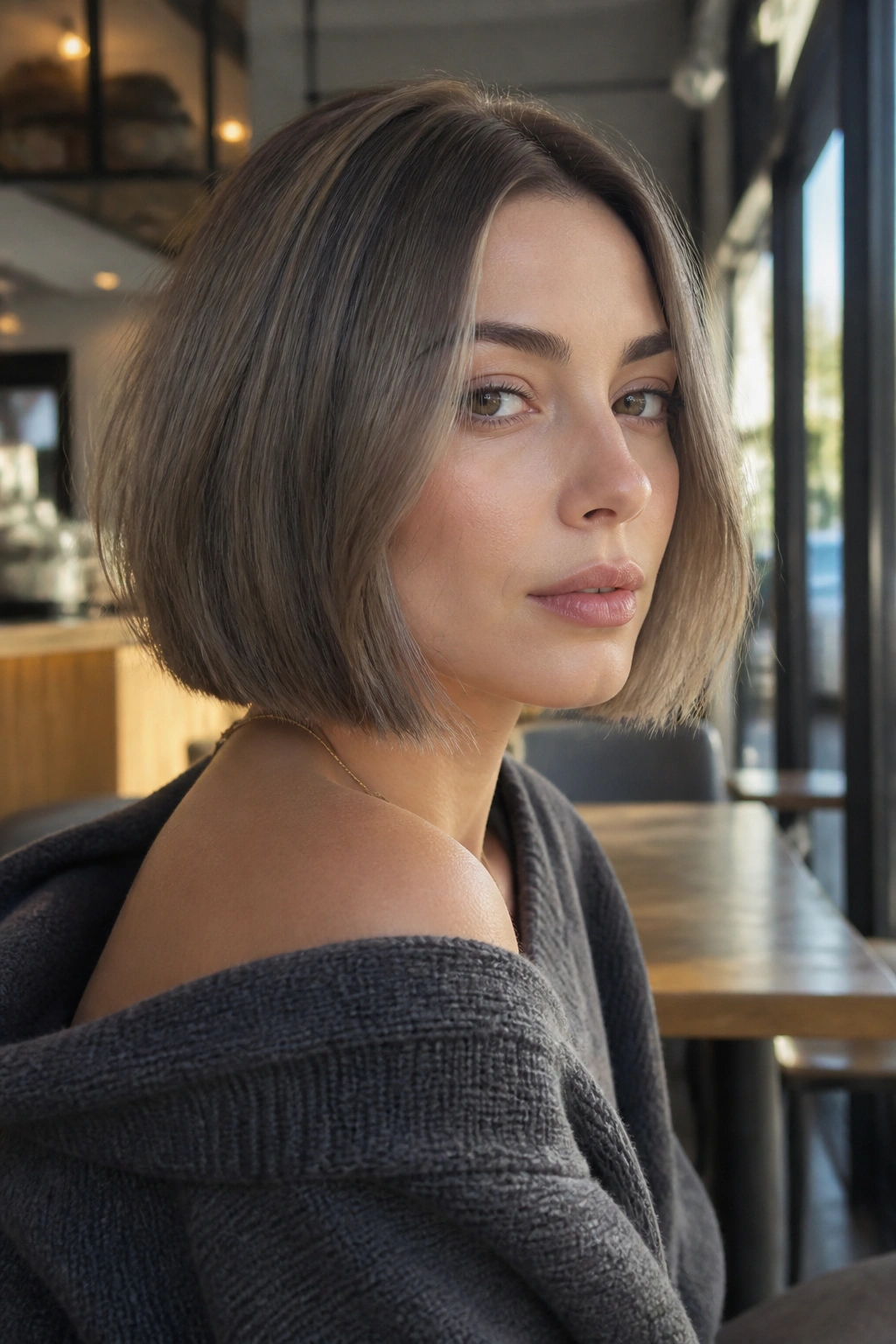
Why does mushroom hazelnut look so good on a bob? Because a blunt cut loves a cool, muted color. The clean edge of the haircut pairs with a brown that has gray-beige notes, and the result is polished without feeling severe.
How to Wear It
Keep the root one shade deeper than the mids. That gives the bob shape. Then let the hazelnut sit in the center panel and around the jawline, where it can lift the face without turning warm.
On cool skin, this shade is especially nice if your eyes are gray, green, or blue-gray. The mushroom tone keeps the whole look from turning golden. If you wear it sleek, the shine will show the color better. If you wear it air-dried, the cut looks a little more relaxed. Both work.
4. Cool Mocha Hazelnut Layers
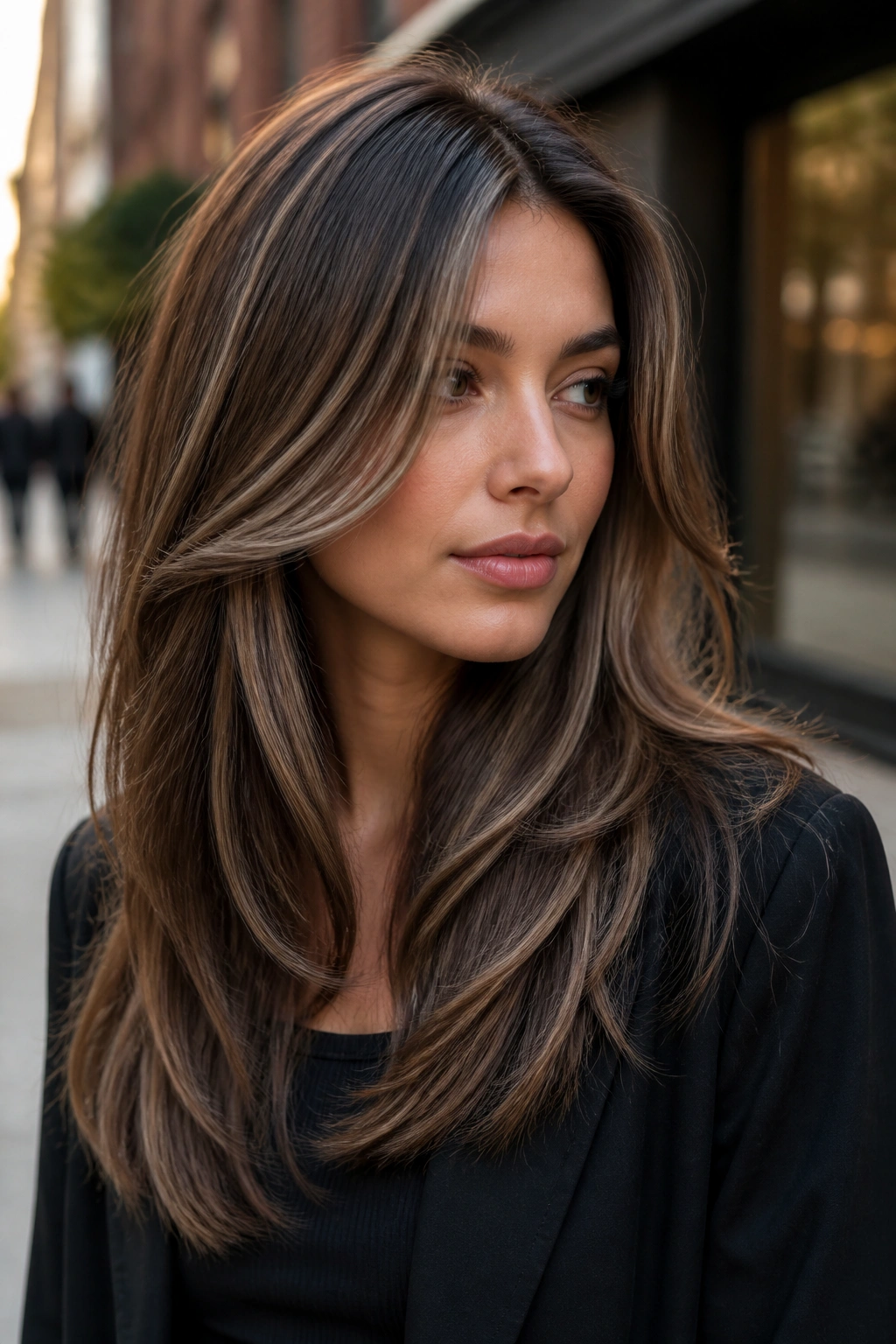
A layered cut can swallow a weak brunette shade. Cool mocha hazelnut fixes that. The mocha base gives the hair depth, while the hazelnut ribbons break up the heaviness so the layers move instead of sitting as one block.
This is a strong choice if your hair is medium to long and you want the color to do some of the work that highlights usually do. A soft mocha lowlight under the top layer makes the hazelnut on top look brighter, even if it never gets light enough to feel blonde.
The best request here is simple: ask for a cool mocha base with hazelnut dimension through the surface layers, not thick contrast chunks. It should look like the hair has shadow and shine, not stripes.
5. Beige Hazelnut Ribbon Highlights
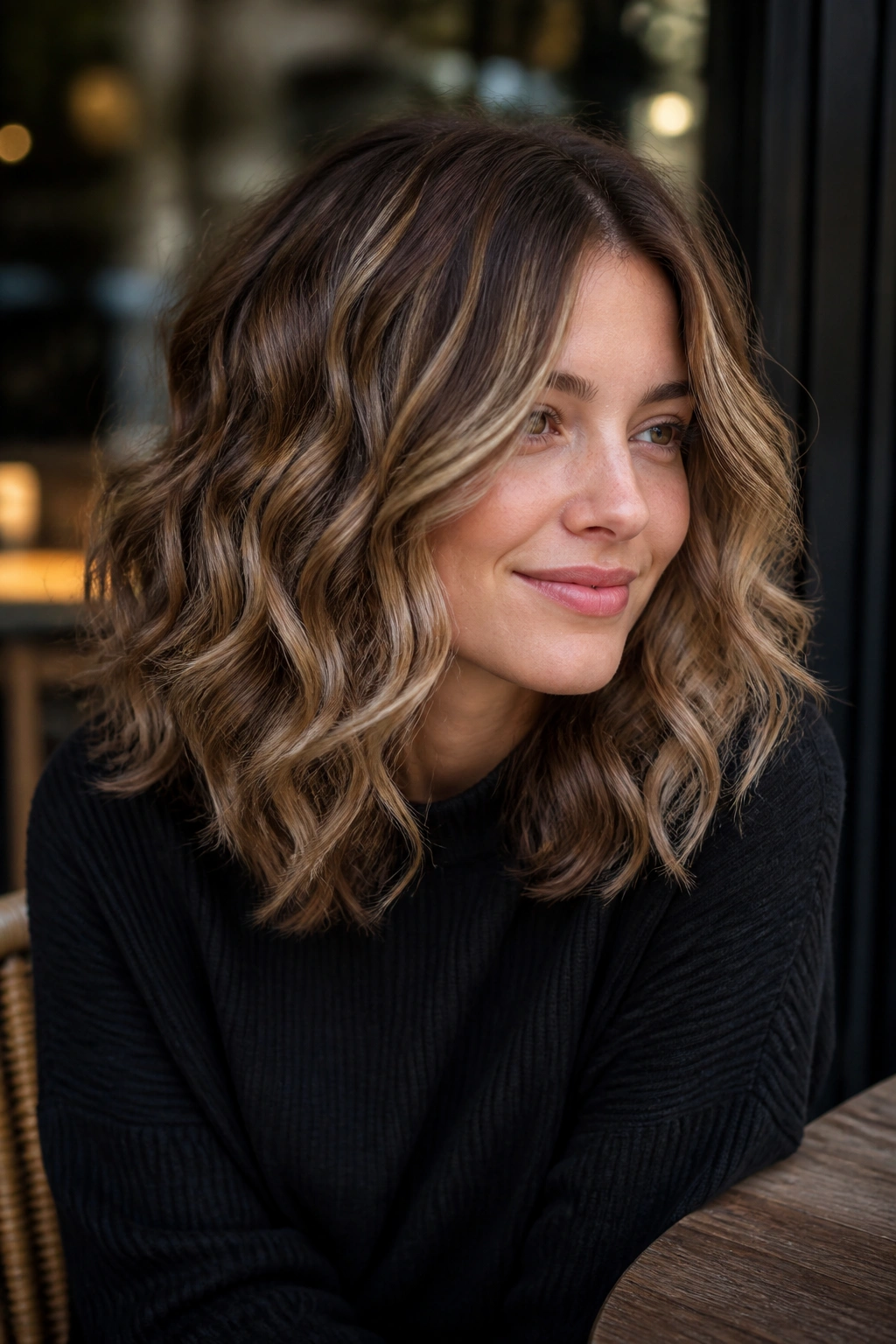
Beige hazelnut ribbon highlights are tiny in the best way. They thread through curls, waves, and even straighter textures without shouting for attention. Beige keeps the shade cool; hazelnut keeps it grounded.
I like this on medium-length hair because the ribbons can travel through the whole cut without getting lost. On very long hair, the same technique can look softer and more lived-in. Either way, the color should feel woven in, not layered on top.
The Sweet Spot
Thin slices around the face brighten cool skin without forcing the overall shade too light. That matters if you do not want to cross into blonde territory. These highlights stay brown first, light second.
A gloss every so often helps keep the beige from turning yellow. Not a heavy correction. Just a fresh coat of tone so the ribbons stay crisp.
6. Espresso Hazelnut Gloss
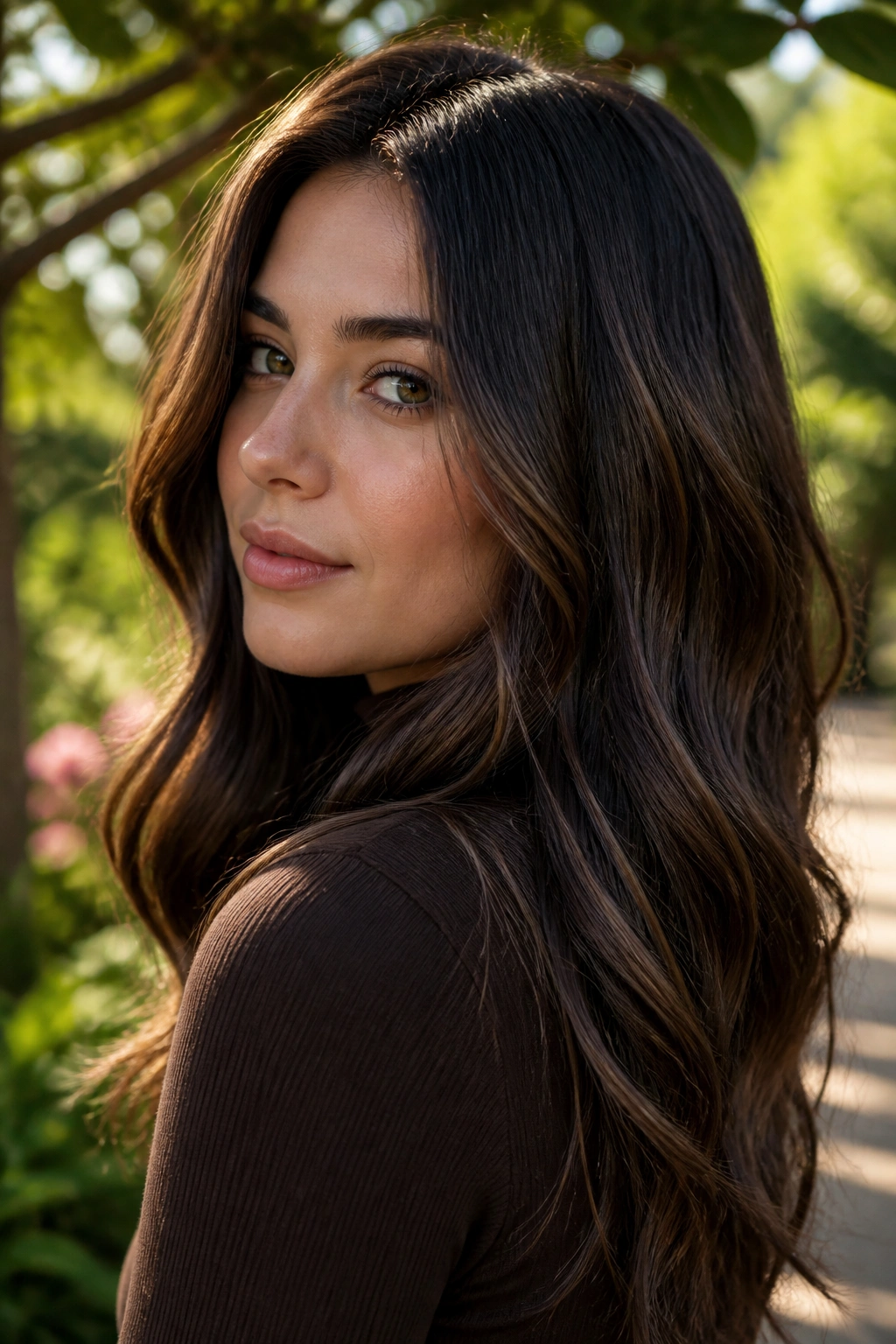
Espresso hazelnut gloss is for the person who likes dark hair that still has movement. Unlike brighter balayage, this version stays close to brunette depth. The hazelnut shows up as a soft brown shimmer when the light hits, which is enough if you want shine more than contrast.
This is one of my favorite options for fine hair. Darker glossed color can make strands look fuller because the eye reads the surface as denser. It also behaves well on straight hair, where the reflective finish matters more than big color shifts.
Ask for a demi-permanent glaze in espresso brown with hazelnut and ash-beige notes. If the salon tries to push it warm, pull it back. You want polished brown, not chocolate-orange.
7. Shadow-Root Hazelnut Lob
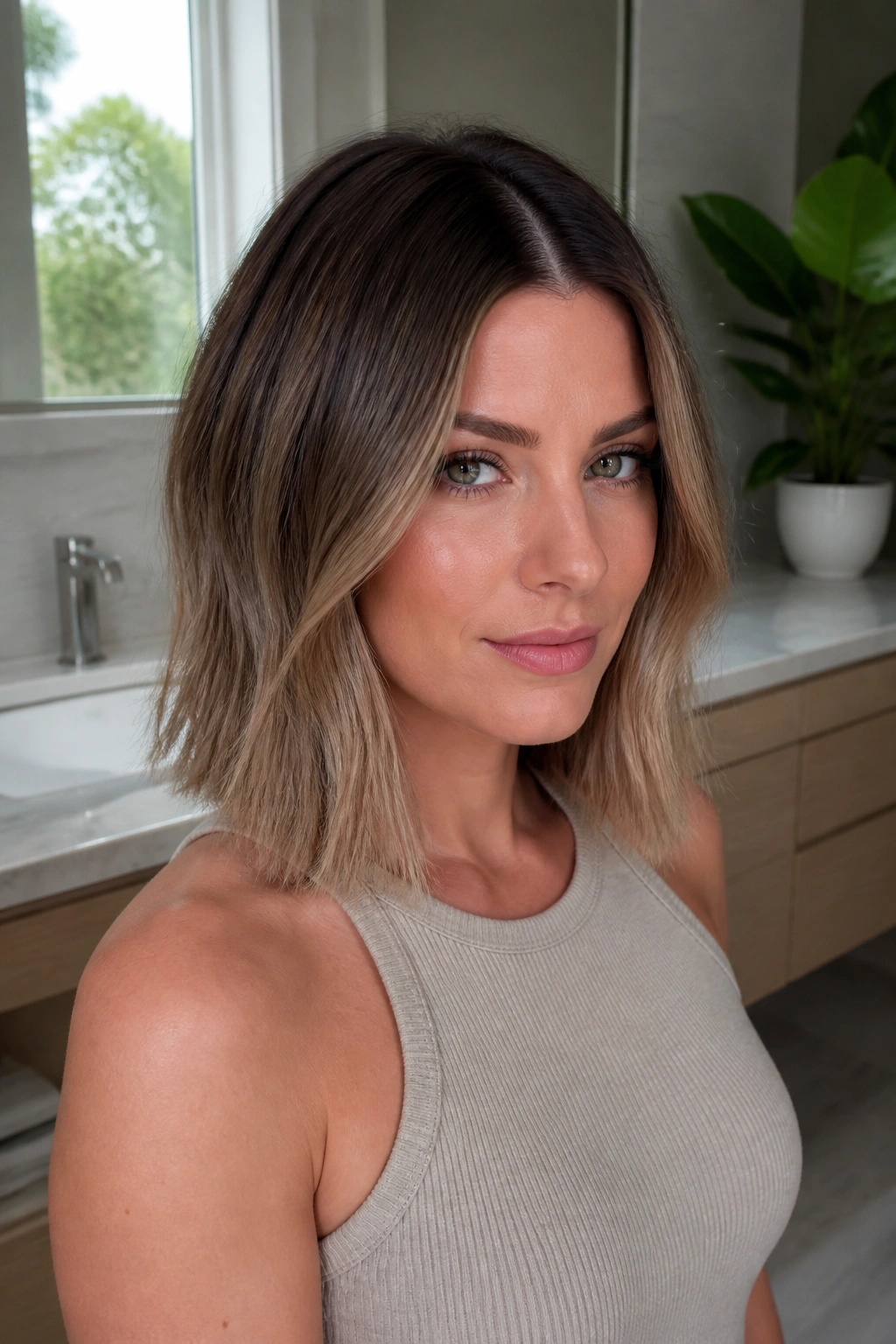
A shadow root is the easiest way to make hazelnut feel grown-up and low-fuss. The dark root melts into a soft hazelnut lob, so the color never looks too precious. That softness is nice on cool skin because the root keeps the whole look from going brassy.
What to Ask For
- A level 4 or 5 root shadow.
- Mid-lengths one to two levels lighter in hazelnut.
- Ends kept soft, not blonde.
- A cool gloss at the rinse stage.
This look works especially well if you hate obvious regrowth. The root blur means you can stretch appointments a little longer, and the lob length keeps the whole thing feeling current without being fussy. Simple. Clean. Good hair in a strong brown.
8. Walnut Hazelnut with Soft Lowlights
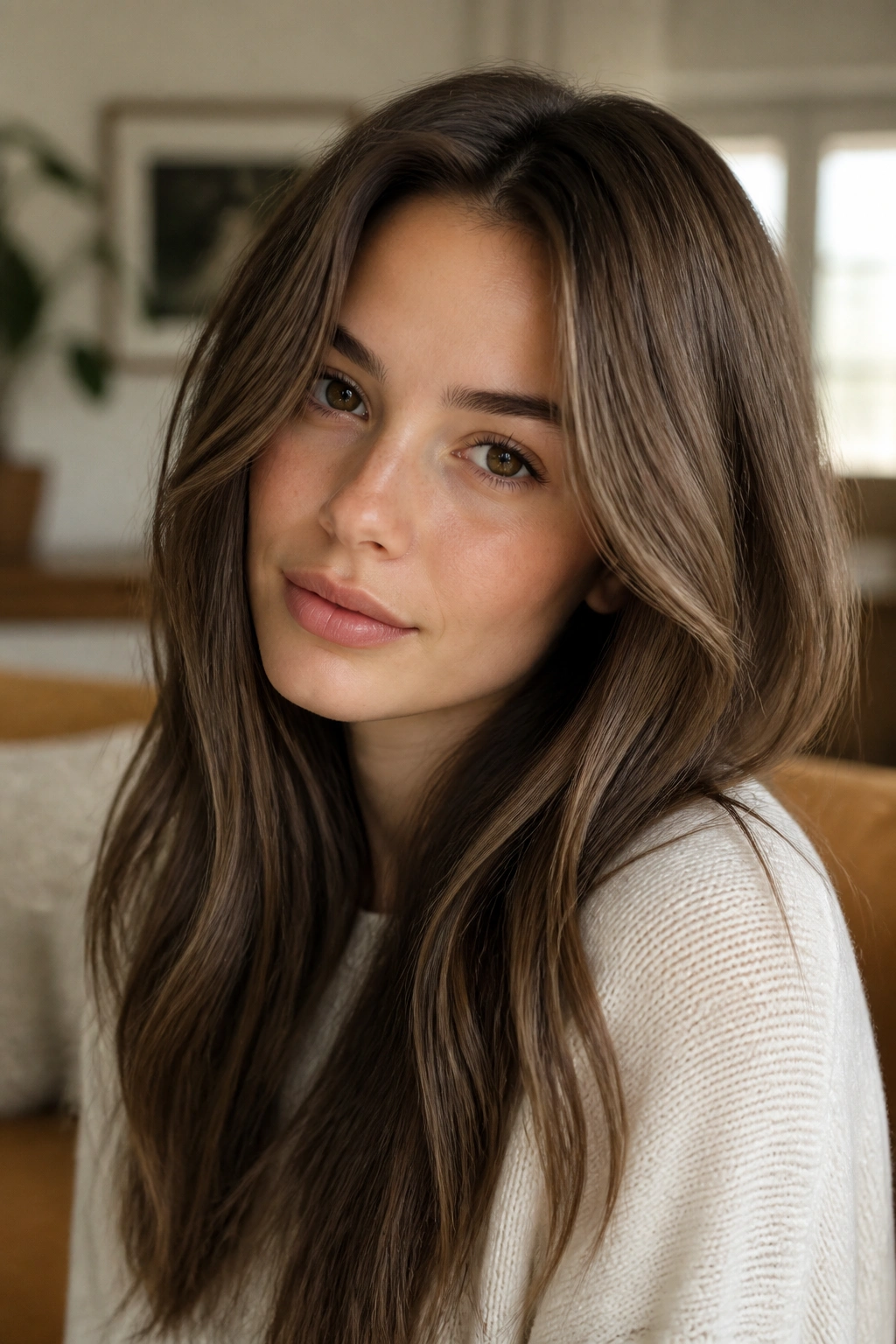
Walnut hazelnut with soft lowlights is the shade I choose when the hair needs more depth, not more brightness. Walnut lowlights sink beneath the surface and make the hazelnut pieces look richer, which is helpful if your natural color sits in that medium-brown zone.
It’s a nice fit for cool skin because walnut usually stays neutral to cool rather than golden. That neutral base keeps the face from looking flushed. On thick hair, the lowlights break up the mass and make the cut move better. On wavy hair, they create a striped effect that looks natural, not staged.
If you want it to read expensive rather than dramatic, keep the contrast modest. Too much darkness under too much light starts to look like a patchy correction. Subtle is the smart move here.
9. Iced Hazelnut Face-Framing Pieces
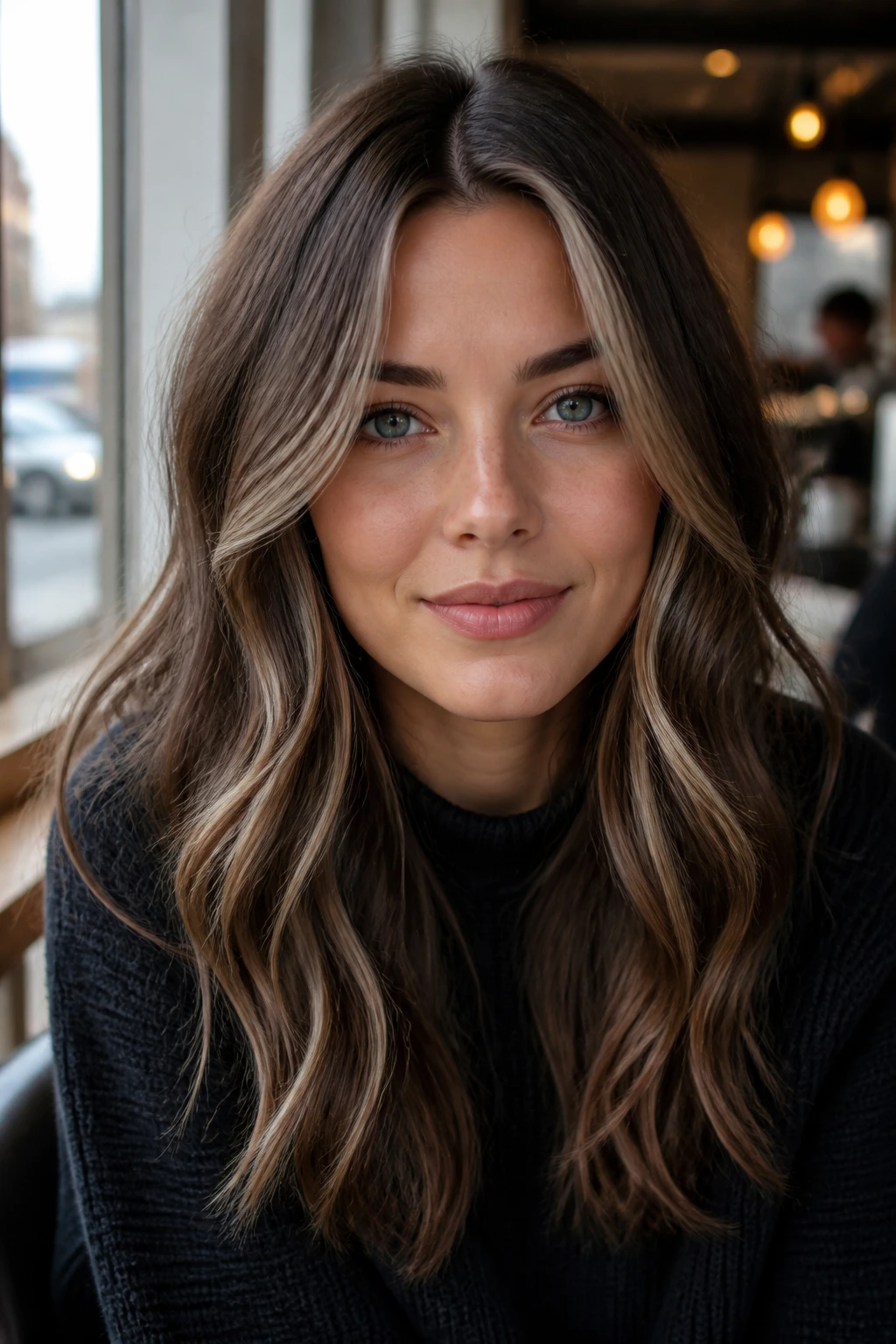
Why do face-framing pieces matter so much? Because they sit where people actually look. A few iced hazelnut ribbons around the face can brighten cool skin fast, especially if the rest of the hair stays in a softer brunette range.
How to Ask for It
Tell your colorist you want two or three cool pieces on each side, no wider than a finger and a half. Keep them a shade or two lighter than the base, not blonde. The goal is brightness with restraint.
This look suits hair that already has some movement — curtain bangs, loose waves, a layered lob. The front pieces should soften the cheekbones and bring light toward the eyes. Too much light at the front can feel harsh. A little bit is enough, and that is what makes it useful.
10. Hazelnut Ombré on Long Waves
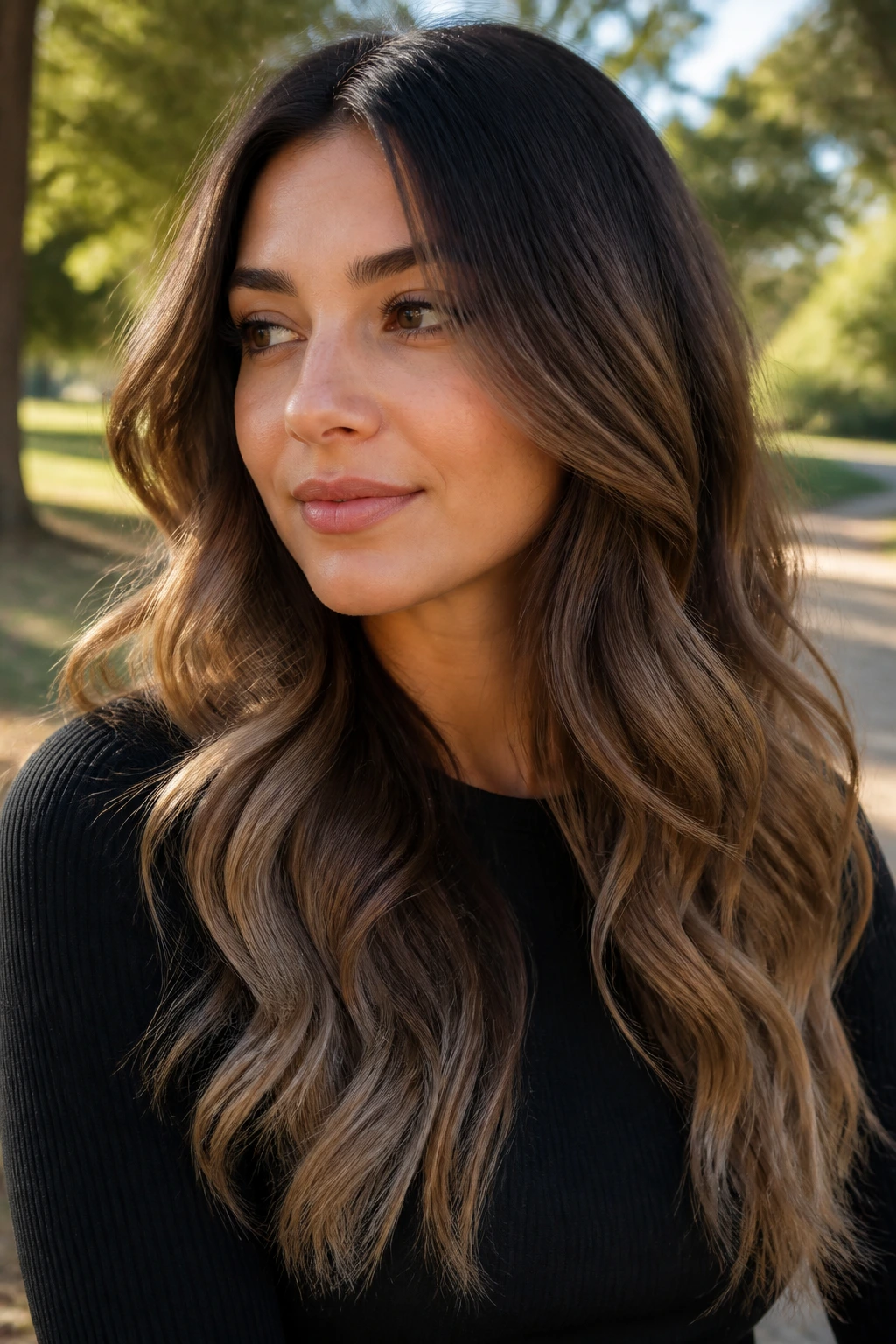
Long hair can carry ombré better than most cuts because there is space for the fade to do its work. Hazelnut ombré starts deeper near the roots and slowly opens into cooler beige-brown ends, which keeps the whole thing from drifting into orange.
I like this when someone wants visible change without a maintenance headache. The grow-out stays softer because the root is left natural or close to natural. The mid-lengths do the heavy lifting, and the ends can stay lighter without looking fried.
The fade should be gradual, not dramatic. A hard line between brown and light brown ruins the effect. Ask for a slow melt that still reads brunette from across the room. That’s the move.
11. Taupe Hazelnut Curls
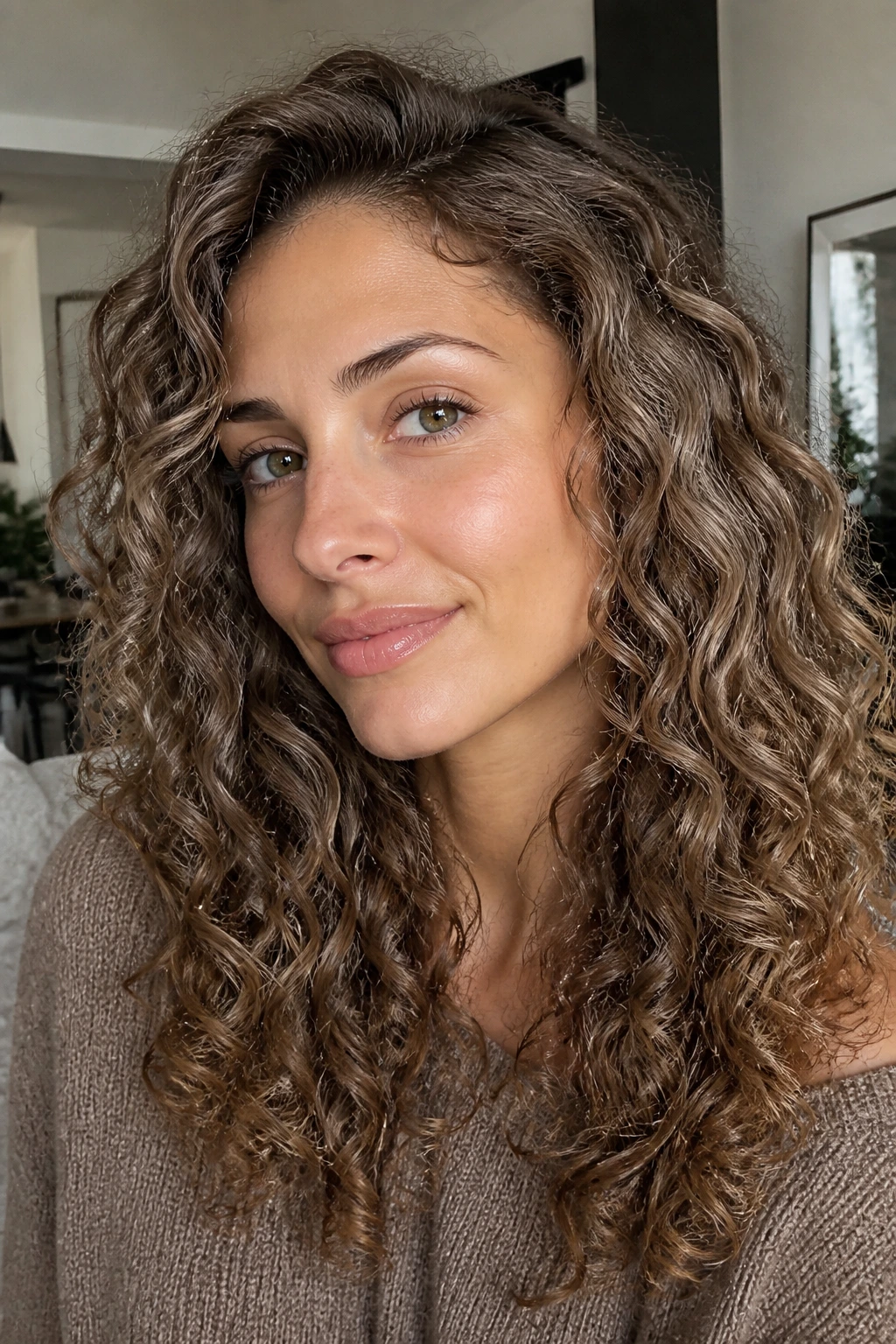
Taupe hazelnut curls are quietly excellent. Curls need color that moves with the texture, and taupe does that better than warmer browns because it keeps each curl from looking too orange or too flat. On cool skin, the shade sits in the same family as a soft knit sweater — calm, easy, and not trying too hard.
This is where dimension matters. The curls should show different tones as they bend, with slightly deeper roots and hazelnut mids catching the light. If everything is one flat color, the texture disappears. If the contrast is too sharp, the curls can look striped. Taupe stays in the middle.
Use curl cream, not heavy oils, if you want the color to stay visible. Slick hair hides the detail, and this shade deserves to be seen.
12. Cool Hazelnut Money Piece
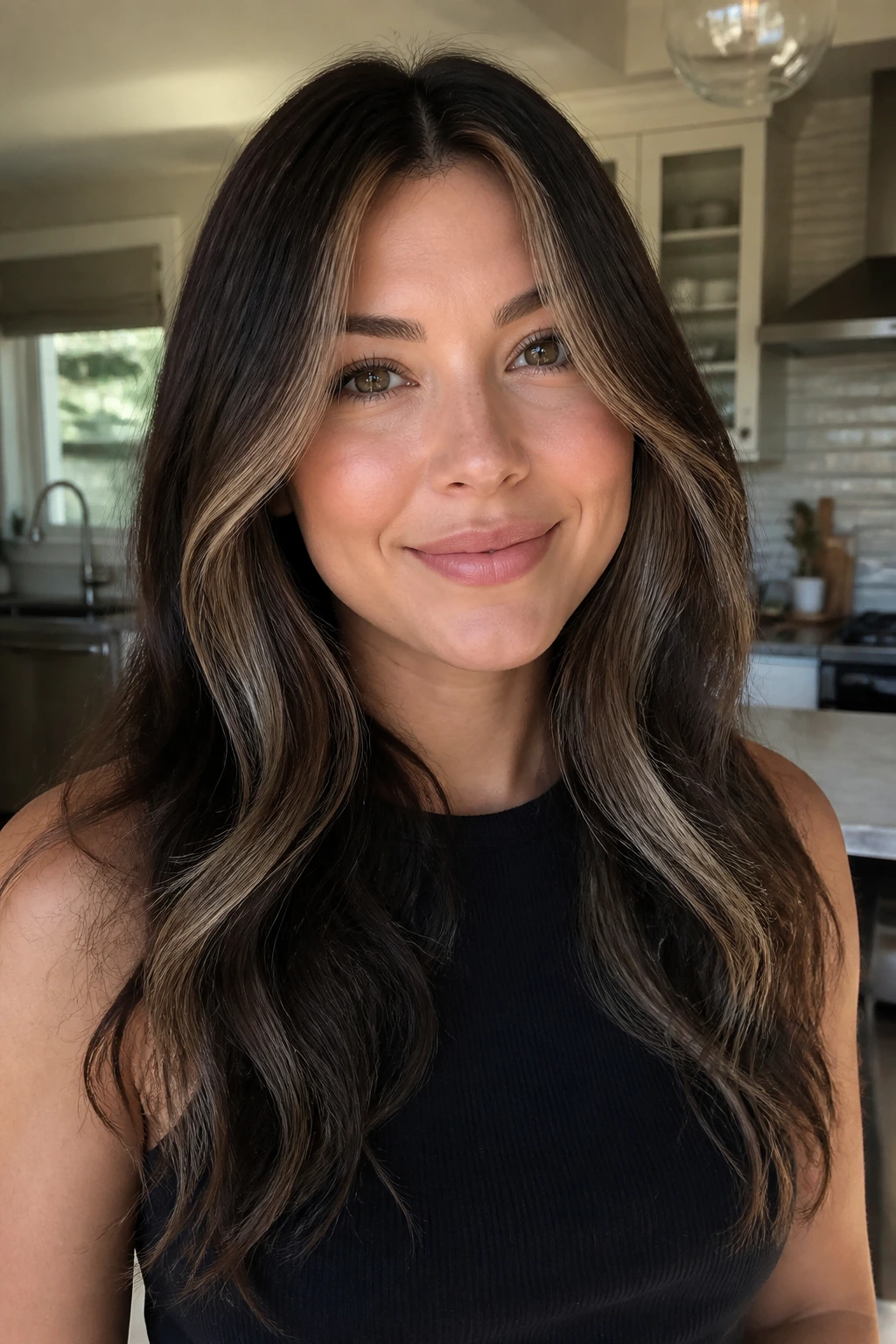
Unlike full-head highlights, a cool hazelnut money piece puts all the brightness in front. That makes it a smart choice when you want a change you can see in the mirror without restaining the entire head. It also plays nicely with cool skin because the front frame can be kept beige-ash instead of warm gold.
This look is best when the money piece is only a little lighter than the rest of the hair. Too much lift and the front starts to look disconnected. Too little and the effect disappears. The sweet spot is usually one to two levels lighter, depending on your base.
If you wear your hair tucked behind one ear, this color has a nice habit of showing up in the right places. Small detail. Big payoff.
13. Silver-Hazelnut Blend
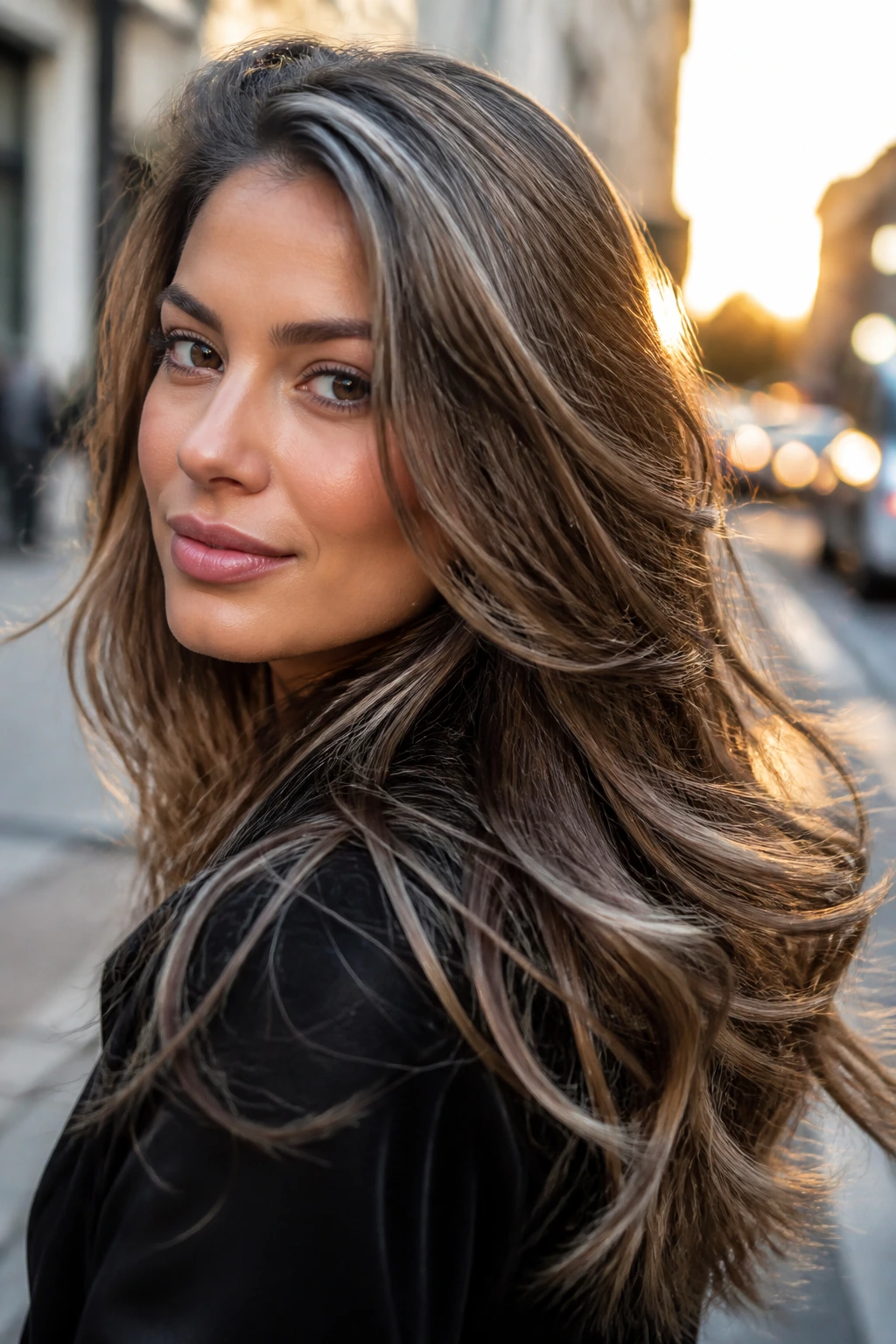
Silver-hazelnut blend sounds colder than it is. The best version has a brunette base with silver-brown reflections that show up in motion, not a flat gray coat. On cool skin, that metallic edge can look sharp and modern without becoming stark.
Why It Works
The silver note keeps the hazelnut from warming up under sunlight. That matters if your hair tends to orange out at the first hint of heat or if your skin already runs pink. The blend stays clean. Not icy-blonde clean — brown clean.
- Ask for a neutral brown base with silver-beige toning.
- Keep the silver concentrated in the top layer and around the face.
- Use a gloss every few weeks to stop the tone from dulling.
- Best on straight hair or soft waves where the sheen shows up.
Tip: If you like shine, this one rewards a blowout more than a rough air-dry.
14. Dimensional Hazelnut Shag
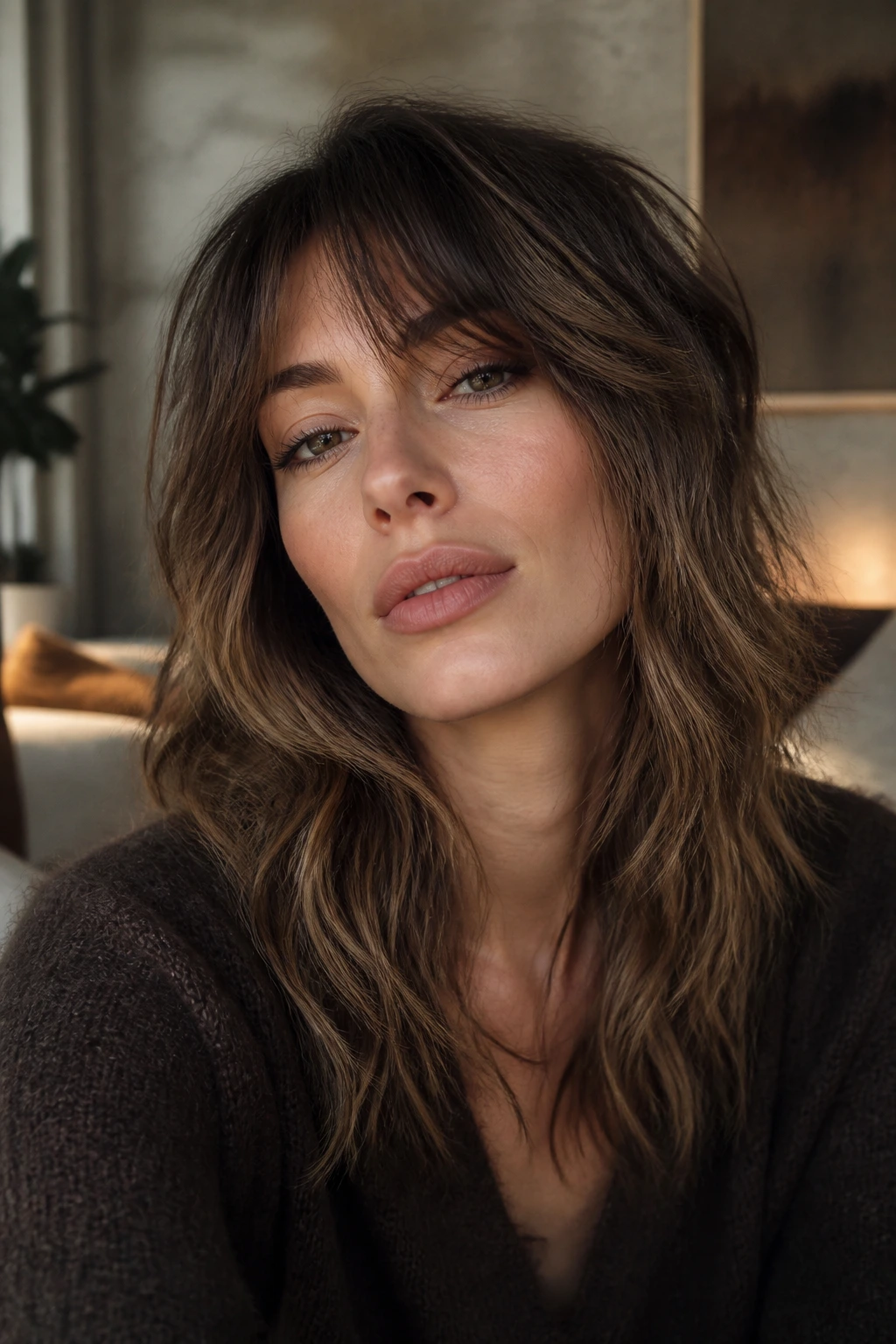
A shag can eat color alive if the shade is too single-note. Dimensional hazelnut fixes that by giving the layers enough tonal change to show movement. The shorter pieces around the crown can stay a bit deeper, while the longer ends carry a cooler hazelnut glow.
This is a good option if you like messy texture and do not want the hair to look overdone. On cool skin, the slightly smoky brown tones keep the style from turning beachy in a warm way. It stays grittier, more tailored.
I especially like this on people who air-dry a lot. The cut does the sculpting, and the color follows the shape. Easy to wear. Hard to mess up.
15. Hazelnut with Cocoa Lowlights
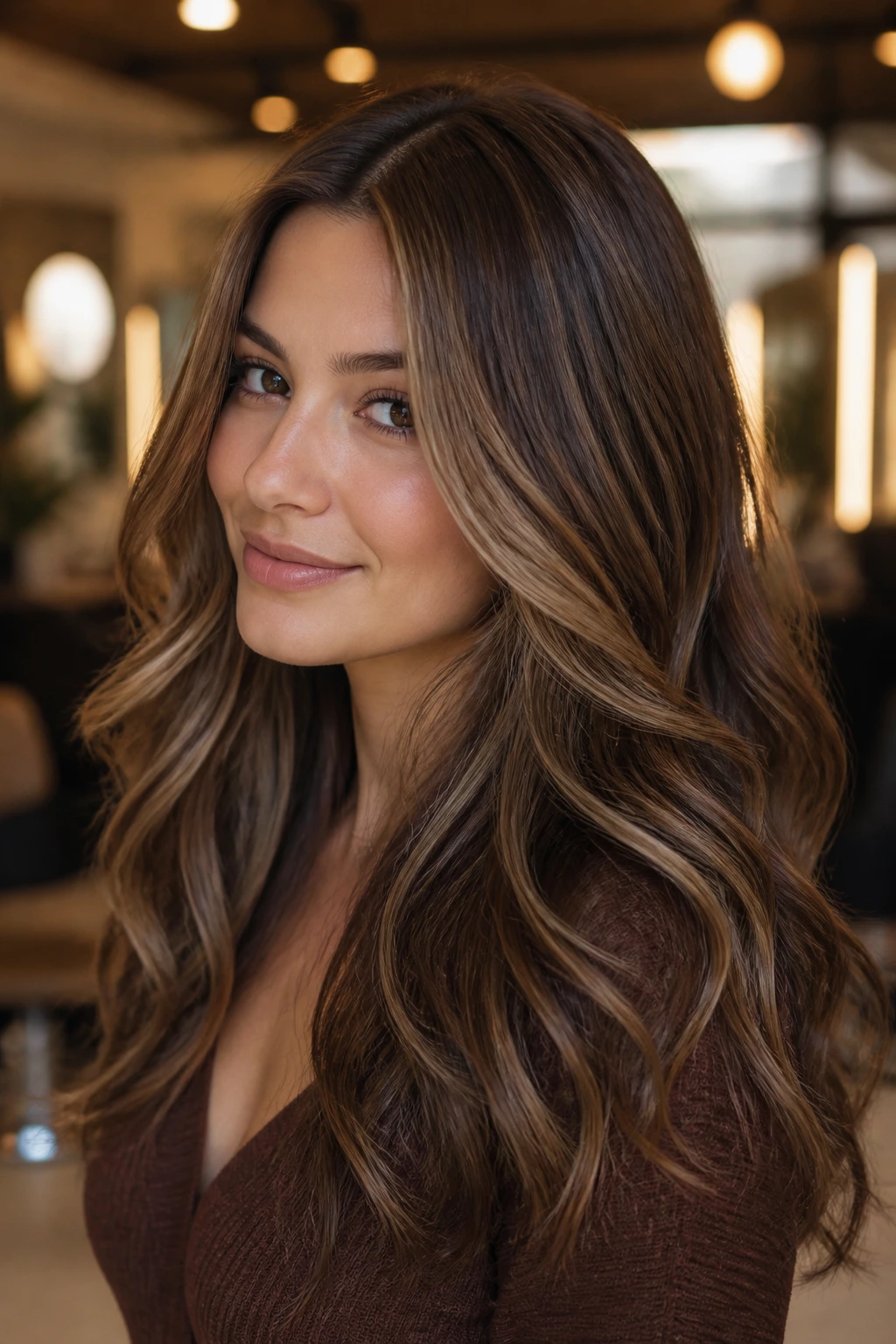
Can lowlights make hazelnut look brighter? Yes. Dark cocoa lowlights create the shadow that lets the hazelnut pieces stand up. Without that depth, the color can flatten out, especially on thick hair or blunt cuts.
How to Get the Look
Ask for fine lowlights placed under the top layer and around the undercut of the hair. Keep them cool cocoa, not milk chocolate. That tiny shift matters. Warm cocoa can drift orange, while a cooler brown stays calm against rosy skin.
This works beautifully on medium brunette hair that needs more shape. The lowlights give the hair a fuller look, and the hazelnut on top keeps it from feeling heavy. It’s one of those shades that looks simple until you see it in motion.
16. Satin Hazelnut Straight Lob
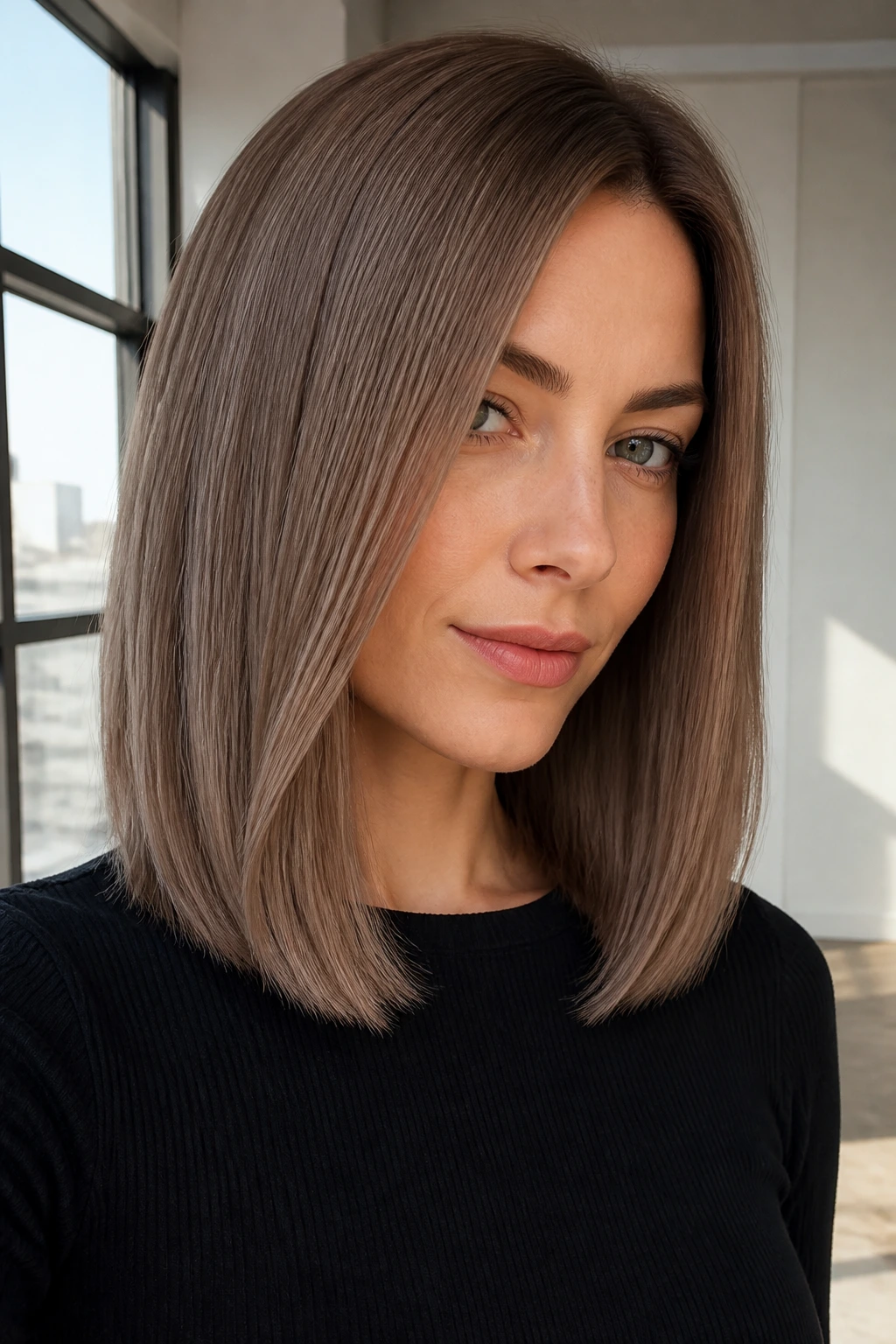
A straight lob needs a color that can hold its own when there is no curl pattern to do the decorating. Satin hazelnut does that by relying on sheen. The brown should look smooth, soft, and almost fabric-like when the hair is freshly blown out.
This shade is especially good if you like a tidy shape and a clean finish. A cool brunette base with hazelnut gloss through the mids keeps the cut from looking blocky. The ends should bevel just a little — not flipped, not pin-straight — so the light skims across the surface.
If your hair is prone to frizz, this version is more forgiving than bright highlights. The color itself creates the polish. That saves you from chasing perfection with a flat iron every morning.
17. Smoky Hazelnut Pixie
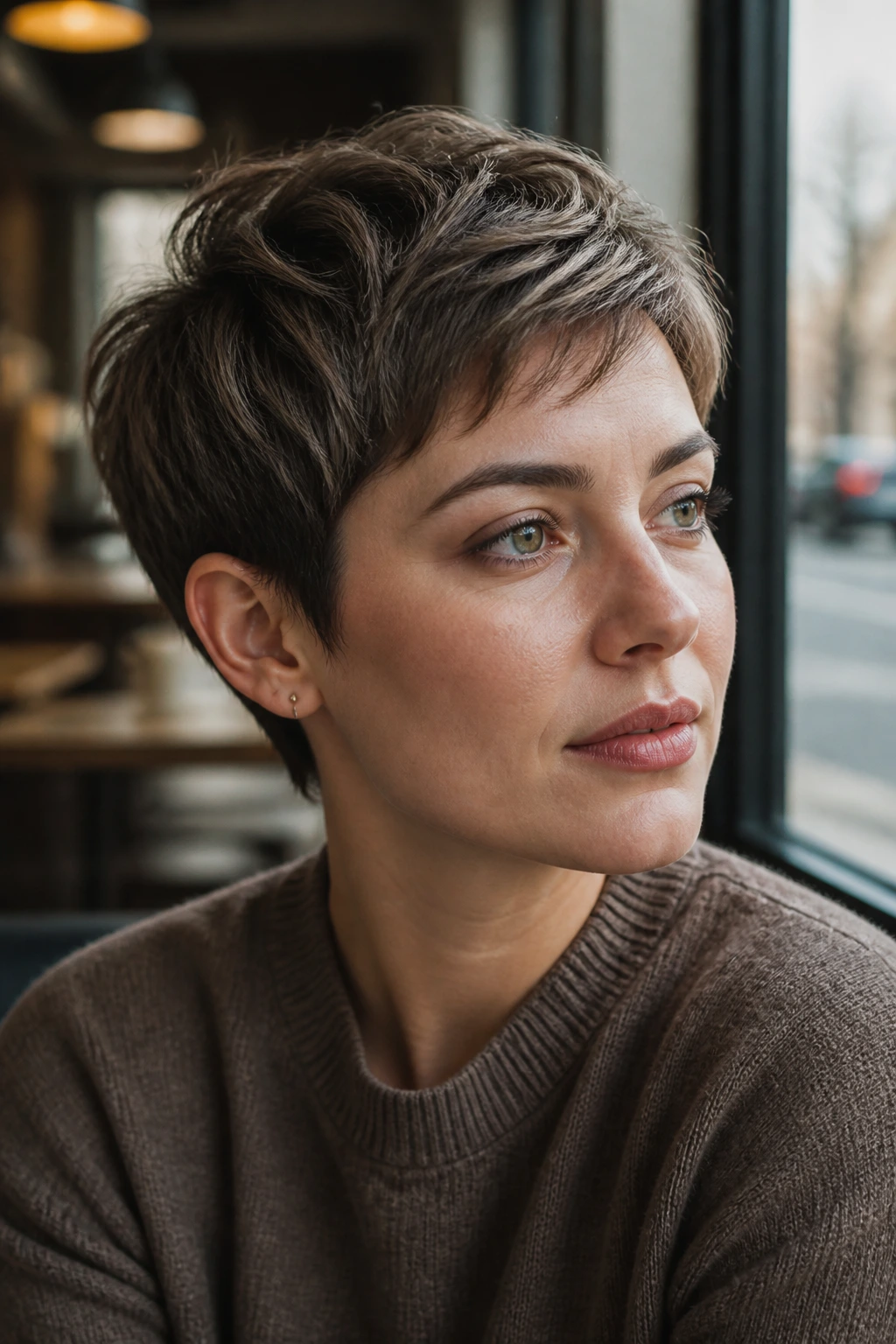
Short hair needs color that works hard. A smoky hazelnut pixie gives you texture at the roots and softness through the top, which is exactly what a pixie cut needs to avoid looking flat. Cool skin benefits from the smoke because it keeps the short crop from turning too warm or too red.
This one is better when the color sits close to the natural base. If you go too light on a pixie, the cut can lose shape. If you stay in that smoky brunette range, the piecey layers pop when you use a little paste or wax.
It’s a good look for someone who wants edge without obvious contrast. Short, cool, and a little bit sharp. That combination rarely misses.
18. Beige-Ash Hazelnut Ribboning
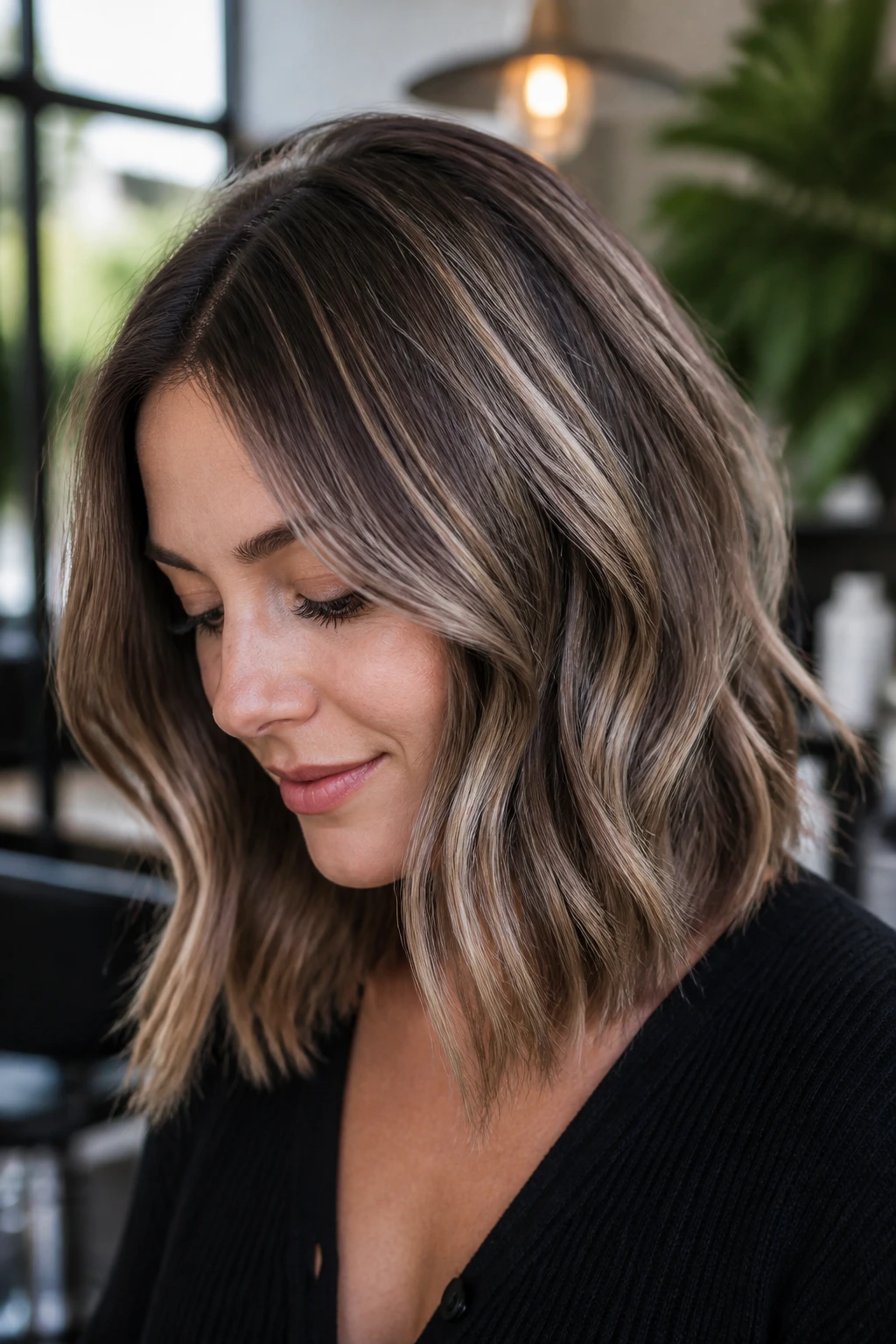
Beige-ash ribboning is a more delicate version of highlights. Instead of thick streaks, the colorist places fine ribbons through the canopy so the hazelnut appears from the inside out. On cool skin, that beige-ash mix keeps the hair soft and balanced.
What Makes It Different
Compared with chunky highlights, ribboning blends easier and looks better as it grows. The lines are thinner, which means the shade can move through a bob, lob, or long layers without taking over the haircut.
- Best for medium to thick hair.
- Ask for fine weaves instead of broad slices.
- Keep the toner cool beige, not golden beige.
- Works well when you want movement but hate obvious highlight lines.
A lot of people call this “subtle,” but that undersells it. Subtle can be the reason a shade looks expensive.
19. Hazelnut and Mushroom Brown Melt
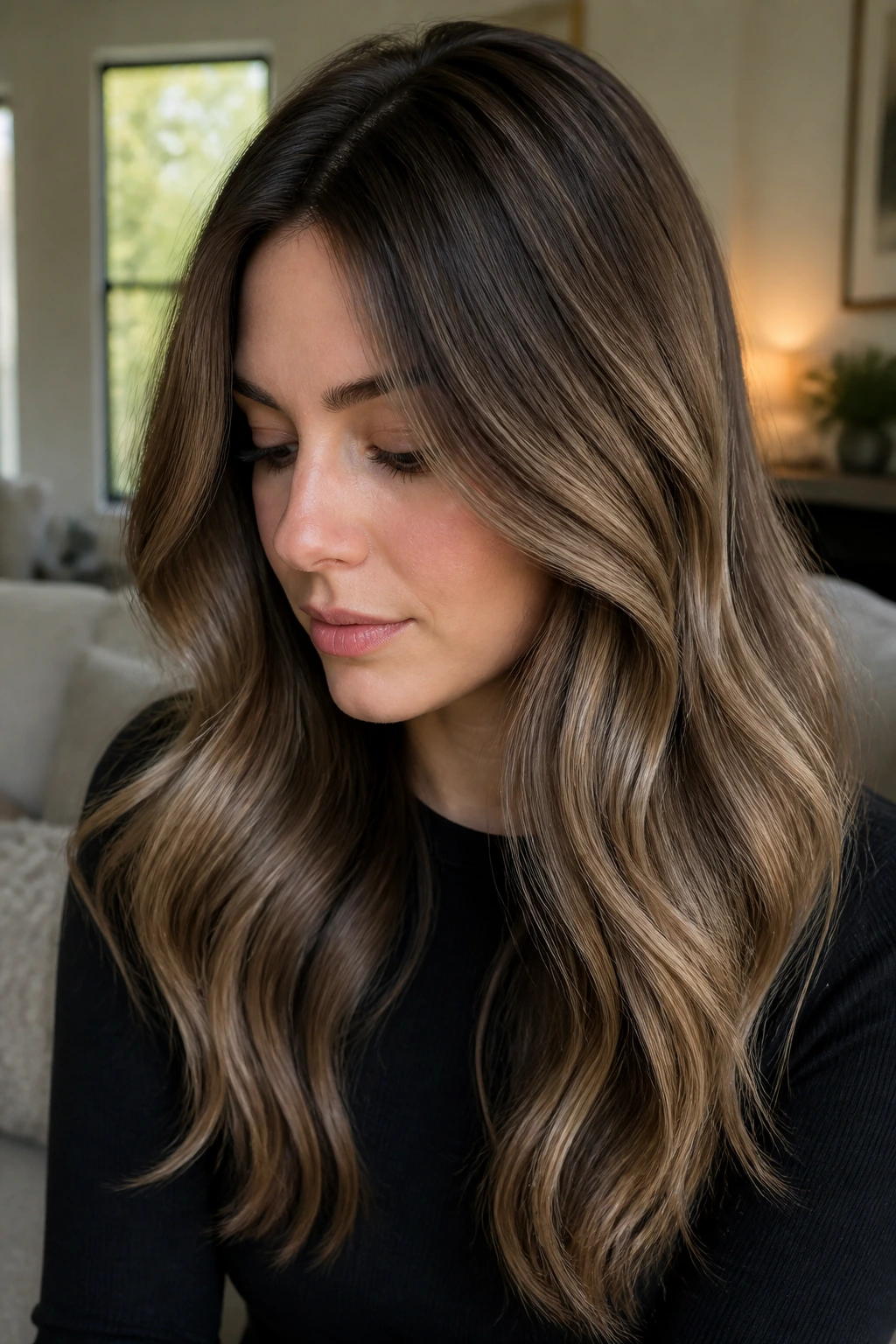
A hazelnut and mushroom brown melt is one of the smartest choices for cool skin tones because both shades live on the quiet side of brunette. Mushroom brown handles the root and lower interior, while hazelnut warms the surface just enough to keep the color from looking flat.
Why It Stays Cool
The color family stays neutral to ash, so you avoid the orange problem. The melt also creates a soft gradient that works nicely on layered hair, especially if your ends are dry and you do not want the lighter pieces to look hollow.
- Keep the root in a deeper mushroom brown.
- Let hazelnut show in the mid-lengths.
- Finish with a cool gloss to lock the tone in.
- Best on hair with some natural wave or bend.
This one feels especially good if you like brunette shades that look expensive without being showy. It has depth. It has restraint. That’s enough.
20. Hazelnut with Frosted Ends
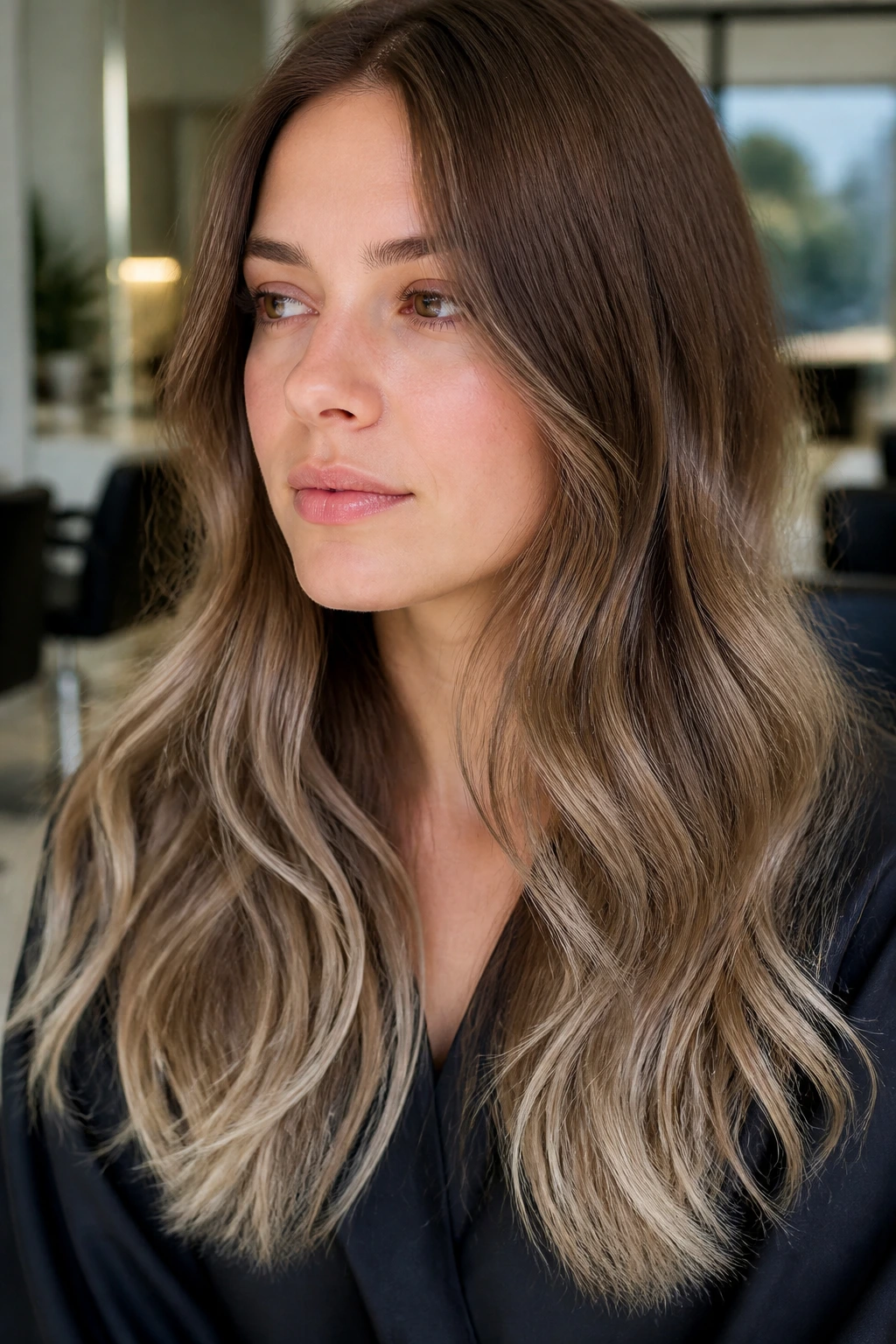
Frosted ends change the whole mood of hazelnut. Instead of warming the color up, the lighter ends add a cool, pale finish that can make long hair look more textured and less heavy. On cool skin, the frosted edge keeps the overall look from drifting too golden.
This works best when the ends are only softly lightened — think beige-ash, not blond blond. The fade should still feel like brown hair. You want the eye to notice the shift without stopping there.
Long layers make this easier to wear because the frosted pieces can sit on the lower movement of the hair. Straight styles can look sharp. Wavy styles look softer. Either one is fine if the tone stays cool.
21. Hazelnut Root Smudge
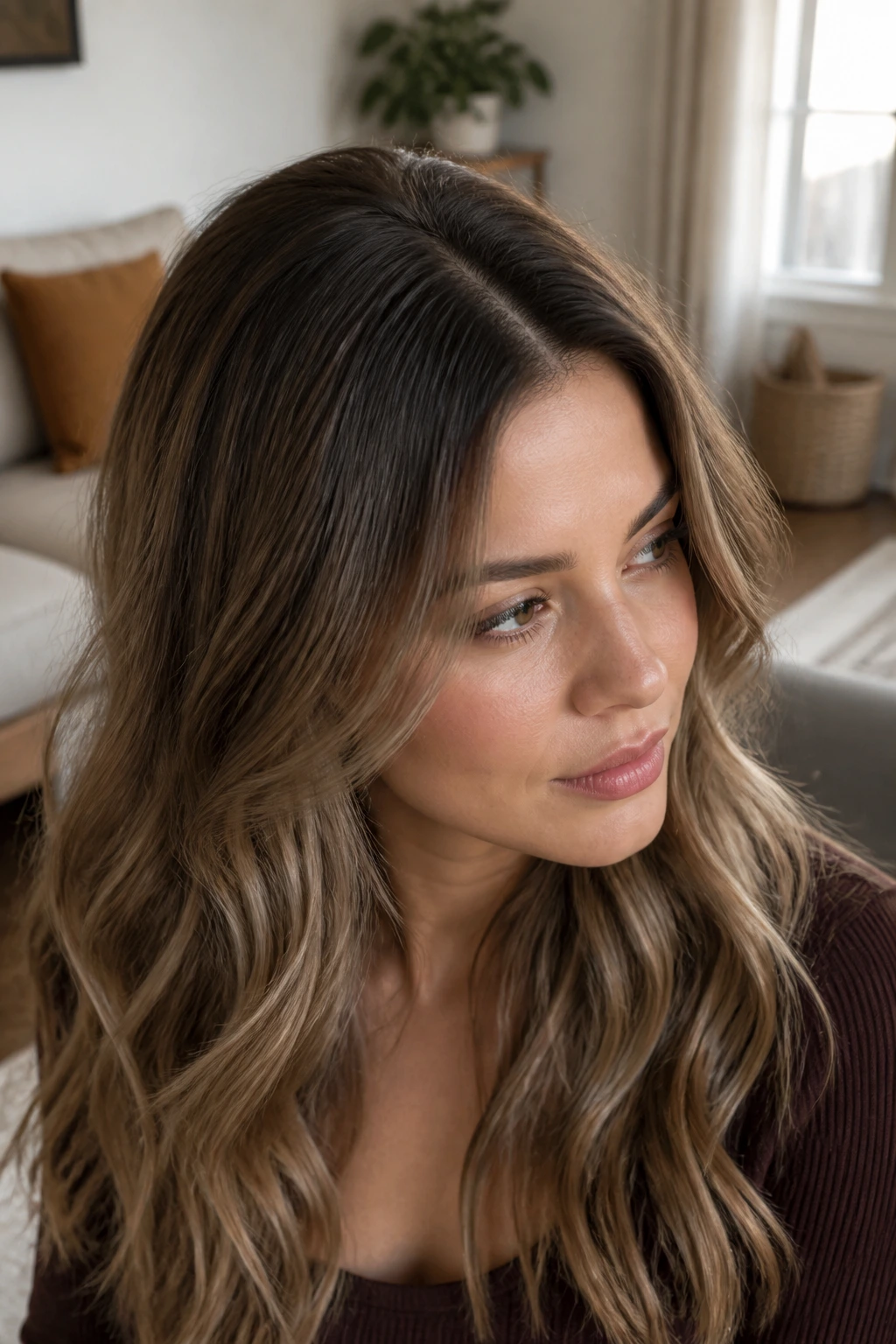
Why do root smudges make hair look more natural? Because they blur the point where new growth meets color. A hazelnut root smudge uses that blur to keep the shade soft from the scalp down, which is useful if your hair pulls warm fast or if you want fewer salon touchups.
How to Use It
Ask for a root area about one inch deep, maybe a little more if your hair is thick. The root should be a touch deeper and cooler than the mids, not black. Then let the hazelnut unfold through the rest of the length.
That little bit of darkness helps cool skin by keeping the color grounded. It also makes the lighter pieces look cleaner, because they are sitting against shadow instead of brass.
22. Cool Brunette Hazelnut Balayage
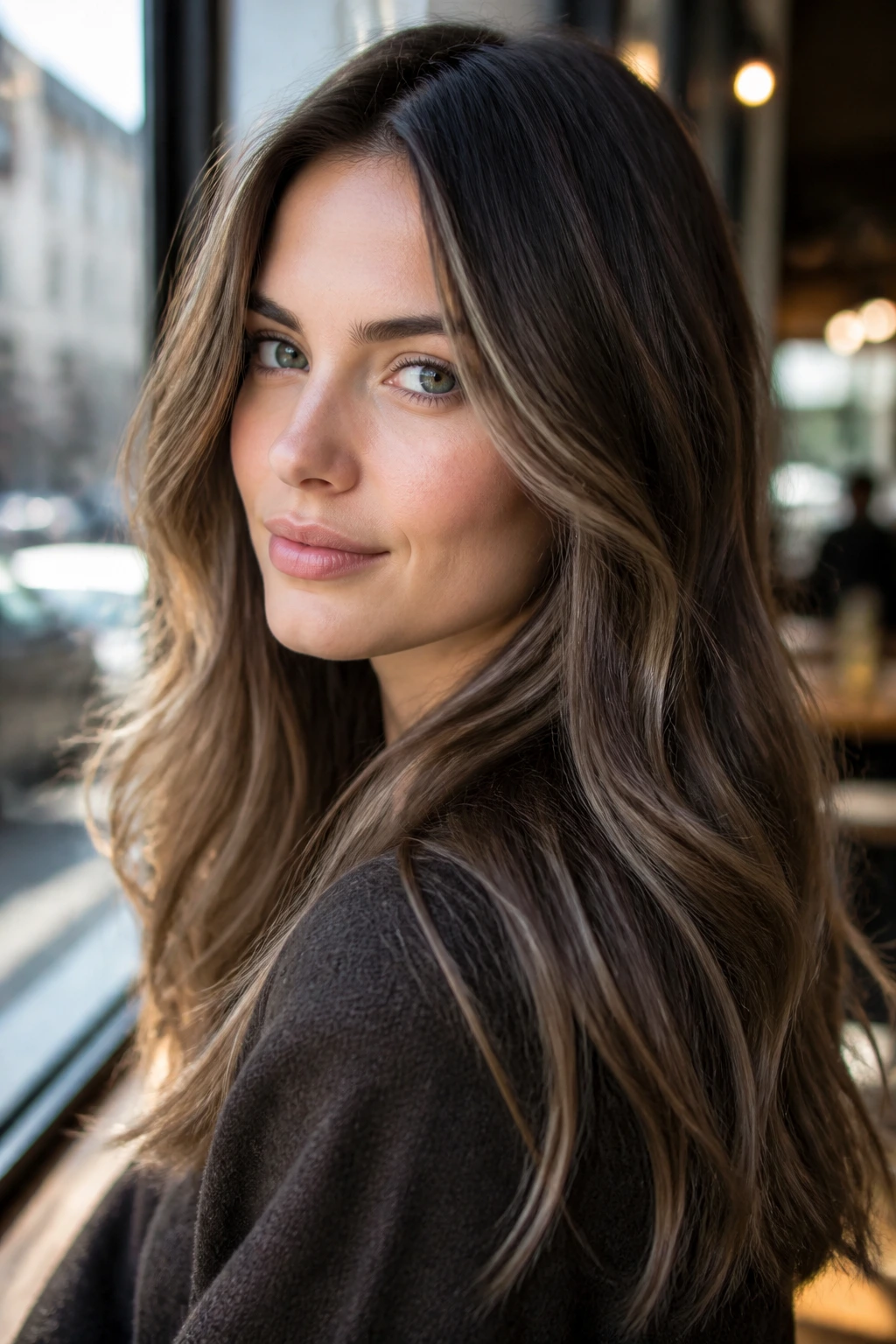
A cool brunette base can carry hazelnut balayage better than people expect. The dark foundation gives the lighter brown ribbons a place to land, so the color reads dimensional instead of patchy. On cool skin, that contrast works because the bright pieces stay beige-brown rather than honey.
This is a nice fit if you like a little drama but not a full blonde transformation. The balayage should be hand-painted to follow the hair’s natural fall, especially around the top layer and the sides. Thick hair benefits from wider placement; fine hair usually looks best with smaller strokes.
One detail matters more than most people realize: the toner. If the finish runs warm, the whole thing softens in the wrong direction. Keep it cool, and the shade stays elegant.
23. Pearl Gloss on Hazelnut Brown
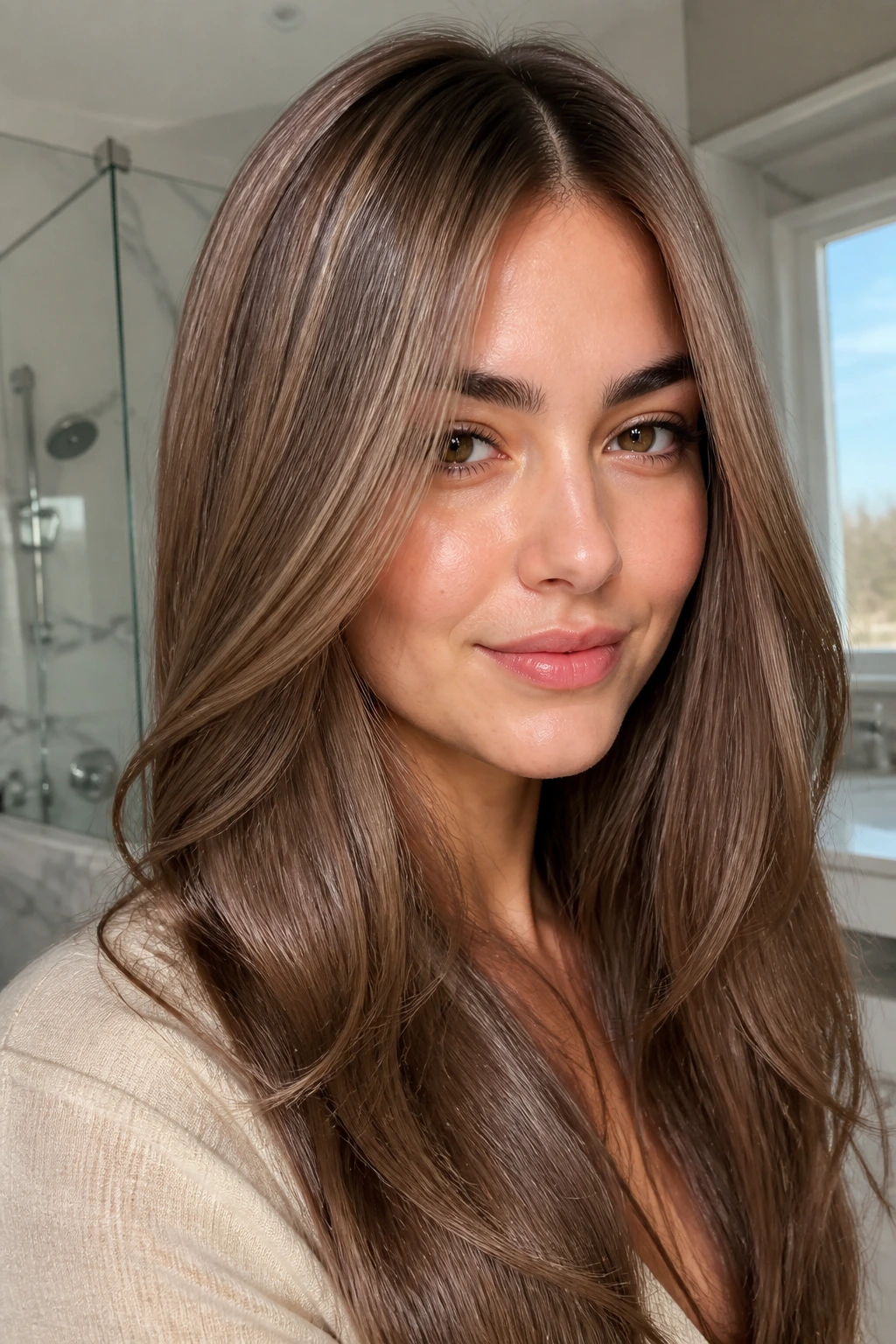
A pearl gloss can change hazelnut from plain brunette to something softer and shinier. The finish is not white, and it is not silver in the metallic sense. It is a translucent veil that cools the brown and gives it a pale, reflective edge.
This is a smart move if your hair already has a good base color and you mainly want tone correction. It also helps dull hair look more alive without repainting the whole head. On cool skin, the pearl finish cuts down on any leftover warmth and keeps the face from looking flushed under strong light.
I like this especially on hair that gets styled smooth. The gloss shows best when the cuticle is flat and the hair is clean. If the texture is coarse or frizzy, you can still wear it. You’ll just see less of the sheen.
24. Deep Hazelnut Noir
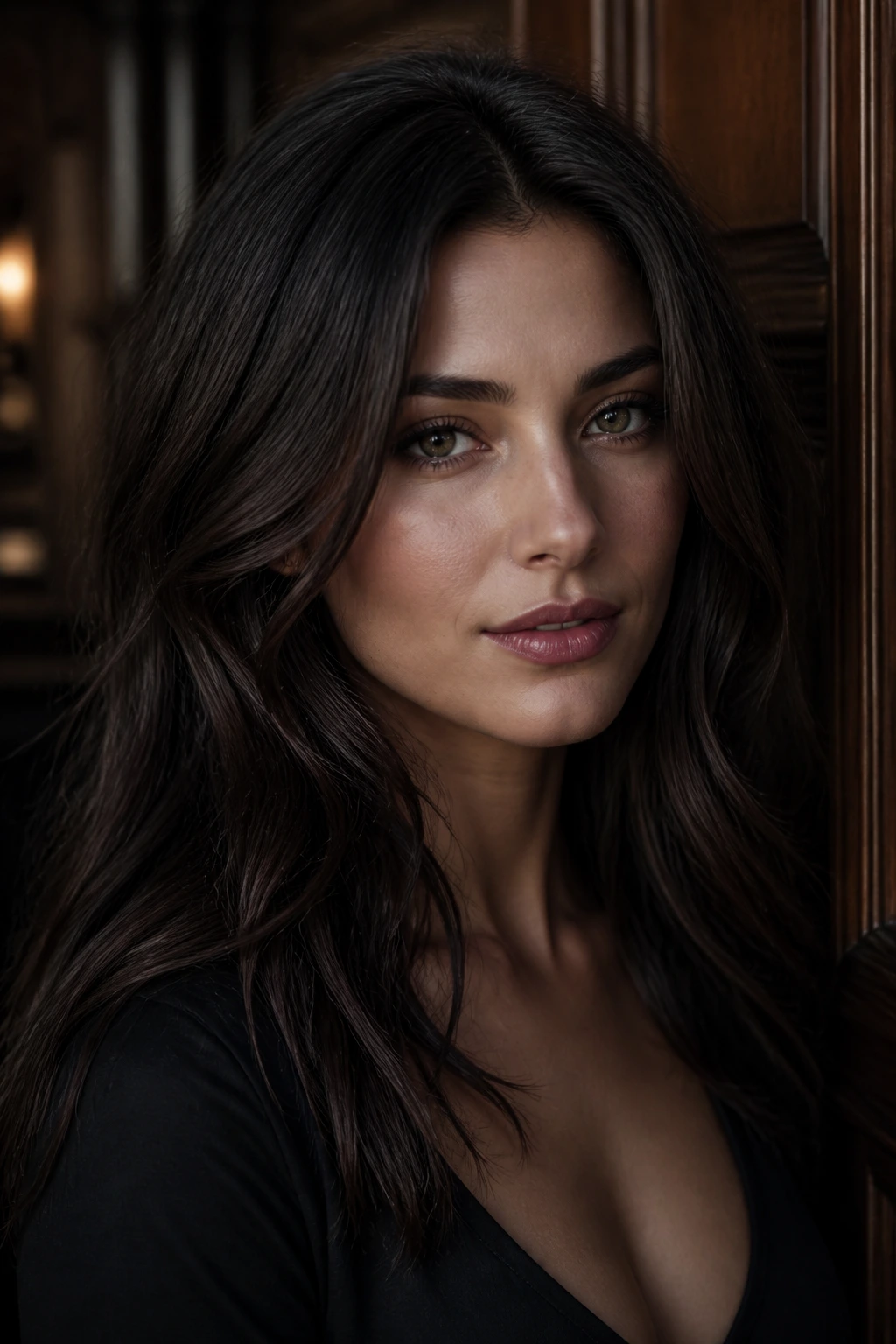
Unlike lighter hazelnut looks, deep hazelnut noir stays close to dark brunette territory. That makes it a strong choice if you want a cool-toned color with drama. The hazelnut appears in the light, almost like a brown highlight hiding inside a near-black base.
This is one of the easiest shades to wear on cool skin because it does not fight the complexion. It frames fair skin, gives depth to medium skin, and can look especially good with strong brows. The important part is the finish: keep the brown cool, not red.
A deep color like this looks best when the cut is clean. Long hair, blunt ends, a sharp bob — those shapes let the shade do its work. If the cut is too frayed, the color can vanish into the texture. Hard lines suit it better.
25. Soft Hazelnut for Gray Blending
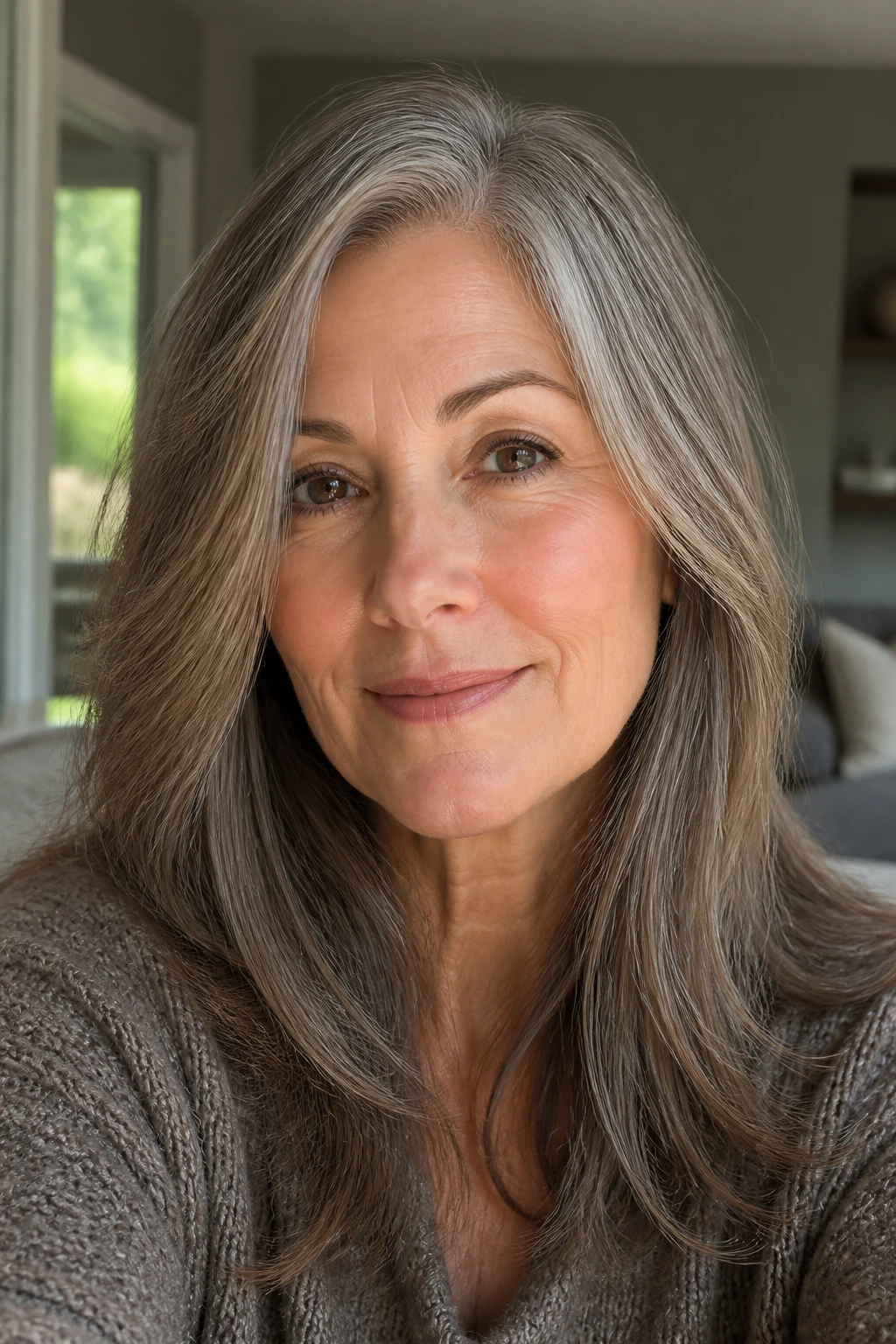
Gray blending is not the same as full coverage, and I like that difference. Soft hazelnut for gray blending lets the silver threads stay part of the story while the brown tones soften the contrast. On cool skin, that keeps the whole look calm instead of overly warm.
Why It Works So Well
The color uses a low-contrast formula, usually a demi-permanent brown with ash and beige notes. That means the grays do not disappear completely, but they stop popping out in a harsh way. The hair looks lived-in. Honest. Not overly dyed.
- Best when you want soft coverage, not a solid block.
- Ask for a hazelnut glaze that stays cool at the root.
- Keep the tone one shade lighter than your natural dark brown if you want the gray to blend rather than vanish.
- Refresh the gloss every few weeks so the silver doesn’t turn brassy.
If you have a few grays at the temples or a wider silver pattern through the crown, this shade can look especially nice because it respects the texture instead of hiding it.
