



Warm brown can flatten cool skin in a hurry. Purple brown fixes that fast.
If your skin leans pink, blue, or rosy, a straight-up golden brunette can sometimes pull your face a little dull or make redness stand out more than you want. A brown with plum, violet, berry, or smoky ash in it works differently. It cools the whole picture down, and the effect is often subtle enough that people notice your eyes before they notice the color itself.
That’s the part I like most about purple-brown hair color ideas: they don’t all scream fashion shade. Some read as glossy espresso with a violet whisper. Some look like mushroom brown after rain. Some go full blackberry at the ends and stay quiet at the root. The range is wider than most people expect, which matters because cool skin tones can wear a lot more than one kind of brunette—if the undertone is right.
One thing to watch: a purple gloss on brown hair is not the same as a warm red-violet dye. The first can look sleek, smoky, and expensive. The second can veer warm fast, which is exactly what cool undertones usually do not need. Keep that in mind as you move through the shades below, because the difference between flattering and flat is often a small shift in tone, not a dramatic change in depth.
1. Espresso Plum Brunette
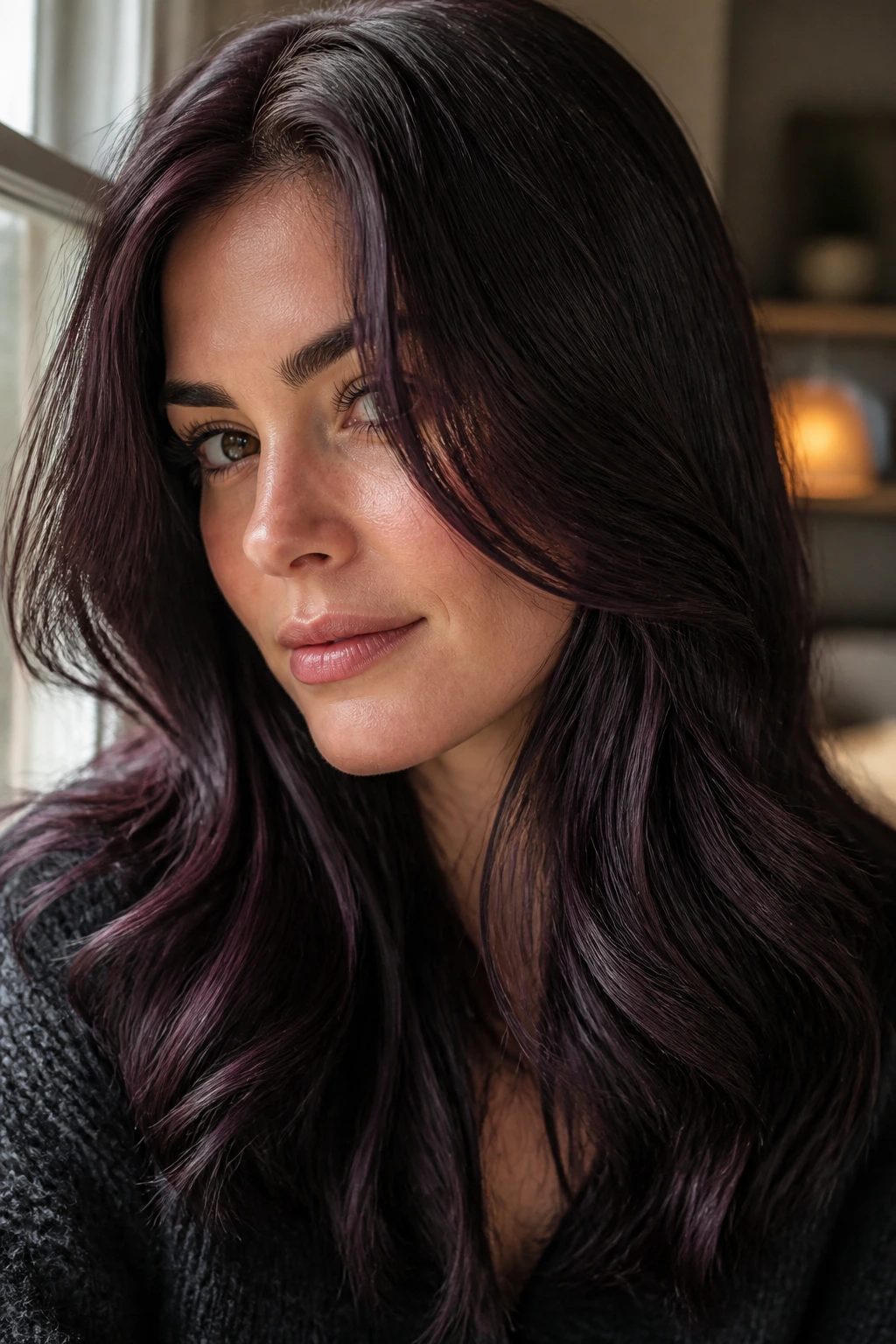
This is the shade for anyone who wants purple brown hair without shouting about it. On a dark brunette base, espresso plum reads like a rich brown in most rooms, then gives off a violet glint when light hits the mid-lengths. That tiny shift is what makes it work on cool skin. It adds depth without dragging warmth across the face.
Why It Works
- Best on level 3 to 4 brunette hair.
- Ask for a demi-permanent plum gloss over an espresso base.
- Looks especially clean on straight styles and smooth blowouts.
- Needs a refresh every 4 to 6 weeks if you want the violet edge to stay visible.
Tip: If your ends are porous, have the colorist glaze them for fewer minutes than the roots. Otherwise the plum can go darker than you planned.
2. Smoky Cocoa with Violet Veil
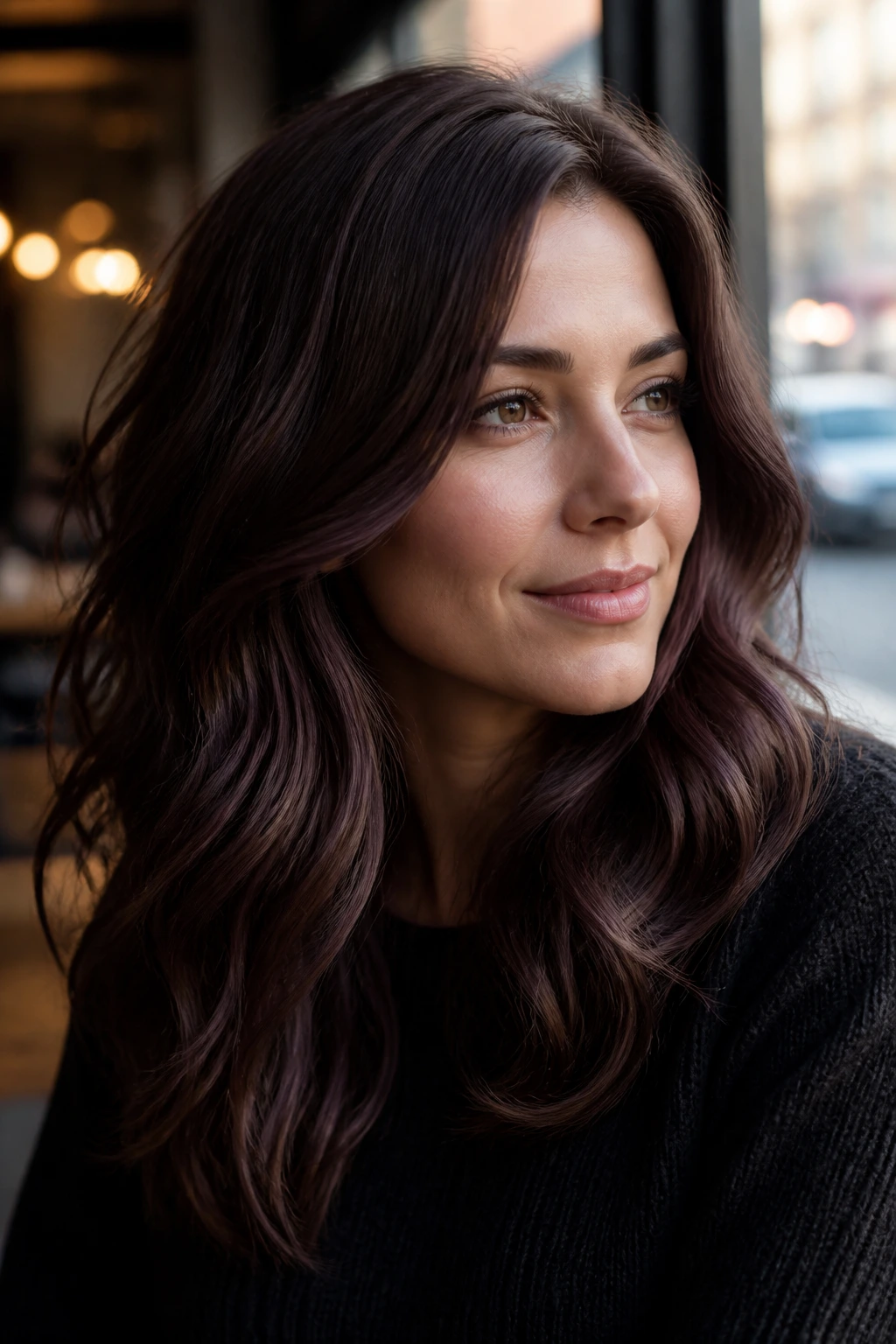
Want brown hair that looks expensive in soft light? This is the one. Smoky cocoa with a violet veil keeps the brown base front and center, but the cool purple note sits underneath like a shadow. On cool skin tones, that shadow keeps the face from looking washed out, especially around the cheeks and jaw.
The nice part is how quiet it is. You can wear it to work, toss it into a messy clip, and still catch the violet when you turn your head near a window. I like this shade on medium brunettes who want movement without obvious highlights. Ask for a cocoa brown with a cool-toned glaze, not a red-brown mix. That difference matters. A lot.
3. Blackberry Brown Balayage
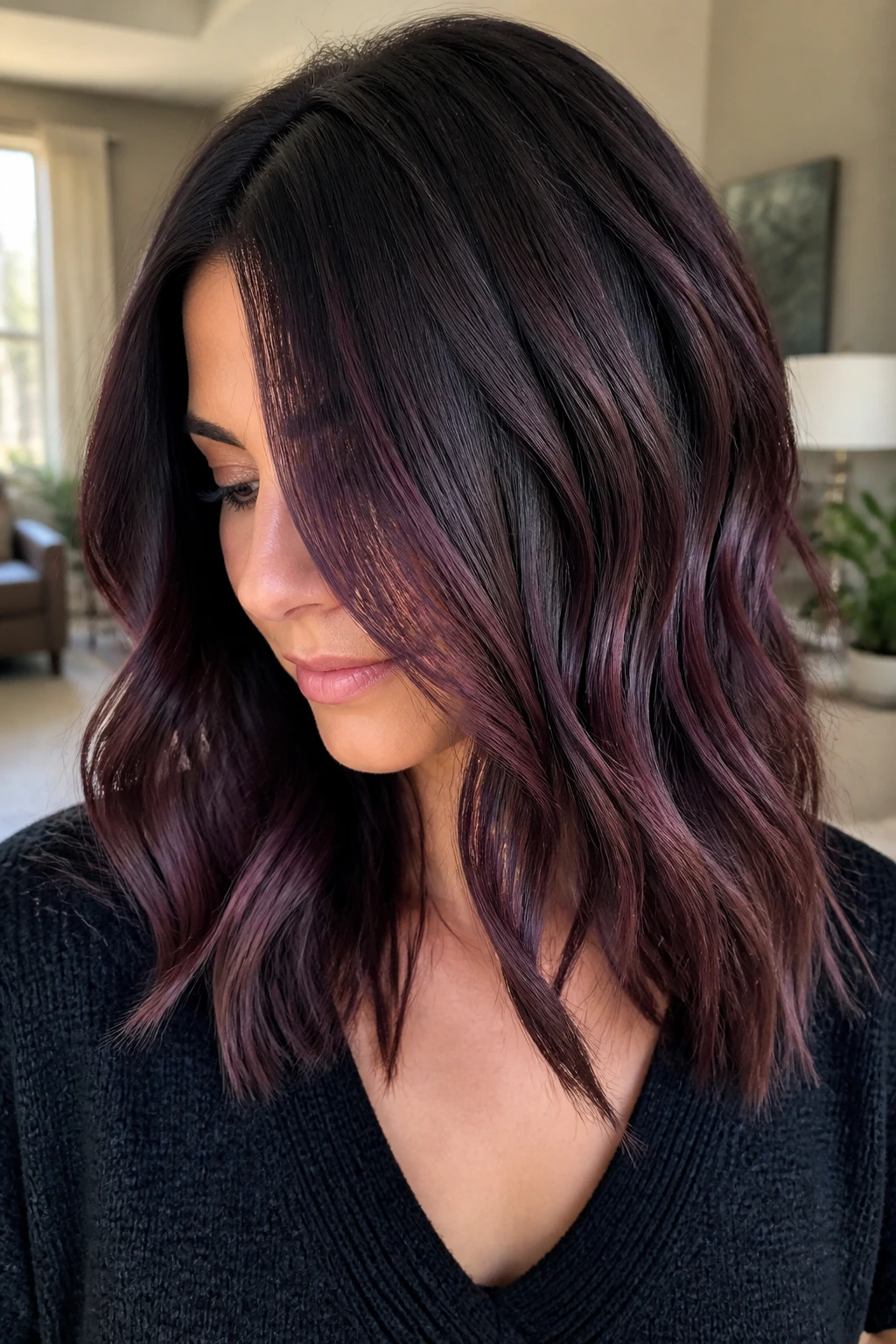
If your ends feel flat, blackberry ribbons wake them up. Balayage gives you that soft, hand-painted fade, and blackberry sits in a sweet spot between purple and deep berry. On cool skin, it makes the complexion look cleaner because the color carries blue undertones instead of orange.
The placement is what makes it sing. Ask for 1/2-inch to 1-inch painted pieces through the mid-lengths and ends, with the strongest berry tone tucked under the top layer. That way the color moves when you do, instead of sitting there like a block. I’d keep the root closer to dark brown or espresso so the grow-out stays easy.
- Best on shoulder-length or longer hair
- Works well if you already wear waves or loose bends
- Needs a toning gloss every 6 to 8 weeks
- Looks softer than full-coverage purple
4. Mushroom Brown with Amethyst Lowlights
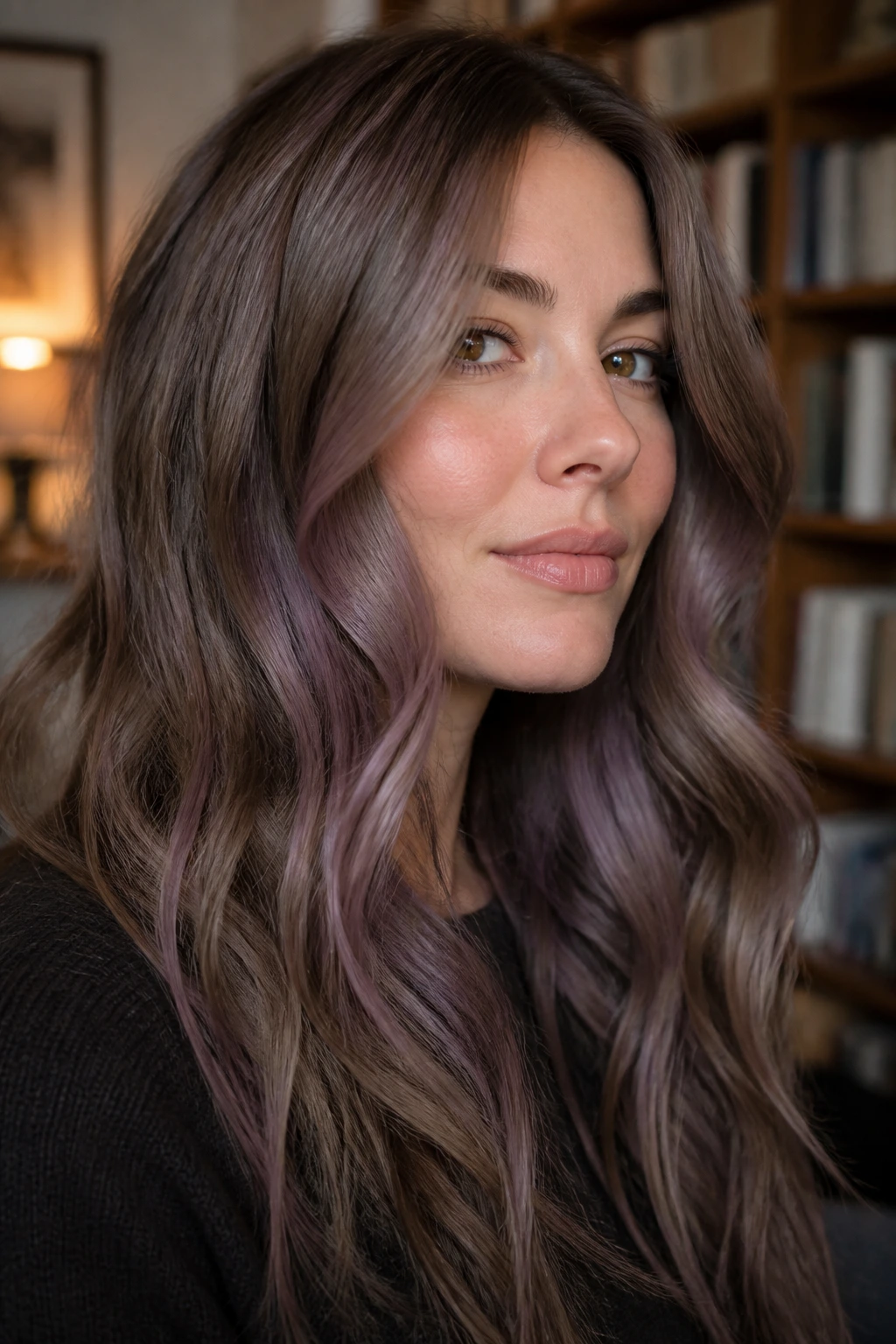
Mushroom brown is already one of the easiest brunette shades for cool undertones, and the amethyst lowlights make it feel less ordinary. The base stays earthy and muted, almost gray-beige, while the purple shows up underneath the surface rather than on top of it. That keeps the look from turning too fashion-y.
I’d call this one quietly strong. It does not announce itself from across the room, which is part of the appeal. The amethyst pieces can sit under the crown, behind the ears, or through the lower half of the hair where movement reveals them in slashes. On cool skin, the gray-brown base keeps everything balanced, and the purple stops the color from looking flat. If your natural brunette tends to pull orange, this is a smart correction.
5. Deep Mulberry Melt
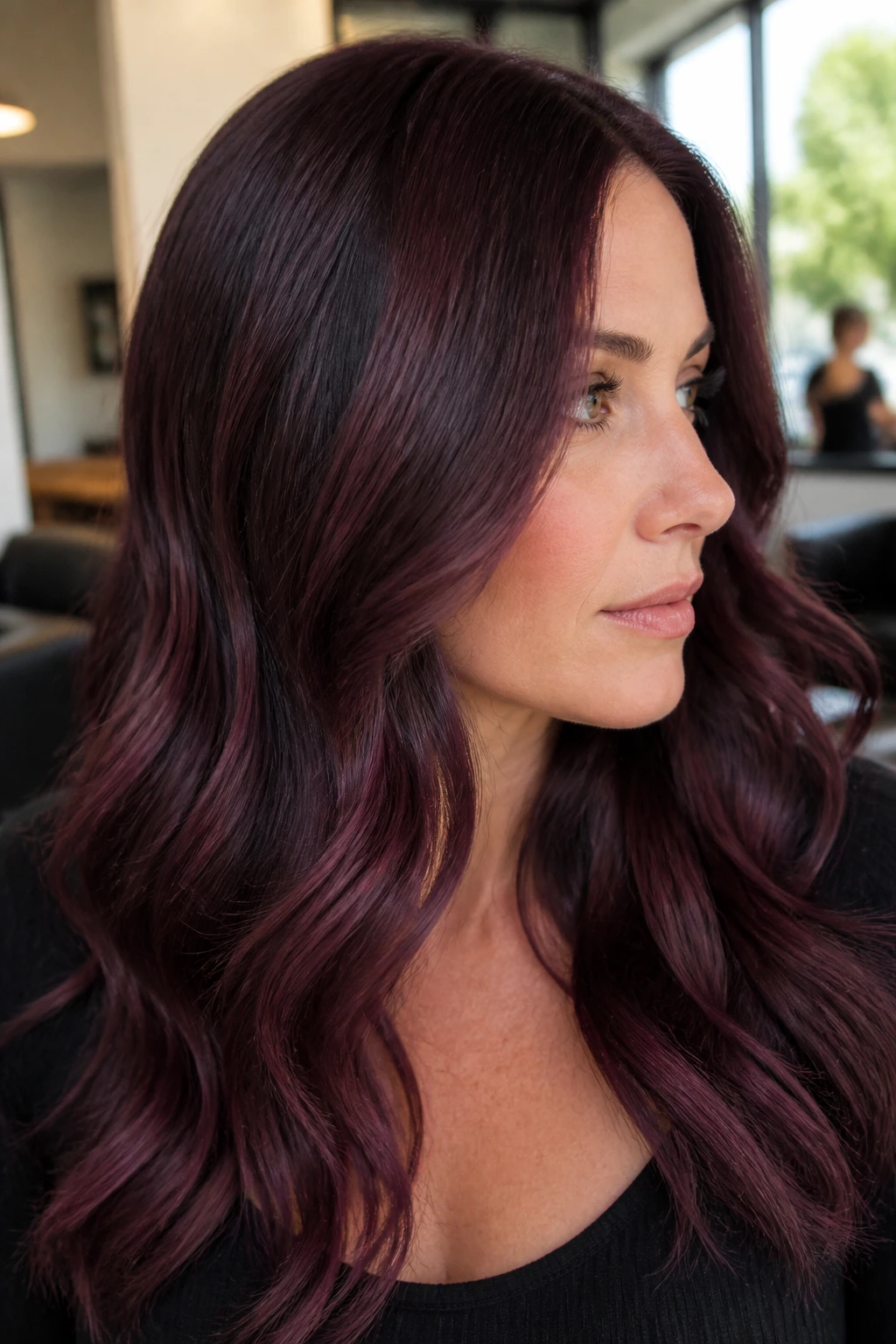
Want color that looks darker indoors and plum in daylight? Deep mulberry melt does that better than almost any other brunette-purple blend. The root area stays deep, then the color softens into a mulberry shift through the mids and ends. It feels polished, but not stiff.
How to Ask for It
Ask for a shadow root at level 4, then a melt into mulberry brown through the lengths. If your hair is naturally lighter brown, the colorist may only need a gloss and a few lowlights. If it’s dark, the purple will read more as shine than as a vivid color block. That’s fine. Honestly, that’s part of the charm.
Keep the finish soft with loose waves. The bends make the mulberry changes show up in a way that straight hair sometimes hides.
6. Ash Brown with Plum Ribbons
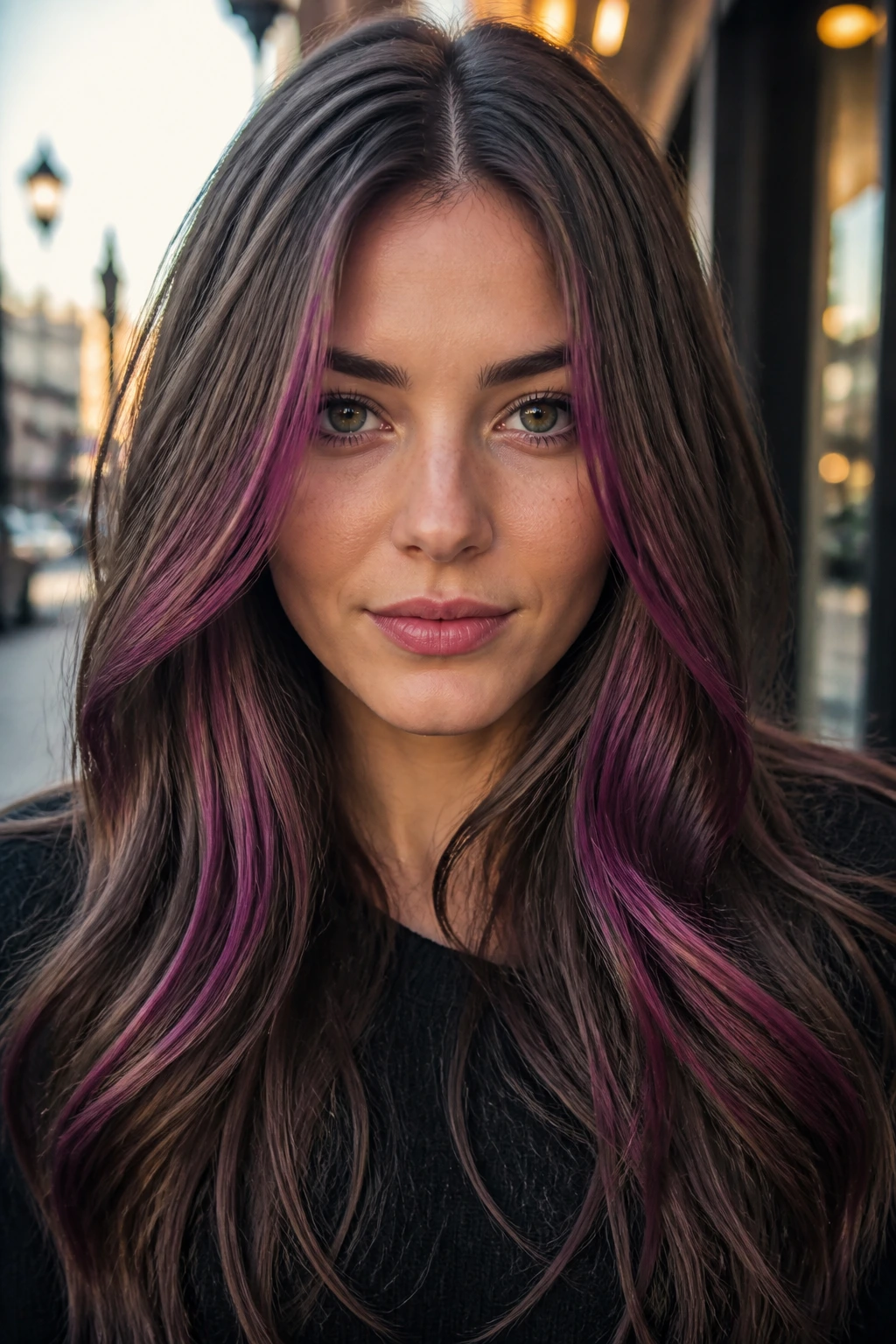
Compared with auburn or copper, ash brown with plum ribbons feels cooler, cleaner, and a little more modern. That’s the whole point. The ash base keeps any warmth from taking over, while plum ribbons give the hair depth without pushing it into red territory. Cool skin tones tend to wear this combo well because the face and hair stay in the same family.
This is a good choice if you want a lighter-looking brunette without going blonde. Ask for two-inch face-framing ribbons around the front, then a few thinner pieces through the interior so the color doesn’t stop at the surface. If you wear your hair in a ponytail, the plum still shows. If you wear it down, it looks layered rather than stripey. That’s the sweet spot.
7. Cool Chestnut with Blue-Violet Shine
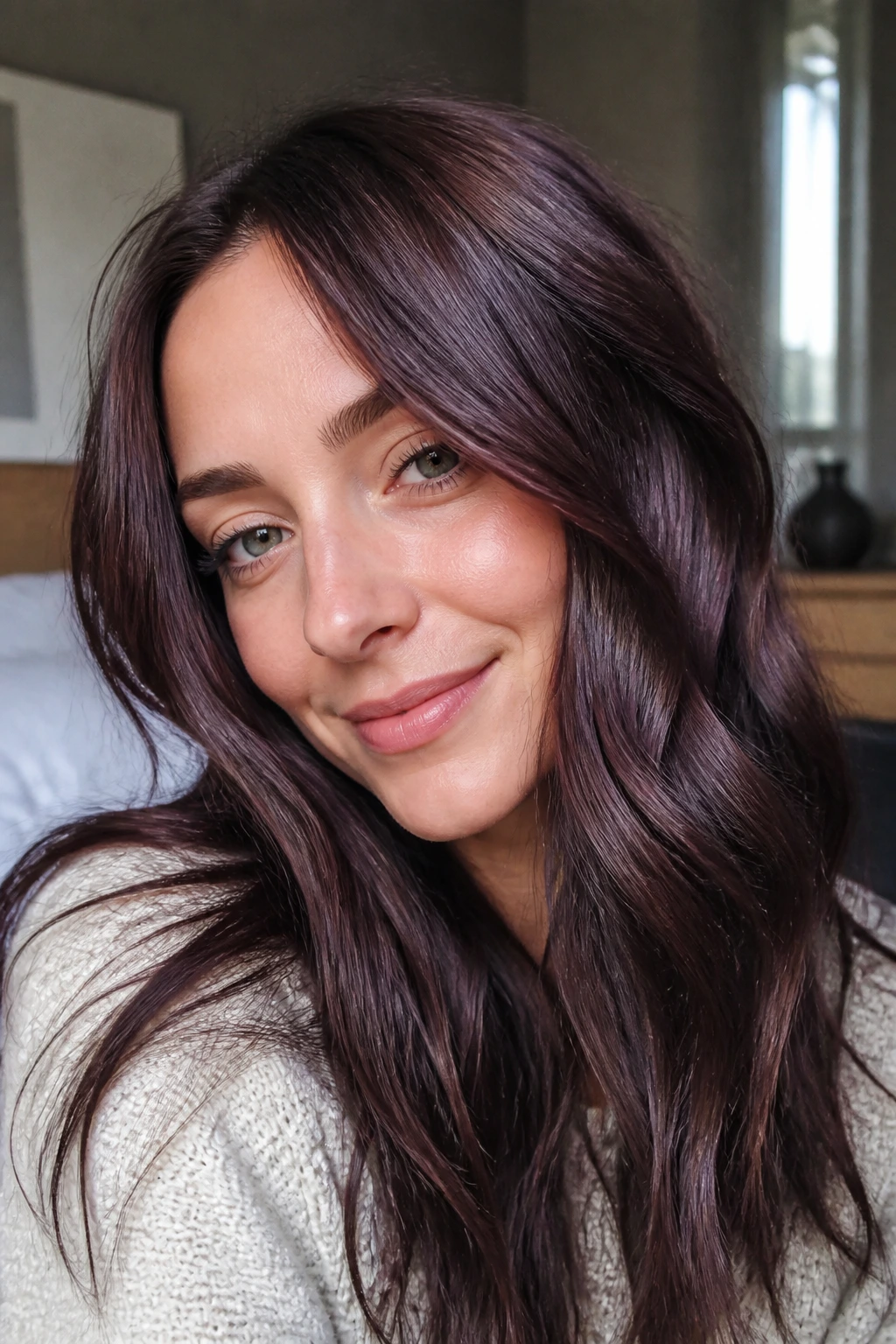
Chestnut can be cool. Not warm chestnut. Cool chestnut. That means the red gets pushed back and the violet-blue shine takes over, which is a much better move for cool skin than anything caramel-heavy. When done well, the hair looks rich rather than coppery.
What Makes It Different
The shine is the point here, not a huge color shift. A blue-violet gloss over level 5 chestnut gives the hair a slick, reflective finish that catches light on the surface. It’s subtle in a ponytail and more visible when the hair is smooth or curled under. If your hair already has a little natural red, this is one of the easiest ways to cool it down without bleaching.
Who It Suits
- People who want a professional-looking brunette
- Anyone with rosy or pink undertones
- Hair that sits at medium brown depth
- Readers who want low maintenance color
8. Midnight Mocha with Berry Gloss
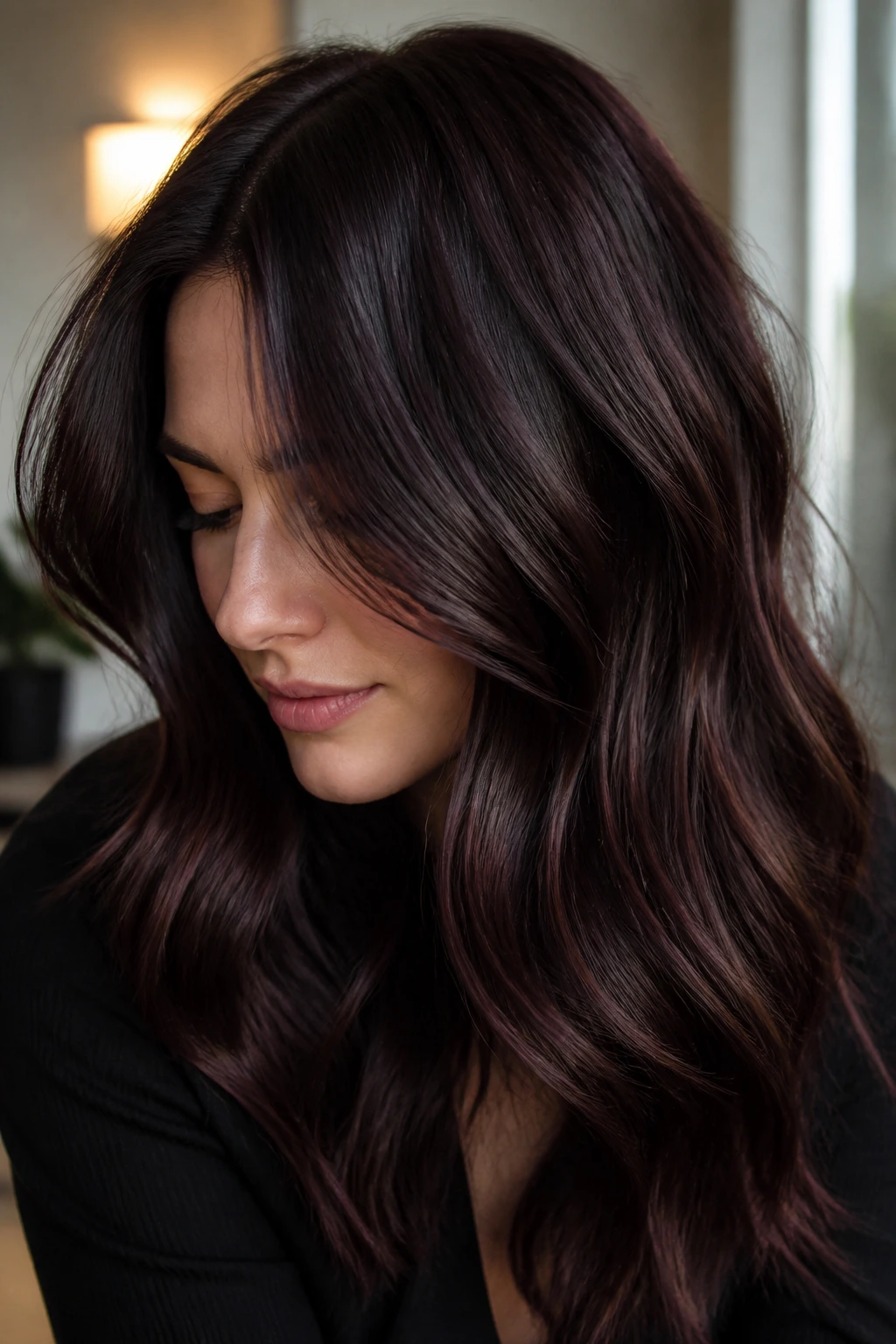
Some brunette shades try too hard. This one doesn’t. Midnight mocha with berry gloss is what happens when dark brown hair gets a little depth and a little shine, but no loud contrast. On very cool skin, that matters because the color doesn’t bring extra warmth up to the face.
The berry gloss shows most under lamps, by a window, or when the hair swings. That’s enough. If you like dark lipstick, black eyeliner, or clean tailoring, this shade fits the same mood. I’d keep the root and mids rich mocha, then refresh the gloss every 4 to 6 weeks so the berry tone does not fade into plain brown. Dark hair can get dull fast if the finish is ignored.
9. Slate Brunette with Lavender Ends
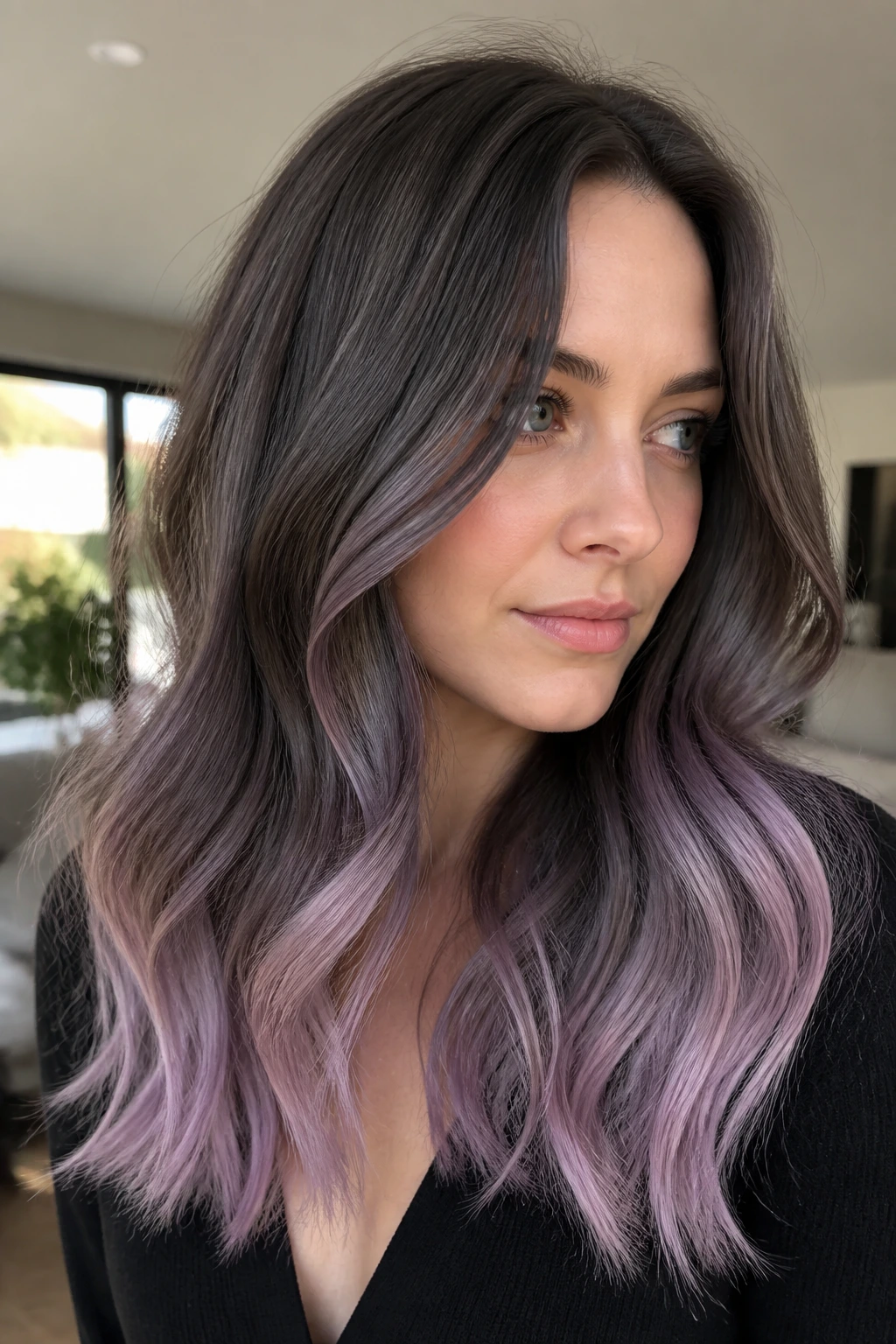
Slate brunette with lavender ends is for the person who likes contrast but doesn’t want a neon moment. The root stays in that cool, smoky brown family, then the ends open into a lavender-brown haze. It can be edgy, sure, but the slate base keeps it from feeling costume-like.
This shade usually needs pre-lightening on the last few inches if your hair is dark, and that’s where a lot of people get impatient. Don’t rush the process. The lavender ends look best when they’re soft, dusty, and slightly translucent, not chalky. On cool skin tones, the gray-brown root anchors the look so your complexion doesn’t fight the color. If your hair is already lighter toward the ends, even better. You’ll get there faster.
10. Rooted Merlot Brown
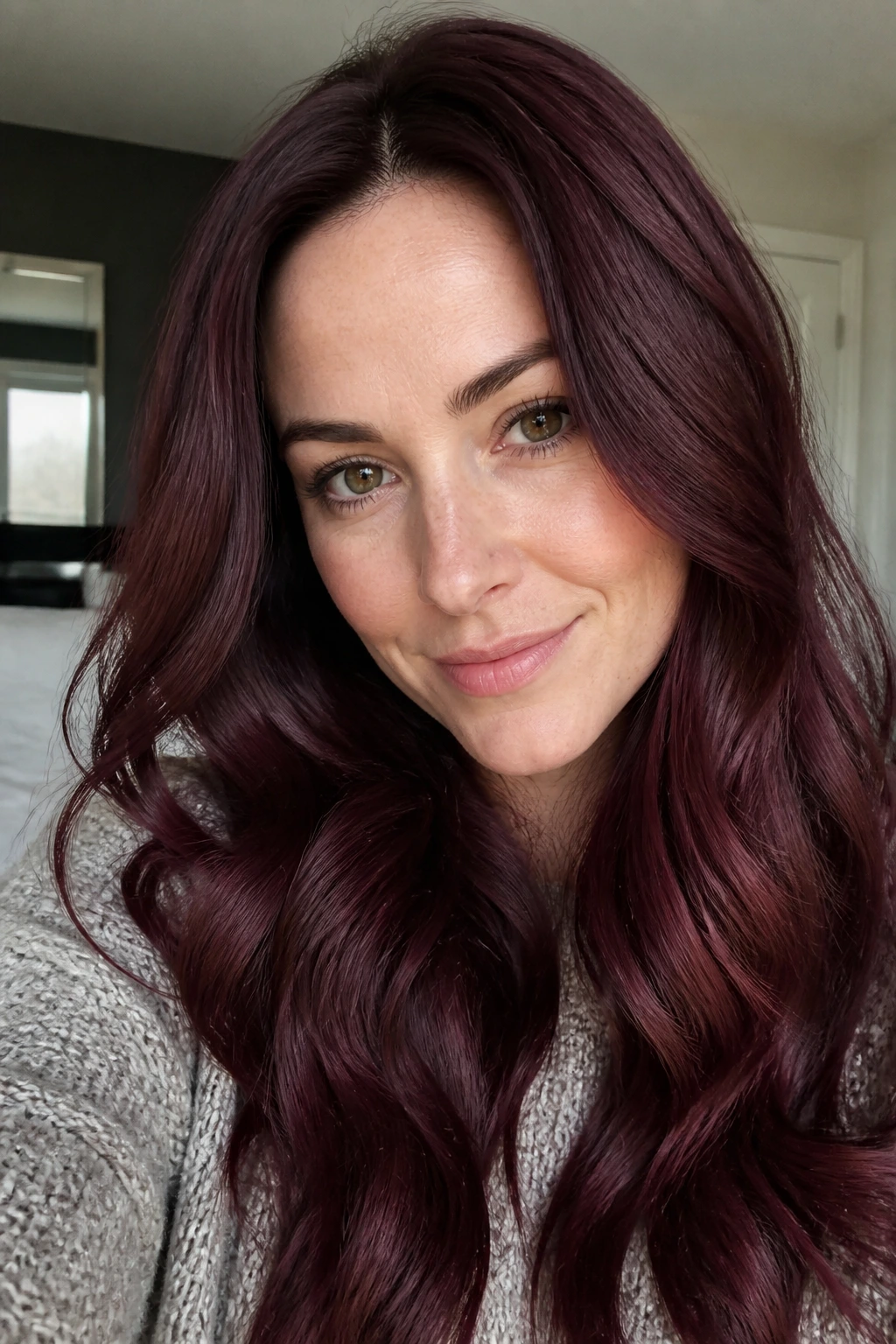
What’s the easiest way to wear berry tones without looking too bright? Rooted merlot brown. The deep root shadow keeps the color grounded, then the mid-lengths pick up that wine-brown shift that feels cool and plush. It’s a good shade for someone who wants dimension first and personality second.
How It Grows Out
The root blur is the key. Ask for a soft shadow root at level 3 or 4, then a merlot brown through the rest of the hair. The result grows out far better than a single-process purple-brown, especially if you wear your hair parted in the same spot most days. That part matters. Repeated parts can expose regrowth faster than people expect.
Best Finish
Loose waves show the color changes best, but a smooth blowout makes the wine tone look glossy and rich.
11. Iced Espresso Brunette
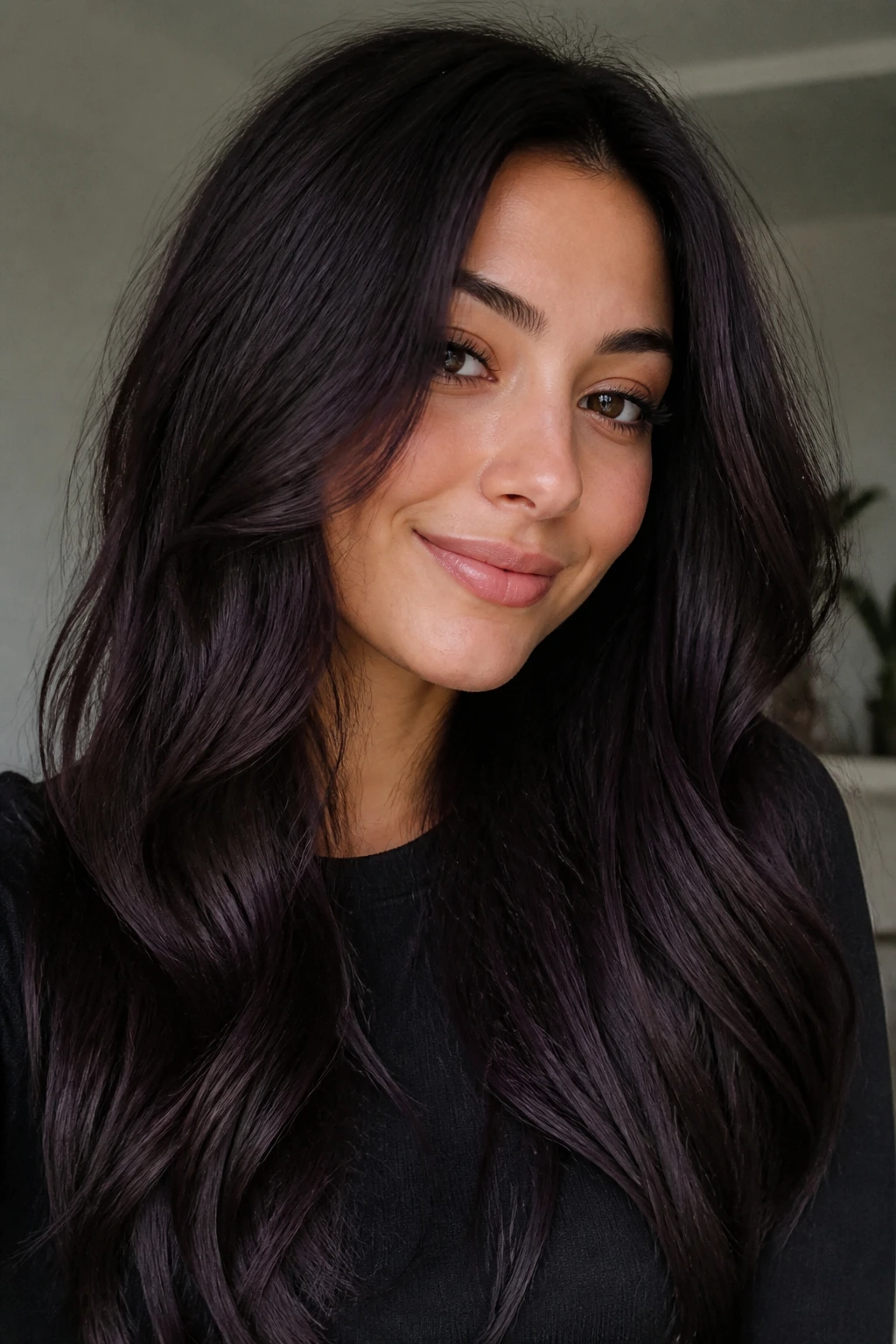
Unlike jet black, iced espresso still has dimension. That’s why it flatters cool skin so well. Jet black can sometimes sit hard against the face, while iced espresso gives you near-black depth with a cooler, softer edge. The tiny violet-blue reflect keeps it from looking flat.
This is a smart pick if you like dramatic dark hair but don’t want it to feel severe. Ask for a deep espresso base with a violet-blue toner rather than a red-based dark brown. If your hair is thick, the shine alone makes a difference. It catches on the outer layer and gives the whole cut more shape. A simple shine spray on the ends helps too, especially if the hair tends to drink up color and go matte.
12. Mauve Chocolate Brown
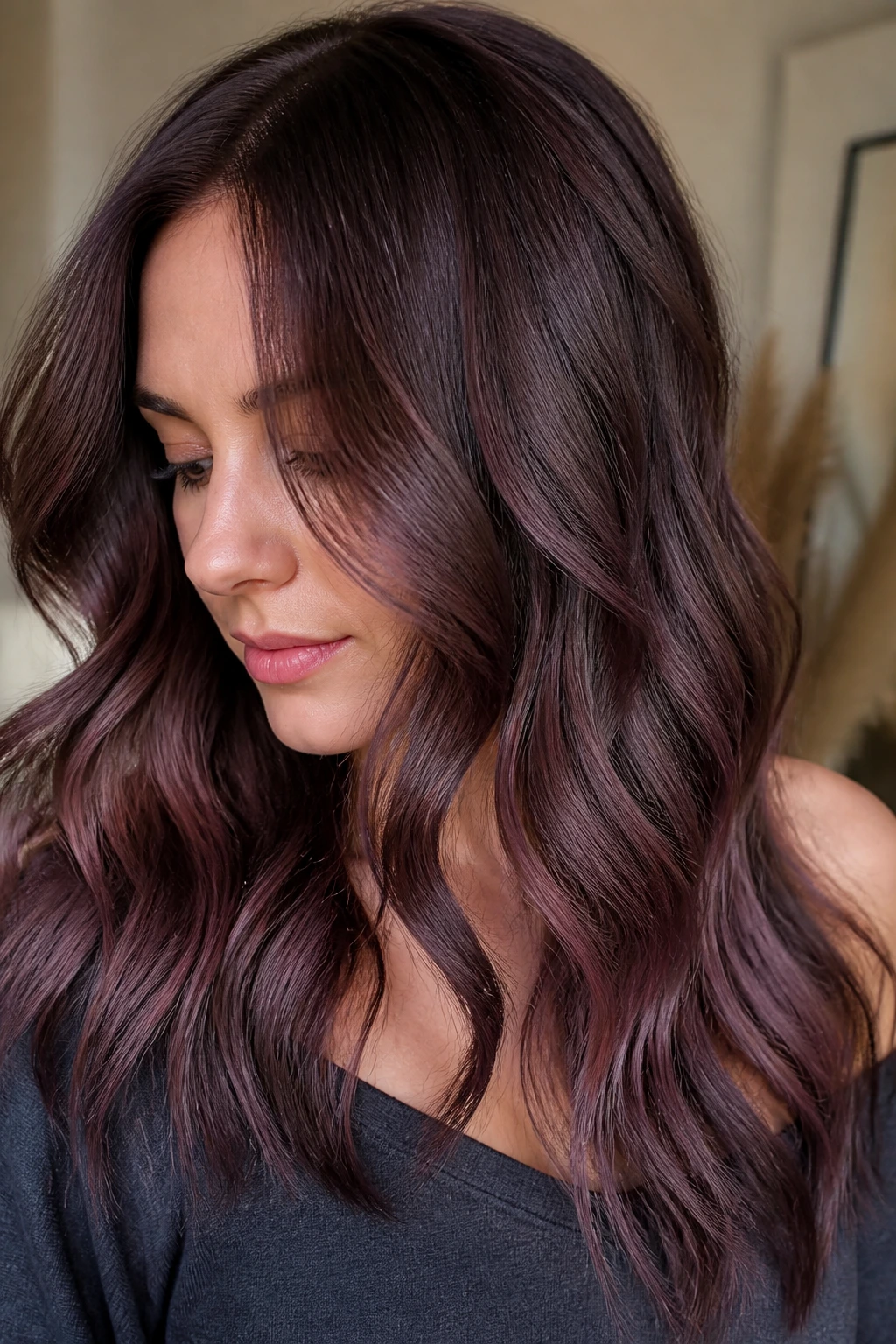
Mauve chocolate brown is one of the easiest purple-brown hair color ideas for someone who wants a softer entry point. It keeps the chocolate base familiar, then slips in a muted mauve tone that looks flattering on pale, cool, or pink-leaning skin. Nothing about it feels harsh.
The trick is restraint. Muted mauve, not bright pink-violet. You want the color to whisper through the brown, not sit on top of it like paint. This shade works especially well at level 5 to 6, where the mauve can show without needing a lot of bleach. If you wear soft curls or a rounded blowout, the ends tend to look warmer in the best way—still cool, but not flat. That little bit of movement saves the color from looking one-note.
13. Smoky Walnut with Plum Shadow
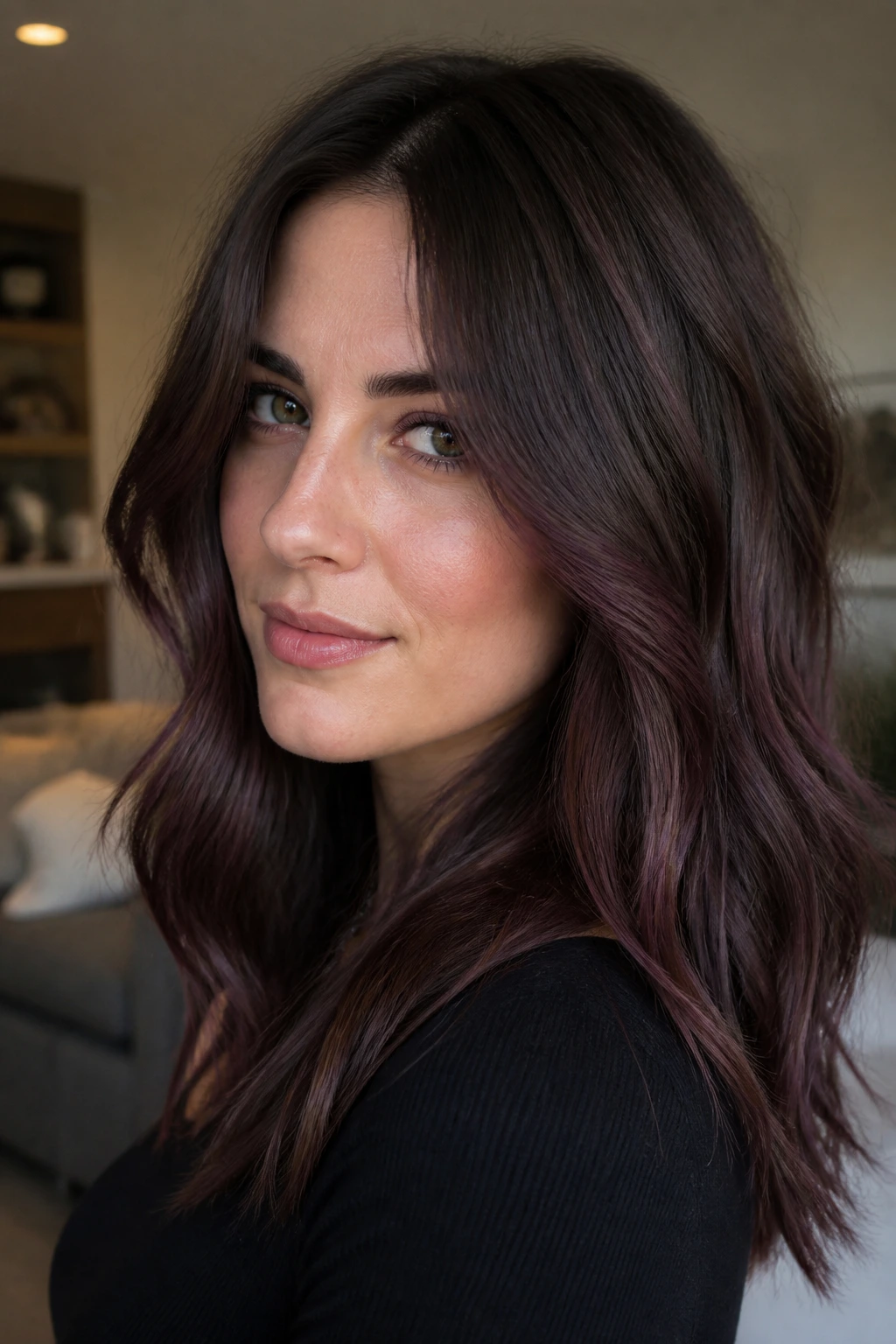
Some shades show themselves right away. Smoky walnut with plum shadow waits until the light hits. That is exactly why it works. The walnut base stays neutral and grounded, then the plum lives underneath as a soft shadow through the lower layers and back sections.
Placement Notes
- Keep the plum mostly through the mid-lengths and underneath layers
- Ask for a semi-permanent glaze if you want a softer fade
- Leave the root close to neutral walnut or ash brown
- Use this if you want the hair to look different indoors and outdoors
This shade is great when you want dimension without loud contrast. It has a quiet, polished feel that suits cool skin because nothing in it pushes too warm or too red.
14. Cool Taupe Brown with Orchid Lights
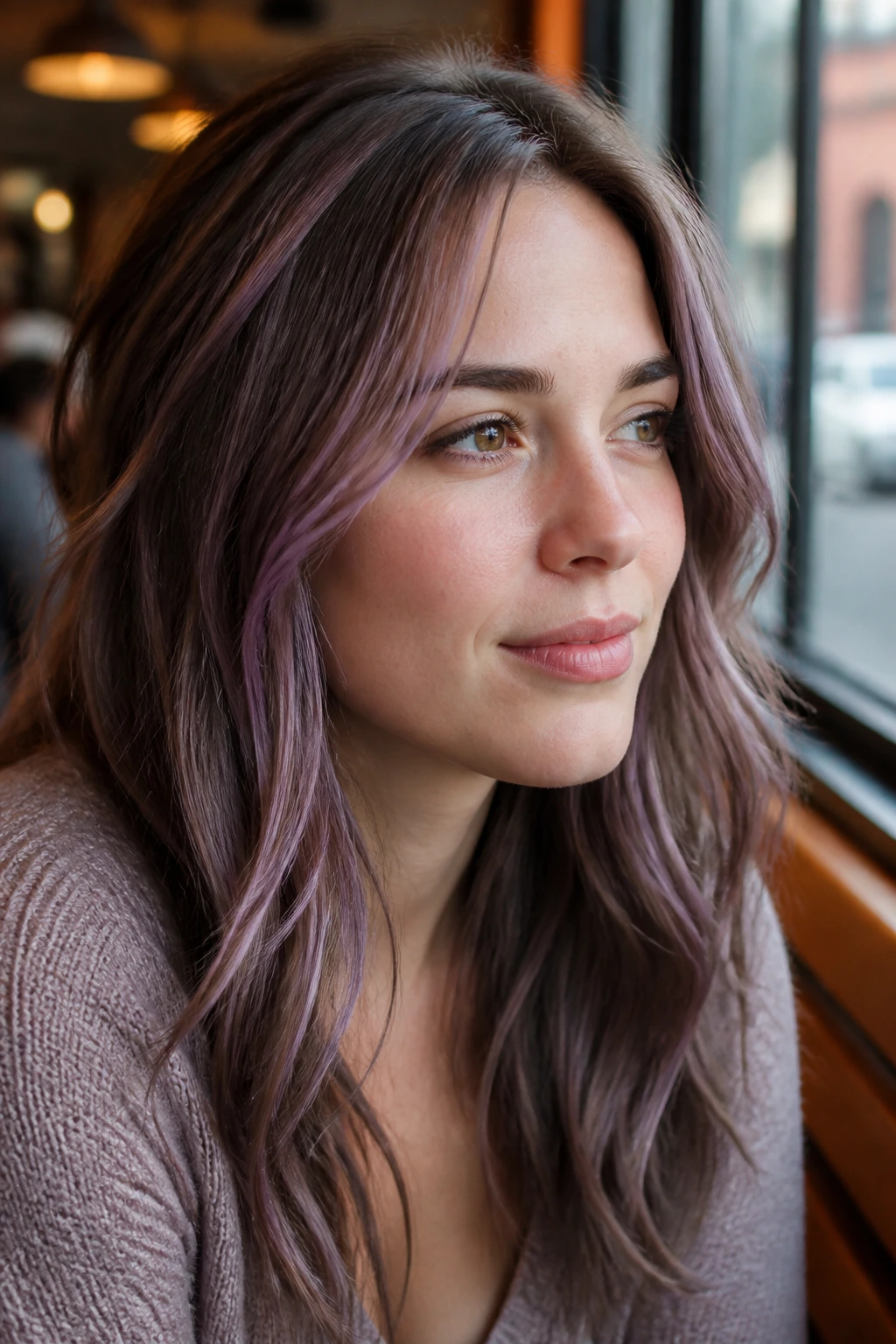
Cool taupe brown already sits in the right lane for cool undertones, so the orchid lights can be delicate. That’s the part I like. You are not trying to reinvent the base. You’re adding a little color through thin highlights that feel airy, almost airy enough to disappear until the hair moves.
Ask for very fine babylights, about 1/4-inch wide, then tone them toward orchid rather than pink. Orchid is a safer, cooler purple-adjacent shade for fair skin with cool undertones, especially if your natural brunette is a little ashy. This look works best if you want brightness around the face without turning the whole head purple. It is one of the few purple-brown ideas that can feel polished and soft at the same time.
15. Black Cherry Brunette
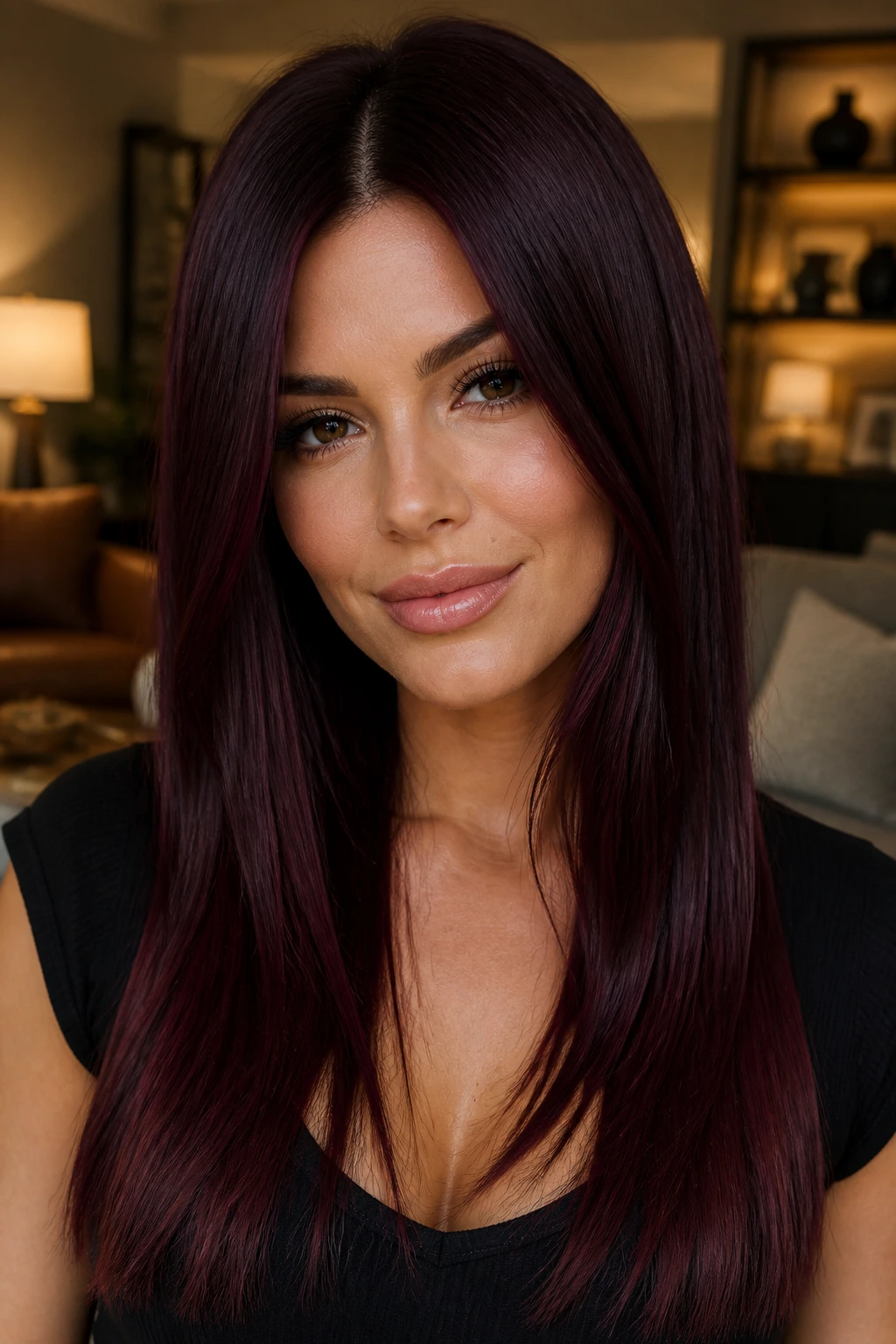
Black cherry brunette needs the right balance or it turns warm fast. Done well, though, it’s one of the richest options for cool skin tones because the cherry note stays dark and blue-based instead of orange-red. The result is dark brown with a wine edge, not a red-brown you have to fight.
This shade shines most on hair that already has depth. Ask for more violet than red in the formula, and keep the ends slightly lighter if you want the cherry tone to show in motion. Straight hair makes it look sleeker; curls make it look deeper. Either way, the color has presence. It pairs well with strong brows and a simple makeup look because the hair itself becomes the statement.
16. Mushroom Brunette with Violet Peekaboo
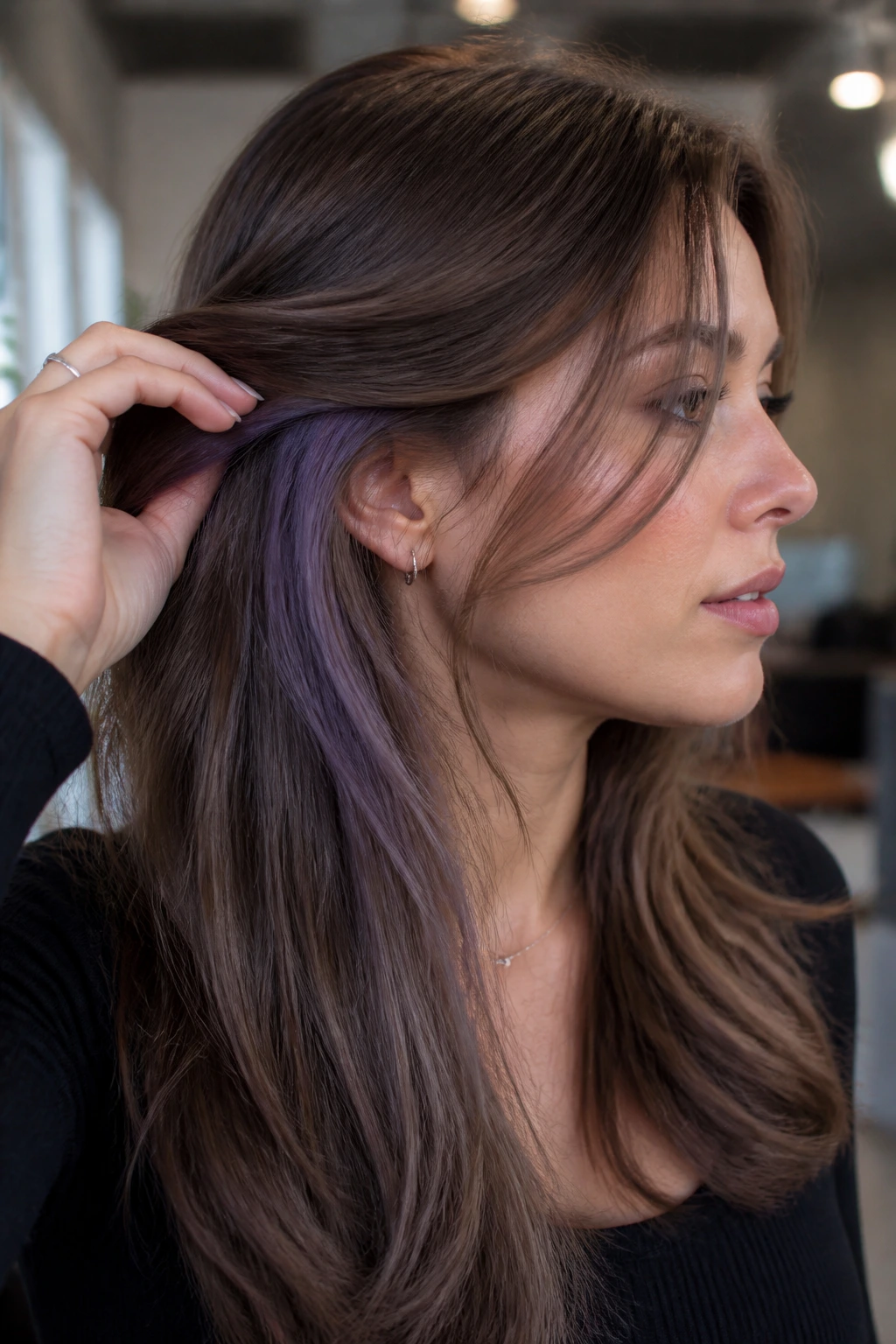
If you want to keep things discreet at work or school, mushroom brunette with violet peekaboo panels is a smart compromise. The outer layer stays neutral and smoky. The violet sits underneath, where it shows only when you move, tuck your hair behind your ears, or pull it into a half-up style.
This is not a loud color. Good. That’s why it works.
Where to Place It
- Behind the ears
- Under the crown
- In the lower back layers
- Around the nape for a hidden flash of color
The peekaboo placement also helps if you are testing purple-brown hair for the first time. You get the mood without committing every inch of hair to the shade.
17. Cocoa Plum Balayage
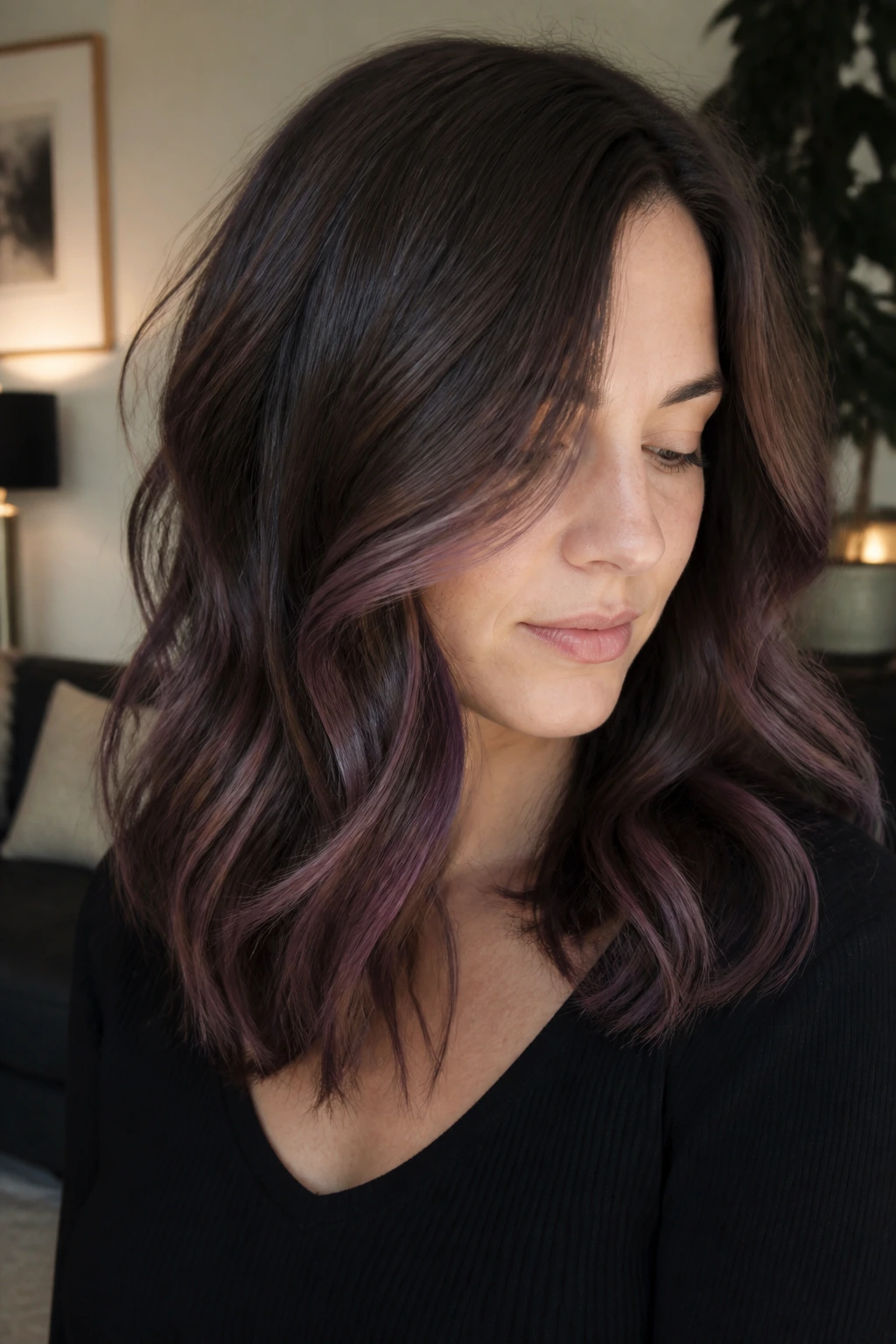
Cocoa plum balayage gives you the softness of hand-painted color with a cooler finish than a standard brunette balayage. The cocoa base keeps the hair grounded, while the plum pieces sit over the top and through the ends like a muted glaze. On cool skin tones, that plum keeps the whole look from sliding into basic brown.
I like this one on shoulder-length cuts and long lobs because the painted pieces have enough room to show. Ask for plum pieces that start below the cheekbone if you want the color to feel grown-up rather than chunky. The grow-out is forgiving, which matters if you hate visiting the salon every few weeks. Balayage can look messy when it’s overdone; here, the trick is keeping the plum sparse enough to read as movement, not stripes.
18. Blueberry Brunette
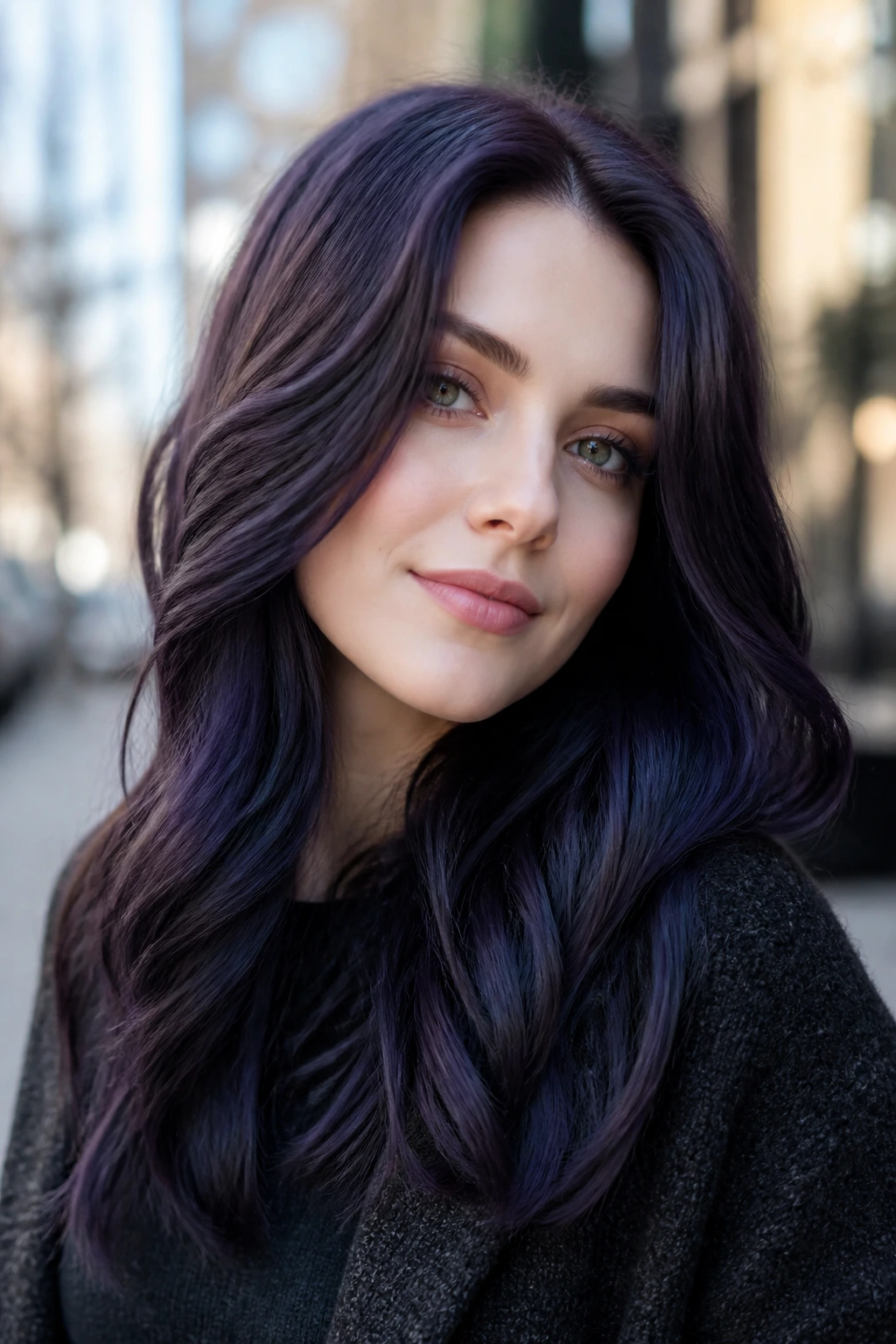
Blueberry brunette is deeper and cooler than a lot of purple-brown shades, which is why it flatters pink and blue undertones so well. The color sits between brown and indigo, so it can look almost smoky in indoor light and more berry-blue outdoors. That shift is the whole appeal.
Why It Flatters Cool Skin
Blue tends to calm the overall warmth of the hair, while the brown keeps it wearable. If your skin flushes easily, this shade is often kinder than copper or gold because it doesn’t echo the same warmth back at your face. On medium brown hair, it reads like a cool shine. On darker bases, it becomes more mysterious than obvious.
How to Wear It
Loose waves show the blueberry reflect best, but sleek hair gives it a cleaner edge. Either way, it looks strongest when the finish is glossy and the ends are trimmed.
19. Ashy Umber with Amethyst Tips
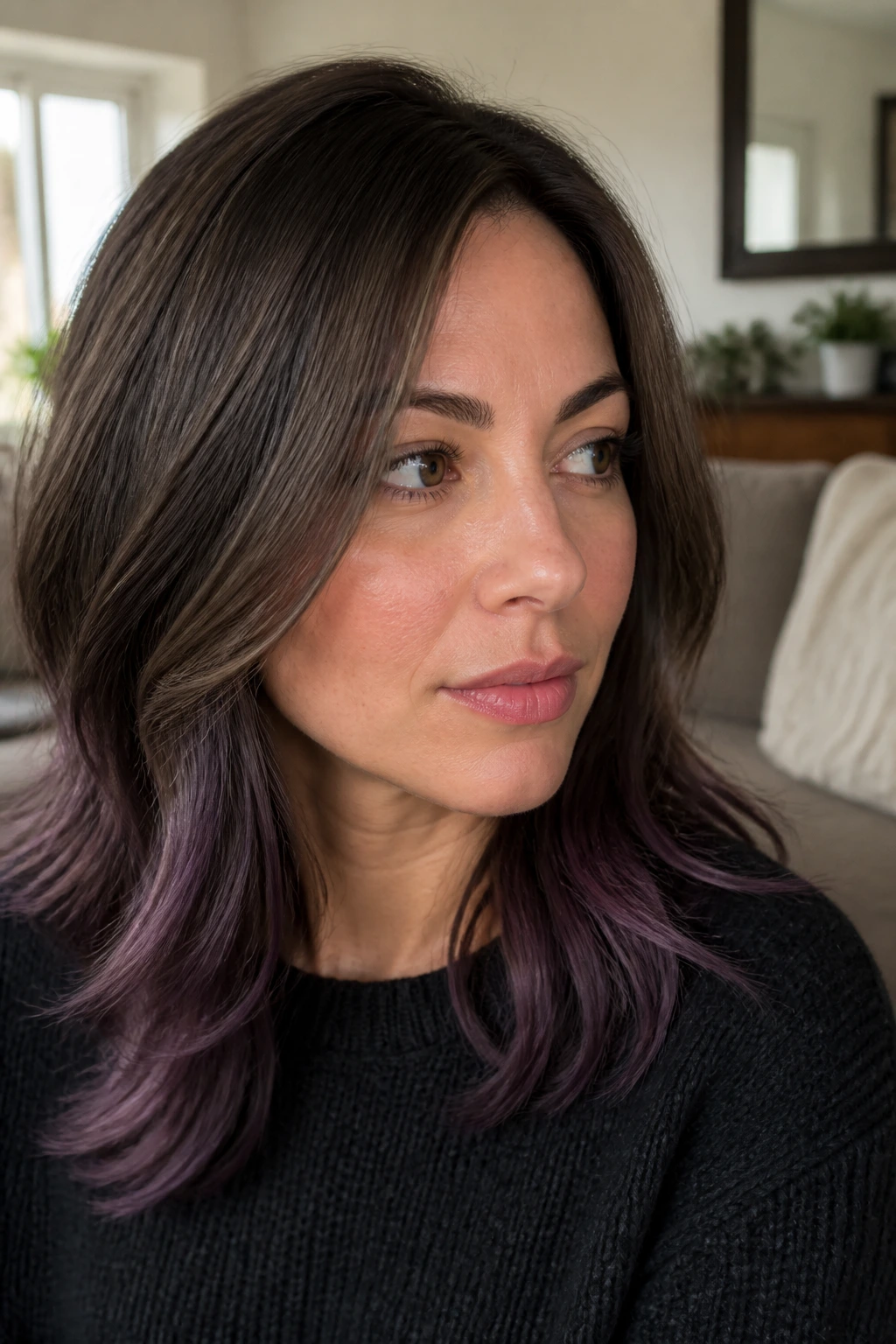
Ashy umber with amethyst tips is a good low-commitment shade if you want purple-brown hair but don’t want to color the entire head. The umber base stays neutral and smoky, then the amethyst only lands on the ends. That keeps the look playful without making the roots high-maintenance.
This is one of those styles that can grow out gracefully if you keep the amethyst concentrated on the bottom 2 to 3 inches. The tips can be trimmed away later, which makes the whole experiment feel safer. It is a smart first step if you like cool brunette shades but want to test the purple family before going deeper.
- Best for medium to long hair
- Easier to maintain than all-over color
- Looks sharper on layered cuts
- Works well if you want a visible change without full saturation
20. Velvet Wine Brown
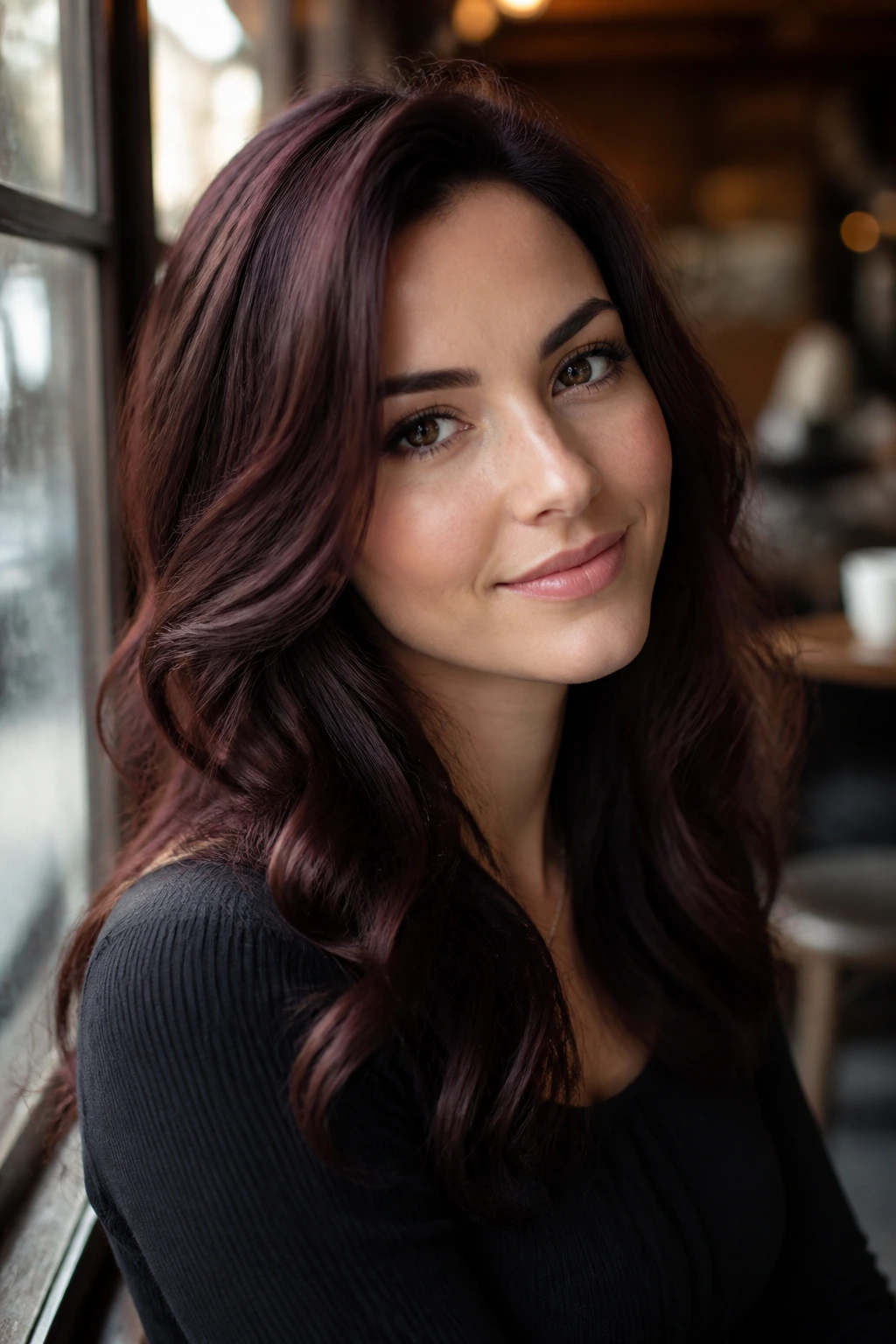
Why does some wine-brown hair look rich while other versions look flat? Because the good ones keep the purple cool and the brown soft. Velvet wine brown does exactly that. It feels plush, darker than merlot, and smoother than black cherry.
The key is shine. Ask for a gloss finish that stays on for 10 to 15 minutes, depending on your starting level and porosity. Porous hair will grab the wine tone faster, so your colorist may need to keep the ends lighter in processing time. On cool skin, this shade has a lovely effect around the face because it deepens the hair without adding copper. A side part and soft waves help if you want the wine tone to show in sections rather than all at once.
21. Cool Bronde with Purple Lowlights
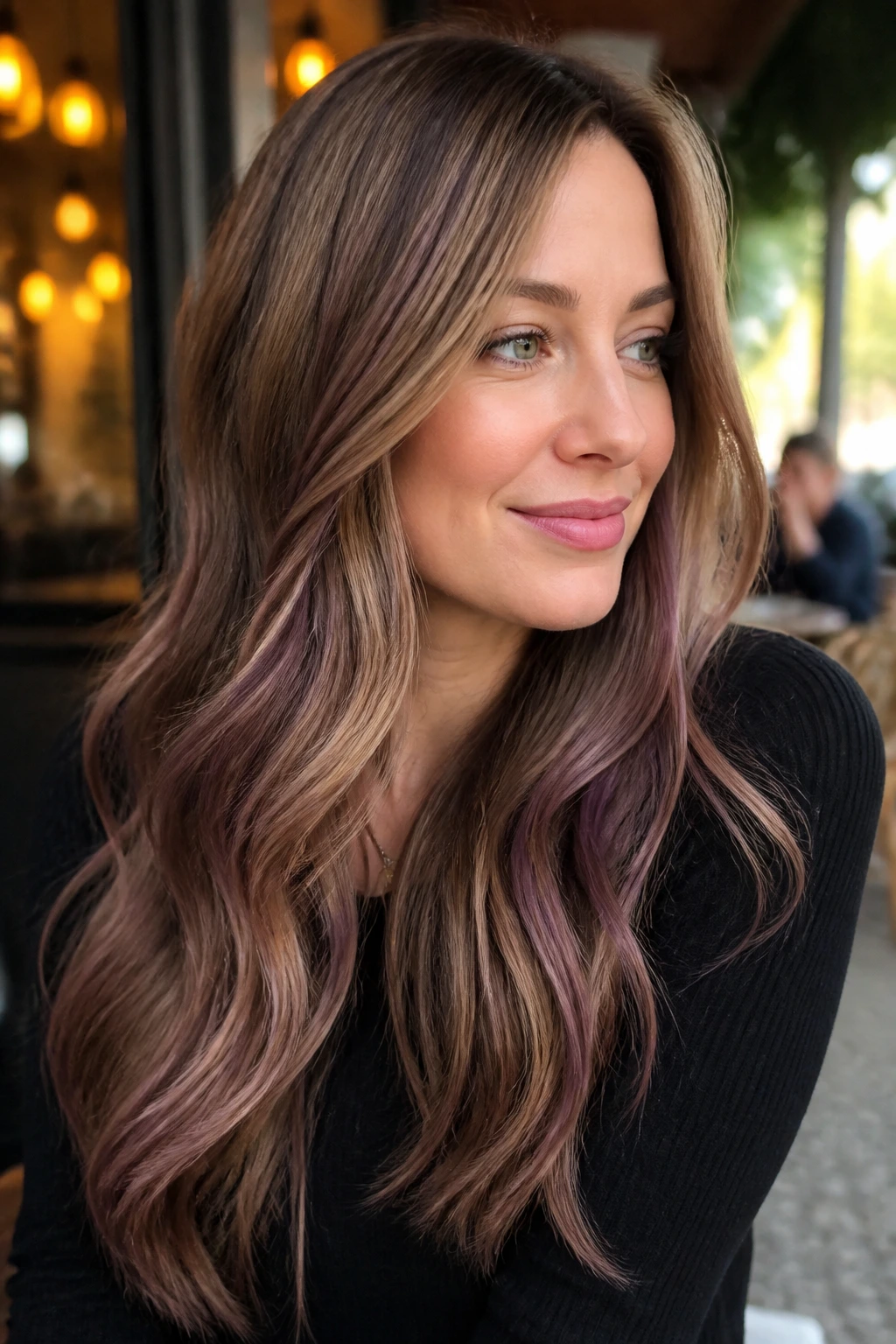
Bronde usually leans warm unless someone reins it in. Cool bronde with purple lowlights does the opposite. The lighter pieces keep the hair bright, but the lowlights add a cooler depth that stops the whole thing from drifting into honey territory. If your skin tone is cool, that control matters more than people think.
What Makes It Different
Instead of piling on highlights, this look uses thin purple lowlights placed between 1-inch to 1.5-inch sections of lighter brown. That gives the bronde dimension without pushing it toward orange. It also makes the lighter pieces look cleaner. A lot cleaner.
Who It’s Best For
People who like brightness around the face, but still want a brunette base that feels grounded. If your hair is fine, too many highlights can make it look thin. The lowlights here fix that.
22. Deep Orchid Brown
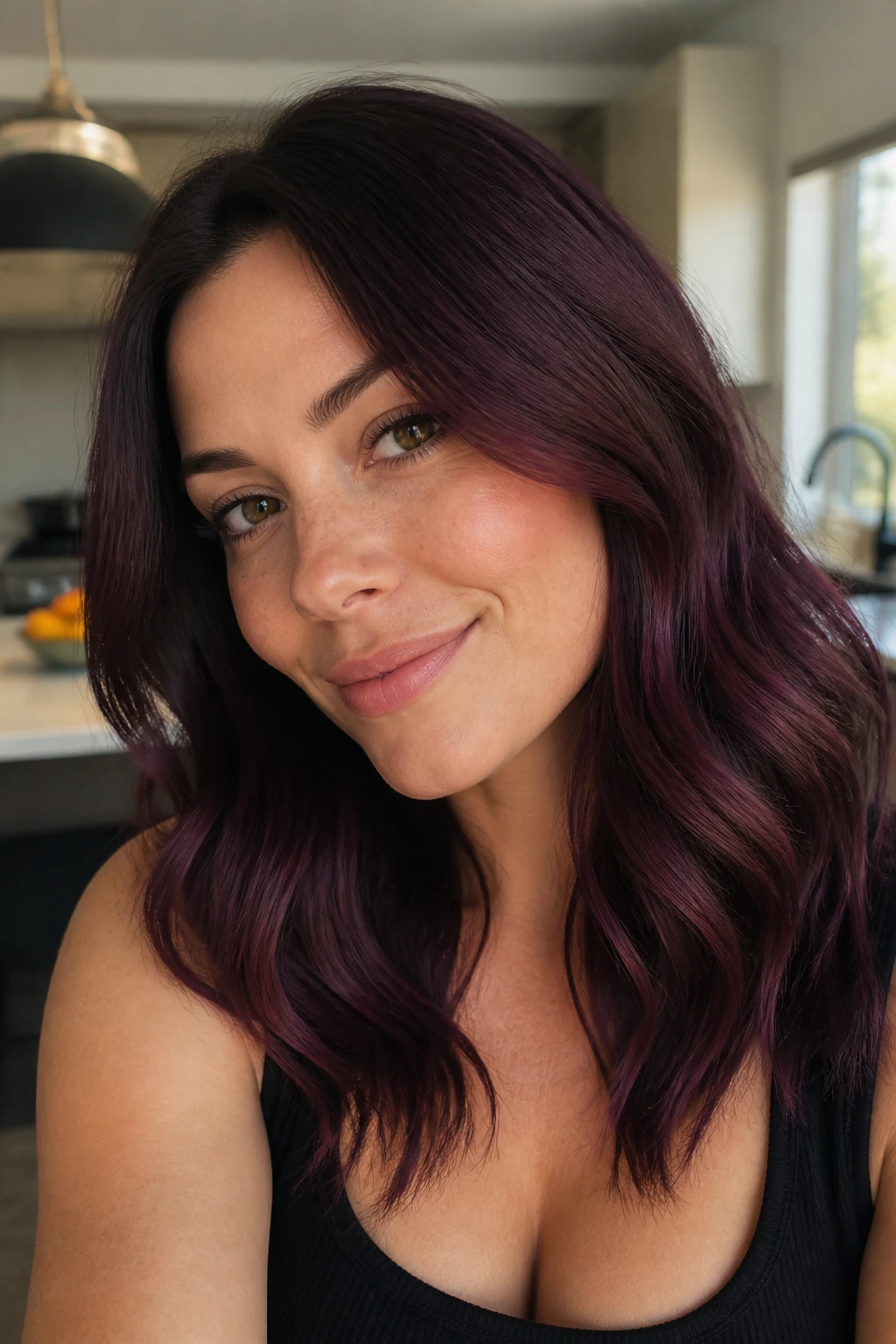
Deep orchid brown sits in a nice middle ground. It is more saturated than mauve, less dark than plum, and cooler than any standard chestnut. For cool skin tones, that balance gives the face a little color without crowding it.
This shade works best when the orchid note is visible in the mid-lengths and ends, not piled into the root. On darker hair, it may read as a soft purple sheen. On medium brown hair, it can look like a very polished brown-violet. The nicest versions keep the finish glossy and the shape simple. If the haircut has too many choppy layers, the color can look busy. A clean lob or long layers usually handles it better.
23. Espresso with Blackberry Face-Framing Pieces
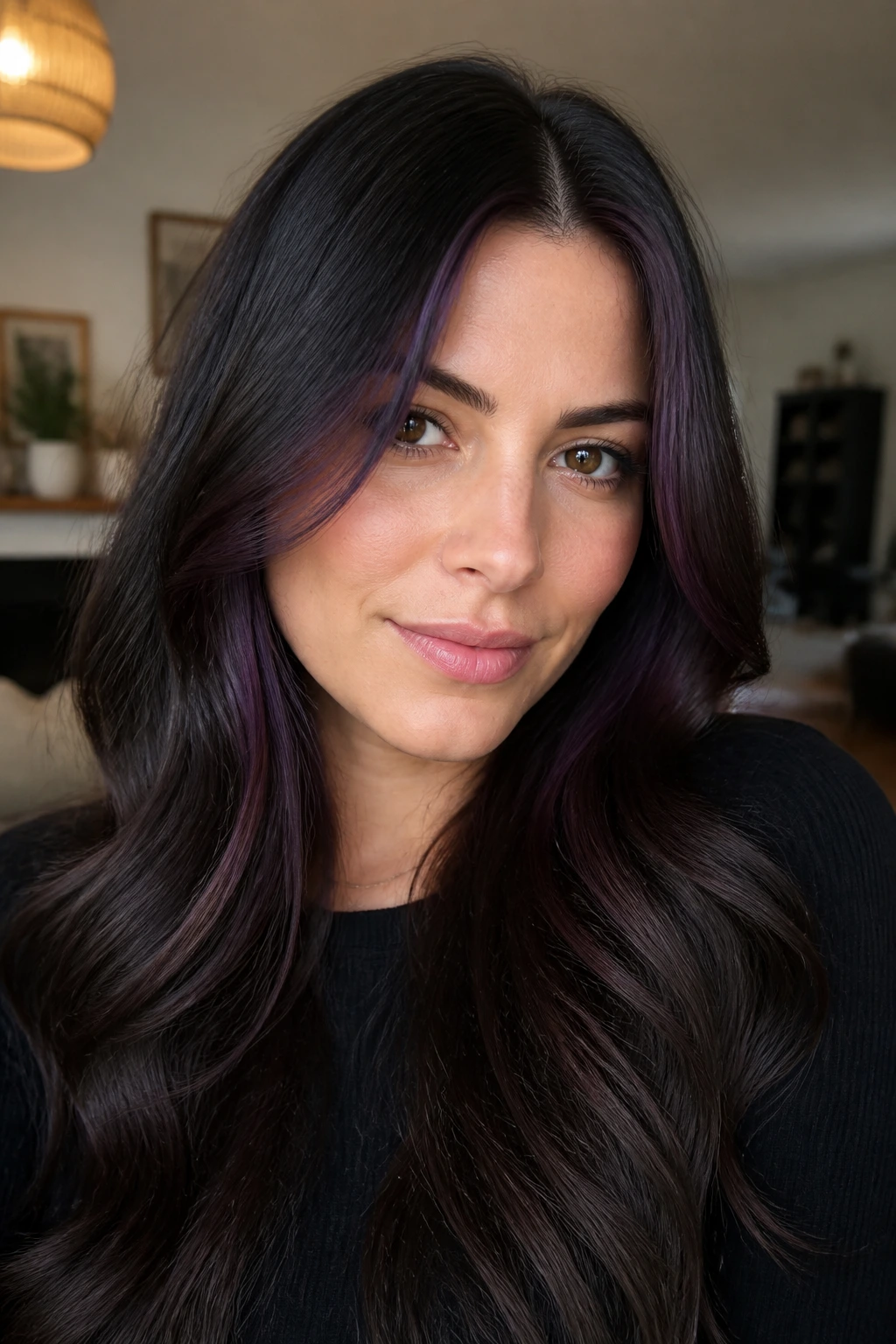
If you want the face to look brighter without changing the whole head, espresso with blackberry face-framing pieces is a sharp move. The dark espresso base gives you that sleek brunette foundation, while the blackberry pieces around the front pull the eye upward. It is flattering on cool skin because the purple never gets a chance to warm up too much.
This works especially well around the first 1 to 2 inches near the hairline and through the pieces that fall beside the cheeks. A good colorist will place the blackberry where the light naturally lands, not scattered randomly through the back. That makes the color feel intentional in the best way. Wear it with a middle part if you want symmetry, or a side part if you want the face-framing pieces to do more work.
24. Plum Smoke Brunette
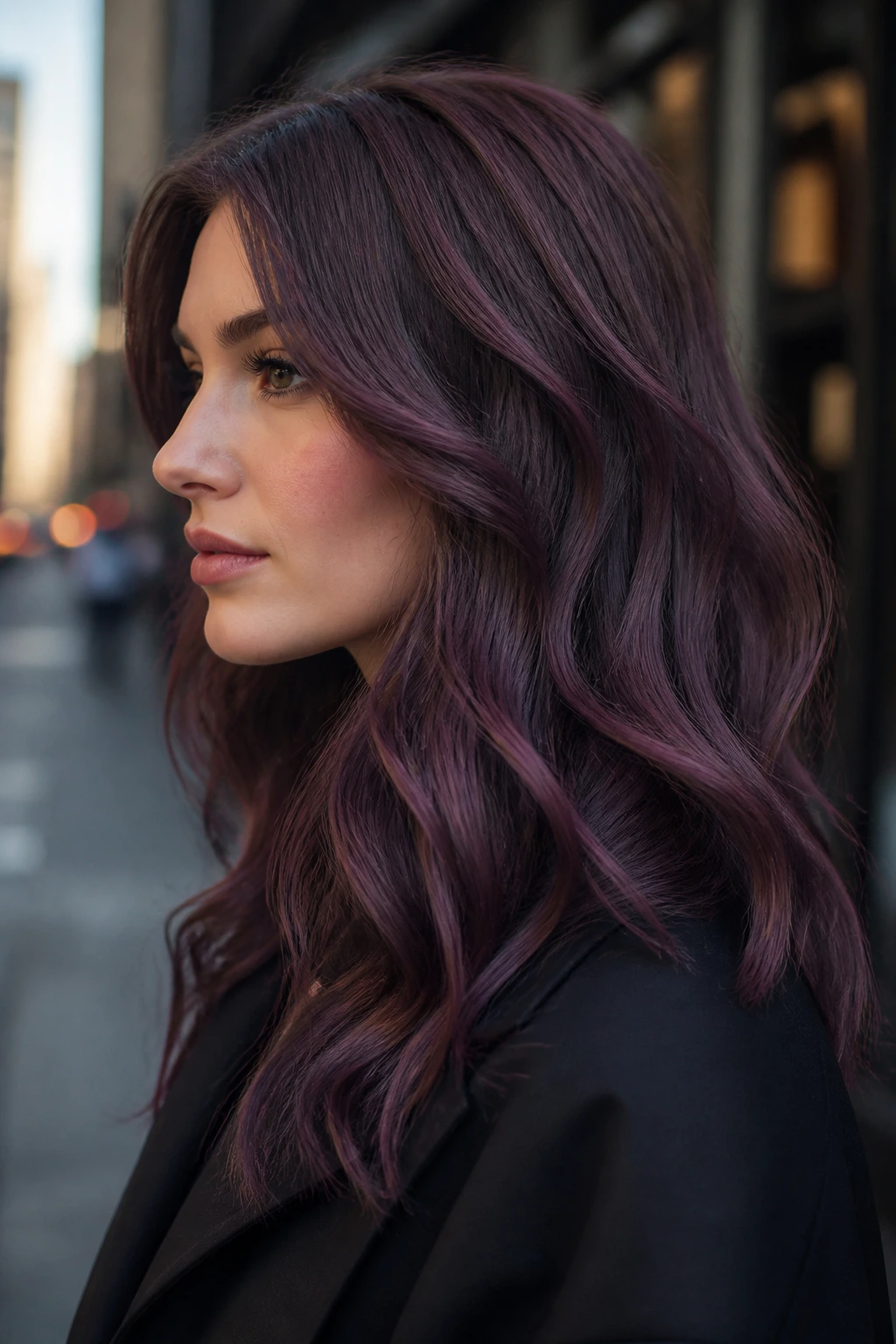
Want purple brown that almost disappears indoors? Plum smoke brunette is the answer. The smoke keeps the color muted, and the plum stays tucked inside the brown rather than sitting on top of it. It is understated, but not boring. Those are different things.
This shade is especially good if your hair tends to pull red or orange after coloring, because the plum tone helps cool it down. Ask for a demi-permanent gloss or a low-ammonia formula so the finish stays soft. If your hair is wavy, the color catches in little bands of light and dark that make it look more dimensional. Straight hair gives it a cleaner, sleeker read. Either way, the effect is less about obvious purple and more about depth.
25. Soft Mulberry Brown
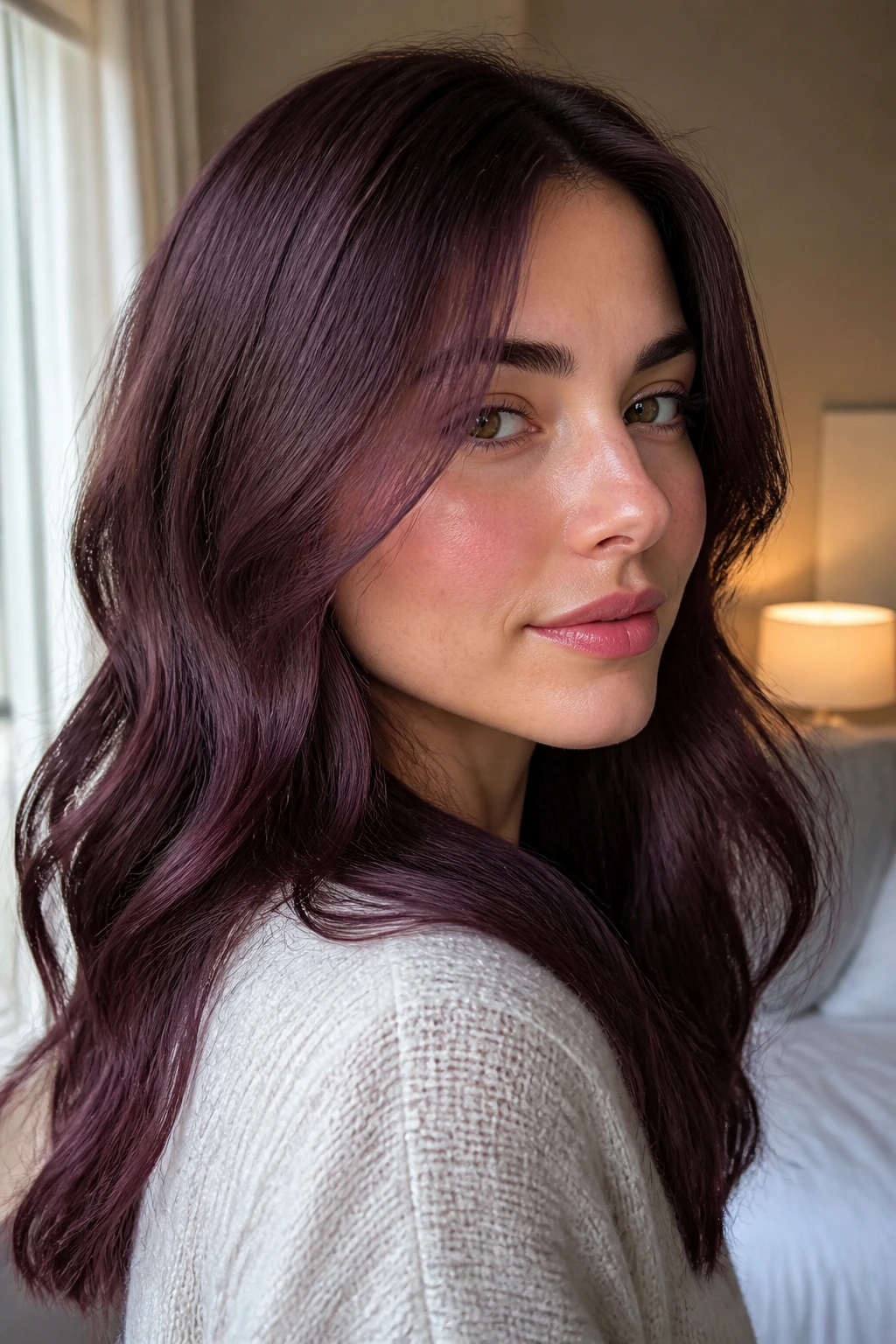
Soft mulberry brown is the gentlest place to end this list. It gives you the purple-brown idea in a way that feels wearable, quiet, and easy to live with. The brown stays in charge, but the mulberry tone lifts it just enough that cool skin looks fresher and less flat.
If you are nervous, start here. Ask for a semi-permanent gloss over your current brunette base, then see how it settles after two washes. That is the safest way to learn whether you want more violet next time or less. And honestly, that is how most good color choices happen anyway—by getting close, then adjusting. The shade does not need to be loud to make a point.
