



Round faces don’t need to be hidden; they need to be framed with a little more intention. The smartest long layered haircuts for round faces stretch the eye vertically, soften the cheeks, and keep the silhouette moving below the widest part of the face.
The trap is easy to fall into. Layers that start right at cheek level can puff out where you least want width, especially if your hair has any natural wave or density. Pretty in the chair, tricky at home.
What works better is shape. Sometimes that means a center part and long curtain pieces. Sometimes it means crown volume, a deep side part, or a cut that keeps the ends light without making the sides look wider. The right long layers do not fight your face shape; they work with it.
1. Long Face-Framing Layers That Start Below the Cheekbones
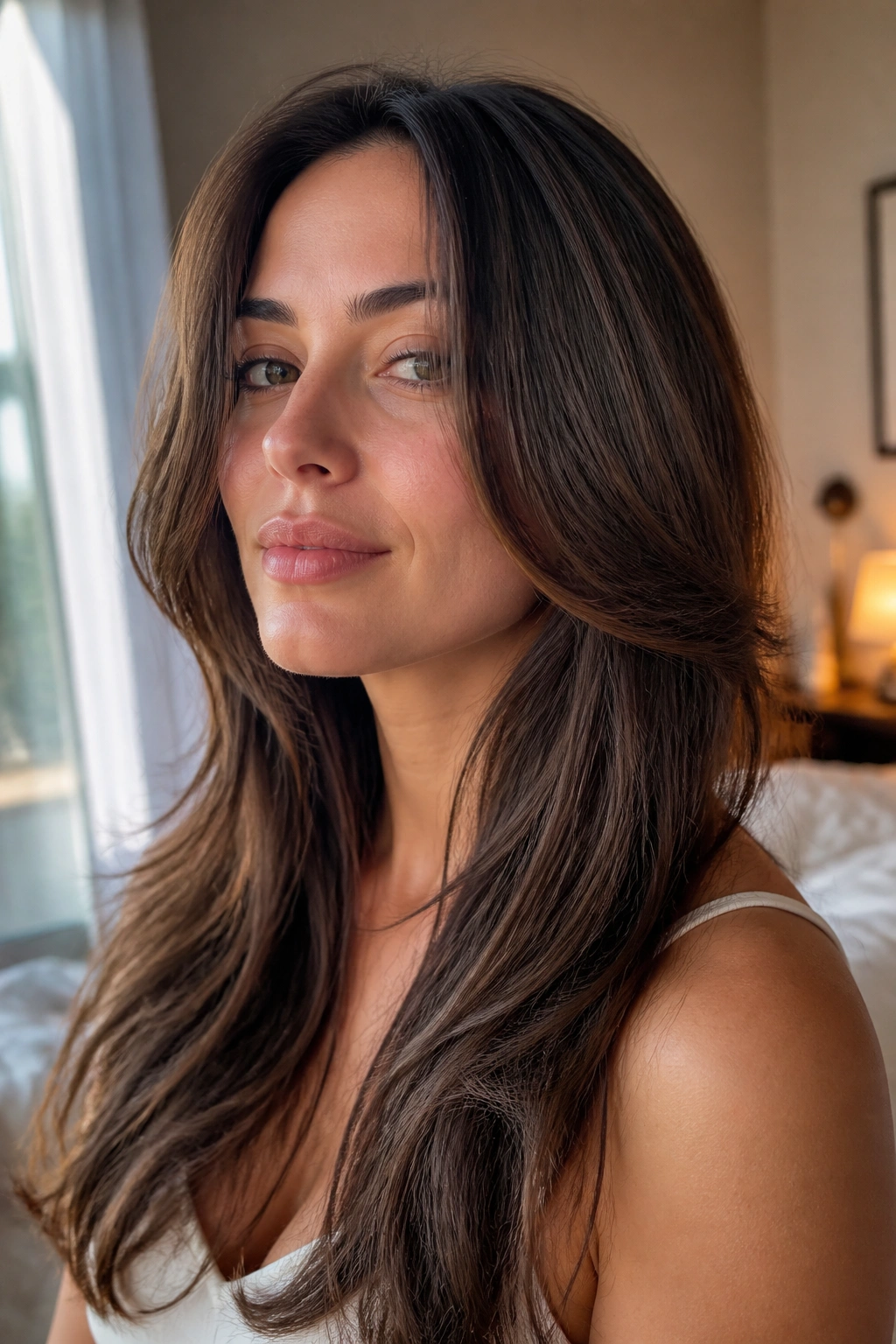
This is the safest place to start if you want movement without extra width. The shortest front pieces skim under the cheekbones instead of landing right on them, which keeps the eye moving downward instead of straight across the face.
Why it works
Layers that begin a little lower create a softer line around the cheeks. That matters on a round face because the goal is usually to add length, not to build a shelf of hair at the widest point.
Ask your stylist for face-framing layers that start around the mouth, jaw, or just below the cheekbone, then blend into long lengths. That small shift makes a big difference.
- Best for: straight, wavy, and softly curly hair
- Styling trick: blow-dry the front pieces away from the face with a 1.5-inch round brush
- Watch for: layers that flip outward at cheek level
Pro tip: If your hair is thick, keep the front pieces a little longer. Too much internal cutting near the face can make the sides poof.
2. Curtain Bangs with Long Floating Layers
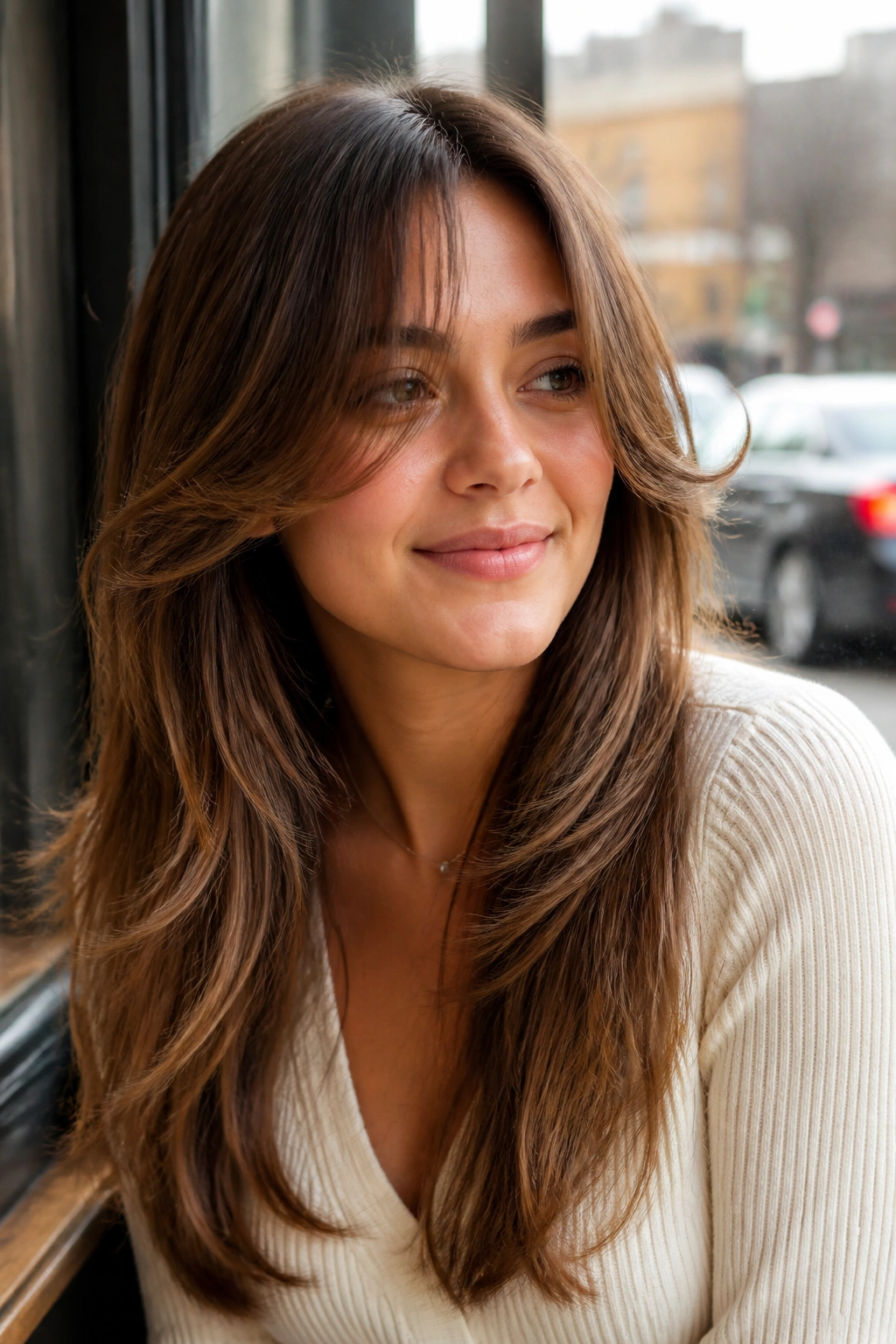
Curtain bangs are one of the easiest ways to open up a round face. They split in the middle, fall softly to each side, and create a vertical line right where you need it.
The nice part is that they do not have to feel heavy. On a round face, the best version is usually airy at the center and longer near the cheekbones, then blended into long layers through the rest of the cut.
I like this look on hair that has some movement already. It gives shape without making the whole style look busy. If your hair is super straight, you may need a round brush or a hot brush to keep the curtain pieces from falling flat against the forehead.
A good salon request sounds like this: long curtain bangs, soft bend at the sides, and layers that start below the cheekbone. That combination keeps the front open and the rest of the cut light.
3. Butterfly Layers with Soft Crown Volume
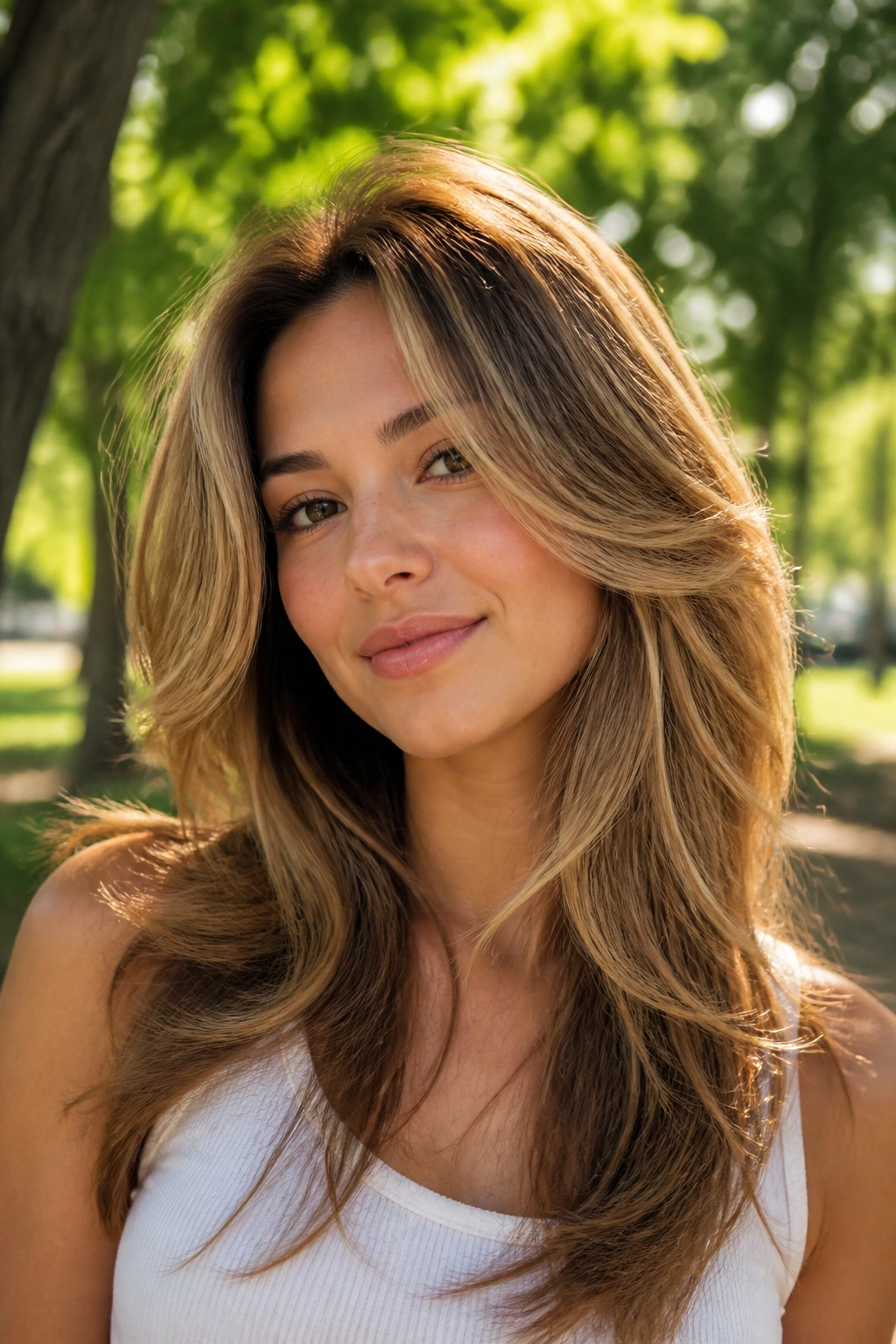
Want the volume up top and the length down below? That is the butterfly cut in a nutshell. It gives you shorter layers around the crown and face, plus long layers underneath that keep the overall length intact.
What makes it different
The butterfly cut can be excellent for round faces when the shortest pieces stay controlled. You want lift near the crown and movement at the sides, but not a puffball effect at the cheeks. Too many short pieces around the face can widen the shape fast.
This cut works especially well if your hair is medium to thick, because the internal layering removes weight without killing the shape. The result feels airy. Not thin. Just lighter.
To style it, rough-dry the roots first, then use a round brush only on the top layers and front pieces. Leave the ends a little loose. That contrast—fullness at the crown, softness below—does a lot of face-slimming work.
4. U-Shaped Layers That Keep the Ends Full
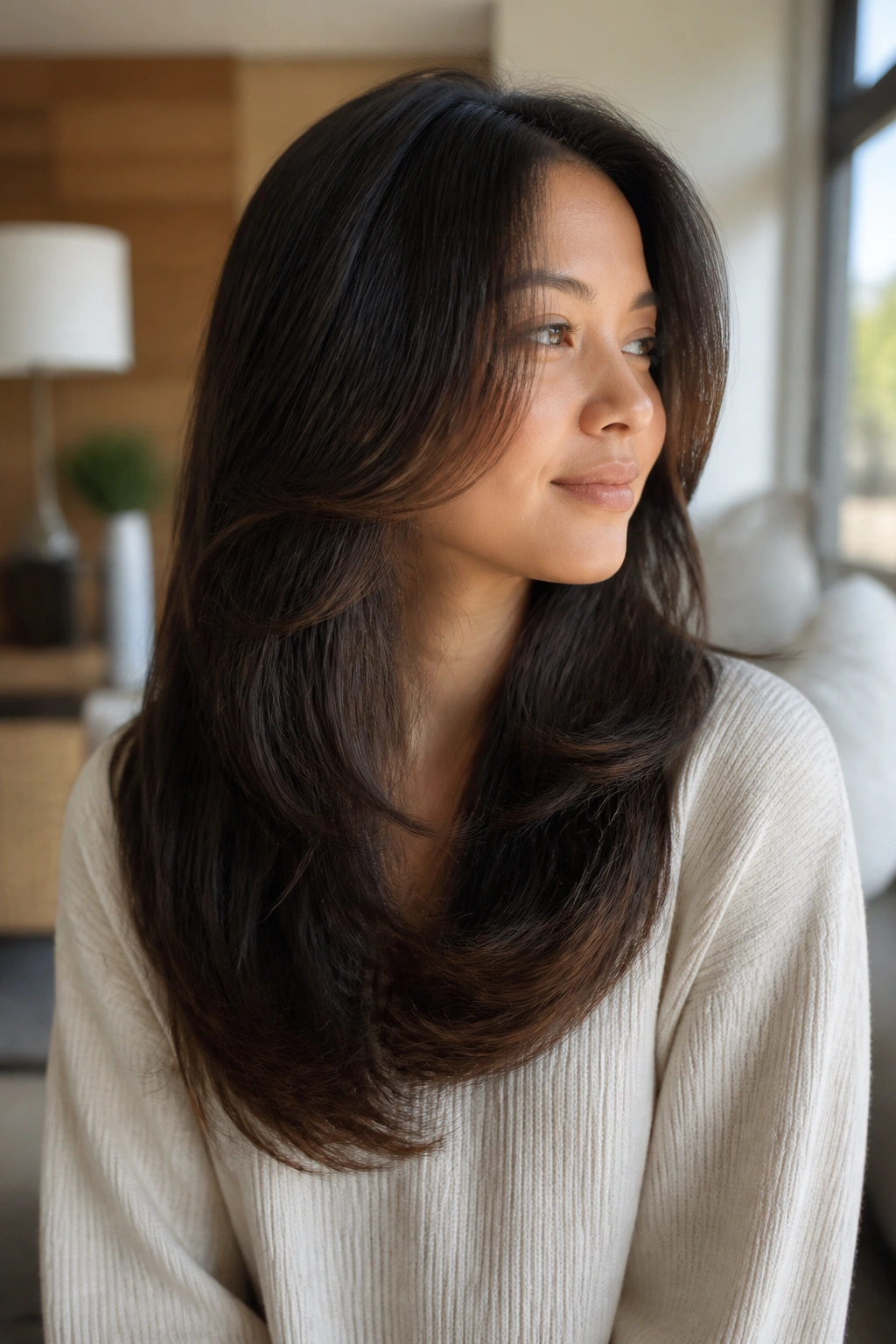
A U-shaped cut is quiet, but it’s good. The perimeter curves gently upward at the sides and stays longer in the back, which creates a long line instead of a blunt wall of hair.
For round faces, that shape matters because a straight-across bottom can feel heavy and boxy. A U-shape softens the outline without sacrificing density. It’s a nice choice if you like your hair to look polished, not overworked.
What to ask for
- Long layers that follow a soft U around the bottom
- No short layers that kick out at cheek level
- Light face framing that blends instead of slicing
This is one of those cuts that looks expensive without trying too hard. On straight hair, it reads sleek. On wavy hair, the curve shows up a little more and gives you that smooth drape around the shoulders.
The key is restraint. Too many layers can break the line. A clean U keeps the length visible, which helps a round face look longer.
5. V-Cut Layers That Taper Down the Back
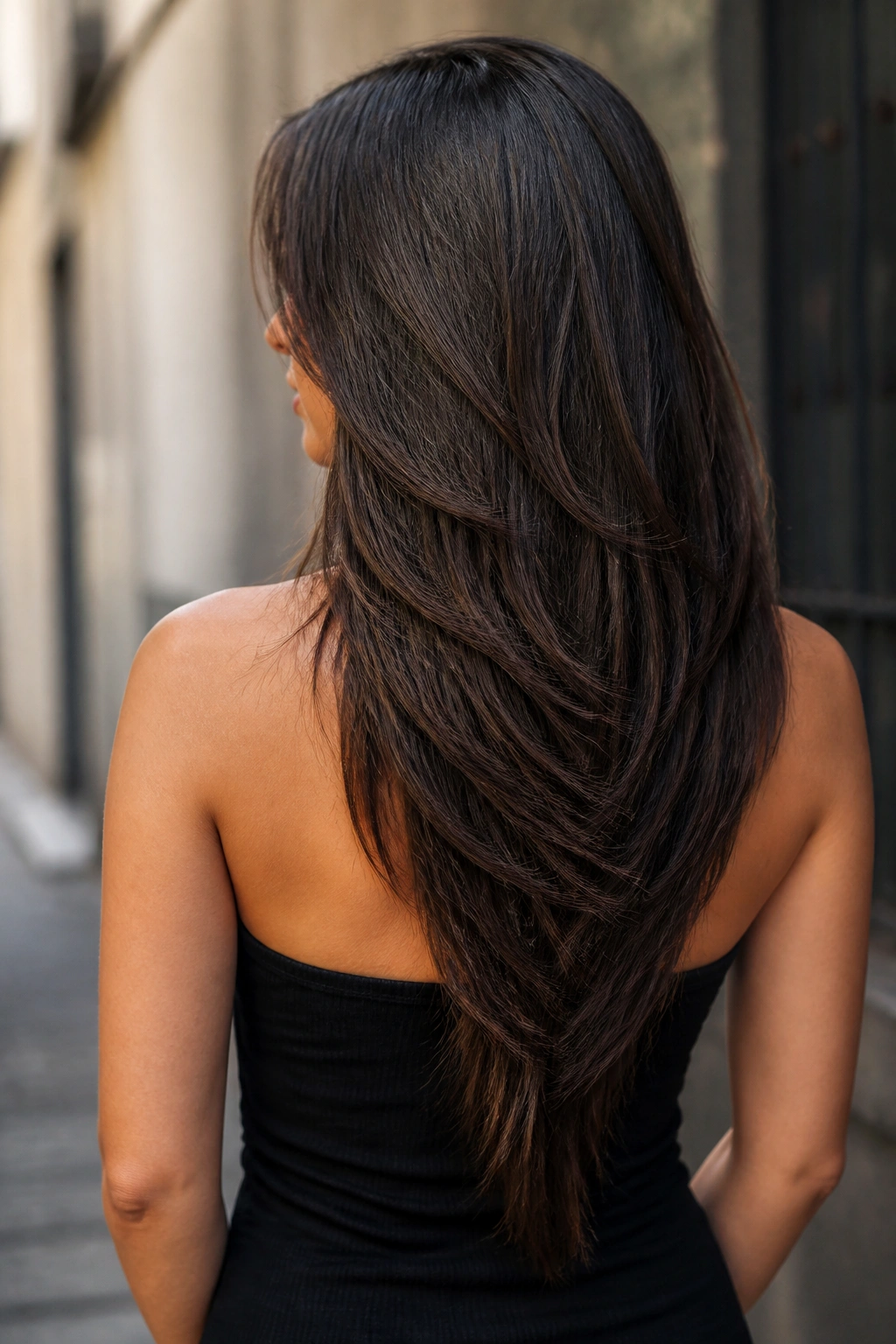
If you like a stronger shape, the V-cut brings it. The hair is longer in the center back and gradually shorter toward the sides, creating a pointed outline that visually lengthens the whole style.
That taper can be flattering on round faces because it keeps the width from sitting at the outer edges. Your eye follows the center line down the back, not the side volume across the cheeks.
This cut shines on thick hair. A V-shape removes bulk while keeping the ends lively, and it gives curls or waves a place to fall without building too much width. On fine hair, it can still work, but the layers should stay soft so the perimeter does not look too sparse.
A good blowout makes this cut sing. Use a paddle brush through the back and a round brush through the front pieces, then tuck the shorter side layers behind the shoulder sometimes. Small trick. Big payoff.
6. Long Shag Layers with Piecey Ends
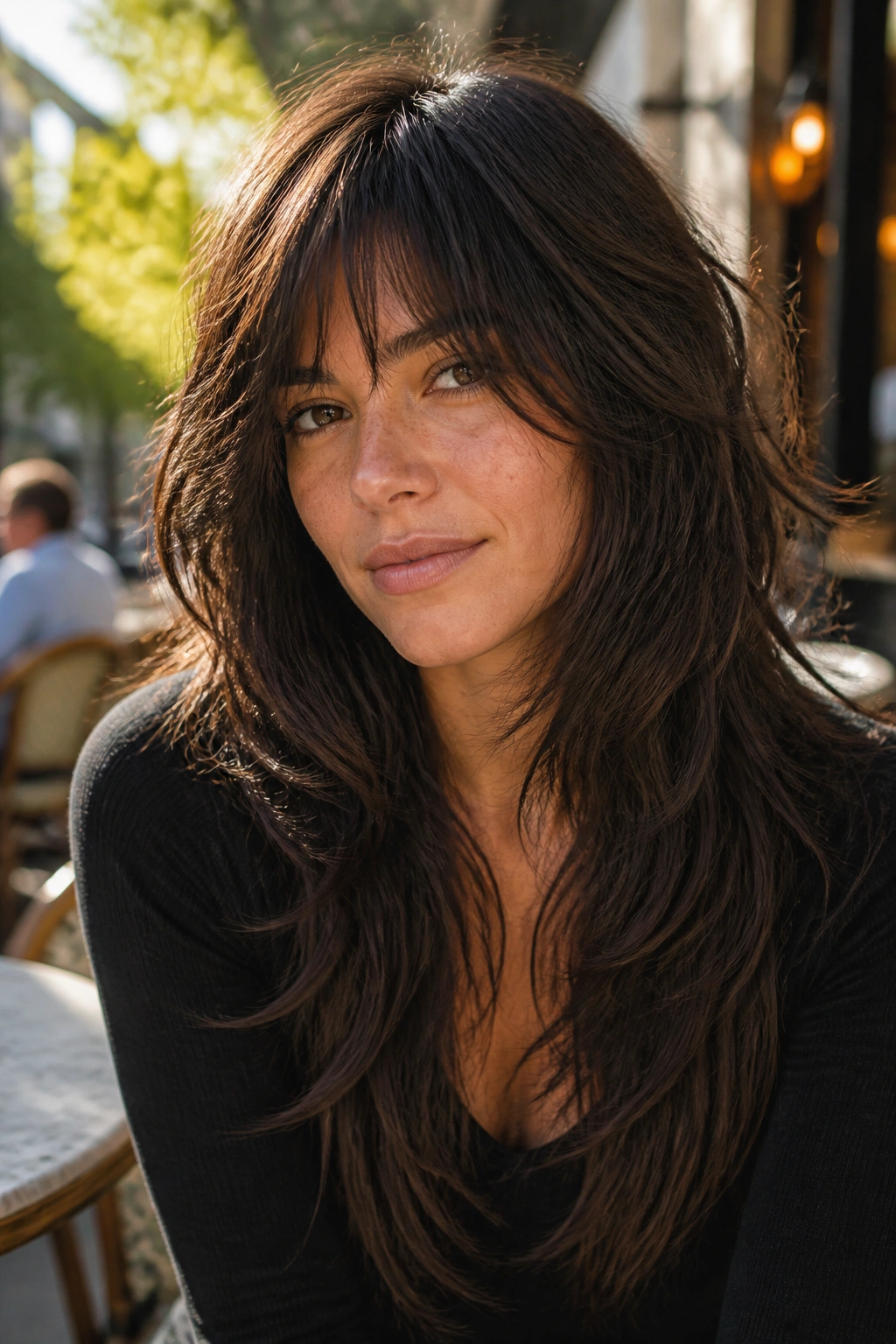
The shag can absolutely work for round faces—if it stays long and controlled. The old idea of a shag as all fringe and short layers is too narrow. A modern long shag keeps the rough texture, but the shortest bits should still sit in a flattering place.
What you want here is movement, not bulk. The best long shag for a round face has feathered top layers, piecey ends, and enough length to keep the style from widening at the cheeks.
How to wear it
- Air-dry with a light mousse for loose texture
- Scrunch in a small amount of curl cream if your hair bends naturally
- Use a dry texture spray only at the mid-lengths, not the roots
A lot of people with round faces avoid shag cuts because they worry about width. Fair concern. But when the layers are long and broken up, the style creates vertical motion instead of a solid shape around the face.
It looks cooler a little imperfect. That’s the point.
7. A Deep Side Part with Long Sweeping Layers
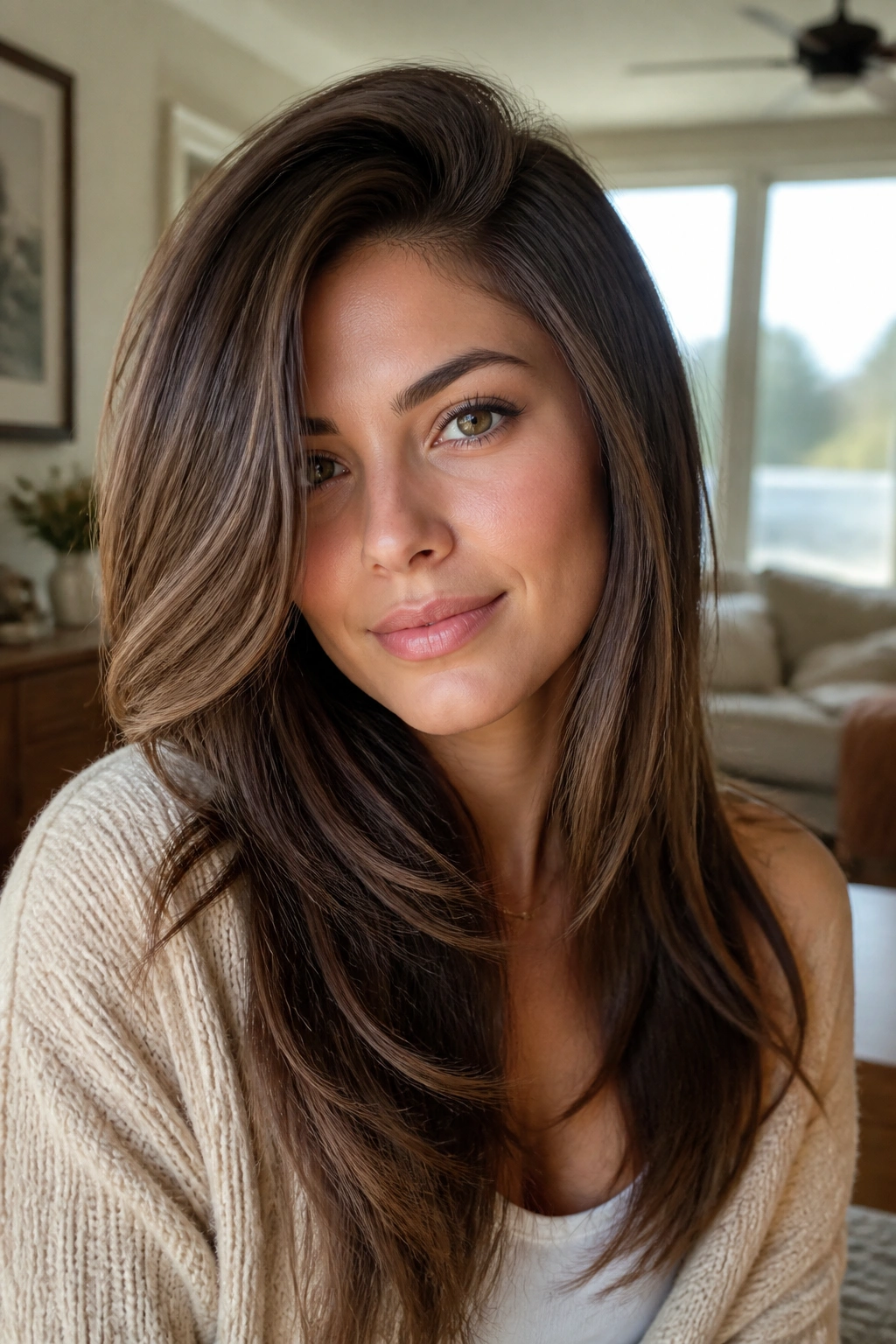
A deep side part changes the whole conversation. Instead of letting the hair sit symmetrically around the face, it creates a diagonal line that pulls the eye across and down.
That little shift can make a round face look longer in seconds. Add long layers that sweep from the heavier side into the lengths, and you get movement without the extra puff at both cheeks.
I like this option for people who want shape without bangs. You keep the forehead open on one side, which gives the face room to breathe, and the longer side pieces soften the jaw.
Best styling move
Blow-dry the roots in the opposite direction of the part first, then flip it back. The lift at the scalp keeps the side part from collapsing after an hour. If your hair is fine, a small amount of volumizing mousse at the roots helps hold the shape.
This is one of those styles that looks simple until you try it. Then you realize how much the part line does.
8. Invisible Layers for Fine Hair
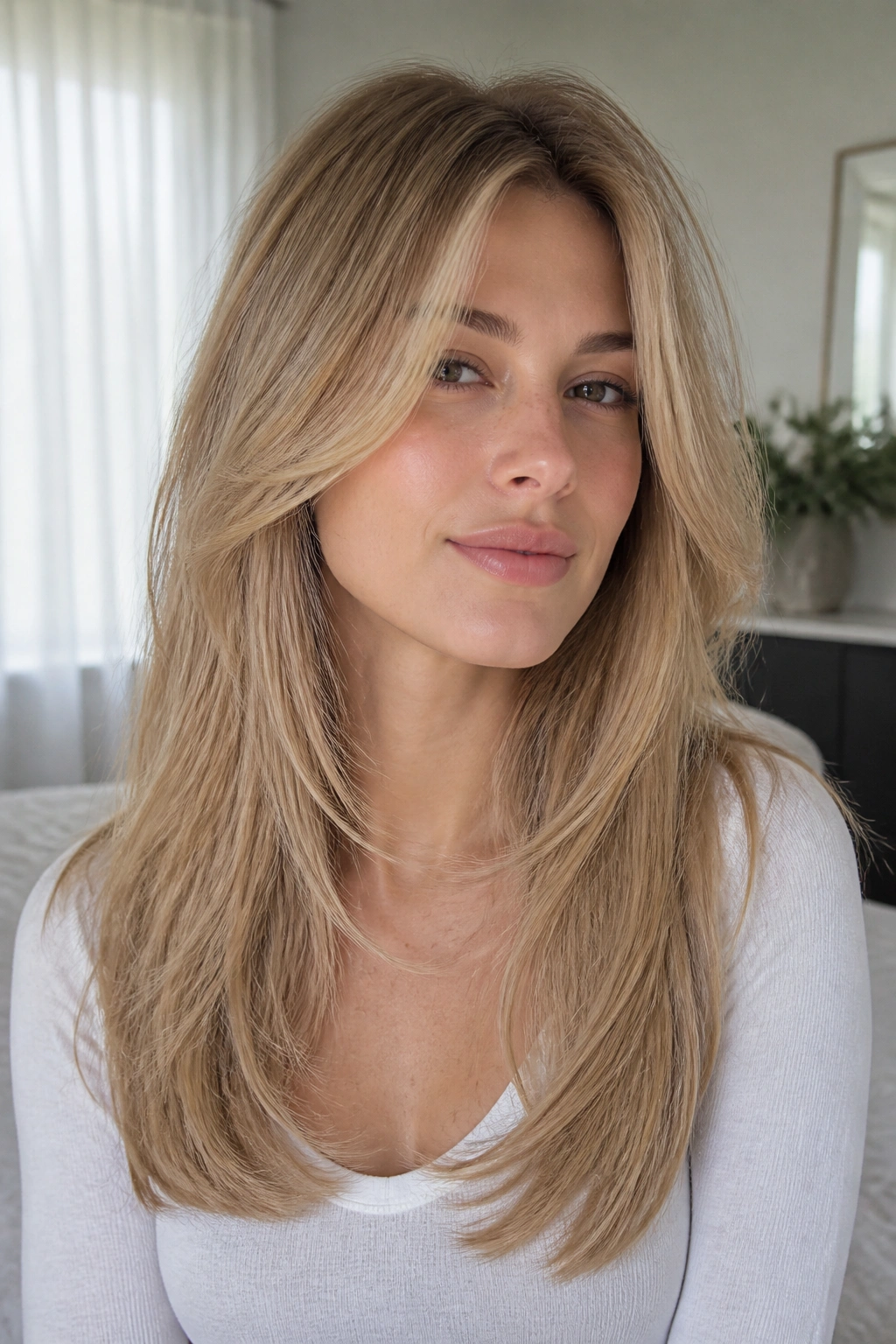
Fine hair and round faces can be a tricky pair. Too much layering and the ends start to look thin. Too little and the style hangs flat against the cheeks. Invisible layers solve that problem by creating movement inside the shape instead of carving obvious steps into it.
What to ask your stylist for
- Internal layers, not choppy surface layers
- A soft face frame that starts low
- Length kept blunt enough at the bottom to look full
The beauty of invisible layers is that you get lift without a hacked-up outline. The hair still reads as long and healthy, which is useful if your goal is to stretch the face instead of widening it.
A light styling cream or a tiny bit of volumizing spray at the roots is usually enough. Fine hair can go limp fast if you pile on too much product. Keep it airy.
My take: this is one of the most underrated options in the whole group. Quiet. Effective. Easy to wear.
9. Jaw-Defining Layers That Fall Past the Chin
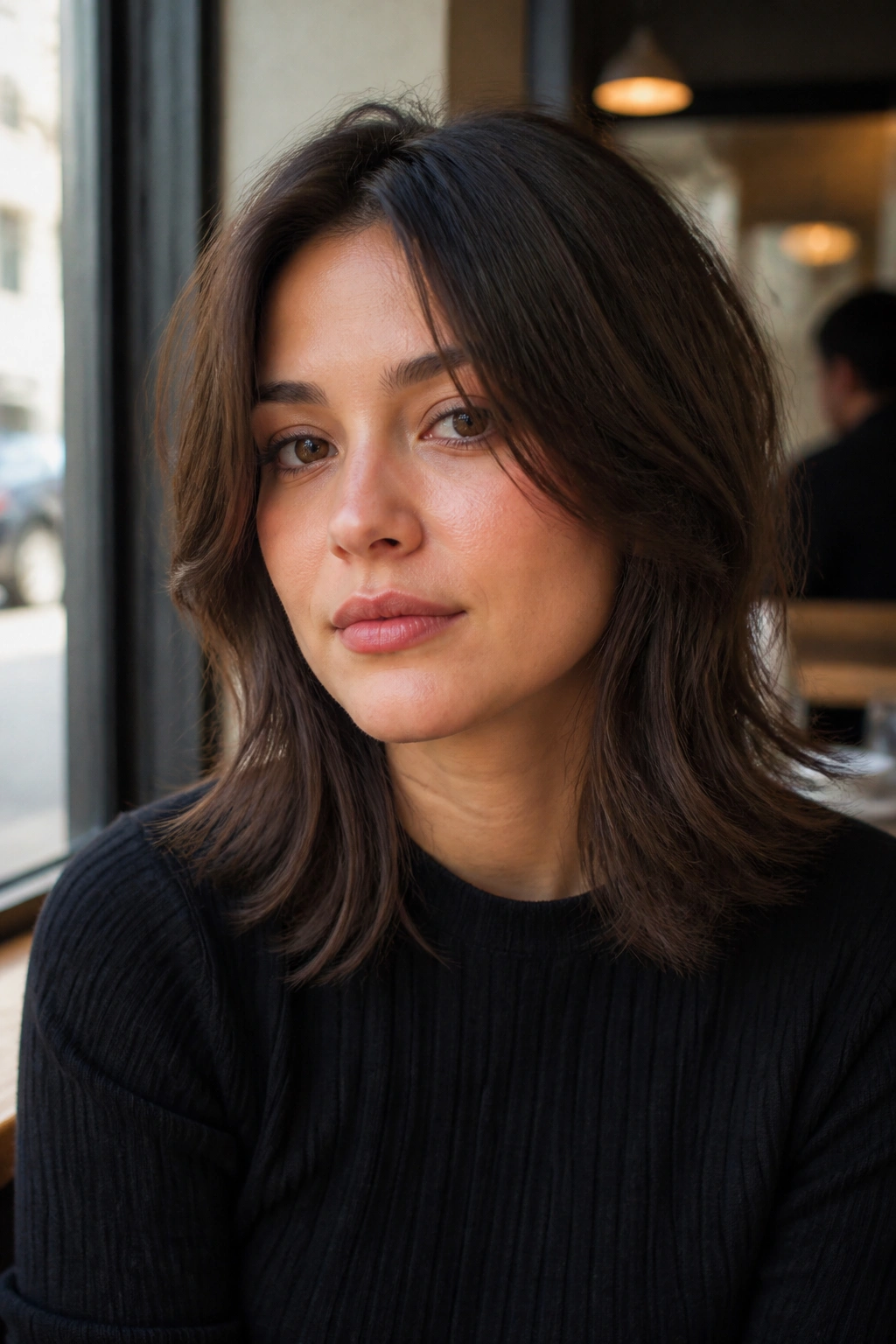
A round face often benefits from structure near the jaw, but the structure has to be placed carefully. If the shortest layer sits exactly at chin level, it can make the face look rounder. If it falls just below the chin, it starts to define the jaw instead.
That’s why this cut works: the layers skim the line, then drop past it. You get a little edge around the lower face, but not a hard shelf.
This shape suits straight hair especially well because the ends lie cleanly. On wavy hair, the effect is softer and a bit more romantic. Either way, the goal is the same: bring attention lower without adding width where the cheeks are fullest.
Try tucking one side behind the ear. It exposes the jaw and lets the front layers do their job. Small change, but it helps.
10. Waterfall Layers for Thick Hair
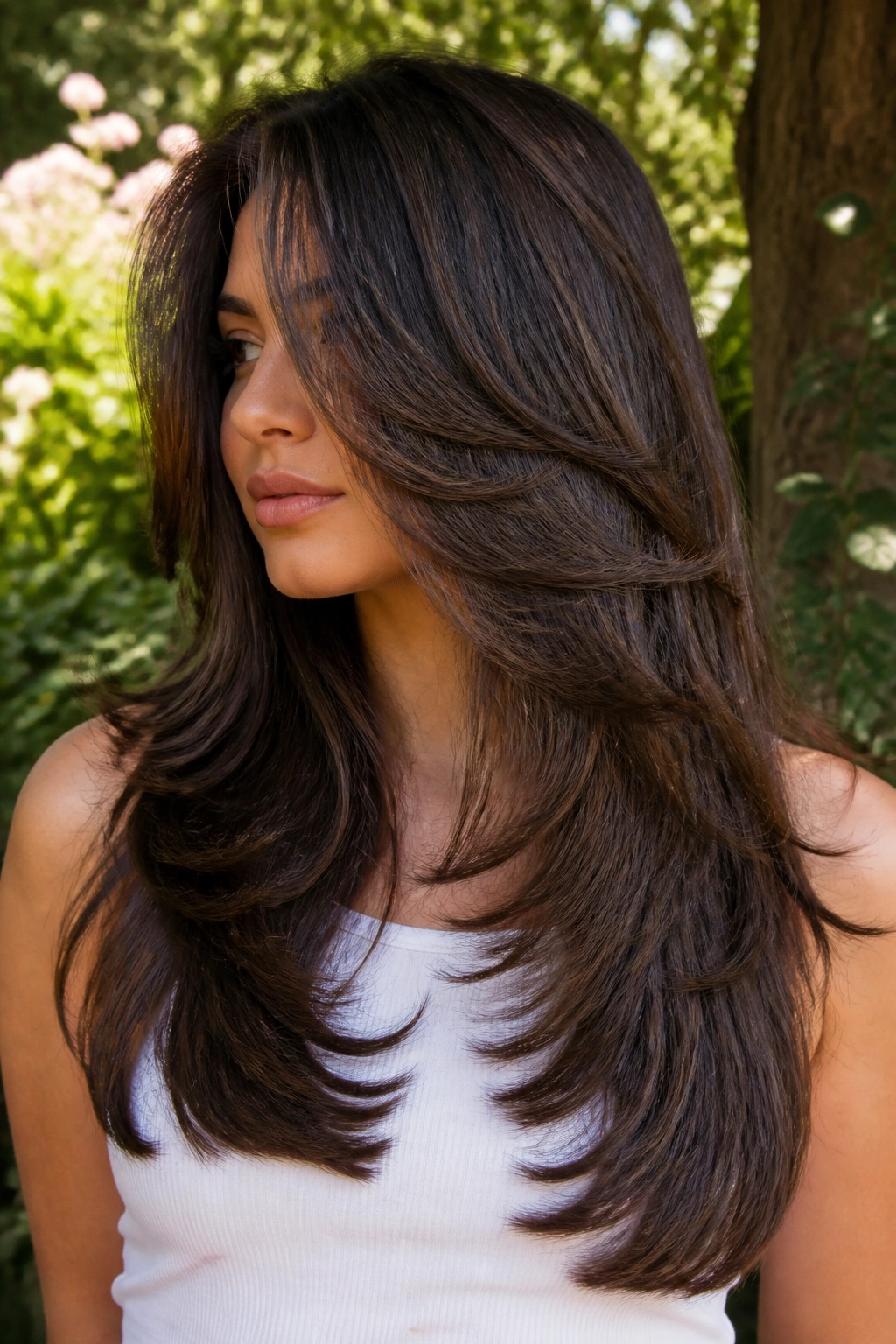
Thick hair can overwhelm a round face if the cut keeps too much weight at the sides. Waterfall layers solve that by cascading the hair downward in soft sections, so the silhouette feels lighter and less blocky.
The good part
The hair still looks full. It just does not look trapped in one big mass. The layers move like steps that blur into each other, which keeps the volume from sitting all in one place.
This cut is especially useful if your hair expands when it dries. The layers give it room to settle instead of ballooning out. Ask for long, blended sections through the sides and back, then keep the perimeter long enough to hold the overall shape.
- Best for: thick straight, thick wavy, or heavy curls
- Styling trick: rough-dry first, then smooth only the top layer with a brush
- Avoid: too many short layers near the temples
Waterfall layers can feel luxurious when they’re cut well. They also make long hair easier to live with, which is not a small thing.
11. Long Layers with a Bright Money Piece
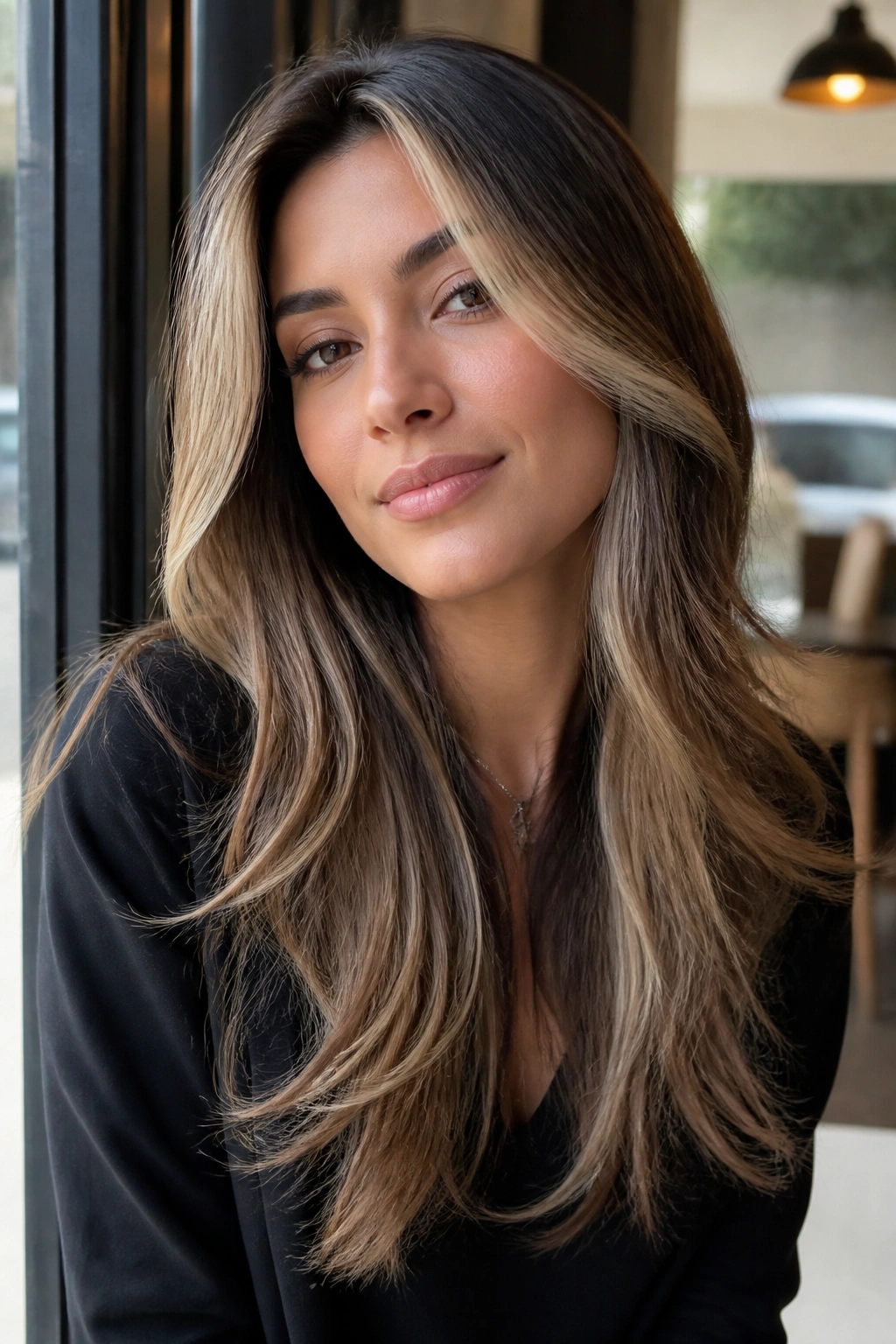
A money piece is the brighter front section that frames the face. On round faces, it can work like a visual column, drawing the eye downward and making the front shape feel lighter.
When that brighter piece is paired with long layers, the result is clean and lifted. You get contrast right around the face without needing a dramatic cut. It’s a color-and-shape partnership, and it works better than people think.
The trick is placement. Keep the brighter pieces long enough to fall past the cheekbones, then blend them into layered lengths. If the lightest section ends too high, it can accidentally highlight width instead of length.
This style looks especially nice with a middle part or a soft off-center part. The front pieces pull attention away from the widest part of the face and toward the eyes and collarbones.
12. Long Layers for Curly Hair That Keep Width Lower
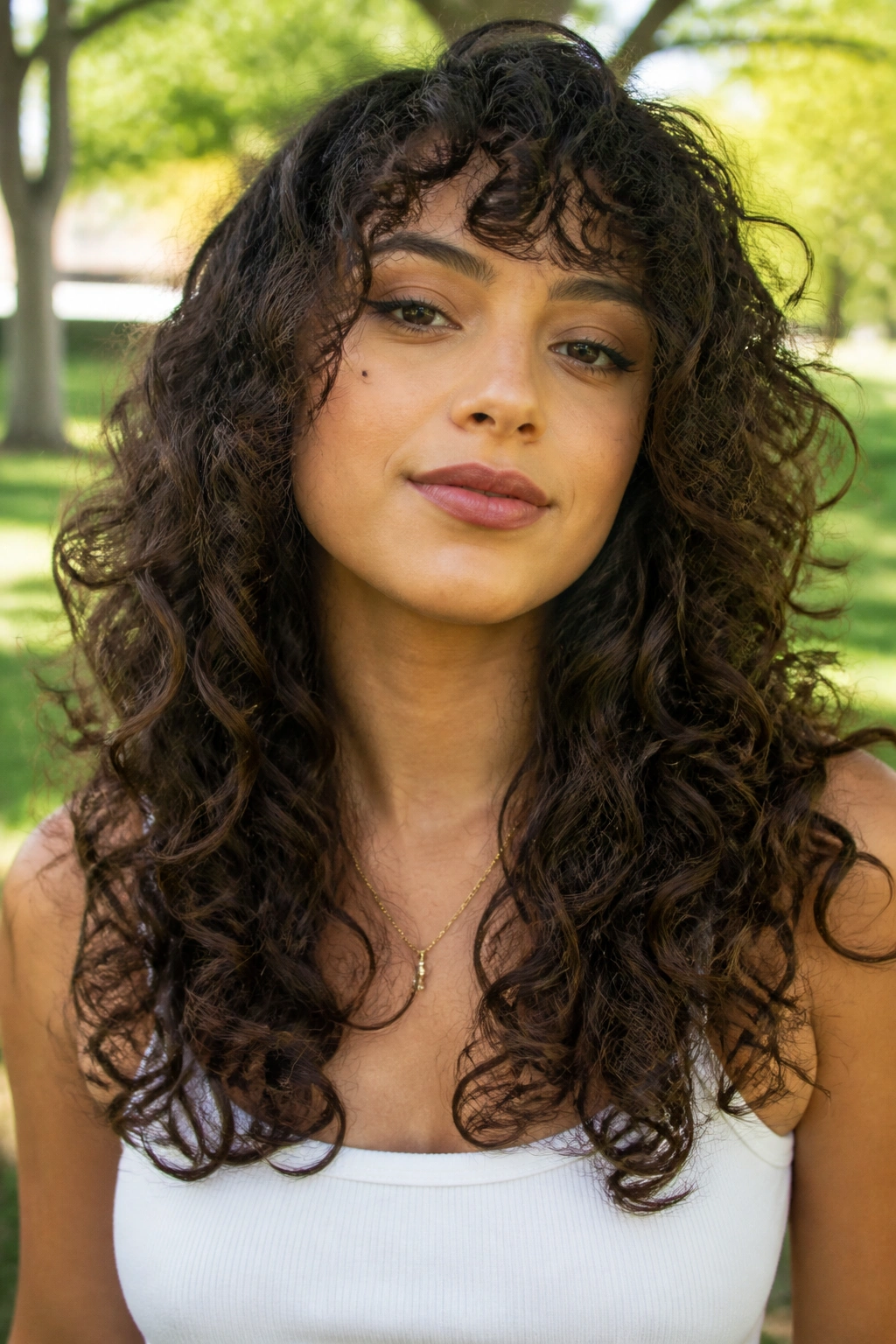
Curly hair needs a different plan. If the layers sit too high, curls spring outward and build width where you do not want it. For a round face, that usually means keeping the shortest layers lower and letting the curls stack downward instead of sideways.
How to ask for it
Tell your stylist you want long, curl-specific layers with the shortest pieces starting below the cheekbones. That helps the curls frame the face without turning into a halo at the sides.
A diffuser is your friend here. Cup the curls at the ends, lift the roots only a little, and stop before the hair dries into a puff at the temples. Heavy curl cream can weigh things down, so use a modest amount and add more only if the curls look dry.
The shape should feel soft and vertical. If the curls are cut well, they’ll fall in a way that narrows the face gently rather than bulking it up. That is the whole game.
13. Sleek Long Layers with a Center Part
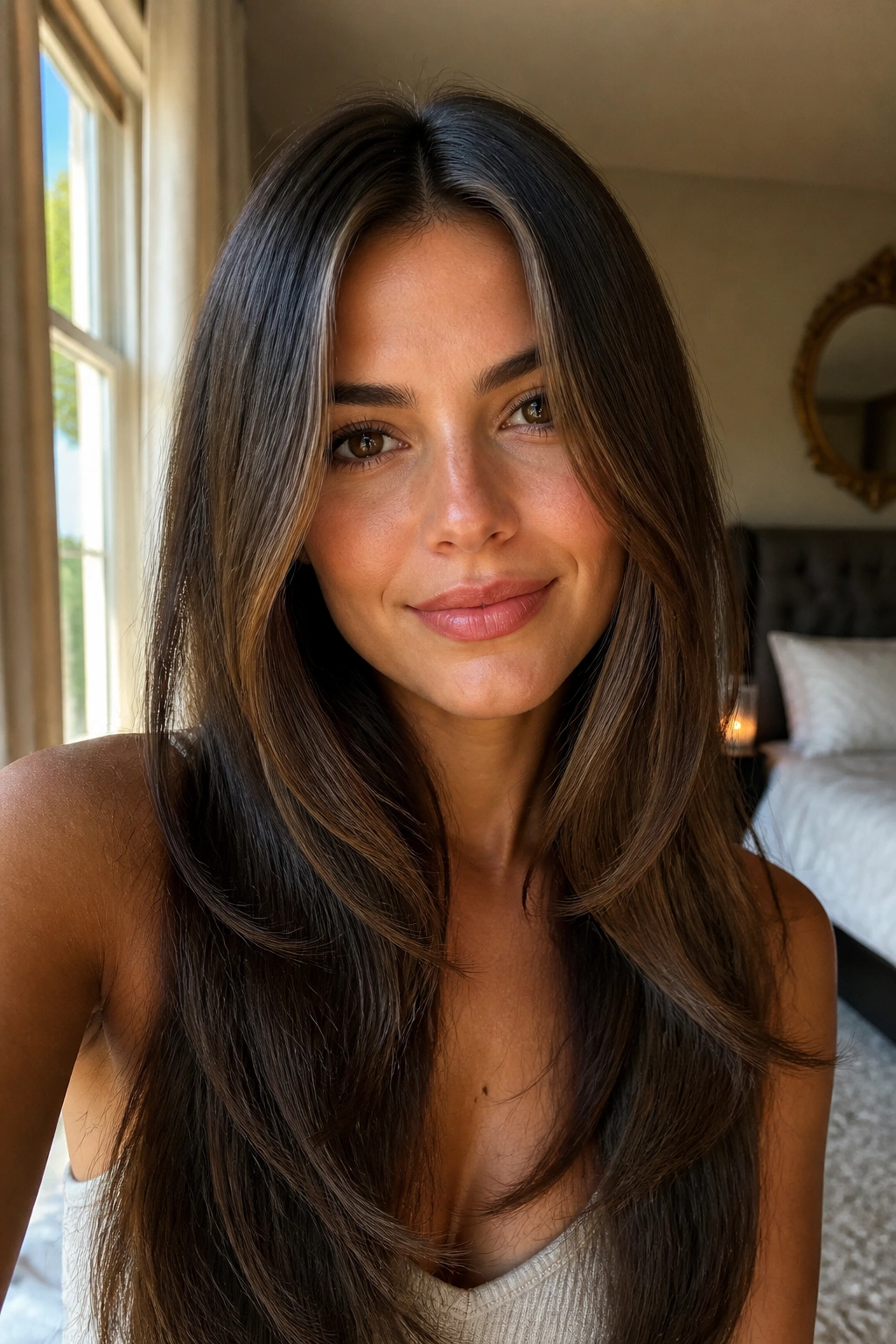
A center part gets a bad reputation from people who think it only works on certain faces. That’s nonsense. On the right cut, it can be one of the strongest choices for a round face because it creates symmetry and a long line straight down the middle.
The best version is sleek, not flat. Long layers should begin low enough to keep the sides from ballooning, and the front pieces should slide past the cheeks without stopping there.
This is a strong option if you like a cleaner, more polished look. Use a blow-dryer and a brush to smooth the top sections, then add a bend through the ends so the hair doesn’t sit like a curtain. A little movement at the bottom keeps it modern.
Good to know: if your face is especially full through the cheeks, shift the part a half-inch off center. Tiny adjustment. Big difference.
14. Razored Ends for Movement Without Bulk
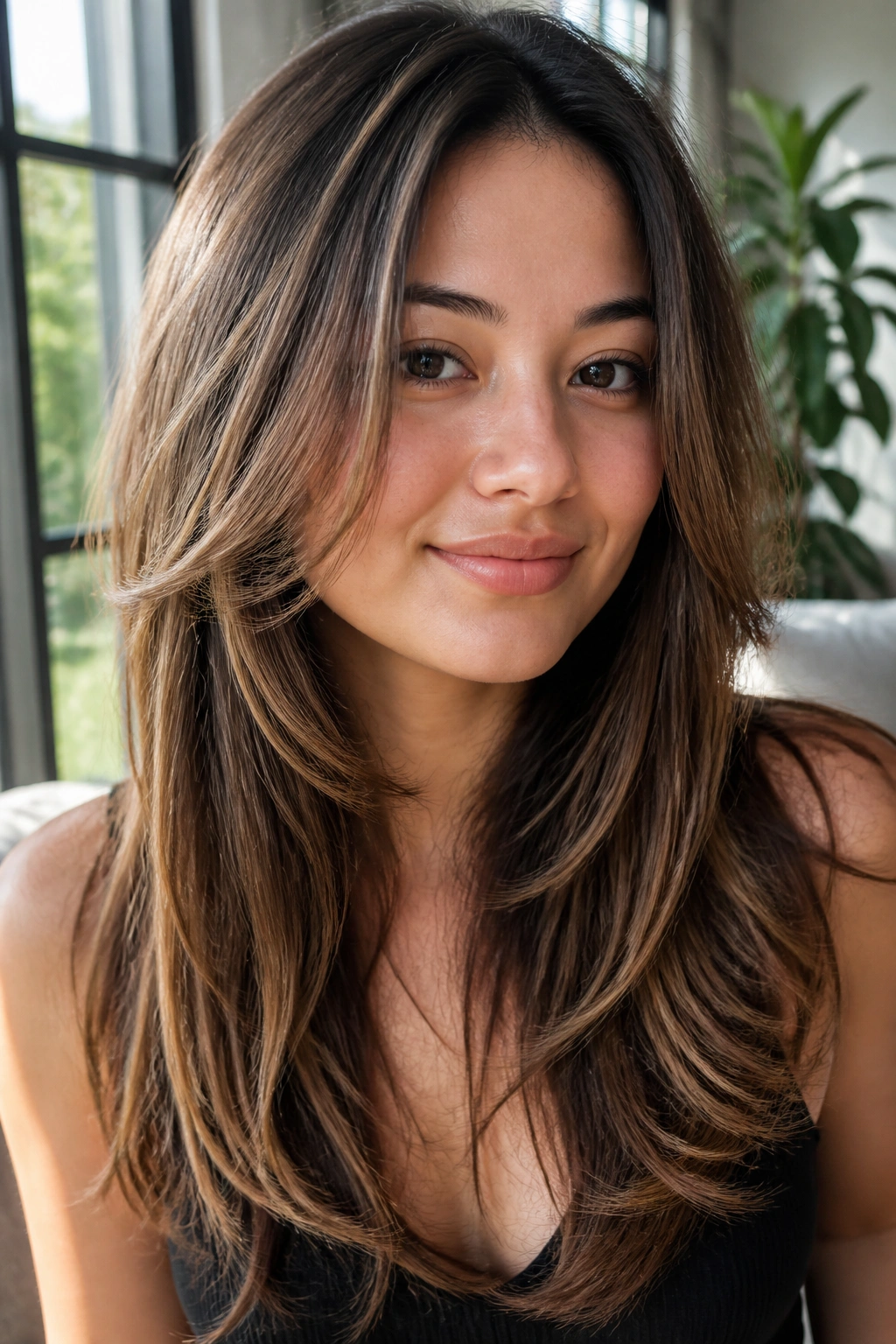
Razored ends give long hair a lighter finish, especially when the hair is dense enough to hold shape. Instead of blunt, heavy ends, you get a softer finish that moves and bends a little more easily.
For round faces, that matters because the lower half of the style should feel airy. If the ends are too thick, they can make the whole cut look squat. Razoring breaks that up.
What to watch for
- Best on medium to thick hair
- Use a light hand on fine hair, or the ends can look wispy
- Works well with wave and natural texture
I do think this cut is misunderstood. People hear “razor” and think edgy or shredded. It does not have to be that. A skilled stylist can feather the ends just enough to remove heaviness while keeping the length intact.
If you want a little softness around the face without obvious layers everywhere, this is a strong candidate.
15. Feathered Layers with a Rounded Brush Blowout
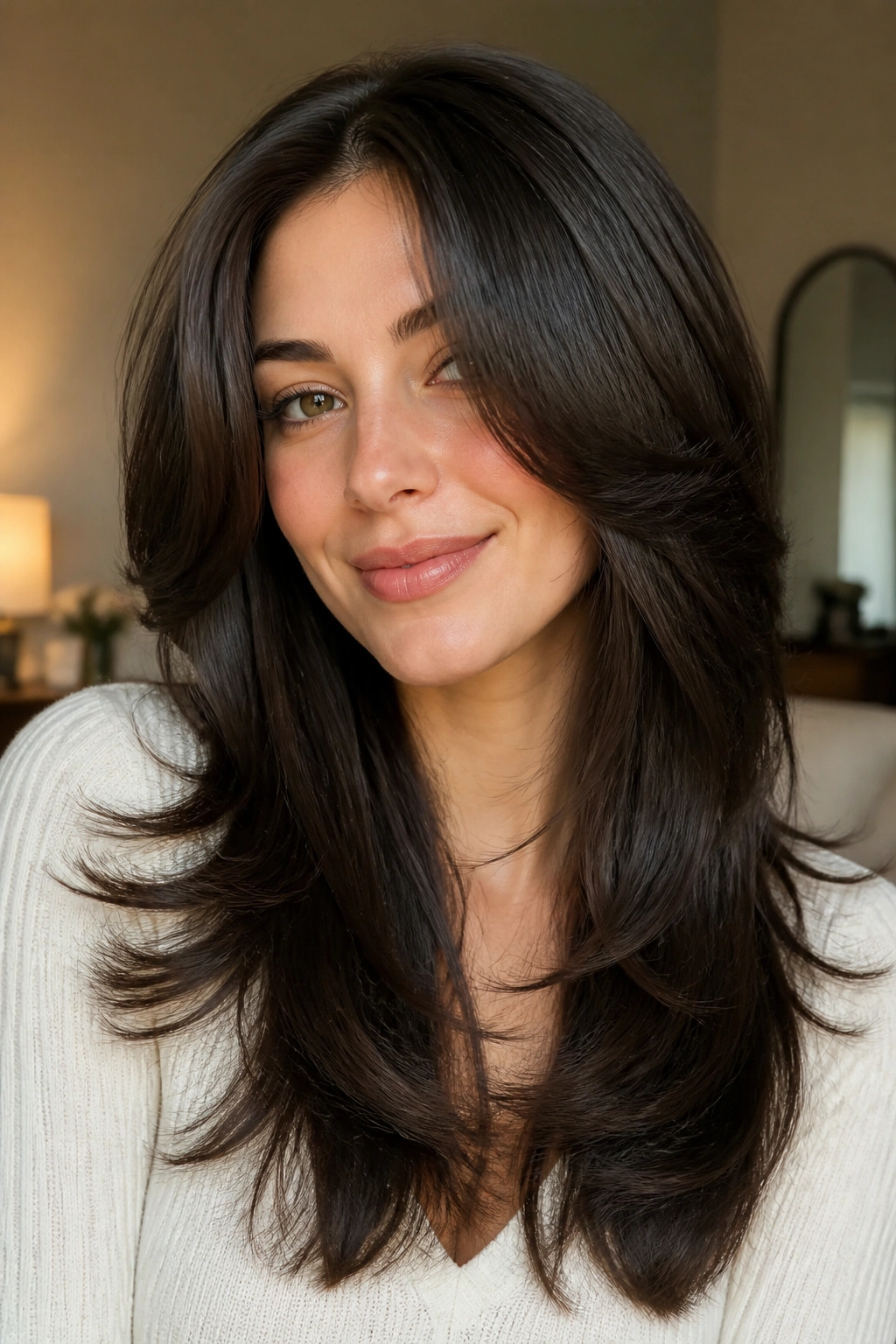
Feathering is one of those old techniques that keeps coming back because it works. The layers are shaped to flick softly away from the face, and when you blow them out with a round brush, the result feels airy and lifted.
For round faces, the value is in the direction. Feathered layers pull the hair back from the cheeks rather than letting it sit straight across them. That makes the face appear a bit longer and slimmer.
Styling notes
- Use a medium round brush for smooth bend
- Dry the roots first for lift
- Roll the brush away from the face through the front sections
This style suits people who like a little polish. It can look soft and pretty, but it has structure too. If your hair tends to collapse by midday, a bit of root spray before blow-drying helps keep the crown from going limp.
It’s not fussy. It just needs a good blowout.
16. Long Layers with Bottleneck Bangs
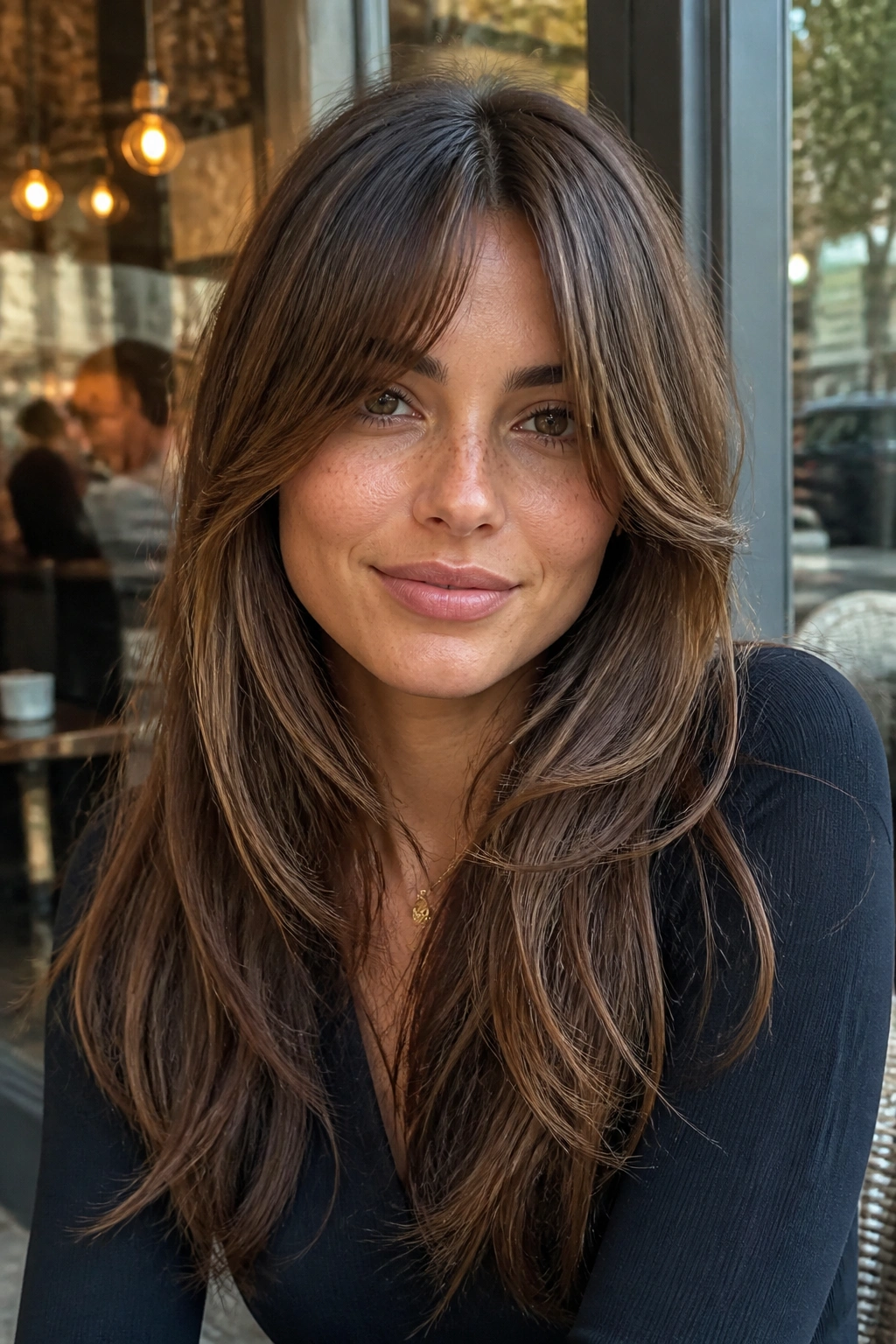
Bottleneck bangs sit somewhere between curtain bangs and full fringe. They are shorter in the center, then lengthen toward the sides, which creates a narrow opening at the forehead and a soft frame around the cheeks.
That shape can be very flattering on round faces because it guides attention upward without boxing the face in. The long layers underneath keep the length going, so the bangs do the opening while the rest of the cut does the elongating.
This works well if you want fringe but do not want a heavy bang line. The lighter center keeps things from feeling blunt, and the side pieces blend into the rest of the hair instead of stopping abruptly.
If you wear glasses, this can be a smart choice too. The shorter center leaves room above the frames, and the longer side pieces soften the temples.
17. Long Layers with a Slight A-Line Perimeter
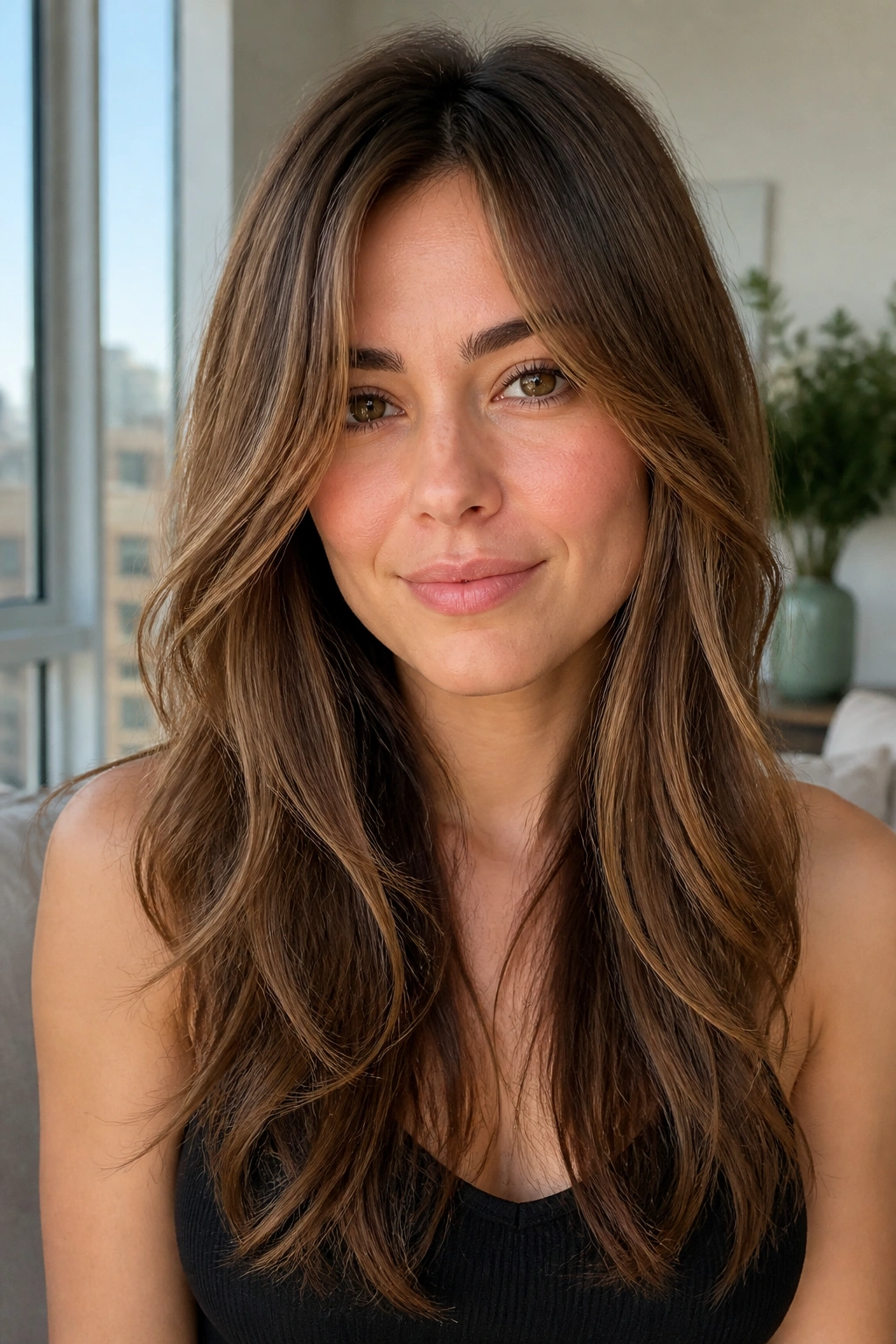
A slight A-line shape is subtle, but that is why it works. The hair sits a bit shorter in the back and grows longer toward the front, creating forward movement that visually narrows the face.
For round faces, that forward line is useful. It pulls attention past the widest part of the cheeks and toward the ends near the collarbone. You get shape without a dramatic angle.
Best for
- Straight or lightly wavy hair
- People who want length in front of the shoulders
- Anyone who likes a clean outline with some softness
The cut should not look severe. A gentle A-line is enough. If the angle gets too sharp, the front can take over the whole style, which is not what you want.
This is a solid choice when you need something easy to wear every day. It grows out gracefully, and it still looks intentional after a few weeks of wear.
18. High-Crown Layers That Give the Face More Height
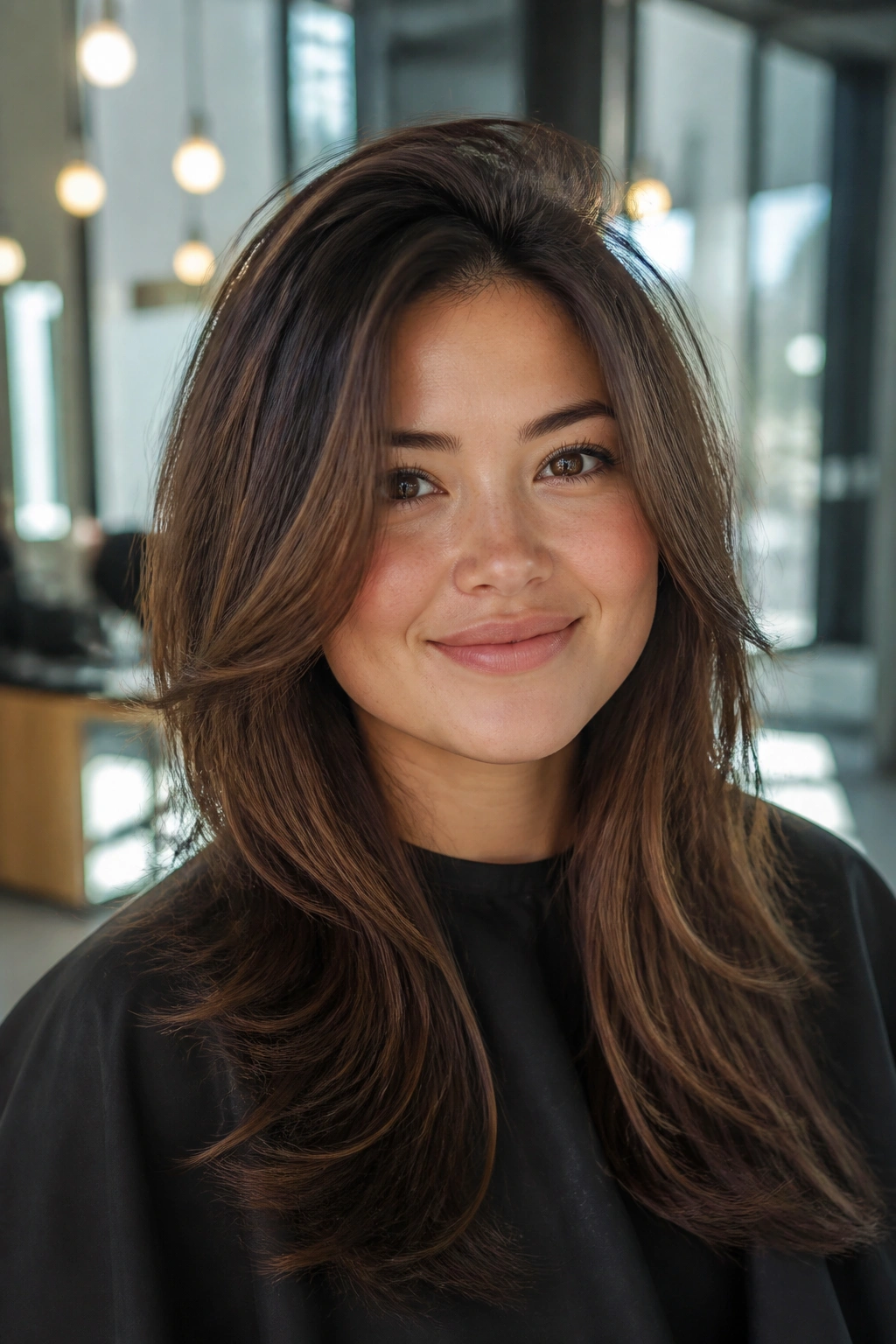
Volume at the crown changes the balance of a round face fast. When the top of the hair has lift, the face reads a little longer because the vertical line becomes stronger.
The trick is keeping that lift above the widest part of the head, not at the sides. If the volume shifts outward, the face can look wider instead of taller. So the layers should support height through the top and keep the lengths soft around the jaw.
This style is especially nice for blow-dry lovers. A root-lifting spray, a round brush, and a little patience near the crown can make a plain cut look far more sculpted. You do not need huge volume. Just enough to create shape.
- Good match for: straight, medium, or thick hair
- Use: volumizing mousse at the roots
- Avoid: over-teasing, which can make the hair look puffy
Sometimes the simplest fix is the smartest one. Add height, keep the sides calm.
19. Wavy Long Layers with Defined S-Bends
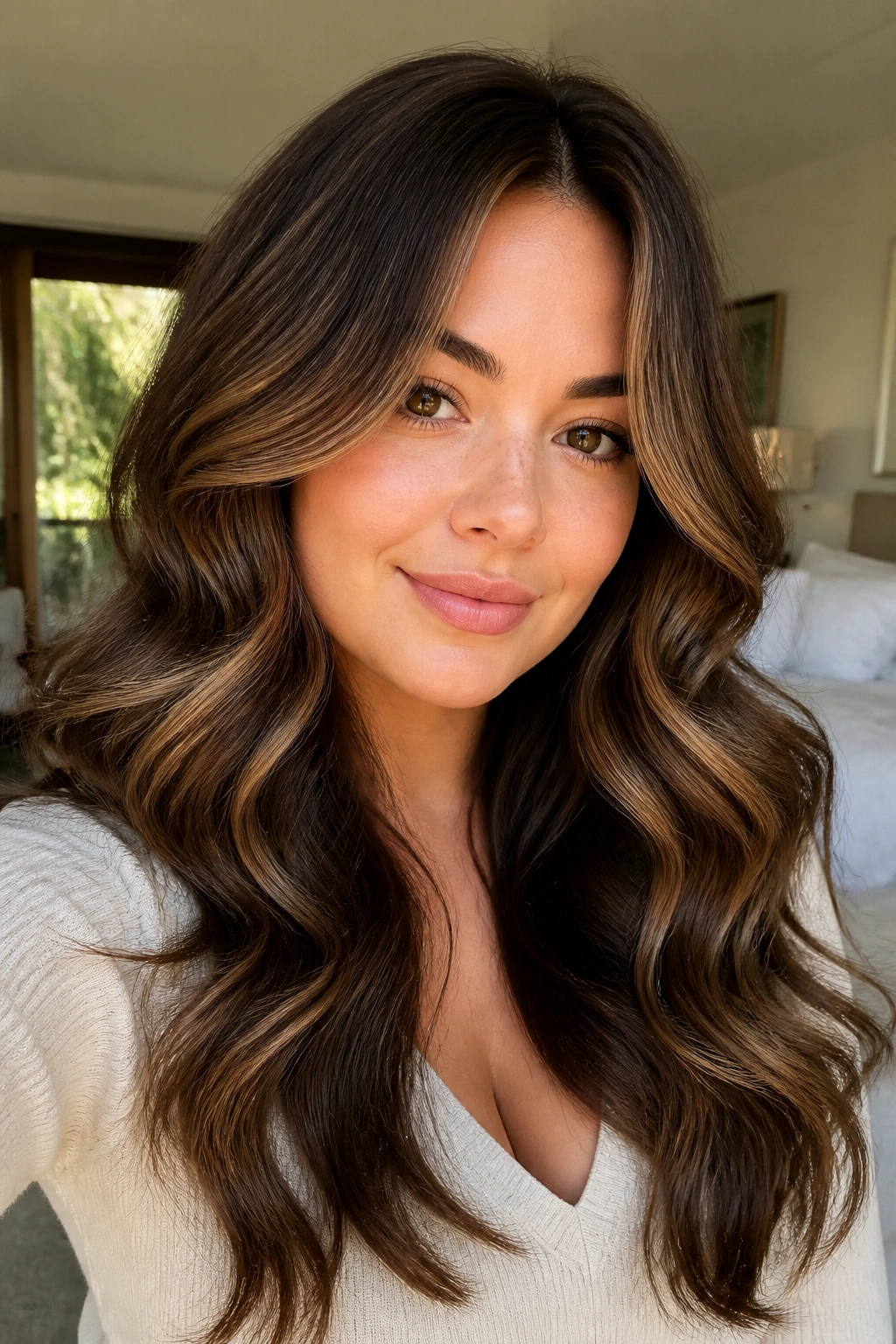
If your hair bends naturally, this one deserves attention. Long layers can help encourage those soft S-shaped waves, which move vertically through the hair instead of flaring wide at the sides.
That matters for round faces because waves can either elongate or widen, depending on where the bulk lands. With the right layers, the wave pattern becomes more like a ribbon than a cloud.
This cut looks best when the layers are blended enough to keep the wave pattern flowing. Too many short layers can make the hair explode. Too few and the wave sits heavy. The sweet spot is a shape that lets the ends move while the top stays smooth.
A salt spray can help if your hair is naturally loose and you want a bit more pattern. Use it sparingly. A little goes a long way, and too much can make the hair rough.
20. Full-Length Layers with Soft Shattered Ends
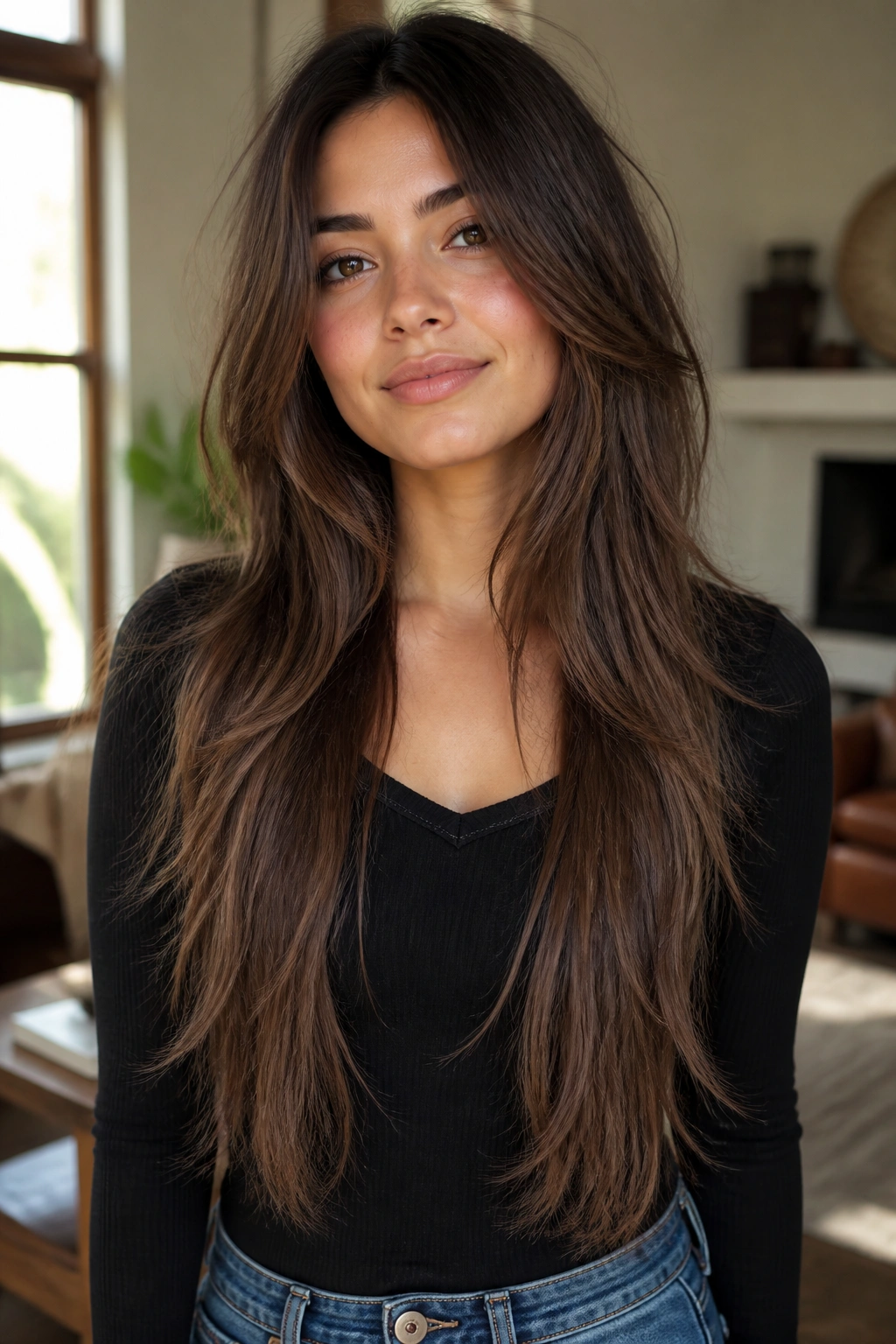
This is the cut for people who want length first and drama second. Full-length layers keep the hair long and visible, while soft shattered ends break up the weight just enough to keep the outline from feeling blocky.
On a round face, that little bit of break at the bottom helps a lot. The hair falls in a gentler line, and the eye reads downward instead of across a blunt edge.
This style is a good fit if your hair is thick and straight, or thick with a loose wave. It keeps the hair from feeling like a helmet. The ends move, but the whole cut still looks polished.
A center part or soft off-center part both work here. If you want more face length, tuck one side behind the ear and let the other side fall forward. That asymmetry is small, but the effect is noticeable.
Final Thoughts
The best long layered haircuts for round faces do one simple thing: they give you length where the eye needs it and keep the width under control. That can happen through face-framing layers, crown lift, a smart part, or a perimeter that tapers instead of stopping bluntly at the cheeks.
If you are torn between two styles, look at where the shortest layer lands. That one detail tells you a lot. Below the cheekbones is usually safer than right on them, and anything that opens the forehead or adds height at the crown can help the face feel longer.
The nicest part is that you do not need a dramatic change to get there. A few inches of layer placement can alter the whole shape. Small cut. Big effect.
