



Purple and brown hair get along better than most people expect. Purple highlights for brown hair can look smoky, glossy, soft, or flat-out bold, depending on whether the purple is threaded in as babylights, painted as balayage, or tucked underneath the top layer. Brown gives the color somewhere to sit; purple gives brown hair a pulse.
The part most people miss is undertone. Espresso and cool chocolate take blue-violet shades cleanly. Chestnut, mahogany, and warm brunette bases usually behave better with plum, mulberry, or aubergine because those shades borrow enough red to keep the whole look from turning chalky or flat.
Placement matters just as much as pigment. A face-framing money piece can wake up a haircut in two minutes. Hidden underlights can make a plain braid look expensive in a way that screams less than chunky streaks ever would. And when the haircut and color speak to each other, the result stops feeling like a trend and starts feeling like a good decision.
1. Fine Purple Highlights for Brown Hair with Babylight Placement
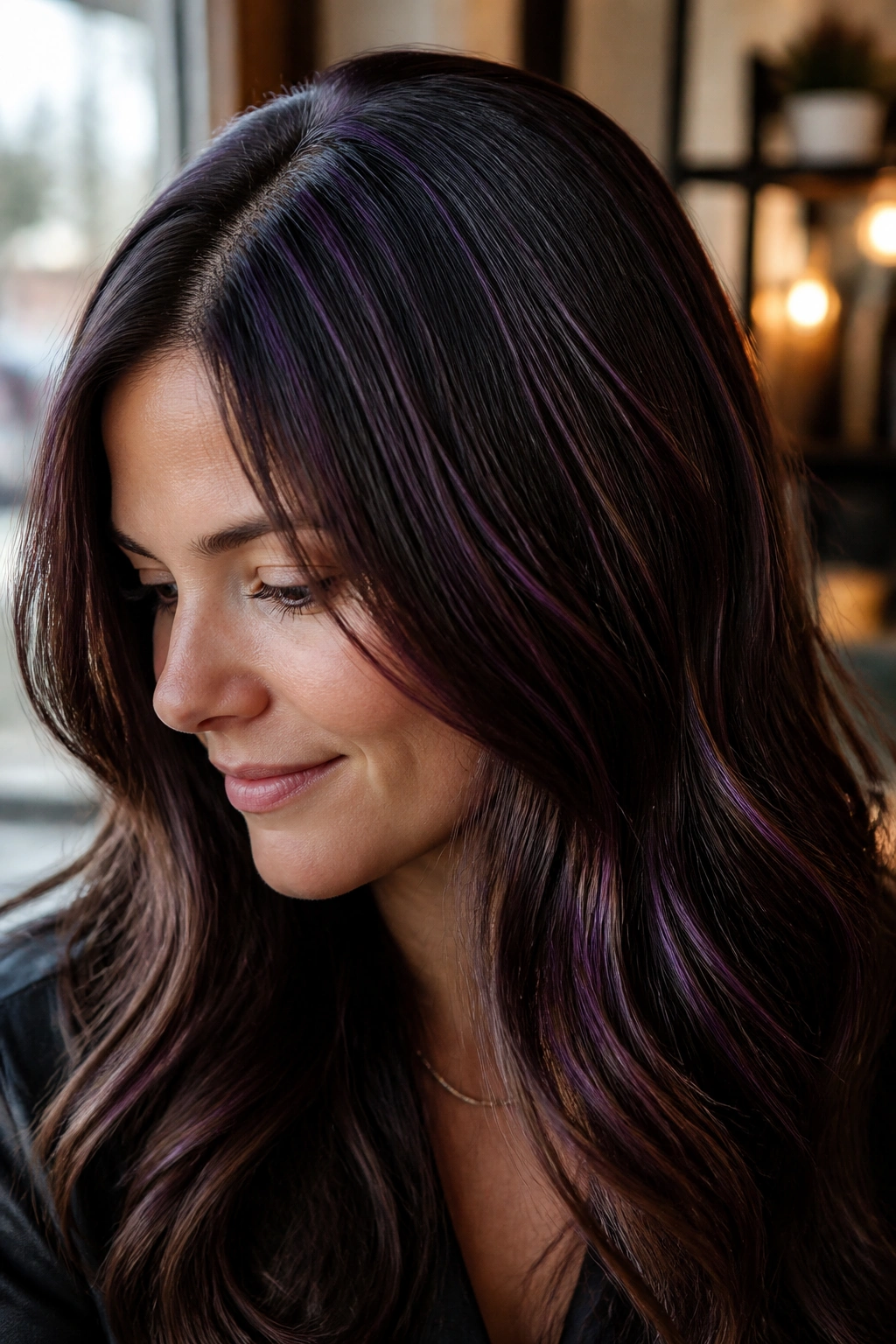
Babylights are the easiest way to wear purple without looking like you raided a marker set. They’re thin enough to blur into brown hair, but they still give you that cool violet shift when light moves across the hair.
Why this works on dark brunettes
The magic is in the size of the sections. Ask for pieces that are so fine they almost disappear at the root, then brighten toward the midlengths. That gives you a soft halo instead of obvious stripes.
- Keep the sections about 1/8 inch wide.
- Ask for a demi-permanent violet or plum toner if you want the shade to feel softer.
- Let the color sit mostly around the part line and crown so it reads naturally as the hair moves.
- Keep the root area deeper for a cleaner grow-out.
Best for: first-timers, straight hair, and anyone who wants purple that whispers instead of shouts. It also works nicely if you part your hair the same way every day, because the color shows up in a controlled, pretty pattern.
2. Plum Ribbon Highlights Woven Through Chocolate Brown Layers
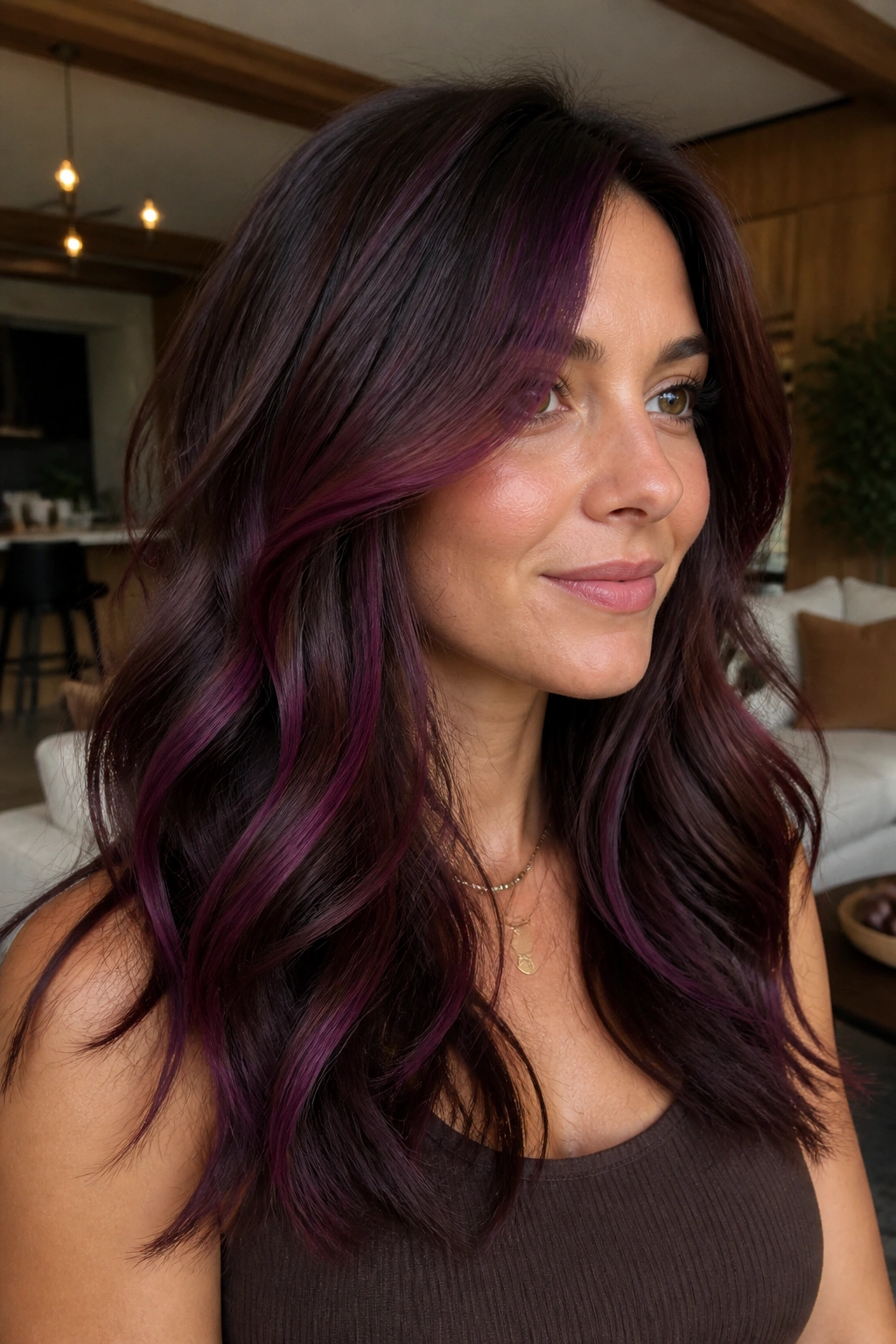
Ribbons are wider than babylights, and that’s the whole point. On layered brown hair, plum ribbons move like shadows with shape, which makes the haircut look fuller without needing a ton of lightening.
Chocolate brown is one of my favorite bases for this because plum sits on top of it without fighting the warmth. The color looks richer when the layers swing, and the darker low points keep the whole head from going flat.
This is the version I’d pick for someone who likes seeing the color from across the room but still wants it to feel grown-up. Not timid. Not costume-y. Just a little more interesting every time the layers separate.
3. Face-Framing Amethyst Pieces That Wake Up Brown Hair
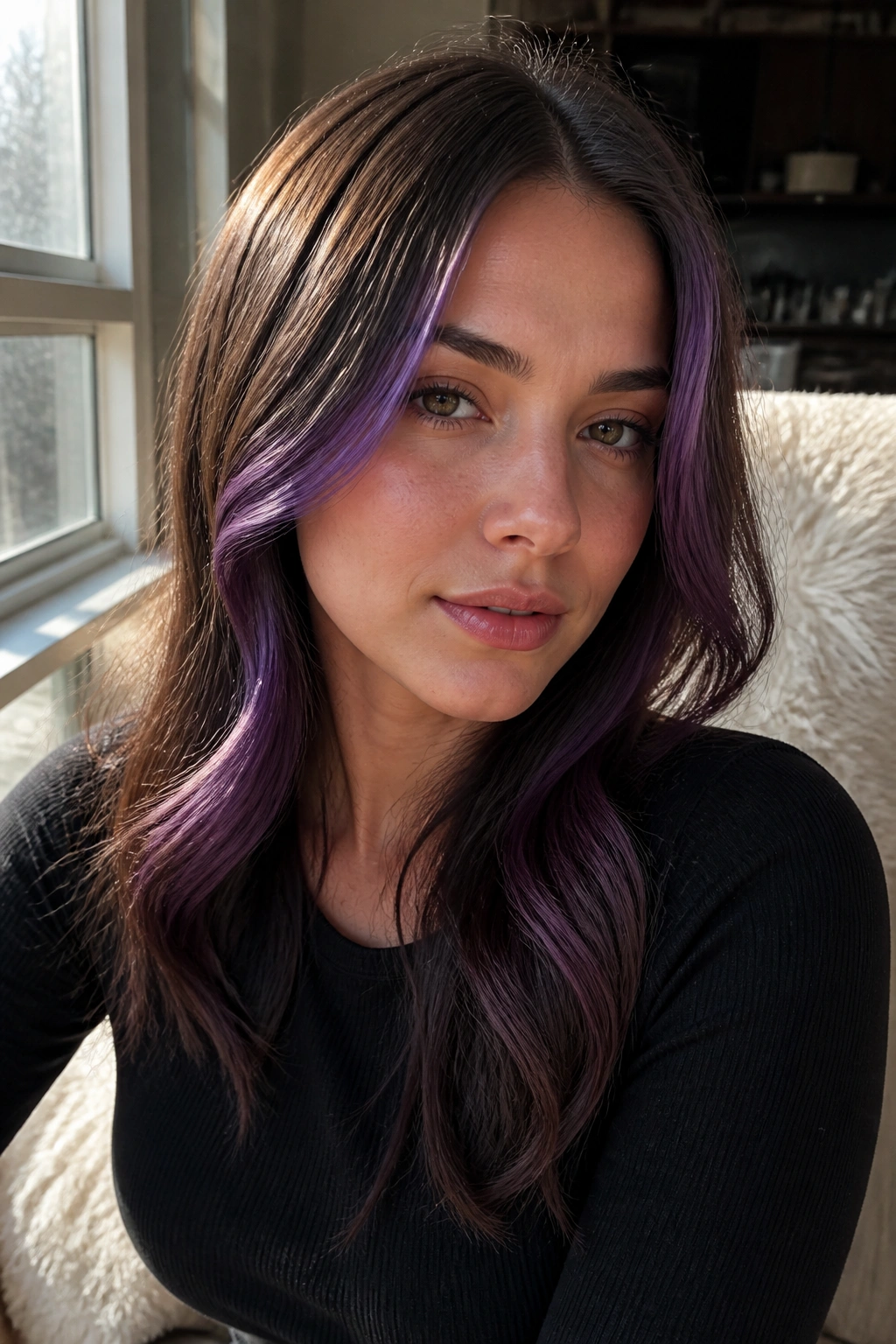
Want purple that changes the whole face without coloring the whole head? A face-framing amethyst money piece does that job fast. It brightens the front, makes the haircut feel fresher, and gives you a lot of color for a very small commitment.
Where it sits matters
The best version starts just behind the hairline and drops through the first couple of inches near the cheekbones. That placement works especially well with curtain bangs, because the pieces fall open when the hair splits in the middle.
- Keep the front pieces a touch brighter than the rest of the color.
- Ask for softer edges near the root so the grow-out does not look harsh.
- If you wear your hair in a middle part, make the front slices slightly wider.
- If you side-part, shift the brighter section to the heavier side.
It’s a sharp look, but not a loud one. That’s why it works so well on brown hair that needs a little attitude.
4. Aubergine Balayage Painted Into Chestnut Brown Hair
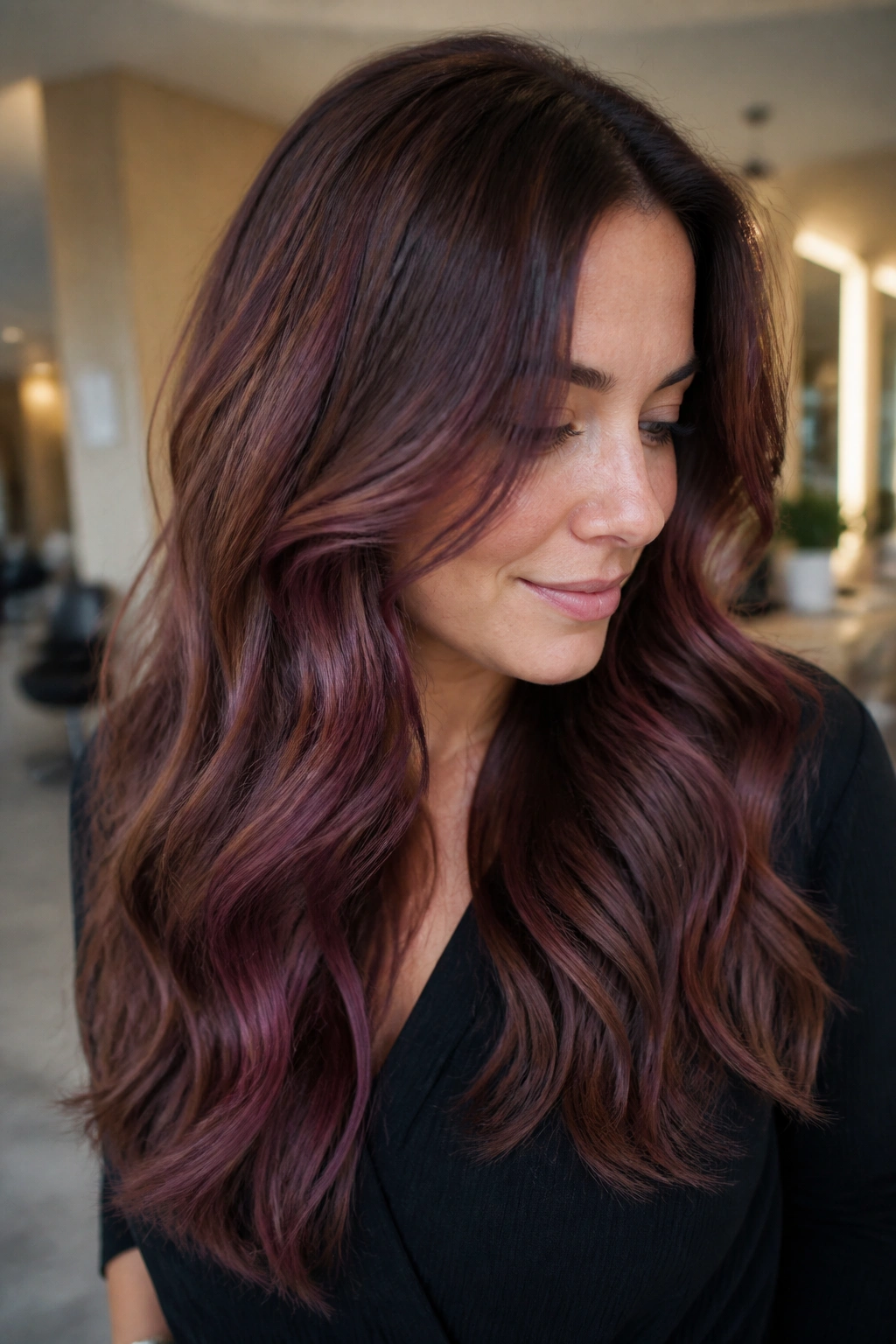
Aubergine balayage is one of the richest ways to wear purple on a warm brunette base. The color has enough red in it to play nicely with chestnut, which keeps the finish from looking cold or dusty.
Balayage helps here because the hand-painted approach lets the purple melt through the midlengths and ends instead of sitting in neat, obvious chunks. The result feels softer and more expensive-looking than stripy foils ever do.
I like this choice on hair with movement. A blunt cut can handle it, sure, but layers give aubergine room to show off. If you want the color to look like it belongs there, not like it was dropped on top, this is the lane.
5. Peekaboo Grape Highlights Hidden Under Long Brown Layers
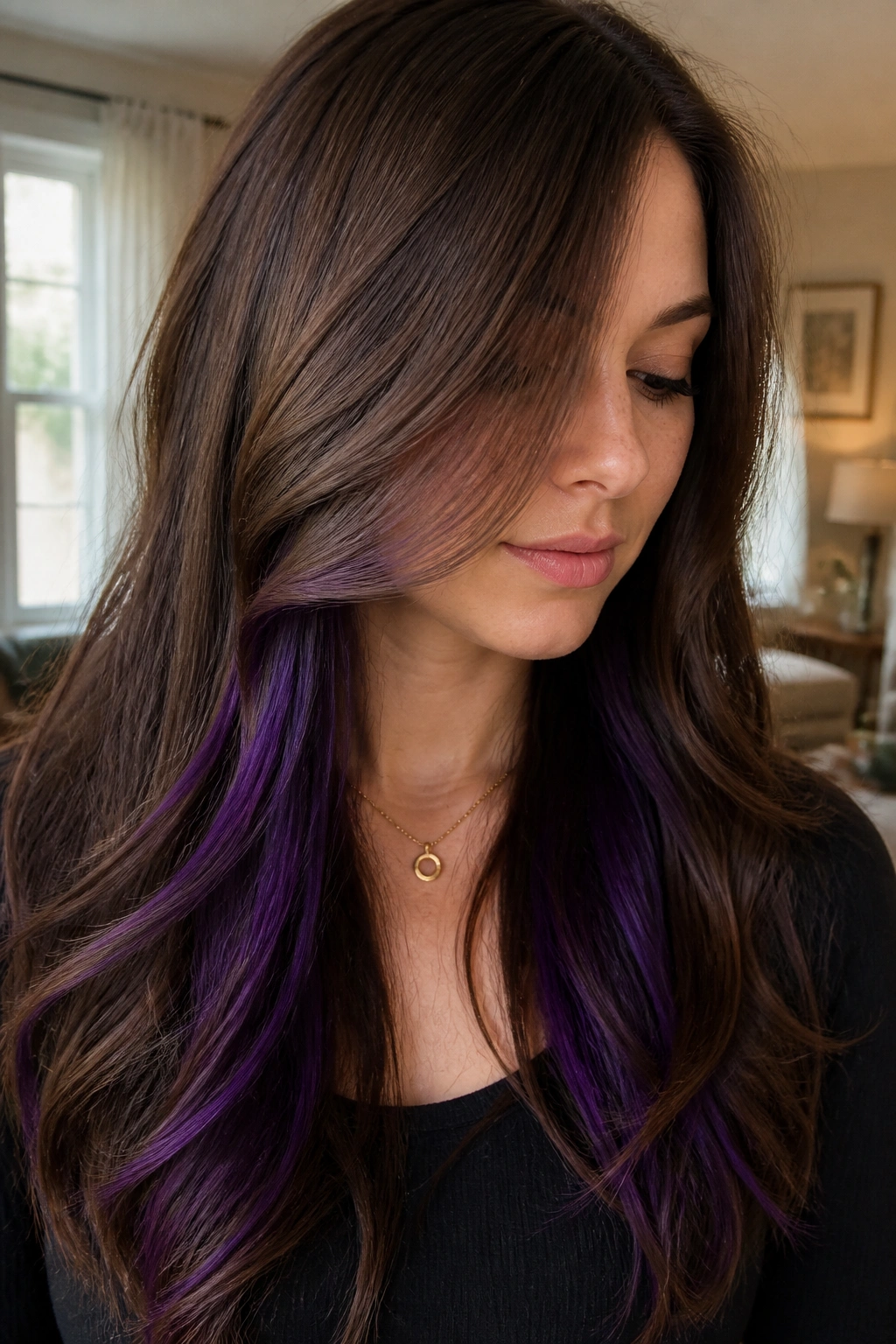
Peekaboo color is for people who like a little secret in their hair. The top layer stays brown, while the grape tone lives underneath and flashes only when the hair swings, tucks behind the ear, or gets pulled into a half-up style.
That hidden placement makes the color feel playful without changing your whole look. It also means you can wear it in a conservative setting and still get a fun reveal in a braid or ponytail. Small rebellion. Very useful.
This style works best on long layers, because the movement exposes the underlayer at the right moments. If the haircut is one solid sheet, the purple can feel trapped. Give it space and it wakes up.
6. Smoky Lilac Ends on a Brown Lob
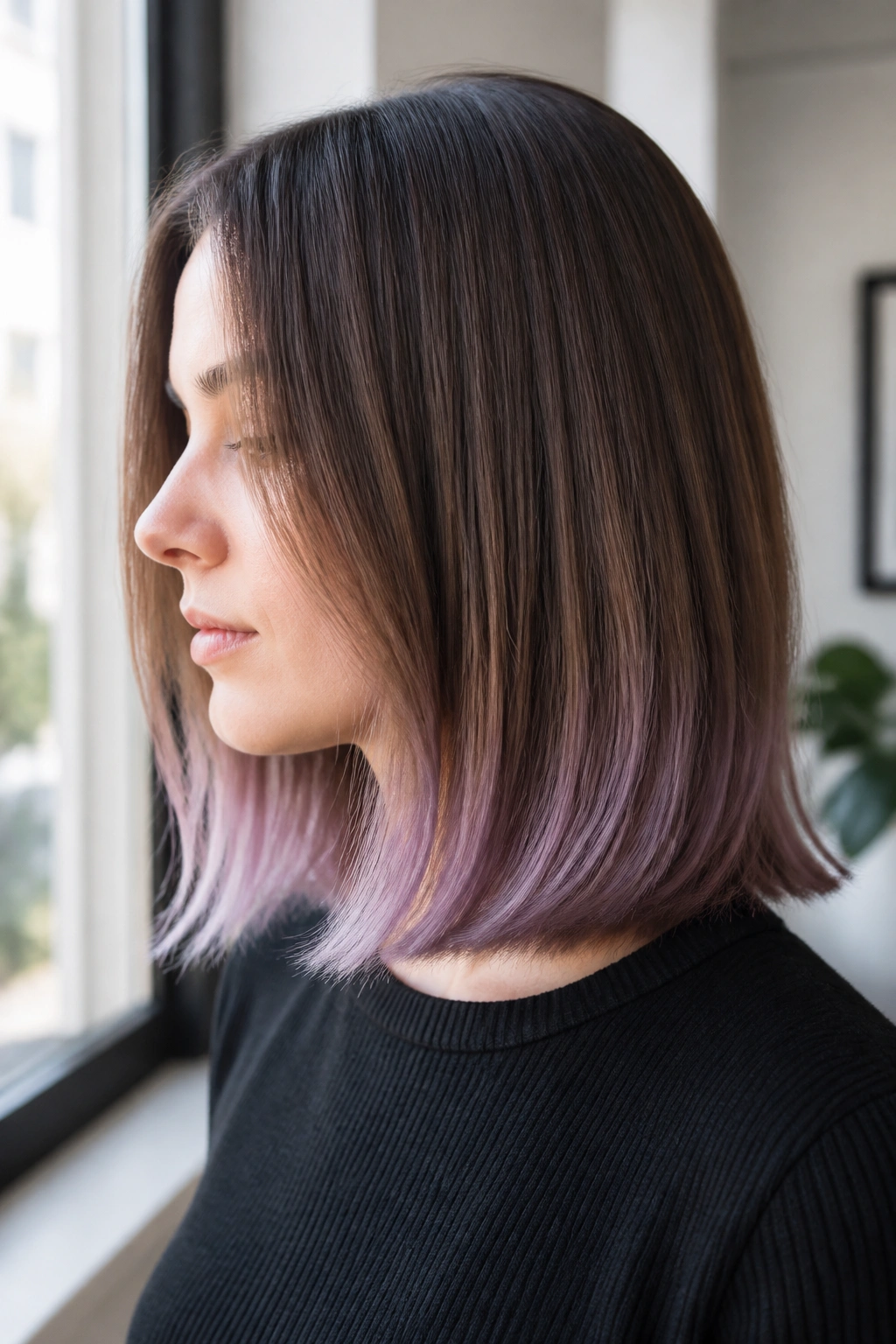
Lilac at the ends gives a lob a softer finish than most people expect. The cut stays clean at the shoulders, while the color brings a cool haze to the bottom edge.
That said, lilac usually needs a lighter base than plum or aubergine. If your ends are already lightened or naturally a medium brown, the shade can sit beautifully. If the hair is very dark, the lilac may read muddy unless the colorist lifts those pieces first.
A bob or lob is a smart home for this because the shorter length keeps the pastel-looking ends from spreading all over the head. You get the airy feel without turning the whole haircut into a candy color experiment.
7. Midnight Plum Lowlights for Extra Depth
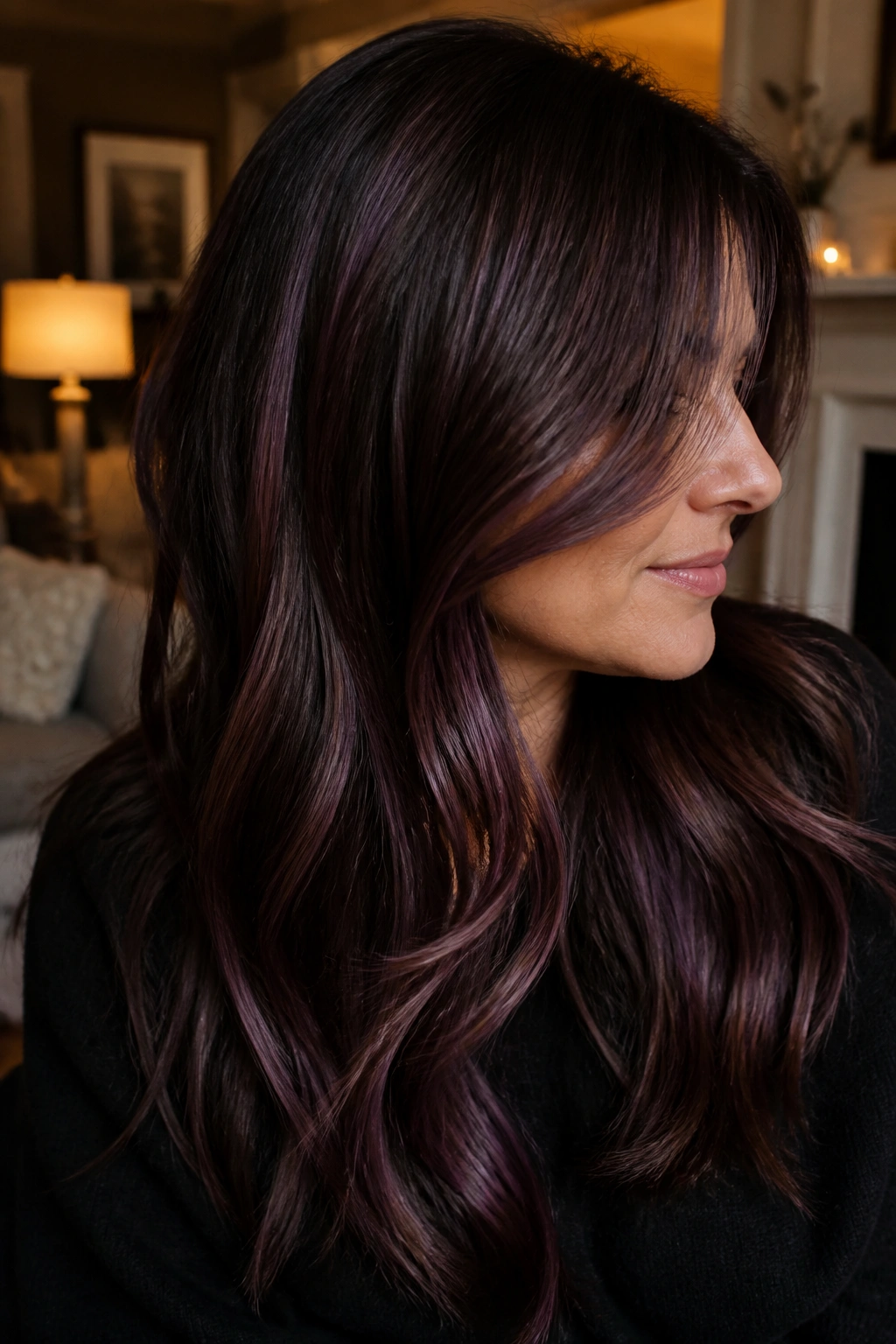
Not every purple needs to brighten the hair. Midnight plum lowlights can make brown hair look denser, shinier, and a little more expensive without adding a visible pop of lightness.
This is a good move for hair that already feels over-lightened or a little too flat. Instead of chasing brightness, the colorist drops deeper plum pieces between the brown strands, which gives the surface more shadow and structure.
It’s one of the smartest choices for fine hair. The strands look thicker because your eye stops reading one flat tone. That effect is subtle, but on hair with not much natural body, subtle can be a very good thing.
8. Orchid Highlights Placed Around Curly Brunette Curls
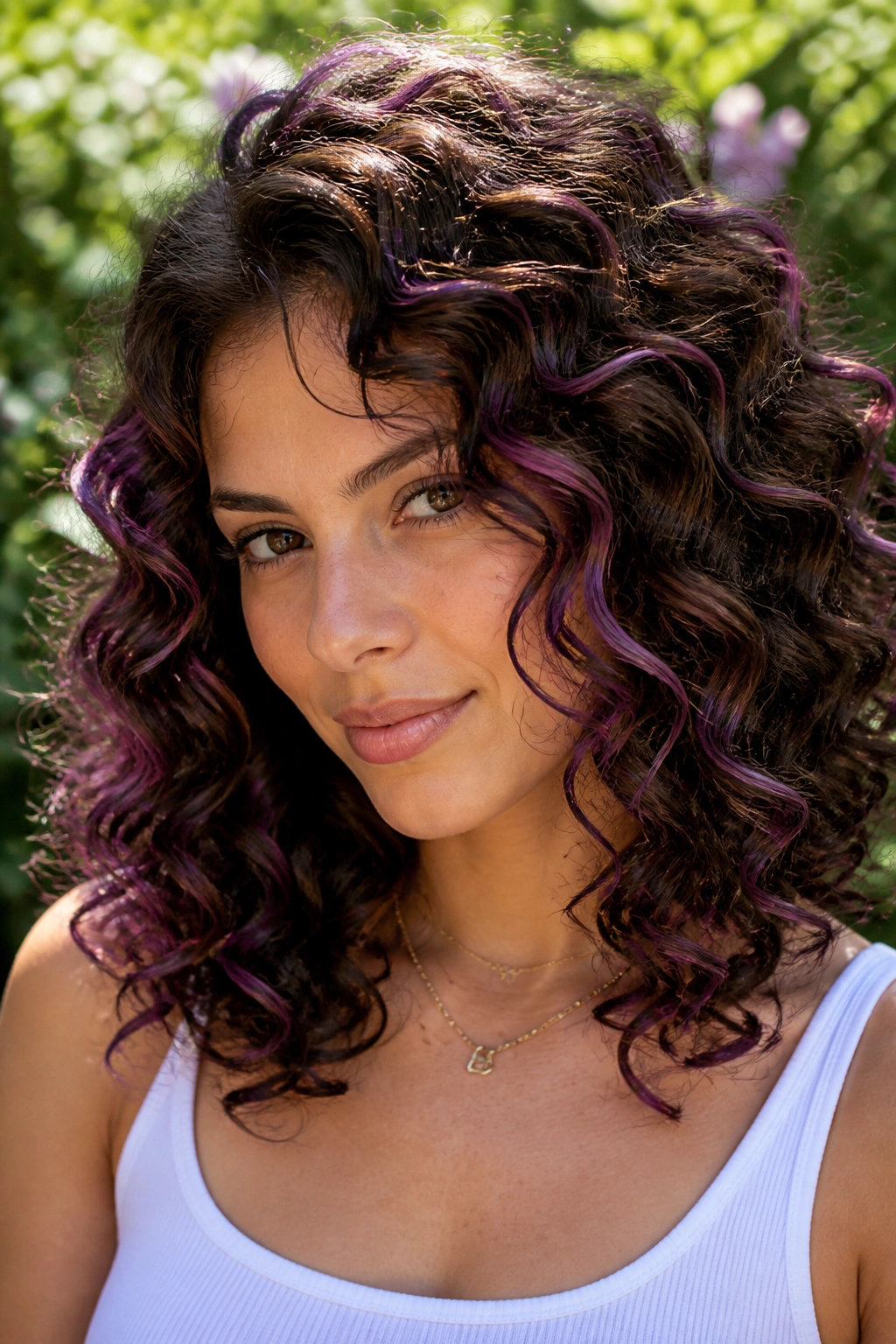
Curly hair changes the game. Orchid highlights on curls need to follow the curl clumps, not random strands, or the color ends up looking scattered and weird.
How to place them
A good colorist will paint the lighter pieces where the curls spring open, especially around the crown and the outer curve of the shape. That way the orchid catches your eye when the curl pattern moves, not only when the hair is wet and stretched.
- Focus the brightest pieces on the top layer and outer halo.
- Keep some deeper brown between the curls for contrast.
- Use slightly wider slices than you would on straight hair.
- Avoid over-highlighting the whole head, because curls need darkness to keep their shape.
Orchid reads especially well on curly brunettes because it has that soft violet edge without becoming neon. The curls do the rest.
9. Mulberry Ombré That Fades from Brown Roots to Purple Ends
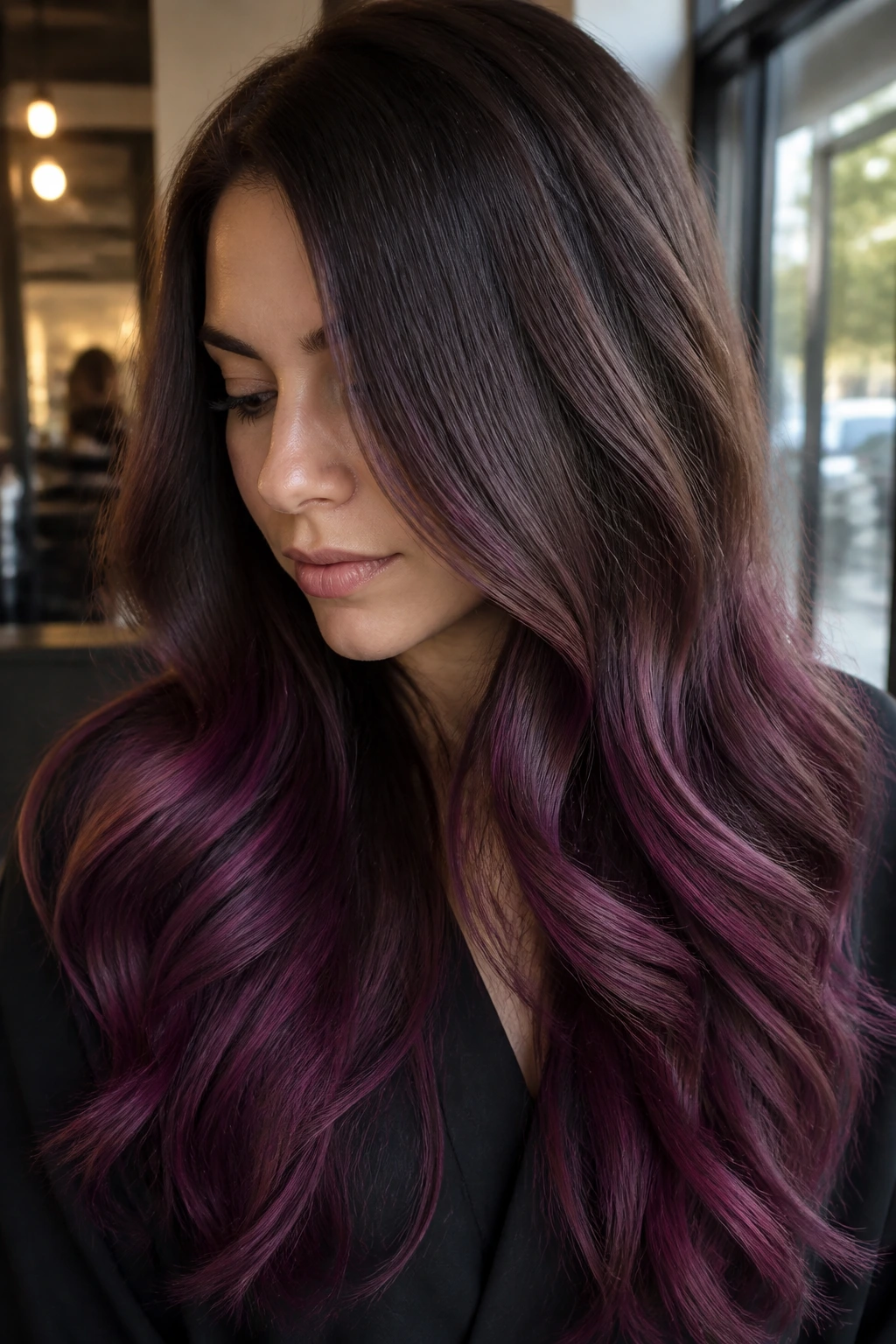
Ombré makes sense when you want purple, but you do not want root upkeep drama. The color starts deeper at the crown, then eases into mulberry through the midlengths and ends.
This works beautifully on longer hair because the gradient needs space to breathe. On shoulder-length hair, the shift can feel abrupt. On long layers, it looks deliberate and smooth, almost like the color has been rolling downward for months.
Mulberry is a strong choice here because it bridges brown and purple without either side feeling too loud. The root stays wearable, the ends have personality, and the whole thing grows out with a little less anxiety.
10. Eggplant Underlights for a Work-Friendly Color Shift
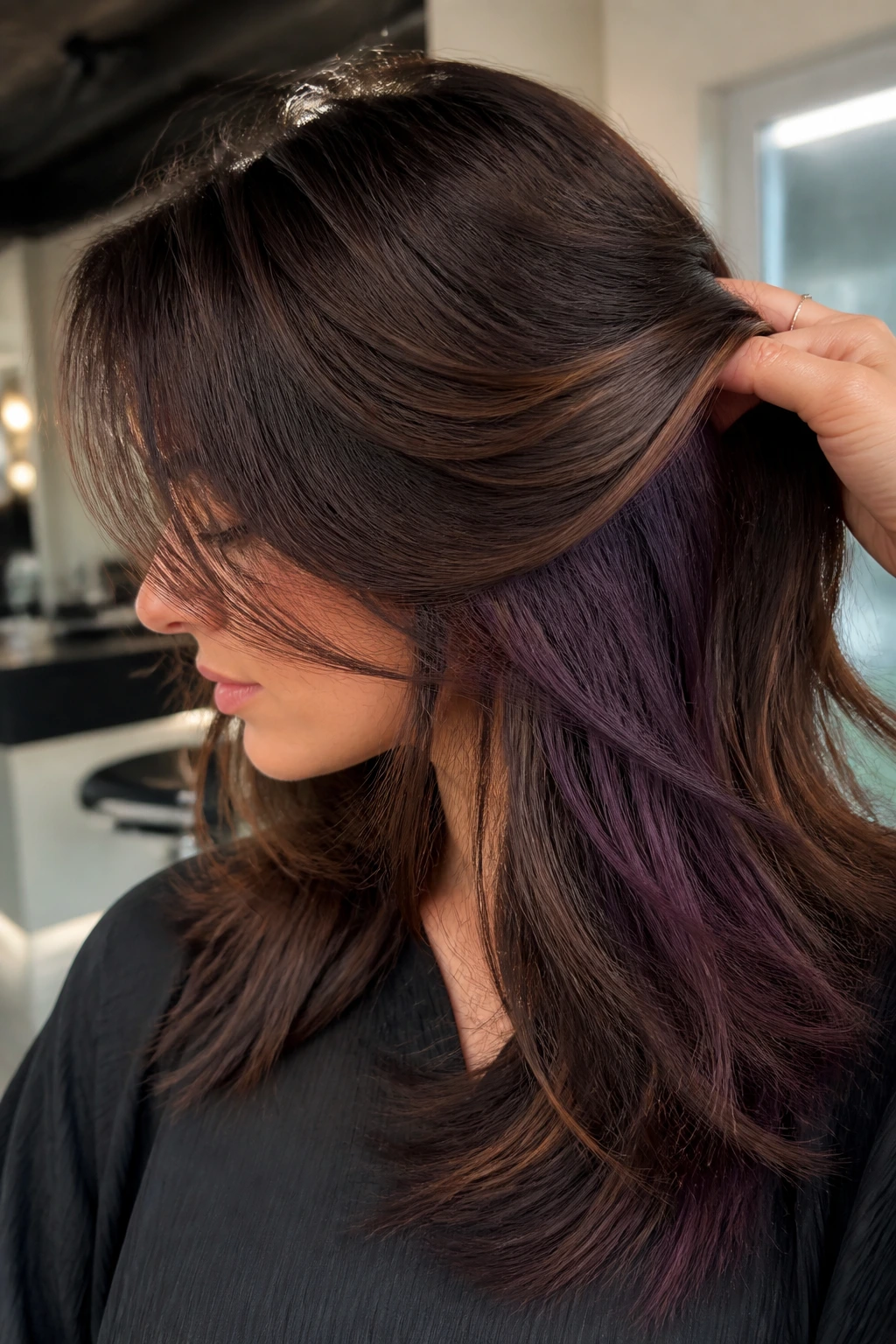
Underlights are underrated. They hide under the top layers and only show when you move, tuck, twist, or throw your hair into a ponytail.
Eggplant works especially well for this because it is dark enough to feel grounded but still obviously purple when the hair separates. You get the fun of color without changing the whole surface of the head.
This is the version I point people toward when they want to test purple in a quiet way. It’s practical, and frankly, it’s smarter than jumping straight to bright violet if you are unsure how often you want to maintain it.
11. Purple Gloss Over Caramel Brown Ends
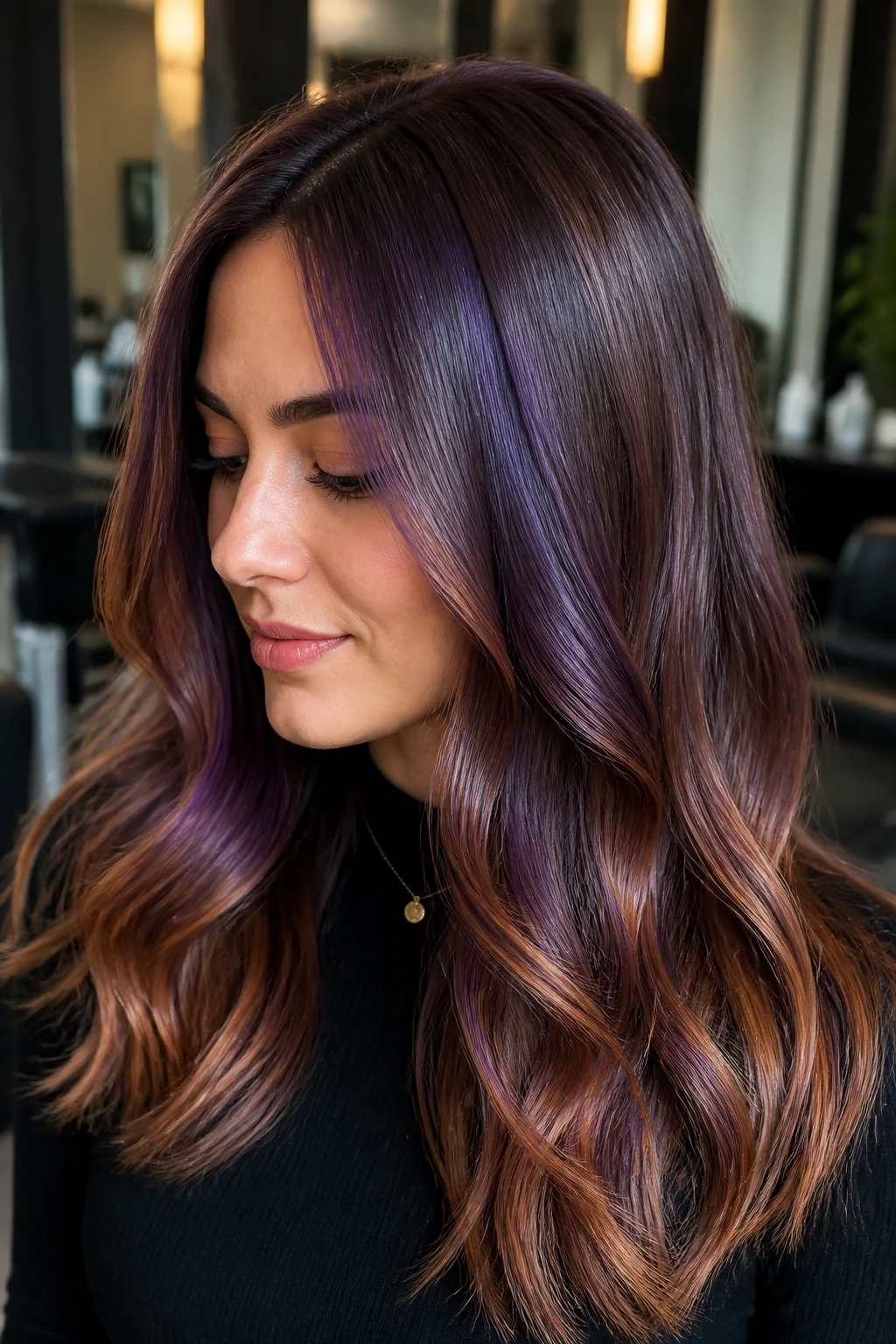
Sometimes the best purple is barely a purple at all. A translucent gloss over caramel ends gives you a violet sheen, a bit of coolness, and a lot more shine without making the color look painted on.
This style is ideal if your brown hair already has lighter ends from balayage or sun lightening. The gloss settles over the existing tone and nudges it into a plum-violet family without a hard line.
I like this because it is low-drama. The color doesn’t demand attention, but it still changes the way the hair reads in real life. Indoors it feels muted. Outdoors it gets a little richer. That’s enough for a lot of people.
12. Chunky Purple Streaks with a 90s Edge on Brown Hair
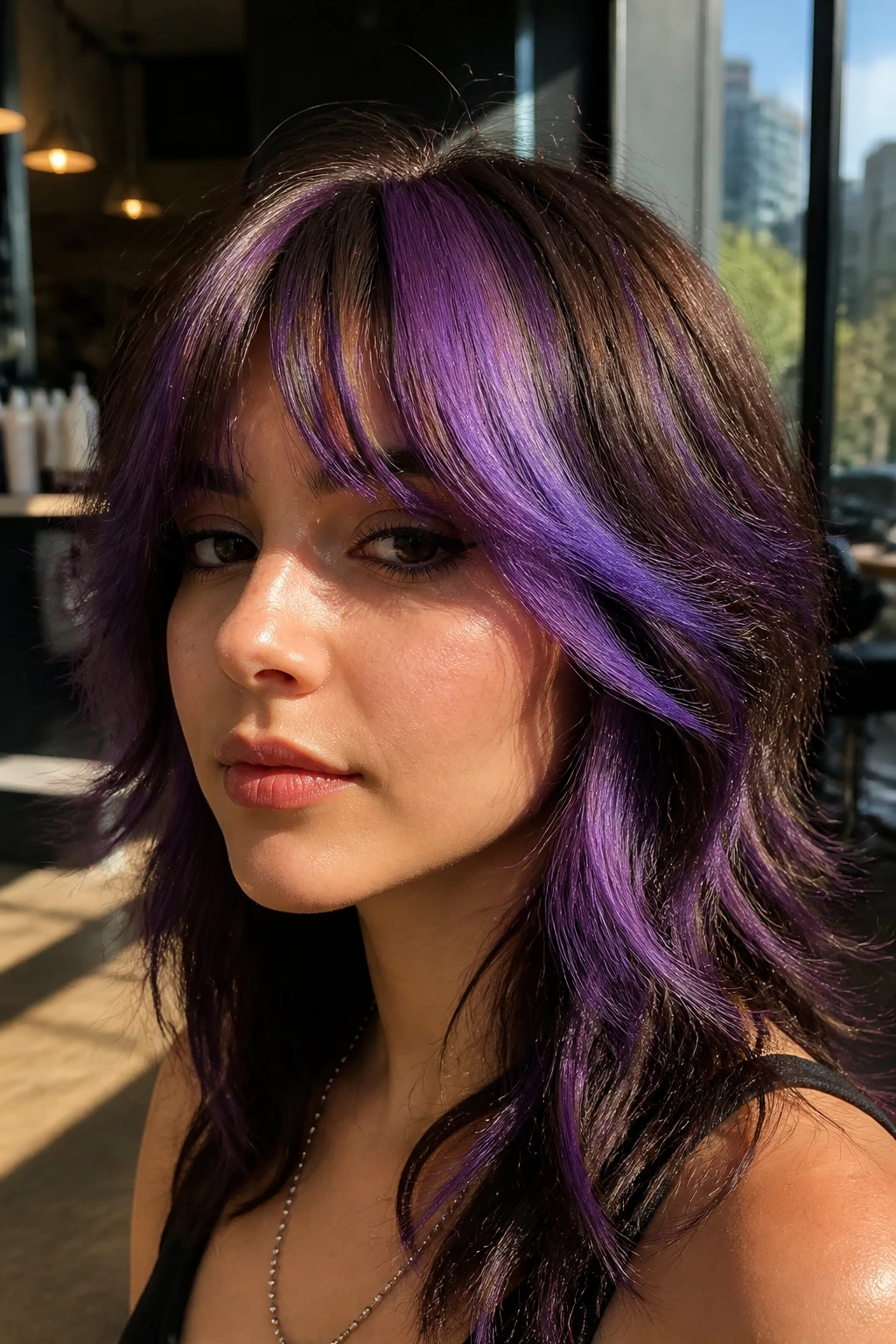
Chunky streaks are not subtle, and that is the appeal. When they’re done with care, they look intentional and fashion-forward instead of accidental.
The trick is placing them where the haircut supports them. On a shag, a wolf cut, or layered long hair, the wider sections break up beautifully. On a blunt one-length cut, they can look harsher unless the colorist balances them with deep brown spacing.
What keeps them from looking messy
- Use clean, even sectioning so the streaks do not wobble.
- Keep the purple pieces large enough to read as a design.
- Mix at least two purple depths so the look has depth instead of one flat shade.
- Let the streaks frame the face and travel through the top layer, not just the bottom.
This is the one for people who want their brown hair to have some teeth. It says something.
13. Mauve Babylights on Ash Brown Hair
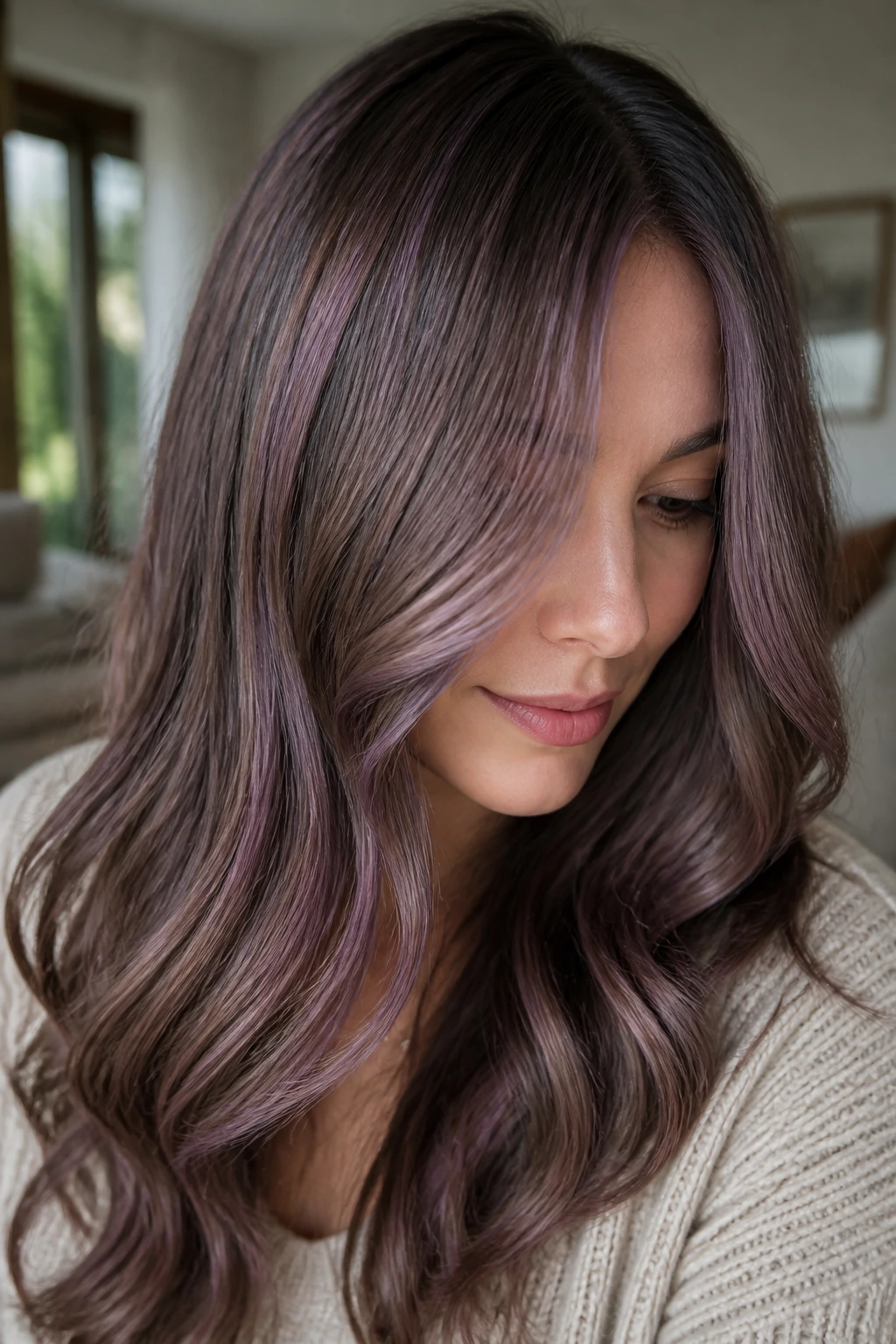
Why does mauve work so well on ash brown hair? Because both shades already lean cool. That means the purple doesn’t have to fight the base to look natural.
Mauve is softer than violet and less red than plum, which makes it a nice choice when you want color that feels dusty and muted rather than bright. On ash brown hair, that muted quality is the whole point. The finish can look almost powdery in the best way.
If you want a quieter version of purple highlights for brown hair, this is one of the easiest places to start. It’s polished without being stiff, and it pairs nicely with blunt bobs, mid-length layers, and hair that’s worn smooth.
14. Berry-Violet Curtain Pieces Around the Face
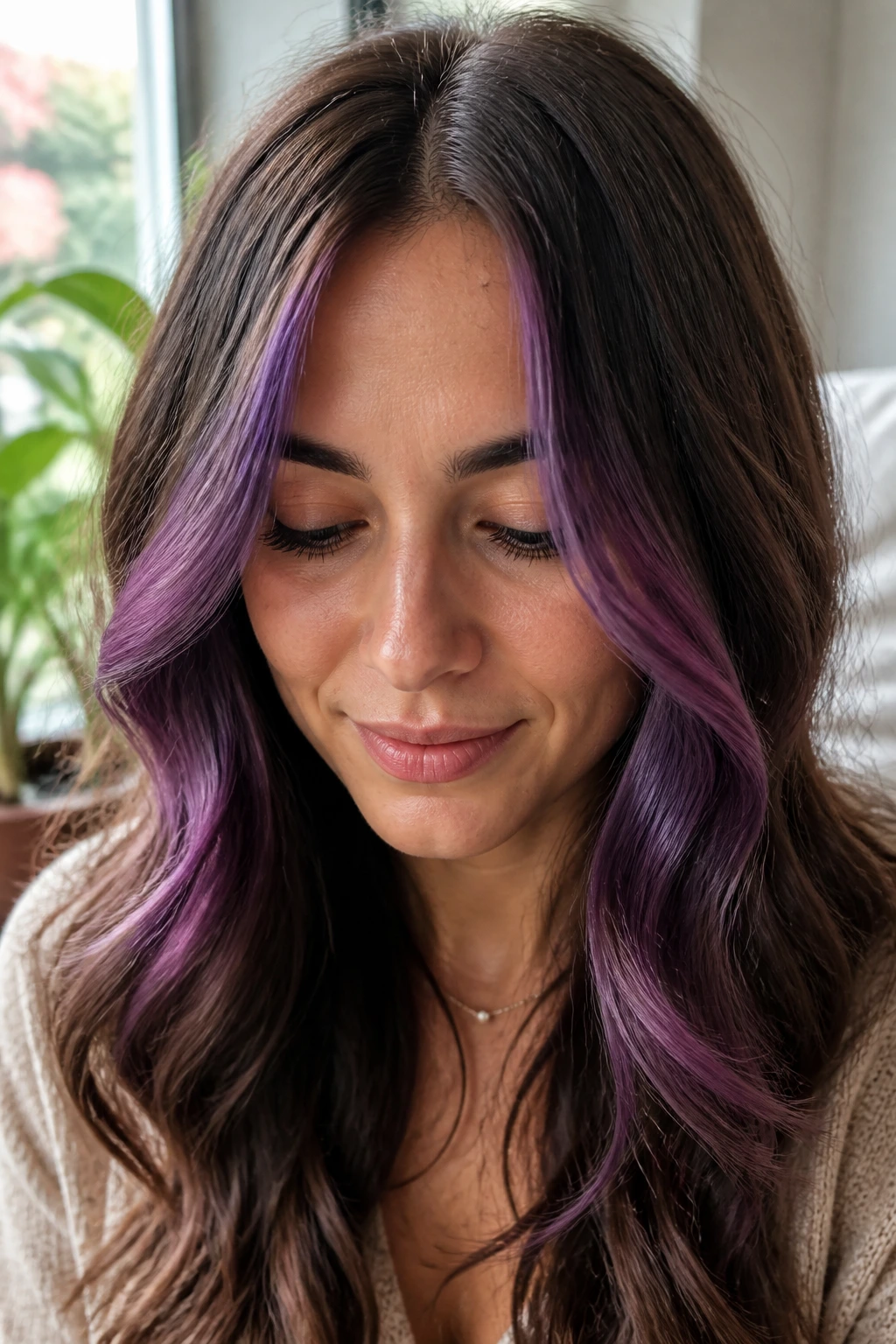
Curtain pieces do a lot of work. They soften the forehead, frame the cheekbones, and give berry-violet a place to shine without needing a full head of color.
This style is especially good if you wear a center part and like the front pieces to fall open naturally. The purple peeks through near the face, then disappears into the rest of the brown hair. That makes the color feel casual in motion and more deliberate when the hair is styled.
I also like this on blowouts. The brushed-out bend shows the berry tone on the outer curve, which gives the haircut a little lift. Not too much. Just enough to keep the front from fading into the rest of the hair.
15. Merlot Purple on Dark Brown Hair
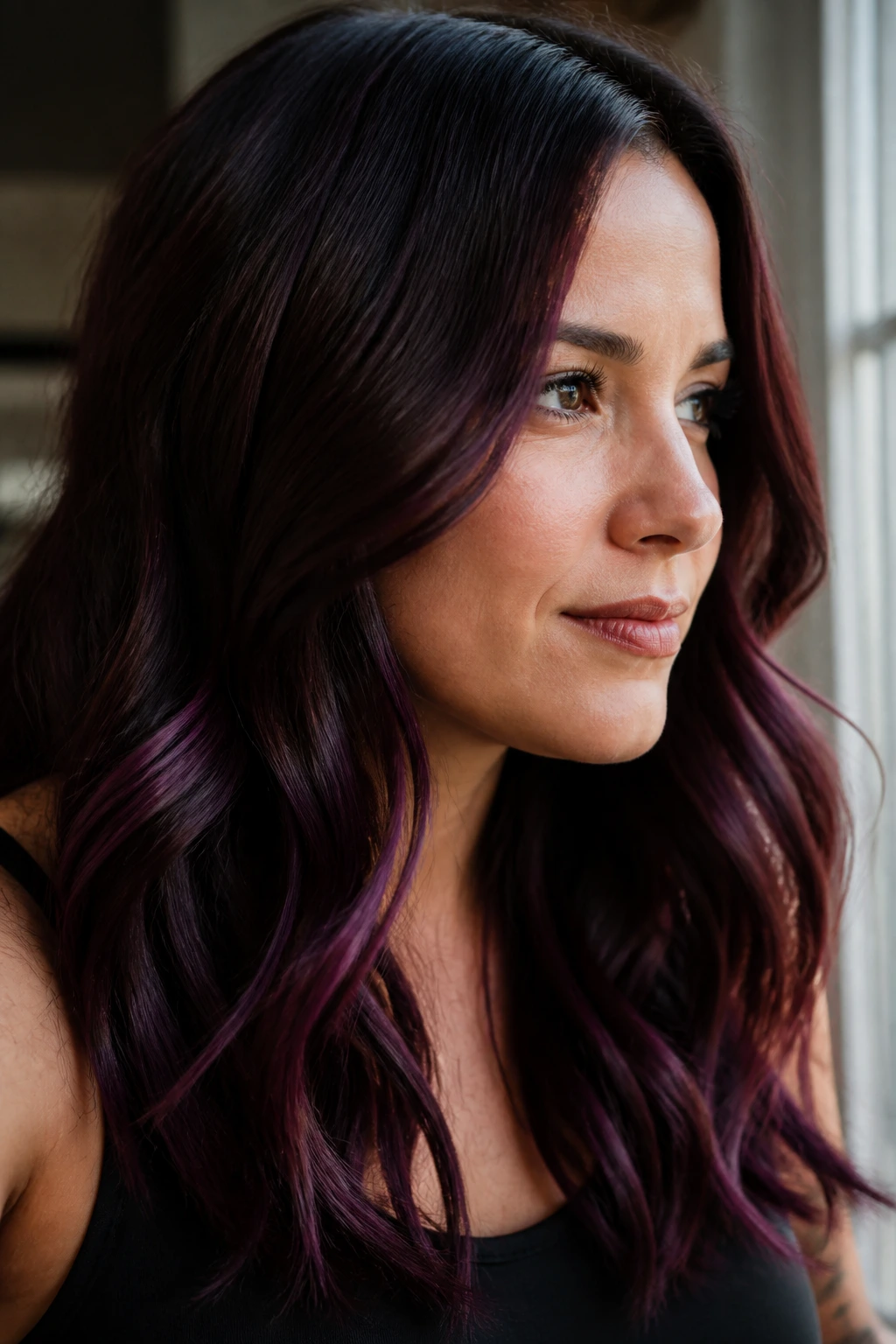
Merlot is the bridge between purple and wine, and dark brown hair loves it. It reads richer than lavender, warmer than blue-violet, and more grown-up than a bright violet streak.
If your hair is very dark, merlot is often the shade that gives you visible color without needing a dramatic lift. That matters. Too much lightening on dark brown hair can make the strands fragile fast, and merlot lets you skip some of that damage.
This is a good choice if you want the color to show in reflected light rather than screaming under every bulb. It feels moody, but not severe. A little wine-dark, which is honestly a good place to be.
16. Hidden Purple Layers Built for Braids and Updos
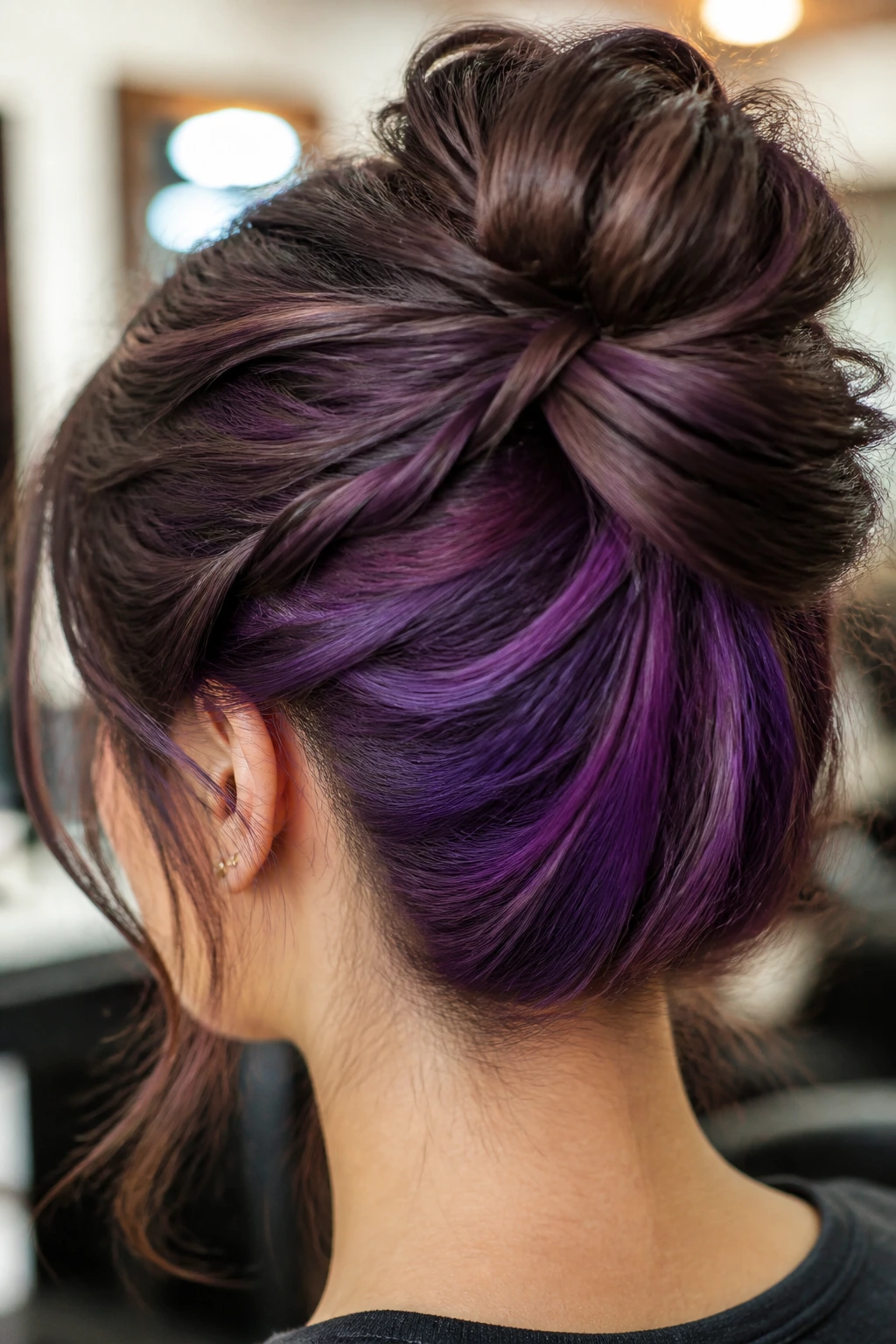
Braids are where hidden purple starts having fun. The color sits under the surface until the sections cross over each other, and then suddenly there’s movement, contrast, and a few little flashes of violet you didn’t see at first.
Best places to hide the color
A colorist can tuck the brightest pieces beneath the crown, behind the ears, or through the lower back section of the head. That way a French braid, a twist, or a bun shows little surprises instead of a solid block of brown.
- Place the brightest color where the braid will fold over itself.
- Keep some darker brown near the roots for balance.
- Use wider hidden panels if you wear bigger updos.
- Choose plum or grape if you want the color to read through woven styles.
It’s a great pick for people who like changing their hair without changing the top layer all the time. The braid does the showing off for you.
17. Lavender Tips on Wavy Brunette Hair
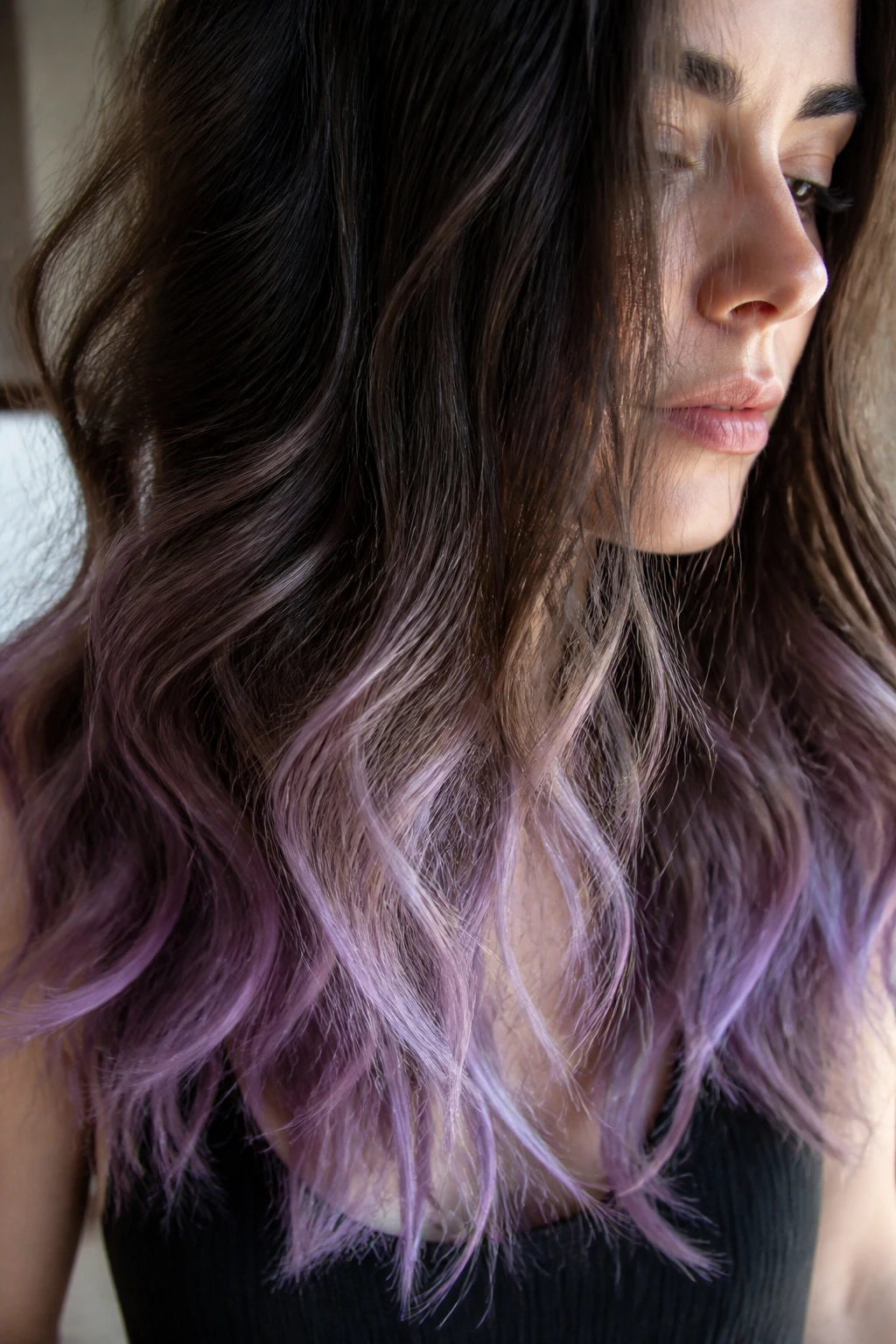
Lavender tips have a breezy, almost tossed-off feel when they sit on waves. The texture breaks up the color, so the ends never look too neat or too precious.
This version works best when the waves are soft and a little undone. The lavender lands at the tips, where the hair naturally bends and separates, which makes the color look airy instead of painted. On brown hair, that contrast can be charming in a low-key way.
If you like hair that feels easy rather than fussy, this is a strong pick. It does fade faster than darker purples, though, so I’d choose it only if you’re fine with regular refreshes or don’t mind a washed-out pastel phase later on.
18. Violet Balayage on a Straight Lob
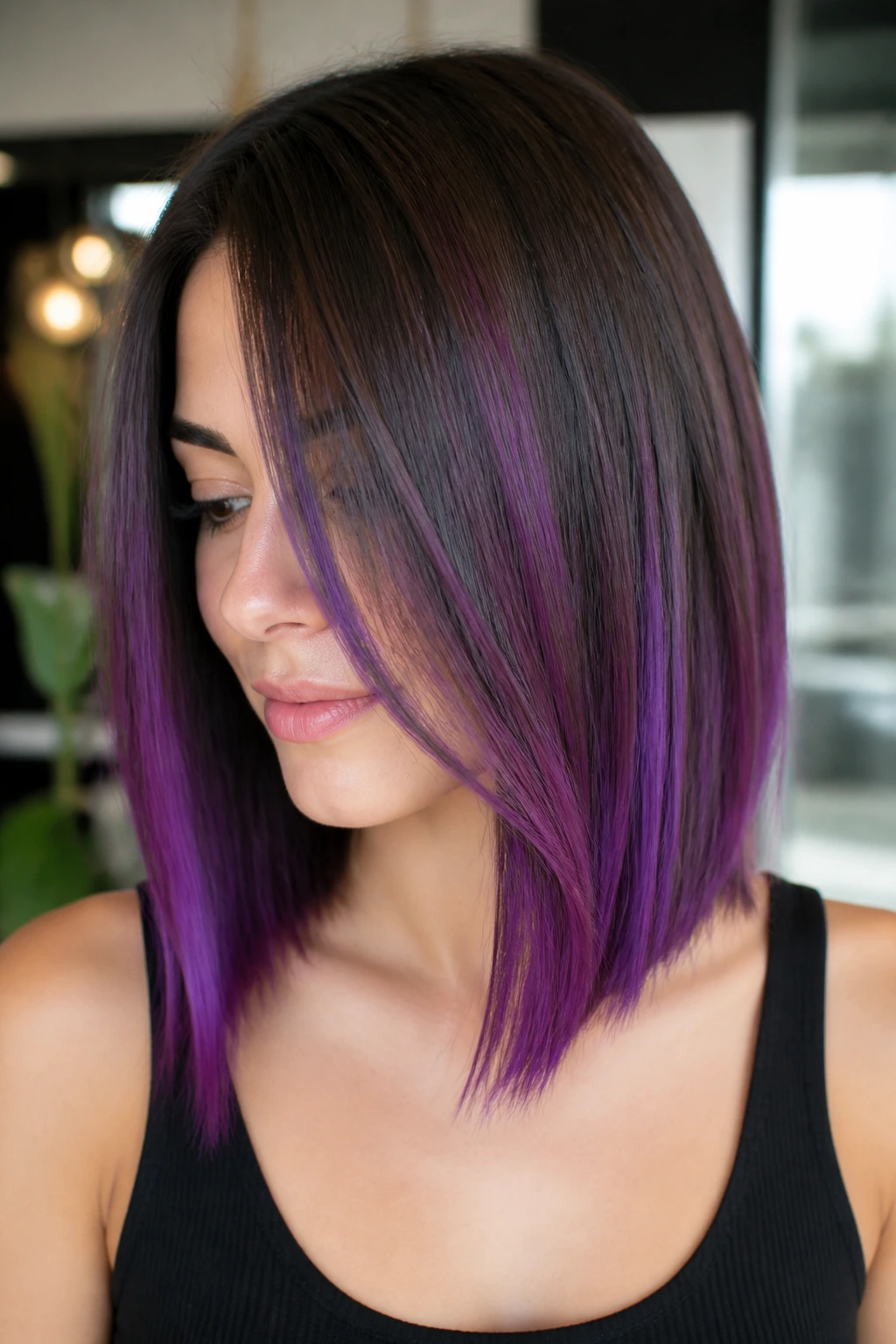
Straight hair shows everything. That’s why violet balayage needs to be placed with more thought on a lob than on wavy or curly hair.
The clean line of a straight cut makes the color placement visible, so the balayage should be a little chunkier and a little more deliberate. Thin, wispy pieces can vanish. Stronger panels in the midlengths and ends read much better and give the haircut a graphic shape.
This style feels crisp. It works when the color and the cut are both neat, and it’s especially good for people who wear their hair straight most of the time. If your hair texture is naturally smooth, this is one of the easiest purple looks to keep looking intentional.
19. Dimensional Plum on Chestnut Waves
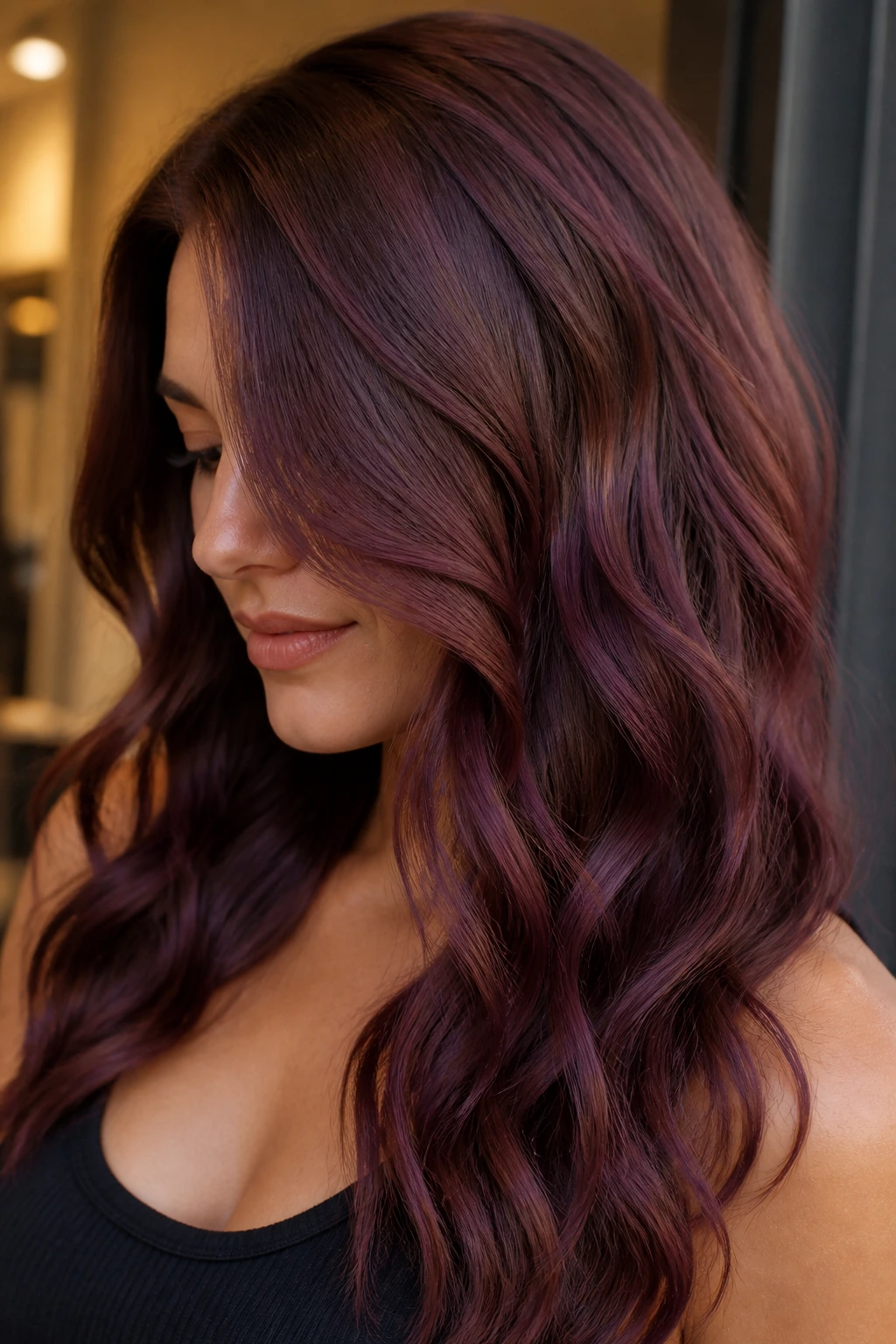
Chestnut hair gives plum somewhere warm to land. That’s why dimensional plum can look so good there—the red-brown base and the purple pieces keep feeding each other.
I like this style when there are at least two tones in the purple family. One piece can lean wine-dark, another can lean cooler plum, and the brown itself fills the gaps. The result is much richer than a single flat shade.
Waves help the effect even more, because the bends move the color around instead of showing one static patch. If you’ve ever wanted hair that looked different every time you turned your head, this is one of the best ways to get that without chasing brightness.
20. Soft Orchid Panels on Layered Mid-Length Hair
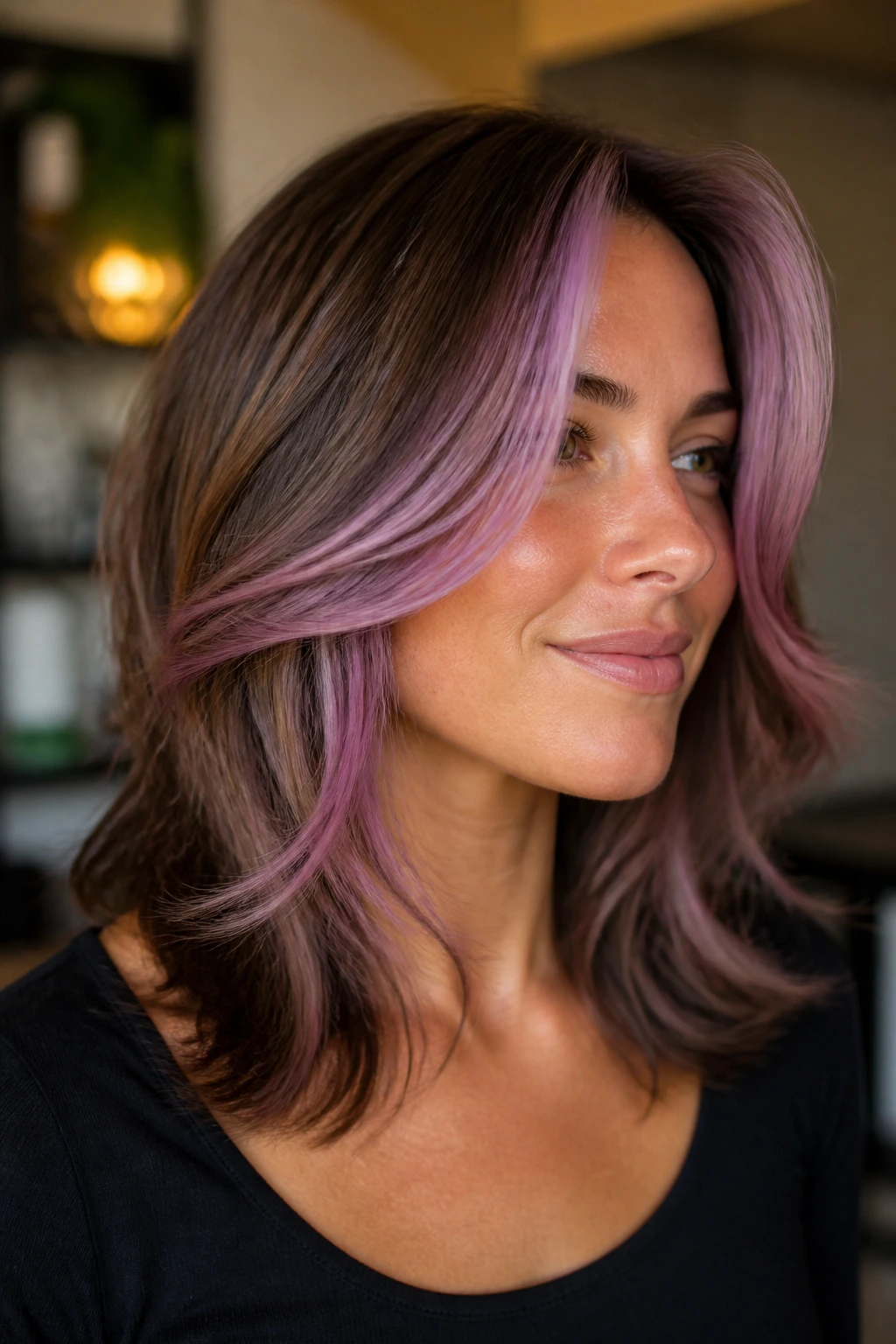
Panels are more structured than ribbons, and that makes them useful. On layered mid-length hair, orchid panels sit inside the shape of the cut, so the color follows the architecture of the haircut.
That matters because layers can swallow tiny color pieces. Bigger panels stop the purple from disappearing. They also let the orchid show in a way that feels modern rather than scattered.
This is a strong choice if you like a cleaner, more deliberate look. The panels can live around the face, through the sides, or in the lower half of the haircut, depending on how much color you want visible. Either way, the cut has to help. Otherwise the panels just sit there.
21. Ash Brown with Smoky Purple Lowlights
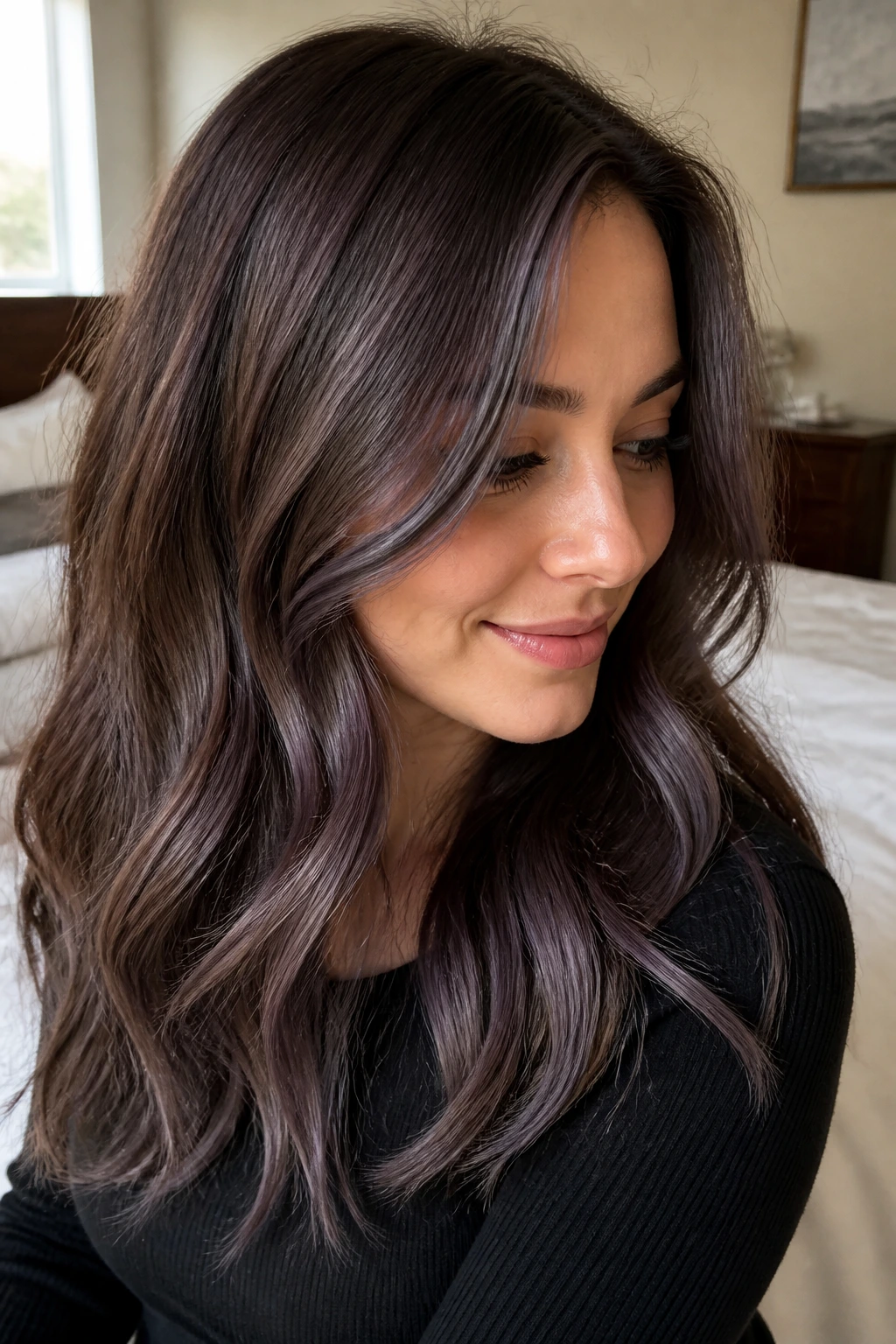
If your brown hair leans cool, smoky purple lowlights make a lot of sense. They deepen the base without adding orange or copper, which is where some brunette color jobs go wrong.
This look is less about obvious purple and more about shadow. The lowlights create movement in the hair, especially on medium to thick strands that can handle a few deeper slices. It’s the kind of color that makes brown hair look cleaner and more structured.
I’d choose this for someone who wants the color to read as part of the haircut, not a separate event. It’s subtle, yes, but not boring. There’s a difference.
22. Deep Grape on Black-Brown Hair
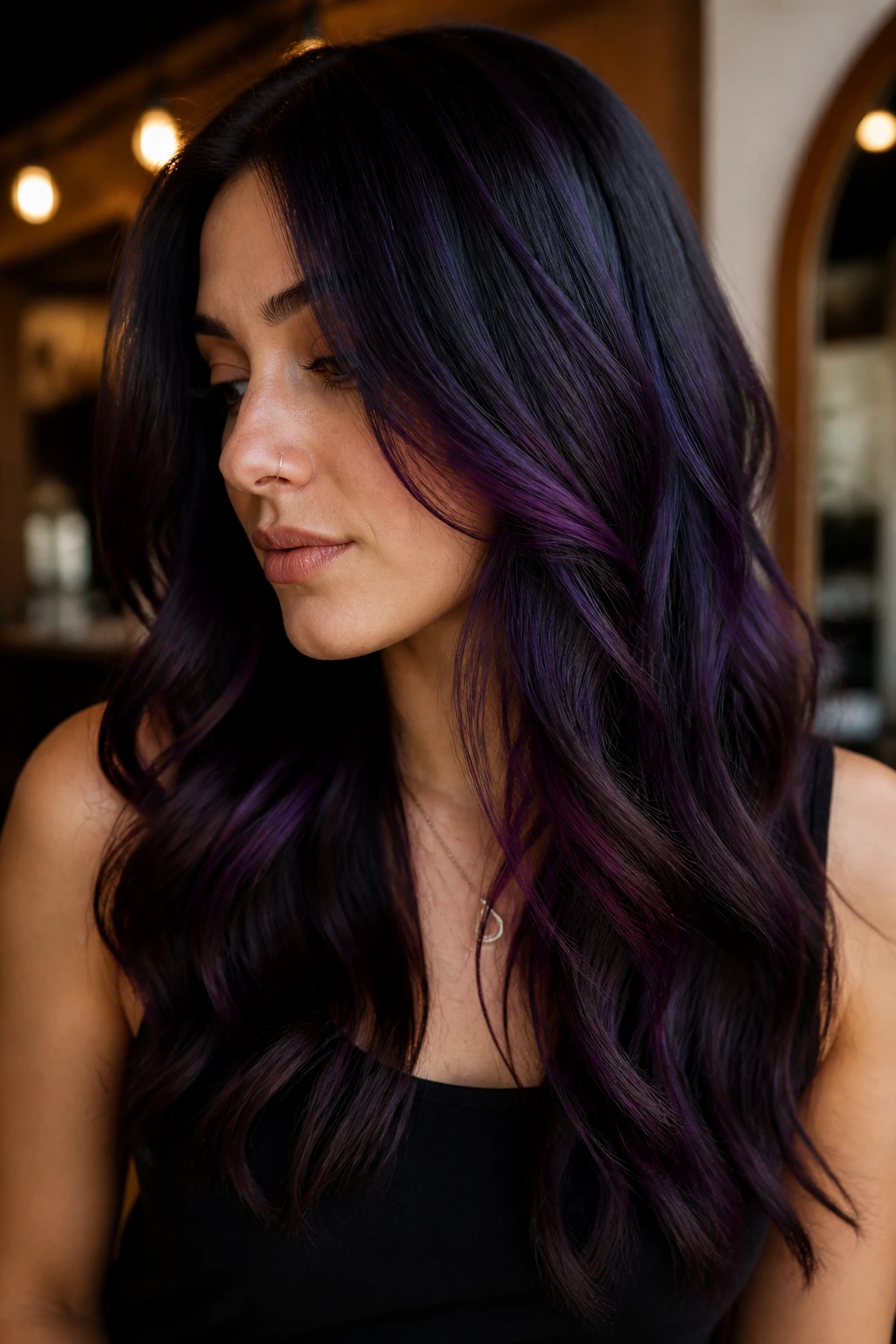
Black-brown hair can carry grape better than almost any other shade. The base is dark enough to keep the look grounded, and the purple shows up as a reflective color instead of a pastel overlay.
If you want the grape pieces to show indoors, a few of them may need a small lift first, especially if your hair is very dark and resistant. Not every strand needs to be brightened. Usually a few strategic slices are enough to make the color visible when the light shifts.
This is one of those looks that feels stronger in person than in photos. The shine is part of the story. So is the contrast. It’s a deep shade, and that depth is what makes it good.
23. Purple Money Piece with a Shadow Root
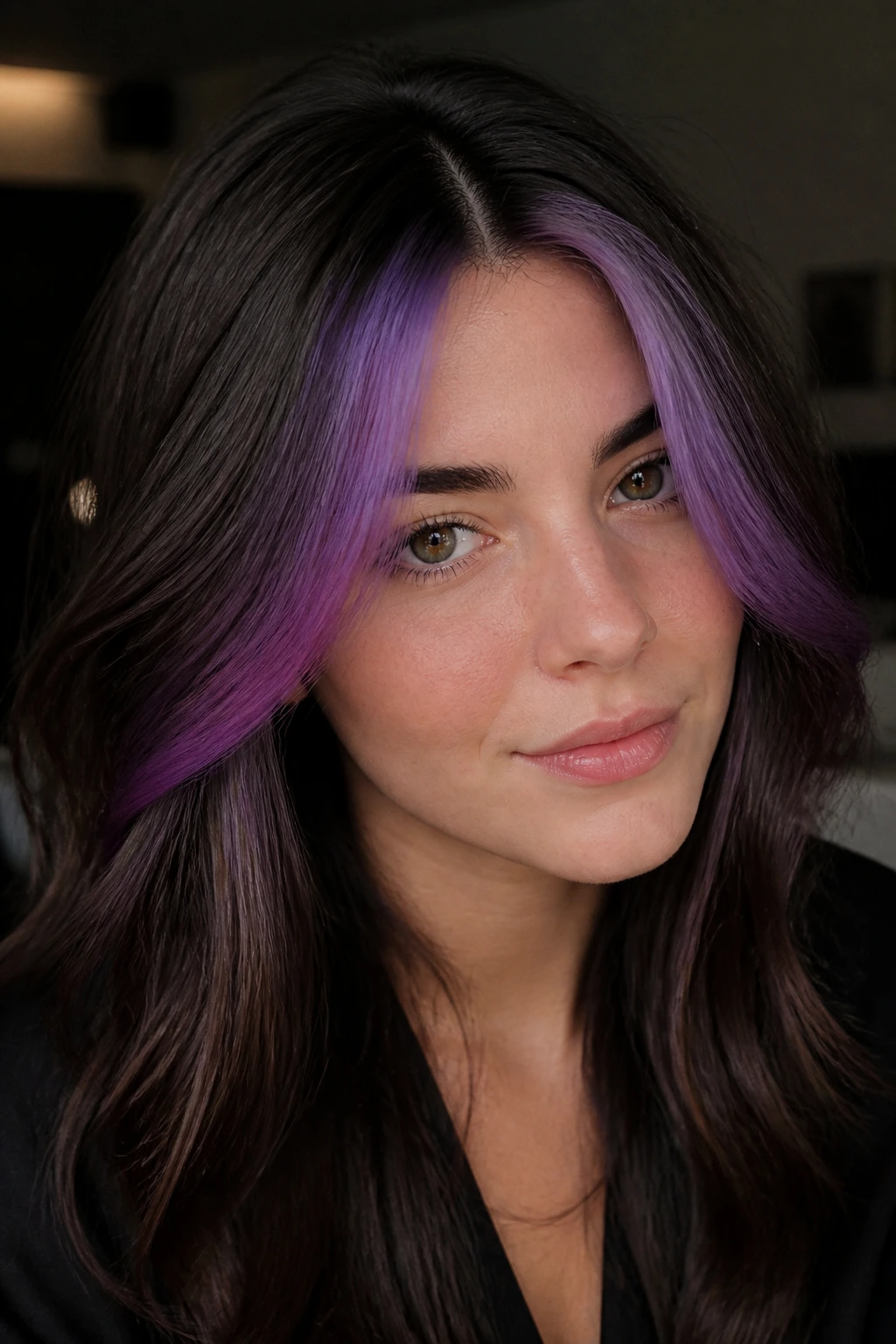
A purple money piece is bold, but the shadow root keeps it wearable. The deeper root softens the contrast and gives the bright front section a place to start.
Why this works so well
A strong front piece can make the whole face look more awake, especially if the rest of the hair stays brown. The shadow root keeps the grow-out from looking unfinished, which matters if you don’t want to be in the salon every few weeks.
- Choose a brighter violet or amethyst for the front.
- Keep the root one to two shades deeper than the midlengths.
- Let the color widen slightly at the cheekbones for a softer frame.
- Style it with a middle part or loose bend to show the contrast.
This look has range. It can feel edgy with straight hair and softer with a wave. Good color design should do that.
24. Mulberry Ends with Caramel Midlengths
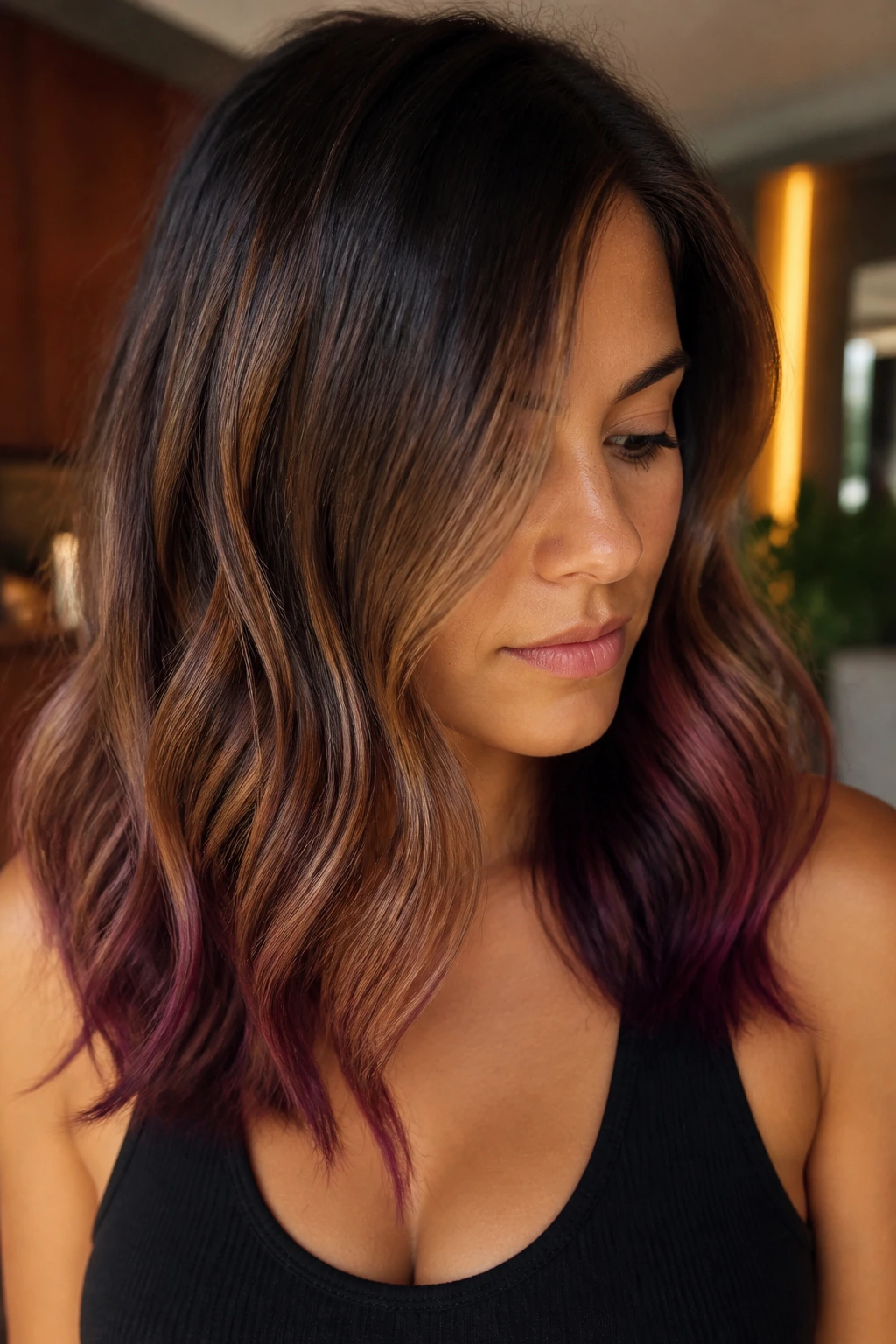
Mulberry and caramel should not work as well as they do, but they absolutely do. The warm brown midlengths keep the purple from looking chilly, and the mulberry stops the caramel from feeling too sweet.
This is a very useful option if your brown hair already has balayage or warm lighter pieces in the middle. The purple can live on the ends while the caramel stays visible above it, which gives the whole style some contrast without a harsh line.
I like this on long layers because it keeps the ends from disappearing. The purple finishes the shape instead of starting the whole conversation. That’s a nice place for it.
25. Berry Peekaboo Color for Short Hair
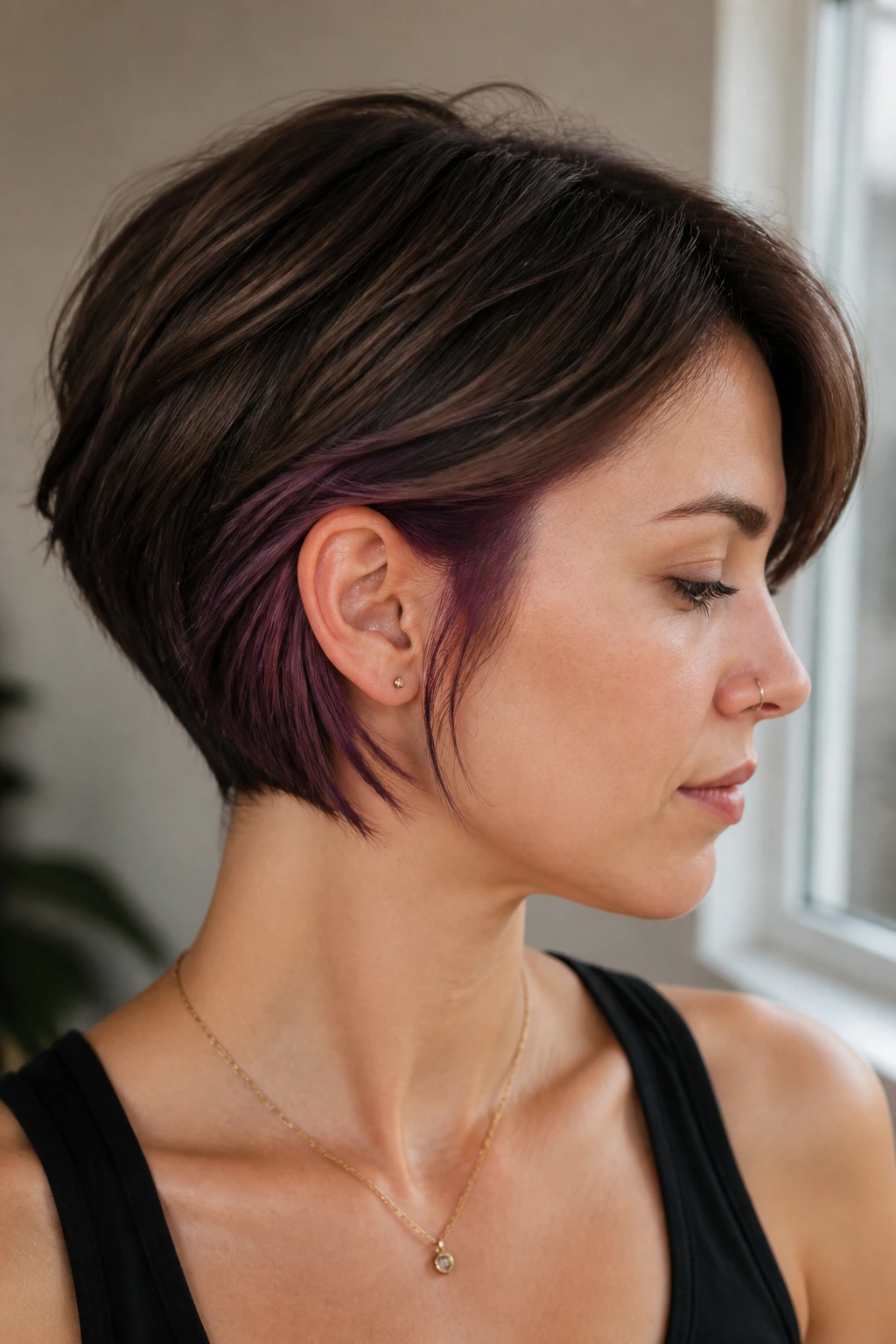
Short hair can absolutely carry purple, but the placement has to be precise. On a bob or pixie, peekaboo berry pieces can hide under the top layer and flare out when the hair moves.
Because there’s less length to work with, the color needs to sit in the right spots: underneath the crown, behind the ear, or in the nape area where a small bit of movement goes a long way. Too much color on short hair can look busy. A few careful slices look smarter.
This is one of my favorite choices for people with shorter cuts because it changes the shape of the haircut without fighting it. The purple shows up in motion, which is enough. Short hair does not need to explain itself.
26. Lilac and Plum Mixed for Soft Dimension
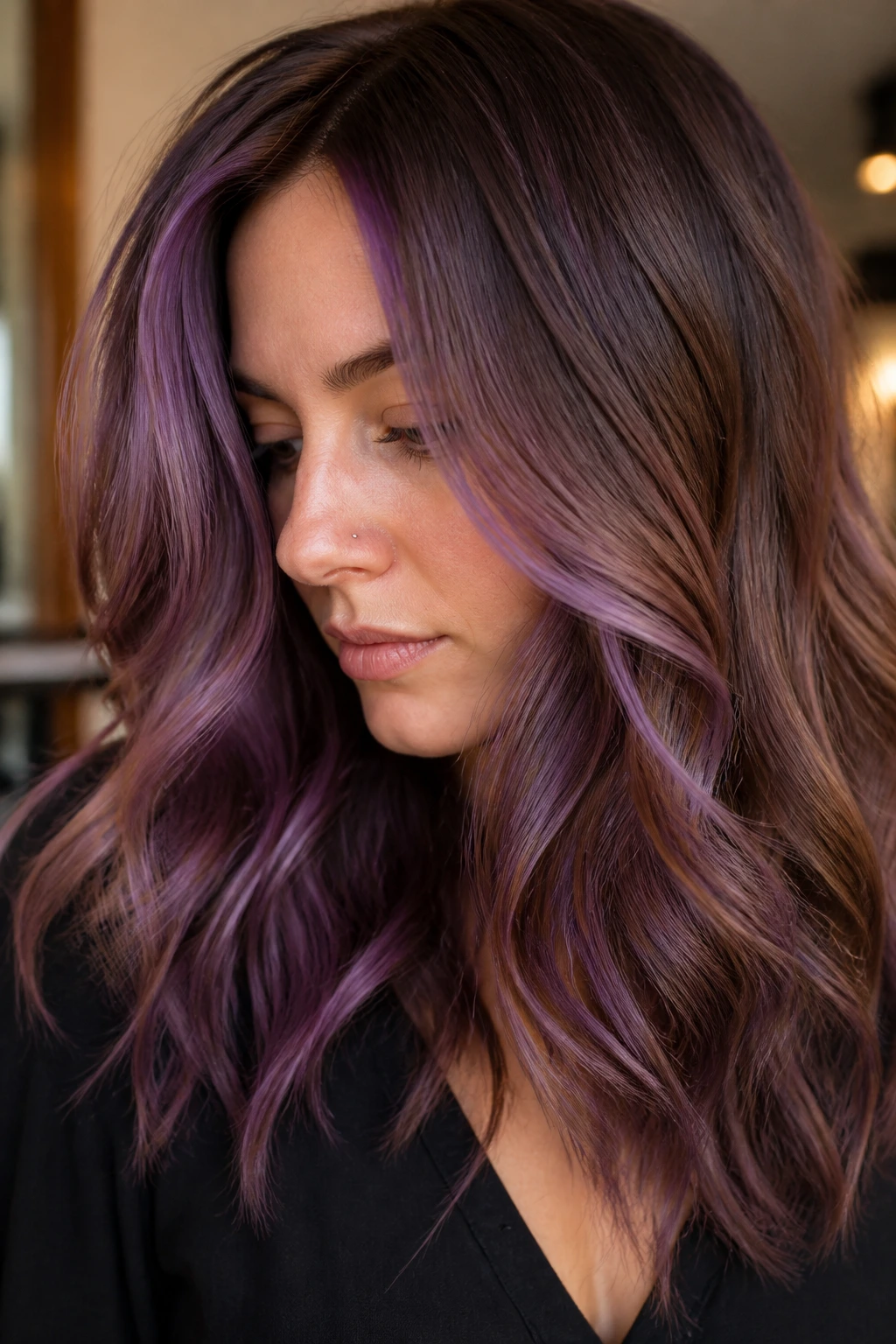
Two purples can be better than one. Lilac and plum together create a tone-on-tone effect that looks more layered and less flat, especially on brown hair that needs a little lift.
The lighter lilac catches the eye first, then the deeper plum holds the shape together. That contrast is subtle, but it gives the color more life than a single shade can manage. It also helps the style hold up as it fades, since the two tones age at different speeds.
This mix is good for people who want softness without losing interest. On waves, it looks especially nice because the lighter and darker pieces break apart as the hair bends. On straight hair, it reads cleaner and more graphic. Either way, it has movement built in.
27. Glossy Amethyst Ribbons on Thick Brown Hair
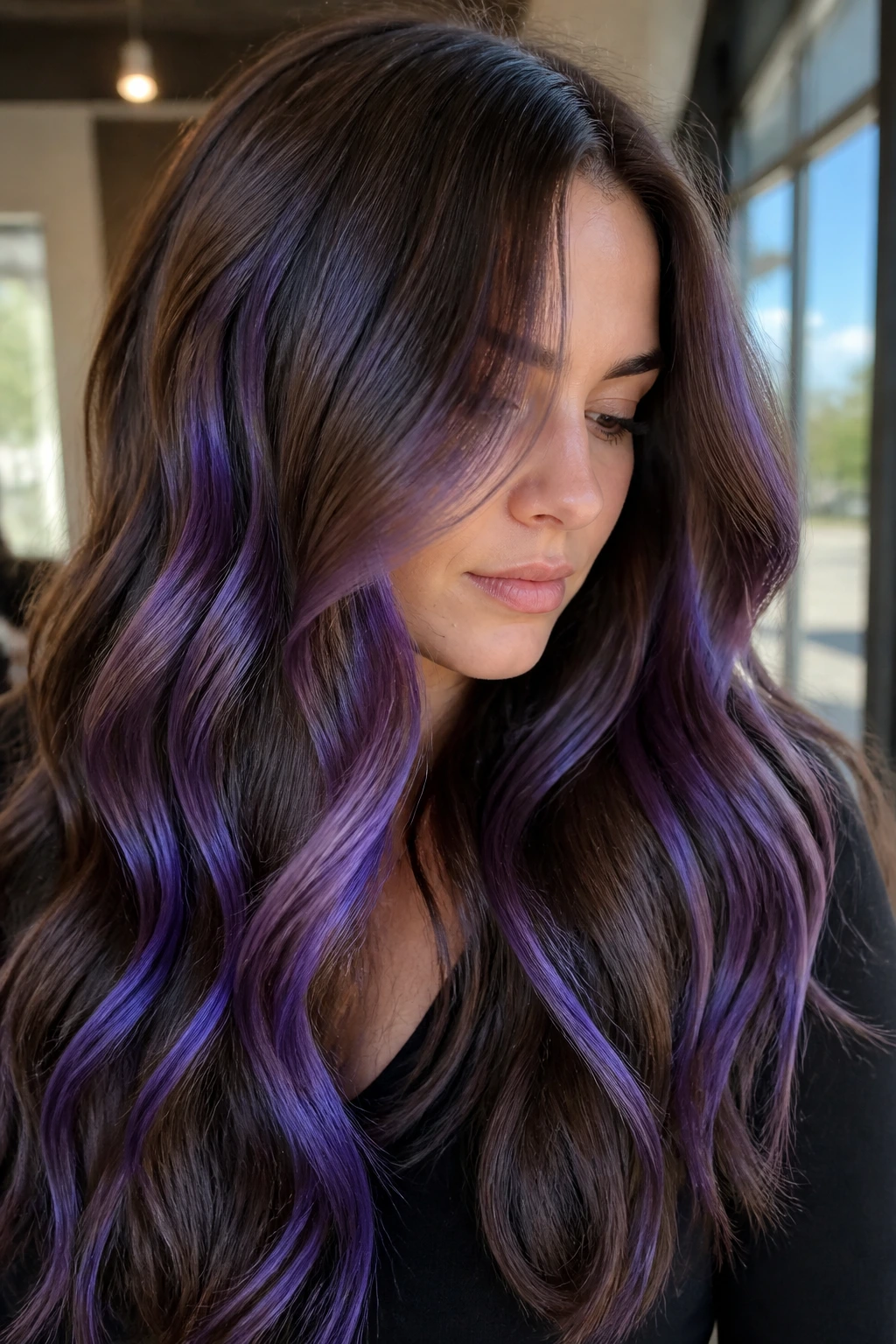
Thick hair needs bolder color placement or the purple disappears into the mass. Amethyst ribbons solve that by giving the color enough width to show through a dense shape.
What to ask for
The sections should be larger than babylights and placed with intention through the midlengths and outer layers. On very thick hair, too-fine pieces can vanish the minute the hair dries. Bigger ribbons stay visible and keep the style from feeling overworked.
- Ask for vertical placement through the sides so the ribbons move with the cut.
- Keep some deeper brown between the purple sections for contrast.
- Use a glossy toner finish so the amethyst looks smooth instead of dry.
- Focus on the outer layers if the hair is very heavy.
Thick hair can wear color beautifully when the placement respects the volume. This is one of those cases.
28. Subtle Purple Highlights for Brown Hair That Grow Out Softly
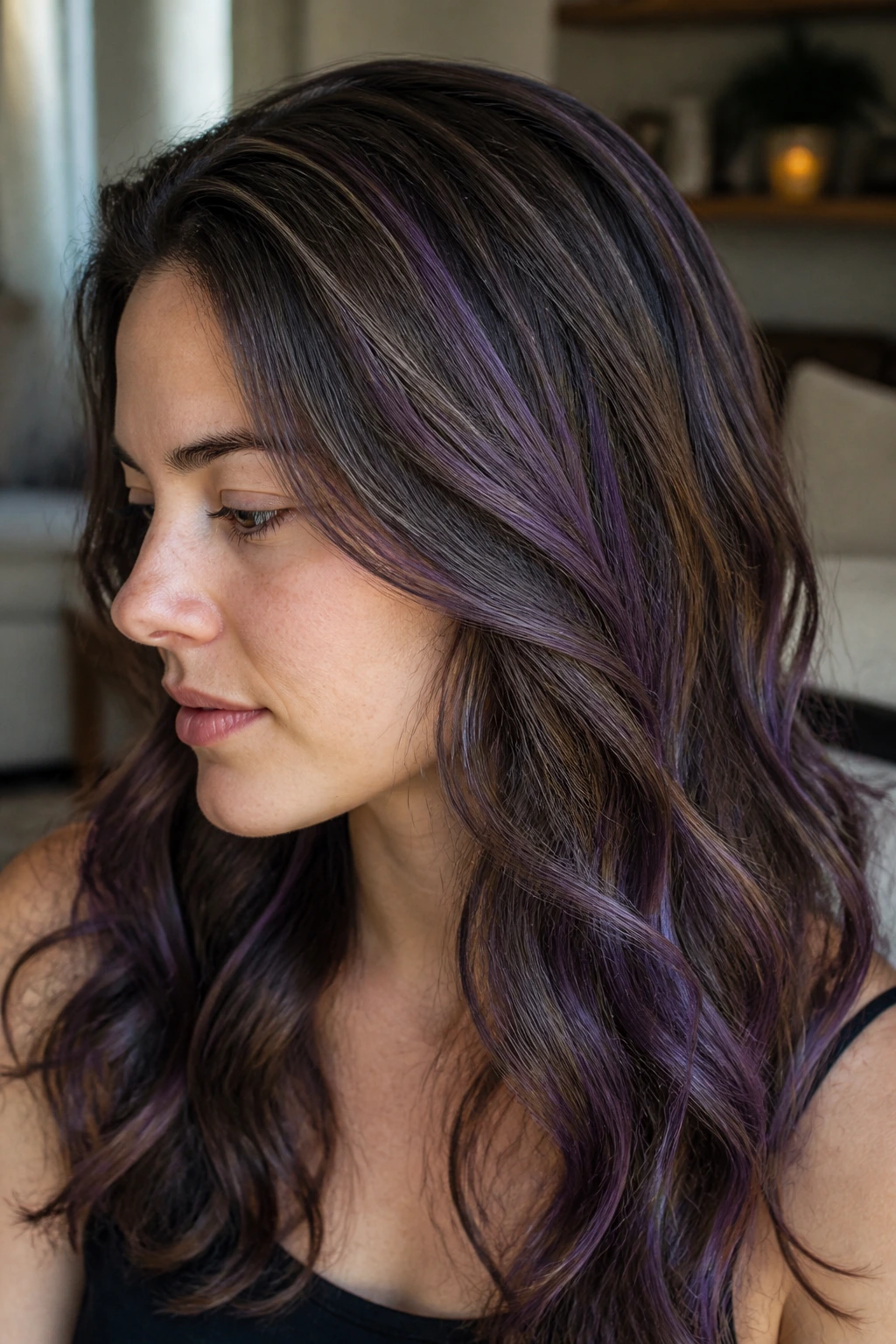
If you want purple but don’t want a constant salon calendar, go small. Tiny violet micro-highlights placed around the crown, the temples, and a few pieces through the ends can blur into brown hair in a way that feels easy to live with.
This is the version I keep coming back to for cautious color clients, because it gives you room. The purple shows up when the hair moves, the grow-out stays softer than chunky streaks, and you can always add more later if you decide you want a louder look. No pressure. No hard line. Just a quieter way to test the color and still look like yourself.
