



Burgundy highlights for brown hair can look flat-out expensive when the tone is right. They can also go wrong fast. Too much red and the color shouts. Too little contrast and it disappears into the base by lunch.
That swing is why burgundy works so well on brunettes. The shade sits somewhere between red, violet, and deep wine, so it can read as black cherry in one light and crushed merlot in another. On a level 4 or 5 brunette base, even a few ribbon-like pieces around the face can change the whole haircut.
Placement matters more than people expect. Fine babylights make the hair look fuller. Thicker panels bring back that bold, streaky contrast some people still love, and yes, it can look sharp when the cut is clean and the burgundy has enough depth to stay in the family of brown instead of drifting into copper.
The best part is the range. You can wear burgundy highlights softly, almost like a tinted shadow, or push them into something louder with peekaboo panels, money pieces, or chunky streaks. The right version depends on your base color, your haircut, and how much upkeep you’re willing to live with.
1. Espresso Brown with Fine Burgundy Ribbons
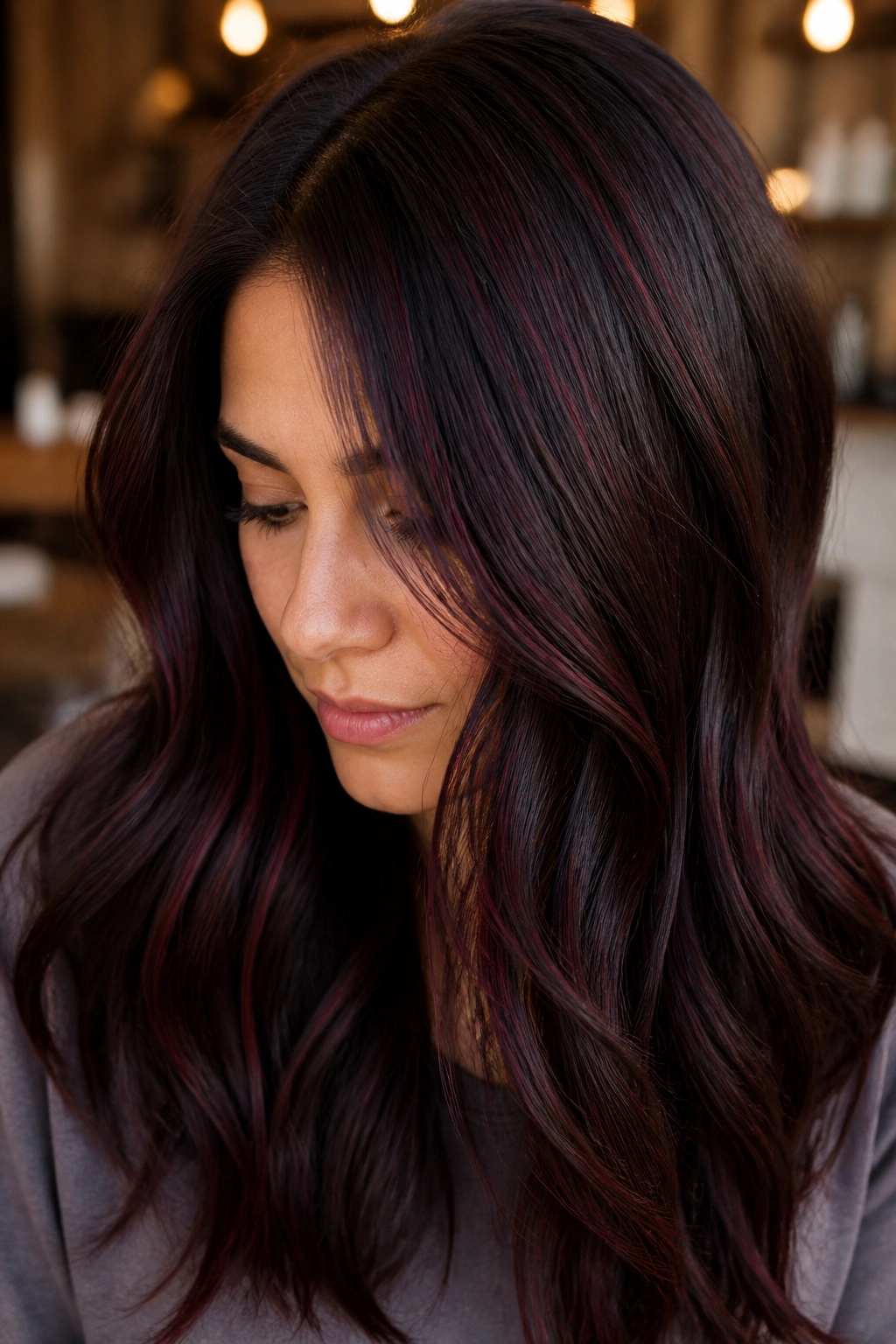
The safest place to start is skinny ribbons, not chunky streaks. Fine burgundy pieces threaded through espresso brown look richer than bright red highlights because the eye reads the whole surface as dimensional.
Why it works on dark brunettes
On deeper brown hair, a wide burgundy panel can feel a little harsh if the rest of the cut is compact. Thin ribbons soften that problem. They flash in the sun, then disappear back into the base indoors, which is exactly why they stay wearable for so many people.
Ask for babylights or micro-weaves placed mostly through the top layer and around the face. Keep the burgundy one or two levels lighter than the base. That small shift matters. It keeps the color visible without turning the hair into a red block.
- Best for straight hair, soft waves, and layered cuts
- Works well on level 3 to 5 brown hair
- Usually needs a demi-permanent gloss to stay plush, not brassy
- Touch-ups can stretch farther than with chunky highlights
My favorite detail: leave the underside darker. The contrast at the top makes the burgundy look richer.
2. Cherry Wine Money Piece for Brown Hair
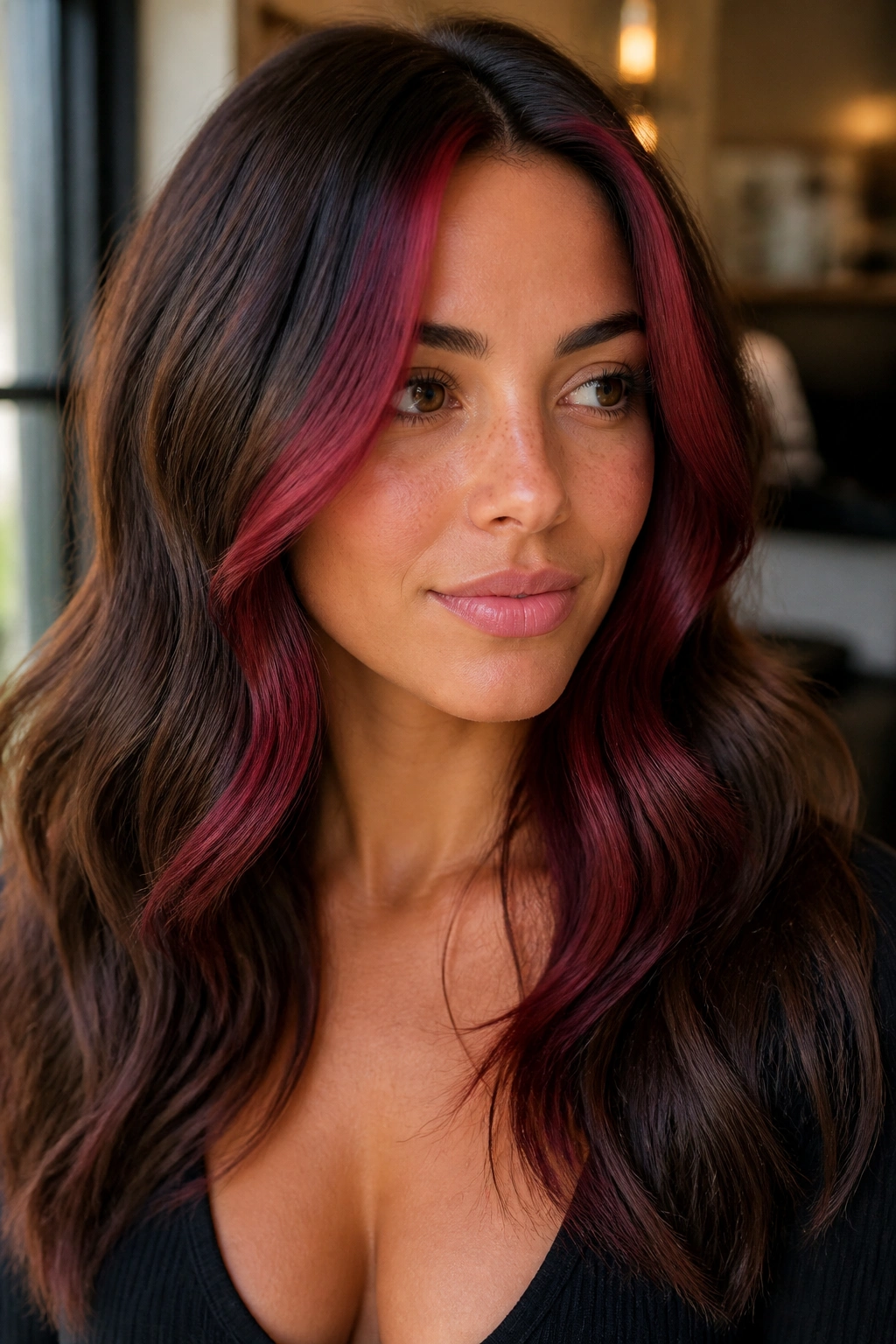
A money piece is the quickest way to make burgundy read intentional instead of random. Two bright face-framing sections can wake up a plain brunette base without a full color overhaul, and that’s why so many people end up liking this look more than they expected.
The shade should sit at the line between cherry and wine. If it turns tomato-red, it loses the depth that makes burgundy flattering on brown hair. If it goes too plum, the front can look muddy instead of lifted.
I’d ask for a heavy face frame that starts near the cheekbone and softens as it drops toward the jaw. That keeps the strongest color where light naturally lands. If your hair is worn behind the ears a lot, this placement still shows up in a mirror without demanding a full head of color.
A money piece also grows out more gracefully than people assume. The root area is small, so the darker base blends back in instead of making a harsh line. Clean styling helps here. Blow it smooth or curl it away from the face so the burgundy actually catches light.
3. Deep Plum Balayage on Chestnut Brown
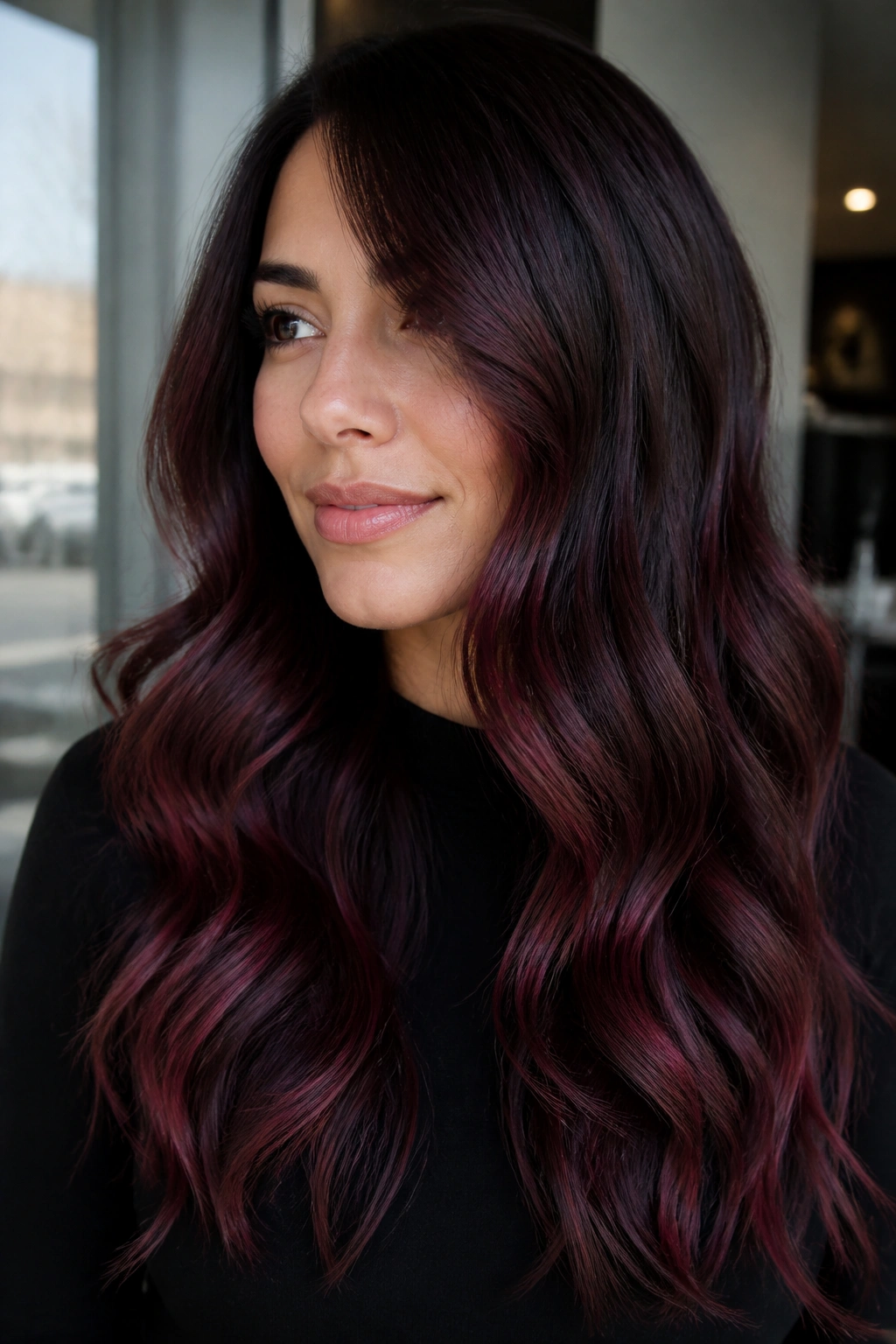
How red do you want it to look in daylight? That question decides whether this shade leans rich or theatrical, and it matters more than most salon chats do.
Plum burgundy on chestnut brown hair sits in a sweet spot. Chestnut already has warmth, so the violet side of burgundy has something to cling to. The result is deeper than cherry and cooler than copper, which is a good place to be if you want dimension without a loud red cast.
What to ask for at the salon
Bring photos that show the color in natural light, not only on a phone screen with filters. Ask for a hand-painted balayage with the lightest pieces on the mids and ends, then a softer glaze around the root area. That keeps the color blended instead of stripey.
- Request a blue-violet burgundy formula if your skin tone runs cool
- Ask for slightly warmer plum if your base already has gold or chestnut notes
- Keep the lightest pieces about 1 to 2 inches below the root for a softer grow-out
- Use a color-safe shampoo; harsh clarifiers strip the plum faster than you’d expect
This is a shade that rewards good styling. A loose bend with a flat iron shows the color changes better than pin-straight hair.
4. Burgundy Peekaboo Panels Under Layered Brown Hair
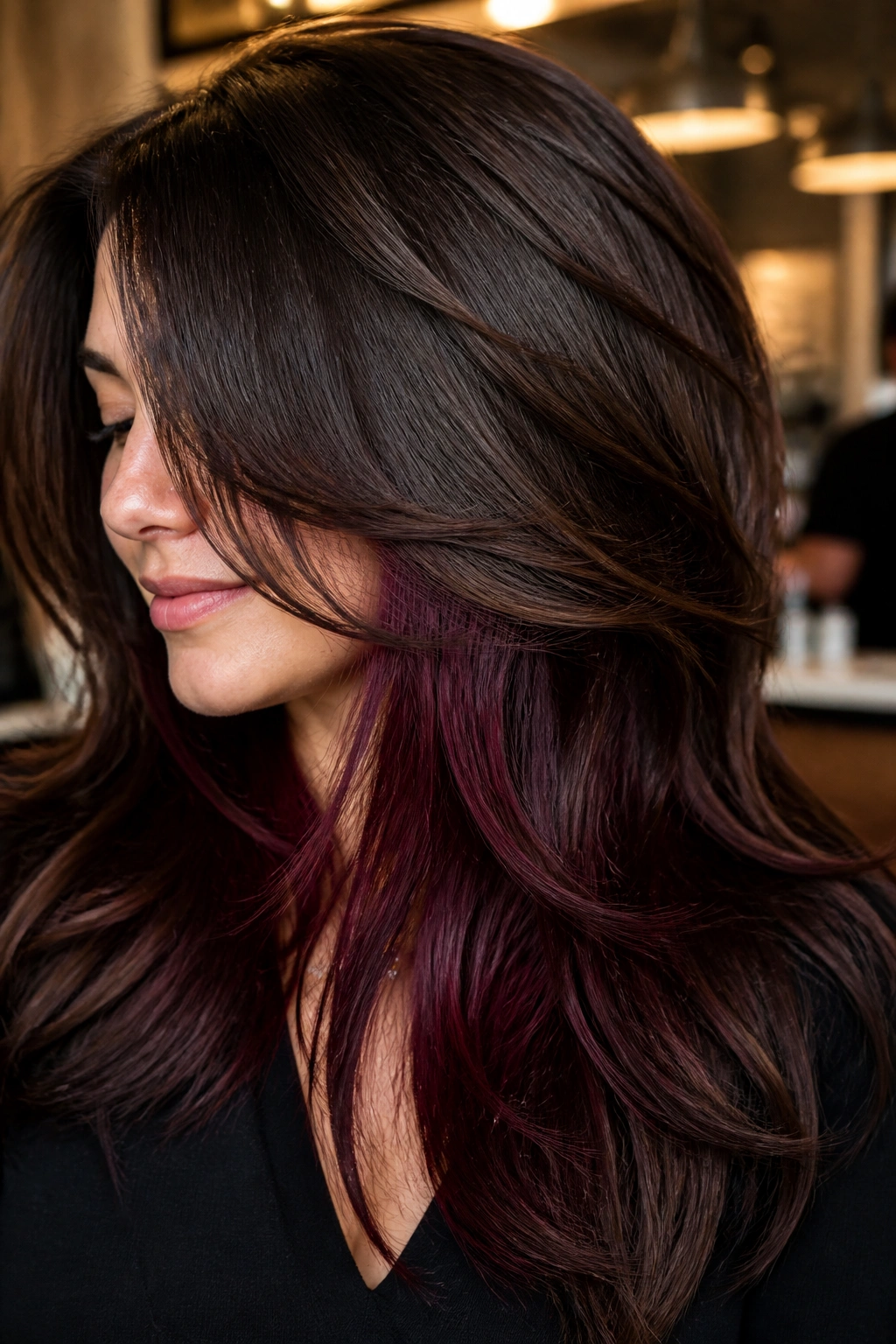
Picture a ponytail with a secret. That’s the whole appeal here.
Peekaboo burgundy panels sit under the top layer, so you get flashes of wine-red when hair swings, flips, or gets tucked behind one ear. On layered brown hair, the hidden placement makes the color feel playful without taking over the front view. It’s the sort of choice I’d point to if someone wants color but still needs a more conservative surface look.
The cut matters a lot. Layers create movement, and movement is what makes peekaboo color show. If the hair is all one blunt length, the burgundy hides too well. If there’s shape through the crown and ends, the underside color peeks through with a little attitude.
This placement also gives you a practical advantage. You can stretch time between touch-ups because the regrowth lives underneath the top veil of darker hair. When you wear the hair half-up or in a claw clip, the color suddenly comes alive. Easy win.
5. Mahogany Babylights on Medium Brown Hair
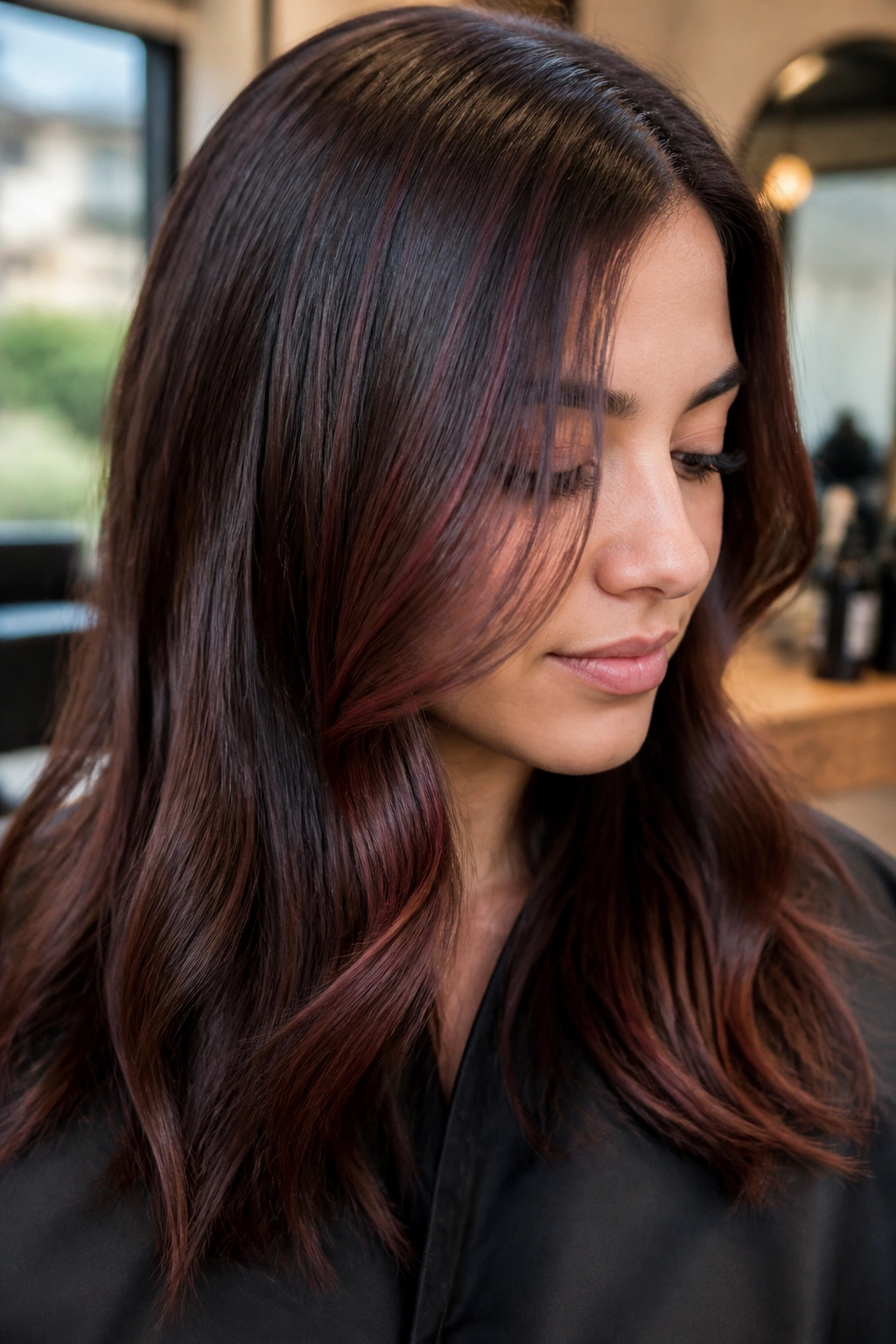
Mahogany babylights are the quiet version of burgundy, and I mean that in the best way. They sit so close to medium brown that people often notice the shine before they notice the color, which is exactly what makes them useful on hair that already has depth.
The tone here leans a little warmer than plum and a little softer than true wine red. That warmth keeps the result from looking too cool on neutral or golden brunettes. It also helps the hair look thicker, because tiny strands of reddish brown catch light in a way that a single flat dye job never does.
You want the placement to be feather-light. A colorist should weave very fine sections through the top half of the head, then leave the heavier saturation near the face and crown. On medium brown hair, that kind of mapping prevents the burgundy from turning patchy.
This is a good choice if you like polish but don’t want obvious stripes. It grows out softly, fades into a nicer brownish-red, and plays well with both air-dried texture and a clean blowout.
6. Merlot Face-Framing Highlights for Brunettes
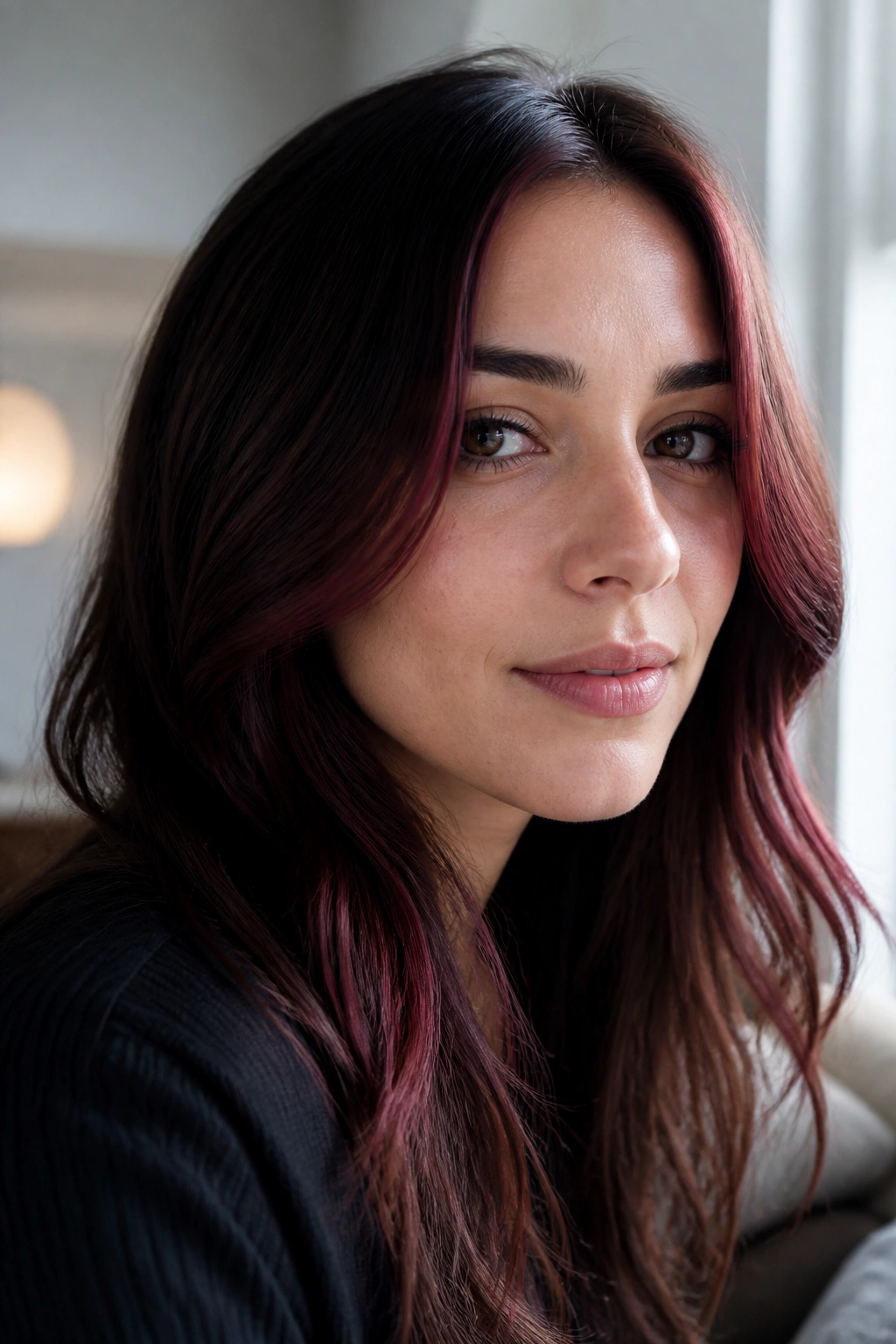
Merlot face-framing pieces are not the same thing as a full money piece. They’re softer, deeper, and a little more mature-looking. The color sits closer to wine than cherry, which means the effect is less about brightness and more about contour.
I like this version on brunettes who want shape around the face but don’t want the front of the hair to look obvious from across a room. It’s also a smart move if your haircut has long curtain bangs or layers that sweep away from the cheeks. The burgundy can ride along that line and make the cut look more deliberate.
Unlike chunkier front highlights, merlot framing works best when the color is slightly diffused at the root. That little shadow makes the grow-out easier and keeps the pieces from looking pasted on. If your hair is naturally dark brown, a soft merlot front can look surprisingly rich.
The styling part is simple. Blow-dry the front pieces away from the face or give them one big bend with a round brush. You want movement, not precision.
7. Wine-Red Ends on Long Brown Waves
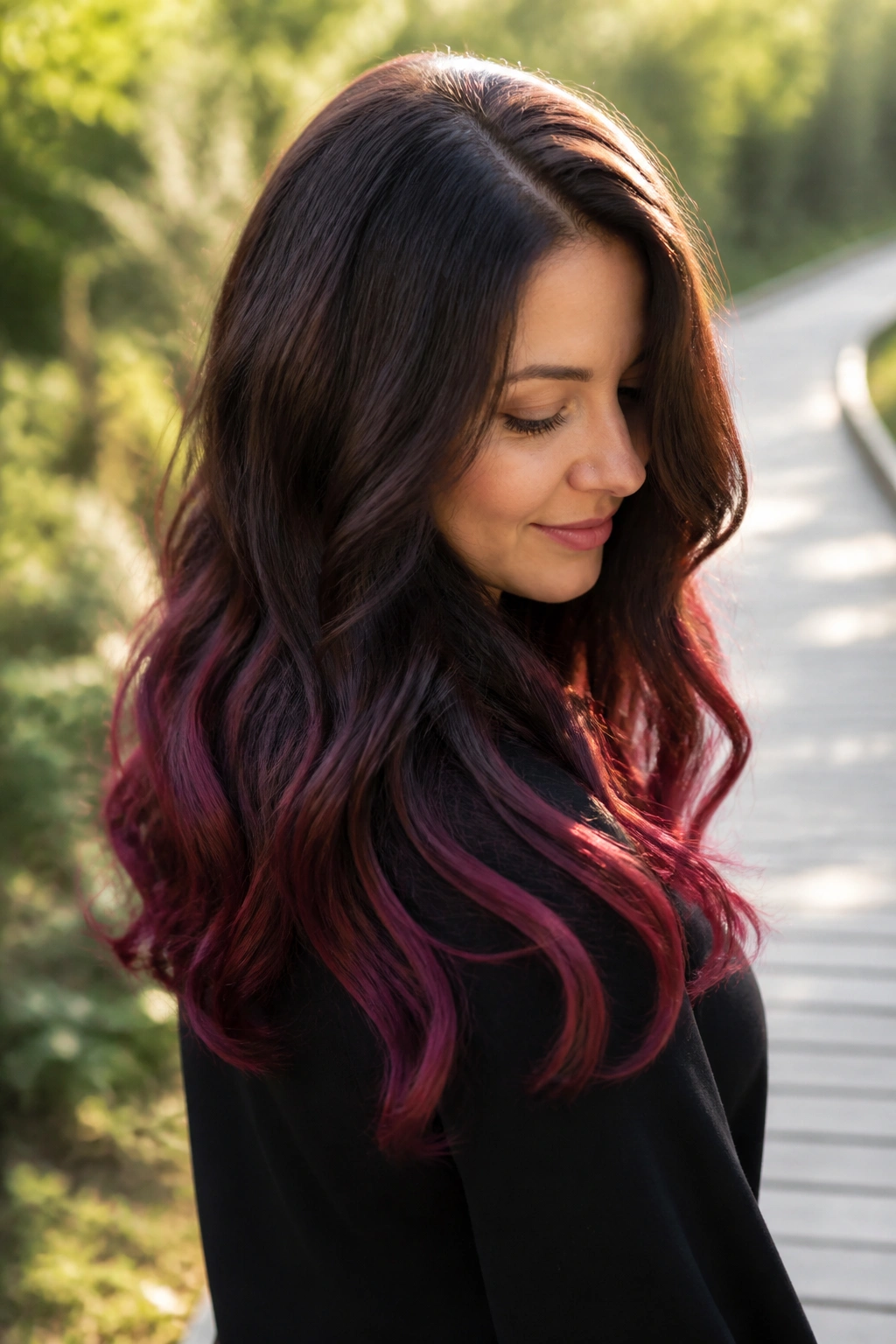
The ends can carry more color than people think. On long brown waves, burgundy at the bottom half looks strong without forcing you to color the entire head, and that makes it one of the easier ways to try the shade.
The reason it works is simple: waves already create a visual break between root, mid-length, and end. Add wine-red to the lower section and the eye reads the hair as layered and deliberate. If the top stays dark brown, the burgundy feels even deeper by comparison.
Best styling note
Loose beach waves show off this placement better than tight curls. A wave pattern lets the burgundy move in and out of view instead of sitting in one flat block.
- Keep the saturation strongest from mid-shaft to ends
- Ask for a soft melt, not a hard line
- Trim the ends regularly; split ends make red shades look dull fast
- Use a leave-in with heat protection if you style with a wand or iron
This look is especially good if you like ponytails and braids. The color at the bottom still shows when the hair is gathered back.
8. Black Cherry Highlights on Dark Chocolate Hair
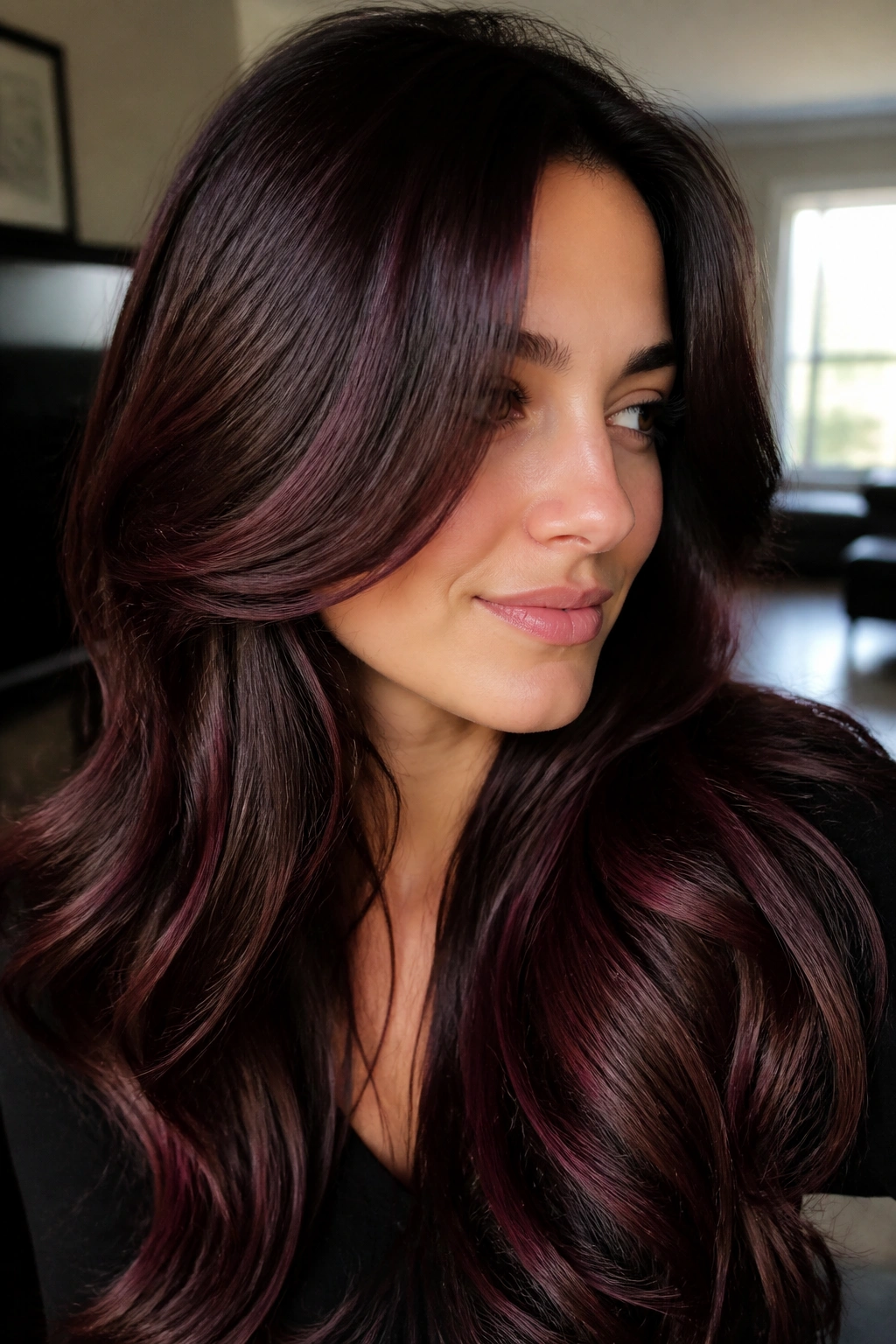
Black cherry is for people who want burgundy to stay dark. On chocolate brown hair, the shade often reads almost black indoors and only shows its red-violet side when sun or warm indoor light hits it. That makes it feel luxe in a low-key way.
The trick is choosing enough contrast for movement without going so light that the pieces look red from a distance. On very dark hair, the highlights may need a little pre-lightening to hold the cherry tone. If the hair is too dark and too dense, the color can sink into the base and disappear.
I like black cherry on glossy straight styles, but it also works on curls. The shine matters either way. A smooth finish lets the dark red reflect rather than flatten. If the hair is dry, the shade can skew brown and lose the plum note that makes it special.
This is one of those colors that rewards restraint. A few pieces through the surface and around the part can be enough. More can be too much.
9. Burgundy Gloss Over Cinnamon Brunette Hair
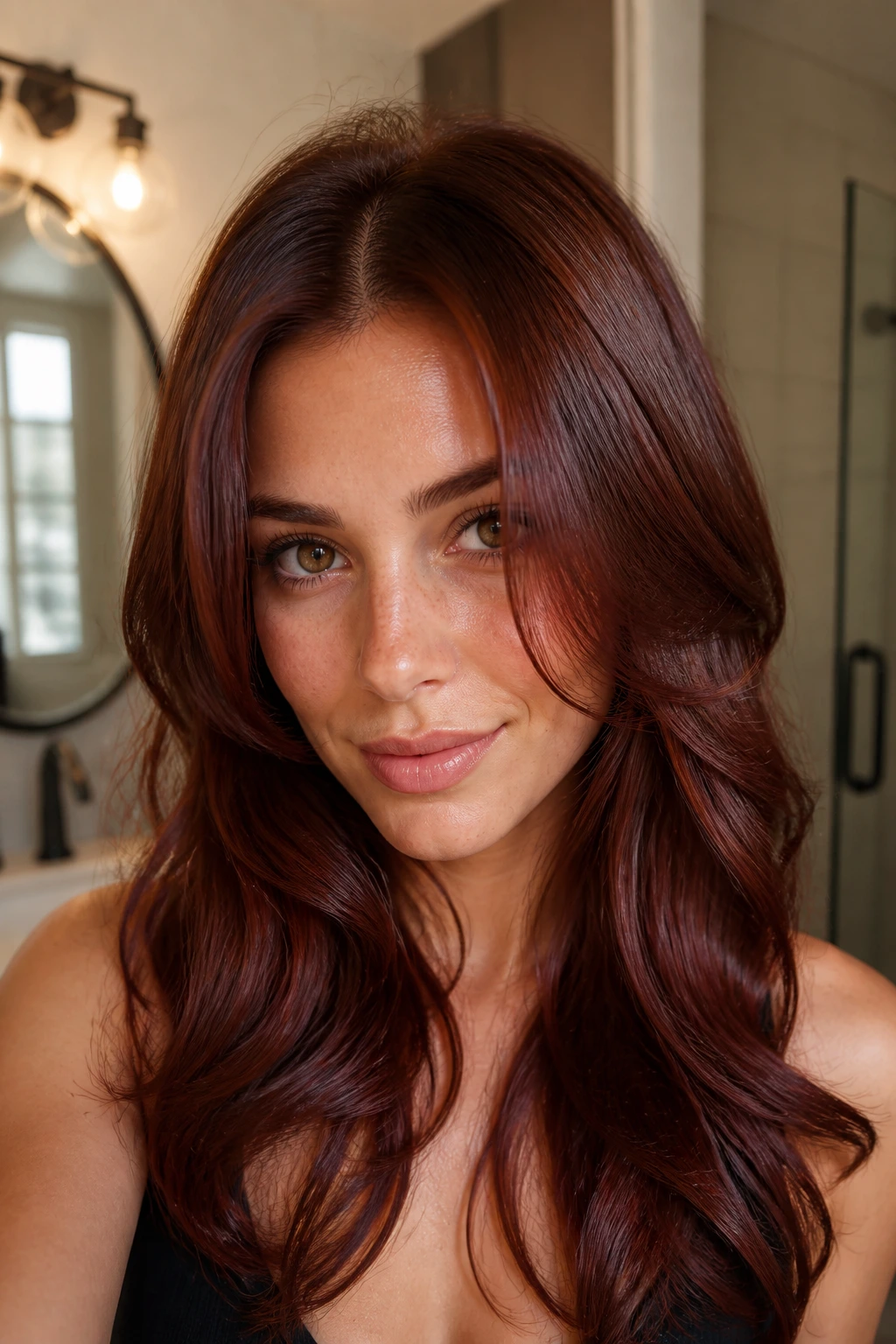
A gloss is not a dye job, and that’s the point. Burgundy gloss over cinnamon brunette hair gives you tone, shine, and a little color payoff without a hard line of regrowth.
Cinnamon bases already carry warmth, so the burgundy overlay deepens them instead of fighting them. The finish ends up somewhere between red wine and polished chestnut. It looks expensive in a very low-effort way, which is exactly why so many brunettes reach for glosses instead of permanent color.
The best part is the texture change. A good gloss can make hair look smoother because it coats the strand and blurs roughness. That means the color often looks richer on week one than a permanent highlight does on a dry, porous head of hair.
If you’re nervous about red tones, start here. Ask for a demi-permanent burgundy glaze that lasts several washes, not a permanent shift. The grow-out is gentle, the upkeep is lighter, and the hair still feels like your own.
10. Chunky Burgundy Streaks with 90s Contrast
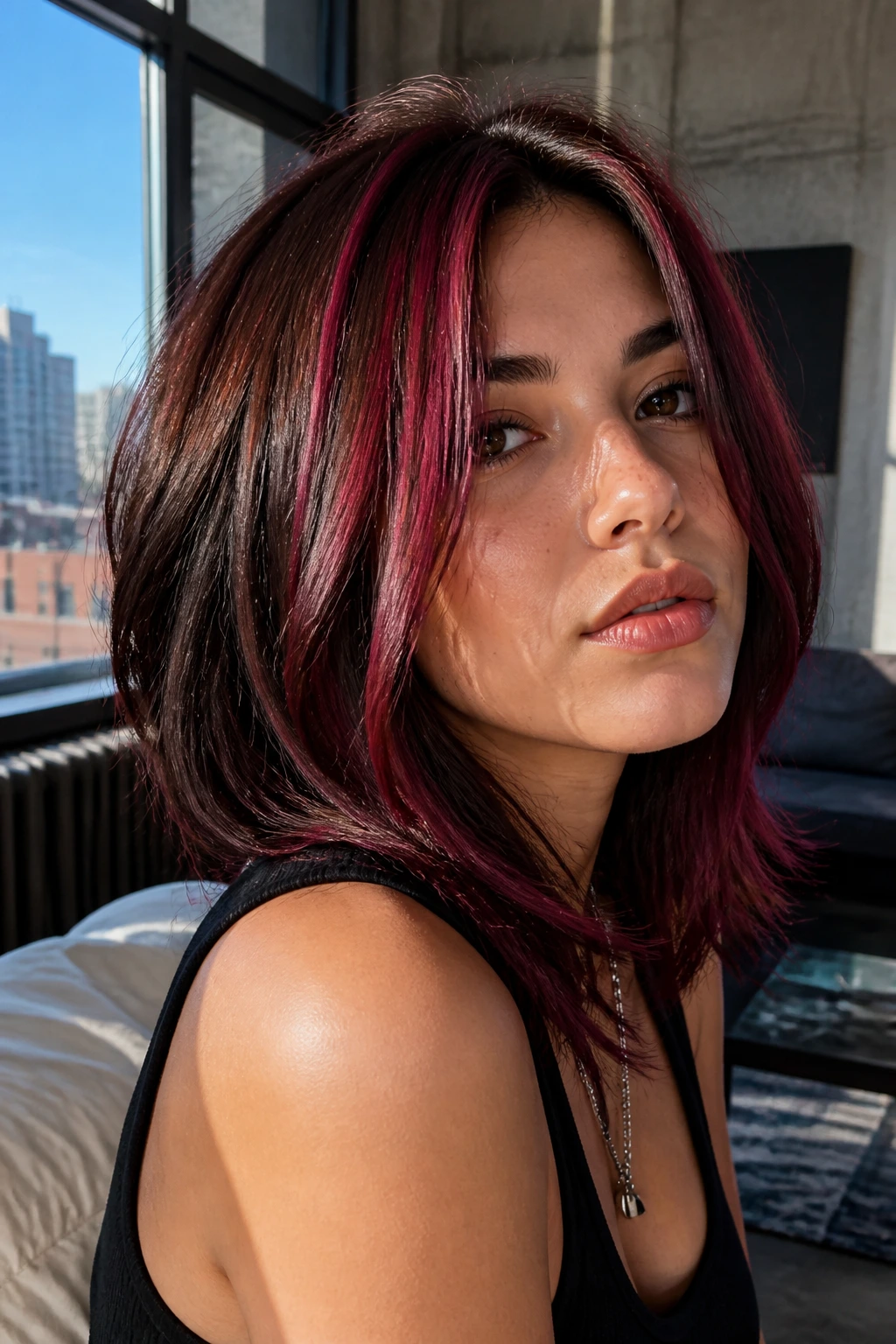
Do you miss a little drama? Then chunky burgundy streaks deserve a serious look.
This placement is sharper than babylights and louder than balayage. You get visible bands of burgundy against brown hair, which creates a clean graphic contrast that finer highlights can’t match. It looks especially good on straight hair, blunt layers, and cuts with a little edge.
The key is making the streaks feel planned. If they’re scattered randomly, the look gets messy fast. If they’re placed around the part, temple area, and a few interior sections, the color reads as bold on purpose. That’s the difference between a fun throwback and a bad DIY job.
What to watch for
Chunky highlights show regrowth sooner. That’s not a flaw, just a trade-off.
- Best on short to medium cuts
- Works with a clean center part or a deep side part
- Needs more frequent toner refreshes if the burgundy is bright
- Looks strongest when the hair is sleek or lightly beveled at the ends
I’d choose this version for someone who likes color that announces itself. It is not shy.
11. Soft Bordeaux Balayage for Curly Brown Hair
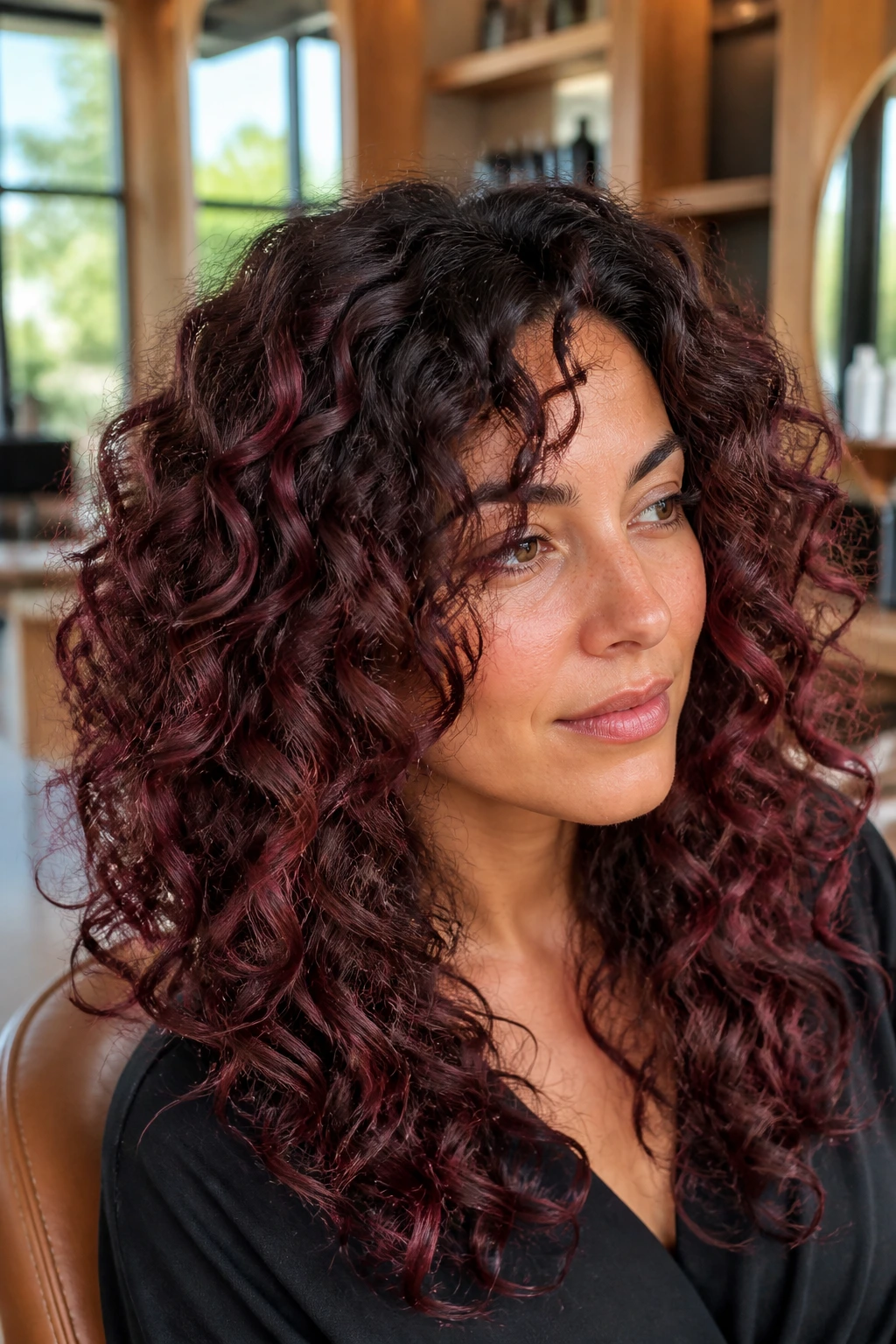
Curly hair changes the whole conversation. The curl pattern breaks up color in a way straight hair never can, so a burgundy balayage that looks bold on a flat swatch can read soft and expensive once it’s on spirals and coils.
Bordeaux is a smart shade for curls because it has enough depth to sit inside the curl shadow. A brighter red can sit on top of the pattern and feel loud. Bordeaux sinks into the shape and gives the hair an extra layer of richness. The result is movement, not streaks.
How to place it on curls
Ask for color painted on the outside curve of the curl, not packed through every inch. That keeps the shape visible and avoids a blotchy finish when the hair shrinks.
- Focus on the crown, outer layers, and face frame
- Leave some deeper brown between sections so the pattern stays visible
- Use a hydrating mask; curly hair needs more moisture after lightening
- Diffuse on low heat to show the color breaks
This is one of my favorite burgundy options, full stop. Curls and wine tones just get along.
12. Mulled Wine Highlights on Medium Brown Hair
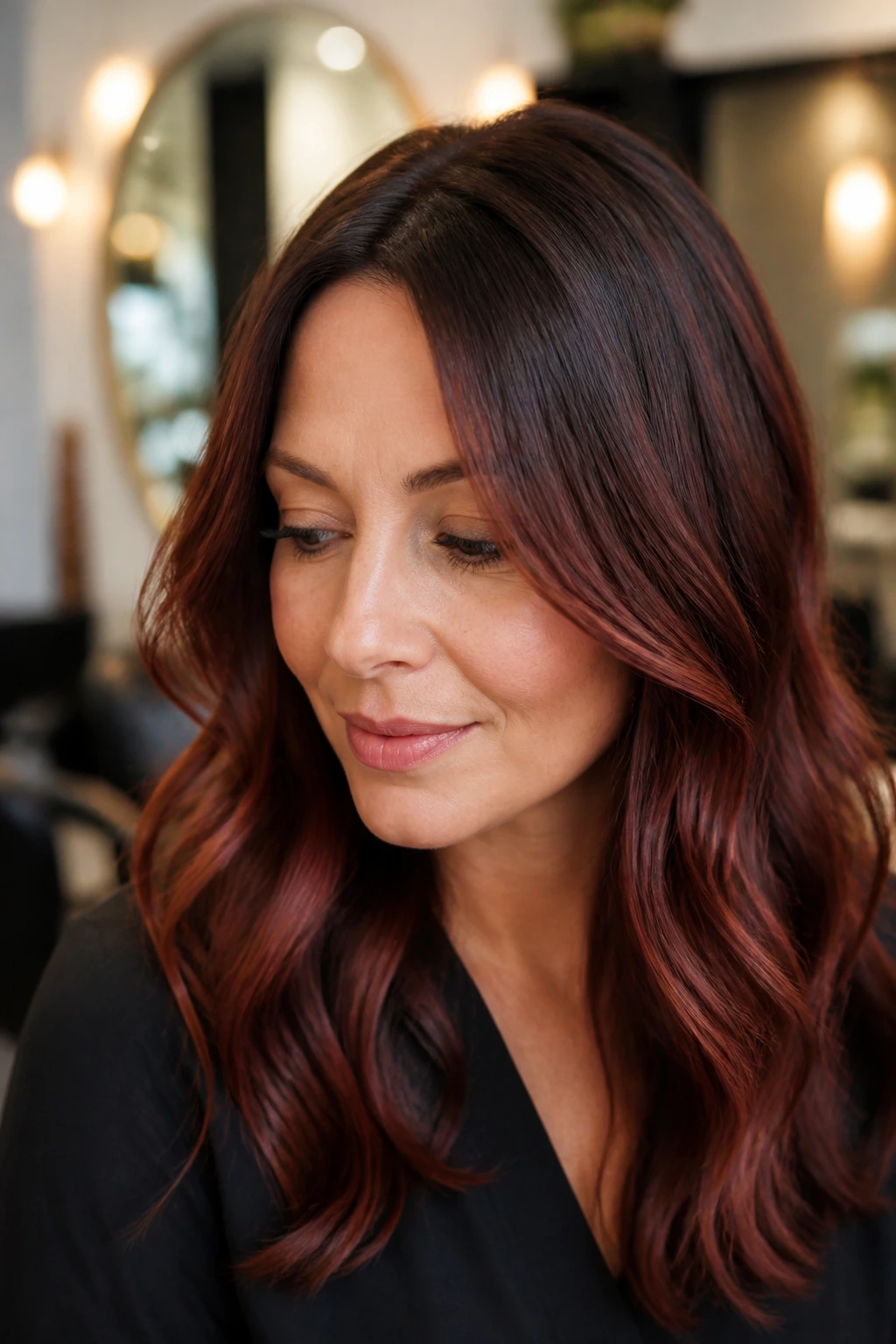
Mulled wine is the burgundy version that feels warm, spiced, and easy to wear. On medium brown hair, it can pick up enough red to look fresh while still staying anchored in brunette territory. That balance is why it reads so naturally.
The shade tends to sit a little softer than deep plum and a little warmer than merlot. If your base hair has gold, honey, or toasted almond undertones, the match can feel seamless. A cool blue-red would fight that warmth. Mulled wine leans into it.
I like this color most when the placement is broken up. Long uninterrupted strips can look flat after a few washes. Instead, think small sections through the top, a few wider pieces near the face, and some lower ribbons tucked into the lengths. The mix gives the hair a mottled, dimensional finish.
It also photographs well in real life because it changes with light. Indoors it can look like a soft brown-red. Outdoors, the red-violet wakes up.
13. Auburn-Burgundy Blend for Natural Brunettes
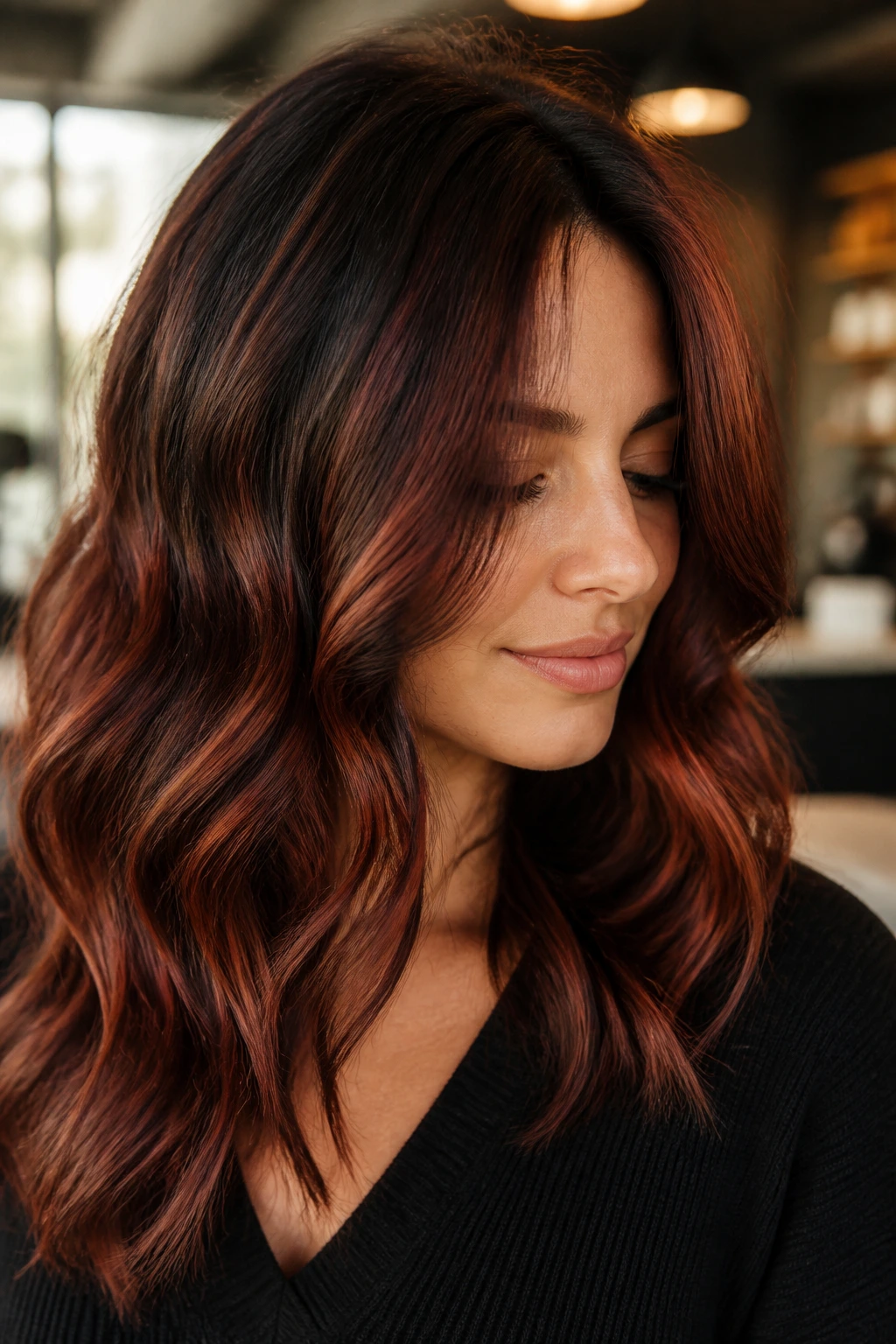
Auburn and burgundy are cousins, not twins. Auburn brings more copper and cinnamon. Burgundy brings more plum and wine. Put them together on a brunette base and you get a color that feels alive without tipping into bright red.
This blend is especially friendly to natural brunettes who want a change but do not want a huge jump. The copper side adds warmth around the face and tips. The burgundy side deepens the mids and gives the color some shadow. That push-pull keeps the hair from looking one-note.
Why it feels different from plain red
Plain red can flatten out on brown hair if the formula is too simple. Auburn-burgundy has more room to shift in light, so the hair keeps its depth.
- Best for warm or neutral skin undertones
- Works on level 4 to 6 brown hair
- Needs regular glossing to keep the copper from going dull
- Looks especially good on layered cuts and soft curls
If you’re torn between red and burgundy, this is the compromise I’d steer you toward. It gives you both moods in one head of hair.
14. Hidden Burgundy Underlights for Work-Friendly Color
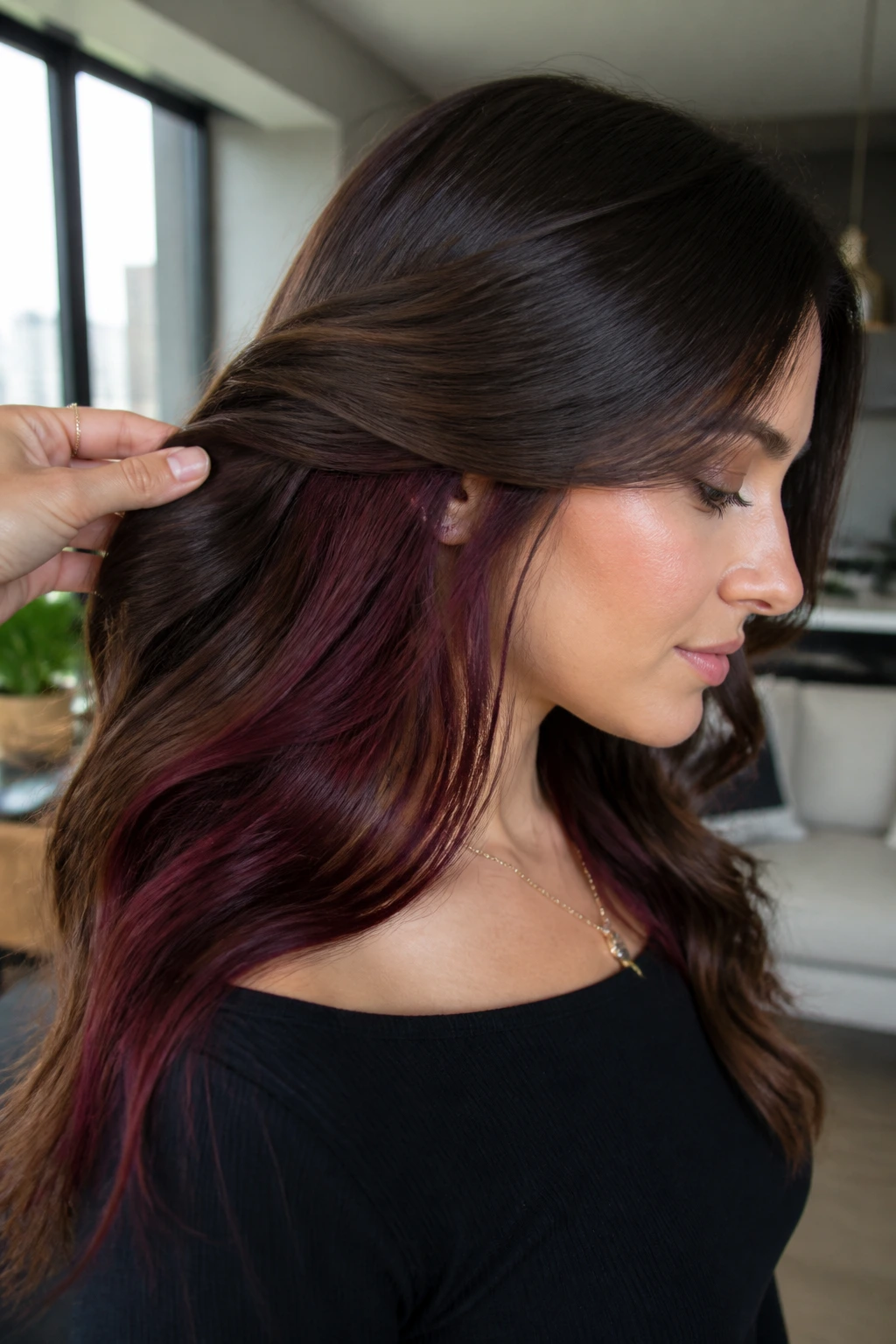
Hidden underlights are the answer when you want burgundy but do not want it on display all day. The top layer stays brown, and the color lives underneath, near the nape and lower sides. Wear your hair down, and it’s mostly a secret. Pull it up, and the burgundy suddenly shows off.
That kind of placement works for a lot of real lives. Office dress codes. School settings. Family dinners where you don’t want the first comment to be about your hair. You still get a vivid color, but you choose when it appears.
The best cut for underlights is one with enough internal movement to let the color peek through. Long layers help. Lob lengths can work too, especially when the ends swing. If the hair is too thick and blunt, the underlayer gets hidden almost all the time.
I’d also suggest a slightly darker burgundy here. A deep wine or berry tone ages better under the top layer than a brighter red. It fades more gracefully, and that matters when only part of the hair is getting attention.
15. Cool Plum Highlights for Ash Brown Hair
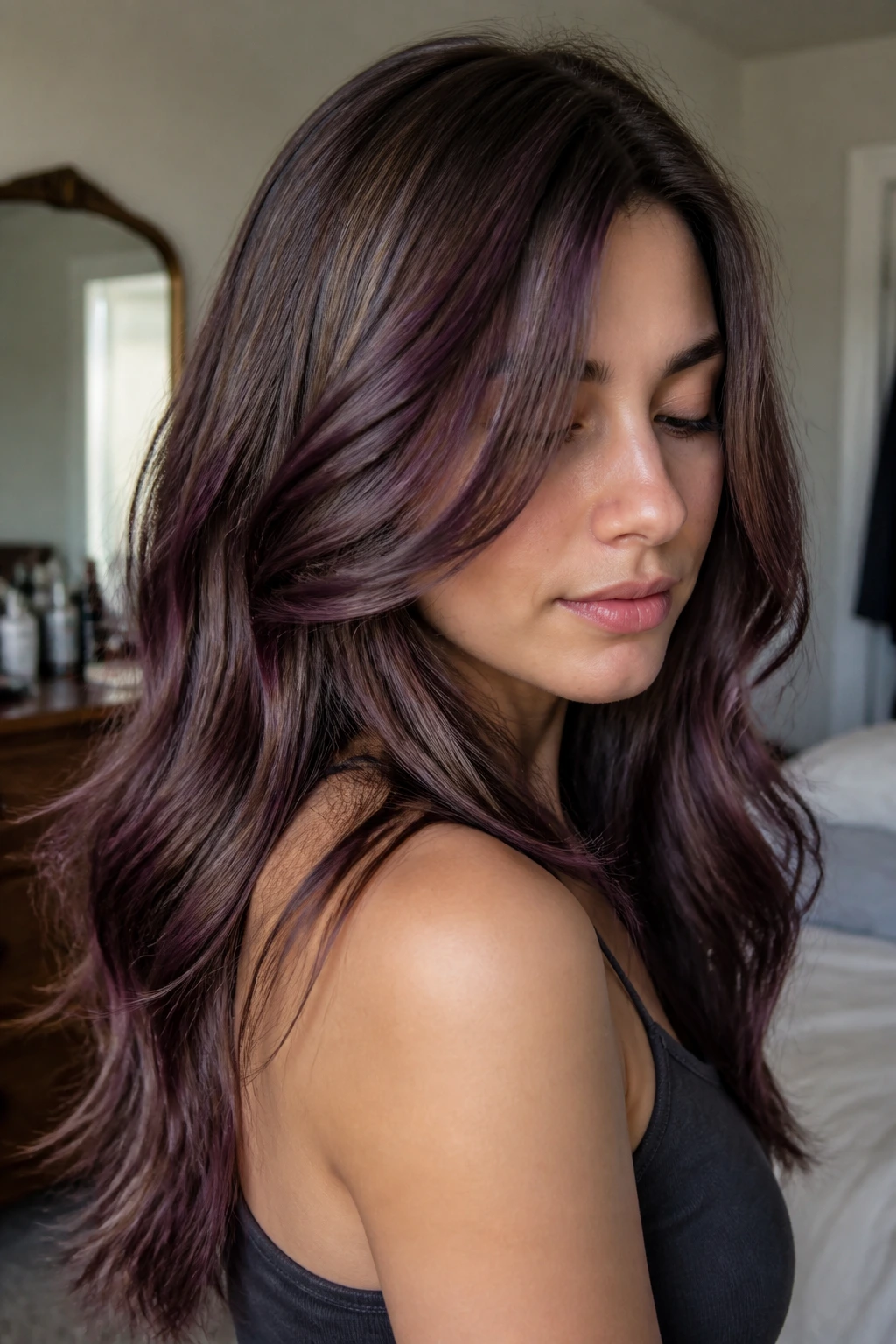
Ash brown hair can be tricky with warm red shades. Put too much copper against it and the whole thing looks off. Cool plum avoids that problem by leaning into the blue-violet side of burgundy.
The effect is subtle but sharp. The ash base keeps the hair smoky, while the plum pieces add contrast without fighting the undertone. That’s why this pairing feels tailored rather than random. It also suits people who wear silver jewelry, cooler makeup, or deeper neutrals in clothing.
What makes it work
A colorist should avoid overly gold or orange red pigments here. Cool plum needs a formula that stays blue-leaning, otherwise it will drift warm as it fades.
- Choose a cool burgundy glaze or highlight formula
- Ask for soft placement through the top half, not only the ends
- Skip aggressive purple shampoo if it makes the burgundy look dull
- Use cool water for rinses when you can stand it
This is a smart pick if you want dimension without warmth. It’s polished, but not stiff.
16. Red-Violet Tips for Lob and Bob Cuts
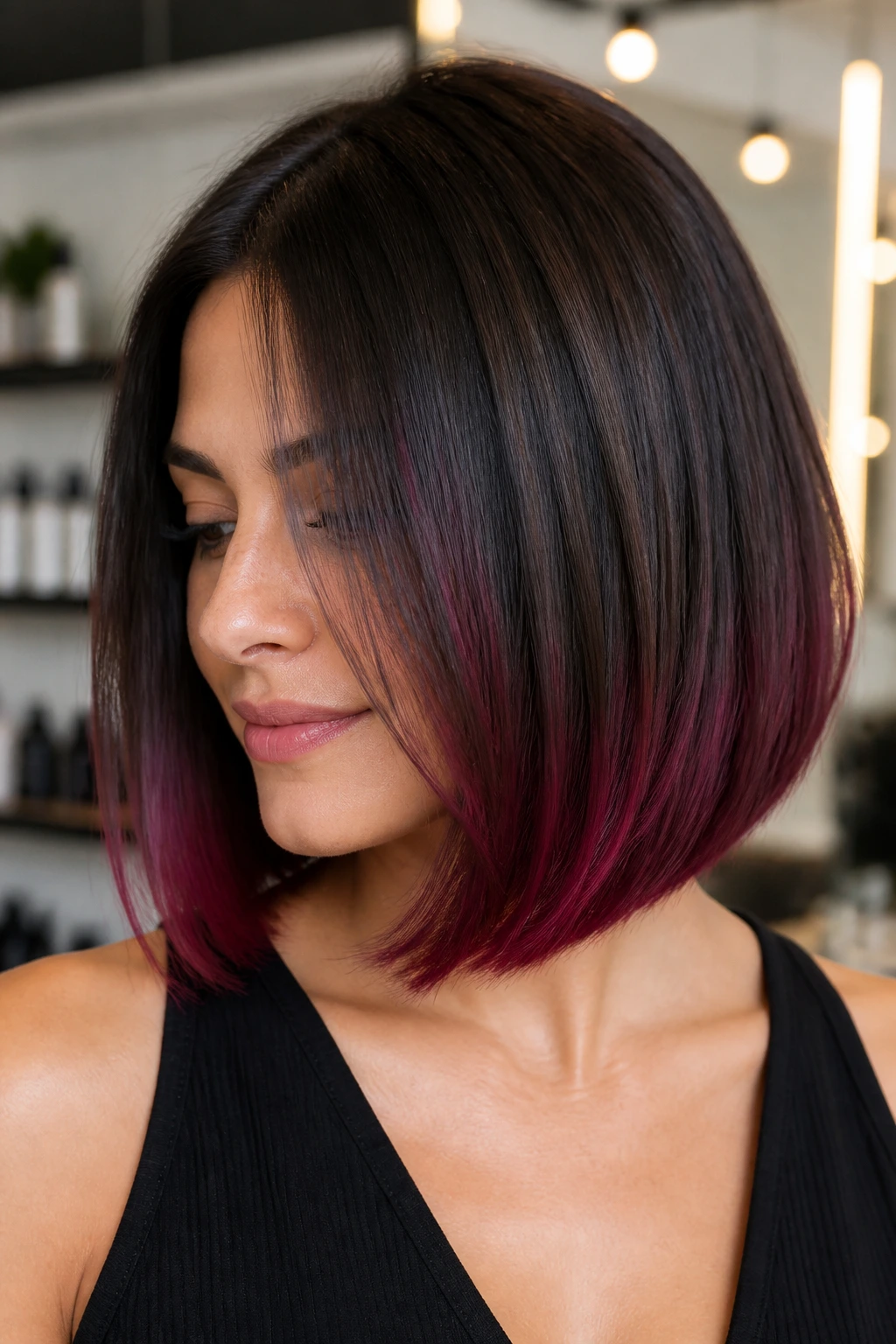
Short hair can take burgundy harder than long hair does. A lob or blunt bob gives the ends a clear line, so red-violet tips become a design choice instead of a hidden detail.
The shape is half the success here. On a bob, the eye lands right at the edges, which means the tips carry most of the visual weight. A red-violet finish at the bottom 2 to 3 inches can make the whole cut look sharper and more deliberate. On a lob, the same idea gives a softer, slightly grown-up version of the look.
I like this placement because it stays neat. You can keep the roots dark and neutral while the ends pick up burgundy, so the color doesn’t take over the whole head. That also makes maintenance easier if you hate living in the salon chair.
A clean blowout shows the shape best. A tousled wave works too, but on shorter cuts, the ends need to look polished or the red can seem random. Crisp lines help.
17. Burgundy Ribbon Highlights on Straight Brown Hair
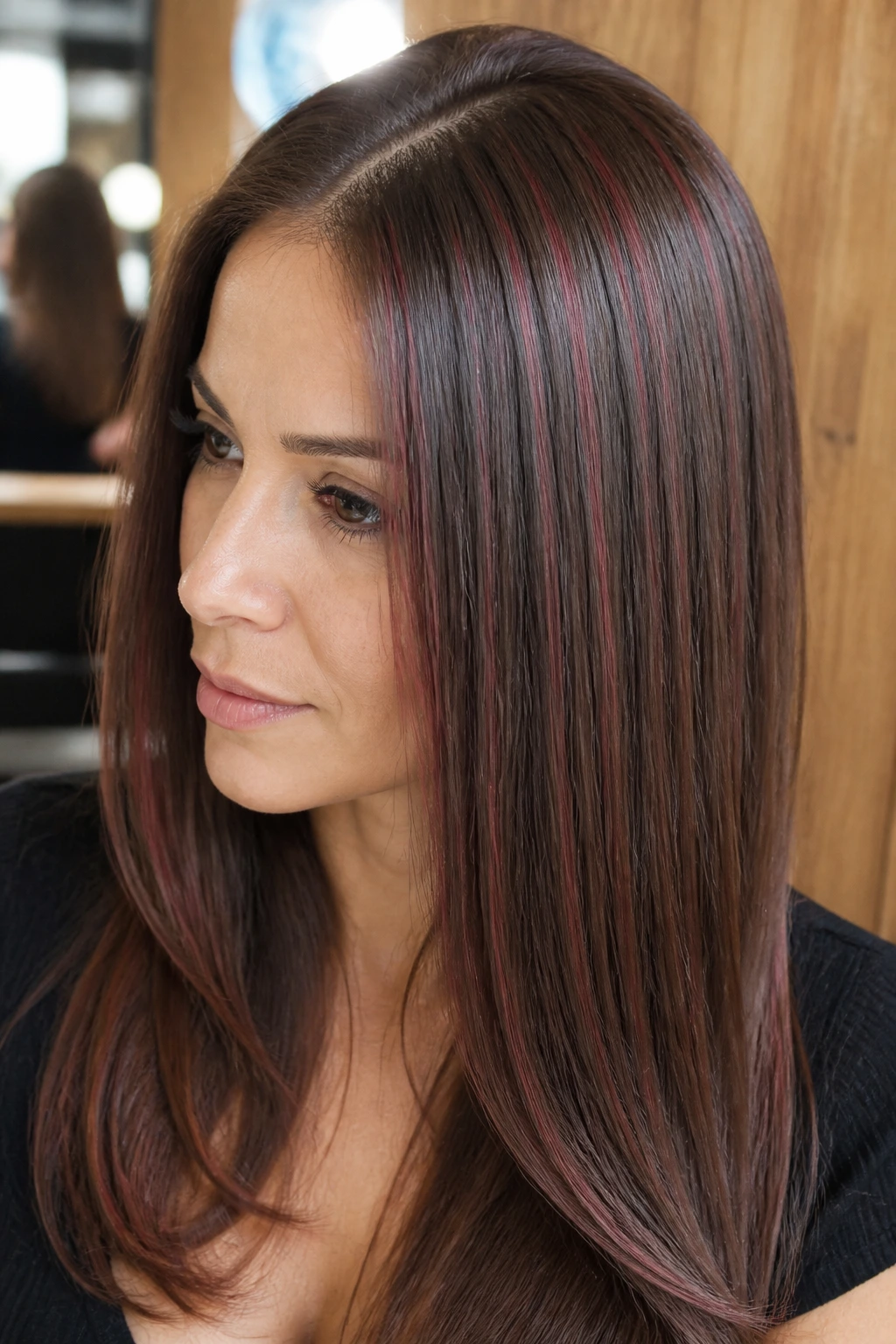
Straight hair shows everything. Every line. Every section. Every mistake.
That sounds harsh, but it’s why burgundy ribbon highlights can look so good on it. When the placement is neat and staggered, the straight texture turns into a glossy surface where the red-violet ribbons move like thin brushstrokes. You do not need a lot of color for impact. You need clean placement.
The best version uses narrow sections rather than broad pieces. Keep some spacing between the highlights so the brown base still does the heavy lifting. If the burgundy is painted in bands that run too close together, straight hair can look solid and heavy instead of dimensional.
A side part helps if you want the ribbons to show more. A center part gives a more even, symmetrical finish. Either way, the finish should be smooth. Flat iron waves are fine, but keep them soft. Tight bends can make the color look choppy.
This is a good case for a gloss between appointments. Straight hair reflects everything, so faded red shows faster than on curls.
18. Smoky Burgundy with Caramel Threads
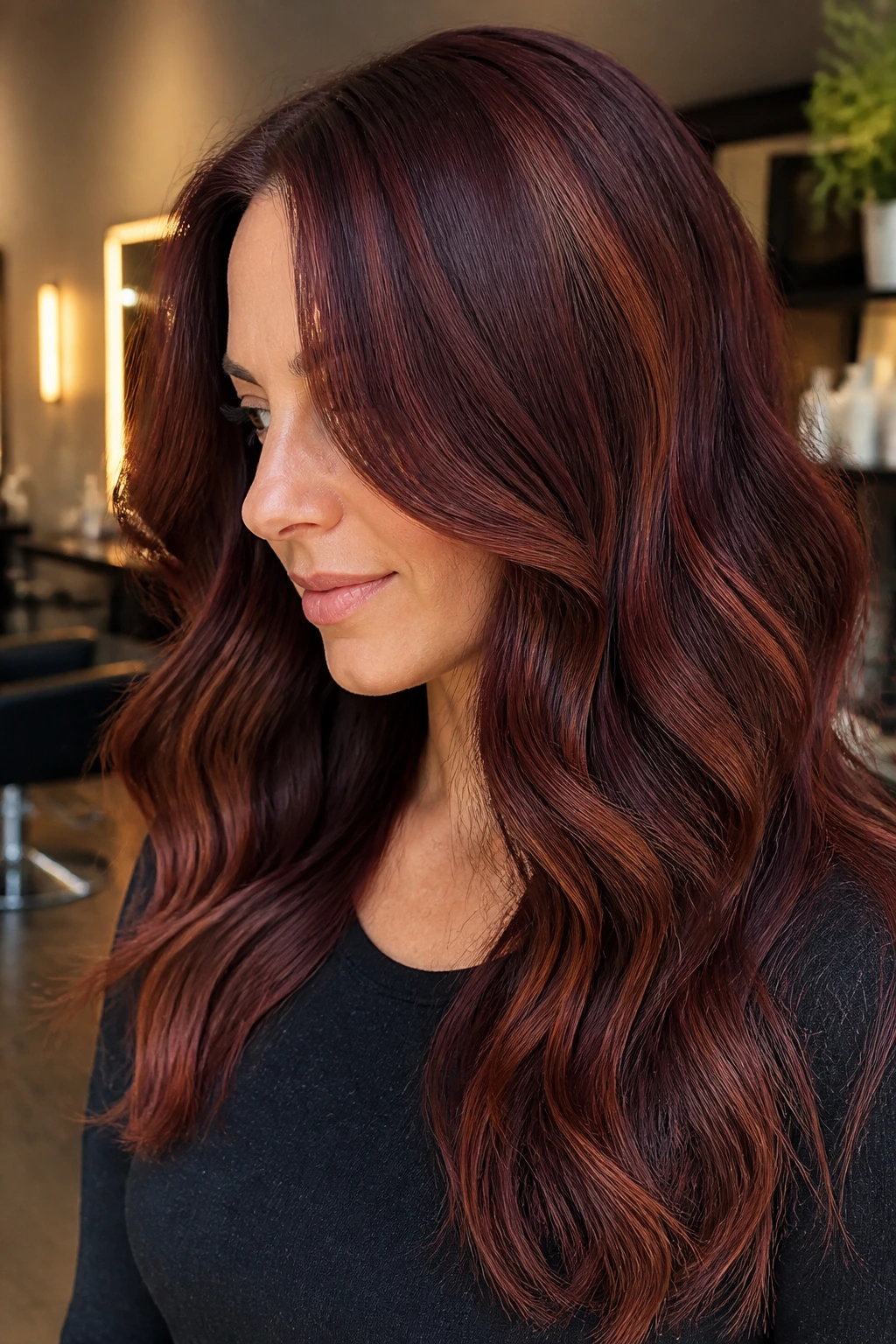
Smoky burgundy is what happens when red-violet gets muted a little. Add caramel threads to that and the hair starts to look like a layered drink rather than one flat color. The contrast is warmer, softer, and a bit more lived-in.
This mix works because the caramel lifts the brown base while the smoky burgundy keeps it grounded. If all the warm pieces are caramel, the result can drift too blonde for a brunette who wants depth. If all the color is burgundy, the look can feel heavy. Together, they split the difference.
I’d choose this for someone who likes warm hair but hates brass. The caramel brings light around the face and through the ends, and the burgundy sits between the pieces like shadow. That’s what gives the color its movement.
It also plays well with loose waves and big blowouts. The lighter threads bounce against the darker wine shade, which makes the hair look fuller. If your natural base is medium brown, this may be one of the easiest ways to try burgundy without committing to a dramatic all-over change.
19. Glossy Sangria Tones for Dimensional Brunette Hair
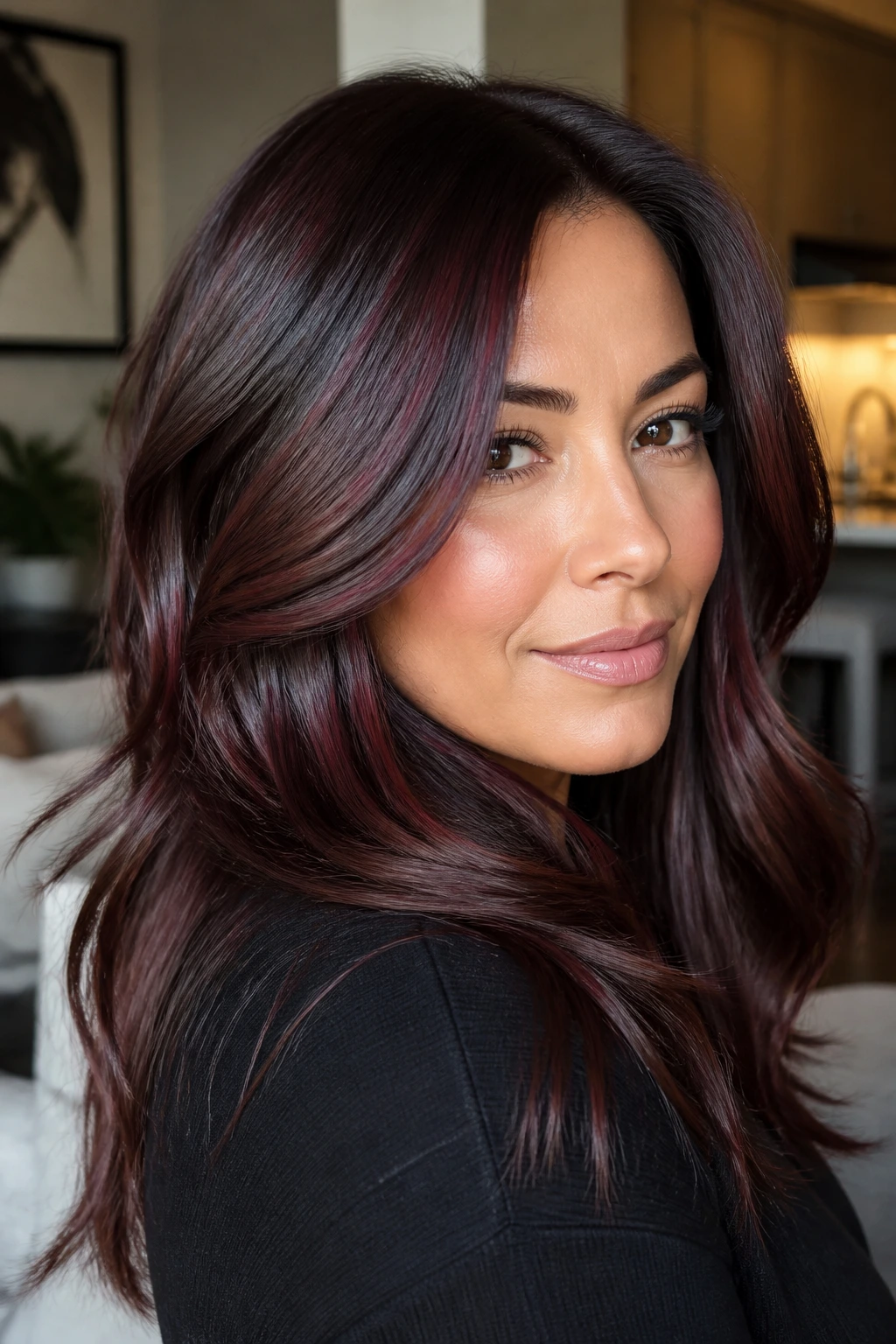
Sangria tones are for the person who wants the hair to look shiny first and colored second. The shade lands between berry, red wine, and plum, which gives brunette hair a polished finish that still reads as brown in low light.
What makes sangria different
It is deeper than cherry and less brown than mahogany. That middle ground matters because it creates the feeling of depth without forcing every strand to shout for attention.
A sangria gloss is especially nice on layered brunettes. The shorter pieces around the face catch the brighter red-violet notes, while the longer lengths keep the richer wine base. If the hair has a little wave, the effect gets even better because the color breaks across the bend.
- Good for medium to dark brown bases
- Best maintained with color-safe shampoo
- Works well as a gloss refresh every 4 to 6 weeks
- Looks strongest on hair with a smooth finish or healthy ends
I’d call this the elegant choice, although that word gets abused. What I mean is simple: it looks like the hair has depth, shine, and shape, not just dye.
20. Face-Framing Burgundy and Crown Glow
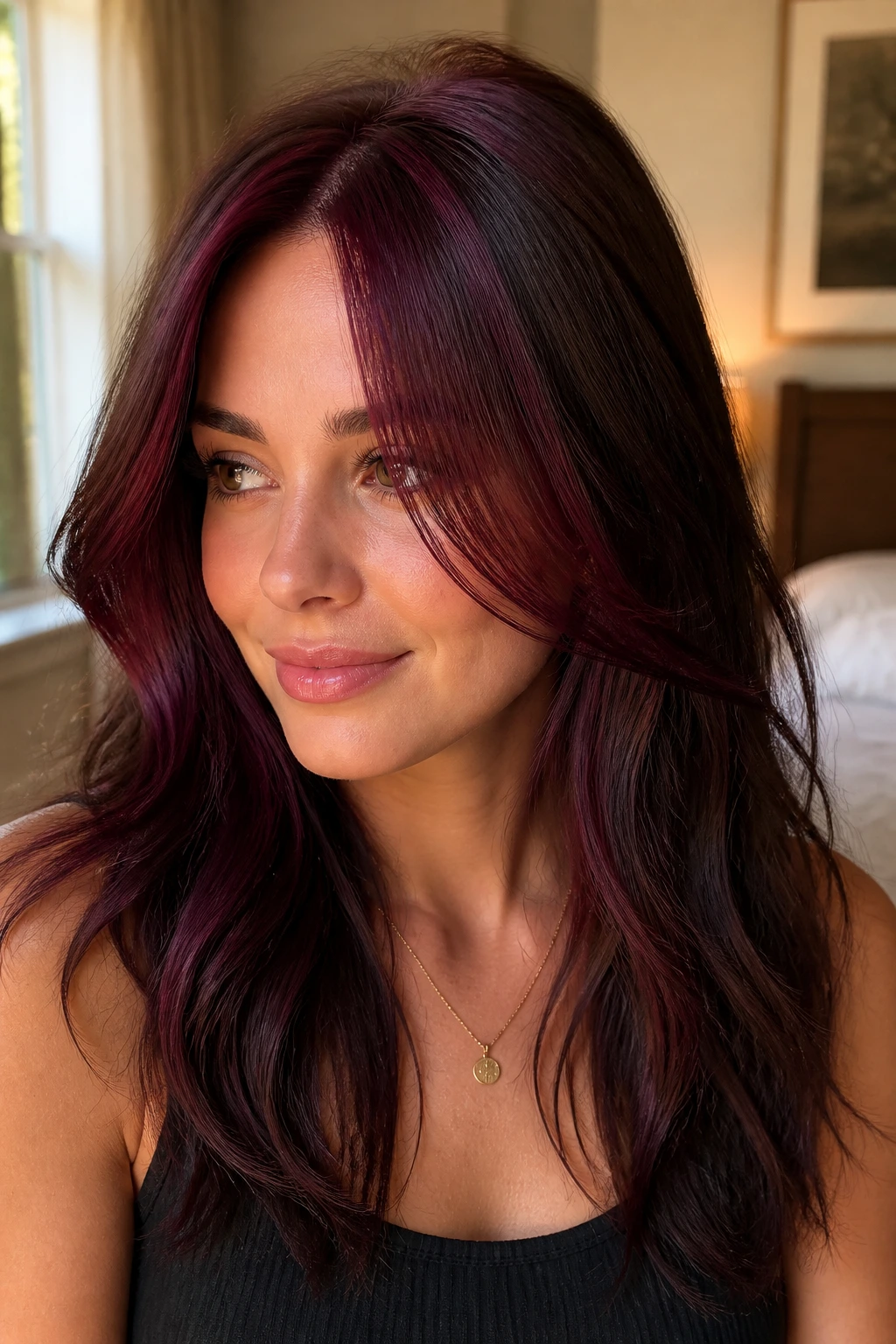
If you only want one burgundy idea, start here. A few face-framing pieces and a light crown glow give brown hair the most payoff for the least risk. The front changes the face. The crown adds movement. The rest of the hair stays yours.
This approach works because it follows the way hair naturally shifts around the head. The front pieces get the strongest light, so burgundy there looks alive. A soft glow through the crown keeps the top from looking flat when the hair is parted or tucked back. It is not a loud look, and that is exactly why it wears well.
I’d ask for the lightest burgundy near the cheekbones, then a softer scatter of color 1 to 2 inches behind the hairline. Keep the back mostly brunette. That balance makes the style easy to live with, especially if you want color that still behaves in a braid, bun, or ponytail.
For most brown-haired people, this is the smartest place to begin. It gives you the depth of burgundy highlights without asking the whole head to do the heavy lifting. And if you end up loving it, you can always add more later.
