



Pink highlights for brown hair can look soft, sharp, glossy, playful, or flat-out loud, and the brown base does half the styling work before you even touch a curling iron. That’s the part people miss. Pink on blond hair reads one way; pink on brunette hair can look richer, deeper, and a lot more expensive when the placement is smart and the tone suits the base.
The trick is not picking “pink” as one big category. Dusty rose, blush, magenta, berry, peach-pink, and neon pink all sit in different lanes. On brown hair, those differences matter even more because the darkness of the base changes how much the color pops, how long it stays visible, and whether it feels soft or punchy. A few fine babylights near the part can look delicate. A wide money piece can turn into a whole mood.
Brown hair also gives you room to play with lowlights and babylights instead of going all-in on a full head of color. That’s the fun part, honestly. You can keep most of the brunette depth and still fold in pink at the ends, under the top layer, around the face, or in a few strategic slices. And yes, that flexibility is why pink highlights for brown hair keep showing up in salons and on street-style heads alike.
The best versions usually respect the haircut, the undertone of the brown, and the amount of upkeep you’re willing to live with. A shag can take a loud neon tip. A long layered cut can carry a rosy melt. Fine hair often looks fuller with tiny pink babylights, while thick curls sometimes need wider ribbons so the color doesn’t disappear into the texture. That’s where the good stuff starts.
1. Soft Rose Balayage
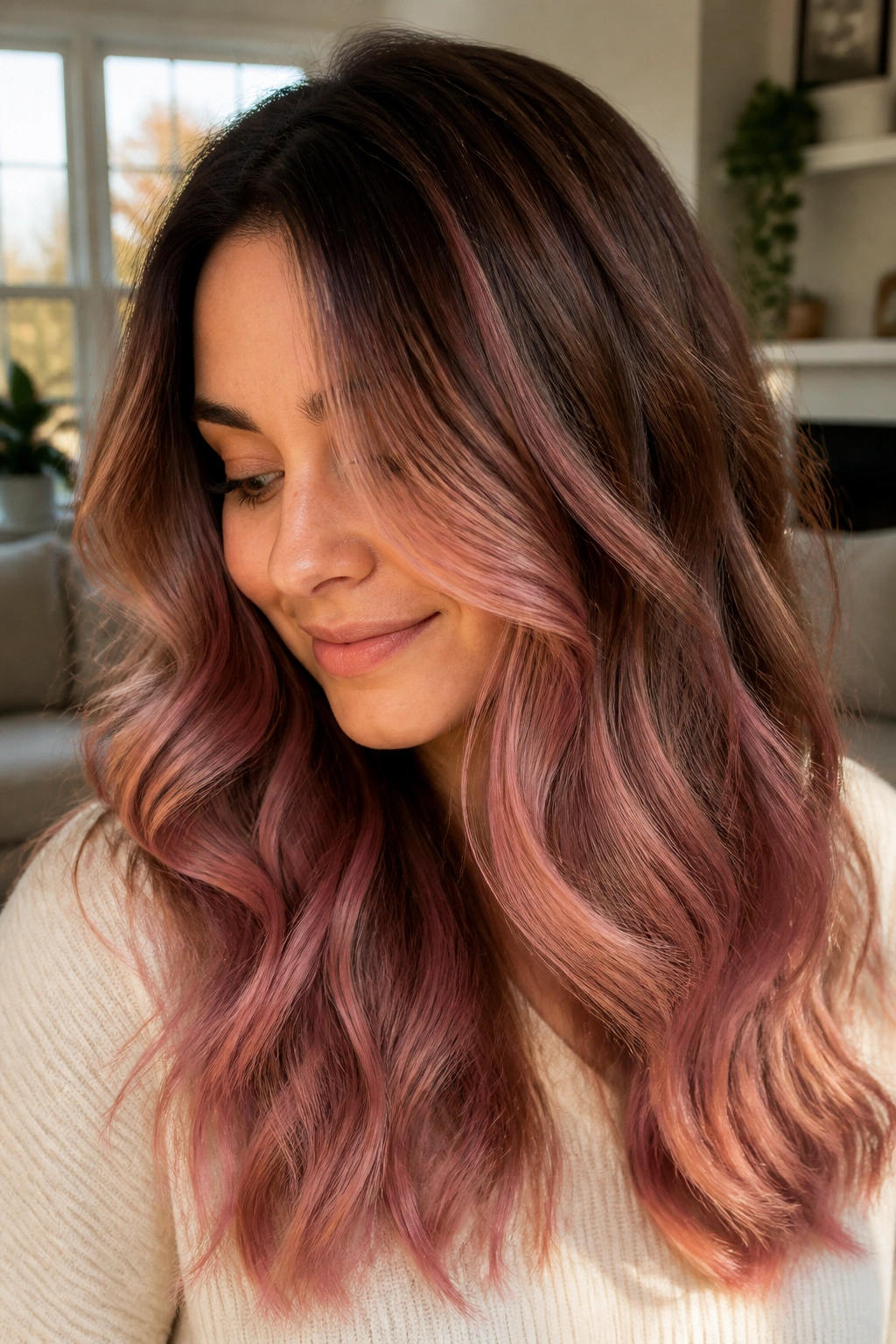
Soft rose balayage is the easygoing cousin of brighter pink color, and it may be the prettiest place to start if you want pink highlights for brown hair without a hard edge. The painterly placement lets the brown stay visible at the roots and through the mid-lengths, while the rose tone shows up like a wash of color in sunlight.
Why It Works on Brunettes
Balayage gives the pink room to breathe. Instead of striping the hair, the color sits in longer, feathered pieces that move when you do. On medium brown or chestnut hair, that soft rose reads like a warm tint rather than a costume color, which is exactly why it feels wearable.
- Best on level 4 to 6 brown hair
- Looks strongest on wavy and layered cuts
- Needs a gloss refresh every 4 to 6 weeks
- Pairs well with a center part or loose bend
Pro tip: Ask for the pink to start lower than the cheekbone if you want the grow-out to stay soft.
2. Dusty Pink Face-Framing Pieces
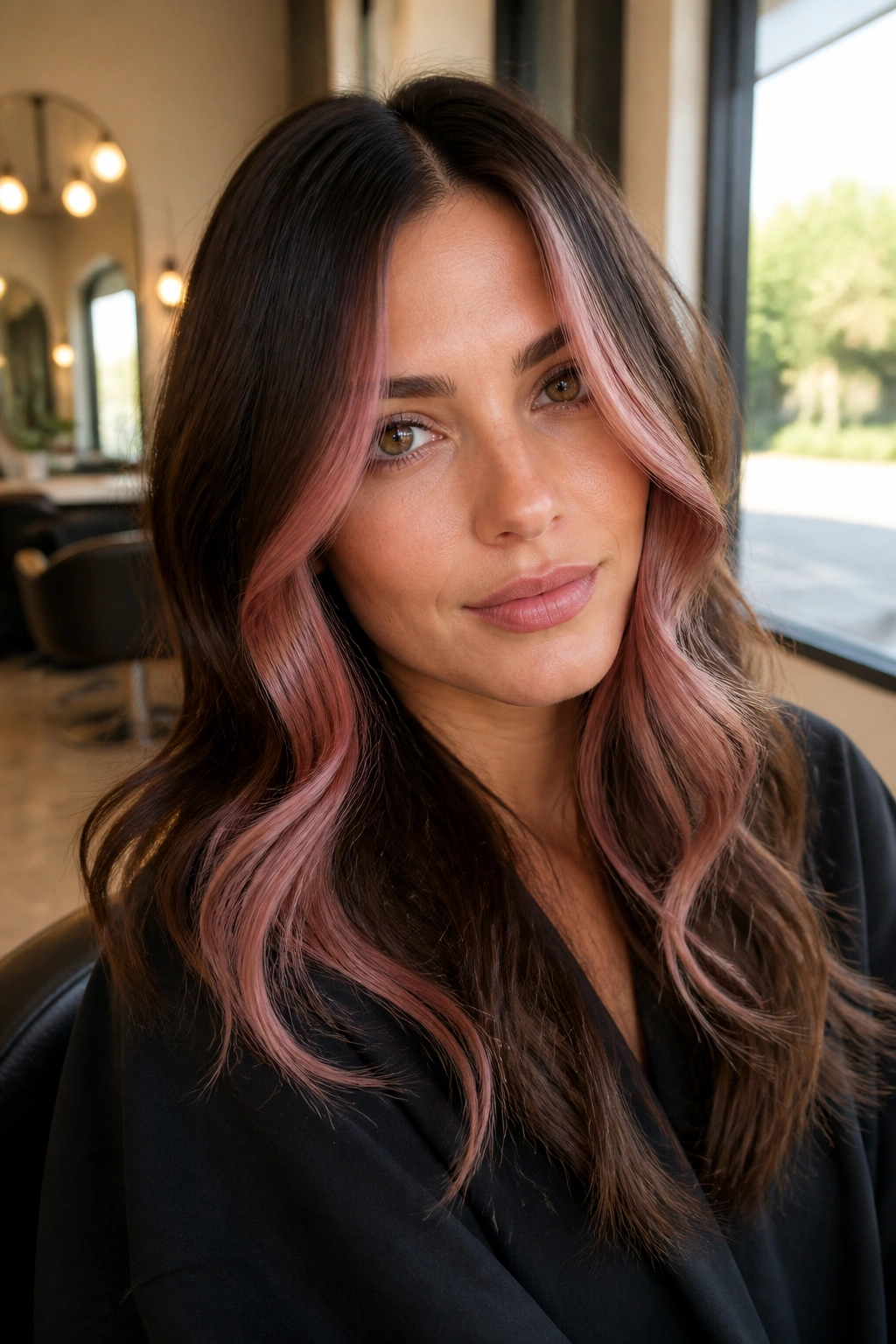
This is the fastest way to make brown hair feel fresh. Dusty pink face-framing pieces pull attention right to the eyes and cheekbones, which is why they work so well when you want a change without coloring the entire head.
The tone matters here. A dusty pink with a muted, slightly smoky finish looks more polished on brunettes than a candy shade that sits too bright against deeper hair. I like this look best when the two front sections are a little lighter than the rest, with the pink painted from mid-length to the ends so the roots stay grounded.
Wear it with a messy blowout, and it looks lived-in. Wear it straight, and the front pieces become cleaner and more graphic. Either way, the color should sit like a frame, not a block. That difference sounds small, but it changes everything.
3. Cherry Blossom Babylights
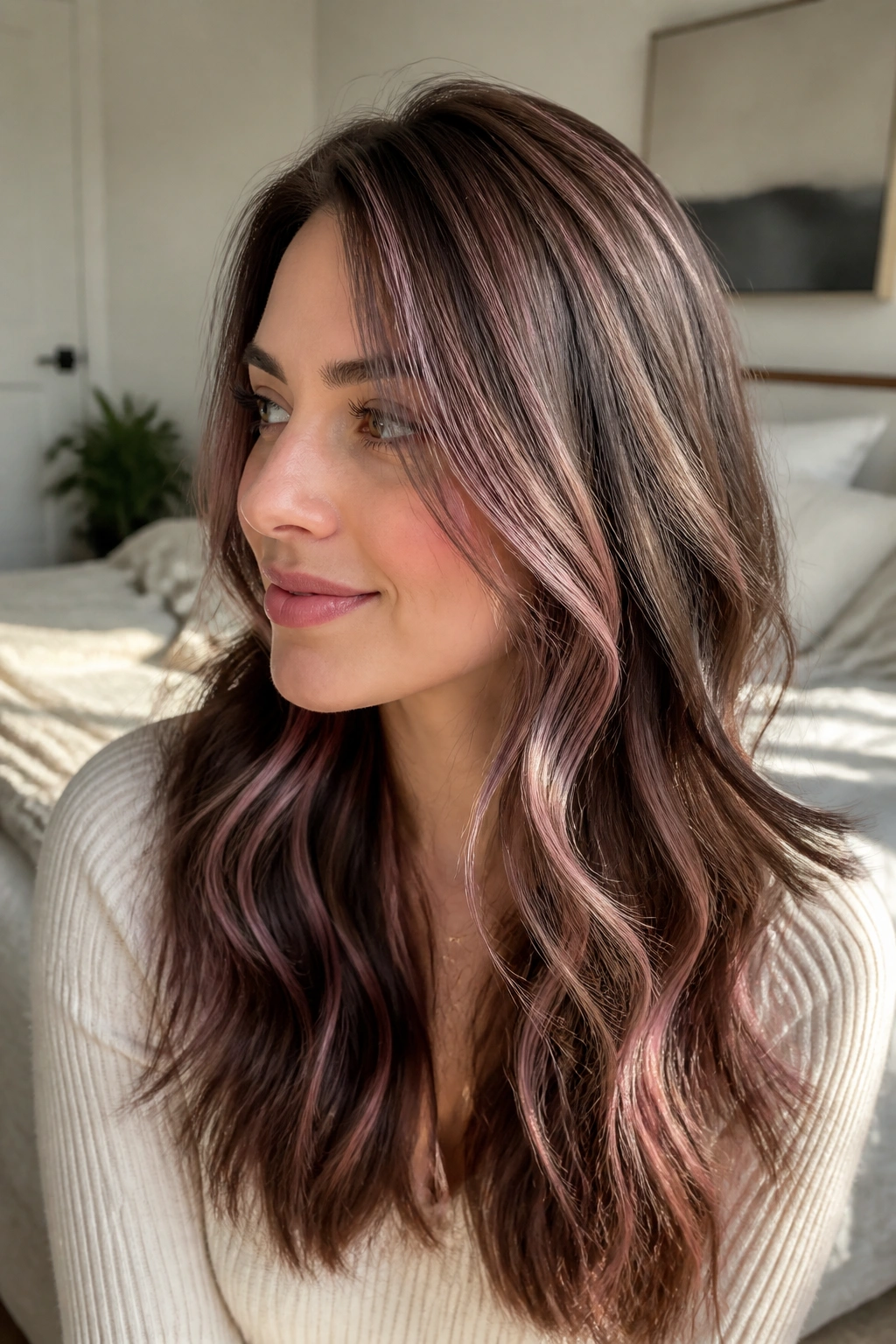
Why do cherry blossom babylights look so good on brown hair? Because they give you the hint of pink without stealing the whole show. The color lands in tiny, fine strands, so the brunette base still runs the conversation while the pink flashes in motion.
That makes this option a smart choice for first-timers or anyone with fine hair. The result is airy, not heavy. When the babylights are placed close to the part, around the crown, and through the top layers, the hair can look fuller and a little more textured even before you style it.
How to Ask for Them
Ask for micro-fine foil or painted sections that are no wider than a pencil. Then ask for a soft cherry blossom toner, not a neon pink glaze. If your brown hair is dark, the stylist may need to lift a few pieces first so the pink does not disappear. Keep the placement sparse. That’s the whole point.
4. Magenta Money Piece
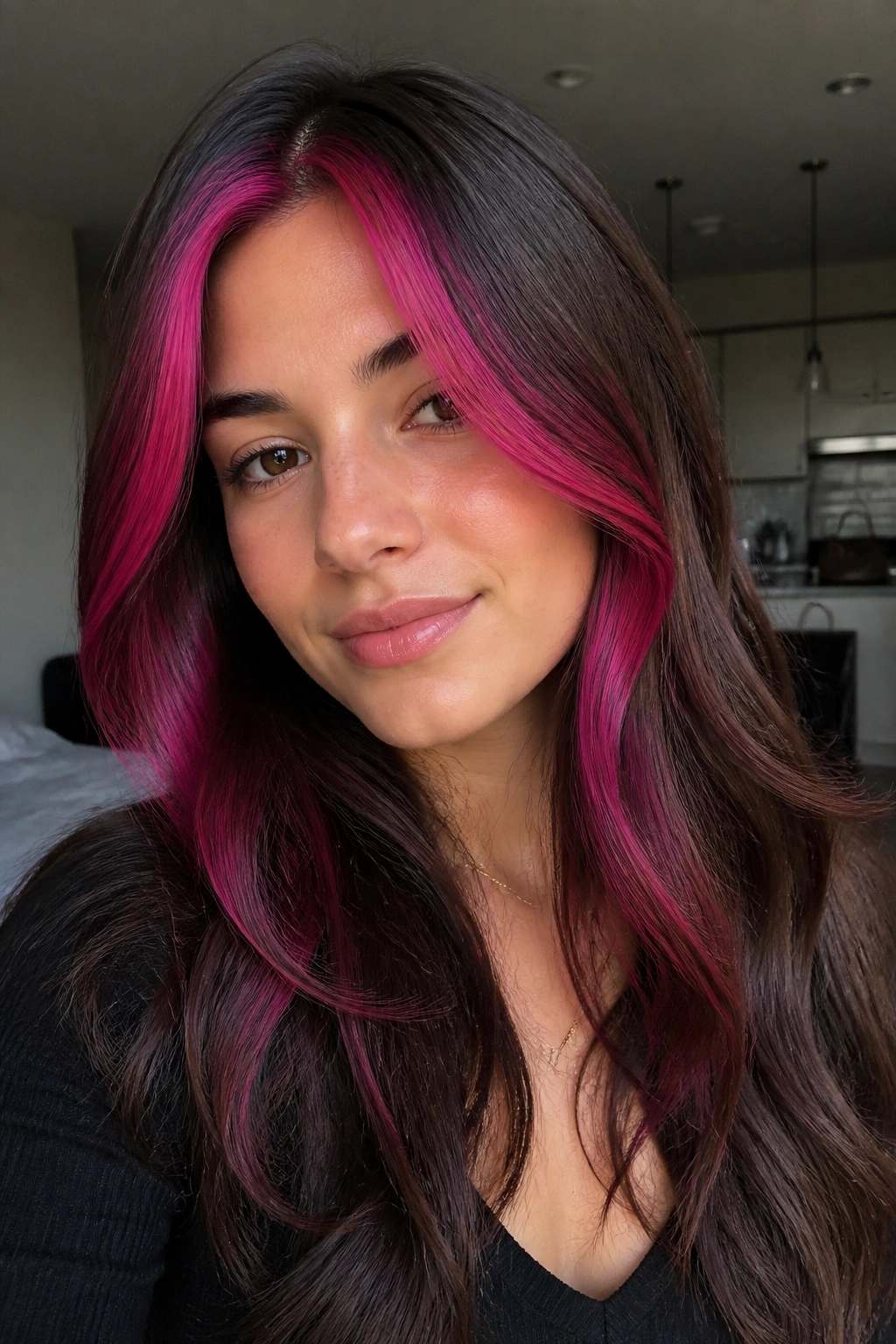
A magenta money piece is not shy. It sits right at the front, usually in two bold sections, and it changes the whole face shape of a cut in one shot. On brown hair, that kind of contrast can look sharp and cool, especially if the base is espresso or dark chocolate.
What Makes It Stand Out
The front pieces should be bright enough to register against the brunette, but not so wide that they swallow the haircut. The best versions are about 1 to 1.5 inches wide on each side, starting near the hairline and dropping through the front layers. That placement gives you drama without making the whole head look overprocessed.
A magenta money piece is a good match for blunt lobs, long layers, and center parts. It is less forgiving on a very soft round cut, where the color can feel too heavy at the face. Still, if you want a pink highlight idea that people notice from across the room, this is the one.
5. Rose Gold Ribbon Highlights
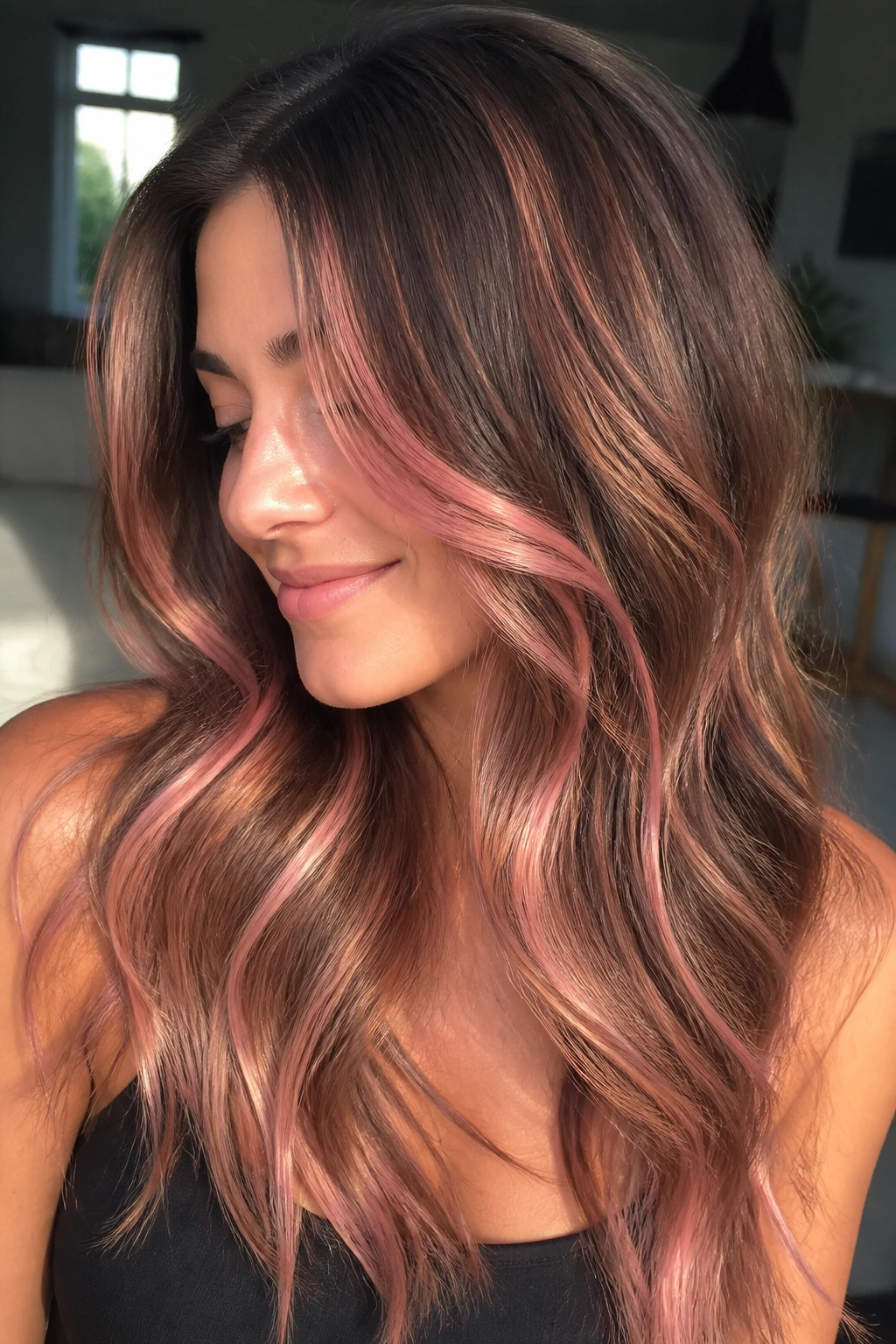
Rose gold ribbon highlights are the calm, polished version of pink on brown hair. Think of long ribbons of color woven through the mids and ends, with a warm metallic glow that sits somewhere between blush, copper, and champagne.
What I like about this shade is that it flatters a huge range of brunettes. Warm brown hair gets a glow. Cooler brown hair gets a little warmth without turning orange. And because rose gold carries both pink and gold, it can blend better than a pure pink on deeper hair.
The finish matters. These highlights look best when they’re not too chunky and not too pale. A soft blowout or loose bend shows off the dimension because the color moves in and out of light as the hair shifts. Straight hair can wear it, too, but the ribbon effect gets more obvious with texture. That’s where the charm is.
6. Strawberry Milk Peekaboo Layers
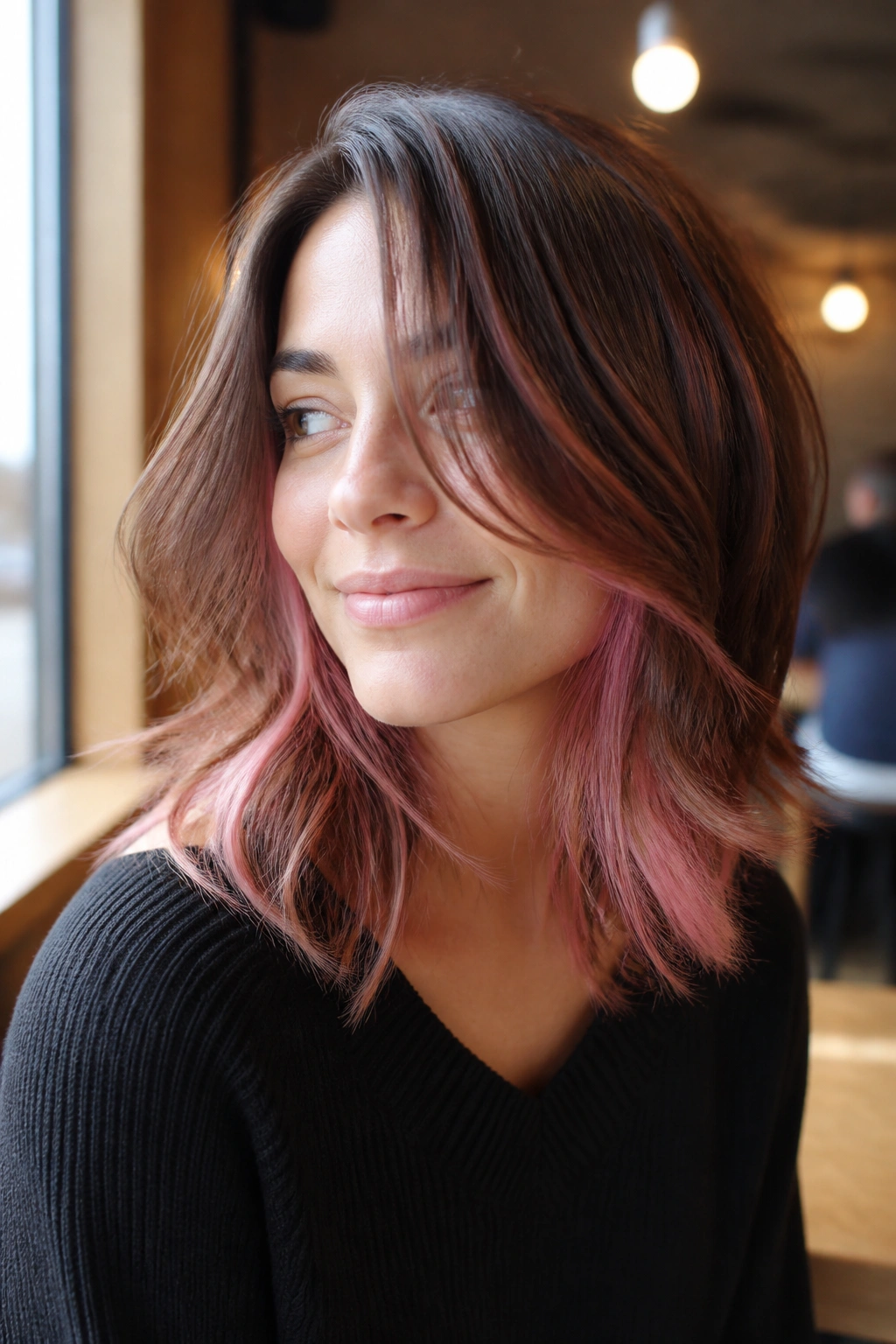
Peekaboo color is for people who like a little secret. Strawberry milk pink tucked under brown layers gives you that hidden flash when the hair flips or moves, and it feels cooler than a surface-only highlight because you choose when to show it.
This is a smart pick if you need your color to stay a bit understated at work or in formal settings. The top layer keeps the brunette story intact, while the underneath sections hold the pink. A shoulder-length cut, layered lob, or long shag makes this especially fun because the pink peeks out at the ends and around the interior bends.
Unlike surface highlights, peekaboo color does not need to be loud to be satisfying. It just needs movement. If you wear your hair half up, tuck one side behind the ear, or braid it, the pink shows up in a way that feels deliberate, not random.
7. Pastel Pink Dip-Dyed Ends
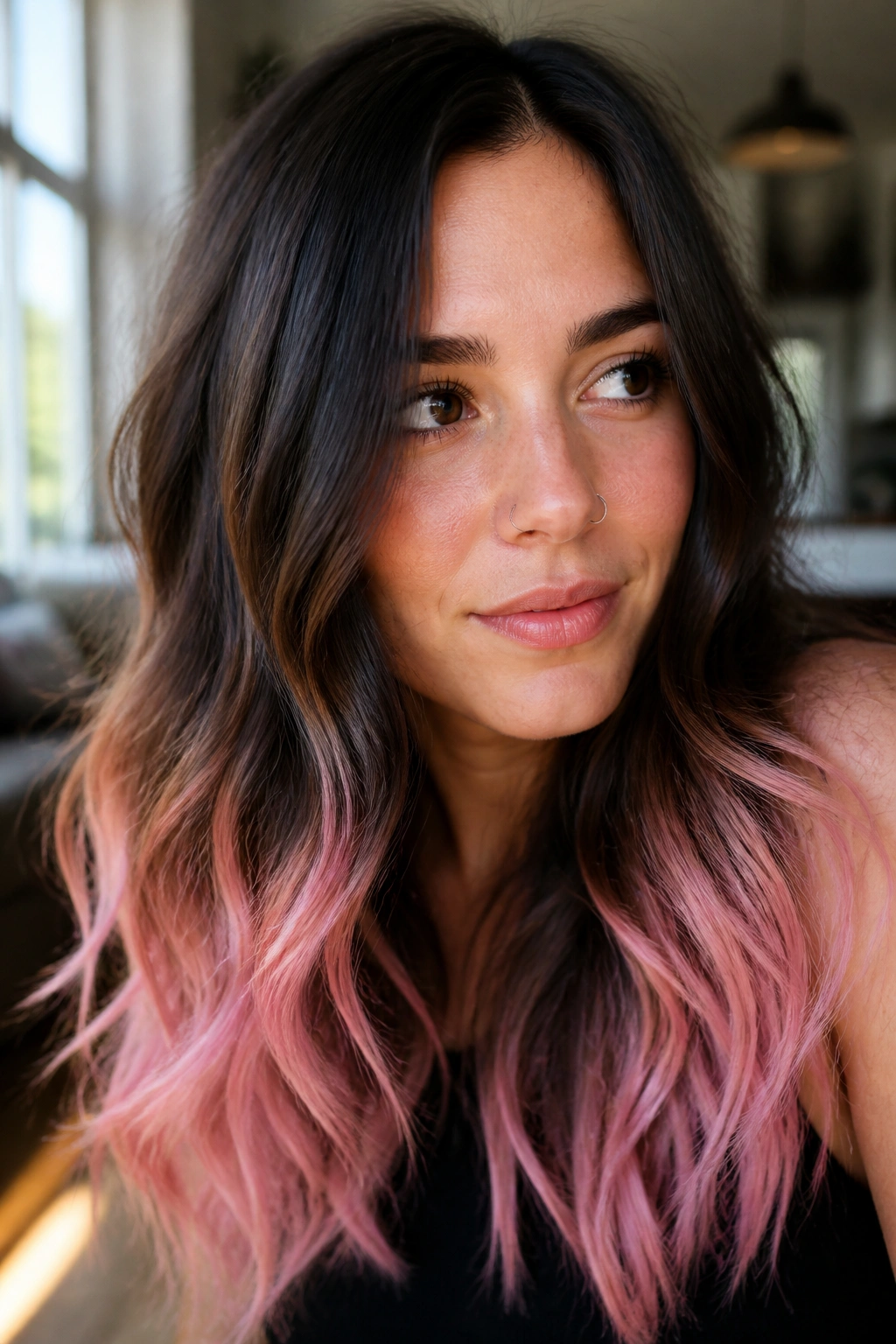
Pastel pink dip-dyed ends are easy to read and hard to ignore. The color sits mostly on the bottom few inches, so the brunette base stays in charge while the ends take on that soft cotton-candy fade. On long brown hair, the look can be playful without feeling busy.
What to Watch For
- Works best when the ends are pre-lightened to a pale blonde
- Needs a gentle sulfate-free shampoo
- Shows best on straight or slightly waved hair
- Looks cleaner if the last 2 to 4 inches are the lightest part
The dip-dyed effect can look messy if the line is too harsh, so the fade should be blurred upward a little. That small bit of blending keeps the ends from looking like they were dipped in paint and forgotten. If you like a low-commitment color change with a clear pink payoff, this one does the job.
8. Mauve Melt on Chocolate Brown
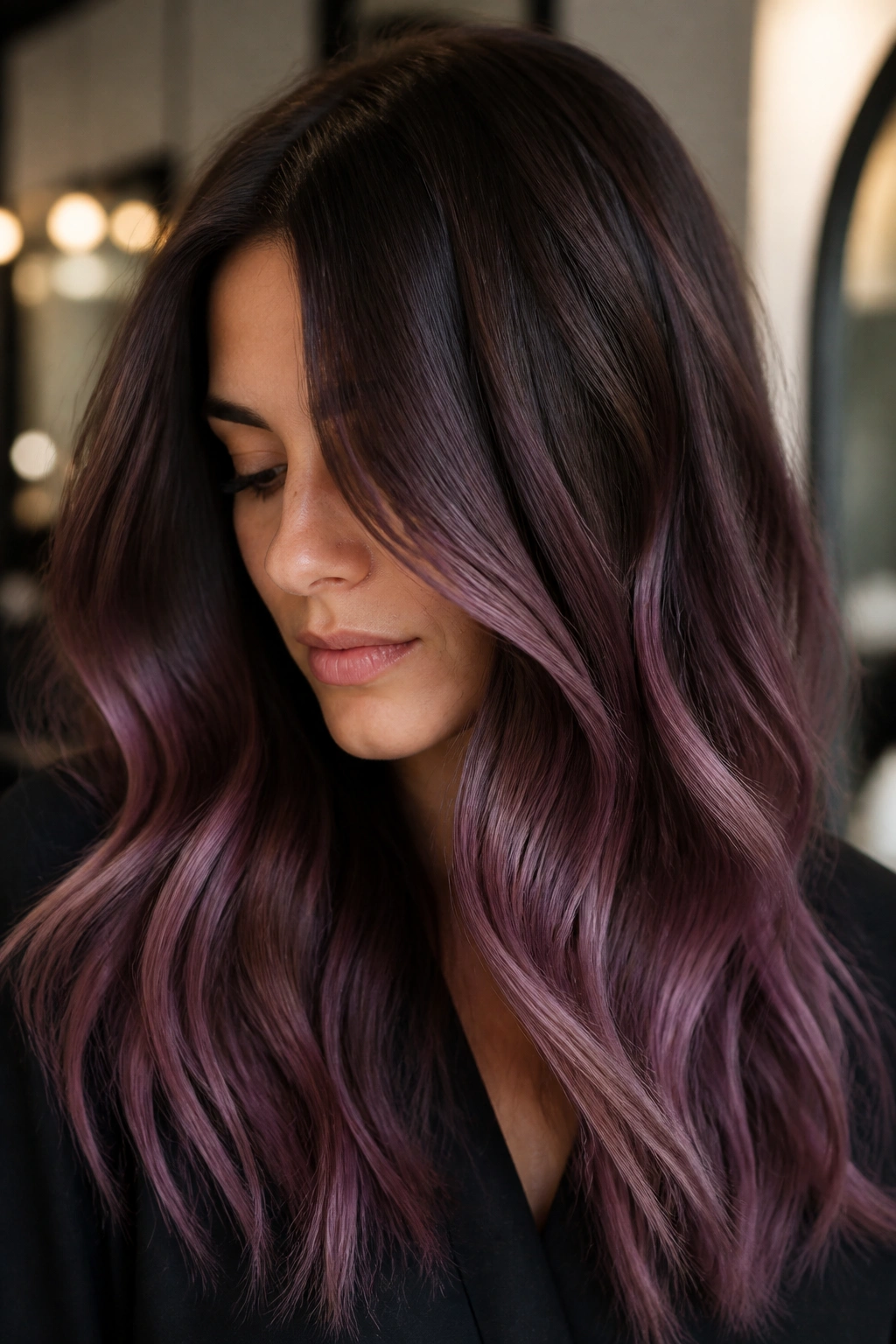
Mauve is the serious, smoky shade in the pink family, and chocolate brown hair gives it a gorgeous place to land. A mauve melt runs from the brown root into a muted rose middle and ends in a deeper pink-violet finish, so the whole head looks like one long gradient instead of separate blocks.
The reason this works so well is simple: mauve holds its shape. It doesn’t scream for attention the way neon does. It sits deeper, and that depth plays nicely with brunette color, especially when you want the hair to look rich and slightly moody.
It’s also a kind shade for grow-out. The root area can stay dark, and the pink fades into the brown instead of shouting where the salon visit ends. If you’re the type who likes color that looks even better after a few washes, mauve is worth a close look.
9. Bubblegum Underlights
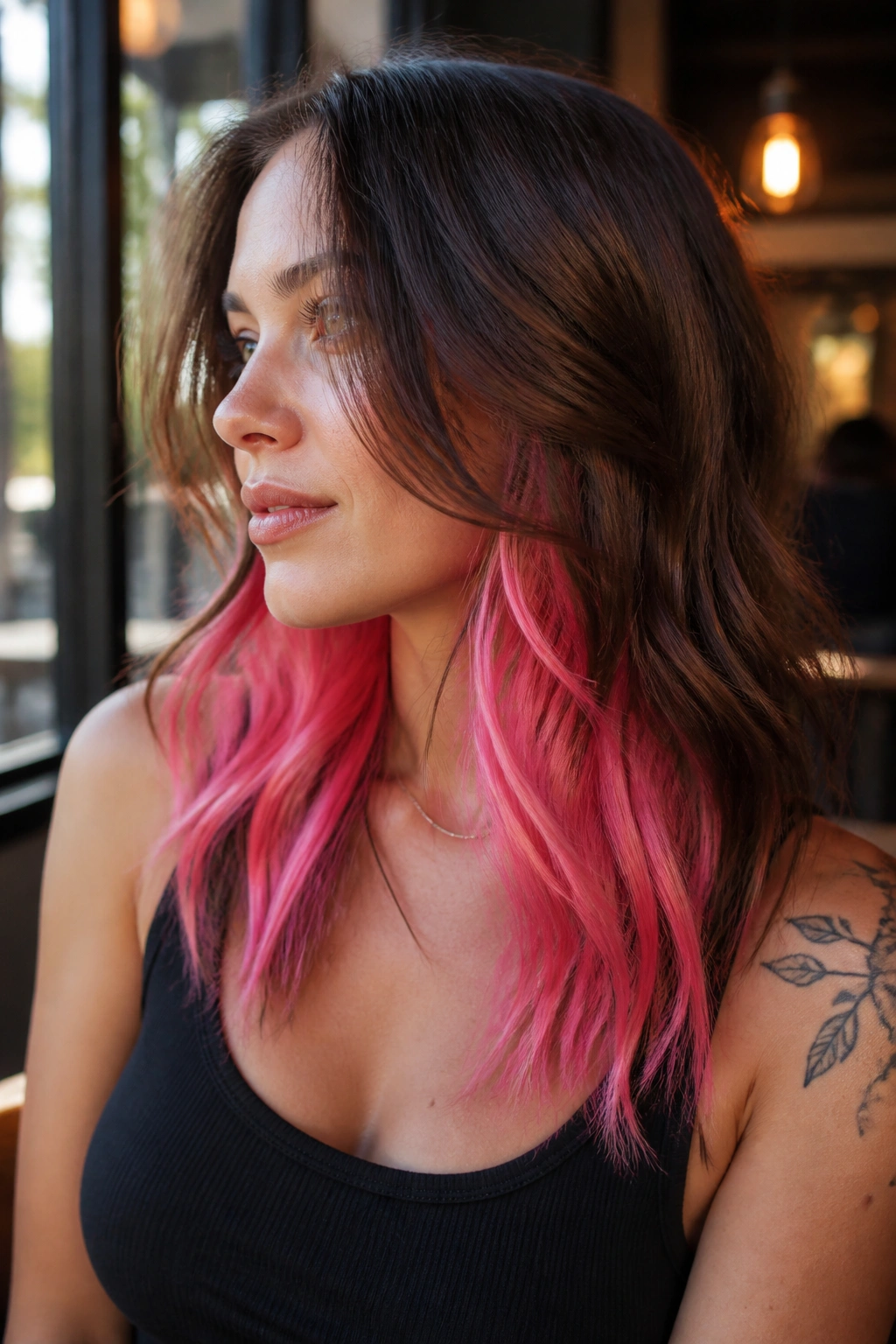
Can pink underlights make brown hair look brighter without touching the top layer? Absolutely. Bubblegum underlights keep the color tucked underneath, where it flashes only when the hair moves, shifts, or gets pulled into an updo.
How to Wear It
Underlights are especially fun in medium-to-long hair because the pink can hide beneath the darker top section and then show up in ribbons at the nape. If you curl the hair, the peek of color becomes even better. If you wear ponytails or clips, you get that sudden pop without doing much at all.
This shade should be bright enough to read as bubblegum, but not so opaque that it looks flat. A bit of translucence helps. And if you have a layered cut, ask for the pink to sit on the interior layers, not only the bottom. That makes the movement more interesting and keeps the color from disappearing when the hair is down.
10. Peachy Pink Brunette Foils
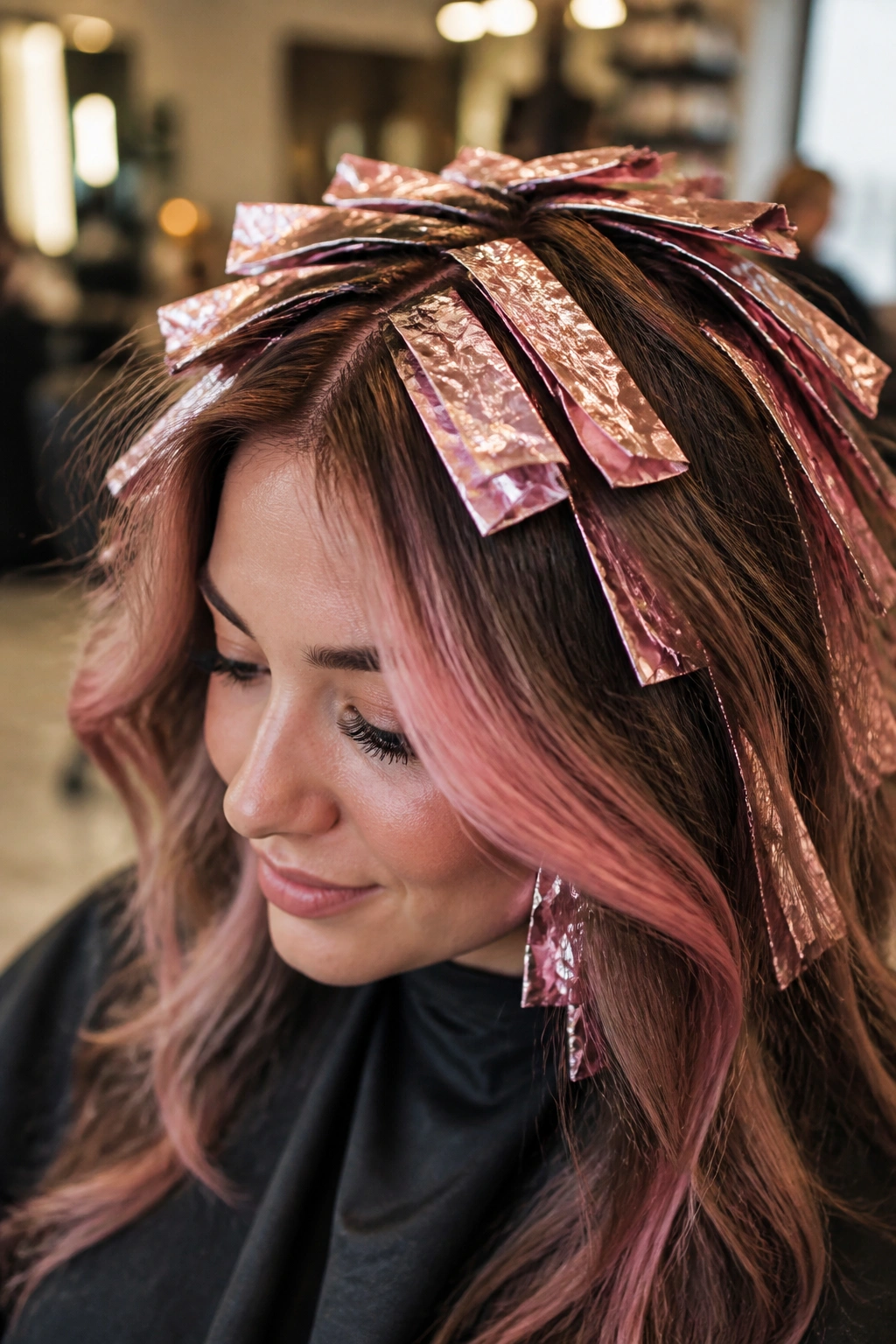
Peachy pink foils are warm, friendly, and a little sunnier than classic pink. They sit nicely on golden brown, caramel brown, or light chestnut hair because the peach side of the tone helps the pink blend instead of clash.
The foil placement gives more control than freehand painting. You can set the pink exactly where you want it — around the face, through the crown, or scattered in fine ribbons through the mid-lengths. That matters on brunettes, where too much color in one spot can feel heavy fast.
I’d choose this if you like soft glam more than edgy color. Peachy pink reads pretty in daylight and almost glowy under indoor lighting. It is also kinder to curls and waves, where the warm tone can fold into the shape of the hair instead of sitting on top of it.
- Best for warm brown bases
- Looks nice with gold jewelry and warm makeup
- Softens well into a blowout or beach wave
11. Wine-Tinted Plum-Pink Streaks
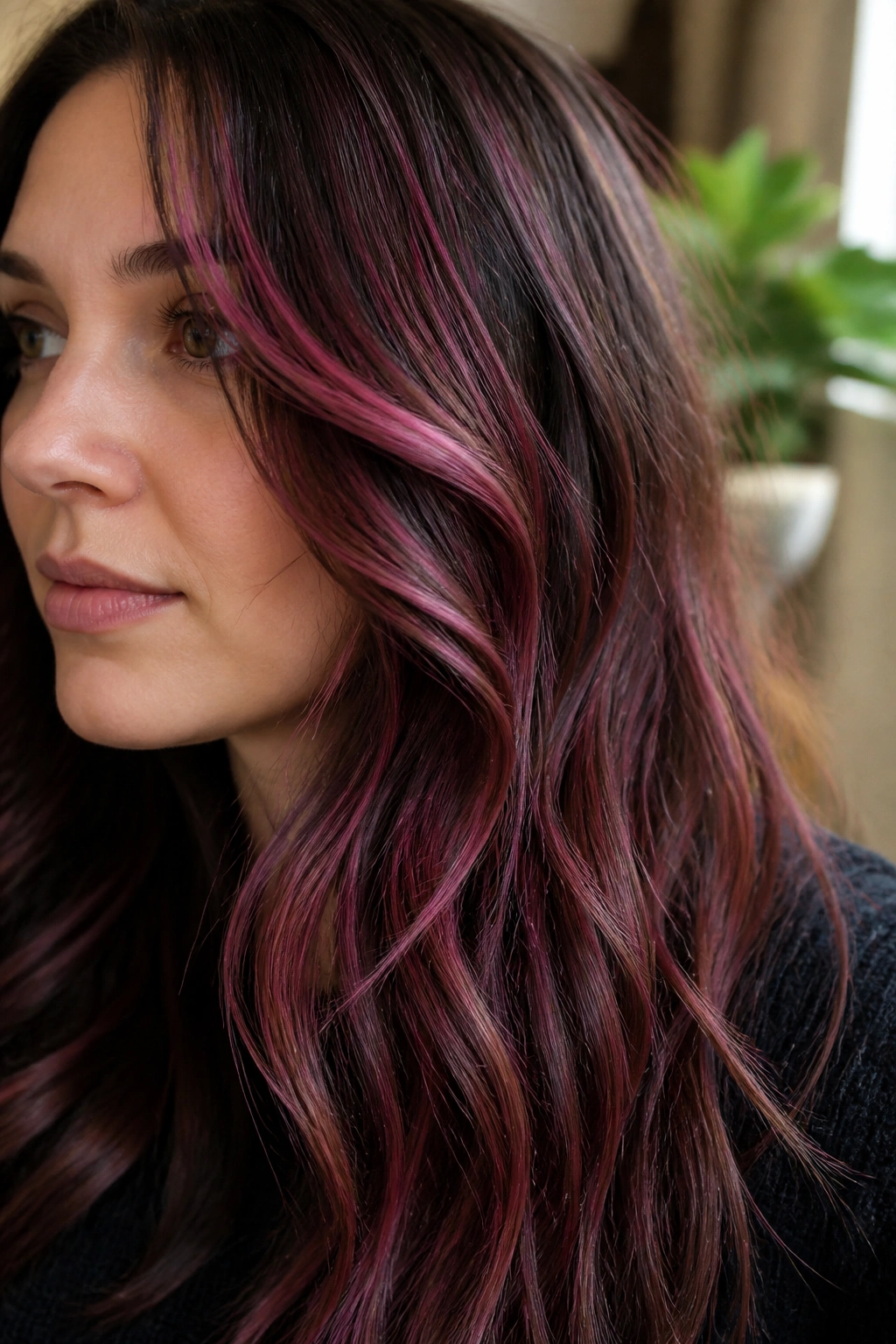
Wine-tinted plum-pink streaks are for people who want pink with some backbone. The shade leans deeper, closer to berry and red wine, so it shows beautifully on dark brown hair where lighter pinks can vanish too quickly.
The tone has a richness that flat pastel shades cannot match. On thicker hair, it gives the whole head more depth because the streaks sit in the fabric of the brunette instead of floating above it. That makes the color feel expensive in the good sense — dense, glossy, and a little dramatic without turning neon.
This is one of those looks that gets better when the cut has some shape. Long layers, a curved lob, or even a shoulder-length shag help the plum-pink streaks move through the hair instead of hiding. And because the shade is deeper, it usually grows out with less visual drama than a light pink highlight.
12. Coral Pink Mid-Length Panels
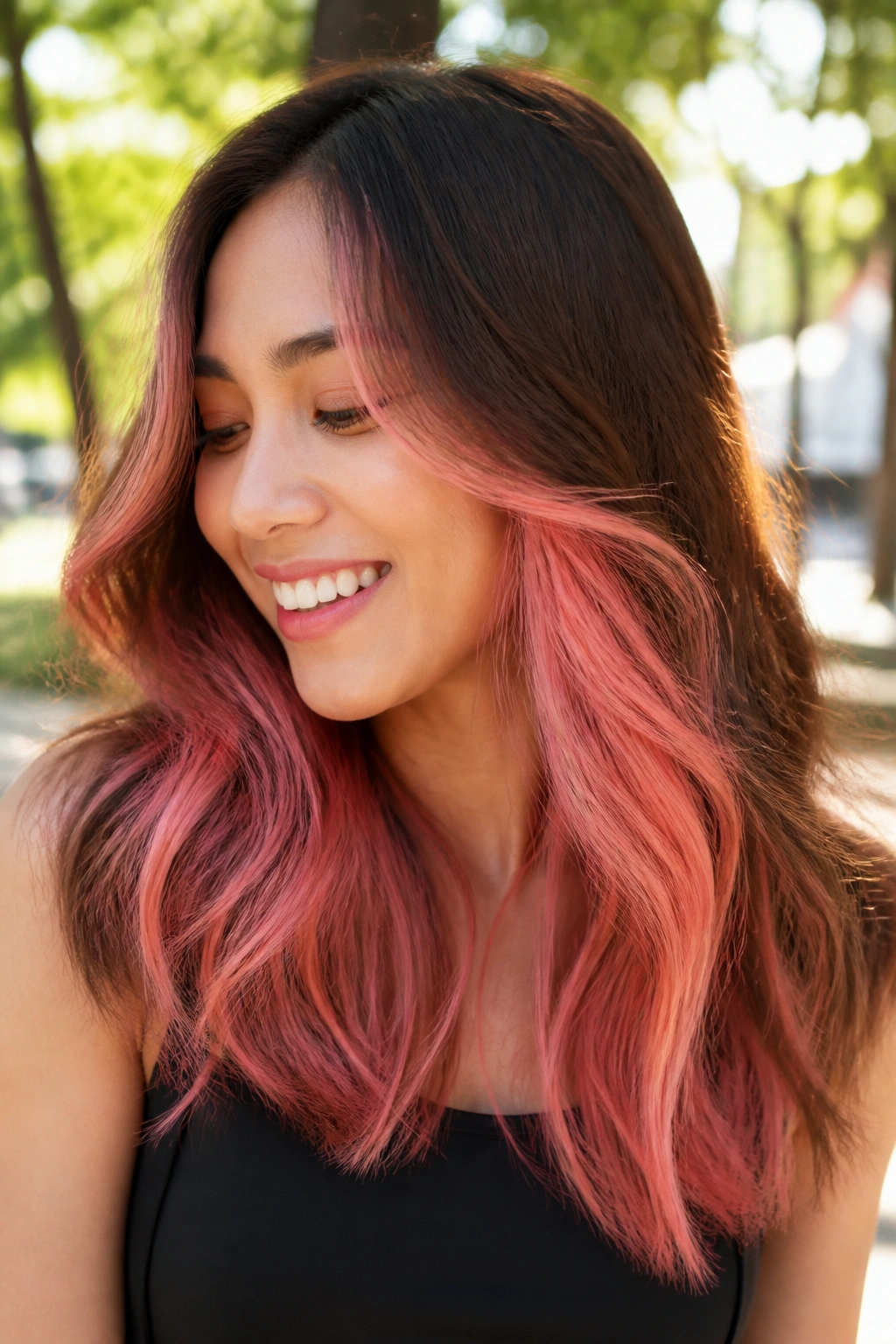
Coral pink mid-length panels are a little unexpected, and that is why they work. Instead of putting all the color at the face or at the ends, the pink sits through the middle section of the hair, where it catches movement when you walk or turn.
What Makes It Different
Most pink highlight ideas are either very soft or very loud. Coral sits in the middle, with enough warmth to flatter brunette tones and enough color to stand apart from the base. On straight hair, the panels read clean and graphic. On wavy hair, they blur a bit and look more playful.
This placement works well if you like wearing your hair down because the color stays visible across the length of the style, not just at one spot. It also suits layered cuts where the panels can break up the density of darker hair. If you want pink highlights for brown hair that feel modern without needing a bright neon tone, this is a very solid lane.
13. Blush Babylights in Fine Hair
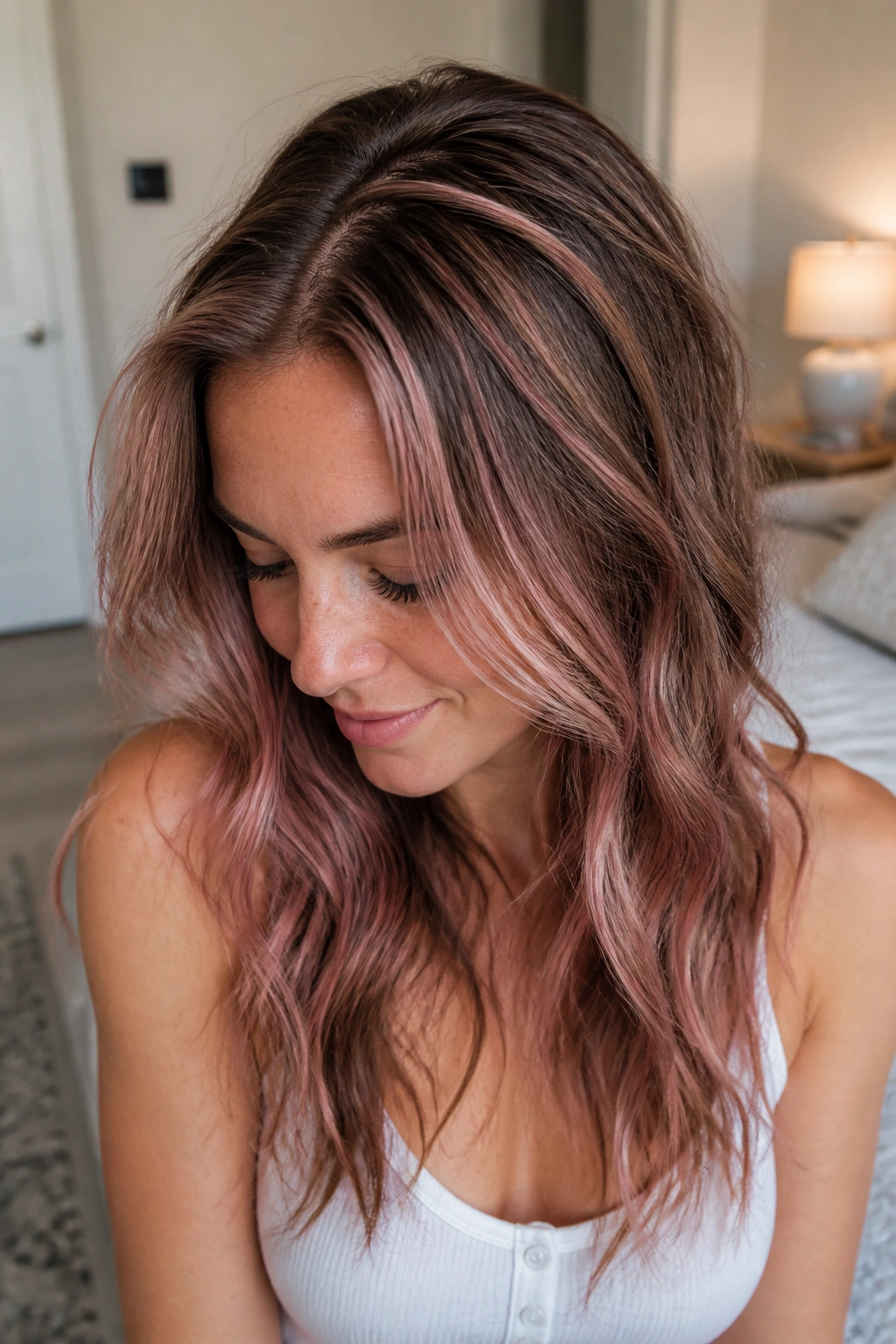
Blush babylights are one of the best ways to give fine brown hair more life. Tiny pink threads create the look of density because the eye reads the color shift as texture, even when the strands themselves are soft and lightweight.
Quick Placement Notes
- Keep the highlights ultra-fine and closely spaced
- Focus on the top layer, crown, and hairline
- Choose a soft blush or tea-rose tone
- Avoid wide pink streaks that can make fine hair look sparse
The trick is restraint. Fine hair can get swallowed by heavy color blocks, so the babylight method is much kinder. The pink should be visible when the light hits it, but not so strong that it separates the strands into obvious lines. With a soft wave or blow-dry brush finish, the whole head looks fuller and more airy.
If your hair is thin, this is the version I’d start with.
14. Hot Pink Slice Highlights
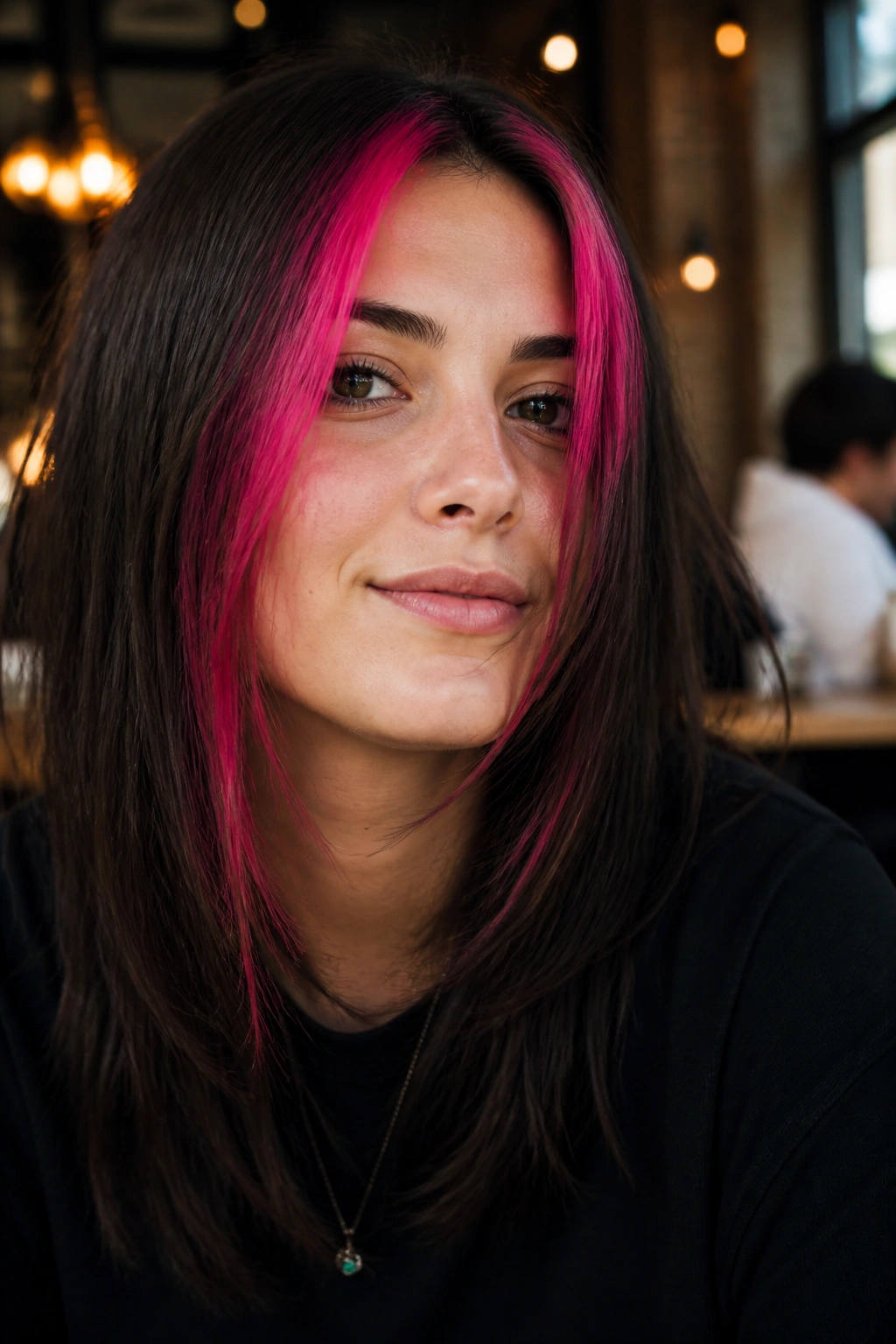
Hot pink slice highlights do not try to blend into the brunette base. They slice through it. That bold line of color is the point, and on brown hair it can look graphic in a way softer shades never quite manage.
A slice highlight is wider than a babylight and more deliberate than a ribbon. It usually shows up as a clear panel of color, often around the front or through the surface layers. On a deep brown base, hot pink has enough contrast to stay visible even when the hair is straight and still.
This style suits sharper cuts, especially bobs, lobs, and layered shags with some shape around the perimeter. If you like color that feels a little rebellious, this is your lane. It does ask for maintenance, though. Bright pink fades fast on lightened hair, and slice highlights reveal regrowth more quickly than soft blends do.
15. Smoky Rose Lowlights
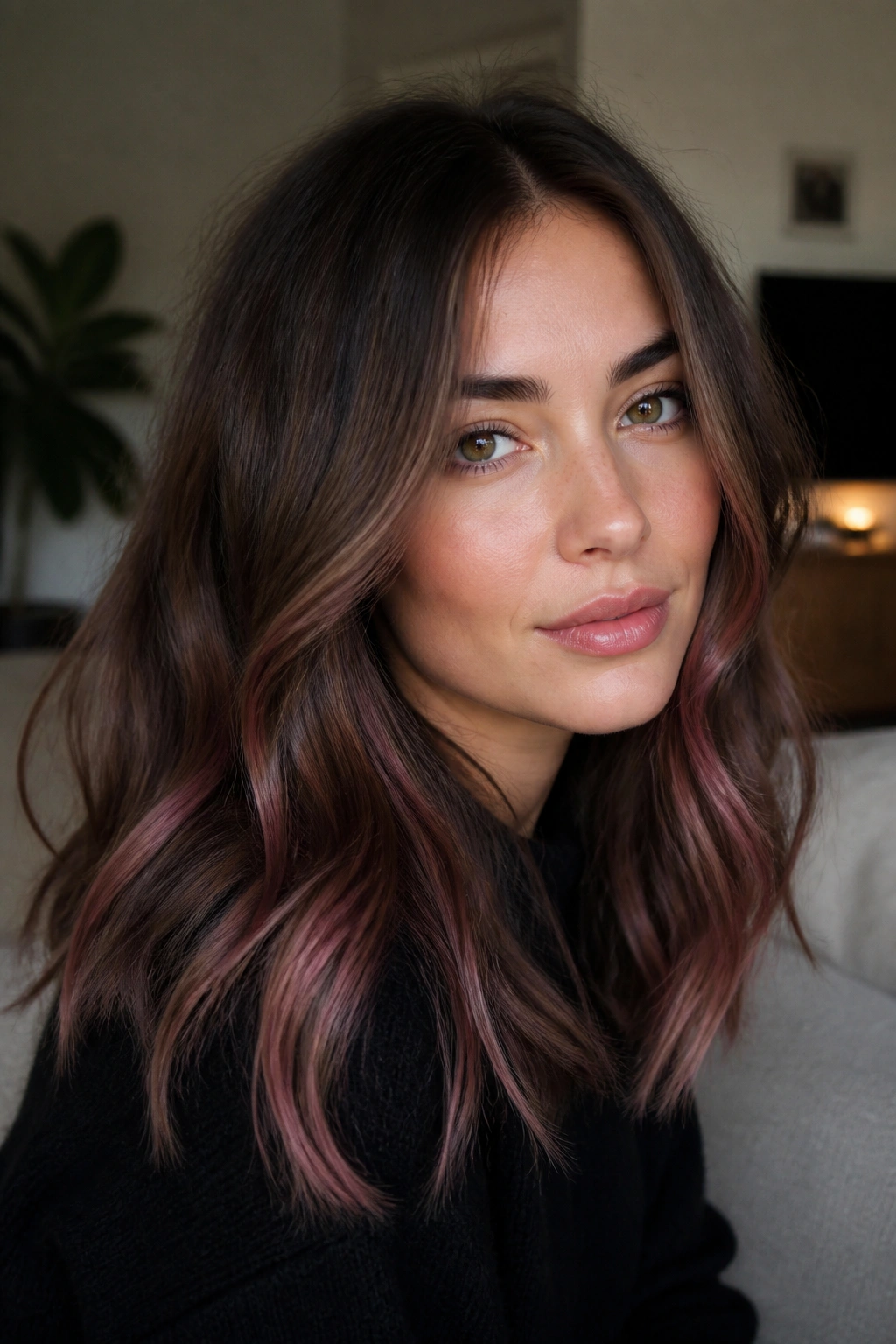
Can pink lowlights work on brown hair? Yes, if the pink is dark enough to behave like shadow instead of candy. Smoky rose lowlights add depth by threading deeper rose or mauve pieces into lighter brunette sections, which gives the hair more movement without raising the overall brightness.
This is a clever move for thick hair that can look flat when everything sits at the same level. The darker pink pieces break up the mass and keep the color from feeling too sunny. They also work well if you already have lighter highlights and want to add contrast back in without going blond again.
How to Keep Them Clean
Ask for a muted rose, berry-rose, or mauve-brown tone. The best lowlights sit close to the natural brunette family, then tilt pink only when the light catches them. Too much opacity can make them look muddy. Too much brightness, and they stop behaving like lowlights at all.
16. Pink Chunky Highlights for Curly Hair
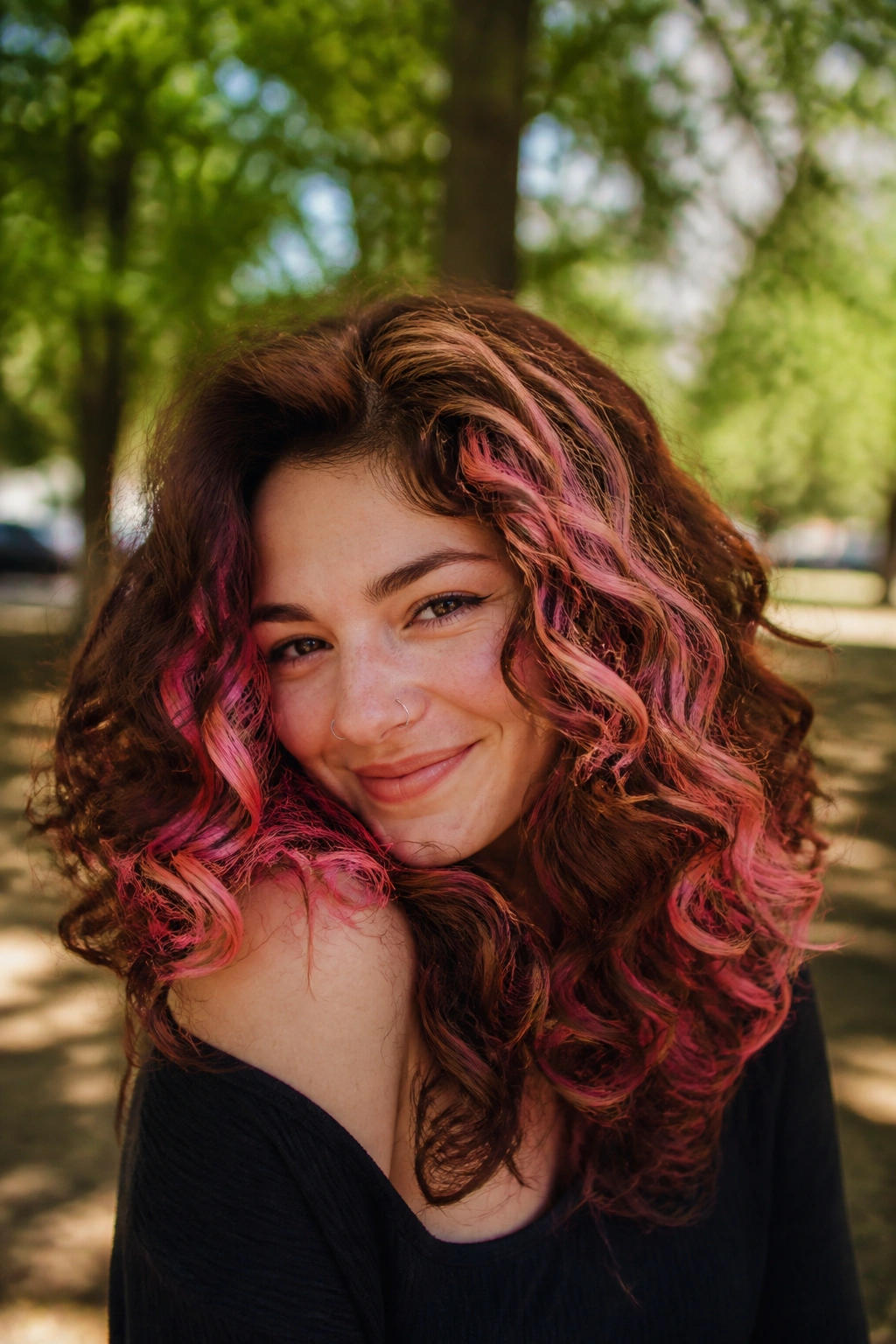
Curly hair changes the whole conversation. A chunky pink highlight that might look loud on straight hair can look balanced in curls because the pattern breaks the color up naturally as the curls spring and stack.
The best placement usually follows the curl shape rather than fighting it. Think of wider sections around the outer curve, a few bold pieces near the face, and some underneath where the color shows as the hair moves. That way the pink doesn’t disappear in the twist of the curl.
Chunky highlights also help define layers in dense curly hair. The contrast gives the cut more shape, which is a nice bonus. If the pink is too thin, it can vanish. If it is too wide, it can feel patched. The sweet spot is somewhere in the middle, where the curl pattern can carry it for you.
17. Cotton Candy Peekaboo Bob
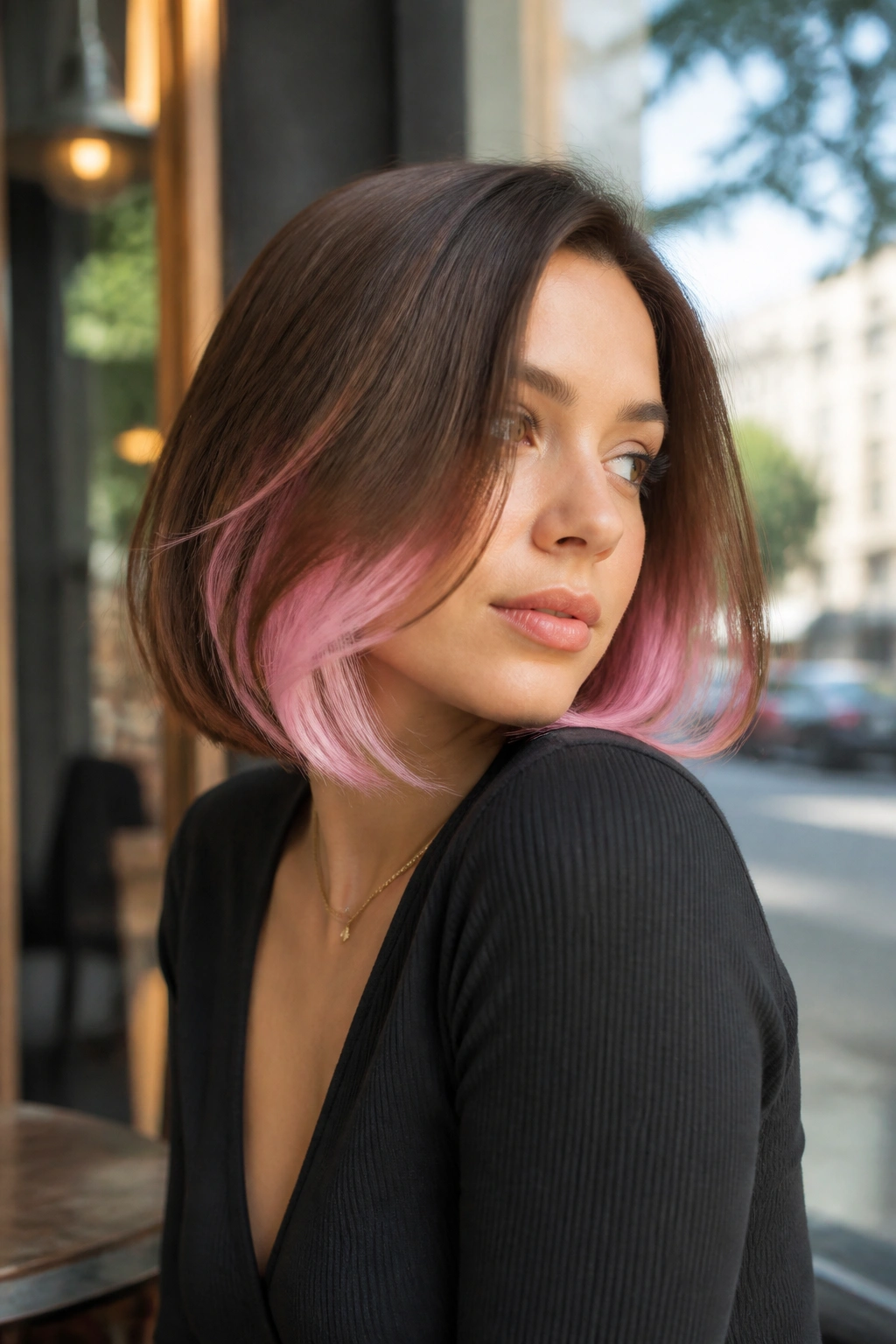
A bob with cotton candy peekaboo color is a neat little trick. The outside stays brown and polished, while the pink hides underneath and flashes out when the bob swings or gets tucked behind the ears.
What I love here is the contrast between the clean shape of a bob and the softness of the pink beneath it. That tension makes the color feel more grown-up than a full pastel head. It also keeps the haircut from looking too precious. A straight bob gets a cooler edge. A softly waved bob looks a little sweeter.
This works best when the pink is light, airy, and slightly translucent. Too much saturation and the underlayer can dominate the shape. Keep the pink tucked to the inner sections and the bottom edge, and the whole cut will keep that crisp, neat outline with a hidden flash underneath.
18. Rose Quartz Painted Ends
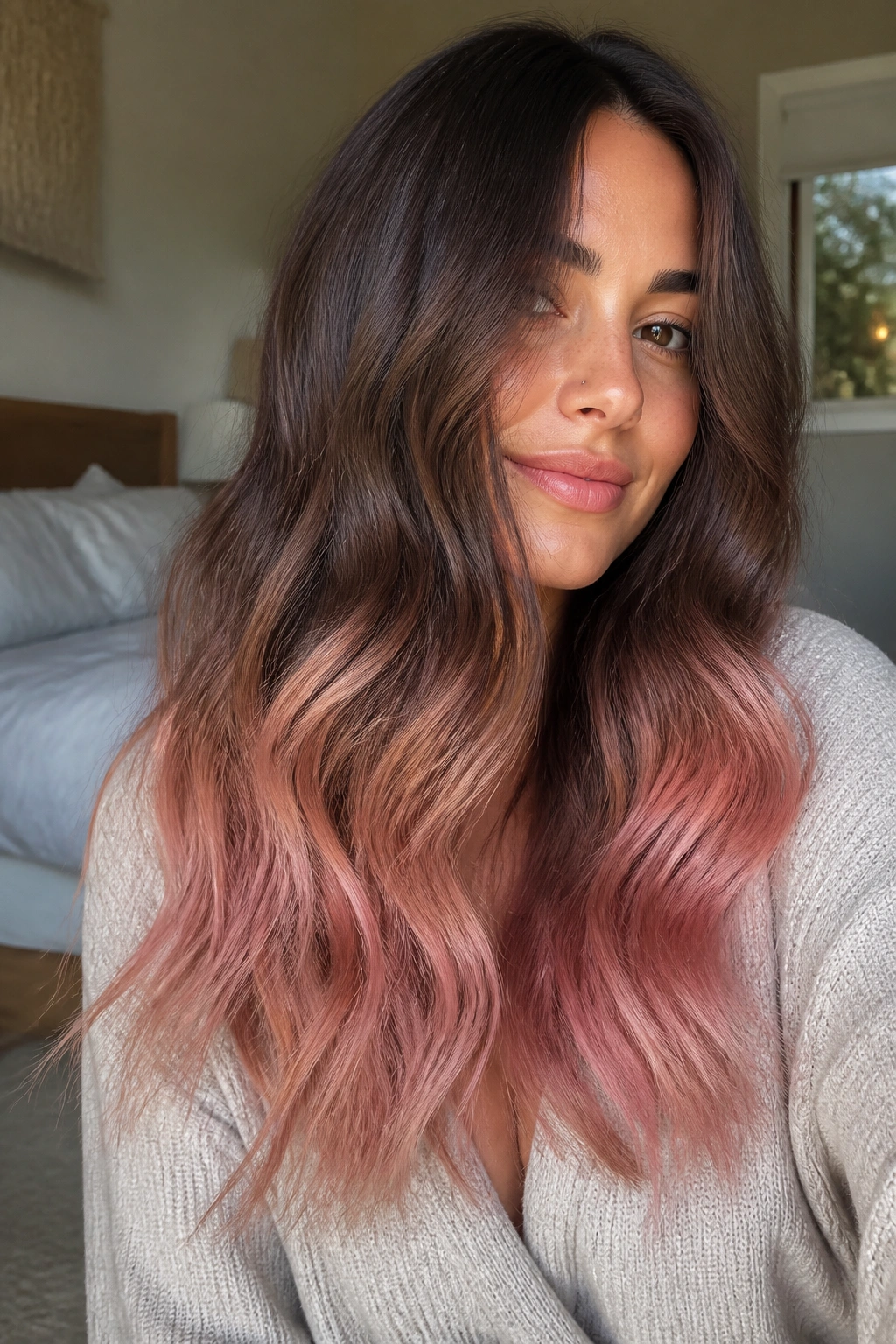
Rose quartz painted ends feel softer than dip-dyed tips because the color is brushed on in a more feathered way. The pink starts lower, moves upward in a loose taper, and leaves the brown roots and mids to do their thing.
That matters on long brown hair. Heavy end color can drag the whole style down if the line is too blunt. Rose quartz works better because it stays airy and mineral-looking, almost like a pale stone tint rather than a cartoon shade. Wavy hair especially benefits from this because the bends let the color shift between visible and hidden.
If you want the style to look intentional, keep the ends well-conditioned and trimmed every few months. Dry, frayed ends make soft pink color look dull. Clean ends make it look like the color was meant to live there. Small difference. Big payoff.
19. Fuchsia Accent Streaks in Dark Brown Hair
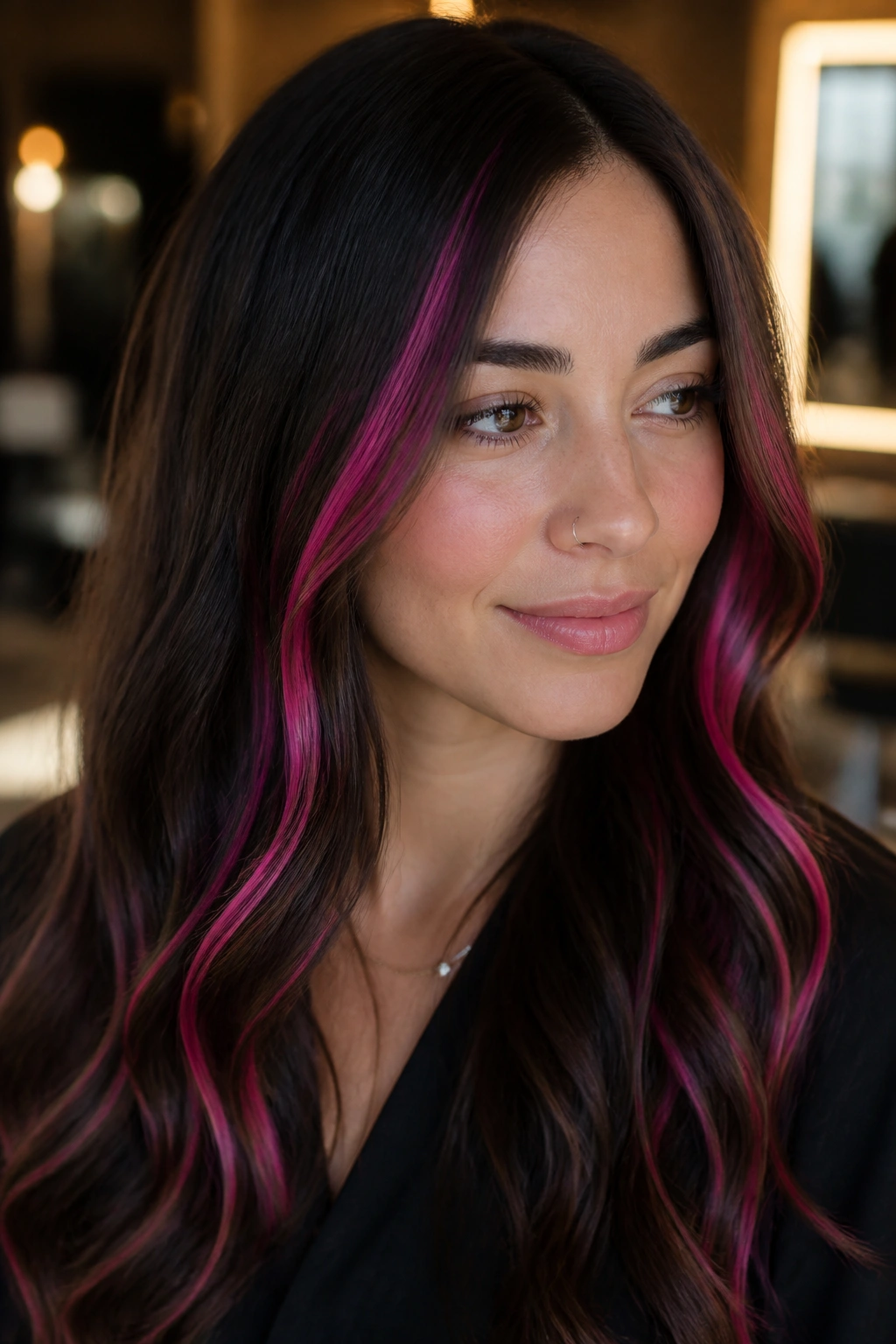
Dark brown hair can take more pink than people think. Fuchsia accent streaks prove it. The deeper brunette base gives the color something strong to sit against, so even a few narrow streaks can read loud without needing a full head of lightening.
Quick Facts
- Best placed in 2 to 4 visible streaks
- Strongest around the front, part line, or outer layers
- Works well with dark espresso or chestnut brown
- Needs a color-safe mask once a week
The reason this look lands so well is contrast. Fuchsia has enough blue-red in it to stay crisp against dark brown, and that makes the streaks look deliberate rather than random. Keep the streaks clean and slim if you want them to feel modern. Wider strips push the look into chunky territory fast, which is fine if that’s the goal, but it changes the vibe a lot.
20. Neon Pink Tips on Layered Cuts
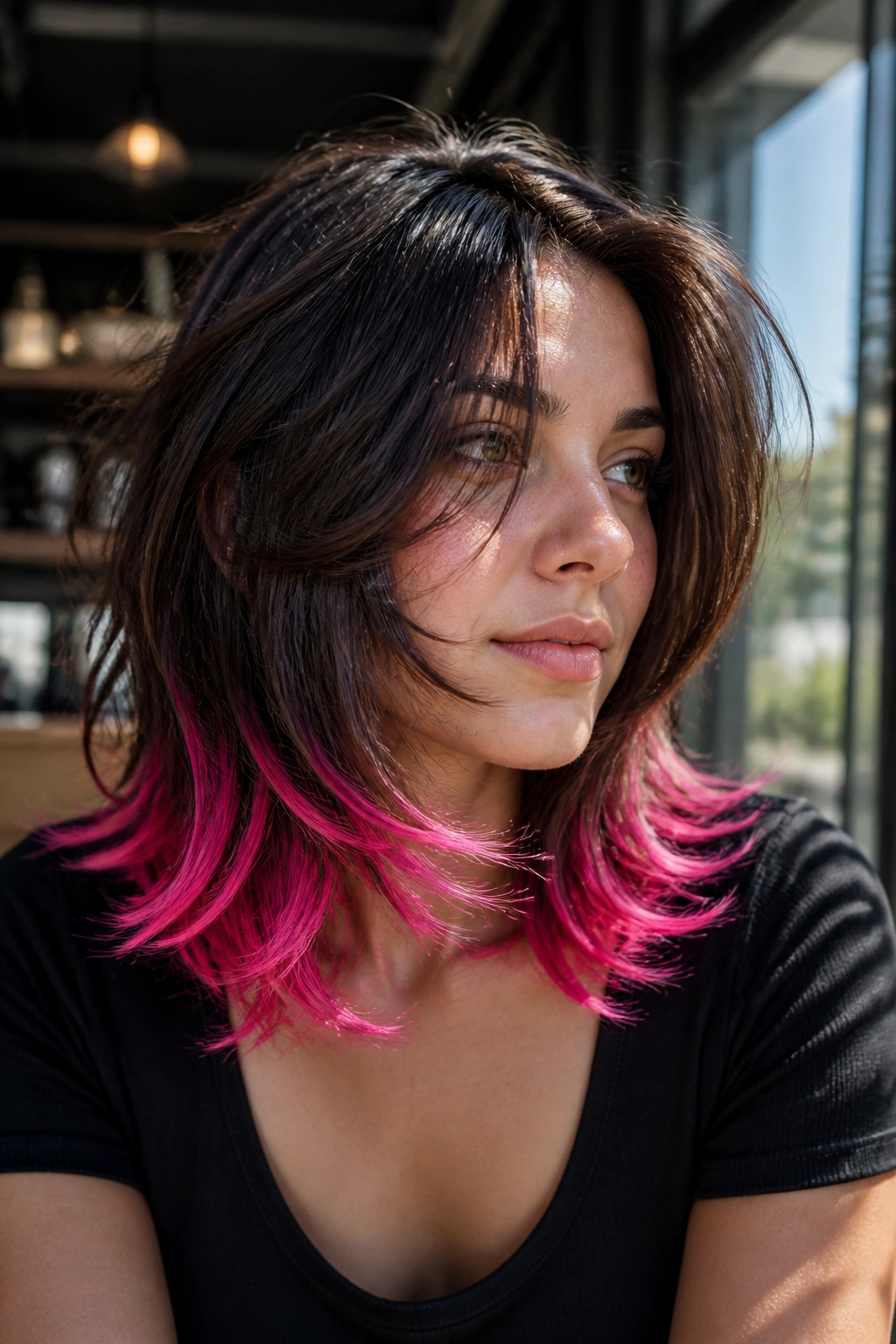
Neon pink tips need movement, and layered cuts give them exactly that. Each layer catches a different amount of color, so the tips don’t become one flat block. They flick out, turn, and break apart as the hair moves.
This style is not subtle. It is the one you choose when you want the ends to do the talking. On a shag or wolf cut, the neon pink tips can look almost electric because the shape is already full of angles and texture. On straighter layered hair, the color gives the perimeter more bite.
The best version keeps the roots dark and the neon concentrated on the last 1 to 3 inches. That keeps the maintenance reasonable and lets the haircut keep its structure. If the layers are too soft, the neon can feel disconnected. If the cut has some edge, the color locks in.
21. Soft Raspberry Melt on Warm Brunettes
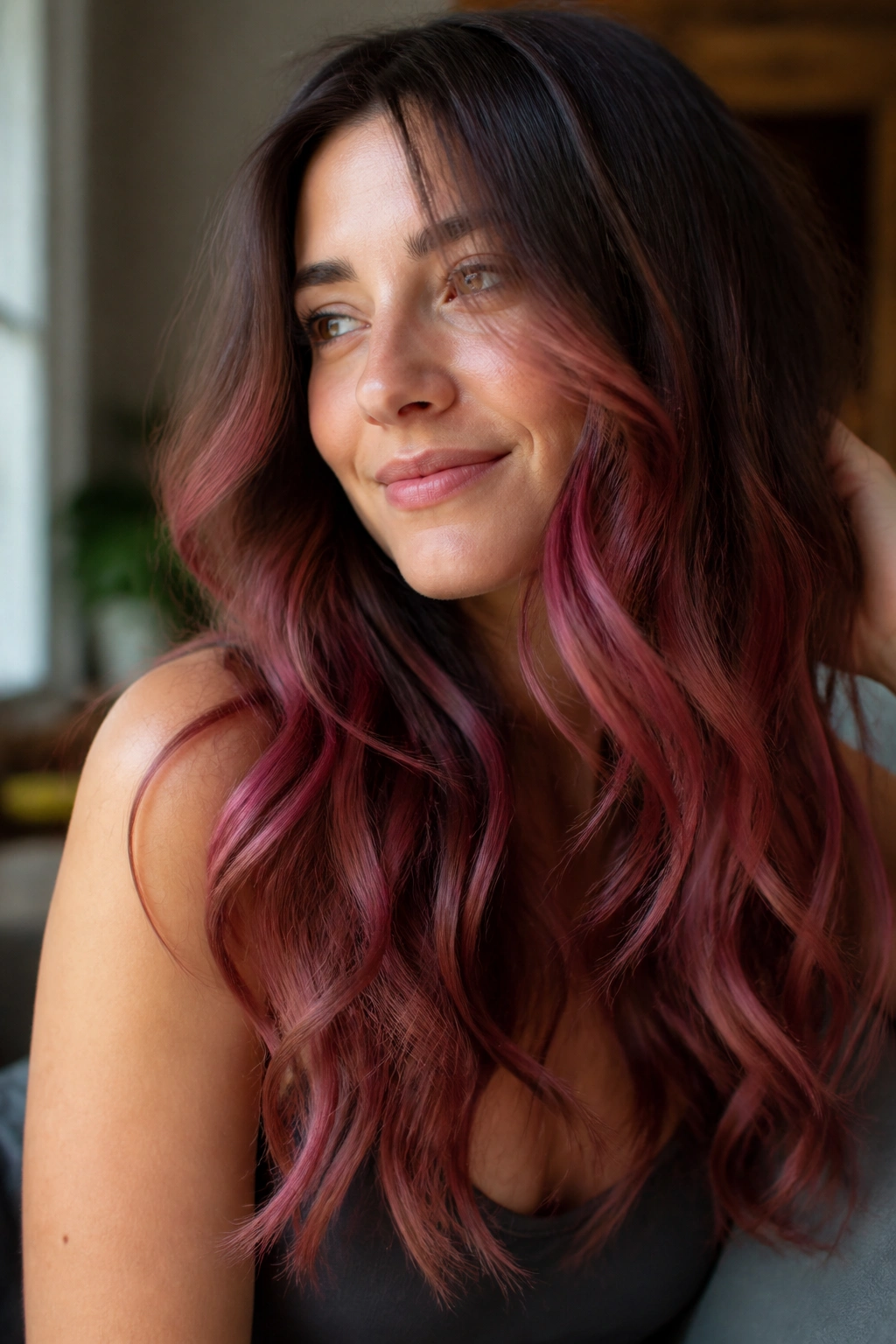
Do warm brunettes need icy pink? Usually not. A soft raspberry melt is warmer, deeper, and far easier to wear on brown hair with golden or auburn undertones. The color starts near the mids and shifts into a richer raspberry through the ends, so it feels smooth instead of abrupt.
How to Get the Tone Right
Ask for a raspberry that leans red-pink, not purple-pink. That tiny shift matters. On warm brown hair, blue-based pink can look too cool and sit apart from the base. Raspberry blends better because it shares warmth with the brunette underneath.
A melt works best when the transition is blurred, not banded. The color should fade like stain on fabric, not like stripes. A blowout with soft movement shows the gradient well, but loose curls are even better because they help the darker roots and brighter ends talk to each other. It’s a grown-up pink, and I mean that in a good way.
22. Pink and Caramel Dimension for Dim Light
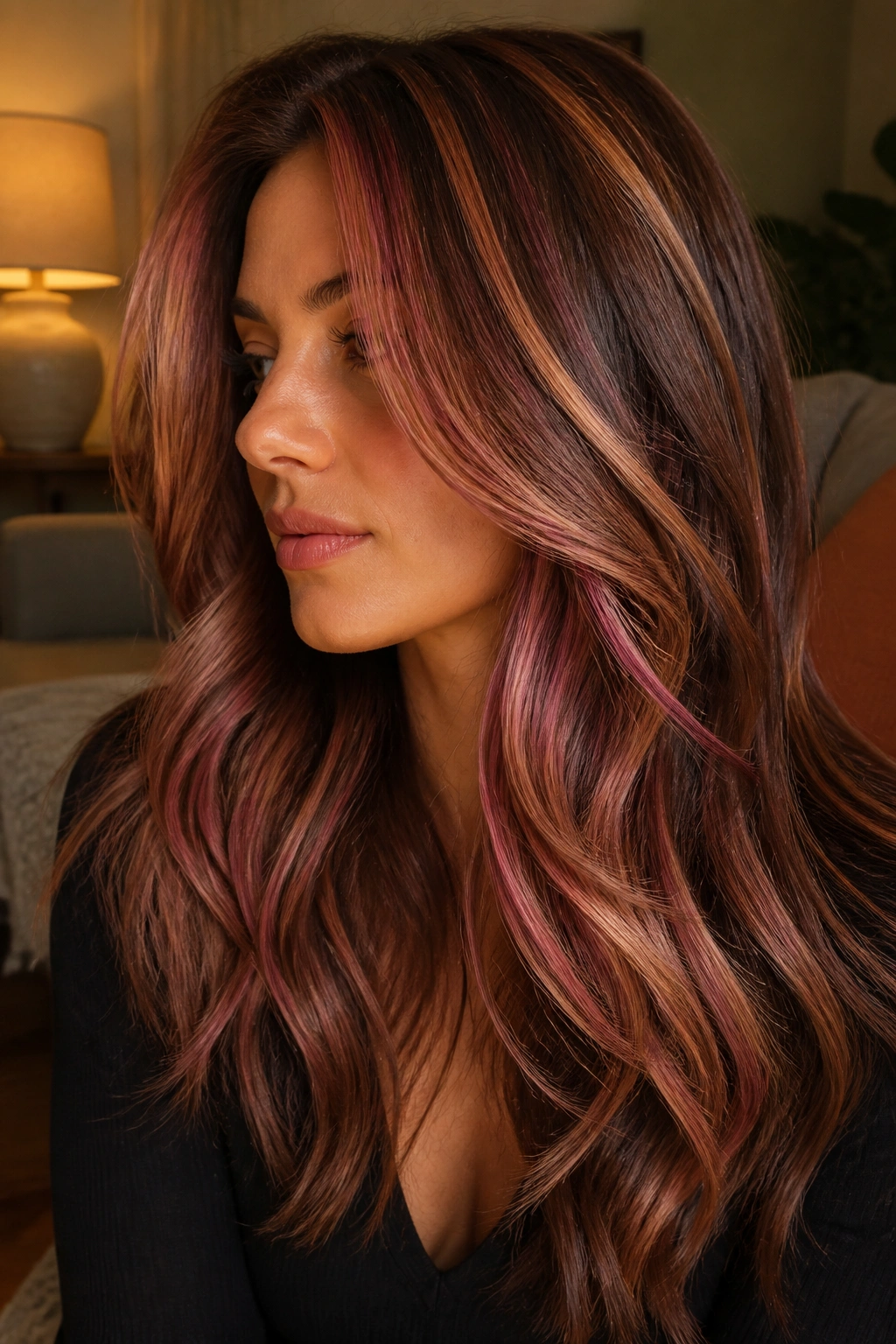
Some pink highlight looks are built for bright daylight. This one is built for rooms, evening light, and that half-shadow where hair can look flat if the color is too single-note. Pink and caramel dimension mixes warm brown ribbons, soft pink pieces, and deeper lowlights so the whole head shifts instead of sitting still.
The payoff is subtle at first glance and richer the longer you look. Caramel keeps the brunette base warm, while the pink pieces catch light and stop the color from going dull. On layered brown hair, this combo can make the cut seem thicker and more expensive without shouting about it.
What to Ask For
- Caramel highlights with soft pink overtones
- A few darker lowlights to keep depth
- Placement through the mid-lengths and crown
- A finish that stays glossy, not matte
If your hair tends to disappear in dim settings, this approach fixes that without going full bright pink.
23. Metallic Pink Gloss Over Highlights
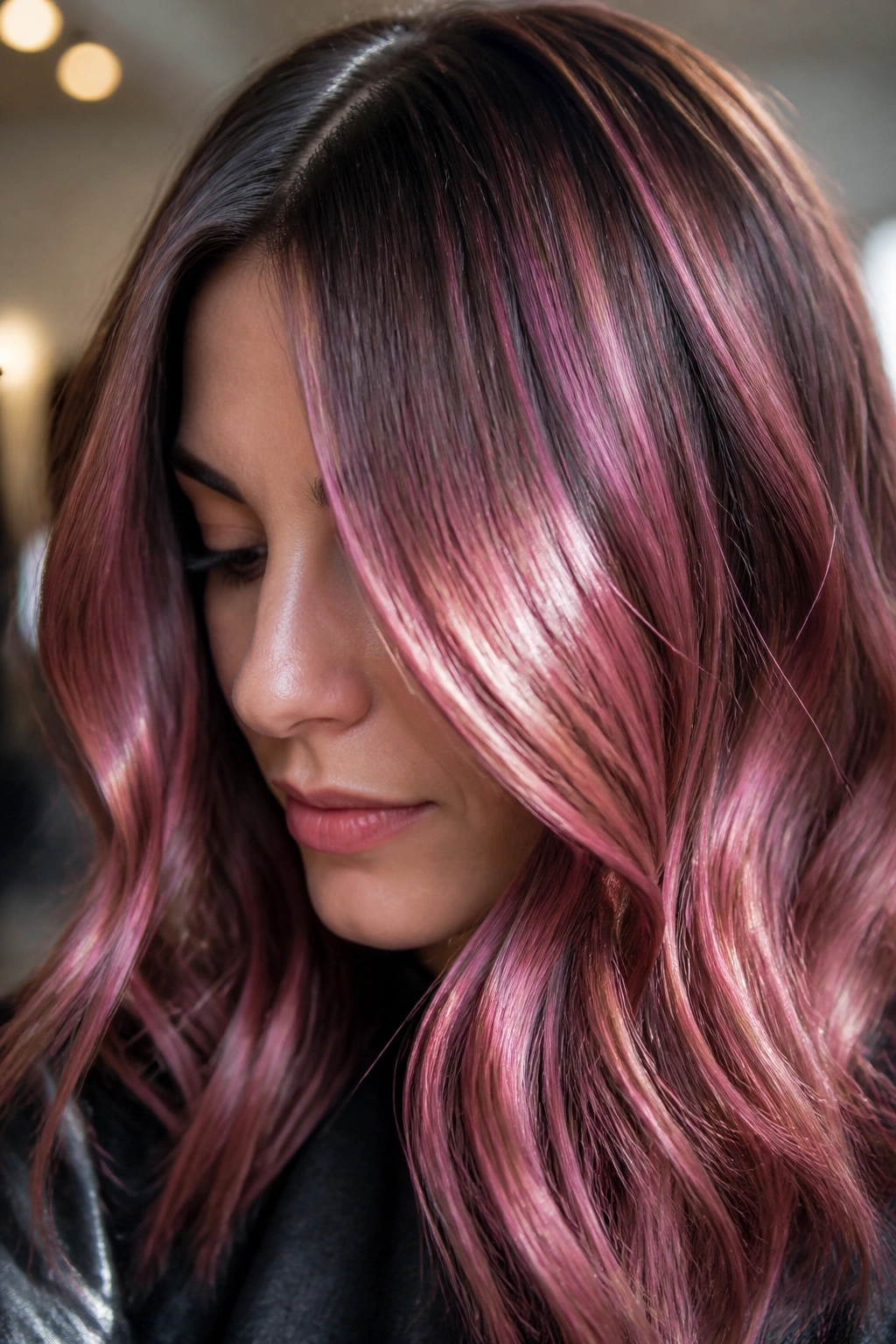
A metallic pink gloss is the shiny, reflective cousin of classic pink color. It doesn’t have to be loud to be effective. On brown hair with prelightened highlights, it can sit on top like a sheer pink veil and make the whole head look smoother and brighter.
Glosses are nice because they change the surface feel as much as the color. Hair often looks sleeker after a good gloss because the cuticle lies flatter. That matters here, since metallic tones can look dull if the hair is rough or overwashed. A pink gloss also gives you a way to test the shade before committing to a longer-lived pink highlight.
This option works best on highlighted brunettes who want the color refreshed rather than reinvented. It fades faster than permanent color, which is a plus if you like to change things often. And yes, it looks especially good on curls, where the shine can move around the shape of the hair.
24. Rose-Tinted Crown Lights for Updos
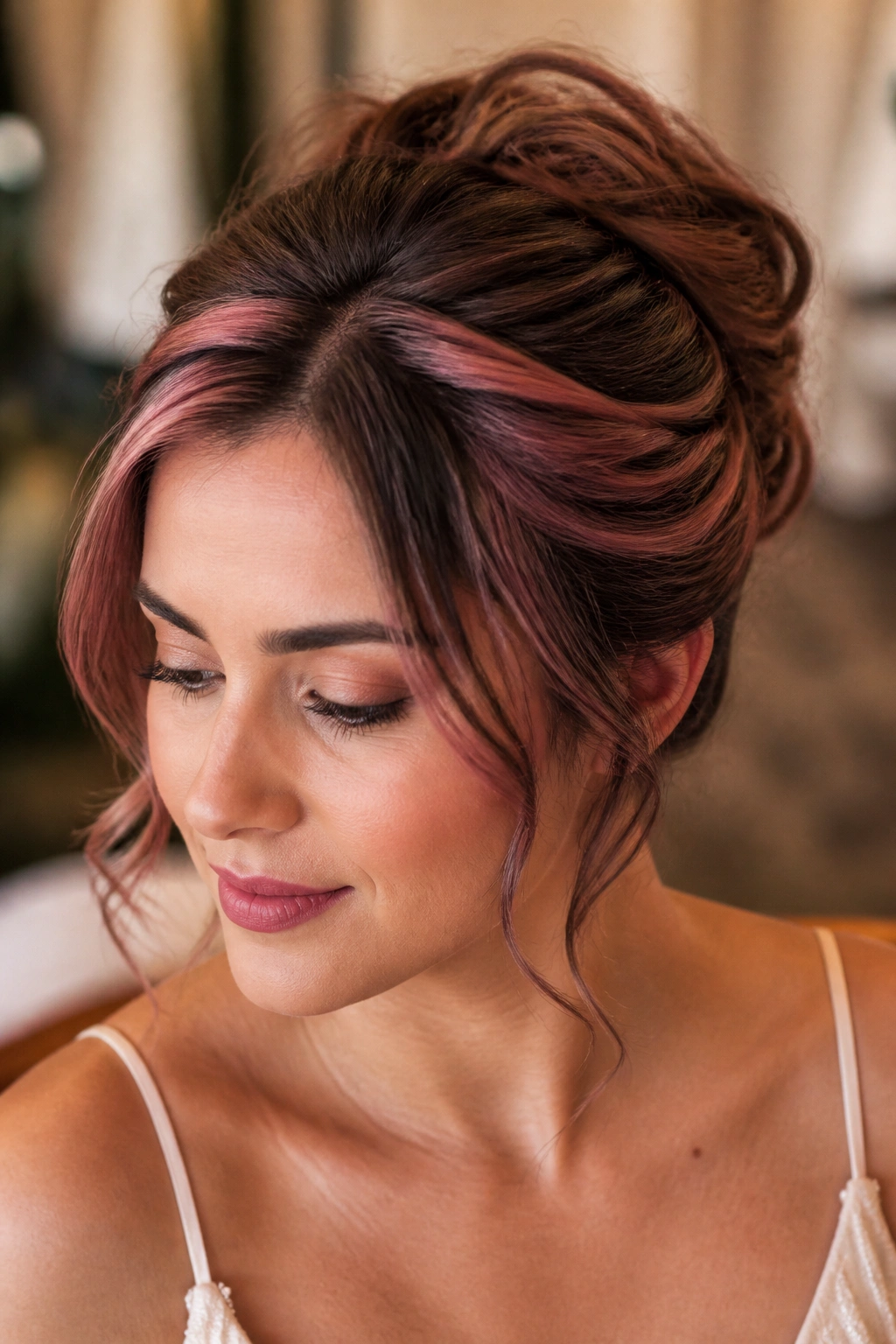
Rose-tinted crown lights are made for people who wear their hair up a lot. The color lives around the part, crown, and upper temples, so it shows in buns, ponytails, half-up styles, and clips. The rest of the hair can stay mostly brown, which keeps the look neat.
That placement is smarter than people think. If you color only the hidden layers, the pink spends most of its life out of sight. Crown lights give you daily payoff. A soft rose tone also works well here because the area near the face tends to get the most light, and that makes even a muted pink visible.
This is one of the best choices if you want color that feels intentional without demanding a full head of maintenance. It’s a quiet trick, but a good one. Especially if you rotate between office hair and weekend hair.
25. Subtle Pink Babylights for First-Timers
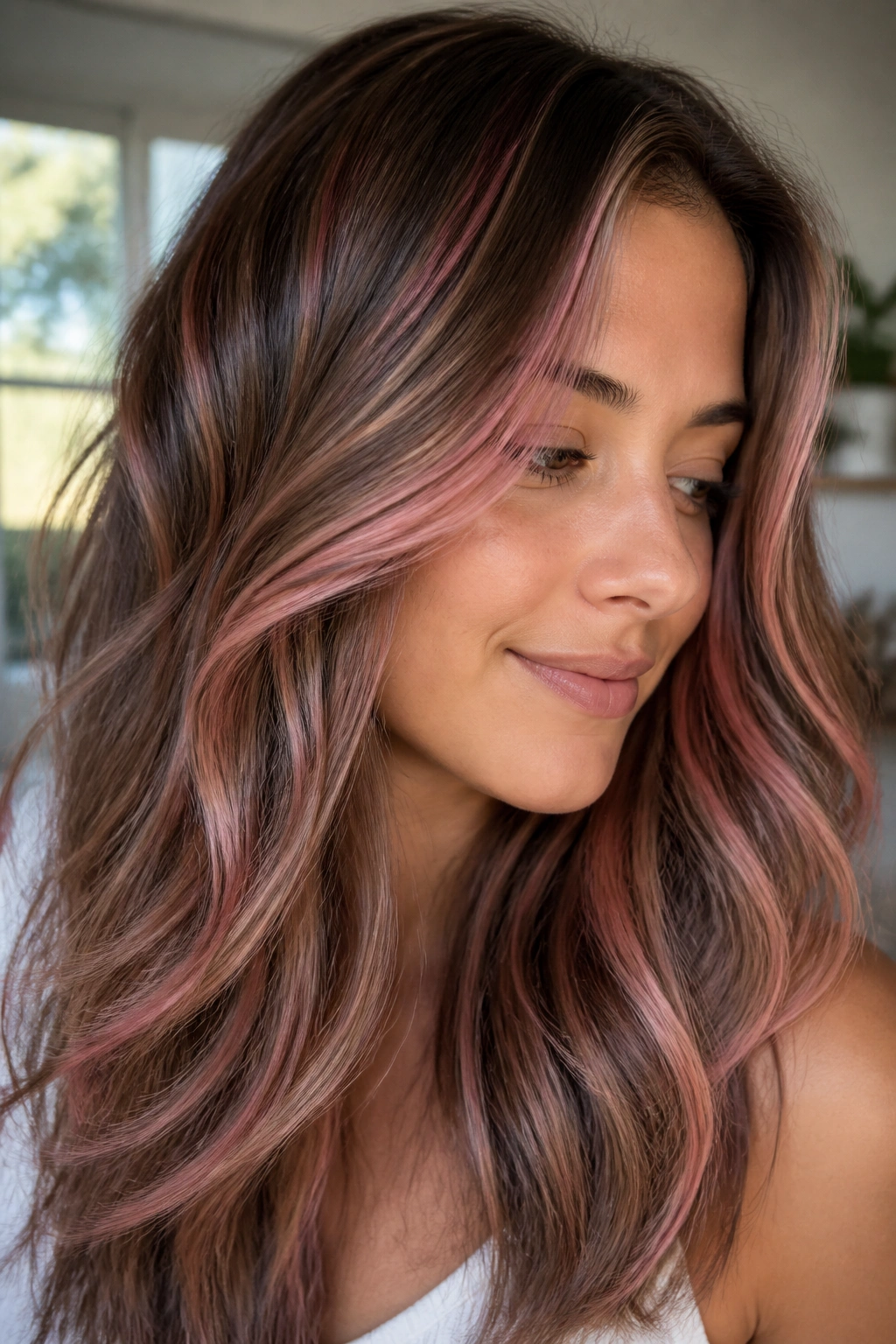
If you’re nervous about pink, start here. Subtle pink babylights give brown hair a tiny shift in tone without making the color story feel huge. The pieces are so fine that they read more like shimmer than streaks, which makes them easy to wear and easier to grow out.
A Few Reasons They’re So Good
- They blend into natural brunette movement
- They suit fine, medium, or thick hair
- They can be placed around the part, crown, and face
- They let you test pink before committing to brighter color
The key is tone and restraint. A soft blush, rose tea, or barely-there pink glaze can make brown hair look fresher without screaming for attention. You can always go brighter later. That’s the nice part. Starting small leaves room for more color next time, and the grow-out stays calm instead of awkward.
For a first pink appointment, this is the safest bet.
Final Thoughts
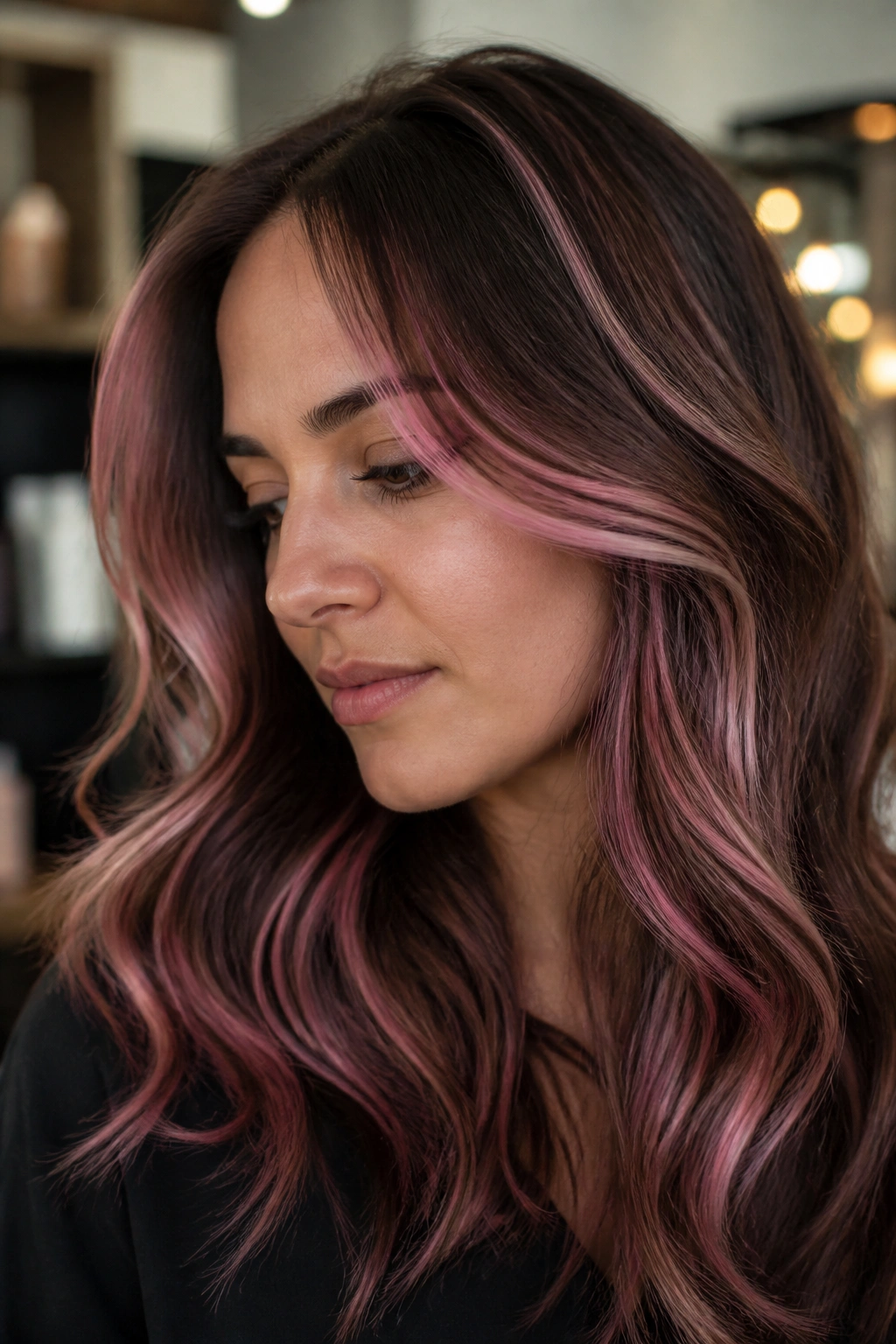
Pink highlights on brown hair work because they respect the base instead of fighting it. That’s the whole magic trick. Whether you lean into dusty blush, smoky mauve, bright magenta, or hidden peekaboo pieces, the brunette underneath gives the pink more shape and more depth.
The best choice usually comes down to placement, not just shade. Face-framing pieces feel bold fast. Babylights stay soft. Underlights and crown lights are better when you want color that shows only when the hair moves or goes up. And if you’re chasing impact with less surface commitment, lowlights and deeper berry-pink tones can be the smarter move.
If you’re standing in front of a salon mirror trying to choose, start with the kind of reveal you want. Quiet? Loud? Hidden? Glossy? That answer tends to lead you to the right pink faster than any mood board ever will.
