



Caramel blonde highlights for brown hair work because they sit in that useful middle zone: lighter than brunette, softer than full blonde, and much easier to wear than a harsh stripe pattern that screams for attention. The shade can look like warm sugar on espresso hair, toasted honey on chestnut, or a soft beige ribbon on dark mocha, depending on where the color lands and how much depth you leave behind.
That part matters. A lot.
Brown hair rarely needs a giant leap into blonde to look brighter. What it usually needs is smarter placement, a tone that doesn’t turn orangey at the first sign of indoor light, and enough shadow at the root to keep the whole thing from feeling flat. I’ve always liked caramel for brunettes because it can do three jobs at once: soften a blunt cut, warm up the face, and make waves look fuller without making the hair look busy.
The other thing people underestimate is undertone. Caramel is not one fixed shade. On one head it reads like toffee; on another it reads like a light brown gloss with honey threaded through it. If your base is deep brown, the highlight choice changes fast — not because the trend changes, but because the hair does. That’s why the best caramel blonde highlights for brown hair are the ones matched to the base, the cut, and the amount of upkeep you’ll actually tolerate.
1. Caramel Blonde Face-Framing Pieces for Brown Hair
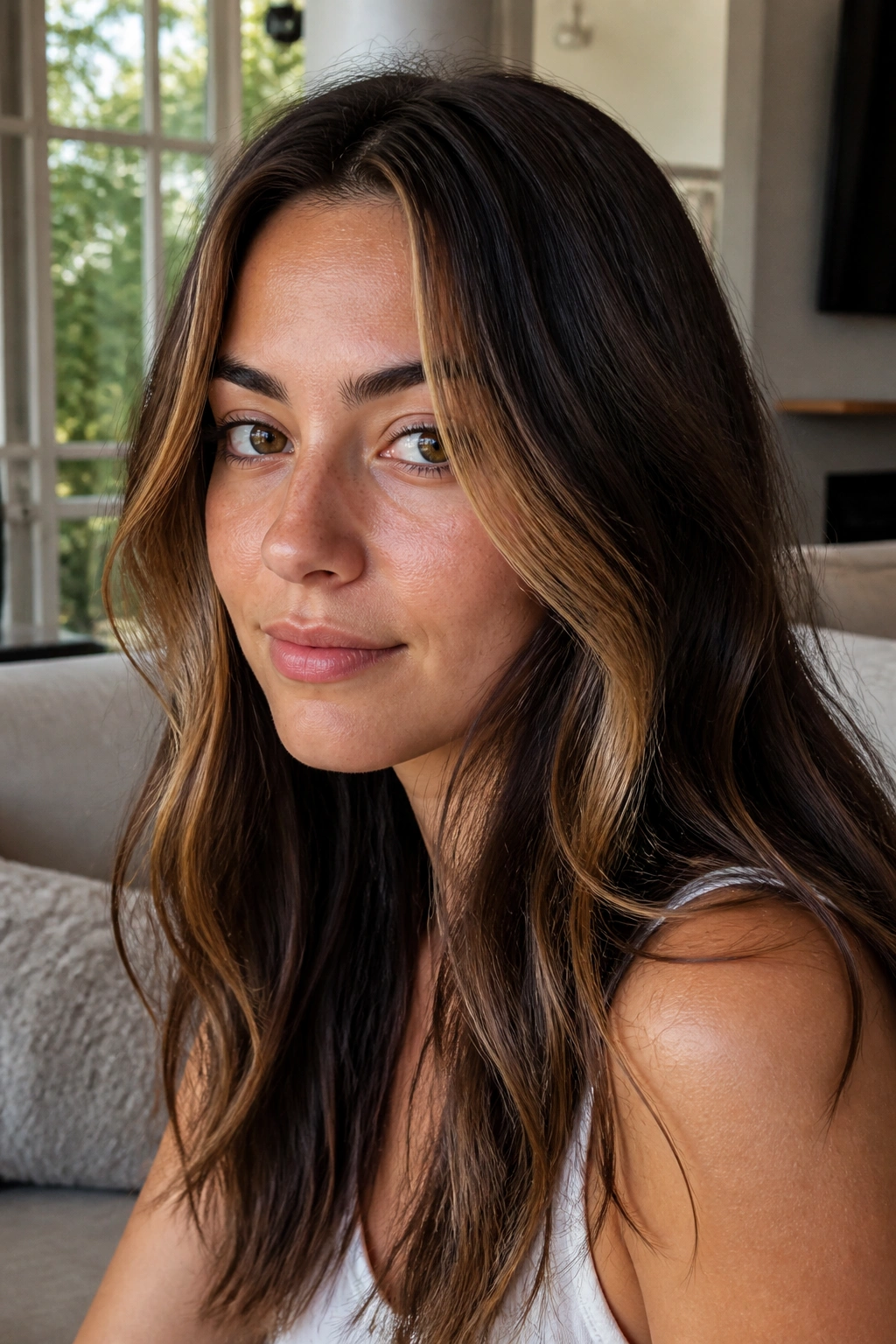
This is the look I suggest when someone wants brightness but does not want a full commitment. The lighter pieces sit around the face, usually starting near the cheekbone or just below the eyebrow, and the rest of the brown hair stays richer and deeper.
Why It Works So Well
The face gets the lift first, which is exactly where most people want it. A pair of slim caramel pieces can make brown eyes look warmer and can pull attention upward without turning the whole head light.
Ask for two to four front sections that are lighter than the rest of the hair by about one or two levels. Keep the root soft. If the pieces start too high and too pale, the look gets stripey fast.
- Best on medium and deep brown bases
- Easy to grow out without obvious lines
- Looks strong on straight hair and loose waves
- Good choice if you wear your hair tucked behind your ears a lot
Pro tip: Keep the lightest caramel pieces no wider than your index finger. Bigger pieces can work, but they need the right haircut to avoid looking harsh.
2. Soft Balayage Through Deep Chocolate Brown
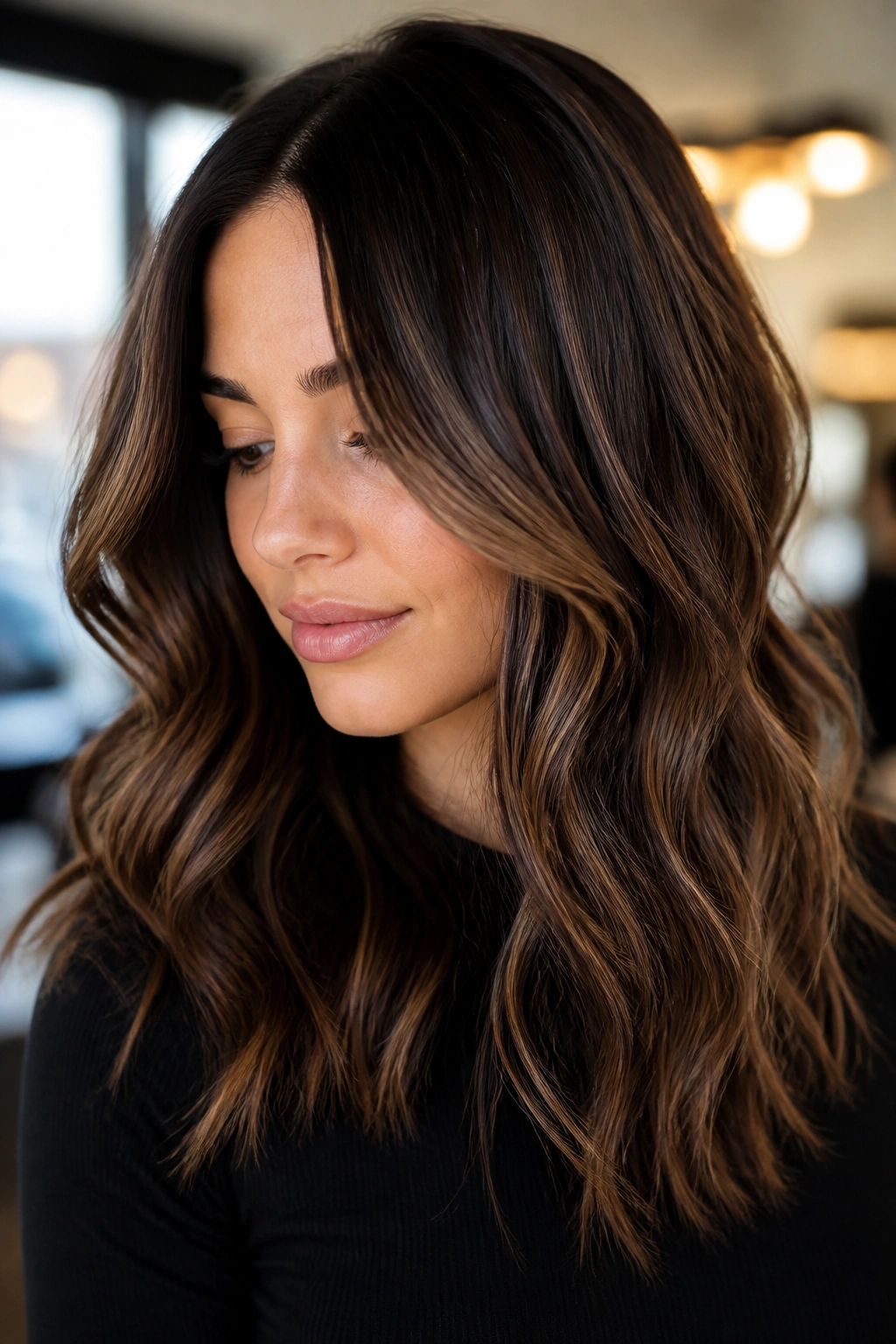
Balayage on deep chocolate brown hair has a quieter kind of drama. The color is painted in sweeps rather than stacked in obvious foils, so the result feels blended from the start instead of newly added.
That is the appeal here. The brown base still does most of the work, and the caramel lives in the mid-lengths and ends where movement can show it off. On waves, it looks natural. On straight hair, it needs a smooth blow-dry or a soft bend with a large barrel iron to show its depth.
The best versions keep the lightest area a little lower than the crown. That stops the top from looking too busy and gives the hair a softer fall. If your hair is thick, this method also keeps the color from reading like one solid block. You get visible breaks, and the breaks matter.
3. Baby-Fine Babylights for a Barely-There Glow
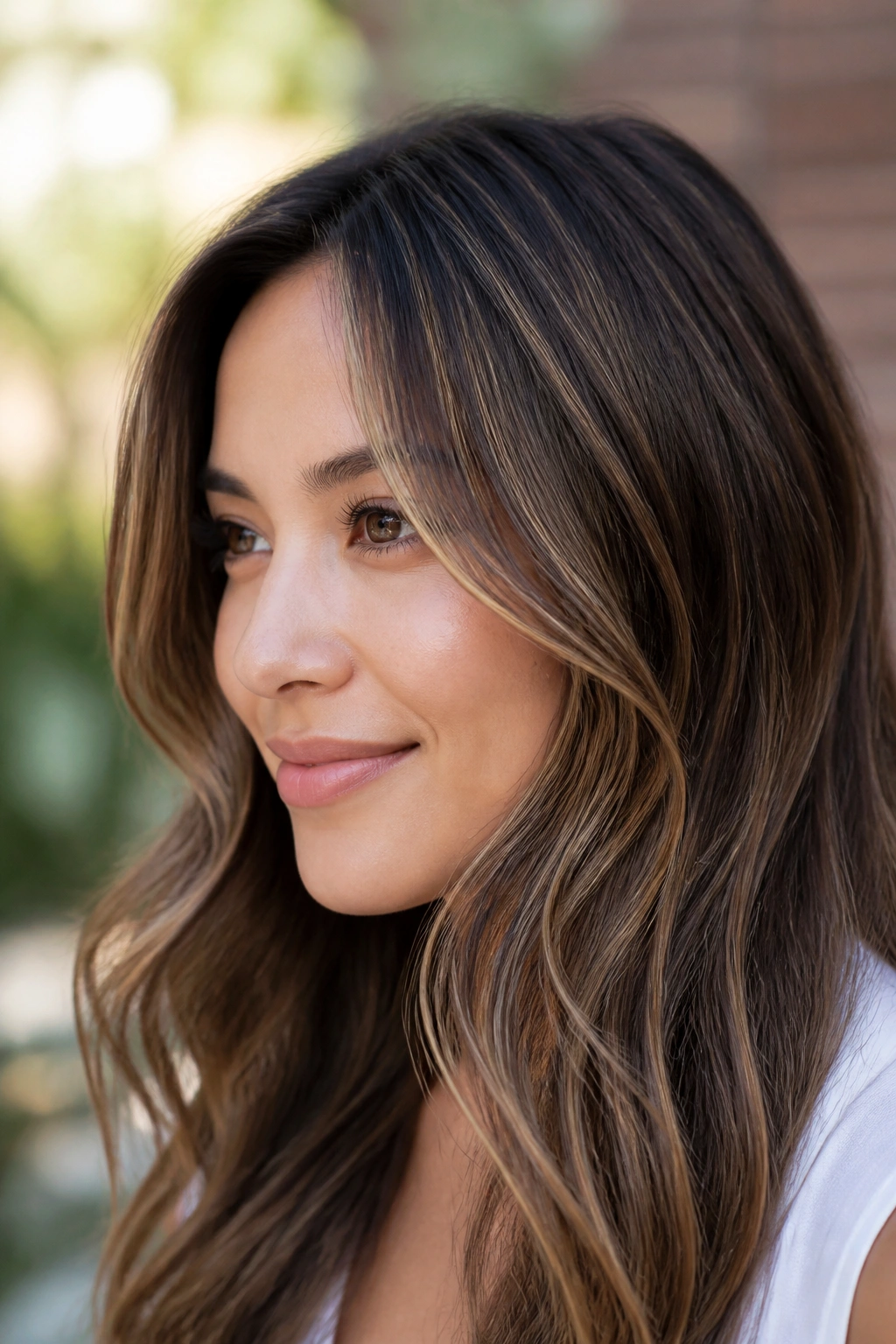
Why do babylights look so believable? Because they mimic the tiny, sun-faded strands you get after living with your hair in real light for a while. On brown hair, that fine weaving creates a gentle glow instead of an obvious highlight line.
What Makes Them Different
Babylights are thin. Tiny, really. A stylist might weave dozens of small sections through the top and sides, which means the color shows up as shimmer rather than streaks. That makes them especially good if you want caramel blonde highlights for brown hair but hate any hint of chunkiness.
- Best for fine to medium hair
- Great on straight styles and soft bends
- Needs more salon time because the sections are so small
- Grows out with a soft blur rather than a hard edge
Watch for this: if your hair pulls warm fast, ask for a beige-caramel finish instead of a golden one. It keeps the result from drifting too orange.
4. Chunky Caramel Ribbons on a Wavy Lob
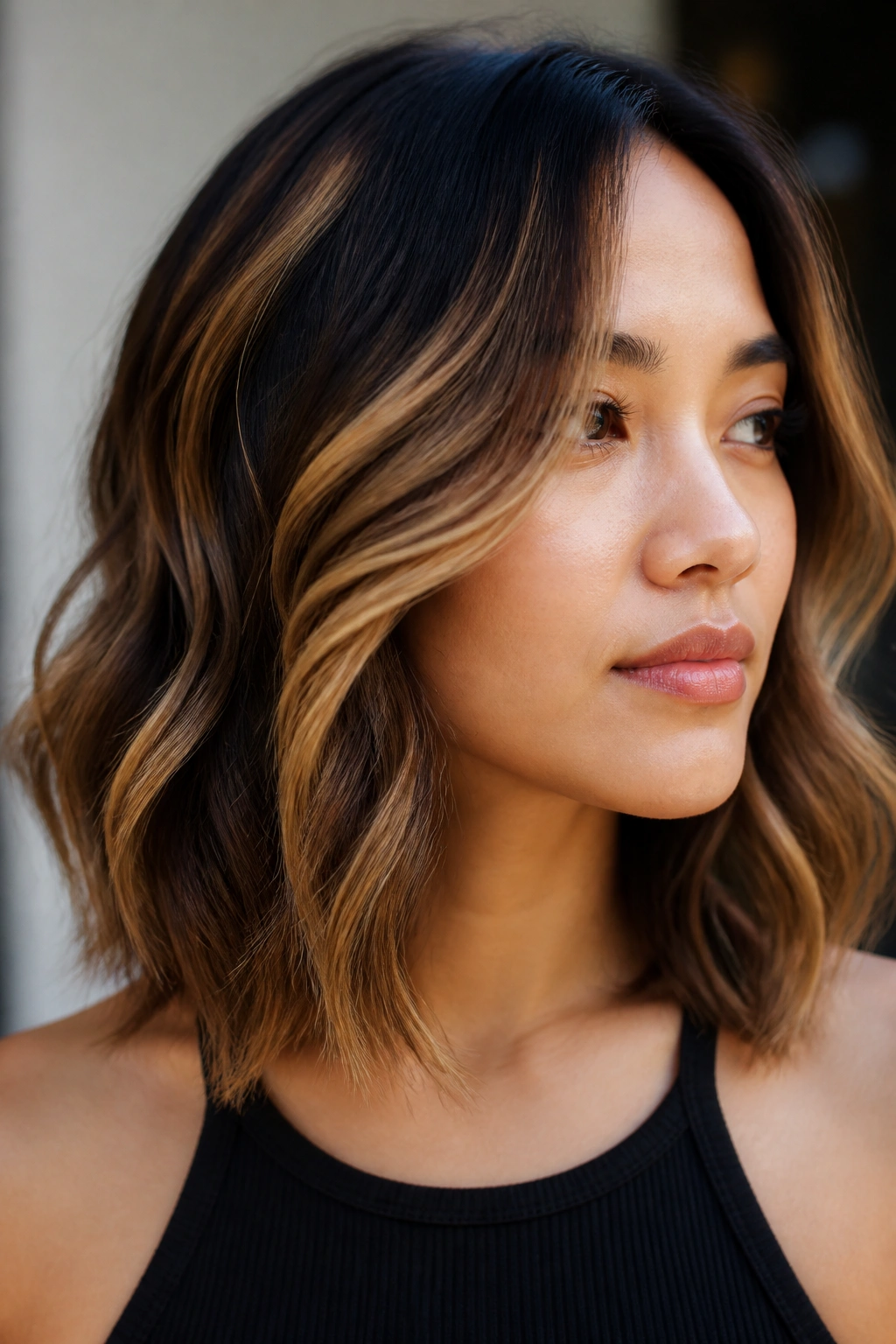
Chunky ribbons are for people who want the color to be seen from across the room, but not in a loud, neon way. On a wavy lob, wider caramel pieces break up the brown base and give the cut more motion.
I like this look on hair that has a little body already. The ribbons follow the curve of the wave, so each bend catches a different strip of color. That makes the haircut look more deliberate. It also means you do not need every strand to be lighter; you only need a few good placements in the right places.
The key is spacing. Too many ribbons and the result starts to feel dense. Too few and the hair looks patchy. Aim for a rhythm where the brown base still shows between the lighter bands. That empty space is part of the design.
5. Caramel Blonde Root Melt for Brown Hair
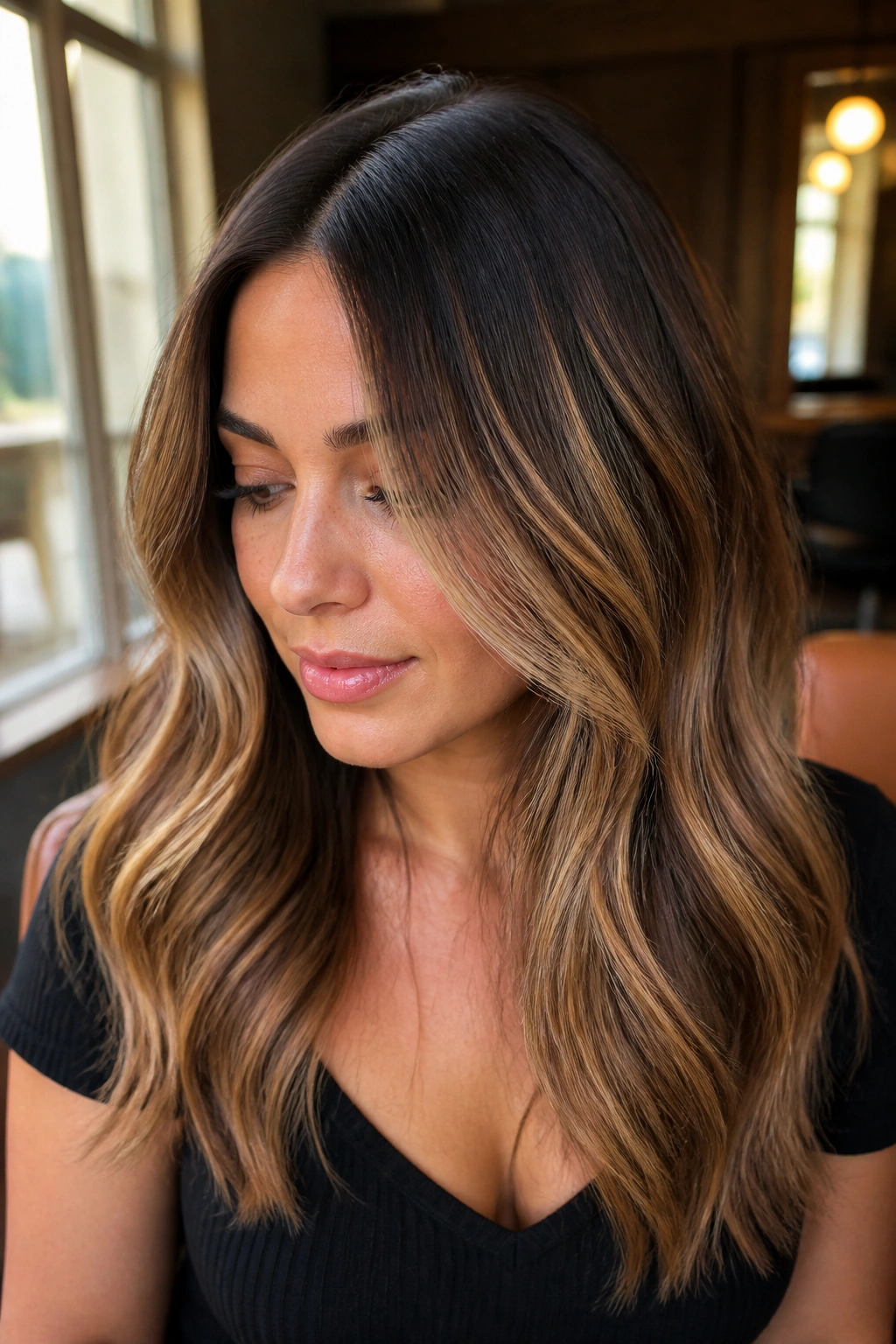
A root melt is the grown-up version of bright highlights. The roots stay deeper, then the caramel softens gradually as it drops through the mid-lengths and ends. It is one of the easiest ways to make brown hair look polished without making the regrowth line look screamingly obvious.
Why the Melt Matters
Brown hair often looks best when the root stays near its natural depth. That dark top gives the caramel somewhere to land. Without it, the contrast can look too sharp, especially if the base is espresso or dark chestnut.
A good root melt should feel like the color was always meant to be there. The transition should not look painted on. If you run your fingers down the strand, the shift from brown to caramel should feel gradual, not stepped.
This is the look I’d pick for someone who likes color but hates constant maintenance. You can stretch appointments longer because the root is part of the design, not a mistake waiting to be fixed.
6. Chestnut Brown with Cinnamon-Caramel Dimension
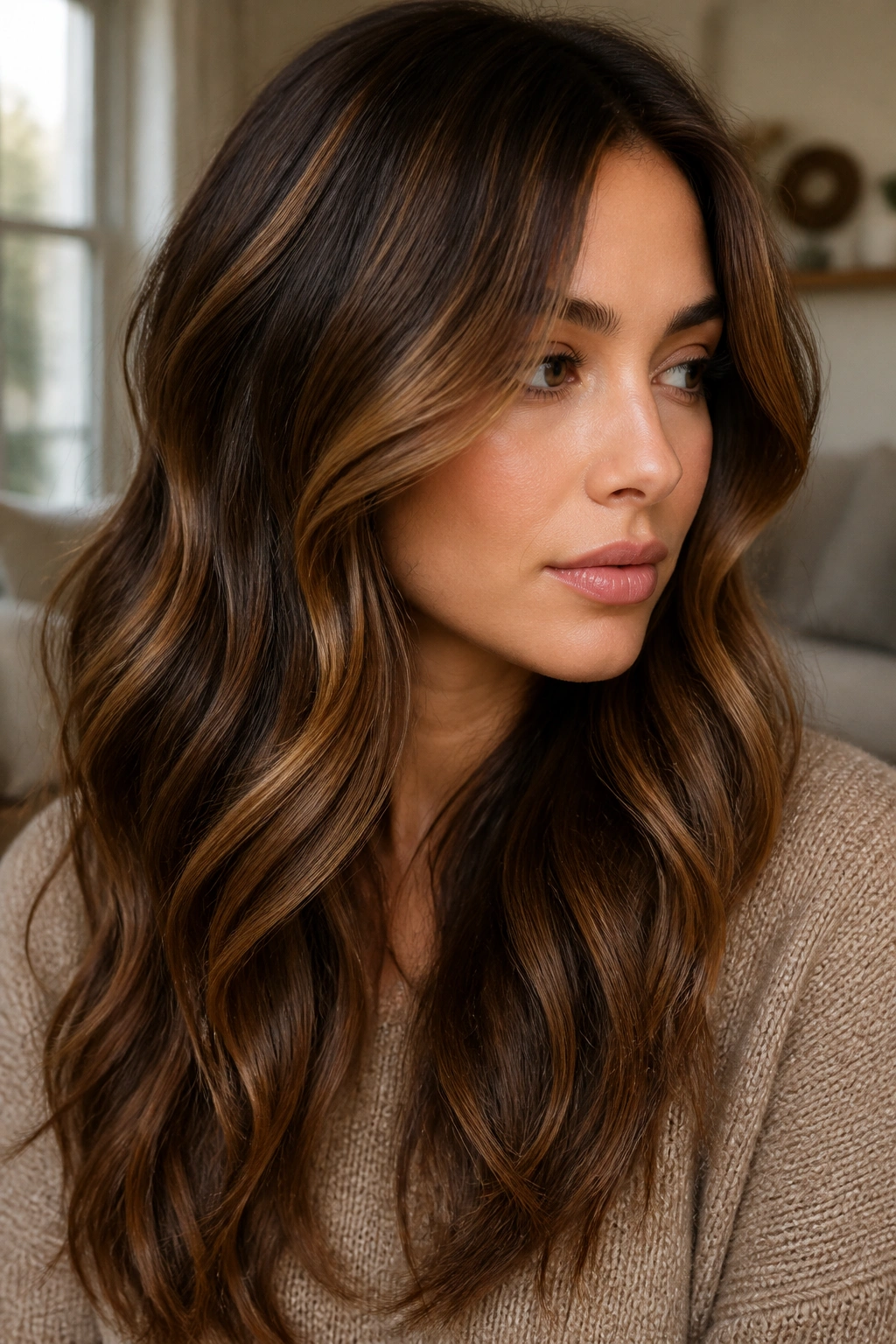
Chestnut and cinnamon caramel sit close enough to brown that they feel warm and rich, not bleached-out. That’s the point. If your hair already has red or copper undertones, this direction can look far more natural than a pale blonde ribbon ever would.
The best results come from using a caramel tone that leans a little spice-cabinet, not banana-yellow. Think warm sugar with a faint amber cast. On layered hair, it gives the cut more depth around the ends and more shine near the face.
This one is nice for people who want dimension rather than brightness. The hair still reads brown first. Then the caramel shows up in motion. In still photos, it can look subtle. In a moving head of hair, it comes alive.
7. Toffee Highlights Around the Crown
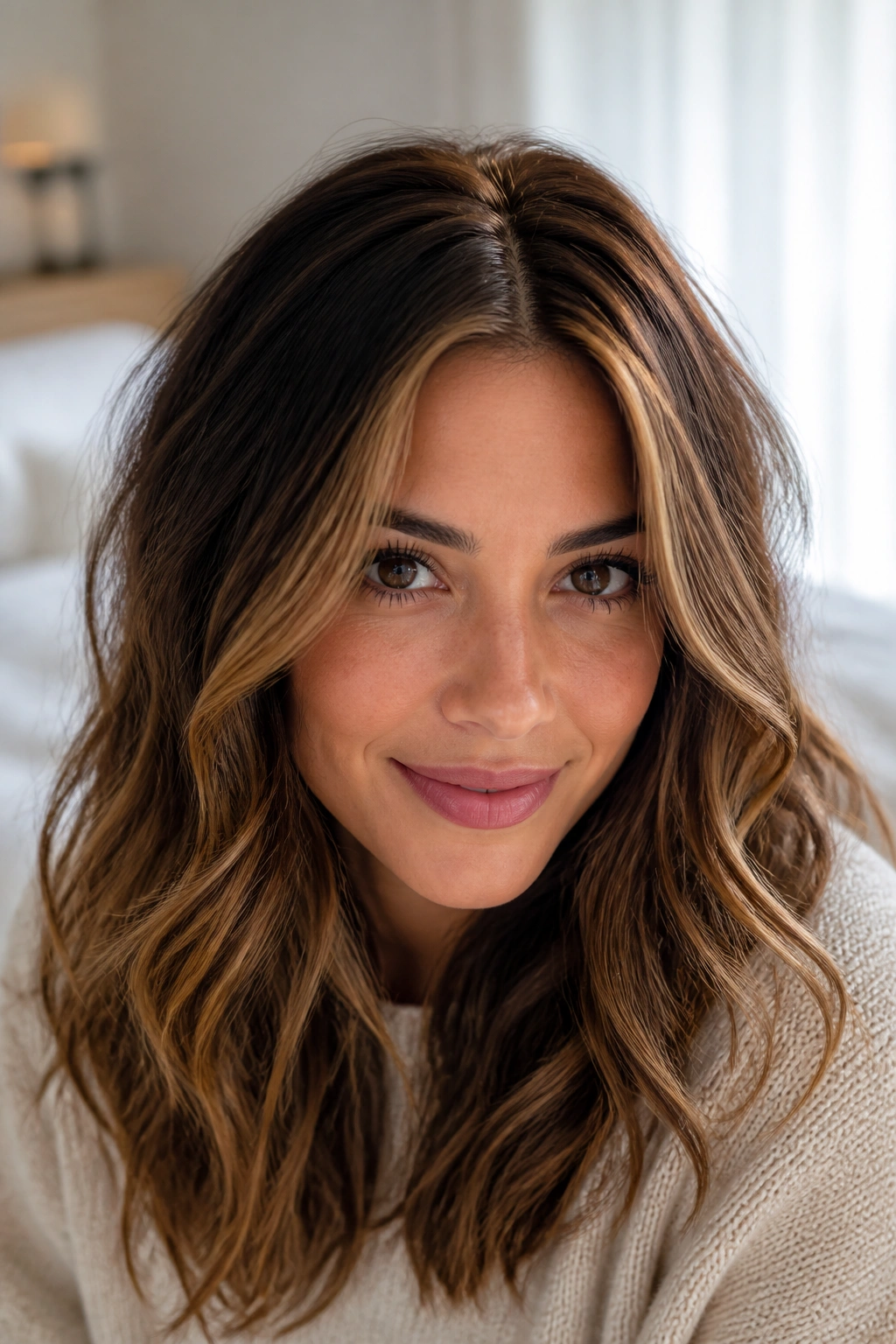
Crown placement changes the whole feel of a highlight job. Put the lighter pieces high enough on the head, and suddenly the hair looks fuller at the root. Put them too low, and you lose that lift.
Where They Should Sit
The sweet spot is the upper section near the part and the crown area, with a few soft pieces blending into the sides. That makes the top look airy and keeps the brown underneath from collapsing into one heavy mass.
- Best for flat roots and fine-to-medium density
- Works especially well on medium brown bases
- Needs careful spacing so the crown does not look striped
- Looks good with volume blowouts and soft waves
A lot of people ask for highlights and forget the top of the head entirely. Then they wonder why the hair still feels heavy. The crown is the part that gives the illusion of lift.
8. Caramel Contouring for Long Layers
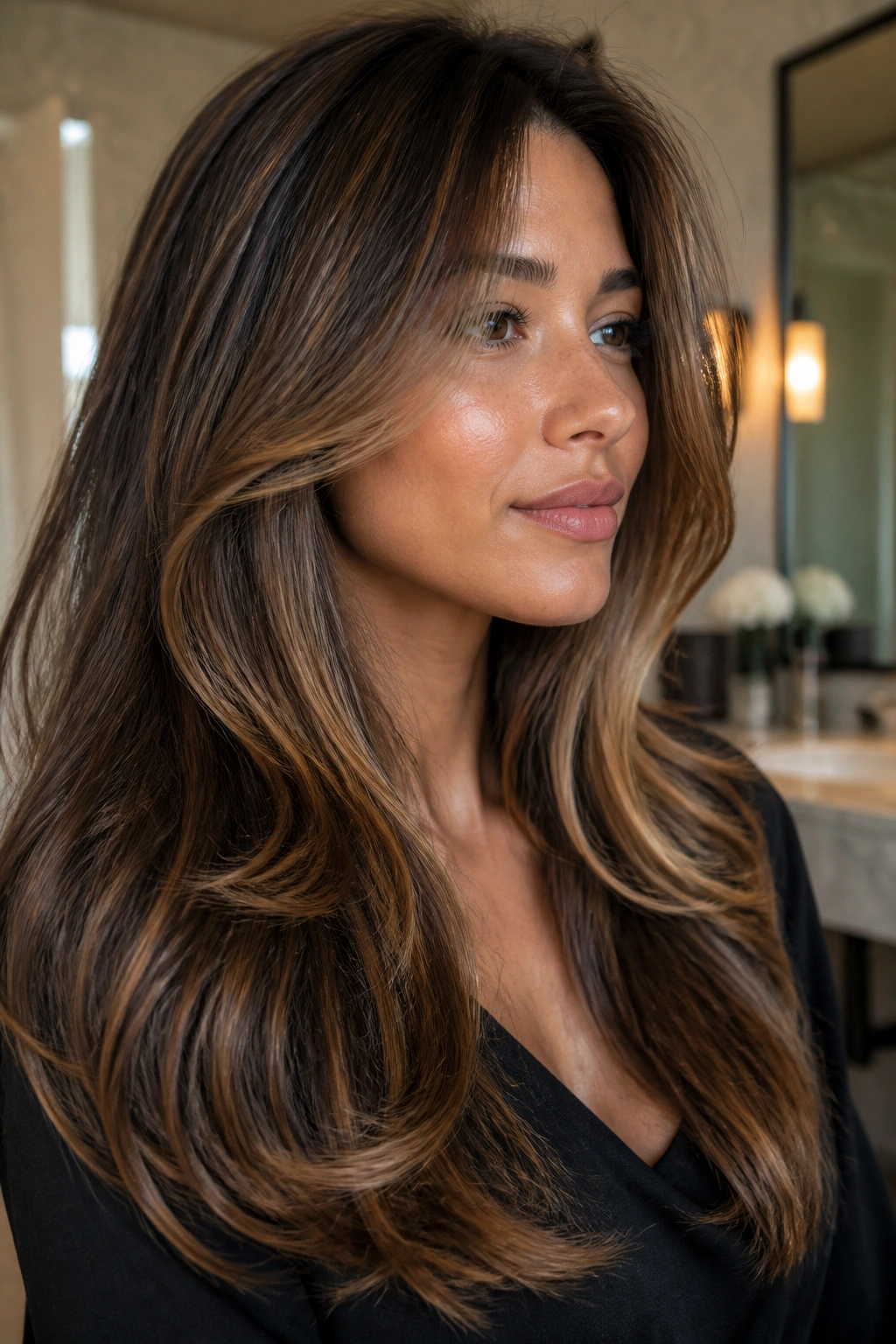
Caramel contouring borrows the same idea as makeup contouring: place the lighter color where you want attention and keep the deeper brown where you want shape. On long layers, that can be around the cheekbones, the ends, and the pieces that fall along the jaw.
It works because the cut and color start talking to each other. Long layers already create movement, and the caramel follows that movement instead of fighting it. On straight hair, it can make the shape look softer. On waves, it gives each bend a little more definition.
I like this approach when the hair is long enough to carry a slow fade between shades. If the layers are too short, the effect gets chopped up. But on collarbone-to-midback lengths, it looks clean and intentional without feeling stiff.
9. Bronzed Caramel on Warm Brunette Bases
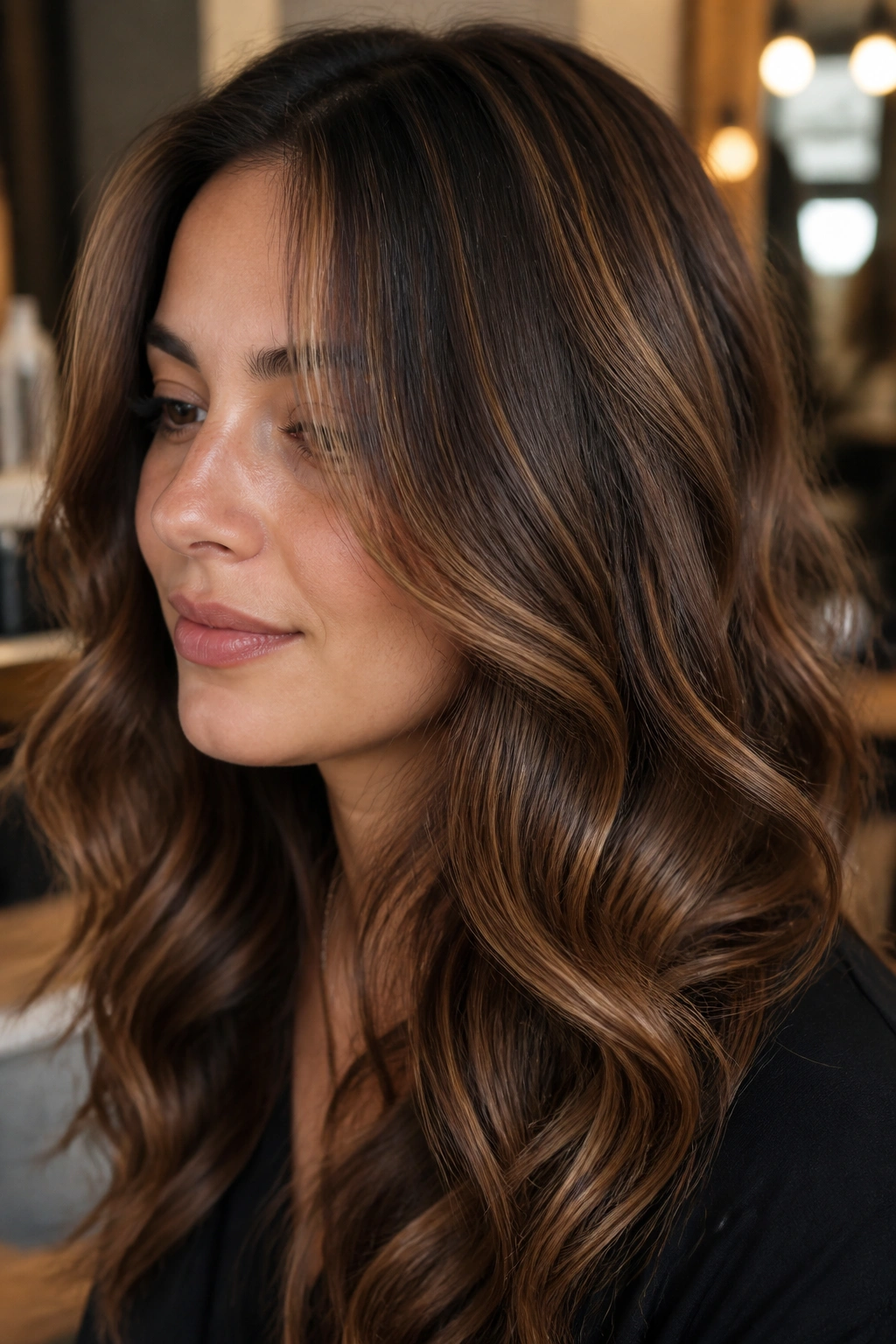
Warm brunette bases can take a bronzed caramel better than almost any other shade family. The reason is simple: the hair is already carrying gold, amber, or soft copper underneath, so the highlight does not have to fight the natural pigment.
That is also why this look can turn muddy if the toner is wrong. A bronzed caramel should stay rich, not yellow. It should feel like warm metal under soft light, not like a box dye gone too bright. The difference is in the gloss, not just the bleach.
This is a strong choice if your skin leans olive or golden. It keeps the whole look warm and tied together. I would not push it too pale on a warm base; the darker caramel usually looks more expensive and lasts longer between appointments.
10. Honey-Caramel Peekaboo Underlayers
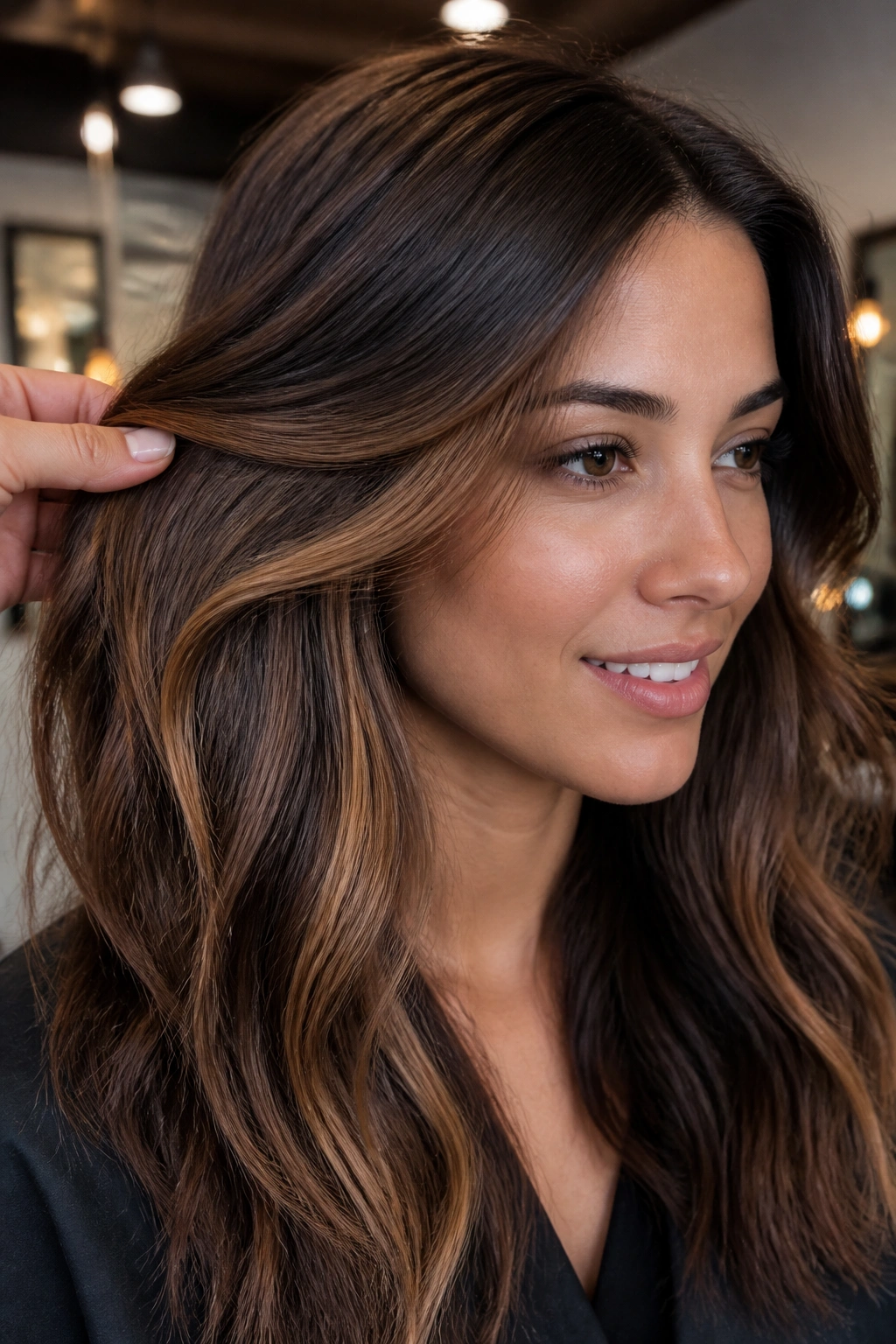
Peekaboo highlights are for the person who wants surprise color, not constant display. The lighter caramel sits under the top layer of brown hair, so it only shows when the hair moves, flips, or gets pulled into a ponytail.
That hidden placement gives you flexibility. At work, the hair can look mostly brunette. In a braid, bun, or half-up style, the honey-caramel underneath peeks through and does the interesting part for you. It’s a nice compromise if you like color but need a quieter daytime look.
One thing I like here: the underlayer can be a touch brighter than the top layer because the hair above it acts like a curtain. That means the result still feels soft, even with a noticeable contrast underneath.
11. Caramel Coils on Curly Brown Hair
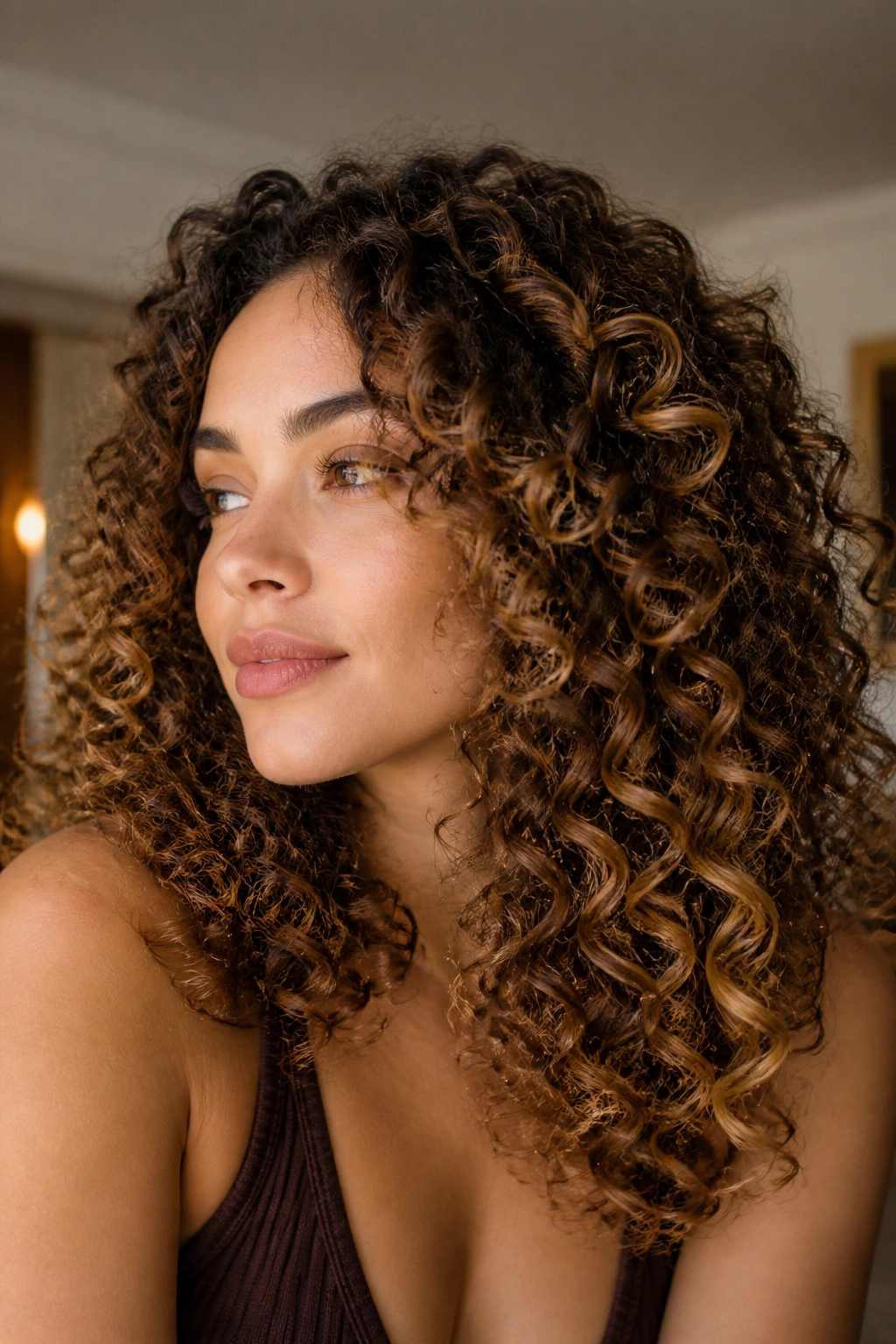
Curly hair needs a different hand. If you highlight curls the way you highlight straight hair, the color can disappear inside the coil pattern or end up looking patchy. The trick is to place caramel where the curls naturally open.
Follow the Curl Clumps
Paint the outside of the curl clump, not every tiny strand inside it. That lets the caramel show when the curl moves and keeps the interior depth intact.
- Best on loose curls through tight ringlets
- Place the lightest pieces near the outer curve of the curl
- Avoid flooding the roots with too much light
- Use a warm toner that stays soft after a few washes
Curly brown hair can handle a lot of dimension, but it still needs space. Leave some untouched brown between the lighter pieces. That contrast makes the curl pattern look cleaner and more deliberate.
12. Beige-Caramel Babylights for Neutral Brunettes
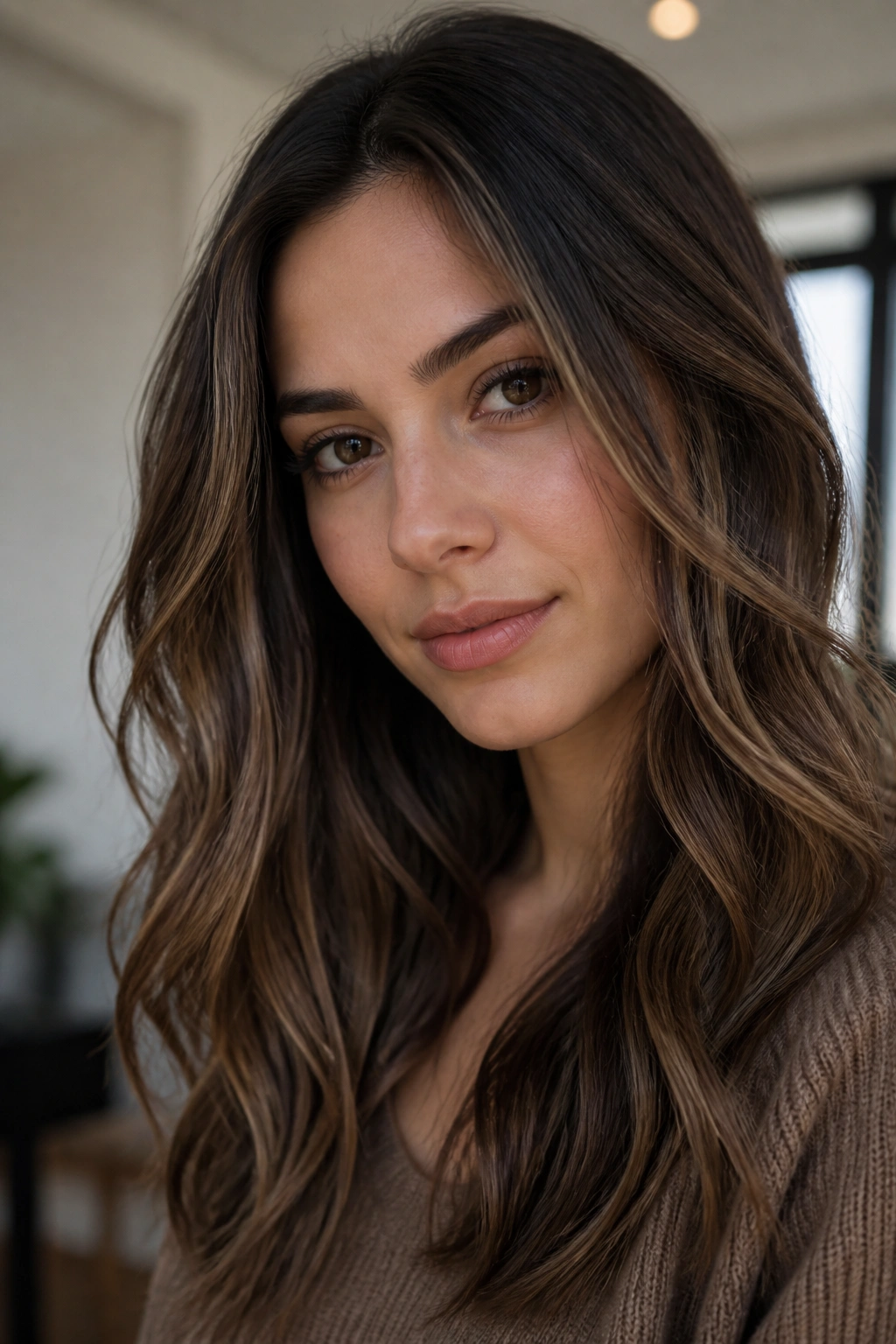
If golden caramel feels too warm and ash blonde feels too cold, beige-caramel sits in the middle and behaves itself. That makes it a strong pick for neutral brunettes who want lightness without a yellow cast.
The finish is softer than a classic honey highlight. It has a creamier look, which is nice on brown hair that already reflects a lot of shine. The color does not jump out at you first. It reveals itself when the hair shifts in daylight or under a bright mirror.
This one is especially good on people who wear minimal makeup or cool-toned clothes and do not want the hair to overpower everything else. It keeps the brunette base visible while lifting the overall feel of the style.
13. Walnut Brown with Soft Golden Veils
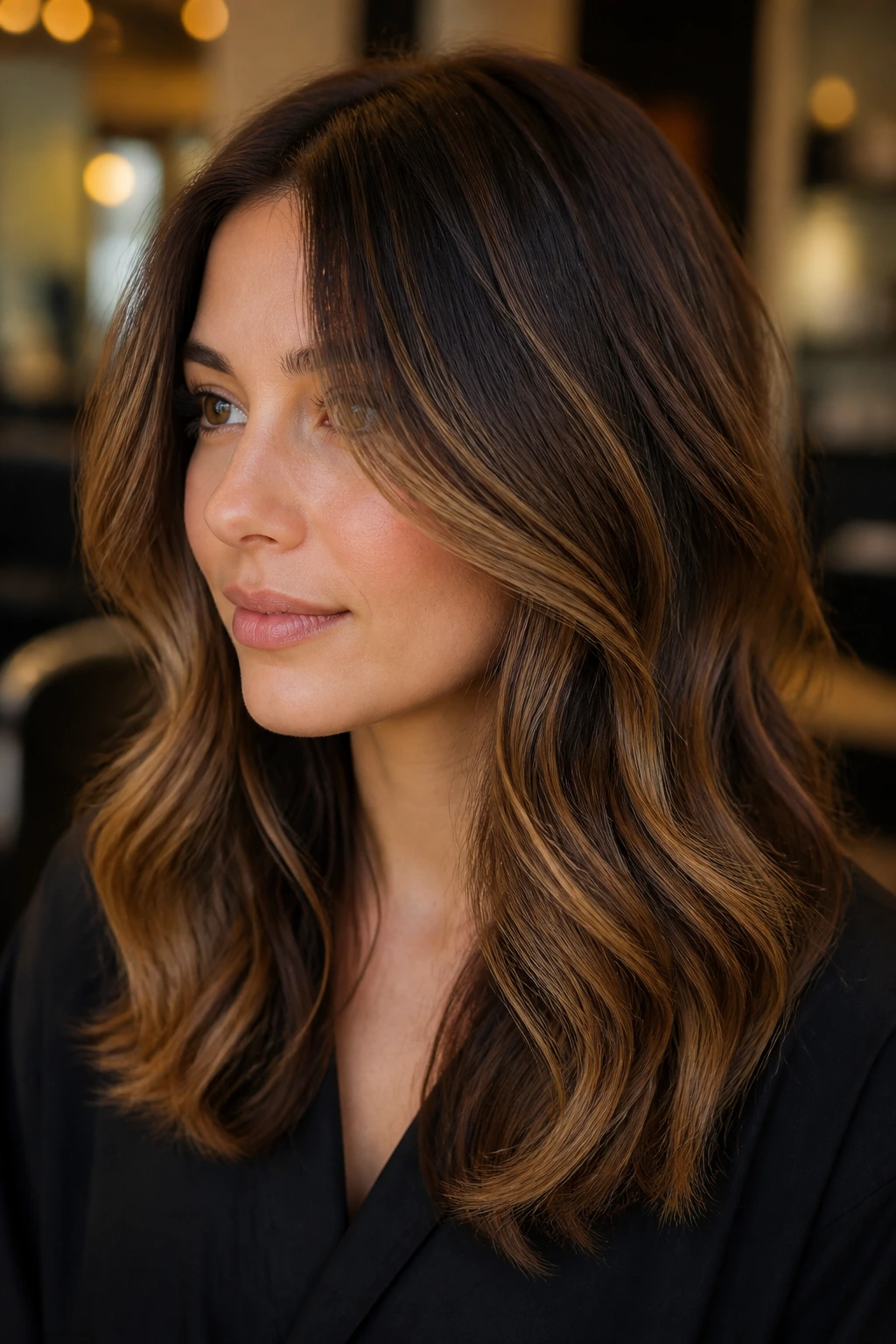
Walnut brown is a beautiful base for delicate caramel work because it has enough depth to hold shine. Add a few golden veils, and the hair stops looking flat without losing that rich, deep-brown feeling.
The veils should stay soft. Not chunky. Not obvious. A few lighter ribbons through the mid-lengths and side panels are enough. On thick hair, they can keep the style from feeling heavy. On finer hair, they can give the impression of more movement than the cut alone creates.
I like this version for someone who wants a quieter result than classic blonde highlighting. The color reads expensive in a very low-key way. It doesn’t shout. It just looks finished.
14. Caramel Highlights on a Blunt Bob
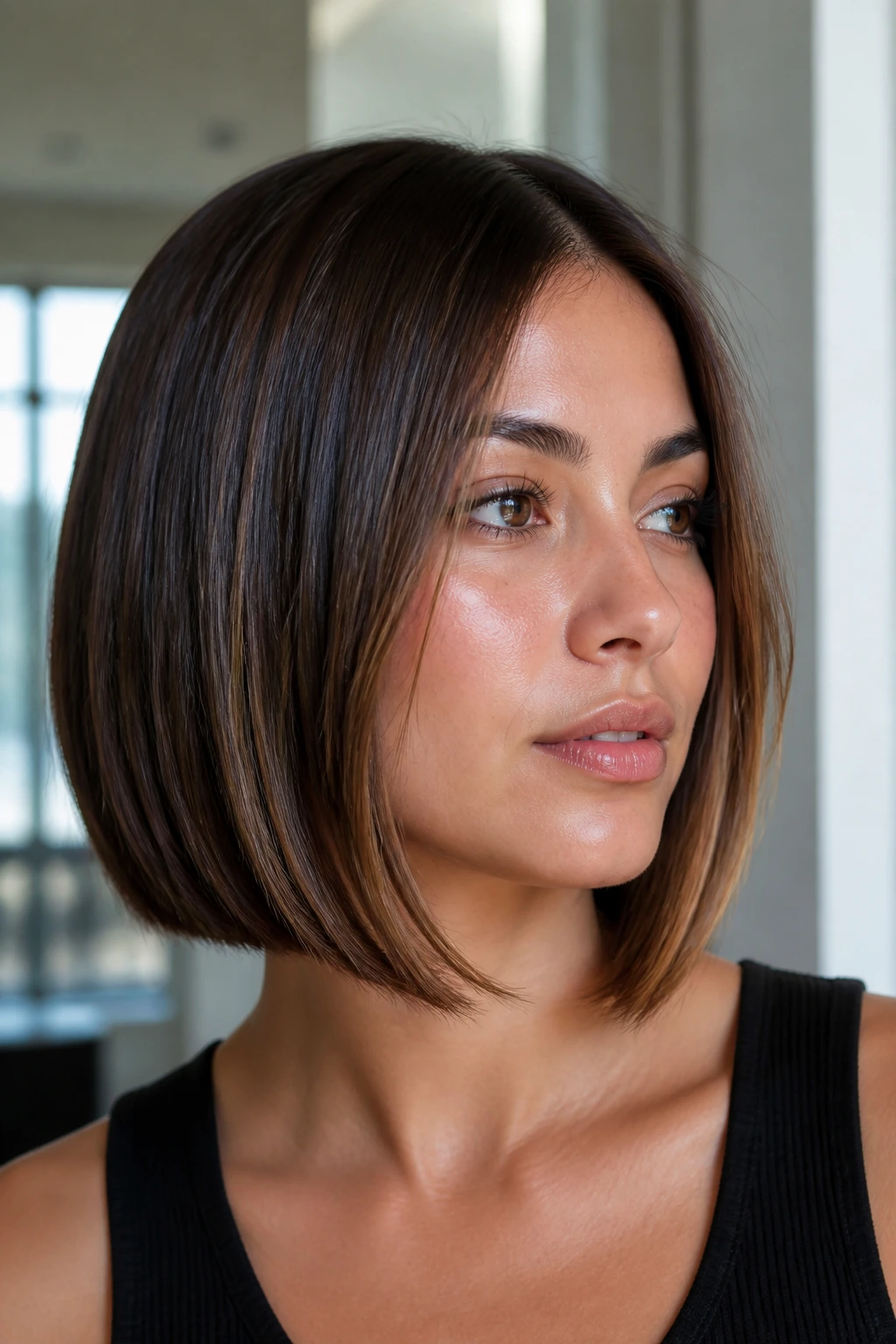
A blunt bob needs clean placement because the cut itself is already strong. If you scatter the caramel too randomly, the shape can lose its sharp edge and start feeling messy in the wrong way.
Keep the lightest strands near the perimeter and the front corners. That gives the bob a little glow around the face while preserving the crisp line at the bottom. On a straight blowout, the contrast between the dark base and caramel ends looks tidy and modern. On a bendy, lived-in style, it feels softer.
This is one of those cuts where less really does more. A few well-placed pieces are better than trying to light up the whole head.
15. Sunlit Ends on a Layered Shag
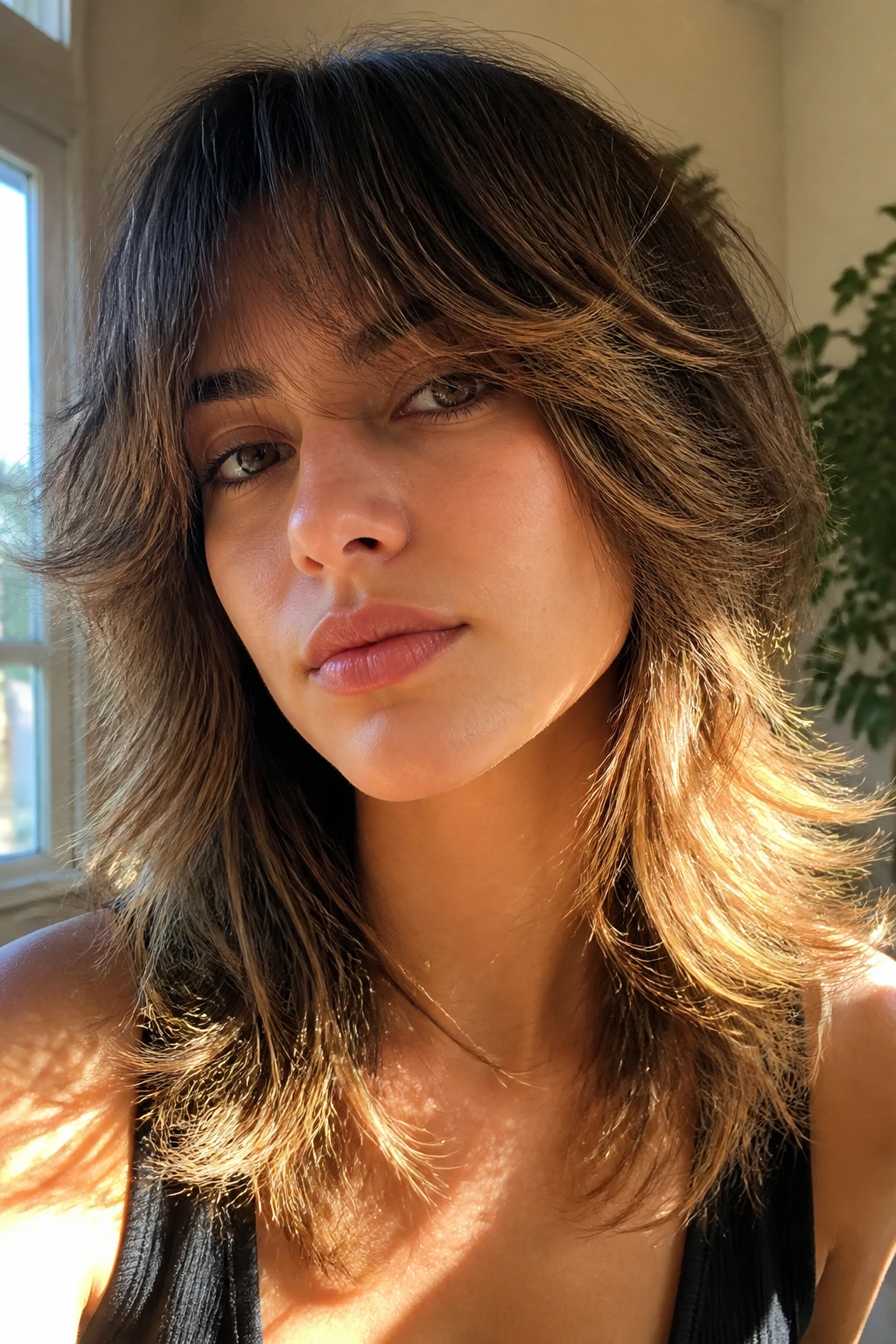
A shag loves irregular light. The cut already has movement, so the color does not need to be perfectly even. Sunlit caramel at the ends and on the feathered outer layers makes the whole shape look more relaxed.
Where to Keep the Light
Focus on the frayed-looking edges, the outer layers near the cheekbones, and the ends that flip out. That is where the shag shows texture. If you light up the underlayers too much, you lose the easy, broken-up feel that makes the cut work.
The result should look touched by sun, not dipped in it. That distinction matters a lot. A shag has attitude, but it does not need a heavy color block.
This is also a forgiving style for grow-out. The messier the cut, the less the regrowth line bothers you. Convenient, honestly.
16. Espresso Brown with Thin Foilayage Strands
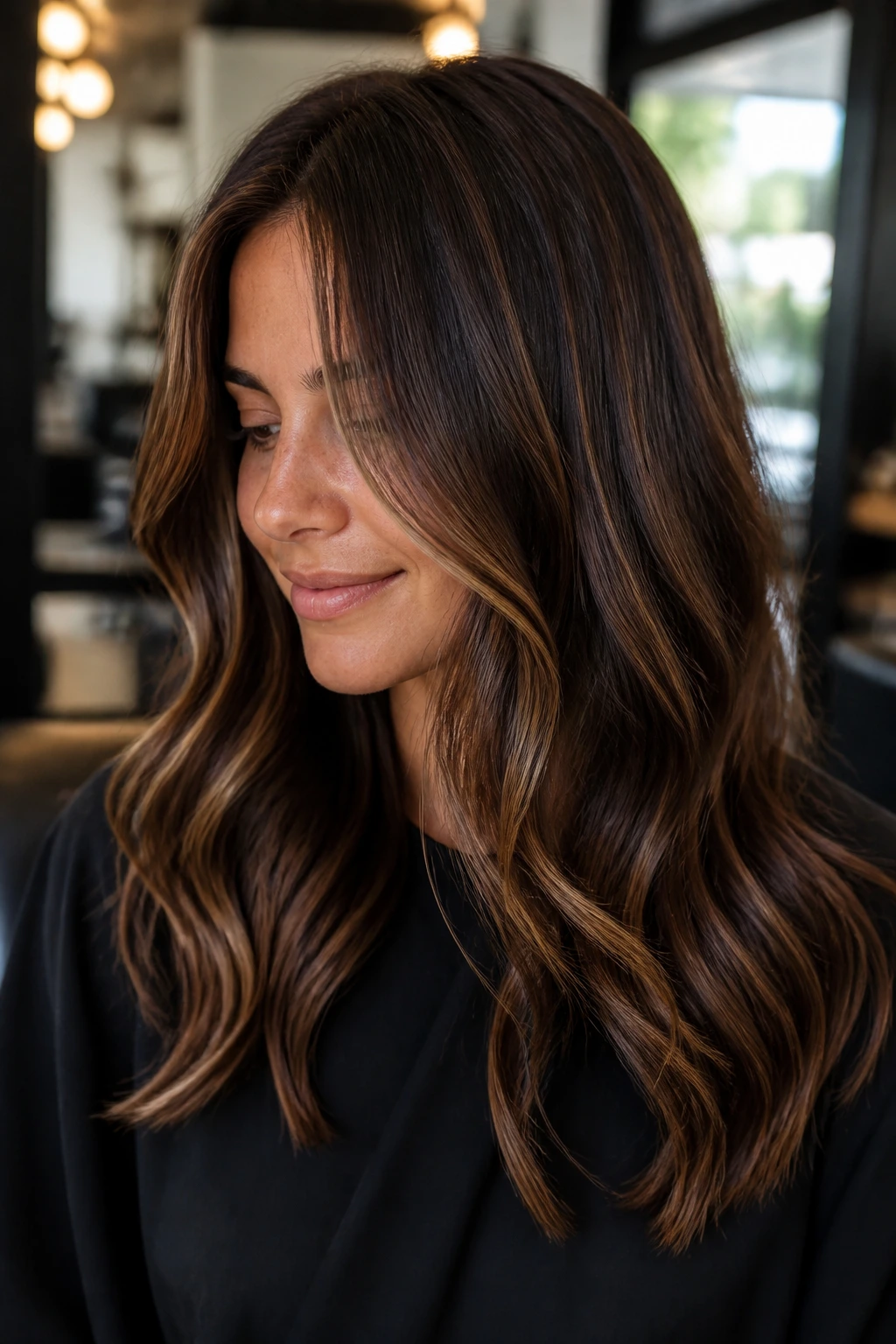
Thin foilayage strands give espresso brown hair a sharp but still wearable contrast. The strands are narrow enough to feel delicate, yet they still pop against the dark base.
Why This Looks Different From Classic Balayage
Foilayage usually gives you a brighter lift than open-air painting alone because the foil holds heat and pushes the caramel a bit farther. That matters on very dark brown hair, where a soft hand-painted sweep might not show enough.
The trick is restraint. Use a few fine strands near the front, through the top, and along the part. Too many and you lose the crisp effect. Too few and the contrast disappears.
This is the look for someone who wants the hair to look lighter in motion, not uniformly blonde. It plays especially well on straight blowouts and glassy finishes.
17. Copper-Leaning Caramel for Warm Brown Hair
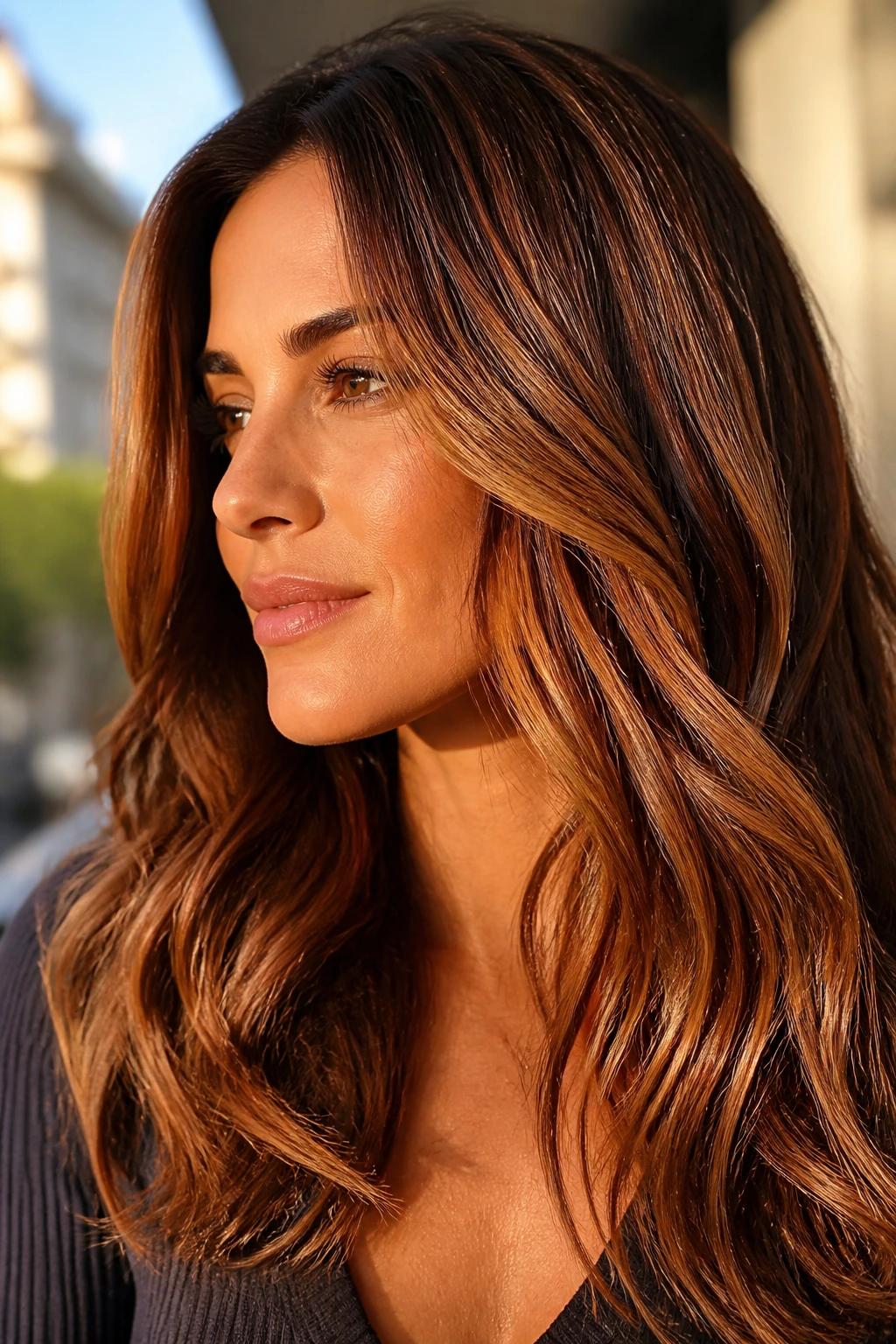
Copper-leaning caramel has more fire in it than a beige or golden version. On warm brown hair, that can be a gift. The shade looks alive, especially in sunlight or under warm indoor bulbs.
The risk is going too far. If the copper pushes too bright, the highlight stops reading as caramel and starts looking red. I prefer a controlled version with just enough copper to warm the finish. It should still sit inside the brown family.
This is a flattering route if your natural color leans auburn, mahogany, or golden brown. It keeps the warmth believable. And it grows out without looking dull, which is more than I can say for a lot of brighter shades.
18. Caramel Streaks Along a Middle Part
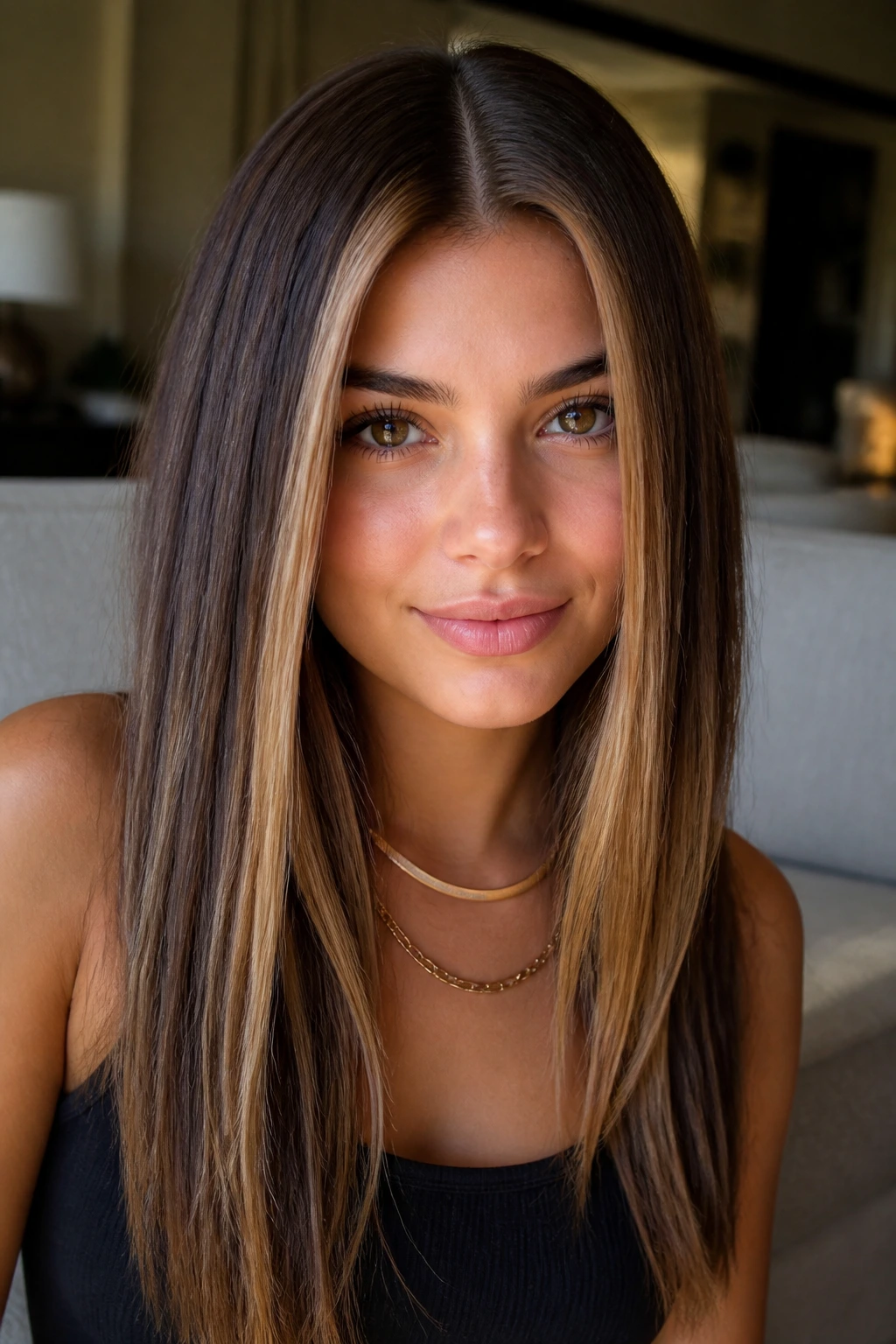
A middle part gives you a built-in map. Use it well, and caramel streaks can frame the face with almost no extra styling effort.
Place the lightest pieces on both sides of the part, then let them fall into the front layers. The symmetry matters. A centered part can look severe if the color is too random, but a pair of balanced caramel streaks softens it fast.
This style works especially well if you wear your hair straight. The lines show more clearly, and the color appears deliberate instead of accidental. If you flip the hair into waves later, the same streaks look softer and more dimensional.
19. Glossy Mocha Brown with a Caramel Sweep
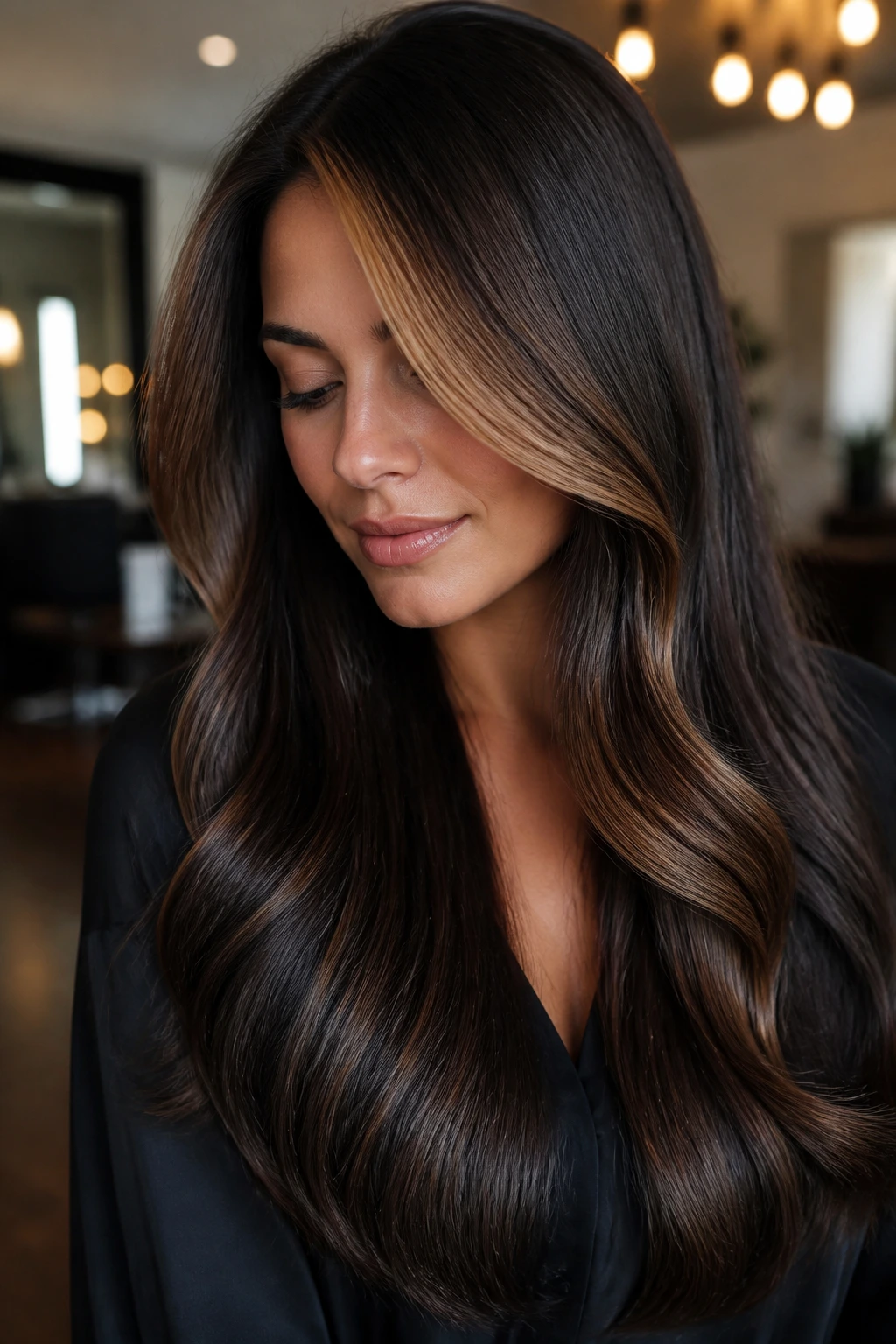
Some highlight jobs are about brightness. This one is about shine. A glossy mocha base with a single caramel sweep through the front or side can make brown hair look richer, not lighter for the sake of it.
That sweep should feel smooth and liquid. Not broken. Not choppy. Think one elegant ribbon that bends with the haircut and gives the eye a place to rest. If the hair is layered, the sweep can travel from the cheek area into the ends and keep its shape there.
I like this on people who wear polished blowouts or soft curls. It looks refined without being stiff, which is a hard line to hit. The gloss does half the work, and the caramel simply gives it direction.
20. Caramel Blonde Brightening Around Curtain Bangs
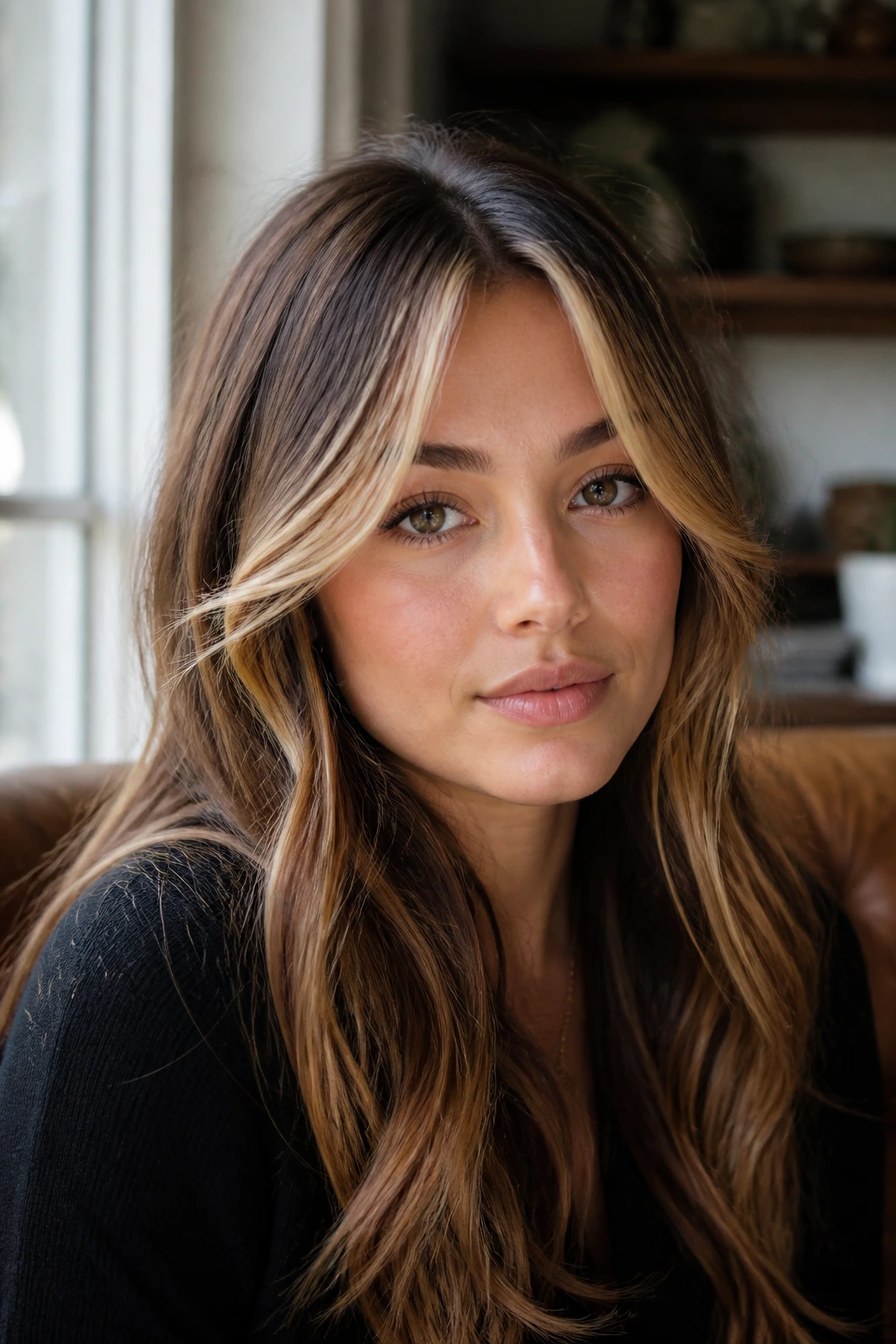
Curtain bangs can eat color if the highlight placement is lazy. Put the caramel in the wrong place, and the fringe disappears into the rest of the hair. Put it right, and the bangs do half your styling for you.
How Curtain Bangs Change the Whole Cut
The lighter pieces should live at the temple, the front edge of the fringe, and just under the bangs where they flick away from the face. That keeps the cut open and airy.
- Best on medium brown hair with a soft part
- Keep the front pieces lighter than the sides
- Use a beige or honey caramel if your skin tone is cool
- Style with a round brush or a bend so the fringe separates cleanly
Curtain bangs are small, but they change the eye line fast. A good highlight plan makes them look intentional instead of heavy.
21. Broad Caramel Balayage for Thick Brown Hair
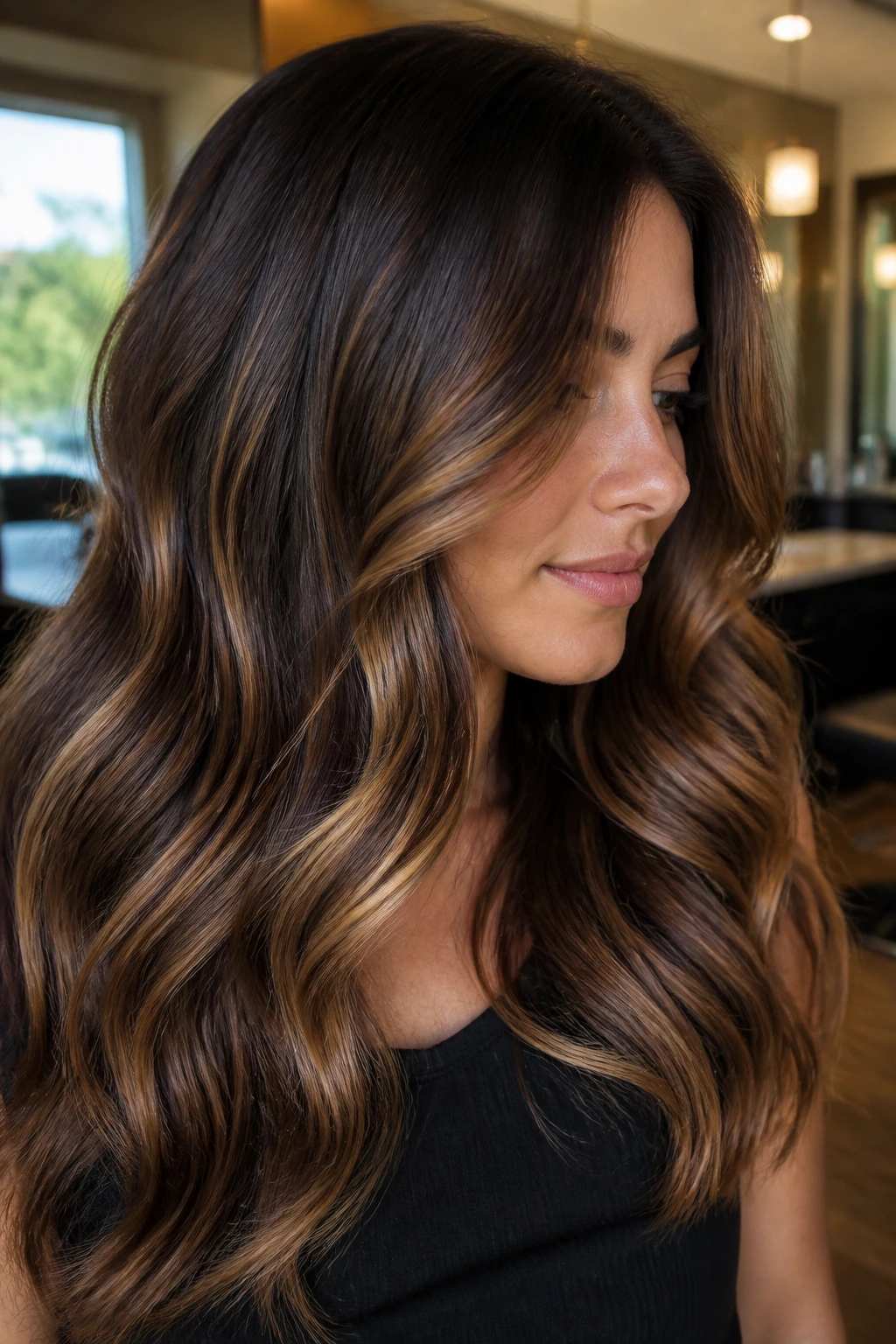
Thick hair can swallow color if the highlights are too timid. Broad caramel balayage panels are a better answer because they show up through the density and create visible movement from the inside out.
The larger sections should sit through the mid-lengths and ends, with some interior pieces so the color is not trapped only on the outside layer. That interior placement matters a lot on thick hair. Otherwise the top layer hides everything underneath and the color feels weak.
This look also helps reduce the “helmet” effect that dense brown hair can get in one solid shade. The caramel opens it up. Not all at once. Just enough to give the cut breathing room.
22. Satin-Finish Highlights for Fine Brown Hair
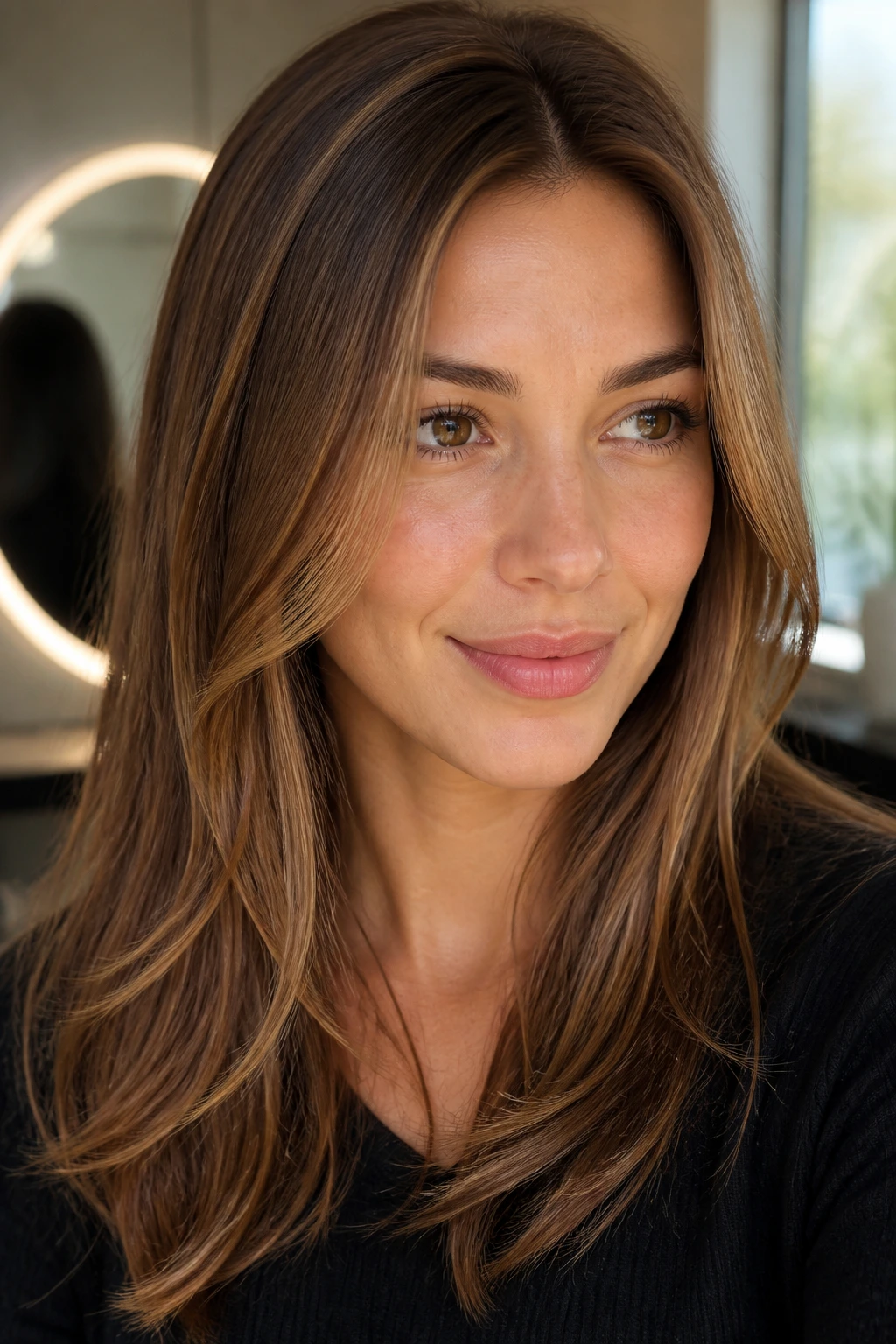
Fine hair needs care with highlight width and brightness. Too much contrast can make the hair look thinner, because every light piece ends up looking isolated. Satin-finish caramel keeps the light soft and close to the base.
That means finer sections, a more muted toner, and a careful choice of placement near the top and around the face. You want the hair to look fuller, not frayed. A little brightness goes a long way when the strands themselves are delicate.
This is the kind of highlight plan that rewards restraint. If the hair is already fine, the color should support the cut, not compete with it. A smooth blow-dry helps too, because it shows the softness of the finish instead of exposing every tiny line.
23. Dimensional Bronde with Caramel Notes
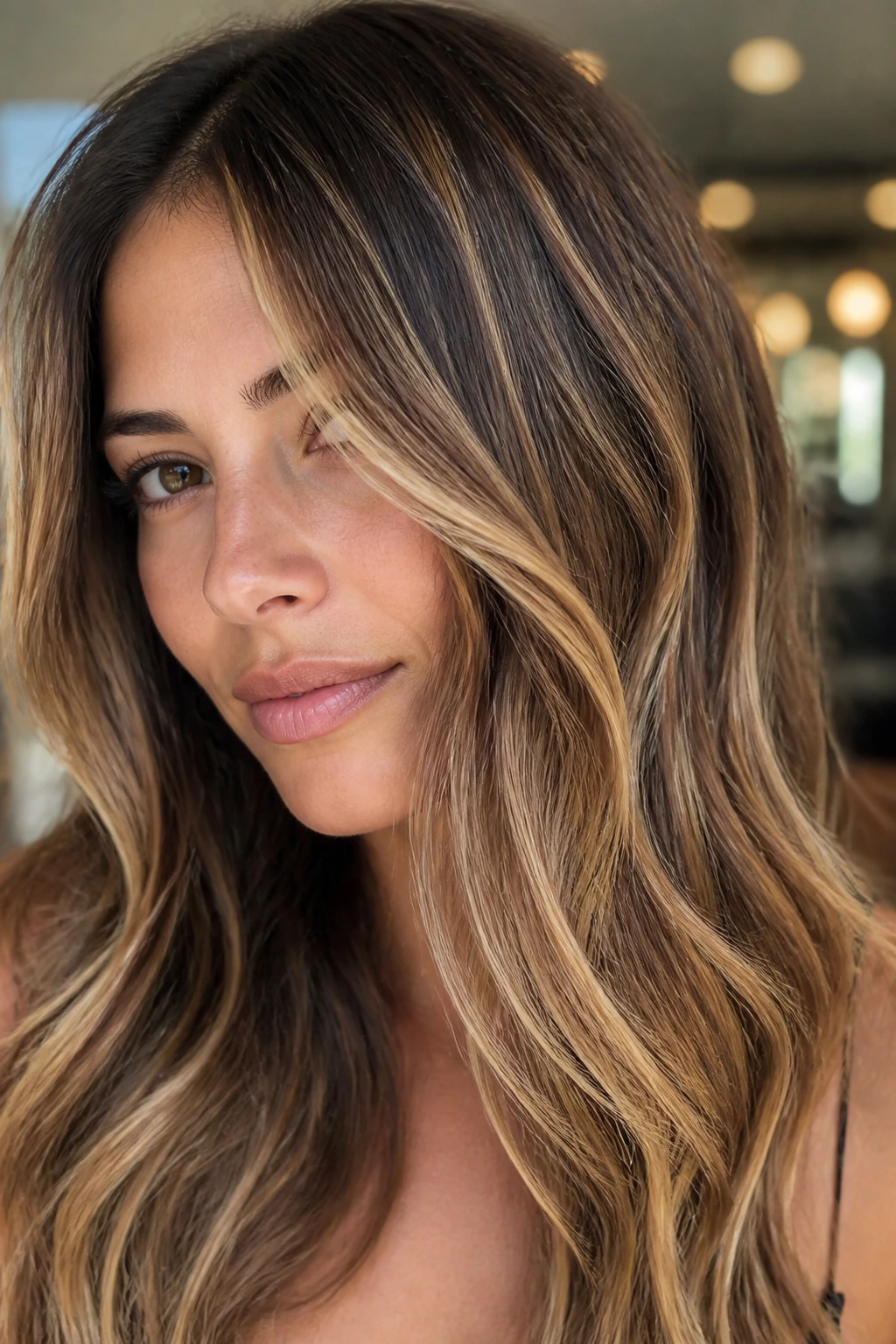
Bronde sits between brown and blonde, which makes it a useful direction for brunettes who want to move lighter without taking a hard jump. Caramel notes give that in-between shade warmth and keep it from looking flat.
The best bronde work still respects the brown base. You should be able to see the brunette underneath. Then, when the hair moves, the caramel and lighter beige pieces come forward. That shifting effect is what keeps the look from feeling one-note.
This is the style I’d point to for someone who keeps saving blonde inspiration photos but is not ready to abandon brown entirely. It scratches the lighter-hair itch while staying believable.
24. Warm Caramel Panels for Braids and Updos
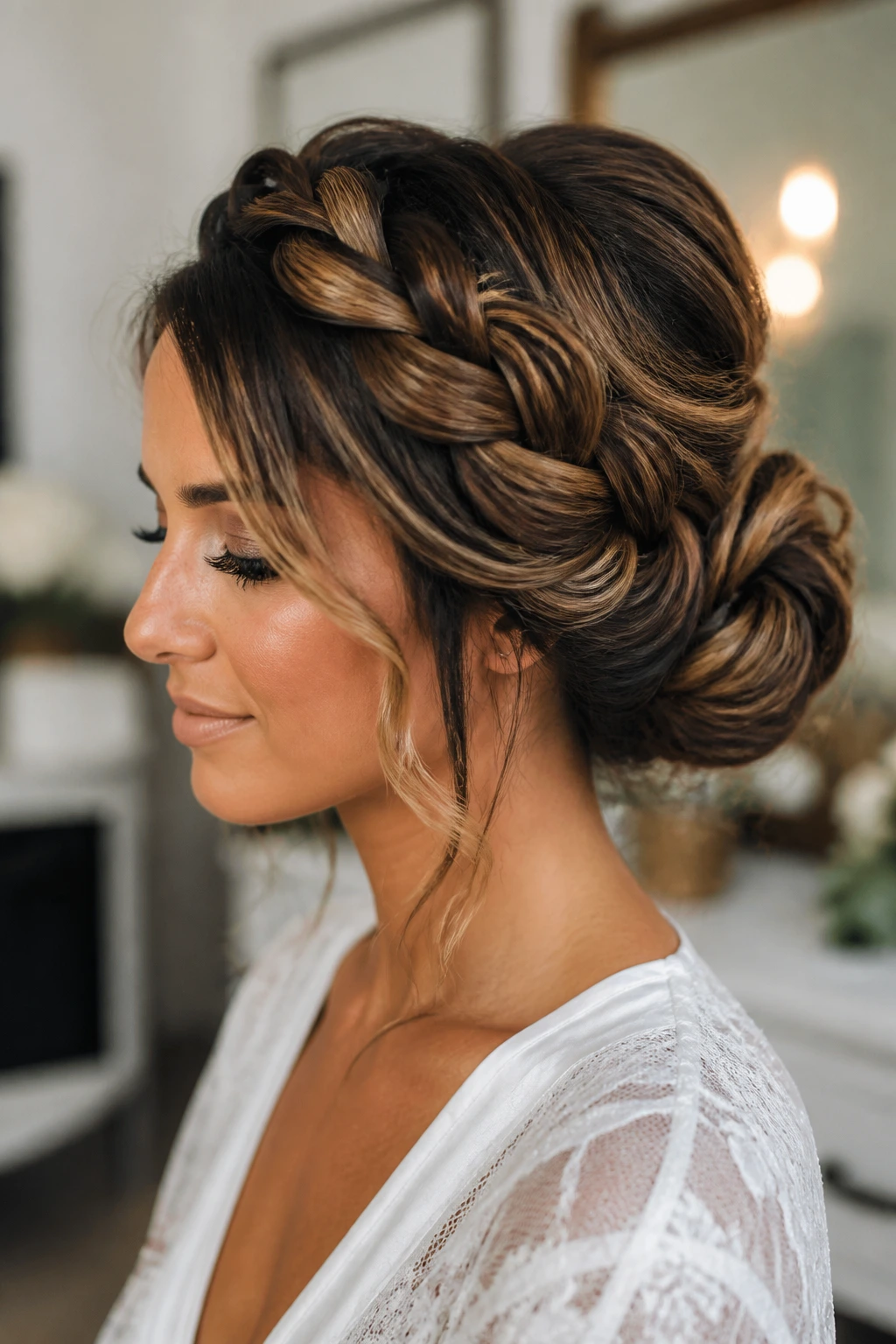
Braids and updos show color in a different way. The twists and folds catch the highlight placement, so a caramel panel can look much stronger in an up style than it does when the hair hangs loose.
That makes this a smart choice for people who wear their hair braided, pinned, or twisted a lot. Put the light panels where the braid will turn or where a bun will expose them, and the color gives you movement even when the style is tight.
I especially like this for weddings, dinners, and days when you know your hair will be up. The base still reads brown, but the caramel flashes through the structure. It’s a good reminder that placement matters more than raw brightness.
25. Soft Ribbon Highlights for Straight Hair
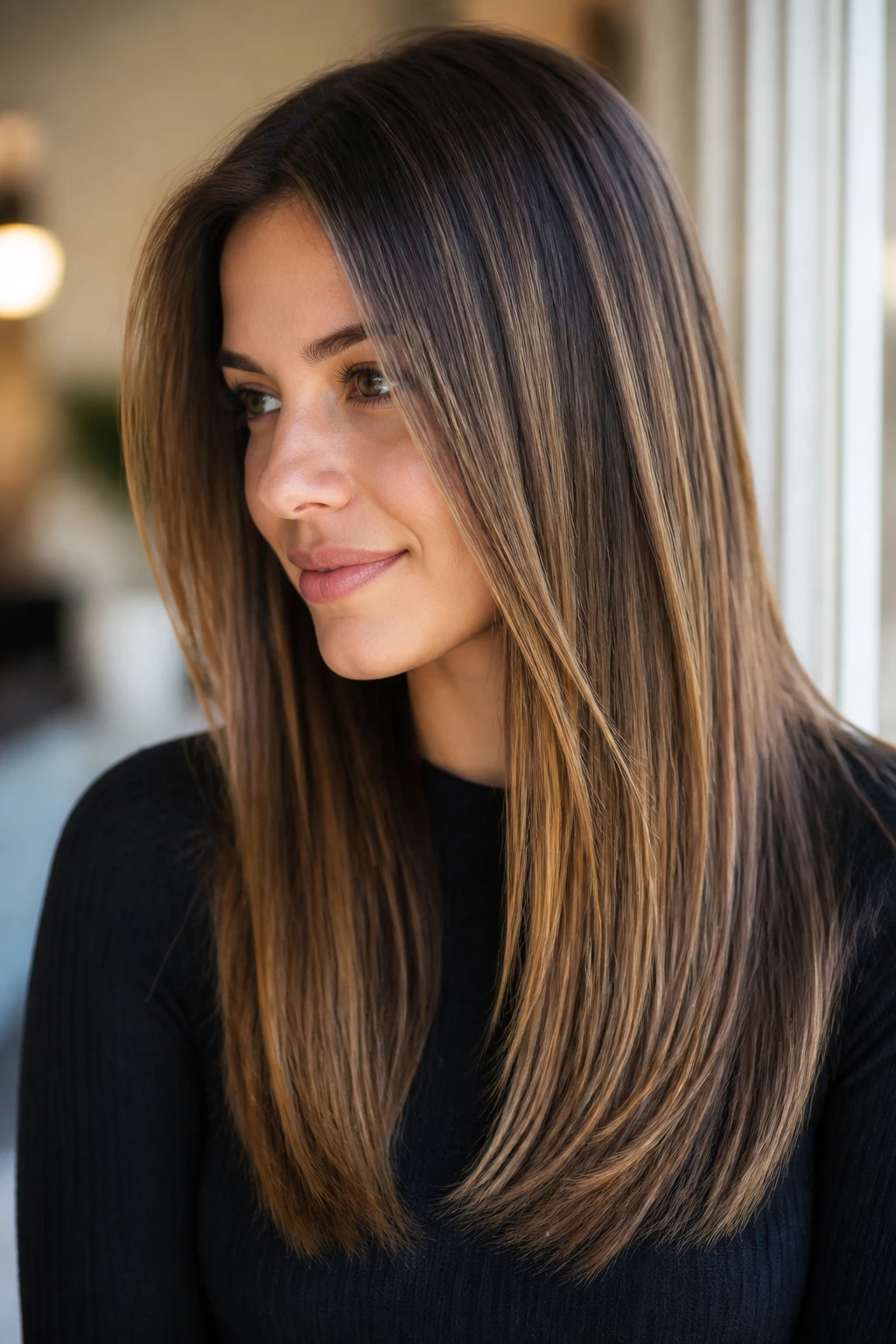
Straight hair is unforgiving in the best and worst ways. Every highlight line shows. That’s why ribbon placement works so well here — the color needs length and flow, not broken little patches that end abruptly.
Long caramel ribbons should travel from mid-length to ends and stay smooth enough to follow the line of the cut. If the pieces are too short, they can look choppy once the hair is blown flat. If they’re too wide, the finish gets heavy. The middle ground is the useful one.
This style looks especially good on sleek, one-length cuts and long layers. It gives straight brown hair a little motion without forcing waves or curls to do the work.
26. Golden Caramel on Chestnut Curls
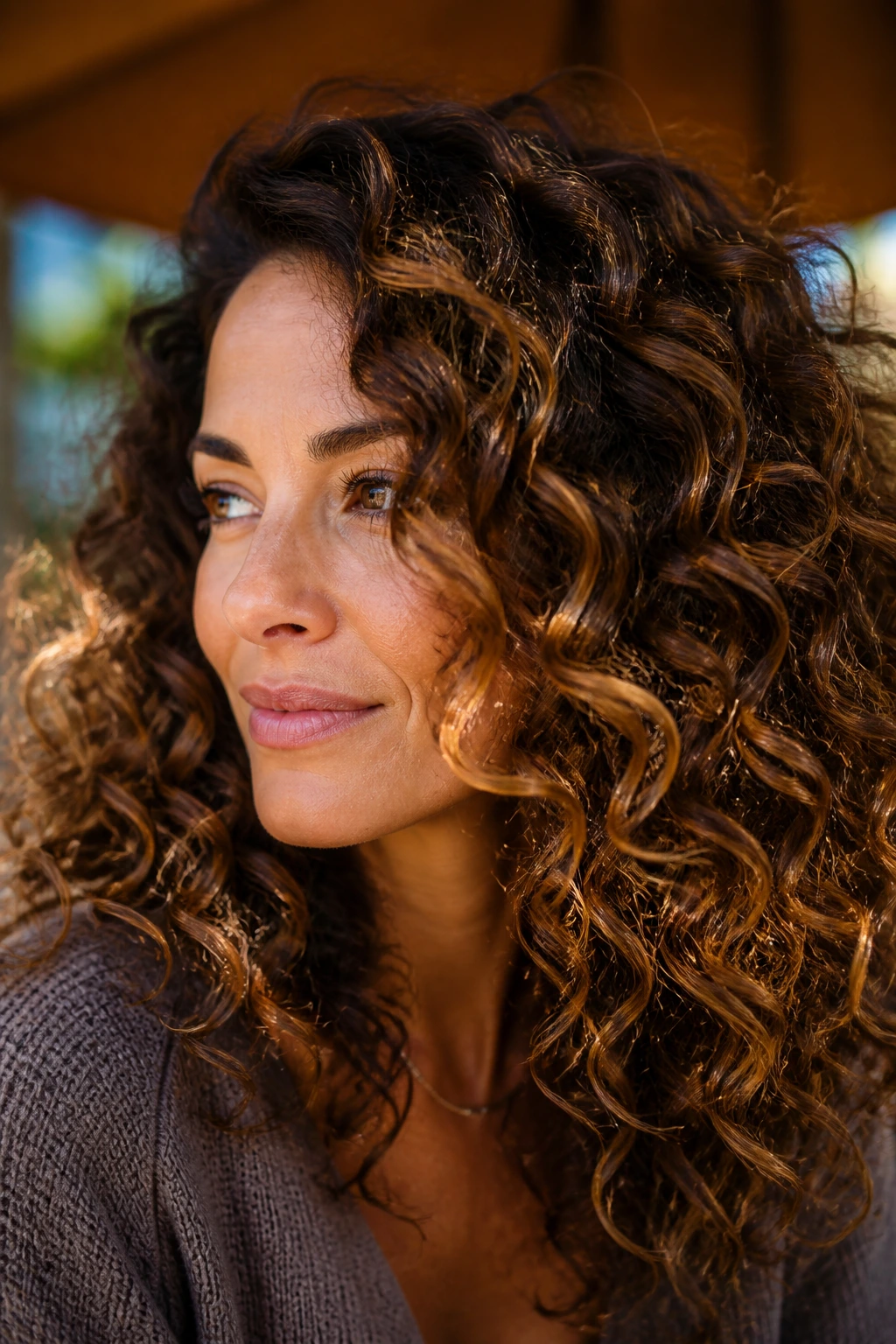
Chestnut curls take on golden caramel in a way that feels almost built in. The curl pattern already creates shadow and light, so the highlight only has to sit on the outer curve of the curl to show up.
What to Ask For on Curls
Tell your stylist to place the lighter pieces where the curl opens, not where it compresses. That keeps the tone visible and avoids blotchy spots where the hair bends tightly.
A golden caramel finish works well here because chestnut usually has enough warmth to support it. The two shades speak the same language. One deep, one light. That’s the whole story.
This is a lovely choice if you want curls to look bouncy and separated rather than heavy and uniform. The warmth also makes the hair look glossy even before styling products go on.
27. Shadow-Root Caramel Blonde for an Easy Grow-Out
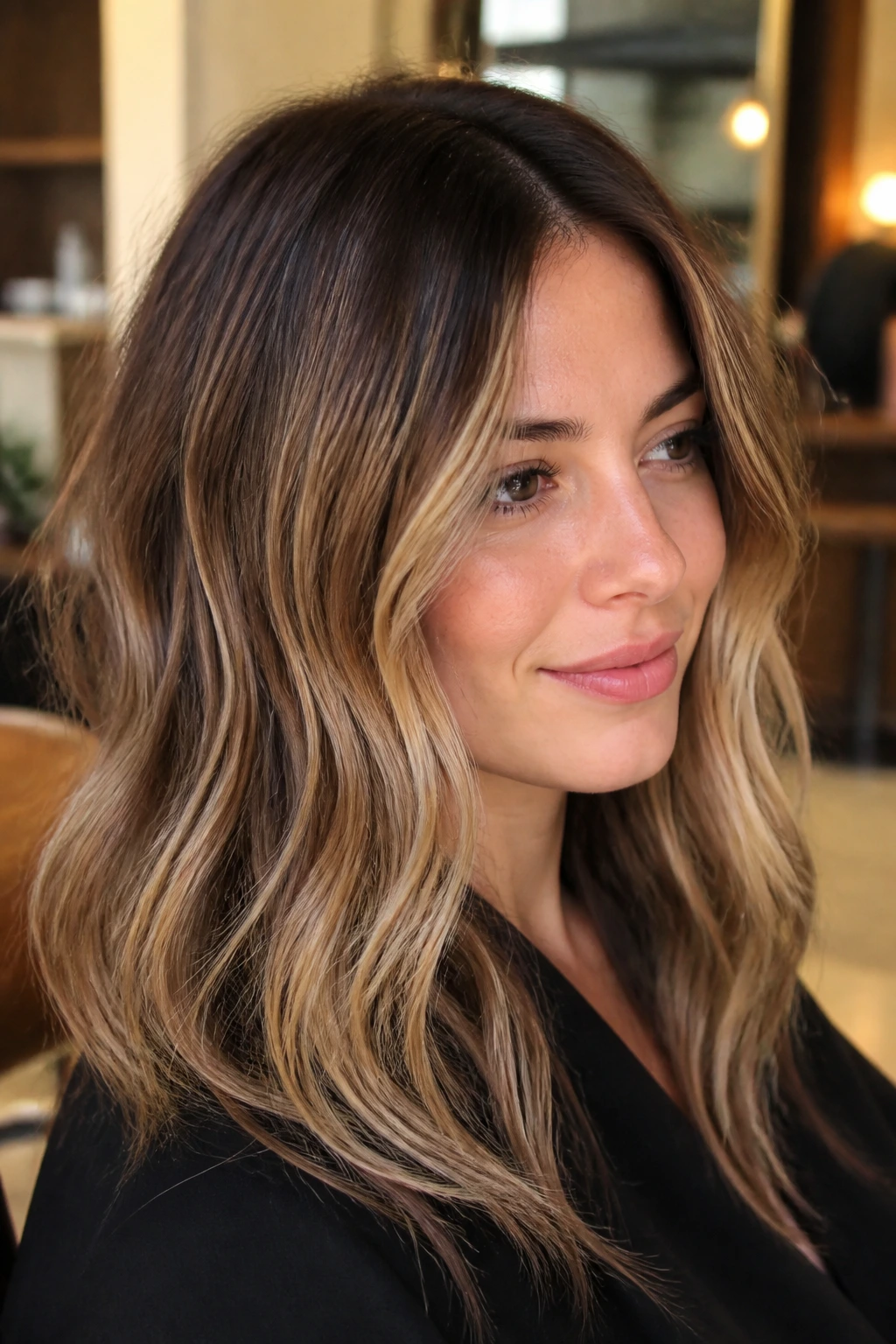
A shadow root is not the same thing as a root melt, even though people mix them up all the time. The shadow root keeps more of your natural brown near the scalp, then lets the caramel and blonde pieces show more clearly through the mid-lengths and ends.
That extra root depth makes a huge difference when you want lower maintenance. Regrowth blends in better, and the color still looks deliberate after several weeks. It also gives brunettes a safer way to go lighter without lighting up the scalp area too much.
I like this on people who want visible contrast but do not want to baby their hair every few weeks. It feels lived-in from the start, which is probably why so many brunettes settle here after trying brighter looks.
28. Soft Grown-Out Caramel Blonde for Brown Hair
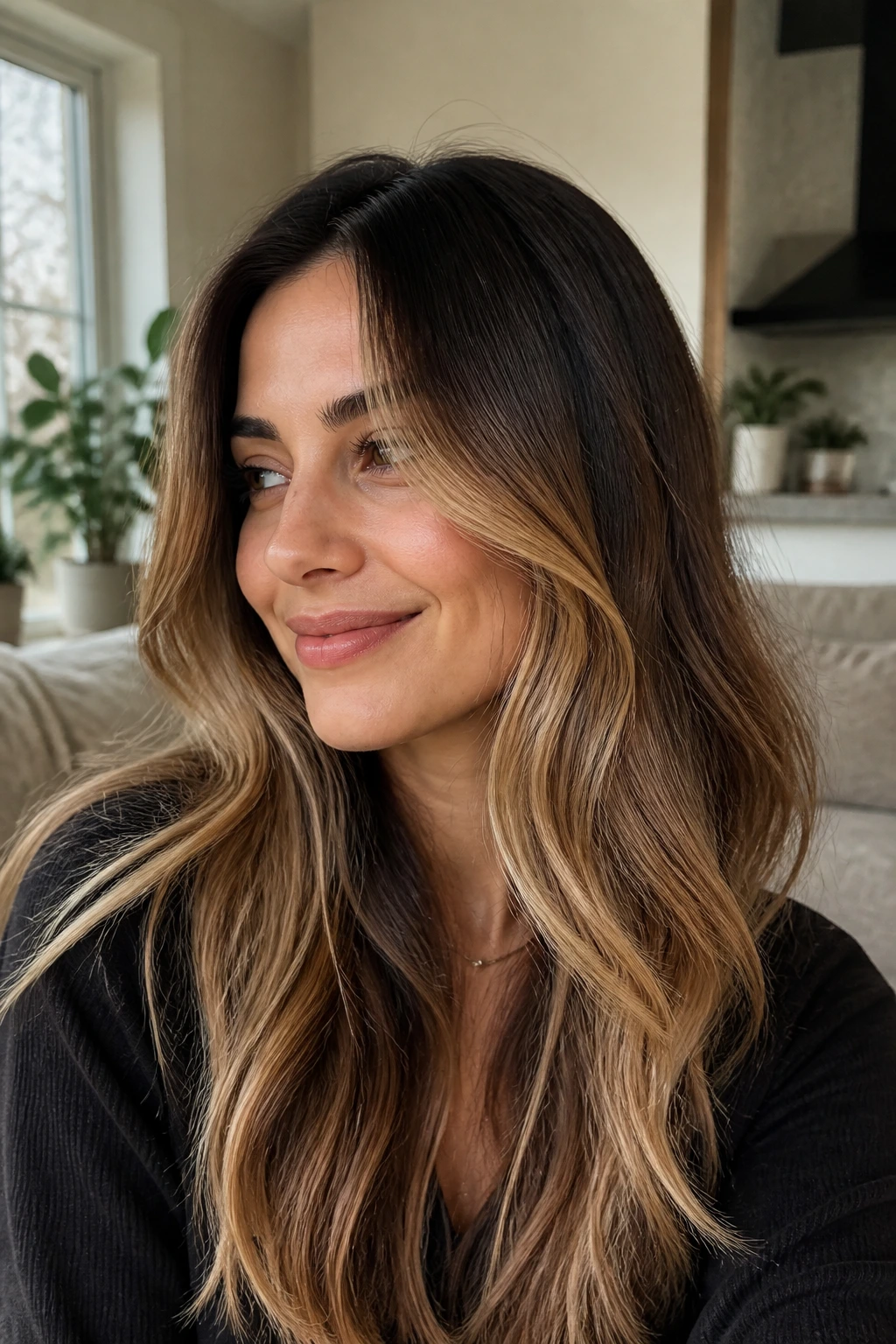
This is the version I’d call the easiest to wear long term. The brown base stays real, the caramel sits in soft ribbons and pieces, and the blonde never goes so pale that the hair loses its depth.
What makes it work is the grow-out shape. The highlights should blur into the brunette instead of sitting on top of it like stickers. That means careful toner choices, smart placement, and a willingness to leave some darker hair untouched. A head full of even light can look finished for a week. A softer blend usually lasts much longer.
If you want one caramel blonde look that won’t fight your natural color every time it grows, this is the one I’d put at the top. It looks especially good when the hair has movement, but it does not fall apart on a plain blow-dry either. That’s rare.
The best caramel on brown hair never tries to erase the brown. It works with it, lets it stay present, and uses the lighter pieces to make the shape and shine better. That’s the version that keeps making sense after the first appointment, and the second, and the one where you start forgetting exactly where the blonde ends and the brunette begins.
