



There is a specific kind of frustration that comes with having dark brown hair. You walk out of the salon with a fresh gloss, your hair looking like a sleek sheet of mahogany, but two weeks later, the color feels heavy. It starts to feel one-dimensional, especially when you are standing under harsh office lighting or trying to get a good photo. That is where caramel and honey tones enter the equation. They do not necessarily change your identity or force you to become a blonde, which is often a maintenance nightmare for deep brunettes. Instead, they act like a filter for your hair, mimicking the way sunlight hits strands when you are outdoors.
Adding warmth to brown hair is not just about slapping some bleach on and calling it a day. It is an exercise in dimension. When you get the balance right—mixing those rich, buttery honey shades with deep, cooked-sugar caramel—you create a level of depth that makes hair look thicker, healthier, and more expensive. The secret lies in the placement and the undertone. A lot of people make the mistake of going too bright, too fast, which turns brown hair into an orange disaster. You want to aim for a lift that feels organic, as if your hair has naturally lightened over a long summer, not like it sat under a harsh processor for two hours.
The following list is not about forcing you into a trend. It is about understanding the different ways to weave warmth into your hair. Whether you want something that looks invisible until the light catches it or you prefer high-contrast ribbons, the technique changes everything. Let’s look at how to approach these styles without losing the integrity of your natural color.
1. Soft Face-Framing Ribbons
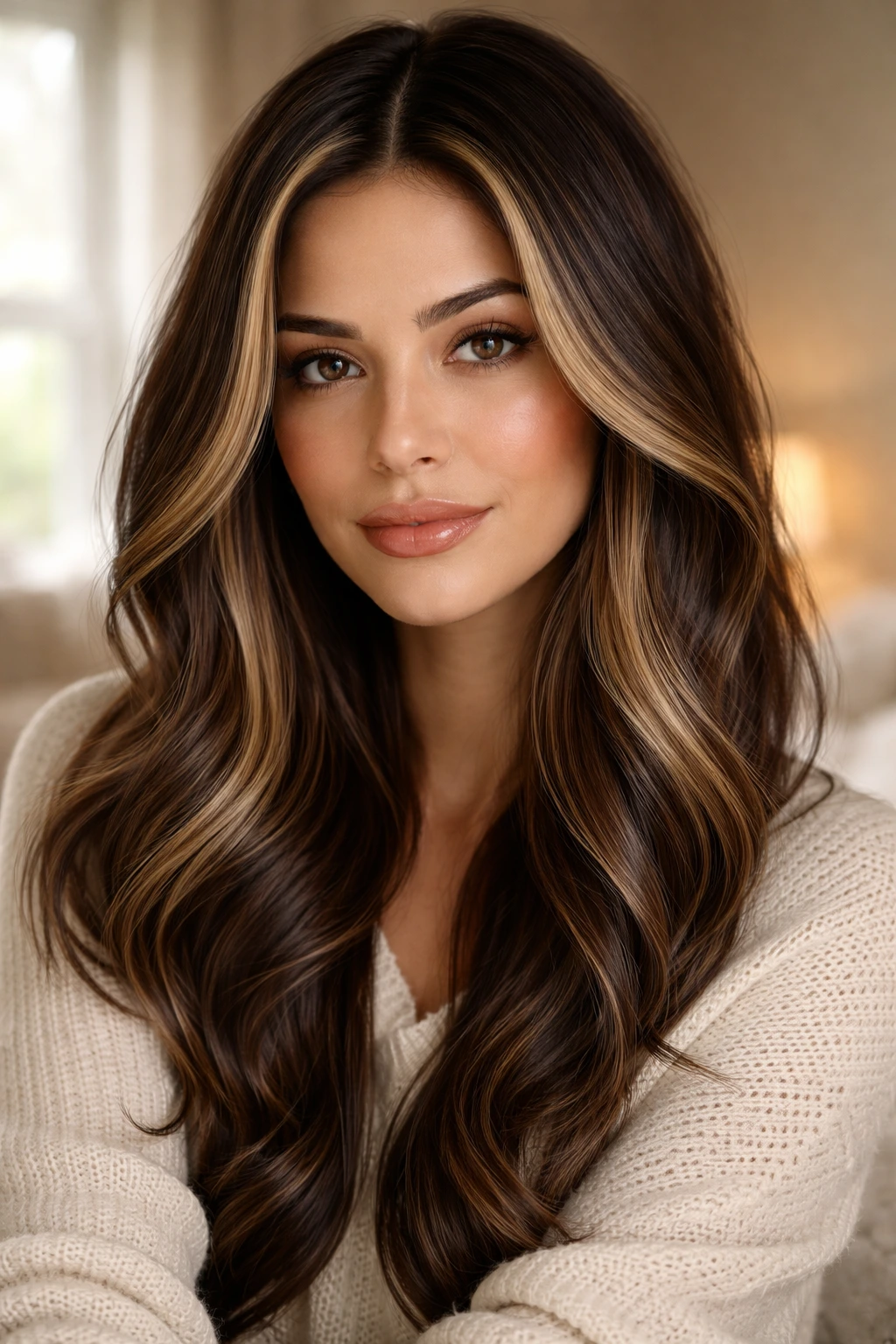
This is the entry point for anyone nervous about committing to a full head of highlights. You are focusing the lightening process exclusively on the two front sections of your hair. The goal is to draw light to your face, making your eyes pop and your skin look brighter, without touching the back of your head.
Why It Works for Beginners
Because you are keeping the majority of your hair its natural color, you do not have to worry about root grow-out lines. It is low-maintenance, and if you hate it, you can simply grow it out or dye those two pieces back to your natural shade without much damage.
How to Ask for It
Be specific with your stylist. Ask for “face-framing ribbons” rather than “money pieces,” which sometimes implies a chunky, bold block of color. You want the ribbons to be soft and blended at the root, fading into a warm honey tone as they reach the ends.
2. Subtle Honey Babylights
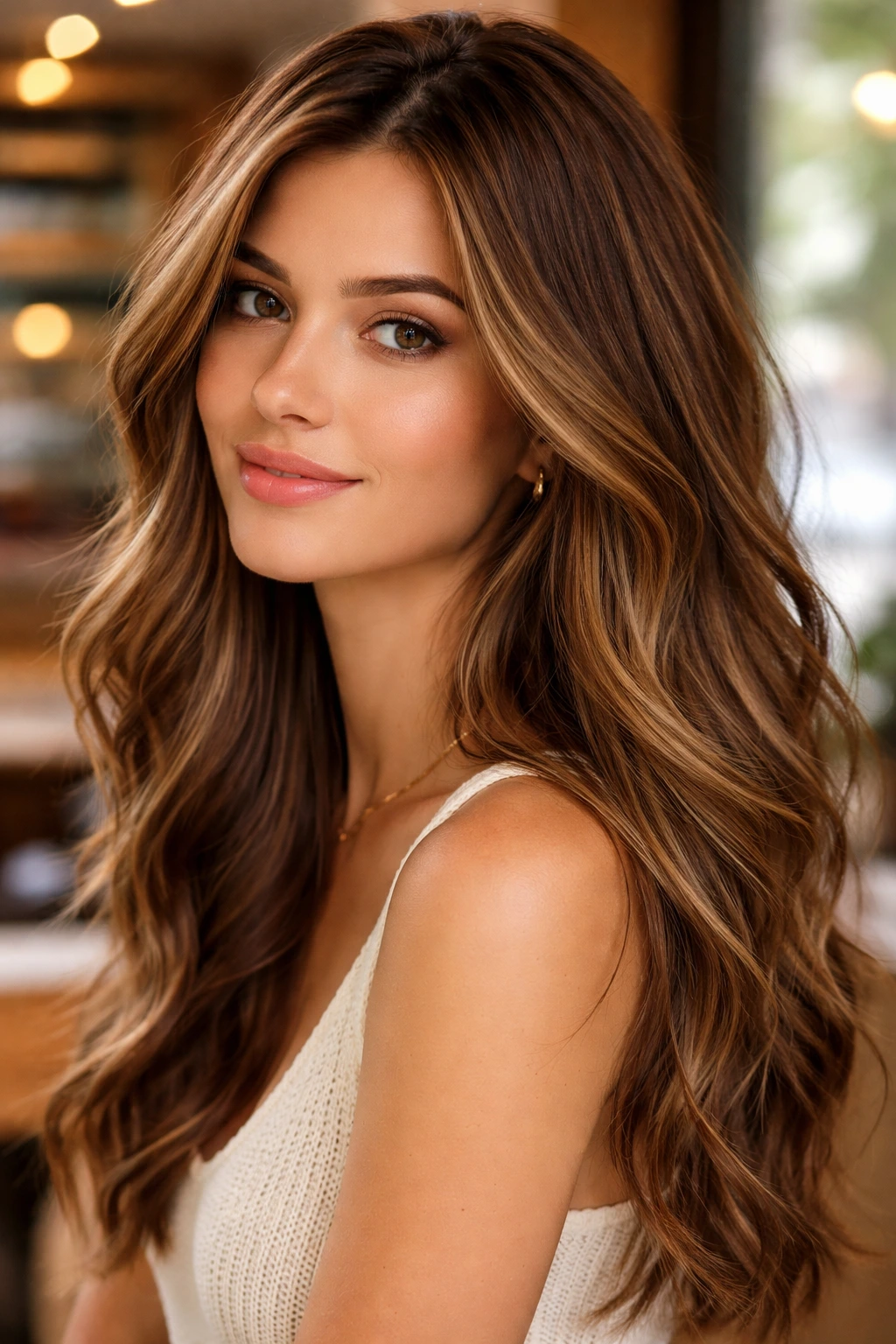
Babylights are the gold standard for a natural look. They involve taking very fine, thin sections of hair and weaving the color through them. It mimics the look of a child’s hair after a summer at the beach—delicate, multi-tonal, and extremely soft.
What to Watch For
The biggest risk with babylights is getting them too chunky near the root. If the highlights start too thick, you lose that “grown-in” appearance and end up with noticeable zebra stripes as your hair grows. Insist on a feathering technique at the root so the highlight starts a few millimeters away from the scalp.
The Maintenance Factor
Even though they look natural, babylights are labor-intensive to apply. Expect a longer chair time, but realize that you can go months between touch-ups. This is the ultimate “set it and forget it” highlight style for brown hair.
3. Warm Caramel Balayage
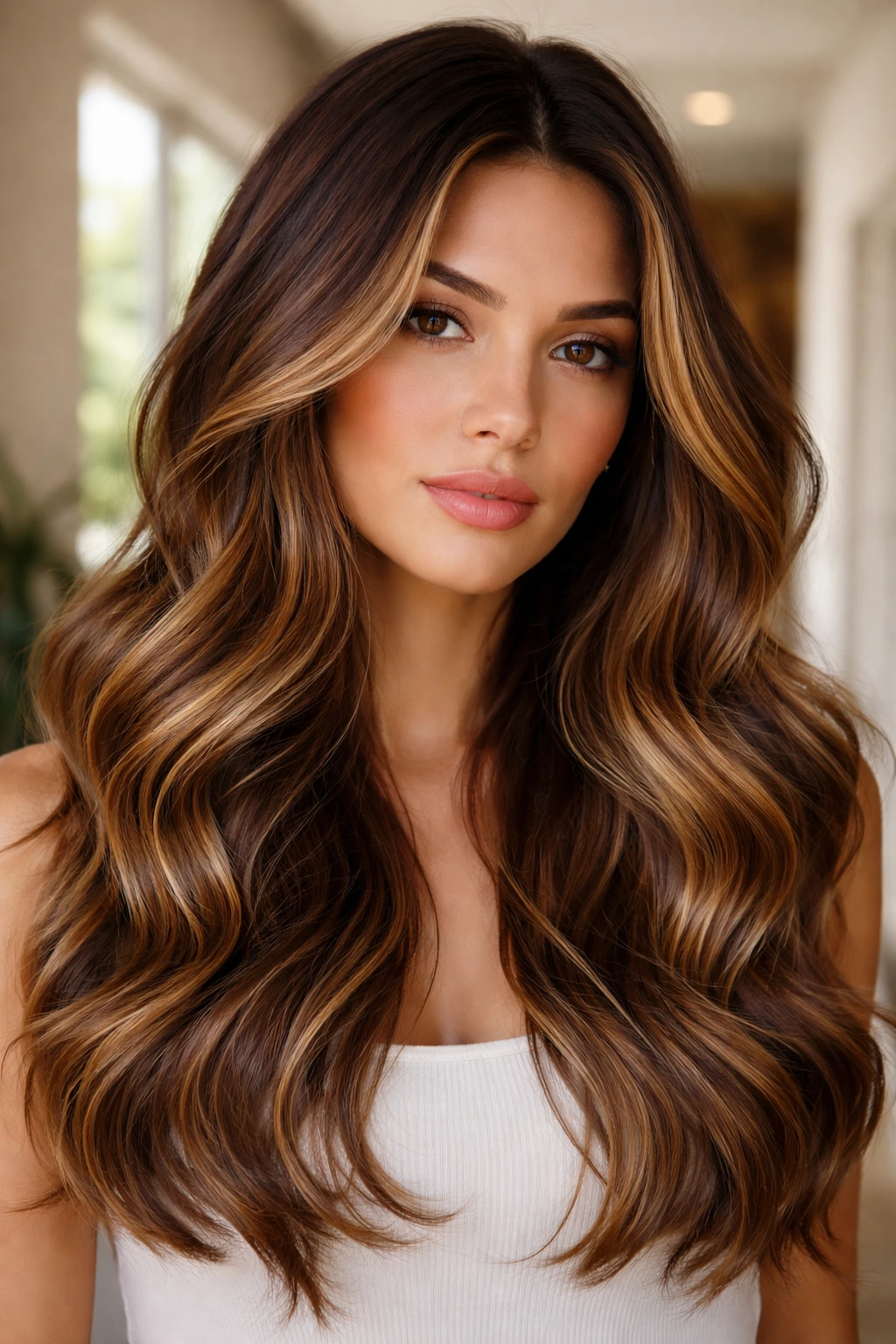
Balayage is a technique, not a look, but when you apply a warm caramel tone using a hand-painting method, the result is transformative. The stylist literally paints the color onto the surface of the hair, allowing them to control exactly where the caramel starts and stops.
Why It Creates Dimension
Because the stylist is painting individual sections, they can leave deep, dark strands underneath. This creates a “shadow” effect that makes the caramel highlights appear brighter by contrast. It creates a 3D effect that flat foils just cannot replicate.
Pro Tip
If your hair is very dark, ask your stylist to use a “clay-based” lightener. It stays moist longer and doesn’t bleed onto the surrounding hair, which keeps your dark base clean and sharp.
4. Toffee Ribbons
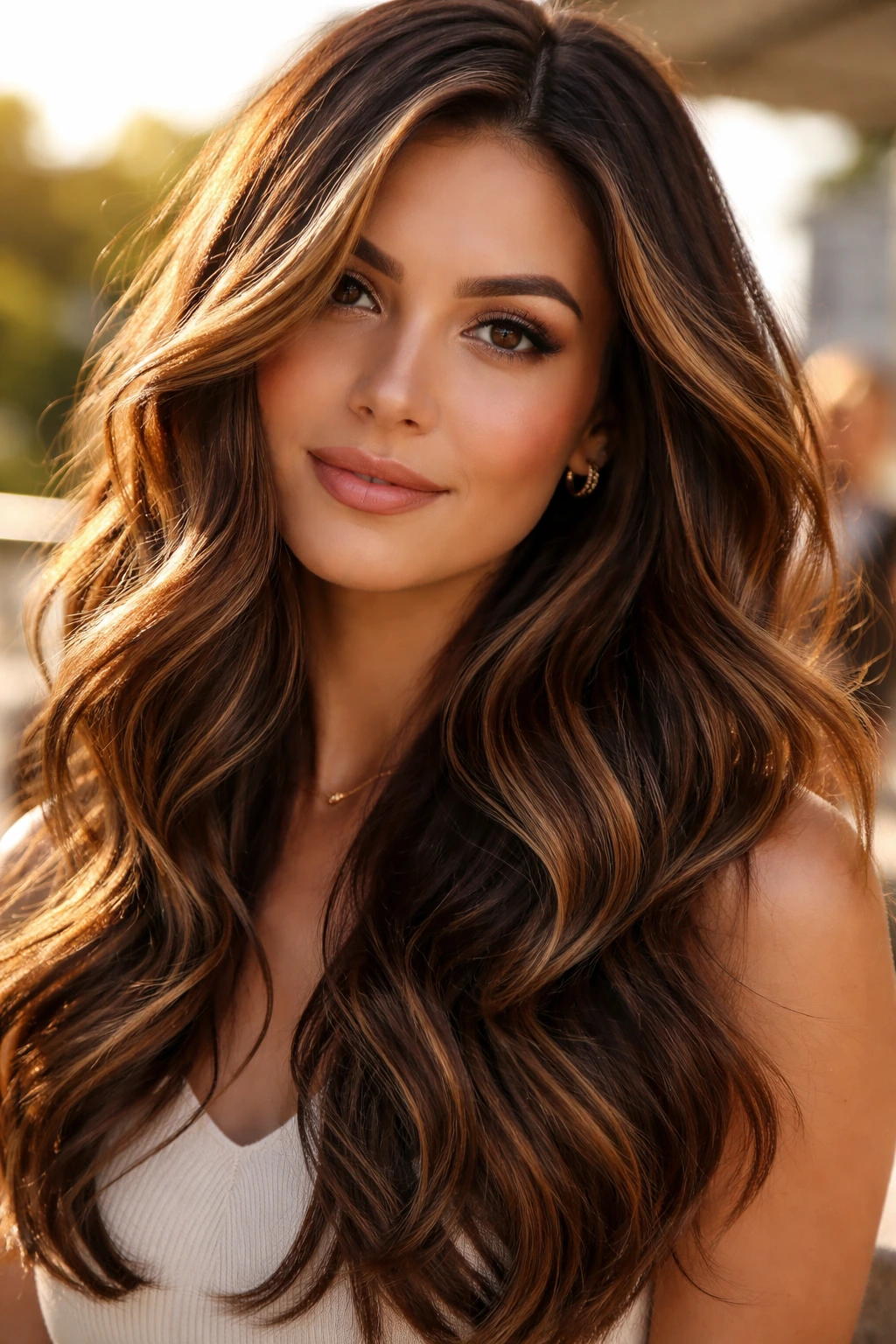
Think of toffee ribbons as the slightly bolder cousin to balayage. These are defined, deliberate ribbons of color woven through the mid-lengths and ends. They look best when styled with a large-barrel curling iron or a soft beach wave, as the movement allows the ribbons to twist and show off the color variance.
When to Choose This
Go for this style if you wear your hair in braids or updos often. The ribbons wrap around the braid, creating a visually complex texture that makes the hairstyle look much more intricate than it actually is.
Stylist Guidance
Be careful with the placement. You want the ribbons to start around the mid-lengths, not too high up, or you will end up with a very segmented look that might look dated rather than stylish.
5. Golden Honey Money Piece
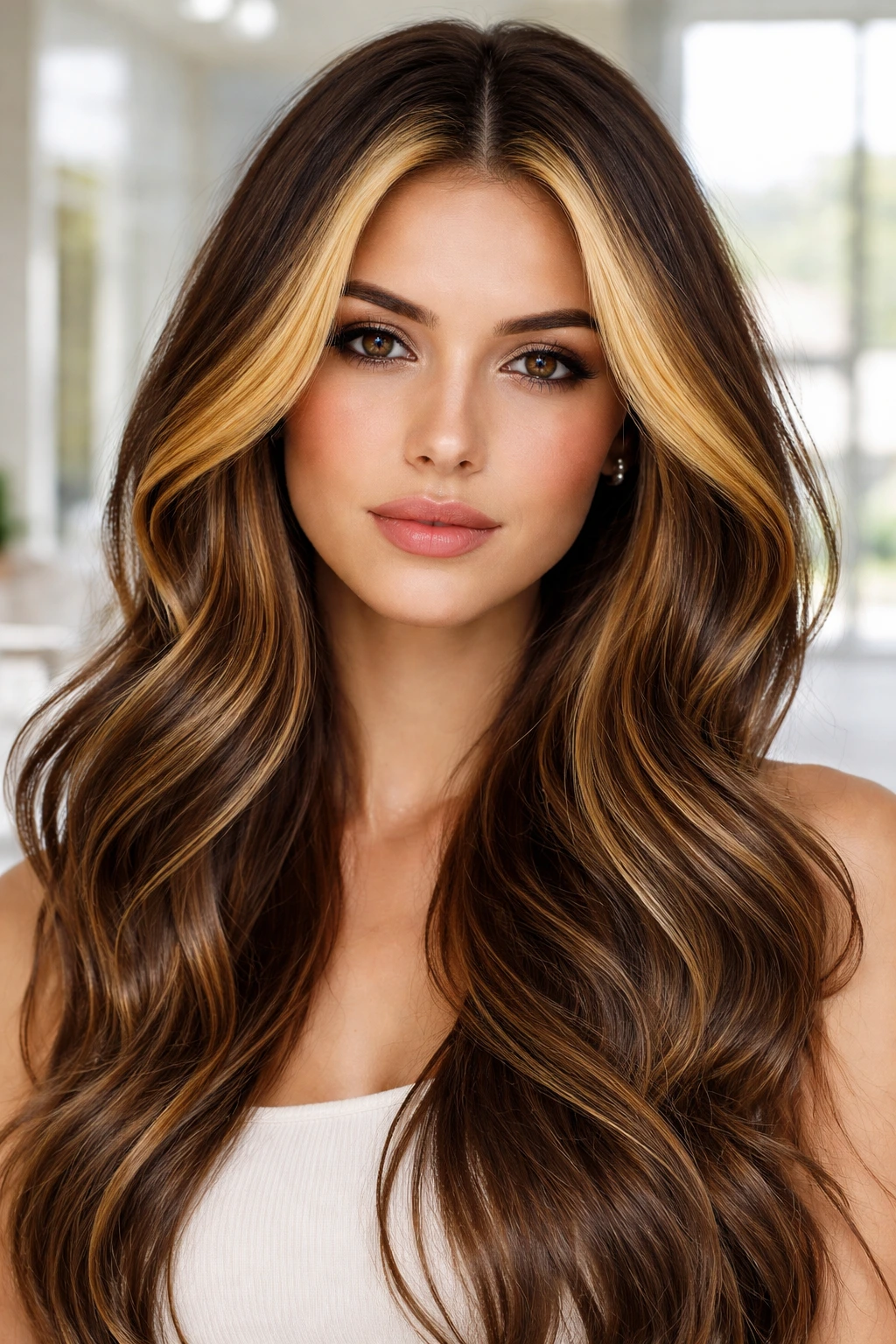
The “money piece” is a bold, deliberate section of light color right around the face. When done with a honey tone on brown hair, it creates a high-contrast look that feels intentional and edgy. It is not for the faint of heart.
Who Should Try It
If you have dark, uniform brown hair and you want a change that drastically alters your look without changing your hair length or texture, this is it. It frames the face and highlights your bone structure.
Balancing the Look
Because the front is so bright, you need to make sure the rest of your hair has at least some subtle, matching honey highlights. If the front is blonde and the back is flat, dark brown, it can look disconnected.
6. Sun-Kissed Caramel Ombré
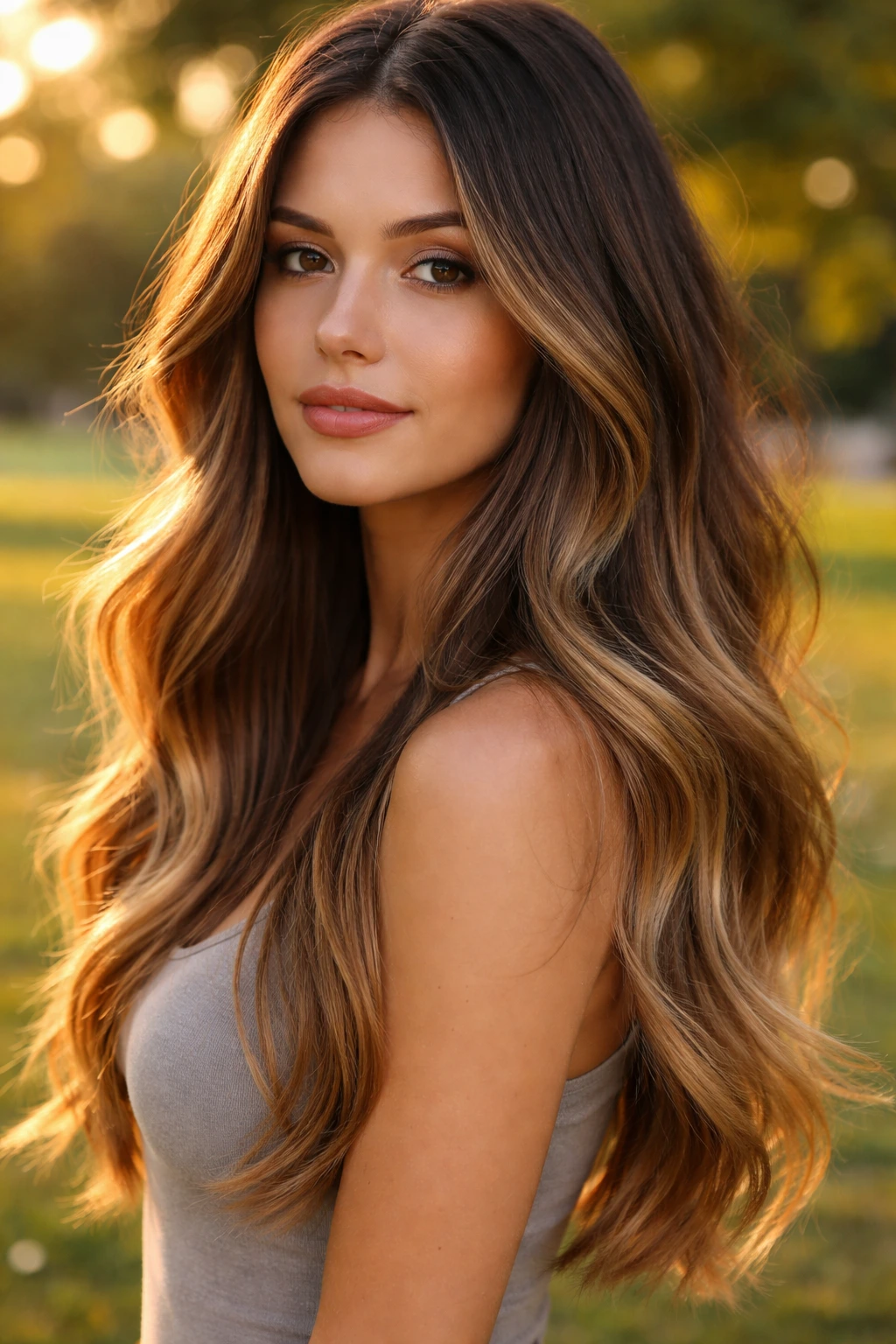
Ombré has evolved from the harsh “dip-dye” look of the past into a sophisticated, gradient shift. A sun-kissed caramel ombré focuses on keeping the top two-thirds of your hair dark and rich, while the bottom third fades seamlessly into a lighter, warm caramel.
The Key to Success
The transition zone is everything. If the line where the brown ends and the caramel begins is too abrupt, it will look cheap. Ask for a “smudged” or “melted” transition zone, where the colors intermingle for a few inches.
Daily Styling
This look requires a bit of styling effort. Because the ends are lighter, they can look dry if you don’t use a smoothing oil. Keep a bottle of argan or jojoba oil on hand to add shine back to those lighter, more porous ends.
7. Amber-Toned Highlights
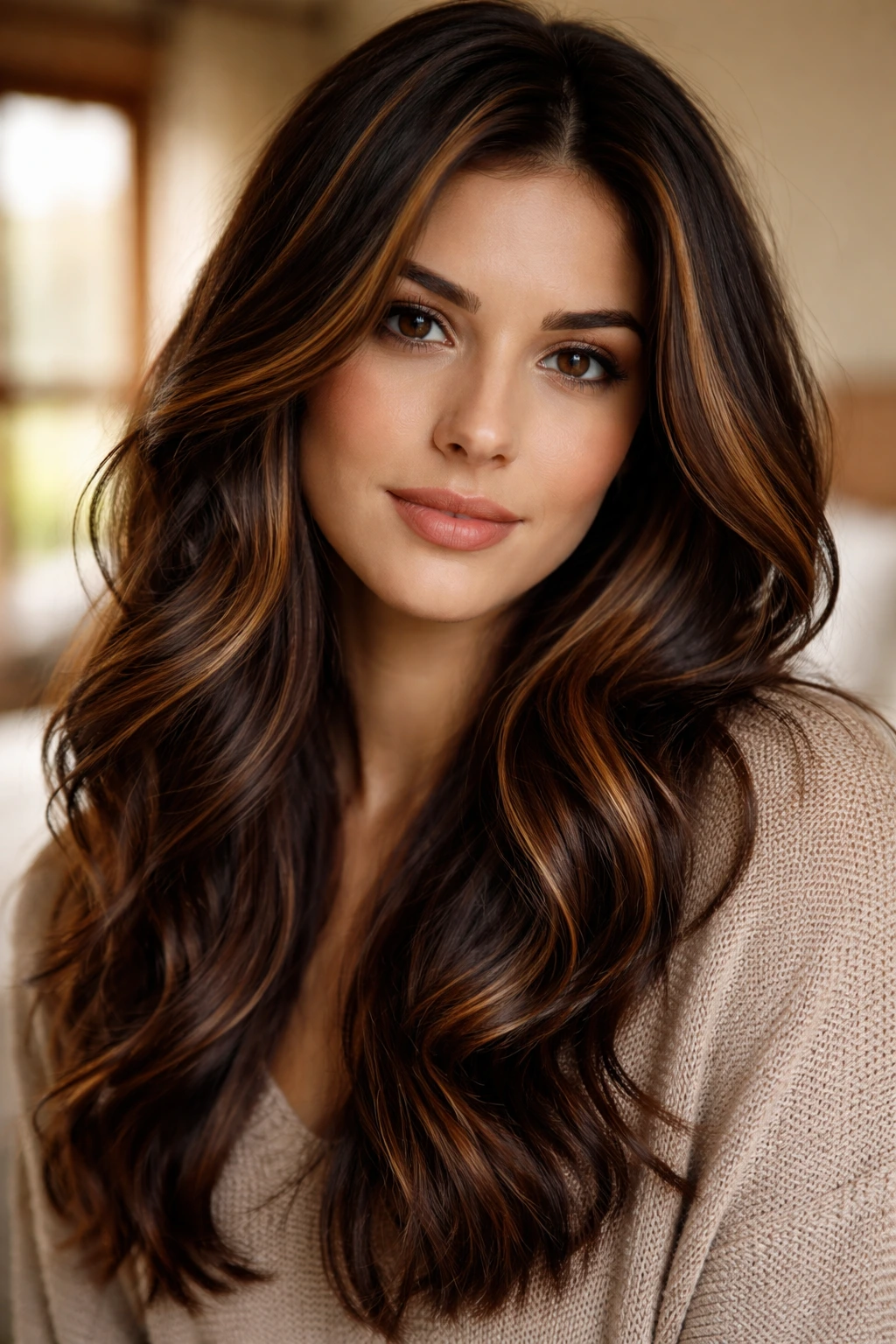
Amber sits right between caramel and copper. It has a slightly reddish, golden warmth to it. For women with warm skin undertones—those who look great in gold jewelry—this is often more flattering than a straight caramel or honey.
Why It’s Unique
It brings out the hidden red pigments in brown hair, making the overall color look richer and more vibrant. It isn’t a “bright” highlight; it’s a “glowing” highlight.
Color Matching
If you are doing this at home, be careful. Coloring brown hair with red-toned products can sometimes go wrong if your base is too dark. This is often safer as a professional service because the stylist can custom-mix the exact amount of red versus gold you need.
8. Glazed Caramel Drizzle
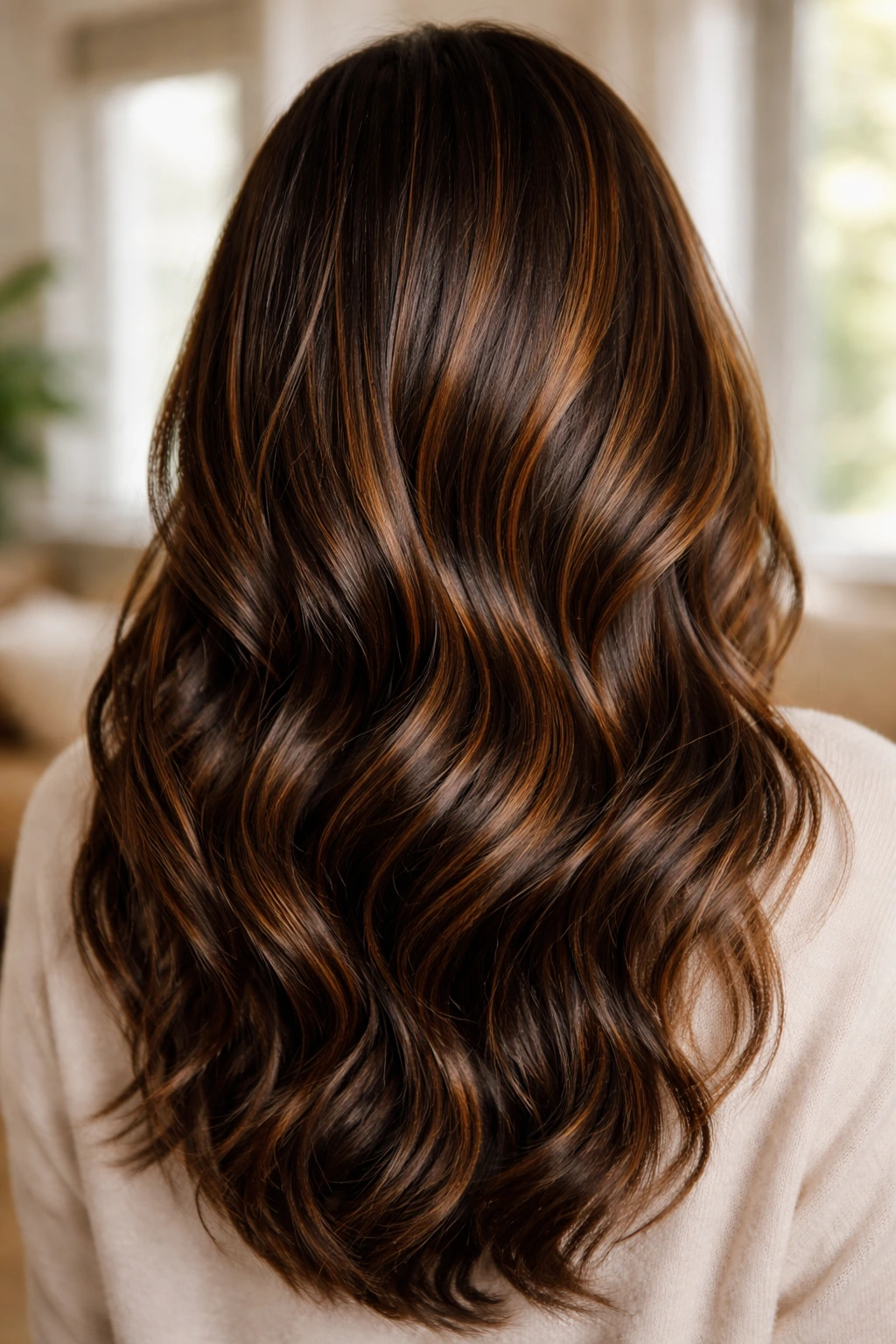
This is less about heavy lightening and more about tonal shifting. Think of it like a glaze on a donut. You are taking your natural brown hair and running fine, delicate highlights through it that are only one or two shades lighter than your natural color.
The Effect
In dim light, your hair just looks like a rich, healthy brown. When you step into sunlight, it catches the light and looks like caramel syrup poured over it. It is subtle, classy, and requires very little maintenance.
Who Should Choose This
This is perfect for hair that is prone to breakage. Since you aren’t doing heavy lifting with bleach, you are keeping the hair healthy while still getting a “fresh” feeling.
9. Chunky Honey Highlights
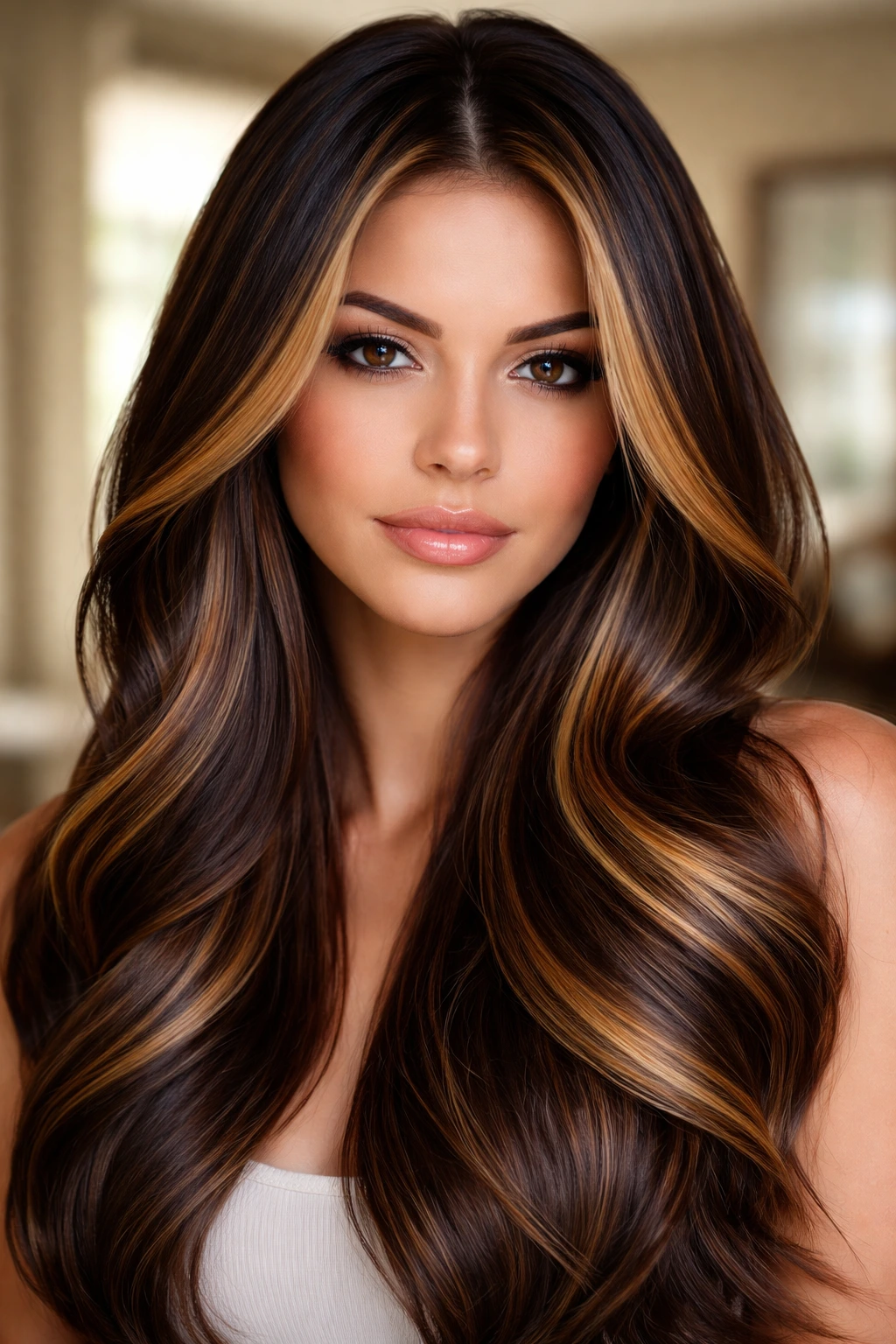
Nostalgia is a powerful thing, and the chunky highlight is back—but with a modern twist. Instead of the high-contrast white-on-black of the early 2000s, we are seeing thick ribbons of honey and caramel on dark brown hair.
The Modern Adaptation
The difference today is the blend. We are not doing harsh stripes. We are doing chunky ribbons that are still well-blended at the root. It creates a very graphic, deliberate look that works beautifully with straight hair.
Styling Tip
This look demands a sleek blowout. If you have curly hair, chunky highlights can sometimes look disjointed. If you are aiming for this look, be prepared to use a flat iron or a round brush to smooth out the sections so the ribbons show.
10. Butterscotch Lowlights and Highlights
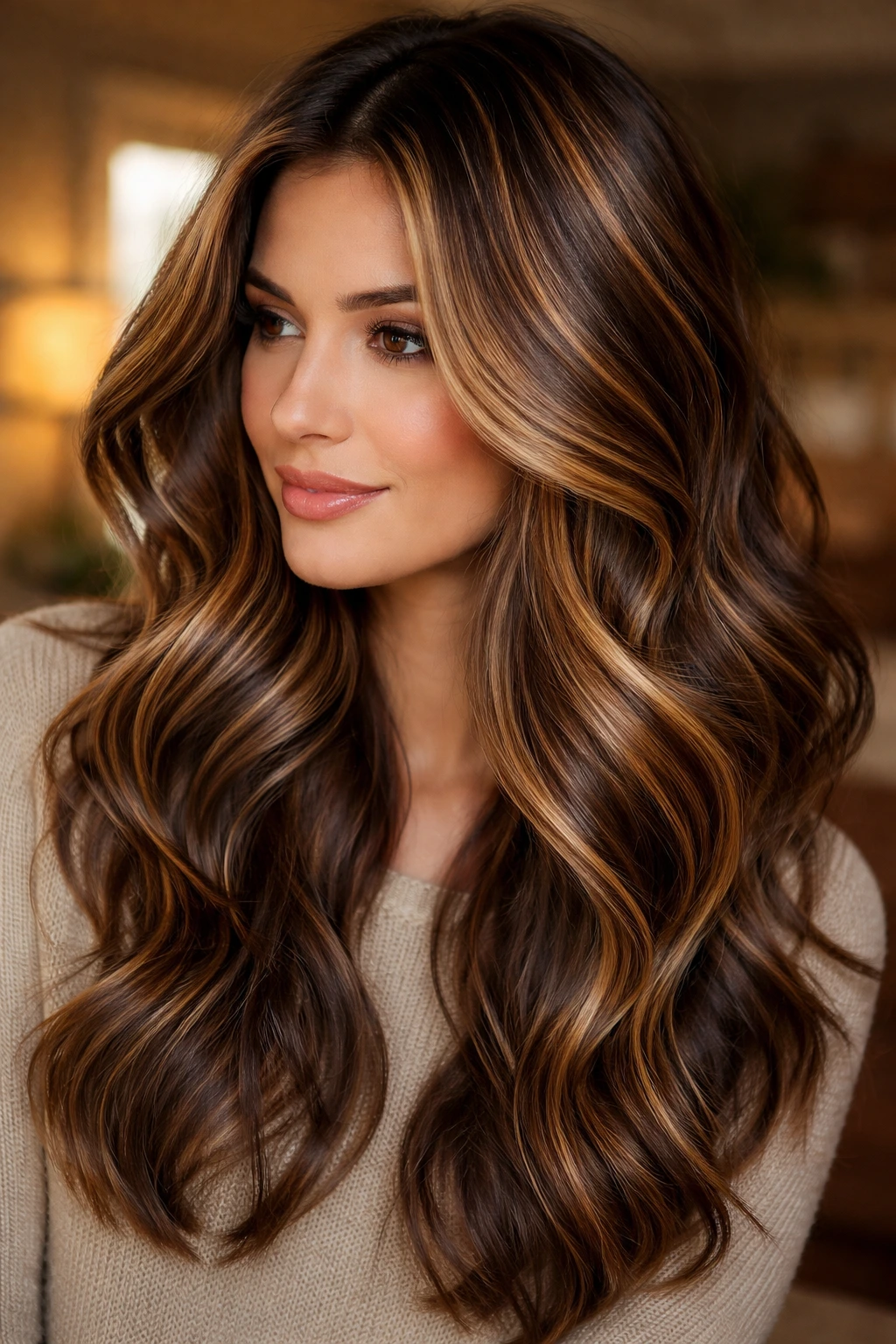
Why only add light? Sometimes, adding “lowlights”—which are darker than your natural color—can make your highlights pop more. By interweaving butterscotch lowlights (which are slightly darker than honey) and caramel highlights, you create massive depth.
The Illusion of Thickness
If you have fine hair, this is the best technique for you. The contrast between three different shades (your natural, the lowlight, and the highlight) creates an optical illusion of volume that makes hair look twice as thick.
Choosing the Shade
Make sure the butterscotch lowlights are not too dark. If they are darker than your natural base, they will look like muddy spots. They should be a rich, warm brown that complements, not contradicts, your natural color.
11. Muted Earthy Caramel
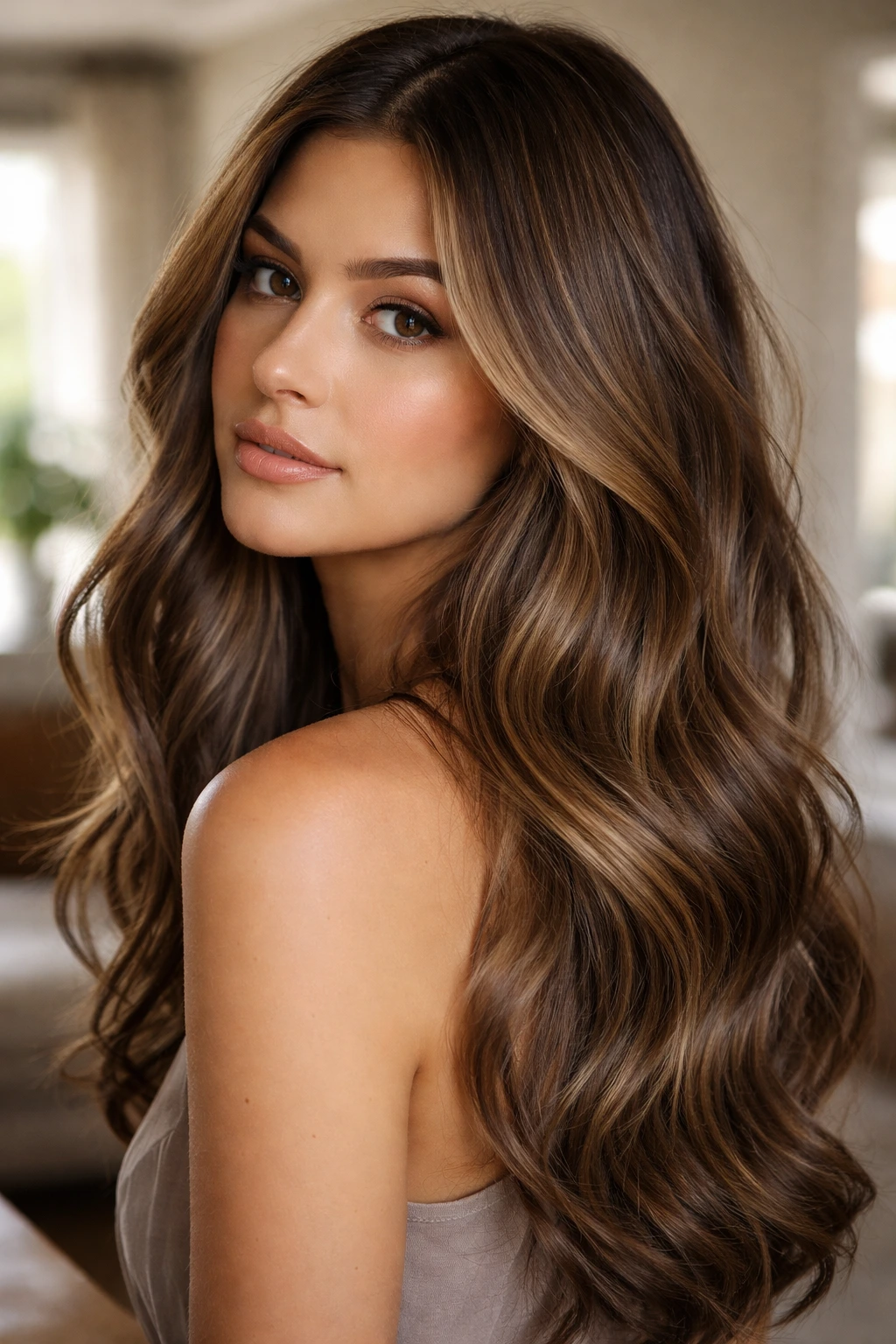
Not every highlight needs to scream “look at me.” Earthy caramel is a sophisticated, muted version of the classic caramel tone. It has less of the bright, golden-yellow pigment and more of a brown-sugar base.
Who It Suits
If you have “cool” brown hair or ash-brown hair and you are afraid that honey will make you look orange, this is your entry point. It adds brightness without adding “warmth” in the traditional, brassy sense.
Longevity
Because it is a more neutral tone, it doesn’t fade as quickly into brass as a true blonde or bright honey would. It is a very stable color choice for the long term.
12. Espresso and Honey Melt
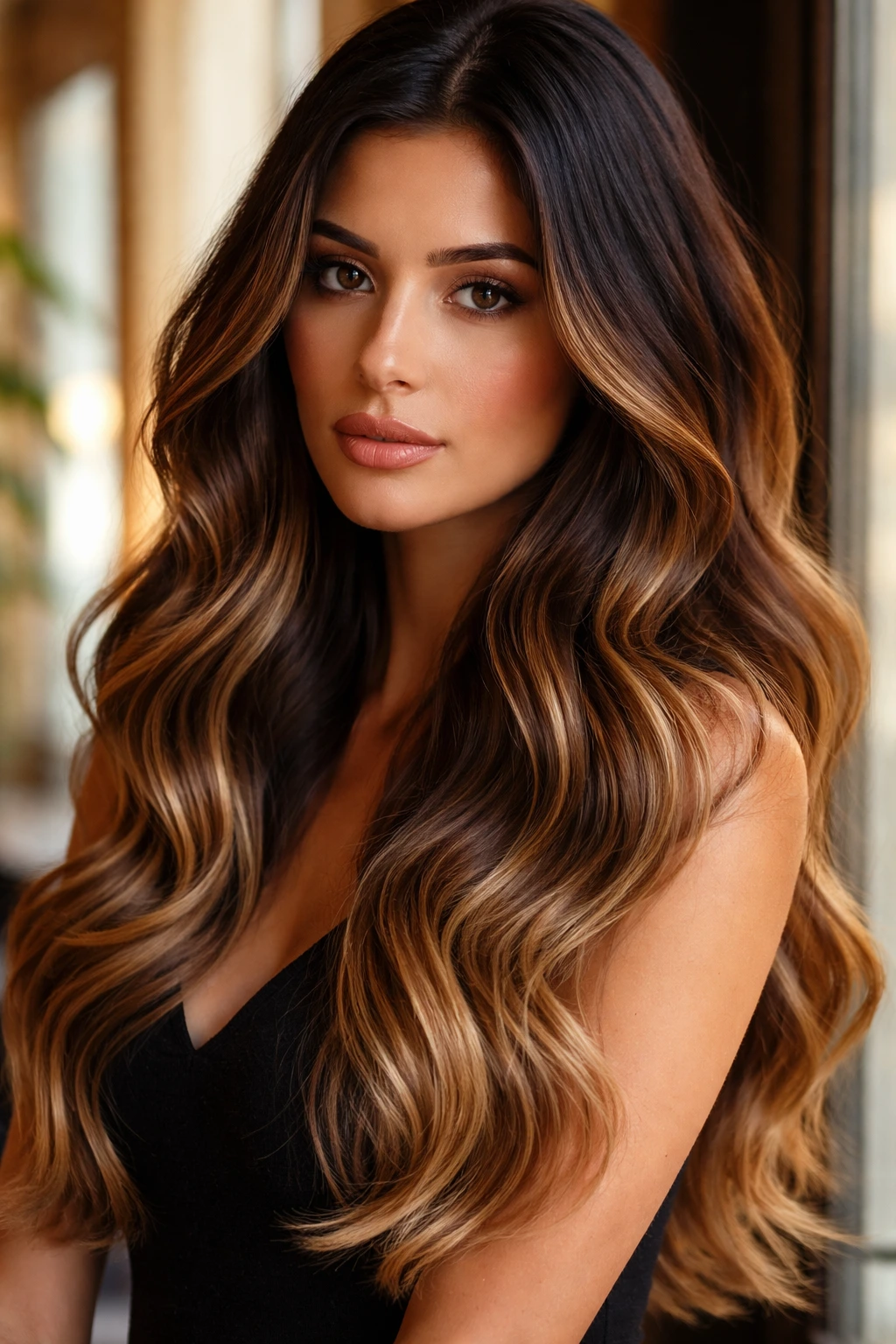
This technique is all about the “melt.” You start with a very deep, espresso-colored root that transitions into a honey-toned length. It is the ultimate low-maintenance look for brunettes because the roots are allowed to grow out naturally.
The Contrast
The beauty here is the extreme contrast. You aren’t trying to bridge the gap; you are celebrating the fact that you have dark roots and light ends. It’s intentional, bold, and very fashionable.
Application
This usually requires a root smudge. After the highlights are done, the stylist will take a demi-permanent color that matches your natural root and paint it over the root area and partway down, “melting” the light and dark together.
13. Caramel-Copper Hybrid
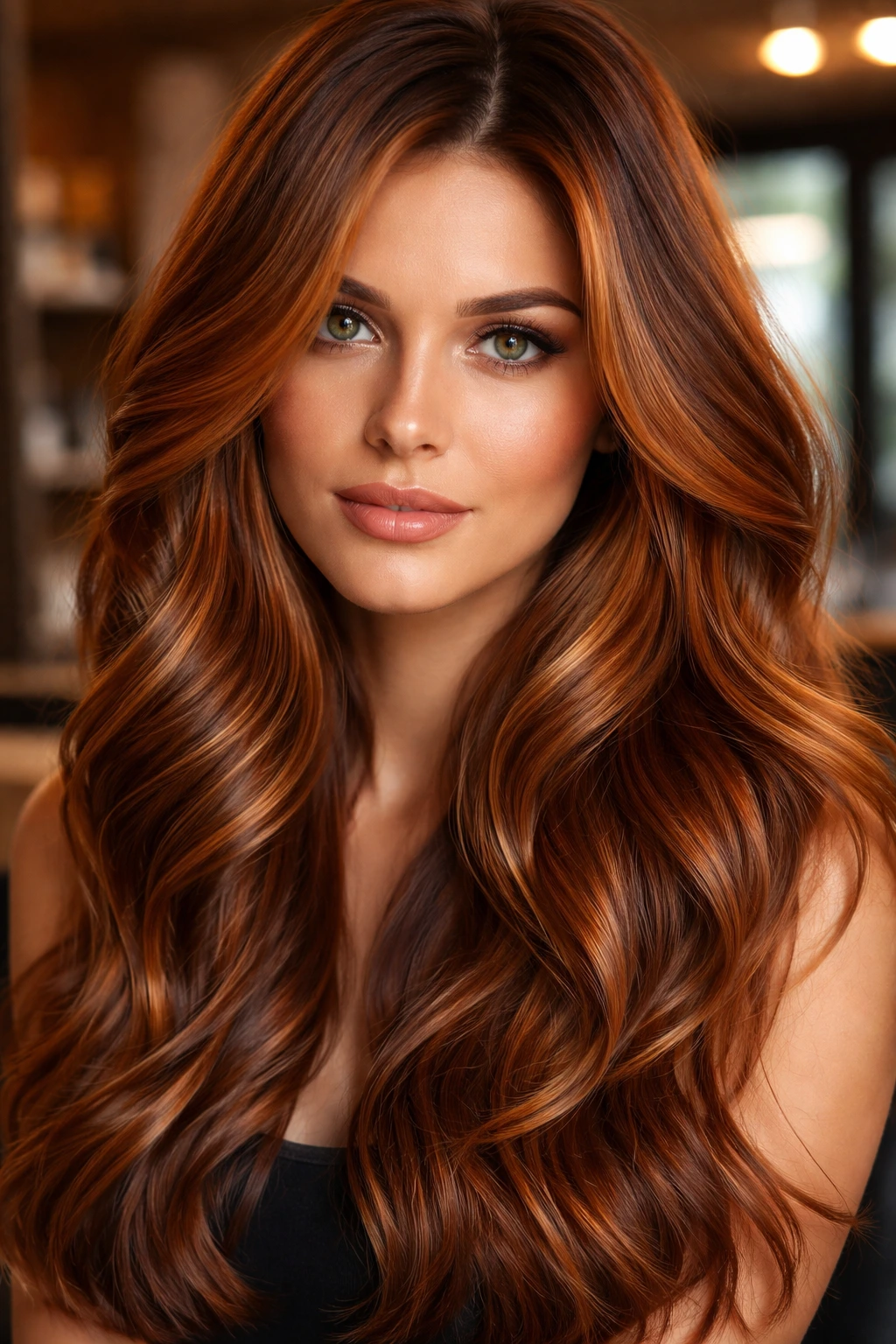
If you can’t decide between a caramel highlight and a copper one, don’t. A hybrid blend takes the best of both. You get the warmth and gold of caramel mixed with the vibrancy and fire of copper.
Why It’s Unique
This is a high-energy hair color. It looks incredible on people with hazel or green eyes, as the warmth in the hair brings out the flecks of color in the eyes.
Maintenance Note
Copper tones fade faster than almost any other color. You will need to invest in a color-depositing conditioner that has a touch of warm pigment in it to keep the “hybrid” part of the color alive between salon visits.
14. Dark Chocolate Honey Accents
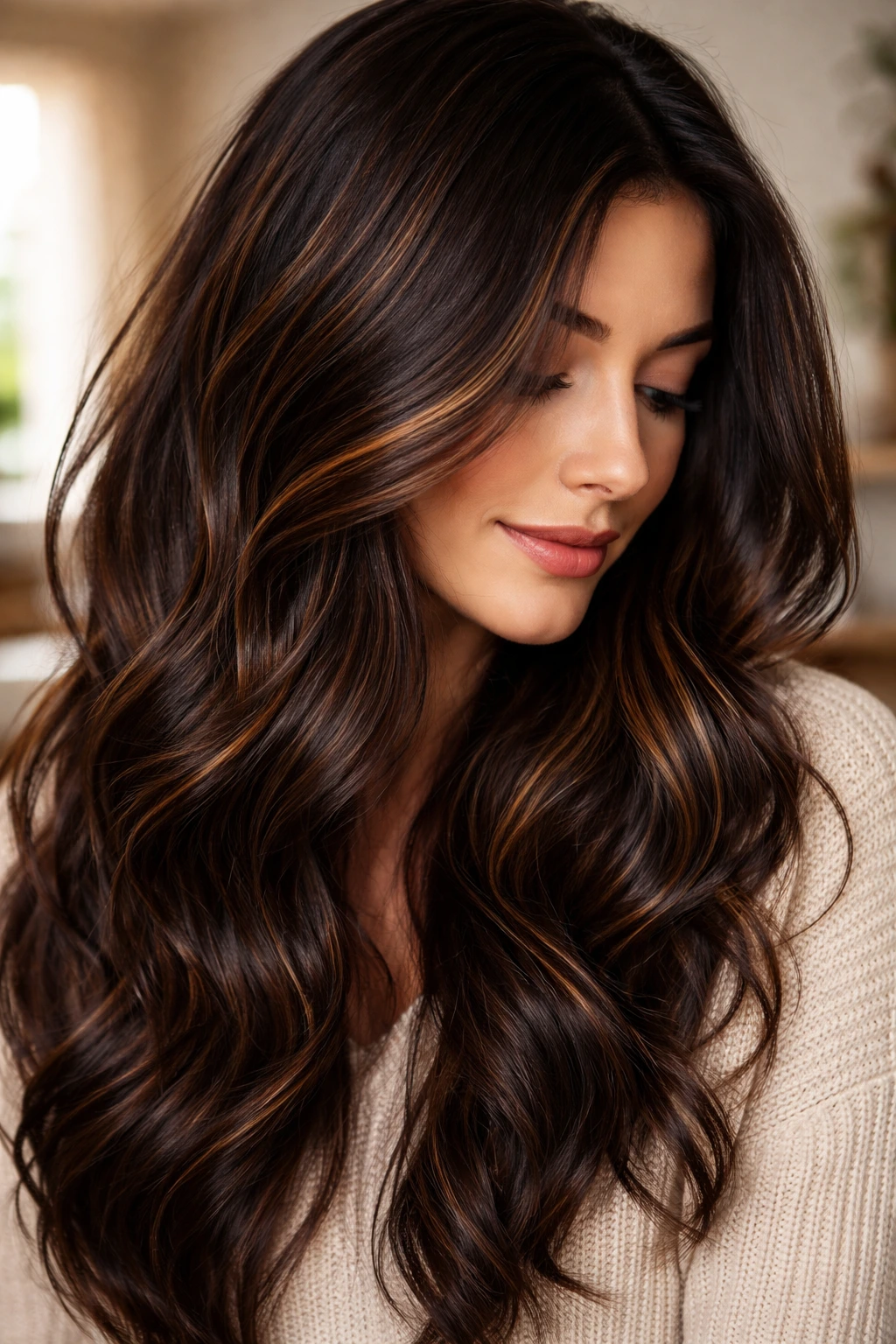
This is for the minimalist. You keep your hair almost entirely dark chocolate brown, but you place tiny, sporadic accents of honey throughout. You might only have five or six “pops” of color in your entire head.
The Surprise Factor
This works because it is unexpected. When you pull your hair up into a messy bun, or when you move your head, those little honey accents catch the light and surprise people. It is a very understated way to play with color.
Placement
Don’t put these symmetrically. Part of the charm is that they look random. Have your stylist pick them out based on how your hair naturally falls, rather than following a rigid foiling pattern.
15. Dimensional Waves
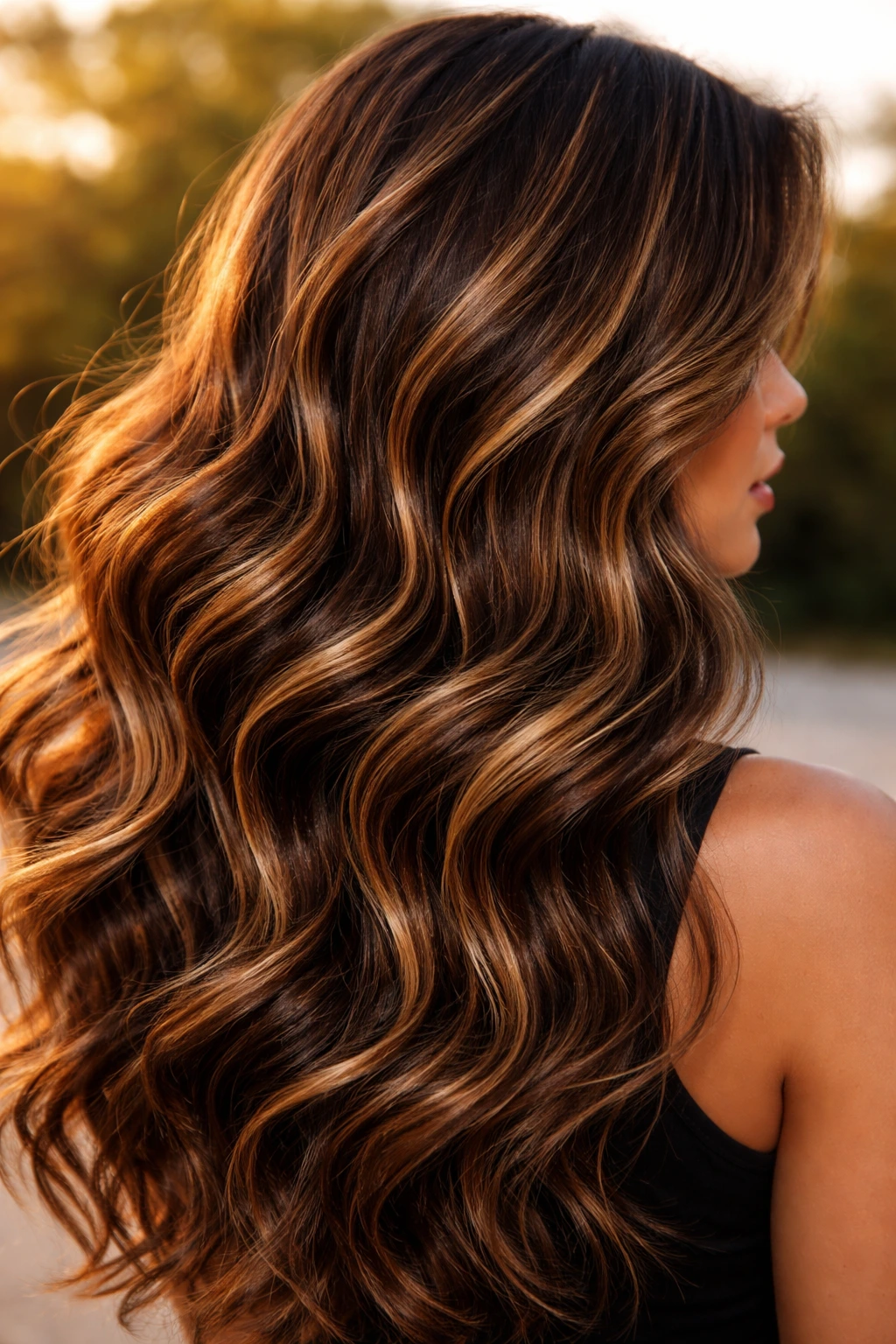
This style relies entirely on texture. It uses caramel and honey tones painted in vertical, multidimensional stripes. The color pattern is designed specifically to highlight the “S” curve of a wave.
Styling is Mandatory
You cannot wear this style stick-straight and expect it to look right. The color is placed to accent the bend of a wave. If you don’t style your hair with a curling wand, the highlights will just look like random lines.
Pro-Tip
Use a texture spray after waving. It separates the strands and allows the different honey and caramel tones to shimmer independently, which is the whole point of this look.
16. Curly Hair Caramel
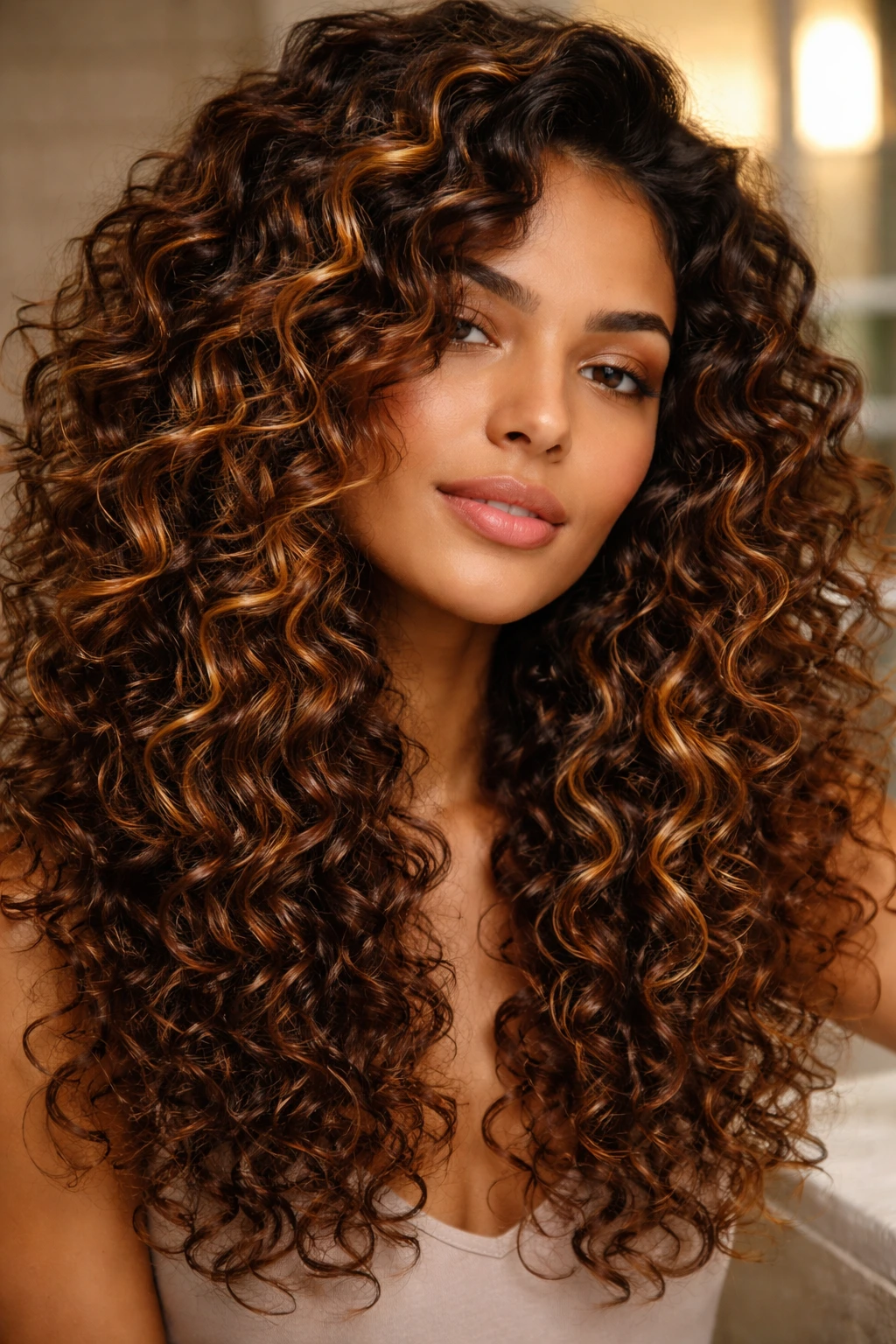
For years, people with curly hair were told to avoid highlights because they can damage the curl pattern. That is outdated advice. When done correctly, caramel highlights on curls look like liquid gold ribbons.
The Technique
You need a stylist who specializes in curly hair, specifically someone who understands “pintura” highlights. This is a method where the color is painted on individual curls while the hair is dry, ensuring the highlight hits exactly where the curl catches the light.
Moisture Control
Curly hair is naturally drier. Once you add highlights, you have to prioritize hydration. Incorporate a deep conditioning mask once a week, and never skip your leave-in conditioner.
17. Natural Growth Highlights
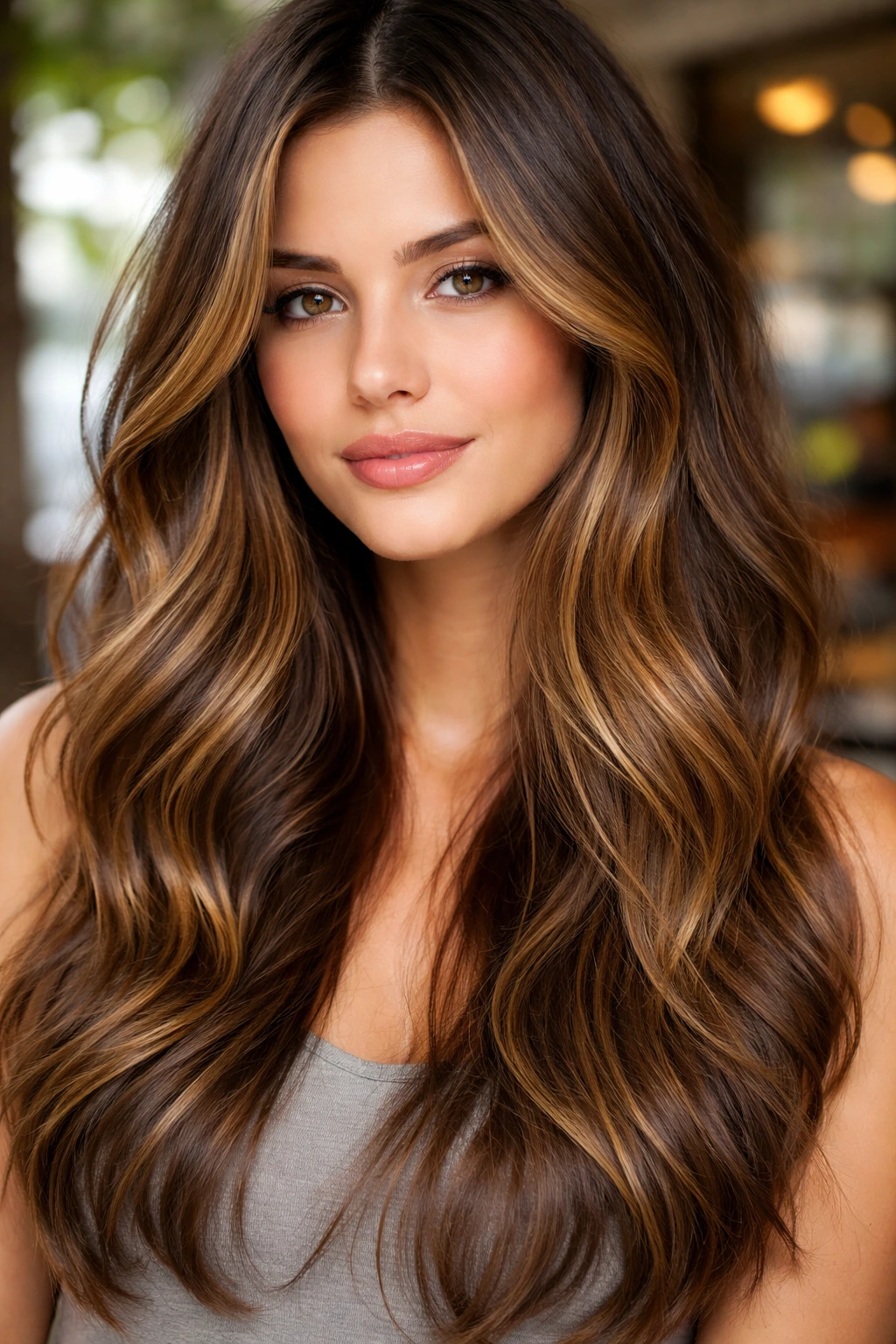
This is for the person who wants color but hates the salon. Natural growth highlights (or “lived-in” color) are placed to mimic exactly how your hair would lighten if you spent three months in the sun.
The Strategy
They are soft, diffused, and concentrated toward the ends. The roots are left almost entirely natural. It is arguably the most effortless color style you can get.
Flexibility
Because there is no distinct line of demarcation, you can go six months, or even a year, without a touch-up. It is the most cost-effective way to have highlights.
18. Layered Honey Pieces
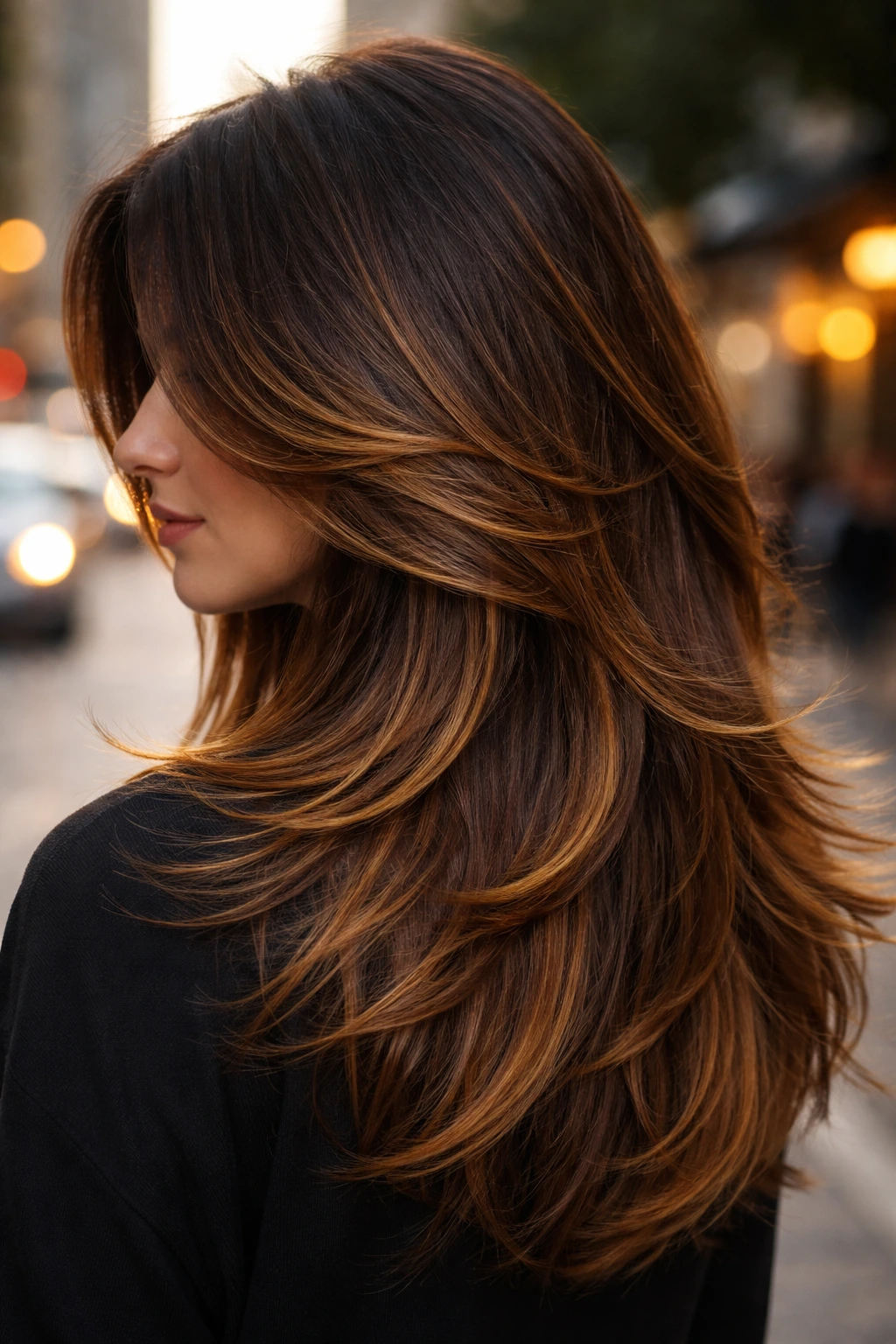
If you have a haircut with a lot of layers, your color should match that shape. Layered honey pieces involve placing brighter honey tones on the tips of your layers. This accentuates the cut, making your layers look sharper and more defined.
Visual Depth
When your hair moves, the different layers—each highlighted—will create a cascading effect of light and dark. It makes fine hair look fuller and thick hair look less heavy.
Ask Your Stylist
Tell your stylist, “I want the color to follow my haircut.” They will likely pull the hair up and paint the tips of the layers individually. It’s a very personalized service.
19. Sombré Caramel
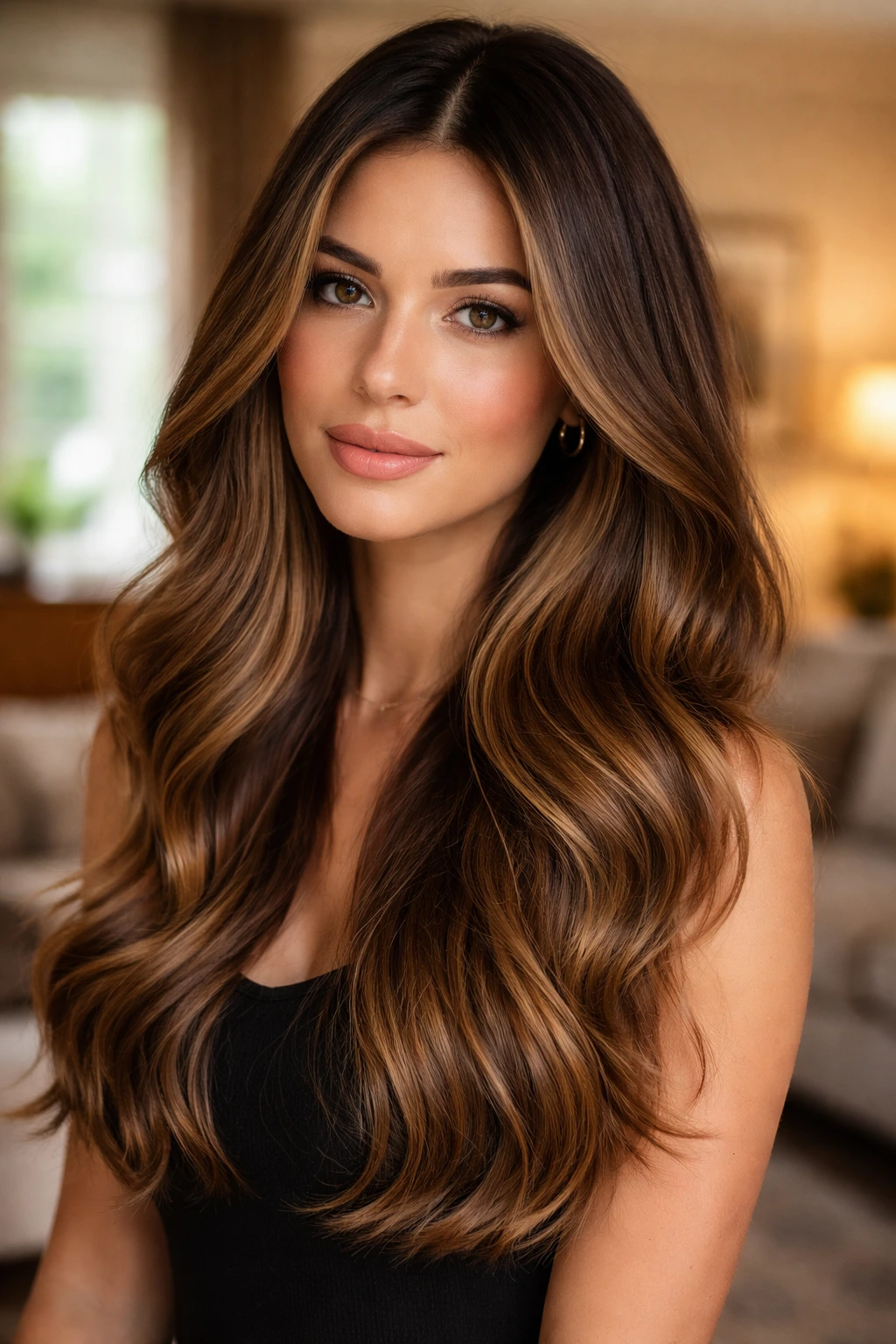
“Sombré” is just a softer, more subtle version of ombré. Instead of a distinct “dark root, light end” look, the transition starts much higher up and is much more gradual. The overall effect is a rich, warm brunette that just happens to get slightly lighter toward the bottom.
Why It’s Great
It is the most elegant version of the lightened-end trend. It doesn’t look like you grew your roots out; it looks like a curated, intentional color choice.
Styling
This style looks great with loose, brushed-out waves. You don’t want tight curls here; you want a soft, flowing texture that allows the gradual color shift to show off.
20. Short Bob Caramel
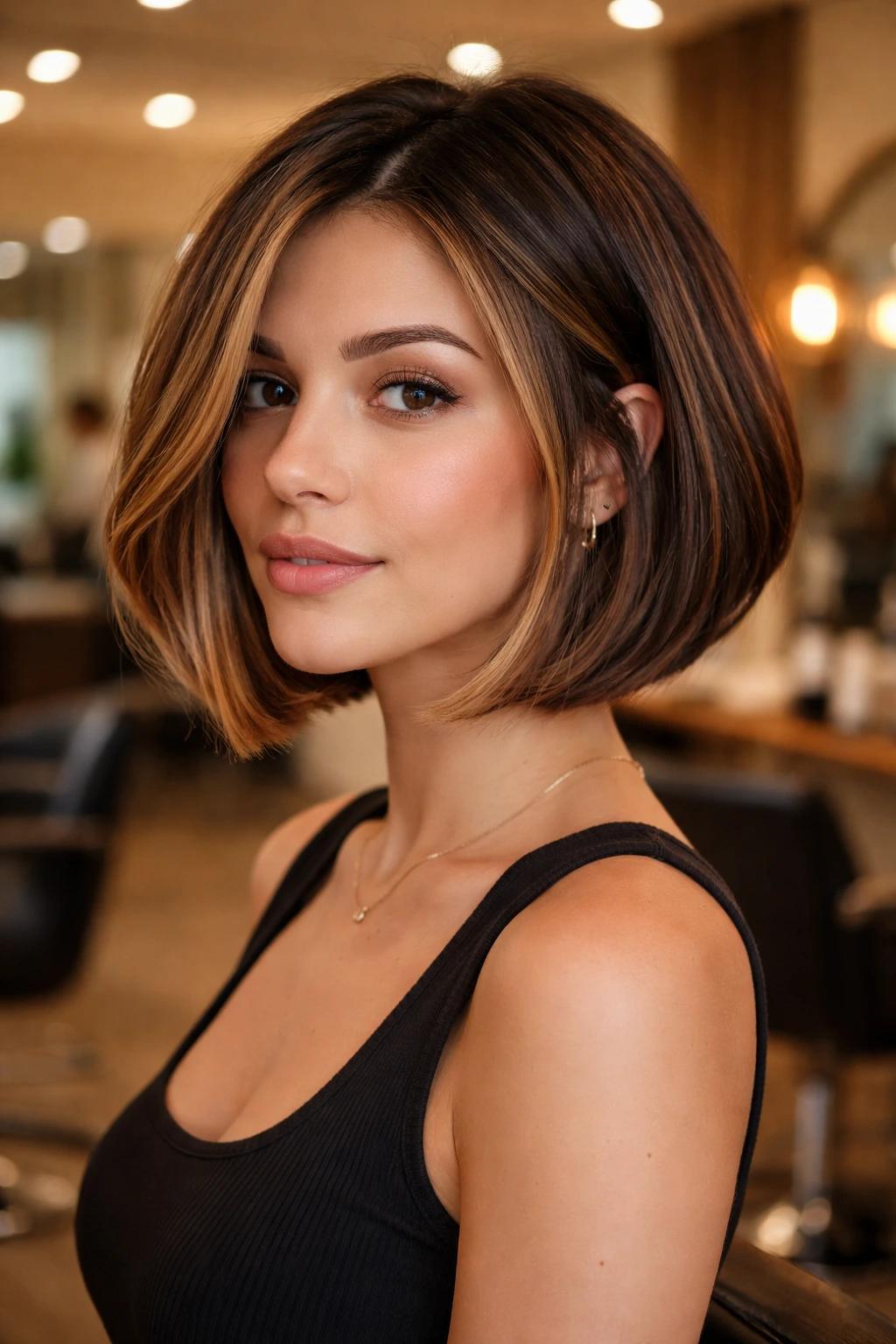
A sharp, chin-length bob can feel a bit severe if it is one solid, dark color. Adding honey and caramel tones softens the edges of the cut and adds a playful element to a structured style.
The Placement
For a bob, you want to avoid heavy highlights at the back of the neck, which can look like a dated frosted tip. Focus the color on the sides and the front, keeping the back of the bob a deep, rich brown for a “peek-a-boo” effect.
Maintenance
Short hair grows out fast. If you have a bob, you are already getting it trimmed every 6-8 weeks. Use those appointments to get a “gloss” or “toner” refresh, which will keep your honey tones bright without needing to re-bleach.
21. Straight Honey Streaks
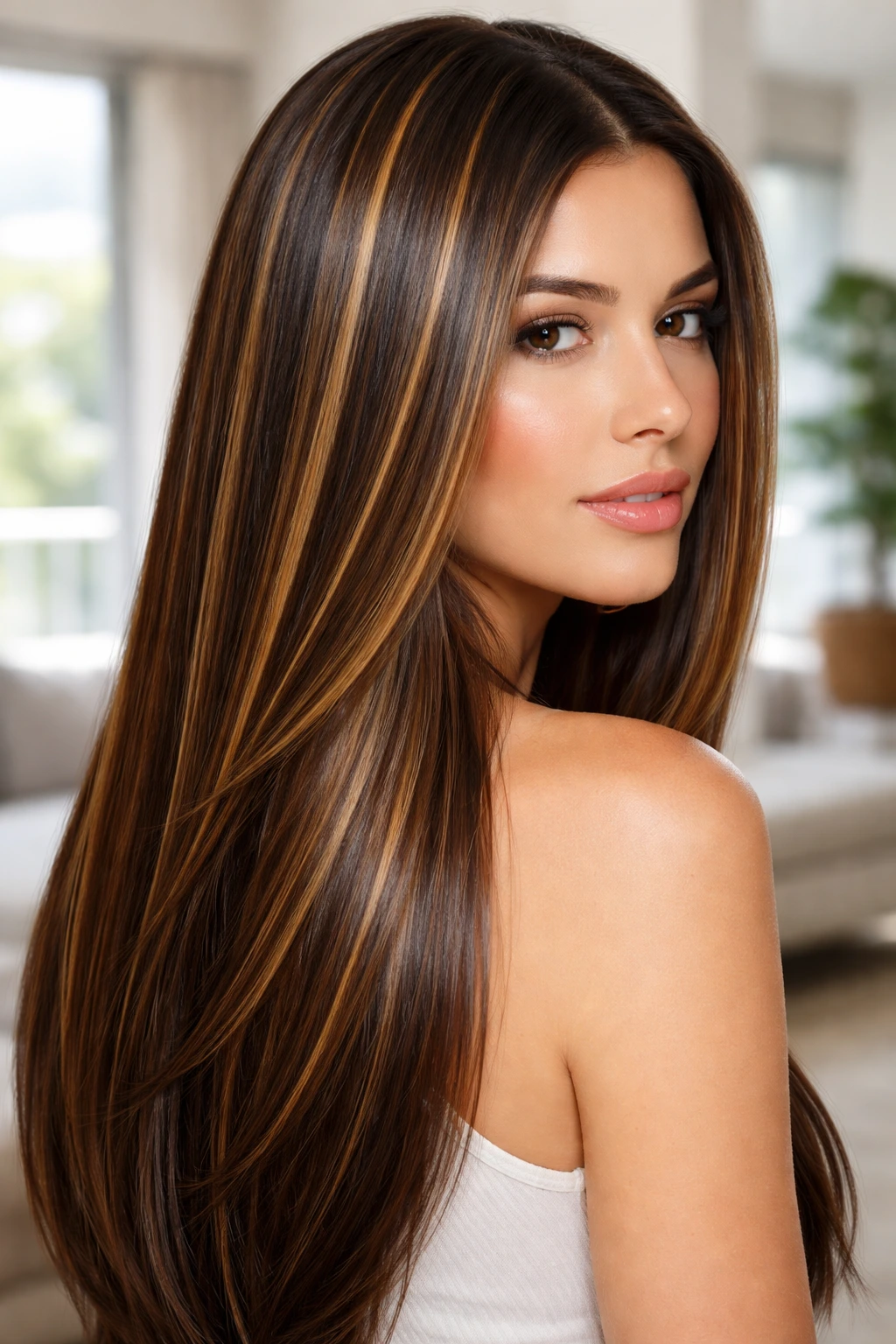
There is something undeniably chic about stick-straight hair with distinct, high-shine streaks of color. This is not for everyone, but if you have naturally straight hair and a sleek haircut, it looks like high fashion.
The Precision
This requires precision. You want the streaks to be clean and well-defined. Avoid “blending” too much. You want the eye to be able to follow the line of the honey highlight from top to bottom.
Finishing
To pull this off, you need a high-shine serum. Without shine, the streaks look flat. You need the hair to be reflective so the honey tones really gleam.
22. Textured Caramel Highlights
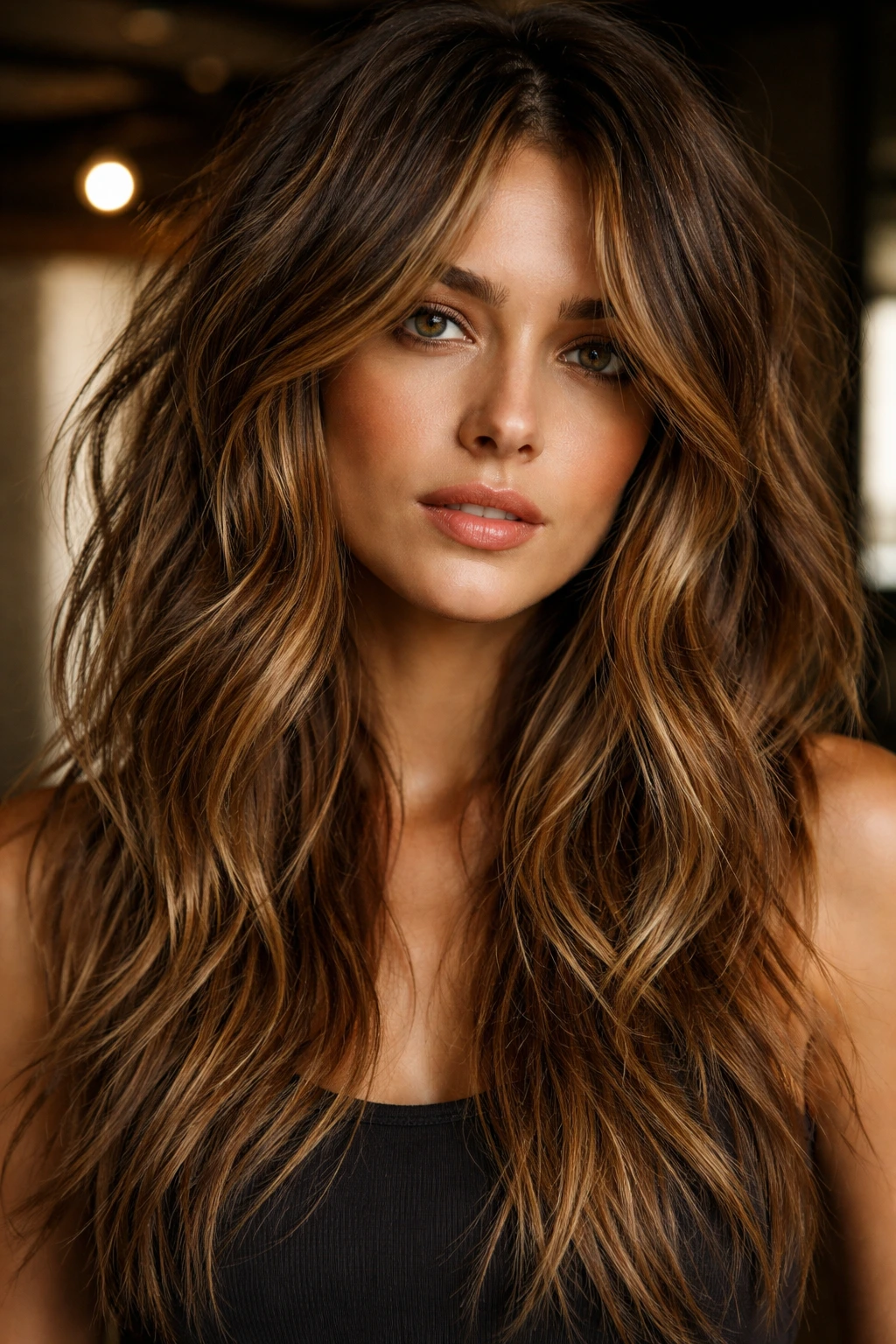
This look is for people who love the “bedhead” aesthetic. The hair is cut with a razor or deep point-cutting to create uneven, textured ends. The caramel highlights are then applied in a “shattered” pattern—some thick, some thin, some high, some low.
The Vibe
It is messy, undone, and cool. It looks like you just rolled out of bed with naturally perfect, sun-streaked hair. It is the antithesis of the “perfectly polished” look.
The Product
You need a texture paste or a sea salt spray. This look dies if you use a heavy oil or a straightening cream. You want grit and separation.
23. Toasted Honey Tips
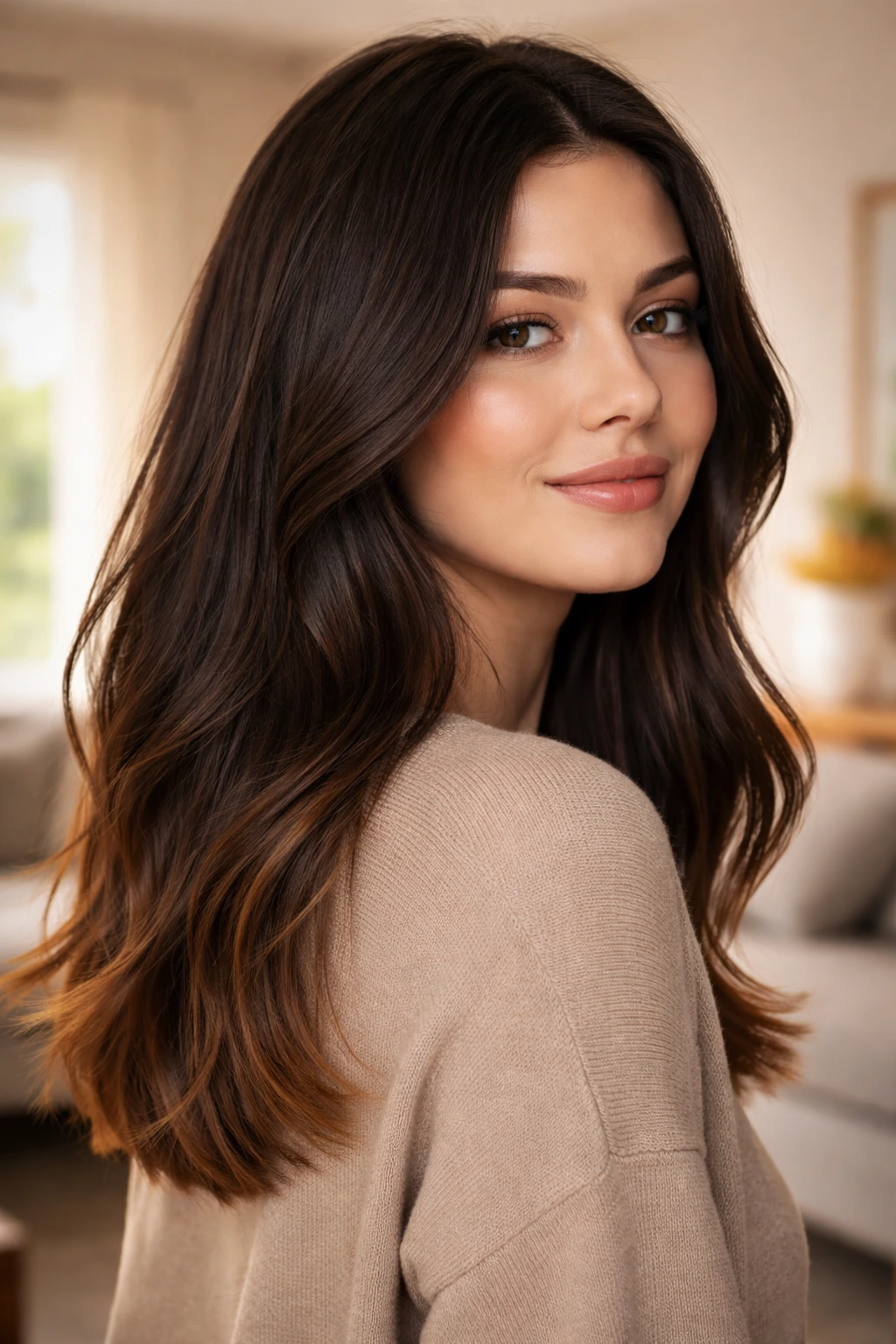
If you only want to change your hair by about 10%, this is the move. You leave 95% of your head natural and only lighten the very last 1-2 inches of your hair with a warm honey glaze.
The Result
It is subtle, it frames your shoulders, and it adds a little bit of brightness to your skin tone without any commitment. It is also the healthiest option, as you are only lightening the hair that is oldest and already at the end of its life cycle.
Trimming
Since you are highlighting the very ends, you will cut the highlights off with your next trim. Think of this as a temporary color commitment.
24. Long Hair Caramel Cascade
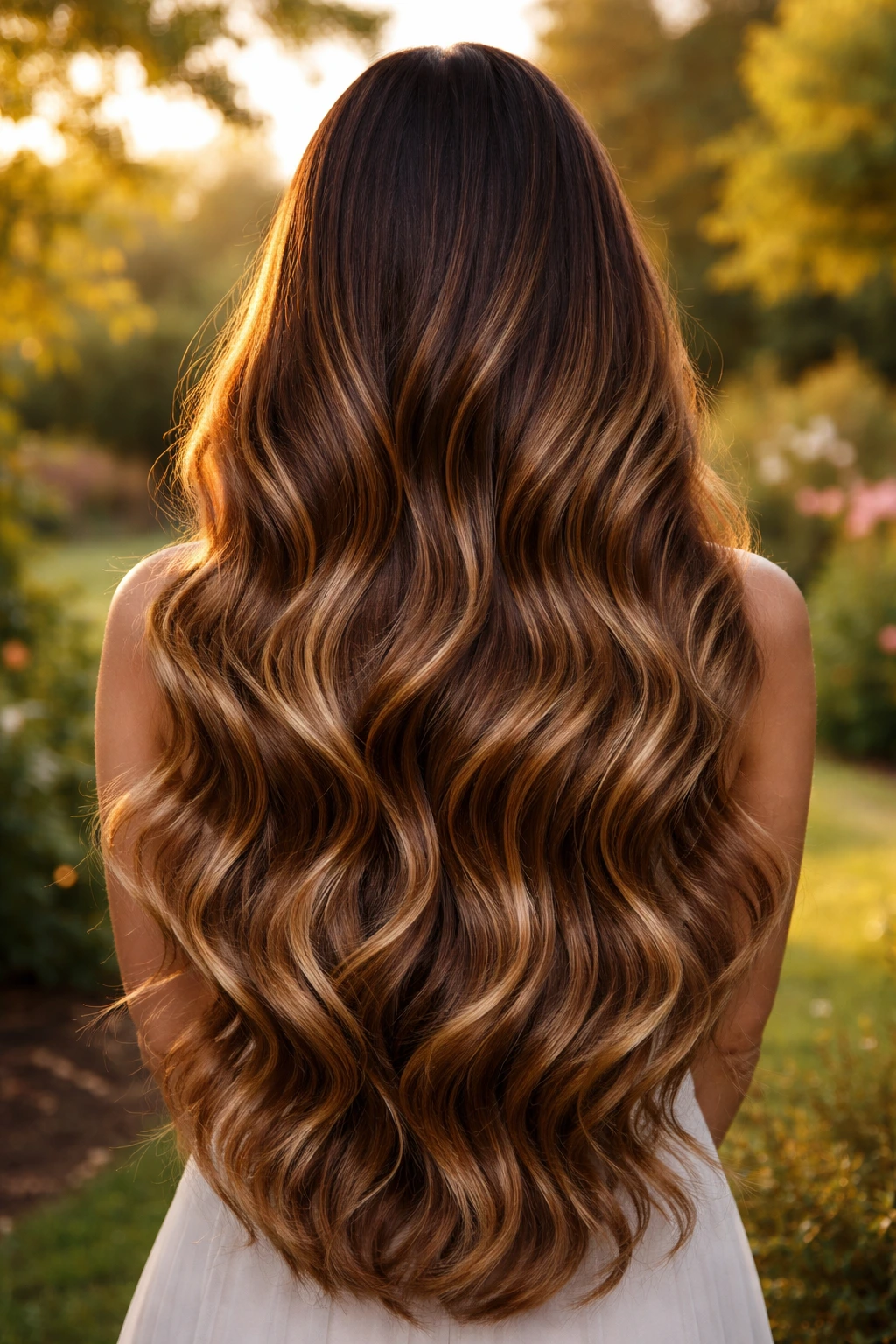
If you have very long hair, you have a massive canvas to work with. A caramel cascade uses multiple shades of caramel—from dark, burnt-sugar caramel to bright, honey-blonde—to create a waterfall effect down the back.
The Skill
This is an advanced technique. You are juggling multiple lighteners and toners to get that gradient perfect. It is not a quick salon visit, but the visual impact of long, multi-tonal hair is unmatched.
Care
Long hair is prone to split ends. When you highlight this much of your hair, you have to be vigilant about dusting your ends. Otherwise, the highlights will look frayed and dry, which ruins the effect.
25. Subtle Honey Halo
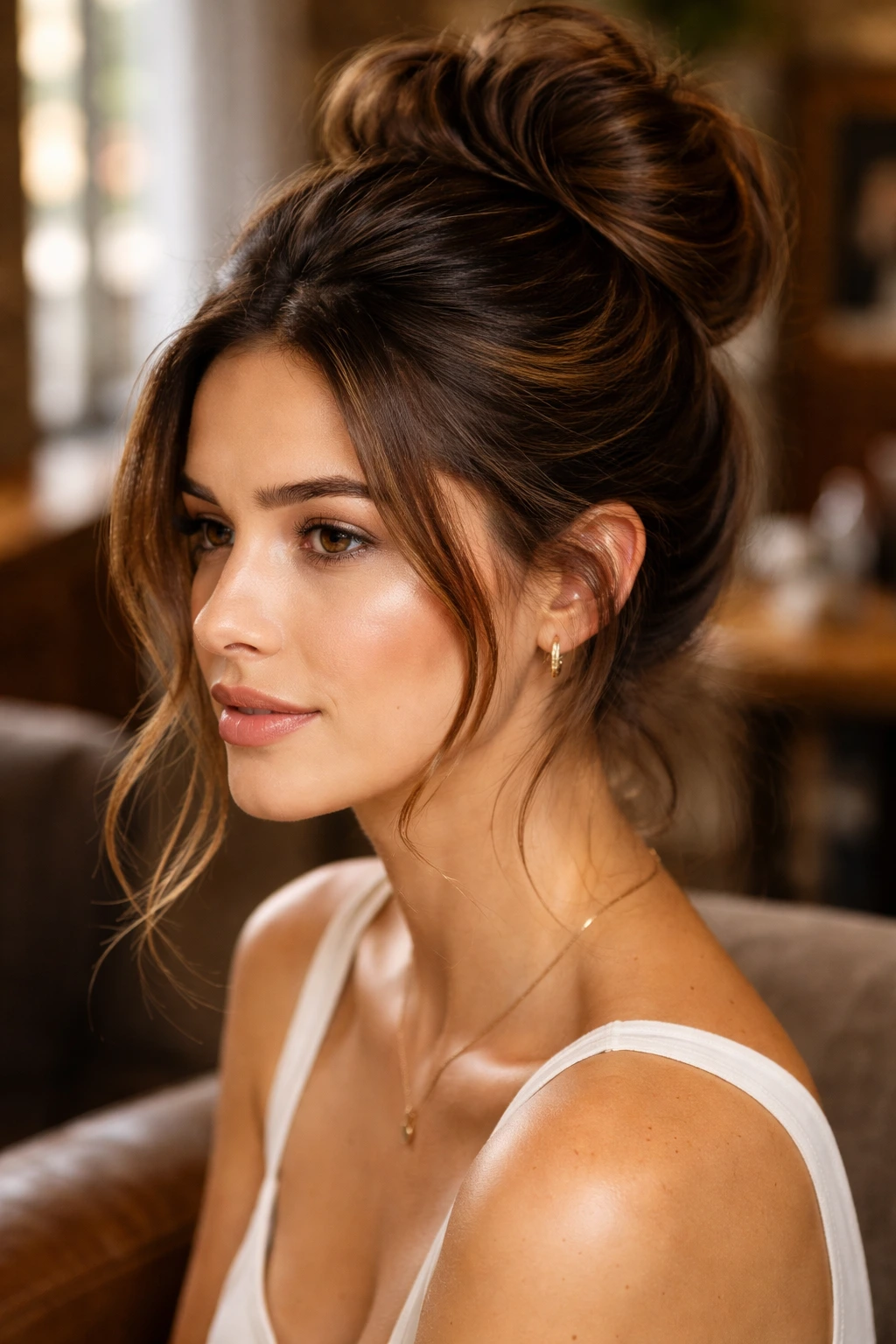
A “halo” highlight places the color in a circle around the crown of your head. It’s perfect for people who like to wear their hair up. When you pull it into a ponytail, the halo of light catches the eye.
The Illusion
It makes the hair look like it is naturally glowing. It is very soft and doesn’t create any harsh lines on the sides of your face. It is arguably the most “natural” looking highlight style that still makes a significant impact.
Placement
The stylist needs to section the hair carefully to create the halo. It is a more technical service than standard foiling, so be prepared to explain exactly what you mean by “halo” placement.
26. Caramel Highlights with Ashy Base
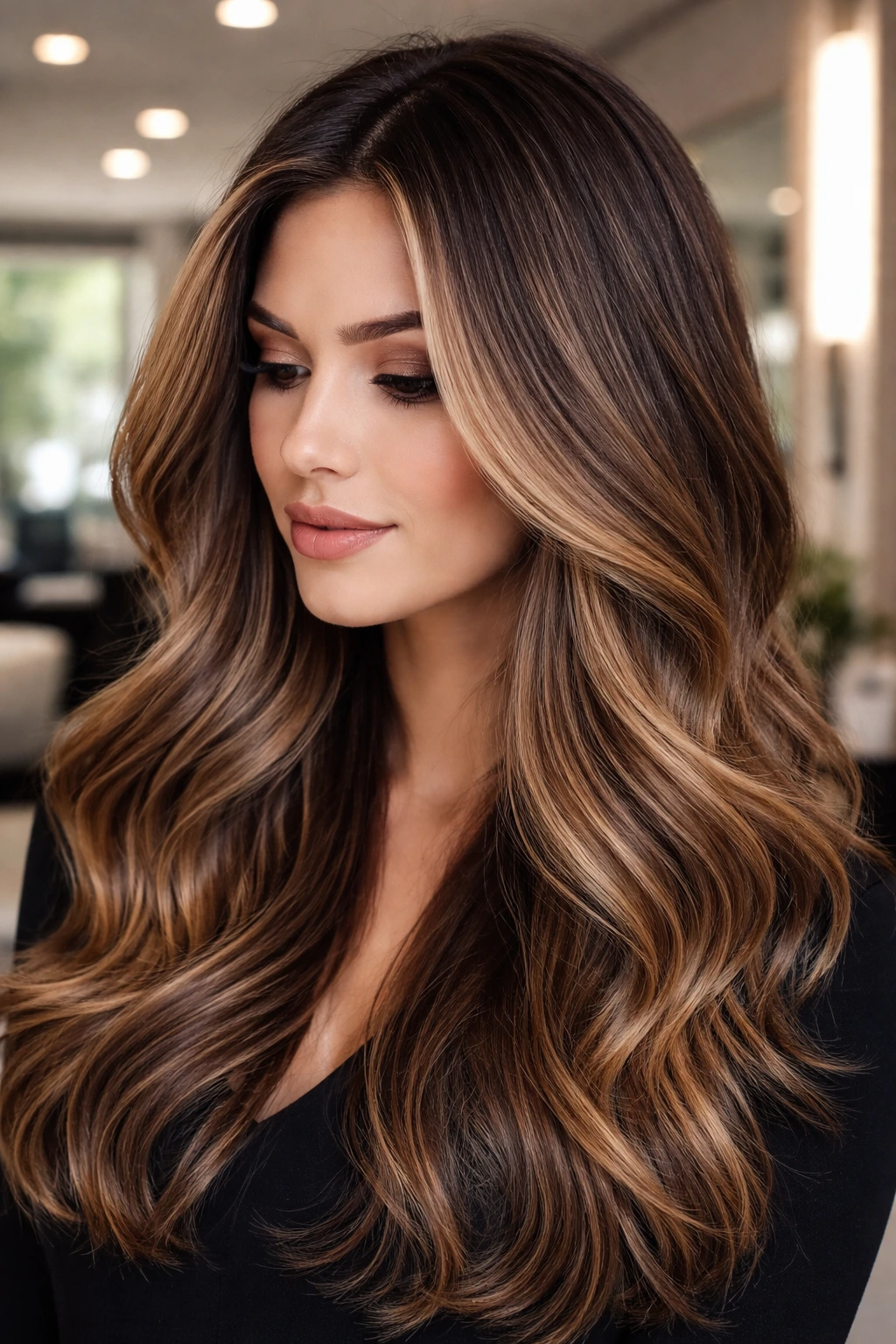
If you are a cool-toned brunette, you might be scared of honey and caramel because they are warm. The solution? Keep your base ash, but use a “cool caramel” highlight.
The Harmony
A cool caramel has a bit more brown and gold in it, rather than red or yellow. It creates a beautiful contrast against an ash-brown base. You get the warmth of the highlight without the clashing of undertones.
The Challenge
Finding a stylist who can custom-mix a cool caramel is key. Most standard color lines have “warm” caramels. Ask specifically for a color that balances the warmth with a touch of beige.
27. Warm Honey Glaze
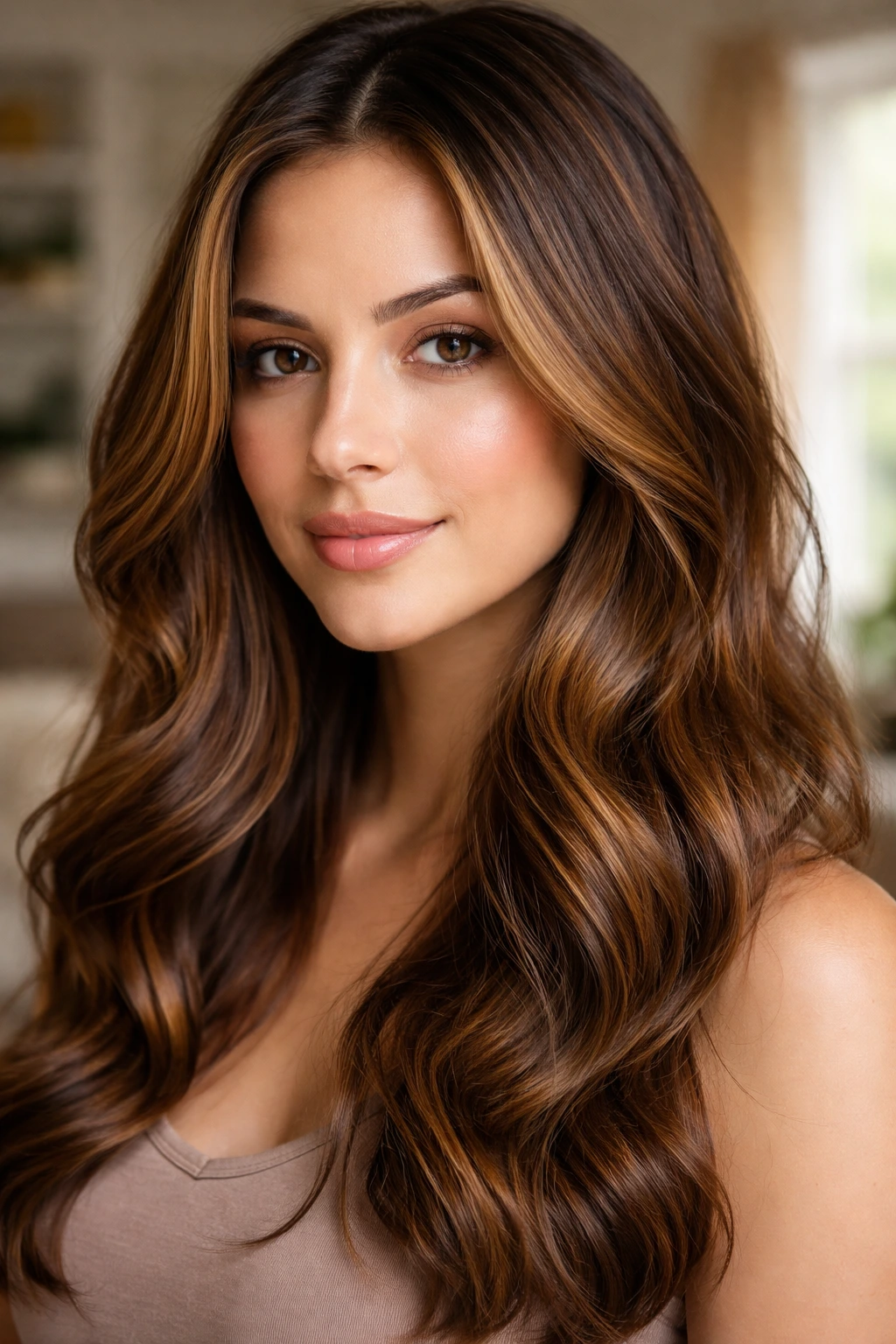
Sometimes, you don’t need highlights at all. If your hair is already a light brown or medium brown, you might just need a “honey glaze.” This is a demi-permanent color service that adds shine and a golden tint to your existing shade.
Why It’s Great
Zero damage. Seriously. A glaze just deposits color; it does not lift or remove pigment. If you have “virgin” hair and you are scared of bleach, this is the perfect way to test-drive honey tones.
Fading
Glazes fade. That is their nature. They usually last about 4 to 6 weeks. It is a commitment-free way to have gorgeous, honey-toned hair for a special event or a seasonal change.
28. Face-Framing Honey Fringe
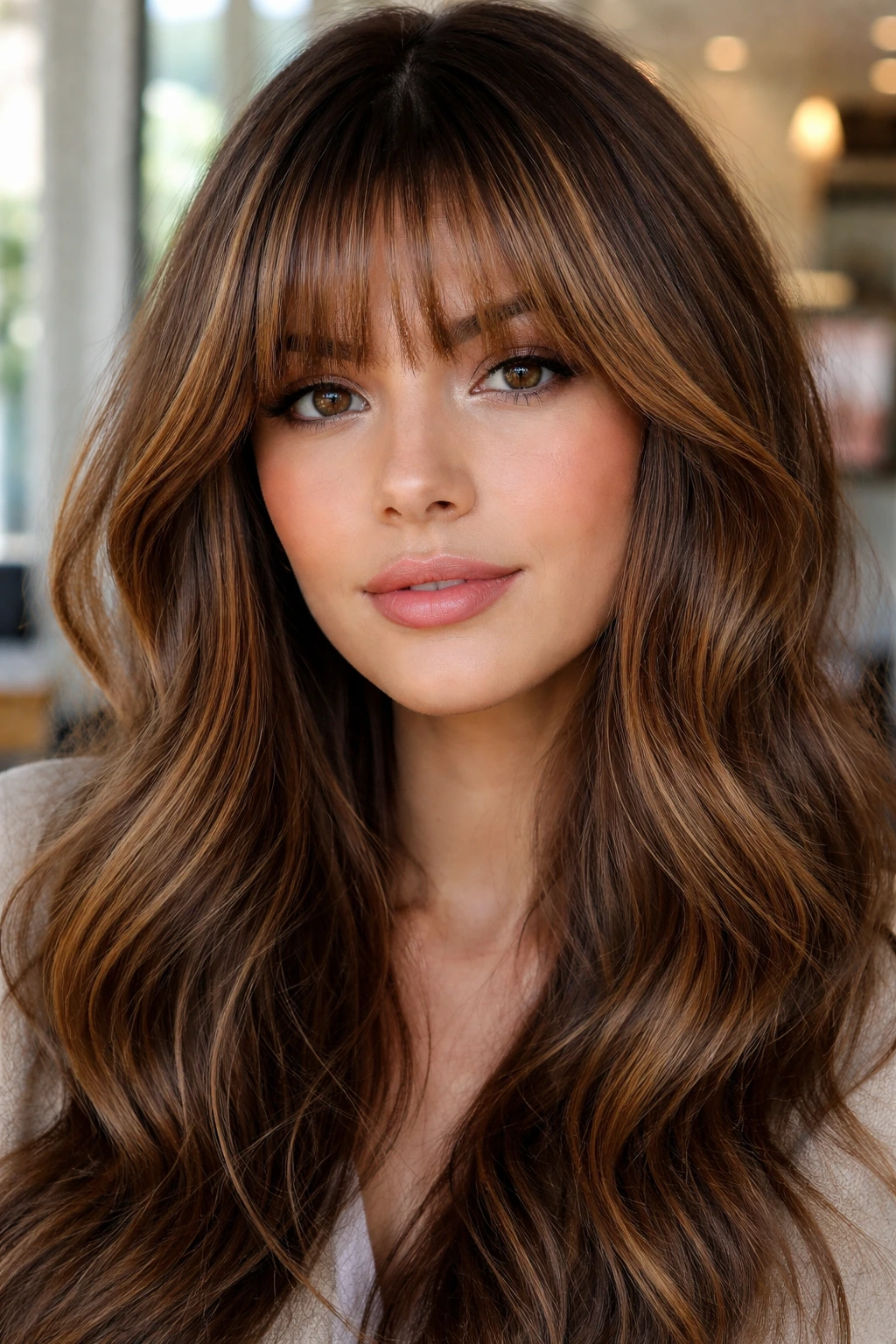
If you have bangs (fringe), that is the most important area to highlight. A fringe with honey-toned highlights instantly draws attention to your eyes and softens the overall shape of the haircut.
The Tech
Use “babylights” on the fringe. Do not do chunky pieces, as they will look like a mistake in your bangs. The highlights need to be microscopic and well-blended to look right on the short, cropped hair of a fringe.
Warning
Be very careful with bleach on bangs. The hair in the front is often more fragile than the rest of your head. Do a patch test if you aren’t sure how your hair will react.
29. Caramel Highlights on Deep Brunette
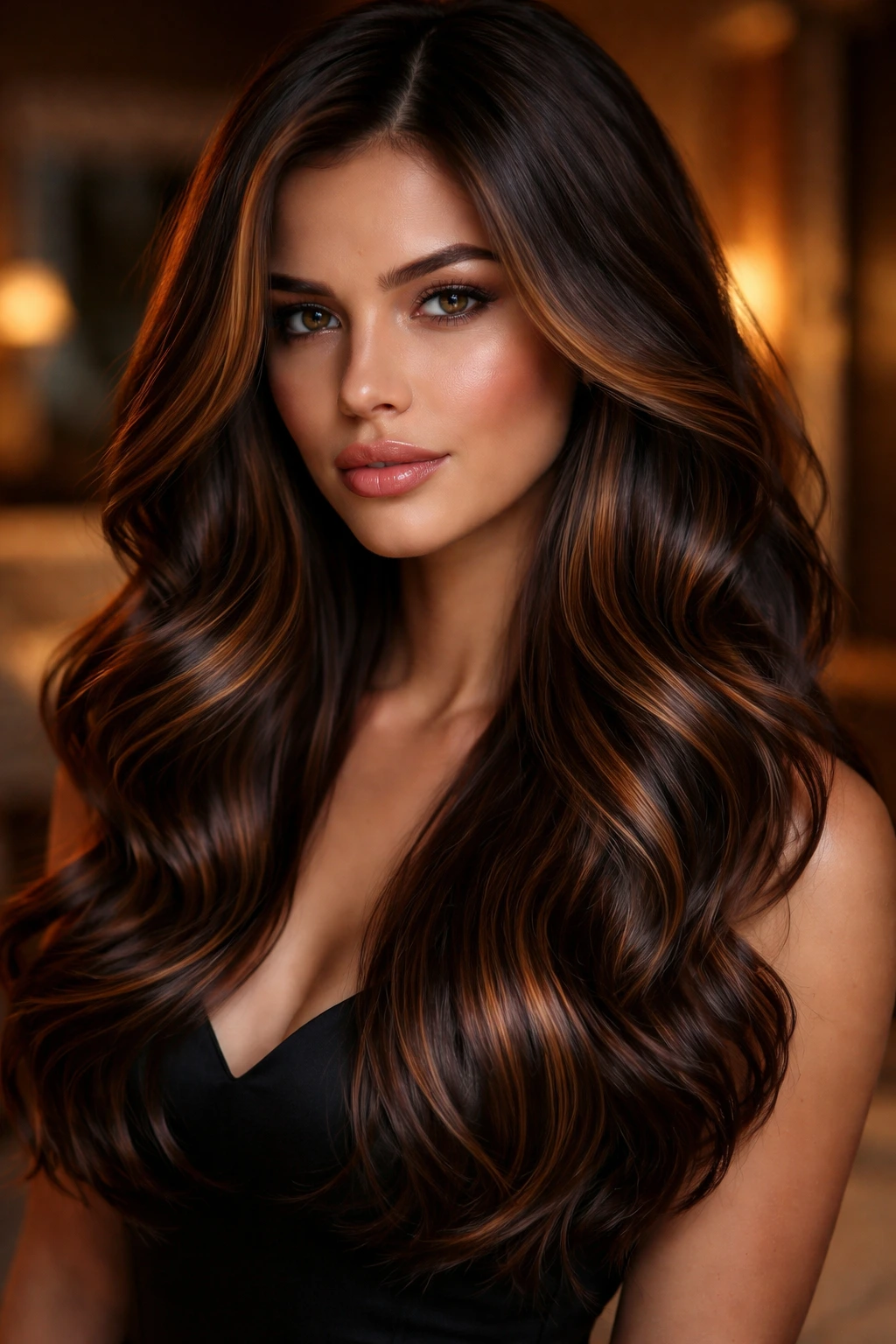
Dark, almost-black hair can look intimidating to highlight. The trick is to go slowly. Do not try to get to honey-blonde in one session. Start with a deep, rich caramel, let your hair rest, and go lighter next time.
The Aesthetic
There is something incredibly sophisticated about a dark brunette with deep, mahogany-caramel highlights. It feels moody and intentional, rather than bright and beachy.
The Contrast
Lean into the contrast. Don’t try to blend the caramel away. Let it stand out against the deep brown. It’s a bold look that screams luxury.
30. Honey-Infused Crown Highlights
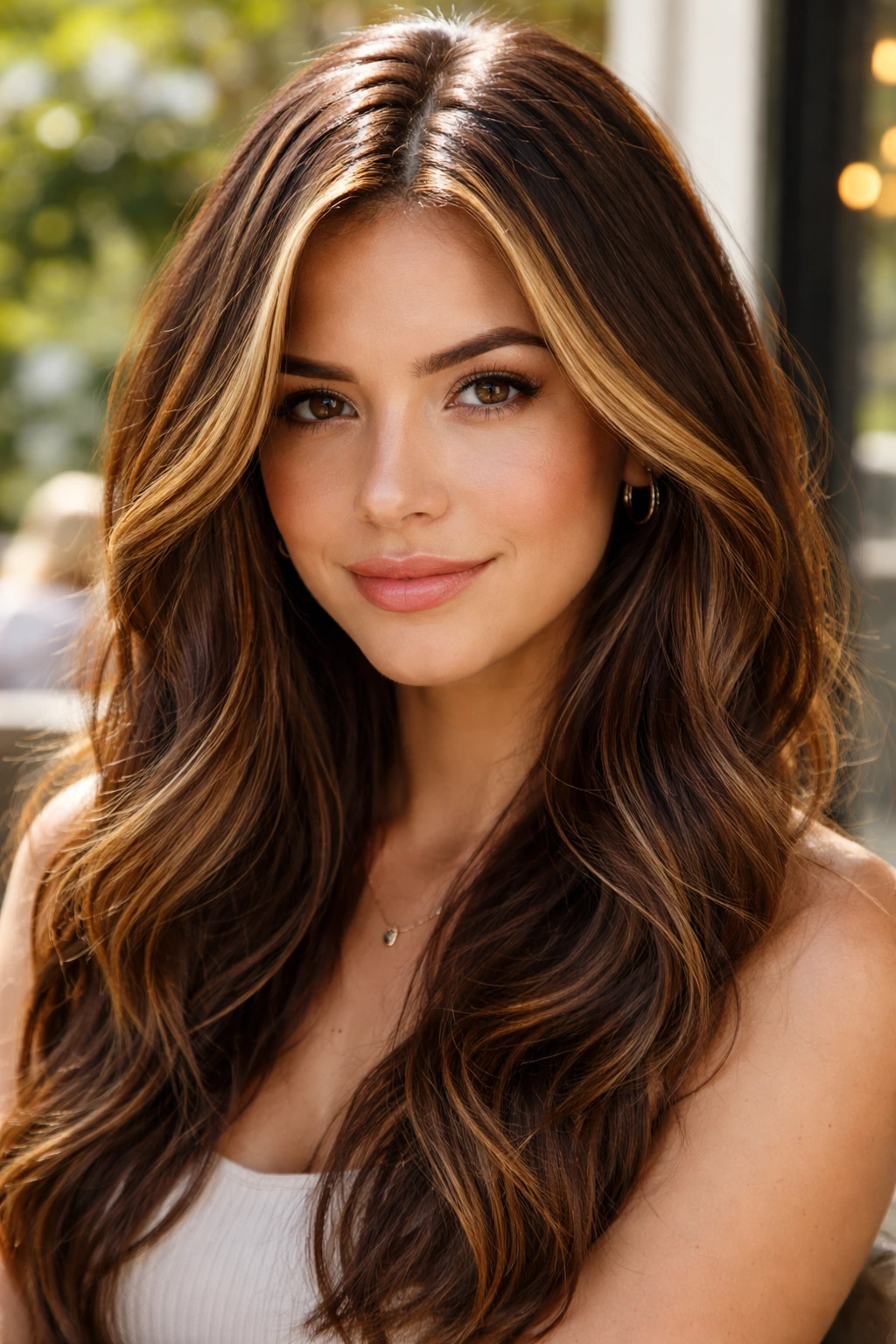
This is the opposite of the “ends only” look. You concentrate the light right at the crown—where the sun would naturally hit. This creates an immediate “fresh from vacation” look without needing to lighten the entire head.
The Science
The crown of the head is naturally the lightest part of the hair because it gets the most sun exposure. By mimicking this with dye, you create a look that is biologically convincing. People will wonder why you look so bright, but they won’t immediately guess “hair dye.”
Maintenance
Because you are highlighting near the scalp, this will show roots sooner than other styles. If you are lazy about salon visits, this might not be the right choice for you.
Understanding the Difference Between Caramel and Honey
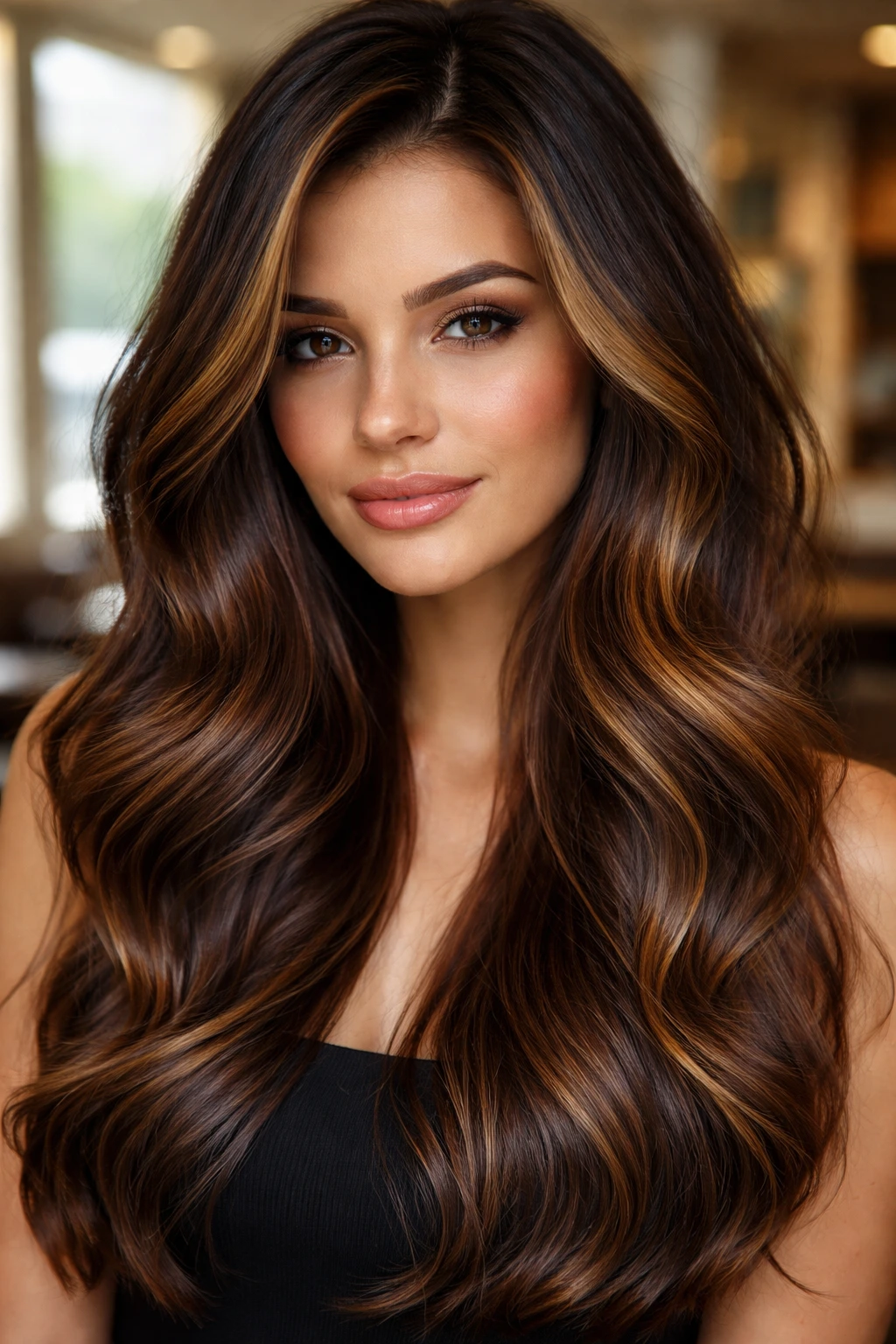
It is common to hear these terms used interchangeably, but in the world of hair color, they are quite distinct. Knowing the difference will save you a lot of headache in the salon chair. Caramel is deeper, richer, and closer to a true “cooked sugar” brown. It has significant warmth but is grounded in brown tones. It is generally easier to pull off for those with naturally dark, deep brown hair because it doesn’t create as drastic of a contrast.
Honey, on the other hand, is closer to gold. It has a high-yellow pigment concentration and is much lighter. Honey highlights are technically “blonde,” whereas caramel highlights are technically “light brown.” If you have deep, dark brown hair and you ask for honey highlights without a clear plan, you risk the “skunk stripe” effect because the jump from dark brown to honey-blonde is massive. Always discuss with your colorist which one is better for your base level.
How to Maintain Your Warm Tones
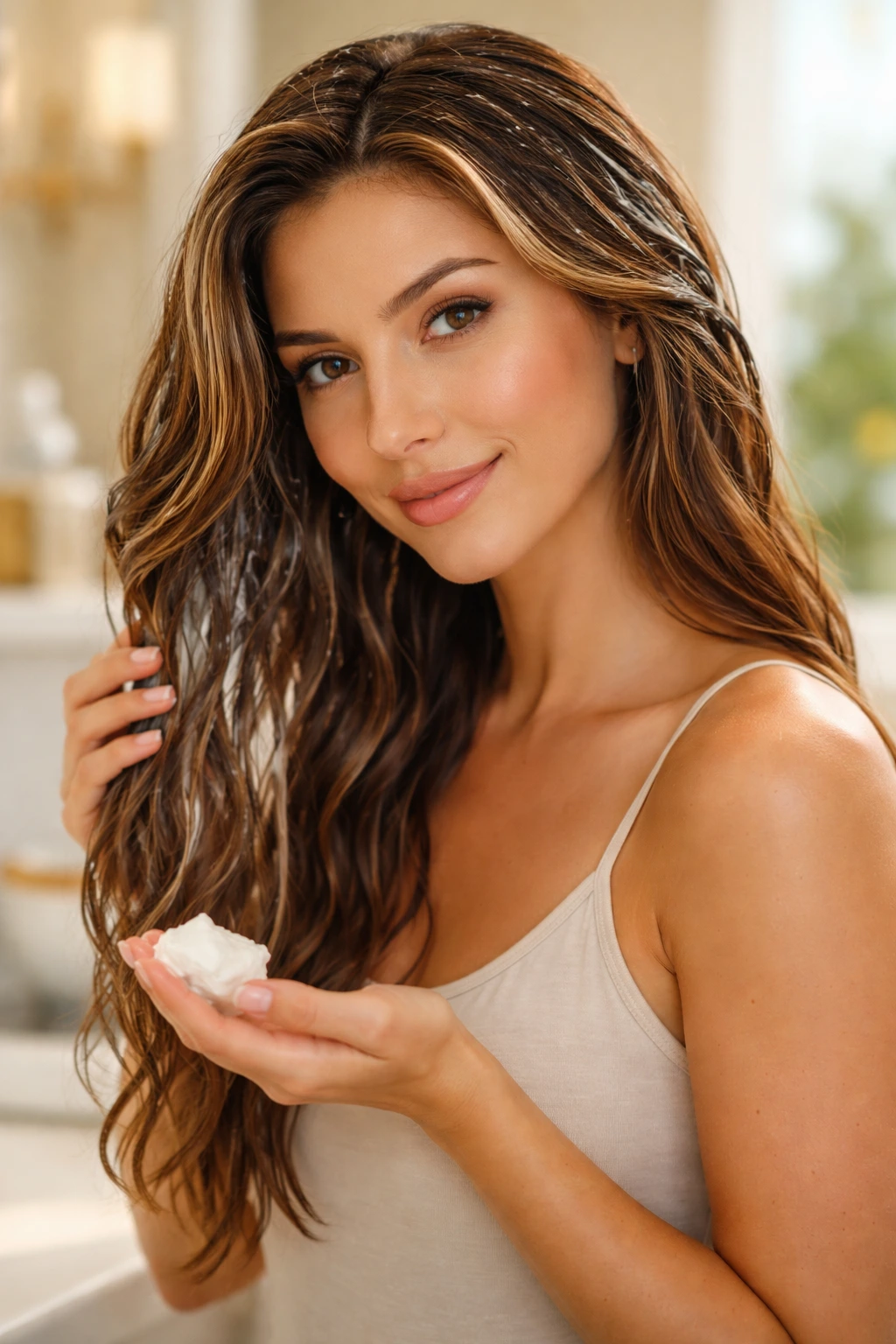
Warm tones like caramel and honey are notoriously difficult to keep. Why? Because the pigments used to create those warm, golden shades are small, and they wash out of the hair shaft easily. Conversely, the cooler tones in your brown base are often the ones that stay behind, leaving you with that dreaded “brassy” orange look.
You need to switch up your routine. First, avoid “purple” shampoo. Purple shampoo is designed to cancel out yellow—it is for blondes. If you have caramel or honey highlights on brown hair, purple shampoo can actually turn your highlights a muddy, grayish color. Instead, look for a color-depositing conditioner that is specific to “warm” or “brunette” tones. These often have a tiny bit of red or gold pigment in them, which acts as a “top-up” for your color every time you condition.
The Role of Hair Health
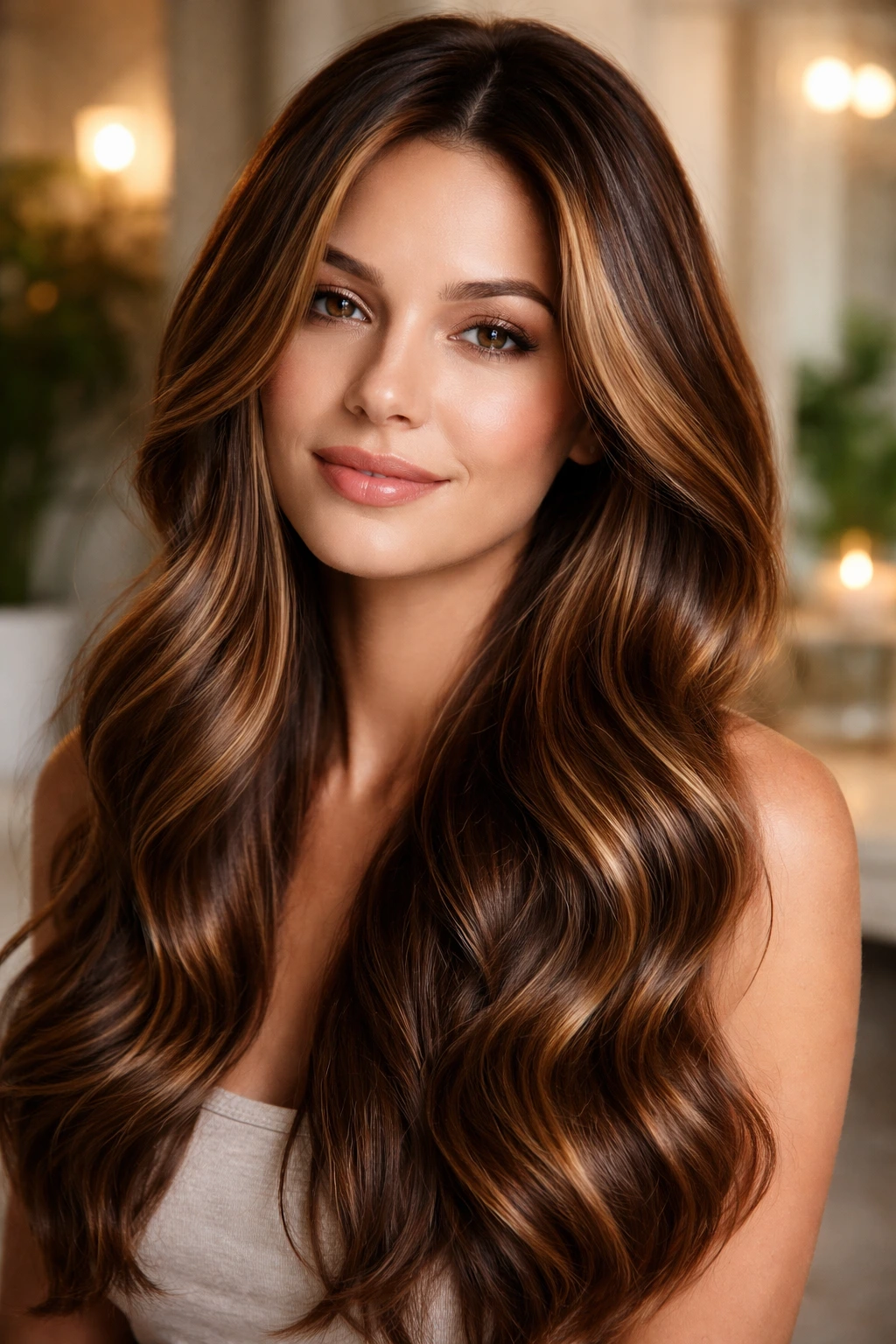
You cannot fake healthy hair. If you have highlights, your hair is chemically processed. It is slightly more porous than virgin hair. If your hair is dry, the highlights will look dull, fuzzy, and cheap. You need to compensate for the moisture loss.
Look into “bonding” treatments. These are different from standard deep conditioners. They actually work on a molecular level to repair the bonds in the hair that bleach breaks down. Using a bond-building shampoo and treatment at least once a week is non-negotiable if you have lightened sections. Think of it as insurance for your color. If the hair is healthy, the color reflects light; if the hair is damaged, it absorbs it, making your beautiful caramel highlights look flat and matte.
When to Skip the Highlights
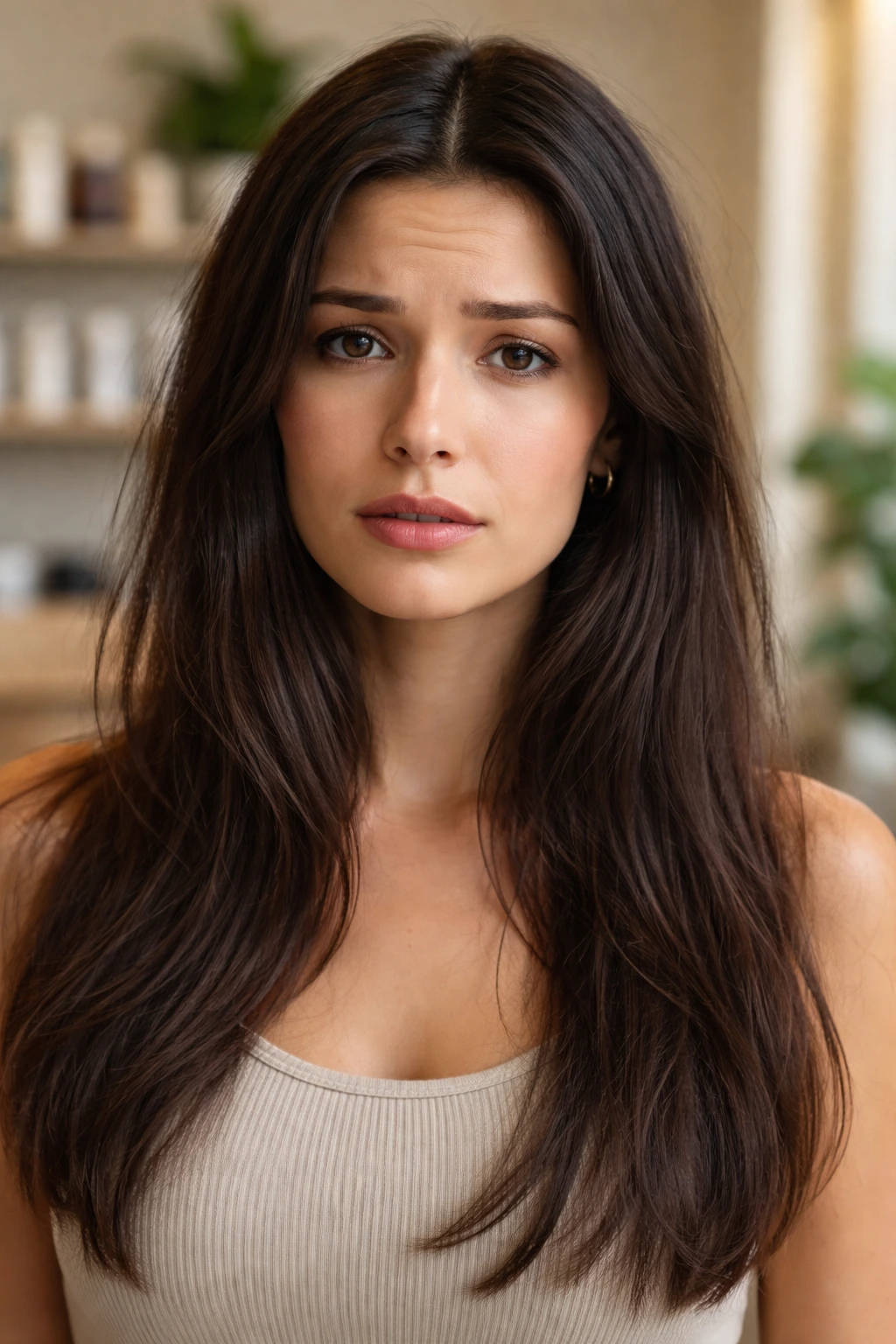
Sometimes, the best hair color decision is not to color at all. If your hair is severely damaged, breaking off, or if you are currently using at-home box dye, you need to pause. Box dye is notoriously unpredictable. When you layer bleach over box dye, you can get chemical reactions that result in uneven, patchy, or even melted hair.
Be honest with your stylist. If you have colored your hair with a box dye in the last two years, tell them. They may need to do a “strand test” on a small, hidden section of your hair to see how it lifts. If it turns orange or green, or if the hair gets mushy, you need to wait and let the old color grow out before you start adding highlights. It is better to have healthy, dark hair than processed, breaking, rainbow-colored hair.
Final Thoughts
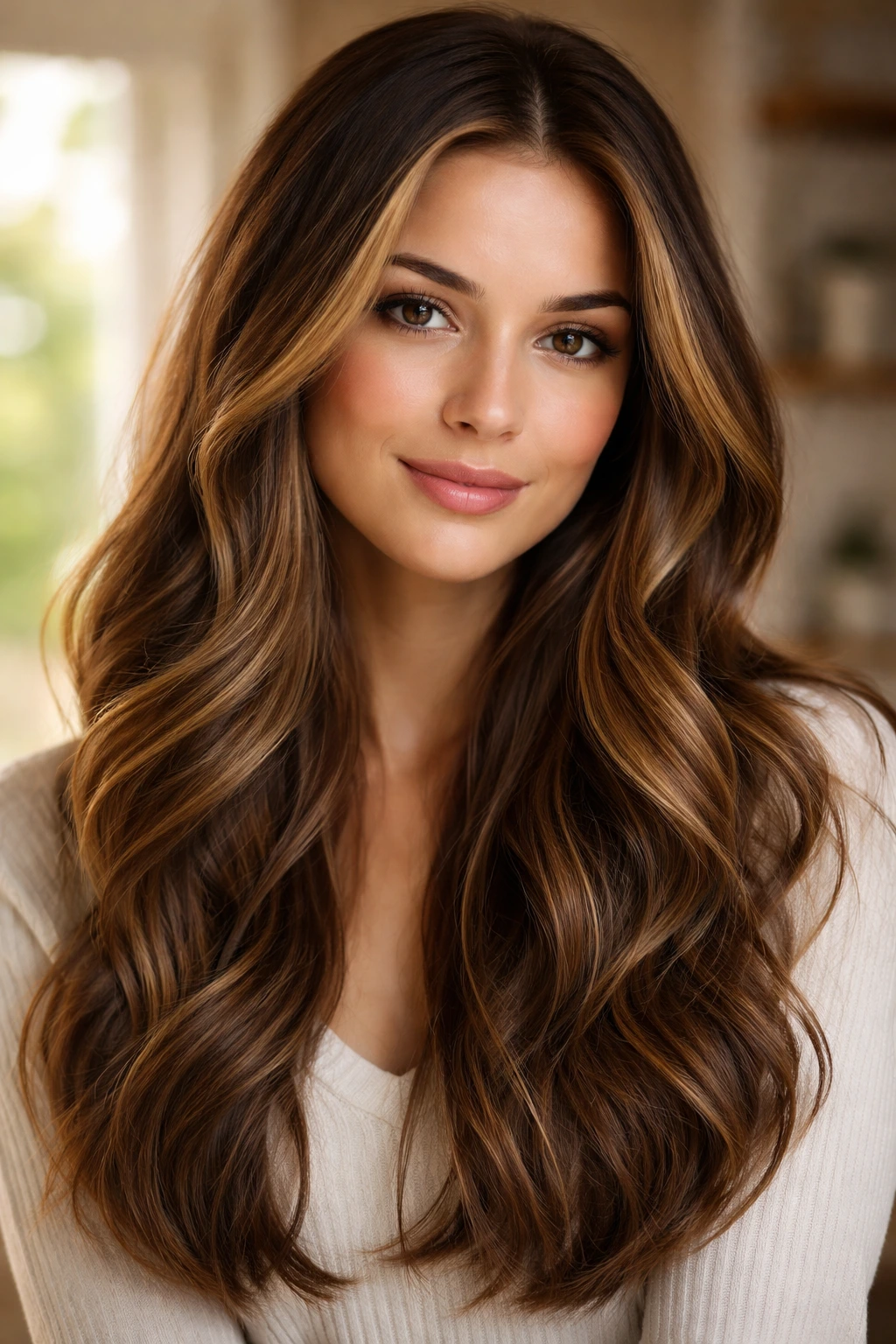
Adding caramel and honey highlights is one of the most effective ways to refresh your look without undergoing a massive transformation. It adds movement, light, and dimension to brown hair, making it feel fresh again. The key is never to overcomplicate it. Start with subtle, well-placed babylights or a soft balayage before jumping into chunky ribbons or high-contrast pieces.
Always prioritize the health of your hair over the intensity of the color. It is better to have a slightly-less-than-perfect color that is healthy and shiny than a perfect shade of honey that is dry and brittle. Work with your stylist to find the tone—whether it leans toward the deep, earthy caramel or the bright, golden honey—that complements your natural skin undertones and your maintenance lifestyle. Your hair is an accessory you wear every day; make sure it’s one that makes you feel confident and bright.
