



Long blonde bob haircuts for round faces work best when they stretch the line of the face instead of parking right on its widest point. That sounds simple, but it’s the whole game. A lob that lands at the collarbone, slips a little lower in front, or carries soft face-framing pieces can make a round face look longer, leaner, and a bit sharper without turning the cut into something severe.
The tricky part is that not every blonde bob behaves the same way. A blunt platinum cut with too much width at the cheeks can feel boxy in a heartbeat. A rooted beige blonde lob with a side part and a few longer front pieces? Much kinder. The color matters, yes, but the shape matters more. Shape does the heavy lifting.
Not every round face needs a disguise, either. That’s a bad way to think about it. The better goal is balance: keep the eye moving vertically, keep bulk away from the cheek line, and let the ends land somewhere that helps the whole face look a little longer. One good cut can do that without looking fussy.
A long blonde bob can be polished, soft, edgy, airy, or sleek. It can carry curtain bangs or skip them. It can look expensive and clean, or messy in a good way. The right one depends on where you want the weight, how much styling you’ll actually do, and whether your hair likes to bend, swell, or sit flat.
1. Collarbone-Length Blunt Long Blonde Bob
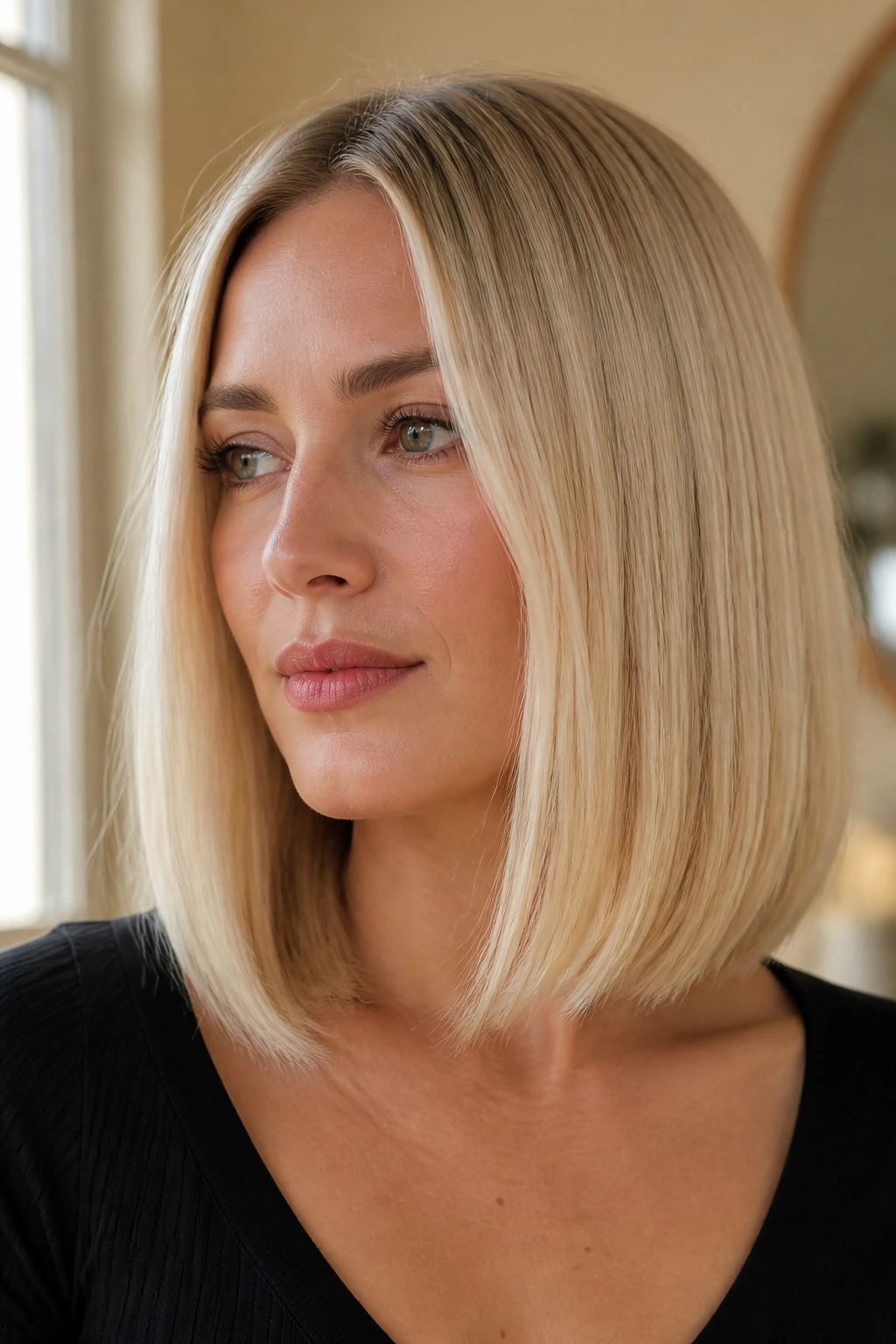
A collarbone-length blunt lob is the easiest place to start because it gives a round face a longer line without asking the hair to do too much. The blunt edge keeps the shape clean, and the extra length keeps the cut from stopping right at the cheek or jaw, which is where round faces can start to feel wider.
Why It Flatters
A collarbone finish sits low enough to pull the eye down. That one detail matters more than most people expect. Keep the perimeter blunt, and the haircut reads crisp rather than fluffy. Add a soft beige blonde or creamy champagne tone, and the cut feels light without getting too airy at the sides.
Ask for this:
- Length that grazes the collarbone
- A blunt perimeter with very light internal movement
- No heavy layering at cheek level
- Ends that sit flat or slightly beveled inward
Best for: fine to medium hair, straight textures, and anyone who likes a low-maintenance blow-dry.
A one-inch bend at the ends is usually enough. Don’t curl the whole head. That just adds width where you do not want it.
2. Side-Parted A-Line Lob
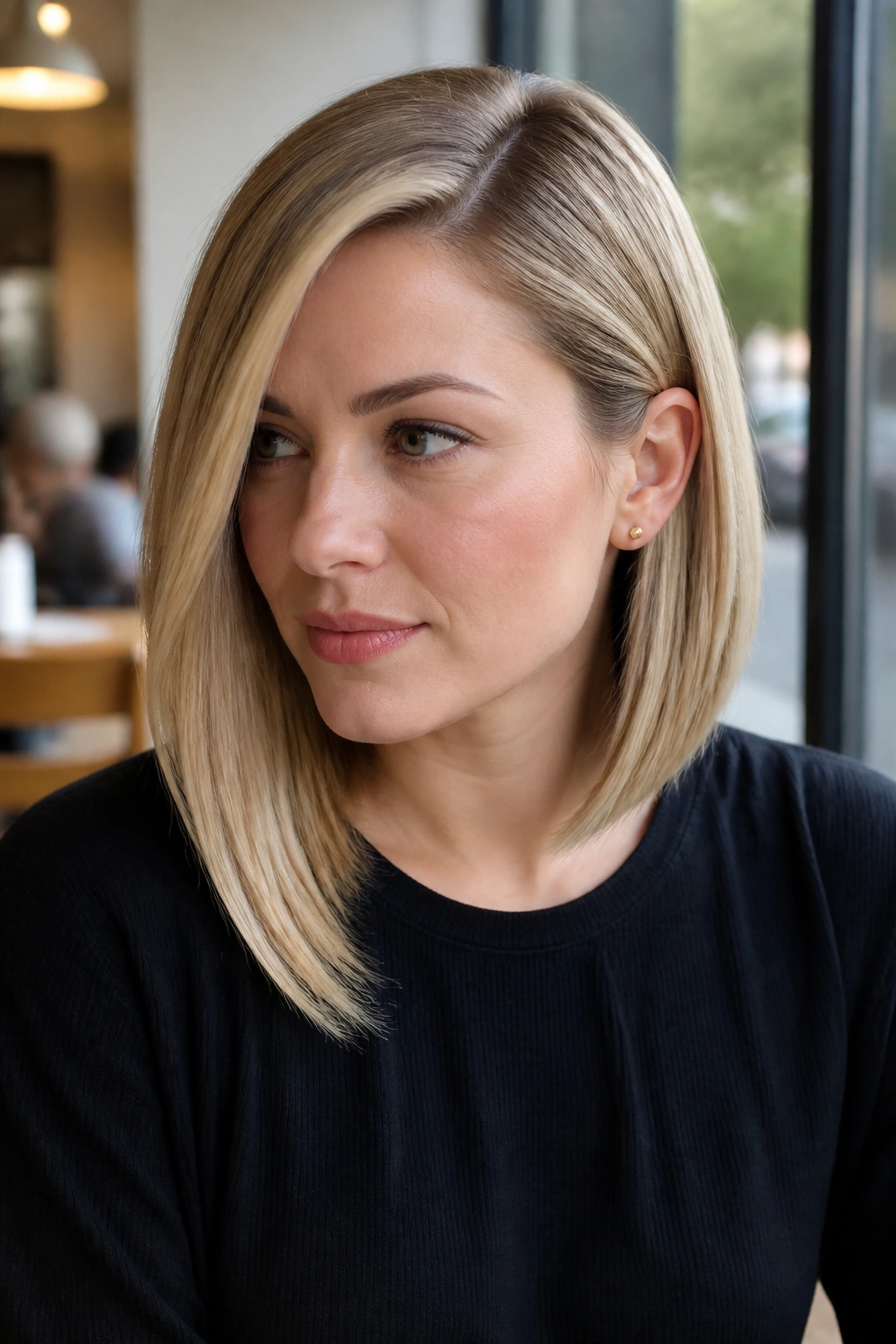
Why does a side part help so much? Because a round face already has soft symmetry, and a side part breaks that up fast. The A-line shape — a little shorter in back, a little longer in front — adds another diagonal line, which is exactly the kind of structure a round face likes.
The front pieces should fall at least an inch or two below the chin. If they hit at the cheek, the effect gets muddy. A side-parted A-line lob works best when the front is smooth and slightly tucked behind one ear on one side, because that opens the face and lets the length do its thing.
This cut is especially good if your hair has enough body to hold a shape but not so much volume that it poofs out at the sides. A soft honey blonde or beige blonde tone keeps the angle from looking too harsh. It feels clean. Not severe.
3. Soft Layered Lob With Face-Framing Pieces
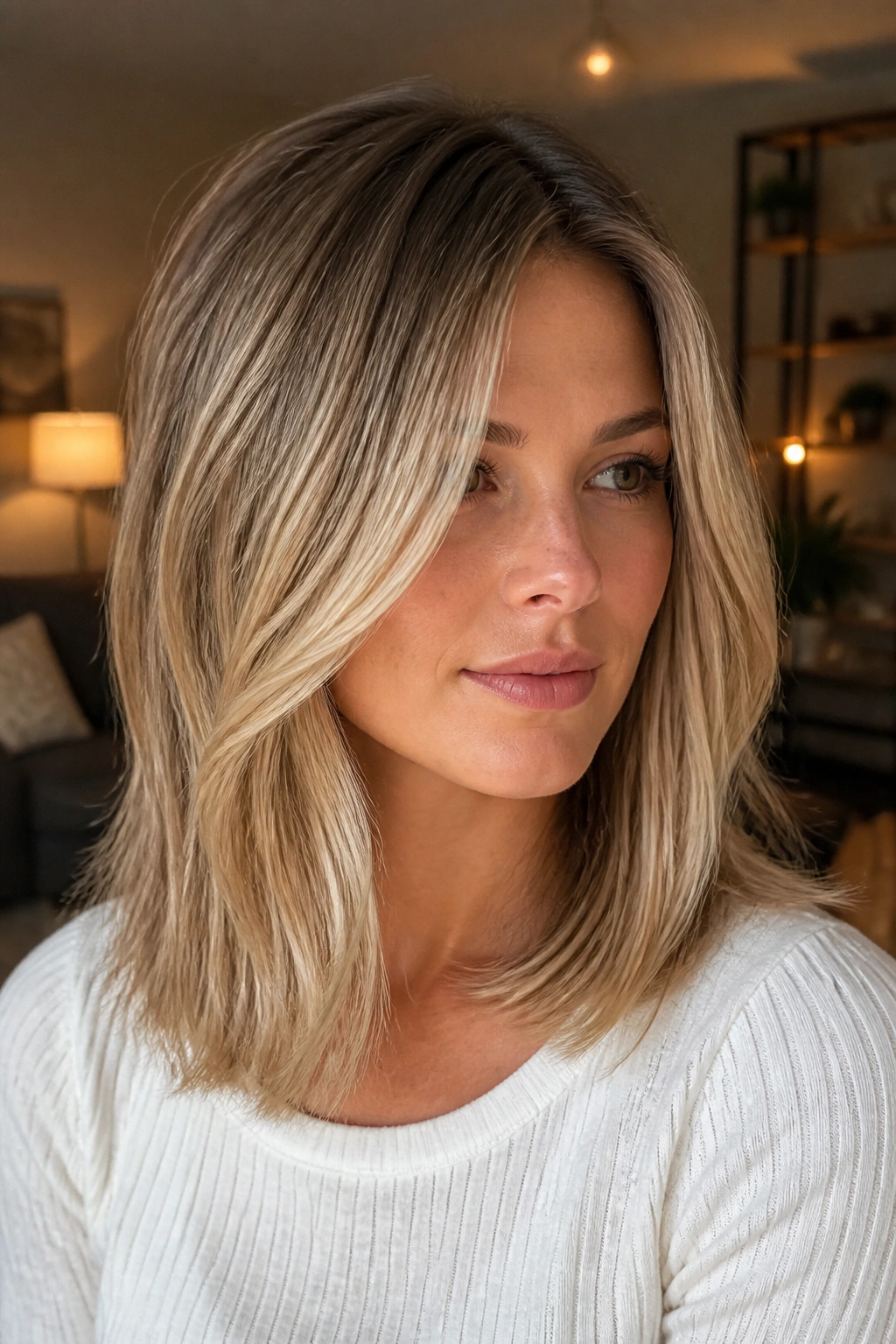
If your hair is thick and tends to puff at the sides, this cut is the one that takes the pressure off. Soft layers remove weight from the interior, while the face-framing pieces start low enough to slim the cheeks instead of sitting on top of them like a shelf.
What Makes It Work
The trick is placement. Layers that begin above the cheekbone can make a round face look wider. Layers that start near the mouth, chin, or even just below the cheekbone behave better because they guide the eye downward. Ask for the front pieces to be point-cut or sliced so they move instead of lying in one heavy curtain.
A soft layered lob is good with lived-in blonde tones, especially when there’s a little root depth. The cut and the color both need some breathing room. If everything is too flat and pale from root to tip, the shape can lose its contrast.
- Best on medium to thick hair
- Good with loose waves or a round-brush blowout
- Trims usually needed every 8 weeks
- Face-framing should start below the widest part of the cheek
A lot of stylists default to too much layering. Push back on that. You want movement, not a shaggy cloud.
4. Shaggy Blonde Lob With Piecey Ends
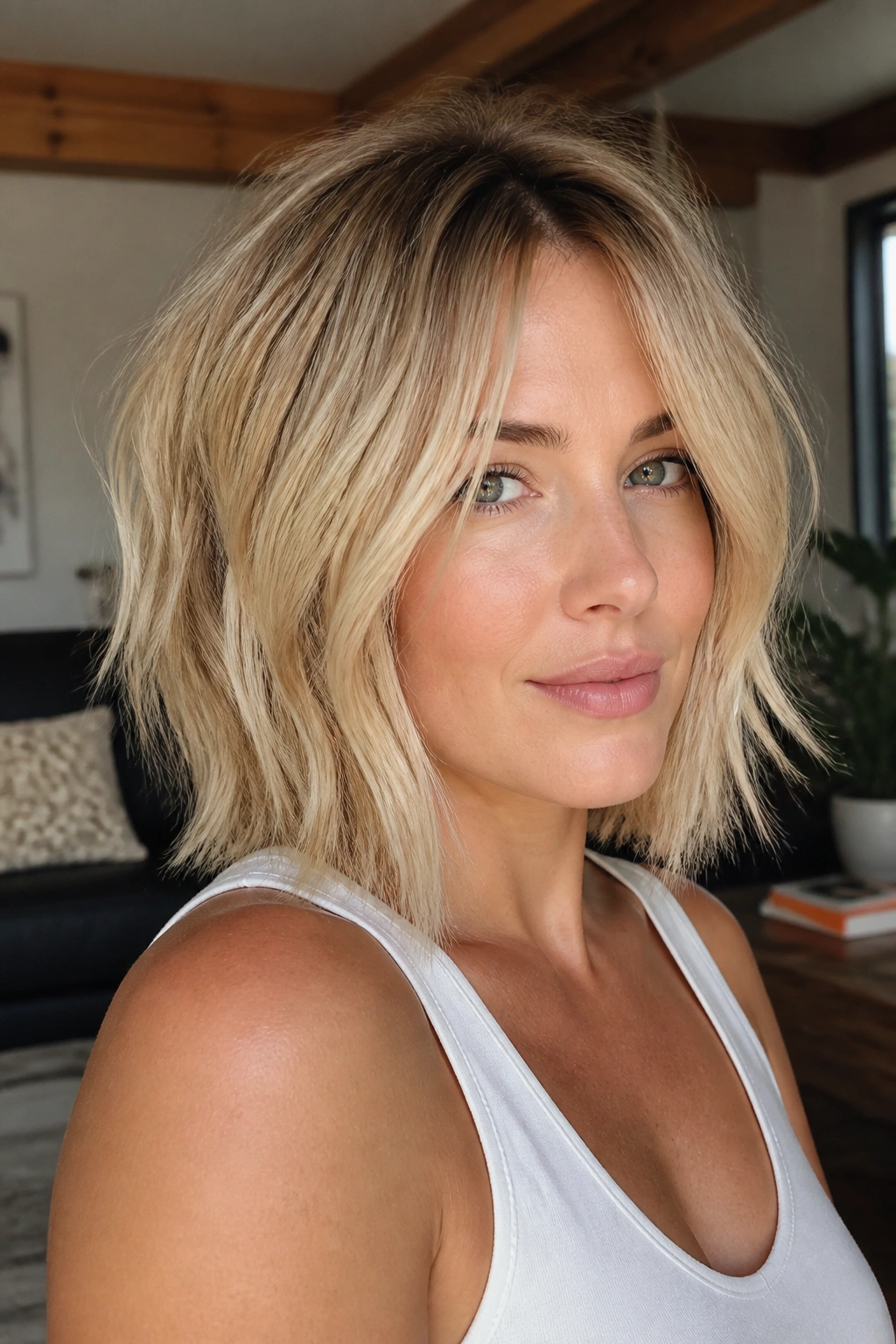
This is the relaxed one. The shaggy blonde lob gives a round face more vertical interest because the ends break up the outline instead of drawing one wide horizontal line across the cheeks. It’s especially good if you like hair that looks better a little undone.
The piecey ends help. They keep the cut from feeling dense, and they let the blonde dimension show through in small sections instead of as one solid mass. Think buttery blonde with pale ribbons, not a flat sheet of color.
What to Watch For
A shag can go wrong if the layers get pushed too high. Then the cut starts building volume around the face instead of under it. That’s a bad trade. Keep the fullness low and the texture choppy through the ends, and the haircut stays flattering.
Style note: Use a lightweight texture spray on dry hair, then twist 1-inch pieces around your fingers. Don’t overcurl it. The point is separation, not a full wave pattern.
5. Curtain Bang Long Blonde Bob
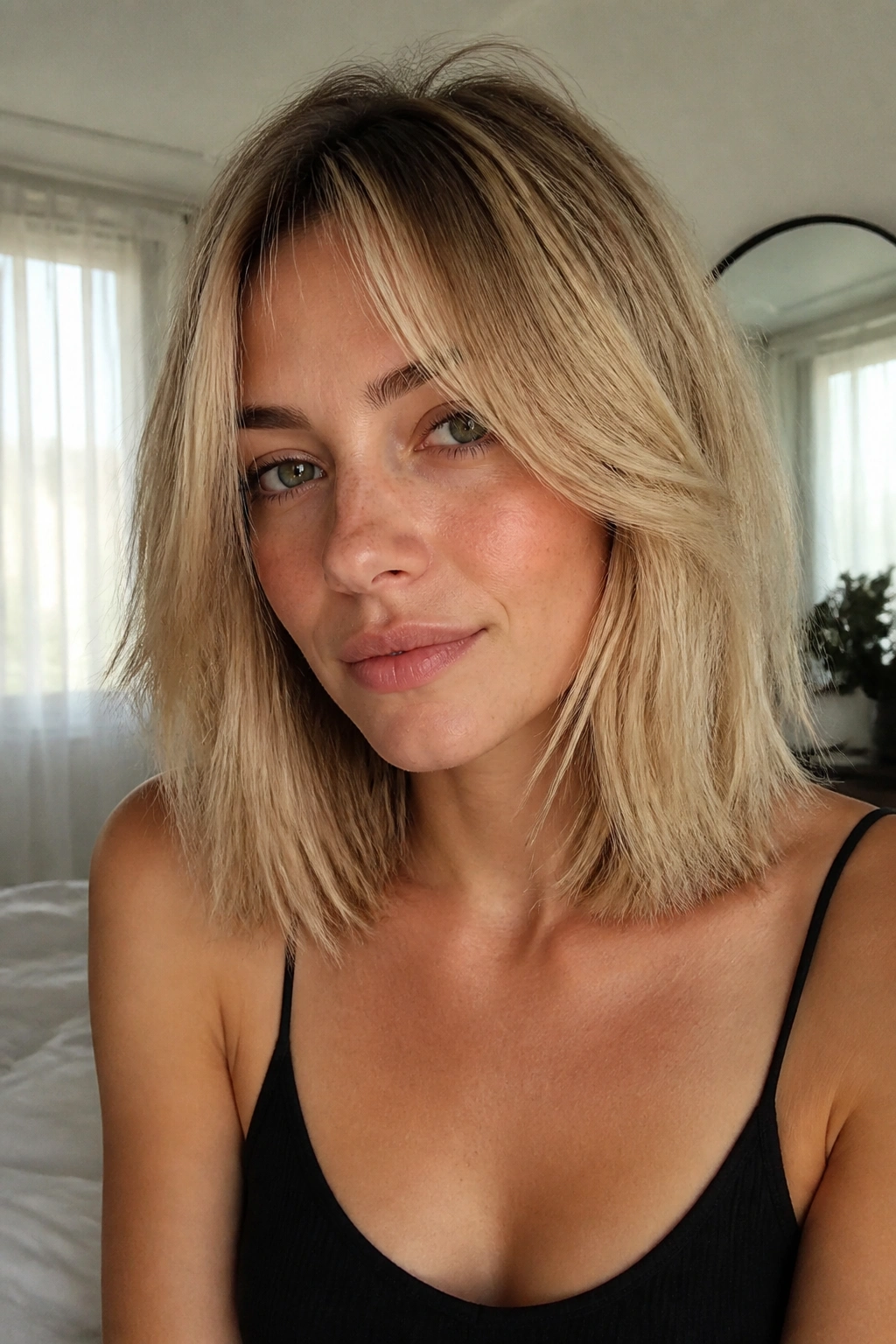
Curtain bangs are popular for a reason, and on a round face they earn their keep. They create a vertical opening through the center of the face, then sweep outward in a way that feels soft instead of blunt. A long blonde bob with curtain bangs can make the whole haircut look more intentional without stealing length from the sides.
Why Curtain Bangs Work Here
The middle of the fringe should sit shorter than the outer corners, and the outer corners should blend into the cheekbone or jaw area. That gradual drop matters. It draws the eye inward and down. A full, straight-across bang can be too much on a round face unless the rest of the cut is very long and lean.
Ask for the shortest piece to land somewhere around the bridge of the nose, then let the longest pieces fall near the cheekbone. That gives you movement without creating a hard edge.
Good styling habits:
- Blow-dry the fringe away from the face
- Use a round brush only at the roots
- Keep the ends airy, not round and bulbous
- Trim every 4 to 6 weeks if you want the shape to stay open
This is one of those cuts that looks easy and is not quite as easy as it looks. Worth it, though.
6. Angled Lob With Tucked-Behind-Ear Styling
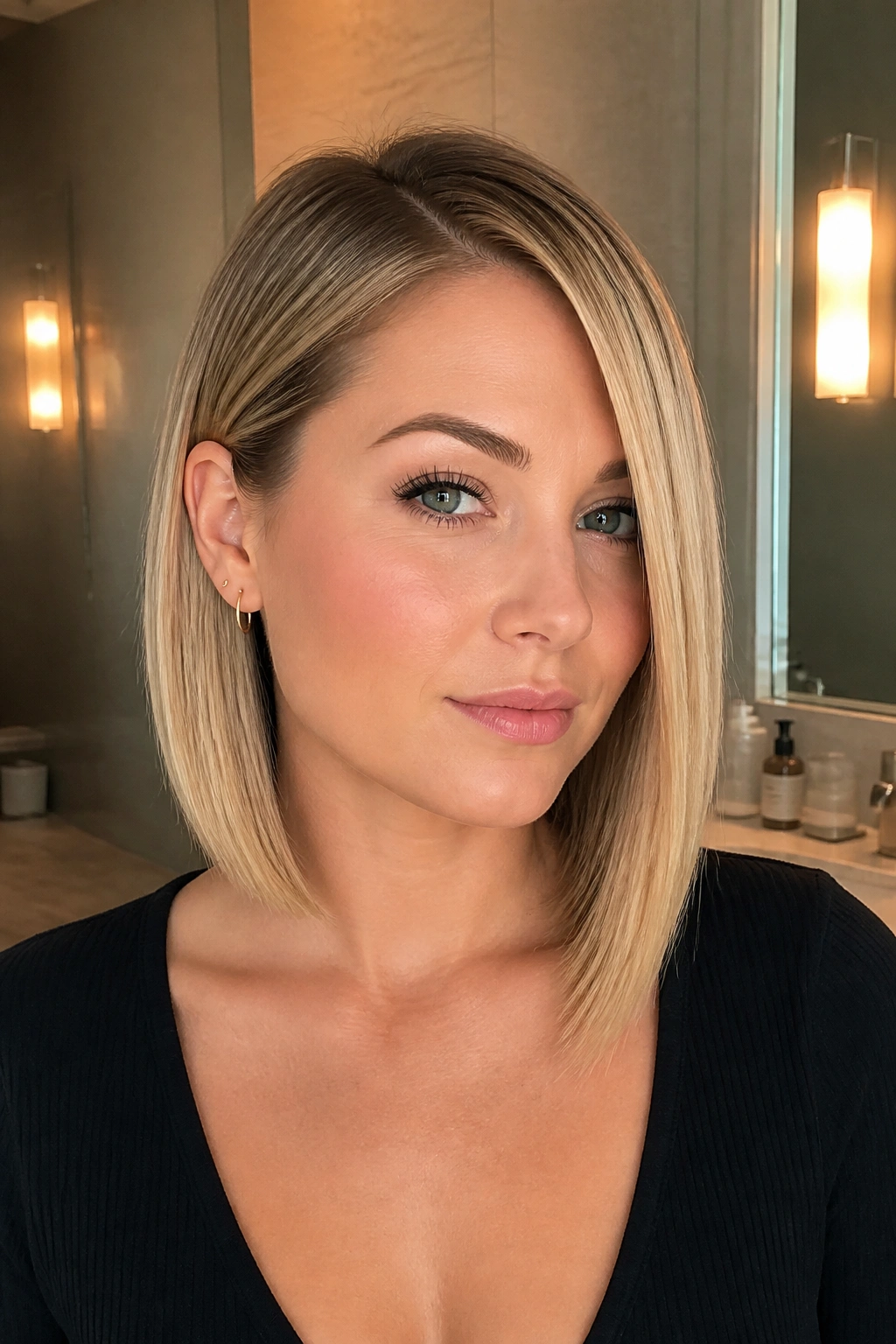
A sharp angle can do more for a round face than a lot of extra layers ever will. This lob is shorter in the back, longer in the front, and the best version has enough length to tuck one side behind the ear without losing the shape. That tucked side creates a clean vertical line. Clean lines matter.
The cut should not be dramatic to the point of feeling retro or obvious. A gentle angle is enough. Keep the front pieces below the chin and let them skim the collarbone when they fall straight. In blonde hair, that diagonal shape looks even clearer because the light catches the edge.
A little root shadow helps here. So does a smooth finish. If the angle is hidden under a lot of beach texture, the whole point gets lost. This is a better cut for people who like a crisp outline and a neat daily routine.
7. Beach-Wave Lob With Loose Bend
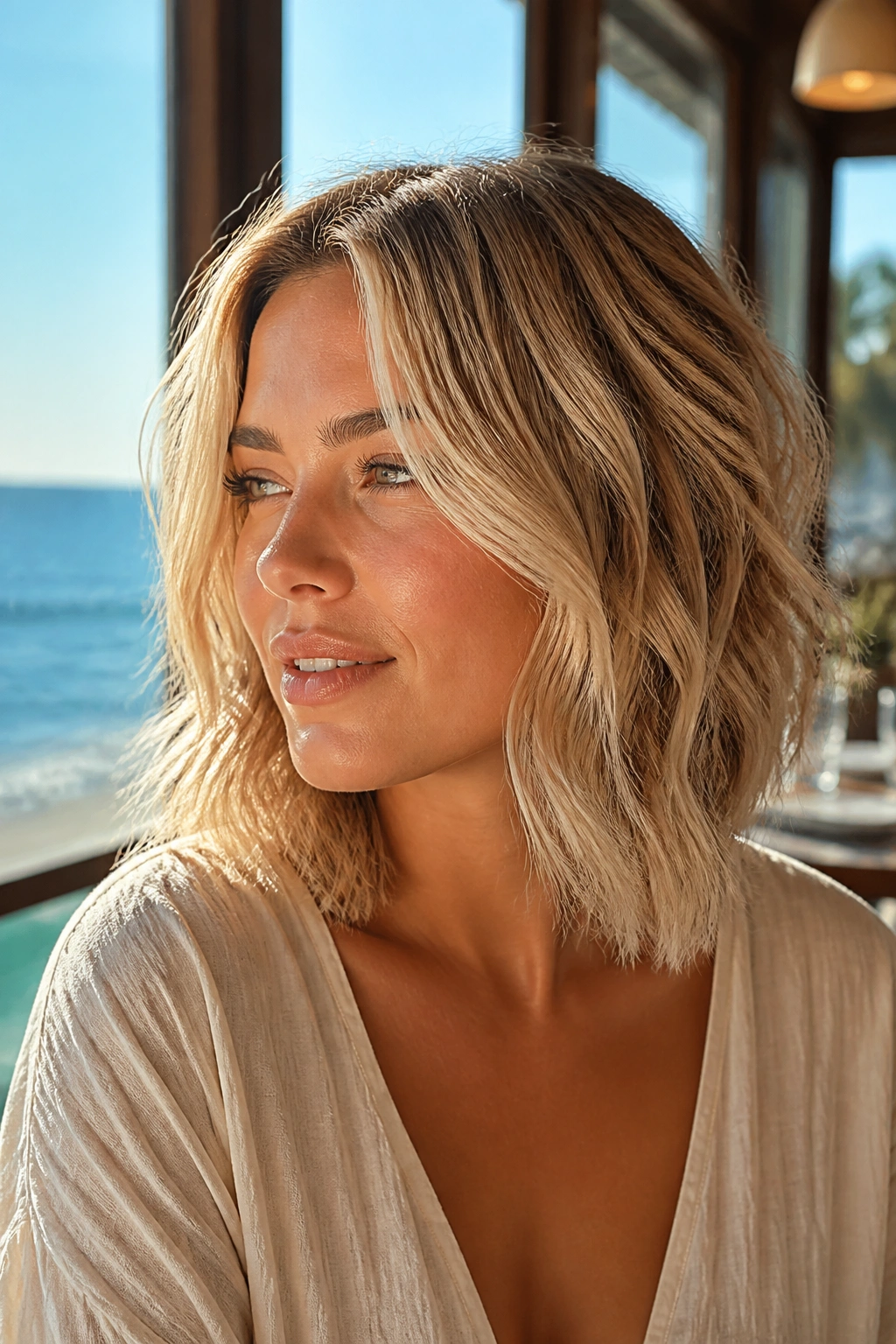
A beach-wave lob is one of the safer bets for a round face, but only if the waves stay loose. Tight curls widen the face. Loose bends drop the eye downward and keep the silhouette soft. That difference is bigger than people think.
The best version starts with a collarbone-length base and ends that are left almost straight. Wrap 1.25-inch sections around a curling iron, alternate the direction, then brush through once the hair cools. The waves should look like they happened by accident on the way to a very good lunch.
How to Keep It Flattering
The wave should begin below the cheekbone. That’s the rule I’d keep. If the texture starts too high, it fills out the sides. A round face needs movement that lives lower, not more width right next to the cheeks.
A sandy blonde or soft beige blonde works well because it shows the wave pattern without making the hair look striped. If your hair is fine, use a light mousse at the roots and a dry texture spray at the mid-lengths. Heavy cream will flatten the whole thing.
Short version: loose, low, and a little messy. That’s the sweet spot.
8. Inverted Lob With Longer Front Pieces
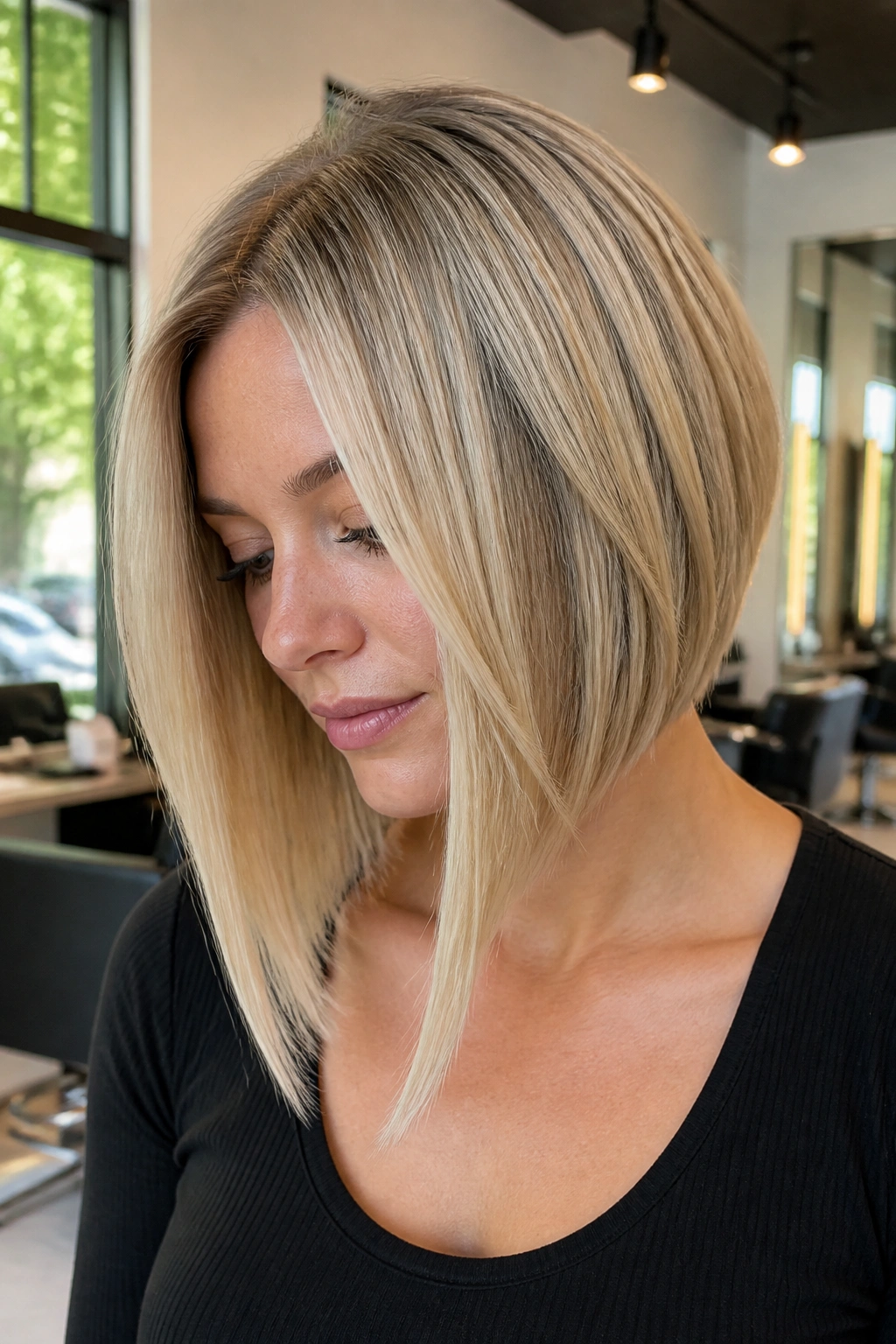
The inverted lob gives you shape without feeling stiff. The back sits a touch higher, the front hangs longer, and that front length acts like a frame that pulls the face down. Round faces usually do well with that kind of forward movement.
The front pieces should be the star here. If the angle is too steep, it starts to look dated. Keep the drop gentle, and let the front rest near the collarbone. In blonde hair, the contrast between the shorter back and longer front shows up nicely, especially with a soft root melt.
This cut is a good match for straight or slightly wavy textures. Very curly hair can lose the angle unless the cut is adjusted carefully. If you wear glasses, this shape can be especially nice because the longer front pieces sit around the frames instead of crowding them.
A small note: don’t load the crown with volume. You want lift, not height for the sake of height.
9. Wispy Fringe Lob
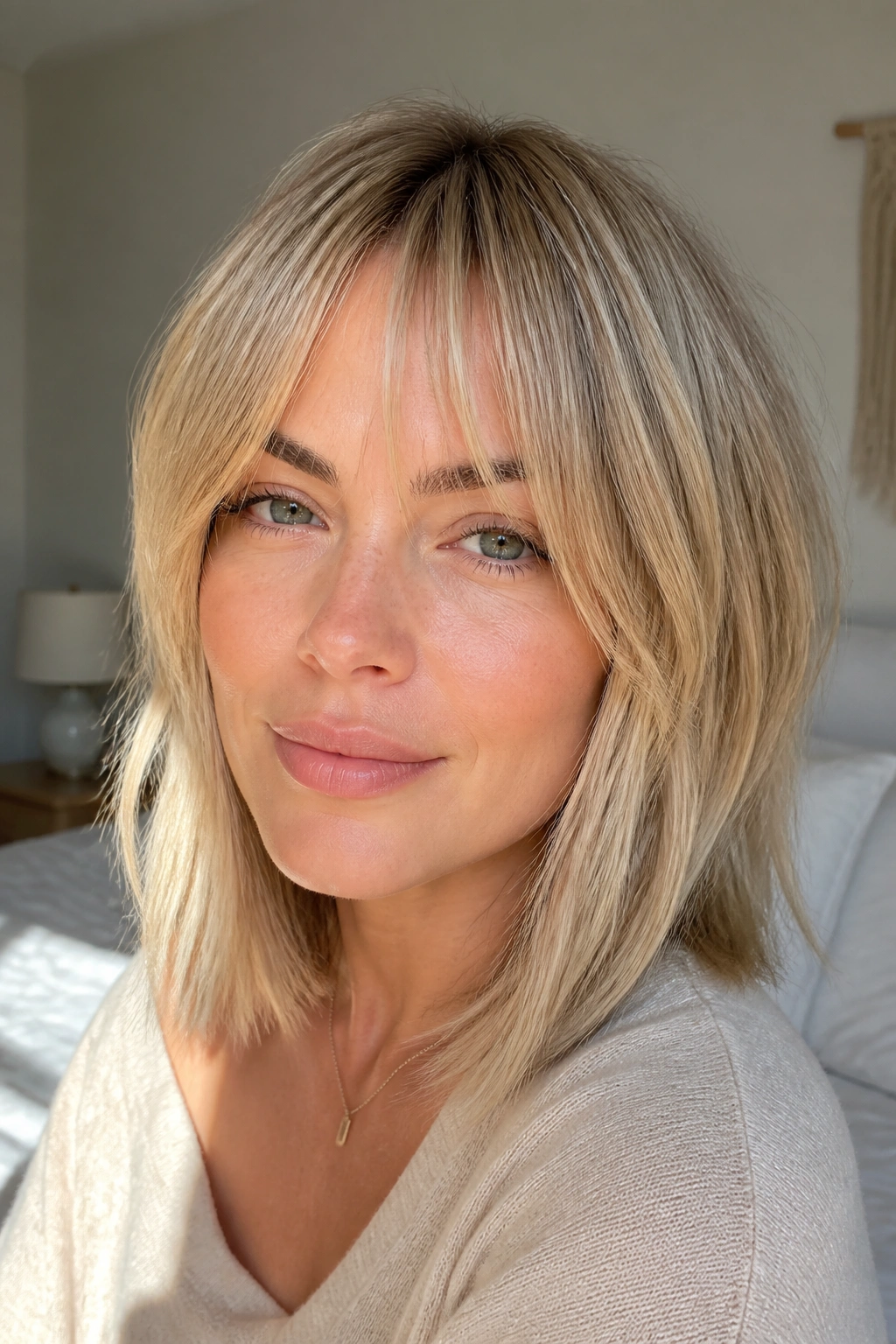
A wispy fringe can be a smart move if you want something lighter than full bangs. On a round face, too much fringe can close the forehead and make the face feel shorter. Wispy fringe does the opposite. It gives just enough coverage to soften the top of the face while keeping the middle open.
What Makes It Different
The strands should be sparse enough that you can see forehead peeking through. That transparency is the whole point. Cut the fringe longer in the center if you want it to blend into curtain-bang territory, or keep it feather-light across the brow if you want a softer, more casual look.
A pale blonde with darker roots works especially well here. The fringe sits on a slightly deeper base, which keeps it from disappearing into the rest of the hair. That contrast helps the eye read the shape.
- Best for fine to medium hair
- Needs a quick trim every 4 to 6 weeks
- Works better with a light bend than a heavy blowout
- Avoid dense, straight fringe lines
If your forehead is wider than your chin, this can be a nice balancing trick. Quiet, not loud.
10. Rooted Blonde Lob With a Shadow Root
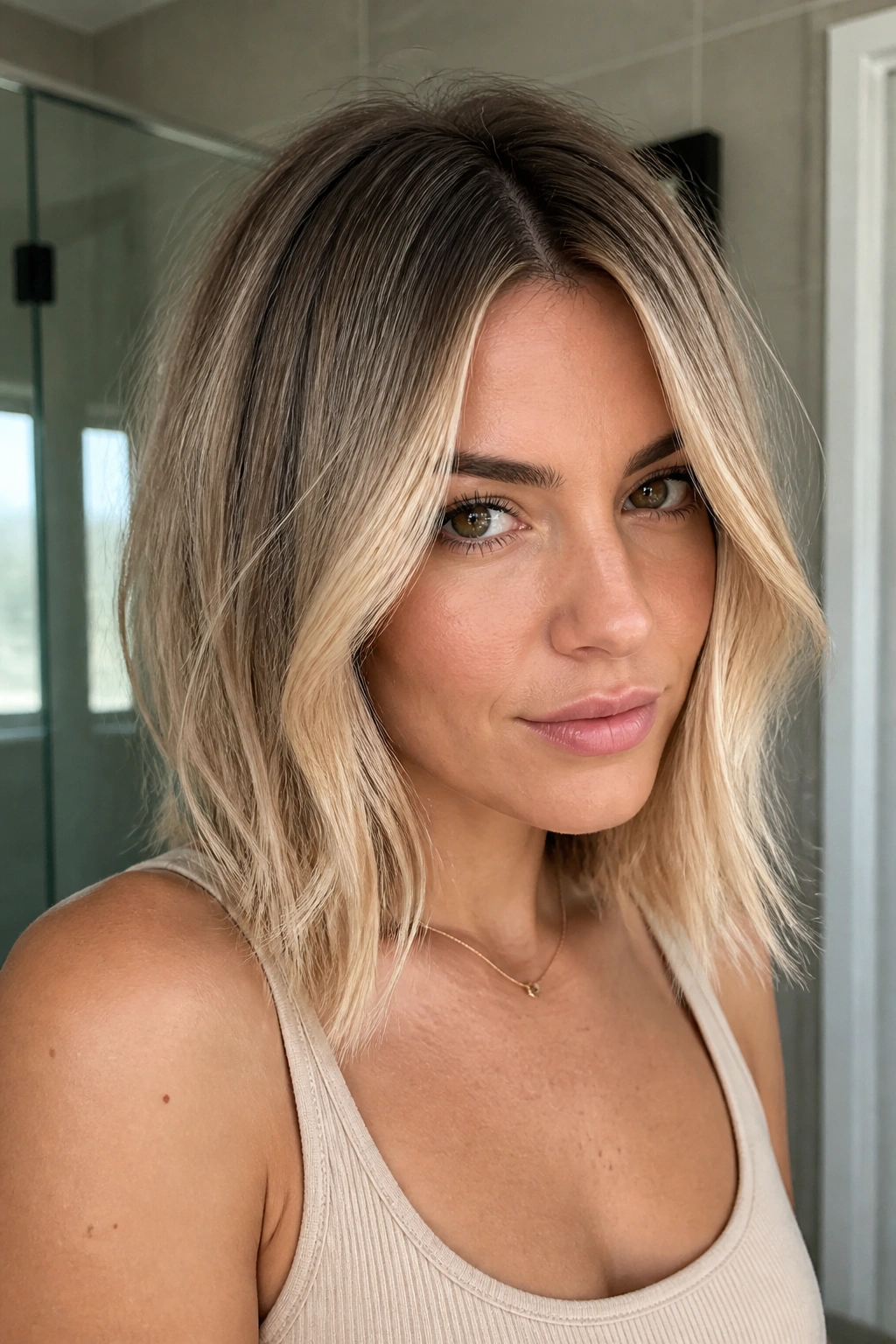
A shadow root does a lot of work in a blonde lob. It gives the cut depth at the scalp, and that depth keeps the blonde from turning into one bright block that sits too evenly around the head. On a round face, that kind of tonal contrast helps the cut look slimmer and less boxy.
The root should blend down about 1 to 2 inches, sometimes a little more if the blonde is very light. The transition matters more than the exact shade. A soft root melt into creamy blonde, beige blonde, or pale caramel-blonde can make the perimeter feel lighter without making the whole head look flat.
Best Blond Tones for This Shape
- Beige blonde for softness
- Honey blonde for warmth and depth
- Champagne blonde if you want brightness without harsh contrast
- Soft ash blonde if your skin tone likes cooler tones
This is not the cut for someone who wants one solid, high-maintenance blonde sheet. It’s better when the color has some dimmer roots and a bit of lived-in texture. The haircut looks richer that way, and the face looks a little longer too.
11. Sleek Glass-Hair Lob

A sleek glass-hair lob sounds sharp because it is sharp. And yes, a round face can wear it well. The idea is to create one clean vertical line that starts near the part and falls past the jaw without much interruption. When the hair is straight, shiny, and controlled, it can actually make a round face look more sculpted.
The ends should be blunt or just slightly beveled under. Keep them below the chin. A middle part works if your face has some length already; a very subtle off-center part is safer if you want a touch more softness. Either way, the finish has to be smooth.
This style needs frizz control. A little smoothing cream, a flat iron set to the right heat for your hair type, and a final pass with a serum at the ends are enough. Don’t overload it. Too much product turns sleek into greasy.
Not everyone wants this level of polish. Fine. But if you like a neat, modern shape, this is one of the strongest options.
12. Choppy Lob With Razored Ends
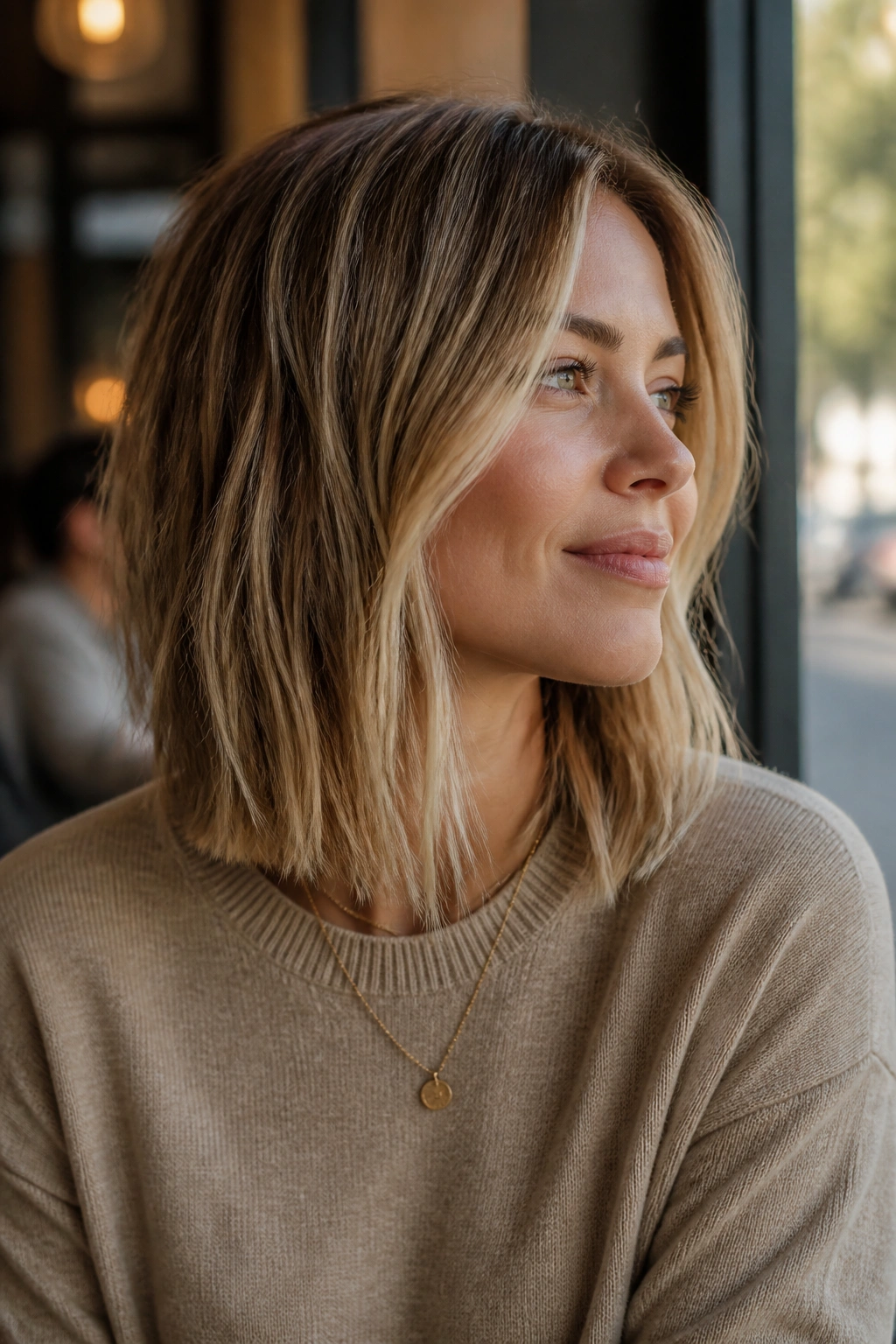
This one breaks up width fast. The razored ends take the edge off a solid bob line, which helps if your hair is thick or naturally expands at the sides. A round face benefits when the cut feels light at the perimeter instead of heavy and wide.
The key is restraint. Too much razor work and the ends get wispy in a bad way, especially on dry or damaged hair. A controlled chop through the ends is enough. Keep the shape long enough to skim the collarbone, and let the texture live mostly in the bottom half of the cut.
What to Watch For
- Best on healthy, medium-to-thick hair
- Avoid if your ends split easily
- Use a hydrating mask once a week
- Style with a cream, not a crunchy mousse
A warm blonde with slightly darker lowlights can make the razored bits show up more clearly. The cut gets movement, and the face gets less width. That’s the whole exchange.
13. Lob With Internal Layers
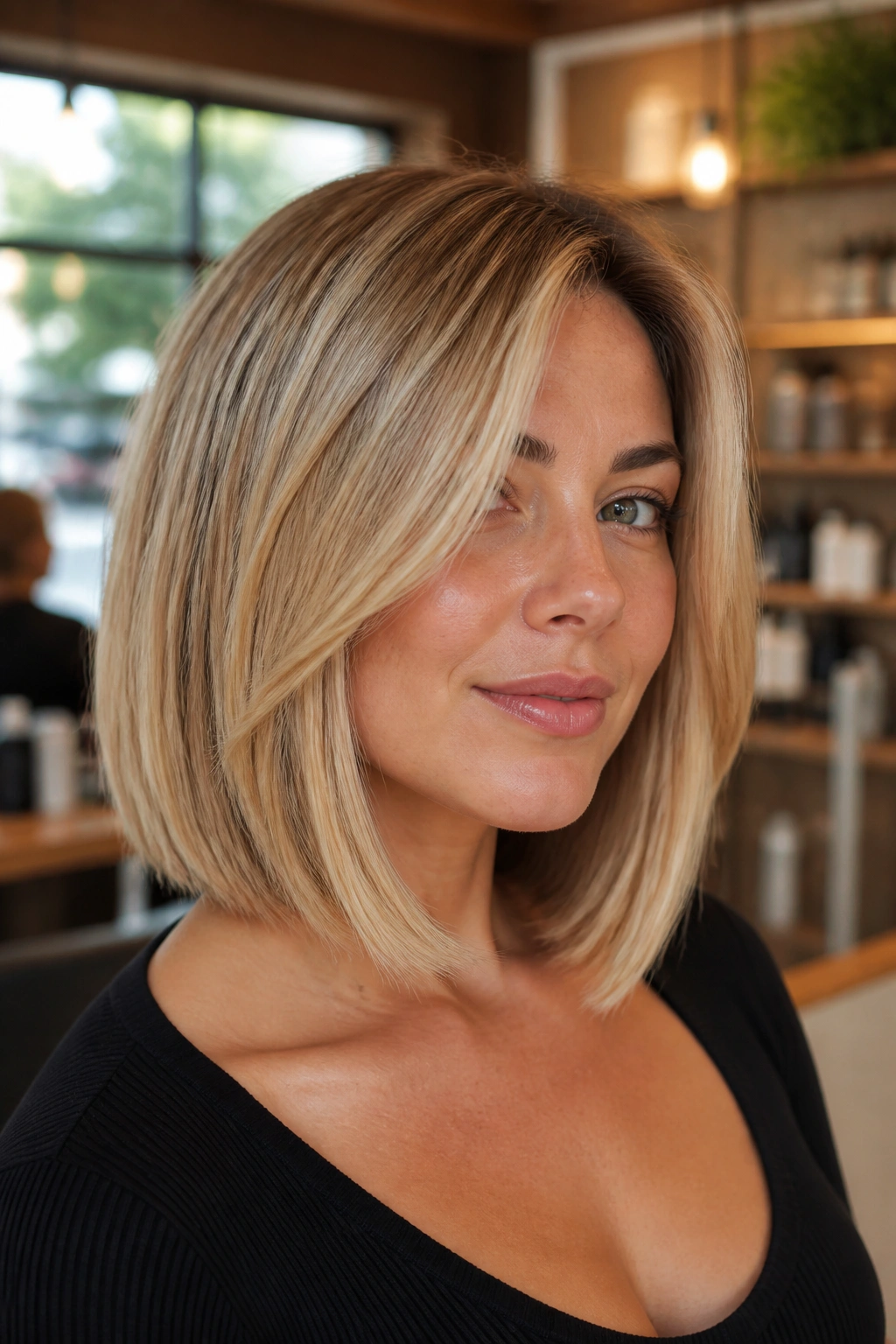
Why keep the outside blunt if you can hide the weight inside? Internal layers are the quiet answer. They remove bulk from within the haircut while leaving the outer line mostly intact, which is useful for round faces because the perimeter still reads long and clean.
This is one of the better options for thick hair. You get movement without a lot of visible choppiness. The outer shape can stay straight and polished, while the inside does the real work of making the hair fall better. It’s a very good trick when you want a blonde lob that does not look “layered” in the obvious way.
How to Get the Right Cut
Ask your stylist to keep the visible outline blunt, then build movement inside the cut with two or three hidden layers. The shortest internal layer should sit below the cheekbone, not above it. That matters. If the movement starts too high, the face can widen.
This is a smart haircut for anyone who wants a smooth daily routine. It grows out gracefully, too. No drama. Just a good line.
14. Feathered Lob With Crown Volume
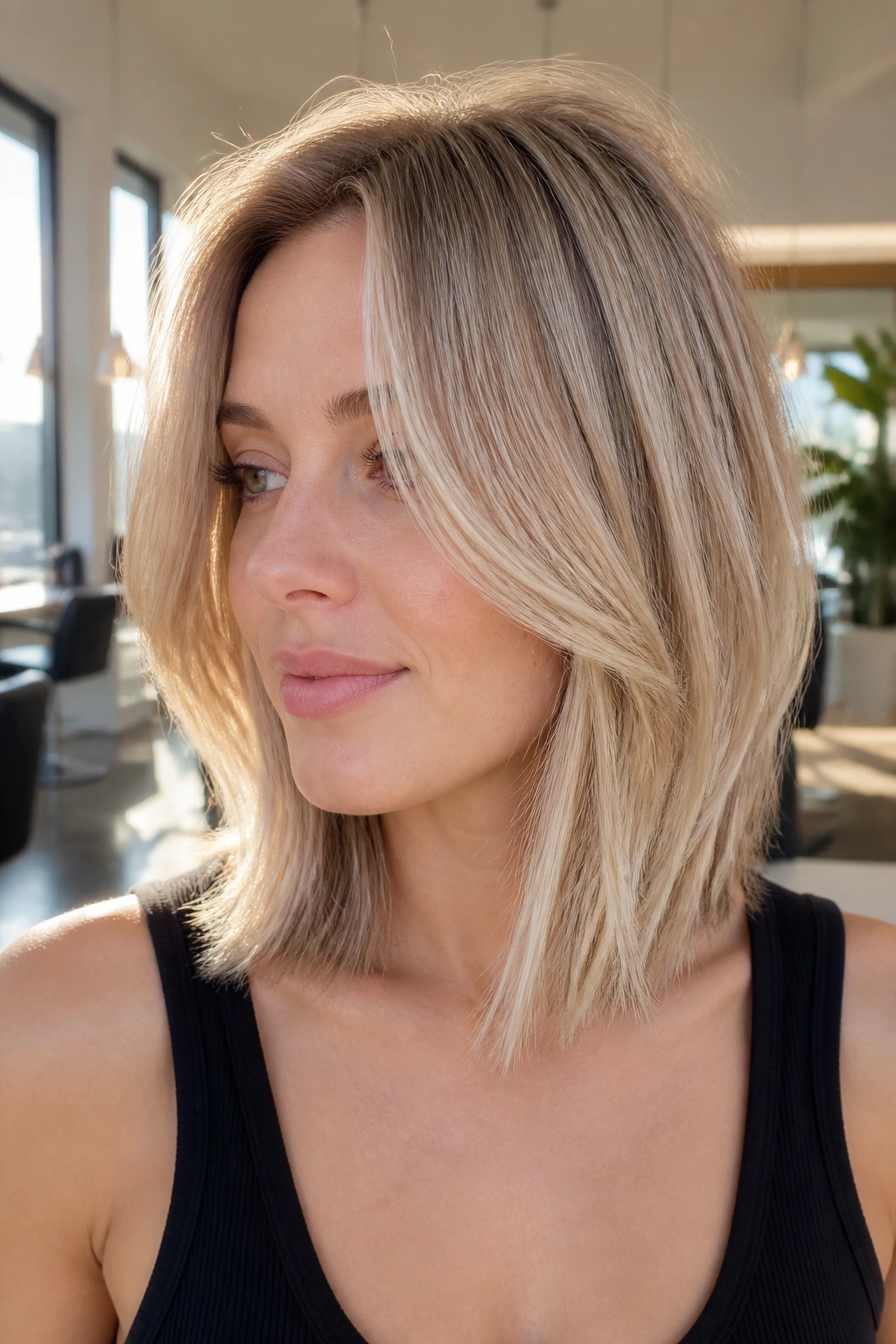
A little lift at the crown can do more than extra width at the sides, and that’s the whole reason this cut works on a round face. Feathering the top creates height where the eye can travel upward, which lengthens the face in a way that feels natural.
The layers should be soft and brushed away from the face, not stacked on top of each other. Keep the ends light. You want the crown to breathe while the lower half keeps enough length to stay flattering. A feathered blonde lob also plays well with lighter highlights around the top because the color catches the movement and keeps the cut from going flat.
This shape looks best when styled with a round brush or a root-lifting blow-dry spray. Concentrate the lift at the roots near the part and crown, then let the rest fall smooth. Too much side volume will undo the effect.
If your hair lies flat at the top, this is a useful fix. Small adjustment. Big difference.
15. Bottleneck Bang Lob
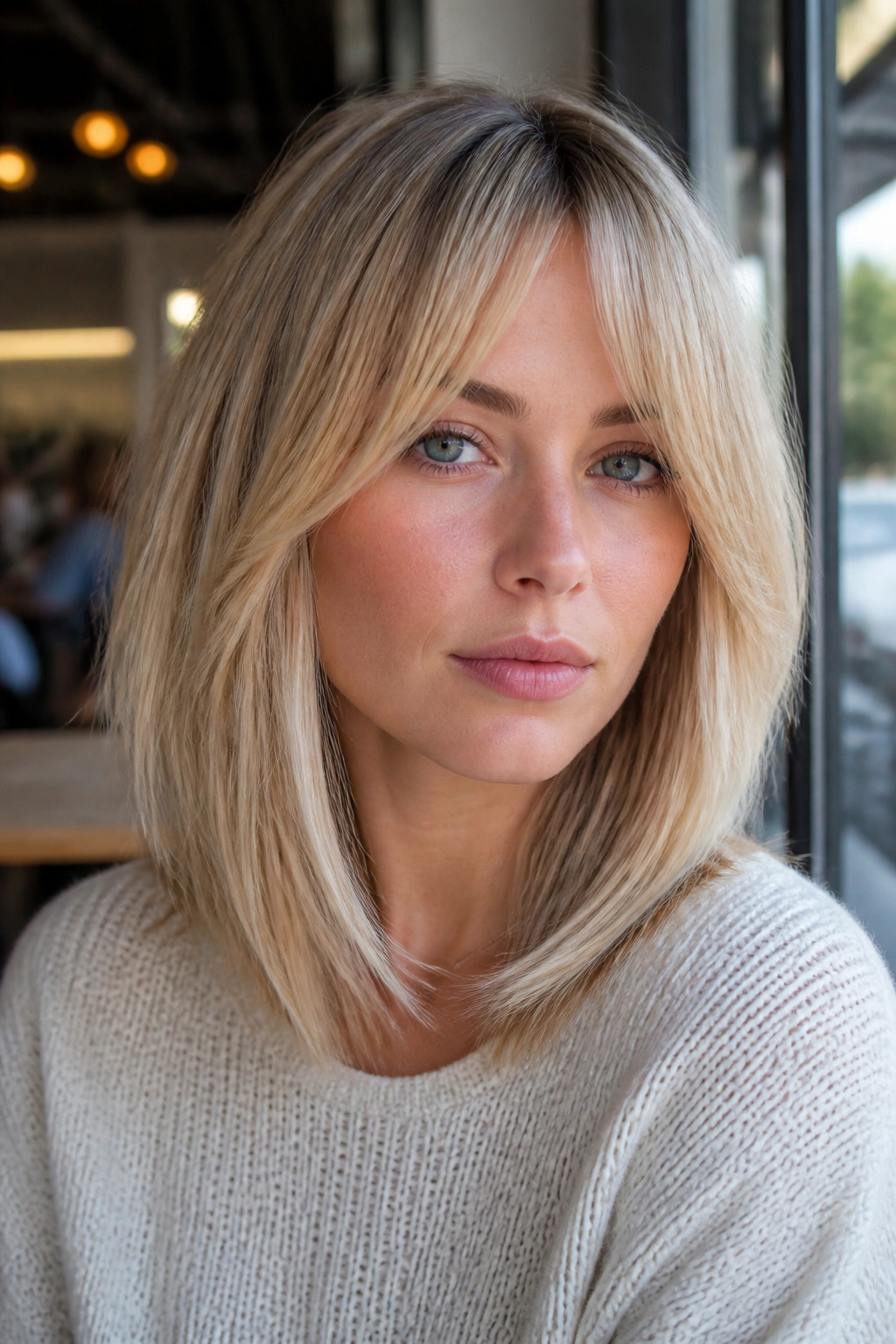
Bottleneck bangs are a smart middle ground between curtain bangs and full fringe. They start narrow at the center, then widen as they taper toward the cheekbones. On a round face, that shape helps create a longer center line while softening the sides.
How They Differ From Curtain Bangs
Curtain bangs usually part more openly and can blend faster into the rest of the hair. Bottleneck bangs feel a little more structured. They’re shorter in the middle, longer at the edges, and that edge length can skim the cheekbone in a flattering way. The result is subtle, but the balance is good.
This cut works especially well with a long blonde bob that lands below the jaw. If the bob is too short, the bangs can take over. If the lob has enough length, the whole thing feels intentional and easy to wear.
Best styling habit: dry the center first, then bend the sides away from the face with a small round brush. That keeps the fringe from collapsing into one flat piece.
It’s a lovely option if you want something softer than blunt bangs but a little more defined than curtain fringe.
16. Air-Dried Natural Wave Lob
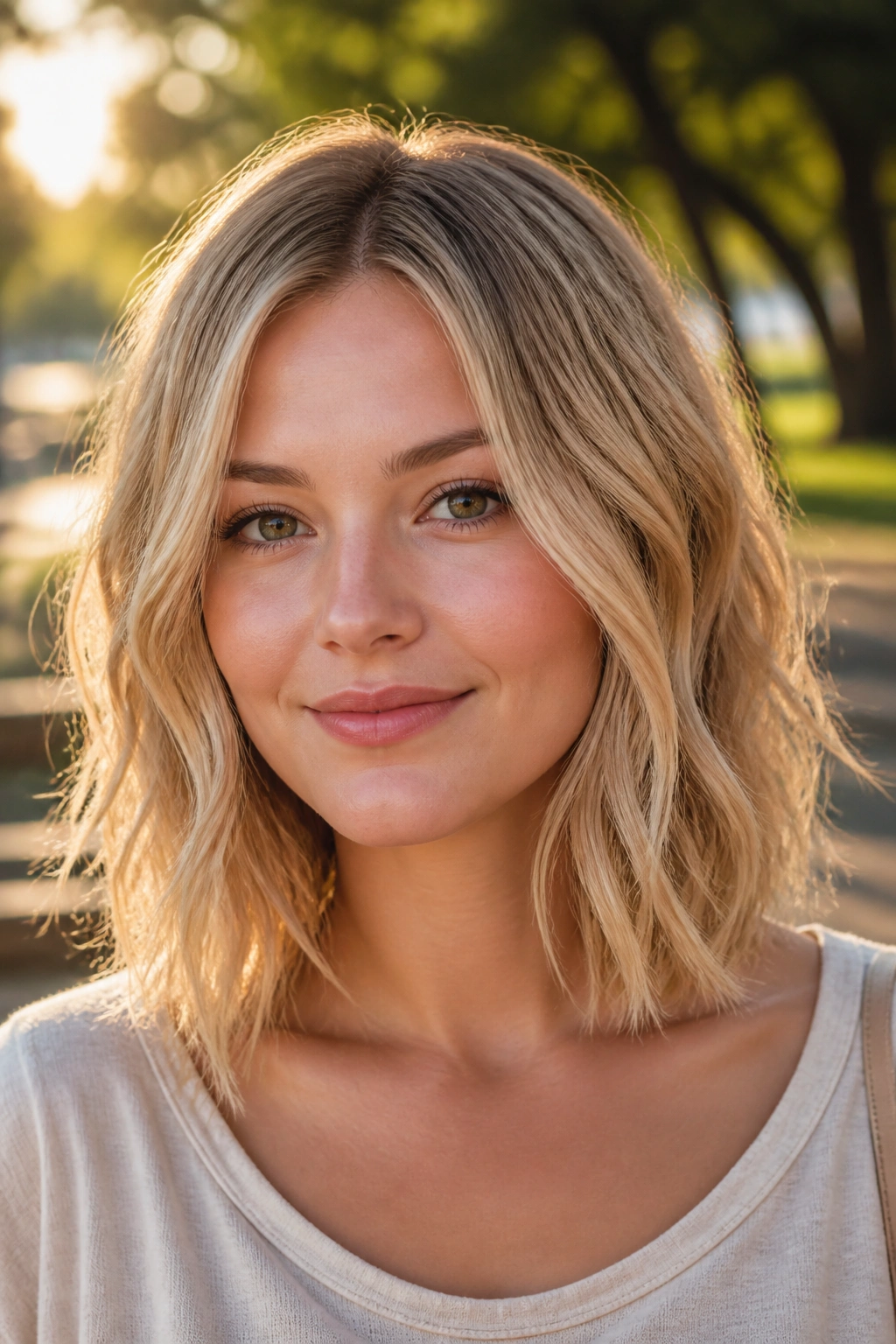
If your hair already bends on its own, don’t force it into a sharp, overstyled shape. An air-dried natural wave lob can be one of the nicest choices for a round face because it keeps movement low and loose while letting the front pieces fall long. That long front line is the part that matters.
The cut should still be thoughtful. Keep the base collarbone length or just below it. Add a few soft layers, but not so many that the shape turns into a puff. The blonde tone can stay dimensional and lived-in, which helps the wave pattern show without looking busy.
Use a leave-in conditioner, scrunch gently, and stop touching it while it dries. Seriously. Touching it too much breaks up the wave and makes the sides expand. A tiny amount of curl cream can help, but heavy products tend to drag down the shape.
This is the kind of lob that looks better when it’s been worn a few hours. A little imperfect. Very useful.
17. Shoulder-Grazing Lob With Flipped-Out Ends
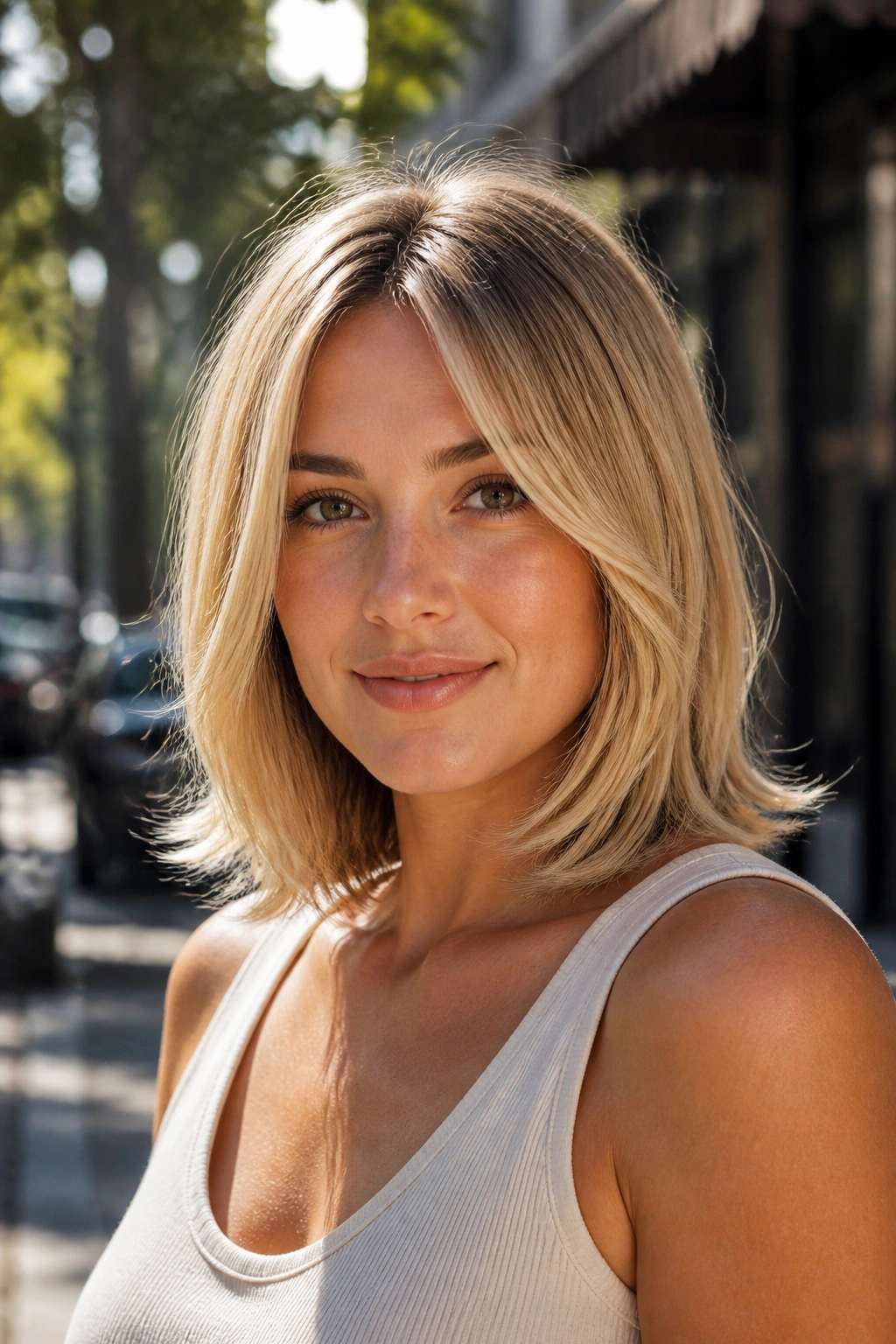
Flipped-out ends sound retro, and they can be, but on a round face the move is more practical than nostalgic. The outward flick at the ends pulls attention away from the cheeks and shifts it toward the lower edge of the haircut. That helps the face look longer, especially when the flip stays close to the hem of the cut.
The best version lands right around the shoulders or just below them. Keep the flip small. One to two inches of movement at the ends is enough. If the entire head turns outward, the style gets too wide and starts fighting the face shape.
A buttery blonde with soft highlights shows the curve of the flip well. If your hair is fine, use a round brush and a light heat protectant. If it’s thick, a flat iron can create the bend faster, but only on the last inch or so.
Not every day needs a sleek finish. Some mornings call for a little swing.
18. Deep Side-Swept Lob With Long Bangs
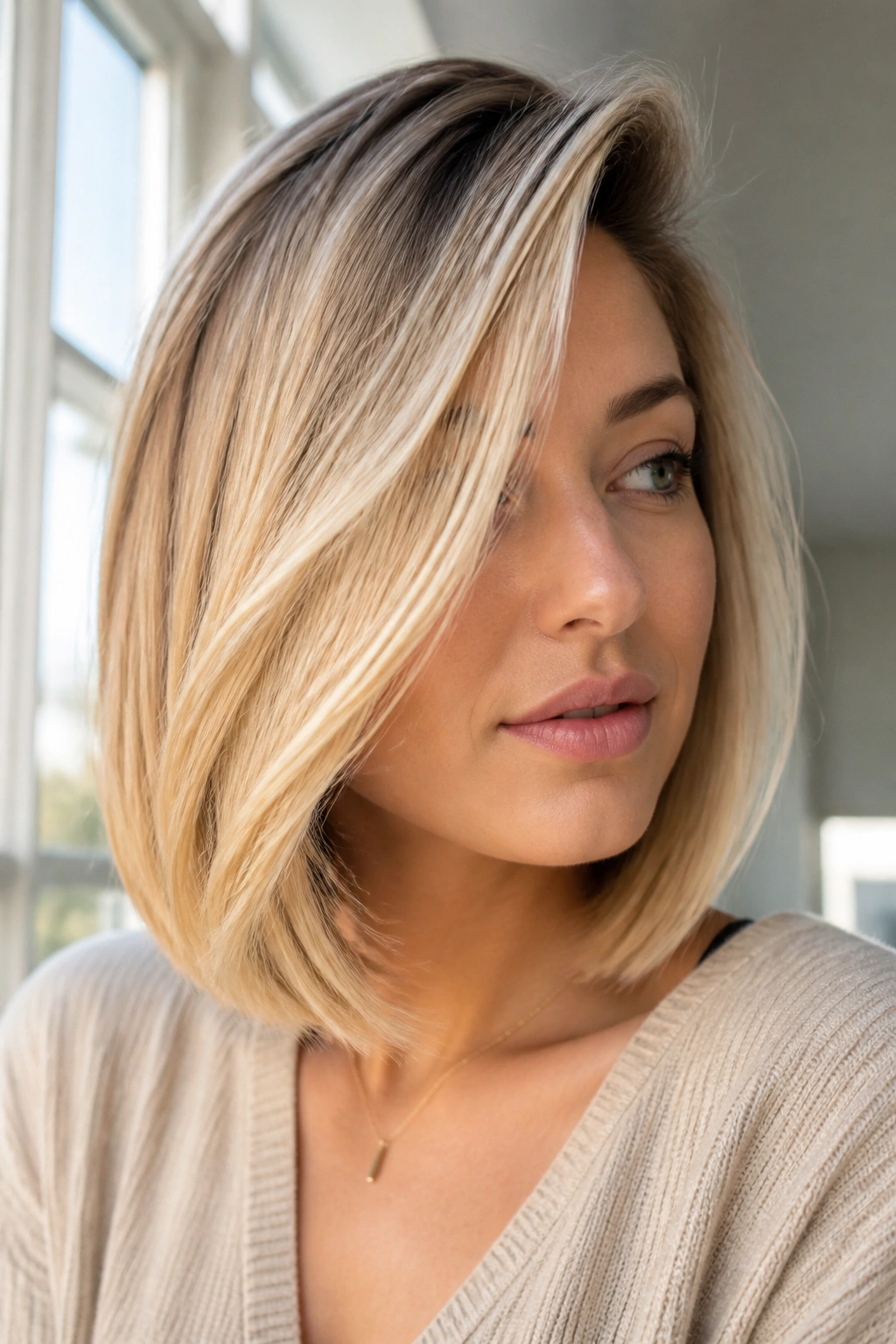
A deep side part can rescue a cut that feels too even across the face. On round faces, that asymmetry is gold. It breaks up the width and gives the front pieces somewhere to fall without crowding the cheeks. Long side bangs keep the forehead open enough while still giving softness.
The Part Does Half the Work
Place the part a little farther over than you usually would, then keep the longest bang piece grazing the cheekbone or jaw. That angle creates movement in one direction, which reads longer and leaner. The rest of the hair can stay sleek or slightly wavy, as long as the front does not puff out.
- Good for finer hair that needs direction
- Nice with a tucked side for shape
- Best when bangs are soft, not thick
- Keep the bang length below the brow if you want easy blending
This is one of the better options if you want a change without committing to full fringe. It’s flexible. Clip it back when you want, sweep it over when you don’t.
19. Dimensional Highlighted Lob
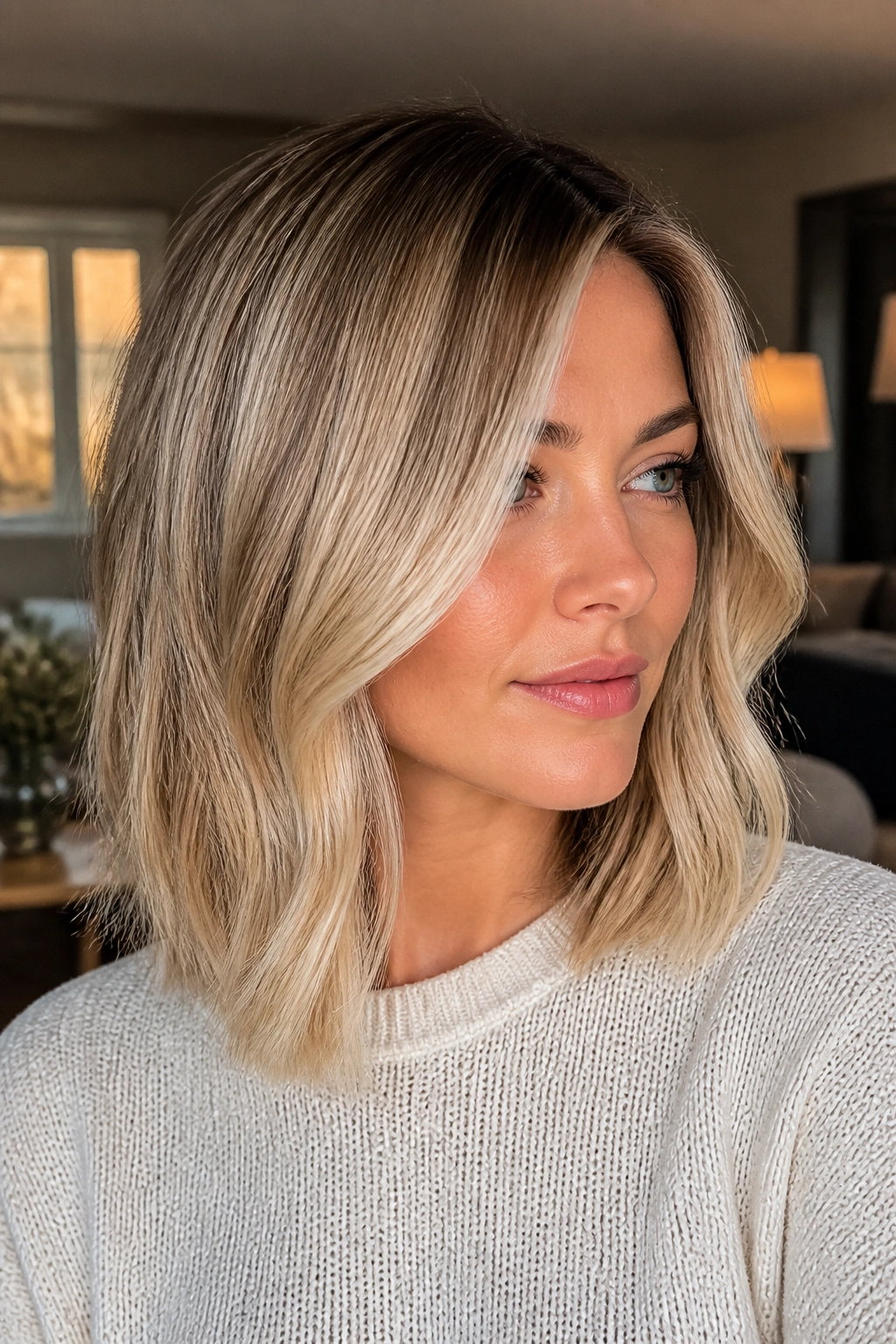
This one is about color as much as cut. Dimensional highlights can make a long blonde bob feel slimmer because the eye reads light and shadow as depth, not width. A single flat blonde can look wide. A mix of ribbons, babylights, and a few brighter strands around the lower front pieces creates movement that helps a round face.
The cut itself should stay long and slightly layered, but the placement of the highlights does a lot. Brighten the front pieces below the cheekbone, keep some darker depth near the root, and avoid a heavy halo of brightness right at the widest part of the face. That’s where people go wrong.
A buttery highlight through the lower half of the hair looks especially good when the bob is waved or softly bent. The contrast makes the ends feel lighter and the face feel longer. If your skin tone likes warmer blonde, honey and beige ribbons are easy to wear. Cooler blondes can work too, but they need enough depth at the root to avoid a washed-out look.
This is the cut for anyone who wants the hair color to pull some weight.
20. Soft-Edge Rounded Lob
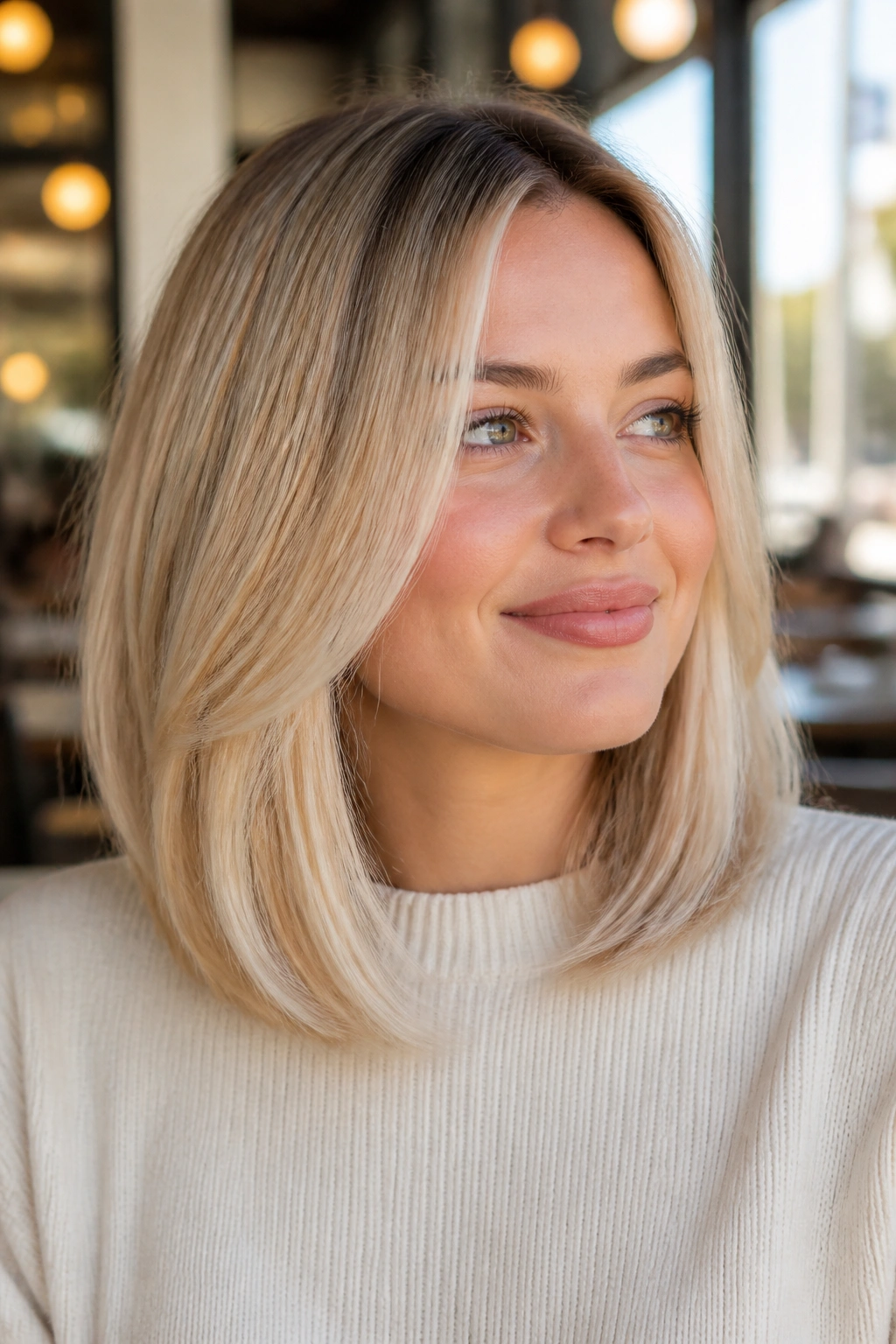
A soft-edge rounded lob is the gentlest shape on this list, and that’s exactly why it belongs here. The hem curves slightly under instead of ending in a hard straight line, which keeps the haircut from feeling boxy on a round face. It gives shape without shouting about it.
Ask for the length to sit just below the collarbone, then keep the layers minimal and soft around the front. The trick is not to let the widest part of the cut sit at cheek level. The front pieces should drop lower, even if only by an inch or two. That tiny difference changes the whole read.
This style is good if you want something easy to grow out. It works straight, waved, tucked, clipped, or worn with a clean side part. A creamy blonde or soft beige blonde keeps the edges light, and the rounded shape stops the cut from feeling severe.
If you want one long blonde bob that can move between polished and casual without fighting your face shape, this is the quiet winner.
