



Fine hair does not need more noise. It needs shape.
That’s why burgundy bob haircuts for fine hair work so well when the cut is doing the heavy lifting and the color is doing the rest. Burgundy has depth, so the hair reads richer and denser from a distance. The bob keeps the weight where it matters. Too many layers can make the ends look see-through; too much length can make the whole thing collapse by lunchtime. The sweet spot is a clean line, smart movement, and a shade that has enough depth to keep the style from looking washed out.
There’s also a small detail people miss: burgundy doesn’t behave like a flat brown or a bright copper. It shows shine fast. If the cut is blunt and the styling is tidy, the finish looks lush. If the ends are shredded or the layers are too aggressive, the color can expose every weak spot. Ugly truth, but useful truth.
So the trick is not “more volume” in the vague salon-poster sense. It’s choosing a bob shape that makes fine hair look full without asking it to become something it isn’t. Some cuts build density at the ends. Some make the crown look lifted. Some fake body with a little curve, a little parting change, or a fringe that gives the front of the head more presence. The differences are small on paper. In the mirror, they are not.
1. A Blunt Burgundy Chin Bob
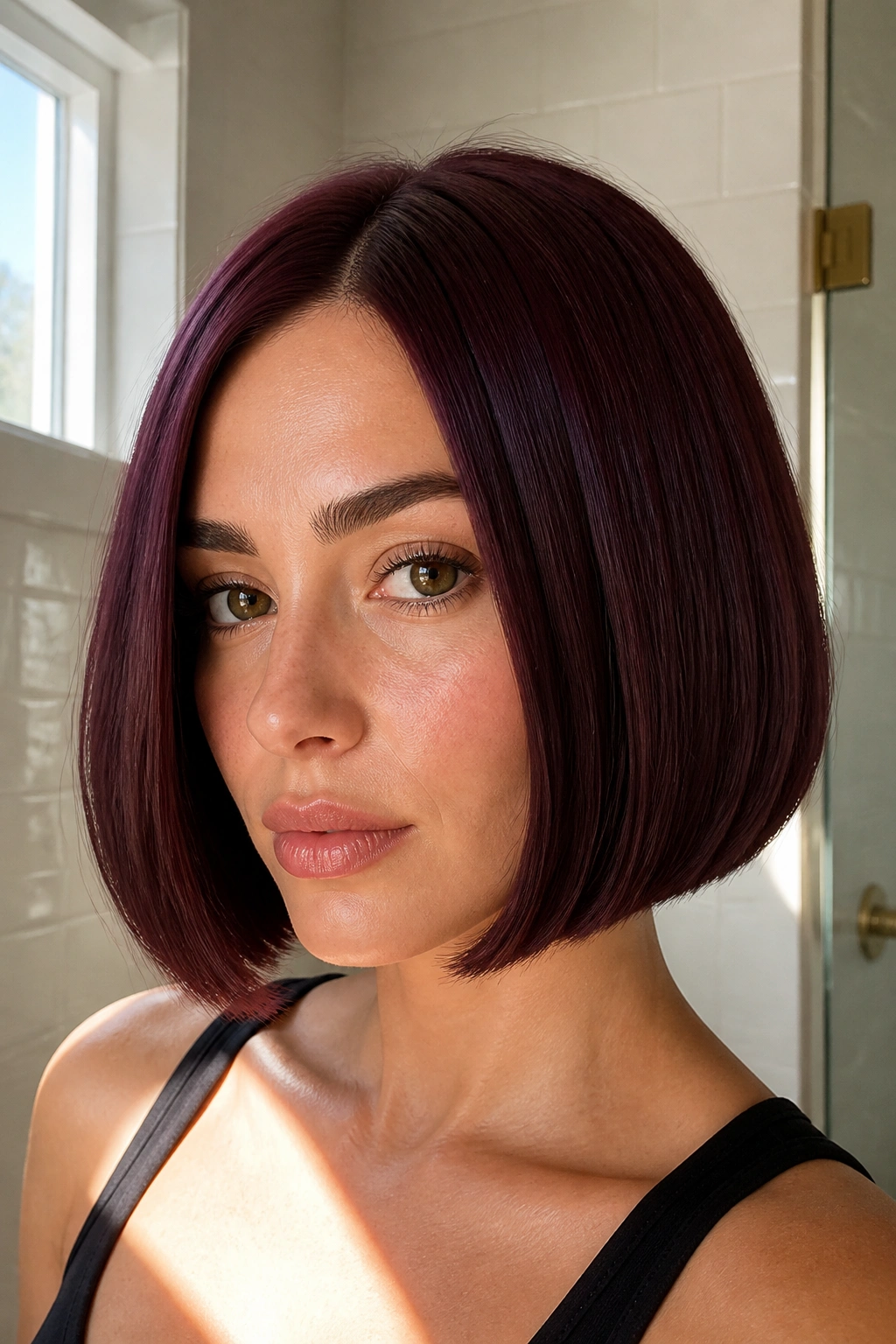
A blunt chin-length bob is one of the easiest ways to make fine hair look thicker without any fuss. The clean edge gives the eye a solid line to follow, so the ends read fuller than they would in a soft, layered cut. Burgundy suits this shape because the shade has enough depth to make the outline look crisp.
What I like here is how little the cut has to do once it’s in place. A smooth blow-dry, a little bend under the ends, and you’re done. Fine hair often loses its fight once it gets too long, but at the chin, it keeps some attitude.
What to ask for at the salon
- Cut the length so it lands right at the chin or just below it.
- Keep the perimeter blunt, not wispy.
- Ask for only a soft bevel at the ends if you want movement.
- Skip heavy thinning shears near the bottom edge.
Best for: hair that feels limp when it gets past the jaw.
2. The Micro Burgundy Bob That Makes Ends Look Dense
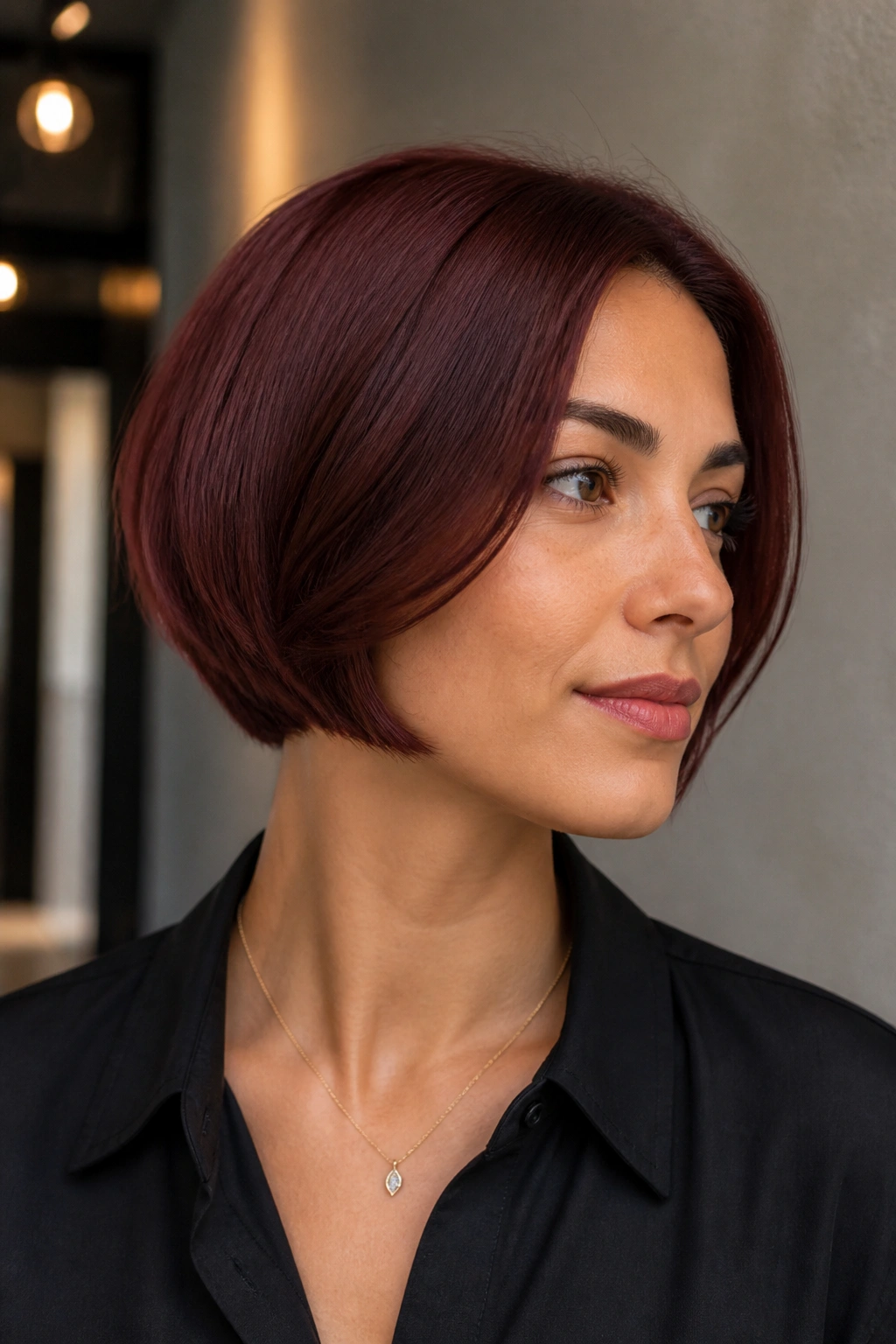
Why does a shorter bob often look fuller? Because there’s less length pulling the shape downward.
A micro bob — the kind that sits between the ear and jaw — can be a sharp move for very fine hair if you want the cut to look intentional and a little modern. The short length creates lift on its own, and burgundy keeps the look from feeling too airy or delicate. It has a bit more visual weight, which helps a lot when the strands themselves are soft.
Why it works on fine hair
The trick is restraint. You do not want a choppy, over-textured finish here. You want a clean shell of hair with enough body to hold its shape. If the back is too thinned out, the whole cut can start to look moth-eaten. That’s not the goal.
How to wear it
- Blow-dry with a small round brush.
- Add a light root spray at the crown only.
- Keep the ends tucked under, not flipped out.
- Use a flat iron on the front pieces if they need a little polish.
3. A Burgundy Bob with a Deep Side Part
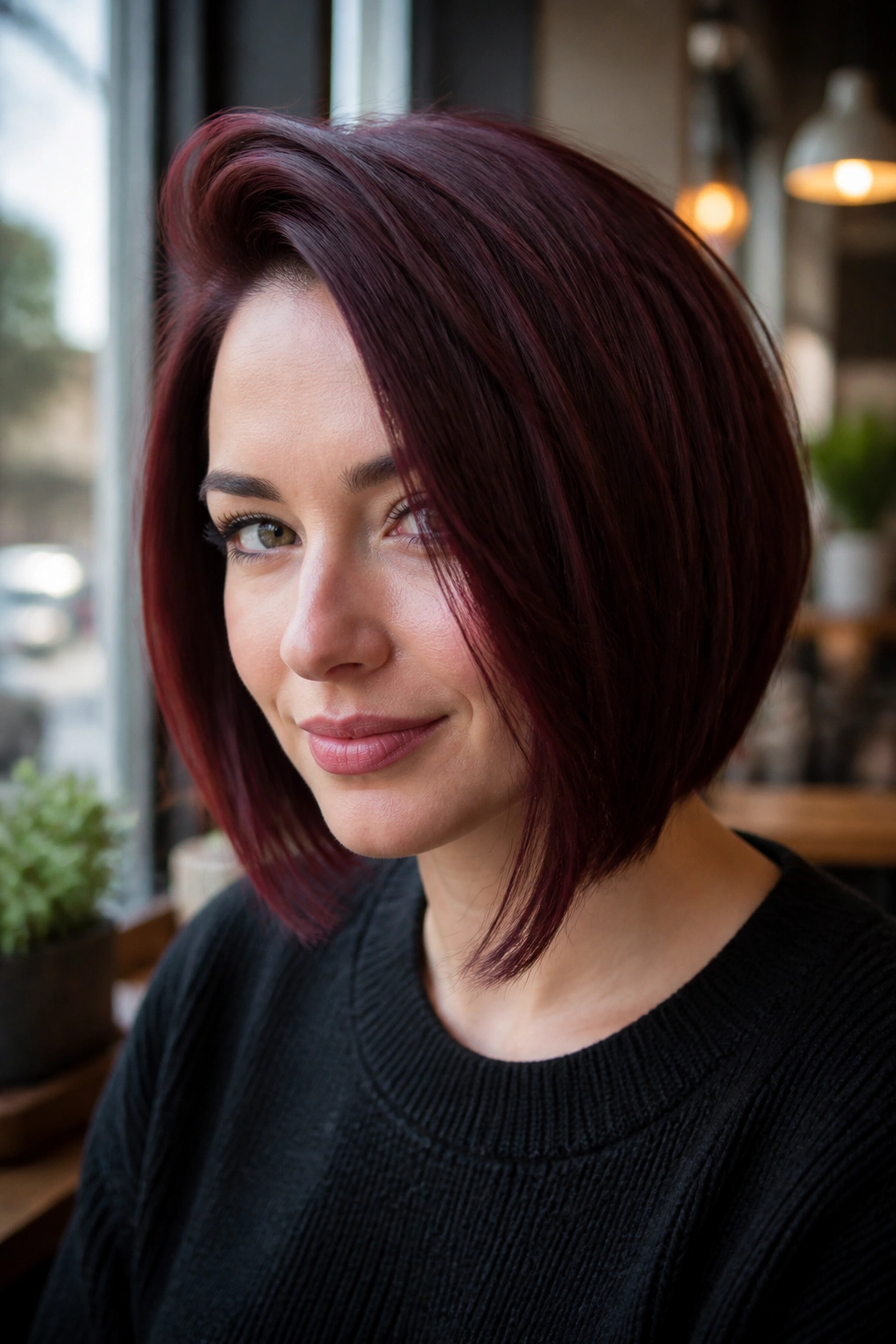
A side part can fake lift faster than most styling products. It shifts the weight of the hair and gives the crown a little rise, which is gold when your hair tends to flatten on top.
This shape works especially well if your fine hair looks flat at the roots but still has a decent amount of softness through the ends. Burgundy gives the cut some richness, while the side part breaks up the symmetry in a flattering way. It feels less severe than a center part and often looks fuller near the front.
A small detail matters here: keep the front pieces slightly longer than the rest, but only by a little. You want a gentle sweep across the cheekbone, not a dramatic face frame that gets stringy.
The best version of this cut looks easy from the outside and thoughtful underneath. That’s the whole point.
4. A Sleek Collarbone Burgundy Bob

A collarbone bob is the compromise cut for people who want length without losing too much density. It sits long enough to tuck behind the ears and short enough to avoid that sad, thin tail fine hair gets when it grows too far down the chest.
Straight burgundy hair with a sleek finish looks polished here because the length gives the color room to show. The shade catches light at the mid-lengths, and the bottom line stays neat. If your hair tends to lie flat, this cut is often better than a longer lob with lots of broken layers.
Styling notes
- Use a heat protectant with a light smoothing finish.
- Bend the ends under with a flat iron or round brush.
- Keep heavy oils away from the roots.
- A pea-sized amount of serum on the ends is enough.
This one is good if you want your bob to grow out gracefully. It does not scream for attention. It just looks expensive in a quiet way.
5. A Textured Burgundy Bob with Invisible Layers
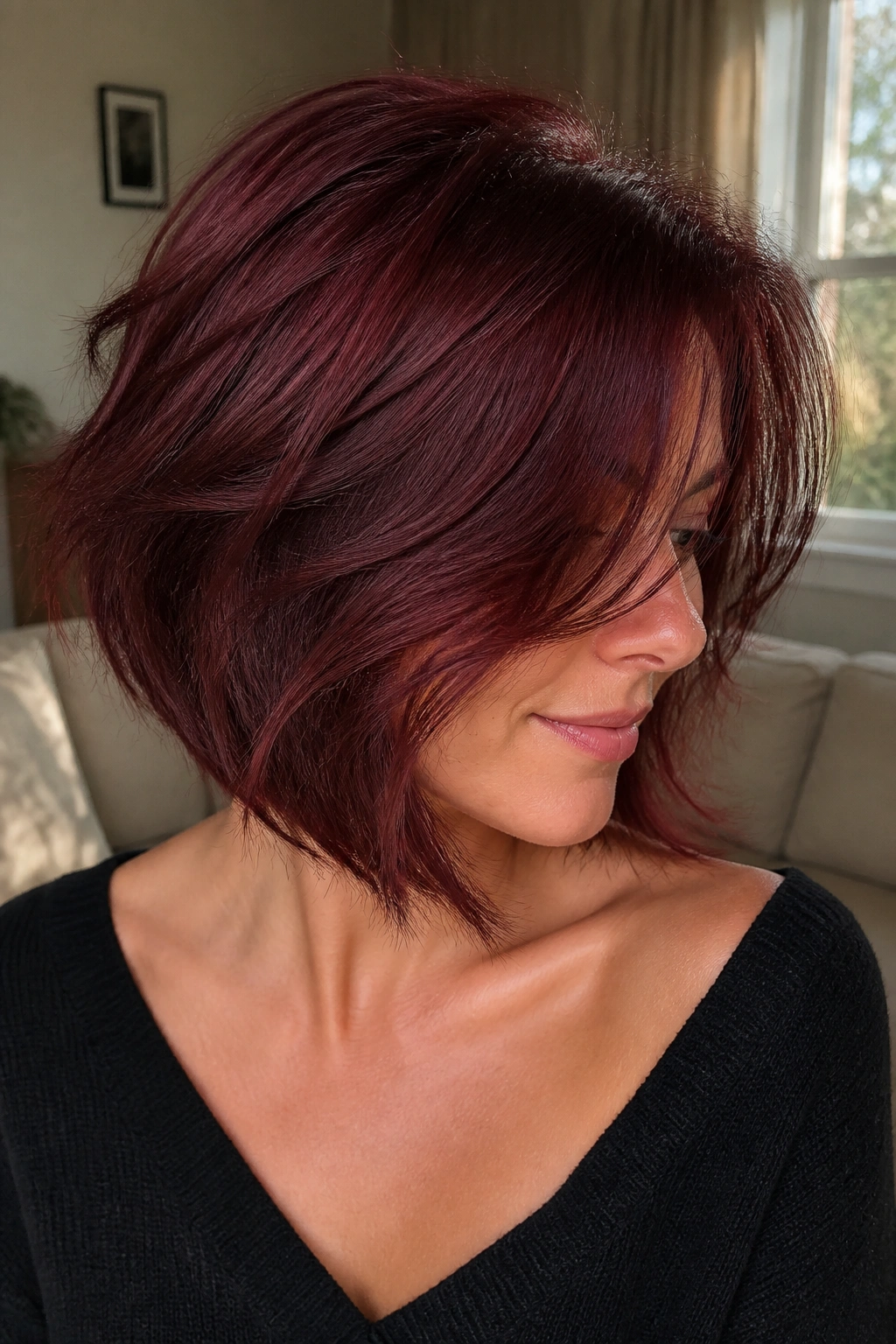
Some people hear “layers” and picture shredded ends. Not this.
Invisible layers are buried inside the shape, so the outline still looks full while the hair gets a little swing. On fine hair, that can be the difference between movement and a cut that looks broken. Burgundy gives the texture a richer finish, which helps the shape feel deliberate instead of airy.
The real advantage is that the cut moves when you turn your head. It doesn’t sit like a helmet. But it also doesn’t collapse into nothing after an hour. That balance is hard to find, and it’s why I keep coming back to this kind of bob for finer strands.
What to watch for
- The internal layers should be long, not short.
- The perimeter should still read as one clean line.
- Too much razoring at the ends will make it stringy.
- A bit of dry texture spray is enough for styling.
6. A Burgundy French Bob with a Soft Fringe

A French bob has a little attitude baked in, and burgundy gives it a deeper, moodier feel. The cut usually sits around the cheekbone or jaw, with a fringe that brushes the forehead instead of sitting heavy across it.
Fine hair actually likes this shape when the fringe is handled with care. A soft fringe adds weight to the front of the style, which can make the overall cut feel fuller. If the bangs are too thin, though, they vanish fast. That’s the trap.
Why this version works
Ask for a fringe that is point-cut lightly and kept a touch longer in the center. The sides should blend into the bob instead of hanging like separate pieces. The result is more believable, and it grows out better too.
This is a good cut for people who want the bob to feel a little less basic. It has personality. It also has enough structure to keep fine hair from drifting into nothing.
7. A Deep Side-Swept Burgundy Bob
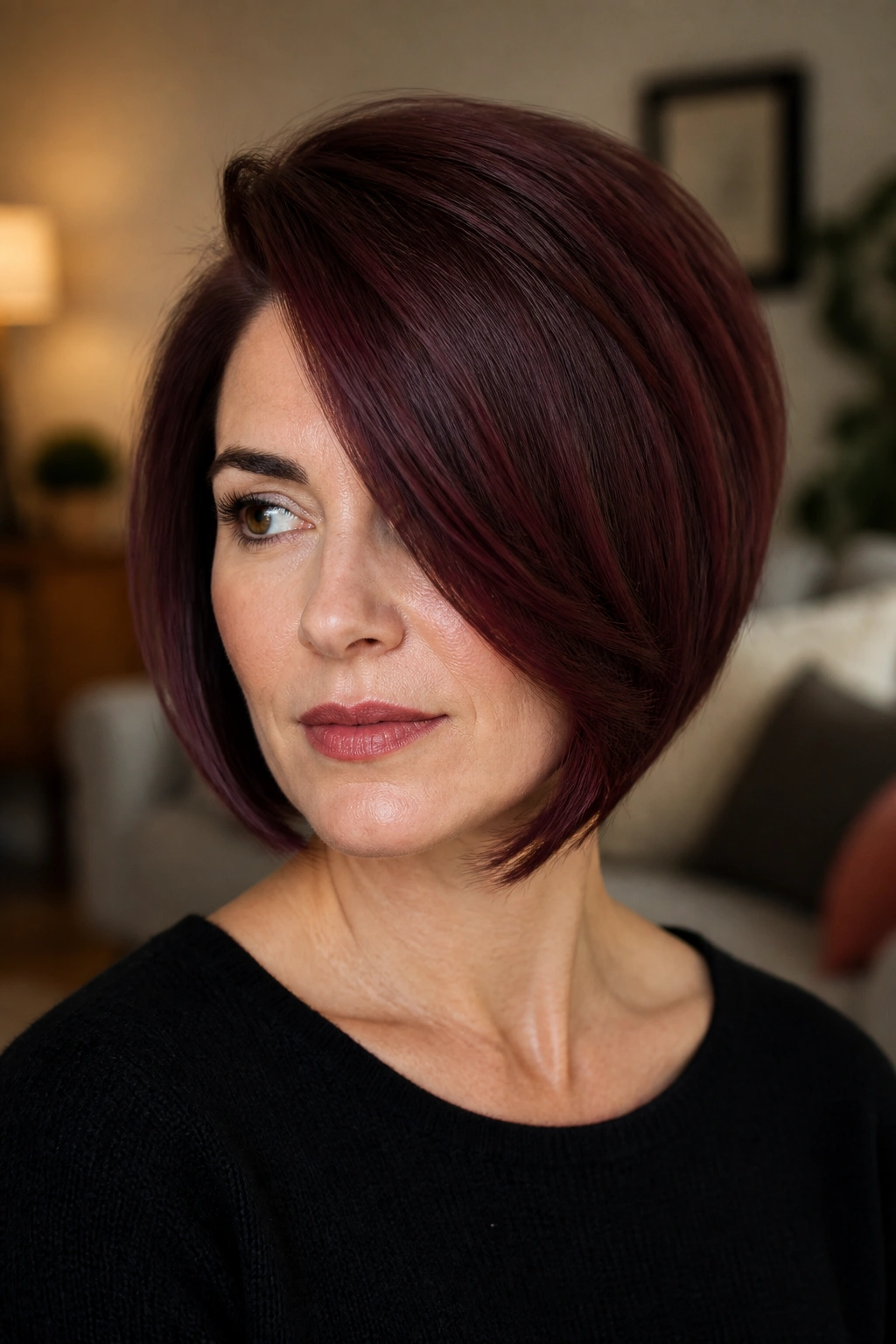
A deep side sweep can rescue hair that refuses to stay lifted at the crown.
The shape is simple: the bob itself stays fairly clean, while the top section is directed strongly to one side. That shift creates height and makes the front feel fuller. On fine hair, the crown is often the first place to flatten, so this is a smart place to cheat a little.
Burgundy helps because the rich tone gives the sweep more presence. You see the line of the hair more clearly, which keeps the style from disappearing against the face. A little volume mousse at the roots is useful here, but don’t pile it on. Too much product will weigh the lift back down.
The best version of this cut has a smooth side arc and softly tucked ends. Nothing stiff. Nothing crunchy. Just enough polish to make the shape hold.
8. A Stacked Burgundy Bob with Gentle Lift at the Nape
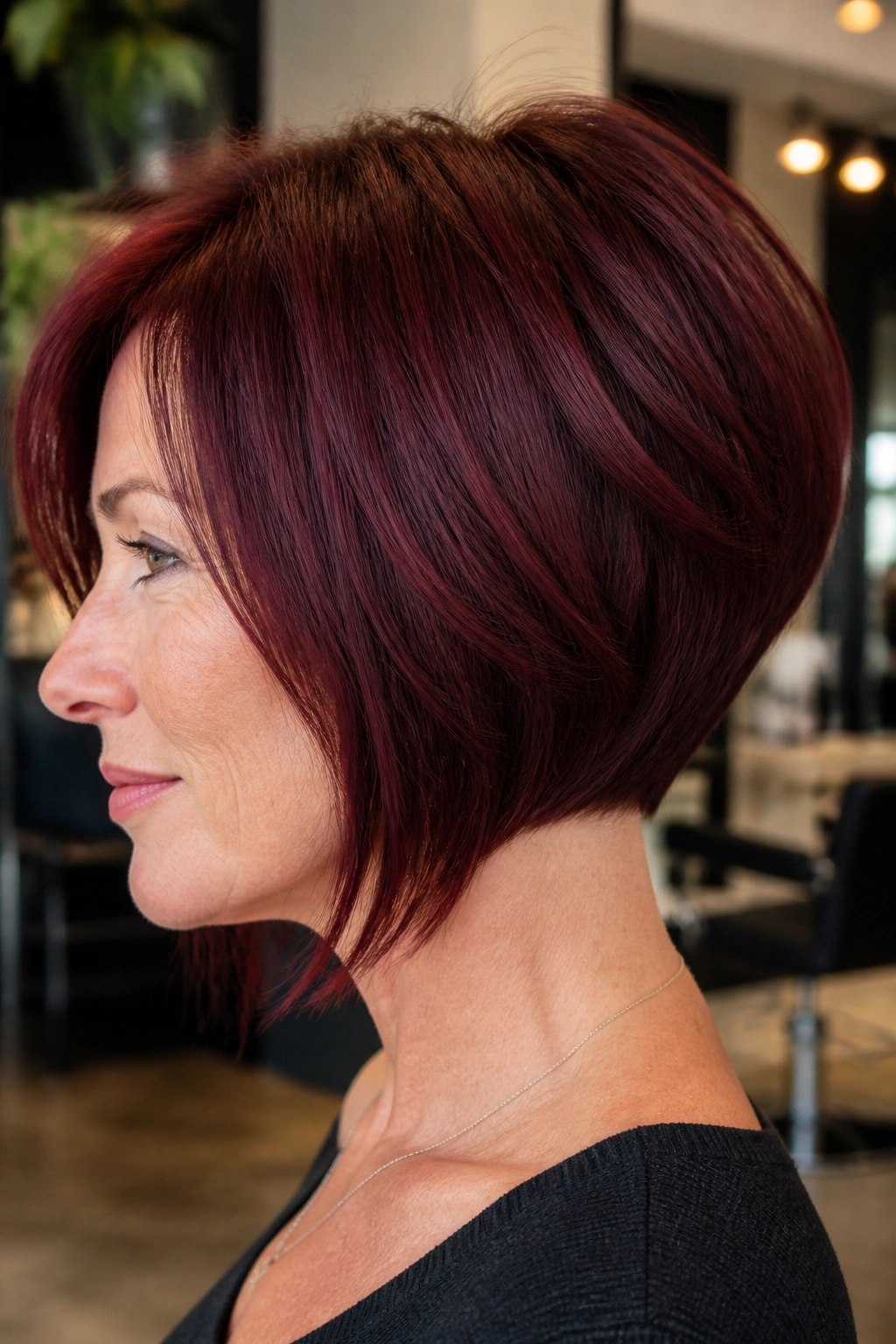
Stacking can go wrong fast on fine hair, so this version has to stay subtle. If the nape is overbuilt, the cut starts to feel dated. If it’s too flat, you lose the shape entirely.
The point of a gentle stacked bob is to create a little lift at the back while keeping the front clean. Burgundy gives the style some depth, and the short back makes the perimeter look denser. It’s a nice option if your hair grows straight down and needs a bit of architectural help.
The salon details that matter
- Ask for light graduation at the nape, not a dramatic stack.
- Keep the top layers long enough to fall smoothly.
- Leave the front pieces slightly elongated if you want softness.
- Avoid aggressive thinning near the crown.
This one looks best when it’s brushed into place and allowed to keep its line. The shape should do the work. You should not have to fight it every morning.
9. A Wavy Burgundy Bob with Soft Bend
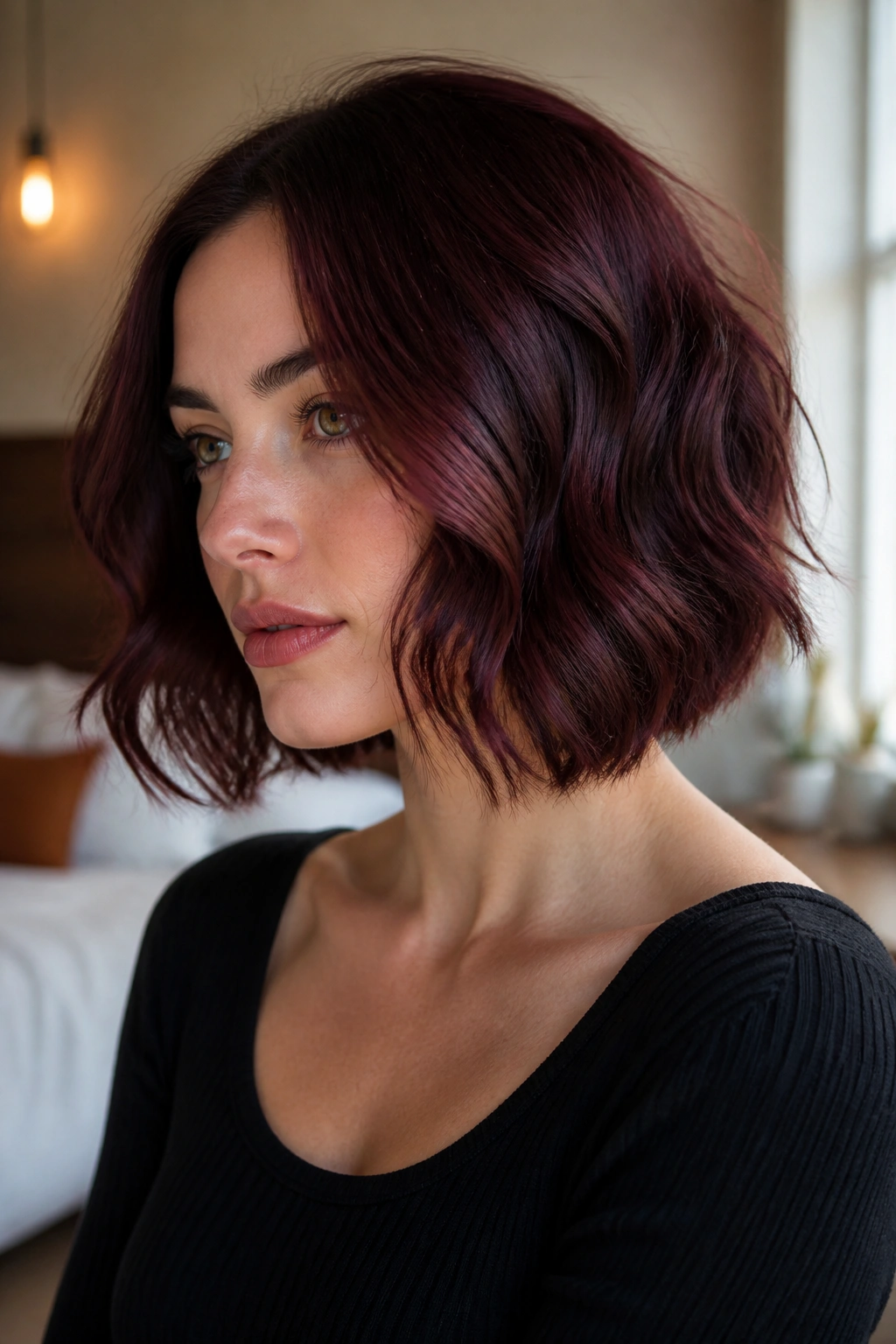
Waves can make fine hair look fuller, but only if they’re loose and controlled.
If the wave starts too close to the root, the hair can puff out and lose its clean edge. That’s why a burgundy bob with a soft bend through the mid-lengths usually looks better than big curls. The movement gives the hair body, and the darker shade makes the wave pattern easier to read.
A one-inch iron is enough for most people here. Wrap sections away from the face for a few seconds, then let the ends stay a little straighter. That mixed finish looks less overdone and keeps the bob from turning fluffy.
This cut is especially good if your hair looks best on day two. The slight bend breaks up the line in a flattering way, and the burgundy color gives the whole thing more depth. Honestly, it’s one of the easiest ways to make fine hair look like it has a bit more life.
10. Burgundy Bob with Curtain Bangs
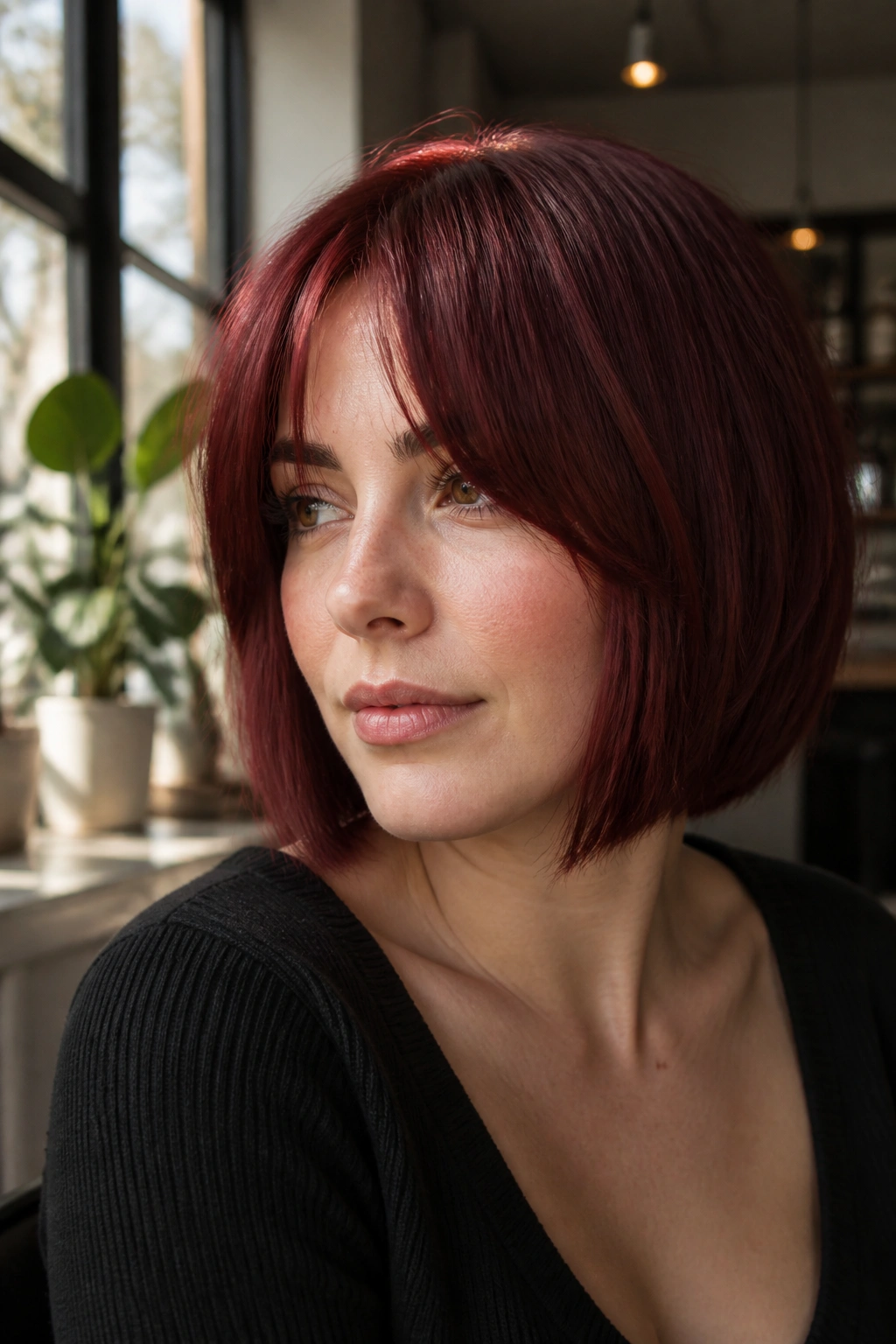
Curtain bangs can be tricky on fine hair, but when they’re cut with enough weight, they do a lot of good. They widen the front of the style and draw attention upward, which makes the bob feel more complete.
The key is not to make the fringe too sparse. Thin curtain bangs disappear into the rest of the hair and leave you with nothing useful. A better version starts fuller near the center part and opens out softly toward the temples. Burgundy brings the front pieces into focus, which helps the whole haircut feel intentional.
Why this shape stands out
The face frame gives the bob a little drama without stealing density from the bottom. That matters. Fine hair usually needs the perimeter to stay strong, and curtain bangs let you add movement without chopping the entire cut apart.
If your forehead feels too exposed in a blunt bob, this is a smart fix. It softens the face and keeps the style from feeling severe.
11. A One-Length Burgundy Bob for Maximum Thickness
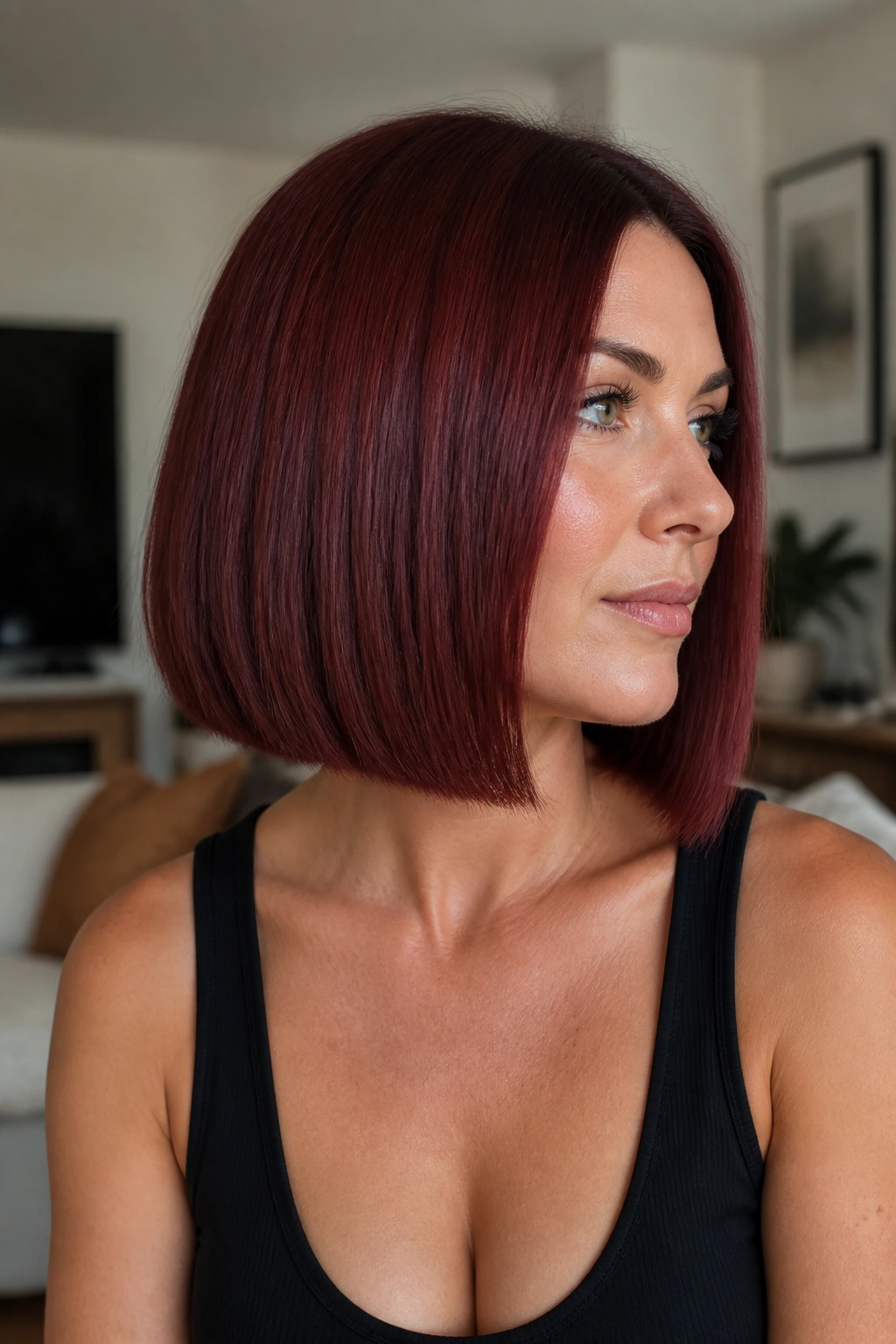
This is the cleanest trick in the book. One length makes hair look heavier because every strand is contributing to the same outline.
For fine hair, that matters more than people think. A lot of cuts lose density because the ends are broken into too many pieces. A one-length burgundy bob avoids that problem. It gives you one firm shape, one visible edge, and a fuller-looking finish.
The best version usually lands between the jaw and just above the shoulders. That range keeps the hair light enough to move, but not so long that the ends start to trail off. If your hair grows out fast and you hate complicated styling, this is a strong place to start.
A trim every 6 to 8 weeks keeps the line sharp. Let it grow too long, and the thickness trick starts to fade.
12. A Razored Burgundy Bob with Tapered Ends
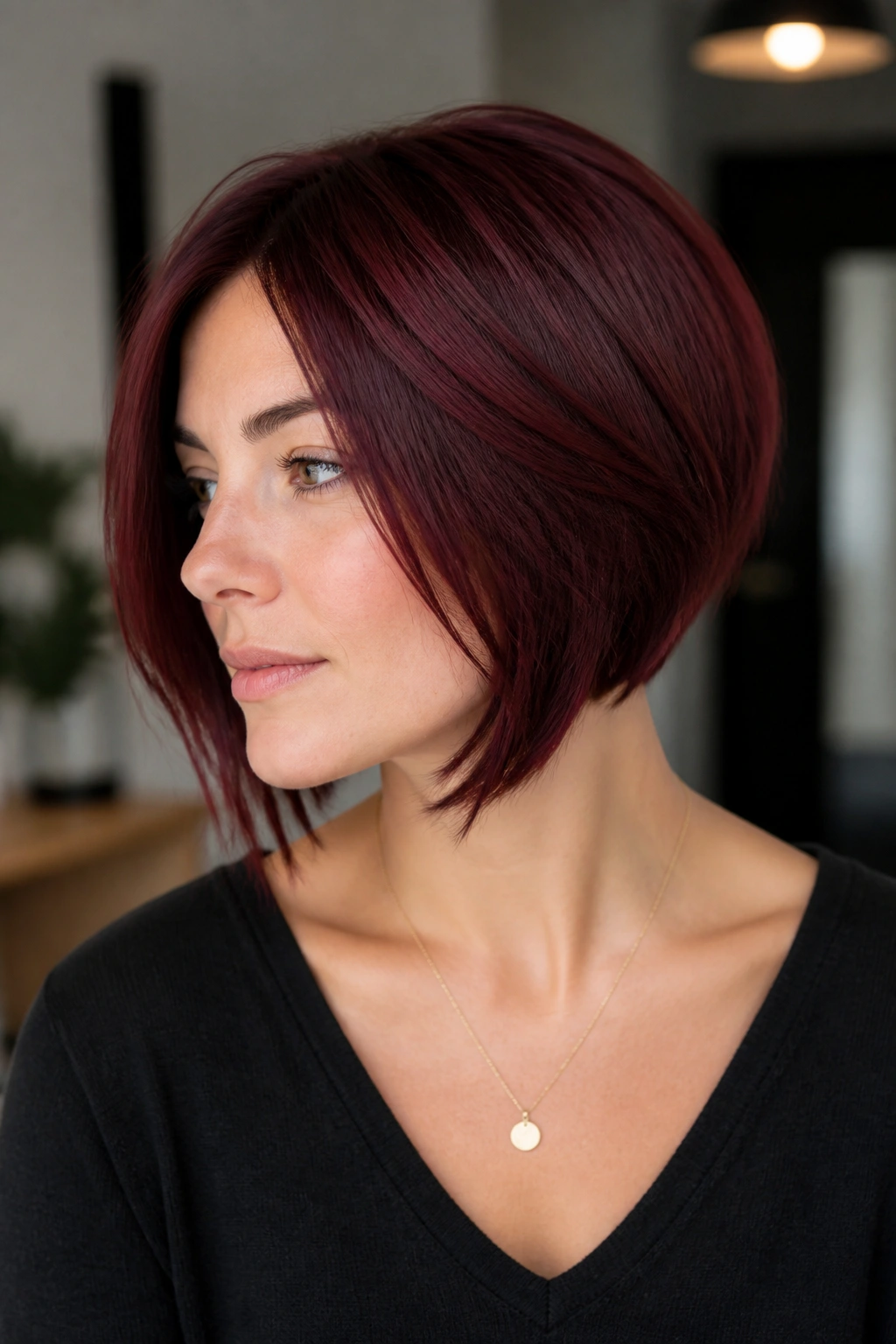
Razors get a bad reputation with fine hair, and sometimes they deserve it. Too much razor work can leave the ends soft in a bad way — more frayed than airy.
But a light razor touch can help if the hair is dense at the root and too blunt through the interior. The trick is to use the razor only to soften the inside of the shape, while keeping the outer line controlled. Burgundy works well with this cut because the shade hides some of the shadowy texture and gives the hair a smoother read.
When this cut makes sense
- Your hair is fine, but not fragile.
- The ends tend to look bulky rather than wispy.
- You want movement without losing the bob shape.
- You’re willing to style it with a light cream or spray.
If your hair already breaks easily, skip this one. A blunt or gently layered cut will serve you better. This is a case where the right version is useful, and the wrong version is a mess.
13. A Burgundy A-Line Bob with a Slight Angle
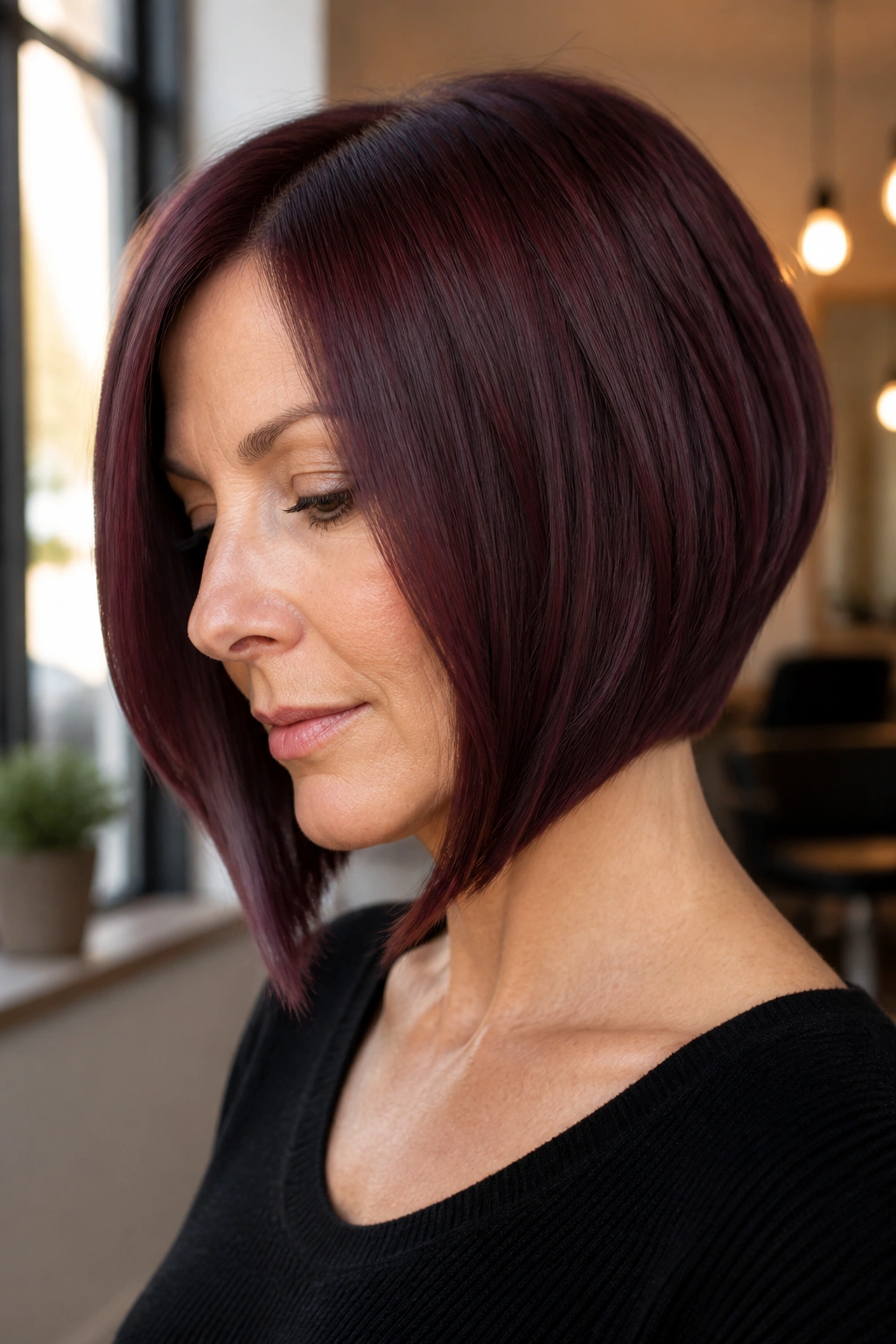
A subtle A-line bob gives fine hair a little geometry, and that helps more than a lot of people expect. The front sits a touch longer than the back, so the eye sees length and structure at the same time.
The angle should stay modest. You do not need a steep drop from back to front. Something around 1 to 1.5 inches is enough to change the shape without making it look theatrical. Burgundy makes the line stand out, especially if the hair is straight or only lightly waved.
This cut is useful if your face is a little rounder and you want the bob to feel more lengthening. The front pieces frame the jaw, while the back stays tidy and compact. That compactness is the part that helps fine hair most.
It’s one of those cuts that looks sharper after a fresh trim. Let it go too long, and the angle flattens out.
14. An Airy Burgundy Bob with Bottleneck Bangs

Bottleneck bangs are a clever middle ground. They start narrower at the center and open wider near the temples, which gives the front of the haircut shape without swallowing the face.
On fine hair, that front weight can help a lot. The bangs add interest where people tend to notice flatness first, and the bob below them stays clean and easy to manage. Burgundy makes the separation between fringe and bob more visible, which is useful if you want the haircut to read from across the room.
How to wear it
- Dry the bangs forward first.
- Use a small round brush to bend the sides away from the face.
- Keep the bob itself fairly smooth.
- Add texture only to the mid-lengths if needed.
This cut feels soft but not fussy. It suits anyone who wants movement around the eyes and cheekbones without giving up the tidy look a bob should have.
15. A Glossy Rounded Burgundy Bob
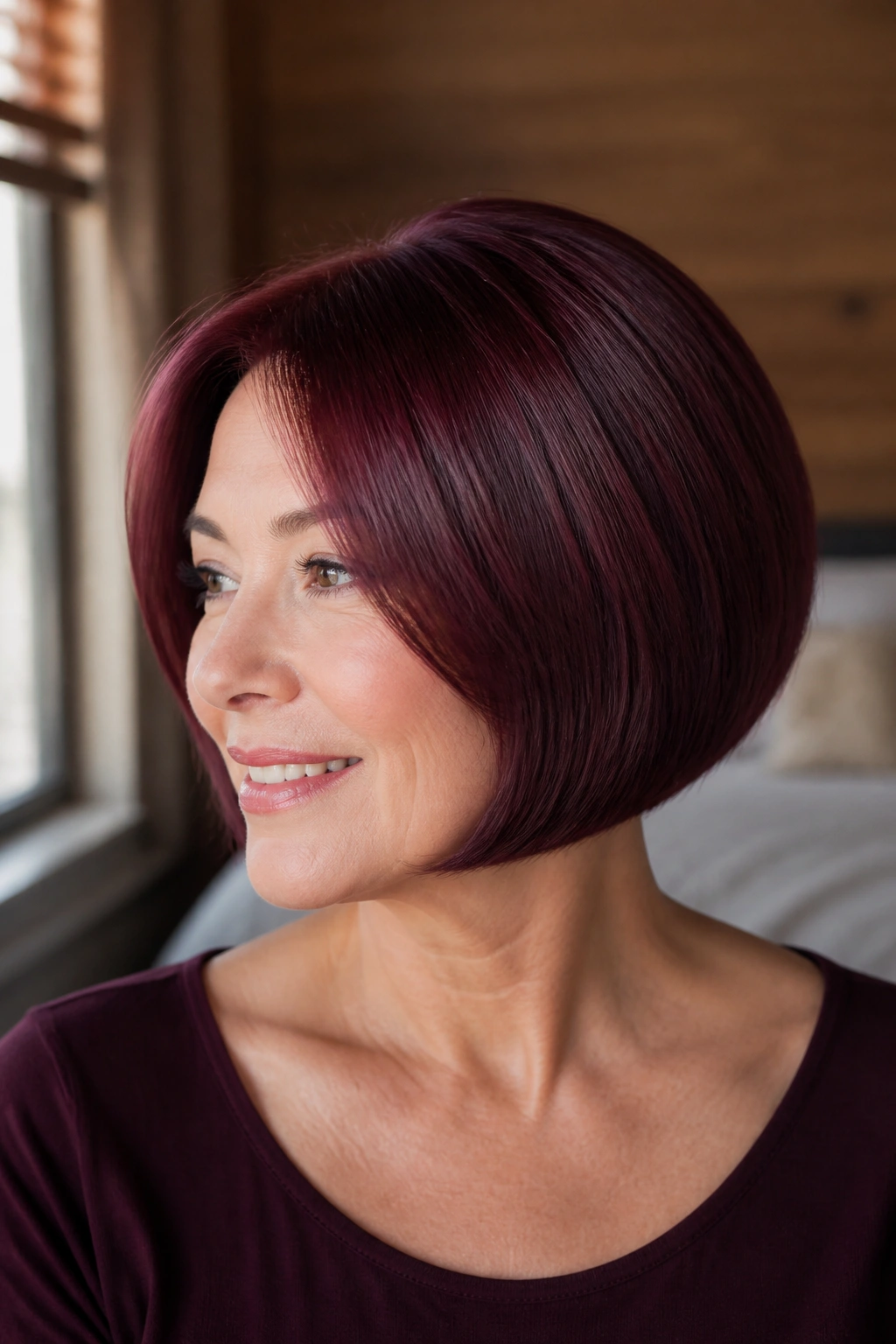
A rounded bob is a little old-school in the best way. The silhouette curves inward, so the ends feel full and polished instead of flat and chopped off.
Fine hair responds well to that curve because the shape does some of the visual work. You do not need huge volume at the crown. You need a smooth arc from roots to ends, with enough body at the bottom to make the shape read as dense. Burgundy shines here because the rounded line catches light across the surface and gives the cut more presence.
I prefer this cut with a medium round brush and a light smoothing cream. Heavy oils can make the roots sit too close to the scalp. Keep the product on the mid-lengths and ends, then brush the shape under. That’s enough.
The result is neat, soft, and a little glamorous without trying too hard. Which is rarer than it should be.
16. A Choppy Burgundy Bob with Jaw-Skimming Pieces
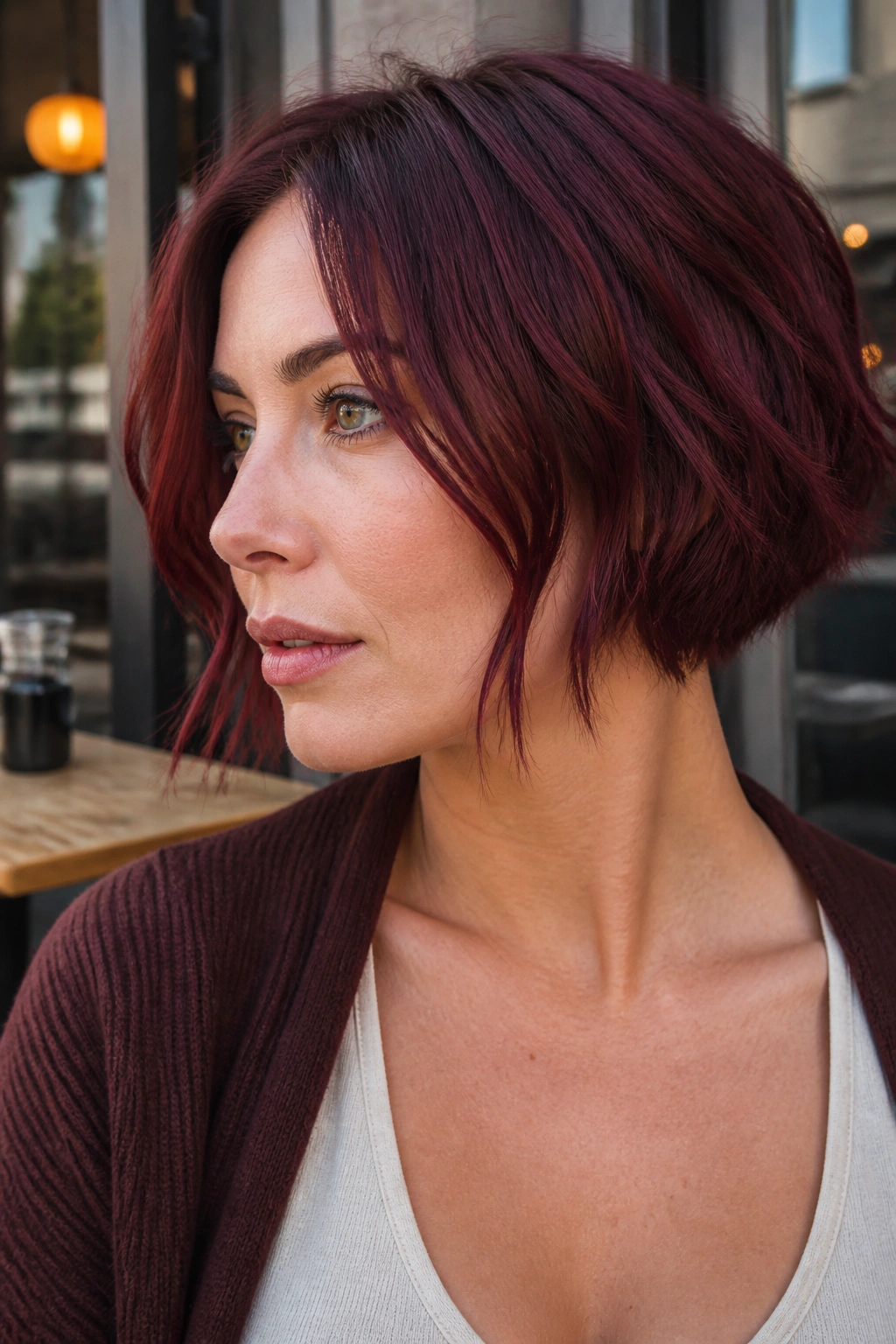
Choppy bob cuts can go wrong on fine hair if the texture is sprayed all over the head like confetti. But a controlled version, with just a few jaw-skimming pieces, can make the haircut feel alive.
The idea is to create movement at the perimeter without destroying the shape. A few sharper bits around the jaw add edge and keep the cut from looking too formal. Burgundy helps because the color gives those pieces depth, so they don’t just look thin or broken.
What makes this version work
The choppiness should stay selective. Think one or two layers near the front, not a wholesale tear-down of the shape. The rest of the bob should still hold weight. That’s the part people often miss.
This is a good choice if you like hair that looks a little undone on purpose. It pairs well with a rough blow-dry, a bit of dry texture spray, and nothing else. Too much styling polish will flatten the point of the cut.
17. A Burgundy Pageboy Bob with a Curved Edge
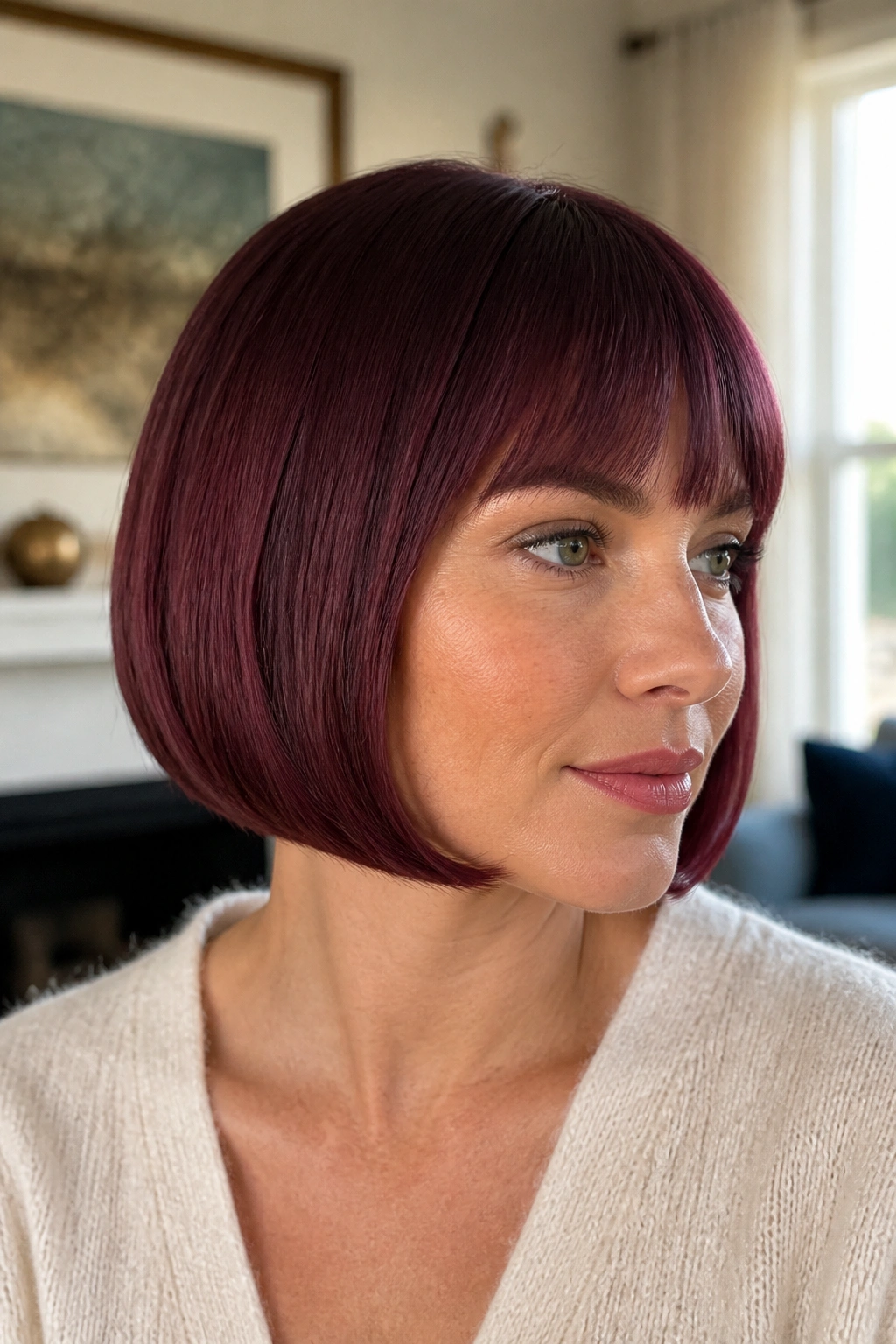
A pageboy bob has a curving shape that tucks inward at the ends, and that curve is useful for fine hair because it gives the outline a sense of fullness. The style feels a bit retro, but not costume-y if the finish stays soft.
The best thing about this cut is how contained it looks. Fine hair often goes limp when it’s allowed to hang straight, but the pageboy curve gives it direction. Burgundy adds a richer tone that keeps the style from looking flat under indoor light.
This one does ask for a neat blow-dry. The ends should curve under the jaw just enough to show the shape. If the curve is too tight, the cut starts to look dated. If it’s too loose, you lose the whole point.
It’s a smart option if you like structure and don’t want the haircut to depend on daily curling.
18. A Softly Layered Burgundy Lob for the Grow-Out Phase
Not everyone wants a short bob. Fair enough.
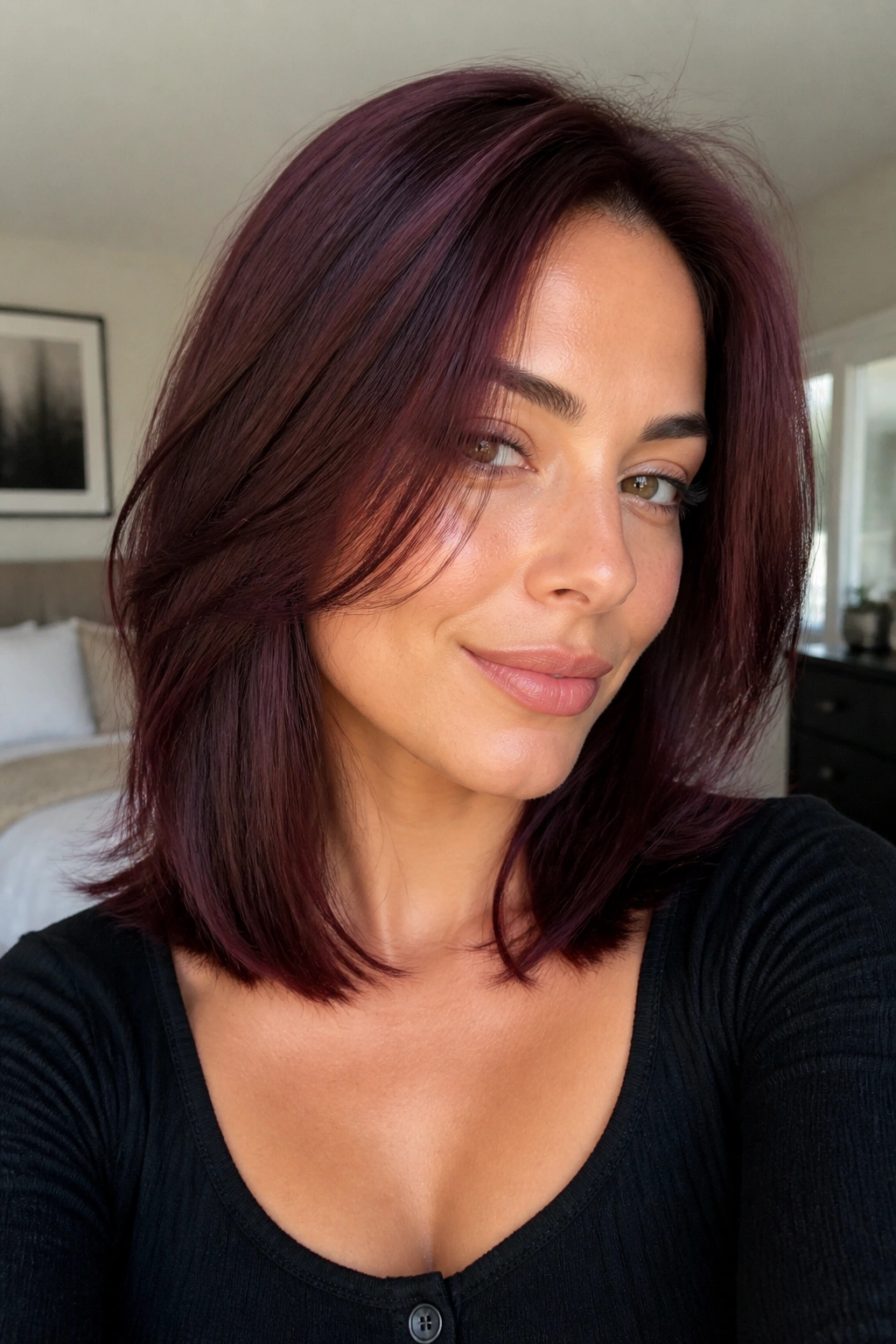
A softly layered lob — long enough to graze the collarbone, short enough to avoid stringy ends — gives fine hair room to move without looking weighed down. This is the cut for someone who wants to keep some length while still making the burgundy shade look rich and deliberate.
The layers should be long and light. That’s the rule. Short layers can split the shape apart and make the hair feel thinner than it really is. A little movement around the front and a clean edge at the bottom do more good than a stack of choppy pieces.
This cut also grows out in a calm, sensible way. You can wear it straight, tucked behind one ear, or bent with a flat iron. It doesn’t demand a huge routine, which matters more than a lot of people admit.
19. A Burgundy Bob with a Deep Center Part and Tucked Ends
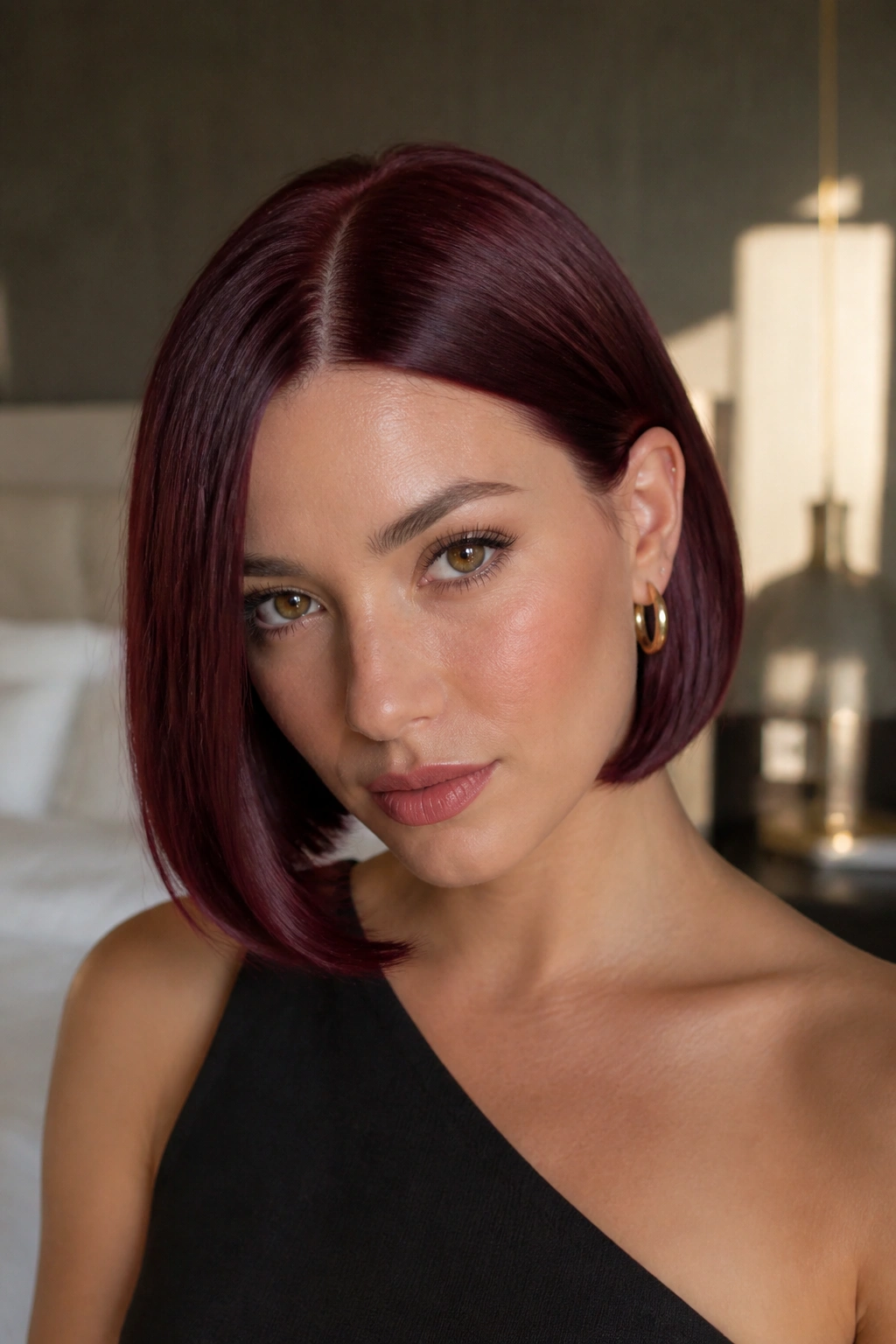
A center part is not for everyone, but when it works, it looks sharp in a way that fine hair often needs. The symmetry makes the bob feel controlled, and tucked-under ends keep the silhouette from looking sparse.
The trick here is clean styling. If the ends are left too straight and limp, the cut can look unfinished. A slight inward bend fixes that. Burgundy gives the center part more depth, which helps the line read as polished instead of plain.
This style works well on straight hair or hair that takes heat easily. The ends should sit close to the neck or jaw, not flare out. That closeness is what makes the hair feel fuller. One side tucked behind the ear, the other left down — that little asymmetry can soften the whole thing.
It’s a good option if you like a neat, tailored look and don’t mind a bit of regular styling.
20. The Mid-Jaw Burgundy Bob with a Heavy Perimeter
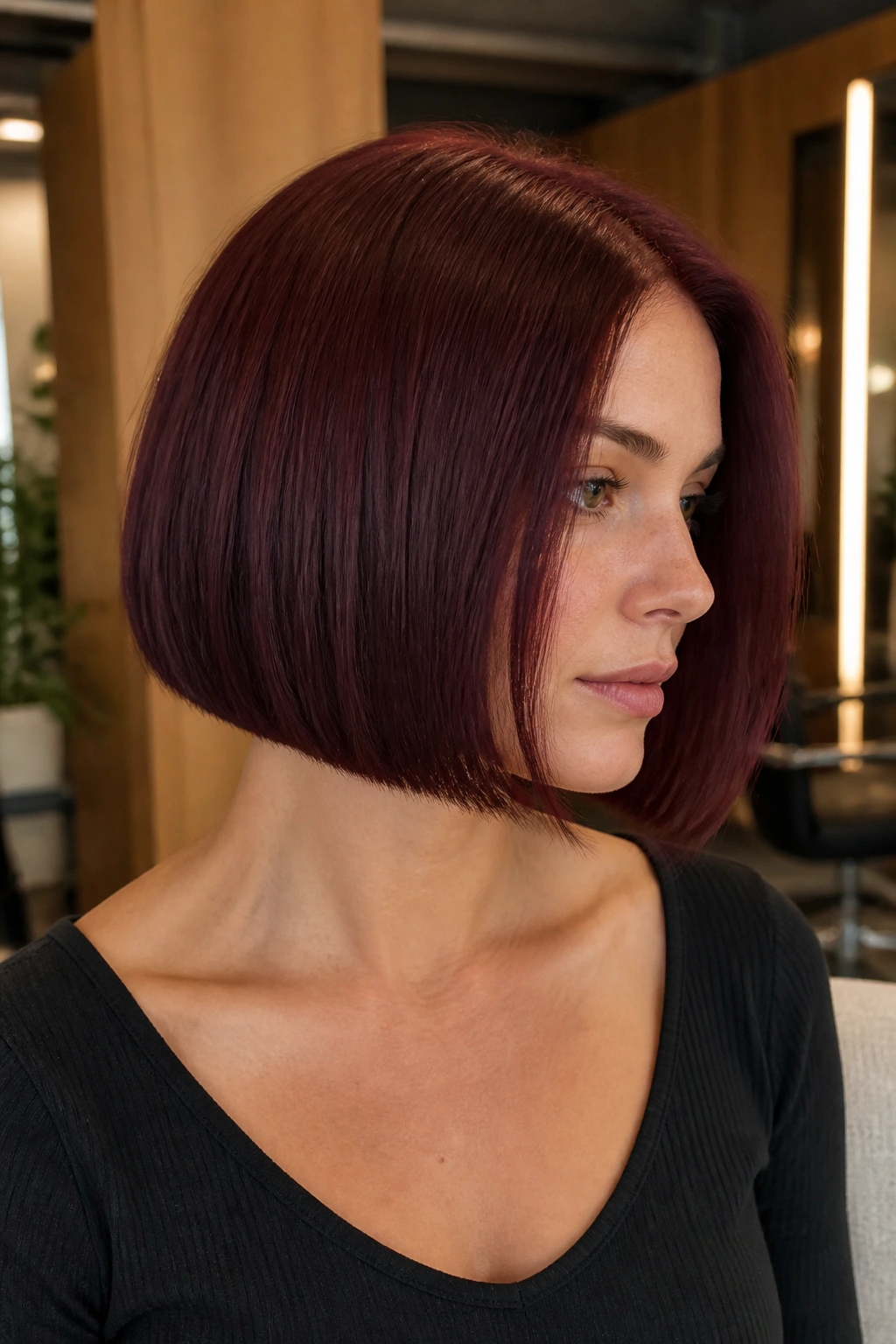
If you only want one burgundy bob haircut for fine hair to show your stylist, this is the one I’d start with. A mid-jaw length keeps the hair short enough to hold shape, and a heavy perimeter makes the ends look dense instead of feathered out.
The cut works because it doesn’t ask the hair to do too much. The color brings depth. The line brings strength. The length keeps it from collapsing. That combination is hard to beat when your strands are soft and prone to slipping flat.
Why this is such a safe choice
- It suits straight, wavy, and lightly textured hair.
- It grows out cleanly if you wait 6 to 8 weeks between trims.
- It gives you enough length to tuck, bend, or wave.
- It does not rely on aggressive layering to look styled.
There’s a reason this shape keeps showing up in salons. It is practical, flattering, and easy to live with. And for burgundy bob haircuts for fine hair, that matters more than chasing some overworked, high-maintenance look that looks good for twelve minutes and then gives up.
