



A short graduated bob can be a smart cut for a round face, but only when the shape earns its keep. The back needs lift. The front needs length. And the sides need enough movement that the cut doesn’t stop right at the widest part of the face.
That is why some bobs make a round face look fresher and slimmer, while others make it look wider than it really is. A blunt line at the cheek can feel boxy. A little graduation, a side part, or a longer front edge changes the whole read of the haircut without making it fussy.
I like this family of cuts because it gives you options. Some versions are sleek and sharp. Others are soft, airy, and easy to wear with nothing more than a blow-dry and a round brush. The right one depends on where your jaw sits, how much hair you have, and how much daily styling you’re willing to do.
1. A Deep Side-Part Stacked Bob That Skims Past the Cheekbone
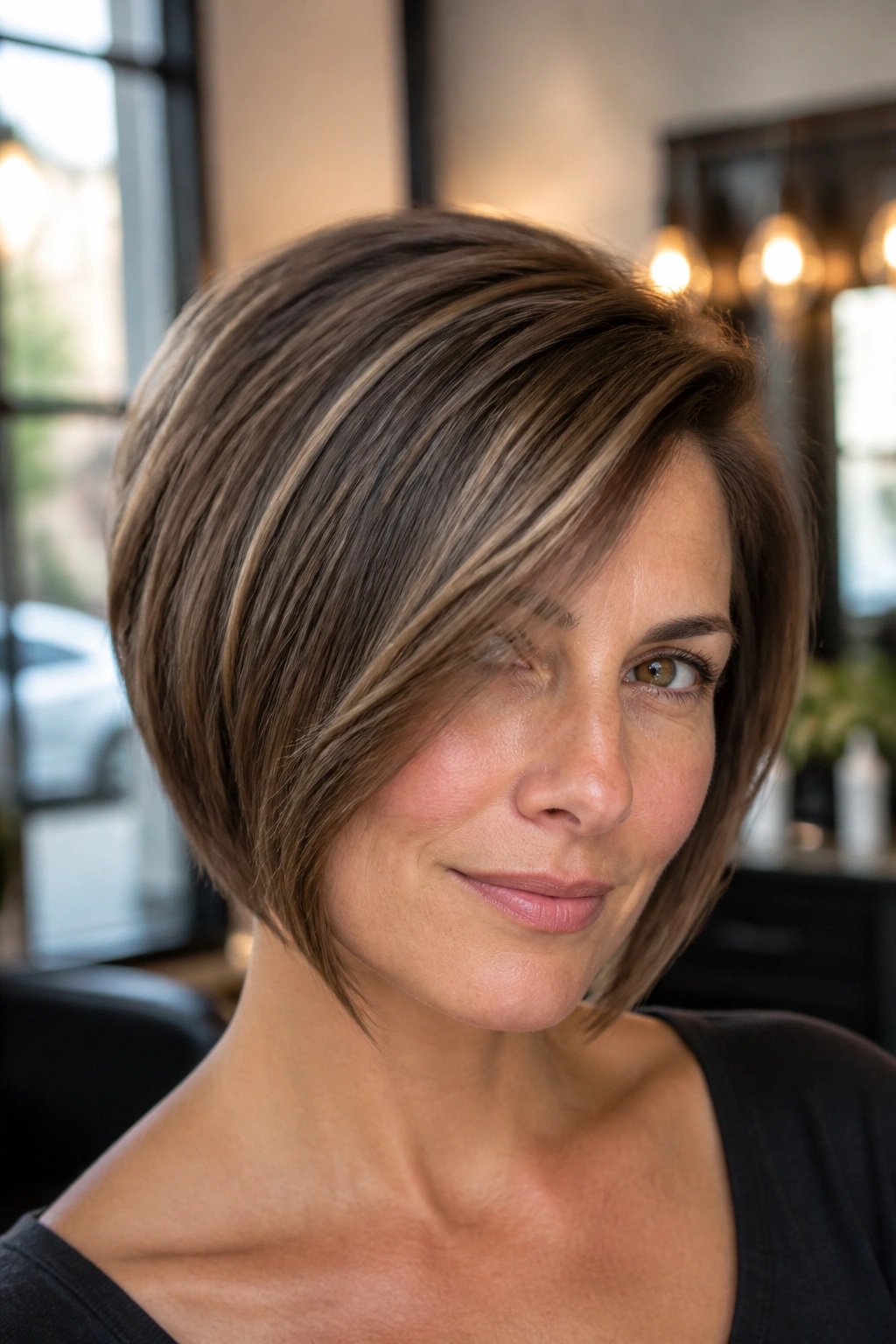
Sharp works here.
A deep side part gives a round face a stronger diagonal line, and that matters more than people think. The stack in the back keeps the cut from drooping, while the longer front pieces pull the eye downward instead of letting it stay parked at the cheeks. I like this version on straight or slightly wavy hair because the shape stays clean and readable.
Keep the front pieces about 1 to 2 inches longer than the shortest point at the back. That little gap is enough to create length without turning the bob into a full lob. Blow-dry with a small round brush and direct the front away from the face so the ends curve just enough to soften the line.
If your hair tends to puff out at the sides, ask for a tighter stack through the nape and less width through the middle. That keeps the silhouette narrow where you need it most. Small detail. Big payoff.
2. A Soft Feathered Bob with Cheekbone-Framing Pieces
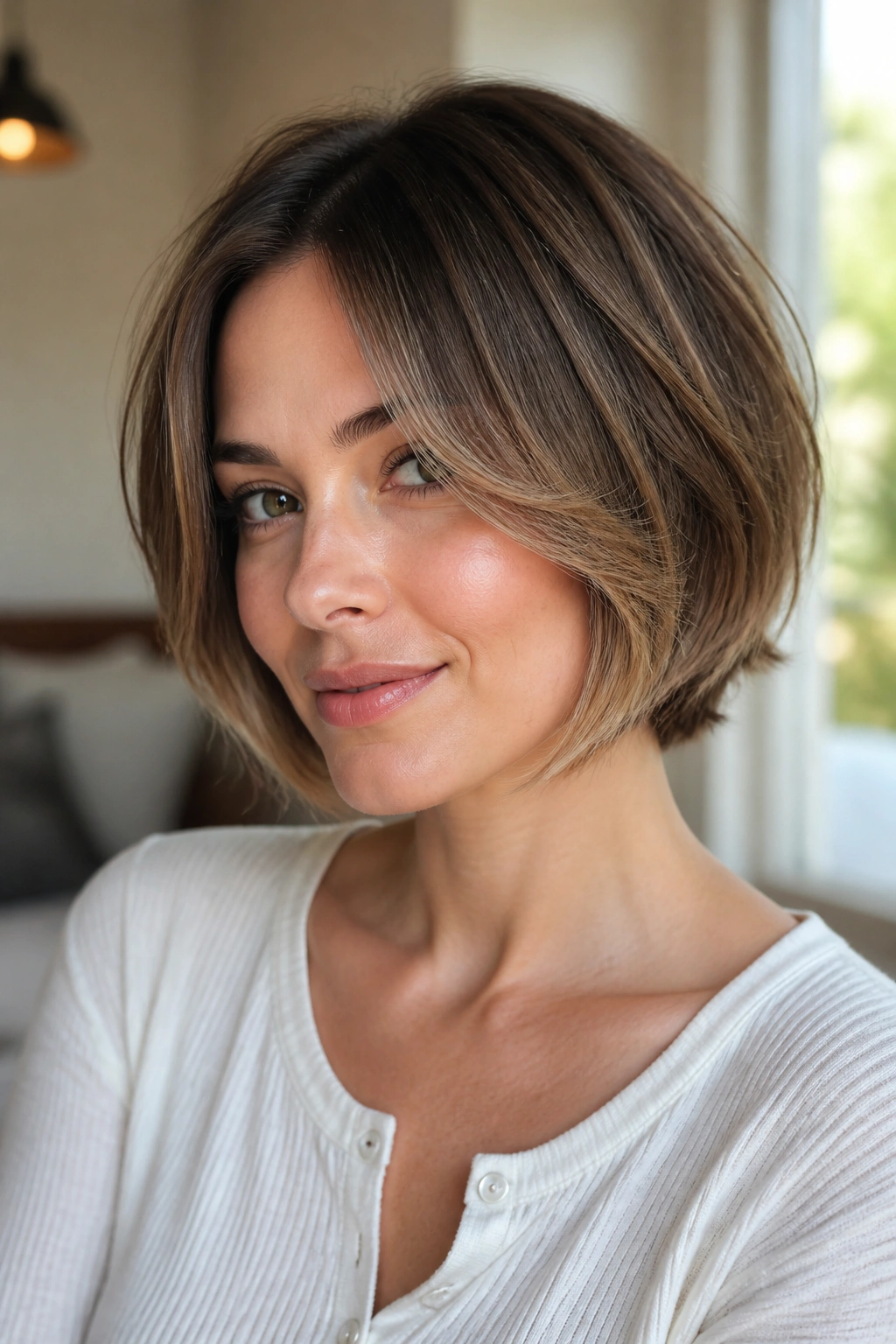
This one feels lighter than it looks.
The haircut works because the ends are point-cut or softly feathered instead of cut into a hard shelf. That soft edge matters on a round face, since hard edges can make the cut look boxy. The cheekbone pieces should start a touch below the widest part of the face and taper toward the jaw.
Why It Flatters the Face
The feathering breaks up the outline. You still get the shape of a graduated bob, but the finish doesn’t shout for attention. It’s a good match for hair that has a little natural bend, because the movement makes the front pieces fall in a diagonal line instead of sitting flat.
I’d ask for face-framing layers that begin below the cheekbone, not right on top of it. That tiny shift changes the whole balance. It keeps the cut from widening out across the middle of the face.
Styling Notes
- Use a light mousse at the roots before drying.
- Wrap the front sections around a 1.25-inch round brush.
- Keep the ends soft, not flipped.
- Finish with a touch of dry texture spray only if the hair looks too polished.
Best for: people who want a bob that looks gentle, not severe.
3. A Chin-Length Inverted Bob with a Longer Front Line
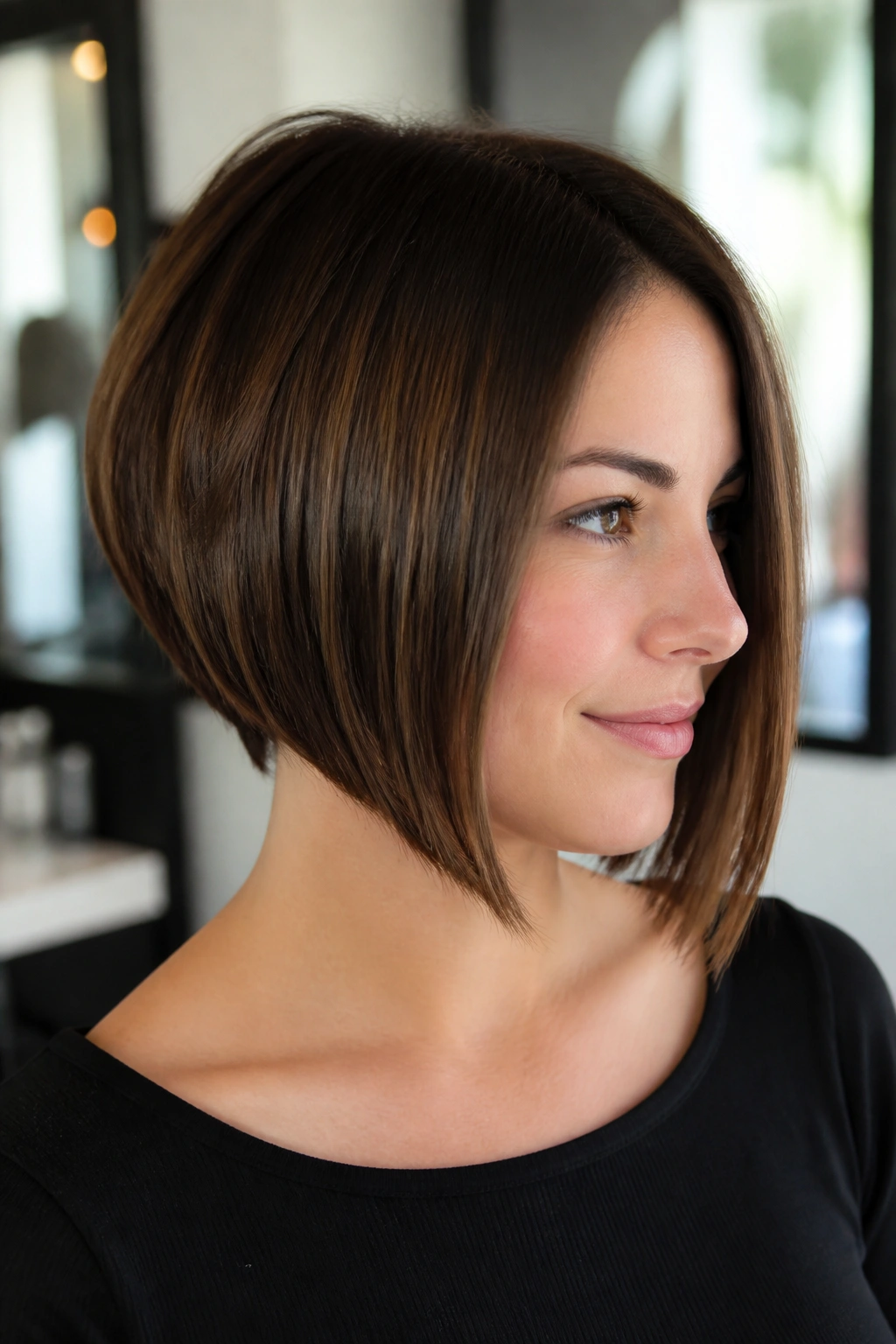
This is the cleanest shape in the bunch.
A chin-length inverted bob gives you a built-in angle, and angles are your friend when you’re working with a round face. The back stays short enough to create lift, while the front reaches forward and downward. That forward line is what stretches the face visually.
The trick is not to make the front too heavy. If the pieces around the chin are thick and blunt, the cut can drag the face sideways instead of slimming it. Ask for a crisp angle with light internal removal near the jaw so the front moves when you walk, not just when you style it.
This cut looks strongest on straight hair or a smooth blowout. It also grows out neatly, which is a nice bonus because the shape can survive a few extra weeks between trims. That said, it needs regular cleanup if you want the angle to stay sharp.
4. A Curved-Under Bob with a Polished Blowout Finish
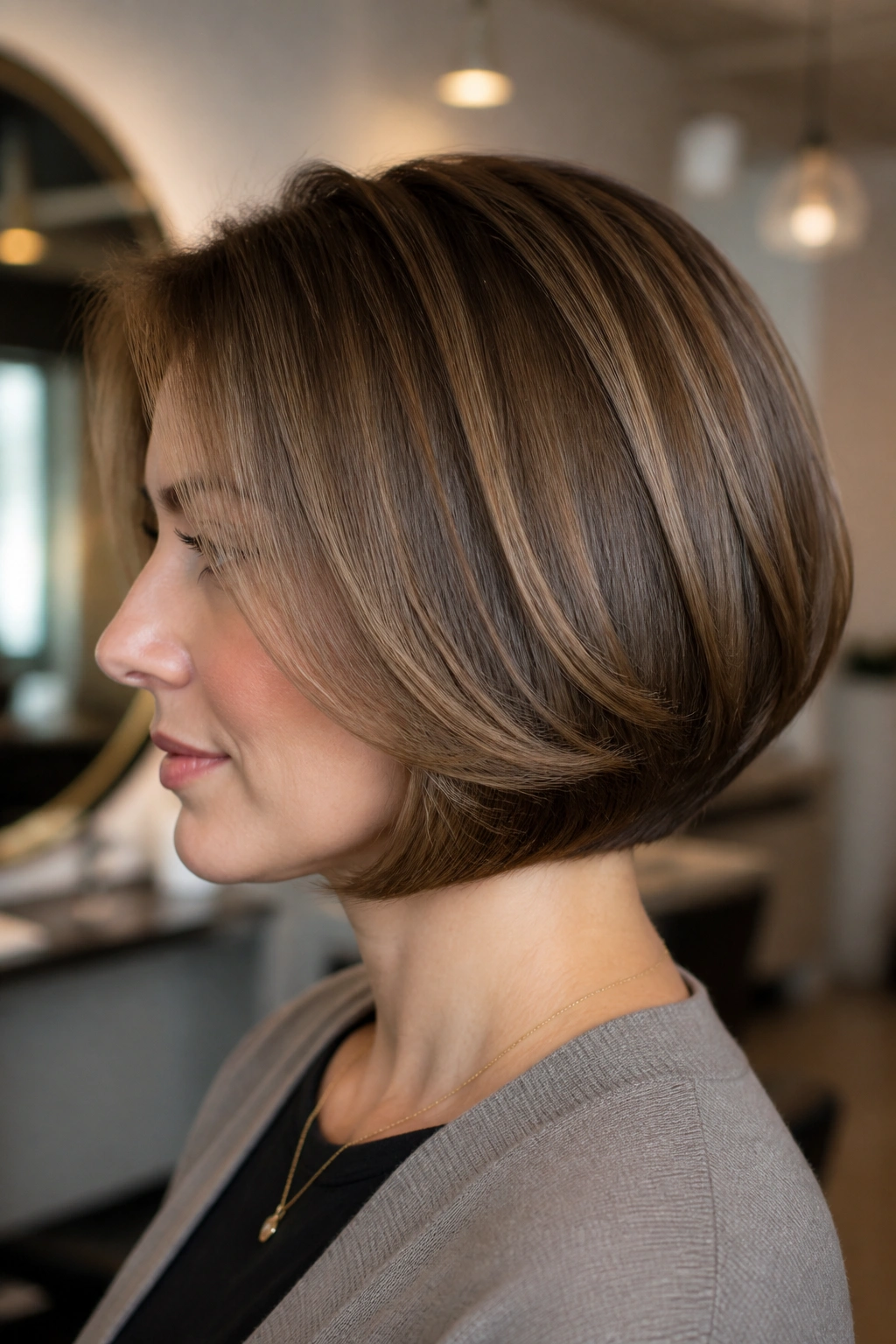
Some bobs need edge. This one needs curve.
A curved-under graduation gives the hair a rounded but controlled finish, almost like the ends are hugging the jaw instead of sitting on top of it. On a round face, that soft inward bend can be flattering because it keeps the bulk tucked closer to the head. The cut feels tidy without turning stiff.
What Makes It Different
The real advantage is the way it narrows the silhouette from the side. A blunt, straight-out bob can add width. A curved-under bob draws the eye into the neckline and keeps the focus on the front sweep. It’s a good choice if you like a more finished look and don’t mind a brush-and-dry routine.
A paddle brush plus a medium round brush can do the job, depending on your hair texture. Smooth the top first, then turn the ends under just a little. Not a lot. If you overcurl the bottom, the shape starts looking old-fashioned fast.
This one suits someone who likes structure and clean lines more than messier texture.
5. A Tousled Textured Bob with Broken Waves
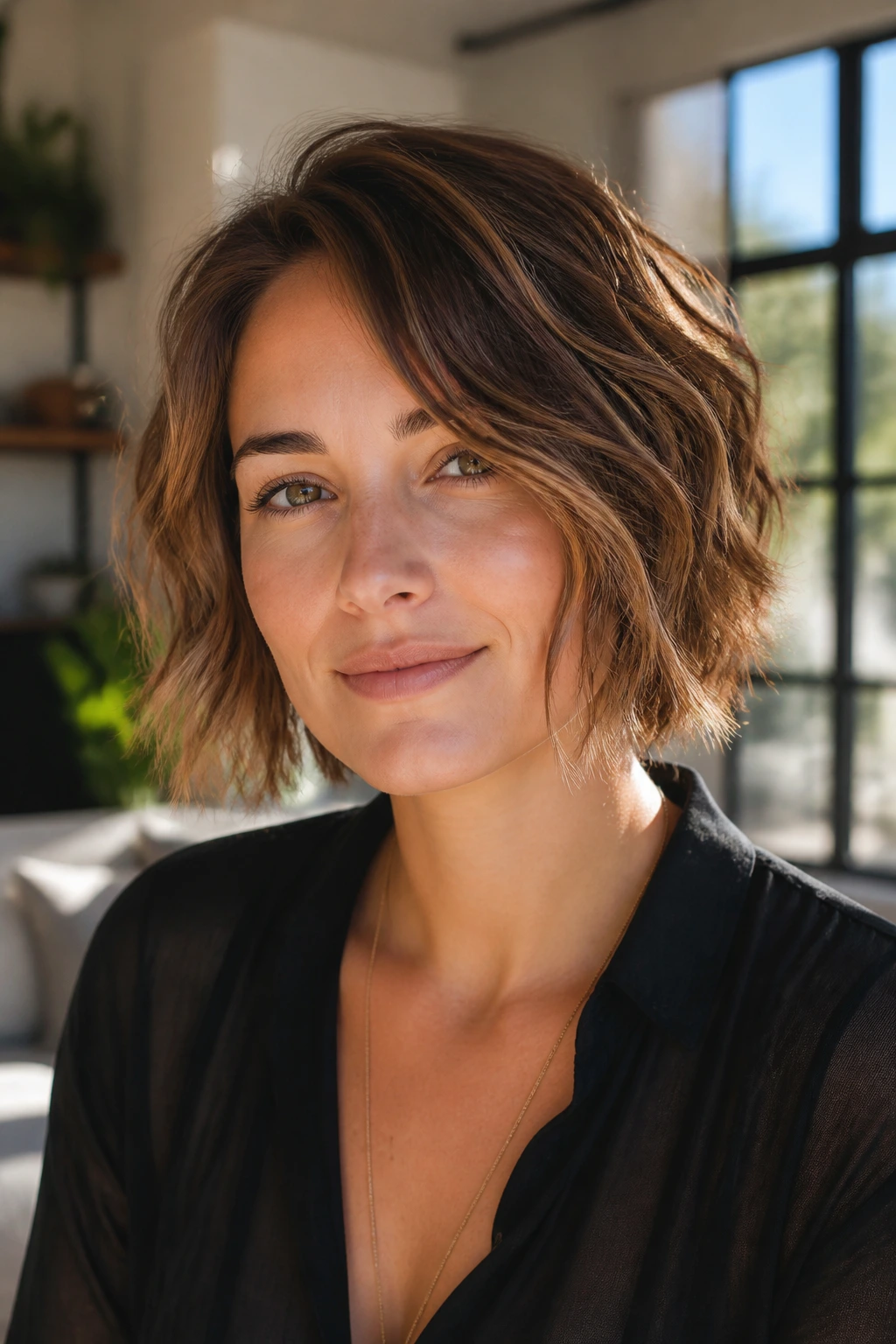
Messy, but in a controlled way.
The best textured bob for a round face is not a pile of random waves. It’s a cut that has enough graduation in the back to hold shape, plus a little room through the front so the waves don’t balloon at the cheeks. The texture should start below the widest part of the face, not right on it.
I like this cut for hair that naturally bends or frizzes a little, because it doesn’t fight the texture. A 1-inch curling wand works well if you wrap sections away from the face, leaving the last inch out so the ends stay straighter. That keeps the wave from becoming too round. Finger-comb it after it cools.
Skip heavy creams. They weigh this shape down fast. A little salt spray or lightweight wave spray is enough. And if your hair is dense, take some weight out underneath so the top doesn’t mushroom.
6. A Side-Swept Fringe Bob That Builds a Diagonal Line
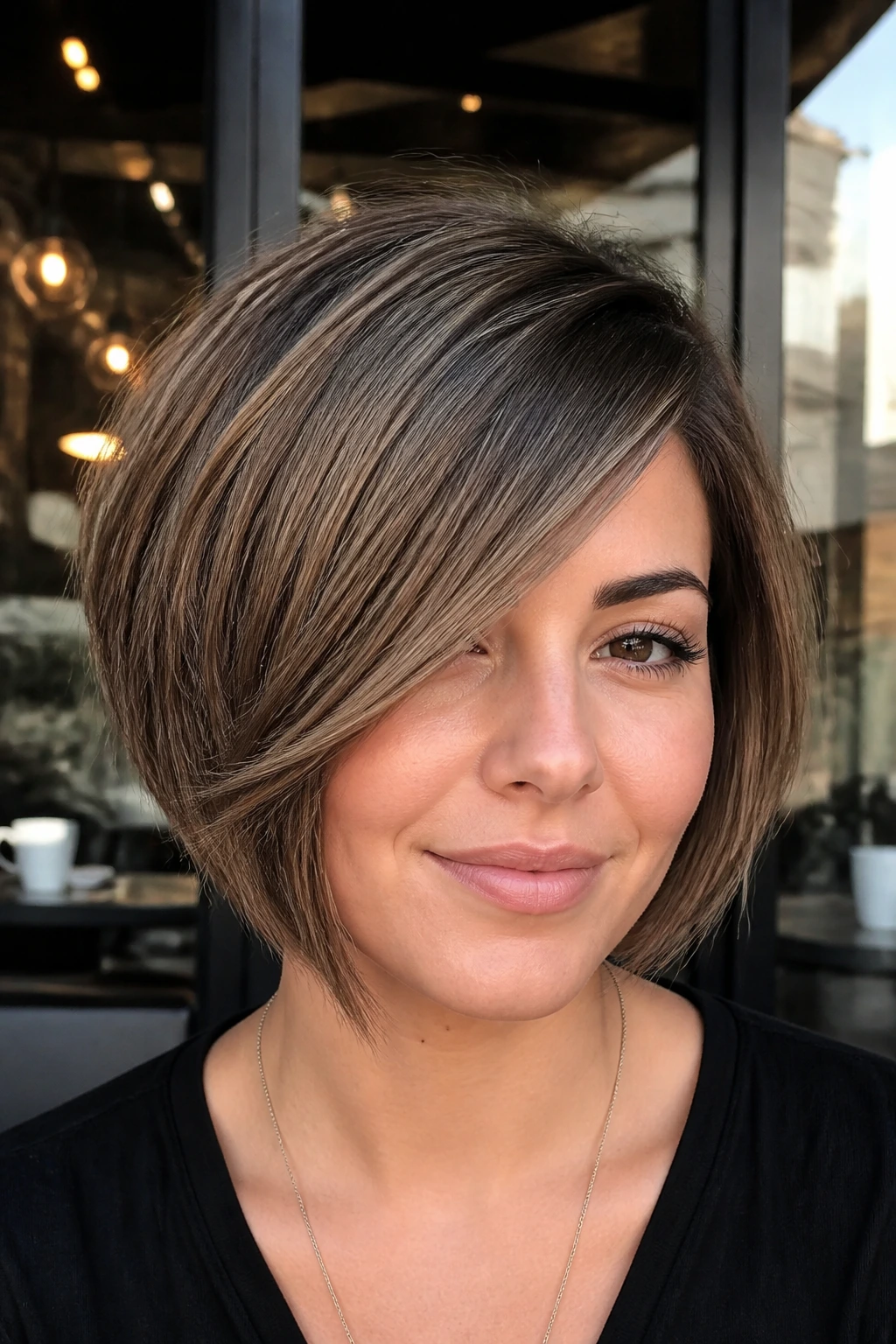
A good side fringe can change everything.
Round faces often look best when the hair creates movement across the face instead of stopping squarely at the sides. A long side-swept fringe does that neatly. It breaks the symmetry, gives the forehead some shape, and points the eye toward the opposite cheekbone. Very useful. Very simple.
What to Ask For
- A fringe that starts near the high point of the brow.
- Length that grazes the cheekbone, not the center of the nose.
- Soft graduation through the back so the crown stays lifted.
- A side part that’s deep enough to matter, but not so deep that it looks severe.
The rest of the bob can stay fairly classic, which is why this is such a good middle-ground cut. You get the face-lengthening effect of the fringe without giving up the neat, short bob shape.
If your hair splits easily, train the fringe with a blow-dryer for the first minute while it’s still damp. After that, it behaves much better.
7. A Crown-Lift Graduated Bob for Fine Hair
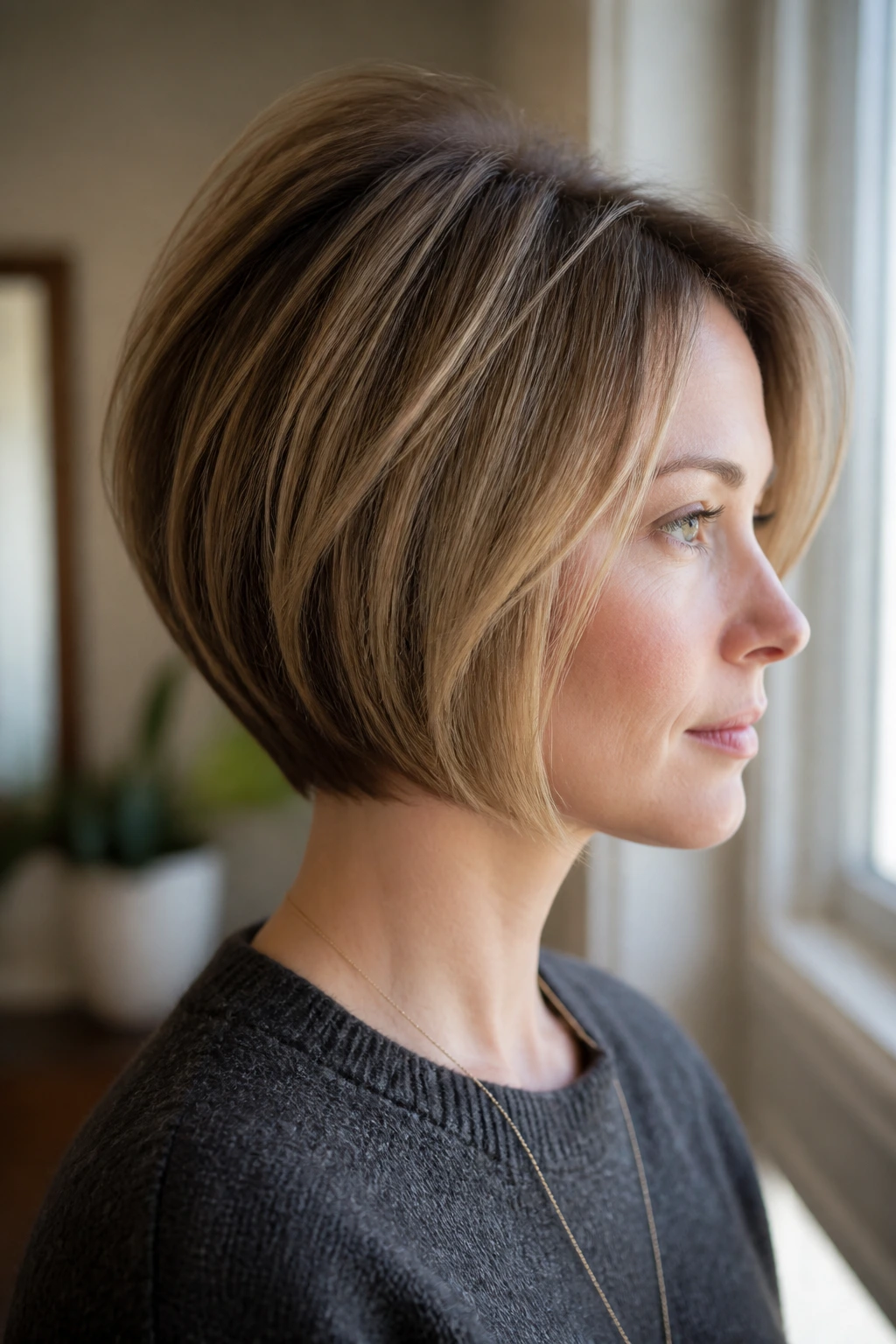
Fine hair needs help in the right place.
A graduated bob with a little extra lift at the crown is one of the smartest cuts for a round face if your hair tends to collapse by lunchtime. The back stack creates height, and height matters because it pulls the eye upward. That upward motion keeps the face from feeling wider.
Styling Shape, Not Volume
The goal is not giant hair. It’s controlled lift. Ask for internal layers near the crown and keep the ends blunt enough to give the hair a clean edge. If the whole cut is over-layered, fine hair can go wispy fast.
A root-lifting spray, applied just at the crown, does more here than a heavy mousse. Blow-dry the roots first while lifting with your fingers, then switch to a brush once the top has some memory. That little sequence makes the back hold its shape longer.
This cut is a good fit if you want something that looks fuller without needing a lot of product. It also grows out with a softer shape, which is handy when you’re not in the mood for frequent trims.
8. An Asymmetrical Graduated Bob with One Longer Side
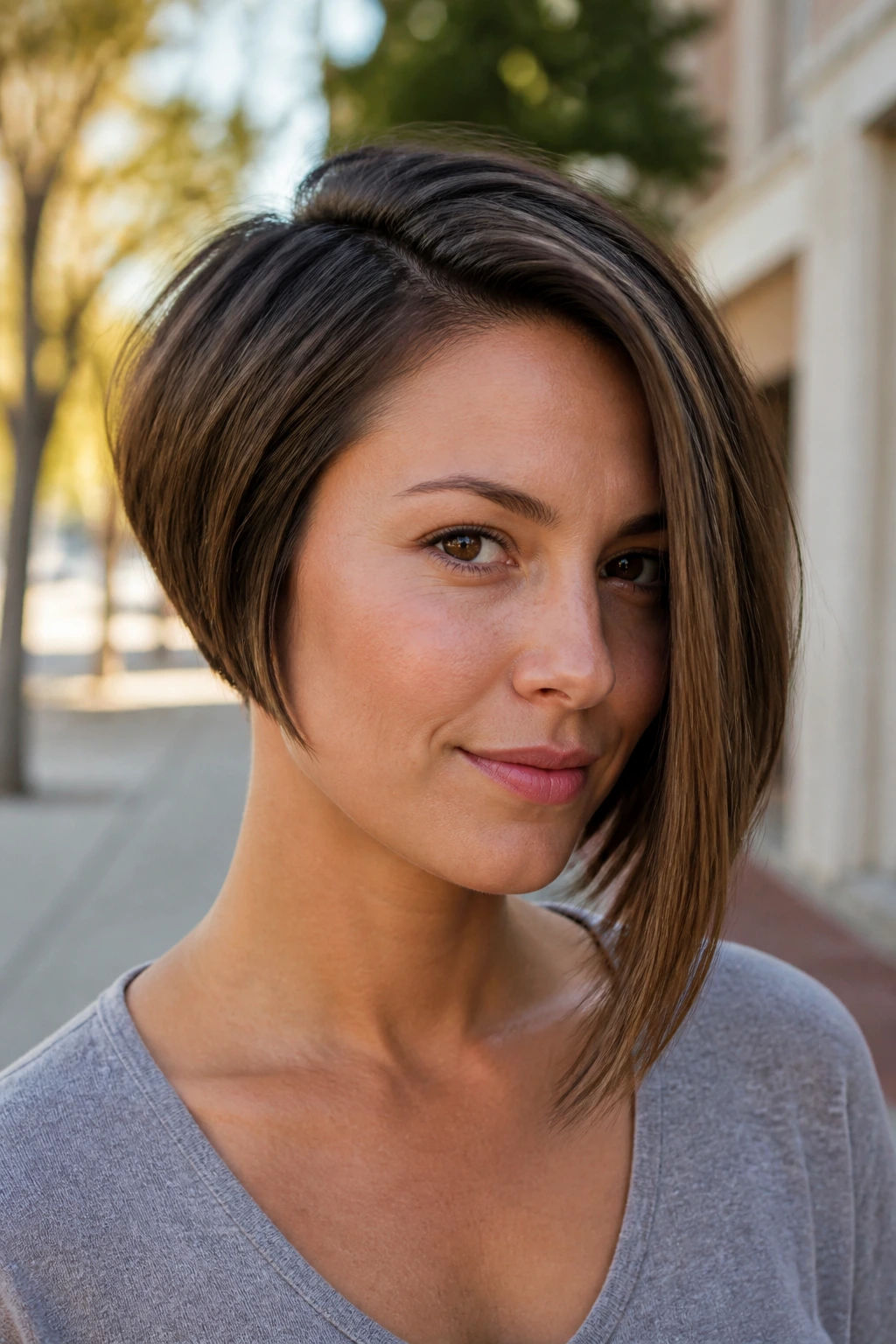
A small imbalance can be a good thing.
An asymmetrical bob breaks the circle of a round face by giving the eye a reason to travel. One side falls a little longer, the other sits higher, and the whole haircut feels more directional. It works especially well when the longer side sweeps past the jaw instead of stopping right at it.
The strongest versions keep the back nicely stacked, then let the front drift forward on one side by about 1 to 2 inches. That’s enough difference to matter, but not so much that the haircut starts looking theatrical. If the angle is too dramatic, the cut can wear you instead of the other way around.
I’d choose this when you want a bob that feels modern without being hard to style. It can be worn smooth or with a little bend at the ends. Either way, the asymmetry does a lot of the shape work for you.
9. A Collarbone-Skimming Graduated Lob That Softens the Face
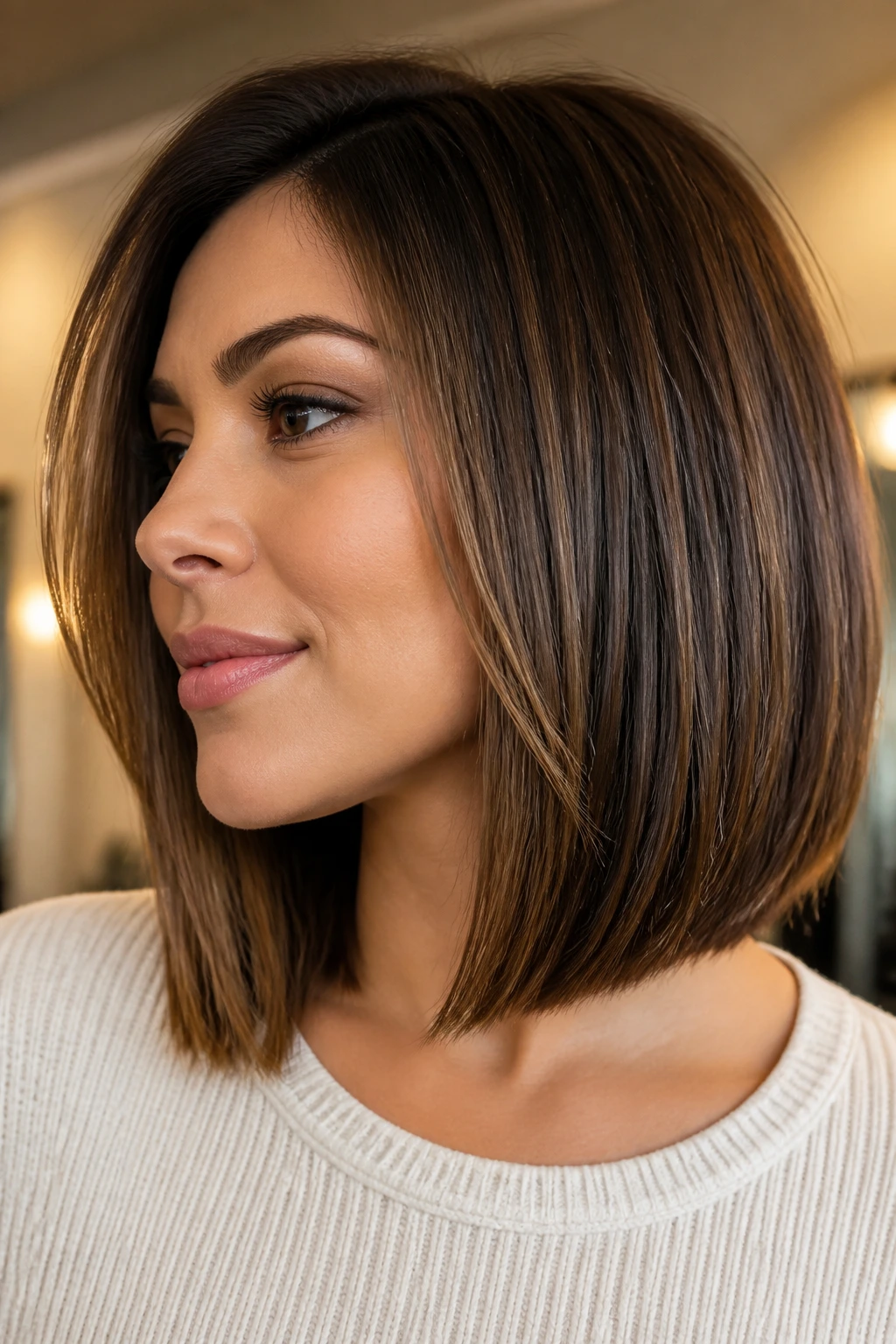
Sometimes the best short bob is the one that edges into lob territory.
A collarbone-length graduated lob gives a round face more vertical room, which is useful if you’re nervous about going too short. The longer front length creates a narrow frame around the face, while the slight stack in the back keeps the cut from looking heavy. It’s softer than a chin-length bob, and I think that’s exactly why it works so well.
The collarbone is a good stopping point because it moves the eye lower. That matters when you want to make the face look a touch longer. It also gives you room for loose waves, a tucked-behind-the-ear finish, or a low bend at the ends. Not much extra effort. More shape.
If you’re unsure about short hair, this is the safest place to start. It still reads as a bob, but it gives you breathing room around the cheeks and jaw.
10. A Razor-Cut Graduated Bob with Piecey Ends
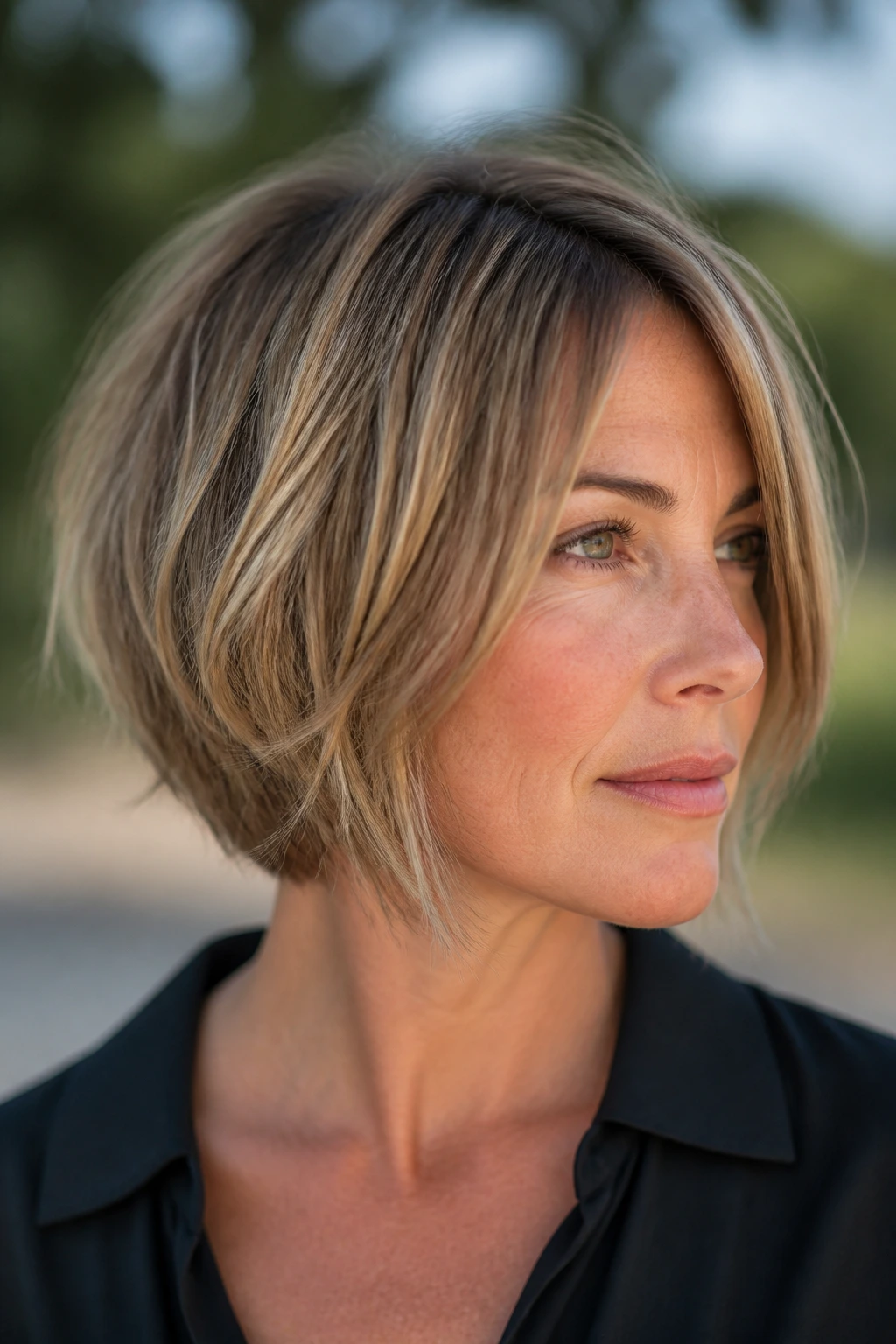
This one has attitude.
Razor cutting gives the ends a broken, airy look that can keep a short bob from feeling dense around a round face. The softer edge helps the haircut move, and movement matters because it prevents the sides from sitting like a solid block. You want shape, not helmet hair.
That said, razor cuts are not for everyone. If your hair is very frizzy or already coarse, too much razoring can make the ends look frayed. On smoother hair, though, the result is clean and choppy in a good way. I like it when the front pieces are a little longer and the ends are softened just enough to fall in small shards.
A tiny bit of texturizing paste on the fingertips is enough to piece out the front. Don’t smear it all over the head. That’s how the cut loses its lightness.
11. A Hidden-Underlayer Bob for Thick Hair
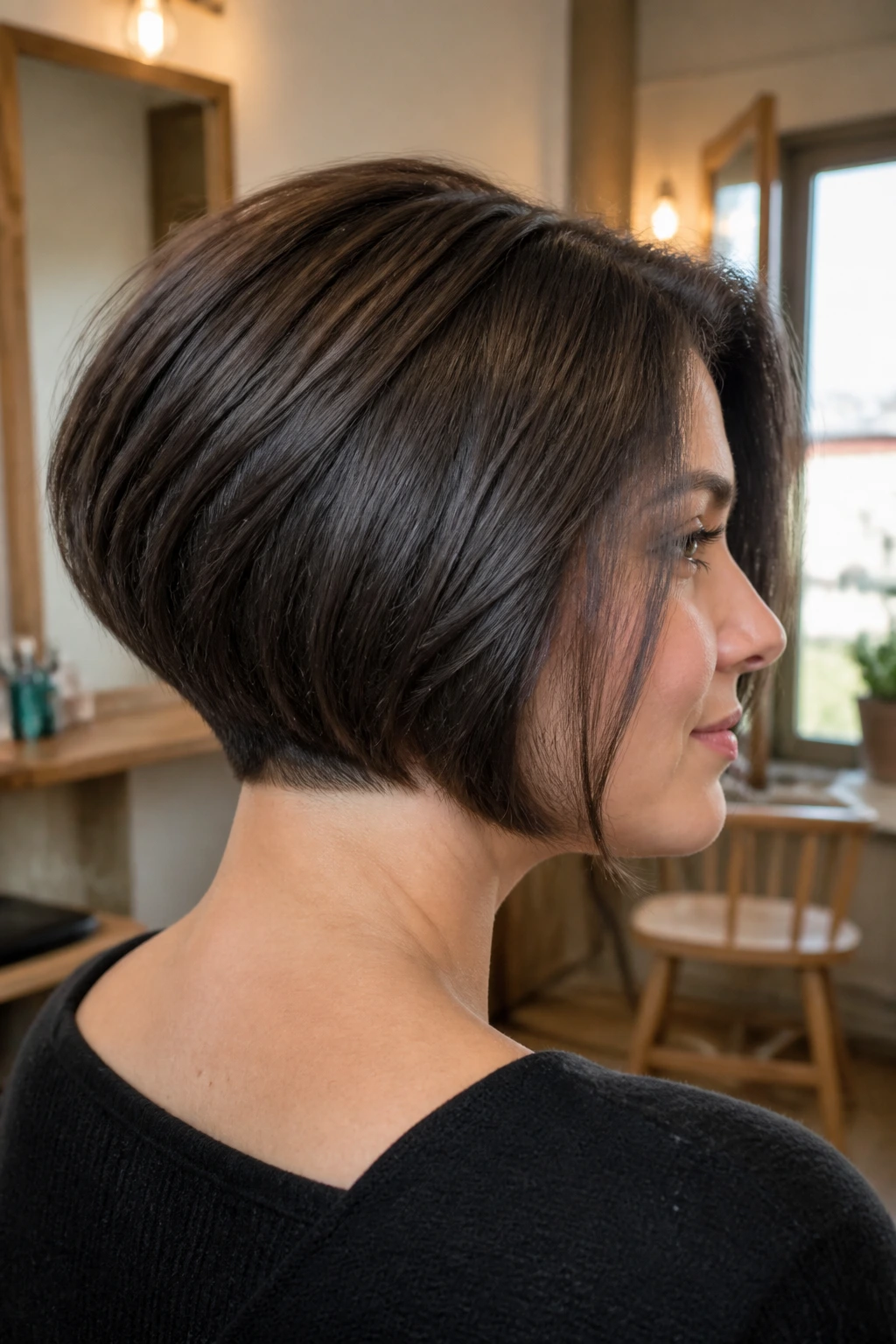
Thick hair can look gorgeous in a graduated bob, but it needs room to breathe.
The smartest version keeps the surface smooth while removing weight from the underside. That hidden underlayer lets the back stack sit close to the head without puffing out at the sides. For a round face, that tighter profile is a gift. It keeps the haircut neat and stops the width from spreading.
Why Thick Hair Loves This Cut
- The bulk is removed where it doesn’t show.
- The visible top layer keeps its polish.
- The nape stays light enough to stack cleanly.
- The front can stay longer without turning heavy.
Ask your stylist to avoid over-thinning the very ends. That can make thick hair look frayed and blunt in the wrong places. A controlled removal underneath is much better than aggressive thinning all over the head.
This is the bob I’d pick for someone with dense hair who hates triangle shape. The result is cleaner, easier to dry, and far less poofy by the end of the day.
12. A Curly Graduated Bob That Lets the Curl Pattern Lead
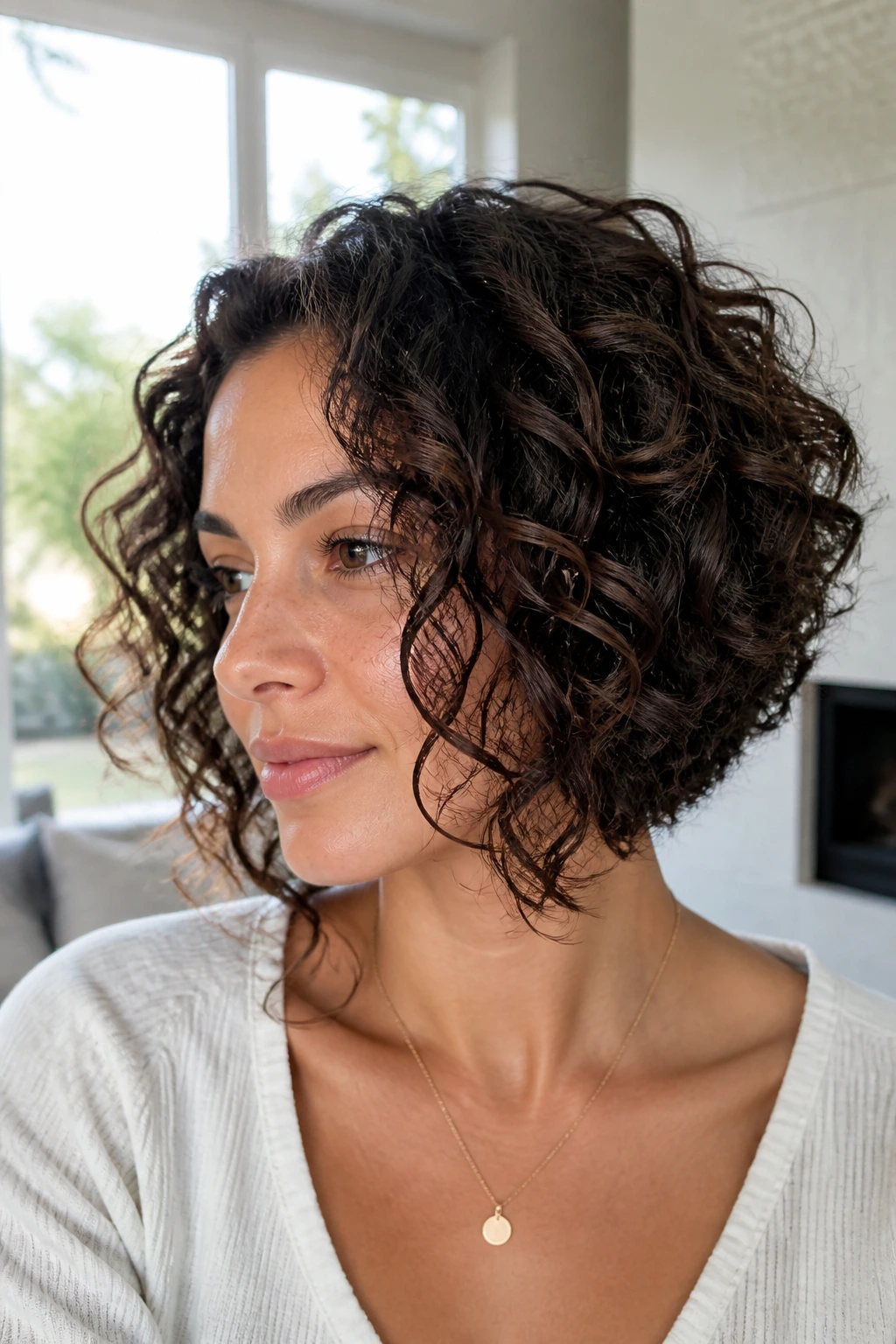
Curly hair and graduation can get along beautifully.
The cut has to respect where your curls naturally spring. If the stack in the back is too high or the front is too short, the bob can bounce outward and widen the face. But when the shape is built with curl shrinkage in mind, the haircut looks lively and balanced. The front should fall long enough to narrow the cheek area, even after the curls dry.
How to Style It
Use a gel or curl cream on soaking-wet hair, then diffuse on low heat until the curls set. Scrunching too early can break the curl clumps and make the shape frizzier than it needs to be. Let the hair cool before you separate anything.
This version works best when the stylist cuts curl by curl, or at least checks the fall when the hair is dry enough to show its real shape. That part matters. A curly bob can look short when wet and far shorter once it dries, so planning for shrinkage saves you from an accidental puffball.
13. A Blunt-Edged Bob with a Soft Bevel at the Bottom
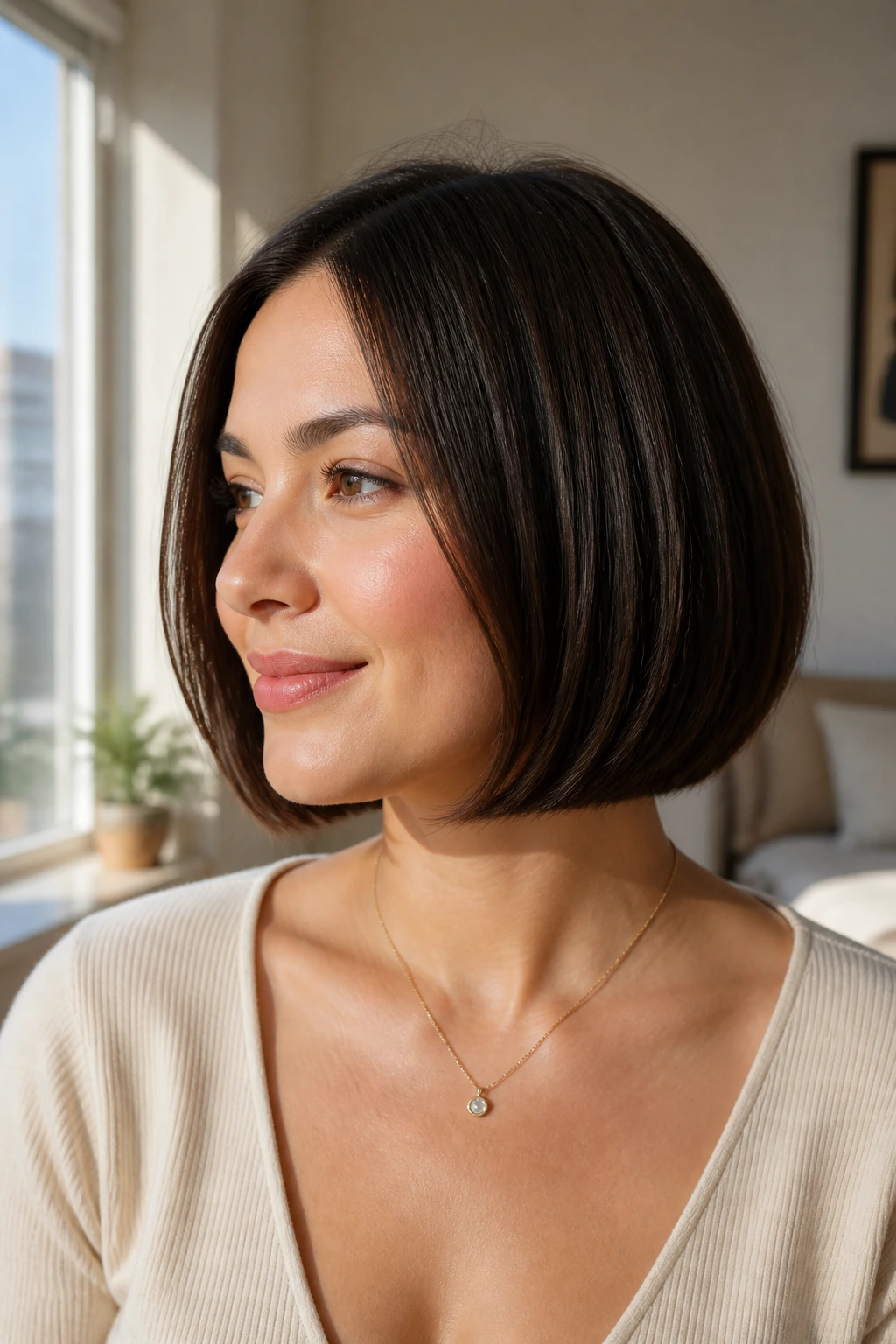
Blunt does not have to mean harsh.
A blunt-edged bob with a soft bevel gives you a neat outline while still letting the ends curve under a little. On a round face, the clean line can work if the length sits slightly below the jaw and the crown has some lift. The bevel keeps the cut from looking square.
I like this version on straight hair because the finish looks deliberate, not overworked. It also photographs well in real life, which sounds silly until you’ve seen a blunt bob that looked great in the chair and too heavy the minute the person walked outside. The slight bevel fixes that problem.
If you want the ends to tuck naturally, ask for a tiny bit of stacking in the back and a soft point-cut at the perimeter. That gives the haircut structure without making it look carved.
14. A Curtain-Bang Bob That Opens the Face
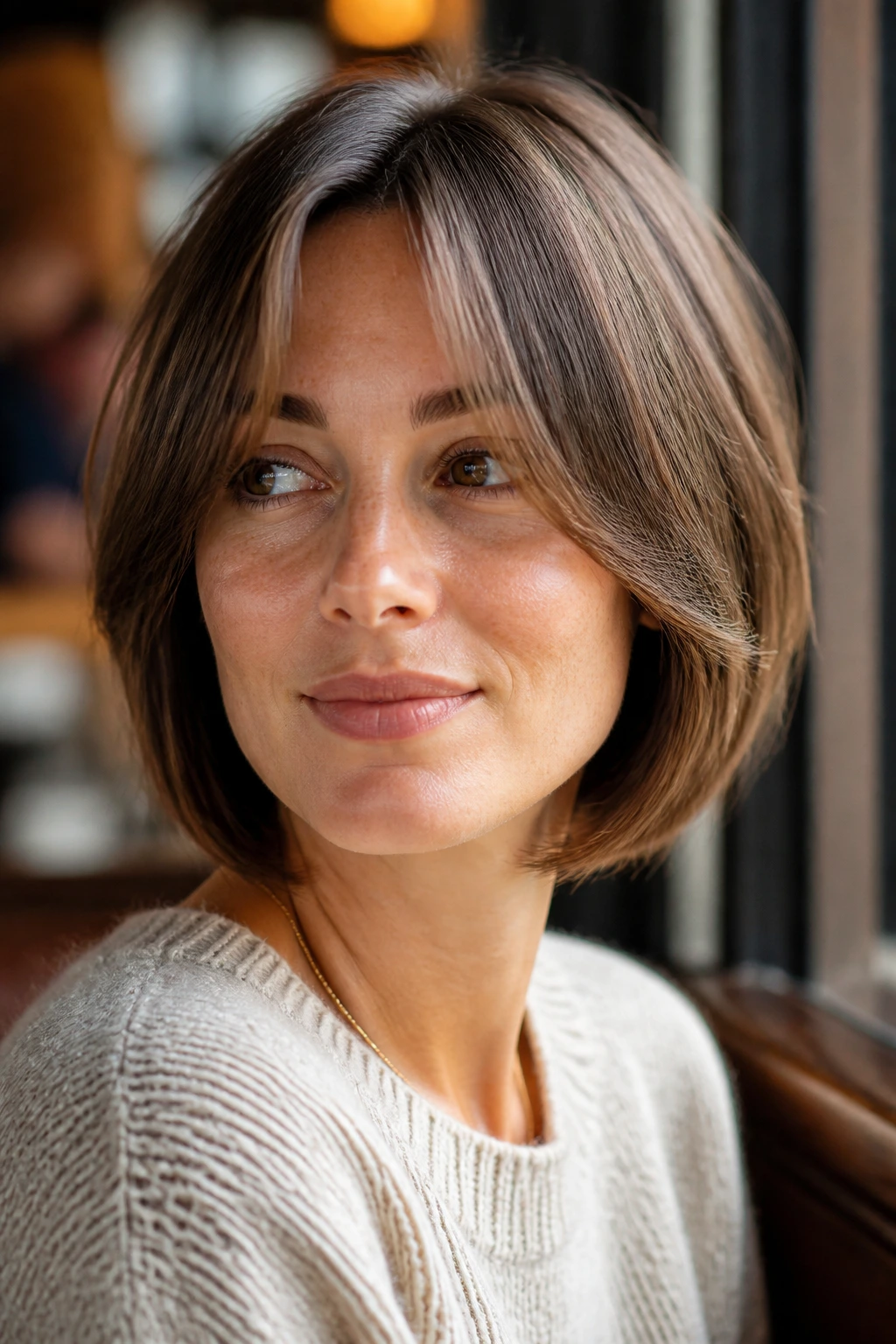
Curtain bangs are one of the easiest ways to soften a short graduated bob.
They create a center opening that pulls the eye downward, then frame the sides in a way that doesn’t crowd the cheeks. On a round face, that split is useful because it adds length at the center while still giving softness around the temples. The trick is keeping the bangs long enough to sweep, not short enough to sit like a shelf.
A good curtain-bang bob usually works best when the shortest bang pieces hit around the bridge of the nose or just below it. From there, the sides taper into the rest of the cut. That length lets them move instead of sticking out.
This is one of my favorite options for someone who wants a bob with a little softness in front. It can be styled with a round brush, or even just bent with fingers and a blow-dryer. Easy. Friendly. Not too precious.
15. A Soft Shag-Bob with Graduation at the Back
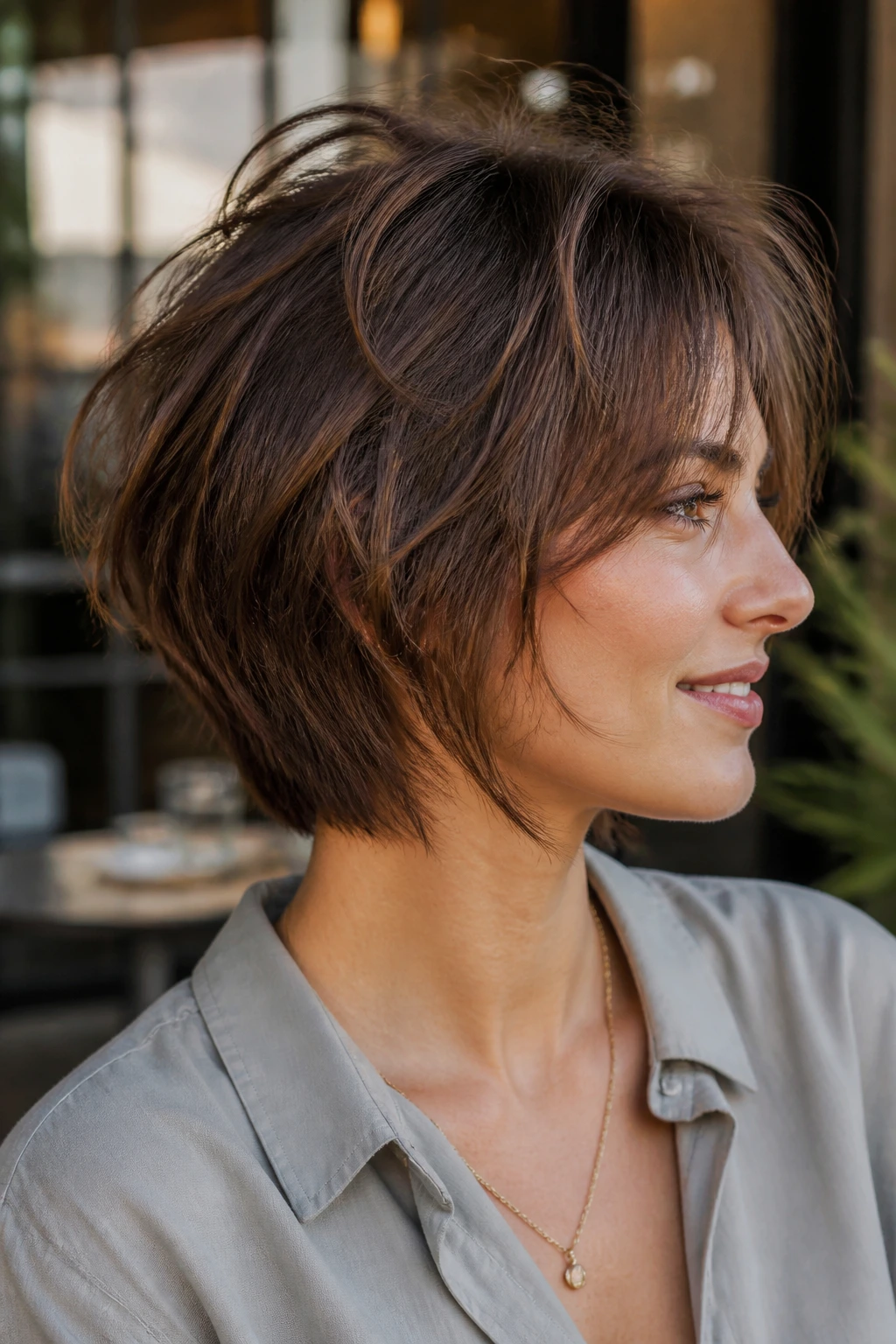
A shag and a bob do not have to fight each other.
When the layers stay controlled, a shag-bob can be a great choice for a round face because it gives the top section lift and the sides a broken edge. The graduation in the back keeps the shape short and defined, while the shaggier front pieces stop the haircut from feeling heavy. It’s looser than a classic bob, which is the point.
This is one of those cuts that rewards a little mess. Air-drying with a bit of curl cream or soft mousse can look better than trying to flatten every wave. If the hair is too polished, the layers may read as choppy in a bad way. When the texture is relaxed, the whole cut feels lighter.
I’d skip this if you want a sharp, tailored silhouette. If you want movement and a bit of edge, it’s a strong pick.
16. A French Bob with a Longer Fringe and a Tight Nape

The classic French bob can be tricky on a round face, but the right version works.
A too-short French bob can make the face seem wider because it draws attention straight across the cheeks. Add a slightly longer fringe and a tighter nape, though, and the cut starts to behave very differently. The fringe should graze the brows or sit just under them, then soften at the sides so the face doesn’t get boxed in.
The nape area is where the shape gets its neatness. If it’s stacked close to the head, the whole cut looks more intentional and less floppy. I like this version when someone wants a little Paris-y attitude without going too blunt in the front.
It’s a bold cut, though. If you wear glasses, keep the fringe a touch lighter so the frame and bangs do not fight each other. That tiny adjustment makes a big difference.
17. An Off-Center Part Bob That Shifts the Face Line
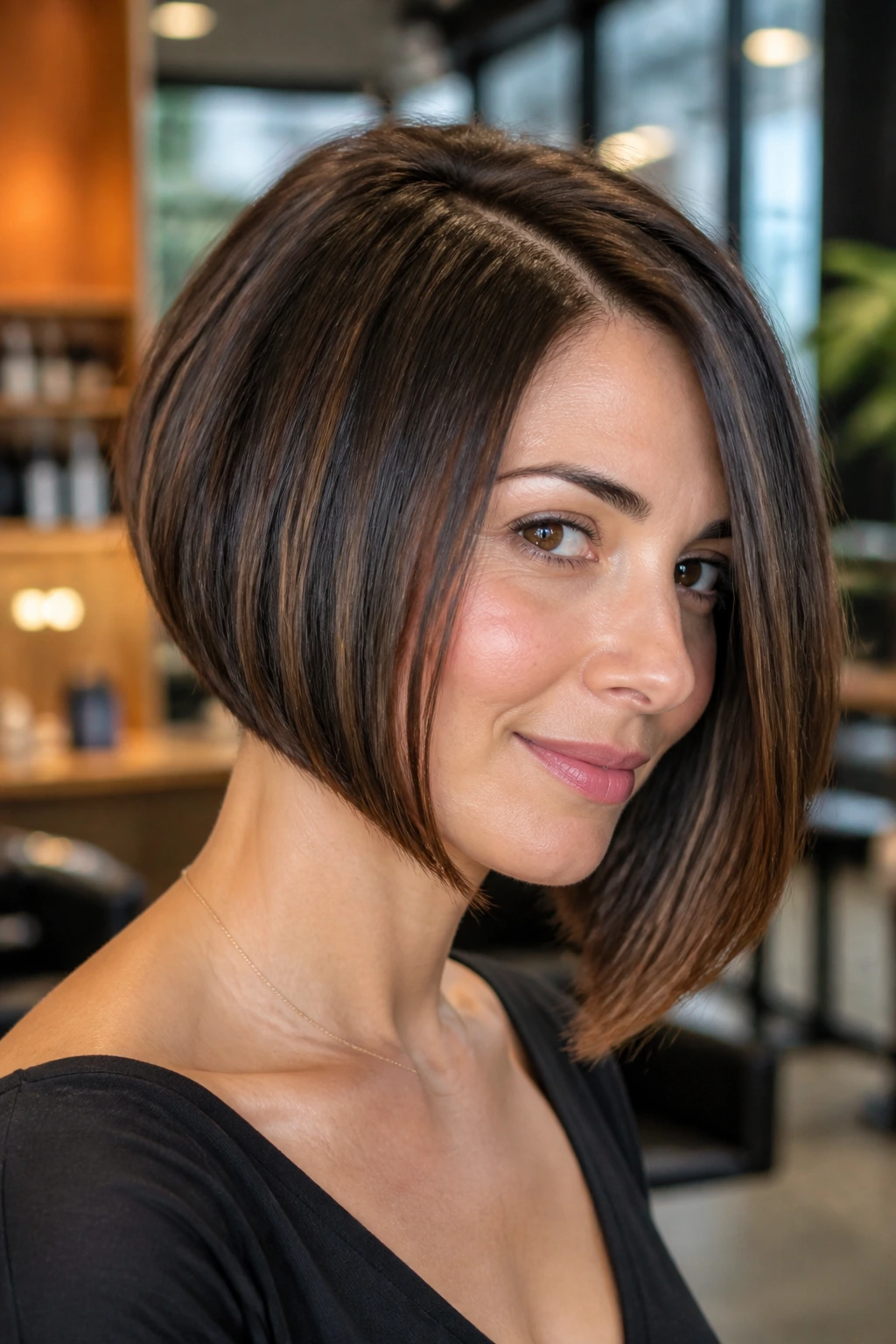
A tiny part change can do more than a dramatic haircut.
An off-center part breaks the symmetry of a round face and gives the bob a slanted line right away. That’s useful if your features are soft and you want the haircut to create some structure without layers everywhere. The part itself does some of the shaping, which is nice when you want something simple.
The cut underneath can stay fairly classic: a graduated back, a smooth side, a front that sits a bit below the jaw. The real magic is in how the hair falls. One side gets a little more weight, the other opens up the cheek area, and the face looks less circular.
If your hair refuses to stay put, blow-dry the part first and clip the heavier side while it cools. That small habit helps the line hold longer. No drama required.
18. A Sideburn-Framing Bob with Pieces That Linger at the Jaw
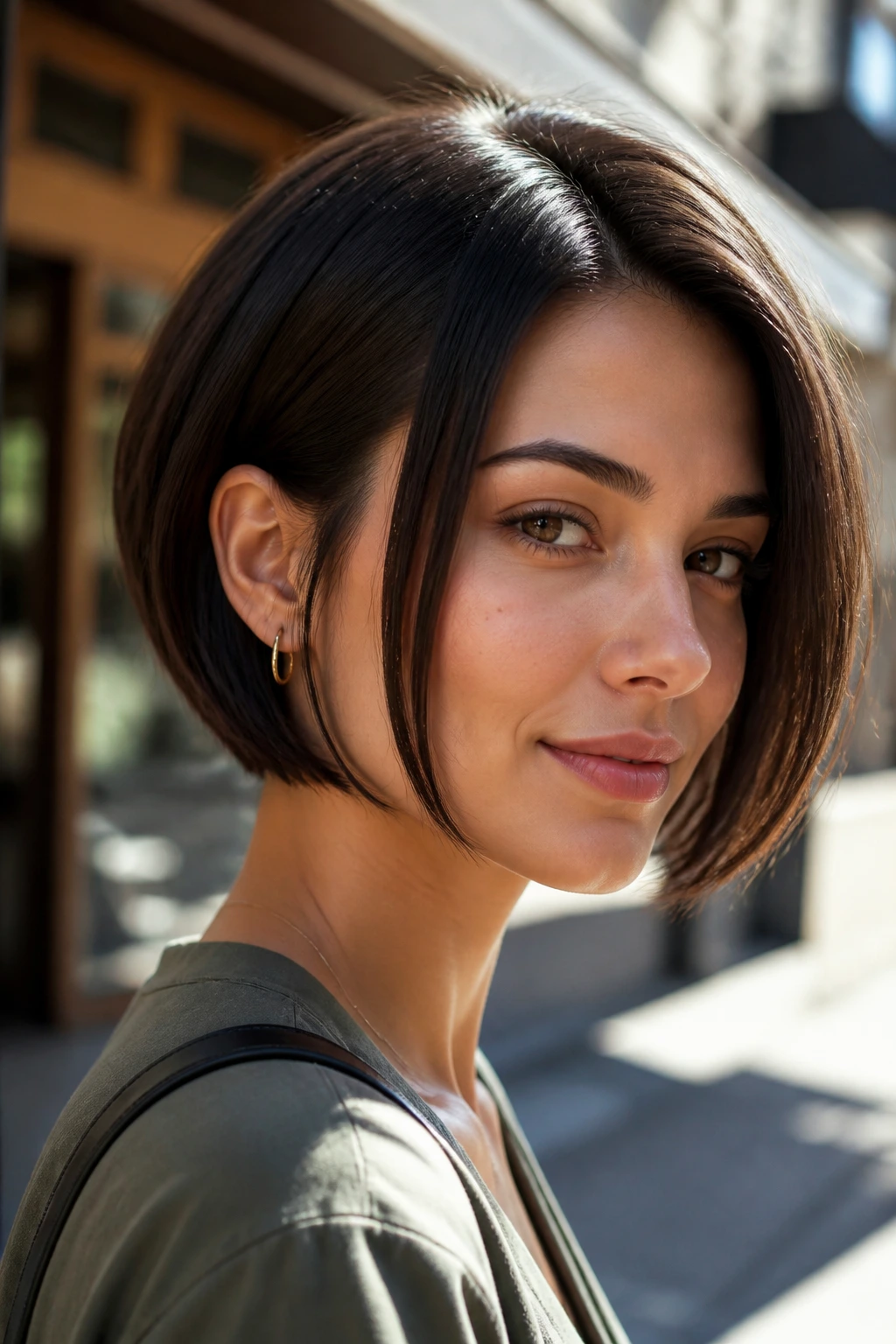
This one is all about the edges.
Sideburn-length pieces soften the transition from hair to face, which helps a round face feel less broad at the sides. The rest of the bob can stay graduated and neat, but those slim front pieces give the haircut some vertical motion near the jaw. That’s where the shape gets interesting.
I like this look on straight or loosely wavy hair, because the front pieces can tuck behind the ear or fall forward depending on the day. The length should be deliberate, not random. You want those pieces to land somewhere between the jaw and the top of the neck so they narrow, not widen.
There’s a nice low-maintenance quality here too. Even when the rest of the bob grows out a little, the front framing pieces keep doing their job. That makes the haircut easier to live with between salon visits.
19. A Highlighted Bob That Uses Color to Stretch the Shape
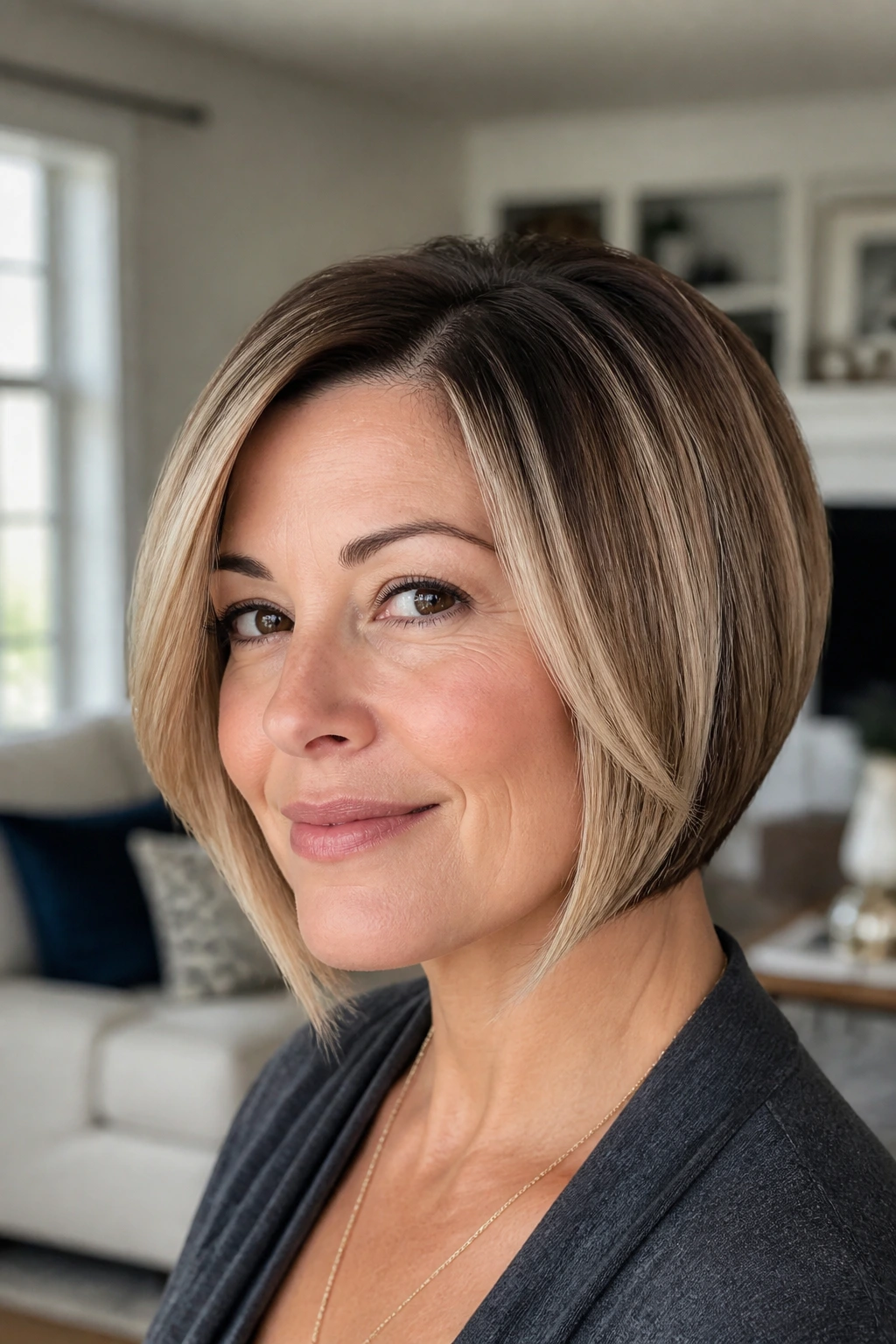
Color can change a haircut more than another half-inch of length.
Strategic highlights in a graduated bob can draw the eye along the cut and make the front pieces look longer. On a round face, that visual line matters. A lighter ribbon around the front and a slightly deeper tone underneath the back stack can create a slimmer reading without changing the cut itself.
I prefer soft dimension over chunky stripes here. Chunky color tends to widen the face if it sits too high on the sides. Fine, blended highlights through the front and crown are better because they guide the eye instead of stopping it.
This works especially well on bobs that already have a clean angle. The color reinforces the shape. If you’re bored with your current cut but do not want to lose length, changing the tone around the face can make the whole thing feel new again.
20. An Airy Bob for Fine Hair with Internal Layers
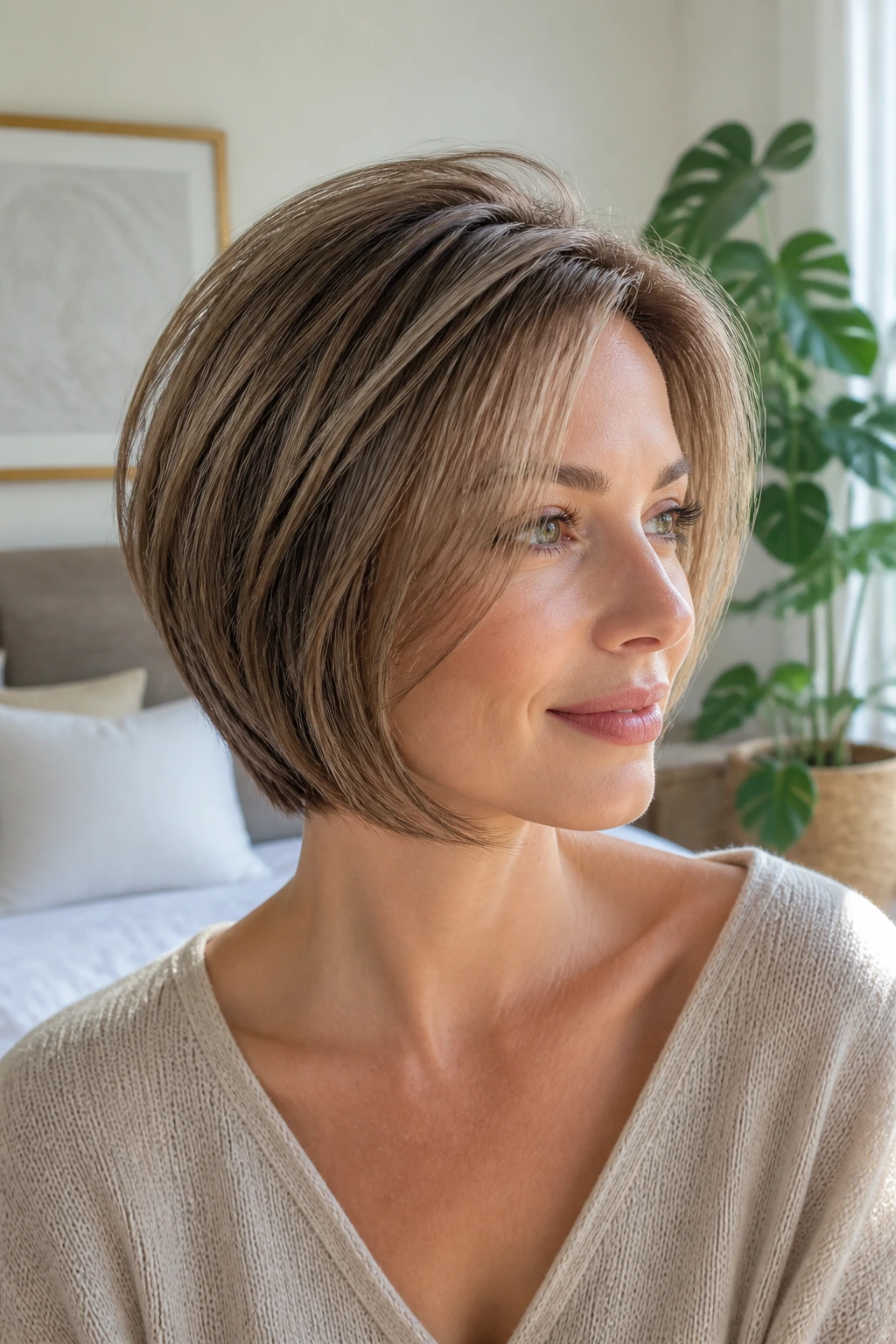
Fine hair can look fuller without looking bulky.
The answer is internal layering, not a lot of surface choppiness. An airy graduated bob keeps the outside line smooth while taking weight out from inside the shape. That gives the hair lift at the crown and movement around the jaw, which is exactly what a round face usually needs.
What to Ask Your Stylist
- Keep the perimeter clean.
- Remove weight inside the back and crown.
- Leave the front slightly longer than the cheekbone.
- Avoid too many short layers near the sides.
A bob like this dries faster than a heavily layered one, and that’s useful if your morning routine is short. Use a light volumizing spray at the roots and a medium brush through the top. That’s enough for most fine hair; more product can flatten it.
The result feels airy, not thin. There’s a difference, and it matters.
21. A Sculpted Bob for Thick Hair with a Tight Stack
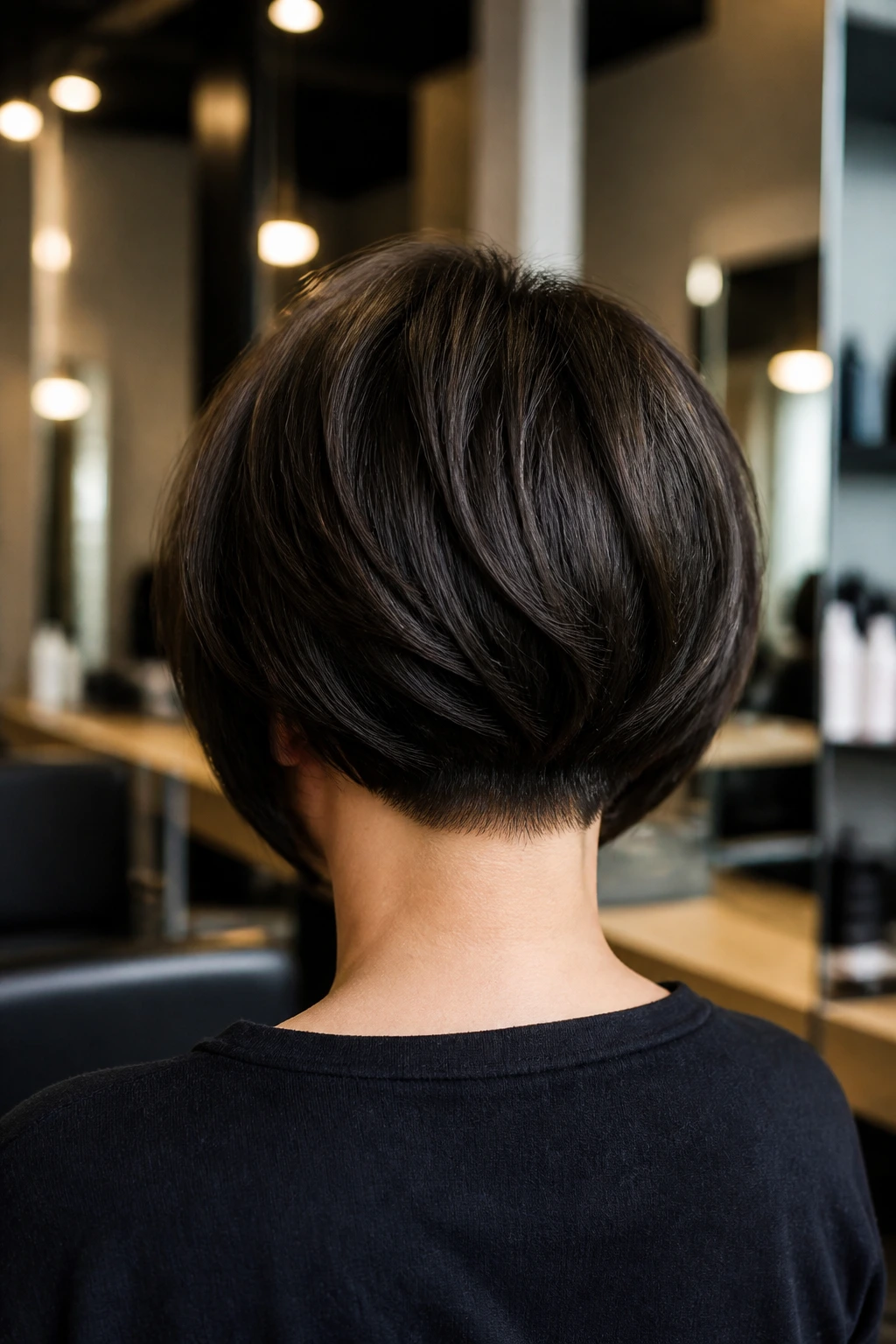
Thick hair wants shape, not guessing.
A sculpted graduated bob with a tight stack in the back gives dense hair a clear outline and stops it from spreading outward. For a round face, that tighter internal structure is a big help because the haircut hugs the head more closely. The front pieces can still be longer, but the overall silhouette stays controlled.
This version depends on good weight removal in the right places. Take too much from the top and the cut balloons. Take too little from underneath and it looks heavy by the afternoon. The balance is delicate, which is why thick hair usually needs a more skilled hand here.
I’d style it with a smoothing cream and a blow-dryer nozzle, then finish the ends with a brush so they curve inward just a touch. If you want shine, one light pass with a flat iron on the front is enough. No need to press the life out of it.
22. A Grown-Out Graduated Bob with a Soft Center Part
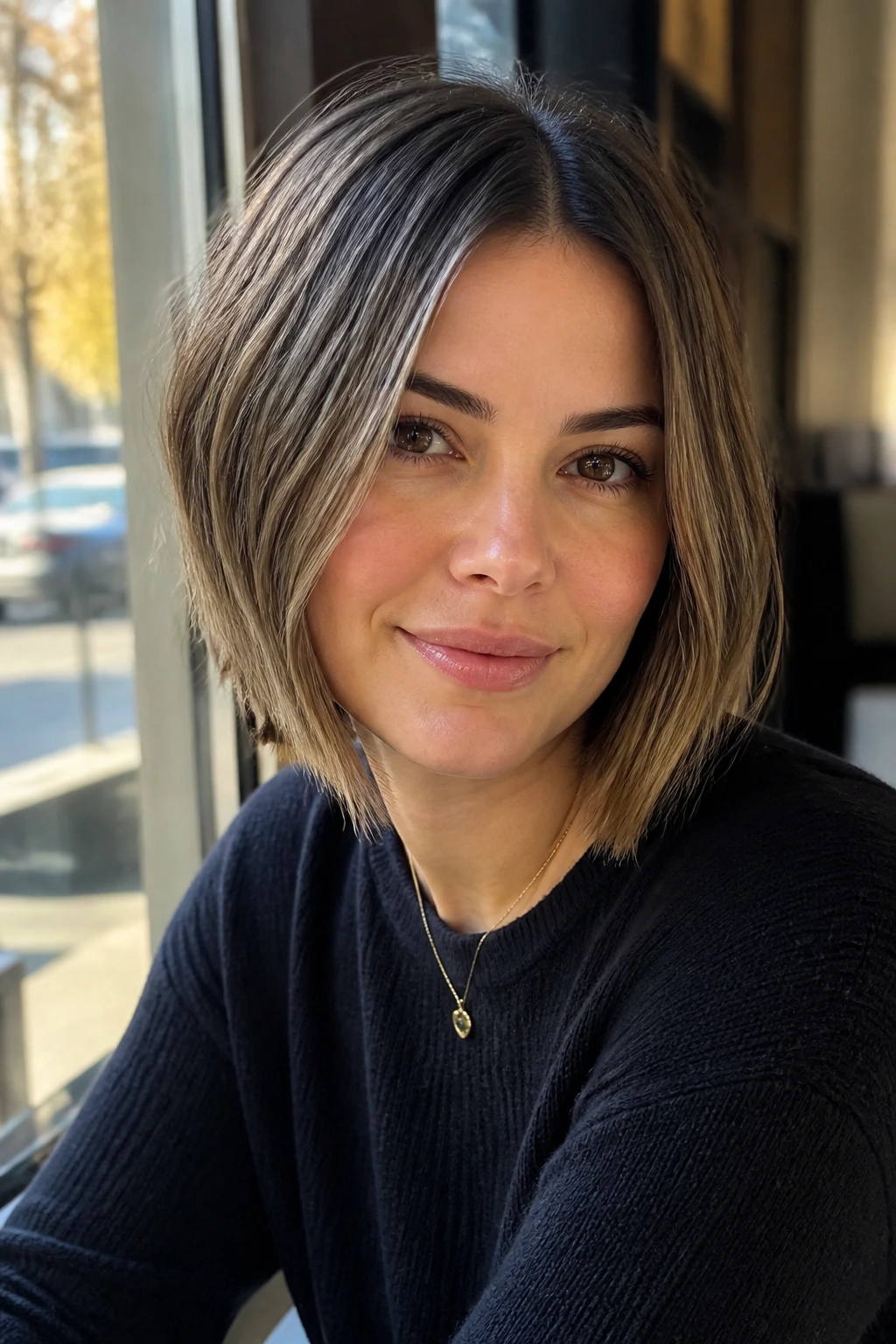
This is the easiest one to live with.
A grown-out graduated bob keeps the back short enough to hold shape, but lets the front drift a little lower, often toward the jaw or just below it. For a round face, that extra length can be a relief. It gives the face more room and takes some pressure off the cheeks while still reading as a real bob.
A soft center part works well here because it creates symmetry without making the haircut feel rigid. If the part sits too deep on one side, the grown-out shape can tip into imbalance. Keep it soft, keep the ends neat, and let the front lengths do the narrowing.
This is the version I’d choose if you want a short graduated bob but do not want a haircut that demands constant fixing. It grows out gracefully, it still looks shaped after a few weeks, and it does the one thing a round face usually wants most: it gives the eye a longer path to follow.
