



A short wolf cut on men can look sharp, or it can look like you stopped halfway through two different haircuts. The difference usually comes down to where the weight sits: too much length at the sides and it turns shaggy in a bad way, too little length up top and the whole shape collapses into a plain crop.
The version that works has a clear idea behind it. You want movement at the crown, broken texture through the fringe, and sides that stay tight enough to keep the shape readable. That’s the sweet spot. Miss it, and the cut starts looking fuzzy instead of lived-in.
If you’re taking this to a barber, a photo helps more than a speech ever will. Even better, know the numbers you want: top around 3 to 5 inches, fringe long enough to fall forward, and sides trimmed short without shaving the shape away. Straight hair, waves, curls, thick density, fine hair — each one behaves differently, and the good short wolf cuts are built around that.
Some versions lean cleaner. Some lean messier. A few sit right on the edge of a mullet, which is why this cut has such a strong opinion about it. The trick is picking the version that matches your hair, your face, and how much effort you’re willing to put in before breakfast.
1. Textured Fringe Wolf Cut
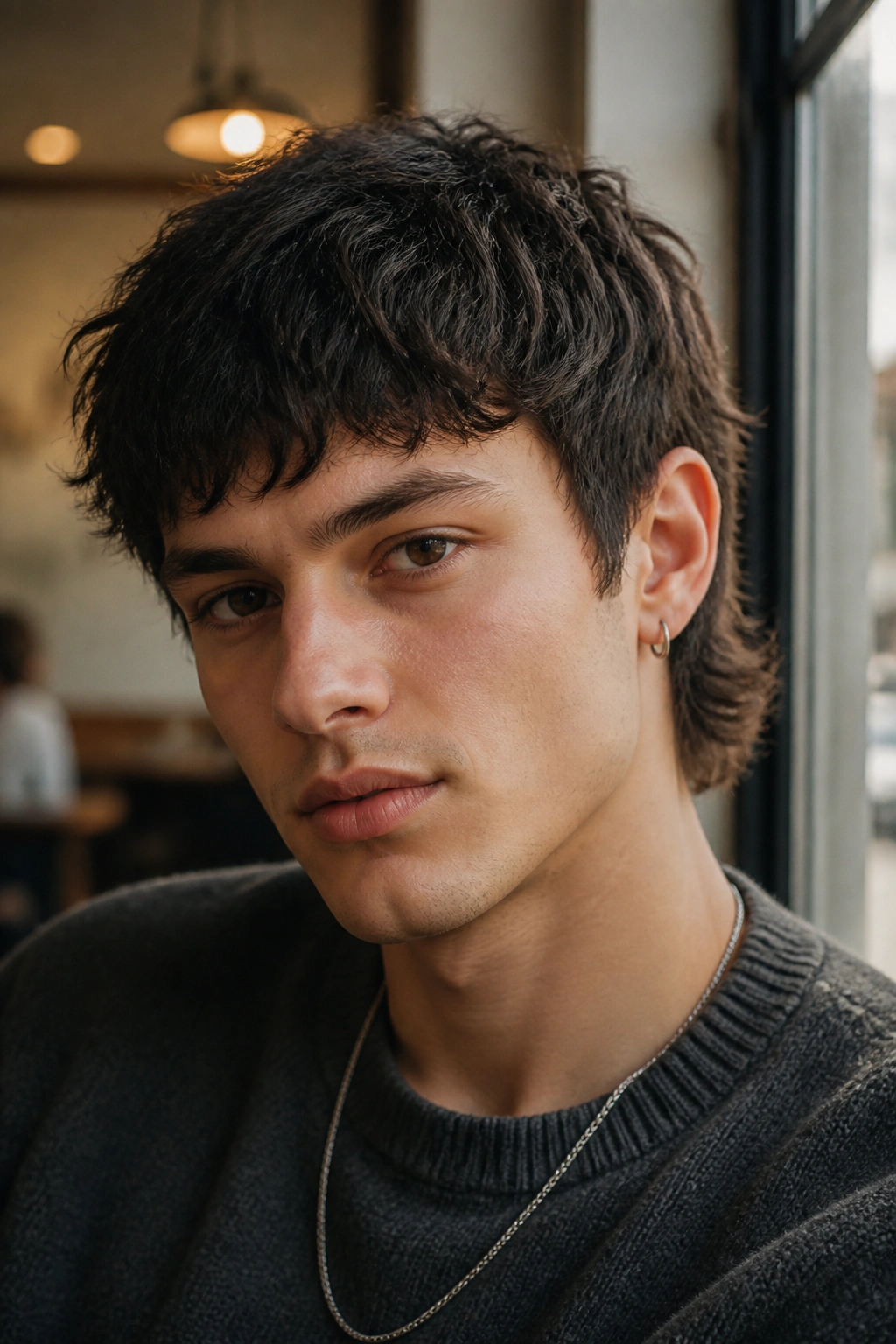
This is the easiest short wolf cut for men to wear because the fringe does a lot of the work. Keep the front broken and a little uneven, not blunt, and let the crown stay soft so the shape feels deliberate instead of helmet-like.
Why the Fringe Carries the Style
A good textured fringe gives the haircut a clear front edge, which is what keeps the wolf cut from turning into a generic shag. The front should sit somewhere around eyebrow level, with the rest of the top layered so it can push forward without collapsing flat.
Ask for point-cut ends rather than a heavy straight line. That little bit of irregularity matters. It softens the line of the hair and makes the cut move when you run your hands through it.
- Top: about 3 to 4 inches
- Fringe: long enough to brush the brows
- Sides: short taper, not skin-tight
- Product: matte clay or texture paste
Best for: men with straight or slightly wavy hair who want movement without looking too styled.
2. Taper Fade Wolf Cut
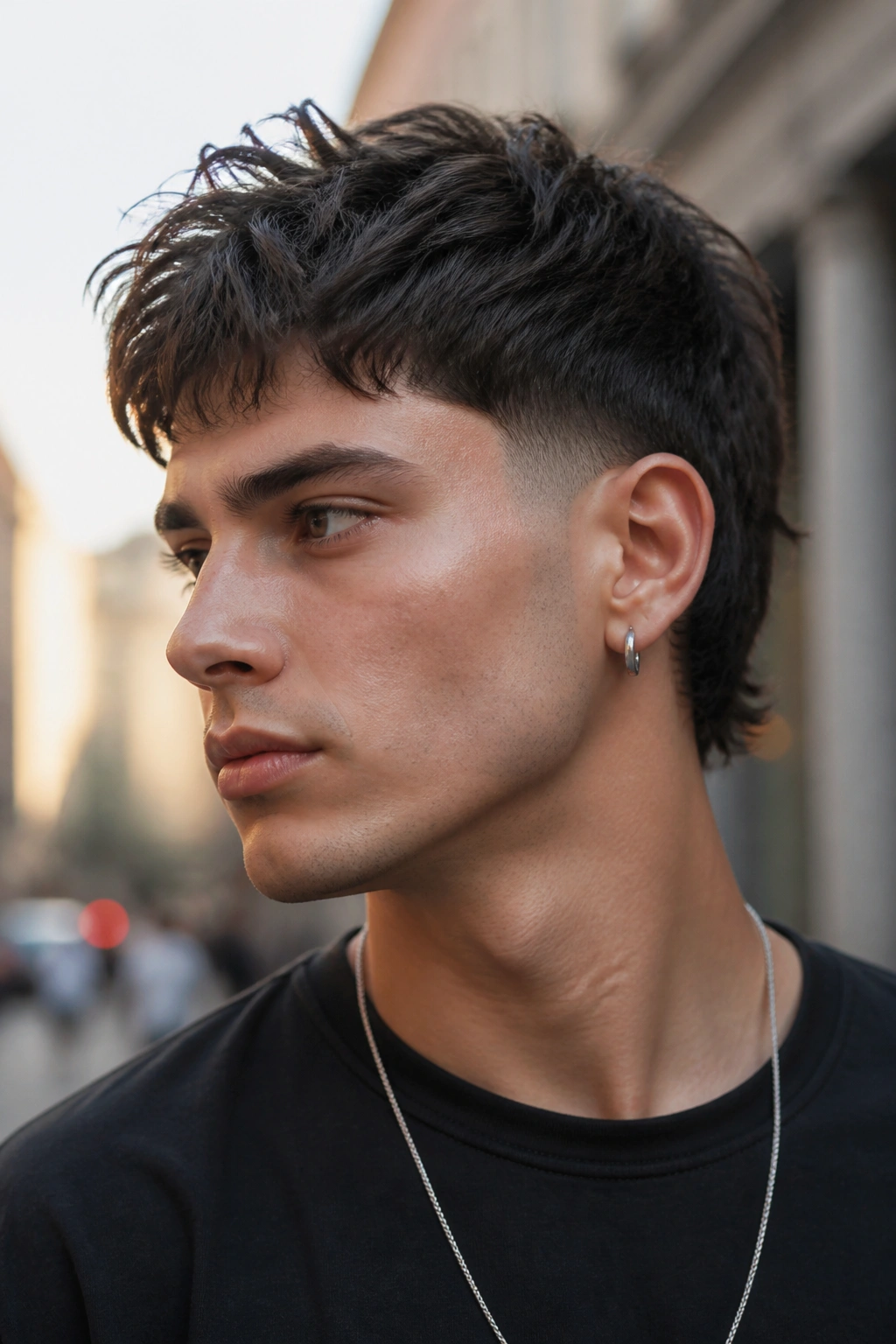
Want the wolf cut to feel cleaner? A taper fade is the easiest way to do it. The fade keeps the edges neat around the ears and neckline, while the top still holds that layered, slightly wild shape.
The important thing is contrast. If the fade goes too high, the haircut starts losing the wolf shape and just becomes a faded crop. Keep the taper low and let the crown stay longer than the front by a small margin. That gives the style its bite.
How to Ask for It
Tell the barber you want a low taper at the temples and neckline, not a full blown fade up the sides. Then ask for scissor work on top so the layers don’t look clipper-flat.
A small amount of sea salt spray works well here, especially if your hair lies down easily. Blow-dry it forward with your fingers, not a brush, and stop when the roots have a bit of lift. No need to make it perfect.
3. Curly Short Wolf Cut
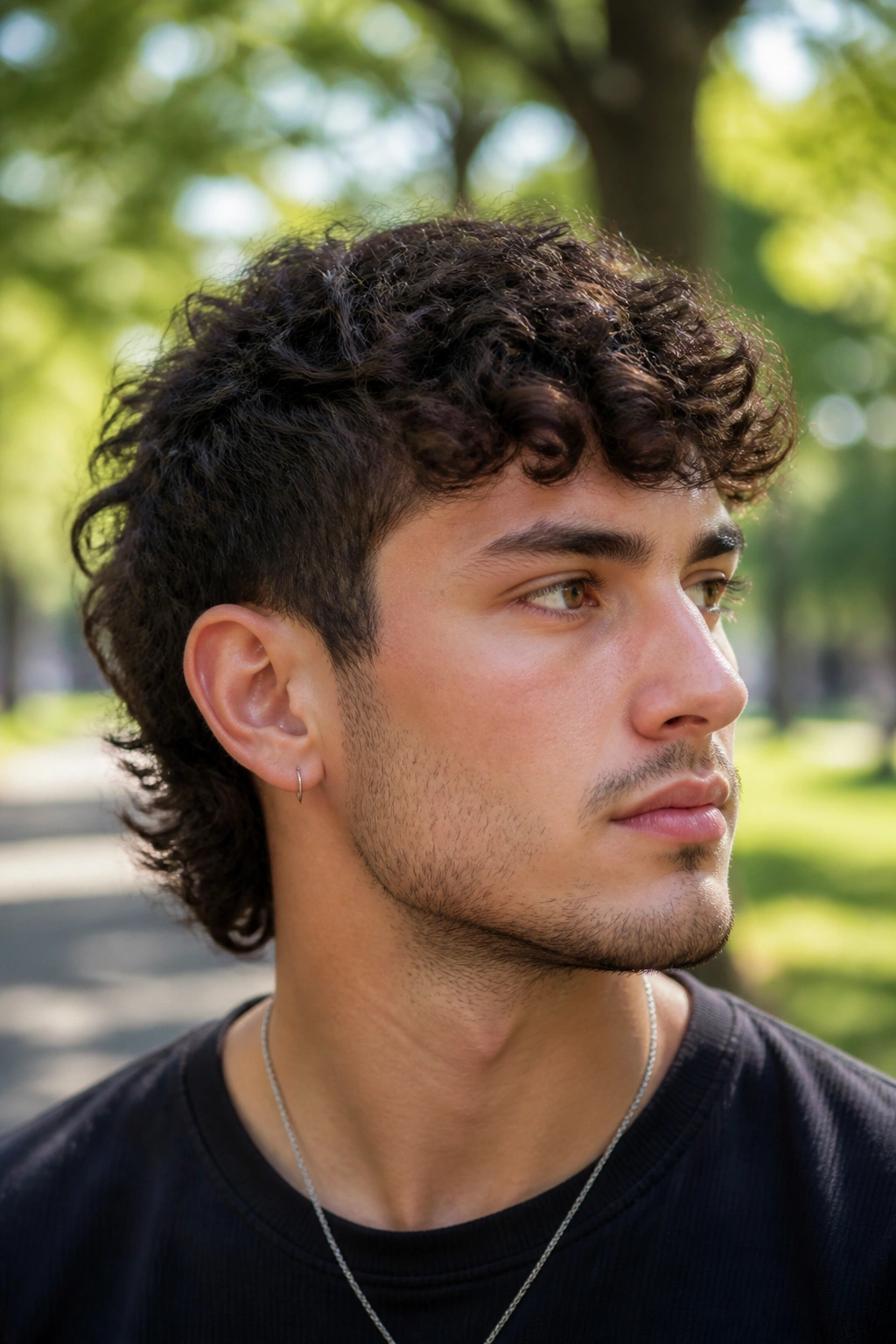
Curly hair makes a short wolf cut look fuller than it really is. That’s the upside. The downside is that curls can bulge in the wrong places if the layers are cut without a plan.
What you want is shape, not bulk. The crown should stay slightly heavier than the sides, but the sides still need enough length to connect the whole cut. If the barber takes too much off near the temples, the top can puff out like a mushroom. Not good.
Curl-Friendly Details
- Leave enough length on top for the curls to stack naturally
- Use scissors, not just clippers, so the curl pattern stays intact
- Keep the neckline clean but not razor sharp
- Style with curl cream on damp hair, then scrunch gently
A diffuser helps, but don’t overdo it. Two or three minutes of low heat is usually enough to keep the curl from drying into a frizz halo. Let the hair fall where it wants, then shape only the top layer with your fingers.
4. Wavy Bedhead Wolf Cut
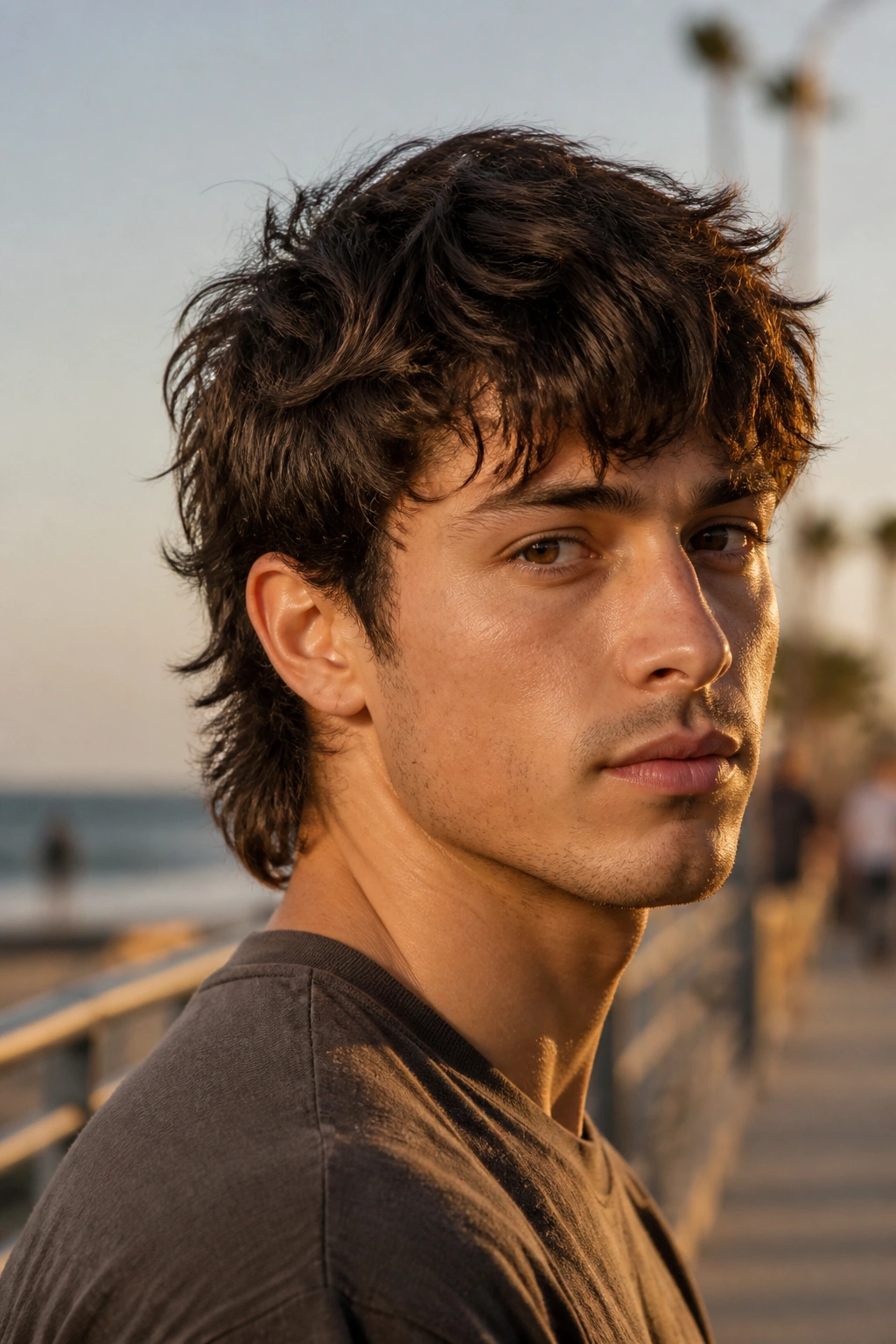
Wavy hair and the short wolf cut get along fast. The waves already create movement, so the haircut only needs enough layering to keep everything from sitting in one flat sheet.
This version looks best when the edges are a little rough. Not sloppy. Rough in the good way — the kind that looks like you spent five minutes on it and somehow avoided trying too hard. The crown should be cut with soft graduation, while the fringe can fall forward or split slightly off center.
A light mousse works better than heavy clay here. Clay can drag the waves down and make the top feel stiff. Mousse keeps the hair airy, which is the whole point.
This is also one of the easiest short wolf cuts for men to grow out. The shape doesn’t vanish fast. It just gets looser, and that usually looks better than a strict cut growing out awkwardly.
5. Messy Crop Wolf Cut
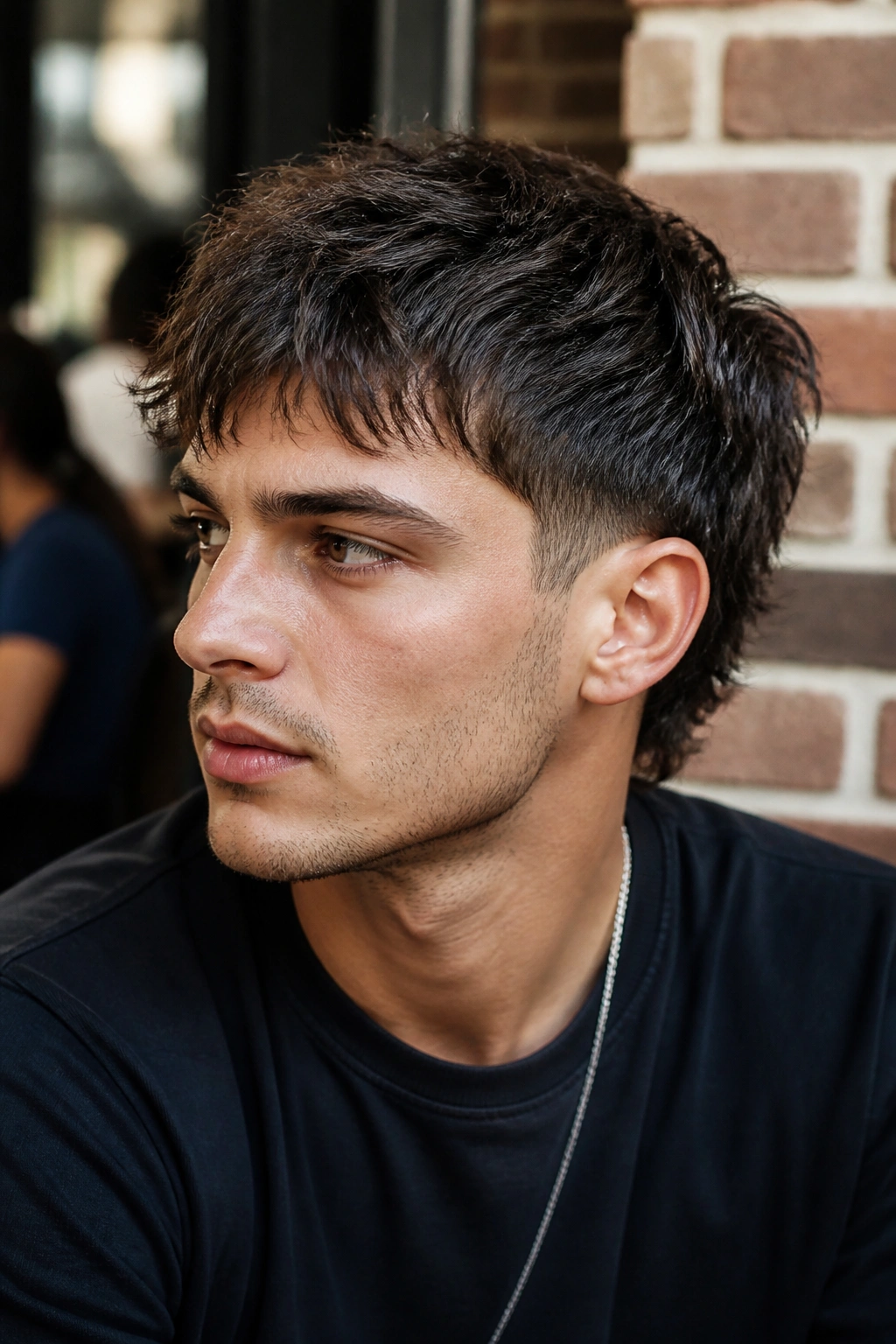
This is the version for men who want the wolf cut without the drama. It keeps the top short enough to style in a minute, but the layers still give it that rough, broken finish that makes the haircut interesting.
What Makes It Work
The key is the front section. Keep it choppy and a little shorter than the crown so the hair falls forward instead of just sitting up like a regular crop. The sides should be trimmed down, but not brutally tight, because you still need a little weight around the head for the wolf shape to read.
Ask for a crop with soft internal layers. That phrase matters. You’re not asking for a blunt French crop or a disconnected mullet. You’re asking for something in the middle.
- Best with thick straight hair
- Works well with a matte paste
- Needs almost no blow-drying
- Grows out cleanly over several weeks
Pro tip: pinch the ends with your fingers after styling. That tiny move breaks up shine and makes the cut look less polished, which is exactly what this version wants.
6. Two-Block Wolf Cut
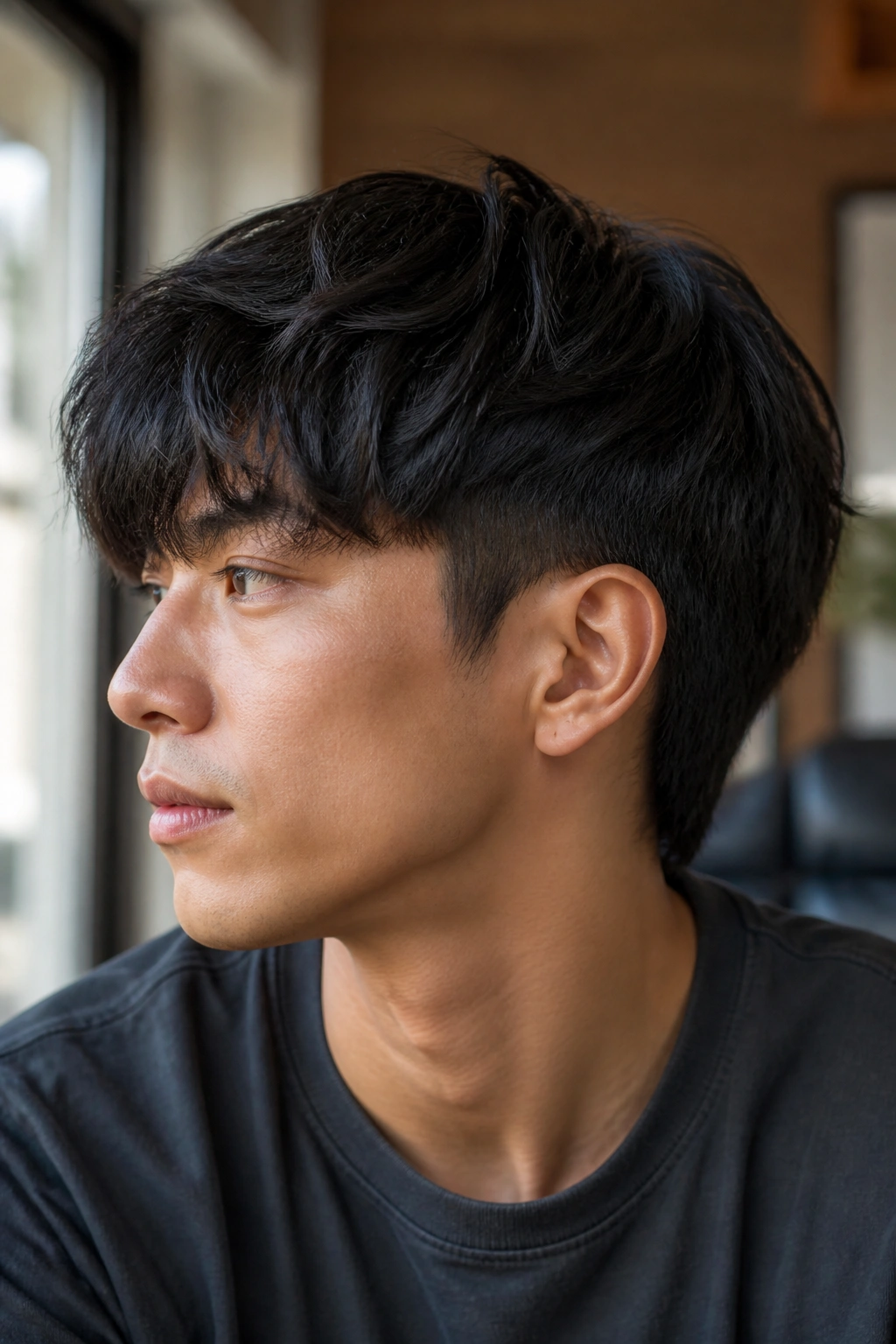
The two-block wolf cut has more separation than most men expect, and that’s why it works. The sides and back stay shorter, while the top and fringe keep enough length to drape over the head in a loose, layered way.
Compared with a standard taper version, this one feels more graphic. The outline is clearer. You can see the top sitting on top of the shorter sides, which makes the haircut look intentional even when it’s messy.
It suits men with thick hair especially well because the cut removes weight without stripping away movement. If your hair gets bulky fast, this is a smart place to start. Keep the top around 4 inches, leave the fringe soft, and ask for the sides to be thinned rather than scalped.
The styling is easy. A little cream, a quick finger comb, done. If you like hair that looks good even when it’s slightly imperfect, this version is hard to beat.
7. Undercut Wolf Cut
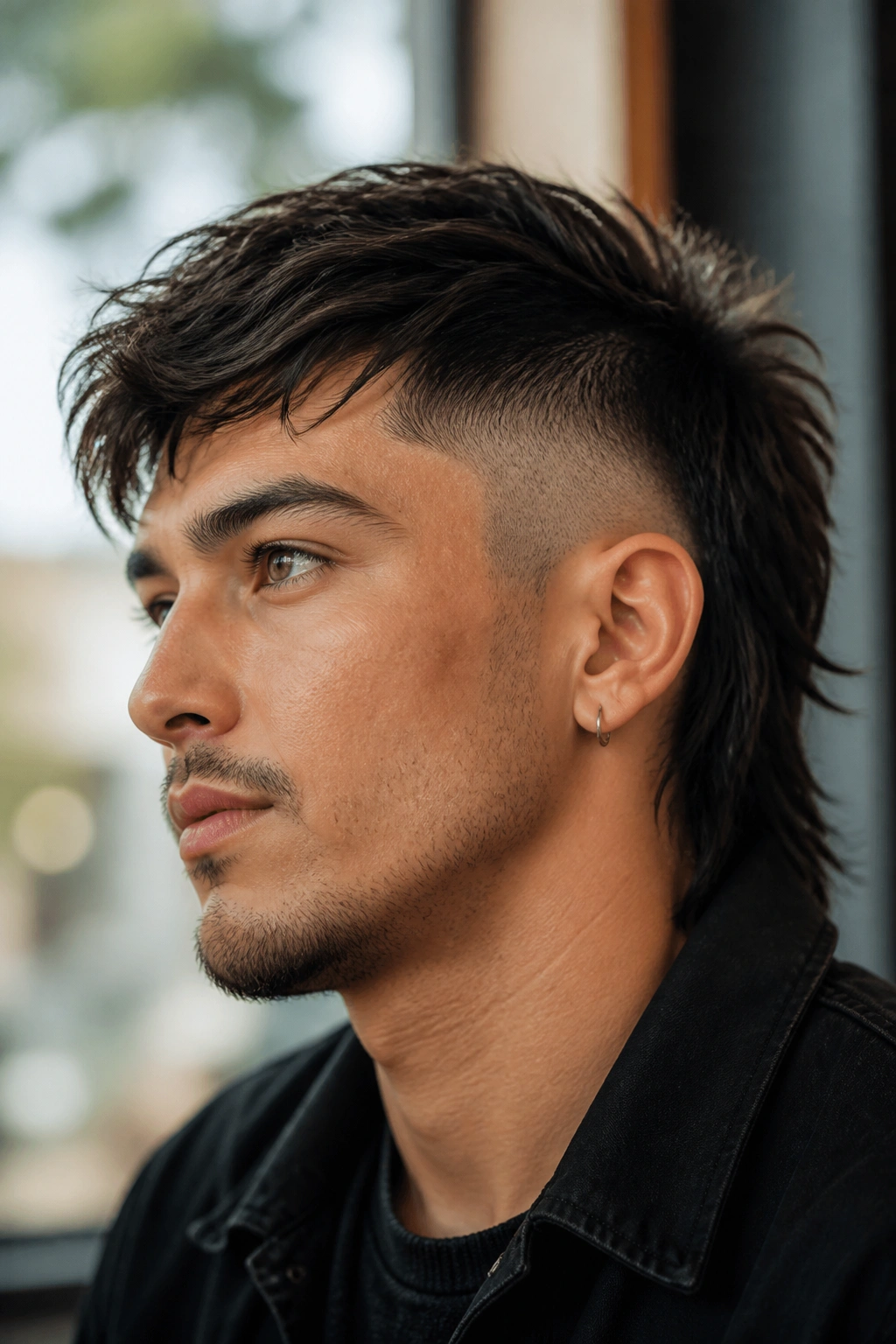
An undercut wolf cut is more aggressive than the taper versions. The sides drop away harder, which makes the top layers stand out the second you walk into a room.
That contrast is the whole point. The haircut becomes more dramatic, but it also gets less forgiving. If the top is too short, the style loses its shape. If the undercut is too high, the wolf effect disappears and you’re left with a disconnected top that feels unfinished.
This version suits straight or thick hair that naturally hangs heavy. You need enough density on top to keep the silhouette alive. Fine hair can work too, but only if there’s enough texture built in with scissors or a razor.
Who Should Pick It
Choose this if you want the haircut to look sharper around the edges and you don’t mind the upkeep. It needs regular cleanups to keep the undercut from growing into a bulky shelf.
If your job or dress code is strict, this may be a little much. If you like a bit of edge, though, it has real presence.
8. Low Fade Wolf Cut
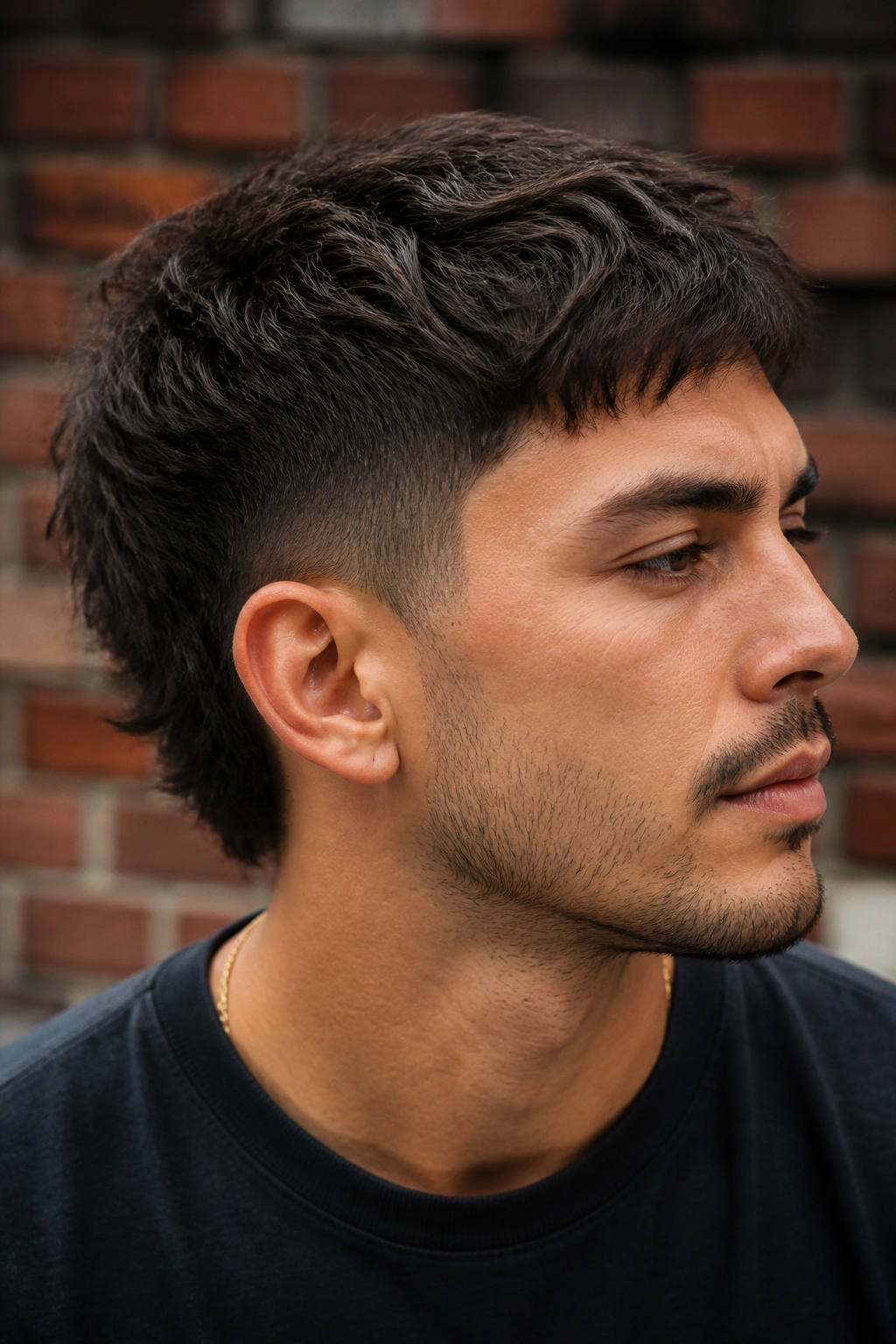
A low fade wolf cut keeps the shape readable without shouting for attention. The fade stays close to the ears and neckline, so the top can stay the star of the show.
This is the version I’d point to for guys who want the style to work in more conservative settings. It still has texture. It still has movement. But the outline stays neat enough that it doesn’t look like you’re trying to cosplay a runway photo.
What to Watch For
The fade should fade low. That sounds obvious, but a barber can take it up too high fast. Once that happens, the haircut stops feeling shaggy and starts feeling generic.
- Keep the crown layered and slightly longer than the front
- Leave enough side length to avoid a hard disconnect
- Style with texture powder if you want lift without shine
- Ask for a soft neckline so the grow-out stays tidy
This one is especially good if your hair gets puffy at the sides. The low fade reins that in without flattening the top.
9. Burst Fade Wolf Cut
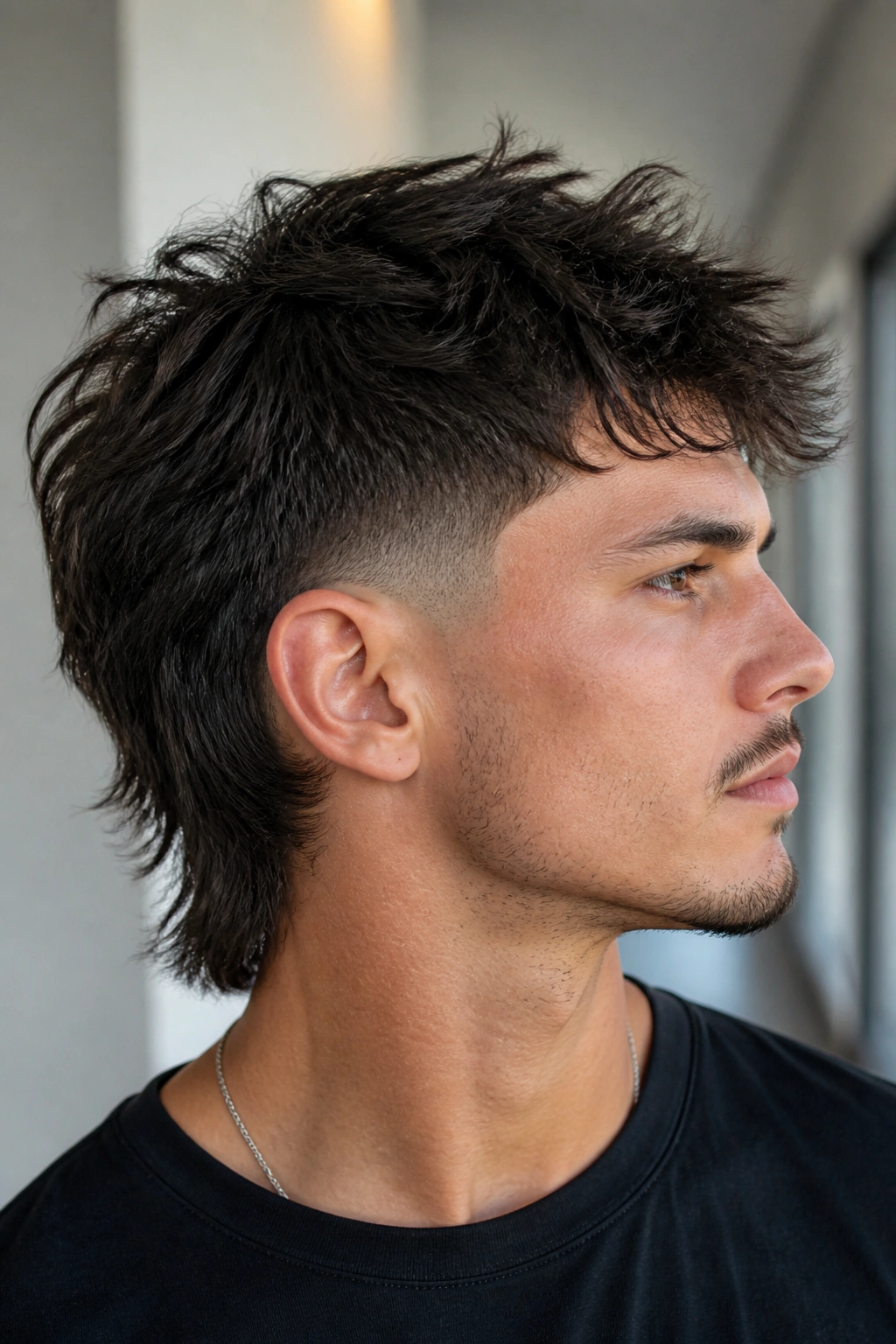
A burst fade wolf cut wraps the fade around the ear in a curve, which gives the haircut a sharper side profile. It’s a cleaner, more sculpted look than a standard fade, and it works surprisingly well with the rough top of a wolf cut.
The shape near the ears matters here. The burst fade creates a little frame, almost like the haircut is tucked in around the sides while the crown stays loose. That contrast gives the style energy without making it look too polished.
This is a good pick if you want the wolf cut to feel modern but not fussy. It also suits guys with strong cheekbones or a square jaw because the curved fade softens the side view without hiding the face.
Keep the top textured and finger-styled. A comb can flatten the whole thing out, and then you lose the point. Fingers. Always fingers for this one.
10. Blowout Wolf Cut
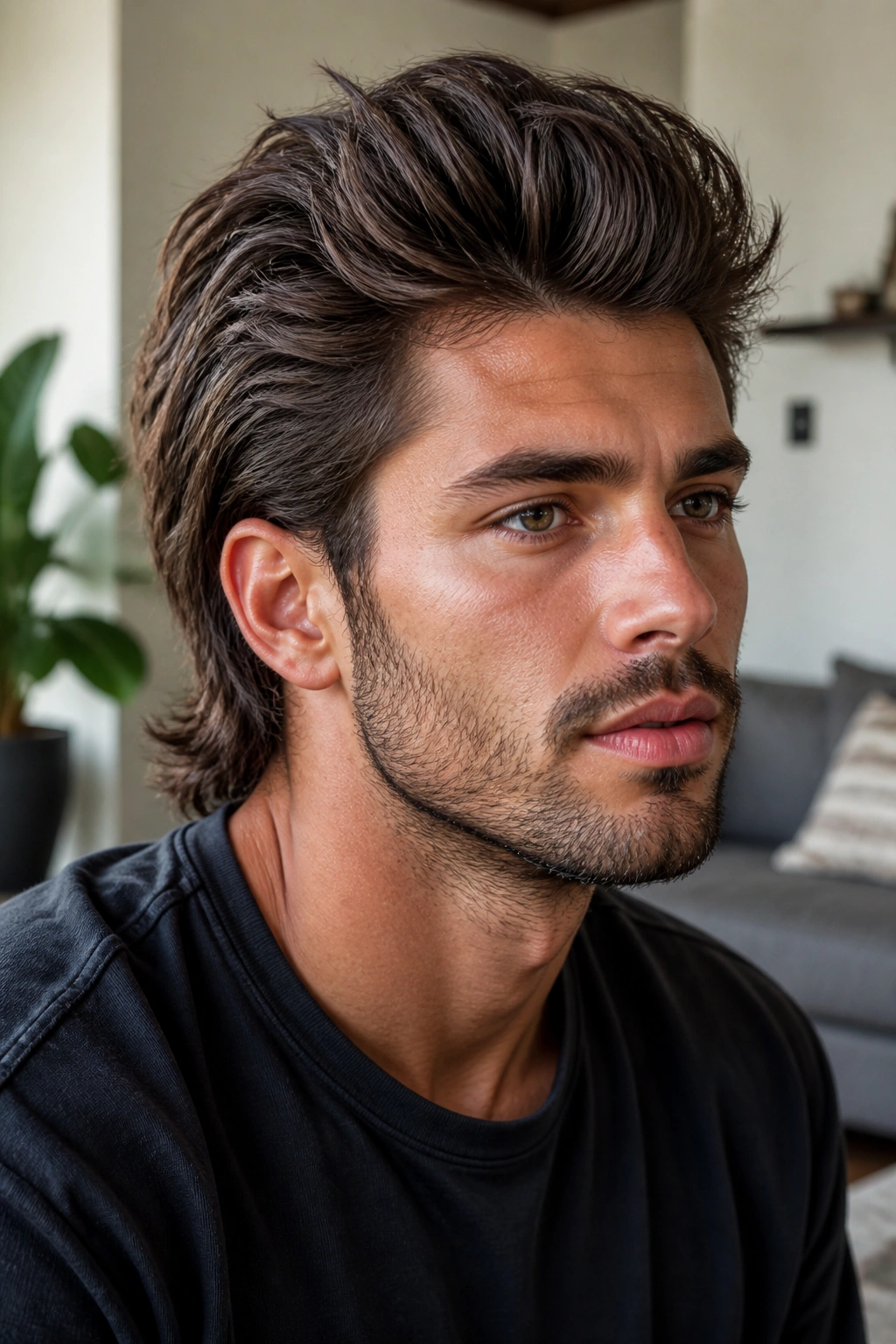
If your hair falls flat at the crown, the blowout wolf cut solves that problem fast. The style relies on lift at the roots, so the top doesn’t just sit on the head like a wet towel.
A round brush helps, but a small vent brush works too if you’re not trying to master salon technique before coffee. Blow the top up and back at the roots, then break the finish with your hands so it doesn’t look too clean. The goal is volume with a little chaos.
Styling Move That Matters
Use a lightweight mousse on damp hair before drying. That gives the roots enough memory to keep the shape for a few hours without turning stiff. If your hair is thick, a pea-sized amount of matte cream at the ends can stop the layers from frizzing out.
The blowout version works best when the front stays a touch shorter than the crown. That keeps the shape from becoming puffed all over. It should look lifted, not blown apart.
11. Shaggy Layered Wolf Cut

Some short wolf cuts try to look polished. This one doesn’t bother. It leans into layered mess in a way that feels relaxed, and that’s why it looks good on hair that naturally has body.
The haircut works because the layers aren’t stacked too tightly. There’s air between them. That lets the top move when you turn your head instead of holding one stiff outline. If your hair is dense, this cut takes weight off without making the ends thin and wispy.
The best styling products here are lightweight. Sea salt spray, soft cream, maybe a touch of matte paste if the hair needs separation. Heavy pomade is a bad idea. It kills the movement and makes the texture look greasy.
This is the version for men who want a little edge but don’t want to look like they spent twenty minutes building it. It’s one of the most natural-looking short wolf cuts, which is probably why it keeps working.
12. Razor-Cut Wolf Cut
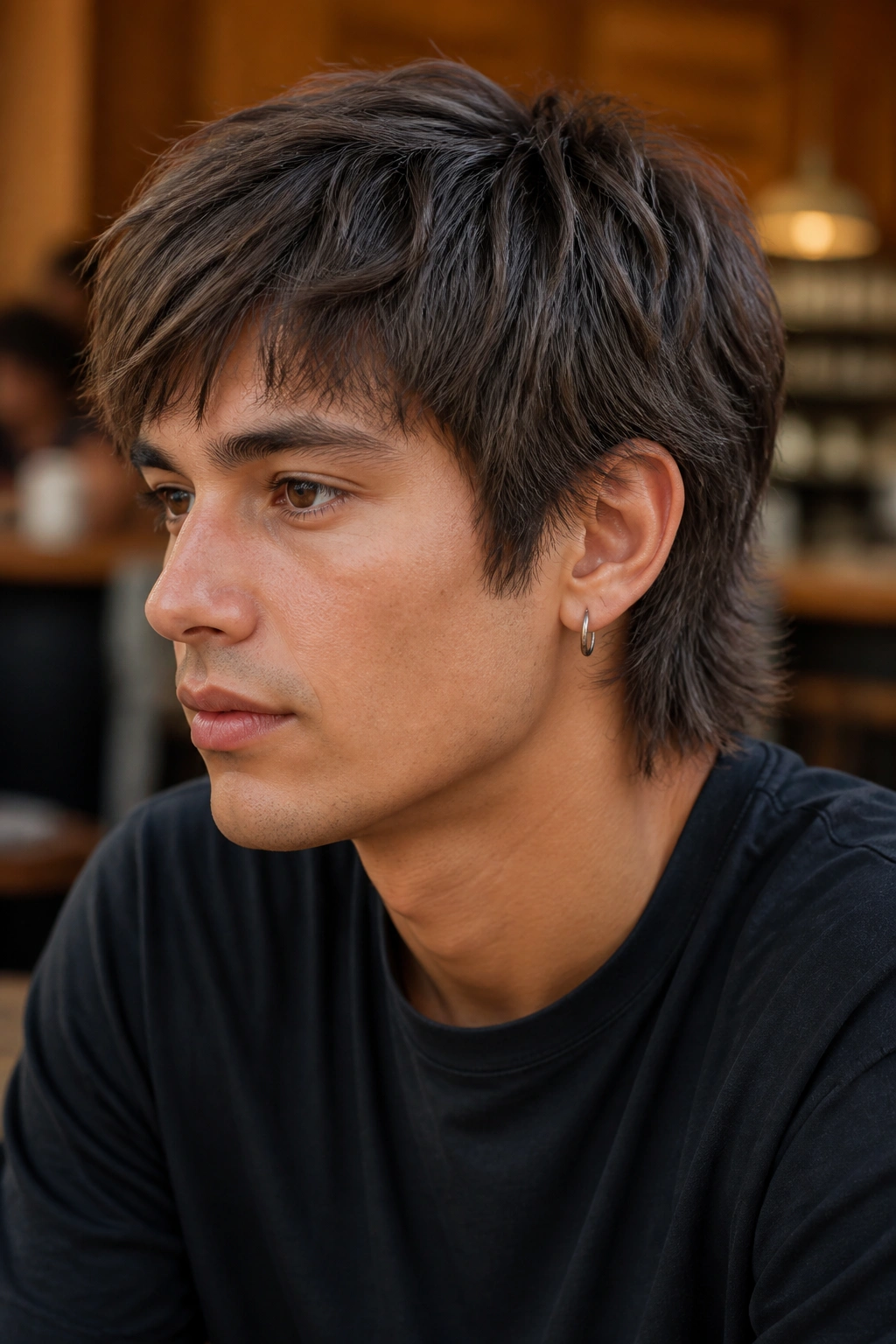
Thin hair likes this version more than most people think. A razor cut can remove bulk and leave the ends feathered, which makes the layers look fuller and less blocky.
The trick is not to overdo it. Razor cutting too much can make the hair frizz or split at the ends, especially if the hair is dry or coarse. A skilled barber will use the razor to soften the perimeter and a few interior sections, not shred the whole head.
Best Uses for the Razor Version
- Fine hair that needs movement
- Straight hair that falls in hard lines
- Men who want a softer silhouette around the fringe
- Short wolf cuts that need more separation at the ends
This version pairs well with a light cream or spray, not a heavy wax. Let the cut do the work. If the hair starts looking fuzzy after styling, the razor was probably used too aggressively.
13. Curtain Bang Wolf Cut
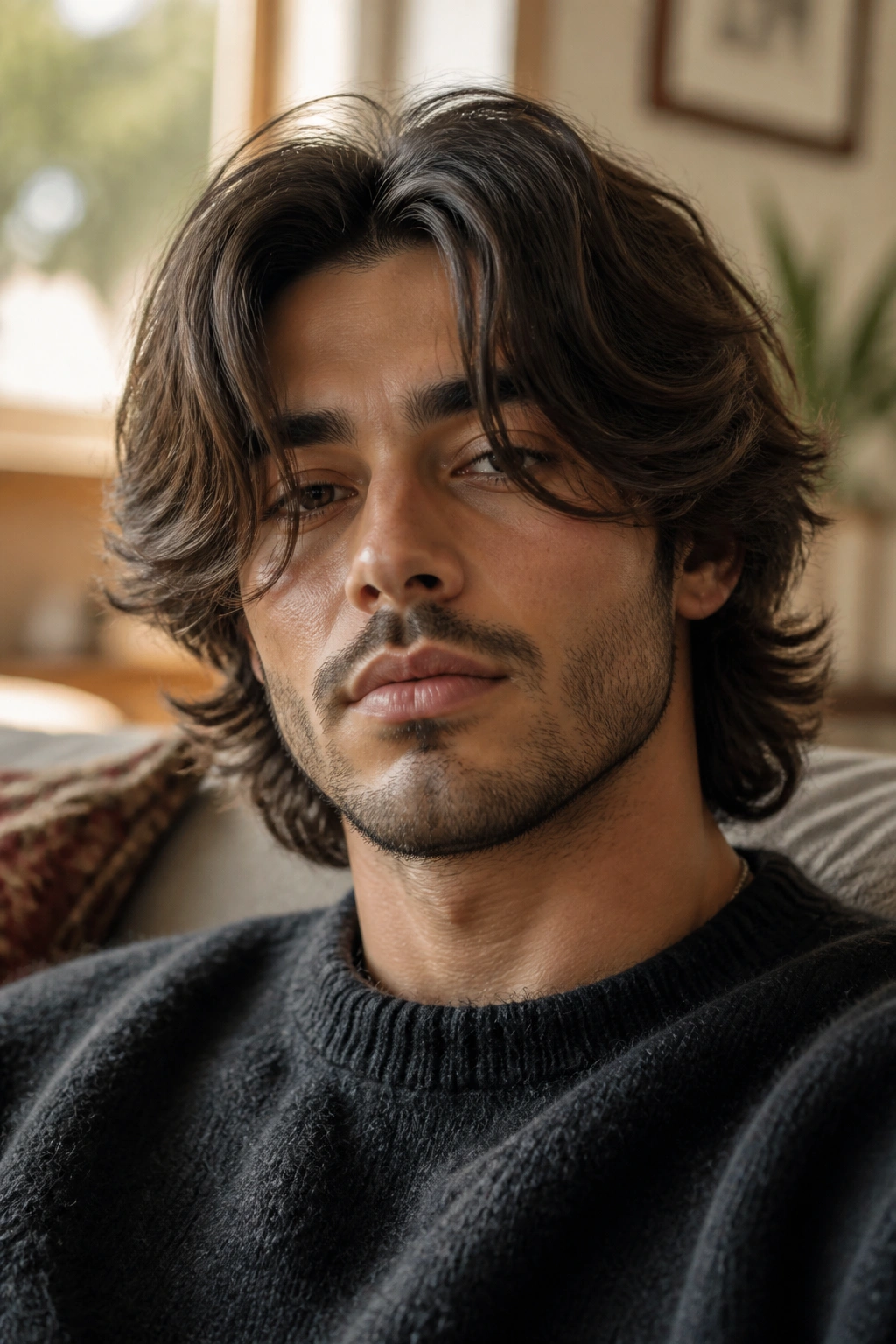
Can a wolf cut work with curtain bangs? Absolutely, and on the right face shape, it looks better than the more obvious fringe versions.
The front splits away from the middle and falls to each side, which opens up the face a little while still keeping the layered wolf shape. The bangs should be long enough to touch the cheekbone area when dry. Shorter than that, and they stop reading as curtains.
How to Get the Balance Right
Keep the middle part soft, not carved. A hard center line can make the style look too neat. The rest of the cut should still have that rough, short wolf texture so the bangs don’t feel disconnected from the top.
This version works well if you don’t like hair hanging directly on the forehead. It also helps soften a longer face because the fringe breaks up the vertical line. Add a small amount of cream, then tuck one side behind the ear if the hair gets in your eyes.
14. Side-Swept Wolf Cut
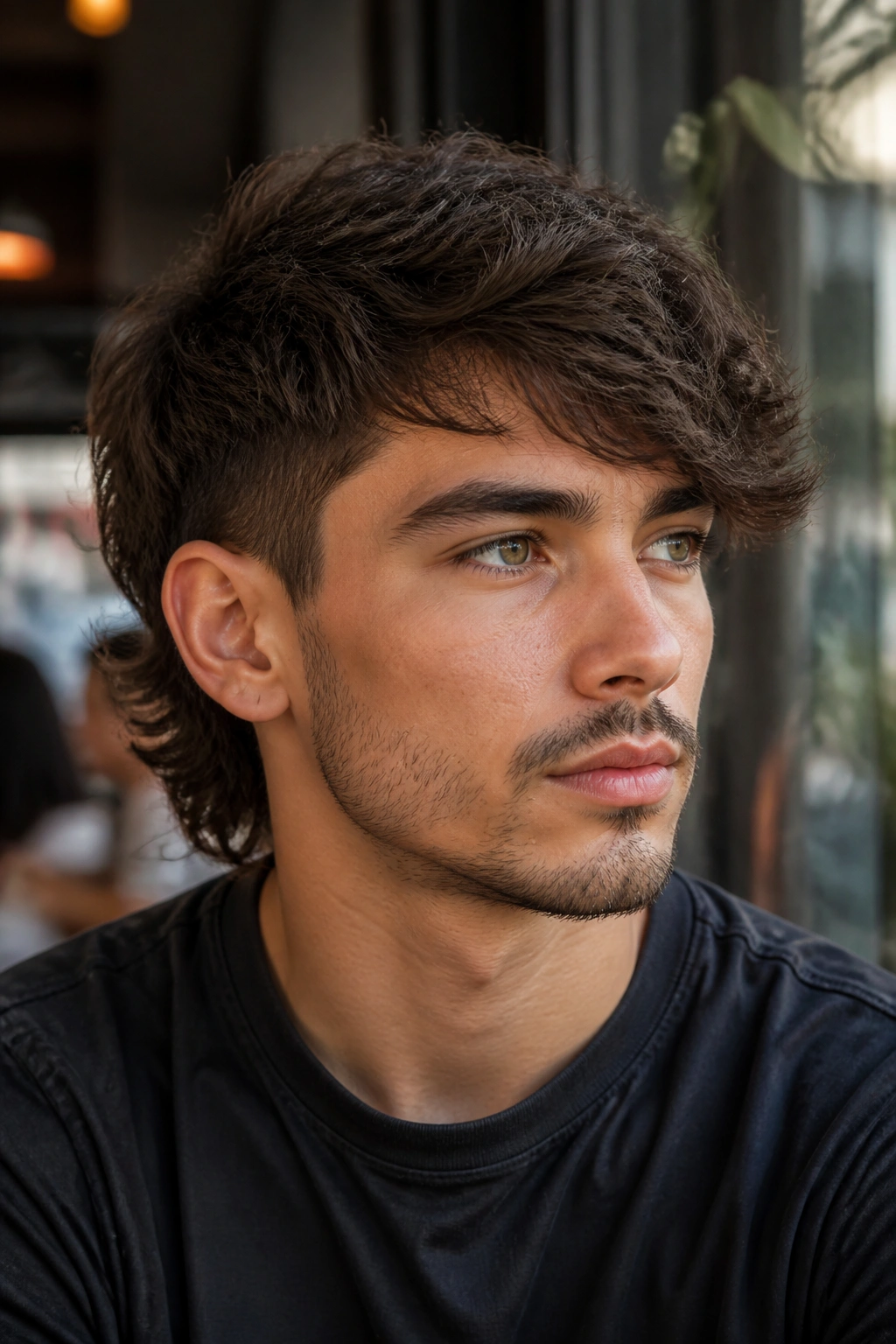
Side-swept wolf cuts are a smart move for men who need their hair off the forehead but don’t want a boring side part. The sweep gives the front direction, while the layers keep the cut from looking too neat.
Picture a short wolf cut that was brushed diagonally rather than straight forward. That’s the feel here. It’s less wild than a fringe-heavy version, but it still has enough texture at the top to keep the shape alive.
This version is good for receding hairlines too, because the side sweep can soften the front edge without hiding it in a strange way. Don’t force the hair across the forehead if it wants to split naturally. Let it fall where it wants, then guide it.
A matte fiber or light paste works well. You want hold, not a shell. If the hair looks shiny, use too much.
15. Permed Wolf Cut
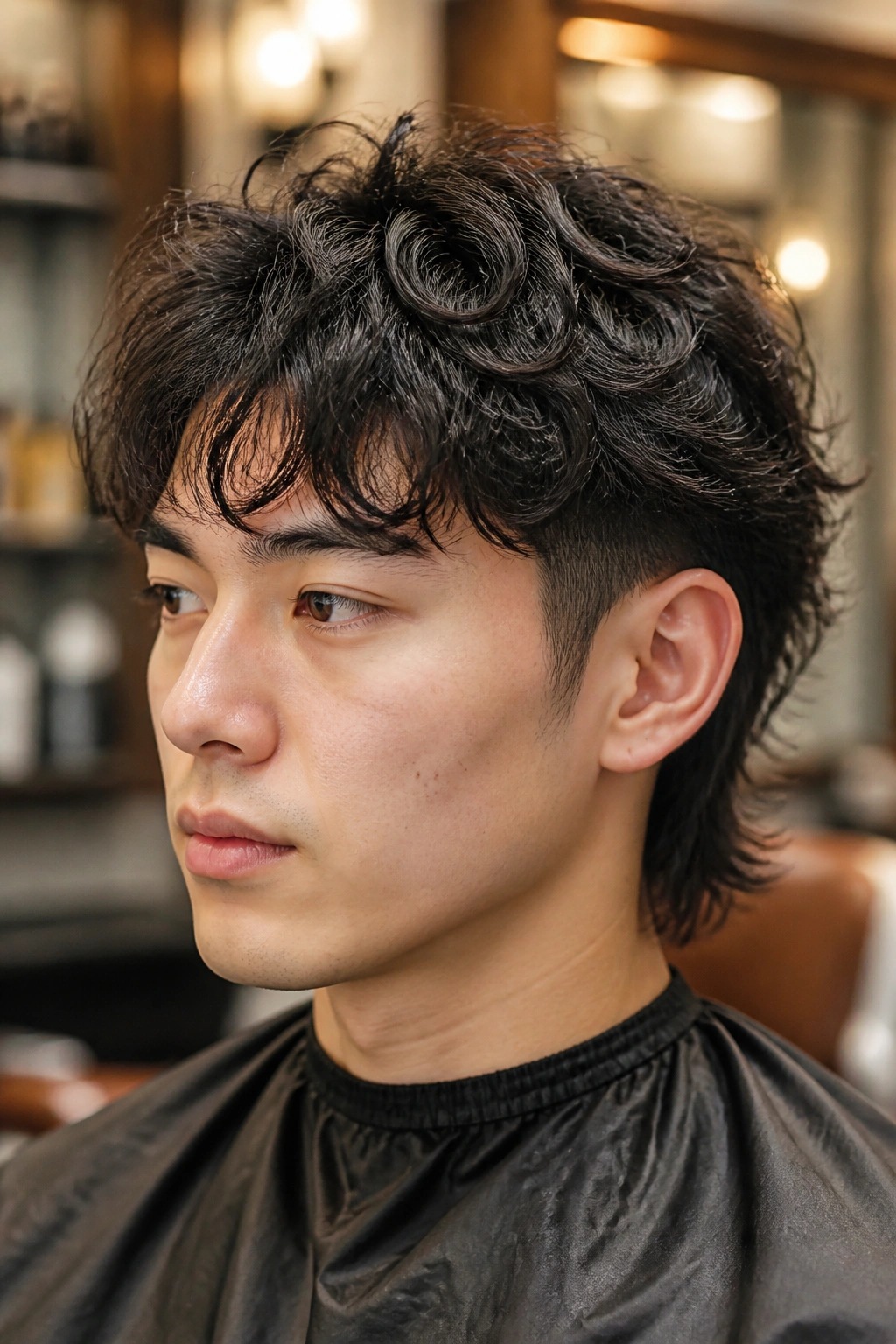
A permed wolf cut can be a shortcut for men whose hair stays flat no matter what they do with it. The perm gives the top texture and memory, which means the haircut holds the wolf shape without constant styling.
This works best when the perm is soft and the layers are short enough to keep the curls from getting too wide. If the top is overprocessed, the cut can puff up fast. A loose, modern curl pattern is better than tight ringlets here.
What Makes It Worth Considering
- Good for straight hair that refuses to hold texture
- Helpful if you want volume without daily heat
- Needs moisture care so the ends stay soft
- Looks best when the sides are tapered, not bulky
After a perm, use a curl cream and a wide-tooth comb or your fingers. Brush it hard, and the whole shape turns into frizz. Gentle wins here. Every time.
16. Beard-Balanced Wolf Cut
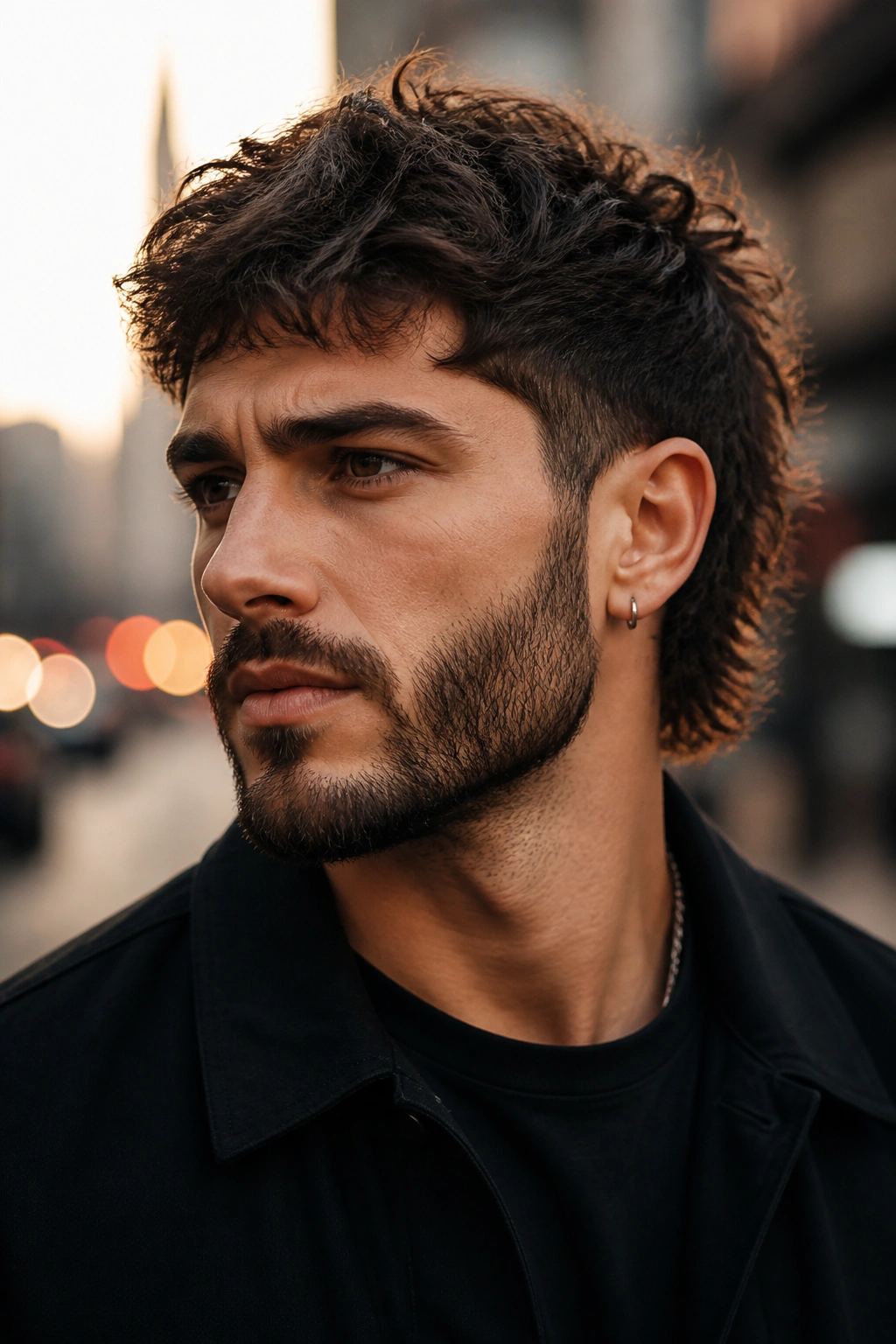
When a beard is part of the picture, the wolf cut has to work harder. Hair and beard need to sit in the same visual lane, or the whole look feels split in two.
A short wolf cut with a beard looks best when the sides are blended enough to connect the sideburn area to the facial hair. Not identical length. Just enough overlap to keep the transition smooth. If the haircut ends abruptly above a dense beard, the head can look top-heavy.
Beard Pairing That Works
Shorter beards, around 3 to 7 millimeters, keep the look clean and modern. Medium beards can work too, but then the haircut should stay a little fuller around the ears and temples so the face doesn’t narrow too much.
- Short beard: sharp, easy to maintain
- Stubble: strongest match for a textured wolf cut
- Medium beard: works if the neckline is tidy
- Long beard: needs careful side blending
This version is one of my favorites because it feels balanced without being stiff. The hair brings movement, the beard grounds it, and the jawline gets a nicer frame than either element would give alone.
17. Soft Mullet Wolf Cut
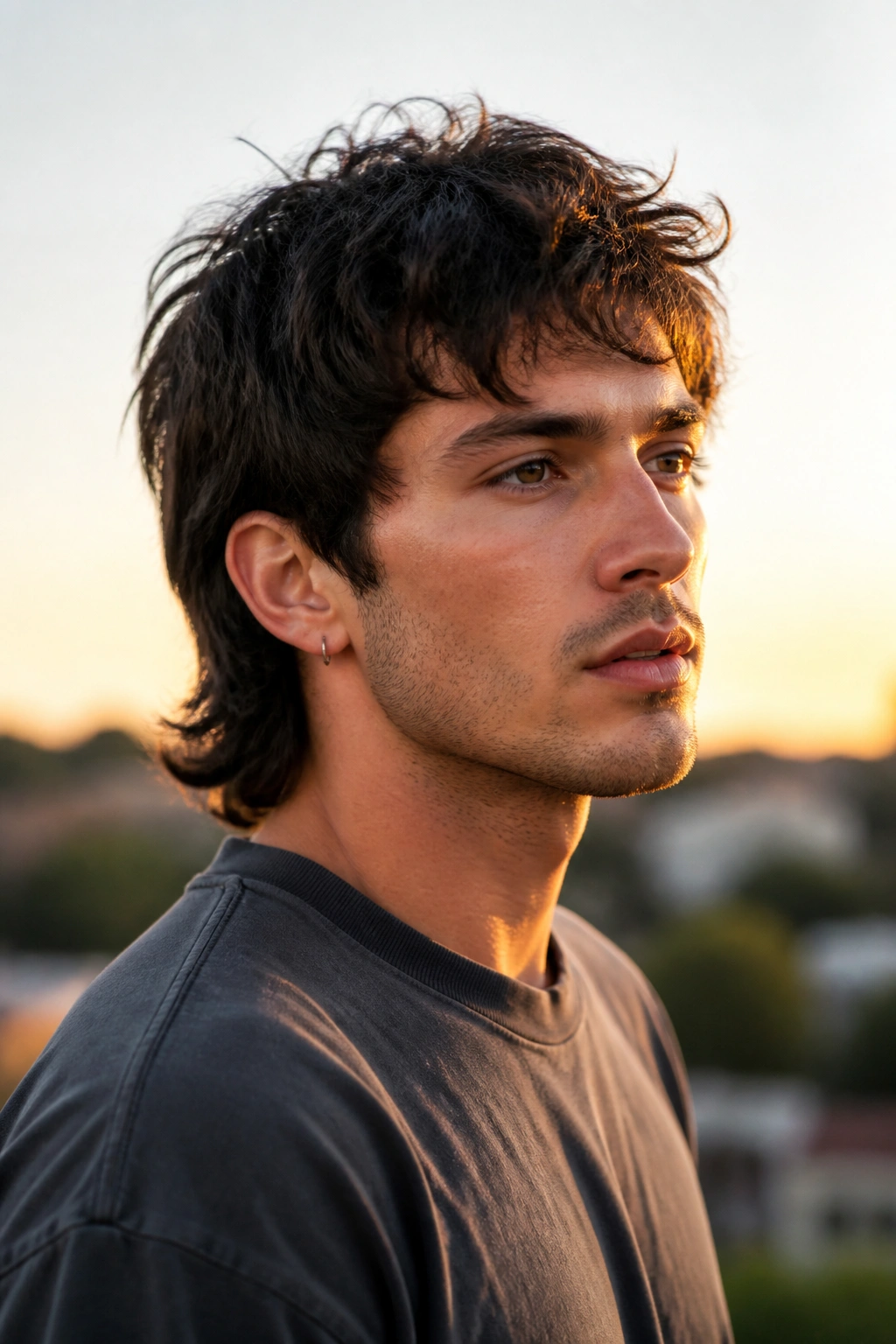
A soft mullet wolf cut keeps the back a little longer, but it stops short of looking theatrical. That distinction matters. The goal is flow, not costume.
The top stays layered and messy, the sides stay trimmed down, and the back gets a touch more length so the silhouette stretches out. If you keep the contrast subtle, the haircut reads as stylish. Push the back too far, and it starts swinging into full retro mullet territory.
This is a strong choice for men who want the short wolf cut to have a bit of attitude. It suits thicker hair especially well because the extra back length can carry movement without looking thin. Use a matte paste or a light texture cream and keep the finish loose.
One thing people get wrong: they try to make the back perfect. Don’t. The charm is in the rough edge. A little unevenness looks right here.
18. Clean Office Wolf Cut

Does a wolf cut have to look wild? Not at all. The clean office wolf cut keeps the layered shape, but everything is trimmed tighter and neater so it works with a button-down shirt as easily as a T-shirt.
This version trims the sides close enough to stay tidy, while the top keeps only enough length to show texture. The fringe is soft, not shaggy. The crown has movement, not bulk. It’s the most restrained version on this list, and that’s exactly why it has a place.
A light cream or low-shine paste is the right product here. Use too much texture product and the haircut starts looking rough instead of controlled. A little polish helps. Too much polish, though, and the wolf cut disappears.
If you want something wearable every day without looking like you copied a louder style, this is the move. It’s the short wolf cut for men who want the shape, not the spectacle.
Final Thoughts
The short wolf cut works because it gives you motion without asking for long hair. That’s the real draw. It can sit clean, messy, curly, faded, or soft-mulleted, and still feel like the same haircut as long as the crown, fringe, and sides are doing their jobs.
Pick the version that matches your hair first, then your routine. Straight hair usually needs more texture work, curls need shape control, and thick hair needs weight removed in the right places. If you get those pieces right, the cut grows out in a useful way instead of turning into a problem.
Bring a clear reference photo, yes. But also know what you want the front, crown, and sides to do. That small bit of clarity saves a lot of awkward barber-chair guessing.
