



Auburn balayage does something plain brown hair rarely gets on its own: it warms the whole head without making the color look painted on. A few ribbon-thin pieces can wake up a level 4 brunette, while a softer melt through the mids gives chestnut hair that glossy, lived-in feeling people keep asking for.
Auburn sits in a sweet spot between red, copper, and brown. That matters. Push it too red and it starts shouting; keep it too brown and it disappears under indoor lighting. On brown hair, the best versions usually live in the mid-lengths and ends, with just enough brightness near the face to catch daylight and movement.
Placement changes everything. A warm brown base will take cinnamon, copper, and rust in a different way than a cooler espresso base, which often needs a little extra red-violet in the formula so the finished shade doesn’t go flat or orange. Small shift, big difference.
Some looks are soft enough to wear with a white T-shirt and a clean bun. Others feel rich, moody, and a little dramatic. That range is exactly why auburn balayage for brown hair keeps showing up in salon chairs—it can be barely-there warmth or a full-on red-brown glow, depending on how bold you want to go.
1. Soft Copper Auburn Balayage on Dark Chocolate Brown
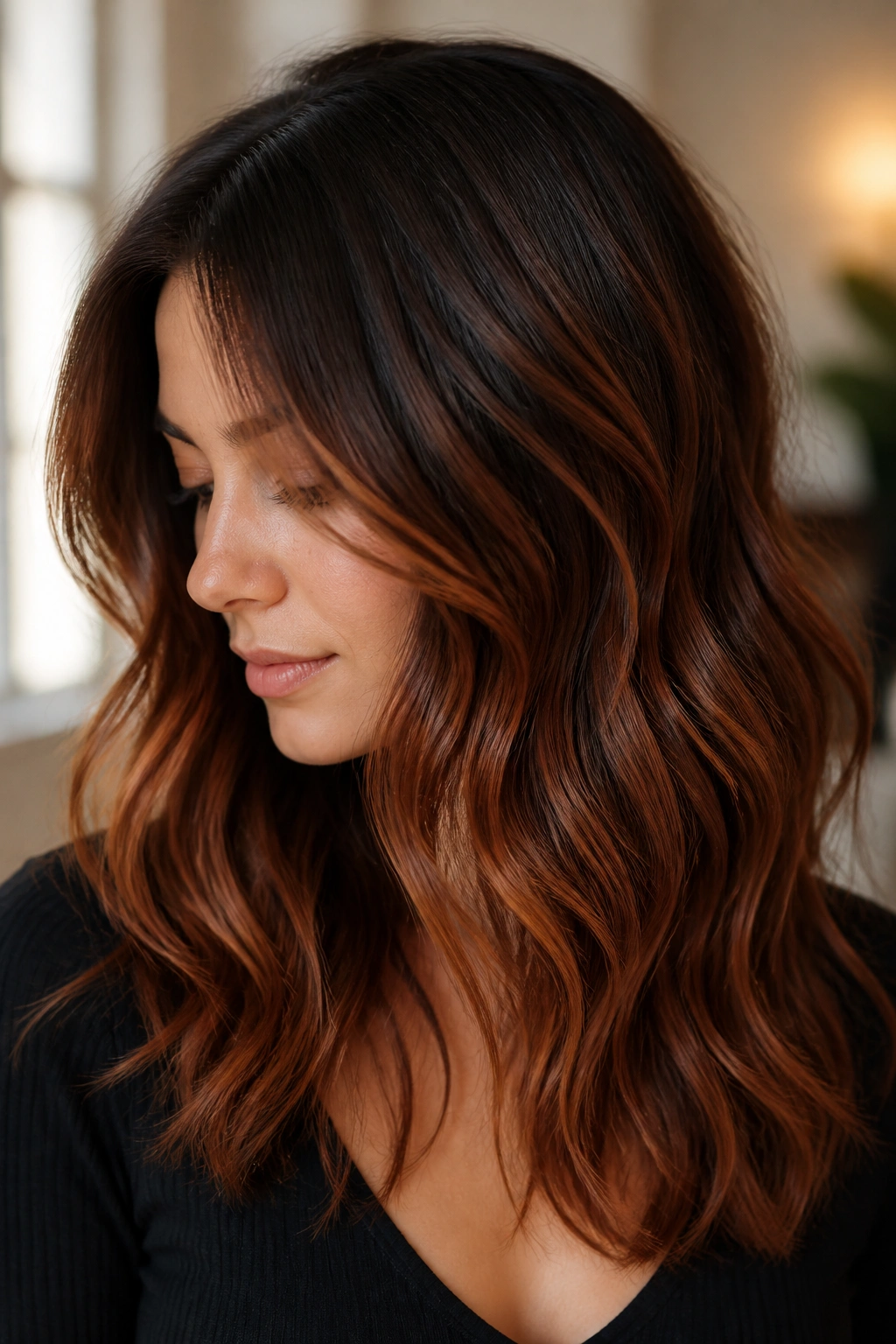
This is the safest way to warm up dark brown hair without losing the brunette base. The effect is gentle at first glance, then suddenly more visible when the hair moves and the light hits the ends.
Why it works on deep brunette hair
Dark chocolate brown can swallow lighter color if the contrast is too high. Soft copper auburn avoids that problem by staying a shade or two above the base instead of jumping straight to bright copper. Ask for hand-painted pieces that start below the cheekbone and get denser toward the ends. That keeps the root area quiet and the finish soft.
A good version usually looks best when the pieces are thin enough that you can still see plenty of brunette between them. The goal is warmth, not stripes. If you curl your hair even a little, the copper turns more visible and the whole head looks fuller.
- Ask for a level 5 to 6 copper-auburn gloss over a level 4 brunette base.
- Keep the brightest pieces around the face and lower lengths, not at the root.
- Finish with a sheer glaze, not a heavy opaque toner, so the brown still shows through.
Pro tip: If your hair is already dark and resistant, don’t chase brightness in one appointment. Copper on brown hair looks better when it builds in layers.
2. Cinnamon Auburn Face-Framing Pieces
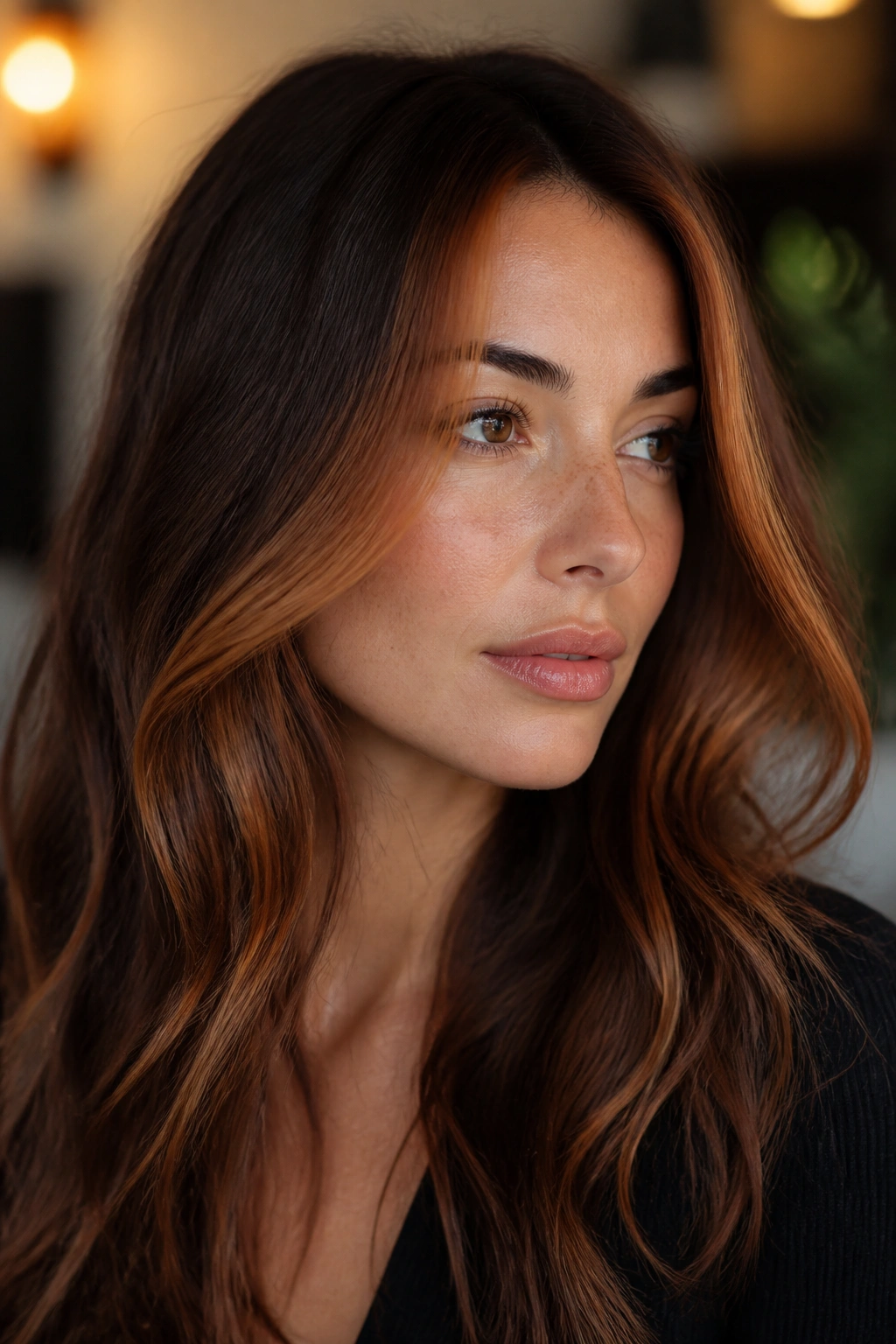
Face-framing pieces are the fastest way to make brunette hair look lighter without changing the whole head. That little pop near the eyes and cheekbones can shift the whole mood of the cut.
If you wear your hair down most days, ask for two broader cinnamon-auburn panels starting near the front hairline and melting into softer balayage through the sides. The color should be a touch brighter than the rest of the hair, but not so bright that it looks like a money piece from another planet. That’s the mistake. Too much contrast makes the front look disconnected.
The best thing about this look is how easy it is to style. Straight hair shows the shape of the placement. Loose waves show the color better. A round brush at the front can make the pieces sit right where the light hits them.
My take: this is one of the most forgiving auburn balayage options for brown hair because it does its job even when you skip a full blowout. It still shows up.
3. Deep Mahogany Balayage With Cherry Undertones
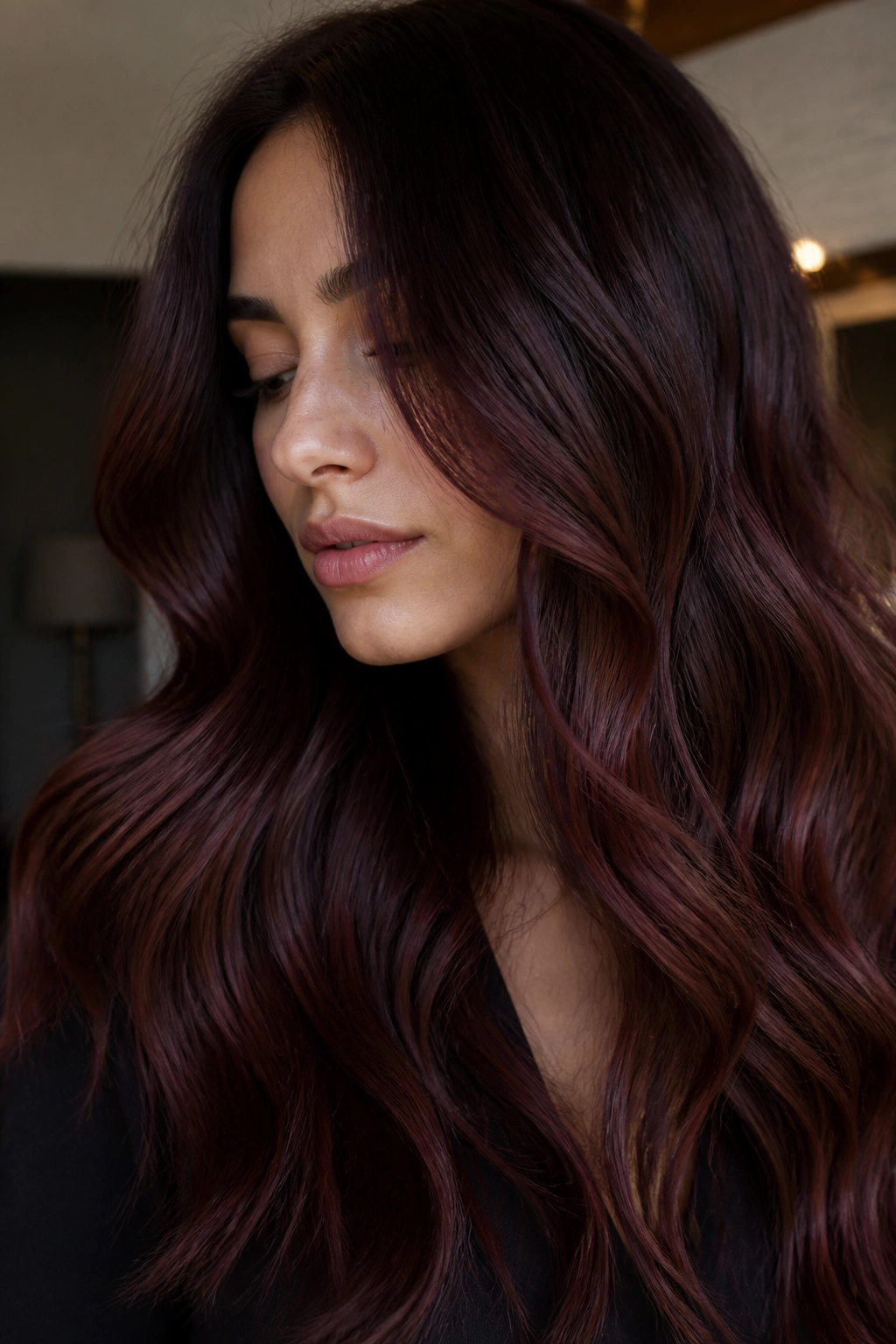
Want red-brown hair that feels polished instead of loud? Mahogany gets you there. It sits deeper than copper and cooler than classic auburn, which makes it a smart pick if you like richer tones.
Why this shade stays elegant on brown hair
Mahogany works because it borrows from both brown and red, then adds a faint cherry edge that appears mostly in motion. On a medium or dark brown base, that slight red note keeps the hair from looking flat, especially indoors where pure copper can go a little orange. Under daylight, the shade reads more dimensional and plush.
This look loves shine. A gloss finish matters here more than on many other auburn shades because the cherry undertone needs light to show up. A dull mahogany formula can look muddy. A glossy one looks expensive, even if the cut is simple.
How to wear it
Loose bends bring out the red. Sleek hair brings out the depth. If your style leans classic—blazer, boots, clean lines—this color fits right in without screaming for attention.
4. Copper Penny Ends on Warm Brown Hair
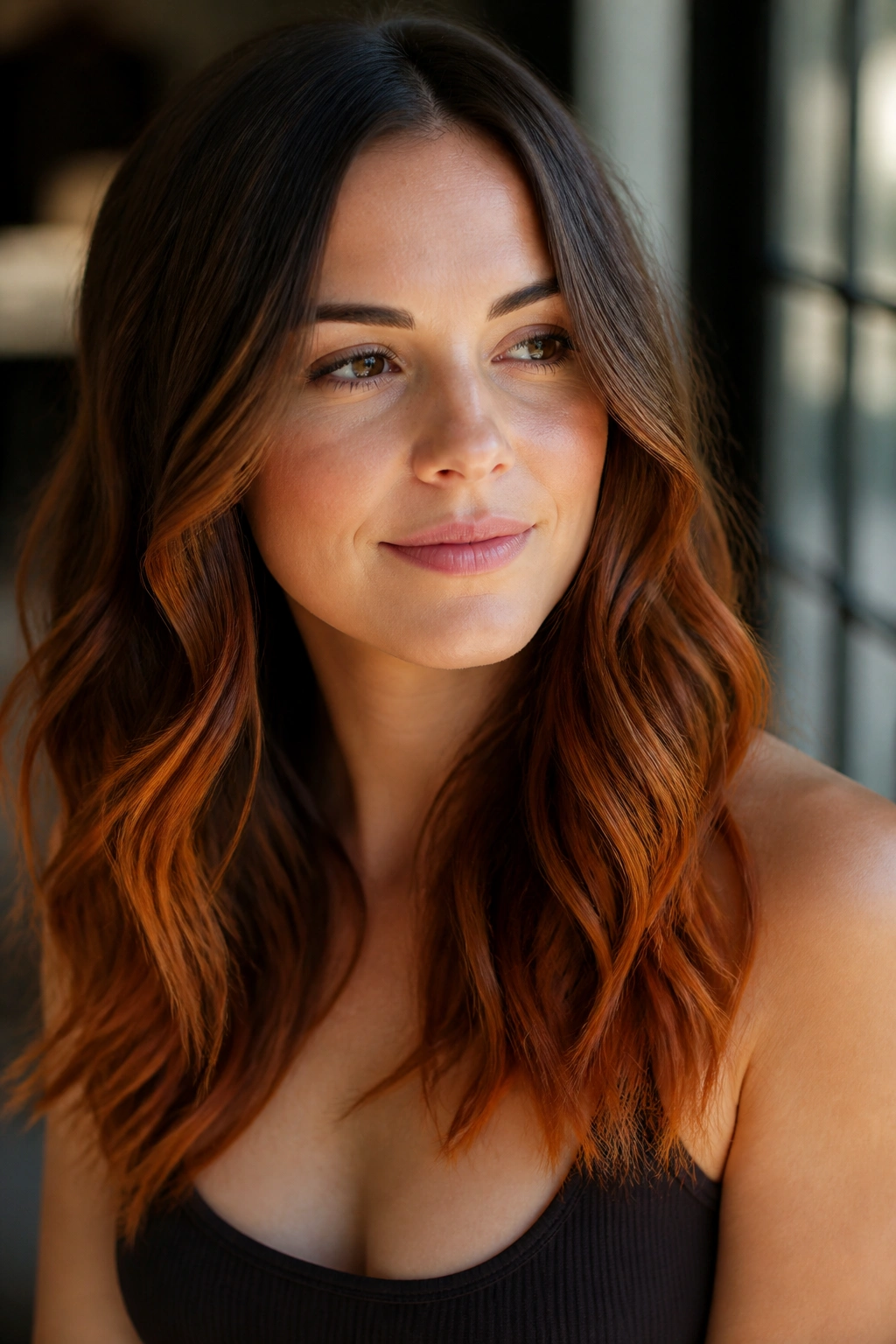
Picture a warm brunette bob with the last four or five inches tipped in bright copper. That’s the whole idea here. The ends do the talking.
This look suits hair that already has some natural warmth, because copper penny tones need a brown base that won’t fight them. Ask for brighter saturation only on the ends, with a softer hand through the mids so the shift feels intentional rather than dipped. On layered cuts, the color breaks up in a flattering way; on one-length cuts, it can feel sharper and more graphic.
- Best on lob lengths, blunt bobs, and medium layers.
- Ask for heavier saturation below the collarbone.
- Keep the top half in a soft brunette shadow so the ends stay the focus.
- Style with a slight wave or bend; this keeps the copper from reading flat.
The thing I like here is the honesty of it. No pretending. No fake subtlety. It’s a brunette base with copper at the edges, and that’s exactly why it works.
5. Smoky Auburn Balayage for Espresso Hair
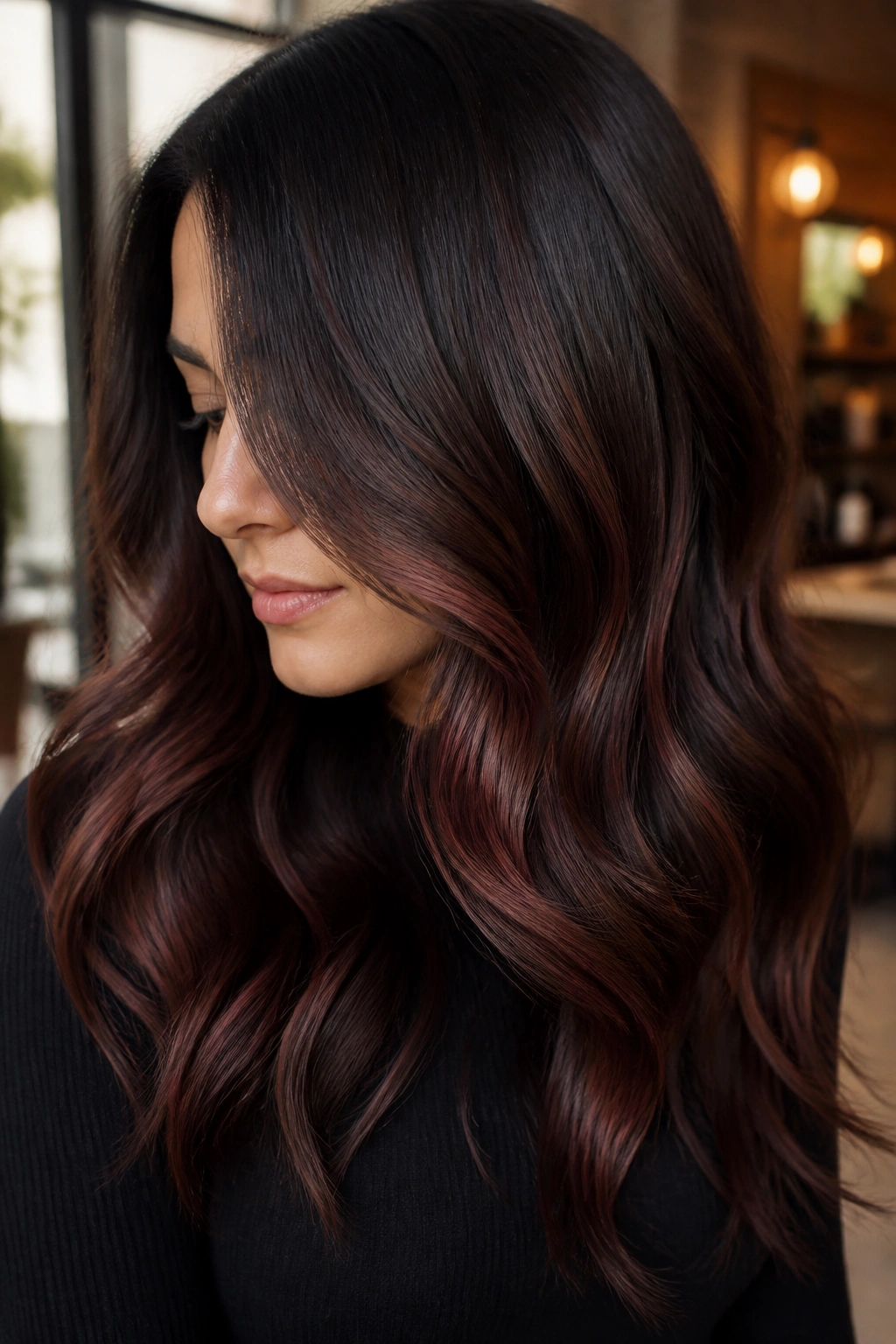
Smoky auburn is the shade people choose when they want warmth, but not the bright, shiny kind that shouts from across a room. On espresso brown hair, it reads like softened firelight. Muted red, brown depth, a little shadow.
The trick is keeping the auburn low and cool enough that it doesn’t flip into orange. A colorist will often add a touch of red-brown or red-violet to control that edge, then paint the lightest pieces only where the hair naturally bends. Around curls and loose waves, smoky auburn looks especially good because the bends break up the color into little flashes instead of one big block.
This is one of those shades that gets better after the first wash or two. The gloss softens, the color settles, and the whole thing looks less freshly colored and more naturally rich. That’s the sweet spot.
If your wardrobe leans black, camel, cream, denim, or olive, this shade keeps up without fighting your clothes. It just sits there looking expensive. Quietly.
6. Mocha-to-Auburn Melt
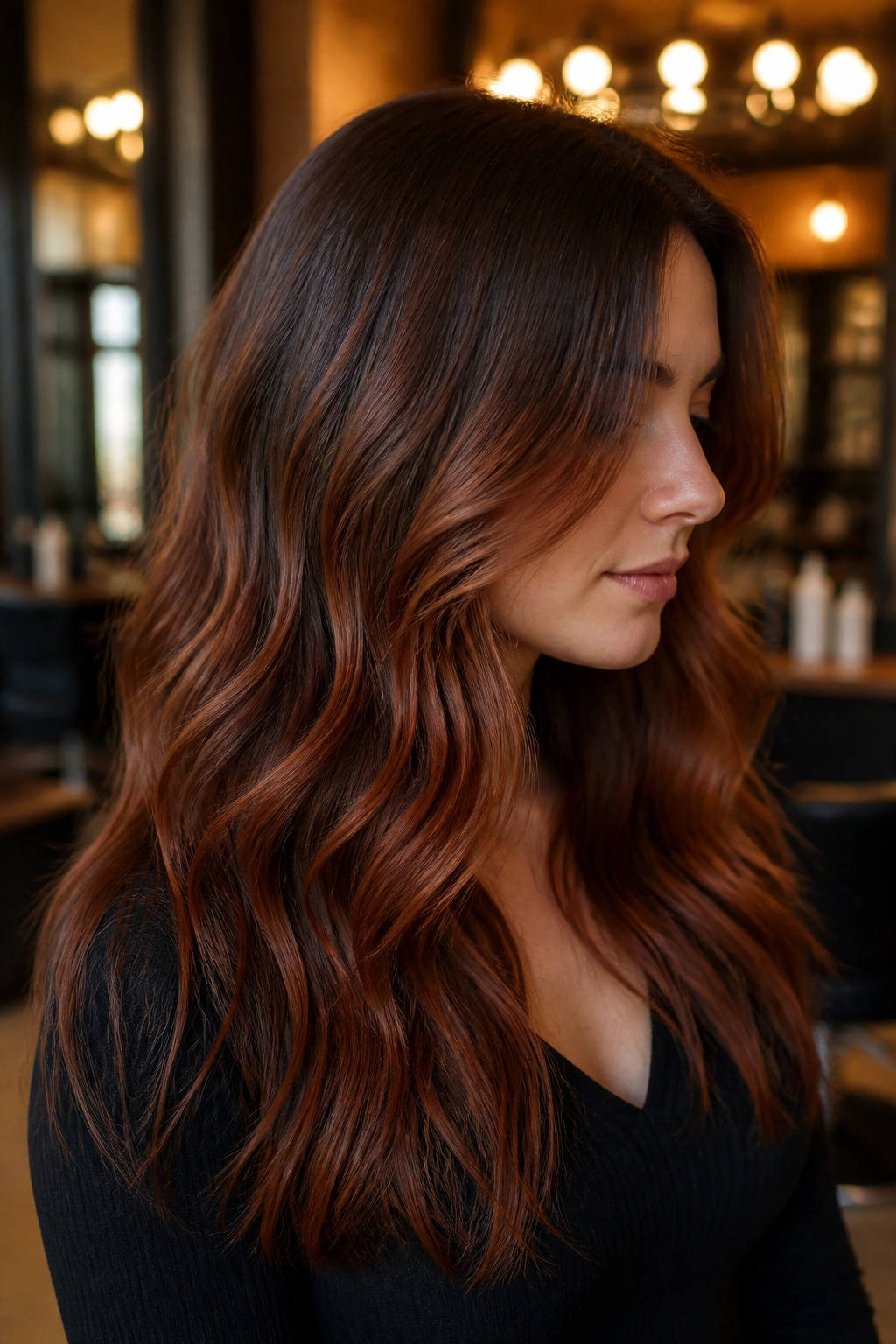
Unlike streaky highlights, a mocha-to-auburn melt should feel like one color slowly warming up. No hard jump. No obvious line. Just a gradual slide from deep mocha roots into auburn mids and ends.
That makes it a strong choice for anyone who likes low-maintenance color. The regrowth blends in because the root area stays close to the natural brunette depth, while the lighter auburn comes in lower down where it can breathe. On long hair, the melt can run from nearly espresso roots to cinnamon-copper ends. On shoulder-length cuts, the shift needs to be shorter and cleaner so it doesn’t look chopped.
Who this suits best
People with naturally dark brown hair. People who wear waves. People who do not want to sit in a salon every few weeks.
A good mocha-to-auburn melt depends on soft edges between the shades. Harsh transitions kill the whole point. Ask for fine, feathered placement and a gloss that keeps the brown rich rather than murky.
7. Auburn Ribbon Highlights on Chestnut Brown
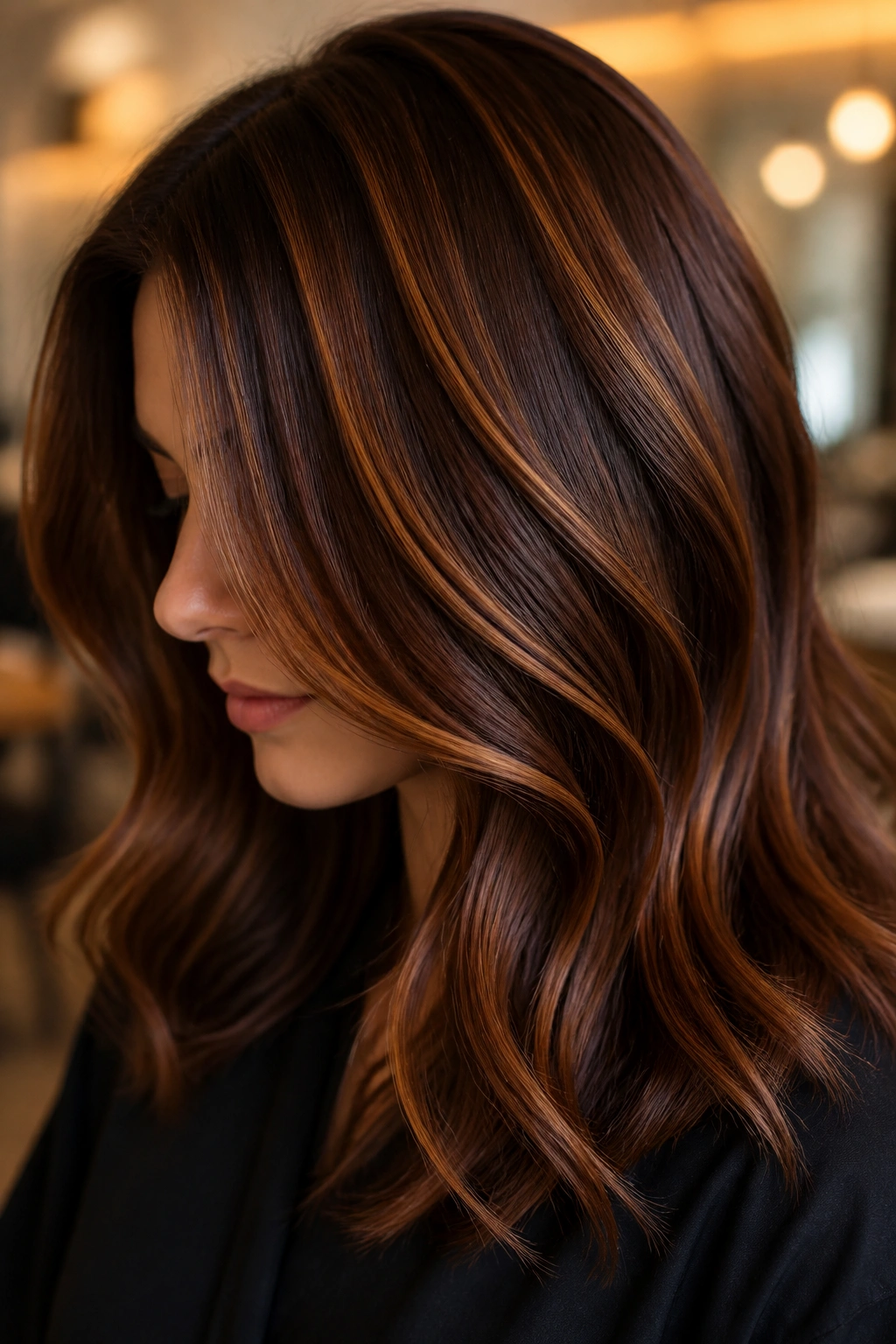
Ribbon highlights are not chunky stripes. They’re long, flowing pieces of color that move with the hair, and chestnut brown is a beautiful base for them. The result looks layered even when the cut is simple.
Why ribbons beat random highlights here
Chestnut hair already has warmth, so auburn ribbons can sit on top without clashing. The pieces should be painted in wider, curved sections that follow the shape of the cut. If the hair is layered, place some ribbons under the top layer so the color appears when the hair swings. If the hair is one length, keep the ribbons a little softer and more spaced out.
A strong ribbon pattern looks best in waves, because the bends catch each painted section at a different angle. Straight hair can work too, but then the placement needs to be cleaner. The paint job matters more than the styling.
Quick salon notes
- Use warm auburn and cinnamon tones, not bright fire-red.
- Keep the ribbon pieces long and curved, not chopped into blocks.
- Leave enough brown between sections so the result still reads as brunette.
A shade like this has a nice rhythm to it. You notice the movement first. Then the warmth.
8. Rusty Brunette Balayage With Lived-In Roots
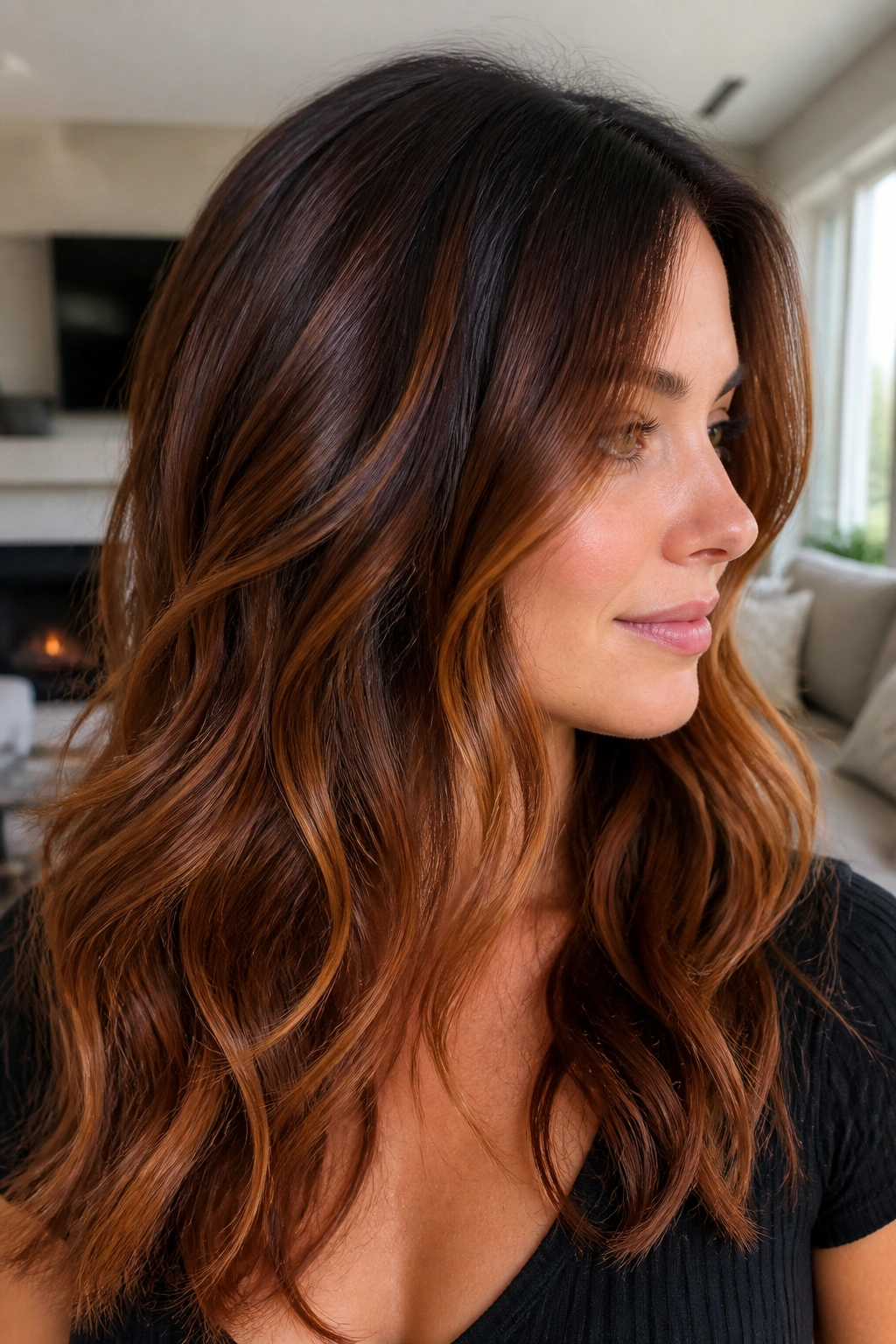
This is the look for people who hate obvious regrowth. The roots stay soft, the mids turn rusty, and the color gets richer as it moves down the hair.
The lived-in root is doing a lot of work here. It lets the auburn sit lower on the strand, which means the color grows out with less of a line. That makes the whole style feel relaxed, even if the shade itself is bold. Rusty auburn can be a little more muted than classic copper, which helps it stay wearable on brunettes who want red tones but not full brightness.
This look is especially good on layered cuts that move when you walk. The rust tones peek out instead of sitting flat on top of the head. On curls, the effect is even better, because the root shadow and the rusty mids separate in a natural way.
A small warning: if your base is already warm and golden, this can go too orange if the formula is pushed hard. A good colorist will keep the auburn earthy.
9. Toffee Copper Balayage for Wavy Brown Hair
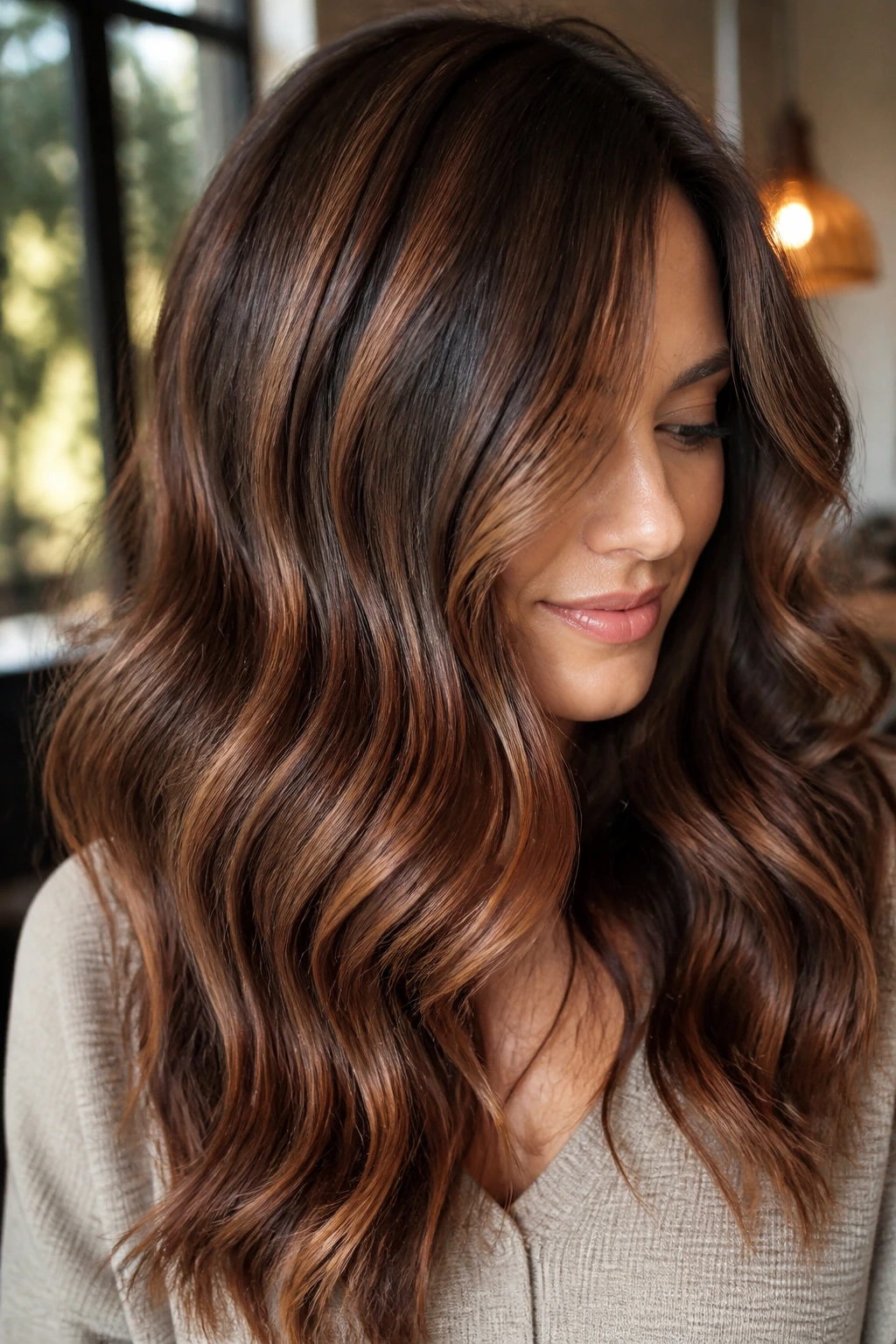
Wavy hair is made for this shade. The bends grab the toffee-copper pieces and throw them forward, then tuck them back a moment later. That moving effect is the whole appeal.
How to keep the wave pattern from flattening the color
If the hair is flat-ironed pin-straight all the time, toffee copper can look quieter. It still works, but the placement should be more deliberate—long sweeping pieces through the mid-lengths and ends, plus a few brighter strokes around the face. On naturally wavy hair, the color can be softer because the shape does half the work.
A salt spray is not the answer here unless your hair likes that gritty feel. A light mousse or curl cream does a better job of showing the wave without making the ends dry. Healthy shine matters more than texture tricks.
Ask your colorist for a golden-copper auburn that leans warm, not red-heavy. The toffee note keeps it grounded, which is why it looks so good on medium brown hair that needs lift but not a dramatic shift.
10. Auburn Peekaboo Layers
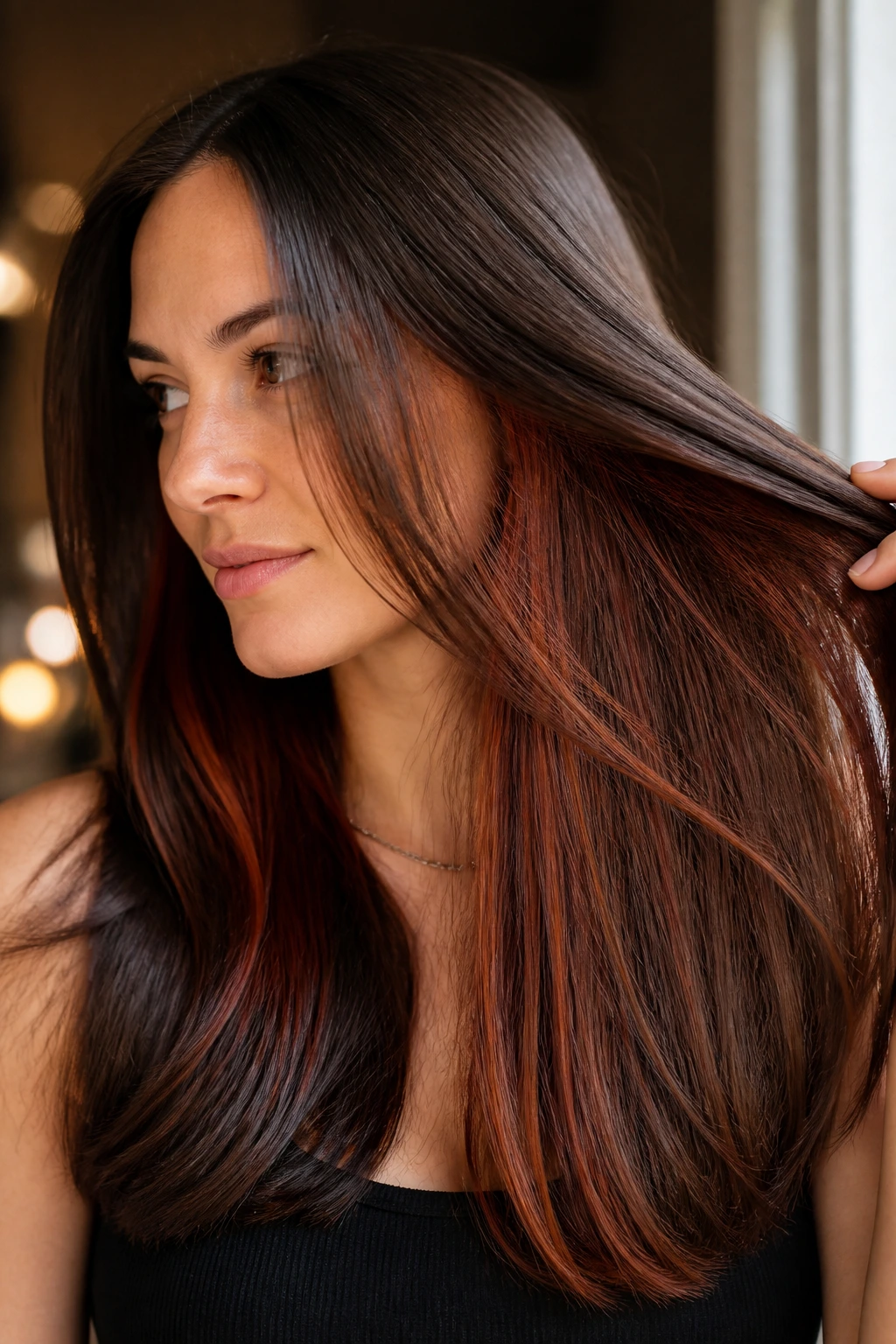
If you want color that shows up when the hair moves, peekaboo layers are a smart place to start. The auburn sits under the top section, then flashes through whenever the hair swings, bends, or gets tucked behind the ear.
This works especially well for people who wear their hair straight during the week and wavy on weekends. The top layer can stay close to brown, while the hidden sections get a stronger auburn hit. That contrast gives you two moods in one haircut. Subtle at a glance. Rich when the layers shift.
What to ask for
- Keep the top layer close to your natural brown.
- Place auburn under the crown and through interior layers.
- Use a slightly brighter tone under the top canopy so the color still shows.
- Style with loose bends or a half-up look if you want the peekaboo effect to show more.
This is a good choice if you like a little surprise. Not too much. Just enough to make the color feel personal.
11. Merlot Auburn Balayage on a Cool Brown Base
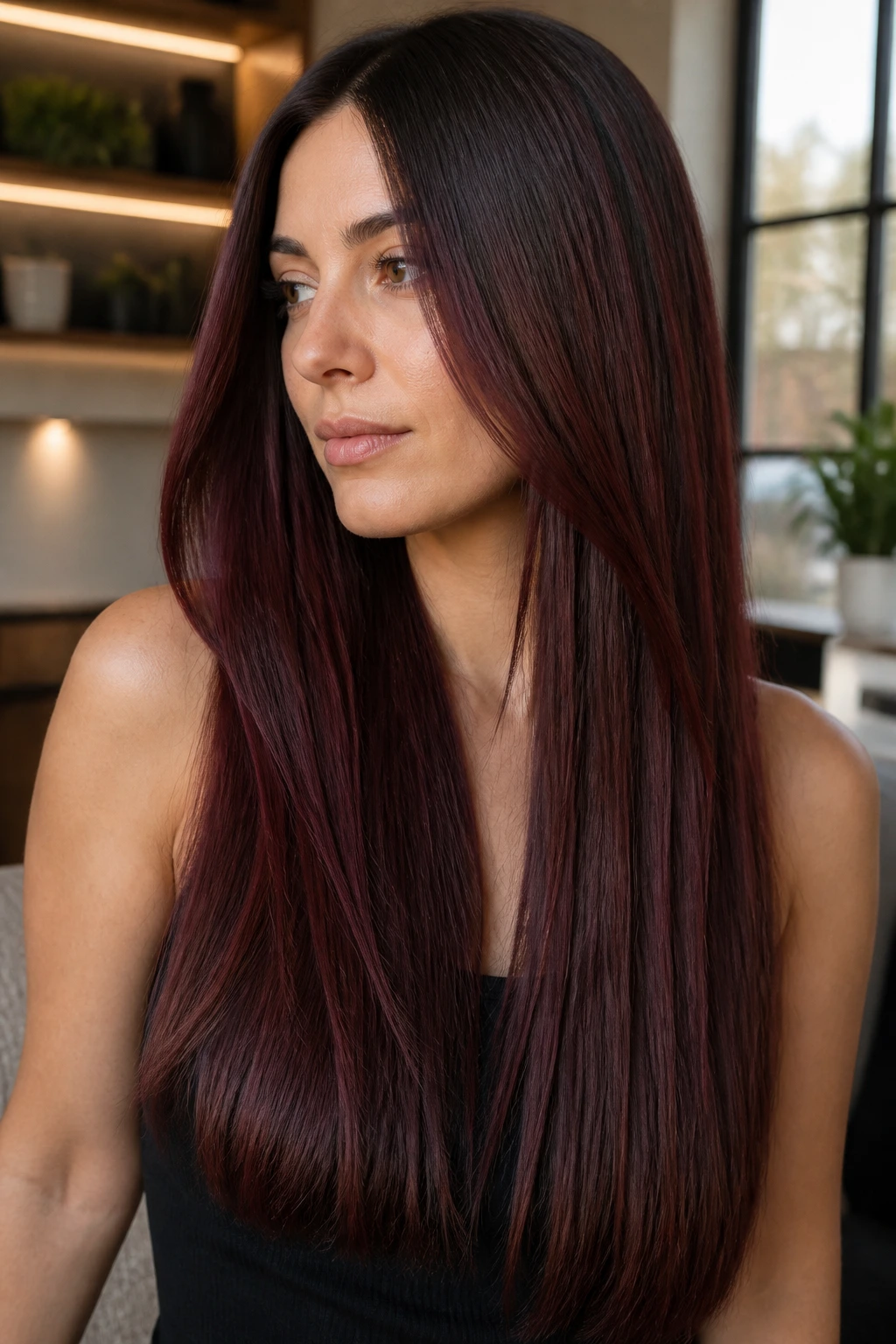
Merlot auburn brings wine-red depth to brown hair, and on a cool base it can look almost velvet-like. The color is deeper, darker, and more moody than copper.
A cool brown base gives merlot somewhere to settle. That’s why the shade can feel so smooth instead of brassy. The red stays tucked inside the brown, then shows itself in brighter light or when the hair moves. If the hair is fine, a merlot glaze can make it look thicker. If the hair is coarse, the shine is what you notice first.
The styling choice matters here. Straight hair makes merlot read sleek and expensive. Soft waves make the red undertone appear in slices. A blunt cut can look sharp with this color; long layers make it feel softer and more romantic, if that is the direction you want.
I like this option for people who want red, but not the copper version everyone expects. It has a little more drama. Less candy, more wine.
12. Caramel-Auburn Slices Around the Face
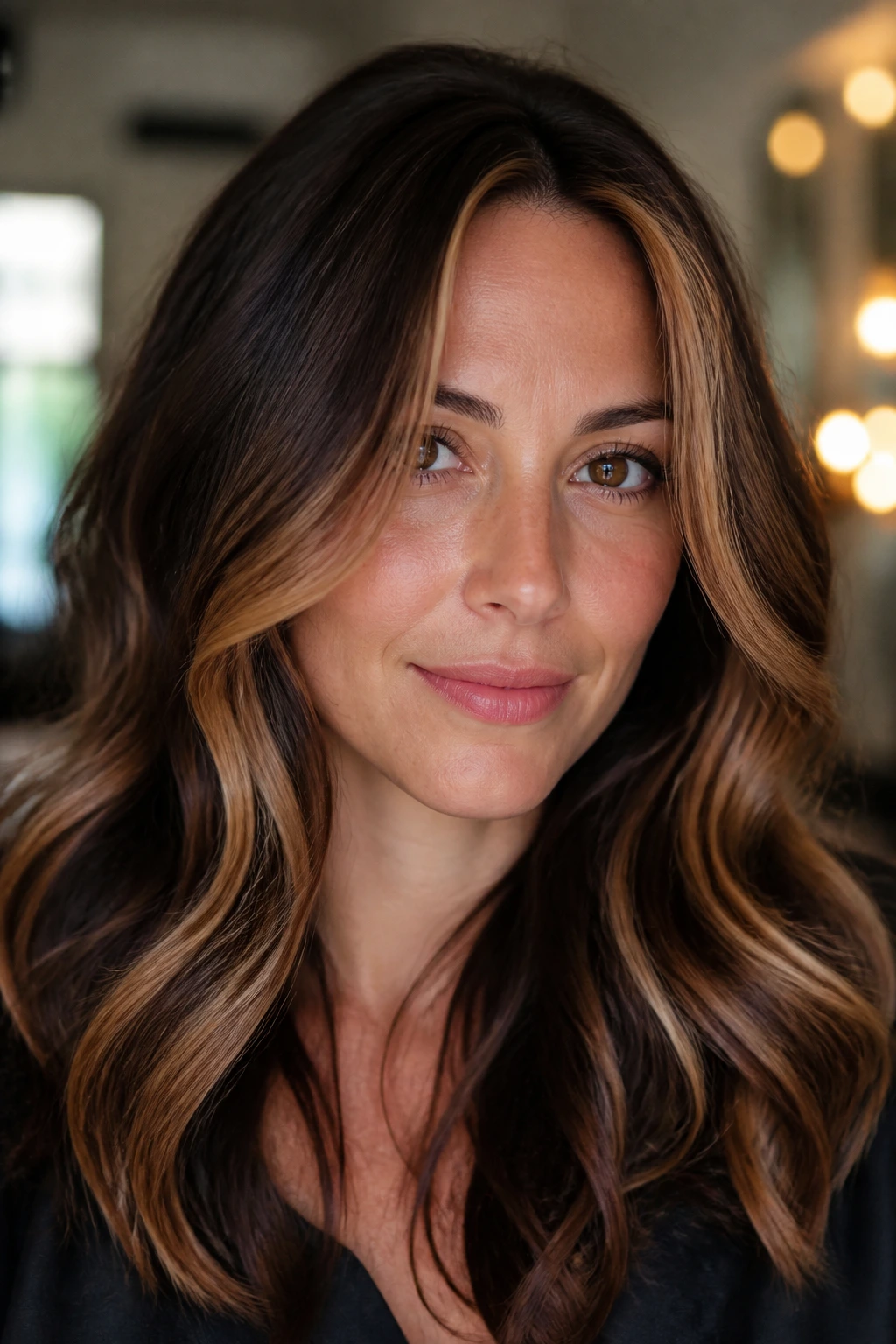
This look is all about front-loaded brightness. Instead of spreading the auburn evenly through the whole head, the color sits in thicker slices around the face and then softens out through the rest of the brunette.
That placement does two things at once. It brightens the complexion near the eyes, and it makes the haircut look more intentional. Curtain bangs, long face-framing layers, and shoulder-length cuts all benefit from this. The auburn doesn’t need to be blazing bright either; a caramel-red-brown mix is usually enough.
What makes it different from full balayage
Full balayage spreads the warmth across the whole surface. Caramel-auburn slices keep the back quieter and put the energy up front. That means less time in the chair and less color to maintain.
It’s a strong choice if you like wearing your hair up part of the time. When the front pieces fall loose, they frame the face. When the hair goes into a clip, the rest stays calm. Simple. Effective.
13. Burnt Sienna Ends With Soft Root Shadow
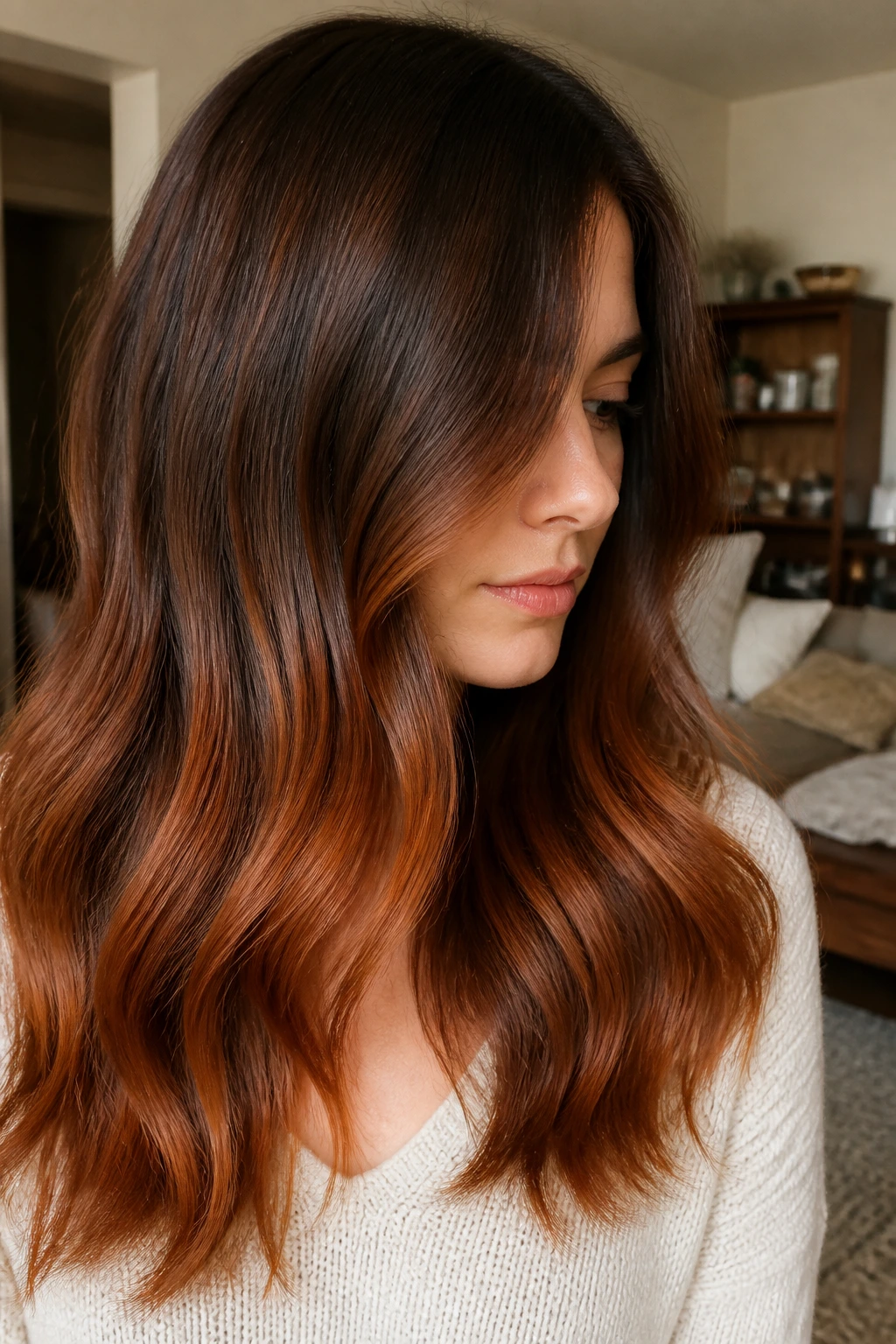
Burnt sienna is one of those shades that looks painted, in the best way. It has that earthy red-brown tone that feels richer than plain copper and less sugary than bright auburn. The soft root shadow keeps it wearable.
Why the shadow matters
If the roots are too light, the whole style can drift toward a color block. A deeper shadow at the root gives the burnt sienna ends a place to start from. That’s especially helpful on layered cuts, where the ends show more movement and the color can look patchy if the transition is too sharp.
This shade works well on hair that has been lifted before and needs a little warmth put back into it. Burnt sienna is good at that. It warms without screaming. It also photographs nicely in real life, not because it is loud, but because the red-brown depth changes as the hair turns.
- Best on layered lobs and longer shags.
- Ask for a soft root melt rather than a blunt demarcation line.
- Keep the ends the richest part of the look.
- Style with a brush-out wave if you want the sienna pieces to separate a little more.
14. Copper Brown Balayage on Shoulder-Length Cuts
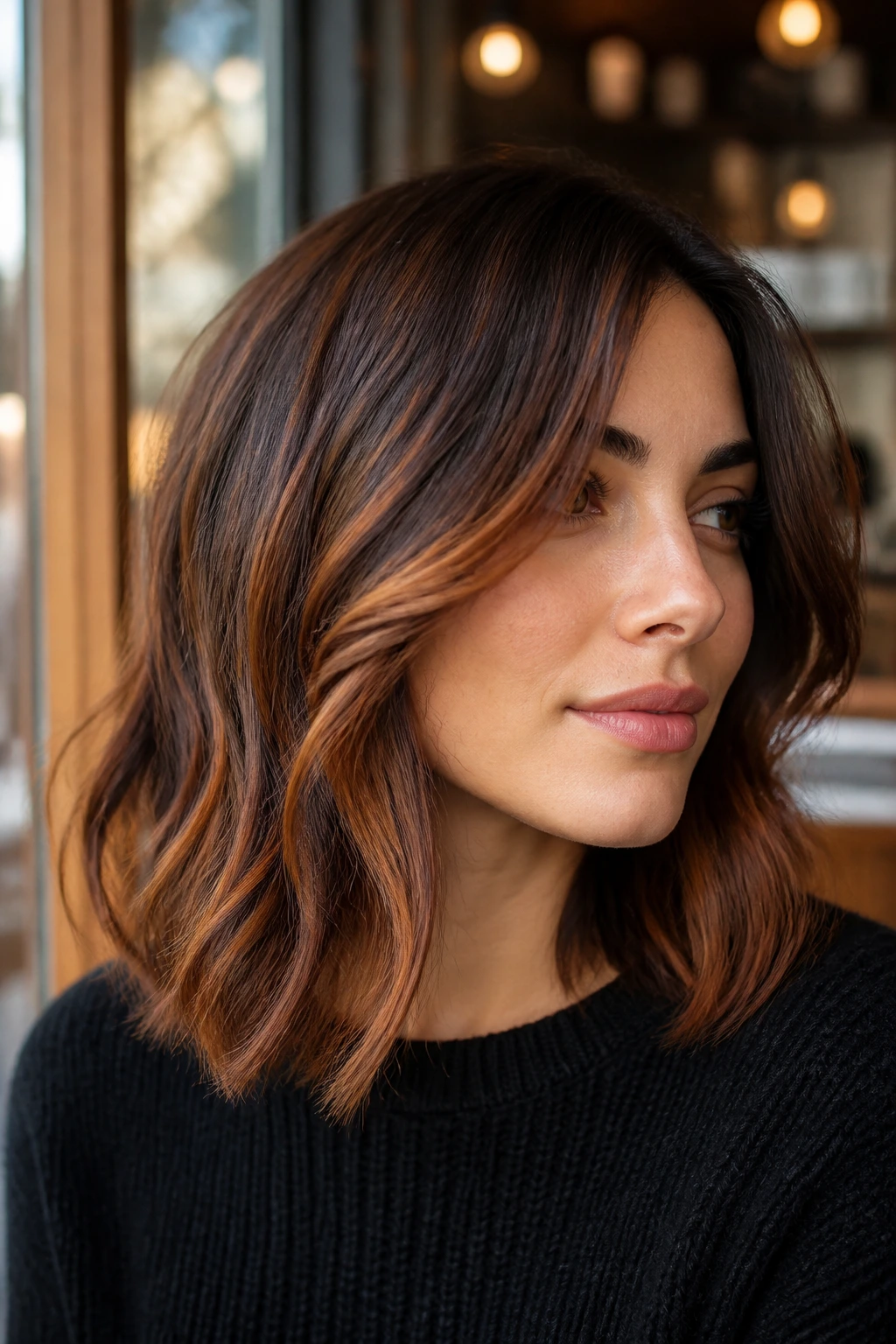
Shoulder-length hair does not need a giant color change to look fresh. A copper-brown balayage can do a lot with a little, especially on lobs and collarbone cuts.
Because the length sits right where people notice movement, the color placement has to be clean. Put the copper-brown pieces through the sides, under the crown, and around the lower half of the face so the cut looks fuller from every angle. A shoulder-length cut can sometimes swallow color if the placement is too high or too sparse. Keep the warmth distributed through the visible area, not hidden up near the part.
This shade is good when you want warmth that reads as part of the brunette, not something sitting on top of it. Copper-brown is softer than straight copper. That makes it easier to wear if your skin leans neutral or if you prefer a less red finish.
A center part gives it a clean look. A side part makes the front pieces pop a little more. Both work.
15. Auburn Money Piece With Subtle Ends
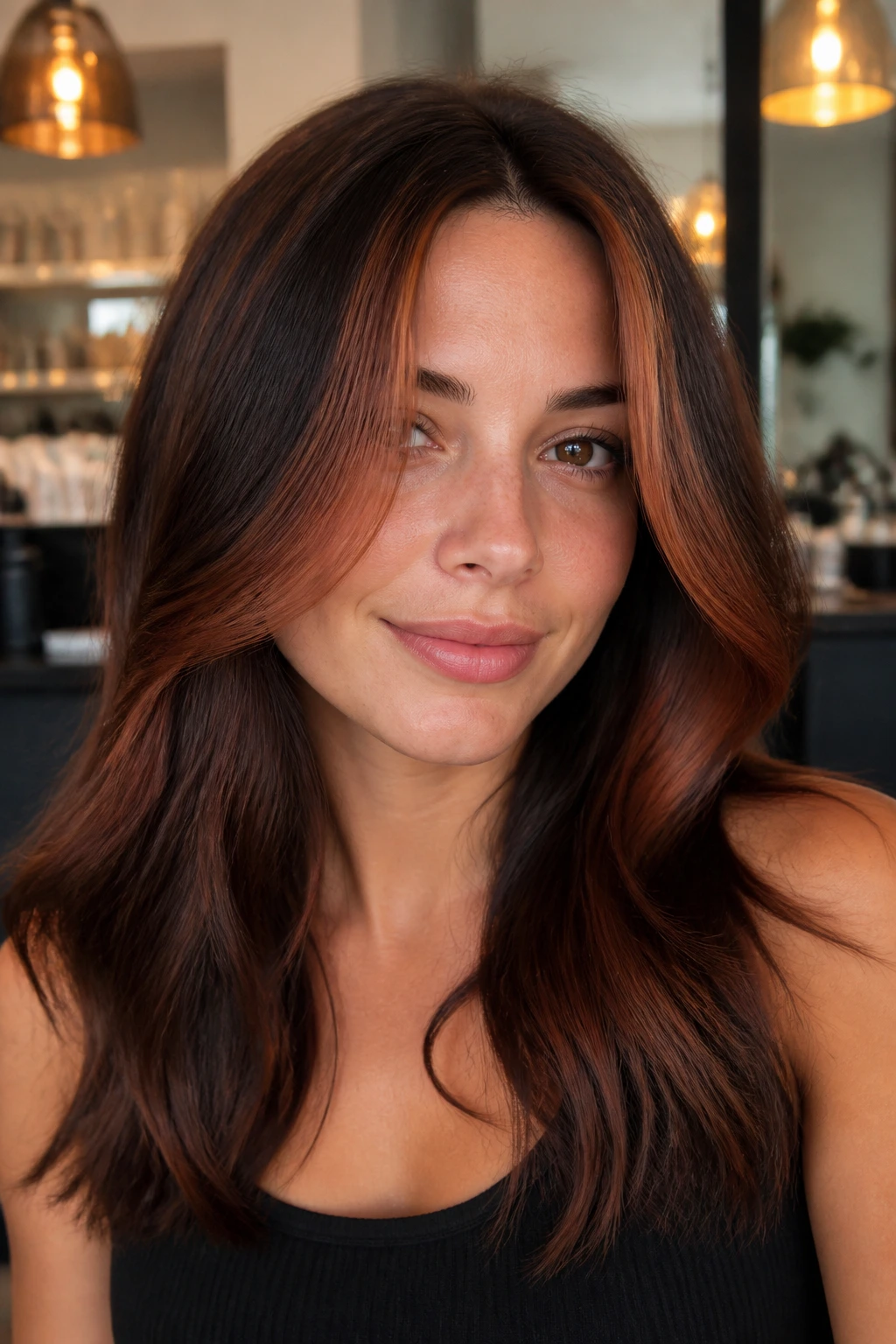
Want one loud spot and everything else calm? This is it. The money piece does the talking; the ends keep their manners.
Auburn money pieces work because they give you visible brightness right where the eye goes first. Ask for two lighter sections near the front, usually starting just below the root and feathering into a softer auburn through the rest of the hair. Then keep the mids and ends only slightly warmer than the base. That balance stops the front from feeling disconnected from the rest.
How to ask for it at the salon
Tell your colorist you want face-framing auburn panels with a subtle brunette melt behind them. If you have bangs, the auburn can sit just behind them. If you wear a middle part, the pieces need to be evenly balanced on both sides.
This look is good for someone who wants a visible change but does not want color maintenance across the whole head. That’s the honest appeal here. A small amount of smart placement does more than a big blanket of color.
16. Walnut and Cinnamon Dimension on Long Hair
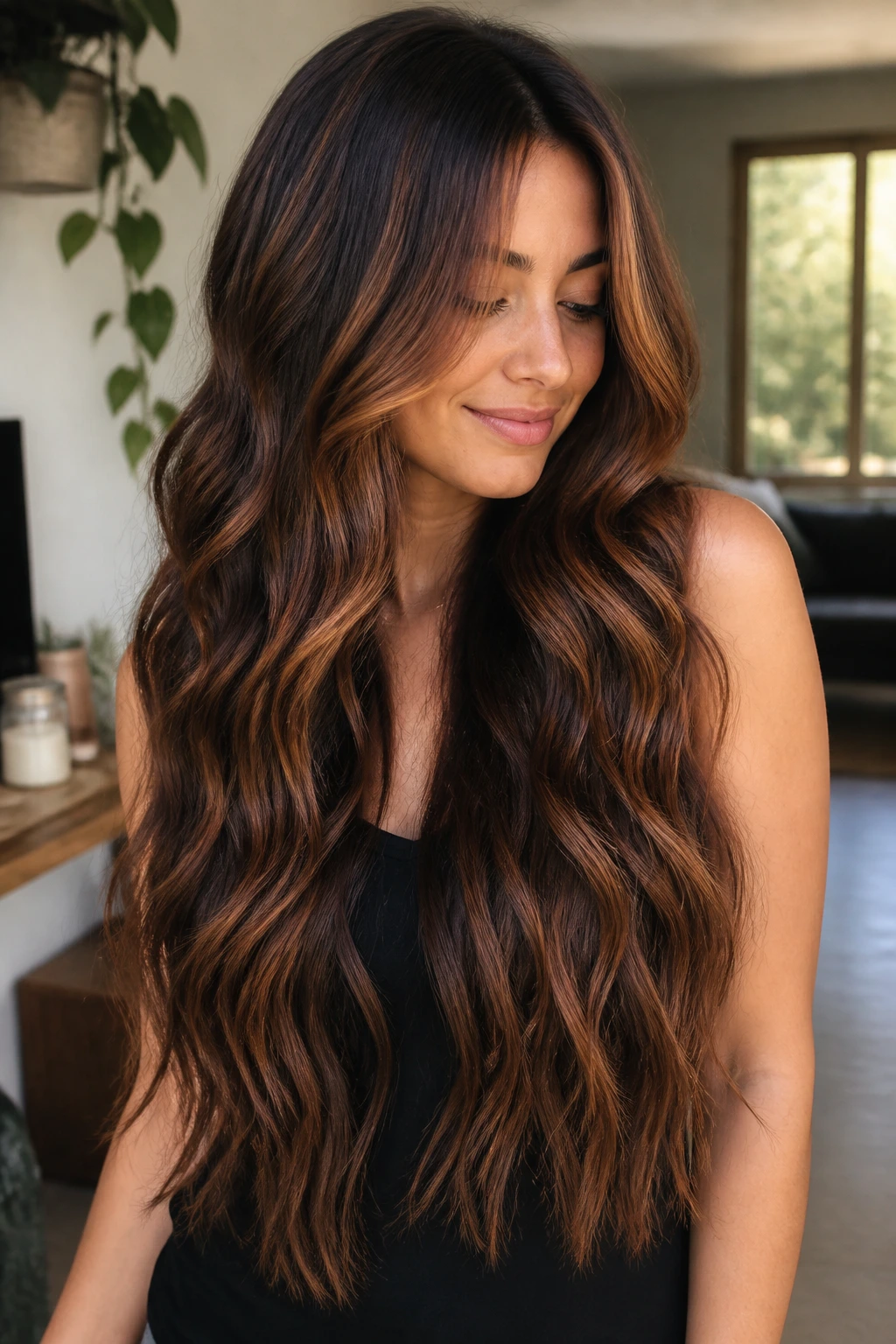
Long hair can eat color if the placement is too timid. Walnut and cinnamon together solve that by giving the hair two warm tones with different depths.
What long hair needs from auburn balayage
A single auburn shade sometimes disappears over long lengths because the eye wants something to follow. Walnut gives the base depth. Cinnamon brings the warmth back up. Together, they keep the color visible from root to end without making the hair look one-note. On waist-length hair, that matters more than people think.
The pieces should be broad enough to show, but not so broad that they look like ribbons on a wrapping paper. Think long, blended zones through the lower half and a few brighter cinnamon strokes around the face. The ends should still feel airy. Heavy saturation down there can make the hair look dragged down.
This is also a good choice if you wear braids, half-up styles, or loose twists. The two-tone warmth shows up in layers when the hair is gathered. That little bit of movement is what gives long hair some life.
17. Bronze Auburn Balayage for Curly Brown Hair
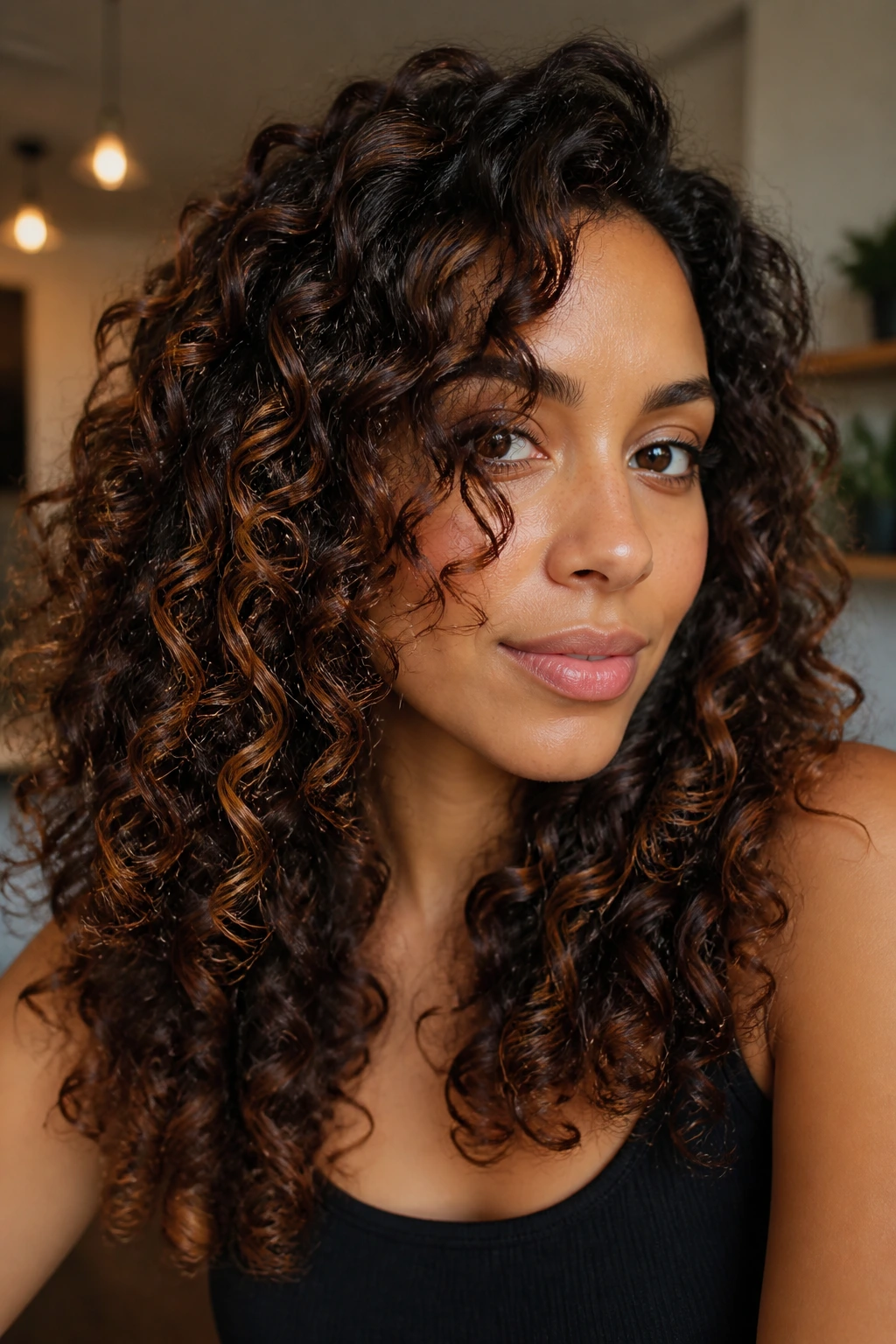
Curly hair makes bronze auburn look alive. Every coil catches a different slice of color, so the shade changes from ringlet to ringlet. That’s where this look really earns its keep.
Curly brunettes need a little more space between painted sections than straight hair does. If the color is packed too tightly, the curls can blur it into one warm blob. Bronze auburn works better when the painter follows the curl pattern and keeps the lightest pieces on the outer curve of the coil. That creates depth without sacrificing shape.
A diffuser helps a lot here, and so does a lightweight cream that keeps the curl clumped without making it stiff. You want the bronze to look shiny and soft, not crunchy. Dry ends kill the color.
This shade is especially good on darker curl patterns because bronze adds warmth without going full copper. The result feels rich, not sugary. Subtle? Not exactly. But controlled. And that counts.
18. Rosewood Auburn Blend on Medium Brown Hair
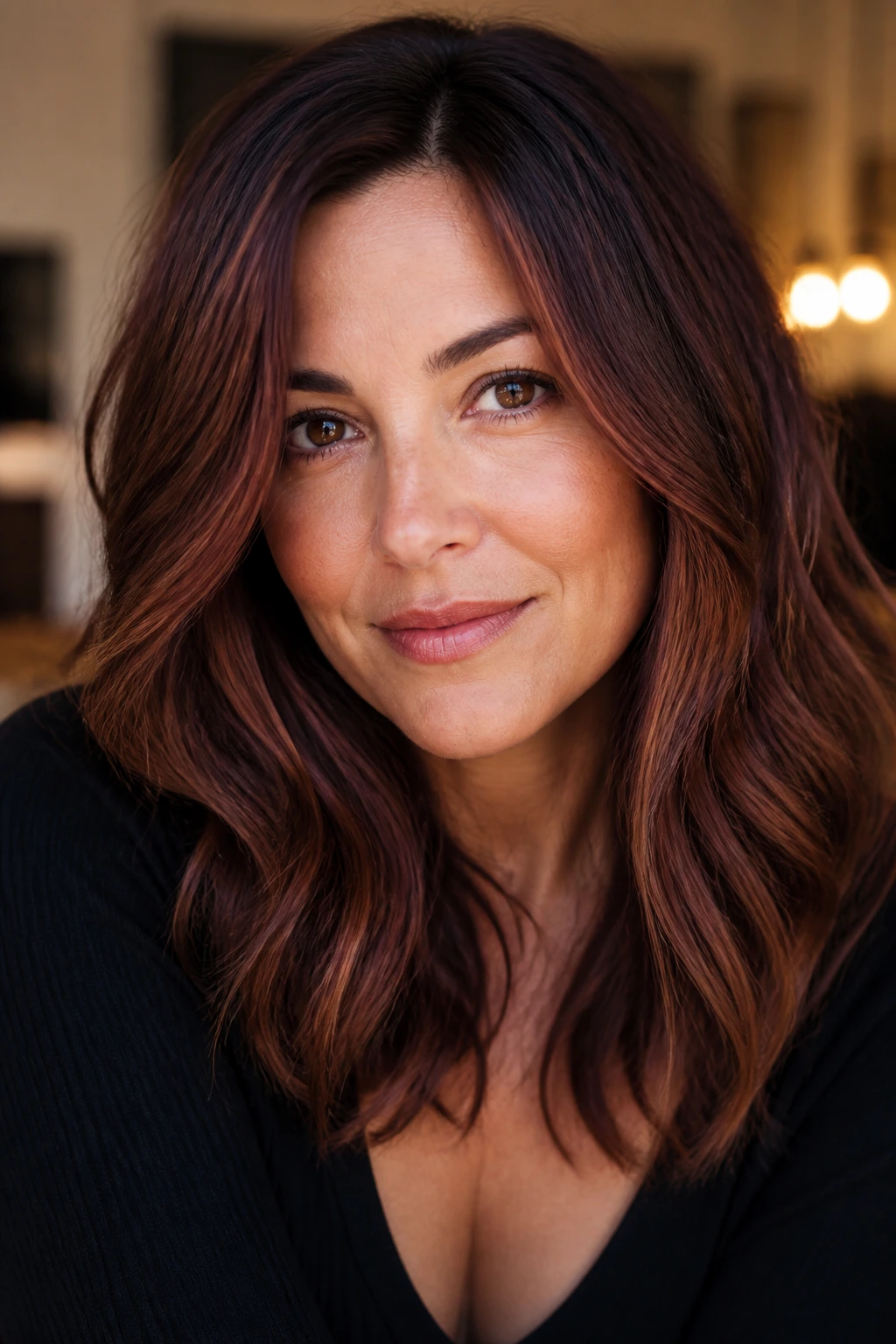
Rosewood auburn leans a little rosier than classic copper, which is why it looks so good on medium brown hair. The pink-red hint softens the whole finish.
That slight rose note keeps the color from reading harsh. On medium brown, it creates a smoother transition than a brighter copper formula would. Ask for a blend that sits between chestnut, red-brown, and muted rose. The best version should not look pink from across the room; it should show a rosy warmth when the light moves across it.
Who this suits
People who want red, but not fire-engine red. People with fine hair that needs the illusion of thickness. People who prefer a softer, less rustic finish than burnt sienna or copper penny.
The nicest part is how the shade behaves in different lighting. Indoors, it can look like a rich brunette. Outside, the rose undertone wakes up. That shift is the whole point. No drama needed.
19. Smoky Copper Lowlights and Balayage Mix
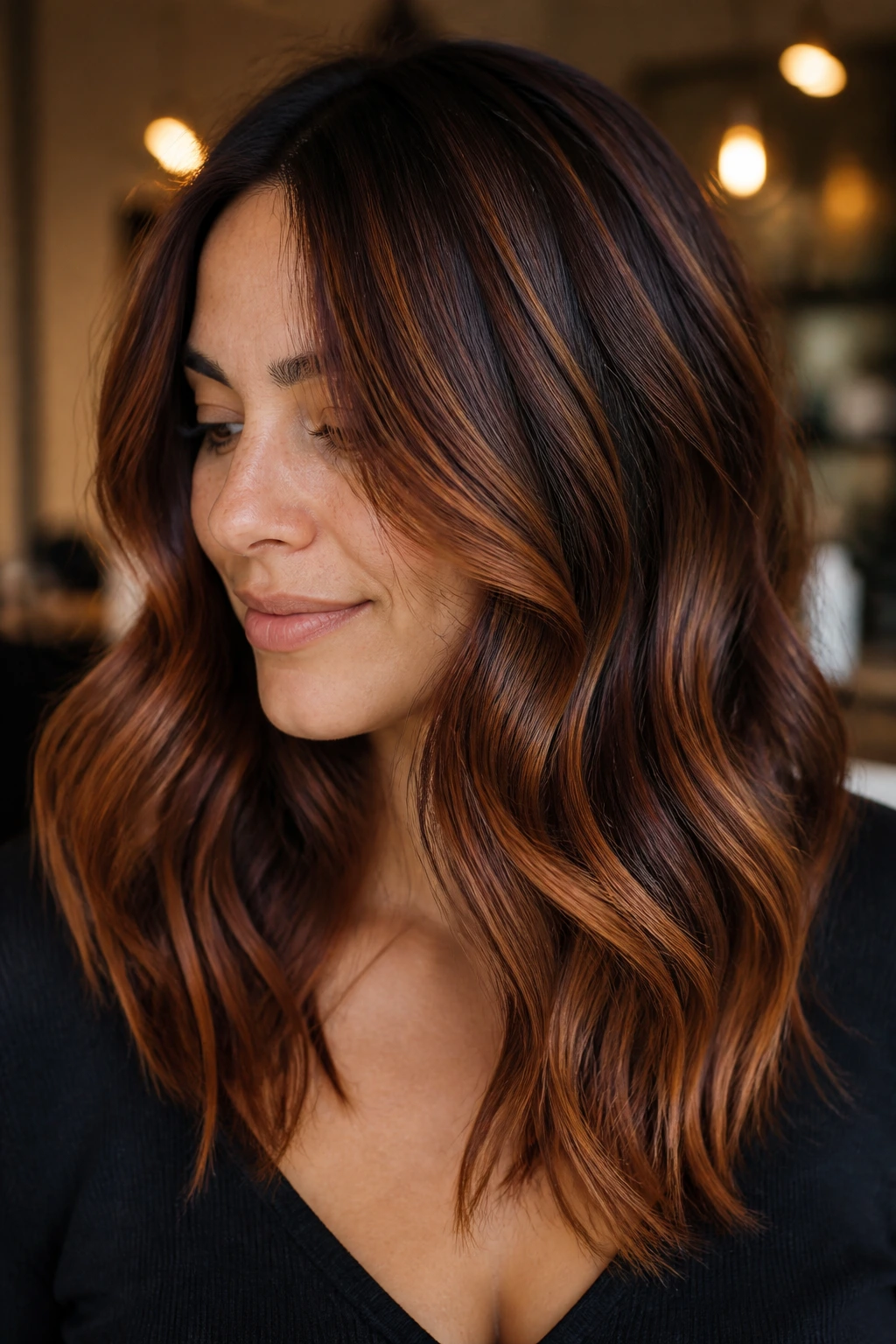
If your brown hair already has highlights, lowlights can be the thing that makes auburn look expensive again. Smoky copper lowlights push some darker warmth back into the hair, while the balayage pieces sit on top and catch the light.
This mix is useful when the hair has started to look too blonde, too flat, or too light through the mids. Adding lowlights brings the depth back, and the copper balayage sits against that darker backdrop in a cleaner way. The result feels layered instead of washed out.
What to ask for
- A deeper brown or smoky auburn lowlight through interior sections.
- Soft copper balayage on the surface and around the face.
- A finish that keeps the color rich, not orange.
- A gloss that refreshes the copper without making the lowlights muddy.
This is a good rescue look, honestly. Not a correction in the boring sense—more like a reset. It brings back shape, shadow, and warmth all at once.
20. Rich Auburn Ombré-Balayage Fusion
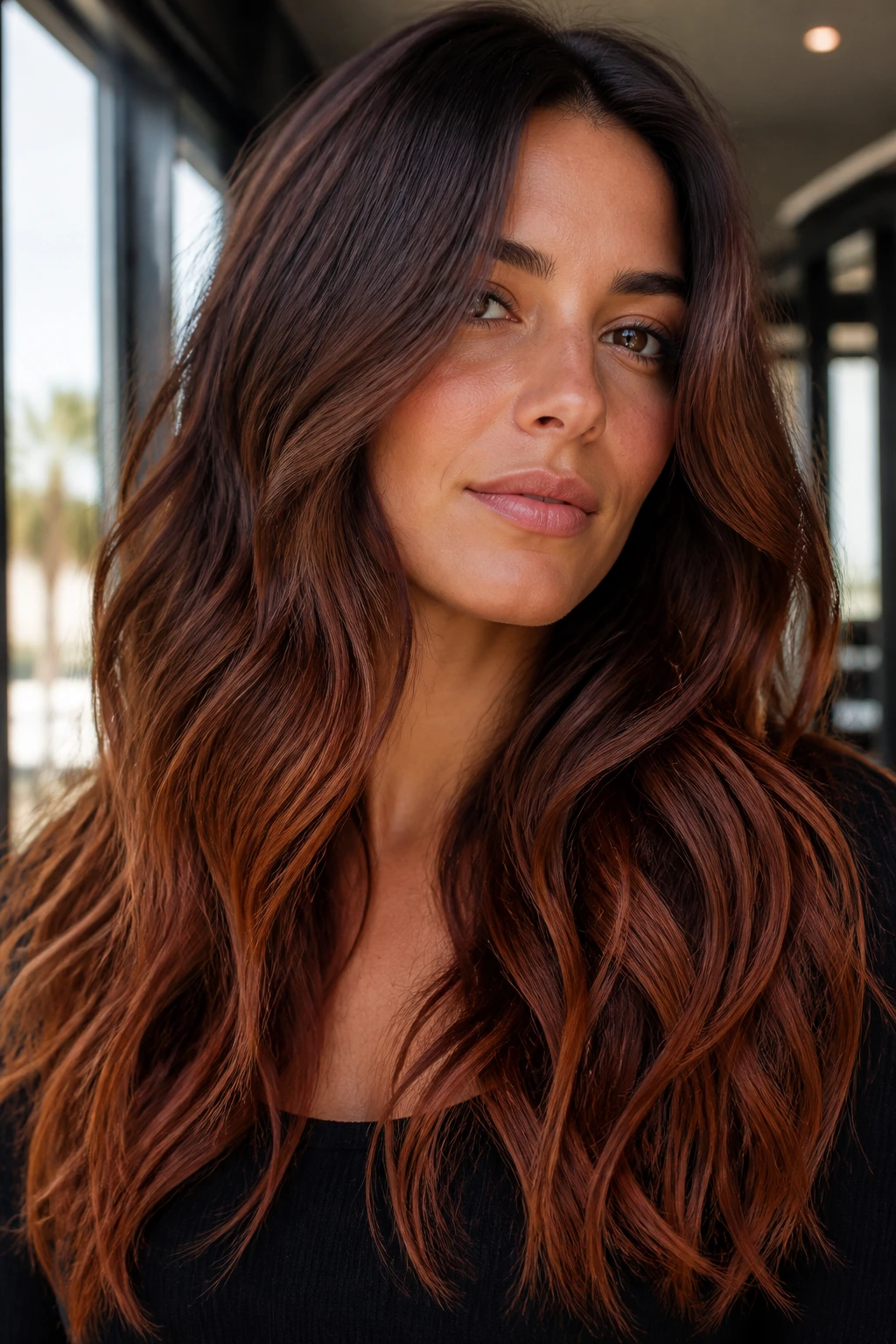
A rich auburn ombré-balayage fusion gives you the strongest color shift of the group, but it still keeps the brunette base in charge at the top. The roots stay grounded; the lengths carry the drama.
That makes it a strong choice for long brown hair, especially if you want the ends to feel clearly warmer than the mids. The ombré element gives you the gradual fade, while balayage breaks up that fade so it does not turn into a blunt dip-dye line. The two methods work well together when the transition is slow and the auburn shade gets richer as it moves downward.
This look likes movement. Loose waves show the fade. Blowouts show the shine. Straight hair makes the contrast more obvious. If you want the strongest visual change in the set, this is probably it.
A small caution: on very short hair, this can feel cramped. The transition needs length to breathe. On long layers, though, it has room to look expensive and a little dramatic without looking overdone.
Final Thoughts
Auburn balayage works on brown hair because it respects the brunette base instead of fighting it. That is the whole reason it looks believable. The strongest versions use placement, depth, and gloss to make the color feel like part of the hair rather than a layer sitting on top.
If you are choosing between soft cinnamon, smoky mahogany, copper penny ends, or a fuller auburn melt, start with how much contrast you want to see when your hair is straight and when it moves. That tells you more than a lot of salon buzzwords do.
Bring reference photos, sure. But bring ones with the same base depth and length as your own hair. That tiny bit of realism saves everyone from guessing, and it usually gets you closer to the auburn brown hair look you actually want.
