



Brown hair and gray balayage work better together than most people expect. When the placement is soft, the cool pieces look like smoke sitting on top of cocoa, chestnut, or espresso instead of sitting on the hair like a stripe.
The catch is pigment. Brown hair loves to hold warmth, and that warmth can turn gray toner muddy if the lift is too shallow or the ash is too heavy. A good colorist usually thinks about where the gray should land — ends, face frame, mids, or just a few thin ribbons — before they mix a single bowl of lightener.
I’ve always liked gray balayage on brown hair when there’s still some brown left to see. Too much gray and the whole thing loses depth. Too little and you may as well have skipped the toner.
These 30 looks move from whisper-soft to high contrast, because that range matters. Some are built for low upkeep, some for drama, and some for the sweet spot in between. The first one is the easiest place to start if you want gray without making the hair look flat.
1. Soft Smoky Gray Ribbons on Chestnut Brown
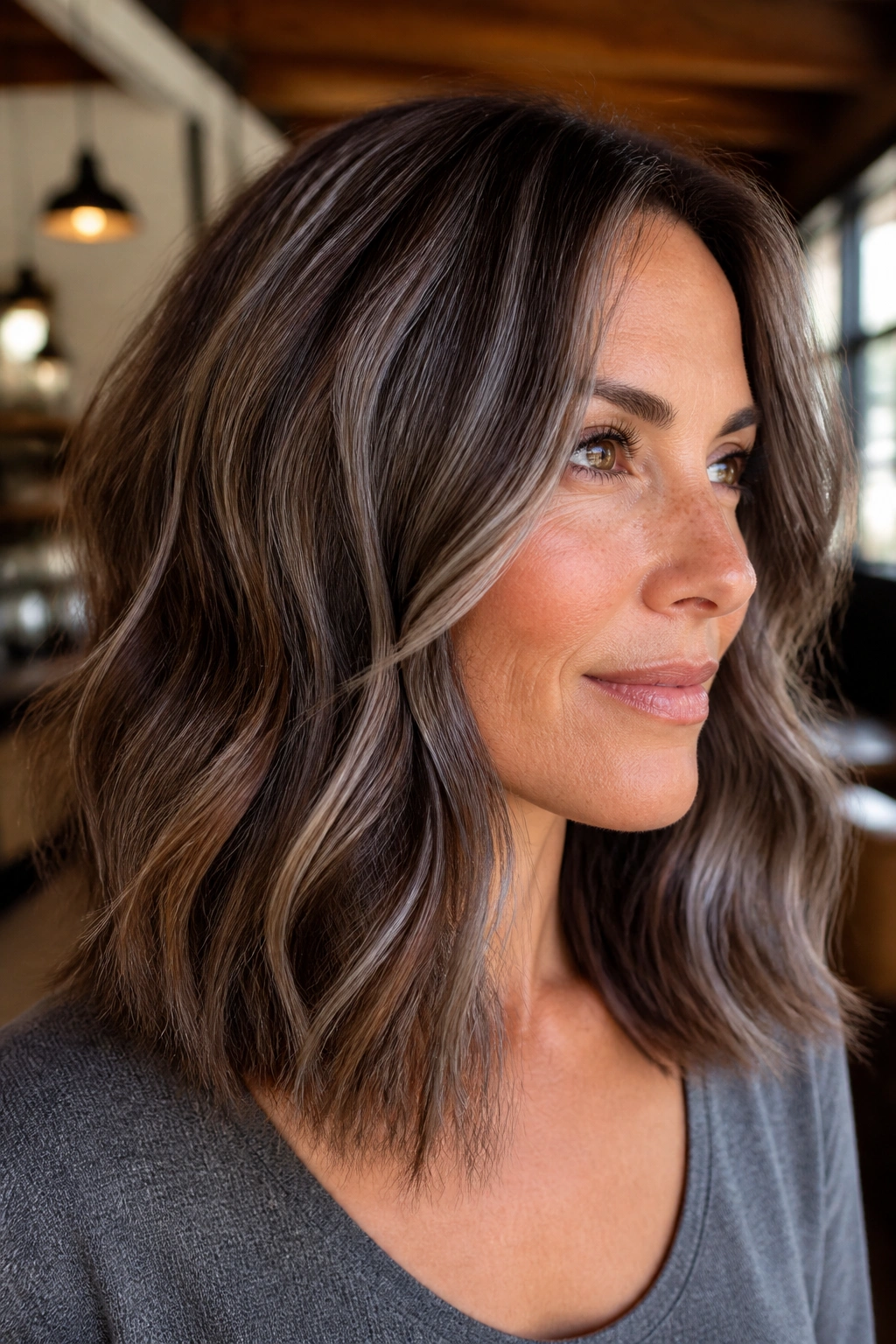
This is the version I’d hand to someone who wants gray balayage on brown hair without the shock of a full cool makeover. The gray falls in thin ribbons through a chestnut base, so the brown still feels rich and warm at the roots.
What Makes It Work
The trick is spacing. If the ribbons are too close together, the whole head turns smoky in a way that can look heavy. Thin, separated pieces keep the movement visible, especially once the hair bends into loose waves.
- Best for: level 5 to 6 brown hair
- Ask for: soft ribbons from the cheekbones down
- Finish with: a neutral-to-ash gloss so the gray stays clean
- Style with: a 1-inch iron or wide bend, not pin-straight hair
One smart move: leave the root a shade deeper than the mids. That tiny shadow keeps the gray from washing out the chestnut base.
2. Icy Face-Framing Pieces on Medium Brown
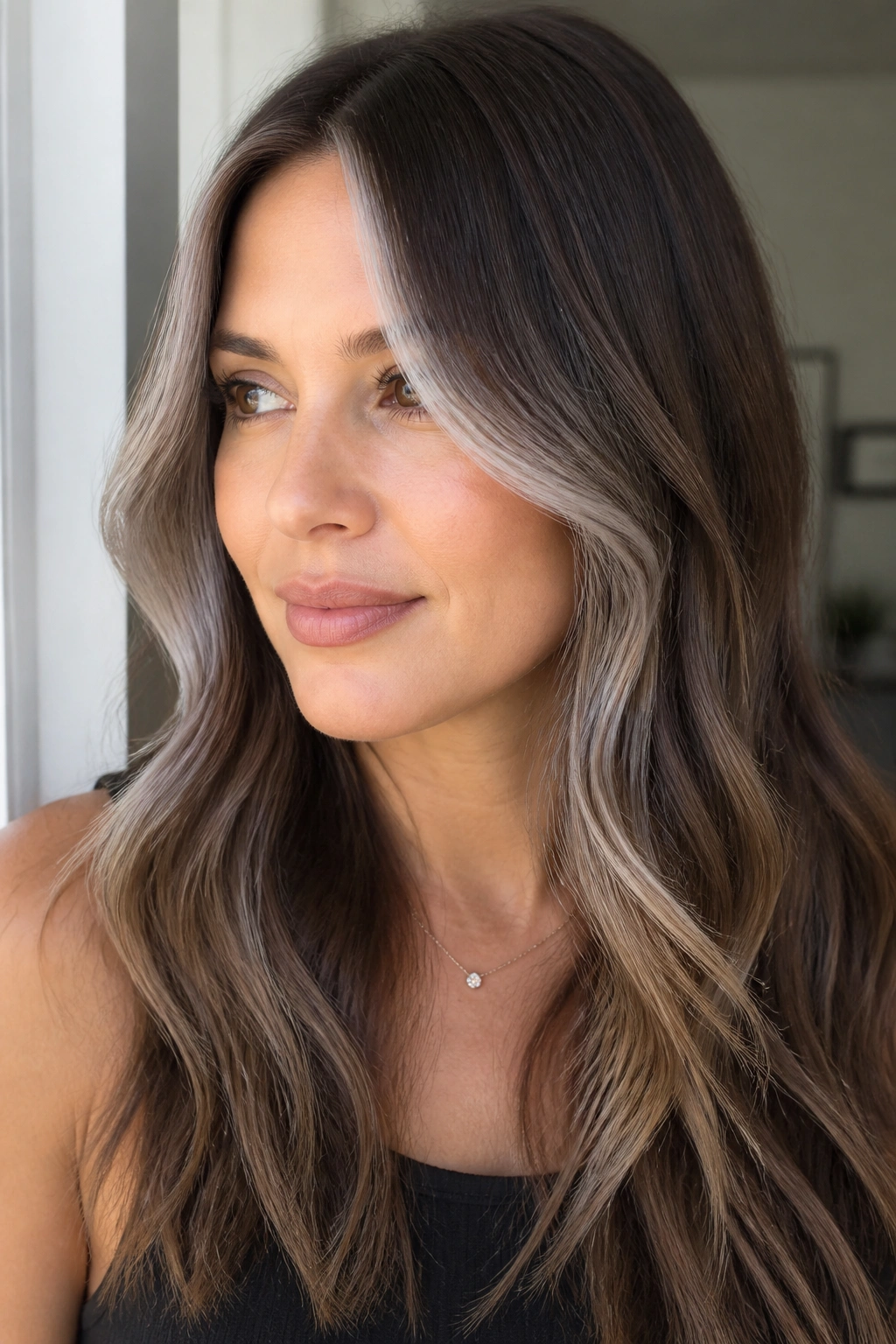
Can a few cool pieces change the whole haircut? Absolutely. When the front sections are lifted lighter than the rest, the gray balayage acts like a frame and pulls attention straight to the eyes and cheekbones.
The look works especially well on medium brown hair with curtain bangs or a center part. Those front pieces can be toned toward silver-gray while the back stays a little softer, which keeps the style from feeling too severe. It also grows out in a cleaner way than a full-head icy blonde effect.
Ask for the money pieces to sit one shade brighter than the rest of the color. That gives you contrast without creating two separate looks in the same head of hair. Clean, sharp, and easy to style.
3. Mushroom Brown Roots with Silver Ends
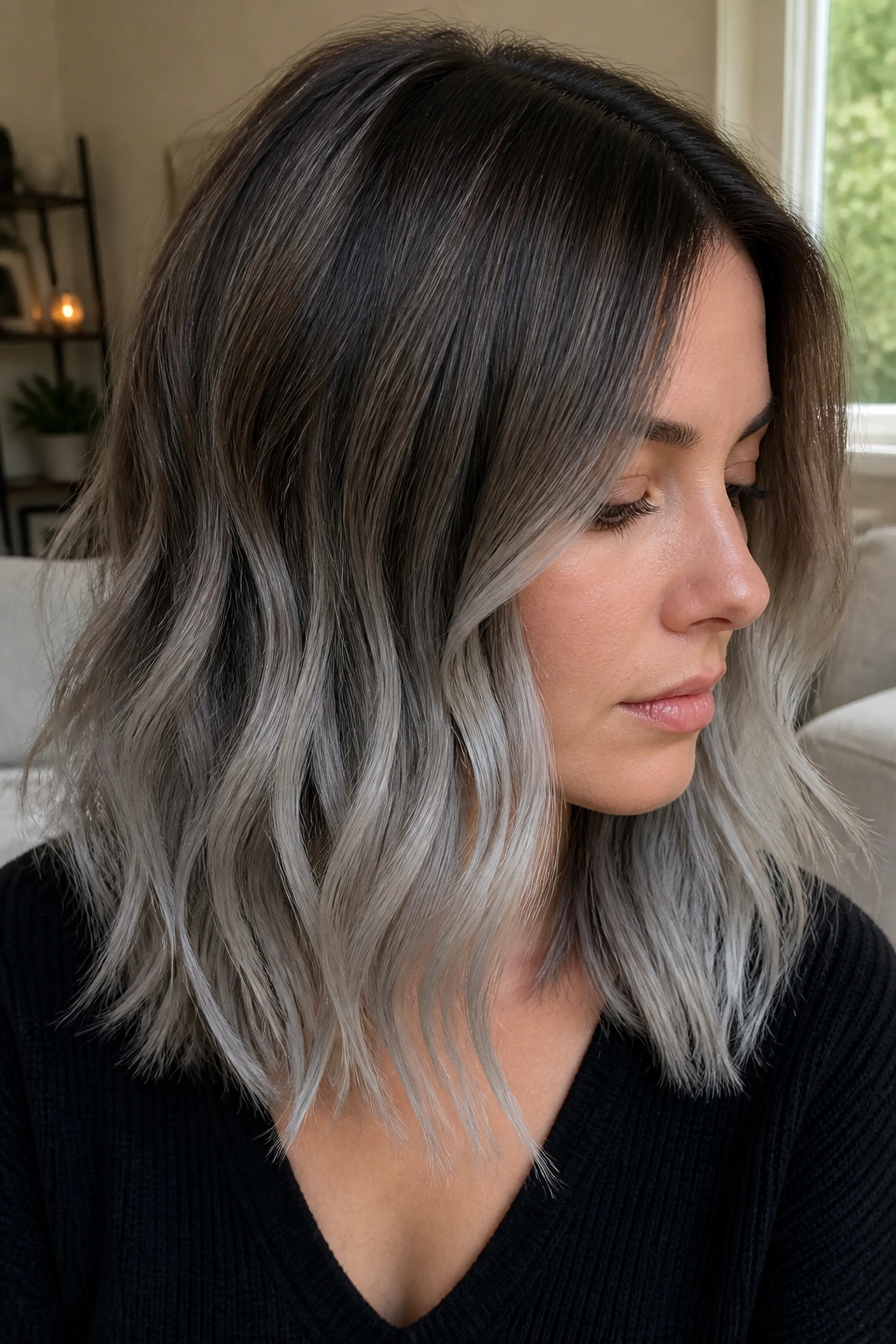
If your brown leans warm, this is one of the safest ways to wear gray without fighting your own pigment. Mushroom brown at the roots melts into silver at the ends, and the shift feels deliberate instead of accidental.
Why It Feels So Wearable
The root area stays soft and earthy. The cooler silver gets saved for the lower half, where it can shine without making the whole color look icy. On shoulder-length cuts, that gradient reads especially well because you get enough room for the transition.
- Ask for: a shadow root 1 to 2 inches deep
- Best on: lob cuts and long layers
- Avoid: chunky foils near the crown
- Pair with: soft waves or a tucked-behind-the-ear finish
This one is good for anyone who hates obvious regrowth. The darker top means you can stretch appointments a little longer.
4. Graphite Balayage on Espresso Hair
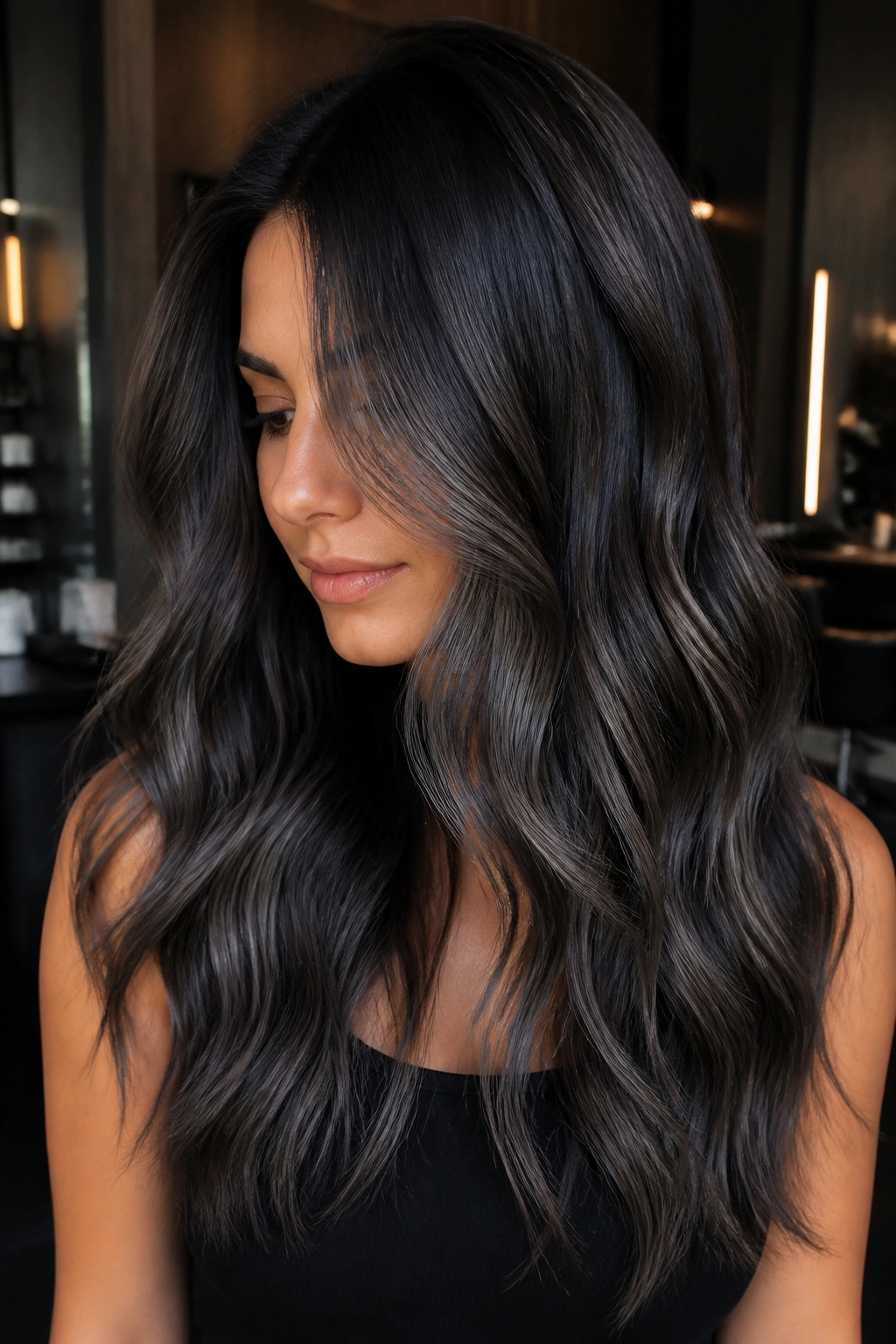
Deep brown can wear gray, and it can wear it well. Graphite balayage on espresso hair keeps the palette dark enough to feel sleek while still adding those cool, metallic flashes that catch the eye.
The reason it works is simple: the gray is not fighting the base. Espresso has enough depth to hold charcoal, slate, and graphite tones without looking muddy, so the finished hair keeps its richness. On long layers, the movement shows up in a way that feels deliberate rather than streaky.
This is a strong choice if you like contrast but don’t want silver ends screaming for attention. It looks expensive in a quiet way. Not delicate. Not loud. Just dark, cool, and glossy.
5. Pearl Gray Veil on Warm Brunette
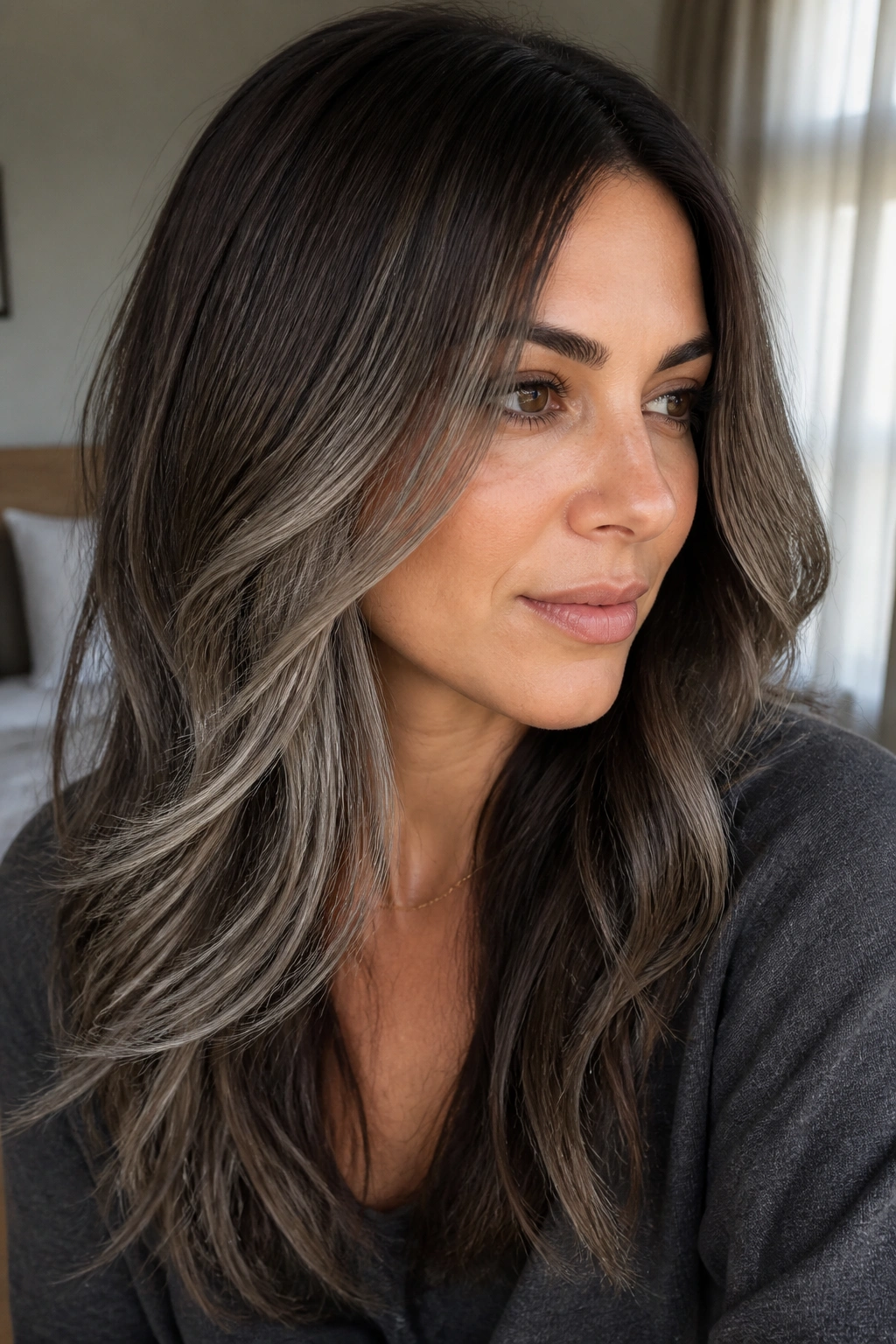
Pearl gray is softer than icy silver, and that softness matters on warm brunette hair. Unlike a sharp silver tone, pearl gray carries a tiny bit of beige through the finish, so the brown base still looks flattering instead of washed out.
What Makes It Different
It behaves almost like a veil over the color rather than a hard stripe through it. That makes it useful for people who want coolness without losing the warmth that made them like their brown hair in the first place.
A pearl-toned gloss also tends to look better on layered cuts, where the light can move across the surface. Flat, one-length styles can handle it too, but they need a bit of bend or a round-brush finish to show the variation.
My take: this is one of the easiest gray balayage looks to keep looking polished without crossing into stark territory.
6. Silver Babylights Through Dark Brown Waves
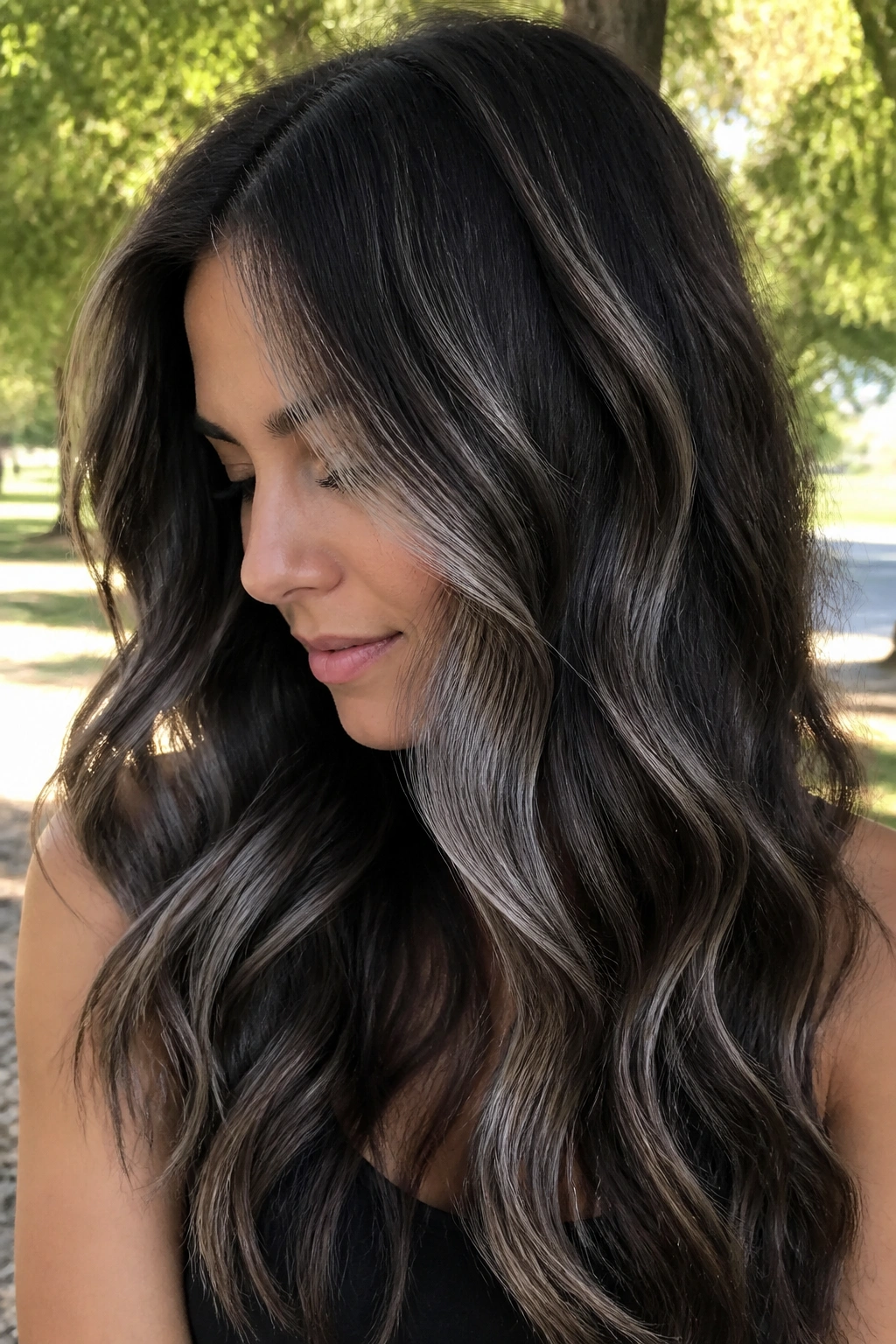
Silver babylights are tiny, threadlike pieces, and that’s the whole point. On dark brown hair, they create a soft shimmer rather than a block of color, which makes the finish feel lighter and more expensive.
The thinner the weave, the better this look works. If the sections are too wide, the silver starts reading like stripes, and nobody wants that. Babylights should disappear into the brown when the hair is still and reveal themselves only when the waves move.
This is a smart choice for fine hair. It gives the illusion of depth without stealing density from the cut. Loose bends, not tight curls, are the sweet spot here.
7. Gray Money Piece with Curtain Bangs
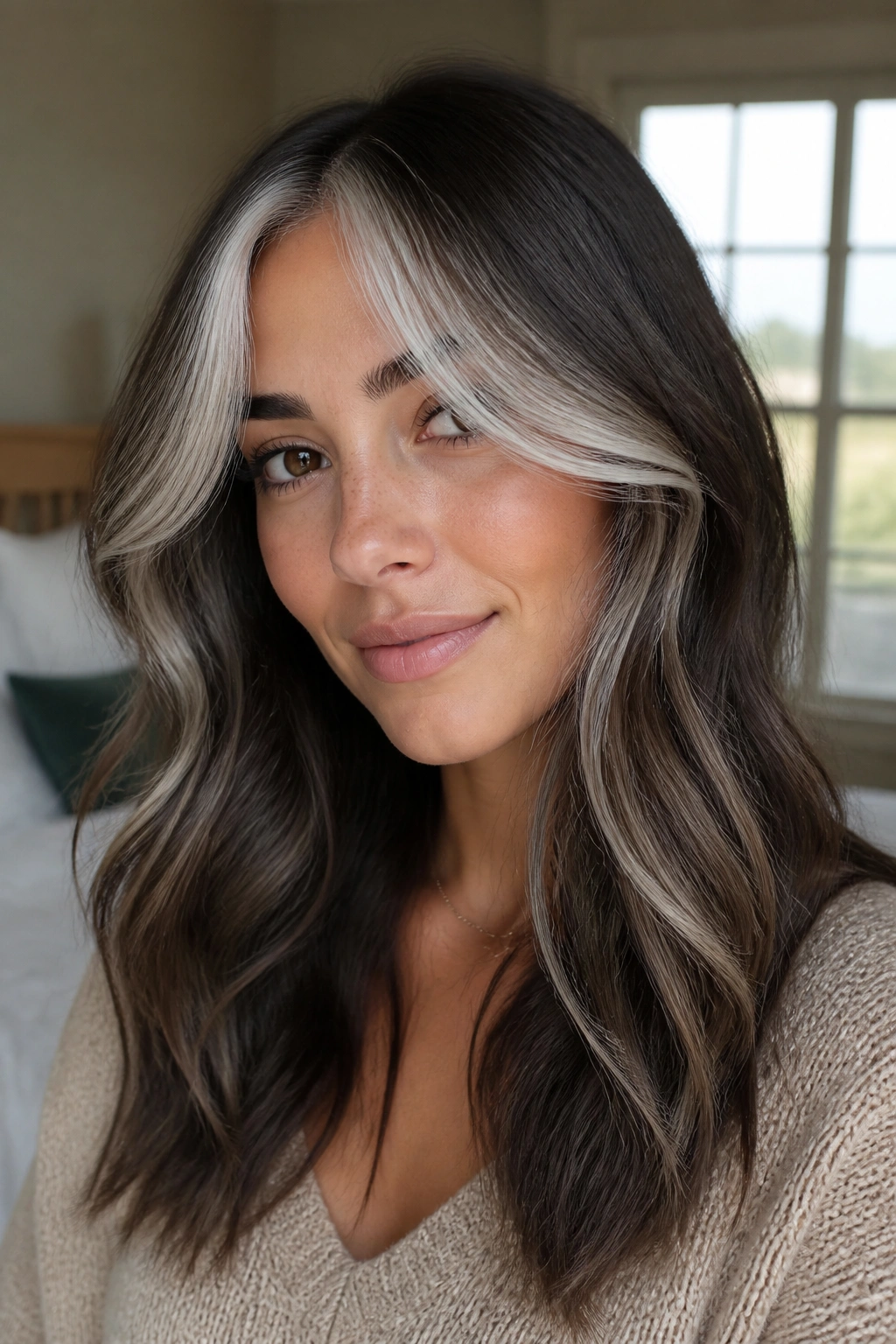
Could a gray money piece do more than a full head of highlights? Yes, and sometimes a lot more. When the front sections are cool and bright, the eye goes there first, and the rest of the brown hair gets to stay rich and grounded.
How It Works with Curtain Bangs
Curtain bangs give the gray a built-in place to land. The color can follow the fall of the fringe and sweep into the side pieces, which makes the whole haircut look intentional instead of chopped into separate parts.
- Ask for: brightness around the part line and temples
- Keep the back: softer and deeper for contrast
- Style with: a blowout brush or a big round brush
- Skip: heavy product near the front pieces, which can mute the shine
This look is a little more playful than a full gray melt. It has edge, but not too much.
8. Smoke-Dipped Ends on Shoulder-Length Layers
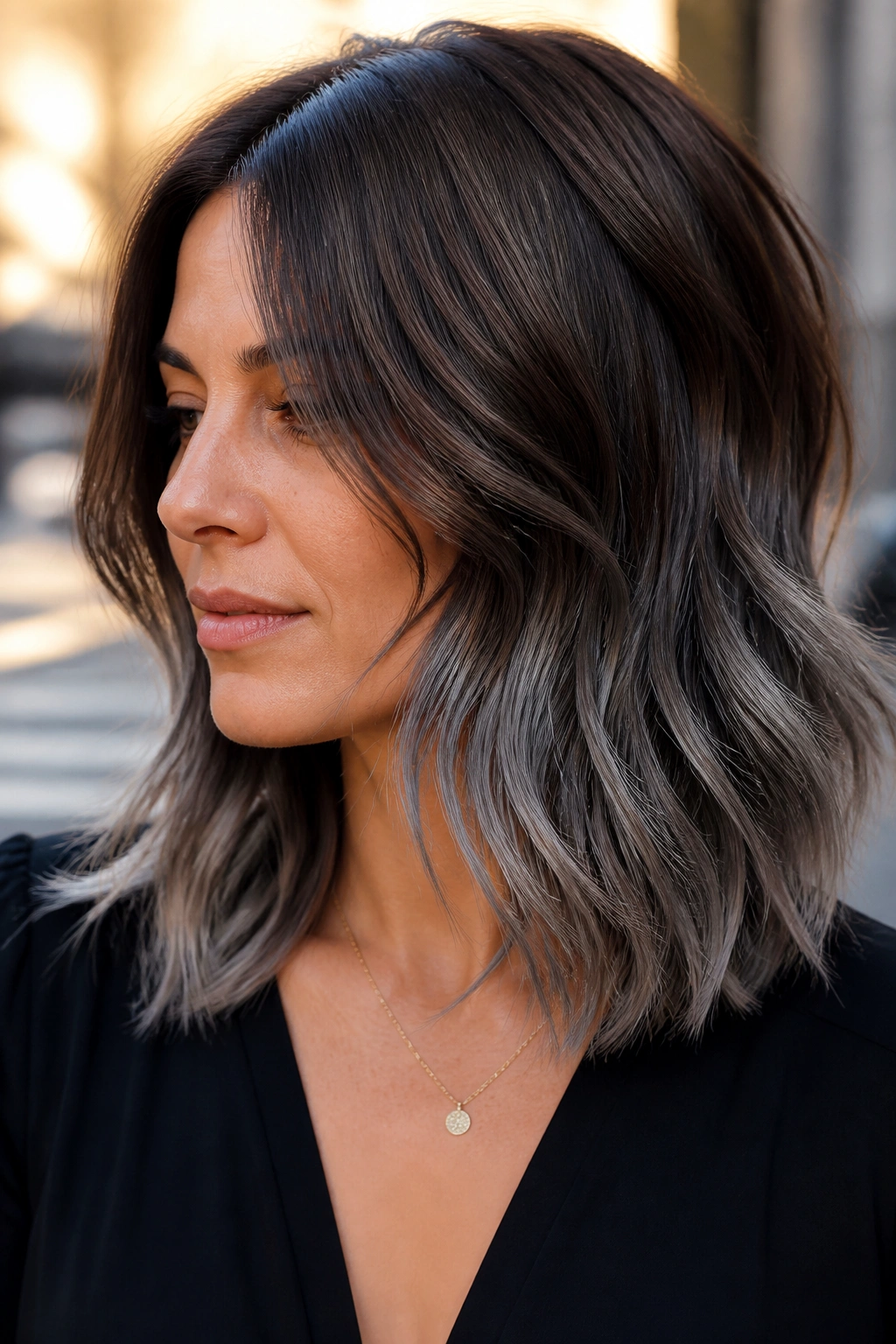
I saw this look on a shoulder-length cut first, and it made perfect sense. The ends were dipped in smoke-gray, while the midlengths stayed brown enough to keep the style grounded. That kind of placement is a gift for layered hair.
The layers do half the work because they stop the gray from reading as one solid block. When the ends flip out a little, the lighter tone shows in slices, which gives you movement even if you do not spend much time styling.
- Best for: lobs, shags, and feathered layers
- Ask for: darker mids and smoky ends
- Style tip: rough-dry first, then bend only the bottom 2 inches
- Maintenance: easy to grow out because the root area stays dark
The whole effect feels relaxed. Not lazy. Just easy.
9. Ash Brown and Steel Gray Melt
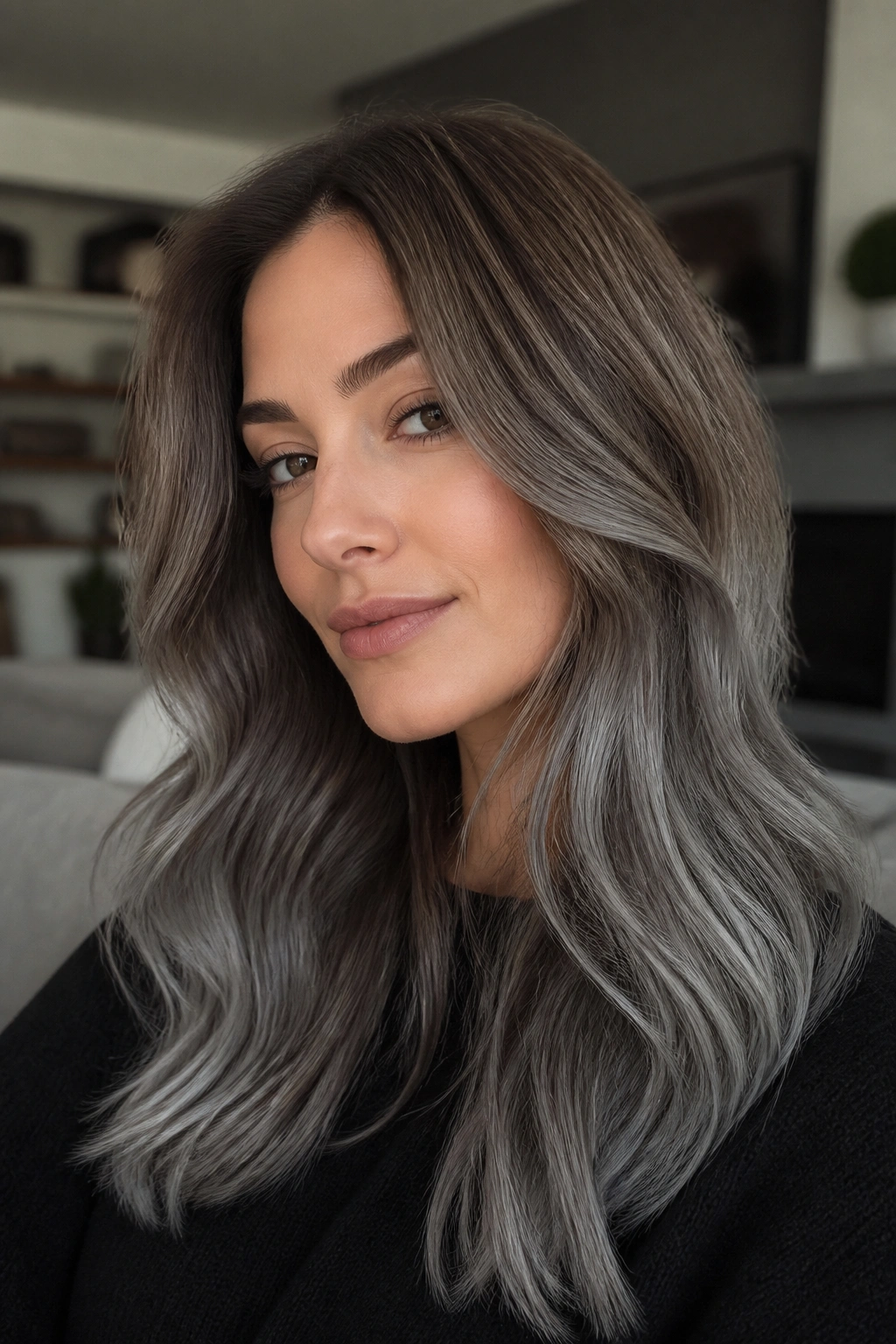
This one is all about a clean fade. Ash brown starts at the roots and mids, then the color slips into steel gray near the ends without a hard stop. The best versions look seamless, almost like the hair was born that way.
The reason I like this melt on brown hair is that ash brown gives the color a bridge. If you jump from warm brunette straight into steel, the transition can feel abrupt. Ash brown keeps the shift smooth and helps the gray look intentional.
Wear it with soft waves if you want the dimension to show. Wear it straight if you want the gradient to look sleek and modern. Both work, but the straight finish is a little sharper.
10. High-Contrast Gray Streaks on Chocolate Brown
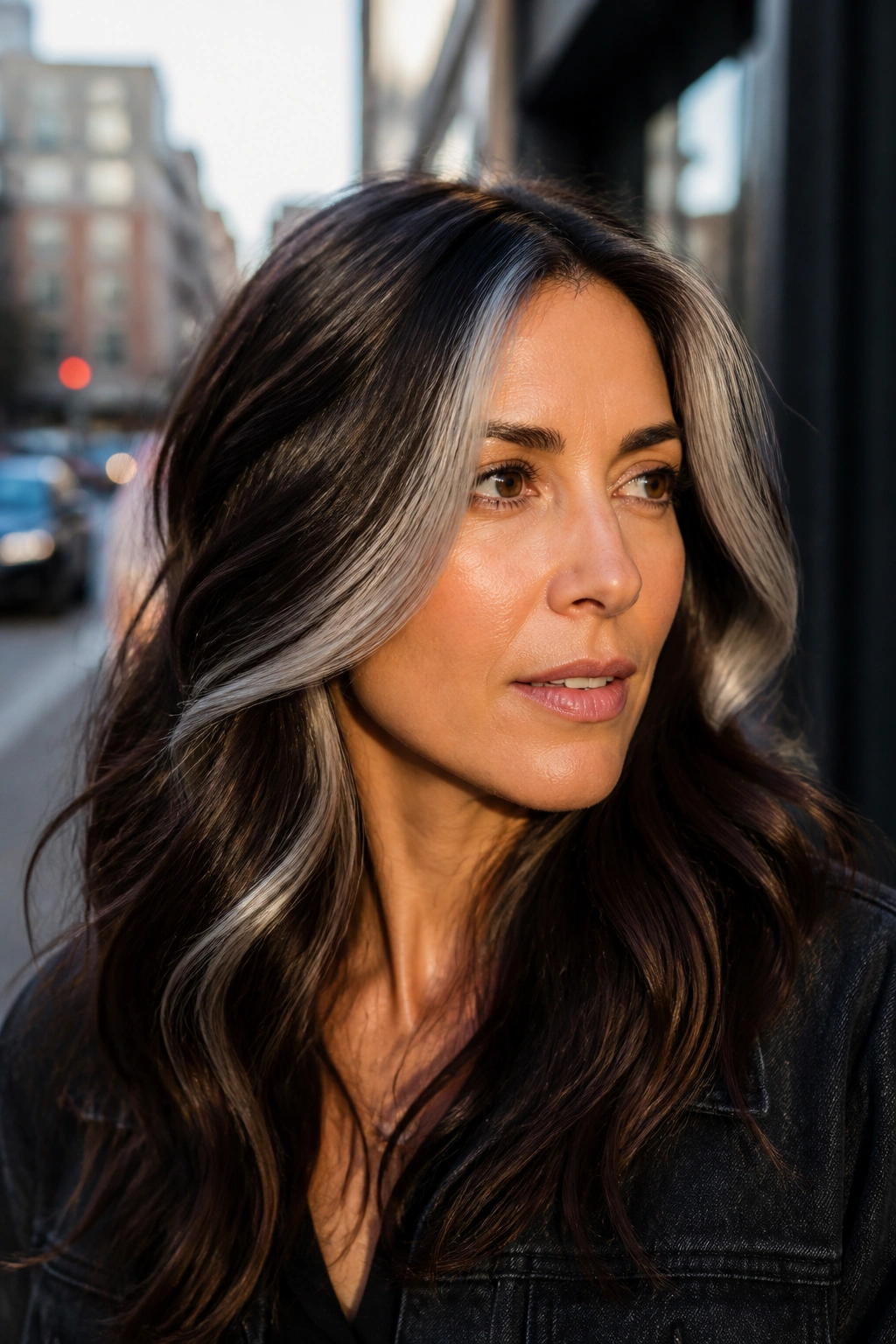
This is the bolder end of gray balayage on brown hair. Instead of whispering, it speaks up. Strong gray streaks against chocolate brown create real contrast, and the effect can look fantastic on thick hair that needs visual lift.
What to Watch For
The key is control. High contrast looks great when the streaks are placed with enough breathing room. Too many bright pieces and the chocolate base loses its depth. A few well-placed streaks near the face and through the top layer are usually enough.
- Best on: dense, medium-to-long hair
- Ask for: wider but still blended panels
- Avoid: too much lift near the roots
- Works well with: blunt ends, long layers, or a polished blowout
This is not the shy version of gray. If you like seeing the pattern clearly, this is the one.
11. Subtle Pebble Gray Lowlights on Brown Hair
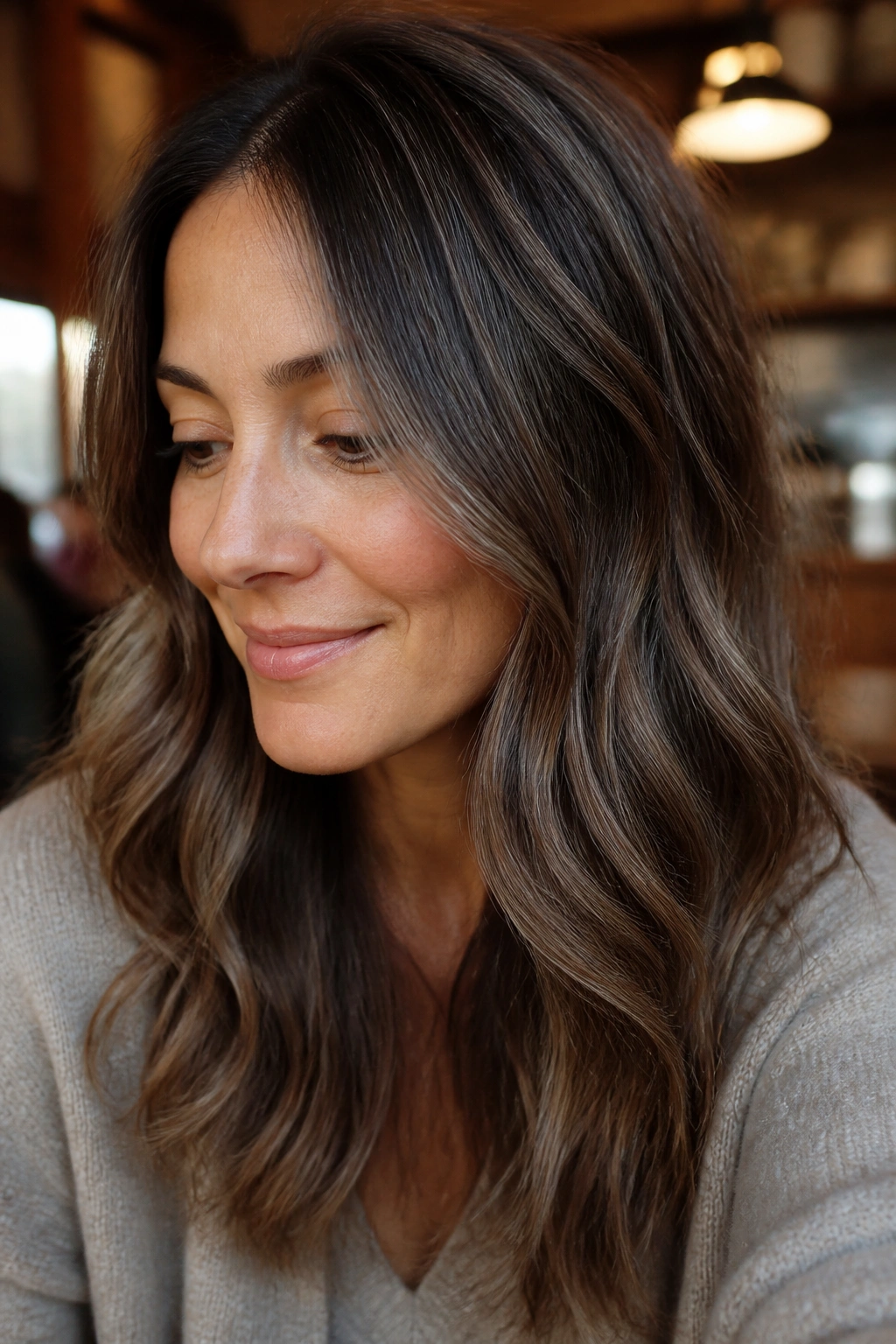
Most people think of balayage as lightening, but lowlights can do a lot of heavy lifting. Pebble gray lowlights drop cooler depth into brown hair instead of brightening it, which gives the whole look more shadow and shape.
Unlike silver pieces that pop from a distance, pebble gray sits inside the brown and keeps the finish grounded. That makes it a smart pick for people whose hair already feels a little dry or porous. Less lightening usually means less stress on the strand.
It also works beautifully on thicker hair because the lowlights stop the color from turning into one flat color block. The result is quieter, but I think it’s smarter than people give it credit for.
12. Frosted Caramel Brunette with Gray Ribbons
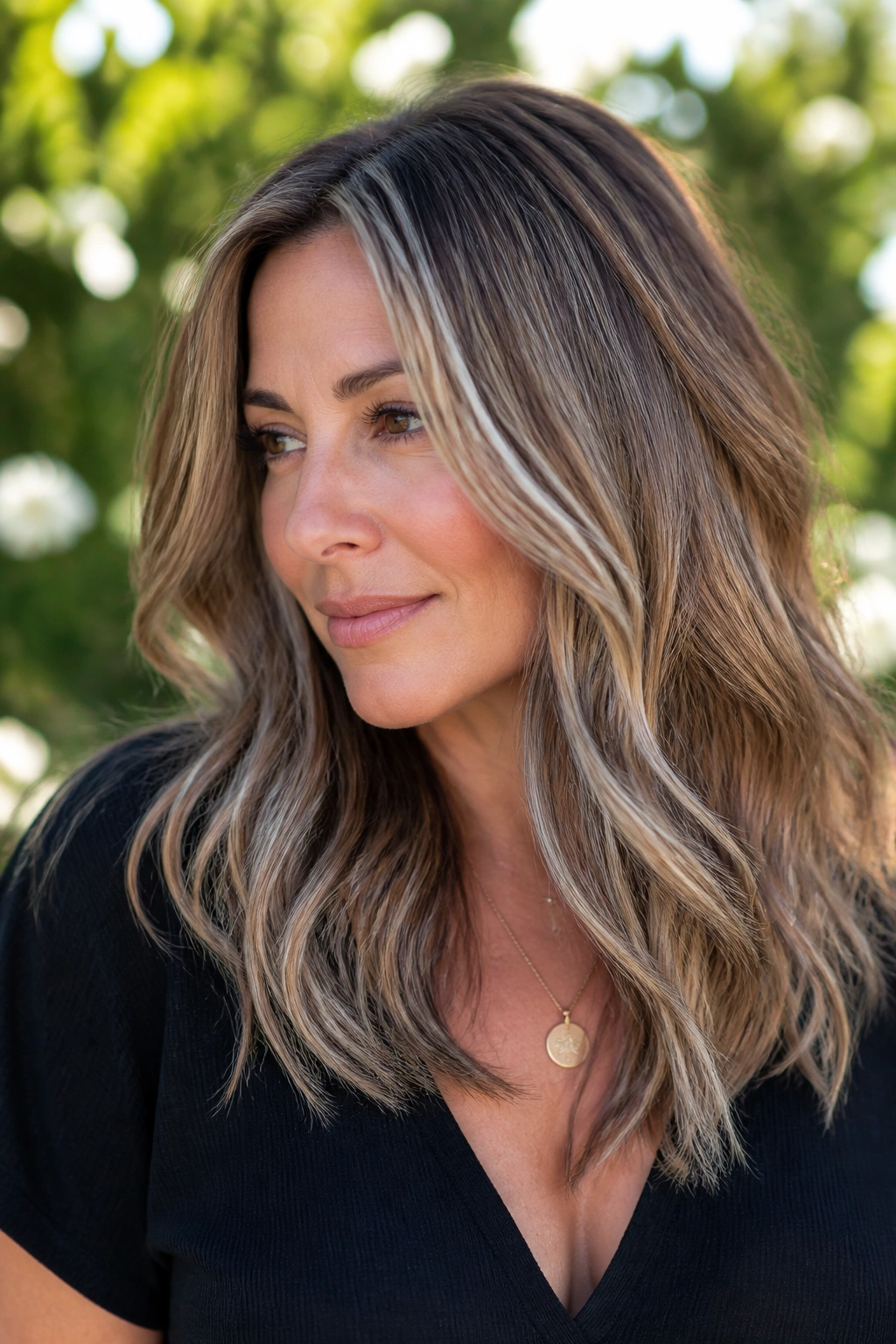
Warm caramel and cool gray do not have to fight each other. When the caramel stays soft and the gray ribbons are thin, the whole color looks like a frosted version of brunette rather than a clash of temperatures.
Where the Blend Succeeds
The warmth gives the gray something to sit against, and the gray keeps the caramel from drifting too orange. That balance matters a lot on mid-brown hair, where warmth tends to show up fast once the lightener starts doing its work.
A layered cut helps here because the ribbons can fall at different depths. If the hair is one length, the gray can look too even. A few face-framing pieces and some lower ribbons usually give the best shape.
Tip: ask for a soft beige gloss between salon visits. It keeps the caramel from getting brassy without muting the gray.
13. Midnight Brown with a Soft Slate Sweep
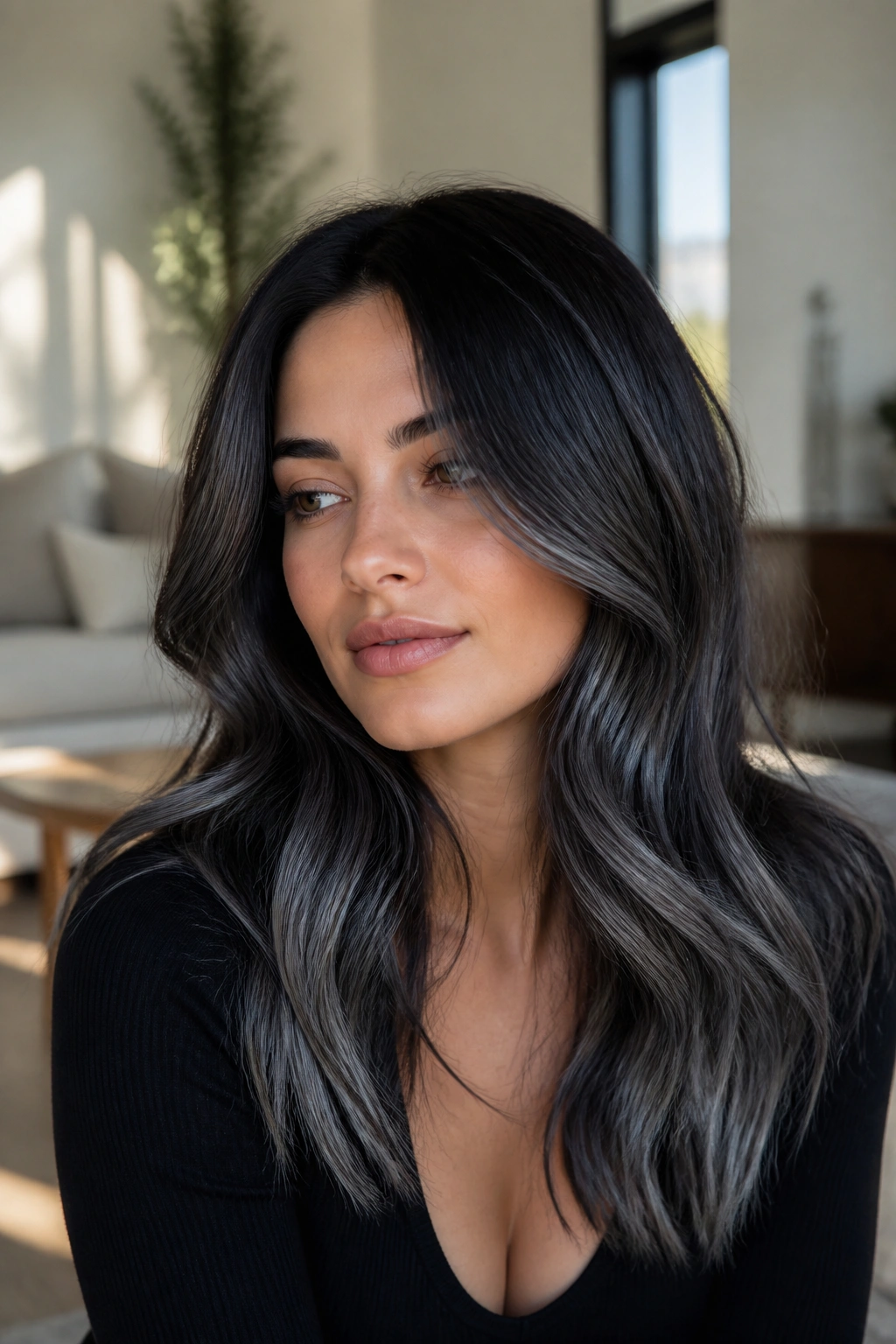
Midnight brown is so dark that even a little gray makes an impact. The soft slate sweep moves through the midlengths and ends like a cool shadow, and that restraint is what makes it work.
This style is for someone who wants to keep the hair mostly dark. The slate tone is there to add movement, not to take over. On straight hair, it reads sleek and almost architectural. On waves, it looks softer and more lived-in.
It also photographs as a rich brown first and a gray look second, which I like. The effect feels layered instead of obvious. And that matters if you do not want your color to shout before it even settles.
14. Salt-and-Pepper Inspired Balayage
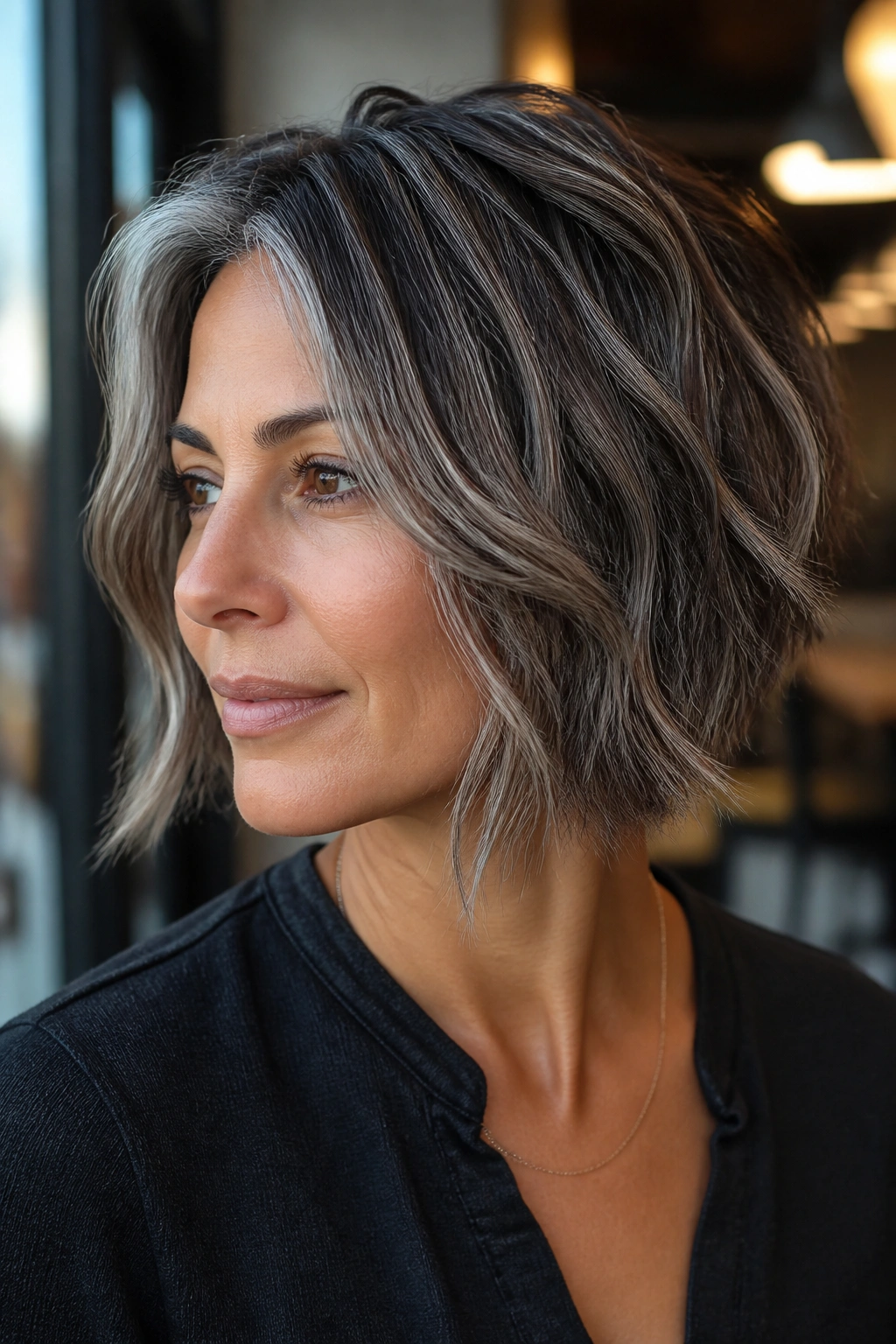
Can gray balayage borrow from natural salt-and-pepper hair without looking old-fashioned? Definitely. The trick is to keep the gray pieces irregular, so the color looks like a natural scatter instead of a planned stripe.
The Details That Make It Work
This look usually needs a mix of cool silver, muted ash, and some deeper brown left untouched. That keeps the blend believable. If everything is lifted too evenly, the style loses the rough, natural edge that makes salt-and-pepper coloring feel fresh.
- Best for: people who like a natural-but-polished finish
- Great on: short layers, cropped cuts, and textured bobs
- Ask for: irregular placement, not uniform foiling
- Finish with: a matte or low-shine styling cream
It’s a strong choice if you want something that looks easy to grow out. The grays and browns already belong together here.
15. Cool Taupe Balayage with Gray Reflection
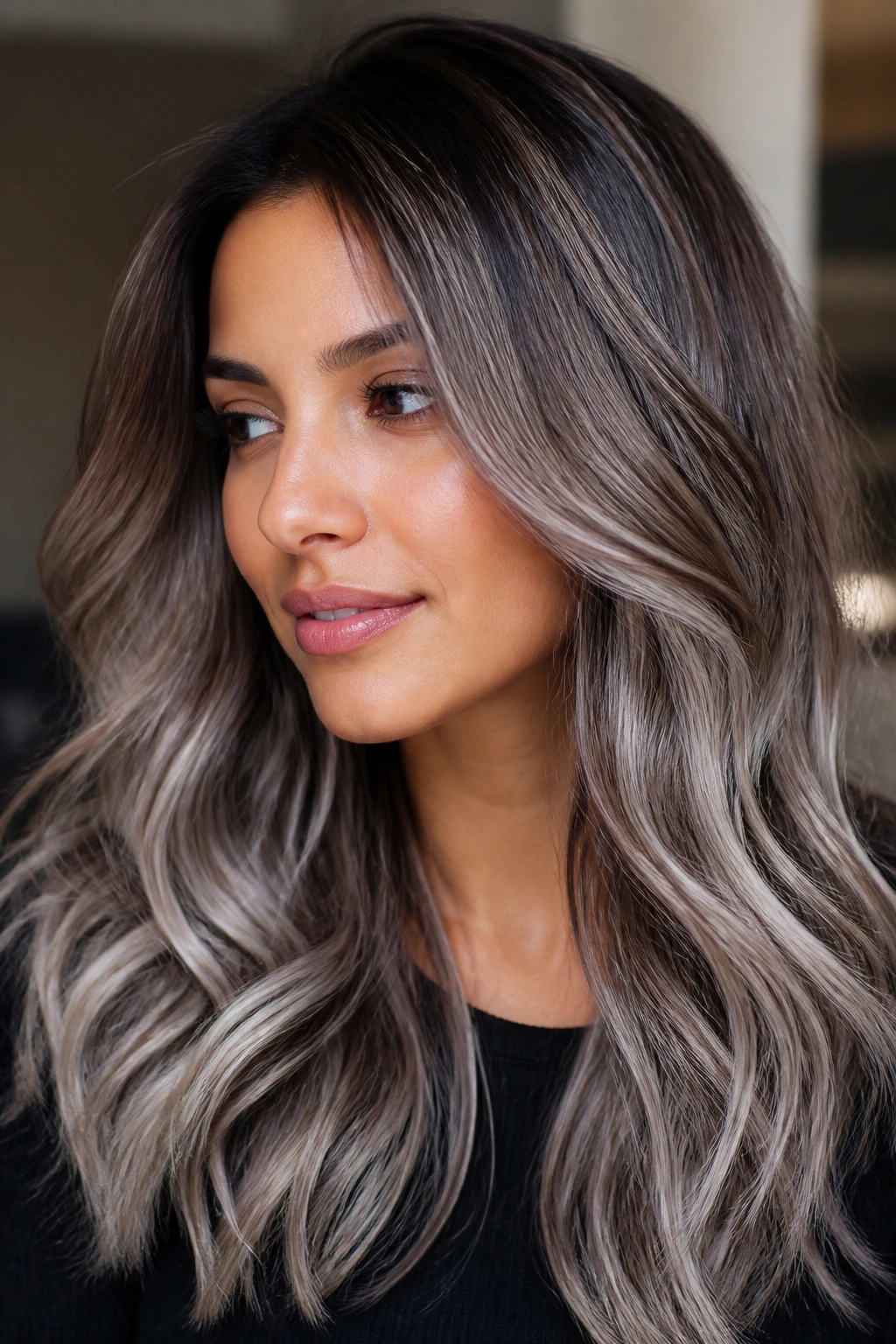
Taupe is the color I reach for when silver feels too hard. It sits between beige and gray, and that middle ground gives brown hair a softer reflection without losing the cool mood.
The reflection is what makes the look interesting. Under indoor light, it can read smoky and muted; near daylight, it picks up a pale gray edge. That shift keeps the color from going flat, which is a problem with some overly ashy tones.
This is one of the most forgiving gray balayage options for brown hair with warmth in it. It does not fight the base. It works with it. That’s the whole appeal.
16. Gray Balayage Bob with Choppy Ends
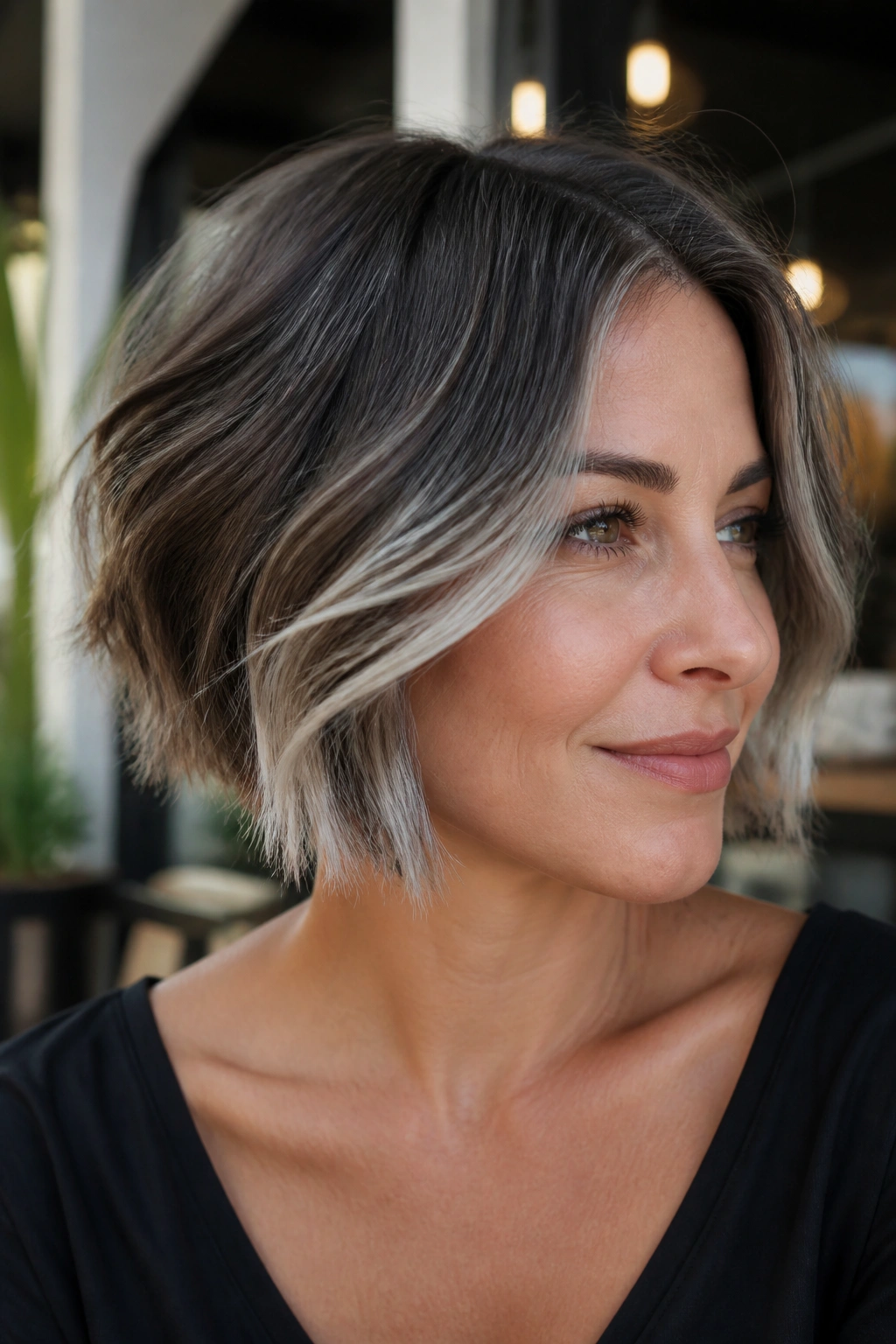
A choppy bob and gray balayage are a good pair because the cut gives the color somewhere to land. The broken ends let the gray show in little flashes, which keeps the whole thing from feeling too neat.
Why the Chop Matters
A blunt bob can make gray look dense and heavy if the placement is too solid. Choppy ends break that up. They move. They separate. They let the color breathe a little.
- Best on: chin-length to collarbone bobs
- Ask for: gray concentrated on the outer layers
- Style with: a quick bend through the ends
- Avoid: too much product, which can glue the layers together
This is one of those cuts where the color almost does the styling for you. If you like hair that feels modern but not precious, it’s a strong pick.
17. Silver Smoke on Loose Beach Waves
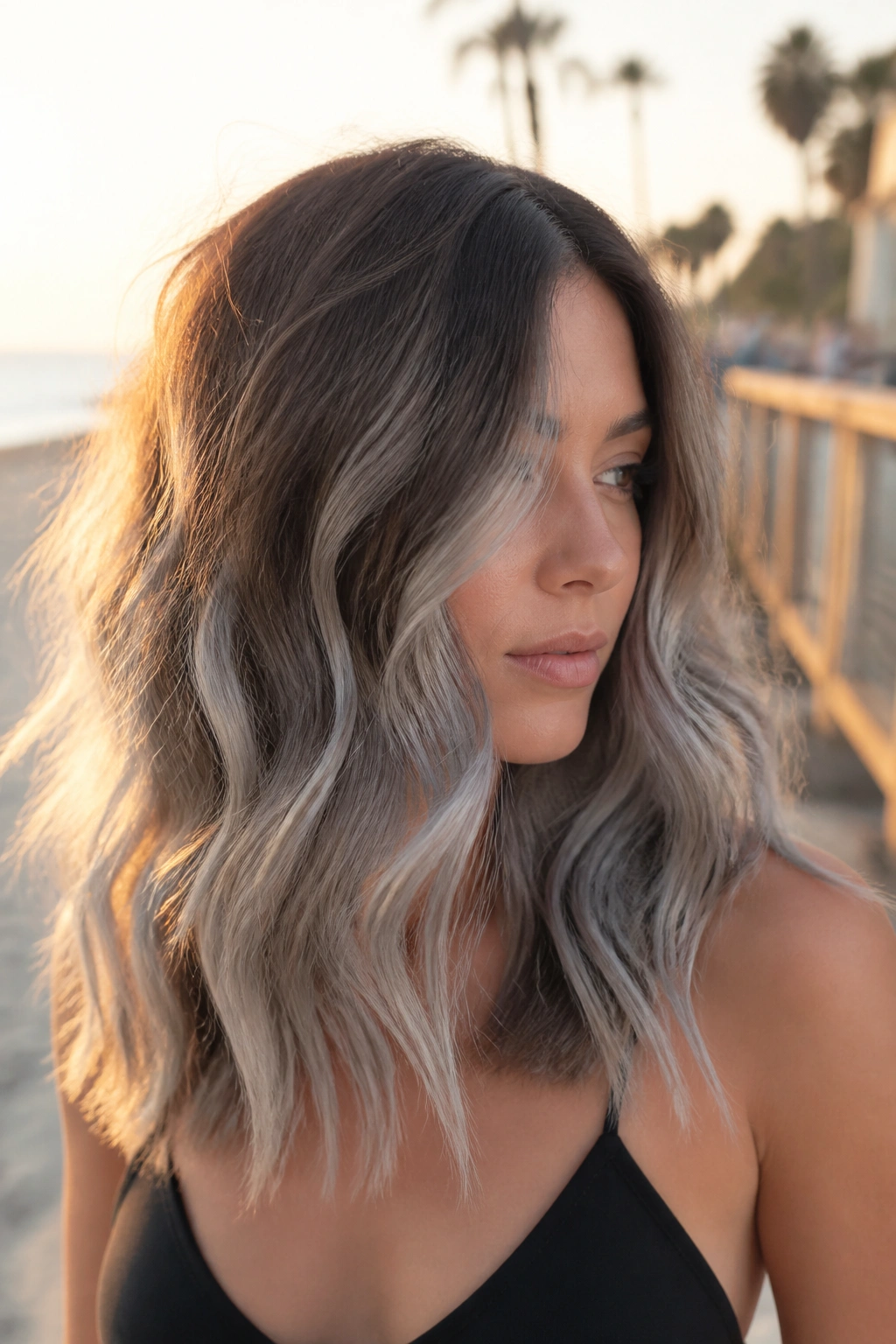
Why do beach waves flatter gray balayage so well? Because the bend breaks the color into pieces. A silver smoke finish on brown hair can look streaky when it’s straight, but waves soften the lines and make the gray read like texture.
The style works best when the silver is placed from midlength to ends, with the root kept brown enough to hold the shape. That gives the waves depth instead of a washed-out finish. Fine hair benefits from thinner ribbons; thick hair can take a few wider panels.
I like this look on shoulder-length cuts and longer. The movement keeps the silver lively, and the brown base stops it from feeling cold.
18. Smoky Brunette with Dimensional Lowlights
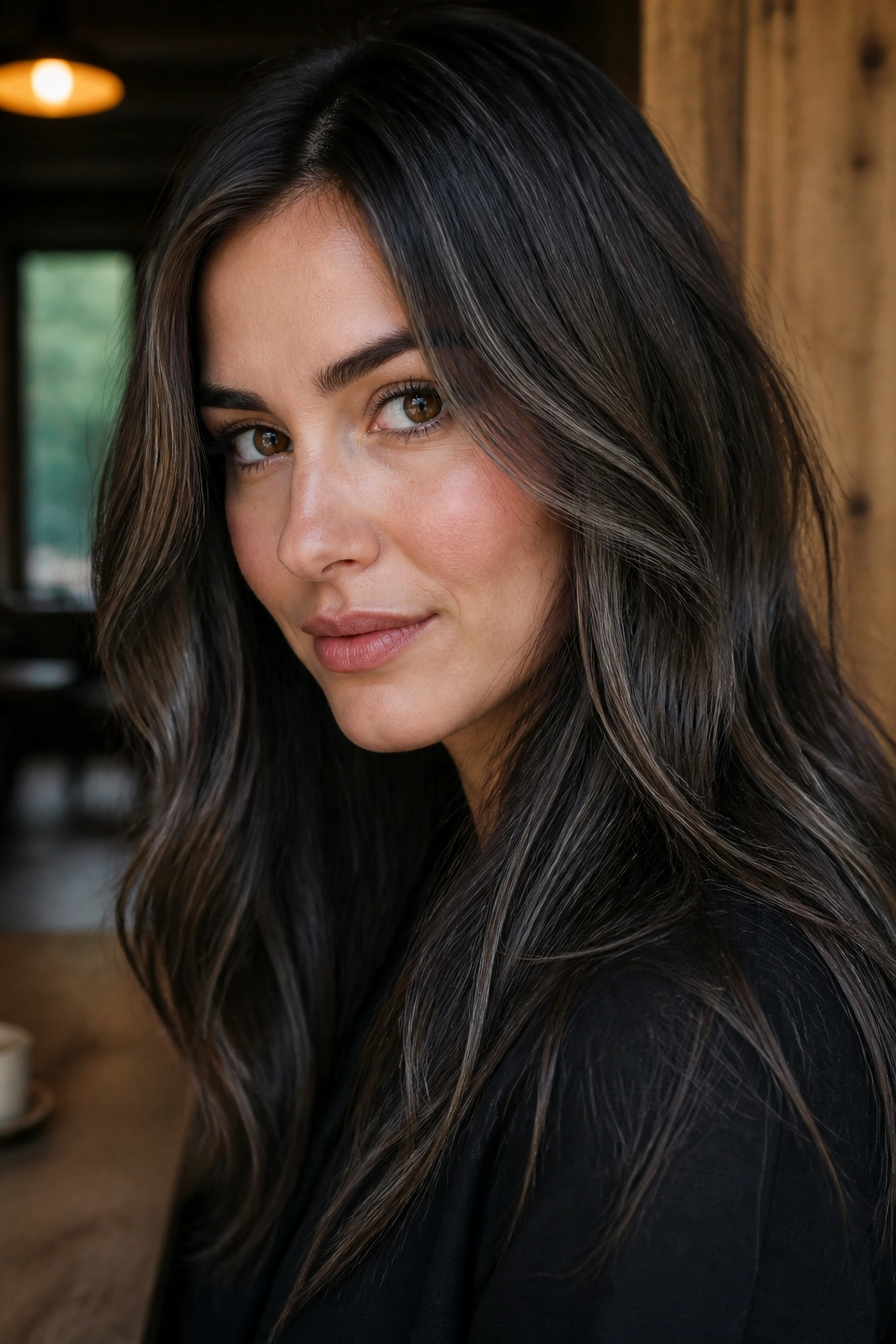
Smoky brunette lowlights are for people who want depth before brightness. The gray comes in through cooler shadows, not obvious light pieces, and that gives brown hair a richer, denser look.
It’s a quiet finish, but not a boring one. The lowlights work especially well when the base is medium brown or dark blonde that has already drifted brunette. Instead of chasing brightness, the colorist deepens certain areas with a gray-brown tone so the hair has movement from inside the shape.
This is a nice option if your hair tends to feel hollow after too much lightening. The gray becomes part of the structure, not a layer sitting on top.
19. Oyster Gray Balayage on Light Brown Hair
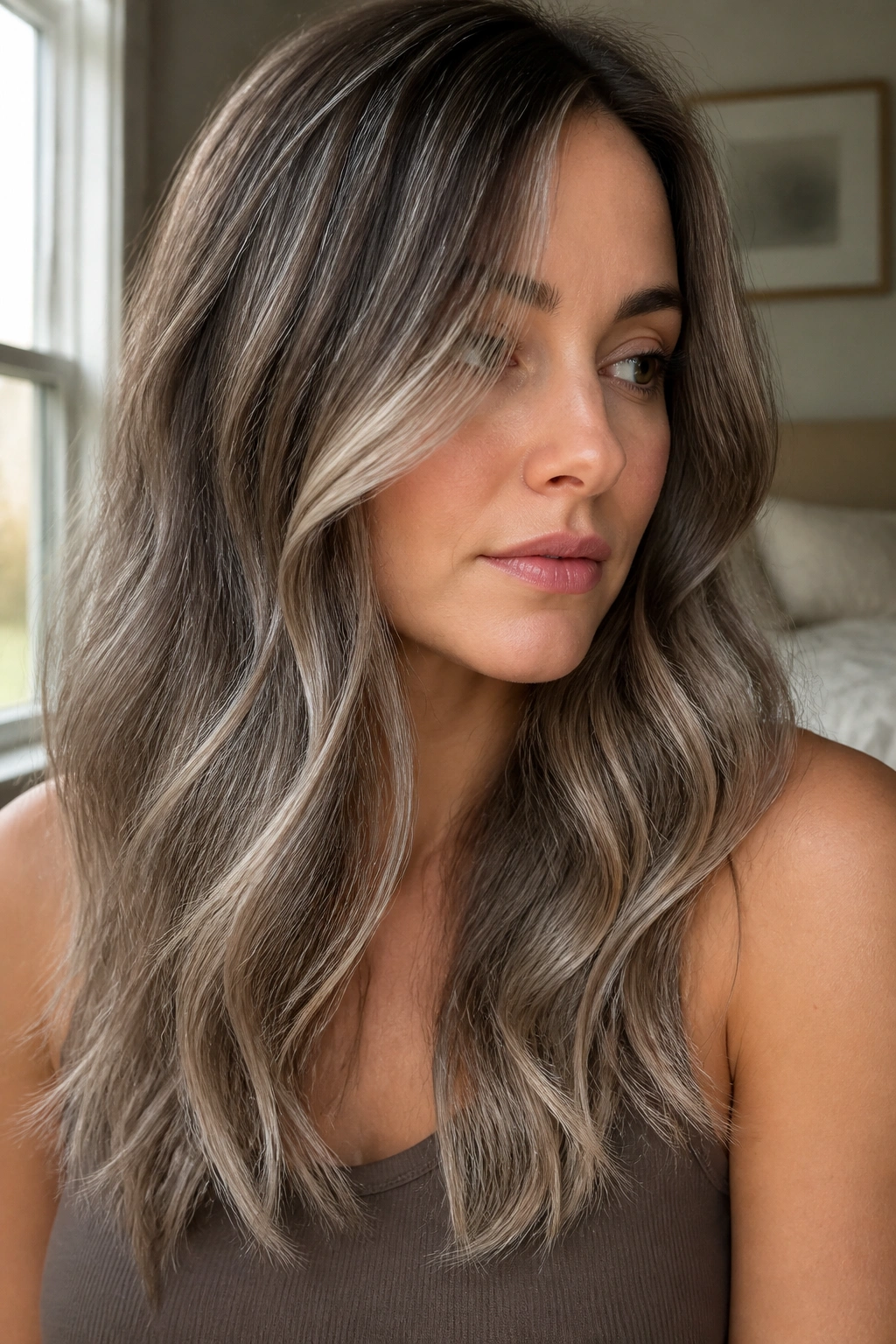
Oyster gray has a creamy edge that makes it easier to wear on light brown hair. It feels cooler than beige, but softer than silver, and that middle place matters when you want the color to stay gentle.
What to Ask For
On light brown hair, you usually do not need a huge amount of lift to make oyster gray show. That means the color can stay more glossy and less fragile. A soft glaze after the lightening step helps the tone look pearly rather than chalky.
- Ask for: airy ribbons through the mids and ends
- Keep: the base around a light mocha or mushroom brown
- Works well with: loose curls, a silk press, or soft bends
- Avoid: over-toning into blue-gray, which can flatten the creamier finish
This one has a polished look without feeling stiff. It sits nicely between cool and soft.
20. Gunmetal Tips on Long Brown Layers
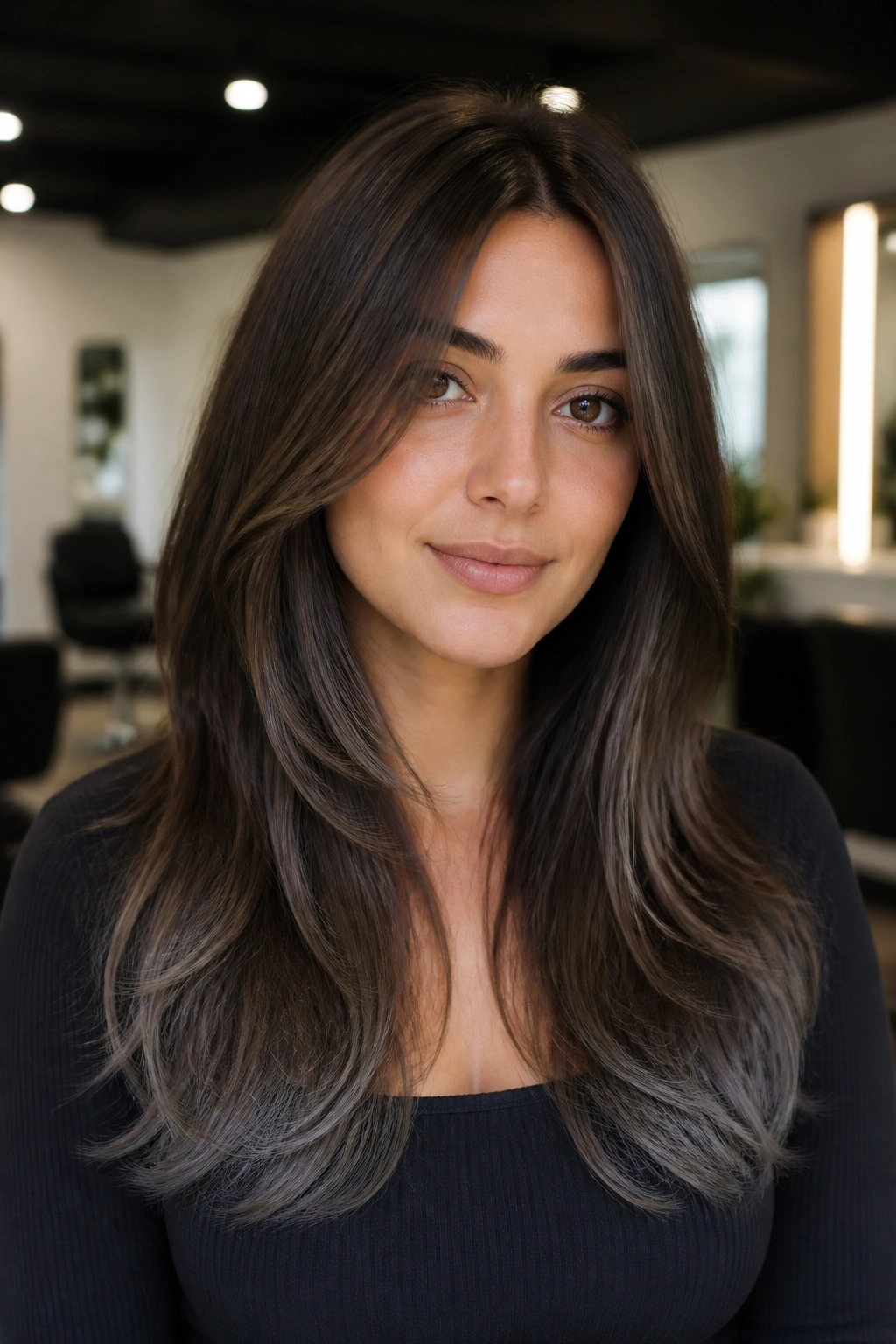
Gunmetal tips give gray balayage a harder edge, and long brown layers can handle that contrast better than most cuts. The darker metallic tone near the ends pulls the eye downward, which makes the layers look longer and cleaner.
Unlike a full ombré, gunmetal tips keep the transition compact. The color shift happens later and more sharply, which is why it looks strong on layered hair. You still get blending, but there’s a firmer finish at the bottom.
This is the pick for someone who likes their brown hair to stay dominant. The gray is there as an ending note, not the main theme. That restraint makes it cooler, not weaker.
21. Gray Balayage on a Curly Brown Lob
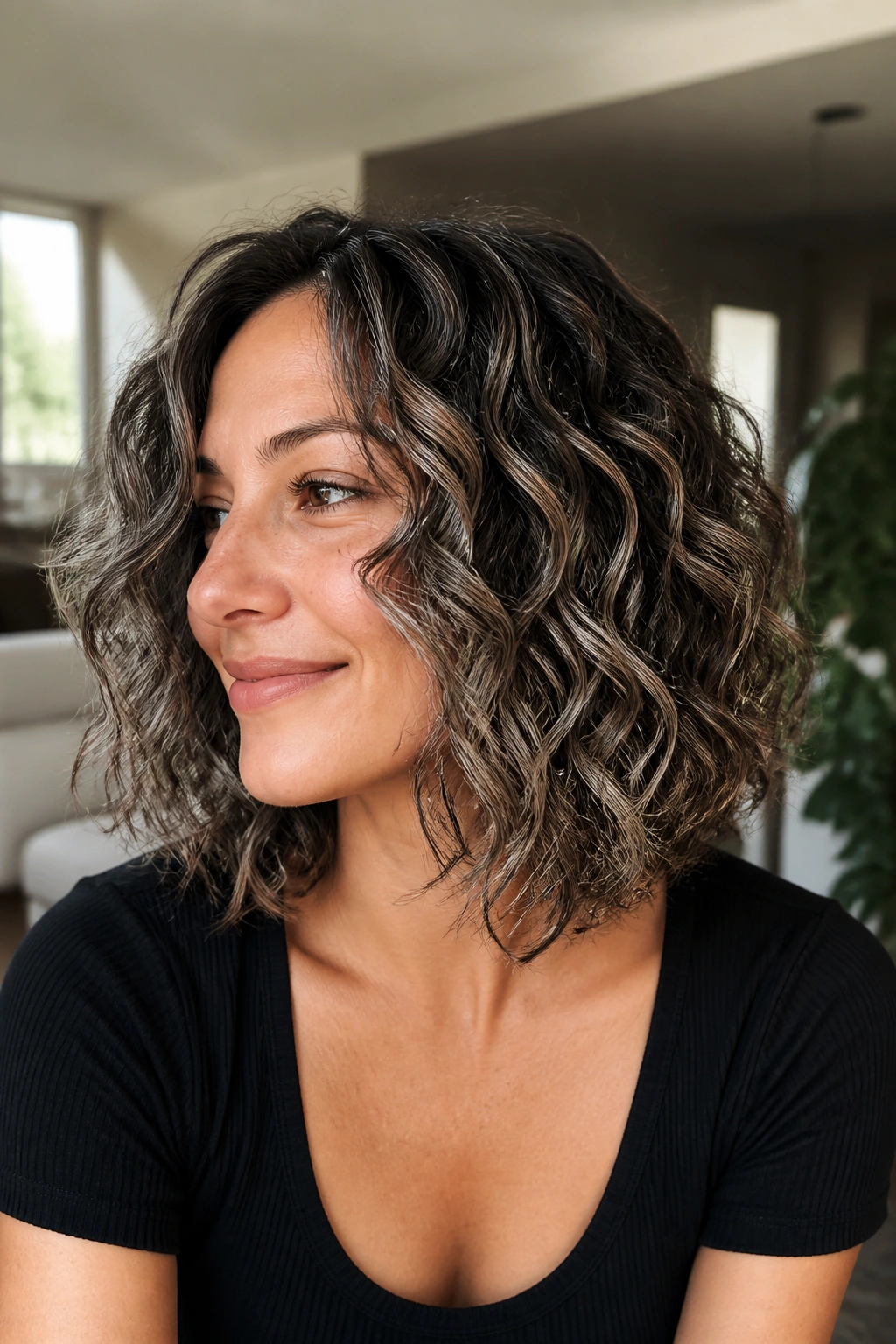
Curly hair changes everything. On a brown lob, gray balayage needs to be painted with the curl pattern in mind, or the color can disappear into the bend or land in the wrong places.
How the Curl Pattern Changes the Color
The gray should usually sit on the outside of the curl and a little lower than you think, because curls spring upward once they dry. A colorist who understands that will leave enough depth at the roots and enough lightness at the ends for the pattern to show.
- Best for: loose curls, waves, and tighter curls with a longer lob shape
- Ask for: painted pieces that follow the curl clumps
- Style with: curl cream and a diffuser, not a heavy brush-out
- Watch for: over-lightening, which can dry out the ends fast
This look has real movement. The gray appears and disappears as the curls shift, which is half the fun.
22. Feathered Gray Veil on Straight Brown Hair
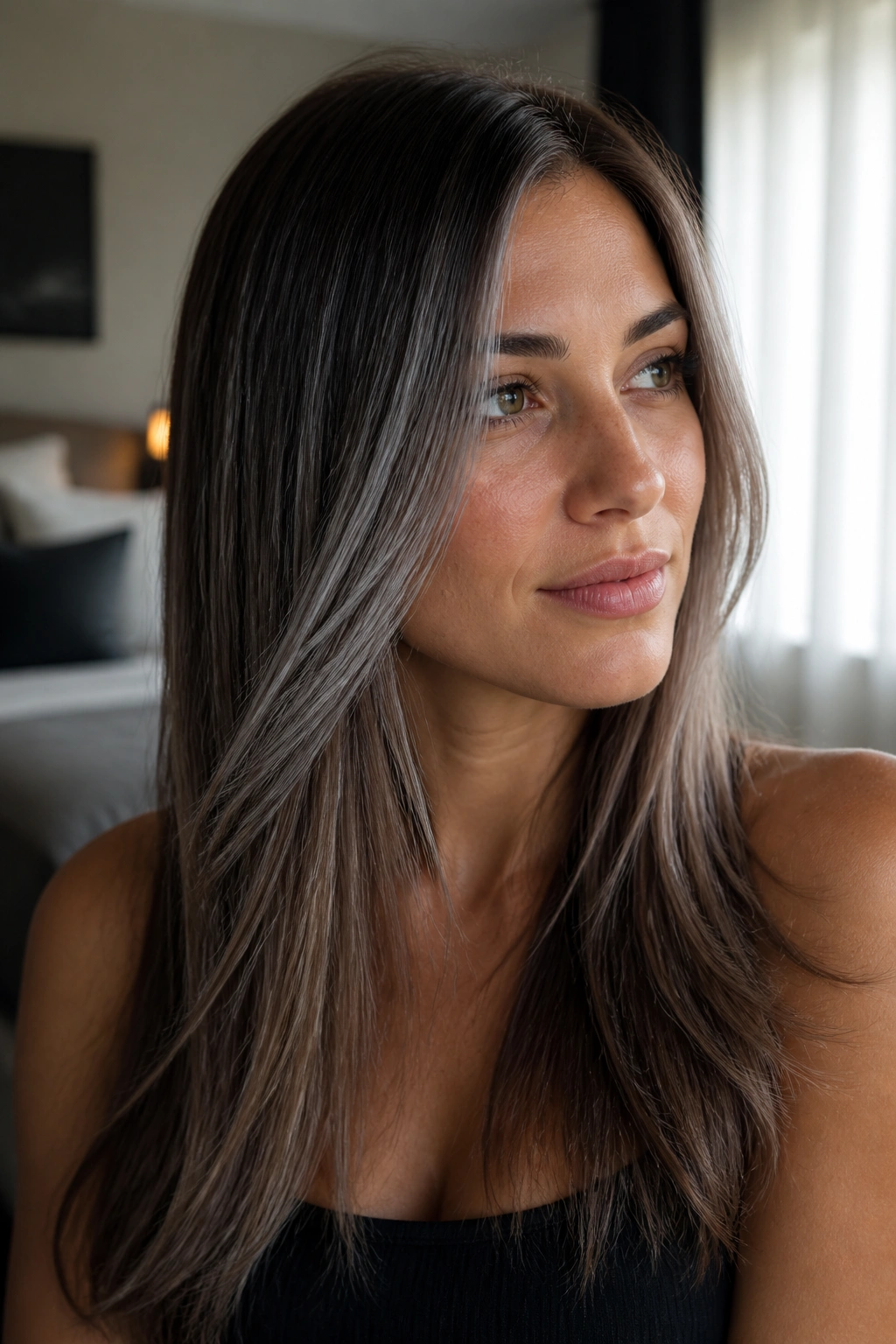
Straight brown hair can be tough on gray balayage because every line shows. That’s why a feathered gray veil works so well. The color is painted in soft, airy sections that blur into the brown instead of sitting on top of it.
A feathered finish is especially good when you want the gray to look expensive rather than loud. The pieces are kept thin at the top and slightly wider toward the ends, which creates a natural taper. That keeps straight hair from looking stripey, which is the main thing that ruins this style.
I’d reach for this on sleek cuts, long layers, or a sharp lob. The smoother the cut, the more important the feathering becomes.
23. Brown-to-Gray Ombré with a Soft Root Shadow
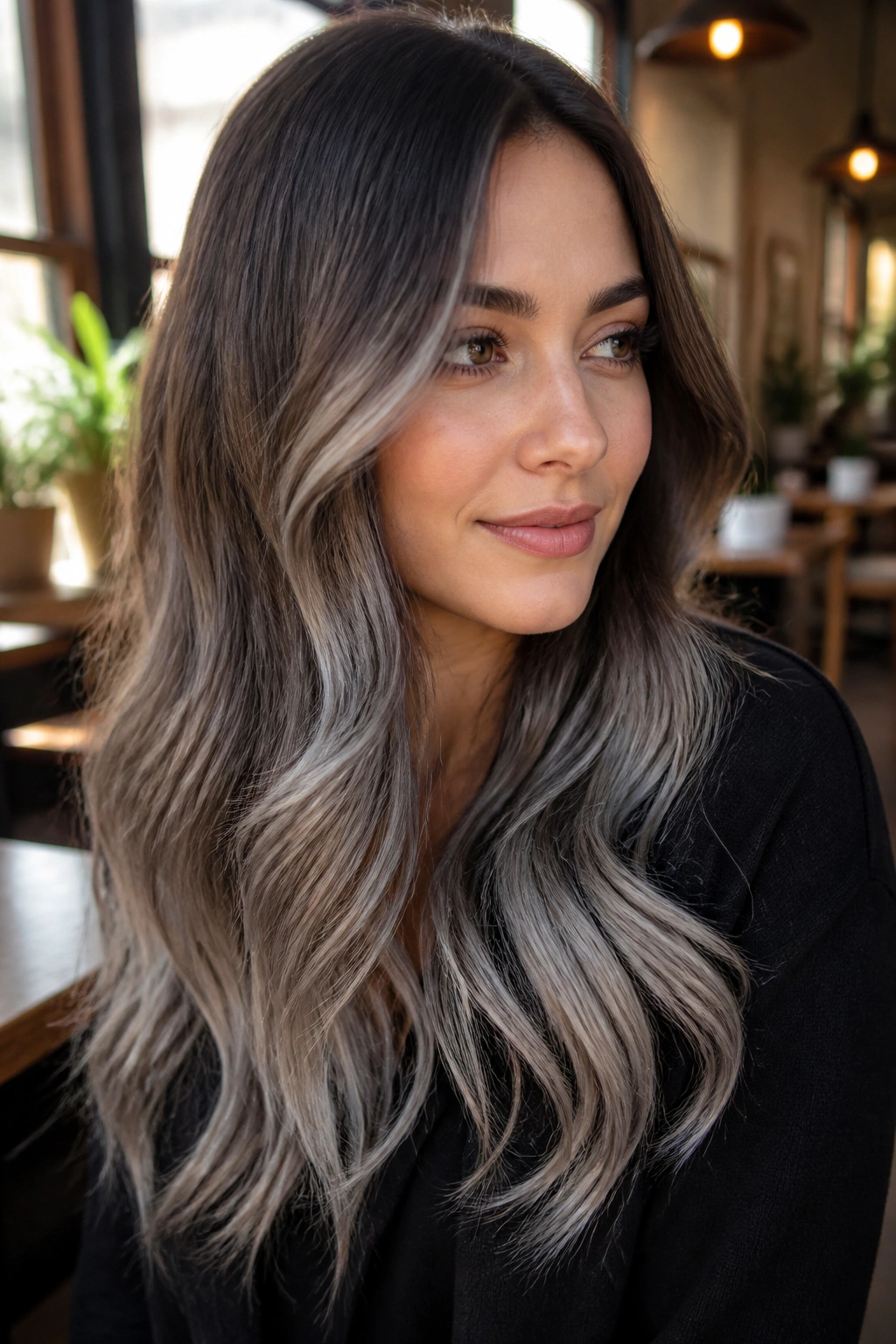
Not every gray look needs to start at the roots. A brown-to-gray ombré with a soft root shadow keeps the top rich and dark, then eases into cooler gray as the hair moves downward.
The root shadow is the part that makes this work. Without it, the transition can look abrupt or patchy. With it, the brown keeps its depth and the gray gets space to show up at the ends where the light catches it most.
This is a strong option if you want a longer grow-out and fewer obvious touch-ups. The gradient can be dramatic or gentle depending on how far down the gray starts.
24. Cool Espresso with Ash-Silver Panels
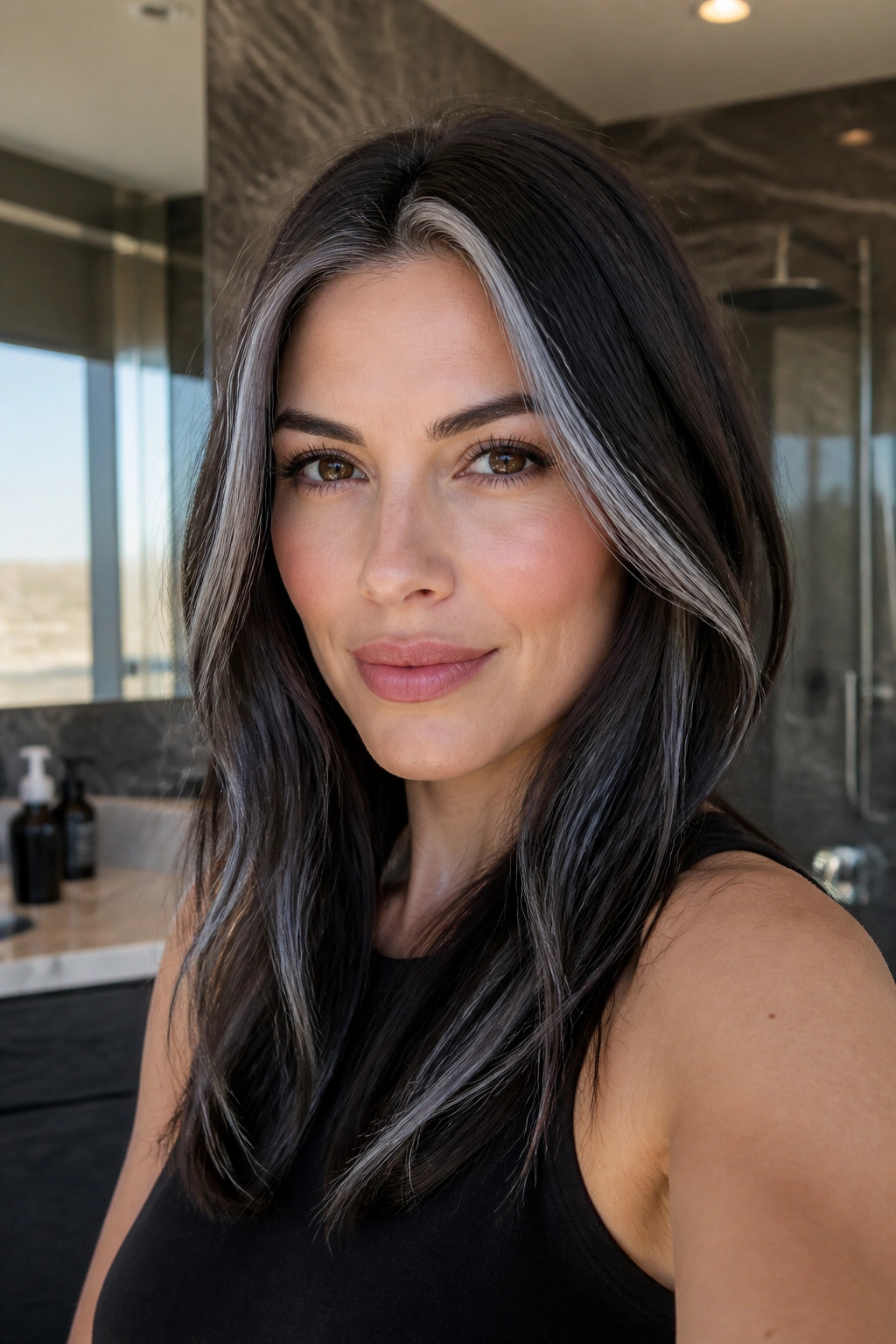
Cool espresso hair with ash-silver panels has a sharper, cleaner feel than ribboned balayage. The panels are placed with more intention, so the contrast is readable even when the hair is straight and polished.
Why the Panel Placement Matters
Panels give structure. They work well on layered cuts, but they also look good on one-length hair if the sections are narrow and placed near the face or through the top layer. The espresso base stays in charge, while the ash-silver pieces act like cool flashes through the color.
- Best on: medium to long brown hair
- Ask for: precise panels, not random streaks
- Style with: a smooth blowout or flat iron bend
- Great when you want: contrast without losing the dark base
This is one of the bolder gray balayage looks in the set. It has shape.
25. Dusty Silver Highlights on Warm Brown Hair
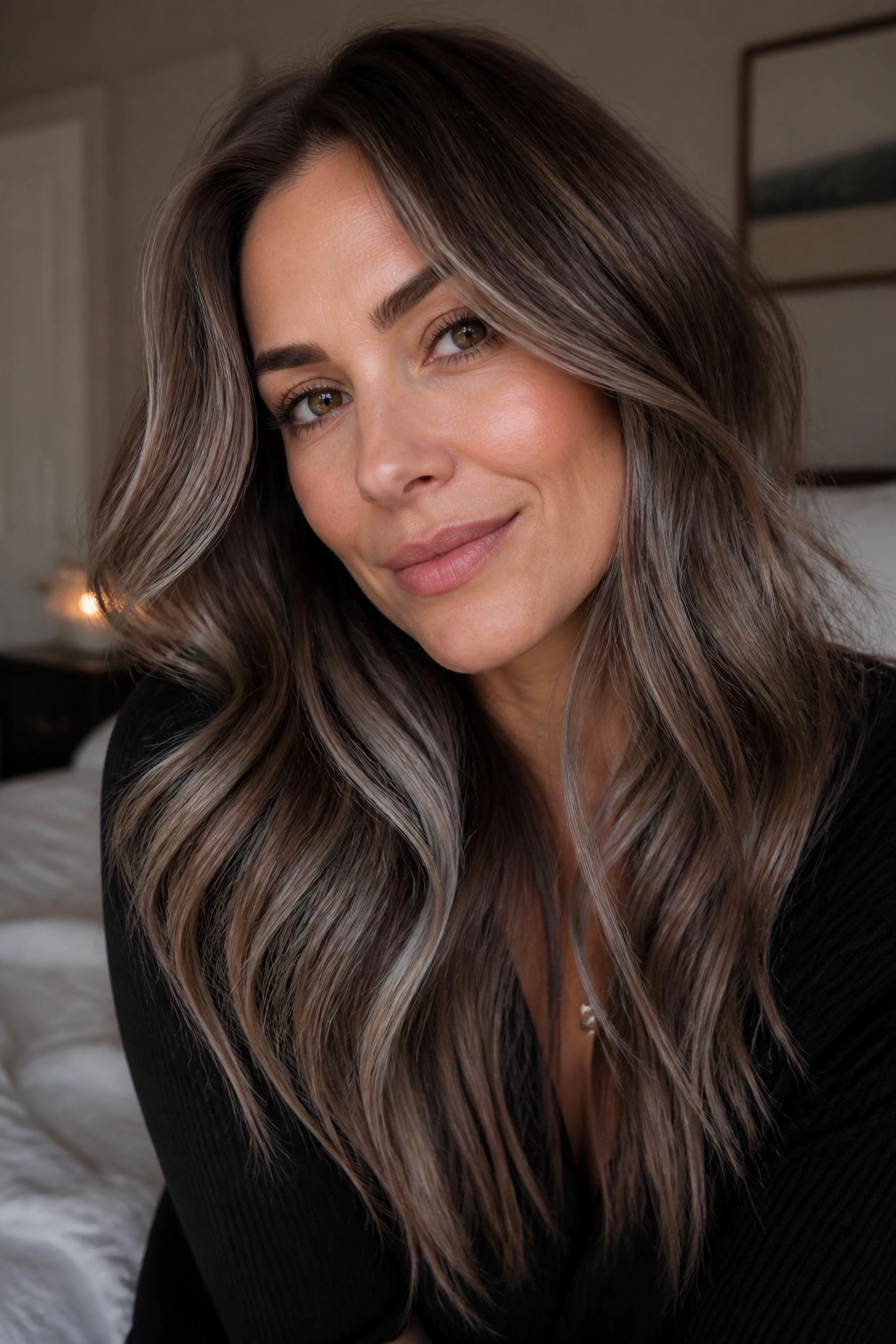
Dusty silver is what happens when silver loses some of its edge and picks up a softer, powdery finish. On warm brown hair, that softness helps the highlight blend instead of fighting the undertone.
The look works because the silver is muted enough to coexist with warmth. If the toner is too icy, the brown can start looking orange by comparison. Dusty silver keeps the whole head in a calmer range, which is easier on the eyes and easier to maintain.
I like this on layered brunettes who want a lighter feel but do not want full platinum energy. It has enough coolness to look modern, with enough softness to keep the warm base useful.
26. Mushroom Brunette with Smoky Midlengths
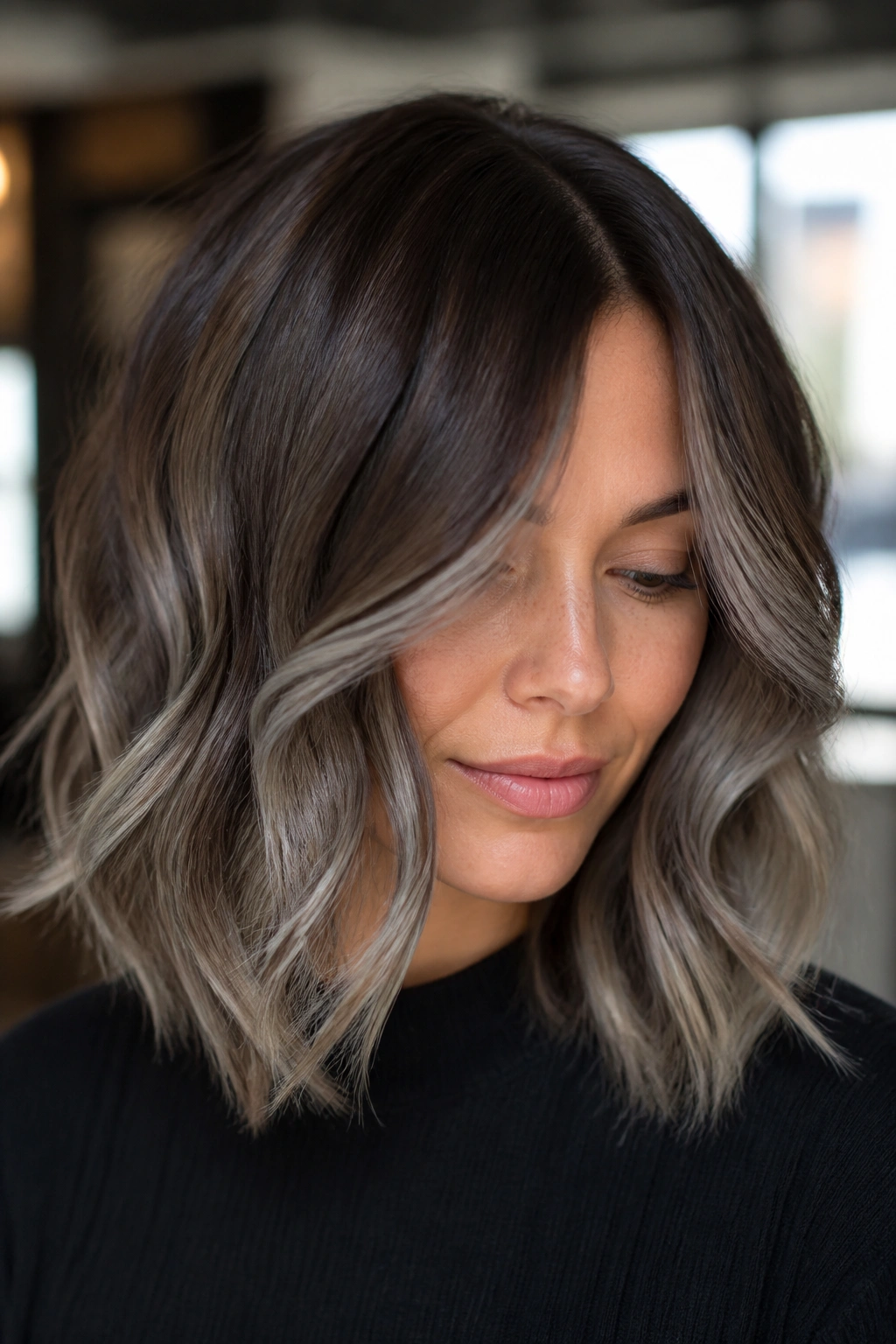
Can gray balayage sit in the middle of the hair instead of the ends? Yes, and mushroom brunette proves it. The smoky midlengths give the style shape where the hair moves most, which can look smarter than pushing all the color to the bottom.
What Makes the Middle Third Matter
When the midlengths carry the cool tone, the hair keeps some depth at the crown and some brightness at the ends. That layered placement is useful on long hair, because it stops the color from sagging visually.
Mushroom brunette also works well if your ends are already lighter from sun or old highlights. The smoky tone bridges the gap and makes the whole color feel cleaner. The finish is quiet, but it does a lot of work.
This is the kind of look that rewards a good blowout. The color moves with the shape of the cut.
27. Gray Balayage Braids and Twists Look
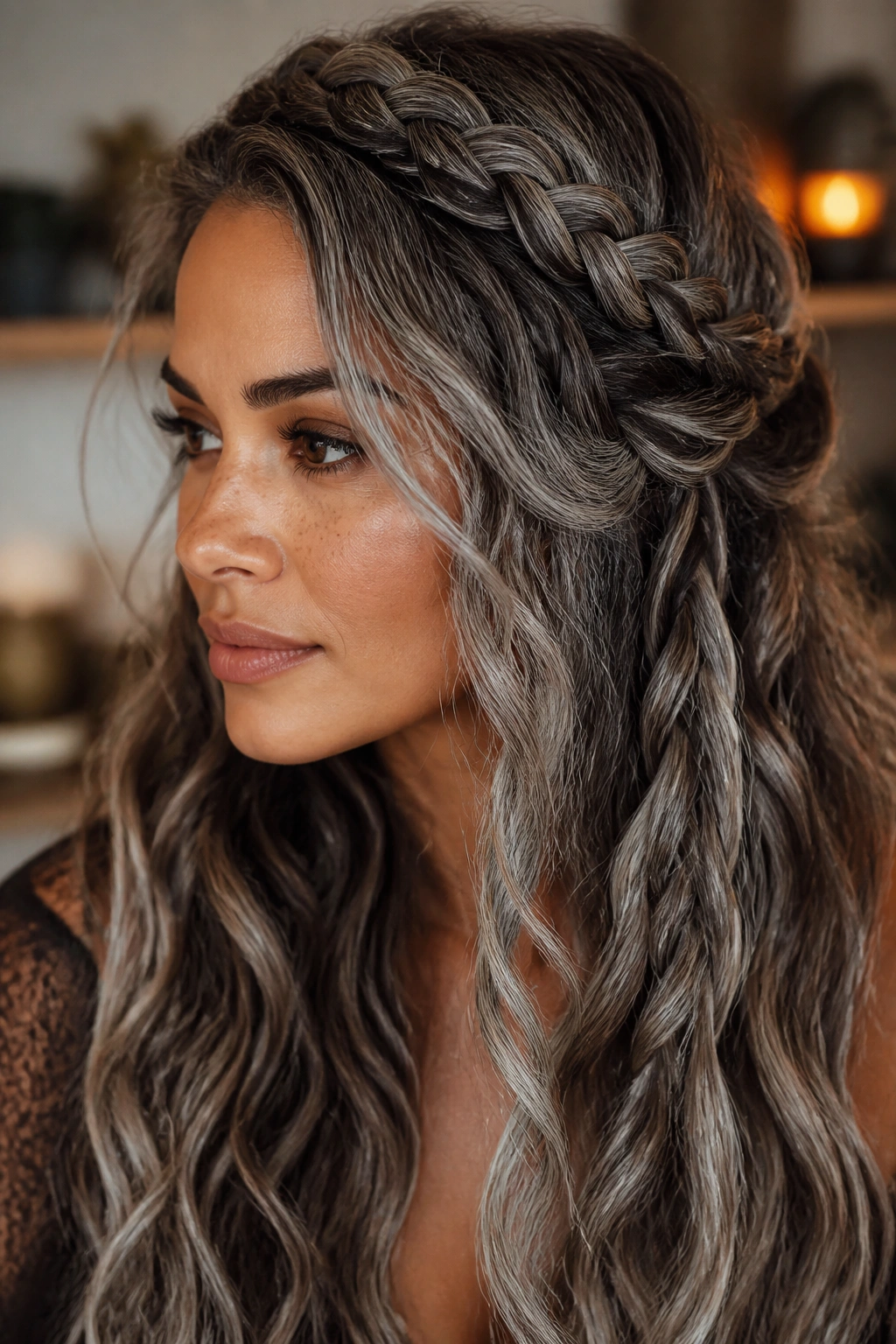
Braids and twists show gray balayage in a different way. The color does not just sit on the surface; it gets woven through the pattern, so every turn reveals a different strip of silver or smoke.
Why It Looks So Good in Motion
When the hair is braided, the gray pieces stack against the brown base and create visual depth that loose hair sometimes hides. Twists do the same thing, only softer. Both styles make the contrast feel active instead of static.
- Best for: long hair and medium-length layered hair
- Ask for: gray concentrated through the outer canopy
- Try: a loose braid crown, rope braids, or two-strand twists
- Tip: a satin scarf overnight keeps the braid pattern from frizzing out
This one is practical if you like wearing your hair up. The color keeps working even when the style is tucked away.
28. Slate-Gray Slices on Dark Mocha Hair
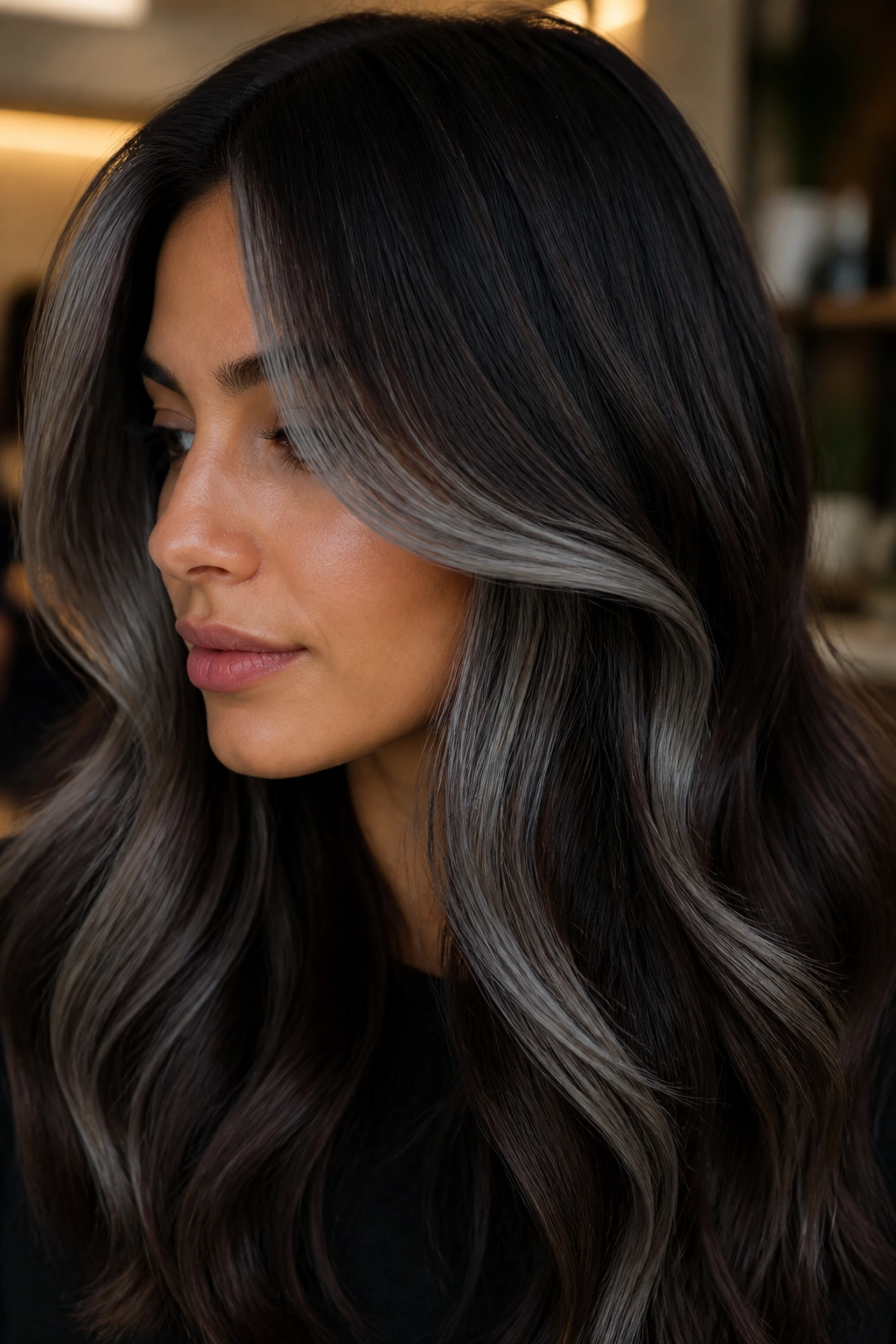
Slate-gray slices are a little more graphic than balayage, and that’s the appeal. On dark mocha hair, the slices create a cool contrast that still feels grounded because the base is deep enough to support it.
The look works best when the slices are deliberate and sparse. Too many and the effect turns busy. A few strong pieces near the front, through the top layer, and at the ends are usually enough to create shape and motion.
I like this on people who want the gray to read from across the room. It is not soft. It is not shy. But it still has the brown base underneath, which keeps it from feeling harsh.
29. Satin Silver Melt on Warm Chestnut Curls
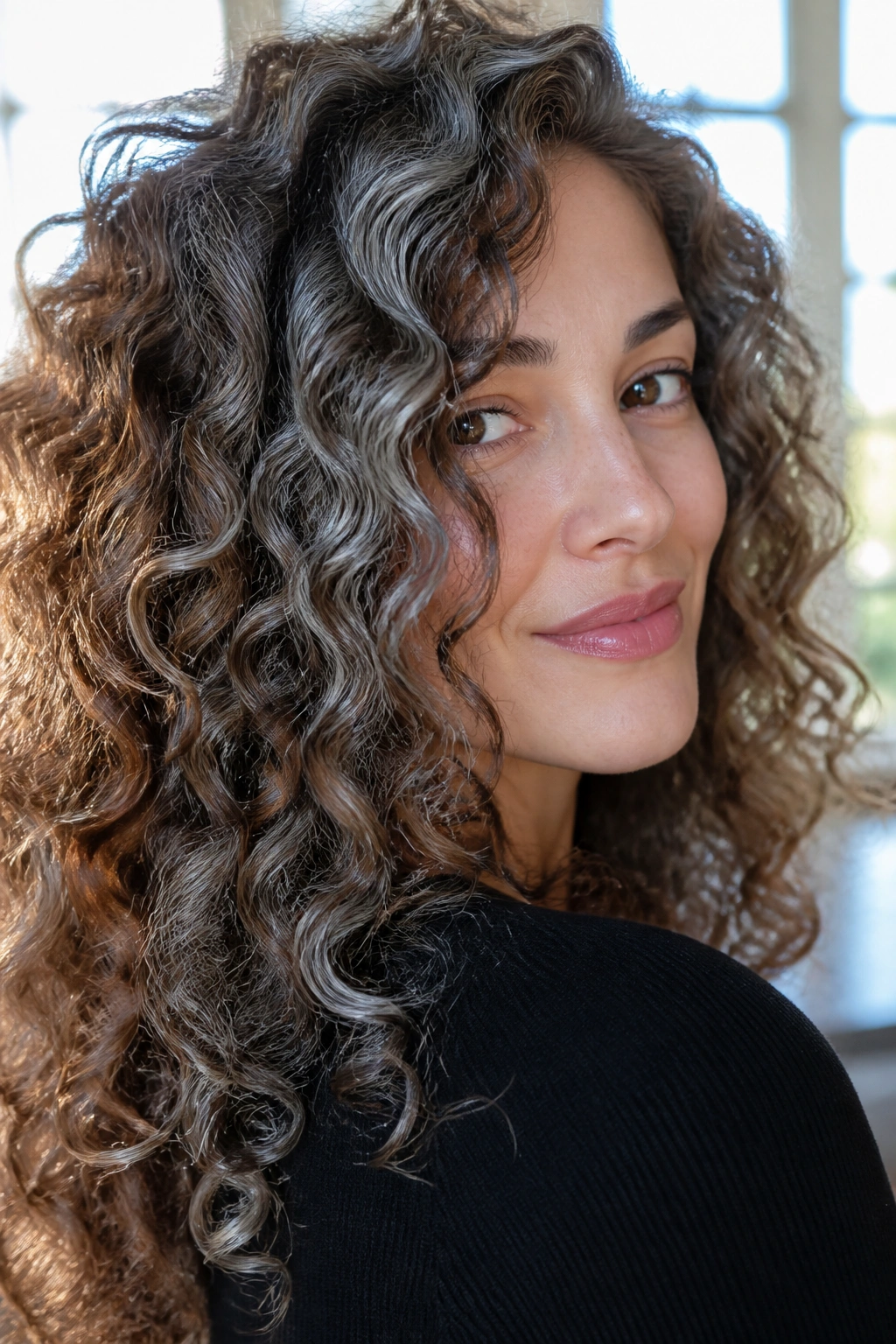
Satin silver is softer than metallic silver, and curls make that softness shine. On warm chestnut hair, the silver melt settles into the curl pattern and looks smooth, almost like a sheen rather than a stripe.
What Makes It Different from a Standard Gray Blend
Curls shrink the visual length of the color, so the placement needs to sit a little lower than it would on straight hair. That keeps the silver visible after the curl tightens up. The chestnut base at the crown also helps the style keep warmth, which matters when the silver is strong.
If the curls are tight, ask for a slightly deeper root and lighter ends. Loose curls can take a gentler fade. Either way, the satin finish keeps the look from turning too stark.
This is one of the prettiest gray balayage choices for textured hair because it respects the curl instead of fighting it.
30. Seamless Charcoal Balayage for Brown Hair
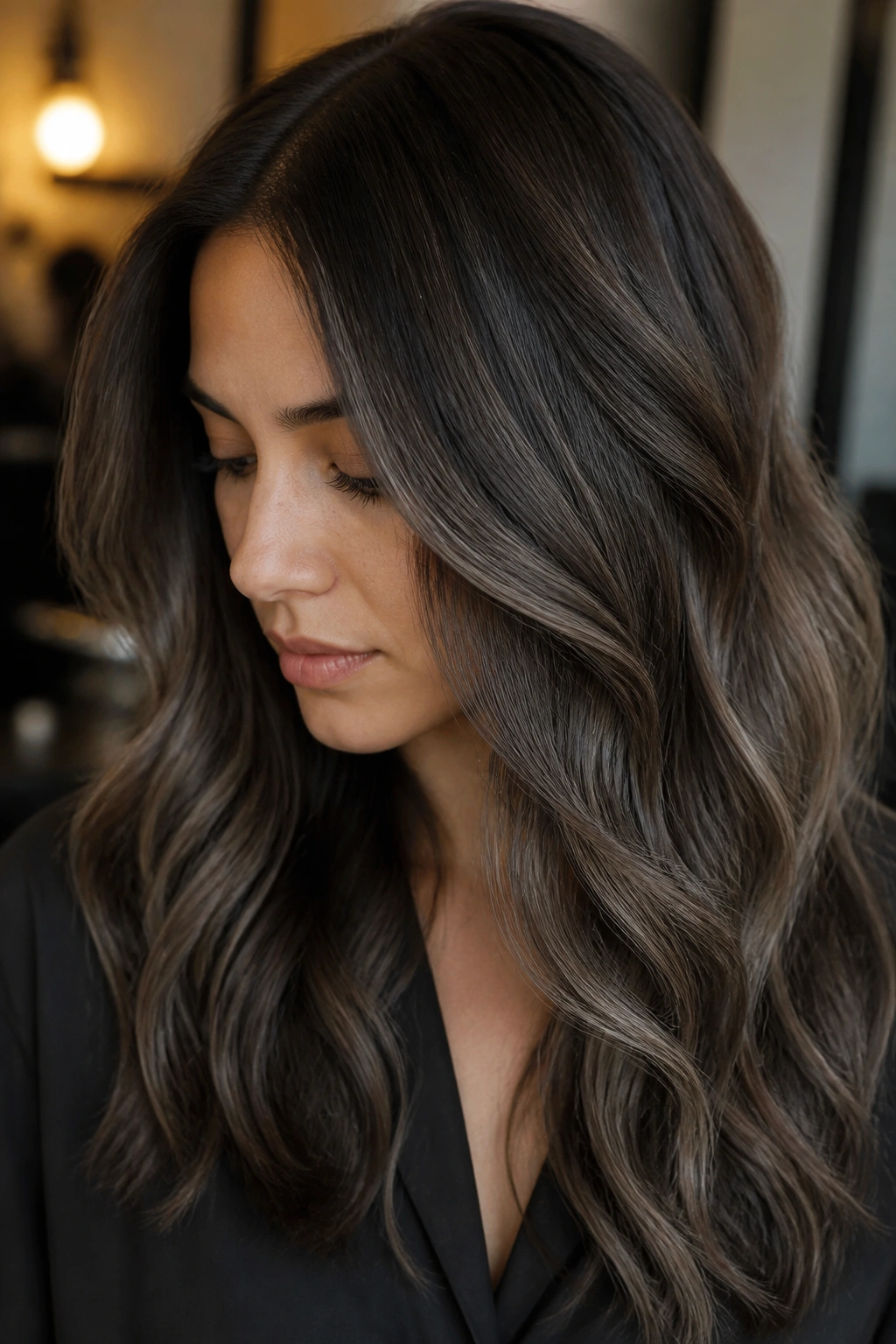
Seamless charcoal balayage is the version I’d choose when someone wants gray on brown hair but still wants the brown to matter. The charcoal threads through the mids and ends like shadow with a pulse, and the finish stays controlled from root to tip.
The strength of this look is restraint. The colorist keeps the lift moderate, then tones the lightened pieces toward charcoal instead of bright silver. That means the hair holds onto its depth, which keeps the whole style from going flat or chalky. On long layers, the movement looks especially good because the darker pieces fold into the lighter ones as the hair swings.
If you want the richest version, ask for a deep shadow root, smoky mids, and a slate or charcoal glaze on the ends. Simple. Clean. Not fussy. And that is exactly why it works so well on brown hair that needs coolness without losing its shape.
