



Brown hair can go flat fast when the light pieces are wrong.
Too many stripes, and the whole thing starts looking hard. Too little contrast, and you pay for color that disappears the second you step out of the chair.
The best balayage looks for brown hair aren’t about going blonde. They’re about choosing the right tone, the right placement, and the right amount of lift so the color reads as movement, not stripes. A level 5 brunette can carry caramel, honey, and copper with ease; a deeper level 3 base usually needs softer ribbons, a stronger root shadow, or a gloss that keeps the finish from turning muddy.
Cut matters too. Long layers can handle wider pieces and stronger brightness. A blunt bob needs finer painting, or the color fights the shape. Curly hair is its own animal — the curl pattern changes where the light lands, so the color has to follow the bend, not just the length.
Some of the looks below are warm and easygoing. Some lean cool and smoky. A few are barely-there on purpose. The first one is the one I reach for when someone wants movement without a hard grow-out line.
1. Caramel Ribbons Through Medium Brown Lengths
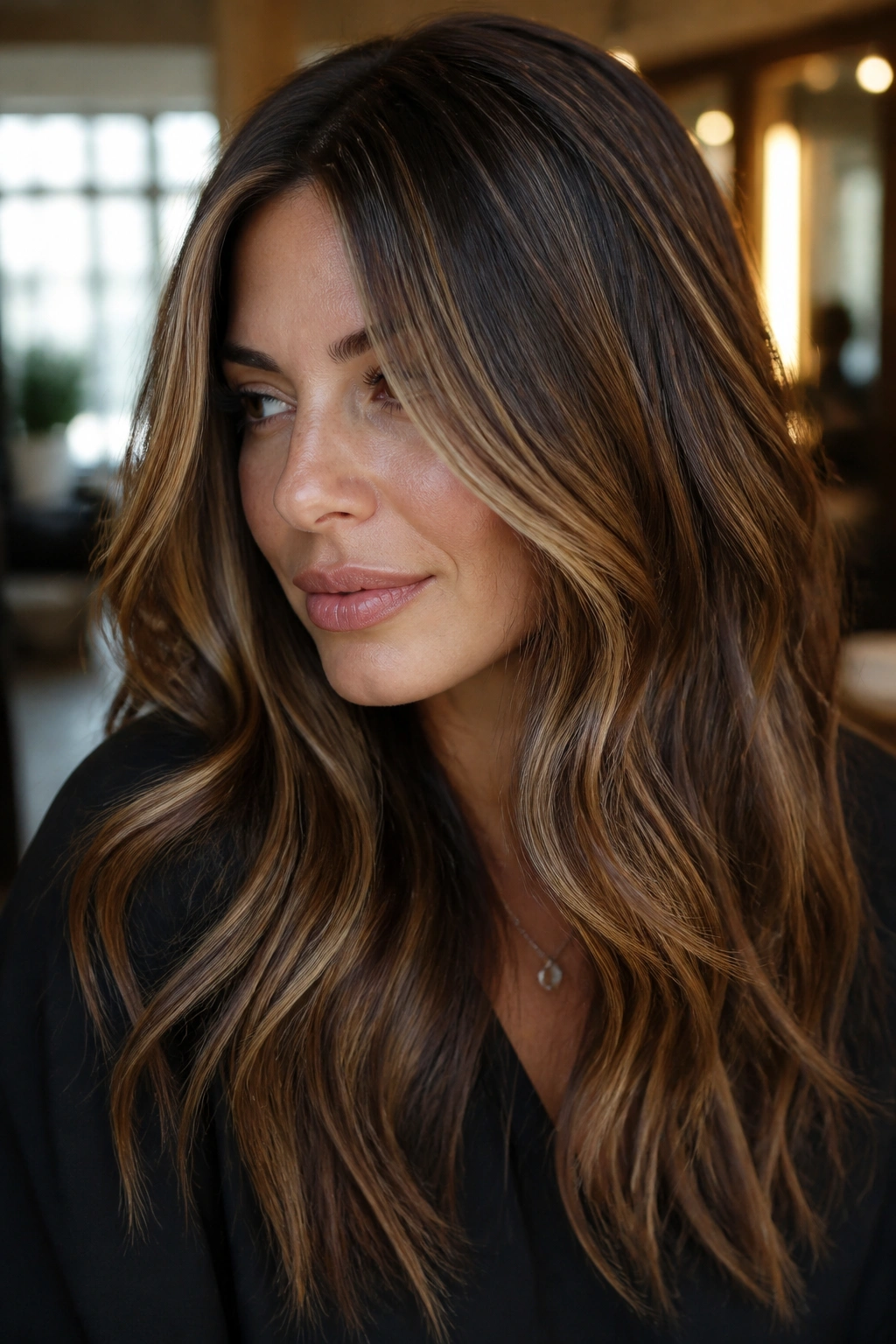
Caramel is still one of the cleanest ways to wake up medium brown hair without pushing it into blonde territory. The reason it works is simple: the warmth sits close enough to brunette depth that it looks natural, but the lighter ribbons still catch the eye when the hair moves.
Why It Stays So Wearable
Ask for painted caramel pieces that are 2 to 3 levels lighter than your base, with the brightest bits starting around the cheekbone and fading toward the ends. That keeps the crown grounded and stops the whole head from looking overprocessed.
Loose waves make this look shine, but not because waves are trendy. Waves break up the ribbons so the color reads as soft movement instead of one flat color block. If your hair is fine, keep the ribbons a little narrower; thick hair can take wider panels and still look airy.
Best on: medium brown, chestnut brown, and warm brunette bases.
Avoid if: you hate warmth and want a smoky finish.
Salon note: ask for a soft root shadow so the grow-out stays smooth, not patchy.
2. Honey Beige Balayage for Chestnut Hair
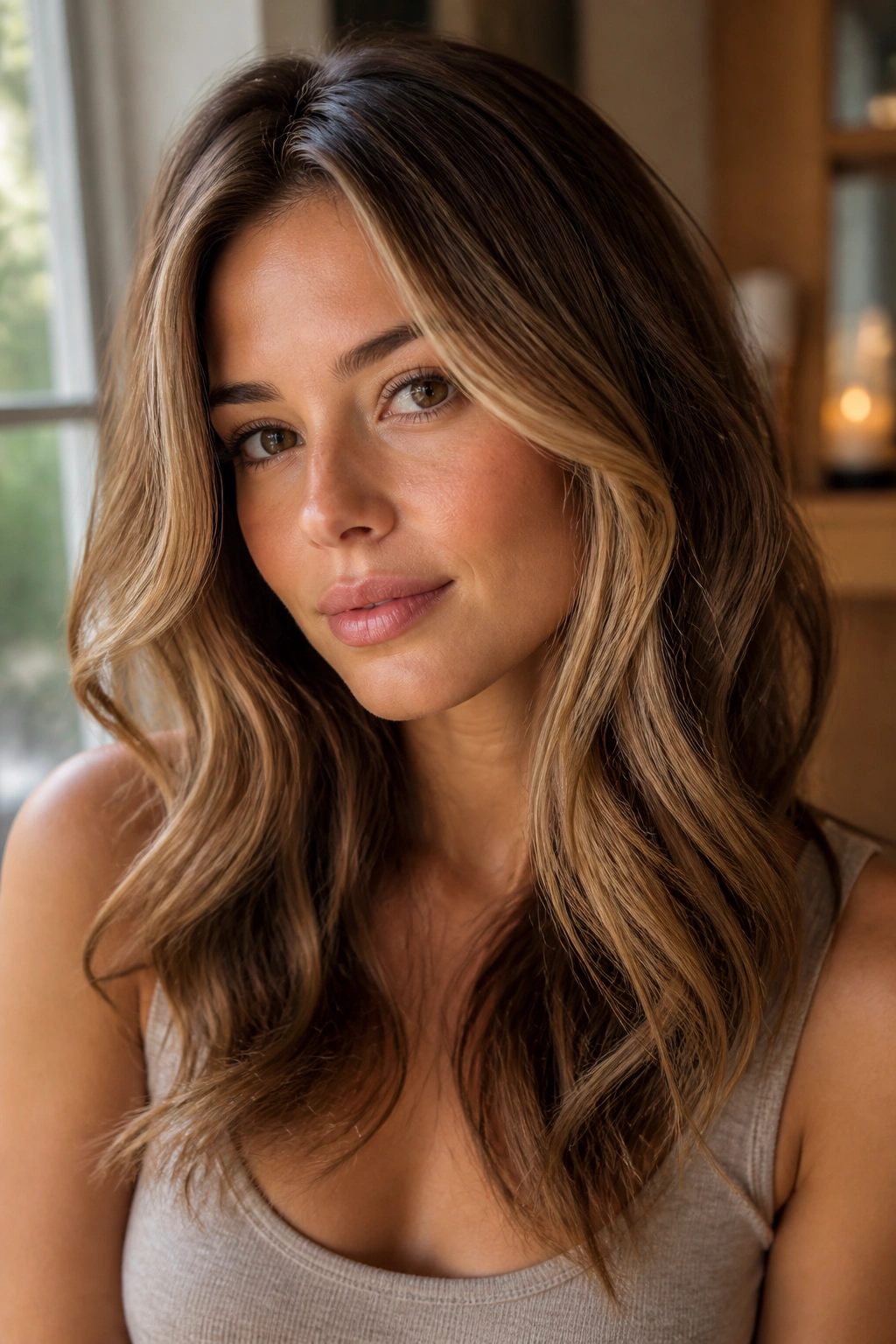
Want brightness that still looks soft under indoor light? Honey beige is the answer I’d point to first. It gives chestnut brown hair a lifted, creamy finish without tipping into yellow, and that beige tone matters more than most people think.
How to Ask for It
Tell your colorist you want fine balayage with a beige gloss, not a gold gloss. Gold can read brassy fast on brown hair, especially if your base already carries red-orange pigment. Beige keeps the result cleaner and a little cooler, even when the lighting is warm.
A soft honey beige blend also works well if you wear your hair straight most of the time. Straight styles show every line, so the painting needs to be delicate. Think narrow ribbons around the face, then slightly wider placement through the lower half so the hair still has depth.
- Request micro-weaves near the hairline for a softer front.
- Keep the lightest pieces around the top layers only.
- Finish with a neutral or beige toner if your hair pulls warm fast.
- Style with a round brush or a large-barrel iron for a smooth sheen.
One thing to watch: if the beige is too pale, the look can drift into flat taupe. It needs a hint of honey to stay alive.
3. Ash Brown Melt on Dark Brunette Hair
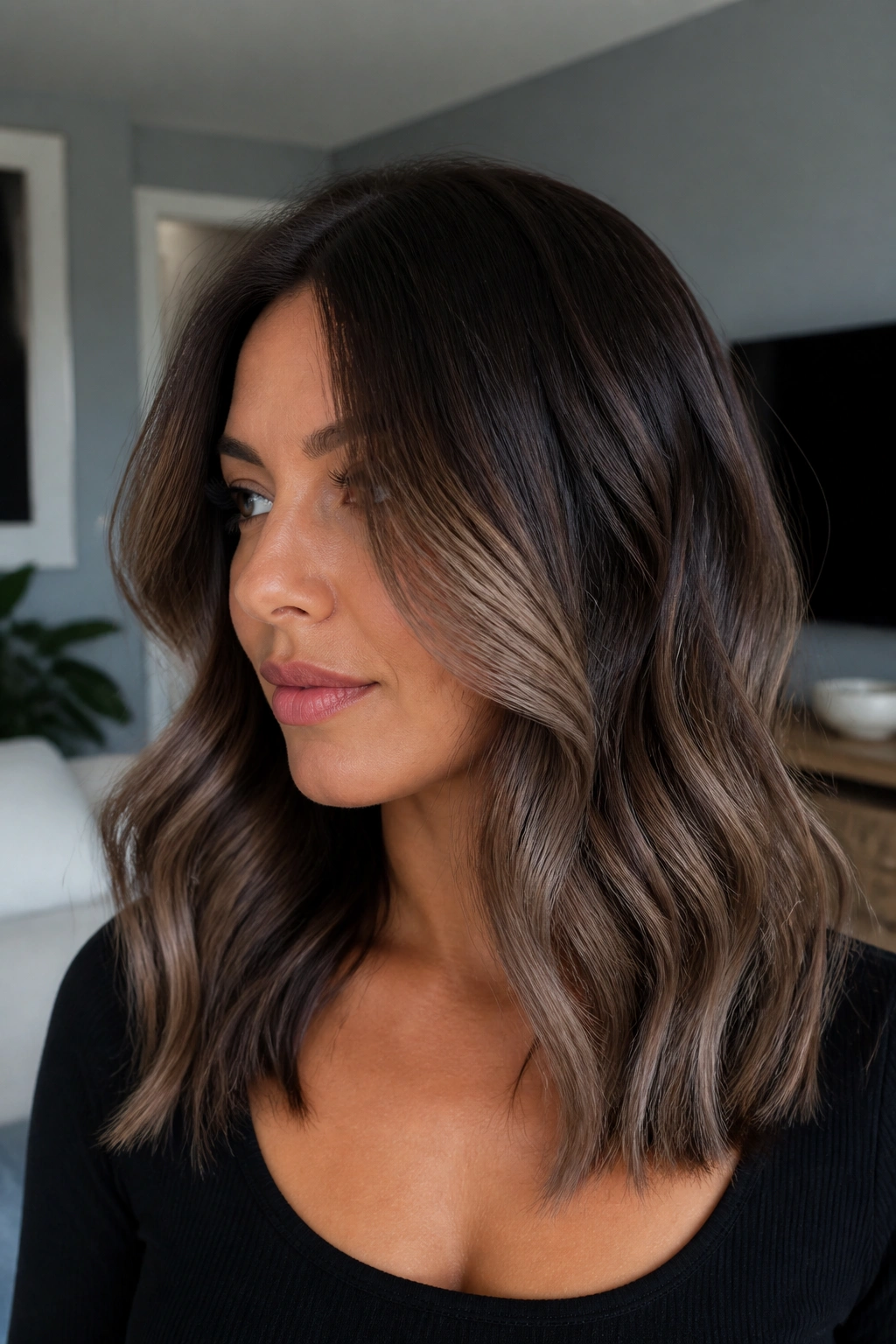
I keep coming back to ash brown when someone says, “I want dimension, but I do not want warmth.” That’s the whole point of this look. It cools down dark brunette hair without making it look gray or dusty, and on the right base it feels sharp in a good way.
A client with espresso hair and a lot of natural warmth usually needs a cool toner after lifting. That part matters. Skip it, and the ends can go orange, which is the exact opposite of the smoky finish you were after.
What Makes It Work
- Best on dark brunette bases with minimal red undertone.
- Looks strongest when the light pieces stay in the mid-lengths and ends.
- Needs a cool beige or ash toner to keep the finish soft.
- Works well with shoulder-length cuts and long lobs.
A small warning: ash tones can fade fast if you wash with hot water every day. Cooler water and a color-safe shampoo help, but the real trick is not over-lightening in the first place.
This is not the loudest balayage on the board. That’s the charm. It looks deliberate, calm, and a little expensive in the plainest sense of the word.
4. Toffee Sweep Through Long Layers
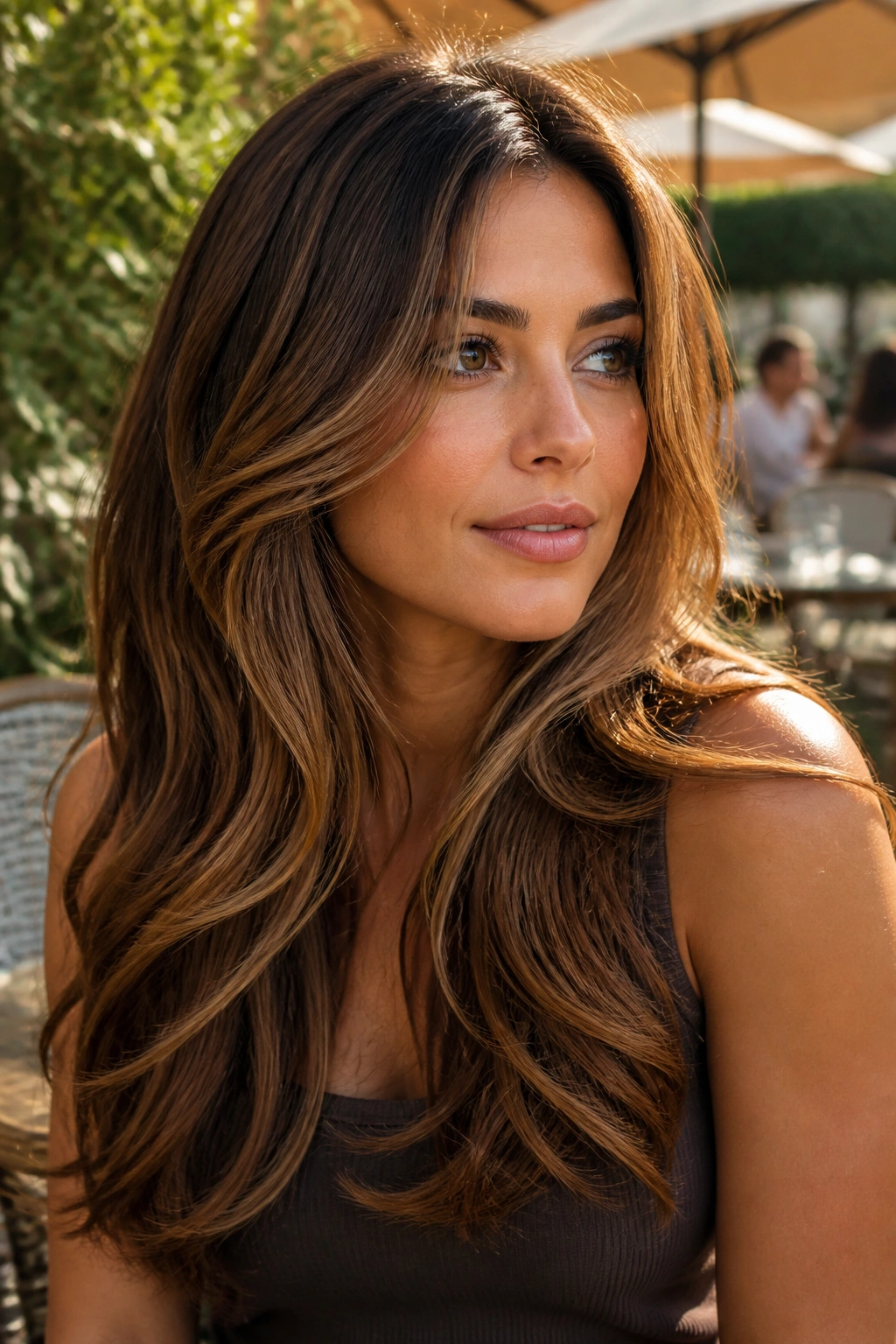
Long, layered brown hair loves toffee because the color follows the cut instead of fighting it. The lighter pieces can travel through the layers in a way that makes the hair feel fuller, especially if the ends are a little thin or see-through.
Toffee sits between caramel and golden brown. That middle ground is why it flatters so many brunette bases. It has enough warmth to feel sun-touched, but it does not scream blonde from across the room.
If the hair is waist-length, I like the brighter pieces to begin lower than people expect. Mid-length brightness on very long hair can make the top half look too busy. Pushing the lighter sweep farther down keeps the roots rich and the bottom half alive.
A round brush blowout shows this color off better than a heavy curl. The movement stays smooth, and the toffee pieces reflect light in long bands rather than broken chunks. Simple. Clean. Better than overworking it.
5. Face-Framing Bronde Balayage for Brown Hair
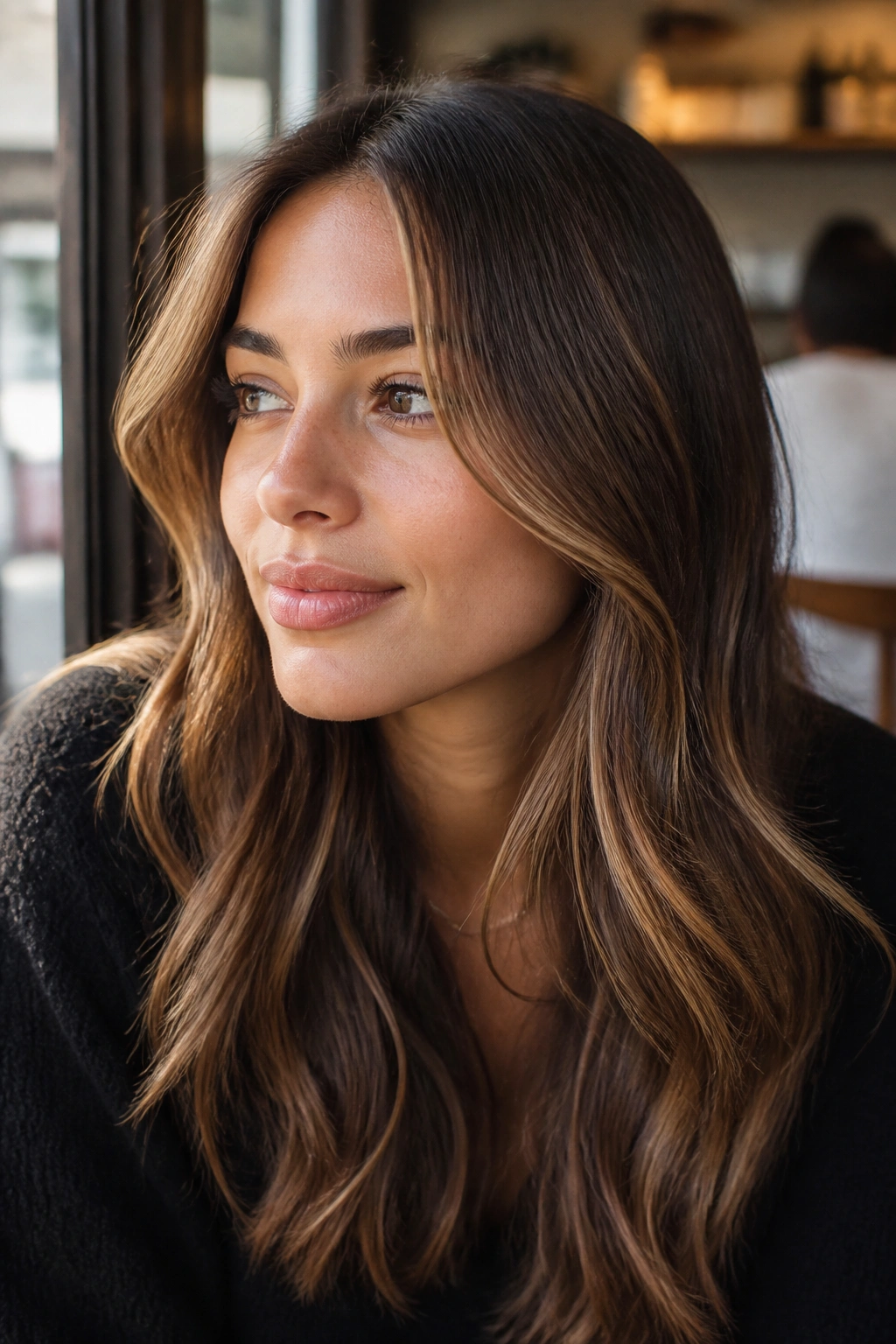
Face-framing bronde is for the person who wants a visible change but does not want their whole head rewritten. Unlike full-head lightening, this version keeps most of the brown intact and puts the brightness where it matters most: around the face, the part line, and the top layer.
That means less maintenance and less stress on the hair. It also means the grow-out is easier to live with, because the darker length gives the lighter front pieces somewhere to land.
Where It Pays Off
Brondes pieces around the face can make a brown base look brighter in photos, on video calls, and in natural light without needing a ton of lift elsewhere. I like this on people who wear ponytails or half-up styles often, because the front pieces stay visible even when the rest of the hair is tied back.
Who should try it? Anyone with:
- medium to dark brown hair
- a long fringe or curtain bangs
- hair that flattens at the crown
- a low tolerance for frequent salon visits
The trick is restraint. Too much brightness near the face and the look stops feeling soft. Keep the money pieces narrow, let the rest breathe, and the whole color reads calmer.
6. Copper-Kissed Balayage on Chocolate Brown Hair
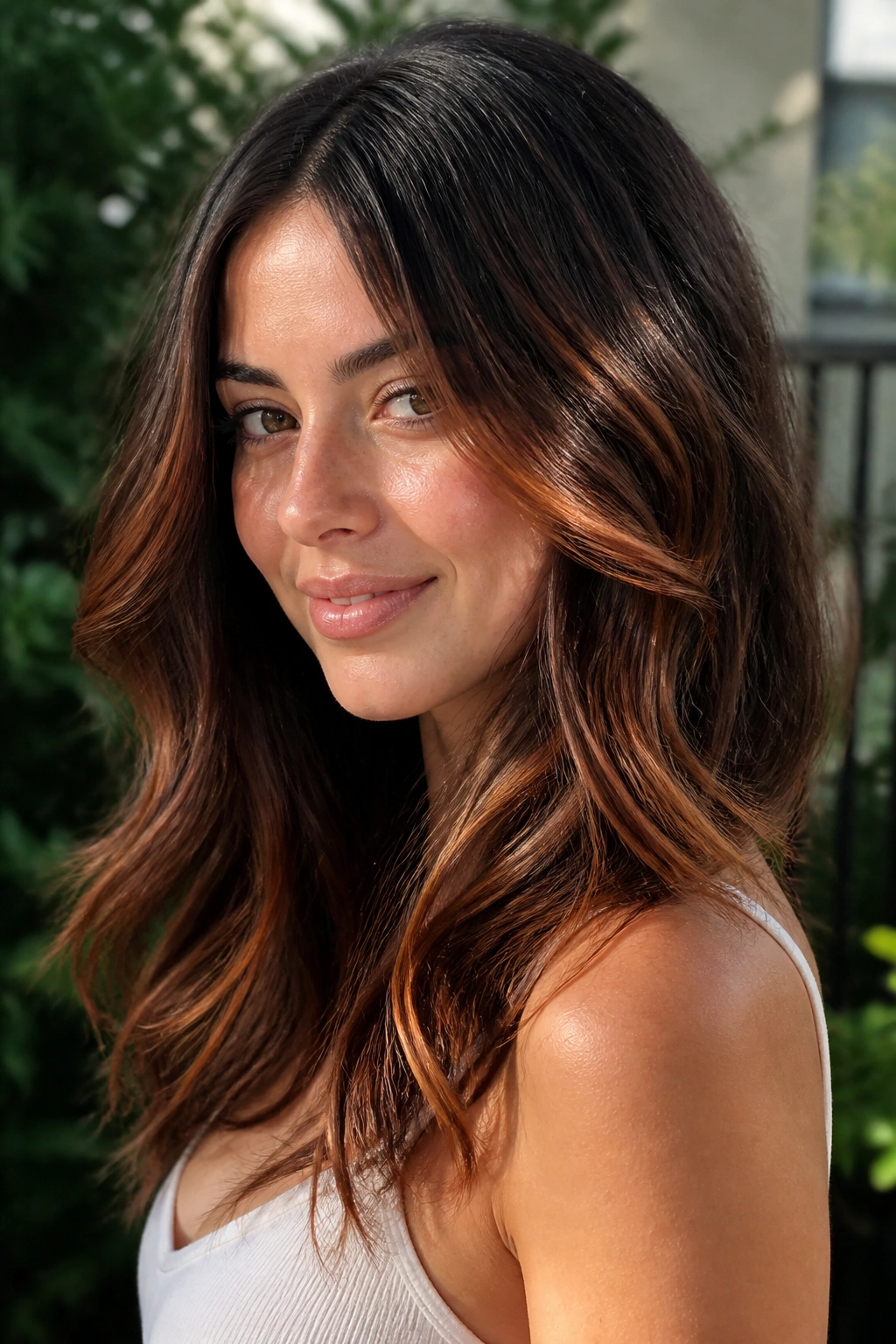
Copper on brunette hair can go wrong fast if the orange is too loud. But when it’s handled well, it gives chocolate brown hair a warm glow that feels alive instead of flat.
Why Copper Works Here
Copper sits in that interesting spot between red and gold. On a deep brown base, it gives the hair a flicker of warmth that shows up most at the ends and around the face, where light naturally hits first.
This look is especially good if your skin has peach, olive, or golden undertones. It can also work on cooler complexions if the copper stays muted — think burnished, not fire-engine. The difference is huge.
Ask Your Colorist For
- Fine, hand-painted copper ribbons through the mid-lengths
- A chocolate base that stays rich at the roots
- A gloss that keeps the copper from turning too orange
- Slightly brighter face-framing pieces if you want more contrast
Tip: copper fades faster than brown, so this one likes gloss refreshes. If you hate upkeep, keep the copper to the lower lengths only.
7. Mushroom Brown with Soft Shadow Roots
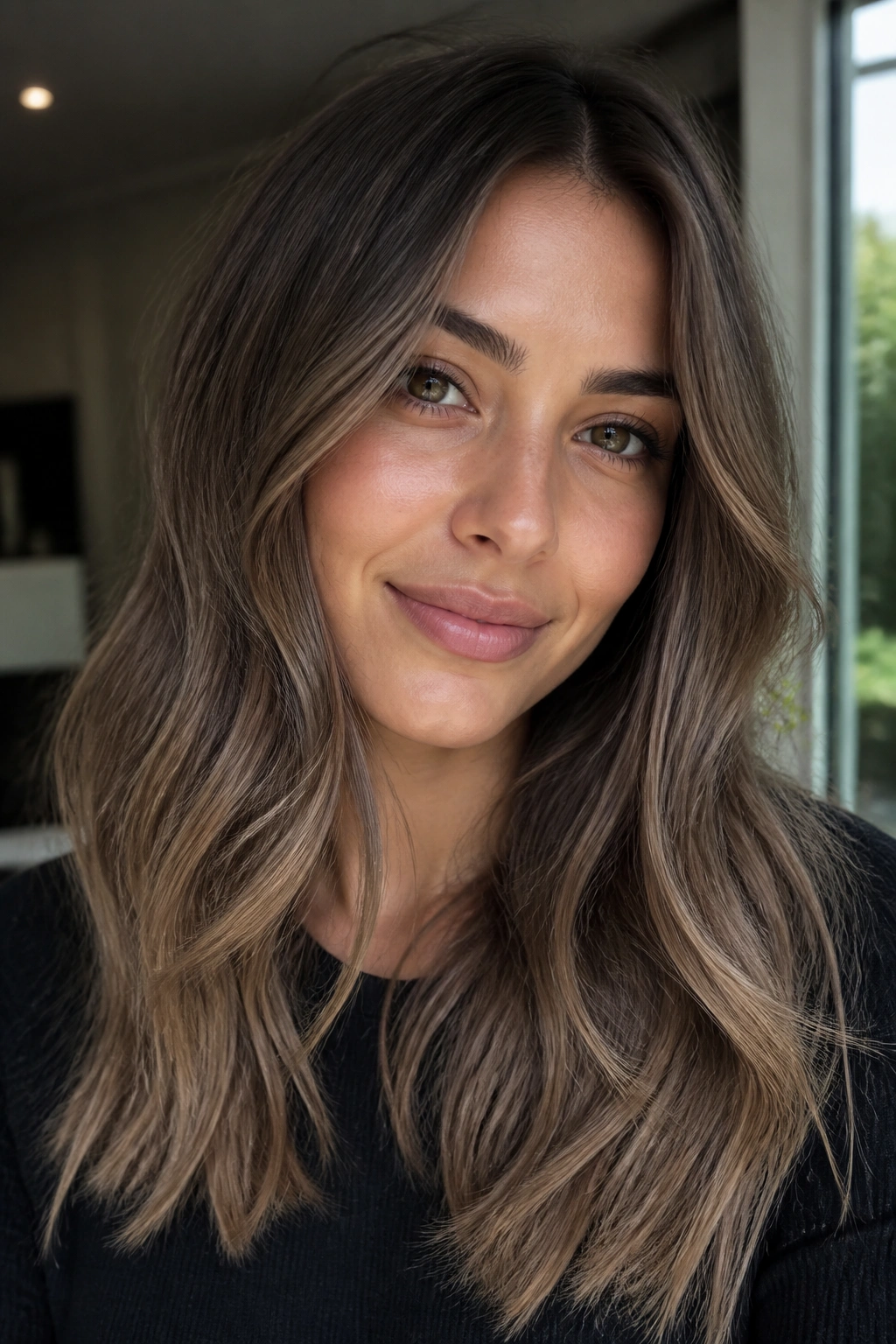
Mushroom brown is the cool-toned brunette look that people often describe as “soft” when they really mean “there’s no hard edge anywhere.” It blends taupe, ash, and muted brown into a finish that looks calm from root to end.
The best version keeps the root shadow a little deeper and lets the lighter strands show up in thin, smoky threads. Too much contrast kills the effect. Too little movement makes it look dull. That narrow middle ground is the whole job here.
It works especially well on medium to dark brown hair that tends to pull red when lifted. Mushroom tones push back against that warmth and keep the color from going coppery after a few washes.
If your haircut has a strong outline — a blunt lob, a straight shoulder cut, a clean bob — this shade gives the shape a little extra texture without putting obvious streaks on top of it. Quiet. Cool. A little moody, in the best sense.
8. Espresso Roots and Mocha Midlengths
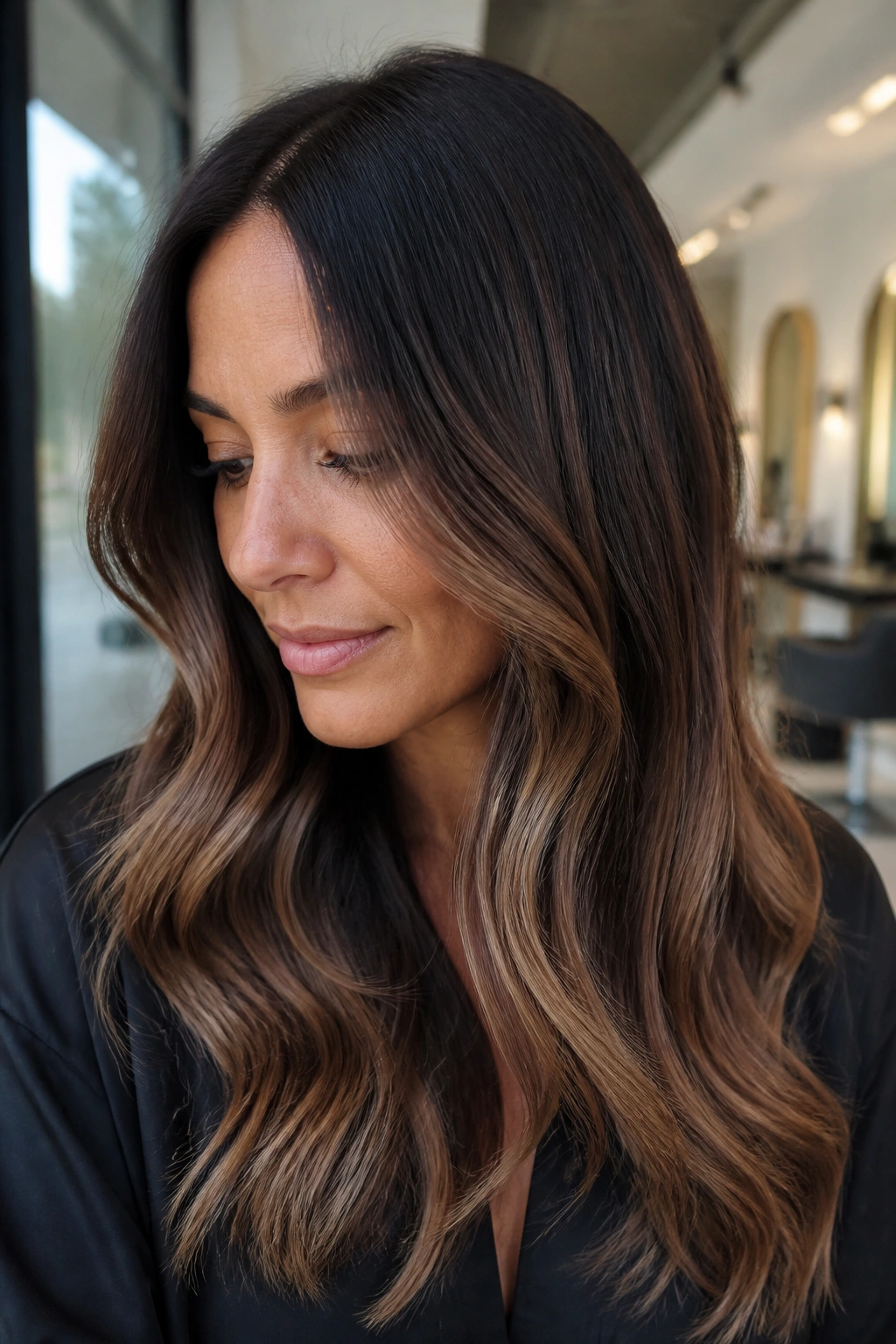
What if you want visible dimension but refuse to give up depth? Espresso roots with mocha midlengths is the answer.
The idea is simple: keep the roots dark and glossy, then let the color open up a touch through the middle and lower sections. It is not a dramatic blonde transition. It is a slow shift that feels polished because the dark-to-light movement stays close to the same family.
The Blend Matters Most
The real work is in the transition zone. That’s where the color has to soften so the eye moves from dark espresso to warm mocha without seeing a line. A good colorist will feather the lightener and then tone the mids so they look creamy, not patchy.
This look suits hair that’s thick, dense, or naturally dark because it preserves that deep base people usually love. It also holds up well on wavy hair, where the bends make the mocha pieces show and hide as the hair moves.
A few notes to bring to the salon:
- Keep the roots untouched or only slightly shadowed.
- Lift the midlengths one to two levels, not five.
- Ask for a gloss that stays warm-neutral.
- Avoid chunky highlights; the whole point is smooth change.
9. Cinnamon Ribbons on Chocolate Curls
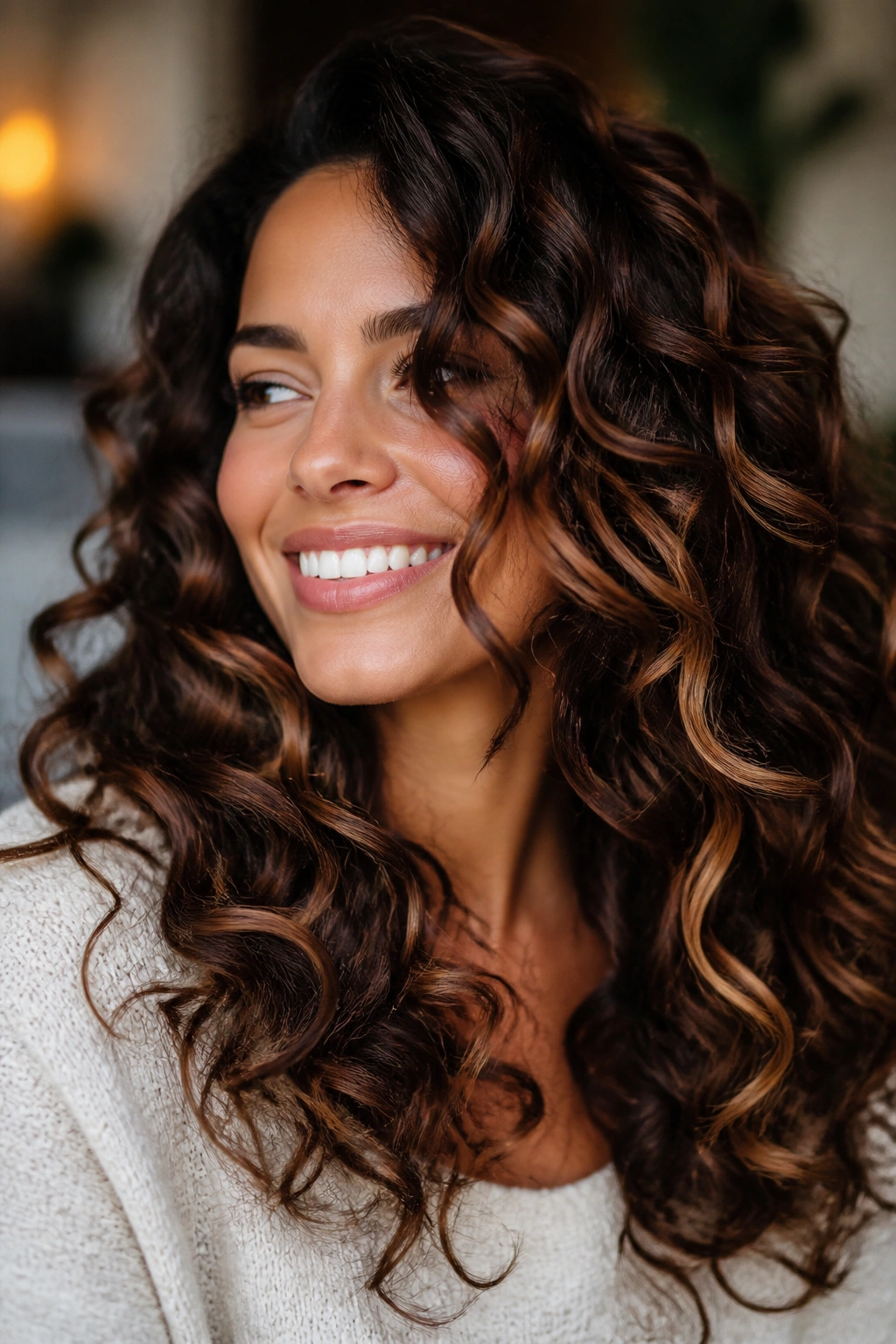
Cinnamon ribbons were made for curls. The color catches on the curved surface of the curl pattern, so even a small amount of placement can look fuller than a whole head of straight hair with the same amount of lift.
I like this look when the brown base is deep chocolate and the client wants warmth without drifting into copper. Cinnamon is richer than copper and softer than auburn. It has a baked-spice feel that looks especially good on layered curls and coils.
What to Watch For
- Place the brightest pieces on the outer surface of the curl, not buried underneath.
- Keep the nape a little deeper so the ends do not look frayed.
- Use a gloss that protects the red-brown tone.
- Diffuse or air-dry to let the ribbons land naturally.
A heavy flat-iron finish can make the color look less alive, which is a shame because this shade depends on movement. The curls do half the work for you. Let them.
10. Smoky Brunette with a Cool Gloss
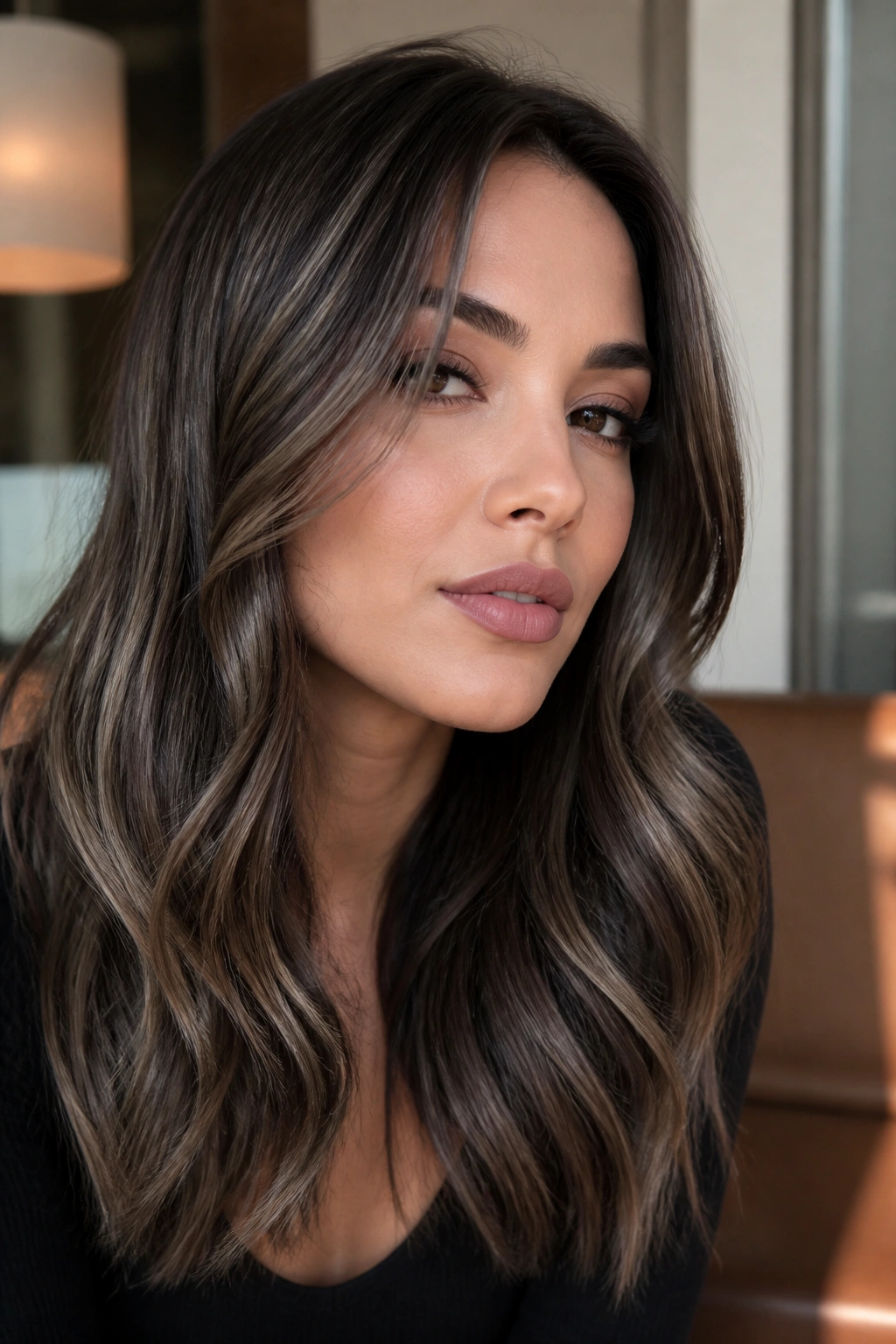
Smoky brunette is for the person who wants their hair to look intentional in low light and even better in daylight. The trick is the gloss. Without it, cool brown balayage can go flat or turn slightly greenish at the ends, and nobody wants that.
This look uses muted ribbons — ash, mocha, cool cocoa — then finishes with a clear or cool beige glaze so the hair stays shiny instead of chalky. That shine matters because smoky shades need reflection to stay modern-looking. Flat hair makes them look tired.
If your natural color is very dark, a smoky brunette approach can be easier than pushing all the way to caramel. The contrast is softer, the maintenance is lighter, and regrowth blends more cleanly.
Best for: people who like cool-toned makeup, silver jewelry, and brown hair that reads more charcoal than gold.
Less ideal for: anyone who loves warmth and red tones.
A cool gloss every 6 to 8 weeks keeps this one crisp.
11. Sunlit Bronze on Warm Brown Hair
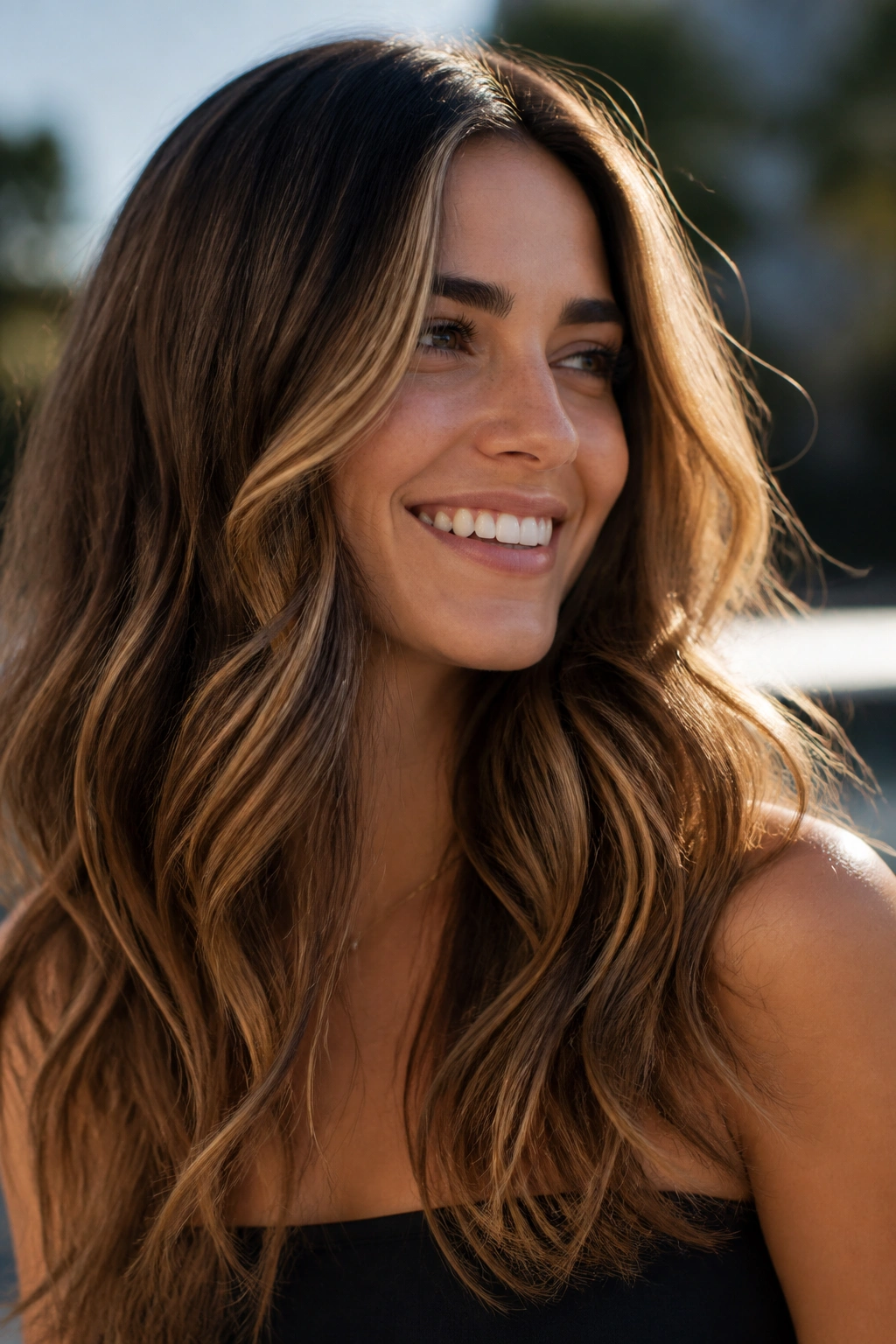
Bronze sits in a useful middle zone. It has the warmth of caramel, but it brings a little metallic depth that makes warm brown hair look richer rather than lighter.
Unlike honey, which can lean sweet, bronze feels a touch more grown-up. Unlike copper, it does not push red too hard. That’s why it’s such a good choice for brunettes who already have golden undertones and want the color to stay in the same family.
This look especially flatters hair with movement — waves, layered cuts, or anything that takes a bend well. The bronze pieces show up as the hair turns, not just when the light hits dead on. That makes the color feel woven in.
A good salon request sounds like this: warm bronze ribbons through the mids and ends, with a softer face frame and a deeper root. If the colorist understands that sentence, you’re in decent shape.
12. Maple Glaze Balayage on Wavy Brown Hair
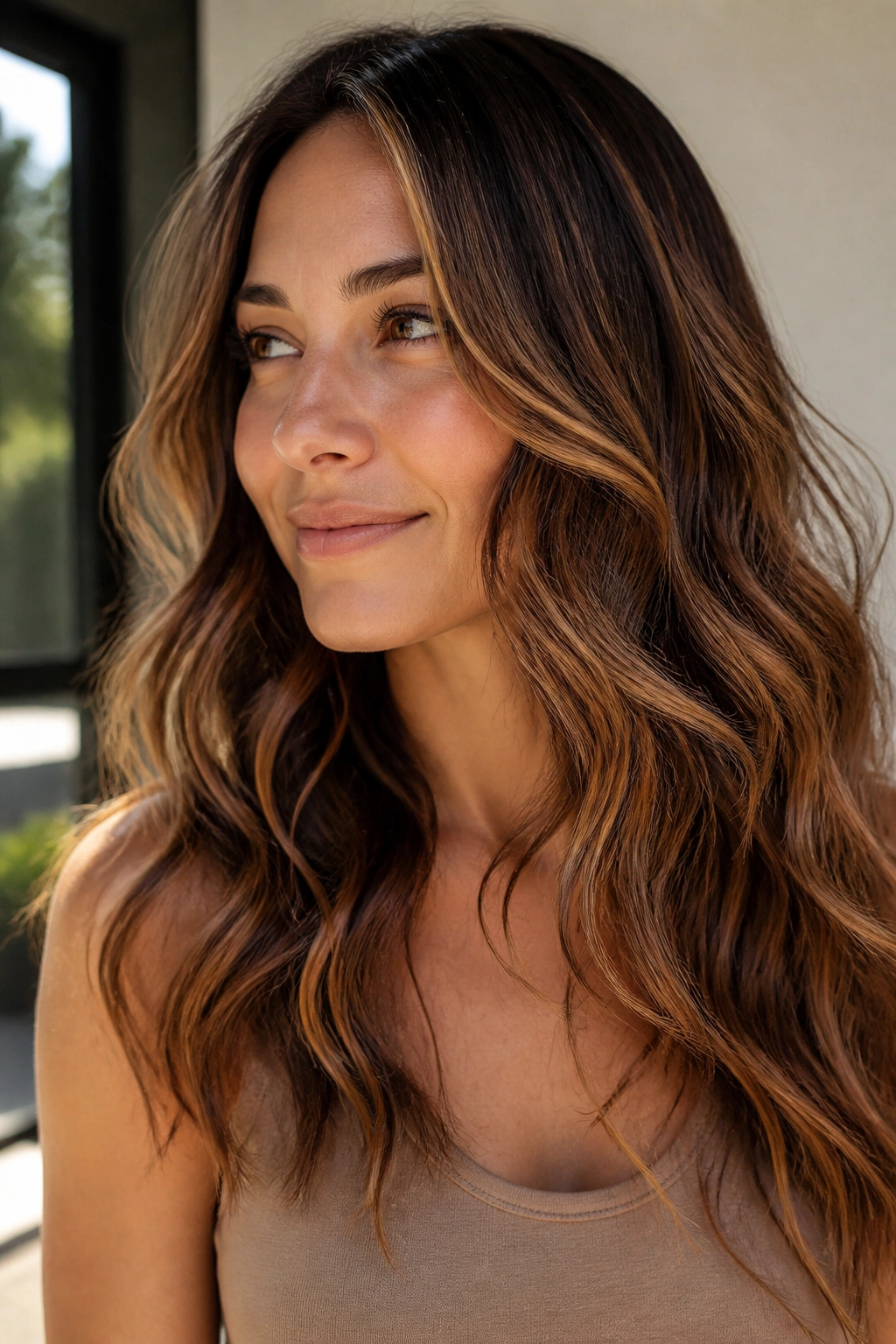
Wavy brown hair can take a glaze better than most people realize. The texture already gives you movement, so maple tones only have to sit on top of that motion and follow the bend.
Maple glaze is rich, amber-brown, and slightly syrupy in tone. It is warmer than mushroom, darker than caramel, and easier to wear than a full copper. On waves, it reads as depth first and brightness second, which is exactly why it works.
The painted pieces should not be too wide. Wavy hair already creates visual texture, and chunky sections can make it feel busy. Thin ribbons through the surface layer and a few brighter ends are usually enough.
Here’s what I like most about this look: it does not need to scream. It moves when you move, and that is enough. If your hair has a natural wave pattern and you hate a high-contrast finish, maple is a safe bet that still gives the hair some life.
13. Beige Latte Balayage on Straight Brown Hair
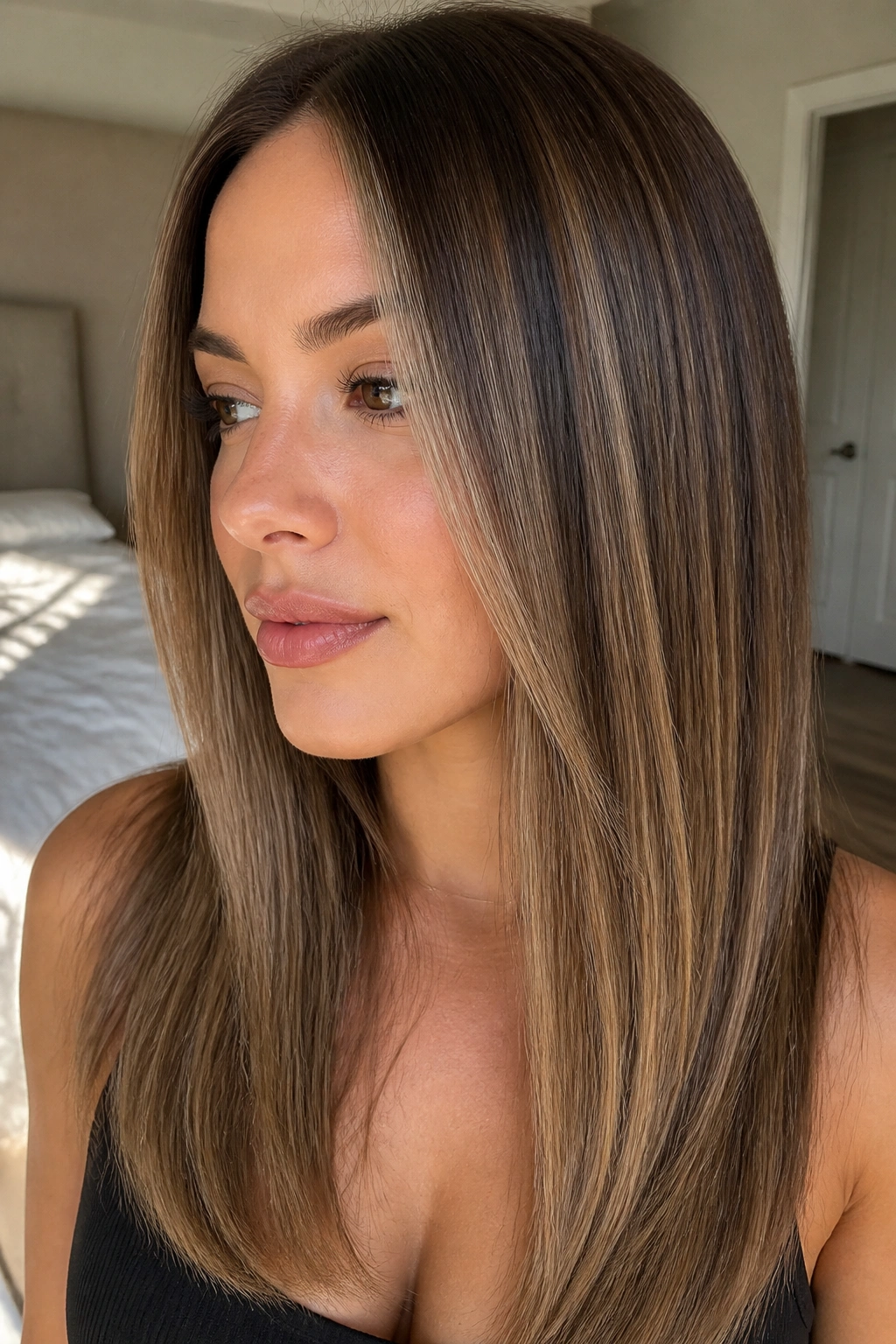
Straight brown hair shows everything. Every ribbon, every line, every patch that is too light by half a shade. That is why beige latte balayage has such a following on straighter textures — it softens the edges instead of drawing hard ones.
Why Straight Hair Needs Finer Painting
The lighter pieces should be fine and blended, almost like they were dusted through the surface rather than laid on top. A heavy hand can make straight hair look striped in a way that curly or wavy hair would hide.
Ask for micro-balayage with a beige toner and a soft root melt. That keeps the finish creamy and prevents the light pieces from reading yellow. Beige latte is a little quieter than honey and a little softer than ash, which gives it room to work on brown hair without screaming for attention.
If you wear your hair sleek, this is one of the easiest ways to get dimension that still looks controlled. No frills. No harsh contrast. Just a brown that moves when the light changes.
14. Mahogany Veil for Deep Brunettes
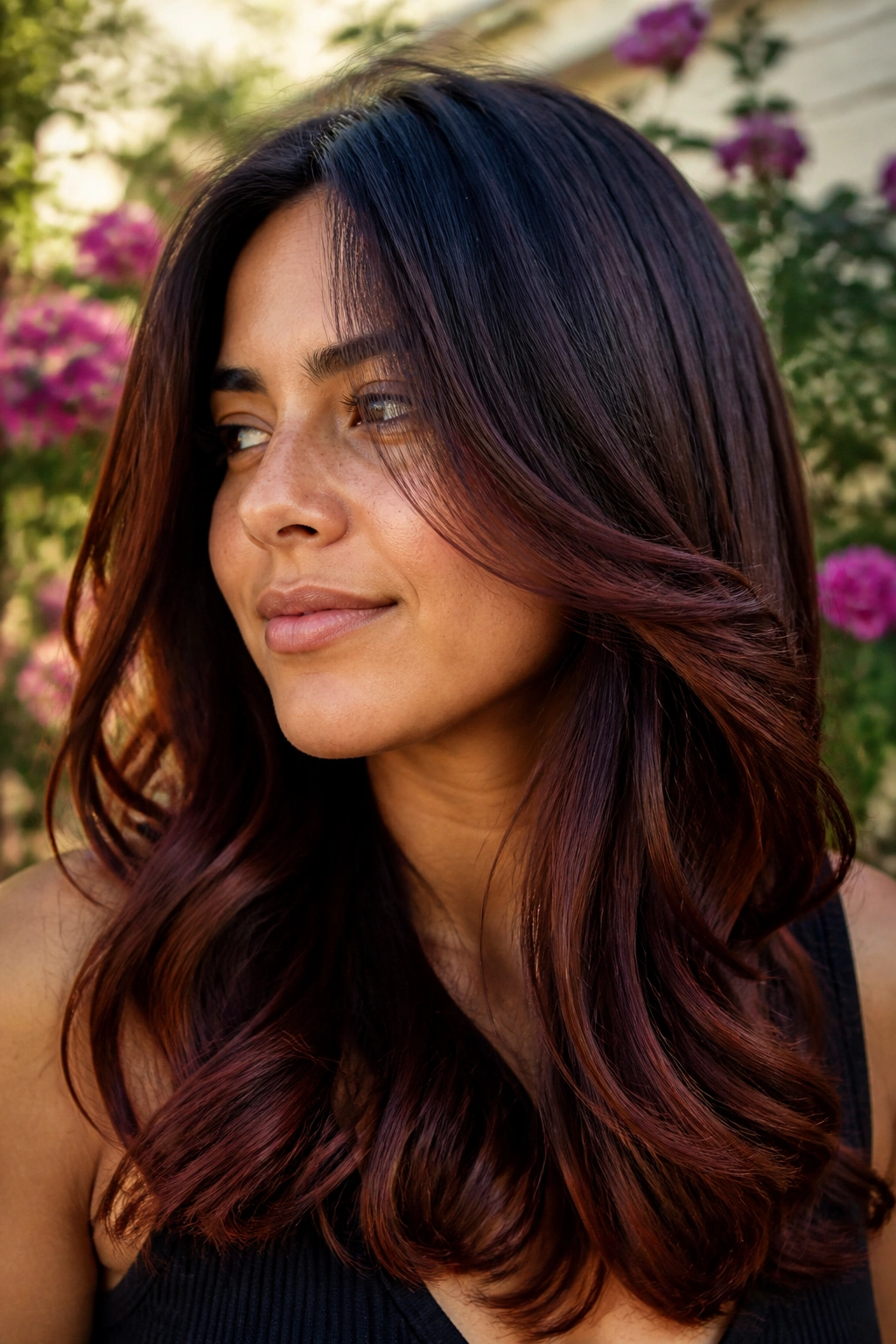
Mahogany brown is one of those shades that looks almost too subtle until you see it in motion. Then it wakes up. The red-brown tone sits inside deep brunette hair like a veil, not a streak, which is exactly why it feels so rich.
This works best when the lightening is modest. You do not want bright red strips. You want a deep wine-brown shift that appears on the ends, around layers, and through the face frame. The result is darker than auburn and more saturated than chestnut.
What Gives It Depth
A mahogany balayage needs a brown base that stays strong at the root. If you lift too high, the red can look obvious in a way that cheapens the whole thing. Keep the warmth low, then let the gloss do the heavy lifting.
- Best on level 3 to 5 brunettes.
- Looks strongest in natural daylight.
- Needs a color-safe shampoo to hold the tone.
- Fits long hair, lob cuts, and blunt shoulder shapes.
It’s a polished shade, but not a loud one. That’s the point.
15. Almond Contour Balayage Around the Face
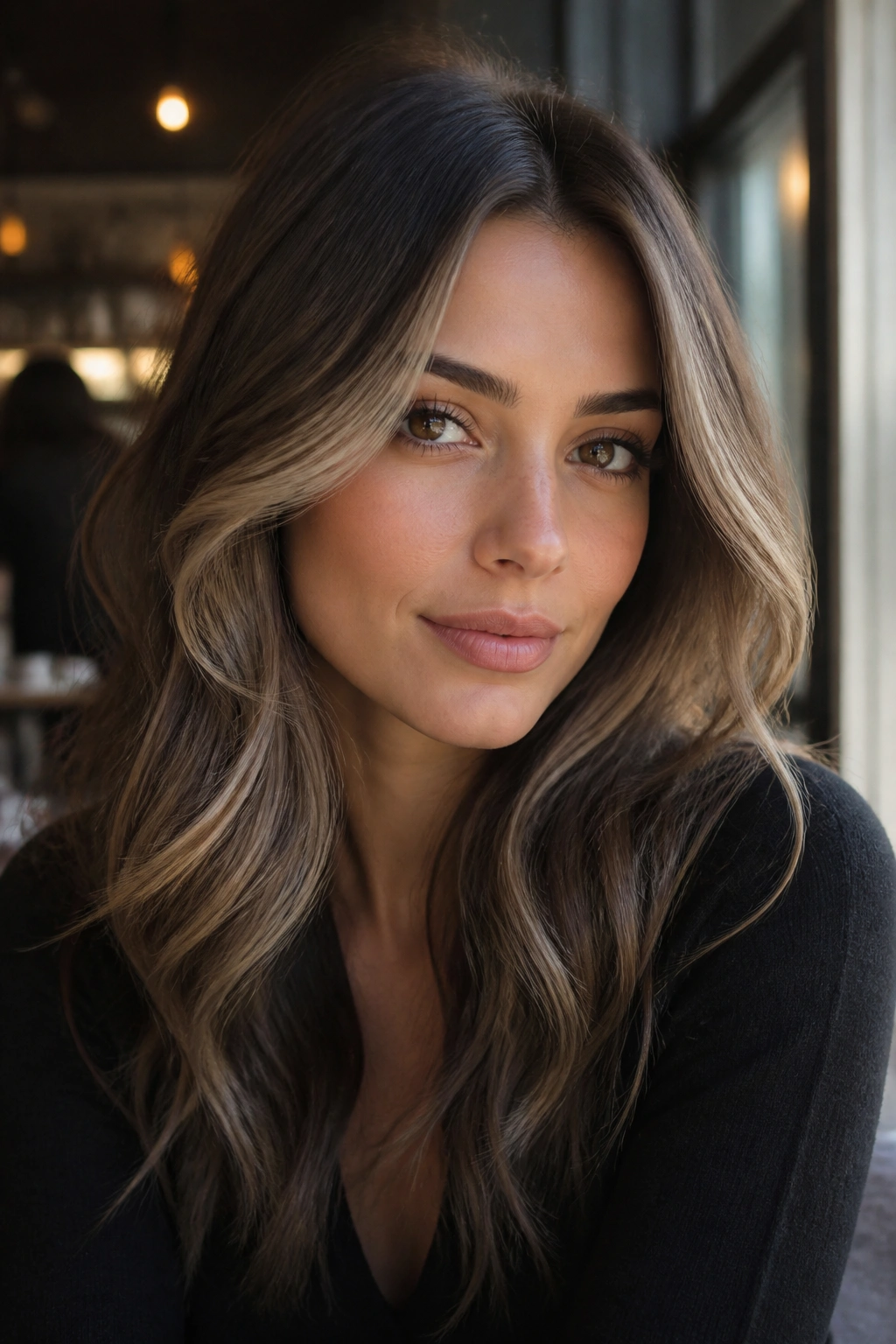
This one is for people who want structure more than brightness. Almond contour balayage puts the lighter pieces exactly where the eye goes first — at the temples, around the cheeks, and just above the jawline — so the hair frames the face instead of spreading light everywhere.
Compared with a full balayage, this is more strategic. You keep the body of the brown rich and dark, then let the front lift one or two levels into a soft almond or toasted beige. It changes the whole mood of the haircut without requiring a full color overhaul.
It’s especially good for ponytails, buns, and half-up styles, because the face pieces stay visible even when the rest of the hair is pulled back. The rest can stay deeper and simpler. Easy.
If you want contouring that feels more natural than chunky highlights, this is one of the smarter choices. The effect is subtle in a mirror and more obvious when you turn your head. Which, honestly, is where good hair color should live.
16. Soft Auburn Ends on Brown Roots
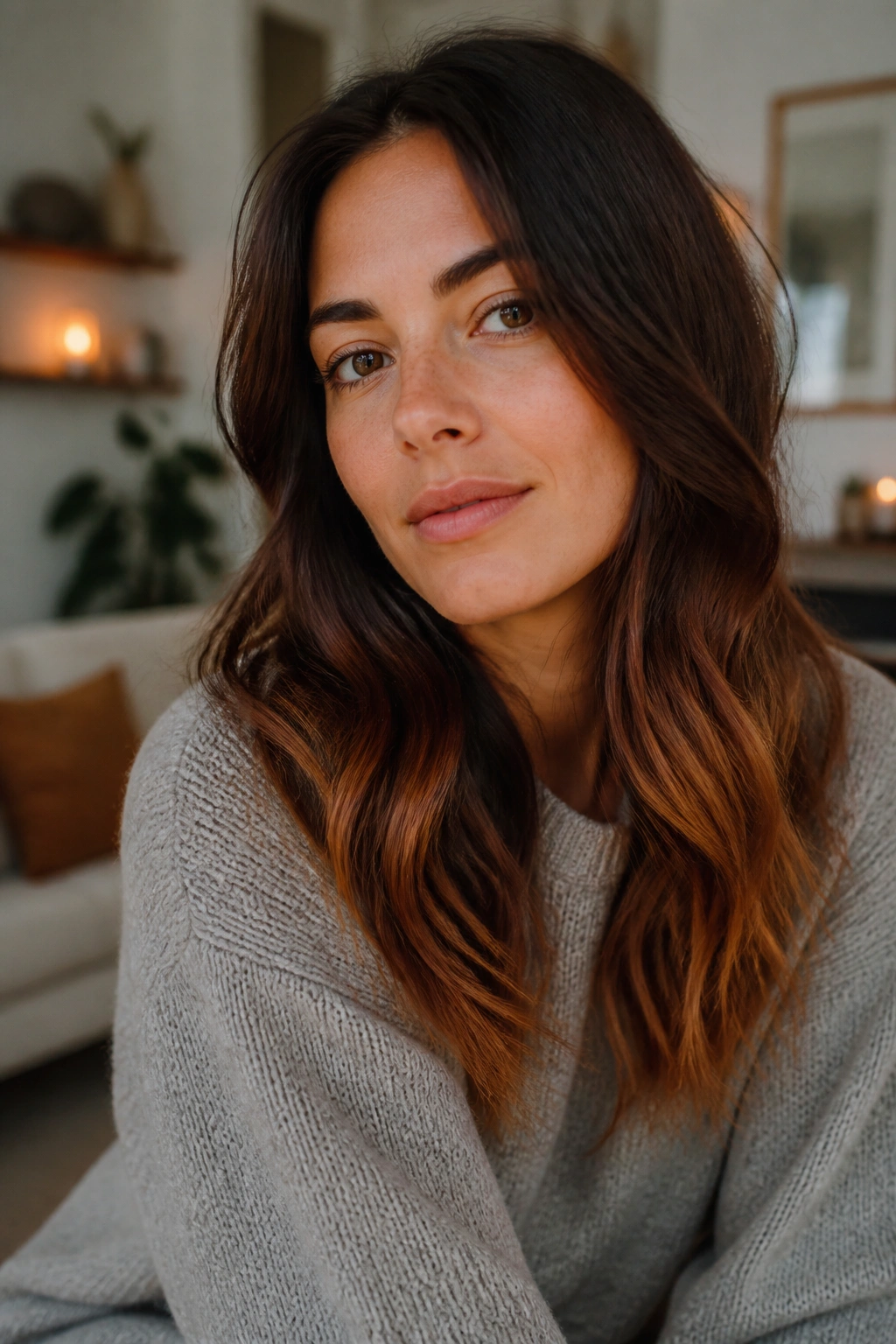
Do you want warmth without going full copper? Soft auburn ends are the compromise that doesn’t feel like a compromise.
The roots stay brown and grounded, then the bottom third of the hair opens into a muted red-brown. It is not bright. It is not orange. It has that faded autumn leaf thing going on, minus the usual seasonal baggage people attach to the phrase. More simply: it gives brown hair a little heat where the eye naturally lands.
How Much Warmth Is Enough?
- Keep the auburn concentrated on the last 3 to 4 inches if you want a subtle effect.
- Push it higher through the mids if you want a stronger shift.
- Use a red-brown gloss, not a pure copper toner.
- Curl the ends under or away from the face to show the tone cleanly.
This look works well on layered cuts because the different lengths catch the red at different spots. If your hair is one-length and heavy, the auburn can disappear under the bulk. A few loose bends fix that fast.
17. Sandalwood Brown with Barely-There Lightness
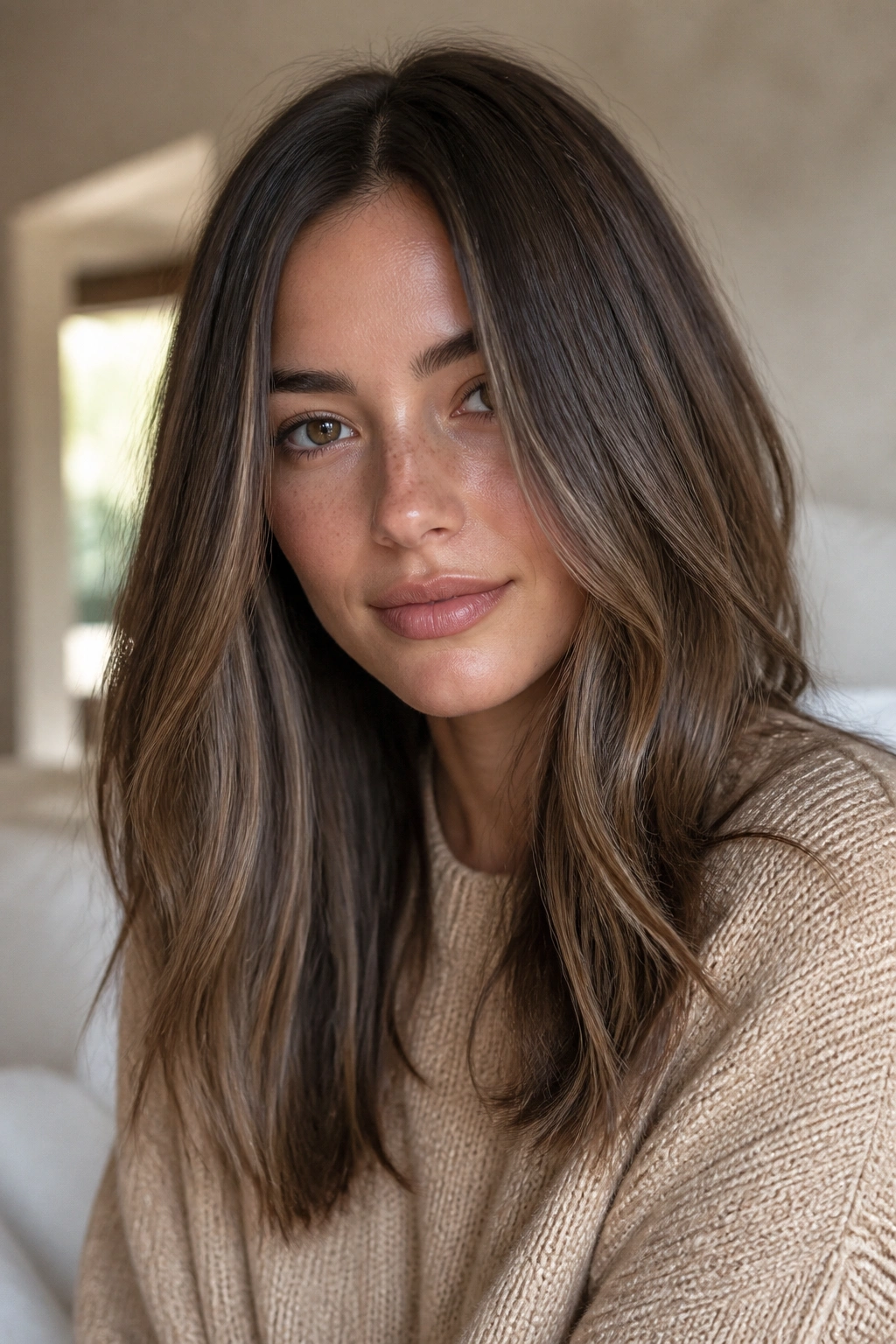
Sandalwood brown is what I recommend when someone says, “I want a change, but I still want people to think I was born with it.” It is softer than honey, quieter than caramel, and far less warm than bronze.
The color itself lives in that beige-brown space that flatters darker brunettes without demanding a big commitment. The light pieces are thin, scattered, and close enough to the base that the grow-out stays calm. No harsh line. No obvious stripe pattern.
It also plays nicely with professional settings where bright blonde pieces might feel like too much. Sandalwood lets the hair look polished without making the color the loudest thing in the room.
This is not the look for someone chasing major contrast. It’s for the person who likes control, softness, and low drama. If that sounds a little boring, fair enough — but boring is sometimes exactly what makes a color last in real life.
18. Sable and Honey Micro-Ribbons
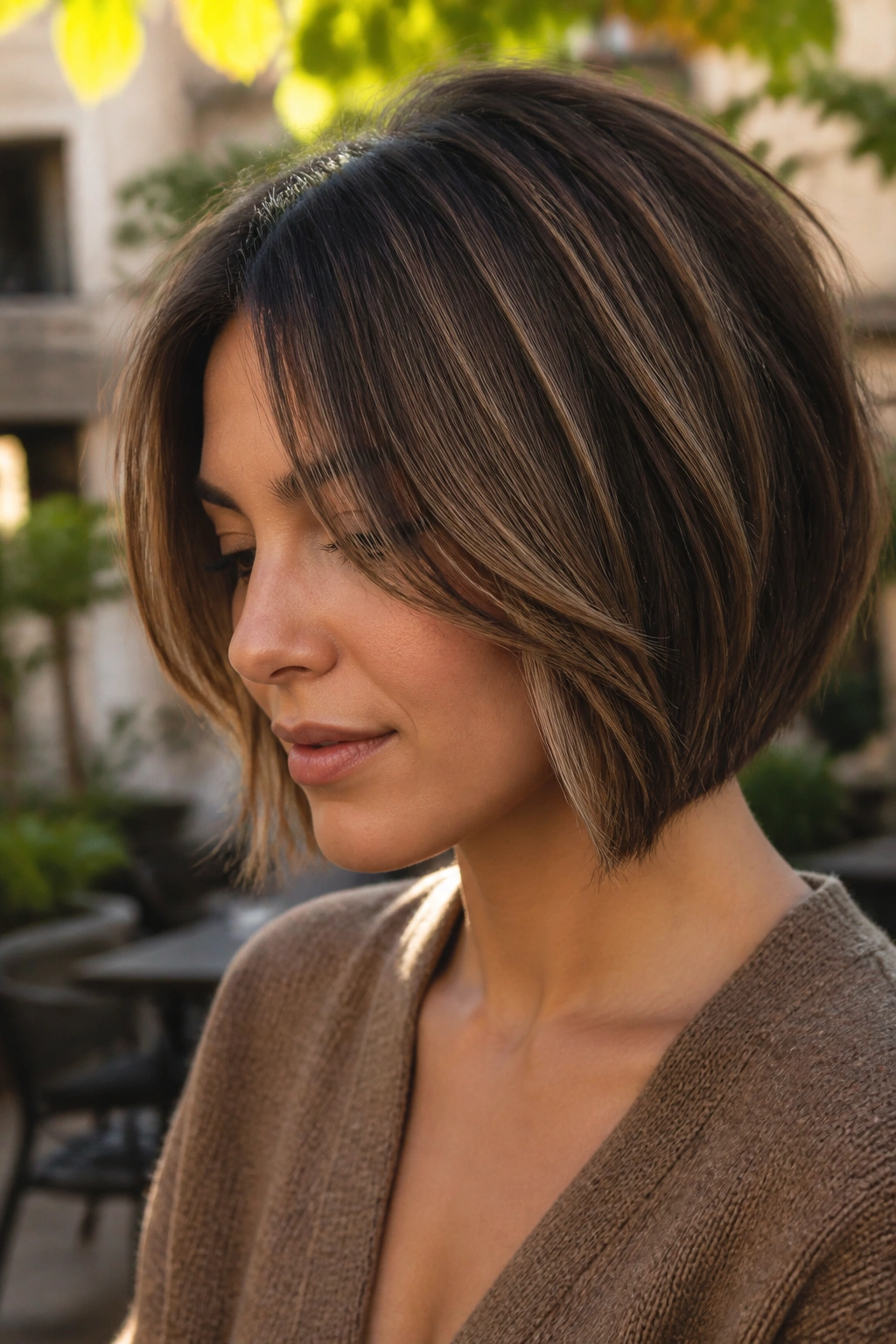
Fine brown hair can look fuller with micro-ribbons in a way that chunky highlights never manage. The smaller the painted pieces, the more the hair seems to have natural depth instead of obvious color placement.
Sable gives the base a deep, glossy anchor. Honey adds tiny flickers of light through the surface. Together, they make the hair move more than it actually does. That matters a lot on thinner strands, where too much lightening can leave the ends looking wispy.
The best part is how forgiving this look is as it grows out. Because the pieces are tiny, the root line stays soft for longer. You can go a bit longer between appointments, and the style still looks fresh enough for everyday wear.
If you have a bob, a lob, or shoulder-length hair, this is one of the smartest options on the list. The color doesn’t have to shout to do its job. It just has to be placed well.
19. Caramel Money Piece with Dark Brown Lengths
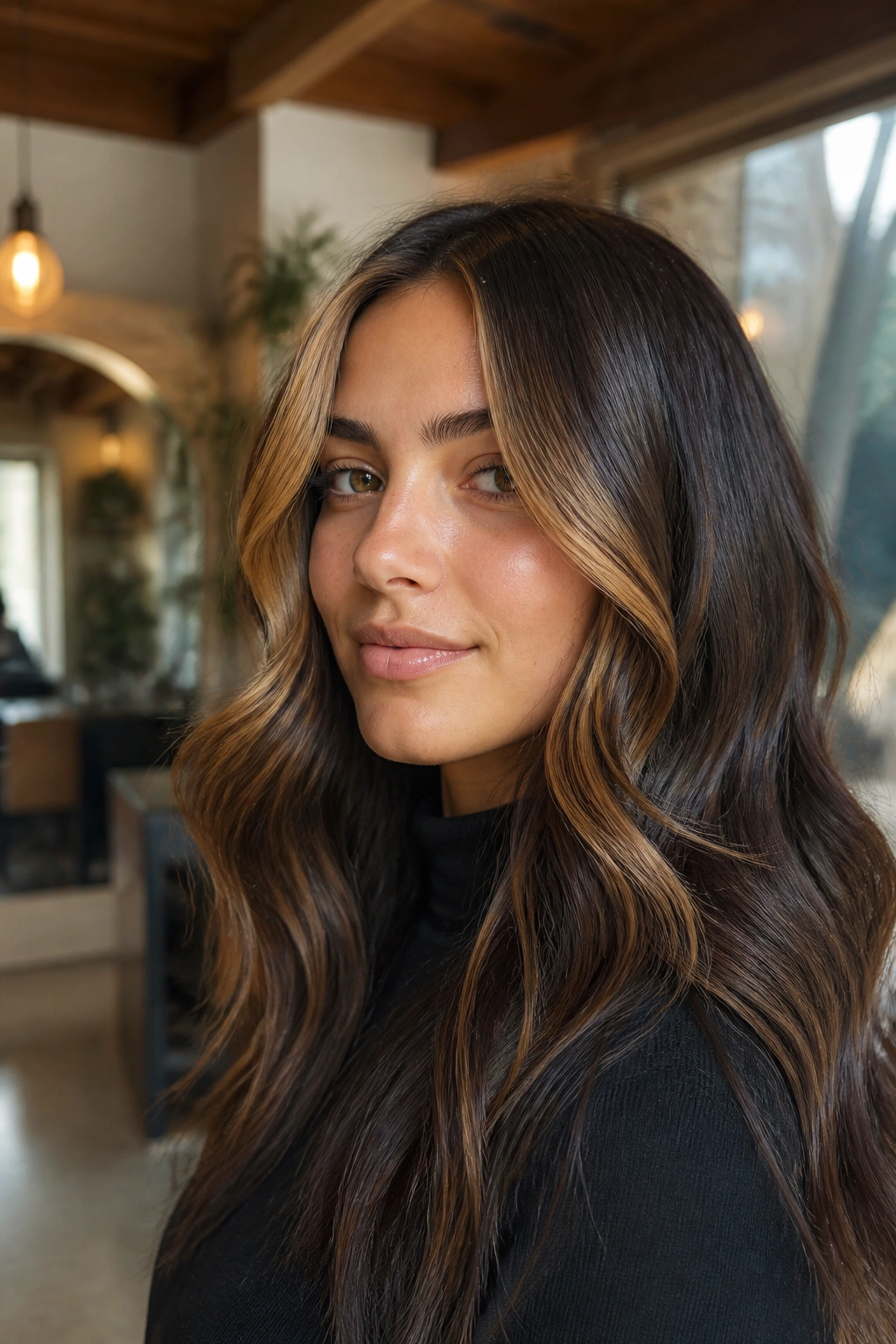
A strong money piece can change the whole face in one shot. If you keep the lengths dark and put caramel brightness only at the front, the haircut suddenly has a focal point.
This look is especially useful if you wear your hair up a lot. A bun, ponytail, or claw-clip twist still shows the lighter front pieces, so the color keeps working even when the rest of the hair is hidden. That’s practical, not just pretty.
How to Make It Feel Balanced
- Ask for two brighter front panels rather than a heavy face frame.
- Keep the rest of the balayage soft and low contrast.
- Let the money piece start near the brow or cheekbone, depending on your face shape.
- Use waves or a bend at the front so the lighter panels don’t sit flat.
A dark brunette base makes the caramel pop harder, so the front section needs to be blended well or it can look pasted on. The goal is lift, not a highlight strip from a completely different hair era. Small difference. Huge payoff.
20. Cocoa-to-Bronde Melt with a Soft Finish
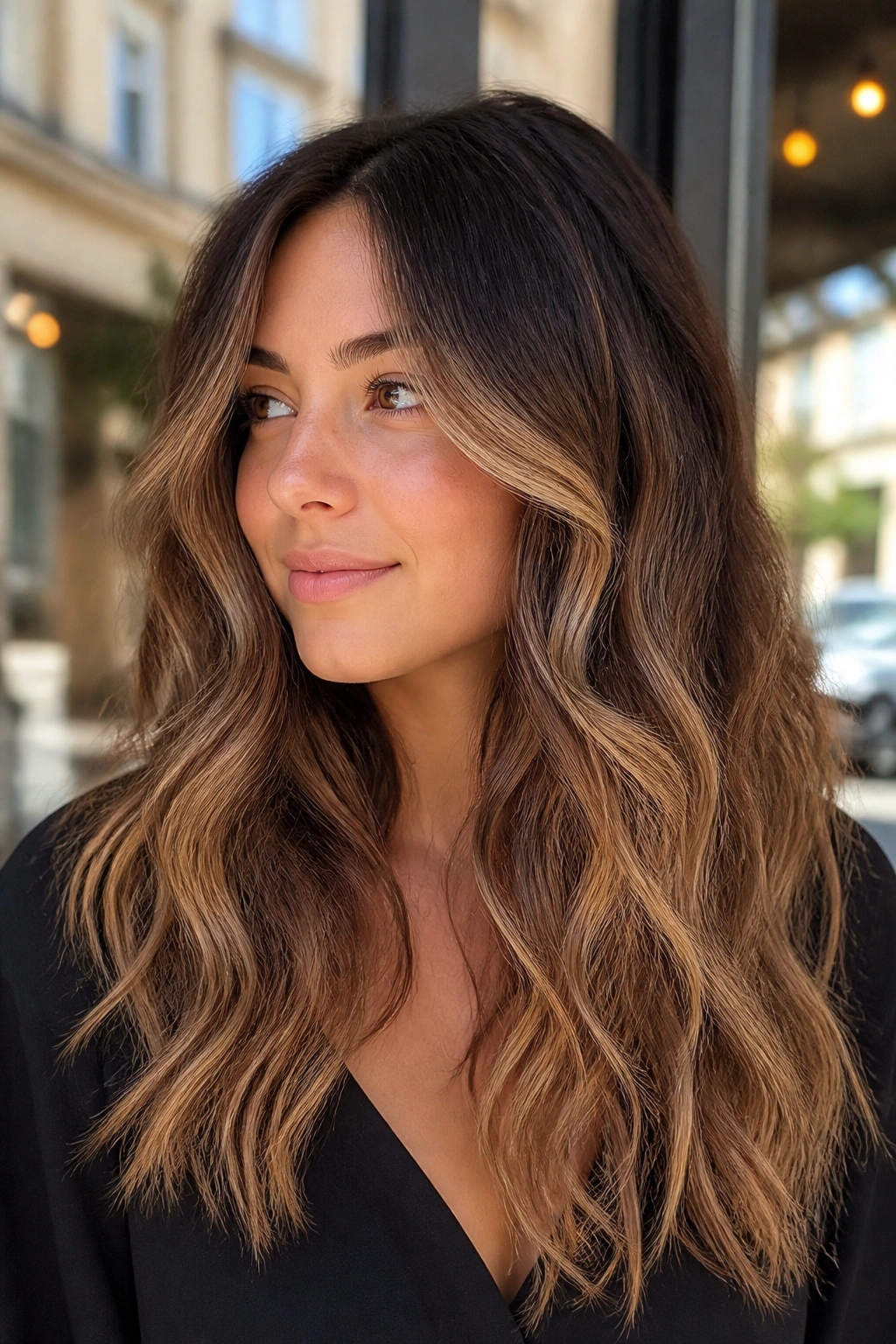
If you want one brown balayage idea that can lean warm, cool, or somewhere in between, this is the safest long-term bet. The cocoa base keeps the color anchored, and the bronde melt lets the hair lighten gradually through the mids and ends without losing its brunette soul.
It’s a good option for someone who is unsure how blonde they want to go. The transition is gentle enough to live with, but visible enough that the hair no longer reads as one solid block of color. You see depth first, light second. That order matters.
This look also ages well across different cuts. A long layer, a shag, a lob, even a blunt cut can wear it if the painting is adjusted to the shape. That is the real trick with balayage: placement does more work than the slogan attached to it.
Bring photos, yes. But bring one indoor shot and one outdoor shot if you can. Brown hair can lie to you under bathroom lighting, and the same shade that feels soft at home can look much brighter in daylight. The more honest the reference, the better the result.
