



White balayage on brown hair can look icy, expensive, and soft all at once — or it can look harsh if the tone is off by half a shade. That’s the part people miss. It’s not just about making brunette hair lighter; it’s about deciding how much contrast you want, where the brightness should live, and whether the finish should feel crisp, smoky, pearl-like, or almost cream-colored.
Brown hair gives white balayage a much richer stage than blonde hair ever could. Espresso, mocha, chestnut, and milk chocolate each change the way the white reads in the light, and the same ribbon can look sharp on one base and hazy on another. The cleanest versions usually aren’t pure white from root to end, either. They start with careful lightening, then get toned down to a pale blonde, pearl, silver-white, or cool beige so the color sits nicely instead of screaming for attention.
That’s why the cut matters so much. Long waves, blunt bobs, curls, and shaggy layers all break up the color in different ways. A face frame can carry most of the brightness. A heavy, one-length cut may need finer pieces so it doesn’t look blocky. And if your hair is naturally dark brown, patience helps more than ambition ever will.
The 28 looks below move from soft and whisper-thin to bold and graphic, because white balayage for brown hair is not one look. It’s a whole range. Pick the one that suits your length, your texture, and how much upkeep you’re willing to live with.
1. White Balayage on Espresso Brown Hair
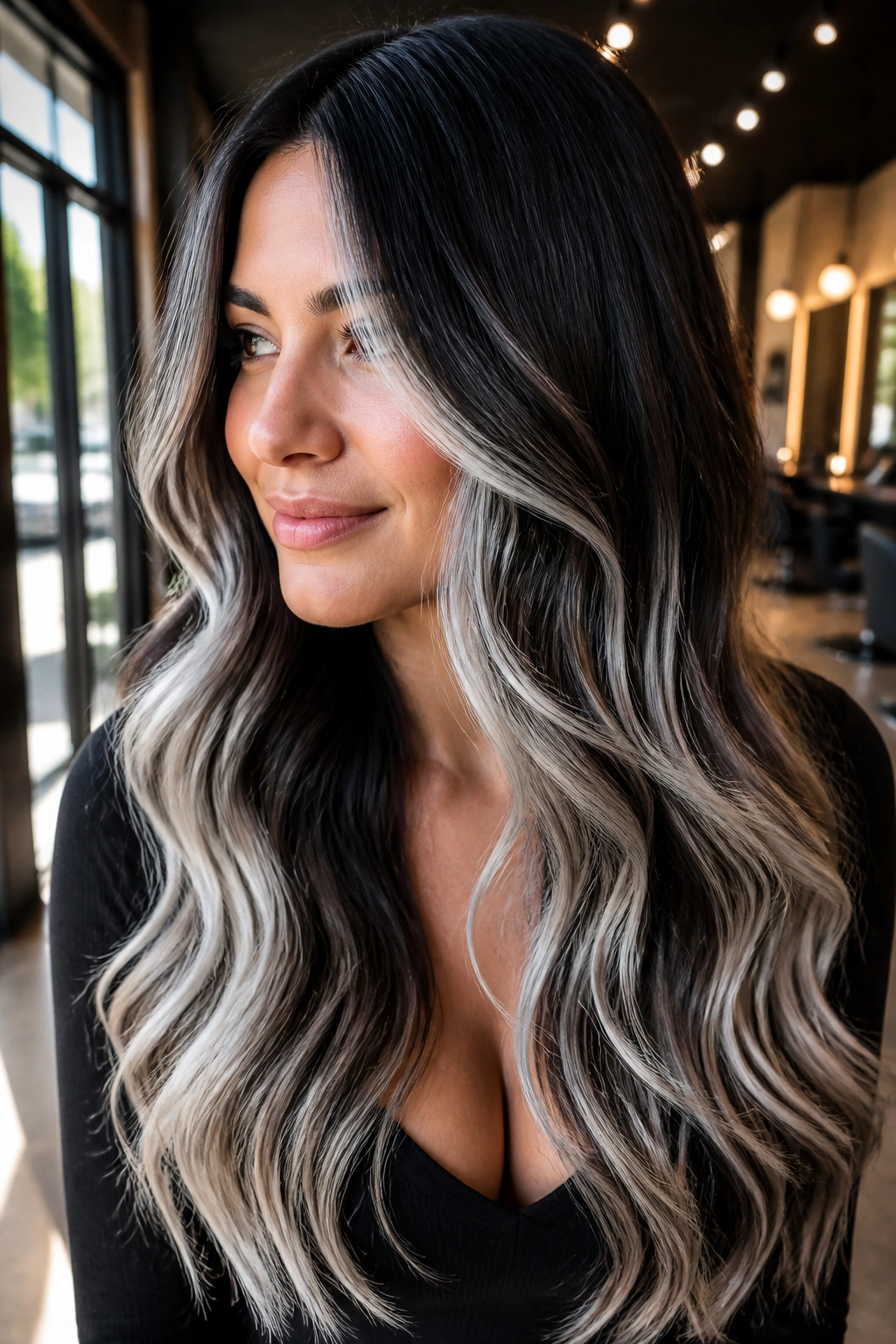
Espresso brown hair gives white balayage the strongest contrast in the whole lineup. That’s the appeal. The deep base makes even a few pale ribbons look bright, so you do not need to flood the head with lightener to get an impact.
The trick is placement. Keep the brightest pieces below the crown and around the mid-lengths, then let the top stay rich and dark. A soft root shadow keeps the line from feeling too harsh, and it helps the white look like it grew there instead of being dropped on top.
This look works best when the hair has some bend in it. Loose waves show off the contrast without exposing every single section, while pin-straight styling can make uneven placement obvious fast. A glossy finish is your friend here.
2. Pearl White Ribbons on Milk Chocolate Brown
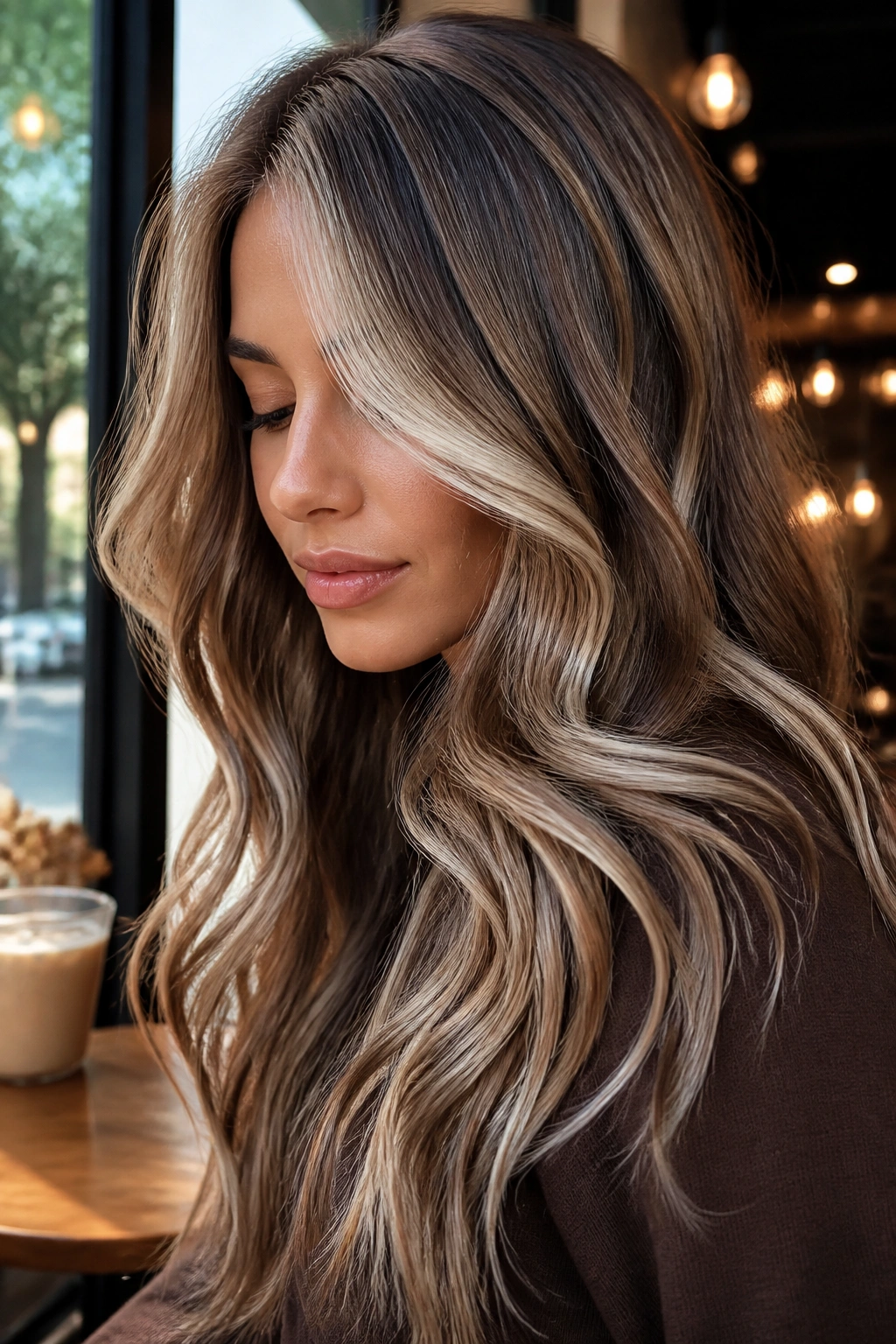
Milk chocolate brown is the sweet spot for pearl white ribbons because the base is lighter than espresso but still deep enough to make the bright pieces stand out. The result feels airy instead of severe.
Why This Version Feels Softer
Pearl white is a little creamier than a pure icy white, and that matters on brown hair. If you go too stark, the contrast can start to look blocky, especially near the front. Pearl tones keep the shine but take the edge off.
- Best on medium-depth brunettes who want brightness without a hard stripe effect.
- Looks especially good on soft curls and brushed-out waves.
- Usually needs a gloss refresh to stay creamy instead of flat.
- Works well when the brightest strands sit through the mid-lengths and ends.
Ask for pearl, not paper-white. That one word changes the whole mood.
3. Smoky Mushroom Brown With White Balayage
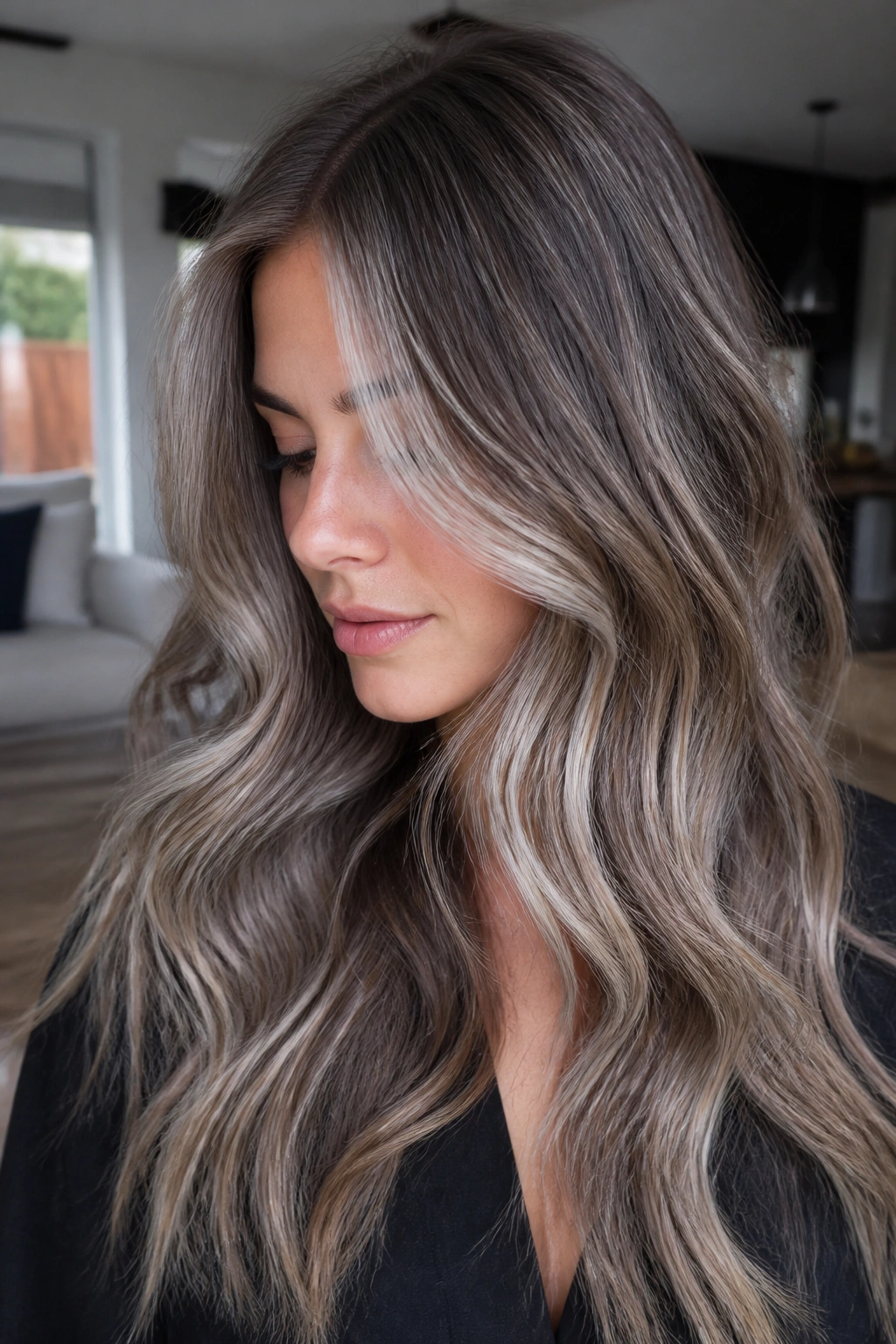
Why does this look feel so polished? Because the brown itself is doing half the work. A smoky mushroom base gives the white balayage a cool backdrop, so the lighter pieces blend instead of shouting.
This is one of those color jobs that looks expensive when the toner is right and tired when it’s not. The brown should lean ash, taupe, or soft greige, not orange. If the base is warm, the white can slide into a dull beige band instead of staying crisp.
What Makes the Mushroom Base Work
A mushroom brunette finish keeps the whole head in the same cool family. That means the white pieces can sit in the hair like threads of light, not random streaks.
You’ll usually get the best result with a subtle root melt and thin ribbons that live mostly around the face and upper sides. It feels restrained. That is the point.
4. Face-Framing White Money Piece on Chestnut Hair
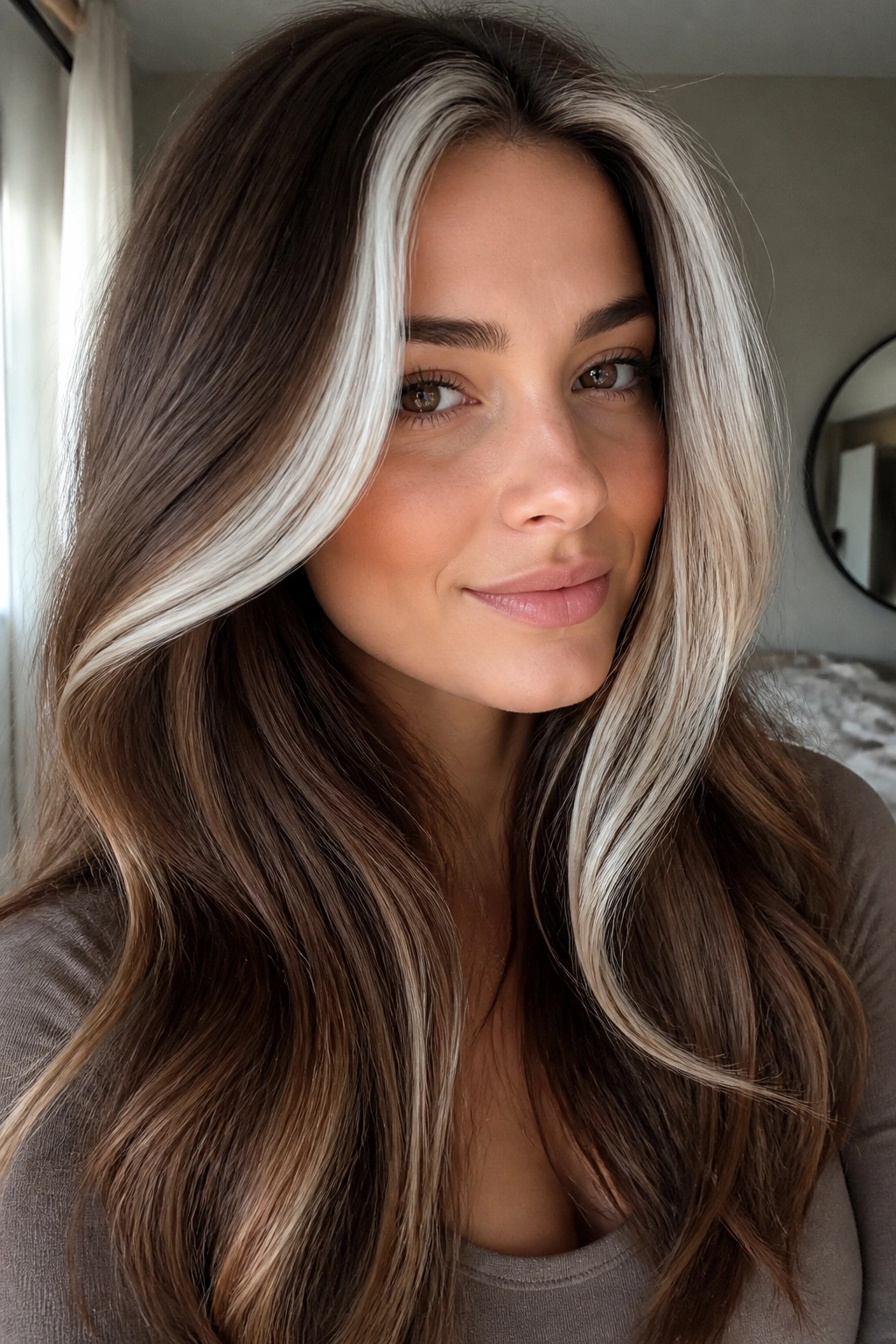
A chestnut base with a bright money piece is the easiest way to test the white balayage look without committing to an all-over change. The front sections do the talking, and the rest of the hair stays warm and dimensional.
I like this version for people who wear their hair down a lot but still want a little drama when they pull it back. The face frame brightens the skin instantly, while the chestnut underneath keeps the style from tipping into high-maintenance territory. One clean section on each side is often enough.
The key is softness near the root. You want the lightening to feather in, not drop in a thick chunk beside the part. Around the temples, thin placement looks far better than a solid stripe.
5. Rooty White Balayage on Dark Brunette Hair
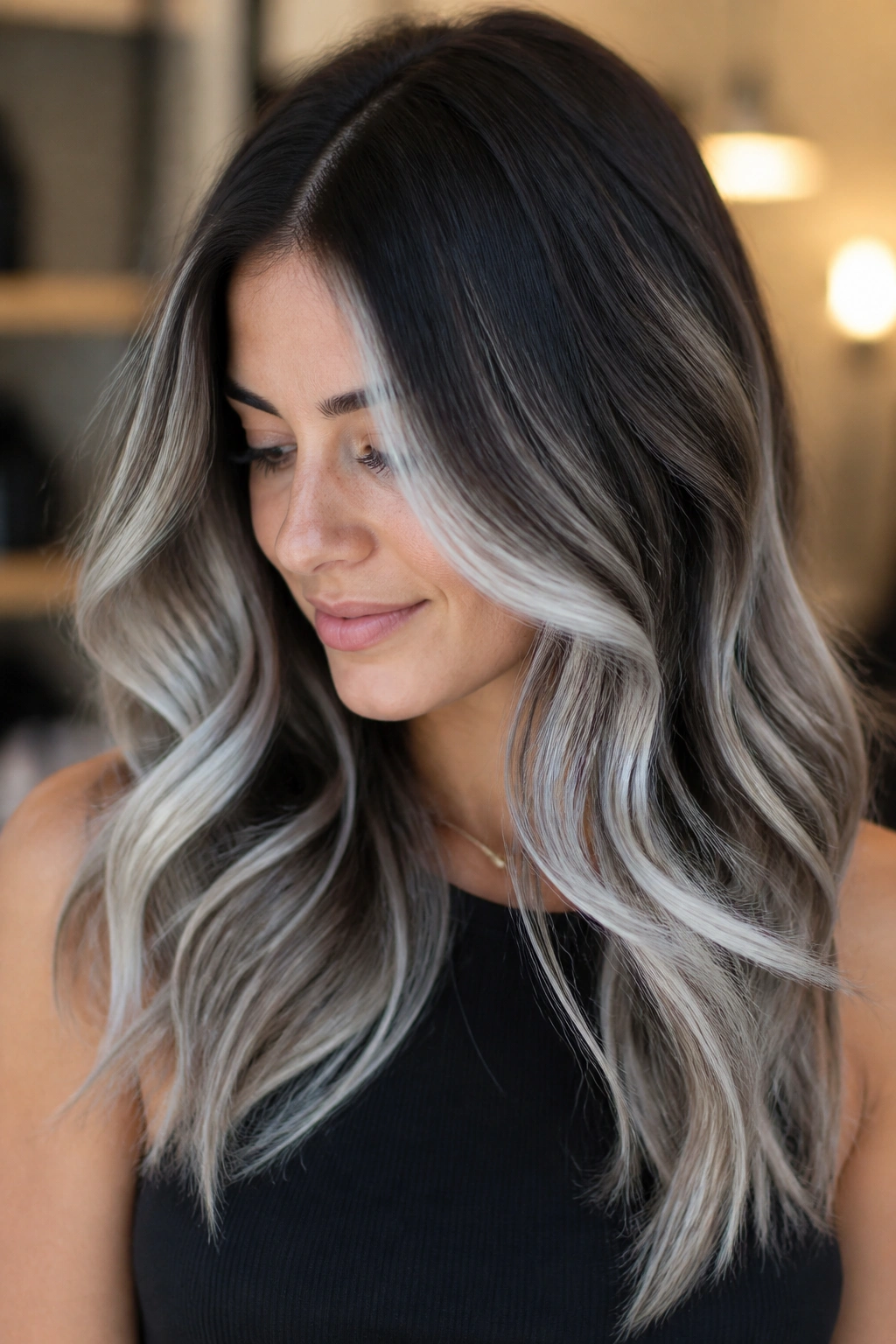
This is the version for anyone who wants white hair color without looking like they are trying to erase their natural depth. The root stays dark, and the white gets brighter as it moves down the strand.
Compared with traditional highlights, a rooty balayage feels looser and easier to wear. It also buys you a little time between salon visits because the grow-out line is built into the look. On dark brunette hair, that matters. A root shadow in the same family as your base helps the white glow instead of fighting for space.
If you’re asking for this in a salon, say you want the lightness concentrated on the mid-lengths and ends, with a soft transition from root to highlight. That wording helps avoid a stripy top half.
6. White Babylights on Long Layered Brown Hair
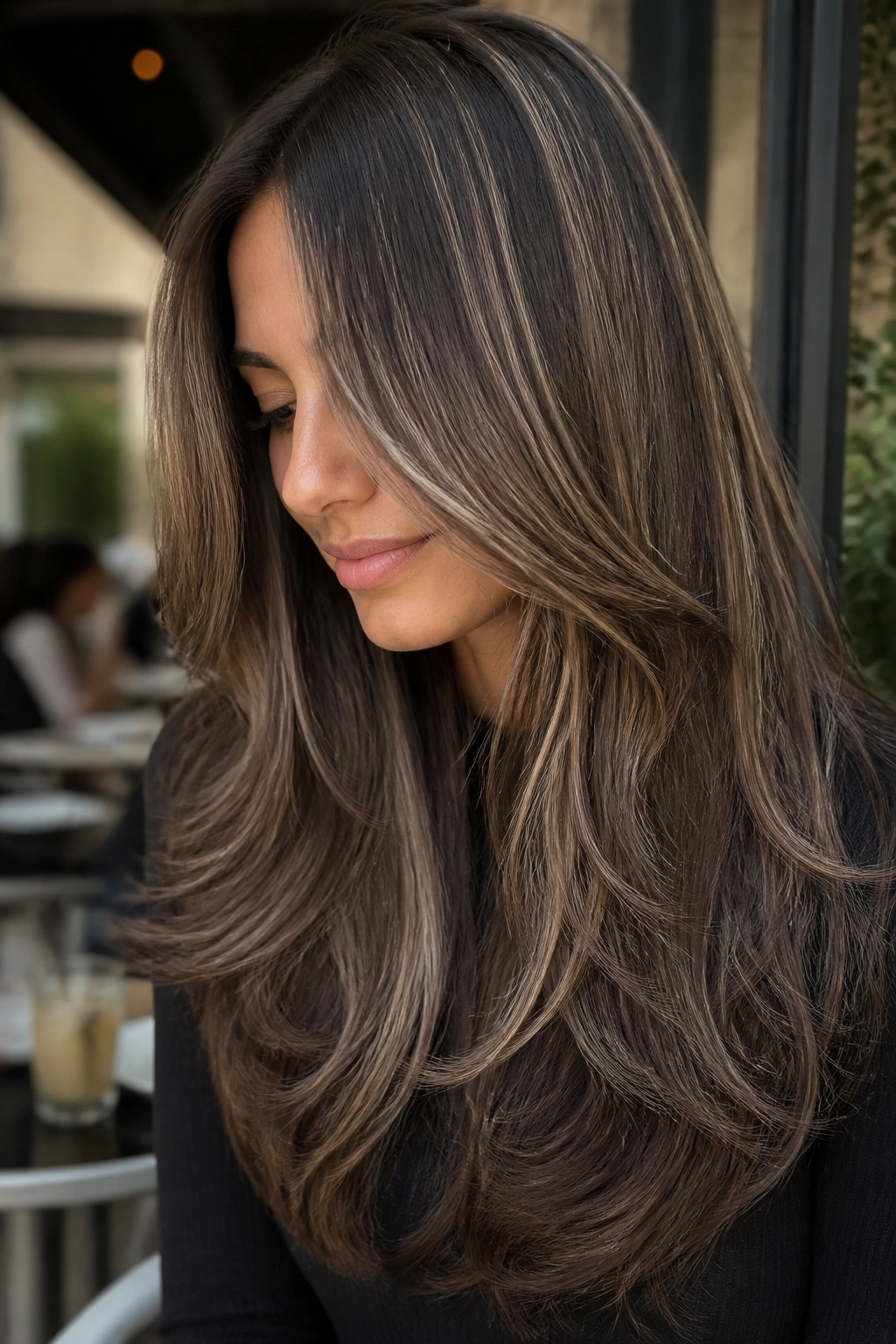
Long layers and babylights are a lovely match. The layers keep the hair moving, and the tiny white pieces create shimmer instead of obvious streaks. It’s one of the few ways to make white balayage feel almost delicate on brown hair.
Why the Fine Pieces Matter
Babylights are thinner than standard highlights, and on a brown base that thinness is what keeps the color from looking overdrawn. The white catches the light in little flashes rather than broad swaths. That matters a lot when the hair is long, because big panels can start to feel heavy.
- Best if you want brightness that still looks soft from a few feet away.
- Great on layered cuts because the pieces fall differently on each layer.
- Easy to blend with a toner that leans pearl or silver-beige.
- Needs careful sectioning so the lightness doesn’t disappear into the length.
This is not a loud look. It’s a shimmer look.
7. White Ends on Wavy Brown Hair
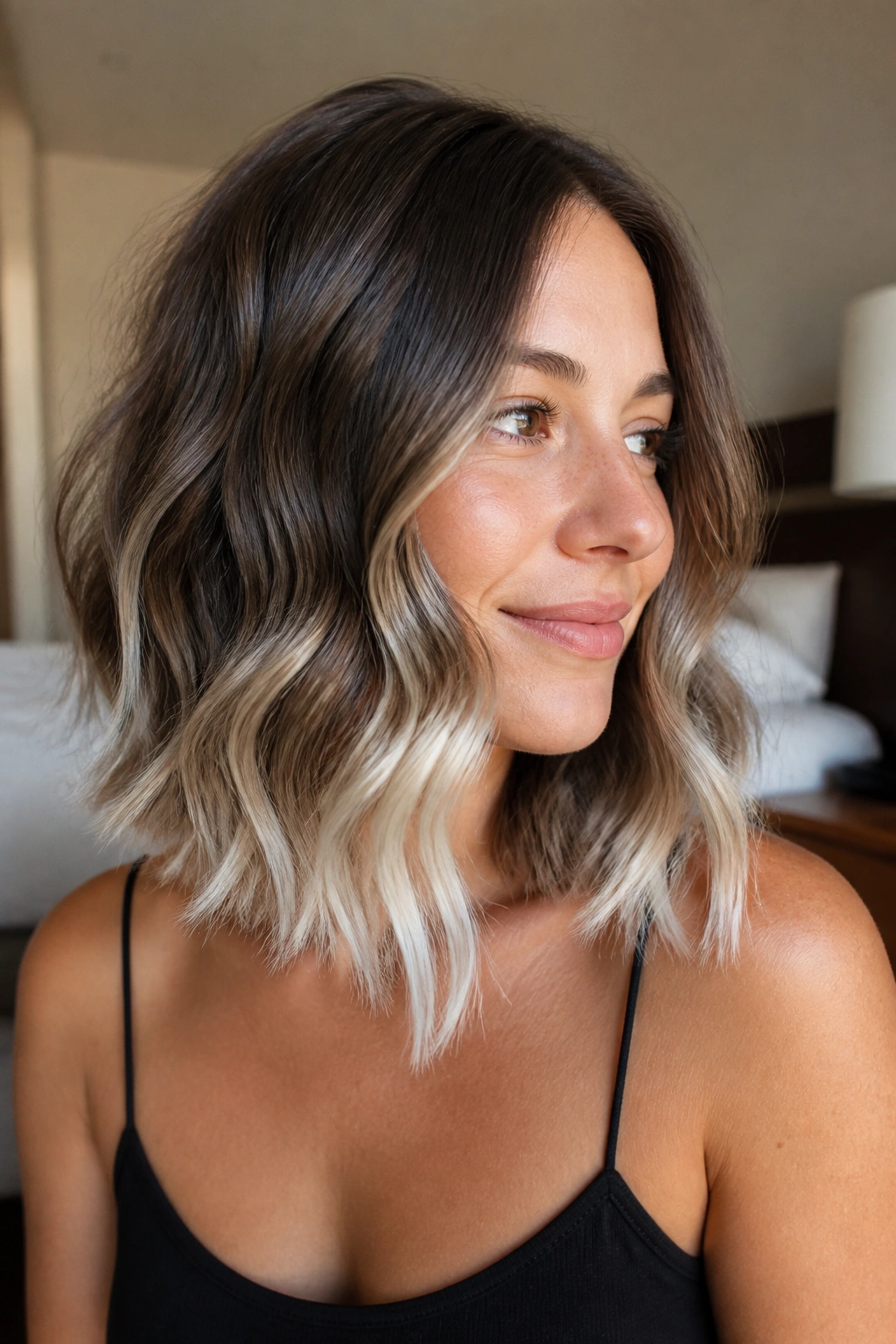
Waves give white ends a natural place to land. The bend in the hair blurs the transition, so the lighter color feels like a finish rather than a hard line.
A look like this works especially well when the brown base is left rich from the crown to somewhere around the ear or collarbone, then lifted much lighter on the ends. You get that sun-faded effect, but colder and cleaner. On a loose wave, the ends can read almost frosted.
The one thing to watch is weight. If the ends are heavily layered and thinned out, the white can start looking wispy in a bad way. A little density at the bottom helps the color hold its shape.
8. Silver-White Balayage on Cool Ash Brown
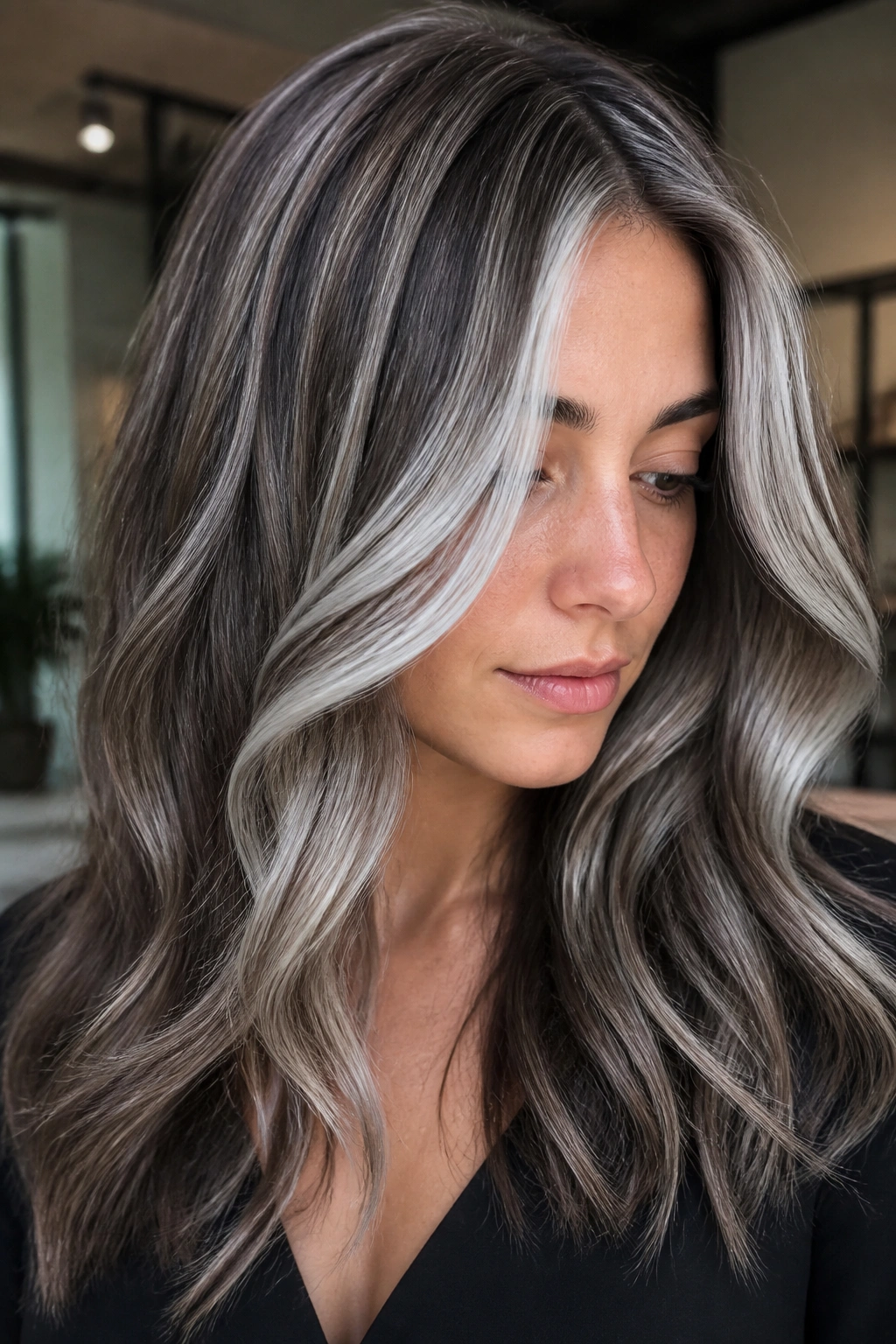
Silver-white and ash brown belong in the same conversation. They are both cool, both quiet, and both much harder to fake than they look in photos.
A cool ash base gives the silver-white tones room to sit without turning yellow. If the brown leans warm, the silver can go muddy fast. That’s why this look is better on brunettes who already have ash in their hair or who do not mind keeping brassiness under control with toner and color-safe care.
On the right base, though, this looks sharp. The silver-white pieces feel crisp against the brown, especially around the part and the face. It has a more editorial feel than pearl white, which makes it a smart choice if you like your hair with a little edge.
9. White Balayage on a Brunette Lob
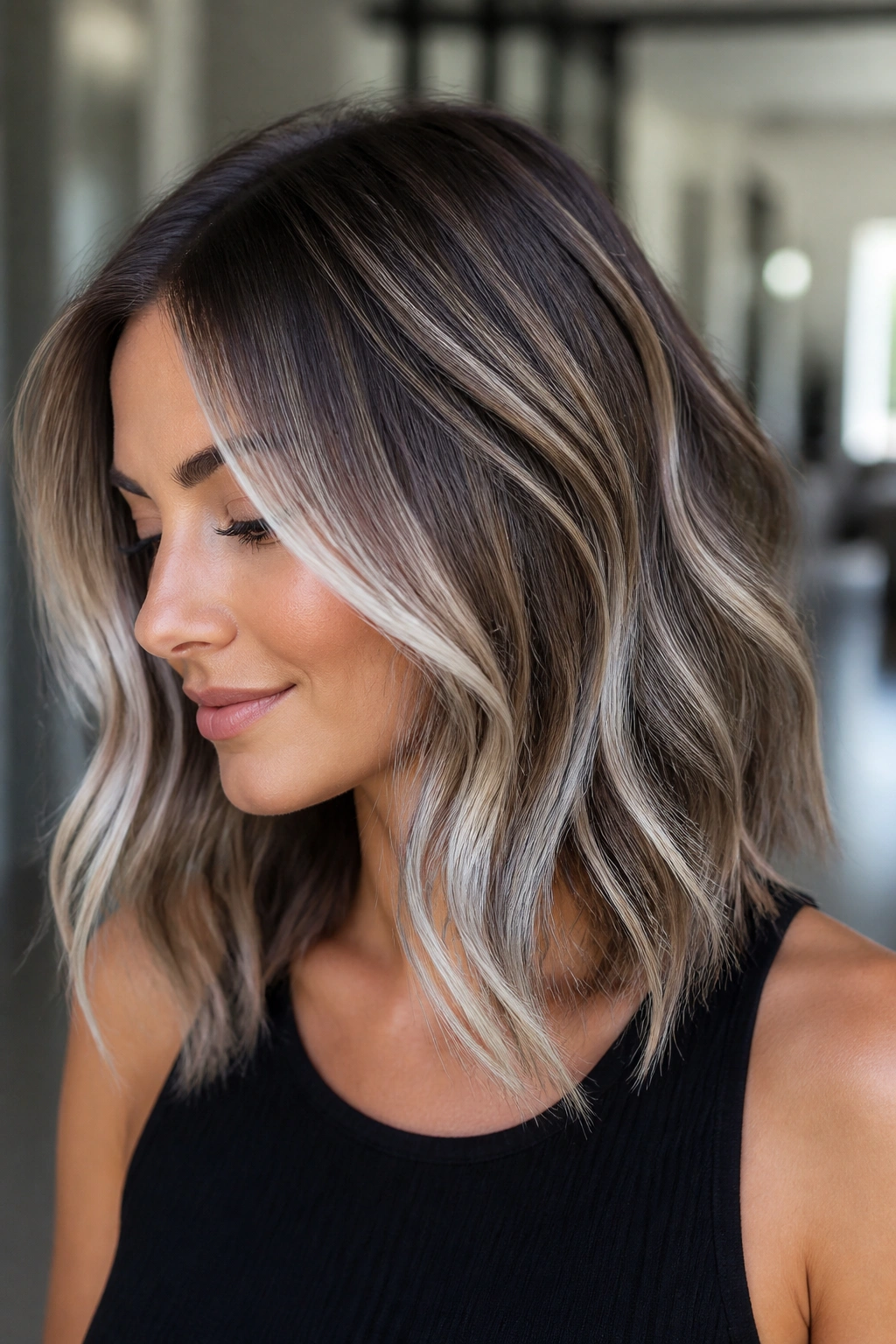
A lob gives white balayage a clean surface to work on. Not too long, not too short, and just enough room for the color to show movement when you turn your head.
The danger with a lob is chunkiness. Because the cut sits around the shoulders or collarbone, big bright pieces can look blocky if they’re too wide. Keep the white in diagonal ribbons and around the outer layers so the cut still feels light. The shape of the lob does a lot of the work already.
A subtle bend is enough here. If you curl the ends under or wave them loosely, the white and brown mix together in a way that feels easy instead of overly styled. Straight hair can work too, but the placement has to be neat.
10. Vanilla White Balayage on Mocha Brown Hair
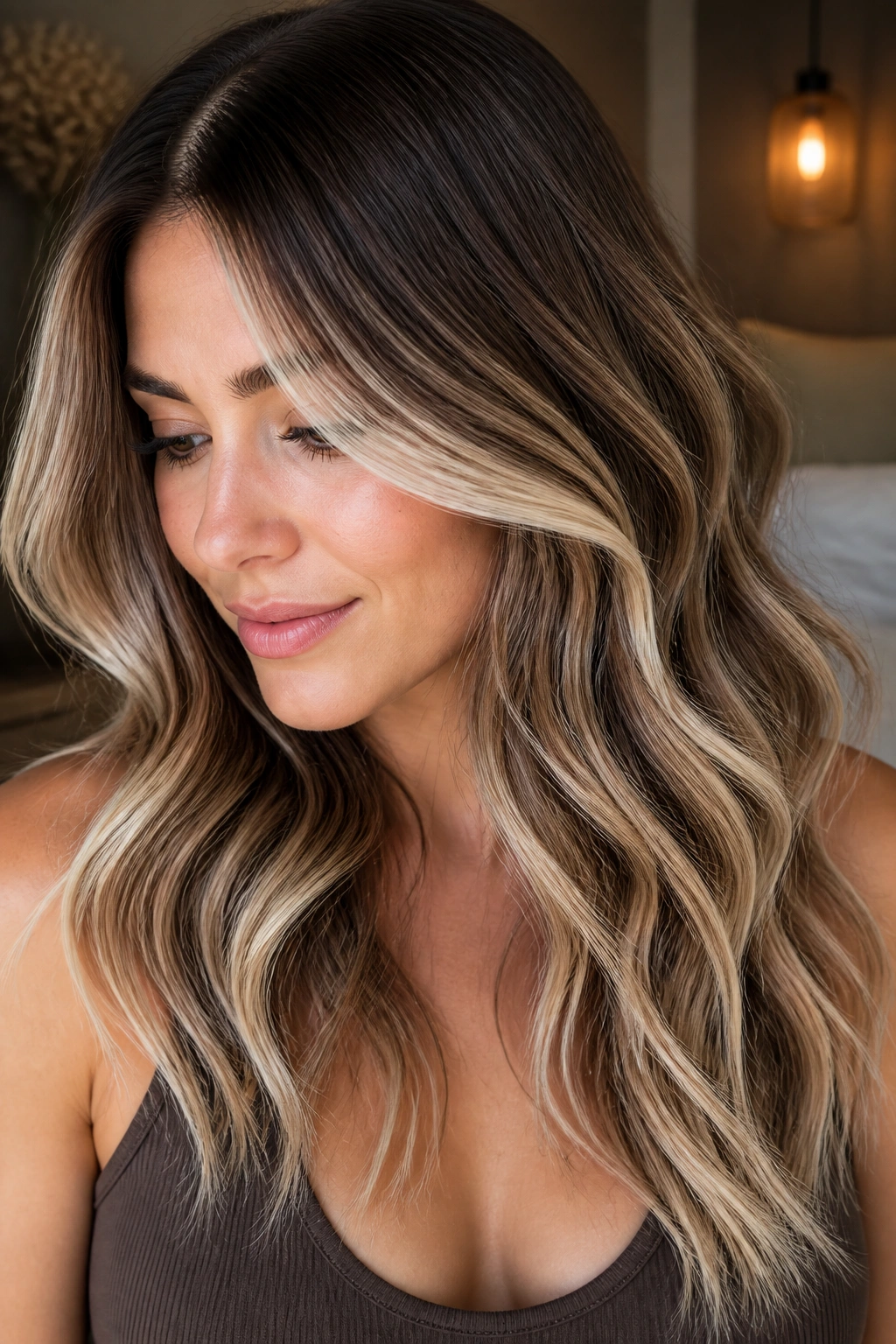
Vanilla white is a gentler cousin of icy white. On mocha brown hair, that creamy tone keeps the look warm enough to feel wearable, but bright enough to stand out.
A Few Details That Matter
If the base is mocha, you already have softness. Don’t fight it with a hard silver finish unless you want a colder result. Vanilla white lets the color sit in the same family as the base, which keeps the whole head from looking disconnected.
- Best for brunettes who want brightness but hate stark contrast.
- Works well with warm makeup and gold jewelry.
- Usually needs less toning correction than a true white finish.
- Looks rich when paired with loose curls or a smooth blowout.
If your skin runs warm, this is one of the safest bets on the list.
11. Chunky White Panels for Bold Dimension
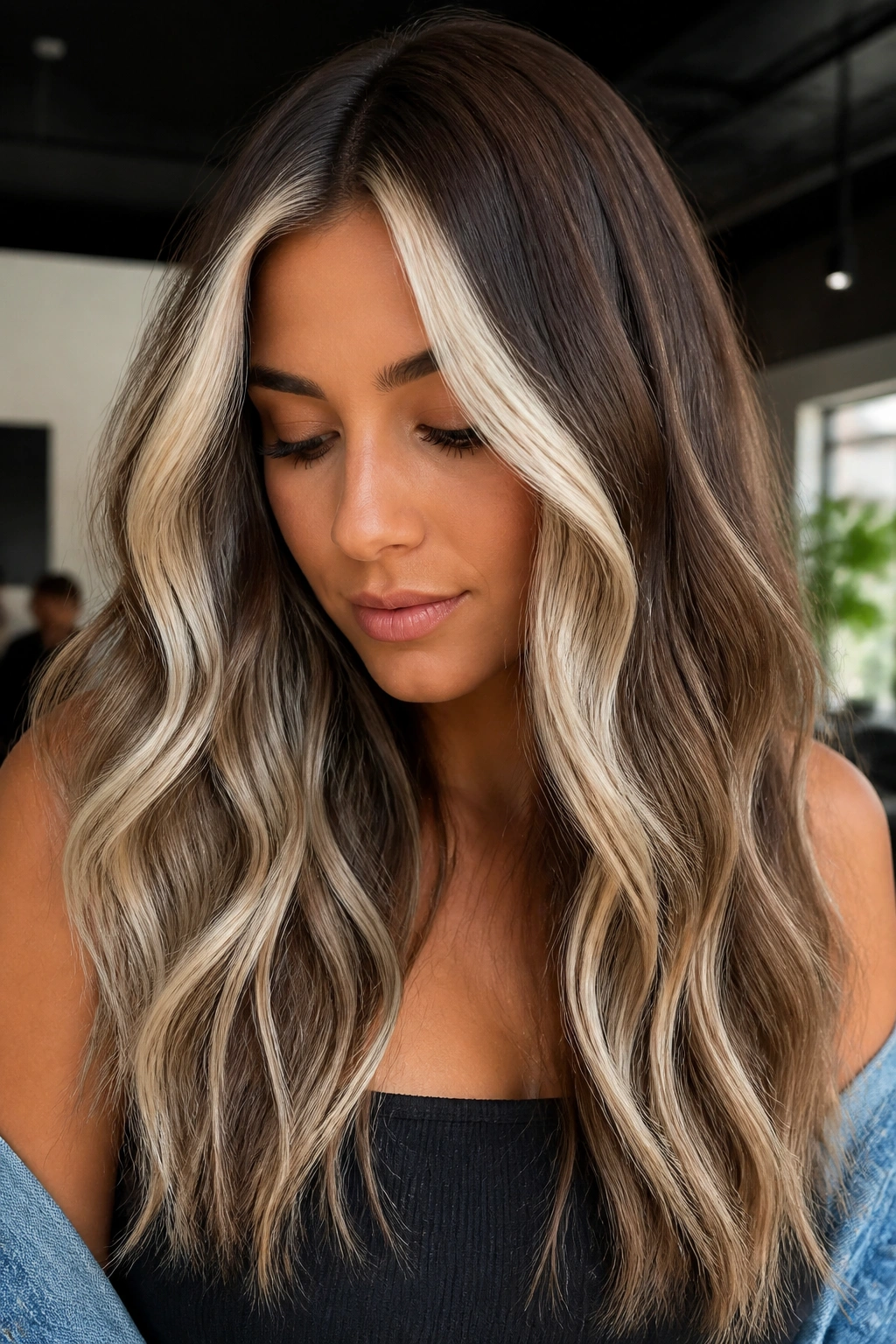
Chunky panels are the opposite of babylights, and that’s why they work. Sometimes brown hair needs clear contrast, not a whisper of it.
This version suits thicker hair, strong cuts, and people who like their color to be seen from across the room. The white panels should be placed with intention, not scattered everywhere. Two or three stronger sections around the front, a few through the mid-lengths, and darker space between them usually looks better than trying to blanket the whole head.
The contrast feels modern when the brown base stays rich. If everything gets lightened, the whole effect loses its punch. Leave space. That empty space is doing real work.
12. Ultra-Fine White Veil on Brown Curls
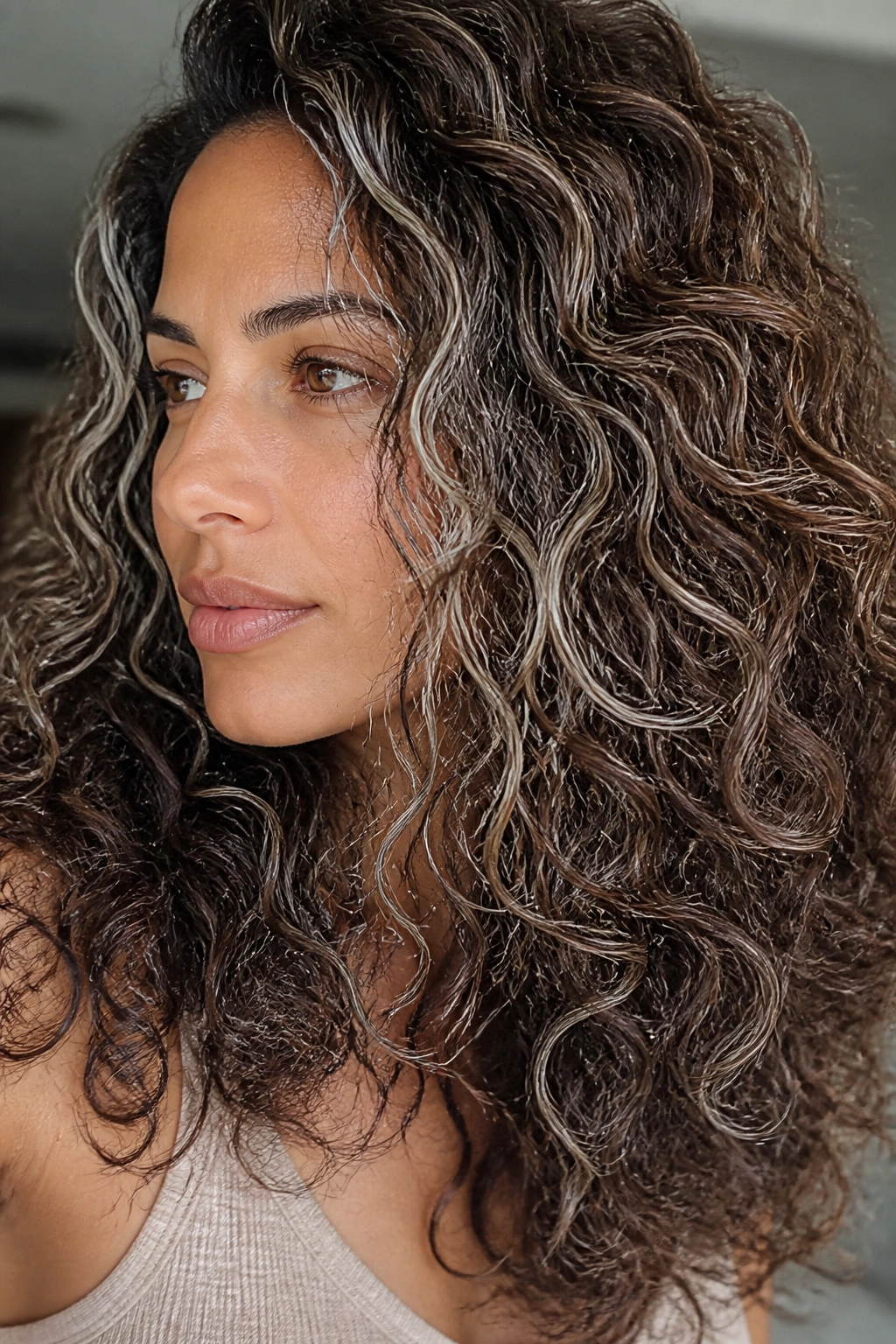
Brown curls can handle white balayage beautifully when the placement respects the curl pattern. A veil of fine white pieces keeps the curl shape visible while still brightening the overall look.
How to Keep the Curl Pattern Visible
The biggest mistake on curls is putting the brightest pieces in the wrong places. If the color sits only on the outer curve, the curl can look flat. If it sits everywhere, the pattern disappears. A good veil works with the spirals, not against them.
- Paint the brighter strands where the curls naturally separate.
- Keep the root area softer so the curl base stays dark and clean.
- Use a toner that avoids silver overkill, which can make curls look dull.
- Diffuse gently after styling so the white pieces keep their shape.
A curl by curl approach takes more time. It also looks better.
13. White Balayage With Curtain Bangs
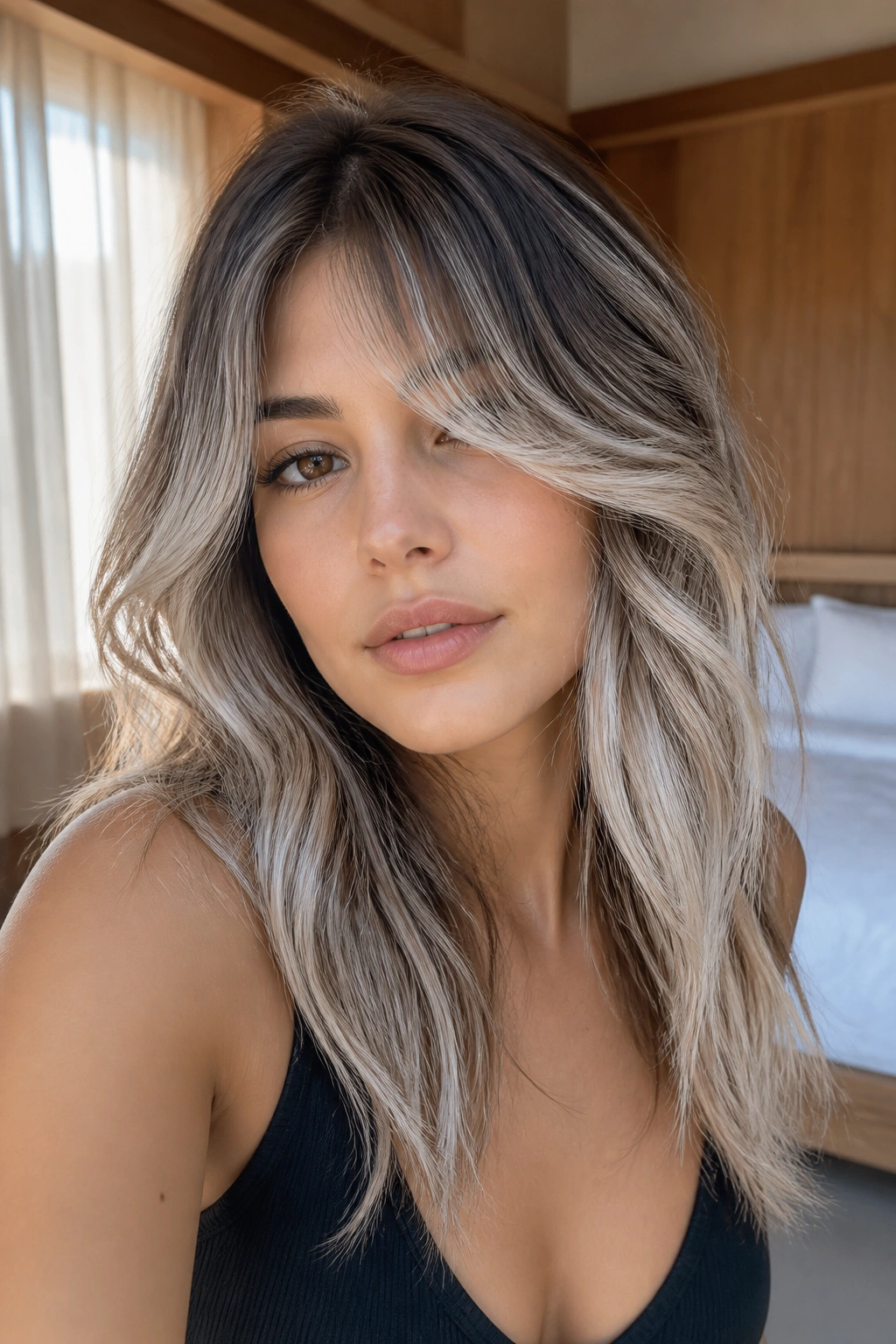
Curtain bangs and white balayage play off each other nicely because both depend on movement. The bangs frame the face, and the lighter pieces around them give the whole cut a lifted feel.
The catch is placement. If the white comes too close to the root in the bang area, the fringe can look streaky and harsh. Softer brightness through the sides and mid-lengths usually looks cleaner. Keep the bangs a shade deeper than the brightest face frame, and they blend back into the rest of the hair more naturally.
This look works on layered brunettes especially well. The bangs draw attention upward, while the white pieces keep the shape from feeling heavy around the face.
14. Soft White Highlights for a Blunt Bob
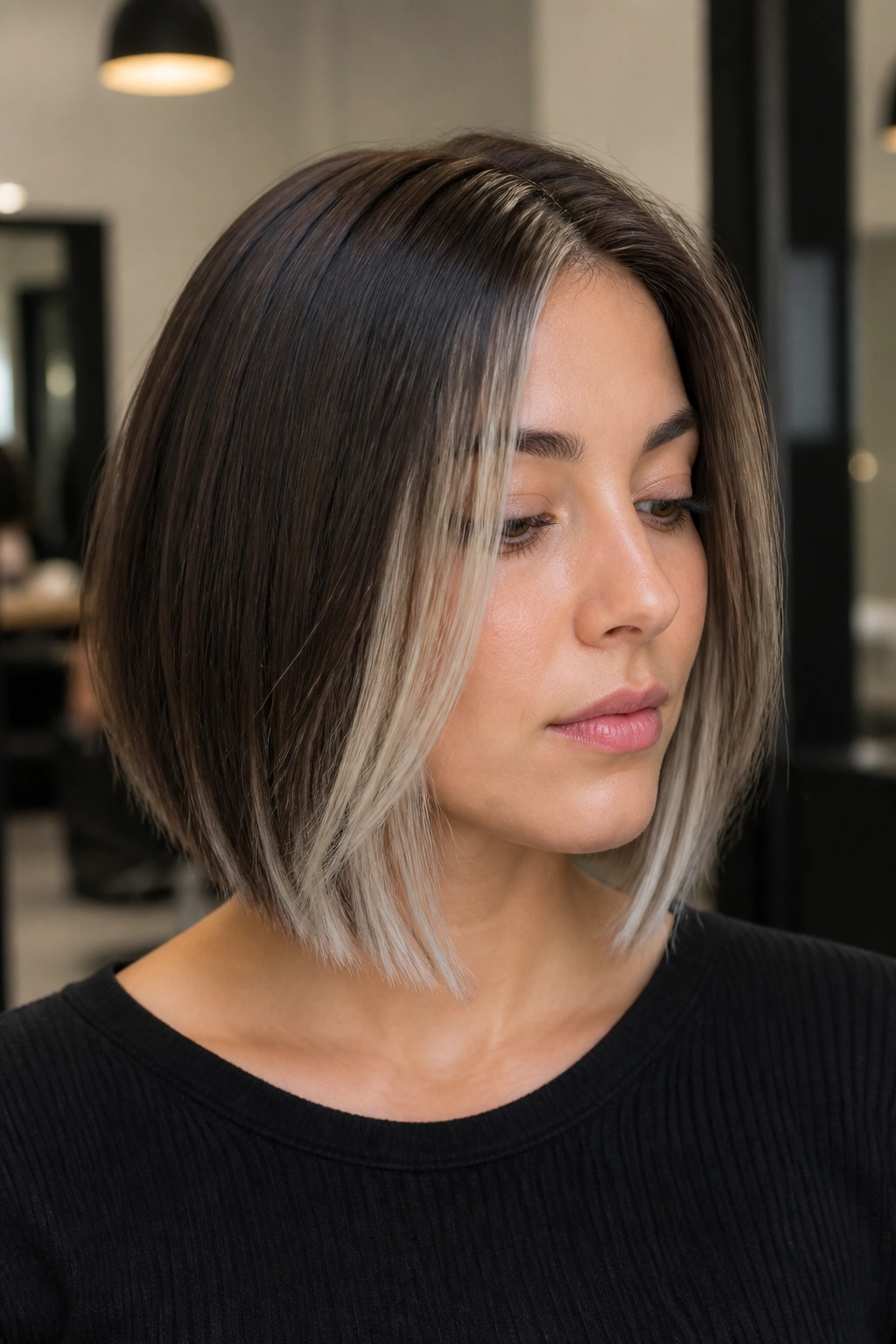
A blunt bob asks for clean lines, so the color has to be careful. Soft white highlights can give it movement without breaking the shape apart.
The best placement sits under the top layer and around the ends, where the color peeks through when the hair swings. You do not need a lot. In fact, too many bright pieces can make the bob feel busy, which defeats the purpose of the cut. A few crisp highlights near the front and some softer bits underneath usually do the job.
One more thing: a blunt bob can show brass quickly if the toner drifts. A clear, cool gloss keeps the white looking fresh against the brunette base.
15. Pearl Blonde Balayage on Dark Chocolate Hair
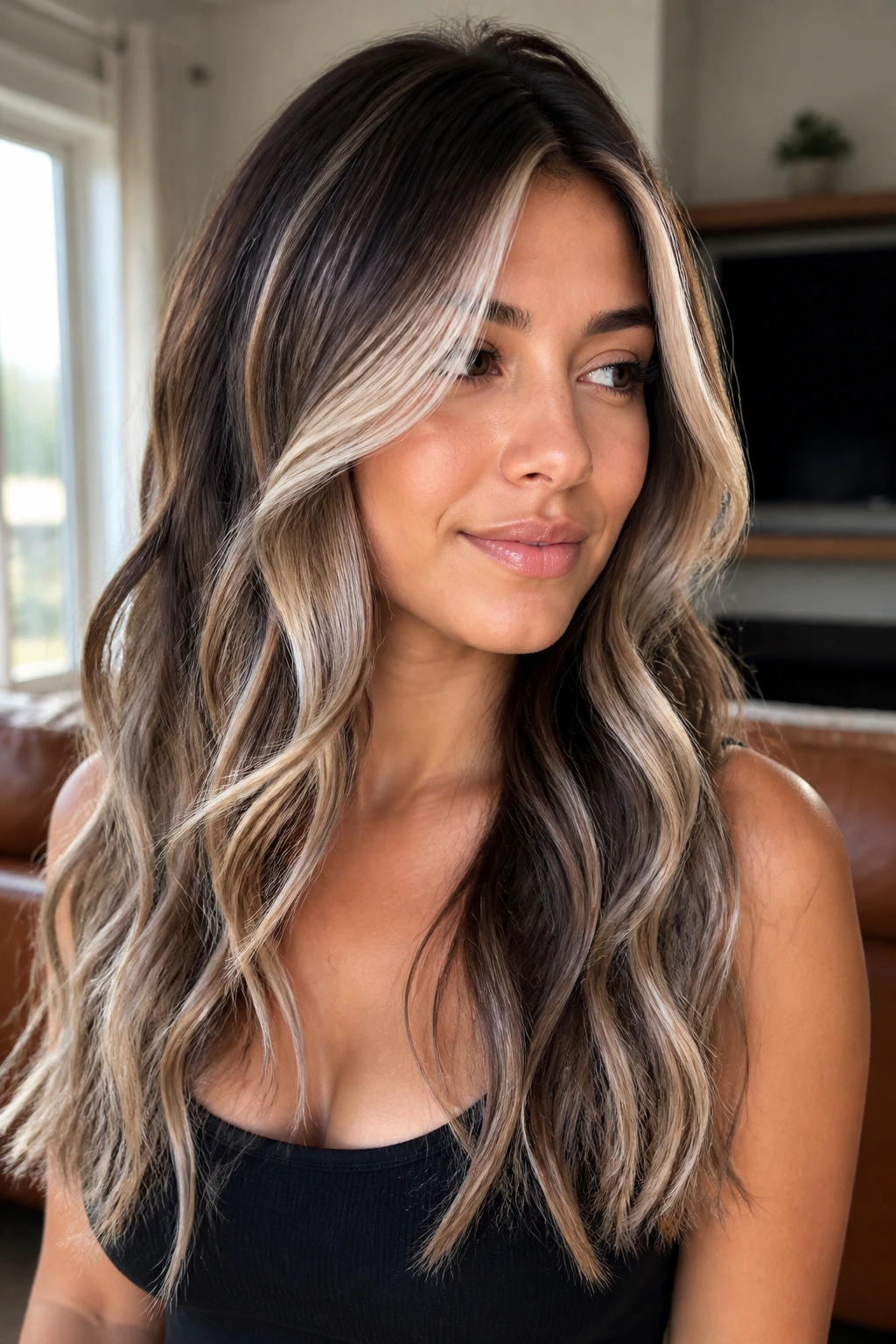
Can pearl blonde count as white balayage? Absolutely, if the finish is pale enough and the tone stays soft. On dark chocolate hair, pearl blonde gives you the brightness of white without the chalky feel.
The reason I like this version is simple. Dark chocolate brown already has richness, so a creamy pearl finish looks luxe instead of overworked. The white-adjacent pieces can sit through the ends and face frame, while the mids keep a little beige warmth. That balance matters more than chasing the palest possible blonde.
If true white feels too stark for your features or your wardrobe, pearl blonde is often the smarter choice. It still gives you light. It just does it in a friendlier register.
16. White Balayage With a Shadow Root
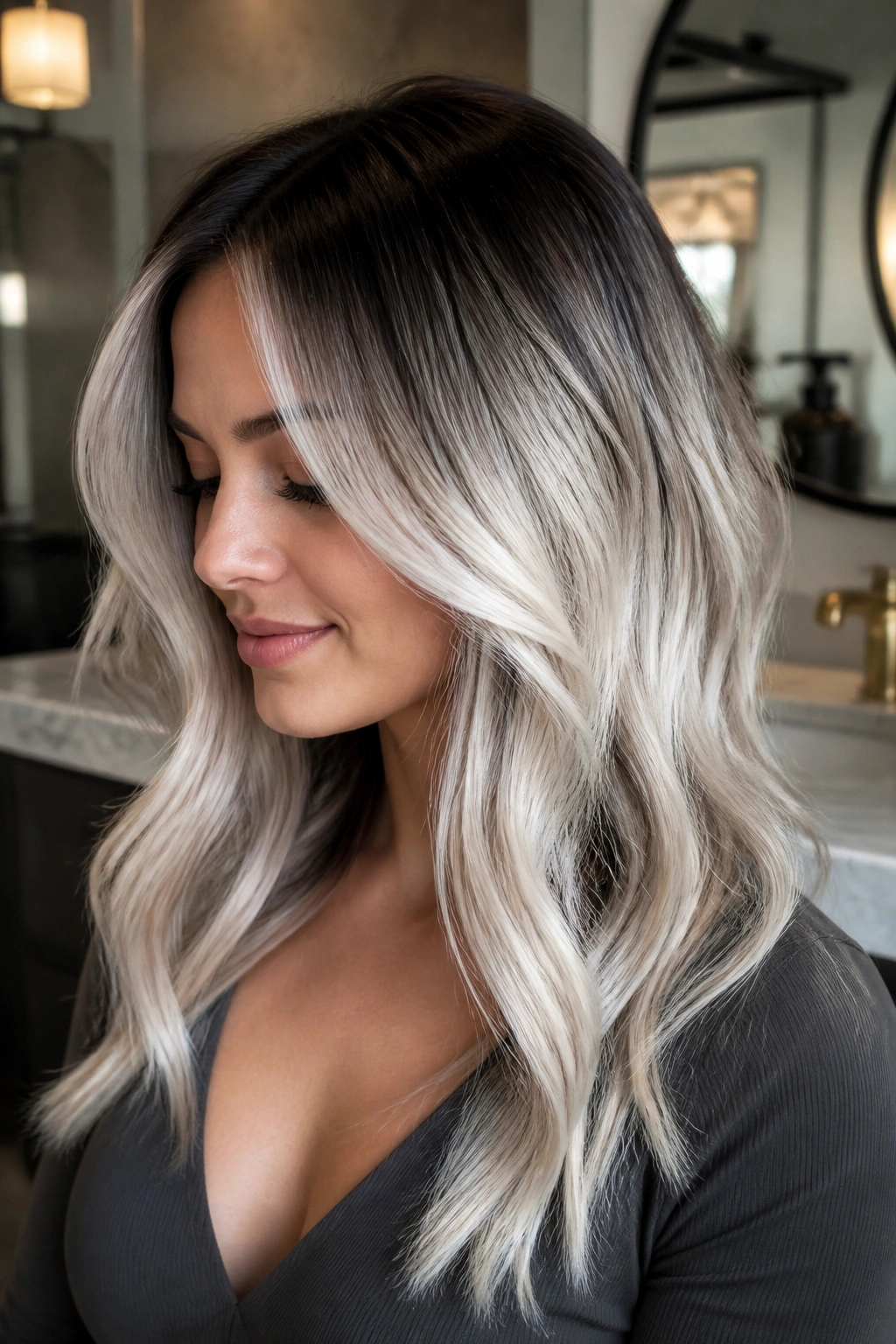
A shadow root is one of the easiest ways to make white balayage grow out gracefully. The dark root keeps the top of the hair grounded, then the brightness opens up underneath.
This look is especially handy if you are not interested in constant salon touch-ups. The root melt softens the shift from brown to white so there is no obvious line as the hair grows. The transition should be gradual, not a dark band sitting on top of a pale blonde base. That banding is what you want to avoid.
I also like this version on people with naturally dark brows. The root keeps the hair connected to the face instead of making the white feel like a separate wig-on-top effect.
17. Frosted White Ends on Straight Brown Hair
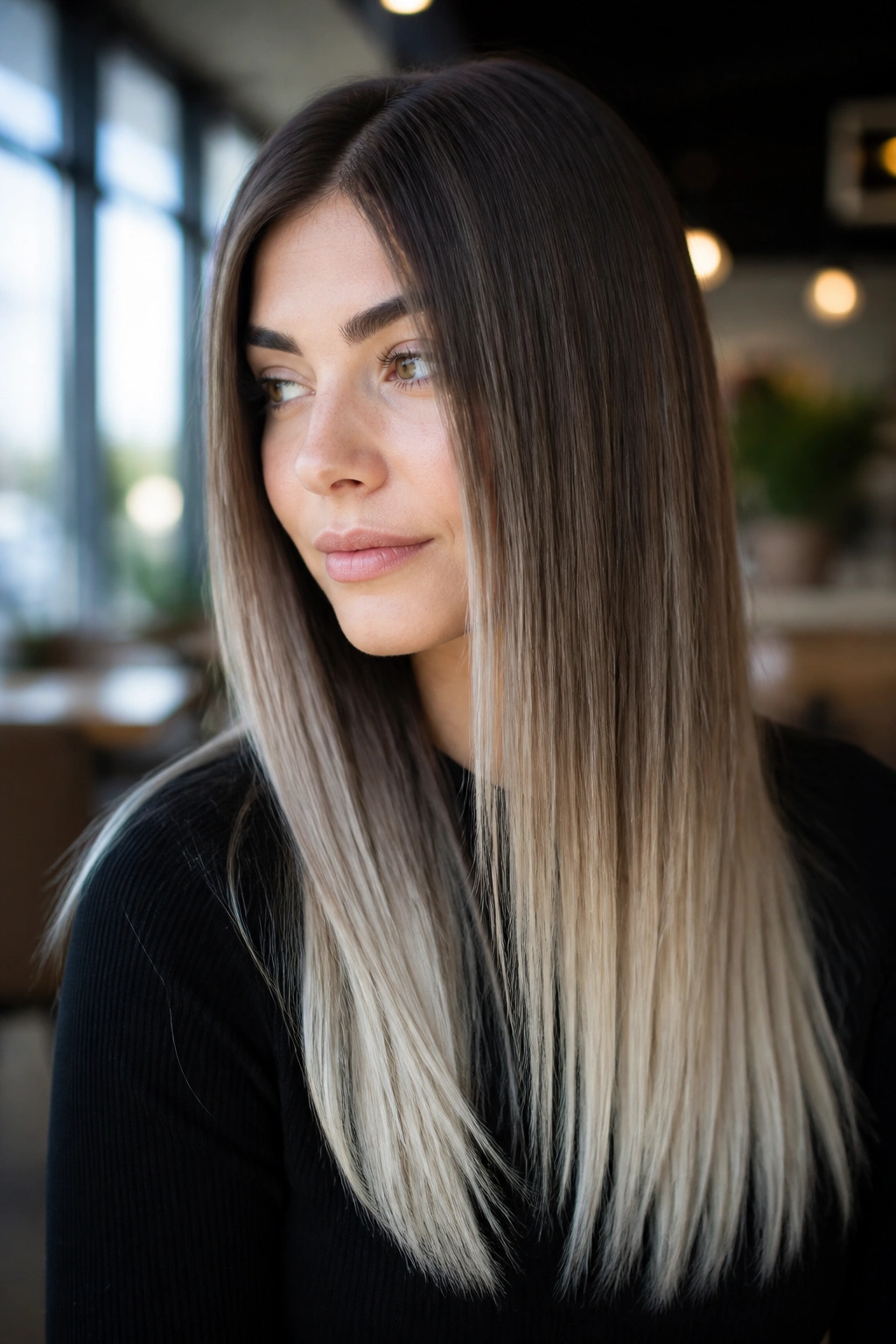
Straight brown hair shows every line, so frosted white ends need careful blending. The style can look sleek and expensive when the transition is soft. It can also look blunt in a bad way if the lightening stops too suddenly.
I prefer this on medium-length or longer hair, where the eye has room to travel from brown to white. The ends should feel frosted, not dipped in paint. That means softer saturation near the middle of the strand and brighter lift right at the bottom edge.
The payoff is strong. Straight hair gives you that clean, glassy contrast that wavy hair sometimes hides. If you like polished hair with a little bite, this is a good one.
18. Medium Brown With Cinnamon Lowlights and White Ribbons
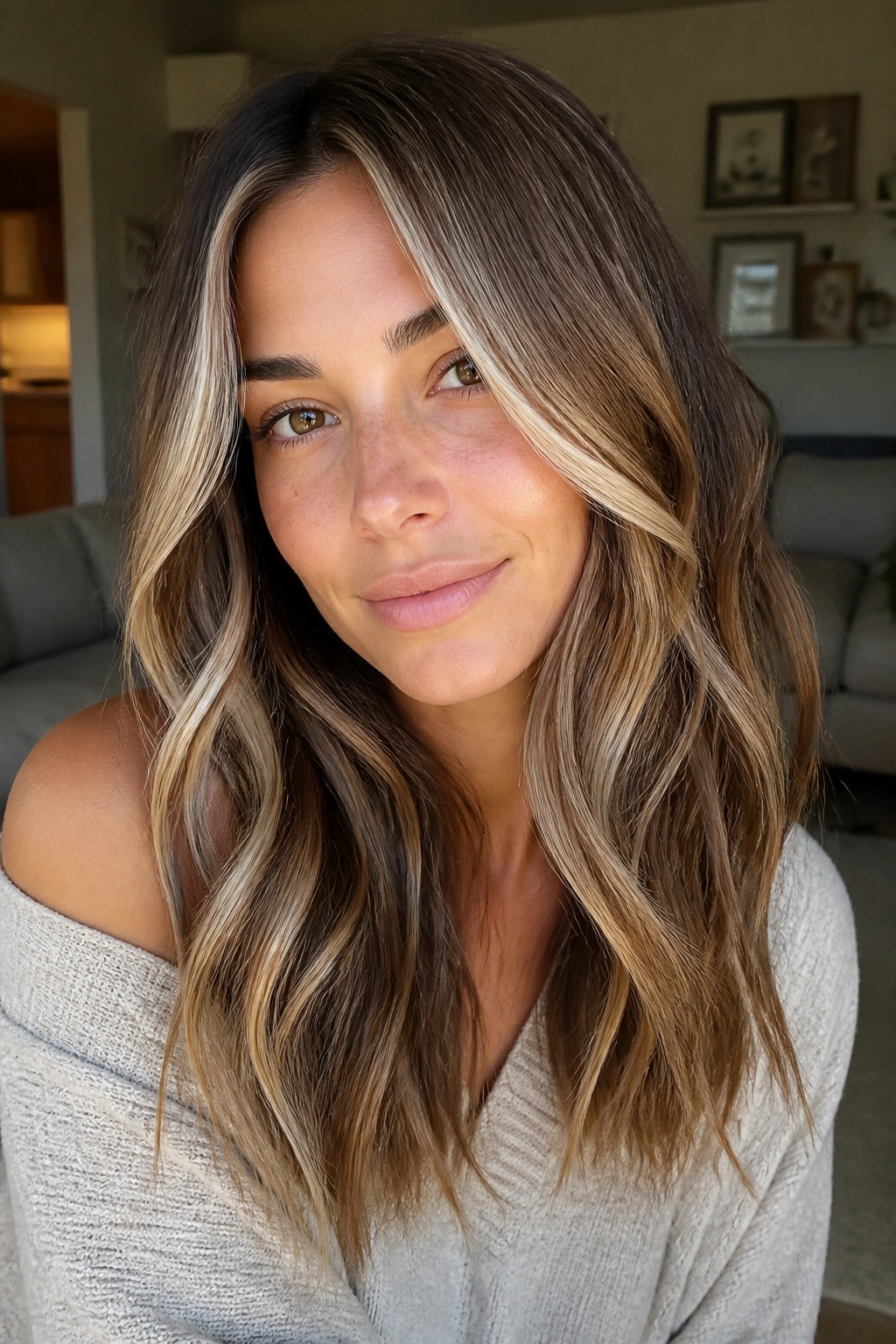
Warm cinnamon lowlights are the quickest way to keep white balayage from looking too cold. They give the brunette base a little spice, which makes the white stand out even more.
Why the Warm and Cool Mix Works
This mix works because the tones are doing different jobs. The cinnamon adds warmth and depth, while the white ribbons bring brightness and shape. Together, they make the hair feel lived-in instead of flat or overly cool.
- Best for medium brown hair that naturally carries some gold.
- Helps if you want white pieces but do not love an icy overall finish.
- Looks richer when the lowlights sit under the top layer.
- Needs thoughtful toner use so the white stays bright while the cinnamon stays warm.
It is a practical look. Not fussy. And that counts for a lot.
19. Bright White Face Frame With Dimensional Brunette Lengths
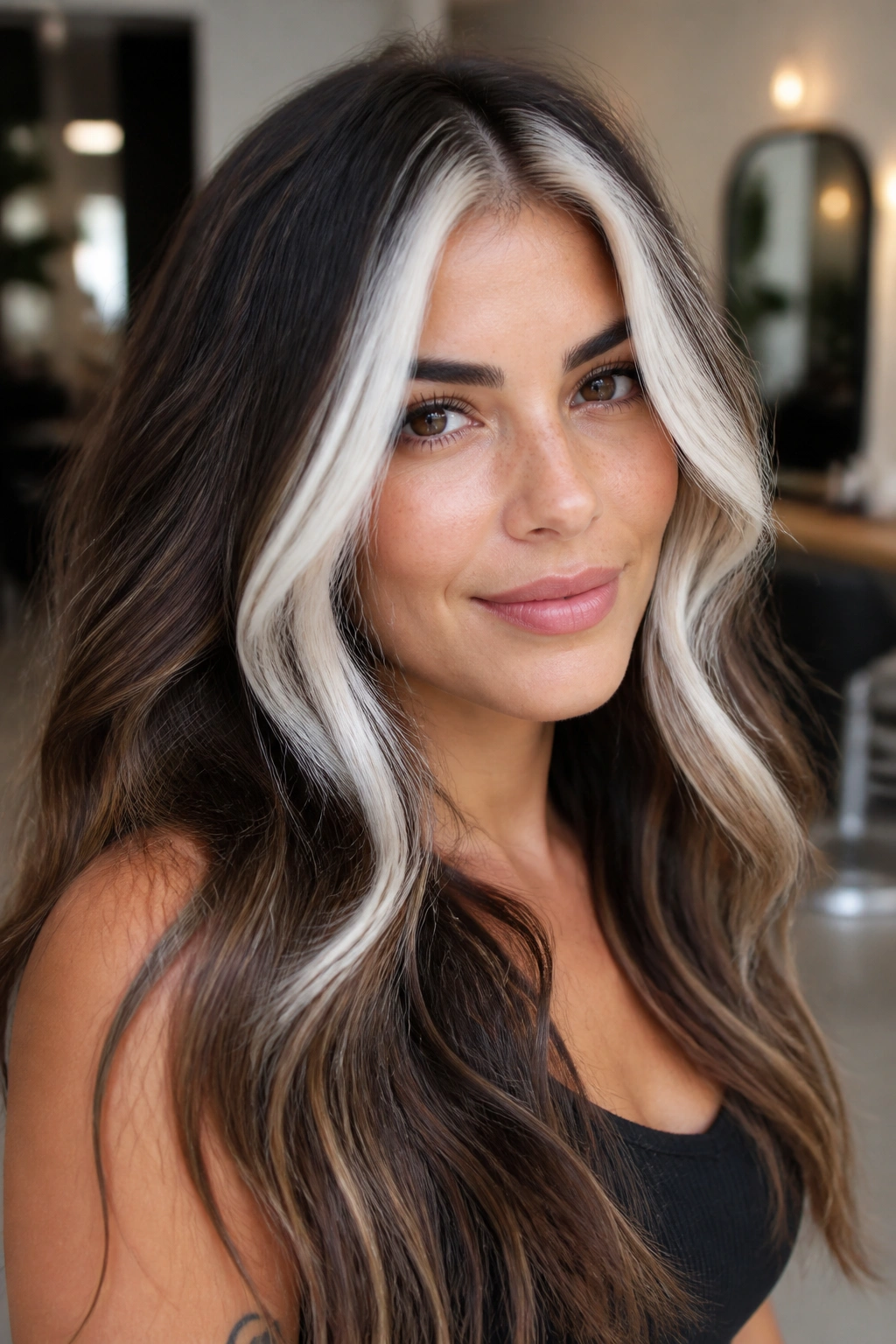
A bright white face frame gives you the impact of a lighter color without asking the whole head to do the heavy lifting. The rest of the brunette lengths can stay dimensional, glossy, and deep.
That contrast is flattering because it pulls light toward the face. It also keeps the hair from feeling too processed. When the white is limited to the front sections, the style reads sharp from the front and softer from behind, which is a nice trick if you wear your hair in clips or half-up styles often.
The best versions usually have at least one shade of brown running through the lengths — not a solid block, but enough variation to keep the white from looking isolated.
20. White Balayage on Soft Waves for Fine Hair
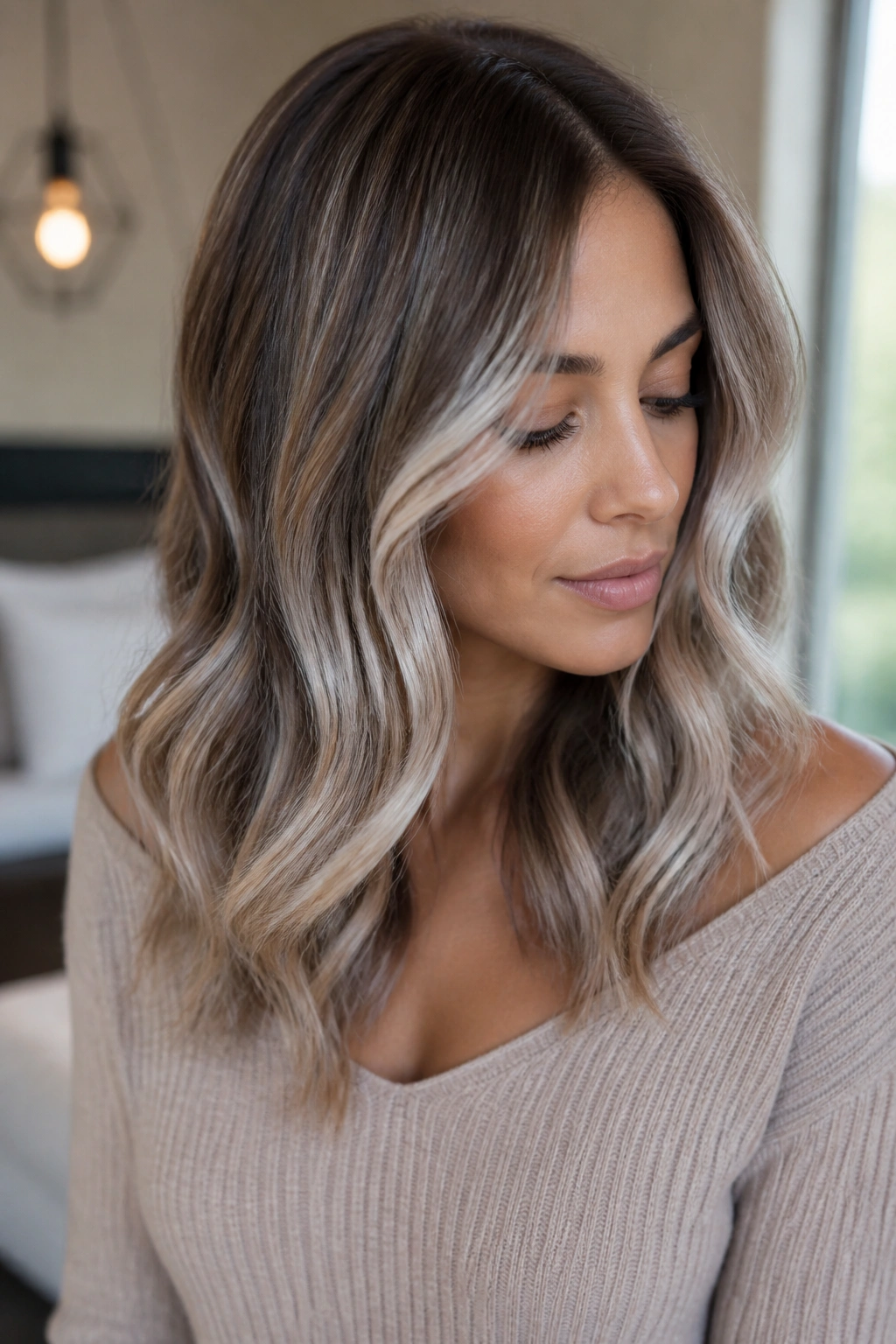
Can fine hair wear white balayage without looking thin? Yes, if the placement is light and airy. Soft waves help because they create width, and the white pieces can sit between the bends to add visual fullness.
How to Keep Fine Hair from Looking Stringy
The biggest mistake is over-lightening too much hair. Fine strands can only carry so much contrast before they start to look see-through. Use thinner ribbons, not giant panels, and let the brown base stay present.
A few practical details help here:
- Keep the brightest pieces around the mid-lengths and outer layers.
- Use a wave pattern that lifts the ends away from the face.
- Avoid heavy toner that mutes all the brightness.
- Leave some untouched brown near the underside for depth.
The point is movement, not blanket lightness. Fine hair usually looks richer with restraint.
21. White Balayage on Thick Brown Hair
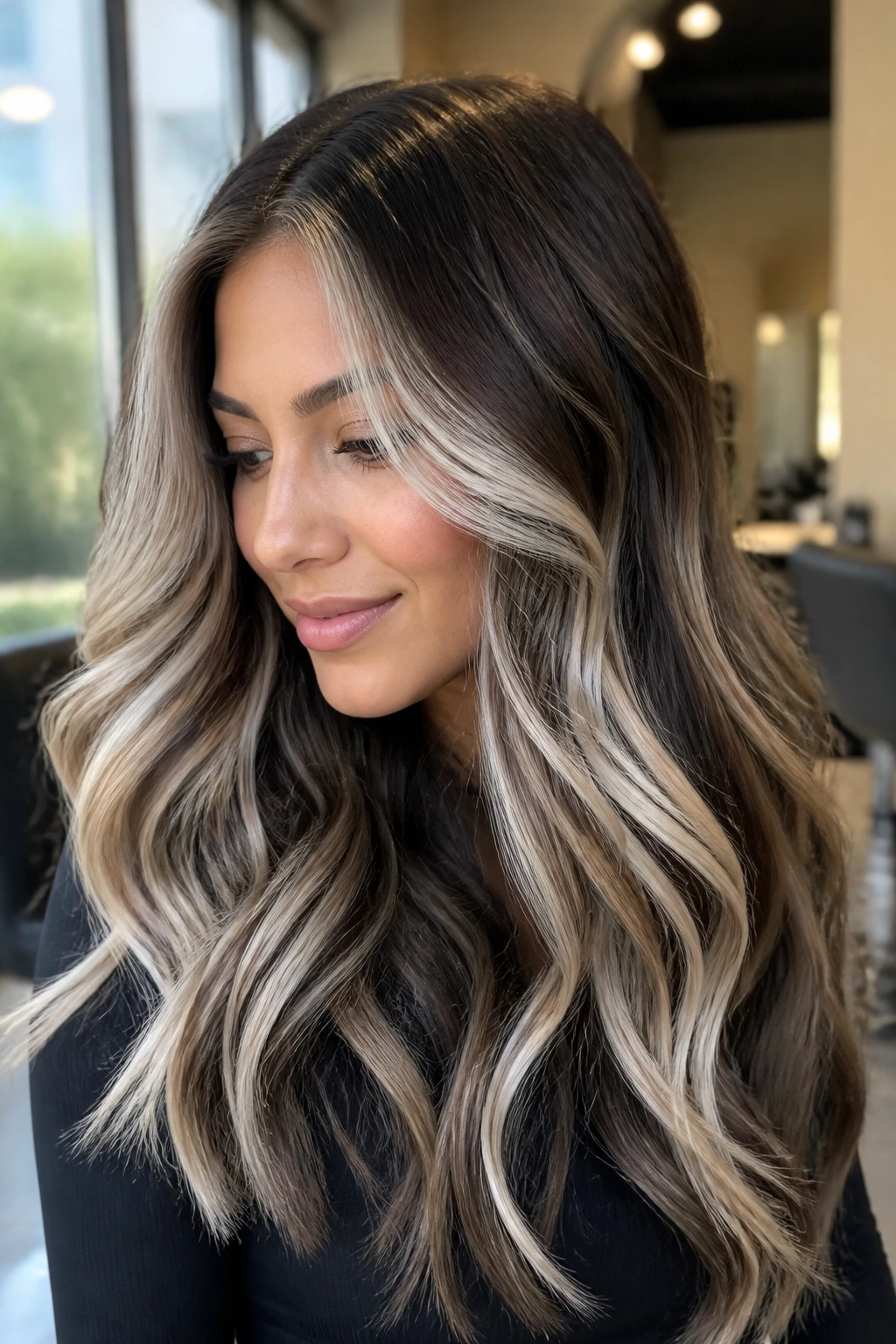
Thick brown hair can take a bolder white balayage because the density gives the color more surface to live on. That makes a big difference. Thin hair often needs restraint; thick hair can handle more visual contrast.
You still need to be selective. If you lighten everything, the hair can lose its shape and turn puffy in bright light. Instead, place the white pieces where the hair moves: around the face, through the outer layers, and along the sections that will catch a wave or bend. A root shadow helps the whole thing stay grounded.
This is one of the few cases where a slightly chunkier placement can look better than fine weaving. Thick hair has the body to support it. Use that to your advantage.
22. Beige-to-White Gradient on Brunette Lengths
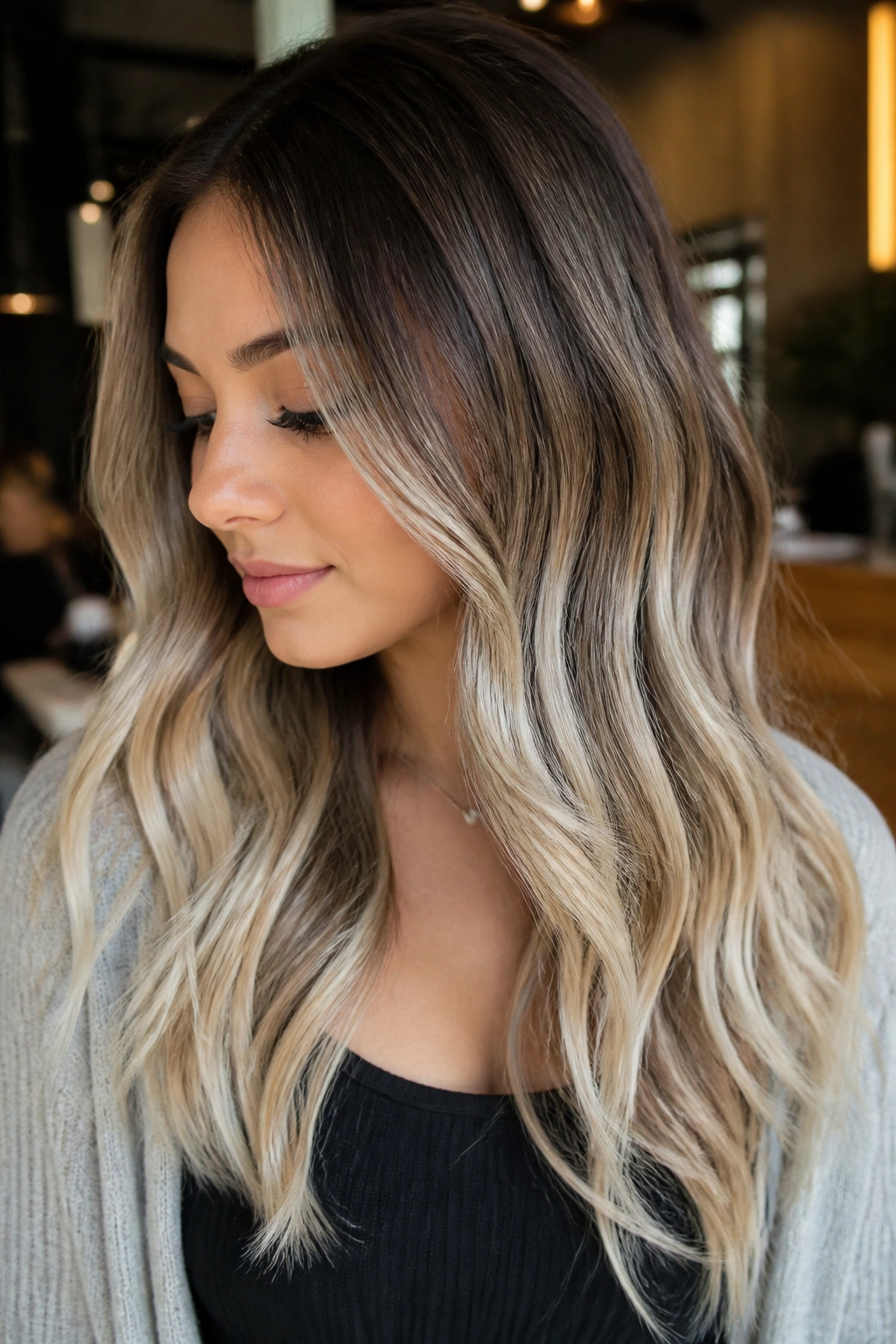
A beige-to-white fade gives brown hair a softer landing than a hard jump to platinum. The middle tones cushion the transition, which makes the whole thing look expensive and a little less severe.
The Gradient Is the Point
If the mids stay beige and the ends move toward white, the eye sees a natural fade instead of a set of disconnected stripes. That is especially useful on longer lengths, where a flat tone can make the hair feel heavy.
- Start with beige through the upper mids.
- Move toward pearl or white at the ends.
- Keep the darkest brown near the roots for depth.
- Finish with a gloss so the gradient stays smooth.
This kind of color is smart when you want white balayage but do not want the maintenance of a high-contrast root-to-tip blonde. It wears well.
23. Snowy White Balayage for Cool-Toned Skin
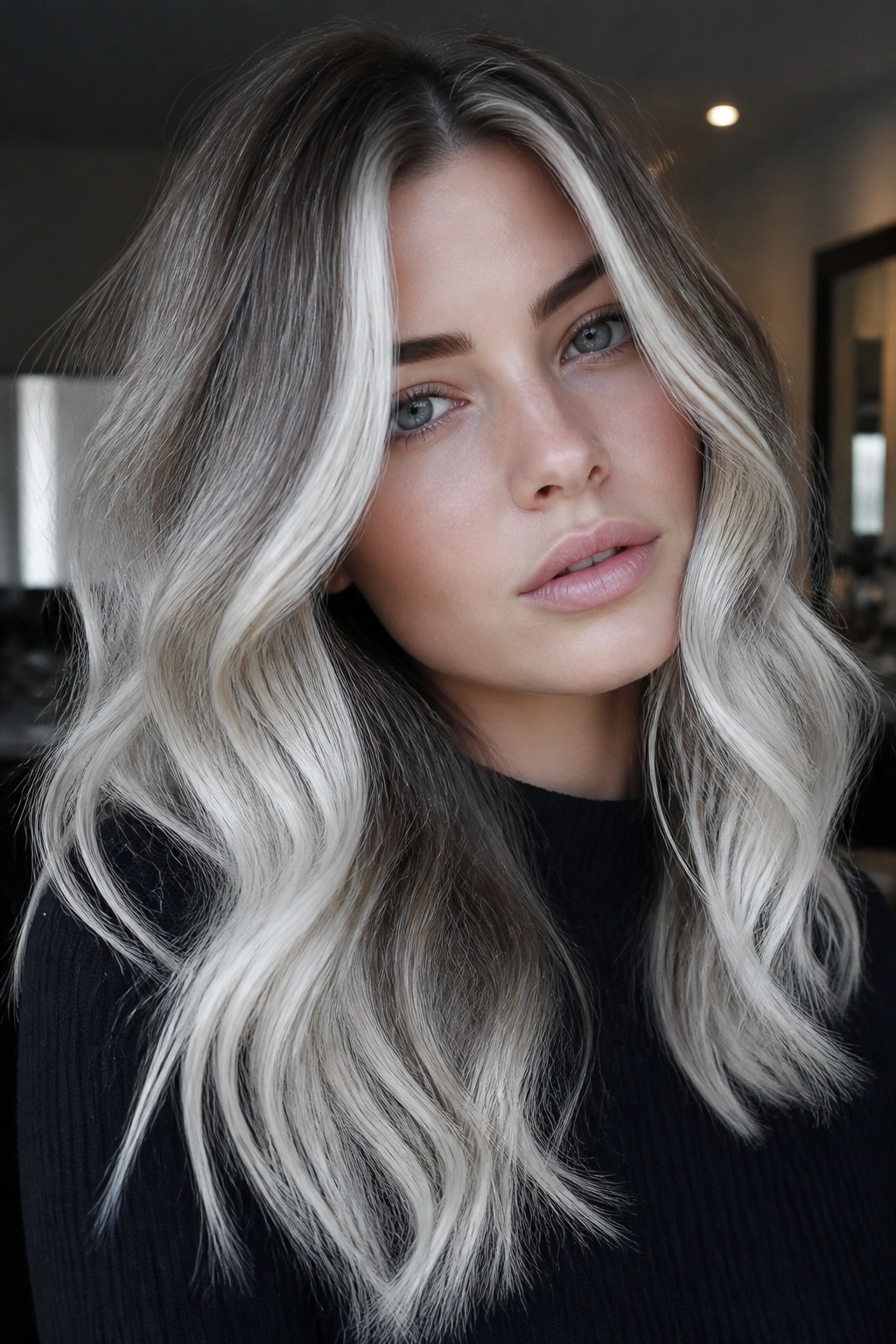
Snowy white hair can be a gorgeous match for cool-toned skin because the colors sit in the same family. Silver jewelry, cool makeup, and ash brown bases tend to support the look instead of fighting it.
That said, skin tone is not a rulebook. Plenty of warm-toned people wear icy white balayage well if they like the contrast. What matters more is whether the finish feels connected to your style. If you love smoky eyes, clean lines, and cool clothes, snowy white can make sense fast.
I’d avoid overly yellow white here. A snowy finish should look crisp, not buttery. If it starts to drift warm, the whole effect loses that frosty edge.
24. Soft White Swirls on Naturally Curly Brown Hair
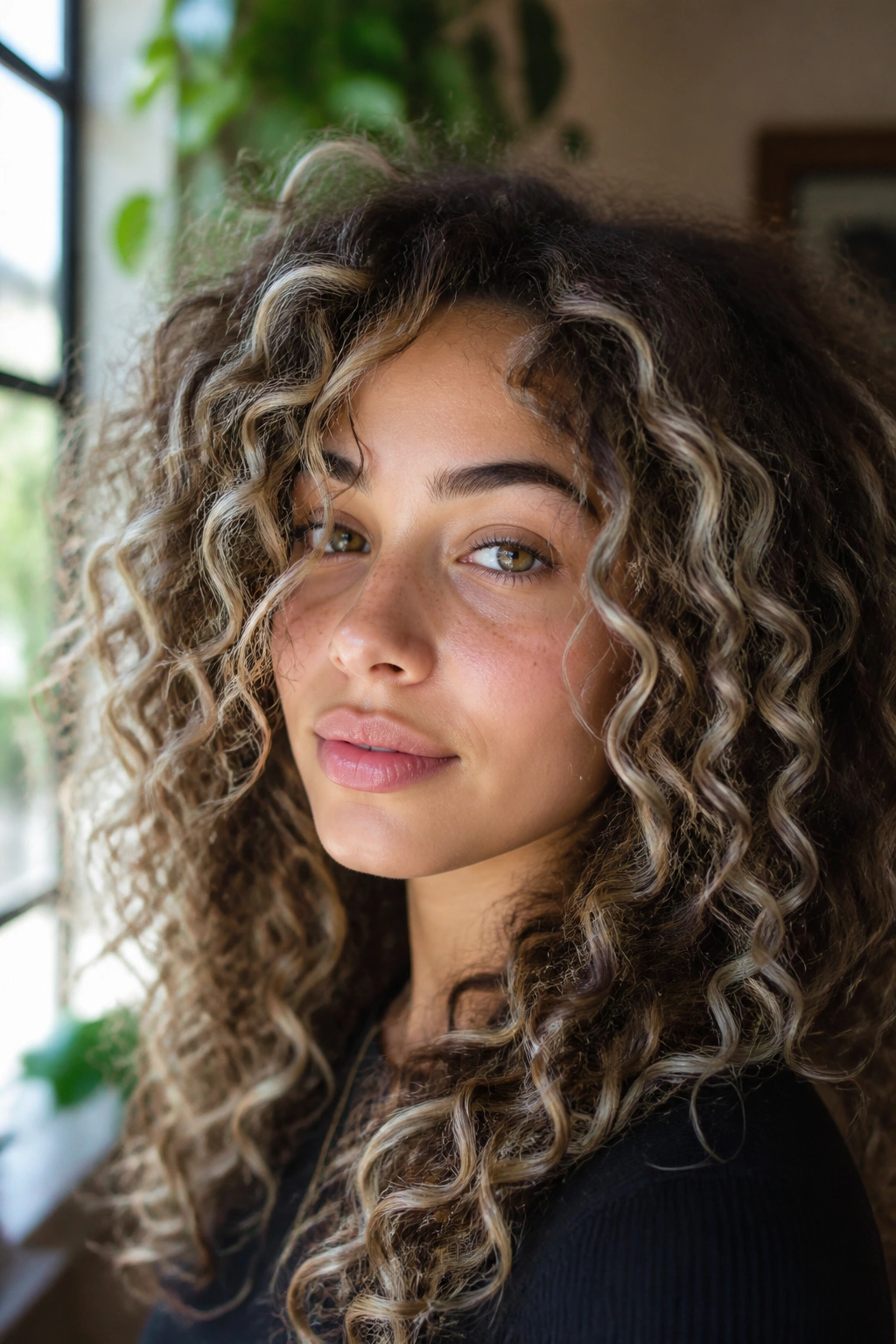
Curly hair and white balayage can be a beautiful pairing when the color follows the shape of the spirals. Soft swirls of white pick up the curl pattern and make the whole head look more dimensional.
Where to Place the Lightest Pieces
On curls, the bright strands should sit where the hair naturally opens and catches light, not just on the surface. That usually means painting along the outside curve of the curl and through the mid-lengths, with a little extra brightness around the face.
The goal is to make each curl look like it has its own highlight line. If the pieces are too uniform, the pattern can flatten out. If they’re too random, the color looks scattered. There is a narrow middle ground, and that’s where the good stuff lives.
This look has movement even when the hair is still. That’s the charm.
25. White Balayage With Caramel Lowlights
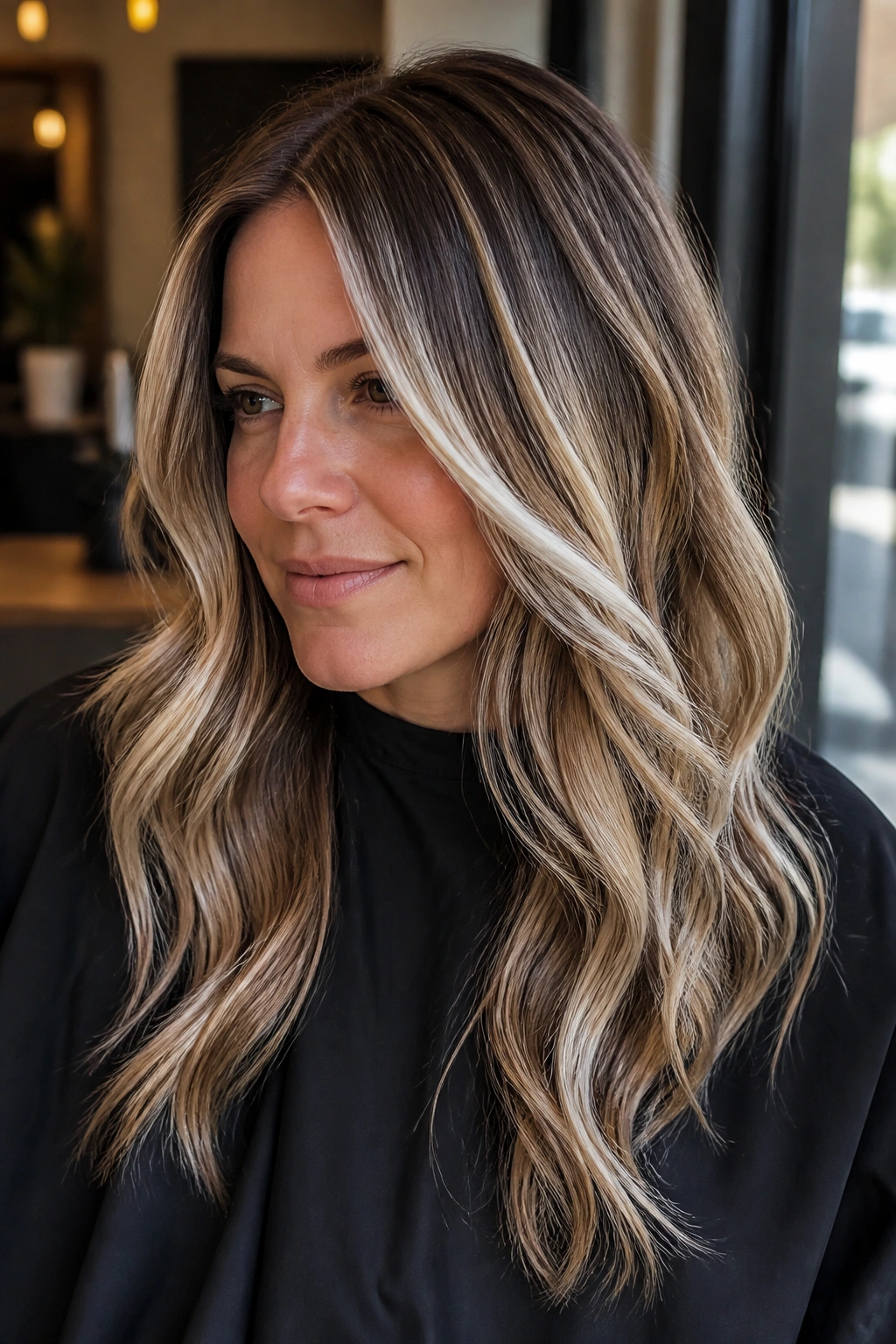
Caramel lowlights give white balayage a warmer frame, and I think that makes the white feel more wearable on many brunettes. Pure icy blonde can go a bit cold against brown hair. Caramel softens the edges.
This works especially well when the base color is somewhere between medium and dark brown. The caramel threads sit underneath the brighter pieces, so the white has a richer backdrop. You get contrast, but not the kind that feels like it belongs on a different head entirely.
It also plays nicely with autumn-leaning makeup and gold accessories. That may sound like a small thing. It isn’t. Hair color and styling choices need to talk to each other.
26. White Balayage on a Long One-Length Cut
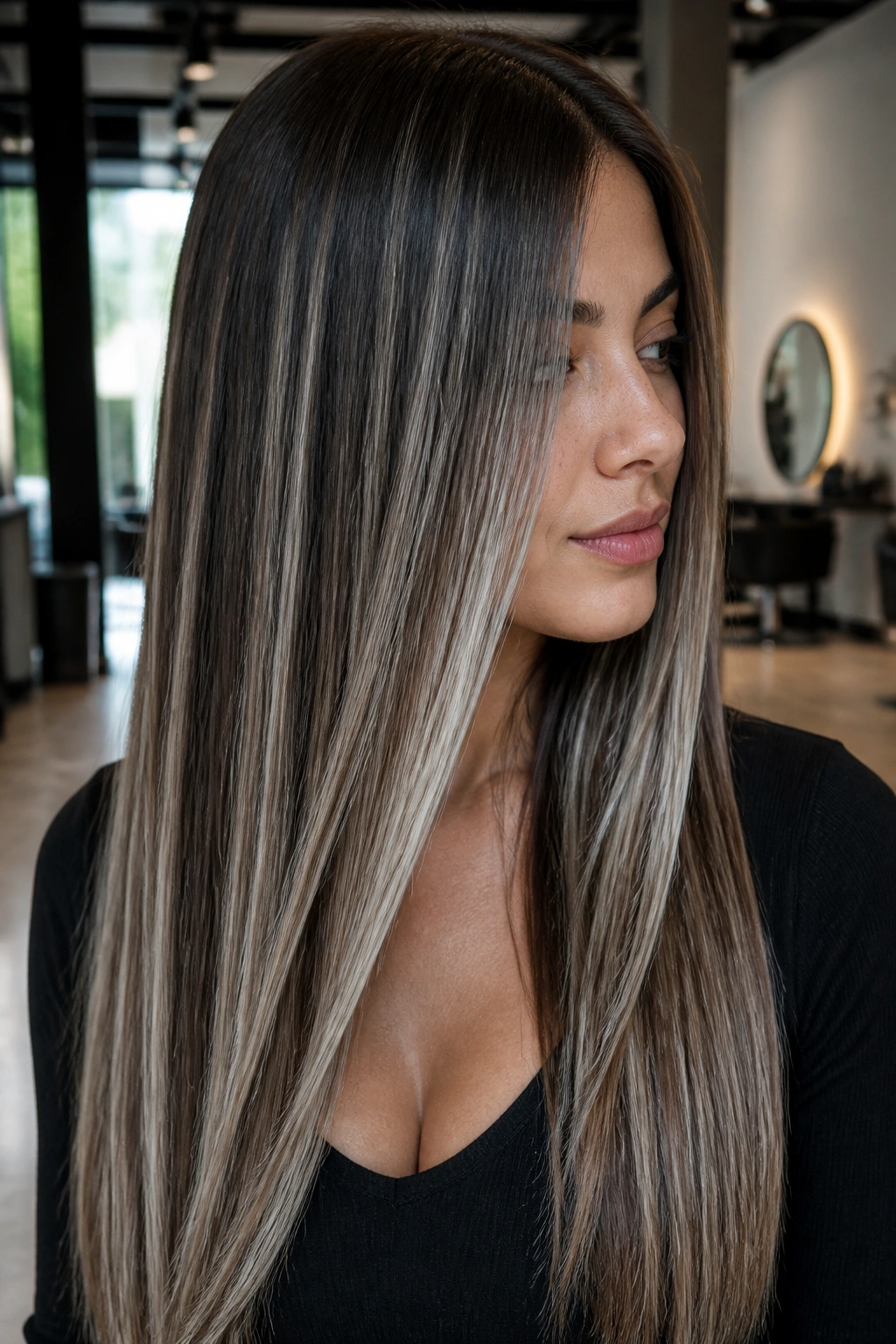
A one-length cut can look flat if the color is too even. White balayage fixes that by creating movement where the haircut does not.
That is why this look works so well on long, straight brunette hair. The white ribbons break up the solid curtain effect and keep the ends from feeling heavy. A few softly blended pieces through the lengths can change the whole silhouette without touching the shape of the cut. You still get the strength of a blunt line, just with more life in it.
The color should be placed with enough space between sections to let the brown breathe. Overcrowd it, and you lose the clean geometry that makes the cut interesting in the first place.
27. White Balayage on a Shaggy Wolf Cut
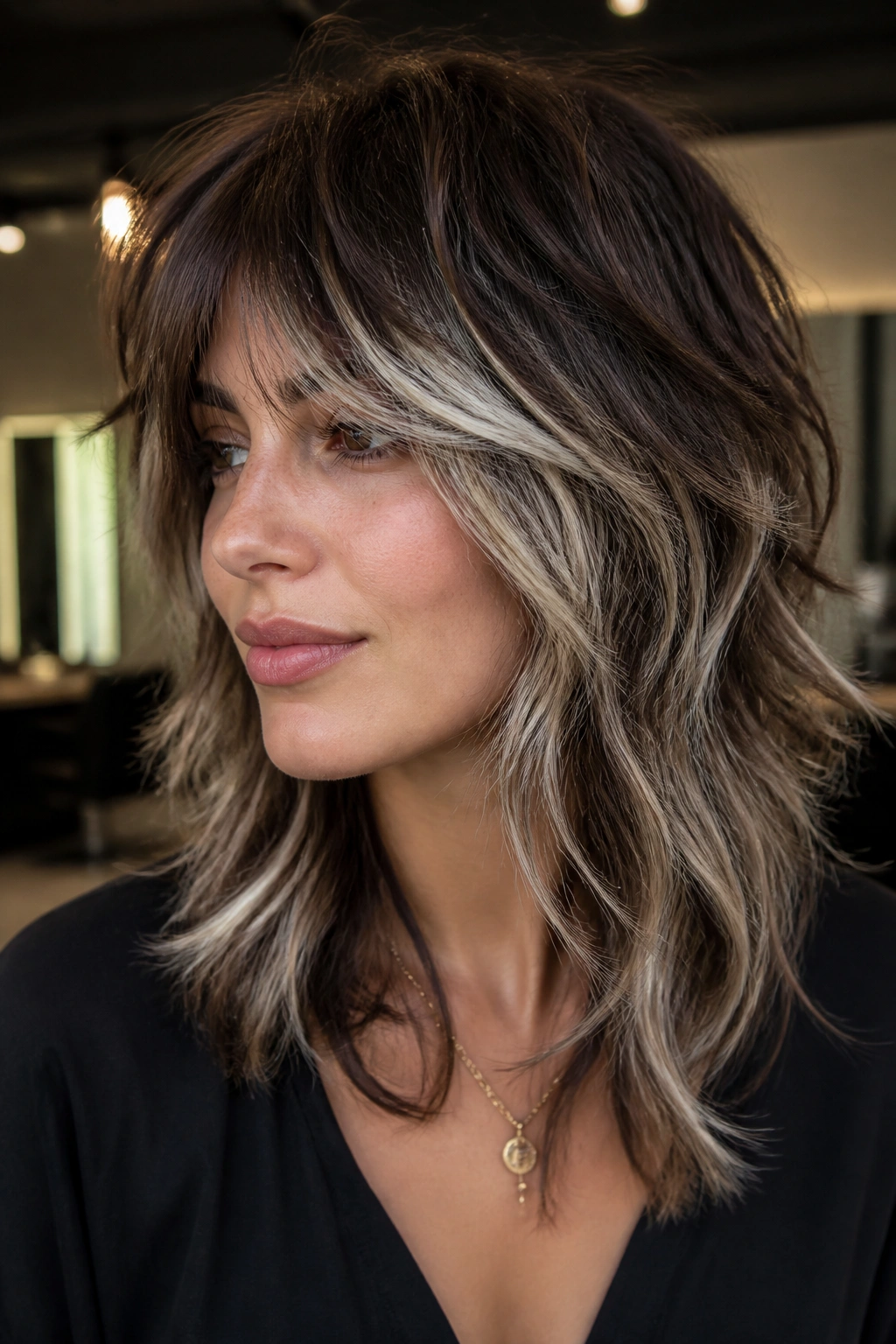
A shaggy wolf cut loves piecey color. White balayage fits right in because the cut already has movement, lift, and a slightly rebellious edge.
Why the Cut and Color Work Together
The layers do the heavy lifting here. The shorter top pieces show off brightness near the face, while the longer bottom sections keep the white from taking over. That means you can be a little bolder with placement than you could on a sleek, one-length style.
- Bright pieces near the cheekbone make the cut feel sharper.
- Thinner white strands through the crown stop the top from going flat.
- A matte texture spray can make the color separation read better.
- The whole look feels best when it is a little messy on purpose.
This is not a polite haircut. The color should not act polite either.
28. White Balayage With a Glossy Root Melt
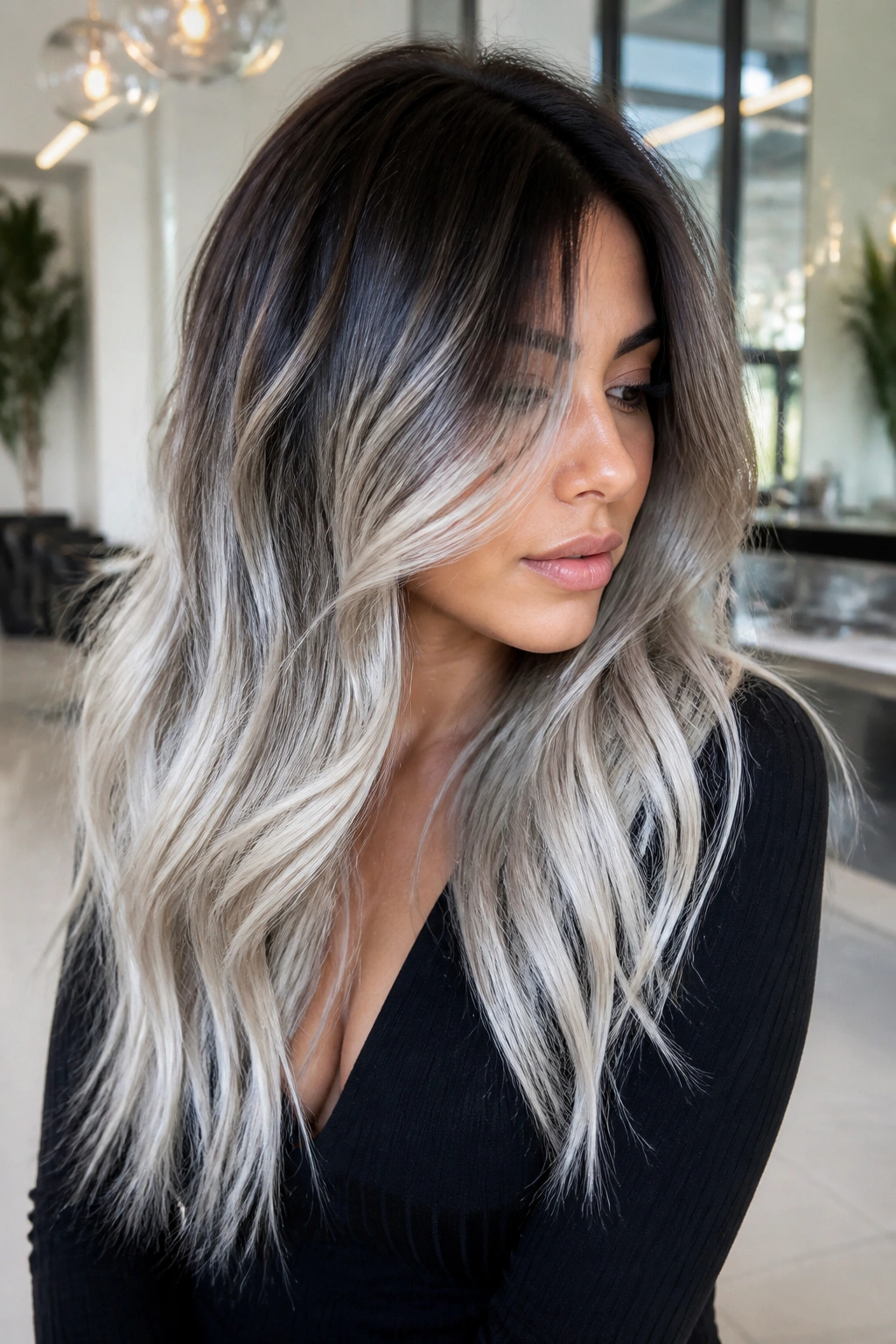
A glossy root melt is what pulls a white balayage look together when you want the finish to feel polished rather than scratchy. The root stays deeper, the melt stays soft, and the white ends look intentional instead of bleached-out.
I especially like this on brunettes who want high contrast but low fuss. The gloss gives the lighter pieces more shine, and it smooths the shift between brown and white so the color grows out more gracefully. If the ends look too matte, the whole look can feel dry. Shine fixes a lot more than people think.
If you want the most wearable version of white balayage on brown hair, this is the one I’d point to first. Clean root, bright mids, glossy ends. Simple idea. Good result.
The smartest white balayage on brown hair usually respects the base instead of trying to erase it. That’s the real thread running through all 28 looks here. Some are icy, some are creamy, and some lean smoky or warm, but the best versions always leave enough brown in the picture to make the white matter.
If you’re bringing one of these photos to a salon, pick the version that matches your cut first, then your tone second. That order matters. Hair that fits the shape of your head and the texture of your ends will always look better than a color copied from someone with a completely different base.
