



Ginger balayage for brown hair works best when the warmth is placed with a little restraint. Too much copper all at once can look loud and flat. A few carefully painted ribbons, though, can make brunette hair look richer, shinier, and far more dimensional than a blunt all-over dye ever could.
That’s the part people miss. Ginger is not one shade. It can lean cinnamon, auburn, apricot, rust, amber, bronze, or a soft copper glaze, and each version lands differently on brown hair. A dark espresso base can take on a moody red-brown melt. A lighter chestnut base can handle brighter ginger money pieces without losing depth.
The best versions keep the root darker, let the warmth live through the mid-lengths, and brighten the ends only where movement needs it. That’s why a good balayage looks expensive even when it’s bold. It grows out better, too. The color doesn’t sit in a hard line across the head, which is a mercy if you hate sitting in a salon chair every few weeks.
The 28 looks below cover the range from soft and subtle to copper with real bite. Start with the shade that matches your brown base, then pay attention to placement. That’s where the difference lives.
1. Cinnamon Ribbon Balayage for Brown Hair
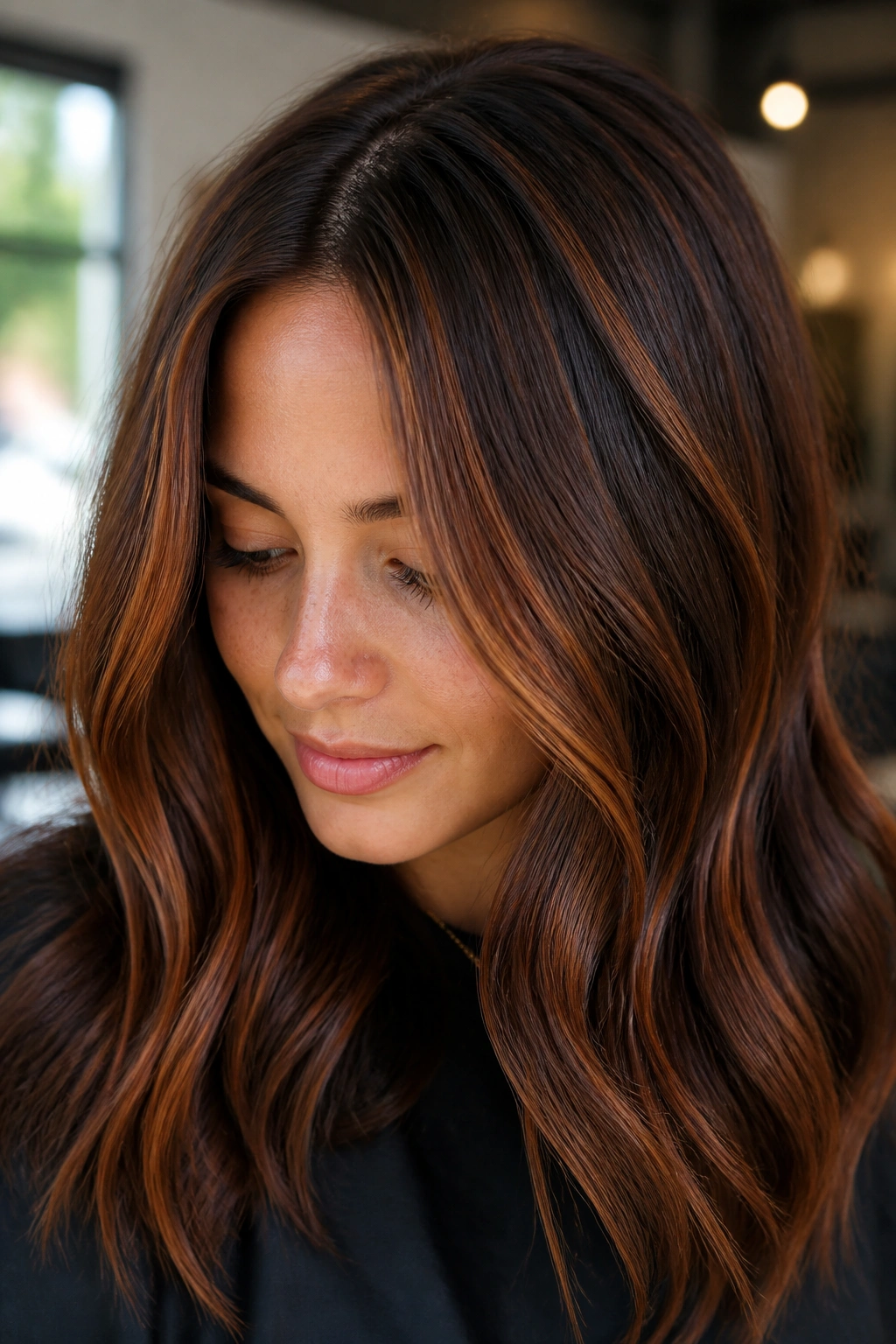
Cinnamon is one of the easiest ginger tones to wear on brown hair because it sits between red and brown instead of fighting them. The result feels warm, but not brassy. It reads as polished, especially when the ribbons are thin and placed through the top layers rather than packed everywhere.
Why cinnamon reads so naturally on brown hair
The trick is to keep the painted pieces about 1/4 to 1/2 inch wide and spaced unevenly. That gives you movement without obvious stripes. On medium brown hair, cinnamon usually needs only a modest lift before the gloss goes on, which helps the shade stay rich instead of pale.
- Keep the brightest pieces around the face and crown.
- Let the underlayers stay deeper for contrast.
- Ask for a cinnamon-copper gloss instead of a bright orange toner.
- Style with a loose bend so the ribbons separate a little.
Pro tip: Cinnamon looks best when the roots stay a shade or two deeper than the mids. That tiny shadow keeps the whole thing from turning flat.
2. Copper Face-Framing Money Pieces
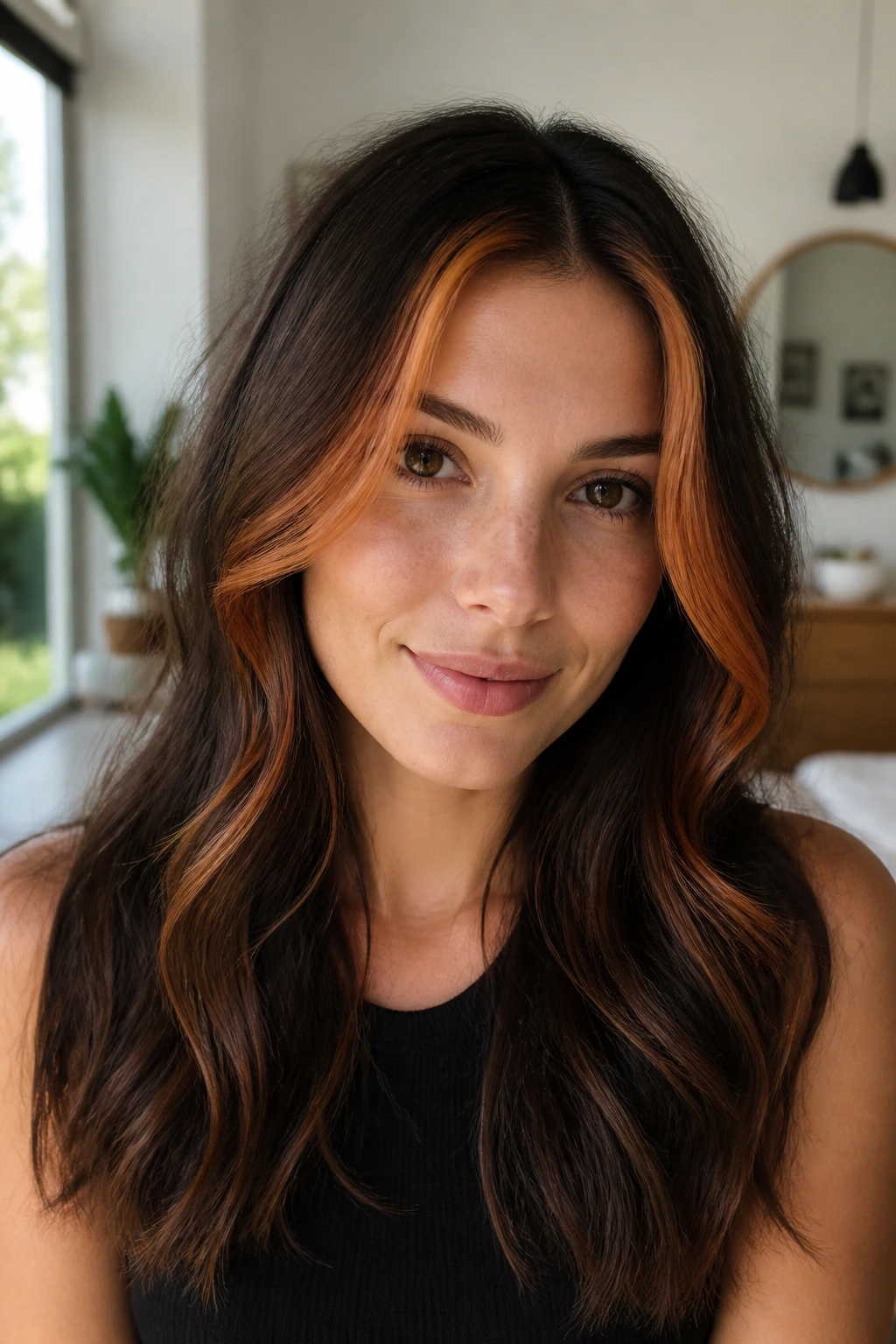
If you want the boldest payoff with the smallest amount of color, this is the place to start. Money pieces in copper light up brown hair fast because they sit right where people look first: the hairline, cheekbones, and part. You get the drama without painting the whole head.
The key is contrast. Leave the root soft and deep, then place the brightest copper in narrow sections no wider than your index finger. On brown hair, especially bases in the medium-to-dark range, those front pieces can be the difference between “nice color” and “oh, that’s striking.”
Wear this with a middle part if you want symmetry, or push it to one side for a slightly softer feel. Either way, the copper should be bright enough to show in daylight, but still blend into the rest of the balayage. If the face-framing pieces are the same width from top to bottom, they can look blocky. Tapering them toward the ends keeps them much cleaner.
3. Auburn Melt on Espresso Brown Hair
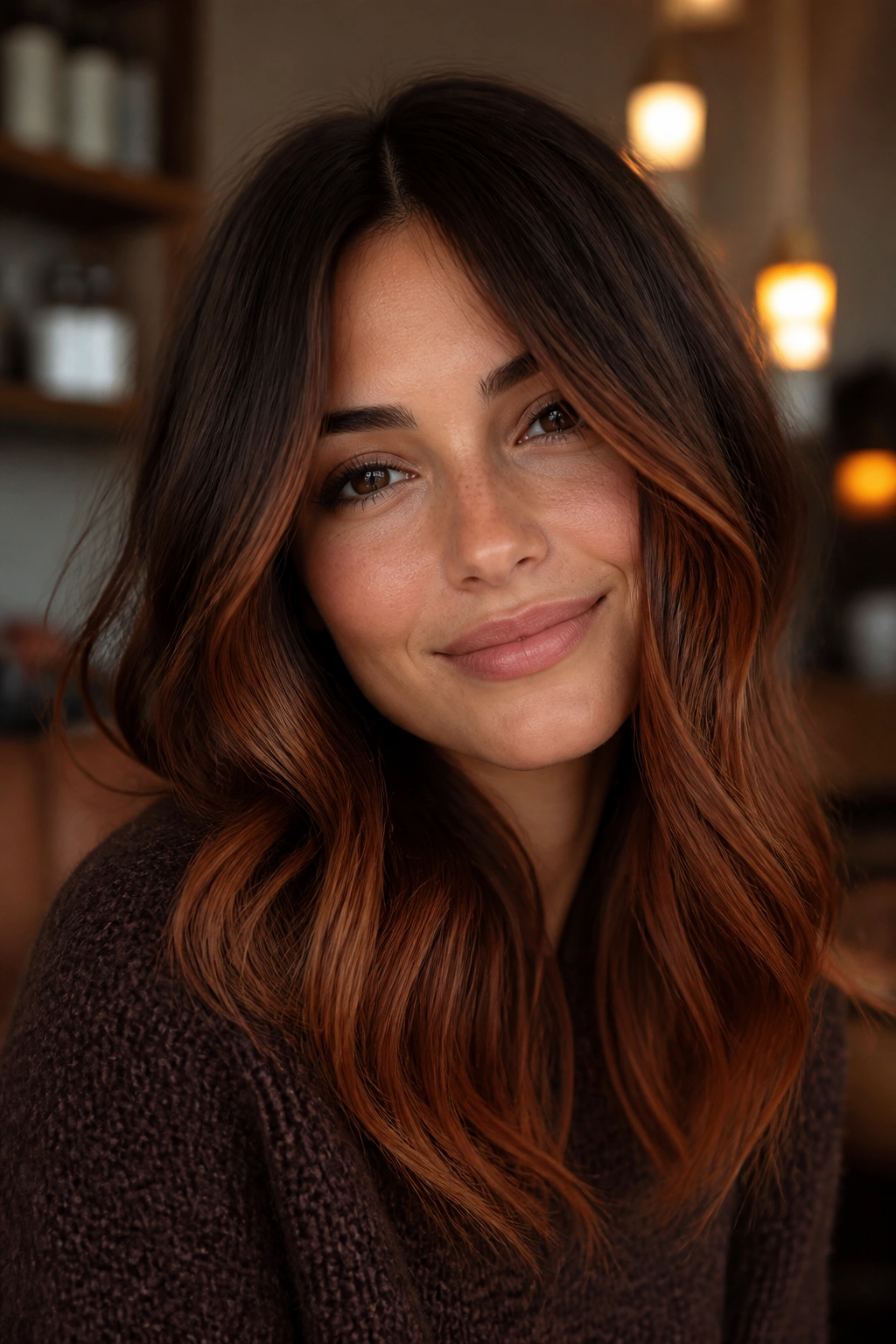
Want warmth without the orange problem? Auburn is usually the safer answer. It has that red-brown depth that makes espresso hair look glossy instead of dyed. The best auburn melts don’t jump from dark to light in a harsh line; they drift, almost like the shade was always there.
What to ask for at the chair
Ask for a soft melt from level 3 or 4 espresso into level 5 or 6 auburn. That gives the colorist room to keep the base deep while adding enough warmth for the auburn to read clearly. If the transition is too abrupt, the whole head can look patched instead of blended.
Auburn also plays nicely with straight or slightly wavy hair, because the shine lands in long strips. On curls, the same shade can look deeper and more velvety. Both are good. The main thing is to avoid over-lightening the ends just to make them “pop.” Auburn already has strength. It doesn’t need to shout.
4. Peachy Ginger Ends
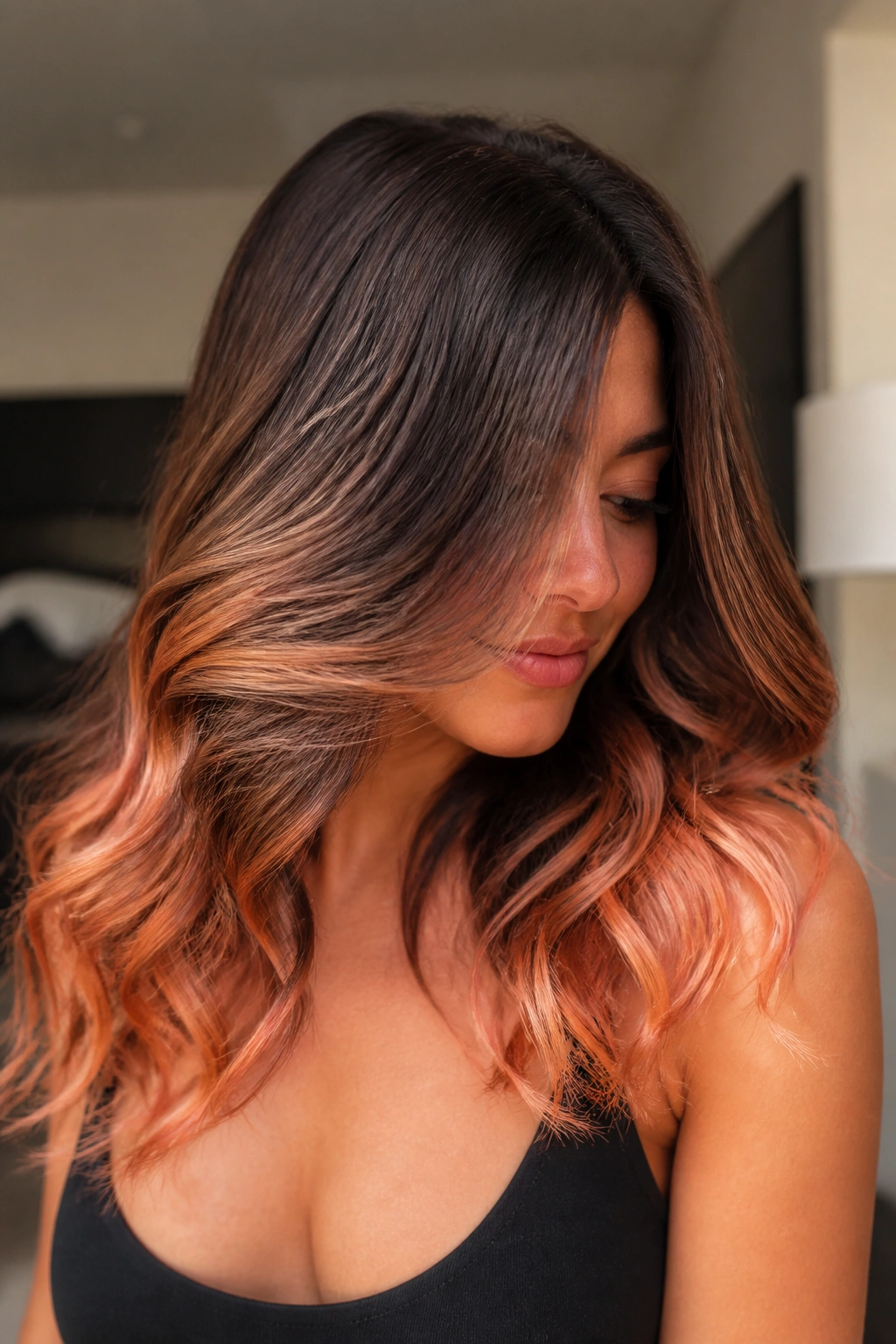
A peachy ginger finish is for the person who wants a little color that shows up most when the hair moves. The ends carry the brightest tone, while the root and mid-lengths stay grounded. That means the look can be subtle in a ponytail and much warmer when the hair is curled or tucked behind the ear.
A cut with layers makes this easier to wear. The lighter ends catch the eye, but because the base remains brown, the style never loses depth. If the ends are too wide or too pale, the look can tip into cartoon territory fast. Keep the peach soft, not neon. Soft matters.
- Best on medium brown or chestnut bases.
- Works well with shoulder-length and longer cuts.
- Ask for end-focused balayage, not all-over lift.
- Finish with loose waves so the color shifts as you move.
One thing I like about this version: it feels youthful without looking fussy. That’s rare.
5. Ginger Babylights Over Chestnut Brown
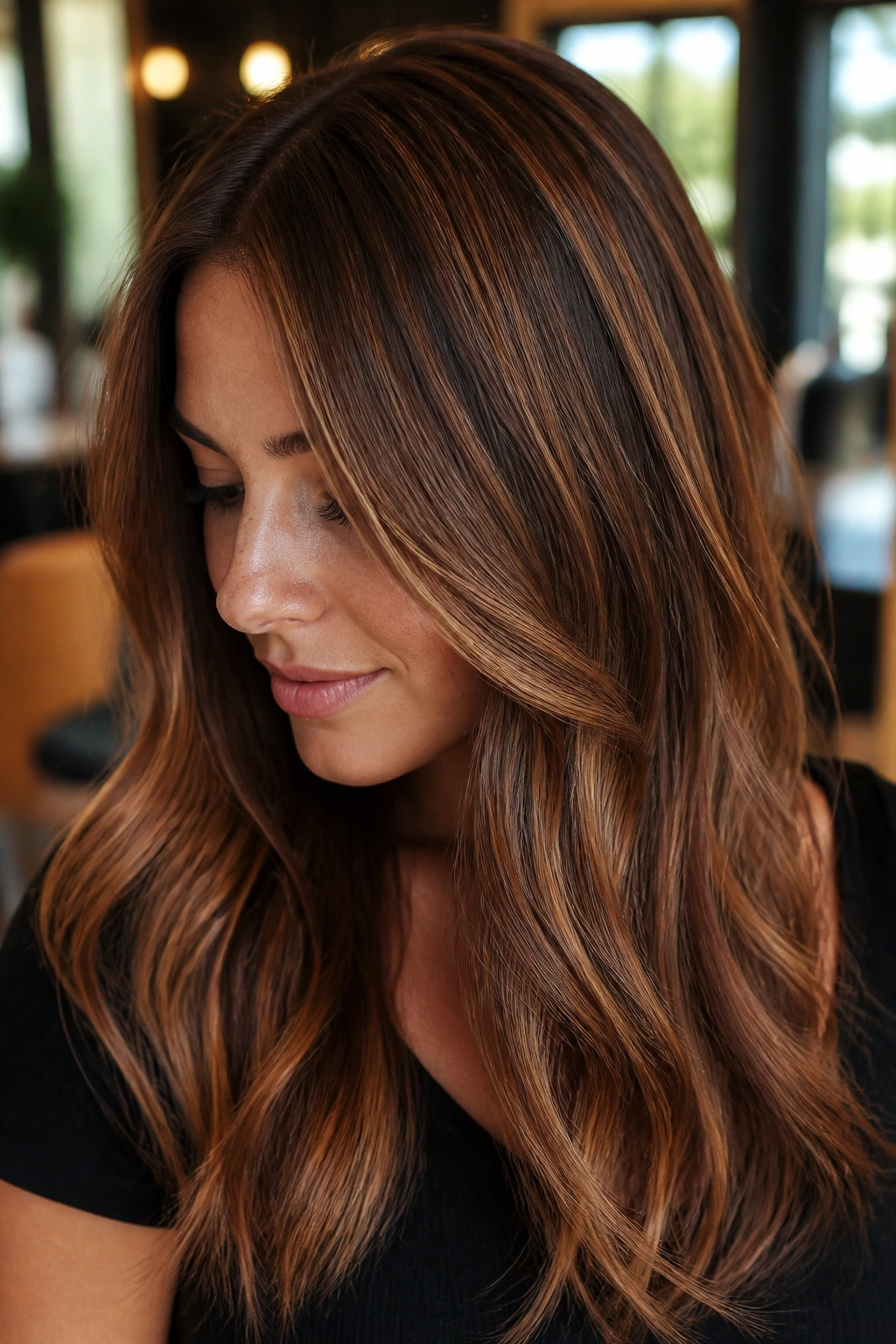
Babylights are the whisper version of ginger balayage. The strands are so fine that the color reads as shimmer first and red second. On chestnut brown hair, that can be a smart move. You get warmth, but the overall brown still leads.
This look depends on restraint. The painted sections should be hairline thin, not chunky, and the lift should stay modest so the ginger tones don’t go loud. Think of it as a soft glaze woven through the top layers. The final effect is especially nice if you wear your hair straight, because the thin ribbons catch light in narrow streaks.
It’s also one of the better choices if you’re testing ginger for the first time. Babylights are less of a commitment than broad balayage panels, and they tend to fade into the base more gently. You still need tone maintenance, though. Warm reds can drift faster than browns, and chestnut hair can turn a little muddy if the gloss is ignored for too long.
6. Rusty Balayage With a Shadow Root
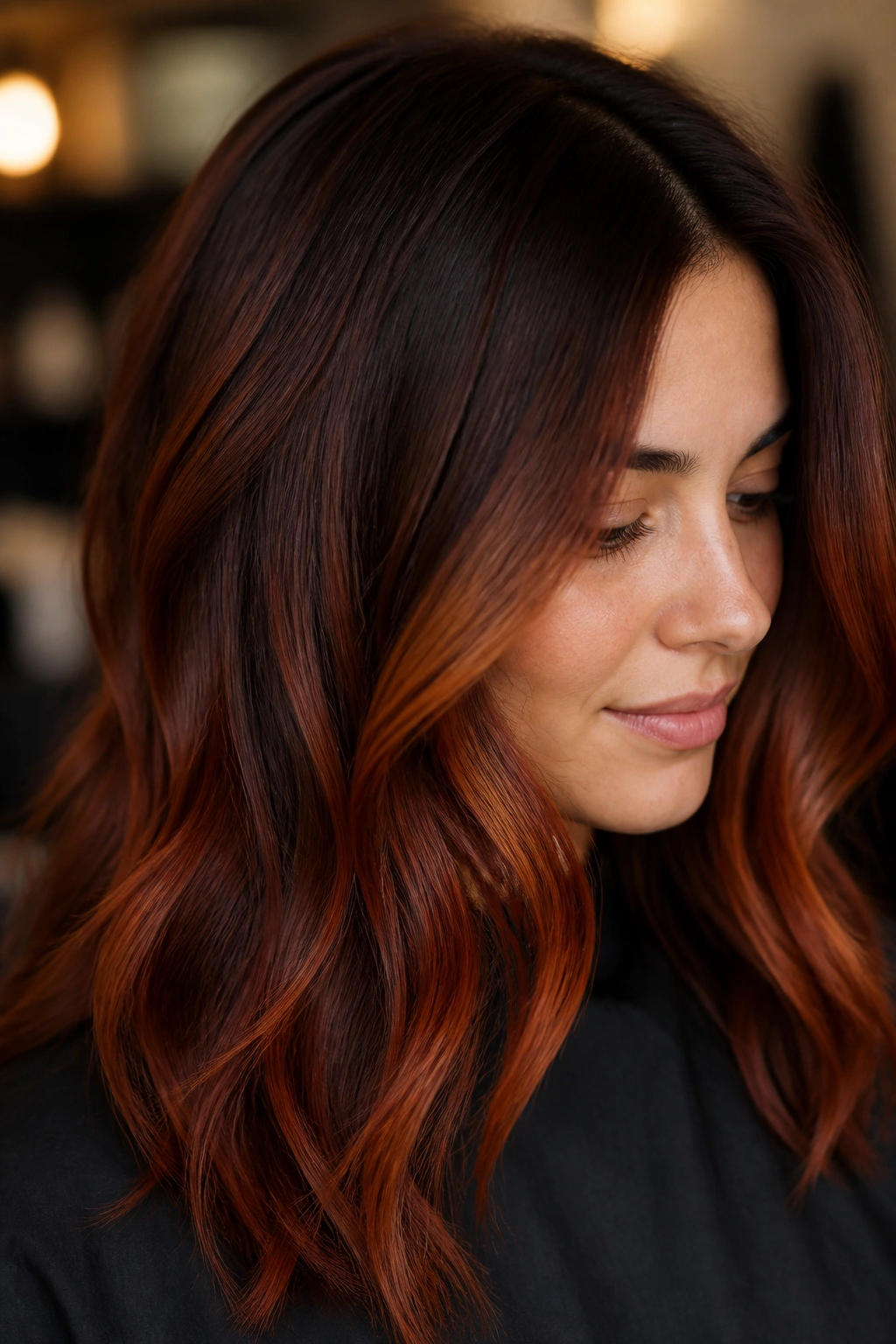
Rust is deeper and earthier than bright copper, and that’s exactly why it works on brown hair. With a shadow root, the whole look stays grounded. The root area remains darker, the mids pick up a rusty warmth, and the ends hold the brightest tone.
Unlike all-over red, this version has breathing room. The shadow root lets the color grow out in a softer way, which matters if you wear your hair down most of the time and don’t want a visible line every few weeks. It also gives straight hair a little more structure. Without that deeper base, rust can flatten out.
This is a good match for medium and thick hair, especially if the cut has some layering. Dense hair can swallow color. A shadow root helps the ginger show up without needing to bleach every strand to the same level. Simple. Practical. Much nicer to live with.
7. Bright Copper Curls
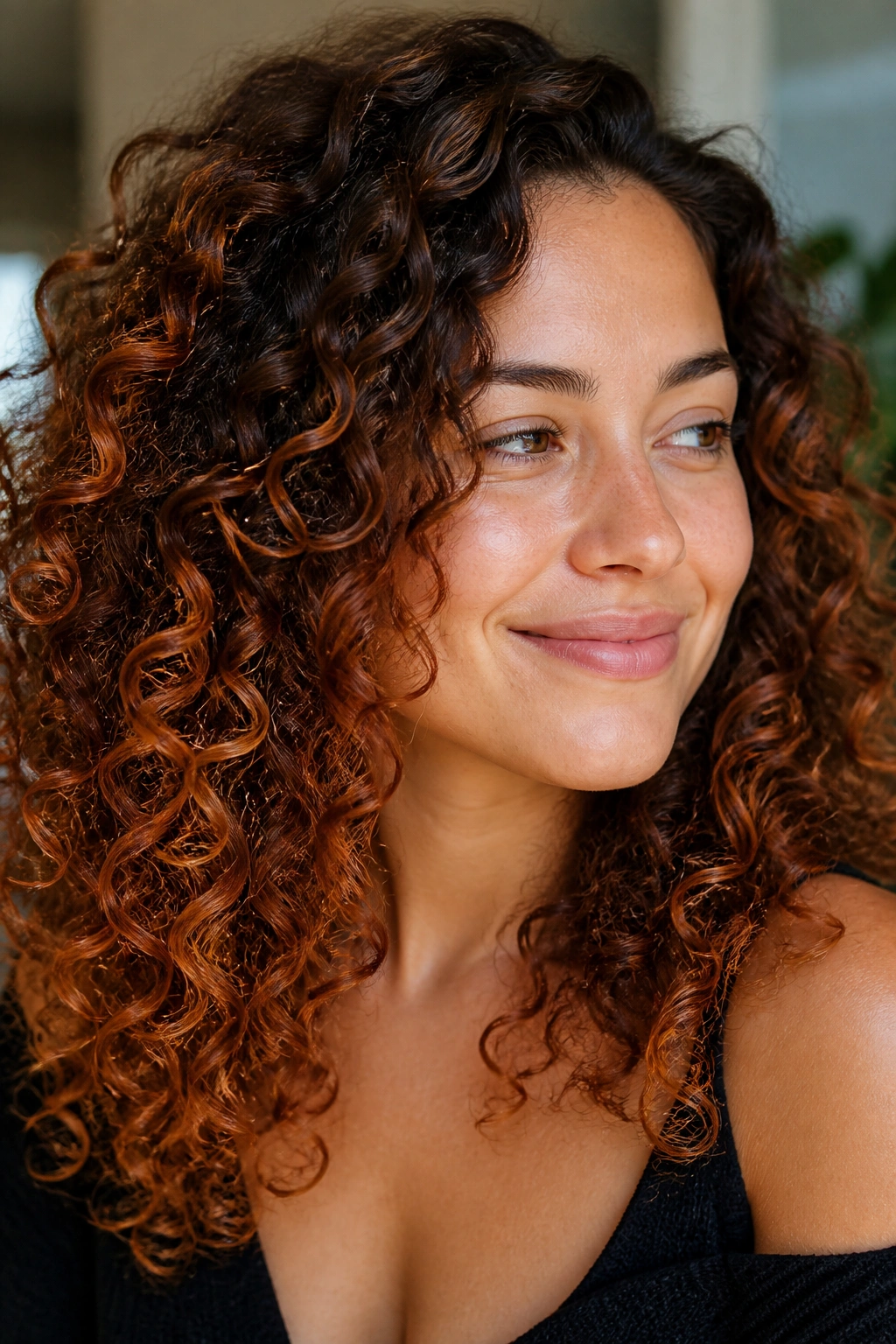
On curls, copper does not whisper. It glows.
That’s the appeal, honestly. Each curl clump catches the light at a different angle, so copper balayage looks richer than it does on flat, straight hair. The trick is to paint in a way that respects the curl pattern. If the color is too finely sliced, the shape can disappear. If it’s too heavy, the curls can look coated.
Where the light should sit
- Place the brightest copper on the outer curve of the curl.
- Keep interior sections a little deeper so the shape stays clear.
- Use wider ribbons near the face, then narrow them toward the nape.
- Ask for a gloss that keeps the tone copper, not red-orange.
That placement gives you movement without turning the whole head into one flat shade. On curly brown hair, I’d rather see a few bold, clear ribbons than a hundred tiny threads that vanish once the curls spring up.
8. Ginger and Caramel Mix
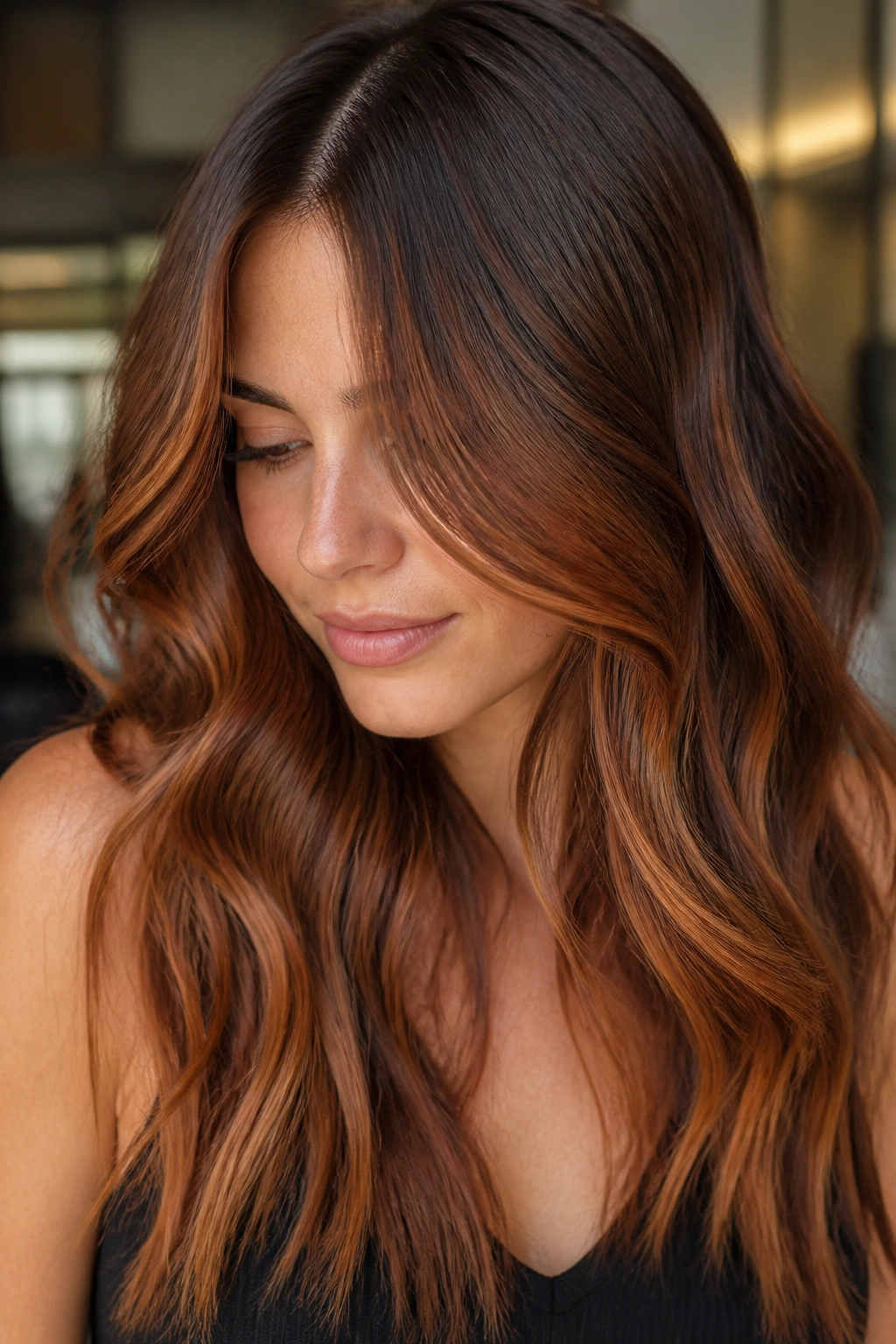
This is the friendliest version of ginger balayage for brown hair. Caramel softens the red warmth and keeps the finish from leaning too fiery. The mix works because caramel acts like a bridge between the brown base and the ginger highlights, so nothing feels abrupt.
You can wear this on light brown, medium brown, or even darker chestnut hair if the lift is kept controlled. The caramel pieces stop the ginger from feeling too intense, while the ginger keeps the caramel from looking flat. That back-and-forth is what gives the color its movement. It’s especially good on layered cuts where the pieces can separate a little.
If you want to ask for it, mention warm caramel ribbons with muted ginger ends. That wording helps a colorist understand that you want blend, not contrast for its own sake. The result is softer than full copper, and usually easier to wear if you’re nervous about red tones.
9. Burnt Sienna Ombré Balayage
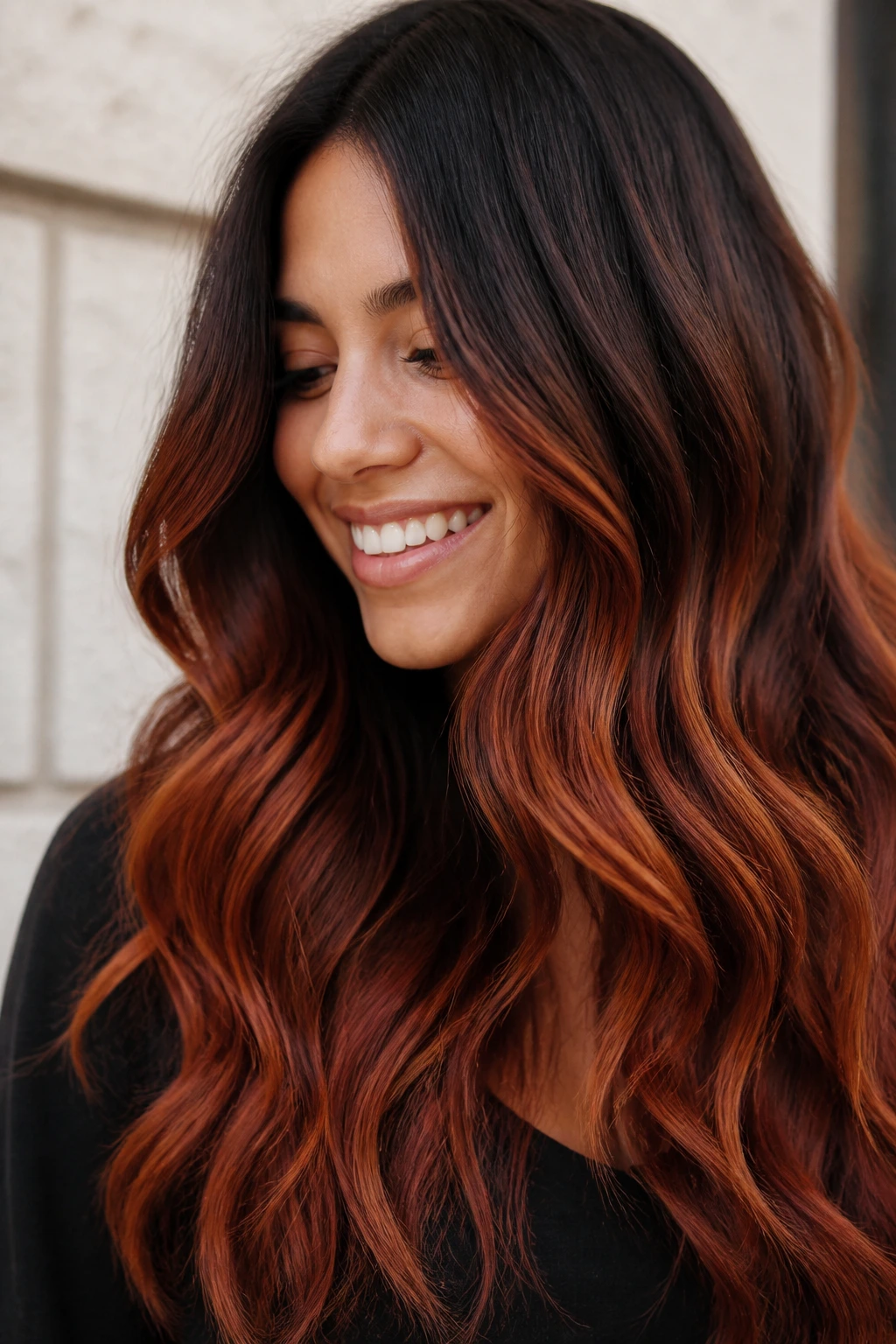
Picture hair that starts deep and ends like warm clay. That’s the mood here. Burnt sienna sits in that earthy red-brown zone that looks especially good on longer brown hair because the color has room to stretch. Short cuts can wear it too, but ombré needs length to breathe.
The gradient matters more than the exact tone. You want the darker base to stay anchored, then the color should intensify gradually through the mid-lengths and ends. If the change happens too high, ombré can look disconnected. If it starts too low, the color barely shows. The sweet spot is usually around the cheekbone to collarbone area, depending on length.
- Best on hair past the shoulders.
- Looks strongest in waves or loose curls.
- Keep the ends richer, not pale.
- Ask for a soft sienna fade, not a hard red line.
One good thing about this look: it hides a busy grow-out better than most bright reds.
10. Soft Apricot Sheen on Light Brown Hair
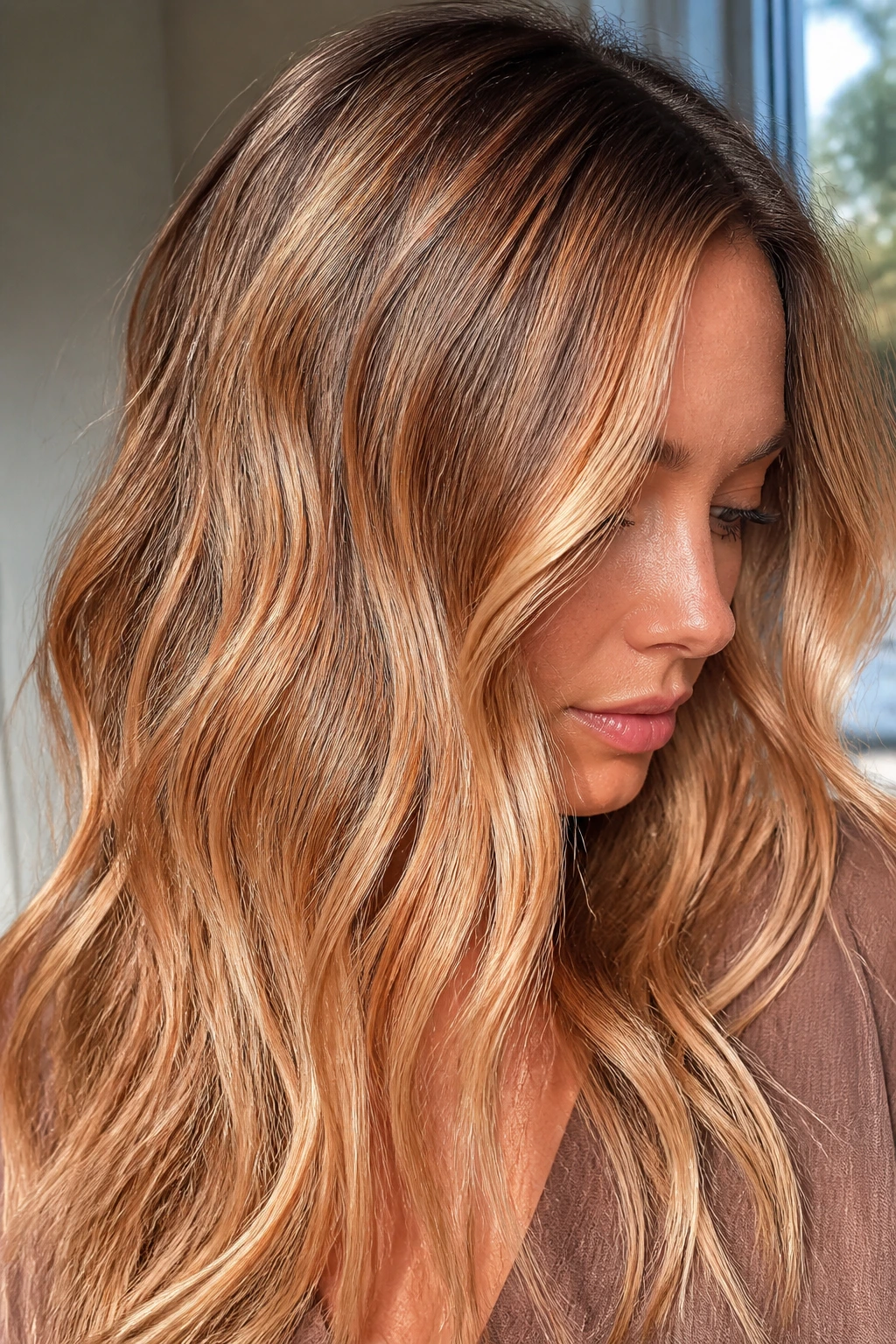
Want warmth that looks airier than copper? Apricot is the move. It has a softer, lighter feel, almost like a pale peach glaze over brown hair. On light brown bases, that can be enough to change the whole tone of the hair without making it look heavily colored.
How to keep it soft
Keep the lifted pieces two to three levels lighter than the base, then tone them toward apricot rather than orange. That keeps the shade tender. If the lift goes too far, apricot can turn washed out, and the hair starts to feel less ginger and more gold. That is not the same thing.
This version works especially well if your hair is fine or straight, because the shimmer shows up in a smooth line. It can also be a nice first step into warmer color if you don’t want a deep copper commitment. The maintenance is gentler, too, because the softer tone fades into beige-gold territory instead of screaming for attention.
11. Mahogany Ginger With Lowlights
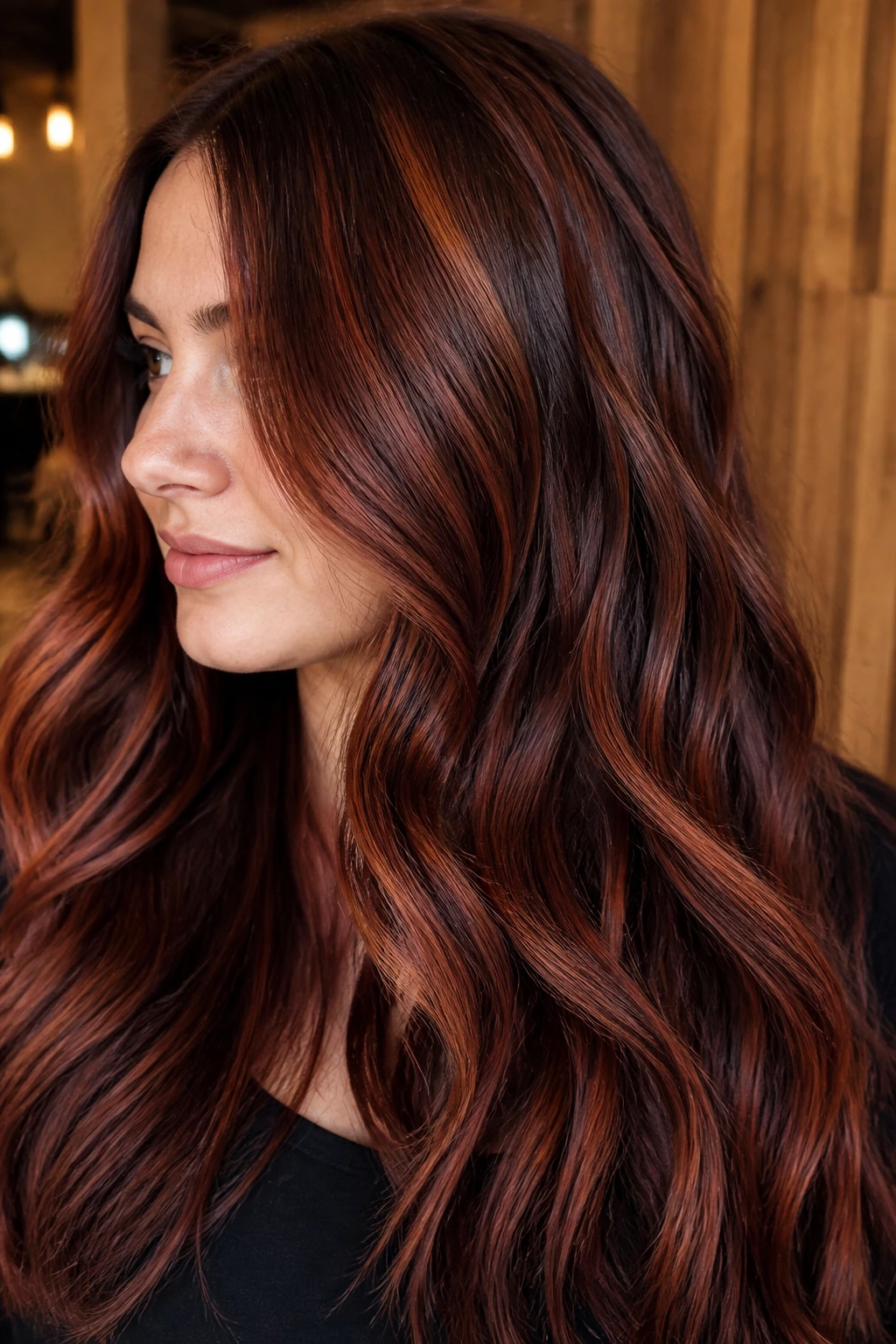
Lowlights are the part most people skip, and that’s why a lot of red-brown hair looks flat. Mahogany ginger needs that deeper backup. By dropping in darker pieces between the copper strands, you get a richer, more expensive-looking finish. It’s less about brightness and more about depth.
The lowlights should usually sit one to two levels deeper than the natural base. That gives the ginger something to bounce off. If everything is lifted, the color loses shape. Brown hair especially benefits from this because the darker strands keep the overall look from reading one-note.
This is a strong choice if your hair is dense or coarse. Those textures can swallow delicate color fast, but mahogany with lowlights has enough weight to stay visible. It also works nicely on long hair that’s worn in big waves, because the different tones can stack without blending into mush.
12. Strawberry Copper Waves
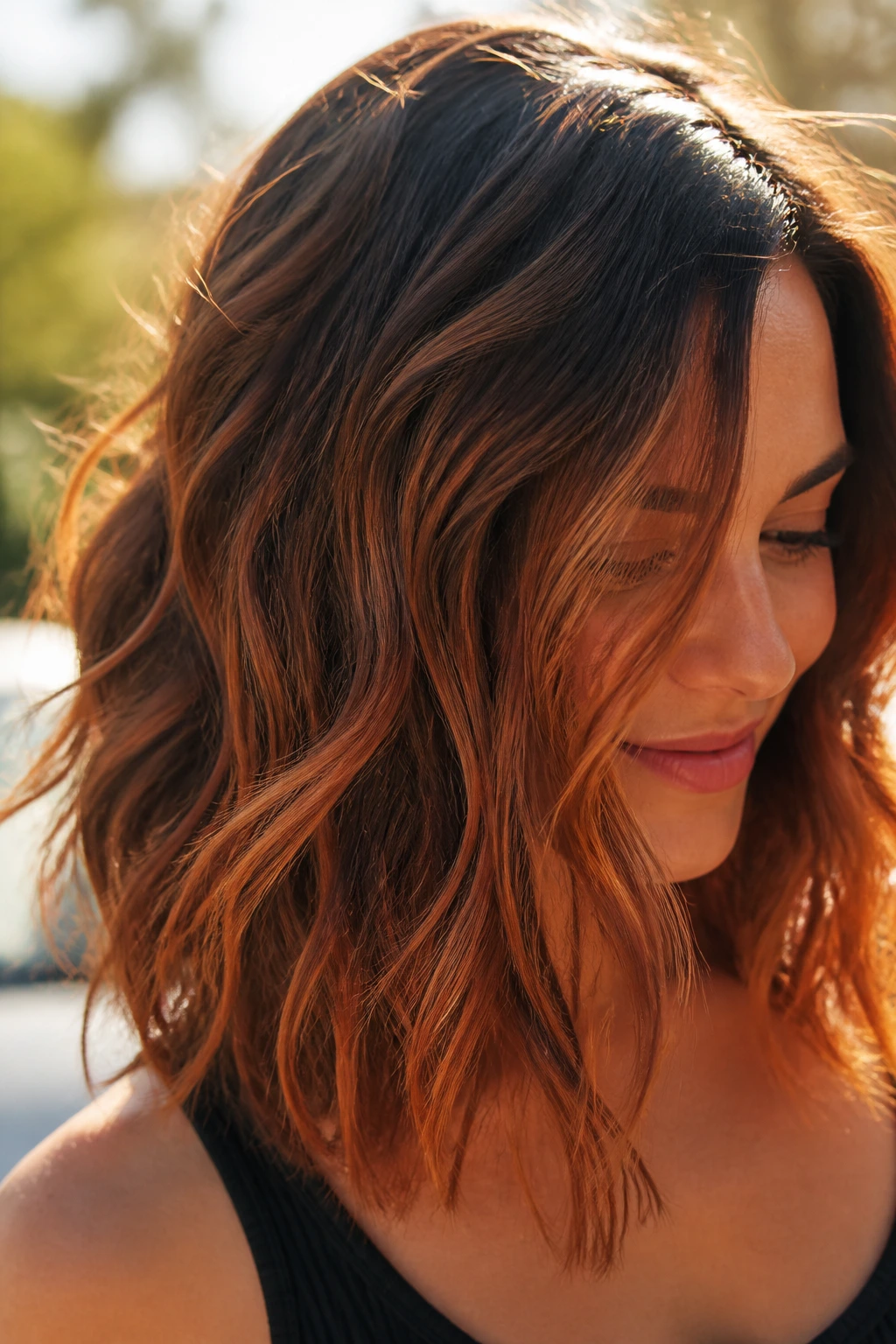
Strawberry copper sits between ginger and rose, and that tiny pink edge is what makes it interesting. On brown hair, especially light-to-medium brown, it feels softer than pure copper but warmer than a beige blonde. That makes it useful for anyone who wants color that’s visible without being harsh.
Waves help this look more than pin-straight styling does. A soft bend lets the strawberry and copper tones move across the hair instead of sitting in one fixed line. The color also looks nicest when the highlights are not packed too tightly. Leave a little depth between ribbons. That space gives the shade room.
I’d keep the root area muted and let the brighter strawberry notes live through the mids and ends. A full red head is a different project. This one is more forgiving, and it looks especially good when the hair has a little shine spray or gloss on top. Not greasy. Just reflective.
13. Firelight Balayage on Dark Chocolate Brown Hair
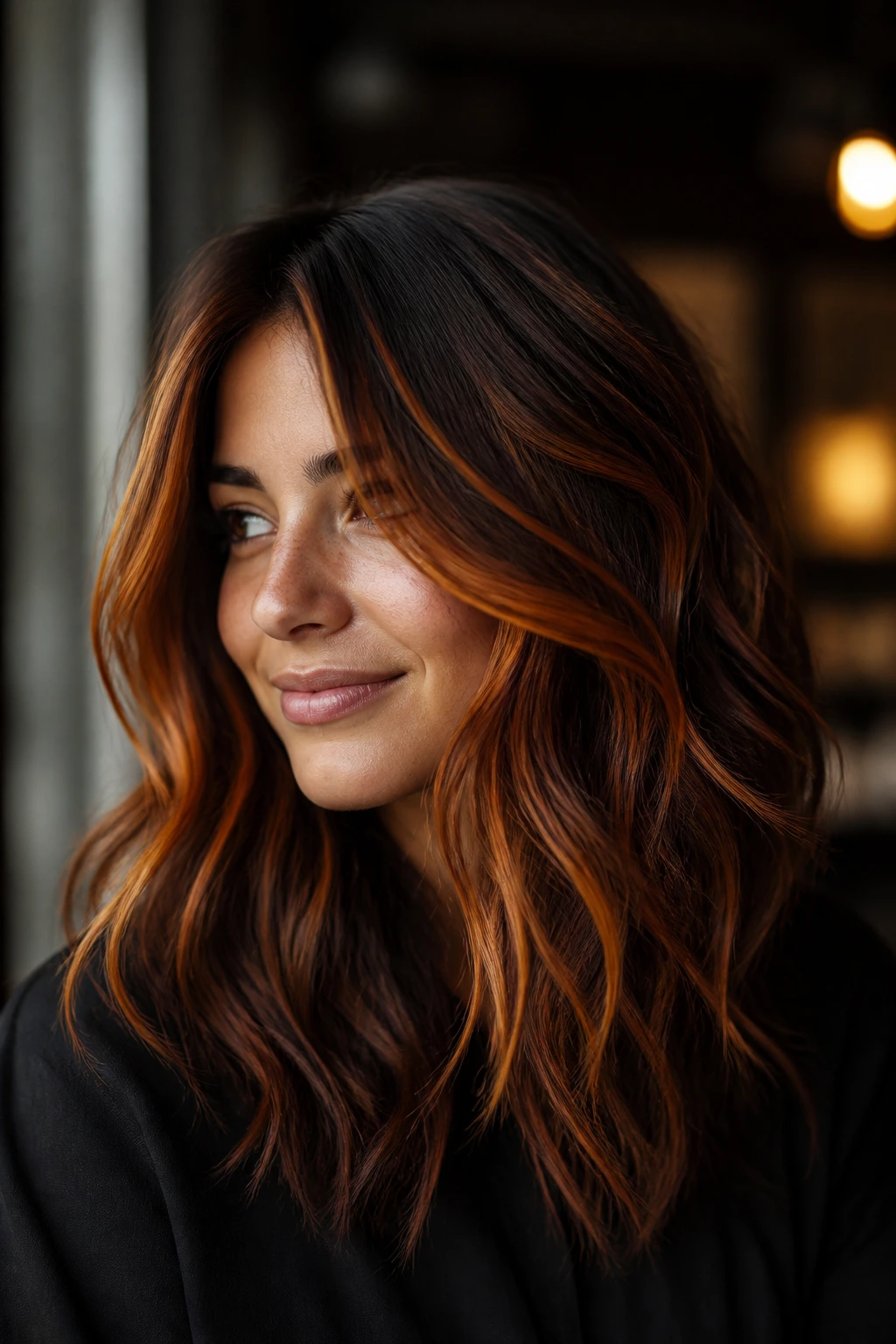
Unlike full-head copper, this look keeps most of the base dark. That contrast is the whole point. On dark chocolate brown hair, the ginger pieces look like little bursts of warmth instead of a blanket of red. The effect is dramatic, but still controlled.
Surface painting works well here. Put the brightest copper where the light will hit first — around the face, along the outer layers, and through the top sections of long hair. Leave the underneath darker so the color has somewhere to rest. If every layer gets the same brightness, the drama gets noisy fast.
This is one of those looks that can look completely different depending on styling. In loose waves, it feels rich and dimensional. In a straight blowout, the contrast gets sharper. Either way, the dark base is doing important work. It keeps the copper from floating away.
14. Ginger Balayage With Curtain Bangs for Brown Hair
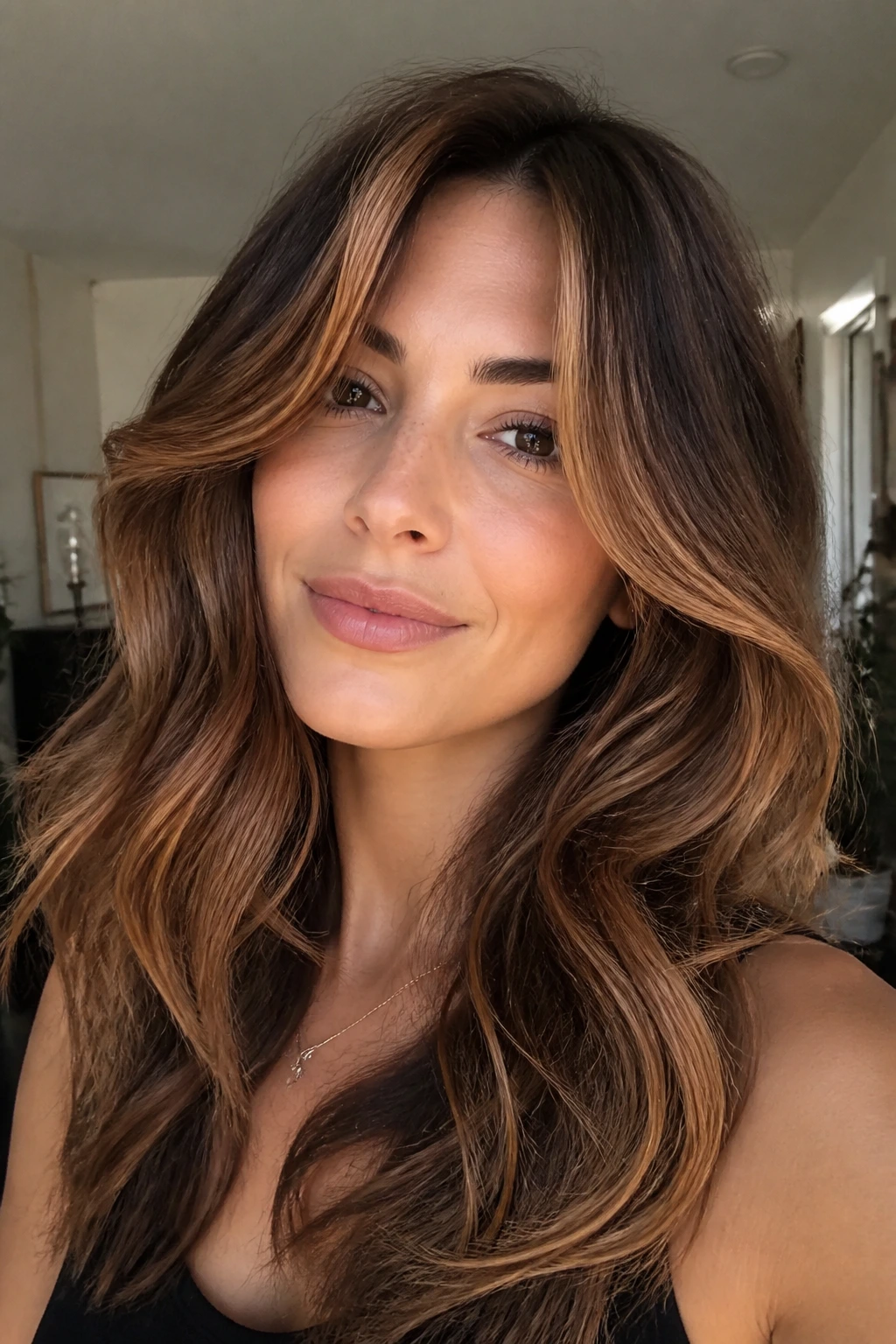
Curtain bangs pull the whole color story into the face. That’s why ginger balayage looks so good with them. The bangs give you a place to show the warm tone early, before the eye even reaches the rest of the hair, and the side pieces can trail that color back into the lengths.
Why the bangs matter
If the shortest pieces stop too high, the face can look disconnected from the rest of the balayage. Keep the lightest tone around cheekbone level, then let it taper into the sides. That creates a better blend. A lot of stylists will also keep the fringe slightly deeper at the root, which stops the bangs from reading stripey.
- Best on medium brown and chestnut bases.
- Ask for soft, feathered painting through the fringe.
- Keep the ends of the bangs a touch lighter than the roots.
- Style with a round brush or loose bend.
The result feels relaxed, not overworked. And that matters. Curtain bangs can look fussy fast if the color is too tidy.
15. Amber Gloss on Brunette Hair
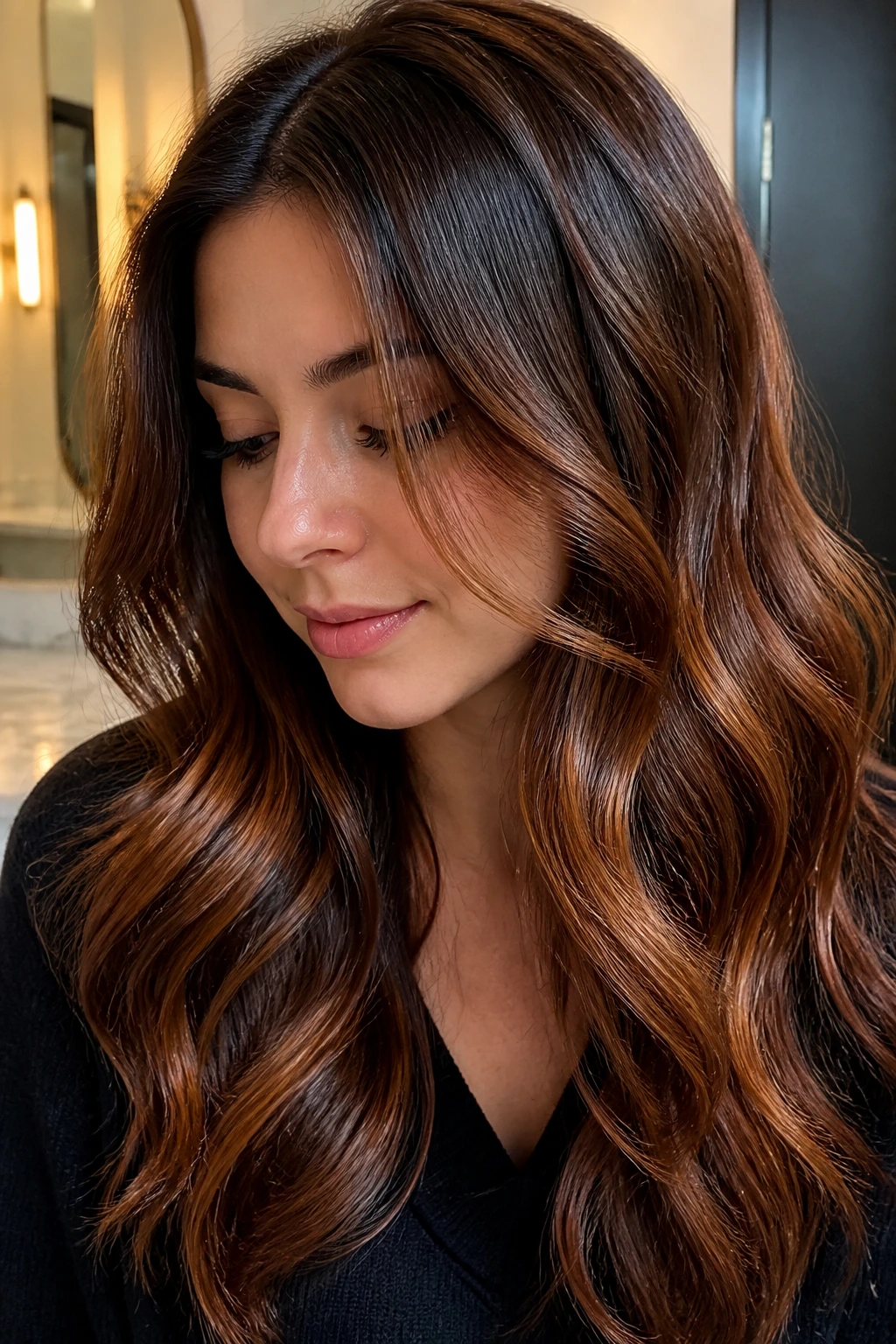
Not a full color shift. A finish.
That’s why amber gloss is such a good option on brunette hair. Instead of changing the whole head, it adds a warm reflective layer over existing balayage. The shade sits between gold and copper, so it makes brown hair look shinier without pushing it into red territory.
This works especially well if your hair already has lift and you want to revive faded highlights. A gloss can deposit tone without the commitment of another round of lightening. It also smooths the look down a bit, which is useful if the balayage has gone too patchy after a few washes. The finish should look supple, not coated.
If you like low-drama hair color, this is a smart route. It keeps the base intact and gives the lengths a warmer, healthier appearance. Just remember that glosses are temporary by nature. They need refreshing when the shine starts to dull and the amber edge goes soft.
16. Ginger Peekaboo Pieces Under Layers
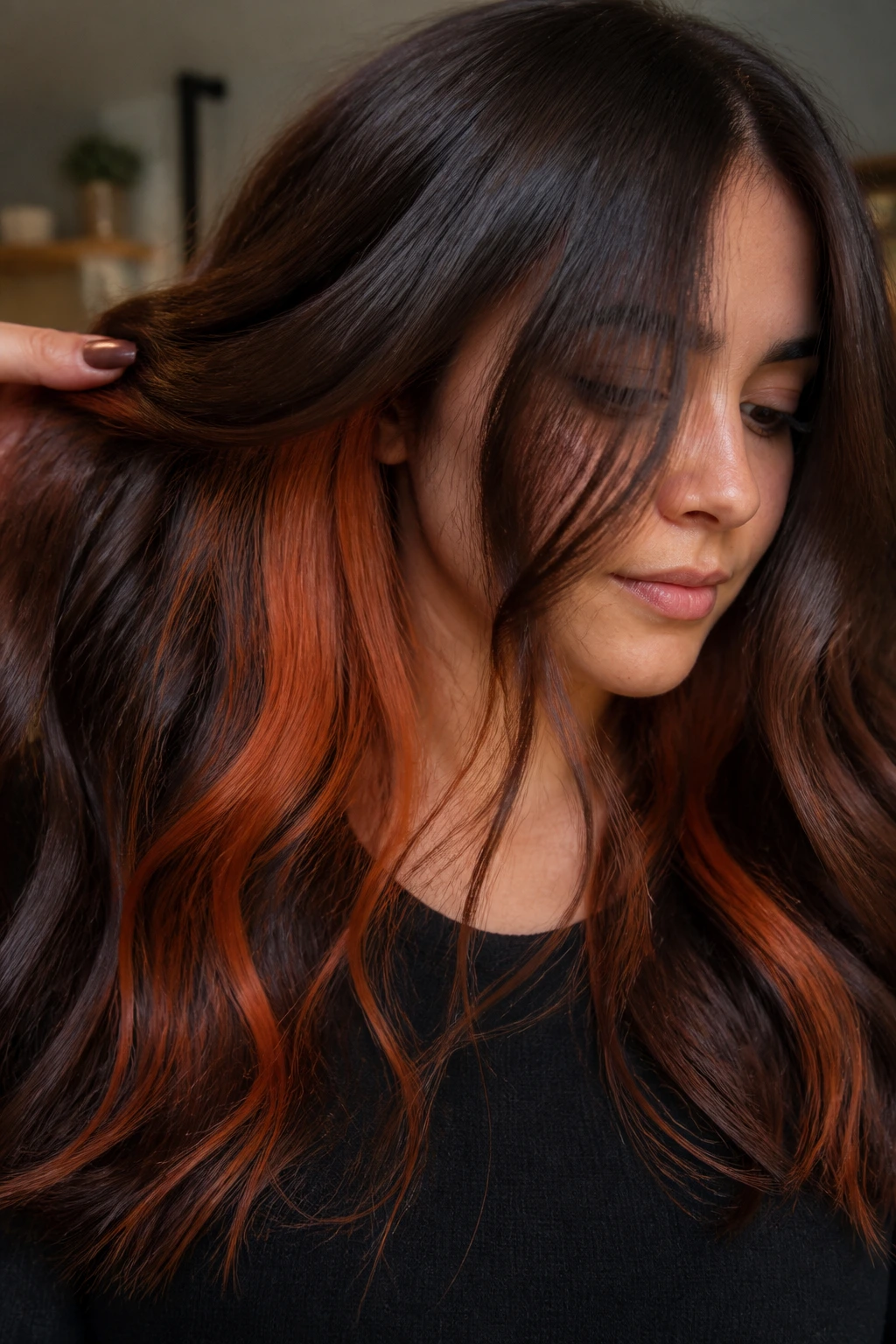
Hidden color is underrated. Peekaboo ginger pieces sit under the top layers, so the color shows when the hair moves, flips, or gets pinned up. On brown hair, that gives you a little surprise without turning the whole head into a red statement.
The placement matters more here than the exact shade. Keep the visible top sections mostly brunette, then paint the underneath layers in copper or cinnamon. When the hair is down, the effect is subtle. When it’s half-up or tucked behind the ears, the ginger flashes through. It feels playful in a grown-up way.
- Works well for office-friendly color.
- Best when the top layer stays 1 to 2 shades darker.
- Great for ponytails and buns.
- Ask for underlayer balayage, not full saturation.
I like this look on people who get bored easily. It gives you movement and interest without forcing you to live with bright copper all day.
17. Copper Balayage With a Blunt Bob
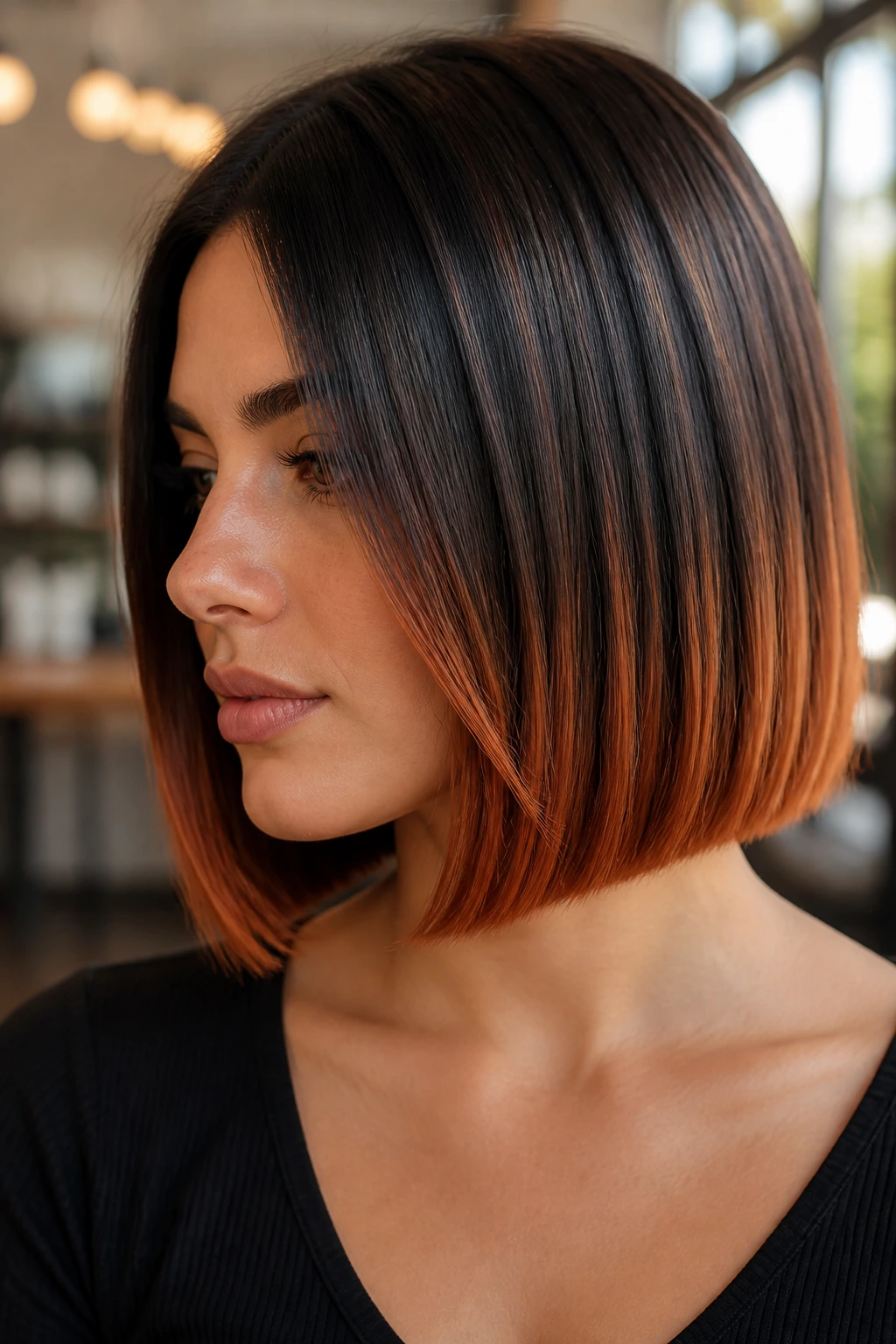
A blunt bob needs cleaner placement than long waves do. There’s less length to hide behind, so every highlight lands harder. That can be great. A copper balayage on a bob looks crisp, modern, and a little edgy, especially when the ends are kept tidy.
Because the cut is short, the color should usually start a bit lower and stay a bit narrower than it would on long hair. Too much brightness near the root can make the bob look busy. Instead, let the copper show through the middle and bottom half of the shape. That keeps the line of the cut sharp.
This style is especially strong on straight or slightly tucked-under bobs. The reflective copper catches the edge of the cut and makes it look intentional. If the bob has a little wave, even better — the color bends with the shape instead of sitting flat.
18. Cinnamon and Toffee Dimension
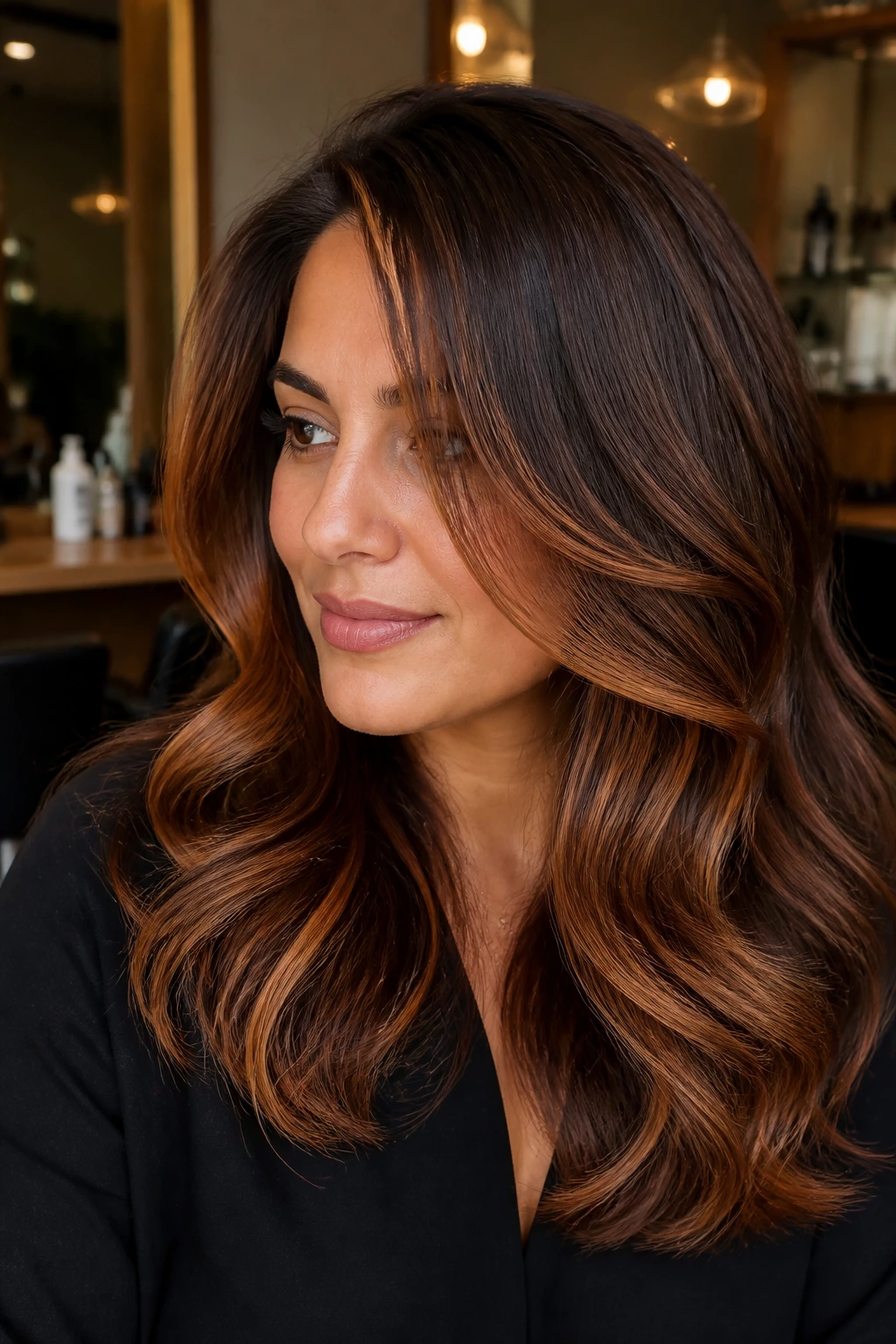
Cinnamon and toffee might not sound dramatic, but they make brown hair look layered in a way that plain single-tone color never does. Cinnamon adds the ginger warmth, while toffee keeps the whole thing soft and creamy. The two together give you depth instead of a flat red surface.
The smartest version uses different tones in different zones. A colorist might place cinnamon through the top and around the face, then keep toffee closer to the ends or underneath. That kind of contrast keeps the hair from looking dyed in one block. It also works well if you wear your hair in loose bends, because the shapes reveal the differences.
This is one of my favorite choices for medium brown hair that needs warmth but not brightness. It feels relaxed, not loud, and it still has enough ginger in it to read as a real color change.
19. Ginger Balayage on Curly Brown Hair
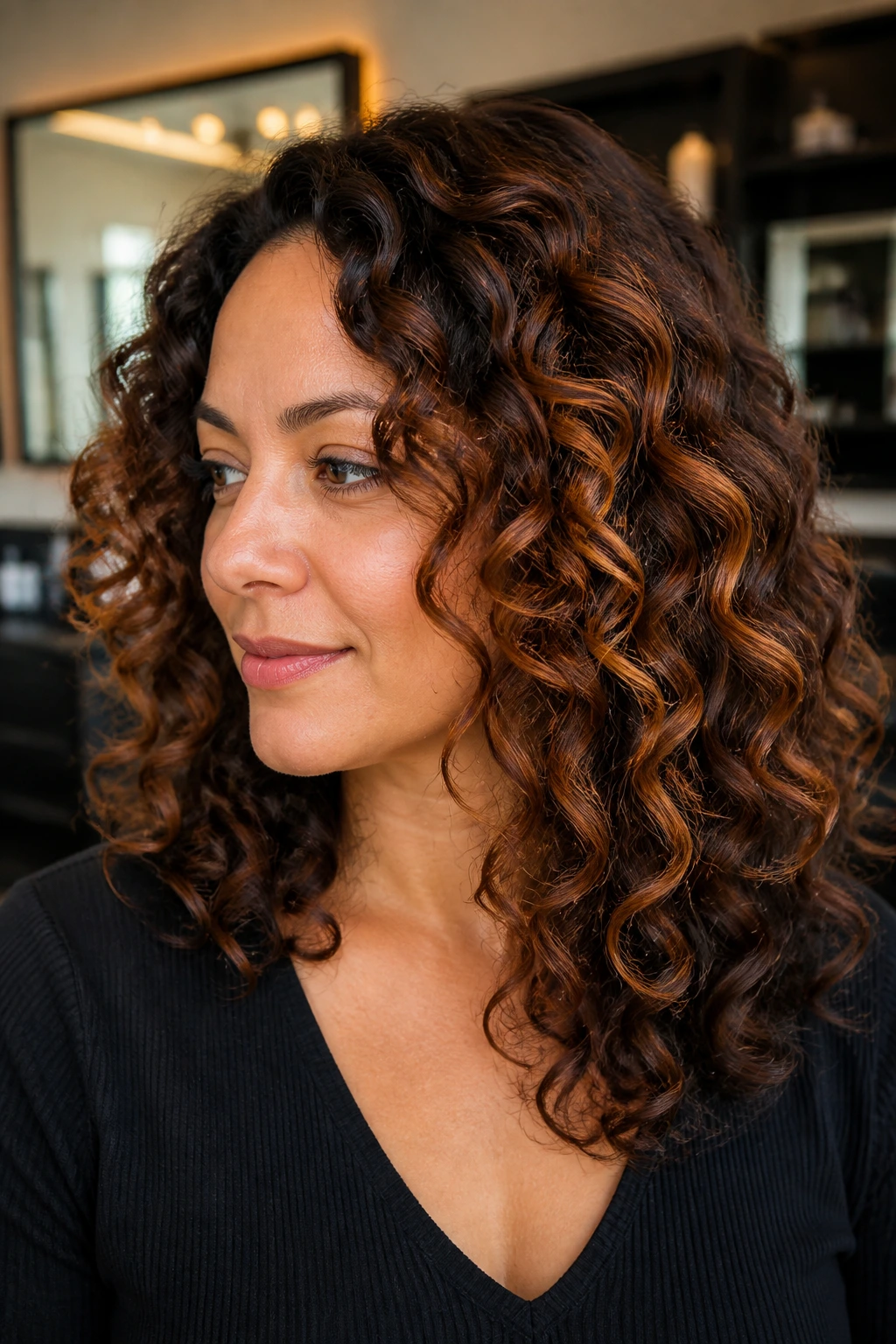
Curly hair eats up color fast if the pieces are too small. That is the main thing to remember here. On brown curls, ginger balayage needs room to show, because the curl pattern compresses the highlight once the hair dries.
What to ask for
- Use wider painted sections on the outside of the curl clumps.
- Keep some darker space between ribbons.
- Ask for a tone that stays copper-ginger, not red-orange.
- Let the stylist check the curl pattern dry, not only wet.
When the placement respects the curl, the color looks alive instead of scattered. The brightest pieces should sit where the ringlets naturally separate — around the front, through the top, and on the ends that bounce forward. If the sections are too thin, the curls hide the color and all that work disappears.
Curly balayage is one place where a little boldness helps. Not chaos. Just enough.
20. Copper Balayage on a Collarbone Lob
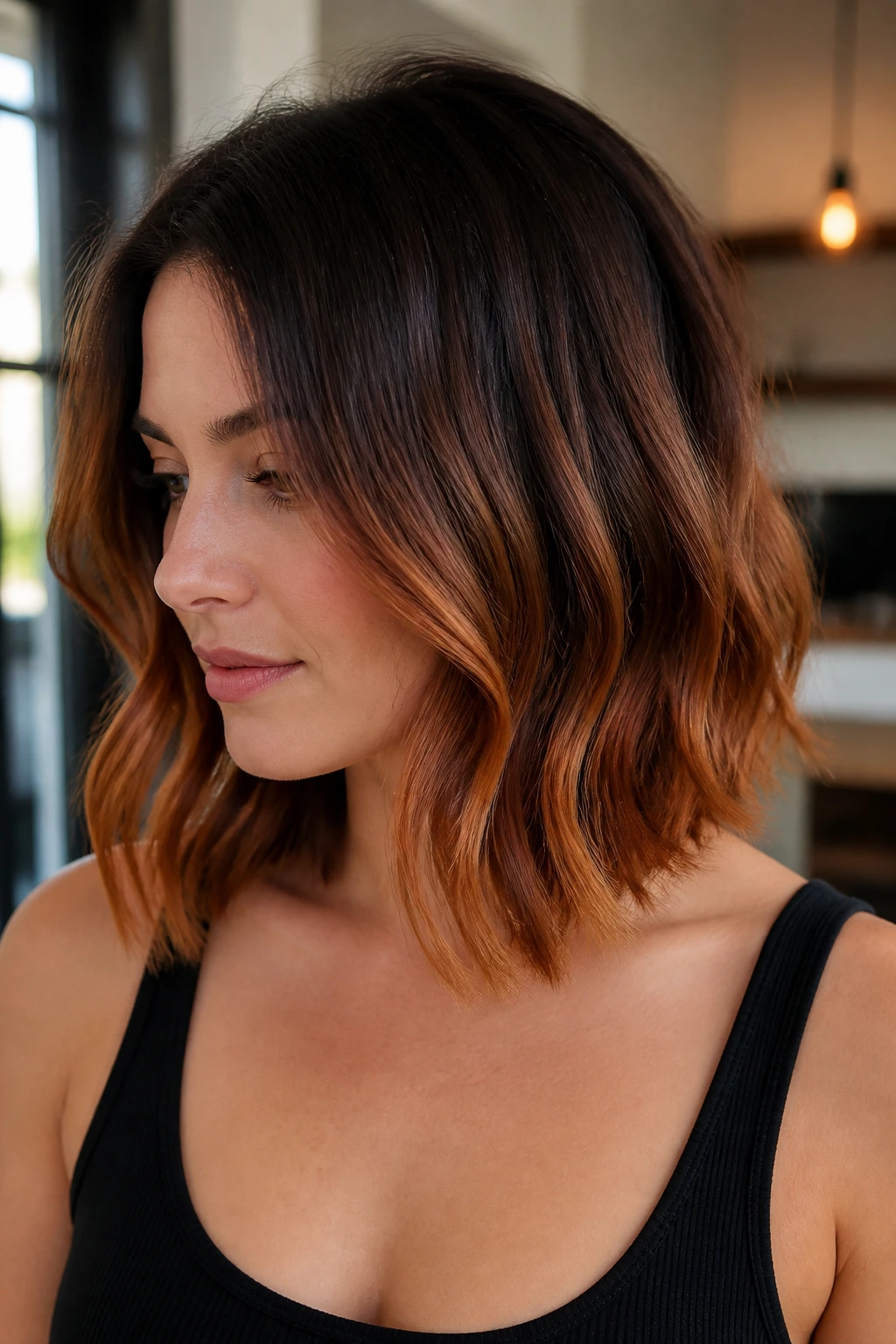
A shorter cut can handle more color than people think. A collarbone lob gives copper balayage a clean surface to show off on, and because the hair sits close to the shoulders, the warm pieces are easy to see even when the hair is tucked behind one ear.
The placement should stay controlled. Brightness from the mid-lengths to the ends keeps the lob from looking overdone, while a deeper root makes the cut look fuller. On very blunt lobs, I’d keep the highlight width slimmer. On slightly textured lobs, you can open the ribbons up a bit more and let the movement do some work.
This style is good for anyone who wants ginger color without long-hair maintenance. You get the visual payoff, but the cut itself keeps the whole thing feeling sharp. A lob and copper are a strong pair when the tone is warm, not neon.
21. Rosy Ginger Blend for Brunette Hair
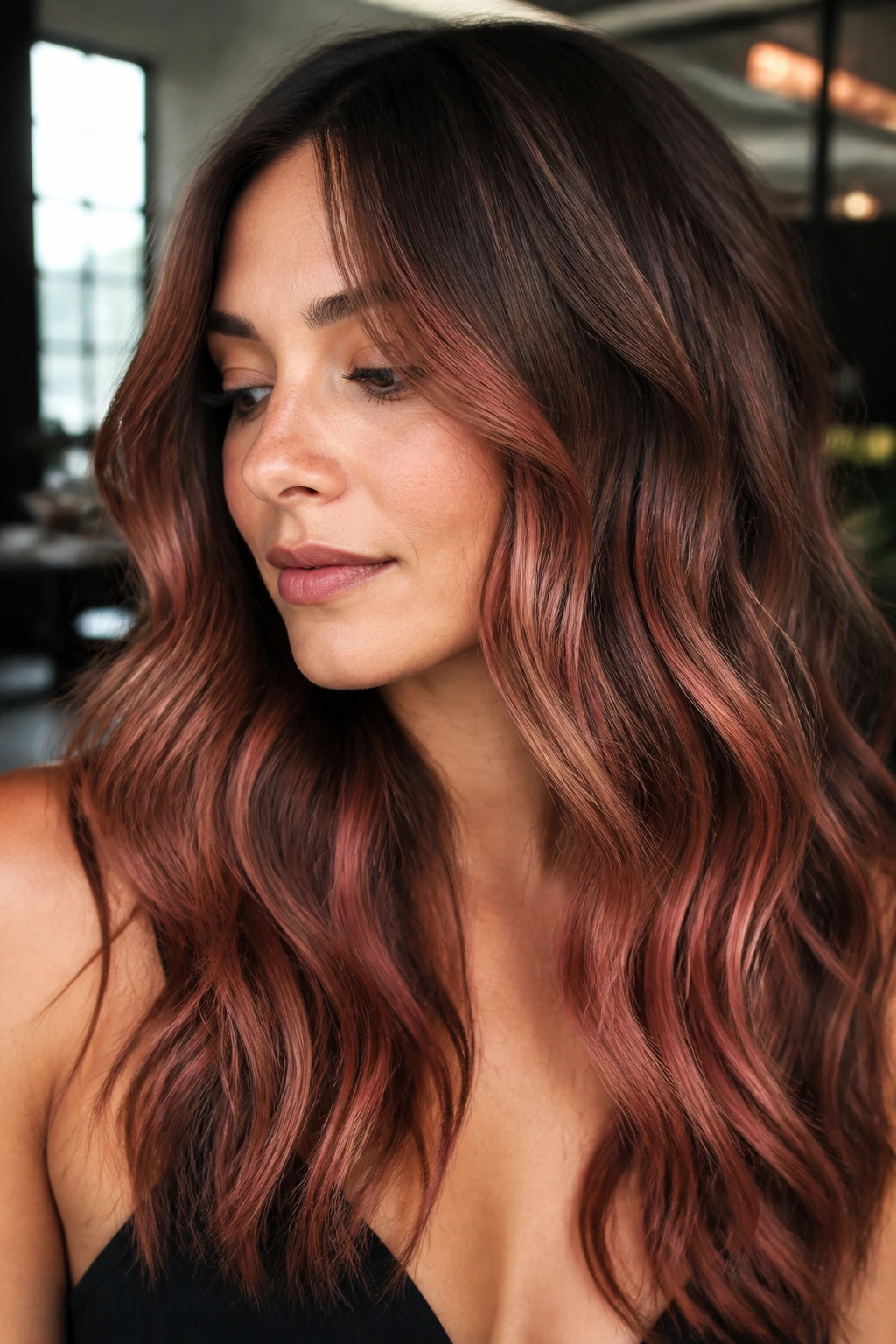
If straight copper feels too hot, a rose note softens the whole thing. Rosy ginger sits between pink, copper, and auburn, which makes it feel a touch more romantic on brunette hair. It’s still warm, still vivid, but less likely to read as orange.
The best way to wear it is through a brown base that still has some depth. The brunette ground keeps the rosier pieces from looking washed out. You also get a nice contrast between the muted root and the warmer mids. That contrast is subtle, but it matters.
This version tends to flatter wavy hair especially well because the pink-copper mix shifts as the strands move. If you like makeup with warm blush tones, this hair color can echo that same softness. It’s not loud. It doesn’t need to be.
22. Smoky Ginger on Cool Brown Hair
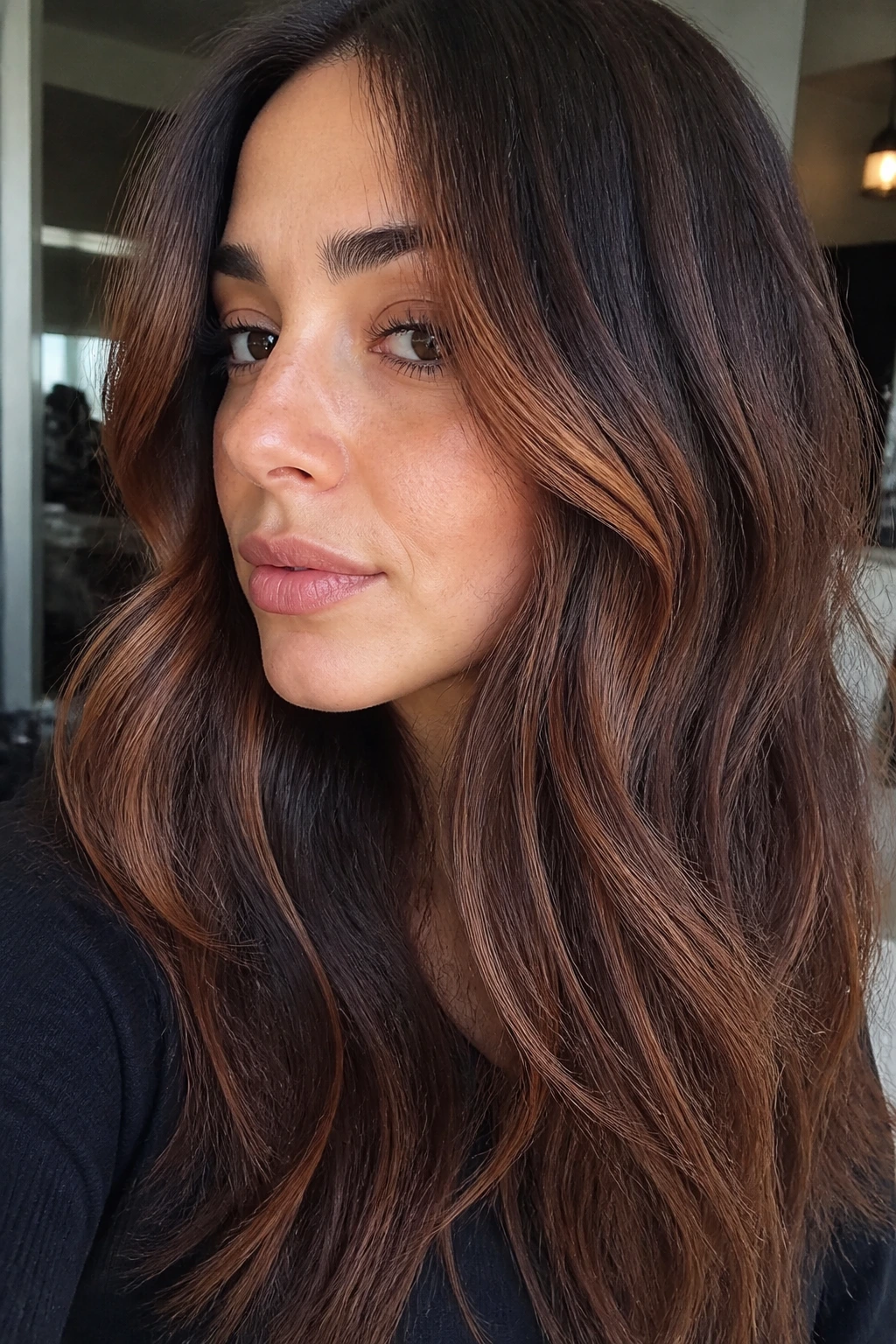
Cool brown hair is tricky with red tones, and that is exactly why this version works. Smoky ginger keeps some ash in the base so the warmth doesn’t clash with the cooler brown underneath. You still get the copper family, but the edges are softer.
That balance matters if your natural brown leans mushroom, mocha, or espresso with a cool cast. Pure orange can look harsh against those bases. A smoky ginger glaze holds the line better. Ask for a color that reads muted in the bowl, not bright. The finished result should feel like warm smoke over brown hair, not a fire engine moment.
This is also one of the better choices if you prefer low-gloss styling and softer blowouts. The color doesn’t depend on perfect shine to look good. It has enough depth to stand up on its own.
23. Bronze-Ginger Money Piece and Ends
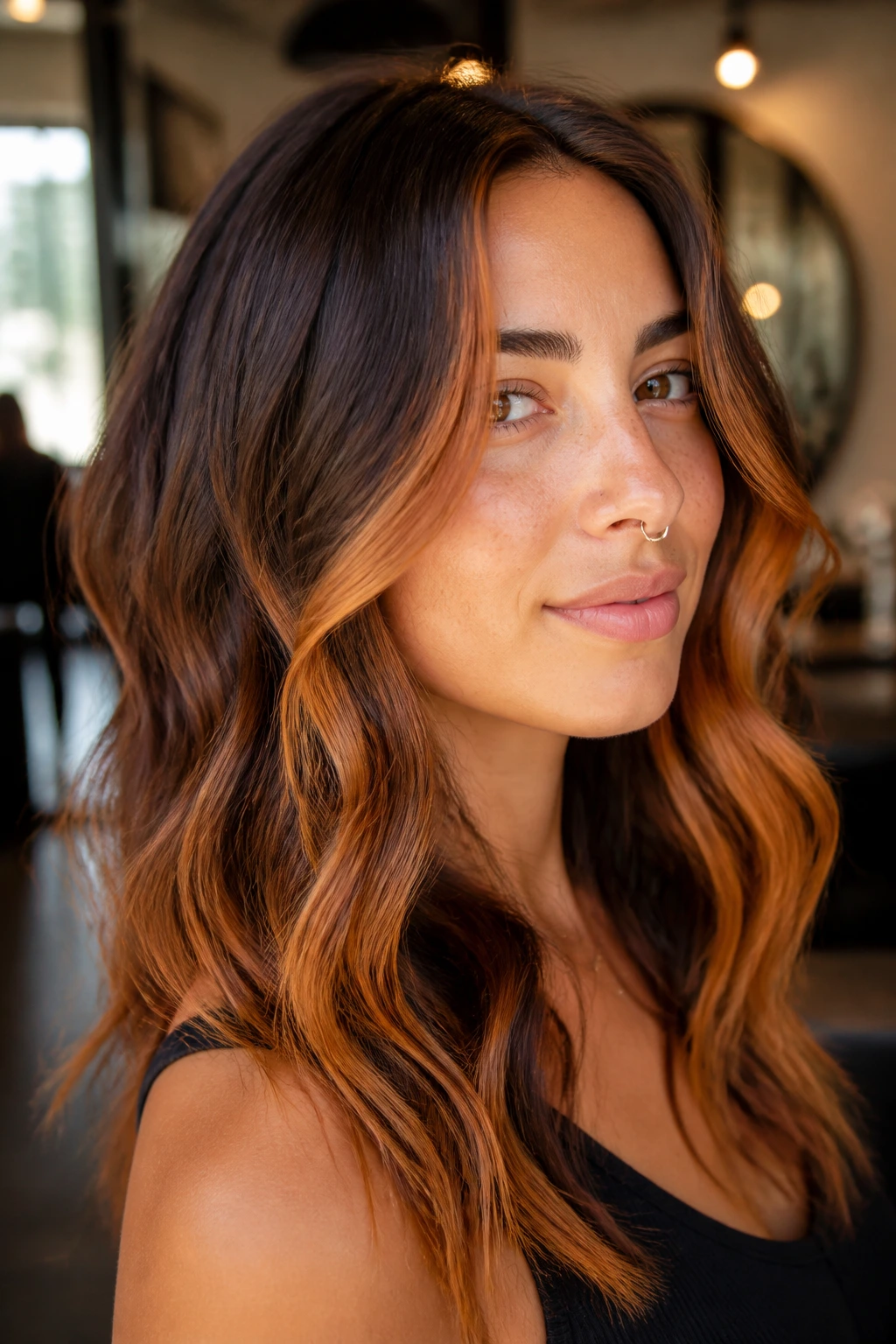
This look does the most with the least color. Bronze-ginger concentrates brightness at the face and the ends, which is smart when you want movement without a full-head change. The bronze bridges the copper and brown, so the whole finish feels coherent.
Why it stays wearable
- The face-framing pieces stay brighter than the rest.
- The ends carry the most ginger, so the color shows when the hair moves.
- The mid-lengths keep a more muted bronze-brown blend.
- Grow-out is easier because the root stays deep.
That mix is useful on straight hair, but it’s even nicer on loose waves, where the front pieces can fall around the cheeks and jaw. If you wear glasses, this is a particularly good choice — the warm face frame sits right where your eyes land, so the color reads fast.
24. Deep Auburn Balayage on Long Layers
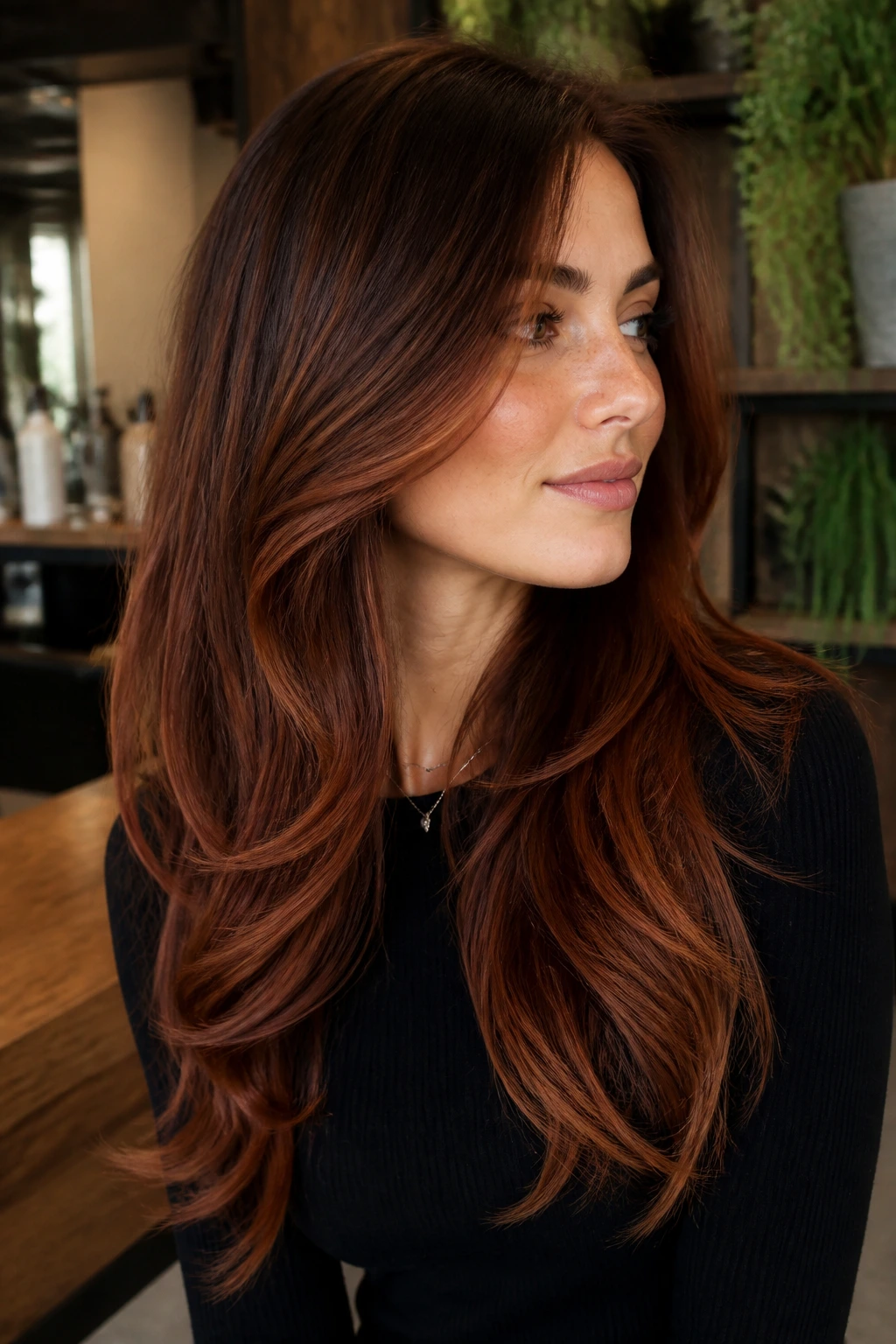
Long layers are made for this kind of color. Deep auburn needs space to travel, and layers give it that. The top pieces can stay a little darker, while the lower layers pick up richer red-brown movement. The whole head ends up looking dimensional instead of painted.
I’d keep the auburn more concentrated through the mid-lengths and ends, especially if the brown base is already dark. Long hair can handle contrast, but too much brightness up top can make the style look heavier than it is. A deep auburn melt feels richer when the root is left alone.
Loose waves are the obvious styling choice, but a large-barrel blowout works too. The wide curve shows the color shift without breaking the shape apart. That’s the part I like best: the layers and color help each other instead of competing.
25. Ginger Balayage for Fine Hair
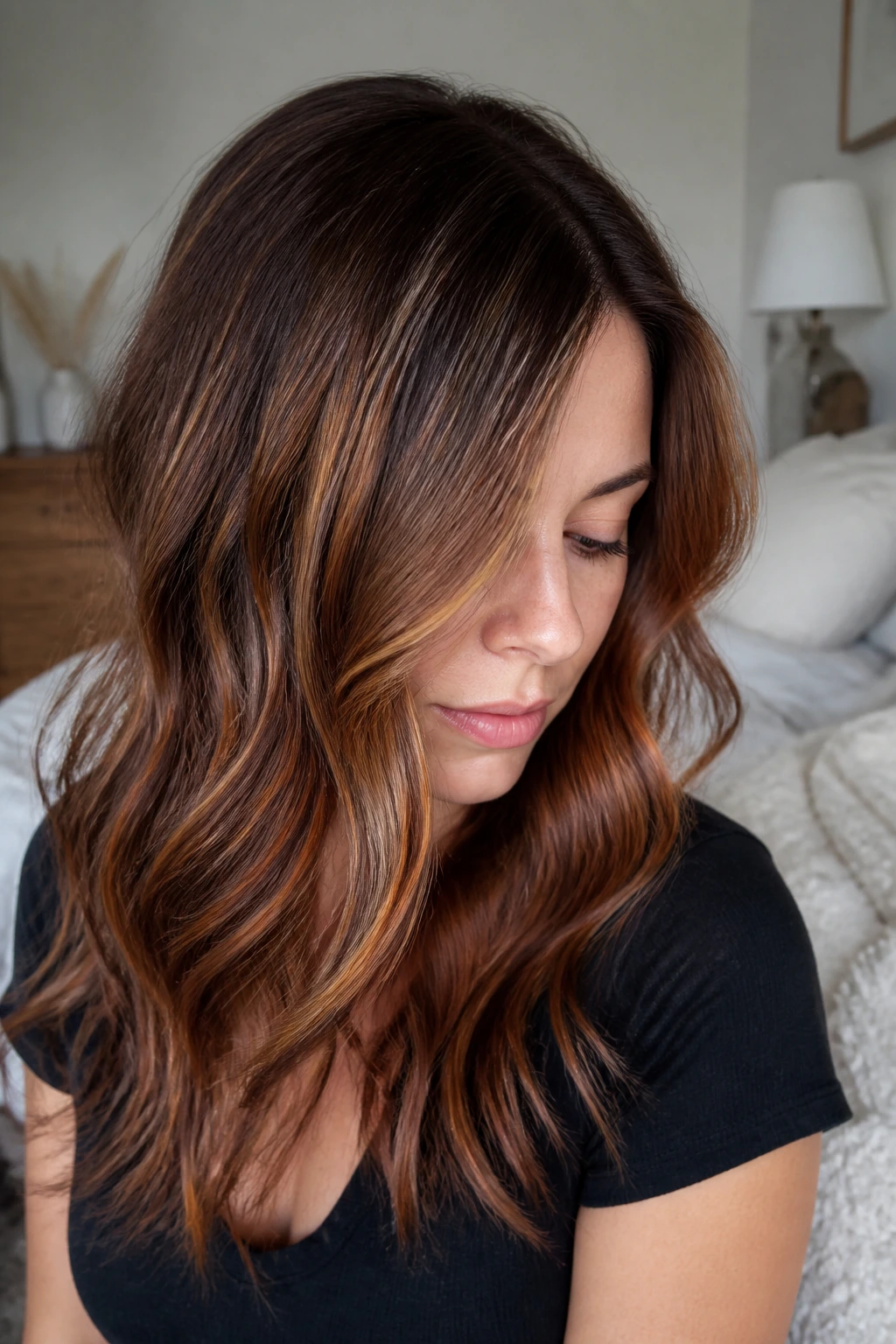
How do you keep ginger from looking stripey on fine hair? You keep the sections airy. Fine hair needs delicate placement, because thick ribbons can swallow the shape and make the color look pasted on. Micro-weaving and soft saturation are your friends here.
Keep the sections airy
- Use narrow painted pieces through the crown and front.
- Leave plenty of brown between highlights.
- Ask for a soft copper-cinnamon toner instead of a bold orange one.
- Style with volume at the roots so the dimension can show.
Fine hair can look especially good with ginger balayage when the shine is right. A smoother surface makes the color feel expensive, but too much product can flatten it. Light, movable color is the goal. If you want more brightness, keep it near the face and on the very ends, where the hair appears denser anyway.
26. Ginger Balayage for Thick Hair
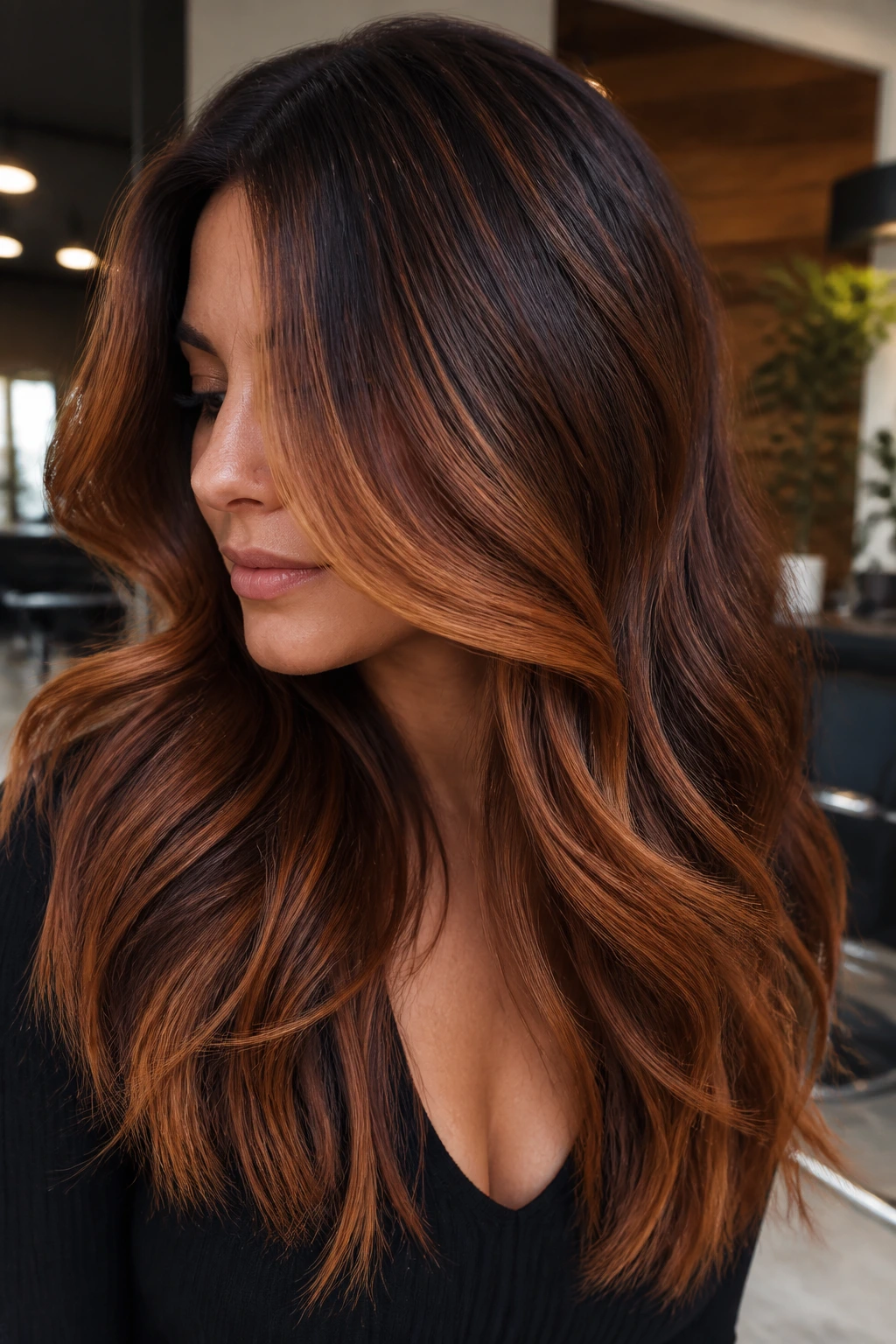
Thick hair needs bolder placement or the color disappears. That’s the big difference. On dense brown hair, tiny highlights can vanish once the hair is dried and brushed out, so wider ribbons and stronger contrast tend to work better.
The sections should usually be wider, and the saturation can be a little more generous through the mids and ends. That doesn’t mean overprocessing. It means giving the color enough surface area to show up. A layered cut helps a lot here, because it stops the color from sitting like one giant block.
If your hair is heavy, ginger balayage can also help break up the weight visually. The warm ribbons create movement where the cut alone can’t. This is one of those cases where the color does some of the styling for you. Handy. Very handy.
27. Lived-In Copper With a Root Melt
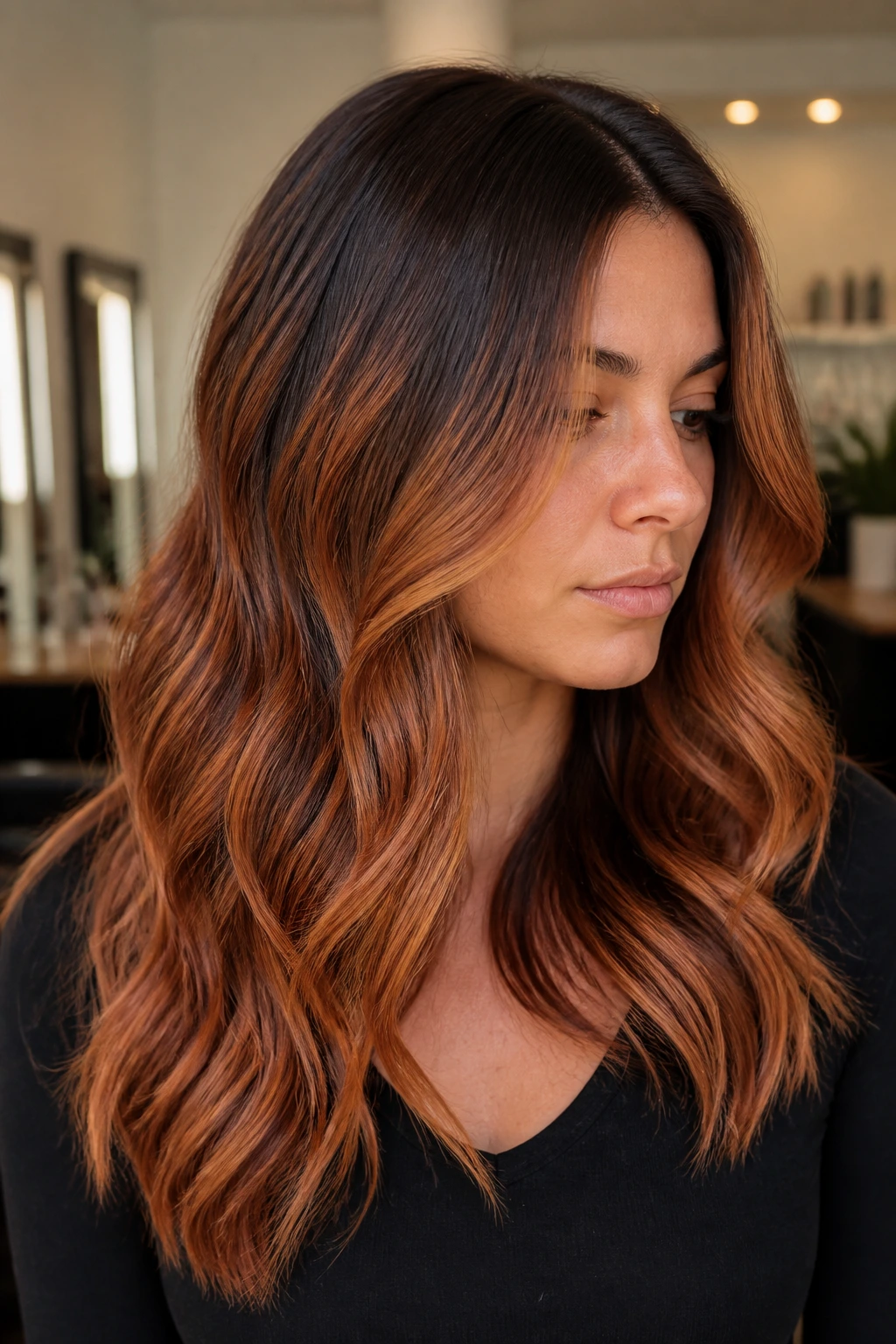
This is the version for people who hate constant touch-ups. A root melt keeps the top deeper, then lets copper unfold through the lengths in a way that looks soft even when the hair grows. It’s one of the most practical ginger balayage choices for brown hair.
The melt should be gradual. No hard line. The root can stay in a level 4 or 5 brown range, then soften into copper-gold mids and brighter ends. That gives the hair a lived-in look that survives ponytails, messy buns, and all the other things real life does to hair.
It also makes the color easier to refresh later. You can gloss the lengths without redoing the whole head, which saves time and keeps the hair in better shape. If you want ginger but don’t want to babysit it, this is the one I’d point you toward first.
28. Dimensional Ginger Gloss Refresh for Brown Hair
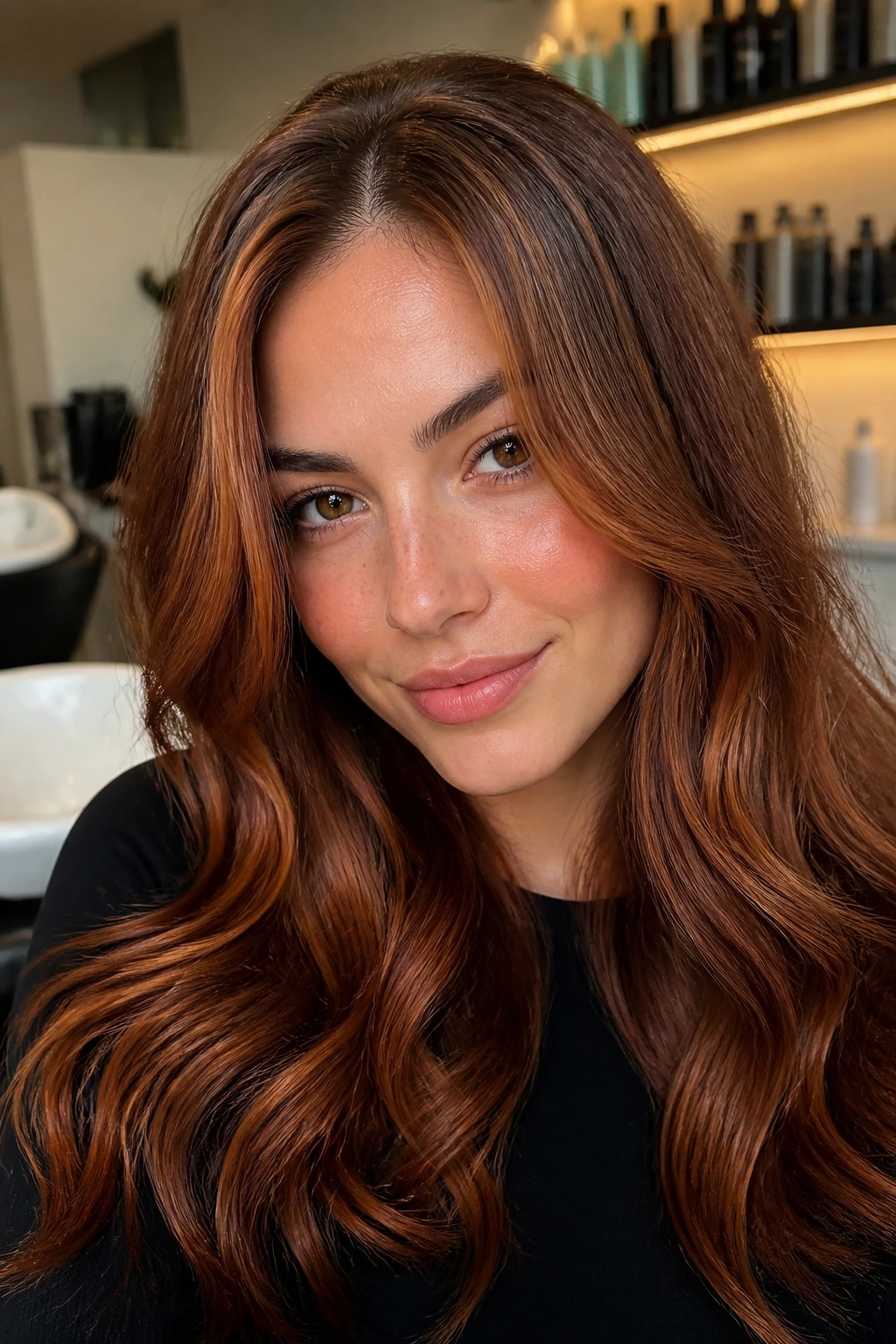
Not every good ginger look starts with fresh lightening. Sometimes the smartest move is a gloss refresh over balayage that’s already there. A dimensional ginger gloss can bring back copper, amber, or cinnamon notes in about 15 to 20 minutes at the bowl, depending on the formula and the starting point.
The point is shine and tone, not more lift. That matters. Brown hair with old balayage often loses its warmth first, and a gloss can pull the color back without roughing up the ends again. It’s also a good fix when the highlights have gone a little yellow or dull. The right glaze brings the ginger family back into focus.
I like this as a maintenance look because it keeps the hair from feeling overworked. You still get that warm, dimensional finish, just with less drama and less damage. Sometimes the best color move is not a bigger one.
Final Thoughts
The strongest ginger balayage looks on brown hair usually share the same quiet trick: they keep the root a touch deeper than you expect. That little shadow makes the copper, cinnamon, or auburn pieces look richer and helps the grow-out stay soft.
If you’re choosing between several shades, start with your base color and your haircut. Fine hair needs lighter placement. Thick hair can take broader ribbons. Curls need room. Short cuts need cleaner lines. Long layers can carry the most dimension, which is why they keep showing up in this kind of color work.
And if you want the safest first step, ask for a gloss before you ask for a full lift. Warmth can be added gradually. That’s often where ginger balayage looks best anyway.
