



Round faces and caramel balayage can work together in a way that feels easy, not fussy. The trick is placement. Not the shade alone, not the curl pattern alone, and definitely not some heavy stripe of brightness sitting right across the cheeks.
The widest part of a round face is usually around the middle, so the smartest color work pulls the eye up and down instead of letting it spread side to side. That means softer depth at the roots, lighter pieces that start lower than many people expect, and enough movement in the cut to keep the whole thing from reading boxy. A blunt band of light at cheek level can make a face look wider fast. Skip that.
Caramel is a nice middle ground for brunettes because it has warmth without turning brassy in the way some gold tones can. It gives shine. It softens dark hair. And when it’s painted with a little restraint, it has that lived-in look people keep asking for at the salon, even if they do not always know how to describe it.
Some of the looks below stay whisper-soft. Others go brighter and more graphic. That mix matters, because round faces do not all want the same thing, and neither do hair textures that range from pin-straight to springy curls. The cut, the density, and how often you actually style your hair all change the answer.
1. Chestnut Brown Waves with Caramel Ribbons Dropping Below the Cheekbones
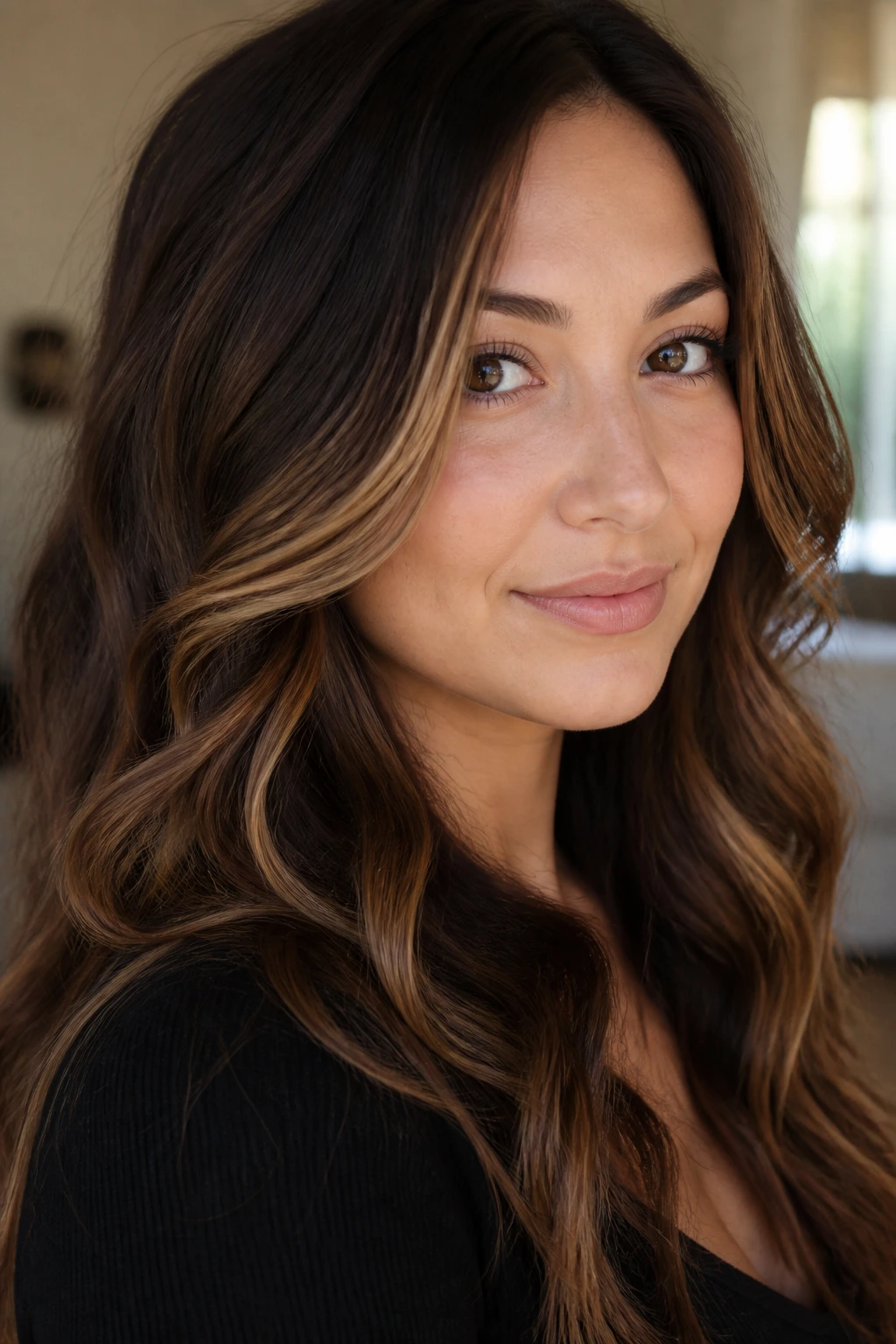
This is the easiest place to start if you want caramel balayage on a round face without making the color the loudest thing in the room. The chestnut base keeps the top half rich, while thin caramel ribbons sneak in below the cheekbones and disappear toward the ends. That lower placement is doing a lot of the work.
A round face needs length in the eye line, and this look gives it by keeping the brightest pieces out of the widest part of the face. Ask for ribbons that are no wider than a half-inch near the front, then let them feather out as they move downward. The waves do the rest.
Tiny details matter here.
Use a 1.25-inch curling iron or a round brush blowout, and curl the front pieces away from the face so the color drapes vertically instead of hugging the cheeks. I like this look most on hair that falls past the shoulders, because the length gives the caramel room to breathe.
2. Collarbone Lob with a Soft Caramel Money Piece
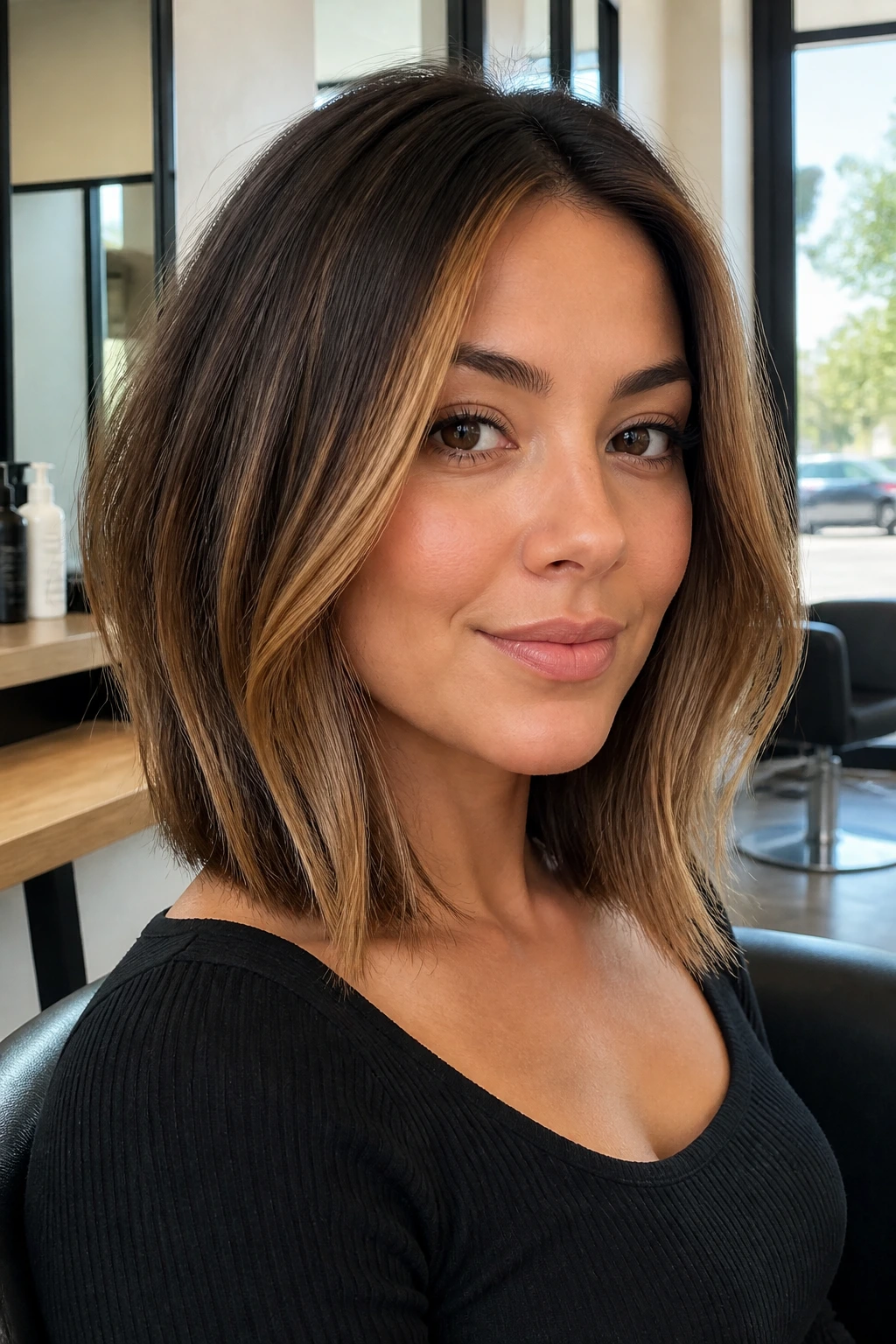
What happens when you want brightness near the face but do not want it to widen the cheeks? You keep the money piece soft, tapered, and a little longer than people usually ask for.
Why It Works
A collarbone lob already gives a round face some length, because the cut ends below the jawline. Add a caramel money piece that starts at the temple and thins out by the cheek, and you get lift without a hard stripe. The front should not look like two light bars. It should look like a gentle frame that opens the face.
Ask your colorist for one to two levels lighter than the base in the front, then let the rest of the balayage stay quieter through the mid-lengths. If you wear a middle part, this is especially clean. If you wear a side part, it gets a little more sculpted.
What to Ask For
- A soft face frame that starts at the temple, not the hairline
- Caramel that is lighter at the ends than at the cheek level
- A root shadow so the top stays deep and keeps the cut from puffing out
- Light, bent waves or a flat iron wave for movement
If the front pieces are too thick, the whole cut loses its shape.
3. Espresso Waves with Toffee Ends
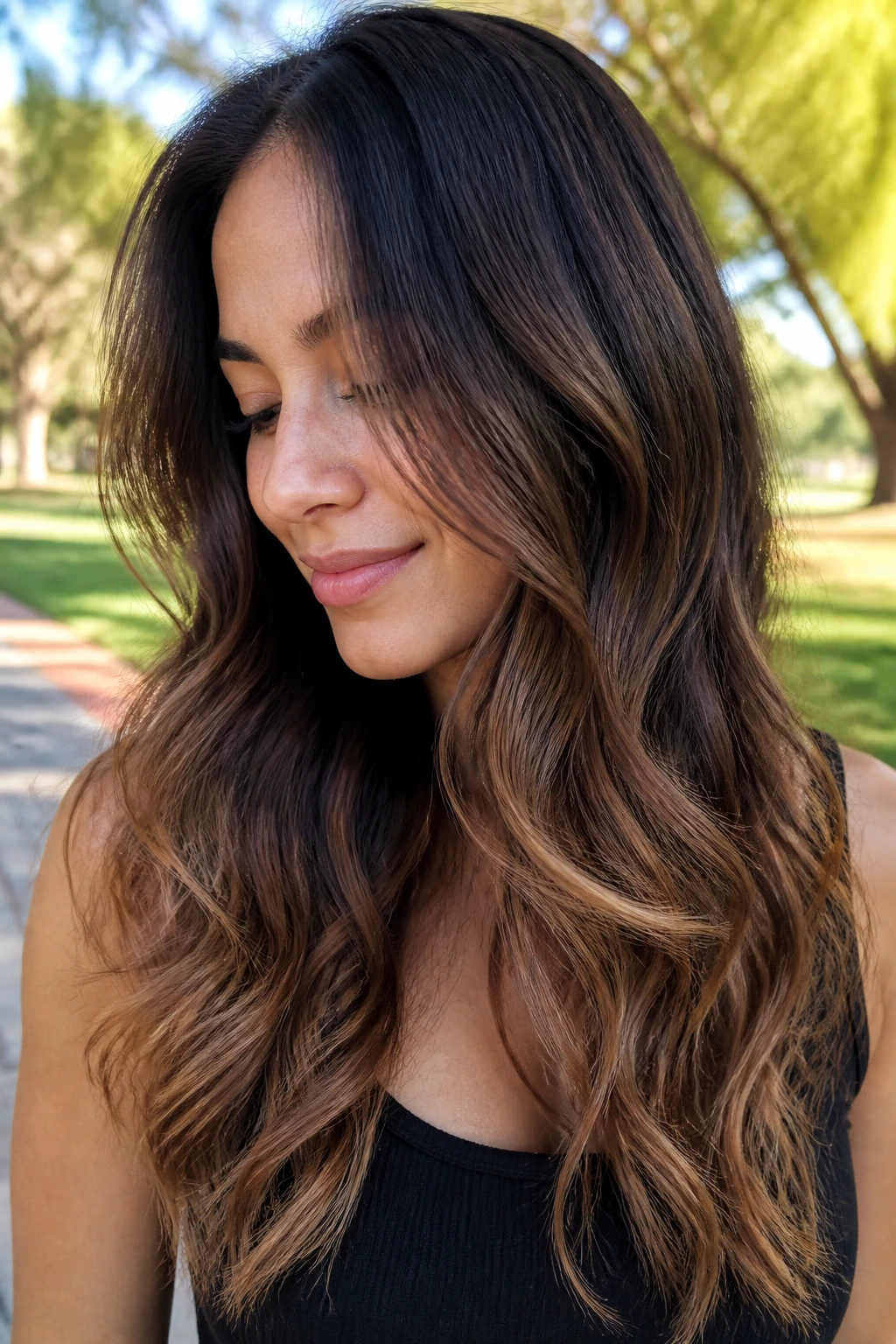
A round face can wear bold contrast, but only when the lightness stays low enough to avoid spreading across the middle of the face. Espresso roots and toffee ends do that nicely. The base keeps the crown anchored, and the ends give you the warmth people want when they ask for caramel balayage.
This look works well on long hair that feels heavy around the jaw. The darker upper section makes the hair look narrower near the scalp, while the toffee at the ends draws the eye downward. It is a simple trick, but it works because the eye follows the lighter path.
I would not make the front pieces too bright here. Keep the face frame diffused, almost hazy, and let the strongest caramel live from the mid-lengths down. If you want a little extra movement, ask for loose bends instead of tight curls. The color will read more expensive and less stripy.
4. Curtain Bangs and Warm Caramel Sweep
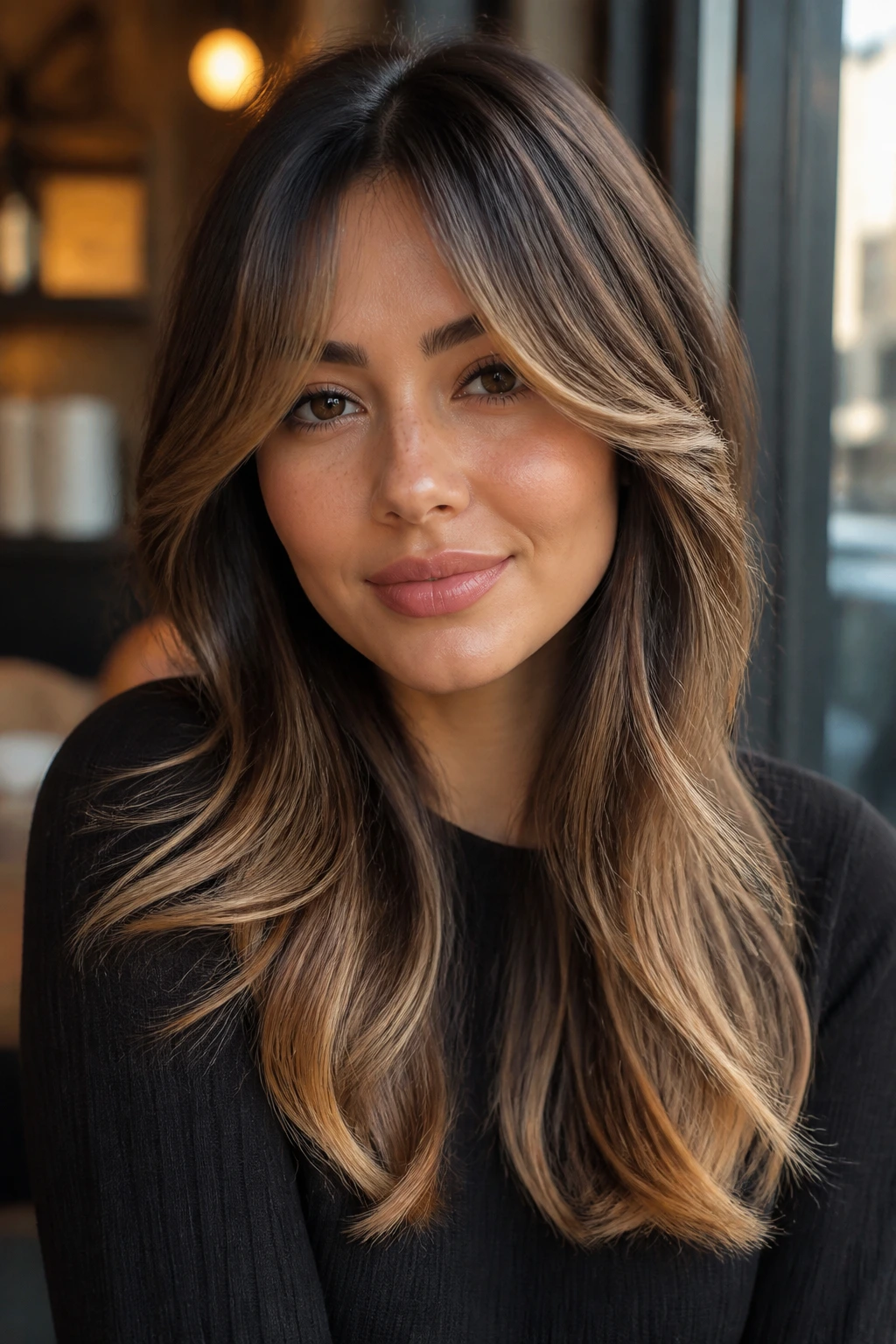
Curtain bangs can be tricky on round faces, and that is exactly why this look deserves attention. If the bangs are too short or too blunt, they stop the face instead of opening it. If they’re long, feathered, and split around the center, they make the face feel longer right away.
The caramel should not fight the bangs. It should travel with them. Warm brown at the roots, soft caramel at the fringe edges, and brighter ends below the chin give the whole cut a lifted line without making the cheeks look wider. I like this especially when the longest bang pieces hit around the cheekbone and then curl away from it. That little curve matters.
The color also keeps the fringe from looking heavy. Straight dark bangs can feel dense on a round face, while a little warmth at the edges lightens the whole picture. If you air-dry, use a small round brush just on the bang area. The rest can stay soft and imperfect.
5. Shoulder-Length Shag with Feathered Caramel Slices
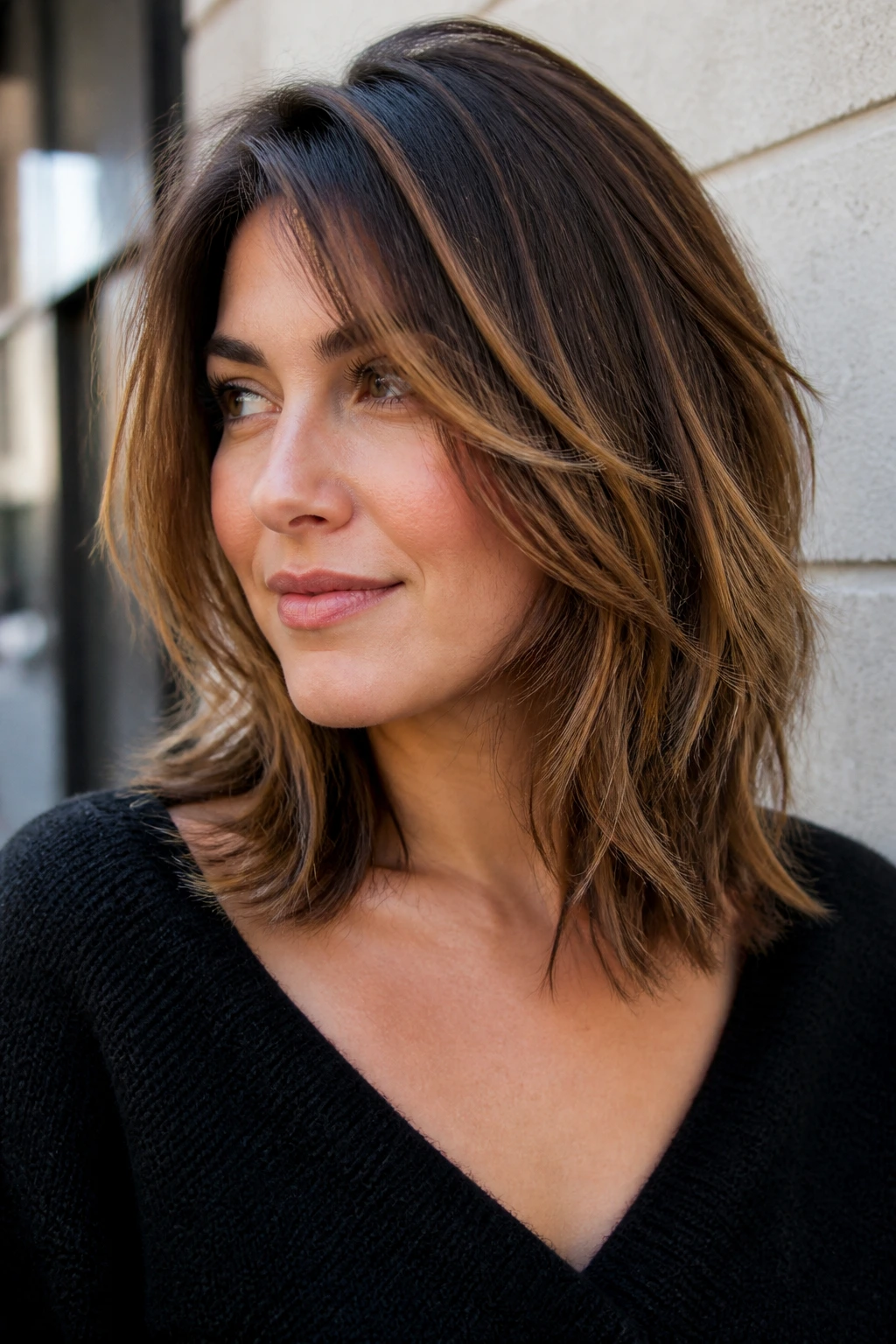
This is the one for people who want texture to do half the work. A shag creates broken lines around the face, which is useful on a round shape because it stops the eye from resting on one wide curve. Caramel slices, painted through the layers, add even more movement.
The key is feathering. You do not want thick panels sitting flat over the cheeks. You want narrow slices that catch the ends of the layers and skim downward. The shag itself gives a bit of edge, while the caramel keeps the layers from looking too dark and heavy.
This cut looks especially good with a rough dry finish. Scrunch in a light mousse, dry about 80 percent, then twist a few front pieces around your fingers so the light hits unevenly. That unevenness is useful. It keeps the hair from reading like a helmet, which is the thing round faces should avoid most.
6. Deep Side Part with a Bright Caramel Face Frame
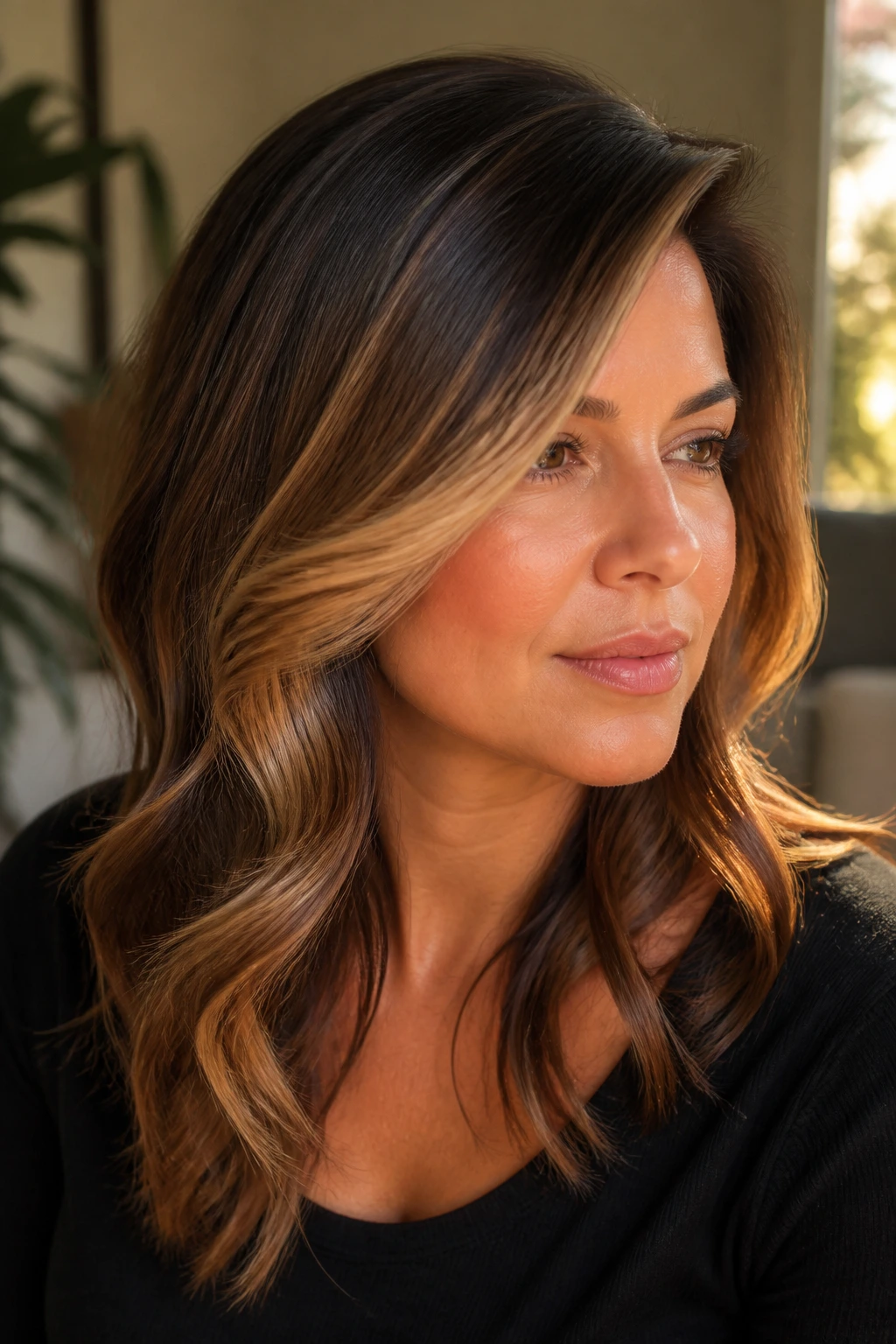
A side part is underrated for round faces. It creates a diagonal line across the forehead, and diagonals do a nice job of breaking up soft curves. Add a bright caramel face frame on the heavier side, and the whole cut starts to feel longer and a little sharper.
Why It Works
The part changes the balance of the face before the color even shows up. Then the face frame takes over. Ask for a bright piece that begins around the brow or temple and fades as it reaches the collarbone. It should feel like a streak of light, not a painted stripe. The goal is lift on one side, not a matching pair of bright panels on both cheeks.
Salon Notes
- Keep the roots on the bright side slightly deeper for contrast
- Put the brightest bit just under the first bend of the hair
- Leave the opposite side softer so the look does not spread outward
- Blow-dry with the front section swept away from the face
A little asymmetry goes a long way here. That slight imbalance is the point.
7. Sleek Straight Lengths with a Blended Caramel Melt
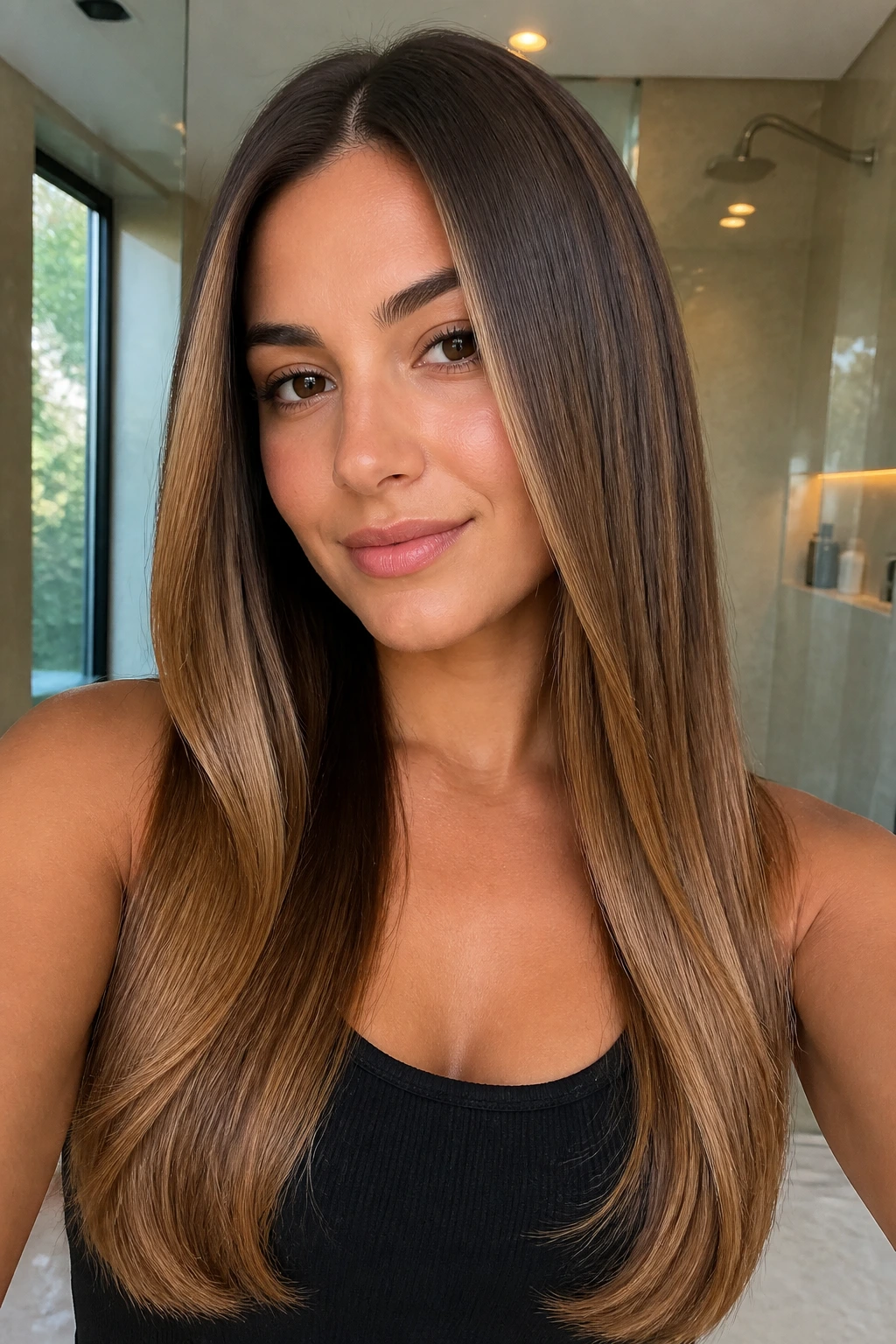
Straight hair can make a round face look wider if the color is too blunt, so the blend matters. A caramel melt works because it softens the transition from root to ends and keeps the eye moving down the length of the hair.
This is a good choice if you like polished hair and do not want curls every day. The top stays deep, the mid-lengths pick up a smoky brown-caramel mix, and the ends become the lightest part. Since the strands lie flat, any hard line would show right away. A melt hides that problem.
I prefer this style with a center part and slightly beveled ends. The center part gives a vertical line, and the beveled ends stop the cut from feeling boxy. A flat iron bend near the bottom third can also help. Keep it loose. Sharp bends fight the softness of the balayage, and you do not need that here.
8. Mid-Length Curls with a Caramel Halo
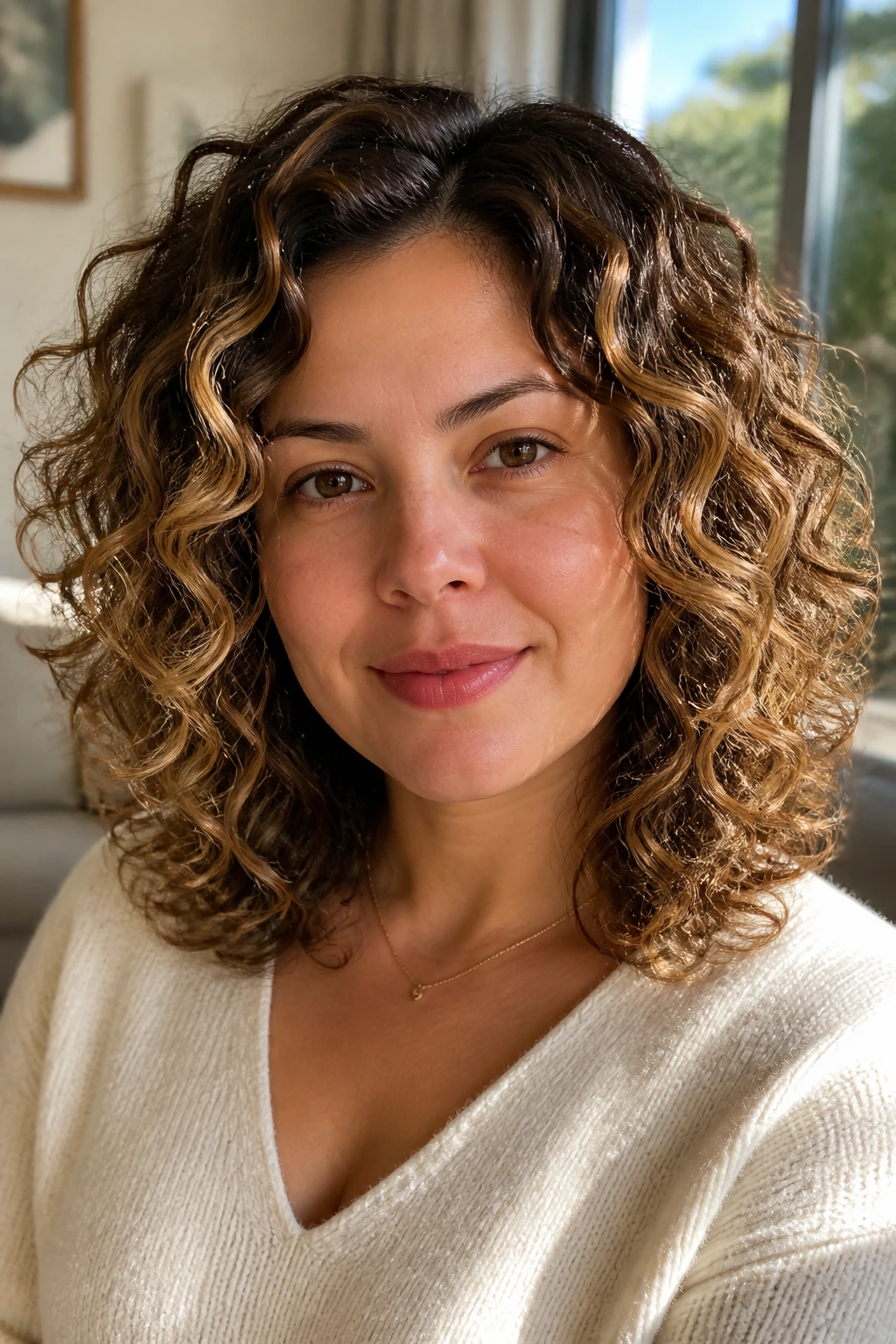
Can curls work on a round face? Absolutely. The trick is where the brightness sits. A halo of caramel through the outer curl layer keeps the shape airy, while darker mids underneath stop the whole style from puffing outward.
How to Make It Work
Ask for a balayage that follows the curl pattern instead of crossing it. That usually means lighter pieces placed around the perimeter, with extra focus on the lower half of the curl stack. If the light lands too high, the face starts to look broader. If it lands lower, the curls feel lifted and the face gets a longer line.
Styling Direction
- Diffuse on low heat so the curl clumps stay soft
- Use a curl cream, not a heavy butter
- Pin a few front curls back while drying if they sit too wide
- Shake the roots loose at the end for height, not volume at the cheeks
The curl should float, not balloon. That is the difference.
9. Blunt Bob with Understated Caramel Underlights
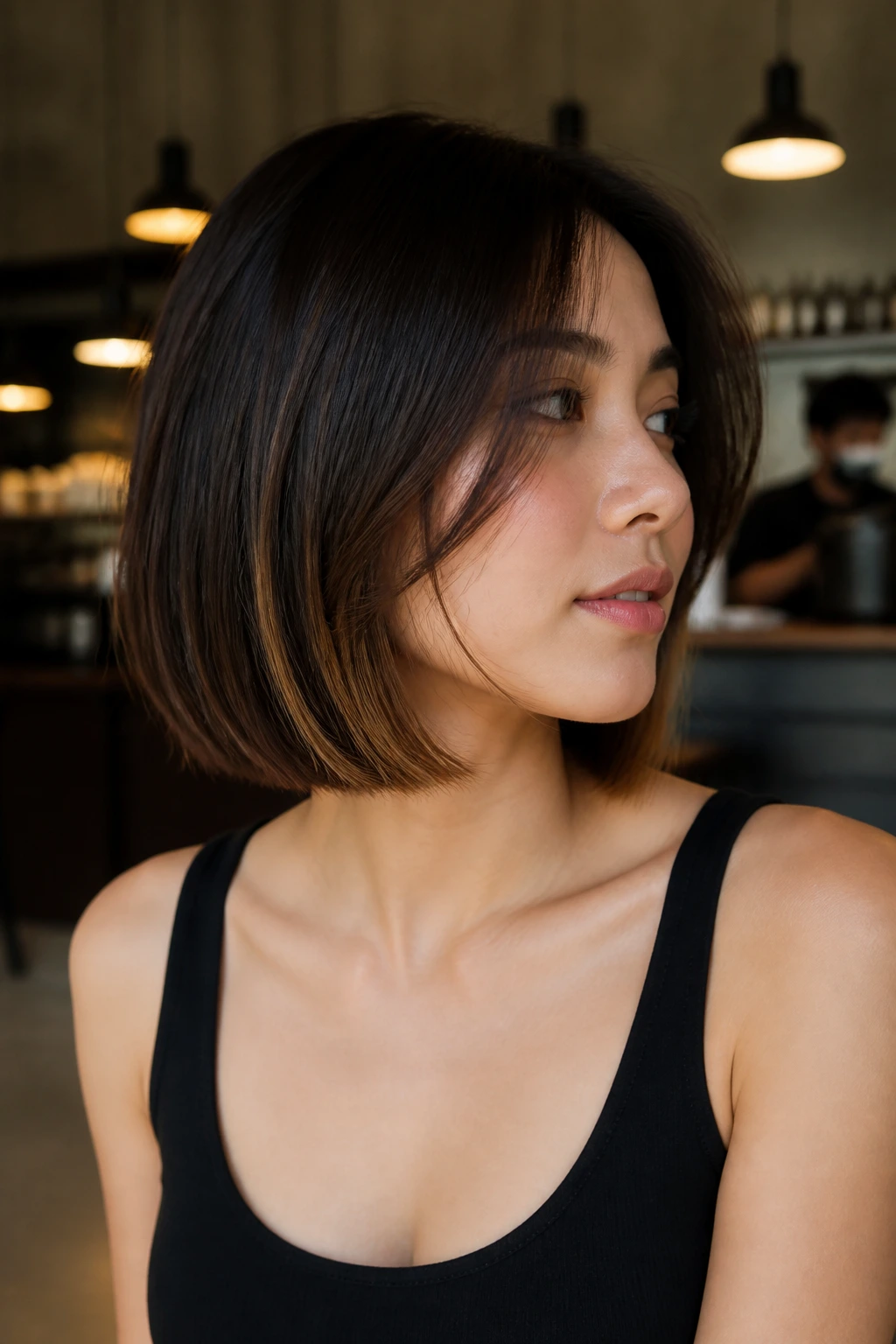
A blunt bob sounds risky for a round face, and sometimes it is. But when the caramel stays underneath, the shape becomes cleaner and more controlled. The top layer stays deep and sleek, while the underlights flick out only when the hair moves.
This is one of those styles that looks modest at rest and more interesting in motion. That is useful. A round face often benefits from a cut that keeps the visual weight on top narrow, and hidden caramel does exactly that. It gives dimension without making the sides louder.
I like this on hair that is naturally straight or lightly wavy. The underlights should start around the lower half of the head, not right under the part. If the bright pieces show too much at the temples, the bob can widen. Keep them tucked low, and use a shine spray on the outer layer. The contrast will feel neat instead of heavy.
10. Cinnamon Brunette with Honey-Caramel Veil
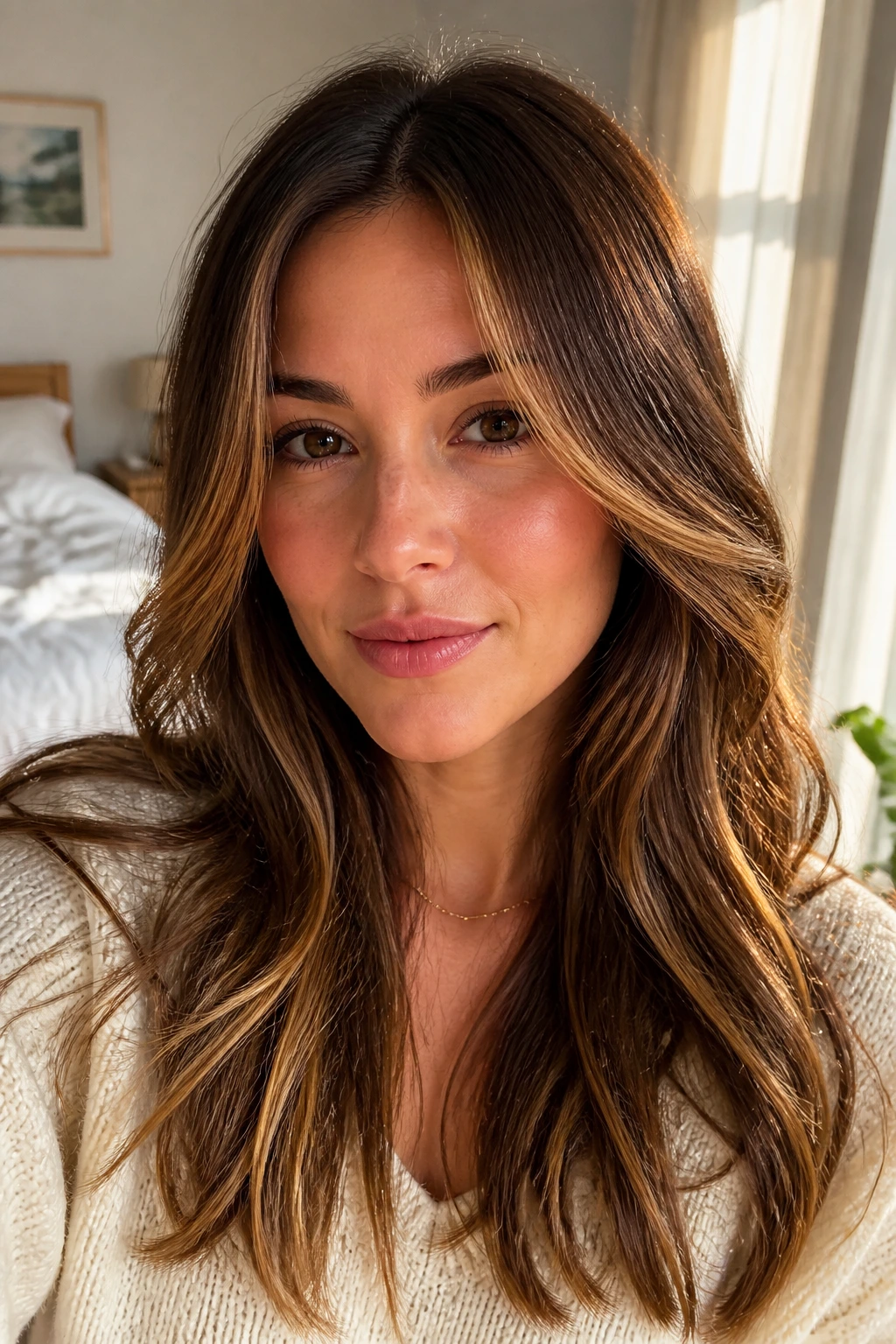
A cinnamon base adds warmth before the caramel even arrives, which makes this look feel softer and less stripy than cooler brunettes with bright lightness. The caramel shows up as a thin veil over the surface, almost like sunlight moving across the hair instead of sitting on top of it.
That matters on a round face because a soft veil changes the texture of the silhouette. You get glow without a hard edge. The front pieces can be brighter, but they should stay translucent, not opaque. Think of the highlight as something you notice after the fact, not from across the room.
This look also plays well with medium density hair. Too much thickness and the veil disappears. Too little and the contrast can go flat. A loose wave or a big blowout helps because it lets the cinnamon and caramel fold into each other. That folding effect is the whole charm here.
11. Textured Pixie Bob with Caramel Lift at the Crown
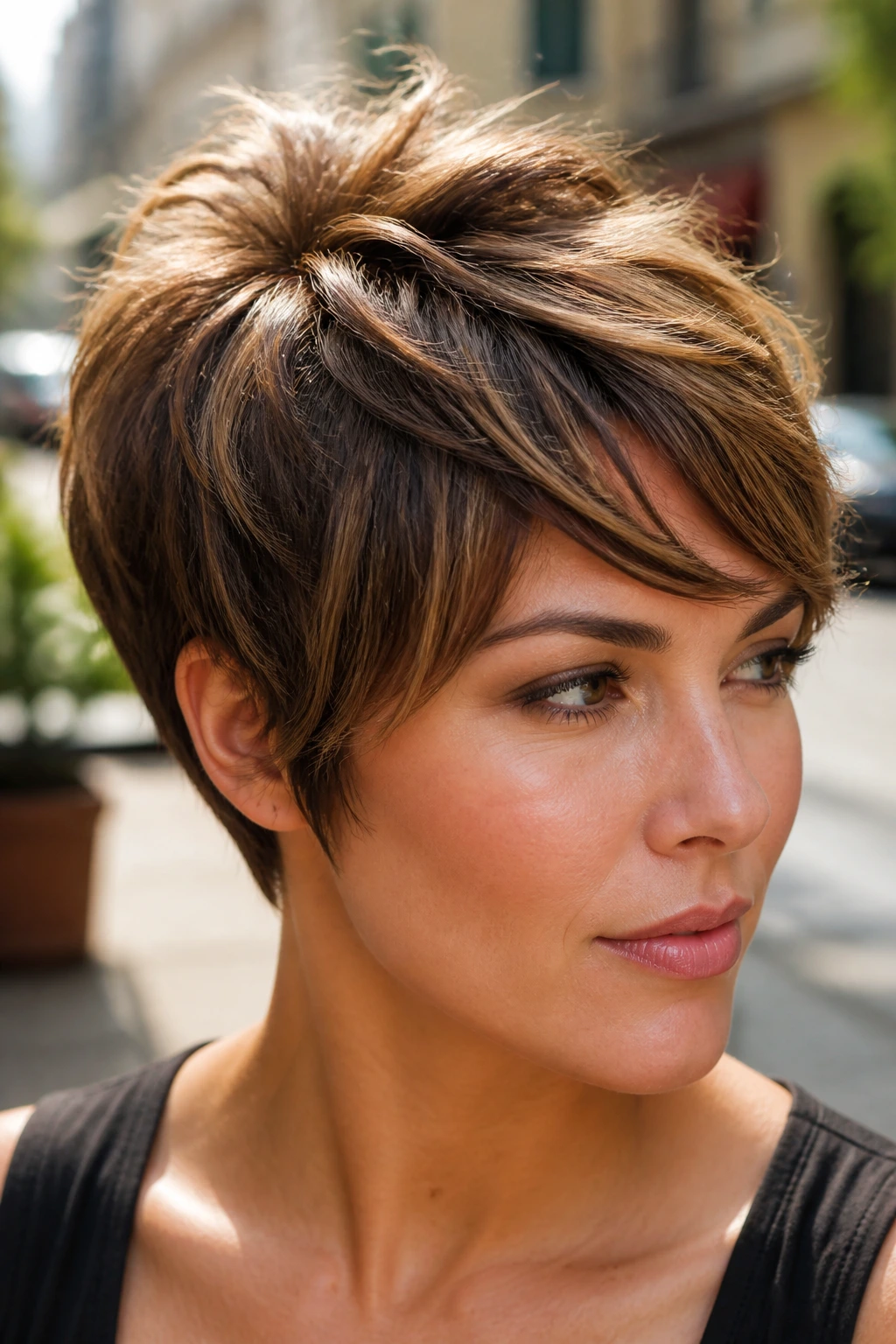
Short hair does not get enough credit for round faces. A textured pixie bob can add height where you need it most, especially when the caramel is concentrated at the crown and feathered toward the temples.
The contrast here is the point. Keep the sides darker and a little tighter, then let the top catch the lighter tone. That shifts attention upward and gives the face a longer read. If the caramel sits too low near the cheeks, the cut starts to feel wide, so resist the urge to brighten everything.
I like this best with a piecey finish. Use a small amount of paste, pinch the top sections, and leave the front fringe soft rather than stiff. The color should look like it was caught by light as the hair moved, not painted onto every strand. Short cuts can get loud fast. This one stays smarter when the placement is restrained.
12. Long V-Cut Layers with Toasted Caramel Edge
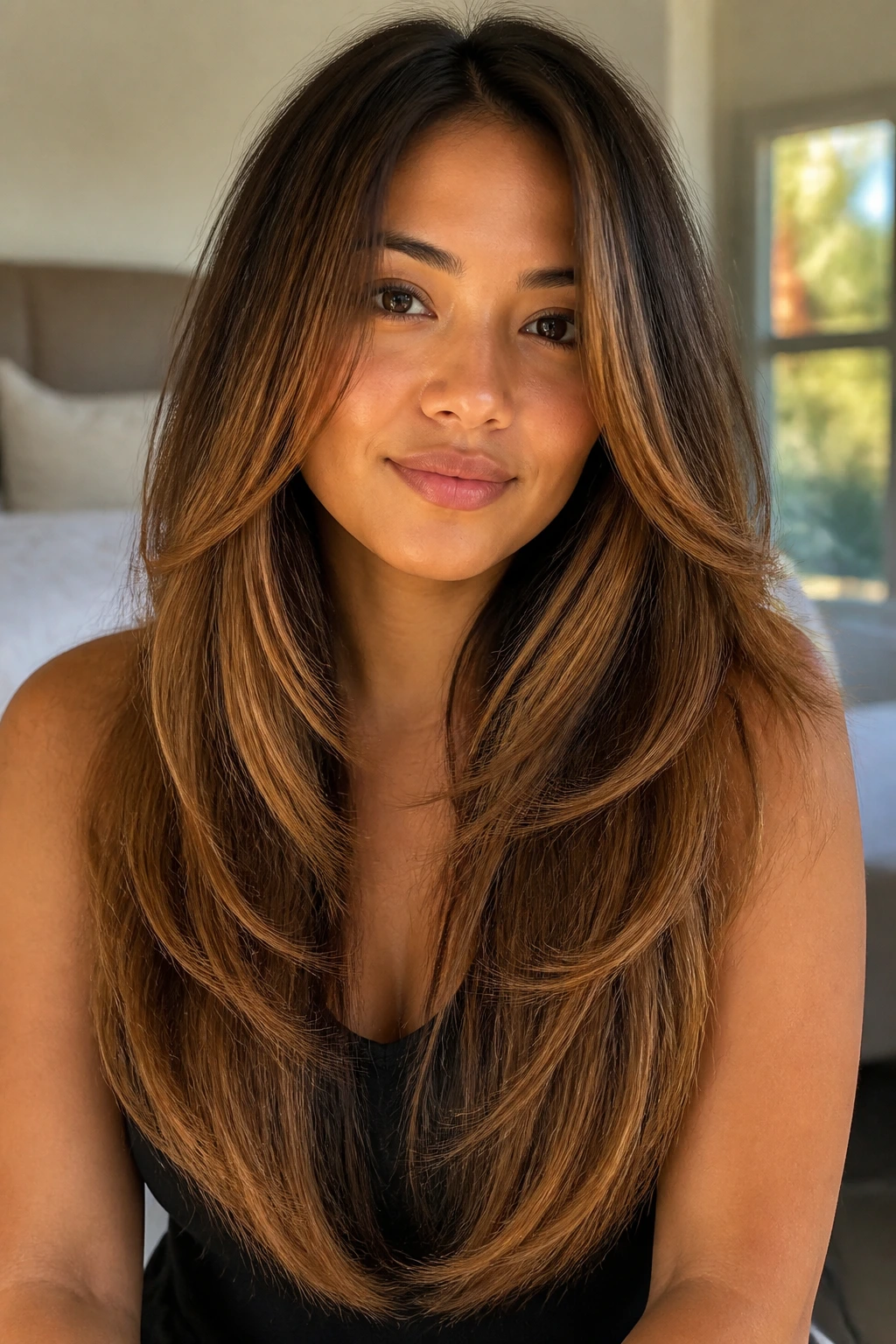
A V-cut is built to pull the eye downward, which is exactly why it flatters a round face. The layered center point creates a longer silhouette at the back, and toasted caramel along the edges keeps the length from looking flat or one-note.
The Shape Advantage
The V gives a visual point at the bottom, which cuts through the softness of the face. It is one of the cleanest ways to make long hair feel lighter without chopping off inches. Add balayage only to the outer edge of the layers, and you get movement where the hair tends to sit the heaviest.
Ask Your Stylist For
- Caramel painted mostly on the lower half of the layers
- A darker top that keeps the roots grounded
- Fine front pieces that taper into the V shape
- A gloss in a warm beige-caramel tone if the ends start to look too orange
The lower edge should feel brighter than the sides. That’s the useful part.
13. Rich Chocolate Waves with Chunky Caramel Panels
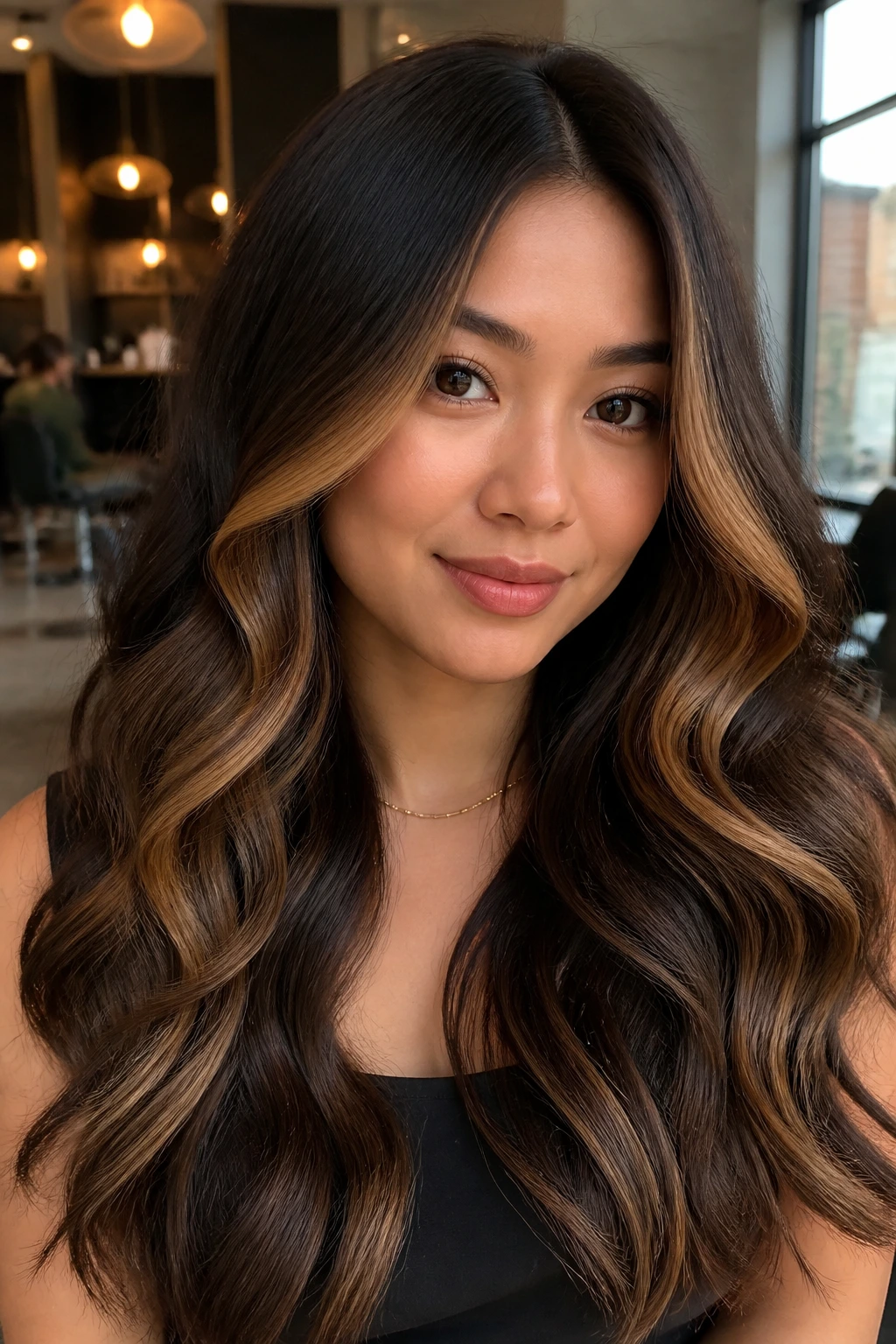
Chunky highlights can work on a round face, but only if the panels are placed with some discipline. Rich chocolate hair gives the face depth, and the caramel panels break it up with enough contrast to feel modern instead of muddy.
The trick is spacing. Do not stack the light panels across the fullest part of the cheeks. Put them farther back from the face and let them travel vertically through the waves. That makes the color look intentional and keeps the head shape from going even rounder.
This style suits people who want a little more drama. The panels show better on thick waves and layered lengths, especially when the front pieces are tucked just behind the cheekbone line. If your hair is fine, this may be too much contrast. If your hair is dense and you like bigger statements, it can look sharp. A middle part keeps the shape honest.
14. Soft Wolf Cut with Peekaboo Caramel
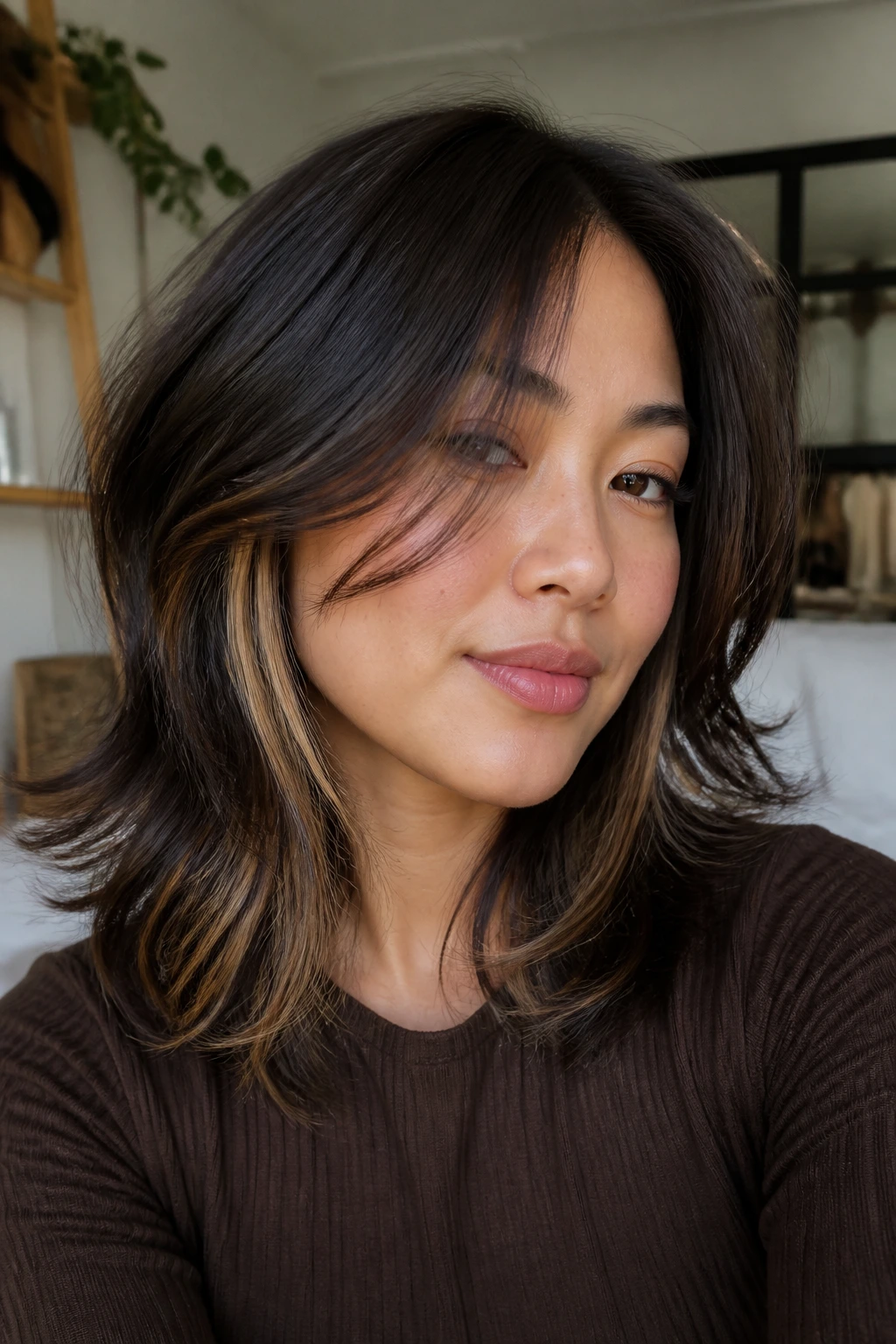
The wolf cut can be a gift for round faces because it breaks up fullness with uneven layers and a little attitude. The peekaboo caramel pieces make it better, not louder, when they’re tucked under the top layer and only flash when the hair swings.
This is one of those looks that behaves differently in motion, and that works in its favor. The top stays darker and slightly shorter, the lower lengths pick up softness, and the inner caramel gives the cut a lived-in feel. You do not need a lot of brightness here. A little goes far.
I would keep the front layers long enough to skim the mouth or chin. Anything shorter can widen the face. Then let the caramel show through the ends and underlayers rather than the broadest parts of the side sections. Dry it messy. Smooth styling kills the point.
15. Auburn Brown with Maple-Caramel Ribbons
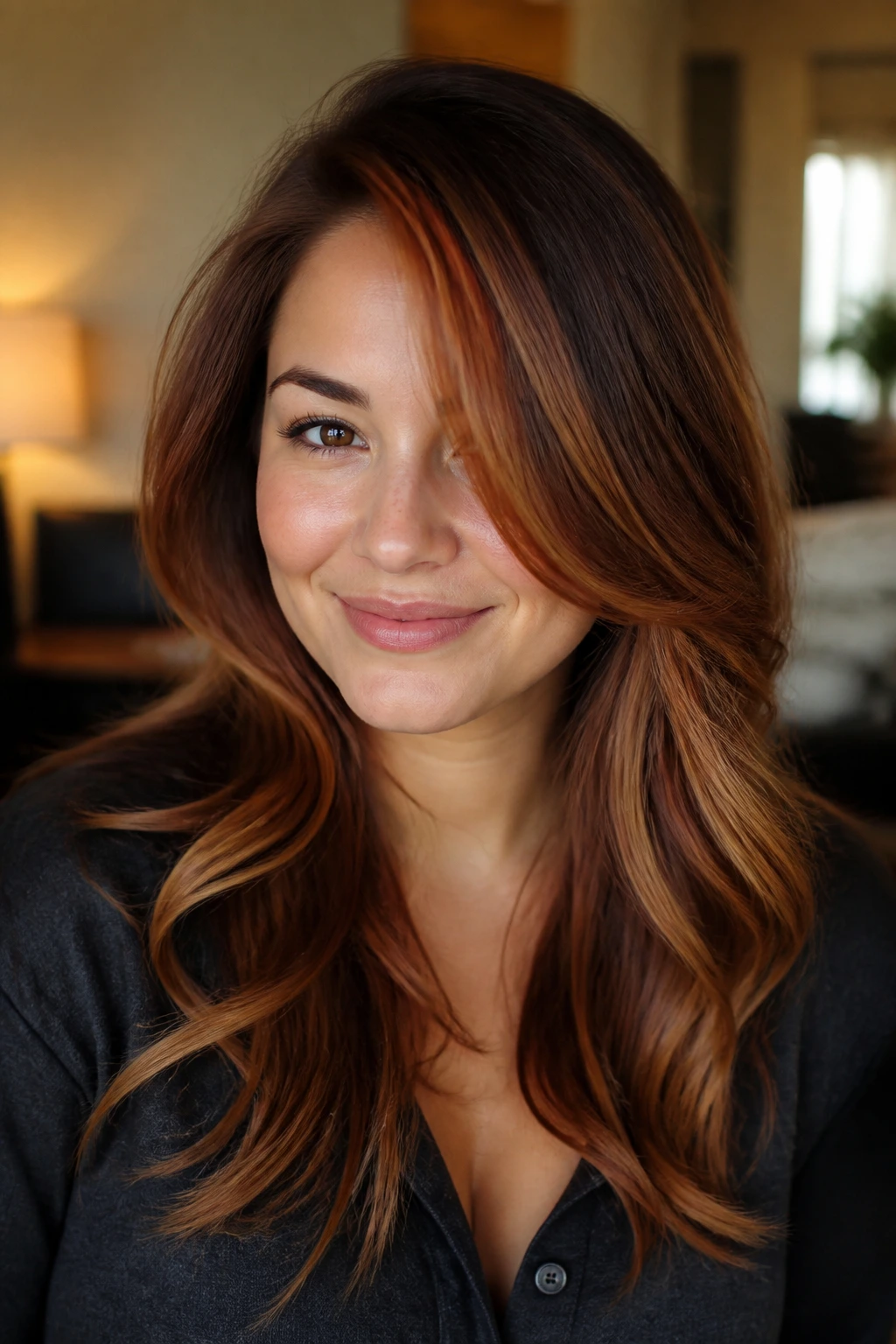
Warm red-brown bases and caramel highlights get along better than people expect. The maple-caramel ribbons in this look soften the richness of the auburn and keep it from becoming too heavy around a round face.
Unlike cooler brunettes, auburn already has warmth built in, so the balayage should stay delicate. A few thin ribbons through the front and sides, plus brighter ends, are usually enough. If the caramel is too pale, it can look disconnected from the base. Maple tones keep it grounded.
Who This Suits
- People with warm or neutral skin tones
- Medium to thick hair that holds wave
- Long bobs and layered mid-length cuts
- Anyone who wants warmth without a strong blond look
I like this look with soft side-swept styling. It gives the face a diagonal line and lets the red-brown depth stay visible at the roots. The result feels rich without swelling the sides of the face.
16. Thick Hair with Expansive Caramel Slices and Dark Roots
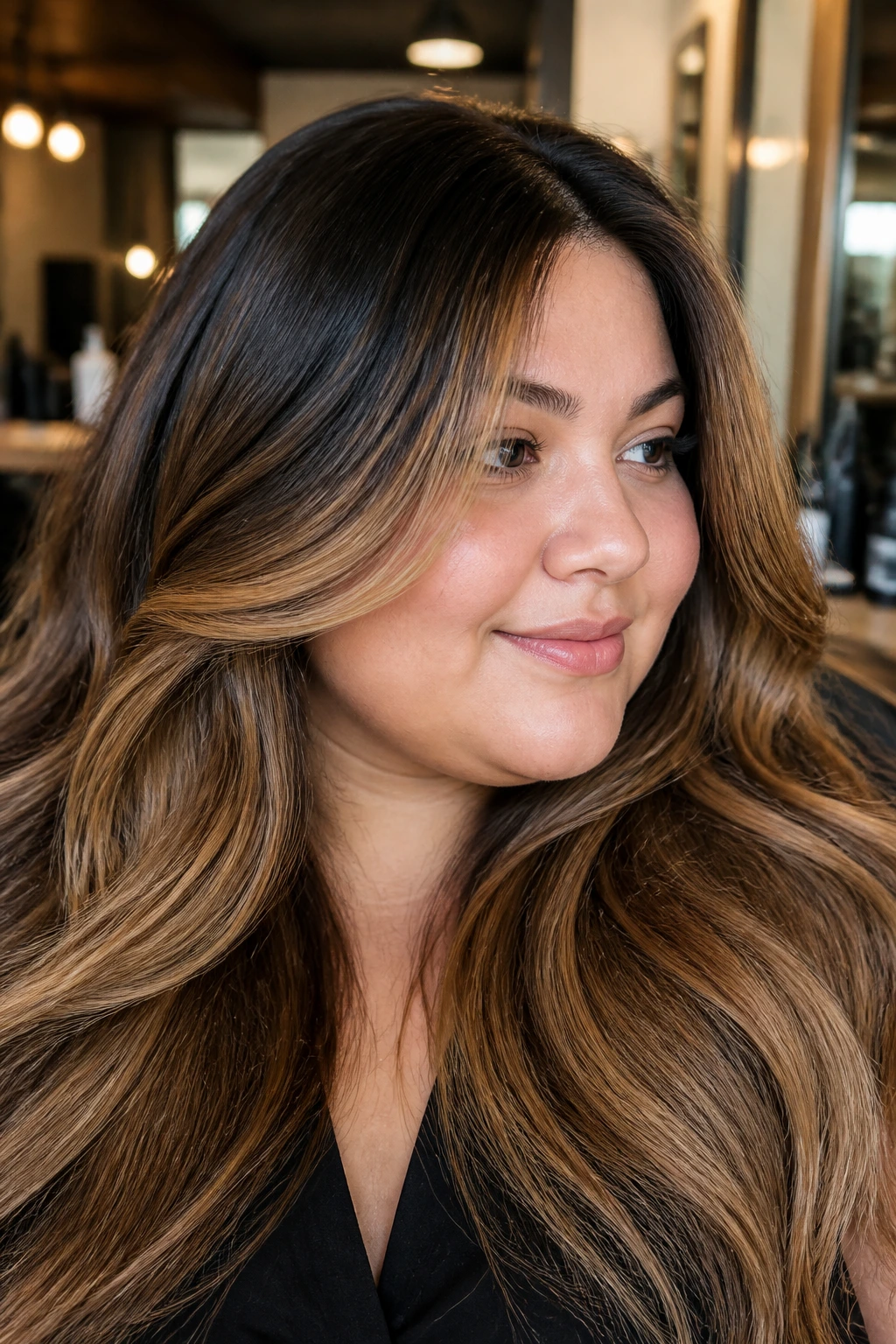
Thick hair needs different rules. Tiny balayage ribbons can disappear into the mass, so broader caramel slices work better. The good part is that thick hair also holds depth well, which means you can keep the roots dark and let the lighter pieces sit where they’ll do the most shaping.
For round faces, that means placing the slices lower and farther back from the cheekbone than you might expect. The front can still brighten, but the most visible brightness should live below the widest part of the face. Thick hair can take it. Thin hair often cannot.
I’d ask for a root shadow with a more obvious transition into the caramel, especially if the hair is long. That gives the color a banded but controlled feel, not a muddy one. Blow-drying with tension helps keep the slices separated. If thick hair is allowed to puff at the sides, it will swallow the shape.
17. Fine Hair with Ultra-Fine Caramel Weave
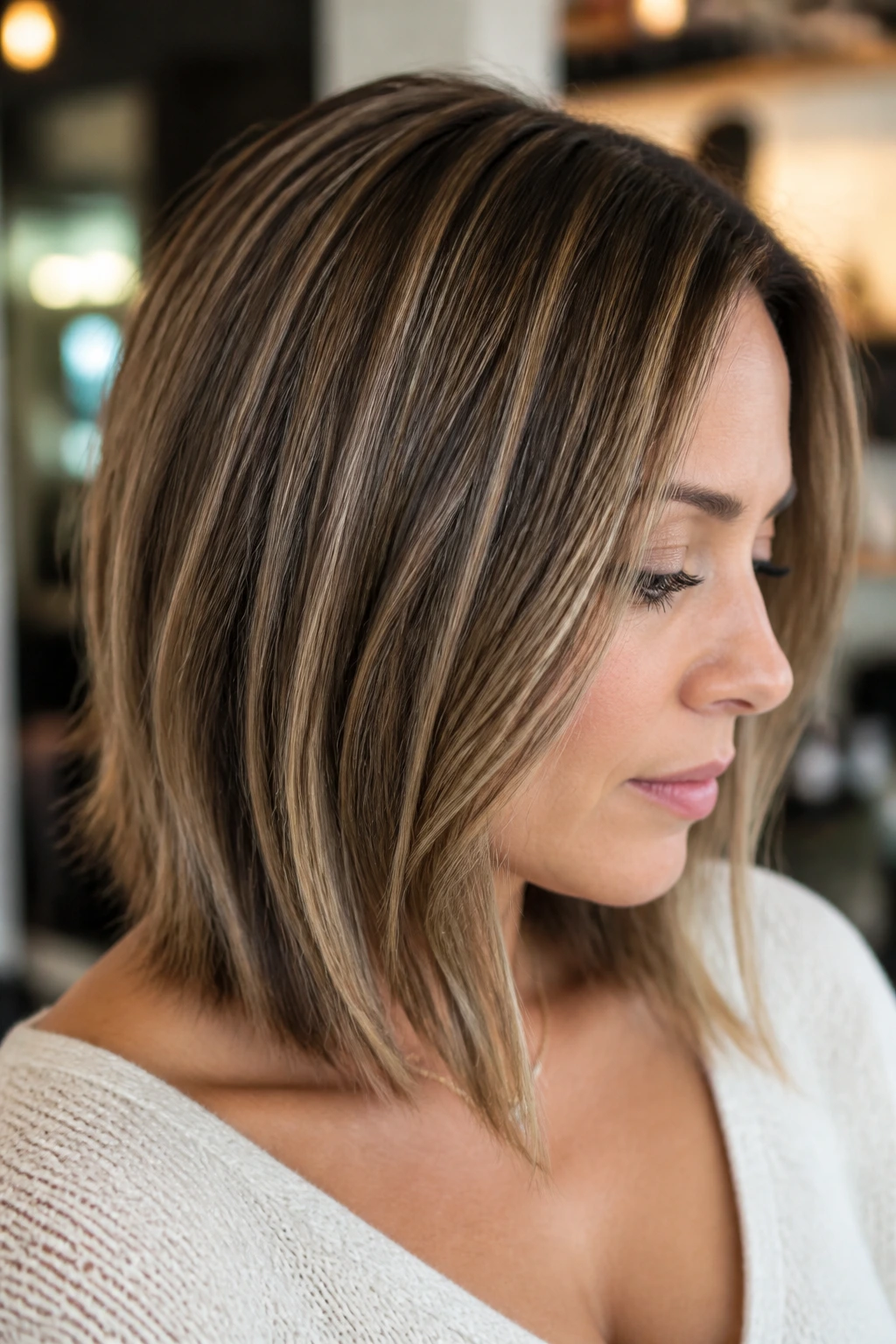
Fine hair and chunky balayage rarely get along. Ultra-fine weaving is the smarter move. It creates dimension without making the hair look see-through in random places, and it keeps a round face from looking wider through the cheeks.
What Makes This Different
The weave should be tight and delicate, almost like thread, not ribbons. That lets the caramel catch light in narrow lines instead of broad panels. The effect is softer and more believable on fine hair. You still get warmth, but the base remains the star, which is exactly what fine strands often need.
If your hair is shoulder length or shorter, ask for the lightest pieces only around the lower half of the cut. Keep the top two inches deeper so the crown does not look sparse. A lightweight volumizing spray at the roots helps, but do not pile on heavy oil. Fine hair shows product fast.
Tiny highlights. Bigger payoff. That is the whole story here.
18. Wavy Collarbone Cut with a Low Caramel Frame
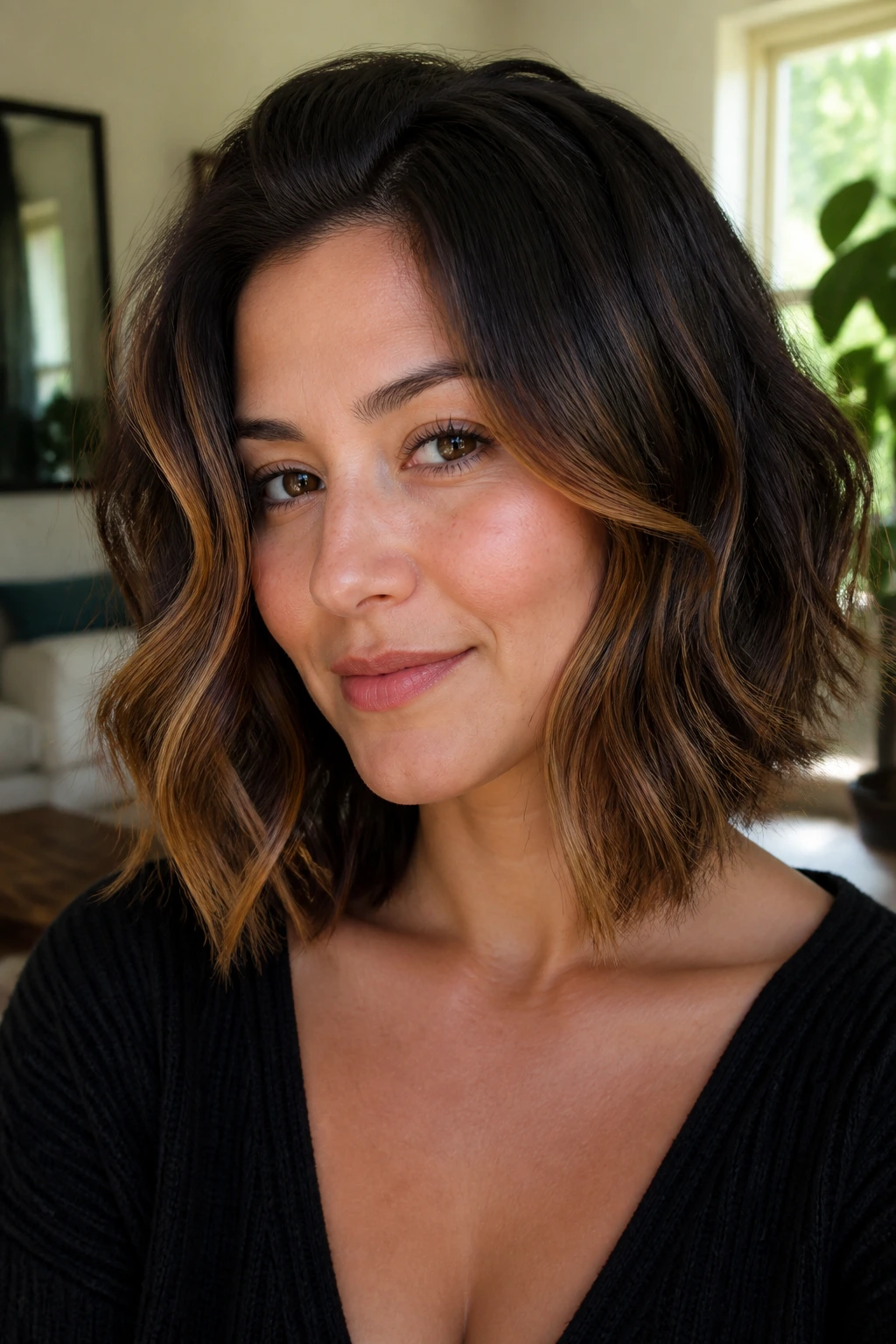
A collarbone cut already has a natural slimming effect on a round face because it ends below the jaw and gives the eye a place to land. When the caramel frame starts low too, the whole look feels pulled downward in the best way.
The brightest sections should begin around the lower cheek or even slightly below it, then fade into the ends. That keeps the face from getting boxed in by color near the temples. Soft waves help the frame bend around the face instead of sitting flat against it.
I like this cut with a deep side part or an off-center part. Either one adds a small angle, which a round face can use. If you wear it straight, tuck one side behind the ear and let the color peek through. If you wear it wavy, keep the front section loose rather than curled into a full round shape. Small changes. Big difference.
19. Side-Swept Layers with a Caramel Sweep Across One Temple
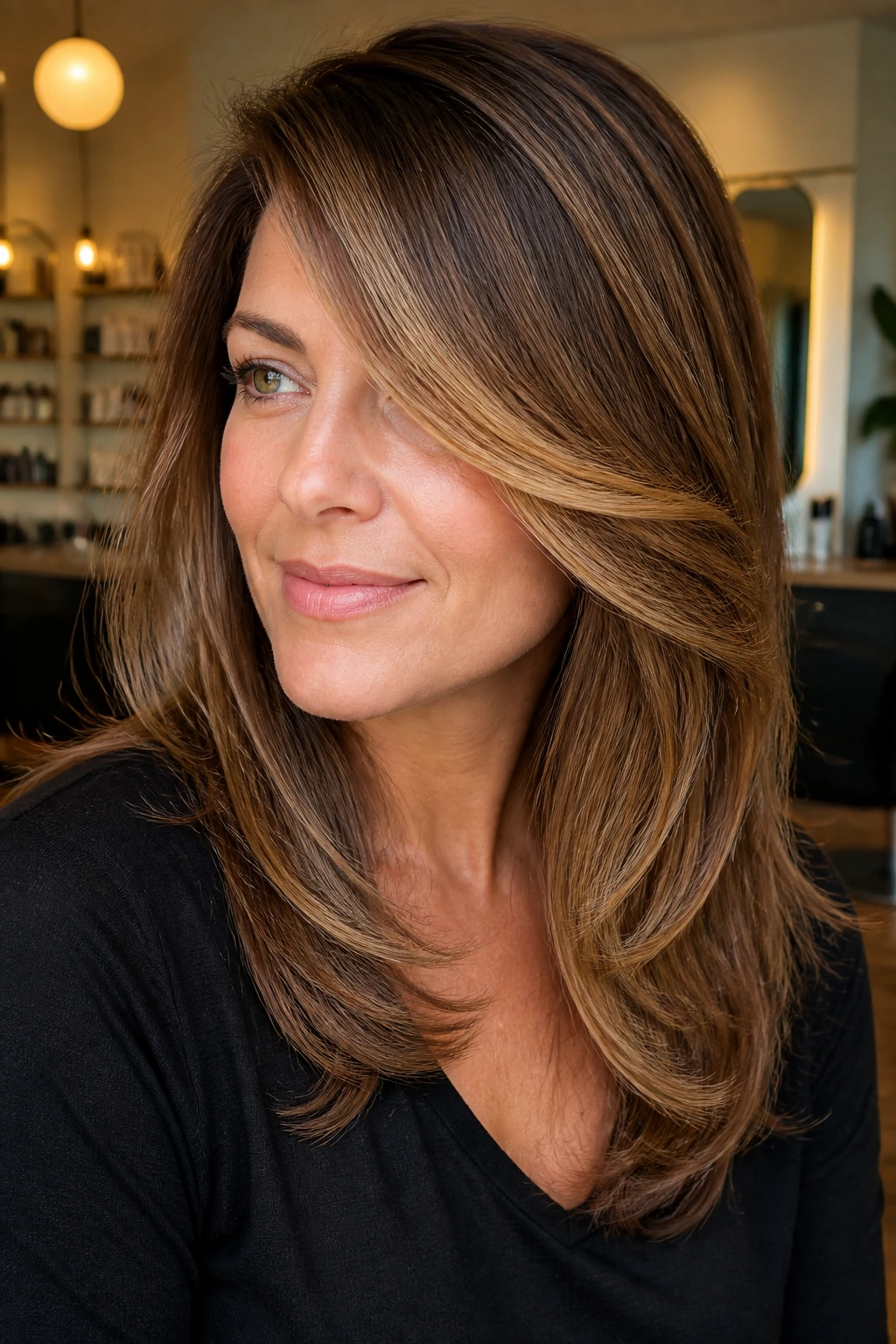
A side-swept look can be very flattering on a round face because it creates movement that travels across the face instead of circling it. Add a caramel sweep across one temple, and the line becomes even more directional.
This is a good choice if you like a little drama but do not want a bright money piece. The light sweep can start near the temple and then blend into the rest of the balayage by the jaw or collarbone. It should feel like one long motion, not a separate section.
I’ve always liked this style on layered hair with a medium wave. The side-swept front hides some width at the cheeks, while the color leads the eye diagonally. That diagonal is doing a lot of heavy lifting. If your face is especially soft through the cheeks, this is one of the cleanest ways to break that up without chopping the haircut too short.
20. Glossy Blowout Layers with Ribbon Caramel
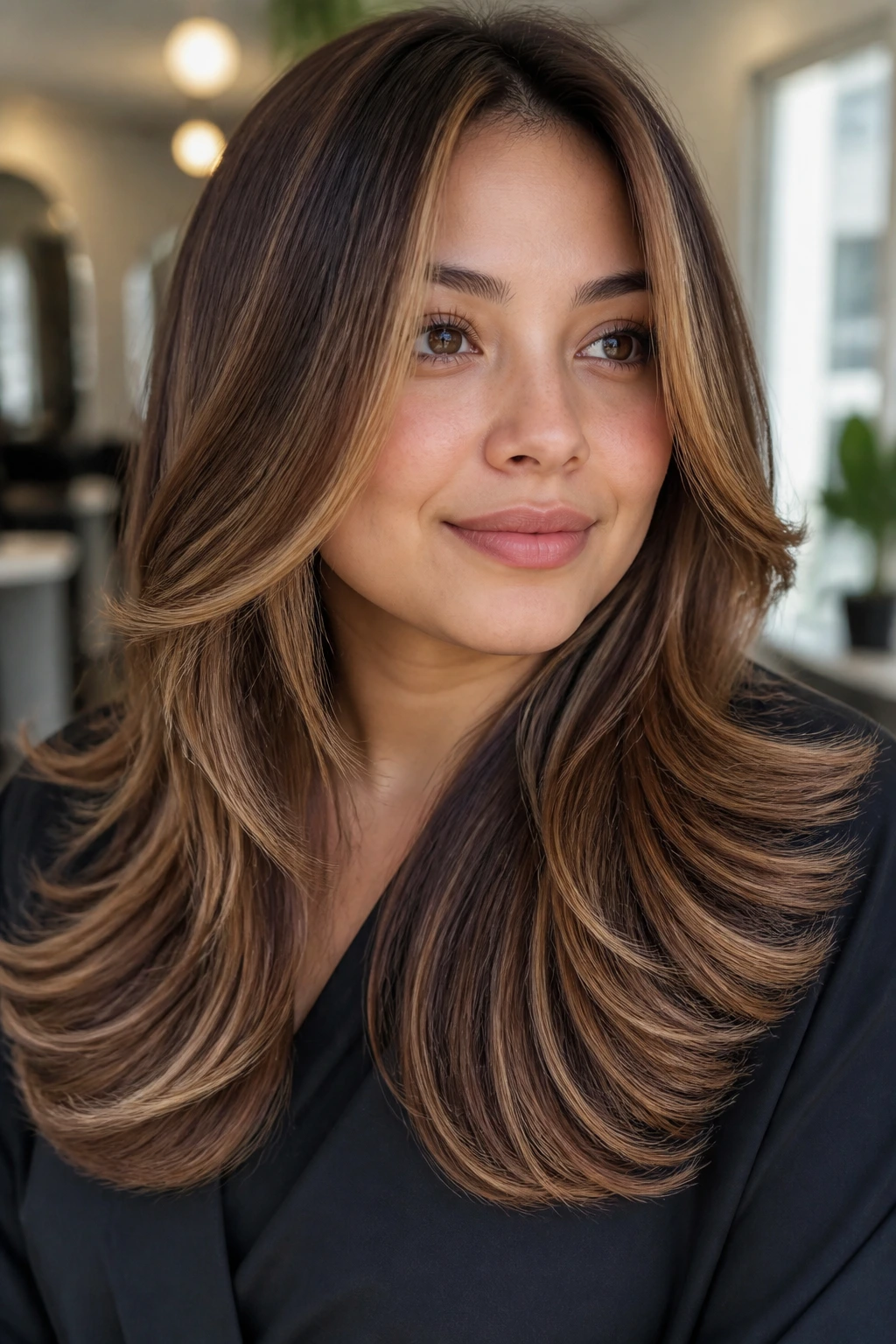
A good blowout can make caramel balayage look twice as expensive. The reason is simple: ribbons of warm color need smooth tension to show their shape. On a round face, the blowout also adds vertical lift through the crown and bends the ends away from the cheeks.
Keep the root area richer, then let the caramel appear in long, narrow ribbons through the mid-lengths and ends. Wide light pieces can make the blowout puff out sideways. Narrow ribbons stay sleek. That difference matters more than people think.
This look needs a round brush, medium heat, and a little patience. Dry the roots up and away from the scalp first, then wrap the ends just enough to curve them in or out. I prefer out. It opens the face without hugging it. Finish with a light serum on the bottom third only. Too much product near the roots can flatten the lift.
21. Face-Framing Lob with Smoked Caramel
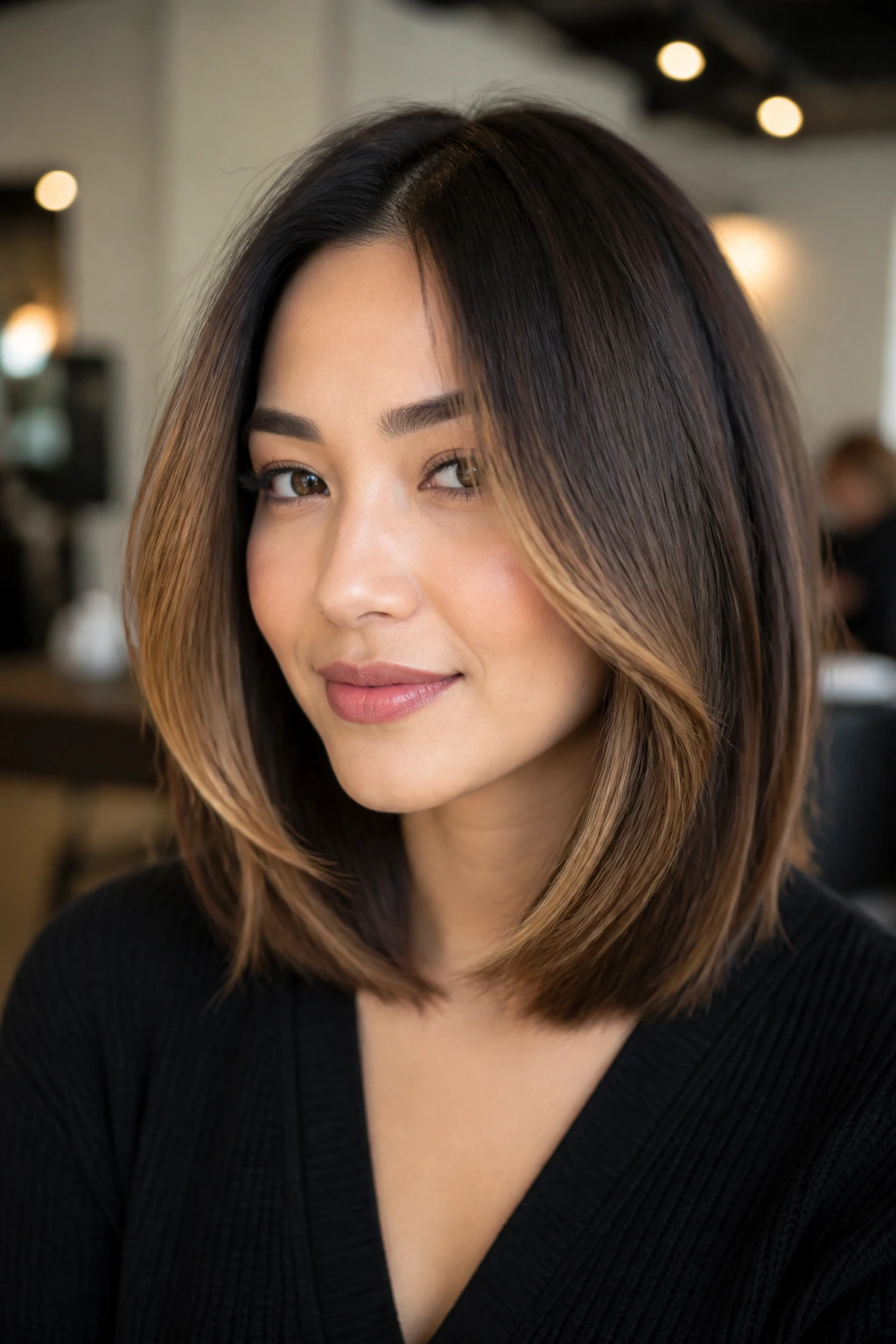
Smoked caramel sits somewhere between gold and beige, which makes it a calmer choice for people who do not want bright warmth near the face. On a round face, that restraint helps. The lob gives length, and the color gives shape without shouting.
The face frame should be narrow and soft, almost dusty in tone. I like this when the front pieces are a touch lighter than the rest, but not so much that they jump out from the haircut. The best versions feel blended from the first brush-through. If the color looks like two separate bands, the look loses its polish.
This style also grows out with less fuss than stronger caramel looks. That matters if you do not want to be back at the salon every few weeks. A center part keeps it long; a slight off-center part makes it a little friendlier. Either way, the haircut should stay below the jawline so the face has room.
22. Soft Curls with Caramel Ends and Dark Midlengths
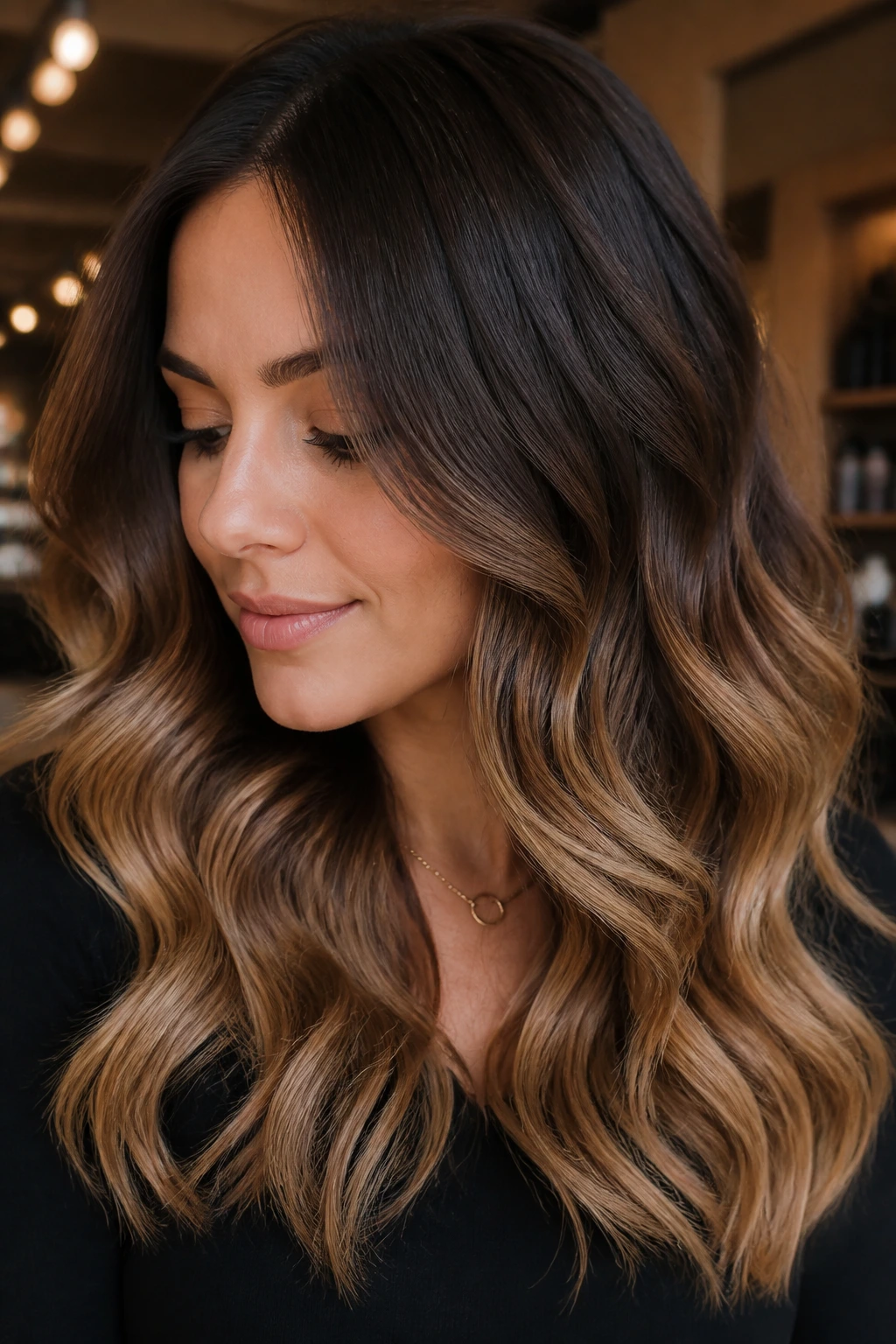
Why keep the midlengths dark? Because that dark band can slim the face while the lighter ends soften the whole shape. On a round face, that contrast gives you structure without needing a sharper haircut.
The Color Map
The roots stay deepest, the midlengths hold most of the brown, and the caramel shows up mostly at the ends and a few outer curls. This keeps the brightness away from the broadest part of the face. The curl pattern then spreads the color naturally, which is nicer than painting every piece equally.
Best Styling Approach
- Use a 1-inch iron for tighter, defined curls
- Let the ends cool in your hand before releasing them
- Brush out only the outer layer if you want a softer finish
- Keep the root area lifted with a light mousse or spray
The contrast can look dramatic, and that is fine. Drama works when the placement is controlled.
23. Long Straight Hair with Vertical Caramel Strips
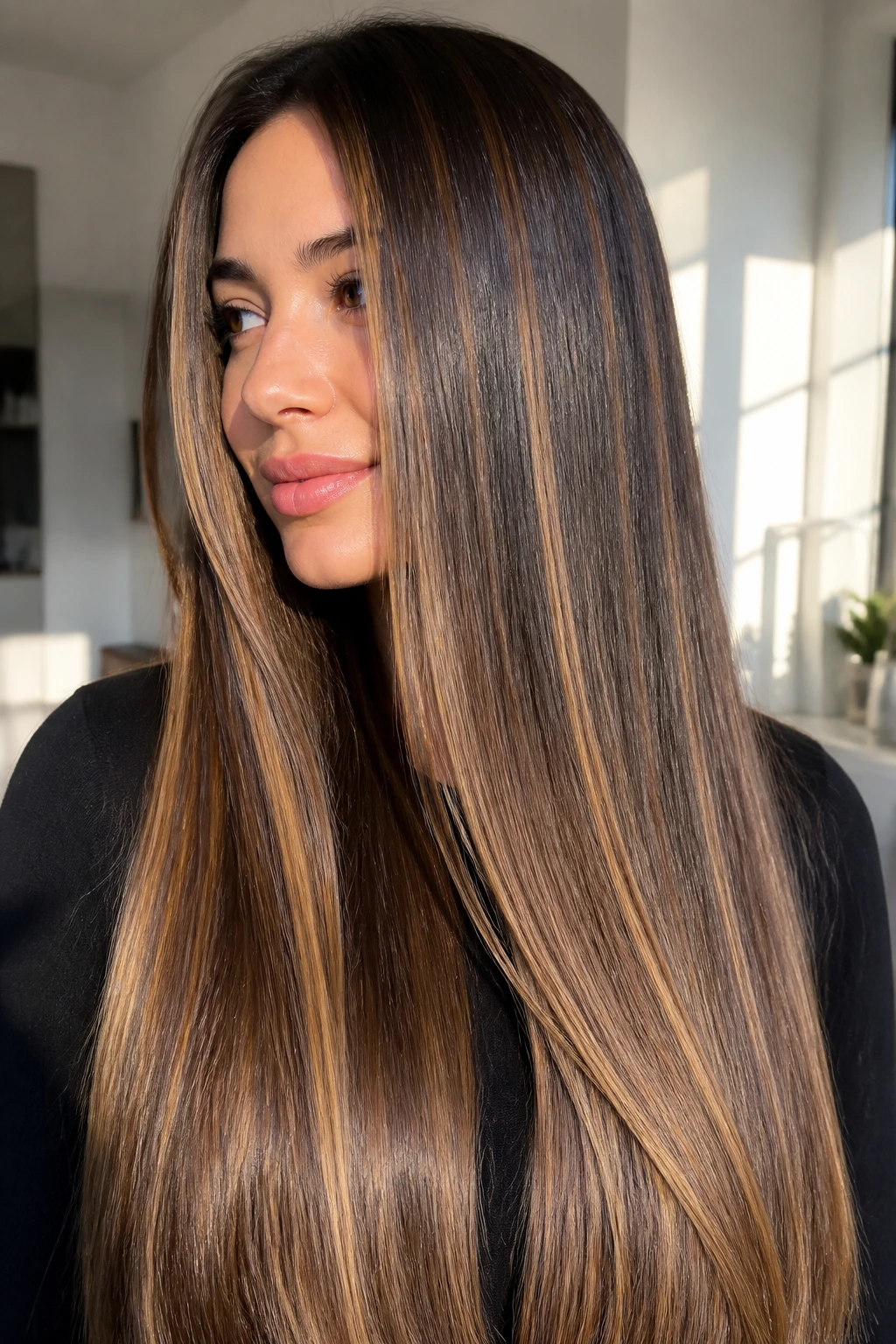
Long straight hair can be hard to flatter on a round face if it is all one tone. Vertical caramel strips fix that by giving the hair a longer visual line and breaking up the width without adding bulk.
The strips should be narrow and spaced out, not stacked side by side. Think of them like lines on a ladder, not blocks on a checkerboard. The best placement starts below the chin and continues to the ends, with the front kept a little softer than the rest. That gives the face a taller read and avoids the heavy side-wall effect that broad highlights can create.
I would not overstyle this. A sharp blowout or dead-straight finish makes the strips more visible, which can be nice if you want contrast. If you want something softer, bend just the bottom two inches of the hair inward with a flat iron. That keeps the color in motion without turning the shape round.
24. Messy Midi Shag with Sunlit Caramel Pieces
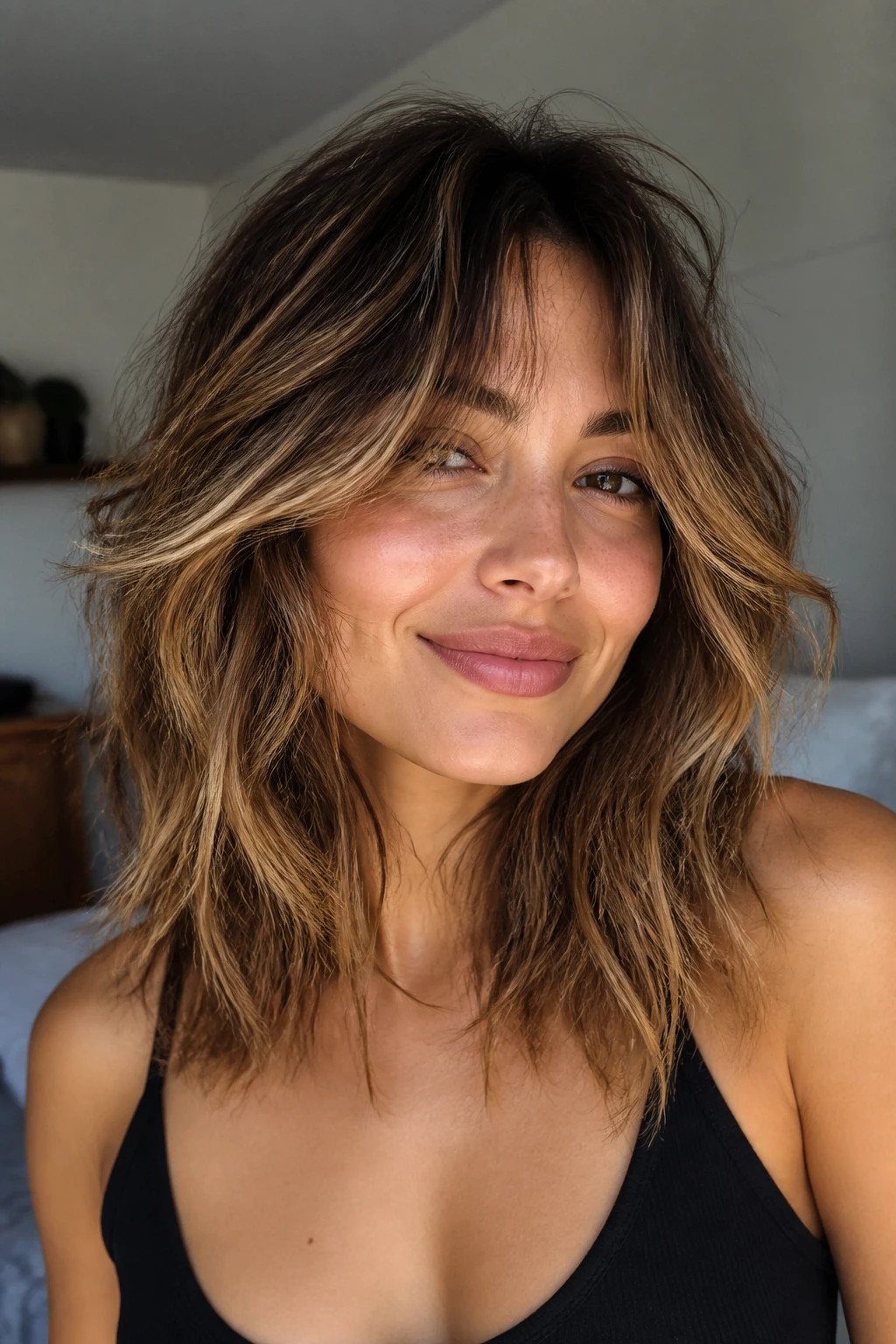
A midi shag is one of the easiest ways to give a round face some edge, because the uneven layers stop the silhouette from feeling too circular. Sunlit caramel pieces make the cut look lighter and less dense, especially around the ends and the outer top layers.
The color should not be placed in a neat frame. That would fight the shag. Instead, the bright bits should appear where the layers break up the shape: a few near the cheek, more through the lower layers, and just enough at the crown to keep the top from sinking. If the caramel is too uniform, the style starts to look flat.
I like this cut air-dried with a little wave cream, then scrunched with fingers only. A brush can smooth away the ragged texture that makes the haircut useful in the first place. Messy here is not laziness. It is the whole point.
25. Soft Rounded Cut with Warm Caramel Glow
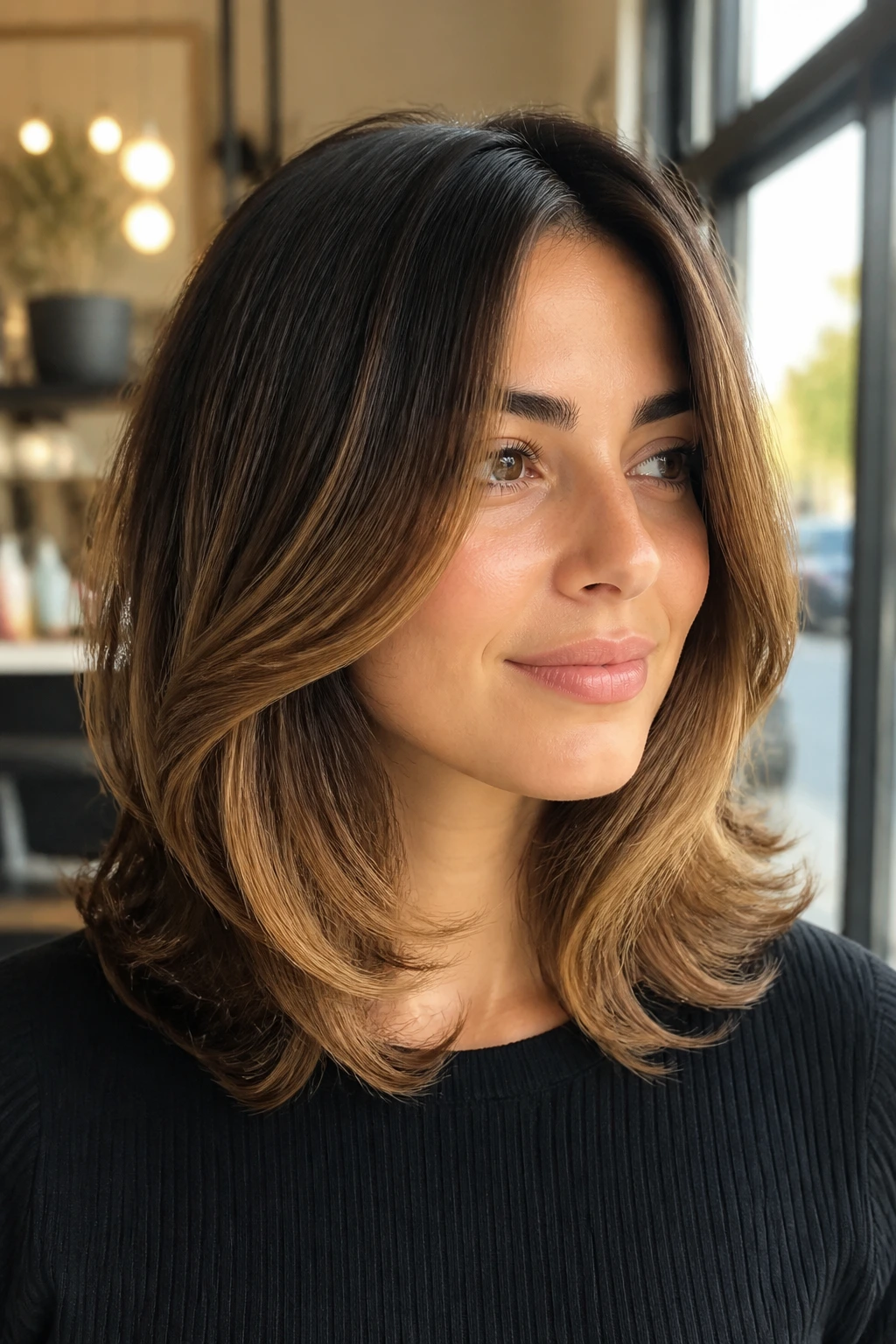
A rounded cut can work on a round face when the color does the lengthening. That sounds backwards, but it makes sense in practice. The haircut stays soft and wearable, while the caramel glow sits lower and narrower than the shape of the face.
The best version keeps the deepest brown at the roots and the warmest caramel around the lower layers, not the upper cheeks. The ends should feel luminous, almost like they were kissed with light after the rest of the color was done. If the glow climbs too high, the cut loses its quiet shape.
This is a good option for someone who wants a low-drama style that still looks finished. It grows out calmly, it styles fast, and it does not fight your face shape. I’d wear it with a loose bend at the ends and a center or slightly off-center part. Simple hair can still look thought-through when the color placement is doing its job.
