



A good balayage on a man doesn’t shout. It shifts the haircut a few degrees, and that’s the whole point. The hair looks deeper, the texture looks richer, and even a simple fade or crop starts to feel like it was planned instead of left to chance. That’s why balayage for men has such a strong appeal: it adds movement without turning the head into a striped mess.
What makes men’s balayage work is placement. The color is painted where the light would naturally hit — around the fringe, over the crown, through the top layers, or just along the ends — so the grow-out stays soft and the haircut keeps its shape longer. You can keep it subtle with a caramel lift on dark brown hair, or push it harder with ash blond, silver, or copper. Same technique. Very different mood.
The one thing people get wrong is asking only for a color name. “Blond balayage” on its own tells a barber almost nothing. You need the tone, the level of contrast, and where you want the lightness to sit. Three inches of hand-painted color on top gives a different result from thin face-framing ribbons, and both can look sharp if the cut supports them.
1. Soft Caramel Balayage on a Textured Crop
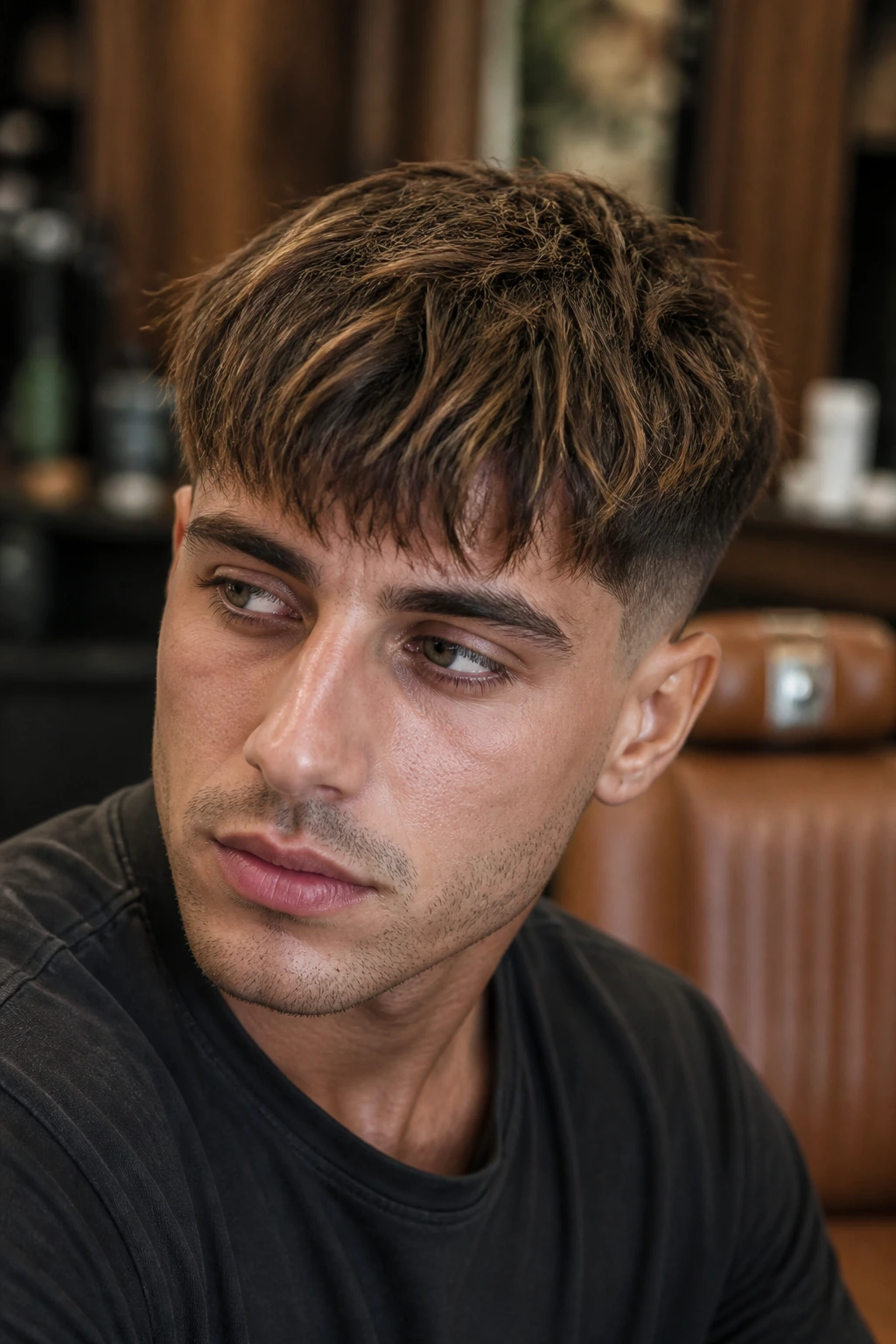
This is the safest place to start, and I mean that in the best way. Soft caramel balayage on a textured crop gives short hair depth without making it look dyed in a loud, obvious way. The color sits a shade or two lighter than the base, so the result reads as warmth and movement rather than a full color change.
Why it works on short hair
A crop already has shape from the cut. Add hand-painted caramel pieces through the top 2 to 3 inches, and the layers start to separate in a cleaner way. The finish looks lived-in, not stiff. That matters on short hair, where too much contrast can look blotchy fast.
Ask for thin, feathered balayage pieces rather than chunky streaks. A barber or colorist can keep the sides darker and concentrate the lighter bits around the crown and fringe, which makes the haircut look fuller without changing the whole head.
- Best on medium brown or dark blond bases
- Looks strongest with a matte clay or paste
- Needs a gloss every few weeks if the warmth gets brassy
- Works well with a low fade or taper
Small tip: keep the lightest pieces about one finger-width apart. That spacing is enough to show dimension without making the crop look overworked.
2. Ash Brown Balayage on a Low Fade
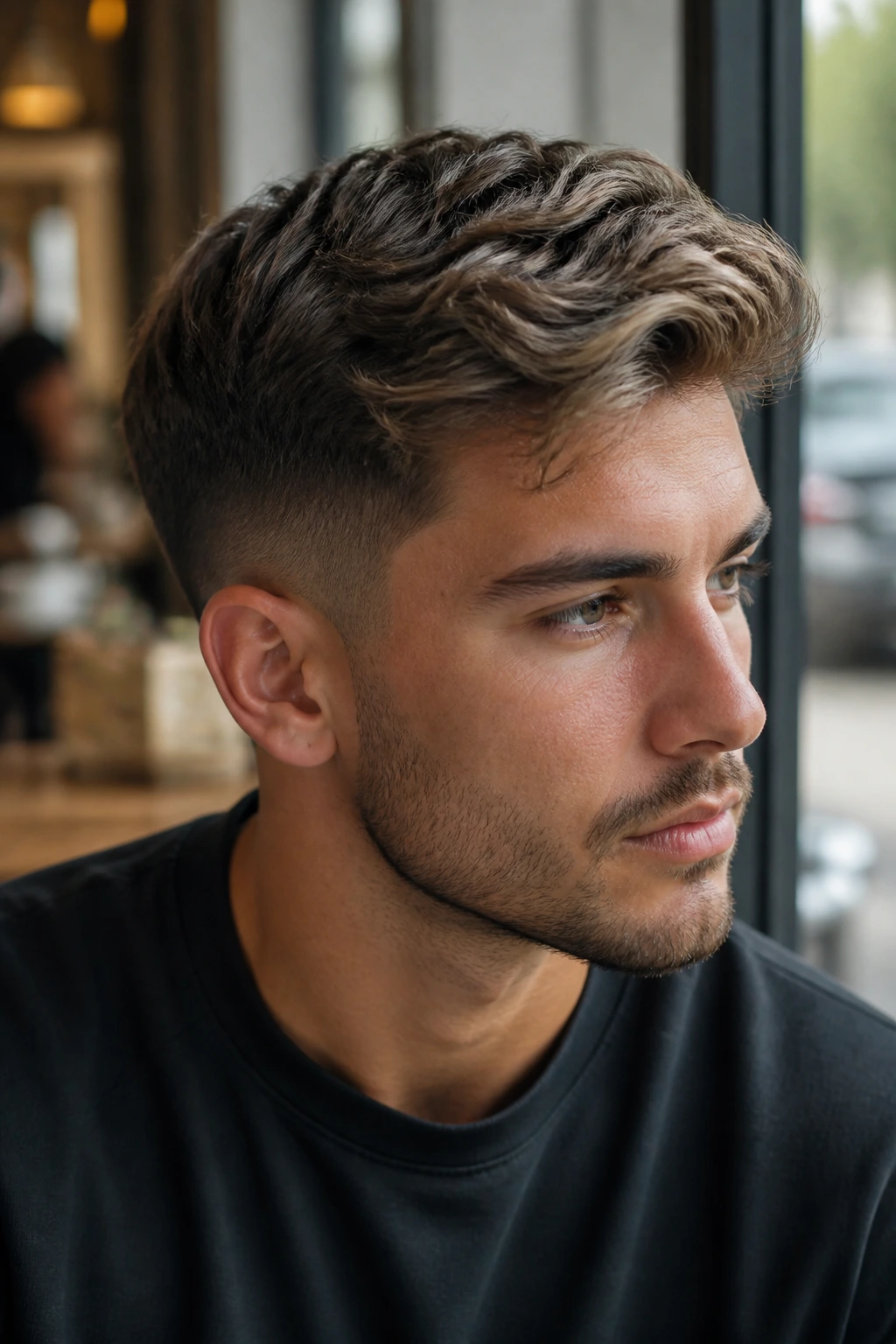
Why does ash brown look so clean on a fade? Because the cool tone cuts through the sharp shape of the haircut. A low fade already has neat edges, and ash brown balayage adds a quiet lift on top without fighting the clean outline underneath.
The trick is restraint. You want the painted pieces to sit mostly on the top layer and just graze the front. When the sides are tight, too much lightness can make the cut feel disconnected. Keep the balayage cool, smoky, and only a touch lighter than the base.
This look is solid for men who want something noticeable from across the room but still wearable in a work setting. It also grows out nicely. That’s the part people forget. A fade can get fuzzy fast if the color is too warm or too wide, but ash brown keeps the whole thing looking deliberate.
What to ask for
- A natural brown base with cool ash-brown ribbons
- Lighter pieces focused on the top and front
- A low fade, not a skin-bare disconnect
- A blue or violet shampoo only when the tone starts to warm up
Skip heavy shine products here. They make the cool tones look flat and greasy. A dry finish keeps the color looking crisp.
3. Honey-Blond Balayage on a Wavy Fringe
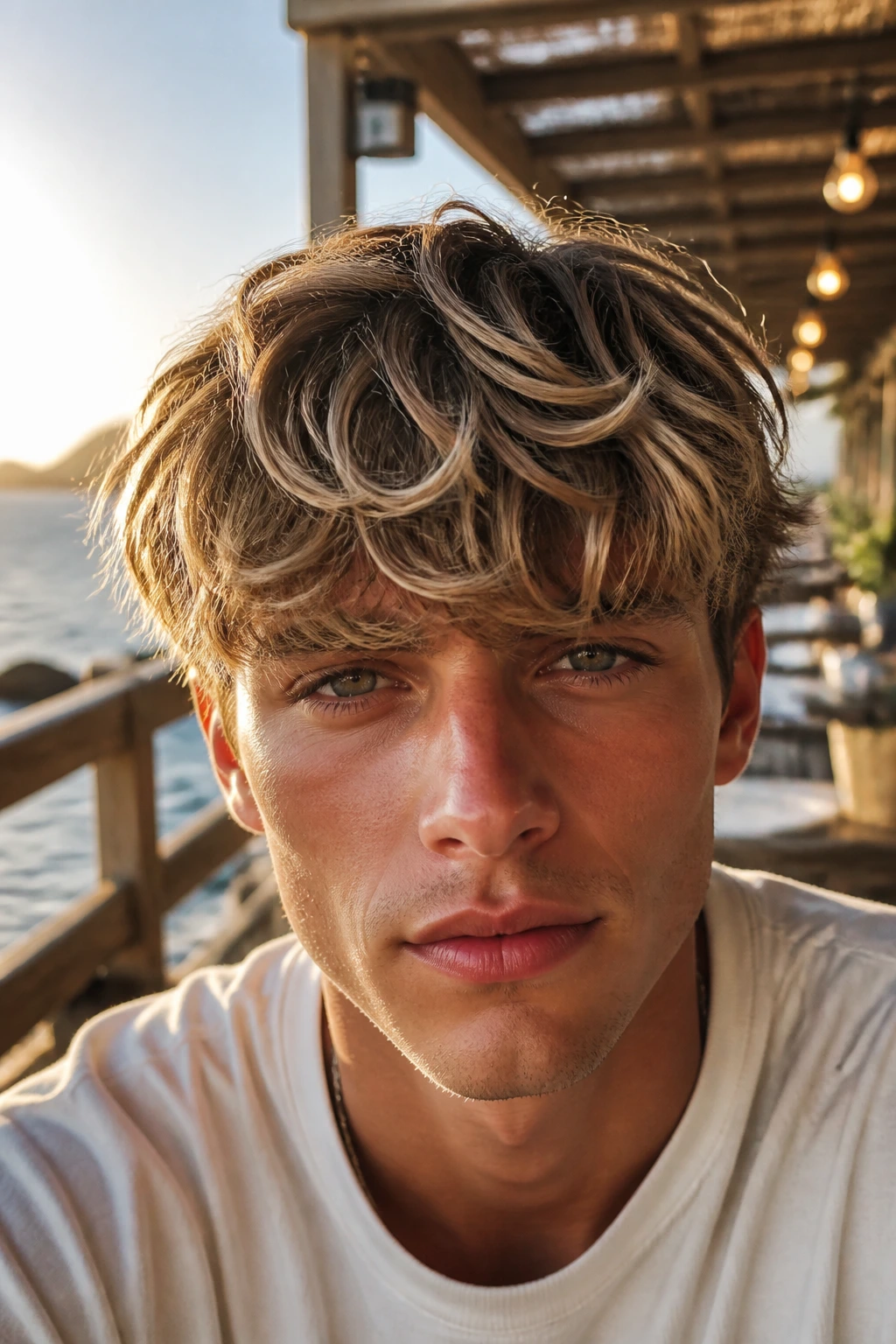
A wavy fringe is one of the easiest cuts to color well, because the hair already bends and catches light in different places. Honey-blond balayage plays into that. The warm tone lands in the waves and gives the fringe a soft, sunlit look that feels easy, not fussy.
If your hair falls forward, this is the look I’d point to first. The lightness should sit just on the top bends of the fringe and around the temples, where it naturally breaks up the face shape. Too much color underneath can make the fringe look puffy. Keep the underside darker.
The best versions of this style are not bright blond. They’re honey, beige, or warm beige blond — enough lift to stand out, but still tied to the base color. That’s what keeps it believable.
How to style it
Use a light mousse or sea-salt spray on damp hair, then blow-dry the fringe forward with your fingers. The color looks best when the waves are loose and a little imperfect.
A flat iron can make the balayage pop, but I’d use it sparingly. Too much heat starts to erase the texture, and then the whole point of the cut gets lost.
4. Silver-Blond Balayage on Dark Hair
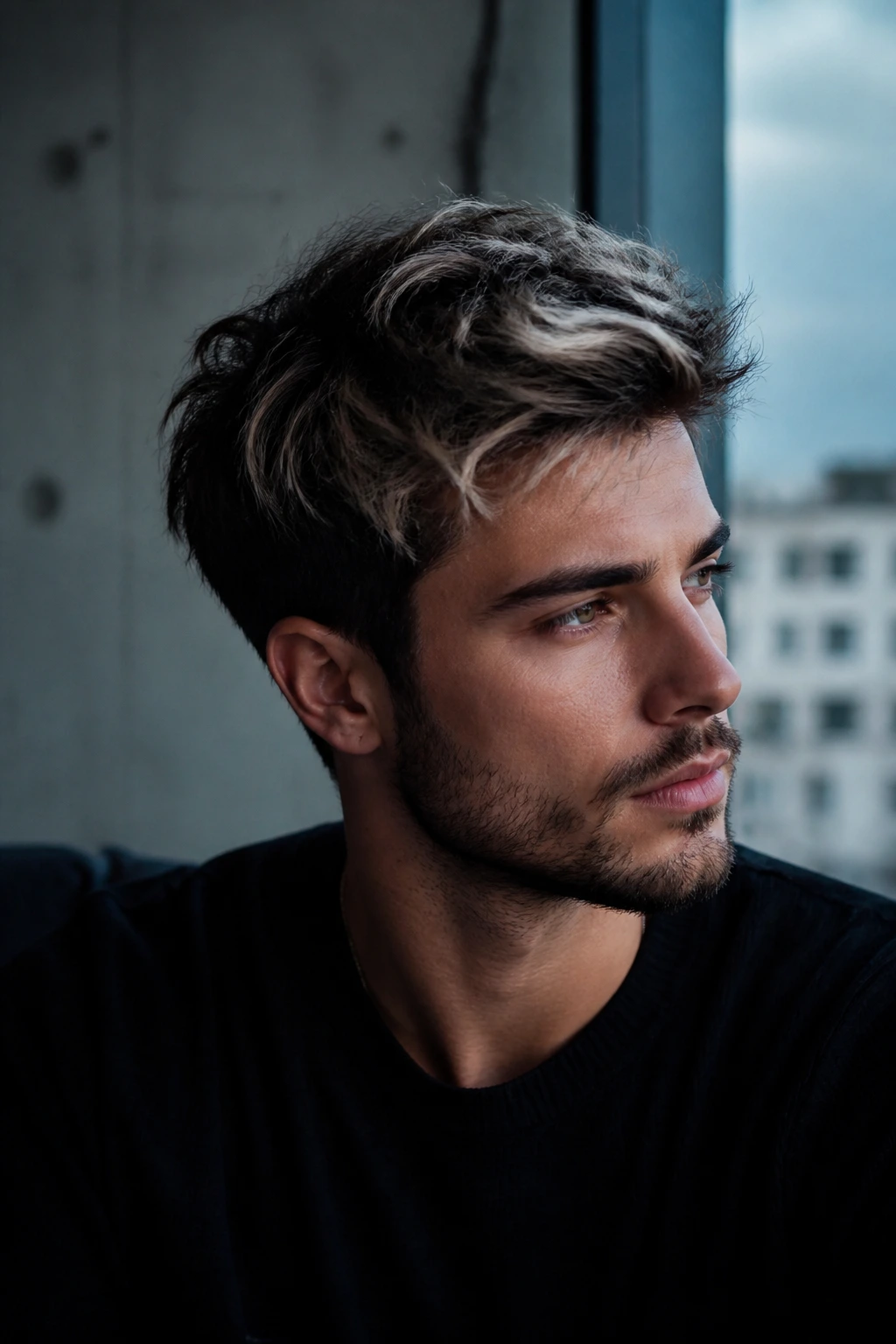
Silver-blond on dark hair sounds dramatic, and it can be. But when the placement is narrow and the root stays dark, the result is sharper than it is loud. That contrast gives the haircut edge, especially on men with straight or slightly wavy hair.
The biggest mistake here is trying to lift too much too fast. Dark hair needs patience if you want silver tones that look clean rather than orange or patchy. A good colorist will usually work in stages and tone the hair carefully so it lands in a cool gray-silver lane instead of yellow-blond.
This look is not the one I’d recommend if you want zero maintenance. It needs toner upkeep, and the regrowth is part of the style. Still, the payoff is real. Few balayage looks give this much visual punch on straight dark hair.
A nice version of this style keeps the silver concentrated through the top layer and front sweep. Leave the sides and back darker. That contrast is the whole story.
5. Chestnut Balayage on Curly Hair
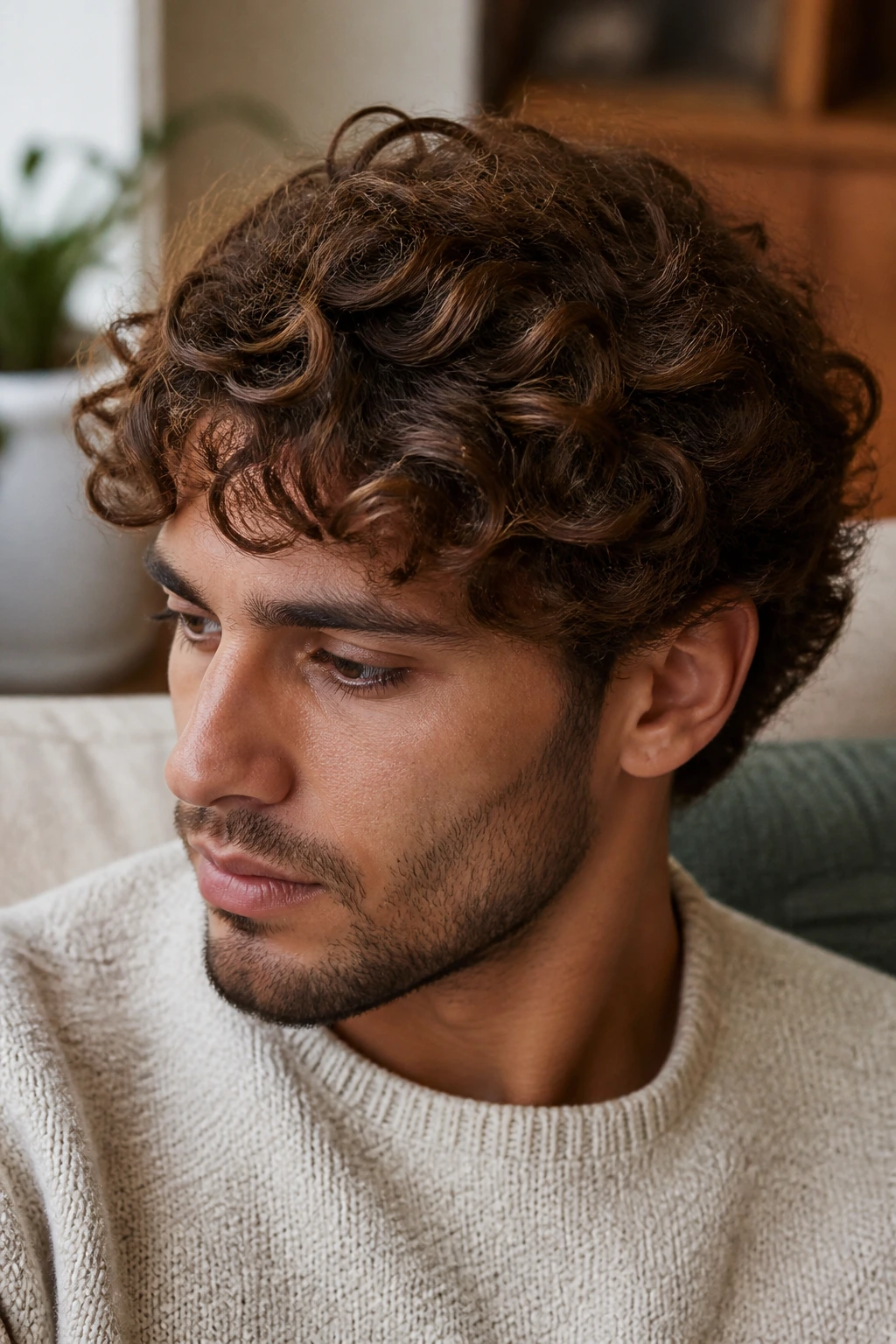
Curly hair loves chestnut balayage because the curls do half the work for you. Every bend catches a slightly different tone, so the color feels deeper than it would on straight hair. You end up with warmth, shape, and that soft shadow-and-light effect that curls do best.
The color should never be painted in heavy blocks. Curly hair needs depth between the lighter ribbons, or the pattern starts to look muddy. Think of it as painting the outer surfaces of the curls, not flooding the whole head. That keeps the curl pattern clear.
Chestnut is a good choice when you want warmth without going copper. It sits in that rich middle space between brown and red, which makes it flattering on many skin tones. It also wears well as the hair grows, since the roots blend into the color instead of fighting it.
Best styling move
Use a curl cream with a small amount of hold. Let the curls air-dry or diffuse on low heat. Strong gels can make the lighter pieces look hard and crunchy, and that ruins the softness that makes this look work.
6. Face-Framing Balayage on a Quiff
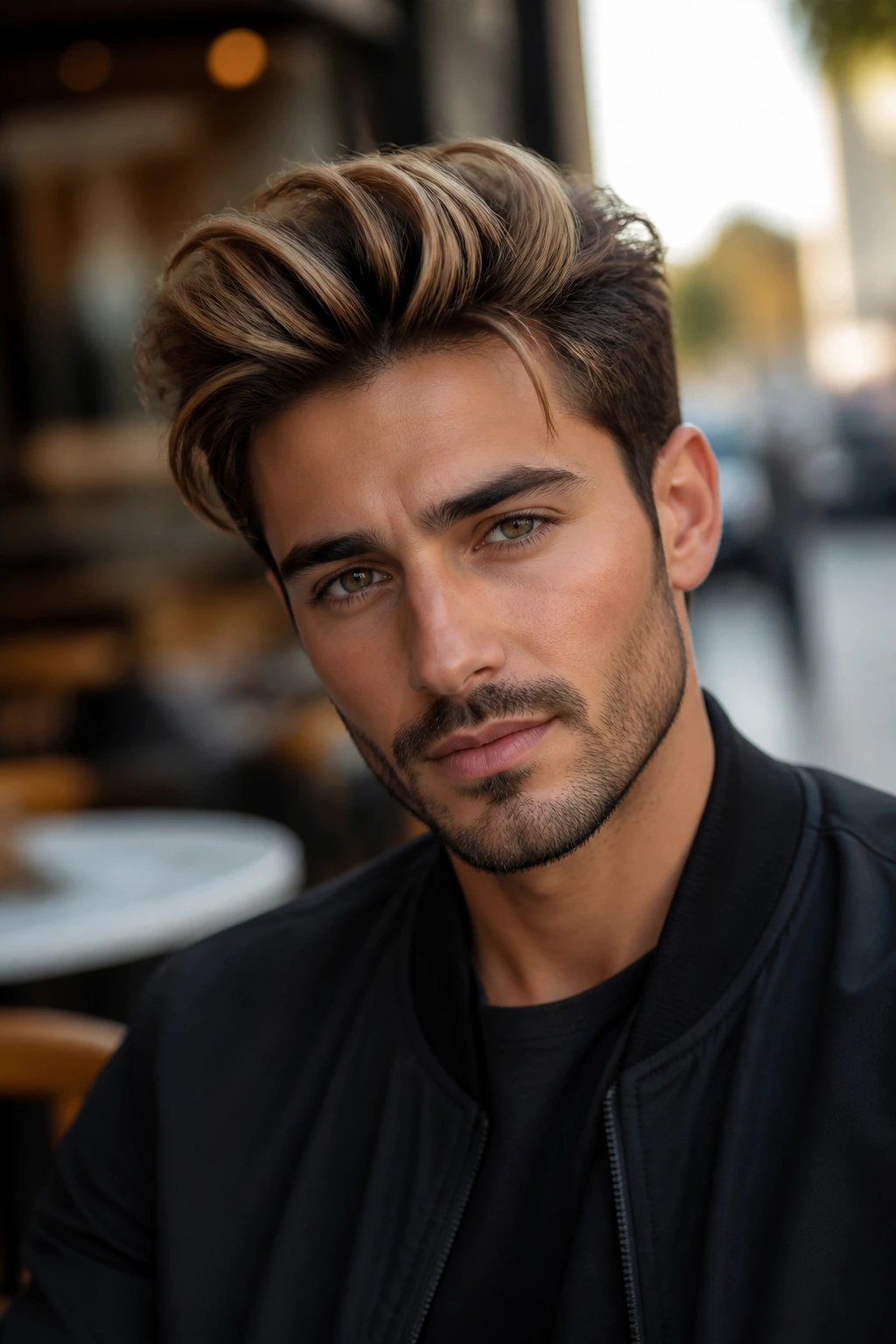
A quiff has height, and height gives balayage a place to go. Face-framing balayage on a quiff draws the eye upward and forward at the same time, which makes the whole haircut look more sculpted. It’s one of the smartest ways to use color on men’s hair because it works with the shape instead of sitting on top of it.
Unlike full-head highlights, this style keeps the sides and back mostly dark. That means the quiff still reads masculine and sharp, not washed out. The lighter pieces should land around the front hairline, the top ridge, and a little through the crown where the hair naturally lifts.
The best tone depends on the base. Caramel and beige work on brown hair. Ash blond or champagne blond works on darker blond bases. If the quiff is thick, the balayage can be slightly wider. If it’s fine, keep the pieces narrow so the hair still looks dense.
This is a good cut-color combo for men who style their hair every day. It rewards a quick blow-dry and a little product. Not much else.
7. Sandy Beige Balayage on a Messy Fringe
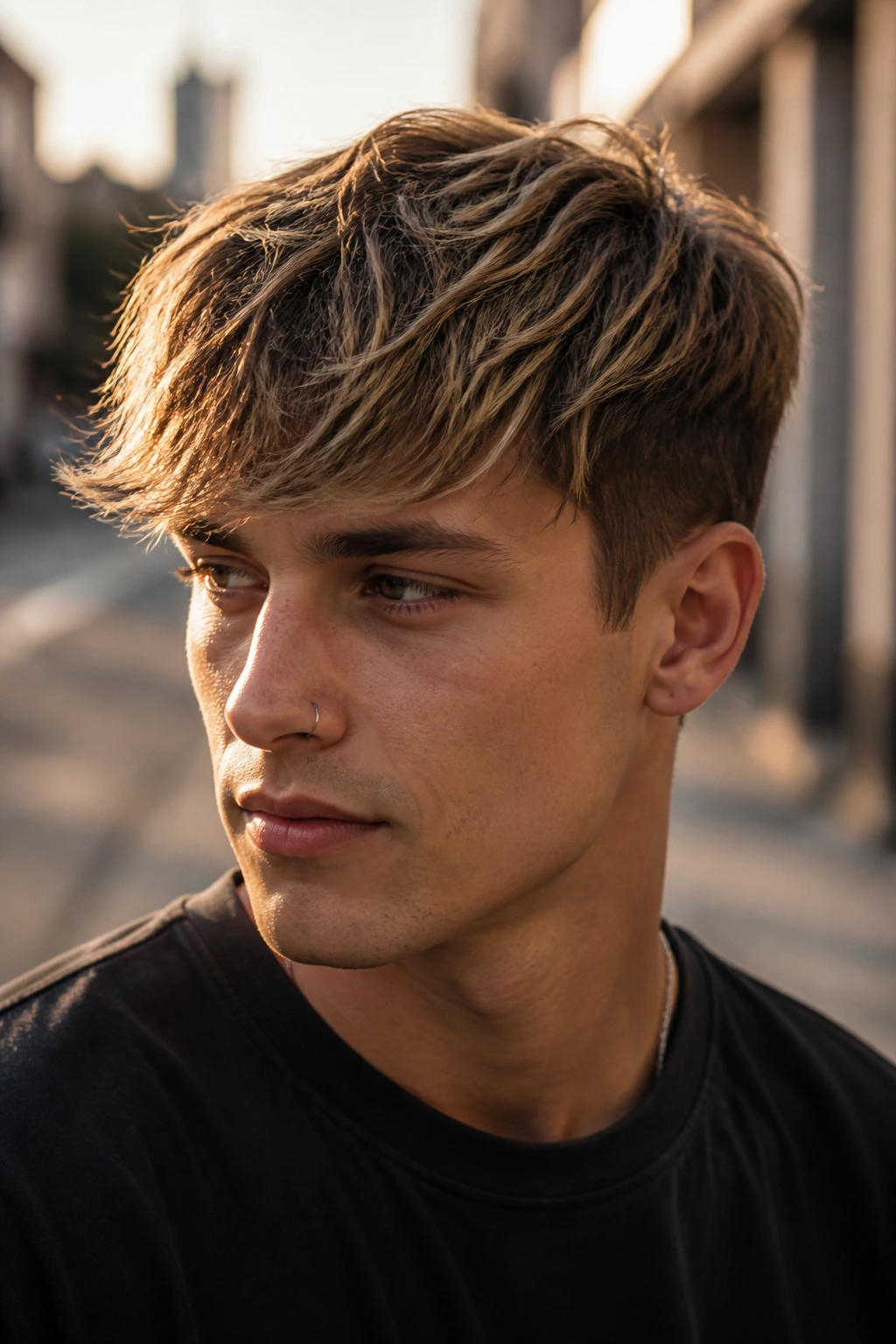
Sandy beige has a dry, natural look that suits a messy fringe better than a glossy blond ever could. The tone sits between warm and cool, which makes it easy to wear on brown or dark blond hair. On a fringe, it breaks up the front line and keeps the cut from falling into one flat sheet.
What to ask for at the chair
Keep it practical. Tell your colorist you want soft beige pieces through the front and top, not bright blond streaks. Ask for more lightness near the ends of the fringe and less near the roots, so the grow-out stays easy.
A messy fringe needs texture, and the color should follow that texture. If the cut has choppy ends, the balayage can be a little irregular too. That irregularity is what makes it look good. Perfect symmetry would make it feel too salon-polished for this haircut.
This look works best with a salt spray or matte cream. Anything shiny will flatten the fringe and make the lighter pieces stand out in the wrong way.
8. Copper Balayage on a Shag
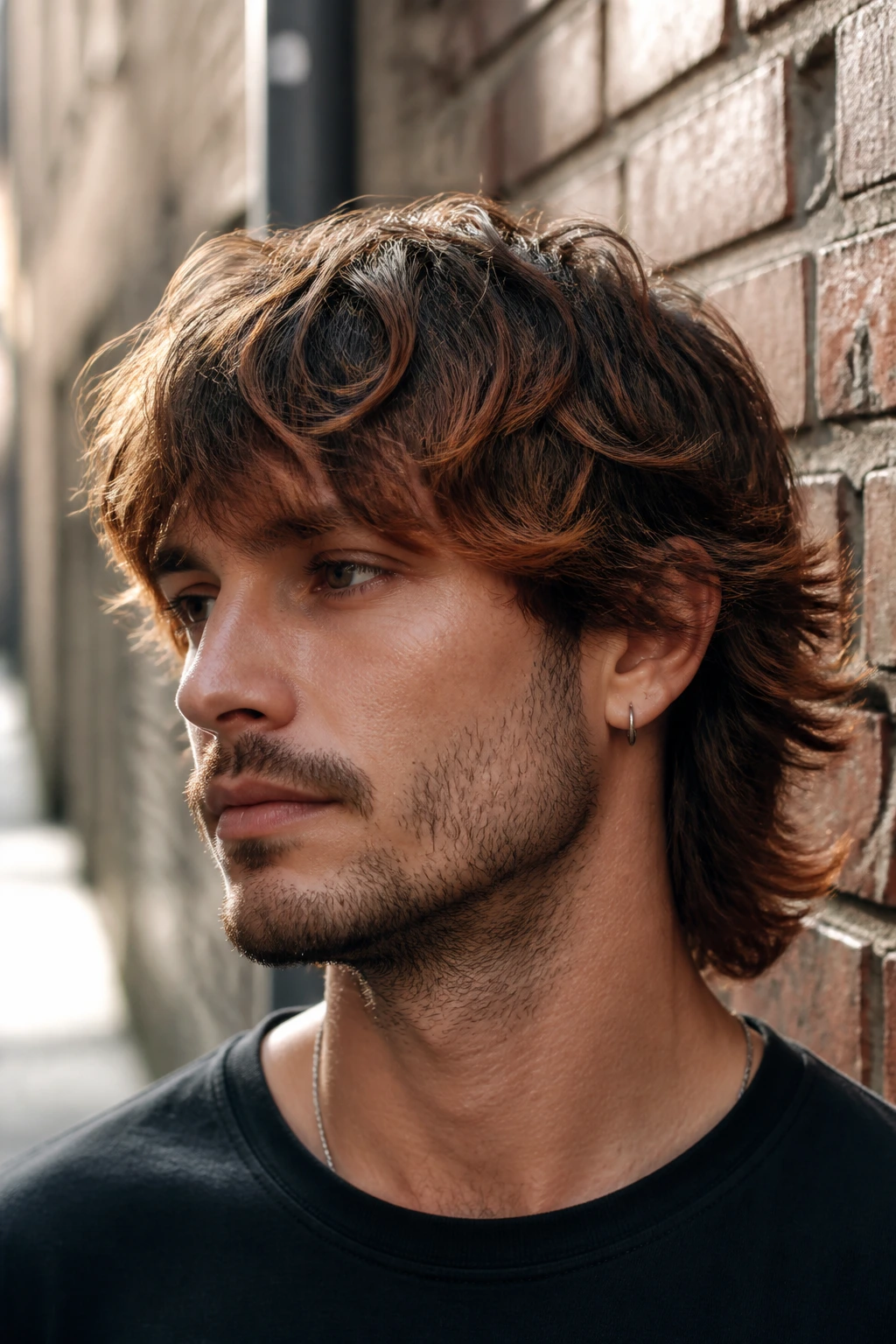
Copper balayage on a shag has attitude, and I like that. The shag already brings movement through the length, so copper paint-throughs make the layers feel warmer and more alive. On wavy or thick hair, the result can look almost electric in the right light.
The trick is not to saturate the whole head. Keep the copper broken up through the mid-lengths and outer layers, then leave the underside darker. That stops the style from turning into one loud copper block. You want flashes of warmth, not a solid helmet of color.
This is one of the more expressive balayage looks for men, so it suits people who don’t mind a bit of attention. If you wear your hair messy, pushed back, or air-dried, copper gives the haircut more personality than a plain brown tone ever could.
A word of caution: copper fades fast if the hair is washed daily with harsh shampoo. Use a color-safe cleanser, and don’t blast it with heat every morning.
9. Smoky Brunette Balayage on a Slick Back
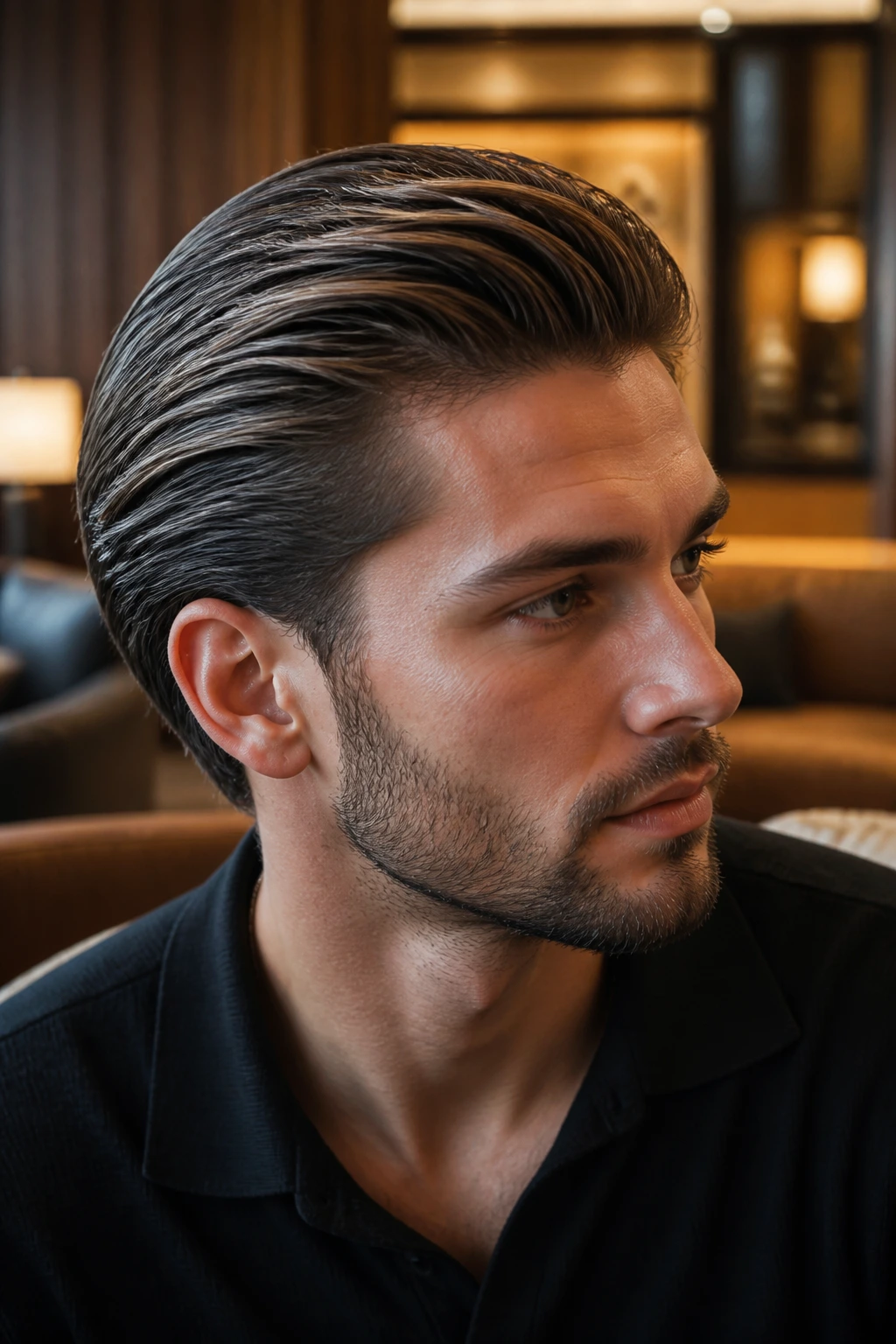
A slick back can look too severe if the color is one flat tone. Smoky brunette balayage fixes that by breaking the surface with deeper and lighter brown notes that still stay in the same family. The result is subtle, but not boring.
This is a strong choice for men who wear more structured clothes or want a grown-up haircut without losing texture. The style reads polished from a distance and more detailed up close. That matters. A slick back with no variation can look like a block. A smoky balayage makes it move.
Keep the lightness low. Two tones of brown is enough. If the contrast gets too high, the slick back starts to look streaky, especially when combed tight. The color should follow the direction of the hair, with the brightest bits showing on the top curve and the front sweep.
If you use pomade, choose one with a medium sheen rather than a wet finish. Too much shine can make the color look muddy.
10. Platinum-Tipped Balayage on a French Crop
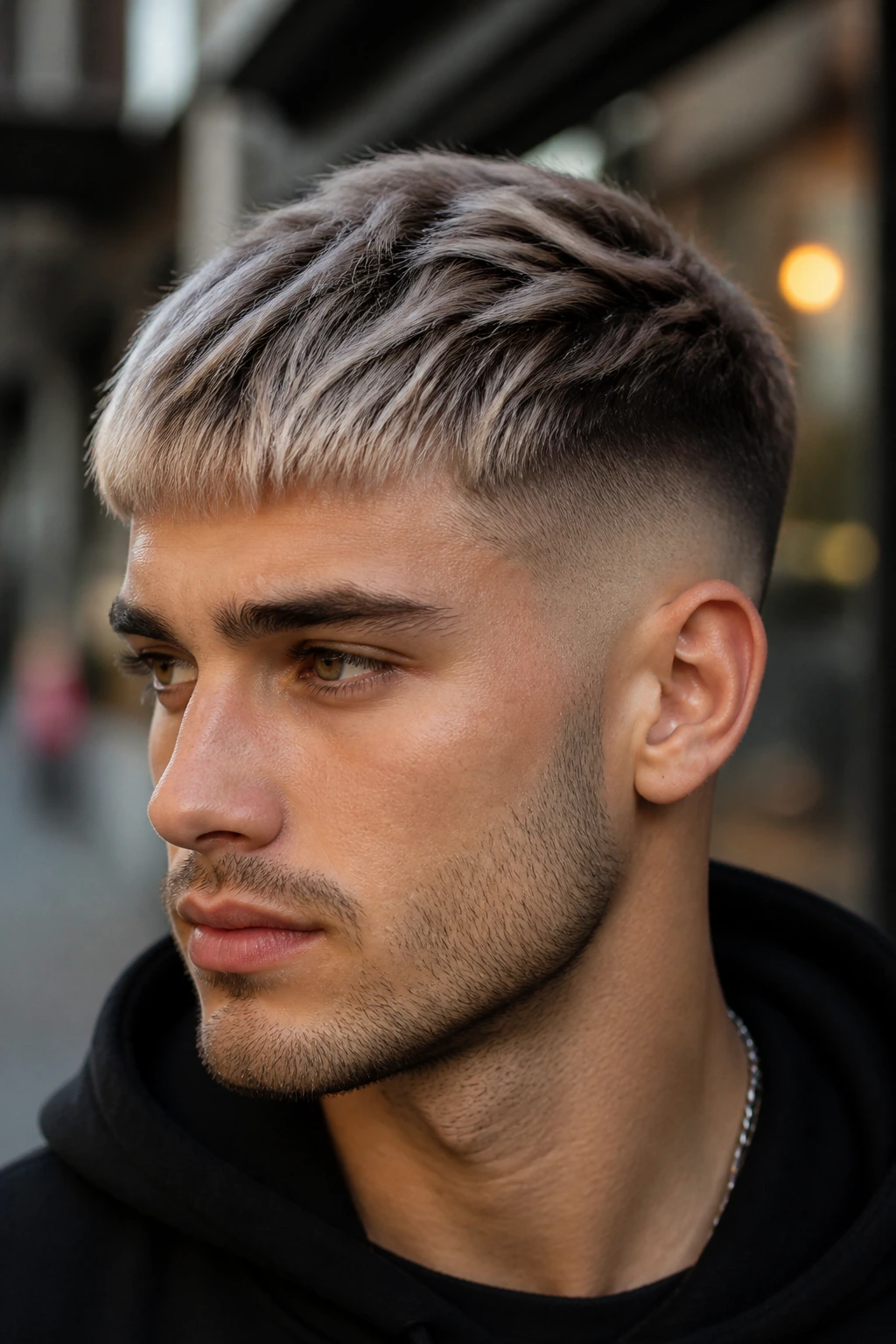
Platinum tips on a French crop are for men who want something sharper. Not louder, sharper. The crop already has short, blunt structure, and the platinum on top gives it a hard edge that looks intentional when the cut is clean.
What makes it different
Unlike a full blond dye job, the platinum is kept mostly on the ends and upper surface. The roots stay darker, which makes the grow-out easier and gives the crop more depth. That dark base is doing a lot of work here. Without it, the style would look flat and overprocessed.
- Best on naturally dark blond or light brown hair
- Needs careful lifting to avoid brass or yellow
- Looks strongest with a matte finish
- Works best when the fringe stays choppy, not soft
This one takes upkeep. If the toner fades, the look loses its bite fast. Still, it’s one of the cleanest ways to wear high-contrast balayage on a short cut without going full bleach-blond across the head.
11. Auburn Balayage on a Pompadour
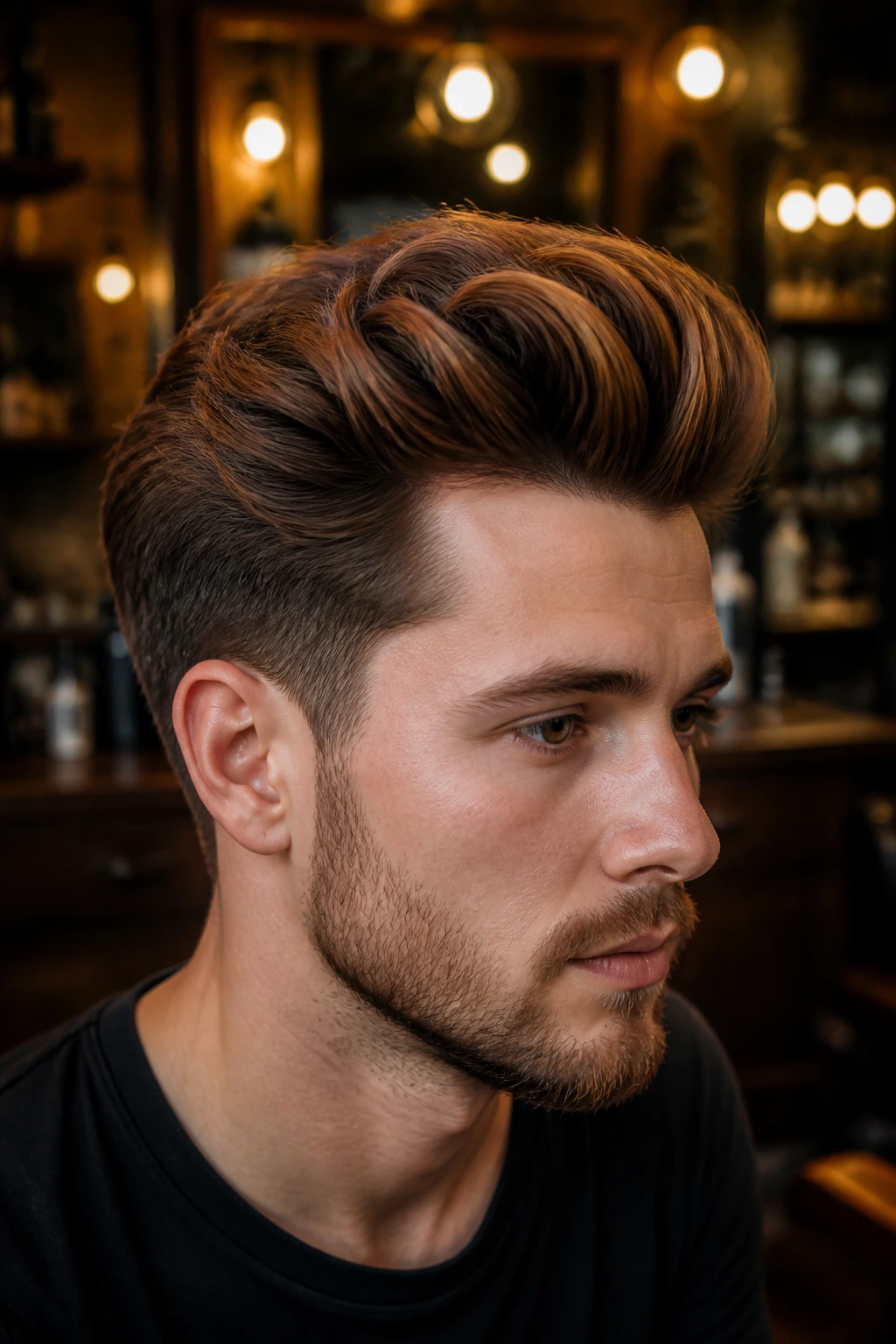
A pompadour needs movement, and auburn balayage gives it exactly that. The warm red-brown tones lift the top and make the shape look taller without needing too much product. On thick hair, the color can give the pompadour a richer, almost suede-like finish.
What I like here is the depth. Auburn sits between brown and red, so it catches light without turning bright. That makes the style easier to wear than a full copper or fire-red look. It still feels bold, but it’s not screaming for attention.
The best version keeps the sides darker and the color concentrated through the upper roll of the pompadour. The lighter pieces should show most when the hair is swept up and back. If the hair is too evenly colored, the shape loses some of its lift.
Use a blow-dryer before product. The color shows better when the hair has real volume, not when it’s glued down.
12. Beige-Blond Balayage on a Bro Flow
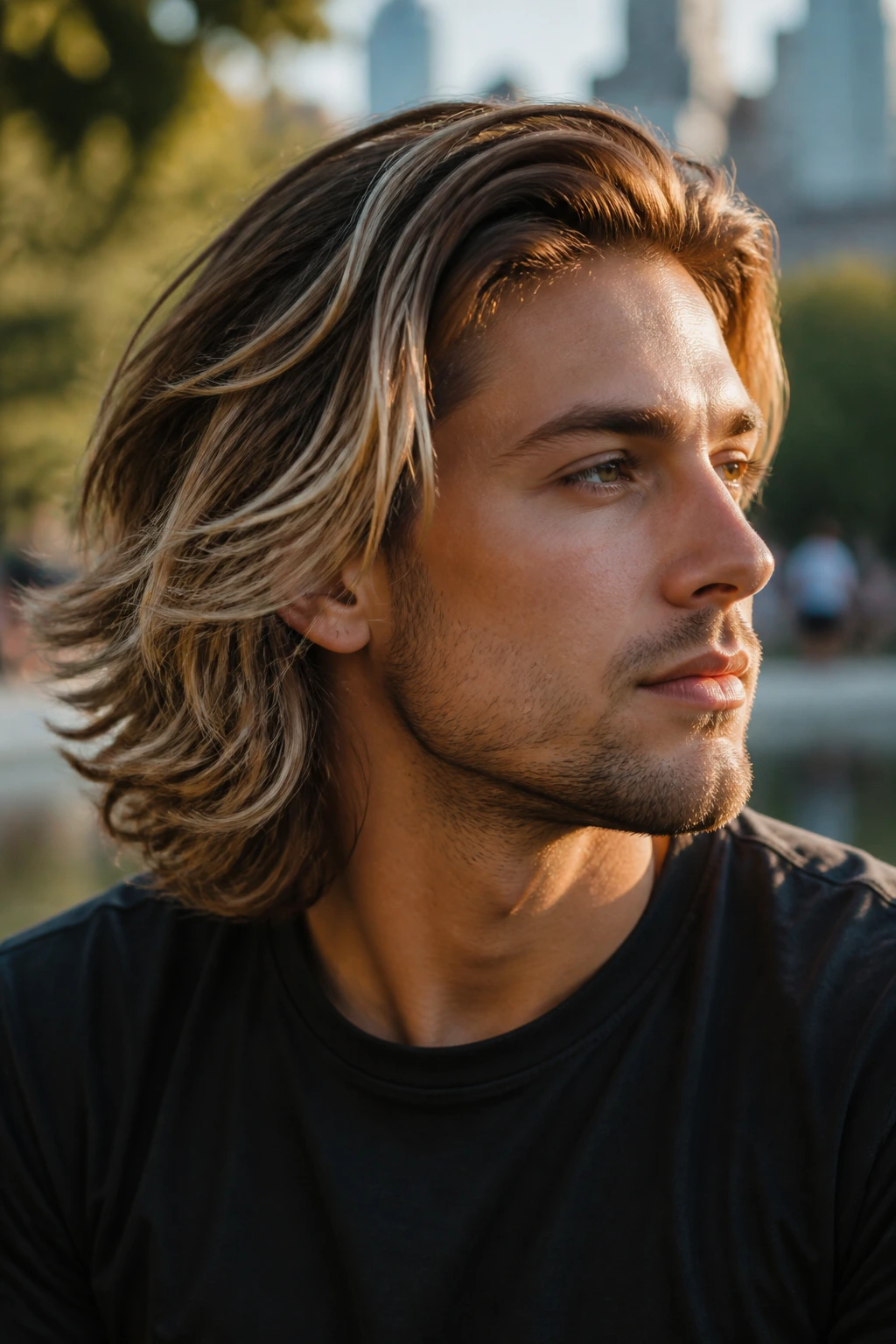
The bro flow is one of those cuts that can either look relaxed or just grow out messy. Beige-blond balayage pushes it into the first camp. The color gives the length some shape, especially around the front pieces that fall near the cheekbones and jaw.
Why beige and not brighter blond? Because the bro flow needs softness. A hard blond streak can look loud on longer hair, while beige keeps the finish sandy and wearable. The color should appear sun-kissed, not painted on.
This look works well when the hair has a natural bend. Straight bro flow can sometimes feel heavy, but a little wave lets the balayage live in the movement. The lighter bits should live mostly on the outer layers and ends, where they’ll catch air when you turn your head.
A leave-in conditioner helps here. Longer hair shows dryness fast, and dry ends make balayage look dull.
13. Mushroom Brown Balayage on Straight Hair
Straight hair can be tricky with color because every line is visible. Mushroom brown balayage solves that by staying cool, soft, and slightly earthy. It gives straight hair texture without making it look striped.
The mushroom tone sits between ash brown and beige brown, which is why it looks so calm. There’s no harsh red cast, no yellow cast, and no flashy blond brightness. Just a muted shift in tone that works well with precise cuts. If the haircut is clean, this color feels expensive without trying too hard.
This is a smart pick for men who want a quiet color change. The balayage can be very fine, almost like dusted lightness through the top. On straight hair, that subtlety matters. Thick ribbons can look obvious fast.
I’d pair this with a tidy taper, a middle part, or a lightly pushed-back style. It’s not the right match for a messy, broken-up shape. The color wants order.
14. Sun-Kissed Balayage on a Curly Fade
Curly hair and a fade make a strong pair, and sun-kissed balayage adds the part that people tend to notice first. The color highlights the curl pattern on top while the fade keeps the edges neat. That contrast is what makes the haircut work so well.
A curly fade can get bulky if the top is all one shade. Balayage breaks up that mass and makes the curls feel lighter. The hand-painted pieces should sit on the outer curls, especially around the front and crown, where they’ll read as movement instead of random spots.
This style is nicest when the color is warm but not orange. Think soft gold, pale caramel, or light beige. The goal is a sun-hit effect, not a blond helmet. And yes, the fade matters. Keep the sides crisp so the top has something to contrast against.
One good habit: refresh the curls with water and leave-in cream instead of piling on more product every morning. Too much buildup dulls the color fast.
15. Icy Ash Balayage on Long Layers
Icy ash on long layers is the boldest thing on this list, and it earns that spot. Long hair gives the color room to spread out, so the cool tones can move through the cut instead of sitting in one place. The result can look sharp, almost metallic, if the layers are cut well.
The price of that effect is upkeep. Icy ash fades into yellow or beige if toner is neglected, and long hair shows dryness quickly. If you want this look, the condition of the hair has to stay solid. No way around it. Bleach damage and icy tones do not get along.
What makes it work is contrast. Darker roots, cool mids, and brighter ends create a long, clean line through the hair. If everything is lifted equally, the style loses its shape. I’d also keep the layers soft, not too choppy, so the light can slide through the lengths.
This one needs a good conditioner and a lighter hand with heat styling. The color is the headline. The hair still has to feel healthy.
16. Golden Bronze Balayage on a Taper Cut
Golden bronze on a taper cut hits that sweet spot between warm and grounded. The taper keeps the sides neat, while the golden bronze pieces warm up the top and front. It’s an easy style to live with because the color grows out in a natural way.
Bronze tones are useful when you want more life than brown, but less drama than blond. They also work well on medium brown hair, where the gold doesn’t need to fight the base. A good colorist will paint the bronze into the most visible strands, especially where the hair lifts at the front.
Barber ask
Ask for a natural taper on the sides and back, with hand-painted bronze pieces concentrated through the top third. If you want a lighter front, say so. If you don’t, leave the hairline softer and let the crown do the work.
This look is easy to style with cream or a light paste. It doesn’t need shine. It needs texture.
17. Shadow-Root Balayage on a Longer Top
Shadow-root balayage is one of my favorite ways to keep color from looking overdone. The root stays darker on purpose, and the lighter pieces start lower down, so the grow-out looks built in from day one. On a longer top, that dark base gives the hair some weight and keeps the shape from floating away.
What to watch for
- Keep the root area untouched for depth
- Start the lighter pieces around the mid-lengths
- Choose a tone that is only 2 to 3 levels lighter than the base
- Use a gloss, not a harsh toner, if the color starts to look dry
This style works on almost any hair type, but it shines on men who wear their hair pushed back, loose, or slightly off-center. The darker root keeps the style masculine and grounded. The lighter ends do the visual work.
It’s also easier to live with than a full blond service. That alone makes it worth a look.
18. Muted Mahogany Balayage on Thick Hair
How do you stop thick hair from looking heavy? Give it depth and a little warmth. Muted mahogany balayage does both. The red-brown tone breaks up mass without turning the hair bright, and the result feels denser in a good way — more layered, less blocky.
Thick hair can swallow color if the pieces are too fine. So here, the balayage should be a touch wider and placed where the hair naturally separates. Around the crown, near the temples, and through the top ridge are good spots. That way, the mahogany catches when the hair moves instead of disappearing inside the bulk.
This color is nice on medium to dark brown bases, especially when the haircut has some length on top. It suits a brushed-up style, a loose quiff, or even a longer fringe. The warm tone keeps the hair from feeling too stern.
A wide-tooth comb and a light cream help more than heavy pomade. Thick hair needs movement to show the color.
19. Champagne Blond Balayage with Curtain Bangs
Curtain bangs on men can look soft, cool, or awkward, depending on the color. Champagne blond helps steer them toward cool. The tone has a pale, slightly creamy look that suits the split front shape and gives the bangs a lighter edge without making them stark.
Compared with ash blond, champagne has a little more warmth. Compared with golden blond, it stays cleaner. That middle ground makes it a smart choice for men who want blond hair but don’t want the upkeep of something icy or high contrast.
The balayage should frame the face and follow the part line. Let the lighter pieces fall through the fronts of the bangs and down into the side layers so the shape feels connected. If the color is only on the very ends, the bangs can look thin.
This is one of those looks that benefits from a blow-dry brush. A quick bend at the front makes the champagne tone catch shape instead of hanging flat.
20. Cool Mocha Balayage on a Clean Taper
Cool mocha is for the man who wants dimension but not drama. It sits in that coffee-brown zone where the hair still looks dark, but the surface has depth. On a clean taper, the color reads polished and easy to wear.
The cool tone matters. If the mocha starts pulling red, the whole look changes mood fast. Keep it neutral to ash-leaning, and let the painterly pieces sit mostly on the top. The sides should remain darker so the taper keeps its crisp outline.
This look works especially well on straight or slightly wavy hair. You can see the tone shifts without needing big contrast. That makes it useful for office settings, weddings, or anyone who wants a bit of color without making the haircut the loudest thing in the room.
A matte clay is enough for styling. Heavy shine can make the mocha look flat, and that’s a shame because the depth is the point.
21. High-Contrast Balayage on Twists or Locs
Balayage on twists or locs deserves more attention than it usually gets. Hand-painted lightness across twisted hair creates a strong surface pattern, and the contrast can be striking when it’s placed carefully. You get shadow, depth, and movement all at once.
The key is not to color every strand the same way. That would flatten the texture. Instead, let the lightness hit the outer turns, the front pieces, and a few higher spots where the hair naturally catches light. That gives the twists or locs a lived-in feel with real dimension.
Blond, honey, copper, and bronze all work here, depending on how much contrast you want. Dark bases can handle bolder color. Medium bases usually look better with a softer lift. Either way, the pattern should look intentional from a few feet away and interesting up close.
This style can dry out the hair if the bleaching is too aggressive, so conditioning matters. More than usual, honestly. Twisted styles show texture first and everything else second.
22. Low-Maintenance Natural Balayage on a Short Crop
If you want the cleanest, least fussy version of balayage for men, this is the one I keep coming back to. A short crop with natural balayage barely announces itself. It just makes the haircut look better, deeper, and a little more expensive than plain single-process color.
The lightness should stay close to the base shade — no more than a couple of levels lighter. Think soft beige on brown hair, light caramel on dark blond, or a muted ash lift if the base is cool. The whole point is easy grow-out and a shape that still looks good four or five weeks later.
Ask for the color to be painted mainly on the top, front, and a touch through the crown. Leave the sides dark. Keep the pieces fine. That’s it. The haircut does the rest.
For a lot of men, this is the sweet spot. It works with a textured crop, a small fringe, or a neat taper, and it does not ask for much beyond a decent cut, a color-safe shampoo, and a little restraint with product.
