



Burgundy blonde balayage on brown hair has a particular kind of pull: the burgundy gives depth, the blonde keeps the color from sinking, and the brown base makes the whole thing feel rich instead of loud.
That balance is why it works so well on brunettes. On medium brown hair, the blonde ribbons can stay soft and creamy. On dark brown or espresso hair, the burgundy reads moodier, almost wine-dark in some light, and the lighter pieces stop the whole look from turning into one flat block of color.
I like this color family because it gives you range. A skilled colorist can push it deep and dramatic, or keep it airy with beige and honey blonde pieces tucked between the red-violet strands. The haircut matters too — long layers, shags, lobs, and curls all change how the color moves.
Below are 22 versions that cover the whole spread, from subtle and low-commitment to bold and high-contrast. Some lean soft and wearable. Some are built for people who want their hair to make a point. All of them work better than straight red on brown hair because the balayage keeps the color from looking heavy.
1. Smoky Merlot Ribbons Through Chestnut Brown
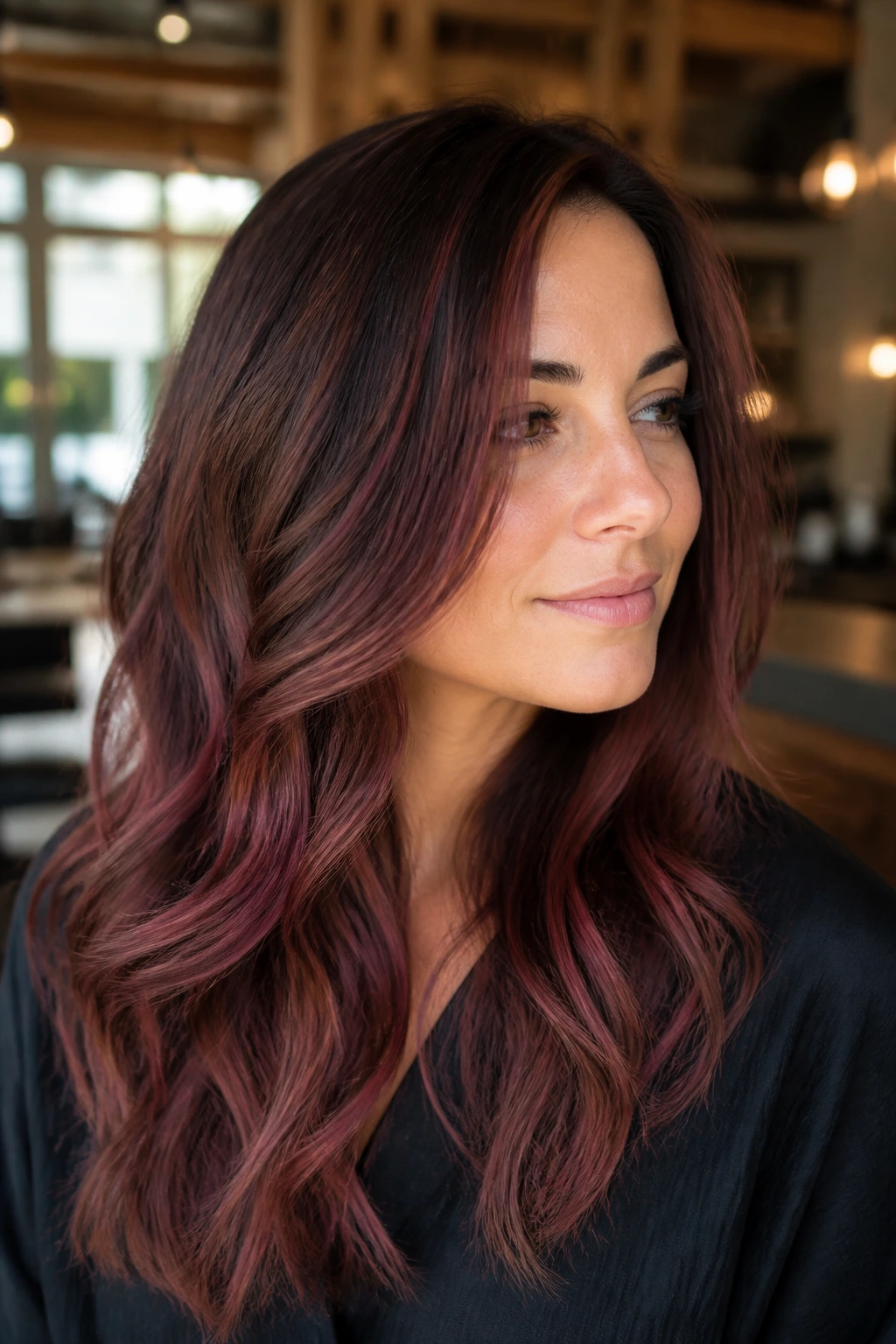
This is the version I’d hand to someone who wants burgundy blonde balayage without jumping straight into high drama. The chestnut brown base stays visible, which keeps the whole look grounded, while the merlot ribbons add that dark wine tone that makes brown hair look richer.
Why It Flatters Chestnut Brown
Chestnut already has warmth, so merlot doesn’t fight it. The blonde pieces should sit in thin ribbons through the mids and ends, not in thick stripes near the root. That keeps the grow-out soft and gives the color room to move when the hair sways.
- Ask for fine, hand-painted burgundy ribbons mixed with beige-blonde pieces.
- Keep the root shadow 1 to 2 shades deeper than the mids.
- Finish with a clear gloss or red-violet glaze every 4 to 6 weeks.
Best tip: keep the lightest blonde pieces around the face and lower lengths. That gives you brightness where people actually see it.
2. Cherry Cola Face-Framing Money Pieces
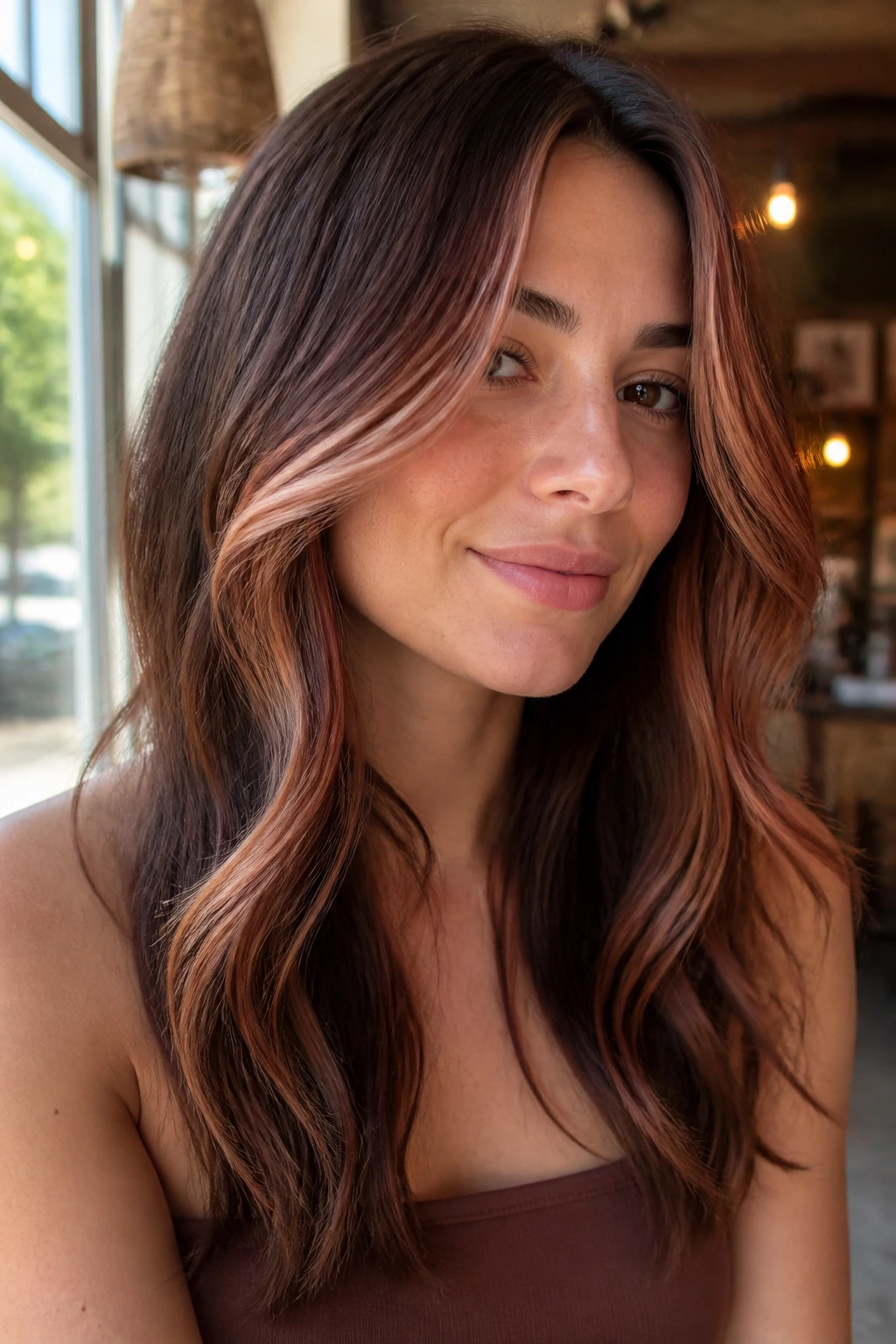
Want the fastest way to wake up a medium brown base? Put the lightest color right at the front. Cherry cola tones do a lot of work here because the burgundy sits under the blonde, so the whole look reads glossy instead of patchy.
The face frame is the point. I’d keep the burgundy deeper through the back and sides, then let the blonde money pieces fall in a softer band around the cheekbones and jawline. That contrast brings shape to the haircut, even when the rest of the hair is worn straight.
It’s also one of the easiest looks to live with. You can pull the rest into a low bun and still keep the color visible at the front. That matters. A lot of color looks good only when styled a certain way. This one has more range.
3. Deep Plum Melt on Espresso Brown
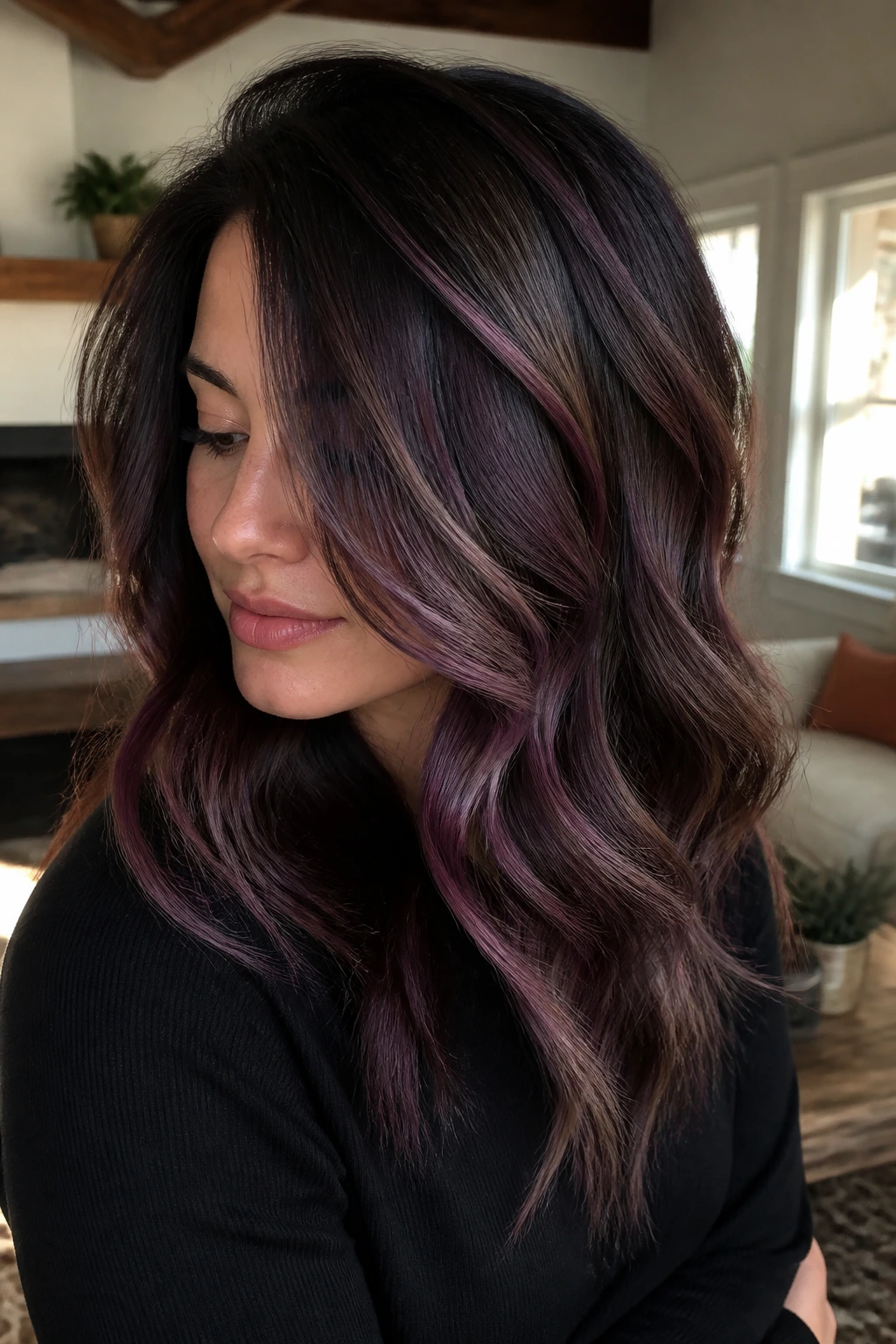
Plum should never look pasted on top of espresso hair. It needs to melt into the base, and that means the burgundy tone has to stay cool and sheer at the same time. When it does, the result looks dark, glossy, and expensive in the best possible way.
What makes this one work is restraint. The blonde should show up as muted beige highlights, mostly through the mid-lengths and ends, so the plum can stay in control. Too much bright blonde and the whole thing loses its depth. Too little, and the color starts to look muddy.
A good colorist will usually feather the plum through a few inches at a time rather than block it in. That’s the part people miss. Plum hair looks better when the transition is soft enough that you can’t find the exact starting point.
4. Rosewood Balayage with Soft Blonde Ends
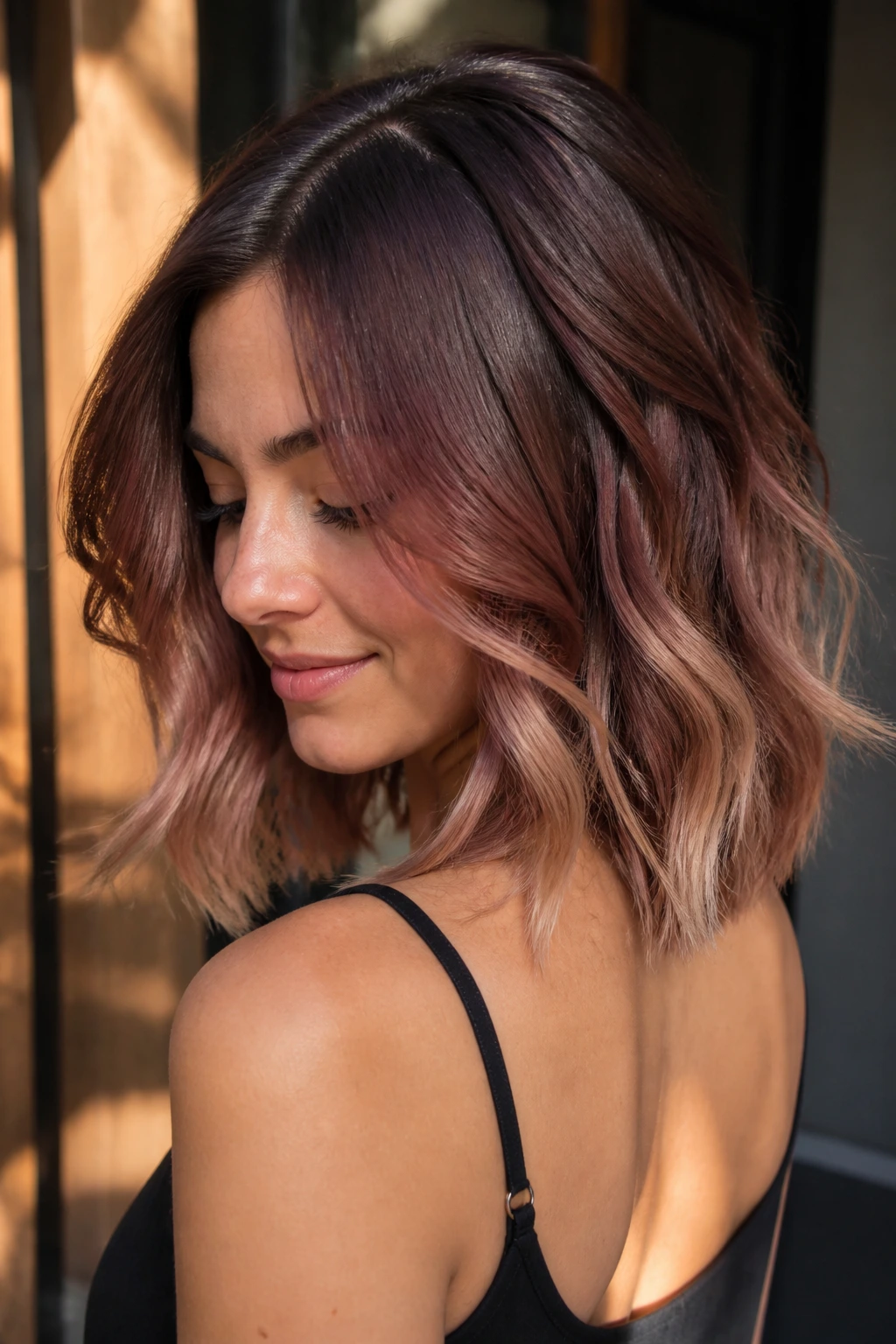
Picture a brown bob that looks plain in the mirror, then suddenly catches rosewood and champagne in motion. That’s the appeal here. It’s not trying to shout. It just keeps changing as the light hits it.
Where the Blonde Should Sit
The blonde belongs at the ends and around the outer layers, not packed high near the root. That keeps the rosewood from turning too hot or too red. A bob has less length to work with, so placement matters more than it does on long hair.
- Use soft blonde ends rather than icy blonde.
- Keep the rosewood concentrated through the mid-shaft.
- Ask for a slightly darker root melt to make grow-out easier.
One thing I like about this look is how well it suits people who wear their hair tucked behind the ears. The color line shows up instantly, but it still feels soft when the hair falls back into place.
5. Mulled Wine Curls with Beige Blonde Ribbons
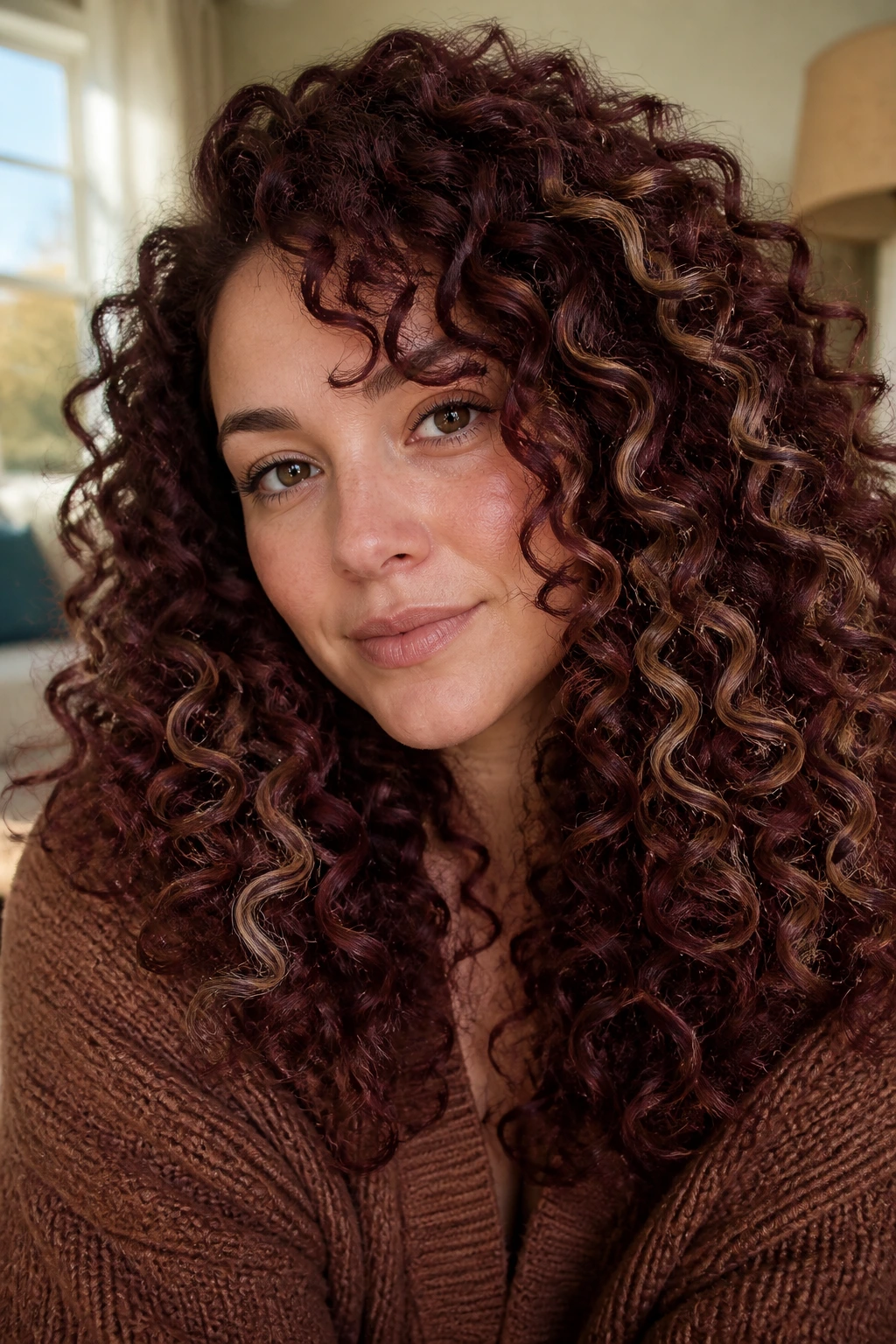
Curls make this color sing. Straight hair can show the placement, but curls show the depth, and that matters when you’re mixing burgundy with blonde on a brown base. The mulled wine tone settles into the bends of the hair, while the beige blonde catches the outer curve of each curl.
The trick is to keep the blonde understated. Beige works better than bright gold here because it doesn’t steal attention from the burgundy. You want the overall effect to feel like a glass of spiced red wine with a little cream in the light, not a striped candy look.
On longer curls, this version feels plush. On shoulder-length curls, it looks bouncy and a little romantic. Either way, the color has to be painted in a way that respects the curl pattern, or it will disappear into a blur. Curl-friendly placement is non-negotiable here.
6. Cabernet Peekaboo Streaks Under a Brown Bob
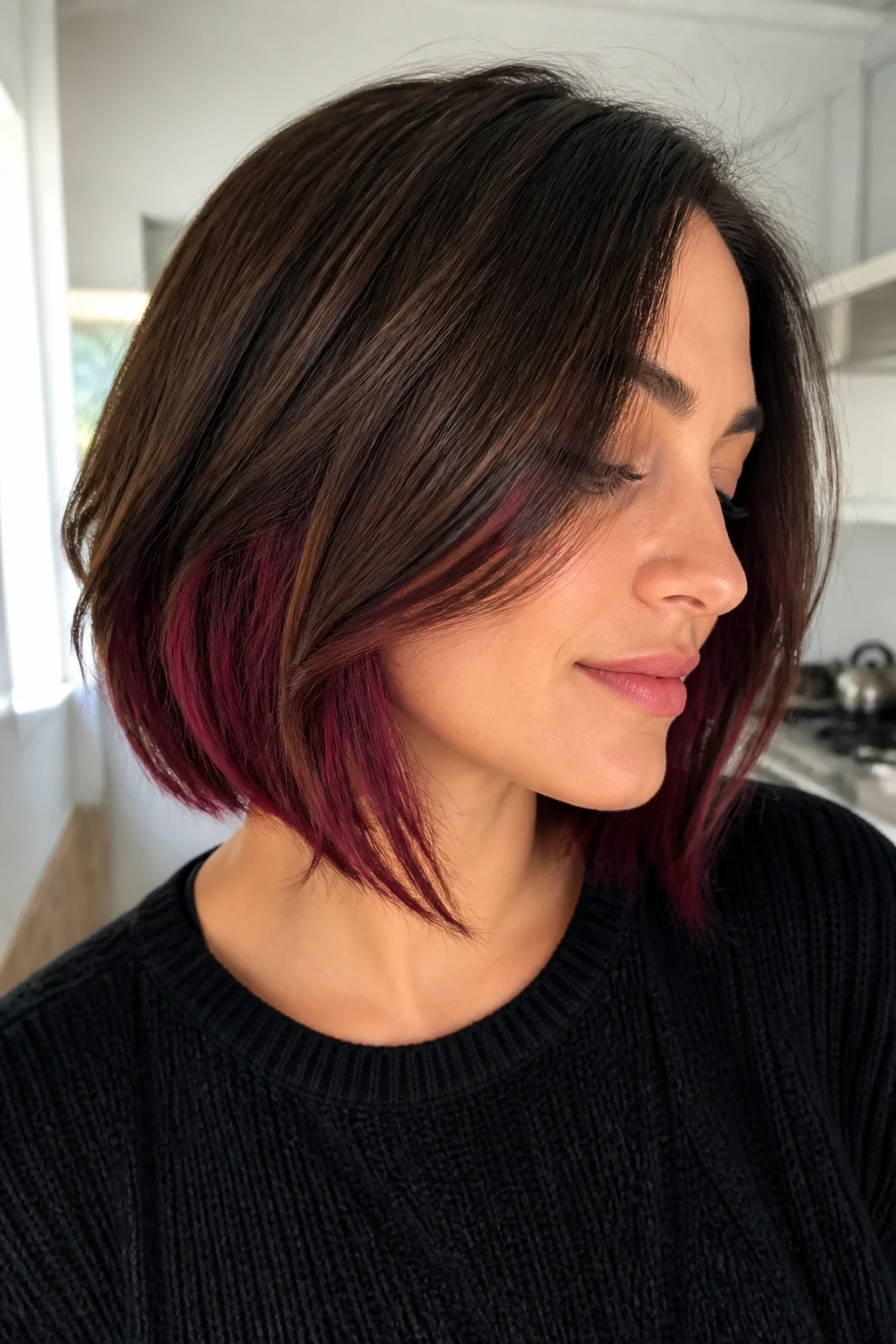
Not everyone wants burgundy showing from every angle, and that’s where peekaboo color earns its keep. The top layer stays mostly brown, while cabernet streaks and soft blonde threads live underneath. It’s a smarter move than going full-on with surface color if you want something easier to hide for work or school.
Why Peekaboo Placement Helps
The underlayer gives you surprise without making the haircut feel heavy. When you tuck one side behind your ear or twist the hair into a clip, the color appears. When the hair falls flat, the brown stays dominant. That kind of shift is what makes peekaboo color fun instead of fussy.
- Best on bobs, lobs, and blunt cuts with enough density to hide the underlayer.
- Ask for cabernet underpainting rather than chunky highlights.
- Keep the blonde as thin accent pieces, not broad panels.
This is the kind of look I’d recommend to someone testing burgundy for the first time. It gives you room to back off if you want less contrast later.
7. Cranberry and Honey Burgundy Blonde Balayage for Warm Brunettes
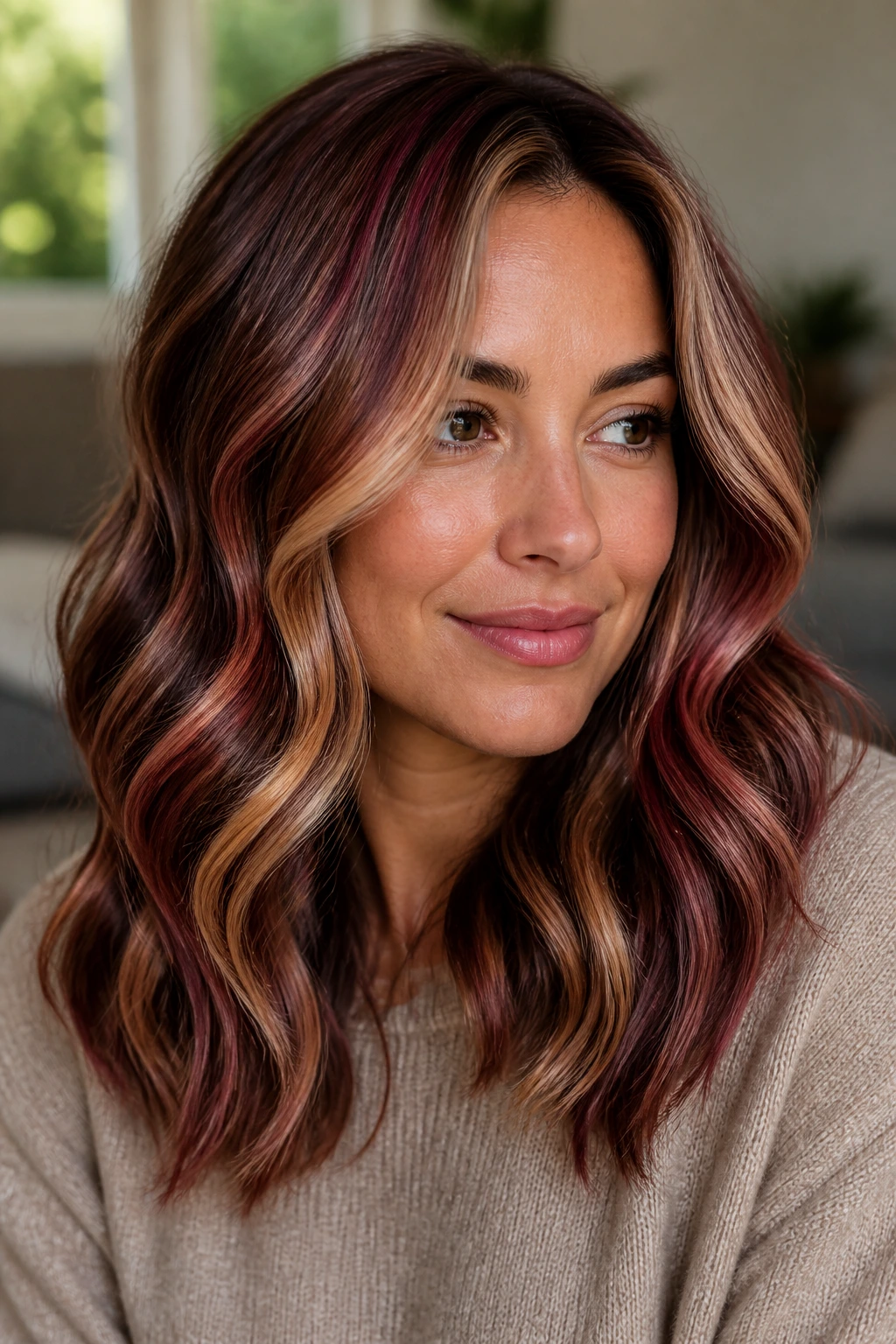
Why do cranberry and honey tones look so good on warm brown hair? Because they’re speaking the same language. The cranberry gives the burgundy side of the story, and the honey blonde keeps the result soft instead of severe.
This version works best when the brown base has a little gold in it already. If the hair pulls warm, the cranberry can look vivid without turning brassy, and the honey pieces read natural rather than yellow. That balance is what makes the whole look feel believable.
What to Ask For
- A warm burgundy glaze with cranberry notes.
- Honey-blonde balayage through the front and ends.
- A soft root shadow so the color doesn’t start too high.
A lot of people assume warm brunettes have to stay in caramel territory. They don’t. This look proves the opposite.
8. Mahogany Swirl with Champagne Blonde Framing
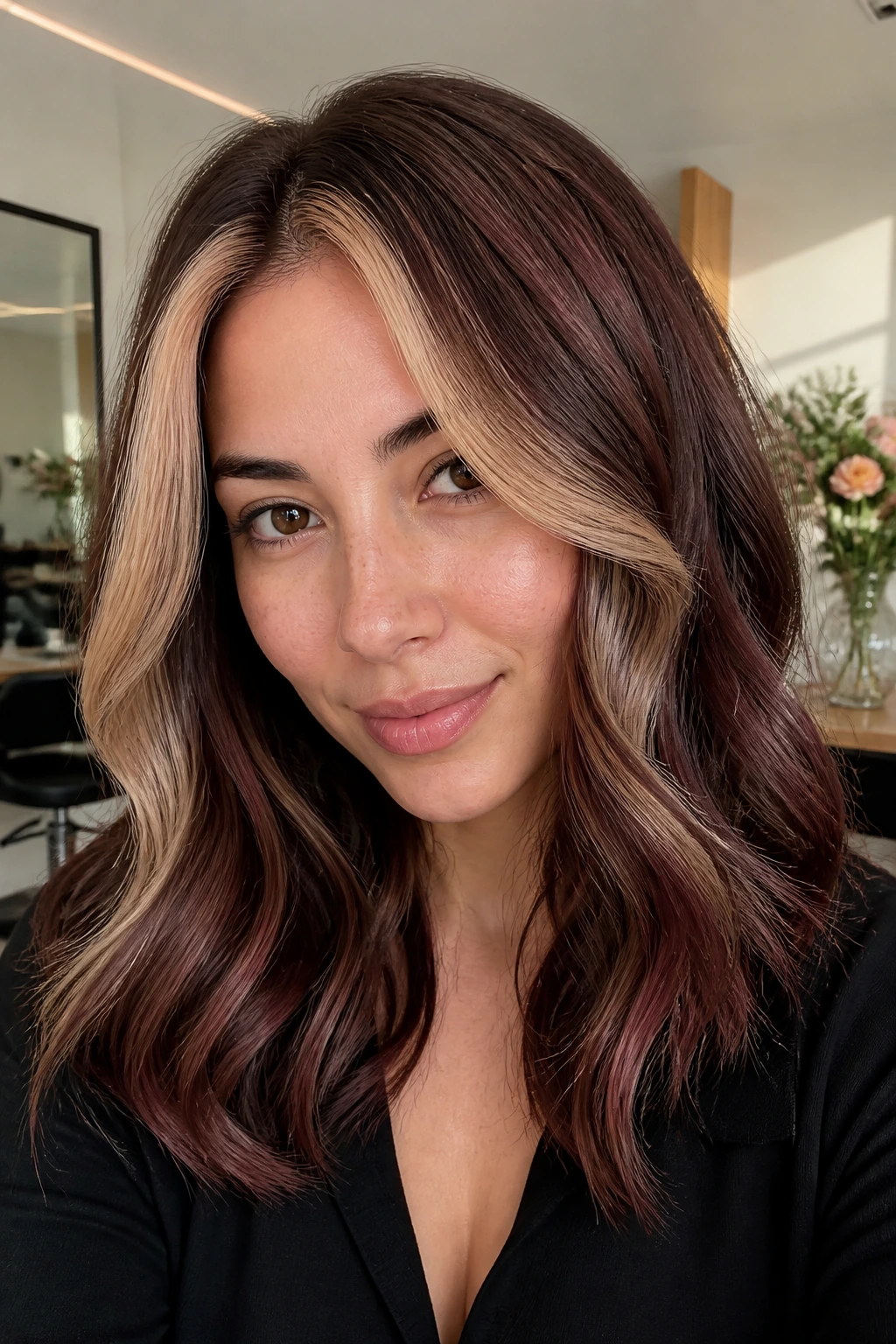
If you want the softer side of burgundy blonde balayage, this is the one I’d point to first. Mahogany gives you the red-brown depth, and champagne blonde keeps the front pieces light enough to open up the face.
Platinum would fight it. Champagne works because it has enough warmth to sit beside mahogany without looking harsh. That’s the whole game here: the blonde should feel like a soft glow, not a spotlight.
The swirl effect comes from the way the color moves through the lengths. It’s not a straight gradient, and it shouldn’t be. A few curved ribbons in the mid-lengths make the hair look fuller, especially if it’s fine or medium density. This is one of the best choices for someone who wants softness more than contrast.
9. Bordeaux Balayage on Long Chocolate Layers
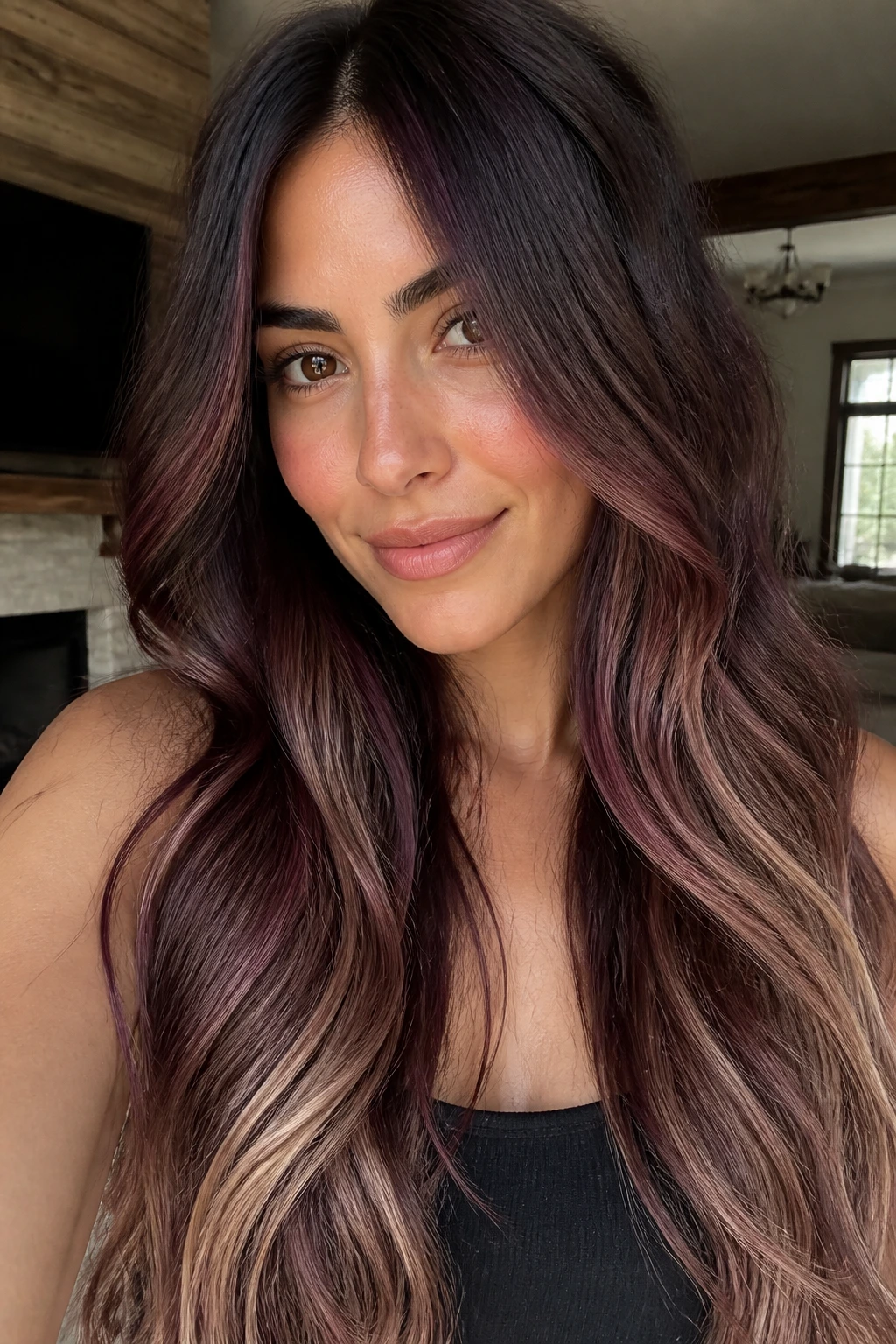
Long hair loves drama, but only if the color has room to breathe. Bordeaux balayage gives long chocolate layers that deep, velvety feel, and the blonde pieces break up the heaviness so the lengths do not read as one dark sheet.
The smartest placement is usually through the lower half of the hair, where the layers can catch light as they move. If the blonde goes too high, it can start competing with the burgundy instead of supporting it. And that’s not the goal. The point is to make the brown look expensive and dimensional, not busy.
A loose wave or a bend from a large-barrel curling iron helps this one a lot. The color changes every time the hair shifts, which is exactly what you want with a longer cut.
10. Mulberry Glaze on Medium Brown Waves
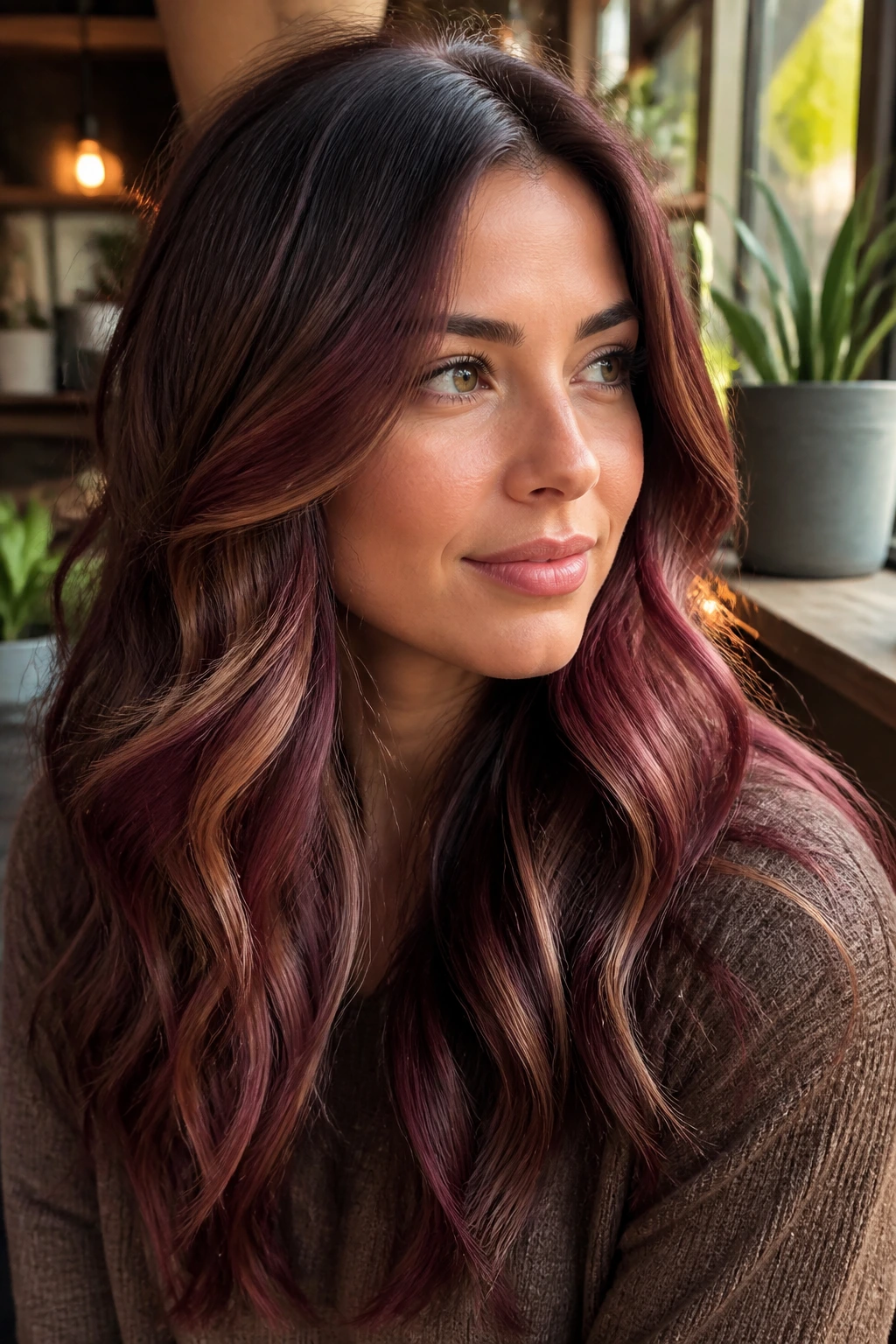
Mulberry glaze is a quieter take on the whole burgundy family, and that’s why I like it on medium brown waves. It doesn’t scream red. It just gives the hair a deep berry cast that shows up in sunlight and disappears into richness indoors.
The blonde pieces should stay soft and scattered, almost like the hair has been dusted with light rather than highlighted in strips. That kind of placement keeps the mulberry from looking too dark. Medium brown hair can take more color than people think, but it still needs a few bright spots to keep the motion clear.
One small thing matters here: the glaze has to be fresh enough to keep that berry tone from fading flat. Once it goes dull, the whole look loses its charm. A glossy finish is half the look.
11. Wine-Stained Ends with Golden Beige Midlengths
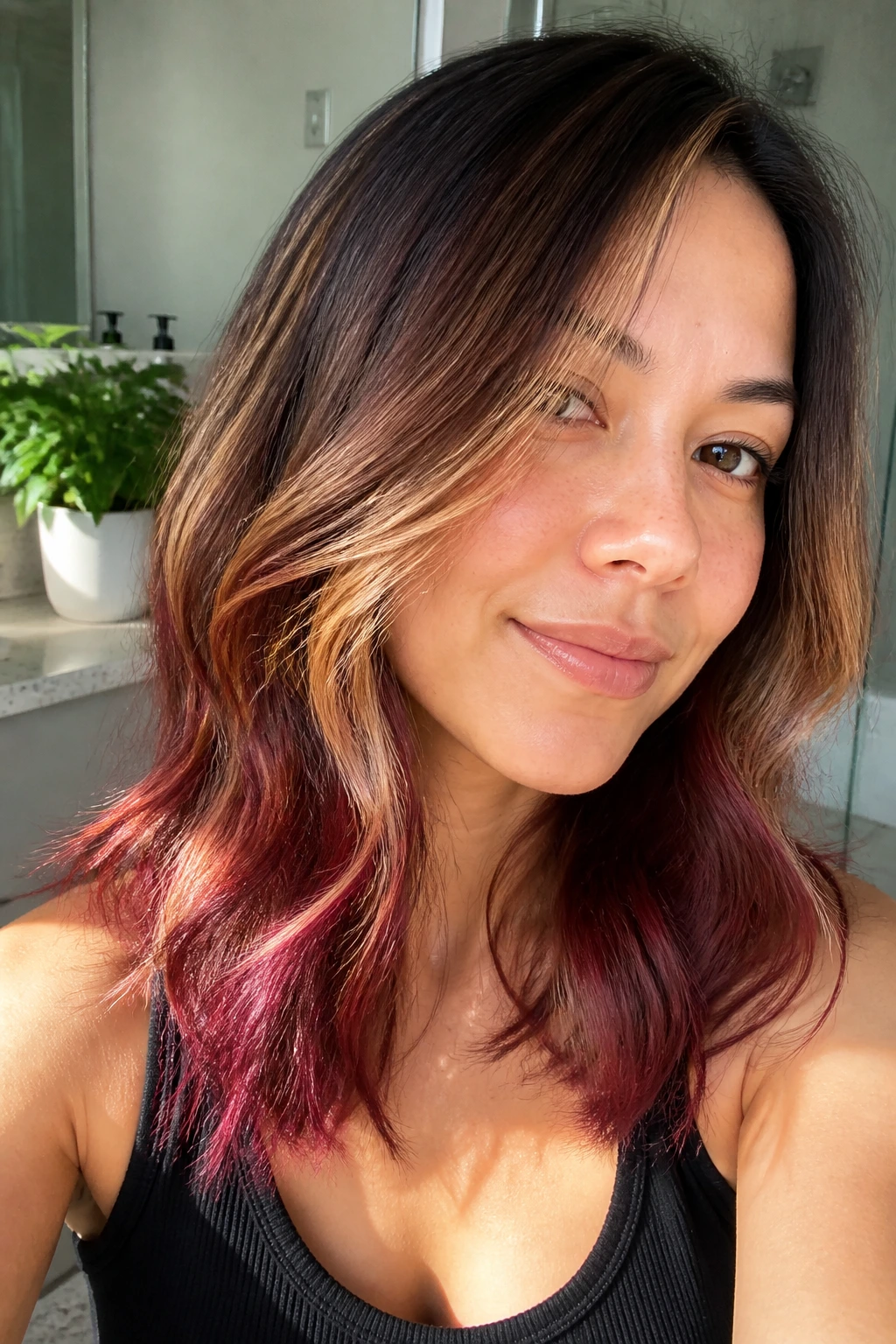
What happens when you want burgundy, but you also want the blonde to show? You keep the wine tone at the ends and let the mid-lengths carry the beige blonde. That creates a stacked effect that feels lighter at the top and richer underneath.
How to Keep the Ends Bright
The ends need more care than the rest of the hair because they hold pigment differently. If the ends get too dark, the look can turn heavy. If they get too light, the burgundy loses its punch. The answer is a controlled fade, not a hard line.
- Use golden beige through the middle section.
- Let the wine tone deepen gradually toward the ends.
- Refresh with a pigment-depositing conditioner when the color starts to look dry.
This version works especially well on layered cuts. The layers help the colors stack, which makes the blonde and burgundy read as separate notes instead of one blended blur.
12. Smoky Burgundy Lob with Blonde Contour Highlights
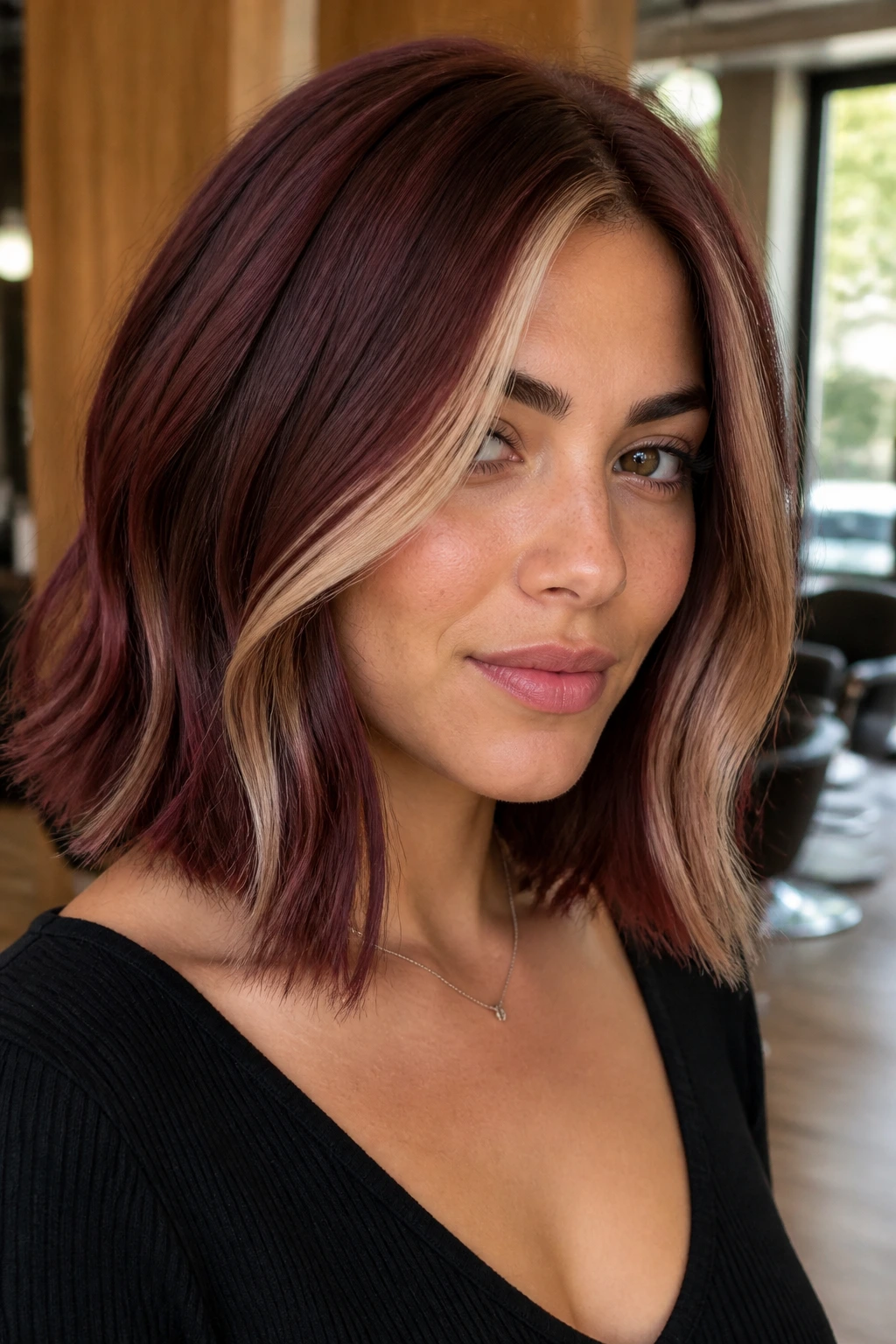
Not every lob needs chunky highlights. In fact, the better version is usually the softer one, where the blonde sits around the contour of the face and the burgundy stays smoky through the rest of the cut.
That contouring effect does a lot of visual work. It can sharpen a jawline, soften a broad forehead, or simply make the hair look more deliberate. Because a lob is shorter, every ribbon shows. There’s less room for sloppy placement, which is why this style looks best when the blonde is feathered instead of blocky.
I’d keep the burgundy on the cooler side here, almost like a muted wine stain. Too much warmth can make the cut feel rounder than it is. Clean placement matters more than brightness.
13. Plum and Caramel Balayage for Layered Hair
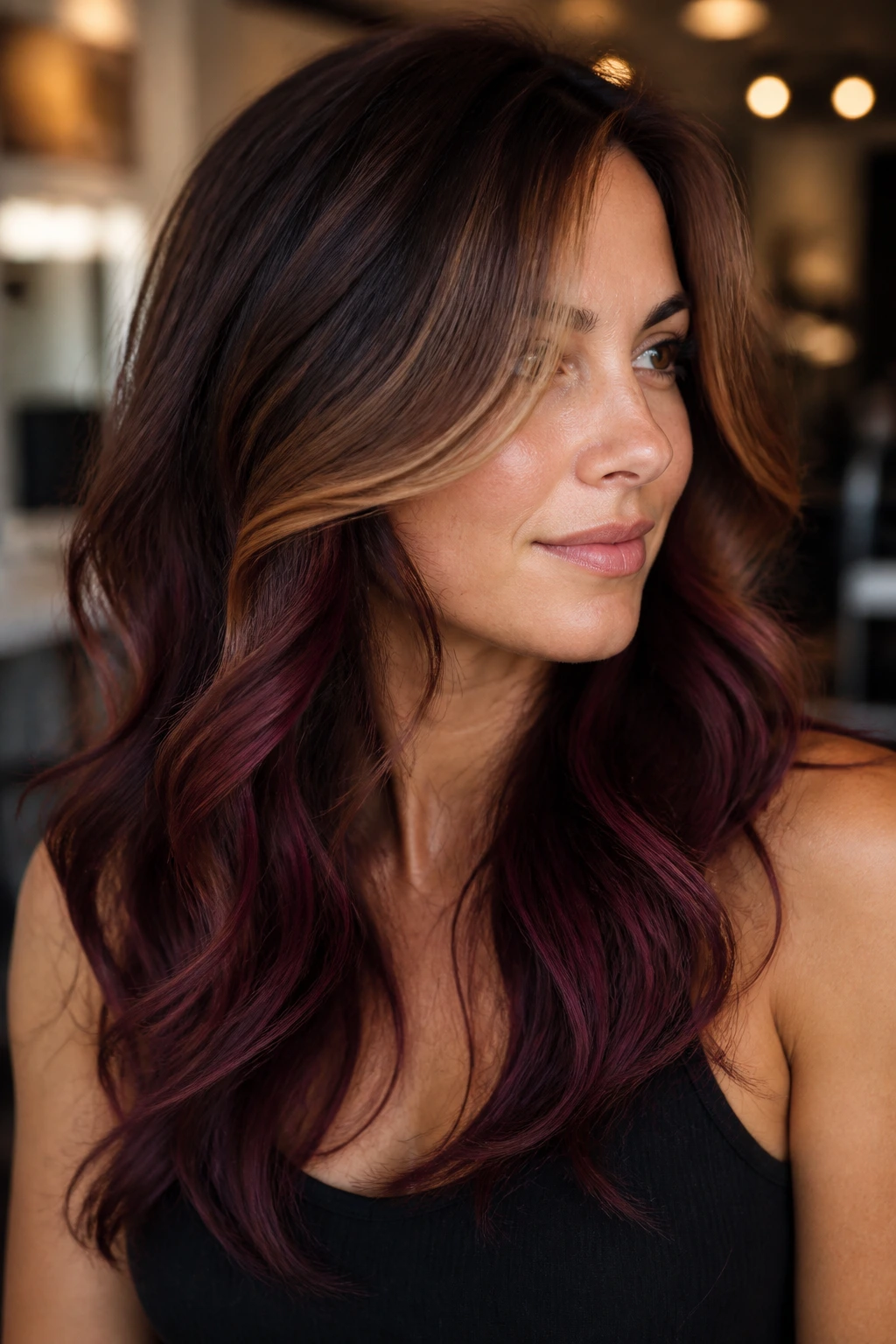
Layered hair gives color room to breathe, and plum plus caramel is one of those combinations that earns its keep. The plum gives the depth, the caramel blonde adds warmth, and the layers keep the mix from settling into one thick color mass.
This is a good choice if you want something a little softer than a full burgundy look. The caramel pieces can sit closer to the front and the top layers, while the plum moves through the lower sections. That makes the hair look fuller without making the color too heavy.
A Good Ask at the Salon
- Keep the plum slightly deeper than the rest of the color.
- Place caramel blonde on the face frame and upper layers.
- Ask for a soft gloss so the finish stays shiny, not streaky.
It’s an easy look to wear with loose waves, but it also works on straight hair if the layers are cut well.
14. Cherrywood Glow on Soft Curls
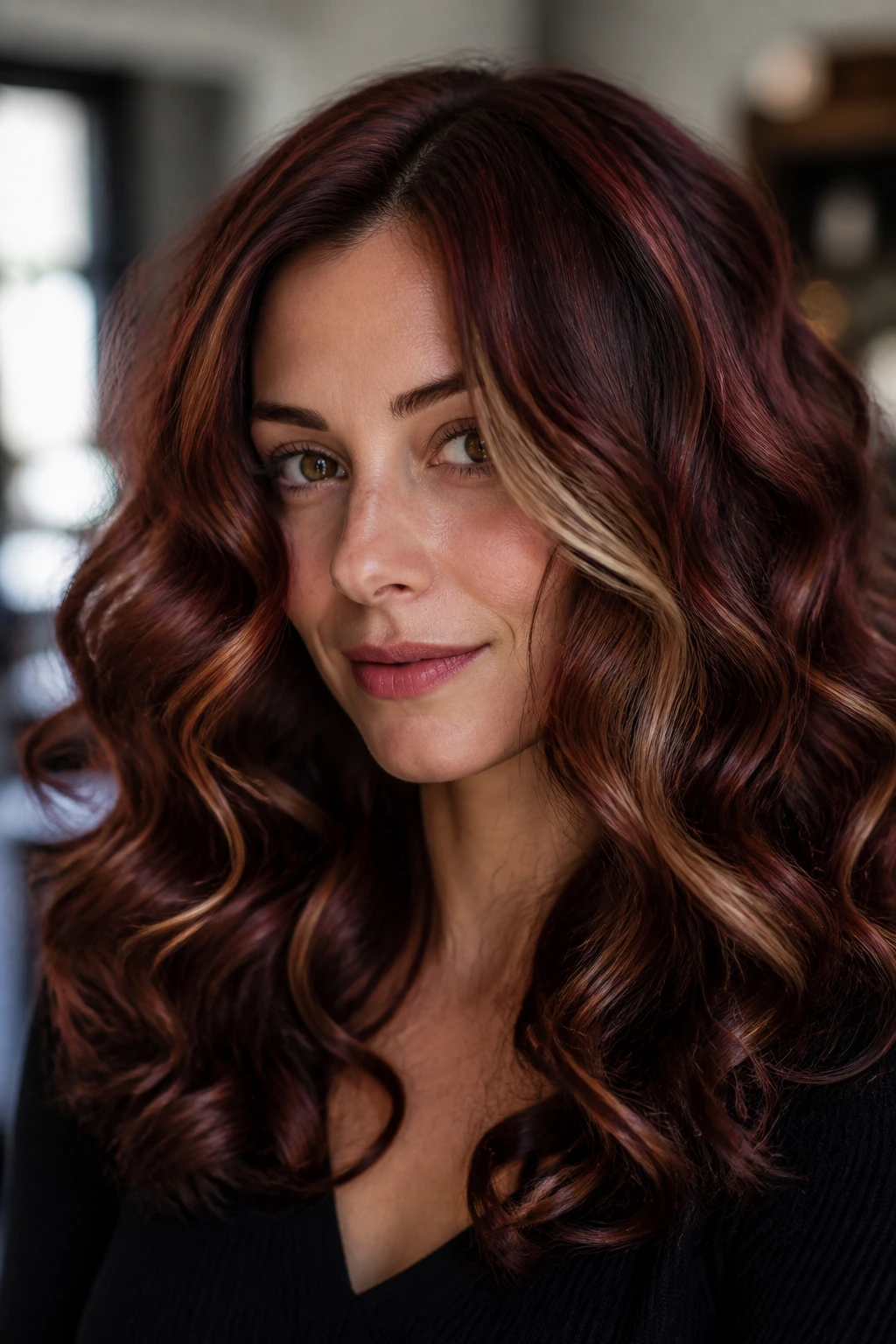
Cherrywood glow is one of those shades that changes the whole mood of a haircut. On soft curls, it reads plush and warm, while the blonde pieces create that little flicker of light that keeps the burgundy from becoming too dense.
What the Curl Pattern Changes
Curls bunch color together. That means every painted section shows up a little stronger than it would on straight hair. So the burgundy should be woven in with care, and the blonde needs enough space to breathe between pieces. Otherwise, the surface gets busy fast.
A looser curl pattern will show more blonde. Tighter curls will make the burgundy dominate. That’s not a flaw. It just means the same formula can feel different depending on the texture.
This is a beautiful choice for people who want warmth with shape. The curls do half the work for you.
15. Merlot Melt with Sandy Blonde Ribbons
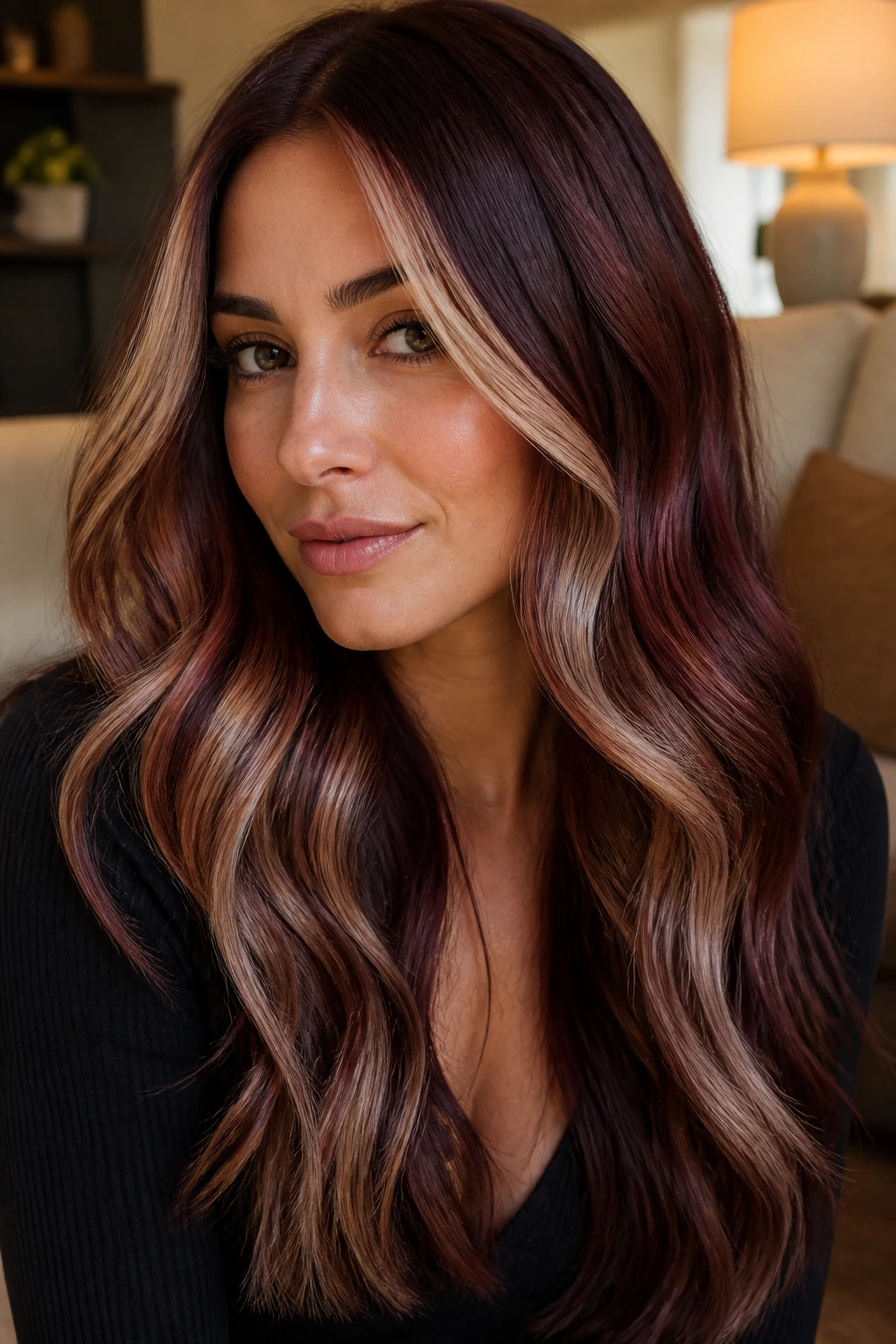
Merlot melt works best when the transition feels soft enough that you can’t point to where brown ends and burgundy begins. Sandy blonde ribbons keep the finish light, especially on medium-to-dark brunettes who want dimension without a lot of upkeep.
I prefer this version when the hair has some length. Short hair can wear it, sure, but the melt effect needs a little room to stretch out. On longer hair, the burgundy can gather near the bottom while the sandy blonde travels through the surface and the outer layers.
The sandy tone matters more than people think. It keeps the blonde from turning too gold, and it makes the burgundy feel more expensive looking. That’s a silly phrase, maybe, but the visual effect is real: the hair looks softer, not louder.
16. Cool Burgundy Balayage for Ash Brown Hair
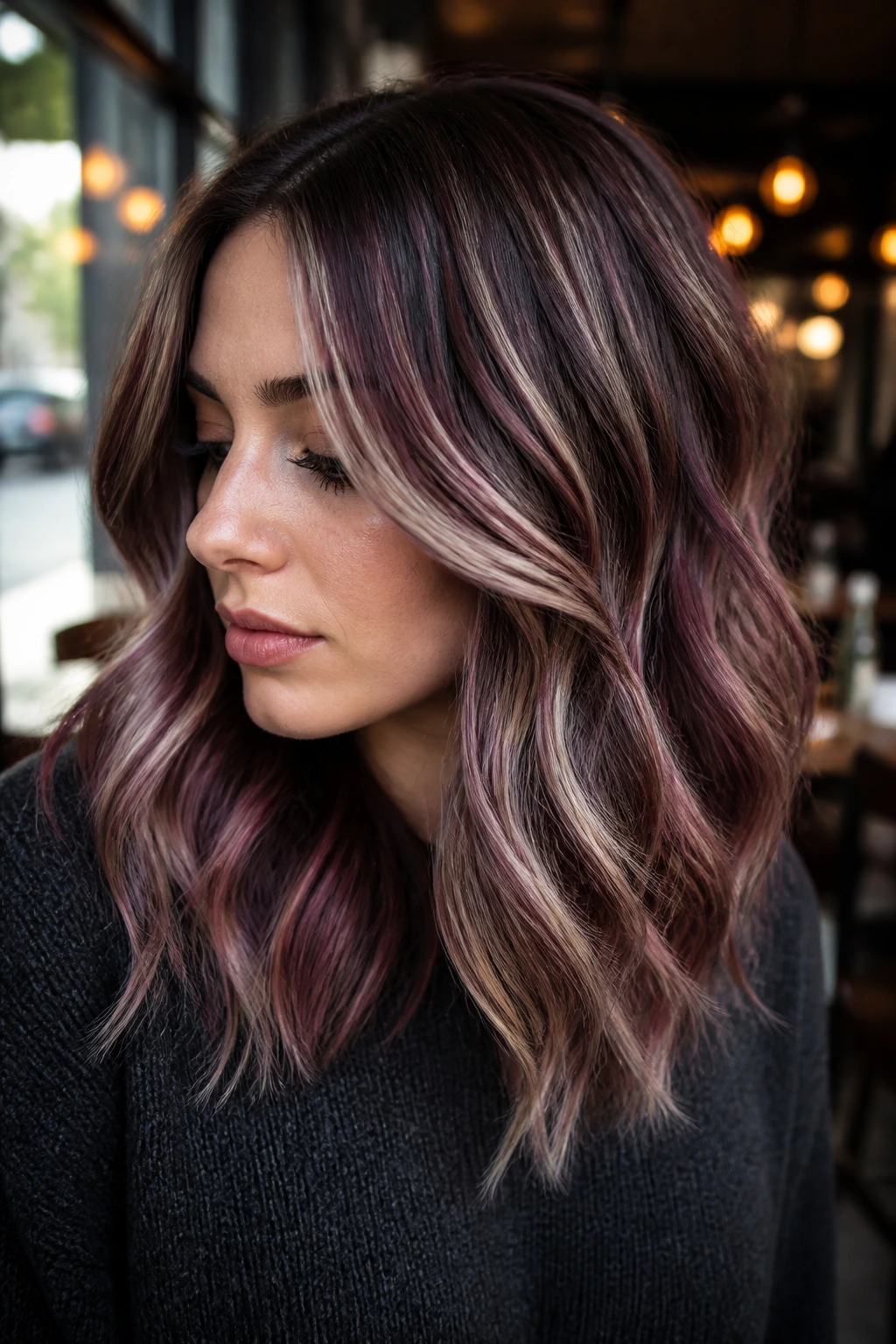
Can ash brown hair handle burgundy? Yes, and often better than people expect. The cool base gives the red-violet tones somewhere to land, so the result feels sleek instead of brassy.
What Makes It Work
The burgundy needs violet in it. If it leans too orange, the ash base starts to look muddy. The blonde pieces should also stay on the cooler side — beige, pearl, or muted champagne work better than yellow blonde here.
- Ask for a violet-burgundy toner.
- Keep the blonde in cool beige ribbons.
- Avoid too much warmth at the root, or the ash base will lose its edge.
This is a good pick if your wardrobe leans black, gray, navy, or cream. The hair will feel like part of the outfit instead of competing with it.
17. Baked Plum Veil on Thick Brunette Hair
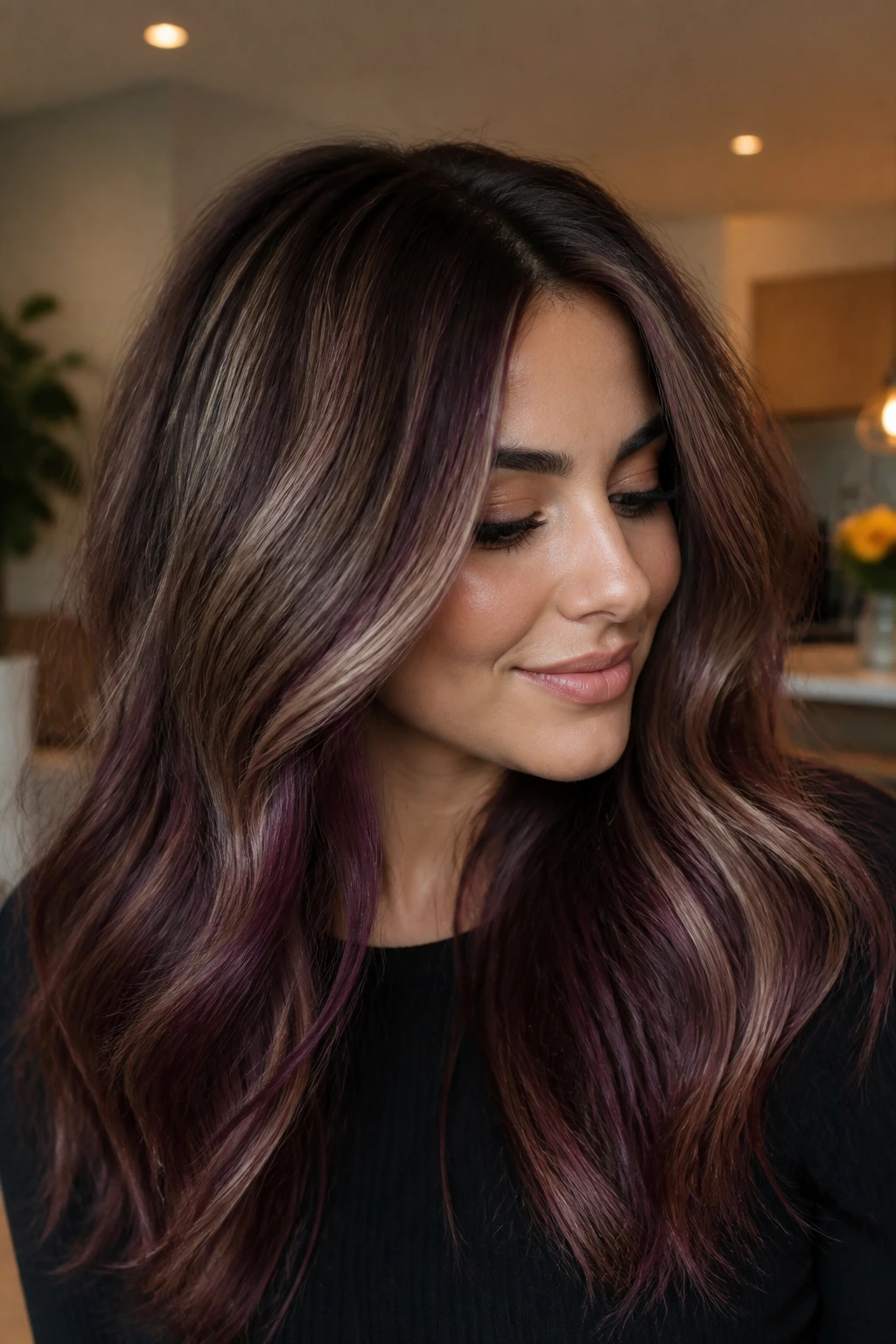
Thick hair can swallow color if the placement is too bold, so a veil is the smarter move. The plum sits under a softer burgundy haze, and the blonde comes through in thin, airy pieces that stop the style from looking heavy.
Why a Veil Works Better Than Stripes
Thick hair already has visual weight. If you pile on chunky highlights, the result can feel busy and hard to style. A veil spreads the color more evenly, which lets the hair keep its shape while still showing movement.
- Ask for thin, diffused painting through the top layer.
- Keep the blonde farther apart so the burgundy stays visible.
- Use a blow-dry with lift at the roots to stop the style from collapsing.
This one looks especially good on people who wear their hair half-up a lot. The color reveals itself in layers.
18. Berry Blonde Balayage for Straight Brown Hair
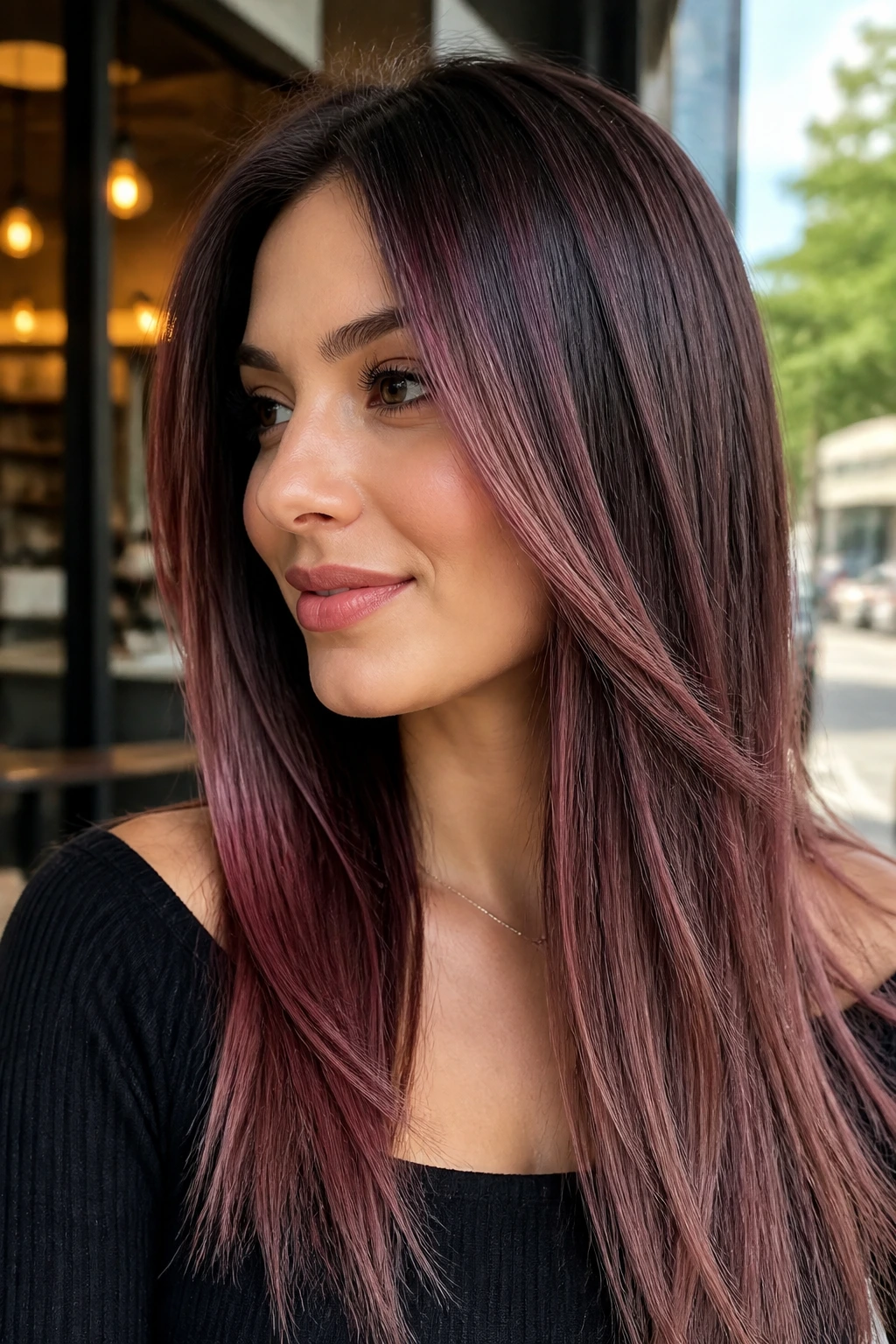
Straight hair shows everything. That can be a gift or a problem, depending on the color placement. Berry blonde balayage works because the painted sections are feathered enough to look smooth, but distinct enough to keep the color from disappearing.
The burgundy should sit in a long, tapered sweep rather than a hard streak. The blonde needs to be soft and clean, with no harsh edge where the shades meet. On straight hair, those hard edges are impossible to hide. They show up instantly.
A middle part makes this look sharp, while a side part softens it. Either way, the finish depends on the blend. Straight hair does not forgive sloppy color placement, so this one rewards precision.
19. Velvet Cabernet Ends on a Shag Cut
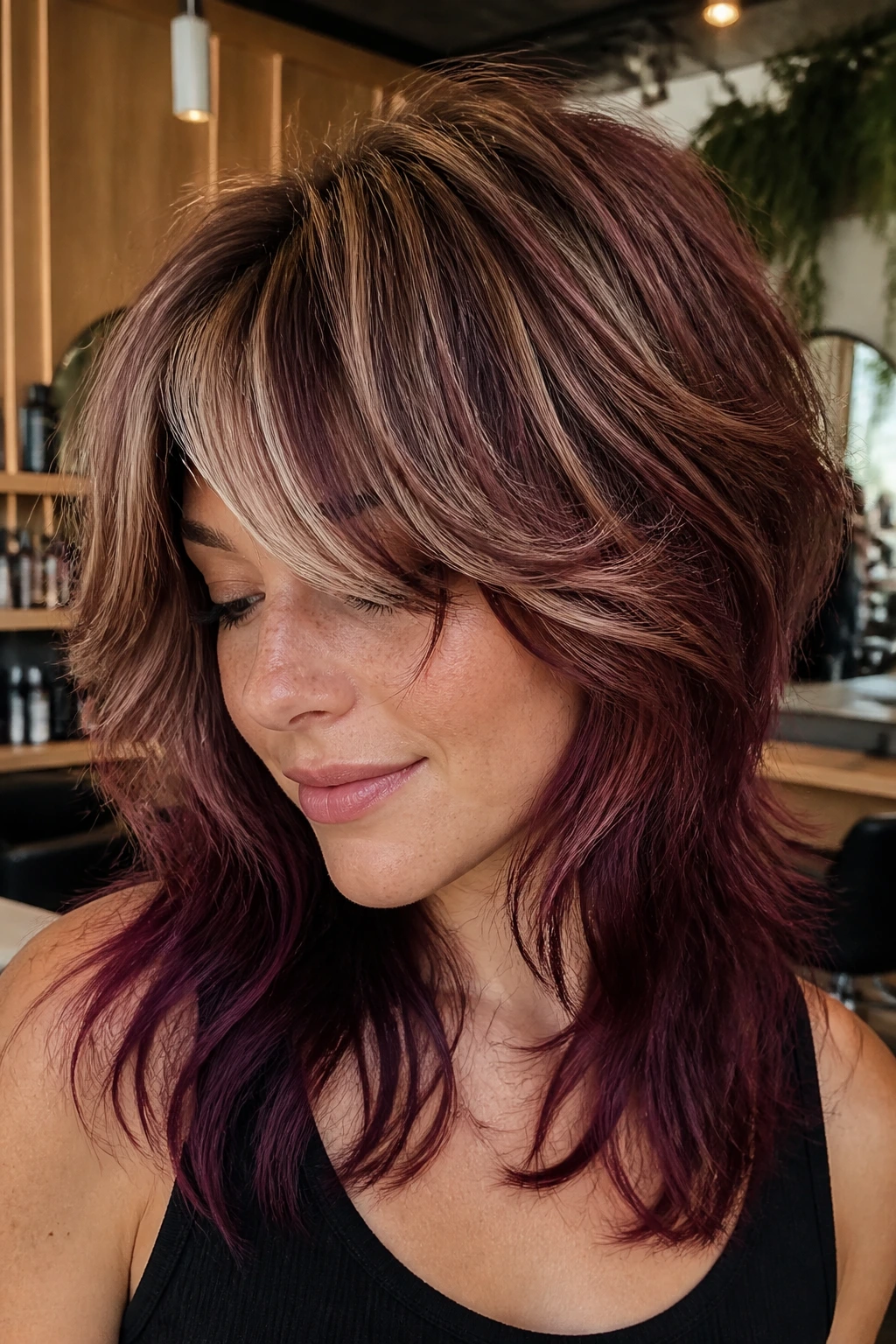
Texture matters here. A shag cut gives the burgundy and blonde a place to break apart, which keeps the whole style from looking too neat or too heavy. Velvet cabernet ends give the cut a richer finish than a plain brown shag ever could.
The blonde should be scattered through the fringe and top layers, then fade into the darker cabernet at the bottom. That creates a little visual lift near the face and more weight near the ends. It’s a nice reversal. Most people expect light at the bottom, but this cut benefits from the opposite.
I’d keep the cabernet rich and a little cool. Too much orange-red can make shag layers look frayed. This cut likes depth more than brightness.
20. Red-Wine Face Frame with Dimensional Blonde
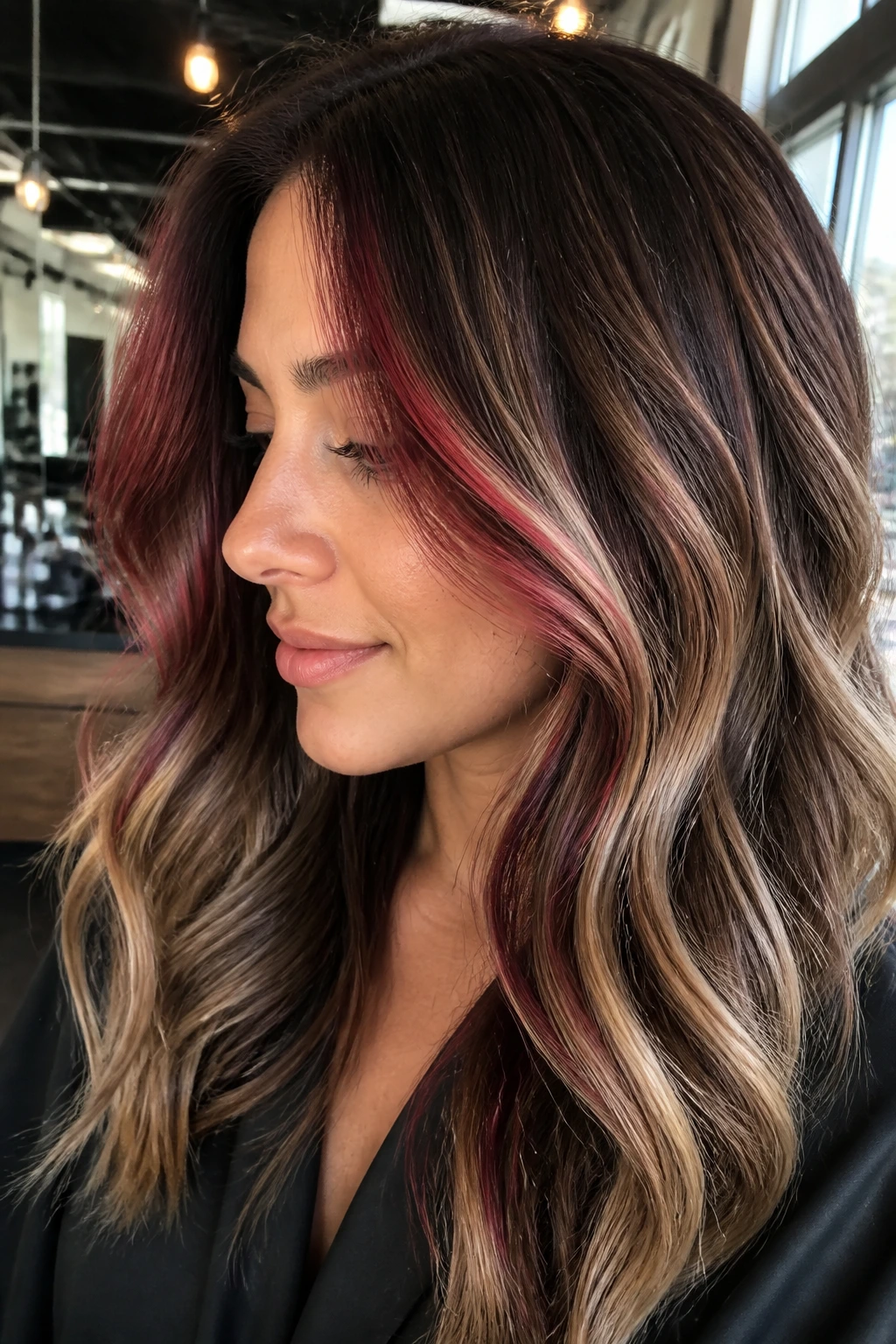
If you want a change that shows up immediately, start at the face. A red-wine frame around the front of brown hair gives you instant contrast, and the dimensional blonde keeps it from feeling too heavy or too red.
The frame should be soft enough to blend into the rest of the hair as it falls back. That means the burgundy can’t stop in a hard line at the cheekbone. It needs to stretch into the side sections a little, so the color feels lived-in instead of staged.
This is also a smart choice if you’ve grown out old highlights. The new face frame can sit on top of faded blonde pieces and make the whole head look fresh without repainting everything.
21. Dark Mocha Hair with Burgundy Underpainting
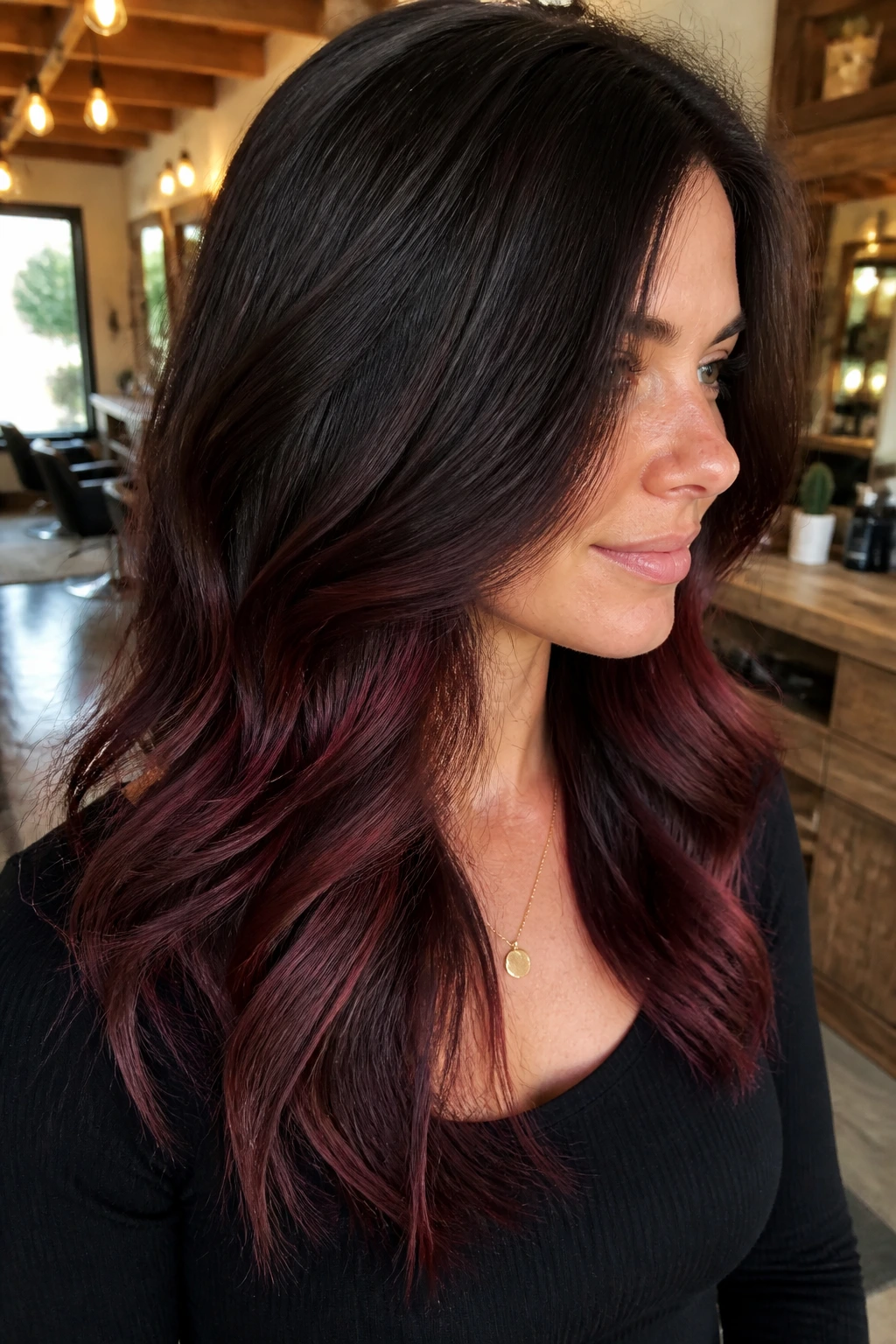
What if you want burgundy blonde balayage, but you don’t want it visible all the time? Underpainting is the answer. The burgundy and blonde live beneath the top layer of dark mocha hair, so the color only shows when the hair moves, lifts, or gets tucked back.
Who This Works For
This is the right call for people who like subtle color shifts and dislike obvious regrowth lines. It also works well on layered cuts, because the shorter pieces reveal the hidden color underneath. The effect feels private, almost like a second color story built into the haircut.
- Best for medium to dark mocha brunettes.
- Ask for underlayer painting with burgundy and soft blonde.
- Style with loose bends or clipped-up sections to show the hidden color.
It’s quieter than the rest of the list, but that’s the point. Not every good color has to announce itself from across the room.
22. Soft Aubergine Balayage with Light Brunette Lows
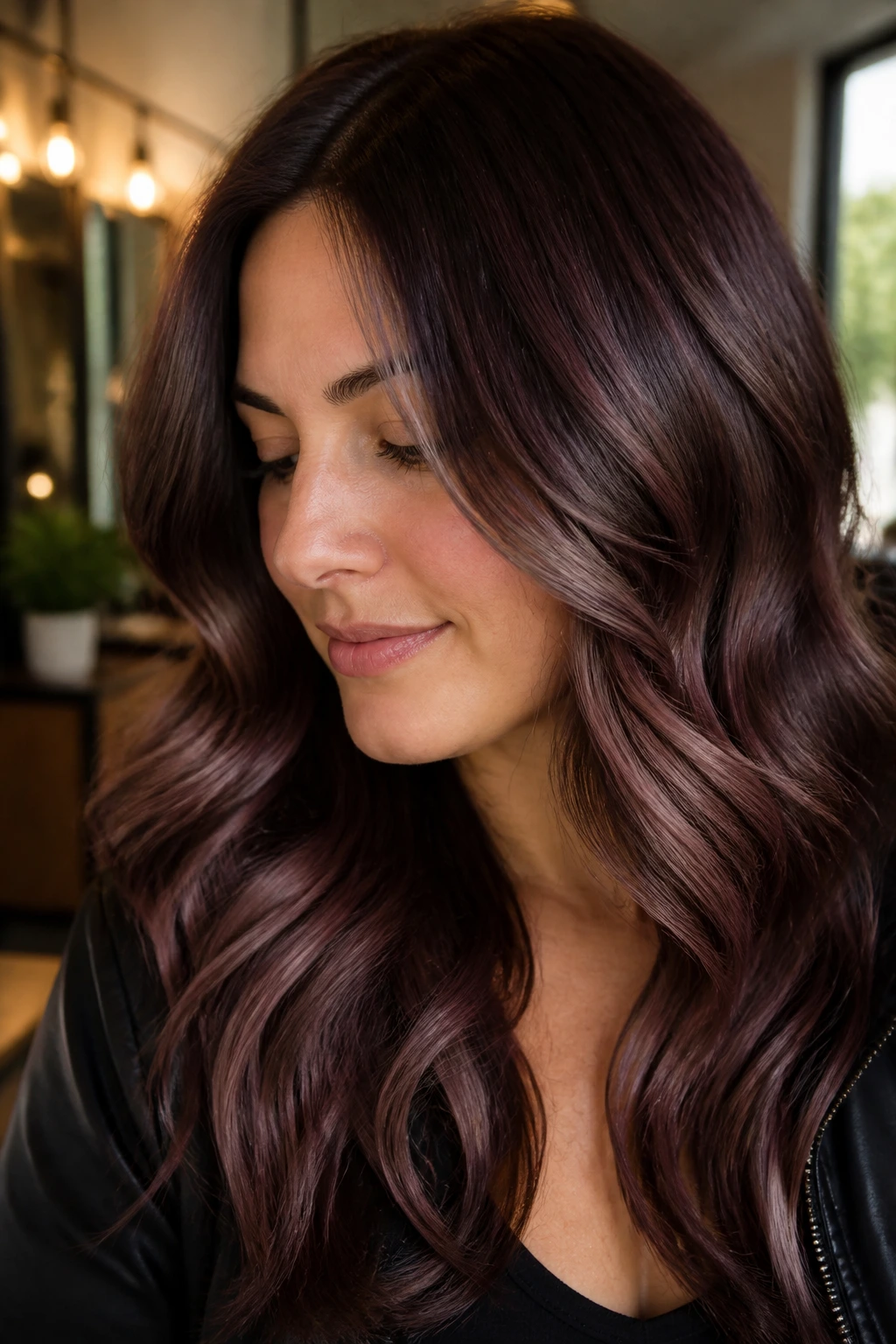
Aubergine is the moody finish that still plays nicely with blonde. On brown hair, it adds a cool purple-red note that feels richer than standard burgundy, and the light brunette lows keep the color from going flat.
The blonde should stay on the softer side here — think muted cream or pale beige rather than bright gold. Aubergine can get intense fast, so the lighter pieces need to act like breathing room. A shadow root helps too. It keeps the color from looking pasted on and gives the ends a more gradual fade.
This is a strong choice for someone who wants a little edge without going neon or copper. It has depth, shine, and that slightly mysterious finish that looks especially good in loose waves. If you want the darkest-looking version of the family, this is it.
Final Thoughts
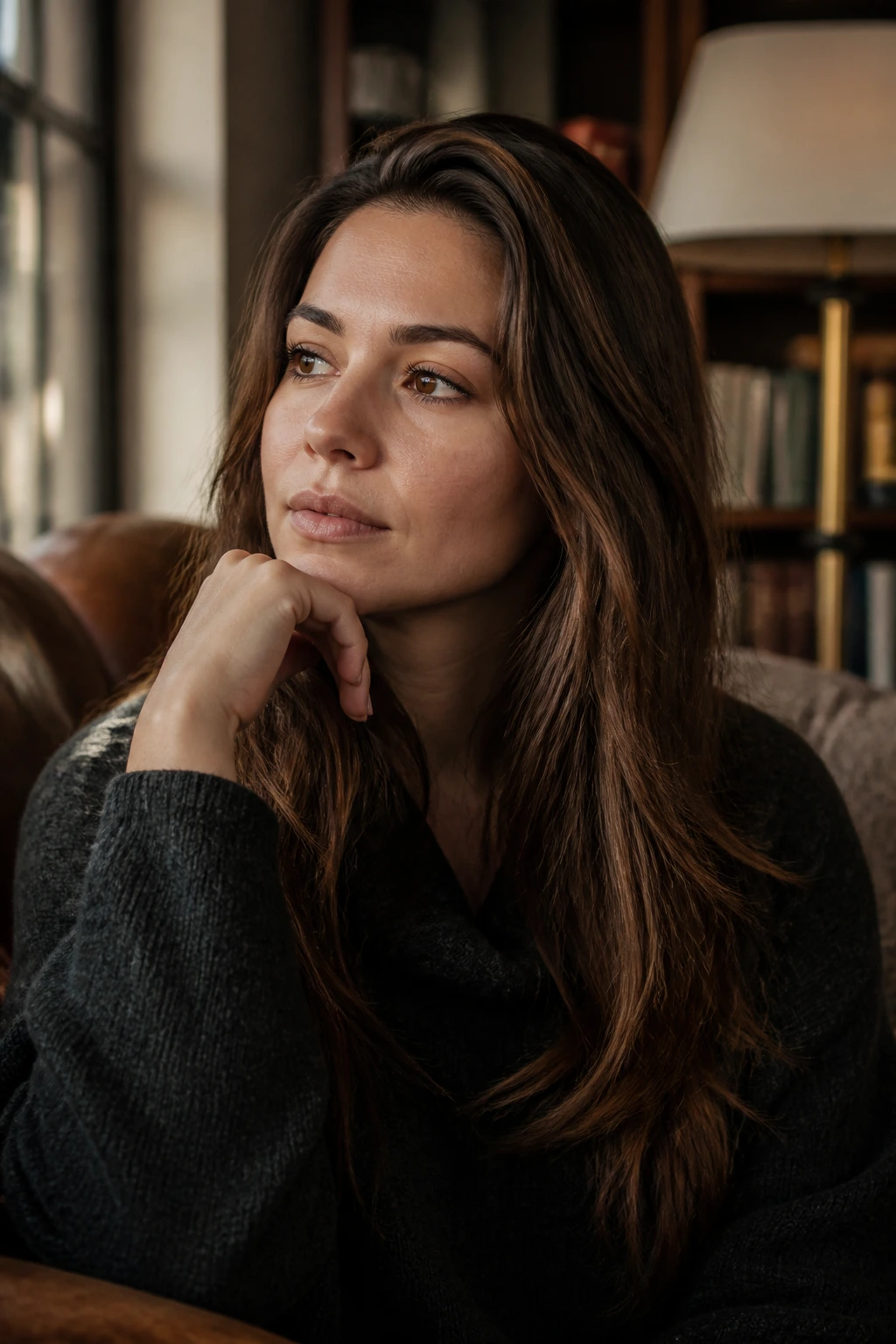
Burgundy blonde balayage works on brown hair because it respects the base instead of fighting it. The brown gives structure, the burgundy adds depth, and the blonde keeps the color from feeling dense or one-note. That’s the formula, and it holds up whether you want a subtle glow or a sharper contrast.
The real difference comes from placement. Face-framing pieces change the whole mood in seconds. Underpainting keeps things quiet. Longer layers and curls make the color look richer, while straight hair shows every edge and demands cleaner blending.
If you’re talking to a colorist, bring one or two references that match the kind of brightness you want, not just the color family. That saves time, and it keeps the final result closer to the look you actually want to wear.
