



Blonde brown balayage can make a round face look longer, softer, and more sculpted — or it can make the cheeks look wider if the light pieces sit too high and too blunt. Placement matters more than shade here. That is the part people miss when they save a pretty photo and ask for “something like this.”
A round face usually looks best when the eye moves up and down, not straight across. That means deeper roots, lighter ends, and front pieces that start somewhere flattering instead of slicing right through the widest part of the face. The trick is not hiding your shape. It’s steering the color so it works with it.
My favorite thing about blonde brown balayage is how many directions it can go. Beige, honey, caramel, ash, mushroom, toffee — each one changes the mood, and each one changes how strong the contrast feels around the face. A softer blend can feel airy and expensive; a richer brunette base with a few brighter ribbons can feel sharper and more defined.
The 18 looks below are built with that in mind. Some are low-key and easy to wear. Some are brighter and a little bolder. All of them are chosen because they help a round face look longer without turning the hair into a stripey mess.
1. Beige Bronde Ribbons That Start Below the Cheekbones
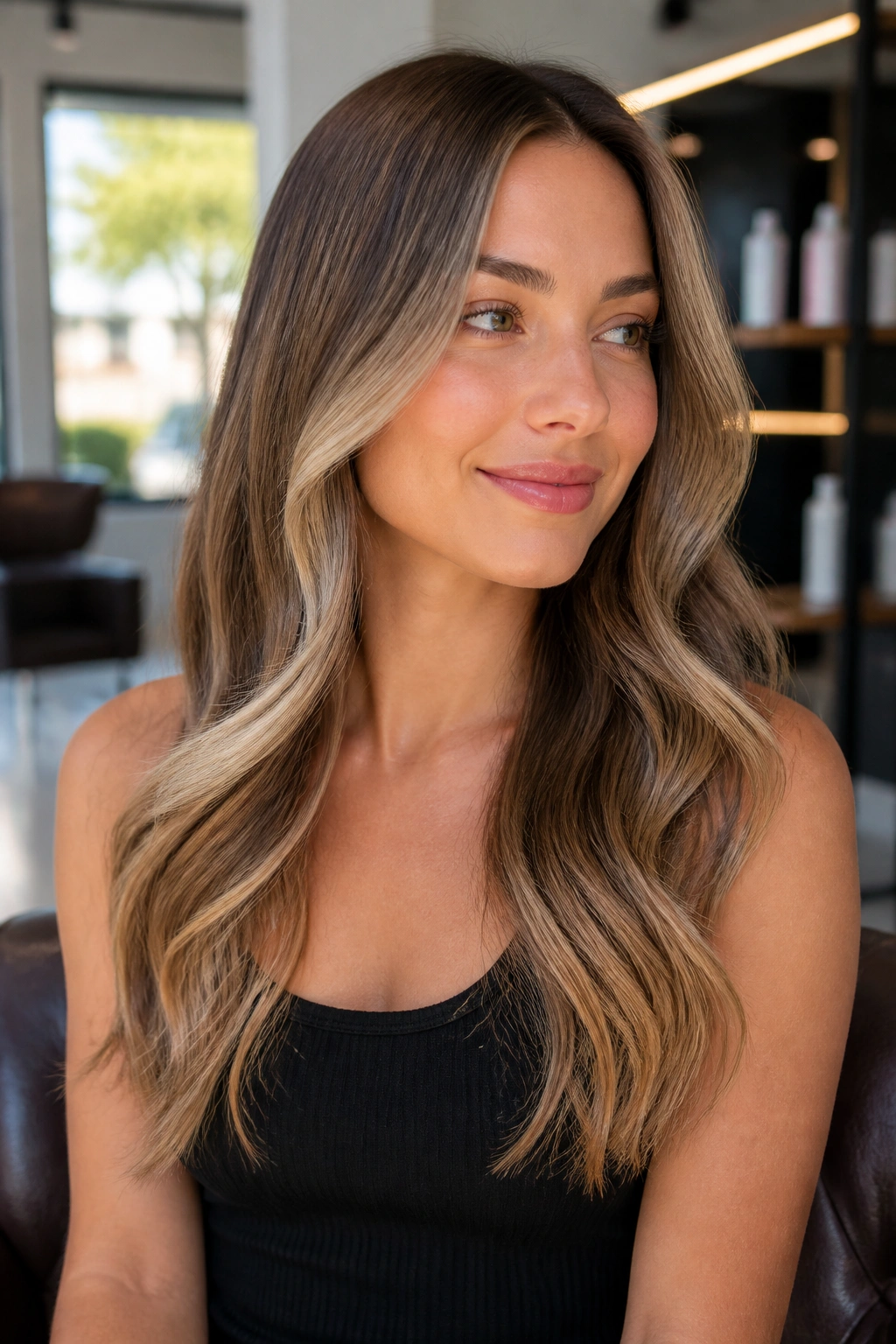
This is the safest place to start if you want blonde brown balayage on a round face without pushing the cheeks wider. Beige bronde gives you that soft middle ground — not too golden, not too ash-heavy — and the placement does the heavy lifting.
Why It Flatters Round Faces
The brightest ribbons should begin below the cheekbones, then drift into the mid-lengths and ends. That creates a vertical line through the hair, which is exactly what a round face likes. Keep the top near the part a touch deeper, and the whole look reads longer.
I also like this on hair that has a little wave. The bend breaks up the color in a natural way, so the ribbons don’t sit like thick bands. If the hair is pin-straight, the same placement still works, but the contrast has to stay soft.
What to Ask For
- A slightly deeper root shadow so the color melts instead of popping.
- Beige blonde ribbons that start 1 to 2 inches below the hairline around the face.
- Thin pieces near the temples, not chunky slices.
- A gloss in the neutral-beige range, not yellow or icy.
Best tip: keep the lightest pieces below the widest part of the face. That one move does more than most people expect.
2. Mushroom Brown With Champagne Money Pieces
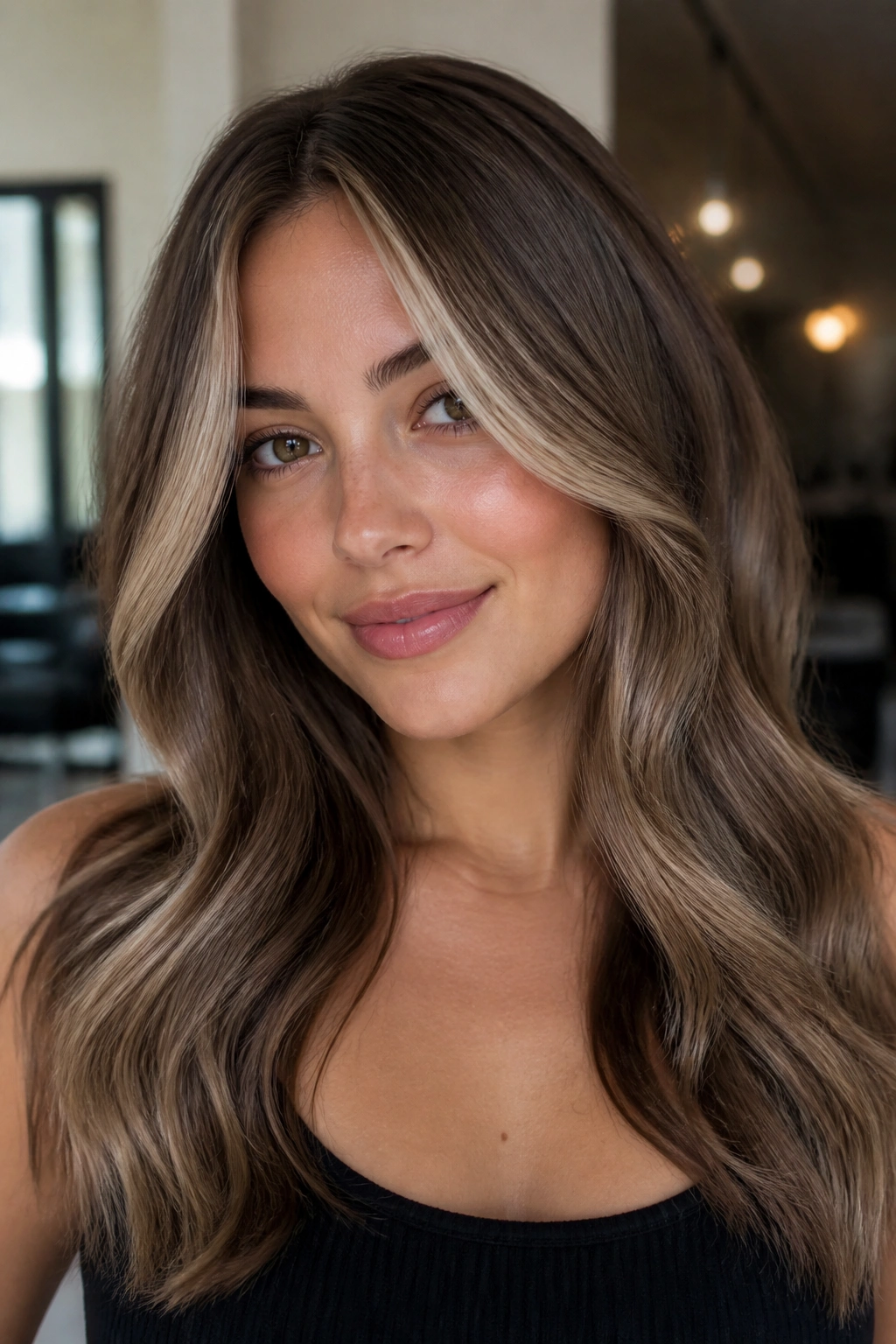
What if you want something cooler and a little moodier? Mushroom brown is the answer I reach for when warmth feels too sugary. Add champagne money pieces, and you get a finish that feels polished without looking harsh.
The reason it works on a round face is simple: the mushroom base keeps the hair close to the head, while the champagne front pieces pull the eye upward. The trick is to keep those money pieces narrow and blended, not thick and blocky. A skinny, melted frame at the front looks expensive. A heavy one can make the face feel wider.
I like this look on medium to dark brown hair that lifts well but gets brassiness fast. The champagne should stay soft — think pale beige with a little glow, not bright yellow. The rest of the balayage can stay smoky and cool, which keeps the style from feeling too sweet. There’s a nice tension between the dark base and the pale front, and that contrast is what gives the face more length.
3. Caramel Veil Balayage on Long Layers
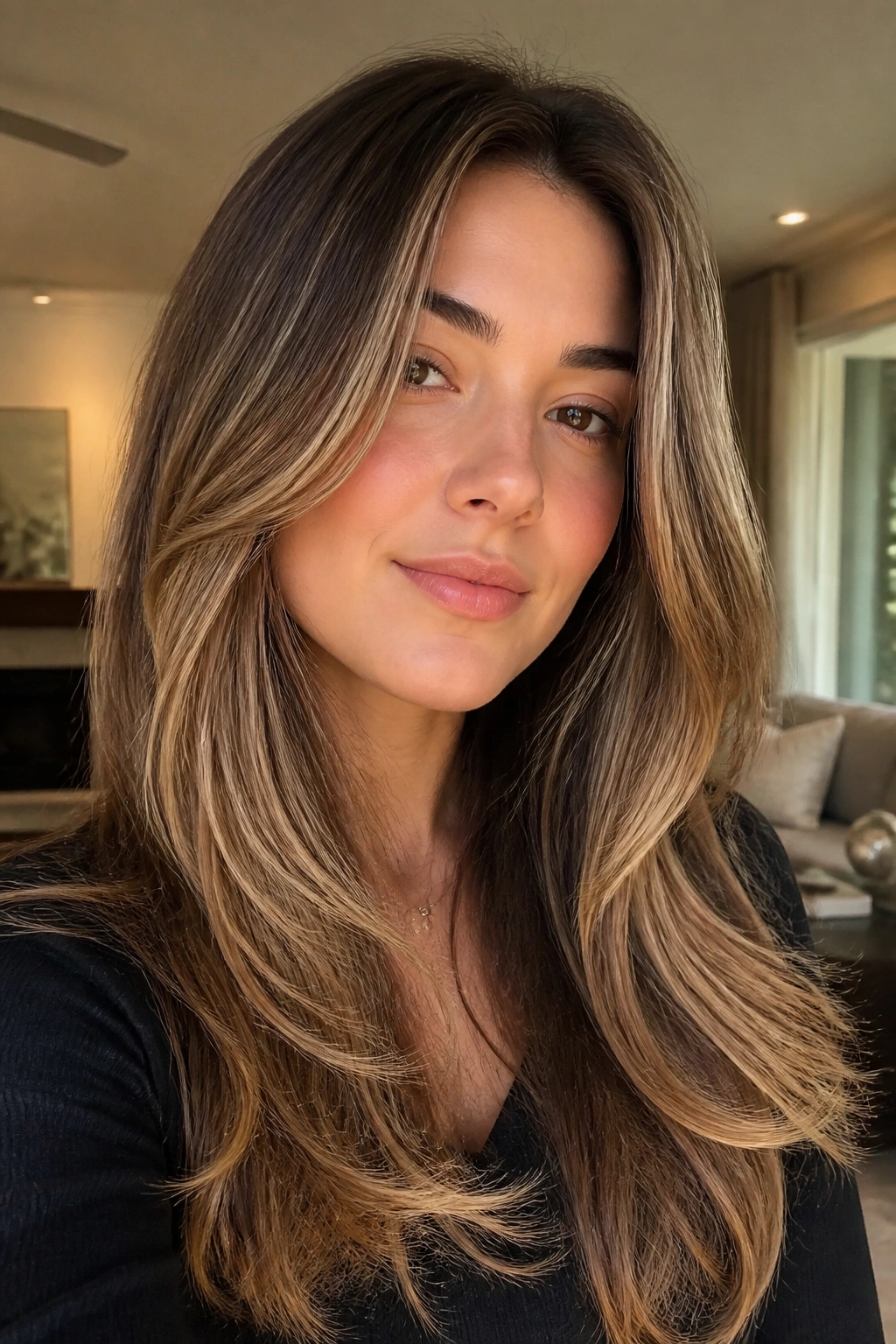
Picture thick, long hair that sits like one solid sheet. Caramel veil balayage fixes that fast.
This version is all about movement. The color is painted in soft, sheer ribbons over long layers so the hair bends, swings, and falls in pieces instead of one heavy block. On a round face, that matters. Heavy width around the cheeks can make the face feel broader, while long layers and gentle caramel strokes pull everything downward.
How the Layers Do the Work
The layers should start low — usually around the chin or lower — so the front doesn’t puff out at cheek level. Then the lighter caramel threads can follow the shape of the cut, concentrating through the lower half and ends. That gives the face a longer line and keeps the color from looking stacked.
This is a good pick if you like loose waves and blowouts. The color shows best when the hair has a bend, because each wave catches a different bit of light. Straight hair can wear it too, but the effect is softer and more subtle.
- Ask for caramel pieces two shades lighter than your base.
- Keep the front lighter, but not stark.
- Leave the root soft and natural.
- Finish with a warm gloss if your base pulls flat.
4. Cool Ash Brown With Vanilla Ends
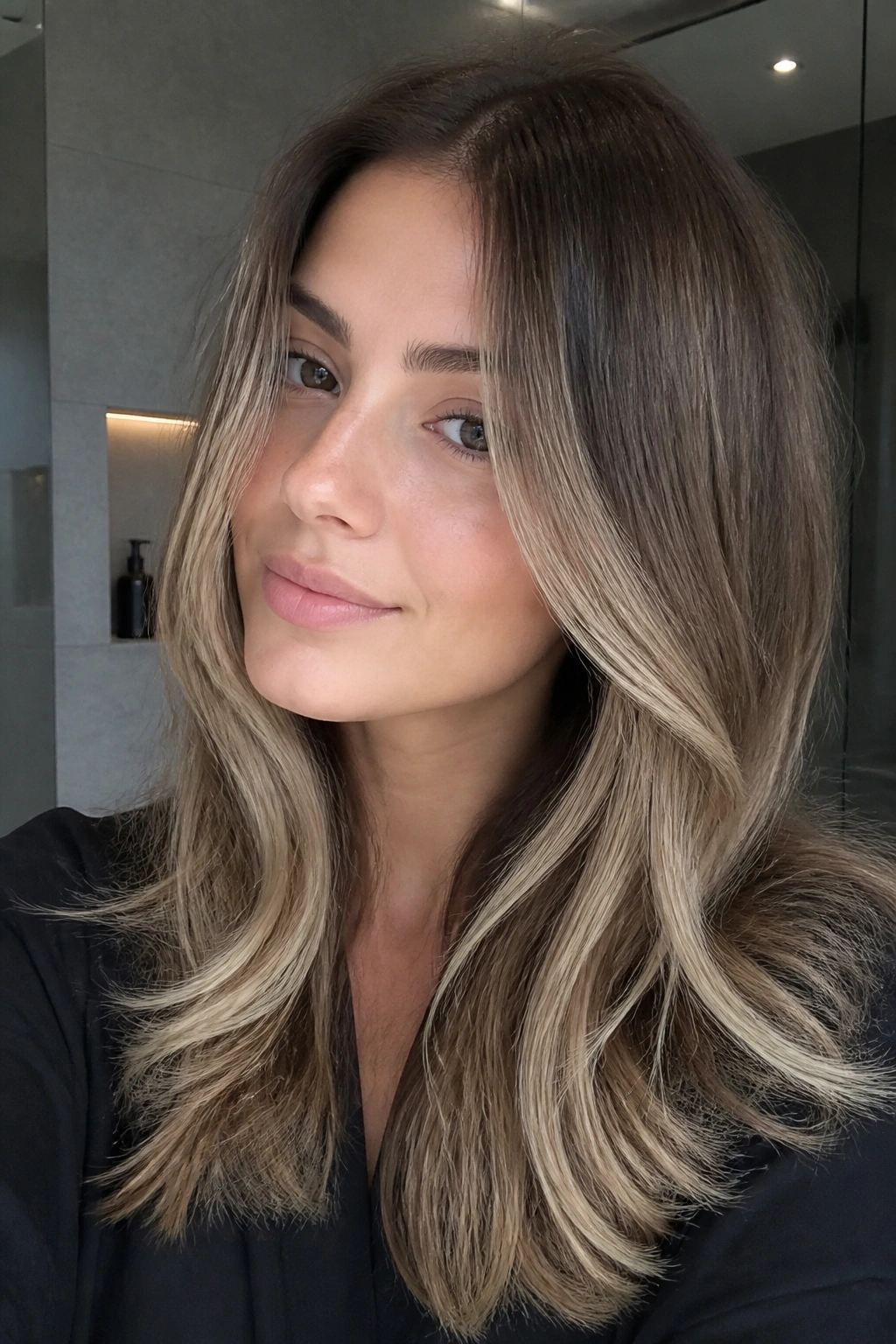
Warm tones are not mandatory. In fact, cool ash brown with vanilla ends can look sharper on a round face than anything golden.
The cool base keeps the color from expanding visually across the widest part of the face. Then the vanilla ends add brightness at the bottom, where you want the eye to travel. That bottom-heavy lightness is doing a lot of work here, even if it looks effortless.
I’d choose this if your skin has pink or neutral undertones, or if you already wear silver jewelry and cool makeup shades. It also suits anyone who wants the balayage to feel a little quieter. The key is not to flood the mid-lengths with too much pale color. Keep the vanilla at the last 4 to 6 inches, and let the brown do the framing above it. If the light pieces climb too high, the face can start to feel wider again. Small correction, really — not more blonde. Better blonde placement.
5. Honey Blonde Brown Balayage With a Deep Side Part
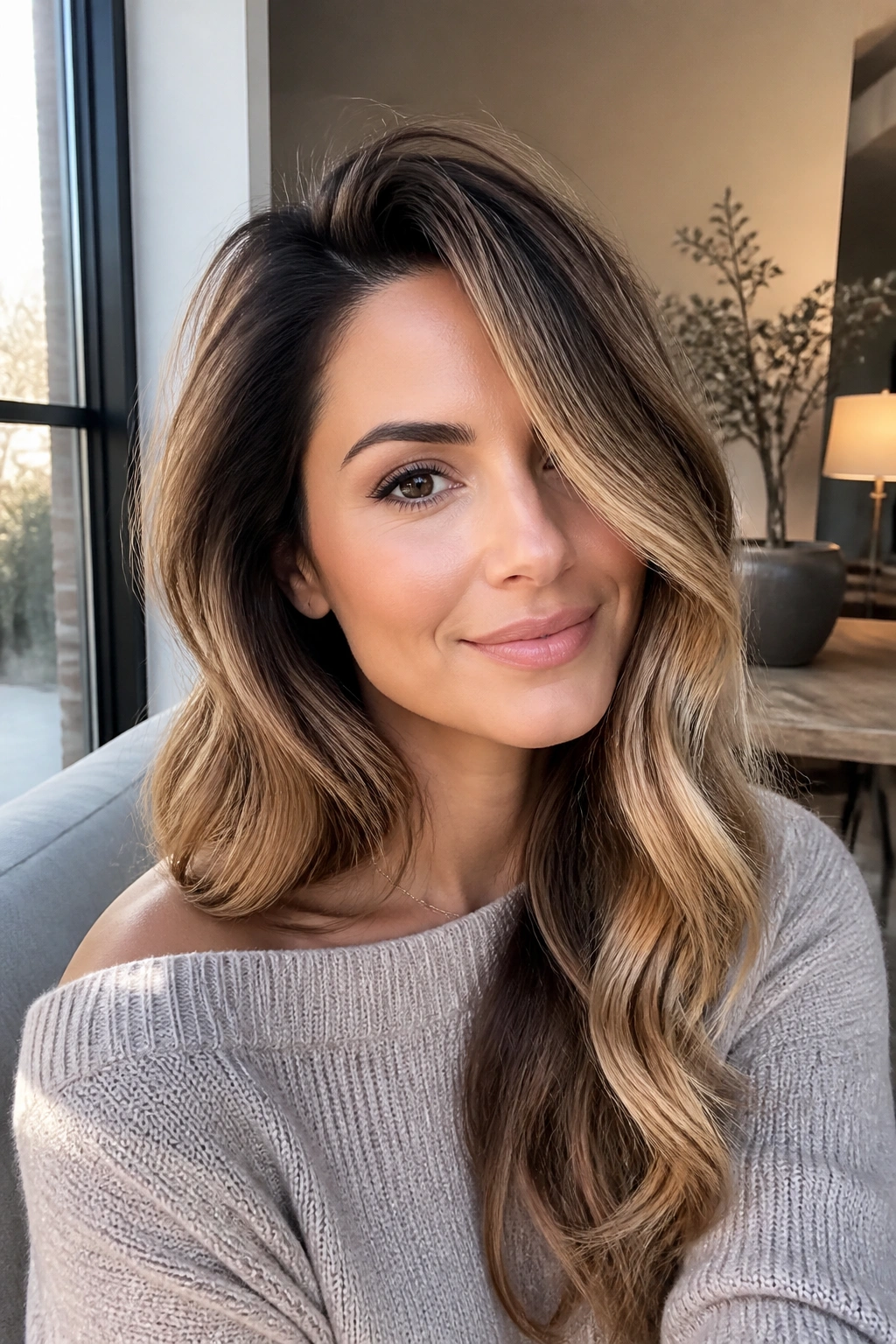
Why does a side part change the whole look? Because it breaks up the symmetry that often makes a round face read even rounder.
Honey blonde brown balayage gets a lift from that diagonal line. The part creates movement before the color even starts doing its job, and the warm honey tone keeps the hair glowing instead of flat. I like this when someone wants brightness but doesn’t want the cooler, smokier mood of mushroom brown.
What to Tell Your Colorist
- Put the part slightly off-center, not all the way to the ear.
- Let the lighter pieces start near the temple and slide downward.
- Keep the honey tones soft and dimensional, not orange.
- Leave enough brown at the root so the style doesn’t widen at the top.
The best version of this look has a bit of swing around the face and more light through the lower half of the hair. It’s one of those styles that looks even better when the hair moves. And yes, a deep side part can feel strange if you always wear a center part. Give it one wash day before judging it.
6. Toasted Almond Lob With Soft Face-Framing Pieces
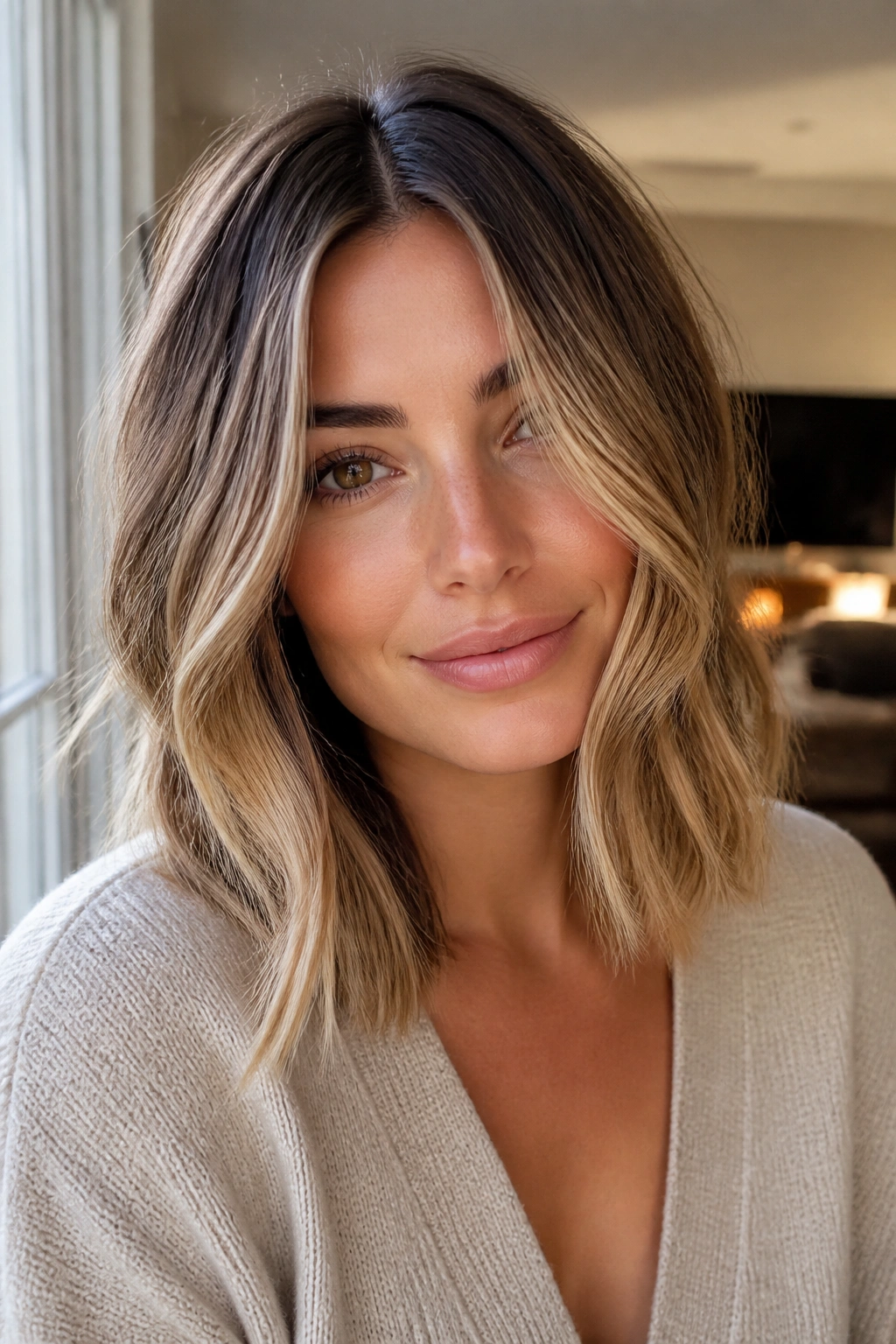
A collarbone lob can be tricky on a round face if everything ends at the same place. That’s why this toasted almond version works so well.
The cut stays just long enough to keep a vertical line, and the balayage adds warmth without turning brassy. The front pieces should fall 1 to 2 inches below the chin, not right at the cheek. That small difference matters. A piece that ends at the cheek can pull attention to the widest part of the face. One that drops lower helps lengthen the line instead.
A Few Details That Matter
- Keep the back a touch darker so the silhouette feels leaner.
- Use toasted almond tones in the mid-lengths for softness.
- Add a slight bend at the ends instead of a blunt flip.
- Avoid too much lightness near the upper sides of the face.
I like this look for people who want an easy, clean shape without going long again. It feels modern, but not fussy. And on a round face, the lower front pieces quietly do the slimming work while the rest of the cut stays relaxed.
7. Chestnut Base With Fine Blonde Babylights
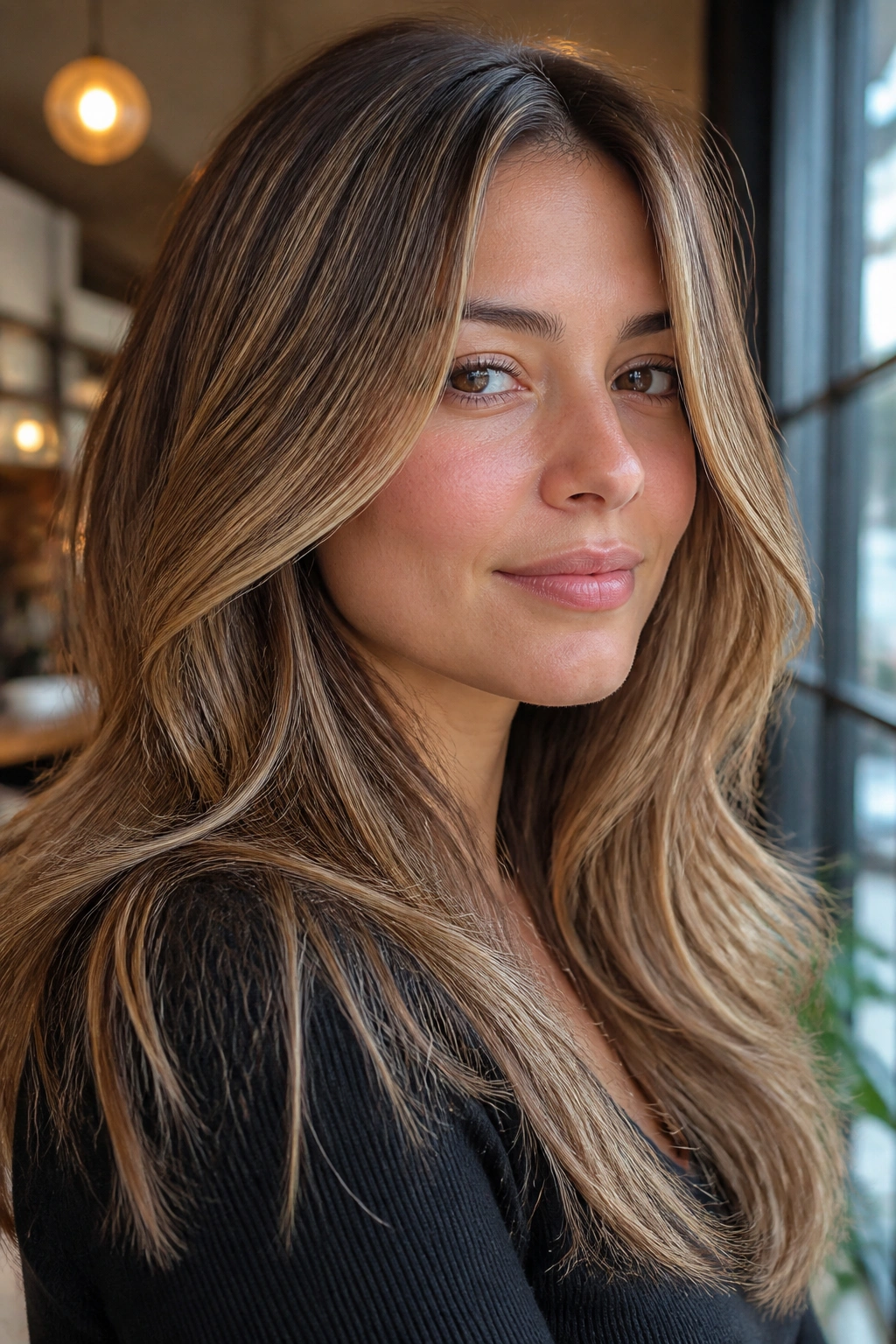
If chunky highlights scare you, babylights are your friend.
This is one of my favorite ways to soften a chestnut base without making the color loud. The blonde pieces are so fine that they read like sheen rather than streaks. On a round face, that matters because the eye doesn’t stop at one heavy stripe. It keeps moving.
Why Small Strands Help
Babylights are painted or foiled in tiny sections — think 1/8-inch to 1/4-inch pieces. That size lets the lighter color blend into the chestnut instead of sitting on top of it. The result is airy, and airy color usually flatters a fuller face shape better than bold, blocked contrast.
A chestnut base also gives you enough depth around the perimeter. That depth keeps the hair from puffing out visually at the sides, which is the exact issue you want to avoid.
I’d pair this with soft layers and a loose bend through the ends. If the hair is too blunt, even delicate color can feel heavy. The whole point here is restraint. A little brightness goes a long way.
8. Smoky Taupe Balayage on a Wavy Shag
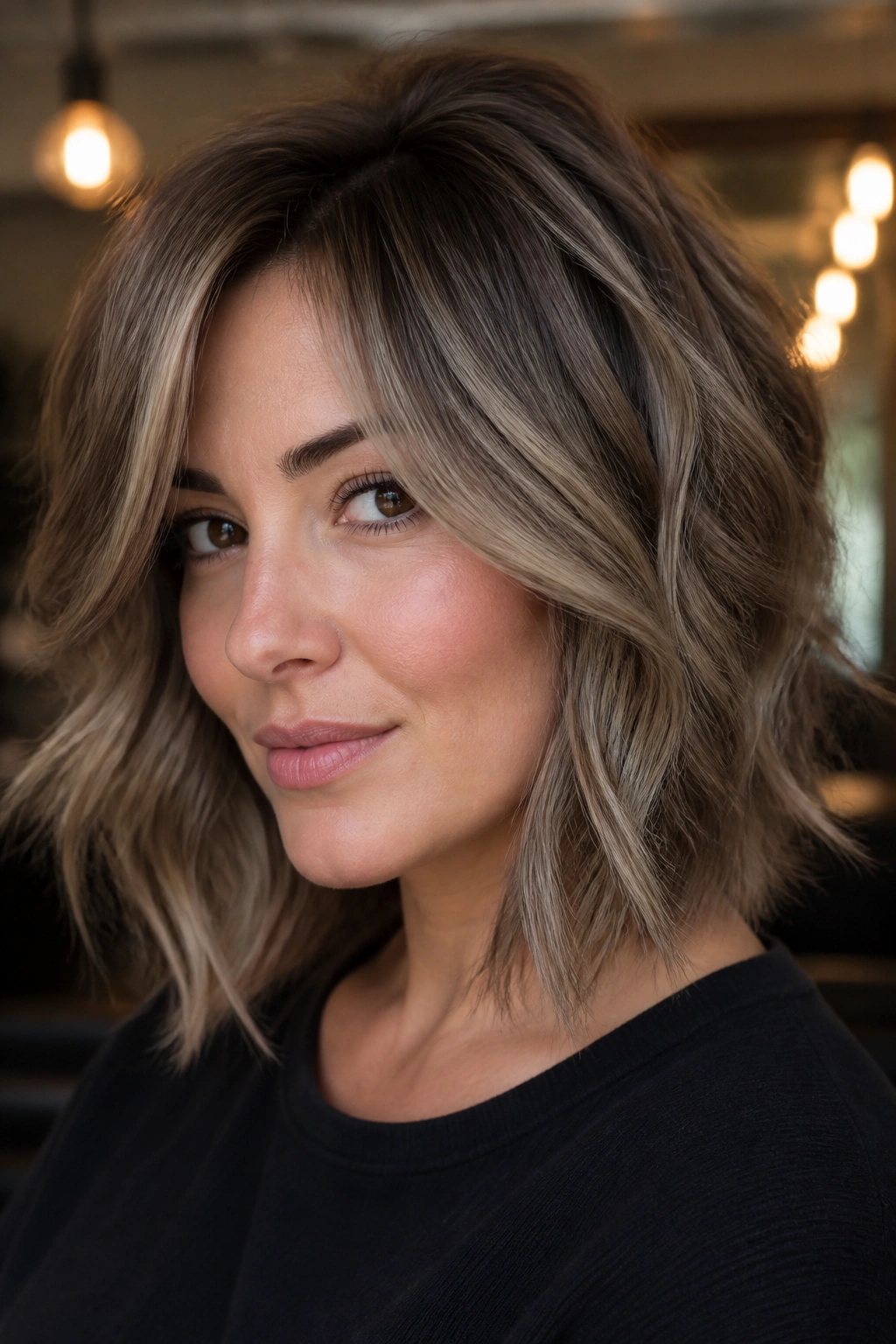
Can a shag slim a round face? Yes — if the layers are placed with some restraint.
Smoky taupe balayage gives a shag that slightly undone, piecey feel that works better than a smooth, rounded shape. The waves break up the width, and the muted taupe tone keeps the look cool and a little edgy. I like this when someone wants movement more than glamour.
How to Get the Most From It
Ask for crown volume, but keep the side layers feathered and light. The longest face-framing pieces should hit below the cheekbones, and the shorter layers should stay soft enough that they don’t balloon the sides. That balance keeps the face from feeling boxed in.
The taupe tone is useful because it doesn’t fight the haircut. A bright blonde shag can get loud fast. Taupe stays calmer and gives the cut more shape. If your hair has some natural wave, this one almost styles itself. A quick bend with a diffuser or curling iron is enough. Not perfect curls. Just a little movement.
9. Golden Toffee Waves With Curtain Bangs
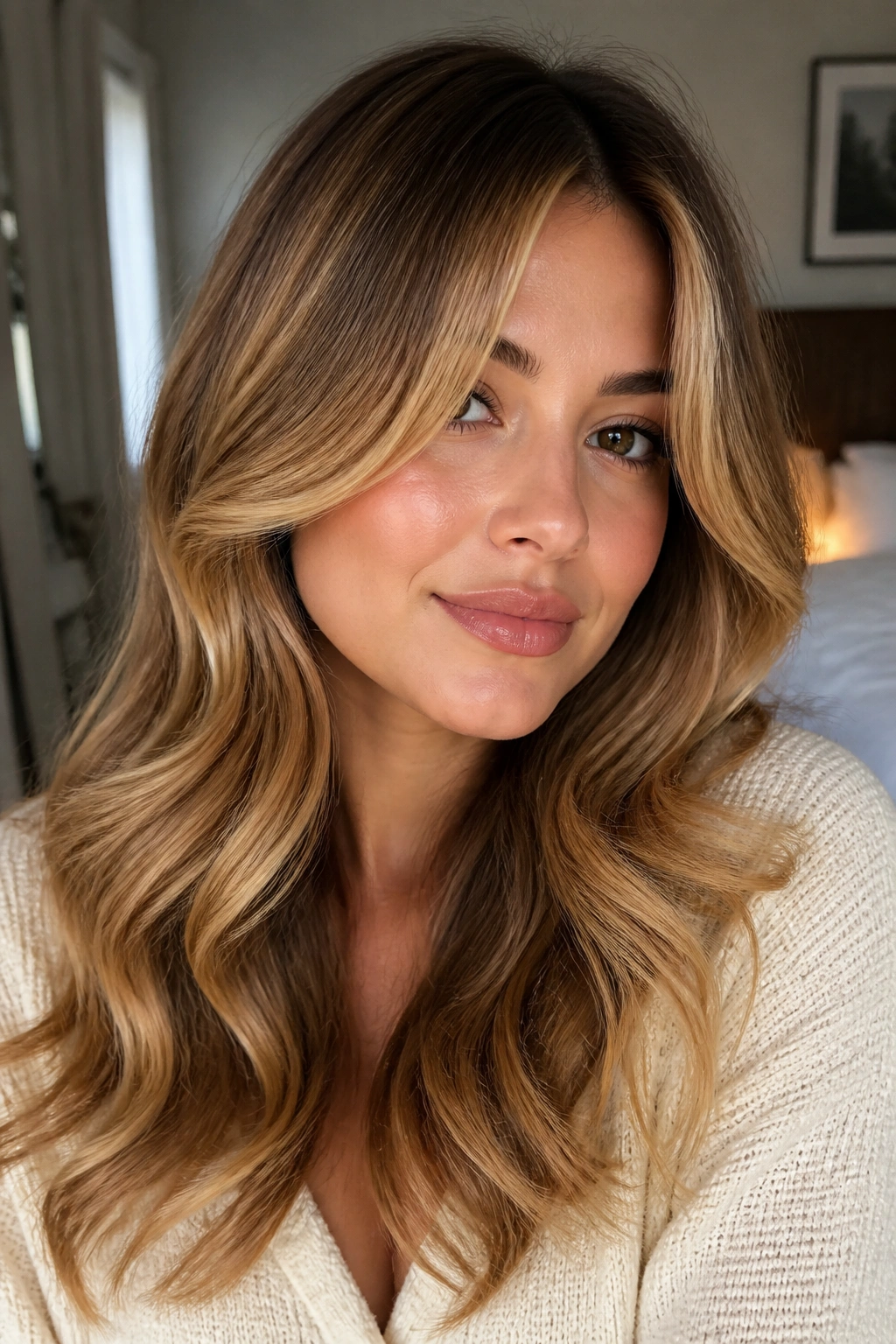
Unlike a straight-across fringe, curtain bangs leave space at the center of the face. That one detail is why they work so well with round features.
Golden toffee balayage adds warmth around the waves, while the bangs split the vertical line and pull attention down the sides of the face. The color and the cut are doing the same job from two different directions. That’s why the result feels balanced instead of busy.
This is a good choice if you like a softer, more romantic shape. Ask for curtain bangs that open around the bridge of the nose and blend into cheekbone-length layers. If the bangs end too high, they can make the face look shorter. If they’re too thick, they close everything in. The sweet spot is a light center and longer edges that tuck into the hair.
I also like this on medium-density hair. You get enough body for the bangs to sit well, but not so much that the whole style turns into a helmet.
10. Espresso Root Melt Into Creamy Ends
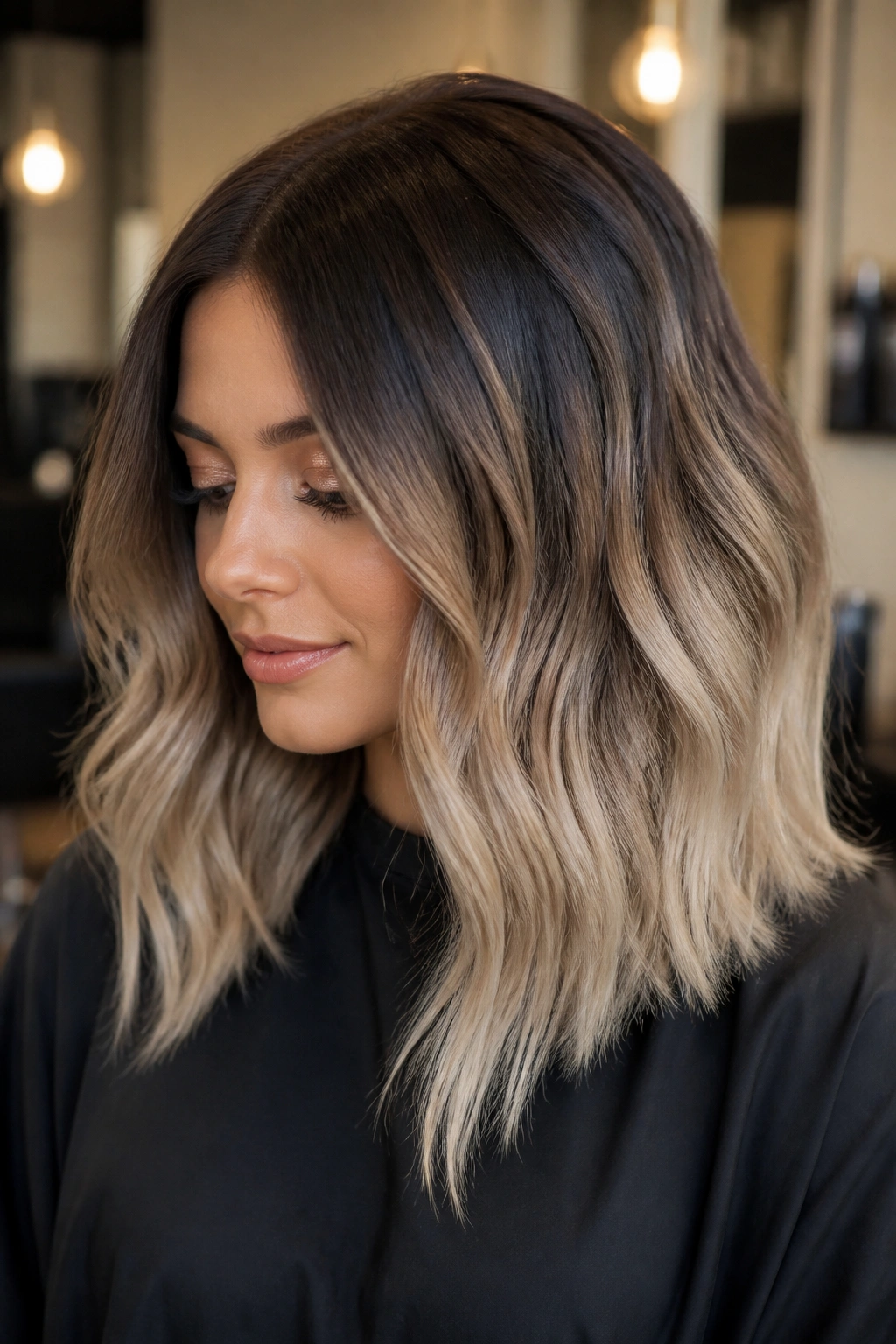
Dark roots can be your best friend.
Espresso root melt into creamy ends is one of those looks that sounds dramatic and ends up feeling strangely easy to wear. The dark root gives the top of the head a sleek, narrow line, and the creamy ends bring the brightness down where it helps the most. On a round face, that downward movement matters more than people think.
The melt should be smooth, not stripy. I like a root that stays at least one to two shades deeper than the mid-lengths, then gradually softens into beige cream through the ends. The key is patience. If the fade happens too fast, the color loses its lengthening effect and starts to blur. If it’s too abrupt, it looks like two separate dyes fighting each other.
This is also a strong choice if you do not want constant salon visits. The root stays forgiving as it grows. The lighter ends carry the interest, and the whole thing still reads polished even when it’s a few weeks out from a gloss.
11. Cinnamon Brown Balayage for Thick Hair
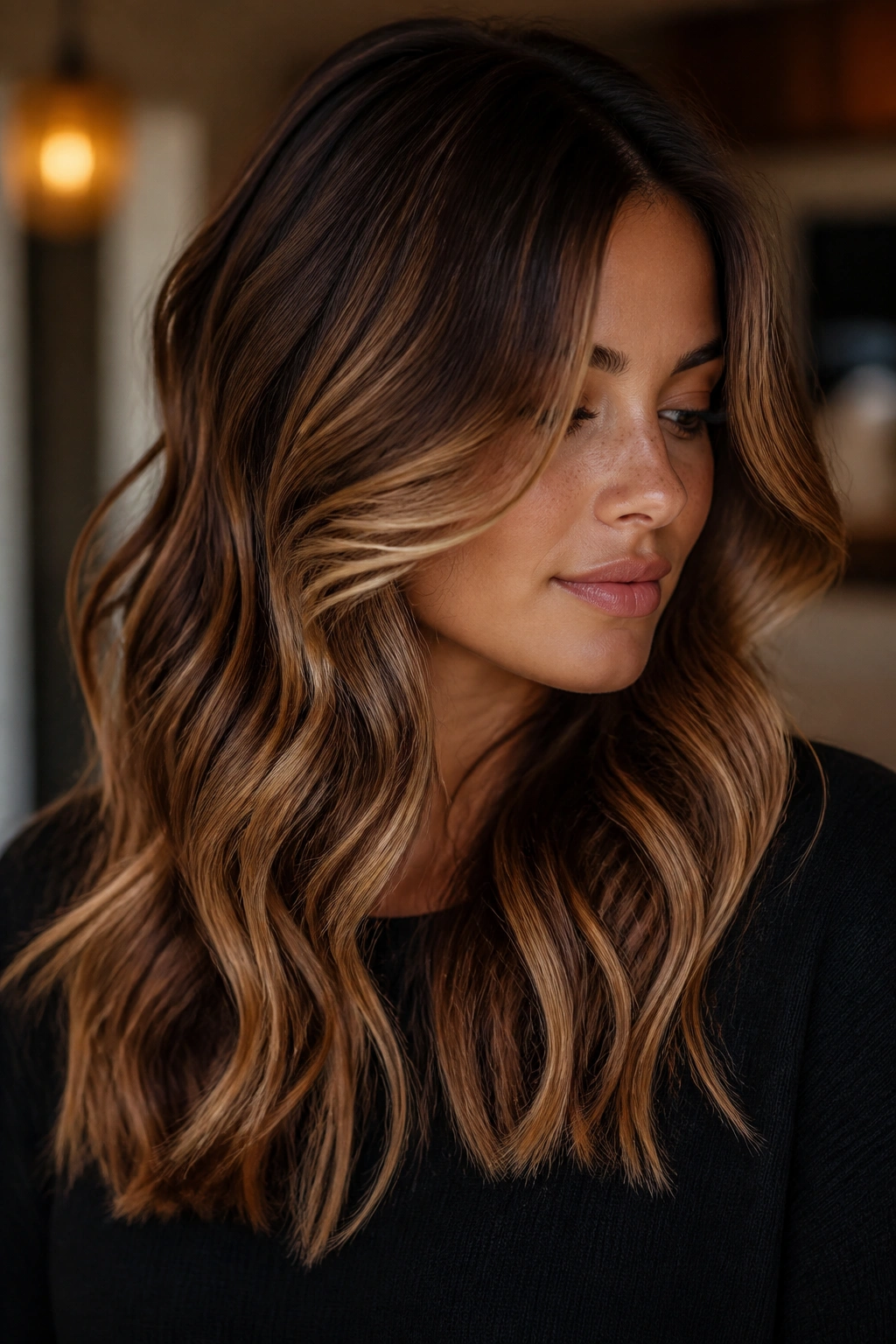
Thick hair can swallow color. That’s the part people don’t always expect.
Cinnamon brown balayage fixes that by using warmer blonde-brown ribbons that can actually be seen through dense strands. The sections should be a little wider than baby lights, but still blended enough that the color moves. Think of it as painting inside a forest of hair, not just on the outside layer.
What Thick Hair Needs Here
- Lighter pieces placed through the mid-lengths and ends, not only the top layer.
- A cut with enough internal layers to stop bulk at the cheeks.
- Cinnamon and caramel tones that sit between blonde and brown.
- A slightly off-center part if the face feels extra round.
The reason this works so well is that thick hair already has presence. You don’t need to pile on more width near the face. You need shape. Cinnamon ribbons help the cut fall in vertical lines, especially when the ends are textured or softly razored.
I’d skip overly pale blonde on thick hair unless you want a louder finish. Cinnamon gives you warmth and movement without all the maintenance of a high-lift blonde.
12. Sandy Beige Balayage on Curly Hair
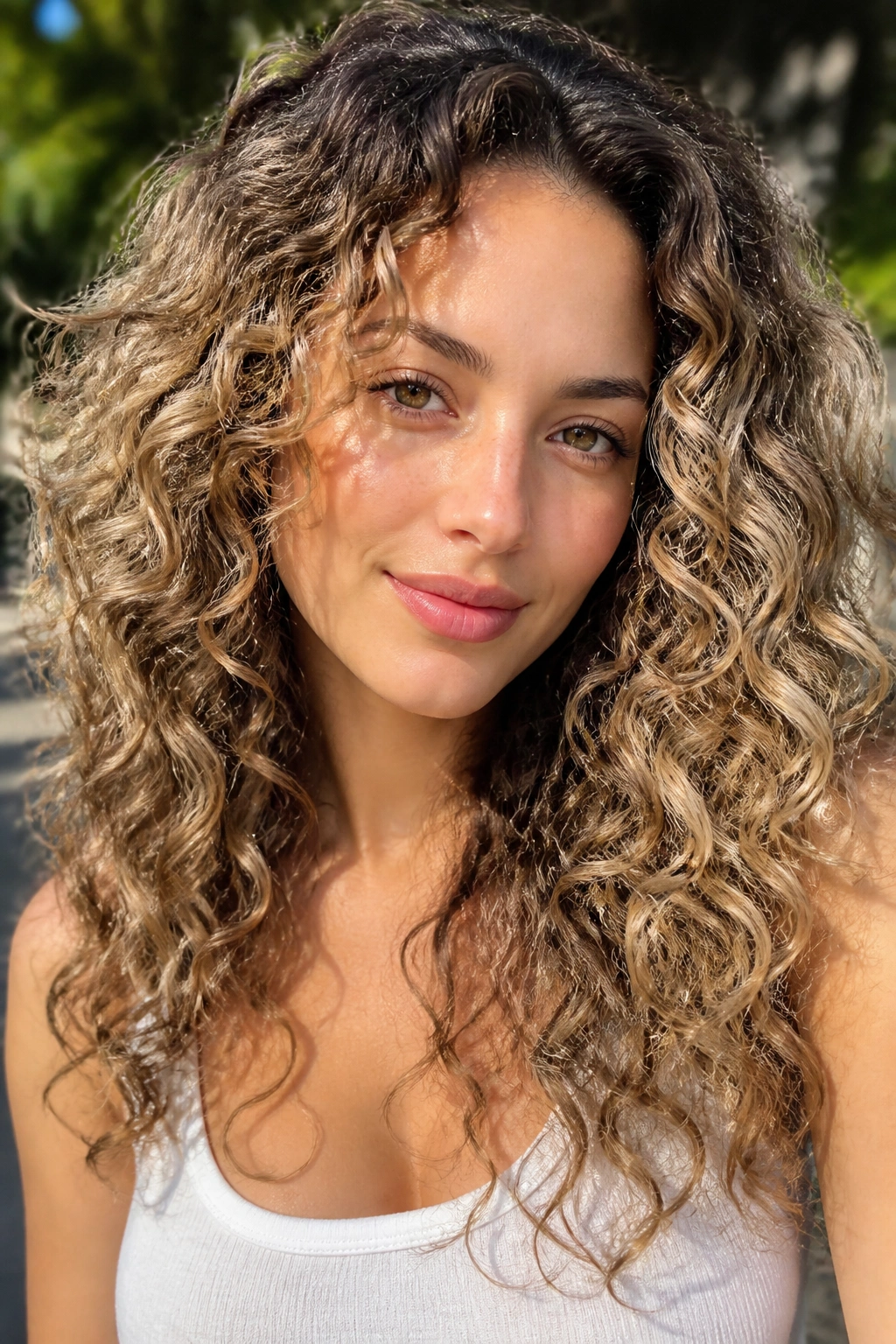
Can curls wear blonde brown balayage without making the face look wider? Absolutely, if the brightness is placed on the outer curve of the curl, not the sides of the face.
Sandy beige is a good shade for curly hair because it sits in that soft neutral zone. It lights up the curl pattern without making the hair look dry or stripey. Round faces often look best with curls that stay a bit longer around the sides and brighter toward the ends, since the lower color pulls the eye down.
How to Place It on Curls
Paint or hand-place the lightest bits where the curl bends outward, especially in the lower half of the hair. Keep the top and the area right beside the cheeks a shade deeper. That gives the face room and keeps the highlight from sitting like a halo around the widest part.
A dry curl placement usually works better than guessing on wet hair. Curls shrink and spring in ways that can fool even a careful stylist. If you wear your curls natural most days, ask for a placement that respects your actual curl pattern, not just the raw cut.
A little sandy beige around the ends and a few lighter coils near the front can do a lot. More than a lot of people expect.
13. Walnut Brown With Ribbon Highlights Through the Mid-Lengths
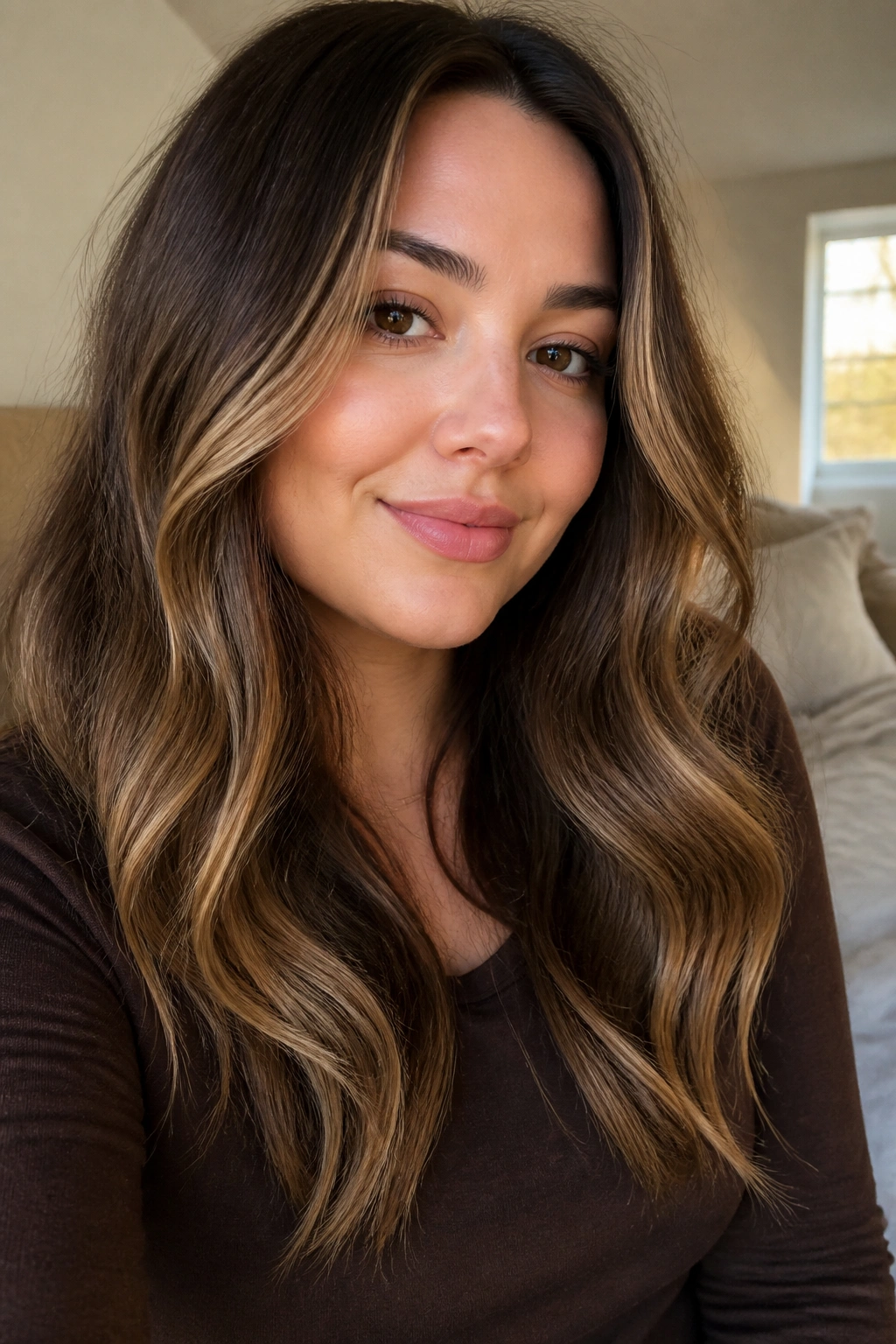
Walnut brown has that rich, toasted look that feels expensive without trying hard.
What makes this version special is the way the lighter ribbons sit through the mid-lengths instead of clustering near the cheeks. That mid-zone placement keeps the hair moving in a long line, and on a round face, long lines are the whole game. The color should look like it was scattered through the hair, not pasted on top.
I’d keep the blonde side of the look more beige than yellow. Walnut brown already has warmth, so too much gold can make the whole style feel heavy. A clean beige ribbon or two near the front is enough to lift the face, while the rest of the highlights can stay tucked into the waves and layers.
There’s also something nice about the way walnut brown behaves in daylight. It doesn’t flatten. It shifts between soft brown and deep caramel, which means the color keeps a bit of life even when the hair is tied back. That matters more than people give it credit for.
14. Bronde Butterfly Layers With a Soft Money Piece
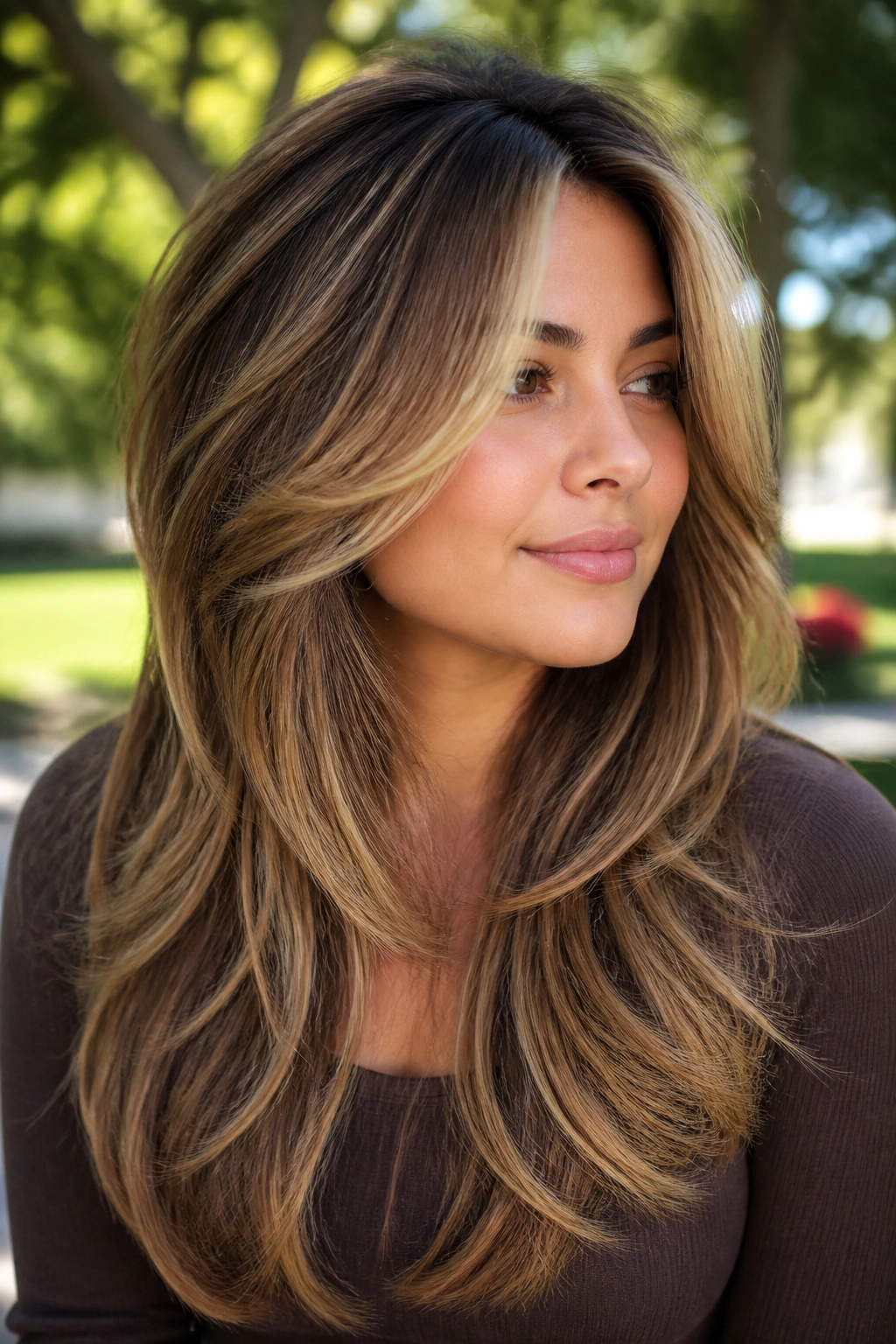
Bronde butterfly layers are a smart move if you want fullness in the hair but less width around the face.
The butterfly cut creates that airy shape with shorter layers around the crown and longer length underneath. Add a soft money piece, and you get light where you want attention without turning the front into a thick strip. On a round face, that combination is useful because the volume sits lower and the brightest color stays controlled.
Why It Works
The shorter layers lift the top of the haircut, but they don’t need to sit out at the sides. The long ends keep the silhouette vertical. Then the money piece adds just enough light near the face to keep it bright, while the rest of the balayage stays blended.
Ask for a money piece that starts softly at the root and melts through the front instead of a hard, bright block. I’d also keep the rest of the bronde closer to beige brown than honey if the goal is a more sculpted feel. Too much warmth up top can widen the look.
This is one of those cuts and colors that looks better when it moves. Still. You want the motion to happen lower, not right at the cheeks.
15. Mocha and Butter Blonde Contrast for Shorter Cuts
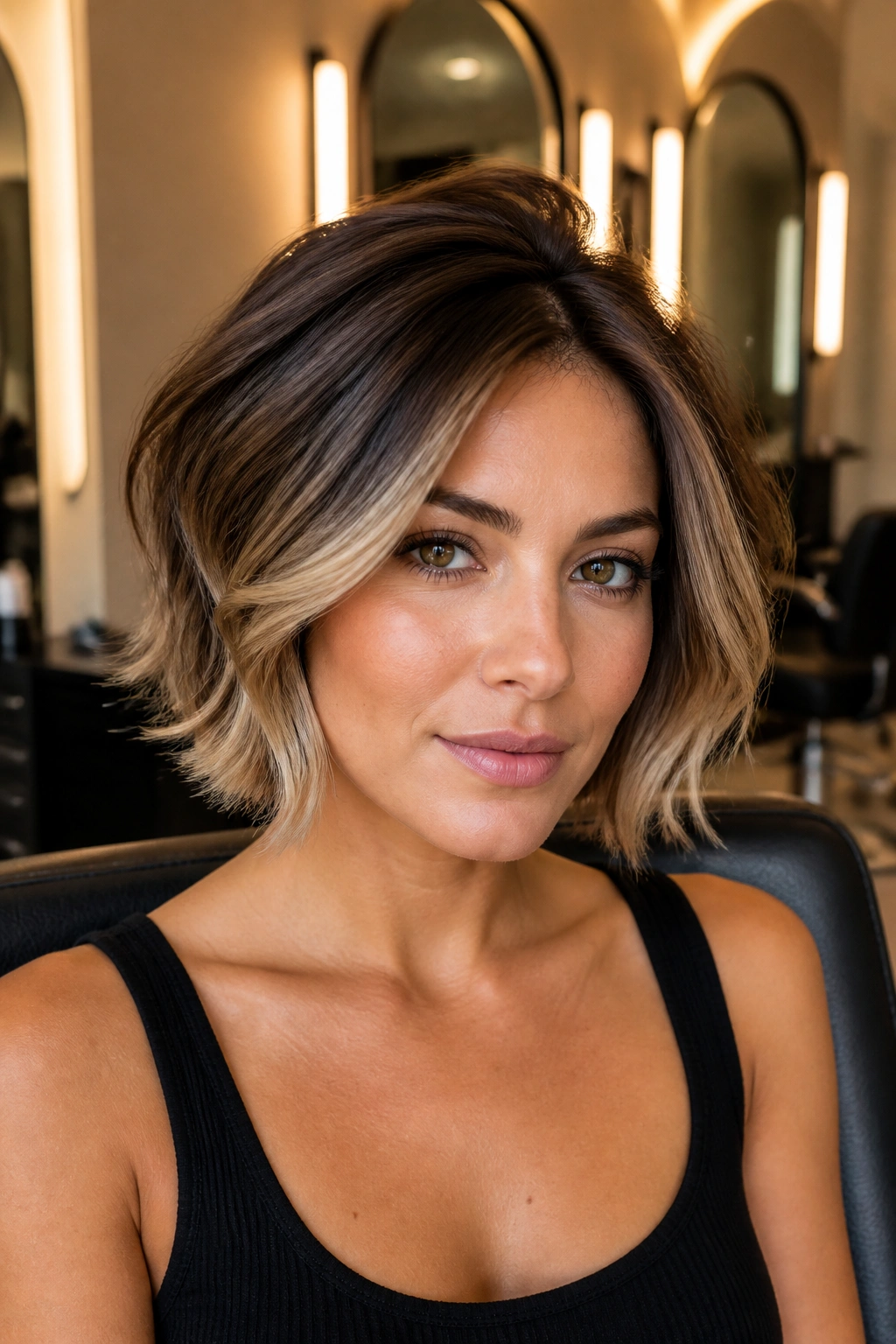
Shorter cuts need contrast in a smaller space, which is why mocha and butter blonde can be such a good pairing.
Unlike long layers, a shorter cut does not have much length to hide soft color placement. The shape has to do more of the work. A mocha base keeps the sides grounded, while butter blonde around the ends and a few front pieces lightens the lower half of the face. That helps a round face look longer without forcing the cut to carry all the visual weight.
This look shines on long bobs and collarbone cuts. It can work on chin-length hair too, but the blonde needs to stay subtle and well blended. If the light pieces are too thick near the cheeks, the roundness comes right back. If they’re tucked lower and softly feathered, the face opens up.
I’d keep the buttery tone creamy rather than yellow. The finish should feel soft and wearable, not stripey or loud. A slightly wavy blowout or a bend at the ends makes the whole thing land better.
16. Pale Pearl Balayage for Fine Hair
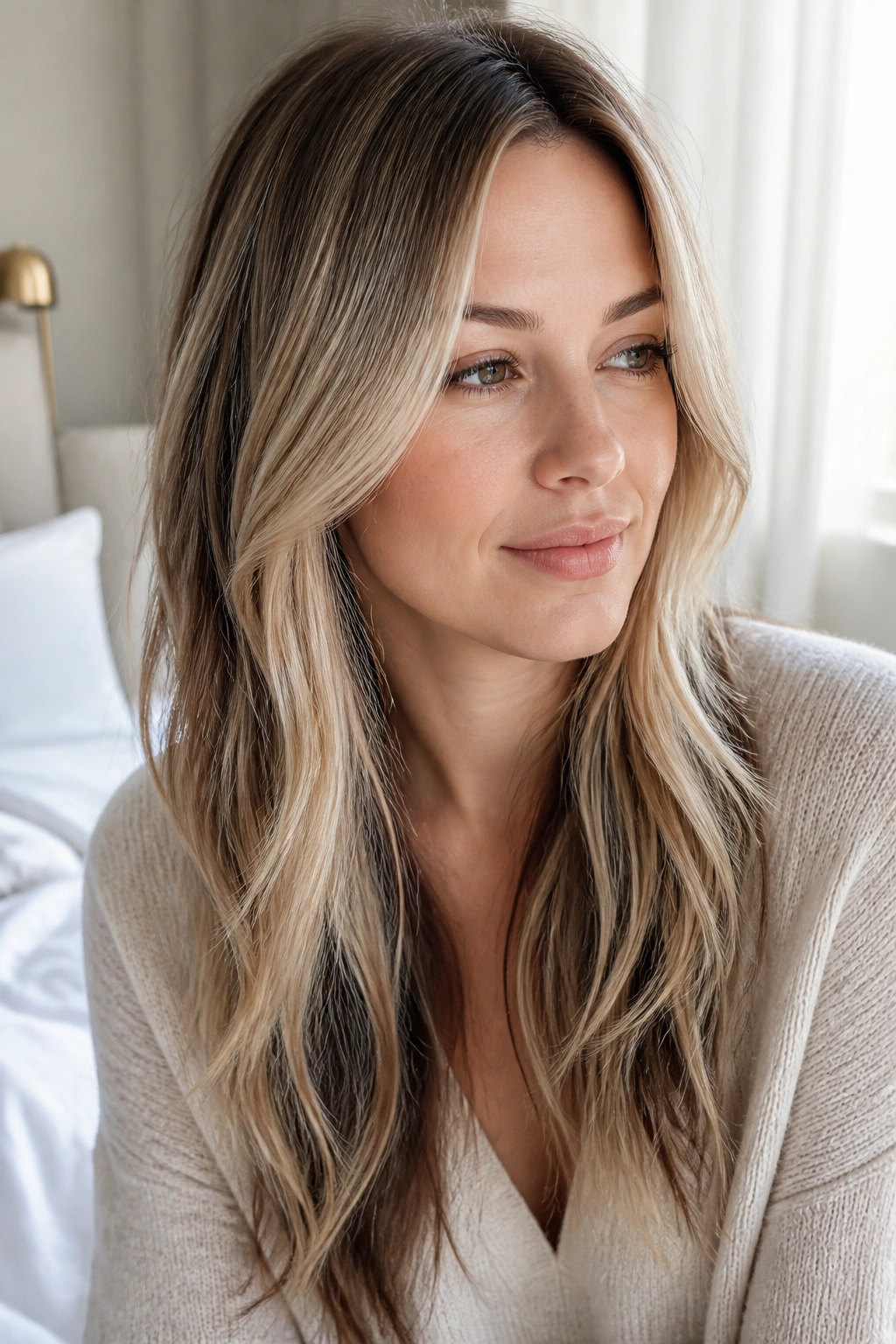
Fine hair can go flat when the brown is too heavy. That is the problem this look solves.
Pale pearl balayage adds enough lightness to keep the hair from sinking visually, but it does it with delicate placement so the strands still look airy. On a round face, the best part is that the brightness can sit in a vertical path from the temples down to the ends instead of fanning outward.
The Fine-Hair Rules Here
- Keep the highlights thin and widely spaced so the hair still feels full.
- Use pale pearl on the surface, but leave a deeper brown underneath.
- Avoid over-lightening the roots, which can make fine hair look see-through.
- Finish with a lightweight gloss, not a heavy oil that flattens the ends.
The pearl tone helps because it reflects light without looking harsh. I’d choose this when someone wants the hair to look polished but not overdone. Fine hair usually does better with restraint. One or two bright ribbons in the right place can be enough, especially near the front and through the lower lengths.
17. Sunlit Chestnut Waves With a Soft Root Shadow
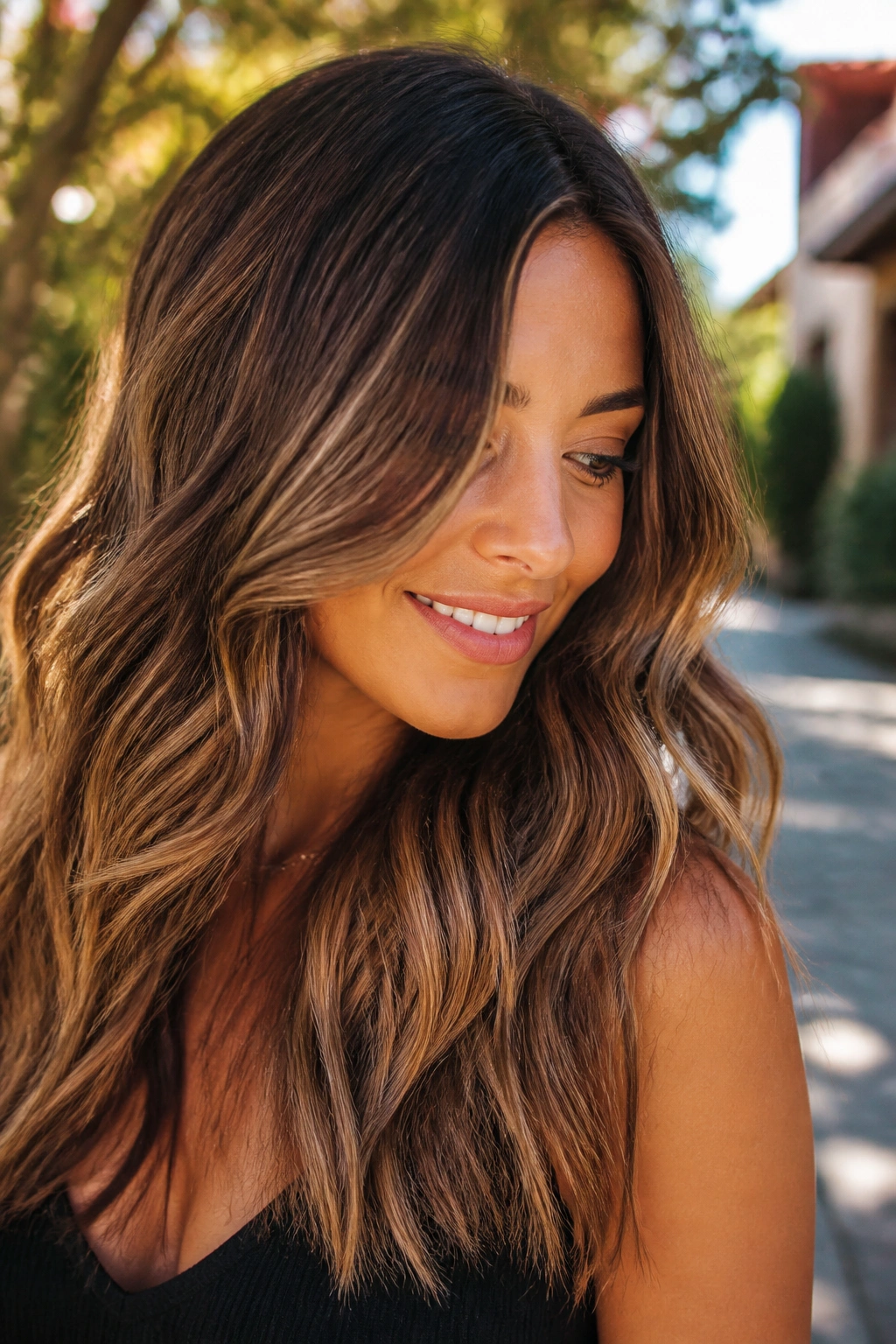
How do you keep warmth from turning brassy? Start with a soft root shadow and keep the lighter pieces scattered.
Sunlit chestnut waves give you that warm brown base with blonde threads peeking through the bends. The root shadow is what keeps the style grounded, especially on a round face. It keeps the top narrow and the color from spreading too wide through the sides.
The best version of this look has brightness that starts a little lower than people usually expect. Let the sunlit pieces sit through the mid-lengths and ends, then add just enough around the front to frame the face without crowding it. If the front is too light, the cheeks start to take over. If the brightness is concentrated lower, the eye moves down the hair, which is exactly the point.
This one wears well with loose waves, but it can also work with a more polished bend. Chestnut gives you richness. The blonde gives you lift. The shadow at the root keeps both of them from fighting.
18. Muted Honey Bronde With Collarbone Layers
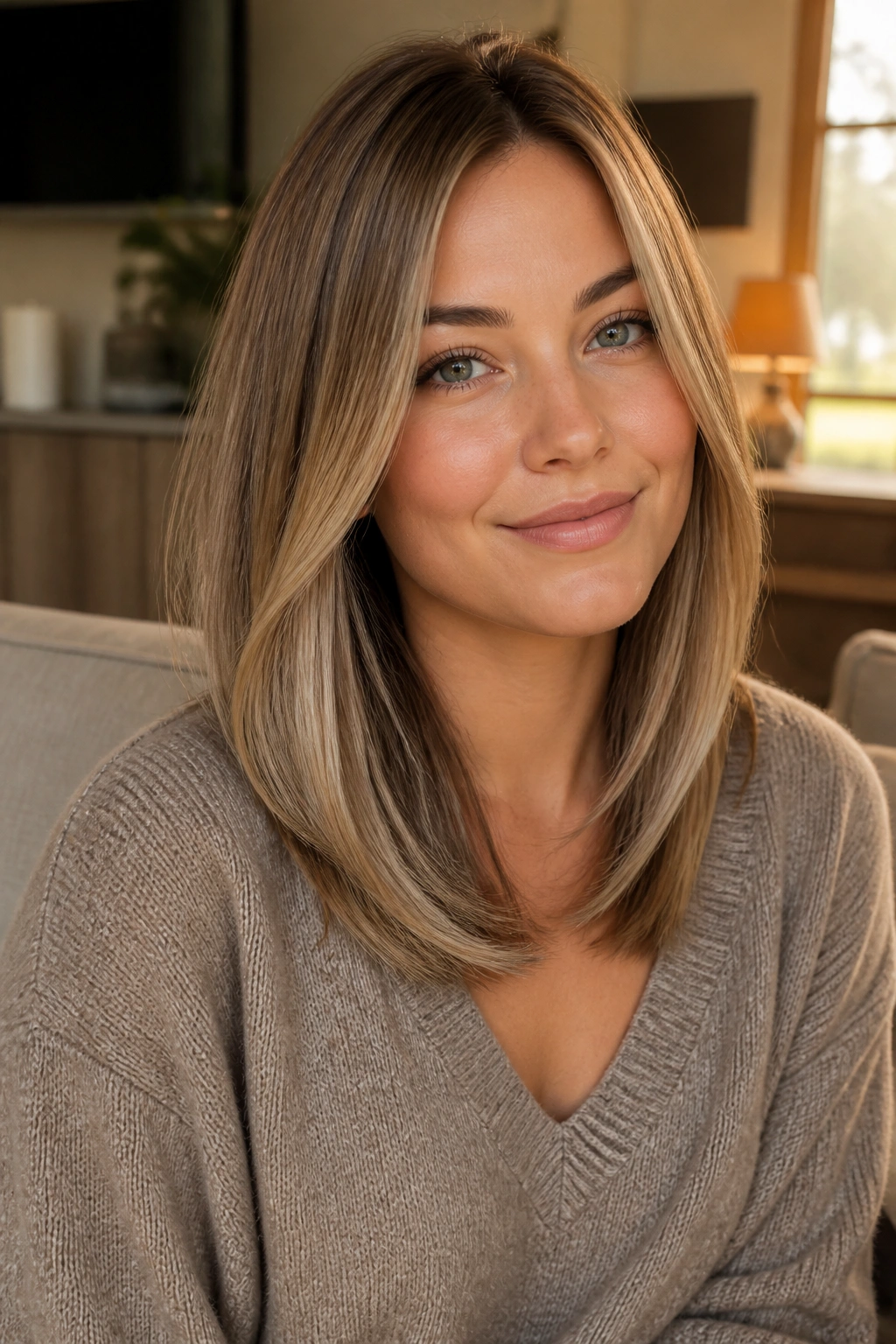
Some looks just make sense.
Muted honey bronde with collarbone layers is the one I keep coming back to when someone wants something flattering, not flashy. It gives a round face length through the cut, while the honey bronde shade adds warmth without blasting the whole head with brightness. The layers stop around the collarbone, which keeps the shape long and lean.
The color should feel soft and sun-kissed, but not loud. I’d ask for a beige honey mix with a slightly deeper root and a few lighter pieces around the front that taper downward. That downward taper is the key. It draws the eye from the cheek area toward the ends, which is exactly where you want it to go.
If you want one blonde brown balayage look that lands in the middle — not too cool, not too golden, not too high-maintenance — this is probably it. It suits waves, bends, and even straighter textures as long as the layers are there. The cut gives the face its line. The color keeps that line soft.
