



Blue balayage on brown hair can look smoky, icy, electric, or almost shadow-like, and the difference usually comes down to shade placement more than the color itself. A brunette base gives blue something richer to sit against, which is why the same pigment can feel soft on one head of hair and sharp on another.
That part matters. Brown hair is not a blank canvas; it changes the tone of the blue sitting on top of it. A deep chocolate base can make navy read like ink, while a lighter chestnut base lets cobalt and denim show a little more bite.
Navy is the safest start. Cobalt is louder. Teal sits in that middle ground where the color looks playful without tipping into costume territory, and that’s a sweet spot for a lot of people who want something different but still wearable.
The trick is choosing the right kind of blue for your base, your haircut, and how much upkeep you’re willing to live with. Some looks need only a glaze. Others need careful lightening, a toner, and a little patience. Placement changes everything.
1. Midnight Blue Ribbon Balayage
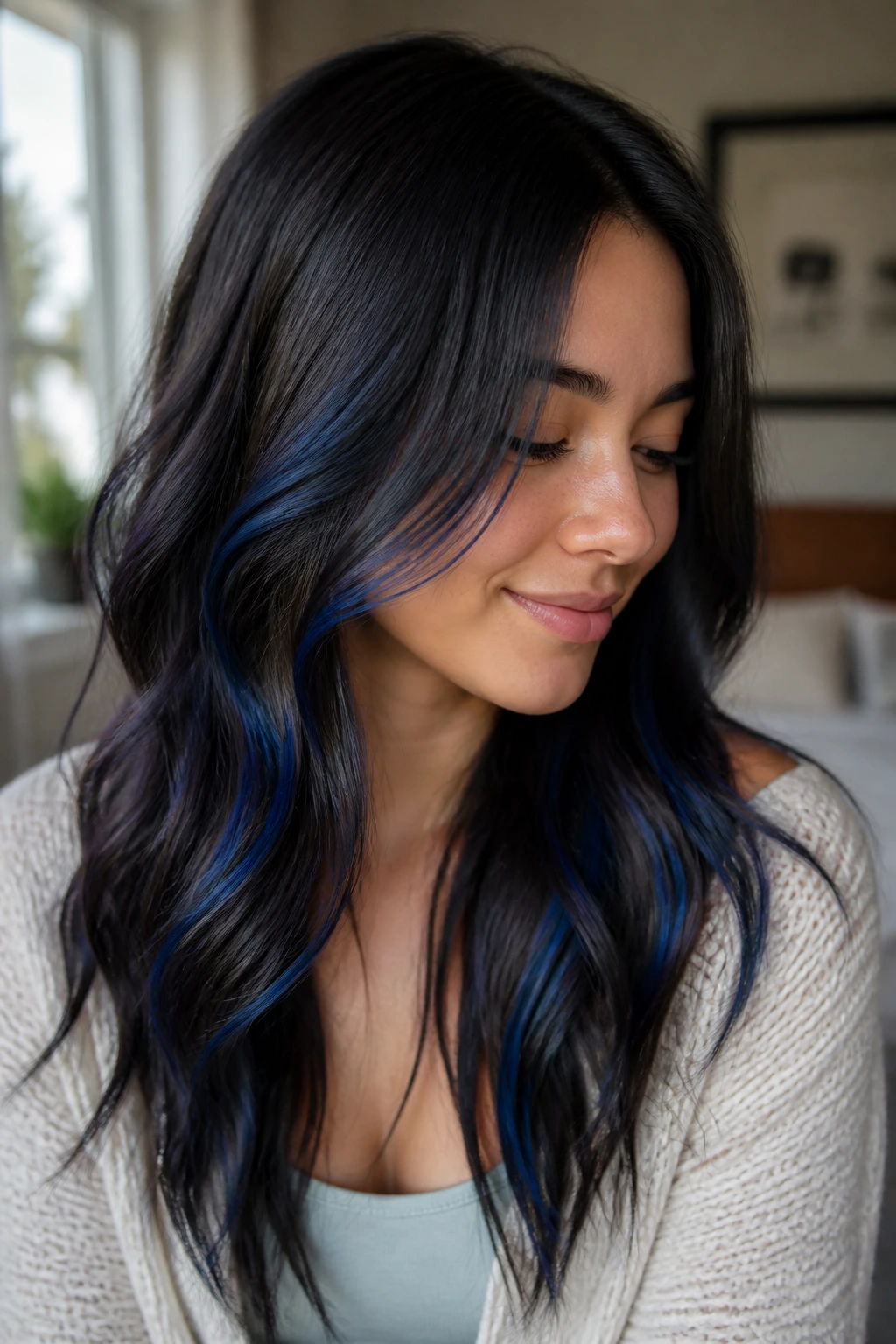
Midnight blue is the easiest blue balayage for brown hair to wear if you want depth instead of flash. The color sits in those painted ribbons like wet ink, so the brunette still does most of the talking.
Where the Ribbons Sit
The best version keeps the blue in thin, curved ribbons through the mid-lengths and ends, with a soft root shadow left alone. That keeps the look dimensional instead of stripy. On dark chocolate hair, the blue shows most when the hair moves, which is exactly why this shade looks so good in waves.
What to Ask For
- Thin painted pieces, about 1/4 to 1/2 inch wide
- A root shadow that stays 1 to 2 inches deep
- A navy or midnight gloss over pre-lightened sections
- Softer placement around the face so the color doesn’t land in one hard line
Tip: If your ends are porous, ask for a clear glaze before the blue. It keeps the color from sinking in too dark.
2. Cobalt Money Piece Balayage
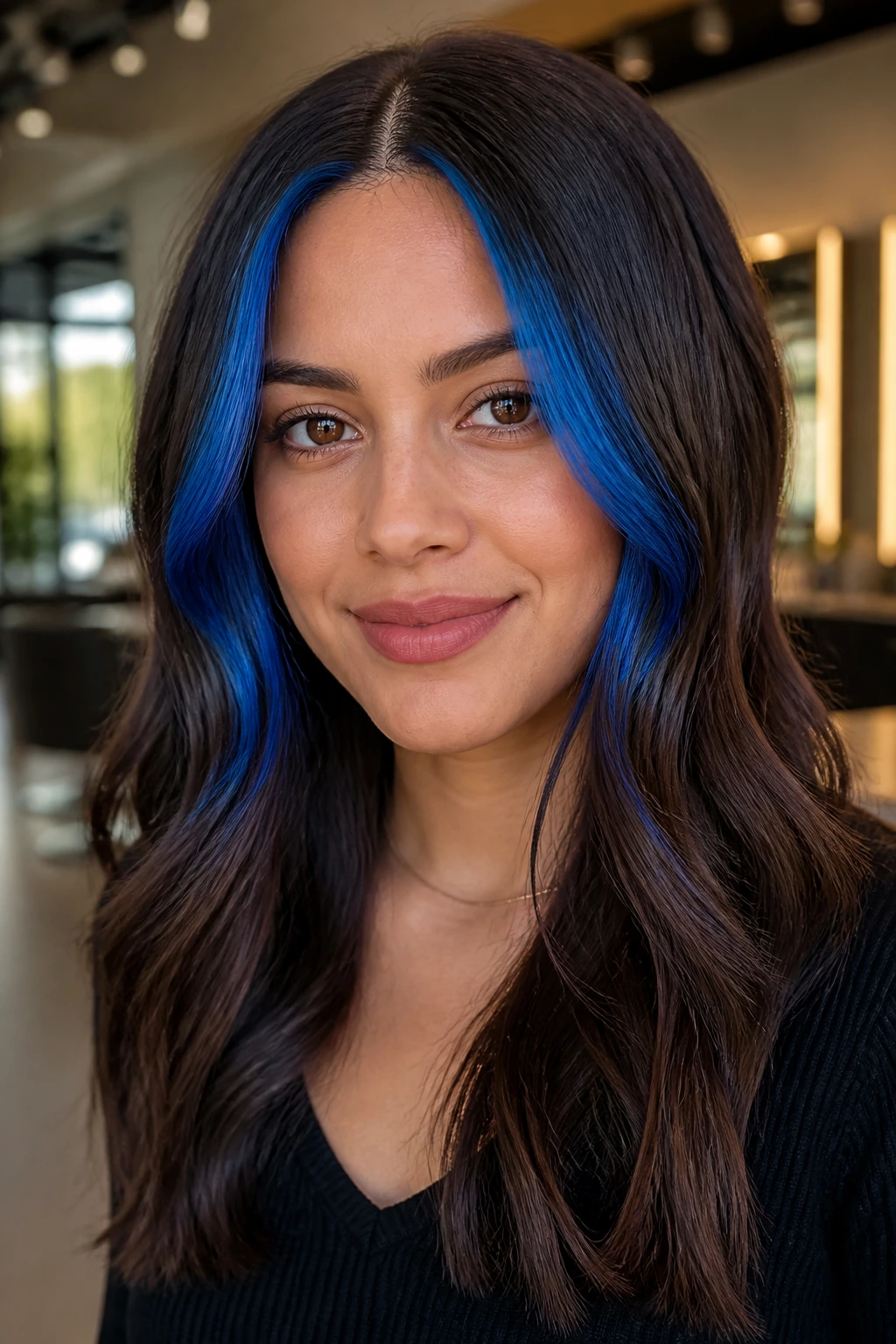
Cobalt money pieces do not whisper. They frame the face, brighten the features, and put a hard stop on plain brunette hair. If you like color that announces itself the second you part your hair, this is the loudest look on the list.
The reason it works is simple: the face-framing pieces give cobalt a bright stage, while the rest of the brown base stays calm. That contrast keeps the look from feeling scattered. A center part makes the blue read cleaner, but a deep side part can make it feel a little more editorial.
This one suits medium brown to dark brown hair that can handle lift near the front. If your hairline pieces are lighter than the rest, even better. Keep the blue concentrated from the brow bone to just below the cheekbones, and leave the ends softer so it doesn’t turn into a block of color. It’s bold, yes. But it’s also tidy.
3. Smoky Navy Melt on Chestnut Hair
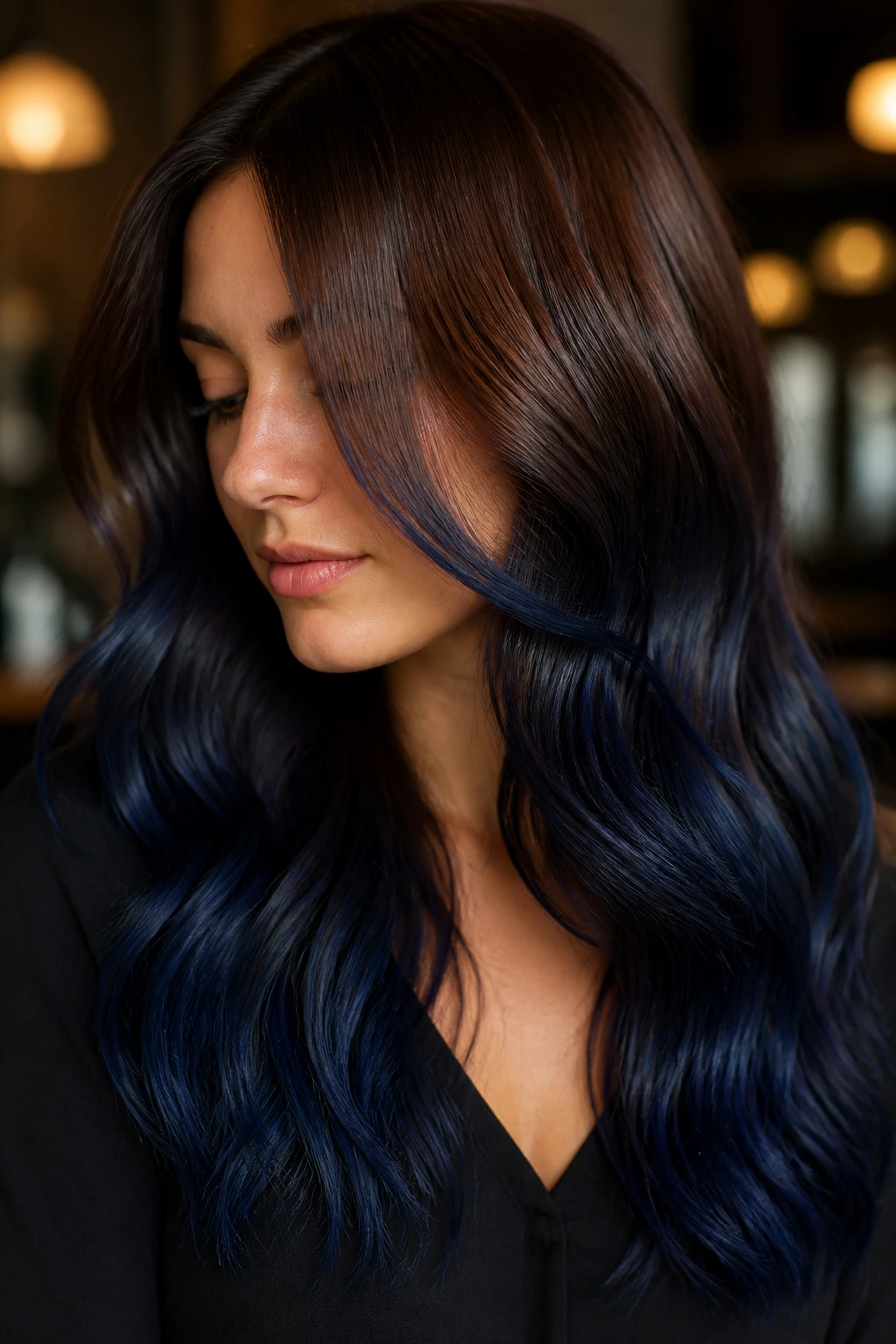
Why does smoky navy look so good on chestnut brown hair? Because it borrows the warmth of the base and cools it down without flattening it. You get a color melt that feels moody, not harsh.
How It Works
The trick is a gradual shift from chestnut roots into navy mid-lengths, then a slightly deeper blue at the ends. That layered fade keeps the brown visible, which matters more than people think. If the blue starts too high and too flat, the whole thing can look like one heavy block.
Best Way to Wear It
Loose bends show the melt better than pin-straight hair. The curve of the wave makes the darker blue and the softer brown separate just enough to catch the eye. A glaze with a hint of slate can cool the navy down even more if your chestnut base runs warm.
This is one of my favorite options for people who want blue balayage without constant touch-ups. It grows out gently.
4. Denim Blue Slices Through Medium Brown Hair
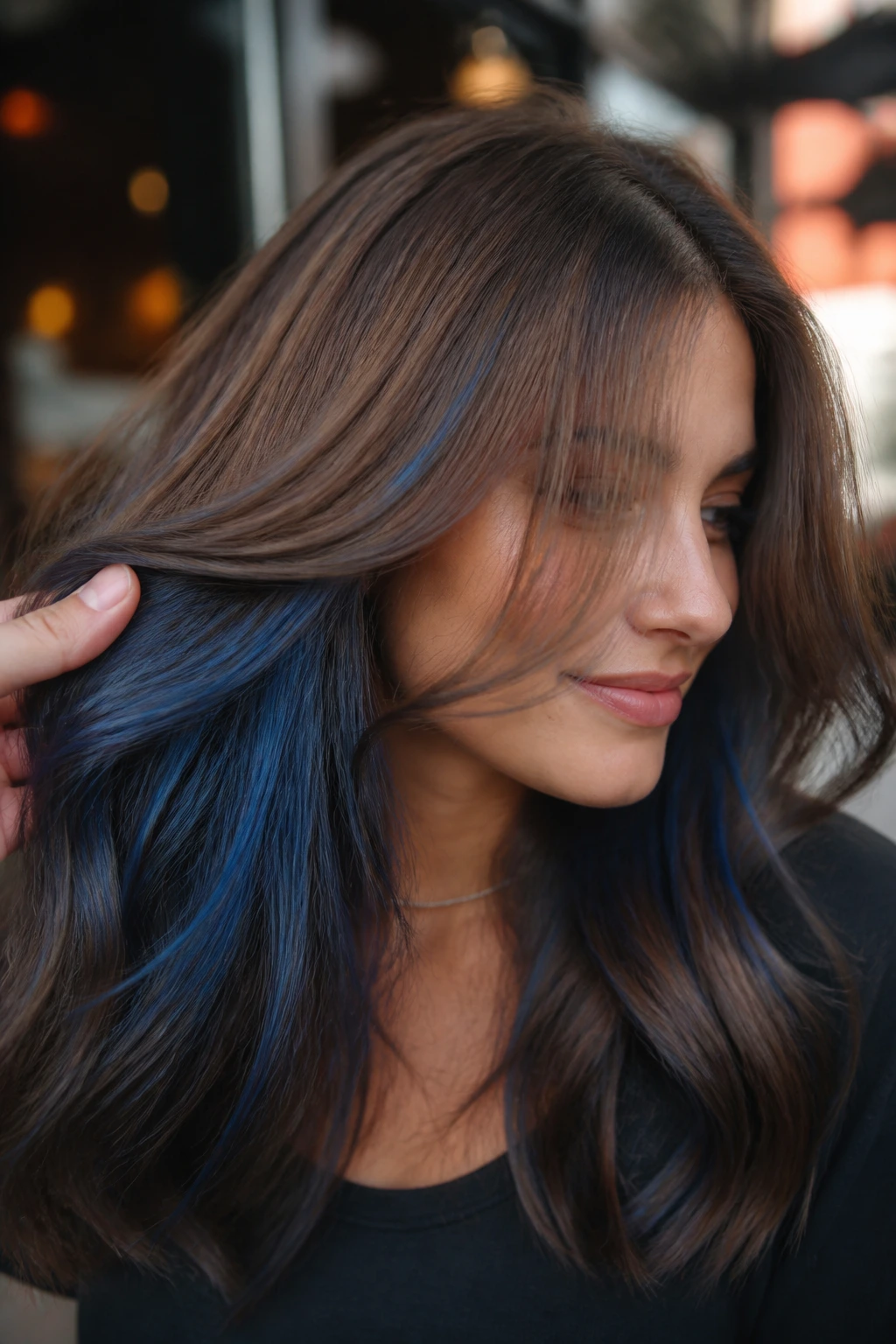
A denim look has a lived-in feel that a lot of brighter blues miss. It’s cooler than teal, softer than cobalt, and it has that worn-fabric tone that plays nicely with medium brown hair.
I like this look best when the blue is painted in narrow slices under the top layer, not spread everywhere. That way, the color peeks through when your hair shifts instead of sitting on the surface like a stripe. On shoulder-length cuts, the movement is even better because the ends flip and show different depths of blue.
- Keep the blue in the interior layers for a more natural reveal
- Use a medium ash brown base so the denim tone doesn’t fight warmth
- Curl the hair away from the face to open up the slices
- Refresh the tone with a blue-depositing conditioner every few washes
The whole point is ease. Denim blue never looks overworked, and that’s why it has staying power.
5. Electric Blue Tips on Dark Brunette Hair
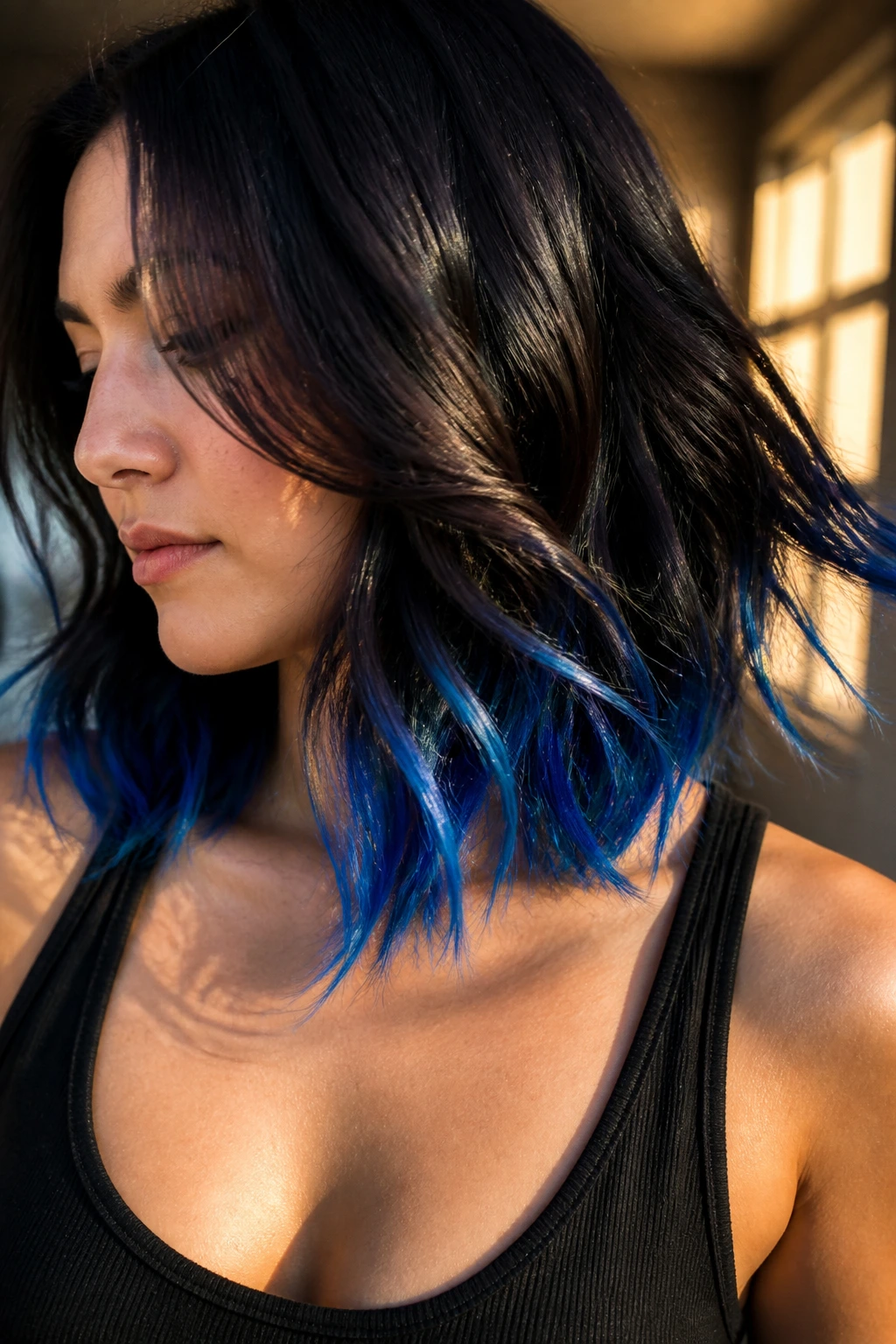
Electric blue tips are for the person who wants the ends to do all the talking. The brown stays dark and rich at the roots, then the color drops into a bright blue finish that shows up fast.
This look works best on layered cuts, especially long bobs and collarbone-length hair, because the ends move enough to show the contrast. A blunt hemline can handle it too, but the result reads tougher and more graphic. If your hair is very dark, the blue tips may need a strong lift first; if you skip that step, the pigment can sink in and turn navy instead of electric.
A little caution: bright blue at the tips fades fastest on the oldest, driest parts of the hair. That does not make the look bad. It just means the maintenance sits mostly at the ends, where you can see it and control it. If you like color that looks fresh even when the roots are grown out, this one gives you room to breathe.
6. Teal-Blue Overlay for Warm Brown Hair
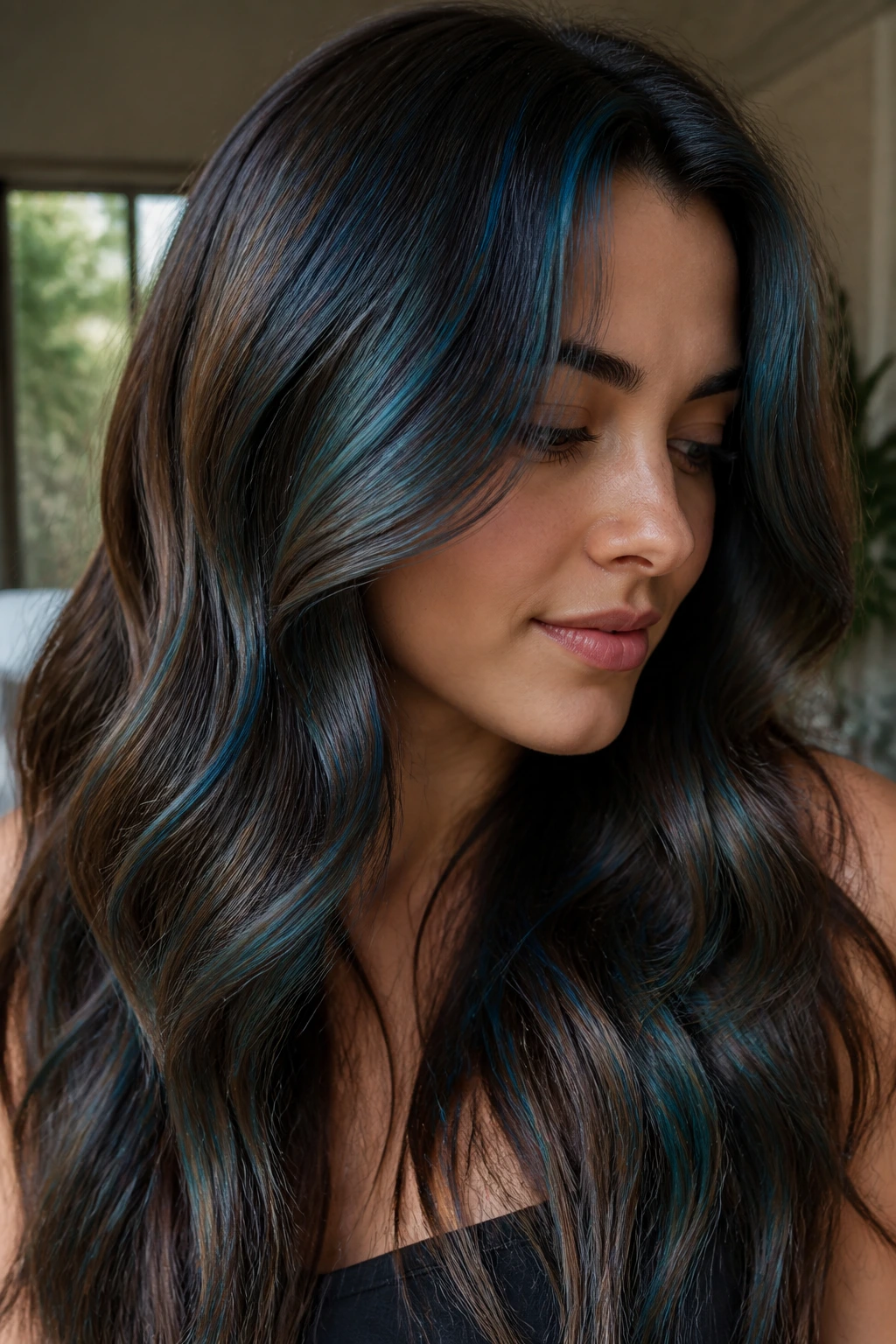
Teal is the smartest blue family for warm brown hair because it can handle a little red, gold, or copper in the base without turning muddy. Blue alone can feel cold against cinnamon undertones. Teal gives the eye something softer to land on.
Unlike a bright cobalt, a teal overlay sits on top of warm brunette color like a thin veil. You still get dimension from the brown underneath, but the finish feels more fluid and less stark. That makes it a strong choice if your hair leans auburn, chestnut, or caramel.
What Makes It Different
- Teal has enough green in it to balance warmth
- It fades more gracefully than neon blue
- The look holds up well on wavy cuts and long layers
- It can be pushed deeper for a smoky finish or lifted brighter for a tropical one
If you want a shade that feels lively without screaming for attention, teal-blue is the one I’d point to first.
7. Steel Blue Ash Balayage
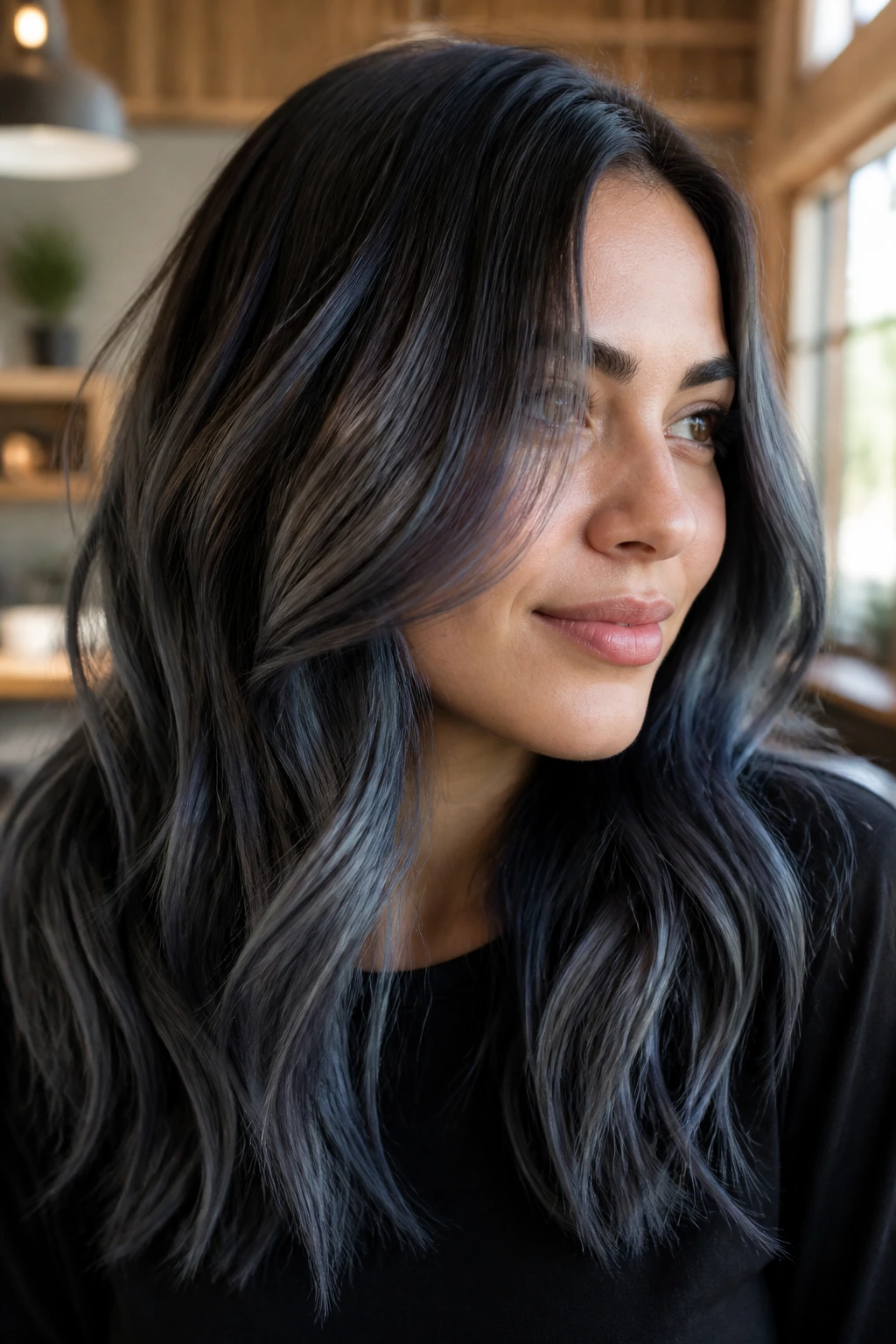
Steel blue is the cooler cousin in the blue balayage family. It has a muted, metallic feel that sits somewhere between slate, silver, and blue-gray, which is why it works so well on ash brown bases.
This look is especially good if your hair already has a cool tone and you do not want to fight warmth every time you refresh the color. Steel blue can soften the look of orange undertones and make a brunette base feel cleaner. It also tends to look more expensive on straight or softly waved hair, where the subtle shift in tone is easier to see.
- Best on light brown through dark ash brown hair
- Looks sharp with blunt cuts and airy bobs
- Needs a toner with a blue-gray cast, not a bright primary blue
- Fades into a soft smoky slate instead of a weird patchy green
If you like your color cool, matte, and a little moody, this is the quietest blue that still reads as blue.
8. Sapphire Face-Framing Pieces
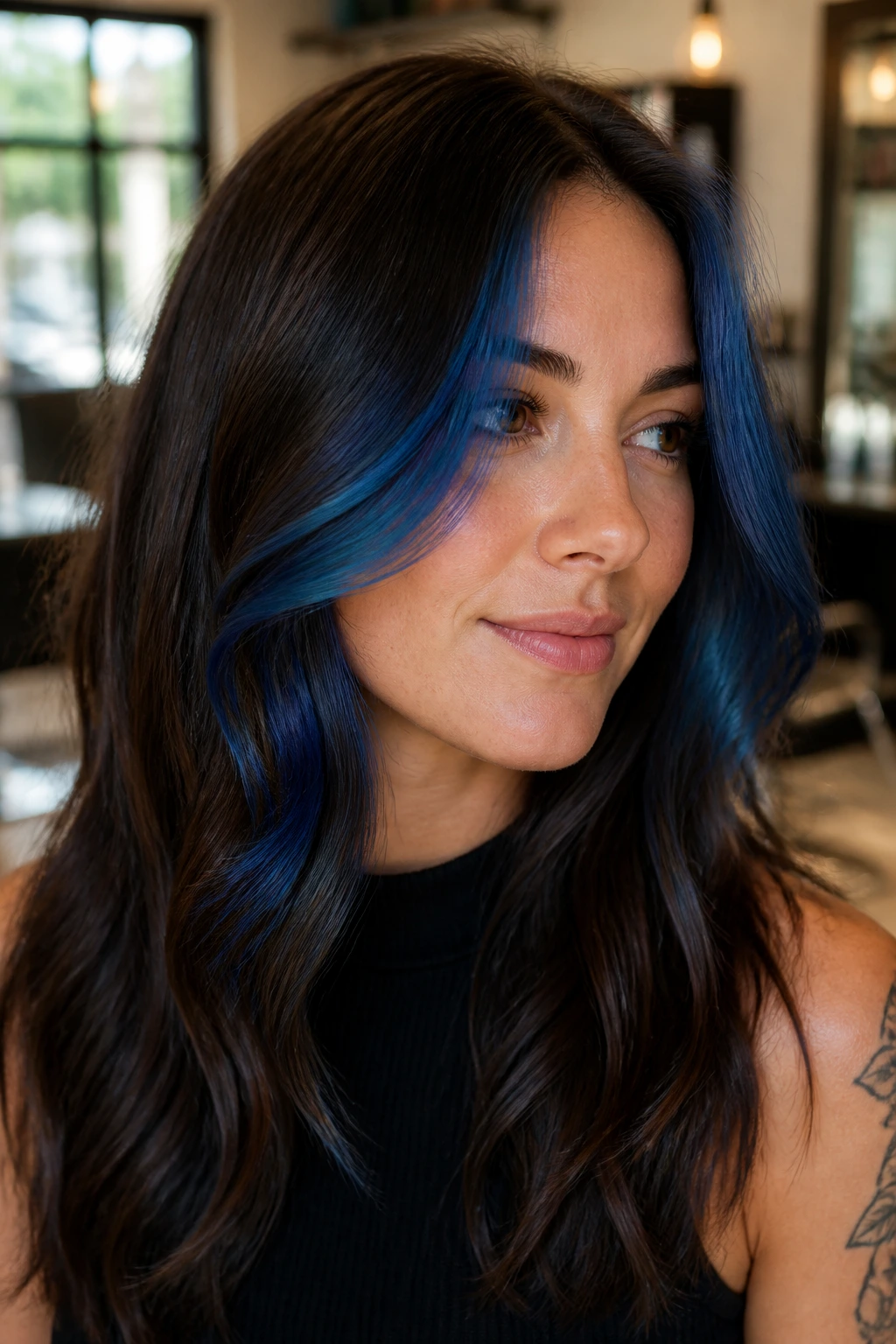
Can sapphire be subtle? Yes, if you keep it around the face and let the rest of the brown hair stay grounded. Sapphire face-framing pieces give you that jewel-tone hit without turning the whole head into a blue project.
The color works because sapphire has a little depth. It is richer than cobalt and cleaner than navy, so it catches light without looking brittle. Around the face, that depth can make the skin look brighter and the eyes more defined, especially if the blue sits just in front of the ear and around the temple.
How to Place It
Ask for broader ribbons at the front and softer, thinner pieces as they move toward the crown. That keeps the emphasis where you want it. If your hair is layered, let the front pieces follow the shape of the cut instead of slicing across it. The result looks more natural, and the blue doesn’t fight the haircut.
This is one of those looks that works whether you wear your hair down, half-up, or clipped back. The front pieces do the heavy lifting.
9. Blueberry Brown Balayage
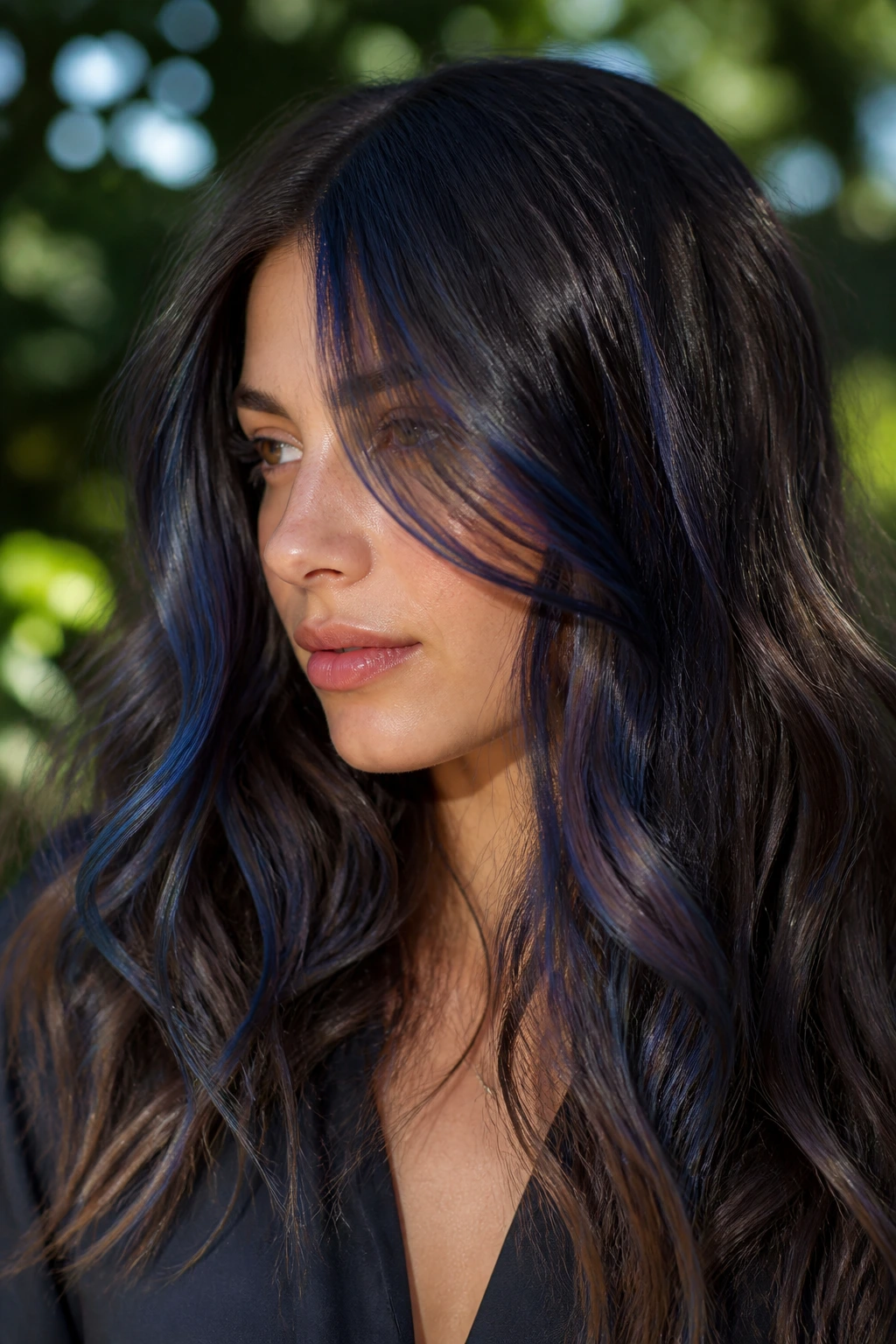
Blueberry blue is a smart middle ground for people who want color but do not want a bright candy shade. It has a violet softness baked into it, which keeps it from reading harsh against brunette hair.
That little bit of violet is doing a lot of work. It makes the blue feel rounder, less flat, and more flattering on warm skin tones than a pure cool blue sometimes does. On chocolate brown hair, blueberry can look almost silky; on medium brown, it shows more clearly and gives the hair a glossy, fruit-stained look.
The best version uses thin painted sections rather than chunky blocks. That preserves the brunette dimension and lets the blue appear in movement instead of all at once. If you want something wearable for work, dinners, and weekends without changing your whole style identity, blueberry is a safe bet with a little personality.
10. Peacock Blue Waves
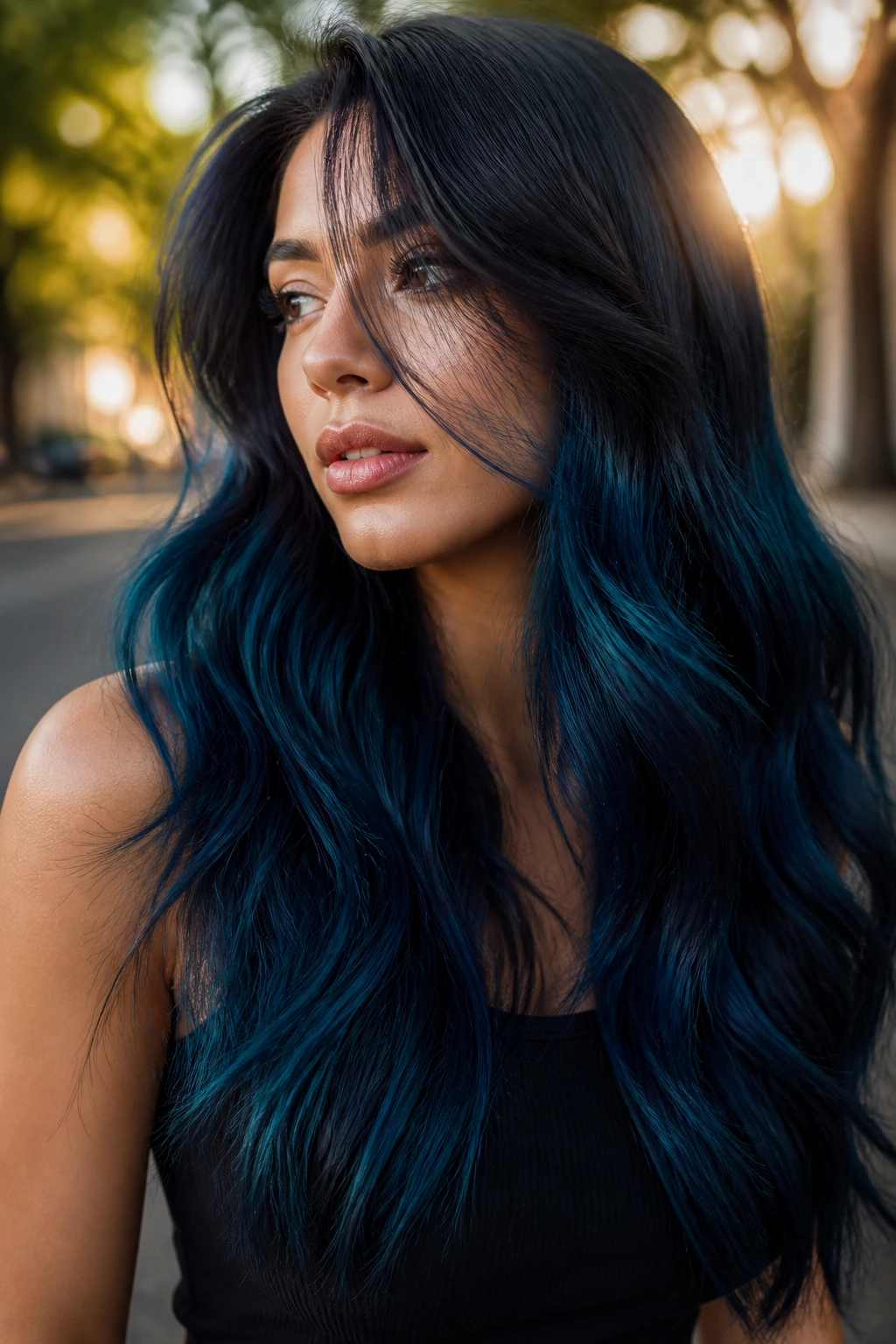
Peacock blue is rich, layered, and a touch dramatic in the best way. It mixes deep blue with a green-blue shift, so the color changes as the hair moves. On brown hair, that movement is what makes it come alive.
Picture loose waves. The top layer looks darker, almost navy. Then the curl opens and the green-blue side flashes through. That shifting surface gives the style a lot of visual texture without needing a lot of different colors on the head.
- Works best on long waves or layered mid-length cuts
- Looks strongest on medium to dark brown bases
- Needs pre-lightening if you want the green-blue shift to stay clear
- Pairs well with a glossy finish rather than a matte one
This is a good choice if you like jewel tones that feel rich rather than playful. It has some edge, but it doesn’t feel young in a way that dates fast.
11. Ink Blue Underlayer
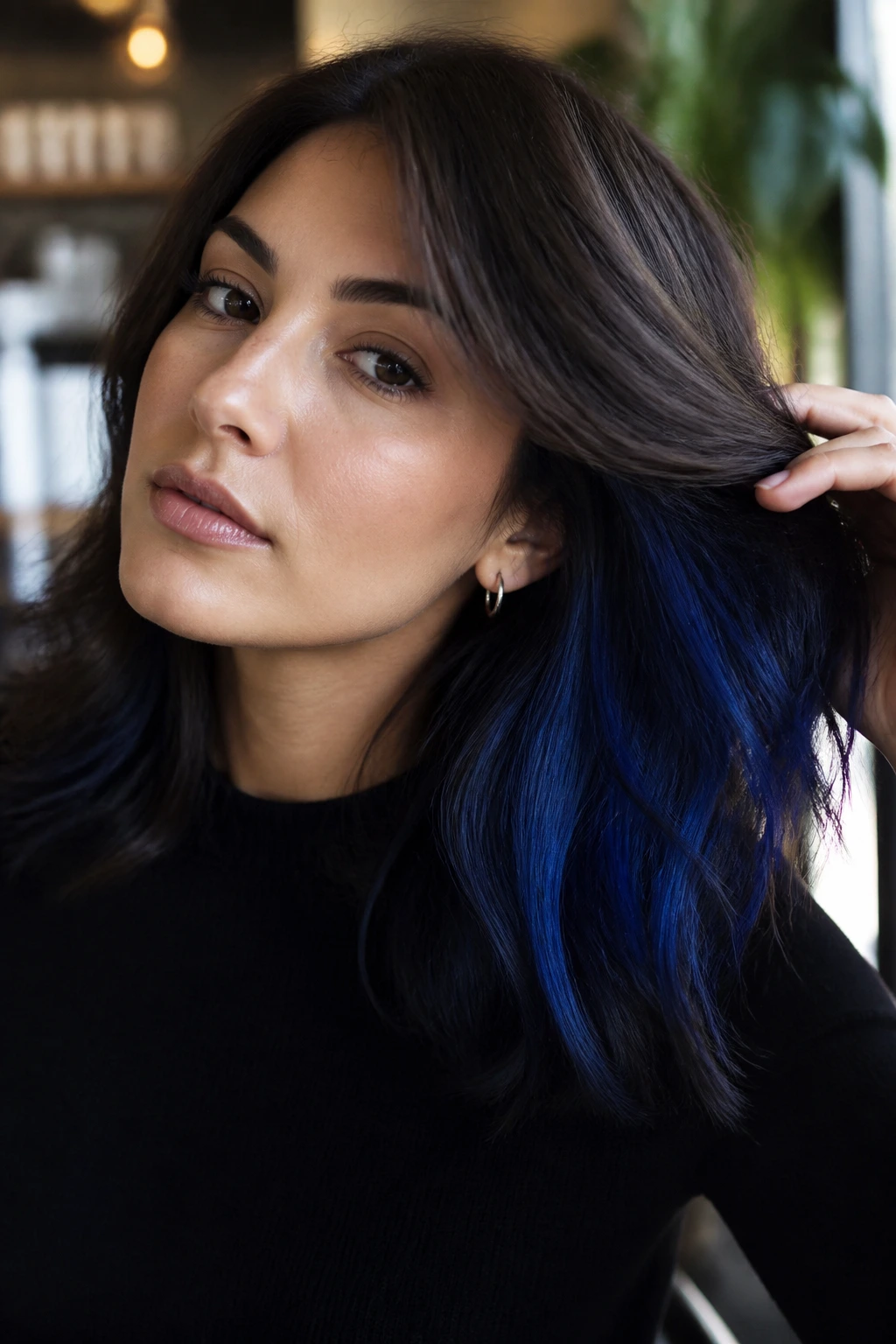
Ink blue underlayer balayage is for people who like a surprise. From the front, the hair can look like a clean brunette with depth. Turn your head, flip the ends, or tuck one side behind your ear, and the blue shows itself.
That hidden placement is the whole point. It keeps the top layer brown, which means the style still works in settings where you do not want the color in everyone’s face. Underlayers also protect the blue a little, since they do not get as much sun and heat as the surface pieces.
This look is strongest on hair with movement — long layers, shag cuts, and loose curls all help. If your hair is very dense, the color can hide too well unless the stylist opens the underlayer carefully. Still, that’s kind of the charm. It feels private until it doesn’t.
12. Royal Blue Foilyage
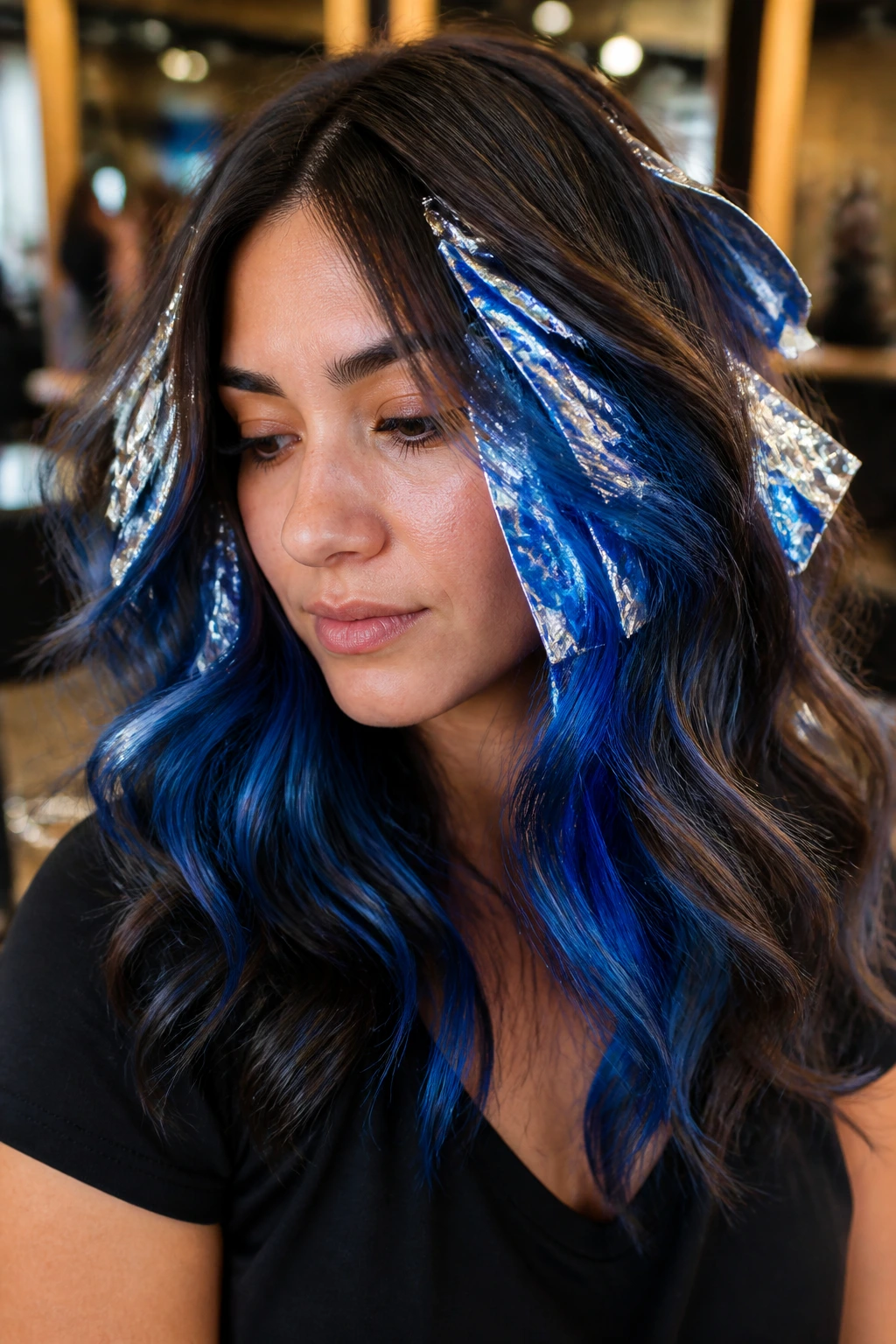
Royal blue foilyage gives you a brighter, cleaner blue than hand-painted balayage alone usually delivers. Foils hold heat and push lift, so the blue ends up more vivid and less smoky.
Why Foils Change the Finish
Balayage by itself paints a softer transition. Foilyage adds a little extra lift where you want the color to pop, especially near the mid-lengths and face frame. That matters if your brown base is medium or dark and you want royal blue to stay saturated instead of looking muted.
I like this look on layered hair because the brightness can be distributed without looking chunked out. The base remains brunette, but the lifted pieces carry enough power to read immediately. If you want something bolder than denim and more polished than electric blue tips, royal blue foilyage sits right in the middle.
A good colorist will keep the lift controlled. Too much, and the blue loses its depth. Too little, and it turns navy. The balance is fussy, but worth it.
13. Blue-Black Gloss Melt
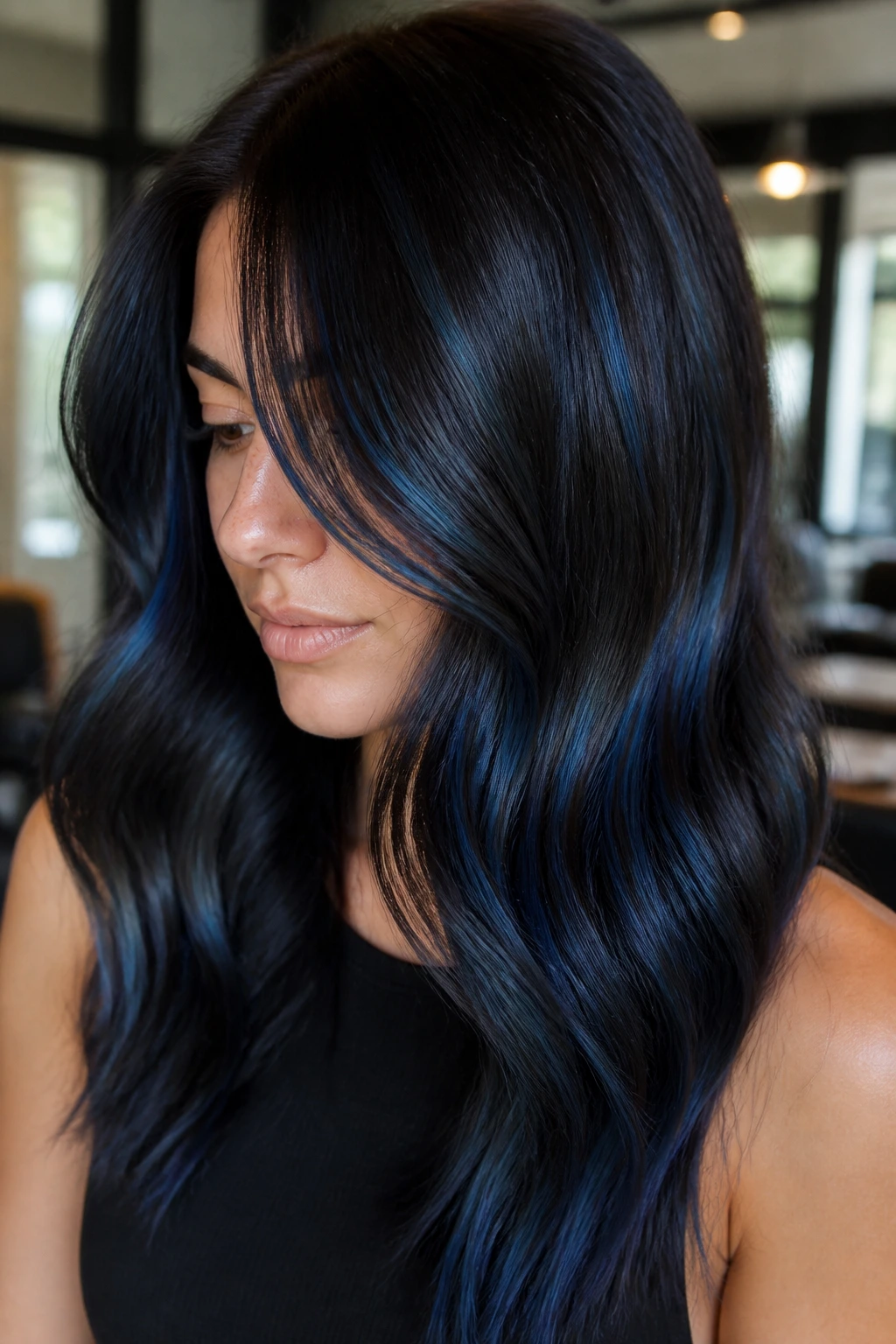
Can you wear blue without lightening much? Absolutely. A blue-black gloss melt is one of the easiest ways to dip into blue balayage on brown hair, especially if your base is deep espresso or nearly black-brown.
The effect comes from layering a blue-toned gloss over darker pieces so the blue shows as a sheen rather than a bright stripe. In daylight, it reads as blue-black. Indoors, it can look nearly black until the light hits it at an angle. That shift is what makes it feel expensive rather than flat.
- Best for dark brown to black-brown bases
- Requires less lift than brighter blue shades
- Fades into a soft cool brunette rather than a patchy pastel
- Works especially well on straight hair and glossy blowouts
If you want blue with the lowest maintenance profile on this list, start here. It’s moody, easy to wear, and less fragile than lighter blues.
14. Periwinkle Mist Ends
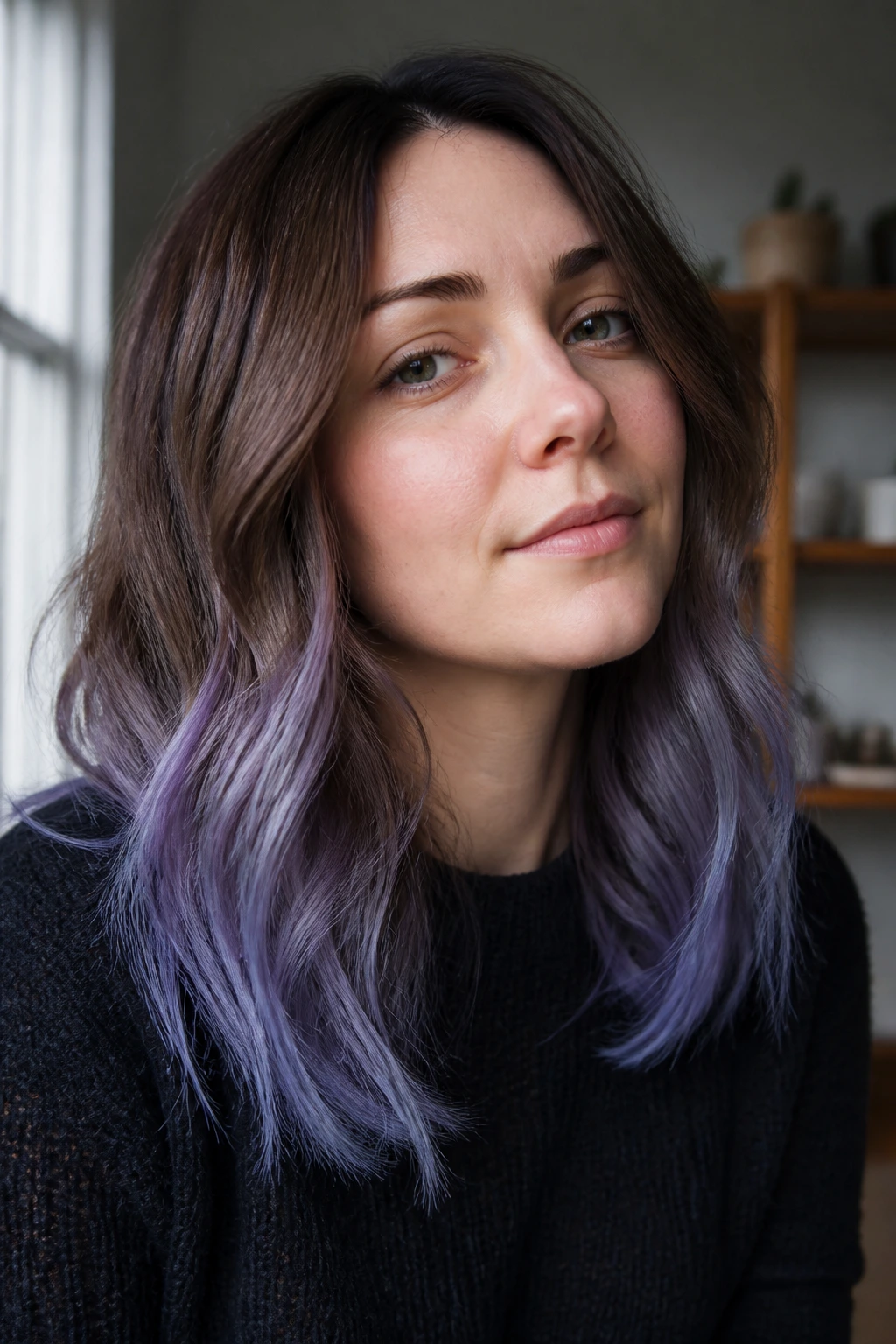
Periwinkle on brown hair is delicate, airy, and a little strange in a good way. The shade sits between blue and lavender, which makes the ends look misted rather than painted.
What Makes It Tricky
Periwinkle needs a lighter lift than most of the deeper blue looks. If the pre-lightened pieces are too yellow, the shade can go muddy or lean green. That means the base work matters a lot more here than with navy or slate. A clean level 9 blonde underneath gives the periwinkle room to stay pale and cool.
How to Wear It
Loose, soft curls keep the ends looking feathery. Straight hair can make the color look more obvious and a little harsher. If you want the shade to fade well, ask for a pastel blue-violet gloss rather than an intense direct dye; it gives you a softer exit as the color washes out.
This is a look for someone who likes lightness in the hair and does not mind a bit of upkeep. It is not the lowest-maintenance choice, but it is one of the prettiest when the tone is right.
15. Ocean-Glass Layered Balayage
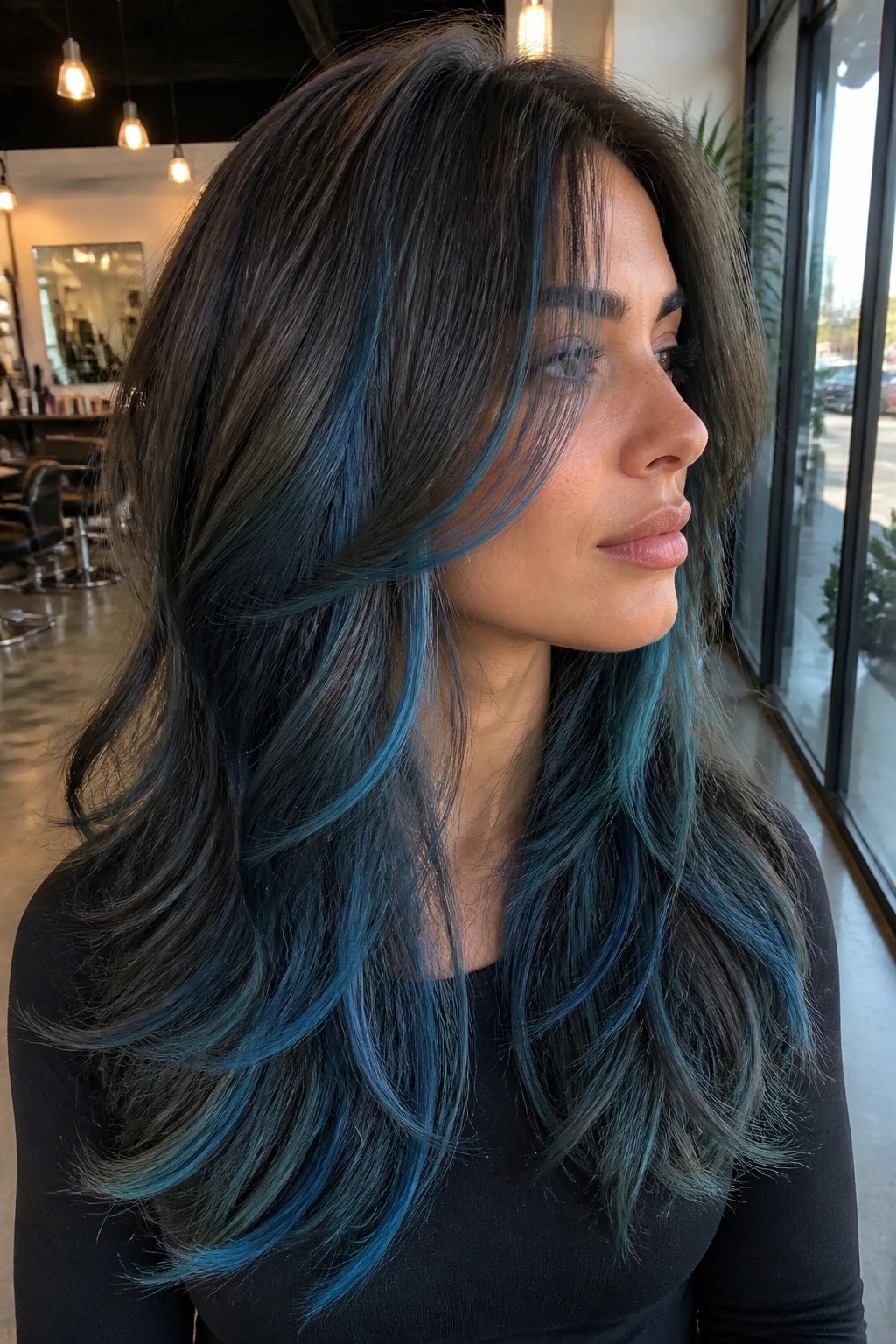
Ocean-glass blue balayage looks almost translucent when it is done well. The color sits in thin layers, so the blue, the brown, and a touch of cool shine all live on top of each other.
This one shines on longer layered cuts because the layers let different shades peek through at different lengths. The upper pieces can stay darker, while the ends carry more blue and a little bit of ocean-green. That creates movement even when the hair is still, which is half the appeal.
A subtle wave or bend is enough. You do not need tight curls. The goal is to let light travel across the layers and pick up the shifts in tone. If your brunette base has some natural warmth, the blue can look even richer against it, but a glossy toner is what ties the whole thing together.
16. Azure Peekaboo Pieces
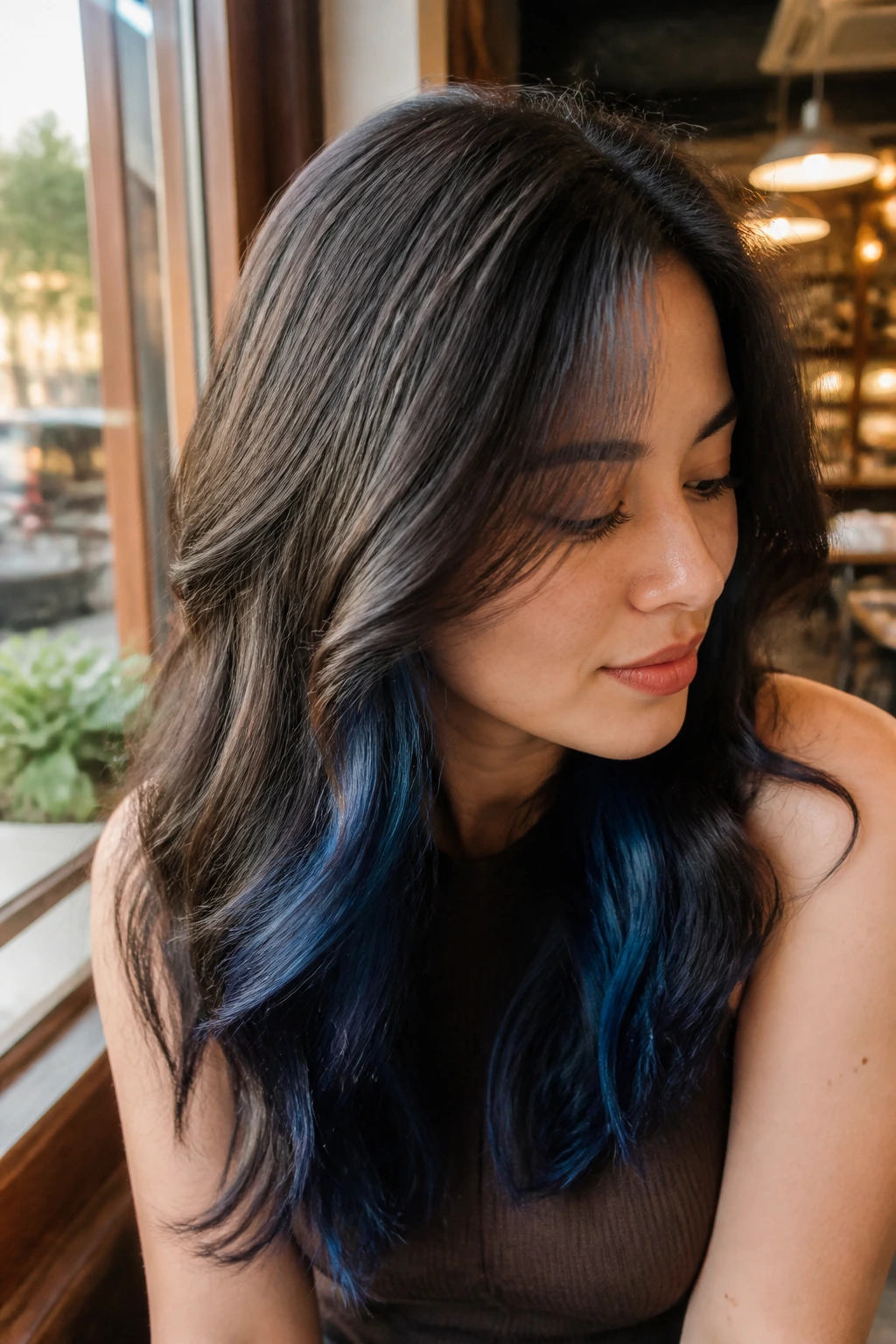
Azure peekaboo pieces are the cheeky version of blue balayage. The color hides under the top layer, then flashes out when you move, braid, or pin your hair back.
That hidden placement makes azure a strong pick for people who want fun color without constant visibility. It also works well if your workplace, school, or family situation is more conservative. The blue is there. It just doesn’t shout unless you choose to show it.
- Place the color under the crown and around the lower sides
- Keep the top layer a shade or two deeper for contrast
- Ask for a saturated azure tone, not a pastel wash
- Use a loose braid to make the hidden color show in ribbons
This is one of the easiest ways to test the waters with blue hair color. You get the thrill of it without committing every single strand to the look.
17. Slate Blue Smoke
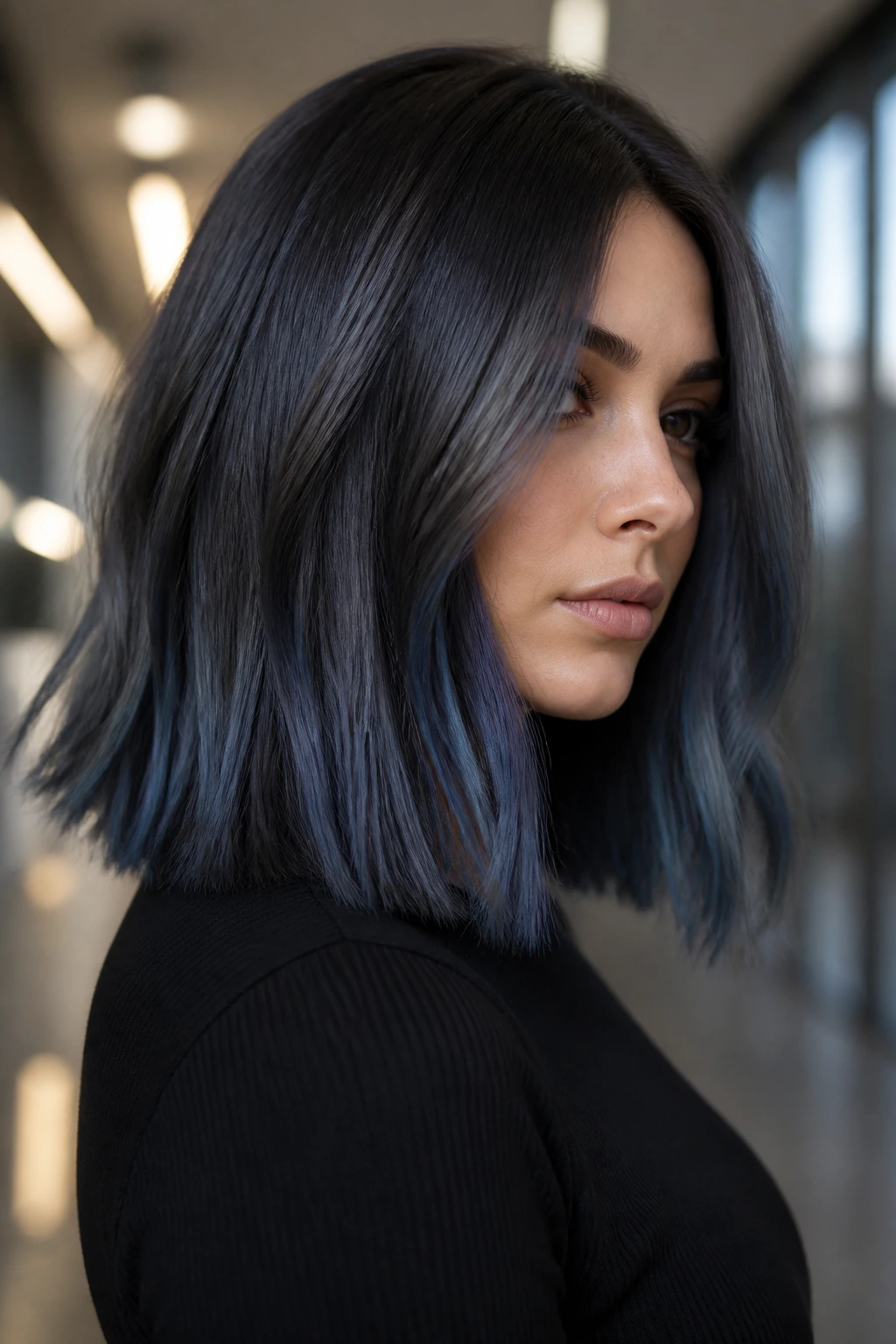
Slate blue smoke is cooler and quieter than royal blue. It leans gray, almost dusty, which gives brunette hair a smoky finish that looks especially good on blunt cuts and sharp layers.
Unlike brighter blues, slate does not need much contrast to land well. It can sit close to a brown base and still read as intentional because the tone itself is distinctive. That makes it useful on shorter hair, where big color shifts can feel too loud. A lob, a bob, or a collarbone cut can carry slate beautifully.
The finish is strongest when the hair is glossy but not overly shiny. Too much shine and the gray tone can disappear. Too little and the color looks flat. A medium gloss with a cool toner usually lands in the right place. If you want blue that feels grown-up and not at all cartoonish, slate has a good case.
18. Turquoise Dip-Ends
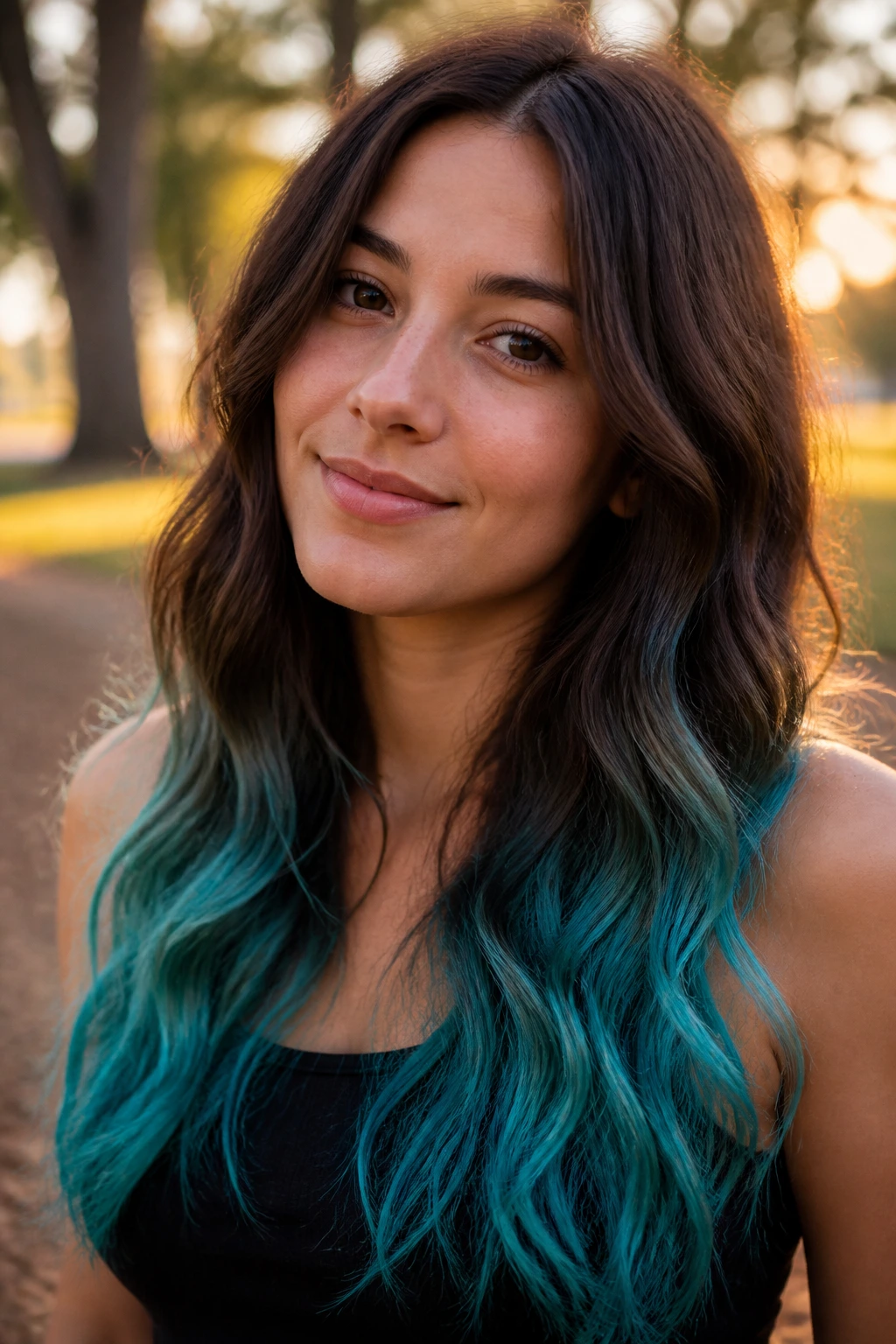
Turquoise dip-ends are a little louder and a little more playful than teal. The effect works best when the brown hair stays rich above and the turquoise is reserved for the final few inches.
I like this look on longer hair because the dip shape has room to breathe. On a lob, it can feel sharper and more graphic. On long waves, it looks looser and more relaxed. Either way, the transition from brown to turquoise should be soft enough that the ends feel dipped rather than blocked.
- Keep the transition zone feathered, not blunt
- Choose a slightly deeper turquoise if your base hair is warm
- Refresh the ends often, since they fade first
- Add a few face-framing pieces only if you want more contrast
This is one of those colors that looks best when the haircut has movement. Still hair can make it feel severe. A bit of bend changes everything.
19. Indigo Curly Balayage
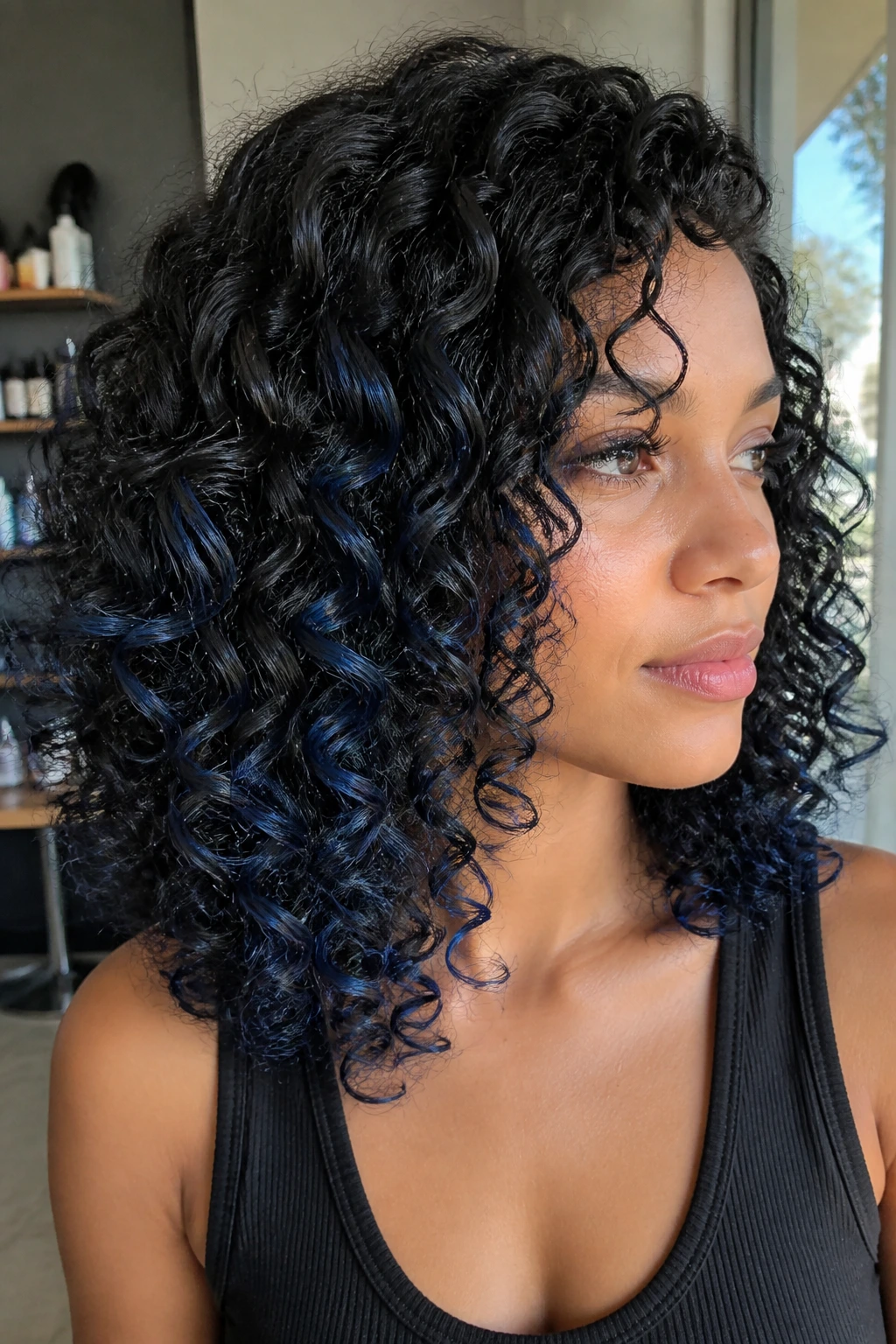
Does curly hair need a different blue balayage plan? Yes, and indigo is one of the smartest shades for it. Curly hair breaks up color naturally, so indigo can look deeper and more dimensional than it would on a straight texture.
Paint the Curl, Not the Row
That is the rule here. The color should follow the curl pattern and land where the hair naturally opens, not just sit in straight horizontal lines. If the stylist paints through the whole section without respecting the curl, the blue can disappear into the bulk of the hair. Placed well, indigo blooms through each coil and shows up when the curls spring.
This is a strong choice for dark brown curls because indigo has enough depth to show without needing too much lift. It also fades in a forgiving way. The color softens into a smoky navy before it disappears, which is a lot kinder than some brighter blues. If your curls are dry, ask for a moisturizing gloss on the ends. Color and dryness are not friends.
20. Blue Violet Brunette Sweep
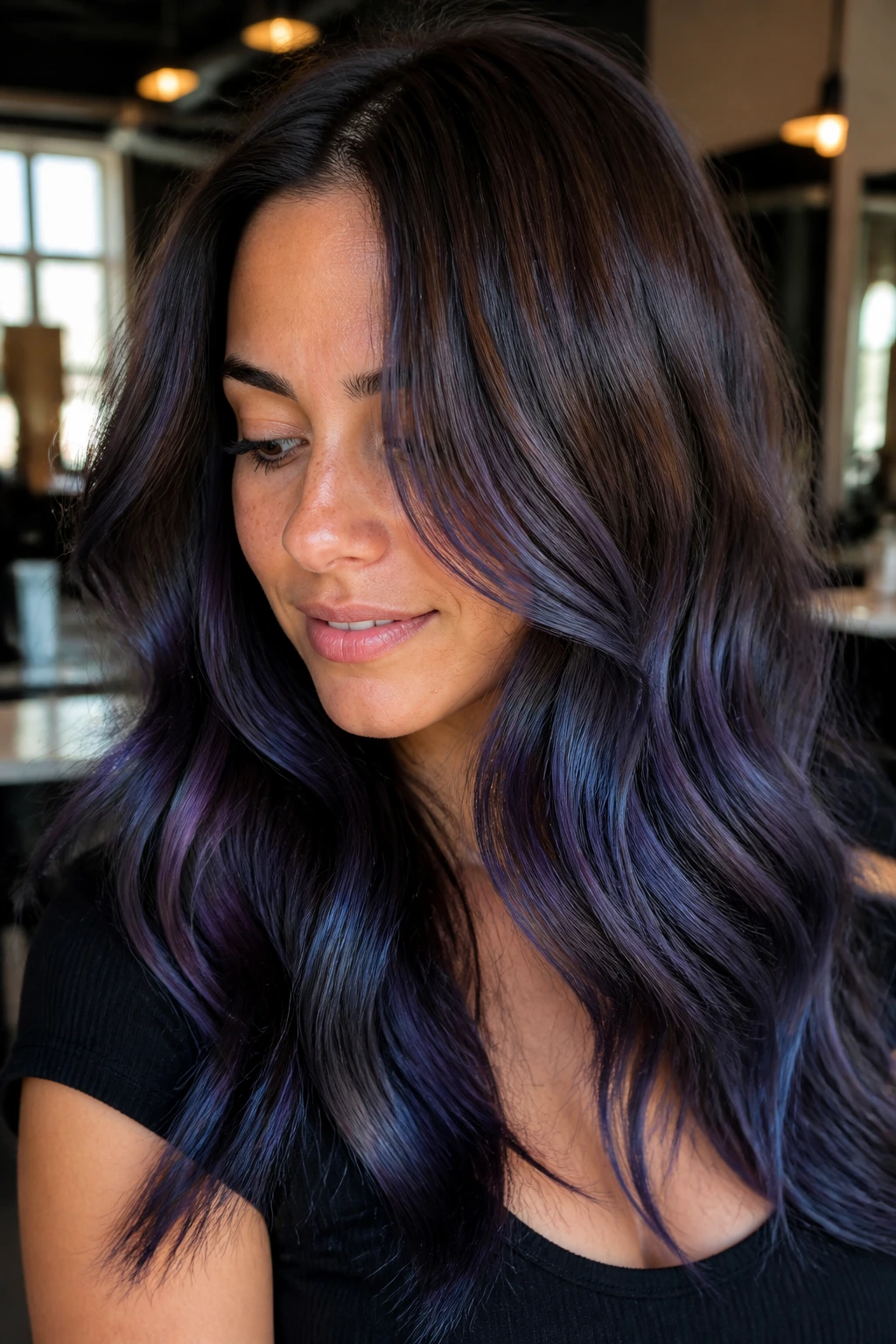
Blue-violet balayage is for the person who wants blue, but not a hard blue. The violet pulls the color a little warmer, which makes it easier to wear against medium brown and chestnut bases.
The result lands somewhere between berry and midnight. It is softer than cobalt, richer than denim, and less expected than plain navy. That middle ground matters because it keeps the hair from looking overly cool on skin with golden or peach undertones.
This look is especially nice if your hair already has some auburn in it. The blue-violet blend can tone down the red without erasing the brunette depth underneath. A soft wave shows the color best, and a shine serum on the ends helps the violet tone stay glossy instead of dusty. It’s understated, but not bland.
21. Storm Cloud Blue Melt
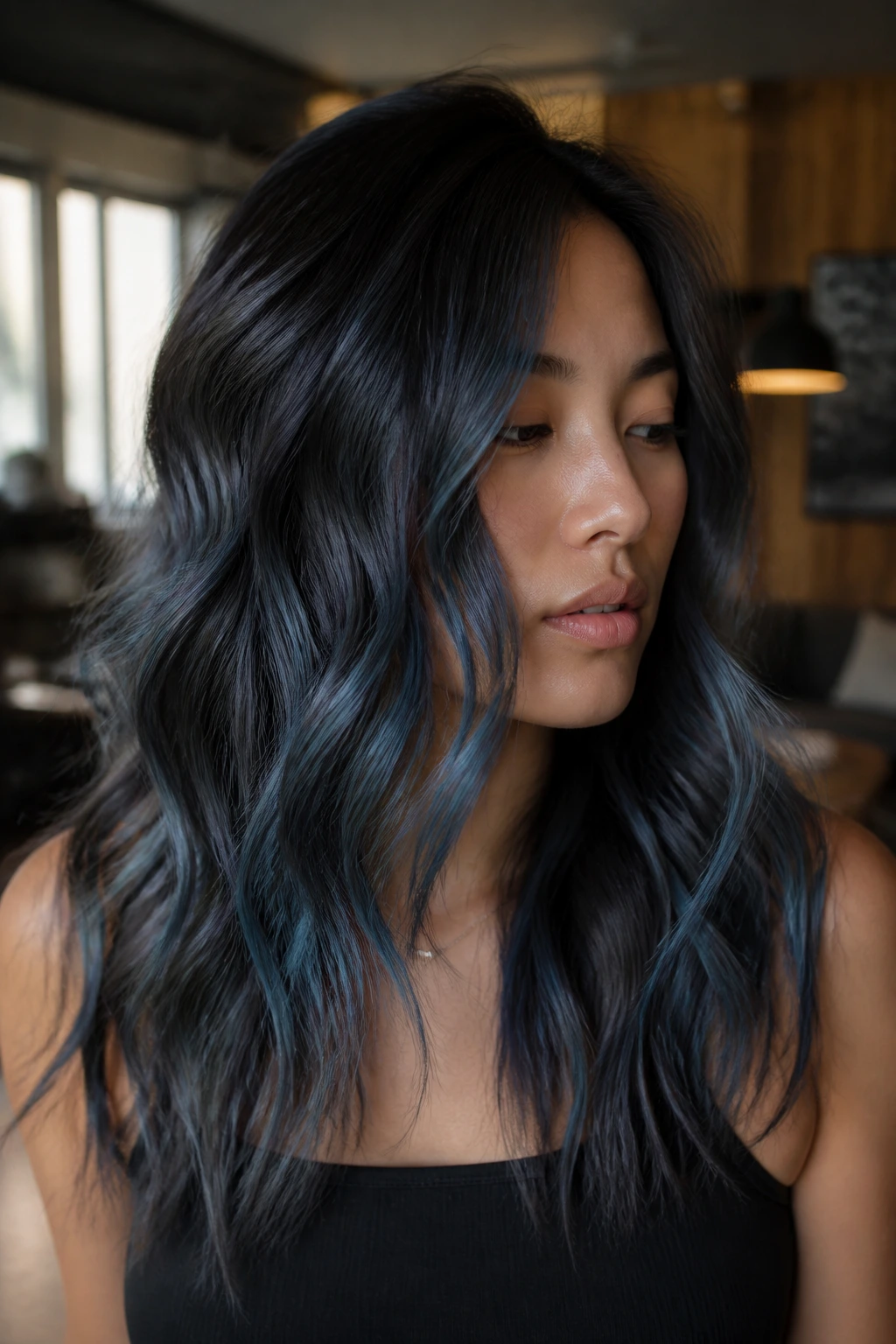
Storm cloud blue is the dramatic cousin in the lineup. It uses deep blue-gray tones to build a cloudy, moody melt that feels darker and more layered than standard navy.
This is one of the strongest choices for dark brown hair because it doesn’t need a massive lift to show up. The blue sits in the shadowy parts of the hair and emerges when light hits the bend of the wave. That gives the style a lot of depth without making the color look pasted on.
I’d reach for this when someone wants a darker look that still has personality. It can be sharp on sleek styles, but it really comes alive in loose, brushed-out waves. If your brown hair is already quite deep, storm cloud blue gives you a shift in tone without a huge contrast jump.
22. Seafoam and Blue Gradient
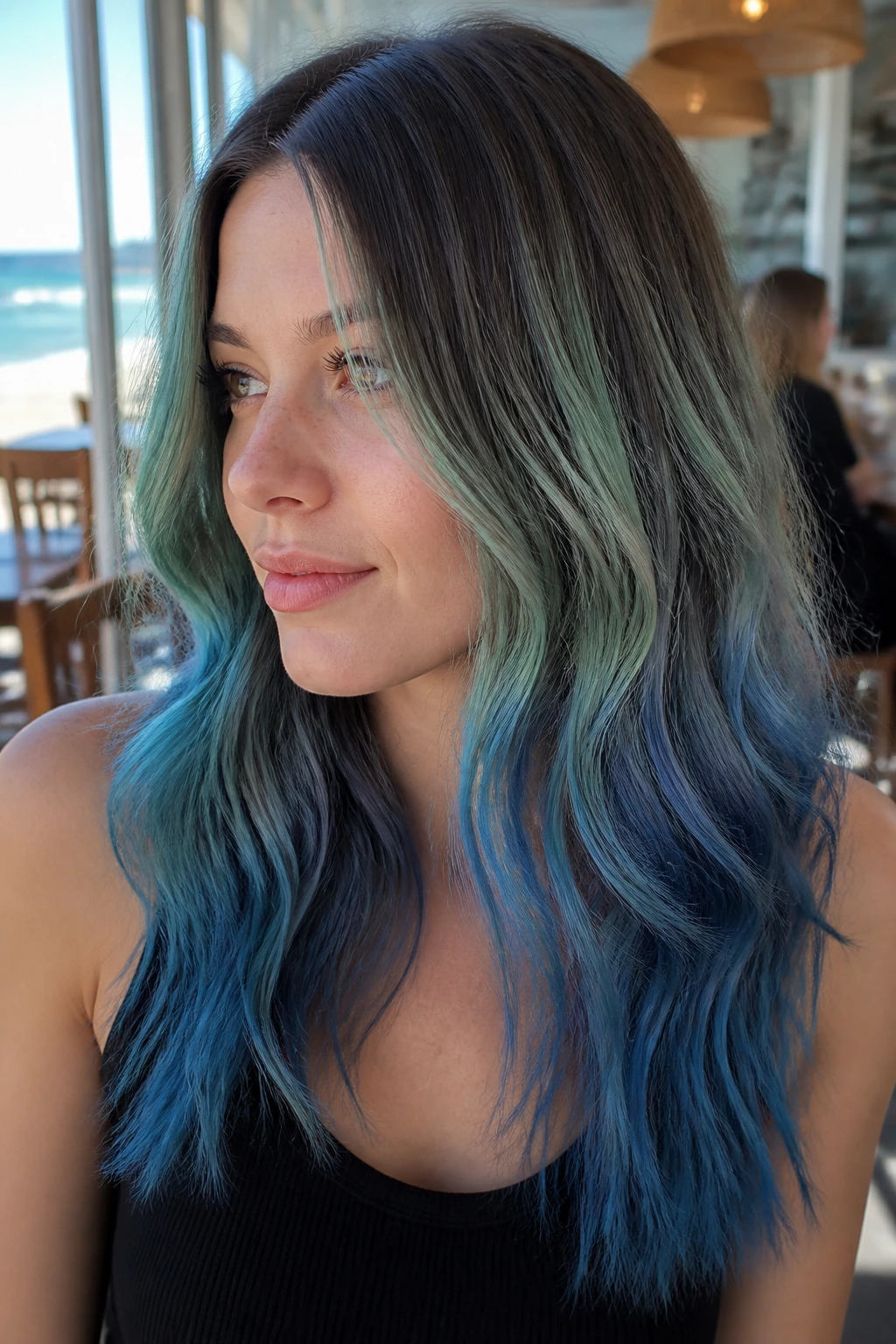
Seafoam and blue together can be gorgeous on brown hair, but only when the gradient is handled carefully. Too much green and the result leans murky. Too much blue and the seafoam disappears. The sweet spot is a soft transition that feels watery, not muddy.
What to Watch For
- Ask for blue to lead near the roots of the colored sections
- Let seafoam appear more heavily at the lighter ends
- Keep the brown base visible between painted pieces
- Use a gloss that stays cool, not yellow
This look works best on lighter brunettes or on dark hair that has already been lifted. It needs enough brightness to keep the green-blue difference visible. On waves, the color shifts in a way that feels alive; on straight hair, it looks more graphic. If you want a mermaid-like finish without full pastel commitment, this is a strong lane.
23. Electric Cobalt on Chocolate Brown
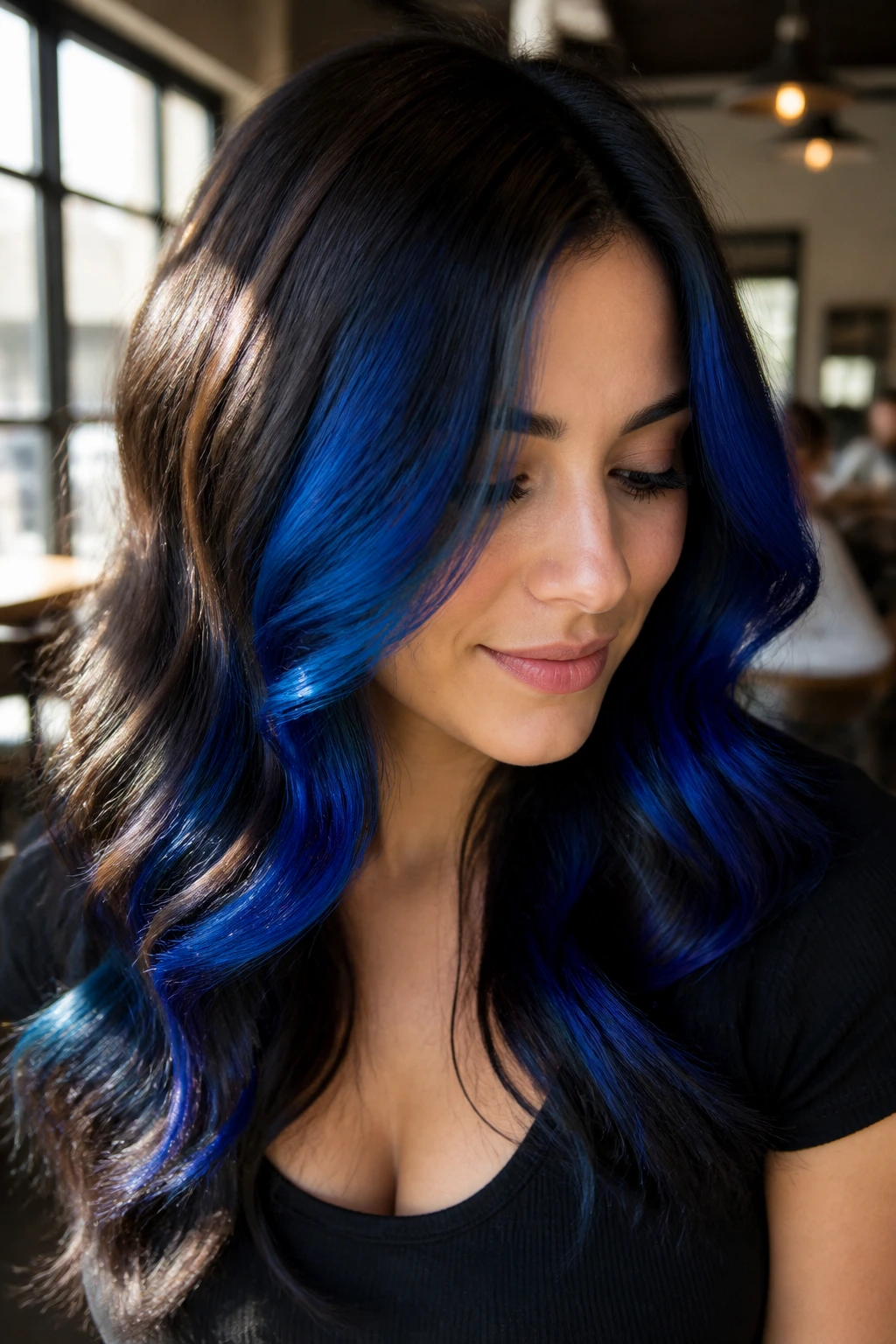
Electric cobalt on chocolate brown hair is the version you choose when you want contrast, no apology attached. The rich brown base makes the cobalt look even brighter, and the whole thing turns into a clean, high-impact color statement.
A center part gives this look a strong line, but side parts can make it feel looser and more lived-in. Thick hair handles the color especially well because the density gives the cobalt more surface to sit on. On finer hair, the look can still work, but the painted sections need to be placed carefully so the color does not swallow the texture.
This is not a subtle choice. That is the point. It looks best when the haircut is simple enough to let the color do the heavy lifting — think straight ends, long layers, or a blunt lob. If you like the idea of blue balayage that reads from across the room, this is the one.
24. Midnight Sapphire Curtain Balayage
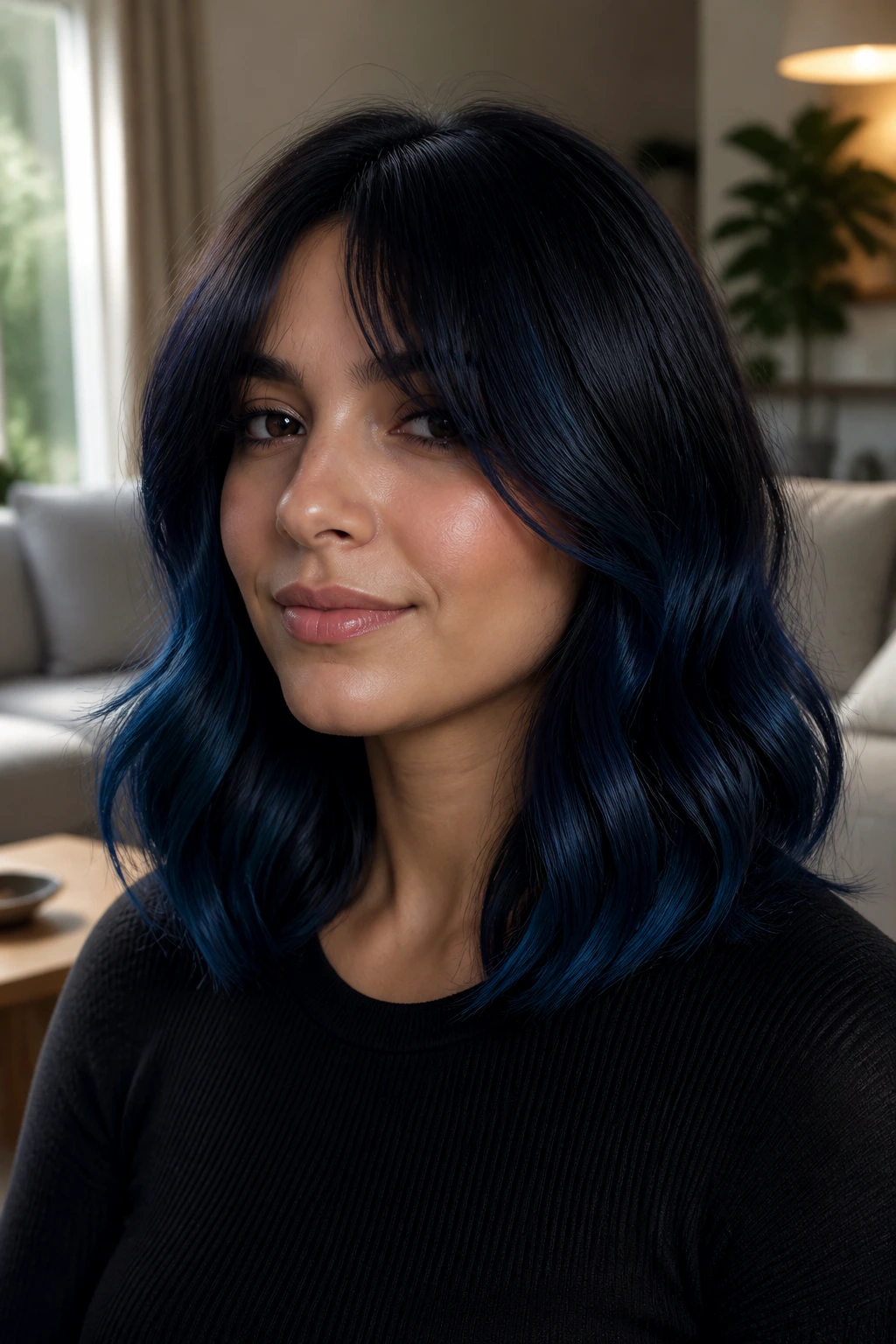
Curtain bangs change everything. They give midnight sapphire balayage a frame, and that frame keeps the blue from feeling scattered through the rest of the hair.
Why the Curtain Shape Helps
The blue can start a little higher around the bang area and then soften as it moves down the sides. That creates a face-brightening effect without a hard streak. On brown hair, the sapphire pieces around the face can feel almost like jewelry, especially when the bangs split and fall away from the center.
I like this with shoulder-length hair and longer layered cuts, because the curtain shape and the balayage can work together instead of competing. The blue should stay deeper near the roots and a touch brighter through the ends. If the blue is too pale here, the bangs can look disconnected from the rest of the style. Keep the tone rich, and the whole look feels polished in a very natural way.
25. Moonlit Blue Balayage for Espresso Brown Hair
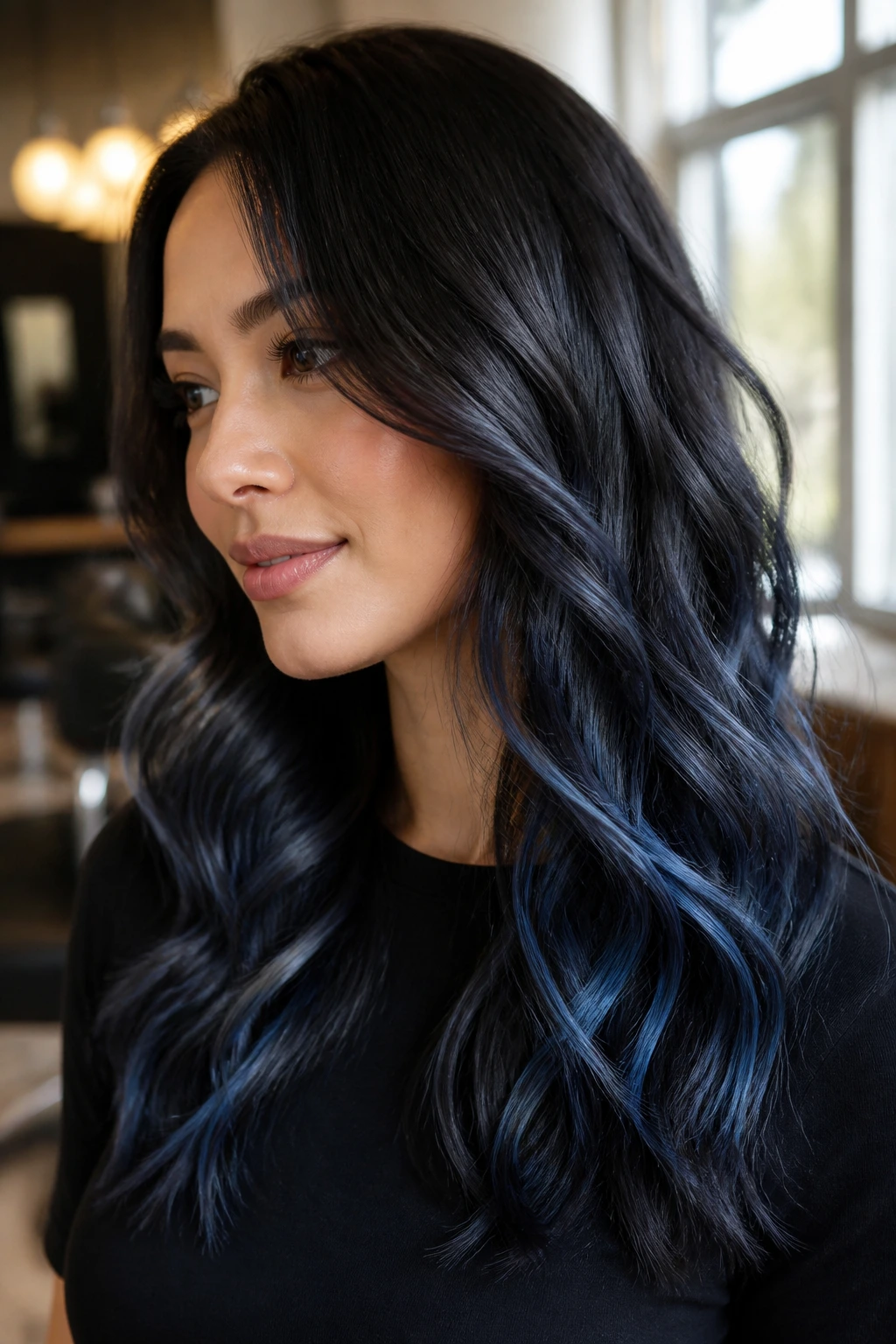
Moonlit blue is the most restrained version of blue balayage for brown hair, and that restraint is the point. The shade stays cool, smoky, and glossy, almost like blue seen through a thin veil of night.
On espresso brown hair, this kind of balayage does not need to be bright to matter. A few carefully placed ribbons near the mid-lengths and ends can shift the whole mood of the hair. The result feels softer than cobalt and less hidden than blue-black, which makes it a smart finish for people who want color that reads as deliberate without becoming loud.
If I had to pick one route for someone nervous about blue, it would be this. It gives you the movement, the depth, and the cool edge without asking your hair to do too much at once. And if you like it, you can always push the next refresh a little brighter.
