



A round face doesn’t need to be hidden. It needs shape, movement, and color that knows where to stop.
That’s why chocolate brown balayage works so well when it’s placed with a little discipline. The shade itself is flattering because it brings shine and depth without going flat or harsh, and the hand-painted placement can stretch the face instead of boxing it in. The wrong highlights can make cheeks look wider. The right ones pull the eye down, soften the jaw, and make the whole cut feel longer.
Placement matters more than people think. Bright pieces that sit too high across the cheeks can emphasize width, while ribbons that begin lower — around the cheekbone drop, the mouth line, or even the chin on longer cuts — do a much better job of contouring. That’s the trick hiding inside these looks: not more blond, not more contrast, but smarter balance.
Some of these styles lean warm and glossy. Others are cooler, smokier, or low-contrast enough to pass as “natural brunette with depth” from across a room. All of them are built with round faces in mind, which means softer width at the sides, a little lift at the crown, and color that doesn’t compete with the cut.
1. Soft Espresso Ribbons at the Cheekbone
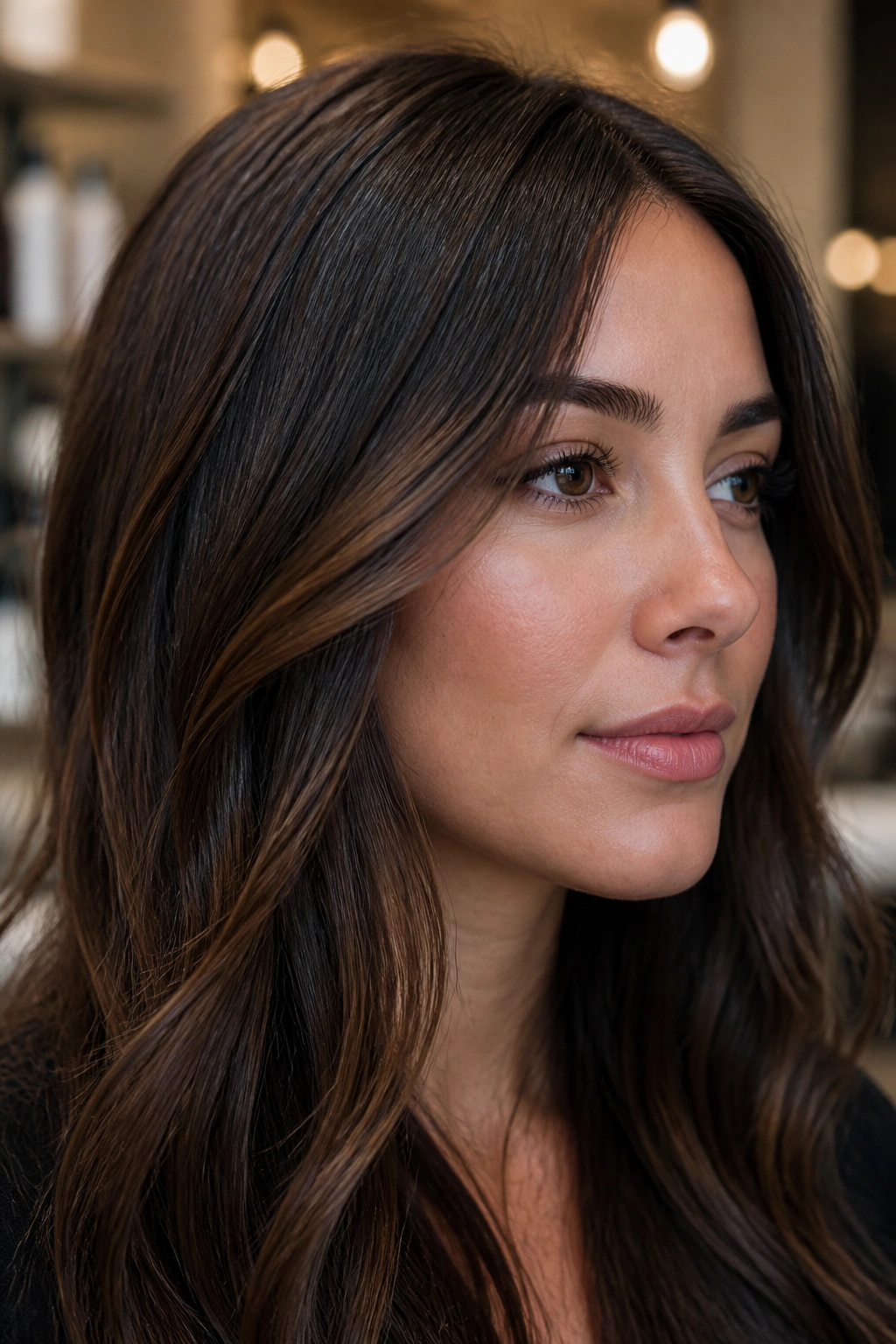
Espresso ribbons are my favorite move when someone wants dimension without making the face look fuller. The base stays deep chocolate, then thin, hand-painted pieces skim the cheekbone and taper into the mid-lengths. That small shift in placement does a lot of work. It keeps the sides from going visually heavy.
Why it flatters a round face
The cheekbone is the widest part on many round faces, so the bright pieces need to sit with a little restraint. Thin ribbons beat chunky stripes here. If the light starts below the widest point and softens toward the ends, the eye reads length instead of width.
What to ask for
- A level 4 or 5 chocolate brown base with narrow espresso balayage pieces.
- Brightness that begins around the lower cheekbone, not at the temple.
- A soft gloss finish so the brown stays shiny, not flat.
Best paired with: long layers, a side part, or collarbone-length cuts. If your hair is fine, keep the ribbons narrow. Thick, obvious highlights will fight the shape instead of helping it.
2. Caramel Veil Over a Shadow Root
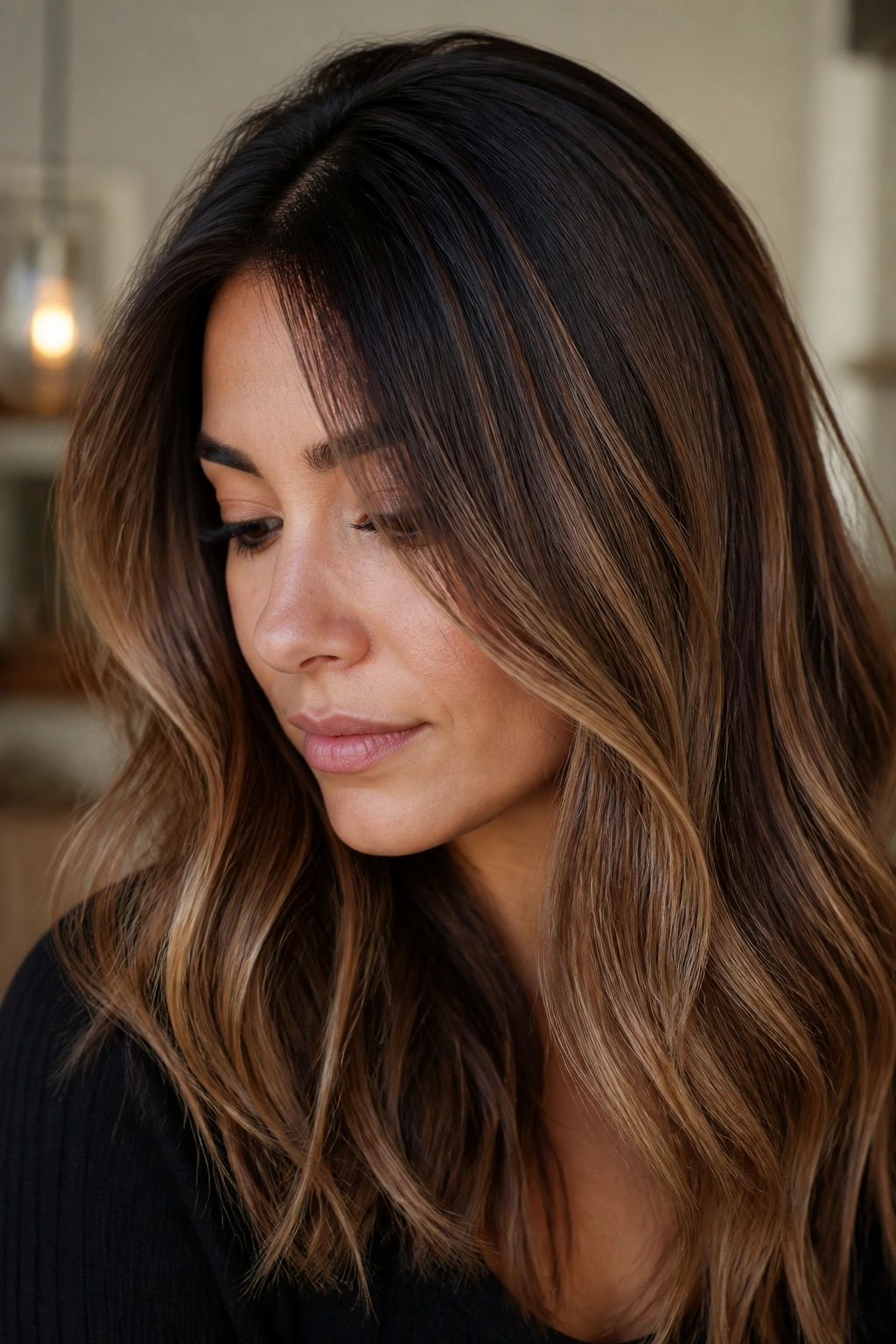
This one is warmer, softer, and easier to wear than people expect. The roots stay shadowed, almost velvety, while caramel pieces drift through the mids and ends like a veil rather than a stripe. It’s a nice choice when you want warmth but do not want the face to look wider.
A shadow root gives the top of the head some depth, and that depth matters on a round face because it adds vertical contrast where the eye starts. From there, the caramel can move lower through the hair without building too much bulk around the cheeks. The result feels airy instead of loud.
I like this look on hair that reaches past the shoulders. It gives the lighter pieces room to fall below the jaw, which keeps the color from bunching up at the sides. If the hair is shorter, the placement needs to be tighter and a little more vertical. Otherwise the whole effect spreads outward.
This is also one of the easier looks to grow out. The root stays dark, the caramel softens over time, and the line between the two isn’t harsh. That makes it one of the more forgiving chocolate brown balayage options for round faces.
3. Chestnut Melt With Long, Loose Layers
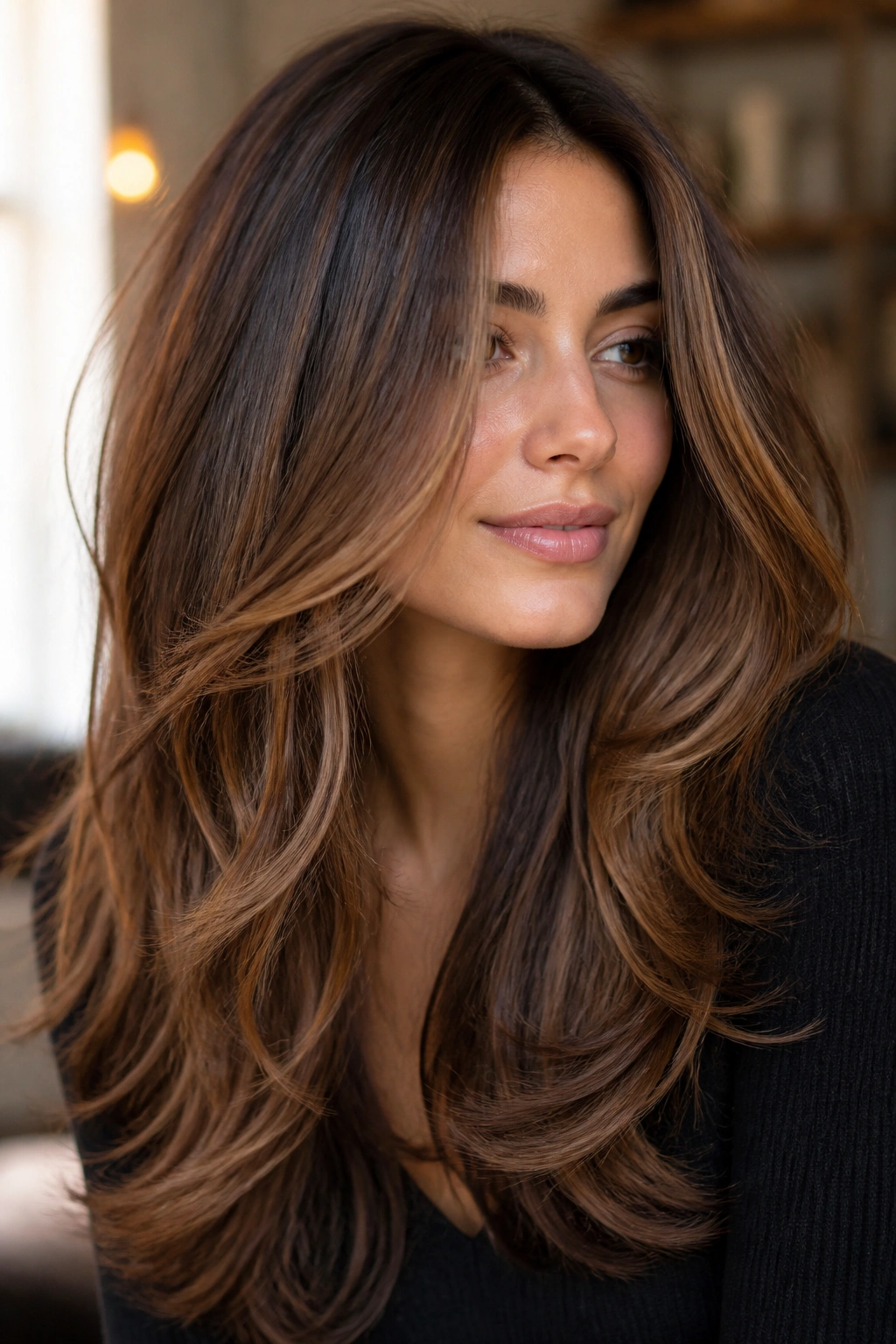
Long layers change everything here. Without them, even a lovely balayage can sit in a block and make the lower half of the face feel heavier. With them, the color moves. The hair bends, swings, and leaves small gaps of shadow that keep the cut from ballooning out.
Chestnut is the sweet spot for a lot of people who want warmth without going copper. It has enough red-brown glow to feel alive, but it still lives in brunette territory. Painted through the lower half of long layers, it gives a round face a longer visual line from temple to collarbone.
Best cut pairing
- Long layers that begin below the chin
- Soft face-framing pieces that curve inward
- Ends that are lightly textured, not blunt
The smartest version of this look keeps brightness off the widest part of the cheeks. Let the color begin lower. Let the layers do some of the shaping. And if your hair is naturally thick, ask for a little internal texture so the ends don’t sit like a shelf.
One more thing: this shade looks especially good when the finish is glossy, not matte. Chestnut without shine can look dull fast.
4. Toffee Babylights and a Center Part
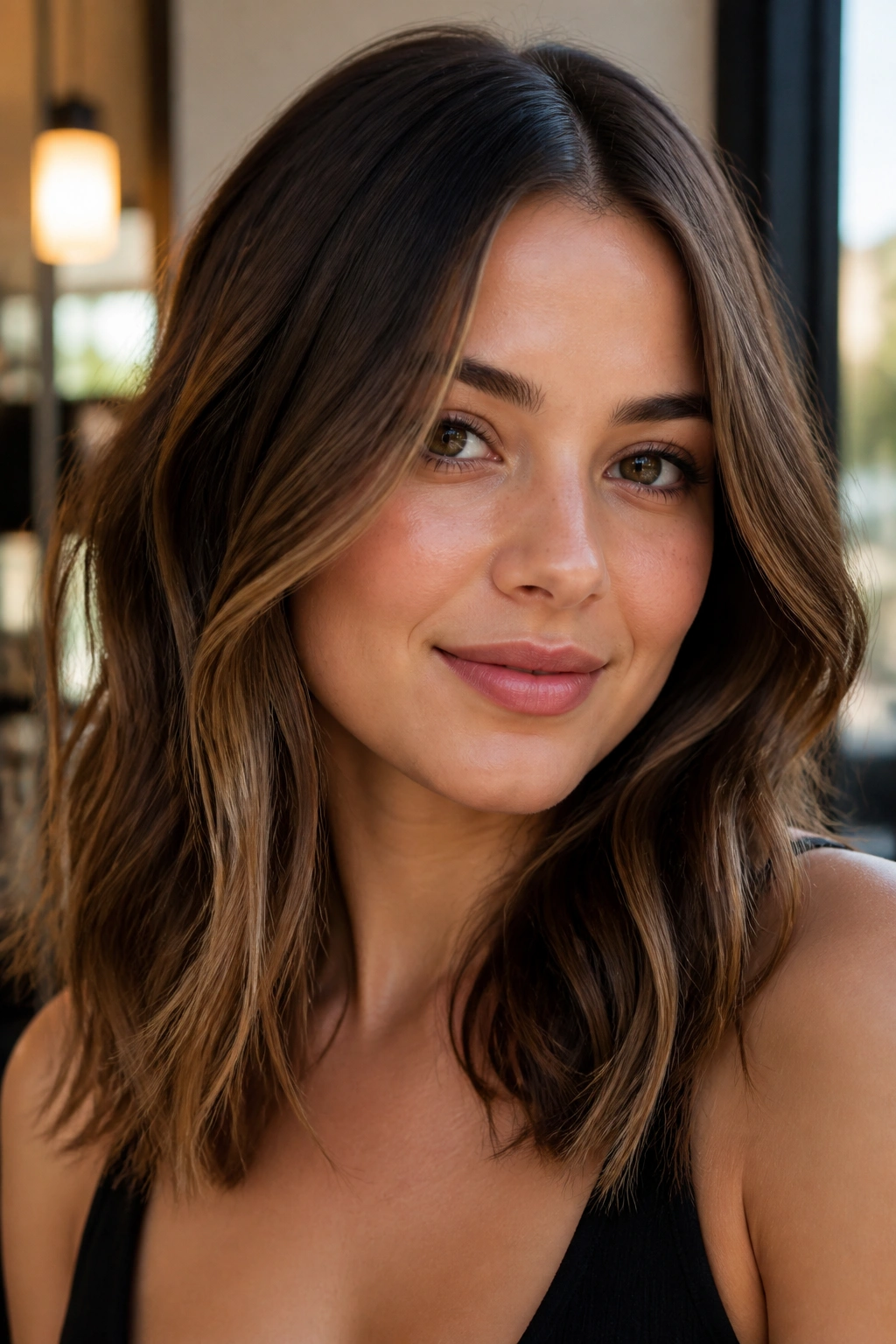
Can a center part work on a round face? Yes — if the brightness is fine enough to keep the shape long. Toffee babylights are the key. They’re delicate, broken up, and thin enough that the face doesn’t get framed by one big bright block.
The part matters
A center part can pull the eye straight down the middle, which is useful when the color around the sides stays soft. If the hair has enough root lift at the crown, the part helps lengthen the face instead of widening it. The trick is to keep the light pieces narrow and scattered, not stacked.
Where the light should land
- Around the collarbone and chest area
- Along the mid-lengths, not the temple
- A few pieces near the jaw, but not a thick frame
That’s the difference between balanced and boxy. A center part with chunky highlights often feels too blunt on a round face. Thin babylights, though, move differently. They shimmer when the hair swings and disappear a little when it settles, which is exactly what you want.
This look is especially nice if you wear your hair straight or in loose bends. The small scale of the highlights keeps the style sleek without making it stiff.
5. Ashy Chocolate Ends With a Cool Finish
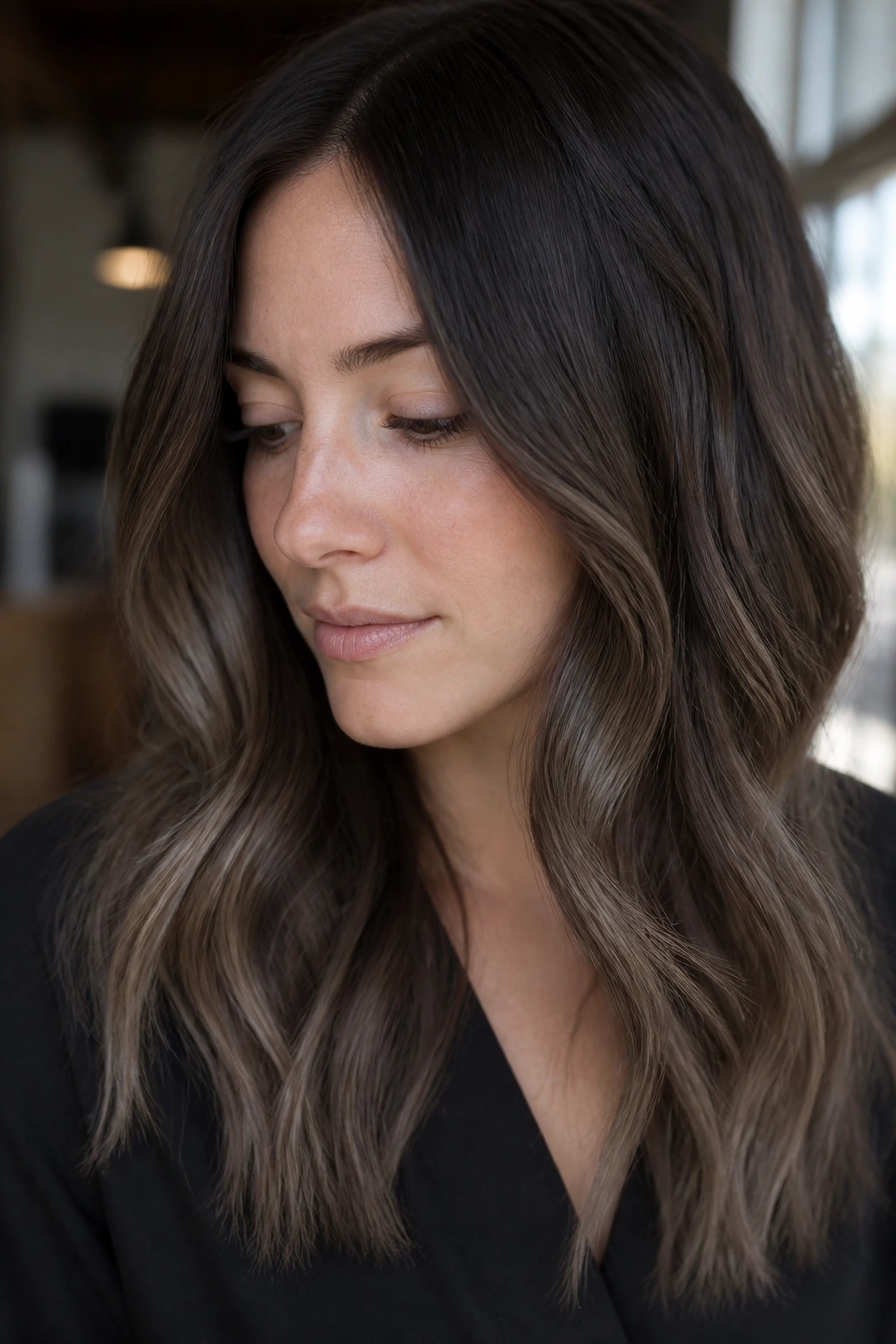
Cool brown shades don’t get enough love. People often reach for caramel first, but ash chocolate can be sharper, cleaner, and much more flattering if your skin leans rosy or if you dislike warmth near the face. The finish is smoky, not muddy, which matters.
Warmth is not required.
On a round face, ashier ends help the eye move downward because the tone doesn’t explode outward around the cheeks. The base stays rich and dark, then the lighter brown fades into a cooler edge through the mids and ends. It gives the hair structure without making it feel busy.
This look works best when the colorist keeps the brightest part lower and adds a neutral or cool gloss at the end. A gloss sounds like a tiny step, but it changes the whole read of the color. It smooths the cuticle, deepens the brown, and keeps the finish from turning rusty.
If you wear a lot of gold jewelry or warm makeup, this shade can still work. You just need a little warmth somewhere else in the look so the hair doesn’t take over. A soft blush or a beige-gold lip does the job.
6. Cocoa Balayage With Curtain Bangs
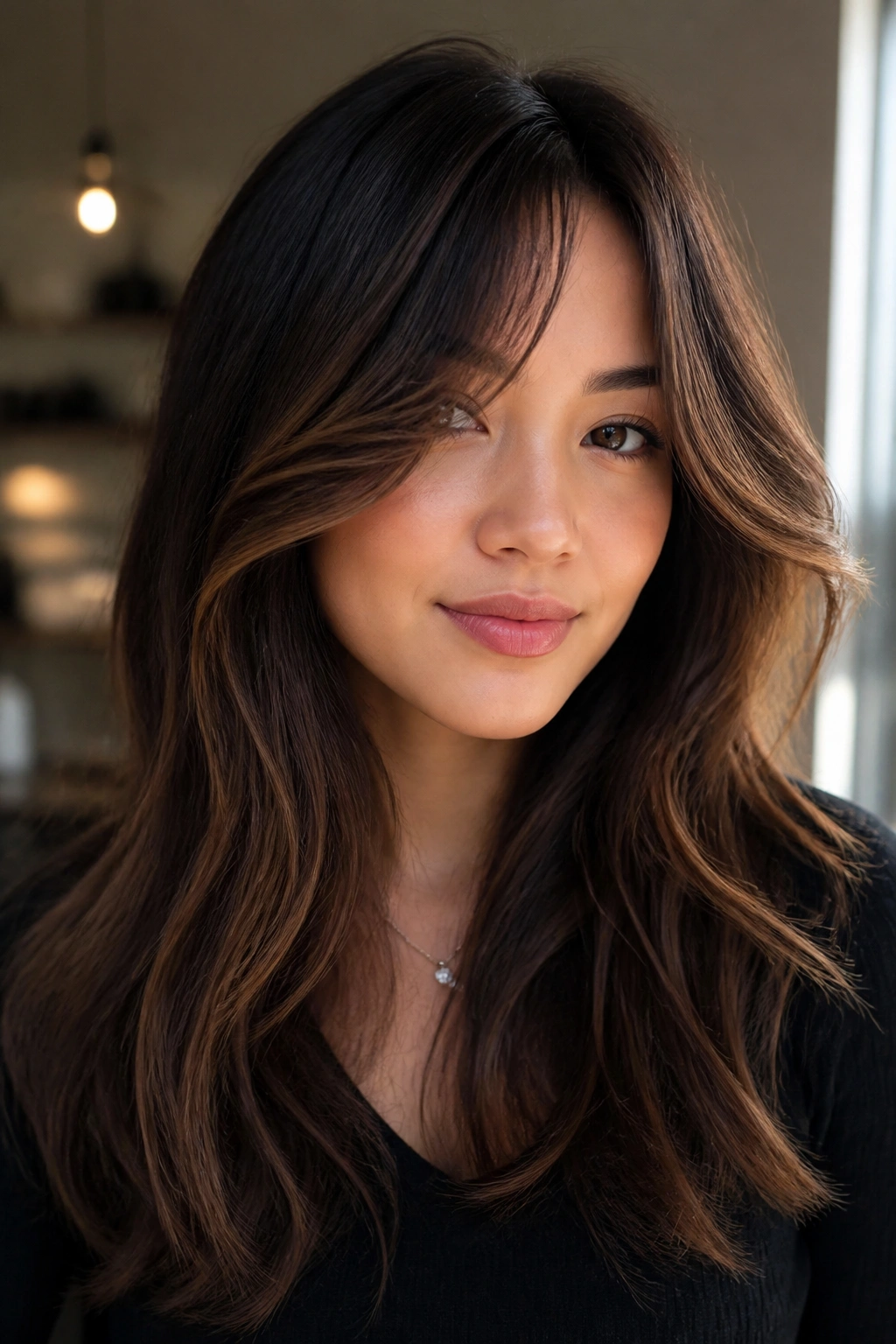
Curtain bangs can be excellent on round faces when they’re cut with enough length to move. A short fringe can chop the face in half. A longer curtain bang opens the center, softens the forehead, and pulls attention downward without adding width at the cheeks.
How to place the bangs
The shortest point should sit around the brow or just below it, then angle down toward the cheekbone. That keeps the shape soft. If the bangs are too short or too full, they create a wide horizontal line that works against the face shape.
What to skip
- Heavy, blunt micro-bangs
- Bright pieces that start at the temples
- A thick money piece that spreads across the whole front
Cocoa balayage keeps the whole look grounded. The brown base gives the bangs some weight, while the lighter ends stop the hair from feeling flat. That matters because curtain bangs can look heavy fast if the color is one-note.
This is a nice option if you want movement near the face but don’t want a dramatic cut. The bangs do the shaping. The balayage keeps them from looking too solid. And when the style is blown away from the cheeks, the face reads a little longer right away.
7. Mushroom Brown With Muted Width at the Sides
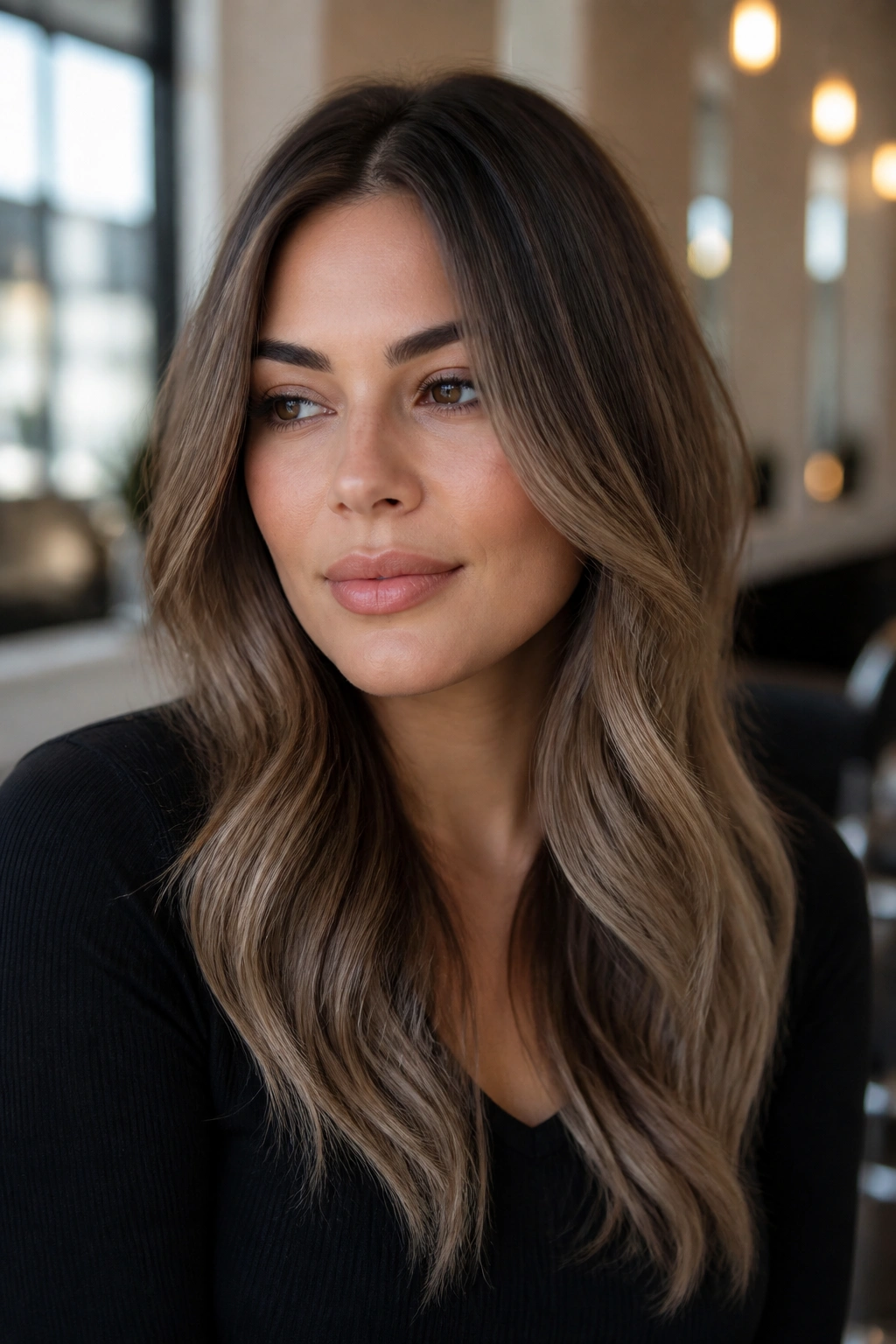
Not every flattering balayage needs caramel. Mushroom brown has a soft, earthy quality that can look expensive in the most unshowy way. It blends cool brown, beige, and a little smoky taupe, which makes the hair look dimensional without lighting up the sides of a round face.
That restraint is the whole point. When the contrast stays low, the eye doesn’t jump sideways. It moves in a smoother line from crown to ends. The result is calmer, leaner, and easier to wear day to day.
I especially like this on medium-density hair, where chunky highlights can look too loud. Mushroom tones give the hair some texture and movement, but they don’t break the shape into pieces. They’re also a good fit if your natural brown has an ash cast already. The color will blend instead of fighting what’s there.
This look can feel a little cooler than some people expect. That’s not a flaw. If anything, the cooler undertone helps keep the roundness of the face from feeling amplified. Think soft haze, not spotlight.
8. Milk Chocolate Bob With Clean, Glossy Ends
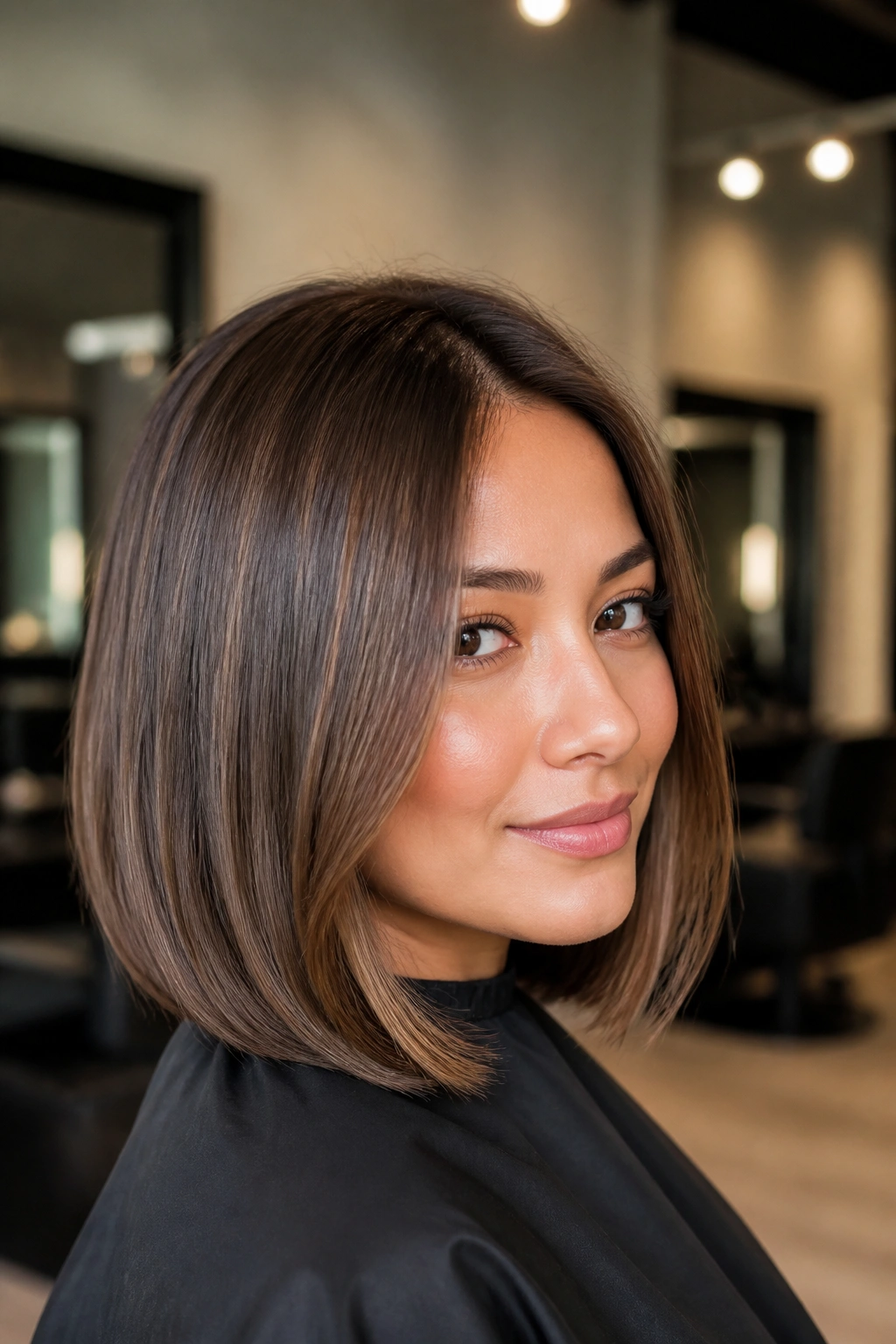
A bob can be tricky on a round face, which is why the color placement has to be smart. If the length lands at the chin and the brightness sits at the sides, the face can look fuller. But a bob that falls a bit lower — a true lob, or a longer bob — gives the balayage room to breathe.
Milk chocolate is a lovely shade for this cut because it stays rich but lighter than espresso. The color reads polished, and the gloss on the ends gives the whole haircut a tidy finish. The best version keeps the front slightly longer than the back, which creates a subtle angle down the jaw.
What makes it work
- Length that hits below the jawline
- Bright pieces concentrated on the lower half
- Soft beveling at the ends, not a blunt shelf
A blunt chin-length bob can make a round face look wider. A longer, softly angled bob does the opposite. It opens space below the cheeks, which is where a lot of the visual length comes from.
This is one of those looks that seems simple until you wear it. Then you notice how much shape the cut gives you on its own. The balayage supports that shape instead of stealing the show.
9. Mocha Money Piece With Deeper Sides
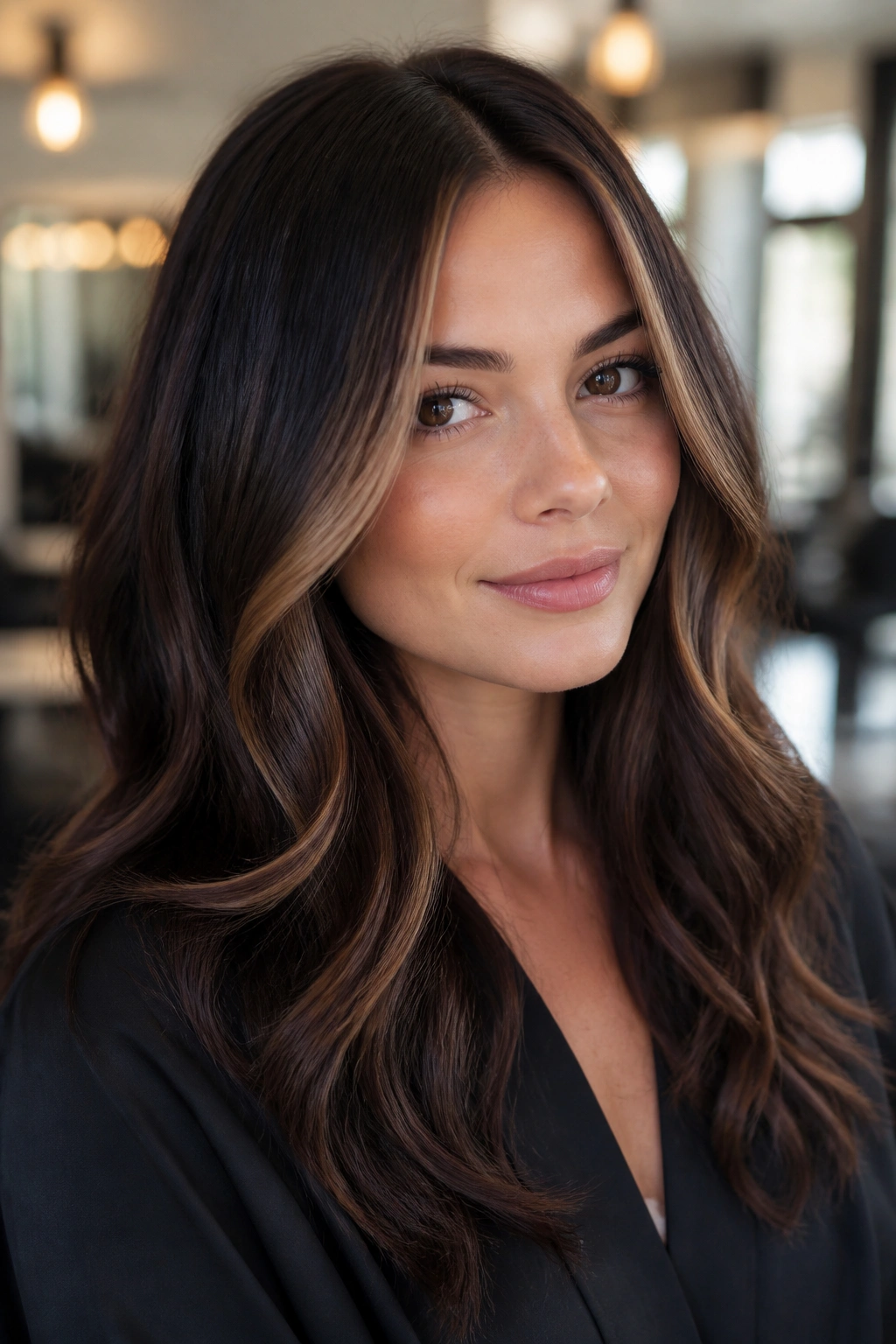
What if you want brightness near the face without making it look wider? Keep the money piece narrow and let the sides stay deeper. That’s the whole idea here. The front gets a soft mocha lift, but the rest of the hair keeps enough depth to preserve the outline of the face.
Money piece geometry
A good money piece for a round face is more like a slim ribbon than a panel. It should begin a little below the temple and taper toward the cheekbone. If it’s too wide, the face reads broader. If it’s too pale, it can overwhelm the brown base.
Ask for this
- A narrow front highlight on each side
- Darker color through the sides and back
- A smooth melt, not a hard line
This look is especially nice with waves or soft bends because the bright front pieces move as the hair moves. That motion helps lengthen the face in a way a static stripe never will. It also gives you a little lift near the eyes, which is often where people want the brightness anyway.
There’s a fine line here. Keep it slim. Keep it soft. That’s what makes it flattering instead of loud.
10. Deep Chocolate and Auburn Lowlights
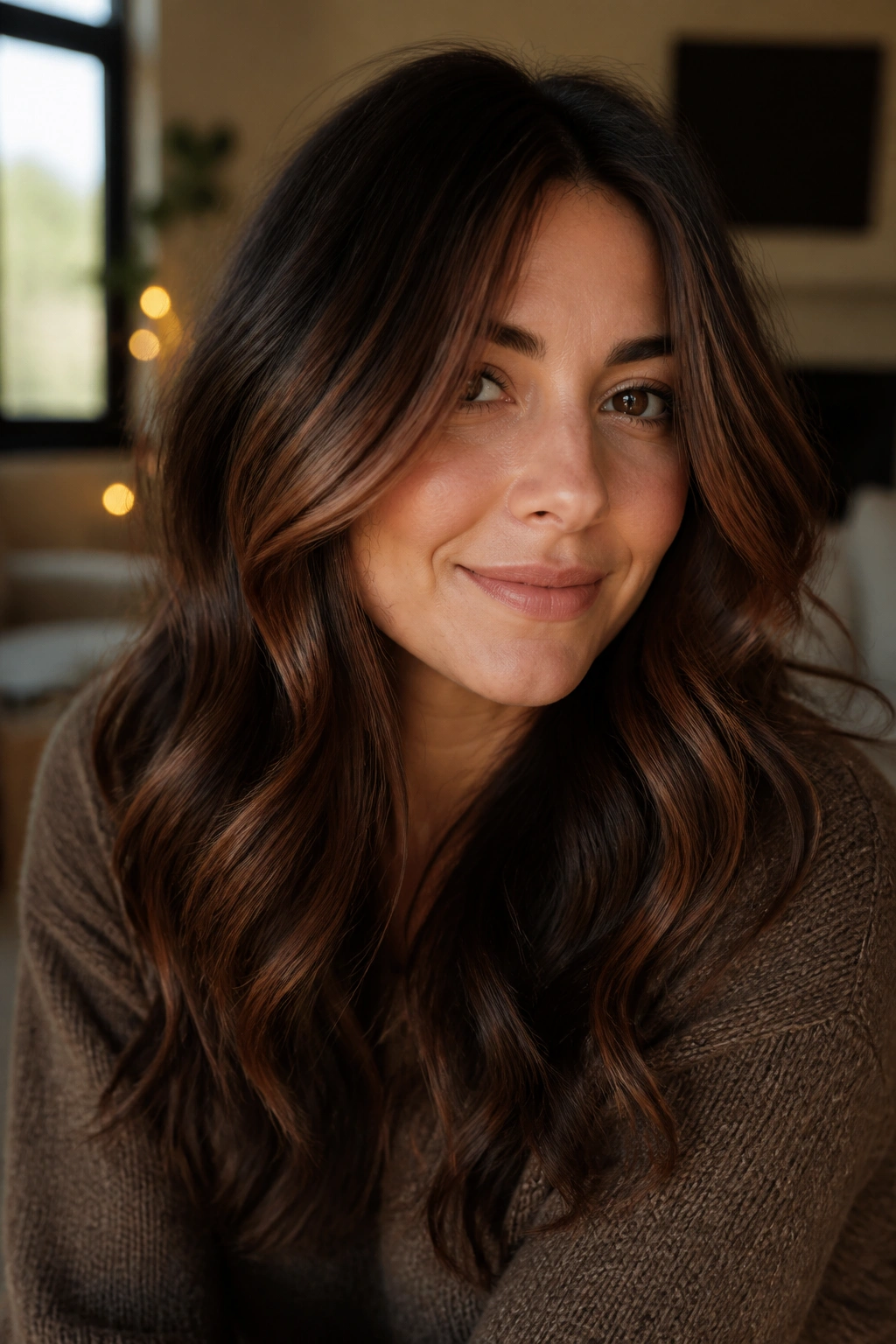
Lowlights do more work than they get credit for. Most people think highlights are the whole story, but on a round face, depth matters just as much. Deep chocolate and auburn lowlights break up the surface of the hair and give the color some shadow, which keeps the shape from feeling too wide.
Why lowlights matter
A single-tone brunette can look flat next to a fuller face shape. Lowlights create vertical seams in the hair, and those seams help the eye move up and down instead of side to side. That is a quiet kind of contouring, and I like it better than obvious brightness in a lot of cases.
Auburn is useful here because it adds warmth without turning the whole head copper. You want it tucked into the mids and underlayers, where it catches light when the hair moves. Not at the temples. Not in a thick frame. Hidden warmth looks richer.
This look is especially flattering on thick or curly hair, where too much lightness can make the ends puff out. The darker strands keep the outline tighter. The auburn keeps it from going flat.
11. Brunette Shag With Broken-Up Brightness
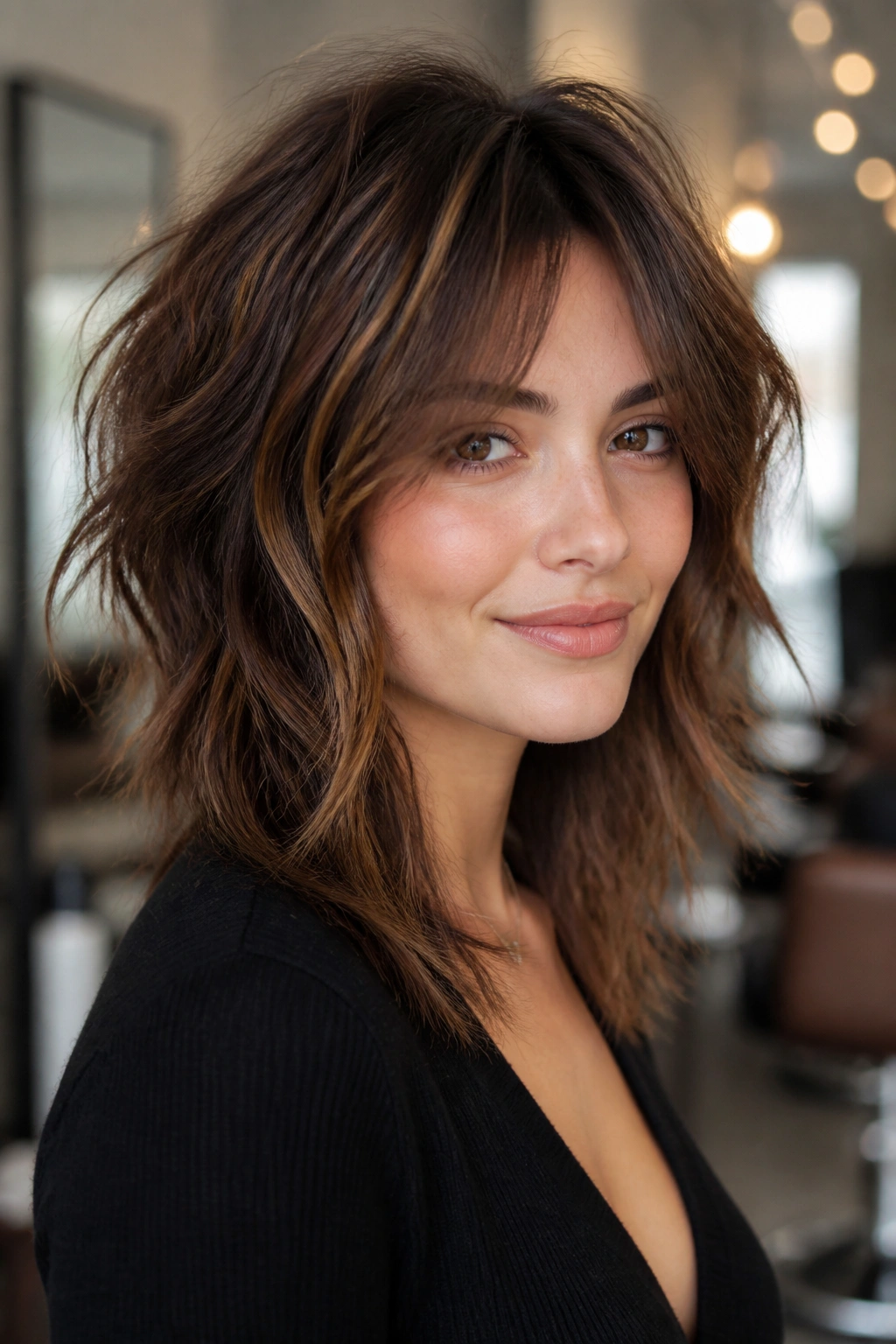
The shag does the contouring for you.
That’s why it works so well with balayage on a round face. The layers create lift at the crown and broken edges around the sides, which means the color doesn’t have to do all the shaping by itself. Brightness gets painted onto the top layers and scattered through the ends, where it catches movement instead of sitting in one solid band.
A shag also prevents the hair from puffing out into one circular shape. That matters. When the cut has piecey layers and a little grit, the face looks less boxed in. The best color placement follows the layers rather than fighting them.
Best layer pattern
- Shorter crown layers for lift
- Longer face-framing pieces that graze the jaw
- Light ribbons on the outer layers only
This look is not for someone who wants tidy and polished. It’s for someone who likes a bit of mess. The mess is the point. A shag with chocolate balayage feels modern because it moves, and movement does a lot of favoring for a round face.
12. Warm Truffle Waves That Start Below the Chin
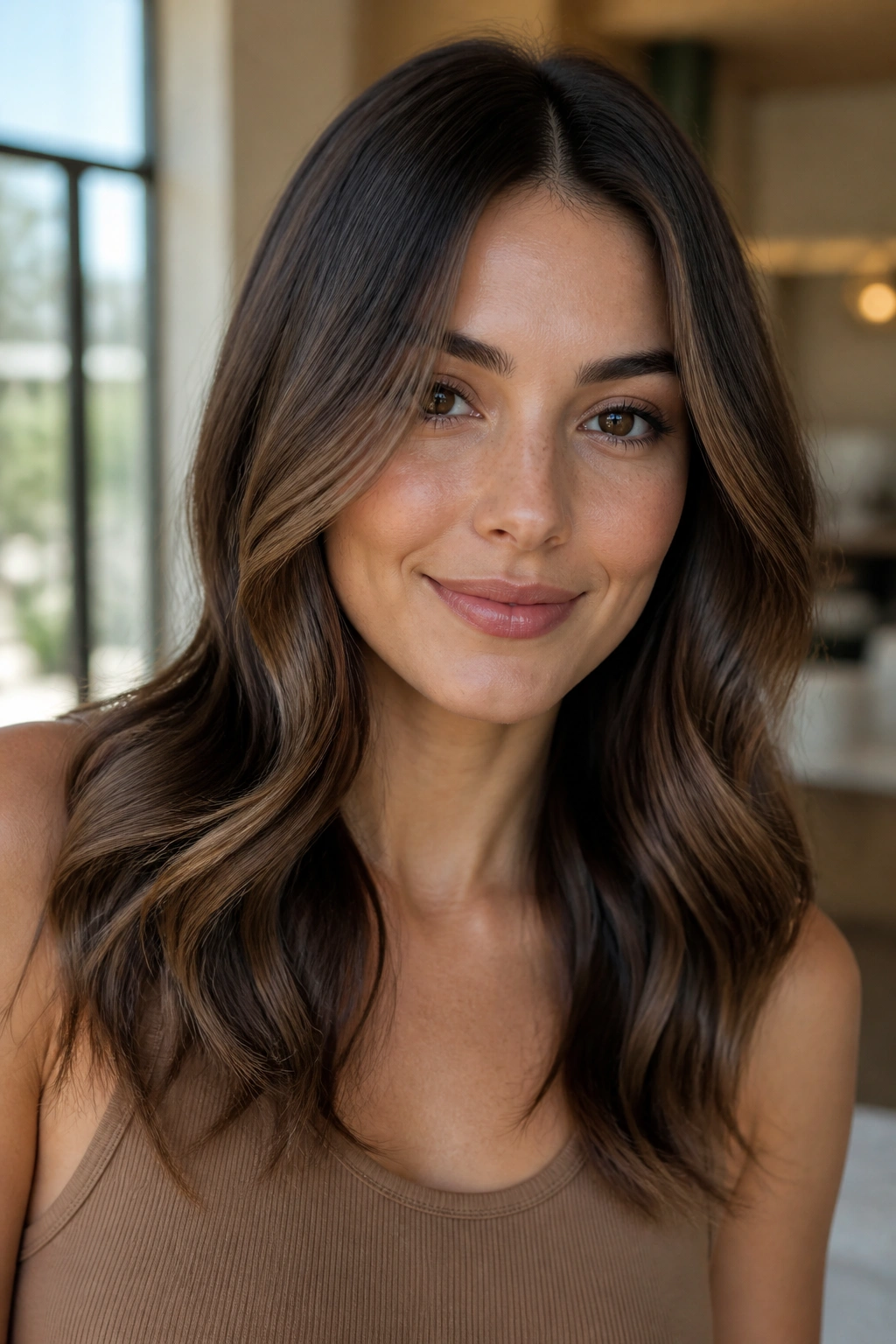
Waves that start below the chin create a cleaner line around the face than waves that start right at the cheeks. That’s why this truffle-toned look works. The hair looks soft and rich, but the brightest parts don’t crowd the widest section of the face.
The color itself sits in a warm brown range with faint golden-brown ends, like the inside of a good truffle shell. It has a polished shine, but it doesn’t scream for attention. The effect feels expensive in the quiet sense, which I prefer.
This style is excellent for medium-long hair that needs a little shape without a major cut. The wave pattern should stay loose — think broad bends, not tight curls. Tight curls can make a round face feel fuller if the highlights are too high. Loose waves keep everything elongated.
A small note that matters: let the top stay a little darker. The crown shadow gives height. Without it, the hair can spread out at the sides and cancel the whole point.
13. Straight Hair With Ribbon Highlights
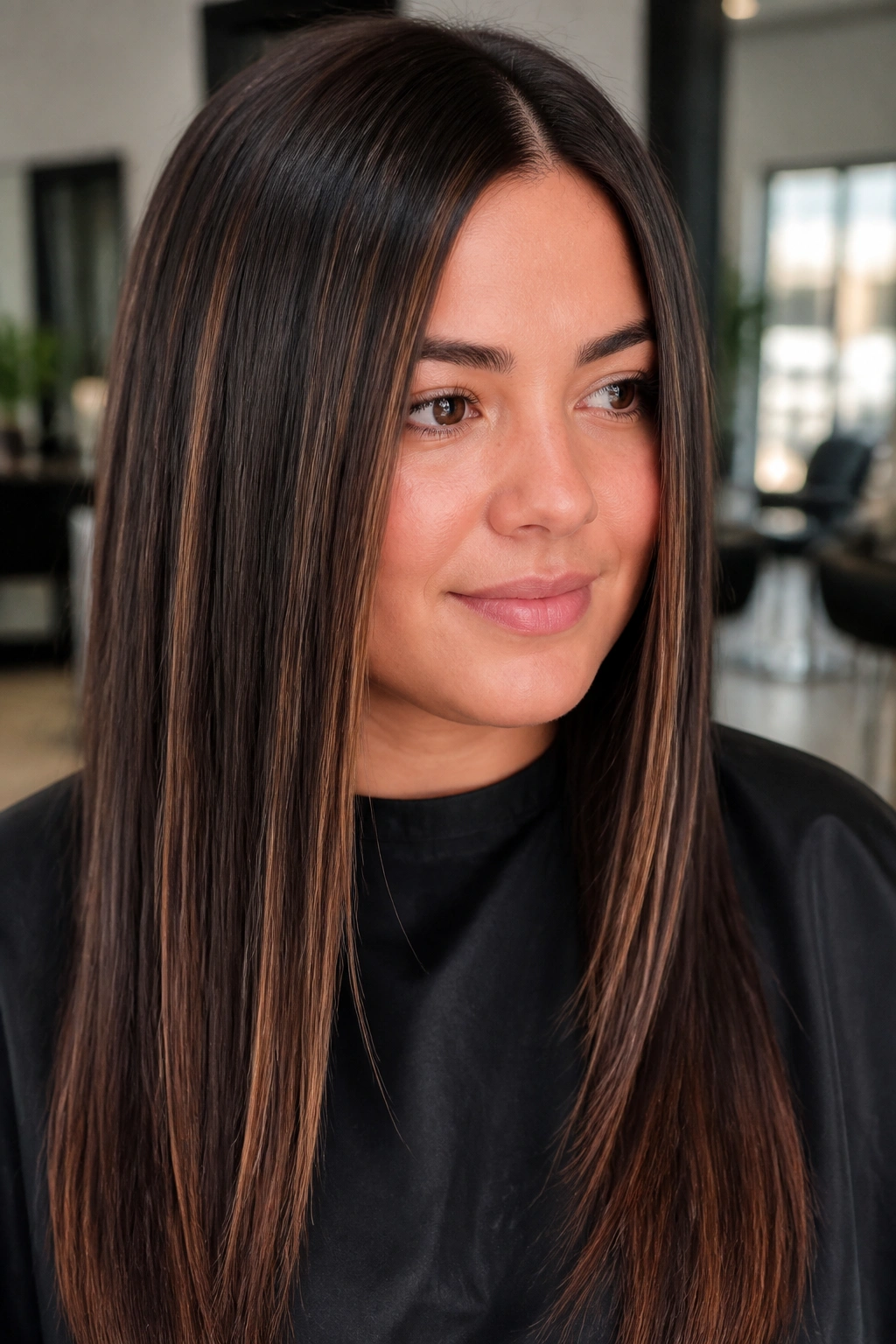
Straight hair is unforgiving. Every line shows. Every highlight line shows too. That’s why ribbon highlights need to be thin, melted, and spaced with care on a round face. Thick panels can make the head look wider than it is.
The placement rule
The strongest pieces should run vertically through the mid-lengths and lower thirds of the hair. Keep them closer to the front of the body, not spread across the widest part of the face. A narrow ribbon at the temple is fine. A wide block is not.
Ask your colorist for
- Thin, hand-painted ribbons in a warm or neutral chocolate brown
- A root that stays deeper for at least 1 to 2 inches
- A soft gloss to erase any harsh lines
Straight hair makes balayage look more deliberate, which is a blessing and a curse. If the blend is done well, it looks sleek and clean. If it’s done badly, you see every stop and start. So the application has to be careful, with more melting and less contrast.
On a round face, the vertical ribbon effect is useful. It draws the eye down the length of the hair and keeps the shape from feeling too broad.
14. Soft Ombré With a Diffuse Face Frame
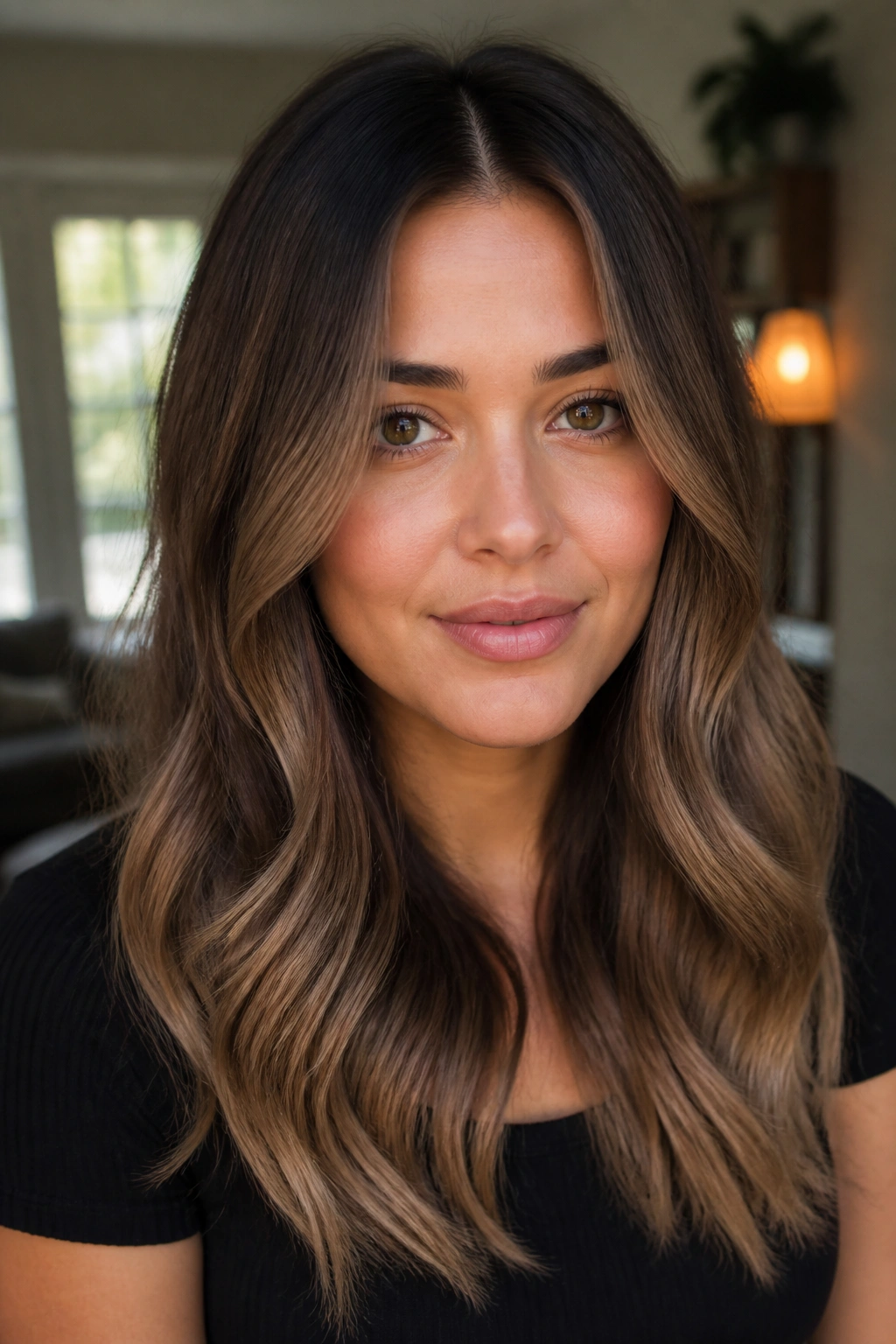
A round face does not need heavy face-framing brightness to look balanced. A softer ombré can do the job better, especially when the transition is gradual and the front pieces stay only a shade lighter than the rest. The goal is diffusion, not drama.
This is one of the easiest looks to live with because the grow-out is gentle. The roots stay deeper, the mids warm up gradually, and the ends get the most light. That means less upkeep and less risk of a harsh line around the cheeks.
The face frame should be narrow. Really narrow. If you want a brighter front, keep it soft enough that it reads as movement, not as a border. That difference matters a lot on round faces because borders tend to widen the look of the hair.
I’d choose this style for someone who wears loose hair more often than updos. When the hair is down, the ombré creates length. When it’s pulled back, the darker root still keeps the face from feeling overly open.
15. Cocoa and Copper Melt for Warm Skin
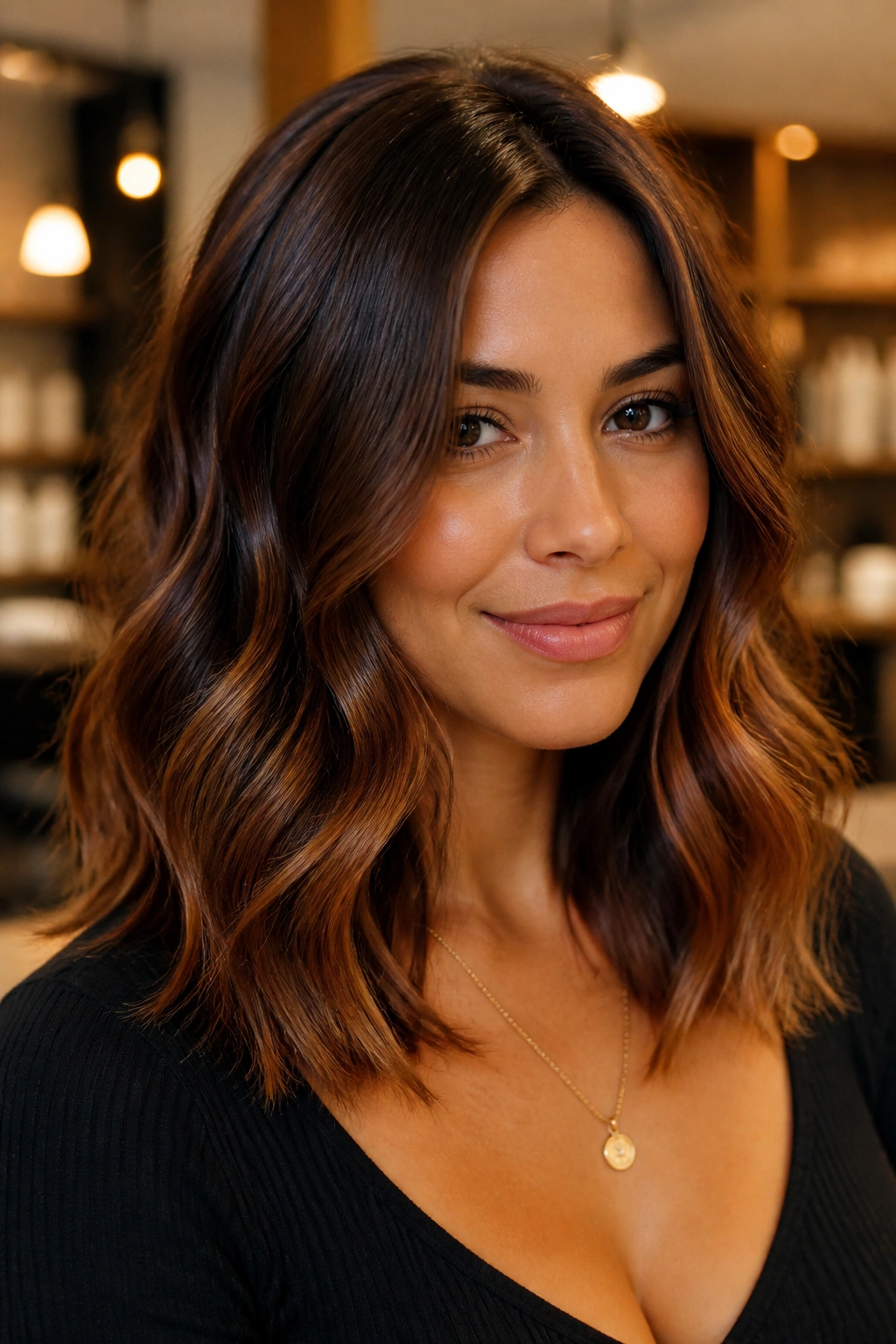
Warm brown plus copper can look gorgeous, but the copper has to be placed with a light hand. Too much at the sides, and the face looks rounder. Kept in the mids and ends, it adds glow without building width.
The warmth should travel downward
That’s the rule I like here. Let the cocoa base stay rich and grounded near the top, then let the copper drift in lower, where it catches movement and bends. The hair gets depth first, brightness second. That order matters.
This look is especially nice if your hair already has a natural wave or curl. Warm tones bounce off texture and make the movement more visible. On straight hair, the effect is sleeker and a little more refined. Both work, but they feel different in the chair.
A few things to request:
- Copper that sits below the cheekbone
- A brown base deep enough to hold contrast
- No heavy orange at the temples
This is not the quietest look on the list. It has personality. Still, when the warmth is placed low, it remains flattering for a round face instead of turning the whole style into one big halo.
16. Big Curl Balayage With Airy Ends
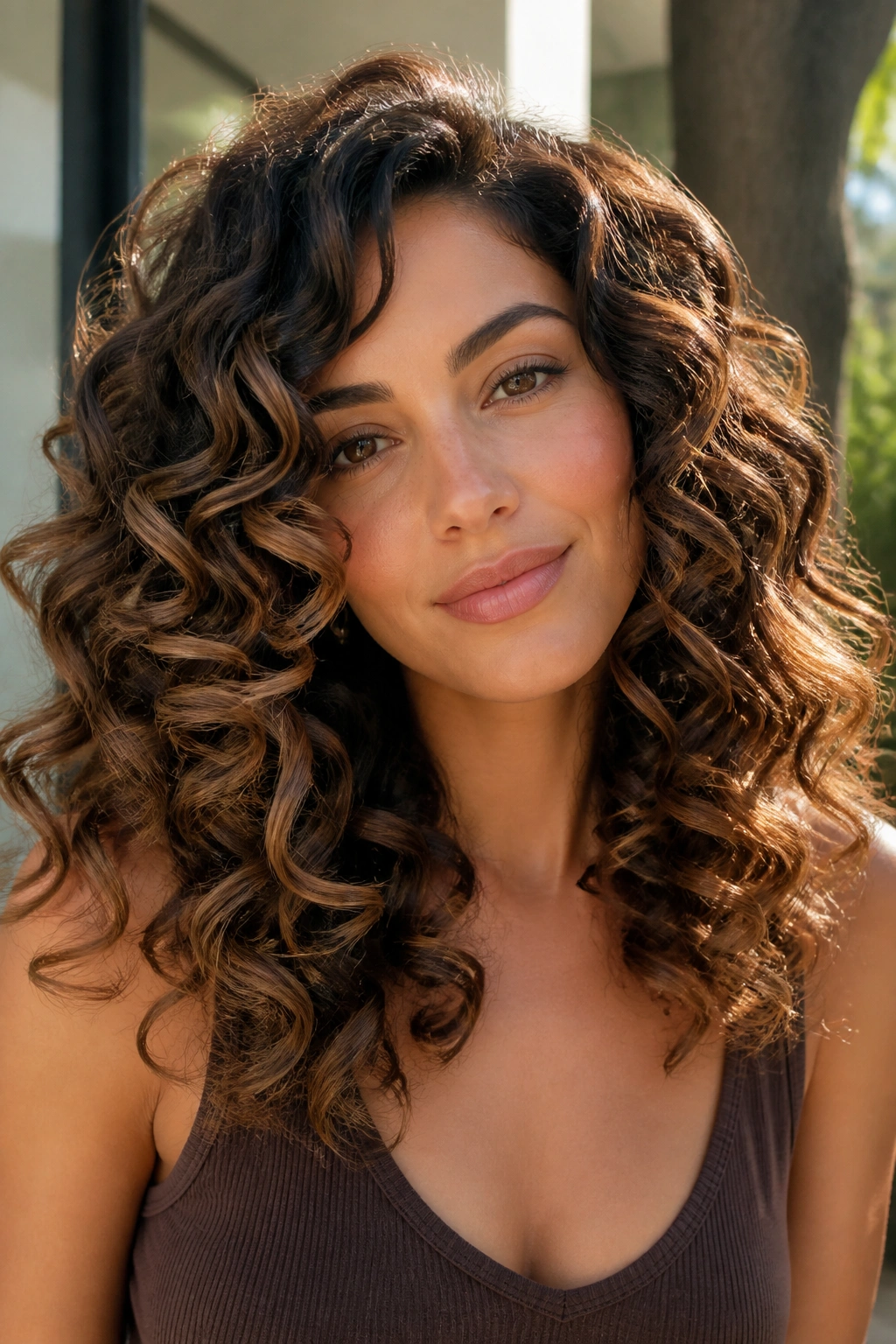
How do you color curls without making them puff out? You follow the curl pattern. That’s the whole game. For round faces, the brighter pieces should live on the outer curve of the curl, lower on the head, and a little farther from the cheeks than people expect.
What to ask for
- Balayage painted on curl clumps, not random sections
- Brightness focused below the widest part of the face
- A deep root and soft ends so the silhouette stays airy
Curls already bring volume, so the color has to help shape rather than add bulk. If the highlights are too close to the cheek area, the face can look wider. If they’re dropped lower and scattered through the lengths, the curl pattern gets lift without turning puffy.
This is one of those looks that gets better when it grows out a little. The color softens. The curls spread. The shape becomes more natural. That’s not a flaw; it’s part of the appeal.
And yes, a gloss matters here too. Curly hair drinks up light, and a good gloss keeps the chocolate shades from going dusty between washes.
17. Sleek Lob With Low-Contrast Painting
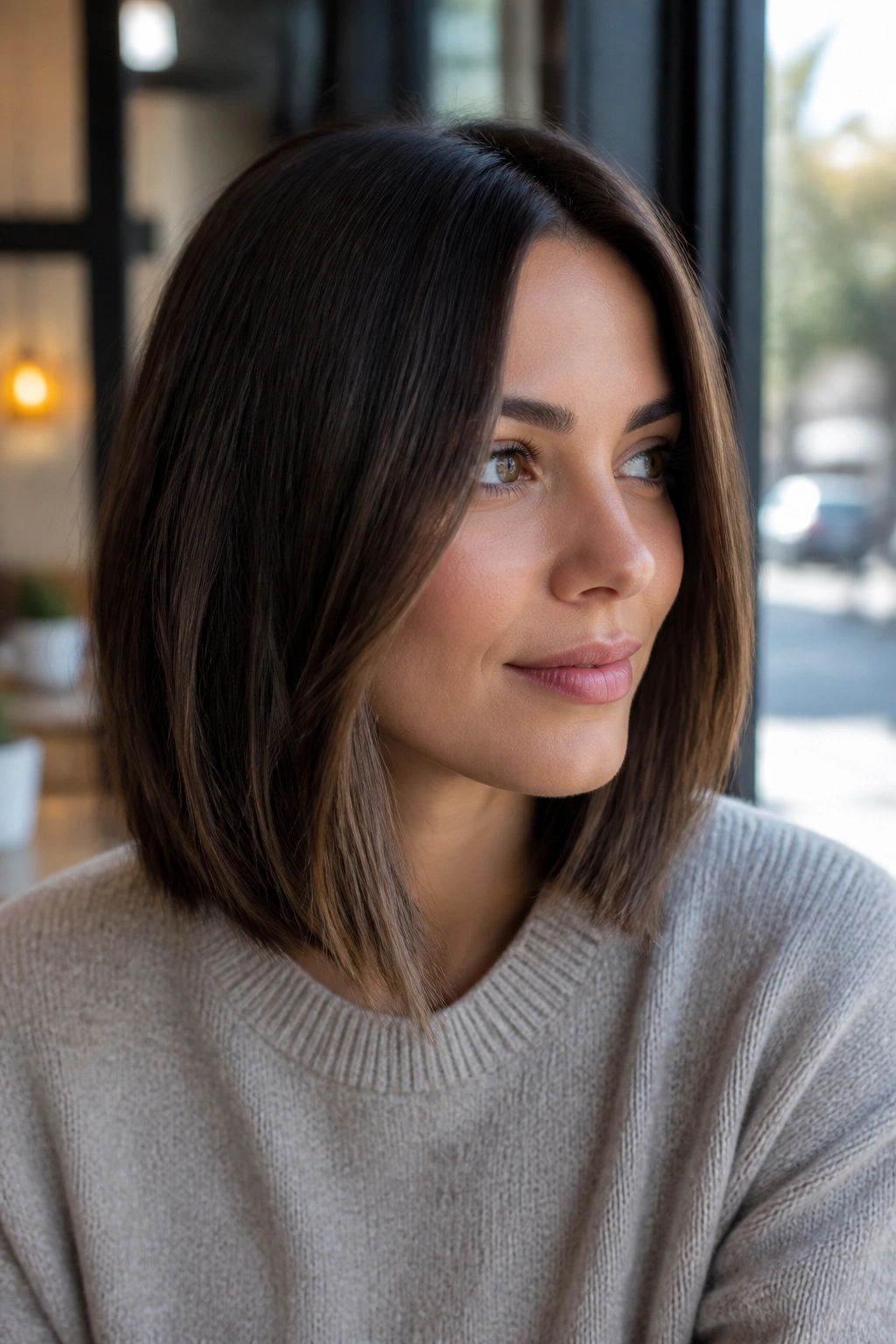
A sleek lob can be the most face-lengthening cut in the room. When the length hits below the jaw and the color stays low-contrast, the eye moves down in one clean line. That’s gold for a round face.
The balayage here is subtle. No chunky money piece. No dramatic stripe near the temple. Instead, the chocolate base shifts a half-step lighter through the mid-lengths and ends, enough to show movement without announcing itself from across the street.
I like this look for people who want polish. It feels neat, modern, and a little sharp. The color supports the cut by keeping the sides from getting bulky. A sleek blowout or a flat-iron bend makes the shape read even longer.
If the hair is thick, a slight internal layering helps keep the lob from turning wide at the ends. If it’s fine, the low-contrast painting adds the illusion of density without heaviness. Either way, the key is restraint. This is a controlled look, and that’s why it works.
18. Dimensional Dark Chocolate With a Long Fringe
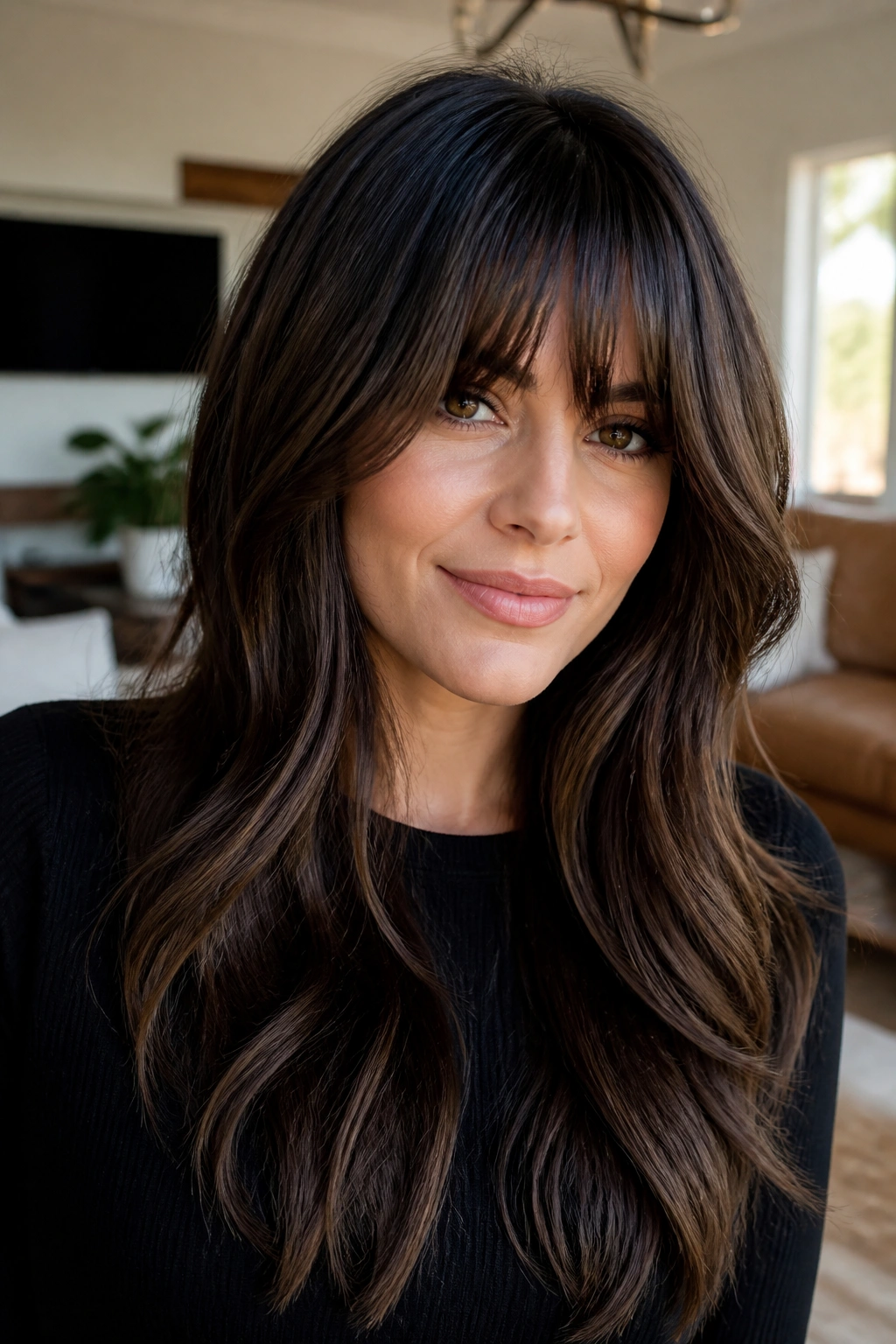
A long fringe can be a cheat code for round faces when it’s done softly. It breaks up the width of the forehead, adds movement around the eyes, and gives the chocolate brown balayage a place to land without spreading it too far across the cheeks.
The base stays dark — deep chocolate, almost bittersweet — while the balayage pieces stay very restrained. A few lighter ribbons near the fringe. Some movement through the mids. A soft fade at the ends. That’s enough. The point is not to flood the front with brightness. The point is to shape the face with small changes in tone.
This look works especially well if you like a bit of drama but not a lot of contrast. The fringe adds personality. The color keeps it wearable. And because the lighter pieces are narrow, the face still reads longer rather than wider.
It’s also one of the easiest ways to keep chocolate brown from feeling heavy. The fringe breaks up the top line. The balayage breaks up the body. The whole style feels lighter, even though the base is still rich and dark.
Final Thoughts
The best chocolate brown balayage for round faces is rarely the brightest one. It’s the one that knows where to start, where to fade, and where to stay quiet. Thin ribbons, lower placement, and a little shadow at the roots do more for face shape than a loud stripe ever will.
If you’re taking one note to the salon, make it this: keep the brightness below the widest part of the face whenever you can. That one adjustment changes the whole silhouette. It gives you length, softness, and depth in the same breath.
Bring photos, sure. But bring a plan too. Tell your colorist where you want the light to live — and where you don’t — because that’s where a good balayage stops being pretty and starts working for your face.
