



Blonde hair gets expensive-looking fast when the roots are too flat. Short blonde hair with dark roots has the opposite effect: the deeper root gives the cut depth, the blonde looks more dimensional, and the waves pick up shape instead of sitting there like one solid sheet.
A darker root also makes sense on wavy hair for a plain, practical reason. Waves move. They separate. They catch light in different places. If the color is the same from scalp to ends, that movement can look a little busy or, worse, washed out. A soft shadow root, root melt, or balayage placement solves that by giving the eye a place to rest before it hits the brighter pieces.
The sweet spot is a blend, not a stripe.
Too much contrast and the grow-out looks harsh; too little and the whole cut loses that rich, lived-in feel that makes blonde hair look intentional. The balance usually sits somewhere between a root that is one to two shades deeper than the mids and light pieces that start lower than the scalp, especially around the face and ends. That keeps the blonde from fighting your wave pattern.
The cuts below lean into that idea in different ways. Some are neat and polished. Some are messy in the best possible way. A few are sharp enough to feel a little edgy, but all of them work because the dark root is doing quiet support work under the blonde.
1. Jaw-Length Bob With a Soft Shadow Root
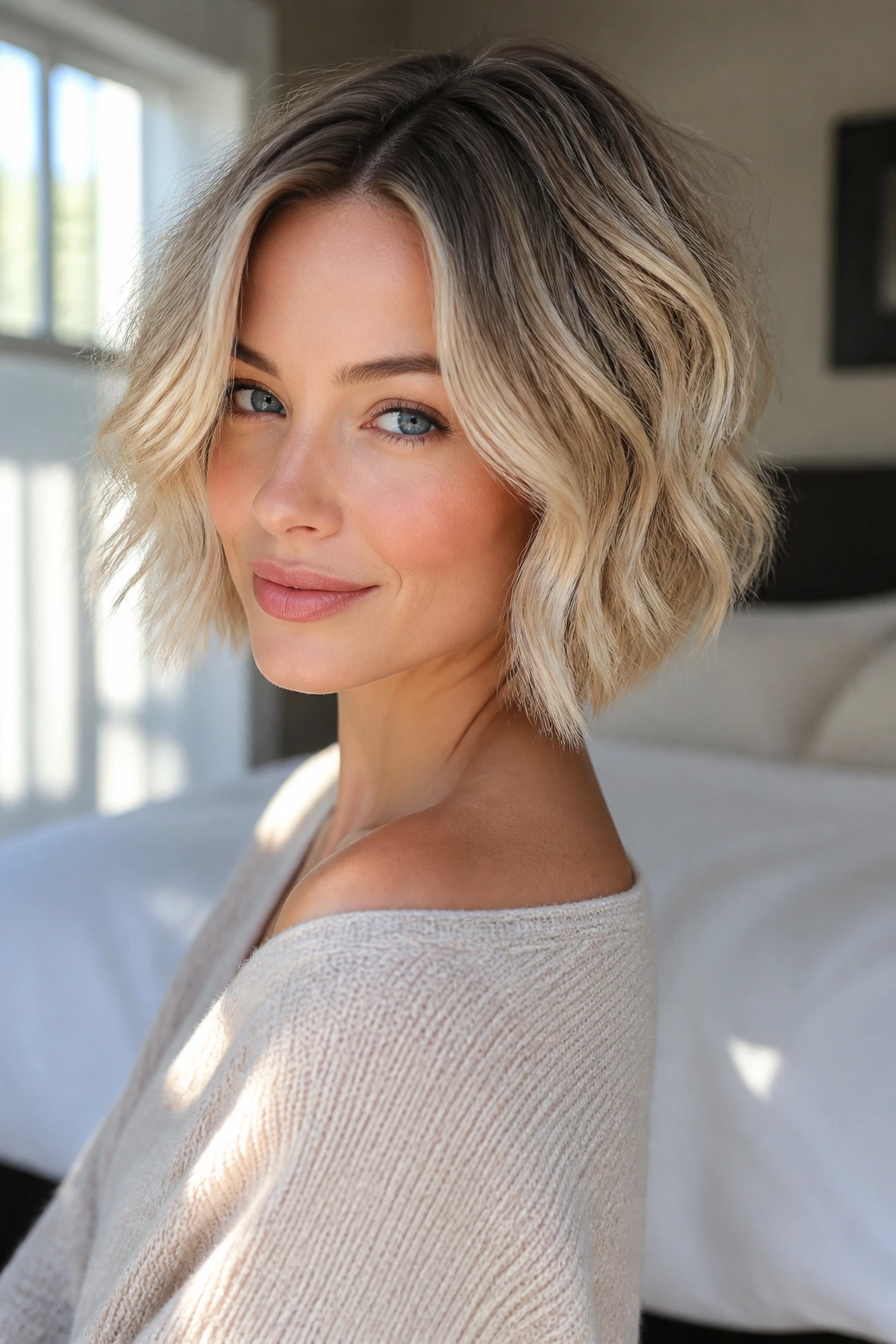
This is the safest place to start if you want short blonde hair with dark roots and do not want the color to feel loud. A jaw-length bob gives wavy hair enough room to bend, but not enough length to drag the shape down. The darker root keeps the blonde from floating too high around the face, which is where a lot of short cuts start to look puffed out.
Why It Works on Wavy Hair
Waves need a little internal structure. A blunt jaw-length line gives you that, and the shadow root keeps the top from looking over-lightened. When the color is blended well, the eye sees movement first, then brightness.
- Ask for a root shadow one shade deeper than your natural level so the grow-out stays soft.
- Keep the blonde brightest from the cheekbones down, where the wave pattern shows best.
- Use a 1-inch curling wand and alternate directions on each section for a loose bend, not uniform curls.
- Finish with a pea-size texture cream rubbed between your palms and pressed through the mids.
Best tip: if your waves are fine, keep the ends blunt. Too many layers can make the bob flip out in a way that feels more awkward than airy.
2. Chin-Length French Bob With Butter Blonde Ends
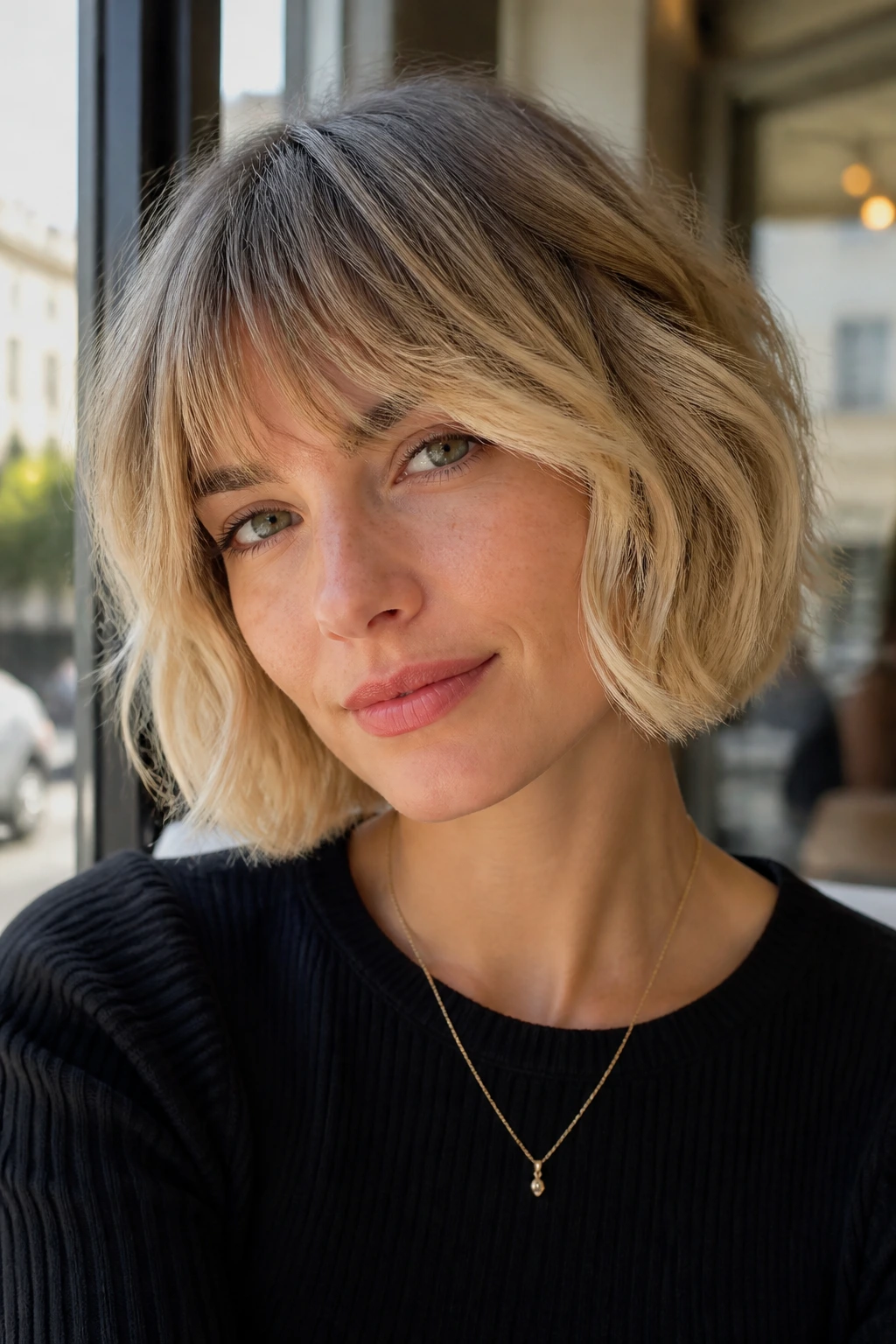
A French bob can look too cute if the color is flat. Dark roots fix that fast. They stop the cut from reading like a bright little helmet and give the soft, chin-grazing shape a bit of grit. That’s especially useful if your waves fall in loose bends instead of tight curls, because the root depth makes the movement look richer.
Butter blonde ends suit this cut because the tone is warm enough to feel easy, but not so gold that it steals attention from the haircut. The trick is keeping the root melt soft. You want a gentle blur at the scalp, not a hard line. When the fringe skims the brows and the ends kiss the jaw, the whole thing feels crisp without being stiff.
A little roughness helps here. Air-dry the front with a dab of mousse, then twist two-inch sections around your finger while they’re still damp. It’s a small move, but it keeps the fringe from splitting in a weird way and gives the bob that loose, undone shape people chase.
3. Collarbone Lob With Honey Balayage Ribbons
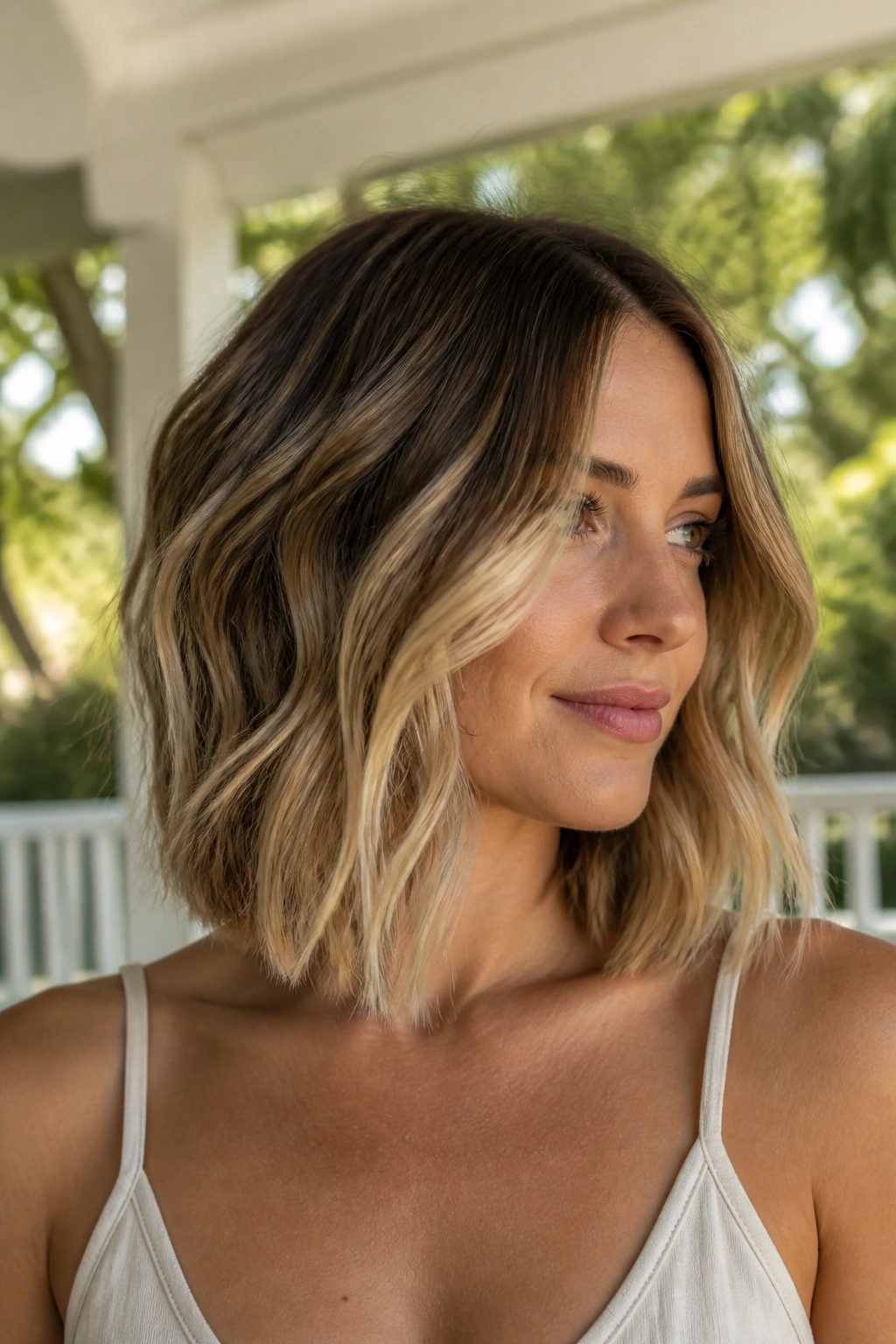
Why does a collarbone lob look richer than a chin-length bob when the roots are darker? Because the extra length gives the color room to breathe. The shadow root stays calm at the scalp, then the honey balayage ribbons start showing up in the middle lengths, where waves need contrast most. That makes the cut feel softer and more expensive-looking, even when the styling is minimal.
The best version of this look keeps the root area about half an inch to one inch deeper than the rest, then places the brightest pieces around the face and the outer curves of the wave. It is one of those cuts that looks polished in daylight and a little more relaxed at night, which is useful if you wear your hair both ways.
How to Wear It
If you like a tucked-behind-the-ear finish, this cut behaves well. The front pieces stay long enough to sweep back, but the shorter length still reads as short hair. Use a 1.25-inch wand for a gentle bend and leave the ends slightly straighter so the blonde ribbons do not turn into a uniform curl. That little bit of contrast between smooth ends and wavy mids keeps the style from looking overdone.
4. Choppy Pixie Bob With Bright Face-Framing Pieces
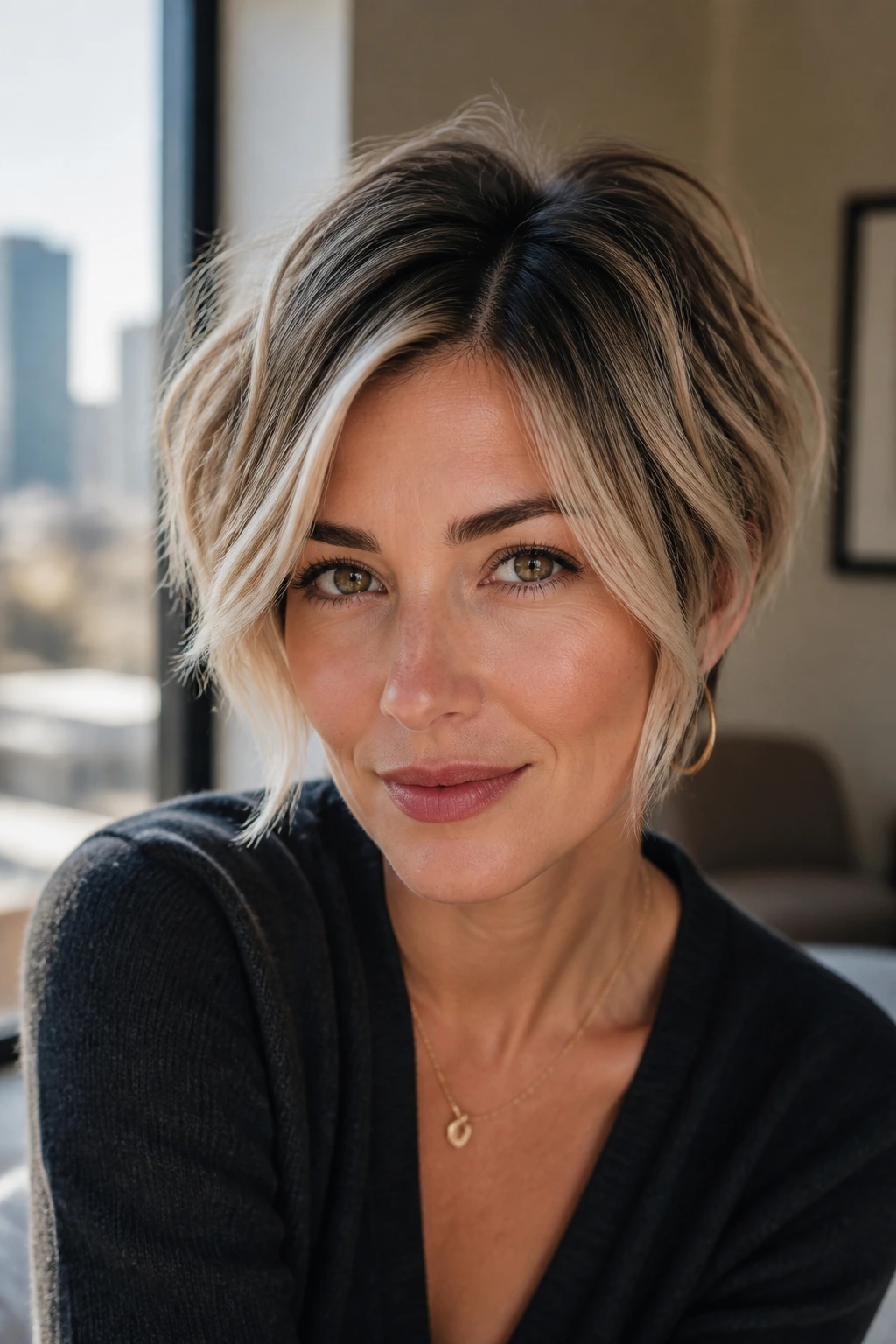
When a bob keeps collapsing after a day, the answer is often less length, not more. A choppy pixie bob sits right in that useful middle ground: short enough to stay light, long enough to feel like a real hairstyle instead of a grow-out phase. The dark root matters here because it anchors the crop and keeps the bright blonde from taking over the whole shape.
The face-framing pieces should be the lightest part. Think of them as tiny spotlights near the temples and cheekbones. The back can sit close to the nape, while the top stays about 2 to 3 inches long so the waves have room to bend. If your hair is dense, this cut removes bulk without flattening the silhouette.
- Ask for point cutting through the top so the ends do not look blocky.
- Keep the nape snug and clean; that contrast makes the crown feel fuller.
- Use a matte paste or light wax on dry hair to separate the pieces.
- A narrow face frame, lifted just off the cheekbone, gives the blonde a sharper edge.
This one looks especially good on second-day hair. A little mess is part of the charm.
5. Asymmetrical Bob With Ash Blonde Waves
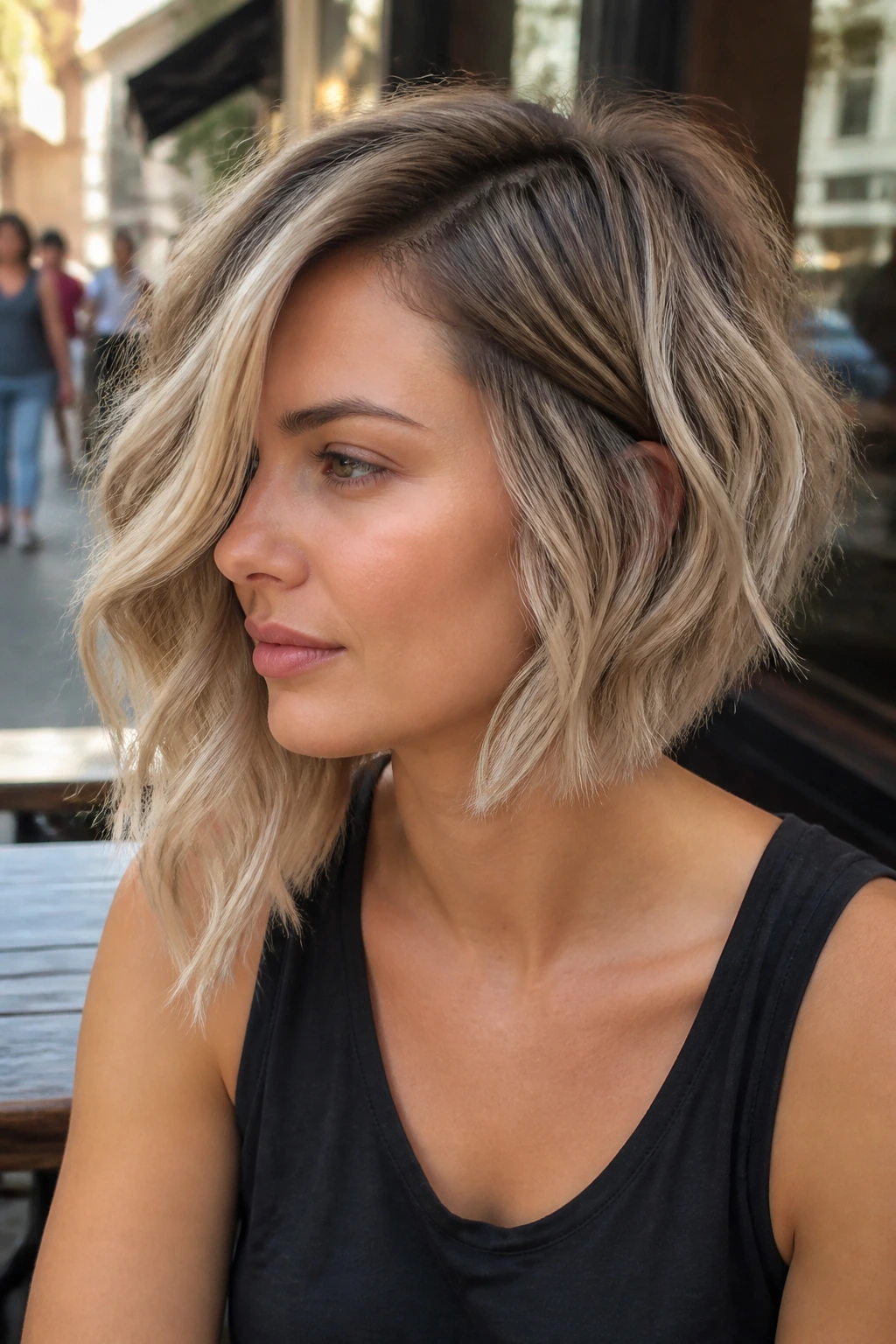
An asymmetrical bob is the haircut equivalent of turning your head slightly and letting the line do the work. One side sits a little longer than the other — usually by one to one and a half inches — and that small difference makes wavy hair look more deliberate. The dark root helps because it keeps the cool ash blonde from feeling flat or washed out.
Ash tones can be tricky on short hair. Too much ash and the cut goes dull. Too little and the contrast with the root disappears. The fix is a root that stays soft and a midlength that carries most of the brightness. That way the diagonal shape of the bob stands out before the color does.
The haircut works best with a clean side part and a smooth crown, then a wave pattern through the ends. You do not need perfect curls. In fact, perfect curls would fight the angle. Let the blonde bend around the jaw, and keep the front piece slightly longer so it skims the collarbone or just above it. That little line does a lot.
6. Short Shag Bob With Beige Blonde Balayage
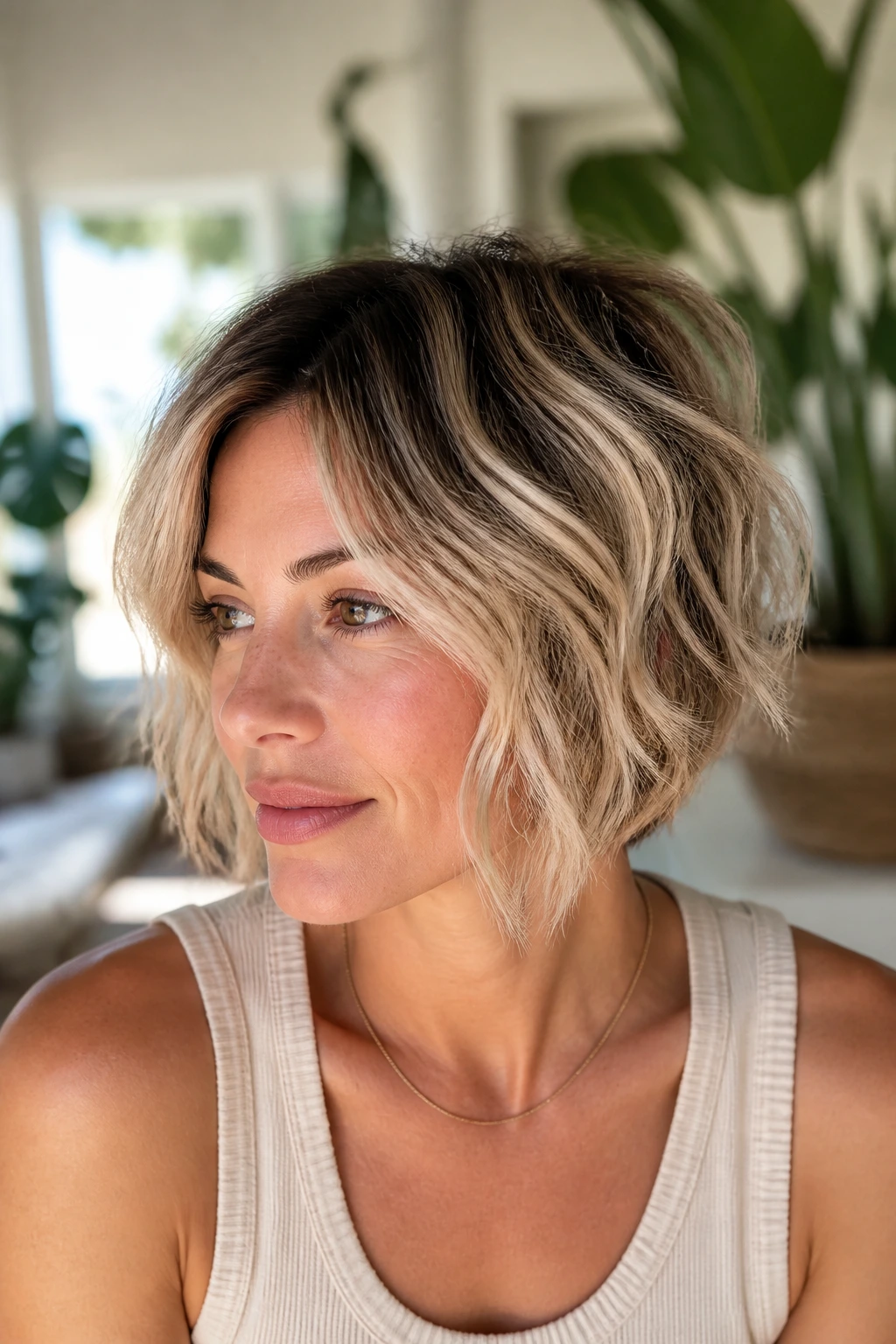
Compared with a blunt bob, a short shag is messier in the nicest way. It has movement built into the cut, so wavy hair can do what it already wants to do instead of being forced into a neat line. Beige blonde balayage makes sense here because the color is soft enough to sit inside the layers without screaming for attention.
This is a good pick if your hair is thick, coarse, or a little frizzy around the ends. The shag breaks up that bulk. Ask for interior layers through the crown, then leave the perimeter around the chin or just below it. The dark roots keep the shape from looking over-highlighted, which matters more in a shag than in a blunt cut because all those layers can get visually busy fast.
If you like air-drying, this is your friend. Scrunch in a light mousse, diffuse for a few minutes, and stop before the hair feels fully dry if you want a softer bend. The darker root adds enough depth that the balayage does not need perfect styling to look finished.
7. Rounded Bob With Champagne Blonde Ends
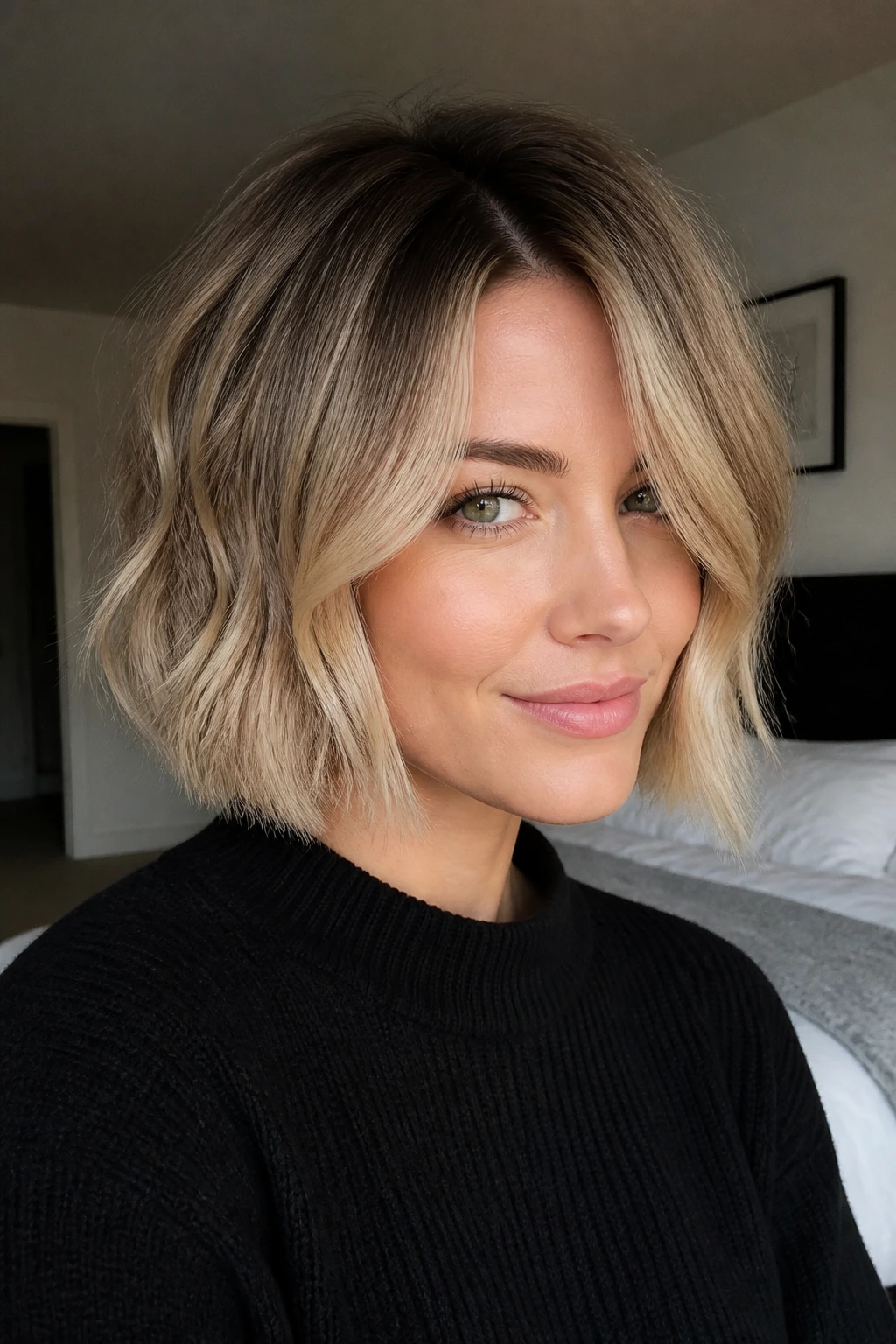
A rounded bob is the one that saves fine waves from looking thin at the ends. The curve gives the haircut a fuller outline, and the darker root keeps the crown from looking too lifted or too pale. Champagne blonde ends are a smart choice because they reflect light without turning brassy, which is useful on shorter hair where every tone shows up fast.
Why the Shape Matters
The roundness makes the cut feel balanced. Instead of a sharp line at the chin, the hair bends softly under the jaw and around the neck. That shape is especially kind to narrow faces and anyone whose waves tend to puff out at the sides.
What to Ask For
- A rounded perimeter that sits around chin length.
- Subtle layering only at the interior, not at the edge.
- A root shadow that stays soft for about an inch before the lighter blonde starts.
- Blow-drying with a round brush only at the ends so the crown does not go flat.
Small warning: do not drown this style in oil. Fine waves need shine, yes, but too much product will erase the round shape and make the blonde look stringy.
8. Razor-Cut Crop With Sandy Blonde Dimension
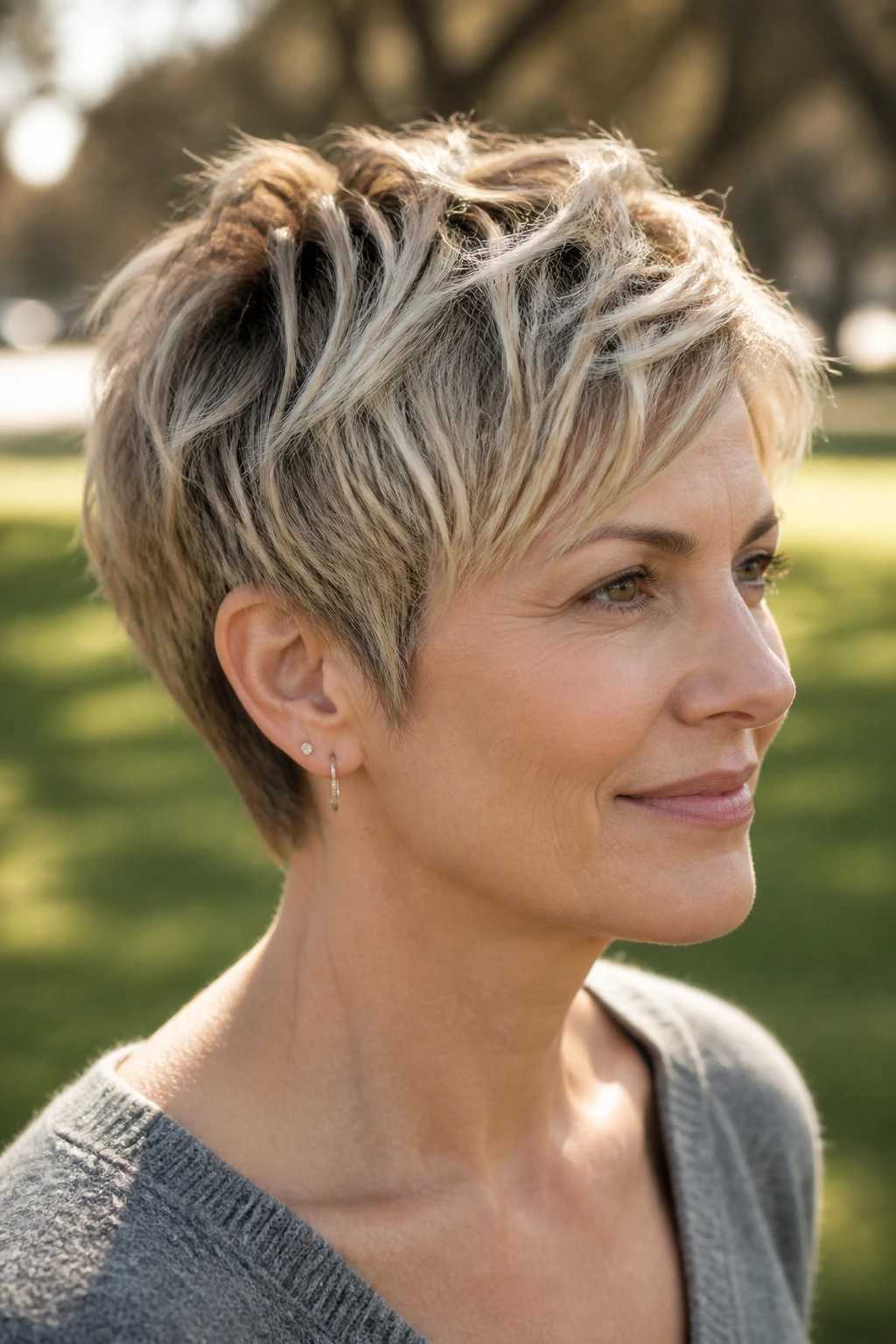
Razor cutting gives a crop its slight edge. The ends come out softer and a little piecey, which is exactly what short wavy hair likes when the color is blonde but the roots are dark. Sandy blonde dimension sits somewhere between beige and beige-gold; it is soft, not brassy, and it works well when the haircut already has a lot of movement.
This look is good for hair that bends naturally and does not need a lot of help. A razor-cut crop can look too wispy if the hair is very fine, but on medium-density waves it has a nice broken texture. The dark root keeps the crown grounded, so the lighter pieces at the ends feel intentional instead of scattered.
Do not over-style this one. A little sea salt spray, a rough dry, and a finger-combed finish are enough. If you use a brush and polish every section smooth, you lose the point. The charm is in the ends looking like they moved on their own.
9. Blunt Bob With a Bold Money Piece
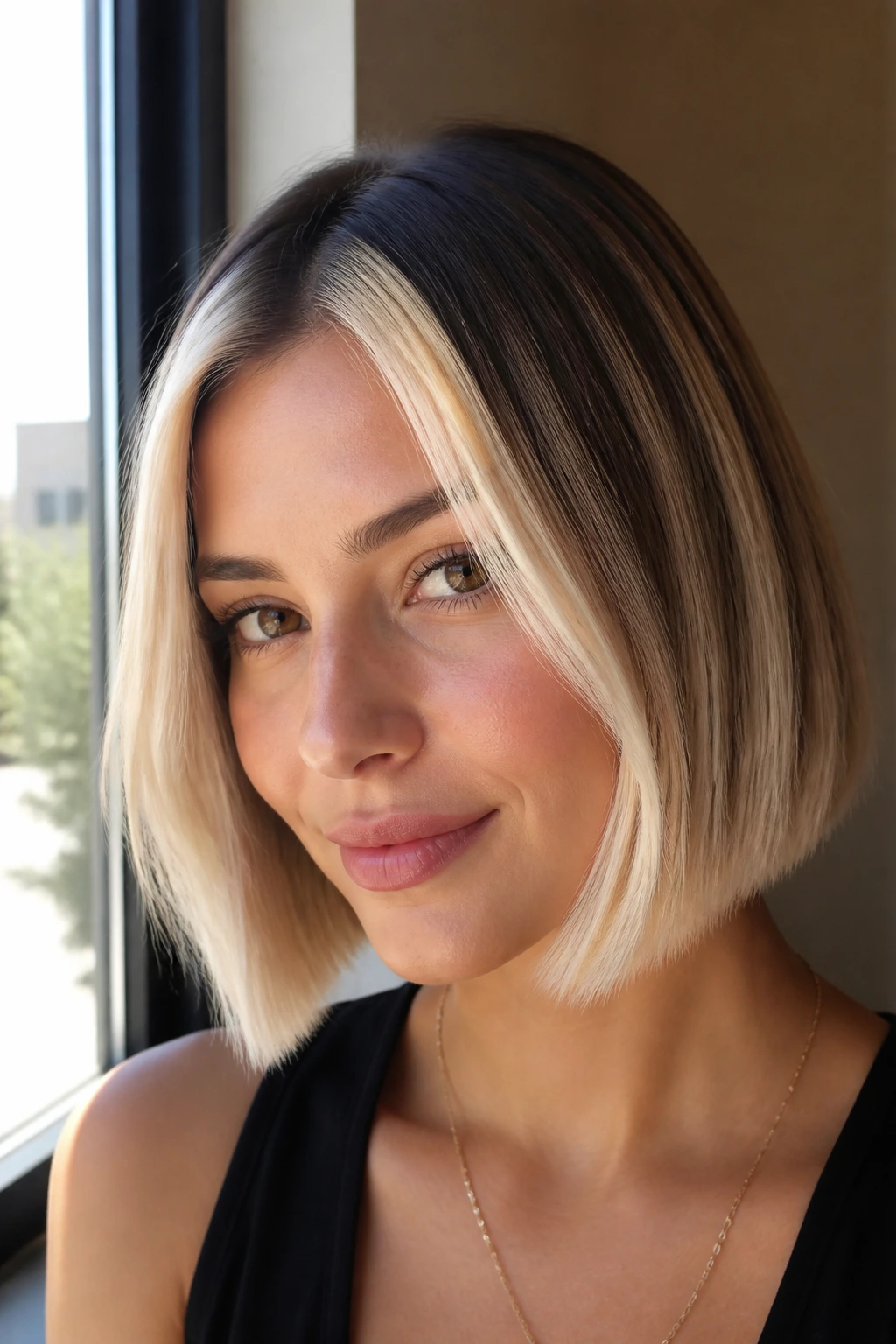
Can a blunt bob still feel soft when the roots are dark? Yes, and that contrast is what makes it work. The blunt edge gives the cut a clean shape, while the money piece near the face keeps the blonde from disappearing into the rest of the hair. It is a nice middle ground if you like structure but still want some brightness around the cheeks.
The dark root should stay behind the face frame, not fight it. That way the lighter front pieces do their job without the scalp area looking over-processed. On wavy hair, the blunt line can be a little unforgiving, so the waves need to sit loose and not too tight. A soft bend at the ends is enough.
How to Wear It
Use a flat iron or a wand to create two or three bends through the midlengths, then leave the ends straighter. That gives the blunt outline a modern feel. The money piece can be the brightest section in the whole head — about one to two inches wide on each side — but keep it blended at the root so it does not look pasted on. If your hair is dark naturally, this is one of the easiest ways to wear blonde without bleaching every strand.
10. Inverted Bob With Caramel Root Melt
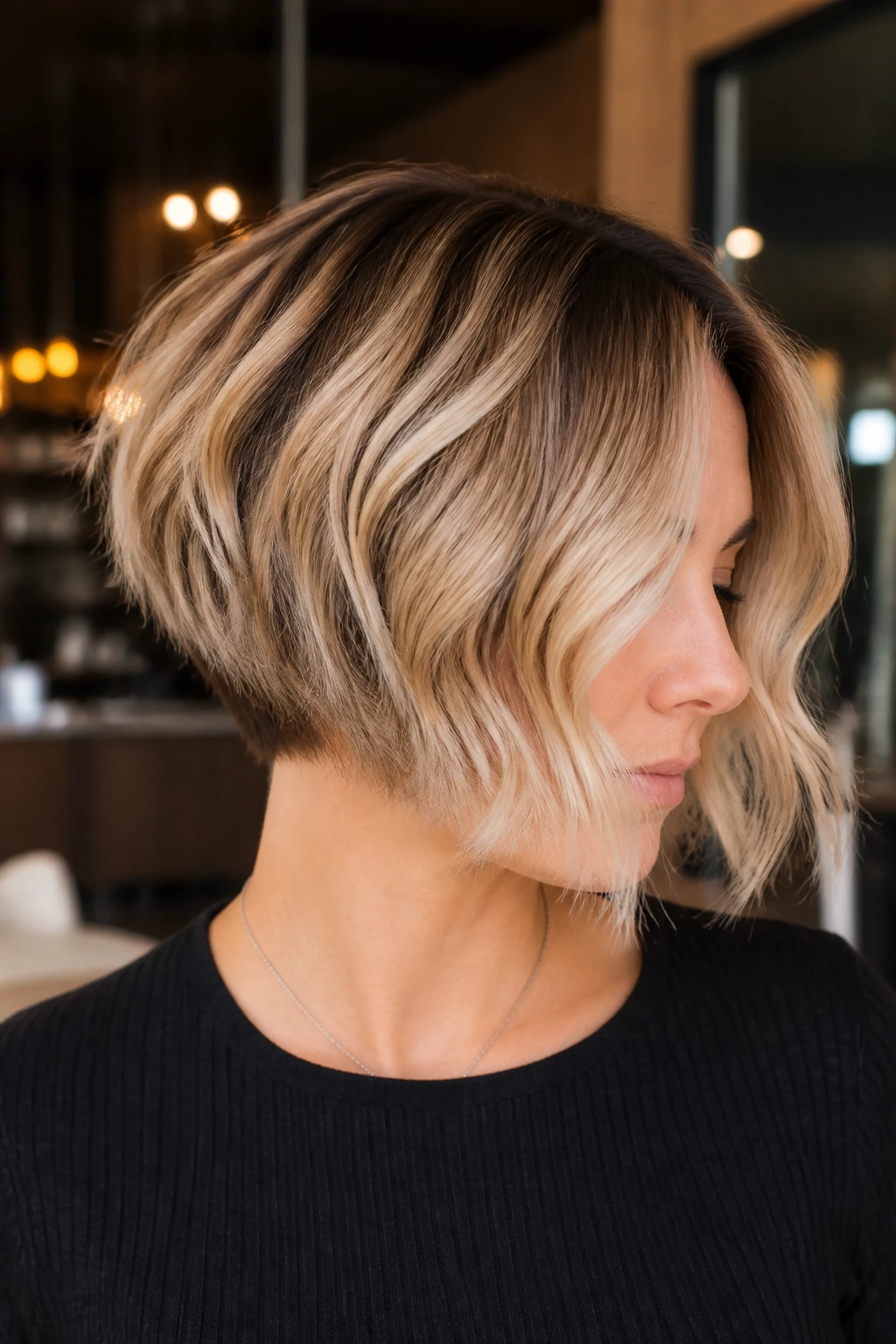
If you have thick waves that always seem to explode at the back, an inverted bob is worth a serious look. The stacked shape in the nape removes bulk where you do not want it, and the longer front pieces let the blonde show off a little more around the collarbone. A caramel root melt makes the whole cut feel warm and soft instead of stark.
The angle is the point. Shorter at the back, longer toward the front — that diagonal line gives wavy hair direction. It also means the dark root can stay a bit deeper underneath, where it won’t interrupt the bright surface layers. That makes the color look blended even when the hair moves.
- Keep the back cut tight to the head, especially if your hair is dense.
- Ask for the front to hit somewhere between the chin and collarbone.
- Style with a diffuser on low heat if your waves are naturally loose.
- Use a light glossing cream only on the front pieces so the nape stays airy.
The neckline looks clean with this cut. That small detail matters more than people think.
11. Curtain Bang Lob With Pearl Blonde Ends
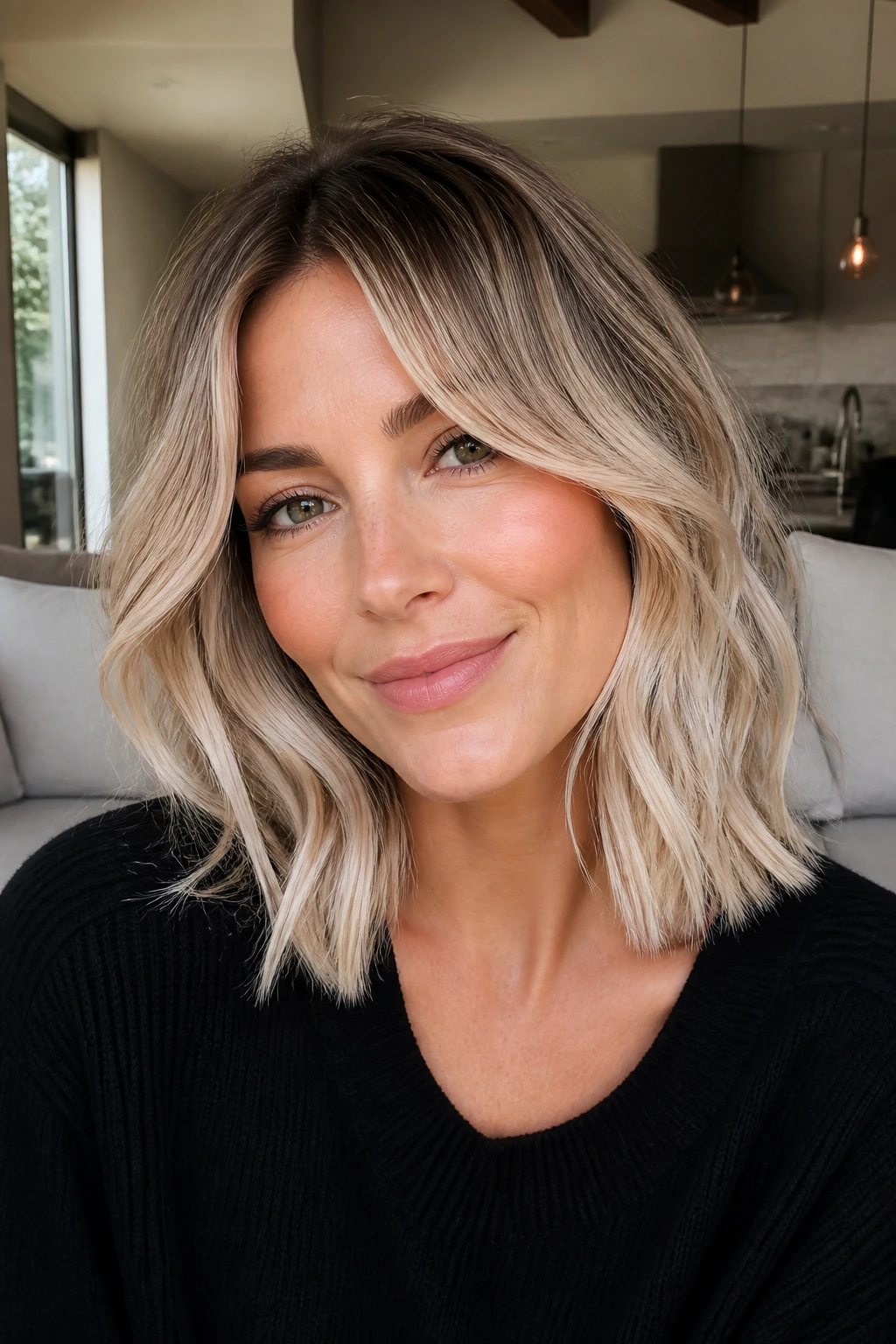
Curtain bangs can make a lob feel softer than a bob, but only if the roots stay a shade or two deeper. That darker top area stops the bangs from looking too heavy and lets the pearl blonde ends do the bright work near the collarbone. On wavy hair, the effect is easy to like because the fringe bends away from the face instead of sitting like a hard curtain.
The parting matters. A slightly off-center part helps the bangs fall in a flattering sweep, and the long front pieces blend into the rest of the cut instead of acting like a separate section. Pearl blonde works here because it reads cool and clean, especially when the waves are loose and a bit shiny. If the tone goes too icy, though, the cut can lose warmth fast.
A small round brush is enough for the bangs. Wrap them away from the face for 10 to 15 seconds with the dryer, then let them cool before touching them. That keeps the bend in place without turning the front into a helmet. The rest of the lob can air-dry or take a quick pass with a wand.
12. Airy Wolf Cut Bob With Root Shadow
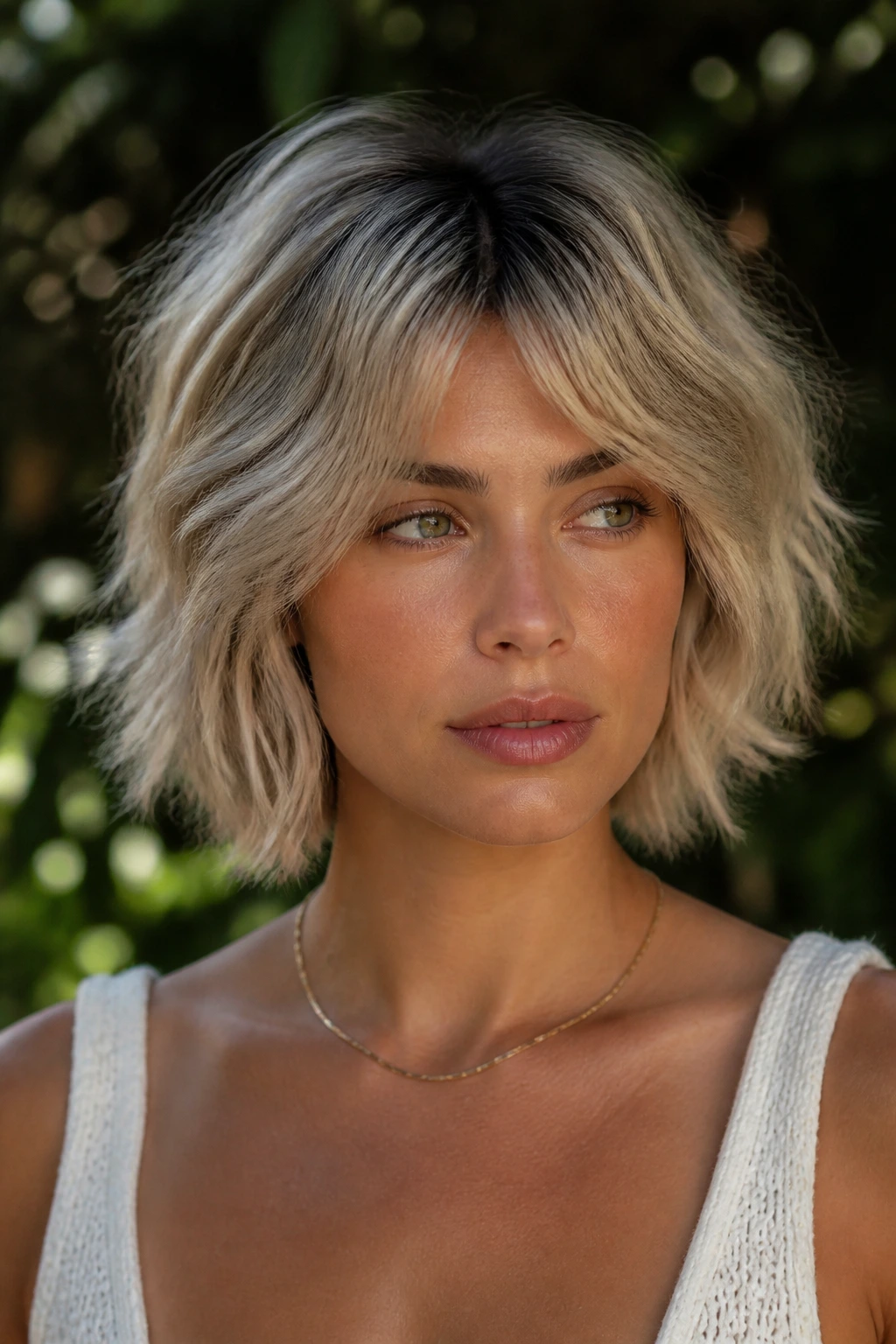
A wolf cut bob sits between a shag and a pixie, and that makes it a natural fit for wavy hair that refuses to lie still. The layers are short enough to give lift at the crown but not so short that the shape turns fluffy. Dark roots help a lot here because all those layers can start to look busy if the blonde goes too high.
This cut is best when you want movement first and polish second. The top layers should be light and broken, the bottom line should still have some shape, and the blonde should appear in scattered ribbons rather than thick bands. That kind of placement lets the wave pattern show through instead of hiding under it.
Who it suits: thicker waves, low-maintenance styling habits, and anyone who likes a little edge. Who should skip it: hair that is already fragile at the ends, because a wolf cut can make weak tips look thinner than they are.
The root shadow is what keeps this cut wearable. Without it, the layers can feel too loud. With it, the haircut looks intentional and alive.
13. Side-Parted Wavy Bob With Espresso Roots
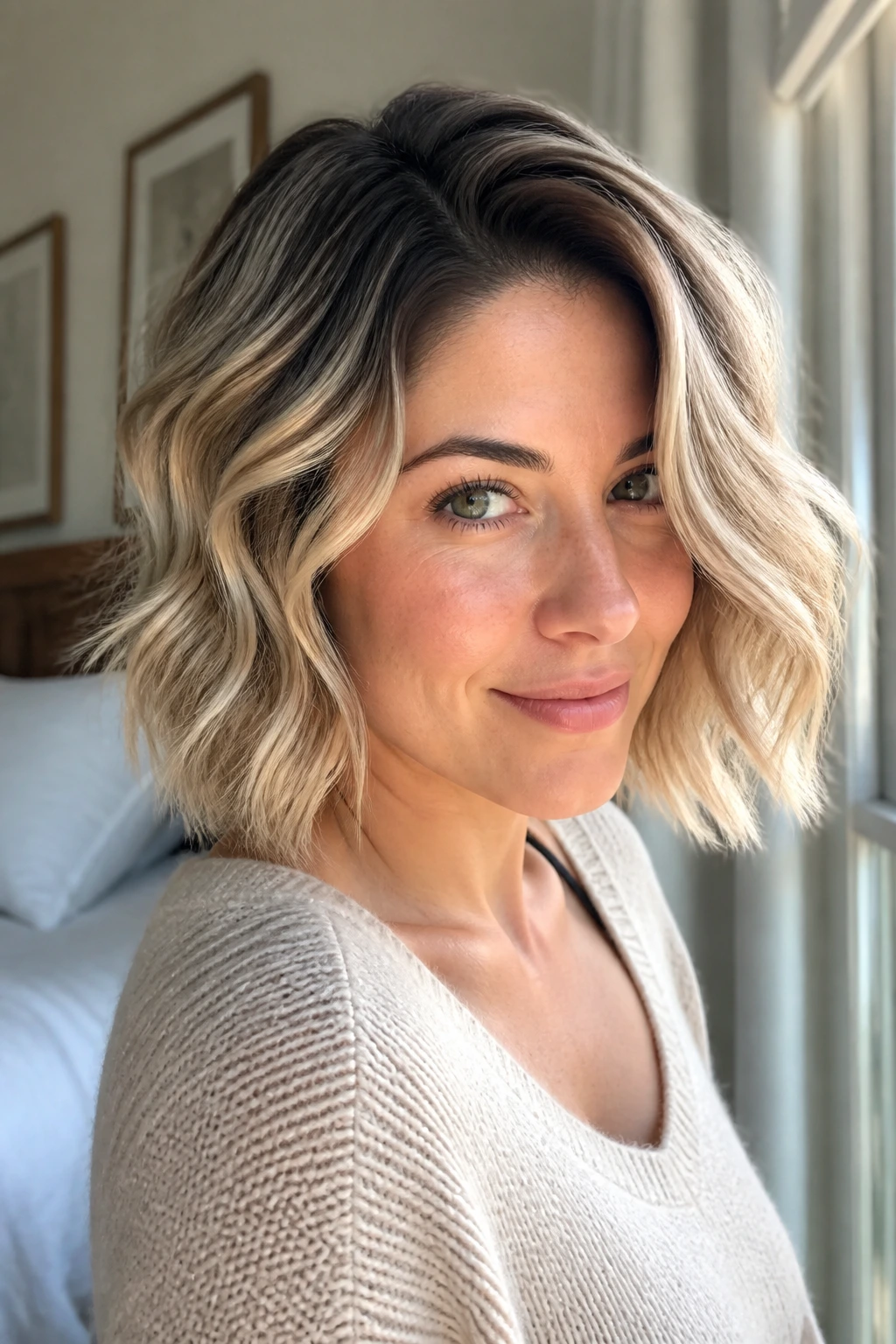
A deep side part is the fastest way to make short blonde hair with dark roots look fuller. The roots, especially if they are a deep espresso brown, create lift on the heavier side and make the brighter side frame the face. On wavy hair, that asymmetry looks natural, not fussy.
Why It Works
The part changes the whole silhouette. Instead of sitting evenly around the head, the hair gets pushed up at the crown, which gives a little height without teasing. The dark root supports that shape by anchoring the darker side near the scalp and letting the blonde bend around it.
How to Style It
- Blow-dry the root area on the heavier side first, lifting with your fingers.
- Use a root-lift spray only at the part line, not all over.
- Keep the blonde brightest from the part outward to the ends.
- Curl away from the face on the lighter side to keep the shape open.
This one is especially good if your waves are medium density and you want a bob that looks fuller on day one and day three. It does not need perfect symmetry. That is half the appeal.
14. Feathered Crop With Vanilla Blonde Ribbons
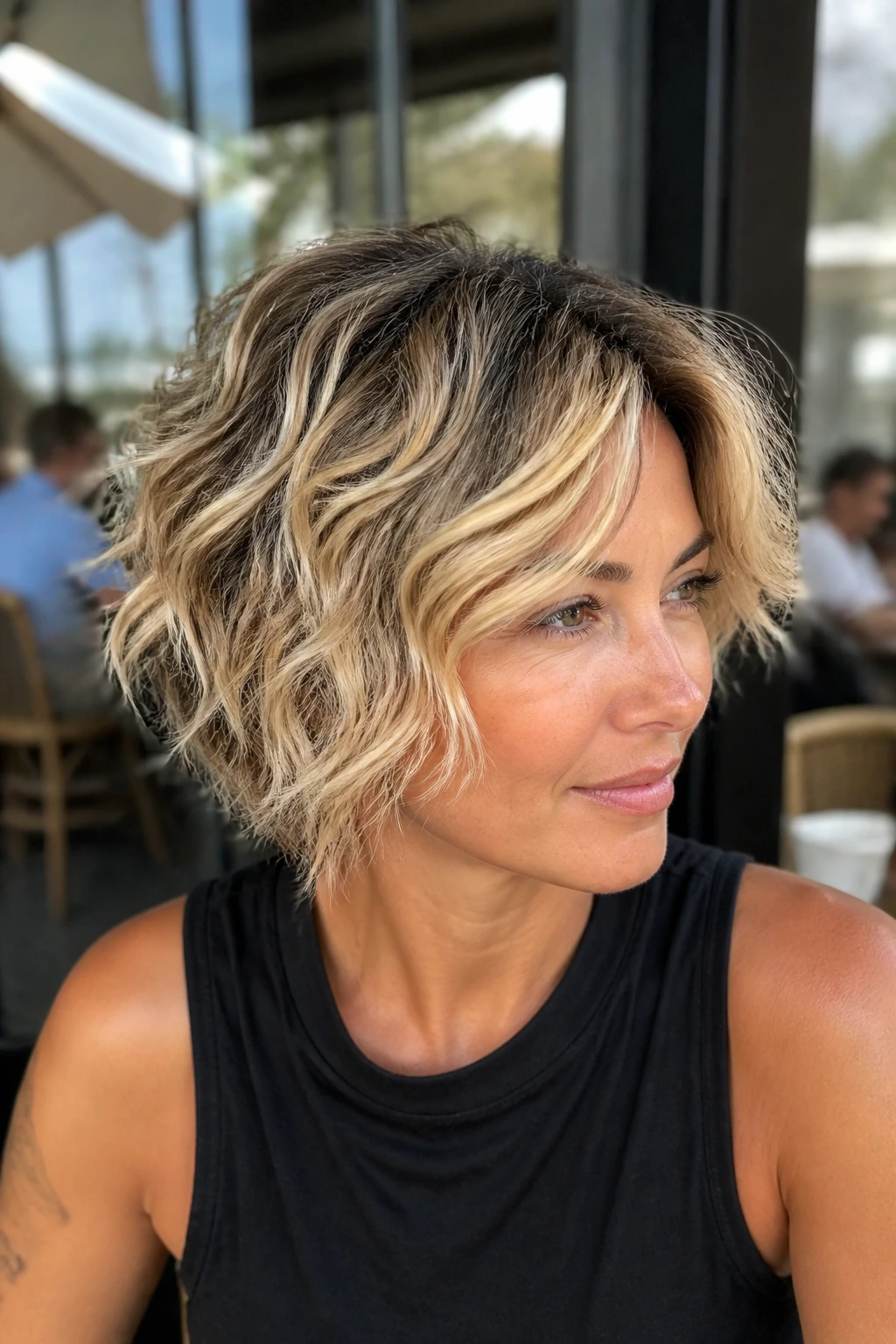
Feathering takes weight out of thick waves without stealing the shape. That is the whole reason this crop works. The ends are softly tapered, the top has some lift, and the vanilla blonde ribbons sit inside the movement instead of fighting it. Dark roots keep the whole thing grounded so the feathering does not read as fuzzy.
The cut has a little retro energy, but it does not need to look dated. Ask for the feathering to start around the cheekbone and continue through the crown, then keep the perimeter around chin length or a touch shorter. That keeps the silhouette neat while still giving the waves enough air.
A blow-dry with a medium round brush makes this look cleaner, but it also wears well if you let it dry naturally and touch only the front with a brush. The root depth matters more there, because it stops the blonding from looking patchy as the shorter pieces separate.
If your hair gets puffy in humidity, this cut can still work. Just keep the product light and skip heavy serums near the roots.
15. Tousled Crop With Platinum Tips
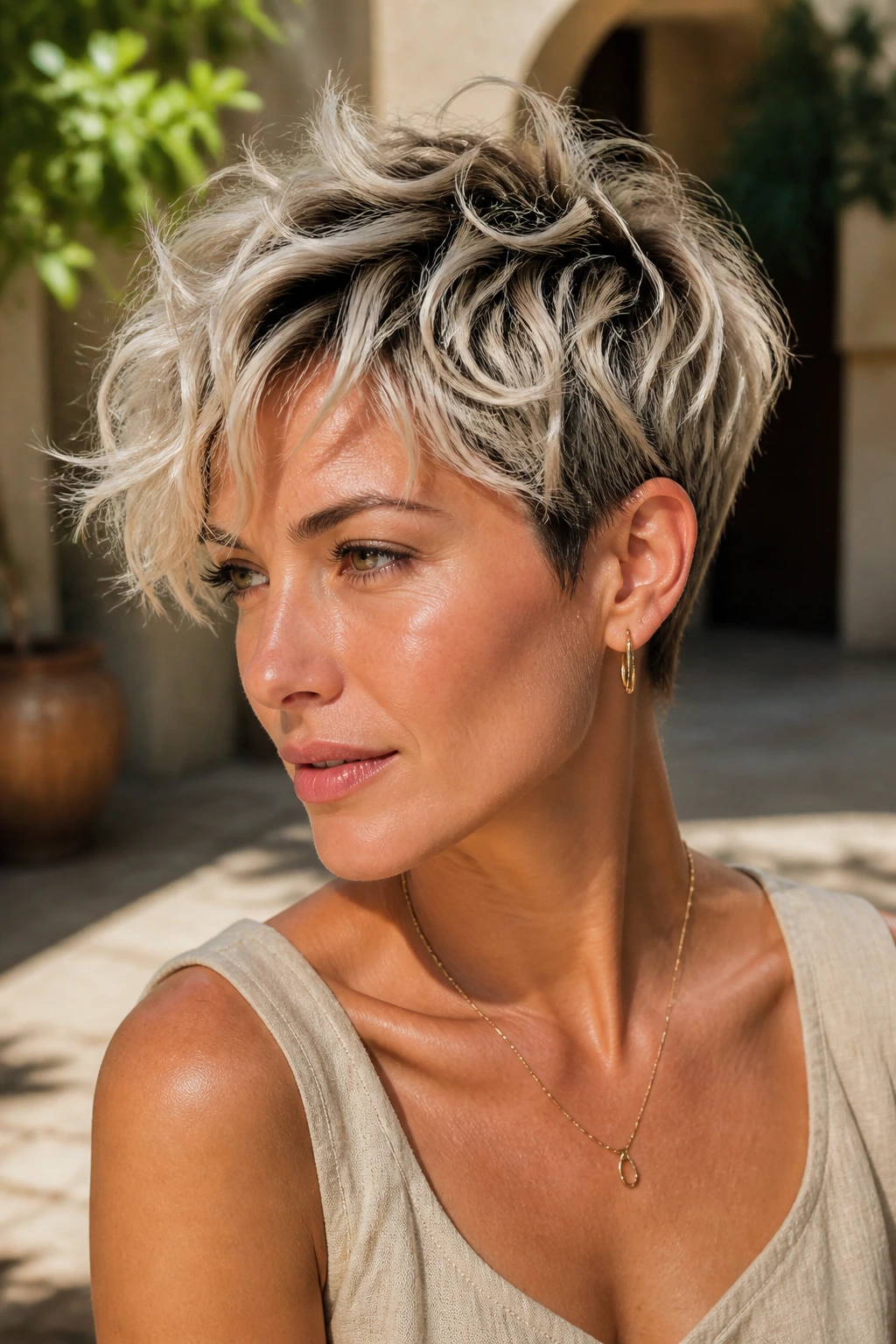
How do you keep platinum from looking harsh on a short cut? By giving the roots room to breathe. Dark roots soften the jump into the platinum tips and make the cut feel more wearable, especially on wavy hair where the lighter ends can scatter around the face. The contrast is strong, yes, but it does not have to look severe.
This crop is for someone who likes a little brightness and does not mind a bit of maintenance. Platinum hair asks for toner more often than beige or honey blonde, and short hair shows every change in tone faster. The root shadow helps by stretching the time between salon visits, because the grow-out line stays blurry rather than sharp.
How to wear it
Keep the tips piecey, not smooth. A rough-dry finish with a small amount of texture spray gives the platinum a cracked-light effect that works better than a polished blowout. If your waves are loose, bend only the midlengths and leave the ends straighter so the tips do not clump into white curls. That keeps the cut looking cool without tipping into costume territory.
16. Stacked Bob With Buttery Highlights
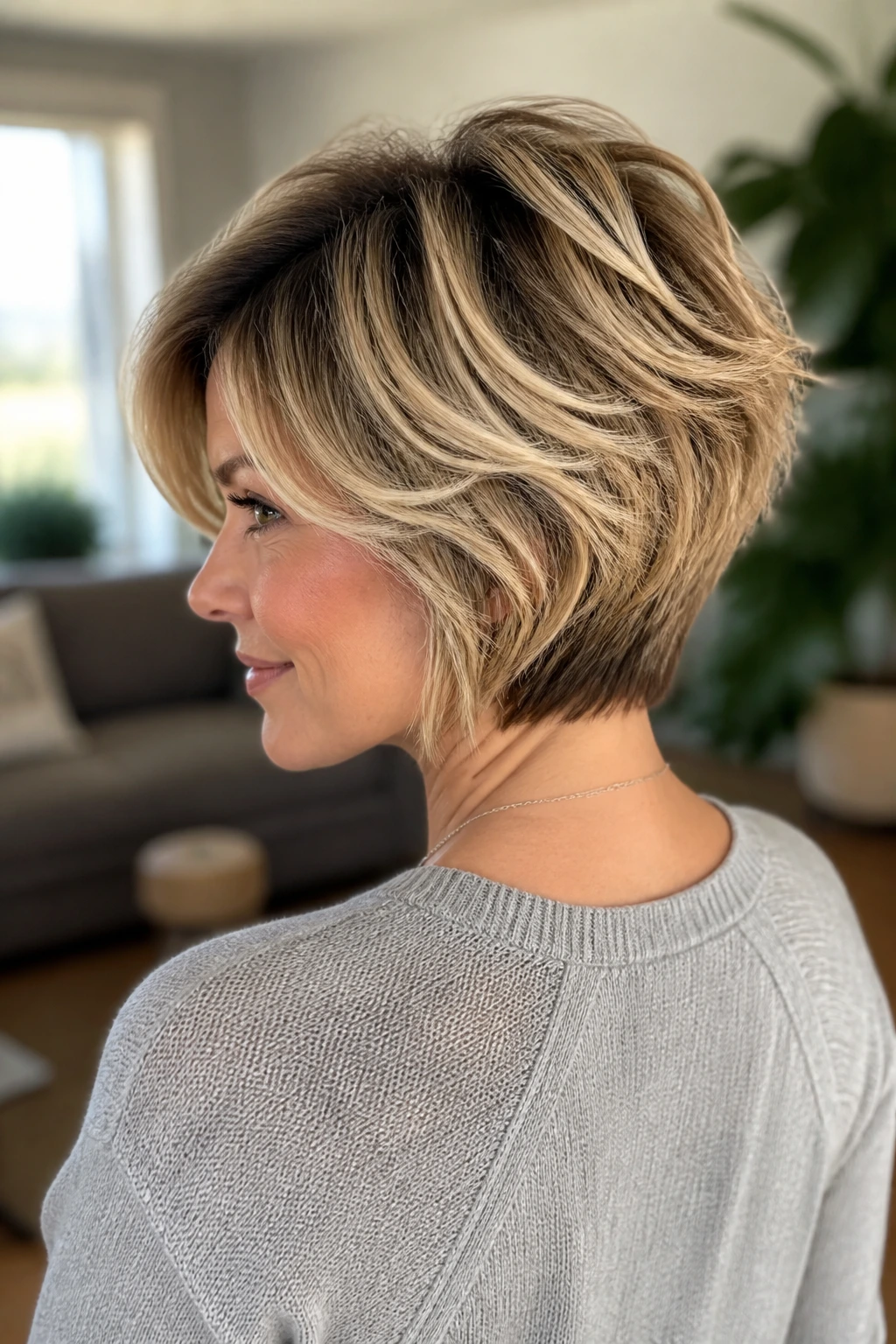
When the back of a bob starts to collapse, a stacked shape fixes the problem. The graduated layers in the nape create lift where hair naturally wants to fall flat, and buttery highlights on top make the crown feel brighter without bleaching everything around it. Dark roots underneath keep the volume from looking puffy.
This is a smart choice for fine hair that still has a wave pattern. The stack gives the illusion of density, while the lighter top layers catch the wave as they move. If your hair is very thick, this cut can still work, but the layers need to be controlled so the back does not get bulky.
- Keep the shortest point at the nape neat and tight.
- Let the top layers stay a little longer so they sweep over the stack.
- Ask for buttery blonde only through the visible surface pieces.
- Use a small round brush at the crown for lift, then leave the ends slightly loose.
The result is tidy from the side and fuller from the back. That balance is what makes the stacked bob worth considering.
17. Chin-Length Bob With Micro Layers
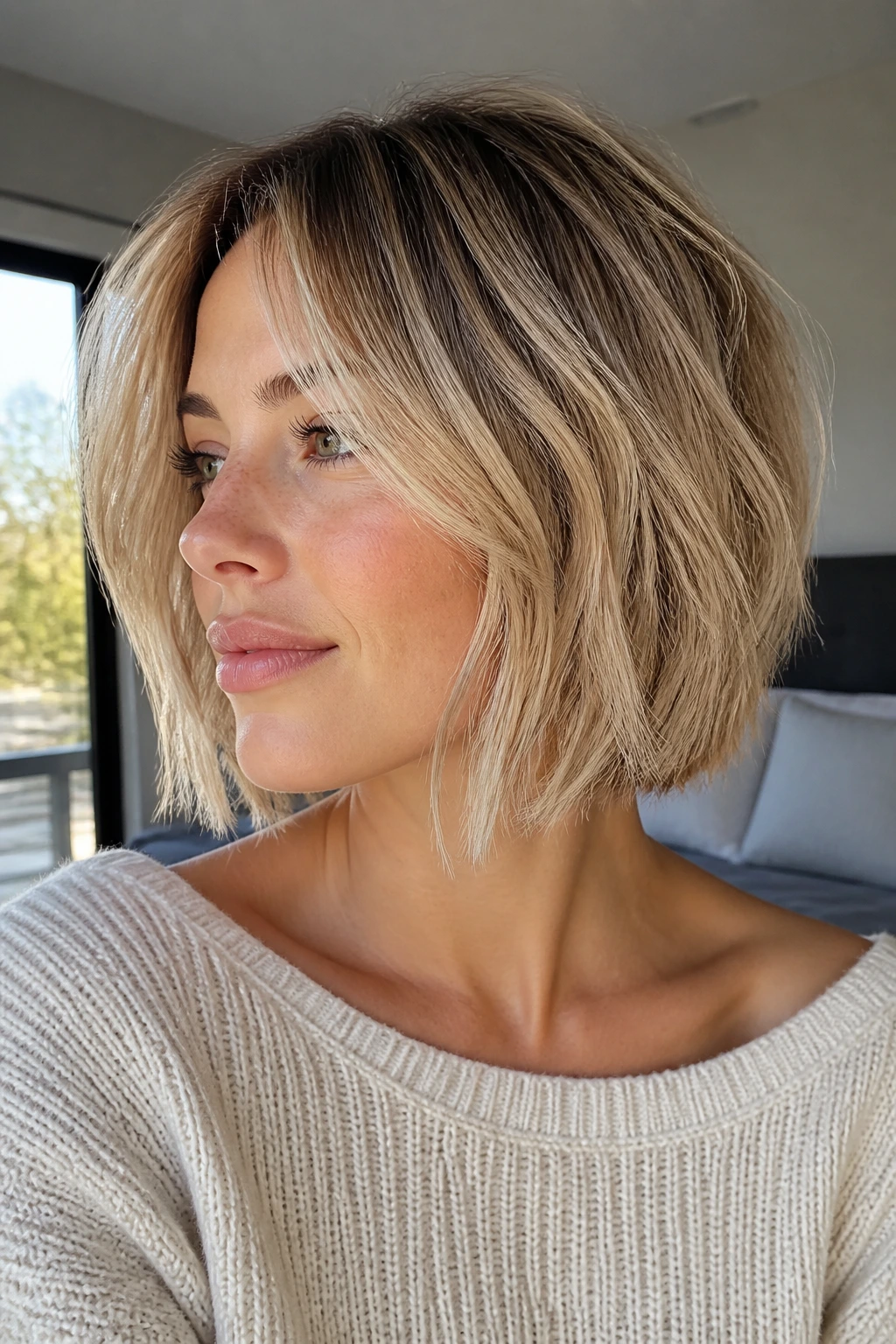
A chin-length bob with micro layers is for people who want movement without obvious choppiness. The layers are cut small and close together, so the wave pattern still reads as clean, but the ends do not sit like one heavy block. Dark roots make that subtler layering more visible, which is useful when blonde hair risks looking all one tone.
The color should stay soft and dimensional. A root shadow one to two levels deeper than the mids keeps the crown from looking striped, and the blonde can start to brighten around the cheekbones. That placement is flattering because it lifts the face without screaming for attention.
The cut is a good fit for medium waves that need help with shape around the jaw. It also grows out nicely, which matters more than people admit. A bob like this does not demand constant correction; it just needs the ends dusted every few weeks and the color refreshed when the blonde starts to feel too flat. That is a nice trade, honestly.
If you hate obvious layers but still want texture, this is the one to ask for.
18. Piecey Pixie Bob With Cool Beige Blonde
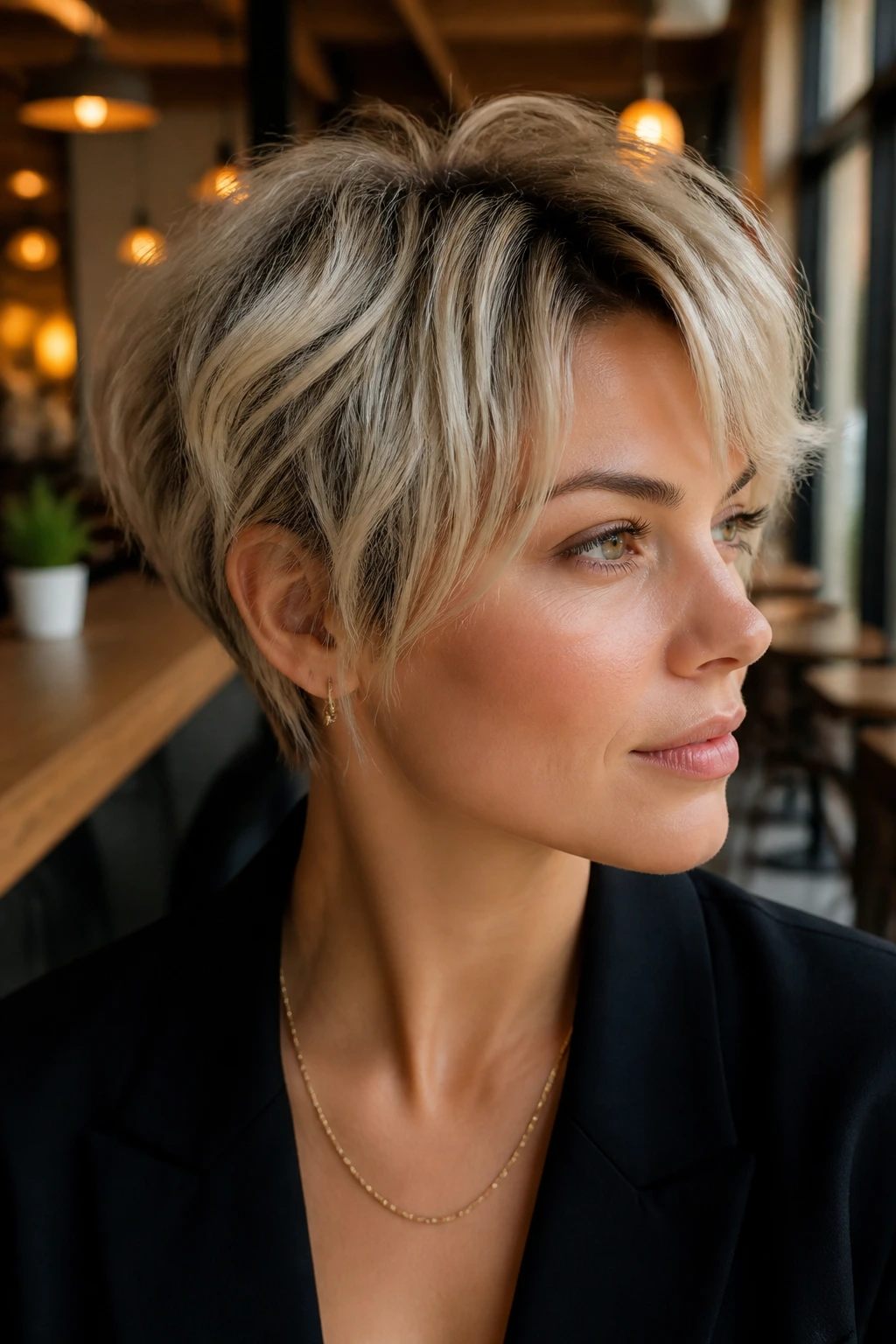
A piecey pixie bob sits between a pixie and a bob, and that makes it useful for anyone who wants short hair but not an ultra-short cut. Compared with a full pixie, this version keeps more length around the ears and front, which gives wavy hair enough room to bend. The dark roots keep the shape from becoming too bright at the scalp, and the cool beige blonde stops the whole look from going yellow.
What Makes It Different
- The nape is shorter than the front.
- The top usually stays around 2 to 3 inches long.
- The beige blonde is placed in broken pieces, not one solid sheet.
- The root area stays shadowed so the crop does not feel over-bleached.
Who It’s Best For
It works well on medium-density waves and on hair that gets fluffy when it is cut too bluntly. If you want a style that feels neat but still has movement, this is a strong choice. It also pairs well with glasses, because the shape stays close to the head without hiding the face.
A little wax at the ends is enough. Too much product will take the piecey part right out of it.
19. Wavy Bowl Bob With Smudged Roots
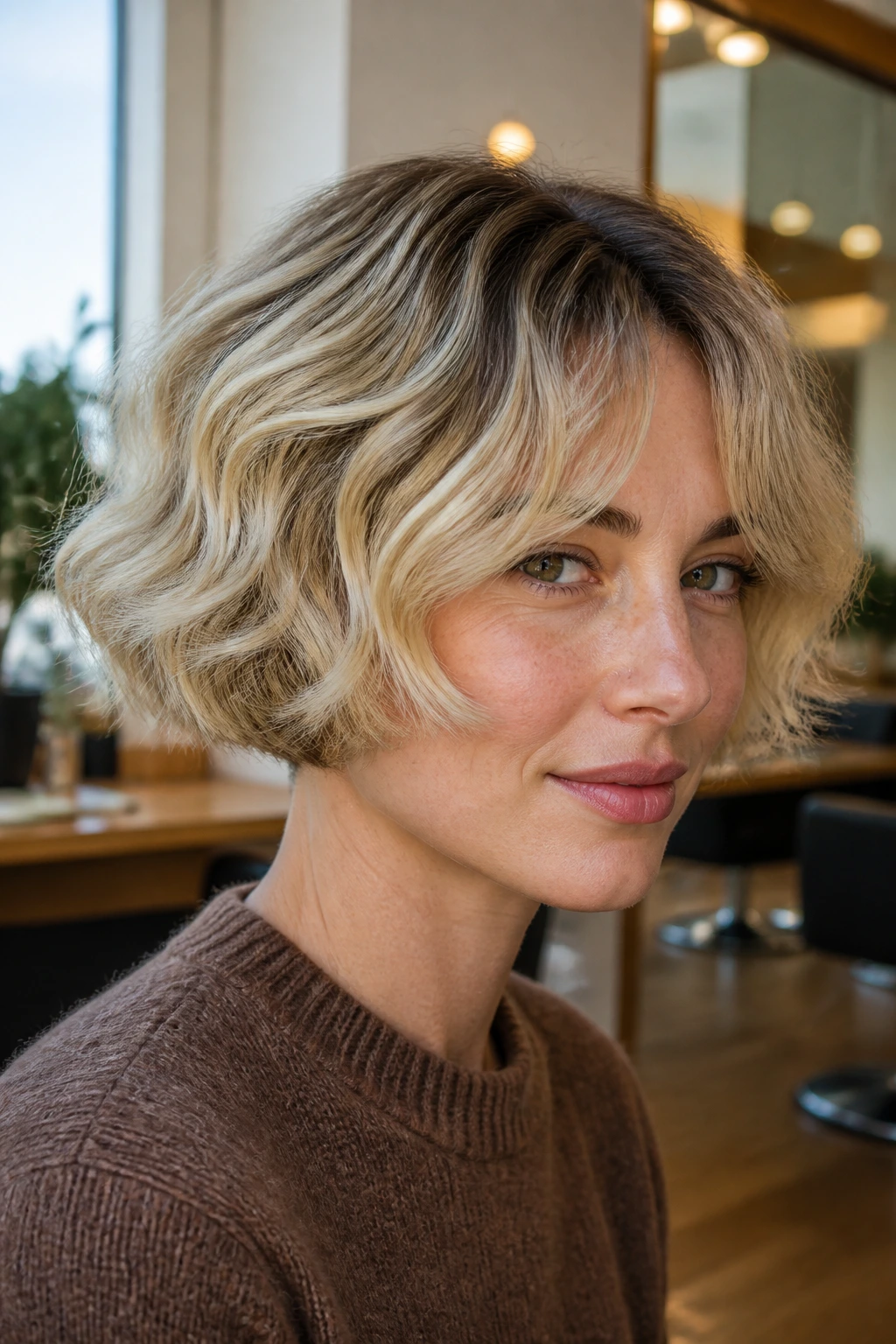
A bowl bob works when the edges are softened and the color is smudged. That is the whole secret. If the line is too perfect, the cut can feel heavy. If the roots are too light, the shape loses definition. Put the two together, though, and you get a short blonde look that feels modern instead of stiff.
The wave pattern matters more here than in almost any other cut on the list. The hair needs just enough bend to break up the roundness. A deeper root at the crown helps, because it prevents the top from going too bright and keeps the curve visible. The blonde can then live on the outer layers, where it catches motion around the cheekbones and ears.
The Shape to Ask For
- Keep the front slightly longer than eyebrow level.
- Soften the perimeter with point cutting.
- Leave the root shadow visible under the top layer.
- Add tiny internal layers so the bowl does not sit like a cap.
This is not a shy haircut. That said, it is more wearable than people think when the color is handled with restraint.
20. Short Layered Lob With Champagne Balayage
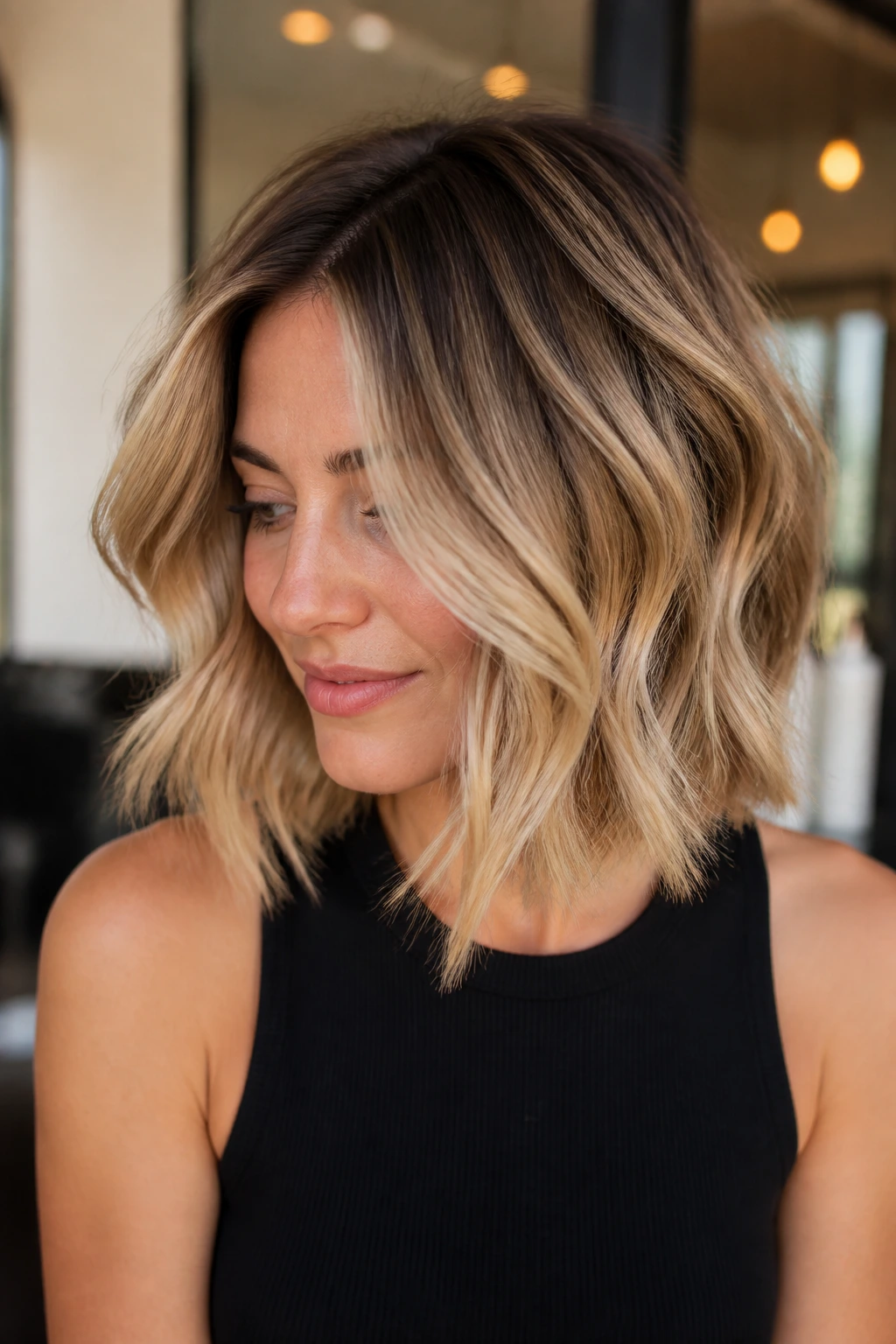
If you want one cut that survives air-drying, a rushed blowout, and the occasional skipped salon appointment, this is the one I’d hand over first. A short layered lob gives wavy hair enough length to move, while the dark root and champagne balayage keep the blonde soft at the scalp and brighter through the mids and ends.
The layers should not be too short. They need to support the wave, not slice it up. A good version usually lands between the chin and collarbone, with the brightest pieces around the front and lower half of the hair. That way the color looks dimensional from every angle, and the grow-out stays calm instead of obvious.
This is also one of the easiest cuts to live with. You can wear it tucked behind one ear, thrown into a half-up clip, or left loose with a quick bend from a wand. The root shadow does the heavy lifting, and the champagne blonde gives the hair enough glow that it never feels dull. If you want short blonde hair with dark roots that looks polished without demanding perfect styling, this is a very safe bet.
And yes, it still looks good on day three.
