



Black hair can do something a lot of lighter shades can’t: it can look lush, expensive, and sharp all at once. On a round face, though, the placement matters more than the color itself. A black balayage that sits too high around the cheeks can make the face look wider; a smarter blend pulls the eye downward, softens the sides, and gives you that long, clean line people always want from a cut.
That’s why balayage for round faces has to be placed with a little more thought than a standard all-over lightening job. The best versions use shadow at the roots, brighter pieces below the cheekbone, and movement in the lengths. A few well-placed ribbons can do more than a whole head of scattered highlights.
I’ve always liked black balayage because it doesn’t fight the depth of dark hair. It works with it. You keep the drama of black, then add dimension with espresso, mocha, caramel, plum, ash brown, or bronze, depending on how bold you want to be and how much upkeep you’re willing to live with.
The looks below are built for round faces first. Some lean soft and barely there. Others go louder. All of them use placement to their advantage, which is the part that matters most.
1. Soft Espresso Ribbons on a Collarbone Lob
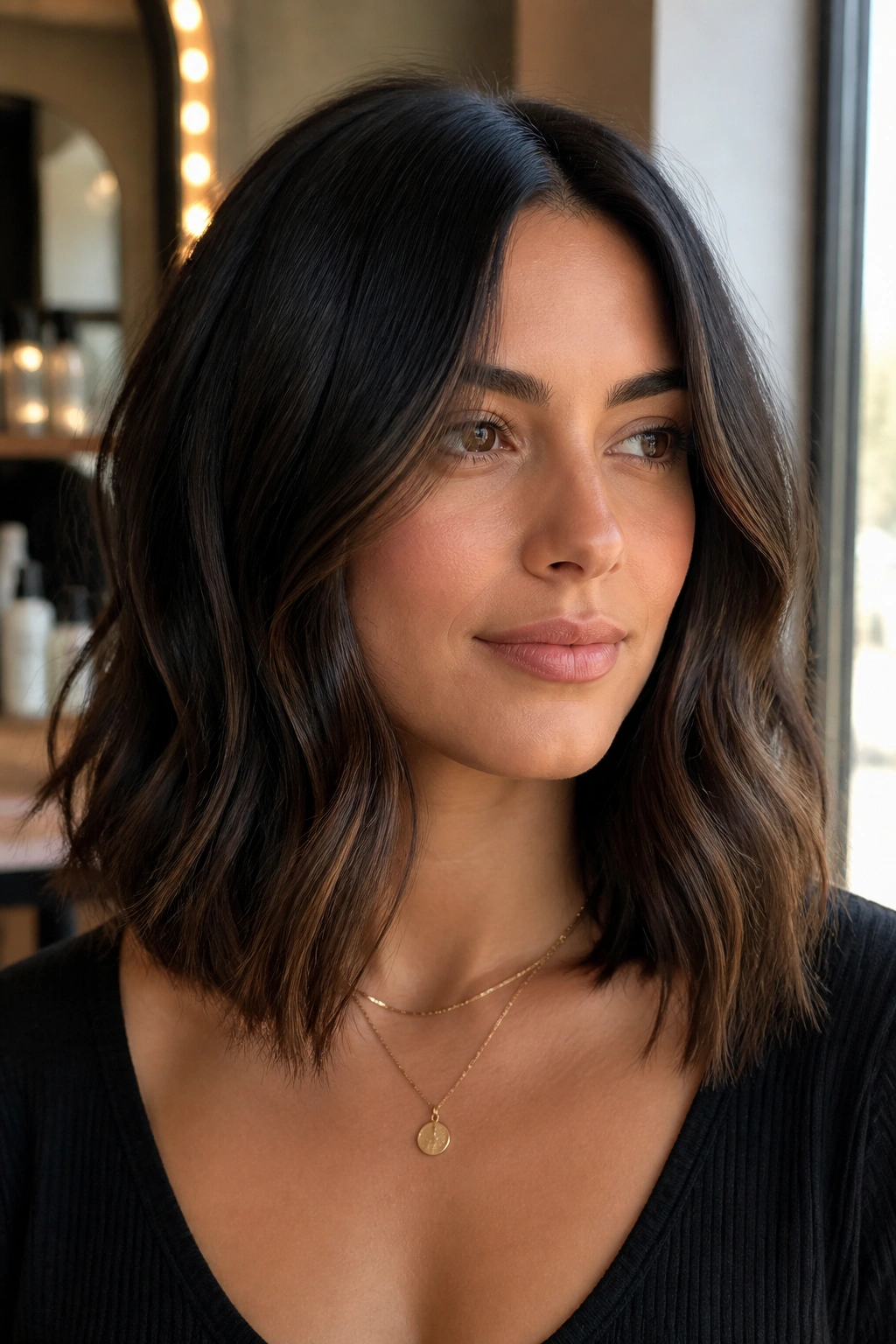
A collarbone lob is one of the easiest cuts to flatter a round face, and soft espresso ribbons make it look longer without getting flashy. The trick is to keep the lightening low and loose, with the brightest pieces starting below the cheekbone and drifting toward the ends. That keeps the center of the face from feeling crowded.
Why it works
This kind of balayage lives in the middle ground, which I like a lot for black hair. You still read the base as dark and rich, but the espresso pieces break up the solid block of color just enough to add movement. On a round face, that movement matters because it creates a vertical pull instead of a side-to-side spread.
Ask for a soft root shadow and hand-painted ribbons that are a shade or two lighter than the base, not a full jump into caramel. The finish should look like the sun touched the hair in a few places, not like stripes.
Best styling move: a loose bend with a 1.25-inch curling iron, brushed out once it cools. That soft wave helps the ribbons show without making the cut puff out at the cheeks.
2. Face-Framing Mocha Money Piece
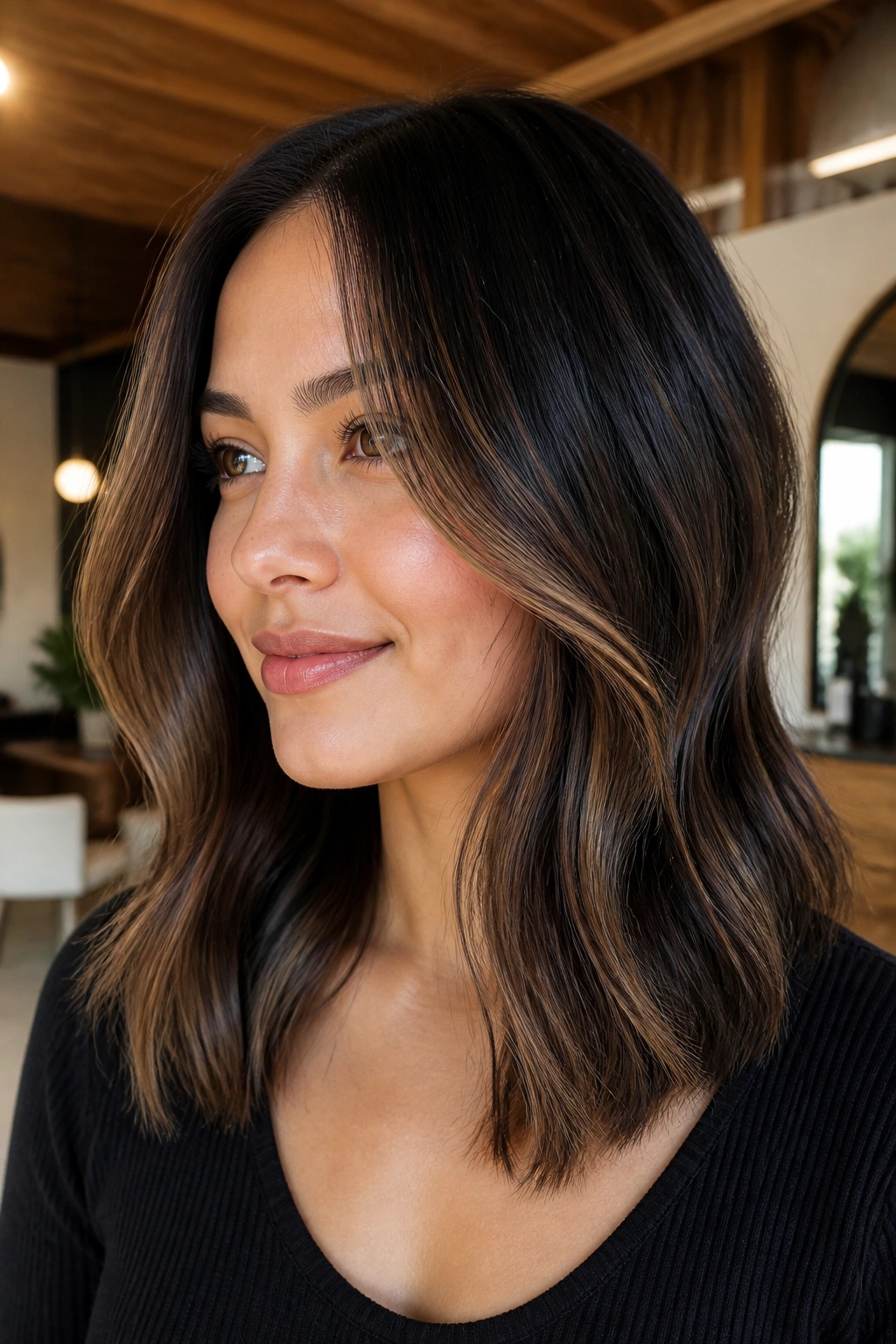
A money piece can be a little dangerous on a round face if it starts too high or gets too chunky. Done right, though, face-framing mocha pieces are one of the smartest tricks in the whole lineup. They narrow the face visually and make the cheek area feel cleaner.
The best version begins near the outer brow and slides down past the cheekbone, not right across the widest part of the face. That downward line is the whole point. If the pieces are too light, they’ll shout. If they stay in the mocha family, they’ll contour instead.
I like this look on shoulder-length cuts, especially if the front layers are a touch longer than the rest. The dark base keeps the color grounded, and the front brightness gives you a little lift without stealing the show from your features.
What to ask for at the salon
- A soft face frame, not a blunt stripe
- Mocha or cocoa tones one level lighter than your base
- Brightest placement below the temple area
- A blurred root so the front doesn’t look boxed in
The best part is maintenance. You can let this grow out for weeks before it starts to look tired.
3. Blue-Black Balayage on Long Waves
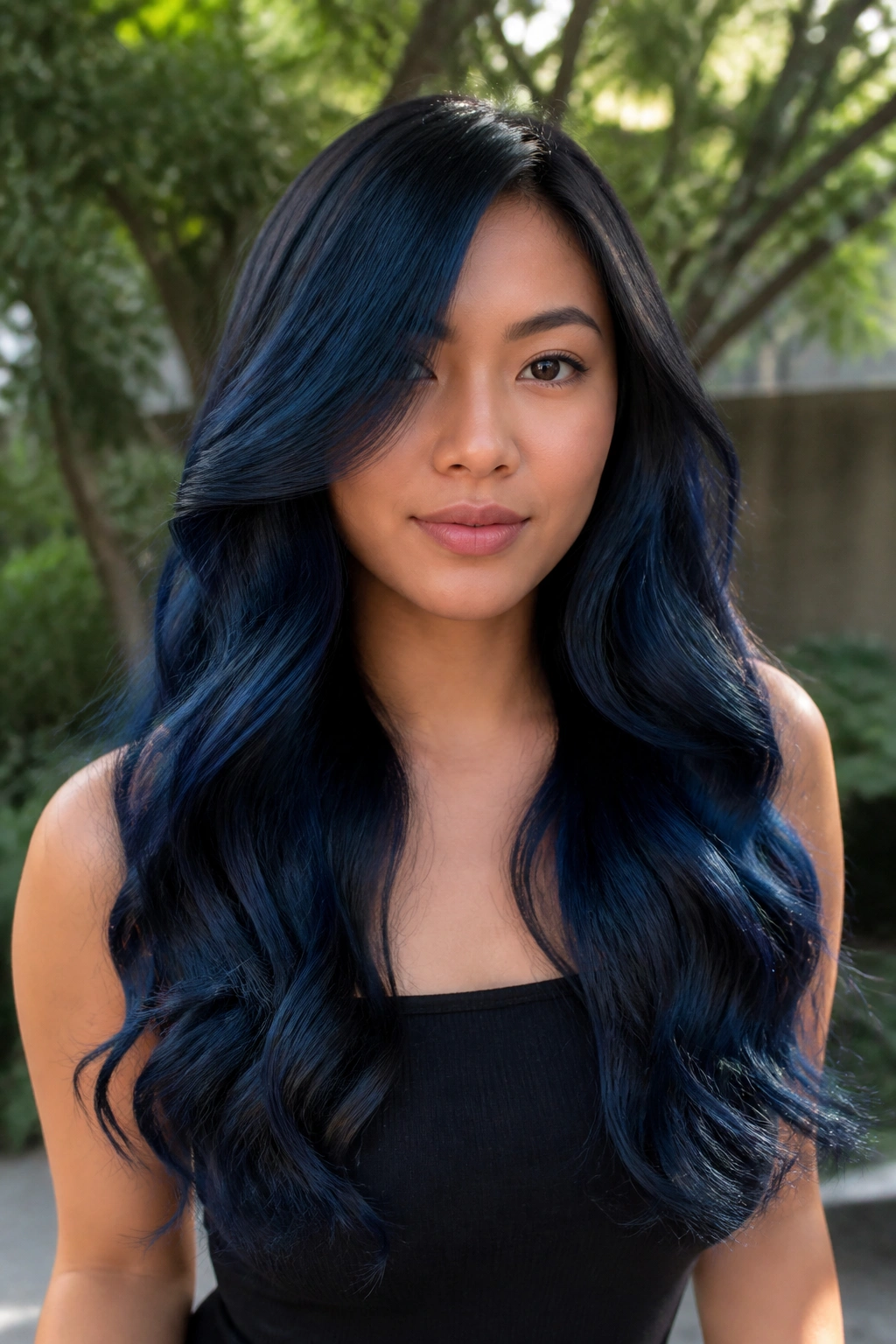
Blue-black balayage is for the person who wants depth first and color second. It sounds dramatic, and it is, but the effect is sleek rather than loud when the lightening stays fine and cool. On a round face, long waves turn that depth into a vertical line that feels lean and elegant.
The blue cast is subtle in low light and richer in bright light, which keeps the hair from looking flat. I like this look with hair that has some natural thickness, because the dark shine makes every bend in the wave visible. Fine hair can wear it too, but you’ll want fewer, softer pieces so the ends do not look stringy.
Best styling move
A center part can work here, but a slightly off-center part often does more for round faces because it breaks symmetry and keeps the eyes moving. Let the waves start below the jaw, not at the cheek. That one detail changes the whole read of the cut.
Color note: ask for a blue-black glaze over deep black balayage pieces, not a full blue tone. You want the shine to show first, the color second.
4. Ash-Brown Balayage on a Curly Shag
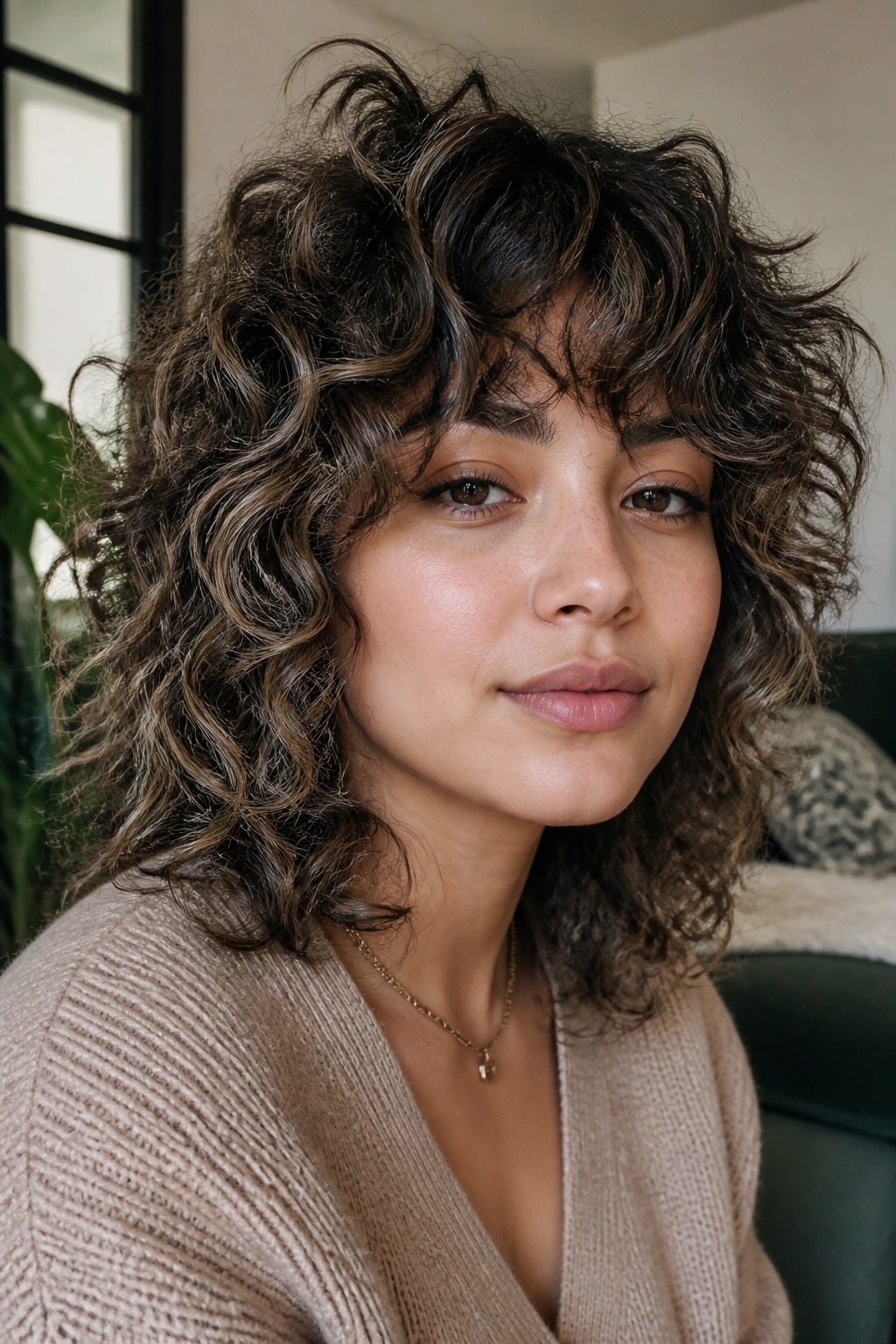
A curly shag gives round faces something they often need: height at the crown and softness at the edges. Add ash-brown balayage, and the curls stop looking like one big shape and start looking carved out, piece by piece.
The ash tone cools down the black base without making it muddy. That matters. Too much warmth can make the hair look heavier, especially around the sides of the face. Ash-brown stays muted, which keeps the curl pattern crisp and gives the face more lift.
The shag haircut does half the work here. Shorter layers near the top create volume where you want it, while longer pieces around the jaw keep the face from looking boxed in. The balayage should follow those layers, with brighter paint on the curls that fall forward and softer tone in the back.
A lot of people think curly hair needs stronger contrast. Sometimes it does. Here, I think restraint wins.
Tip: diffuse on low heat and stop when the curls are about 90% dry. The last bit of air-drying keeps the shape from going frizzy and lets the color show in clean, separate pieces.
5. Chestnut Melt with a Deep Side Part
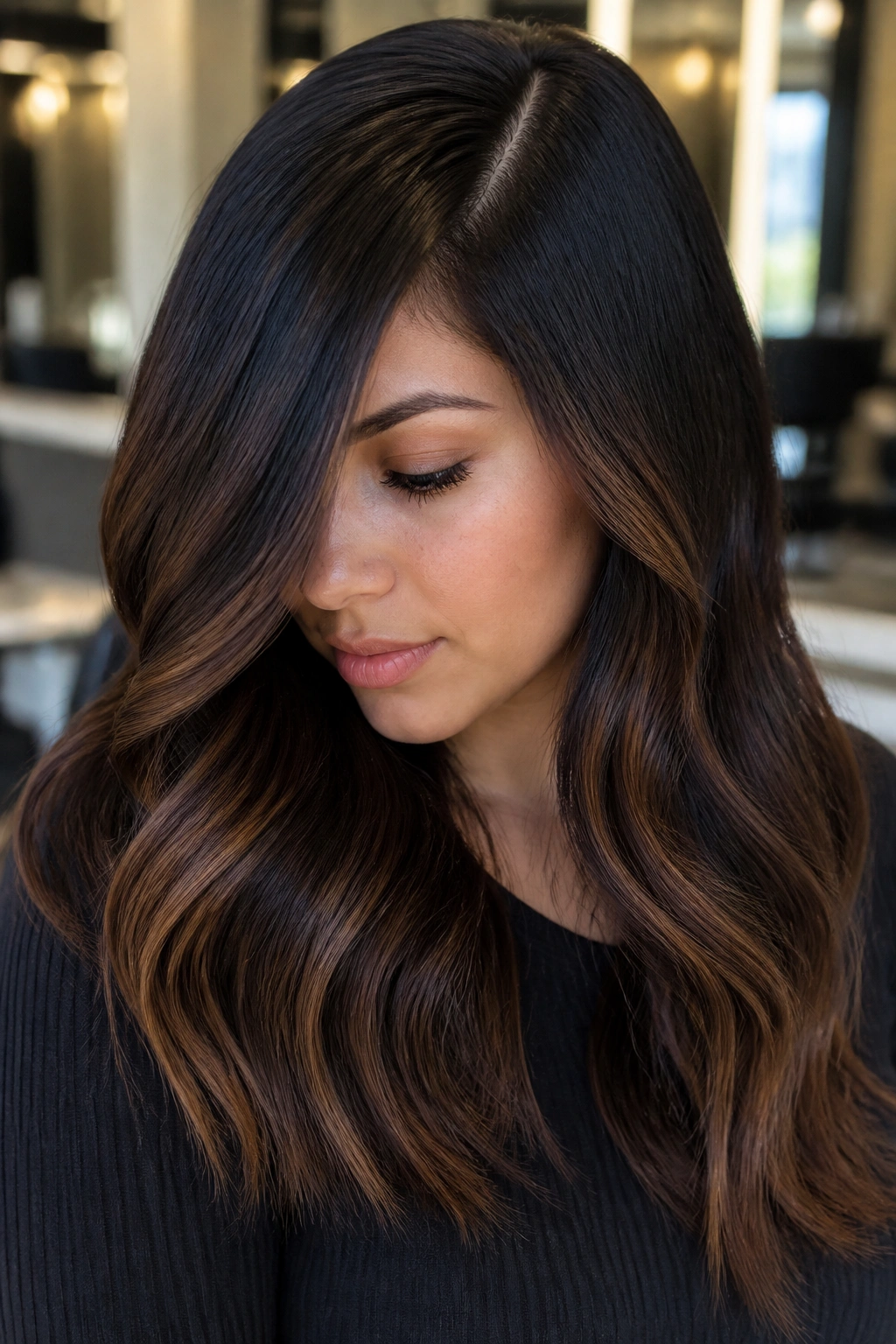
A deep side part can be a cheat code for round faces, and I mean that in the best way. It breaks the circle of the face, adds height on one side, and lets chestnut balayage slide through the lengths like a soft melt instead of a stripey highlight job.
This look works especially well when the black base stays richest at the roots and crown, then opens into chestnut through the mid-lengths and ends. The transition should feel gradual. No hard line. No obvious stop point. Just a slow shift from black into warm brown that keeps the hair looking glossy.
I prefer this on longer cuts, or on a lob with one side tucked behind the ear. That simple move exposes the face frame and makes the side part do more work. It also keeps the color from sitting flat against the cheeks.
A round face needs angles. A side part gives you one, and chestnut gives it warmth without puffiness.
6. Caramel Curtain-Bang Balayage
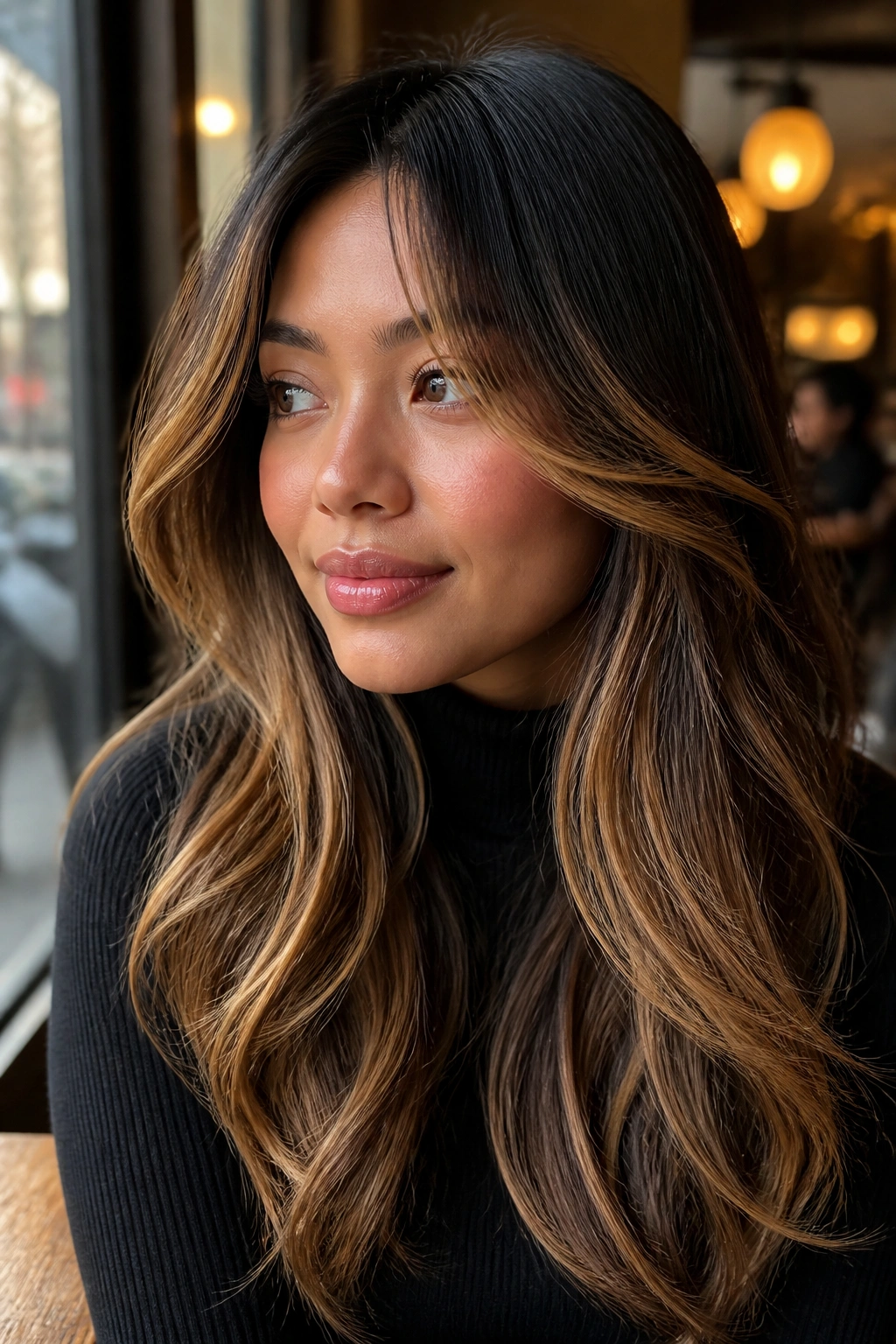
Curtain bangs can be gorgeous on round faces, but they need space. Caramel balayage gives those bangs a little movement so they do not sit like a curtain across the widest part of the face. The trick is to keep the brightness airy and to sweep the bangs open, not straight down.
The best caramel pieces start around the temples and taper into the front layers. That helps the bangs blend into the rest of the cut instead of becoming a separate feature. On black hair, caramel reads brighter than chestnut, so you want to keep the contrast soft enough that the finish still feels classy and not chunky.
Bang length matters
If the bangs end above the cheekbone, they can make the face look shorter. If they hit around the cheekbone or slightly below, they frame the face and lead the eye downward. That little bit of extra length changes everything.
This look loves a blowout with a round brush and a touch of bend at the ends. Keep the root lift gentle. Too much volume near the temples can widen the face, which defeats the point.
7. Burgundy-Black Balayage for Bold Contrast
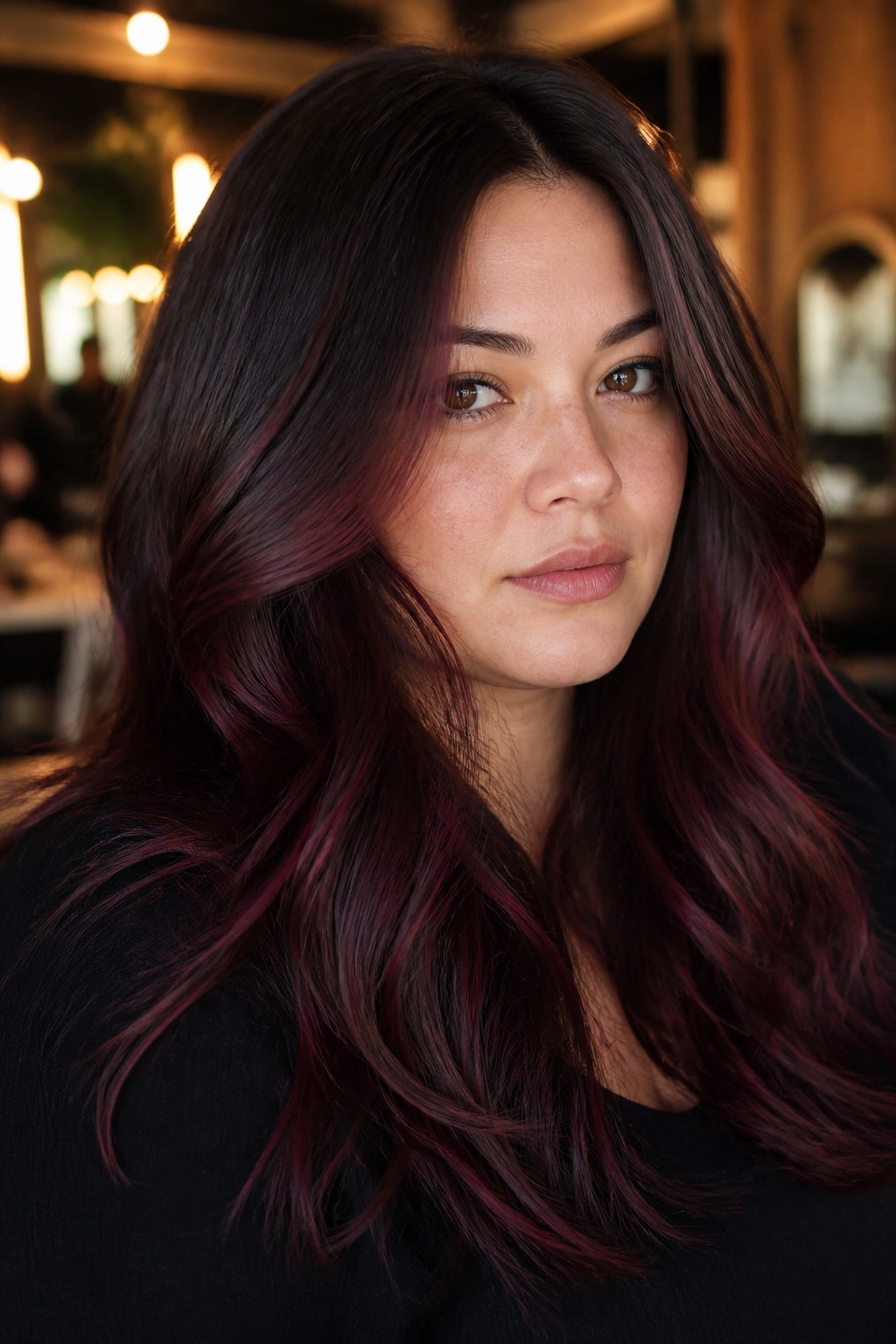
Sometimes a round face looks best with color that is a little moody. Burgundy-black balayage gives you depth, richness, and a sharp edge that still flatters because the color runs through the lengths instead of sitting all over the crown.
I like this look when the burgundy is more wine than cherry. That deeper tone keeps the hair sophisticated and makes the black base look even darker by comparison. On a round face, the vertical sweep of color through long layers helps lengthen the silhouette, especially if the front is cut with a soft angle.
This one is not shy. Good. It should not be. The whole point is to have something that looks polished in low light and slightly dramatic in daylight. If you want hair that feels a little more personal than standard brown highlights, this is a strong pick.
The maintenance is manageable if the burgundy is placed as a glaze over hand-painted pieces rather than a full saturated panel. That keeps the grow-out softer and avoids a harsh line at the roots.
Best for: dark brunettes who want dimension with a little attitude and do not mind refreshing tone every few weeks.
8. Mushroom Brown Balayage on Straight Hair
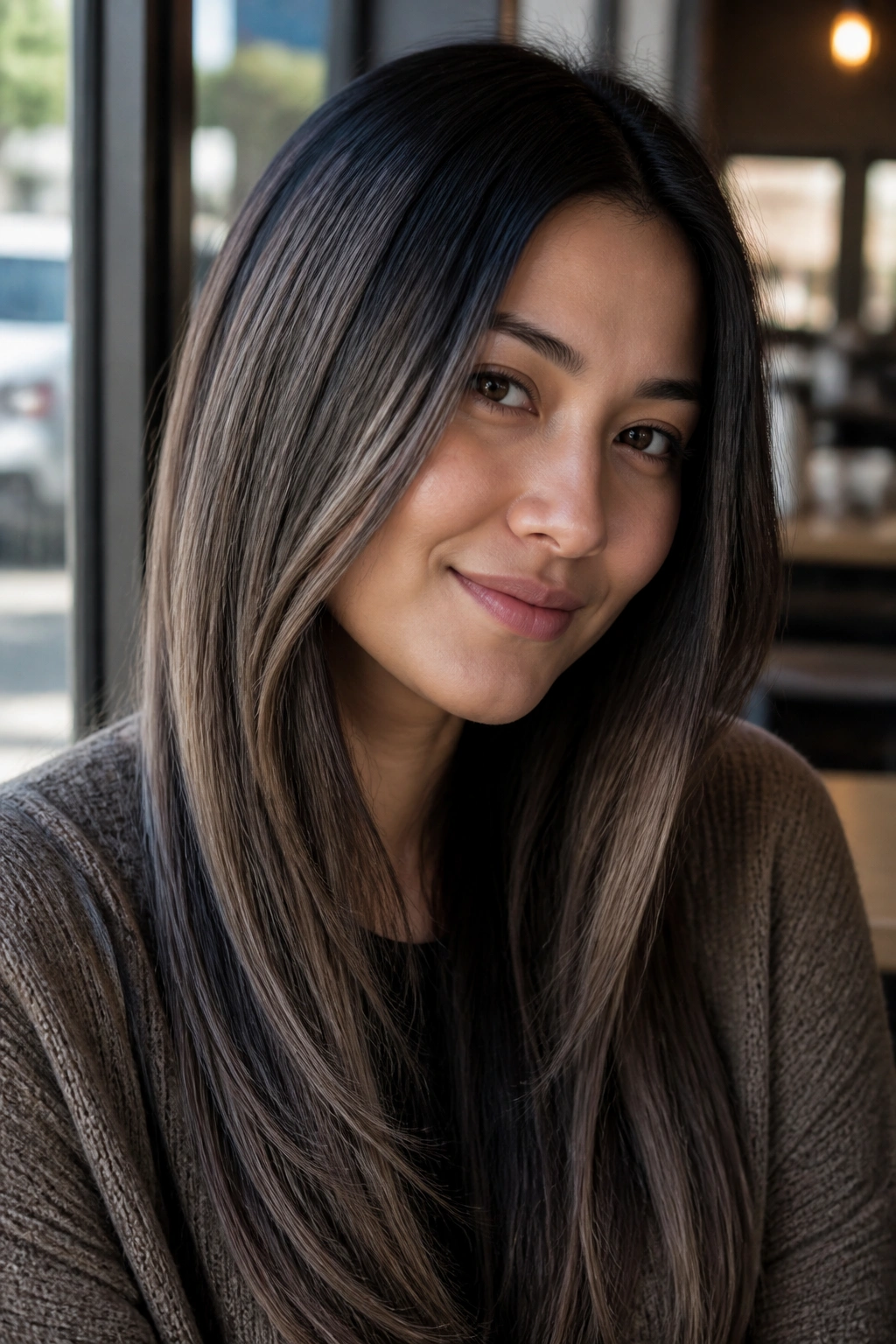
Straight hair on a round face can go flat fast, so the color has to do some of the contouring work. Mushroom brown balayage is one of my favorite answers because it stays cool, earthy, and understated, which keeps the hair from ballooning outward.
The look depends on tonal changes more than bright contrast. Think taupe, beige-brown, and soft smoky brown woven through black lengths. The result is quiet but not dull. On straight hair, that softness is what keeps the style from reading heavy at the sides.
What makes it different
- The finish stays cool instead of warm
- The contrast is low, which suits sleek textures
- The longest pieces near the jaw stay darker
- The ends catch the light without looking bleached
If you wear a middle part, this shade keeps the line elegant rather than severe. If you wear a side part, it adds a little lift without shouting. Either way, it suits people who want dimension but do not want to fight brassiness all the time.
A gloss every so often helps a lot here. Straight hair shows tone shifts fast, and a quick glaze keeps the mushroom shades from going flat or muddy.
9. Cinnamon Glaze on a Collarbone Cut
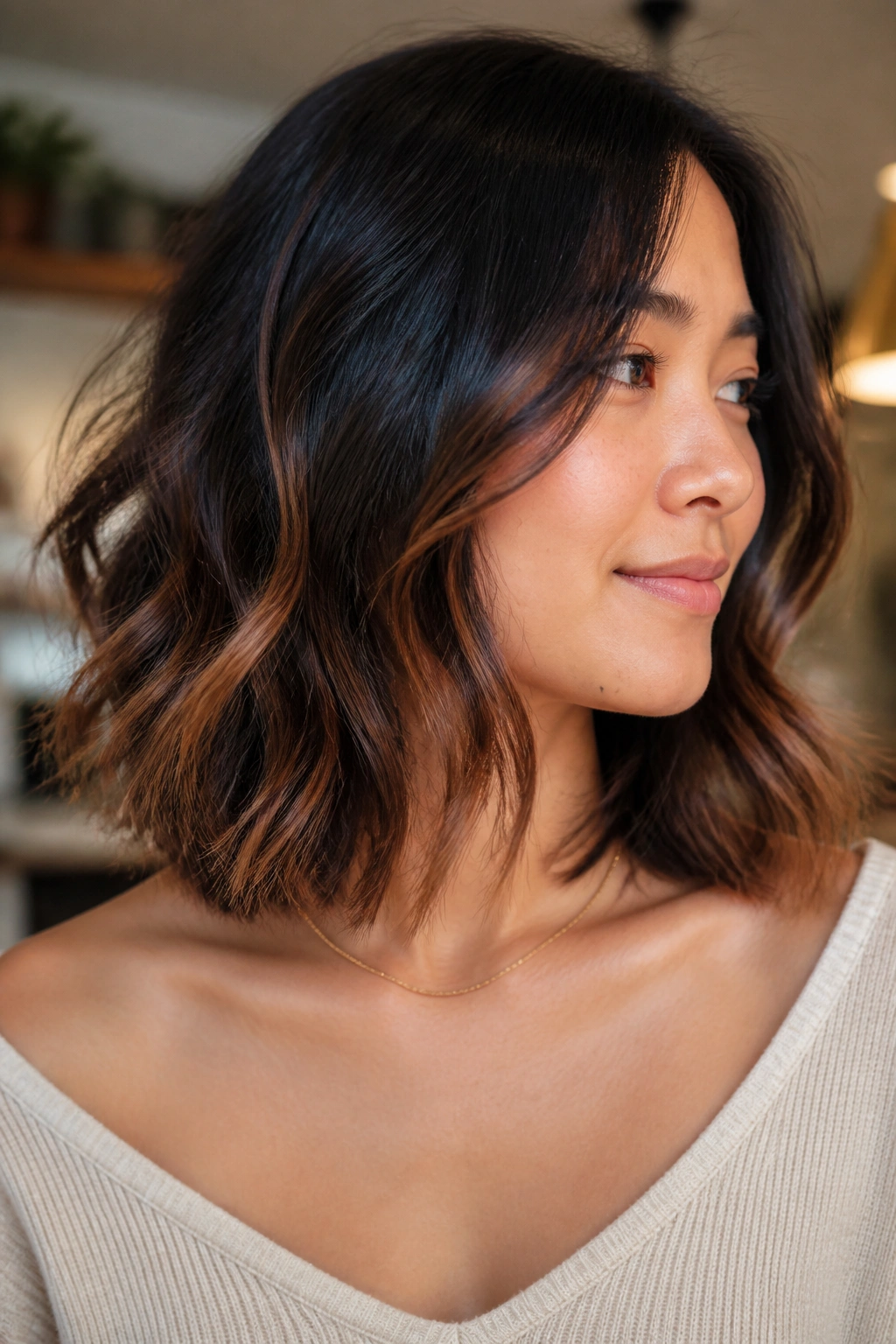
Warm tones and black hair have a tricky relationship. Too much warmth can look orange. Too little and the color disappears. Cinnamon balayage sits in a sweet spot when it is painted as a glaze through a collarbone cut, because the length gives the warmth room to breathe.
The best cinnamon pieces are fine and slightly irregular. That matters. If they’re too even, they can look like stripes. If they’re scattered through the mid-lengths and ends, they read like a warm haze instead. On a round face, that softness is useful because it avoids hard lines around the cheeks.
This look does well with movement. A smooth bend through the lower half of the hair lets the cinnamon show in flashes, not blocks. That keeps the finish from feeling too busy near the face. I’d skip heavy layers here if the hair is already thick; the color needs some clean surface to sit on.
One sentence can save a bad appointment: ask for warmth, not copper. That distinction matters more than people think.
10. Plum-Black Balayage on a Sleek Bob
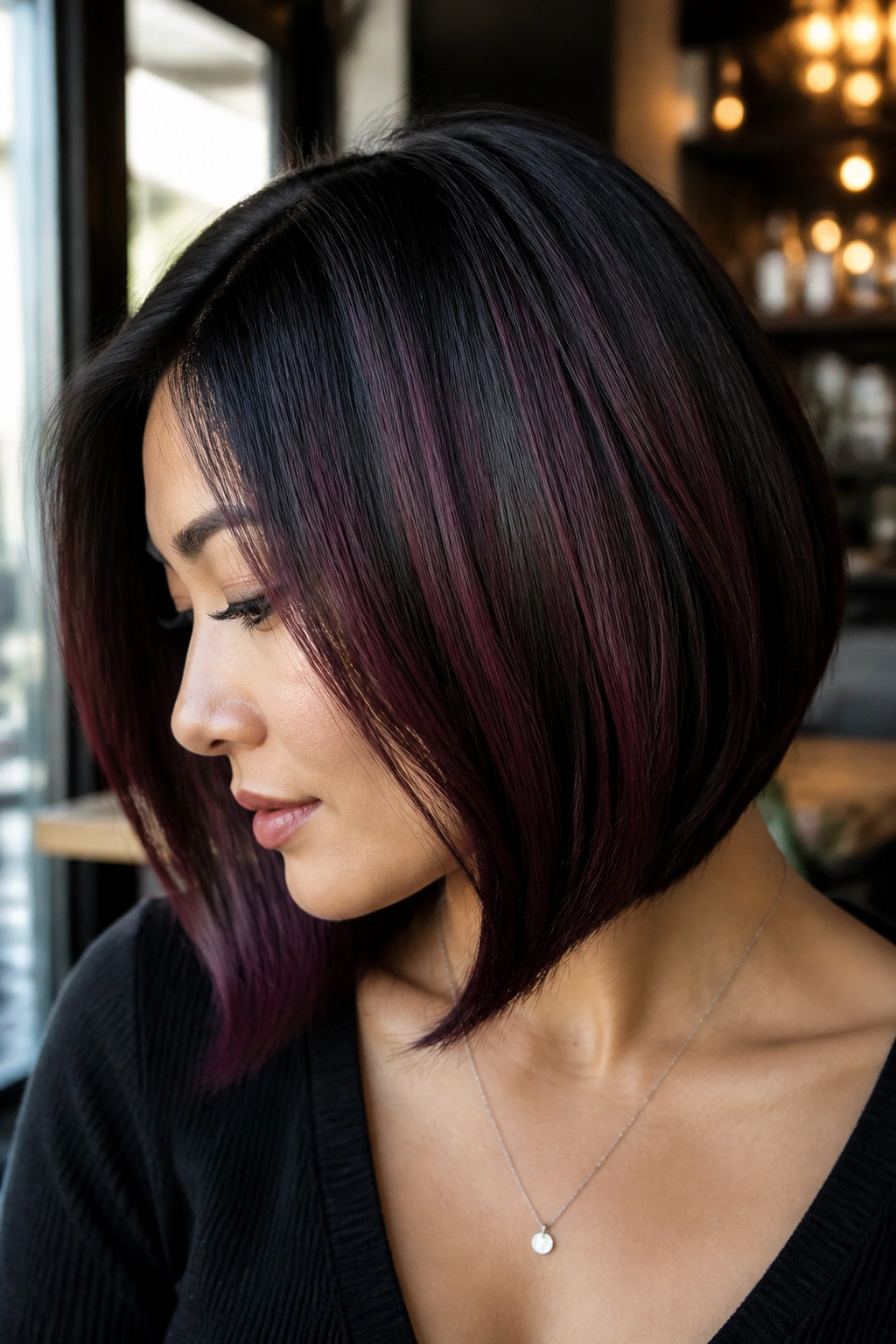
A sleek bob can be a bit unforgiving on a round face if the shape ends right at the jaw and the color is one flat tone. Plum-black balayage fixes both problems at once. The plum adds depth, and the balayage breaks the solid edge so the cut feels softer.
The best version keeps the plum tucked inside the surface of the hair, where it peeks out when the light moves. That makes the bob feel richer without turning it into a loud color story. The darker pieces around the face keep the shape narrow, while the subtle shine through the ends prevents the bob from looking heavy.
I like this look with a tuck behind one ear or a side part that creates a little lift. A bob on a round face needs some directional energy, and plum gives it that without a harsh contrast. It’s one of those shades that looks expensive when the cut is sharp and the finish is glossy.
Best styling move
Flat-iron just the top layer and curve the ends under by a few degrees. You want a clean line, not a helmet. The plum tones show best when the surface is smooth.
11. Honeyed Ends on a Long U-Cut
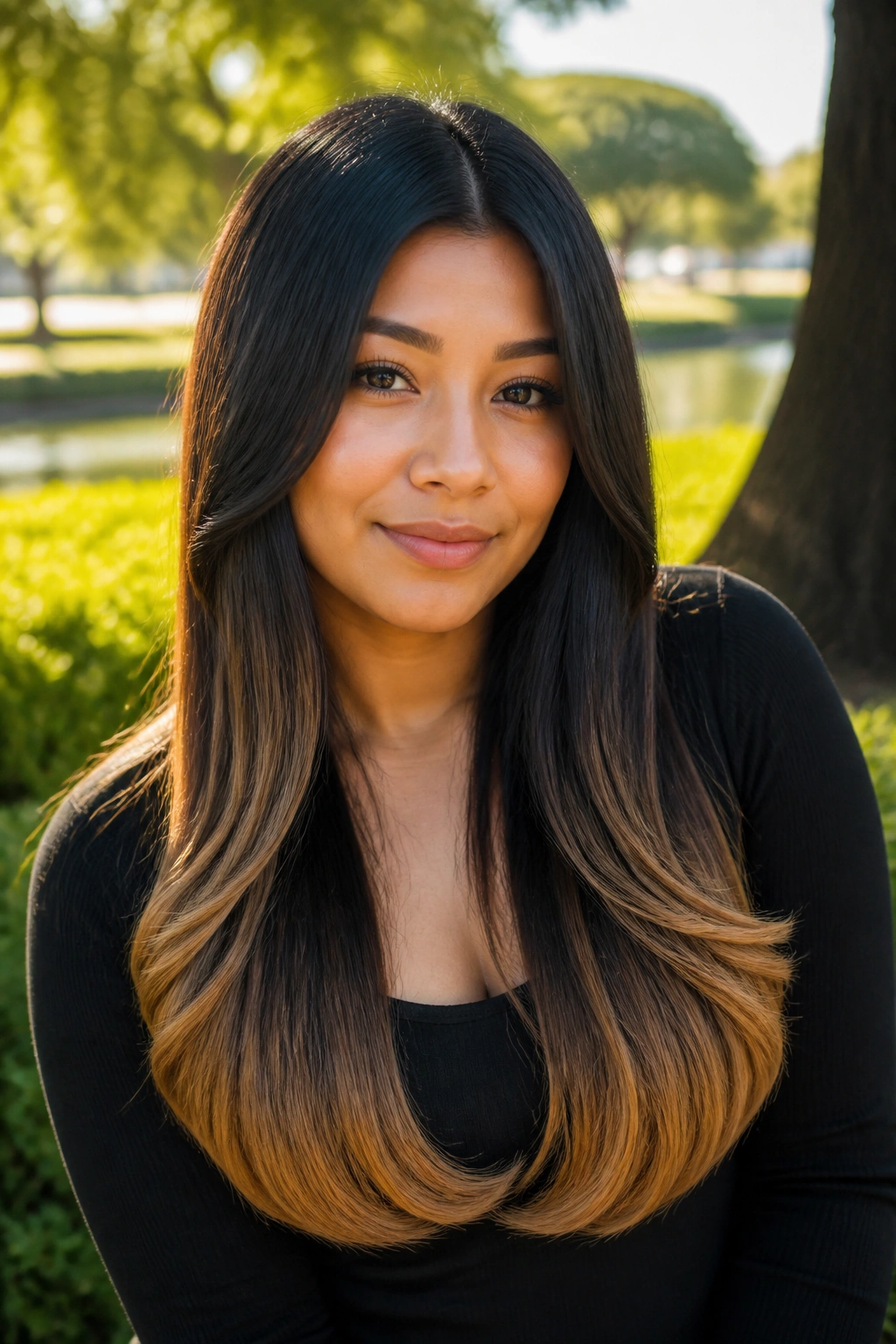
If you want black balayage that stays wearable, honeyed ends on a long U-cut are a safe bet, but not a boring one. The U-shape keeps the center length slightly longer than the sides, which gives round faces a gentle vertical pull. Then the honey at the ends softens everything.
This works because the brightening stays far from the face. The eye drops to the lower half of the hair, which makes the face look a little longer. That’s the whole trick. No bright band at the cheekbones. No overdone front streaks. Just a warm fade that opens up the lower half of the silhouette.
It’s also a kind of color that plays well with waves and blowouts. Straight wear shows the shape. Loose texture shows the gradient. Either way, it feels friendly and polished.
If your hair tends to look dark and heavy in photos, this is one of the easiest ways to lighten the mood without sacrificing the black base you like. The grow-out is forgiving too, because the brightest part sits at the ends where it can fade naturally.
12. Chunky Ribbon Highlights on a Black Base
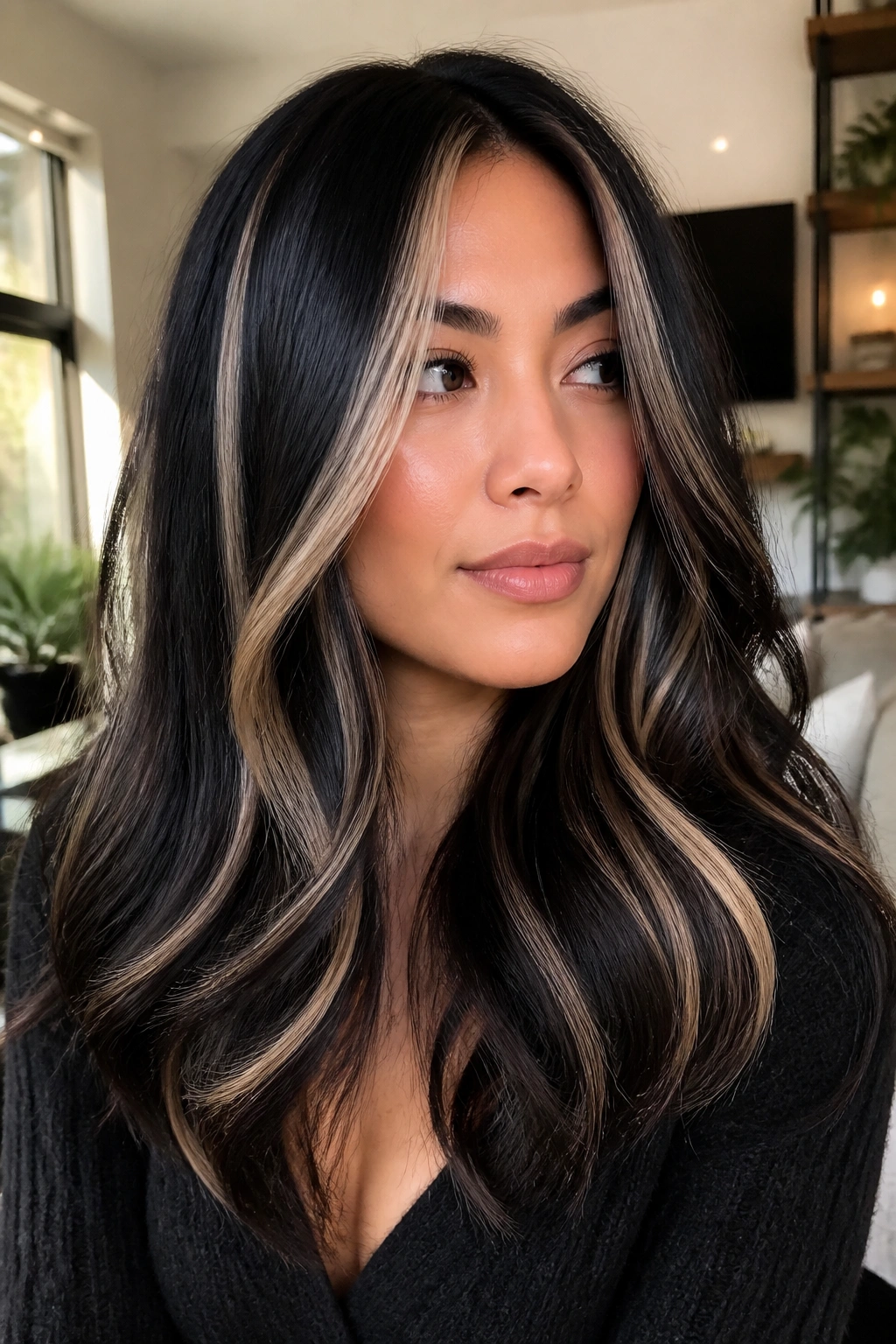
Fine balayage is not the only route. Chunky ribbon highlights can look fantastic on a round face when they’re placed with intention and kept lower through the lengths. The contrast adds a bit of attitude, and the ribbons create strong vertical lines that can narrow the face better than tiny pieces sometimes do.
The mistake people make is putting chunky pieces too close together around the cheeks. That can make the face look wider. Keep the ribbons separated, start them below the temple, and let them fall through thick layers so they can move instead of sitting there like panels.
Where the contrast belongs
- Mid-lengths and ends first
- Front pieces kept softer than the back
- Brightest ribbons under the top layer
- A deep root shadow to keep the top from looking bulky
I like this style on thick hair and on people who wear big waves or blown-out bends. The contrast needs texture to make sense. On very straight, fine hair, the look can feel harsh fast, so it needs a lighter hand.
It’s a confident look. Not subtle. But on the right cut, it gives round faces a stronger outline and a cleaner line from crown to shoulder.
13. Toffee Balayage on a Wolf Cut
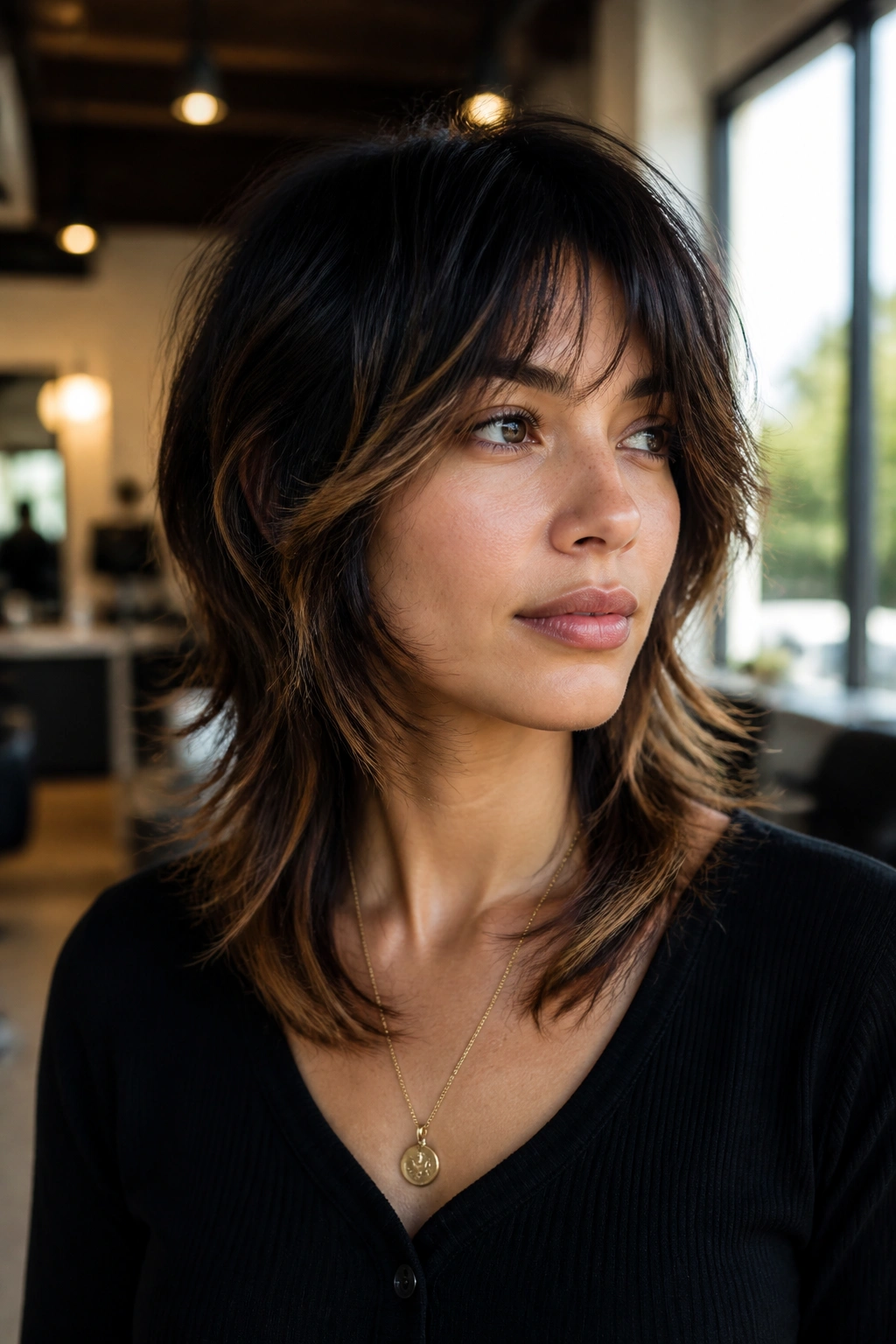
A wolf cut already does some contouring by itself, which is why toffee balayage feels so natural with it. The choppy layers build height at the top and taper around the face, and the warm toffee pieces make each layer easy to see.
The whole point here is movement. The black base keeps the style grounded, while the toffee pieces catch on the rough ends and make the shape look lived in. On a round face, that broken-up edge helps a lot. You do not get one solid puff of hair. You get a shape with angles.
This is one of those looks where a little messiness works. A round brush blowout can make it softer, but a more undone finish can be even better because the irregular pieces keep the face from looking too circular. I’d keep the front layers long enough to graze the cheekbone, then let the color drift lower.
The toffee should read as warm and brown, not orange. If it turns too copper, the cut can start to feel louder than the face. That’s not the goal.
14. Bronze Balayage on Natural Coils
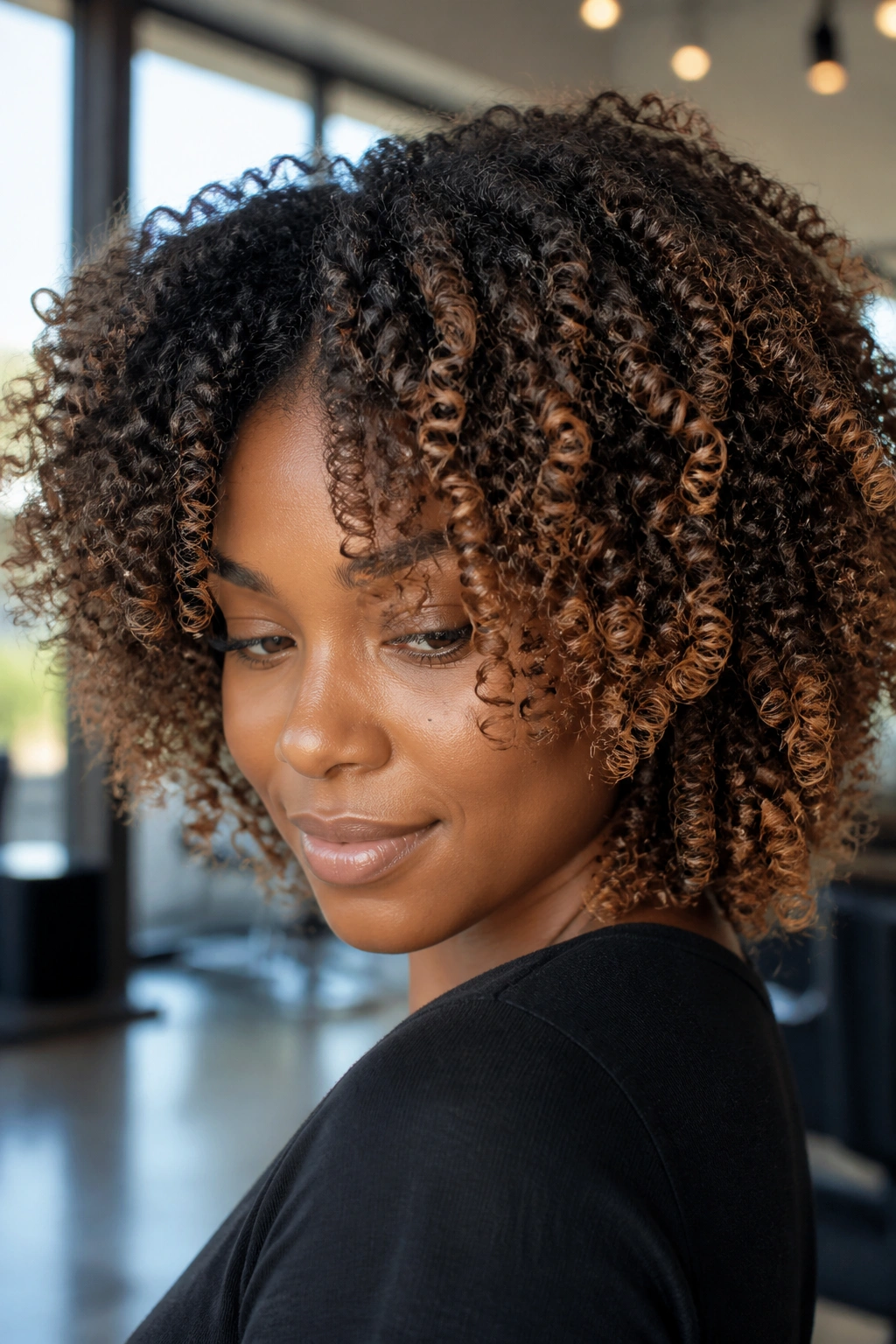
Natural coils and black balayage can be beautiful when the color is placed to follow the curl pattern instead of fighting it. Bronze balayage gives coils a warm, reflective finish that catches the bend of each curl and keeps the shape from reading flat.
The best bronze placement lives on the outer curve of the coil, not just the top layer. That way, the color shows when the hair moves from different angles. On a round face, this matters because the eye follows the curl path downward and outward, which gives the face a little more length.
How to keep it balanced
- Brighten the curl ends more than the roots
- Leave some deep black near the crown for contrast
- Use bronze, not gold, if you want a softer finish
- Keep the front pieces lighter than the sides
This style looks especially good on medium to long coils with layered shaping. The layers stop the hair from stacking outward around the cheeks, and the bronze helps define the shape instead of hiding it. A good leave-in and a diffuser are not optional here. They’re what keeps the curls separated enough for the color to show.
15. Copper Face-Framing Layers
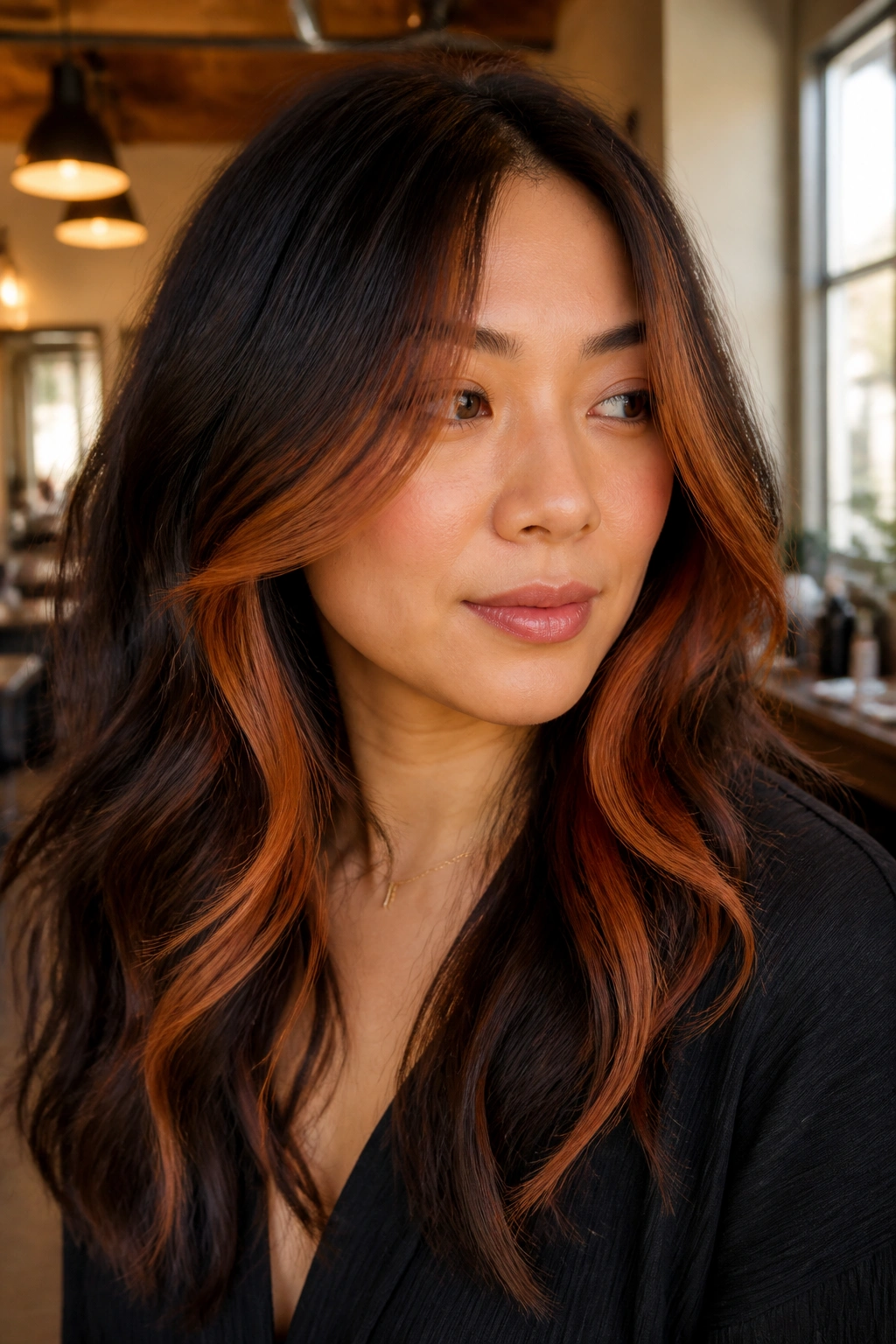
Copper can be tricky on black hair, but when the placement is right, it is stunning in a very real, wearable way. Copper face-framing layers bring warmth to the front of the hair and pull attention upward without making the face look wider.
I’d keep the copper focused on the longest face-framing pieces and maybe a few broken ribbons through the ends. That keeps the look lively but controlled. Round faces usually benefit when brightness sits lower than the widest part of the cheeks, and this color does that nicely if the front layers are long enough to swing past the jaw.
It helps if the copper is deep rather than neon. Think burnished metal, not traffic-cone orange. On dark hair, that richer version plays better with the black base and looks more expensive in low light.
This is a good match for people who wear their hair tucked behind one ear, half-up, or in loose waves. The front pieces get to do their job, which is to frame the face and lead the eye downward. That’s the whole point.
16. Taupe Contour Balayage
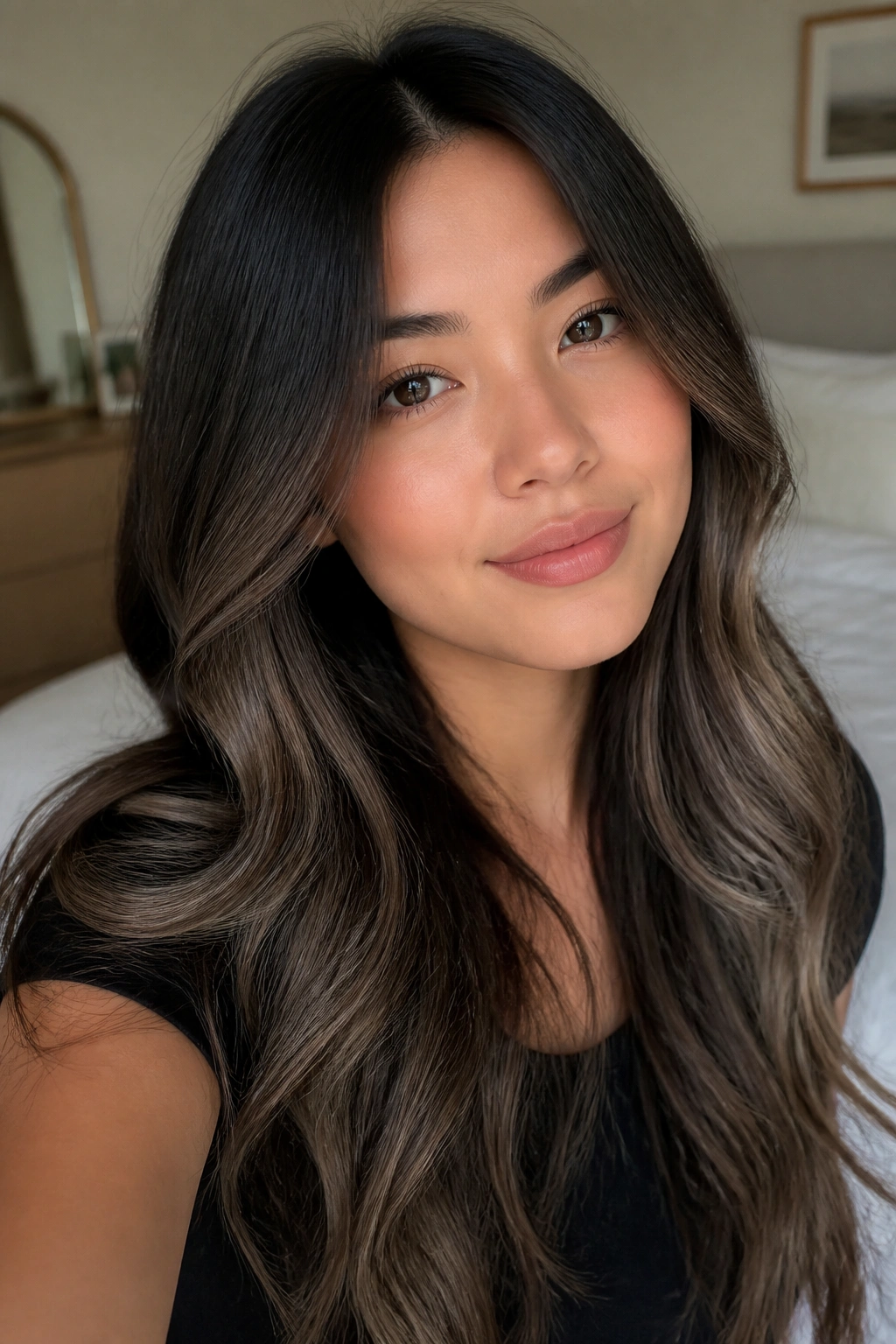
Not every flattering balayage has to be warm. Taupe contour balayage can be even better for a round face because the cool beige-brown tones create a soft shadow effect, almost like makeup for the hair. It narrows the face by giving the lengths shape without adding bulk.
This look works especially well on black hair that tends to pull warm when lightened. Taupe tones keep the color muted and clean. That means less brassiness, less harsh contrast, and fewer moments where the highlights shout over the haircut.
The placement should be gentle around the sides and a bit stronger through the lower half of the lengths. That keeps the cheeks open and lets the hair fall in a cleaner line. I like this on long layers, where the taupe can break up the shape without making it busy.
It’s a quiet look, but I mean that as praise. Quiet can be smart. On a round face, it often is.
17. Barely-There Beige Tips
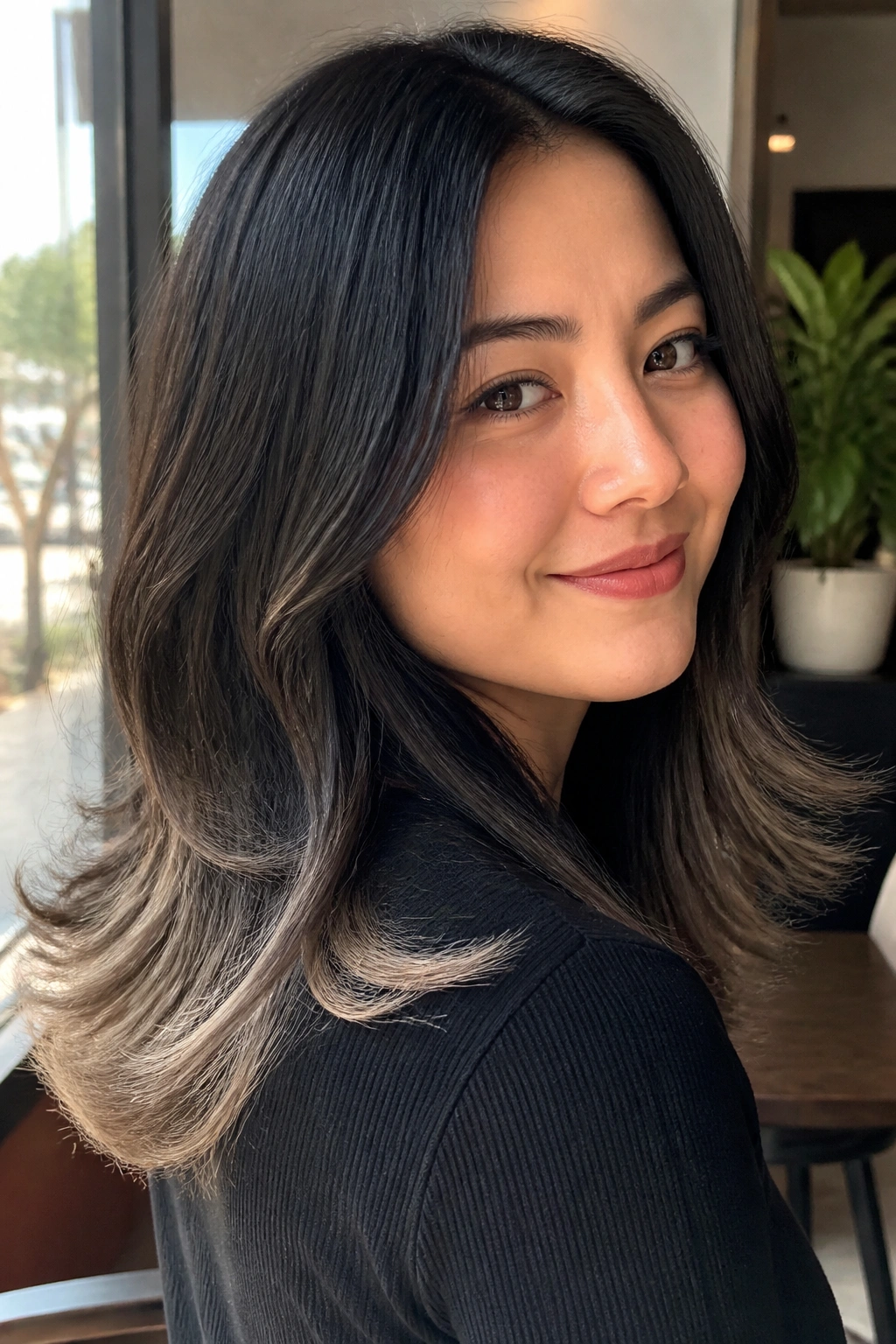
If you want black balayage but you hate the idea of obvious highlights, barely-there beige tips are a smart compromise. The color stays almost hidden until the hair moves, which gives you dimension without a big shift in tone.
This is one of the easiest ways to keep a round face from looking wider, because the brightness stays far away from the cheeks. The eye goes straight to the ends. That makes the hair feel longer and the face a little more slender by comparison. It also works well for people who wear their hair straight most of the time.
Best for low-maintenance color lovers
- You want subtle grow-out
- You prefer cool beige over gold
- Your haircut has movement in the ends
- You do not want frequent toning appointments
The look is especially nice on medium-to-long lengths with invisible layers. Those layers let the beige appear in flashes, which keeps the finish soft. If you ask for too much beige, you lose the effect. A few delicate tips are enough.
This is a good one for people who want to ease into balayage. It does the job without making a scene.
18. Glossy Black Balayage on a Shag
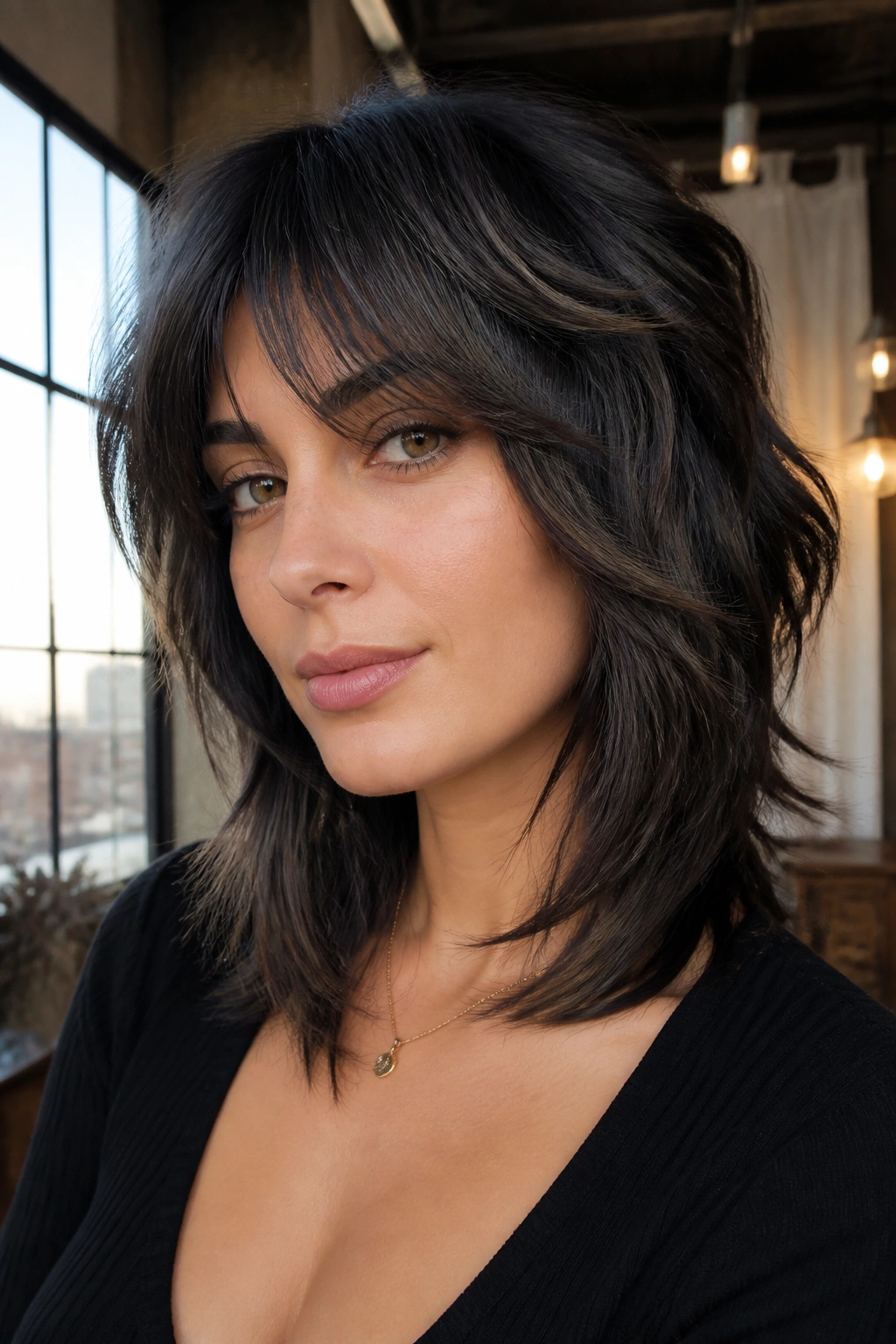
A shag with glossy black balayage may sound like a small change, but the finish matters a lot. The shag gives round faces movement and lift, while the balayage keeps the layers from collapsing into one dark block. The gloss brings everything together so the texture reads polished instead of frizzy.
I like this when the balayage is only one to two shades lighter than the black base. That tiny shift is enough to show the layer pattern, especially around the crown and the lower face frame. You do not need a lot of contrast here. You need separation.
The shag’s choppy edges are what keep the face shape from feeling too full. Add a little lightness through the ends and you get a soft contour that still looks dark and rich. It’s a strong choice for people who like hair with some bite to it.
This is also one of the easiest looks to live with. The grow-out is forgiving, the texture hides small color shifts, and a clear gloss or glaze can bring the whole thing back to life without changing the tone much.
Final Thoughts
A round face usually looks best when the brightest pieces stay off the widest part of the cheeks and move lower through the hair. That detail matters more than the exact shade. Espresso, mocha, bronze, plum, and caramel all work when the placement is smart.
I’d pick the cut before I pick the tone. A lob, shag, bob, or long layered shape changes how the balayage lands, and that changes the whole effect. The right black balayage does not fight your face shape. It sharpens it a little, then lets the hair do the rest.
