



Black balayage on brown hair works best when it looks like smoke sliding through the lengths, not a stripe sitting on top.
That’s the part people often get wrong. Brown hair can take black pieces beautifully, but only when the placement has a reason: to sharpen waves, slim out a heavy cut, frame the face, or add depth where the hair is falling a little flat. A soft black, espresso-black, or blue-black ribbon can look rich and expensive in the right spot. A blunt block of inky color can turn the whole head heavy fast.
The best black balayage looks for brown hair are less about one color and more about where the shade lands. Near the face, tucked under the top layer, scattered through curls, or melted into the ends, black does very different things. One version looks edgy. Another looks polished. A few are quiet enough for someone who does not want the whole room to notice the color change until the light hits it.
That’s the game here. Different placement, different mood.
1. Soft Ribbon Black Balayage
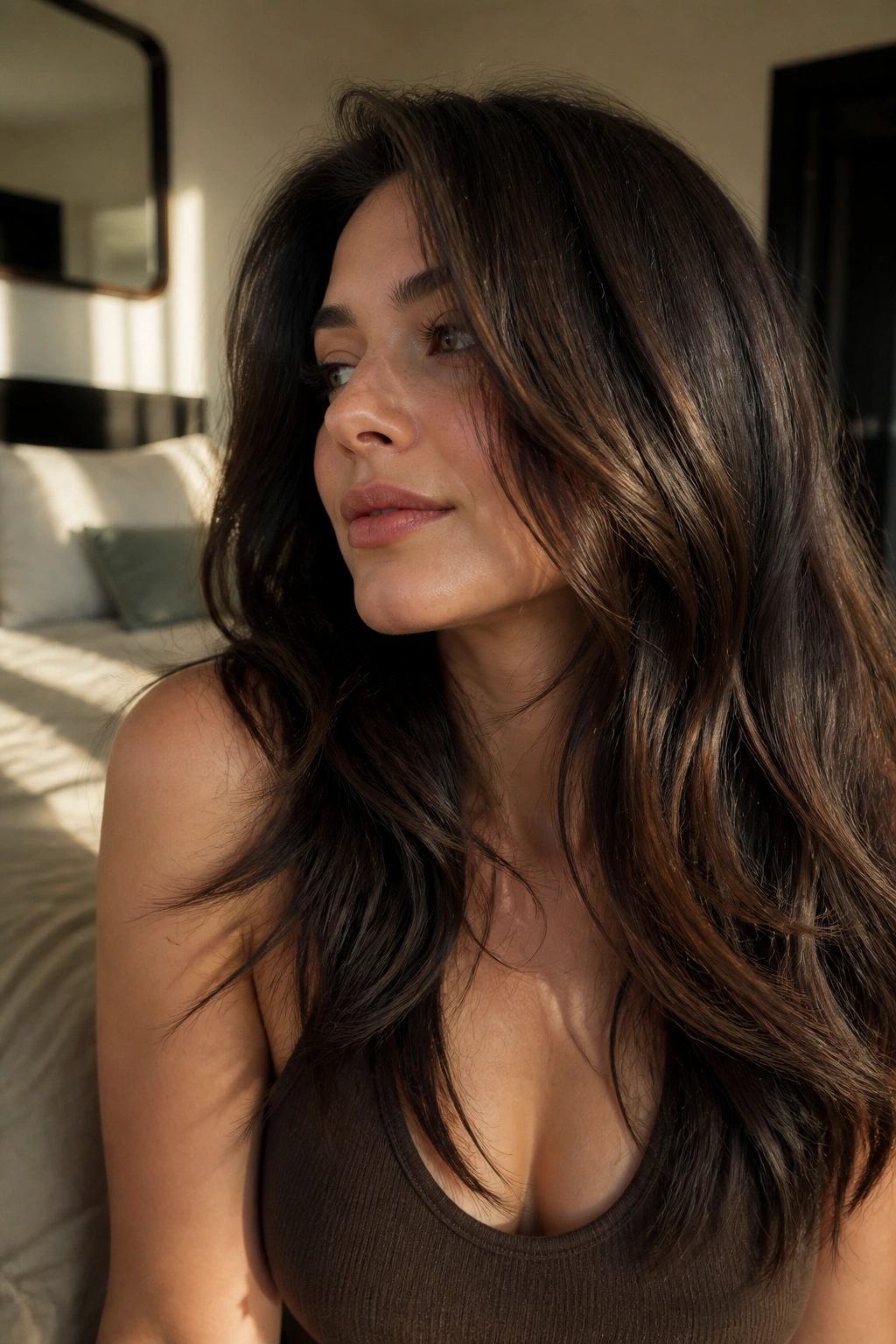
Thin black ribbons are the easiest way to get movement without losing the warmth that makes brown hair feel alive. On a chestnut or medium mocha base, these pieces sit like shadow lines inside the hair, especially when the cut has layers that can catch and release them as you move.
Why It Flatters Brown Hair
The trick is restraint. A few fine, hand-painted black ribbons through the mid-lengths and lower half create depth without flattening the whole head, and that matters more than people think. Brown hair keeps its softness; the black just gives it shape.
- Ask for ribbons no wider than half an inch.
- Keep most of the depth below the cheekbone so the crown stays bright.
- Choose a neutral black-brown gloss rather than a hard blue-black if your base is warm.
Best on: layered lobs, long waves, and medium brown hair that needs a little more contrast without a drastic change.
2. Face-Framing Black Money Piece
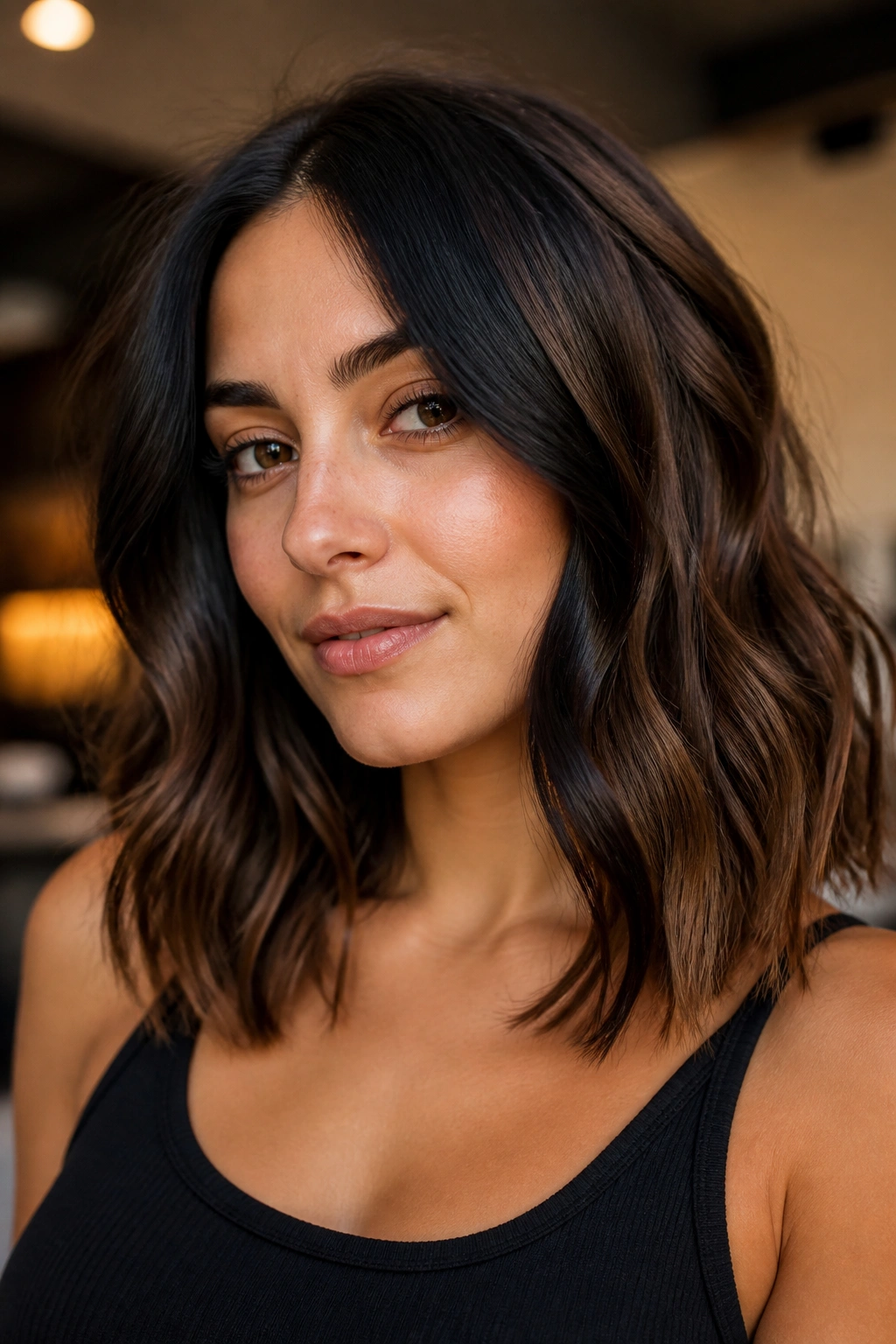
The fastest way to make black balayage feel current is to put the darkness around the face first. That’s the move. Two stronger black pieces at the front can sharpen cheekbones, make curls pop near the jaw, and give brown hair a bolder outline without touching every strand on the head.
A face frame works especially well if the rest of the hair stays a soft brunette. The contrast pulls the eye forward, which can be helpful on round faces, heart shapes, or anyone who feels their hair disappears when it’s down. I like this look on shoulder-length cuts because the front pieces fall where you can actually see them, not buried under layers.
Tell your colorist to keep the black soft at the root and denser through the mid-lengths. If the front pieces start too heavy at the scalp, the look turns harsh fast. If they begin around the temple or cheekbone, the result feels cleaner. Small shift. Big difference.
3. Midnight Mocha Melt
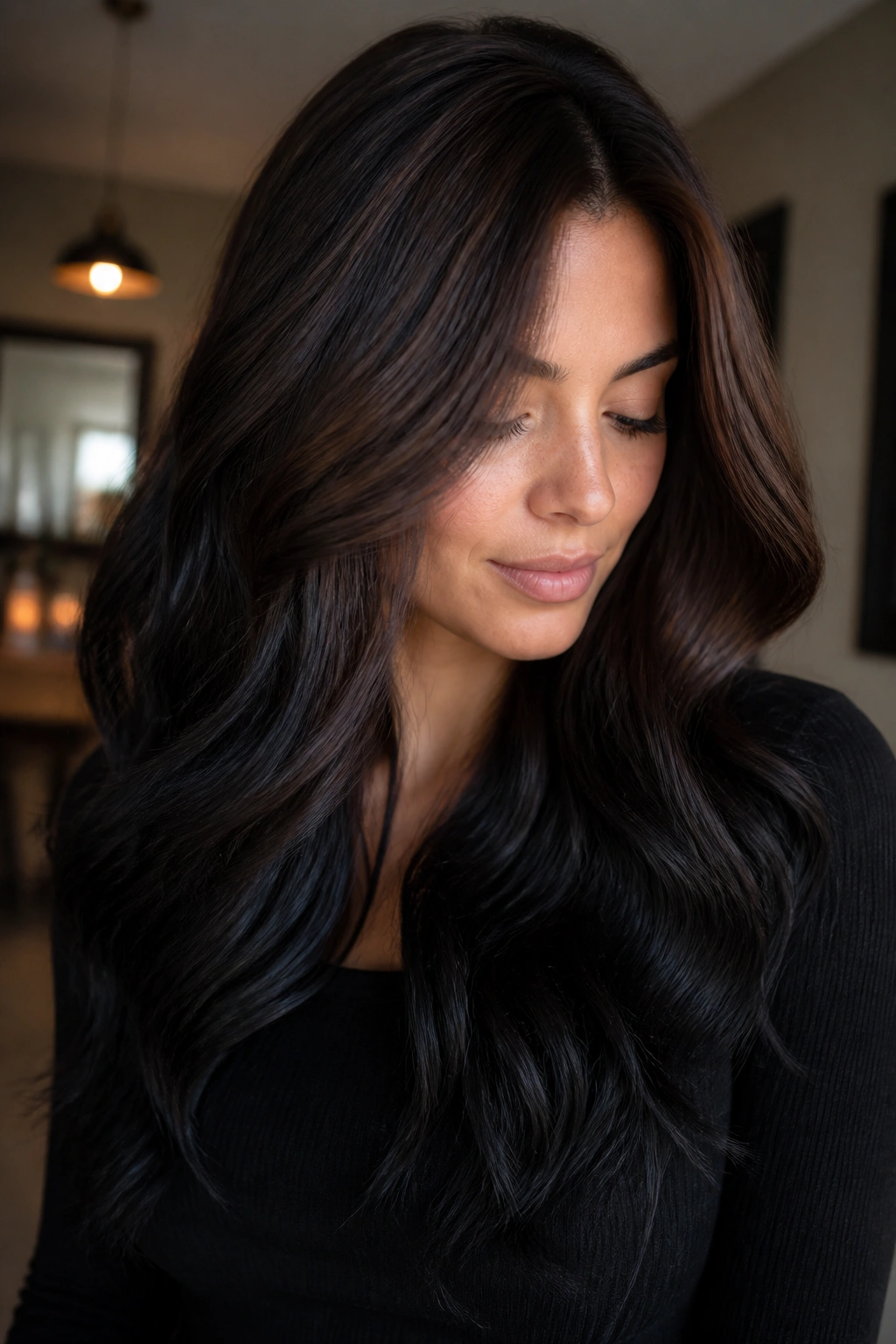
Why does this look stay soft instead of harsh? Because the black is threaded into a brown base that already has some depth of its own.
A midnight mocha melt works when the brown underneath is rich enough to hold the darker tone. Think chocolate, coffee, or a deep chestnut base with black creeping in through the lower half and barely touching the top. The transition should feel like one shade sinking into another, not like two colors that were dropped next to each other and hoped for the best.
How to Wear It
This one looks best on long layers, loose curls, and thick hair that can handle a little weight. If the hair is fine, the color still works, but the black needs to stay narrow and glossy so it does not swallow the shape.
A soft wave iron, about 1 to 1.25 inches, shows the melt better than pin-straight styling. The bend lets the mocha and black separate just enough to show what is happening.
4. Hidden Underlayer Black Balayage
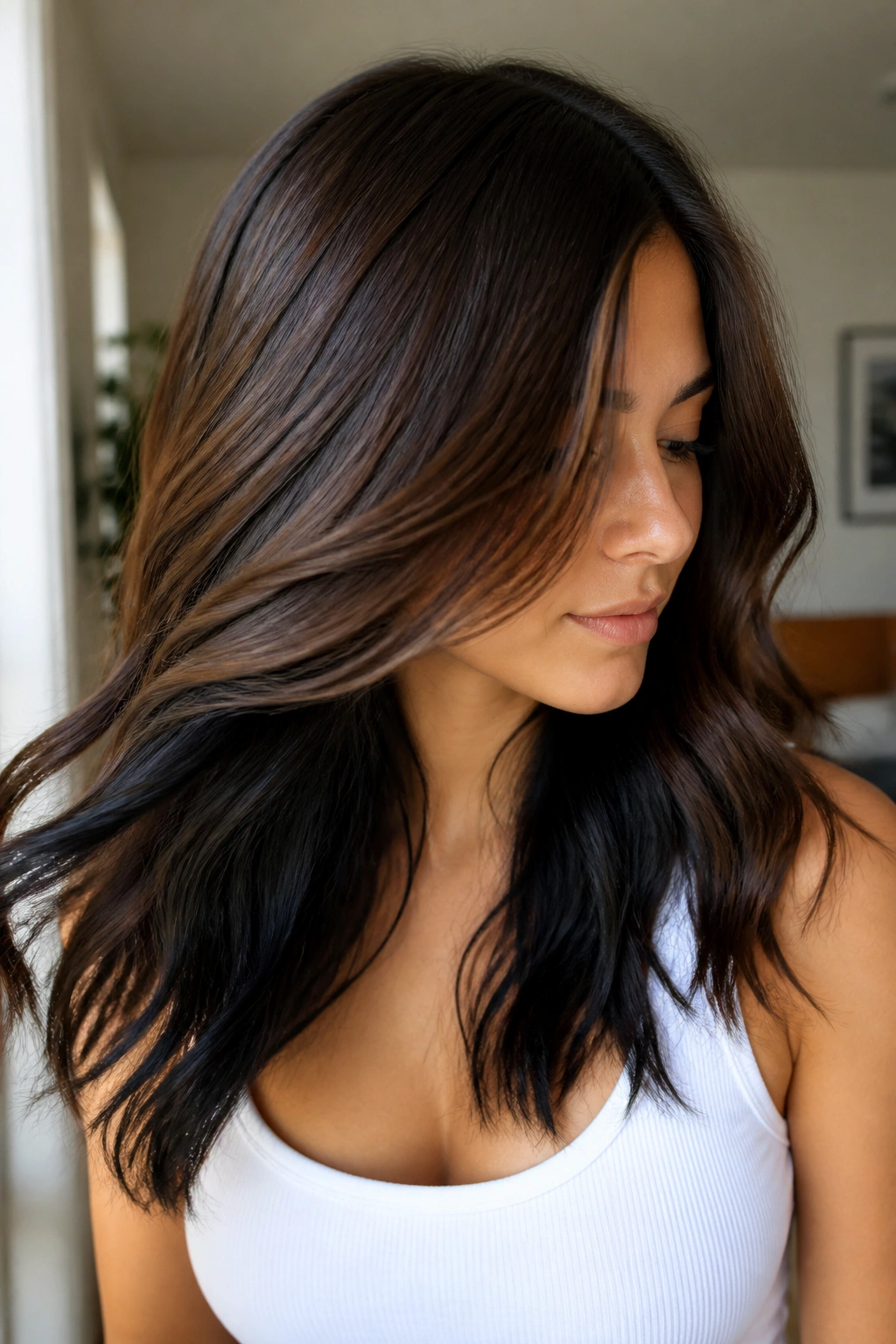
The woman who wants drama in motion but calm hair at work usually ends up loving this one. The top layer stays brown, maybe even softly glossy and plain from a distance. Then the head turns, or the hair lifts, and the black underlayer flashes through like a secret.
That underpainting effect is what makes this style so good on brown hair. You get shadow and contrast without putting black on top of every visible strand. It is also kinder to people who are nervous about going dark because the color is not shouting from the root line.
- Works well on layered cuts, because the underlayer needs movement.
- Looks strongest on medium to thick hair.
- Ask for the black to sit below the surface layer, not across the crown.
The result is subtle until the hair sways. Then it gets interesting.
5. Cool Cocoa and Blue-Black Ribbons
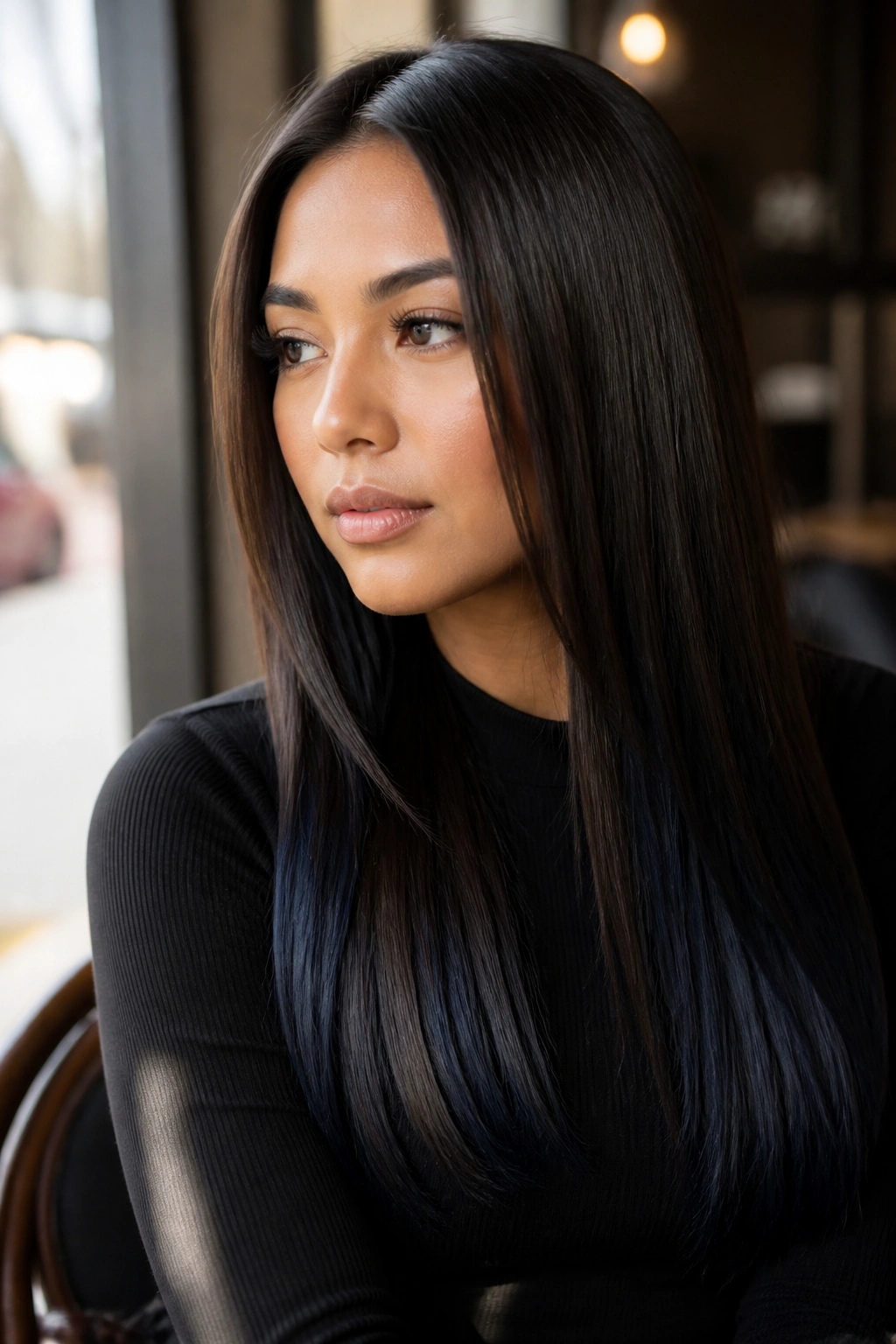
Cool brown hair and blue-black ribbons make sense together because they live in the same temperature family. That sounds fussy, but on the head it reads simply as polished. The brown looks cleaner, the dark pieces look shinier, and any orange warmth in the base gets pushed back.
This is the look I would choose for someone whose hair pulls brassy fast. A cool cocoa base with black ribbons placed through the ends and side panels can calm the whole color down. The finish should feel almost smoky, not muddy. That distinction matters. Muddy is dull. Smoky has movement.
A gloss with a blue or violet tone helps keep the black from turning flat after a few washes. If you wear your hair straight, this look is especially nice because the surface shine shows the depth right away. On curls, it reads a little softer, almost like velvet.
6. Chunky 90s Contrast Panels
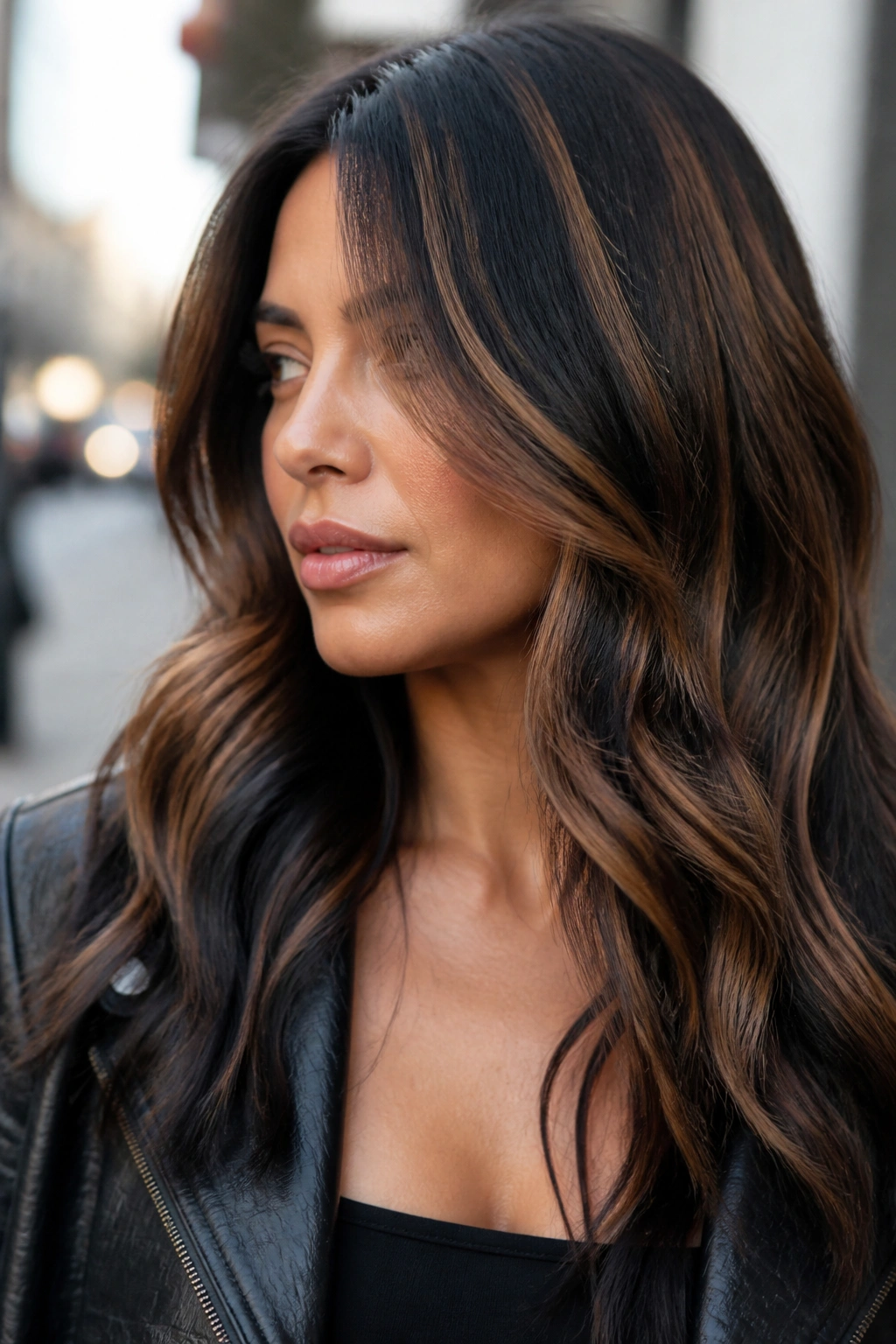
Not everybody wants delicate. Some people want the color to announce itself the second the hair moves, and chunky contrast panels do exactly that.
Compared with ribbon balayage, this style uses wider, bolder pieces of black placed against a brown base. It has more attitude and less whisper. The best version still feels grown-up, though. That means leaving some softness near the crown and spacing the panels so the brown can breathe between them.
What Makes It Different
The black pieces are usually thicker at the front or through the lower layers, which gives the hair a stronger outline. On thick brown hair, this can be gorgeous. On very fine hair, it can look heavy if the sections are too wide.
Who It Suits Best
- Blunt cuts that need more edge.
- Thick, straight, or slightly wavy hair.
- People who like contrast more than subtle blending.
If you want a soft grow-out, skip this look. If you want the hair to feel deliberate and a little sharp, it’s one of the better choices on the list.
7. Curly Halo Black Balayage
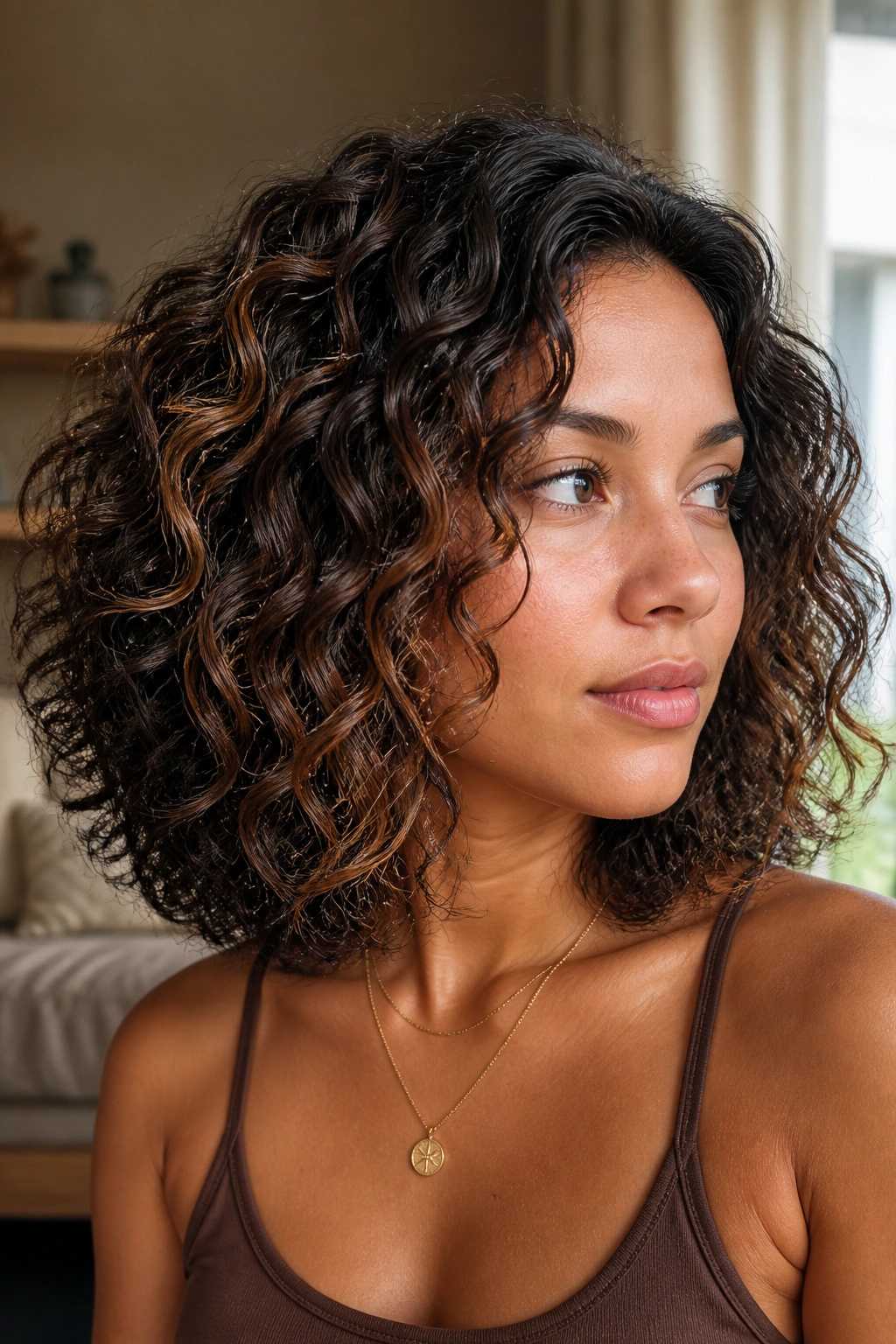
Curls do not want the same coloring strategy as straight hair. That’s the whole story, really. On curly brown hair, black balayage works best when it sits on the outside of the curl pattern, where each bend can catch the shadow and show it off.
Where the Dark Pieces Sit
The best placement is usually around the outer canopy, the mid-lengths, and the ends of select curl clumps. If black gets packed too deep inside the curl, it disappears. If it sits only on the surface, it can look stripey. There’s a middle ground, and that’s where the good curl color lives.
A halo effect around the head can make curls look fuller without making them look busy. I especially like this on shoulder-length curly cuts because the shape stays round and light, while the black pieces keep the outline from getting too soft.
Use a diffuser, a light curl cream, and a touch of shine serum on the ends. The black needs gloss to show its shape. Dry curls swallow color fast.
8. Glossy Straight Hair Shadow Veil
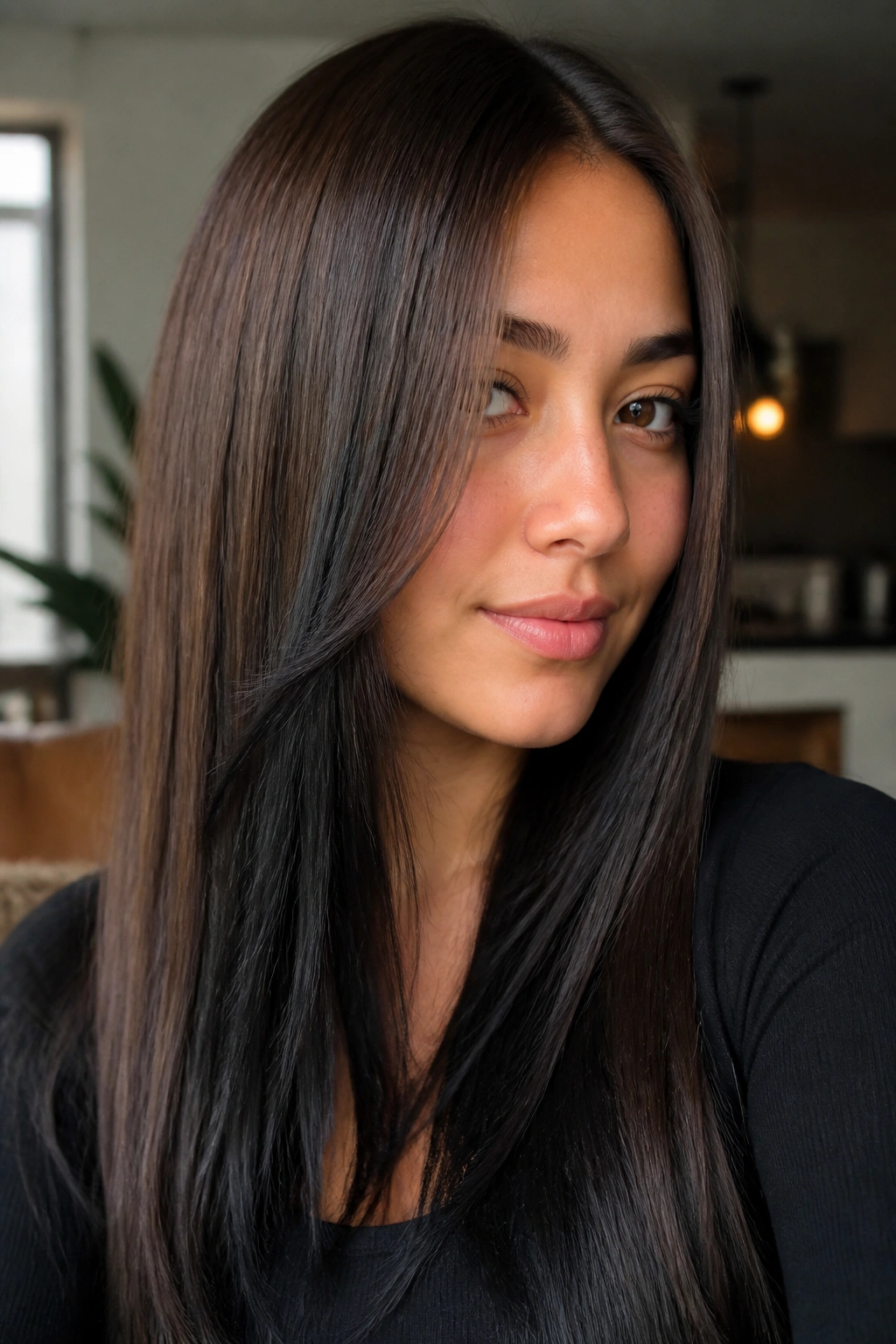
Straight hair shows everything. Good or bad. That’s why this look has to be precise.
A shadow veil of black balayage works on straight brown hair when the pieces are narrow, the finish is glossy, and the cut has enough movement to keep it from looking like a single dark sheet. Think of it as a thin curtain of darkness laid over a brunette base. No heavy blocks. No chunky stripes. Just enough depth to change the way the hair reflects light.
The best version starts a little lower than people expect, often around the cheekbone or chin, then gets denser toward the ends. That shape keeps the top looking clean and the perimeter looking full. On a blunt cut, the effect can be striking. On a long, one-length style, it can feel almost sleek and architectural.
A flat iron at low-to-medium heat can make the shine crisp, but use a heat protectant. Straight hair makes every color choice obvious. That is a gift and a warning.
9. Mushroom Brunette with Black Lowlights
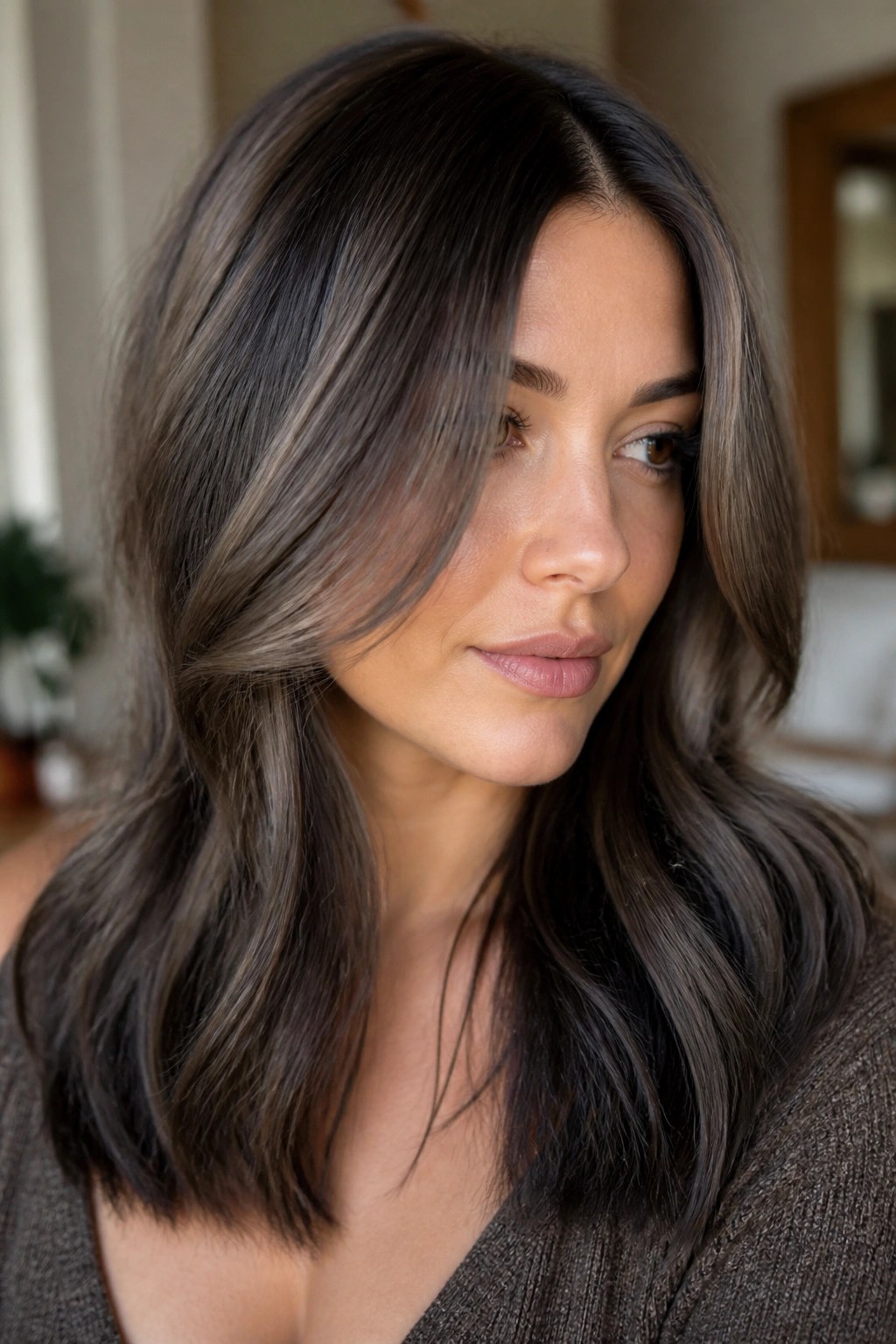
Can black balayage feel soft? Yes. This is the proof.
Mushroom brown already leans cool and muted, so black lowlights fit into it with less effort than they do on golden brunette bases. The whole look stays earthy, but the black adds a darker lane through the color so the hair does not collapse into one tone. It’s especially good if your natural brown has ash in it and you want to keep that clean, cool finish.
Best Match for the Base
This style works best on neutral-to-cool brown hair. If your hair is warm and coppery, the black can fight the base unless the toner is adjusted first. If your hair already sits in that smoky brown zone, the lowlights feel almost seamless.
I like this look on medium-length hair with a little bend in the ends. It gives the color somewhere to move. Without movement, the shade can go flat. With movement, it looks rich and expensive in a low-key way.
10. Chestnut-to-Black Gradient
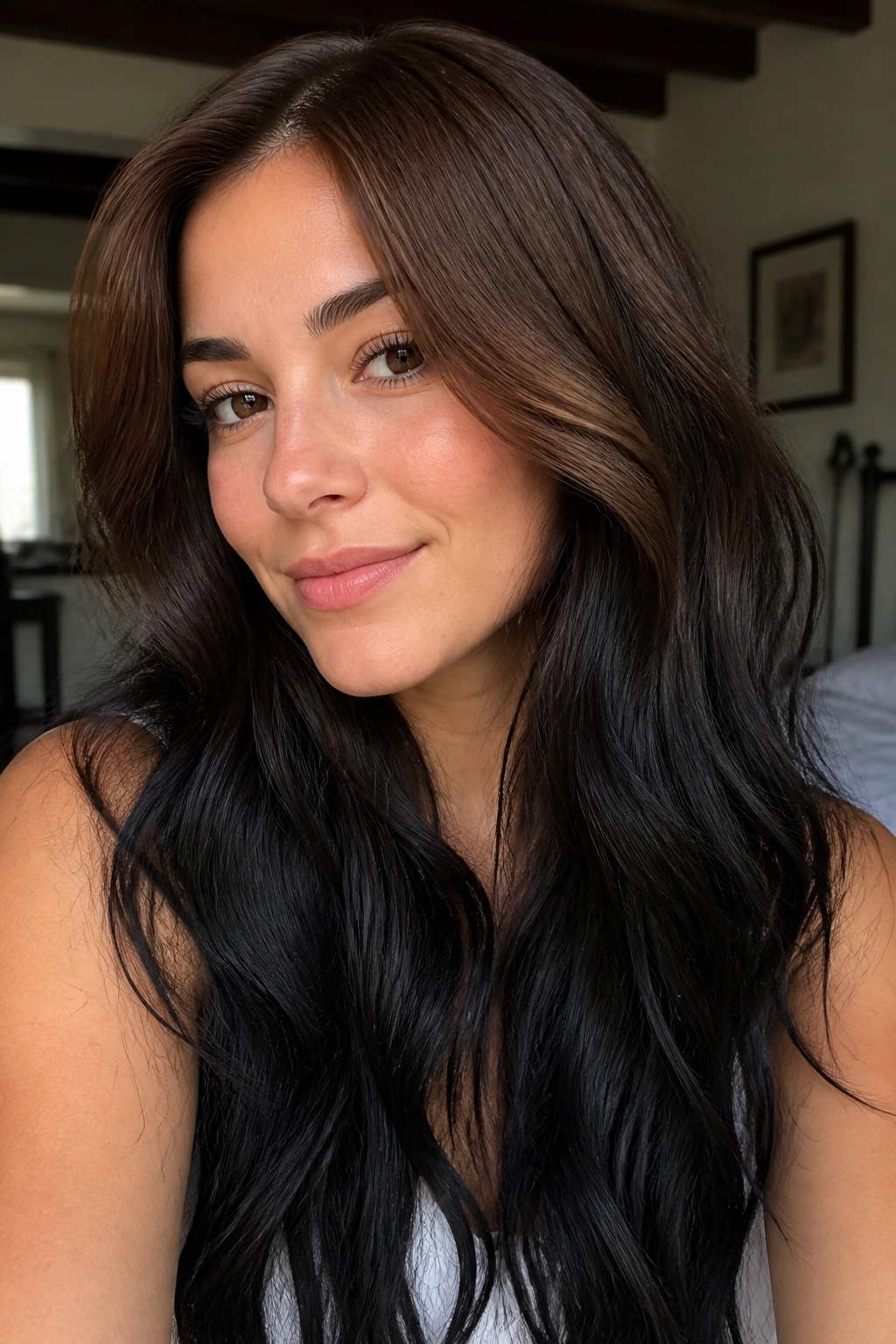
A chestnut base melting into black is one of those combinations that sounds dramatic and ends up looking refined when the blend is done right. The warmth at the top keeps the hair from feeling severe, and the dark ends give it weight.
This style works best when the darkest color is concentrated from the mid-lengths down, with the transition starting softly around the shoulders. That way the chestnut still shows through near the face, which keeps the skin from looking washed out. Brown hair with warmth needs that lift near the front. Otherwise the whole thing can feel heavy.
- Ask for a soft transition, not a hard ombré line.
- Keep the black slightly translucent if the hair is fine.
- Use curls or loose waves to show the shift from brown to dark.
On long hair, this gradient can be striking. On medium lengths, it feels more modern and compact. Either way, the movement matters more than the exact shade name.
11. Bob-Length Black Balayage
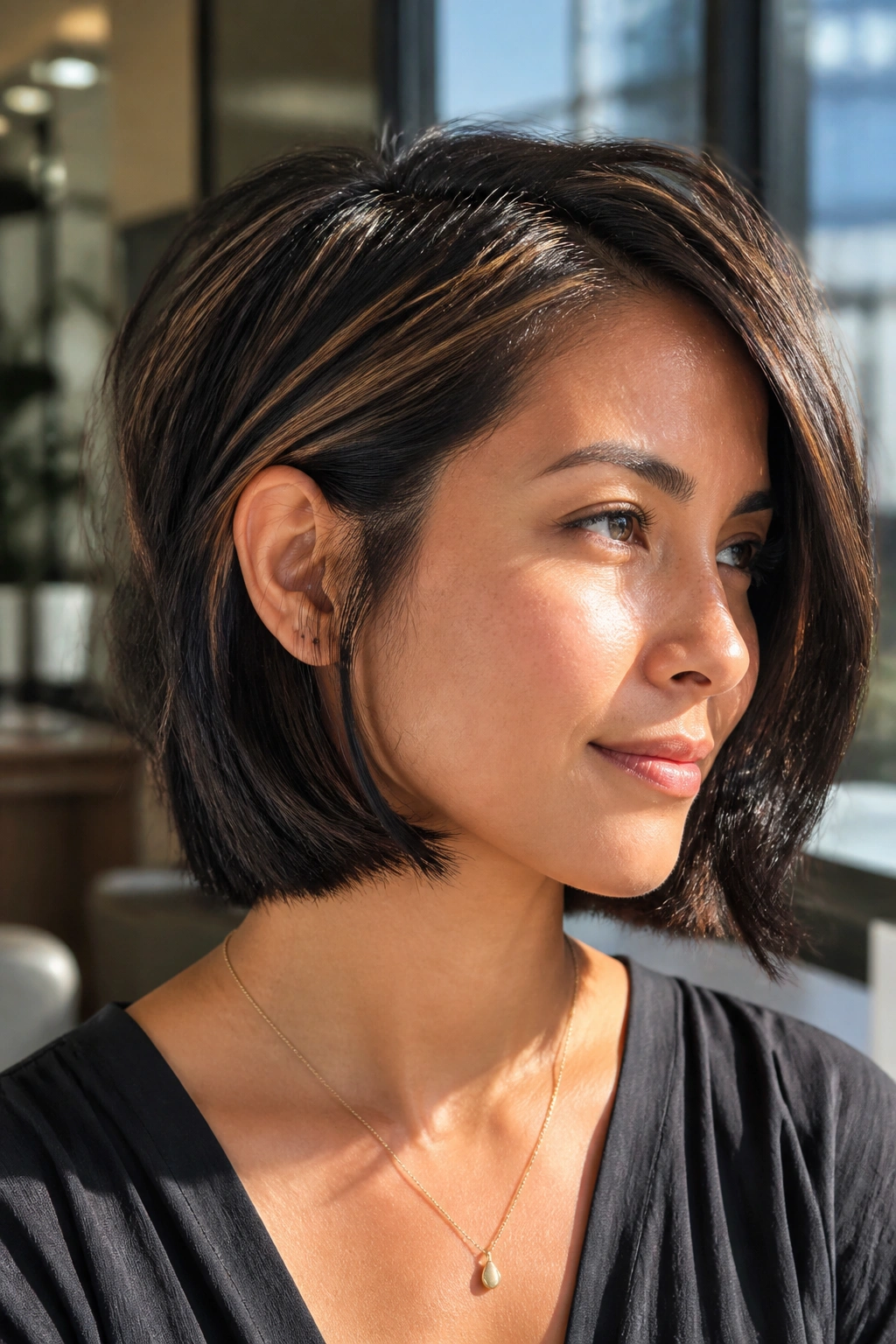
A bob gives black balayage a sharper edge because there’s less length to hide behind. Every stroke matters. Every placement shows.
On a brown bob, the smartest version is usually black through the underside and the perimeter, with a few lighter brown pieces left around the crown so the shape does not sink into one dark block. If the cut is blunt, the contrast can make the line look cleaner. If the bob is slightly layered, the black creates extra depth when the ends tuck under.
The mistake here is overloading the top. A bob already has a clear shape, so the color should support the cut rather than fight it. A glossy blowout helps a lot. So does tucking one side behind the ear; it shows the dimension without forcing it.
This is one of the easiest ways to wear black balayage for brown hair if you want it to feel chic instead of gothic. Shorter length. Less fuss. Stronger shape.
12. Rooted Shadow Brunette
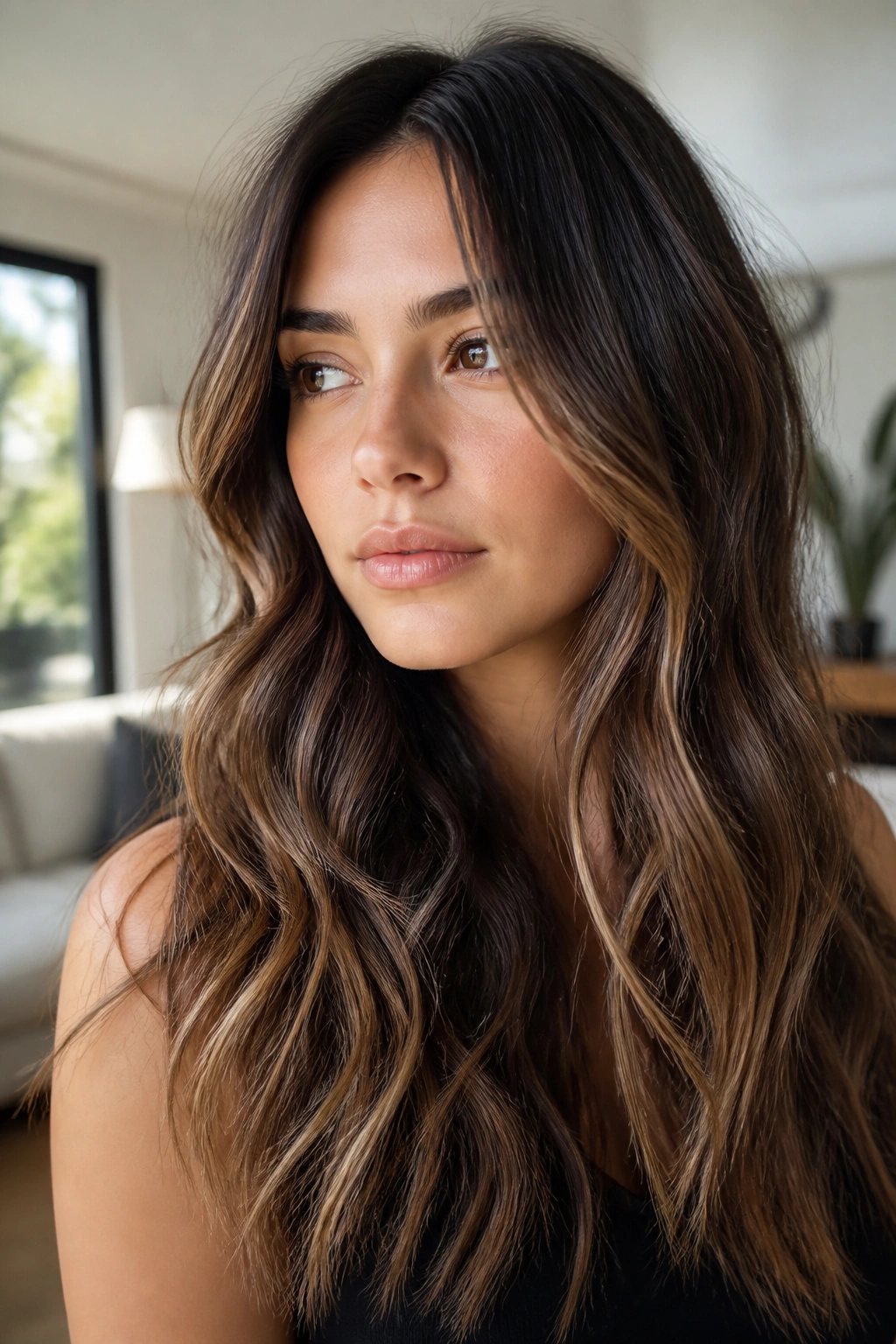
A rooted shadow brunette look is what happens when the colorist stops trying to hide the root and starts using it on purpose. Black at the crown, softer brown through the lengths, and maybe a few lighter pieces around the front. Clean. Simple. Very wearable.
Compared with full black dye, this approach lets the brown still do some work. The root shadow makes the hair look denser, which is a nice trick for finer strands, but the lighter ends keep it from going flat. I prefer this on people who hate obvious regrowth because the grow-out line stays softer and less annoying.
Why It Looks Strong
The dark root creates a frame for the face and gives the eye a place to land. It also makes the rest of the brown read brighter by contrast. That’s the whole point.
If you like low-maintenance color but don’t want it to look lazy, this is a good lane. Ask for the shadow to stop before it smothers the front pieces. A little lift around the face keeps the whole thing from feeling too closed in.
13. Caramel Brown with Inked Contour
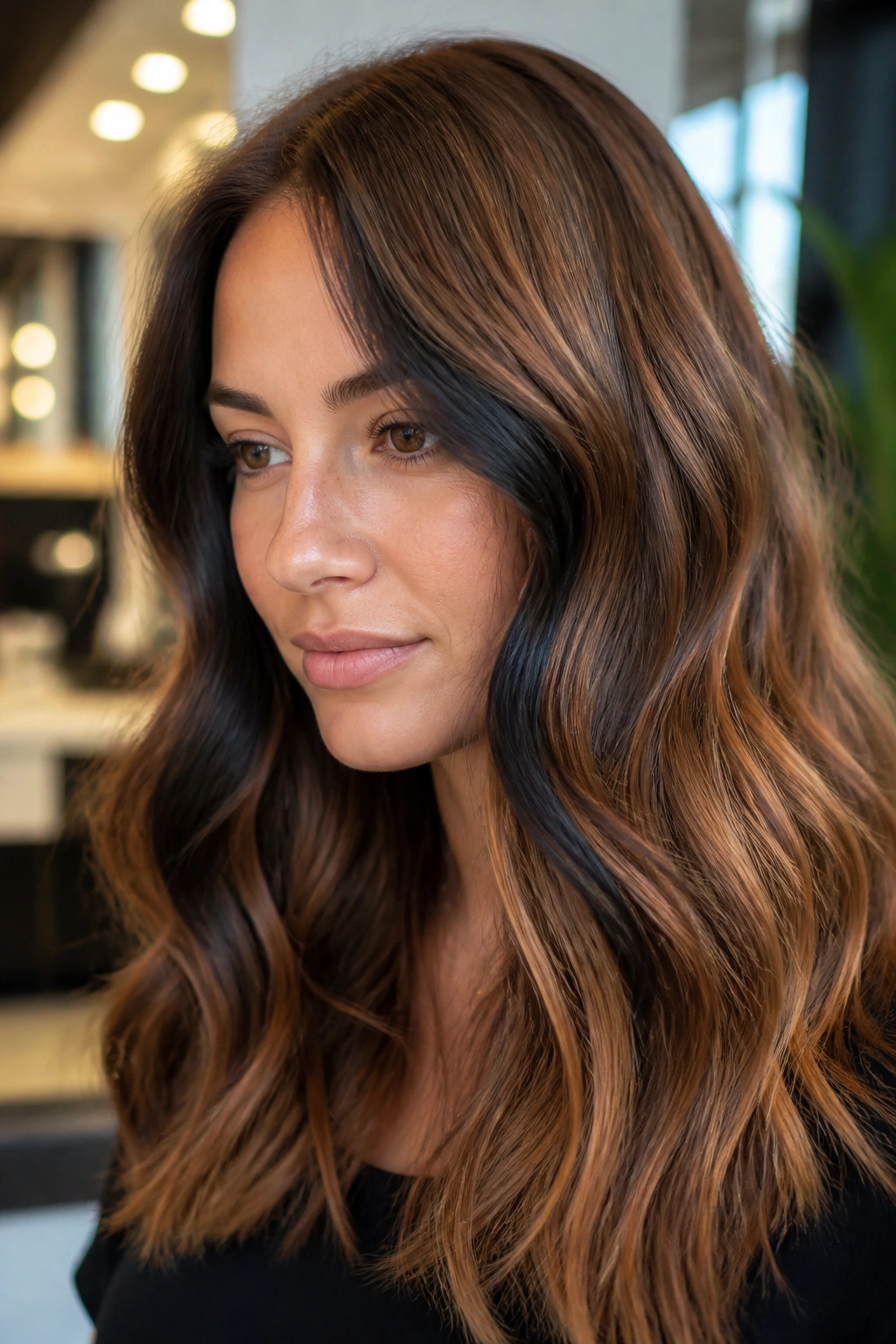
This look borrows a trick from makeup: put the darker shade where you want the shape to read more clearly.
On caramel brown hair, black contour pieces can sit along the sides of the face, through the lower lengths, or just inside the top layer. The caramel stays visible, which matters. Too much black and the warmth disappears. Too little and the contour does nothing.
Where the Contour Goes
A good colorist will usually place the black where the hair bends around the cheekbone or collarbone. That creates a visual frame without burying the lighter pieces. The effect is especially nice on waves because each bend reveals a little of both shades.
This is a smart choice if you already wear warm brunette tones and want depth, not a full color shift. It feels polished and a little editorial without turning severe. And yes, it looks better when the hair has a bend or a loose wave. Straight hair can handle it, but the contrast reads more bluntly.
14. Soft Goth Brunette Waves
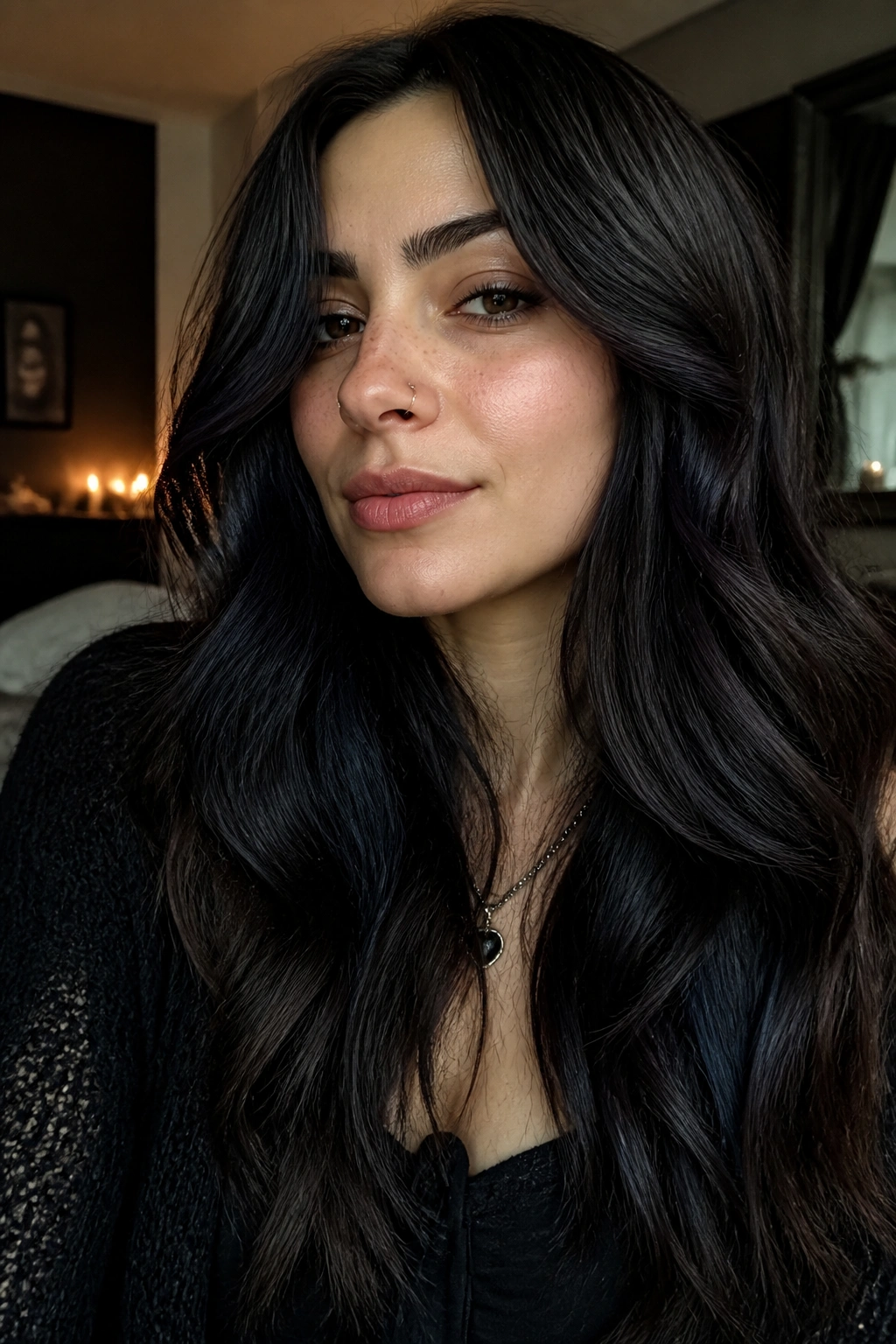
Black balayage does not have to feel hard. That’s the part people forget.
On long brunette waves, a soft goth finish uses blue-black or smoky black pieces to darken the lengths while keeping the movement loose and touchable. The result can feel romantic rather than sharp, especially if the base color is a deep brown or cocoa shade. The waves keep the hair from looking like one heavy sheet, and the black adds depth that a single brunette gloss cannot quite get on its own.
A side part helps here. So does a large-barrel wave with brushed-out texture. The shape should feel soft at the bend and a little piecey at the ends. If the hair is too polished, the black can look severe. If it’s too messy, the color loses its lines.
This look is for someone who likes darker hair but still wants movement and shine. It has mood, but not the frozen kind.
15. Reverse Balayage with Black Depth
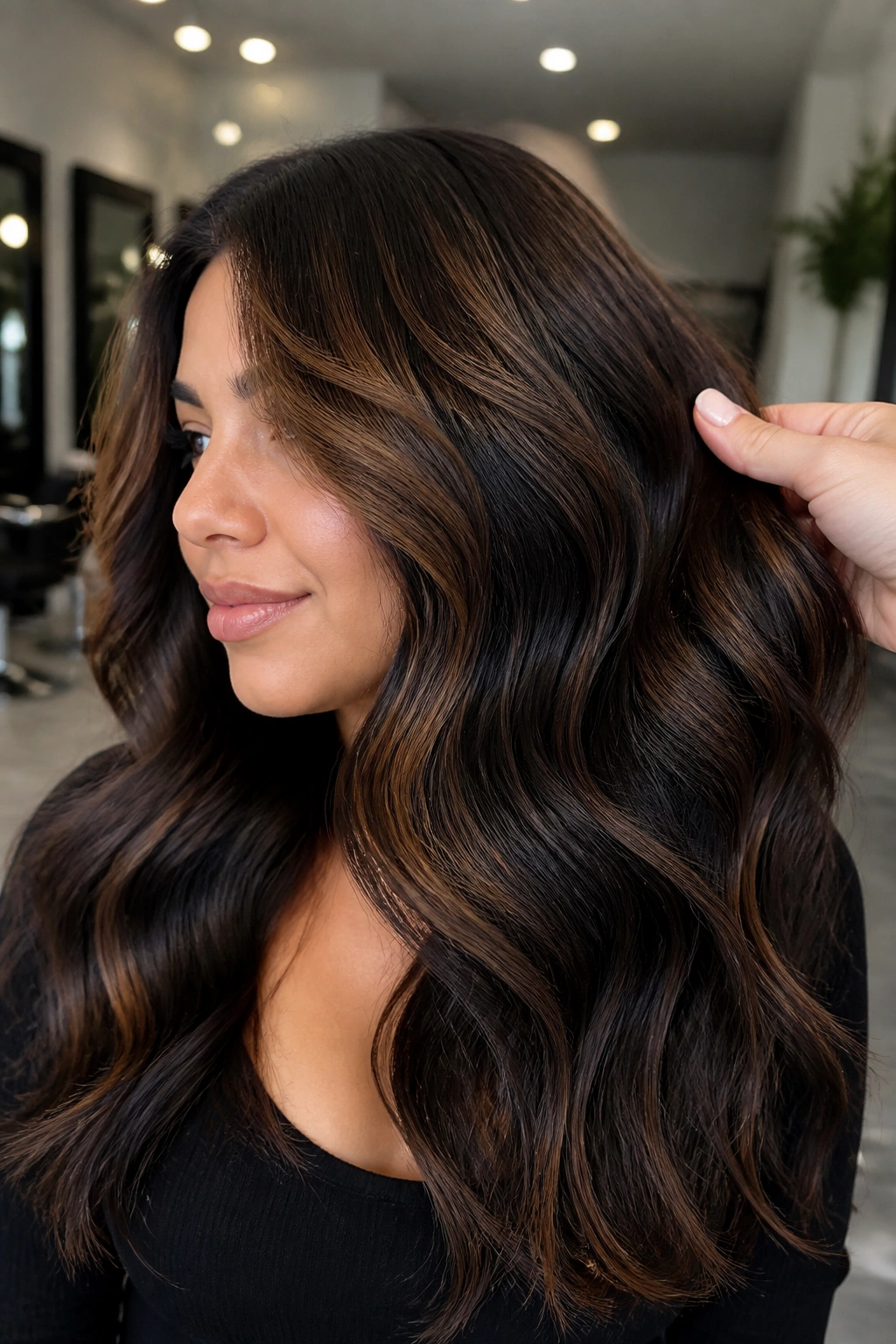
What if the hair already has lighter brown pieces and you want to move it darker without starting over? Reverse balayage is the answer.
Instead of lifting sections, the colorist paints in depth with black or near-black lowlights so the lighter brown stops floating alone. It’s one of the smartest ways to take highlighted hair back toward brunette territory while keeping texture. The hair doesn’t feel stripped or overbuilt. It feels grounded.
Who Should Ask for It
- People with old highlights that have gone too pale.
- Brown hair that looks washed out at the ends.
- Anyone who wants depth without a full permanent dark dye.
The finish should still leave some brown visible through the top layer. If the black gets placed everywhere, you lose the whole point. A light gloss over the darker pieces can make them sit flatter and blend better, especially if the hair was porous from previous lightening.
This is a practical look. Maybe the most practical one here.
16. Long-Wave Black Contour Balayage
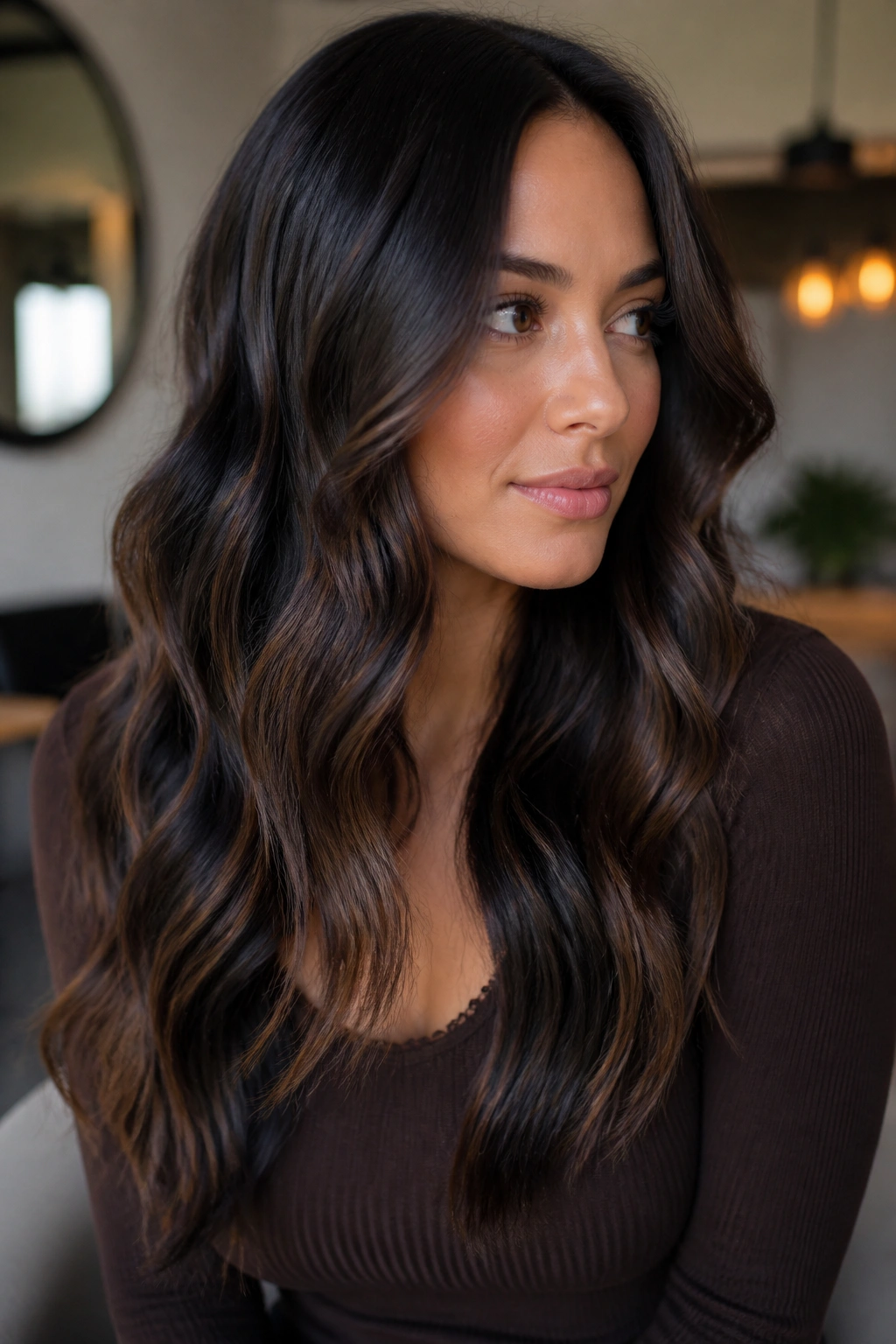
Long hair gives black balayage room to breathe, which is why contour placement can look so good here. The darker pieces can travel through the bends of the wave, creating shape from top to bottom instead of just at the ends.
A long-wave contour usually works best when the black starts around the cheekbone or collarbone and becomes denser through the lower lengths. That keeps the face from getting swallowed and lets the ends carry the weight. On very long brown hair, this can make the hair feel richer without looking overloaded.
- Use 1.25-inch curls for styling if you want the pattern to show.
- Keep the crown softer than the ends.
- Ask for a few dark pieces on the underside so the color moves when the hair swings.
This look is especially nice on long layered cuts because the layers break the dark pieces into soft lines. A one-length cut can wear it too, but layers make the contrast easier to see.
17. Ash Brown with Smoke-Tipped Ends
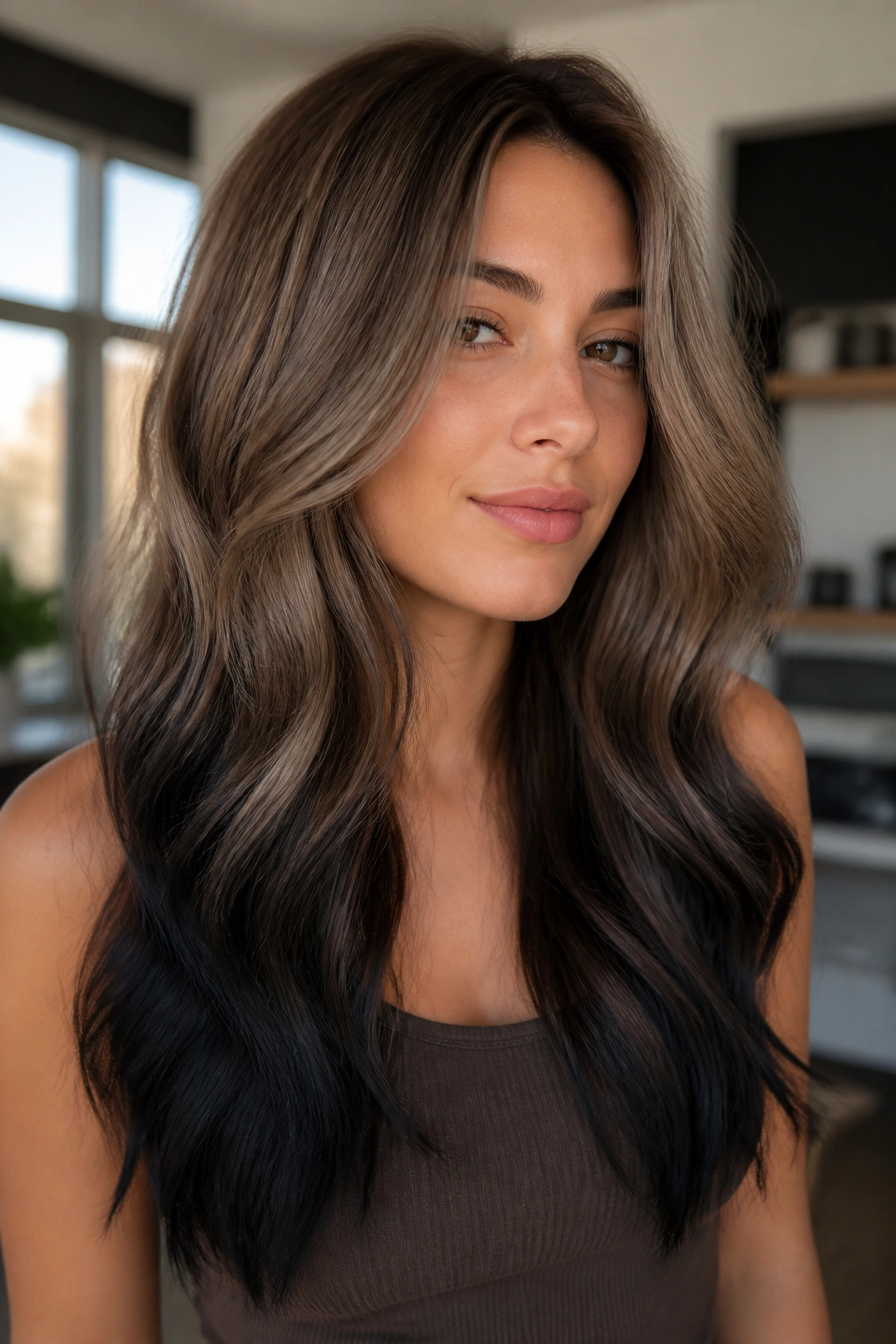
If you like hair color that whispers instead of talks, smoke-tipped ends are worth a close look. The black sits mostly in the last few inches, where it turns ash brown into something deeper and moodier without taking over the whole head.
This style is good for people who want black balayage but do not want the darkness near the face. That alone makes it easier to wear. The upper hair stays lighter and more open, while the ends feel anchored. On long waves, the smoky tips can look like the hair was dipped in shadow. On straight hair, they read more graphic and clean.
The key is to keep the transition soft. A sharp line at the last inch looks intentional in a bad way. A gradual fade from ash brown to blackened ends looks lived-in. It also grows out well, which is handy if you would rather book fewer salon visits.
18. Dimensional Dark Brunette Finish
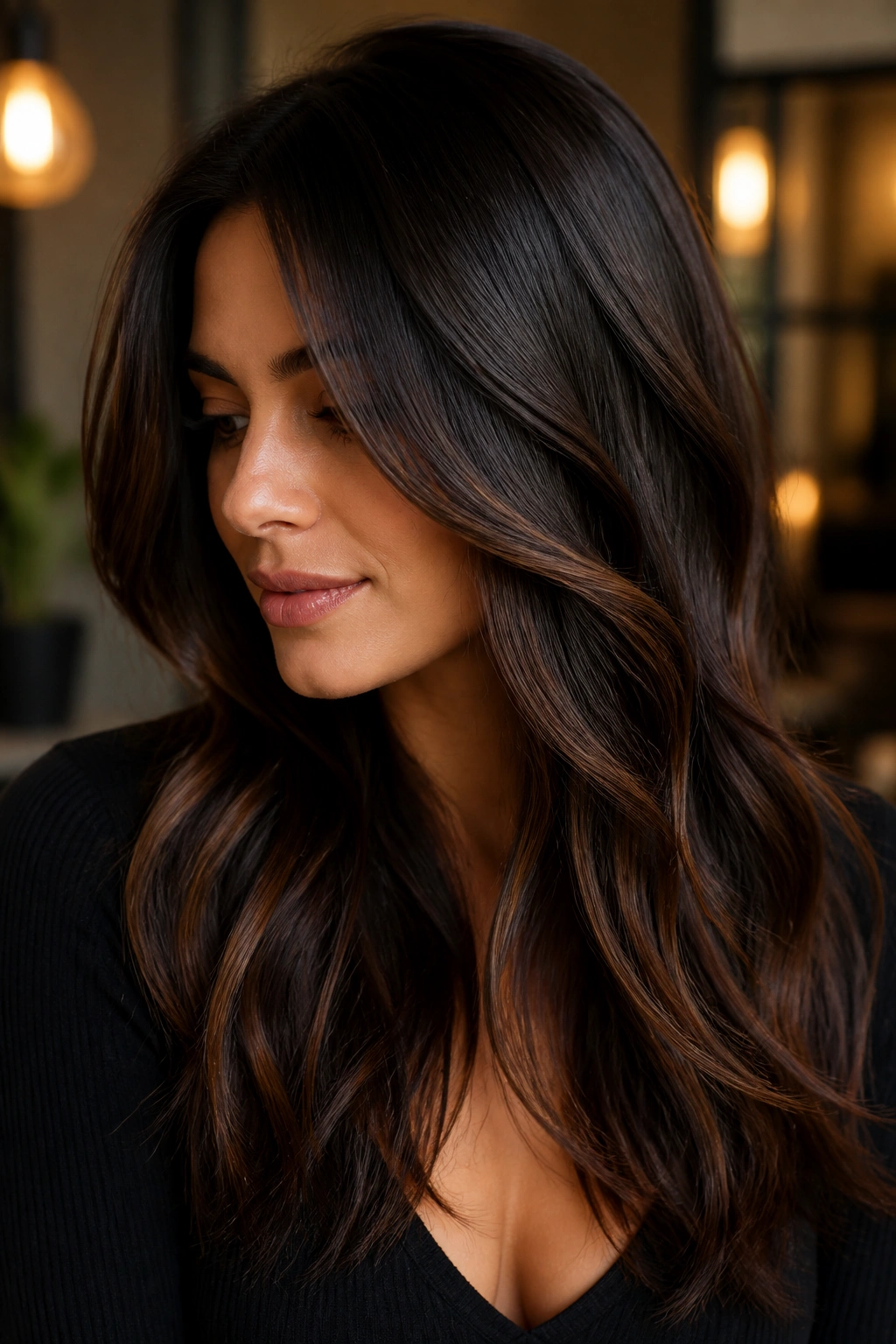
This is the quietest look on the list, and honestly, it may be the one that ages best. A dimensional dark brunette finish layers black lowlights, espresso ribbons, and a soft brown gloss so the hair reads rich from every angle without turning into one flat block.
The brown still leads. That matters. Black is there to deepen the shape, not to erase it. On straight hair, the finish looks sleek and expensive; on wavy hair, it looks fuller and more textured. Either way, the color depends on contrast that is controlled, not loud.
If you work in a setting where obvious hair color changes feel like too much, this is a good lane. If you already have naturally dark brown hair and just want it to look less ordinary, even better. A soft gloss every so often keeps the black from drying out and helps the brown stay clear instead of muddy.
Brown hair does not need to go full black to feel changed. Sometimes it only needs a few well-placed shadows.
