



Wavy hair and blonde balayage are a natural match when the color follows the bend instead of fighting it. Put bluntly, a flat block of blonde can make waves look busy and dry, while hand-painted ribbons can make the shape look fuller, softer, and a little more expensive without screaming for attention.
That’s the part people miss. Blonde is not one look on wavy hair. The tone matters, sure, but so does where the light pieces start, how close they sit to the face, and whether the ends are bright enough to catch movement without turning into a hard stripe.
Flat blonde is a trap.
The best blonde balayage looks for wavy hair usually do three things at once: they keep some depth at the root, they brighten the mid-lengths where the wave bends, and they leave enough darkness underneath so the texture still has shadow. That shadow is not a flaw. It’s the thing that makes waves look plush instead of frosted.
Some of the looks below are warm and creamy, some lean cool and smoky, and a few sit right in the middle with a beige finish that never looks harsh. If you’ve got natural waves, you already have the movement. The color just needs to know where to sit.
1. Honey Blonde Balayage for Soft, Loose Waves
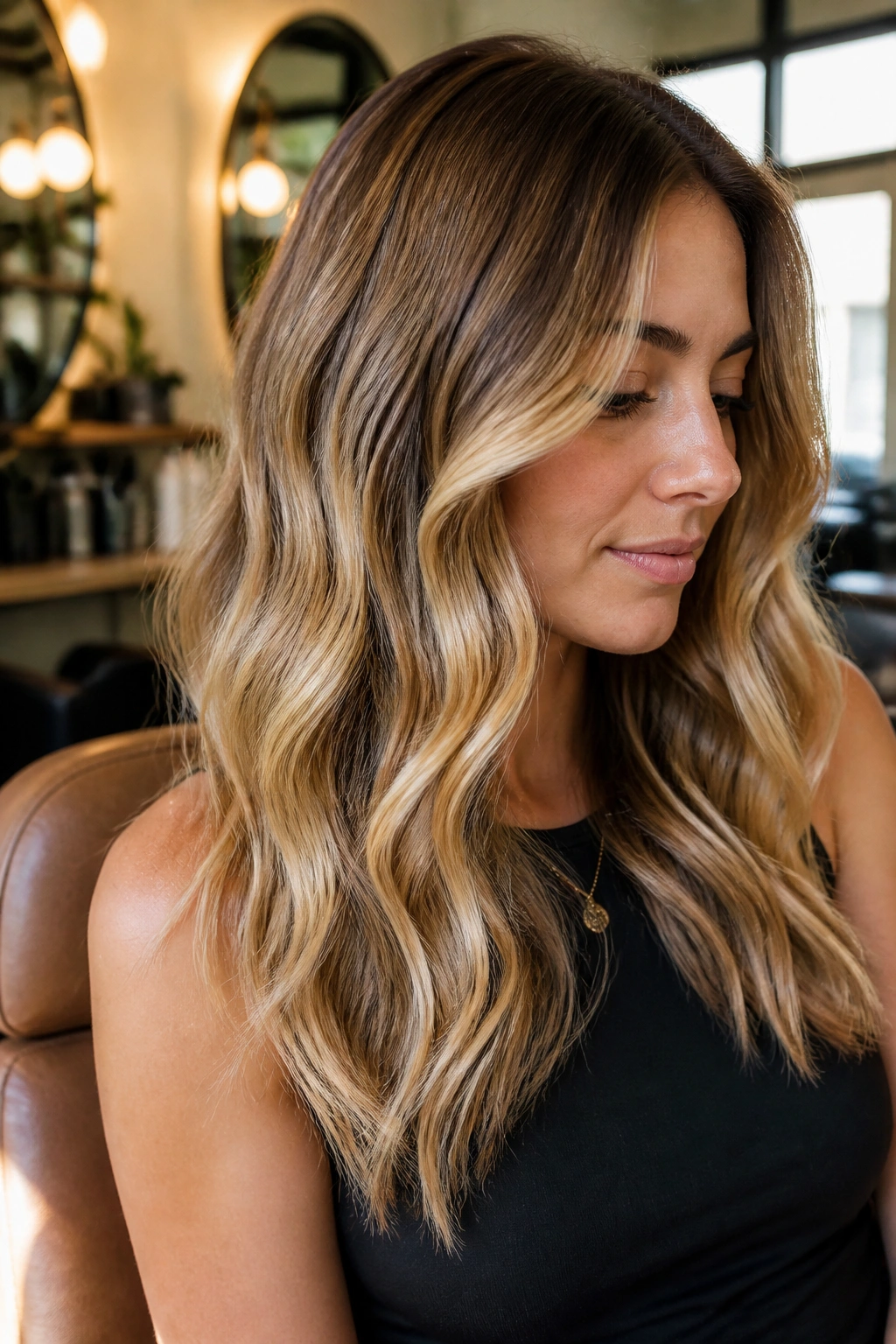
Honey blonde is one of those shades that flatters wavy hair without trying too hard. It brings warmth through the mids and ends, then lets the root stay a touch deeper so the whole style reads soft instead of streaky.
Why Honey Reads So Soft on Waves
Honey tones have enough gold to look sunlit, but not so much that they tip into brass. On waves, that matters. The bends in the hair catch the lighter pieces, and the lower lights underneath stop the color from looking one-note.
If your natural base sits around dark blonde, light brown, or soft medium brown, this is an easy lane to live in. Ask for fine balayage ribbons through the top layers and slightly thicker pieces through the ends, then finish with a warm beige or honey gloss.
- Best on wavy hair that falls somewhere between loose S-waves and medium waves.
- Ask for root depth at the first 1 to 2 inches so the color grows out without a hard line.
- Works best when the lightest pieces stay around 2 to 3 shades lighter than your base, not 5.
- A soft wave pattern makes the honey tones look richer, not louder.
Pro tip: keep the brightest honey pieces around the face and the outer curve of the waves. That is where the color gets noticed first.
2. Beige Blonde Balayage with a Soft Root Smudge
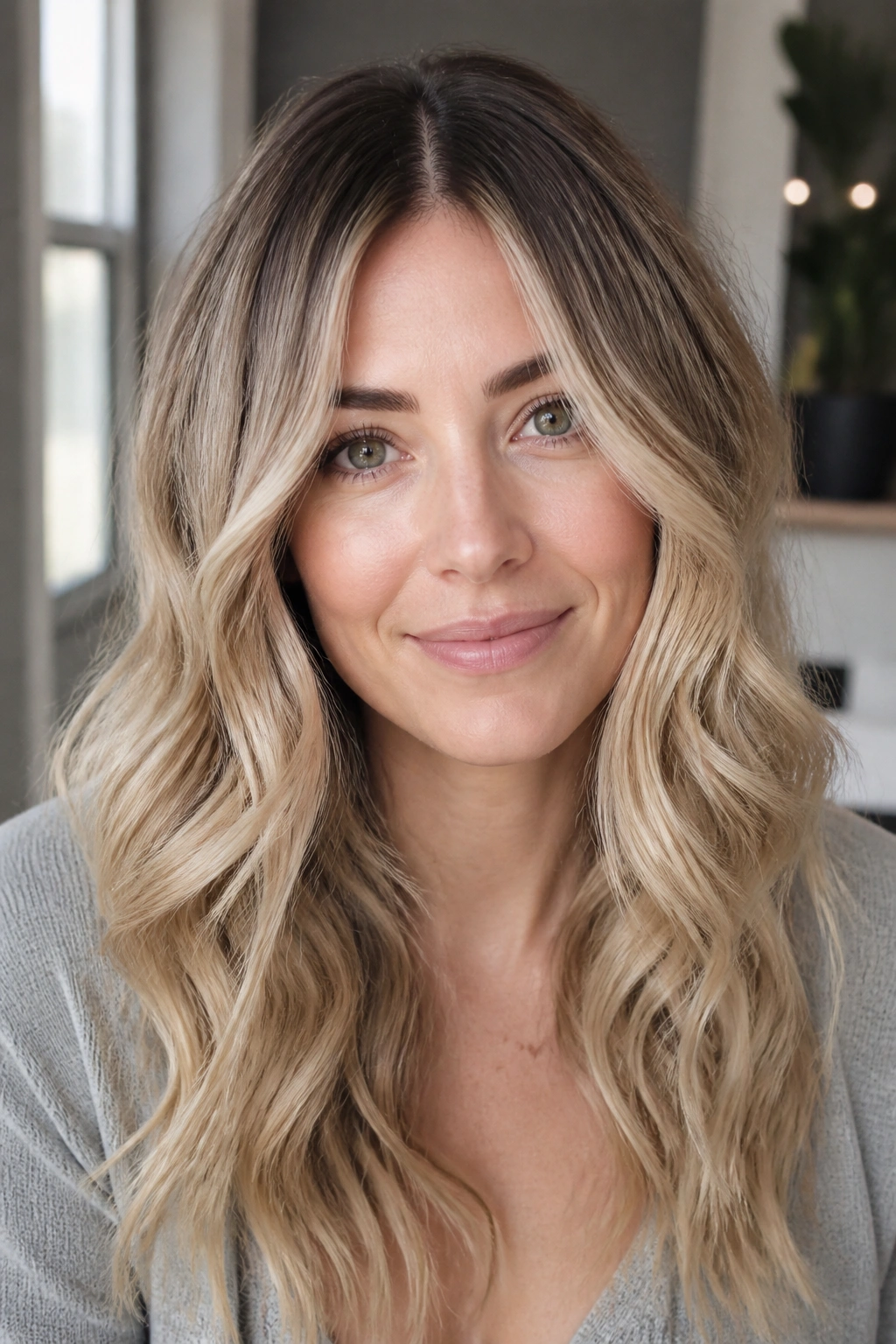
Beige blonde is the safe place I send people who want blonde but do not want to look bleached out. It has enough warmth to stay flattering and enough coolness to keep the finish clean, which is why it sits so well on wavy hair.
A soft root smudge changes everything here. Instead of starting the blonde right at the scalp, the color melts out of a slightly deeper root — usually just 1 shade darker than the mid-lengths — and the wave pattern keeps the transition from looking painted on. The result is calm, not flat. That matters more than people think.
If you wear your hair parted in the middle or slightly off-center, this style gives you a lot of movement around the face without making the whole head look overly light. It also plays nicely with grown-out highlights, which is handy if you hate the blunt feel of a full refresh.
Beige blonde works best when the toner stays neutral-to-warm, not icy. Go too cool and the hair can look gray in certain light; go too warm and you lose the polished beige effect. The sweet spot is a creamy finish that sits right between honey and ash.
3. Icy Pearl Blonde Balayage for Cool, Glossy Waves
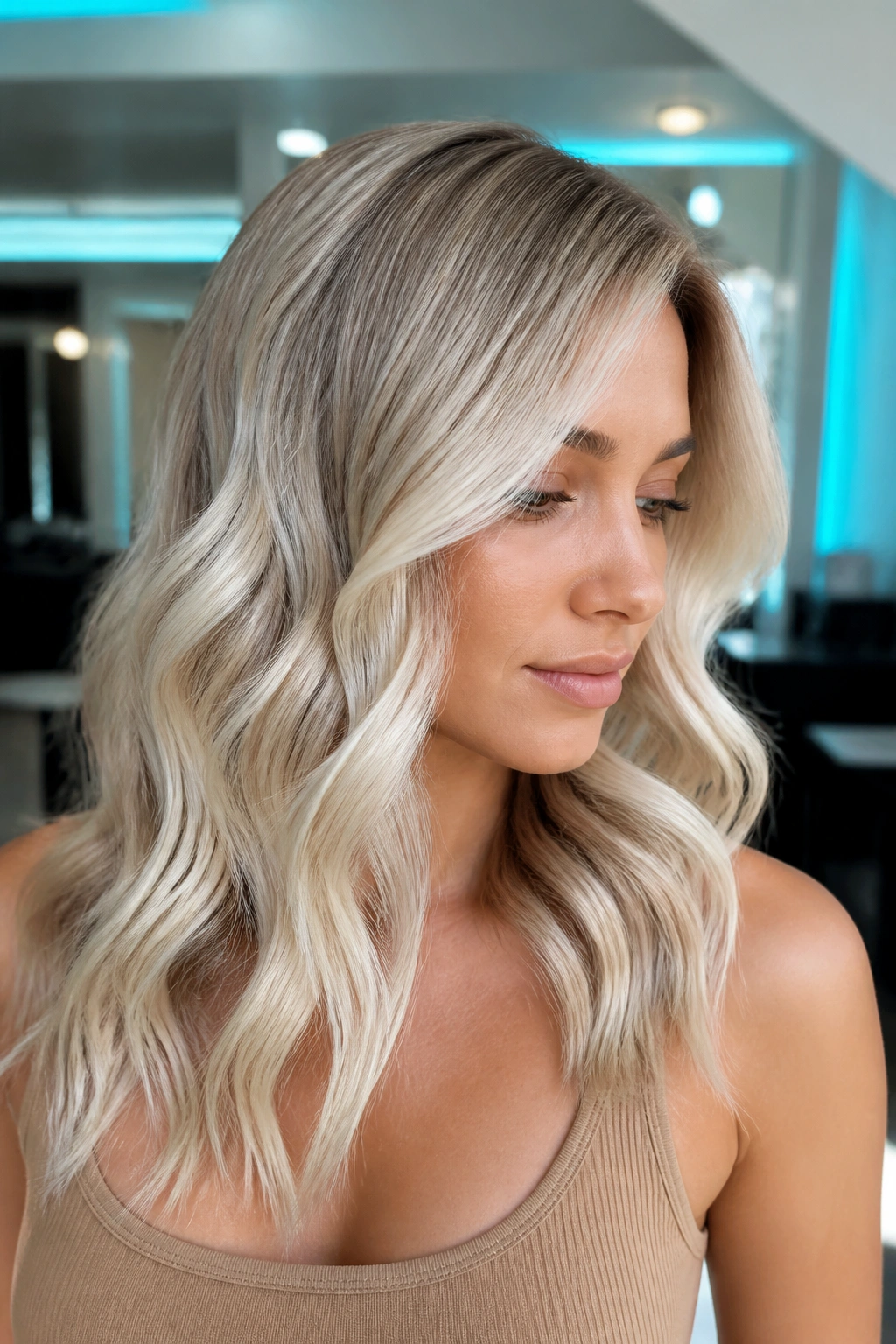
Can wavy hair carry icy blonde without turning brittle-looking? Yes — when the placement is soft and the tone is controlled.
The trick is not to bleach every piece to the same pale level. That usually looks harsh on waves and can make the texture seem frizzy. Instead, ask for pearl-toned balayage pieces concentrated on the outer bends of the hair, with a shadowed root and a cooler toner that keeps the blonde looking clean rather than white.
How to Wear It Without Brass
Pearl blonde works best when the wave pattern is defined enough to show off the contrast between the lightest pieces and the darker base. If your waves are loose and a little undone, the finish looks airy. If your hair is tighter or more compact, the icy pieces can look even more graphic, which can be gorgeous but a little louder.
Use purple shampoo once every 7 to 10 days, not every wash. Overdoing it can leave the hair dull and chalky, and nobody wants that. A light gloss every 6 to 8 weeks helps keep the pearl tone from drifting yellow.
If you like a crisp, cool blonde that feels sharp rather than beachy, this is the one. It has a polished edge that warmer blondes do not give you.
4. Butter Blonde Balayage with Beachy Ribbons
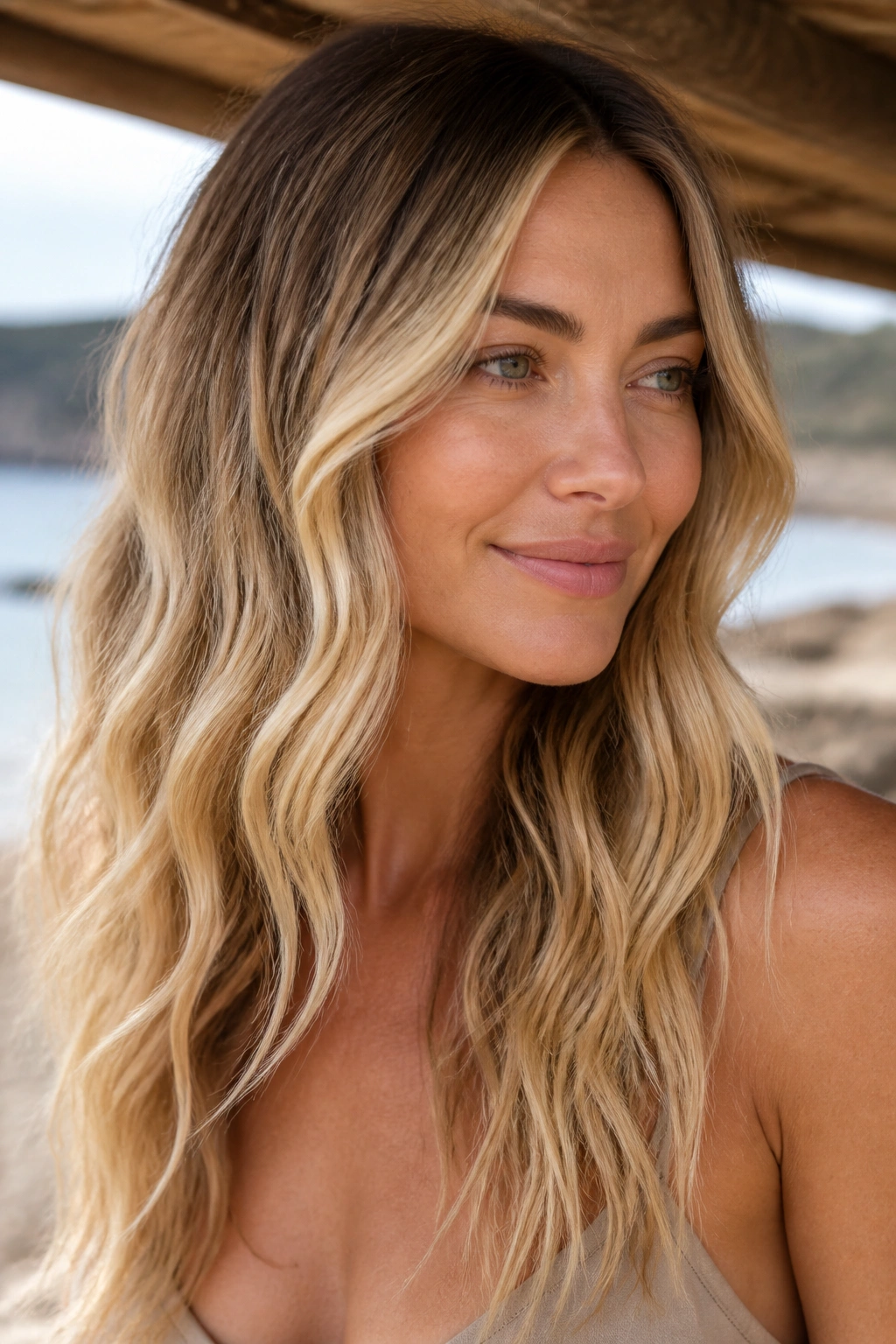
I still love this look on shoulder-length waves.
Butter blonde has that soft, creamy warmth that makes textured hair look touched by light instead of hit with bleach. On wavy hair, the best version is not a blanket of brightness. It is a set of buttery ribbons placed just off the root and carried through the mids so the ends look sunlit, not fried.
The first time I saw this style done well, the colorist had left the lower interior sections darker and only skimmed the surface layers with lighter pieces. Smart move. The waves moved like water because the darker underlayers kept the shape grounded.
- Ask for soft hand-painted pieces starting about 2 inches below the root.
- Keep the ends a little lighter than the mids for that beachy fade.
- A warm beige gloss keeps the butter tone from going orange.
- Best on medium to thick hair, where the ribbons can spread out without looking sparse.
The finish should feel easy. If it looks striped, the pieces are too wide or too close together. Butter blonde is about softness first, brightness second.
5. Ash Blonde Balayage for Cooler Contrast
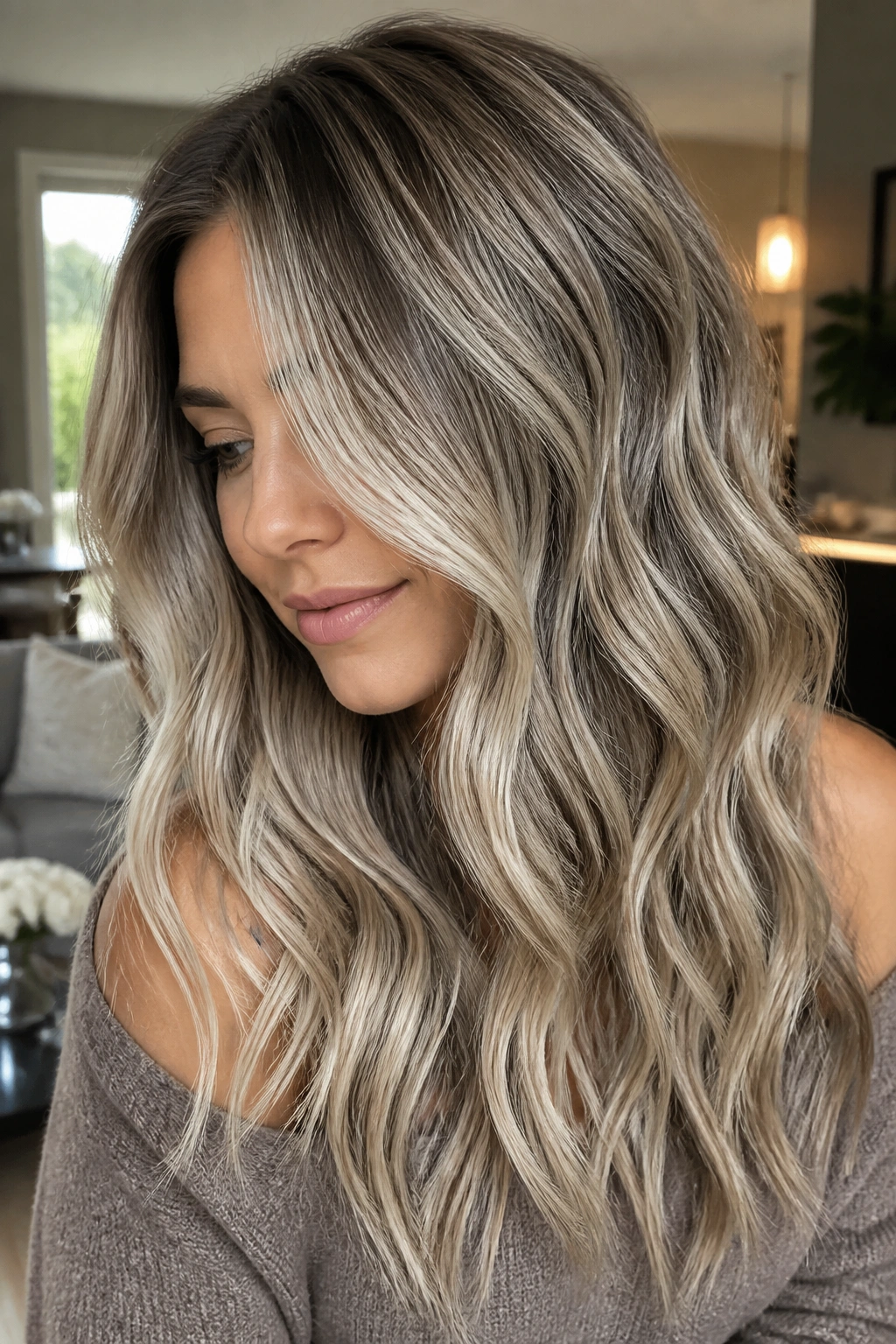
Ash blonde gets a bad reputation because people often think it means dull or gray. That’s lazy thinking. On wavy hair, ash balayage can look sharp, modern, and quietly rich when the base still has enough depth to support it.
The best ash blonde looks have a cool beige cast rather than a flat slate tone. That distinction matters. You want the waves to keep dimension, so the lighter sections should sit over a slightly smoky base instead of being lifted to a pale, icy white all the way through. Otherwise the texture disappears.
This is one of those shades that rewards a good gloss. Hair that has been lightened to level 8 or 9 often needs a toner with a blue-violet edge to keep the warmth under control, especially if your natural hair pulls gold fast. If the toner is too strong, though, the color can go flat. That’s the tightrope.
Ash blonde is a strong pick if you like a cooler wardrobe, wear a lot of black or charcoal, or just want your waves to look more defined. It’s less beachy than honey, less flashy than platinum, and a little more tailored than either.
6. Champagne Blonde Balayage and Face-Framing Brightness
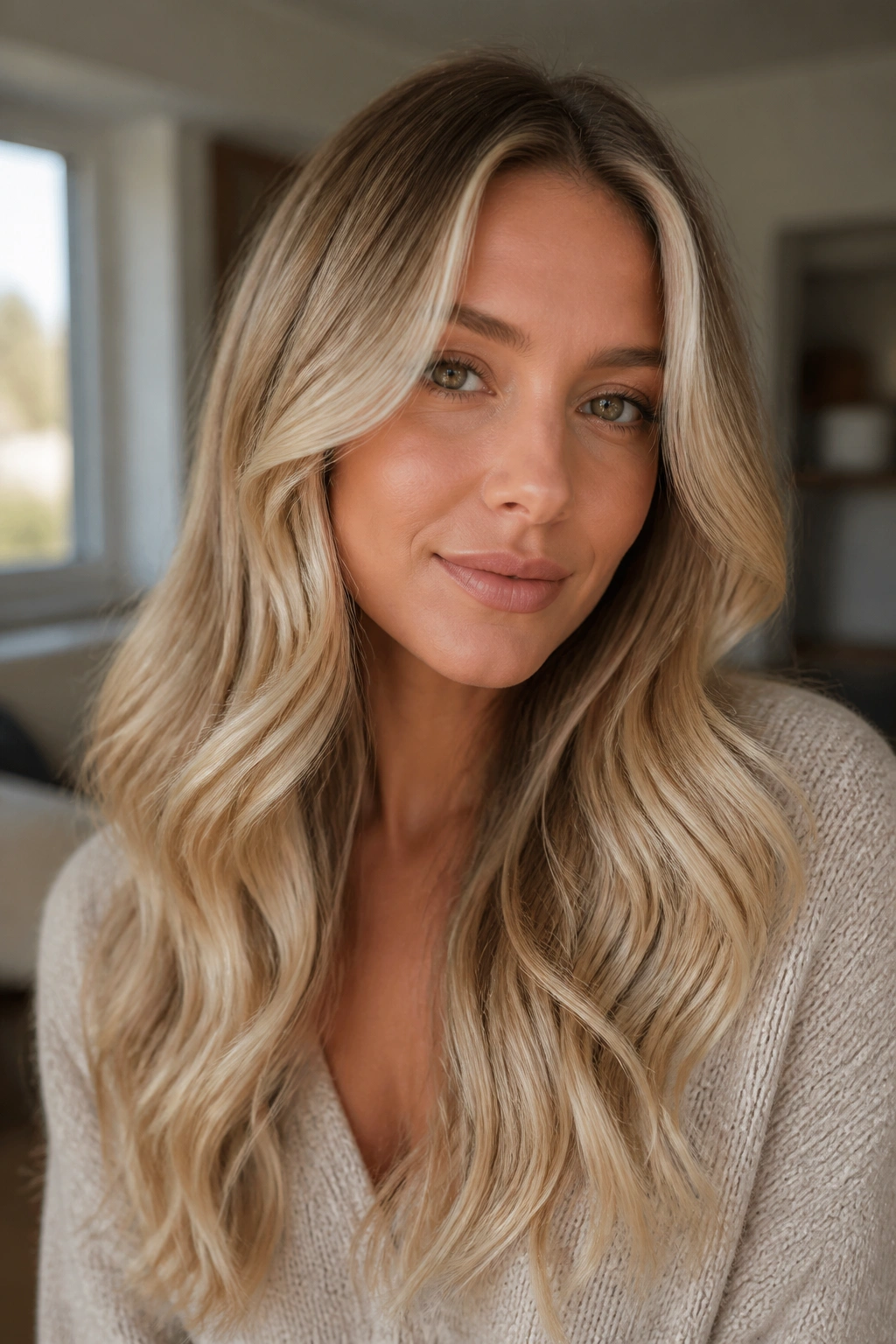
Champagne blonde sits in that sweet spot between warm and cool, which is why it flatters wavy hair so easily. It has a pale, creamy lift with just enough beige to keep it from feeling icy, and the face-framing pieces add lift where the eye lands first.
Compared with an all-over blonde, champagne balayage keeps more depth underneath. That means the wave pattern still shows, and the color does not wash out your features. If your hair is naturally medium brown or dark blonde, this is a cleaner route than trying to push everything to pale blonde at once.
The face-framing pieces should start about 1 inch back from the hairline, then taper down through the front layers. That tiny shift changes the whole look. It brightens the skin, opens up the face, and lets the waves do the rest.
This is the blonde I’d point to for anyone who wants polish without the stiffness. It feels lighter than beige, softer than pearl, and easier to wear than platinum. Simple. Clean. Not fussy.
7. Vanilla Cream Balayage for Dimensional Shine
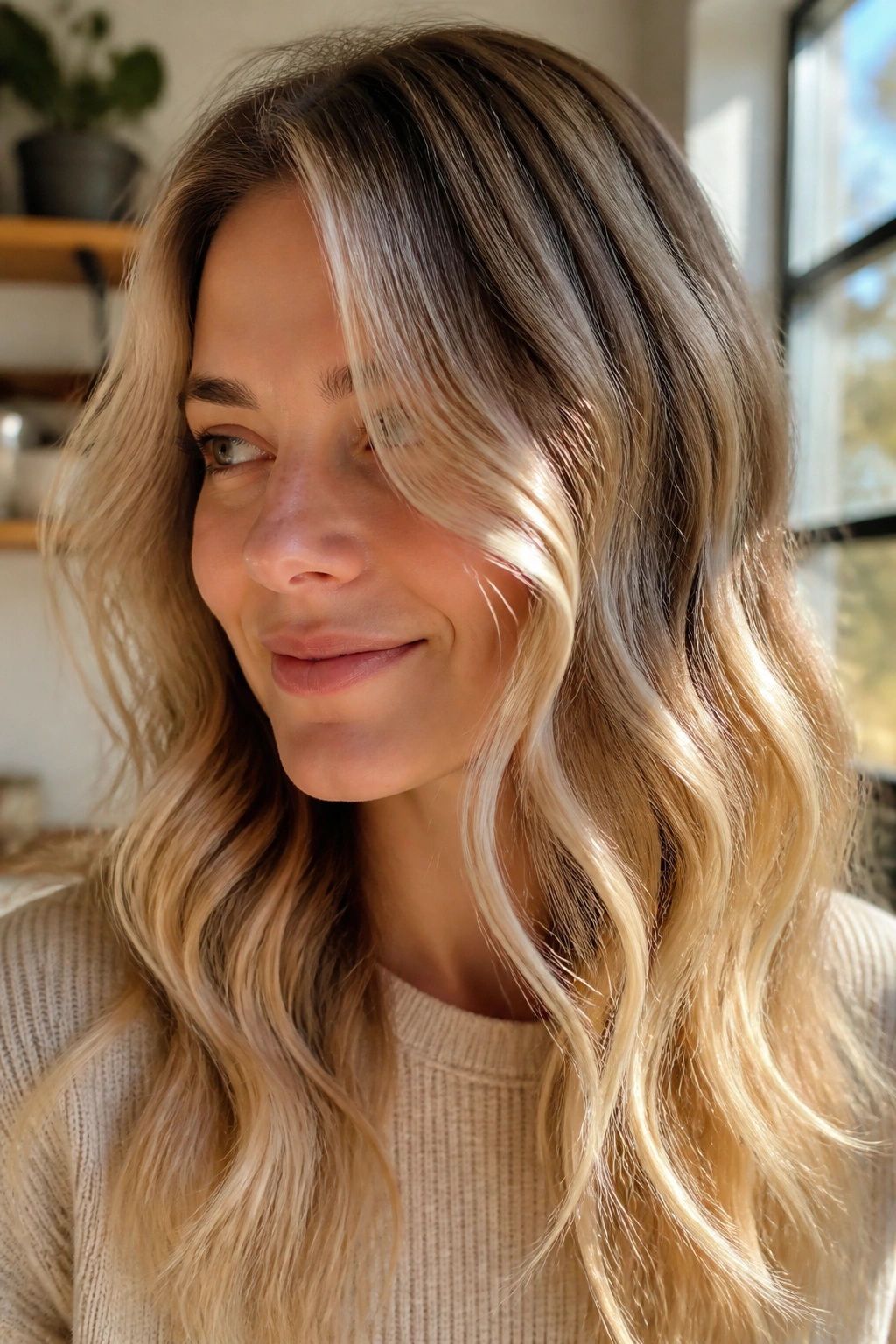
Vanilla cream blonde is the shade I reach for when the goal is brightness with a soft edge. It looks especially good on wavy hair because the different depths of the wave catch the creamy pieces at different angles, so the color looks layered instead of copied and pasted.
What Makes It Different
The vanilla tone is warmer than ash but cooler than honey, which gives it a polished middle ground. On a good balayage, you can still see deeper ribbons underneath the lighter top pieces, and that contrast keeps the hair from floating away visually. Too much lightness on waves can erase the shape. This avoids that.
How to Ask for It
- Request a beige-vanilla toner at level 9 if your base lifts cleanly.
- Keep the root shadow soft, usually 1 to 2 shades deeper than the mid-lengths.
- Make the lightest pieces concentrate around the cheekbones and ends.
- Ask for a blend that leaves some interior depth, not full saturation.
If your hair is thick, vanilla cream can look lush and expensive in a way flatter blondes can’t match. If your hair is finer, the trick is keeping the pieces airy so the wave pattern does not get overwhelmed. Either way, this one is a reliable crowd-pleaser.
8. Bronde-to-Blonde Balayage for Darker Bases
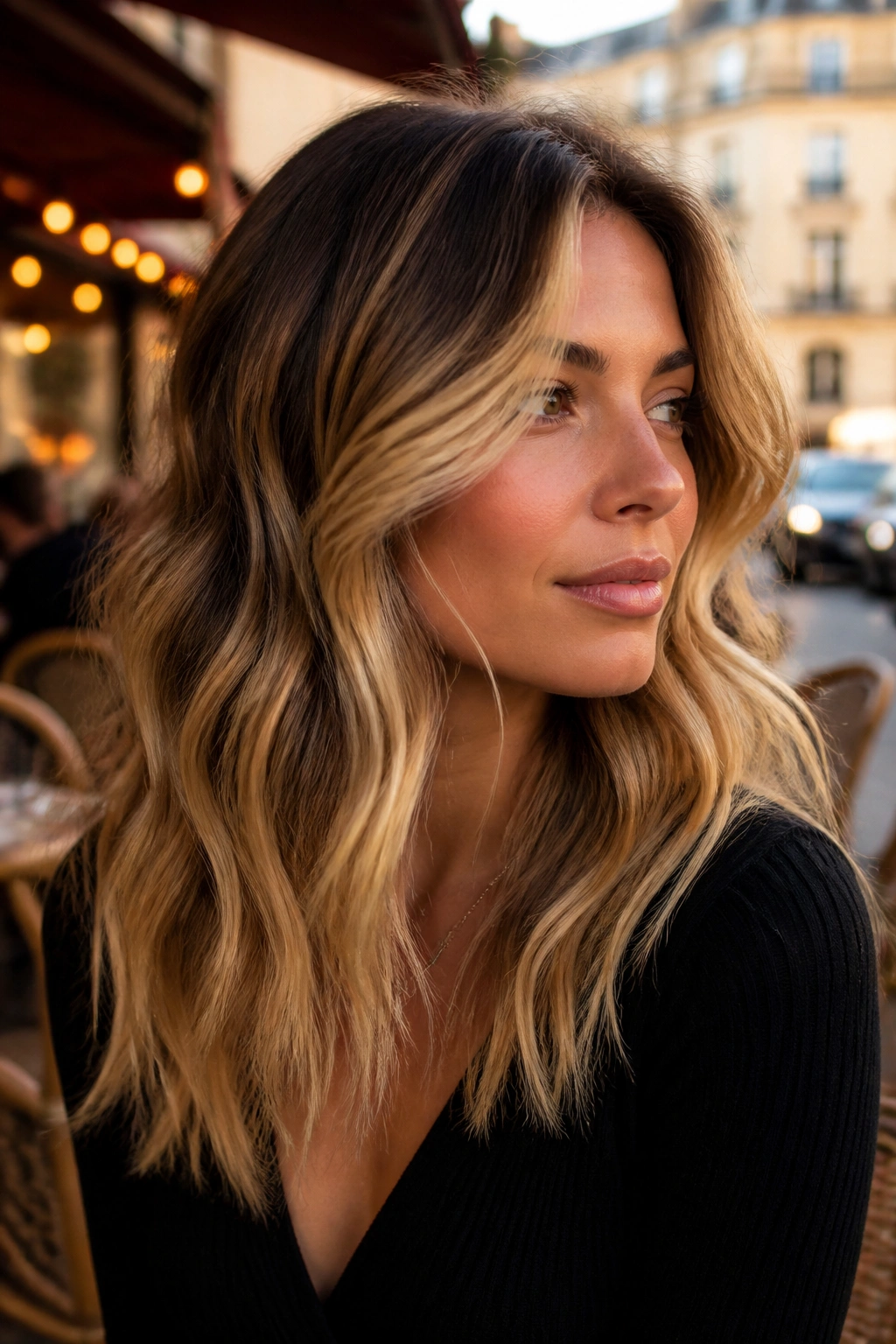
Bronde-to-blonde is the move for anyone starting with a deeper brunette base who wants lightness without a harsh jump. It gives wavy hair a natural-looking fade from dark root to bright end, and that gradient is where the magic lives.
A hard blonde transition on dark hair often looks busy. Bronde avoids that by keeping the root and lower interior sections rich, then opening up the surface with hand-painted blonde pieces that sit higher around the face and lower toward the ends. The whole thing feels expensive because it looks gradual.
This is not a timid look. It is controlled. The brunette underlayer gives the waves more body, and the blonde surface pieces bring the lift. That contrast is especially good if your hair is dense or coarse, because the darker base gives the color something to hold onto.
Ask for a balayage that starts with caramel or mocha at the root zone, then moves into beige blonde through the mids. If you want more drama, let the front pieces brighten a little sooner. If you want it softer, keep the lighter sections mostly mid-length and below.
9. Platinum Ribbon Balayage for Defined S-Waves
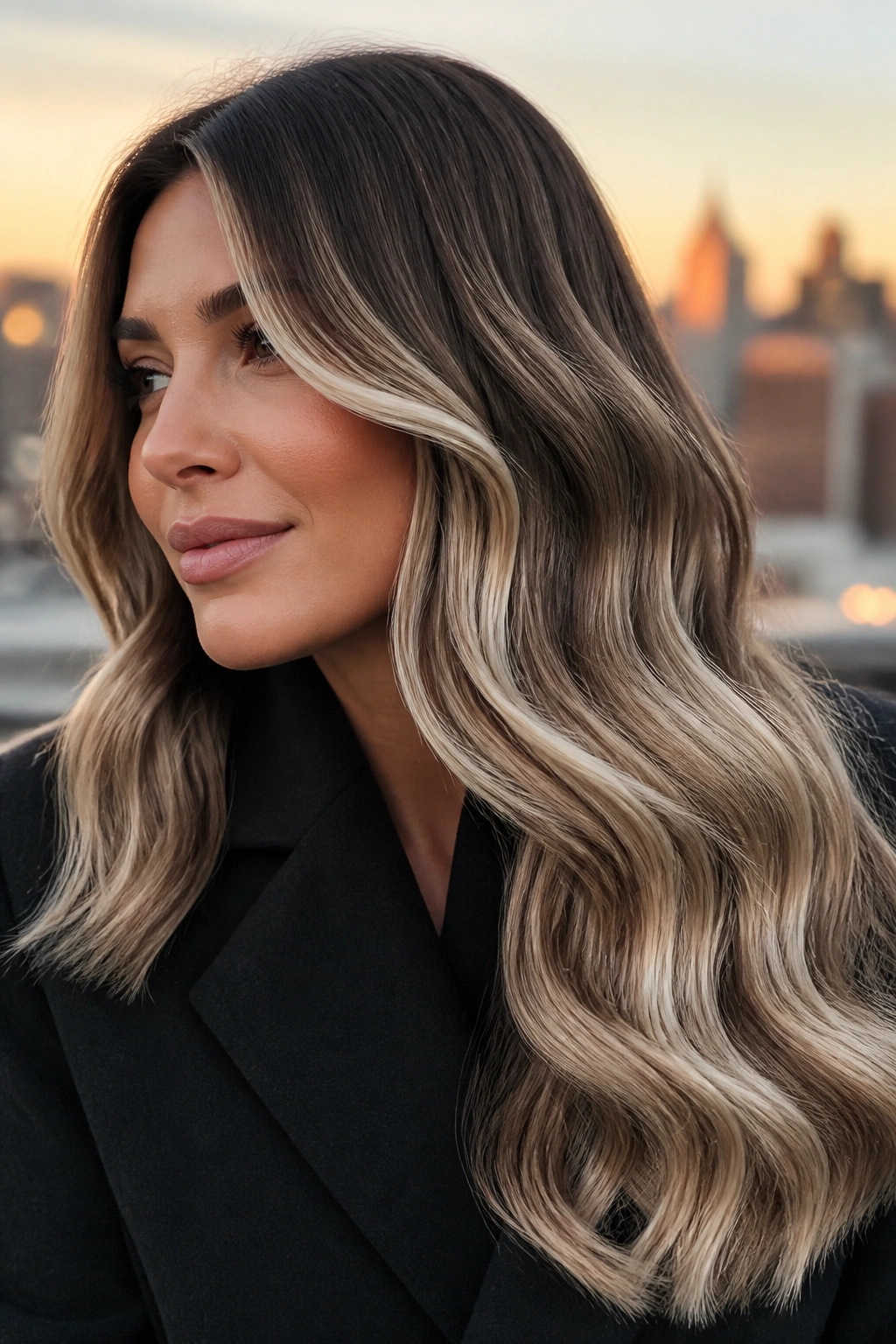
Why does platinum look so good on wavy hair when it’s placed in ribbons instead of sheets? Because the wave itself becomes part of the design.
Platinum ribbon balayage works when the lightest pieces are narrow enough to move with the curls and bends. Thick blonde blocks can look stiff, but thin, bright ribbons create a kind of flicker as the waves shift. It’s a sharper look, sure, but it has a lot of motion when it’s done well.
How to Get the Most From It
The base usually needs to stay deeper — sometimes a smoky blonde, sometimes a neutral brown — so the platinum has somewhere to land. If the whole head is pushed pale, the contrast disappears and the style loses its shape. Keep the platinum around the outer curves of the wave and through the ends, where the texture is strongest.
Use a bond-building treatment after lightening. That part is not glamorous, but it matters. Platinum on wavy hair can get dry fast, and dry platinum is where the frizz starts to show.
If you like clean contrast and a bolder finish, this is the blonde that gives you both. It’s not soft in the honey sense. It’s crisp, bright, and a little bit editorial.
10. Sandy Blonde Balayage for Air-Dried Texture
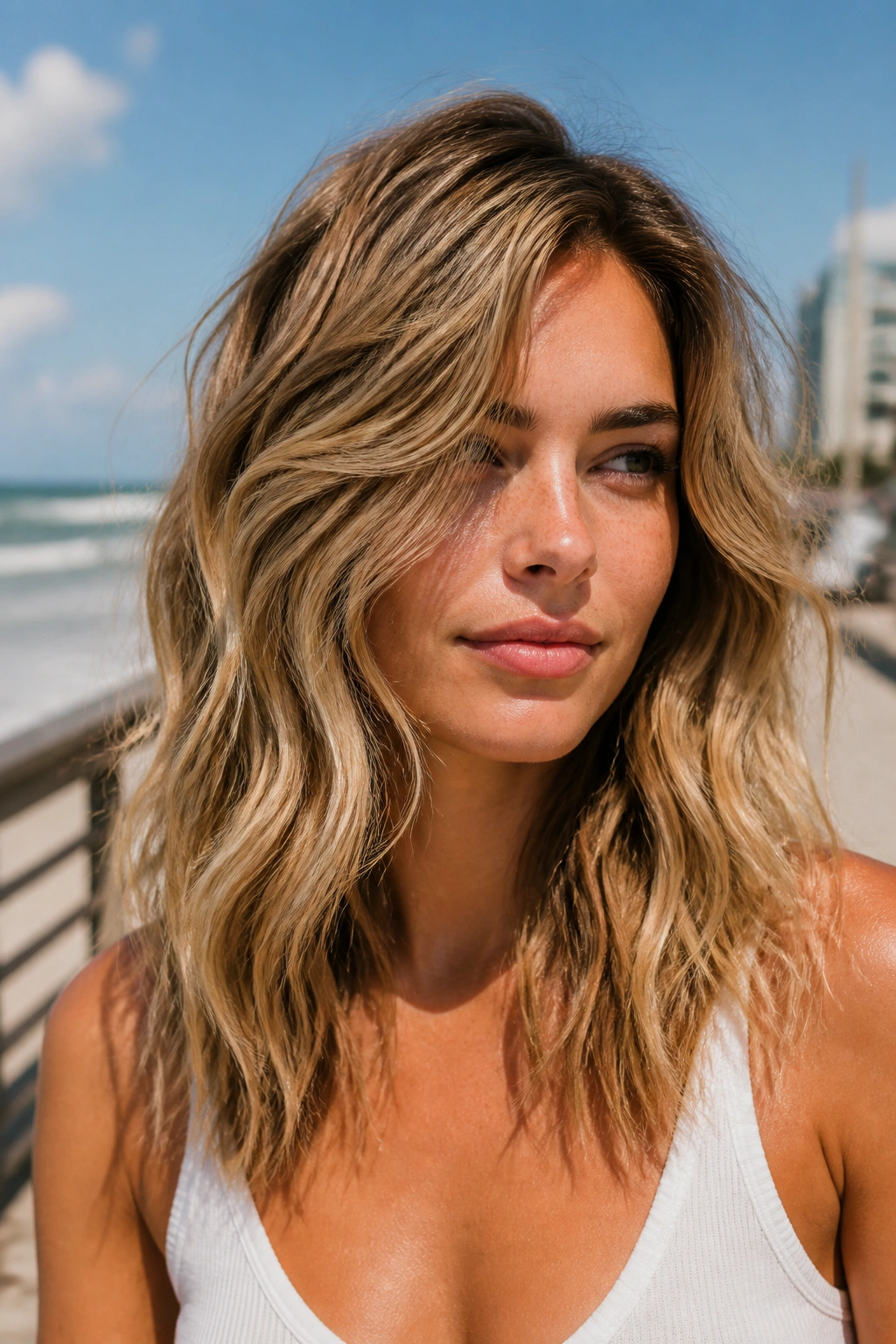
There’s something honest about sandy blonde. It looks like hair that spends time in salt air even when it doesn’t. On wavy hair, that makes it feel especially easy because the color leans neutral and muted, which lets the texture do the talking.
I think this is one of the best blonde balayage looks for people who air-dry their hair often. Sandy tones forgive a little bend inconsistency. They don’t demand perfect styling, and they don’t flash brass the second the light changes. The color usually sits somewhere between beige and pale gold, with the kind of softness that makes day-two hair look intentional.
If you’re asking for it at the salon, keep the lightening fine and scattered rather than chunky. You want a dusting of brightness through the mids and ends, not a set of obvious stripes. A matte-finish cream or sea-salt spray can help the waves hold their shape without turning crunchy.
The best part? Sandy blonde does not fight your natural pattern. It follows it. That’s why it feels so believable.
11. Golden Blonde Balayage with a Sunlit Finish
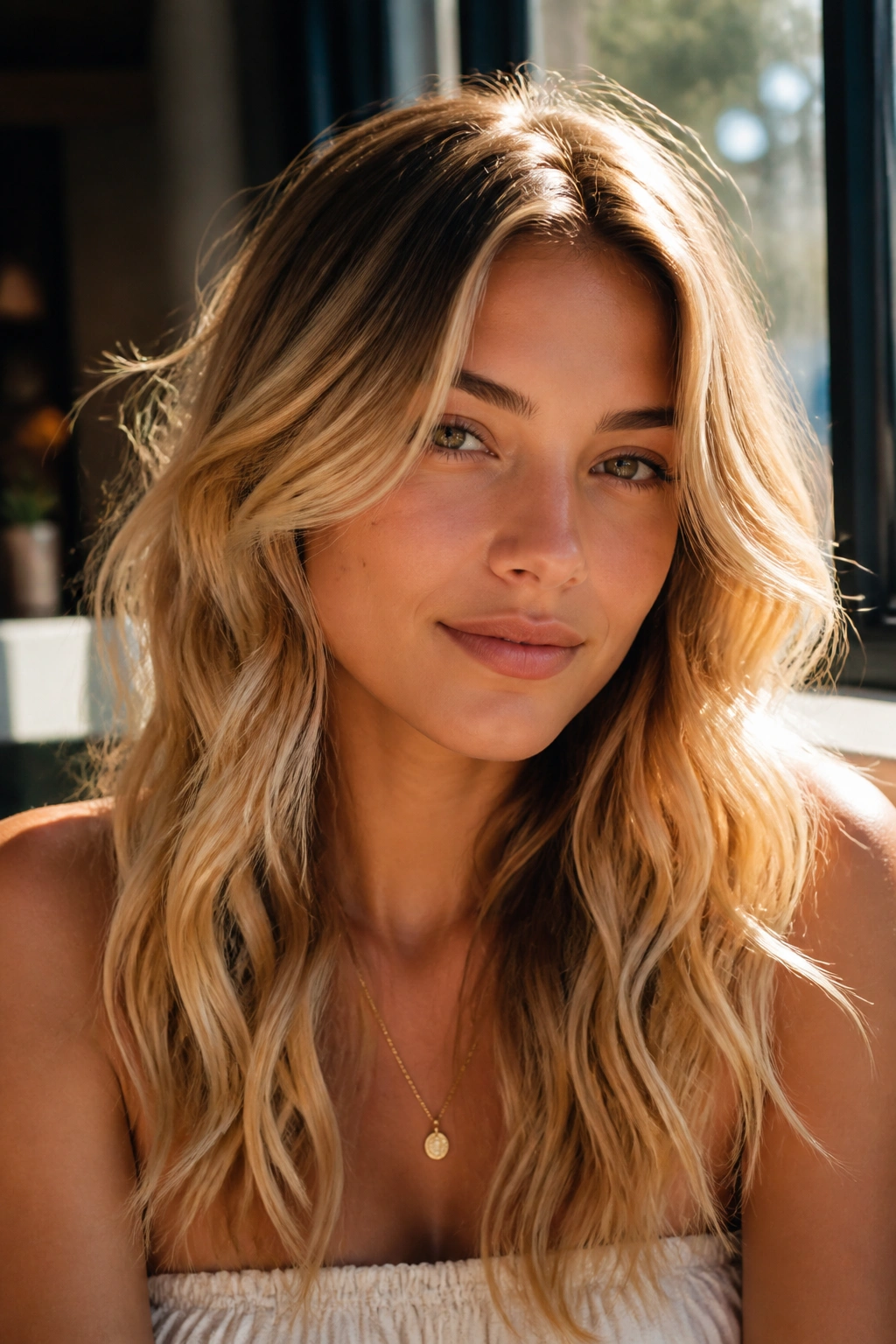
Golden blonde is warmer, richer, and more forgiving than a lot of people expect. On wavy hair, it can look like the hair was lifted naturally by light over time, especially if the placement stays soft around the crown and brighter through the lower lengths.
This is not the blonde for someone who wants icy precision. It’s for someone who likes warmth, glow, and a little softness around the edges. The golden tone reflects off the bends in the wave, so the hair can look thicker and shinier without needing a lot of styling tricks. That sheen matters. Warm blonde can go muddy if it’s under-toned, but when it’s clean, it glows.
A good version usually includes a deeper root melt, then gold-beige pieces through the visible layers. Keep the lightest ends from going too pale. If they do, the contrast can get choppy. The beauty here is the gradual fade.
Golden blonde also makes a lot of sense if your skin tone naturally handles warmth well, or if your brows and lashes are darker and you want the hair to sit in the same family. It’s classic for a reason. Not boring. Classic.
12. Mushroom Blonde Balayage for Soft Depth
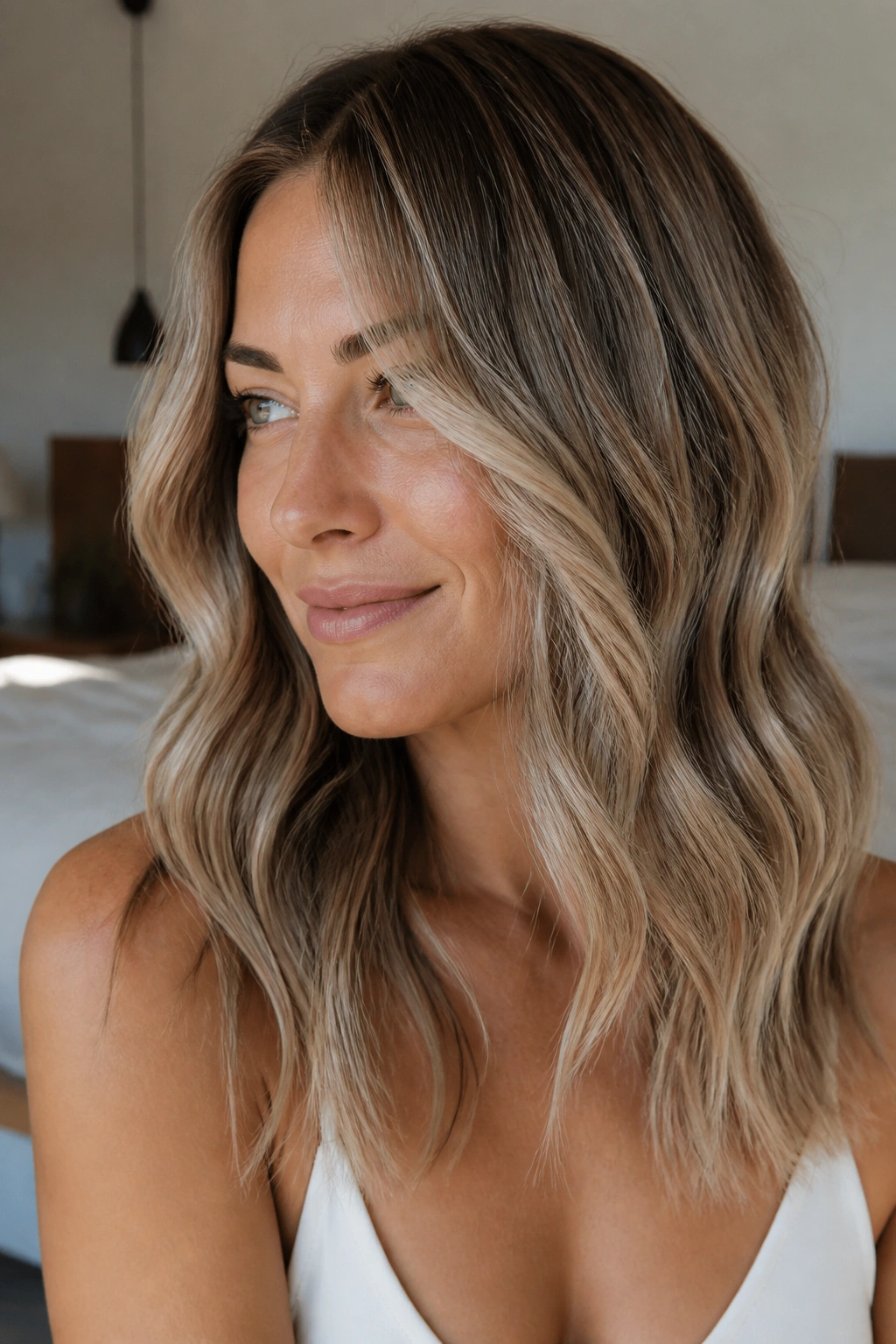
Mushroom blonde is the shade for people who want blonde, but not the sunny kind. It sits in a cooler beige-taupe zone that keeps wavy hair looking dimensional and a little smoky, almost like the color came from shadow and light working together.
Unlike brighter blondes, mushroom tones keep more depth in the middle of the hair shaft. That matters on waves because the bends already create a lot of movement. If every section is too light, the pattern can start to look scattered. Mushroom blonde lets the wave stay visible while the color reads expensive and low-key.
It’s a strong choice for medium brown or dark blonde hair, especially if you’ve always thought platinum looked too harsh on you. Ask for soft balayage pieces that lift to a muted level 8 or 9, then tone them with a beige-gray glaze. The result should never look flat gray. It should look soft, dusty, and balanced.
This is the blonde I’d choose for cooler wardrobes, stronger brows, and people who want their color to grow out quietly. The tone stays calm. The hair still moves.
13. Money Piece Blonde Balayage for Round Faces
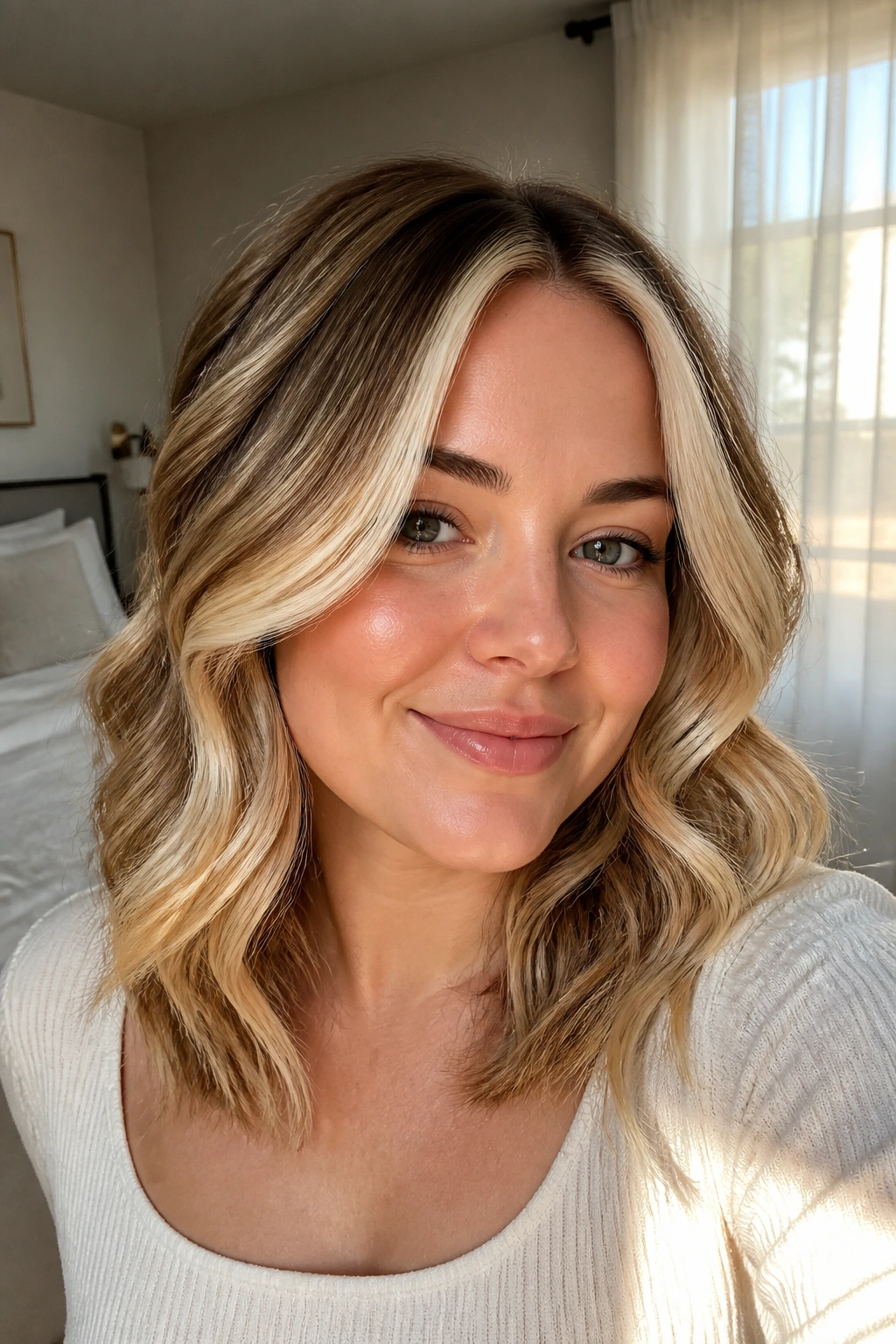
A money piece can change the whole read of a balayage, especially on wavy hair. Those front pieces pull light toward the face, which creates lift without needing to lighten the entire head. For rounder faces, that can be a smart trick because it adds vertical interest and breaks up softness at the sides.
What to Ask For
- Keep the brightest front pieces 1/2 inch to 1 inch from the hairline.
- Let them start higher than the rest of the balayage, usually near the part line.
- Ask for a softer blend through the lower lengths so the front stays the star.
- Choose a tone that matches the rest of the blonde — honey, beige, or champagne all work.
The important part is restraint. If the front pieces are too wide, they can dominate the style and make the hair look disconnected from the rest of the color. Thin, bright ribbons are enough. They lift the face, sharpen the wave pattern near the cheeks, and make the whole look feel more intentional.
This style is also handy if you like to wear your hair down most of the time but still want some structure around the front. It gives you that little hit of brightness without demanding full-head maintenance every time the roots grow out.
14. Rooted Cream Blonde Balayage for Low Maintenance
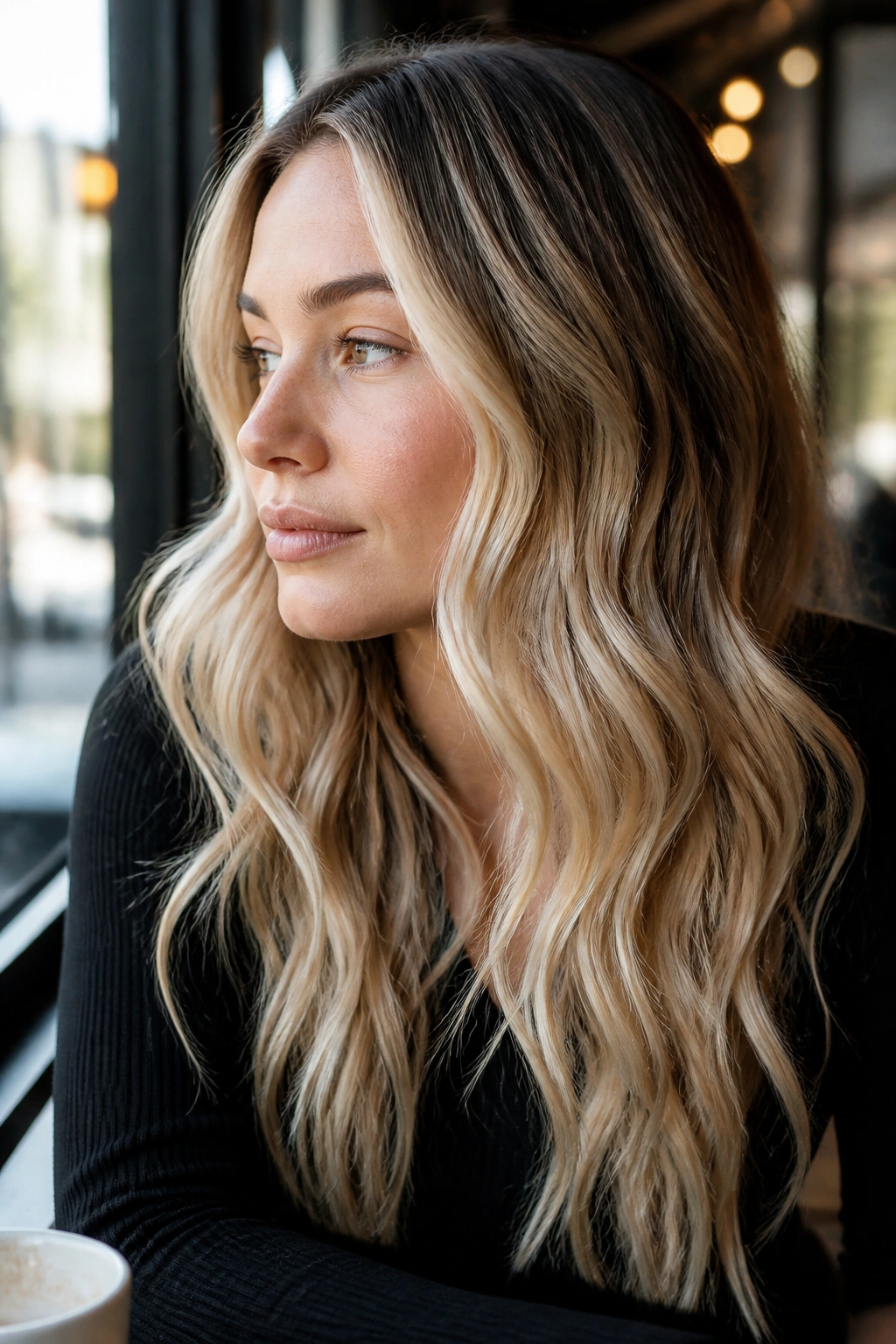
Rooted cream blonde is one of the smartest choices for people who want the look of blonde without the stress of chasing roots. The deeper root gives the style a built-in shadow, and the cream blonde through the mids and ends keeps the waves looking soft instead of over-processed.
That root depth is doing real work. It makes the grow-out look deliberate, which means you can wait longer between salon visits without the color looking abandoned. On wavy hair, the blend is even more forgiving because the bends disguise the shift from dark to light.
This look tends to be more flattering than a hard platinum blonde if your hair naturally grows in a medium brown or dark blonde shade. The contrast is gentler. The curl pattern keeps the transition moving. And the cream tone reads clean without going chalky.
If you want a practical blonde, this is the one. The maintenance stays lighter, the regrowth is less obvious, and the color still gives you that polished blonde finish when you put the hair in a loose wave or a rough blowout.
15. Caramel-to-Blonde Balayage for Thick Waves
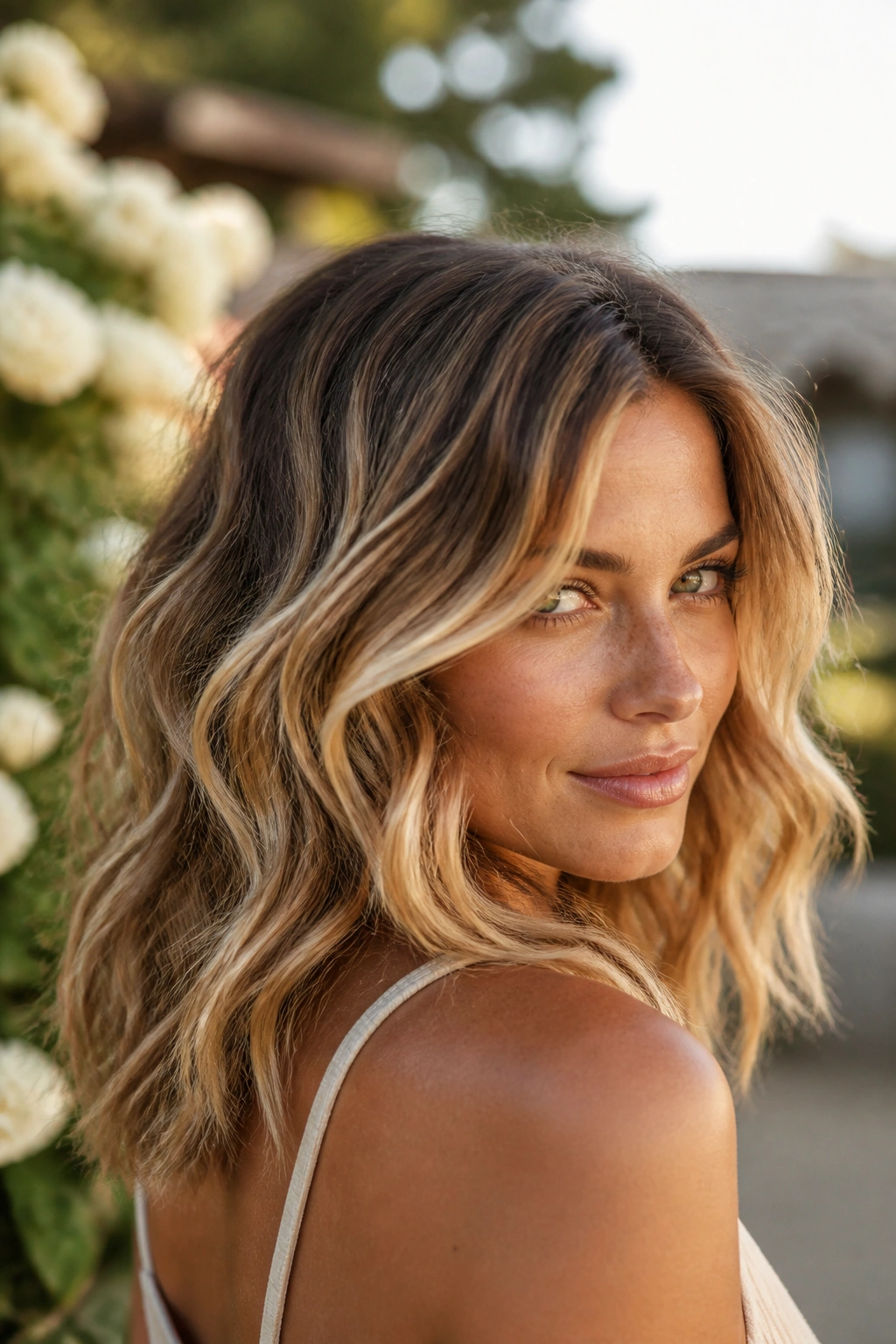
Thick waves can swallow color if the placement is too faint. Caramel-to-blonde balayage solves that by giving you a warmer bridge from the base into the lighter ends, so the lightness has something to sit on.
The transition matters more here than the exact blonde tone. A caramel base keeps the lower sections rich and dimensional, and then the blonde can come in gradually through the mids and ends. That stepped effect helps the hair look full instead of patchy. It also keeps the texture from turning puffy around the face.
How to Make It Work
- Use caramel, toffee, or soft brown-gold as the bridge shade.
- Keep the blonde a little warmer than icy so it does not compete with thick texture.
- Concentrate lightness on the surface layers and around the ends.
- Style with a 1.25-inch iron or a large round brush to show the ribboning.
This is a strong choice if your hair takes color slowly or resists a very pale lift. It gives you brightness without asking the hair to do something it does not want to do. Honestly, that’s the whole point.
16. Soft Champagne Beige Balayage for Fine Hair
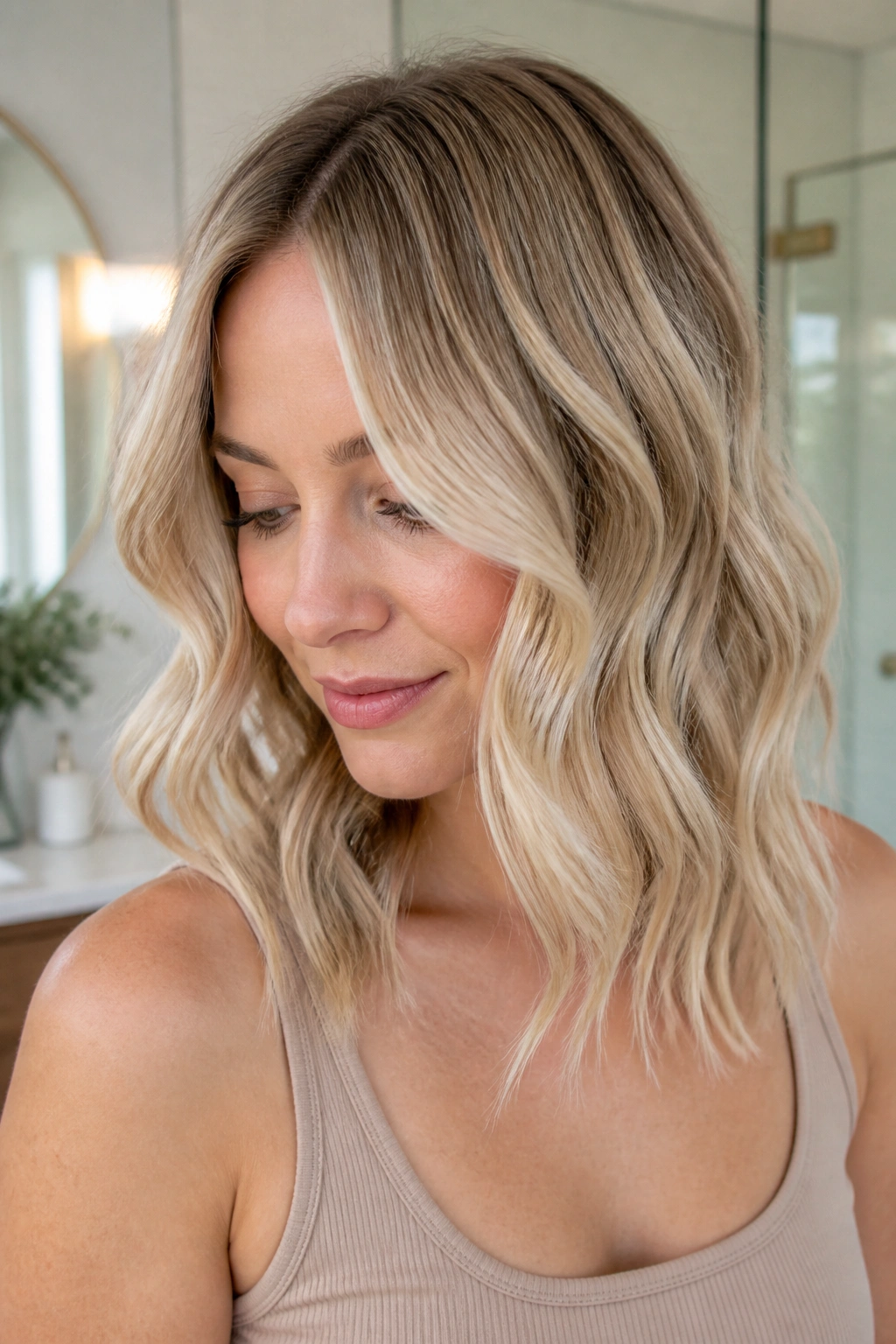
Fine wavy hair needs a lighter touch. Too much contrast can make the strands look thinner than they are, which is why soft champagne beige is such a useful option. It brightens the surface without carving the hair into obvious sections.
I like this look when the stylist keeps the pieces airy and closely spaced, almost like a veil of light rather than bold stripes. The beige-champagne tone sits in a neutral zone, so it reflects shine without going yellow or flat. Fine hair needs that kind of balance because heavy color can weigh the movement down.
The best version usually relies on a clean gloss more than aggressive lightening. You want the hair to look reflective, not overworked. A lightweight mousse at the roots and a small amount of cream on the ends can help keep the wave pattern from collapsing.
This is one of those blondes that looks quietly costly in person. No shouting. No chunky contrast. Just light, clean movement.
17. High-Contrast Blonde Balayage for Big Waves
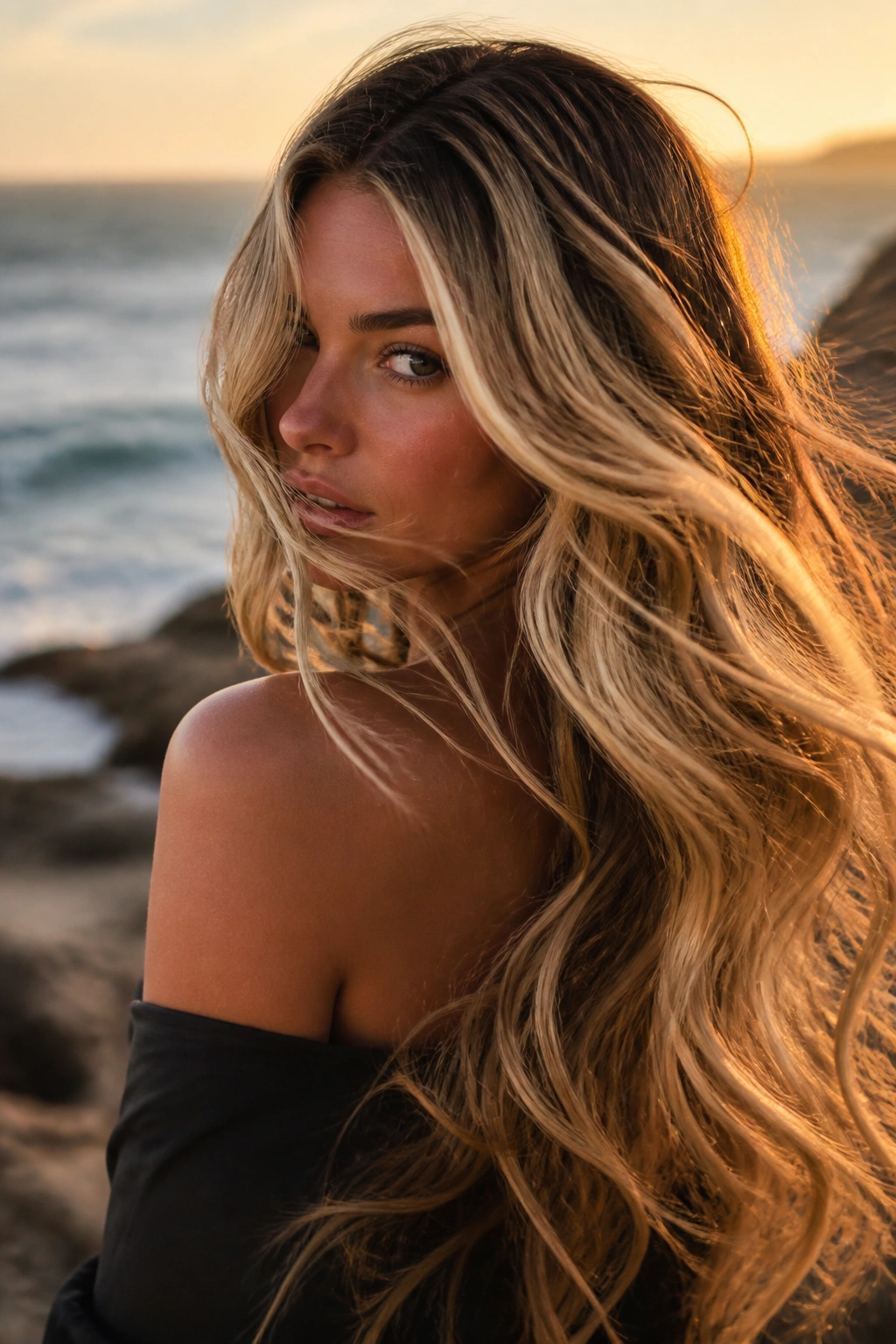
Big waves can carry drama. Small waves can look pretty. Big waves can look cinematic if the contrast is strong enough.
High-contrast blonde balayage leans into that. The darker root and midsection give the waves depth, then the blonde pieces sit in bold ribbons that show up when the hair moves. It is not subtle, and that’s the point. The style works especially well if you wear your hair long, because the waves have room to show the color shift from top to bottom.
The trick is to keep the contrast controlled, not messy. You still want the blondes to be hand-painted and blended, but the difference between light and dark should be noticeable. That visual break makes the waves look fuller, especially if your hair is thick or naturally voluminous.
Use this if you like your blonde to have a little edge. It looks strong in loose waves, stronger in brushed-out curls, and even better when the ends are left slightly brighter than the mids. A flat finish would ruin it. Shine and movement are the whole story here.
18. Lived-In Buttery Blonde Balayage for Easy Grow-Out
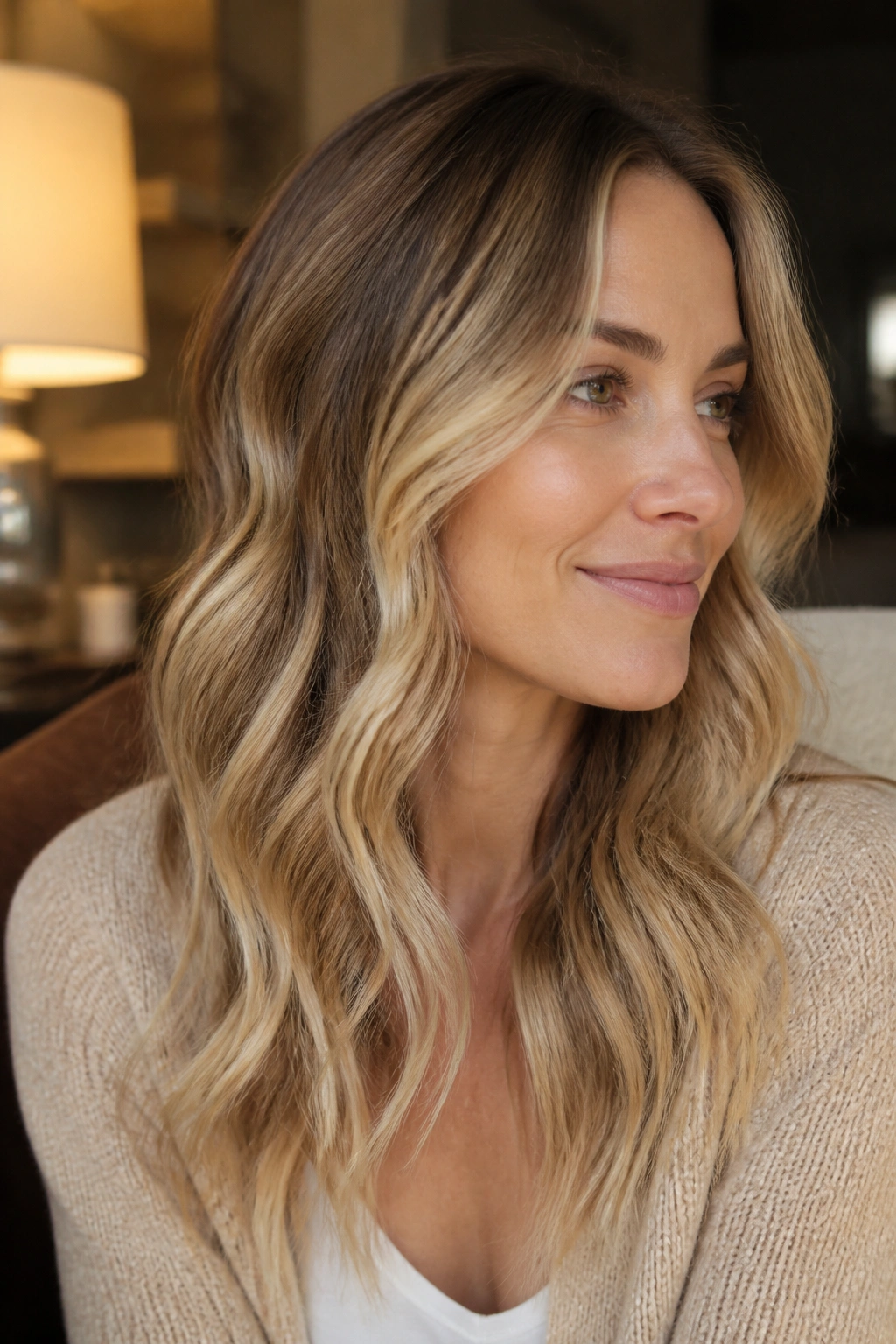
If I had to pick one blonde balayage look that handles wavy hair with the least drama, this would be high on the list. Lived-in buttery blonde gives you warmth, softness, and a grow-out that does not need to be perfect to look good.
The root stays a little deeper, the mids melt into a creamy blonde, and the ends carry enough brightness to keep the wave pattern alive. That structure is why the color lasts emotionally, not just technically. You can wear it straight, waved, clipped up, or pulled into a loose half-up style and it still makes sense.
This look is especially good if you want blonde that ages gracefully between salon visits. A toner refresh every 6 to 8 weeks helps keep the butter tone from turning yellow, but the base itself is forgiving. The more texture your hair has, the better it reads. Wavy hair gives the blonde some edges to sit on, which keeps it from feeling too soft or washed out.
If you want one dependable place to start, start here. It’s warm without being loud, bright without being stiff, and easy in the best possible way.
