



Grey balayage on brown hair works because the brunette base does half the job for you. The brown gives weight; the grey brings the edge. When the lightening is handled well, the result looks smoky and dimensional, not flat or streaky.
Placement matters.
A stylist usually has to lift selected pieces to a pale yellow before toning them into silver, ash, or charcoal. Skip that step or stop too soon, and the grey can turn muddy. Push too far, and the brown loses the contrast that makes the whole look interesting. The sweet spot is a clean lift with a soft hand at the root, plus a gloss that keeps the cool tone from going brassy after a few washes.
That mix of restraint and contrast is why the look can go soft, dramatic, or somewhere in between. Some versions lean mushroom brown, some feel like smoke, and some are sharp enough to make a plain bob look newly cut. The 30 looks below cover the range, from the gentlest ash veil to a stronger graphite finish.
1. Soft Ash-Gray Veil on Brown Hair
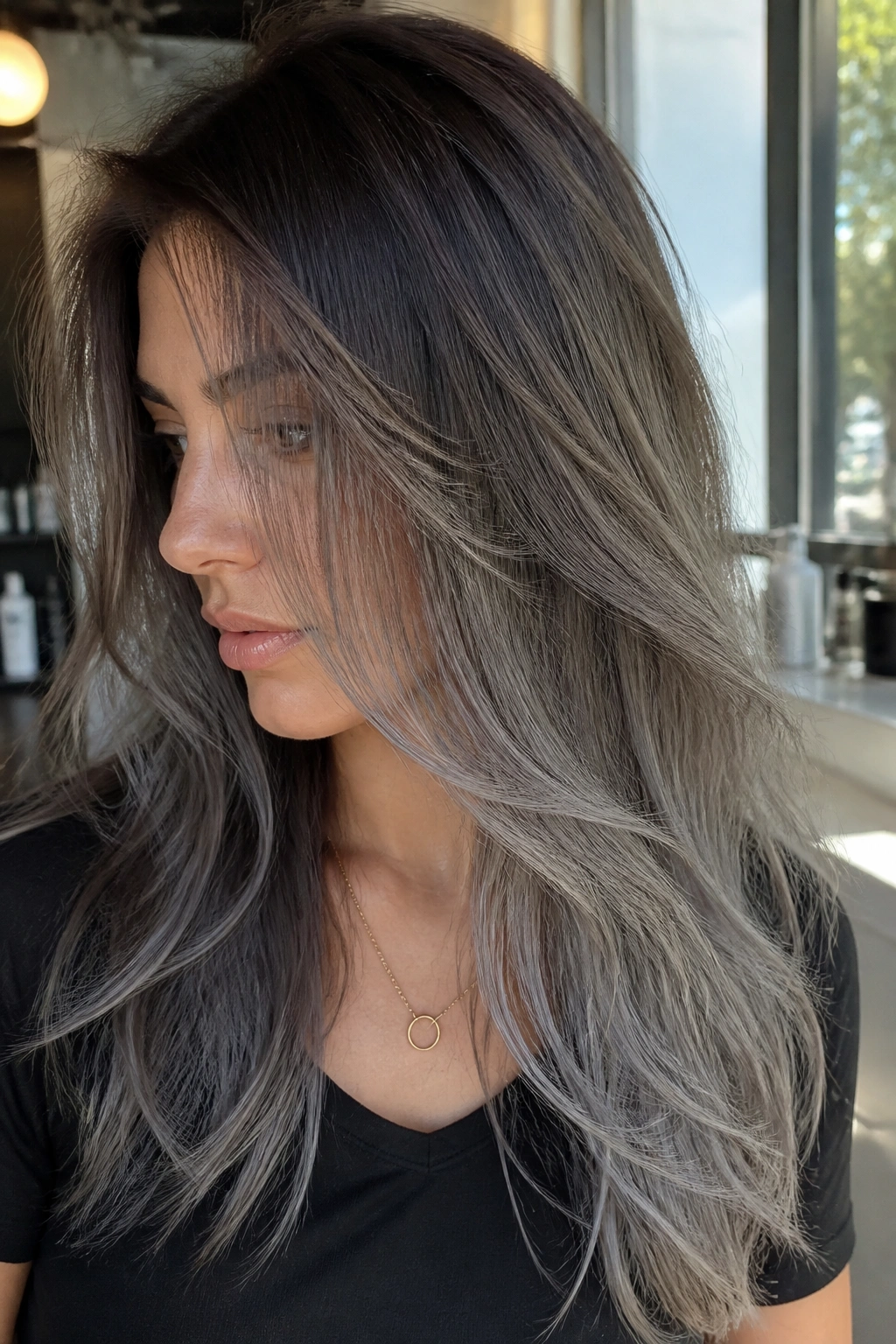
Soft grey usually looks best when it doesn’t shout. A veil of ash-gray pieces scattered through medium brown hair gives you that smoky shift without taking the brunette base away. The effect is quiet, but it still changes the whole head—especially when the hair moves.
Why It Works
Ask for fine, hand-painted ribbons through the mid-lengths and ends, plus a soft root smudge. The grey should sit between silver and beige, not icy white. That keeps the result believable on brown hair that still has warmth.
- Best on level 5 to 6 brown bases.
- Reads soft on loose waves and blowouts.
- Needs a gloss refresh every 6 to 8 weeks.
Tip: Keep the face frame a touch lighter so the color shows even when the hair is tucked back.
2. Mushroom Brown with Grey Ribbons
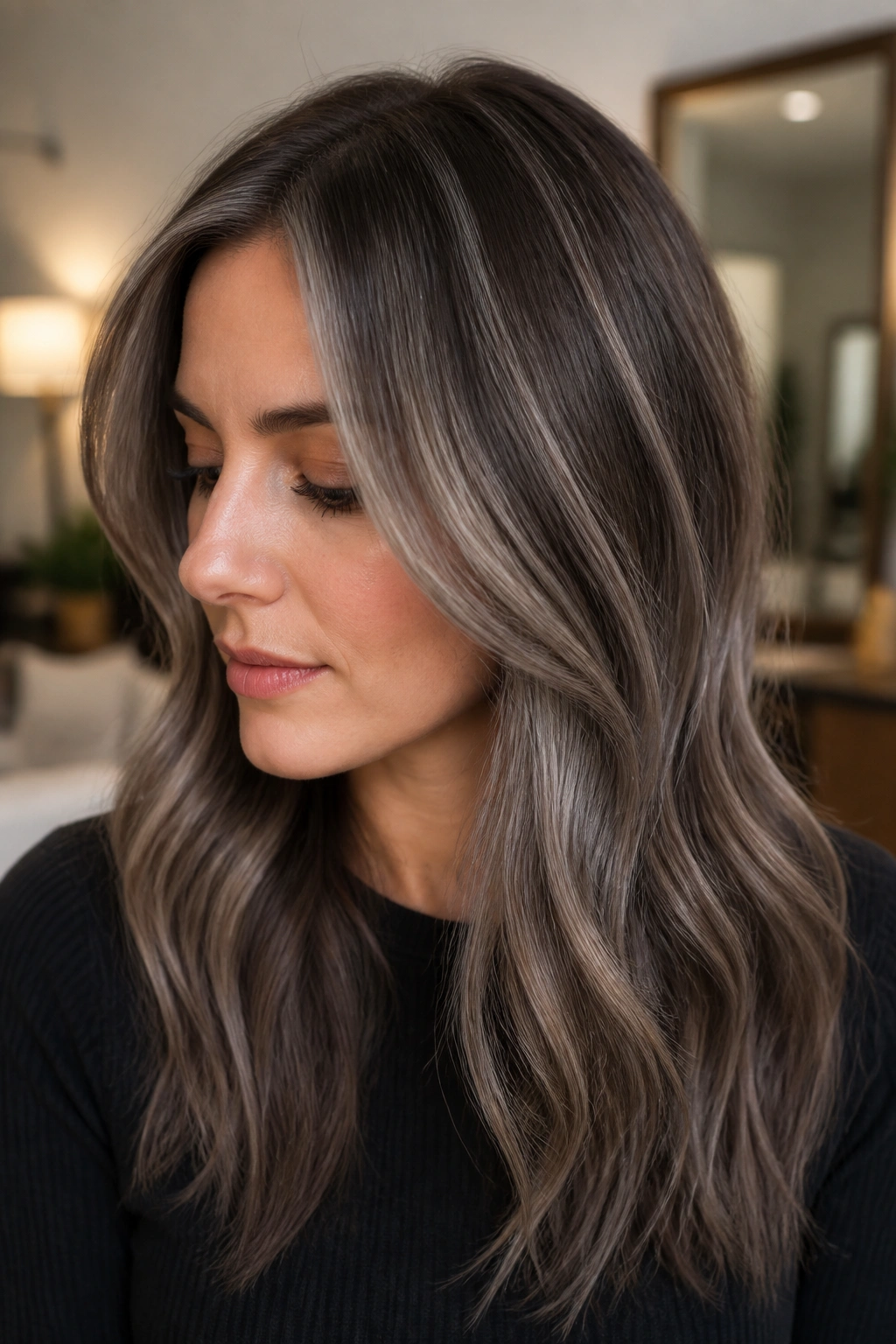
Mushroom brown is one of the easiest ways to wear grey balayage without feeling like you signed up for a full silver transformation. The brown stays earthy, but the grey ribbons cool everything down and give the color a hazy finish. It’s calm. Not boring.
That’s the reason it works so well on straight hair and soft bends alike. The beige-brown base keeps the grey from looking harsh, while the grey keeps the brown from going flat under indoor light. If your hair usually pulls red or copper, this is the look that reins it in without making the color look dead.
What to ask for
- A neutral brown base with cool taupe ribbons.
- Thin pieces through the crown, not just the ends.
- A sheer gloss, not a heavy ash toner.
If you like polished but not shiny, this one lands in the right place.
3. Smoked Cocoa Face Frame
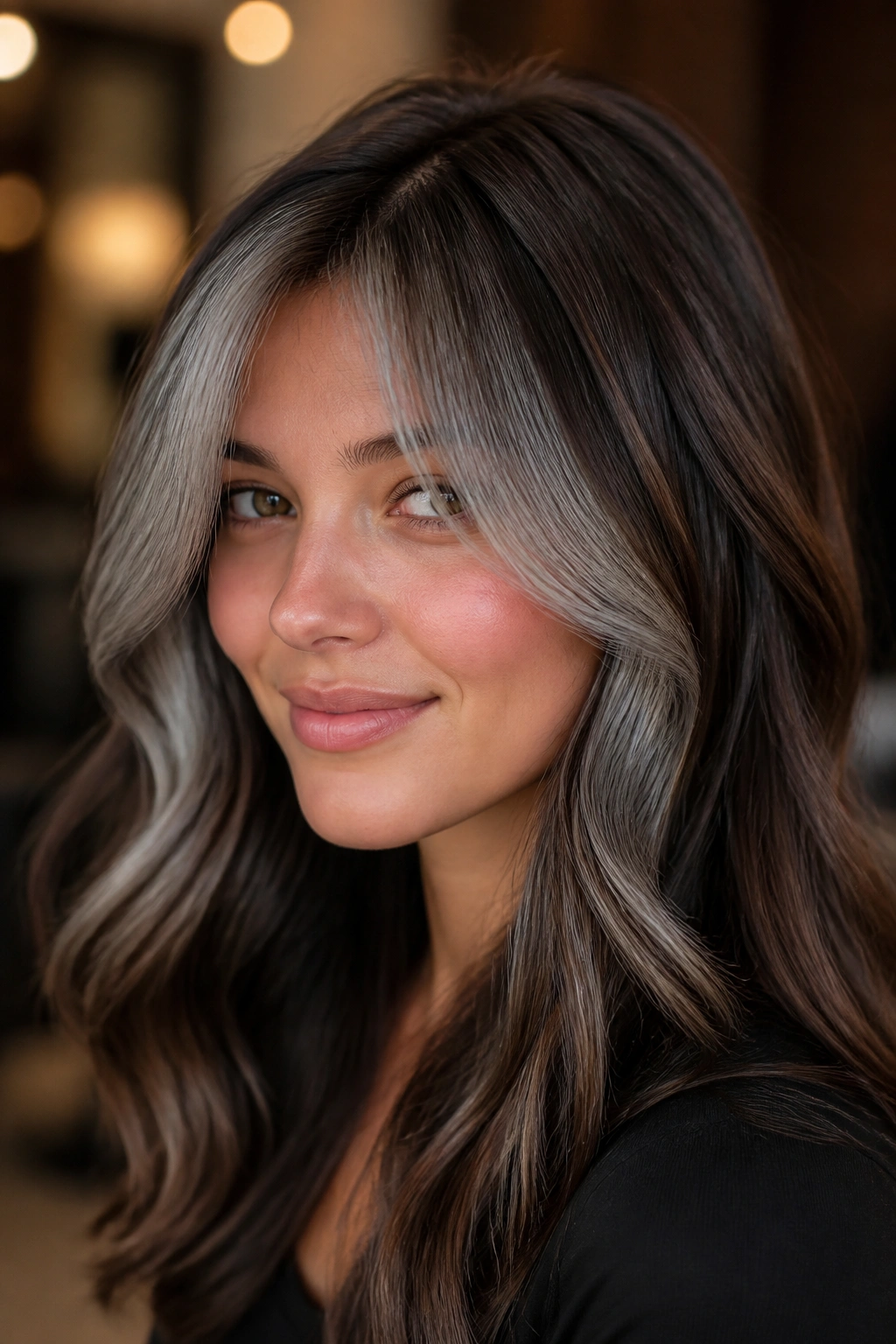
Want the grey to show the second you walk into a room? Put it around the face. A smoked cocoa face frame uses brighter grey balayage near the front and keeps the rest of the brown deeper, so the eye goes straight to the cheekbones and eyes.
The trick is width. Too wide, and it starts reading like chunky highlights from another era. Too narrow, and you lose the point. A good face frame usually falls somewhere between a curtain bang and a money piece, with the grey feathered back into the darker brown so the line does not look drawn on.
How to wear it
- Works well with curtain bangs.
- Looks sharp with half-up styles.
- Needs a trim-friendly face frame so the pieces don’t drop into the eyes.
A little grey up front goes a long way.
4. Charcoal Ends on a Wavy Lob
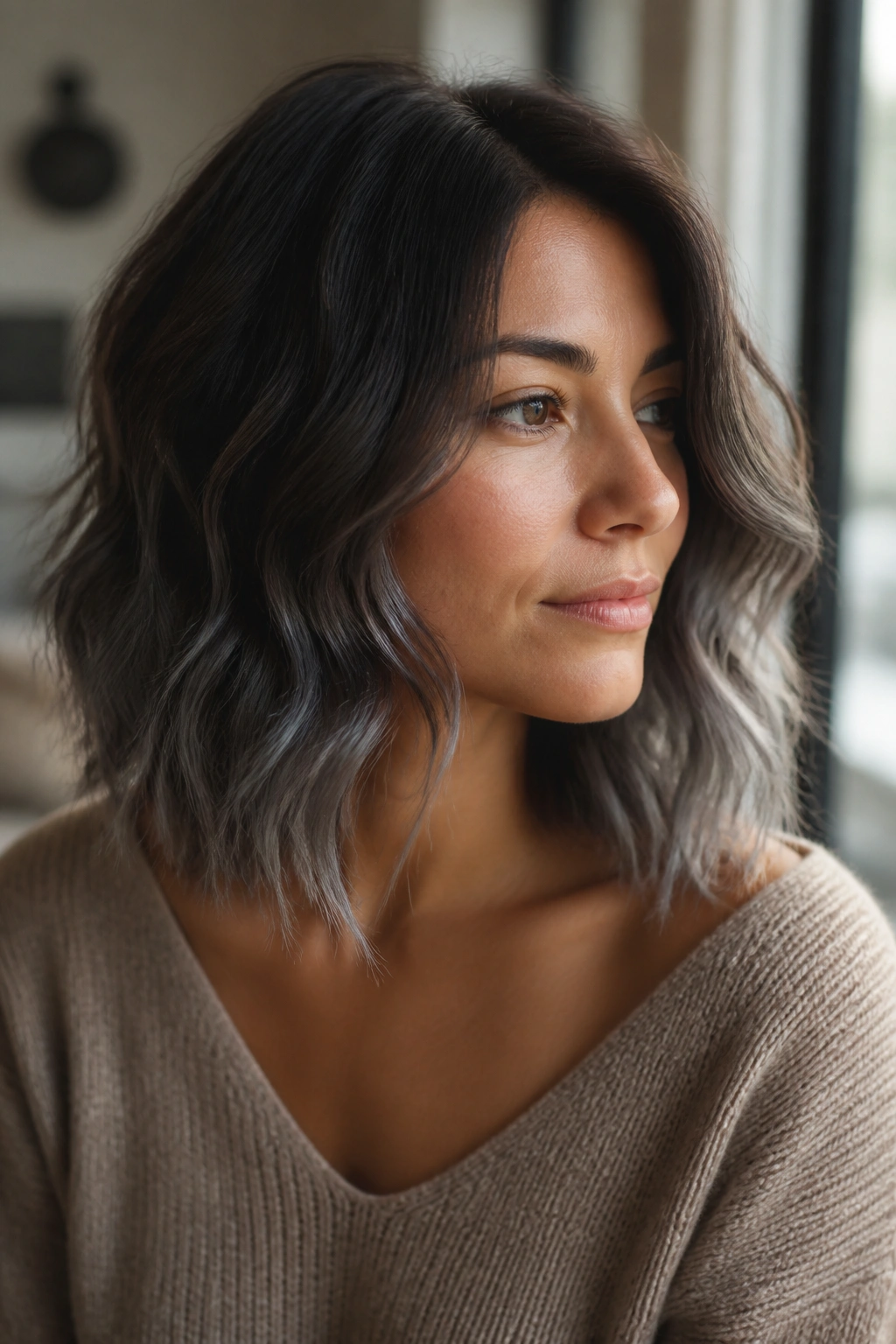
A lob gives grey balayage a clean place to land. With the hair sitting just above the shoulders, charcoal ends can look modern without the drama of long length. The brown stays up top; the grey gathers at the tips and makes the cut look deliberate.
This version is especially good if you like movement in your hair. Loose waves show the darker and lighter zones at once, so the grey does not sit there like a block of color. It flickers. That’s the whole point.
- Ask for the lightest pieces only from the ear down.
- Keep the root area close to your natural brunette.
- Style with a 1 to 1.25-inch iron and brush the waves out.
The result feels cooler than plain brunette, but it still has enough depth to wear every day.
5. Silver Smoke Melt
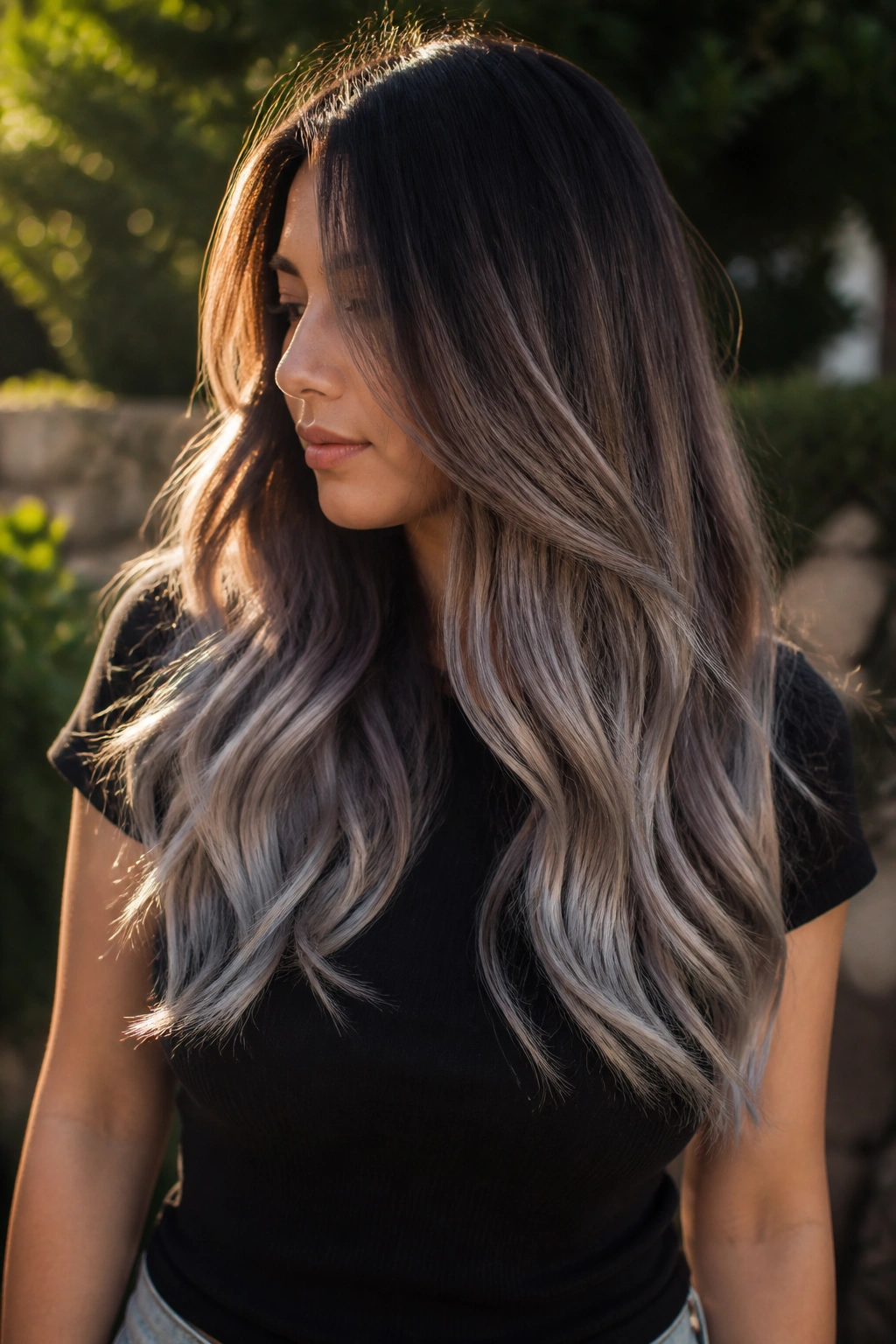
A silver smoke melt is the kind of grey balayage that looks expensive without trying to look that way. The color starts with brown at the roots, then slips into smoke, then lands in silver at the ends. If the transition is handled well, you should not be able to point to one exact line where the color changes.
That blurry transition is the reason the style works. Brown hair can look harsh with a hard silver block at the bottom, but a melt gives the eye something gradual to follow. It also makes longer hair look thicker because the tone changes create the illusion of movement.
One thing, though: this is not a rushed appointment. The lightened pieces need enough lift to take silver toner cleanly, or the result turns dull. Worth the wait.
6. Salt-and-Pepper Balayage
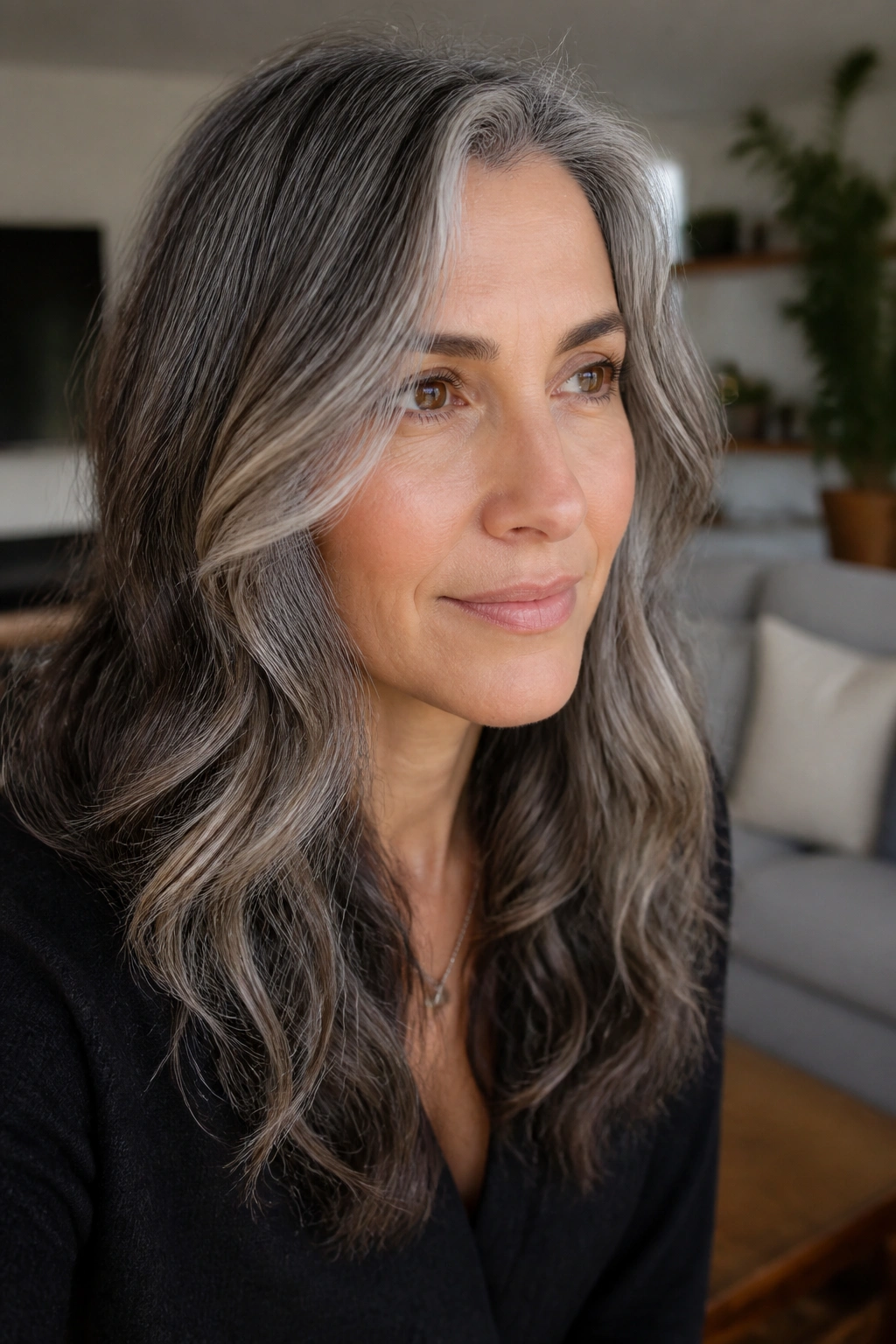
Salt-and-pepper balayage is the most honest version of grey on brown hair, and I mean that as a compliment. It does not hide the fact that grey is present. It mixes it in, lets it sit next to the brown, and makes the whole head look intentional instead of corrected.
This is the look I’d point to if you already have some natural grey and want it to feel deliberate. A colorist can weave in cool silver and soft ash around the areas where the natural silver is coming through, then keep the brown low enough that the blend still feels dimensional. It’s less maintenance, too, because regrowth usually disappears into the pattern.
- Best when natural grey is already in the hair.
- Works well on layered cuts.
- Ask for scattered placement, not uniform stripes.
It has a slightly lived-in feel. That’s the charm.
7. Smoky Beige Brunette
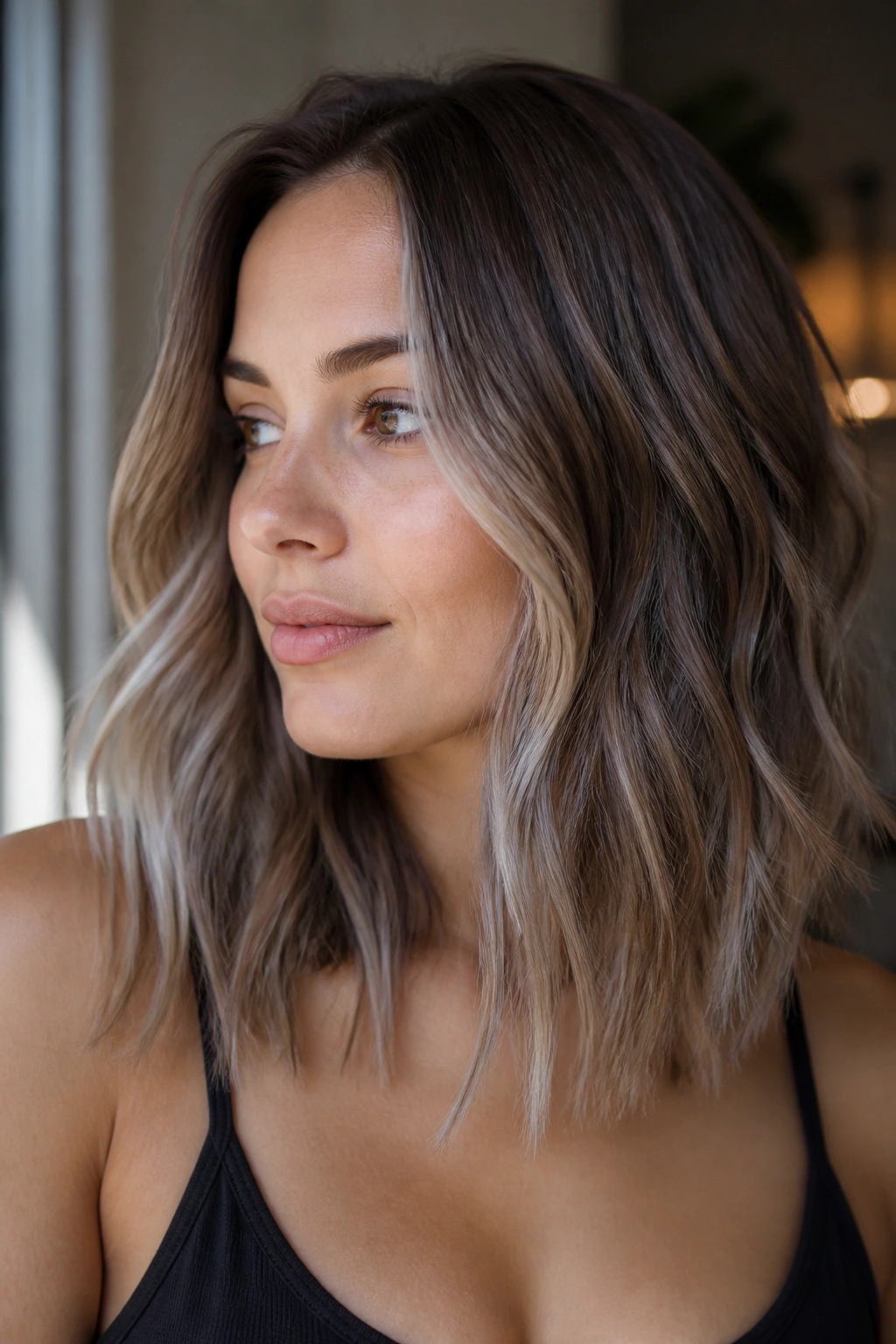
Smoky beige brunette sits right between neutral and cool, which is why it flatters so many brown hair shades. Instead of going straight for icy grey, the color uses beige tones to soften the shift and then folds in grey ribbons for depth. The result is muted, soft, and easy on the eyes.
Unlike warmer balayage, this version does not pull gold or caramel. It stays cool, but not stark. That matters if your skin tone already leans olive or neutral, because the grey will not fight your coloring. It just sits there and does its job.
If you want something that looks expensive in the most boring, practical sense of the word, this is a strong pick. It’s tidy. It wears well. And it never looks too hard.
8. Graphite Underlayers
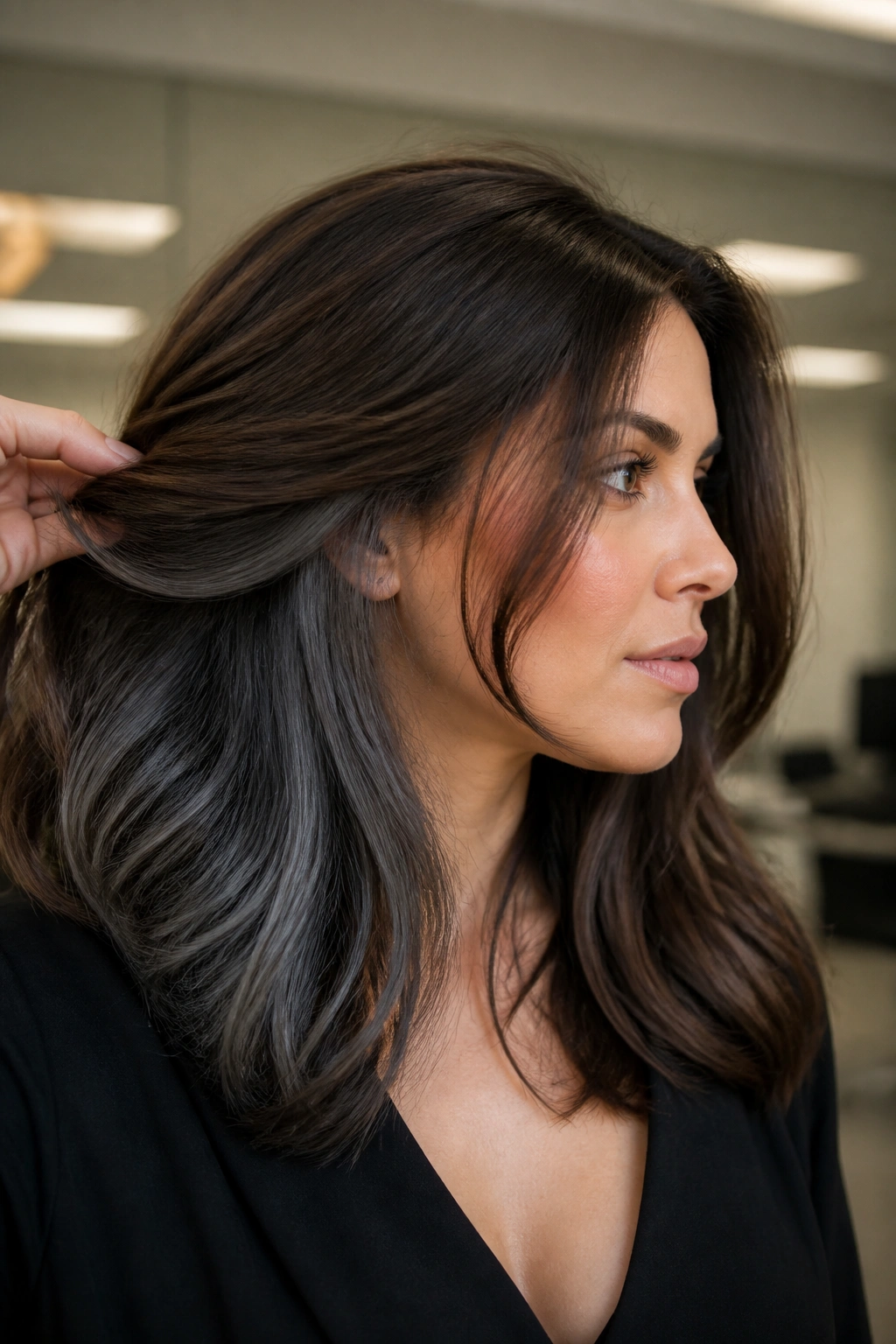
Graphite underlayers are for the person who likes a little surprise in their color. The top layer stays brown, maybe with a few soft ash pieces, while the underside gets deeper graphite-grey balayage. When the hair moves, the grey flashes through. When it’s pinned or tucked, the look turns quieter.
That hidden placement is also smart for office hair or anyone who wants edge without full exposure. You can wear it down and let the movement show the contrast, or pull it into a half-up style and let the darker grey peek out underneath. The cut matters here; layers help the underlayer breathe.
A blunt one-length cut can hide the best part of the effect. A bit of movement makes it come alive.
9. Frosted Brown Waves
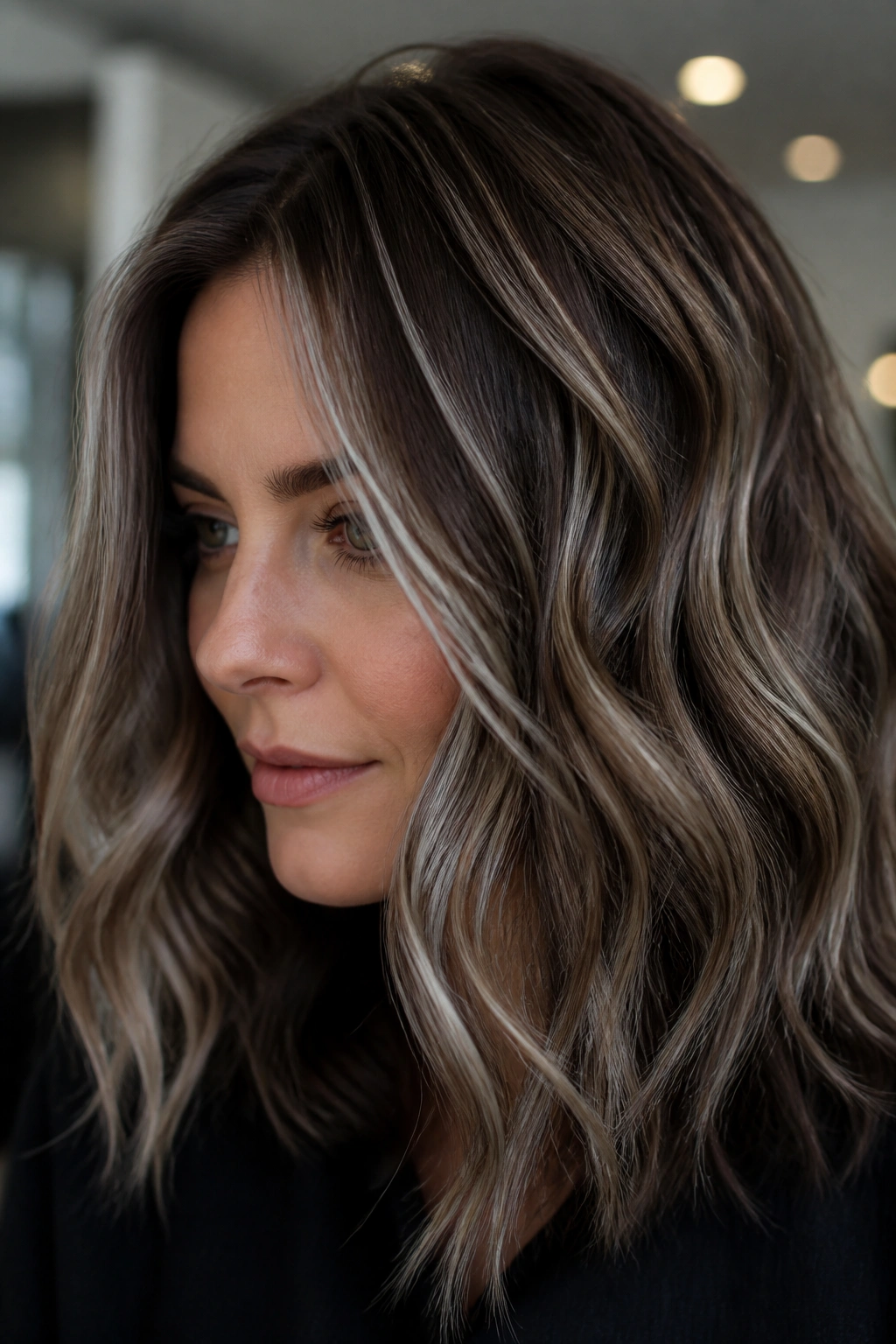
Frosted brown waves give grey balayage a soft, almost wintery feel without going full silver. The brown base stays visible, but the grey pieces sit across the top layer like a light frost on cocoa. On waves, the contrast gets broken up just enough to look effortless.
What Makes It Work
The best version uses thin, scattered ribbons instead of big panels. That spacing keeps the color from feeling patchy, and it lets the waves do the work for you. A few lighter pieces around the face and through the mid-lengths are usually enough.
Best Styling Move
Loose bends, not tight curls. Tight curls squeeze the grey into small dots, which can make the color look busier than it really is. A brushed-out wave lets the silver-grey run through the hair like thread.
If you like soft focus hair, this is the one.
10. Cool Taupe Shadow Root on Brown Hair
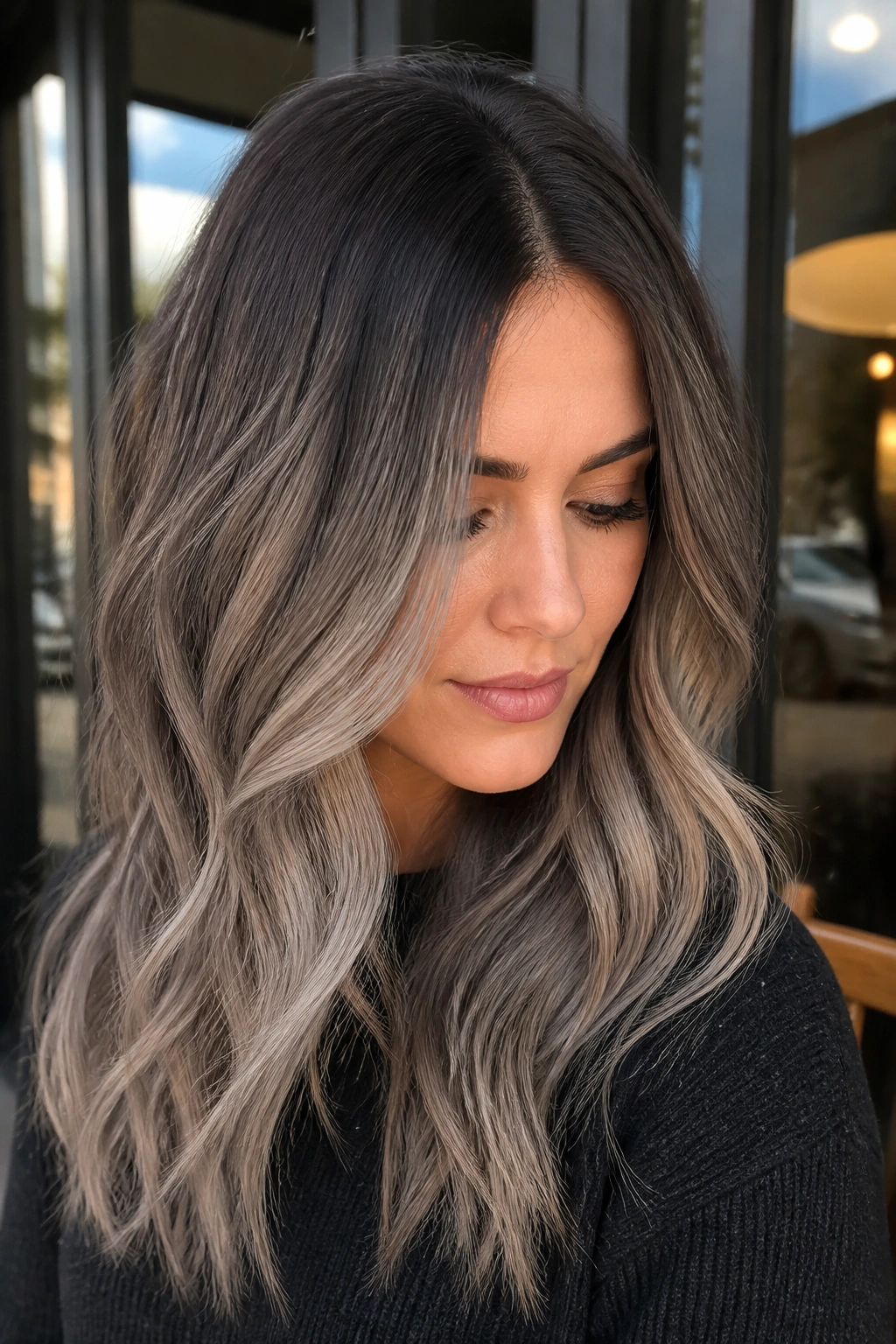
A shadow root does the heavy lifting here. The brown at the top stays deeper and slightly cooler, then melts into taupe-grey balayage through the lengths. Because the root is softened, regrowth does not scream for attention, and the whole look keeps its shape longer.
Ask for the root to stay one to two shades deeper than the lightest grey pieces. That tiny difference matters. Too much contrast at the crown and the hair can look striped. Too little and the grey disappears. The middle ground is what makes this work on brown hair.
- Choose a cool, not warm, shadow root.
- Keep the grey pieces fine through the crown.
- Let the mid-lengths carry most of the brightness.
This is a smart choice if you do not want to sit in a salon chair every few weeks.
11. Steel Gray Money Piece
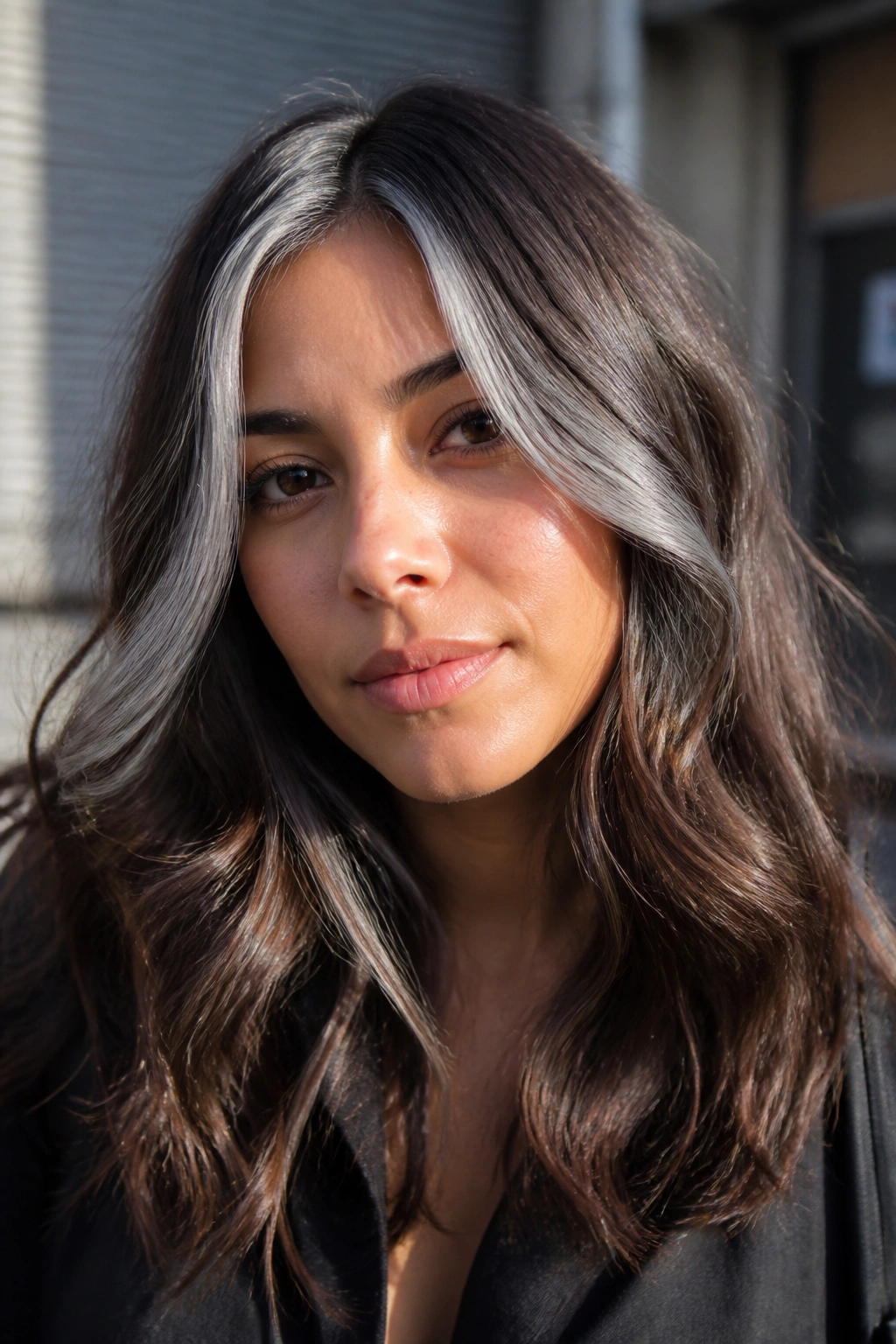
Want the front of your hair to look cooler without changing the whole head? A steel gray money piece does exactly that. The front sections get the strongest grey balayage, usually around the part and temples, while the rest of the brown stays softer and darker.
The placement matters more than the shade. If the money piece is too wide, it starts to feel loud in a way that’s hard to wear. Narrow, feathered pieces are better because they frame the face without taking over. On brown hair, that steel tone can look almost metallic when the light hits it.
It’s also a good option if you wear glasses or pull hair behind your ears a lot. You want the pieces to be visible from the front, not just in photos.
12. Ash Brown Ribbon Balayage
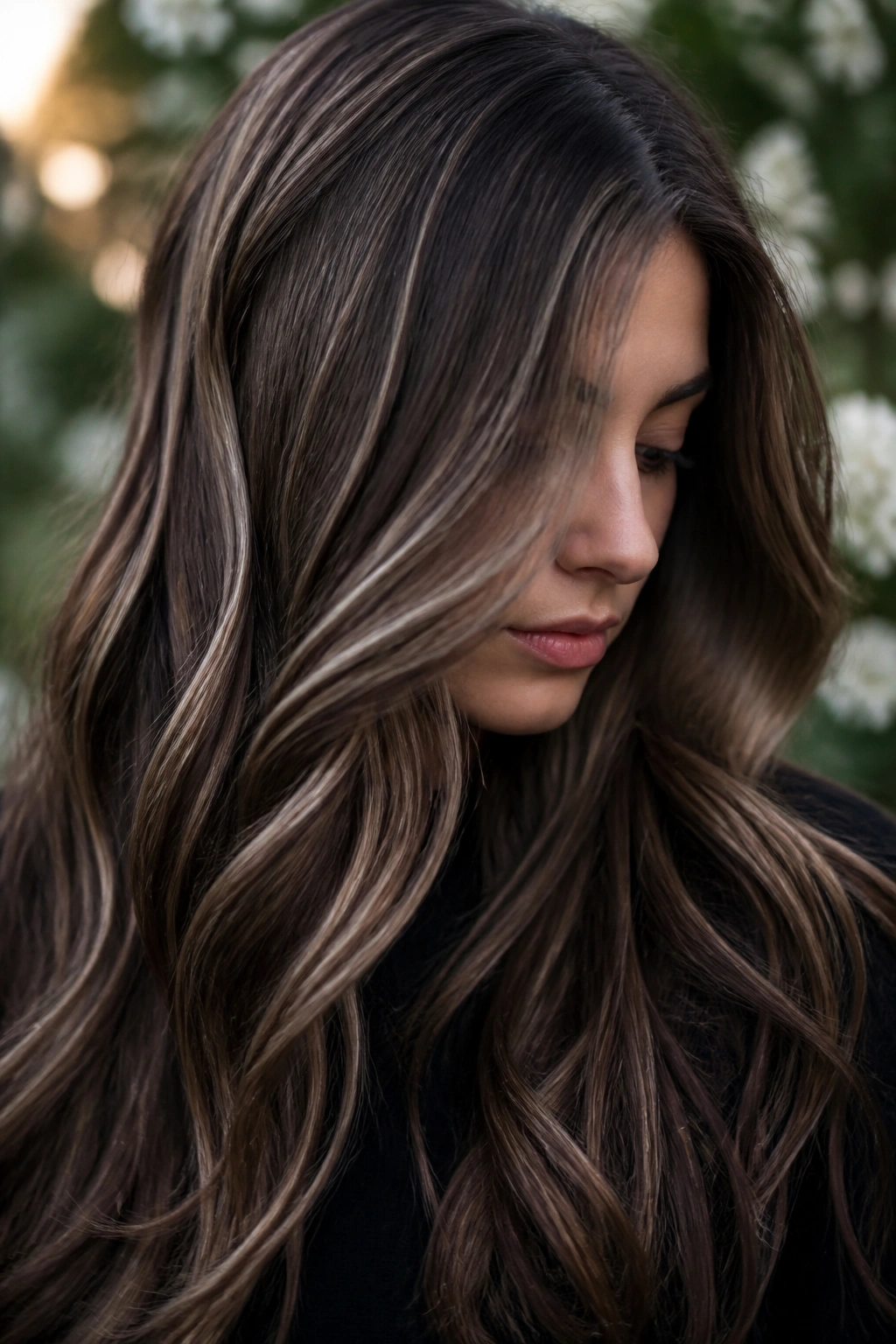
Ash brown ribbon balayage is the opposite of chunky. The color moves in long, narrow strokes through the brown base, so the grey reads as texture rather than blocks. That ribbon shape is what makes the style so flattering on layered cuts.
Unlike one-size-fits-all highlight patterns, ribbons follow the hair’s movement. They bend around waves and flip nicely at the ends, which gives the whole style a more expensive finish. If you’re booking this look, ask for soft diagonal placement through the sides and a few cooler strands through the crown for balance.
This is one of the best grey balayage looks for brown hair that already has a lot of natural shine. The color doesn’t need to shout. It just needs to move.
13. Moonlit Brunette Layers
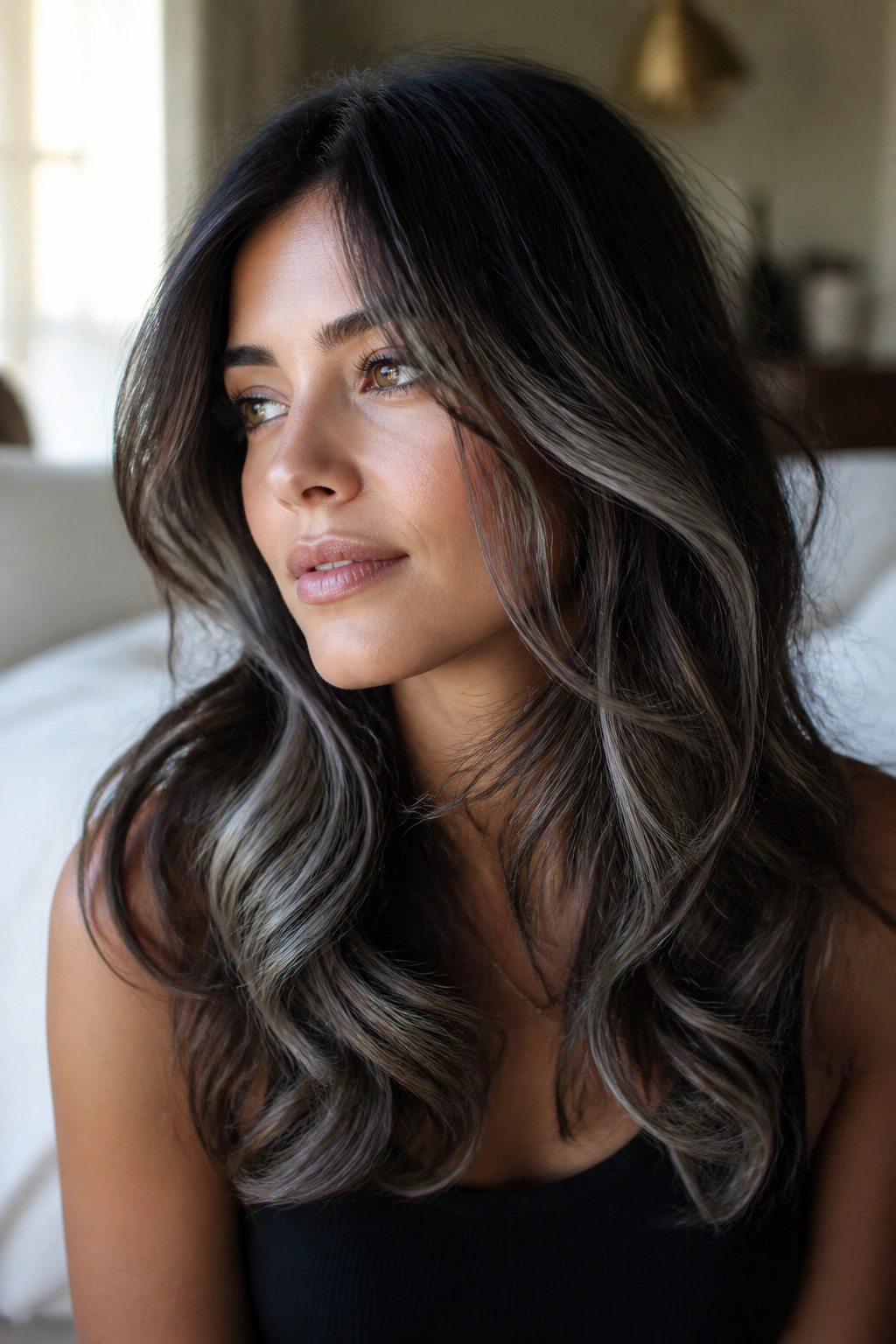
Moonlit brunette layers are the kind of grey balayage that looks like it was made for long hair in loose bends. The brown base stays rich, but silver-grey pieces sit lightly over the top, almost like light on water after sunset. It’s not icy. It’s luminous.
Long layers help because they stop the grey from gathering in one heavy band. The cut gives the color air, and the color gives the cut shape. If the hair is too dense and blunt, the grey can disappear into the brown instead of floating over it.
Best for
- Long hair with movement.
- Layered cuts that need dimension.
- People who want a softer finish than pure silver.
A good blowout makes this one sing, but it still works when hair air-dries with a little wave.
14. Dark Chocolate and Slate
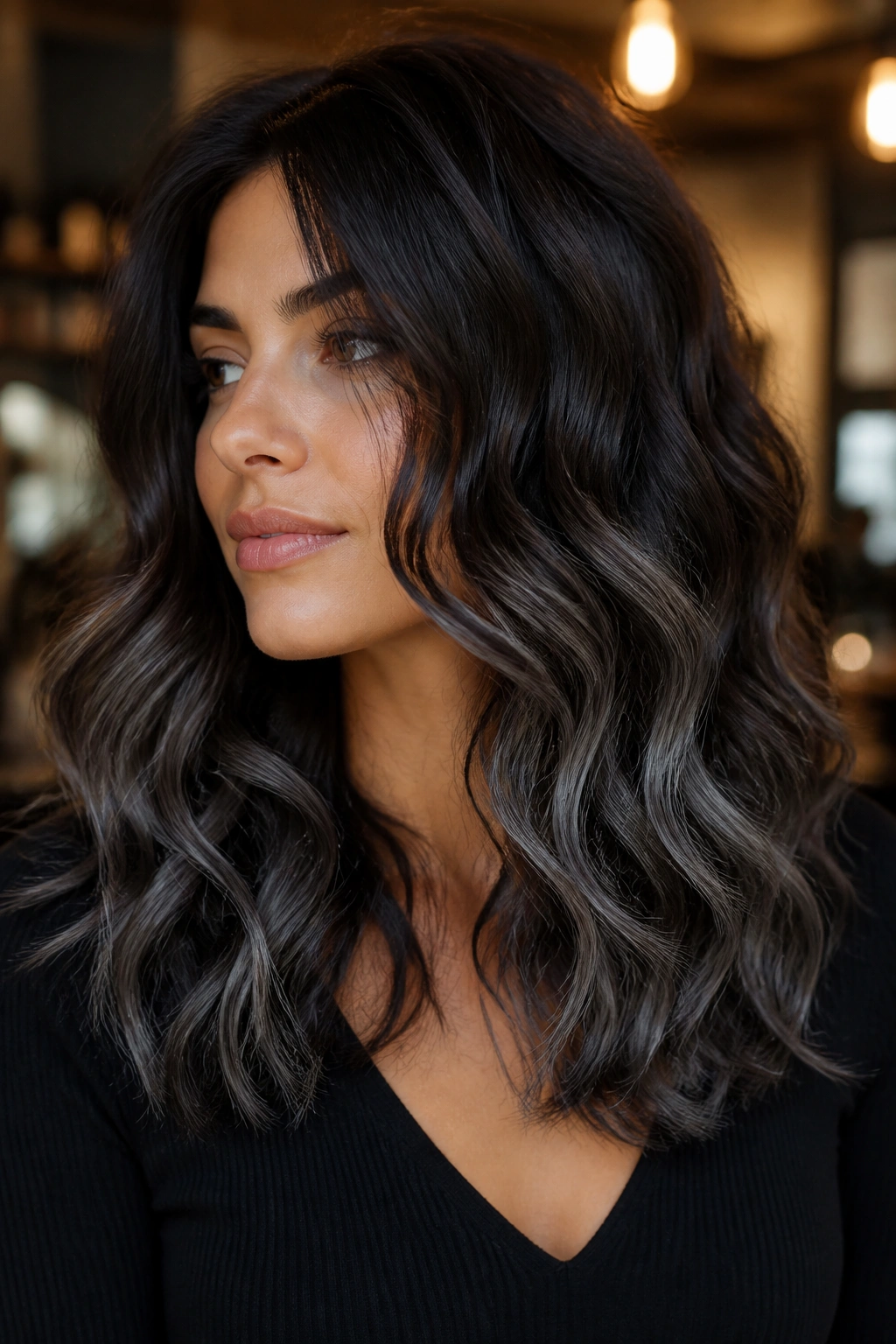
Dark chocolate and slate is for the brunette who wants cool tones but does not want to sacrifice depth. The base stays deep brown, almost black in some light, while slate-grey balayage is painted through the mid-lengths and ends. The result feels moody in a good way.
This look can be especially strong on curly or coily textures because the curl pattern breaks the color up naturally. You do not need a lot of grey for the style to register. A few well-placed pieces are enough, and that’s useful when you want to keep the hair healthier by limiting how much needs lifting.
It’s a darker take on grey balayage, and honestly, that makes it easier to wear. Less bleach. More shape.
15. Pebbled Grey Babylights
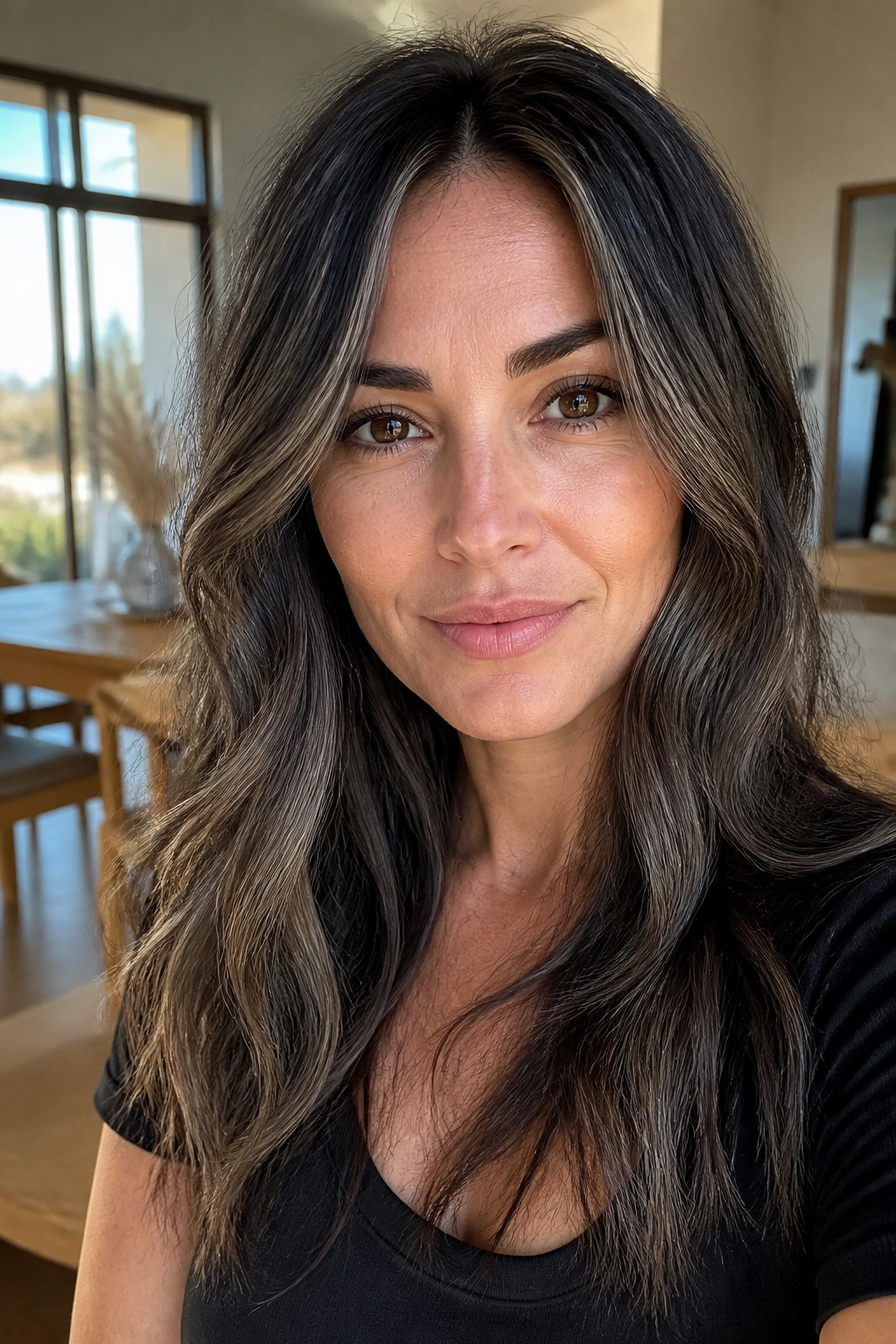
Why do tiny grey strands sometimes look richer than big ones? Because babylights create a fine, pebbled texture instead of a striped one. On brown hair, those ultra-thin pieces can make the whole surface look denser and cooler at the same time.
How to Ask for It
Tell your colorist you want a babylight pattern with soft grey toner, not broad highlights. The pieces should be narrow enough that they blend when you step back, but visible enough to catch movement around the face and crown. A grey babylight pattern is especially useful if your hair is fine and you want the illusion of more texture.
What to Watch For
If the pieces are too chunky, the effect loses its softness fast. Too few, and the grey barely shows. The sweet spot is a lot of tiny pieces, spread with patience.
It takes time, but the finish is worth it.
16. Reverse Grey Balayage
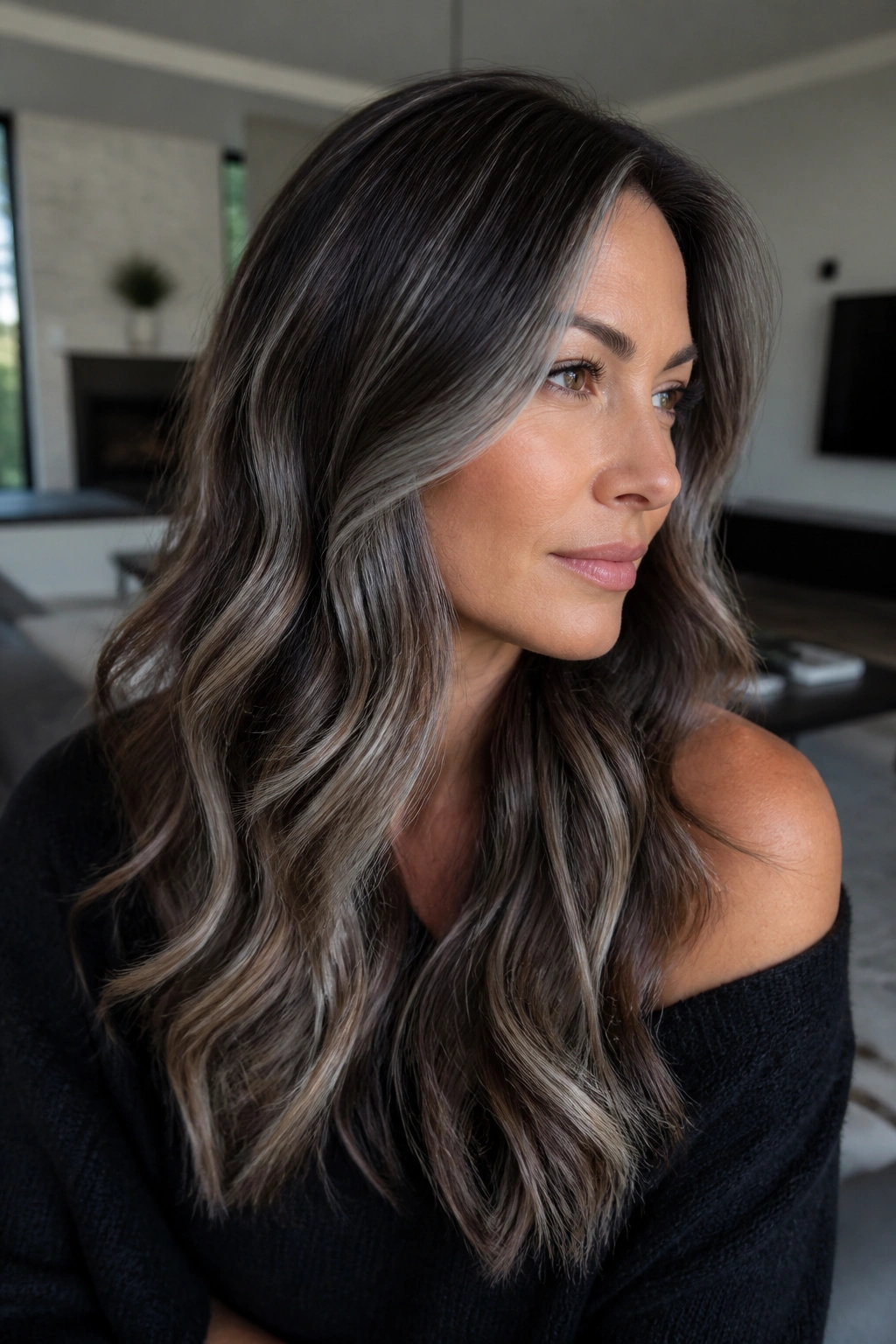
Reverse grey balayage is a useful trick if your brown hair already has lighter sections and you want to pull the tone back into something cooler. Instead of making everything brighter, the colorist adds smoky lowlights and graphite pieces to deepen the base and then lets the grey sit in selected areas. It gives the hair more shape, not less.
That’s why this look makes sense on faded highlights. The added grey can hide the old, too-light pieces and give the color more control. It also helps if your hair has gone a bit hollow at the ends, because the darker grey zones add weight.
- Best for previously lightened brown hair.
- Great when you want more depth, not more brightness.
- Ask for a smoky lowlight blend, not a blunt overlay.
It’s a fix and a style at the same time.
17. Curly Brown Hair with Smoke Highlights
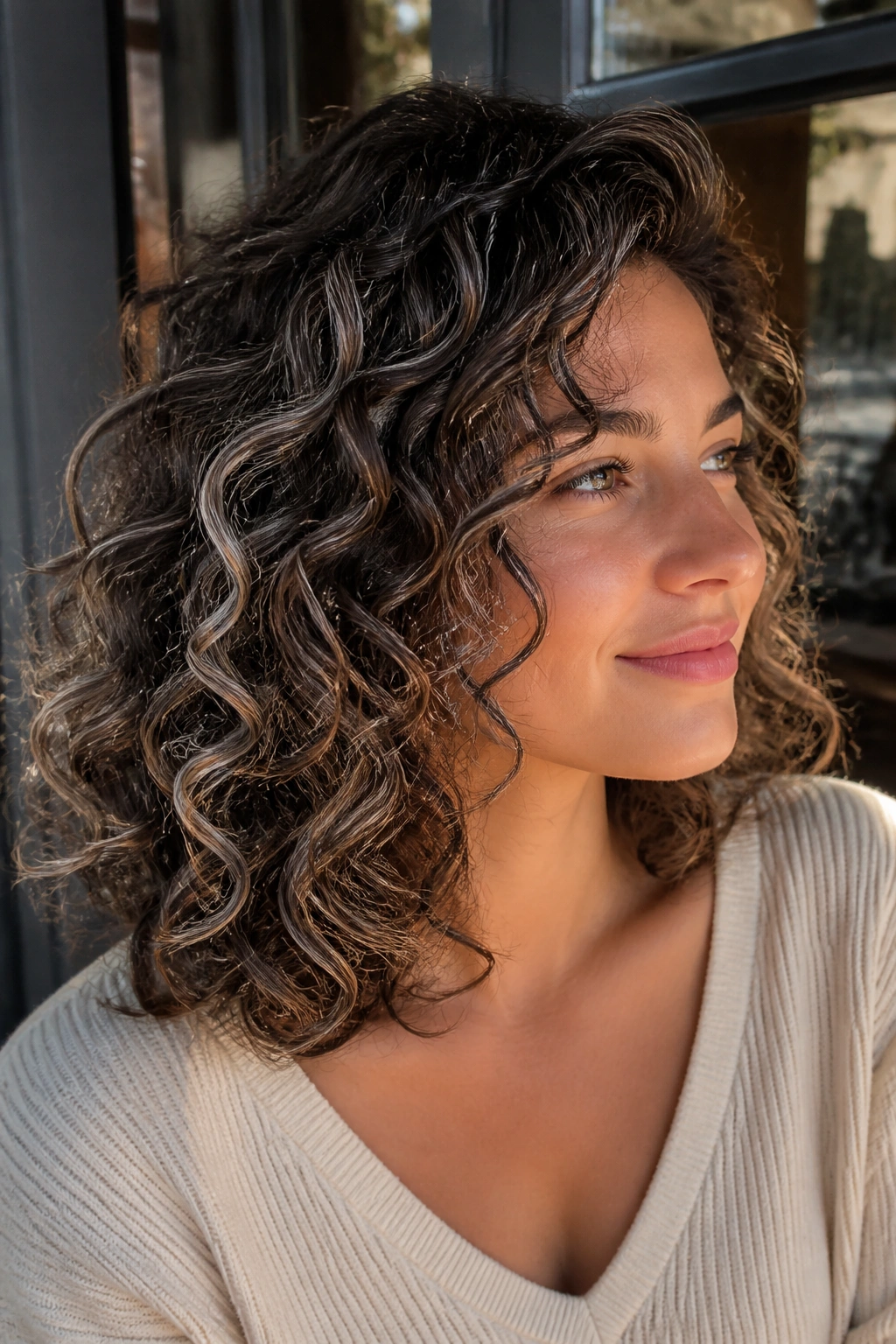
Curly brown hair changes grey balayage in the best way. The curls catch the light at different angles, so a smoke highlight never lands as a single flat stripe. It shows up, disappears, then shows up again. That movement is what makes the style worth trying on textured hair.
Unlike straight hair, curls need a little more contrast to let the grey be seen. That does not mean more bleach. It means smart placement. Put the smoke pieces on the outer curve of the curl pattern and leave enough brown between the ribbons so the hair still looks rich, not frosted all over.
If you wear your curls natural most of the time, this one gives you color that changes shape with the style. That’s a good trade.
18. Silver Frost on Wavy Layers
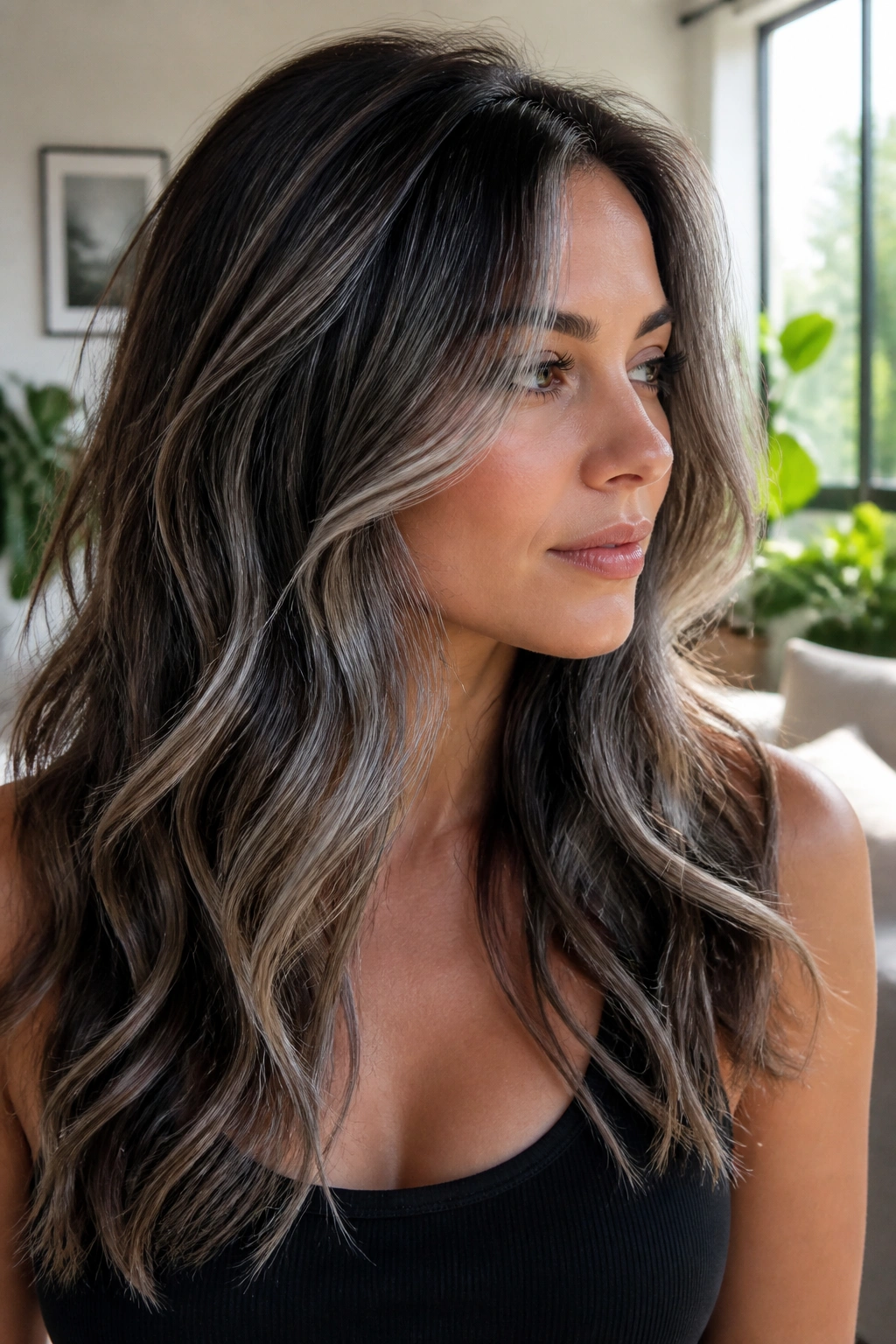
Silver frost on wavy layers is a softer, lighter take on grey balayage for brown hair. The waves help the silver sit on top of the brown like a thin glaze, and the layers keep the color from bunching up in one place. It’s airy, but it still has edge.
The reason it works is simple: movement. Wavy layers create little shifts in tone every time the hair bends, so the grey reads as texture instead of a block. That makes the color easier to wear if you want something light but not harsh.
One small warning. Heavy styling cream can mute the frost effect fast. Keep the product light, or the cool tones lose their sharpness.
19. Long Layered Silver Fade
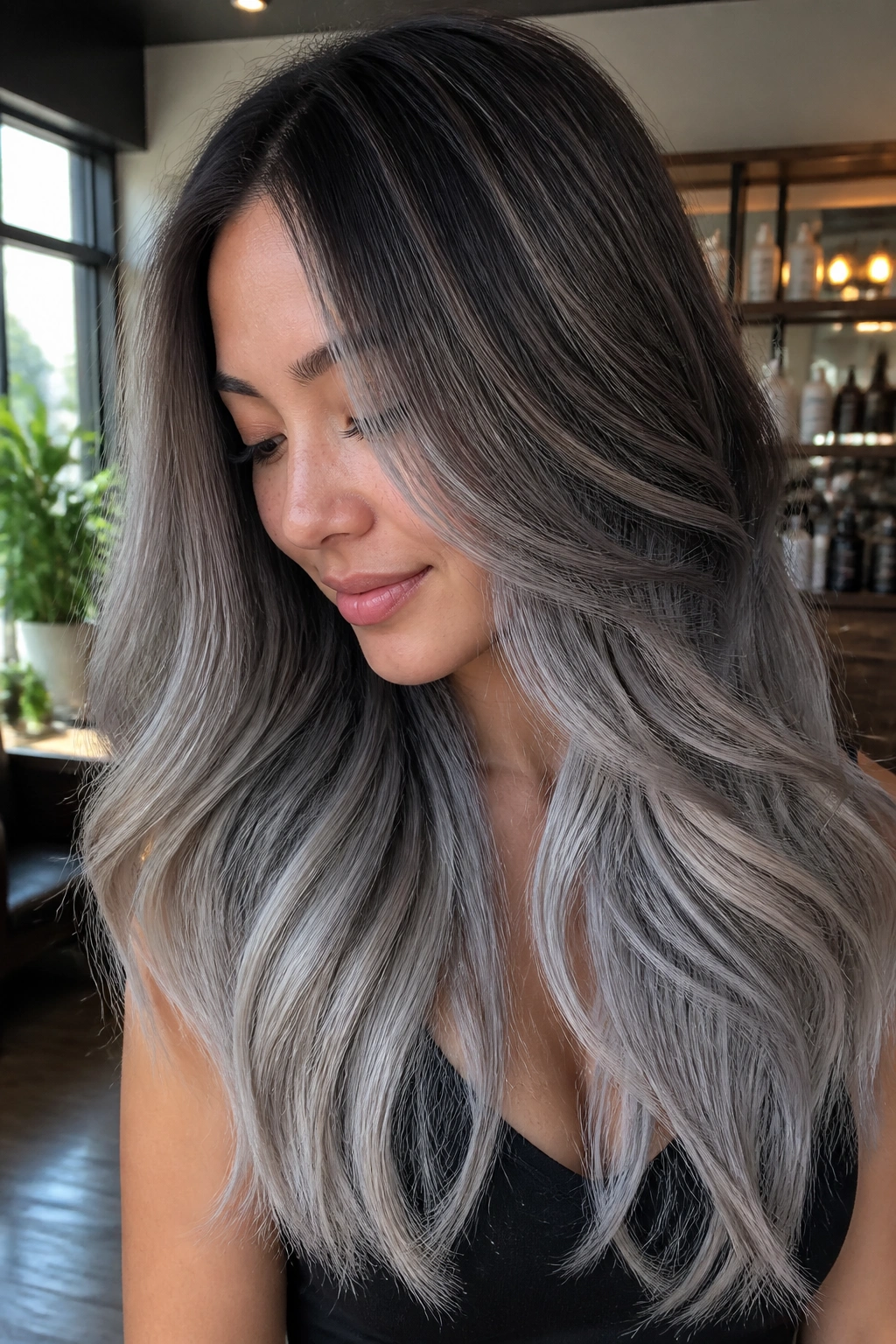
A long layered silver fade is one of the cleanest ways to wear grey balayage on brown hair, especially if you like a visible transition from brunette roots to lighter ends. The layers help the fade breathe, and the length gives the grey enough room to stretch out instead of stopping abruptly.
Where the Fade Starts
Usually around the chin or collarbone, depending on how long the hair is and how much contrast you want. Starting too high can make the hair feel over-processed. Starting too low can hide the effect.
Why Layers Matter
Layers keep the grey from sinking into a heavy block at the bottom. They also make the ends look fuller, which matters when the lightening is concentrated there.
Styling Note
A round brush blowout shows the transition best. Flat ironed hair can be sharp, which is fine, but it makes the line between brown and silver more obvious.
20. Brunette Bob with Ash Sweep
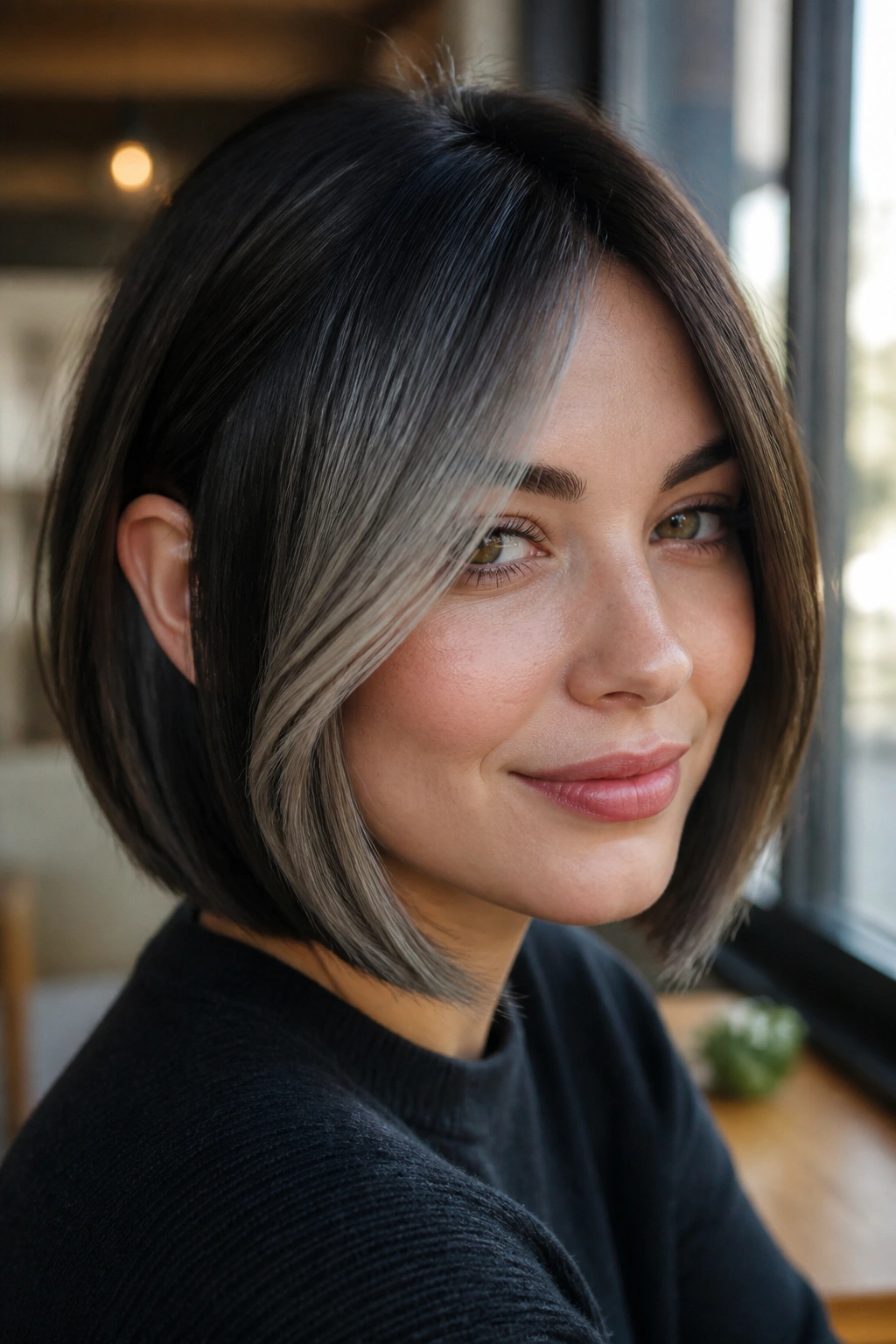
A bob and grey balayage sharpen each other. The blunt edges of the cut make the ash-grey sweep look cleaner, and the cool tone gives the bob more shape than a plain brunette color would. On brown hair, this can read modern fast.
The trick is not to flood the bob with too much lightness. You want the ash sweep to skim the top layers and the ends, not take over the whole shape. That lets the bob keep its outline while the grey adds movement when you tuck one side behind the ear.
This look also works well with a slight side part. It gives the grey a clear path across the front without making the cut feel too symmetrical.
21. Mushroom Latte Balayage
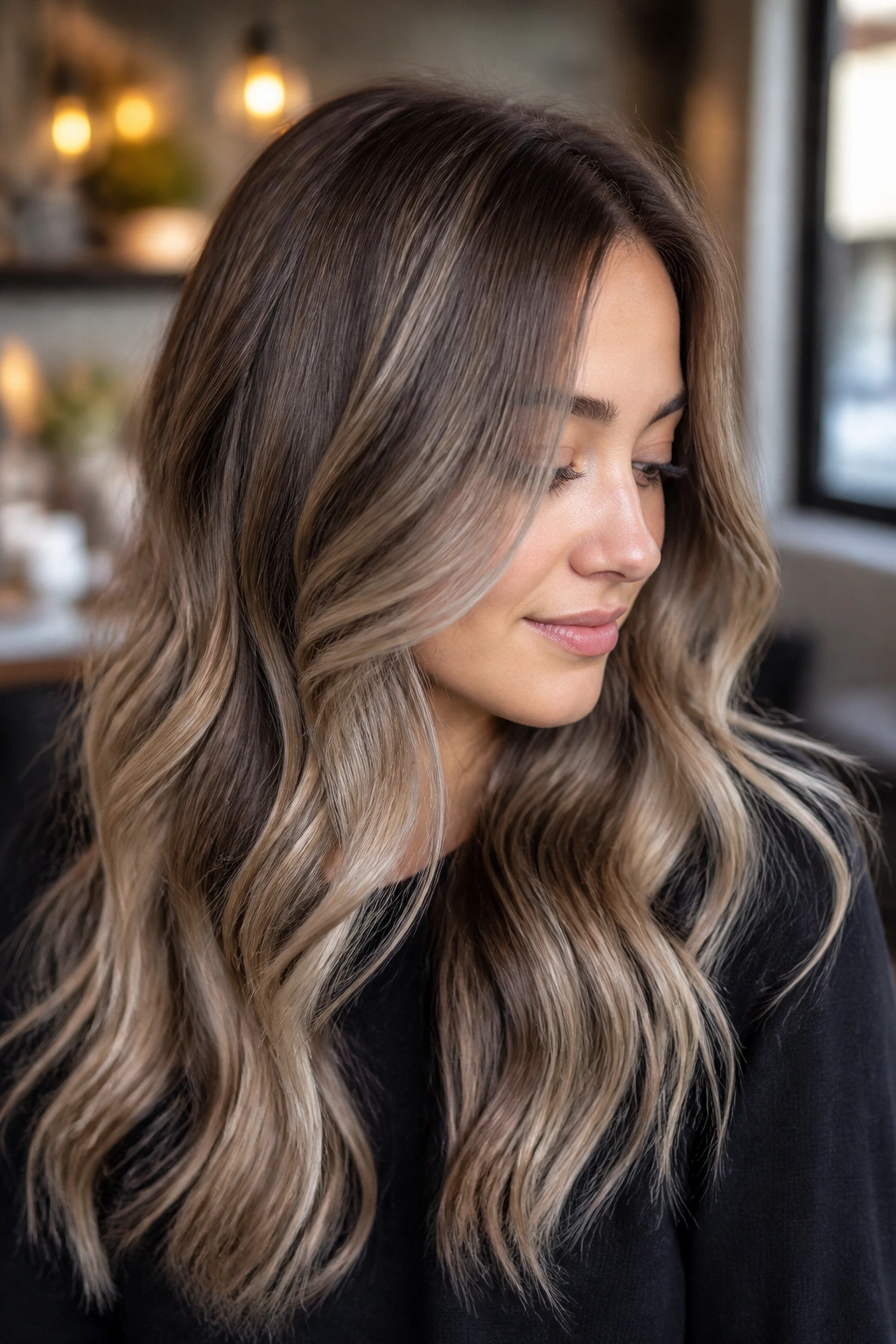
If you like coffee shades, mushroom latte balayage is the softest route into grey on brown hair. The base sits in the brown-beige zone, then grey and taupe get folded through the lengths so the whole look feels muted and smooth. Nothing here is loud.
The best part is that it plays nicely with medium brown hair that has a little warmth. The grey cools it down, but the beige keeps the color from turning flat or chalky. That balance makes it wearable for people who want something subtle enough for work but still interesting when the hair catches a little light.
Ask for a cool gloss, not a golden one. Golden toner fights this look immediately.
22. High-Contrast Silver Strands
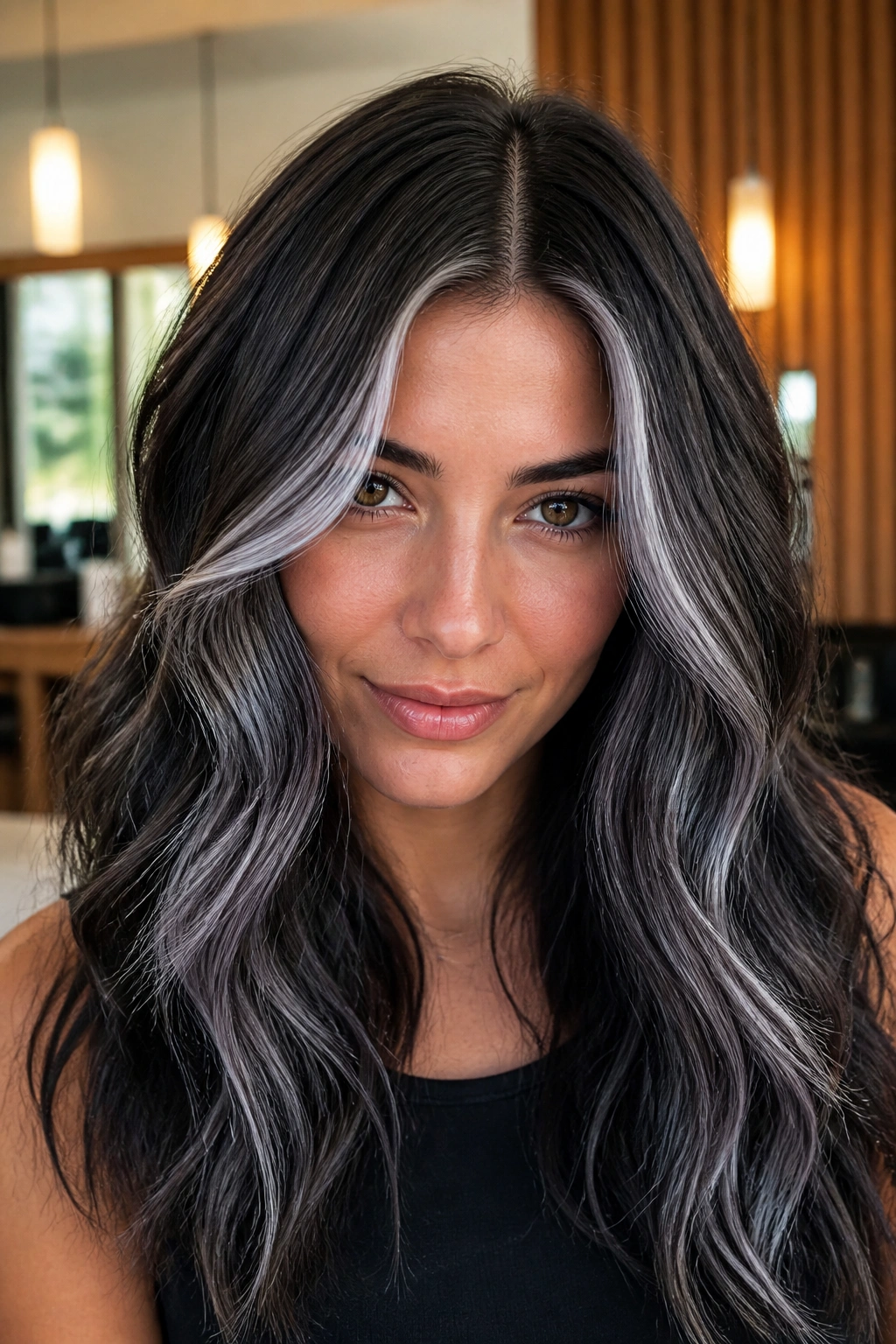
High-contrast silver strands are not shy, and that is the point. Against a deep brown base, a few brighter grey balayage ribbons create a clear visual hit. The style looks strongest when the rest of the hair stays rich and dark, so the silver has something to stand against.
This version is best when the hair is healthy enough to handle the lift. Brighter grey strands show dryness faster than softer tones do, and they need a good mask routine to keep the finish smooth. But if your hair can take it, the payoff is direct and clean.
A center part makes the contrast feel more graphic. A side part softens it a little. Pick your mood.
23. Soft Grey Peekaboo Pieces
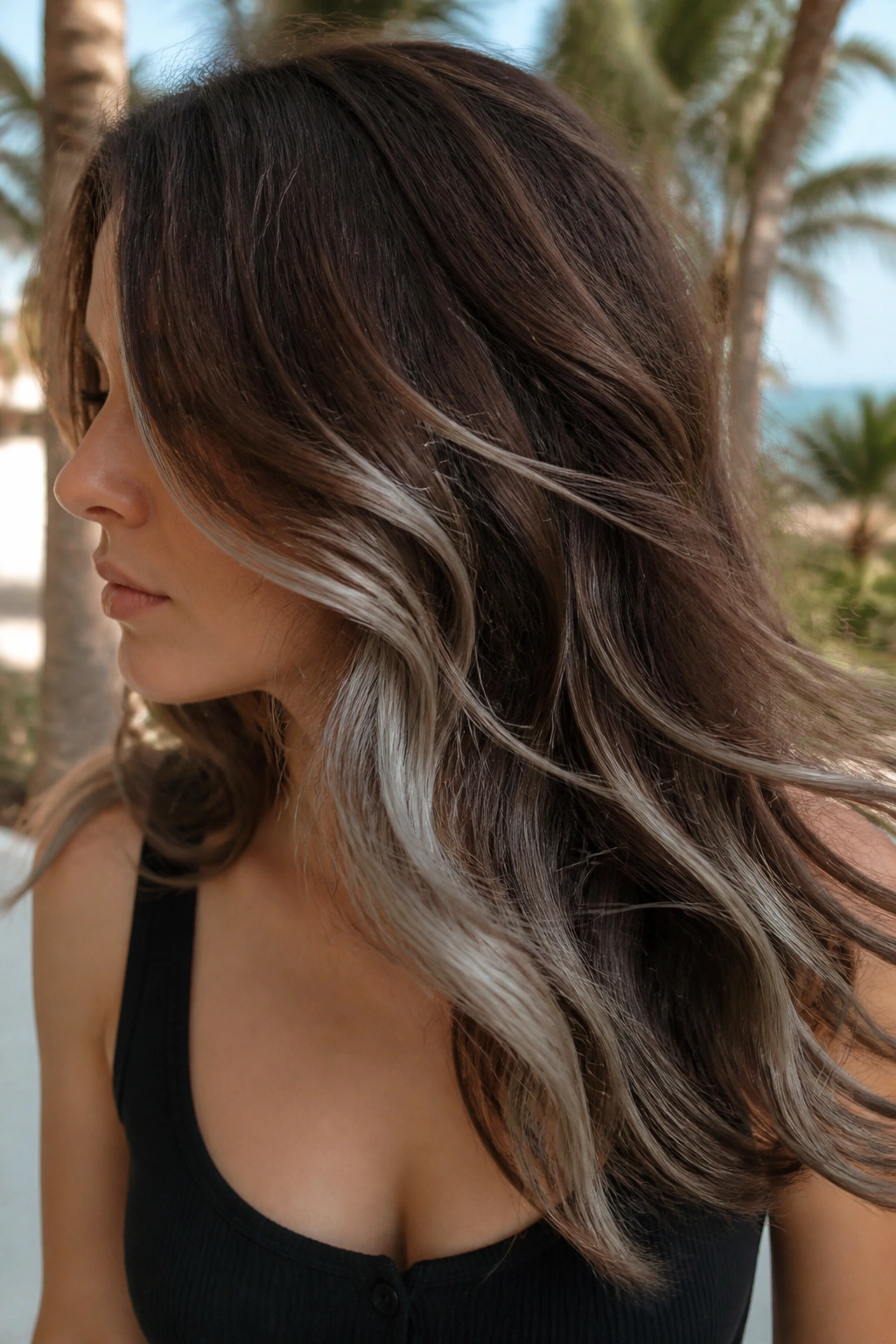
Soft grey peekaboo pieces hide under the top layer and reveal themselves when the hair moves. That’s what makes them fun. Brown hair stays in charge on the surface, but a pale grey flash shows up underneath, especially in half-up styles or when the wind shifts the top layer aside.
Unlike all-over grey balayage, peekaboo placement lets you test the water before committing to a fuller change. The underlayer can be lighter, cooler, and even a little brighter because it does not sit in full view all day. It’s a smart option if you want something playful without making every strand part of the statement.
This one is also easier to grow out. The hidden placement buys you time.
24. Dimensional Cocoa Ash Blend
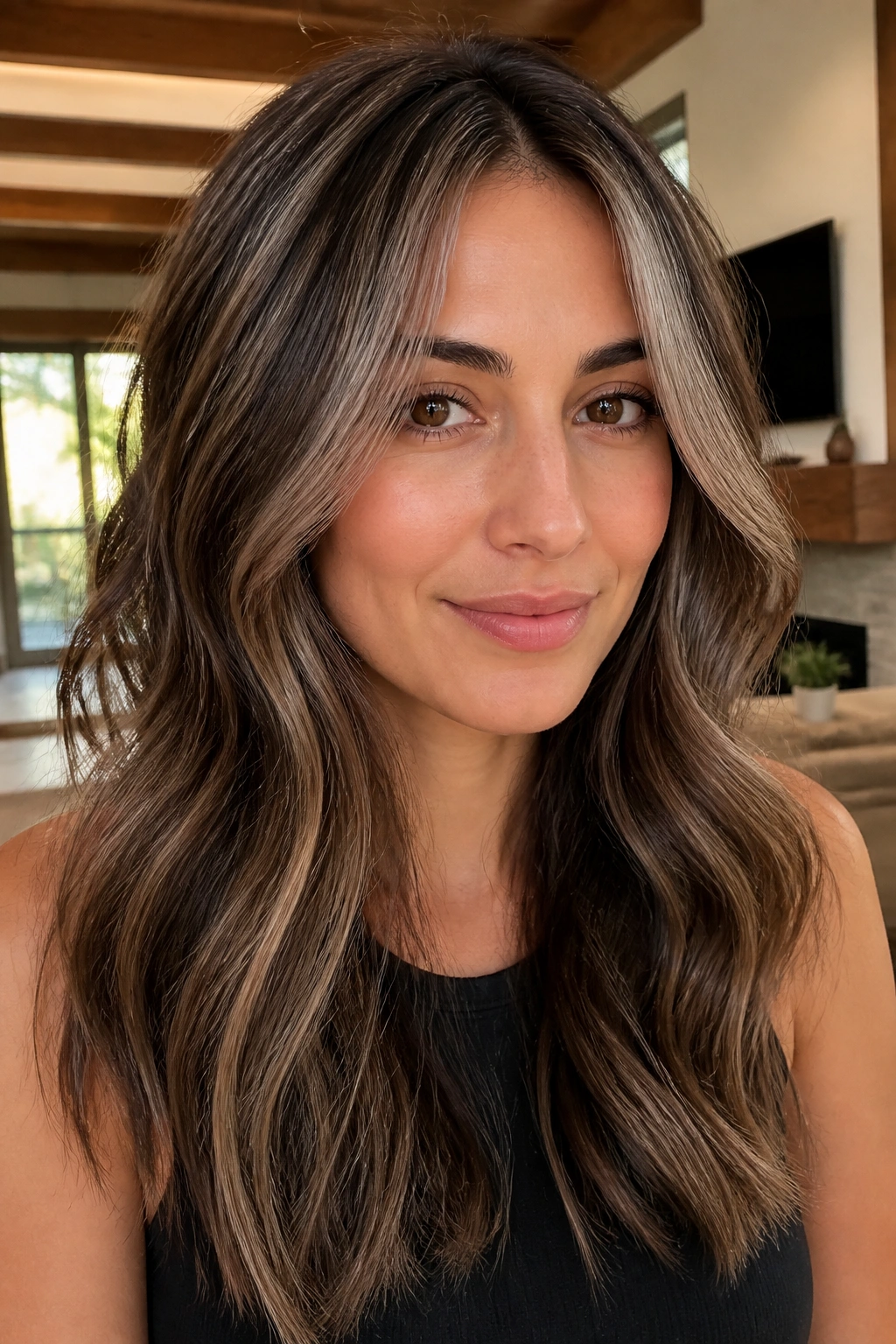
A dimensional cocoa ash blend works because it refuses to live in just one color family. The brown is cocoa-rich, the cool pieces are ash-grey, and the in-between shades keep the whole thing from looking painted on. The depth is what makes it believable.
I like this style on brown hair that tends to look one-note in the mirror. Add three tones instead of one, and suddenly the hair has movement even when it’s straight. A good colorist usually places the coolest pieces around the hairline and the softer ash in the interior, which keeps the face from looking washed out.
Ask for
- Three tones, not one.
- A soft root melt.
- Cooler pieces near the front and crown.
That small amount of planning changes everything.
25. Feathered Grey Balayage
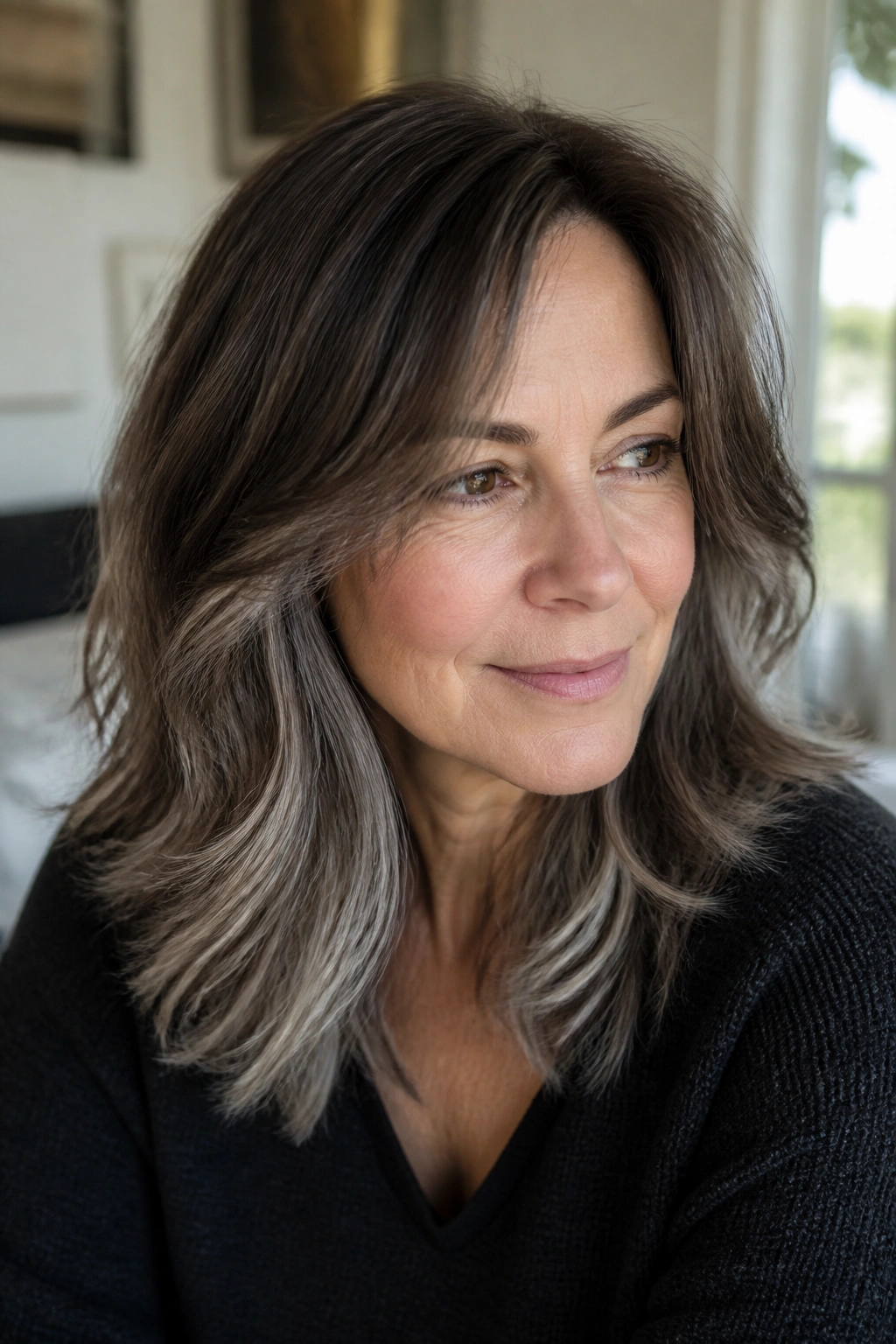
Feathered grey balayage is all about softness at the edges. The color melts into the brown instead of stopping in a hard line, so the pieces feel light and airy rather than blocky. On layered hair, that feathered shape moves nicely and keeps the grey from looking heavy.
How to Ask for It
Tell your colorist you want the lightened pieces to be diffused through the ends, with no obvious stripe at the root. The toner should sit in the ash-silver family, but not so cold that the hair goes matte. If the hair is medium brown or darker, a feathered placement through the front and sides gives the look enough visibility.
Keep the styling loose. Strong curl patterns or sharp flat-iron bends can make the feathering look too segmented. Soft movement is the friend here.
26. Slate and Espresso Waves
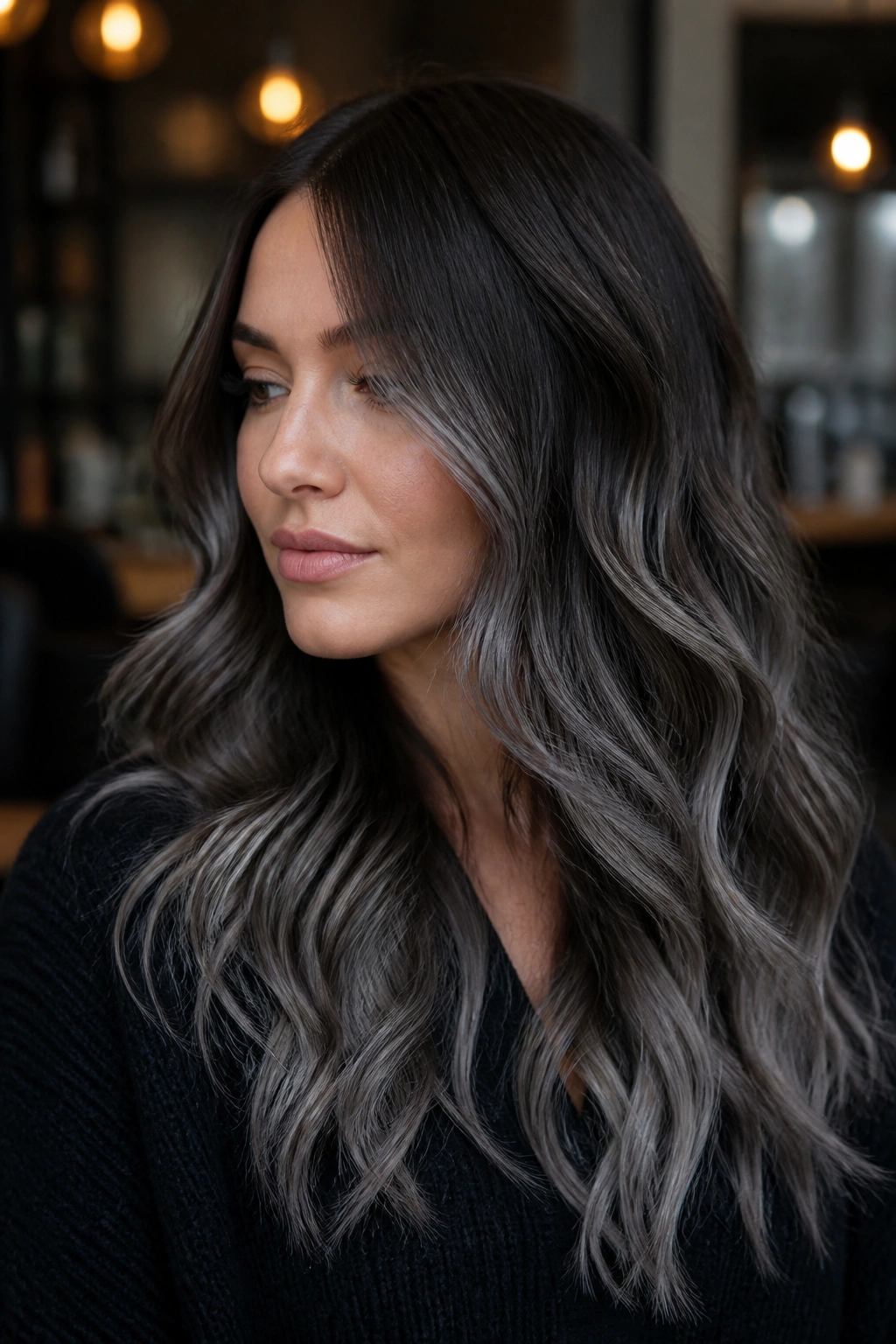
Slate and espresso waves are a deeper, darker version of grey balayage that still feels rich on brown hair. Espresso stays as the base, while slate pieces are painted in waves through the mid-lengths and ends. The whole thing reads moody, but not severe.
This is a good choice if you want cool tones and you do not want to chase a bright silver finish. The darker base also makes the grey easier to maintain because regrowth is less obvious, and the hair can keep more of its natural depth. If your style leans minimal, this color fits that mood without asking for a lot of extra effort.
It’s one of the better options for thicker hair, too. The contrast gives the cut some shape.
27. Silver Ribbon Crown
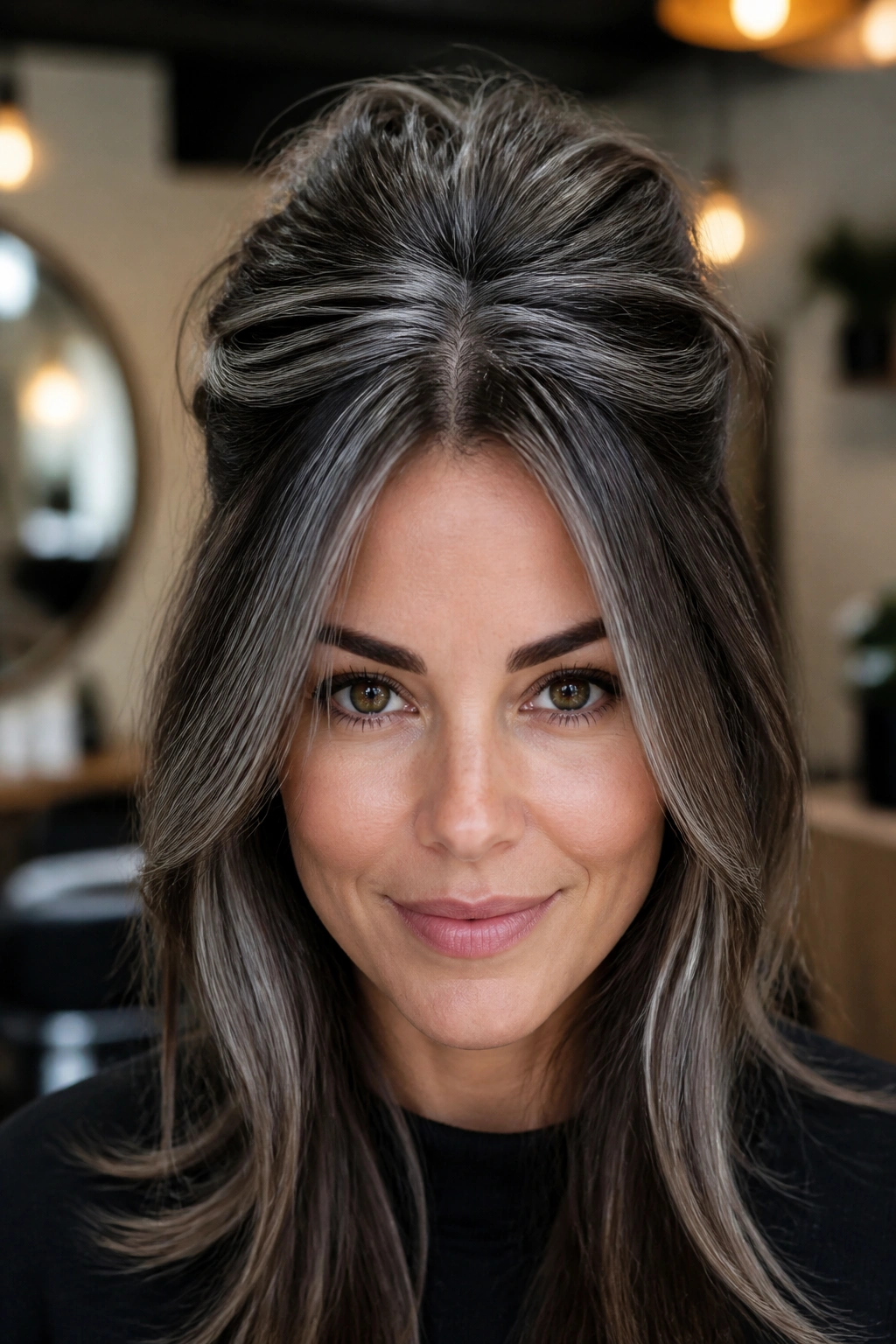
A silver ribbon crown puts the brightest grey balayage through the top layer and crown, which changes the whole look of the hair from above. That makes it especially good for ponytails, buns, and half-up styles, where the top layer does most of the talking.
The ribbons should be narrow and intentionally placed so they lift the crown without making it look thin. On brown hair, that kind of placement can give a lift right where the part sits, which is useful if your hair tends to lie flat. A subtle root shadow keeps the scalp area from looking harsh.
- Best for updos and half-up styles.
- Ask for narrow ribbons at the crown.
- Keep the back slightly darker for contrast.
It’s a clever placement trick, not just a color idea.
28. Bronde to Grey Transition
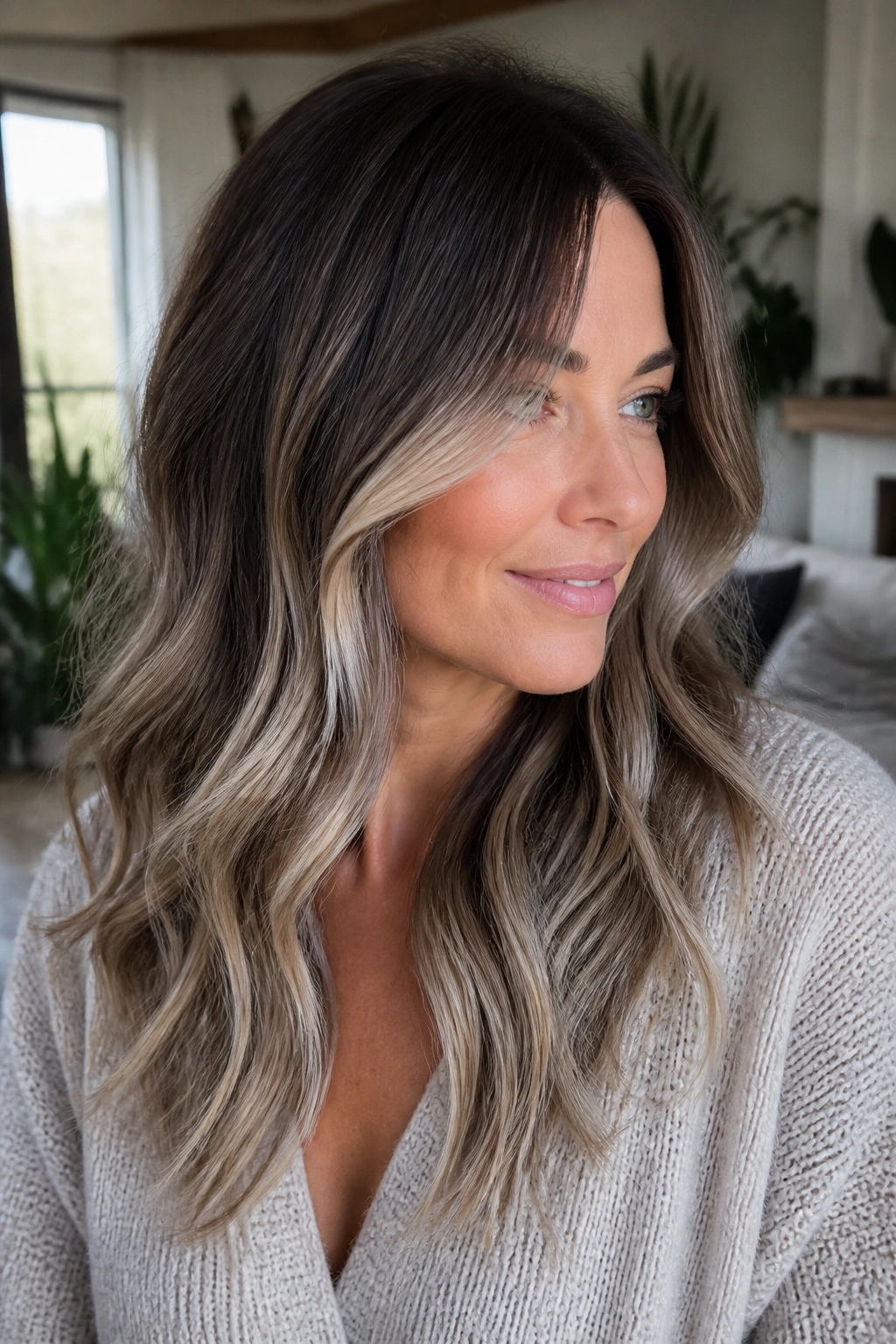
A bronde-to-grey transition makes sense if your brown hair already has lighter pieces in it. The old bronde base gives the grey somewhere to land, so the stylist does not have to force the contrast from scratch. The color feels natural faster, which is useful if you are easing into cooler shades.
This look works well when you want the ends to read silver-ish without turning the whole head into a grey block. The move from brown to grey can stay soft if the lighter pieces are already there, and that makes the grow-out friendlier too. A gloss can push the mid-tones cooler without wiping out the dimension.
It’s a good middle road. Not timid. Not harsh.
29. Rooted Grey Ombré
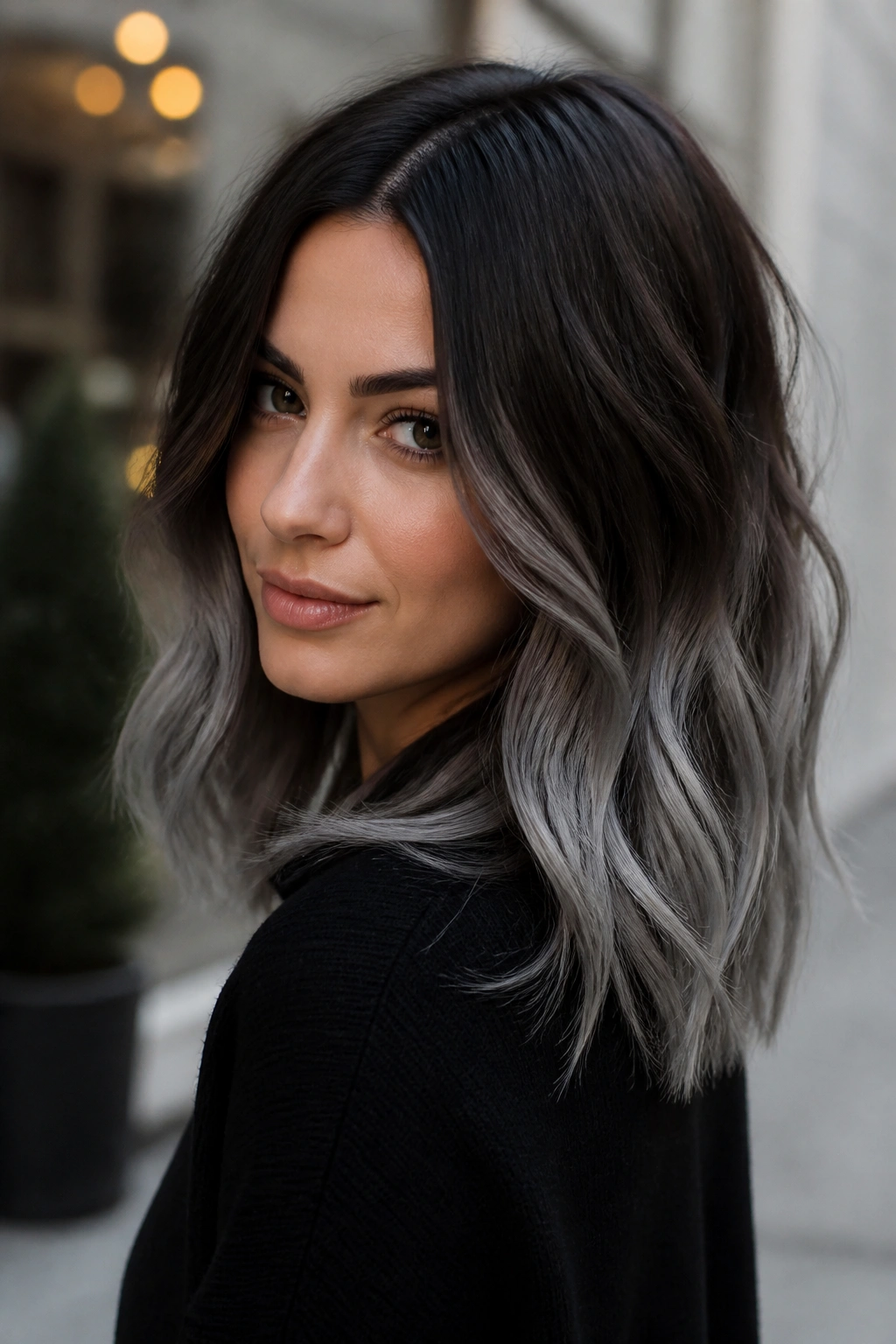
Want the grey to last without looking like a stripe? A rooted grey ombré is the answer. The root stays deeper brown, the middle lengths pick up smoky ash, and the ends lighten into grey. Because the color changes gradually, the style keeps its shape even as the hair grows.
The rooted part matters more than people think. A solid brown root keeps the hair from looking over-processed, while the ombré fade prevents a blunt line where the grey begins. That makes it a sensible choice for anyone who hates frequent touch-ups or who wears their hair in long layers.
It also gives you options later. You can keep the fade soft, or bring in more silver at the ends on the next appointment.
30. First-Time Grey Balayage for Brown Hair
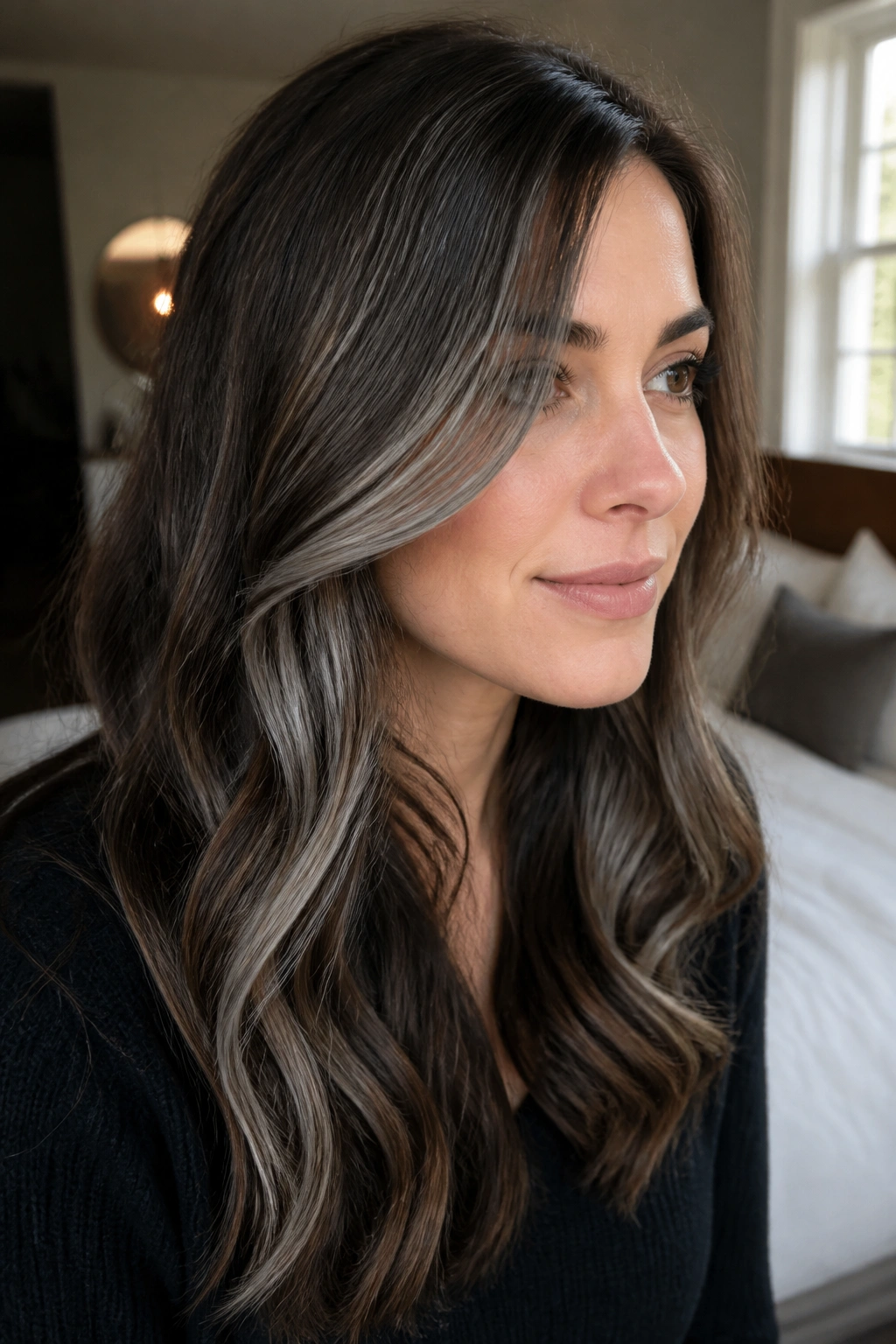
If this is your first grey balayage, start lighter in placement than you think and cooler in tone than caramel. The safest first move is a few thin grey ribbons through the top layer, plus a soft face frame and a brown base that still does most of the work. You get the shift without handing over the whole head.
Unlike a full silver transformation, this version lets you see how your hair takes toner, how fast it fades, and whether you like the contrast around your face. That matters more than chasing a dramatic before-and-after. A good first appointment should leave room to go bolder later.
Ask for restraint. A few fine ribbons, a smooth root blend, and one cool gloss are enough to test the water without making the result hard to live with.
Final Thoughts
Grey balayage on brown hair works best when the colorist treats the brunette base as part of the design, not something to cover up. The brown gives the grey shape. The grey gives the brown attitude. When those two pieces are balanced well, the hair looks intentional from every angle.
If you want the softest route, start with ash ribbons, a shadow root, and a few brighter face-framing pieces. If you want more edge, ask for graphite, steel, or silver in narrower zones where the contrast can actually show. The cut matters, too. Grey always looks better when the hair has movement.
