



Short hair with silver highlights can do something most salons still undersell: it makes gray grow-in look intentional instead of awkward. On older women, that matters more than people admit. A neat pixie, a smart bob, or a cropped shag can brighten the face faster than a darker color ever could, and the right silver placement keeps the whole cut from going flat.
The trick is not chasing one shade of silver. Some heads of hair need bright ribbons near the face. Others look better with soft, smoky pieces through the top and a cooler veil around the crown. Placement matters more than tone, honestly, because placement is what gives a short cut shape when the length is gone.
Shorter cuts also make the color do more work. A half inch of lift at the root changes the profile. A little brightness at the temples can soften lines around the eyes. And if the hair is fine, silver highlights can create the look of density without piling on heavy layers that collapse by lunch.
The styles below cover the short cuts that actually work in real life—low-fuss, flattering, and believable on hair that has changed texture over time. Some are sharp and neat. Some are airy and soft. All of them treat silver like a feature, not a problem.
1. Feathered Pixie With Silver Highlights
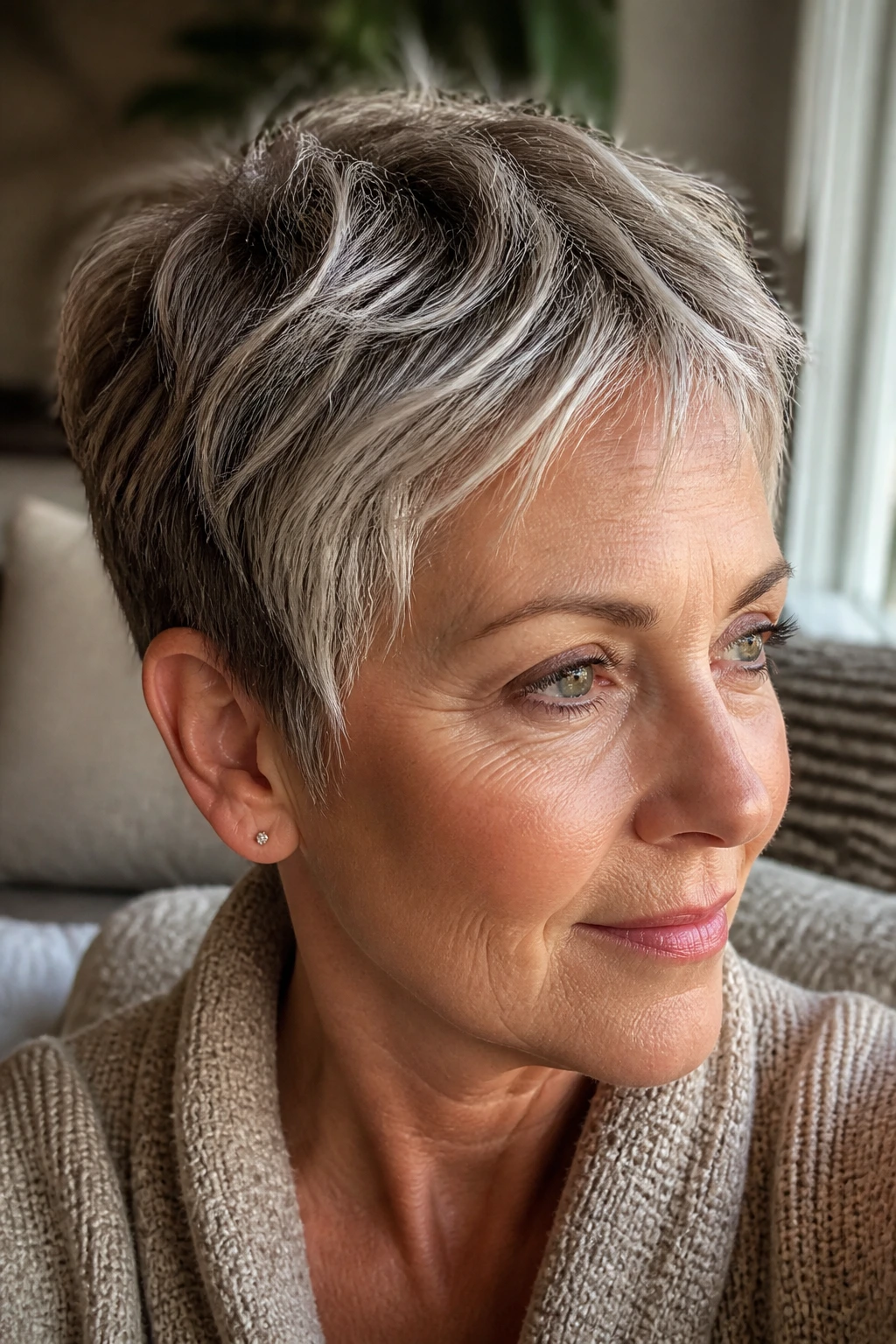
A feathered pixie is one of those cuts that can make silver highlights look crisp instead of heavy. The feathering keeps the top moving, which matters a lot when the hair has thinned a bit at the crown or along the part.
Why the Feathering Matters
The layers should be short enough to lift, but not so chopped that they stick out. Ask for soft texture through the crown, a tapered nape, and wispy sideburns that don’t sit in a hard line against the face. The silver can sit in fine threads through the top and hairline, not chunky streaks.
That placement gives the cut a light halo effect. It also helps the silver catch on the raised bits of the feathering, which keeps the style from looking like a single flat color. A pixie like this is especially good if your hair is fine, because the shorter shape gives the illusion of more density.
What to Ask For at the Salon
- Soft, feathered layers through the top so the hair can move instead of sitting like a helmet.
- A tapered back and nape to keep the neckline clean.
- Micro-light silver highlights near the fringe and temple area for brightness close to the face.
- A little length at the front if you want to sweep the bangs to one side.
A pea-size dab of matte paste is usually enough for styling. Rub it between your palms, then press it into the ends and crown instead of coating the whole head. Too much product will shut the whole cut down.
If you want one short style that looks polished with almost no fuss, this is a strong place to start.
2. Chin-Length Bob With Silver Highlights for Older Women
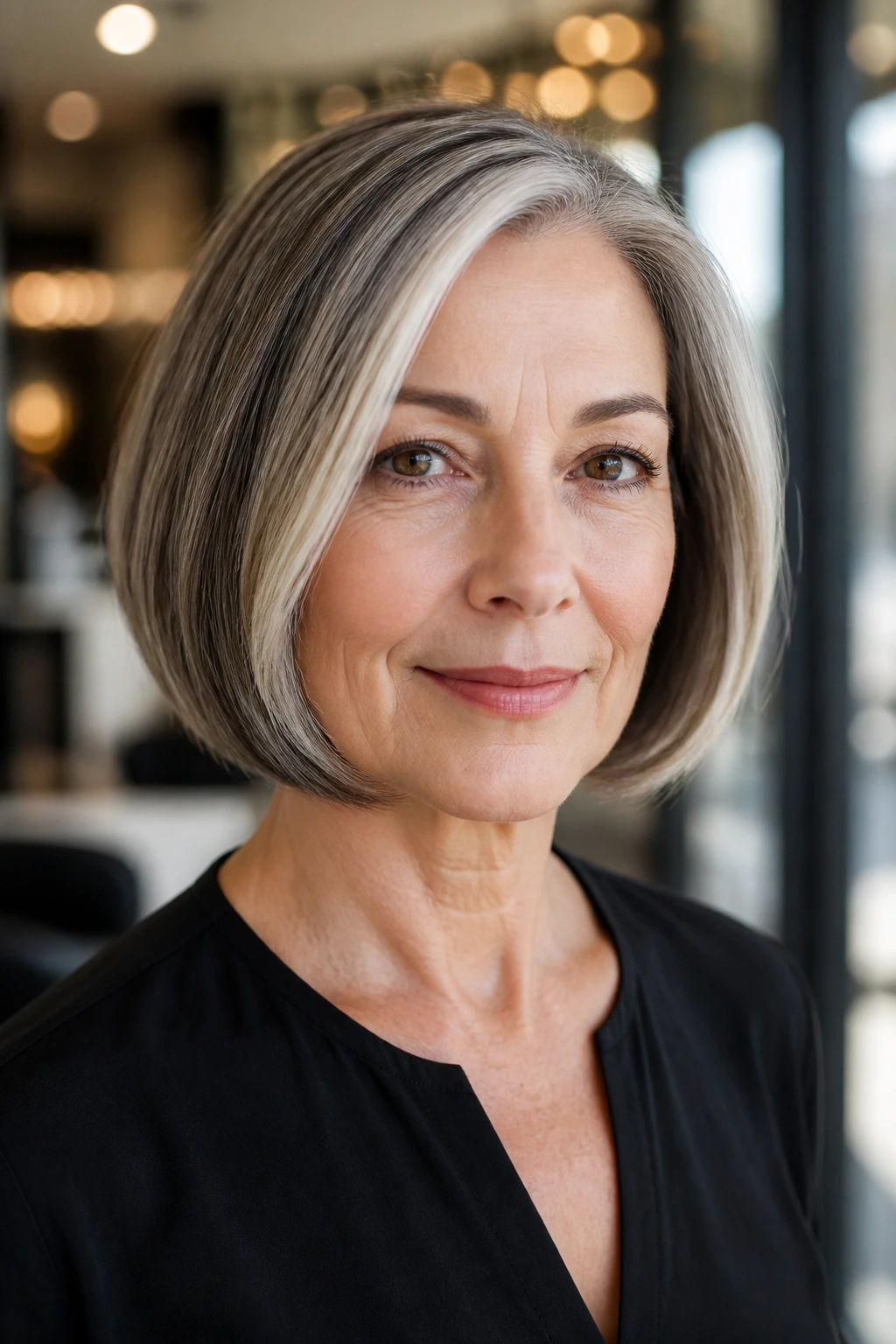
Why does a chin-length bob work so well once the hair starts to lose a bit of body? Because it gives the jawline a clear frame without dragging the face down. Add silver highlights around the front, and the whole cut starts to read brighter, cleaner, and a little more awake.
The best version usually sits right at the chin or just below it. That length is short enough to feel fresh, but long enough to tuck behind one ear or curve under the jaw. Silver pieces near the temples and cheekbones pull the eye upward, which is a small thing that makes a real difference.
Where the Lighter Pieces Should Sit
- At the temples to soften the area around the eyes.
- Along the front curve of the bob to keep the face from looking boxed in.
- Just beneath the surface layers so the silver shows when the hair moves.
- Not all over the top if you want a softer grow-out and less salon upkeep.
This cut loves a round brush. Blow-dry the ends under, then let the front bend away from the face a touch so it doesn’t feel stiff. A mist of lightweight shine spray is enough; heavy oils can make a clean bob look greasy fast.
Straight or slightly wavy hair does especially well here. Curly hair can wear the cut too, but the shape needs more length and a little more room in the ends. Otherwise it puffs outward and steals the neat line that makes the bob work in the first place.
3. Stacked Bob With Bright Silver Nape
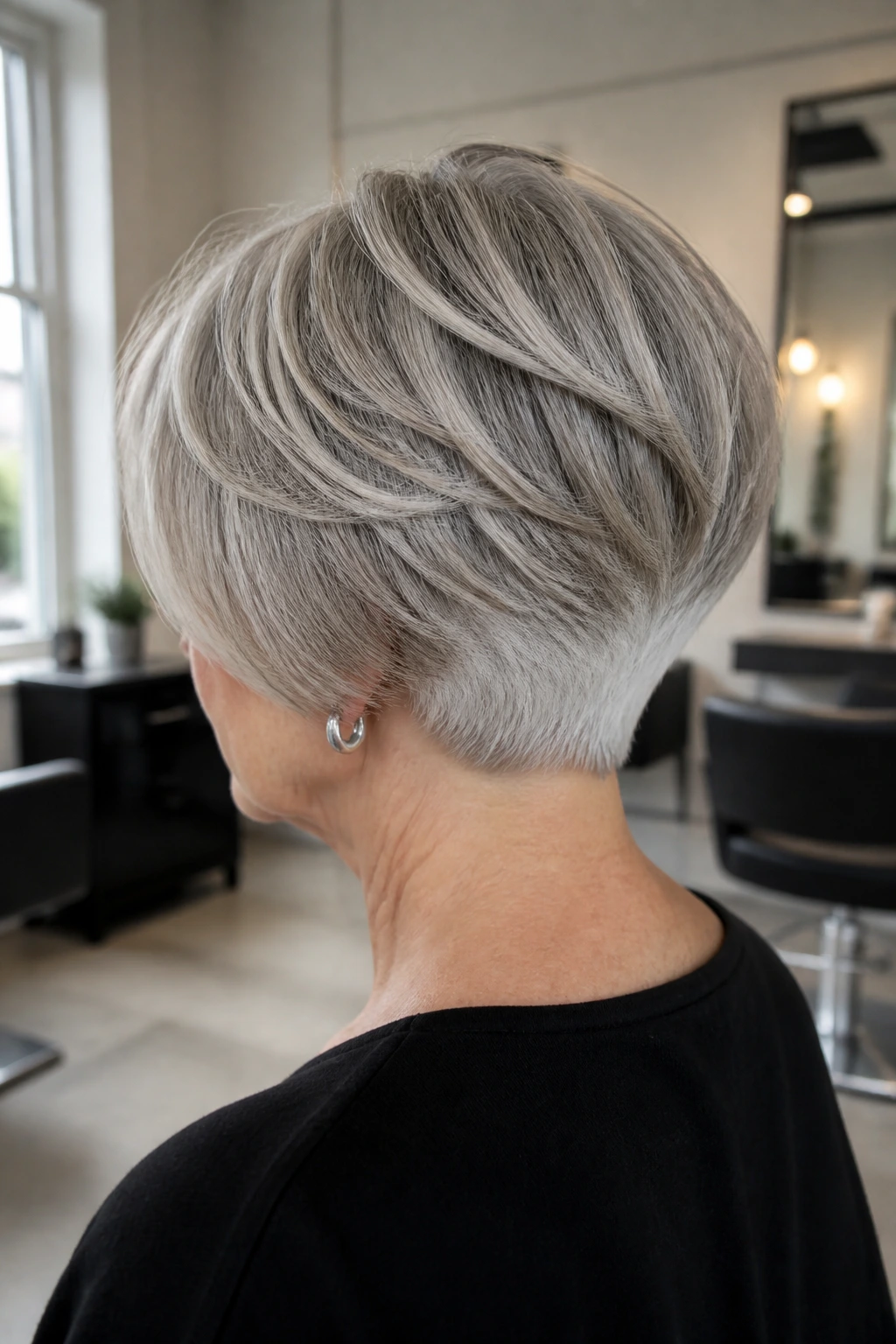
Picture the back of the haircut first: short, clean, and slightly rounded so the head shape looks neat from behind. That’s the appeal of a stacked bob, and silver highlights make the stacked layers easier to see.
The stack creates lift where a lot of older hair starts to flatten. Shorter layers in the back build a small curve at the crown, while the front can stay a little longer to keep the face soft. Bright silver at the nape or through the upper back layers gives the cut depth, not because the color is loud, but because the contrast shows the structure.
What Makes It Work
- Shorter internal layers in the back build shape without adding bulk.
- Longer front pieces keep the style from feeling too hard.
- Silver placed low in the back helps the stacked part show up cleanly.
- A side part can make the top look fuller if the crown is sparse.
This is a good choice if your hair used to have more body than it does now. The stack gives you that shape back in a controlled way. It also hides a lot of the awkwardness that can happen when grow-out turns patchy, since the rear layers blend the dark and silver together instead of separating them into neat lines.
A small root-lift spray at the crown helps, but don’t overdo it. The goal is lift, not stiffness. A soft, rounded back looks much better than a hard, sprayed shell.
4. Curly Crop With Soft Silver Threads
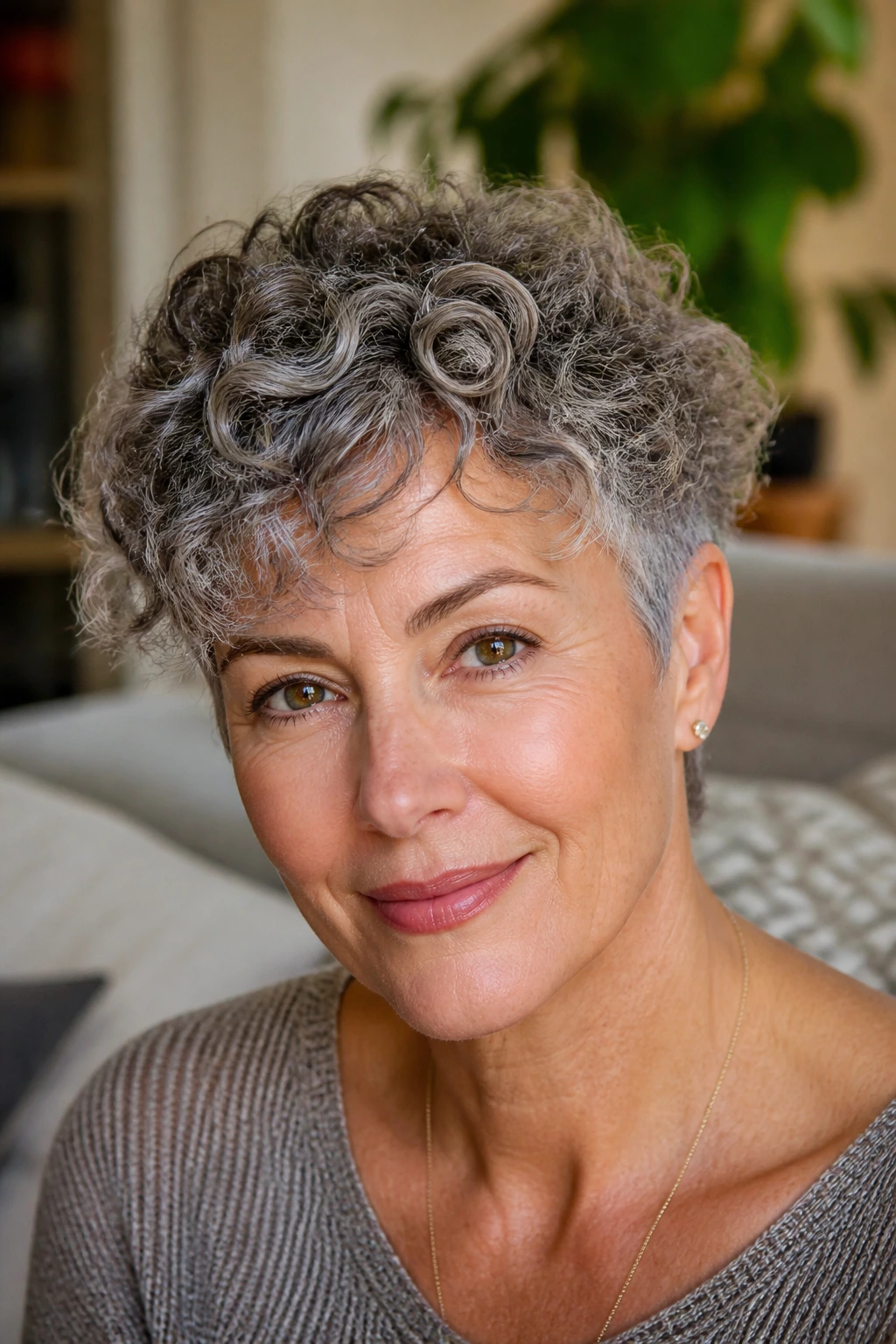
Curls and silver highlights are a better match than most people think. The mistake is making the highlights too stripey. Once that happens, every curl starts to look separate from the next one, and the whole head can lose its softness.
A better crop uses fine silver threads woven through the curl pattern so the brightness moves with the shape of the hair. On older women, that can be especially flattering because curl texture already gives the face life. Add light around the top and outer curves, and the haircut feels lively instead of heavy.
It is a better trick than piling on dark lowlights.
The curl itself already gives you shadow.
Keep the length around the ear or just below it, depending on how much shrinkage your hair has. If the curls spring up a lot when dry, leaving a little extra length prevents the cut from going too short after styling. Ask for soft shaping around the sides, not blunt corners.
Use a curl cream on damp hair, then diffuse on low heat or let it air-dry. Once it’s dry, scrunch in a touch of lightweight cream to separate the pieces. Too much shine product can make silver look yellow or flat, especially under indoor light.
This cut works best when the silver is blended, not painted in obvious bands. Softness is the whole point.
5. Asymmetrical Bob With Silver Highlights
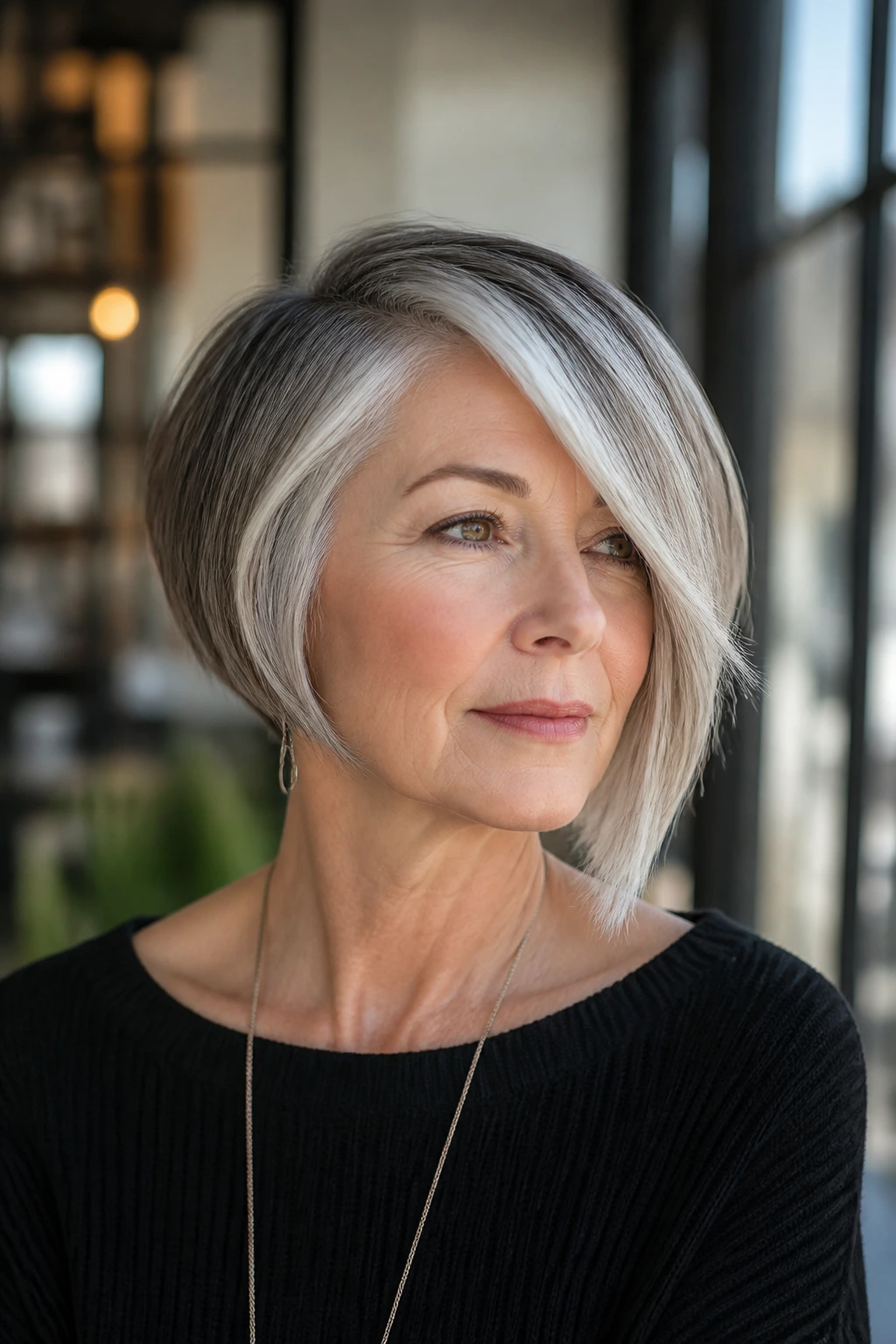
Unlike a symmetrical bob, this one gives the eye a line to follow. That line can be subtle or obvious, but even a slight difference in length changes the whole feel of the haircut. One side skims the jaw. The other side opens the neck a little and creates motion.
Silver highlights make the asymmetry read even faster. A bright sweep on the longer side, plus a softer veil on the shorter side, gives the style a bit of drama without making it fussy. It works especially well if one side of the hair wants to flip out or lie flatter than the other.
Who This Flatters Most
- Round faces, because the longer side narrows the outline a bit.
- Square jaws, because the diagonal line softens the angles.
- Women who wear glasses, since the cut creates movement around the frames.
- Thicker hair, which can handle the shape without puffing out too much.
The secret is not making the difference between the two sides huge. One to two inches is enough. If the gap gets too large, the haircut starts looking like it’s trying too hard, and that’s the last thing you want.
Style it with a flat brush or blow-dry paddle, pushing the longer side forward first and then turning the ends slightly under. The silver should look like it belongs to the haircut, not like a separate stripe sitting on top of it.
6. Tapered Pixie With Long Fringe
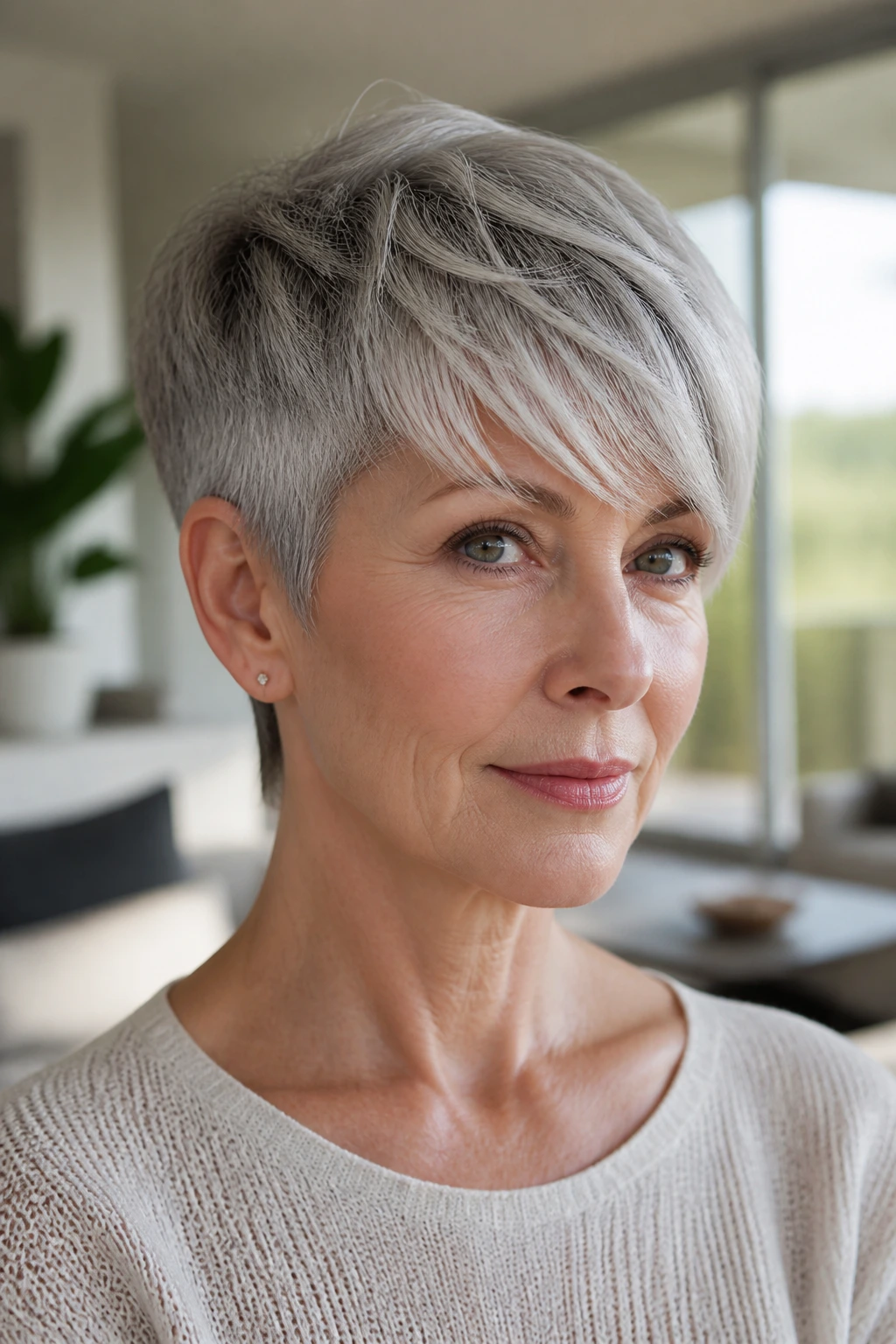
Tapered at the nape, longer through the fringe—that’s the formula that keeps this pixie from feeling severe. Older women who want short hair often worry that a pixie will erase softness. This one does the opposite if the silver is placed well.
The long fringe gives the face something to fall against. It can sweep diagonally across the forehead, tuck behind one ear, or sit forward in a loose piece that breaks up a strong hairline. The tapered back keeps the haircut tidy, which matters when the neck and jawline are the parts you want to show.
Silver highlights should be concentrated through the top and fringe area, not buried in the bottom layers where nobody sees them. That way the light lands where the haircut moves the most. If the hair is coarse, a little softening cream through the ends keeps the shape from getting too spiky.
This is the kind of cut that likes a light hand.
A pea-size amount of paste is enough for most days.
If your hair has a stubborn cowlick, especially near the front, ask for the fringe to be cut a touch longer than you think you need. Short fringe and silver tones can expose a cowlick fast. A longer front gives you room to work with the natural bend instead of fighting it every morning.
7. Wedge Cut With Ice-Silver Panels
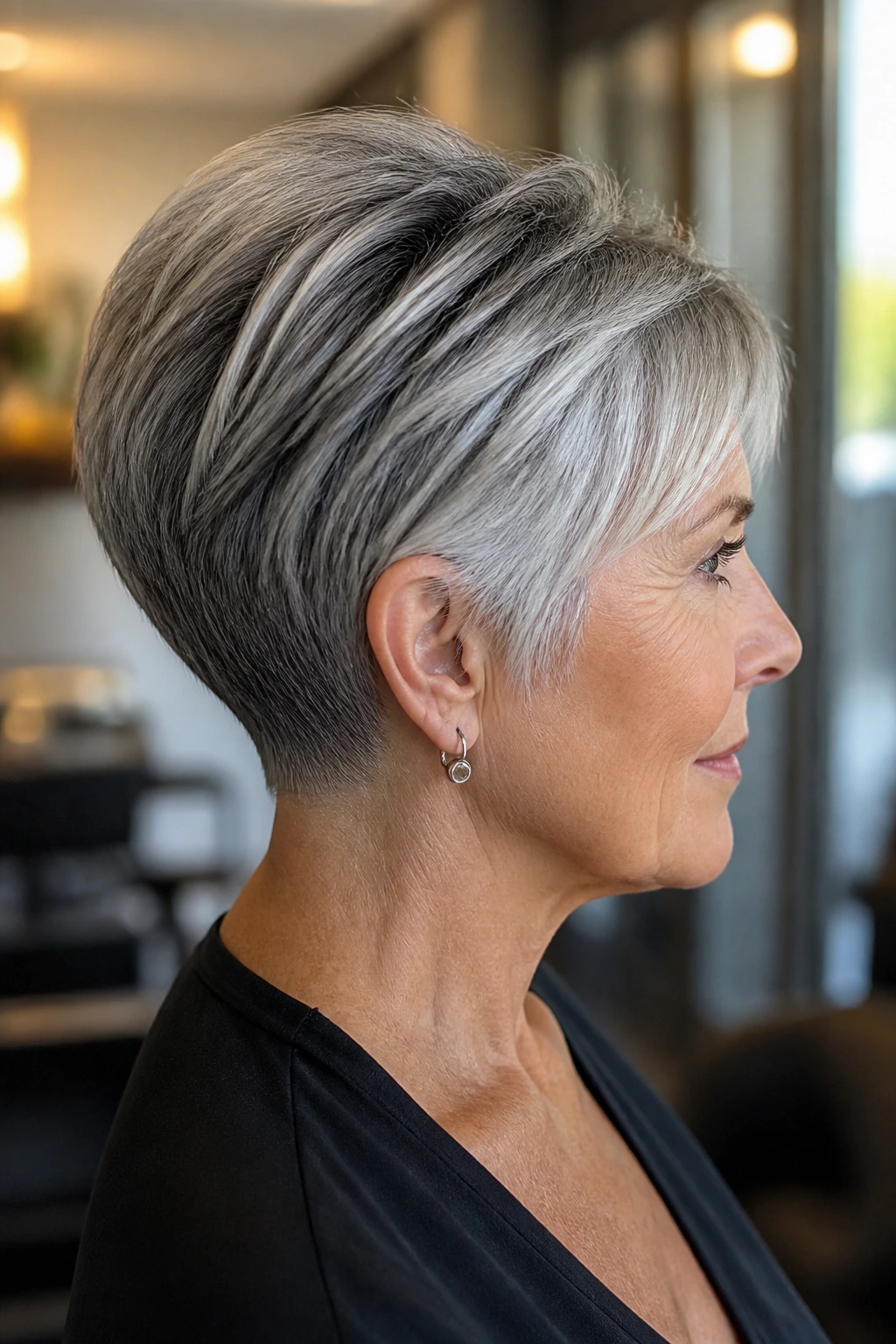
What makes a wedge cut feel fresh instead of dated? Shape, mostly. The classic wedge has a built-in curve at the back and a slimmer line around the sides, which can be very flattering on older women when the hair needs structure more than length.
Ice-silver panels make that curve easier to see. Instead of scattering highlights everywhere, place them where the cut bends: through the crown, near the upper sides, and lightly across the outer rim. The result is neat and bright, almost architectural, but still soft enough for daily wear.
How to Style It
- Start with a volumizing mousse on damp hair so the crown does not collapse.
- Blow-dry with a small round brush to guide the back into its curve.
- Turn the ends under at the sides to keep the line sleek.
- Finish with a light mist of flexible spray so the shape moves instead of freezing.
This cut does well on hair that has become flatter at the back of the head. It also helps if you want a style that looks polished with minimal effort. The wedge has enough shape baked in that the color doesn’t need to do all the work.
A cool-toned silver can look sharp here, but only if the highlights are fine. Thick ribbons make the wedge look chunky. Thin panels keep it modern and neat.
8. Textured Crop With Side-Swept Bangs
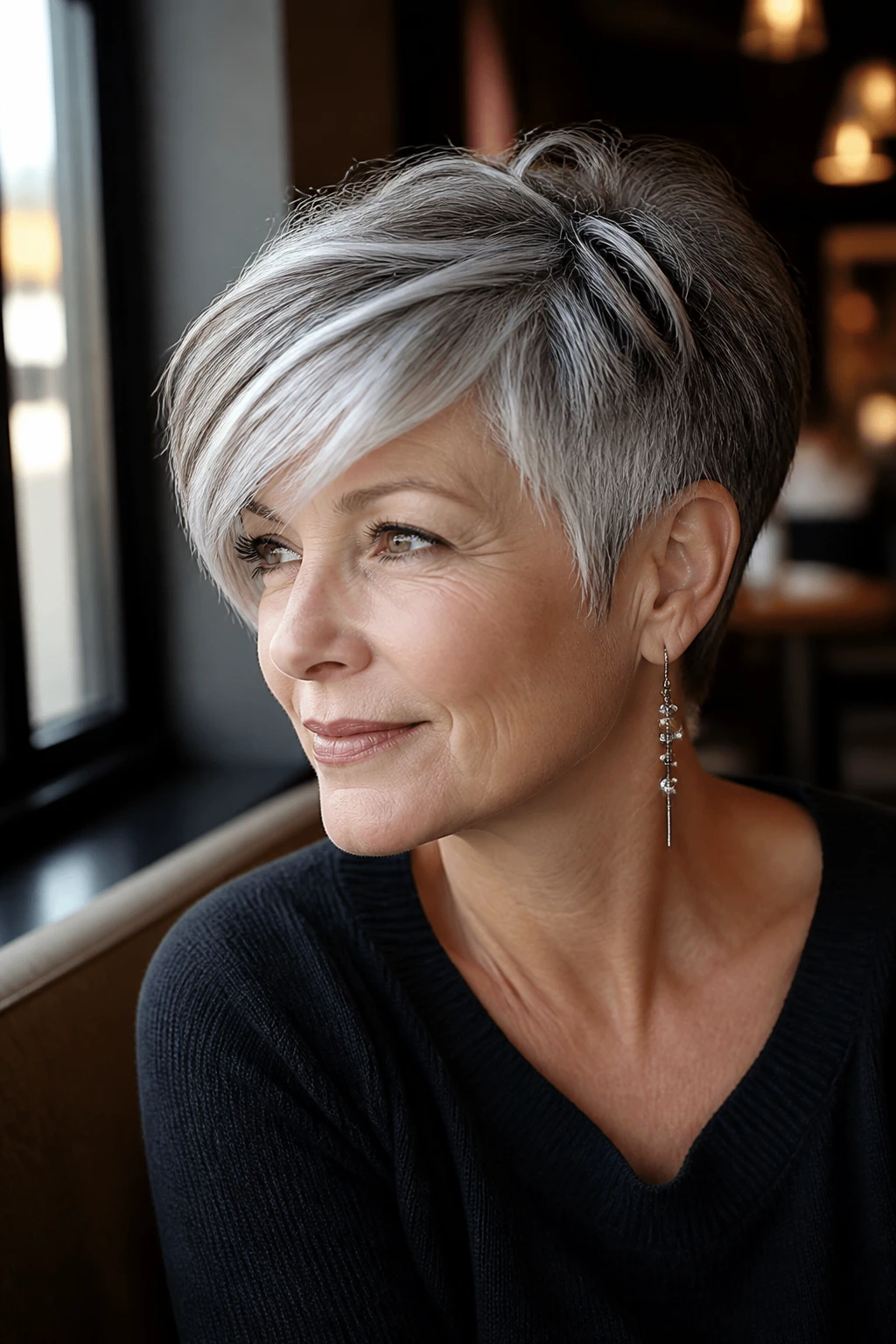
A client walks out with a textured crop like this and her glasses suddenly make sense. Her earrings do too. The whole face gets a frame, and the silver highlights help the shape read from across the room.
The texture should be uneven in a controlled way, not shaggy for the sake of being shaggy. Think short pieces that separate lightly at the ends, plus a side-swept bang that skims the forehead instead of covering it. Silver through the front and top gives the cut motion where the eye lands first.
This is a strong option for fine or medium hair because the texture keeps the cut from looking too tidy. Tidy is the enemy here. A little piecey finish gives the haircut life, and the silver picks up that movement in a way a solid color can’t.
Use a dry wax or a light pomade on the ends after styling. Work from the back forward so you don’t overload the fringe. If the bang gets too shiny, it will clump. If it stays soft and separated, the whole cut looks more expensive than it was to style.
Quick Details That Help
- Keep the bangs long enough to sweep, not hang in the eyes.
- Ask for silver around the fringe and crown rather than only underneath.
- Use a blow-dryer nozzle for control, then rough it up with your fingers.
- Skip heavy serums if the goal is texture.
The cut should feel easy, not precious. If it starts behaving like a helmet, the layering needs to be broken up a little more.
9. French Bob With Silver Ribbons
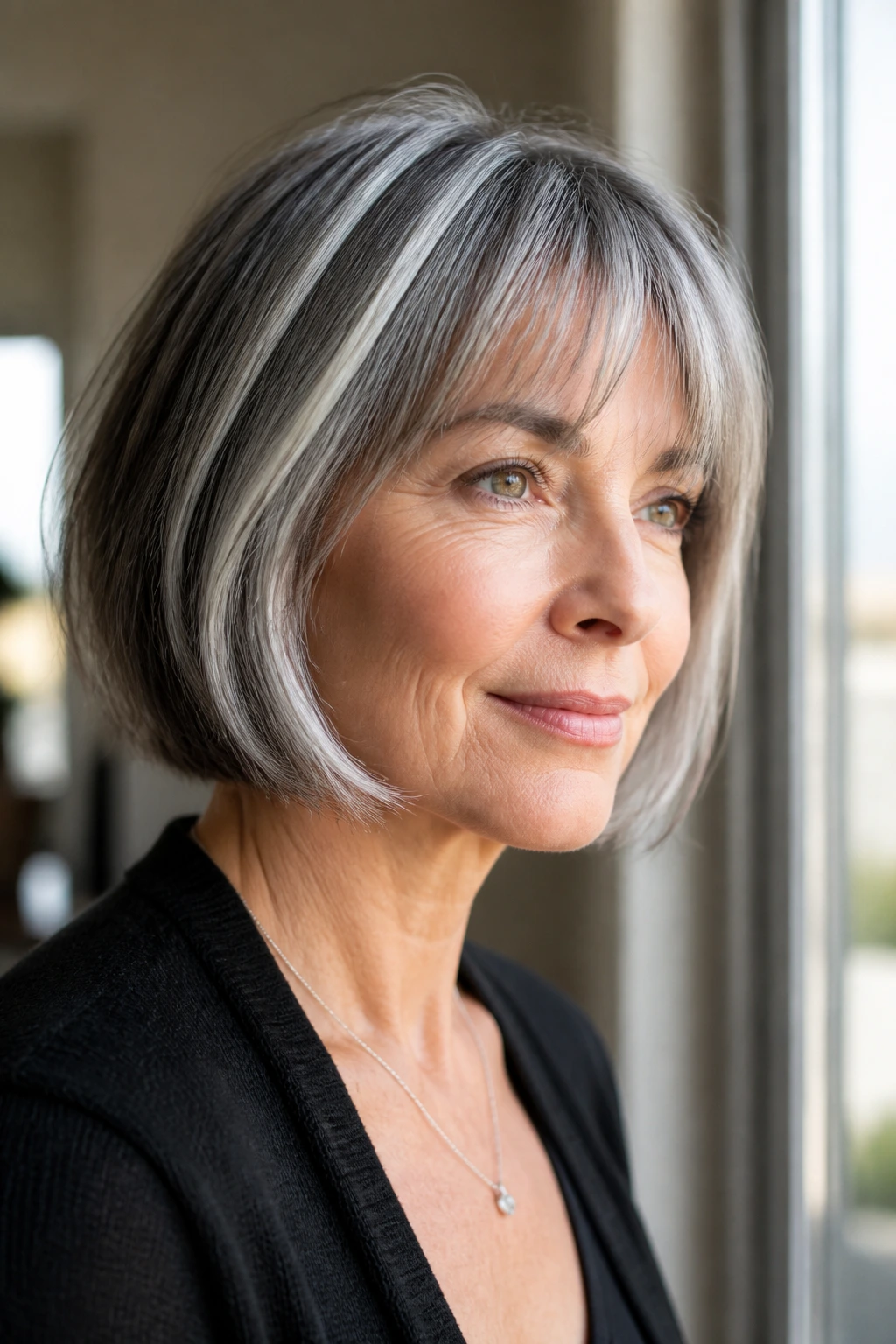
A French bob wants movement. That is the whole thing. The length sits around the jawline, the fringe is airy rather than thick, and the ends look softly blunt instead of carved into a block.
Silver ribbons fit that mood perfectly. They can sit just around the face, then trail through the mid-lengths so the bob has light in it without losing its shape. On older women, this is a smart choice when the face could use a little brightness near the mouth and cheekbones. The cut does not fight the face. It just follows it.
Unlike a chin-length bob with more polish, the French bob can lean a little undone. A finger-dry finish or a quick bend with a 1-inch iron is enough. Don’t curl every piece; just give the front a soft inward turn and leave the ends slightly irregular. That messiness is part of the charm.
This style suits straight and slightly wavy hair best. Very curly hair can wear a version of it, but the blunt line gets lost unless the shape is cut with the curl pattern in mind. If your hair swells when it dries, ask for a bit more length than you think you need.
It’s a cut for someone who likes a little edge without shouting. Clean, yes. Polished, sure. But never stiff.
10. Shaggy Crop With Silver Ends
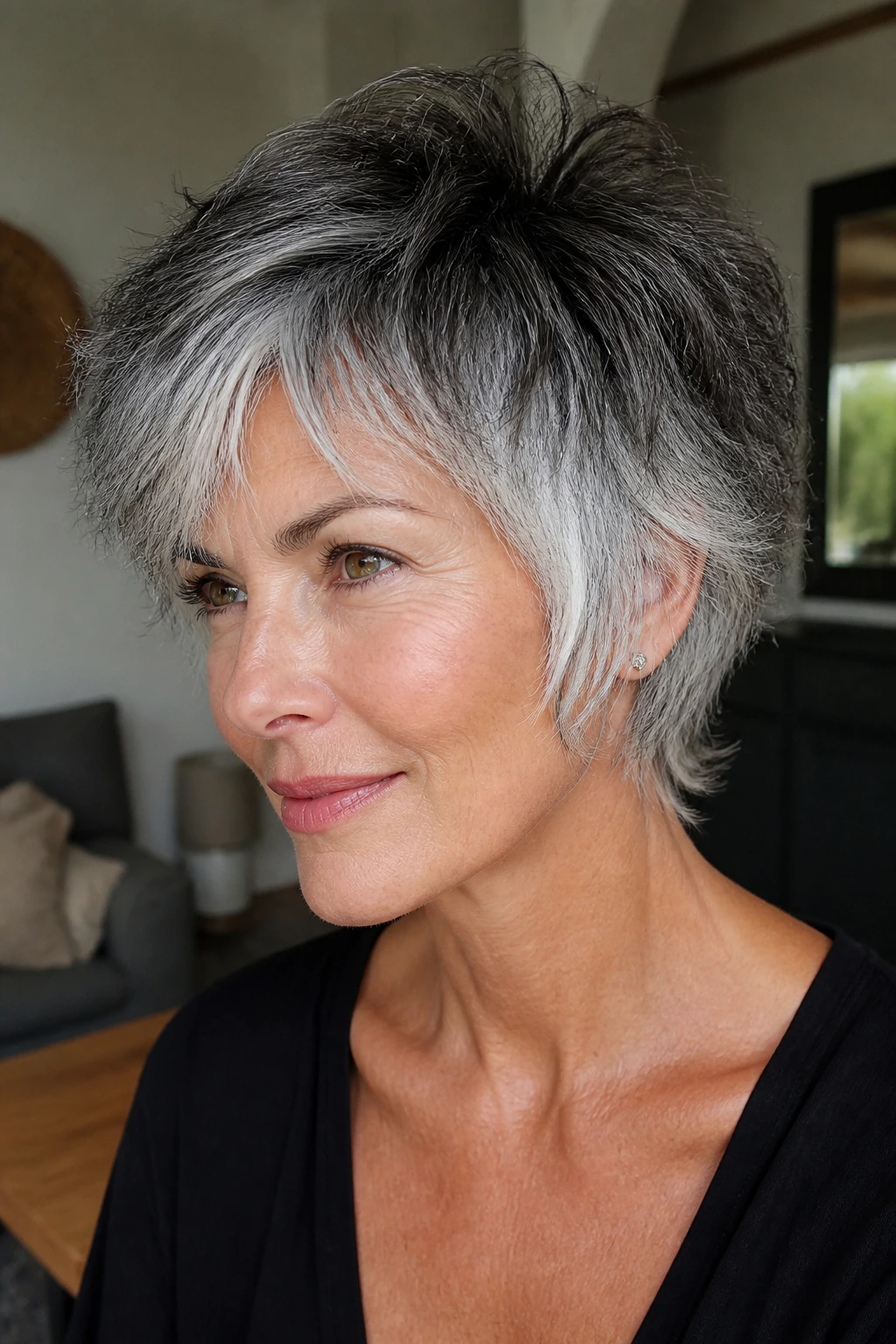
If you hate hair that sits still, the shaggy crop is your best friend. The layers break up the outline, the ends move, and the silver at the bottom or through the outer pieces gives the cut a little shimmer without making it formal.
This style works because it keeps the weight out of the bottom. Older hair can get puffy in all the wrong places or flat in all the wrong places; the shag splits the difference by building irregular movement through the top and sides. Silver ends make those layers obvious in a good way. They show the eye where the hair lifts and where it falls.
It is not precious.
That is the appeal.
A texture spray on dry hair can help, but you don’t need much. Shake the can well, spray from about 8 inches away, and lift the top with your fingers. The idea is separation, not crunch. If the ends start feeling dry, a tiny amount of cream just on the last inch will calm them down.
This cut is especially kind to thick hair, because it removes weight without making the head look wide. It also works when you want a little edge around the face but don’t want a severe line. Silver ends soften the shag’s roughness, which keeps it from drifting into “trying too hard” territory.
11. Close-Cropped Cut With Temple Highlights
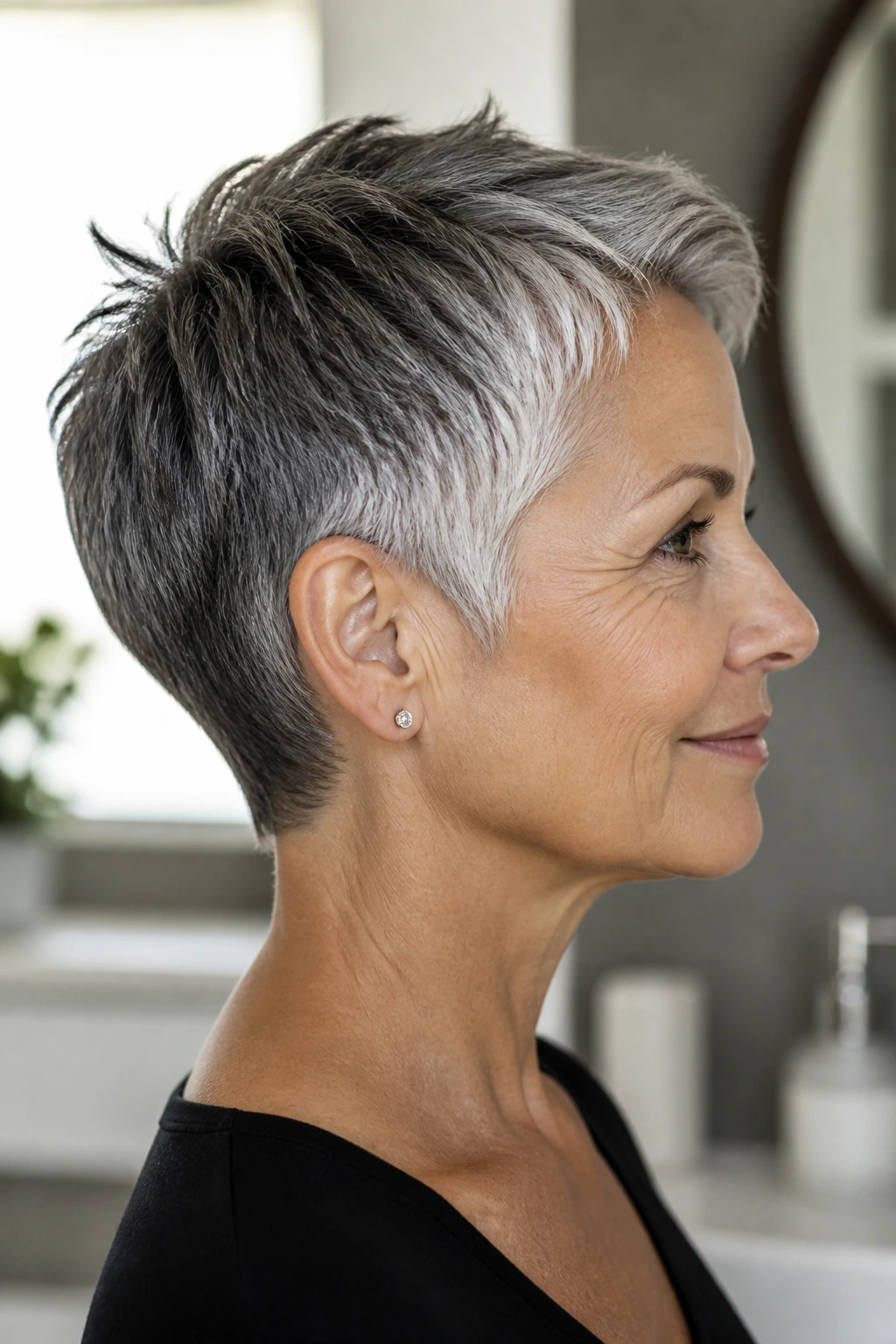
Can a very short cut still feel soft? Absolutely. The answer is temple highlights. They’re small, but they do a lot of work around the face, especially when the rest of the hair is clipped close and neat.
A close-cropped cut gives you clean edges, low maintenance, and a shape that follows the head beautifully. The trick is to avoid making the whole thing too one-note. Bright silver at the temples, around the ears, and just above the sideburn area breaks up the line and keeps the face from looking too severe.
What to Tell Your Colorist
- Keep the temple pieces fine and controlled so they soften the face rather than stripe it.
- Leave the crown a shade deeper if you want contrast without harshness.
- Blend the silver into the sideburn area so the grow-out stays graceful.
- Avoid thick blocks of light near the front hairline.
This is the shortest style in the group, and it can be the most freeing. There’s almost no heat styling involved, which is a relief if your hair has been through a lot. A little styling balm can smooth the edges after washing, but that’s about it.
The silver should look like a highlight, not a correction. That’s the difference between a cut that feels intentional and one that feels accidental.
12. Layered Pixie for Gray Blending
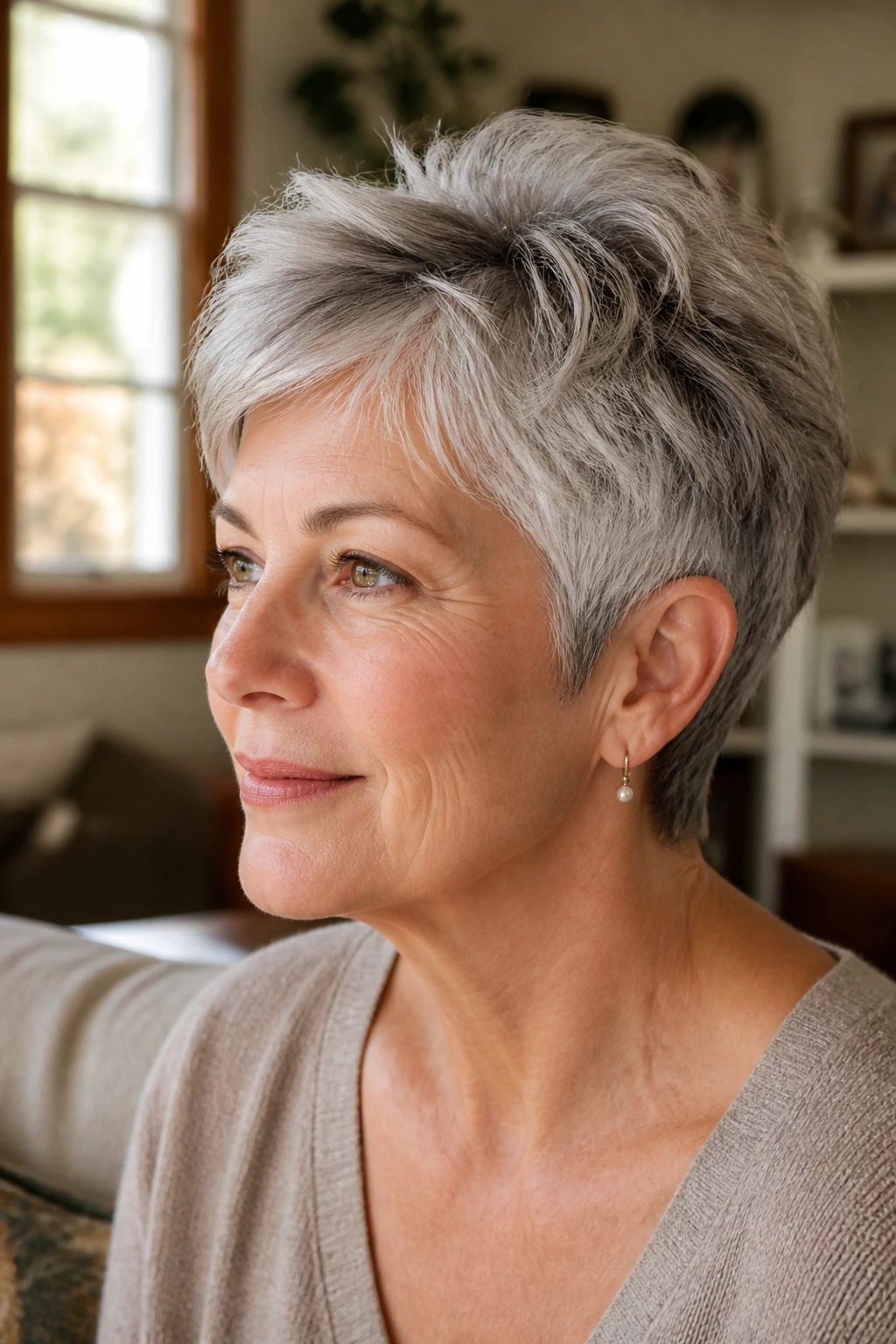
One good layered pixie can carry a lot of gray. That sounds simple, but it’s the reason this cut keeps showing up on women who want short hair that doesn’t fight the mirror.
The layers break up the line between natural gray roots and older color, which is the part most people dislike when they start mixing shades. Instead of a hard stripe at the part, you get movement through the top and soft brightness where the light naturally lands. The result feels settled. Not frozen. Not trying to be younger than it is.
This style works especially well when the hair has gone a little finer or dryer over time. The pixie keeps weight off the head, while the layering gives the top enough lift to stop the cut from looking too flat. Ask for silver that blends into your existing gray rather than sitting on top of it. That usually means fine highlights, a soft gloss, and a root area that stays close to your natural tone.
Salon Notes That Make a Difference
- Ask for baby lights, not chunky streaks, if you want a soft gray blend.
- Keep the lightest pieces around the hairline and crown so the face brightens first.
- Use a gloss between color sessions if the silver starts turning dull or yellow.
- Trim every 4 to 6 weeks so the layers keep their shape.
The nicest thing about this cut is that it does not argue with aging hair. It works with it. That’s a better deal than chasing a style that looks fine on day one and tired two weeks later.
If you want one short haircut that feels neat, current in the practical sense, and easy to live with, this is the one I’d point to first. It leaves room for your natural color, your texture, and the way your hair actually behaves when you’re not standing in a salon chair.
