



Red balayage on brown hair has a way of making people look twice. Not because it screams for attention, but because it gives brown hair more life without flattening the whole head into one red block. A chocolate base with a few cherry or copper ribbons can look glossy in low light and almost molten in sunlight. That swing between subtle and vivid is the whole point.
The trick is placement and tone. Put a bright copper too high on a dark brunette base and it can feel harsh. Slide the same shade through the ends, soften the root area, and suddenly the color looks like it belongs there. That’s why balayage matters so much here: the hand-painted sweep lets the red sit where it can move, catch light, and grow out without drawing a hard line at the scalp.
Red also behaves differently from other color families. It fades faster, especially on porous ends, so a strong look usually starts with a smarter plan rather than a louder formula. A deep cherry melt, a burgundy face frame, or a cinnamon sweep can each read very differently on brown hair, and the difference is not just shade. It’s depth. It’s saturation. It’s where the color lands.
Some of these looks are soft enough for everyday wear. Others lean vivid and dramatic. The range is wider than most people expect, and the right pick depends on how much contrast you want, how often you like to refresh your color, and how brave you feel about copper in daylight.
1. Cherry Cola Balayage for Brown Hair
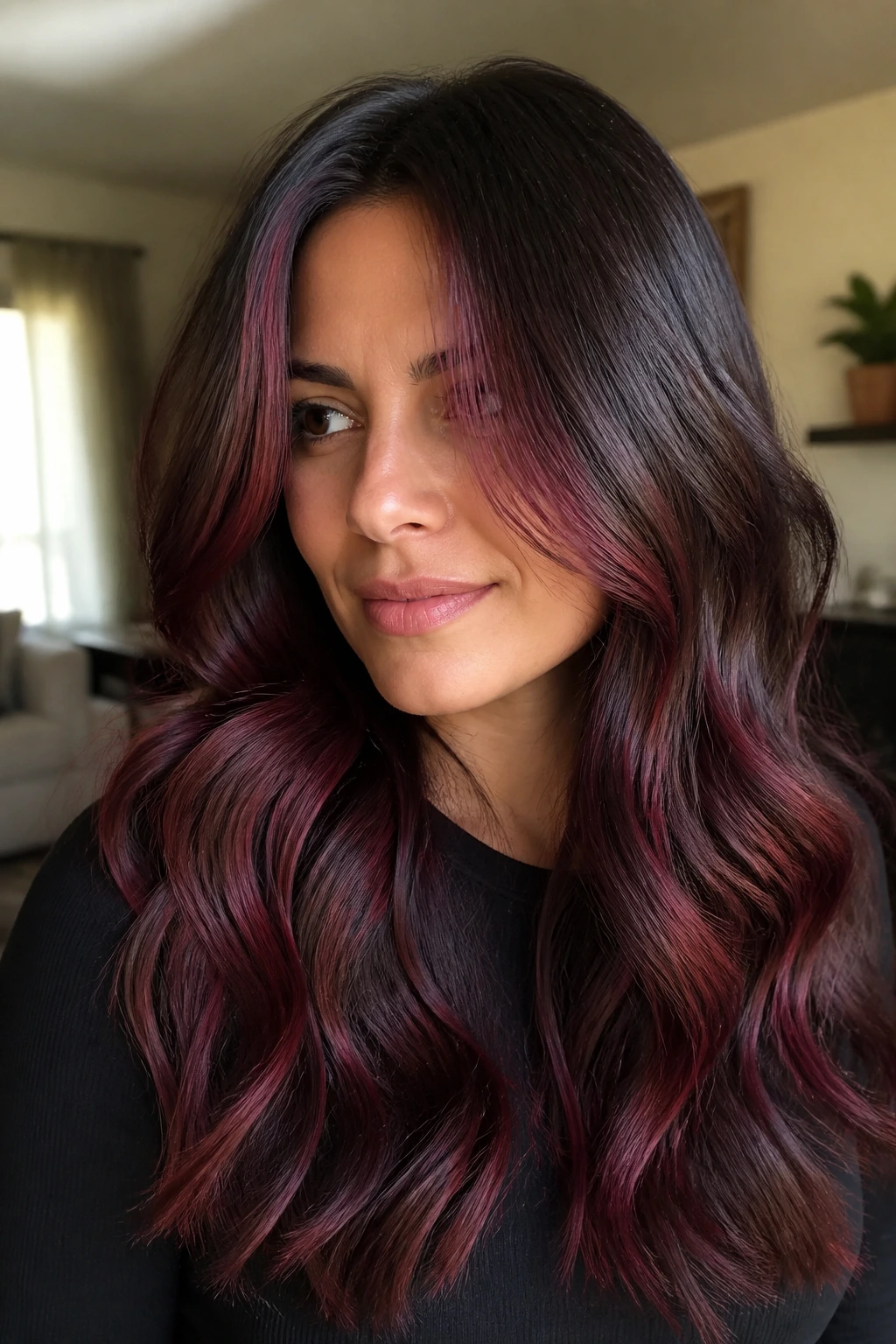
Cherry cola is the easiest red balayage to wear if you want depth first and red second. On brown hair, it sits in that sweet spot between brunette and berry, which keeps the whole look rich instead of loud. The effect is especially nice on layered cuts because the darker lowlights hold the shape while the cherry pieces catch the movement.
The best version does not start at the roots. It usually lives through the mid-lengths and ends, with a few soft ribbons around the face so the color has somewhere to breathe. On a dark chocolate base, it can look almost black indoors, then show off a wine-red sheen when the light hits the surface.
Why It Works on Brown Hair
Cherry tones have enough red pigment to feel fresh, but they still keep one foot in brunette territory. That matters. If the base is dark enough, the red doesn’t need to fight the brown hair; it can sit inside it.
- Best starting point: level 3 to 5 brown hair
- Most flattering placement: mid-lengths, ends, and a few face-framing ribbons
- Good request for your stylist: cherry or deep garnet, not a bright primary red
- Easy maintenance win: a clear gloss or red-depositing mask every 4 to 6 weeks keeps the tone glossy
My favorite tip: ask for a slightly deeper root shadow than you think you need. It makes the red look more expensive and less stripey.
2. Copper Ribbon Balayage
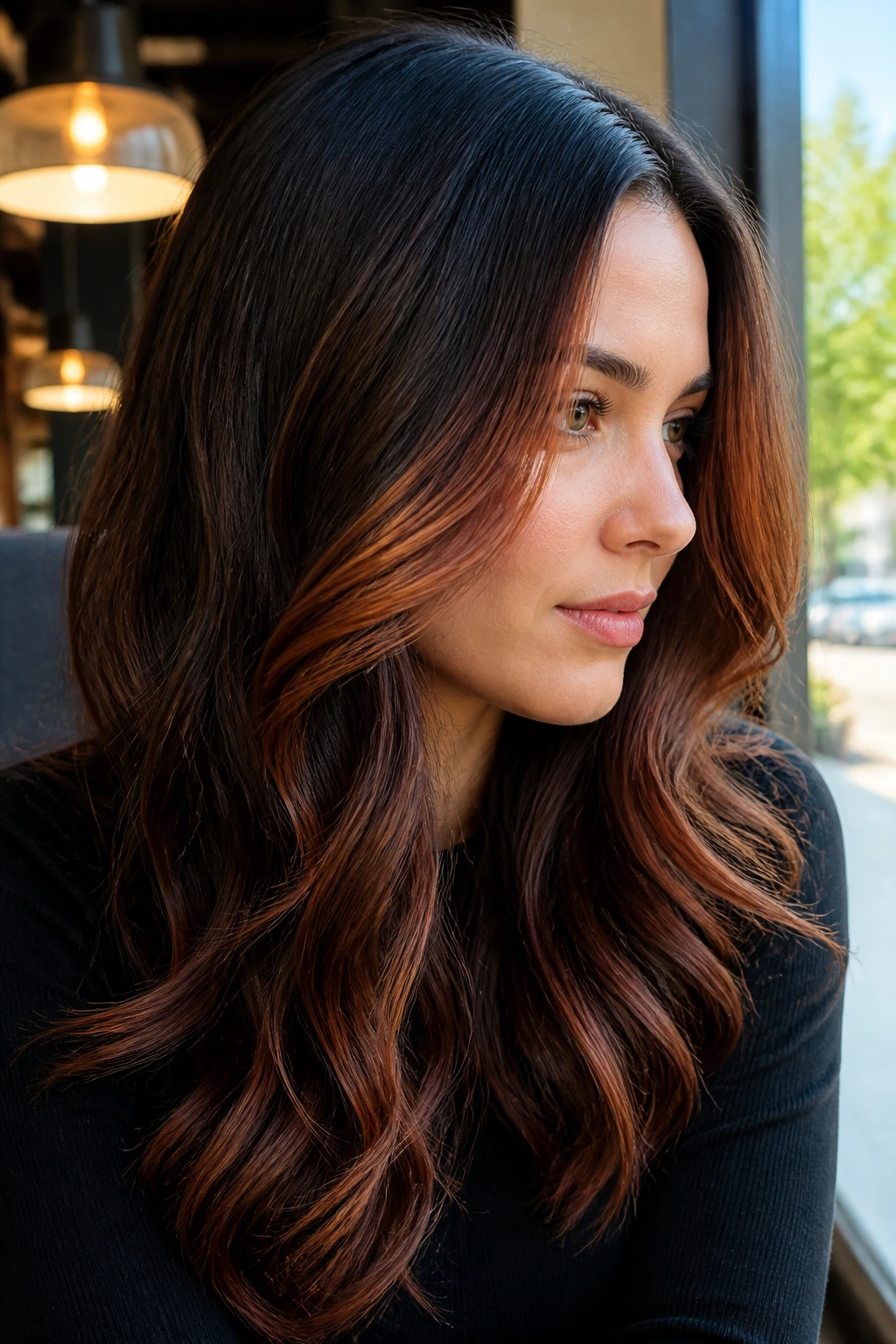
Copper ribbons are the quickest way to wake up flat brunette hair. They do not need a full head of lift to work, either. A medium brown base can carry copper beautifully because the warmth sits close to the natural depth, so the color looks intentional instead of pasted on.
What makes this version so useful is the thin, ribbon-like placement. You want long slices that bend with the haircut, not chunky panels that sit there and shout. Around the face, copper can brighten the skin; through the ends, it gives the hair that moving, almost flickering look people always ask about in salon chairs.
A good copper balayage also depends on the brown hair underneath. Warm brunette bases usually take copper in a softer, more golden direction. Cooler brown bases push it into a cleaner orange-red. Neither is wrong. They just read differently under daylight, and that’s worth thinking about before you pick a photo off your phone.
If you want a red balayage that still feels friendly, not fierce, this is the one I’d point to first.
3. Auburn Melt on Brown Hair
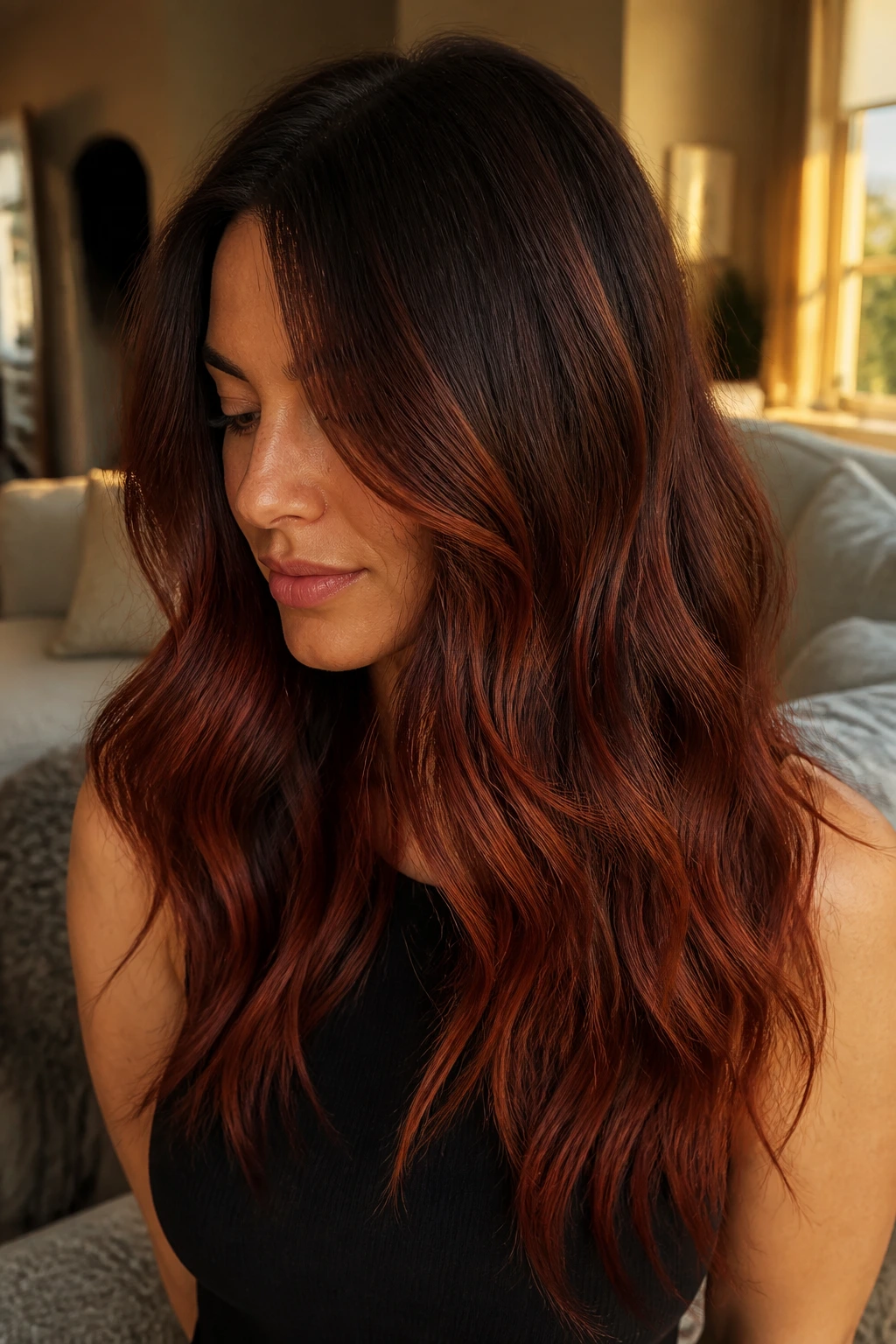
Want red balayage that still reads brunette from a few feet away?
Auburn is the shade that lets you keep your brown hair identity while sneaking in enough red to make people notice. It sits between chestnut, copper, and soft red-brown, which makes it easy to wear on workdays and weekends alike. The color change is gentle, but it is not boring. Not even close.
The melt effect matters here more than the exact formula. A good auburn balayage should feel like one color sliding into another, not a stack of separate shades. When the artist keeps the root area deeper and lets the auburn appear through the mids and ends, the result looks soft, layered, and a little smoky.
How to Wear It
- Ask for auburn through the mid-lengths and a deeper brown at the root.
- Keep the red pieces thin and diffused if your hair is straight.
- If your hair is wavy, let the red sit a little heavier on the ends so the movement shows.
- Finish with a shine spray, not a crunchy serum. Auburn looks best when it moves.
Auburn is one of those shades that looks quiet on purpose. That’s the charm.
4. Burgundy Face-Frame Balayage
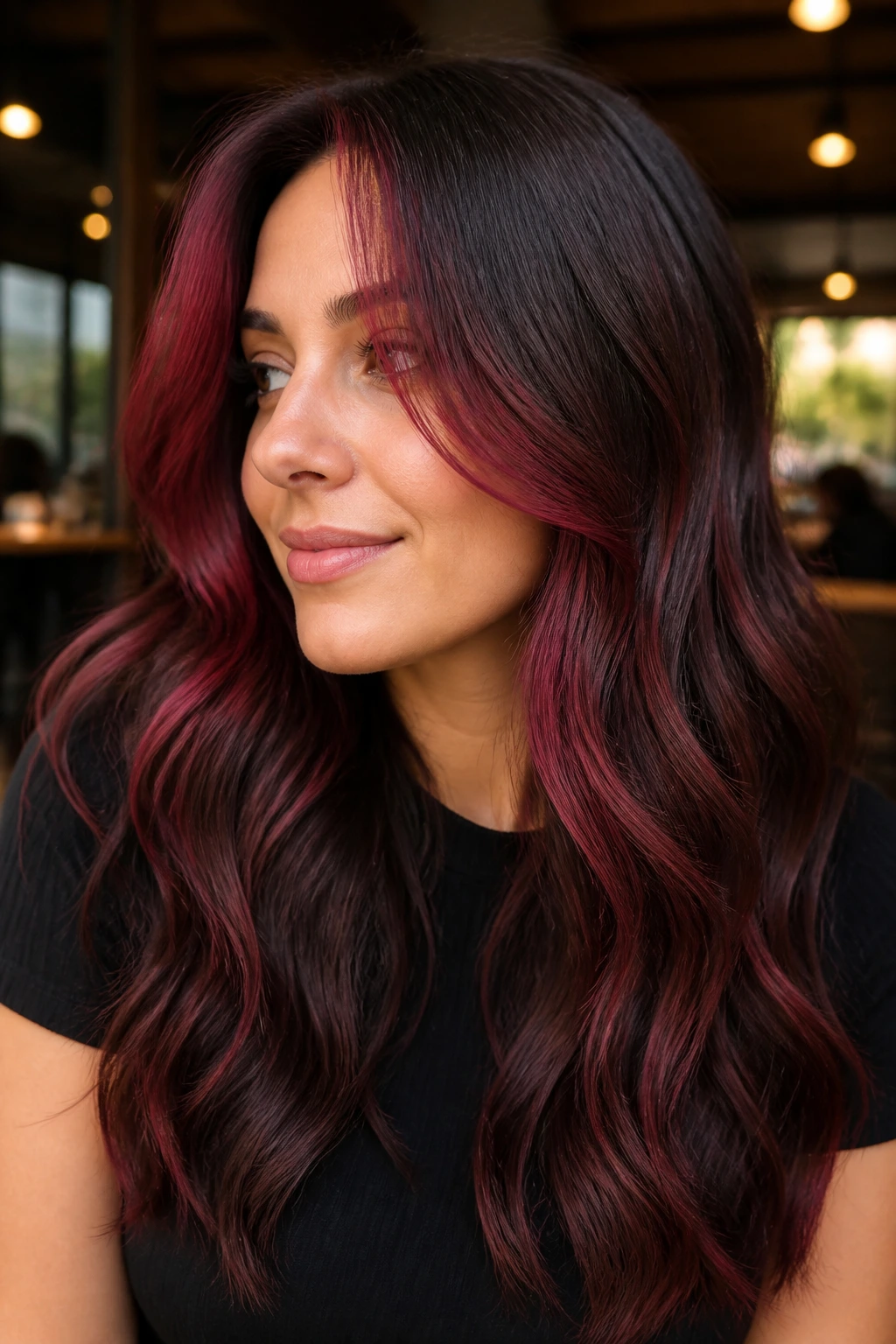
Picture dark brown hair with two burgundy panels around the face and softer red-brown through the rest. That’s the whole idea, and it works because the eye goes straight to the front without the rest of the hair competing for attention.
Burgundy around the face is a smart move if you want red balayage but do not want a full head of bright color. The front pieces can be a little bolder, while the lengths stay a shade deeper. That contrast makes the cut look sharper, especially on long layers or collarbone-length hair.
- Strongest placement: just in front of the cheekbones and down through the first few inches of hair
- Best base: dark brown or espresso
- Styling note: a side part softens the contrast; a middle part makes it bolder
- Maintenance note: keep the face frame glossy, because that’s where fading shows first
The nice part is that burgundy can move toward wine, plum, or red-black depending on how much lift the hair takes. So if you want drama without turning the whole head into a statement, this is a clean way to do it.
5. Cinnamon Red Balayage
Cinnamon is the one I recommend when someone says they want red, but not that red.
On brown hair, it lands between copper and auburn, with a soft spice to it that feels warm instead of loud. The color works especially well on medium brown bases because there’s enough contrast to see the red, but not so much that the hair starts looking striped. A few hand-painted cinnamon pieces can change the whole mood of the haircut.
It also plays nicely with waves. The bends in the hair catch the warmer red pieces, so the color looks deeper in the folds and brighter on the surface. That shifting effect is where balayage earns its keep. A flat color can’t do that. Hair with movement can.
I like cinnamon most on mid-length cuts with layers. The layers break up the red and keep it from sitting as one heavy sheet. On very long, one-length hair, the shade can still work, but it needs careful placement through the bottom third so the ends do not feel dense.
A clear gloss helps here too. Cinnamon can go dull if the finish gets too matte, and once that happens it loses the soft shine that makes it good in the first place.
6. Mahogany Balayage for Dark Brown Hair
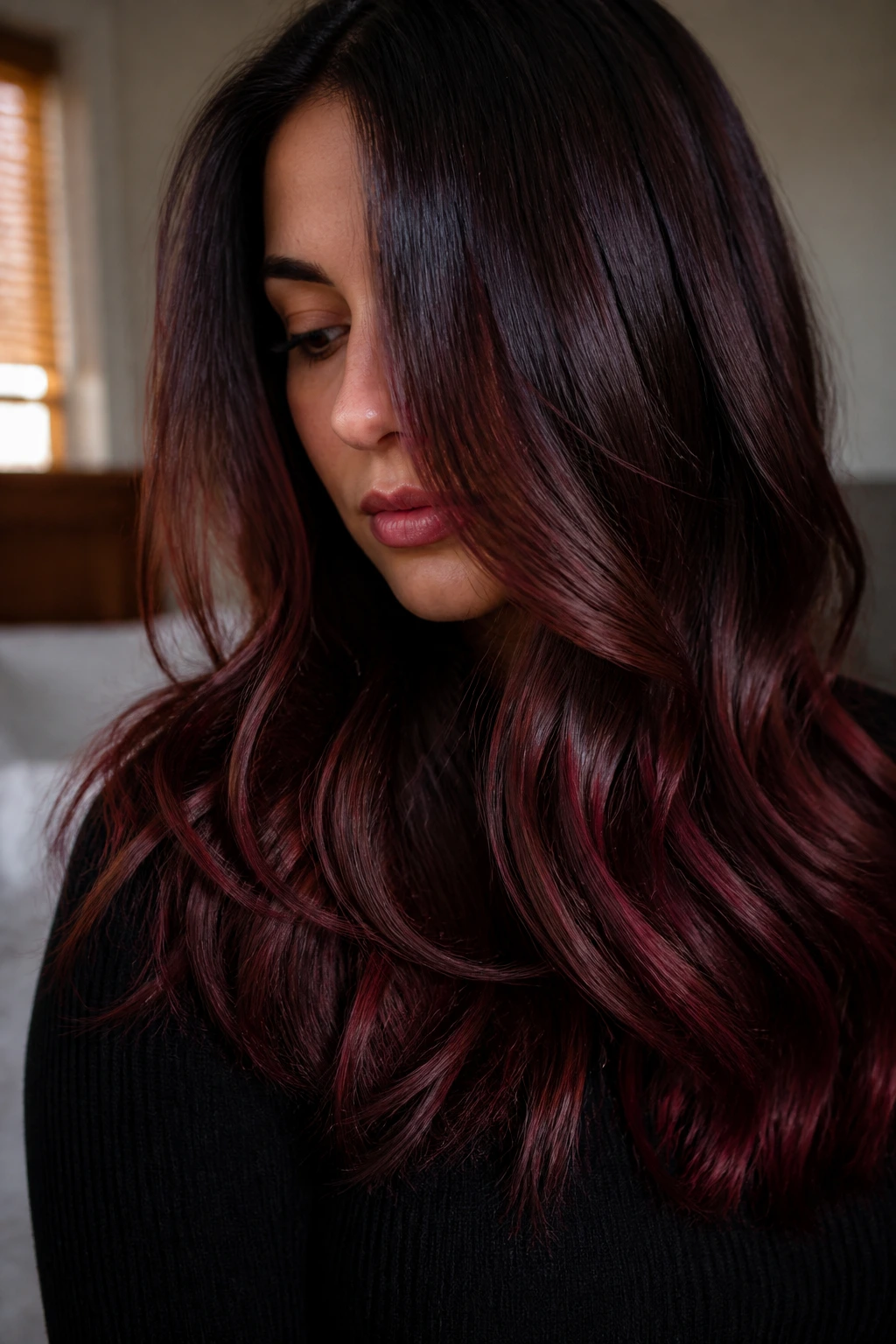
Mahogany is for people who want red balayage without leaving brunette territory. It stays close to dark brown hair, which means the color reads polished rather than flashy. That closeness is the point. You notice the movement before you notice the red.
Unlike copper, mahogany does not depend on brightness. It gets its job done through depth. The shade often looks like a rich brown indoors, then shows a red cast at the ends or through the outer layers when light hits it. If your wardrobe leans black, cream, gray, or denim, mahogany is easy to live with.
It also grows out neatly. Because the red is deeper and less exposed, the line between new growth and colored hair stays soft for longer. That makes mahogany a good pick if you do not want to babysit your color every few weeks.
If I were sending someone into the chair with dark brown hair and a cautious streak, I’d point them here first. It is one of the few red balayage looks that can feel understated and still have personality.
7. Ruby Peekaboo Balayage
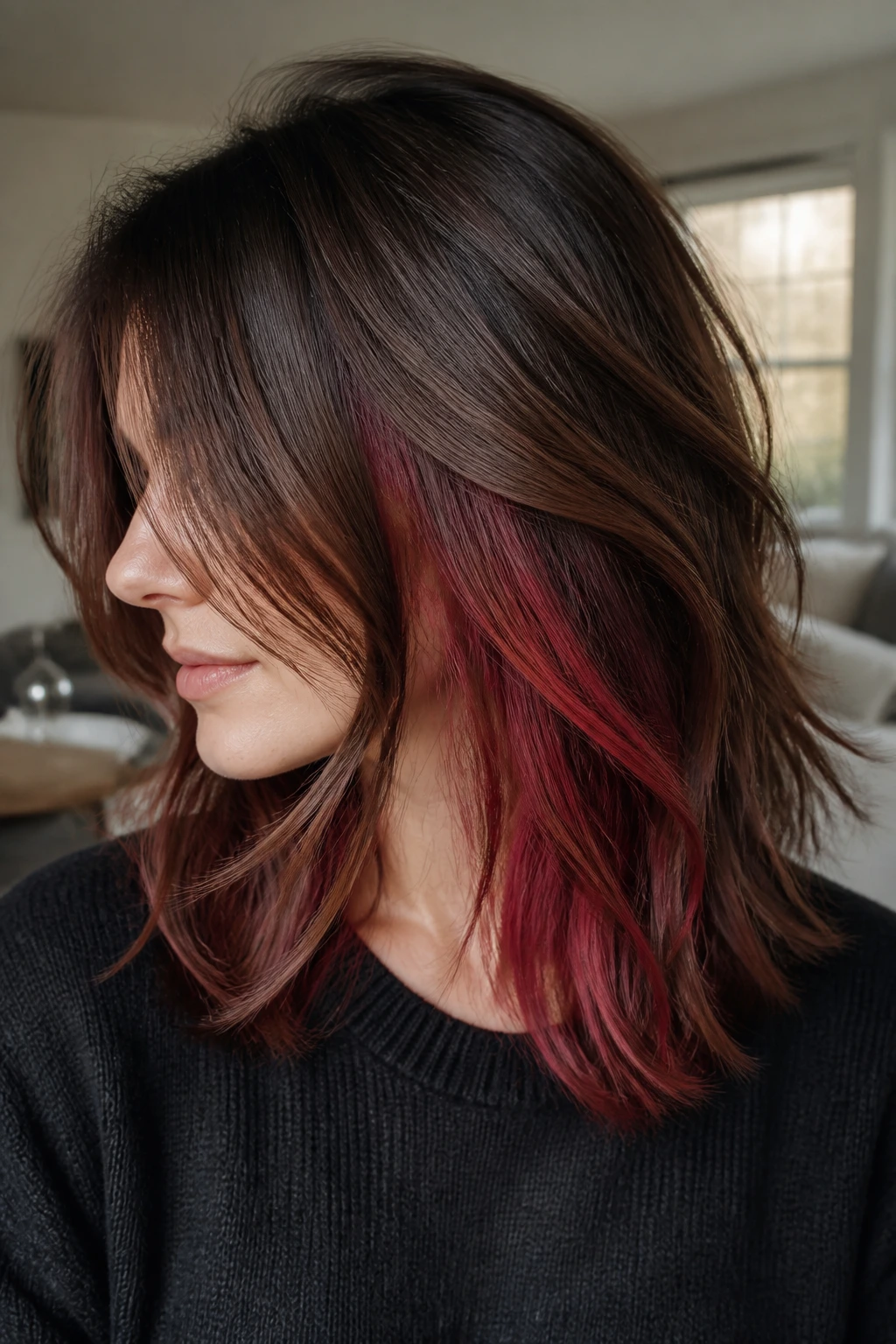
Ruby peekaboo color is for the person who likes a surprise.
The top layer stays mostly brown, which keeps the look calm from the front. Underneath, though, the ruby pieces show when the hair swings, is pinned half-up, or is tucked behind the ears. That hidden placement makes the red feel a little more private, and honestly, that’s part of the fun.
What Makes It Sneaky
Peekaboo placement works because the hair moves in layers. The top section shields the color most of the time, then the red flashes at the exact moments you want it to. It feels less like an all-day commitment and more like a color accent with a hidden agenda.
- Best for: layered cuts, bobs, and shoulder-length hair
- Best placement: underneath the crown and through the lower panels
- Best red tone: ruby, garnet, or deep cherry
- Easy styling trick: change your part or wear a claw clip to show more of the red
This is one of those looks that gets more interesting the longer you wear it. A blunt bob will show it in a clean stripe. A wavy lob will make the red move and disappear, then come back again. That little bit of surprise is the whole appeal.
8. Rosewood Balayage
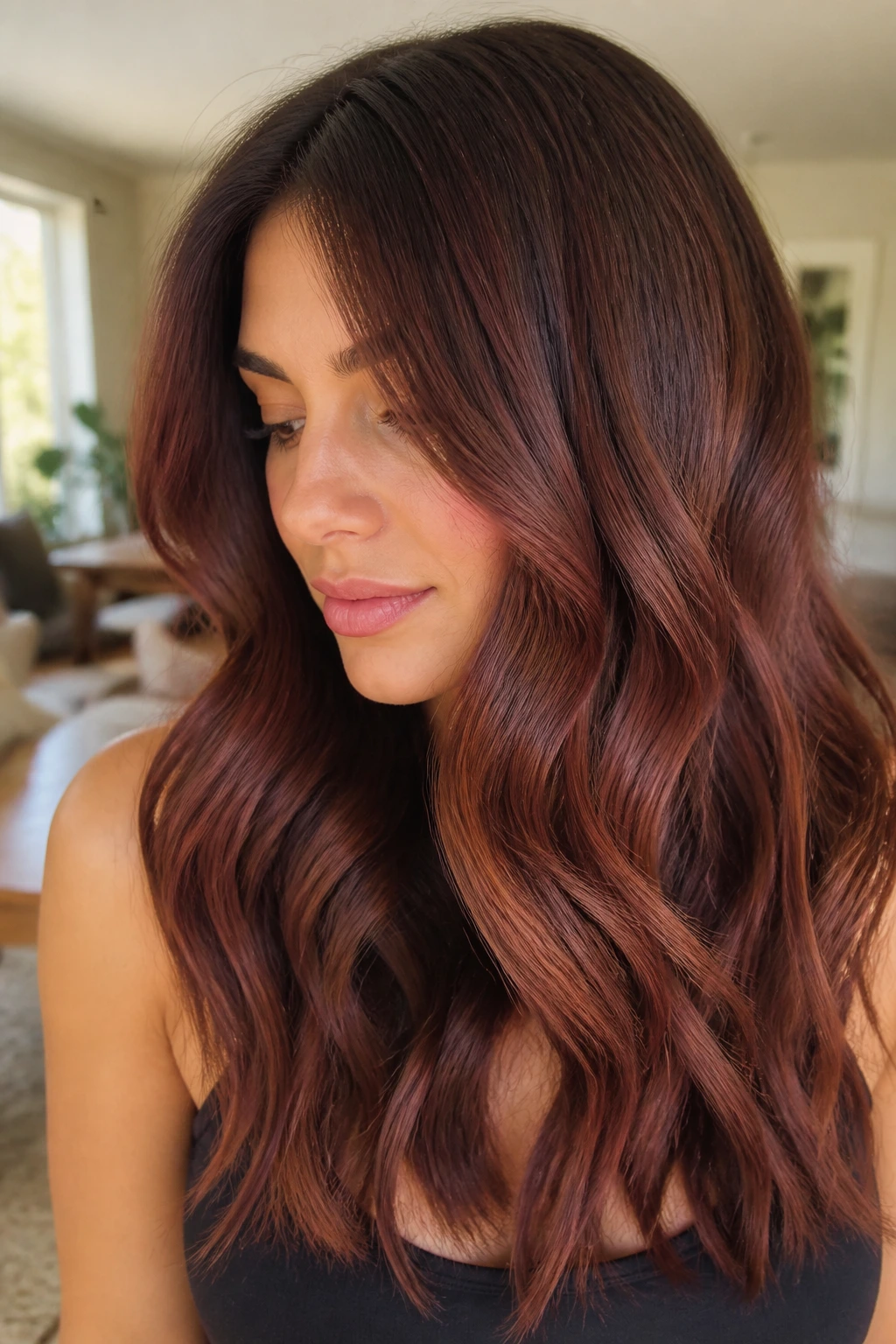
Rosewood is the quieter cousin of cherry red. It has a dusty, slightly muted finish that keeps red balayage from becoming too sharp on brown hair. If you like warmth but do not want a fiery result, this is a very good middle ground.
The shade works especially well when the base is a soft medium brown. Too dark, and the rosewood can disappear. Too light, and it starts to read pinker than you may want. On the right brunette base, though, it looks like the hair has been warmed from the inside.
What I like about rosewood is the finish. It does not need to be shiny in a heavy, slick way. A light gloss is enough. The color already has enough softness built in, so it looks better when the texture stays natural and touchable.
This is also one of the easiest red balayage looks to pair with minimal makeup. You do not need a red lip every time you wear it. Let the hair do the talking and keep the rest easy.
9. Scarlet Money Piece Balayage for Brown Hair
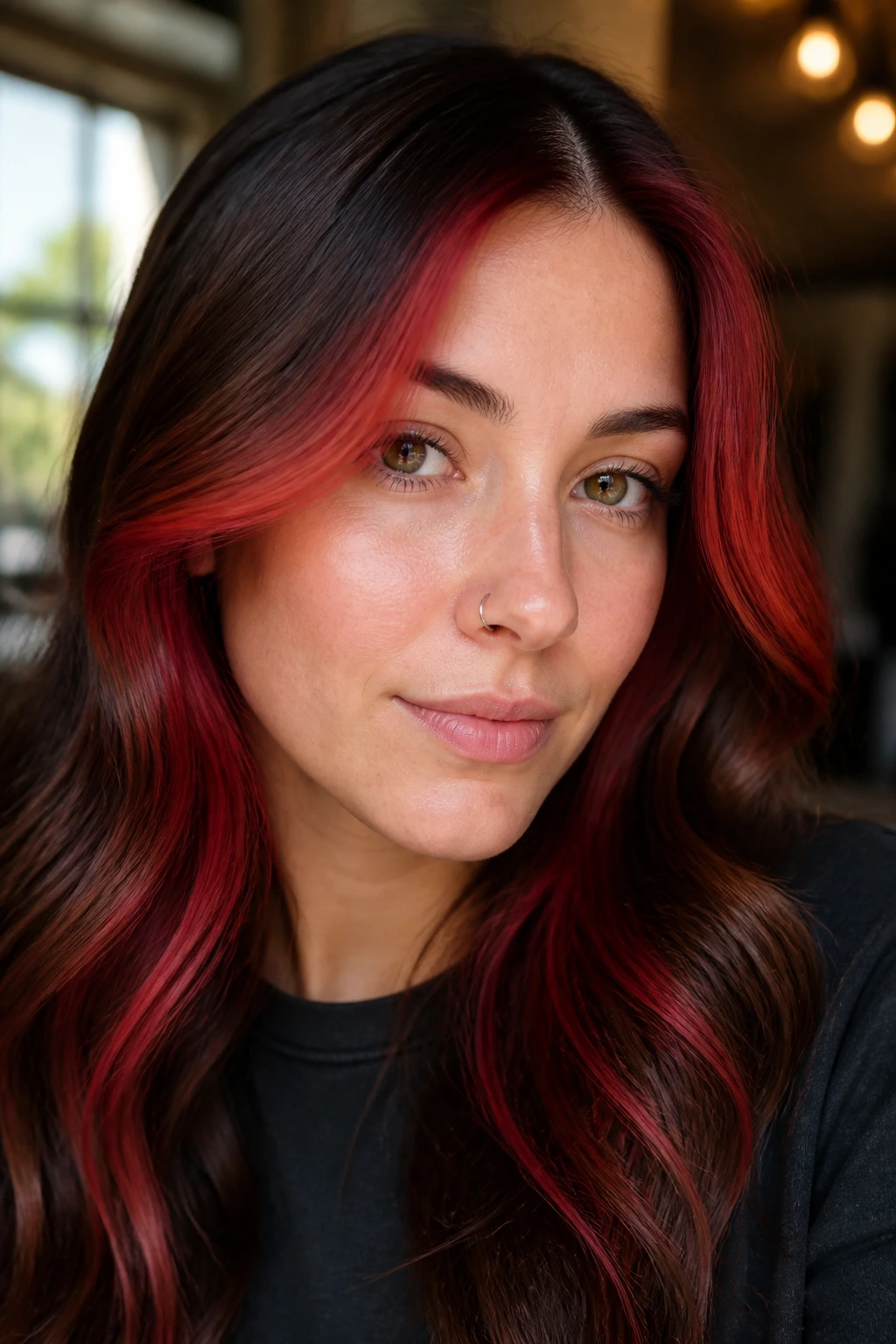
Do you want the face to light up first?
Scarlet money pieces do exactly that. The rest of the hair can stay brown and soft, while the front slices carry a brighter red that frames the face hard enough to notice. It is a bold look, but because the color is concentrated at the front, it does not feel as busy as a full head of scarlet.
The balance matters a lot here. If the front is bright and the rest of the hair is also very light, the look can lose its shape. Keep the mids and ends softer, and the scarlet pieces will stand out the way they should. On long hair, that contrast looks dramatic. On a bob or lob, it looks sharper and more graphic.
How to Keep It Balanced
- Keep the scarlet pieces thin near the part and a little wider lower down.
- Leave the lengths in a softer cherry or auburn so the front does the work.
- A center part makes the money piece bolder; a side part breaks it up.
- Use a color-safe shampoo and cool rinse water to slow fade on those front strands.
I like this look on people who wear their hair down often and want a clear frame around the face. It has attitude. No apologies.
10. Merlot Balayage
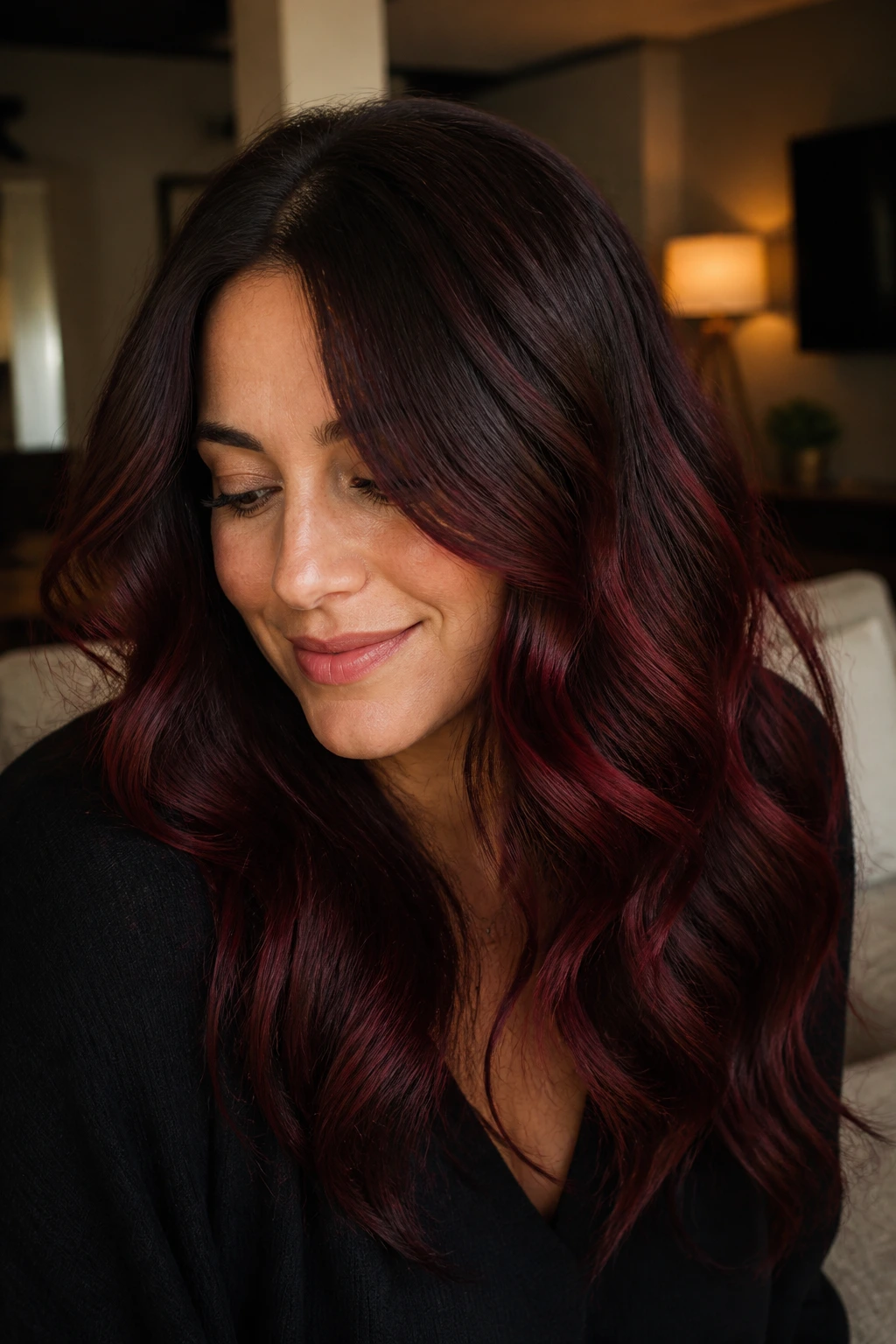
A merlot balayage can look like one thing in a dim room and something else in daylight, which is exactly why people love it.
On brown hair, merlot gives you that deep wine-red character without pushing the color into bright cherry territory. The darker base carries the shade well, and the hand-painted placement keeps the color from looking heavy. It tends to work best through the outer layers and the lower lengths, where the red can shift as the hair moves.
Think of it as the color version of a deep velvet dress. It feels rich, a little moody, and much more layered than a flat red dye job. If you have thick hair, merlot can also help the shape look lighter because the color creates visual separation between sections.
- Best on: dark brown or chocolate brown hair
- Best finish: soft waves or brushed-out curls
- Good color request: wine red, deep burgundy, or merlot gloss
- Avoid: harsh, chunky stripes at the root
The nicest part is how forgiving it is. When merlot fades, it often shifts toward a softer red-brown instead of going pale. That makes the grow-out easier than people expect.
11. Copper Penny Balayage
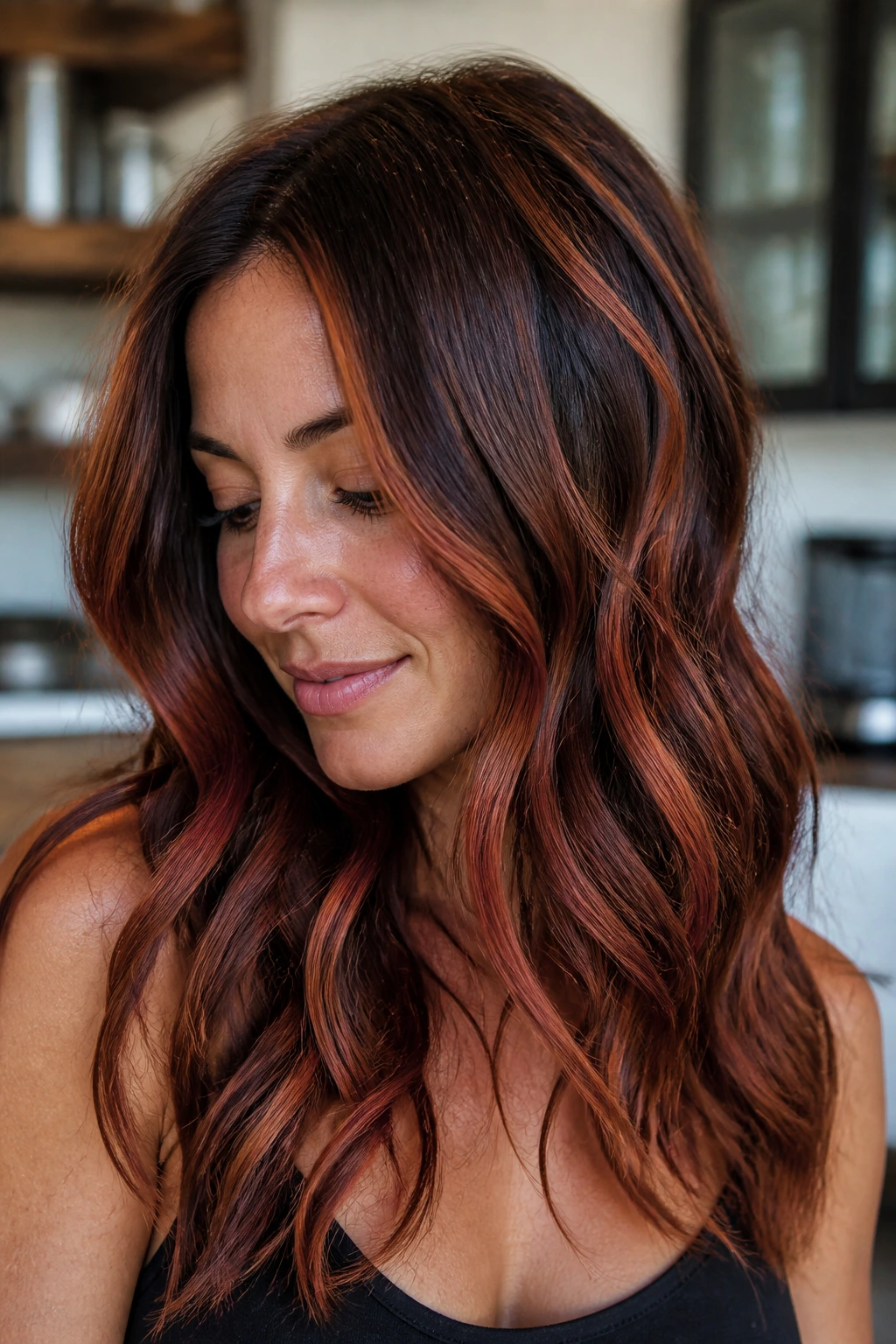
Copper penny is bright, shiny, and a little bit cheeky. It sits right on the edge of red-orange, which makes it feel energetic without needing to be neon. On medium brown hair, it has a crisp look that can lift the whole haircut in one go.
This shade works best when the copper is spread in controlled ribbons rather than painted everywhere. Too much of it, and the hair starts looking like one solid metal sheet. A better version keeps the brown hair visible between the red pieces so the color has room to breathe. I prefer that arrangement on hair with layers or a soft wave, because the movement gives the copper a place to flash.
The root area matters more than people think. Leave some depth near the scalp, and the copper reads like a deliberate accent. Lighten everything equally, and you risk losing the richness that makes brown hair and red balayage work so well together.
One more thing. Copper penny needs shine. If the finish gets dry, the whole look loses its edge. A light oil on the ends and a gloss service every few weeks keep it crisp.
12. Rusted Copper Balayage
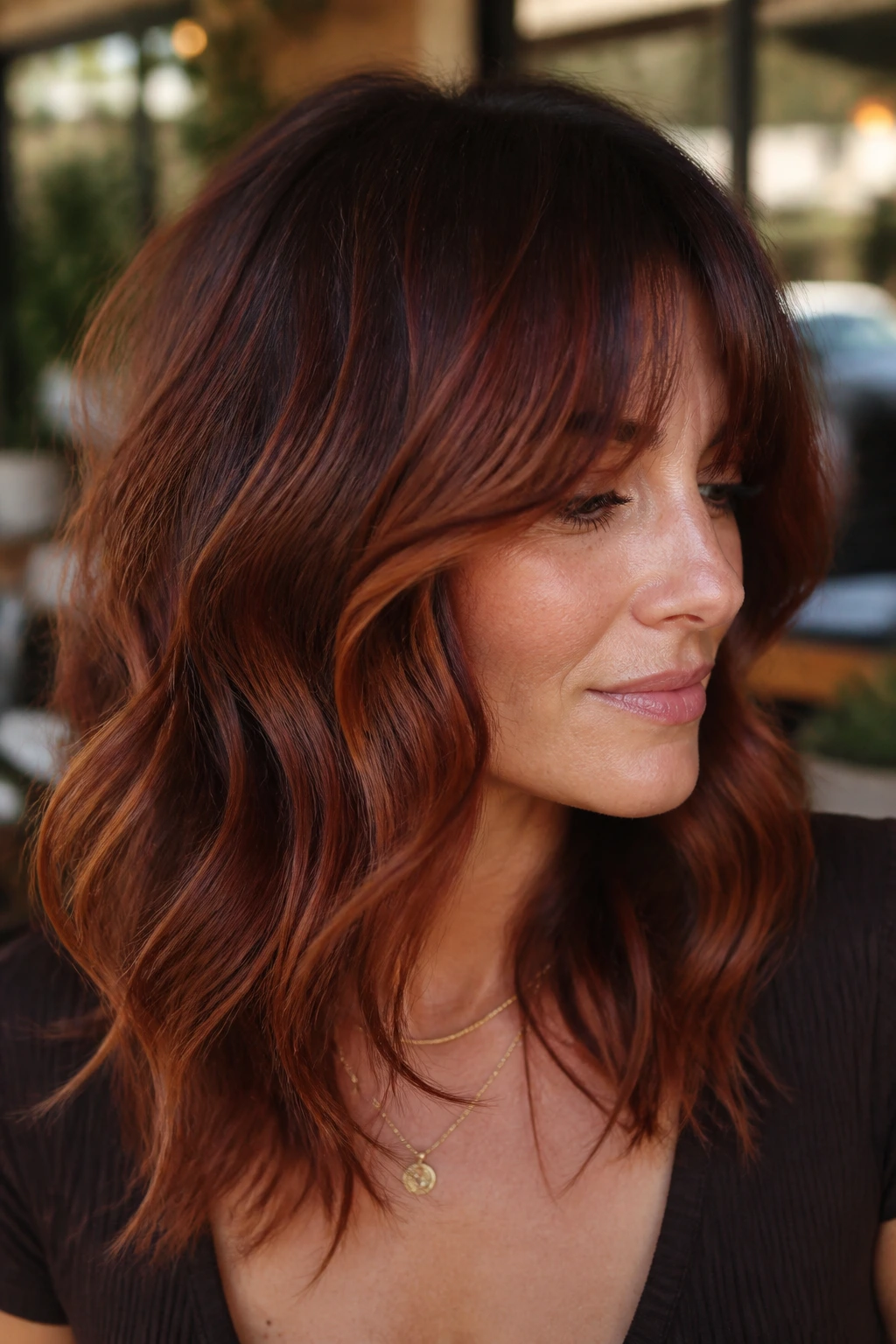
Rusted copper is not as bright as copper penny, and that is why it works. It leans earthy, a little smoky, and more lived-in than polished. On brown hair, that gives the color a natural look that still feels warm and dimensional.
Unlike brighter copper, rusted copper often benefits from deeper lowlights mixed through the mids. Those darker pieces stop the red from floating on top of the hair like a sticker. They also help the color stay believable on darker brunettes, where too much lightness can look out of place.
This shade is a good fit if you like texture. It looks especially nice on wavy hair, shaggy cuts, and layered lengths because the red settles into the bends instead of shouting from a flat surface. The result is softer than classic copper, but it still has enough life to keep things interesting.
If someone asked me for a red balayage that feels warm in a quiet way, I’d send them straight here.
13. Cranberry Balayage for Brunettes
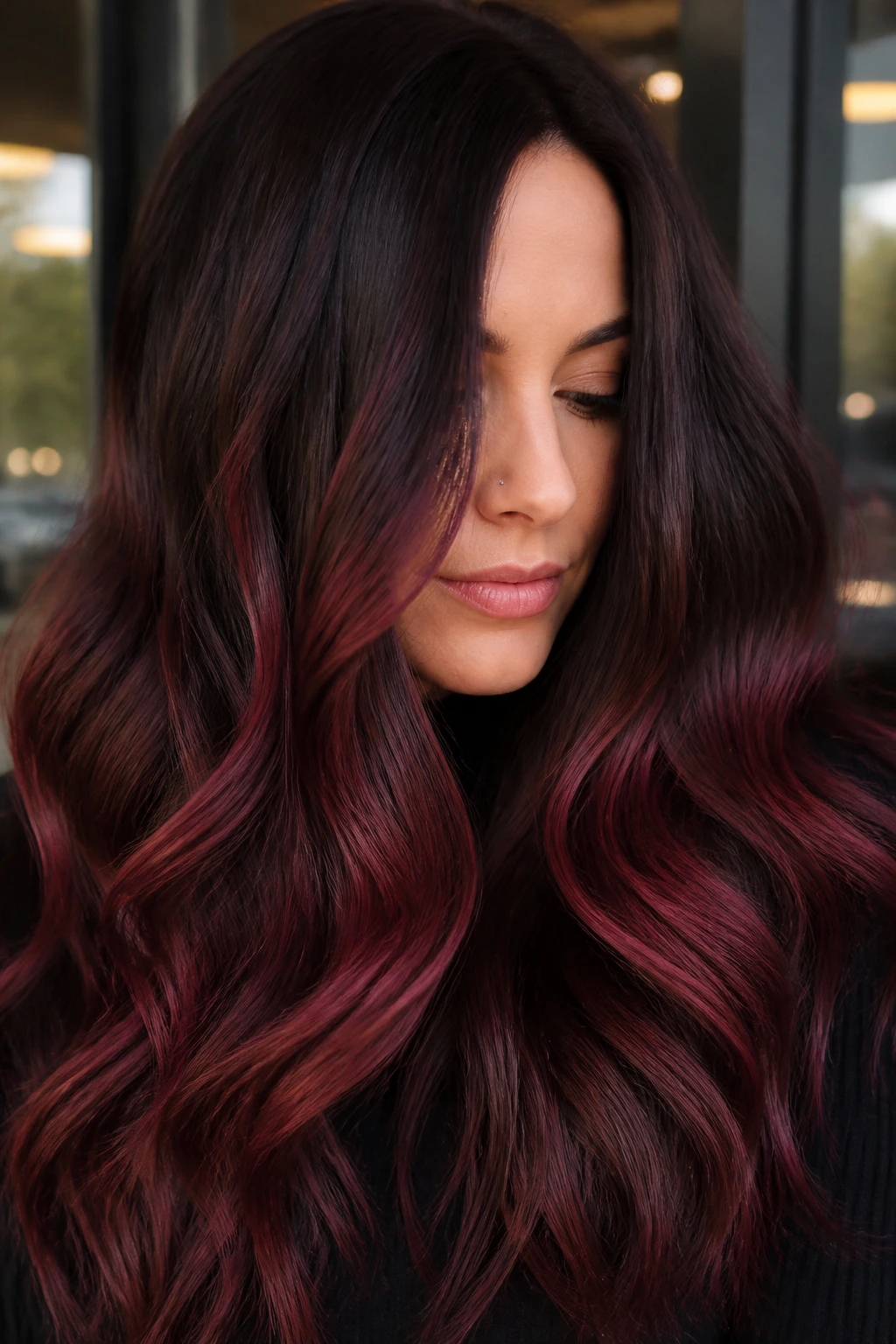
Cranberry has a sharper berry edge than cherry, and it loves dark brown hair for that reason.
On a brunette base, cranberry can look almost jewel-like. The red stays rich, the brown keeps it grounded, and the whole thing reads polished rather than cartoon-bright. That makes it a smart choice if you want something visible but still elegant enough for everyday wear.
Why It Loves Dark Bases
The darker the base, the more cranberry feels like it belongs. Brown hair gives the red a place to rest, so the color can show in the shine instead of needing to be bright all the way through.
- Best placement: lower mids, ends, and a few hidden ribbons underneath
- Best haircut match: long layers, soft shags, and oval bobs
- Color request: cranberry, red berry, or deep red-violet
- Styling note: loose curls make the color look richer because they separate the red pieces
A cranberry balayage also gives you a nice range. In low light, it can look nearly brunette. In bright light, it turns more berry. That flexibility is a big part of its charm.
14. Firelight Balayage
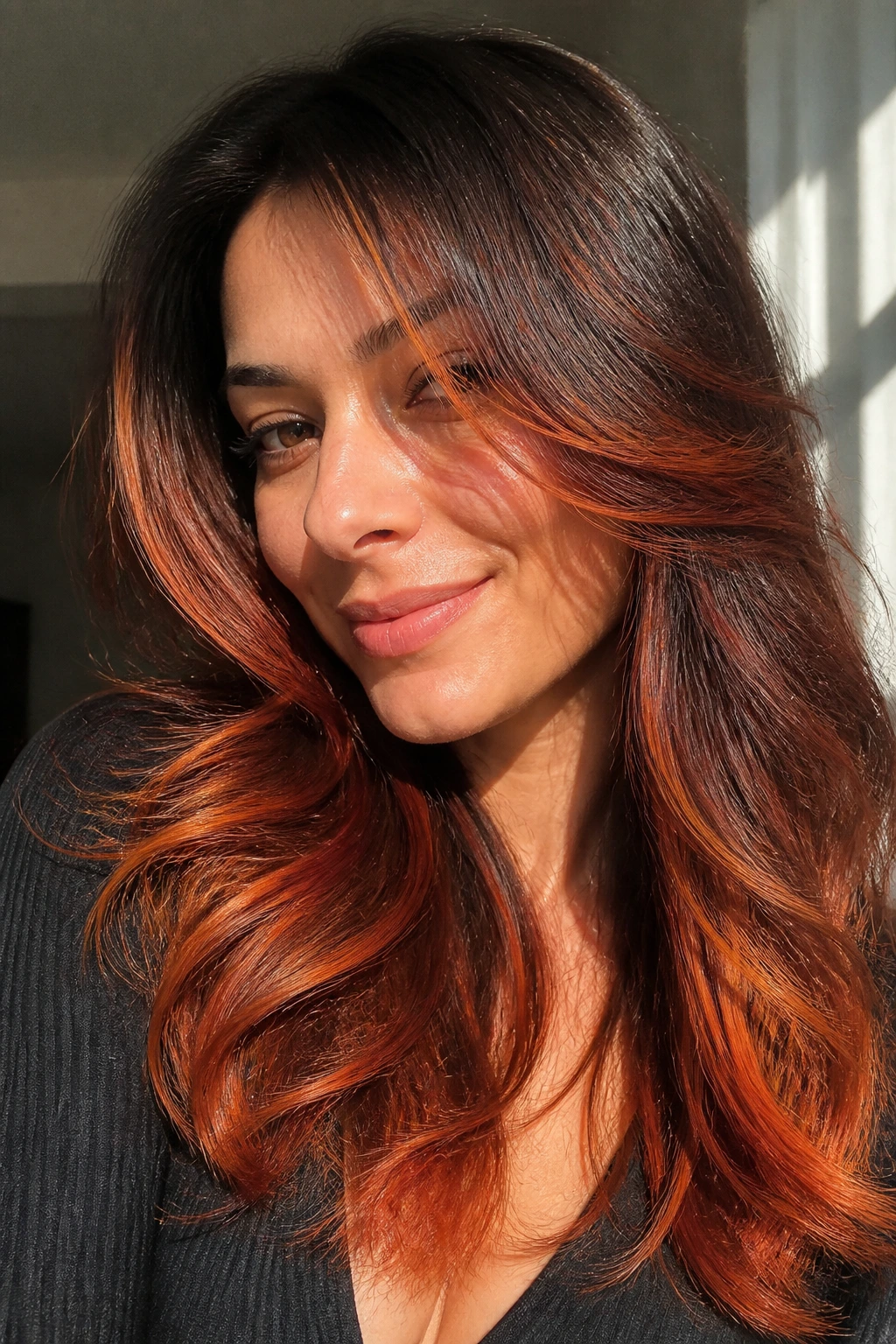
Firelight balayage is the loudest look on this list. It has that orange-red, glowing-from-within energy that turns brown hair into a proper statement. If you want the red to be impossible to miss, this is where you go.
The color works best when the placement follows the shape of the haircut. On layered hair, the bright pieces can sit through the ends and around the face, which keeps the look moving instead of turning into one solid block. On straighter cuts, it needs careful feathering so the red breaks up cleanly.
This is not a shade I’d recommend if you want a subtle first try. It asks for confidence and a bit of upkeep. The brightness can fade faster than deeper red-browns, so it usually needs a gloss or tone refresh to stay vivid. But when it’s fresh, it has a heat to it that no muted red can match.
If you want your hair to feel like it has a little spark in it, firelight gets there fast.
15. Rose Gold Red Balayage
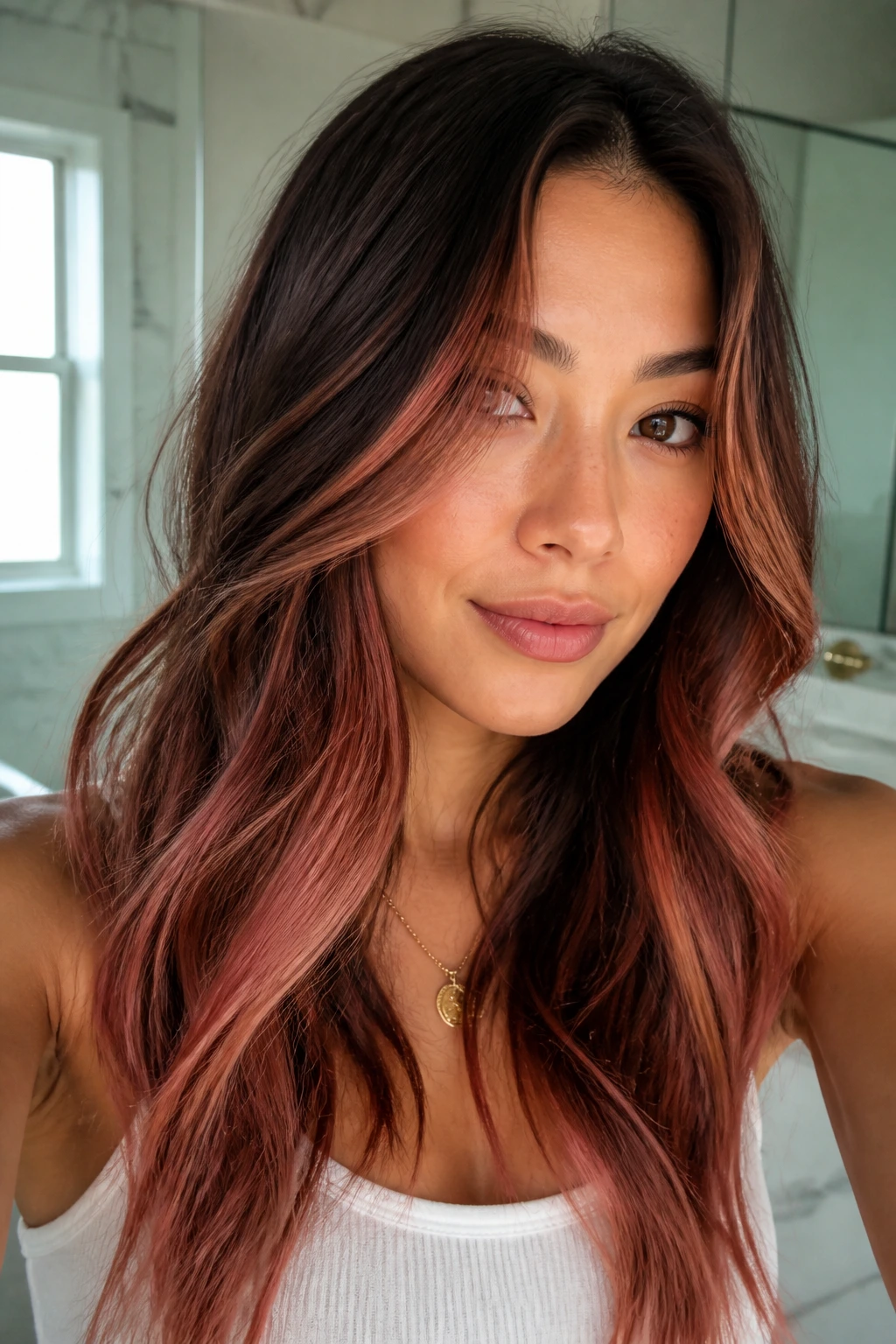
Want red balayage that feels softer than copper but fresher than auburn?
Rose gold red sits in that narrow lane. It brings a blushy warmth to brown hair, which makes the color feel airy and modern without pushing into pastel territory. The trick is getting enough lift for the rose tone to show, but not so much that the brunette base disappears.
On lighter brown hair, rose gold can be stunning because the warmth blends right into the base. On deeper brown hair, it needs more careful placement, usually through the ends and front layers where the light can reach it. The look can be delicate or more obvious depending on how much red pigment is used.
How to Wear It
- Keep the rose gold concentrated in soft ribbons, not solid panels.
- Pair it with a loose wave so the blush tone moves.
- Ask for a soft root shadow if you want the grow-out to stay gentle.
- Finish with a color-safe conditioner; rose tones get dull when the hair dries out.
Rose gold red is a nice pick if you want color that feels a little polished, a little playful, and not too severe.
16. Garnet Balayage
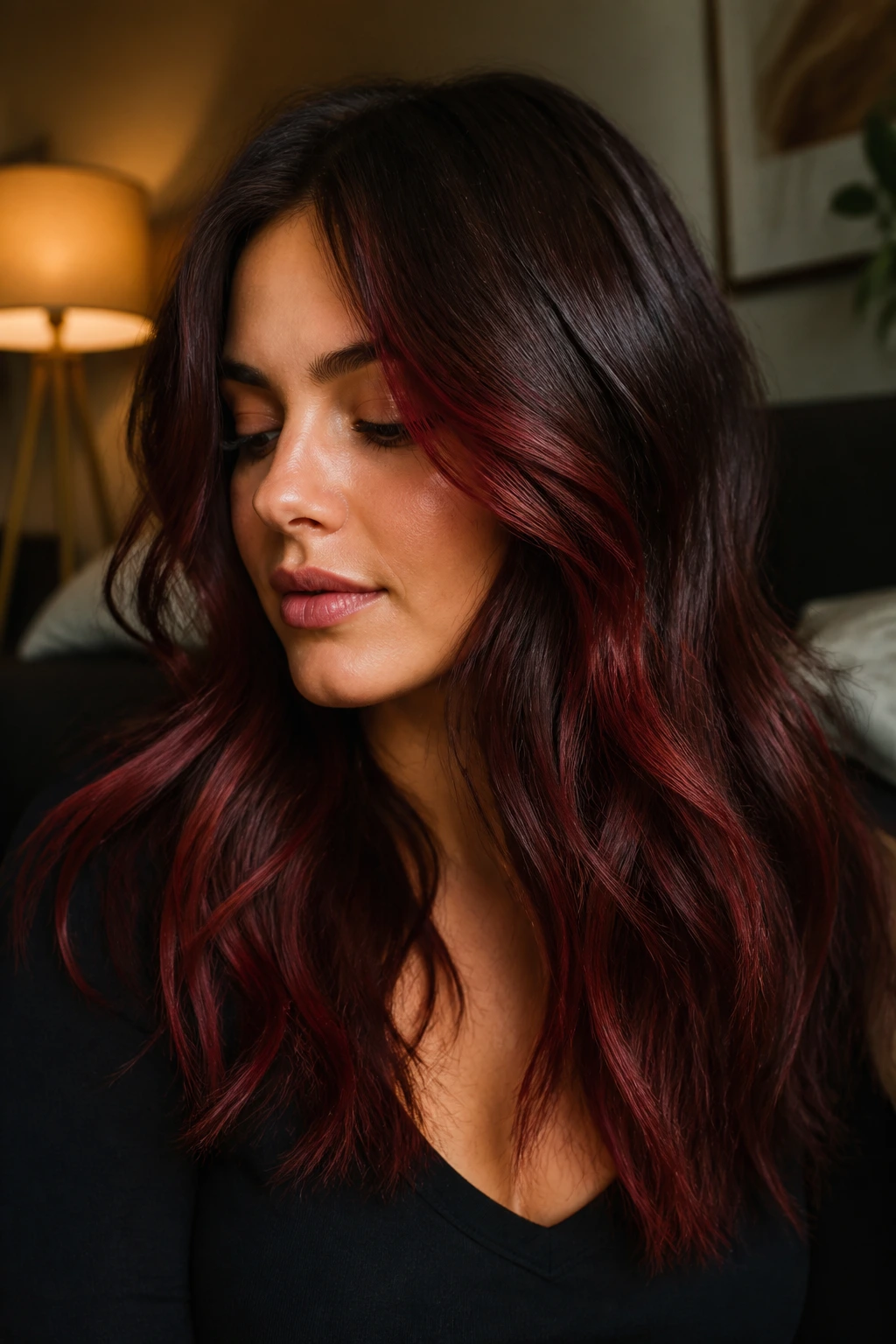
A garnet balayage has the drama of a jewel tone without needing a bright red base.
Picture deep brown hair with dark red pieces that almost look black until the light hits them. That’s garnet. It gives the hair a dense, plush feeling, which is especially good if your natural brown is already rich and you do not want to bleach it to death. The red shows up through movement, not through loud contrast.
What to Watch For
The color looks best when it is layered into the hair, not stacked on top. A few deeper panels underneath can make the surface color look richer. A lot of people miss that part and end up with red ends that feel disconnected from the rest of the hair.
- Best for: dark brunettes who like deep, moody color
- Best styling match: glossy blowouts and soft waves
- Best request: garnet, deep ruby, or dark red-violet
- Best upkeep: shine masks and low-heat styling help the tone stay plush
Garnet is one of my favorites because it never looks thin. Even when the red is subtle, the finish has weight.
17. Spiced Brick Balayage
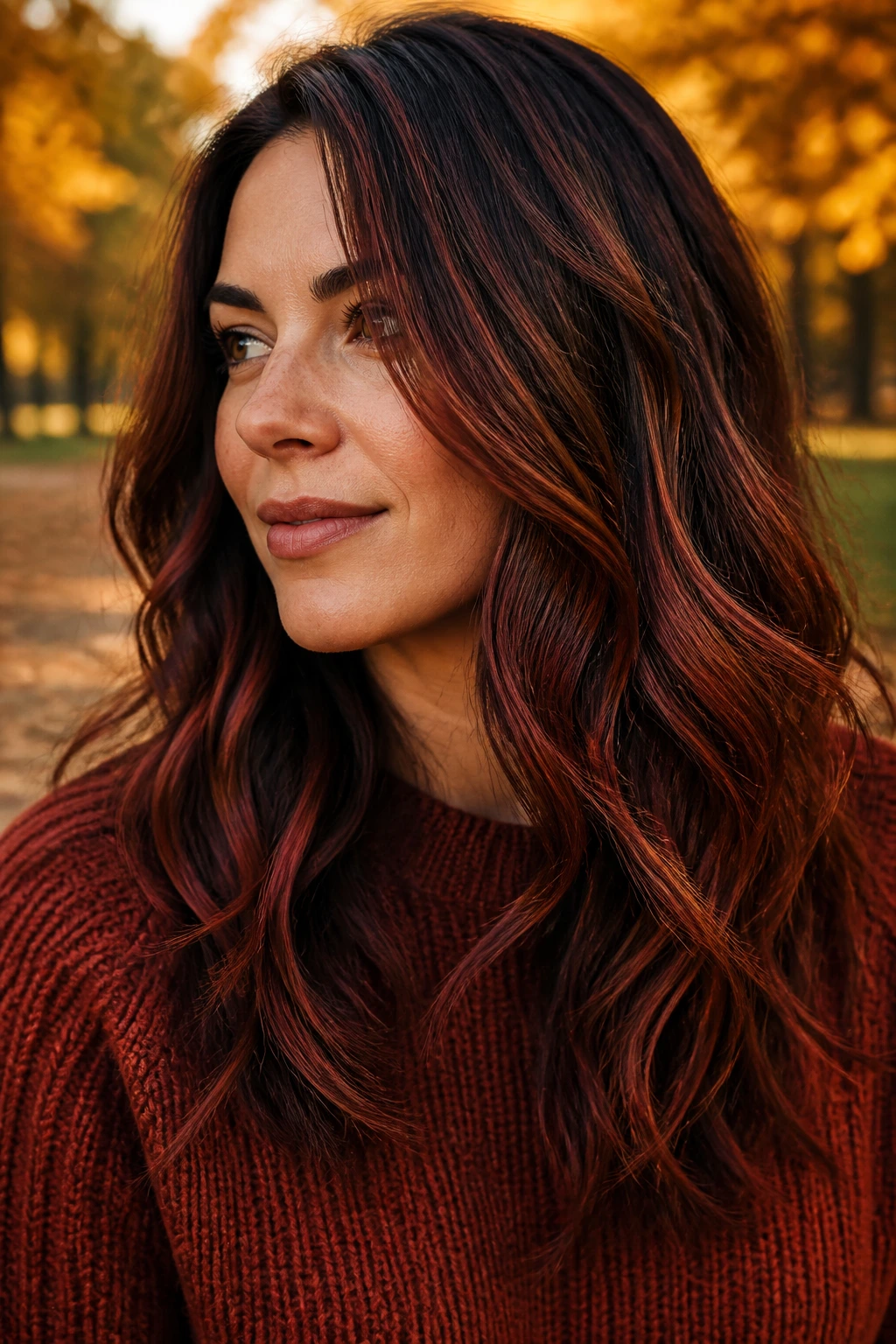
Spiced brick is the shade for someone who wants red with a little dirt under its nails.
It is warmer and earthier than cherry, less metallic than copper, and more grounded than firelight. On brown hair, that mix gives you a color that feels autumnal without turning syrupy. The red-brown pieces can sit through the lengths and ends, where they create a rougher, more textured look than glossy jewel tones usually do.
I like this shade on thick hair, especially if the cut has movement. Brick tones show off layers well because they catch on the raised pieces and sink into the lower ones. That contrast makes the hair look fuller. Curly hair also wears this shade well; the coils help the red appear in little flashes instead of one flat field.
A spiced brick balayage is not fussy. That is the charm. It looks good with air-dried texture, a quick bend through the ends, or a rough blowout that keeps some grit in it.
If you want red that feels lived-in instead of polished to the point of perfection, this is one of the strongest picks.
18. Blood Orange Balayage
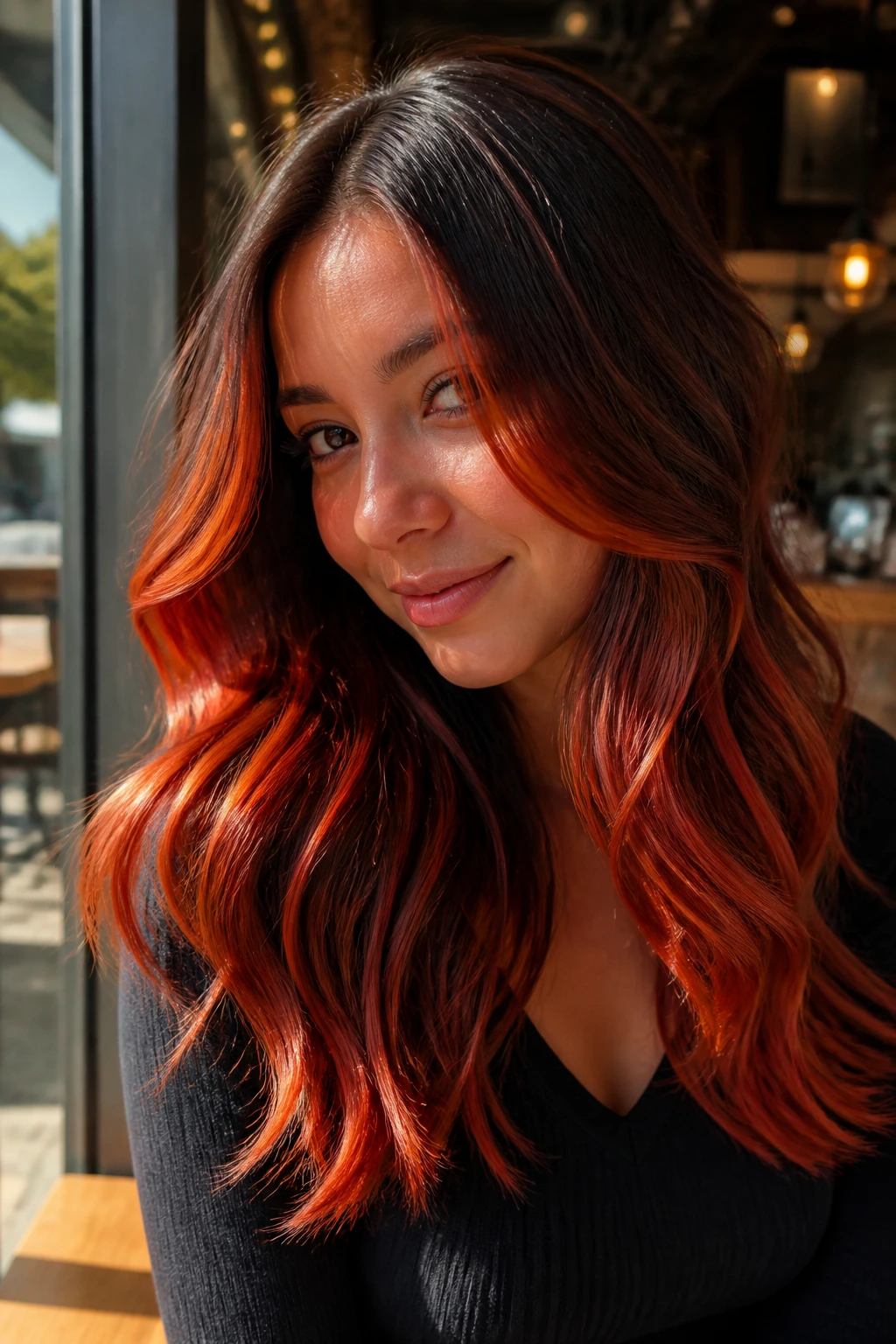
Compared with cherry or merlot, blood orange is the most outspoken of the group.
It has a sharper orange-red edge that gives brown hair a bright, almost electric finish. The look works best when the base has enough lightness to support the color — medium brown and lighter brown hair usually take it better than very dark espresso hair. If the base is too deep, the orange can fight the brunette instead of blending with it.
Blood orange also benefits from visible placement. You want the color to show through the ends, around the face, and in a few broad ribbons, not just as a whisper hidden under the top layer. It is a statement look, so hiding it too much defeats the point.
If you want something bolder than copper but less wine-like than cherry, this shade sits in that gap. It has heat. It has energy. And on the right brown hair, it looks like the color was meant to be there.
Final Thoughts
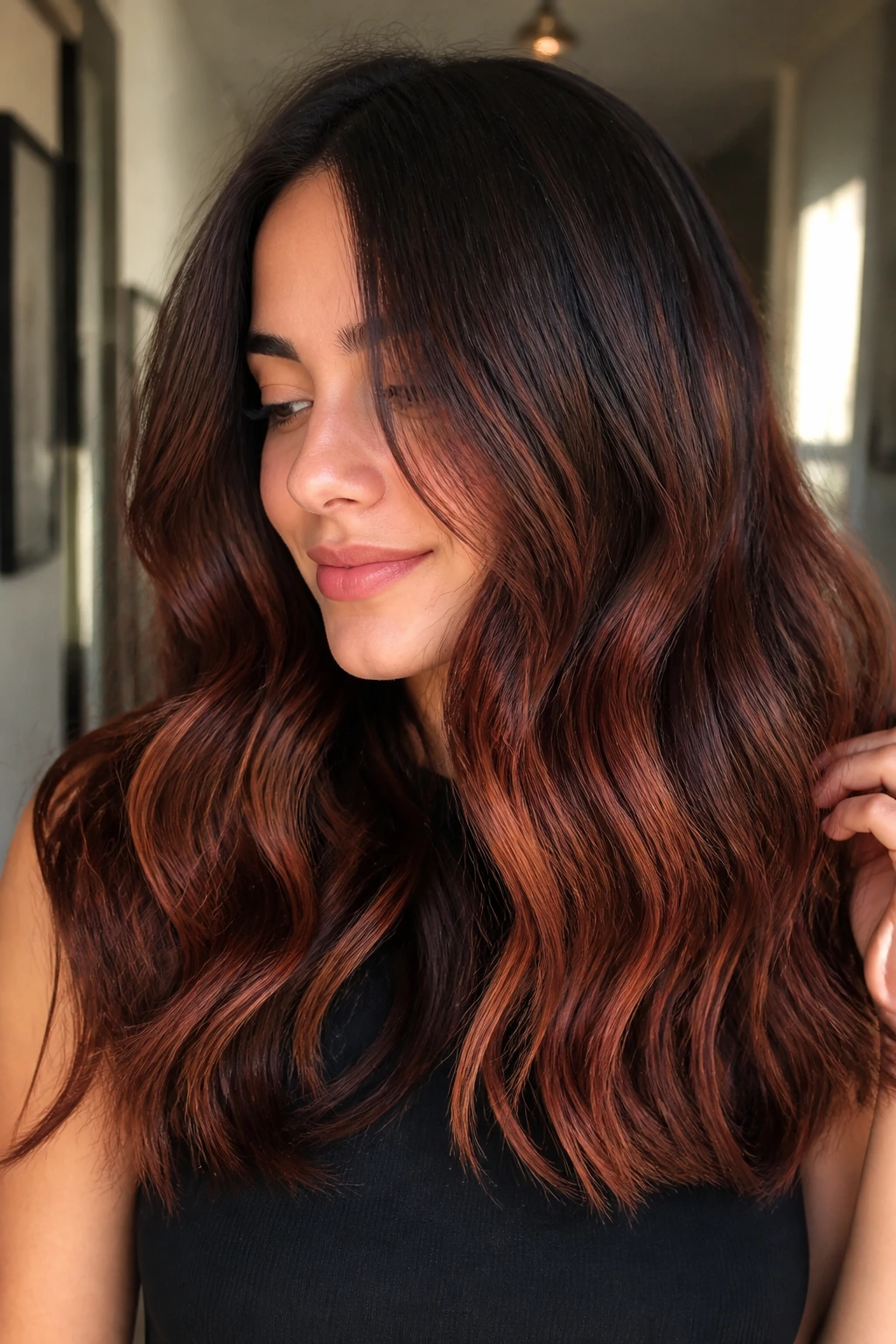
The nicest thing about red balayage for brown hair is how much room it gives you. You can go deep and smoky with mahogany or rosewood, or you can push into copper, firelight, and blood orange if you want the color to lead the whole look.
I usually steer people toward the shade that matches their upkeep habits first, not their mood board. Bright copper and firelight need more attention. Cherry cola, auburn, and garnet are easier to live with. That little choice matters more than most people want to admit.
Bring your stylist a few photos, yes, but also bring a clear sense of how much contrast you actually want in daily light. That part is what keeps red balayage looking intentional instead of random.
