



Purple balayage on brown hair has a rare trick up its sleeve: it can look soft and wearable in daylight, then show off a little attitude when the light hits. That’s part of why people keep coming back to it. The purple doesn’t sit on brown hair like a flat dye job; it slides through it, bends around it, and picks up the warmth or coolness already in the base.
The best versions never look like one solid block of color. They look painted, broken up, and slightly different from strand to strand. A chocolate base with plum ribbons reads very differently from an espresso base with smoky lavender ends, and that difference is the whole point. Brown hair gives purple room to breathe. Purple gives brown hair depth it would not have on its own.
There’s also a practical reason this combo works so well. Brown hair usually lets you keep more of your natural depth, which means less bleach, less damage, and a softer grow-out line than you’d get with all-over fashion color. That matters if you want something expressive without signing up for constant salon visits. The sweet spot is choosing a purple tone that plays nicely with your base level, your undertone, and the amount of contrast you’re willing to wear.
Some looks whisper. Some look unmistakable from across the room. And a few manage both at once.
1. Deep Plum Ribbon Balayage
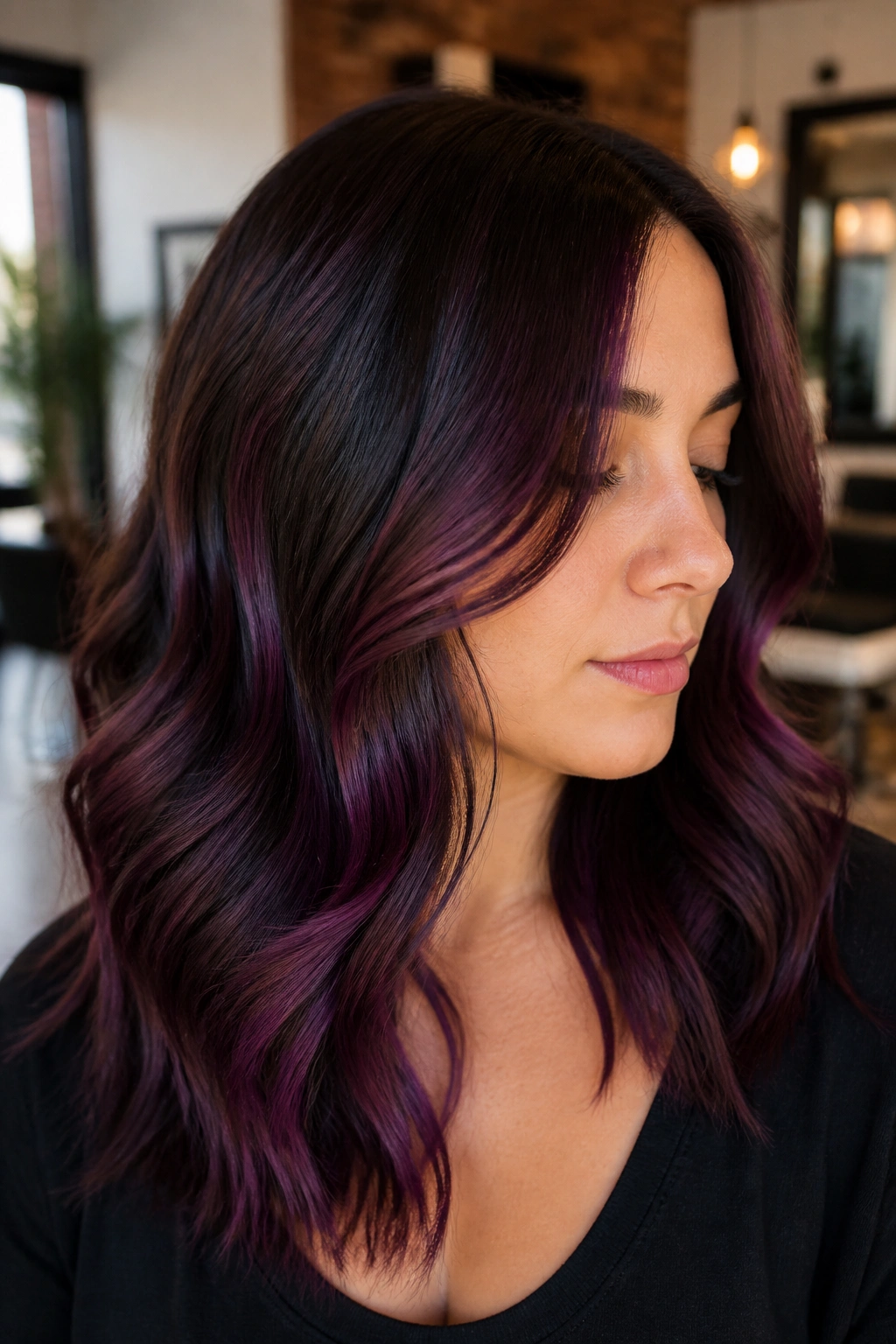
Deep plum ribbons are the look I’d point to first for anyone who wants purple balayage on brown hair to feel rich instead of loud. The color sits in those hand-painted pieces like velvet, especially on medium and dark brown bases. It has enough depth to stay sophisticated, but the purple keeps it from disappearing into the hair.
What makes this version work is the placement. Ask for long, soft ribbons through the mid-lengths and ends, with a little extra concentration around the face and crown. On shoulder-length or longer hair, those streaks move in a way that feels expensive without trying too hard. It’s a good choice if you wear your hair straight a lot, because the color shows in clean slices.
Best for:
- Chocolate brown or chestnut bases
- Hair that gets styled in waves or loose curls
- Someone who wants color that still looks polished at work
Best note: keep the purple deep and cool if your brown hair has red warmth you don’t want to fight.
2. Lavender Smoke Balayage
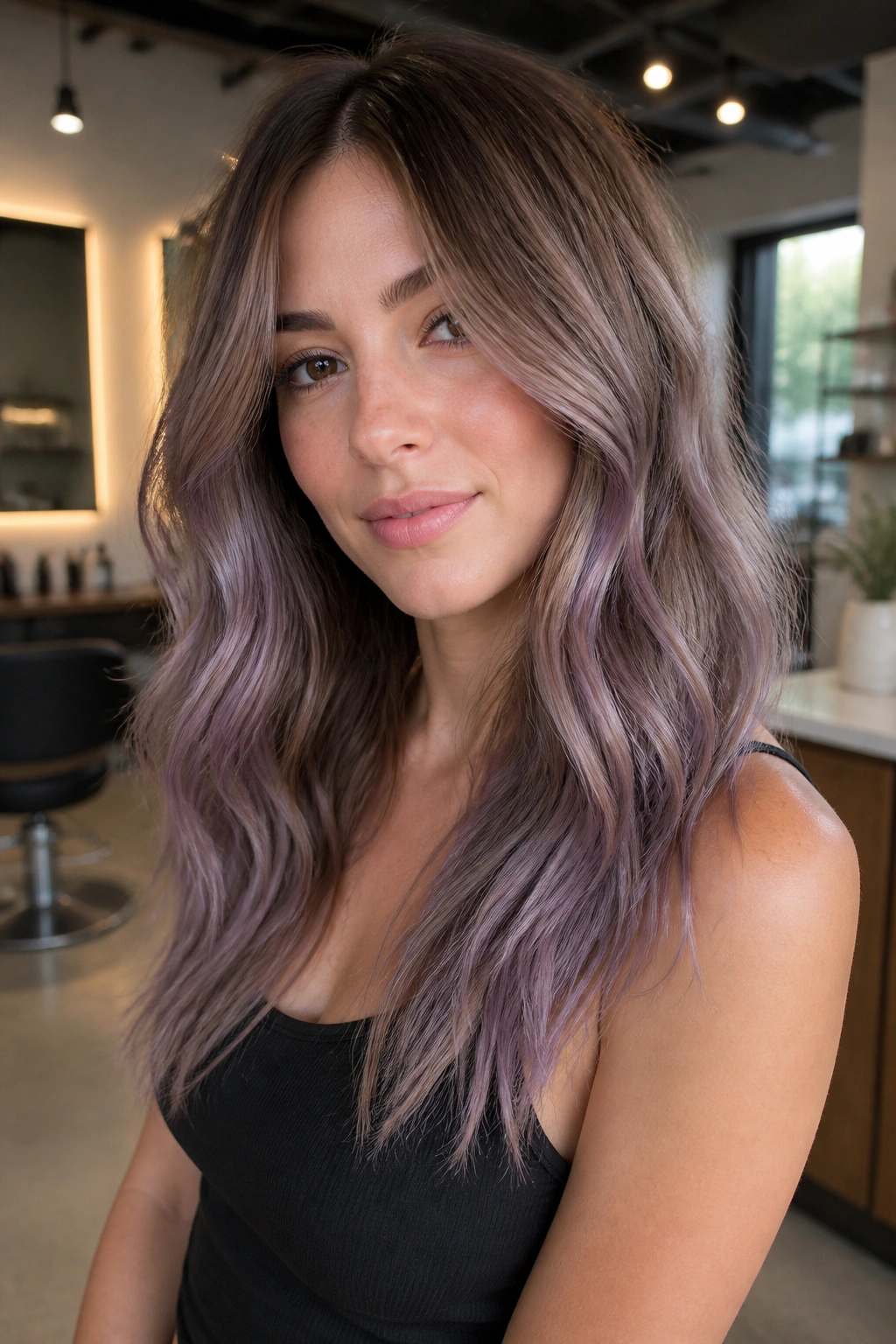
Why does lavender look so good on brown hair? Because the soft purple tone sits in the hair like a haze instead of a hard stripe. On light brown and medium brown bases, that smoke-like effect can be almost silvery in some light and faintly lilac in others. It’s one of those colors that gets better the more you move.
What Makes It Work
The secret is a low-contrast blend. Your colorist will usually lift just enough to create a pale base for the lavender to hold, then feather the color through the ends so it never feels pasted on. If the purple is too dense, it can look flat fast. If it’s too faint, it reads more like a toner than a real look.
This one suits people who like a softer edge. It is not the best choice if you want a dramatic, dark-violet result. It is the one you pick when you want a whisper of color that still gets noticed.
How to wear it
- Loose waves show the lilac tones best
- A center part makes it feel airy
- A purple shampoo once every 10 to 14 days helps keep brass from creeping in
3. Violet Money Piece Balayage
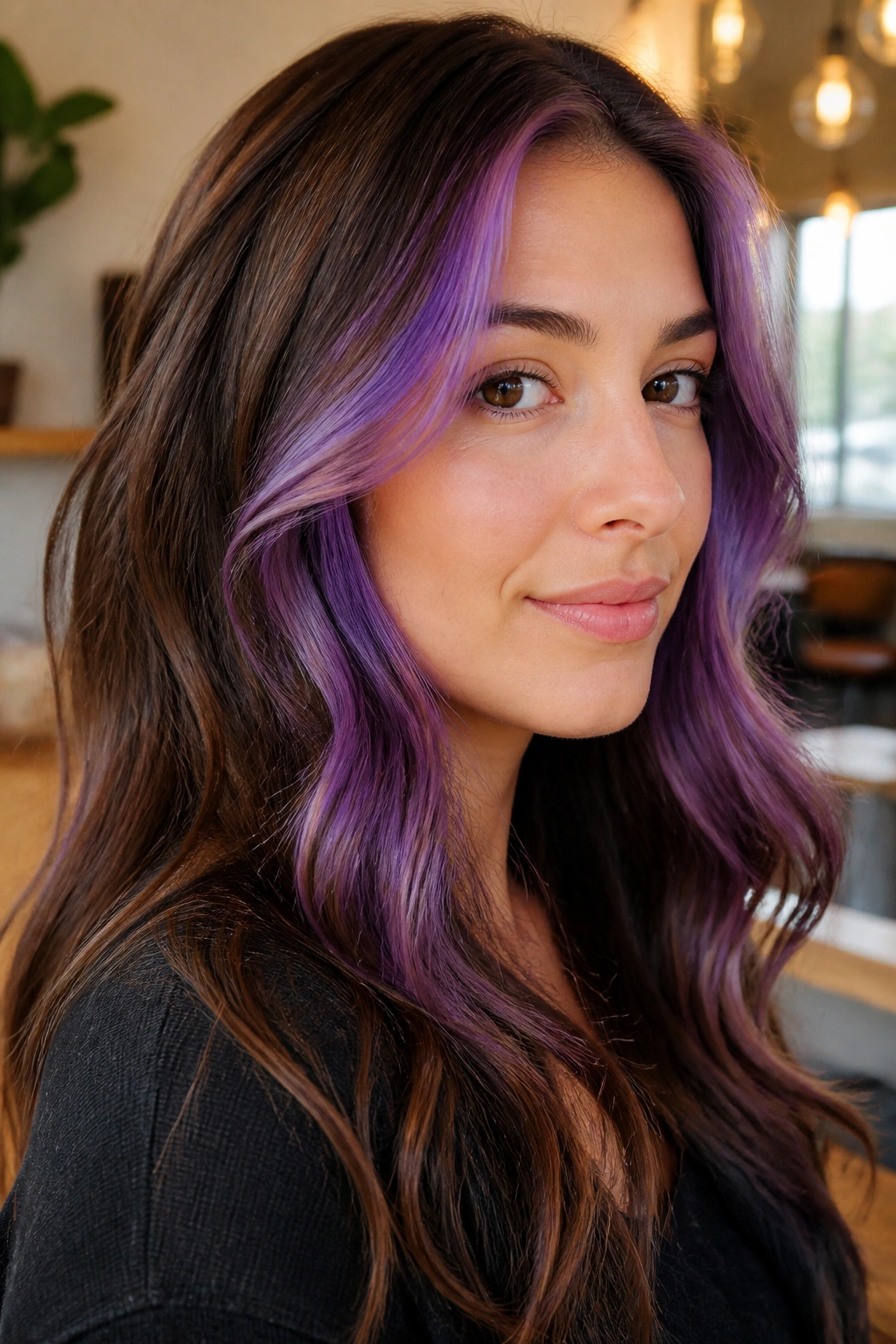
A violet money piece changes the whole mood of brown hair in one move. You keep the rest of the balayage subtle, then put brighter purple around the front hairline so the color frames the face like a spotlight. It sounds bold, and it is, but the payoff is immediate.
This works especially well if you don’t want purple everywhere. The front panels give you the hit of color you want, while the rest of the hair can stay softly blended in brown, mauve, or plum. It’s also smart for first-timers, because the grow-out is forgiving. If you get bored, you can tone the face frame down without reworking the whole head.
What to ask for
- A vivid violet or orchid money piece
- Soft brown-to-purple ribbons through the back
- A root area left close to your natural shade for ease of upkeep
The nice thing here is that styling does a lot of the work. Tucked behind the ears, the face frame reads like a flash of color. Curled away from the face, it spreads more gently. Small change. Big result.
4. Smoky Mulberry Ends
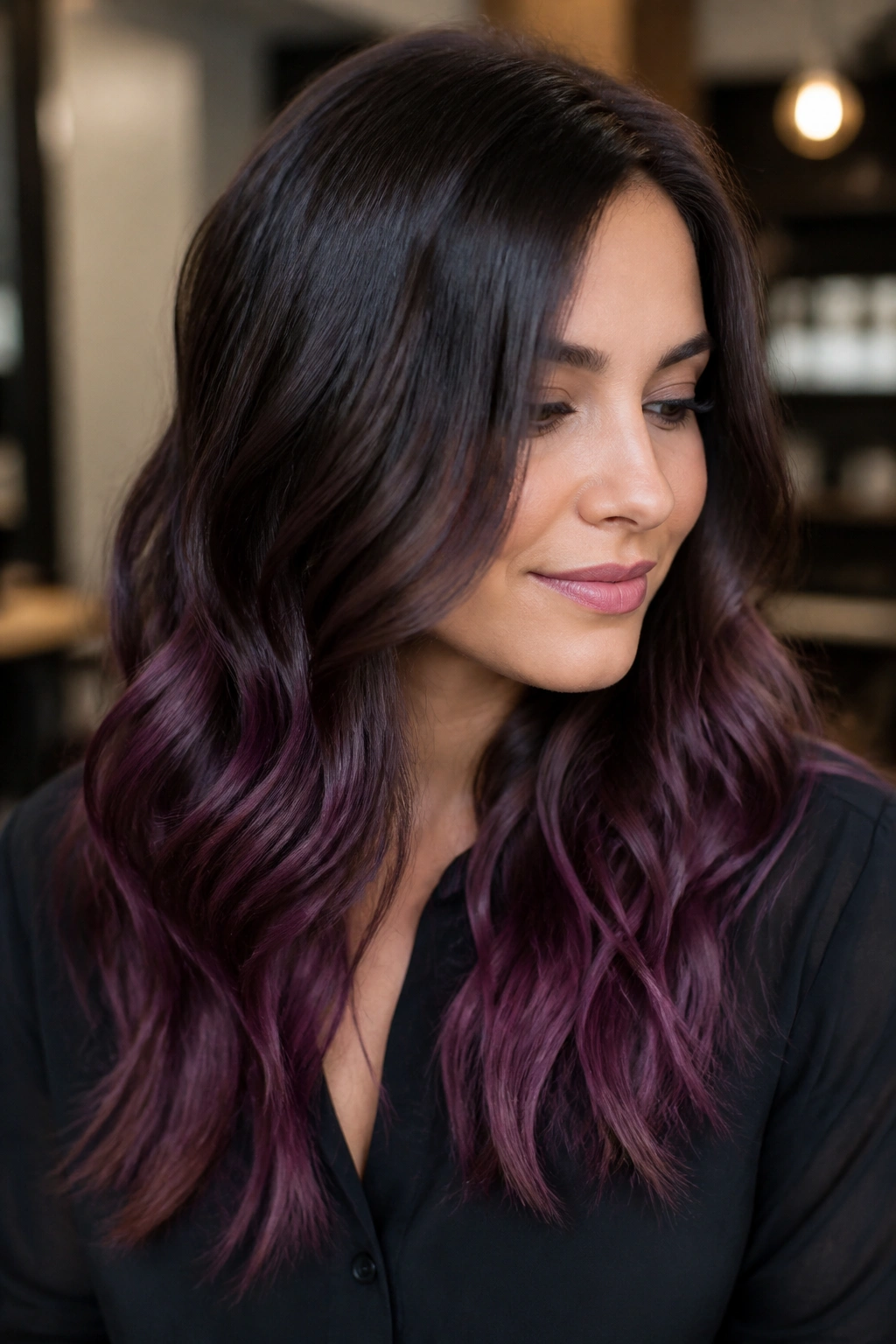
Smoky mulberry ends are for people who like color with a little mood in it. The purple sits lower on the hair shaft, usually from the mid-lengths down, and the tone leans dusky rather than bright. On dark brown hair, that gives you a finish that feels almost like stained fruit skin — deep, soft, and a little mysterious.
This is one of my favorite versions for long hair because the ends have room to show the color without the root area needing much attention. If your brown base is warm, mulberry also helps cool it down without making the hair look flat or muddy. That’s a tricky balance, and this shade does it better than people expect.
The best styling choice is loose, oversized waves. Tight curls can break up the depth too much and make the purple look spotty. And if your ends are dry, you’ll want to treat them kindly; darker purples can look extra thirsty on rough hair.
5. Amethyst Melt on Chestnut Brown
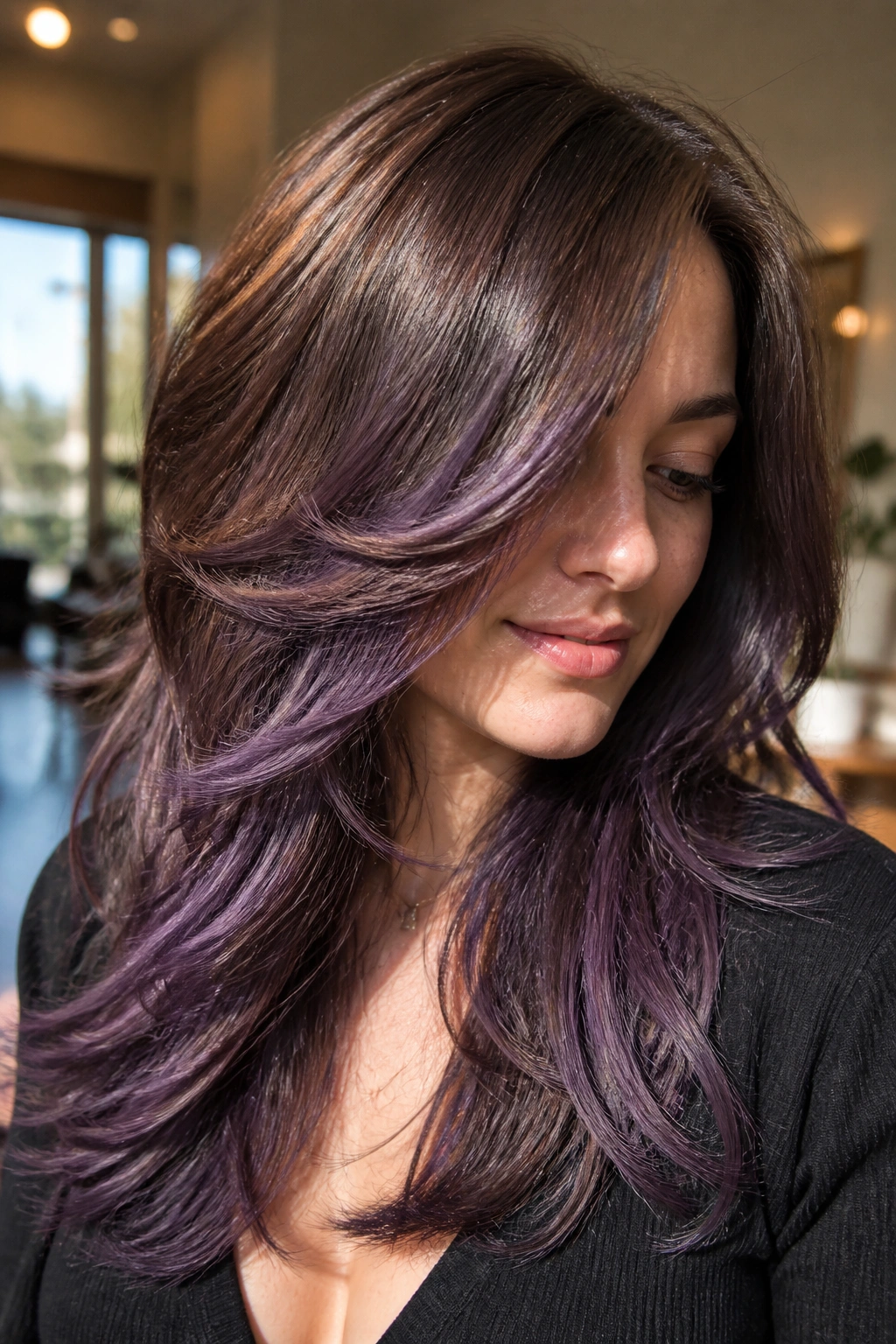
An amethyst melt looks different from a basic balayage because the transition is softer and more layered. Instead of clear streaks, the color drifts from chestnut brown into berry-purple, then into a brighter amethyst through the ends. It feels blended all the way through, which is exactly why it works so well on brown hair.
The beauty of this look is the gradient. You get depth at the top and more purple at the bottom, but there’s no sharp stop where one color begins and the other ends. That makes it a strong choice for anyone who wants something artistic without the harshness of a block dye.
Why it stands out
- The color shift looks smoother on layered cuts
- Medium brown bases keep the amethyst bright without needing heavy lifting
- It works especially well on wavy hair, where each bend shows a different shade
If you want a salon request that lands clearly, say you want brown roots, berry mid-lengths, and brighter amethyst ends. That phrasing helps the colorist keep the melt soft instead of turning it into striped highlights.
6. Orchid Dust Balayage
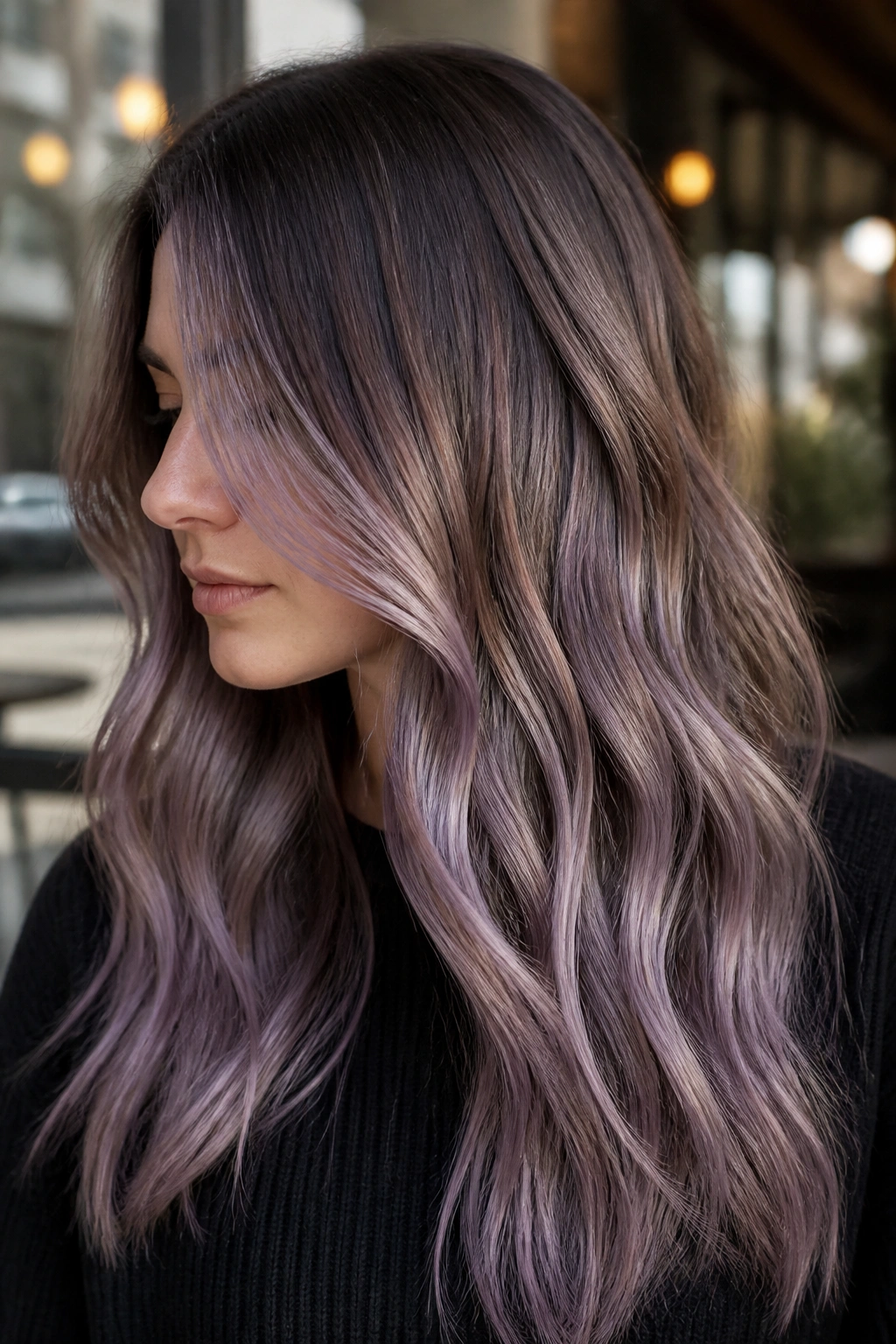
Orchid dust is the kind of purple that looks almost delicate on brown hair, but not childish. It sits in the pastel-to-muted range, which means it has a slightly dusty finish rather than candy-bright shine. On lighter brunettes, that gives you a clean lavender tone that feels airy. On darker brown bases, it usually needs more lift, so the result is closer to a soft orchid glaze.
That extra softness is the point. You’re not chasing a neon statement here. You’re after color that feels thoughtful and light on its feet. It’s a lovely option if you wear minimal makeup or like clothes in black, cream, gray, or denim, because the hair does enough on its own.
Good for people who want:
- A quieter purple
- A soft transition from brown
- Color that looks gentle in natural light
Not the best fit for:
- Very dark hair that can’t be lifted enough
- People who want a saturated, jewel-tone finish
This one can fade fast if you wash too often. Color-safe shampoo and cooler water matter here more than people like to admit.
7. Blackberry Balayage for Dark Brown Hair
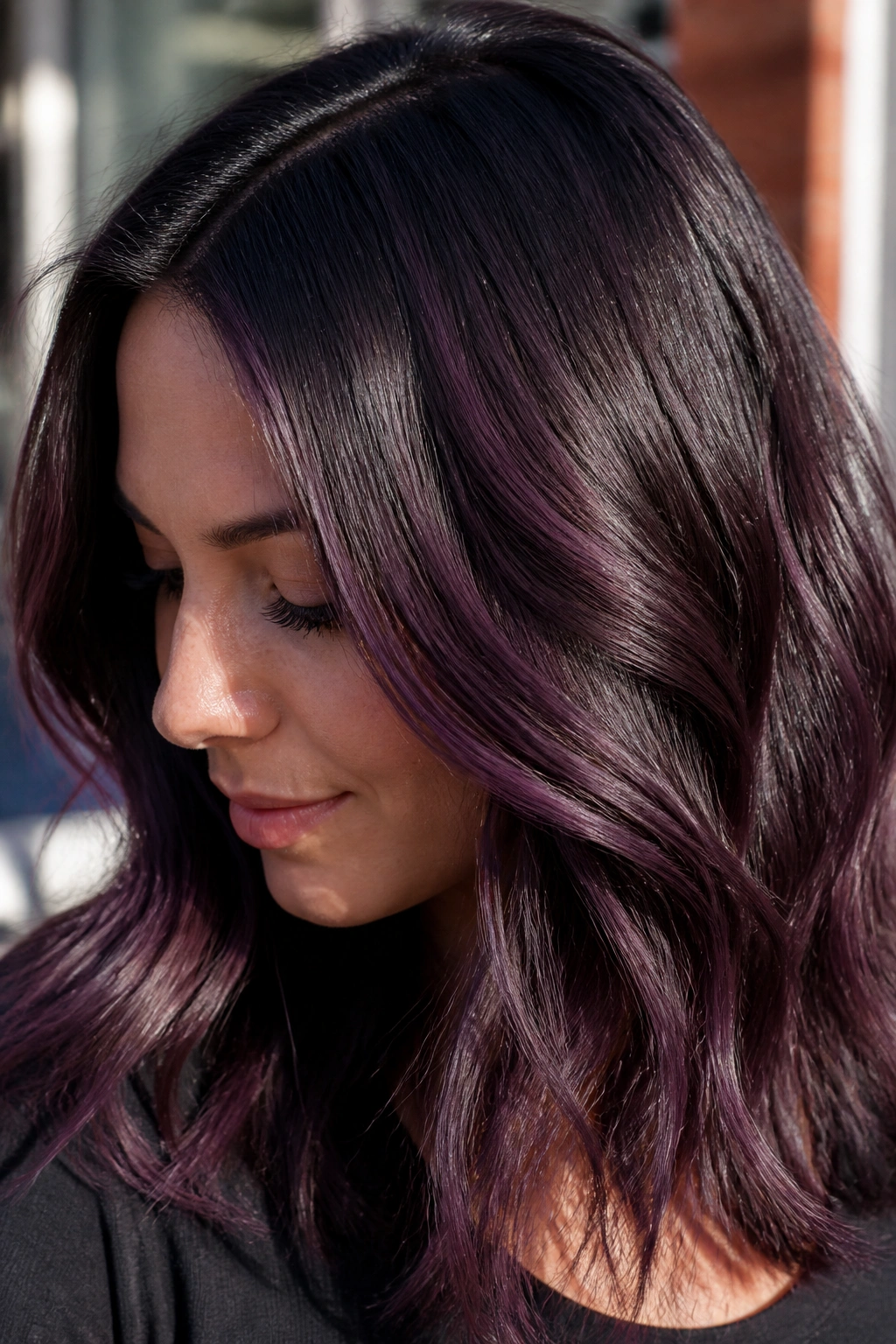
Blackberry is the move when you want purple to read dark, glossy, and a little dramatic. On espresso or dark chocolate hair, it creates a near-black effect with a purple cast that shows up best in sunlight. Indoors, it feels restrained. Outside, it wakes up.
The reason I like blackberry on dark brown hair is simple: it respects the base. Some purple shades fight dark hair and end up looking patchy. Blackberry works with the depth that’s already there. You get shine, dimension, and just enough color to make people look twice.
This is also one of the easiest purple balayage options to live with. The grow-out stays softer because the contrast is lower. You can wear it straight, curled, or in a high ponytail and still see the tone. If you want a hair color that behaves like a darker wardrobe staple, this is the one.
A gloss every few weeks helps keep the color rich. Without that, it can start to look brown-black in a dull way instead of purple-black in a chic way.
8. Mauve Toffee Balayage
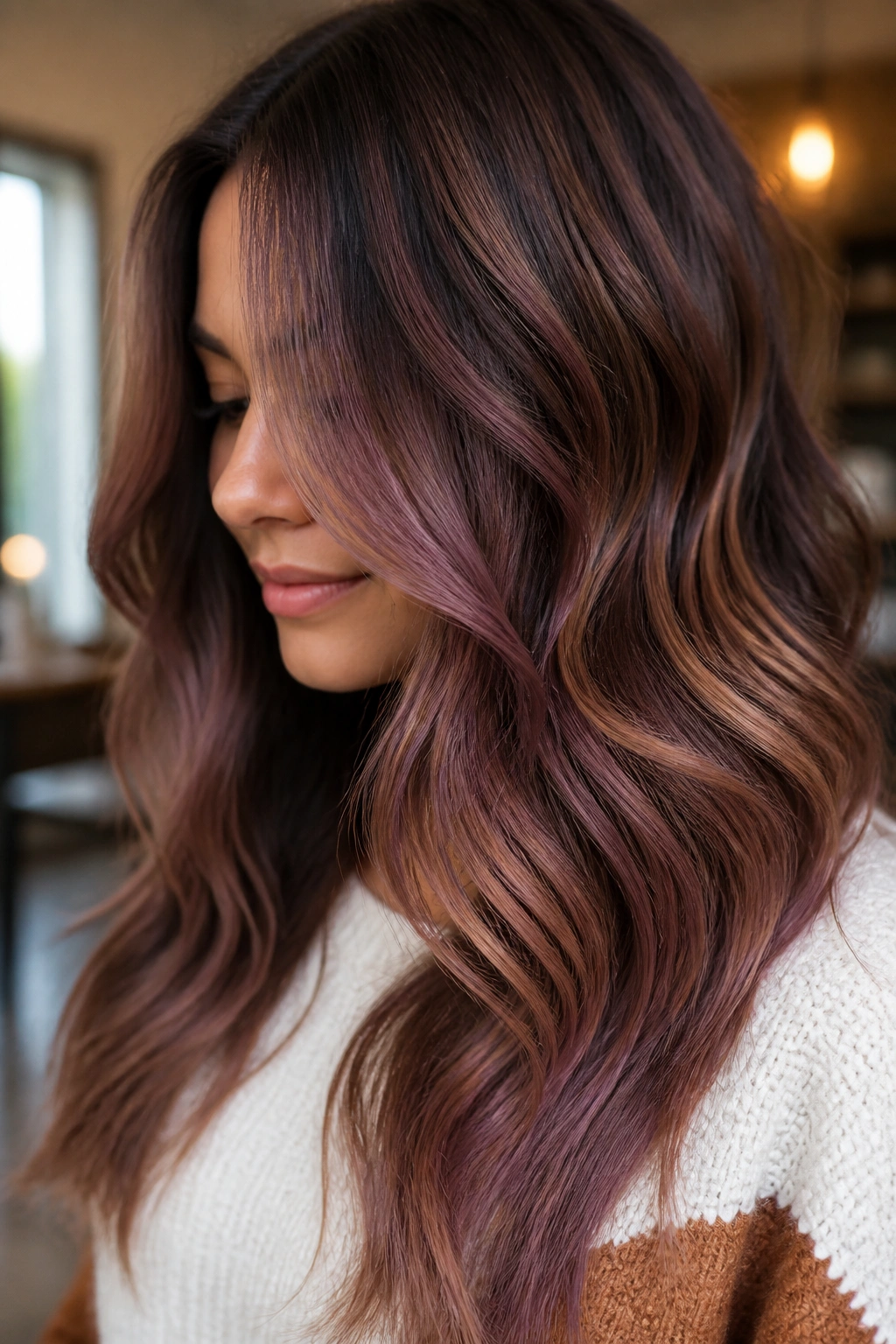
Can purple feel warm? Absolutely. Mauve toffee proves it. This look mixes brown warmth with a muted purple that leans pinker and softer than plum. On caramel or toffee-toned brown hair, the result feels cozy rather than edgy, which is why it suits people who want a more wearable fashion color.
The warmth in the base keeps the mauve from going icy. That matters. If the purple is too cool against a warm brown base, the whole thing can look disconnected. Mauve toffee avoids that problem by sitting right in the middle, where it picks up both the brown sweetness and the soft purple tone.
How to style it
- Blow it out smooth if you want the mauve to read more clearly
- Add soft bends through the mid-lengths for dimension
- Pair it with warm-toned makeup if you want the color to feel balanced
It is a friendlier purple than most. Not tame. Just easier to wear on an ordinary Tuesday.
9. Lilac Peekaboo Layers
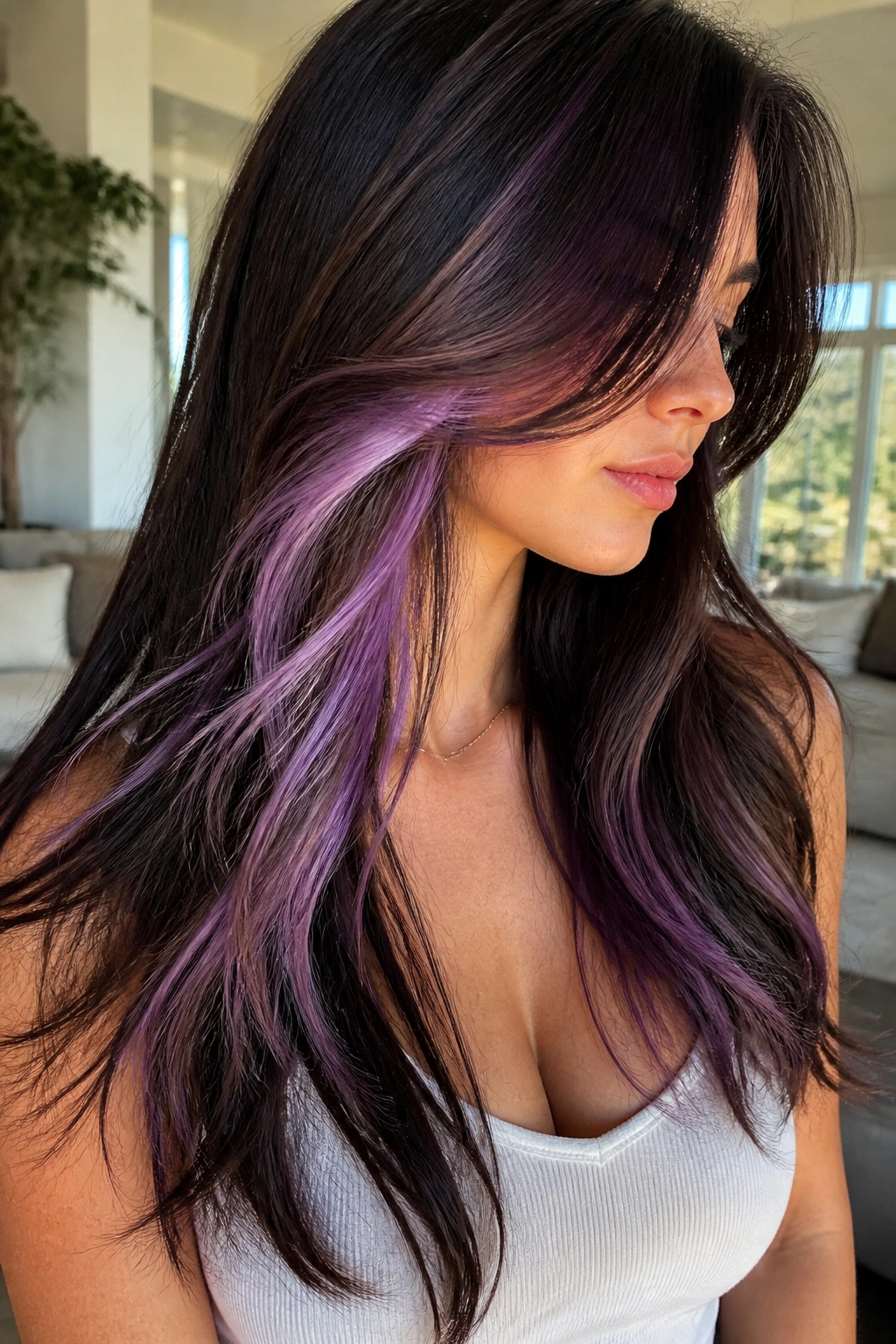
Lilac peekaboo layers are for the person who likes a hidden detail. The color lives underneath the top brown layers, so it only shows when you move, tuck your hair behind your ears, or wear it in a half-up style. That makes the effect playful without being all in your face.
I like this option for long layered cuts because the movement reveals the purple in little flashes. It feels almost secret. The top layer of brown keeps the look grounded, while the lilac underneath gives it a bit of lift. If you work in a conservative setting, this is one of the easiest ways to wear purple without making it your whole personality.
Best moments to show it off
- Half-up ponytails
- Braids
- Loose waves flipped over one shoulder
If you want more pop, ask for a brighter lilac underlayer near the nape. If you want subtle, keep the purple lower and softer. Small placement changes make a huge difference here.
10. Eggplant Shadow Balayage
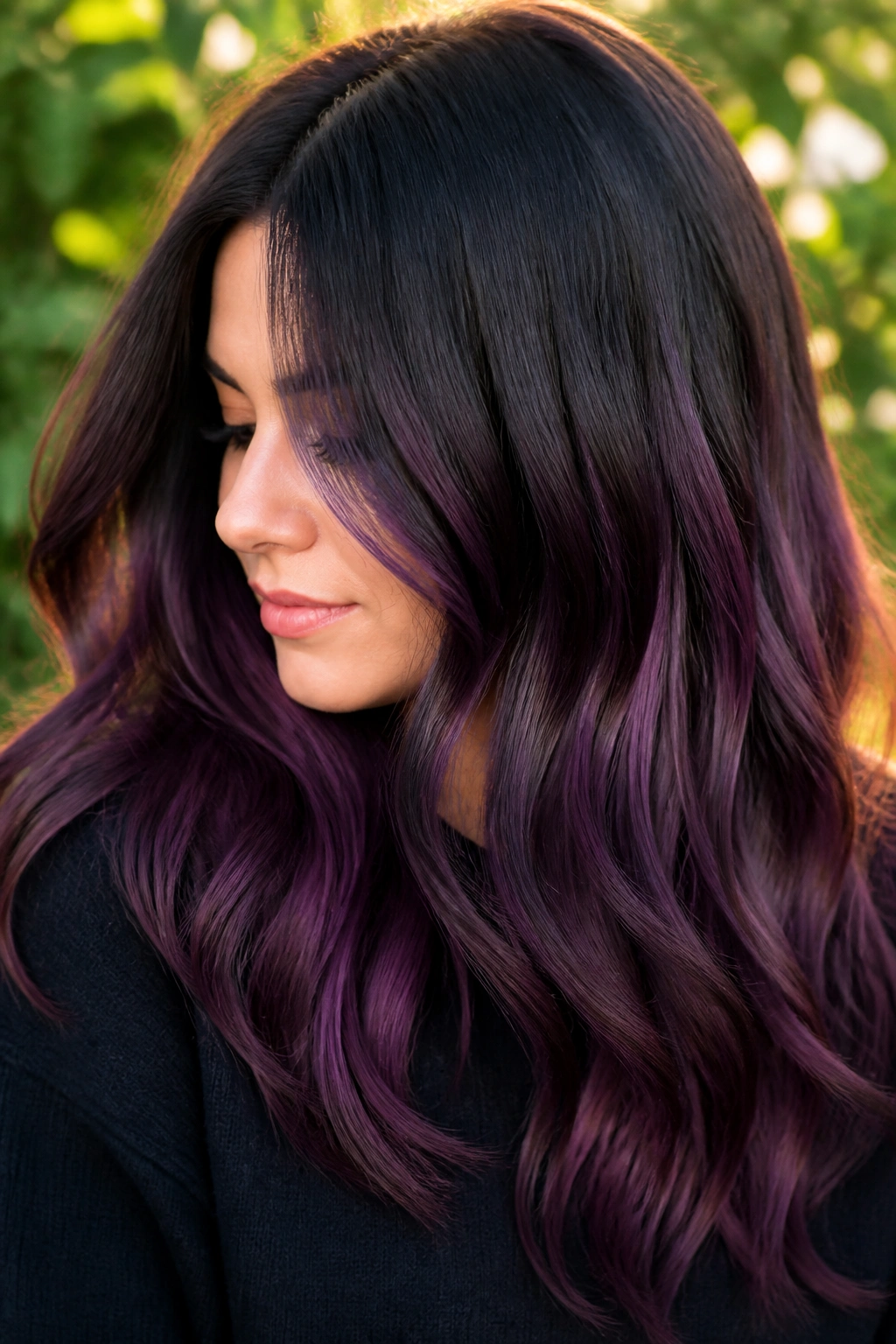
Eggplant shadow balayage is darker, moodier, and a little more serious than most purple looks. The purple almost disappears into the brown base at first glance, then shows its color when the hair shifts. That shadowed effect makes it a smart choice for thicker hair, where too much brightness can sometimes look busy.
The beauty of this look is that it gives you depth without visible stripes. The root area stays dark, the mid-lengths get just enough violet tint, and the ends catch a deeper eggplant shade. It’s a softer way to wear purple if you like deep colors and clean lines.
Why it works better on some cuts
- Blunt cuts show the contrast more sharply
- Layered cuts let the shadow melt through the length
- Waves help reveal the violet in the darker sections
If you hate frequent salon maintenance, this one is generous. The darker root blend means grow-out is less fussy, and the color stays readable even after several washes.
11. Purple Caramel Swirl Balayage
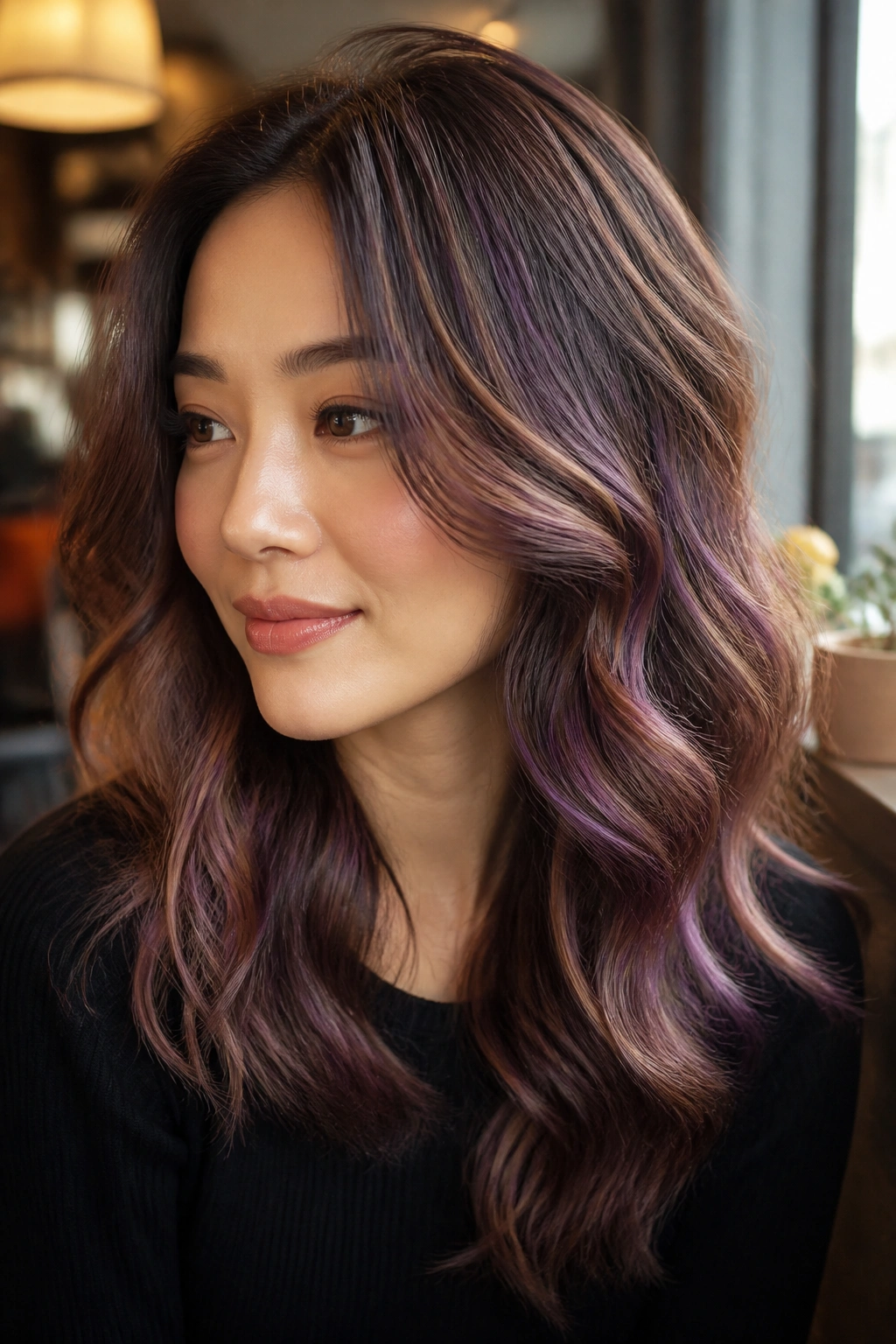
Purple and caramel can look awkward if the tones fight each other. Done right, though, they create one of the nicest multi-tone effects on brown hair. The caramel brings warmth and brightness, while the purple threads through it like a cool ribbon, which keeps the whole thing from turning too sweet.
The trick is balance. Too much caramel and the purple gets lost. Too much purple and the caramel starts looking orange by comparison. A good swirl keeps both visible, especially through waves where each bend catches a different shade. On medium brown hair, this can look almost painterly.
What makes it different
- It has both warm and cool pieces
- It softens very flat brown hair
- It looks especially good on medium-length cuts with movement
If your brown hair tends to look a little one-note, this is a strong fix. The contrast makes the shape of the cut clearer, which is one of those details people notice even if they can’t name it.
12. Midnight Violet Balayage
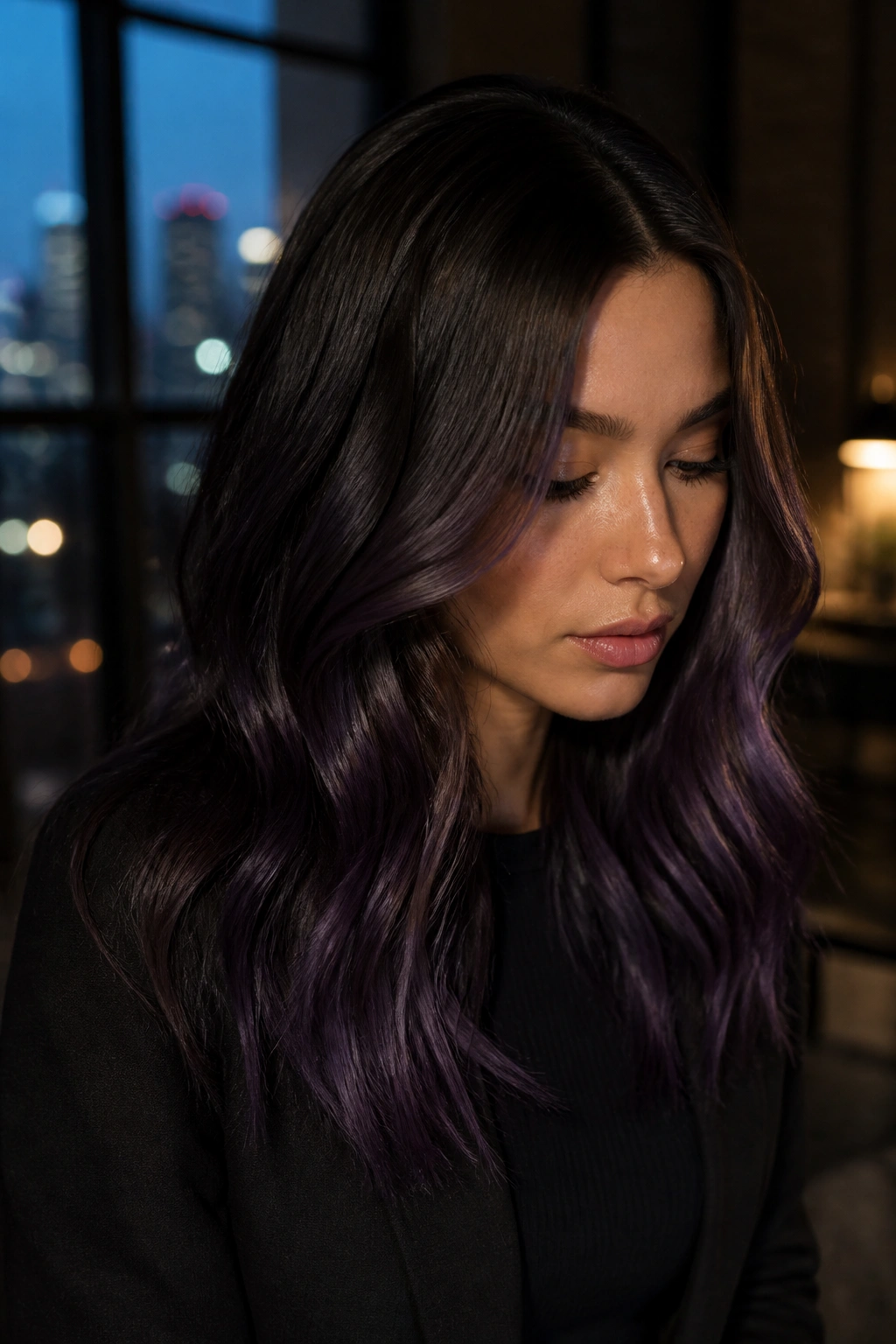
Midnight violet is for someone who wants the darker side of purple balayage to do the talking. On brown hair, this shade often appears as a blackened violet with a shine that only gives itself away in certain light. It’s dramatic, but in a low voice.
This look is especially flattering on cool brown bases and longer layers. The darkness at the top keeps it grounded, while the violet ends bring in enough color to keep the hair from looking flat. If you’re drawn to black clothes, silver jewelry, or a more gothic edge, this is probably the shade you’ll keep coming back to.
The important part is gloss. A dull midnight violet loses its charm fast. A shiny one looks expensive and deliberate. That’s a real difference, not just salon talk.
13. Rosewood Plum Balayage
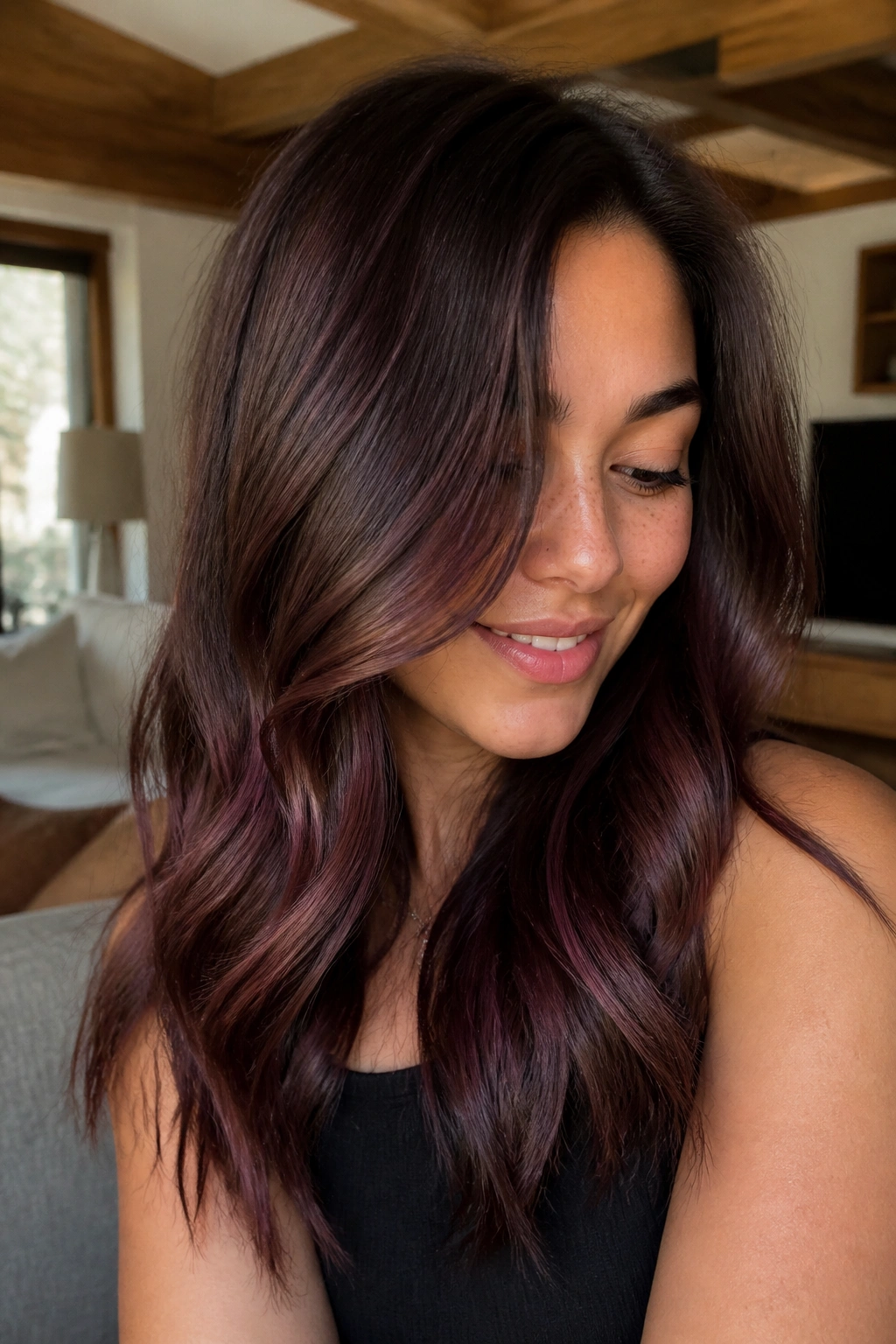
There’s something charming about rosewood plum on brown hair. It has that slightly muted, grown-up feel that makes it easy to wear without looking boring. The rosewood warmth softens the purple so it doesn’t feel harsh, and the plum depth keeps it from drifting into pink territory.
This is a good pick if you like color that looks richer than a standard auburn but less obvious than a bright violet. It has a brown-friendly softness that works well with polished waves, low buns, and long layers. On glossy hair, the rosewood piece gives a warm sheen before the plum even shows.
A lot of people choose this when they want purple but are nervous about going too cool. Fair. That hesitation is normal. Rosewood plum meets you halfway.
It’s also one of the easier shades to pair with lipstick and wardrobe colors because it sits between berry, brown, and plum instead of committing to one lane.
14. Soft Grape Face Frame
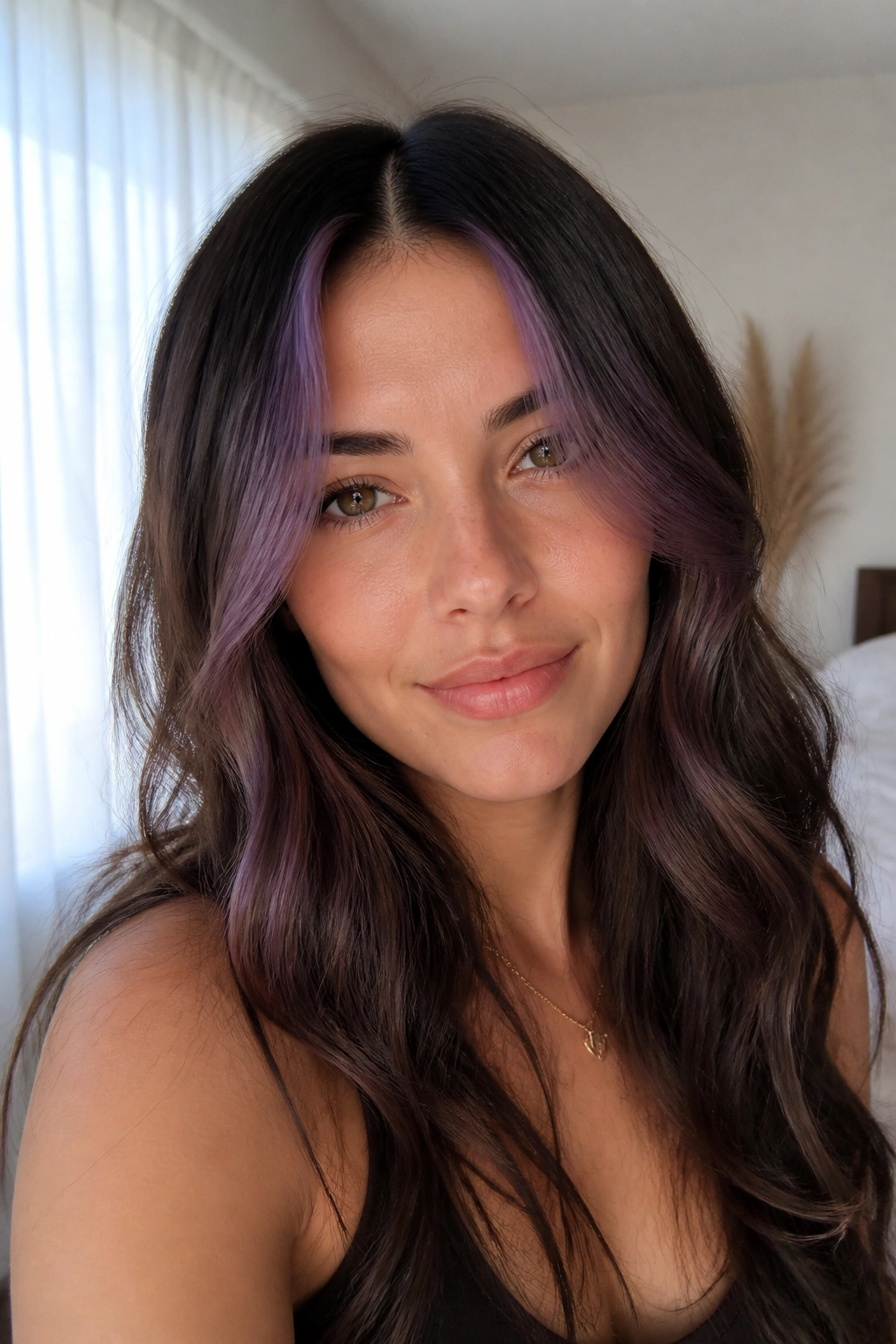
Soft grape face-framing pieces can wake up brown hair fast. You keep most of the balayage tucked into the front sections, where the purple is visible around the cheekbones and temples, then let the rest of the hair stay more neutral. The result feels fresh without needing a full head of purple.
This style is especially good if you like wearing your hair down but still want the color to show when it matters. A center part will make the face frame look cleaner and more symmetrical. A side part pushes the grape tone forward in a more playful way. Both work.
I’d suggest this if:
- You want a softer version of fashion color
- You need the back to stay low-maintenance
- You like the color to show in selfies and day-to-day wear
A little shine spray helps here. Face-framing color lives or dies by reflectivity, and dry hair tends to hide the good parts.
15. Iridescent Purple Brown Balayage
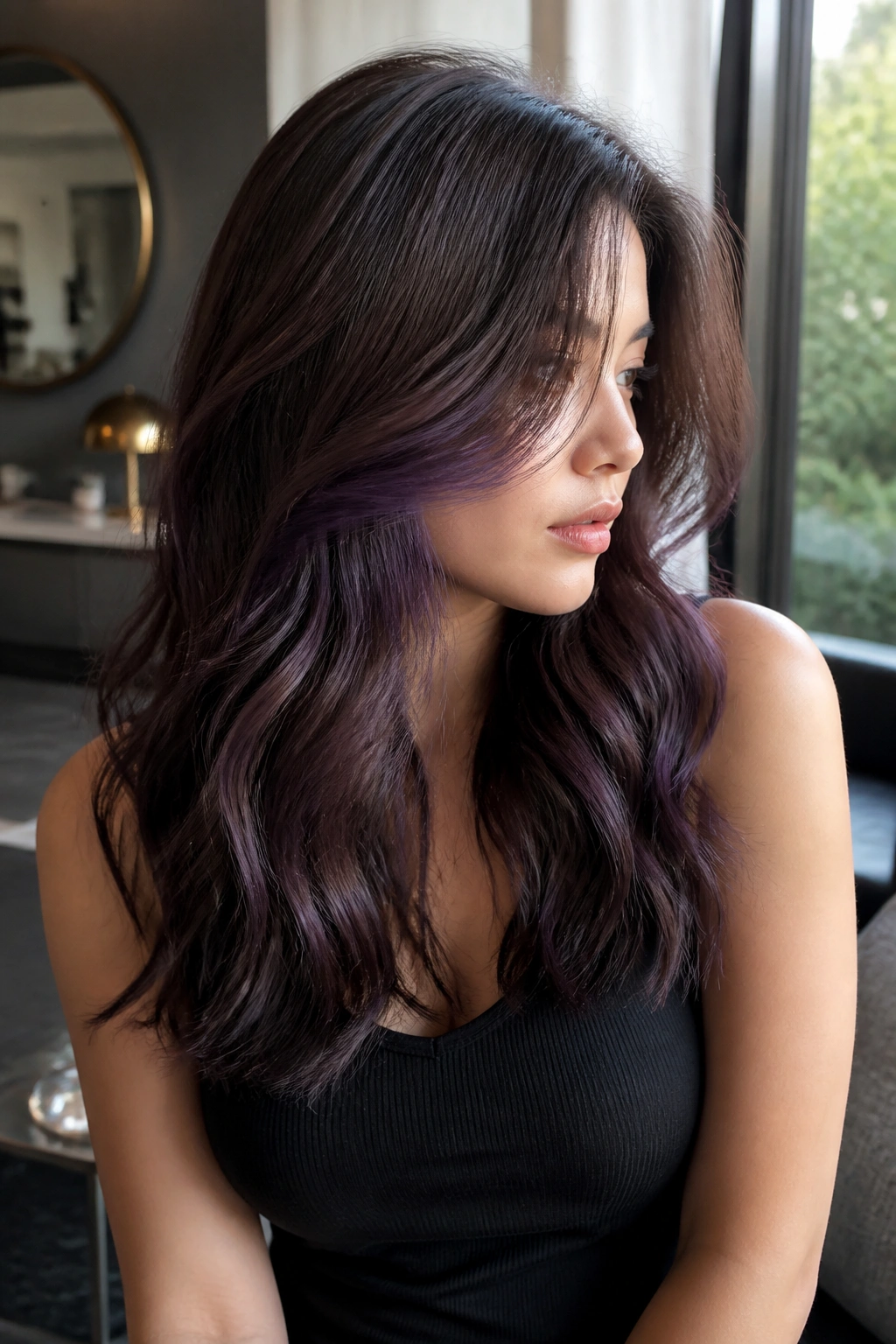
Can balayage look almost metallic on brown hair? Yes, if the purple is blended with enough cool undertone. Iridescent purple brown is one of those looks that changes in the light — sometimes lavender, sometimes smoke, sometimes a dark berry sheen. It is not a flat color, and that’s exactly why it works.
This version usually sits on the cooler side of purple, which means it gives brown hair a polished, glassy finish. It’s strongest on healthy, reflective hair. If your ends are rough, the iridescent effect can disappear into frizz and split ends, which is not a fun trade.
How to get the effect
- Ask for cool violet, smoky mauve, or pearl-purple tones
- Keep the lift soft so the brown base still anchors the color
- Use a smoothing cream before heat styling
It’s a subtle flex. Not subtle in the shy sense. Subtle in the “people keep glancing at it” sense.
16. Plum Underlights
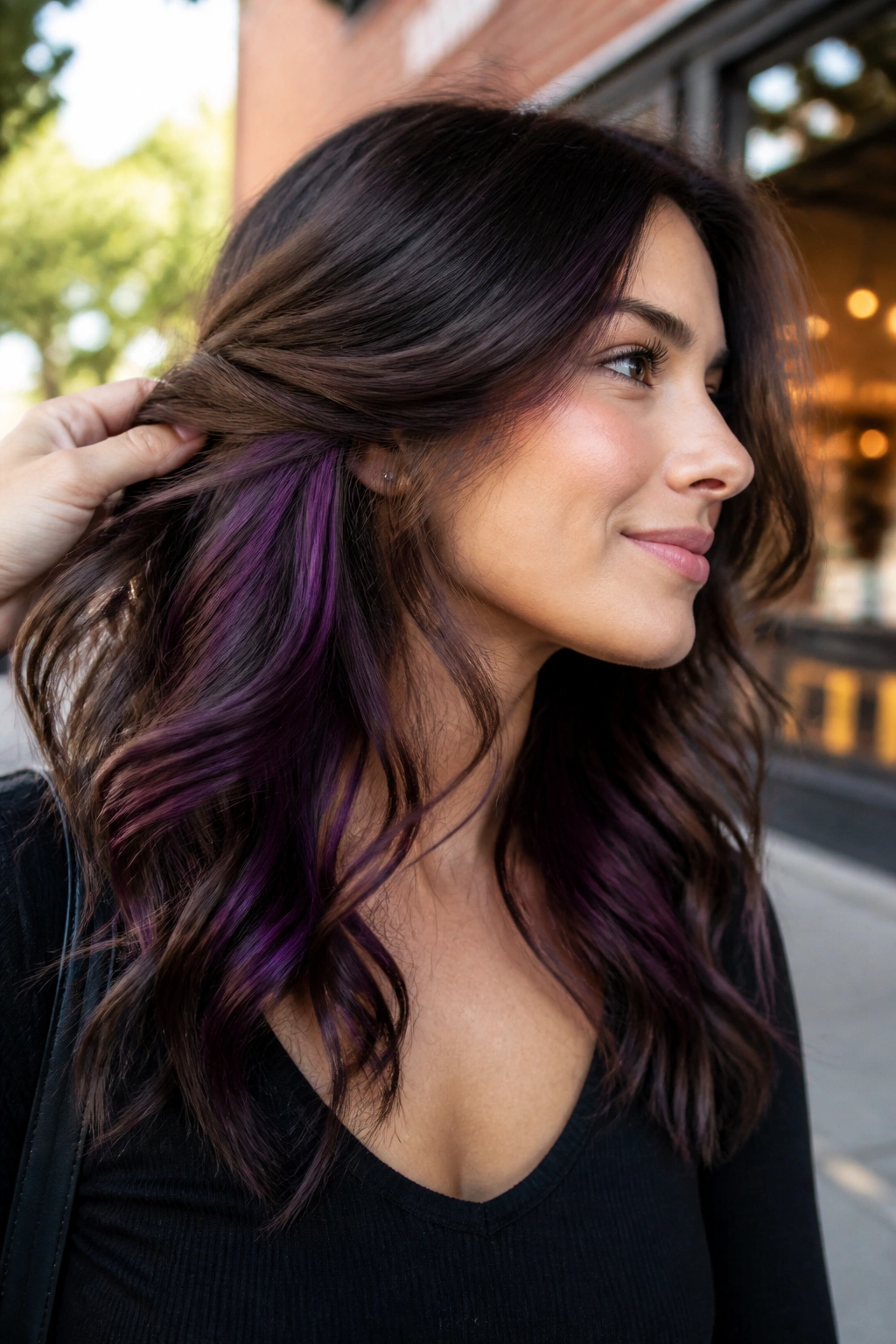
Plum underlights are a good choice when you want the purple to feel tucked in, not sprayed across the top of the hair. The darker purple lives underneath the brown surface layers, so the color shows when you move, flip, braid, or tie your hair back. It’s the cousin of peekaboo color, just a little richer and deeper.
This look is especially smart for thick hair because the underlayers hold color well and give the style more weight. If the top section stays brown, the plum underneath creates a nice hidden contrast that feels intentional rather than random. It also means you can go longer between touch-ups without the whole style looking tired.
Best ways to wear it
- Low ponytails
- Braids
- Half-up knots
- Tucked-back waves
The underlight placement also helps if you’re nervous about committing to purple. It gives you the fun part without putting it front and center every single day.
17. Cool Lavender Veil
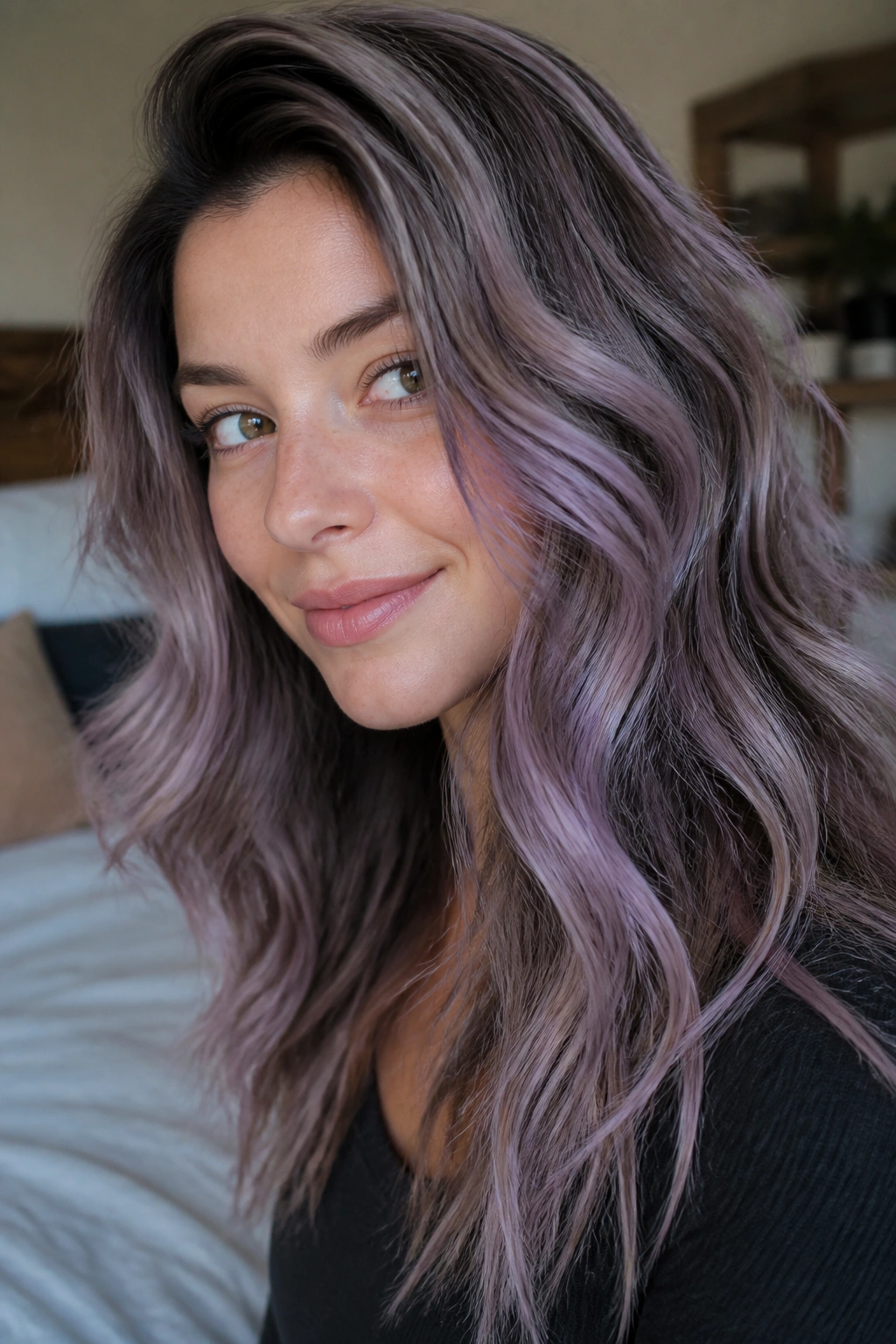
A cool lavender veil is the kind of purple balayage that barely announces itself at first, then keeps revealing more. The color sits thinly over the brown hair, almost like a wash rather than a heavy stripe. That makes it ideal for lighter brunettes who want purple without a hard edge.
This look is especially pretty on fine hair, where too much color can sometimes feel heavy. The veil effect keeps the hair airy while still giving it personality. It also plays nicely with layered cuts because the color catches on the outer pieces and fades softly into the inner ones.
What I like about it
- It looks clean, not chunky
- It suits shorter and mid-length cuts
- It grows out without a brutal line
If you want to keep the lavender looking fresh, use a gentle color-depositing conditioner once in a while. Too much, and the hair can go flat. Too little, and the veil turns into a whisper that vanishes by the third wash.
18. Deep Amethyst Ends
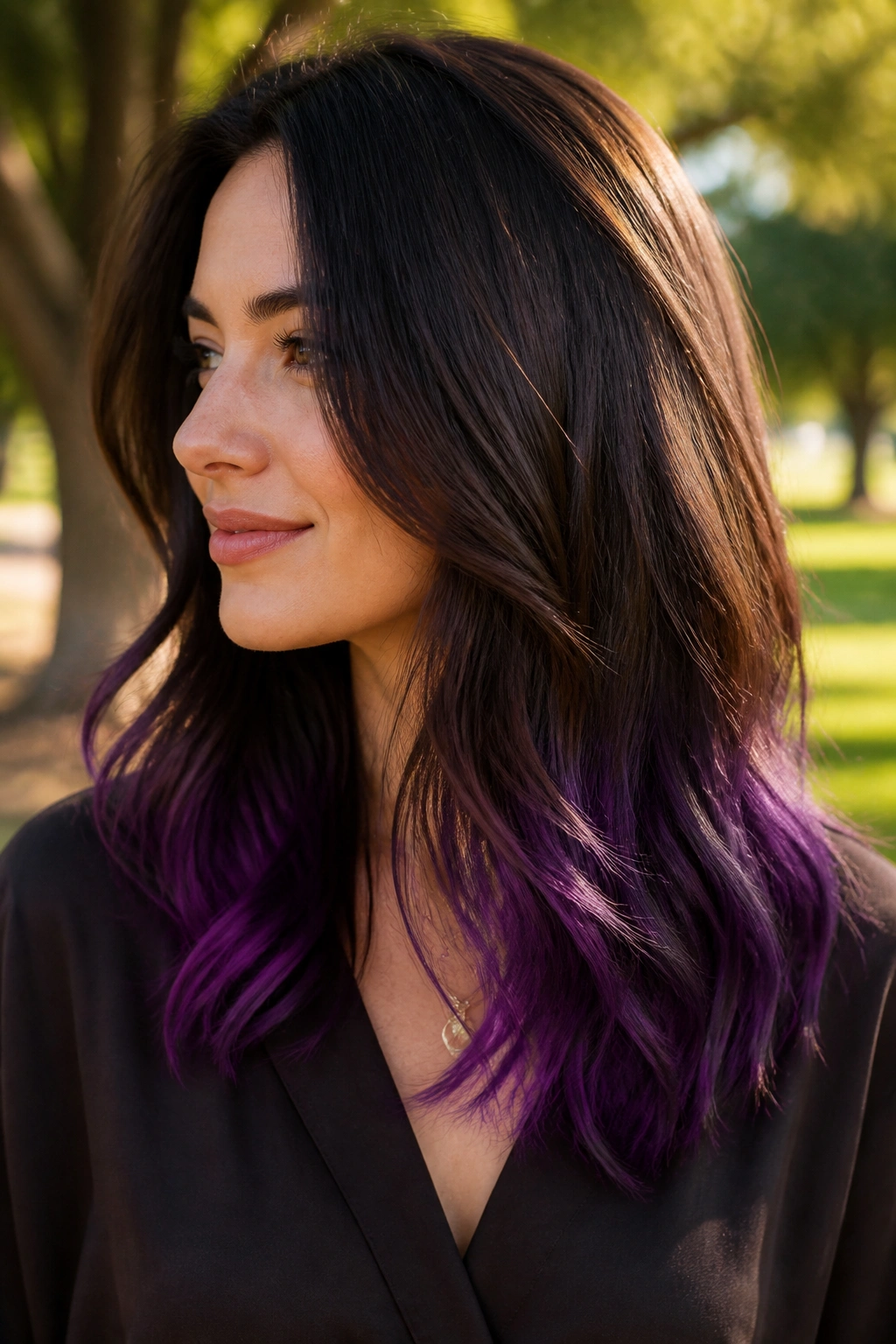
Deep amethyst ends are a strong finish for brown hair because they keep the top natural and let the color live where people actually notice movement. The roots and upper mid-lengths stay brown, while the ends pick up that jewel-toned purple depth. It’s bold, but not chaotic.
This is the look I’d choose for long, layered hair that gets worn loose most of the time. The ends have room to show the depth of the amethyst, and the brown base above gives the whole style structure. It’s also a nice option if you want purple balayage without bleaching half your head. Less lift, less stress, better grow-out.
The shade itself matters here. A true amethyst should feel saturated and cool, not red and wine-like. If the tone leans too warm, the effect changes fast. Keep it in that jewel box zone, and it will hold its shape longer between salon visits.
A good leave-in conditioner makes a difference too. Dark purple ends look best when they move like silk, not straw. And that part, honestly, is half the battle.
