



Brown hair gives purple balayage a small problem, and that is exactly why it looks so good. On a deep brunette base, violet does not sit flat; it shifts as you move, turning smoky in shade and brighter along the bends.
The trick is placement. A few hand-painted ribbons can look richer than a full head of bright color, and they age better because your natural brown stays in charge at the roots. That matters on dark brunette hair, where plum, mulberry, eggplant, and blue-violet usually read cleaner than pale lavender.
I like purple balayage most when the color is doing one job at a time: lighting up the face, softening the ends, or hiding in the underlayers until the hair swings. When too many shades fight for attention, the whole thing starts to look stripey. No thanks.
These 22 purple balayage looks for brown hair are built around that idea — different placements, different depths, different levels of drama — so you can match the shade to your haircut, your skin tone, and how much upkeep you can stand. The first one is the easiest place to start if you want purple without turning the whole room purple.
1. Midnight Plum Ribbon Balayage
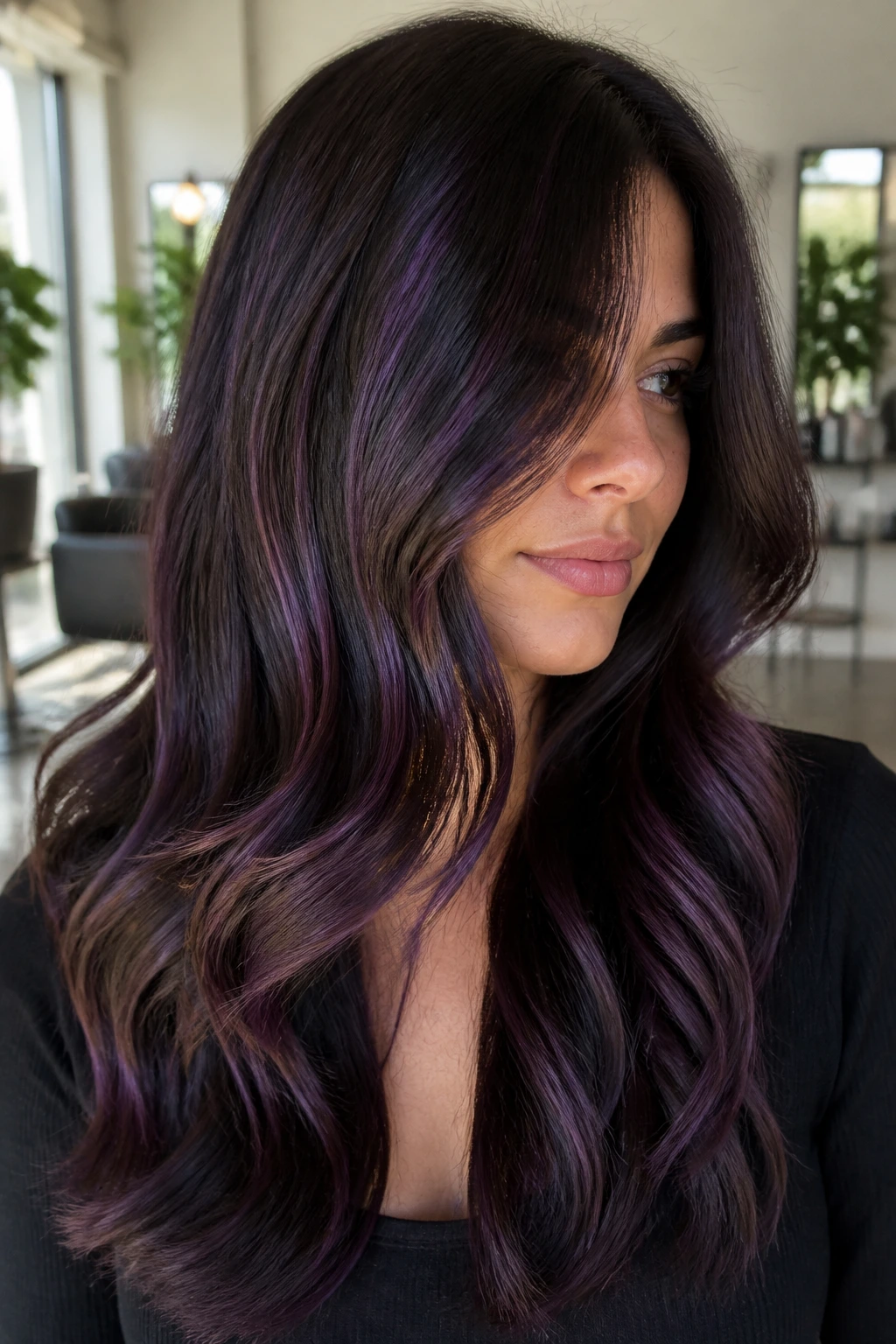
Midnight plum is the safest “wow” shade on brown hair. It stays dark enough to flatter espresso and chocolate bases, but the purple comes through when the light hits the ribbons at an angle. That makes it feel polished instead of costume-y.
Why It Works
Plum has enough brown in it to sit comfortably beside brunette hair, which is why it usually blends better than a candy-bright violet. The contrast is there, but it does not shout. On a level 4 or 5 brunette, hand-painted ribbons placed through the mid-lengths and ends can look glossy and expensive without needing thick sections.
- Best for: deep brown, mocha, and soft black-brown hair
- Ask for: plum with a blue base, not a red-heavy purple
- Placement: thin ribbons through the bends of the hair, not chunky blocks
- Styling: loose waves or a soft bend show off the color best
- Upkeep: a sheer violet gloss every 6 to 8 weeks keeps the plum from turning flat
My favorite detail: keep one brighter ribbon near the front so the color shows even when your hair is tied back. That one tiny move makes the whole look feel intentional.
2. Blackberry Melt with Cool Brown Root
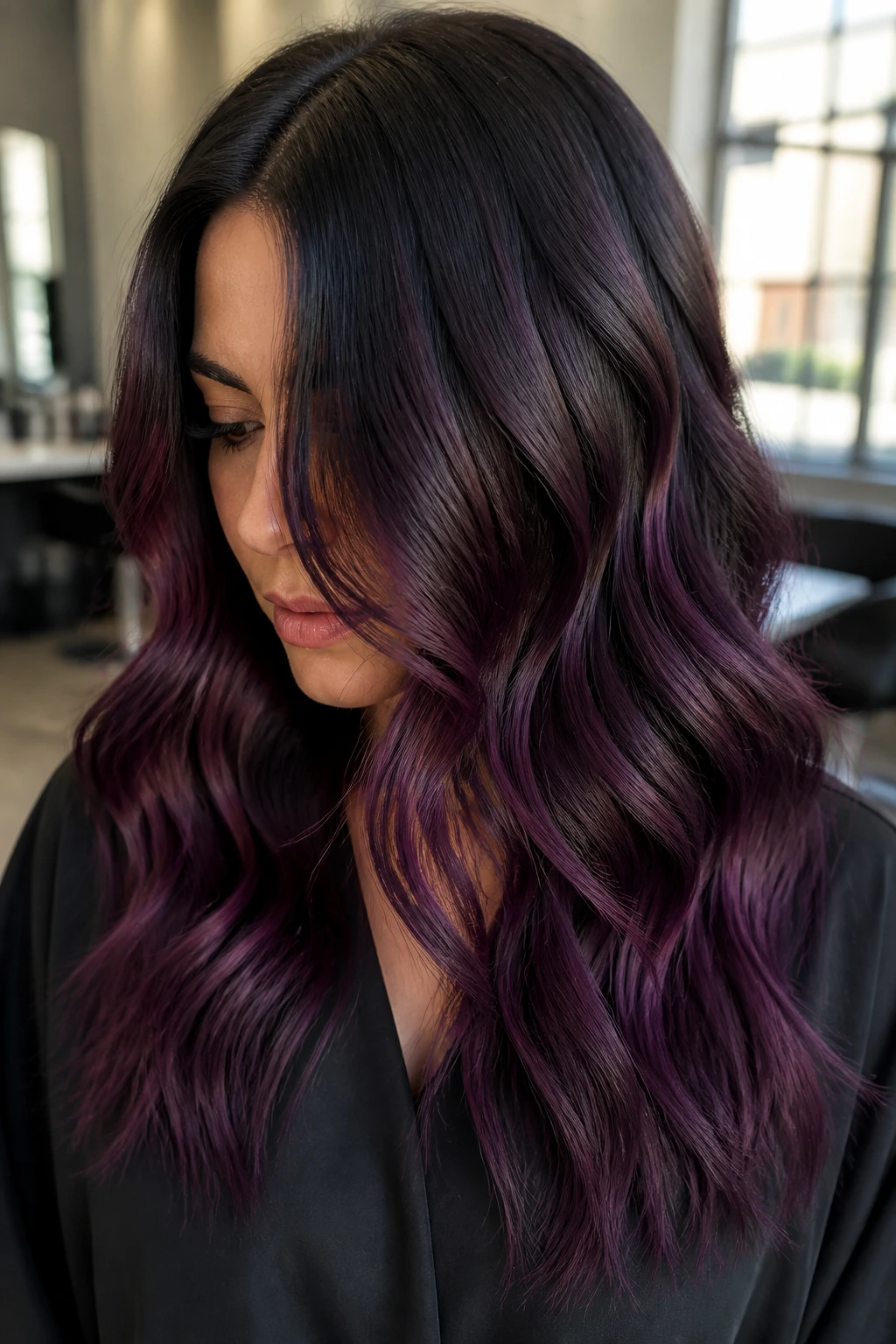
What if you want purple that reads rich from across the room? Blackberry is the move. It has that dark, jammy depth that hugs a brunette root shadow, so the grow-out looks soft instead of harsh.
How to Wear It
This shade works best when the root stays a cool brown and the blackberry shows up lower through the mid-lengths and ends. The transition matters. If the fade starts too high, the whole thing can look heavy; if it starts too low, you lose the drama.
A shoulder-length cut with a little movement underneath suits this look beautifully. Straight hair can carry it too, but I prefer a loose wave because the purple and brown take turns showing up. That back-and-forth is what makes a melt feel expensive rather than flat.
- Best for: brunettes who like dark, moody color
- Cut match: lob, long layers, or a blunt cut with a slight bend
- Color note: ask for blackberry rather than bright violet
- Finish: shine serum on the ends keeps it looking smooth
- Maintenance: low to medium, since the root shadow does a lot of the work
3. Violet Face-Framing Money Pieces
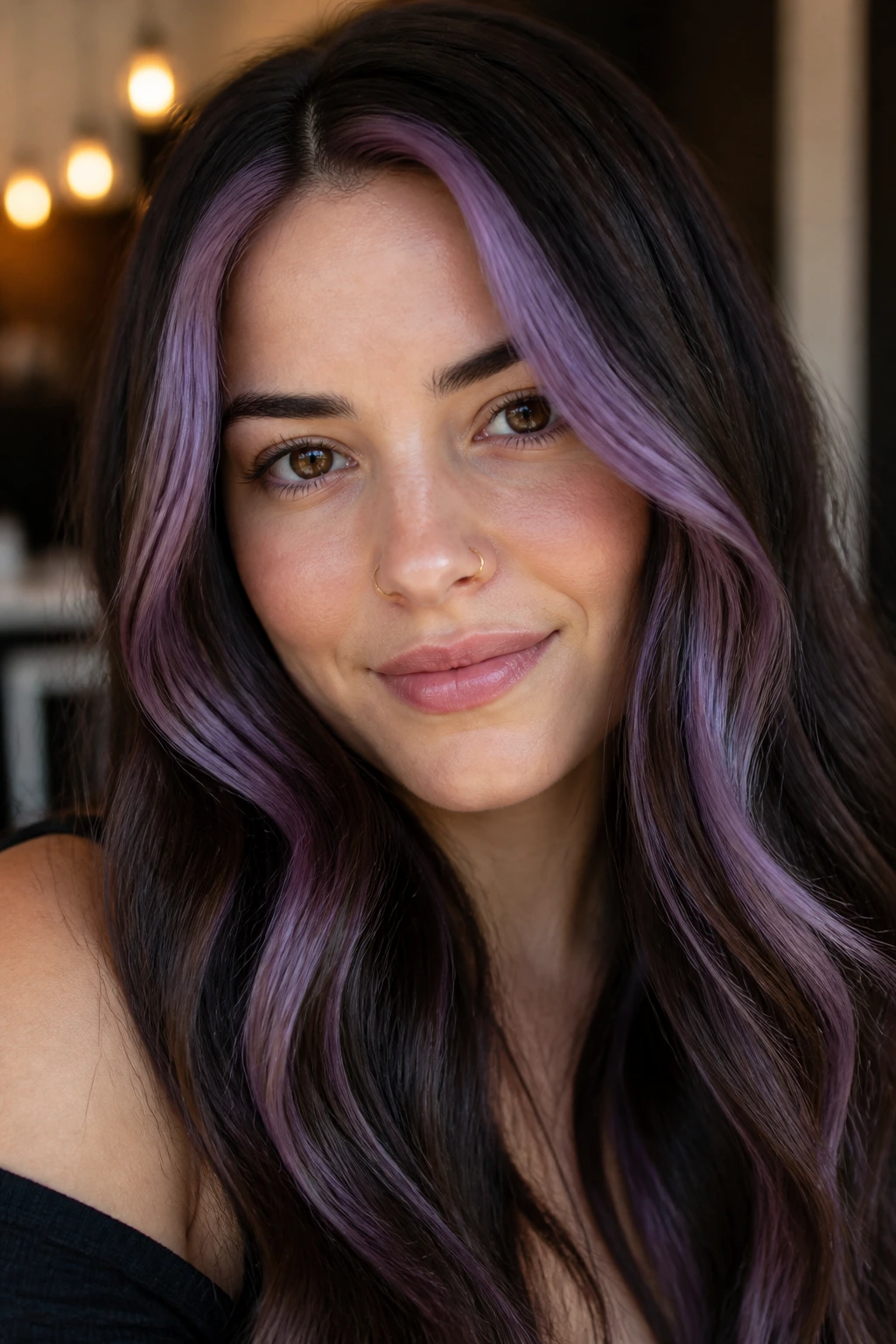
Pull your hair back and this look does all the talking. Two violet face-framing pieces can change the whole mood of brown hair without touching every strand.
The magic is contrast close to the eyes. A darker brunette base keeps the purple looking sharp, while the lighter front panels pull attention forward. You get color where people notice it most, which is a smart trade if you do not want a full-head commitment.
What to Ask For
- Front placement: one to two lighter sections on each side of the face
- Tone: violet or grape with enough depth to avoid a neon look
- Blend: feathered roots so the line does not look pasted on
- Best styling: center parts and curtain-style waves show it off fast
A tiny warning. If your hair is very fine, keep the front pieces narrow. Thick money pieces can swallow the rest of the hair and make the style feel louder than you meant. Narrower ribbons keep it chic and easier to grow out.
4. Dusty Lavender Ends on Chocolate Brown
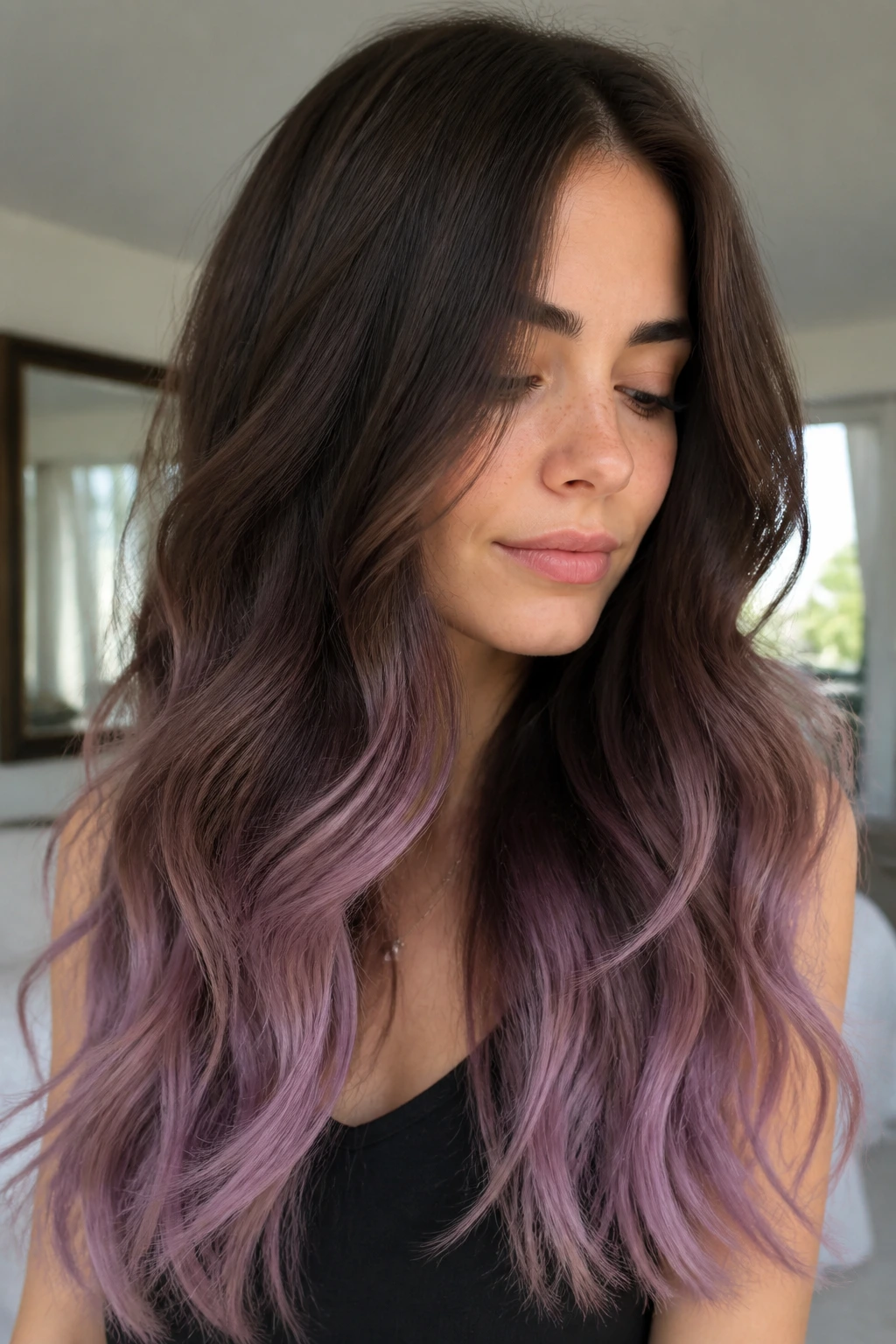
Dusty lavender ends are the quietest purple look on this list. They do not compete with the brown base; they sit on top of it like a soft wash of color, and that is why the effect feels so easy to wear.
The best version starts with chocolate brown at the top and fades into a muted lavender through the last few inches. On long hair, the change looks gentle and airy. On curls, the ends puff out with color in a way that feels almost cloudlike. The shade works best when the hair has been lightened enough for lavender to show, usually to a pale gold or light yellow first, because a gray-lilac tone needs a lighter canvas.
If you like low-key color but still want people to notice when you move, this is a strong choice. It is softer than plum, sweeter than eggplant, and less demanding than a full purple melt. The one thing I would not do is keep the lavender too pastel on damaged ends. That can look dry fast. A dusty, slightly smoky tone wears better and flatters brown hair more cleanly.
5. Amethyst Balayage on Espresso Hair
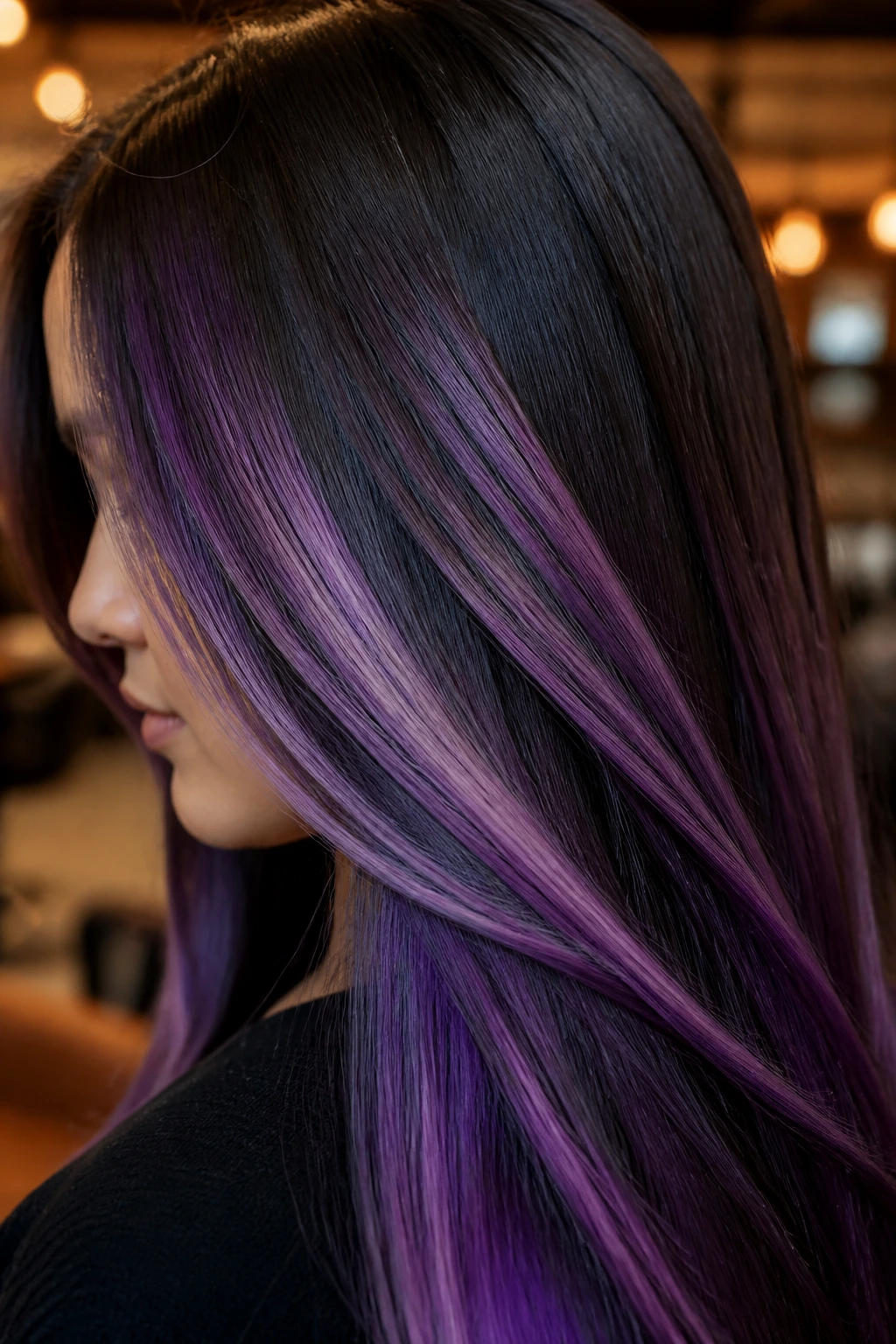
Amethyst is the shade for people who want purple to stay purple. Unlike softer lavender looks, it holds its shape on dark espresso hair and does not vanish the second you step away from the window.
What Makes It Different
Amethyst sits in that middle zone between plum and true violet. It has enough depth to stand up to dark brown hair, but enough color to feel vivid. On a level 3 or 4 brunette, it usually looks best when the color is painted in wide, slightly diagonal ribbons rather than tiny threadlike streaks. Bigger pieces give the eye something to follow.
This is the look I would pick for someone who likes sleek styles. Straightened hair shows the contrast cleanly. Soft waves soften it a little, which is nice if you want the color to feel less severe. Either way, ask for a cool amethyst rather than a red-leaning purple; the cooler version plays better with espresso tones.
Who It Suits Best
- people with dark, glossy brown hair
- blunt cuts that need movement
- anyone who wants a bolder purple with less fade-out drama
6. Mulberry Waves with Soft Contrast
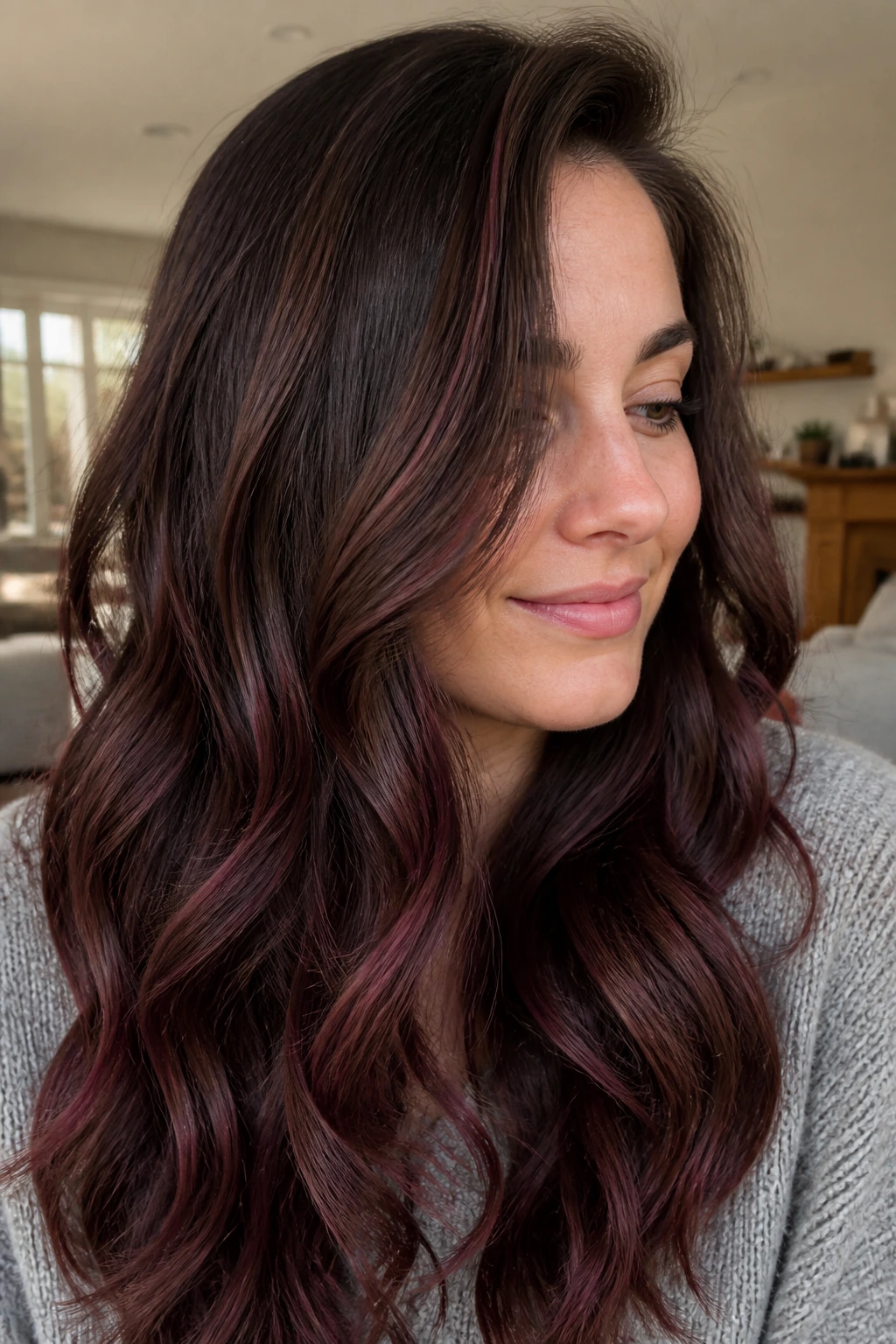
Mulberry is the purple shade that flatters warm brown hair most often because it borrows a little red without turning straight burgundy. That tiny shift makes it feel richer, not sweeter, and it sits beautifully on chestnut, cocoa, and cinnamon-brown bases.
The look comes alive in waves. Each bend catches a slightly different part of the color, so the hair never reads as one block. You get brown, then plum, then a soft berry shine, all in the same pass. That kind of movement is why mulberry looks better in real life than on a flat color swatch.
I like this version when the balayage begins a few inches below the root and gets denser near the ends. Too much color up top can flatten the whole effect. A mid-length start keeps the brown in charge and lets the mulberry feel like a deeper tone rather than a full rewrite.
If you like lipstick in berry shades, this hair color tends to feel easy. If you lean cool-toned in clothing and makeup, it can still work, but the warmth in the mulberry is what makes it feel wearable on brown hair.
7. Smoky Lilac on Medium Brown Hair
Why It Needs a Smarter Formula
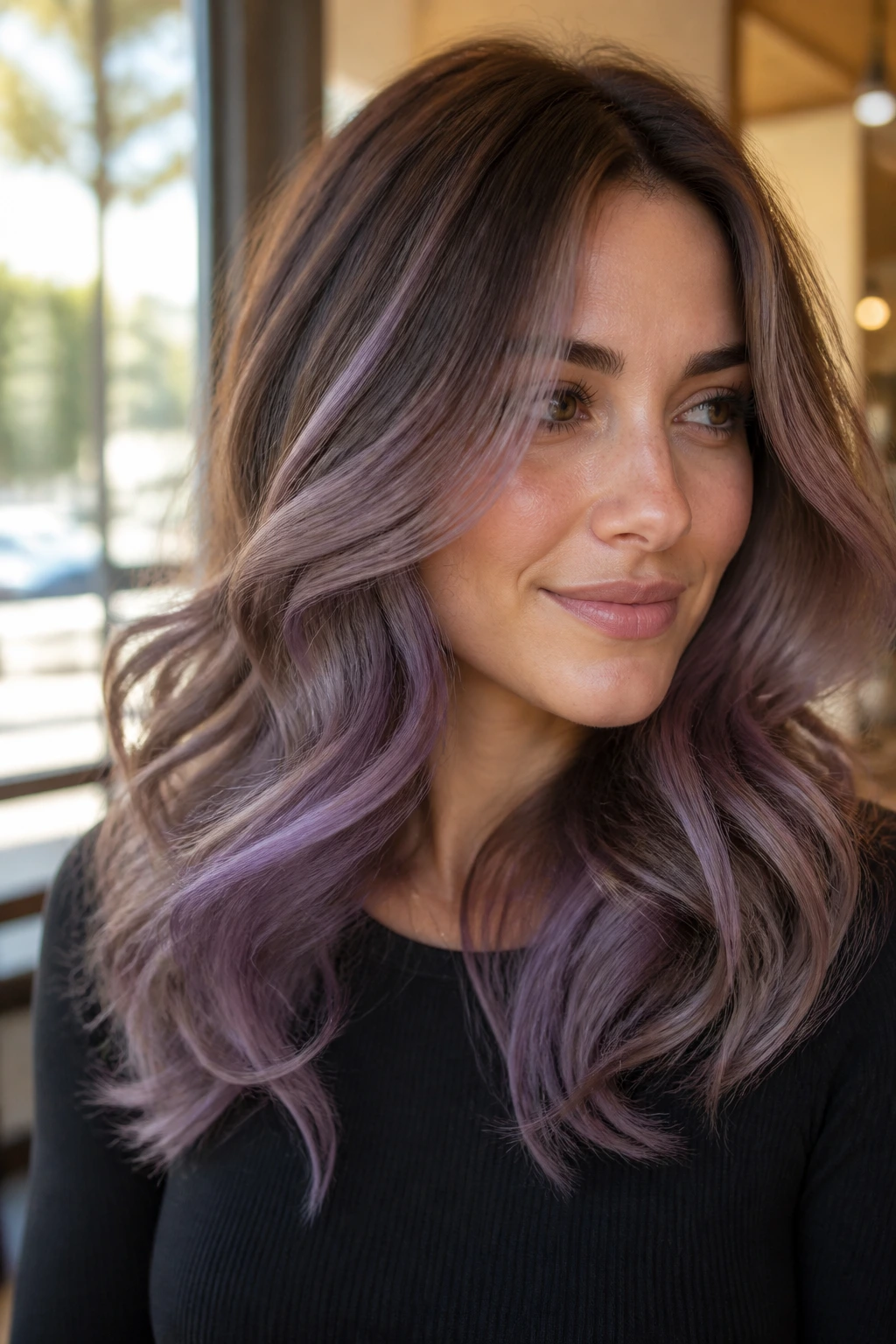
Medium brown hair can carry lilac, but only if the shade is toned down enough to avoid a chalky finish. A smoky lilac has a gray-blue base that keeps it from looking too sugary, and that matters when the brunette underneath still shows through.
The best placement is soft and airy. Think fine balayage strokes through the mid-lengths with a little extra lightness at the ends. You want the purple to look like it settled there naturally, not like it was stamped on in one flat layer.
What to Ask Your Colorist For
- a medium brown base with feathered lilac ribbons
- cool, smoky toning rather than pastel pink-lilac
- lighter ends and softer mid-lengths
- a gloss that keeps the color from turning muddy
This look is especially nice on layered cuts. The shorter layers lift and separate the color, so the lilac does not disappear into the brown. On one-length hair, it can still work, but the movement has to come from styling.
8. Orchid Peekaboo Balayage
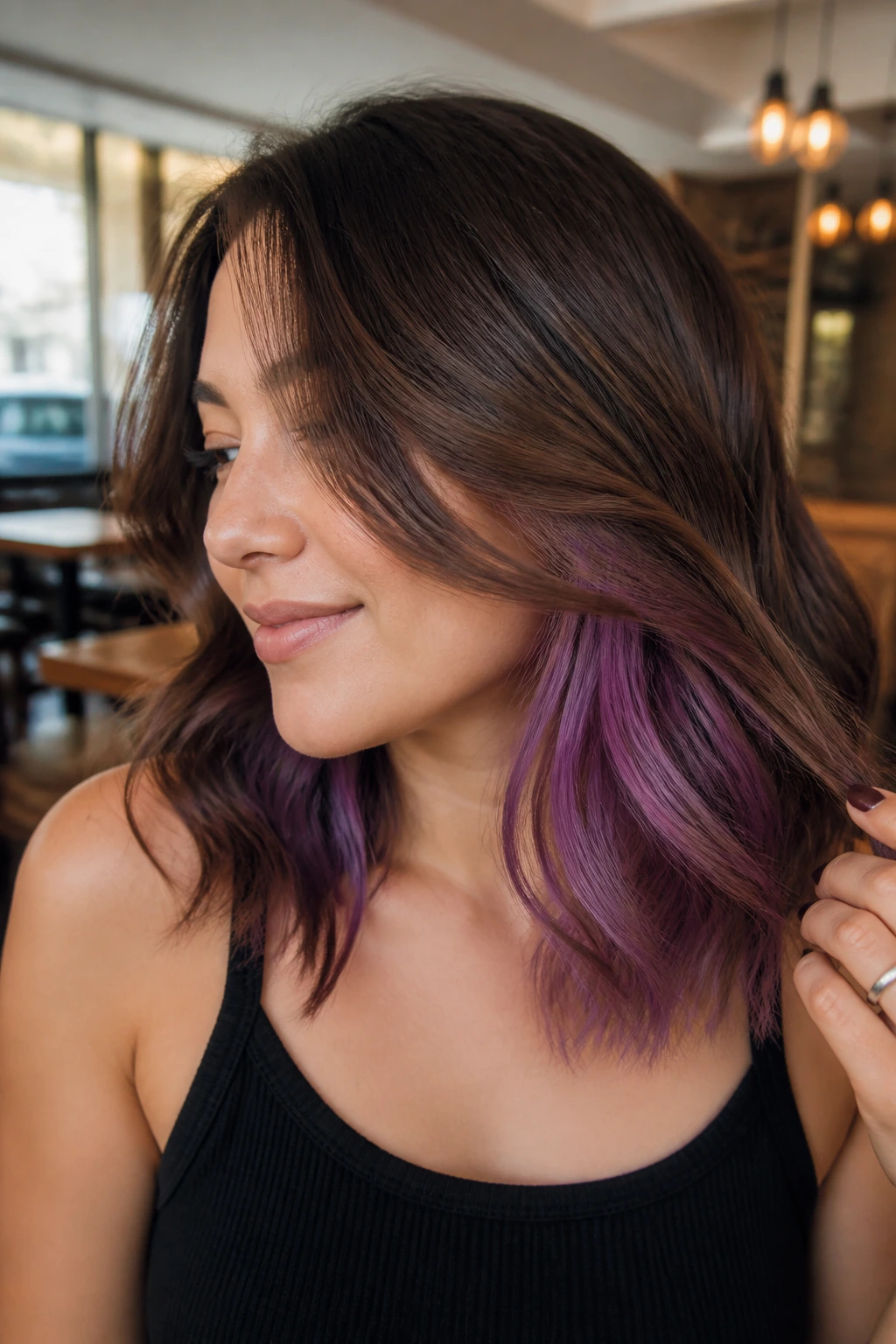
Orchid peekaboo color hides under the top layer of brown hair and flashes out when the hair swings. It is a smart choice if you want purple without announcing it from across the street.
The whole point is surprise. From the front, the hair can look like a clean brunette with a little extra shine. Turn to the side, tie it half up, or tuck one side behind the ear, and the orchid shows up in a bright strip under the surface. That hidden placement makes the look easier to wear in stricter settings, too.
How to Wear It
- Best cut: layered lob, long shag, or shoulder-length waves
- Placement: underlayers and side panels, not the very top
- Tone: orchid with enough depth to avoid going pastel-white
- Styling trick: clip the top layer up while drying to keep the hidden color visible
I would not use this look if you only wear your hair bone straight and flat. The reveal matters here. Give it a wave, a braid, or a half-up knot, and it becomes much more interesting.
9. Plum and Mahogany Blend
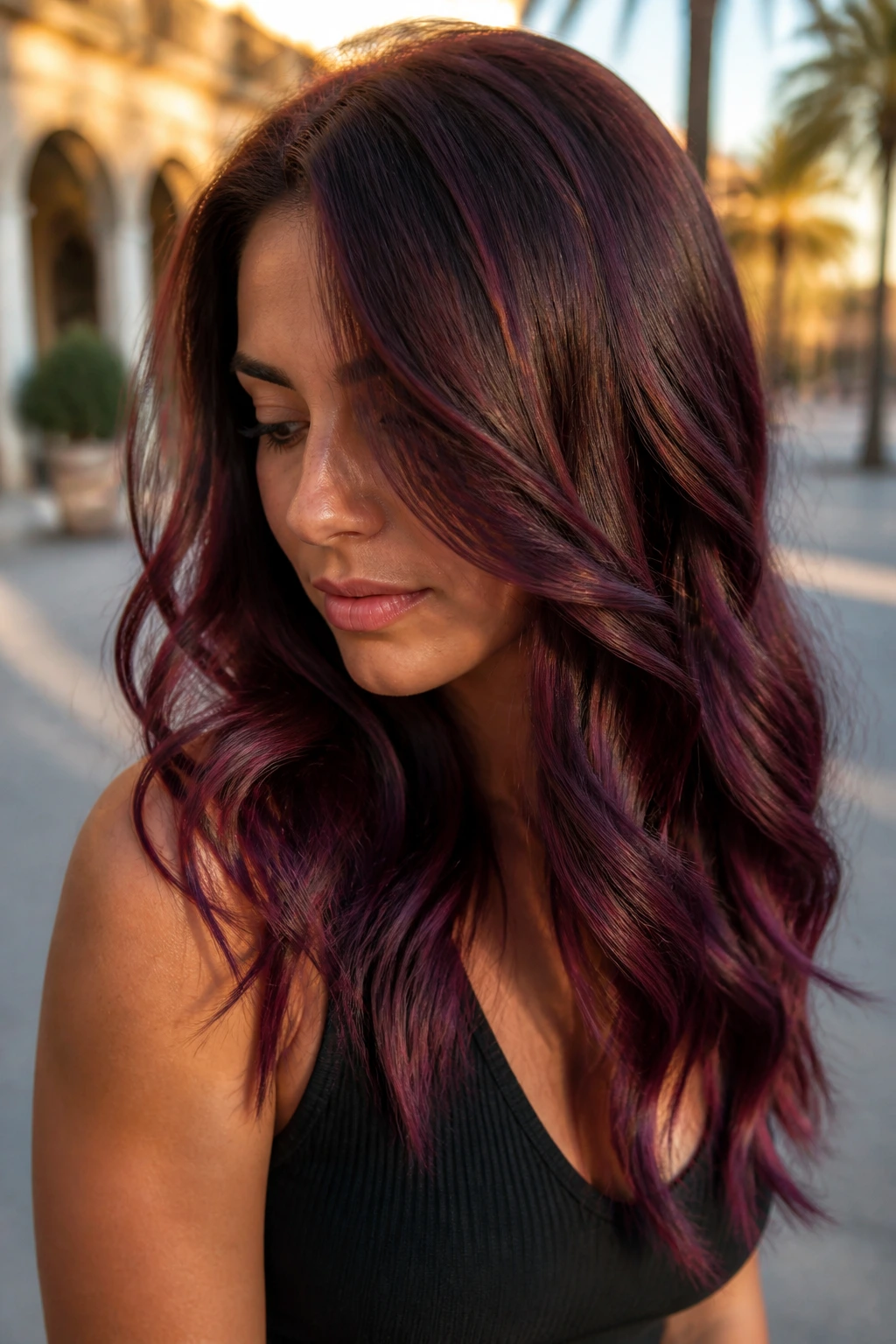
Plum and mahogany together make sense in a way that bright purple sometimes does not. The mahogany softens the purple, the plum keeps the red from taking over, and the result is a brunette-friendly blend that feels warm but still colorful.
This is a good choice if your natural hair already pulls chestnut or auburn in the sun. The balayage does not have to fight the base color; it can sit alongside it. Ask for mahogany ribbons near the top and darker plum through the ends so the mix feels layered instead of muddy. Too much red at the root will drag the whole style into burgundy territory, and that is a different look altogether.
It works especially well on medium-thick hair with some wave. The blend shows up in motion and gives the hair that glossy, dimensional feel people usually try to fake with heavy highlights. The color does not need to be loud to be interesting. In fact, the softness is the point.
10. Royal Purple S-Curve Balayage
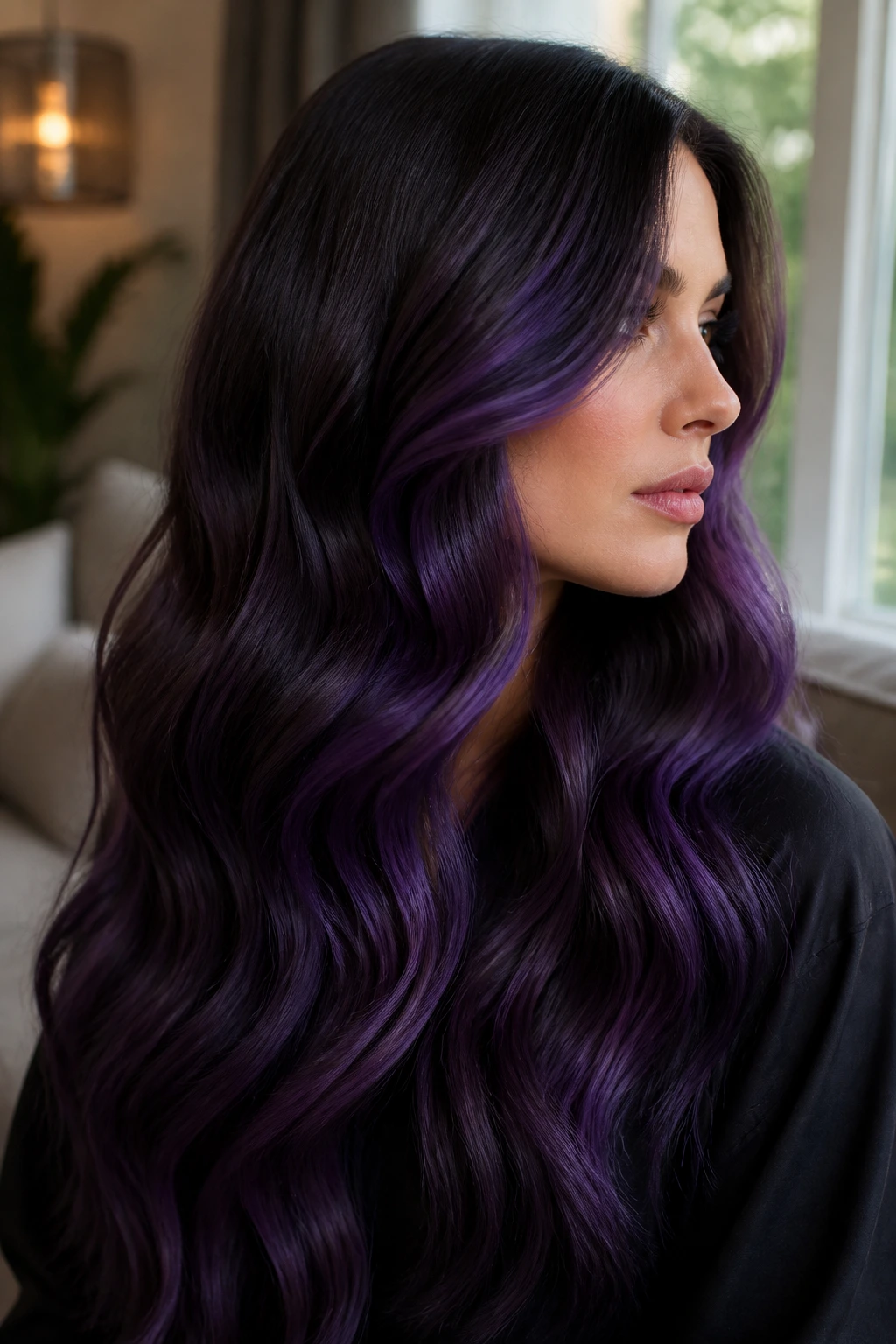
Royal purple looks best when the color follows the bend of the hair instead of fighting it. That is what makes S-curve placement so smart on brown hair. The color lands where the hair naturally curves, so every wave carries a little pocket of purple.
The effect is clean and a bit dramatic. On long wavy hair, the purple does not sit in straight stripes; it arcs through the mid-lengths, then dips out, then comes back again. That repeated movement keeps the look from feeling heavy.
A few things matter here:
- Hair type: wavy and loosely curly textures show the S-curve fastest
- Shade: royal purple or deep violet keeps the contrast clear
- Placement: paint along the wave pattern, not across it
- Styling: a one-inch curling iron or a wide flexi-rod set brings out the shape
This is one of those looks that depends on good cutting, too. If the layers are blunt in the wrong places, the curve gets lost. Give the hair room to swing, and the color starts doing half the work for you.
11. Pastel Lavender Frost on Brunette Curls
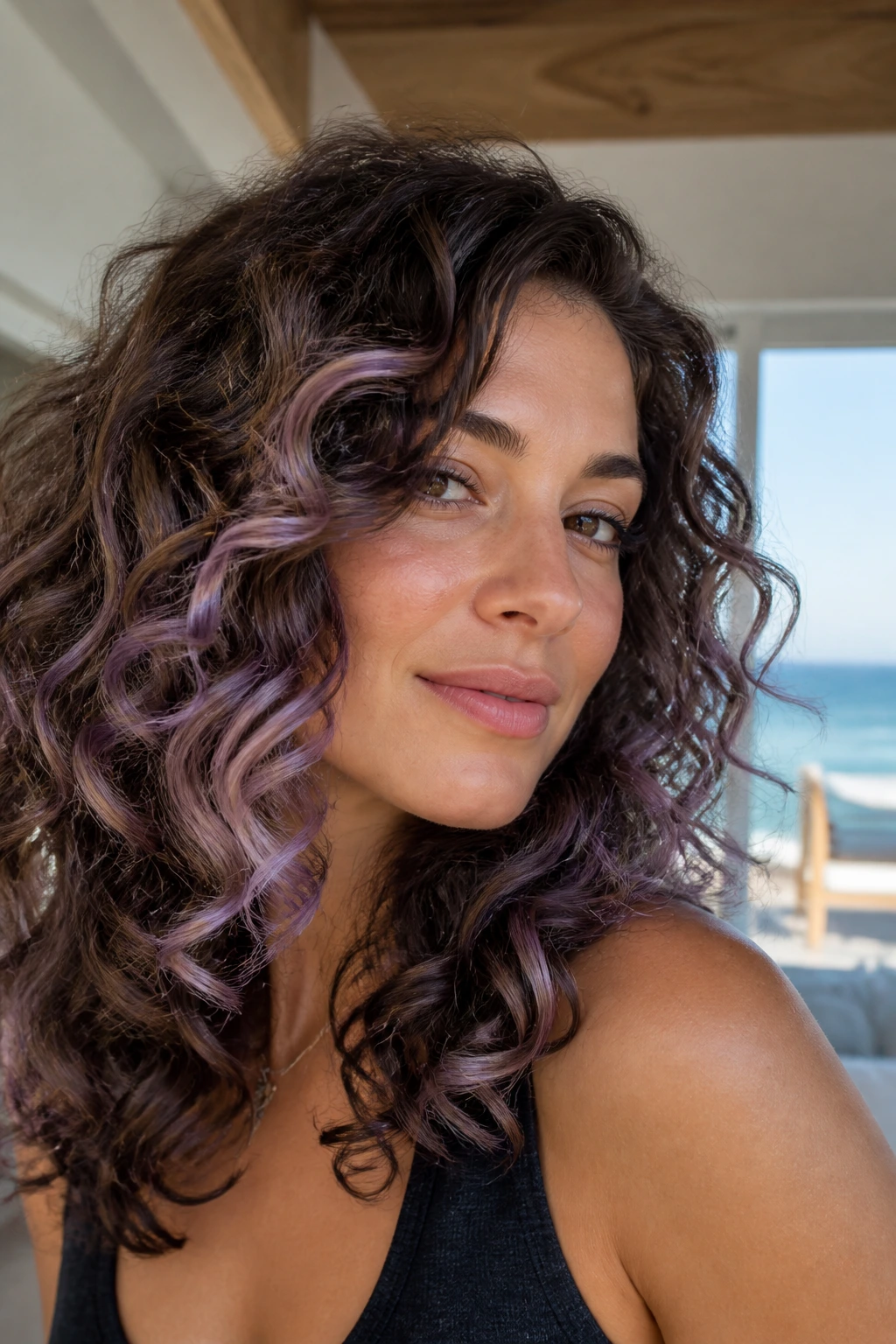
Pastel lavender on curls is not about brightness. It is about bounce. The curl pattern breaks the color into little flashes, so even a soft lavender can feel lively on a brunette base.
The catch is porosity. Curly hair often lifts unevenly, and light purple can go patchy if the pre-lightening is sloppy. A careful colorist will place the palest pieces where the curl needs the most movement — usually around the outer curve and the top of the spiral — while leaving some darker brown underneath for depth. That mix keeps the result from looking washed out.
If you wear your curls loose, this shade has a lovely airy quality. If you wear them defined and glossy, the lavender reads a little more polished. Either way, I would keep the tone cool rather than icy-white. A cool lavender keeps the brown base visible and makes the curls look softer, not fried.
12. Wine Purple Balayage for Straight Hair
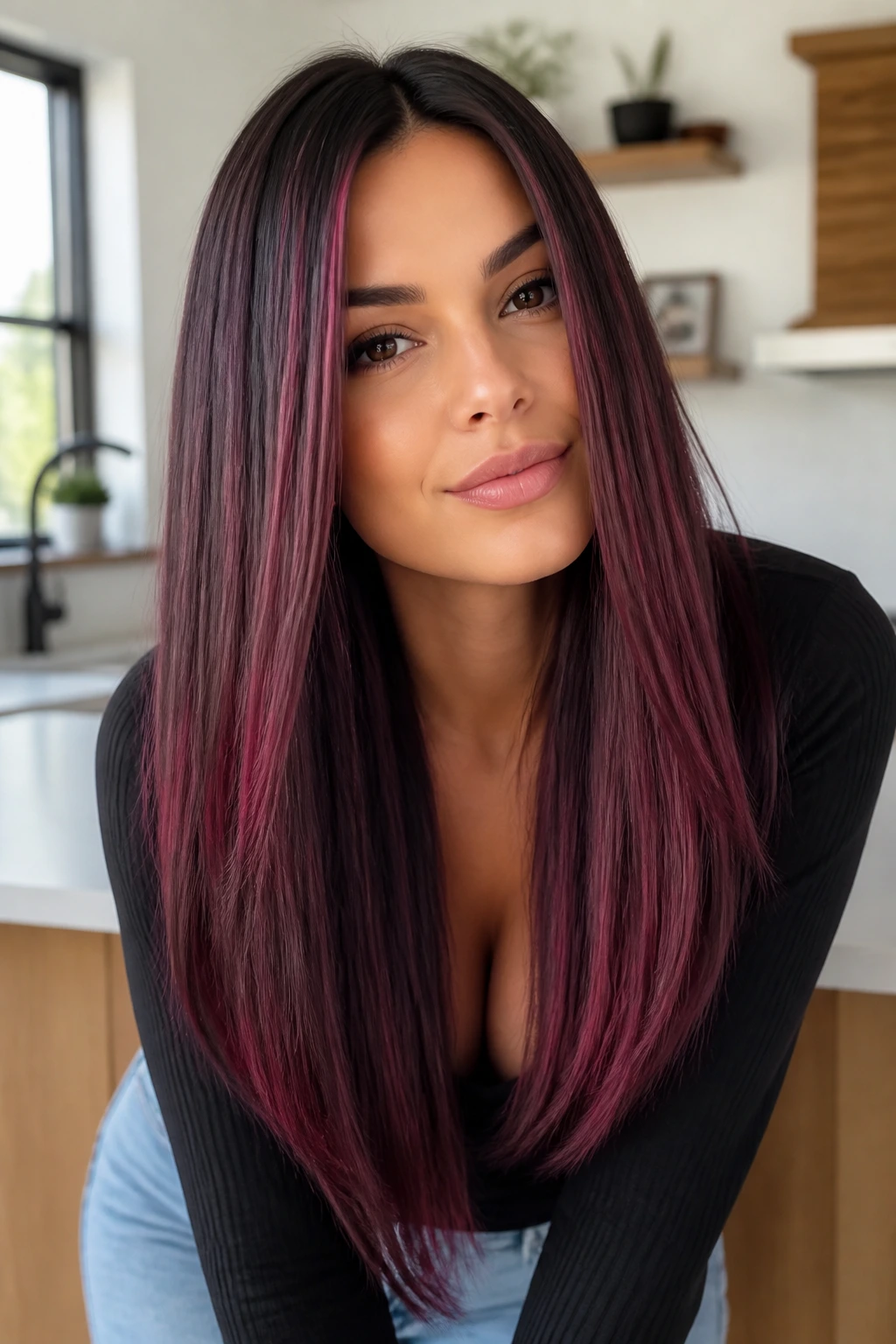
Straight hair can carry purple balayage just fine. It just needs better paneling. Without bends and waves to break up the color, every line shows, so the placement has to be cleaner and a little narrower.
Wine purple is a smart answer because it stays rich on a brunette base and gives the hair a sleek, polished finish. The shade usually looks strongest on glossy straight cuts where the ends move as one sheet. Keep the root close to the natural brown and let the wine tone build through the mid-lengths and ends. That keeps the line of color from looking chopped.
This one is also good if you like a more tailored feel. Curly and wavy hair can make purple look airy or soft; straight hair makes it look deliberate. If you want that sharp, glassy finish, wine purple is a better choice than soft lilac. It has enough depth to stand on its own.
13. Cool Mauve Melt on Chestnut Brown
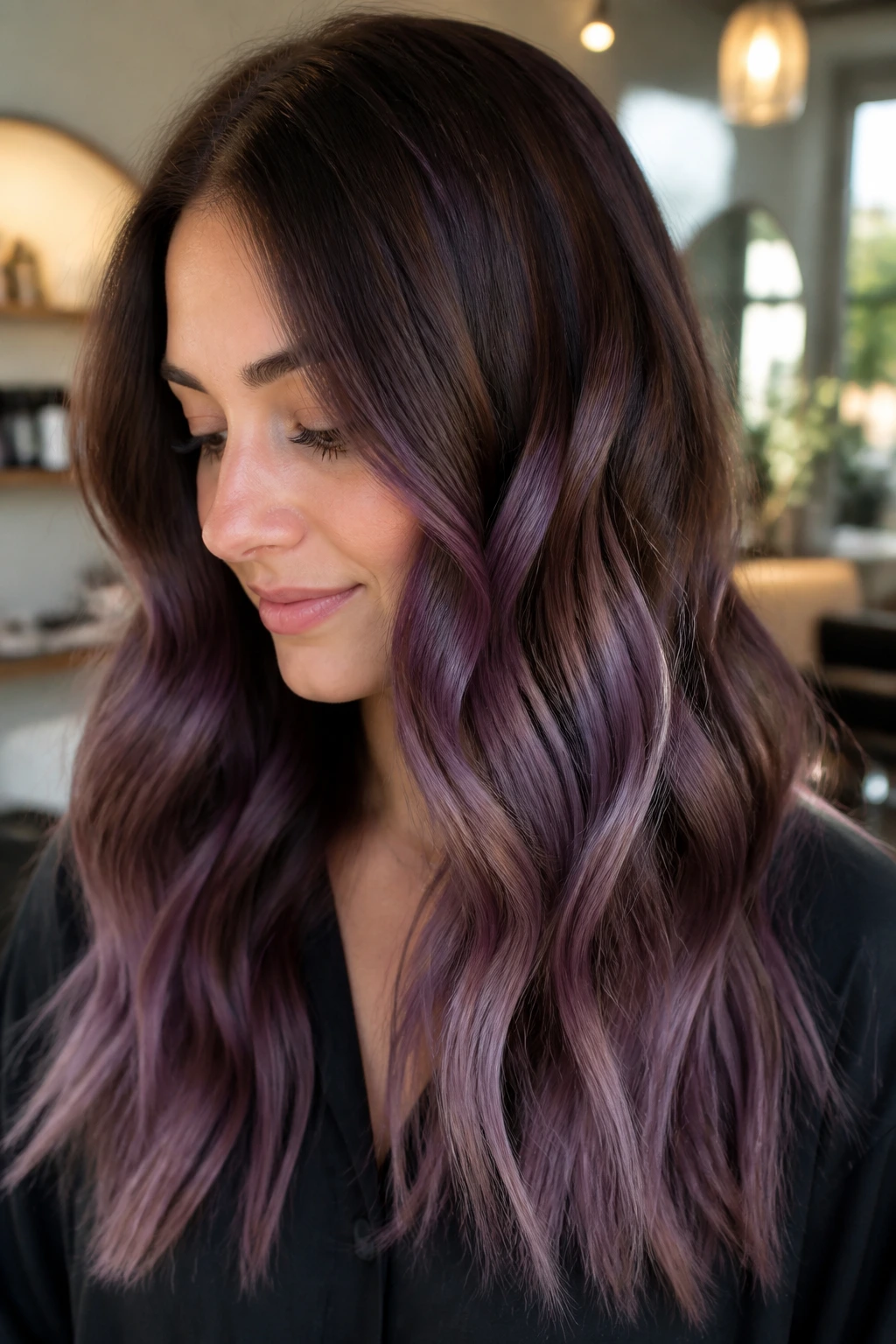
Cool mauve solves a common brunette problem: the base is warm, but the purple should not turn pink. Chestnut brown especially benefits from a mauve that has a gray edge, because it keeps the color calm instead of candy-bright.
Where the Mauve Sits Best
A smooth melt from chestnut roots into mauve mid-lengths works best when the transition is soft and the ends are the lightest part. You want the brown to stay visible through the top layer so the mauve feels woven in, not pasted over. On layered hair, the effect can look almost smoky.
Good Pairings
- Best cuts: soft layers, long bobs, and curtain bangs
- Best finish: loose, brushed-out waves
- Best tone: mauve with ash undertones
- Best vibe: understated, but not boring
If you like warm makeup — bronze lids, nude lips, brown mascara — this shade sits nicely beside it. It is one of the easier purple looks to wear every day because it does not fight the rest of your style.
14. Eggplant Underlayers
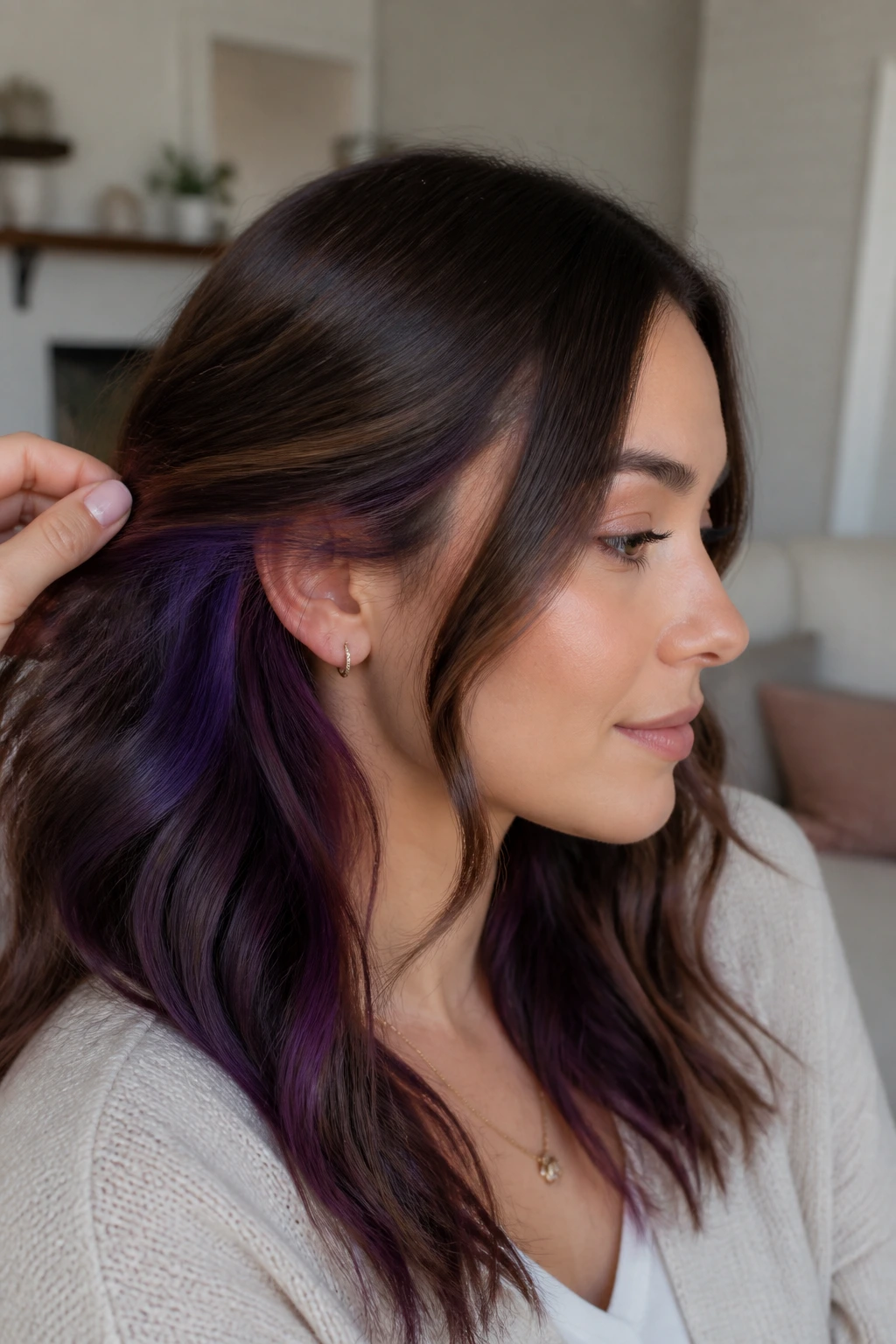
Eggplant underlayers are for people who like a little rebellion hidden under a neat exterior. On brown hair, the top stays brunette, and the purple lives underneath until the hair moves, lifts, or gets tucked up.
That hidden placement does two things at once. First, it keeps the look wearable in everyday life. Second, it makes the color feel stronger when it does appear because the reveal is sudden. A quick sweep of the hair behind one ear, and there it is — that deep purple flash under the brown.
Best Cut Pairings
- long bobs with a slight wave
- layered mid-length cuts
- thick hair that can hide the color well
- blunt cuts if you want a heavier, more secretive reveal
This is not the look for someone who wants constant brightness. It is the look for someone who likes contrast with a little restraint. If you wear your hair up often, it gets even better, because the underlayer suddenly has a job.
15. Iridescent Purple on Curly Brown Hair
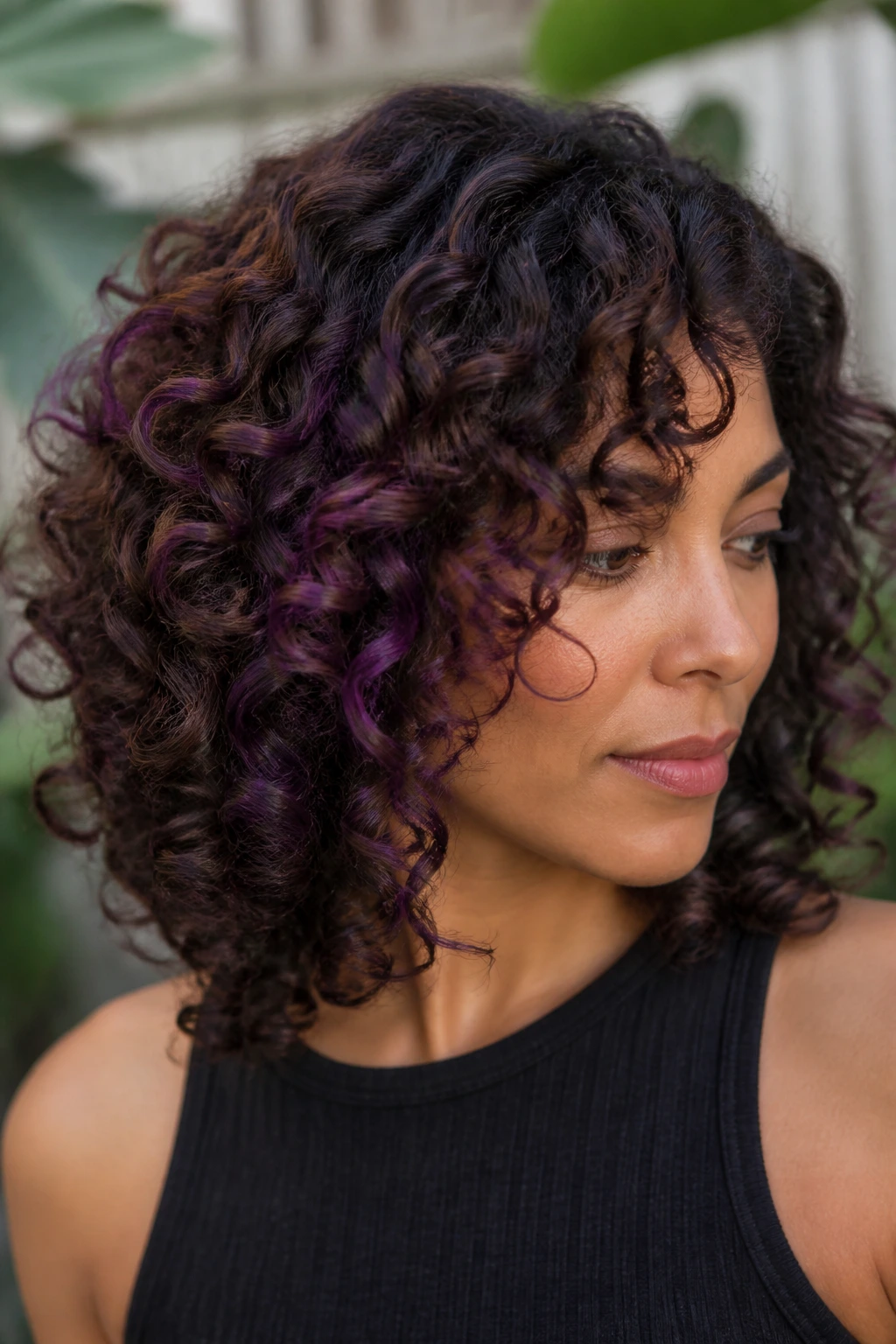
Curly brown hair can handle purple in a way straight hair often cannot: the shape breaks the color into pieces, and that makes iridescent tones feel alive. A few curls catch violet, a few catch plum, and a few stay brown. The whole thing moves like fabric.
That is why I like a diffused placement here. Instead of painting one heavy stripe, the color should be scattered through the curl family — outer rings, mid-shaft bends, and the front curls that fall closest to the face. The effect is softer from a distance and more interesting up close.
One detail matters more than people think: shine. Curly hair that leans dry can mute the iridescence fast. A light curl cream and a gloss-friendly finish help the purple reflect instead of sinking in. If the curls are moisturized and shaped, the color looks richer without needing more dye. That is the part people miss. They chase brightness when what they really need is reflection.
16. Purple Balayage with Curtain Bangs
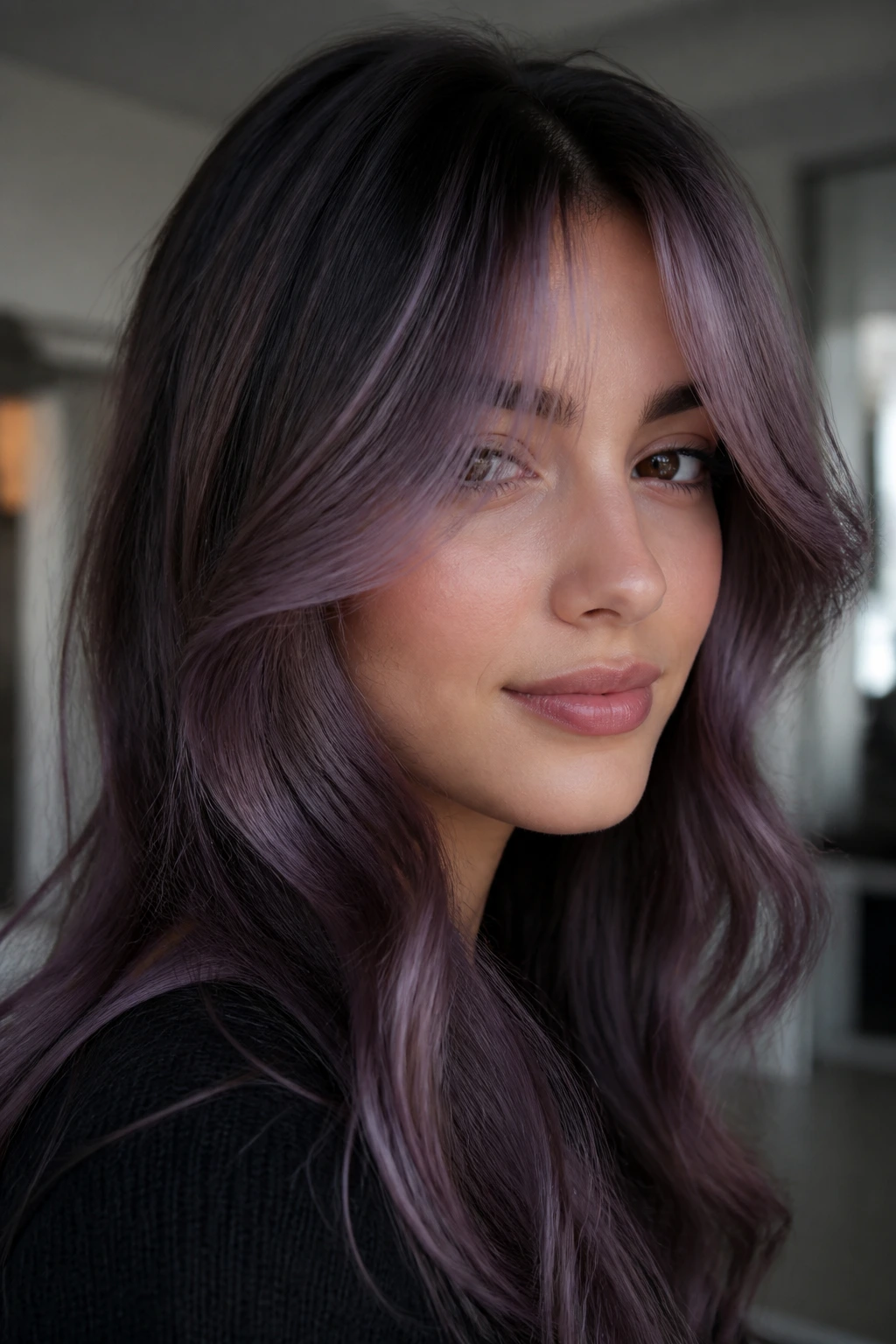
Curtain bangs change the whole equation. They put purple right where the eye lands first, so the front pieces cannot be an afterthought. If the bangs are brown and the lengths are purple, the style can feel disconnected. A better move is to give the fringe a lighter lavender or violet edge and keep the rest of the balayage softer.
This look works because curtain bangs already split the face in a flattering way. Add purple to that split, and the color frames the eyes instead of sitting in the background. The rest of the hair can stay more muted — plum through the mids, deeper brown at the root, lighter violet around the bangs. That contrast gives the cut shape.
I would pick this for anyone who likes layered hair and wants the color to show in selfies without needing big curls. It is one of the easiest ways to make brown hair feel playful without going full fantasy shade.
17. Blue-Violet Melt for Dark Brunettes
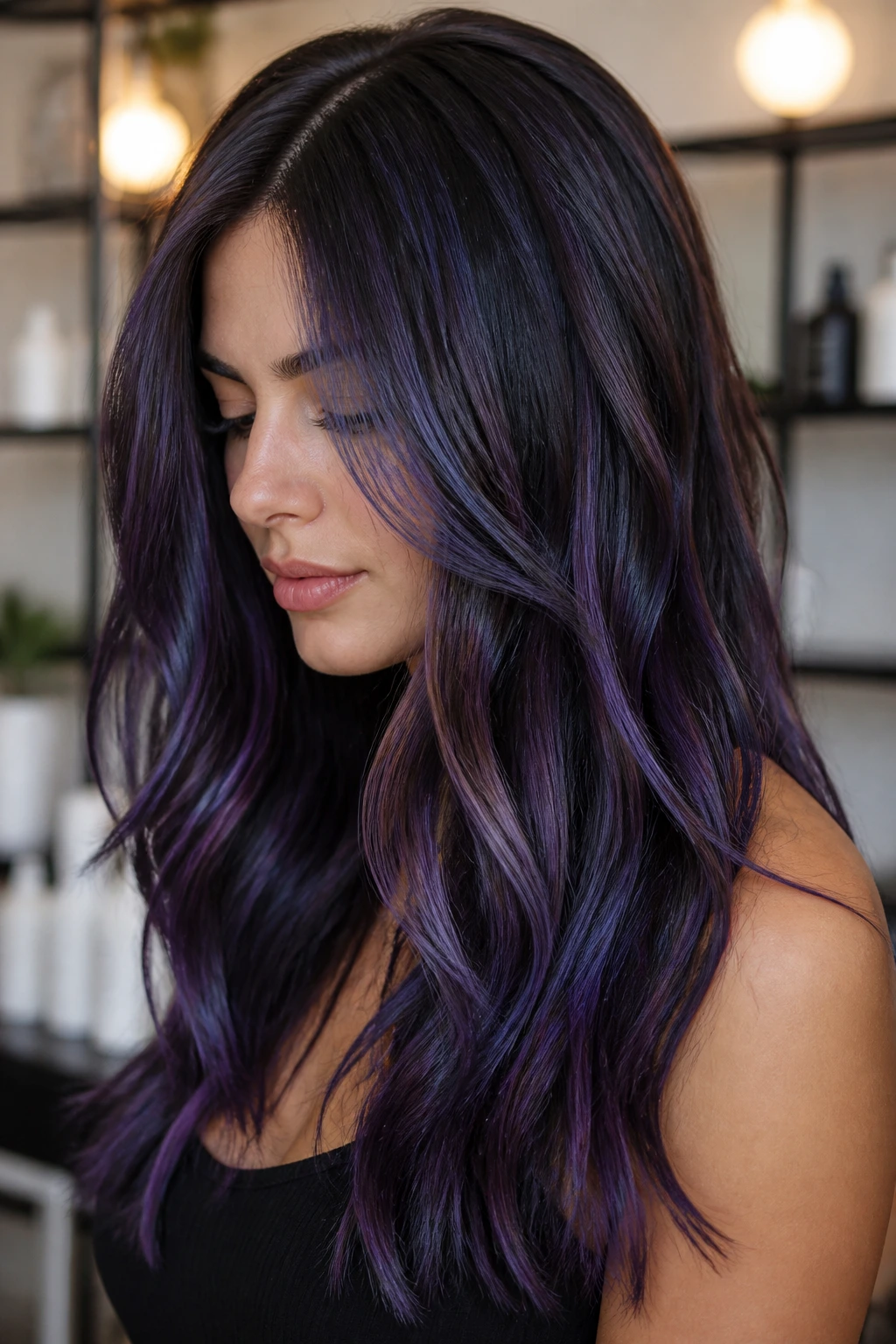
Blue-violet is the cleaner cousin of red-purple on dark brown hair. It reads cooler, usually looks deeper, and tends to hold its shape better on very dark brunettes because the blue base keeps the tone from turning warm or muddy.
What It Looks Like
The shade can look almost inky indoors and more violet outside. That shift is the point. On espresso or soft black-brown hair, blue-violet creates a satin-like finish when it is painted in thin, deliberate ribbons. Too much of it, and the effect turns heavy. Just enough, and the hair looks glossy and expensive-looking in the plain sense of the word: polished, deep, and tidy.
How to Get the Most From It
- keep the root natural or close to natural
- concentrate the color from mid-length to ends
- style with soft bends so the blue and violet can alternate
- use a color-safe mask that does not strip tone
This is the choice for someone who wants purple that leans cool, not berry. It is moody in a good way.
18. Plum Balayage with Caramel Interludes
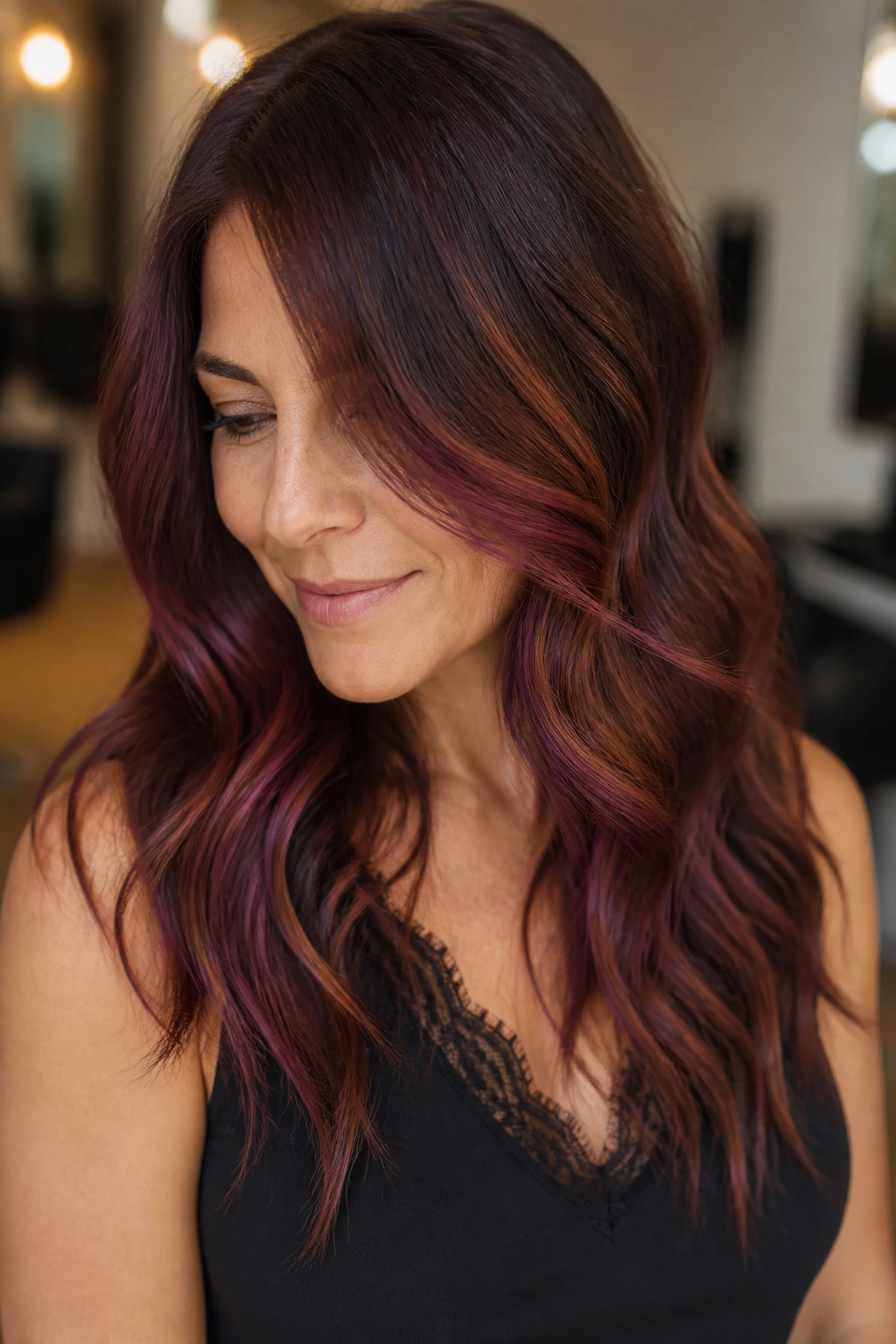
This only works when caramel plays backup, not lead singer. A few warm interludes beside plum can make brown hair look glossy and dimensional, but if the caramel gets too wide or too bright, the whole thing starts fighting itself.
The trick is restraint. Keep the caramel narrow and muted, more honey-brown than orange-gold, and place it between plum ribbons instead of beside huge purple panels. That little bit of warmth can actually make the plum read richer, especially on chestnut or medium brown hair. It gives the eye a place to rest.
I like this look on thick hair and big waves. The contrast is easier to hold when there is enough hair to spread it across. On finer hair, too many colors can look busy. On thicker hair, the mix feels layered and alive.
19. Soft Violet Lob Balayage
A lob gives violet balayage room to breathe. The cut sits right around the shoulders or just below, which means the colored ends hit where people actually notice movement. That makes it a strong match for brown hair that needs a little lift without losing its natural weight.
Why the Lob Helps
The shorter length keeps the color from fading into the background. On long hair, violet can disappear if the waves are too stretched out; on a lob, the ends stay visible and the whole shape feels fresher. The cut also makes soft violet easier to maintain because the colored section is smaller.
Best Details to Ask For
- a brown root with violet ribbons through the lower half
- a soft bend, not tight curls
- slightly lighter ends than mids
- a gloss every few washes to keep the violet clean
This look is neat on someone who likes polish. It does not need to be loud. It needs to be crisp.
20. Grape-Tinted Money Pieces
Grape-tinted money pieces are louder than violet face-framing highlights because the front sections are thicker and the color is a touch brighter. The effect is deliberate. You know it is there from the first glance, and that is the fun of it.
The rest of the hair should stay calmer. Dark brown lengths with soft balayage through the ends make the front panels pop without turning the whole style into a purple block. This contrast is what keeps the look from getting chunky. If everything is bright, nothing stands out.
I like grape money pieces for ponytails and half-up styles. They still show when the hair is pulled back, and they make basic styles feel less ordinary. If your makeup is simple and your wardrobe leans neutral, this kind of front color does a lot of work for you.
21. Rooty Purple Grow-Out Balayage
Rooty purple balayage is the low-maintenance answer to people who do not want to chase touch-ups every few weeks. The brown root is left deeper on purpose, then the purple is painted lower and softened enough that the grow-out looks built in.
That root shadow does more than save salon time. It also keeps the color from looking pasted on. The brown gives the purple a frame, and as the hair grows, the style gets softer instead of messier. I prefer this on people who wear waves or textured blowouts because the movement helps hide any line where the color starts.
A few practical details make a difference:
- keep the root at least an inch and a half darker
- ask for a soft fade through the mid-lengths
- use a demi-permanent purple or a gloss for the ends
- avoid a hard line near the part
If you like color that gets better as it relaxes, this is the one.
22. Smoky Plum Ends on Long Layers
Long layers and smoky plum ends make an easy pair. The layers keep the length from feeling heavy, and the plum gives the ends a little drama without taking over the whole head.
This works best when the darker brown stays near the crown and the plum deepens as it falls toward the bottom. The color should look richer near the middle and softer at the very tips, almost like the ends were dipped in smoke. That is the kind of fade that flatters long hair, because the length has room to show a slow change.
If your hair is thick, this look can be especially good. The layers stop it from turning into a curtain, and the plum breaks up the mass. If your hair is finer, keep the colored panels thinner and let the waves do the heavy lifting. A large-barrel curl or a lazy braid-out gives the shade more movement than pin-straight styling.
Final Thoughts
Purple balayage on brown hair works best when the color respects the base instead of covering it up. That is the whole game. The brown gives the purple shape, and the purple gives the brown edge.
If you want the easiest starting point, Midnight Plum Ribbon Balayage and Rooty Purple Grow-Out Balayage are the most forgiving. If you want the loudest result, Grape-Tinted Money Pieces and Orchid Peekaboo Balayage bring the drama fast.
Pick the version that fits how you wear your hair most days. That choice matters more than the shade chart.
