



Gray balayage on brown hair has a narrow sweet spot, and that is exactly why it’s so satisfying when it’s done well. Too warm, and the gray can slide toward muddy taupe. Too bright, and the whole thing starts looking like striped frosting instead of hair color with depth.
The strongest versions keep a brunette base in charge. That base can be espresso, chocolate, chestnut, mocha, walnut — anything with enough darkness to make the gray read as intentional instead of random. The gray itself can lean smoky, pewter, graphite, silver, or mushroom. Tone matters. So does placement.
A lot of the magic comes from restraint. Balayage is hand-painted, which means the color can hover on the surface of the hair instead of punching through every strand the same way a foil highlight would. On brown hair, that softer placement keeps the look from getting harsh, and it also gives the gray room to look dimensional instead of flat.
The hardest part is choosing the mood. Do you want whisper-soft ash ribbons that only show when the light moves? Or something cooler and bolder, with a silver money piece or graphite ends that make people look twice? The looks below move through that whole range, from quiet to high-contrast, and a few of them are the kind I’d point to if someone said they wanted gray without the usual color chaos.
1. Mushroom Brown with Silver Veils
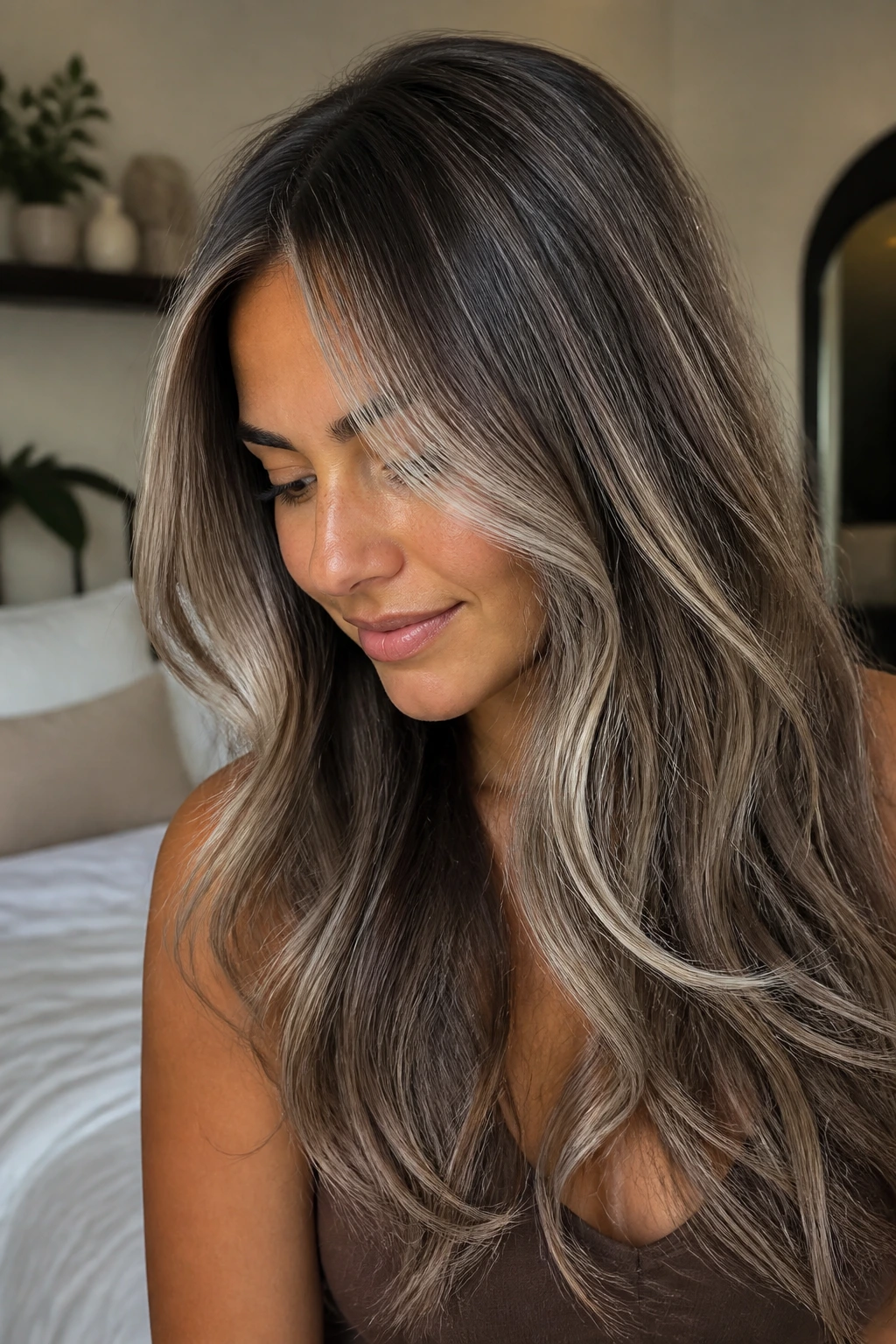
This is the most wearable version of gray balayage on brown hair, and I mean that in the plainest possible way: it looks expensive without trying to look loud.
Why It Works
Mushroom brown has that soft, earthy base that already sits in the cool lane, so the silver doesn’t have to fight the brunette. The result is a veil of grayish light, not a hard stripe. On medium brown hair, that kind of placement keeps the color from reading flat or muddy.
Ask for the lightest pieces to stay feathered through the mid-lengths and ends, with just a few brighter threads near the face. A beige-silver gloss keeps the whole thing from turning steel-blue. That gloss matters more than people think.
- Best on level 5 to 6 brown hair
- Looks especially good on loose waves or a soft blowout
- Ask for fine, airy hand-painted pieces, not chunky streaks
- A neutral-to-cool toner keeps the silver from going smoky green
Pro tip: keep the root area deeper than the ends. That little bit of shadow is what makes the silver look delicate instead of pasted on.
2. Ash Espresso with Feathered Silver Ends
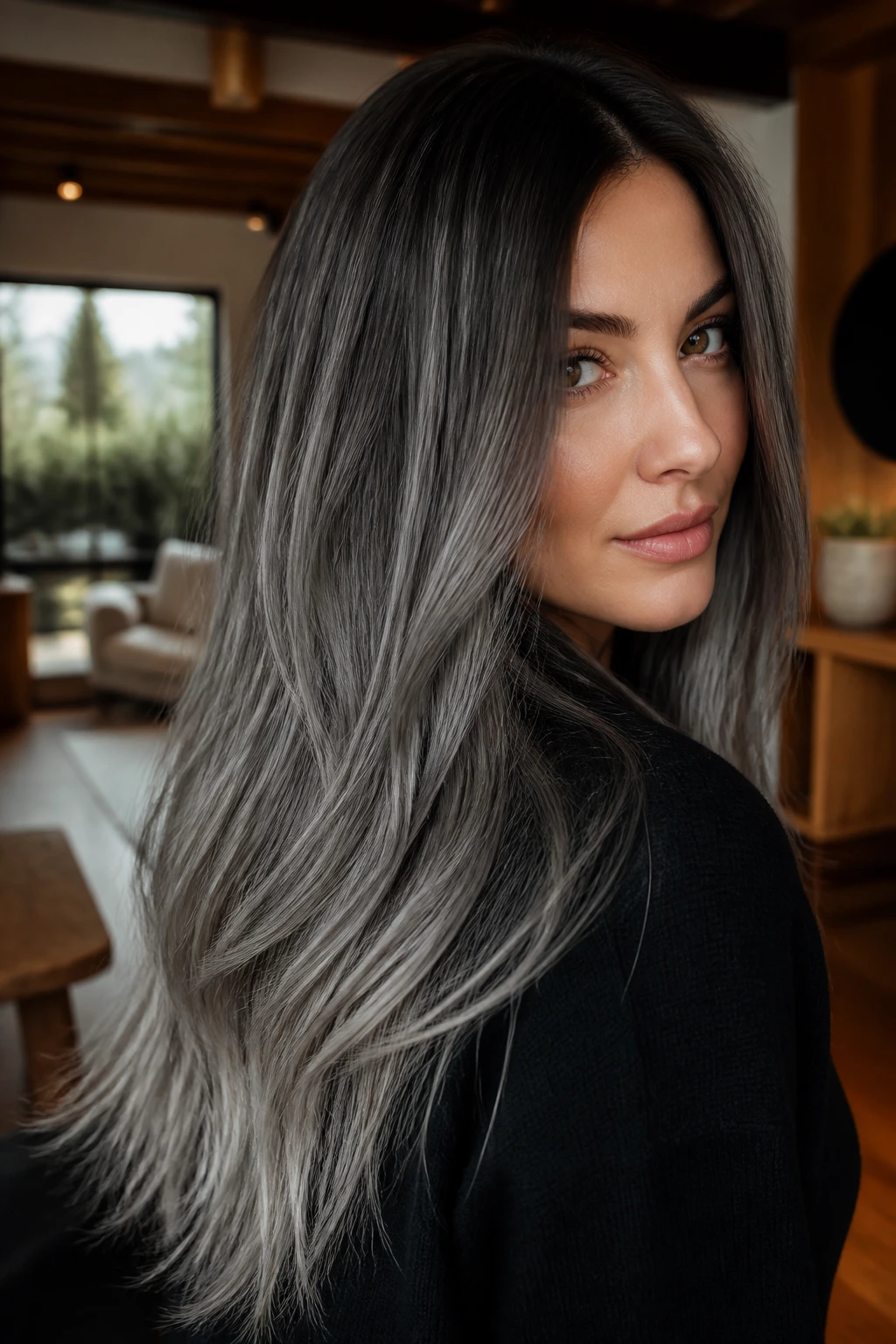
Want gray balayage that stays moody instead of bright? This is the one I’d put near the top of the pile.
Espresso brown gives the color enough depth to hold a cooler silver tone without losing contrast. The silver ends should not start abruptly. They should feather down from the mid-lengths, almost like the color is dissolving into smoke. On straight hair, that soft fade looks sleek. On curls, it reads more textured and a little wild.
I like this version most on long hair with movement at the bottom, because the ends need space to show off. A blunt cut can work too, but it makes the gray feel more graphic. That can be good if you want edge. Not so good if you want softness.
Where to Wear It
- Long layers for movement
- Collarbone cuts for a cleaner finish
- Hair that holds a bend or wave easily
- People who want a darker, cooler overall look
3. Charcoal Ribbon Balayage on Chocolate Brown
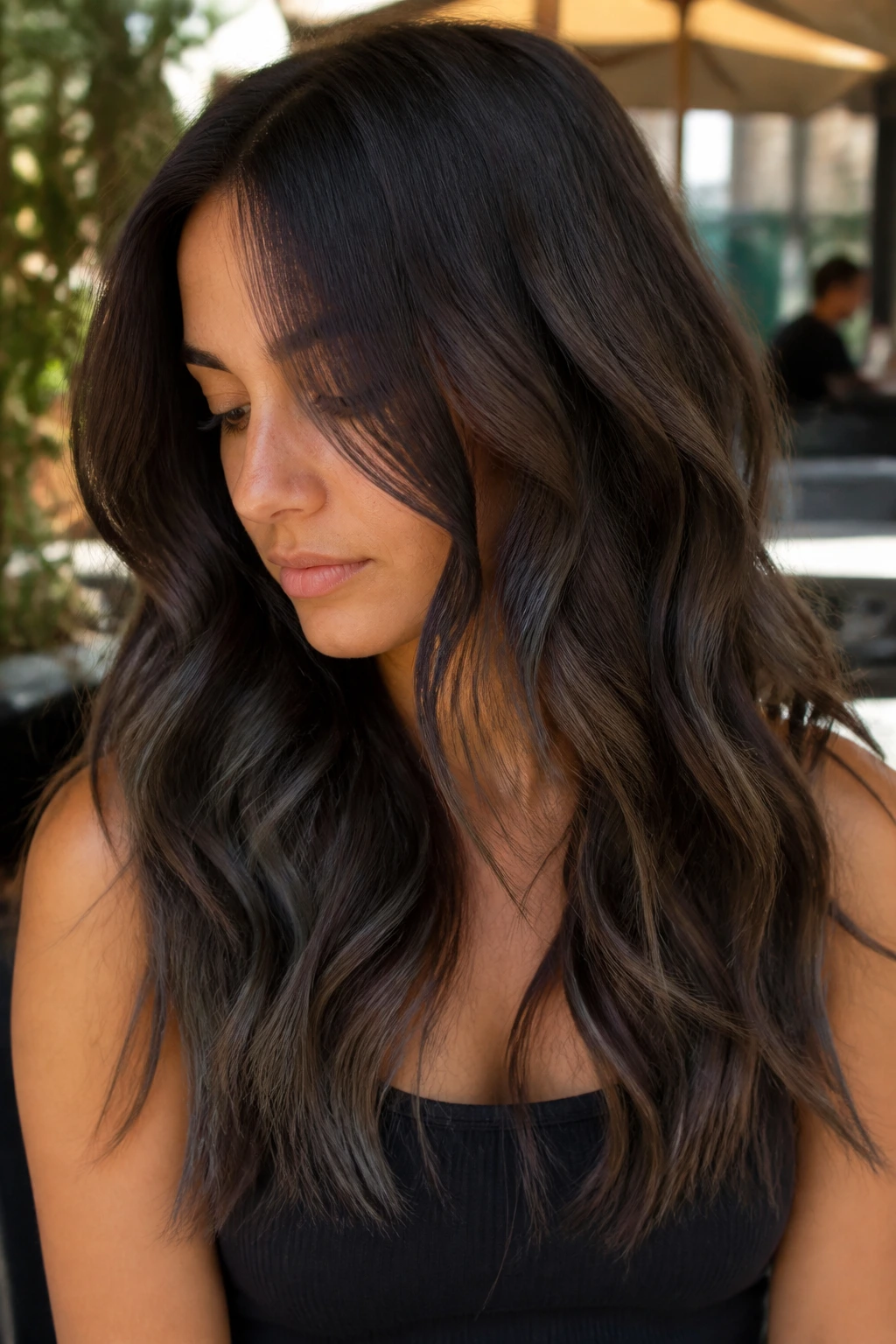
Charcoal ribbons are for someone who wants the gray to be seen, not guessed at. They thread through chocolate brown hair like thin strips of graphite paper, which sounds odd and looks good.
The trick is keeping the ribbons irregular. If every line starts and stops at the same point, the hair can look like it was striped with a ruler. Real balayage needs a little scatter. Some ribbons should sit under the top layer. Some should peek out near the temple. A few can live through the ends and get caught when the hair moves.
What Makes It Different
- Stronger contrast than mushroom or ash melts
- Better on glossy, healthy hair because shine shows the contrast
- Good for wavy hair that breaks up the ribboning
- Needs a colorist who knows where to leave darkness on purpose
The finish should feel sleek, not metallic for the sake of being metallic. If the charcoal starts to look blue-black, the brown underneath has been crowded out.
4. Silver Money Piece on Dark Brunette
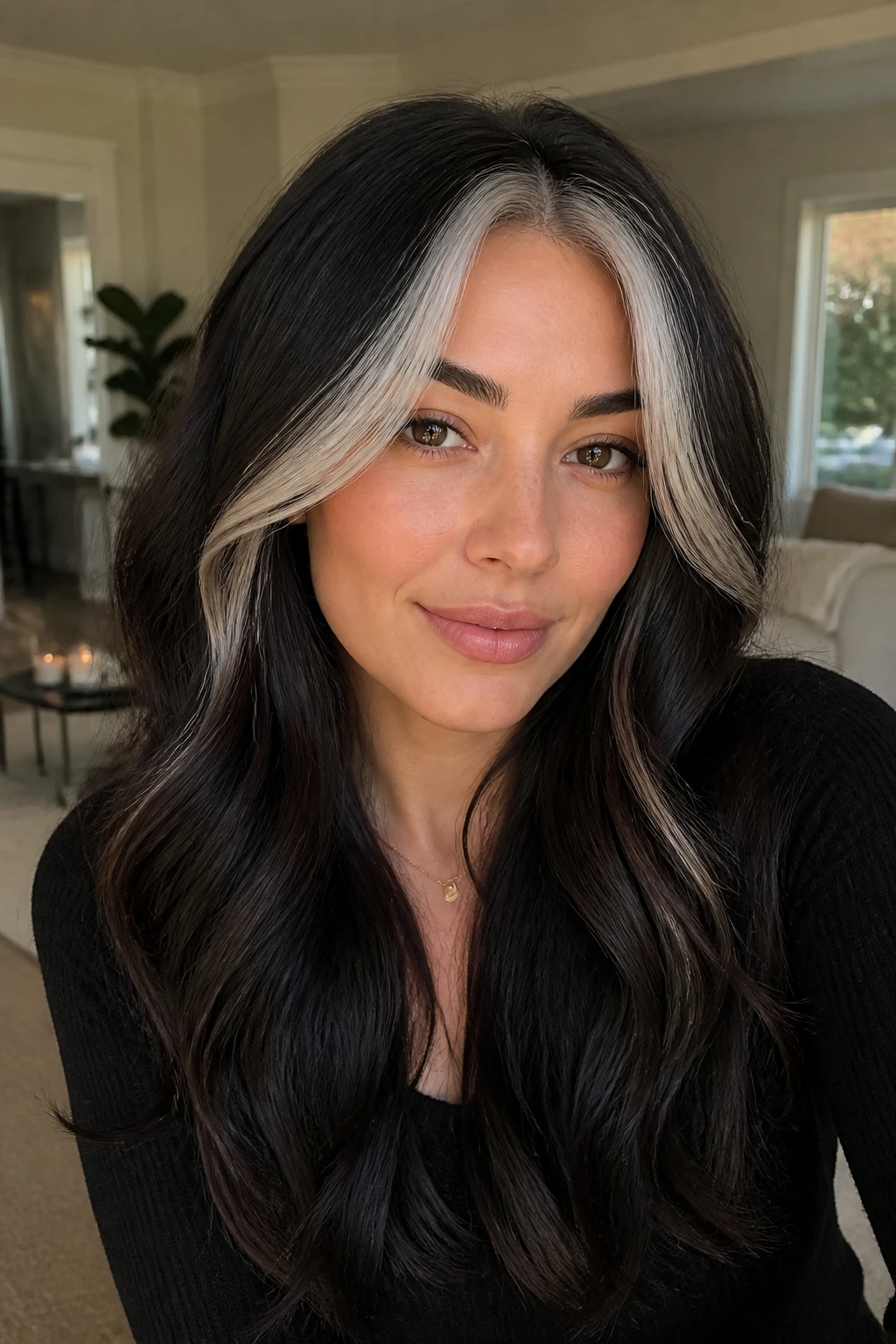
A money piece doesn’t have to be blonde. Gray can sit there too, and on dark brunette hair it has a sharper, cooler bite.
This look keeps most of the hair deep and rich, then plants the brightest silver right at the front. That placement changes the whole face. It pulls the eye upward and gives the hair a little frame, almost like a built-in highlight around the cheekbones. The rest of the balayage can stay softer and darker so the money piece does the talking.
If your hair is naturally dark, this is also a good place to test how much gray you actually want. Full-head silver can feel like a lot. Front brightness is easier to live with. Easier to grow out, too.
Seriously, this one loves a center part. A deep side part can work, but the center part lets both sides hold equal weight and keeps the look balanced instead of lopsided.
5. Smoky Melt from Chestnut to Pewter
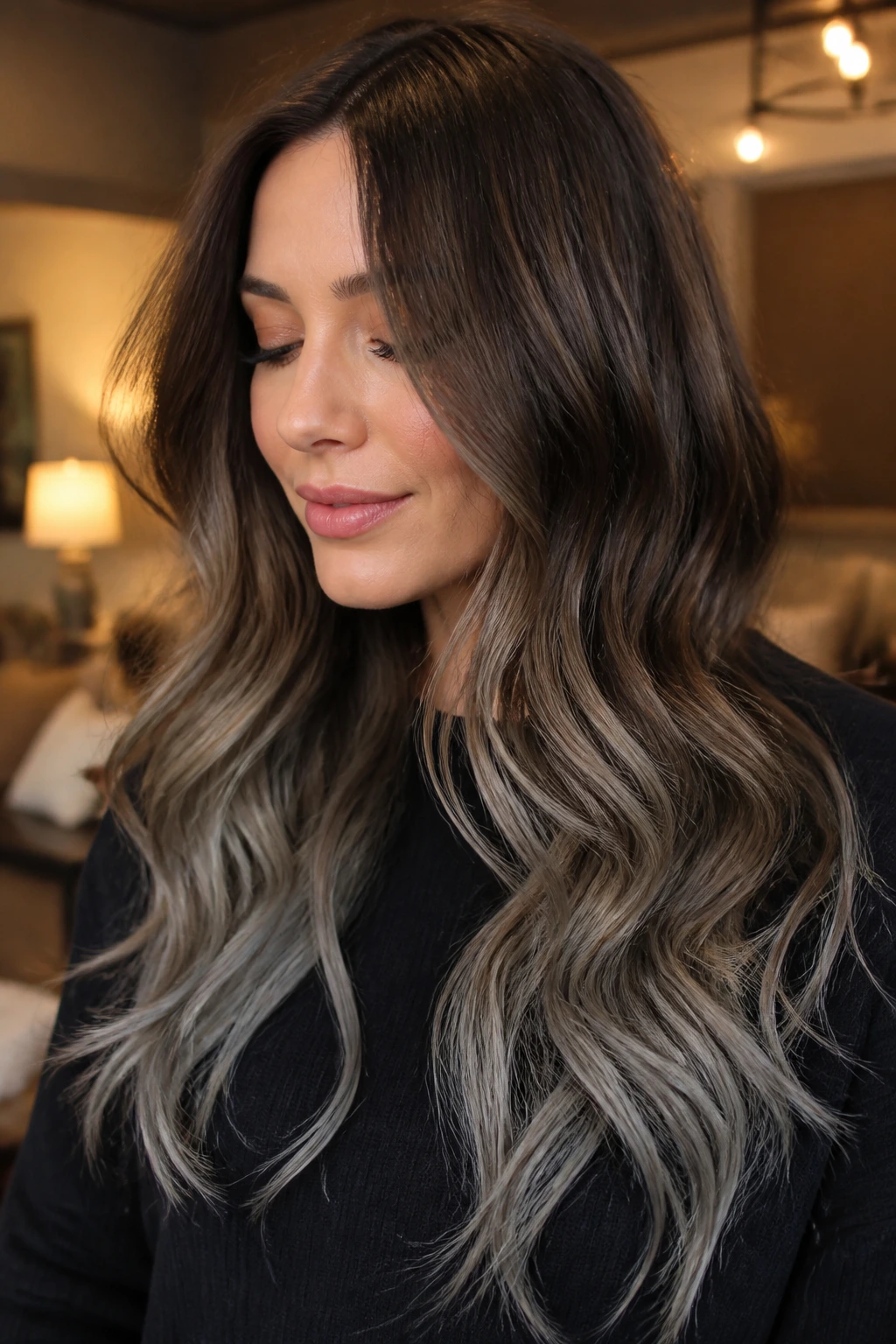
Chestnut brown has warmth in it, and that warmth can either help gray balayage or complicate it. The best versions use the warmth as a base note, then cool it down until the hair reads smoky and soft.
The melt should move gradually from chestnut at the root and interior sections into pewter at the ends. Not silver-white. Pewter. That distinction matters. Pewter keeps some softness and avoids that brittle, over-bleached feel that can make brown hair look strained.
A colorist usually has to lift chestnut a little cleaner than espresso if the goal is a cool finish. If the base stays too red or orange, the gray will fight it. And when gray fights warmth, the whole look goes dull fast.
This style works beautifully on medium-length hair with movement. The blend shows best when the ends can separate a little. A satin blowout is enough. You do not need perfect curls here.
6. Cool Beige Brown with Gray Lowlights
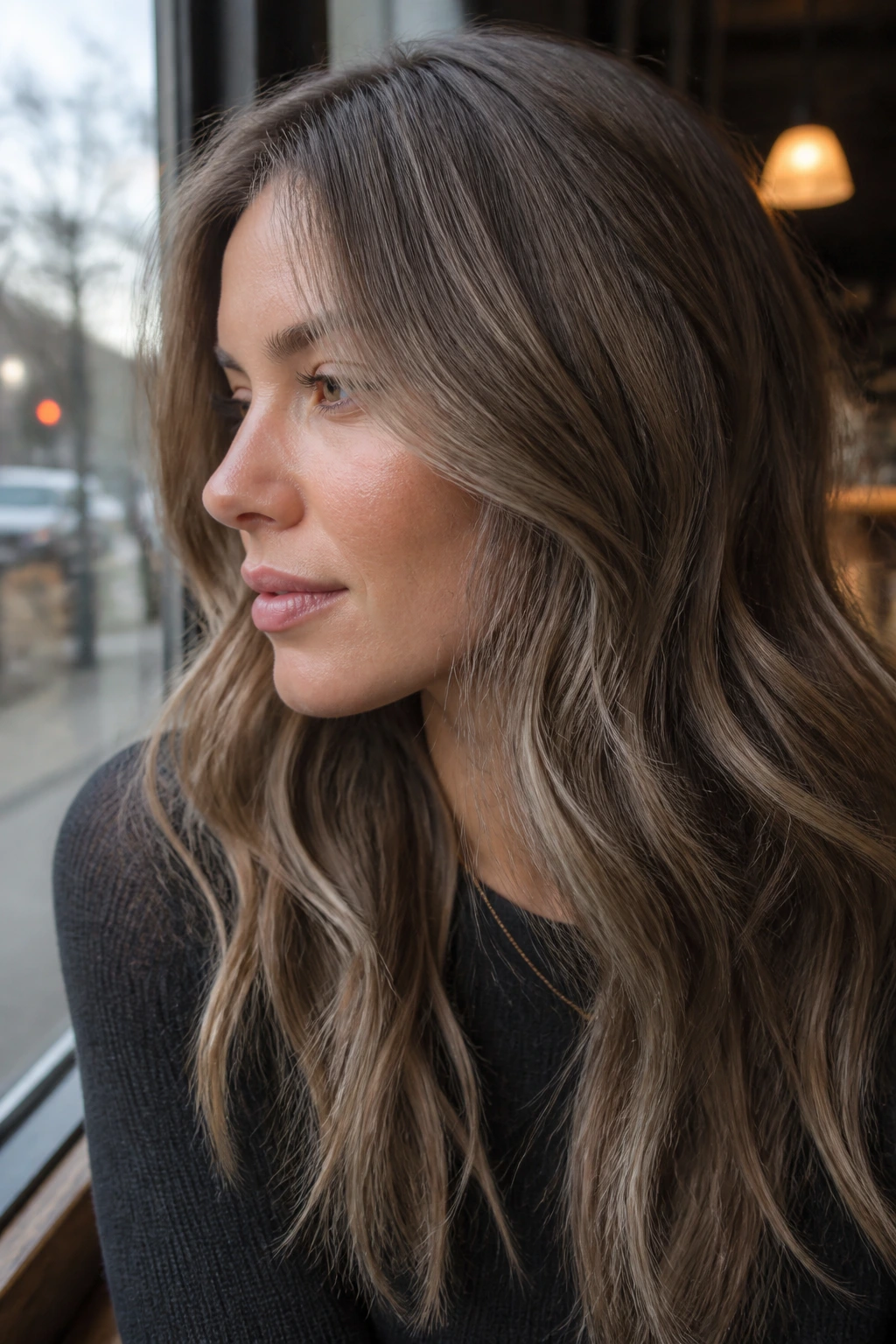
Not every gray balayage needs to brighten the hair. Sometimes the smartest move is to go in the other direction and use gray lowlights to cool down a beige brown base.
That sounds subtle because it is. And subtle is the point. Gray lowlights add depth in the same way a shadow in a painting makes the light areas look lighter. On fine hair, that extra depth can keep the color from looking washed out. On thicker hair, it stops the length from turning into one solid block of brown.
Best Places for the Lowlights
- Underneath the top layer, where they show through movement
- Around the nape for hidden depth
- Through the interior so the surface still feels bright
- Near the face only if you want a cooler frame
This is a smart choice if you like brunette color but want it to feel more editorial. It also grows out well because the darker notes are doing half the work.
7. Graphite Tips on Long Layers
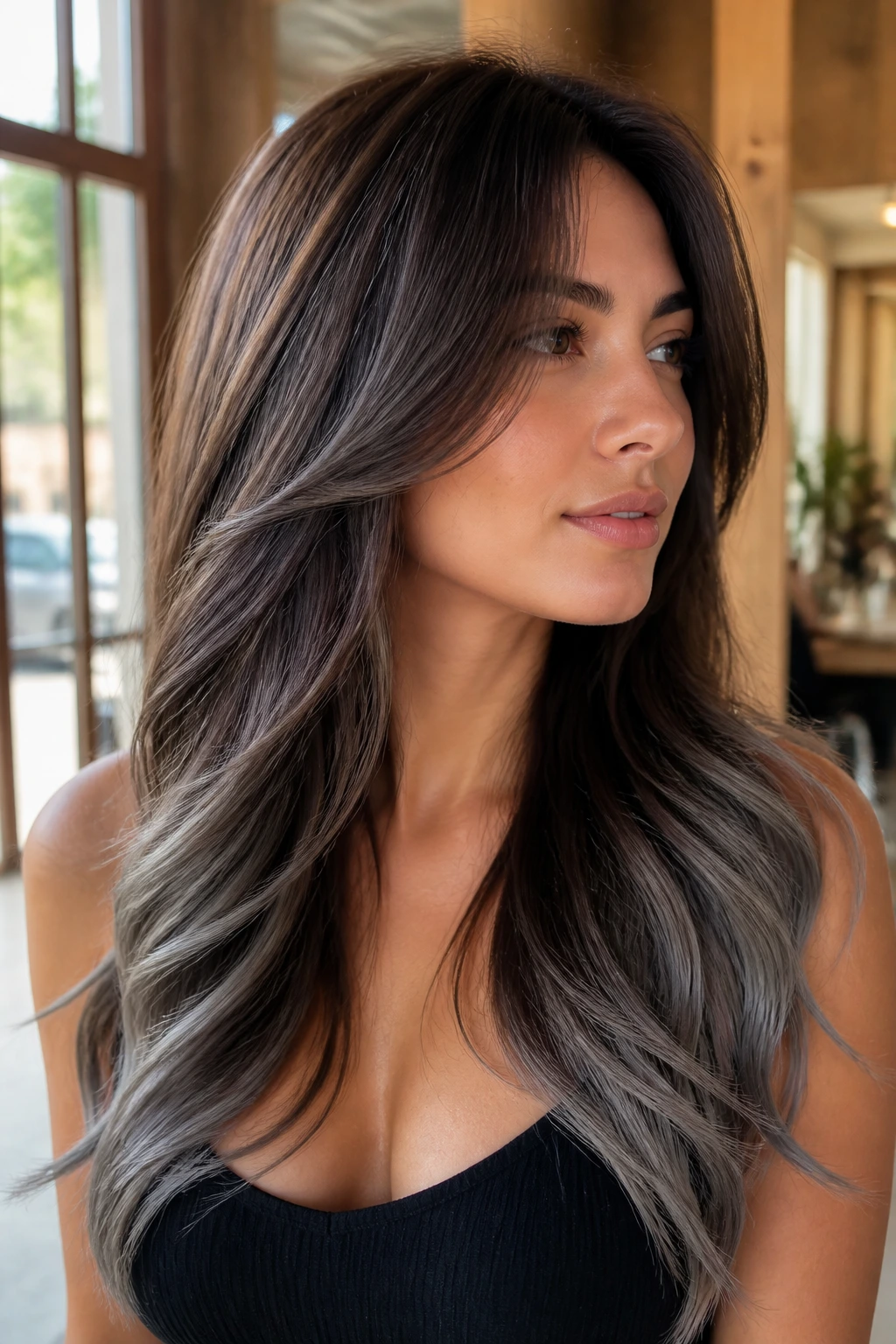
Long layers and graphite tips belong together. The cut gives the color places to move, and the graphite brings the ends into focus without bleaching the whole head to death.
A lot of gray balayage looks depend on the mid-lengths. This one lives at the bottom. The ends get the heaviest concentration of cool silver-gray, while the top stays brown and polished. On layered hair, that creates a nice swing when you walk. The bottom flashes first. Then the upper pieces catch up.
I prefer this look on darker brunettes who want a little drama but not full silver. It’s also one of the easier styles to tone because the gray sits where the hair is already the lightest.
Watch for this: if the layers are too choppy, the graphite tips can look disconnected. You want movement, not a shredded finish. A little softness in the cut keeps the color from feeling harsh.
8. Pearl Gray Babylights Through Mocha Brown
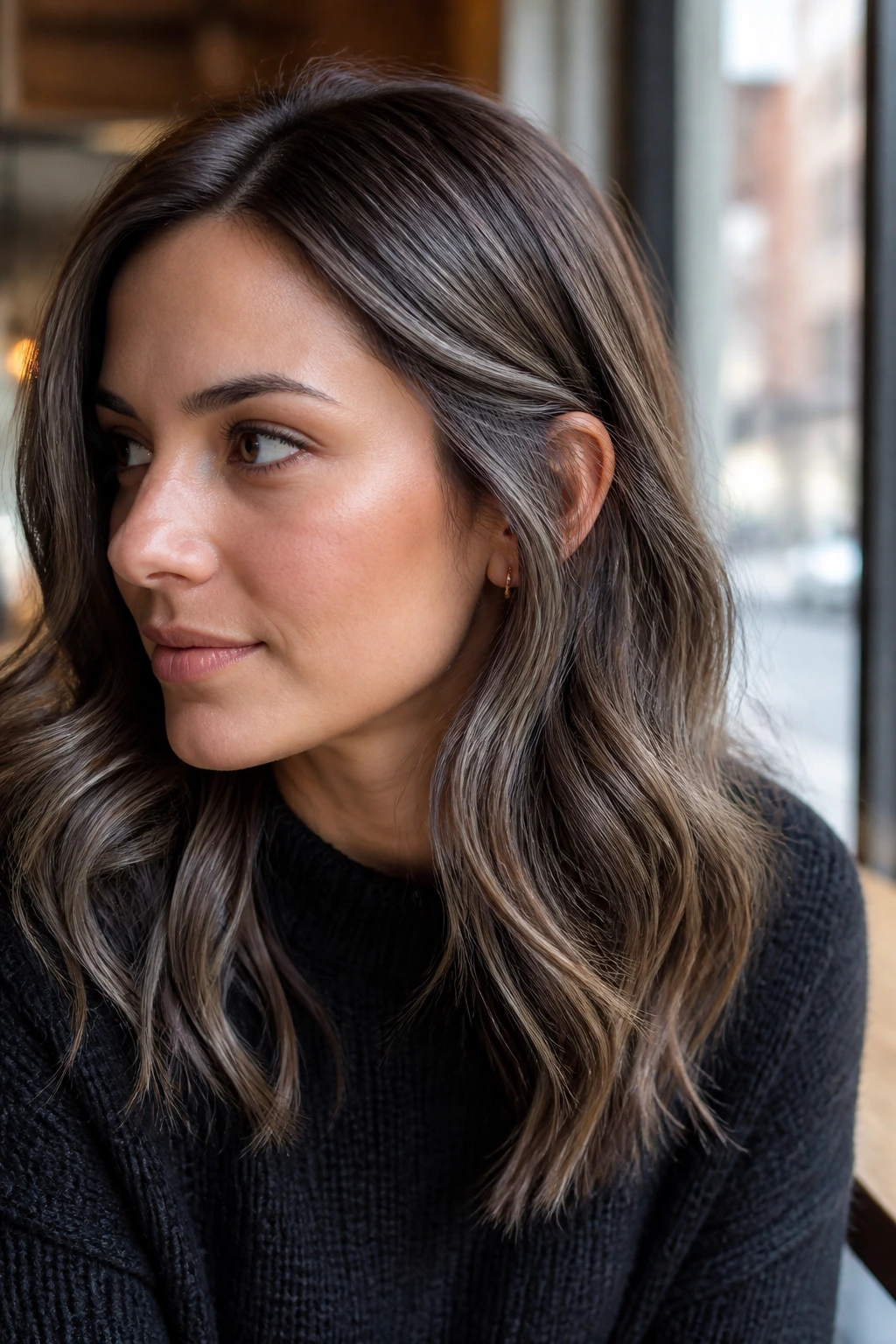
Why do babylights work so well here? Because they keep the gray almost whisper-thin.
Babylights are tiny, finely woven highlights, and on mocha brown hair they can create a pearl-gray shimmer that never turns stripy. That makes this one especially good if you want gray balayage but hate the idea of obvious bands. The color shows most when the hair is curled or tucked behind the ear. Straight, it looks smooth. Wavy, it looks expensive in the plain old sense of the word.
A pearl gloss helps the gray stay creamy instead of dull. If the toner is too cool, the pearl can go flat. If it’s too warm, the gray loses its clean edge. That balance is fiddly, which is why this look lives or dies on the colorist’s eye.
How to Keep It Soft
- Use fine sections rather than chunky painting
- Keep the base mocha, not too light
- Refresh with a gloss, not a full redo every time
- Style with loose bends so the tiny lights can show
9. Steel Smoke Balayage on a Wavy Lob
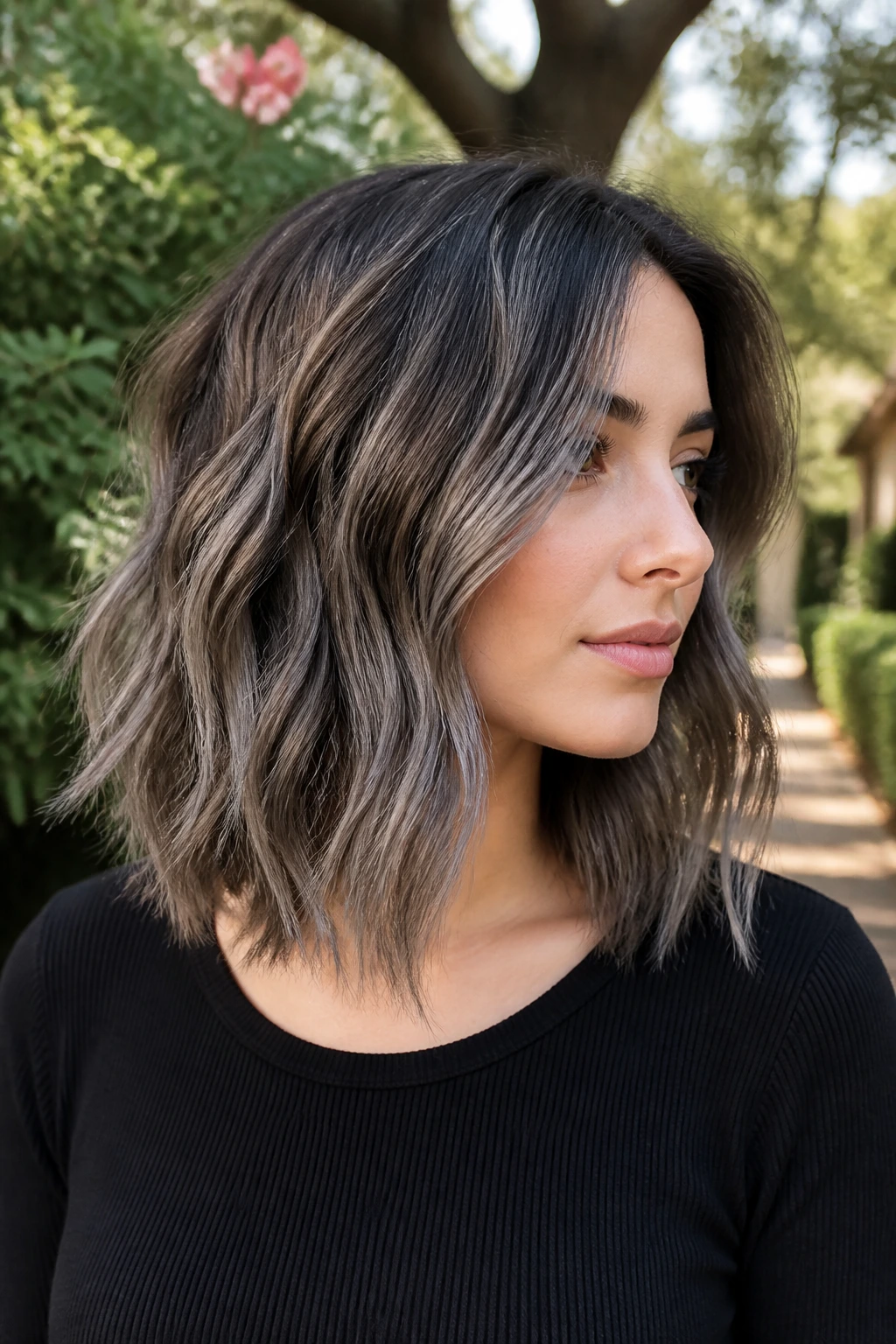
A wavy lob is where gray stops looking precious and starts looking easy.
Shoulder-grazing hair gives steel smoke balayage enough length to blend, but not so much that the color gets lost. The waves break up the gray and make the whole thing feel lived-in. A blunt lob works too, though it gives the look more edge and less softness.
The placement should be concentrated just under the surface and around the curves of the wave. That keeps the brown visible at the roots and through the top layer. If you paint too much gray onto the visible top section, the lob can lose its shape.
One of the nice things about this cut is that it looks good air-dried, which is rare enough to mention. A little bend, a little texture cream, and the smoke does the rest.
10. Slate Ombre With Shadow Root
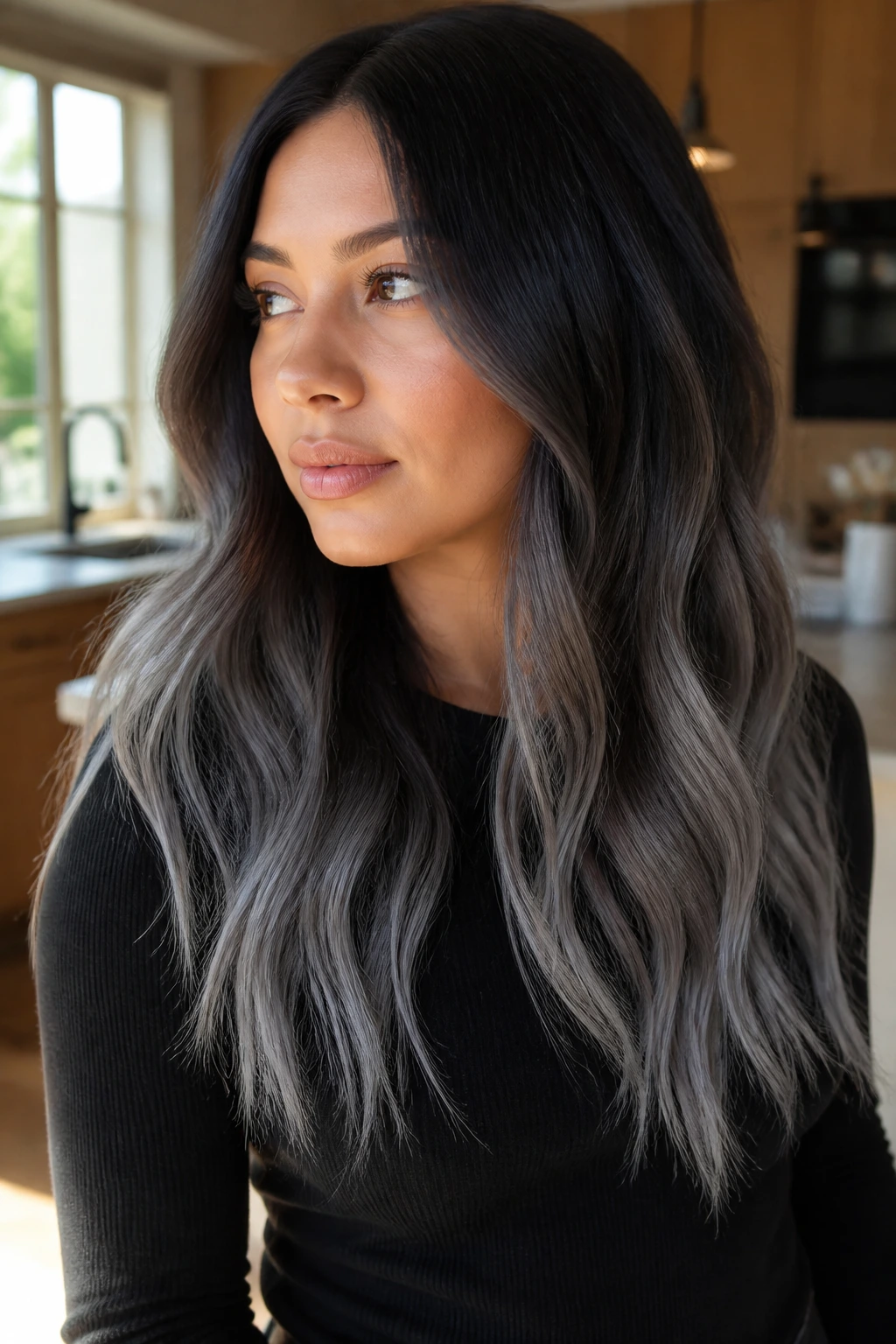
If you like a clear line between brown and gray, slate ombré gives you that shape without making the hair look chopped in half.
The shadow root should stay deep and cool, almost like wet cocoa. From there, the gray slides downward into slate ends. That soft gradient gives the style a strong silhouette, and it’s one of the more forgiving looks for grow-out because the root is meant to stay darker anyway.
This is a good pick if your natural brown is already fairly dark. The ombré doesn’t demand a bright lift at the top. Instead, it lets the color open up gradually. That makes the gray look denser and more grounded.
Ask For
- A root shadow one to two shades deeper than the mid-lengths
- A cool gray toner on the lightest ends
- A hand-painted fade, not a hard dip-dye line
- Soft finishing waves to show the gradient
On long hair, this can feel dramatic. On mid-length hair, it feels cleaner and a little more modern.
11. Frosted Face Frame on Warm Brunette
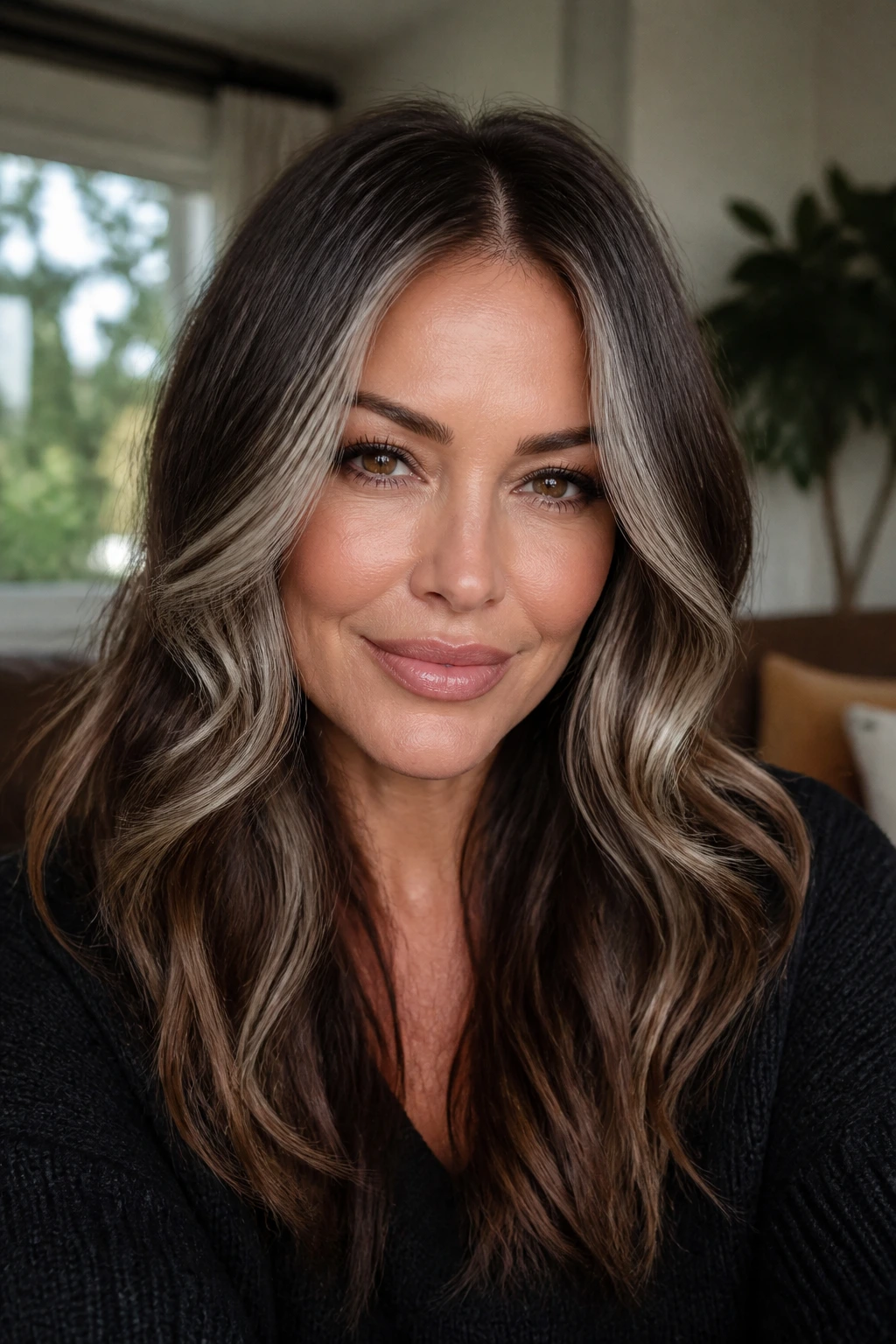
Face-framing gray is a makeup trick as much as a hair-color choice.
Warm brunette hair can hold a frosted frame in a way that looks intentional, especially when the gray is tucked right around the cheeks and temples. The warmth in the base gives the cool front pieces something to contrast with, so the gray reads brighter than it would on a cool brown base. That contrast also helps the face frame pop in photos and in real life, which is not always the same thing.
I like this look with curtain bangs or long pieces that fall from the cheekbone to the collarbone. The gray should taper as it goes down, not stop suddenly. That keeps it from looking like a separate section.
A single frosted frame can carry a whole haircut. If the rest of the hair is still rich brown, the style feels lighter without losing its depth. Handy, that.
12. Silver Ash Balayage on Curly Brown Hair
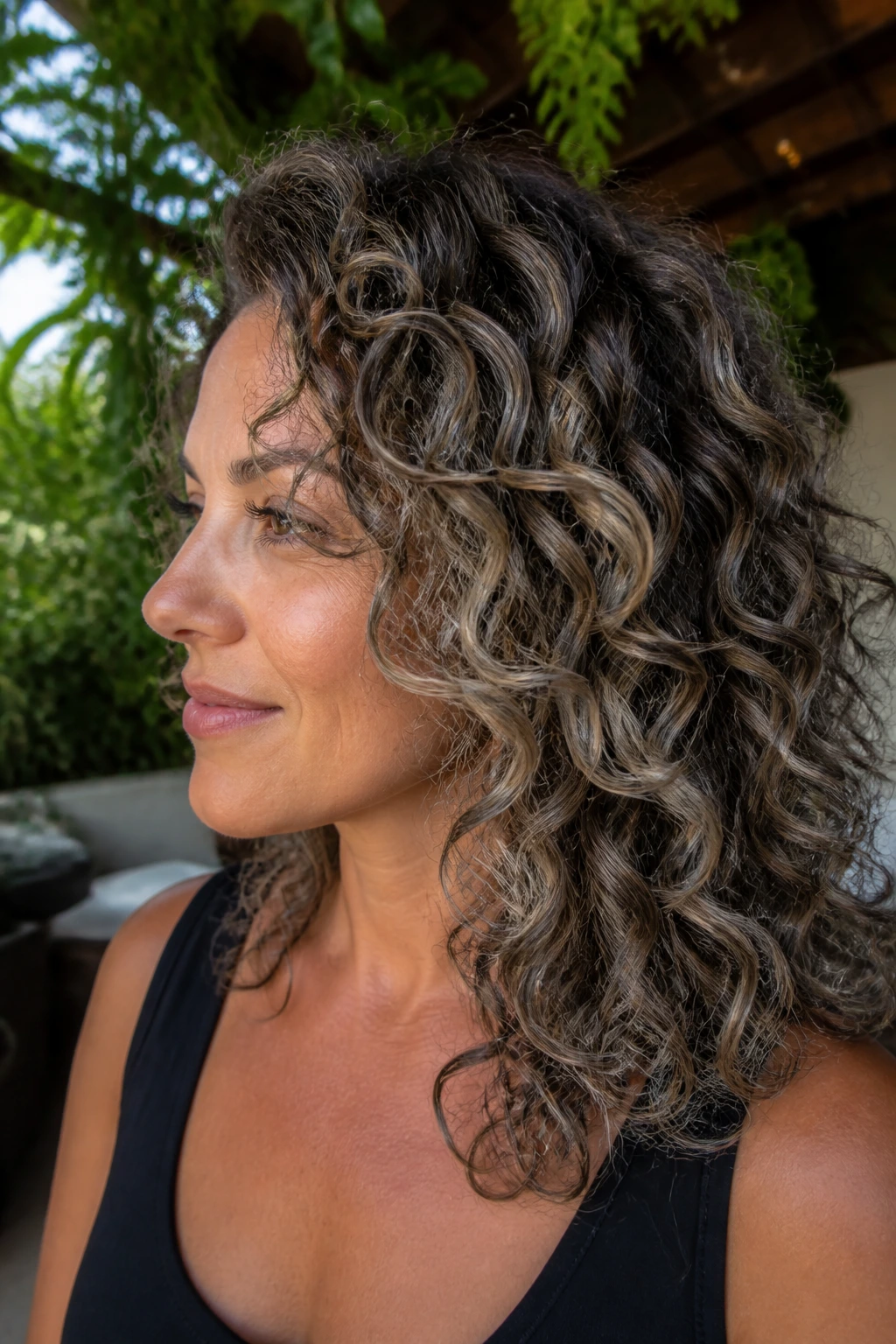
Curly hair changes everything. The paint pattern has to follow the curl, or the gray ends up looking like disconnected stripes.
Silver ash balayage on brown curls works best when the colorist places lightness where the curl bends and catches, not across every strand equally. That usually means painting a little more on the surface and around the mid-lengths, then leaving pockets of dark brown in between. Those darker pockets keep the curl shape alive.
Curly hair also tends to look more dimensional when the gray pieces are slightly warmer than pure silver. Not beige. Just softer. Too much icy tone can make curls look dry, especially if the hair has a tighter texture.
A diffuser helps. So does a curl cream that doesn’t leave a greasy film. The color should look plush and springy, not stiff.
13. Mushroom Brunette with Whisper Gray Ribbons
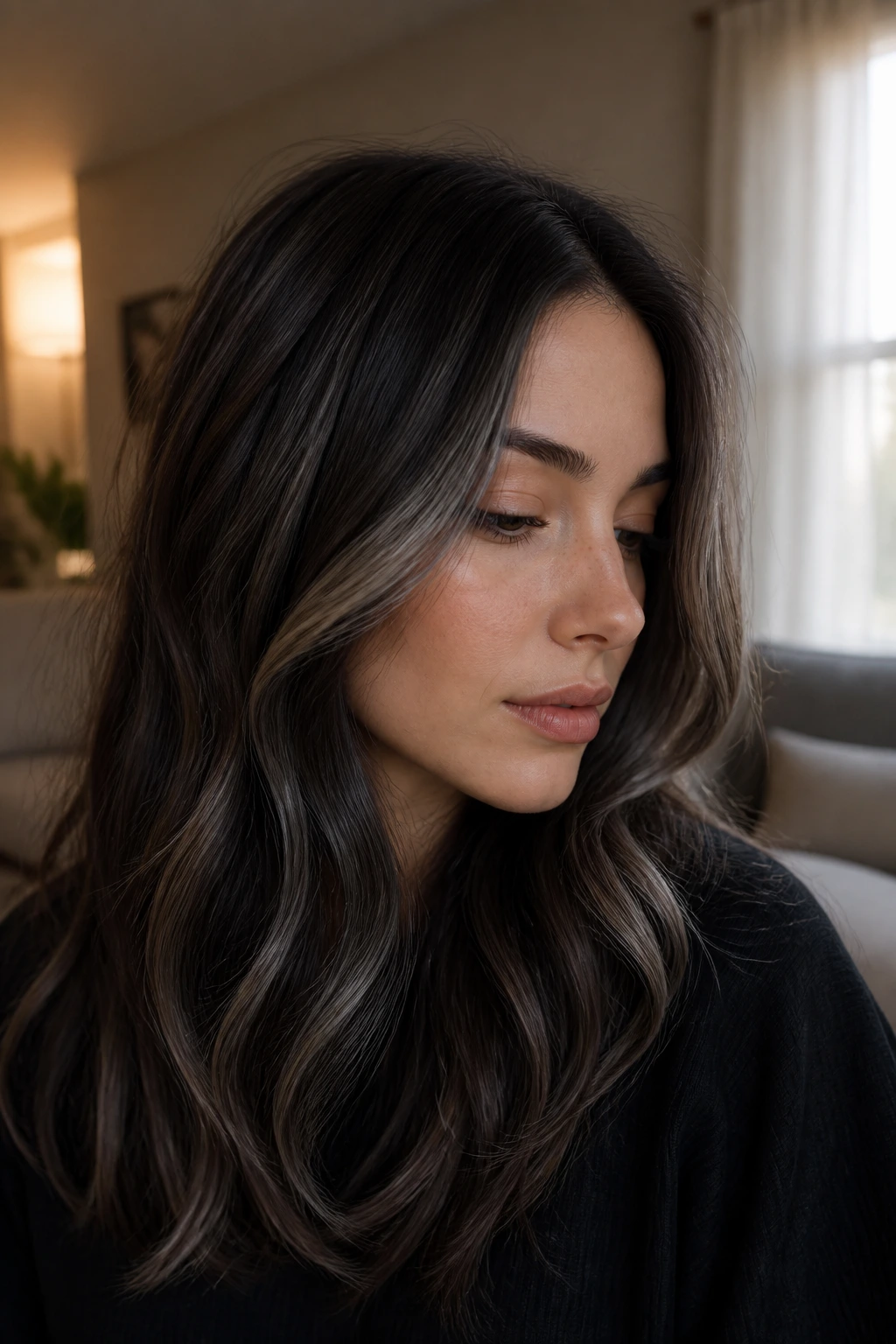
Whisper-gray ribbons on mushroom brunette are almost cheating. The color is so restrained that people notice the sheen before they notice the actual gray.
This is the kind of look that sits under the radar until the light hits it sideways. Then the ribbons show up like soft pencil lines through the brunette. The beauty of that approach is that it keeps the hair looking thick and healthy, since most of the base remains dark.
If you’re nervous about gray balayage looking too cool or too obvious, this is a safe entry point. The gray stays narrow, the placement stays scattered, and the overall effect is more texture than contrast.
I’d keep the styling loose and slightly undone. A clean blowout can make the ribbons disappear. A bend through the ends brings them back to life.
14. Platinum-Gray Dip Ends on Deep Brown
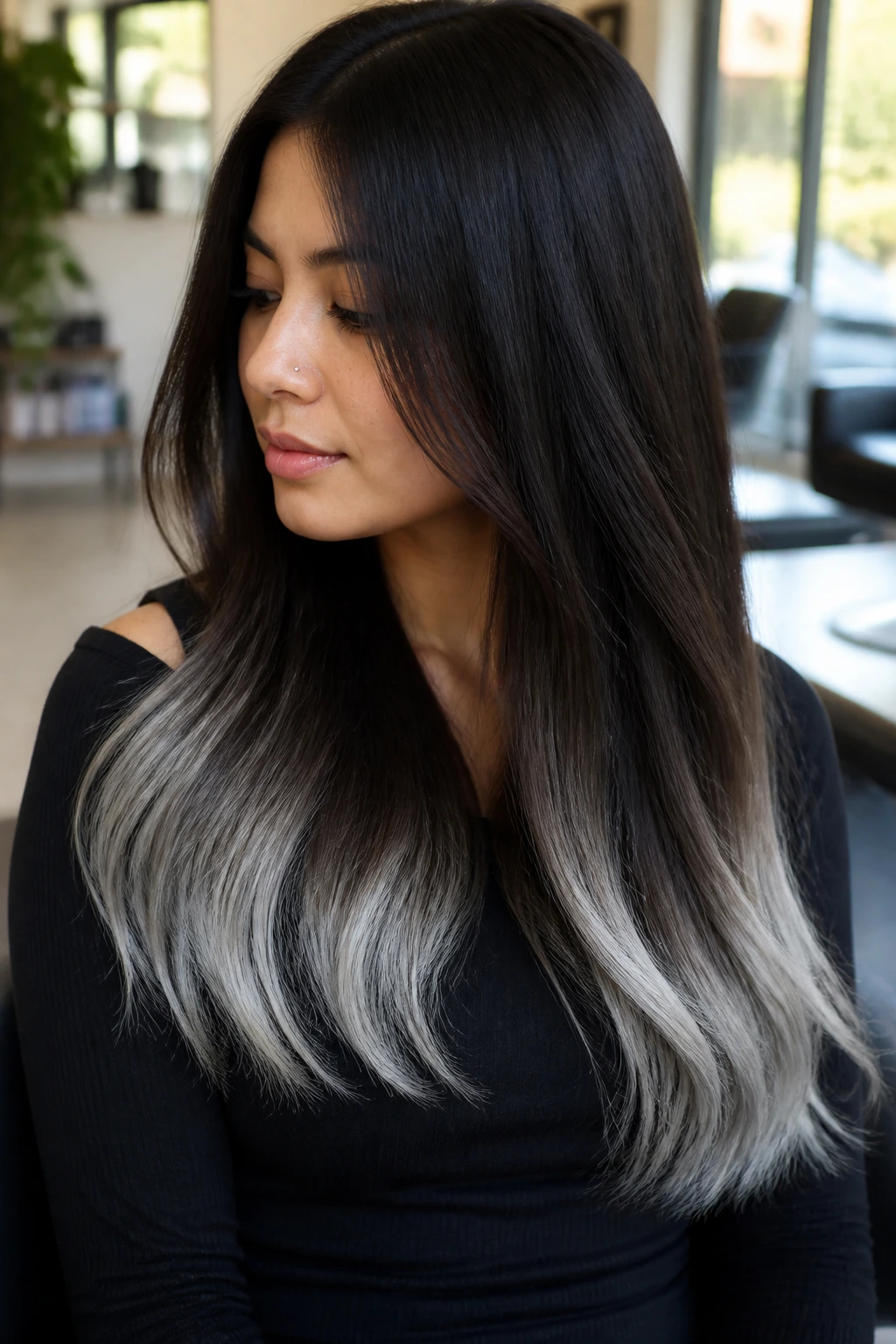
This is the boldest look in the bunch, and it does not pretend otherwise.
Deep brown hair with platinum-gray dip ends makes a strong cut line, even if the transition is softened a bit. The ends need to be lifted high enough to take on that pale, icy tone. If they stop too yellow, the gray won’t read clean. It will read compromised, which is a bad place for a color like this to land.
What Makes It Work
- A healthy, dense base color
- Long enough hair to show the dip clearly
- A clean, even cut at the ends
- Regular toning so the platinum stays frosty, not brassy
This is the look for somebody who likes contrast and doesn’t mind attention. It’s a statement, plain and simple. Best on straightened hair or very polished waves, because the shape of the dip matters.
If the hair is fragile, I’d pass. This one asks a lot from the strands.
15. Dusty Silver Halo on Layered Hair
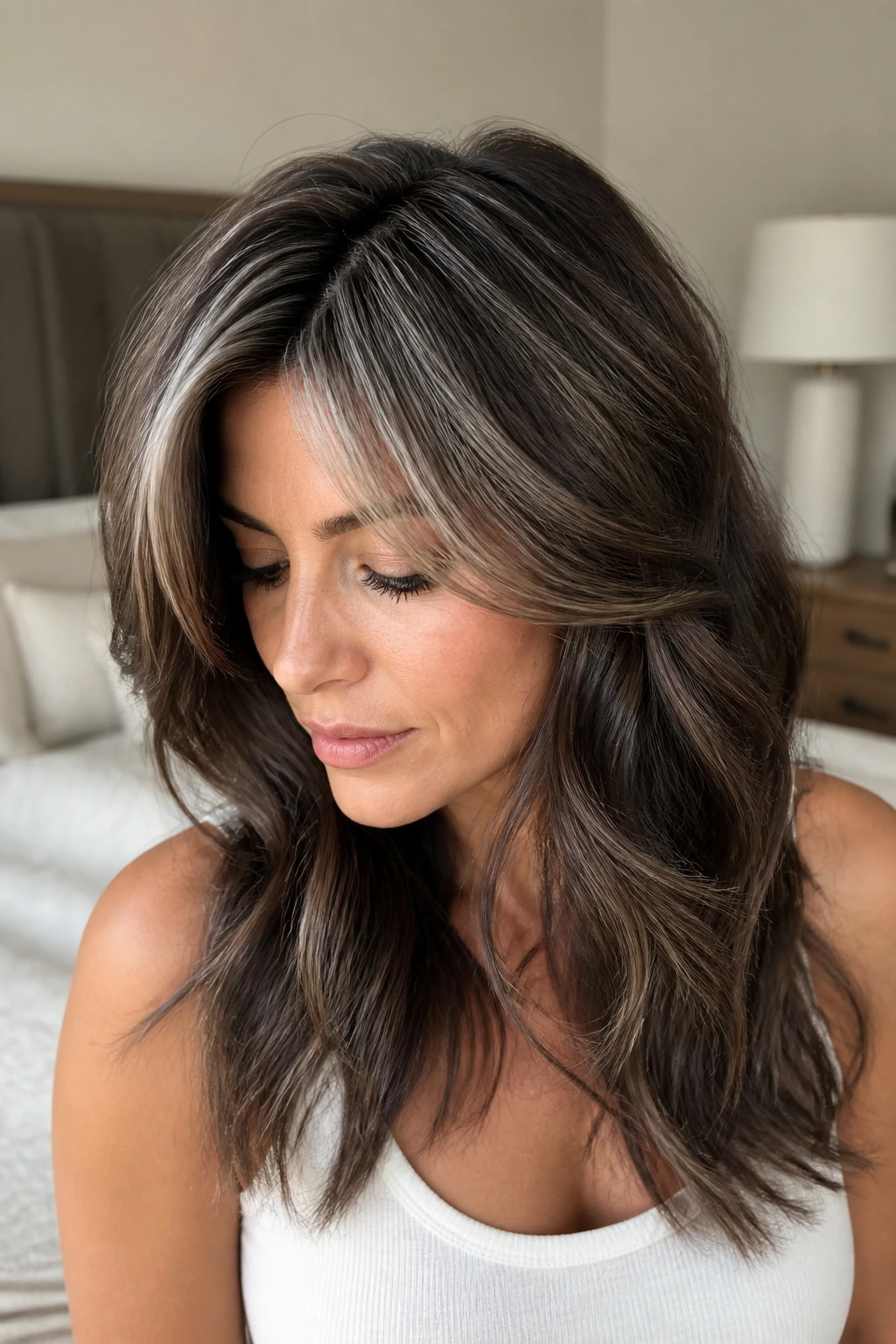
A dusty silver halo can make layered hair look fuller from above, which is why I keep coming back to it for medium-length brunettes.
The halo sits around the crown and top layer, where the eye lands first. That gives the cut lift without flooding the whole head with gray. On layered hair, the effect can be almost architectural: darker underneath, brighter at the top, and a cool silver frame that follows the shape of the head.
This style is useful when the hair needs dimension more than contrast. It can rescue a flat brunette cut fast. It also plays nicely with volume at the roots, since the lighter pieces catch when the hair is lifted.
A loose round brush blowout shows it off best. If you wear your hair flat to the head all the time, the halo loses some of its point. That’s the trade-off.
16. Smoky Balayage Bob with Piecey Ends
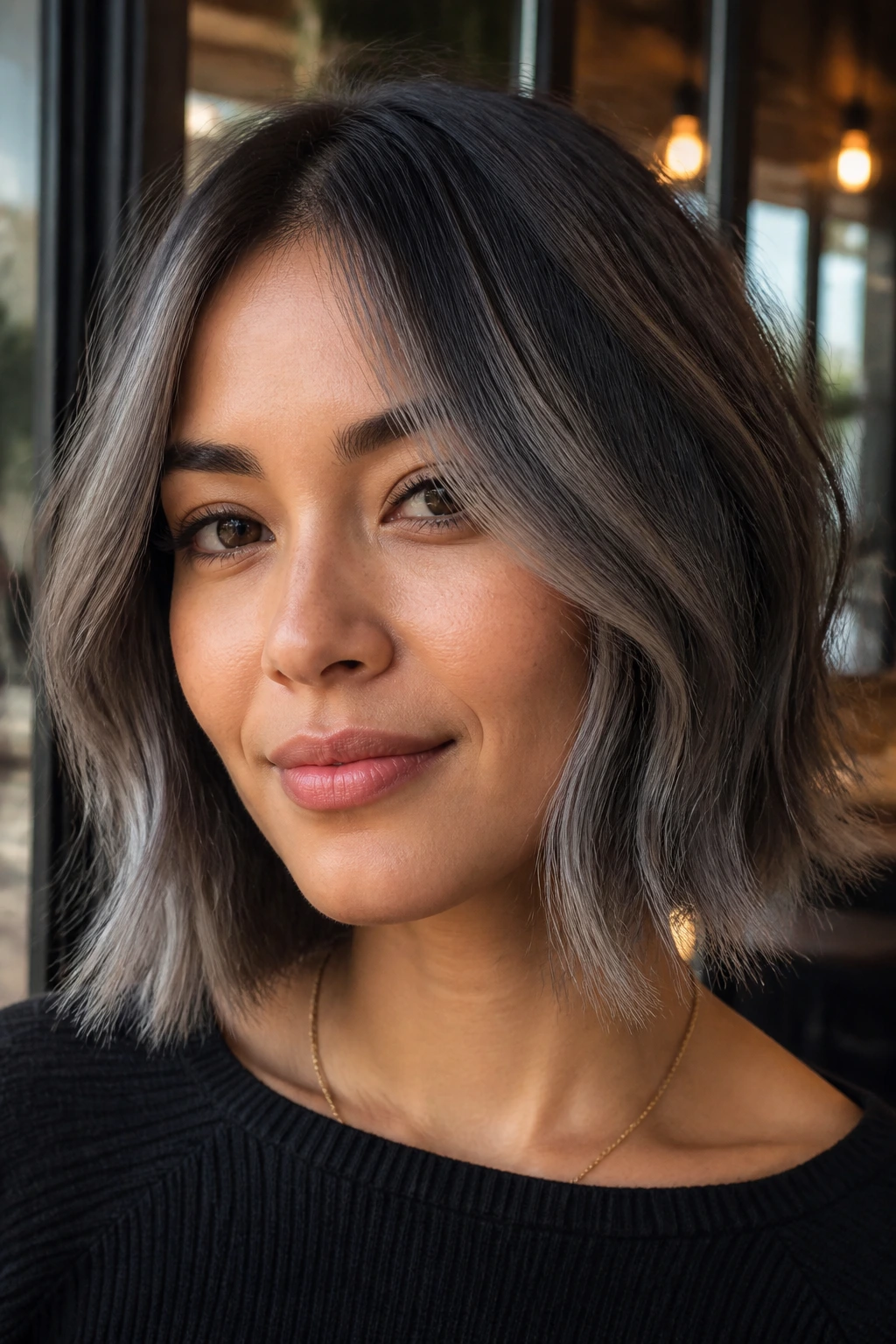
Bobs need a different hand. Short hair doesn’t have the same room to fade, so the gray has to be placed with more intention.
A smoky balayage bob works when the ends are piecey and separated, not bulky. The gray should sit mainly through the surface and front edges, where movement will catch it first. If the color goes too heavy underneath, the bob can look dense instead of airy. Nobody wants a color that weighs the haircut down.
The Good Part
- Keeps a short cut from looking one-note
- Works on chin-length and jaw-length bobs
- Lets the gray pop without needing much length
- Looks sharp with a middle part or a tucked-behind-the-ear finish
I’m partial to this version on blunt bobs that already have a clean edge. The gray adds texture where the cut is hard, which is a nice little contradiction.
17. Smoky Root Smudge with Gray Lights
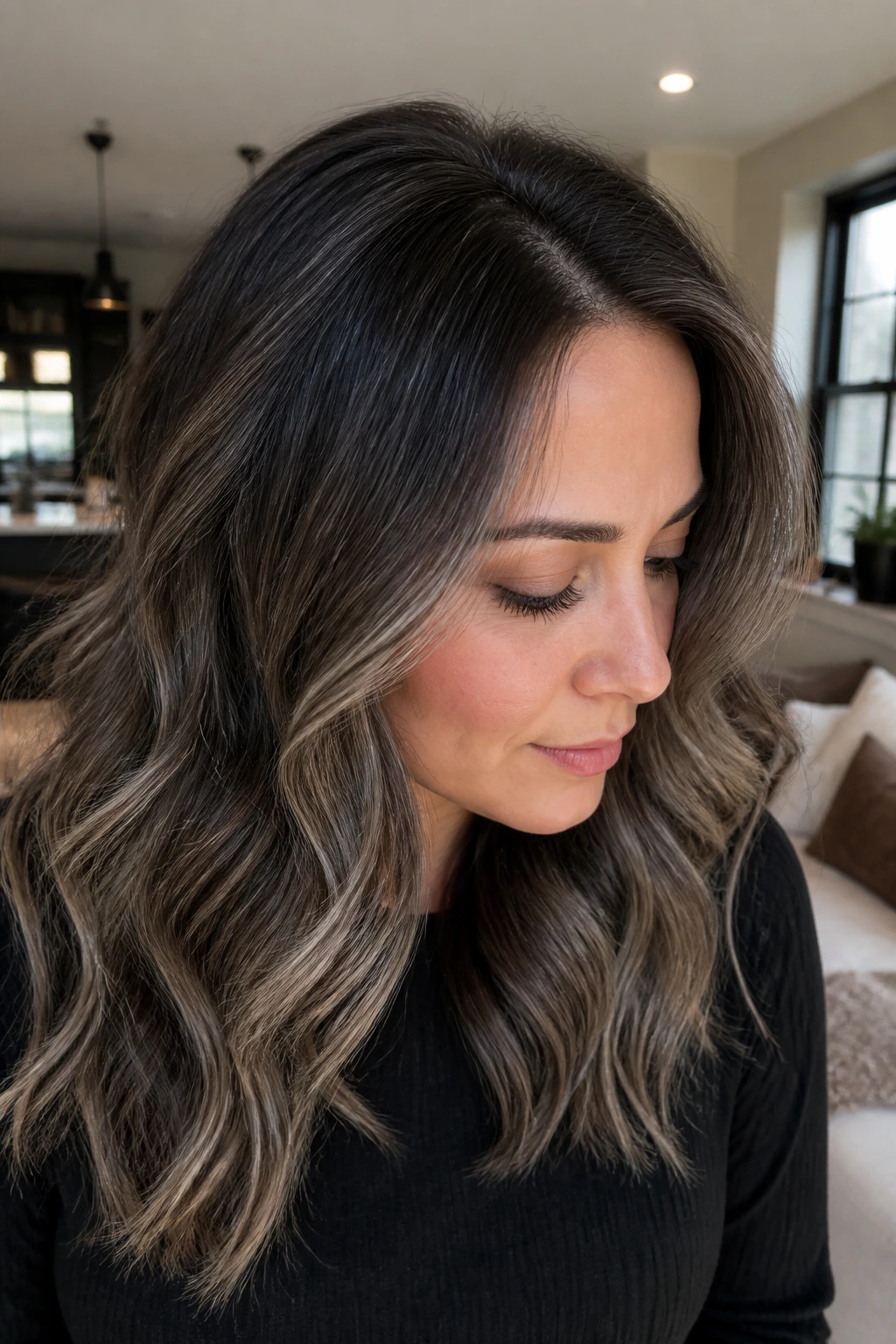
The root smudge matters more than the gray. That’s the part most people miss.
If the root is handled well, the gray lights can be lighter and freer because the base underneath keeps the whole thing grounded. A smoky root smudge should be cool, not black-black, and it should blur gently into the lighter strands. Once that foundation is set, the gray lights can sit through the lengths like thin wisps of fog.
This is a good style for people who want low-maintenance grow-out without losing a polished finish. The root stays deliberate. The lighter pieces stay visible. Nothing looks like an accident.
A root smudge also softens the contrast on dark brown hair, which matters if your natural color is almost espresso. Too much contrast can make gray hair pieces look disconnected. The smudge fixes that.
18. Soft Pewter Waves for Long Brown Hair
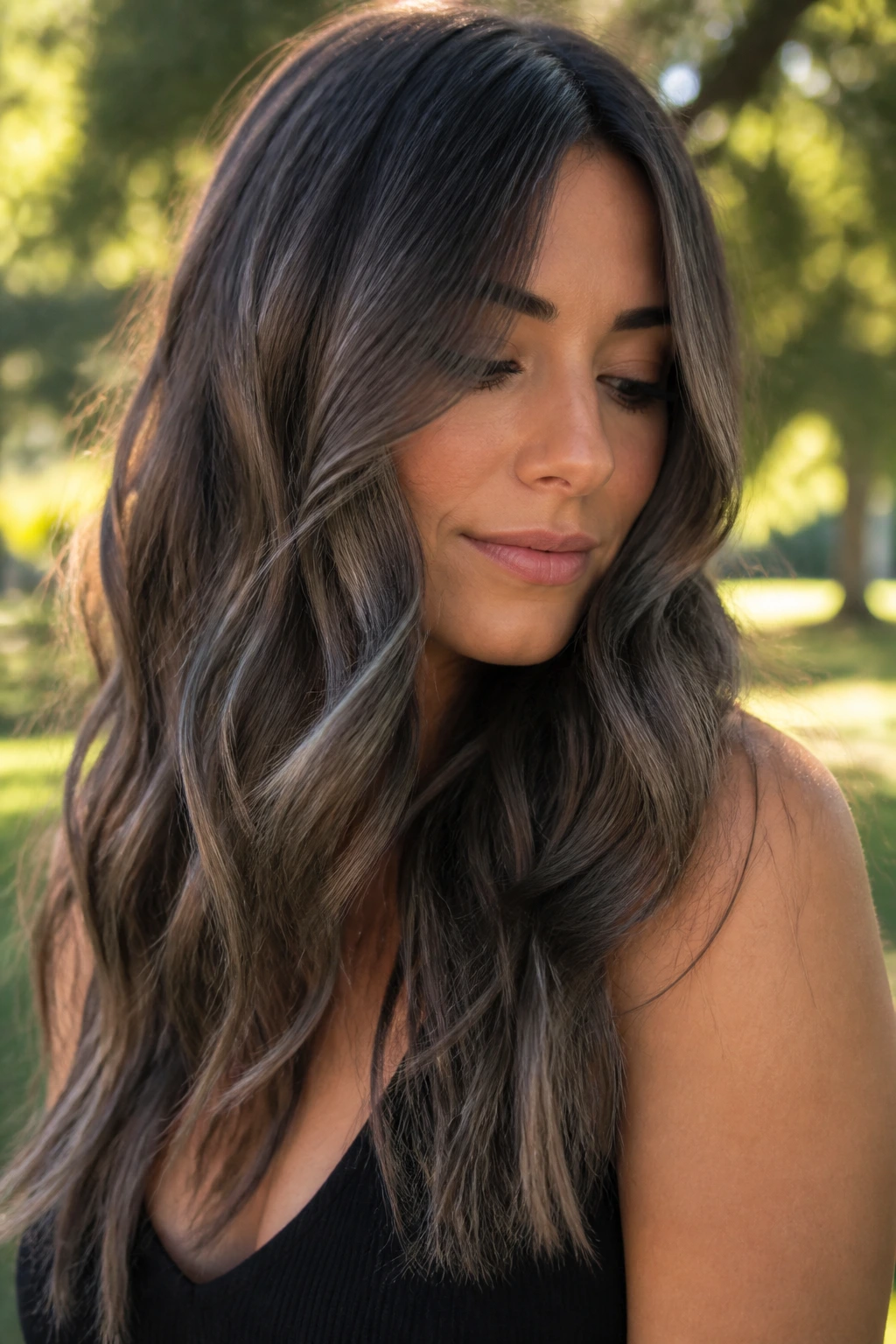
Long waves and pewter are a smart pair. The length gives the color space, and the waves keep it from looking too perfect.
Pewter sits in that sweet middle zone between silver and charcoal. It has coolness, but it still feels worn-in. On long brown hair, that makes the whole style read relaxed rather than icy. The finish should never look like a solid sheet. The waves need to open and close so the gray flashes in some spots and disappears in others.
I like this look best when the lightest pieces start around the cheekbone and deepen toward the ends. That gives the hair a little flow. If the brightness starts too high, the length can feel top-heavy.
How to Style It
- Use a 1.25-inch curling iron for loose bends
- Brush the waves out once they cool
- Add a light serum only on the ends
- Leave a few straighter pieces near the front for contrast
19. Ashy Cocoa with Chunky Silver Streaks
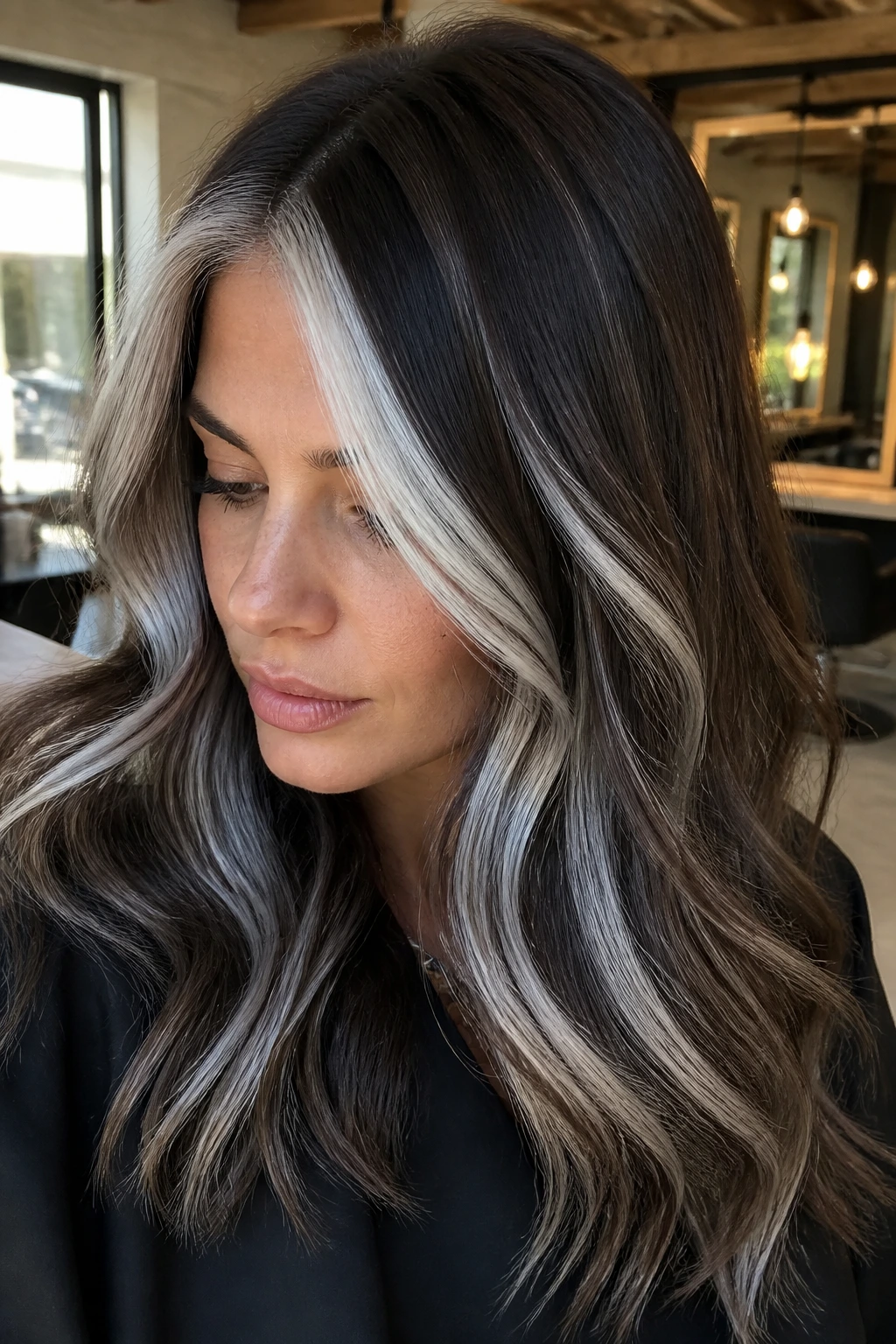
Chunky silver streaks are not subtle, and that is the point.
Compared with babylights or whisper ribbons, chunky streaks give ash cocoa brown hair a clearer split between brunette and silver. The result feels sharper, a little more graphic, and much easier to read from across a room. If you like color that announces itself, this is the lane.
The best version still needs balance. You want the streaks bold enough to stand out, but not so many that the base disappears. A few thicker ribbons through the front and sides can be enough. Put too much silver everywhere and the hair loses its shape.
Unlike Fine Babylights
Chunky streaks create contrast first and softness second. That makes them better for blunt cuts, heavy waves, and anyone who likes a more obvious color line. They are not the move for someone hoping the gray will hide itself.
20. Smoke and Mirror Balayage on Straight Hair
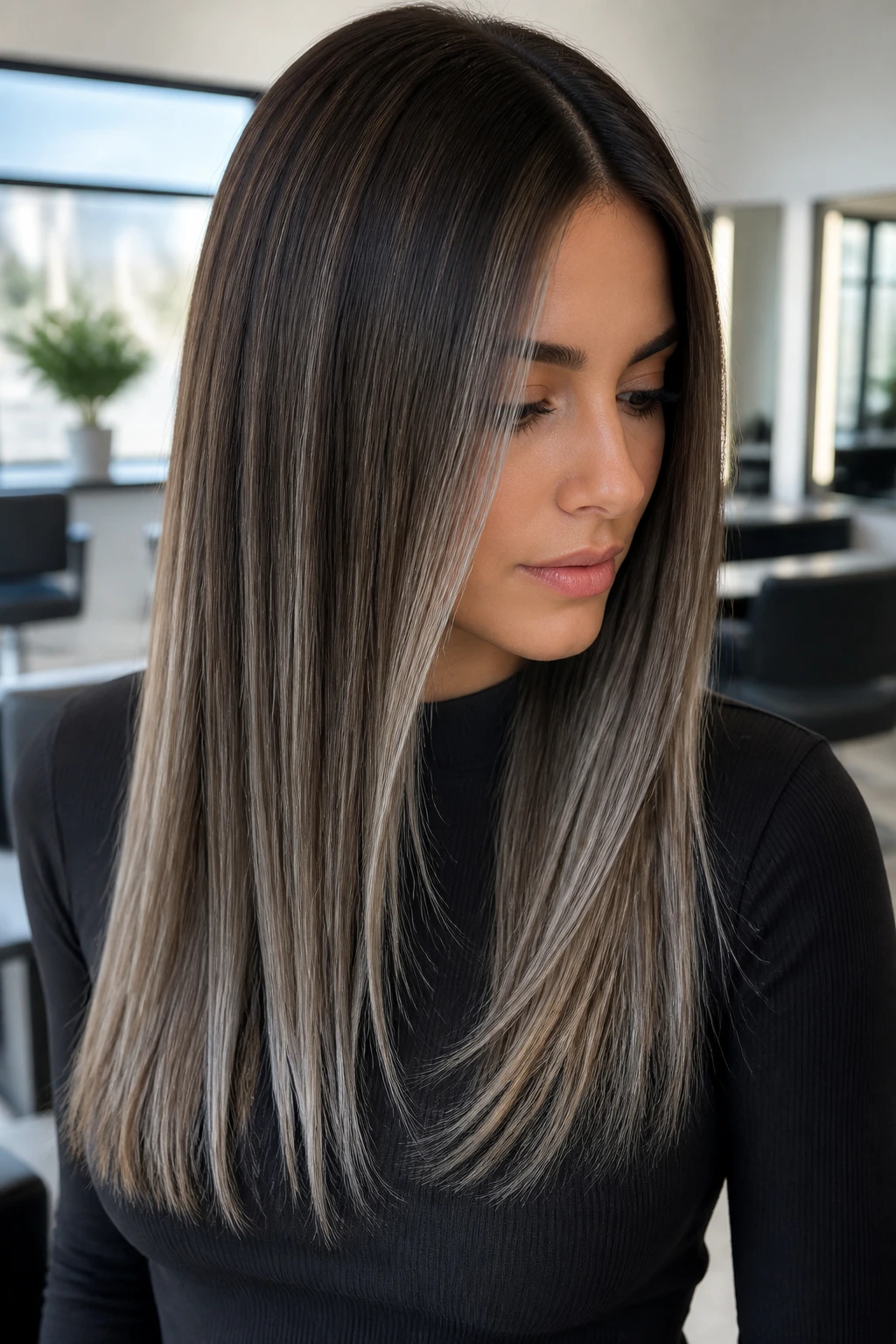
Straight hair exposes everything. Every line. Every patch. Every place the tone slips.
That sounds unforgiving, and it can be, but it also makes smoke and mirror balayage gorgeous when the placement is clean. On straight brunette hair, the gray has to be microblended so there are no obvious stops. The color should move in thin, slick ribbons from the mid-lengths into cooler ends, with enough darkness left at the top to hold the shape.
A glassy blowout makes this style sing. So does a precise trim. Choppy ends can break the illusion and make the gray look busy instead of sleek.
What to Watch For
- Harsh lines in the mid-lengths
- Gray that sits too close together
- Ends that are too dry or frayed
- Toner that cools the hair so much it looks dull
This is one of those styles where shine matters as much as shade.
21. Cool Taupe Brown with Flint Gray Ends
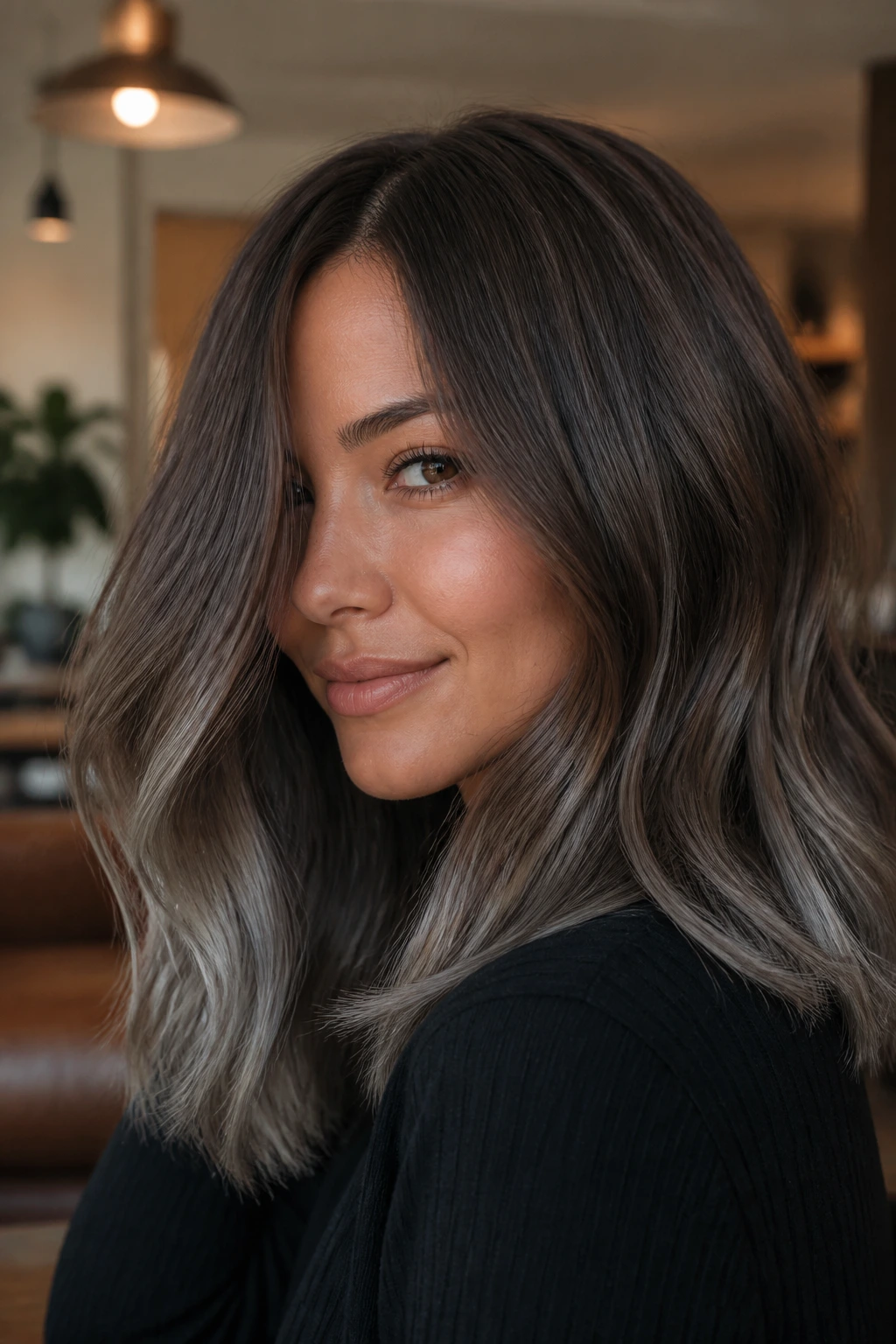
Taupe is the quiet middle ground. Not warm. Not icy. Just calm.
That makes flint gray ends a strong partner for brown hair that already leans neutral. The taupe base keeps the transition smooth, and the flint at the bottom gives the style a stone-like finish. It’s a restrained look, but not a boring one. There’s enough tone change to make the hair feel alive.
This works especially well if you like neutral makeup, soft sweaters, and hair color that doesn’t fight your clothes. That may sound small, but it matters. Some gray balayage looks dominate the rest of your style. This one blends in better.
A gloss in the taupe range keeps the brown from getting too gold. If the warmth comes back, the flint ends will lose their clean edge. That edge is half the charm here.
22. Seamless Silver Melt for Easy Grow-Out
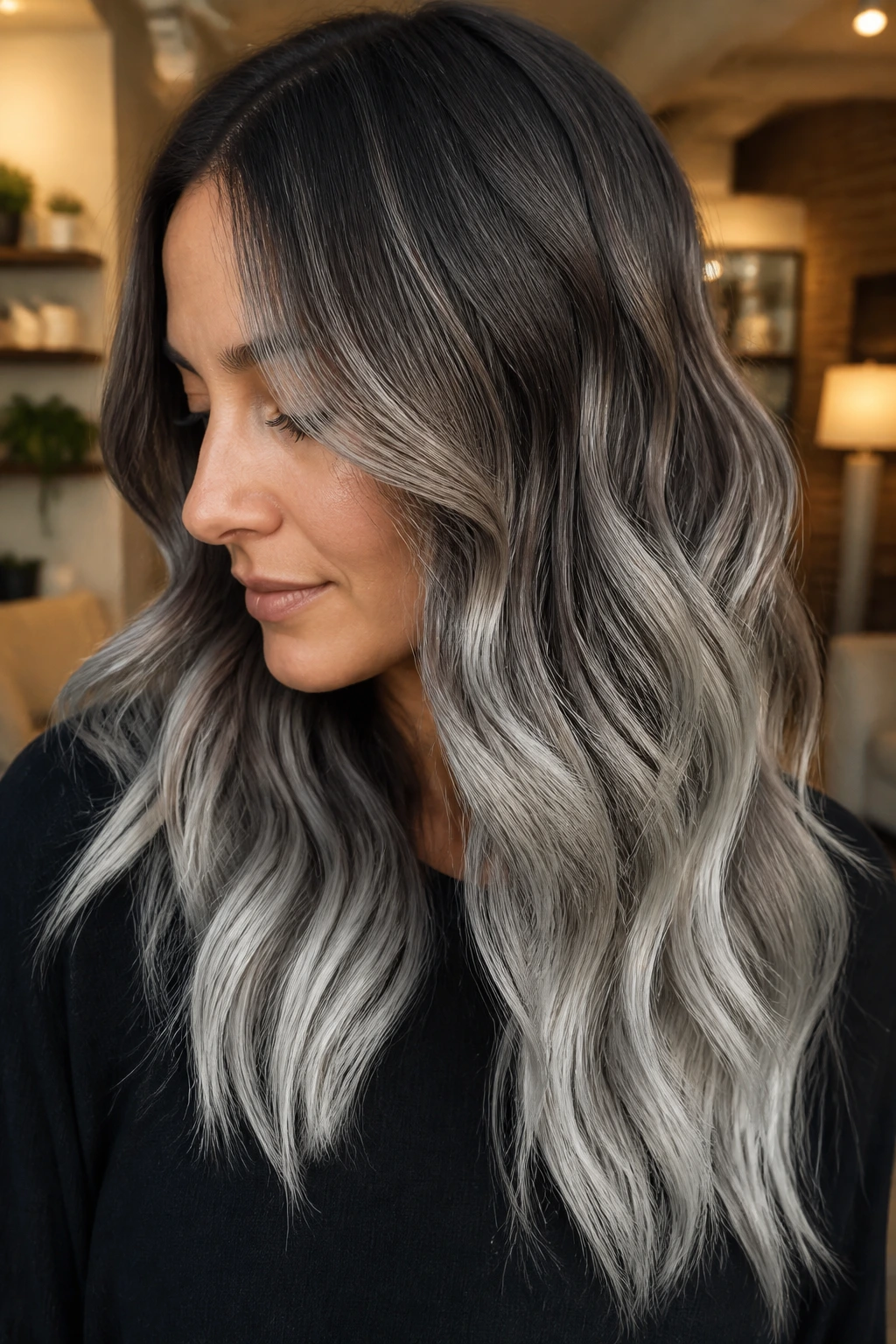
Seamless silver melt is the one I’d pick for someone who hates salon grow-out but still wants the gray to feel polished.
The idea is simple: keep the brown root a shade deeper, feather the silver through the mid-lengths, and let the ends fade into a clean cool finish. No hard line. No obvious shelf. Just a smooth shift from brunette to silver that looks planned even months later.
What I like most about this look is that it doesn’t ask the whole head to become silver at once. That makes it kinder to the hair, easier to wear, and less fussy when the roots come in. The blend does the work. You get the edge of gray without the drama of a solid platinum finish.
If you want one final piece of practical advice, it’s this: choose the version of gray that fits how you actually wear your hair. Wear it straight? Keep the blend precise. Wear it wavy? Let the ribbons loosen up. The right gray balayage is the one that still looks good when you have not touched it for a day or two, and that is where the smartest ones live.
