



Round faces do not need to be hidden. They need color that pulls the eye in the right direction.
That is why brown balayage works so well when it’s placed with a little restraint. The best versions don’t spray brightness all over the cheeks and sides. They keep the crown a touch deeper, then place lighter ribbons where they can lengthen the face visually — usually around the temples, below the cheekbone, or through the ends.
A good colorist will think about shape before shade. A round face usually has soft width through the cheeks and a similar-feeling length and width, so the job is to build a little vertical line without making the hair look striped or harsh. That means diffuse blends, a shadow root, and highlights that move downward instead of across.
The looks below do that in different ways. Some lean warm and caramel. Some stay smoky and cool. A few use a money piece, but in a thin, controlled way. And yes, some are better with a lob, some with long layers, and some with curls that need space to breathe.
1. Caramel Ribbons That Start Below the Cheekbone
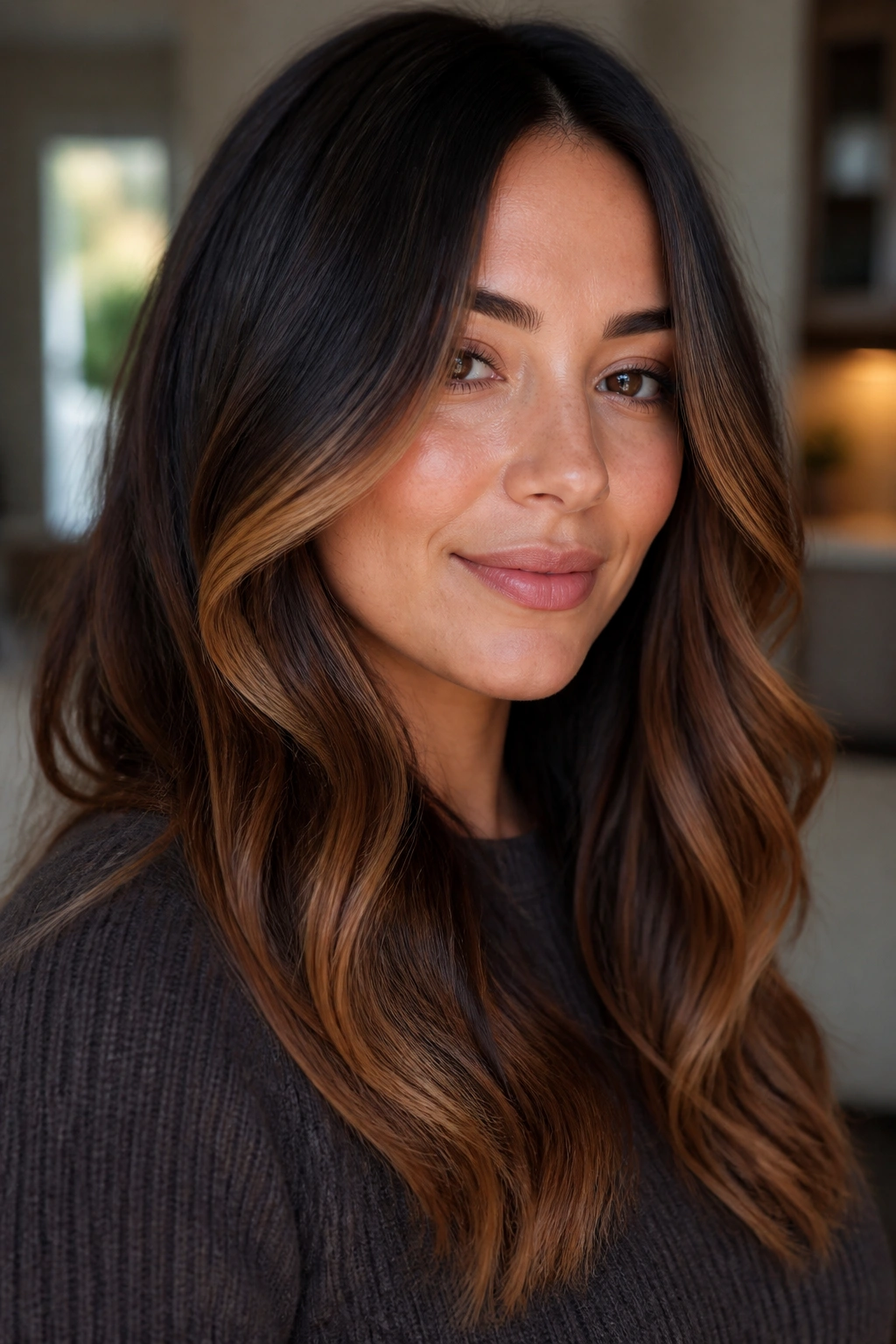
Caramel is the easiest place to begin if you want brown balayage for a round face that feels soft instead of loud. The tone is warm enough to wake up dark brown hair, but it does not throw a giant bright band across the widest part of the face. That matters.
Why This Placement Works
Ask for the lighter ribbons to begin around the lower cheekbone or just below it, then drift into the ends. That keeps the eye moving down the hair shaft, which gives a round face a longer line. If the highlights start too high at the cheek, the whole effect can widen the face. Nobody needs that.
This version looks especially nice on long layers, a lob that hits near the collarbone, or waves that bend away from the face. The bend is doing part of the work here. Straight hair can wear it too, but the warmth shows more when the pieces have a little movement.
- Best for: medium to deep brunette bases.
- Ask for: hand-painted caramel ribbons with a soft root smudge.
- Avoid: chunky streaks placed right at cheek level.
- Works well with: a side part or a gentle off-center part.
My favorite trick: tuck one side behind the ear after styling. It makes the face-framing ribbons look intentional instead of busy.
2. Mocha Melt With a Soft Shadow Root
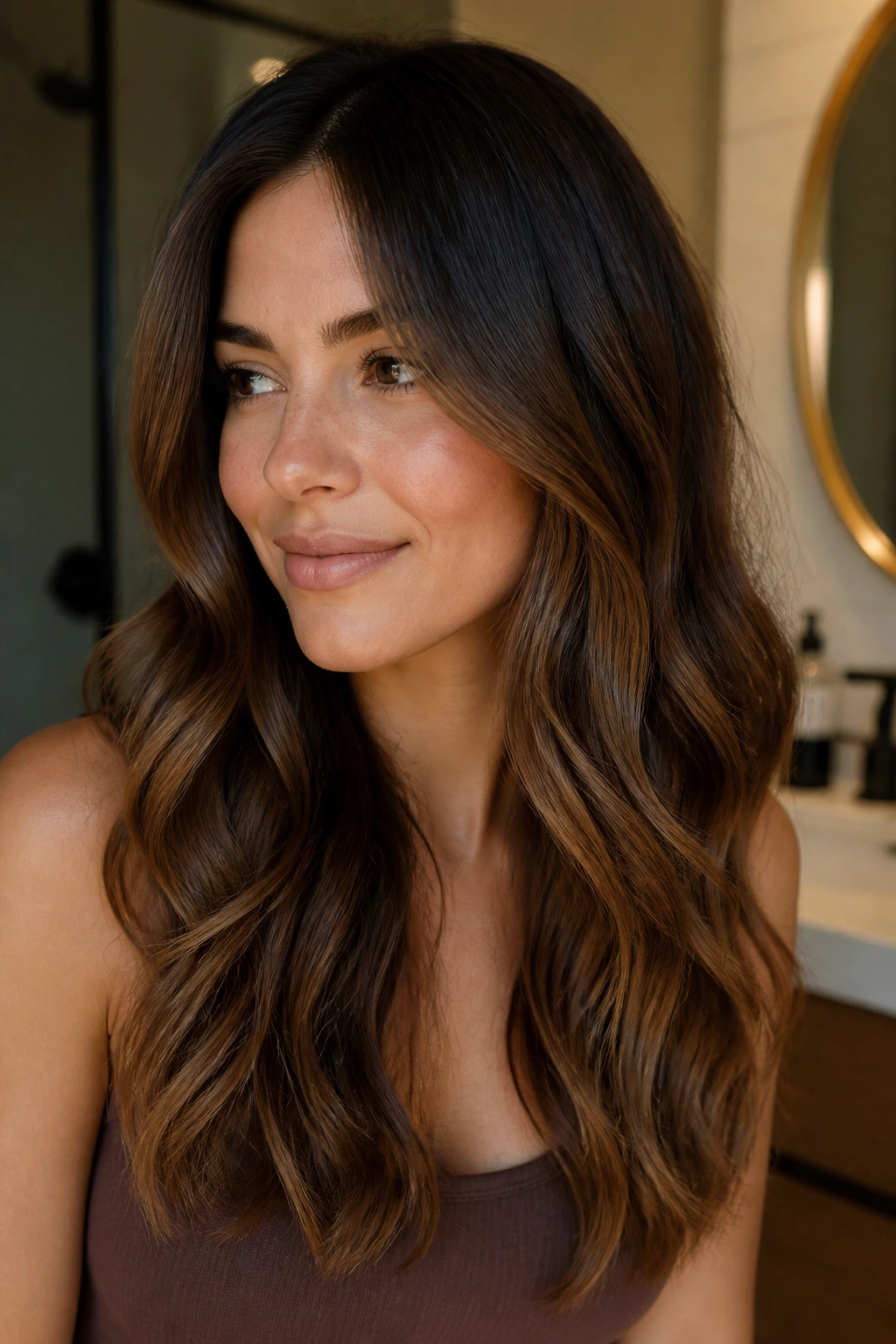
Mocha melt is the quiet one in the room, and that’s exactly why it flatters a round face. The contrast stays low near the top, so your head doesn’t look wider around the crown. The color opens gradually through the midlengths and ends, which gives the whole style a long, smooth line.
A shadow root is the key here. Keep the root close to your natural brown — level 4 or even a rich level 3 if your hair is deep — then blend into mocha through the mids. The point is not to see where one shade stops and the next starts. It should feel like a slow slide.
This look is a strong pick if you wear your hair loose most of the time. It looks polished with a blowout, but it also handles air-dried texture well. And because the tone is close to natural brunette, grow-out is forgiving. You will not be rushing back to the chair every few weeks just to keep the shape alive.
A small warning: if your stylist pulls the lightness too high around the sides, the face can start to look fuller. Keep the brightest mocha pieces lower and narrower. That’s the whole game.
3. Chestnut Face-Framing Pieces on a Long Lob
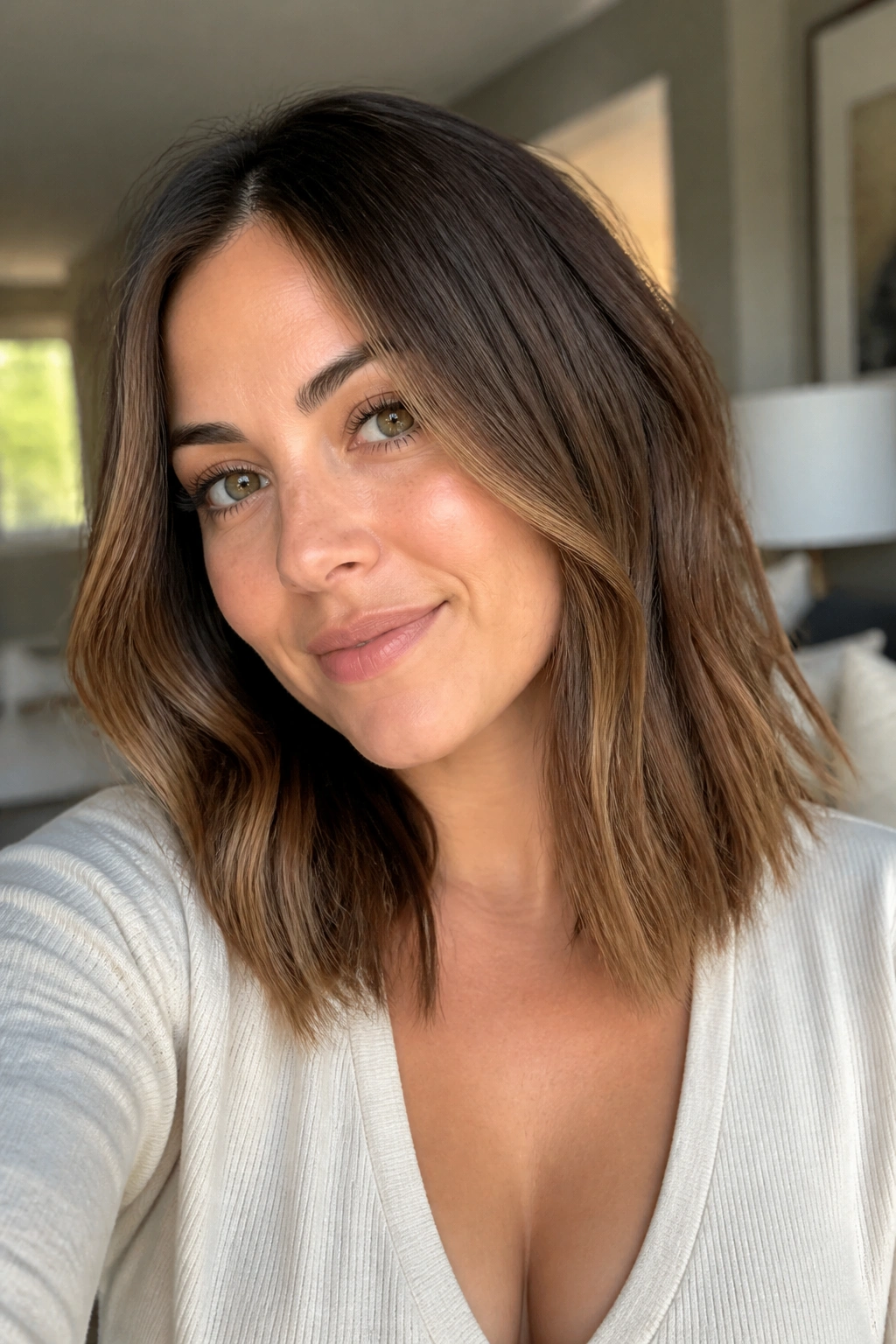
Why does chestnut work so well on a round face? Because it sits right between warm and neutral, which makes it easy to wear without screaming for attention. Chestnut brown has enough red-gold softness to brighten the complexion, but it still keeps the overall shape grounded.
What to Ask For
The nicest version uses thin face-framing pieces that begin near the temple and fade out by the collarbone. You want vertical movement, not a thick halo of color. On a long lob, those narrow ribbons help stretch the face visually, especially if the cut has ends that flip slightly outward.
The color itself can stay subtle. You do not need to go much lighter than two levels above your base. That small shift is often enough. People forget this part: round faces usually look better with directional lightness than with a ton of brightness all over the head.
If you wear glasses, this look is especially good. The chestnut pieces keep the frame area from feeling heavy, and the lob length keeps the face open around the jaw. It’s clean. It’s easy. And it rarely feels overdone.
4. Espresso Ends With a Cinnamon Money Piece
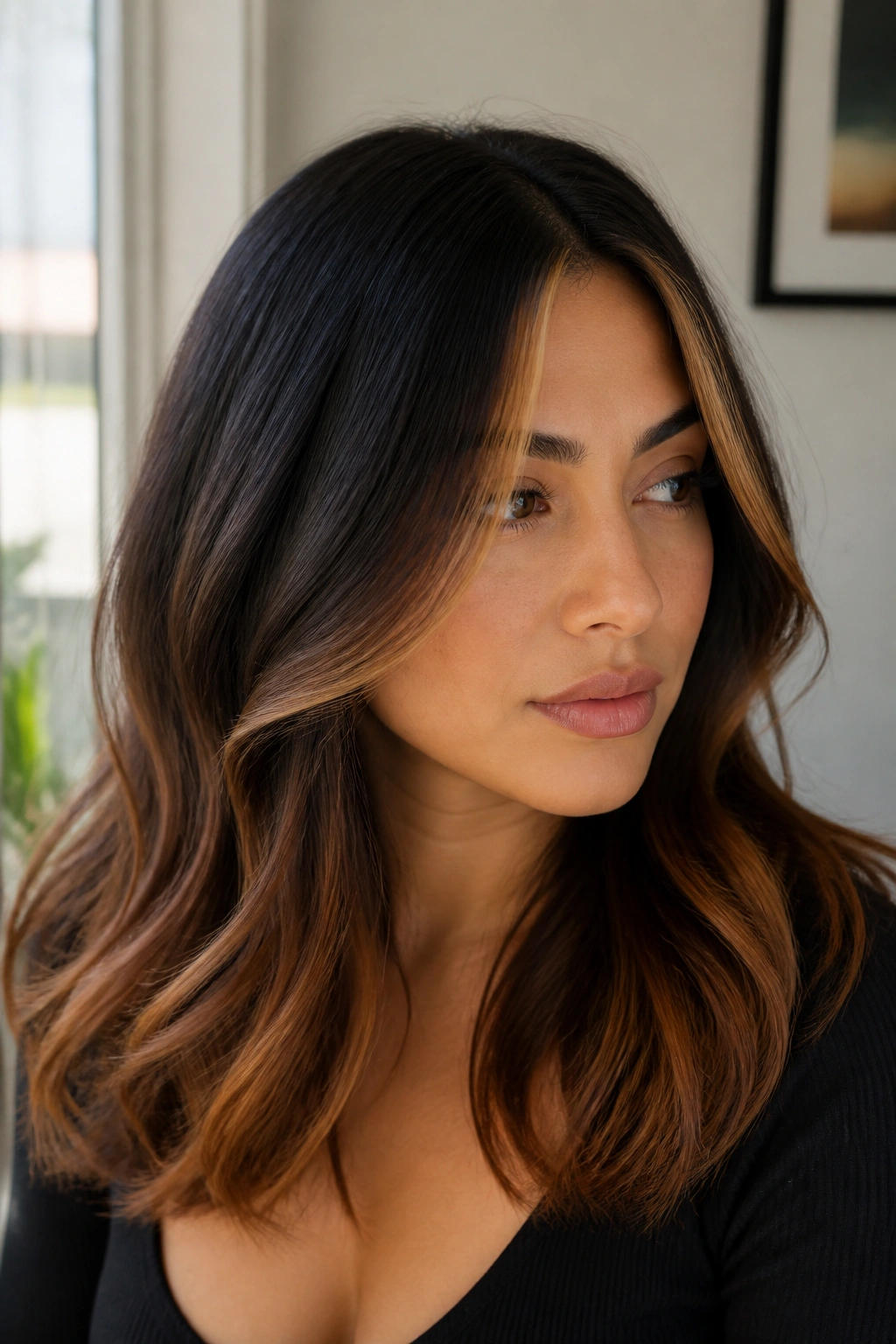
I keep coming back to this one for clients who want color that feels fresh but still wears like brunette hair. The root and midlengths stay espresso — deep, rich, and glossy — while the ends pick up cinnamon warmth. Then a thin money piece lifts the front just enough to show where the face begins and ends.
The trick is restraint. A broad money piece can make a round face look wider, especially if it sits directly over the cheek. A narrow one, painted with a soft hand, does the opposite. It gives lift at the center line and leaves the sides calm.
- Ask for: a 1/2-inch face frame with softened edges.
- Keep the ends: two to three levels lighter, not blonde.
- Style it with: a side-swept bend or a loose wave.
- Skip: a heavy block of brightness at the temples.
There’s also a practical side to this look. Cinnamon fades nicely into softer coppery brown, so even when the color gets a little older, it still reads deliberate. That is rare. And useful.
5. Mushroom Brown Balayage for a Cooler Finish
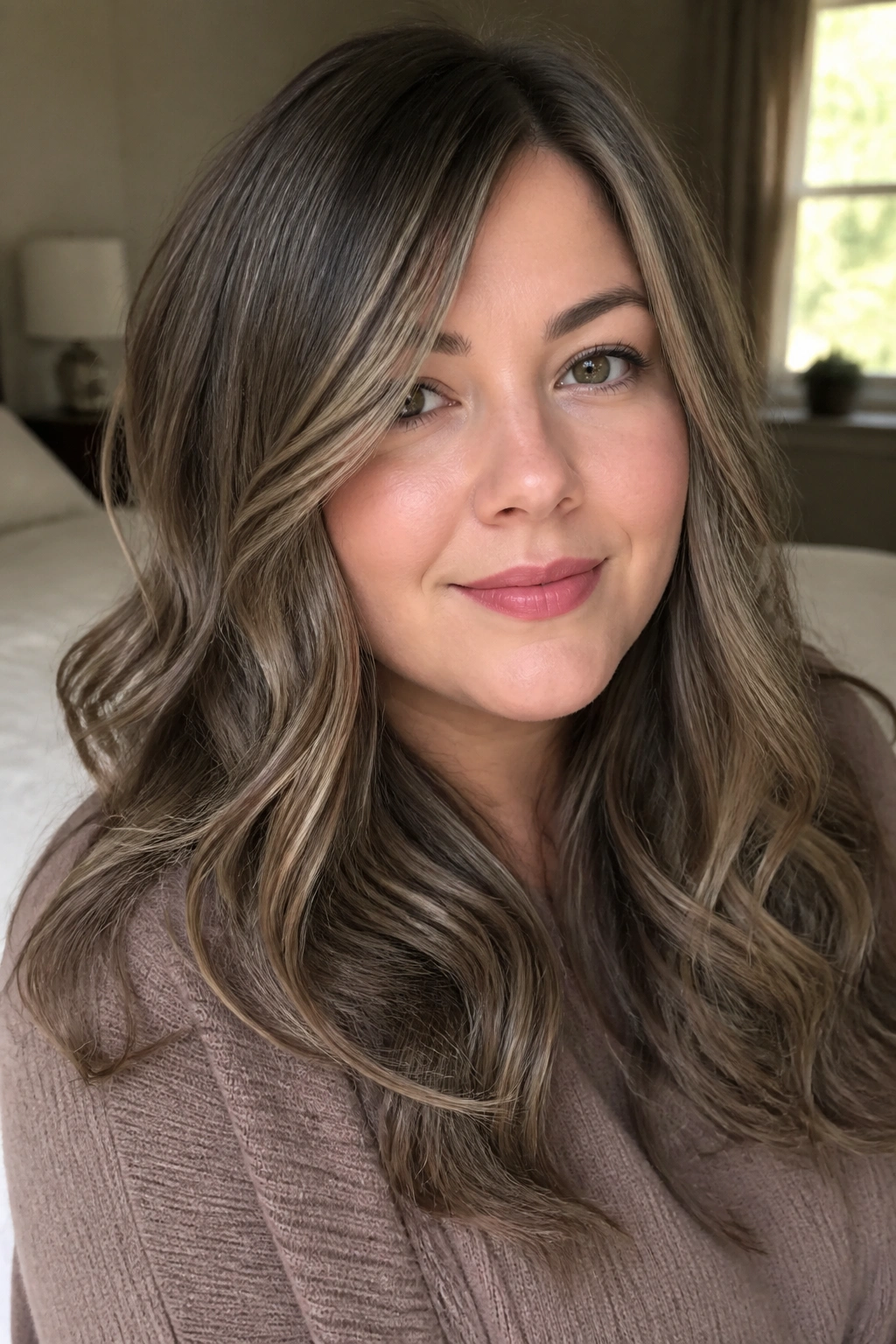
Mushroom brown is for the person who looks at caramel and thinks, no thanks, too sweet. It stays cooler, with taupe and ash tones that give dark hair a soft smoky finish. On a round face, that cooler edge can sharpen the outline a bit without turning the hair harsh.
The reason it works is subtle contrast. You are not painting bright blonde pieces near the cheeks. You are lifting the mids and ends in a neutral-cool way, which gives the hair dimension while keeping the face from feeling broad. It’s a smart choice if your skin leans cool or neutral, but I have seen it look good on warmer skin too when the toner is handled carefully.
This color is especially nice on thick hair because it breaks up the heaviness. The ashier ribbons give the ends some movement, almost like air between the layers. If your hair tends to look blocky in one flat color, mushroom brown fixes that without shouting.
One caveat: it can go dull if the toner is too gray. You want soft smoke, not flat brown dust.
6. Toffee Ribbons on a Wavy Collarbone Cut
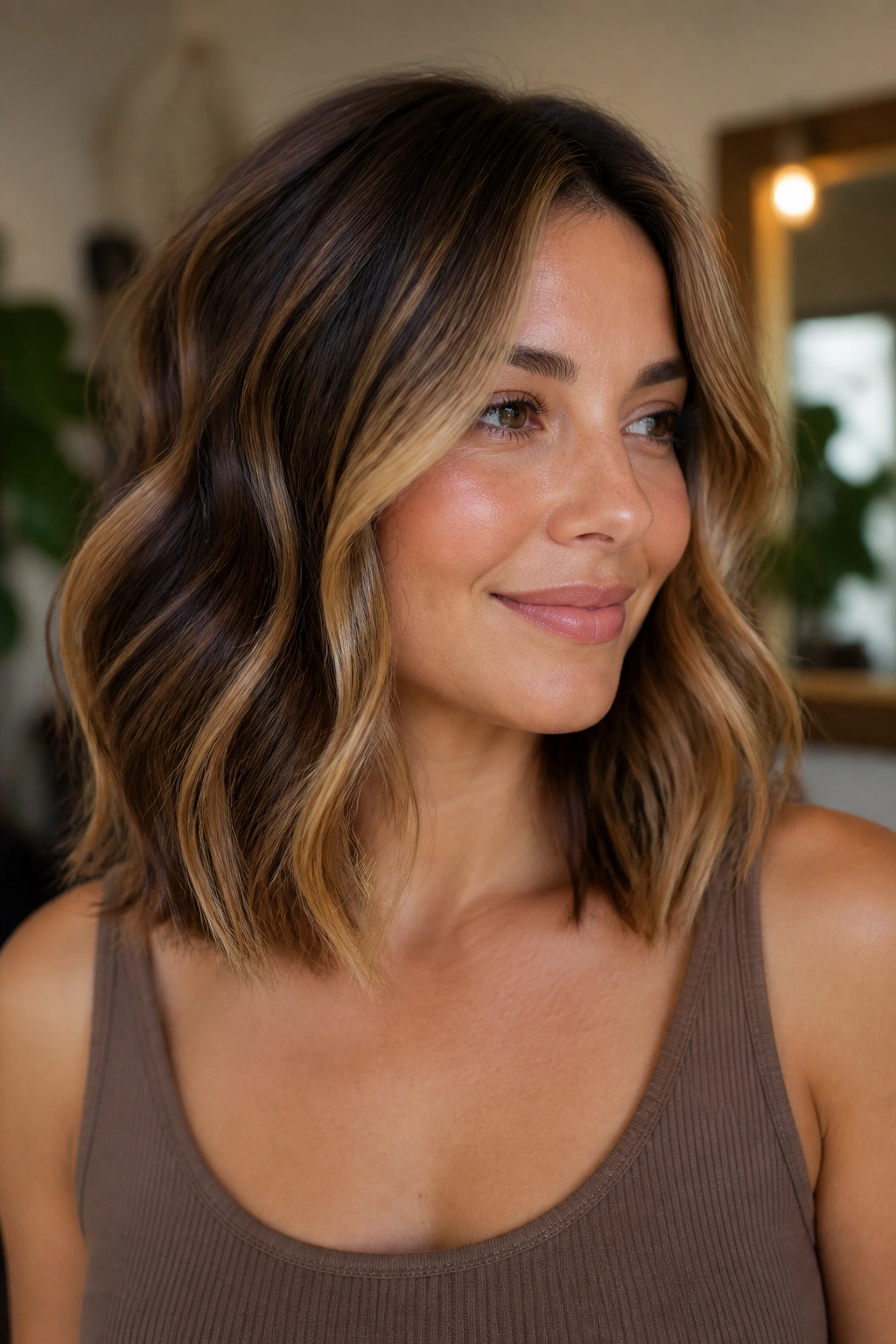
Toffee is warmer and a little deeper than caramel, which makes it an easy pick if you want dimension without bright contrast. On a collarbone-length cut, those ribbons can follow the bend of the hair and pull the eye downward, which is exactly where a round face needs help.
This look depends on placement more than on the shade alone. Keep the richest toffee through the sides and mids, then let a few lighter pieces skim the lower face and ends. If the color starts too high, the face can look wider. If it starts below the cheekbone, the whole shape lengthens.
Why It’s Better Than Bright Blonde Here
Toffee does not fight the base color. It blends into brunette hair in a way that feels lived in, not staged. That matters when the cut has soft waves, because the movement already creates interest. The color only needs to support that movement, not compete with it.
It also plays well with medium-density hair. Fine hair can lose contrast if the pieces are too thick. Thick hair can handle more ribbons. Either way, keep the front lighter than the back by a small margin and the shape will stay flattering.
7. Cocoa Balayage With a Bright Center Part
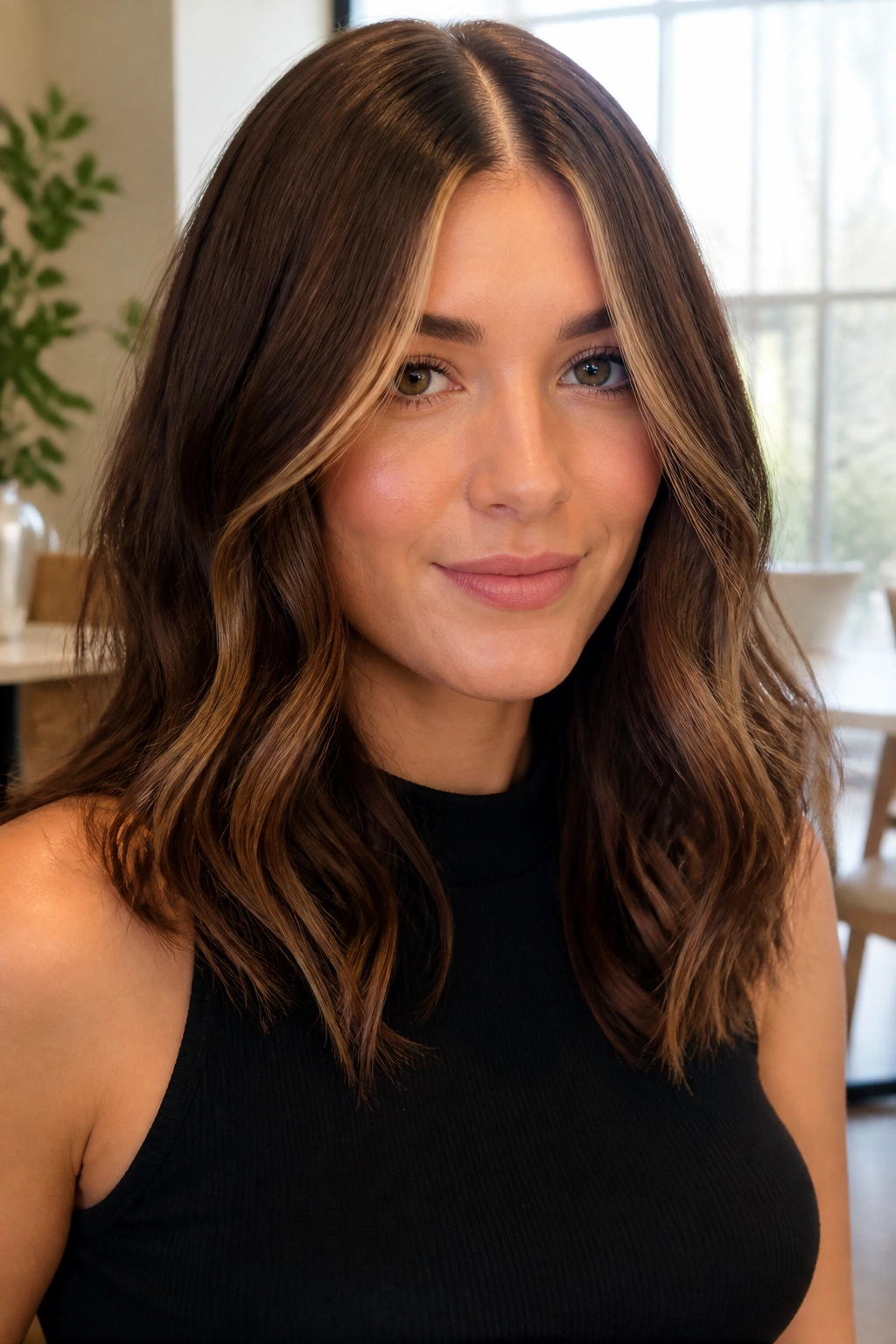
A bright center part sounds risky for a round face, and sometimes it is. Done badly, it can split the head in two and widen the cheeks. Done well, though, it creates a clean vertical line right down the middle and gives the face a longer feel.
The trick is to keep the brightness narrow and controlled. Think cocoa base, soft hand-painted lighter pieces around the inner front sections, then a gradual fade toward the ends. The center part works because it creates symmetry at the scalp while the lighter front pieces provide lift where the face needs it.
- Best on: medium-length cuts with a bit of wave.
- Ask for: a thin, bright face frame that stops before the jaw gets crowded.
- Tone choice: milk chocolate, warm cocoa, or neutral beige brown.
- Avoid: chunky panels that sit wide at the temples.
This look has a nice polished feel when the hair is tucked behind both ears. It can also be worn loose without feeling precious. And if you like a middle part but worry about roundness, this is one of the safer ways to do it.
8. Honeyed Brown Bronde for Soft Dimension
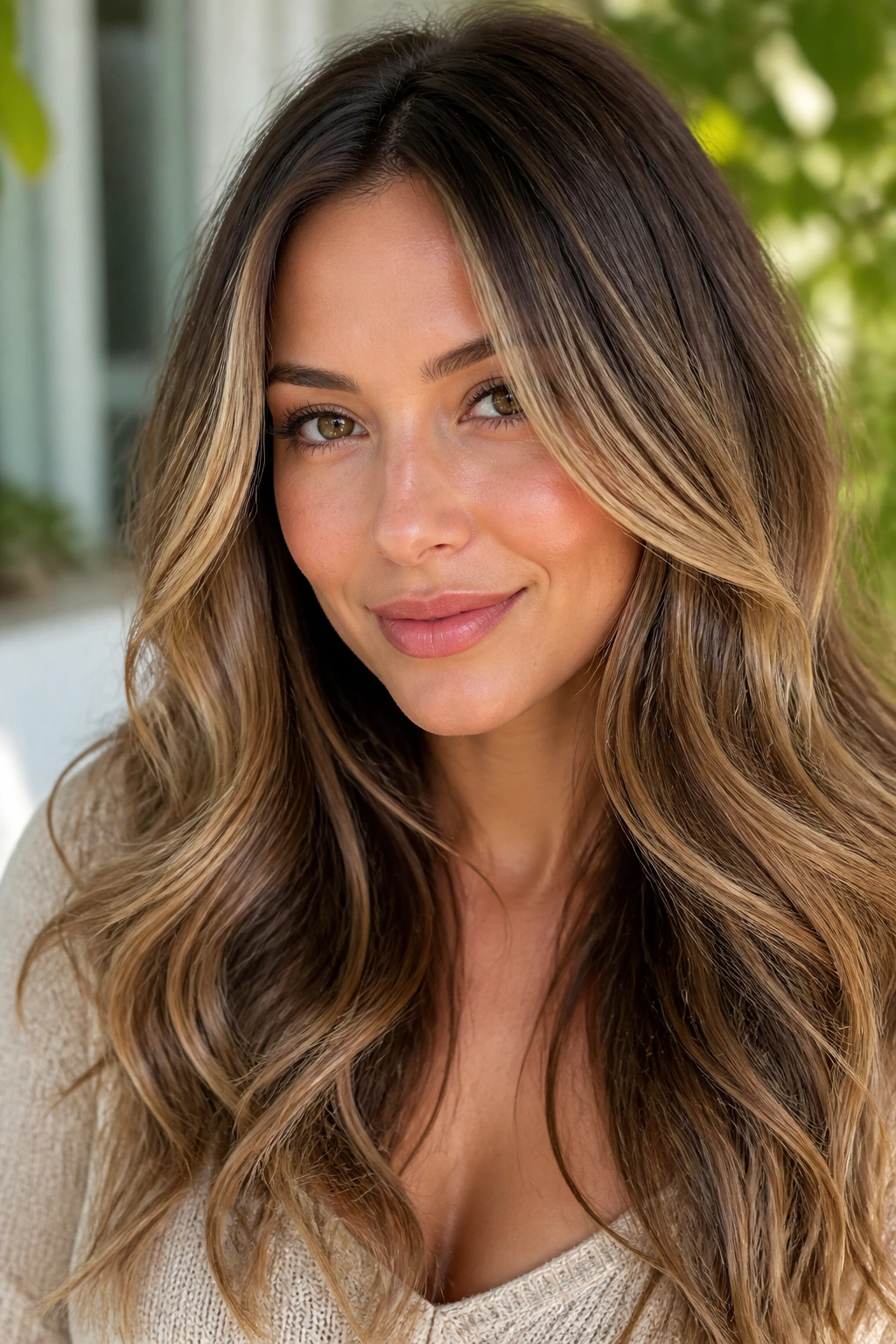
Does bronde work on a round face? Yes, if you keep it soft and low-contrast. Honeyed brown bronde is the lighter cousin of classic brunette balayage, but it should still feel grounded. The point is a glow, not a blond makeover.
How to Keep It from Widening the Face
Place the lightest honey pieces away from the broadest part of the cheeks. That usually means starting around the temples or lower face, then letting the color fall through the lengths. If the front gets too bright too high, the face can read wider. If the brightness is tucked lower, it lengthens the line.
This look works best when the roots stay deeper and the midlengths carry the transition. You want the eye to travel from dark to soft light in one smooth sweep. That movement matters more than the exact tone.
It’s a good option if you like a brighter finish but still want brunette to stay the headline. Honey gives the hair enough warmth to look glossy in natural light, and the brown base keeps it from feeling washed out. Pair it with long layers or a soft butterfly cut, and the whole thing settles nicely.
9. Walnut Brown With Airy, Light Ends
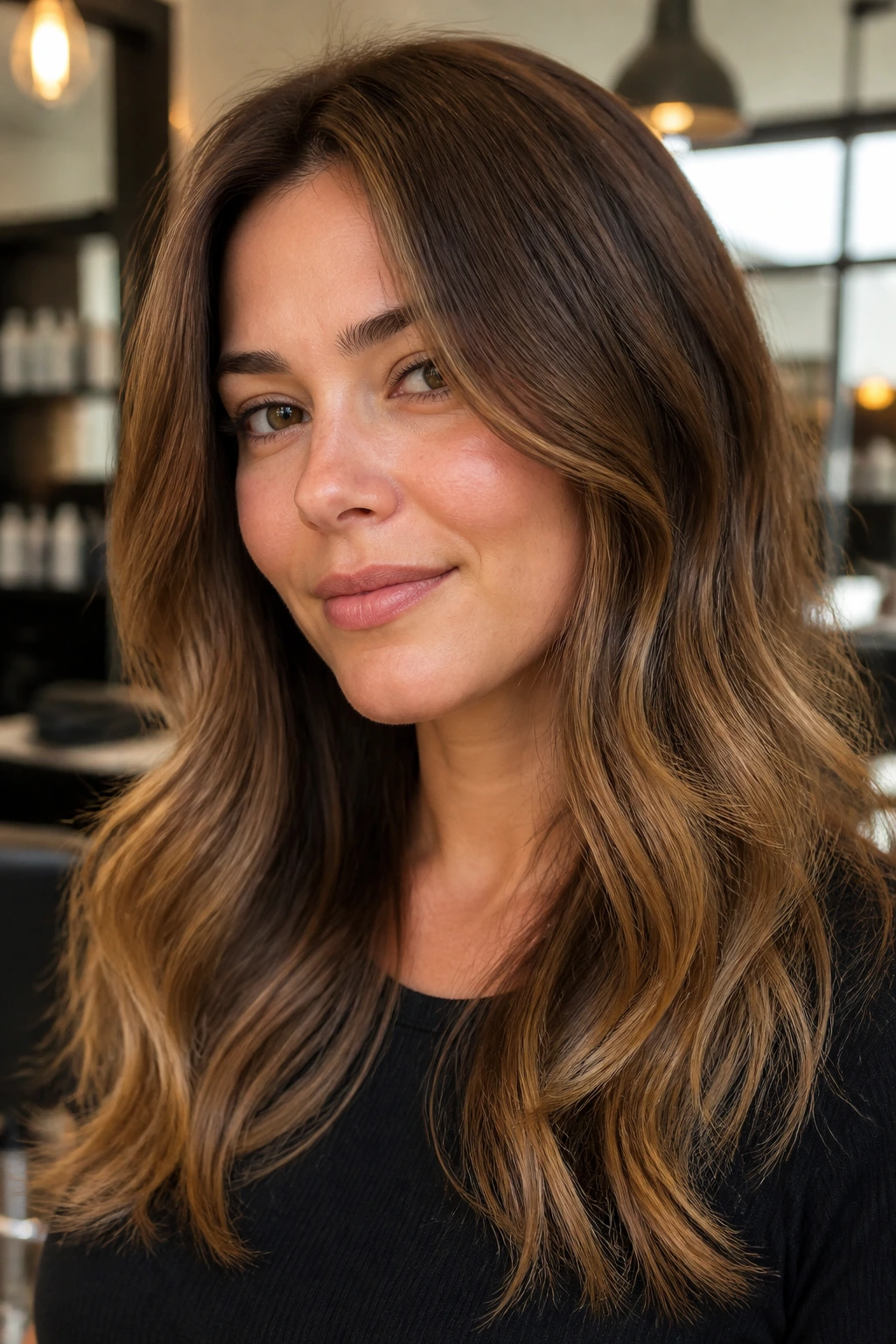
Walnut brown has this useful trait: it looks expensive without trying too hard. The tone sits in the neutral-to-warm zone, so it does not swing orange, and it does not flatten out into plain dark brown either. On a round face, that neutrality helps the style stay calm around the cheeks.
The lighter ends are the piece that matter most here. Keep them airy, feathered, and a shade or two lighter than the mids. You do not want a hard ombré line. You want the kind of ending that feels like the hair naturally caught a little light after weeks in the sun, even if you never go near sun-bleached blonde.
This is one of the better choices for thick, straight hair because the ends can feel heavy otherwise. The lighter finish visually thins the perimeter a little, which stops the face from looking boxed in. On waves, it looks softer still.
If you tend to wear deep side parts, walnut brown is forgiving. The color has enough depth to hold shape, but enough lightness to keep the front from disappearing.
10. Cherry Brown Accents on Deep Brunette
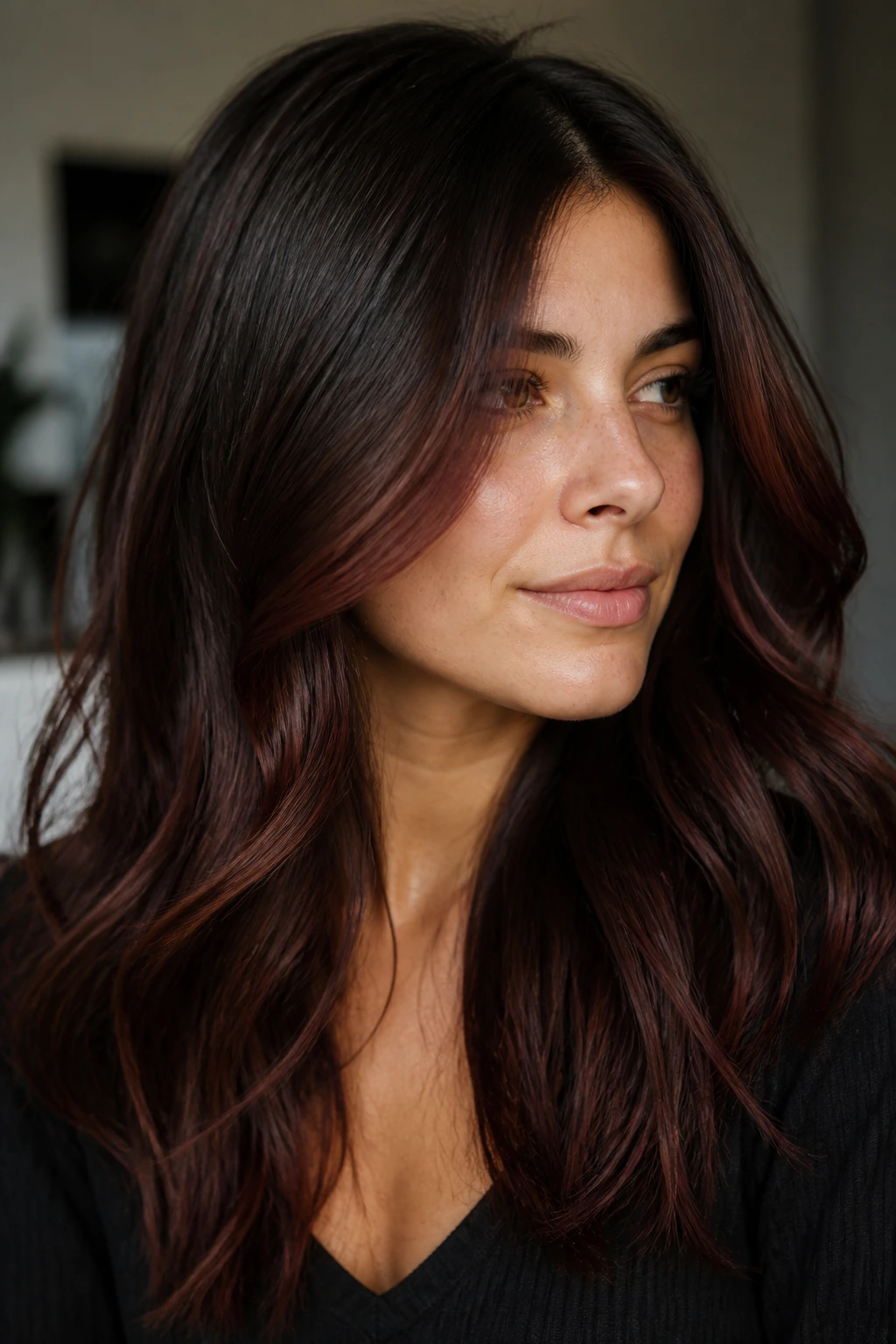
Cherry brown is not red-red. That would be a different story. Here, the red sits under the brown, like warmth under polish, and that’s what makes it flattering on round faces. It adds life without creating broad bands of brightness.
I like this look on deep brunette bases because the contrast stays elegant. The face-framing sections can carry a hint of cherry, while the mids and ends stay closer to cocoa or espresso. That small shift does a lot. It gives the eyes somewhere to go, and it keeps the jawline area from feeling heavy.
Who It Suits
- People with dark eyes who want a warmer sheen.
- Anyone whose hair looks flat in one flat brown shade.
- Round faces that need a little vertical pull, not extra width.
- Cuts with layers that move around the collarbone.
The key is maintenance. Cherry tones fade faster than neutral browns, so a gloss every 4 to 6 weeks helps keep the color rich. If you let it wash out completely, the whole look turns muddy. When it’s fresh, though, it’s gorgeous — and much softer than a full copper move.
11. Ash Brown Balayage for a Sleeker Outline
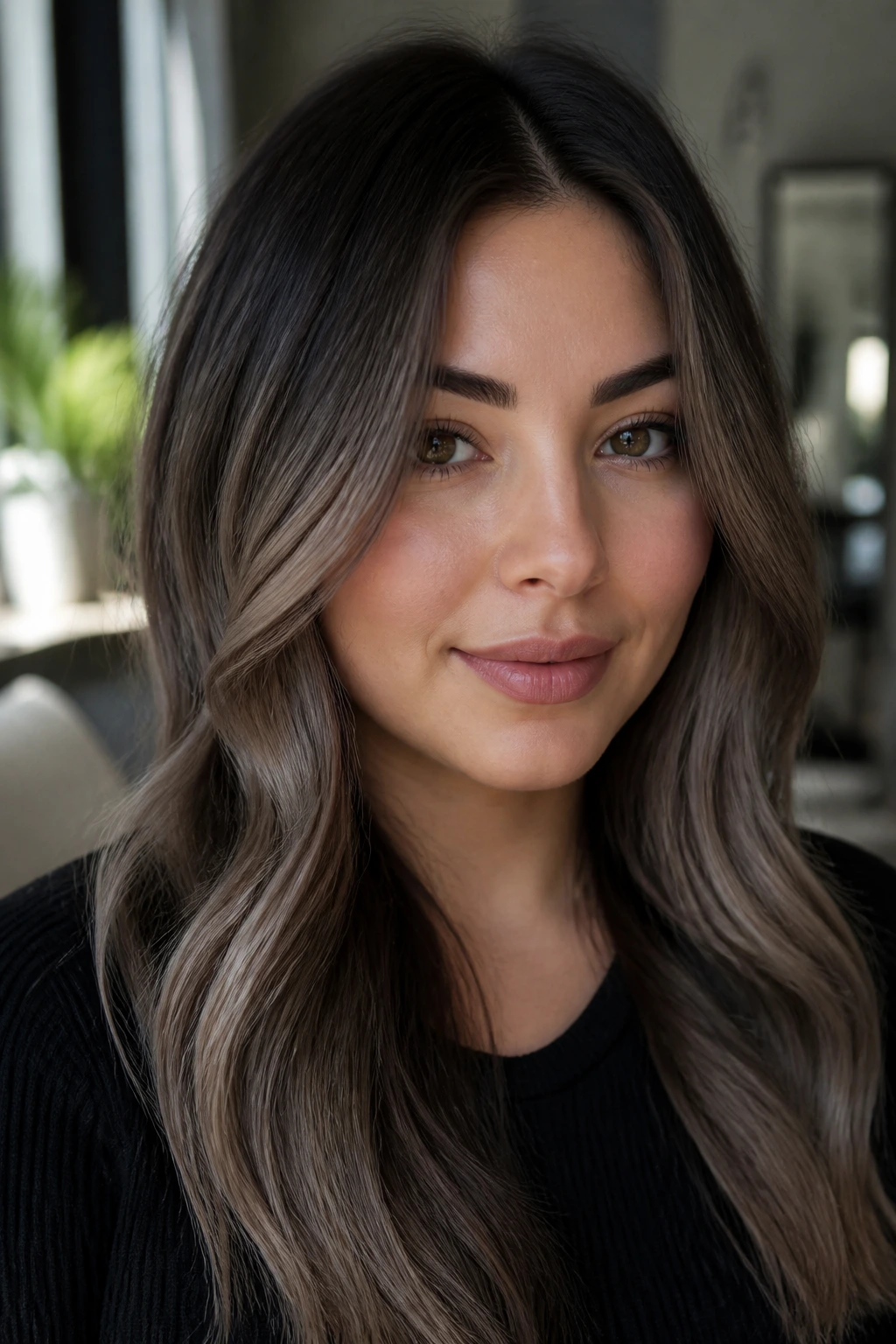
Ash brown has a reputation for being cool, but the real reason it flatters a round face is simpler: it sharpens the edges. Warmth can widen the look of the cheeks if it lands in the wrong place. Ash softens that effect and gives the hair a leaner outline.
The color works best when the light pieces stay narrow and blended. You are not chasing blonde. You are creating a smoky gradient from root to end. Think of it as a gentle contour for the hair, not a stripe of contrast. That’s a useful mental picture, even if I hate the word “contour” when people use it lazily.
If your skin leans cool or neutral, ash brown can look especially clean. If your skin is warmer, the trick is to keep the ash softened with a beige toner so it does not go gray-green. That’s a common mistake.
This is one of the more grown-up brunette looks. Not boring. Just controlled. And control is underrated when the face already has soft curves.
12. Dark Chocolate and Beige Brown Contrast
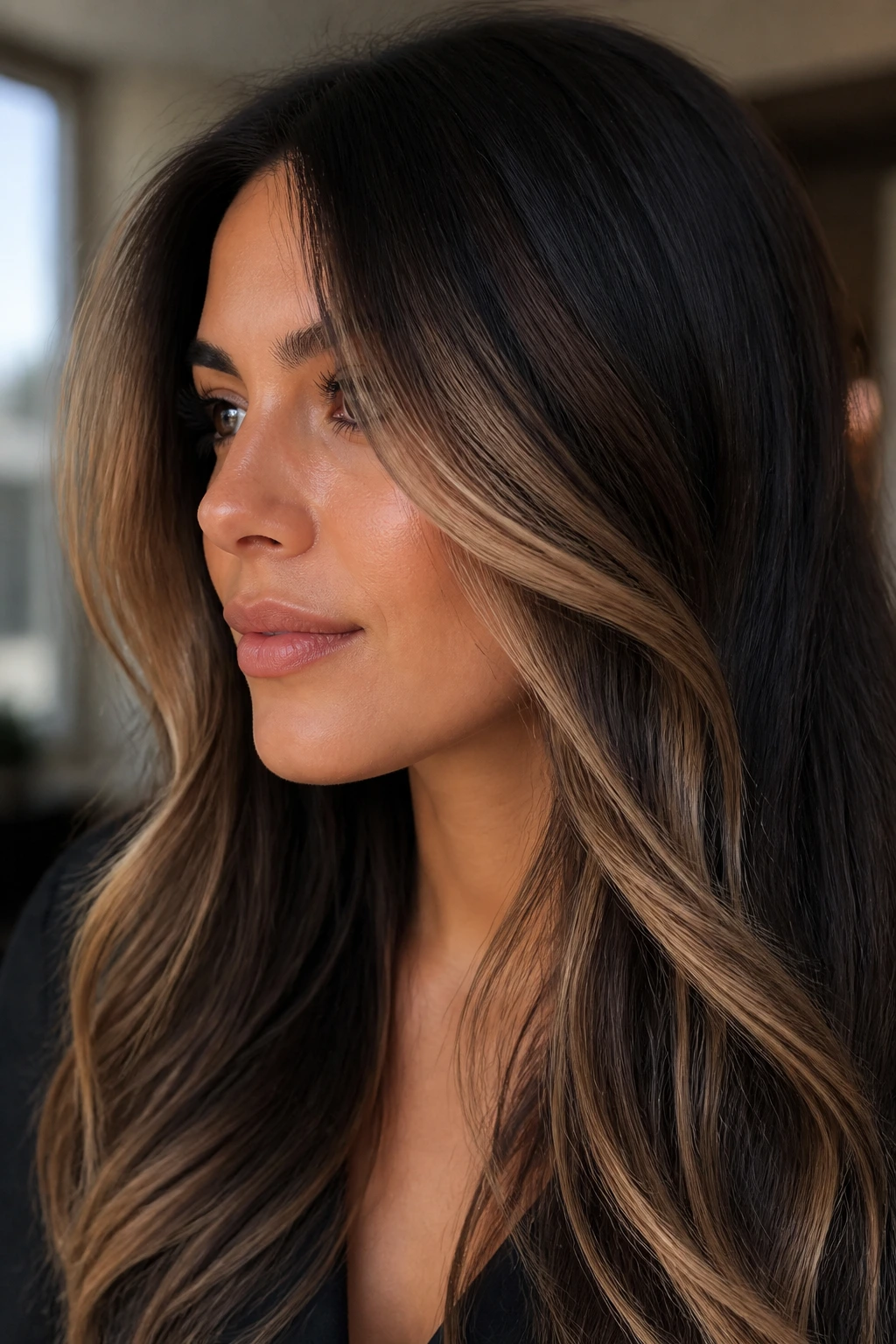
Unlike high-contrast blonde streaks, this look keeps the drama inside the brown family. Dark chocolate at the root and through the interior gives depth, while beige brown on the surface adds light without losing the brunette feel. On a round face, that matters because the shape stays sleek instead of puffing out at the sides.
The best versions use painting around the perimeter, not all over it. That means the lighter beige pieces sit where the hair bends, not in giant panels. A few wrapped sections through the ends can be enough. More is not always better here.
This color pairing is strong on shoulder-length cuts and longer bobs because the contrast becomes more obvious as the hair swings. If you wear a blowout, it looks polished. If you wear it with loose waves, the beige flashes in and out without making the hair look busy.
One thing to watch: beige brown can turn too gold if the toner is warm. If your goal is shape and softness, keep the tone creamy, not yellow.
13. Sandalwood Brown With Long Layered Waves
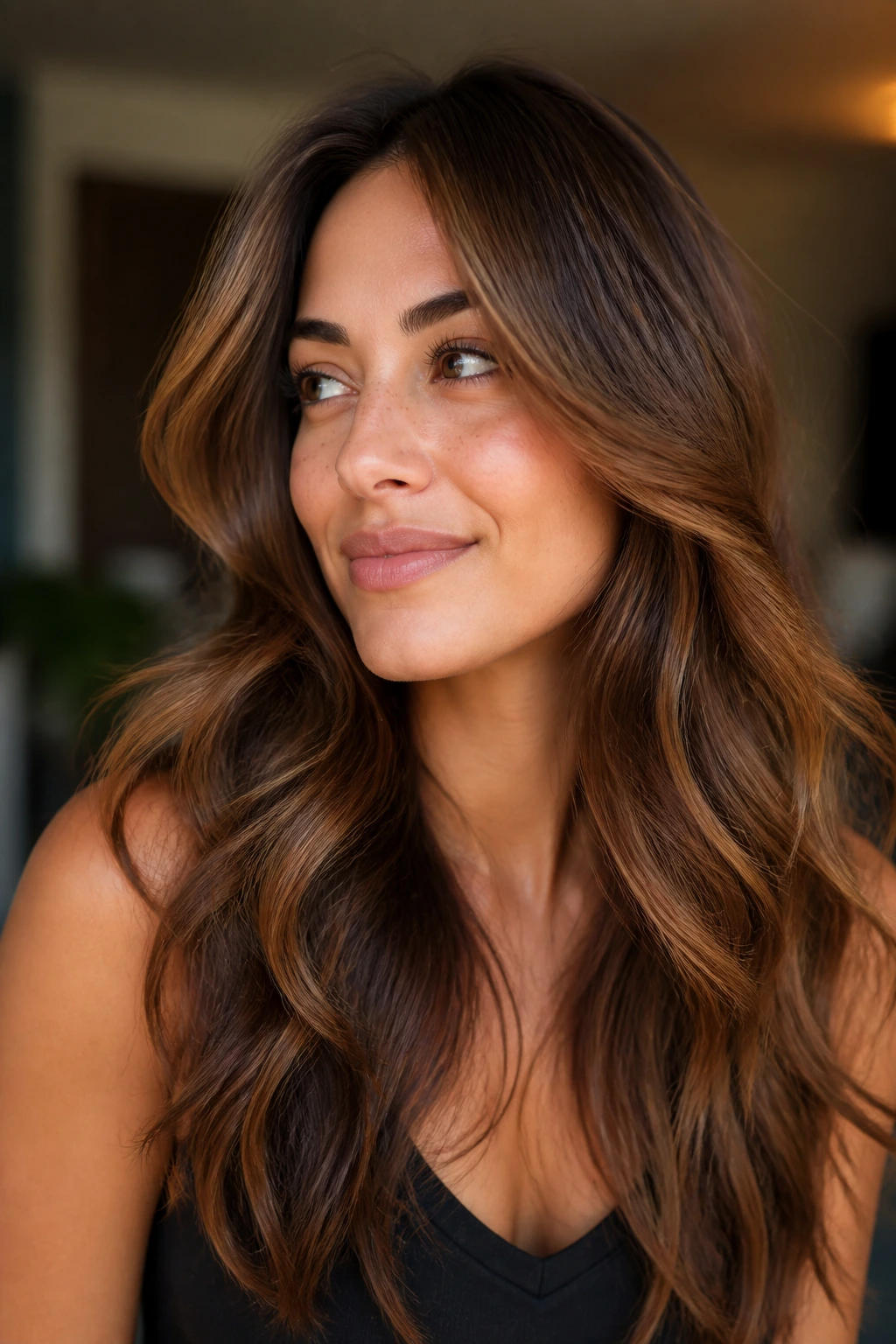
Why do I like sandalwood brown on round faces? Because it sits in that soft beige-brown space that feels light without being bright. The name is prettier than the job, frankly. What it actually does is lift the overall feel of brunette hair while keeping the face from getting boxed in.
What Makes It Different
Sandalwood has a satin-like finish. It does not shout. On long layered waves, it gives the hair a smooth, almost polished drift from root to end, and that long flow helps round features look less wide. The layers keep the color moving, which is half the point.
The face-framing pieces should stay fine and vertical. No wide streaks at the jaw. A couple of narrow ribbons near the temple and a soft fade through the front ends are enough. If the waves are styled away from the face, even better.
This look is especially nice if you like neutral makeup and soft clothes. It does not compete. It just sits there and makes the hair look fuller, cleaner, and a bit longer. That sounds plain, but plain is often what works.
14. Brunette Shag With Soft Contour Highlights
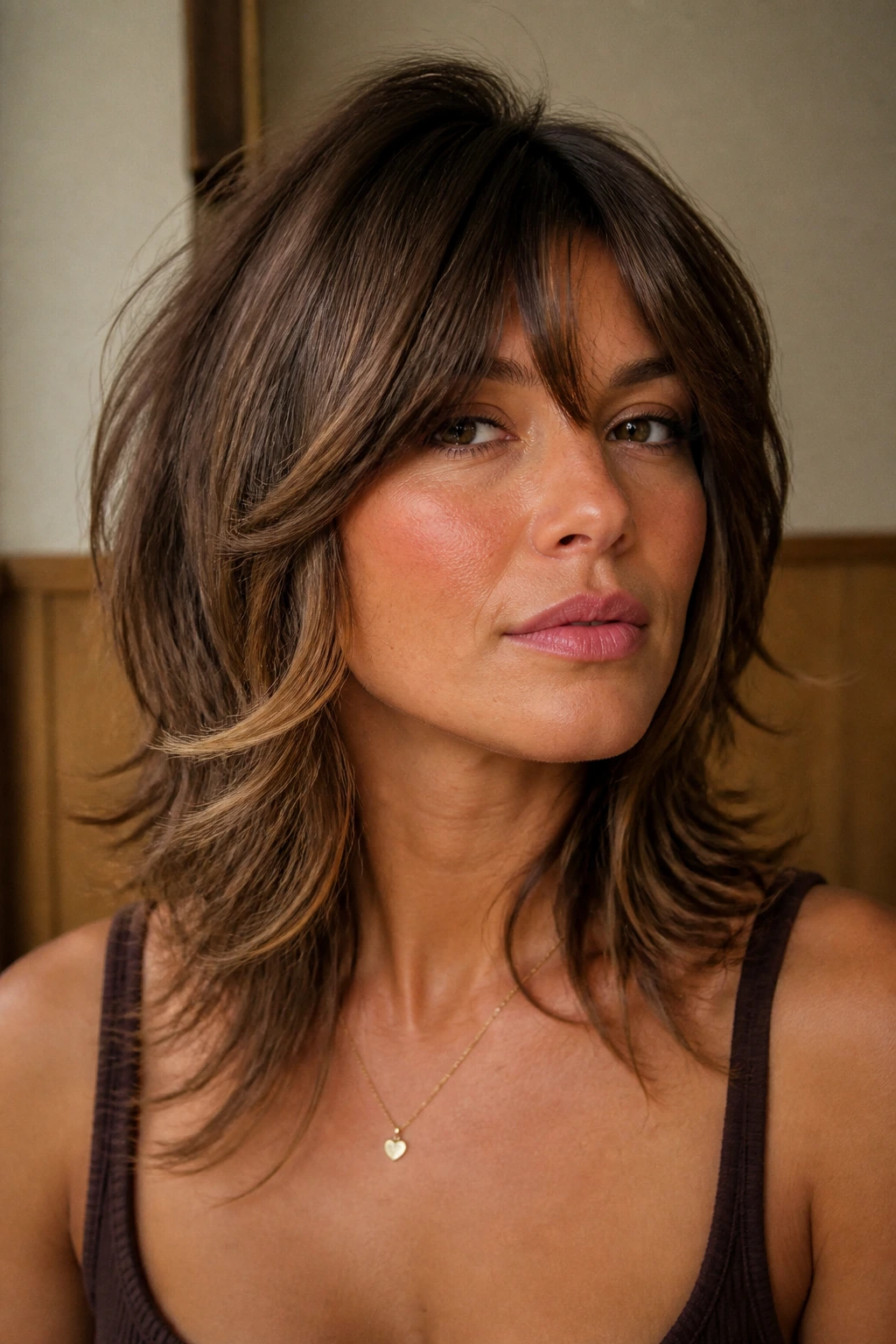
A shag on a round face can be brilliant or a mess. The difference usually comes down to the highlights. If they are too chunky, the cut turns puffy. If they are soft and vertical, the layers do all the flattering work for you.
This version keeps the color subtle around the crown and stronger through the piecey ends. The shag’s own texture already breaks up width, so the balayage only needs to echo that movement. Think thin contour highlights along the front, then scattered lighter threads through the longer pieces.
The shape here is the real star. A shag creates internal height, which helps a round face look longer. The balayage supports that by placing light where the hair moves, not where the face is broadest. It’s a very practical color-and-cut match.
If your hair is naturally wavy or bends easily with a diffuser, this is one of the most flattering options on the list. It can look a little messy in a good way. I mean that kindly. The slightly undone finish is part of the charm.
15. Cinnamon-Glazed Midlength Color Melt
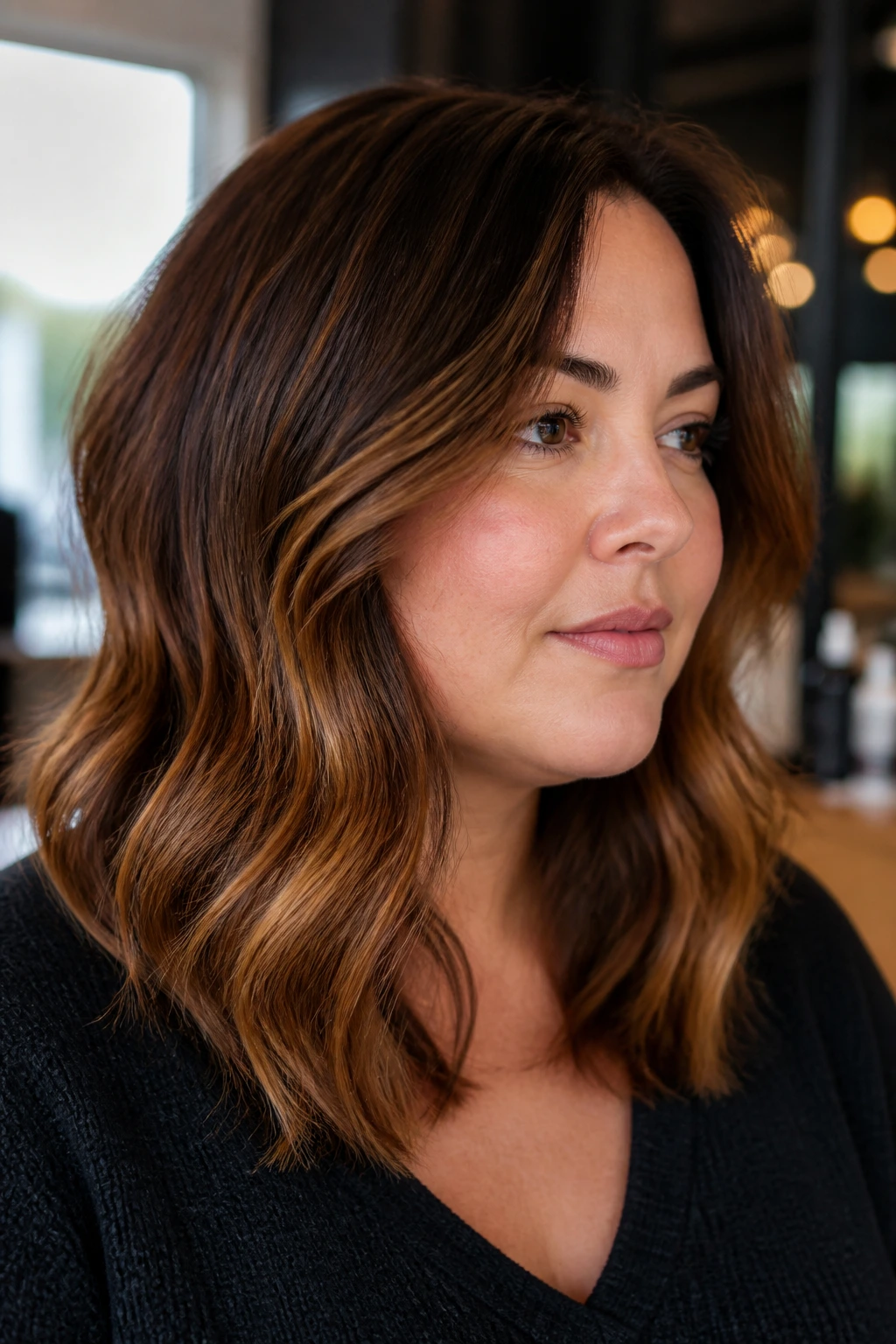
A cinnamon-glazed melt is what I suggest when someone wants warmth but does not want highlights that read in stripes. The base stays rich brunette, the mids turn gently cinnamon, and the ends soften into a warmer brown that glows rather than pops.
I like this on midlength cuts because the length gives the color room to stretch. On a round face, that stretch is useful. The eye follows the color down, and the face feels a little longer because of it. You do not need harsh contrast to get that result. You need a clean fade and enough distance between the face and the lightest pieces.
This look can be especially flattering on olive or medium skin tones. Cinnamon adds life near the face without making the hair look orange. The trick is to keep the gloss brown-based, not copper-heavy.
There’s a small maintenance note here. Warm glazes can shift faster than neutral brown, especially if you wash often. A color-safe shampoo and cooler rinse water help, but the real hero is a quick gloss refresh before the color drifts too far.
16. Hazelnut Balayage on Curly or Coily Hair
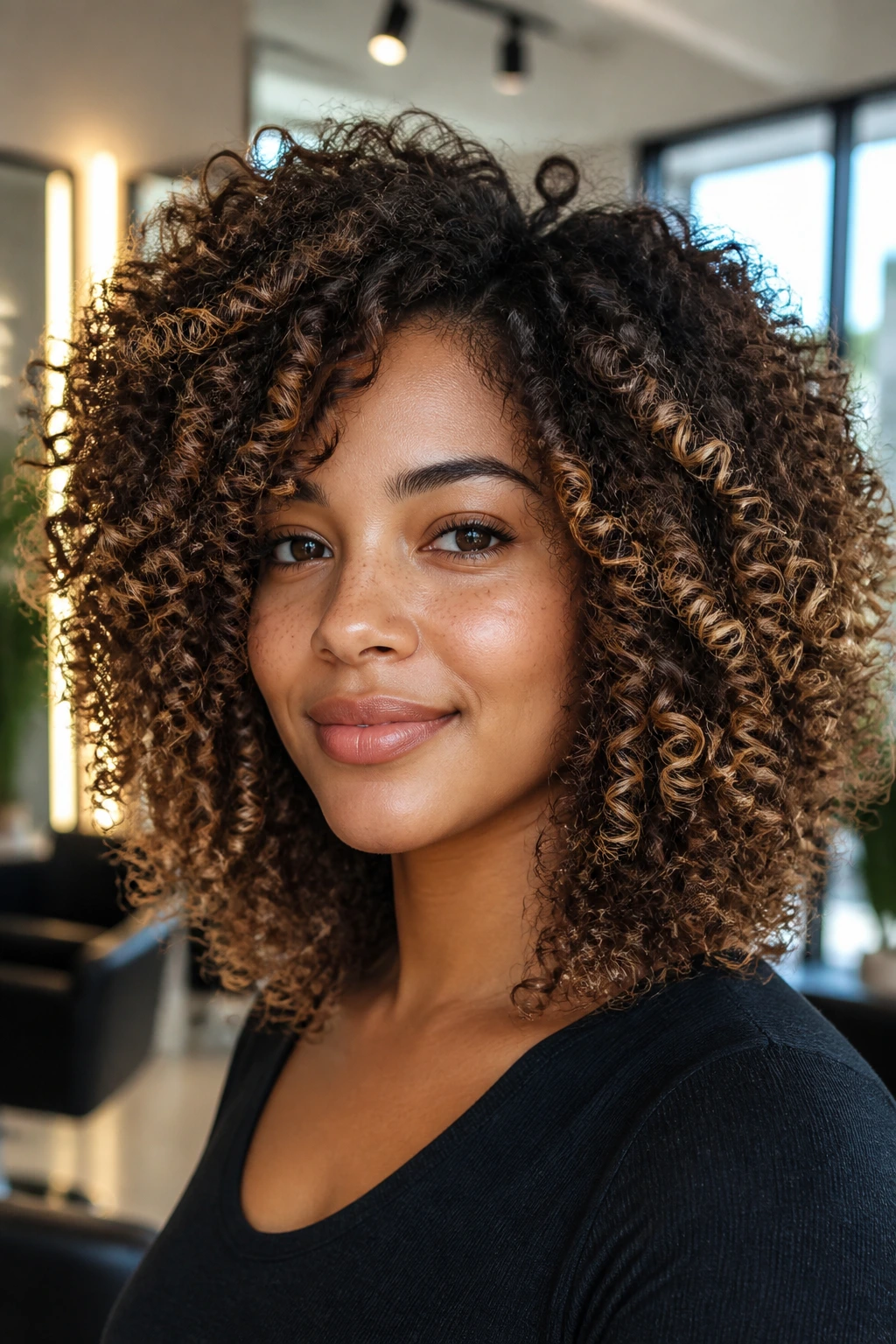
Curly hair changes the game, and round faces often benefit from that extra height. Hazelnut balayage works because it gives curls dimension on the outer layer without carving wide light bands across the sides of the face. The curls themselves create shape. The color just needs to support them.
Placement Matters More on Texture
On curly and coily hair, balayage should follow the visible curl pattern, not the hidden stretch pattern. That means the lighter hazelnut pieces need to sit on the outside of the curl clumps, especially around the top and front sections. If the color is buried too deep inside, it disappears. If it is painted too wide around the cheeks, the face gets wider. Simple. Annoying. True.
Hazelnut is a smart choice because it reads warm but not brassy. It catches light well on bends and coils, and it blends into brunette bases without making the hair look frosted. If your curls are dense, keep the brightest pieces a little higher and a little narrower than you think you need.
A diffuser helps this look a lot. So does a strong cut with shape at the top. The color and the cut should work together, not fight.
17. Smoky Brunette With a Feathered Fringe
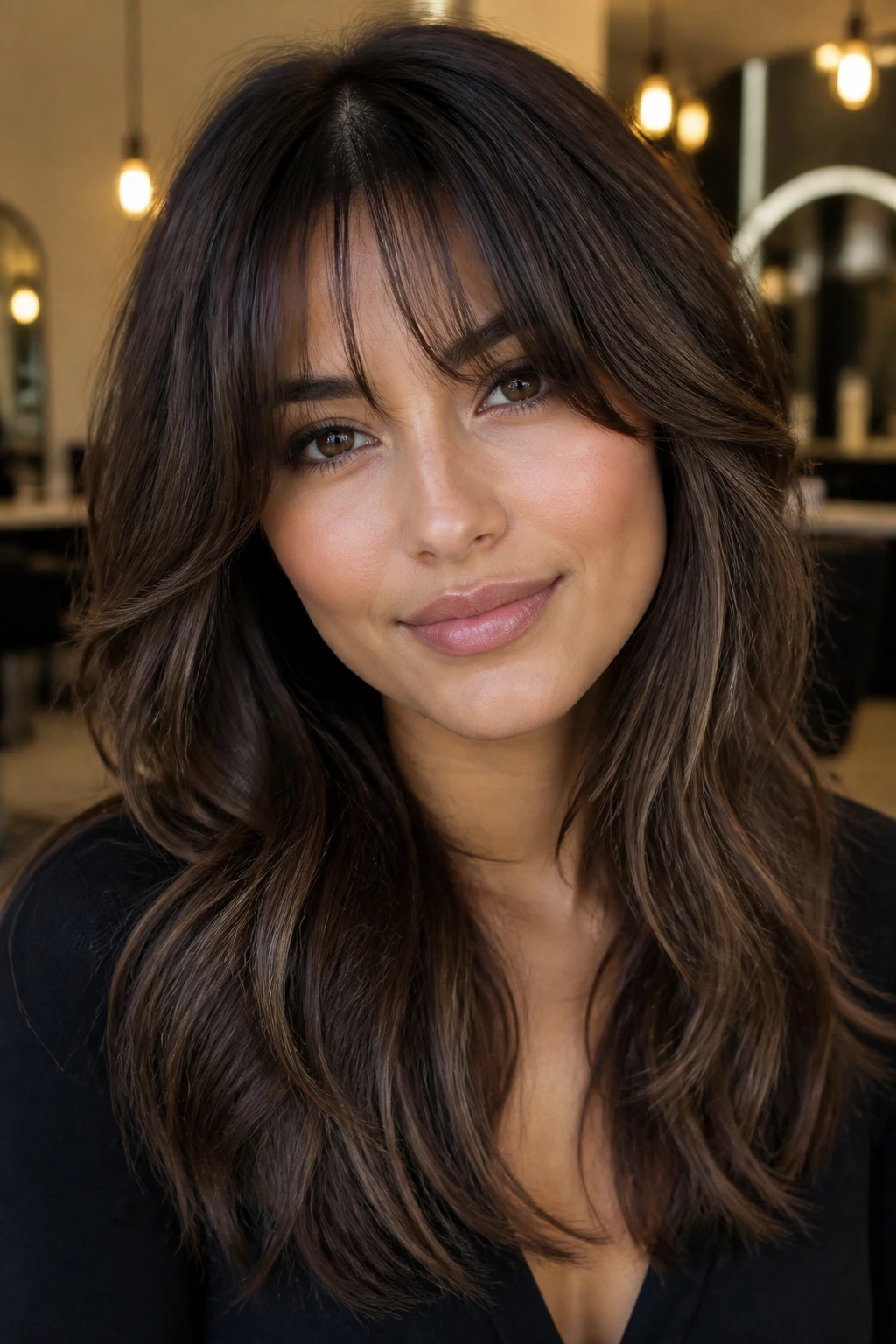
A feathered fringe can do more for a round face than a bigger color change. That sounds backwards, but it’s true. The fringe breaks up the horizontal width of the forehead and cheeks, and smoky brunette balayage keeps the rest of the hair soft and long.
Why It Works
Smoky brunette is darker than mushroom brown and less warm than caramel. That middle ground keeps the outline clean. Add a fringe that tapers at the sides — not a blunt curtain, not a heavy bang — and you get a face frame that narrows the look without feeling severe.
The balayage itself should stay minimal around the fringe. A tiny lift through the pieces beside the eyes is enough. The rest can live lower through the ends. That keeps the shape tidy. It also keeps the fringe from looking disconnected from the rest of the cut.
This is one of those looks that feels cooler the second day, after the fringe settles a little. Freshly styled, it can look sweet. By day two, it looks sharper. Either way, it’s a strong choice if you want a haircut to do half the work for you.
18. Cocoa-to-Caramel Ombré on Straight Hair
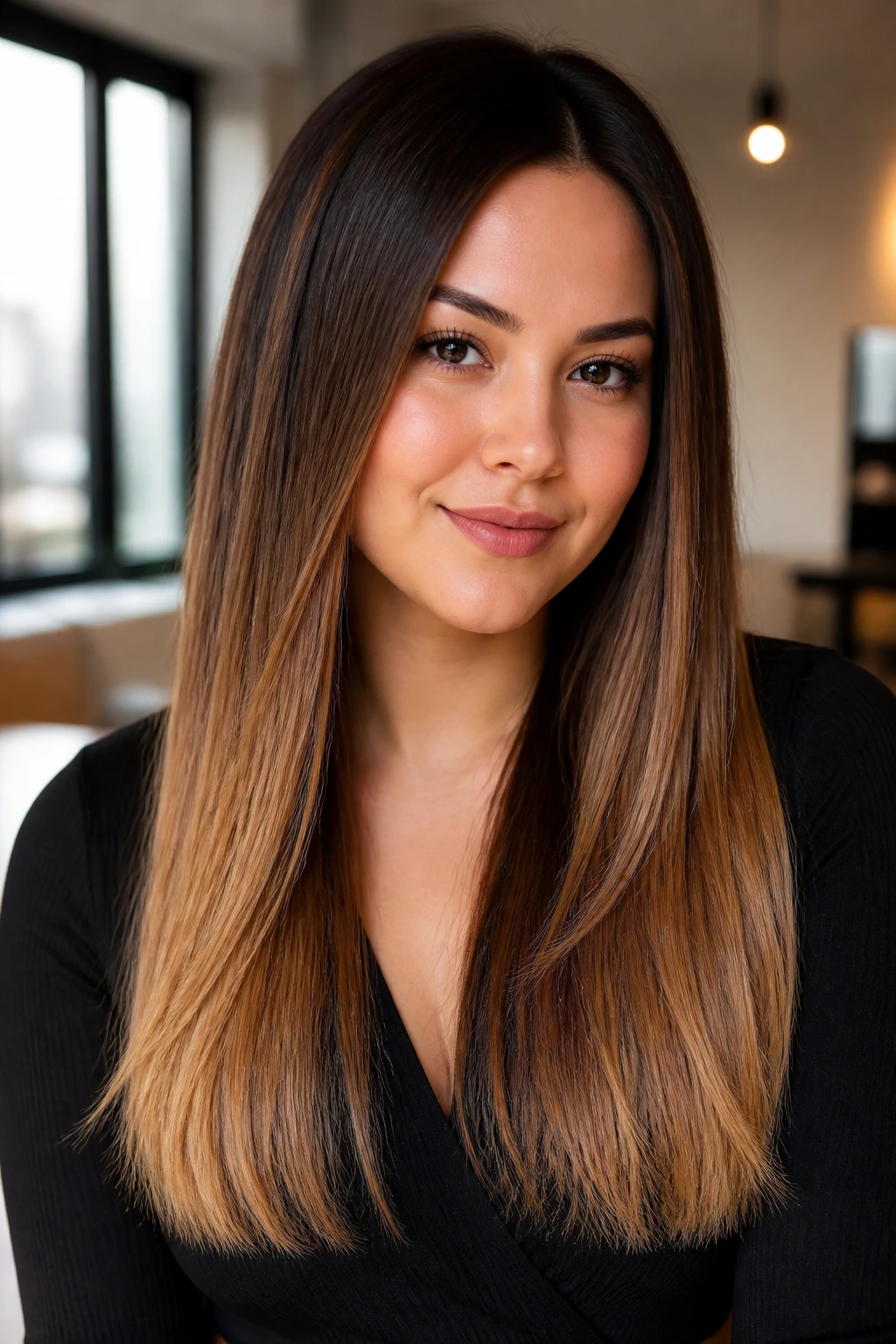
Straight hair can be unforgiving with color. Every line shows. Every stop-point shows. That is why a cocoa-to-caramel ombré can be such a nice move on a round face: the gradient gives the eye a long path to follow, and the clean length of straight hair helps that path feel even longer.
The important thing is where the lightness begins. Keep the first caramel shift below the cheekbone, not at it. If the transition starts too high, the face can look rounder. If it starts lower and flows into the ends, the eye moves down and the whole look lengthens.
This is not a big, trendy ombré with a harsh line. It should feel melted. A deep cocoa top, then a gradual slide into caramel brown, then lighter ends that stay narrow. That’s it.
Straight hair also benefits from shine serum here. The smoother the surface, the more the gradient reads cleanly. If the ends frizz, the color can blur in a not-great way. Keep the finish sleek and the whole style looks far more expensive than it has any right to.
19. Dark Roast Brown With a Very Thin Money Piece
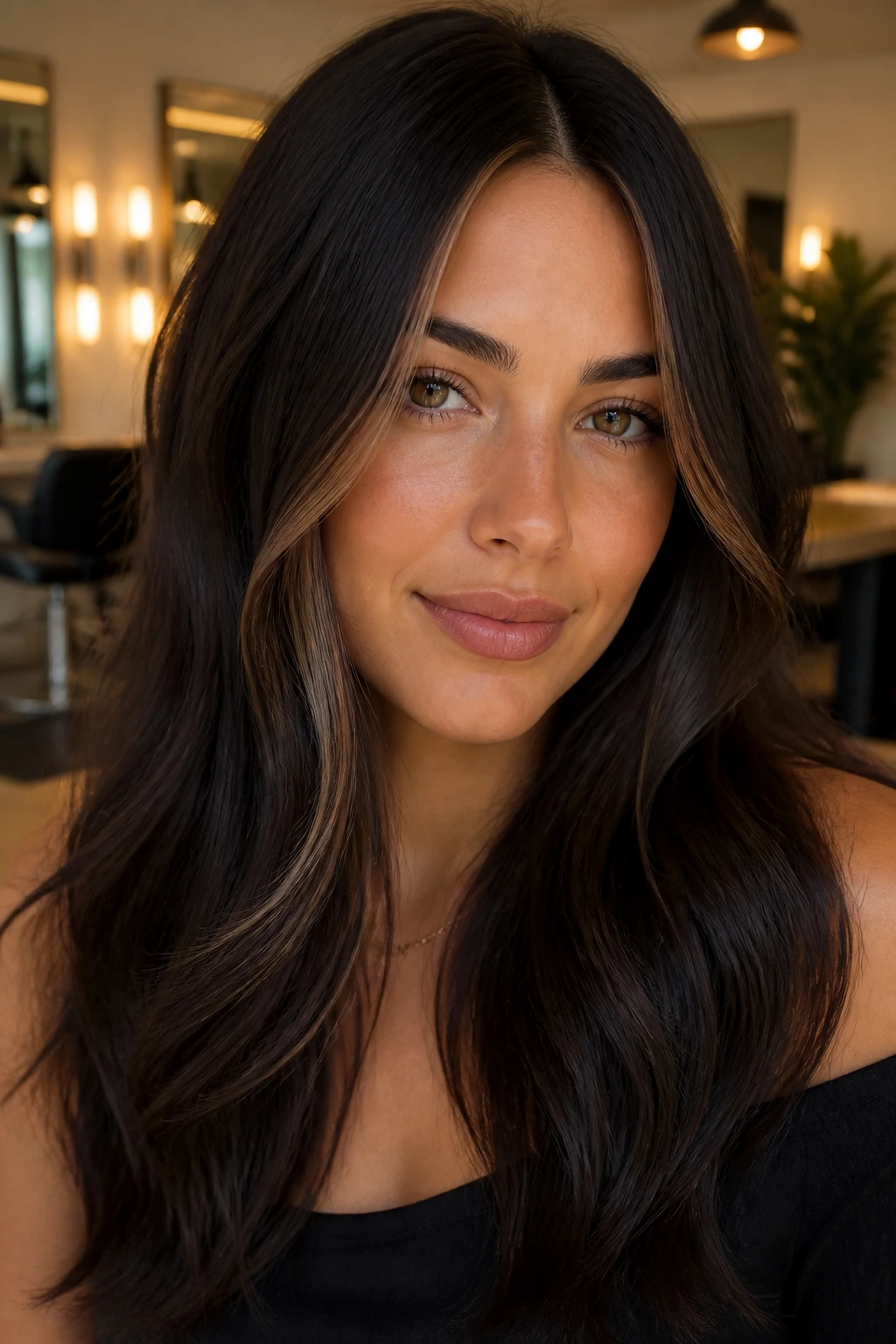
Do you need a money piece if you have a round face? Yes — sometimes. But only if it stays thin. A very thin money piece can brighten the center of the face and create lift without making the sides look wider. A thick one can do the opposite.
Dark roast brown is the base I’d pair with it. The deep root and interior color keep the hair looking rich, while the narrow front piece gives a little face-lightening effect. The contrast should be subtle enough that you notice it in motion more than in a mirror snap from three feet away.
- Width to ask for: around 1/4 to 1/2 inch at the front.
- Best placement: centered near the part, then softly feathered outward.
- Tone: beige brown, light mocha, or soft caramel.
- Styling note: a loose blowout or bend makes the piece look intentional.
This is a good choice for people who want change but hate upkeep. Since the front section is narrow, grow-out stays manageable. And because the rest of the hair stays dark, the whole style keeps that brunette depth round faces wear well.
20. Vanilla Lift Along the Front and Ends
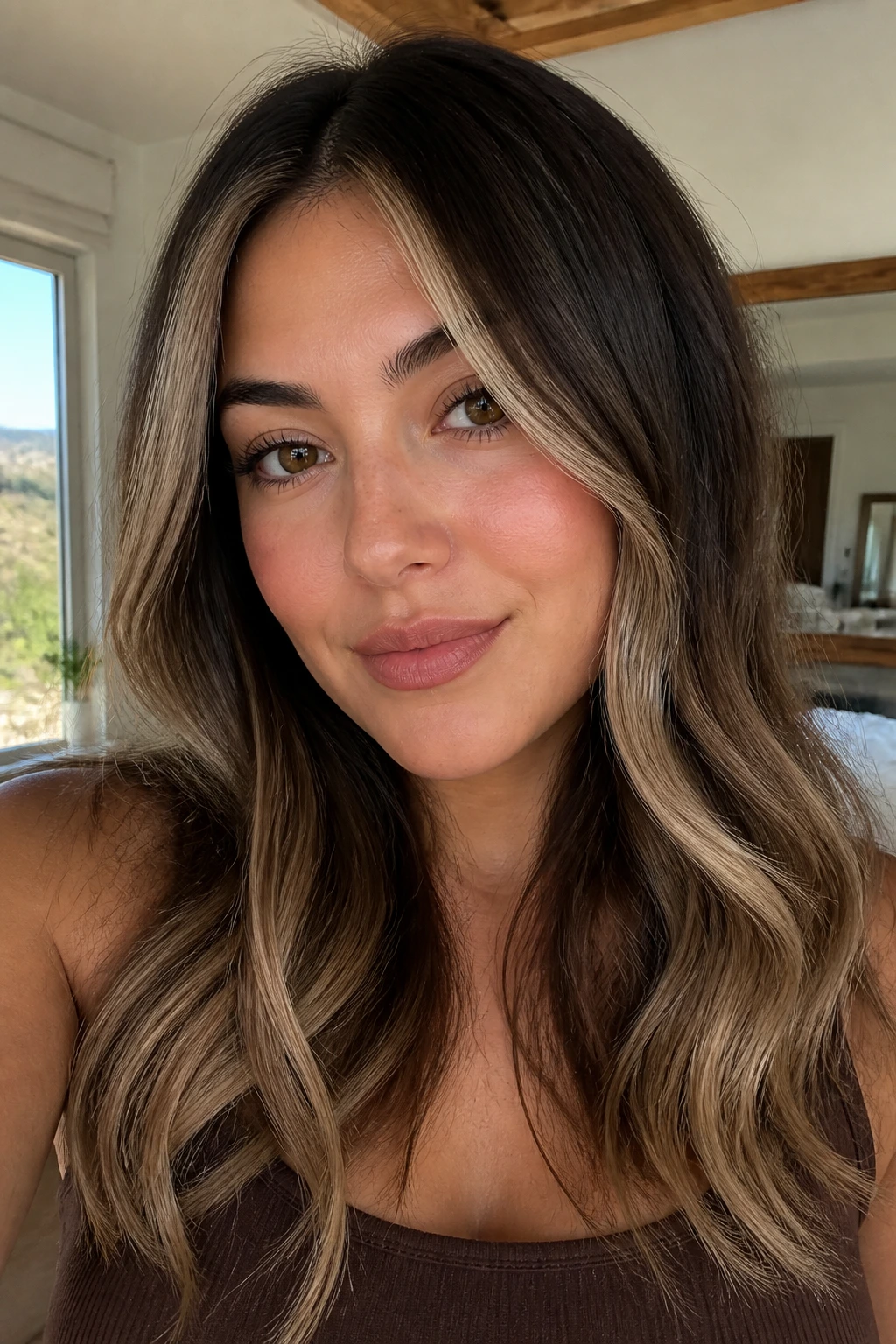
Vanilla lift is the lightest version on this list, but it still belongs to brunette hair first. The base stays brown, the front gets a soft vanilla-beige lift, and the ends lighten just enough to keep the shape open. On a round face, that means the hair looks brighter without getting bulky around the cheeks.
The best version does not flood the whole front panel. It traces the inside edge of the face, then fades out before the color can spread too wide. That keeps the face from reading broad. If you wear your hair long and loose, the vertical line gets even better.
This look works especially well with a round face that also has a fuller jaw or a lot of cheek softness. The lighter ends pull the eye down; the thin front pieces guide it back in. It’s balanced without being stiff.
If you want one general rule to keep in your head, make it this: brightness should travel vertically first. That’s the part too many color jobs miss. Round faces can wear plenty of brown balayage styles, but the smartest ones always respect that line.
