



Black balayage on brown hair has a particular kind of drama. Not loud, not stripy, just deep ribbons of shadow that make brunette color look richer, denser, and a little more expensive in the mirror. When the placement is done well, the brown base still shows through at the crown and around the face, so the black never swallows the whole head.
That balance matters. Solid black can flatten layered cuts and make texture disappear, while balayage keeps the dark pieces moving through the hair in a way that looks painted, not pasted on. It also gives you room to choose the mood you want: smoky and cool, espresso-dark, glossy and sharp, or soft enough that people only notice the depth, not the dye.
Black dye is a commitment. On brown hair it can be gorgeous, but it grabs attention because it changes the way light sits on the strands, and that matters more on porous ends than most salon menus admit. If the hair is already very lightened, the black needs to be placed with care or it can read muddy instead of rich.
The 20 looks below lean into different textures, lengths, and levels of contrast, because black balayage is not one single effect. A loose wave, a blunt bob, a shag with fringe, a long layered cut — each one changes how the dark pieces move. Some of these ideas whisper. Some stare back. That range is the fun part.
1. Espresso Black Balayage Ribbons
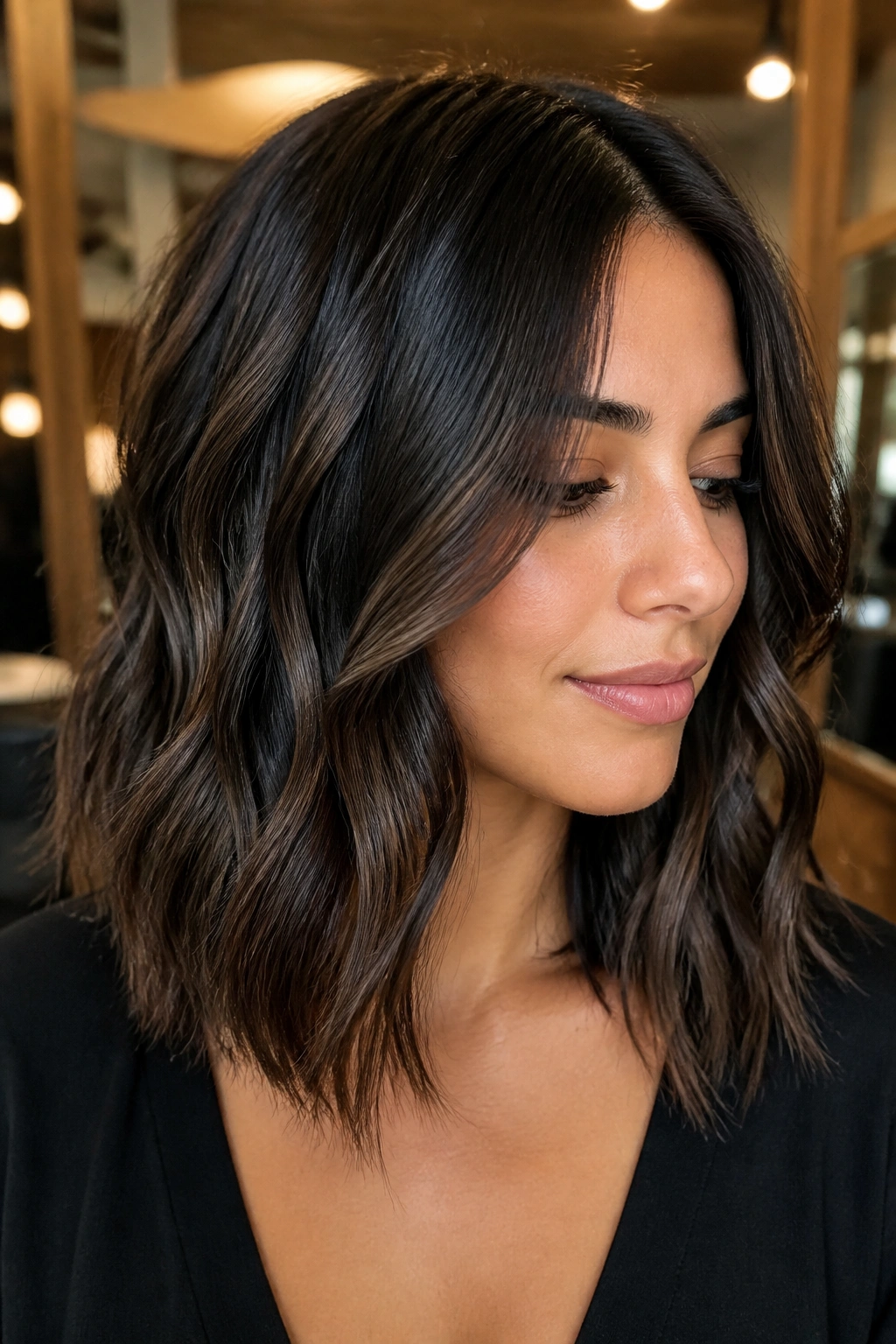
This is the look I recommend when someone wants black balayage on brown hair without going full gothic. The base stays a medium espresso brown, then the stylist paints in narrow black ribbons through the mids and ends so the whole style feels deeper, not heavier. On wavy hair, those ribbons bend with the movement and create a soft flicker instead of a hard line.
Why It Feels Soft, Not Harsh
The trick is spacing. If the black pieces are scattered with enough brown left between them, the eye reads the whole head as dimensional brunette hair rather than a block of dark color. It works especially well on shoulder-length cuts with loose bend, because the waves break up the darker areas.
- Best on level 5 to level 6 brown hair
- Looks strongest with a 1-inch curling wand or a round-brush blowout
- Ask for thin, painted ribbons through the mid-lengths
- Keep the crown a shade lighter so the top doesn’t go flat
My favorite part: leave the first 2 inches off the scalp mostly brown. It keeps the grow-out calm and saves you from a solid-dark helmet effect.
2. Face-Framing Black Money Piece
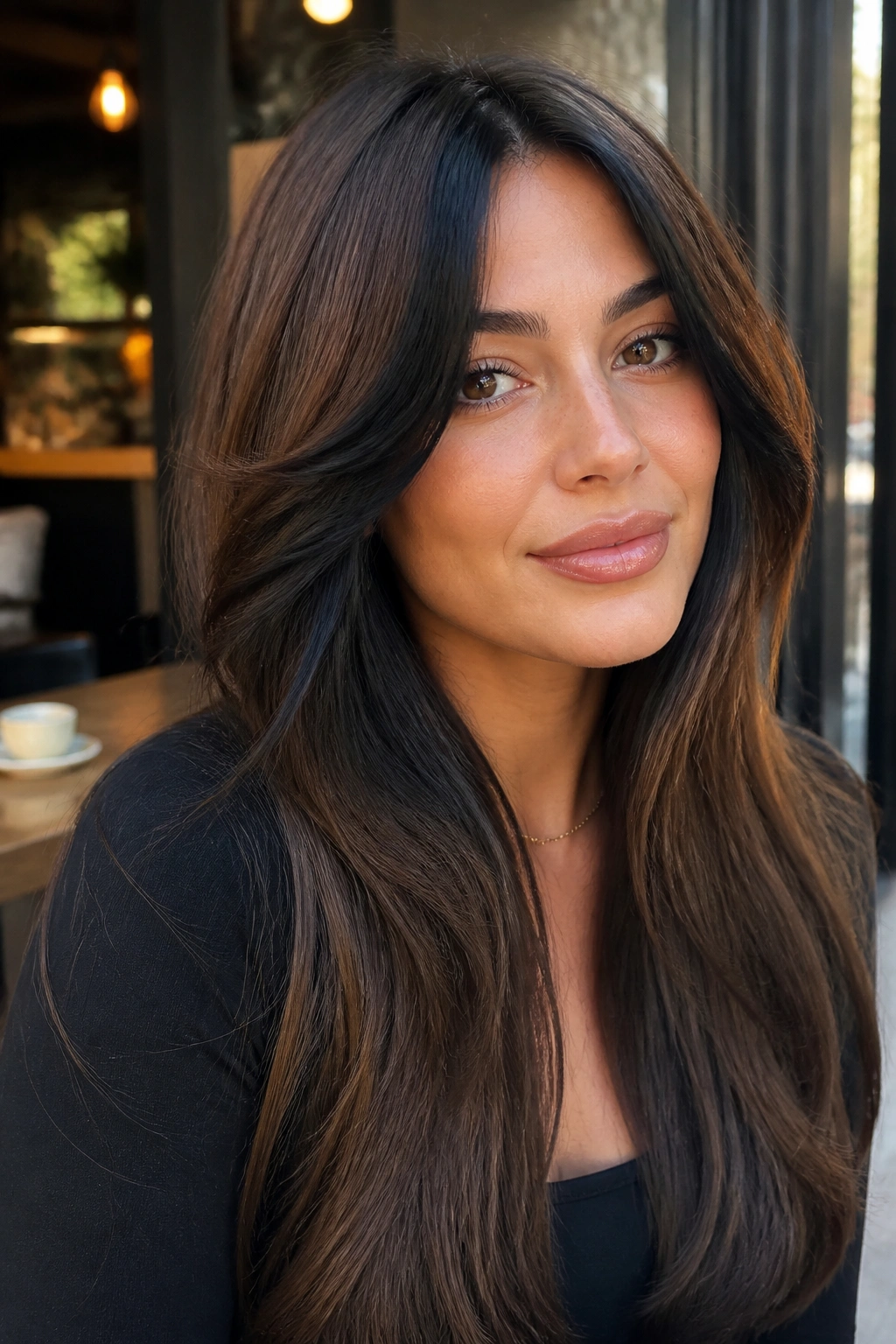
A black money piece is the quickest way to test the waters. Instead of darkening the whole head, the stylist places the black balayage around the hairline, starting near the temples and cheekbones, where it creates shape the second you pull your hair forward. On brown hair, the contrast looks sharp but still wearable.
That front placement gives the face more contour than people expect. If your brown base is warm, the black pieces cool things down right away. If your hair is already ash-toned, the effect turns sleeker and a little more graphic. I like this version on long layers and curtain bangs because the black frame does half the styling for you.
It also solves a common problem: you want darker hair, but you do not want to sit through a full head of black dye. This is the compromise that makes sense. The rest of the hair can stay brunette and airy while the front pieces do the talking.
3. Smoky Black Balayage on Curls
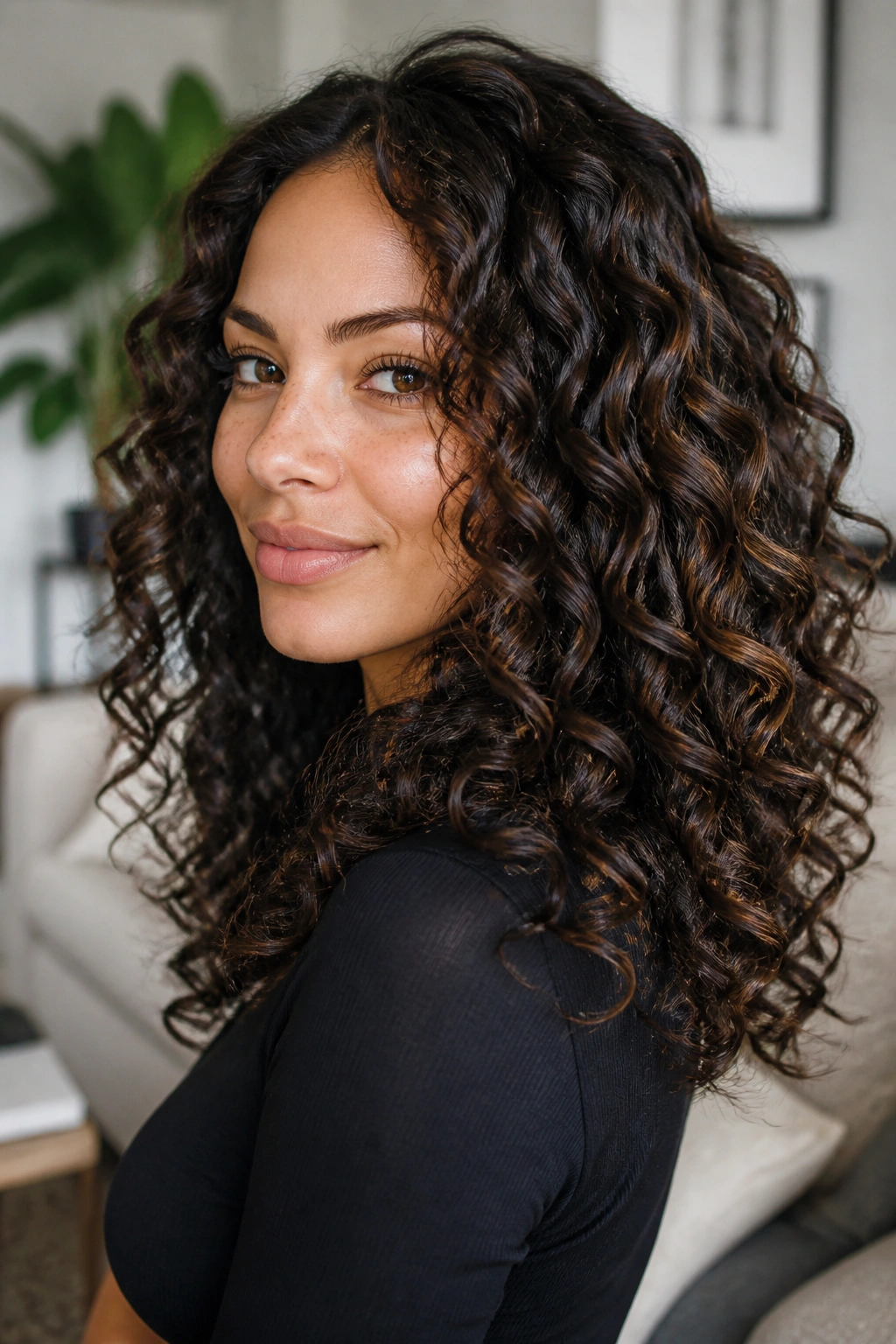
Why does this look so good on curls? Because curls already create shadows. Add black balayage to brown hair with a strong curl pattern, and the darker pieces tuck into the shape instead of sitting on top of it like paint.
The best version is not about coating every curl with black. It is about weaving the darker tone through the interior and lower layers, so the curl clumps keep their bounce and the depth shows when the hair moves. On tighter spirals, black near the ends can look especially plush, almost like velvet.
How to Style It
- Use a leave-in conditioner with slip, not a heavy cream
- Diffuse on low heat to keep the curl pattern intact
- Scrunch out the cast with a light oil if the hair feels crunchy
- Avoid dragging a brush through dry curls; it breaks the shape and dulls the color
A lot of stylists go too heavy on the front pieces here. That is a mistake. The curls need room to breathe, and the black should support the pattern, not compete with it.
4. Ash Brown to Black Melt
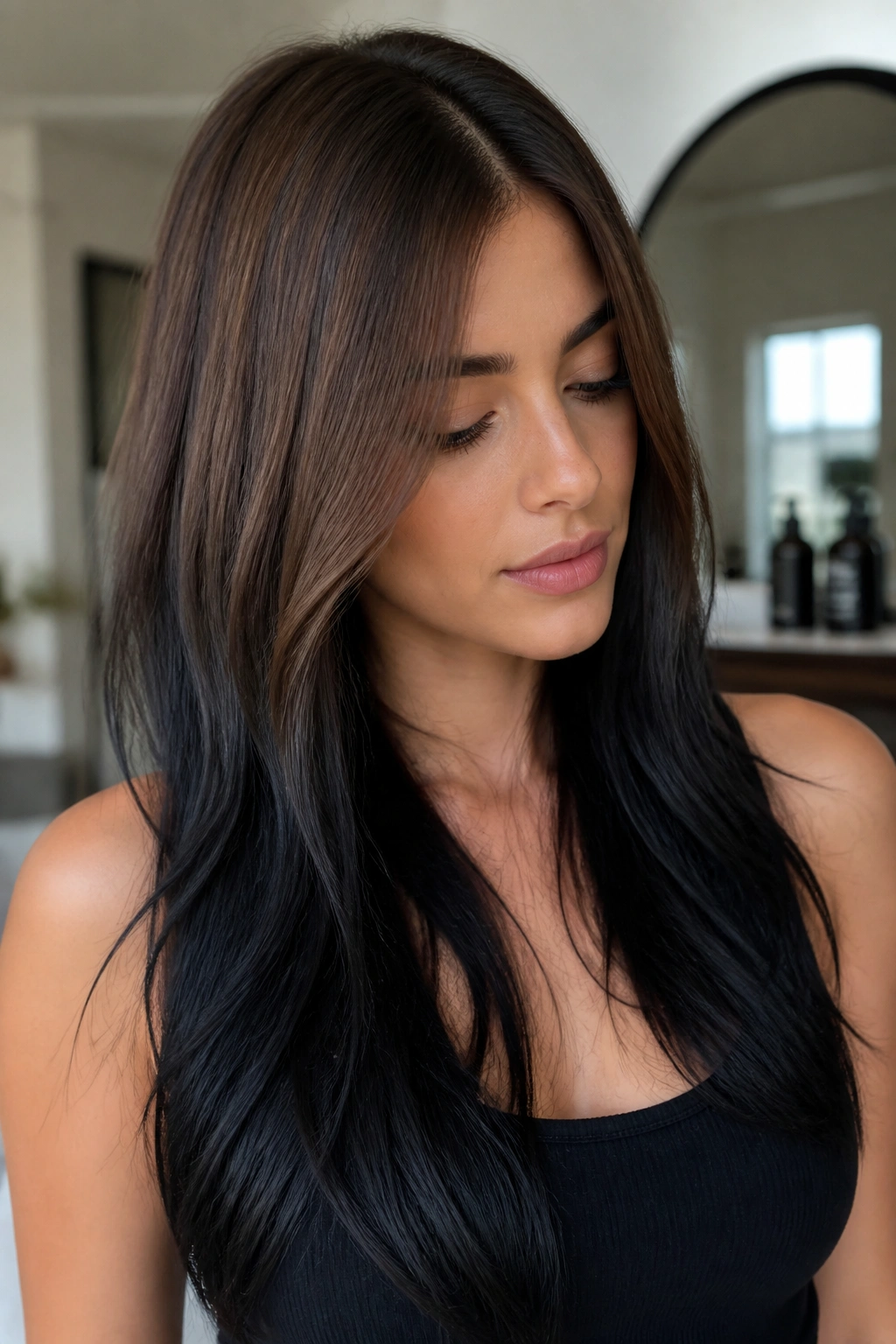
This one is for the person who hates obvious grow-out and hates obvious highlights even more. The color starts as a cool ash brown at the crown, then melts into black through the mid-lengths and ends. The change is gradual enough that you almost miss where the brown stops and the black starts.
That quiet gradient is why it works so well on straight or softly waved hair. There is no chunky contrast to catch the eye. Instead, the color slips from cool brown into near-black the way fabric shifts in low light. It looks expensive because it looks controlled.
A good stylist will keep the black slightly softer at the very ends, not packed into one dense block. That tiny difference matters. If the ends are too solid, the hair can look chopped off instead of blended. If they’re feathered and glossy, the whole style feels sleek and deliberate.
5. Glossy Black Veil on Straight Hair
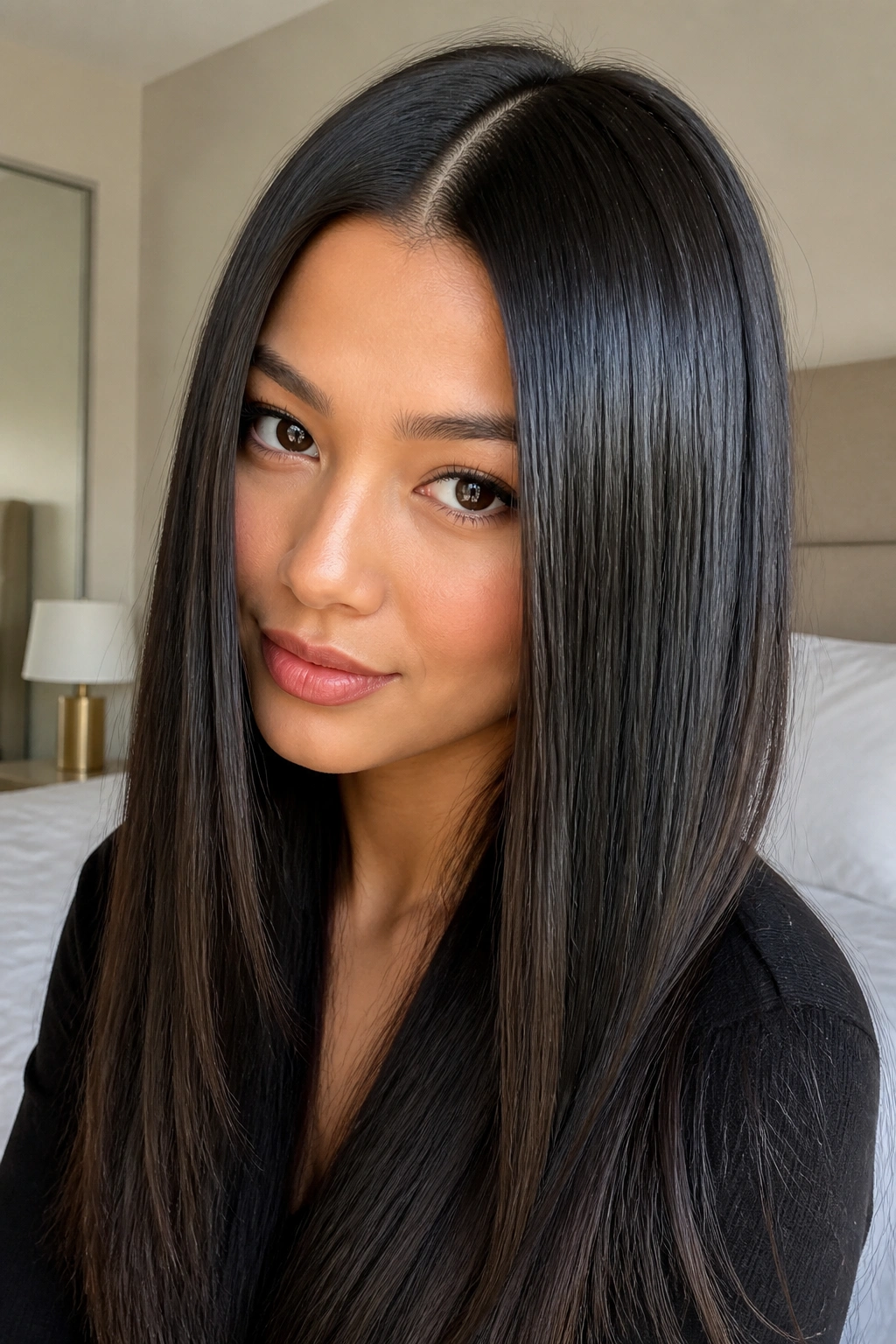
Straight hair can take black balayage in a way that wavy hair cannot. The surface is smoother, so the light rides across the strands and picks up every tonal shift. On a deep brown base, the black looks like a veil laid over the surface, not a stripe sitting inside it.
I like this look with a blunt middle part and long, clean lines. The style depends on shine. If the hair is dry or frizzy, the black loses that glassy effect and starts to look flat. A smoothing blow-dry, a heat protectant, and a small amount of serum on the ends go a long way here.
The nicest version keeps the brown visible underneath the top layer. That way the hair still has movement when you tuck it behind your ears or pull it into a low ponytail. If the black is too dense, the whole thing can read severe. If it is painted with some air between the sections, it feels sharp in a good way.
6. Caramel-and-Black Contrast Balayage
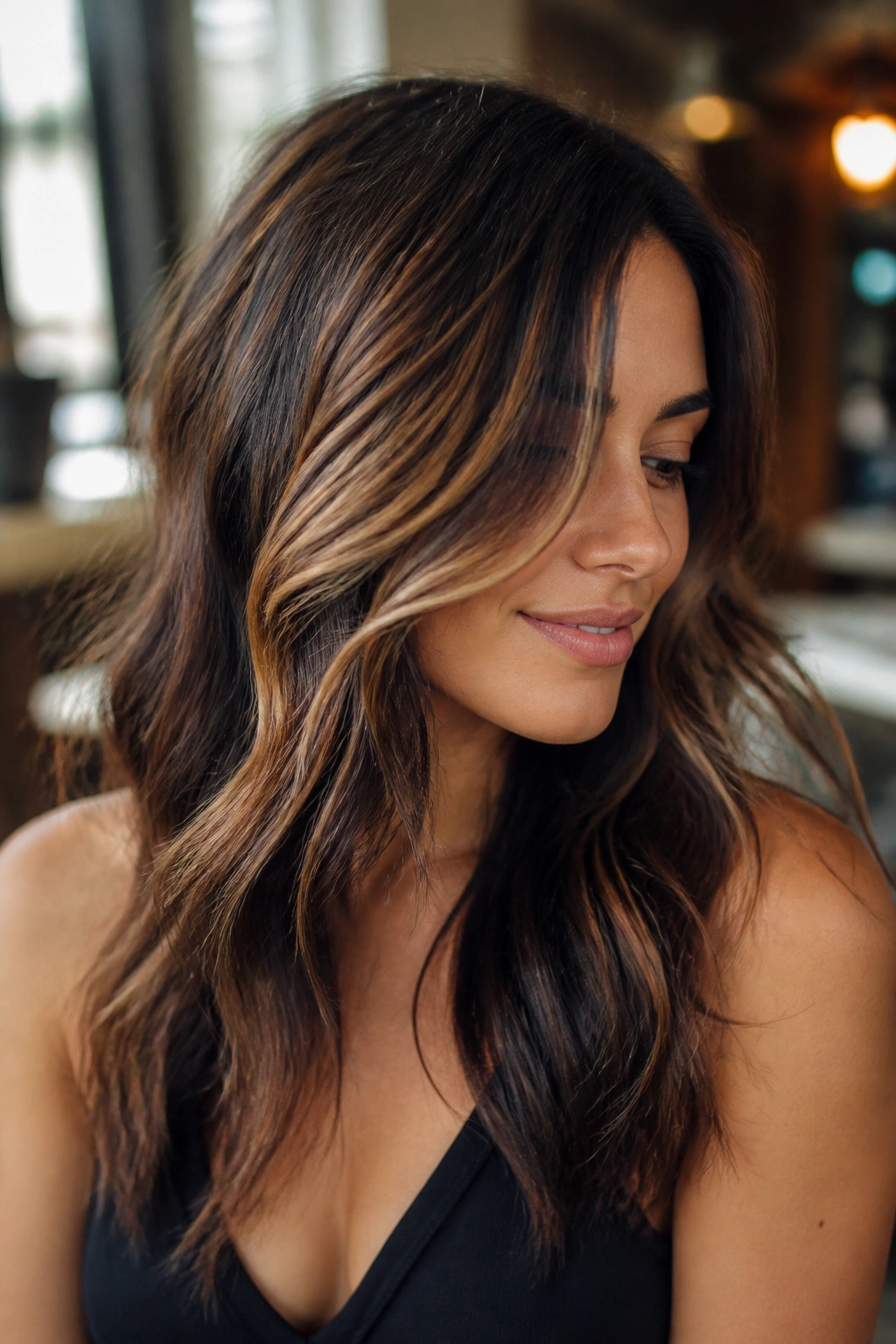
This is the boldest-looking option on the list, and I mean that in a good way. Caramel pieces at the surface, black lowlights underneath, and a medium brown base in between create a color story with real separation. It is warmer than a smoky brunette look, which is why it suits people who do not want their hair to go fully cool.
The contrast works because the caramel catches light first, while the black sits deeper in the cut and gives the lighter pieces a place to land. On layered brown hair, that mix can make the shape look bigger and more textured. It is especially nice if your haircut has movement around the ends.
I’d reach for loose waves or a broad blowout with this one. The goal is not to hide the contrast. The goal is to let the eye move from warm to dark to warm again. If you like color that looks different in every room, this is the one to bookmark.
7. Hidden Black Panels in a Lob
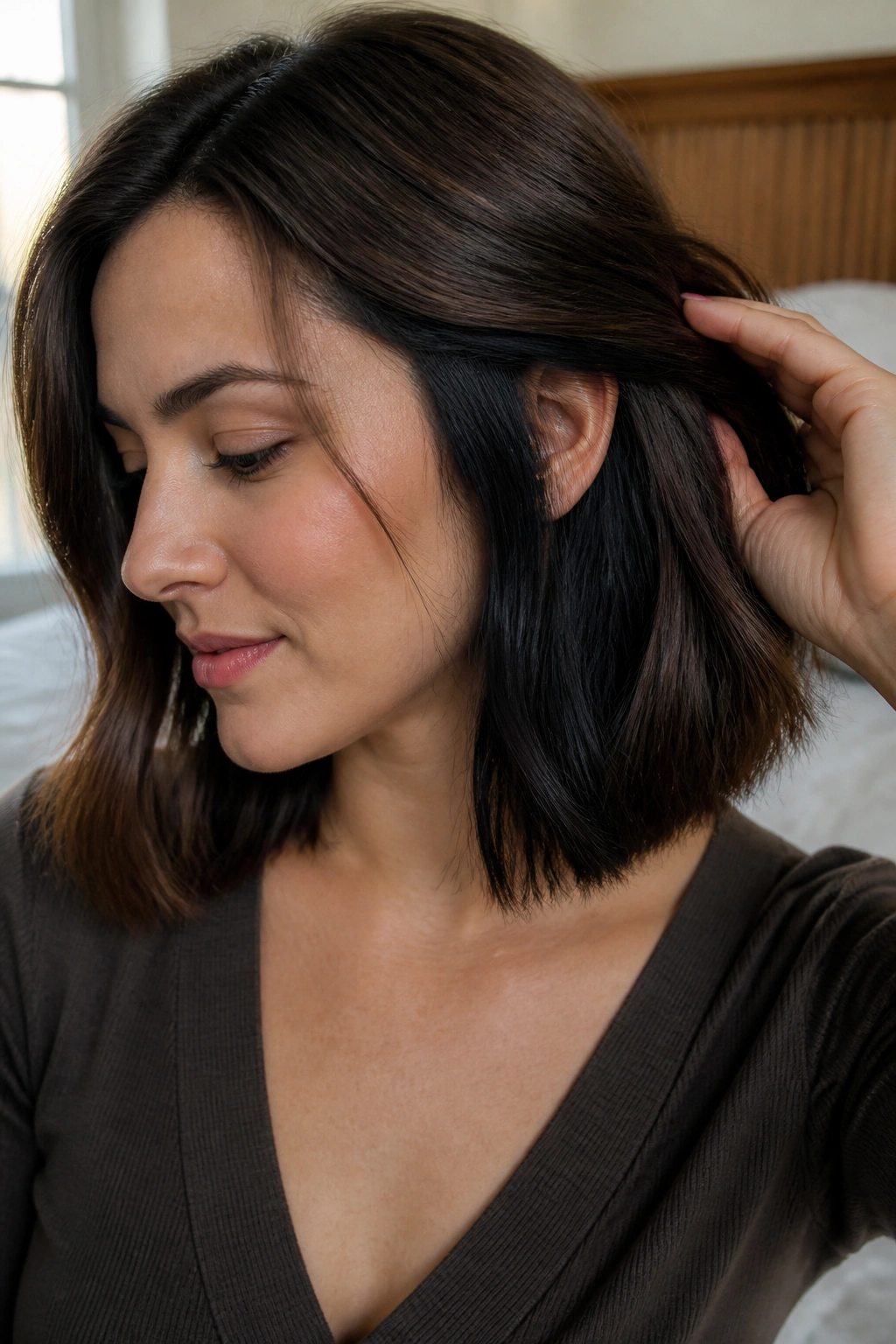
Picture a collarbone-length lob that looks softly brunette from the front, then swings or flips to reveal deep black panels underneath. That is the charm here. The darkness is hidden through the lower layers, so the hair feels a little secretive when it is down and a lot more dramatic when you tuck one side behind the ear.
What Makes It Clever
The placement is smart rather than flashy. The stylist keeps the top layer brown and paints the black balayage under it, usually from the nape up through the inner mids. The result is low-key in daylight and stronger in motion.
- Great for blunt and slightly angled lobs
- Works well if you wear half-up styles often
- Lets the top layer stay softer and easier to grow out
- Gives straight hair a peekaboo effect without a full contrast block
This is one of those looks that gets better the more you move. It is not trying to announce itself from across the room. It waits for a turn of the head.
8. Long Layered Waves With Black Contouring
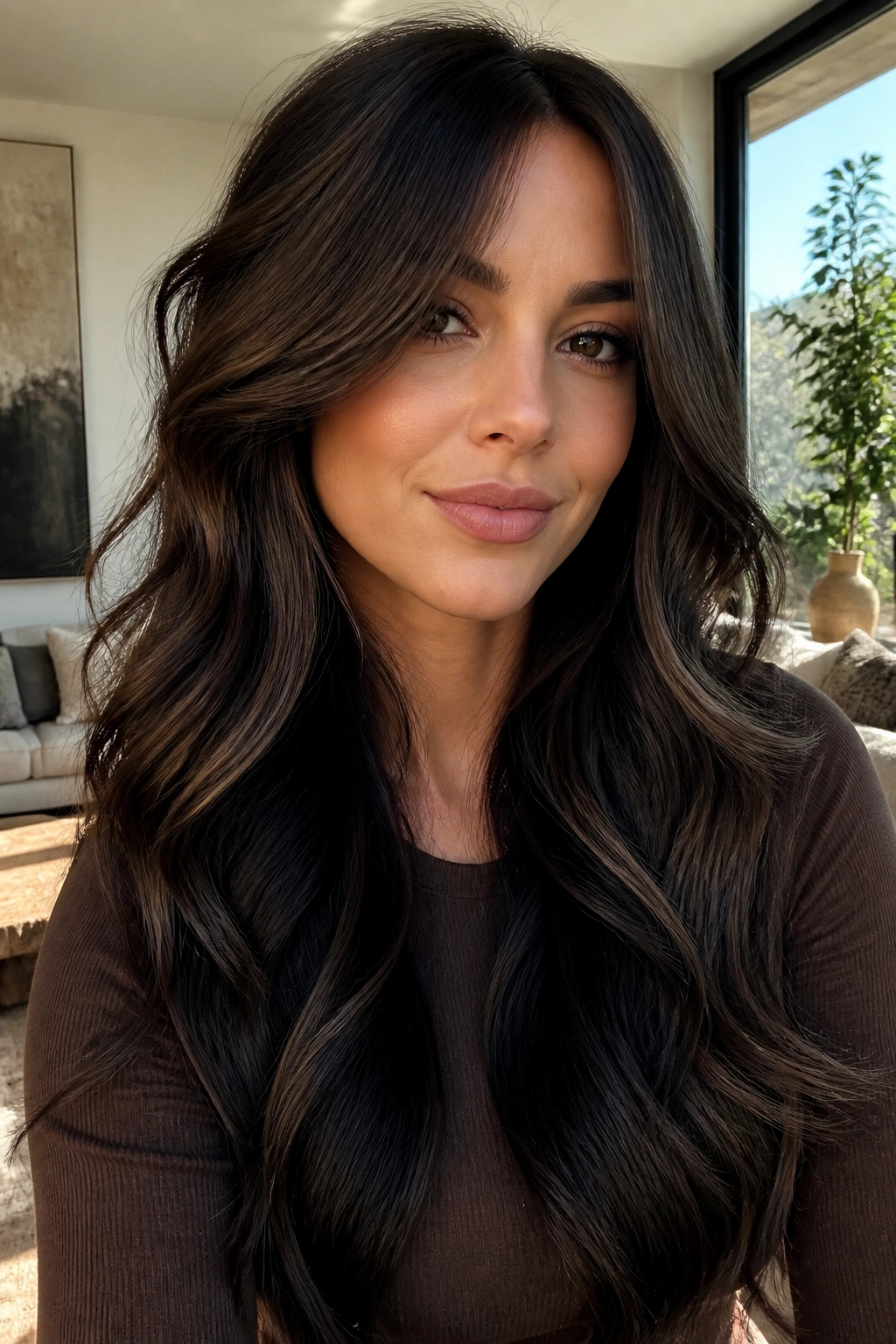
Long brown hair can get lost if the color is too even. Black contouring fixes that. Instead of painting the dark pieces everywhere, the stylist places black balayage around the face, through the lower layers, and under the top wave pattern so the cut has shape and direction.
I like this look because it makes layers visible again. Long hair often swallows detail, especially if the tone is a single warm brown. The black pieces create shadow at the edges, which helps the eye see the outline of the haircut instead of one big curtain of hair.
A curling wand with a 1¼-inch barrel works well here. You do not want tiny curls. You want broad bends that show the contrast between the brown and black pieces. The finish should feel soft but not fluffy, with the darkest sections tucked near the inner wave rather than sitting on top of it.
9. Mushroom Brown With Black Lowlights
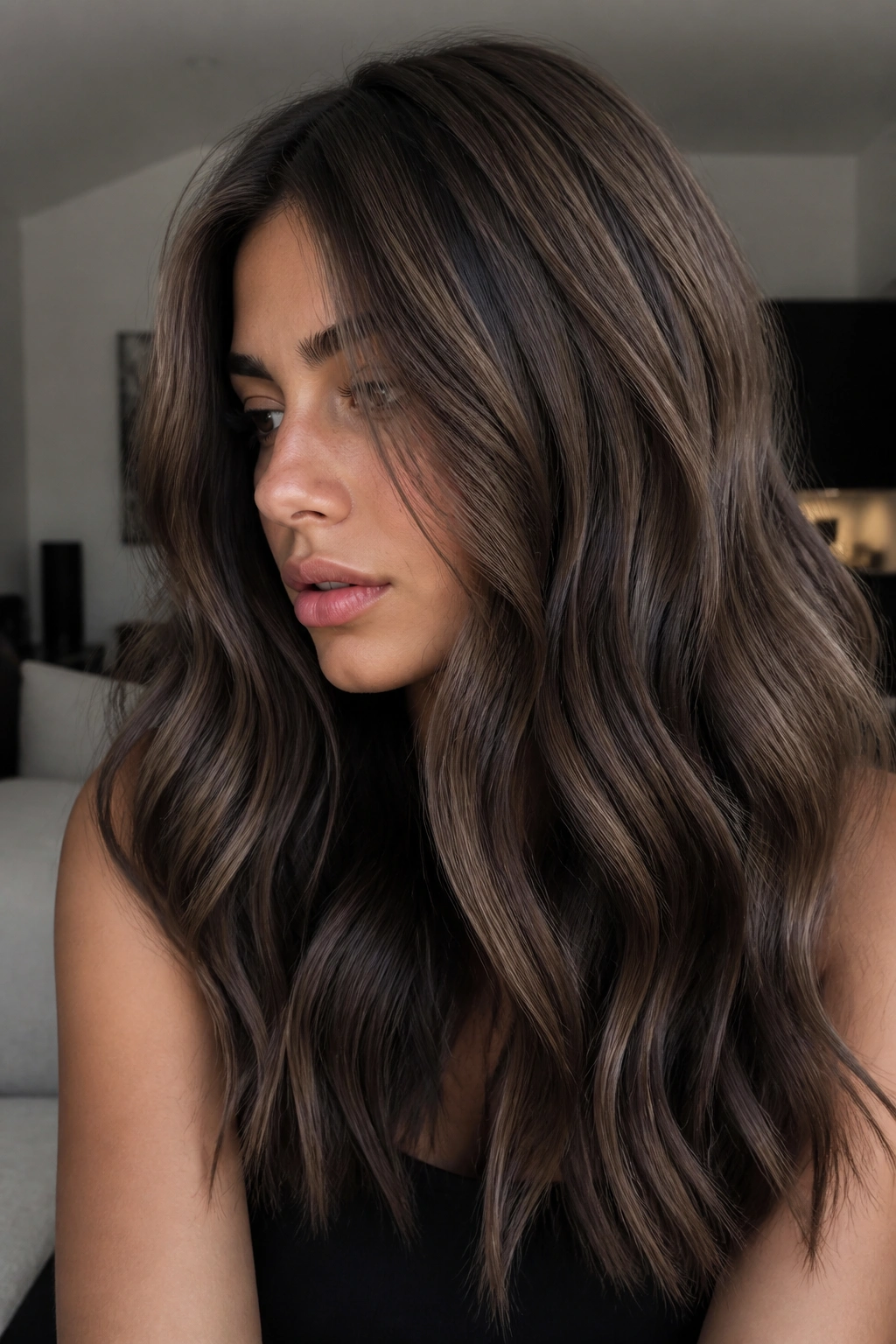
Mushroom brown has that cool taupe-brown feel that sits between ash and beige. Add black lowlights and it turns moodier, but not in a loud way. The result is almost misty, especially on medium-length hair with a smooth finish.
Why does this pairing work? Because the brown already leans cool. Black does not fight it; it deepens it. The whole look stays on the muted side of brunette, which makes it a strong choice for anyone who wants dark dimension without caramel or gold warmth.
How to Keep It From Going Flat
Ask for the black to stay in thin, broken sections rather than heavy slabs. The color should feel like shadow, not marker ink. A cool gloss every few weeks helps, too, because mushroom brown can lose its edge if the warmth creeps in.
This is one of the quieter black balayage looks, and that is the point. It rewards close attention.
10. Chestnut Brown With Black Ends
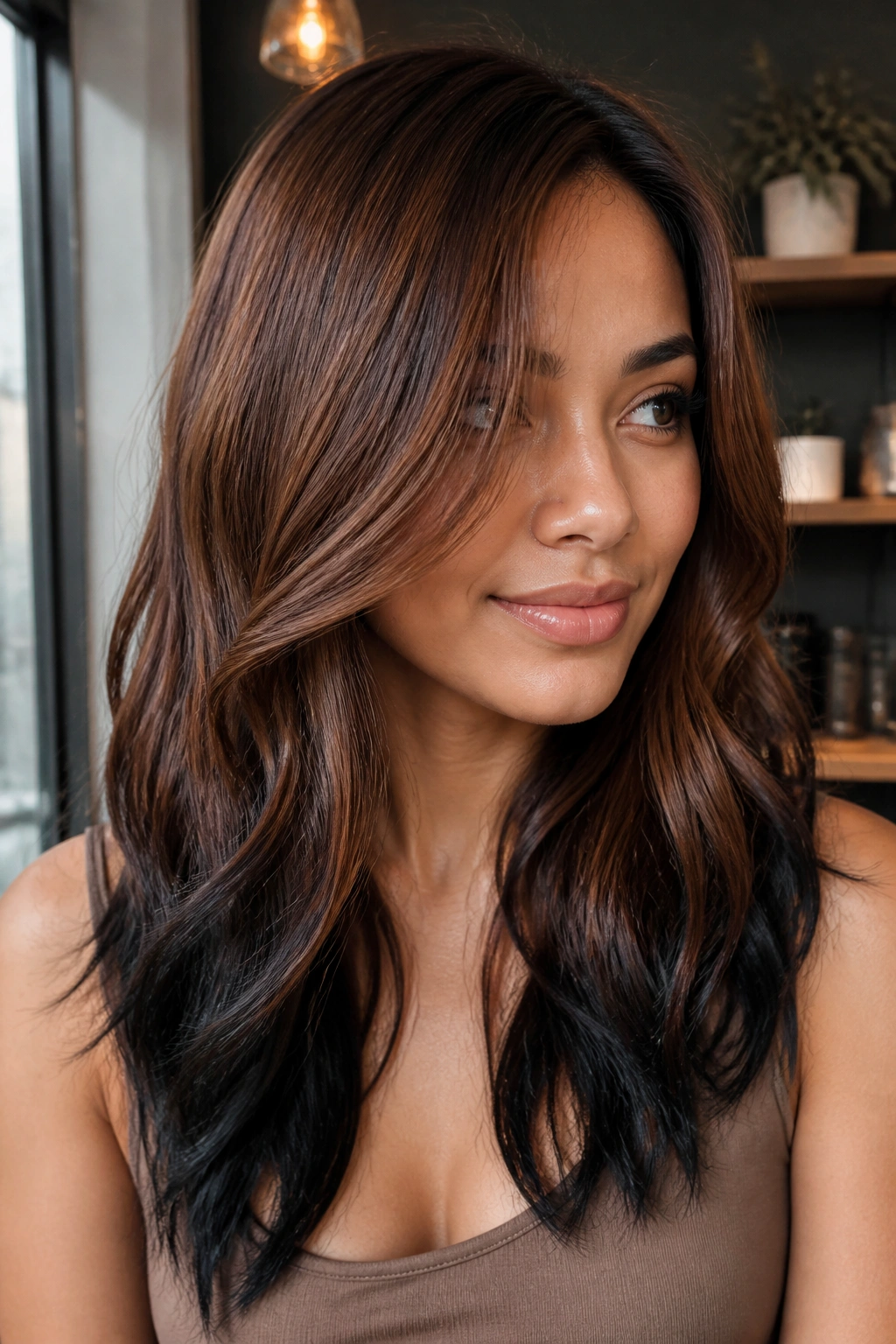
Chestnut brown has enough red warmth to make black ends look richer than they sound. On the right hair, the transition is almost wine-dark at the bottom, with the chestnut glow sitting above it like a warm cap. I love it on thick hair because the color blocks show better when there is a lot of surface area.
The key is to fade into the black slowly. If the ends turn black too fast, the style loses its softness and starts looking like an ombré from a different decade. A good balayage placement keeps a few warmer strands around the perimeter so the color doesn’t feel sealed in.
Braids look especially good with this one. So do big curls. The black at the ends gives the braid a heavier outline, and the chestnut through the mid-shaft keeps the whole look from feeling one-note. If you like rich brunette color that still has some fire in it, this is a strong pick.
11. Sleek Blunt Bob With Feathered Black Tips
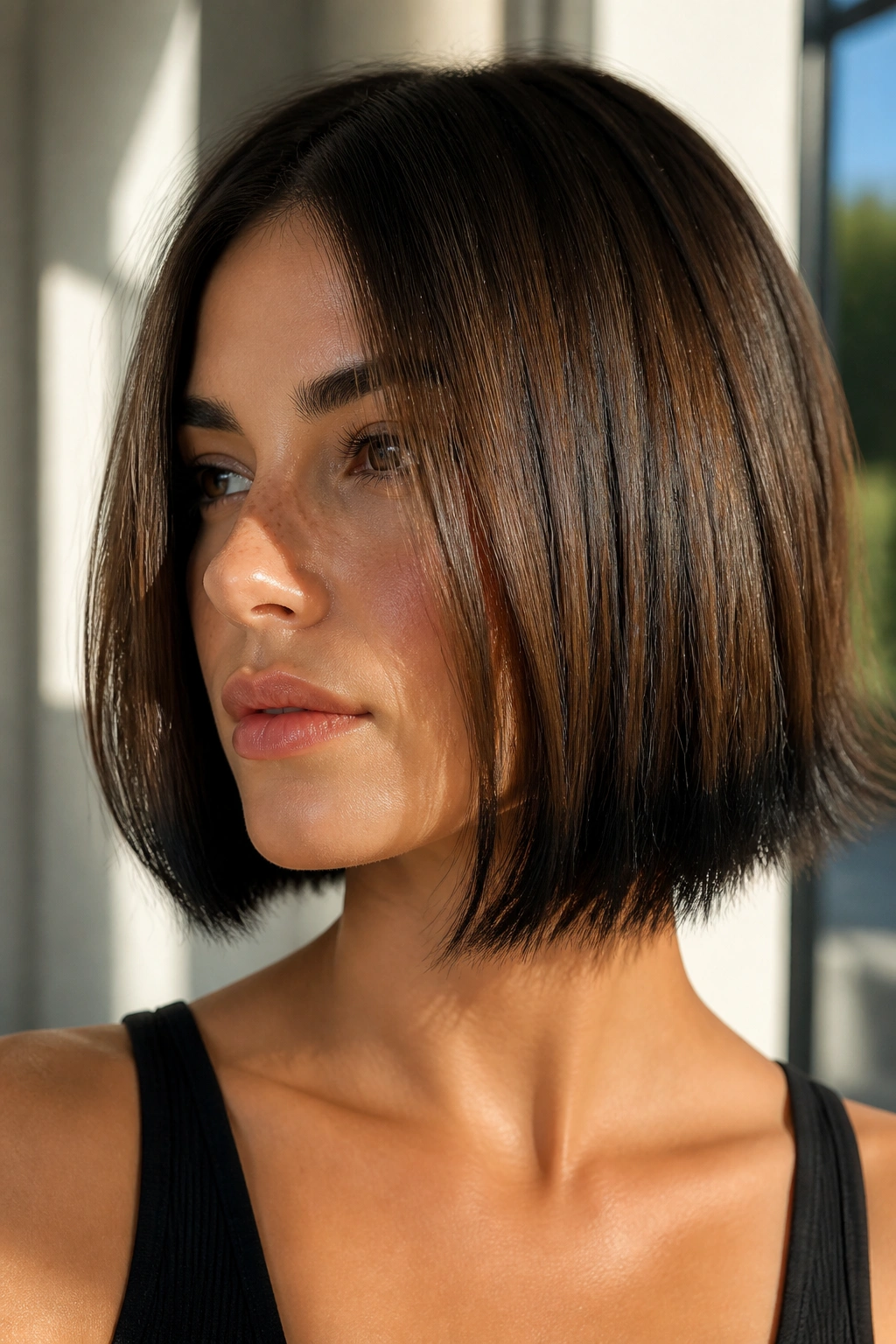
A blunt bob and black tips might sound severe, but on brown hair the shape usually ends up looking crisp rather than harsh. The bob gives you a clean line, and the feathered black balayage at the ends adds weight to the shape so it sits better against the jaw.
I like this look best when the black is not packed into a solid block. Feathered tips let the brown remain visible through the lower edge, which keeps the cut from looking too heavy. If the bob is slightly tucked under with a flat brush or a round brush, the dark tips become a neat frame.
It is also one of the easiest looks to style fast. A quick blowout and a touch of shine spray are enough. Straight hair will make the contrast look sharper, while a slight bend softens it a little. The haircut does a lot of the work here, which is why the color placement can stay restrained.
12. Curtain Bangs and Black Balayage
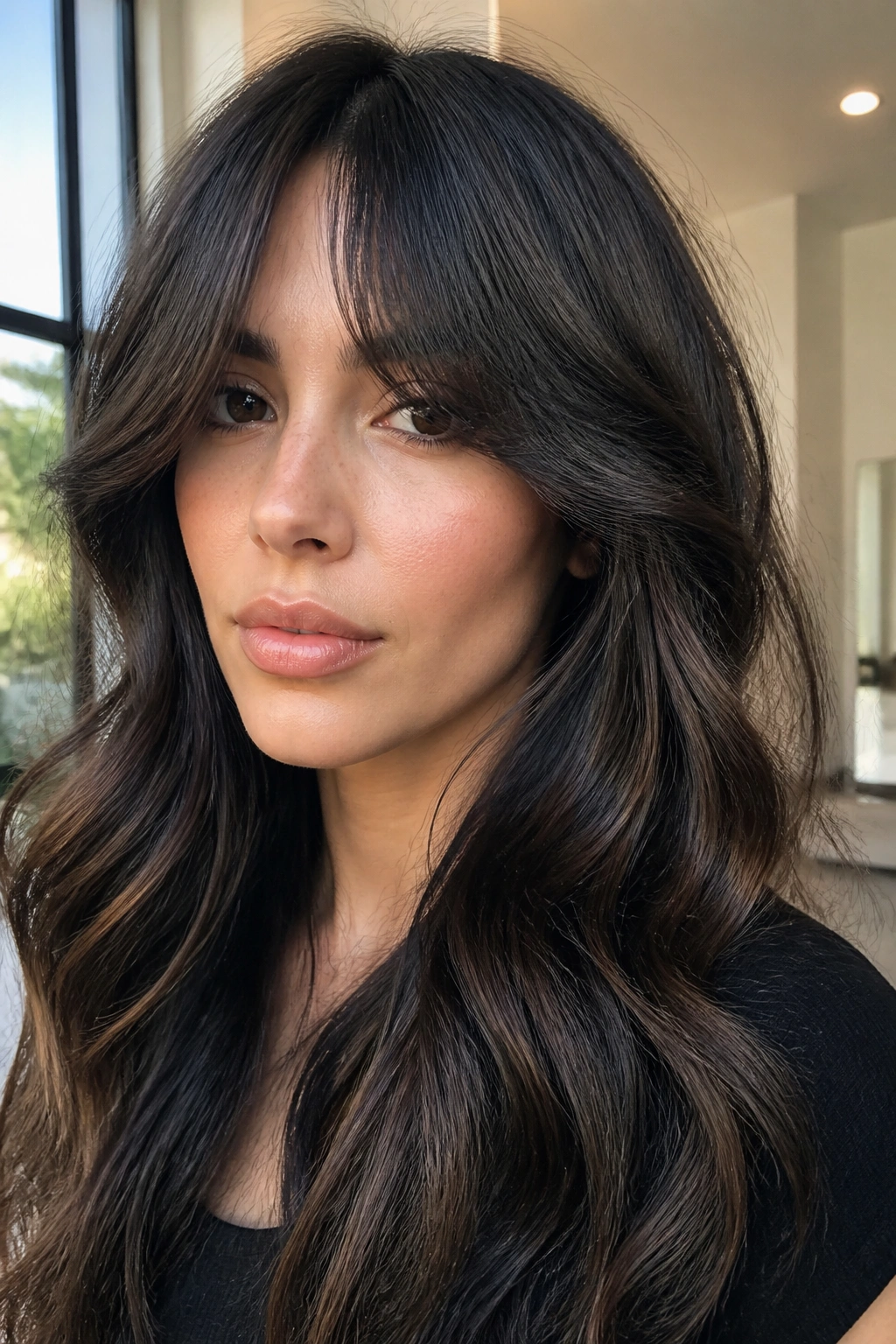
Unlike a full fringe, curtain bangs let the black pieces hover around the eyes and cheekbones without closing off the face. That makes this combo a smart choice for brown hair, because the bangs become part of the color story instead of a separate piece sitting on top of it.
The balayage should stay light near the roots of the bangs and stronger through the mid-lengths. If the black starts too high, the bangs can look heavy and hard to move. If the dark tone sits lower, the fringe keeps its softness while still connecting to the rest of the hair.
How to Wear It
- Blow the bangs away from the face with a small round brush
- Keep the black slightly more broken up in the bang area
- Use a light texturizing spray, not a sticky one
- Trim the bangs often enough to keep the shape open
This is a favorite for people who wear their hair half up. The bangs frame the face, and the black balayage gives them more structure than plain brown ever could.
13. Blue-Black Shine on Brown Hair
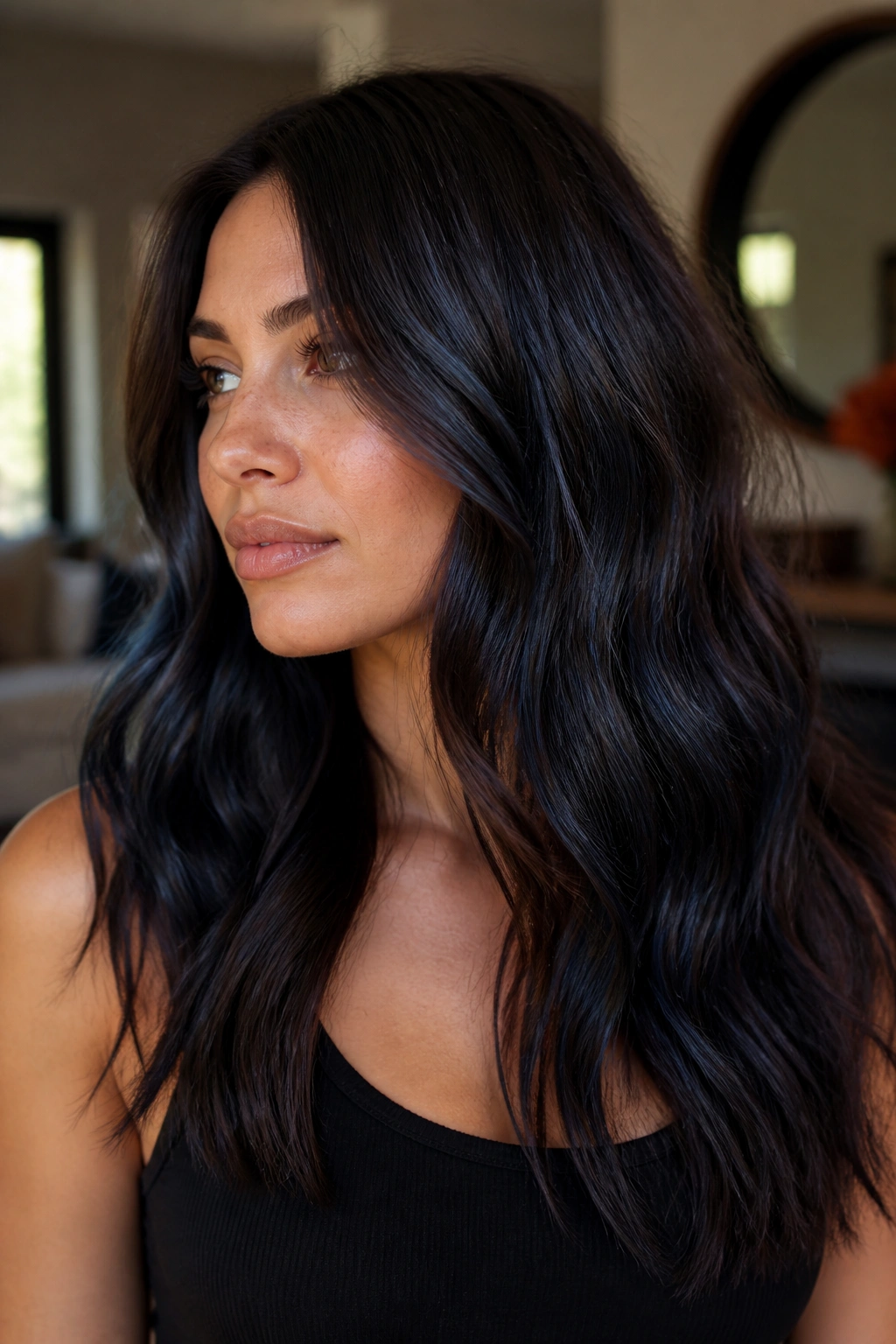
Blue-black is the darkest mood on the board. On brown hair, it reads as black with a cool sheen rather than flat black dye, which is why it can look so polished when the light hits it. The blue note is subtle, but it changes the whole temperature of the color.
What Makes It Different
A plain black tone can sometimes look dense and matte. Blue-black has a cooler edge and a little more shine, especially if the base brown is already deep. That makes the balayage look sharper without needing obvious contrast.
- Works best on natural brunettes from level 4 to level 5
- Looks strongest under indoor lighting and sunlight
- Needs a gloss or color-safe conditioner to keep the finish smooth
- Pairs well with minimal makeup and clean hair lines
If you like hair that feels sleek and a little dramatic, this is hard to beat. I would keep the cut simple here — long layers, a straight lob, or a blunt cut — because the color itself is already doing a lot.
14. Cinnamon Brown With Black Ribbons
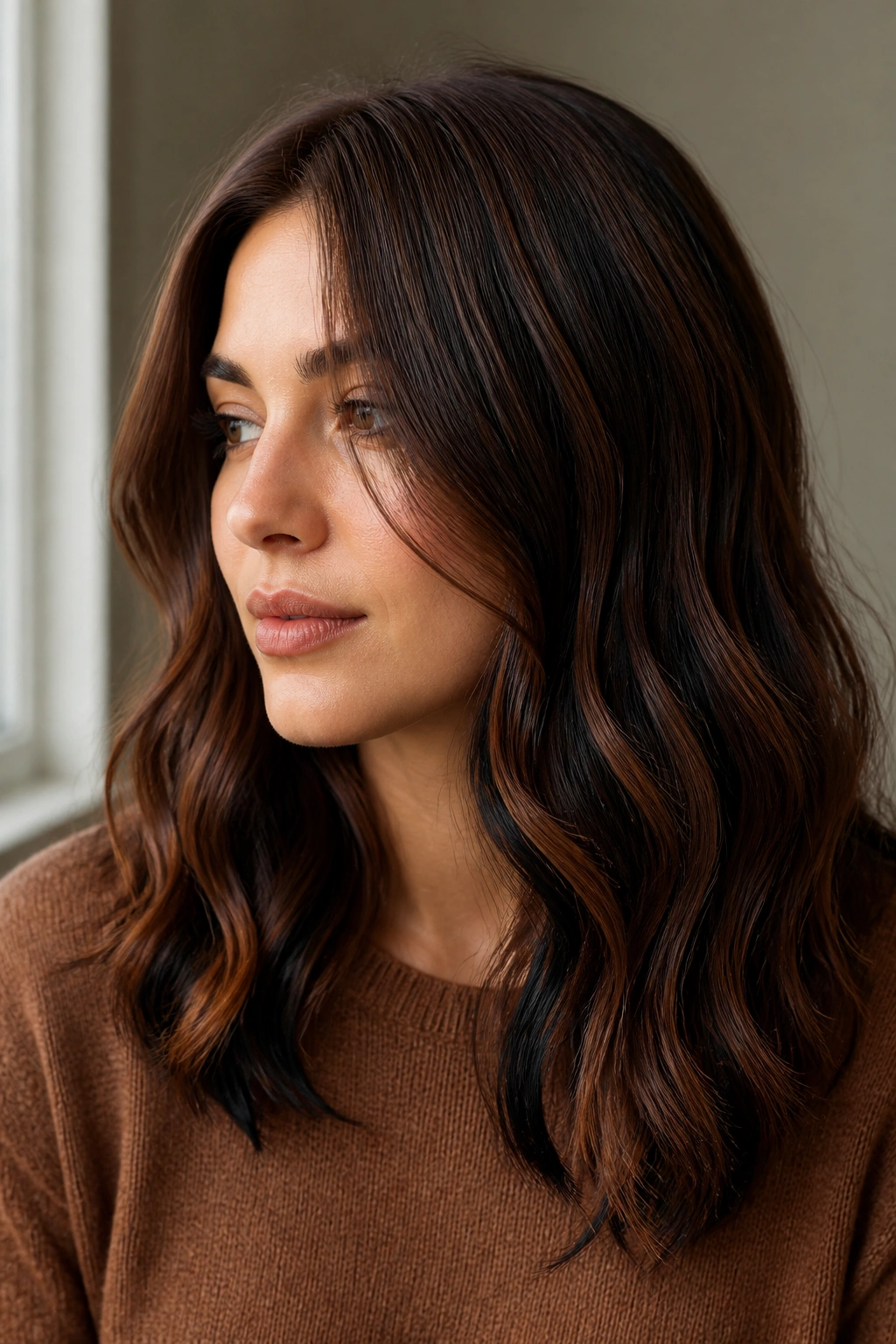
Cinnamon brown can carry black better than most warm shades. The warmth keeps the darker pieces from feeling severe, and the black balayage adds depth instead of cancelling out the glow. On brown hair that leans auburn or copper, this can be a gorgeous mix.
The best version uses narrow black ribbons woven through the mid-lengths rather than dense black ends. That keeps the cinnamon tone alive around the top and face while giving the lower half a little grit. On waves, the ribbons appear and disappear as the hair bends, which is half the appeal.
This look suits people who like warmth but want more contrast than plain brunette. It also photographs in an interesting way because the cinnamon and black take light differently. One catches warmth, the other holds shadow. That tug between the two tones is what makes the style feel alive.
15. Underlayer Black Balayage for Ponytail Reveal
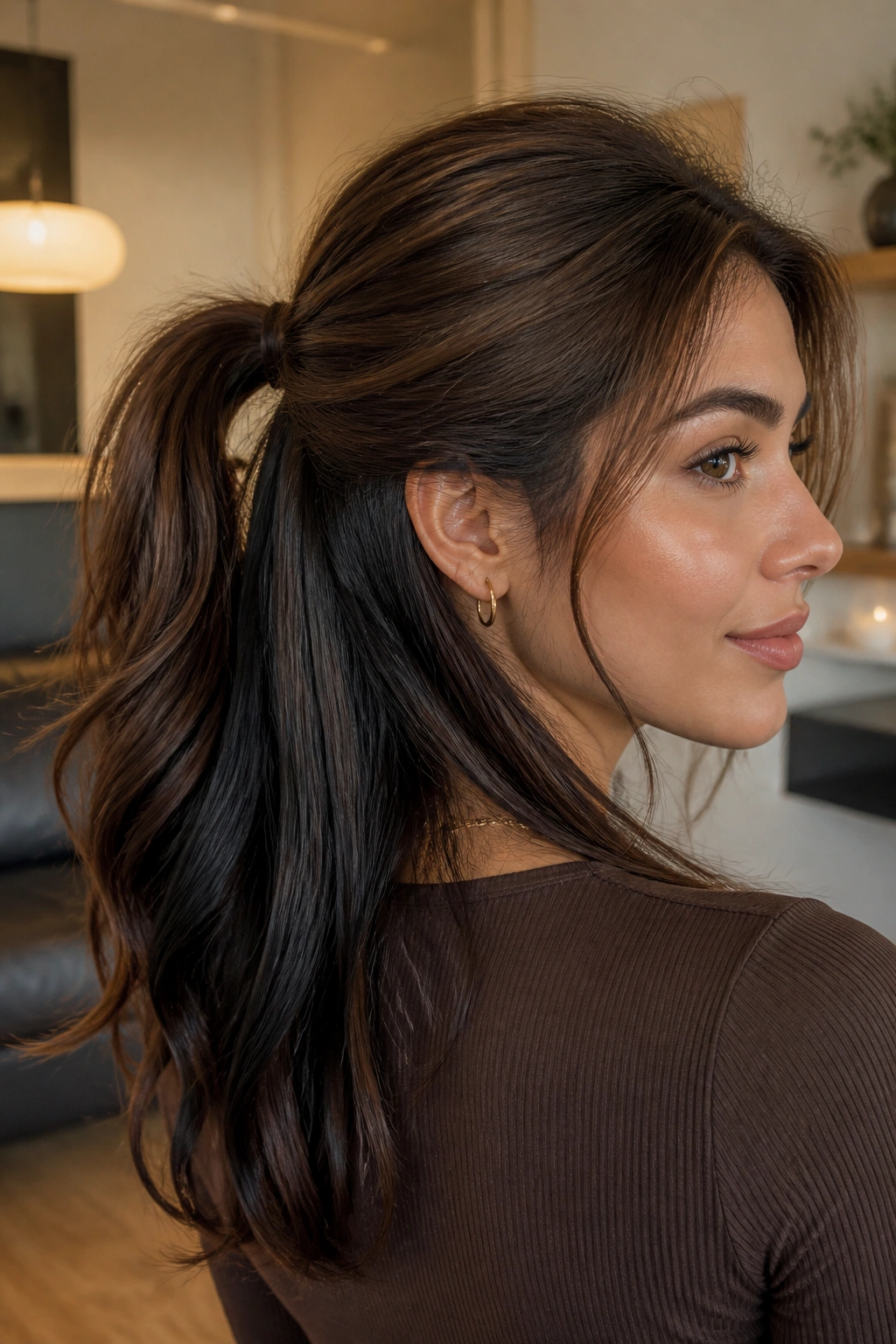
Some looks are made for the mirror. This one is made for the moment you twist your hair into a ponytail and notice the darker pieces underneath. The top layer stays brown and soft, while the underlayer carries black balayage from the nape upward, hidden until the hair moves.
That hidden placement is practical and a little playful. You can wear your hair down on a normal day and keep the look fairly subtle. Pull it up, and the black shows off through the tail or the twist. It is a nice option for anyone who works in a place where a full dark color would feel like too much.
The style works well on medium to long hair with enough density to cover the underlayer. If the hair is too fine, the black can peek through all the time and lose the surprise. A stylist can keep the paneling lower and tighter to the back of the head so the reveal stays controlled.
16. Textured Shag With Black Slice Highlights
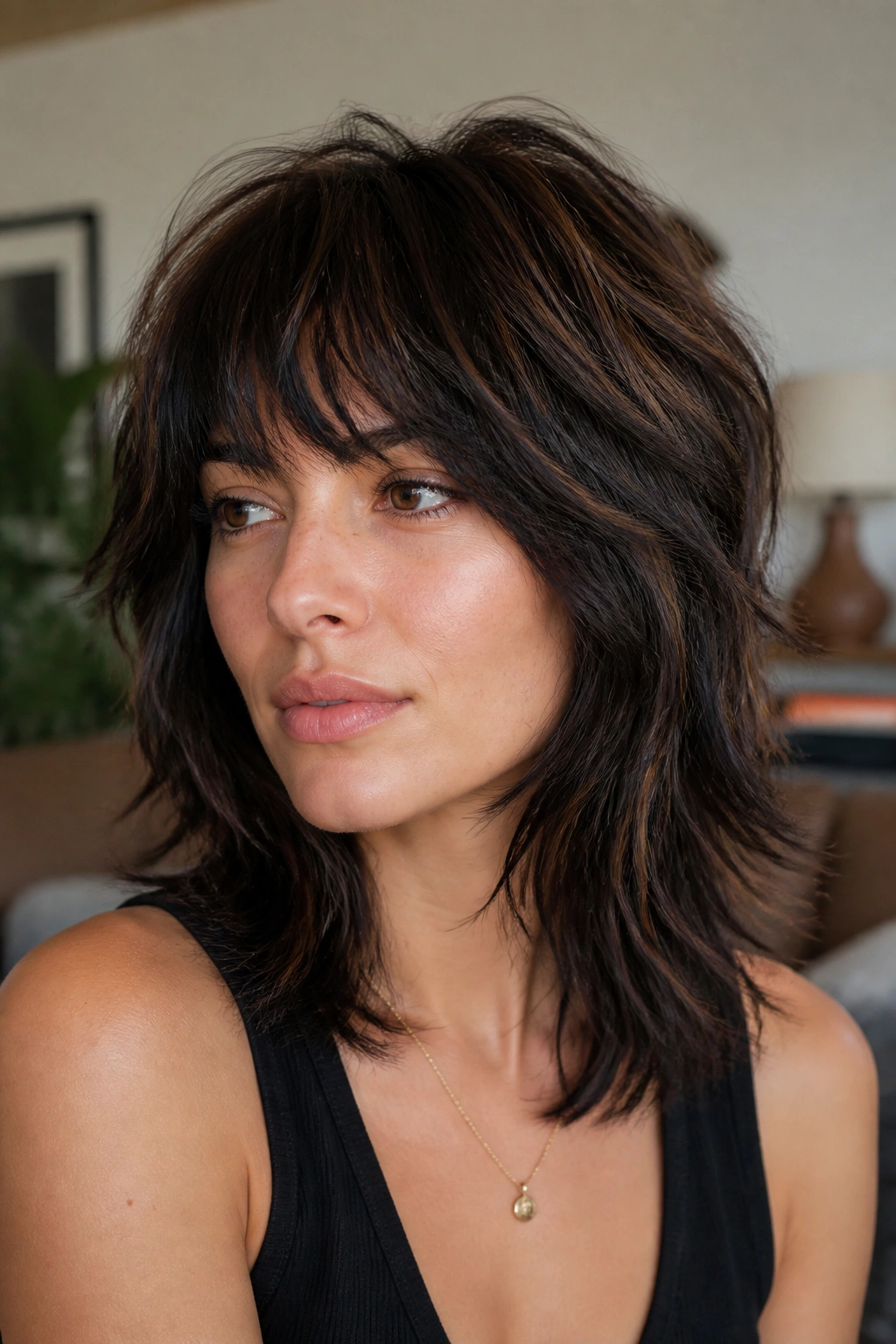
A shag wants movement, and black slice highlights give it that movement in a more visible way than soft ribbons do. The contrast is stronger here. The slices sit in thin, deliberate sections that follow the cut’s layers, so every flip of the hair shows a different bit of darkness.
The cut matters as much as the color. A shag with curtain fringe or choppy ends gives the black somewhere to live, and the sliced placement keeps the whole style from looking muddy. On brown hair, the result feels a little edgy without needing bright fashion color.
How to Keep the Cut Readable
- Ask for slice placement that follows the layer pattern
- Keep a few lighter brown pieces around the fringe
- Style with a diffuser or a rough blow-dry for separation
- Skip heavy creams that crush the texture
This look has attitude, but it is not fussy. The more piecey the style stays, the better the black balayage reads.
17. Root Shadow Into Black Balayage Ends
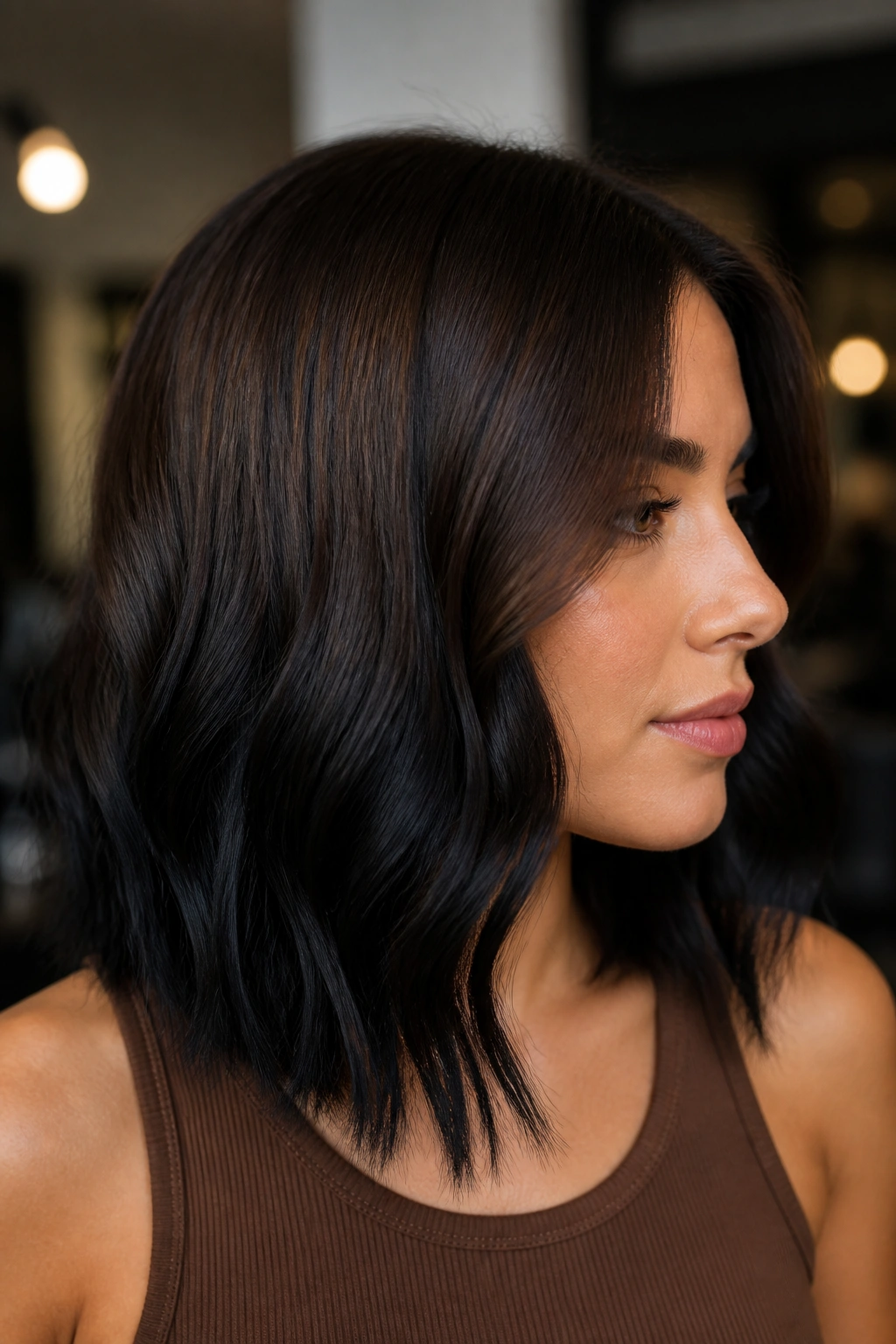
If you like dark hair but hate harsh regrowth, this is a smart lane to stay in. A root shadow keeps the top section a deep brown, then the black balayage settles into the mids and ends so the whole color grows out with less of a line.
That soft top section does a lot of work. It makes the hair look thicker at the root and keeps the crown from looking too dense. The black at the ends gives the style weight, which is useful on layered cuts that can look wispy if the color is too light.
I would reach for this if you are the kind of person who prefers to stretch appointments a little. It is not a no-maintenance color, but it is forgiving. The grow-out usually looks intentional for longer than sharper contrast looks do, and that saves you from living at the salon chair.
18. Warm Brown With Black and Bronze Glaze
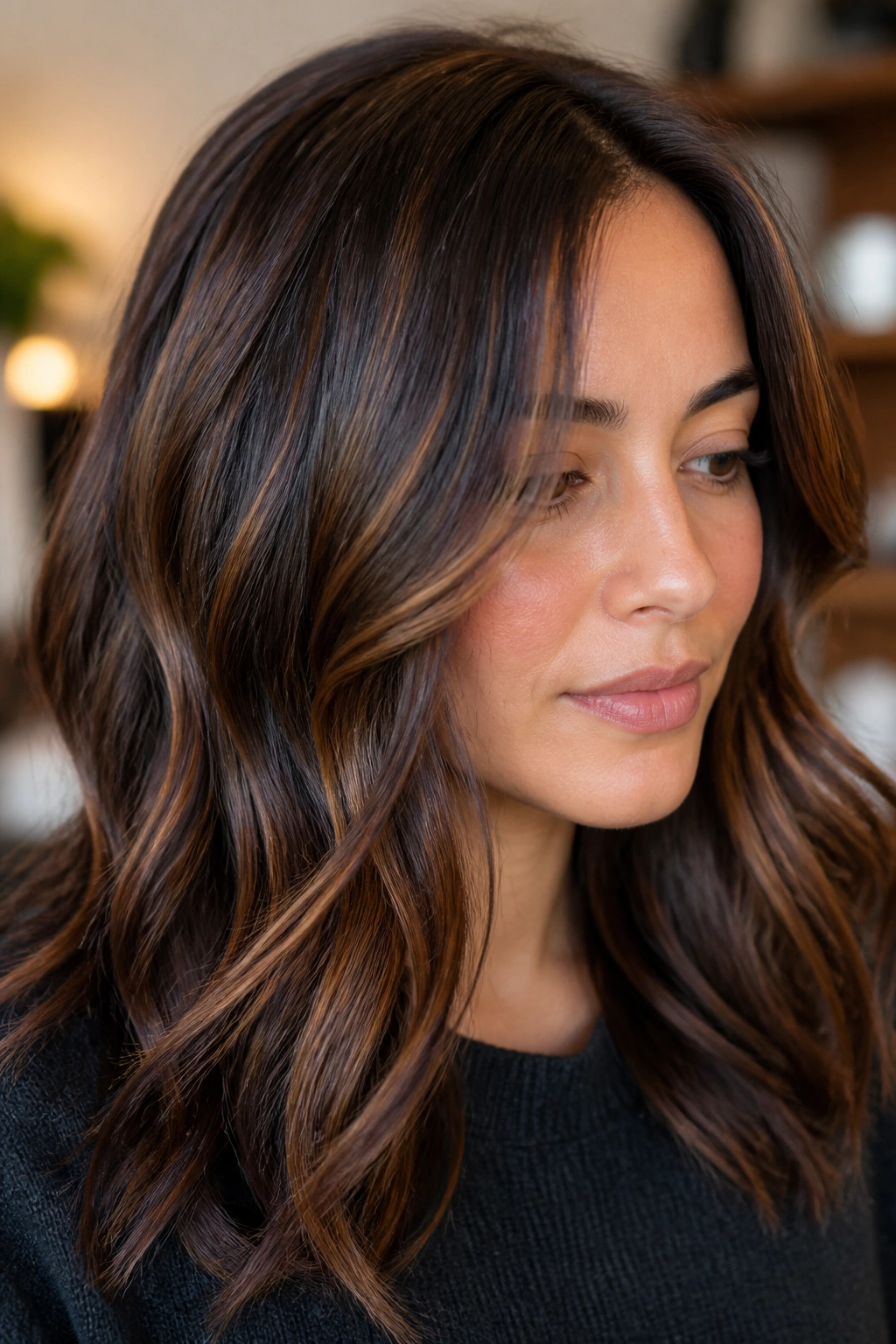
Black and bronze can live together if the placement is calm. The bronze sits where light naturally lands — around the face, along the top layers, and through a few ends — while the black balayage drops underneath and through the inner mids to keep the style grounded.
That mix is strong on brown hair that has a little warmth already. The bronze brings out movement, and the black gives the whole thing a deeper base. Indoors, the hair reads rich and dark. Outside, the bronze wakes up and the color looks less severe.
This is a good choice for people who do not want to choose between warm brunette and dark brunette. You can have both. The key is restraint; too much bronze and the black loses its effect, too much black and the warmth disappears. Keep the bronze thin and the black slightly softer at the tips, and the balance holds.
19. Thick Ribbon Balayage for Bold Dimension
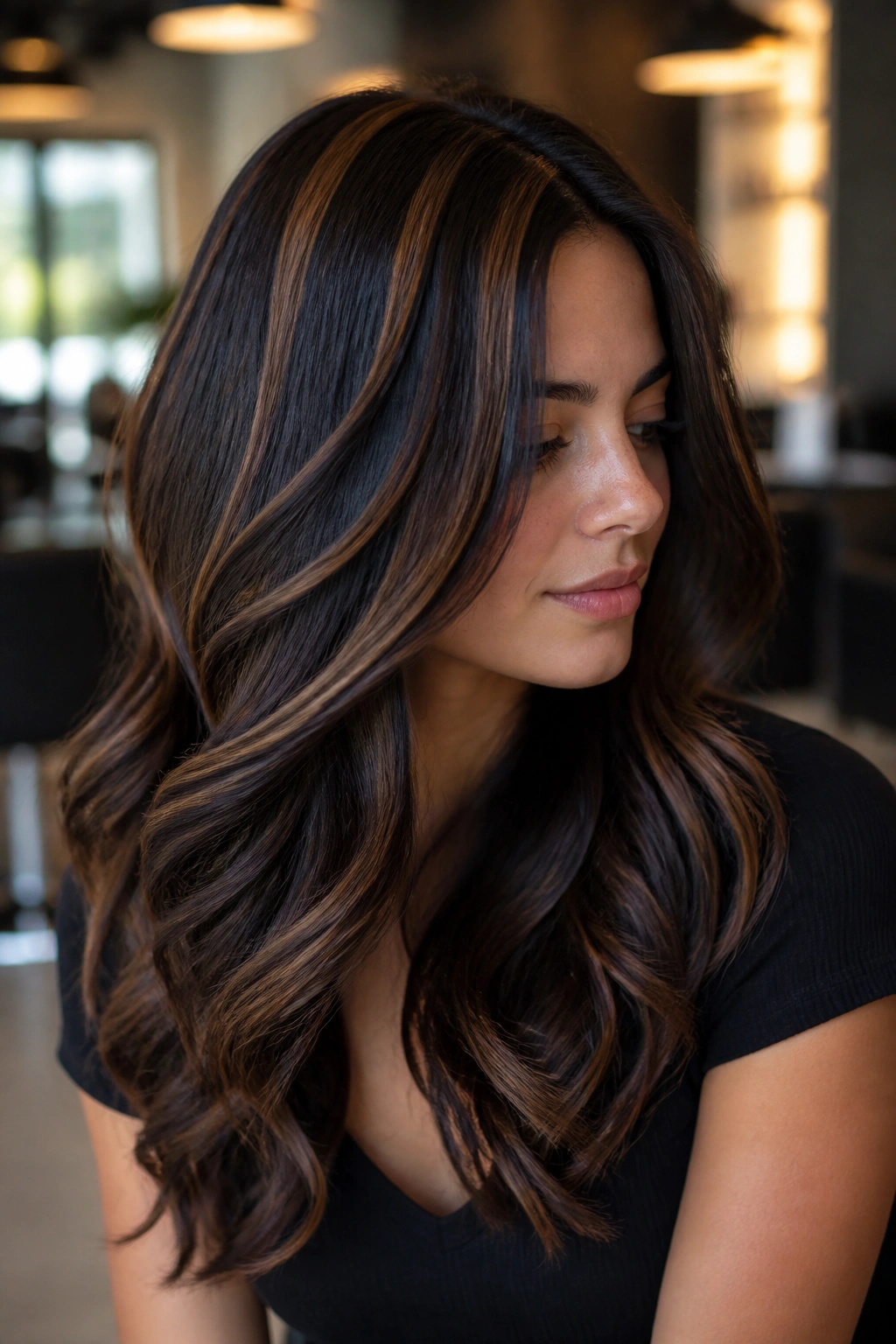
Not everybody wants whisper-thin pieces. Some people want to see the color from across the room, and thick ribbon balayage does exactly that. On brown hair, the black pieces are painted wider and more deliberately, so the contrast is obvious and graphic rather than faint.
Who Should Ask for This
This version works best if you like big waves, thick hair, or a cut with clear layers. Thin hair can take it, but the sections need to be placed carefully or the whole style can look patchy. I’d ask for ribbons that vary in width — maybe half an inch in some spots and closer to an inch in others — so the hair does not look striped.
The payoff is strong. Every bend in the wave shows the color shift, and the brown between the black sections keeps the look lively instead of solid. It is a bit more styled, a bit more obvious, and that is exactly the point. If subtle is not your thing, this one has room to breathe.
20. Grown-Out Black Balayage Blend
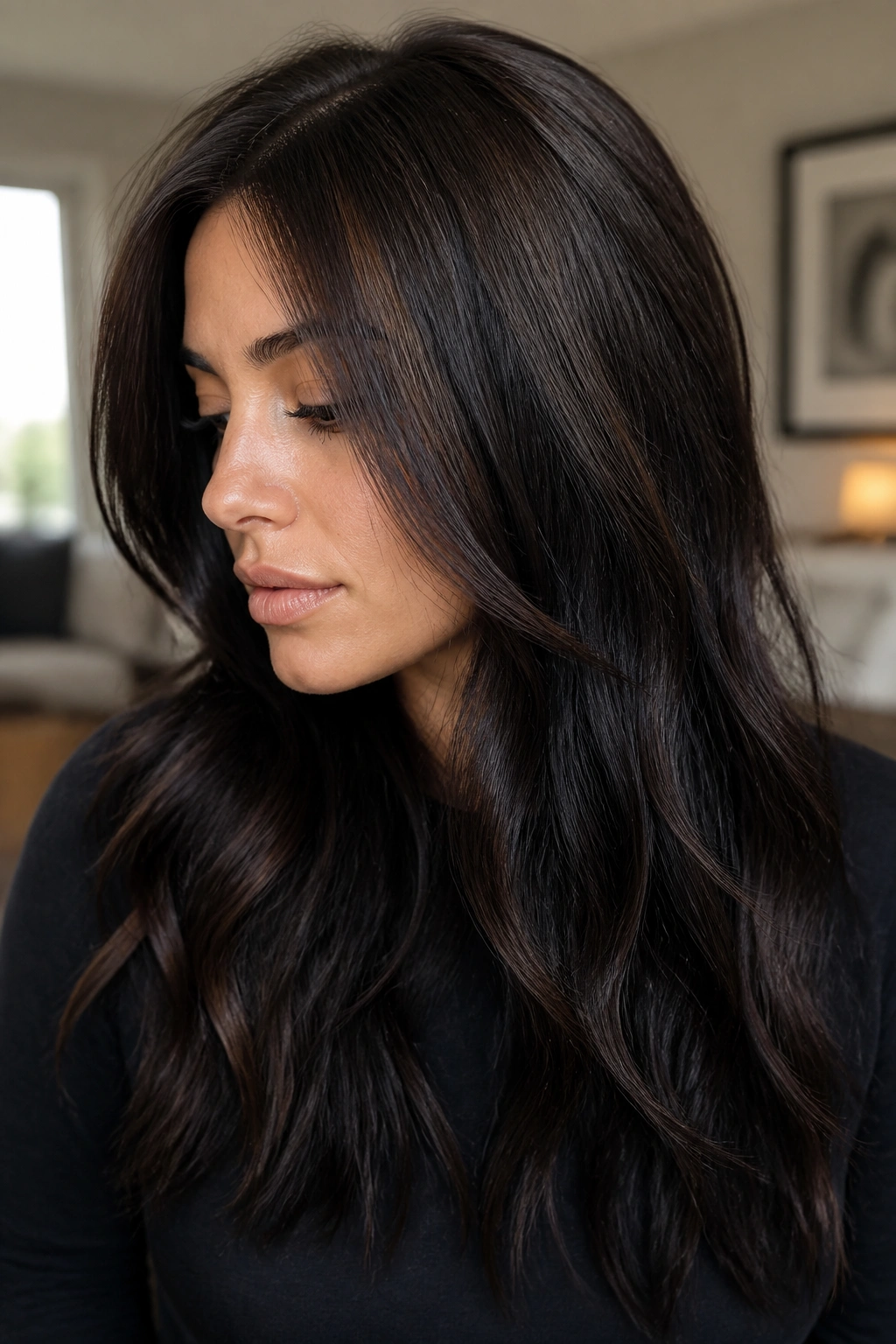
This is the version I keep coming back to for real life. The brown root stays natural, the black moves through the mids and ends, and the whole thing is blended enough that it still looks deliberate after a few weeks. It is the least demanding of the bunch, which matters more than people admit.
A grown-out black balayage blend works because the contrast is built into the placement, not forced into one hard line. That means your hair can keep its shape even when the color starts to settle. The black pieces soften a touch, the brown at the top stays intact, and the result still looks like a choice rather than a problem.
If you want the strongest wearability, start here. It suits straight hair, curls, layers, lobs, long cuts — nearly everything, really — and it gives you the dark-brunette mood without locking you into a rigid upkeep cycle. That is the version I’d choose for someone who wants black balayage on brown hair to feel lived-in from the start, not only on salon day.
