



Round faces don’t need hiding. They need length, clean movement, and color that knows where to stop.
Black balayage can do that. When the lighter pieces begin below the cheekbone and drift through the lengths, the face reads longer and the hair gets a little more shape. Put the brightness too high at the temples, and the whole thing can widen the face fast. The placement matters more than the shade name.
Espresso, chestnut, mocha, walnut, caramel, ash brown — all of those can work on black hair, but they do different jobs. Some give polish. Some soften hard edges. A few sharpen the line around the jaw without making the color look streaky or loud.
The looks below lean into that idea. Keep the light lower, keep the front pieces thin, and let the cut do part of the work. That’s where the good stuff happens.
1. Soft Caramel Face-Framing Balayage
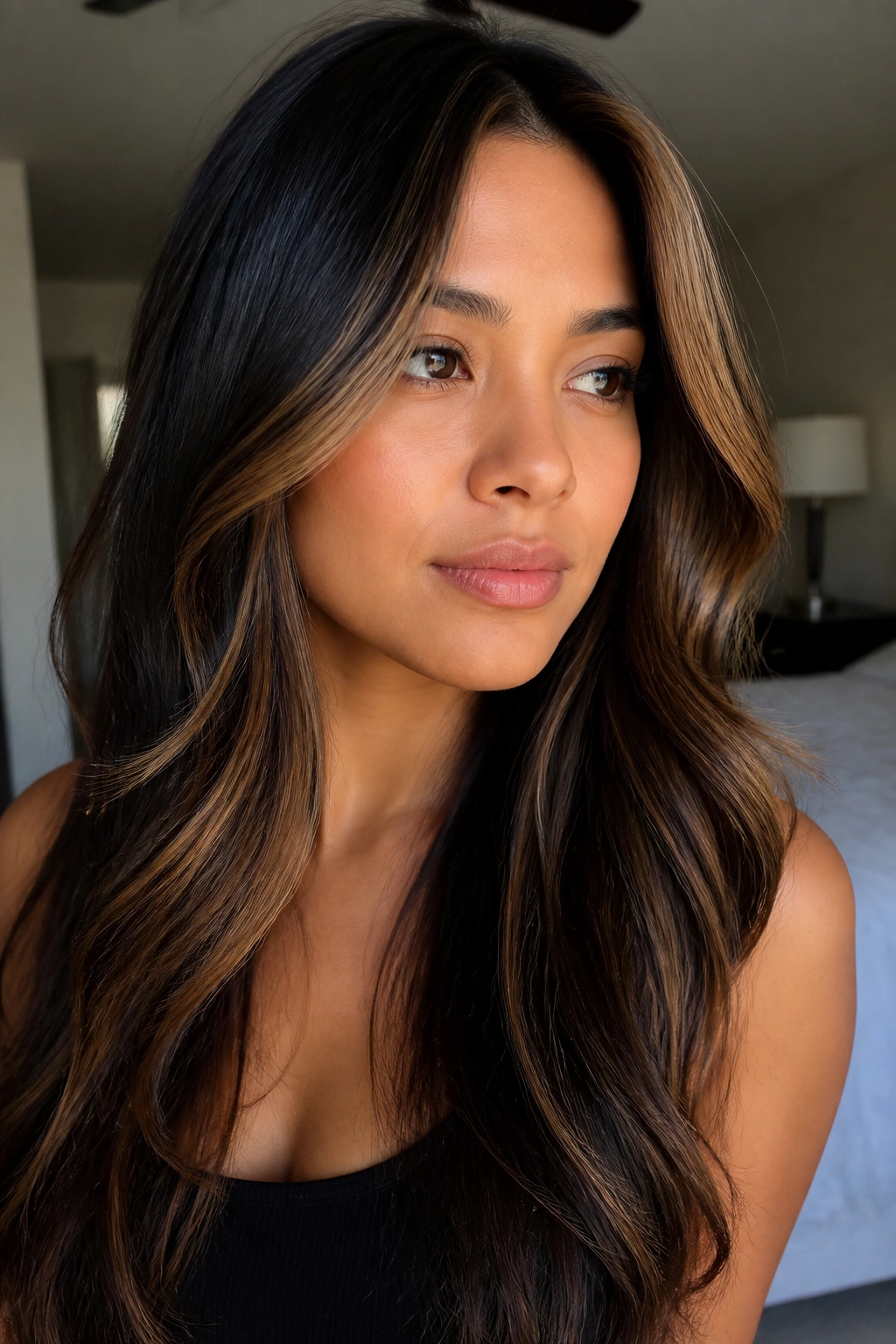
This is the easiest place to start.
Why It Flatters a Round Face
Soft caramel painted in narrow ribbons around the front hairline pulls the eye downward and gives the cut a little lift at the cheekbone. On a round face, that matters. You want brightness that lengthens the hairline, not a thick block of color sitting across the widest part of the face.
Ask for the first bright pieces to begin an inch or two below the cheekbone. Keep the top section nearly black so the contrast stays clean, and let the ends carry most of the caramel. Loose waves help, but even straight hair can wear this well if the front pieces are bent away from the face.
- Works best on long layers and collarbone-length cuts
- Ask for caramel that sits 2 to 3 levels lighter than the base
- Keep the front strands thinner than the back pieces
- Choose a soft bend, not a tight curl
Small tip: If the money pieces get too chunky, the face starts looking wider instead of slimmer.
2. Chestnut Waves with a Side Part
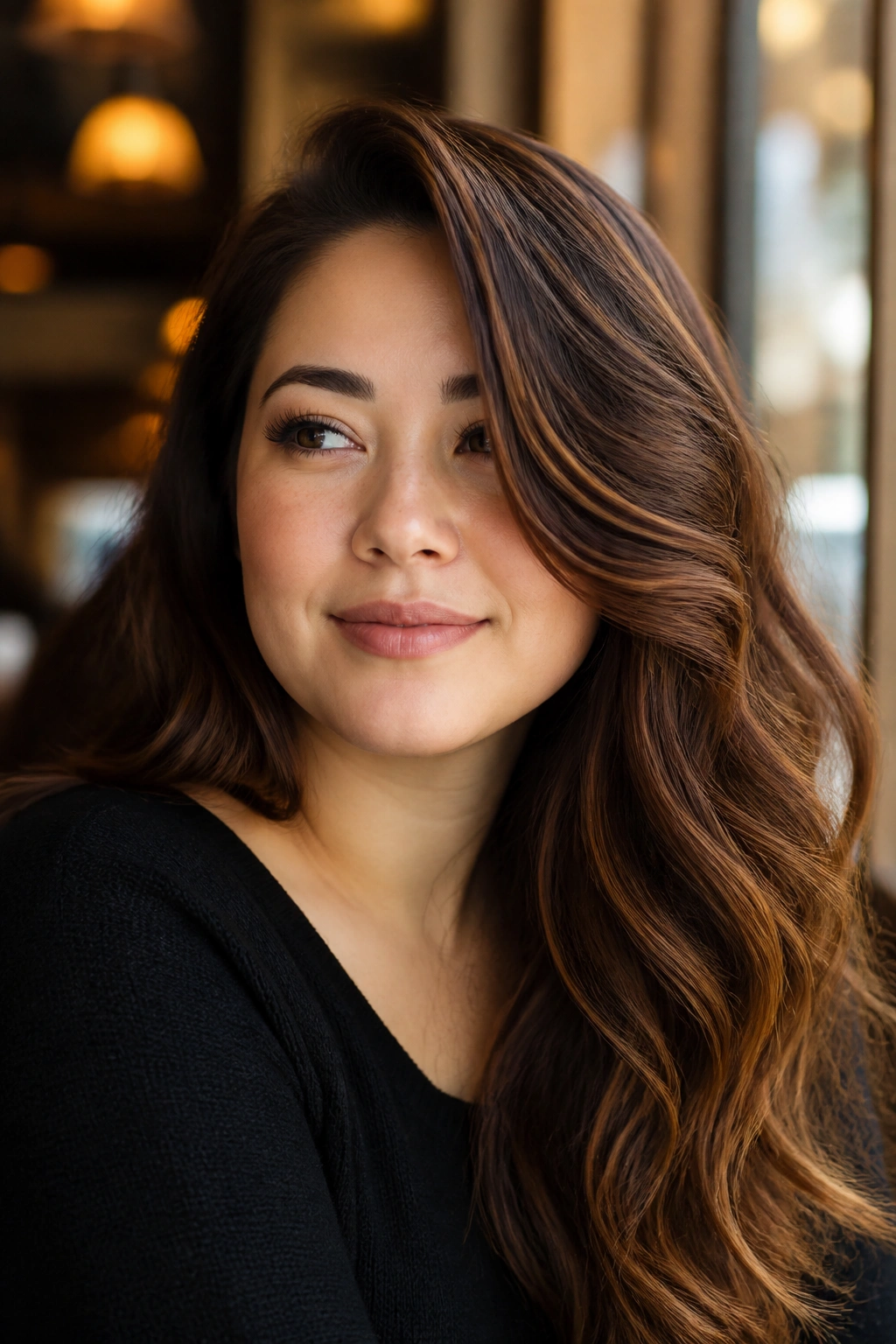
Want shape without a harsh stripe near the face?
A side part does a lot of heavy lifting here. It moves the visual center off the widest part of a round face, and chestnut balayage keeps the change gentle enough that the hair still looks rich, not flashy. I like this on medium-to-long waves because the chestnut catches light in broad ribbons instead of tiny flecks.
Why the Part Matters
A deep side part creates a diagonal line across the forehead and cheek area, which breaks up the circle shape in a way a center part sometimes cannot. The chestnut should start low, usually around the mouth line or lower, so the brightness does not sit right where the face is fullest.
How to Wear It
- Blow-dry the front away from the face
- Keep the waves loose and wide
- Ask for chestnut, not copper, if you want a softer read
- Let the color get brighter near the ends
The whole look feels easy. Not flat. Just easy.
3. Mushroom Brown Balayage on a Black Lob
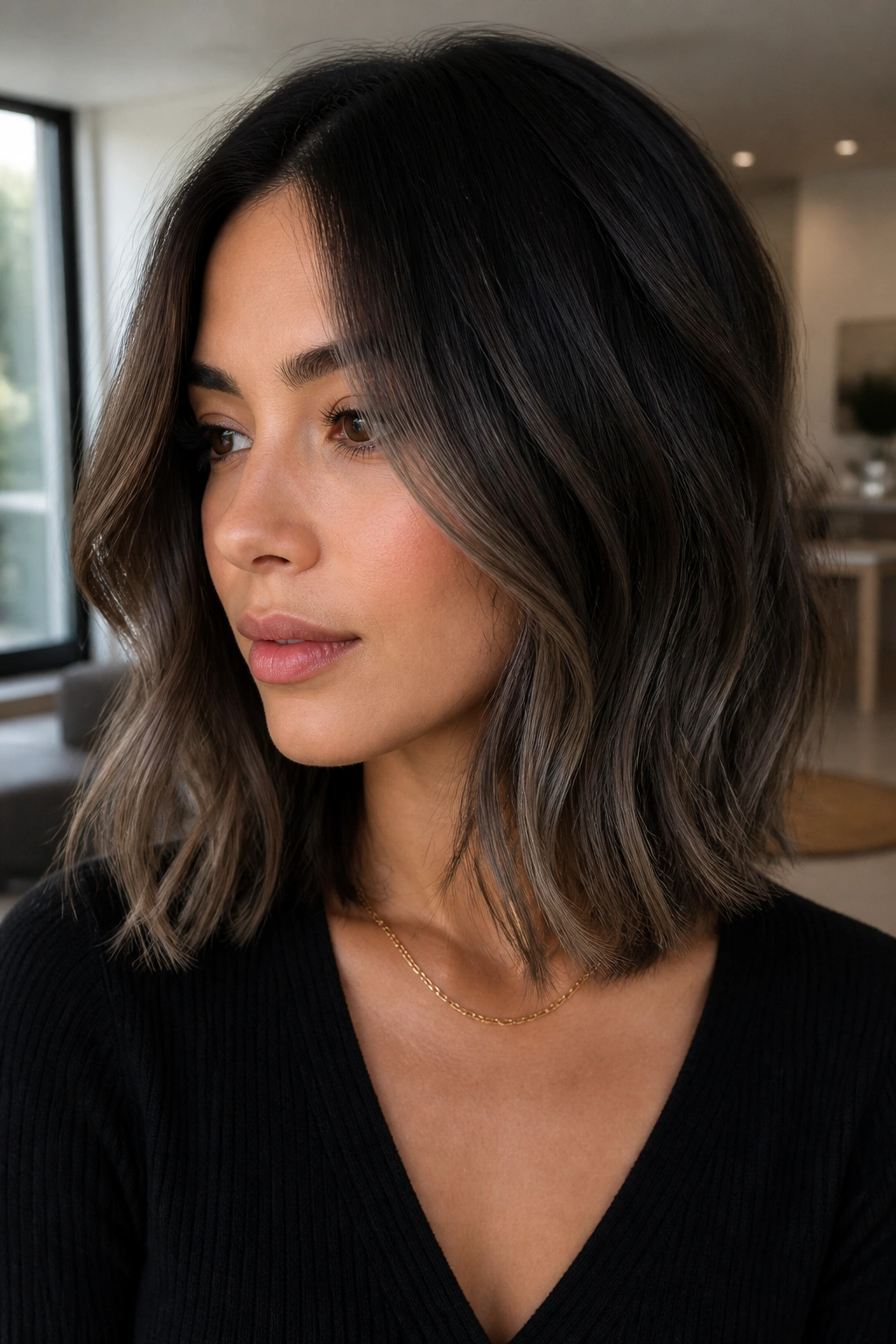
Cool mushroom brown is one of the smartest choices for a round face.
The shade sits in that gray-brown zone between ash and taupe, so it never screams for attention. On a black lob, it gives you dimension without the chunky contrast that can make a face look wider. I like it especially on blunt-but-soft lobs, where the cut is clean and the color can do the rounding-out work.
A mushroom tone also keeps the color looking expensive in low light. That sounds fussy, but it matters. Warm caramel can sometimes pull too orange against a black base; mushroom brown stays calmer and more modern-looking without trying too hard.
If your hair is thick, this is a strong move. The cooler ends make the shape feel lighter. If your hair is fine, keep the balayage soft and broken so the ends do not look see-through.
4. Espresso Base with a Thin Money Piece
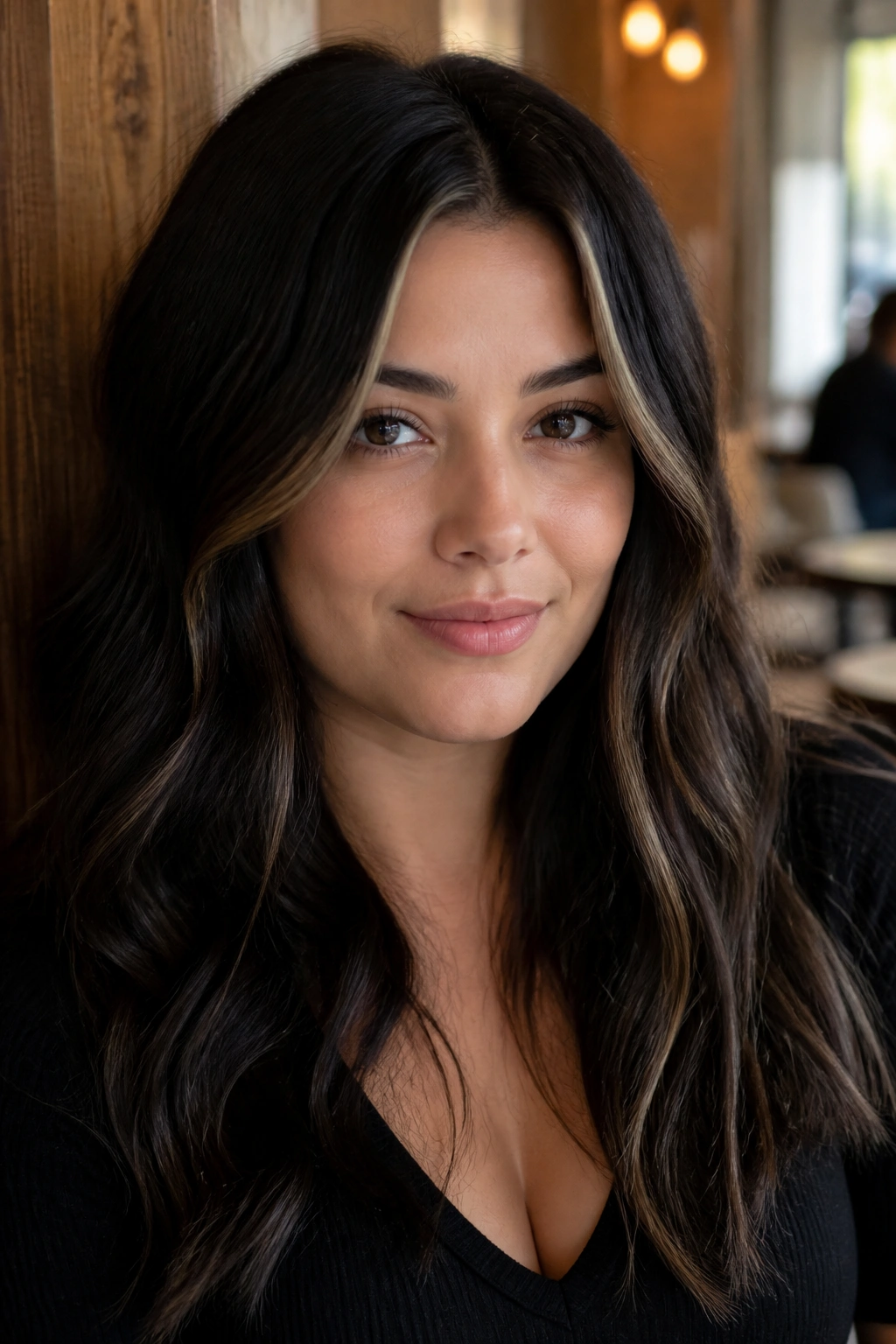
When someone wants brightness but hates the look of heavy highlights, this is the move.
The espresso base stays rich and nearly solid, while a very thin money piece gives the face a bit of lift. The trick is restraint. A money piece that is too wide sits right on the cheeks and changes the balance of the whole look in a bad way. A narrow one — especially when it starts just below the brow and gets lighter near the ends — can open the face without stealing the show.
The Narrow-Strand Rule
The front section should look like a highlight, not a curtain. Keep it around half an inch to one inch wide at the root, then let it widen slightly as it drops.
- Ask for an espresso root shadow
- Keep the brightest part near the front hairline, not the temples
- Fade the light into the mid-lengths instead of stopping it sharply
- Style with a soft bend away from the face
This is a clean, polished look. Quiet, but not boring.
5. Mocha Melt on Long Layers
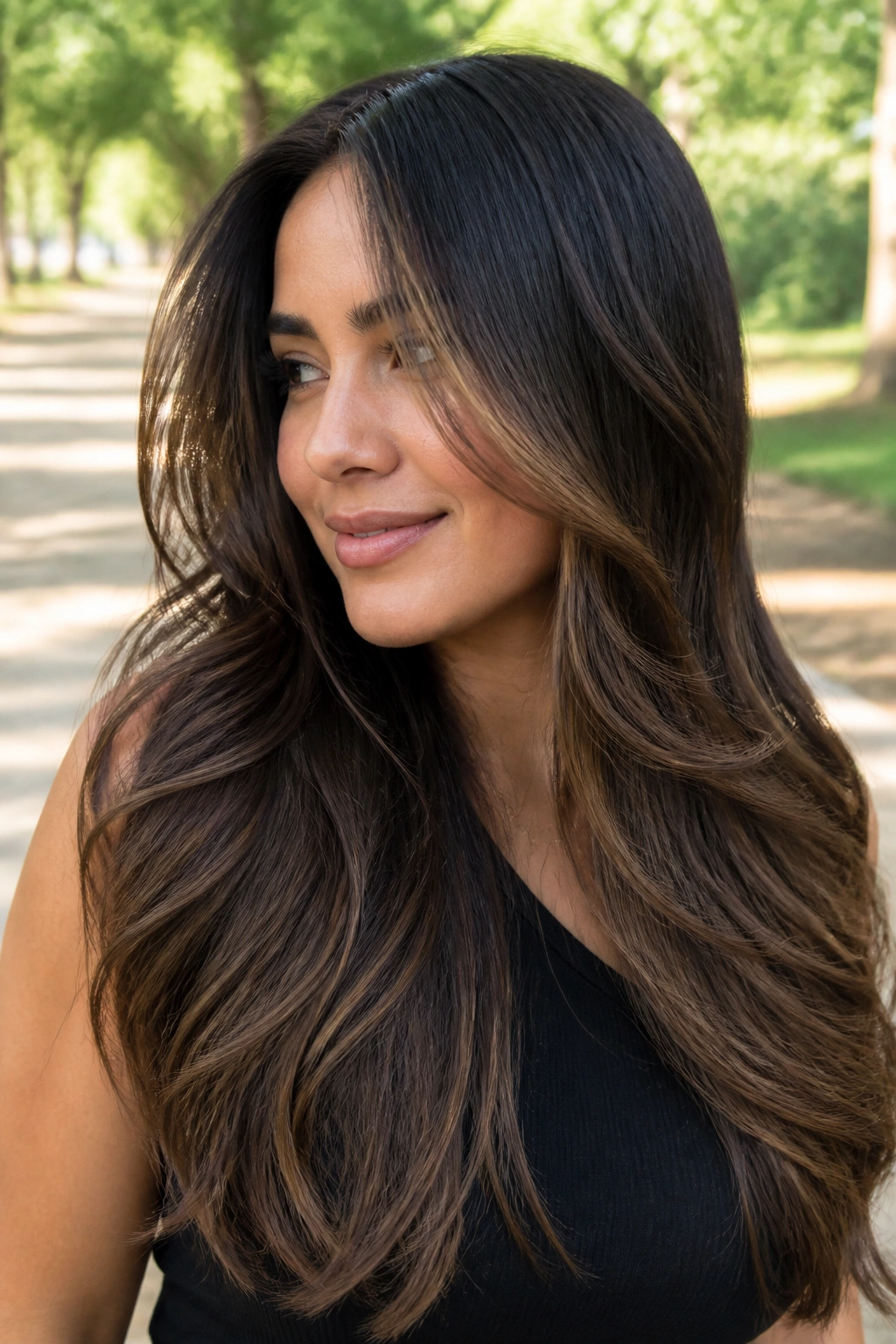
A mocha melt is all about a slow fade.
Black at the roots, mocha through the middle, then a deeper brown at the ends — that gradual shift keeps the eye moving down the hair instead of across the cheeks. Long layers make this even better because the color has different lengths to sit on. Without layers, the melt can look like one big block. With them, it becomes movement.
I like this on hair that reaches past the shoulders. The longer line gives the color room to breathe, and the round face gets a longer frame around it. Straight styling shows the gradient in a crisp way. Waves soften it. Either one works.
There’s a nice practicality here too. Mocha doesn’t fight the black base. It belongs beside it. So the grow-out tends to stay gentle, and that matters if you don’t want a high-maintenance color appointment every few weeks.
One good bend at the ends. That’s enough.
6. Ash-Brown Balayage on a Curly Lob
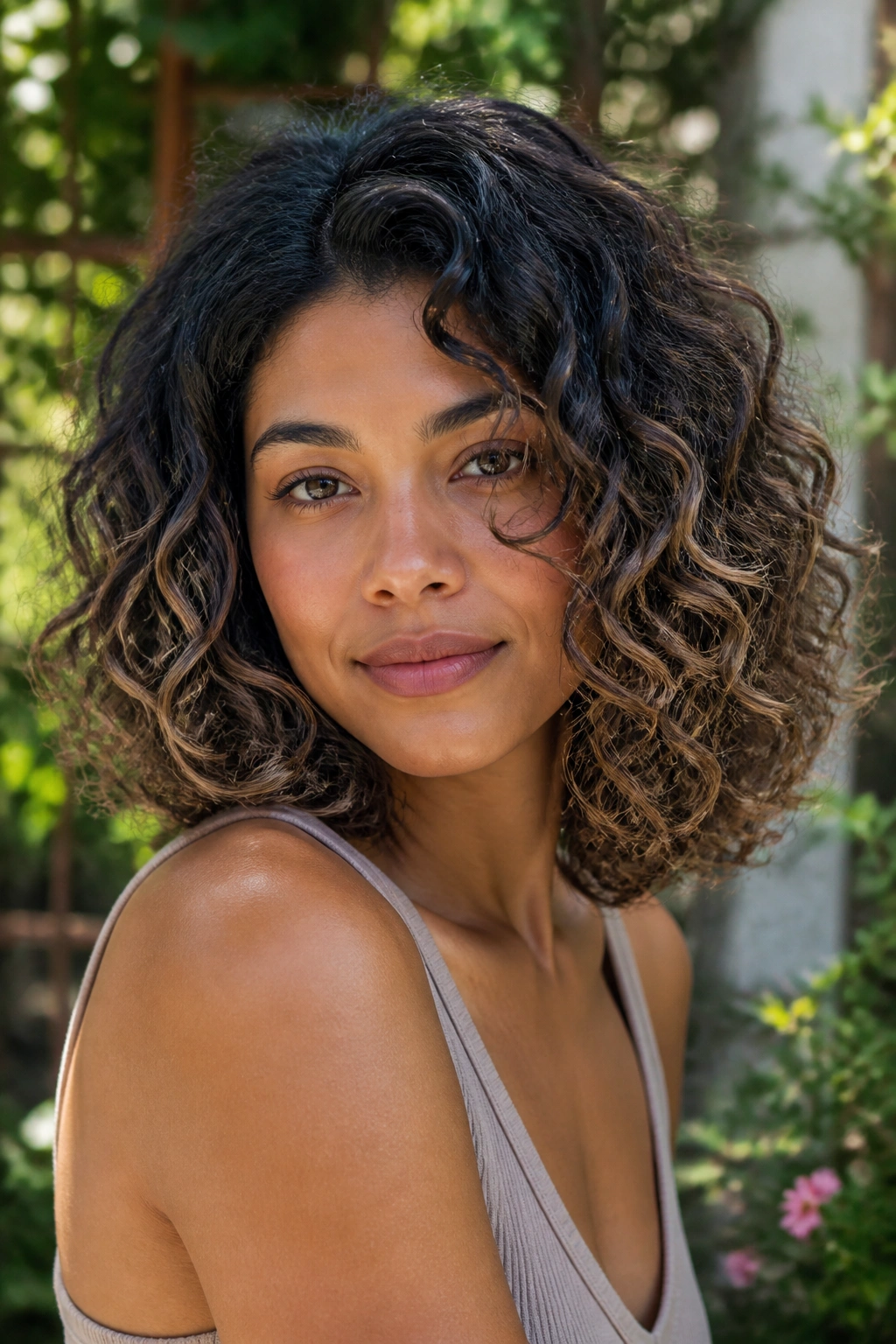
Unlike caramel, ash brown reads muted and slightly smoky.
That matters on curls, because curls already bring texture and volume. If you stack warm highlights on top of that, the hair can start to feel busy around the cheeks. Ash-brown balayage keeps the surface calm while still showing the curl pattern. On a curly lob, that’s a smart trade.
What Makes It Different
The cool tone breaks up the black base without adding a lot of visual bulk. The curl clumps stay defined, and the color reads in soft ribbons instead of bright stripes. On a round face, that means the shape of the curl matters more than the brightness itself.
Who It Suits
- People who wear their curls air-dried or diffused
- Anyone who wants lower contrast than caramel
- Thick curls that need a little visual control near the face
- Hair that looks best with a soft, smoky finish
If you want warmth, skip this one. If you want shape, keep reading.
7. Cinnamon Veils with Curtain Bangs
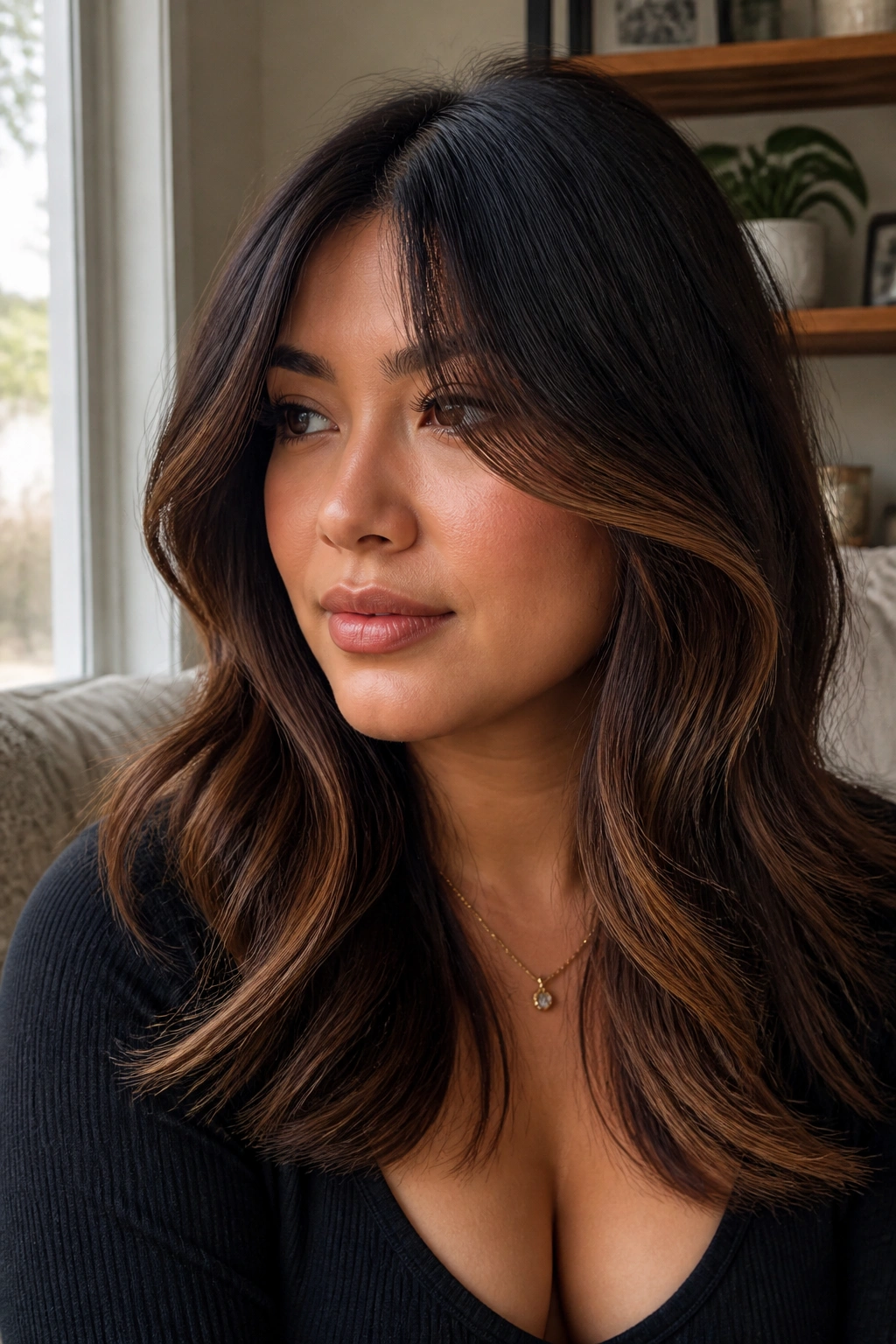
A round face with curtain bangs can look shorter if the color starts too high.
That’s where cinnamon veils help. The warm brown-red tone gives the bangs a little life, but the balayage should drop below the cheekbone so the front stays airy. I like this look when the bangs are parted softly in the middle and the lighter pieces travel with them, not against them.
Where to Place the Brightness
Put the color through the lower half of the bangs and into the front layers. Keep the roots dark. Let the cinnamon show more near the jaw and collarbone, where it can stretch the face downward.
- Start the brightest weave below the cheek area
- Keep the bang color thinner than the side layers
- Use a round brush only at the ends
- Leave the crown darker for better shape
This one has a little drama, but not the heavy kind. It feels flattering because the bangs and color work together instead of competing.
8. Walnut Lowlights Through Black Waves
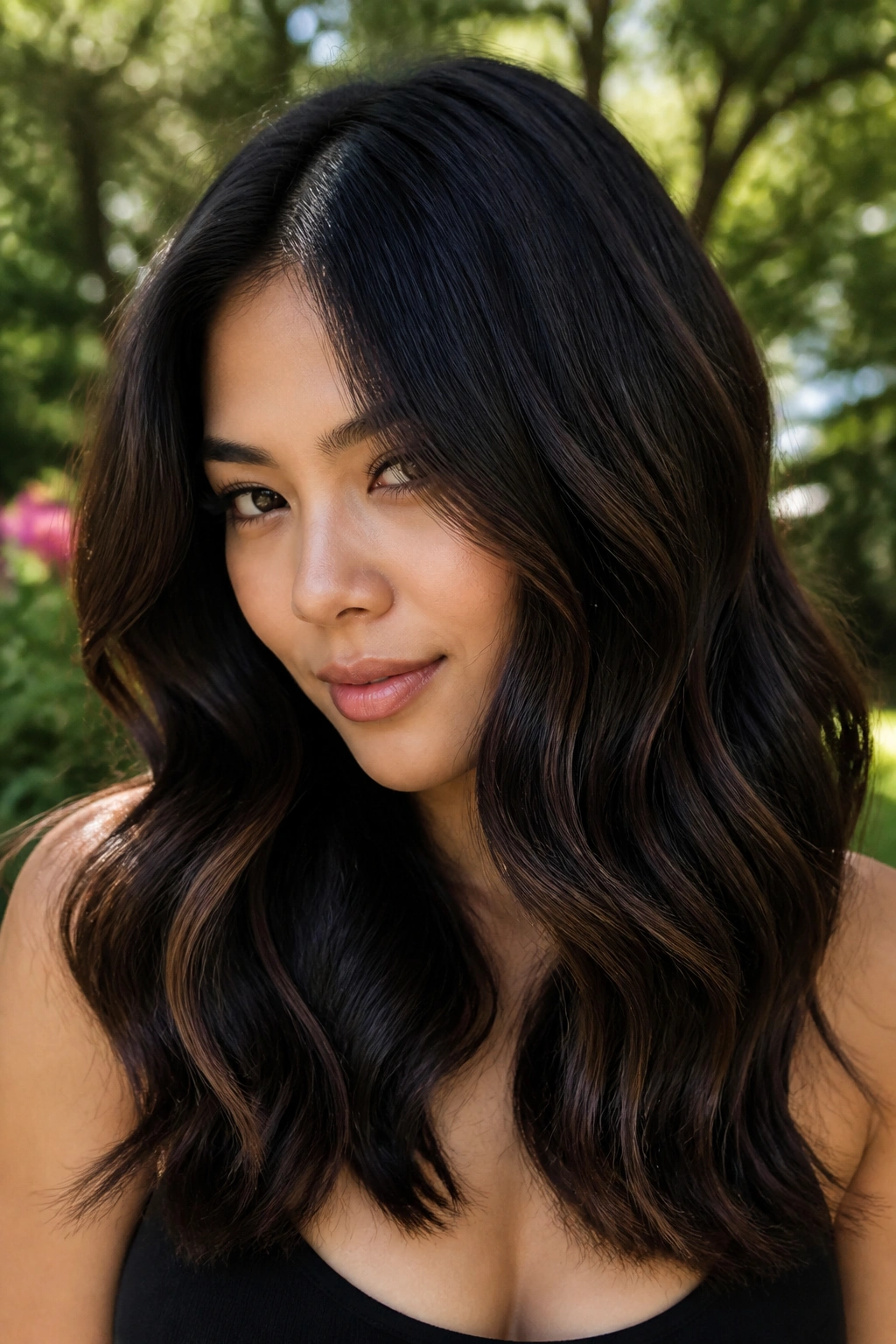
Sometimes darker strands do more for a round face than lighter ones.
Walnut lowlights add shadow, and shadow is useful. It carves out the curve of the waves and makes the hair look fuller without pushing the width of the face outward. On black hair, walnut reads as a soft brown in sunlight and almost disappears indoors, which is exactly what makes it useful.
This works especially well if your hair is already a little too bright from old highlights. The lowlights bring the color back down and add depth around the mid-lengths, which makes the face look less round and the wave pattern look richer.
A one-inch curling iron gives this style a nice, loose bend. Flat-ironed hair can work too, but I prefer movement here. The color needs something to catch.
It’s subtle. That’s the point.
9. Reverse Balayage for Soft Dimension
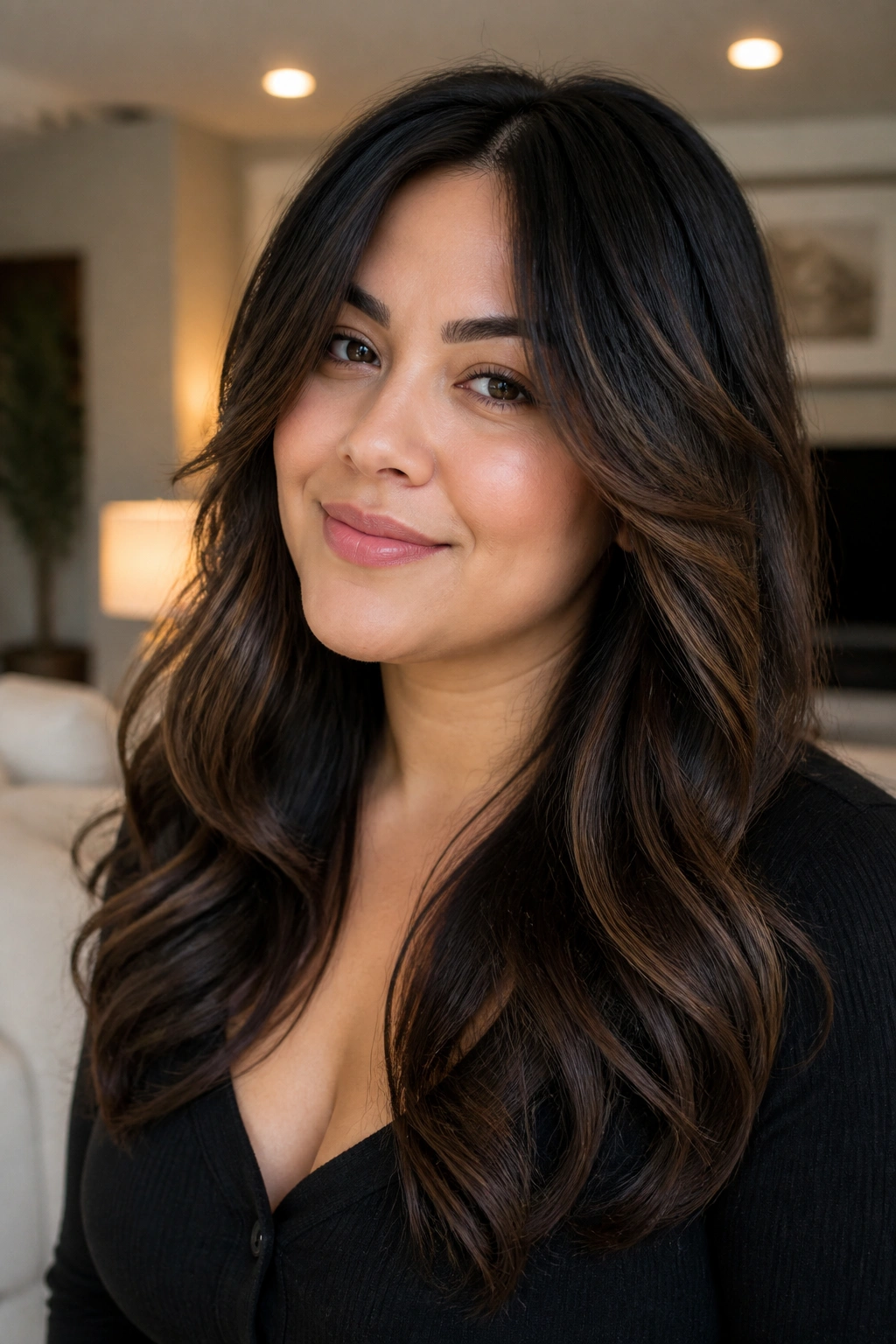
More light is not always the answer.
Reverse balayage goes darker instead of lighter, which sounds backwards until you see what it does on a round face. If the hair has too much bright color around the sides, adding soft brunette ribbons back into the mix can slim the outline and restore shape. It is especially handy on previously highlighted hair that has gone a little too blonde at the cheeks.
When It Helps Most
- The face feels wider because the front is too bright
- Old highlights have gone flat and patchy
- You want depth without losing movement
- The hair needs a cleaner grow-out line
The result is not dramatic from across the room, and that’s fine. The change shows up in the way the hair falls. The sides look slimmer. The ends look thicker. The black base gets its authority back.
If you like your color calm and tidy, this one makes sense.
10. Bronze Peekaboo Panels Under a Bob
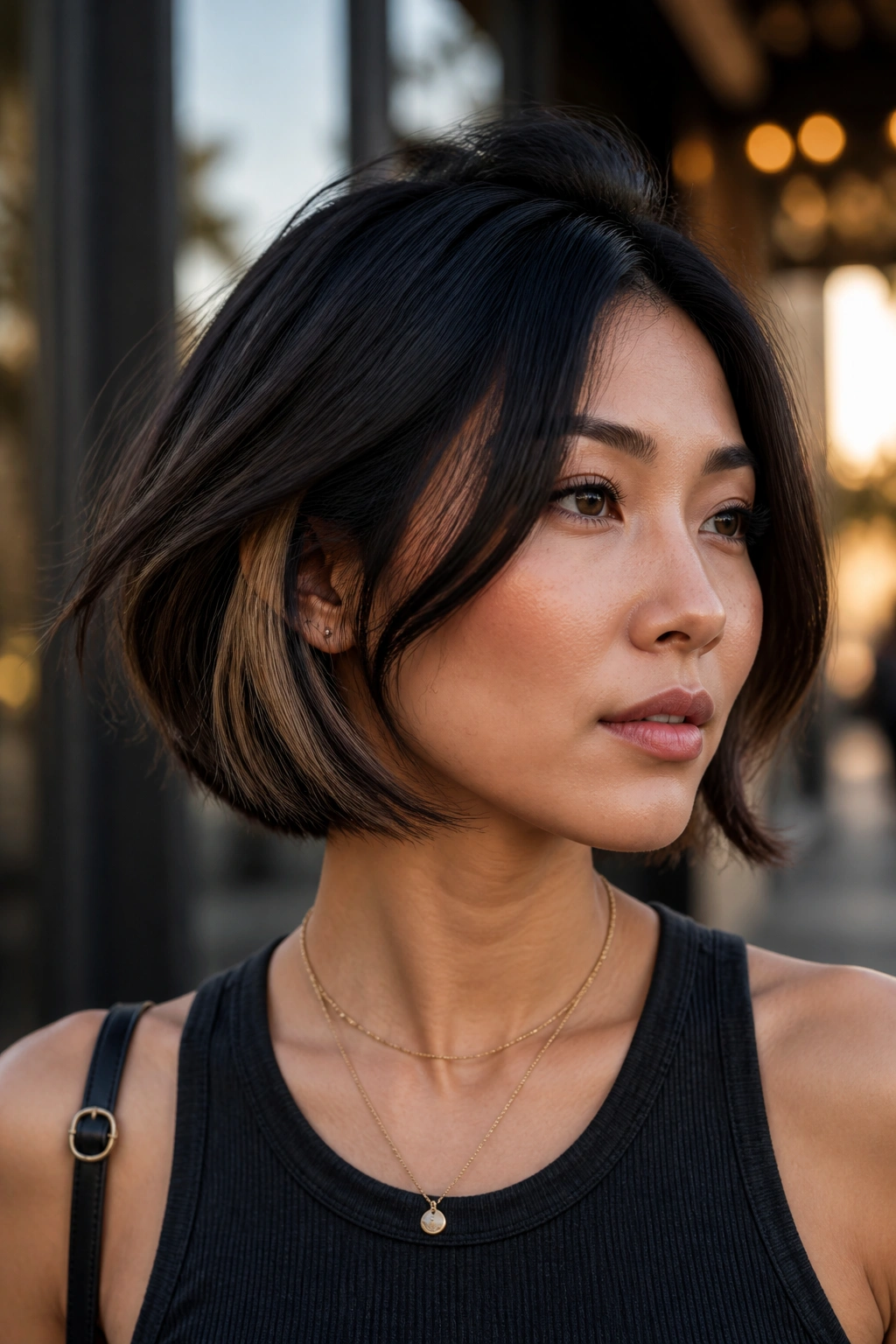
A bob can go boxy fast.
Bronze peekaboo panels fix that by hiding the brightness underneath the top layer, where it moves instead of sitting flat. On a round face, this is a nice trick because the surface stays dark and sleek while the underside flashes bronze when the hair turns. You get dimension without a wide stripe across the cheeks.
The cut matters here. A bob that lands just below the jawline keeps the face open. A bob that stops right at the jaw can feel too circular, especially if the color is loud. Bronze is warm enough to show, but not so pale that it steals the shape of the haircut.
Good Placement Notes
- Keep the panels under the crown, not at the outer edge
- Ask for a bob that skims the jaw, then drops slightly longer in front
- Blow-dry with a slight bevel inward at the ends
- Leave the top layer nearly black for contrast
The movement is the payoff. Not the first glance.
11. Toffee Ribbons on Butterfly Layers
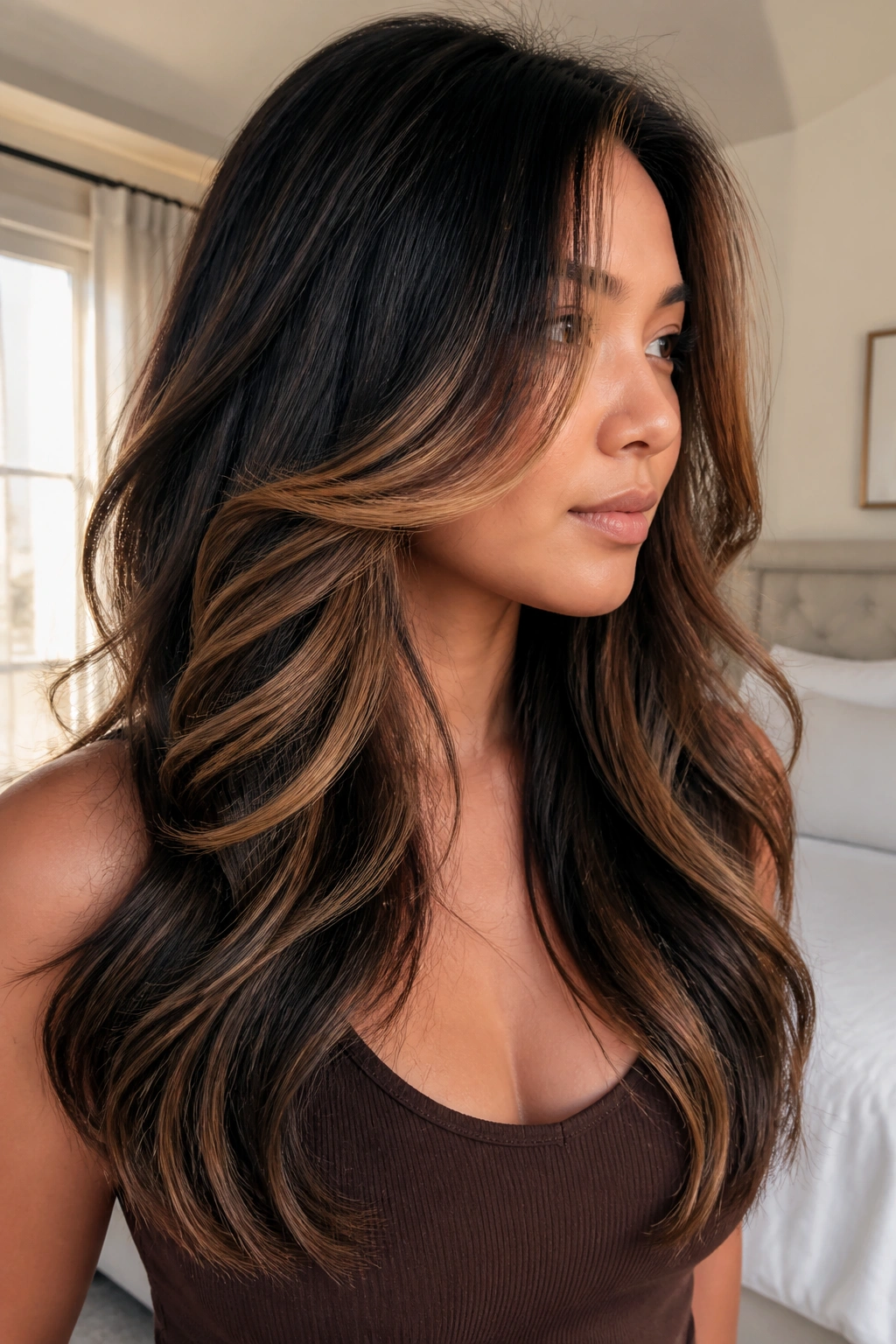
Toffee gives black hair a warm, silky look that softens the edges of a round face.
Butterfly layers make this even better. Those face-skimming pieces around the front and the longer lengths in back create a long vertical line, which lets the toffee sit like light instead of color blocks. The result feels airy, but not fragile. There’s enough contrast to matter.
Why the Cut Matters
Without layers, toffee can spread too evenly through the sides and make the head look broad. Butterfly layers change that. They lift the front, keep the widest point lower, and give the balayage a place to fall. That is the part people miss when they blame the color for a shape issue that really belongs to the cut.
I like soft waves here, nothing tight. A loose S-bend lets the toffee catch on the ridges of the hair and keeps the face from looking boxed in. Straight hair can wear it too, but the layers need to be sharp and clean so the shape still reads.
That’s the whole trick.
12. Deep Cocoa Balayage on a Shag
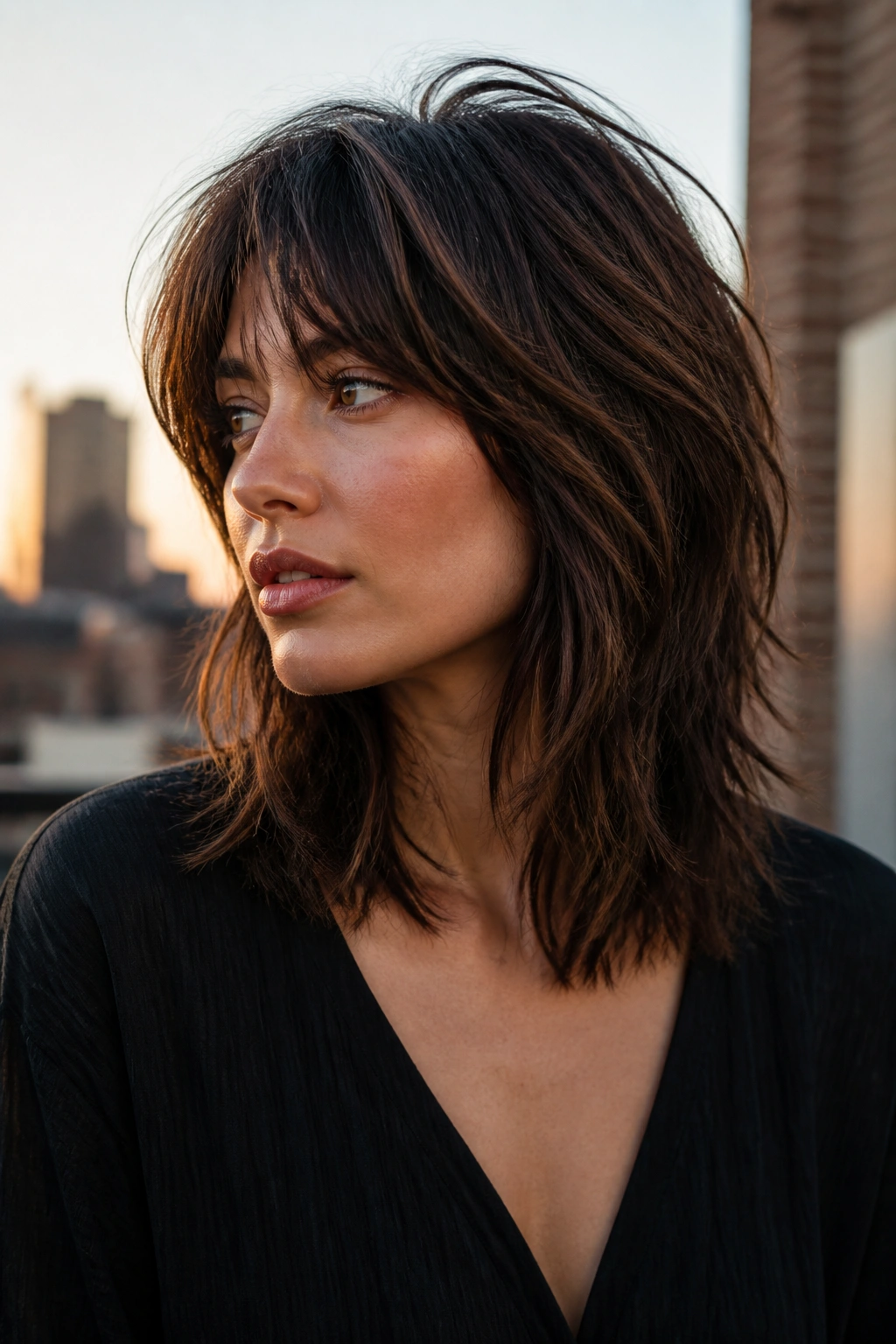
A shag needs broken-up color, not thick bands.
Deep cocoa fits that job because it follows the chopped texture instead of fighting it. On a round face, the shag already gives you some edge and movement, so the balayage should stay low-contrast and a little smoky. Too much brightness makes the cut look noisy. Cocoa keeps it grounded.
How Cocoa Plays With Texture
The color lands well on the ends of the shag’s pieces, where the hair flips out or bends under. It also works on the shorter crown layers, as long as the light is soft and scattered. That scattered look helps the face appear less circular because the eye jumps through the cut instead of circling the cheeks.
A styling cream with a light hold helps here. So does a rough blow-dry. You want the ends separated, not glued together. If the shag is too polished, the whole point disappears.
- Use a 1-inch iron for loose bends
- Keep the top darker than the bottom
- Ask for cocoa, not milk chocolate
- Let the fringe stay a little deeper in color
Messy, but controlled. That’s the sweet spot.
13. Beige-Brown Halo on Center-Part Hair
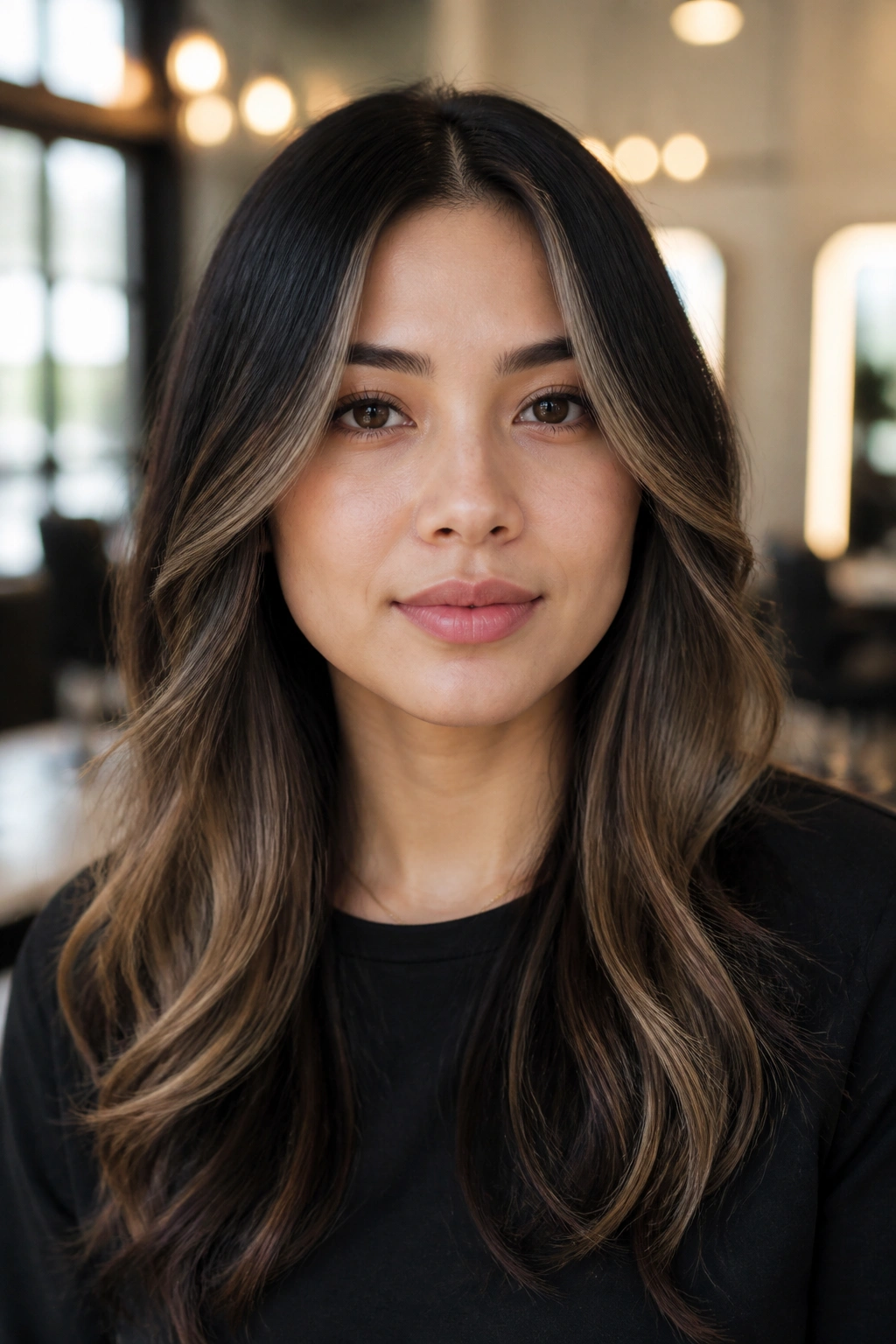
Can a center part work on a round face?
Yes, but only if the color helps it out. A beige-brown halo does that by framing the face with soft brightness that starts below the brow and drifts downward. The goal is not to make the middle part bigger. The goal is to keep the light moving away from the widest point of the face.
How to Keep the Center Part From Widening the Face
The lighter pieces should sit around the temples and then drop through the lengths, almost like a halo that opens at the bottom. If the brightness stops too high, the face can feel cut in half. If it travels lower, the center part looks intentional instead of harsh.
- Keep the brightest color below eye level
- Leave the roots deep and shadowed
- Use a soft blowout to push the front pieces backward
- Keep the beige tone muted, not yellow
This style has a clean, expensive feel without leaning stiff. It’s one of those looks that gets better when the hair moves.
14. Auburn-Tinted Balayage on Black Curls
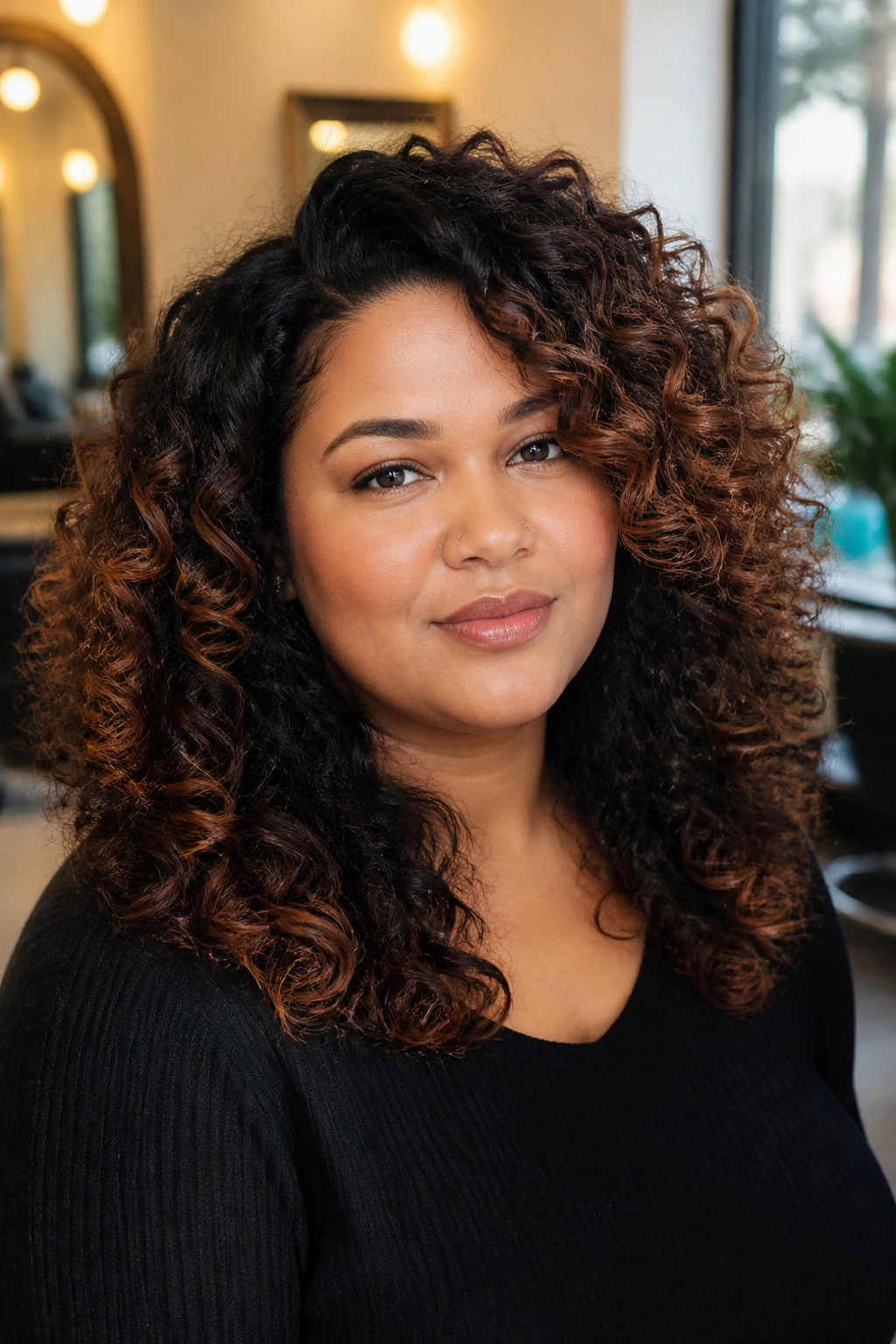
Auburn and black curls make a strong pair.
The warm red-brown tone brings out the curl pattern, and the black base keeps it from turning too bright or too springlike. On a round face, the warmth can be useful because curls already create width; auburn adds depth and shape instead of extra heaviness. The key is to paint the curl’s outer curve, not pack color inside the clump.
What to Ask For
- Auburn ribbons that sit one to two levels above chestnut
- Brightness focused on the lower half of the curls
- A shadowed root so the face stays longer
- A gloss finish to keep the red-brown tone from looking dry
If the curls are tight, keep the auburn narrow. If they’re looser, the color can spread a little more. Either way, the face gets framed by movement, not a hard line.
Warm, but not loud. That’s the appeal.
15. Hazelnut Sweep on a Rounded Lob
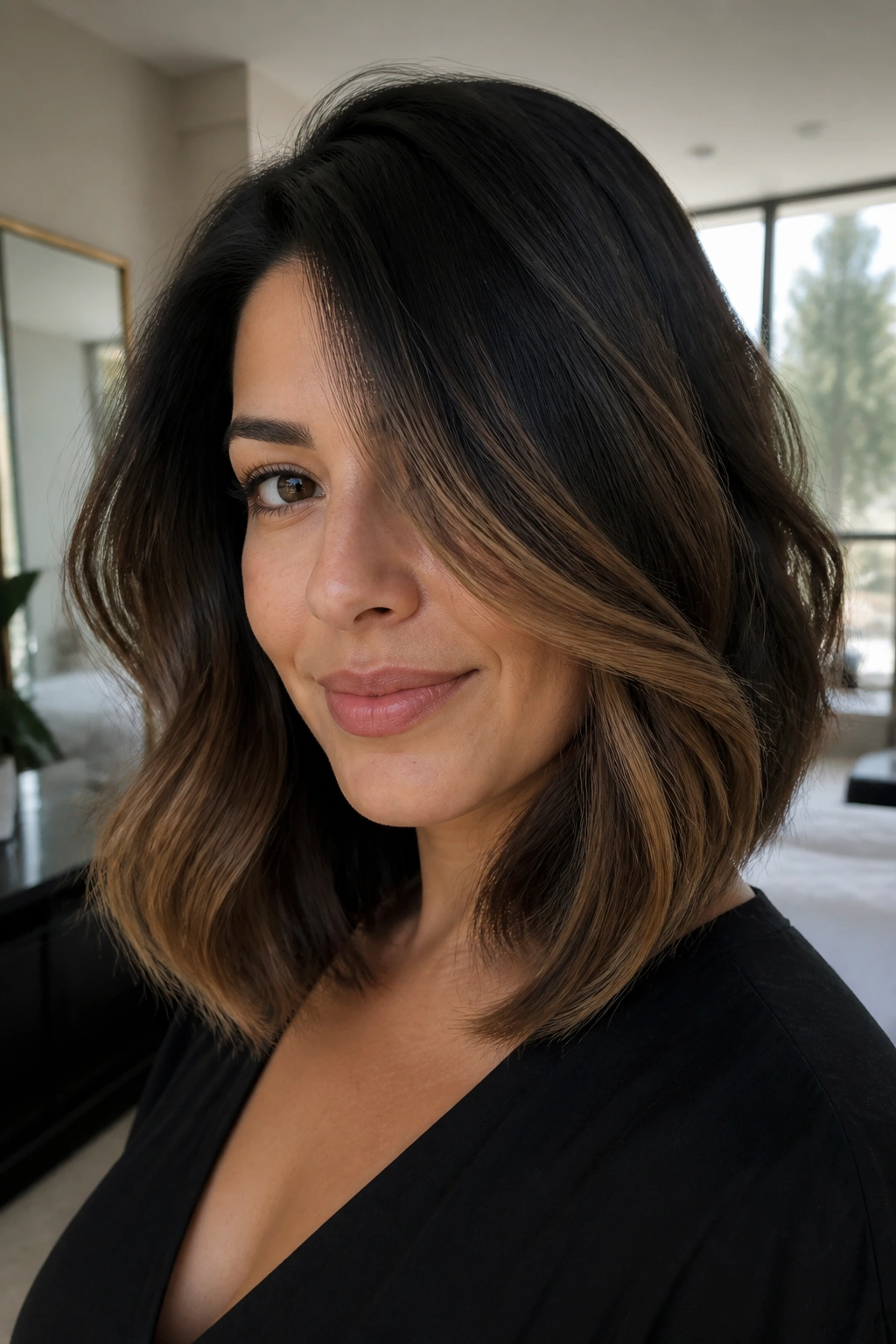
A rounded lob can either hug the cheeks or skim past them.
Hazelnut balayage helps it do the second thing. The shade sits between caramel and brown, so it gives enough warmth to feel alive but not enough contrast to draw a hard line across the face. On a round face, that softer placement matters. You want the lob to move past the cheek area, not stop there and hold.
A slight off-center part keeps the shape from looking too symmetrical. Then the hazelnut can sweep from the front toward the ends, with the brightest pieces landing lower than the chin line. It’s neat. It’s easy to style. And it avoids that overdone striped effect that makes some lobs feel too blunt.
I’d pick this for someone who likes a tidy haircut and wants the color to do the shaping quietly. It’s not flashy. That’s why it works.
16. Jet Black Hair with Soft Chestnut Ends
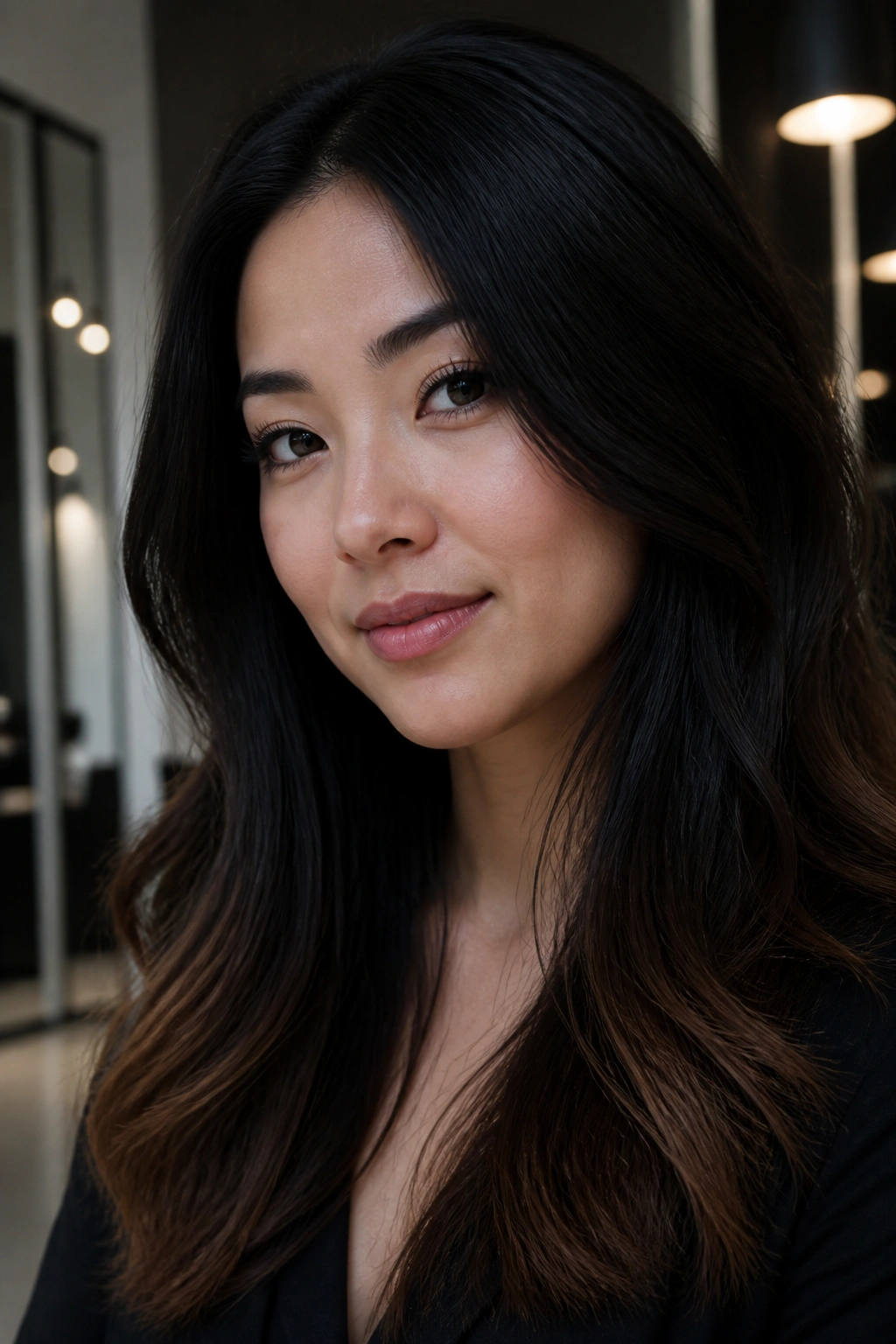
You do not need bright front pieces to make black balayage count.
Sometimes the smartest move is to keep the top almost solid black and place soft chestnut only at the last third of the hair. On a round face, that long dark stretch near the root and mid-lengths draws the eye downward. The face looks longer. The ends look fuller. The whole style feels calm.
This is a good choice if you want a low-drama color or work somewhere that leans conservative. It also grows out nicely because the contrast is subtle from the start. A small bend at the ends helps reveal the chestnut without making it look patchy.
- Best for sleek blowouts and soft waves
- Keeps maintenance lower than a brighter balayage
- Works well when the hair is past the shoulders
- Looks cleaner if the chestnut is cool rather than orange
Simple. And honestly, sometimes simple wins.
17. Smoked Caramel on Thick Straight Hair
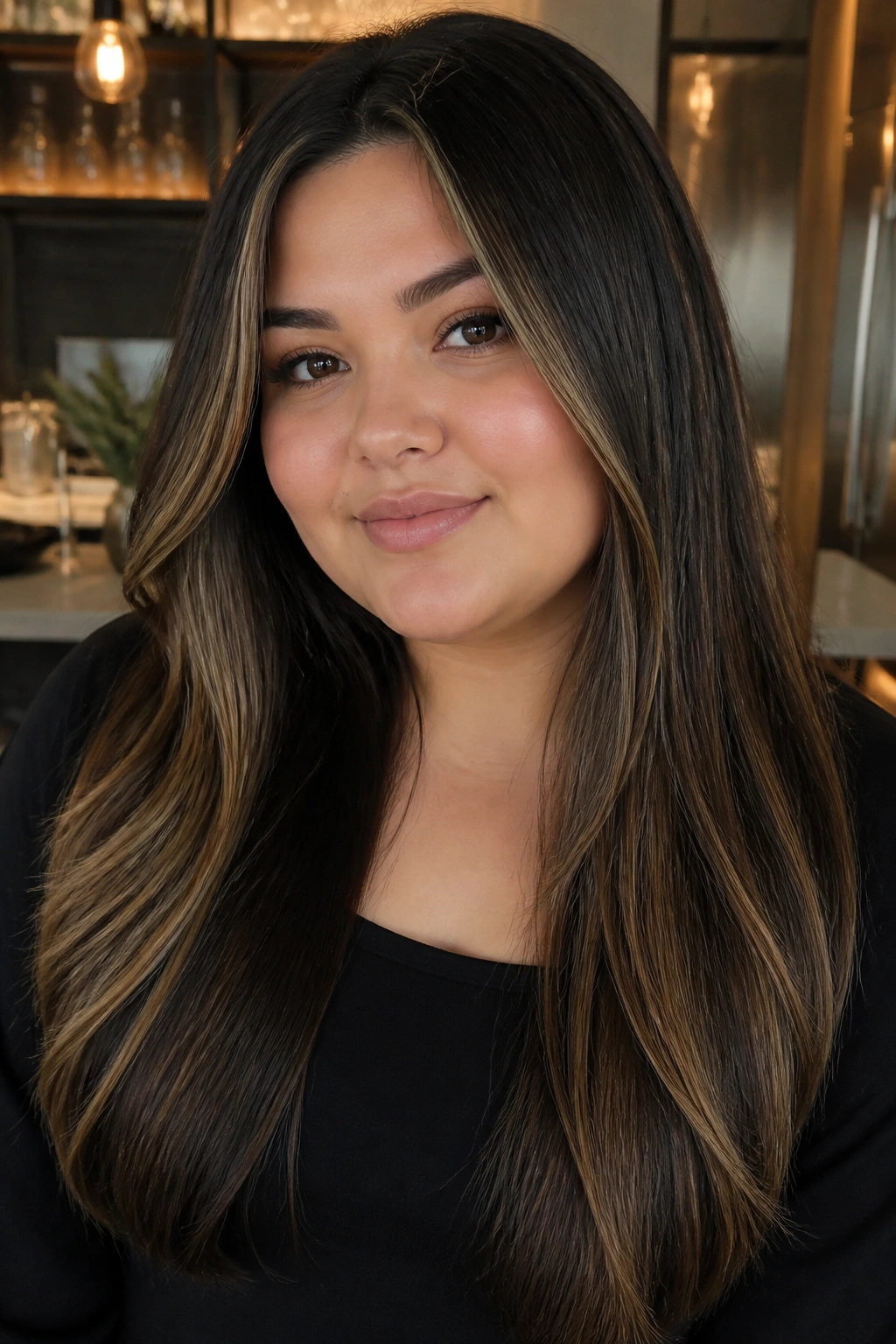
Thick straight hair can hide color unless the ribbons have enough width.
Smoked caramel solves that by giving the balayage a little more presence without tipping into orange. It sits somewhere between warm brown and soft honey, which makes it visible on black hair but still grounded. On a round face, the straight lines of the cut can get wide fast, so the color needs to pull the eye downward through the lengths.
What to Tell Your Colorist
- Paint in broken slices, not one heavy panel
- Keep the mids darker than the ends
- Ask for smoked caramel, not pale blonde
- Blend the front pieces so they taper near the jaw
This look works best when the hair is smooth, almost glassy. A little shine serum on the mid-lengths helps the color read better, and a flat iron can make the ribbons show in a cleaner way. If the hair is very thick, layering the back slightly keeps the shape from looking heavy at the bottom.
It needs some care. Worth it.
18. Maple Brown Balayage on Long Spiral Curls
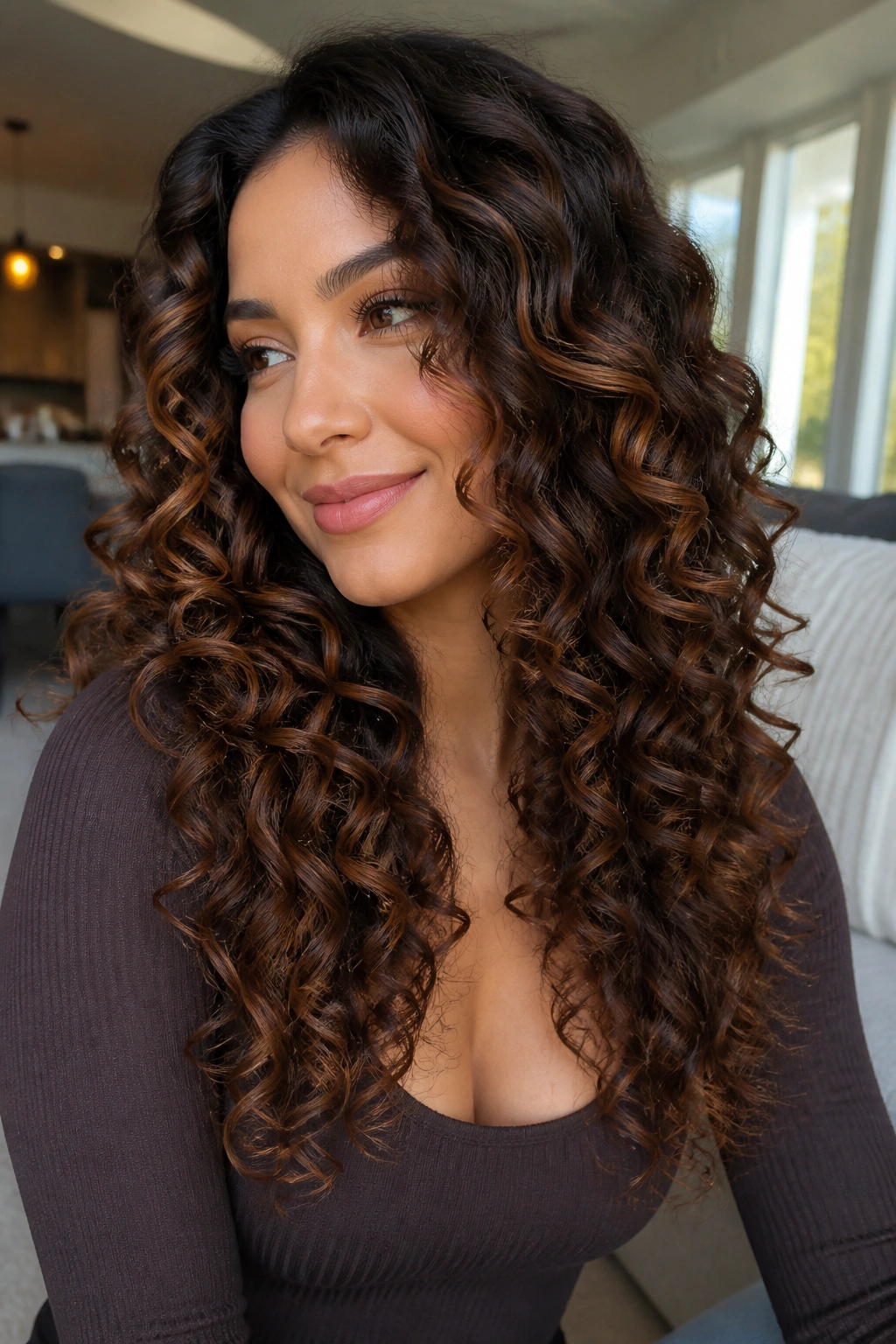
Maple brown warms black curls with a soft reddish-brown glow.
Spiral curls are good at showing color because each coil catches light from a different angle. That means you do not need giant sections of balayage to get an effect. In fact, smaller ribbons often look better on a round face because they keep the sides from puffing out too much. The brightness should sit on the outer surface of the curl and drift toward the ends.
The warm tone gives the curls depth, almost like the hair has more layers than it really does. That’s useful on long hair that can start to feel heavy around the face. A maple brown glaze after lightening keeps the tone rich instead of brassy, which matters if you want the color to stay soft.
I’d style this with a diffuser and a light gel cast. The curls need shape before the color can do its job.
19. Micro-Highlighted Black Balayage for Fine Hair
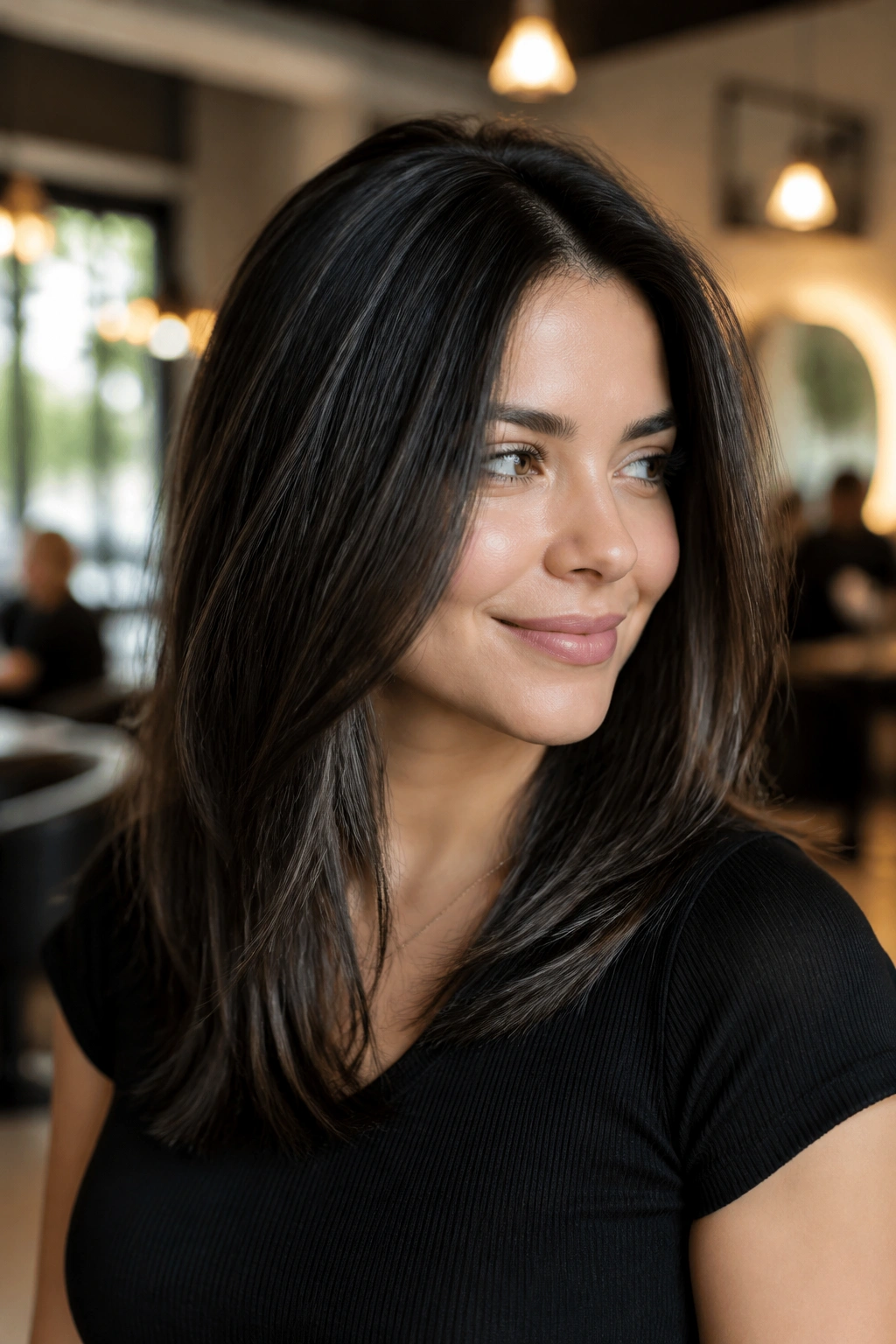
Unlike chunky highlights, micro-ribbons keep fine hair from looking thin at the ends.
That alone makes this look worth a serious look for round faces. Fine hair can lose density fast if the color sections are too wide, and then the ends start to look wispy. Micro-highlighted black balayage uses tiny woven pieces to create depth without exposing too much scalp or slicing the hair into harsh stripes.
The effect is subtle up close and cleaner from a distance. The face reads slimmer because the brightness stays broken up and vertical, not broad and horizontal. A gloss finish helps the darker pieces stay rich, which matters more than people think. Flat, dry color makes fine hair look tired. A shiny finish gives it life.
If your hair is thin and your face is round, this is one of the safer choices. Small pieces. Soft lift. No drama.
20. Soft Mocha Money Piece with Face-Skimming Layers
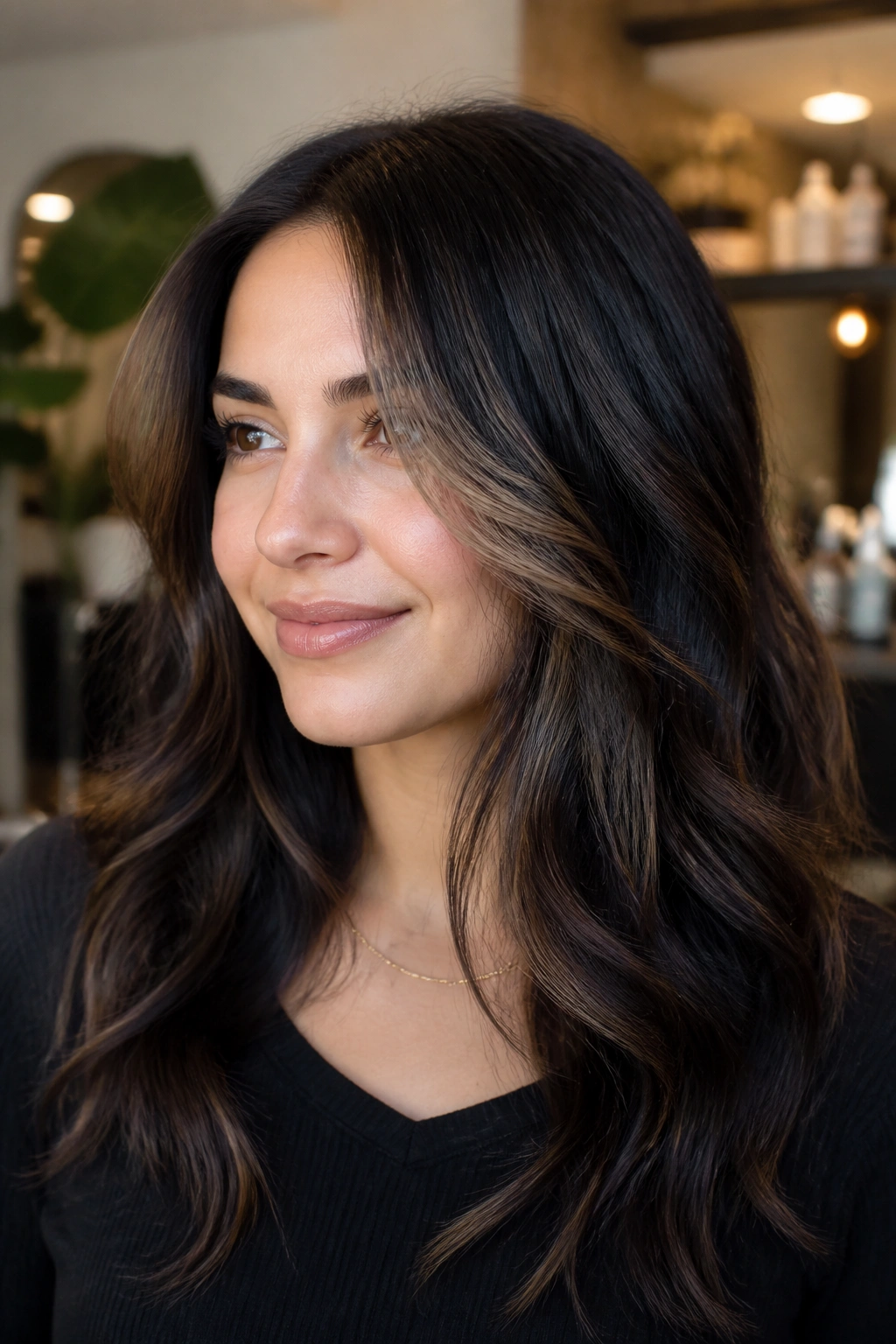
If you want one black balayage look that plays nicely with a round face, this is the safest bet.
The soft mocha money piece gives you just enough brightness around the front, and the face-skimming layers keep that brightness moving instead of sitting still. That combination helps open the face without widening it. It’s easy to wear, easy to style, and flexible enough for straight hair, waves, or a rounded blowout.
Best Details to Ask For
- Keep the money piece thin at the root
- Let the mocha stay muted, not golden
- Start the face-framing layers below the cheekbone
- Blend the front into darker lengths so the face doesn’t get boxed in
This is the look I’d point someone toward if they wanted a clear change but not a loud one. It gives shape. It gives softness. It keeps the black base doing what black does best: making everything look richer.
If you only remember one rule from all of this, make it the one that matters most: keep the brightest pieces lower than the widest part of the face. That one placement choice saves a lot of bad color decisions.
