



Balayage looks for wavy hair work because the bend does half the styling for you.
When color is hand-painted onto waves, it doesn’t sit there passively. It shifts, breaks up, and flashes lighter on the curve of each bend, which is why the same placement can look flat on straight hair and suddenly look expensive on a shoulder-length wave. That’s the whole trick, really. The color has to meet the movement.
The bad version is easy to spot. Too many bright pieces, placed too evenly, can make wavy hair look striped or dry, especially if the wave pattern is loose and the ends are already a little frayed. The better version uses depth on purpose — a darker root, lighter mids, a few face-framing pieces, maybe a gloss that softens the whole thing so the color reads as part of the hair instead of sitting on top of it.
A good balayage on waves isn’t about being the lightest head in the room. It’s about placement, contrast, and tone. And once those three line up, the result can look soft, rich, and moved by the light every time you turn your head.
1. Soft Caramel Balayage Through Loose Waves
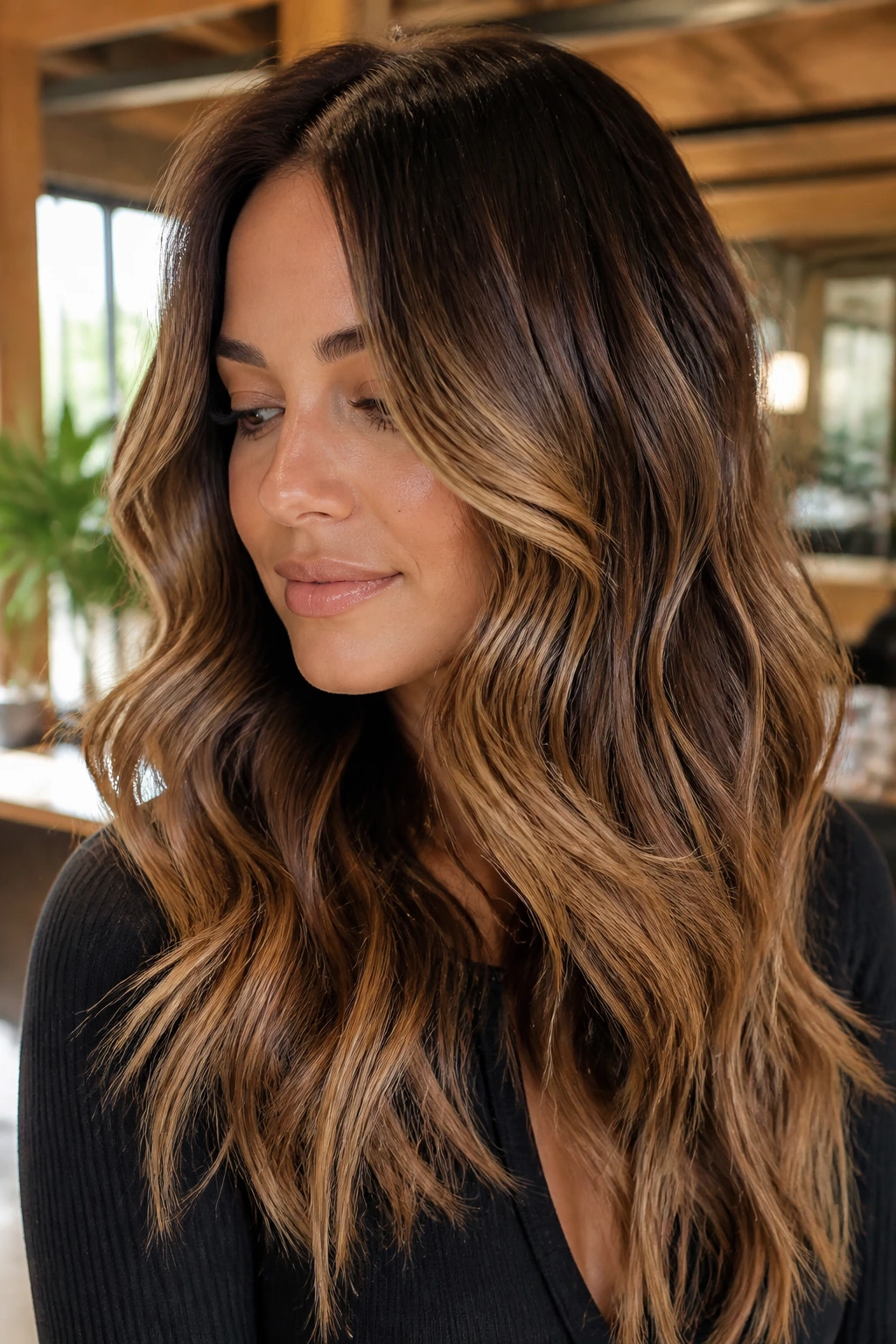
Caramel and loose waves get along fast. The warmth lands in the bends, not just the surface, so the hair looks thicker and more alive without going blonde.
Why It Works
Soft caramel is one to two levels lighter than a medium brown base, which keeps the color readable but not harsh. On waves, those painted pieces sit right where the hair curves, so the eye sees depth first and brightness second. That order matters.
- Best on medium brown, chestnut, or dark blonde bases
- Ask for caramel pieces from mid-lengths to ends, with a softer root
- Works well when the brightest ribbons sit around the face and lower layers
- A 1.25-inch curling iron gives a bend that shows off the contrast without making the hair look stiff
Tip: If the ends are dry, keep the lightest caramel away from the last inch. That small gap saves the hair from looking frayed.
2. Honey Blonde Balayage with a Dark Root
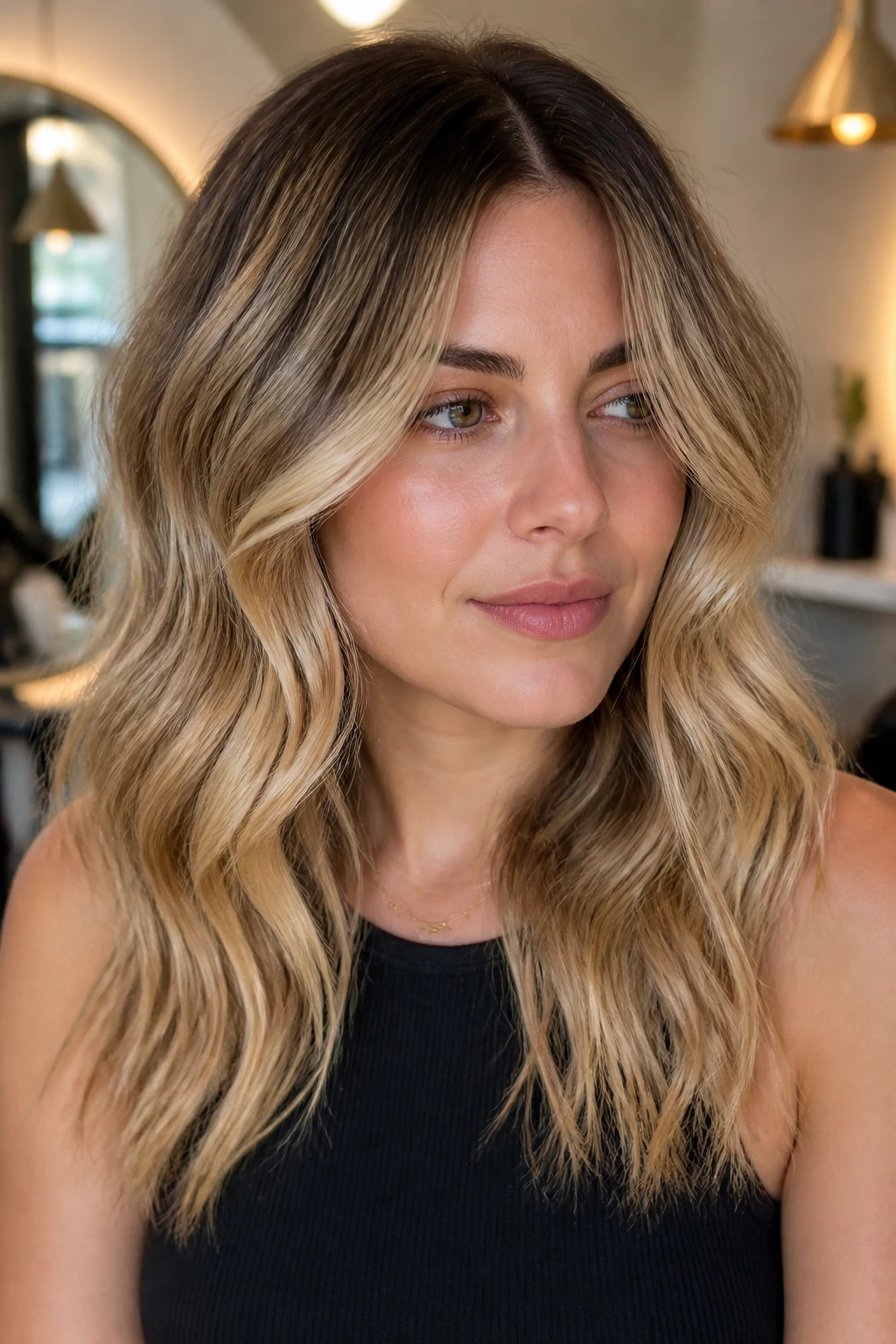
Honey blonde is the shade people reach for when they want brightness without hard edges. The dark root keeps it grounded, and the waves keep the transition from looking abrupt.
A shadow root that stays about two shades deeper than the lightest pieces gives the whole look a softer grow-out line. That’s especially useful on wavy hair, because the motion already breaks up color in a natural way. You end up with warmth near the mids and ends, but the scalp area still feels believable.
What I like here is the way honey blonde behaves in loose waves. It doesn’t scream for attention. It glows. Pair it with a neutral gloss if the hair leans orange, or a warm beige toner if it needs a little more gold. The result is friendly, not fussy.
3. Face-Framing Money Piece Balayage
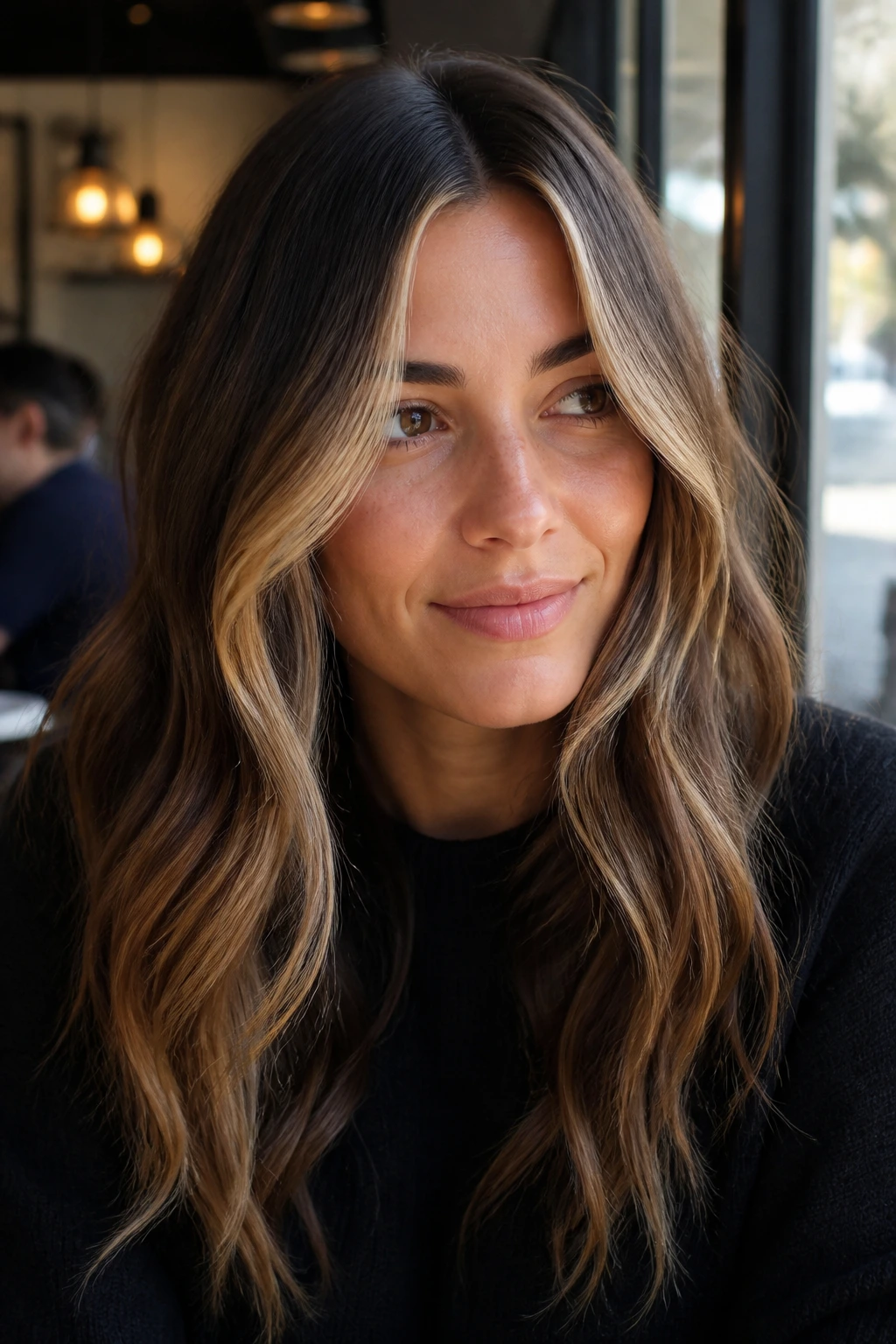
Want the fastest way to make wavy hair look brighter without coloring every inch? Put the lightest pieces around the face and keep the rest softer.
The money piece works because it changes the first thing people see. On a center part, the lighter front sections make the hairline pop. On a side part, they swing across the cheekbone and jawline, which gives the color motion even when the rest of the hair is tucked behind a shoulder. Keep the strip thin enough that it looks painted, not sliced.
What to Tell Your Colorist
- Brighten the front pieces by two to three levels, not five
- Keep the back and crown one shade softer
- Ask for a root smudge so the grow-out stays calm
- If your waves are fine, avoid a chunky front stripe
One clean money piece can do more than a whole head of over-lightened foil work. That’s the honest truth.
4. Beige Blonde Balayage on Medium Waves
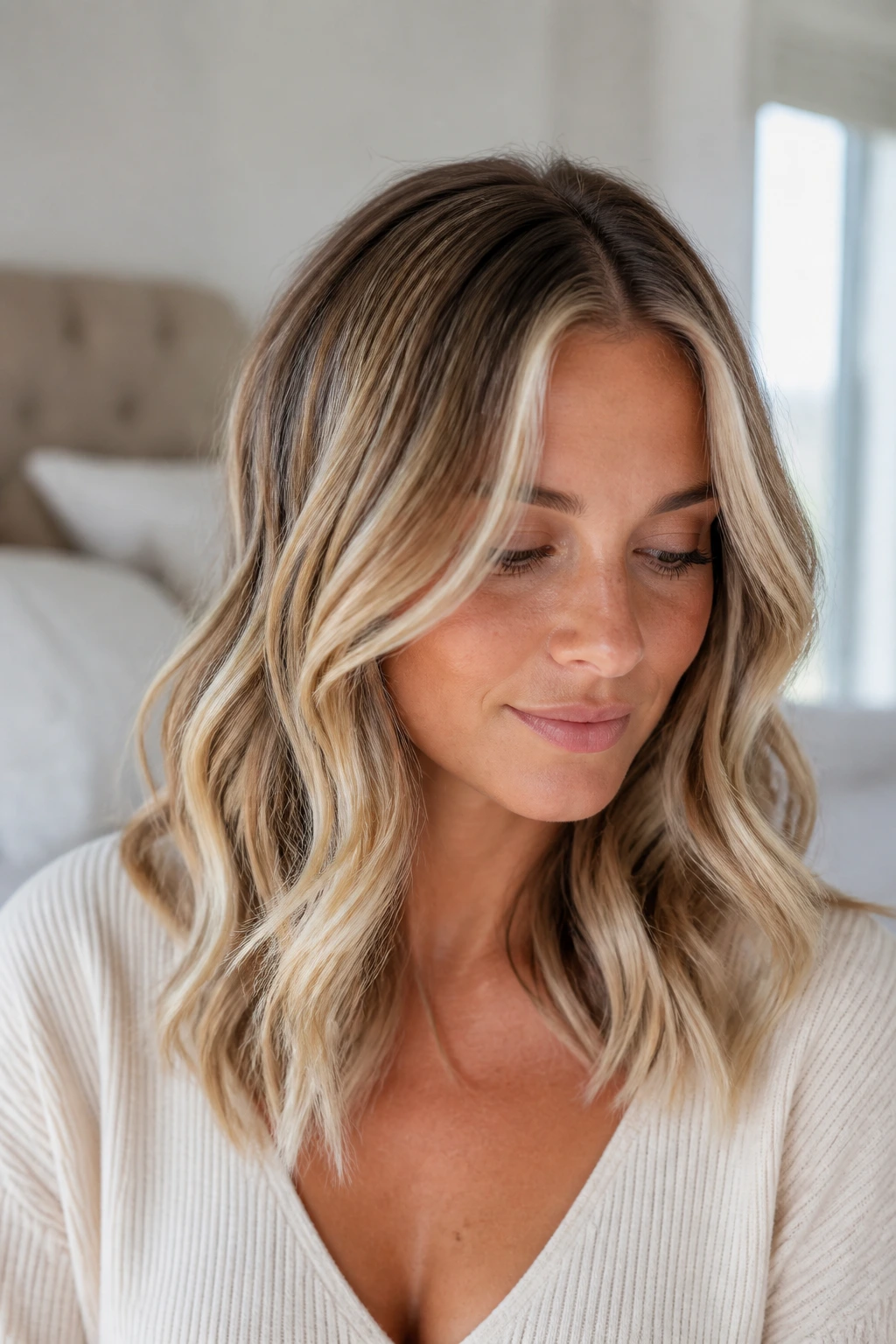
Picture medium-brown waves with a pale beige finish — not icy, not yellow, not too warm. That’s the sweet spot here.
Beige blonde sits between cool and warm, which makes it useful on wavy hair that tends to pick up a lot of tone from the environment. A beige gloss softens brass without turning the hair chalky. If the base is medium brown or dark blonde, the look feels expensive in a quiet way, because the contrast is there but it doesn’t shout.
How to Wear It
Ask for hand-painted ribbons through the mid-lengths, then soften the ends with a beige-toned gloss. Keep the root a shade or two deeper so the blonde doesn’t start at the scalp like a helmet. Air-dried waves or a loose brush-out both work here, but the color looks best when the bends stay soft and rounded. Hard curls can make beige look streaky.
5. Mushroom Brown Balayage
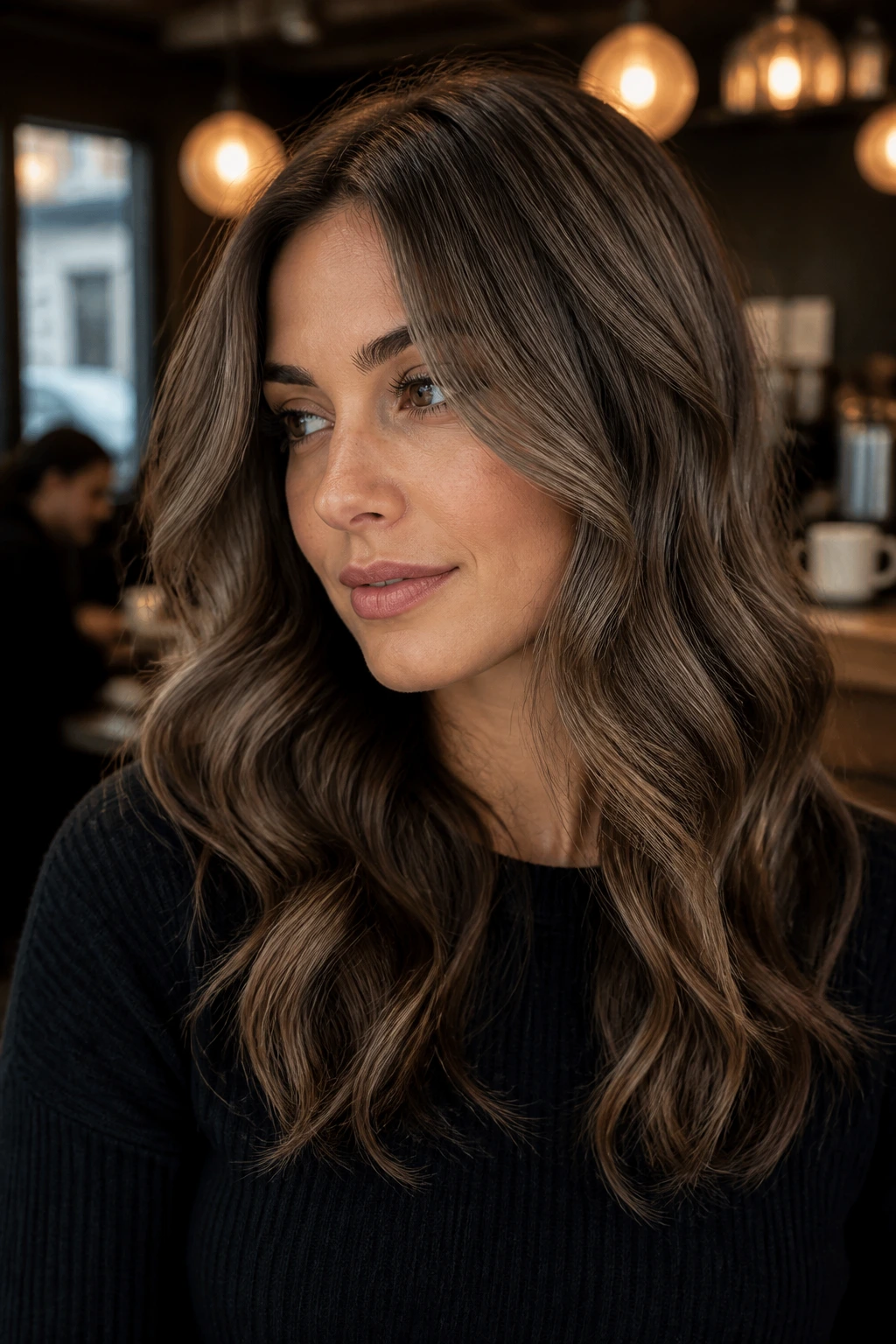
Not every balayage needs blonde. Mushroom brown proves that point without trying too hard.
This is the look for someone who wants depth, coolness, and a little edge without jumping into high contrast. Think smoky brown, taupe, and muted beige all working together on a brunette base. On wavy hair, the different shades move across the bends and create a satin kind of finish — not shiny in a loud way, just rich and layered.
The key is restraint. If the lighter pieces are pushed too pale, the whole thing loses the mushroom effect and starts looking like ordinary brown with highlights. Keep the lift subtle. A cool gloss every six to eight weeks helps if the hair pulls orange, and a root that stays slightly deeper than the mids keeps the shape clean.
Blonde is optional here. Sometimes that’s the smarter move.
6. Copper Balayage on Warm Brown Waves
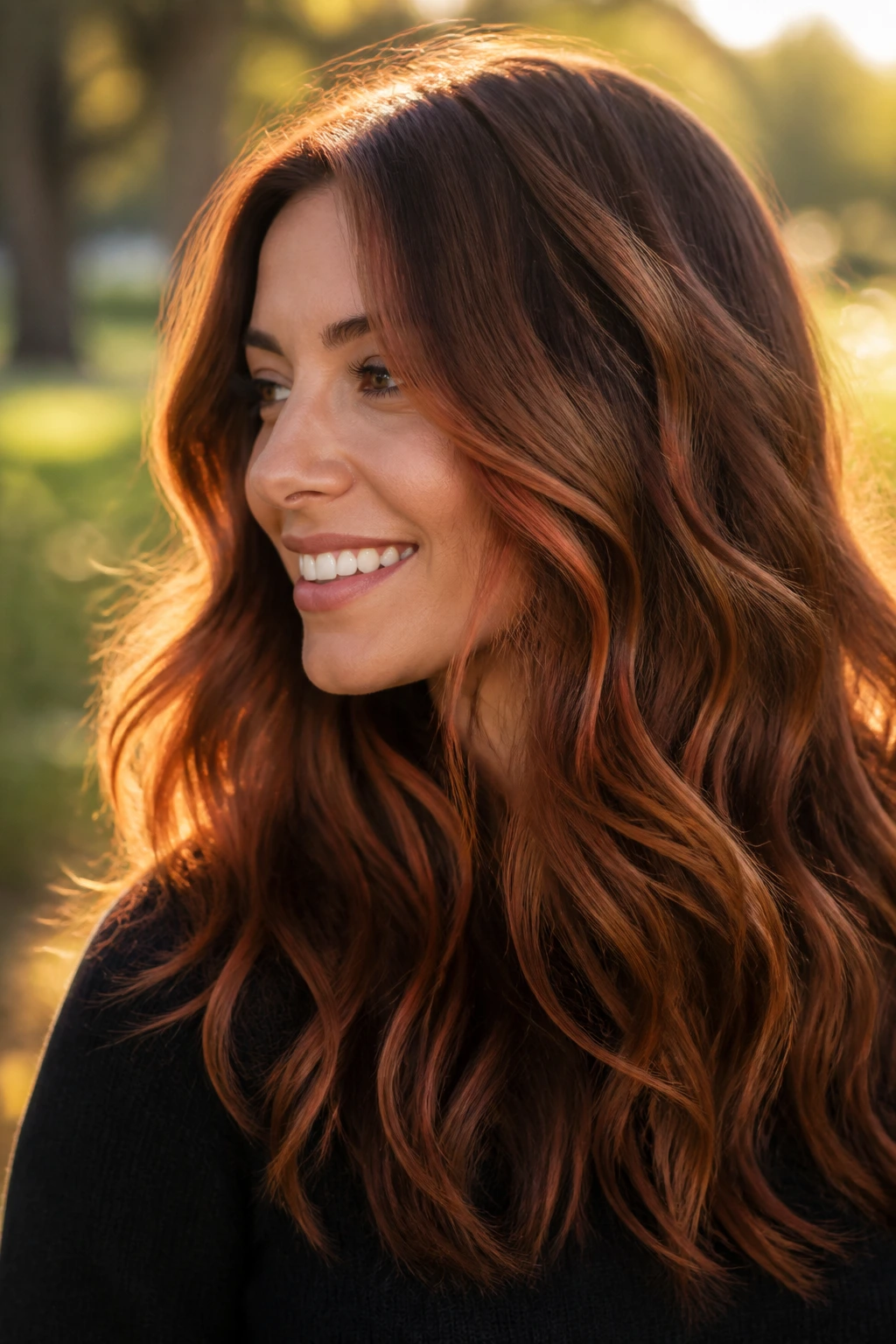
Copper balayage hits harder than caramel and feels warmer than red. On wavy hair, that extra heat shows up as movement, not flat color.
Unlike blonde balayage, copper doesn’t need a lot of lightness to make an impression. A few ribbons painted through a warm brown base can change the whole mood of the hair. The best version stays coppery at the mids and ends while the root remains chestnut or cocoa. That contrast keeps the color from reading as a solid block of red.
If you like texture, this one is a strong choice. Waves catch copper in little flashes, which makes thick hair look more dimensional. Just know the upkeep is more involved. Copper fades fast, so color-safe shampoo and a gloss that refreshes warmth matter more than they do with caramel or beige.
7. Chocolate Cherry Balayage
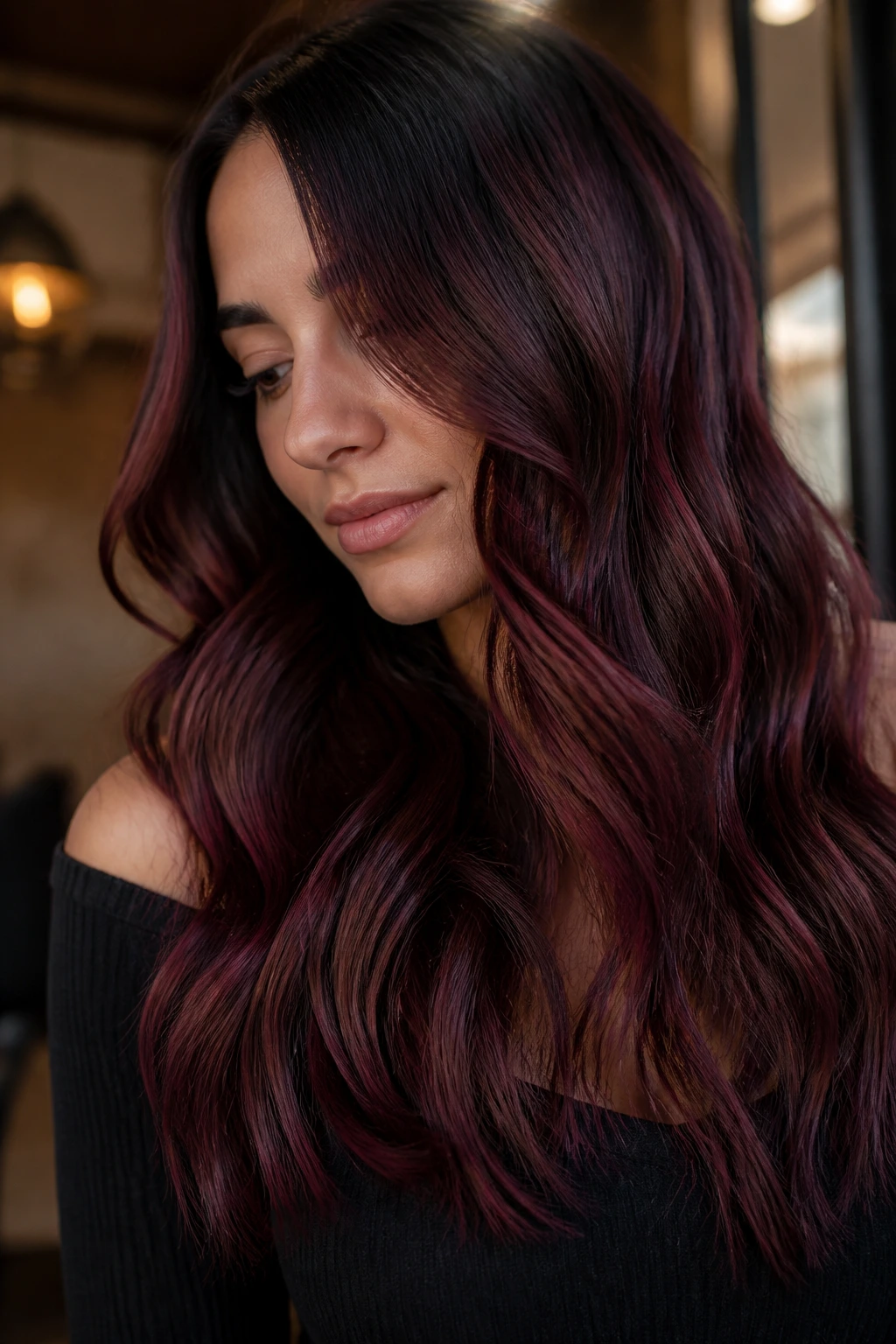
Chocolate cherry is the look people don’t expect to love until they see it on dark waves. Under indoor light, it reads like rich brown. In bright light, the cherry tone wakes up.
Who It Flatters
This shade works well on medium to deep brunettes who want color without going full red. The cherry note should stay deep enough to look wearable; if it gets too bright, the whole thing turns loud fast. That’s not the mood here.
What makes it useful on wavy hair is the way red-violet tones sit between the bends. The movement keeps the color from feeling heavy. Ask for fine woven pieces through the mids and ends, not chunky panels, and keep the root close to your natural base. The effect is polished, a little moody, and far more interesting than plain brown.
8. Bronde Balayage with Soft Contrast
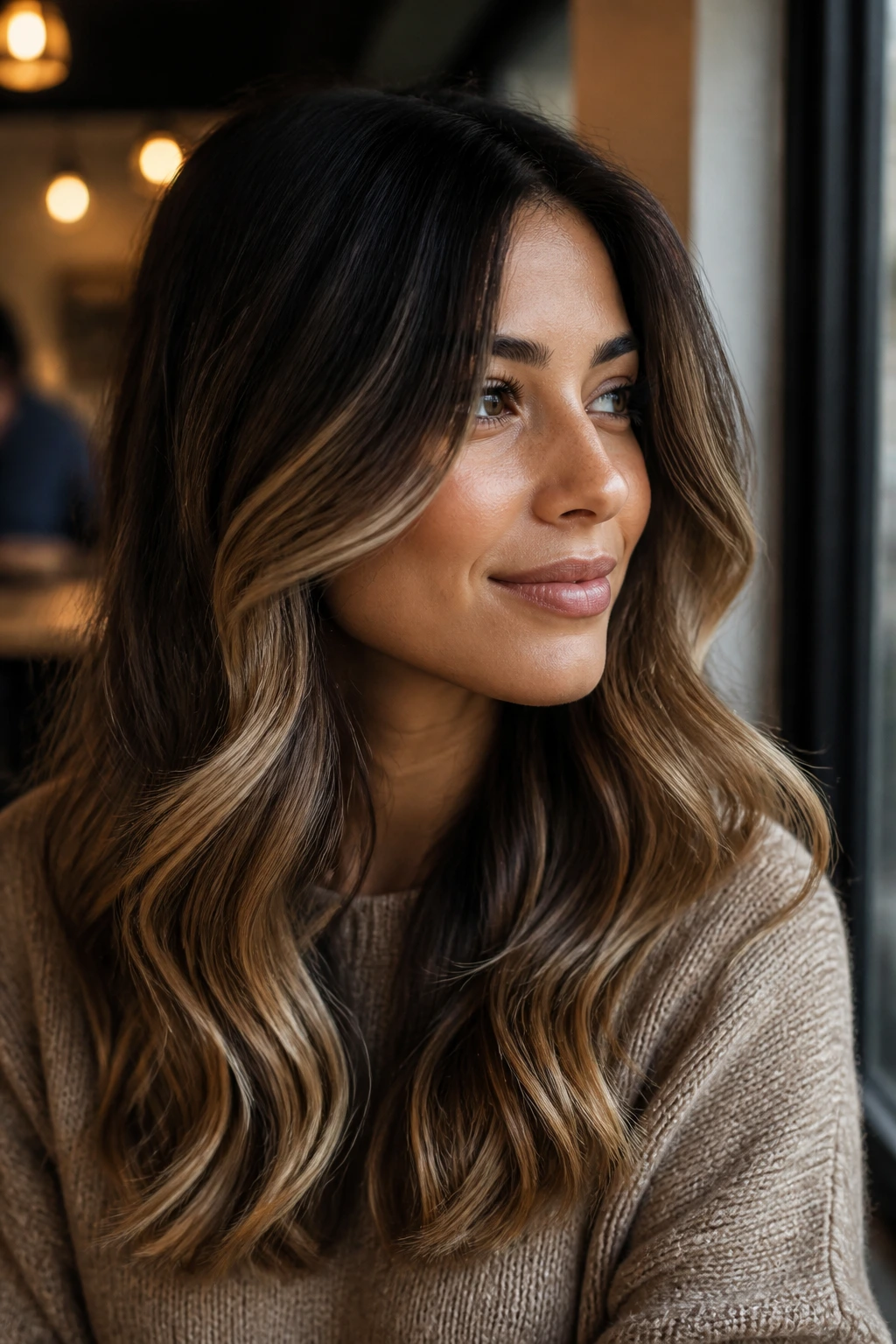
Bronde is the safest middle ground, and I mean that as a compliment. It sits between brown and blonde without forcing the hair into either extreme.
On wavy hair, bronde works because the contrast is soft enough to move. Fine hair benefits especially well here; the lighter ribbons make the wave pattern look denser, while the brown base keeps the scalp area from feeling sparse. Chunky streaks would ruin that effect. You want ribbons, not blocks.
A good bronde placement usually starts around the cheekbone or collarbone and lightens from there. That keeps the top half grounded and lets the lower half carry the brightness. If you like low-effort hair that still looks styled after a rough day, bronde is hard to beat.
9. Sun-Kissed Brunette Balayage
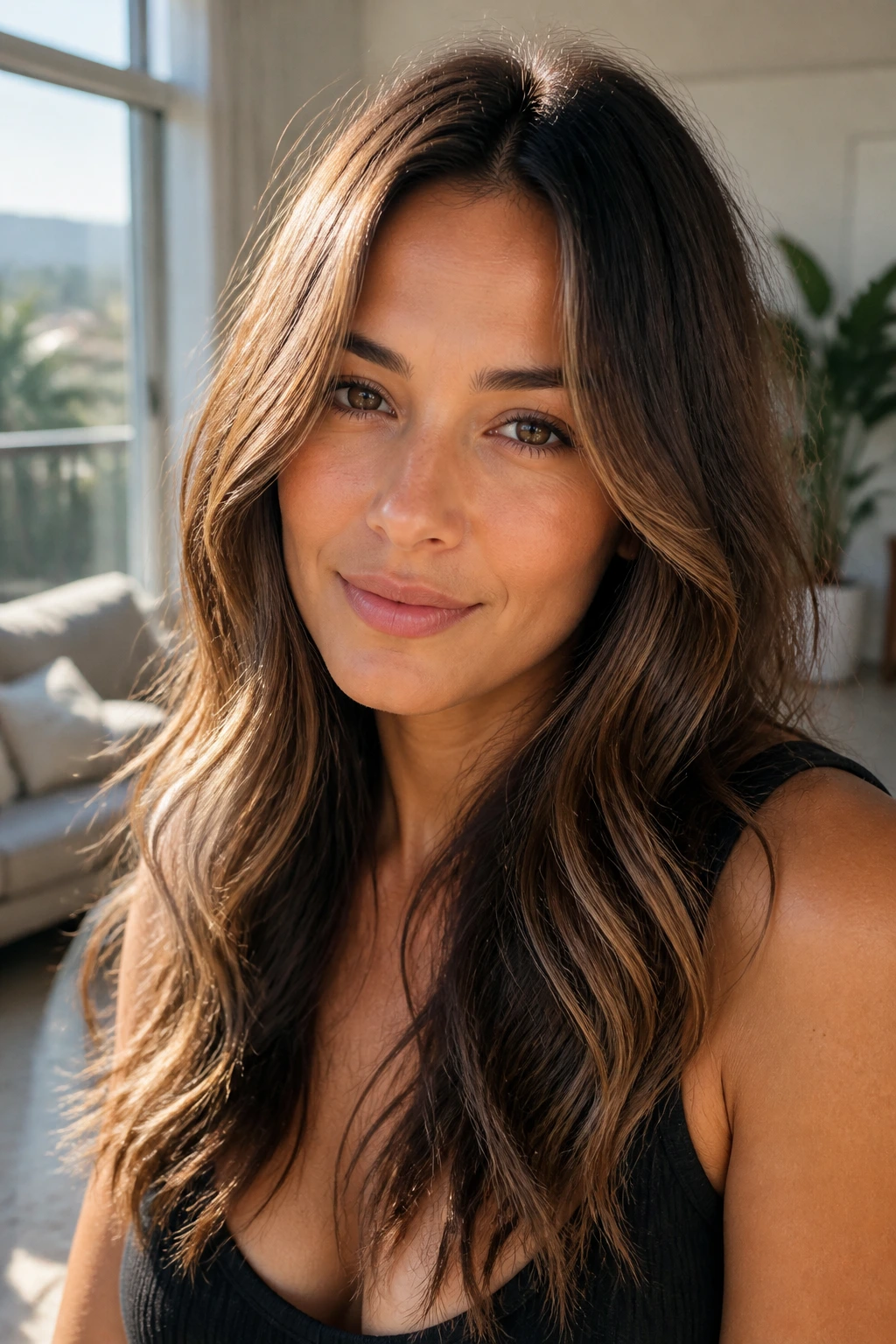
What makes a brunette balayage feel sun-kissed instead of plain highlighted? The answer is spacing.
This look keeps the base rich and the light pieces sparse enough that they seem to have happened naturally over time. On waves, that lightness catches only some of the bends, which makes the hair look lived in rather than freshly processed. It’s a small difference, but you can see it right away. The whole thing feels softer.
How to Wear It
Loose, brushed-out waves are the best match. A salt-free mousse, then a 1.5-inch iron or large hot brush, keeps the movement gentle. Ask for lighter strands concentrated around the face and the upper half of the lengths, with the very ends left a touch deeper if you want a more natural finish. This is the look for someone who wants brightness but doesn’t want to spend all month thinking about roots.
10. Platinum Ribbon Balayage
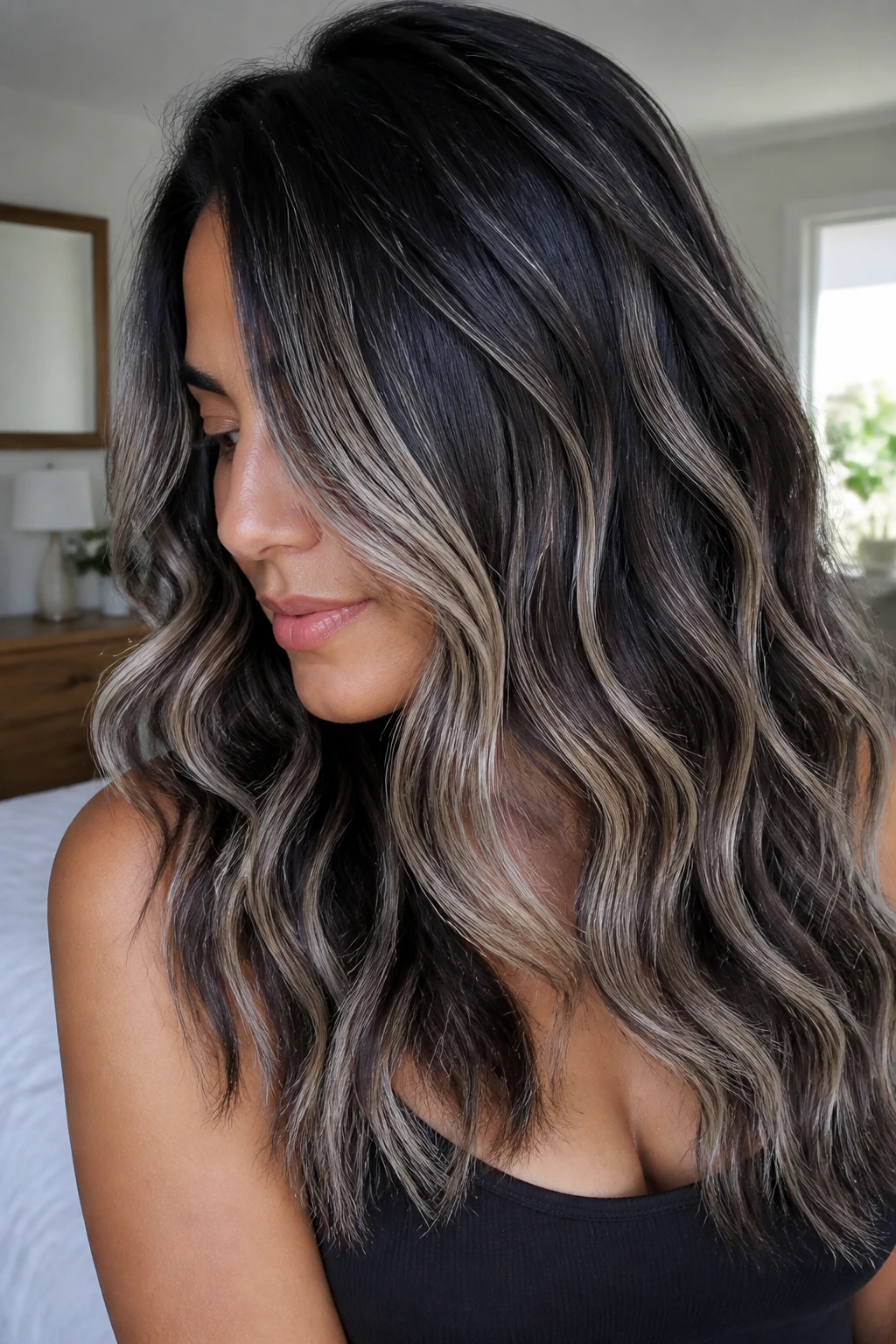
A few platinum ribbons can wake up dark wavy hair fast. The catch is that they need to be placed with a light hand.
The best platinum balayage on waves doesn’t flood the whole head. It threads thin, pale pieces through the mids and ends so the hair still has dark pockets in between. That contrast matters because platinum is strong; too much of it and the wave pattern starts to flatten out instead of moving. Keep the ribbons narrow and let the root stay deep.
Quick Notes
- Works best on thick or coarse waves that can handle the lightening
- Ask for thin ribbons, not broad panels
- Keep the base at least three levels deeper than the lightest pieces
- Use a gloss with a cool beige tone if the blonde starts to turn yellow
Platinum can look sharp on wavy hair, but only when the placement is disciplined.
11. Sand Blonde Balayage
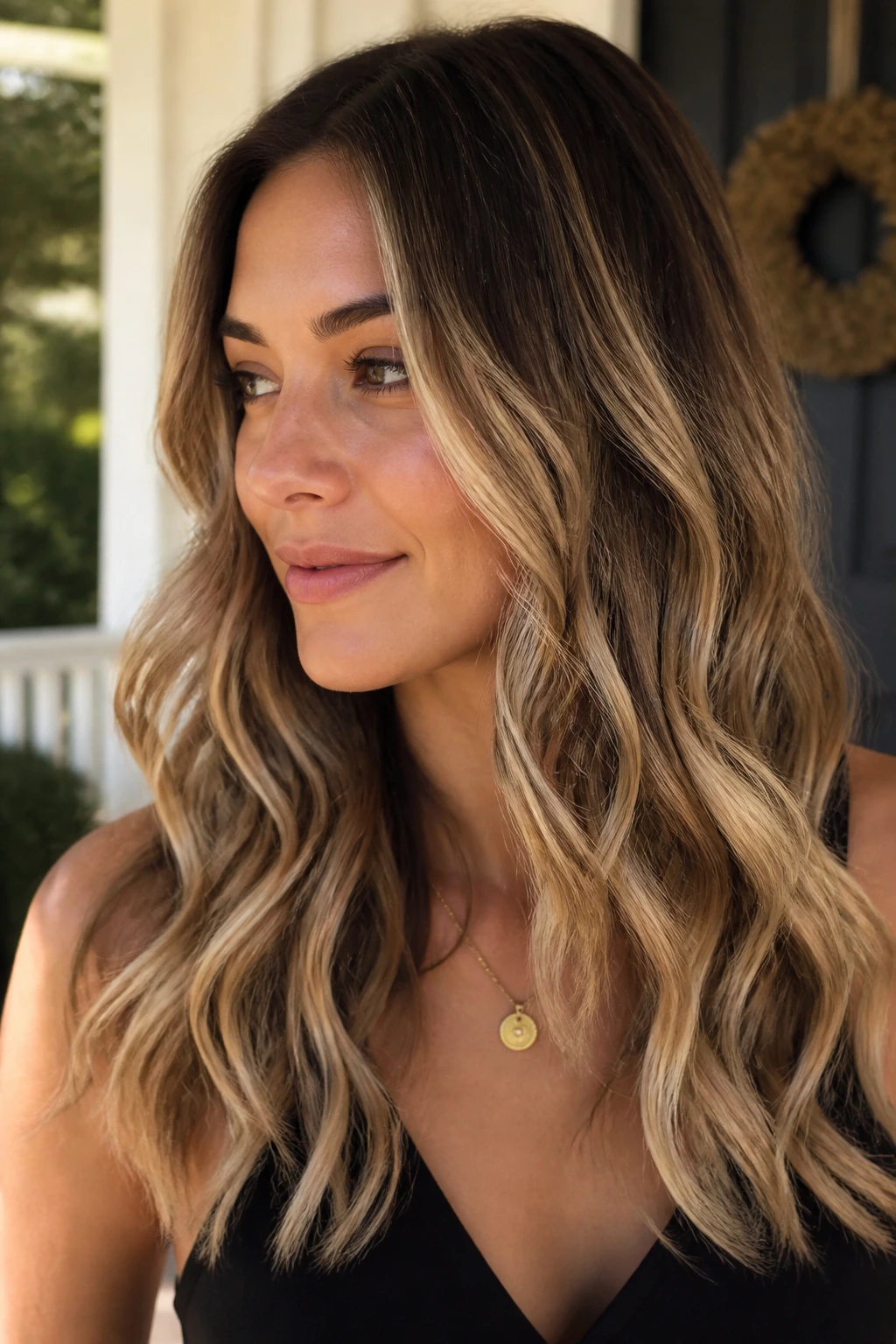
Sand blonde sits between beige and gold, and that middle ground is why it works so well on medium waves. It has enough warmth to look soft, but not so much that it turns brassy.
On a layered cut, sand blonde follows the shape of the hair in a way that feels easy to wear. The brighter bits don’t need to be packed together. A few hand-painted pieces through the top layers and around the ends are enough to make the wave pattern read clearly. If the hair is porous, ask for a softer beige-sand mix rather than a pale, cool blonde. Porous hair grabs tone fast, and too much ash can go flat.
One thing I like here is how ordinary it looks in the best sense. Not boring. Just believable.
12. Mocha Melt Balayage
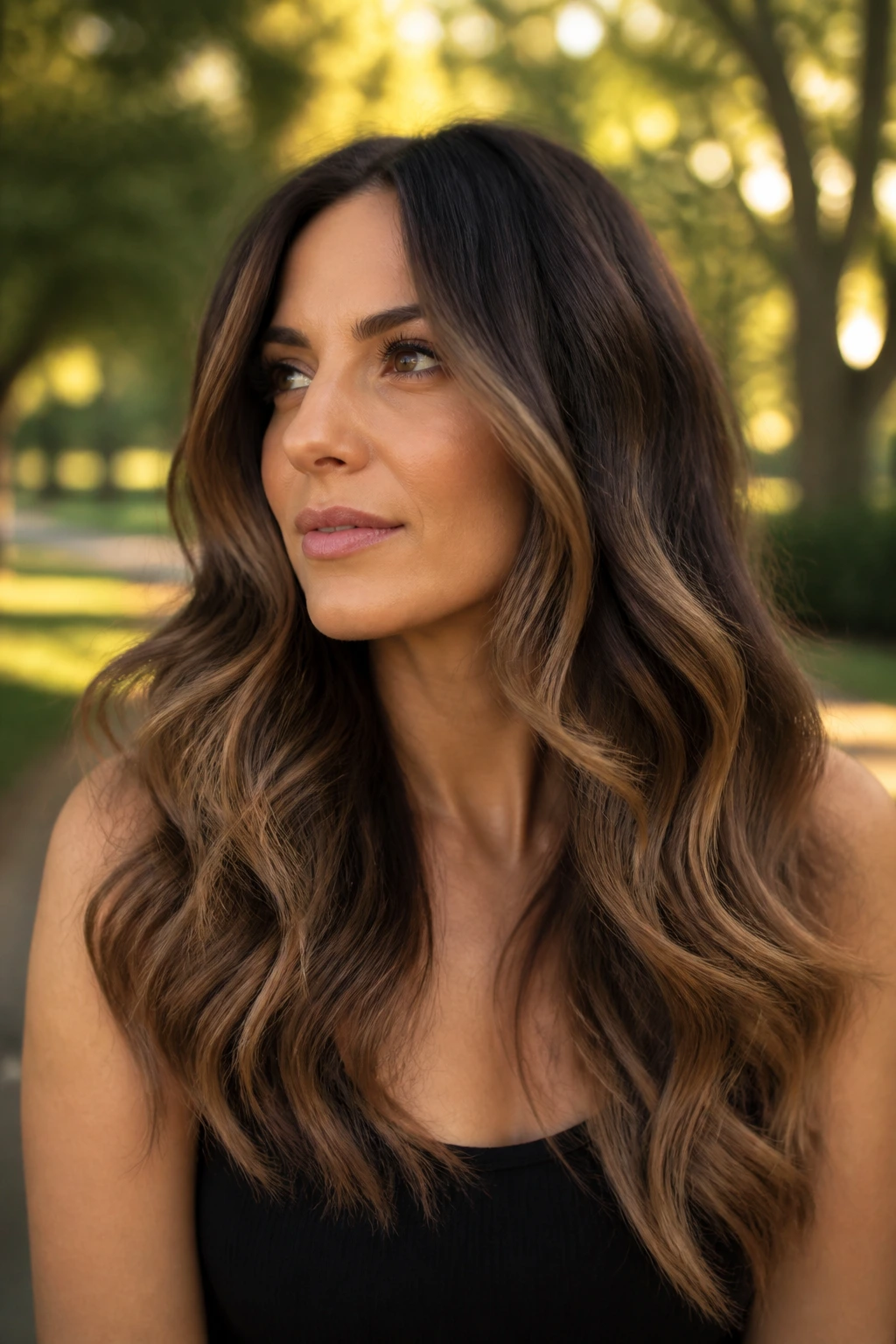
Mocha melt is the quiet cousin of ombré. The color moves from deeper brown at the root into milkier mocha through the lengths, but the shift stays gradual.
Unlike a hard ombré line, a mocha melt keeps the transition blurred. That matters on wavy hair, because the bend pattern can make a strong line look accidental and blunt. Here, the soft melt works with the movement instead of fighting it. It’s especially good on long waves, where there’s enough length for the shades to change slowly.
Why Waves Love It
- The darker root adds depth without looking heavy
- The mid-lengths show the most movement
- The ends can be one to two levels lighter, which keeps the shape from collapsing
- A soft blowout or loose iron wave both show the melt cleanly
If you want depth more than brightness, mocha is a smarter choice than blonde.
13. Rose Gold Balayage
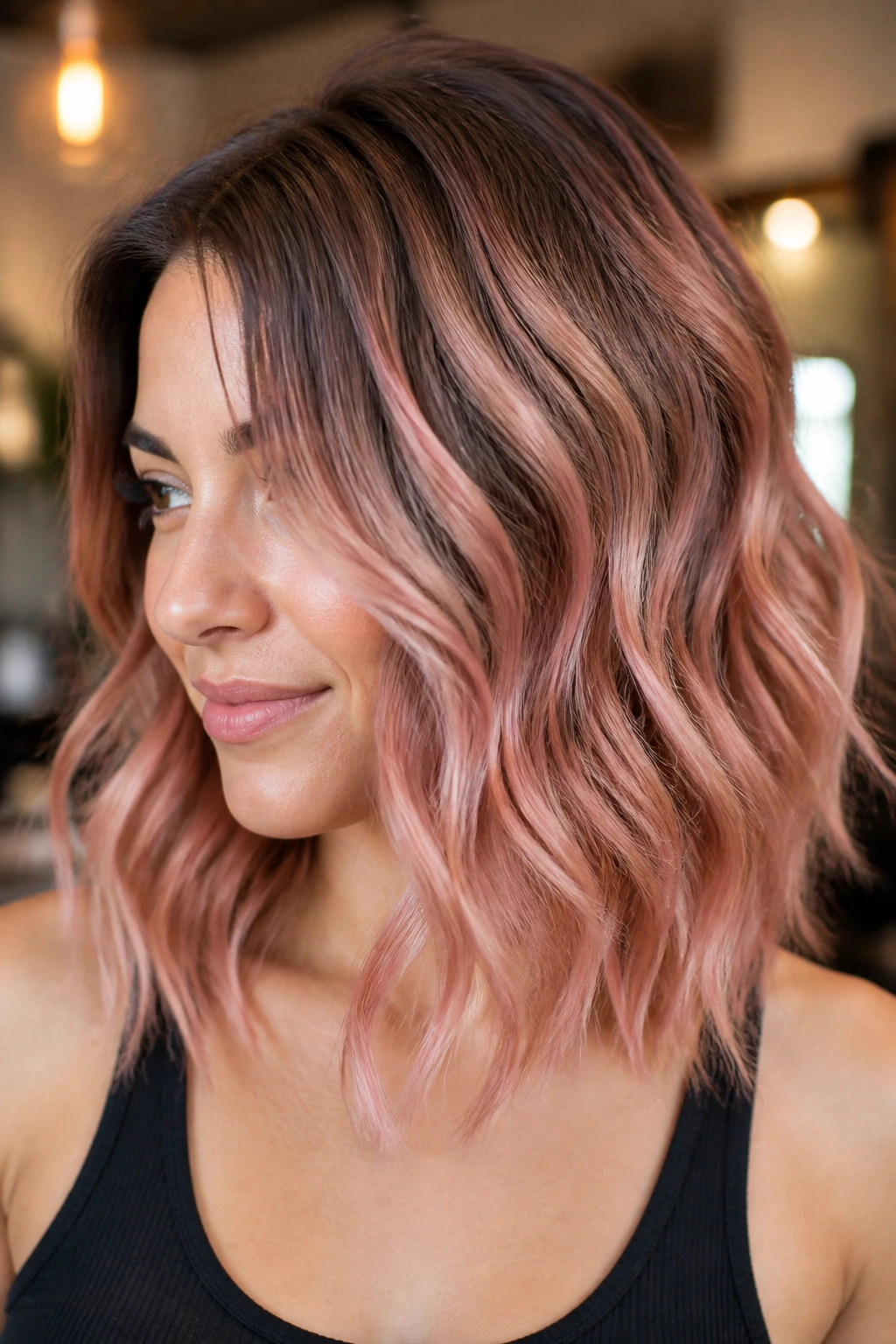
Rose gold sounds louder than it usually looks on hair. On wavy strands, a diluted pink-gold tone can be surprisingly soft.
The trick is keeping the pink faint. Too much pigment and the color starts looking costume-like, especially on lighter waves. But if the tone stays in the gold family with just a blush of pink, the result is warm, glossy, and slightly unexpected. It’s a good fit for light brown or dark blonde bases that need a change without becoming high contrast.
What to Watch For
Rose gold clings to porous ends, so the last few inches may grab more color than the mids. That can be useful if you want a little extra richness down there, but it needs control. Ask for the color to be feathered through the bends rather than painted solid, and finish with a clear or beige gloss if the pink starts to take over. It’s a delicate balance. Worth it, though.
14. Champagne Beige Balayage
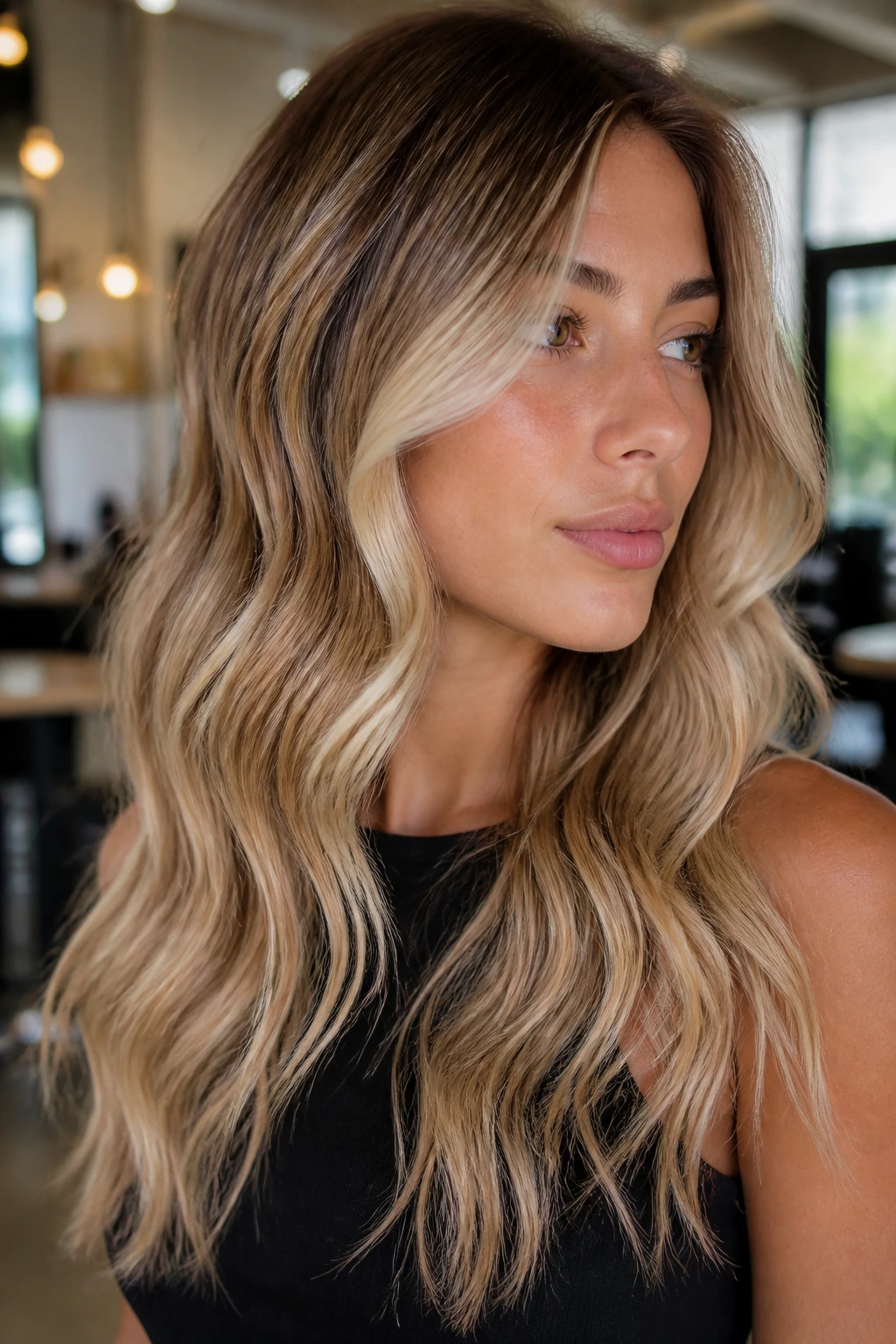
Champagne beige is what happens when you want brightness but don’t want yellow. It has enough lift to show on wavy hair, yet the tone stays cool-neutral instead of brassy.
This shade looks especially good when the face-framing pieces are a little lighter than the rest. That gives the color a lifted look without making the whole head feel overprocessed. On longer waves, the champagne tone can travel from the mids into the ends and still stay soft because the bends keep breaking up the color. The result is clean, not harsh.
If you like a more polished finish, this one is worth the chair time. Pair it with a smooth gloss and a soft side part, and the waves will look intentional even when they’re slightly undone.
15. Smoky Taupe Balayage
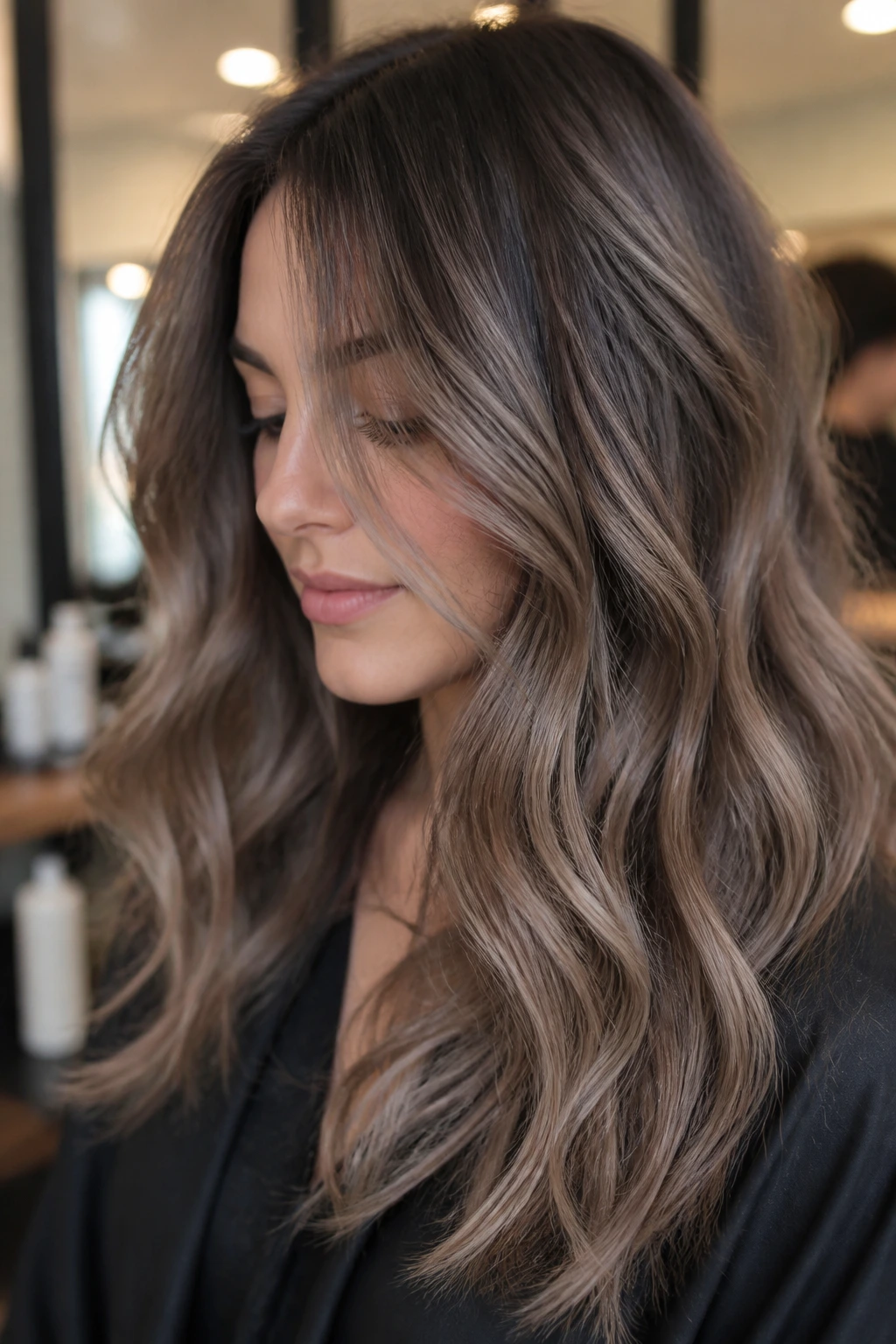
Why do some brunettes look better with taupe than with blonde? Because taupe keeps the coolness without pulling the hair into an obvious highlight pattern.
Smoky taupe is a muted brown-gray blend that sits beautifully on wavy hair with a cool base. It is especially useful if your hair tends to turn orange after lightening. The taupe note neutralizes that warmth and leaves the hair looking calm, almost velvety. That may sound understated. It is. That’s the point.
How to Get the Tone Right
Ask for lightening that stays modest — usually one to two levels lift on selected pieces — followed by a cool taupe gloss. The pieces should be thin enough to break up the wave pattern, not sit on top of it. If the base is too warm, the color can go muddy, so a good toner matters here more than people think. Smoky taupe rewards precision.
16. Toffee Balayage for Thick Waves
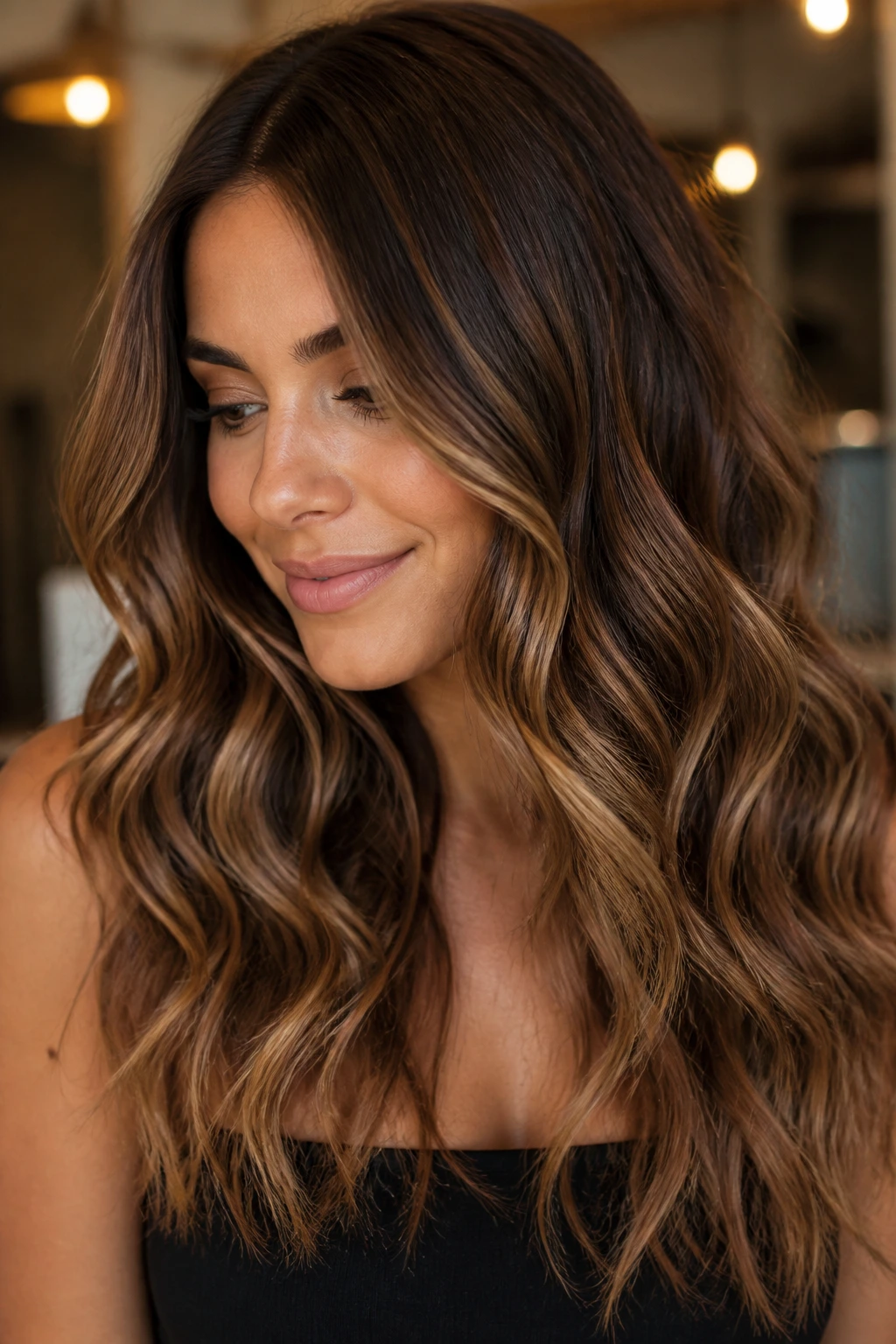
Thick waves need broader pieces than fine hair does. Toffee balayage handles that really well because the color has enough richness to stay visible even when there’s a lot of hair to cover.
Toffee sits deeper than caramel and warmer than bronze. That middle zone makes it a useful choice for dense hair that can swallow lighter shades. Painted in broad, soft ribbons, it gives the wave pattern a chunky-but-controlled look. Not chunky in the bad sense. Chunky in the way that makes the hair look full and touchable.
Key Details
- Best on thick, medium-brown, or dark blonde hair
- Ask for wider painted sections through the mids
- Keep some deeper brown in between so the color doesn’t blur out
- Works well with brushed-out waves or a large-barrel curl
The mistake here is going too pale. Thick hair can handle lightness, but it doesn’t need it. Toffee keeps the balance.
17. Strawberry Brunette Balayage
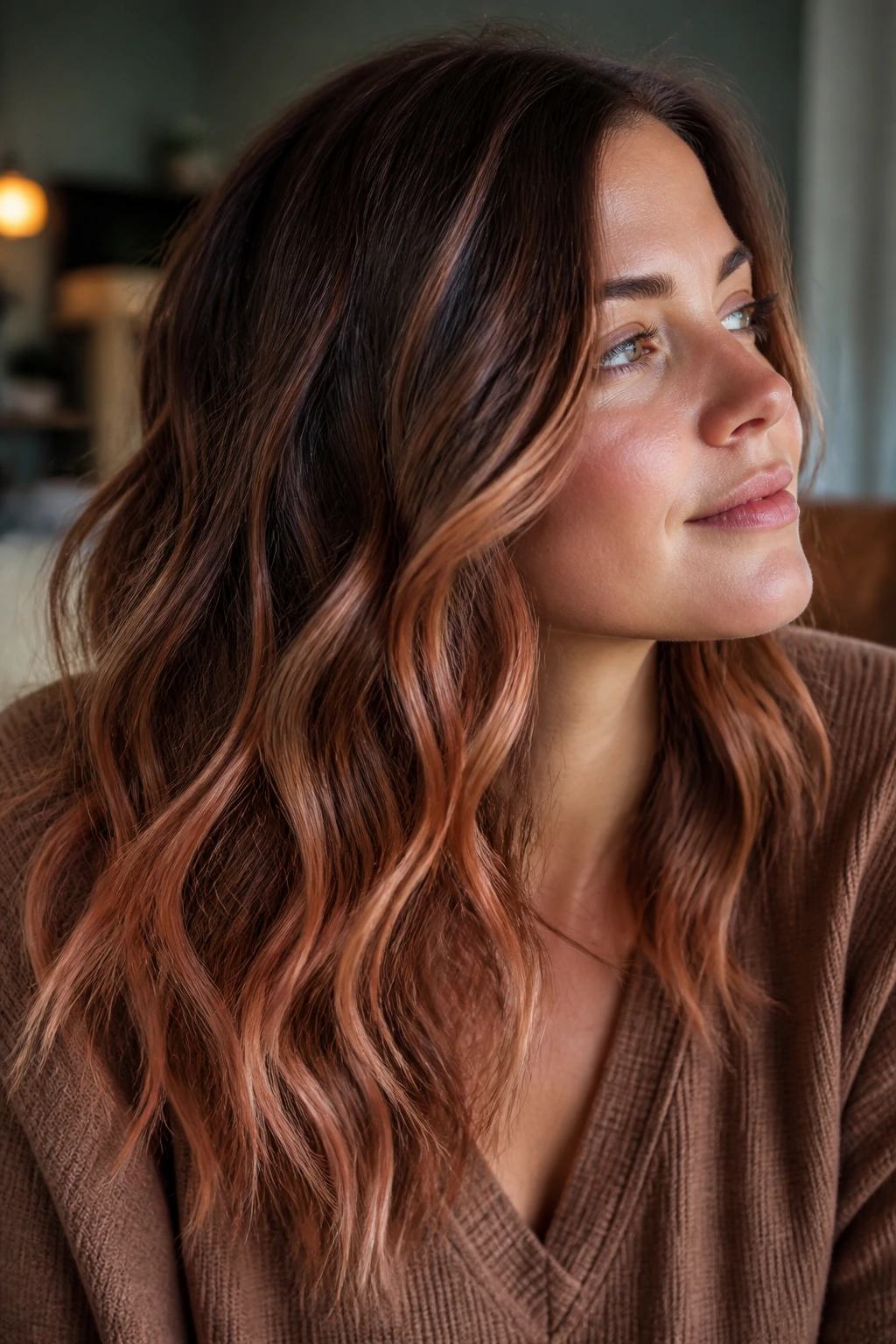
Strawberry brunette is for people who want warmth with a little softness around the edges. It’s part copper, part pink, and all about restraint.
On wavy hair, the strawberry tone doesn’t sit there like a solid red overlay. It flickers. The bends catch the pinkish-gold bits while the deeper brown base keeps the whole thing from going sugary. That’s why this look works better on waves than on flat hair; movement keeps the color from reading too literal.
If your natural hair already leans warm, strawberry brunette can be a pretty easy shift. Ask for subtle ribbons rather than a full red glaze, and keep the ends a touch lighter so the color has room to breathe. A gloss with a rosy note can refresh it between appointments without pushing it into bright copper.
18. Golden Bronze Balayage
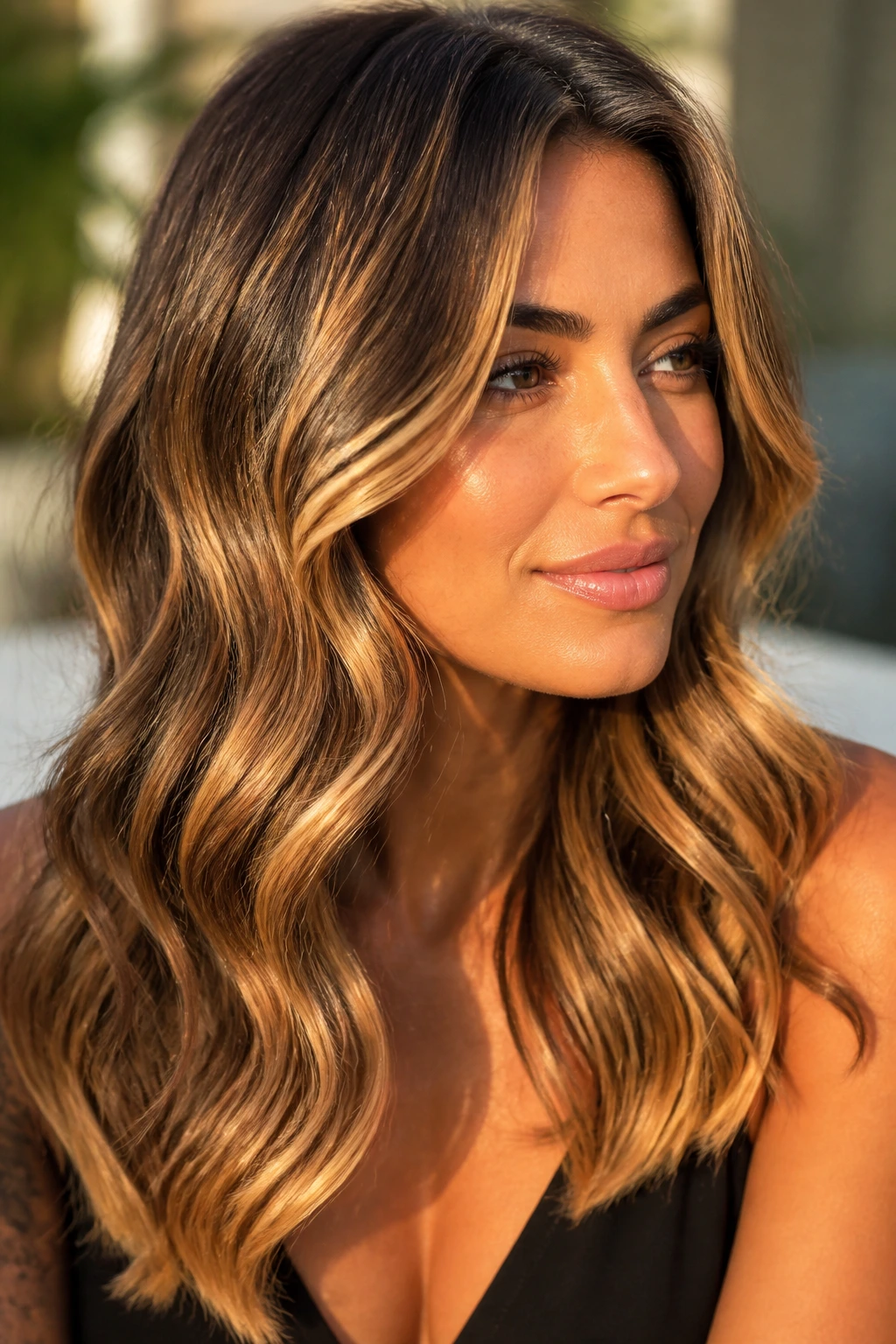
Golden bronze is warmer than beige and richer than standard honey. On wavy hair, it gives the color a sunlit, almost metallic depth without looking shiny in a fake way.
Unlike cooler balayage tones, bronze wants to sit in the warm family all the way through. That makes it a strong pick for olive or warm skin tones, but it also flatters darker waves because the color reads as depth first and brightness second. Keep the brightest bronze pieces through the mid-lengths and leave the root a shade deeper so the warmth doesn’t climb too high.
The best version has a few stronger ribbons near the face and softer ones through the back. That keeps the color from looking too uniform. If you like a warm finish that still feels grown-up, bronze is a very good lane.
19. Espresso with Cinnamon Balayage
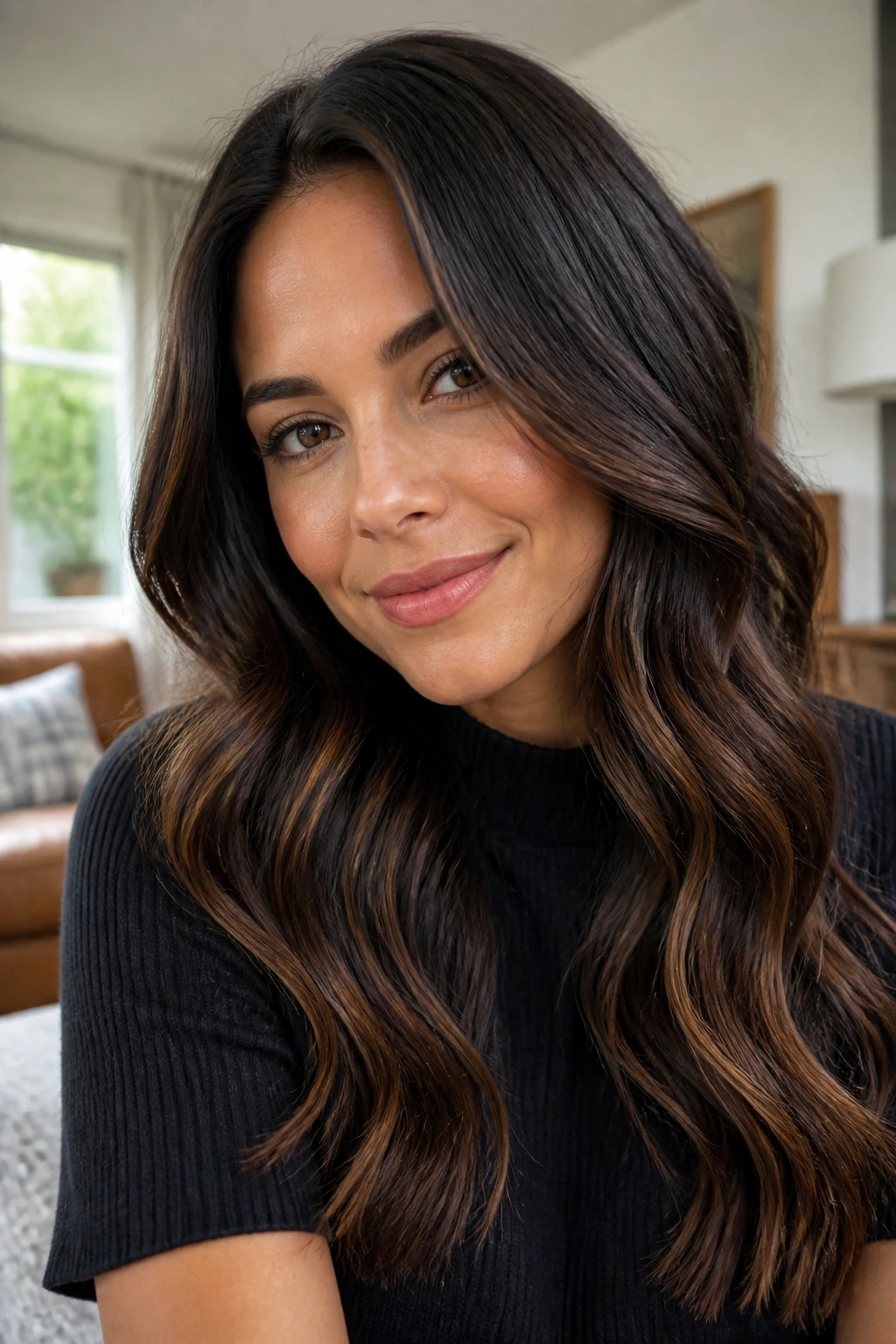
Dark hair doesn’t need blonde to look dimensional. Espresso with cinnamon proves that in a very plain, practical way.
The base stays almost black-brown, while cinnamon pieces thread through the waves just enough to catch light at the bend. The color shift is subtle from a distance and much richer up close. That’s the appeal. You get movement without giving up depth. On dense waves, it can look especially good because the cinnamon only shows in certain angles, which makes the hair feel layered instead of painted.
Best For
- Natural brunettes who want a small change
- Waves that need depth more than brightness
- People who don’t want obvious regrowth lines
- Longer cuts where the color can move through the ends
Keep the cinnamon pieces thin and scattered. If they get too wide, the look loses its espresso base and starts reading as warm brown highlights, which is a different thing entirely.
20. Dimensional Auburn Balayage
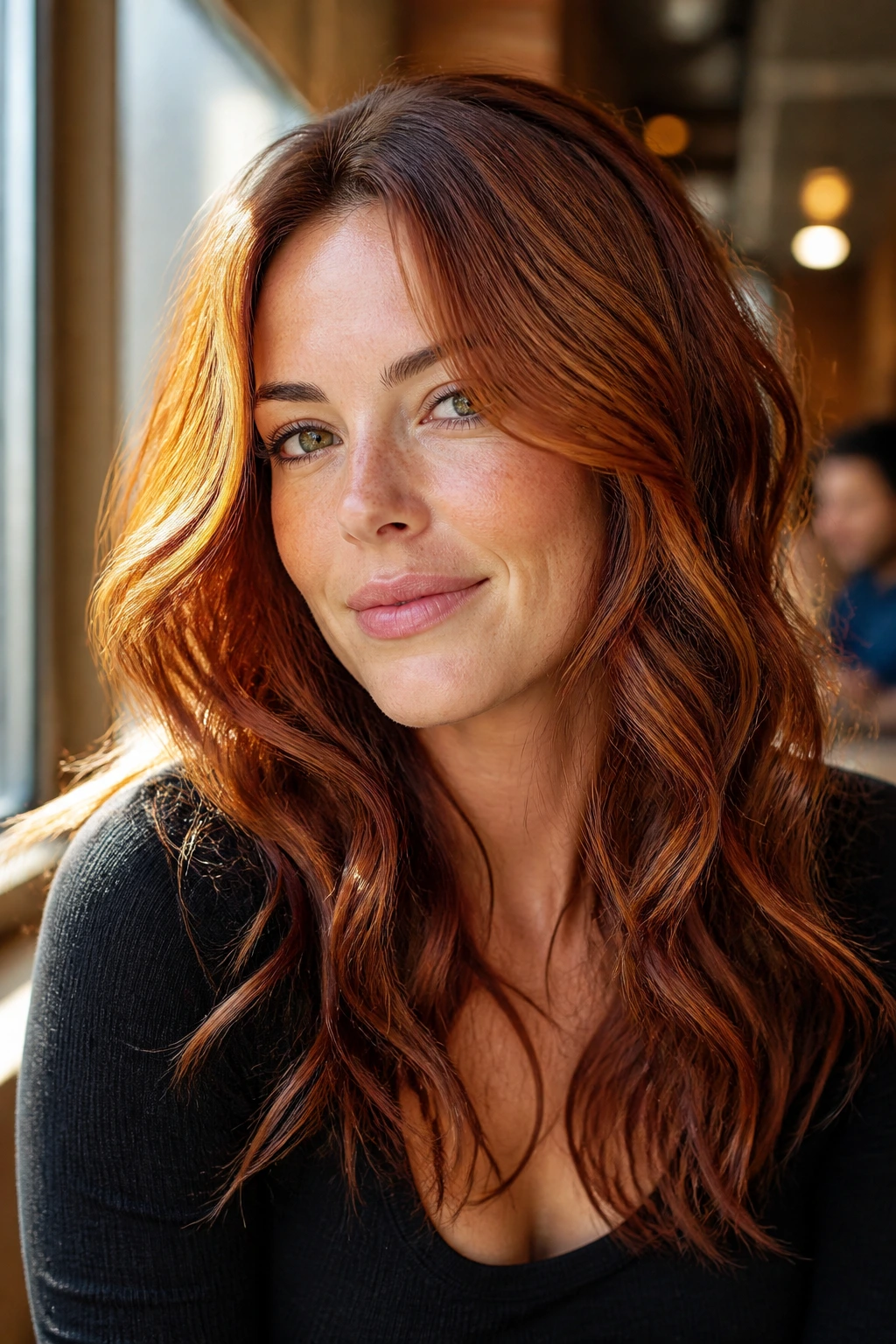
Auburn on wavy hair can look like firelight when it’s handled well. The trick is keeping the red-brown mix dimensional instead of flat.
A good dimensional auburn balayage usually mixes two red families — one more copper, one deeper and closer to mahogany. That keeps the hair from turning one-note. The waves then separate the shades as they move, so the color looks richer in motion than it does hanging straight. It’s one of those looks that rewards texture immediately.
I’d keep the root a little deeper than the mids and ends, especially if the natural base is brown. That gives the auburn room to glow. If the hair is very porous, the red can grab fast, so a lower-pigment gloss is safer than a heavy deposit. Red fades on its own. No need to rush it.
21. Shadow-Root Blonde Balayage
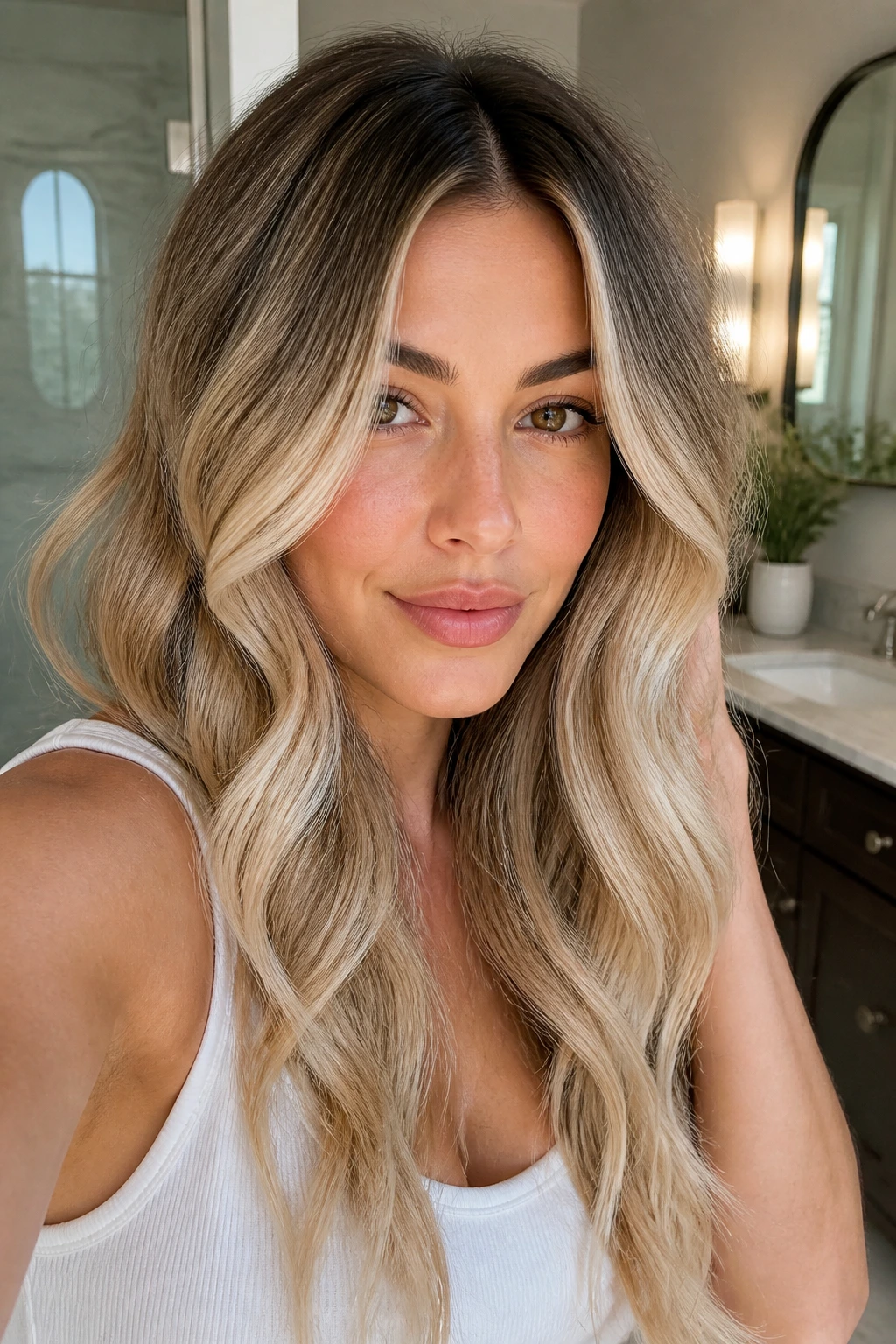
A shadow-root blonde is what you ask for when you want light hair but not the maintenance headache. The dark root gives the blonde somewhere to start.
On wavy hair, this matters more than people think. The root shadow stops the blonde from looking like a hard band, and the waves soften the line even more. If the root is about one to two levels deeper than the lightest mids, the color reads as deliberate instead of overdone. That space also helps the wave pattern show up more clearly, because the eye gets a little darkness before it hits the brightness.
How to Wear It
A center part makes the root shadow look clean. A loose side part adds movement and can make the blonde feel lighter around the face. Either way, keep the brightest pieces below the crown if you want the grow-out to stay calm. This is a useful choice for someone who likes brightness but doesn’t want to touch up every few weeks.
22. Reverse Balayage on Over-Lightened Waves
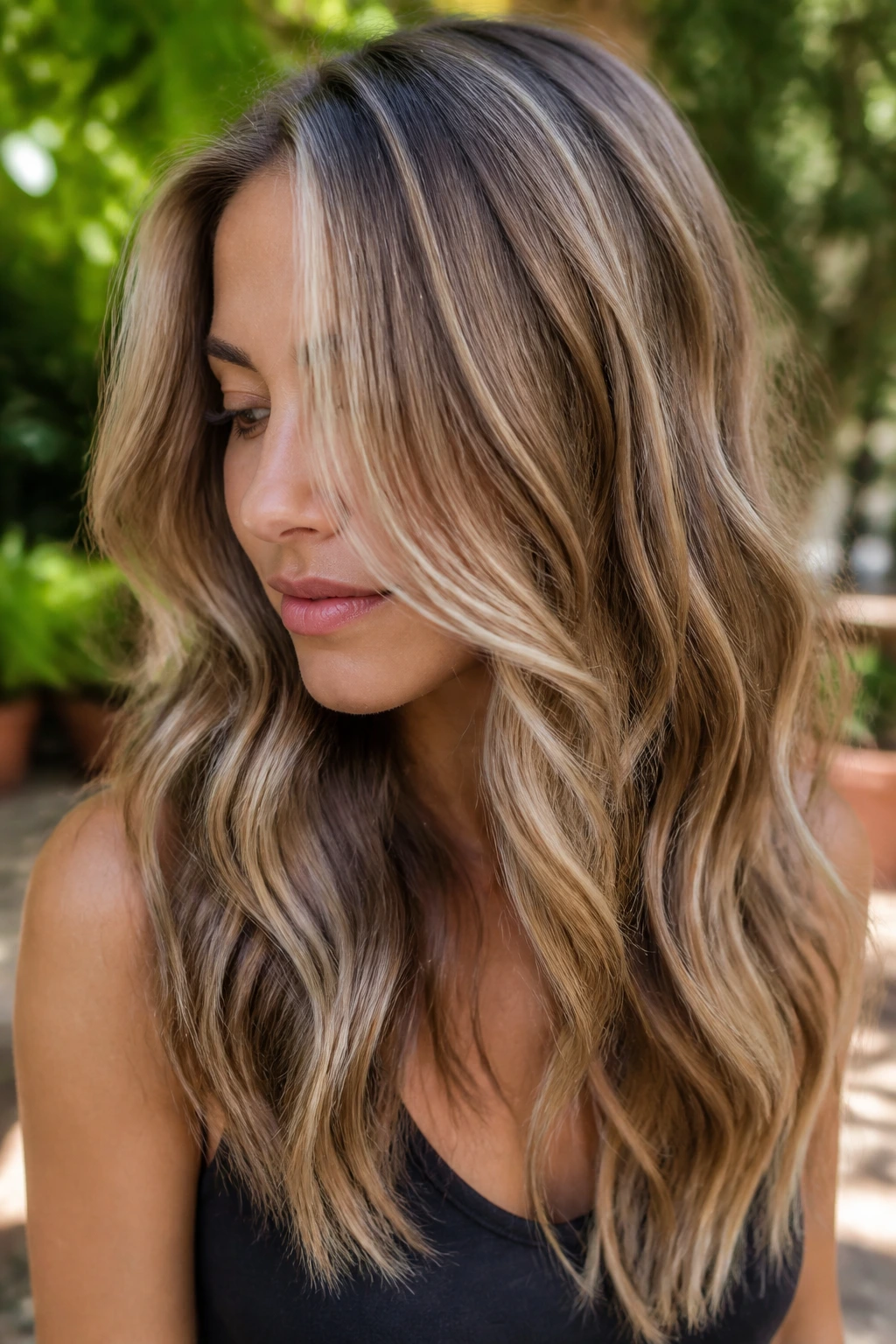
Sometimes the smartest move is to add depth back in. Reverse balayage does exactly that.
If the hair has been lifted too high and the wave pattern looks washed out, darker ribbons can rebuild shape fast. The colorist paints in lowlights that sit a shade or two deeper than the lightest blonde, usually through the mids and lower sections. On wavy hair, those darker pieces give the bends something to grip visually. The hair stops looking cloudy.
What to Ask For
- Add lowlights that are one to two levels deeper than the lightest blonde
- Keep some of the brightest ends so the hair doesn’t go flat
- Use a gloss afterward to blend the tones
- Place the darker ribbons where the waves bend the most
Reverse balayage isn’t a downgrade. It’s a correction, and often a prettier one than the original blonde.
23. Multi-Tone Ribbon Balayage
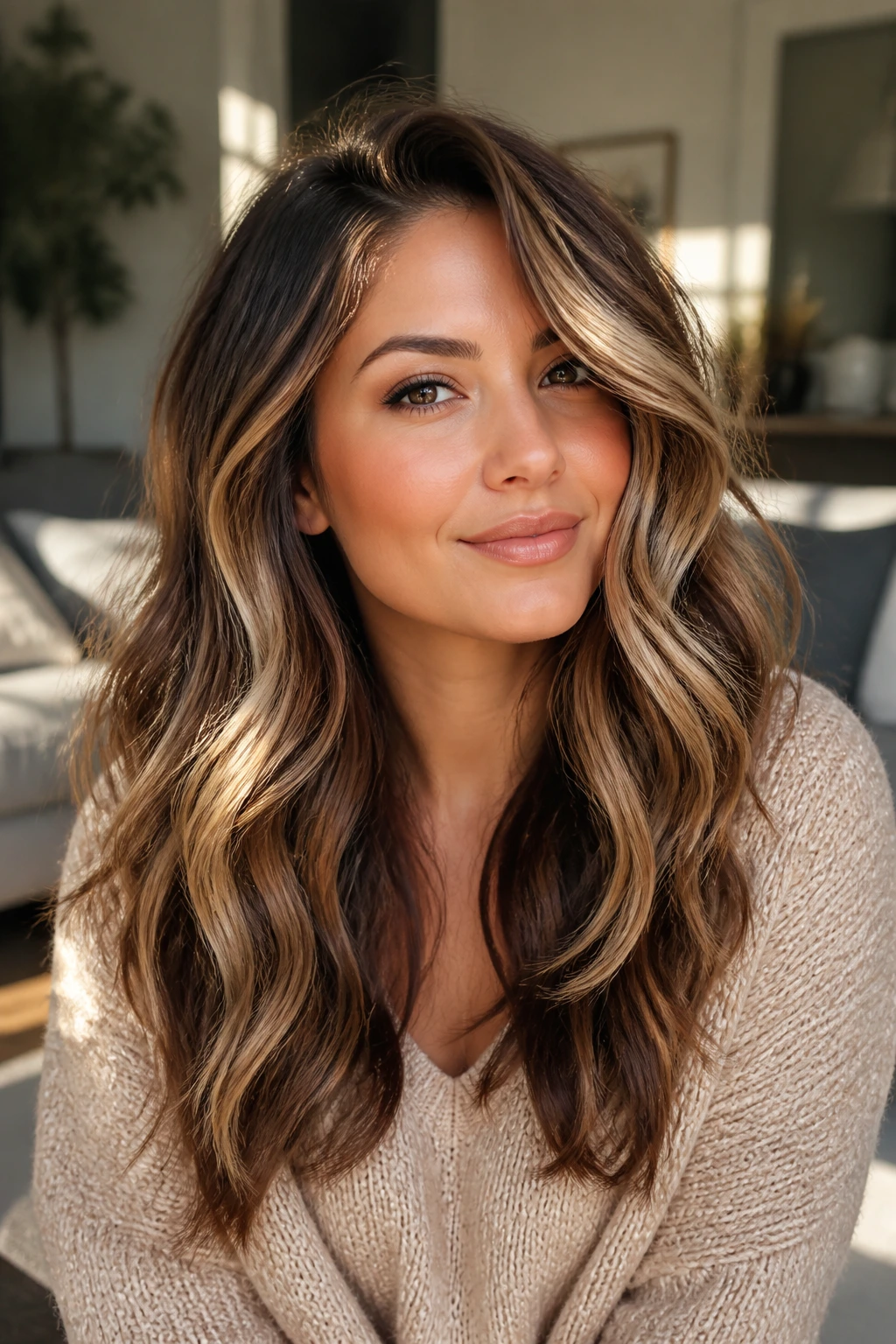
Flat color is the enemy here. Multi-tone ribbon balayage solves that by weaving three shades through the same head of hair.
The idea is simple: one ribbon a little lighter, one in the middle, one slightly deeper. On wavy hair, those shades separate as the hair moves, so the color looks layered without obvious stripes. This approach works especially well on dense waves or layered cuts, where a single tone can disappear once the hair is blown out. Multiple shades keep the shape alive.
A good colorist won’t place the tones randomly. They’ll stack the lighter ribbon around the face or on the top bend, then tuck the deeper pieces underneath or near the back for balance. The effect is subtle from afar and richer up close. That’s the kind of balayage that keeps getting better the longer you look at it.
24. Midnight Brunette with Soft Carved Highlights
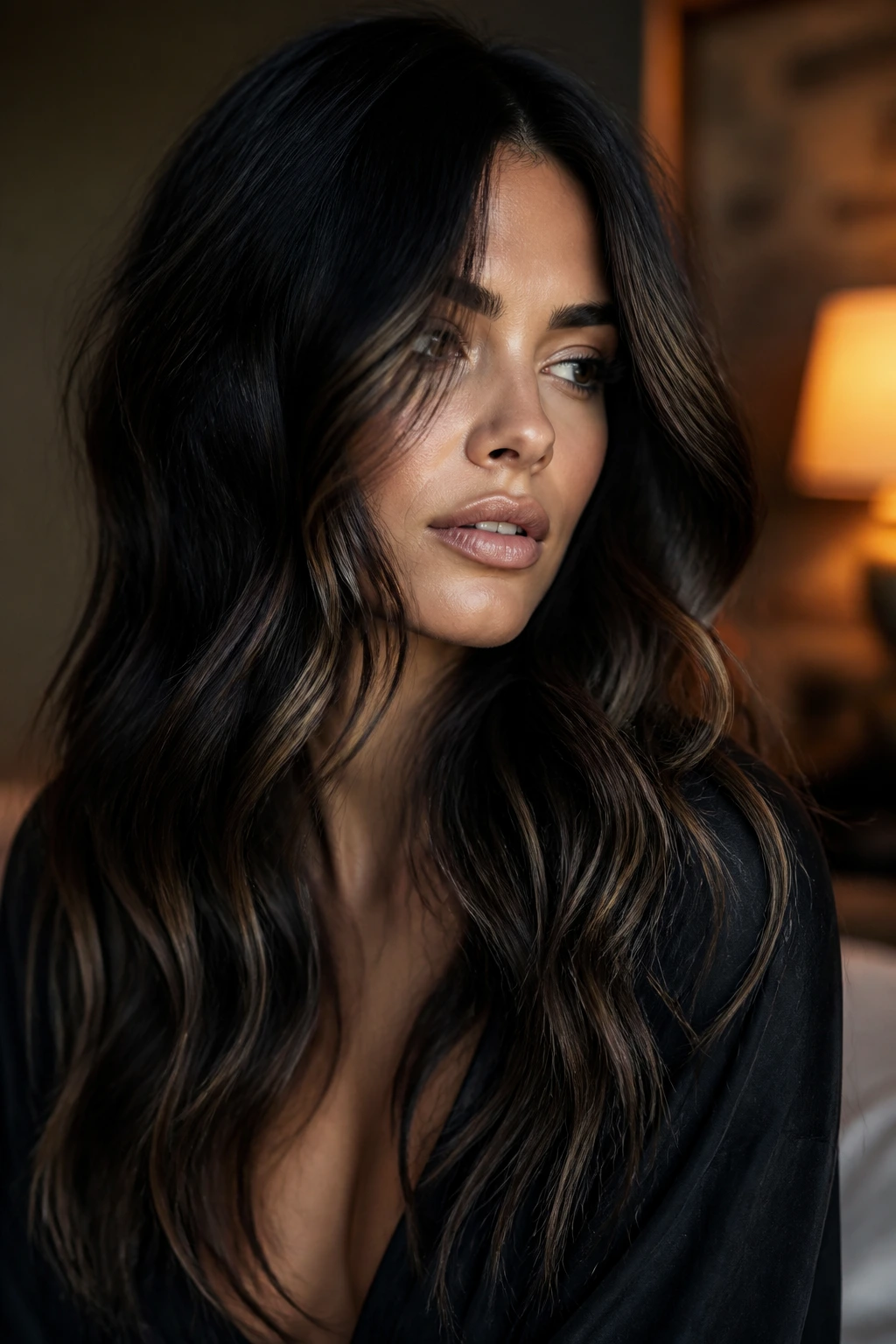
If you like dark hair with just a little light catching the bends, midnight brunette is worth a close look. It’s almost black, but not quite, and the highlights stay carved into the surface instead of floating everywhere.
Unlike high-contrast blonde balayage, this look lives in the deep brunette range. That makes it a strong match for glossy wavy hair, because the shine reads first and the lighter carved pieces show up only where the wave curves. You get movement without losing the moody base. That’s the appeal.
Who It Suits
- Natural brunettes who want depth, not brightness
- Waves with a smooth finish and decent shine
- Hair that looks flat when it’s all one tone
- People who want a darker look with just enough contrast to keep it from feeling heavy
Ask for highlights that stay within the brunette family — espresso, cocoa, soft chestnut — and keep them concentrated on the top bends and ends. That way the wave pattern stays visible.
25. Vanilla Blonde Balayage with Lived-In Ends
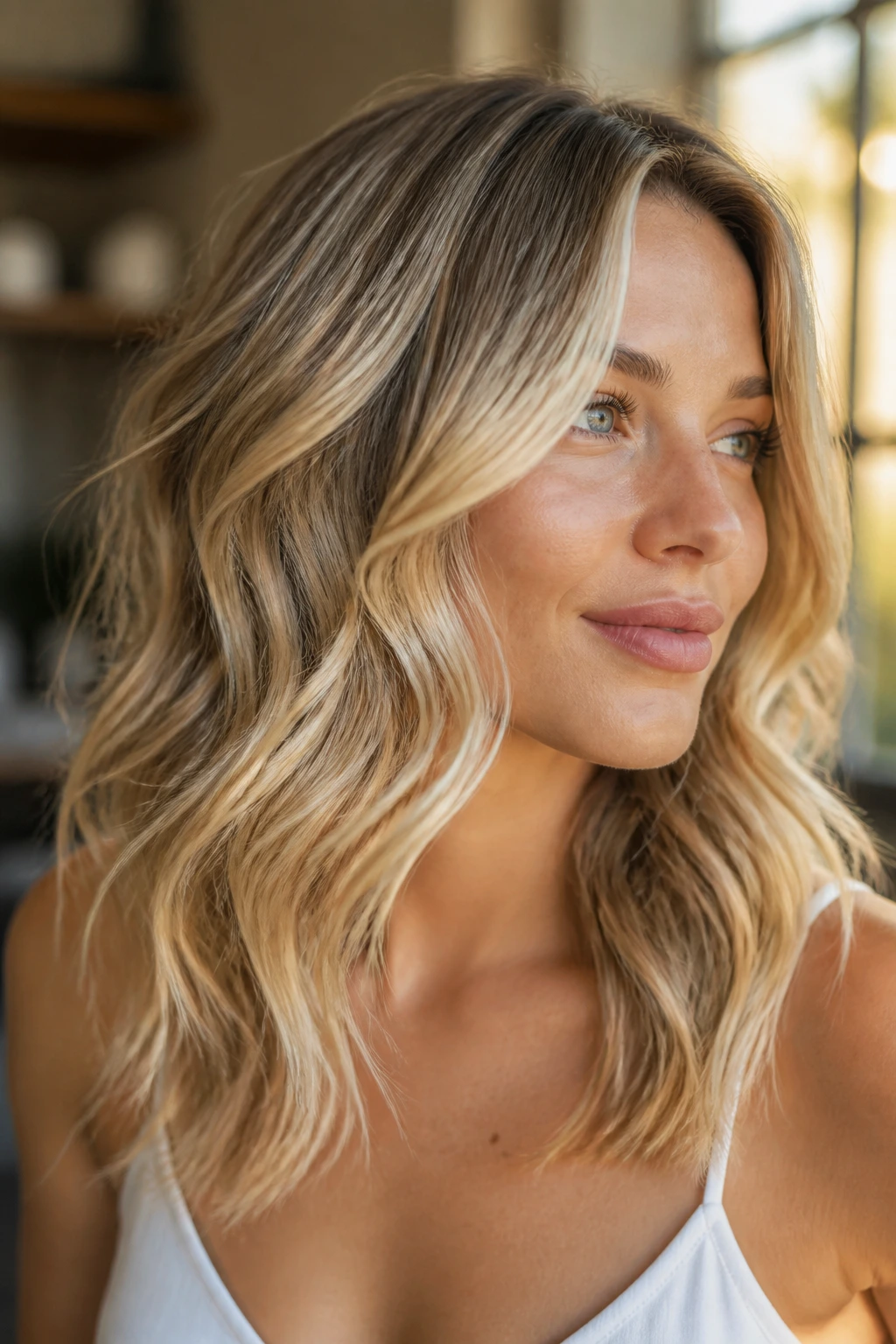
Vanilla blonde can look expensive on waves when the ends stay a half-step deeper than the mid-lengths. That little difference keeps the color from looking pasted on.
The vanilla tone itself should be creamy, not icy and not yellow. On wavy hair, that softness matters because the movement already gives the hair texture; the color doesn’t need to shout. A lived-in finish with slightly darker ends helps the whole look grow out in a cleaner way, and it keeps the lighter sections from looking brittle. I’d call this a good choice for long waves or a layered lob where the ends still have enough density to hold the lighter tone.
Why the Softness Matters
If the blonde is pushed too pale all the way through, the wave pattern can disappear into a single light mass. A touch of depth at the ends keeps the shape visible. That’s the whole point here. Light, but not washed out. Soft, but not dull.
Final Thoughts
The best balayage looks for wavy hair usually have the same three things in common: a root that isn’t too bright, pieces placed where the wave bends, and a tone that suits the base instead of fighting it. That part matters more than chasing the palest blonde or the reddest copper.
If your hair is fine, softer contrast usually wins. If it’s thick, you can handle wider ribbons and deeper shadows. And if the waves are loose, the color placement should be a little more deliberate, because loose texture reveals every mistake. That’s the honest version.
The smartest color appointments on wavy hair don’t try to flatten the texture. They let it keep moving, then use light and depth to make that movement easier to see.
