



The prettiest blond balayage on brown hair usually looks like sunlight that got lost in the right places. Not streaks. Not chunky stripes. Just soft brightness woven through a deeper base so the whole head looks richer, lighter, and a little more awake.
That balance is why this color stays so popular with brunettes. A good balayage can make chocolate, chestnut, mocha, and espresso hair look dimensional without forcing you into a full-head blonde maintenance routine. The trick is choosing the right shade of blonde and the right amount of contrast. A warm honey ribbon on medium brown hair reads very differently from a smoky beige veil on cool brunette hair, and both can be excellent when they match the base.
Brown hair is forgiving, but it’s not blank. The undertone matters. So does the level. So does the cut. A blunt bob wants a different painting pattern than long layers, and curly hair needs a different placement than glass-straight hair if you want the brightness to show up where it counts.
1. Honey Blonde Ribbons on Medium Brown Hair
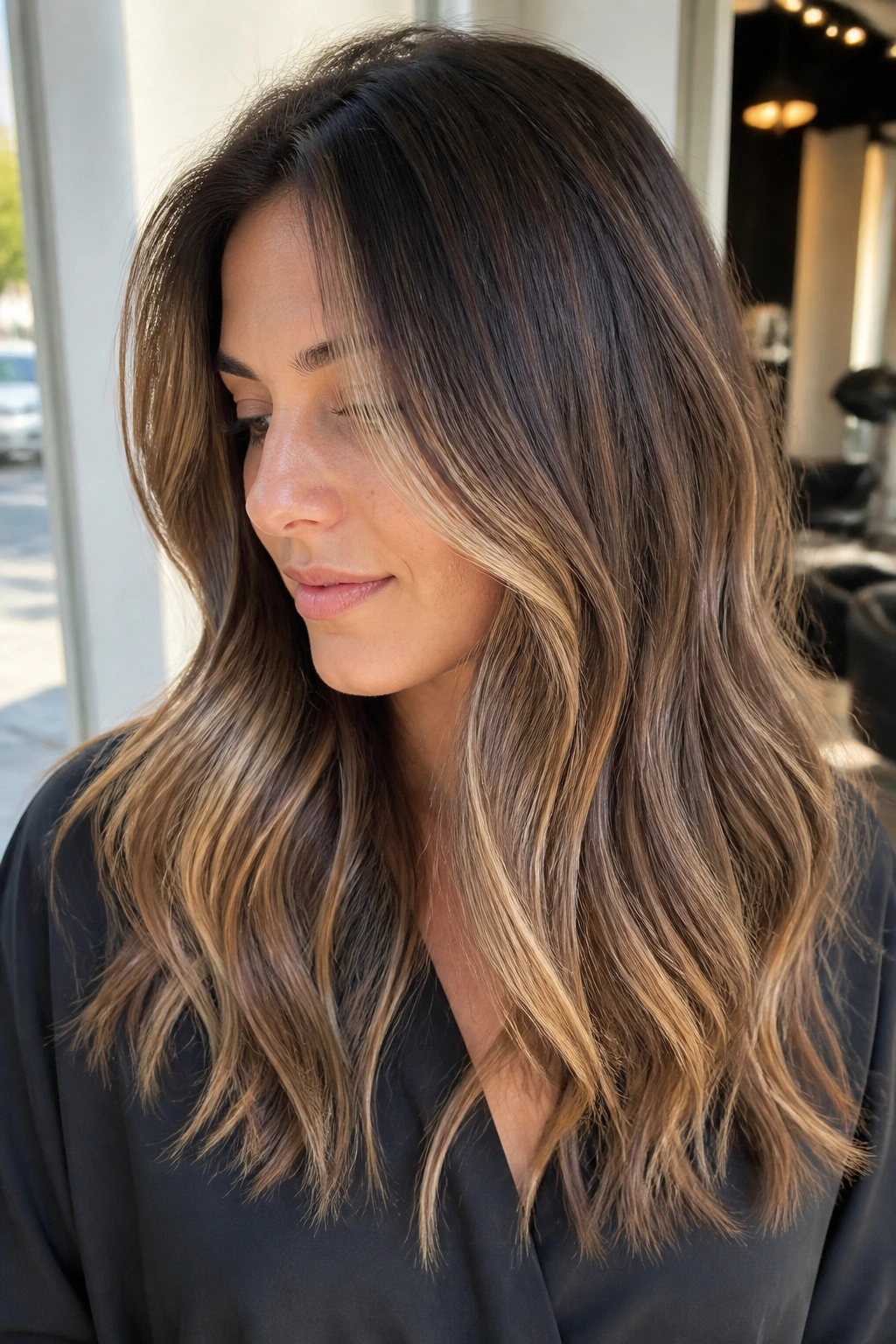
Honey blonde is the safe bet that rarely looks boring. On medium brown hair, it gives that soft, golden lift that feels warm without turning brassy or orange. It’s one of those blond balayage looks for brown hair that flatters a wide range of skin tones because the color stays mellow and sunlit.
Why It Works
Honey tones sit in the middle of the blonde family, which makes them easy to blend into brown bases. The contrast is noticeable, but not harsh. That matters when you want hair that looks dimensional from every angle instead of just bright in a few streaks.
Best for: medium brown bases, long layers, and anyone who wants warmth without a big maintenance bill.
- Ask for painted ribbons from mid-length to ends.
- Keep the root area darker with a soft shadow root.
- Finish with a golden gloss if your hair pulls dull.
Pro tip: if your hair already leans red, ask for a softer honey rather than a strong gold. Too much warmth can push the whole look into copper.
2. Caramel Blonde Melt on Chocolate Brown Hair
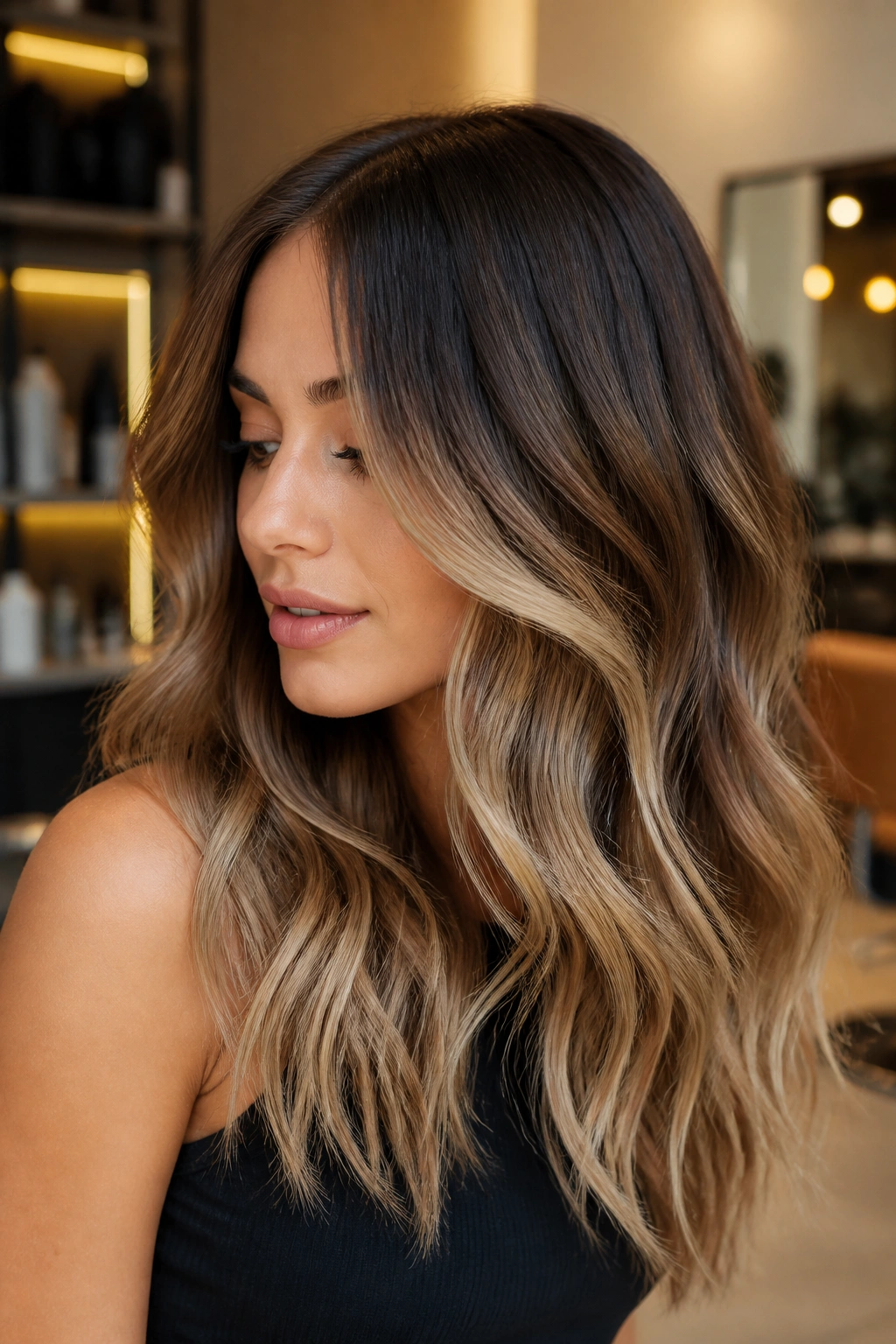
Caramel blonde on chocolate brown hair has a rich, almost glossy look that feels polished without trying too hard. The brown base does a lot of the work here. The blonde pieces only need to lighten a few levels to create contrast, which keeps the result believable.
This is the kind of color that looks good in a loose wave, but it also behaves well in a straight style. The melt from brown to caramel to blonde should feel gradual, not stacked in layers. If the blend is clean, the hair moves like one color with several lights inside it.
A good colorist will place the lightest pieces around the face and the ends, then keep the interior slightly darker. That gives the hair weight. It also stops the color from flattening out after a few washes.
3. Bright Face-Framing Money Piece
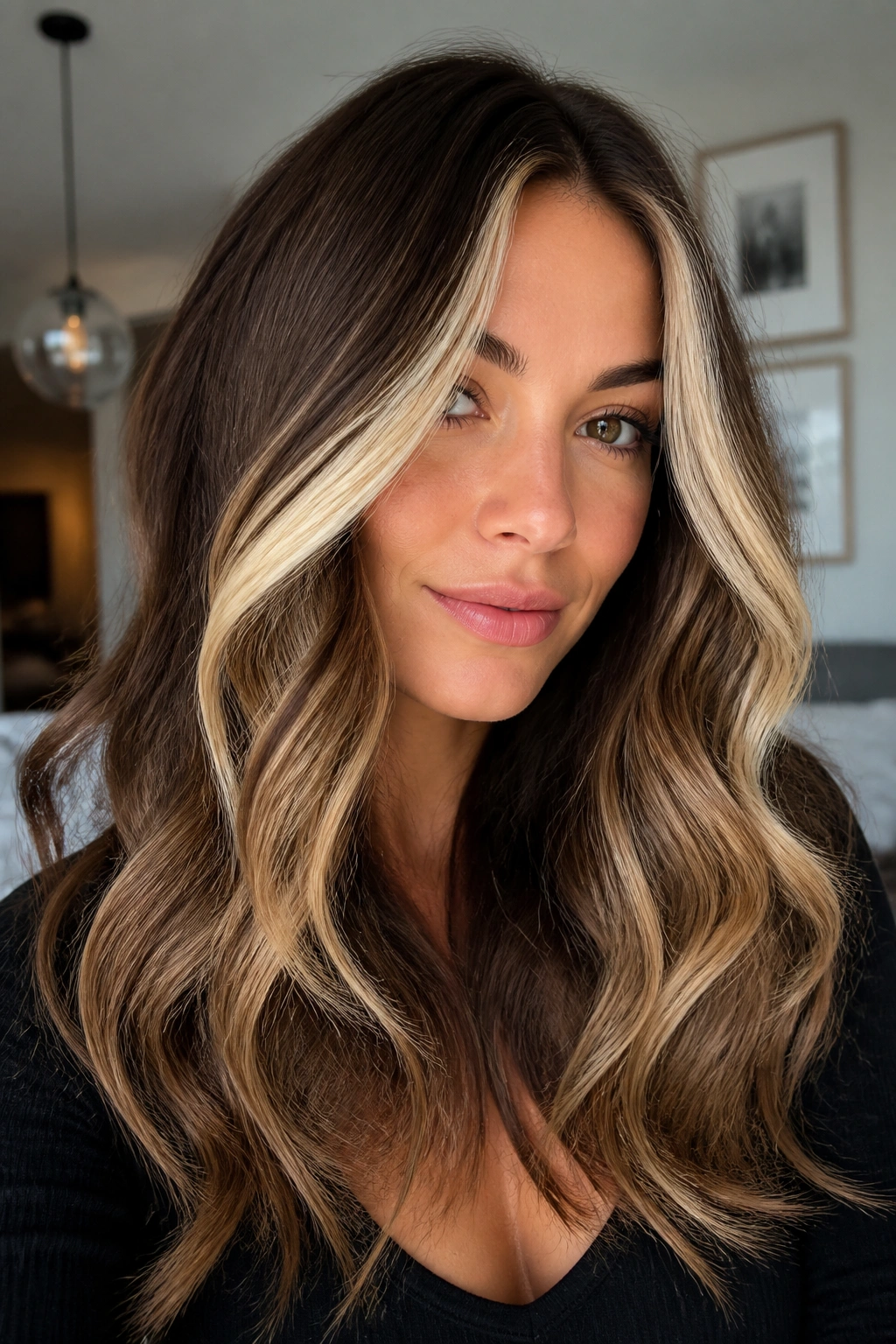
A bright money piece can wake up brown hair faster than almost any other balayage move. It puts the lightest blonde right around the face, which changes the whole mood of the color even if the rest stays subtle. Small effort. Big payoff.
How to Wear It
This look works best when the front sections are lifted a little higher than the rest of the head. You do not need every strand to go pale. You need the hairline pieces to be bold enough to read instantly.
- Choose buttery blonde if your brown base is warm.
- Choose beige blonde if your brown base is cool.
- Keep the rest of the balayage softer so the front pieces stand out.
A money piece is also smart if you like changing your hair often. Put it in a ponytail, tuck it behind the ears, or let it fall in waves. It still does the job. If you want drama without a full commitment, this is the one I’d point to first.
4. Ash Blonde Veils on Cool Brown Hair
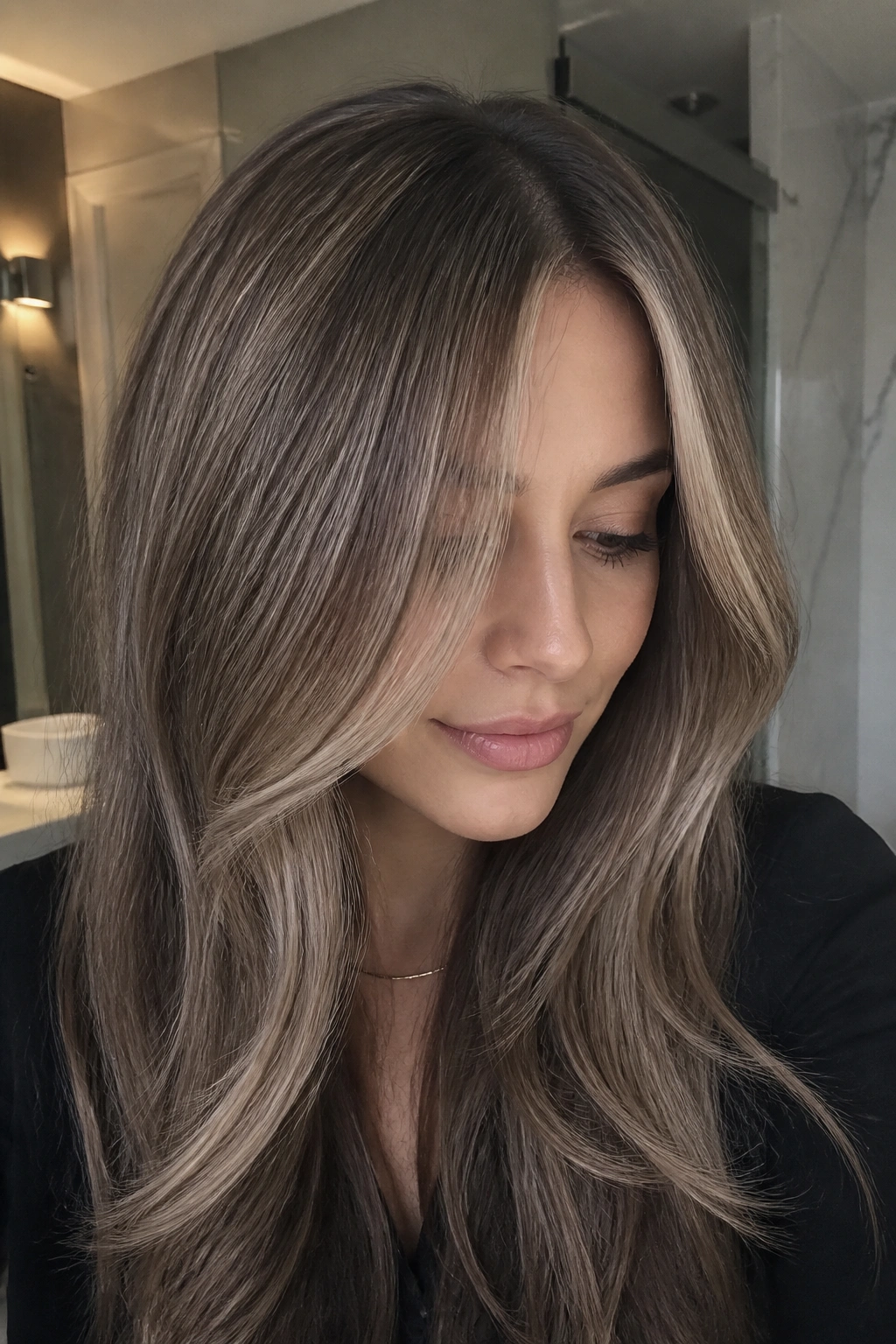
Ash blonde on brown hair can look expensive when it’s done with restraint. The cool tone softens the warmth in the brunette base and gives the finish a smoky, muted edge. It’s not icy. It’s not flat. It’s that calm, beige-gray blonde that sits nicely next to a cool mocha or mushroom brown.
Unlike honey or caramel balayage, this version is less about shine and more about contrast control. That makes it a good fit for people who hate gold tones. If your hair turns orange easily, ash blonde is worth discussing with your colorist early, because toner choice matters here.
Wear it with loose bends instead of tight curls. The color shows better when the light catches the different panels. Straight styles work too, but they can make the blend look even cooler, which is either a plus or a problem depending on your skin tone.
5. Beige Blonde Balayage for Soft Dimension
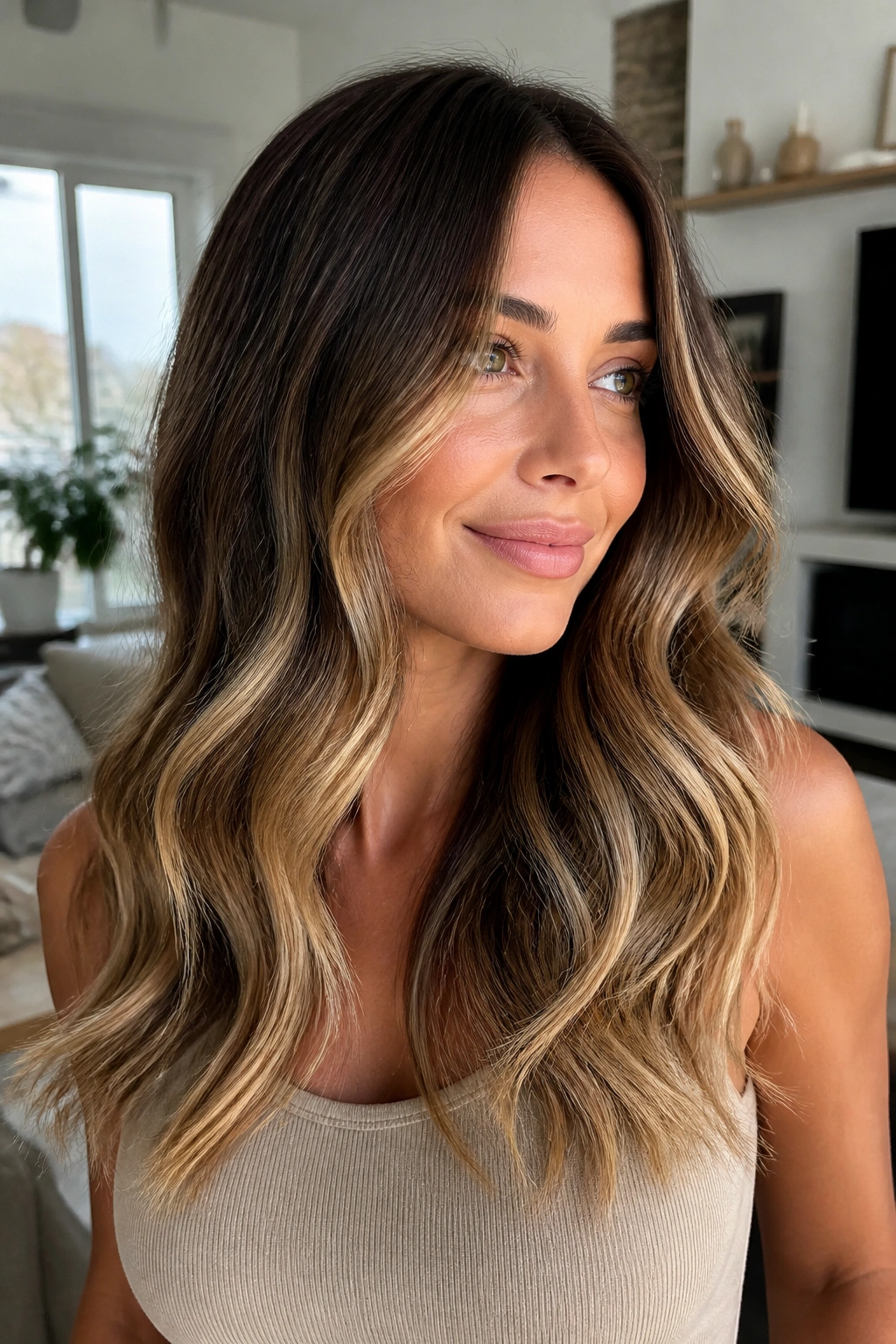
Beige blonde sits in that middle ground where brown hair looks brighter but still grounded. It’s softer than platinum, less golden than honey, and more versatile than a strong ash blonde. That makes it a favorite when someone wants a blond balayage look for brown hair that feels polished rather than loud.
What Makes It Different
Beige blonde doesn’t fight the base. It lifts it. The result is subtle enough for an office setting, but the color still pops in daylight. On chestnut brown, it adds a creamy finish. On deeper brown, it reads as soft ribbons instead of a hard color change.
A beige balayage also grows out gracefully. The root area can stay fairly dark, which keeps the whole look lower maintenance. If your hair is naturally wavy, this shade is especially kind because the movement helps the tones separate just enough to look rich.
Ask for a matte or neutral gloss rather than anything too golden. That little choice keeps the blonde from drifting yellow later.
6. Champagne Blonde Ends on Dark Brown Hair
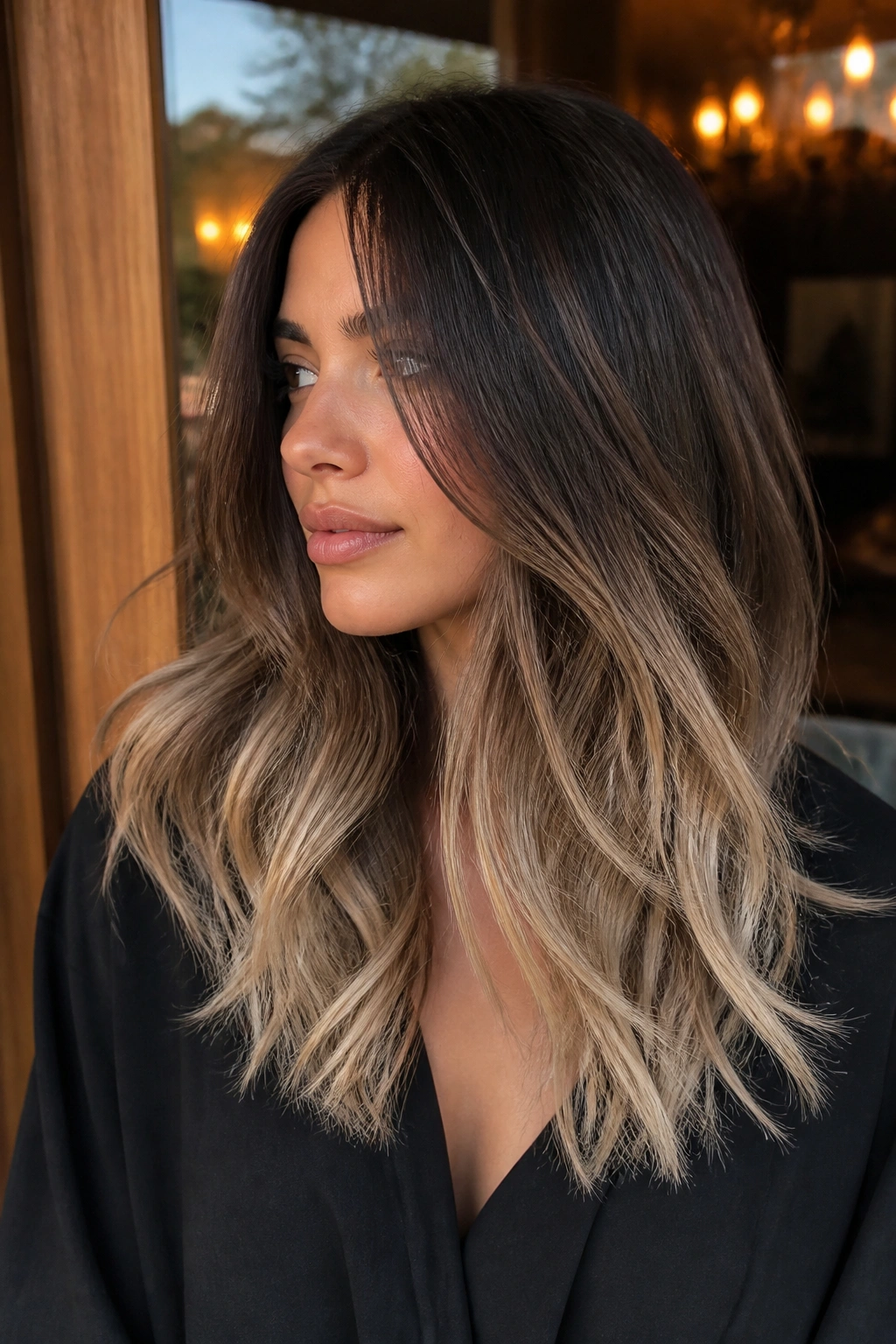
Champagne blonde on dark brown hair has a clean, lifted feel that still leaves the base visible. The tone is pale, but not stark. There’s a hint of beige, a hint of softness, and enough brightness to make the ends feel lighter than the mids in a deliberate way.
This works best when the balayage is concentrated toward the lower half of the hair. You get the brightness where it matters and keep the top section deeper, which preserves contrast. If the blonde starts too high on a very dark base, the grow-out can look busy fast.
The finish is especially good on layered cuts. The light ends show off the shape of the haircut. On thick hair, it stops the color from feeling heavy. On finer hair, it can make the lengths look thinner if overdone, so keep the placement controlled.
7. Mushroom Brown with Cool Blonde Lifts
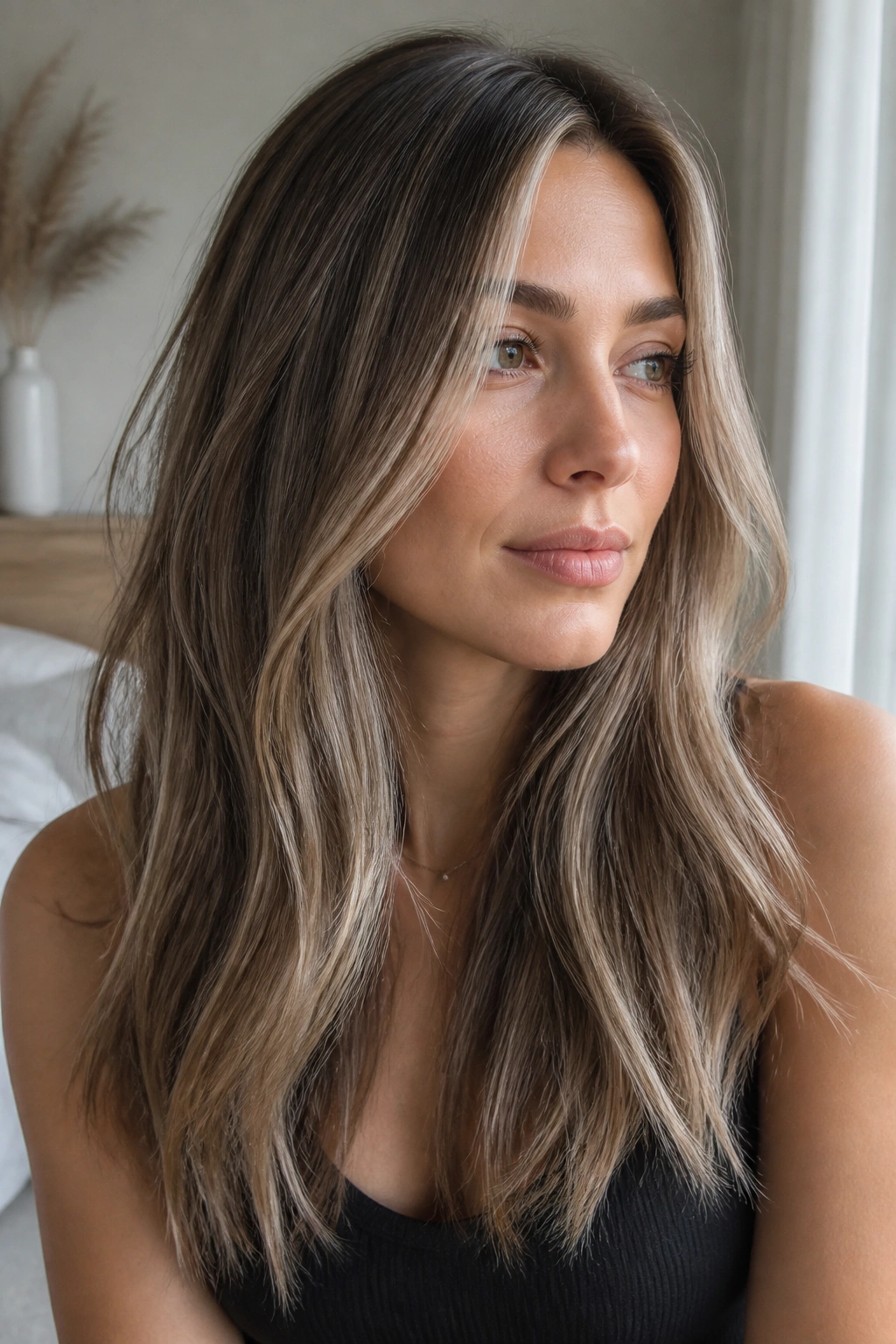
Mushroom brown and cool blonde is a sleeper favorite. It has a muted, earthy base with just enough blonde to keep the hair from reading flat. Think smoky brown with pale, neutral brightness around the surface. It’s understated, but not dull.
Best When You Want Texture
This look is strong on straight or softly waved hair because the cooler tones create shadows and light without much contrast screaming for attention. It’s one of the smarter blond balayage looks for brown hair if you like your color to feel modern but not flashy.
- Ask for fine, scattered highlights rather than wide panels.
- Keep the blonde neutral to cool.
- Use a gloss every 6 to 8 weeks if your hair tends to turn warm.
The best version keeps some depth near the roots and through the interior. That keeps the mushroom effect intact. Too much lightness and you lose the whole point.
8. Toffee Balayage with Dark Root Smudge
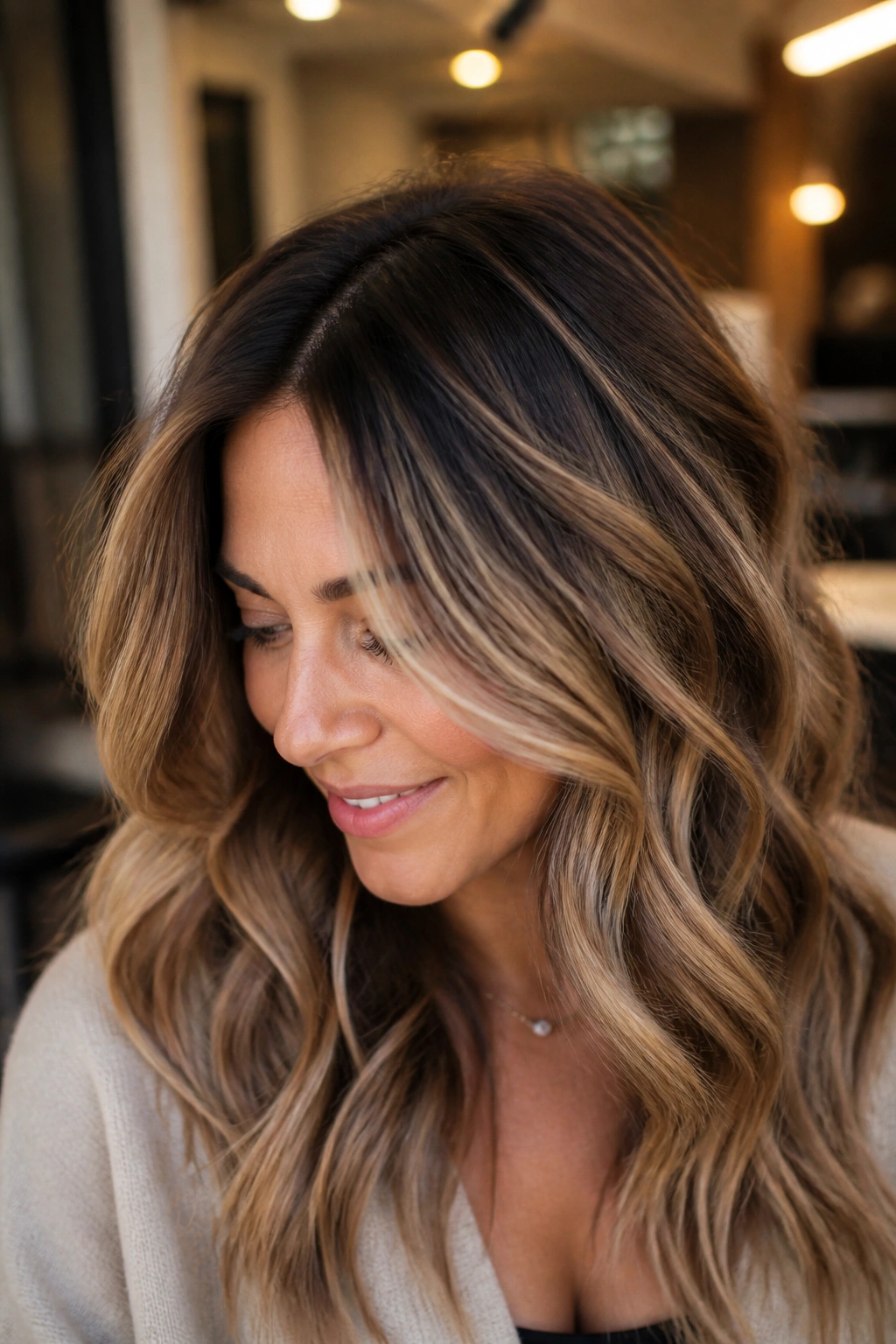
Toffee balayage is the sweet spot between blonde and brunette. It has more warmth than beige and less glow than honey, which makes it easy to wear on dark brown hair without looking washed out. The dark root smudge keeps the color soft and helps the grow-out line disappear.
I like this look on hair that is thick enough to hold shape. The lighter pieces catch the curve of the wave or bend, and the darker root gives the color a more natural lift. It’s a good choice if you want something readable from across the room, but still believable up close.
A root smudge matters here. It should be soft, not painted like a line. If you can spot where the darker root stops and the blonde begins from six feet away, the blend needs more work.
9. Sun-Kissed Bronde for Wavy Hair
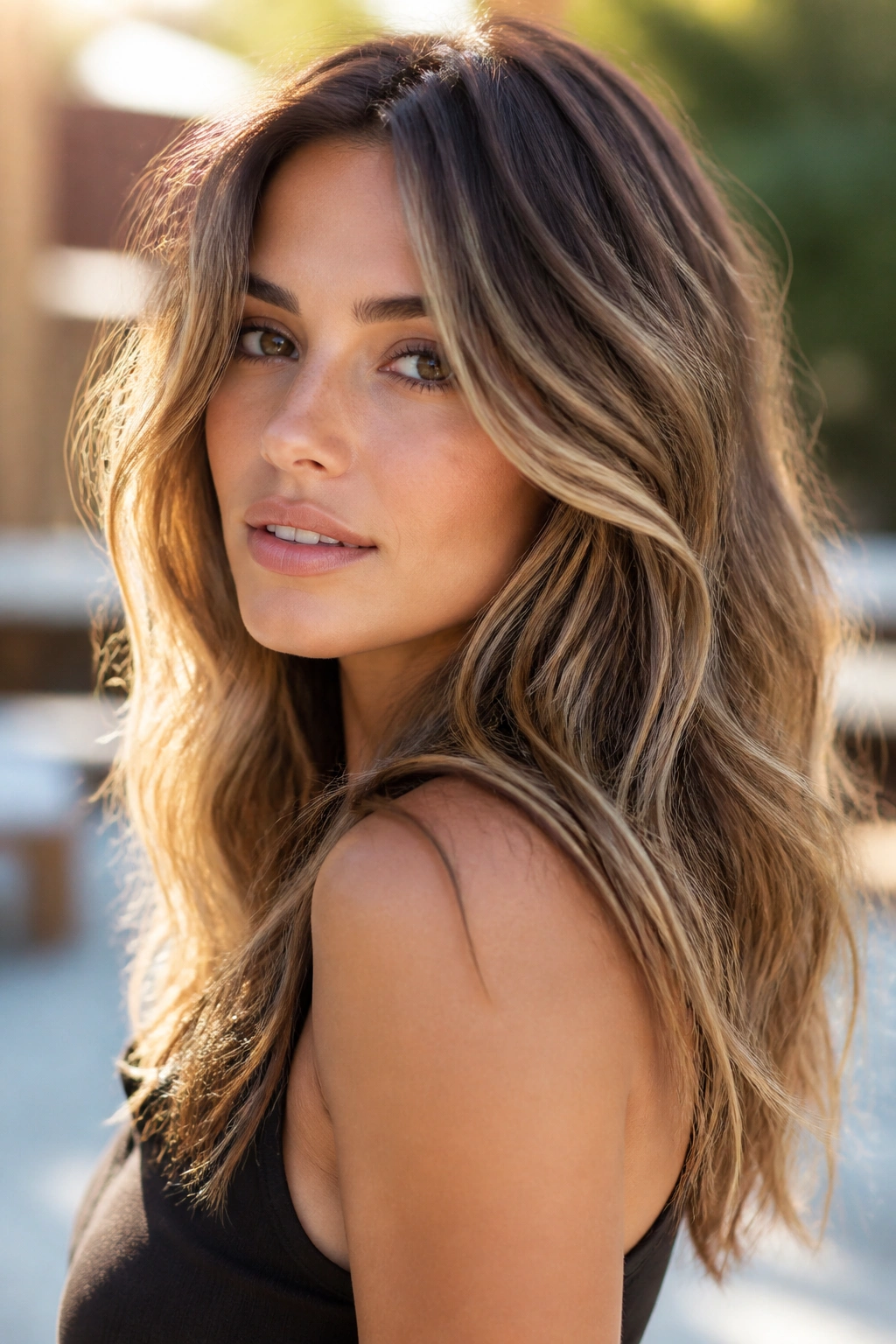
Bronde is one of those in-between colors that earns its keep. On brown hair, it gives you the feel of blonde without losing the richness of brunette. The result is especially good on waves, where the lighter strands can ride the bends and catch light in little flashes.
The best bronde balayage does not try to become blonde. That’s the whole charm. It keeps enough brown in the mix to stay soft, and it uses lighter beige or golden pieces to lift the surface. If your hair already has a natural bend, this look can feel almost effortless.
Ask your colorist for a diffused placement pattern rather than heavy streaks. You want the bright pieces to look scattered, not lined up like stripes. This is one of those colors that gets better when you can’t quite pinpoint where the blonde starts.
10. Chunky Blonde Panels for a Retro Edge
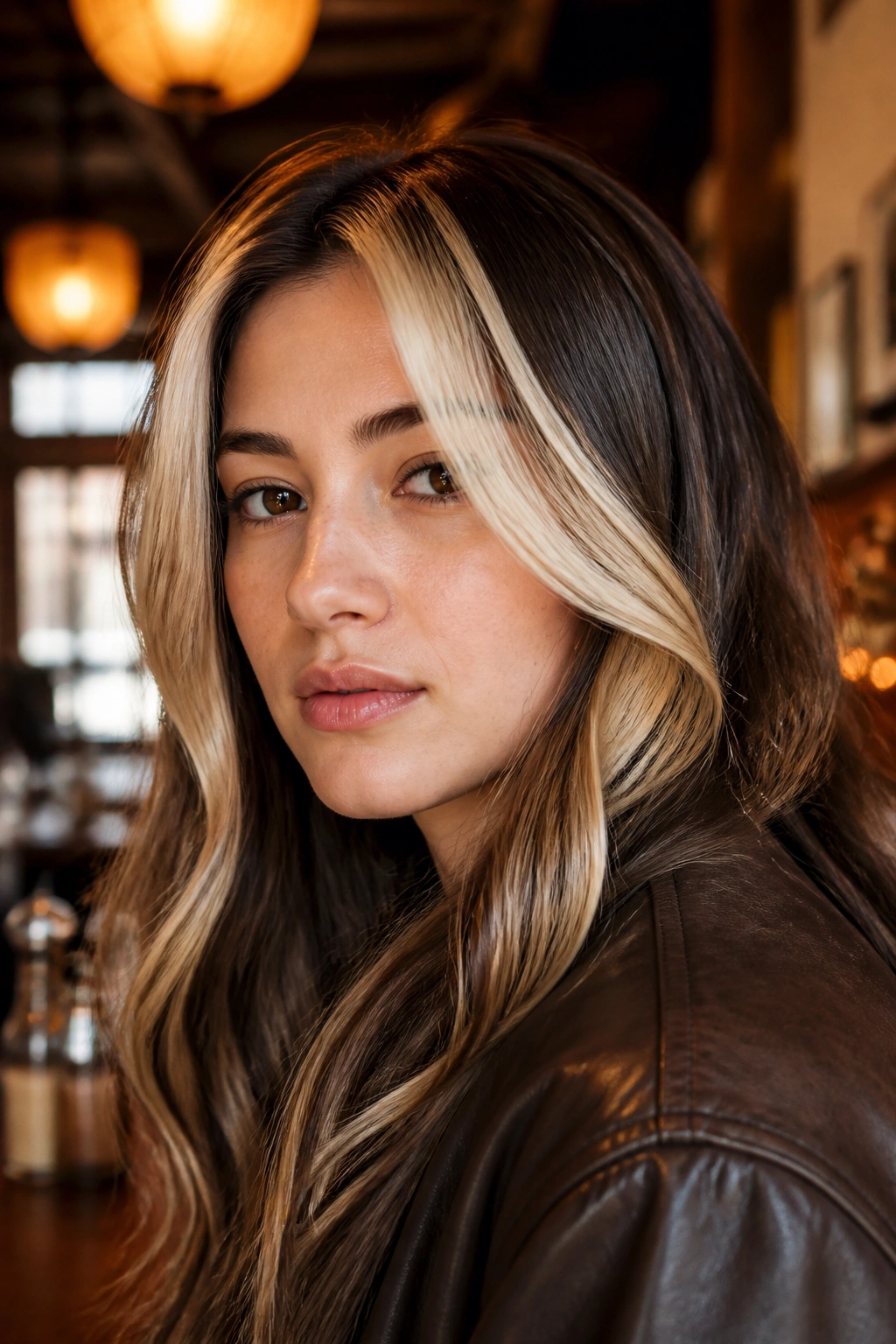
Chunky blonde panels are for people who want their balayage to say something. They bring back a bolder, more graphic feel, but when they’re painted well, they still read as grown-up rather than costume. On brown hair, the contrast is the whole appeal.
What to Watch For
This is not the place for tiny, scattered ribbons. You want fewer, thicker sections with clear separation from the brown base. That gives you that retro edge without turning the hair into a stripey mess.
- Works best on medium to dark brown bases.
- Looks strongest in blunt cuts and heavy layers.
- Needs a careful toner to keep the blonde from turning brassy.
If you like the idea of a bolder blonde but hate a full bleach-blonde look, this is a solid compromise. It has attitude. It also needs confidence, because the contrast is not hiding anywhere.
11. Vanilla Blonde Ends for Long Layers
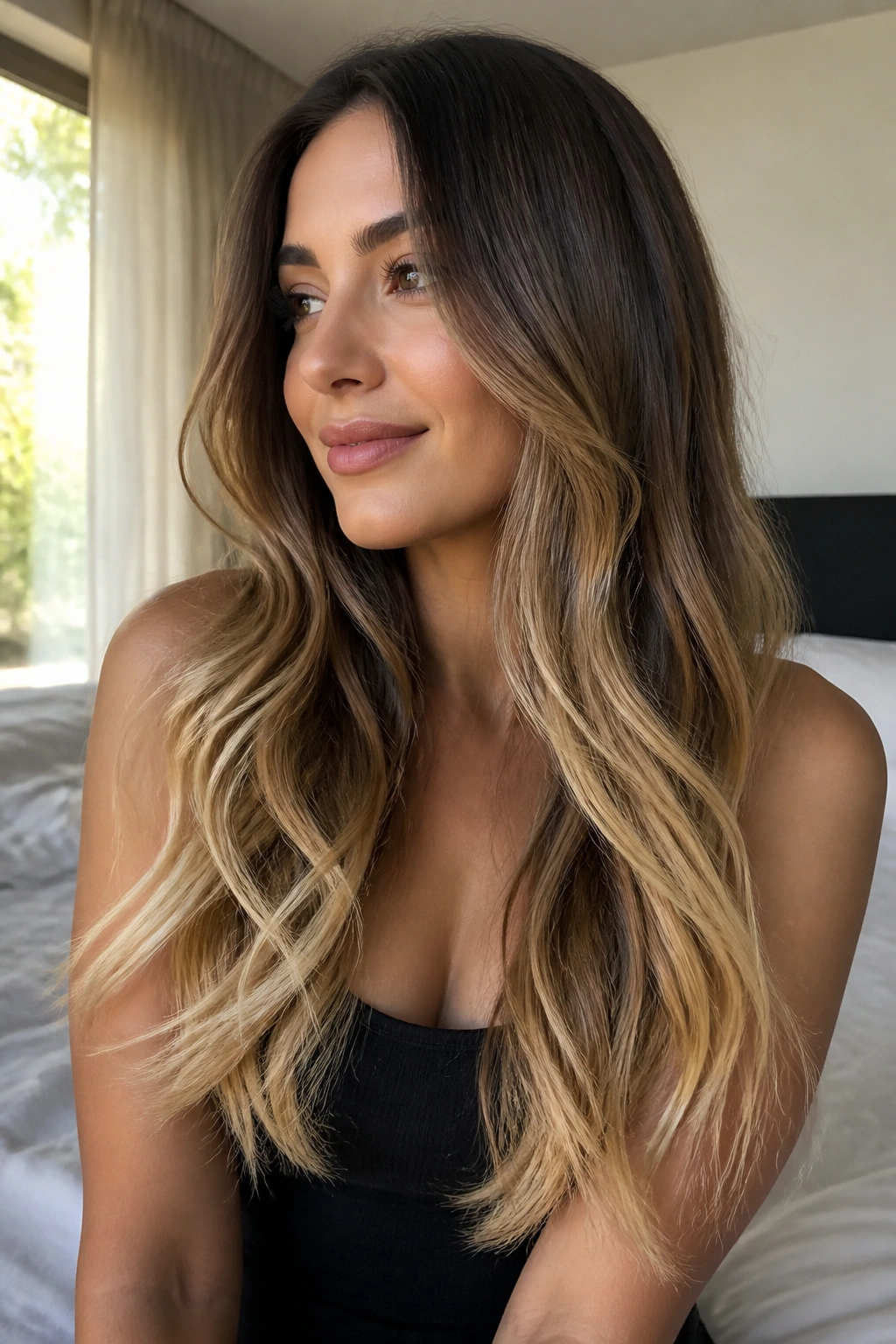
Vanilla blonde ends give long brown hair a bright finish that still feels soft. The tone sits between pale gold and creamy beige, which keeps the ends from looking chalky. On long layers, that lighter finish helps the cut show movement all the way down.
This look depends on a gentle transition. The top half should stay richer, while the lightest blonde lives on the last few inches. That way the layers appear airy instead of disconnected. If the blonde starts too high, the hair can lose depth and start to look over-processed.
Vanilla blonde also looks nice when the lengths are curled away from the face. The lighter tips fan out and make the color feel more expensive. Straight hair can wear it, sure, but the shine has to be good or the ends may look a little thin.
12. Buttercream Balayage on Warm Brunette Hair
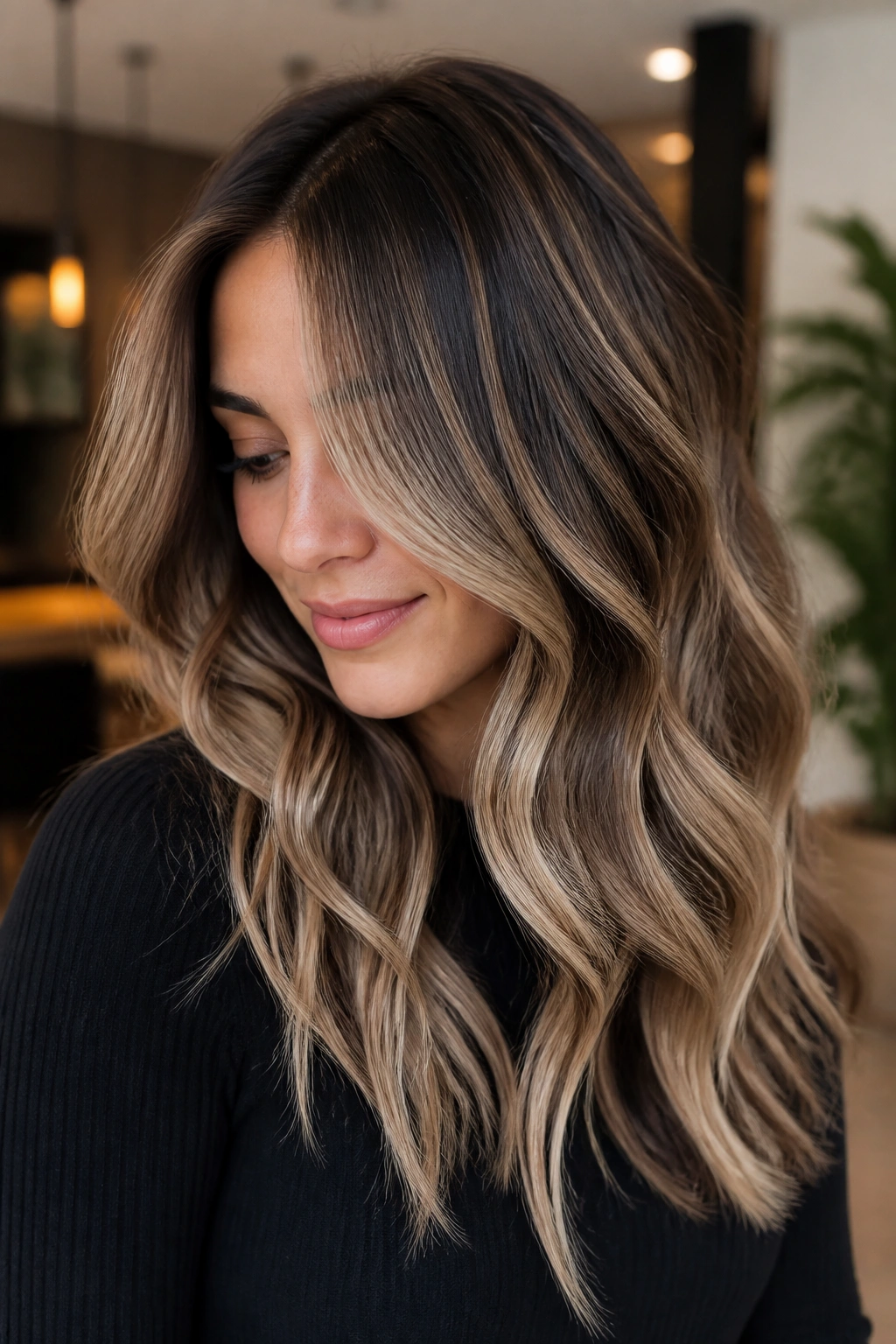
Buttercream blonde is creamy, soft, and a little indulgent. On warm brunette hair, it blends better than an icy blonde because it shares the same warmth level. That makes the color feel intentional instead of pasted on.
Why It Flatters Warm Bases
The warm brunette base already carries gold or red undertones, so buttercream keeps the palette in the same family. That means less fighting, less brass, and less toner panic. It’s one of the easiest blond balayage looks for brown hair when the goal is brightness that still feels natural.
A few things help:
- Keep the roots deeper and slightly warm.
- Paint the blonde in long, feathered strokes.
- Finish with a creamy gloss, not a silver one.
This shade is especially forgiving on wavy and layered cuts. The layers catch the lighter pieces, and the whole head feels lighter without losing richness.
13. Golden Blonde on Espresso Brown Hair
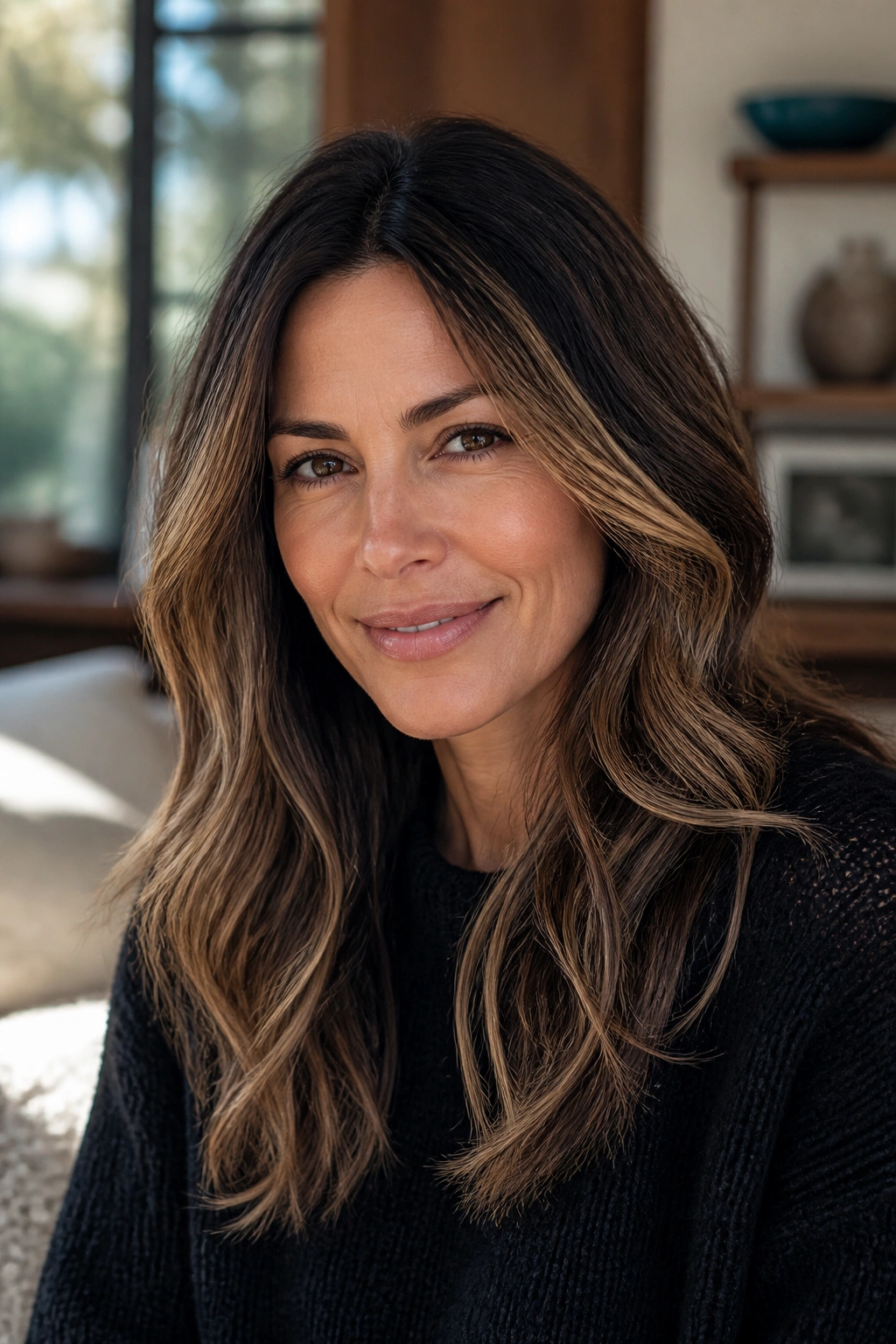
Golden blonde on espresso brown hair makes a statement fast. The brown base is deep enough that even a modest amount of blonde can feel bold. If you want visible brightness and don’t mind contrast, this look is hard to beat.
The trick is balance. Golden blonde can turn too yellow if it’s lifted and toned badly, so the finish should stay rich, not neon. The best version has a warm, sunlit quality that looks expensive in daylight and less harsh indoors.
I’d keep the placement around the face and the outer layers. That gives you the lift without flooding the whole head. On a very dark base, over-lightening can make the hair look patchy, and nobody wants that. Better to keep the blonde deliberate and concentrated.
14. Smoky Beige Blonde on Shoulder-Length Cuts
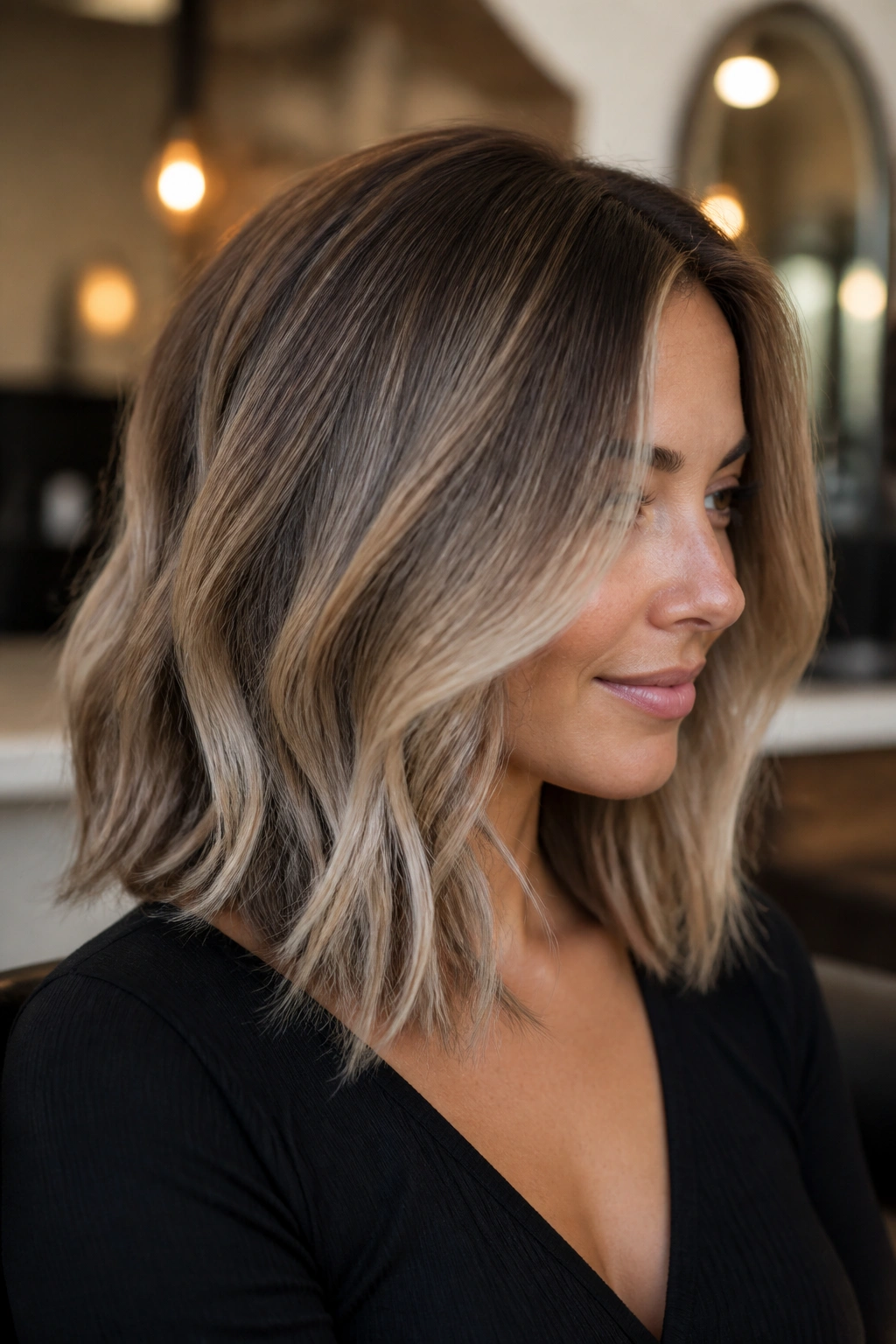
Shoulder-length cuts love smoky beige blonde because the color can follow the shape of the haircut without overpowering it. Beige tones give softness, and the smoky edge keeps the blonde from turning syrupy or too golden.
This is a good pick if you wear your hair in a lob, a blunt shoulder cut, or a layered mid-length style. The balayage can be painted a little higher through the sides and lower in the back, which helps the shape look balanced. Tiny placement changes matter a lot on this length.
The finish should feel light but not fragile. If the blonde pieces are too wide, the cut can start looking boxy. Fine placement, a neutral toner, and a soft bend in the ends usually do the job.
15. Curly Brown Hair with Fine Blonde Ribbons
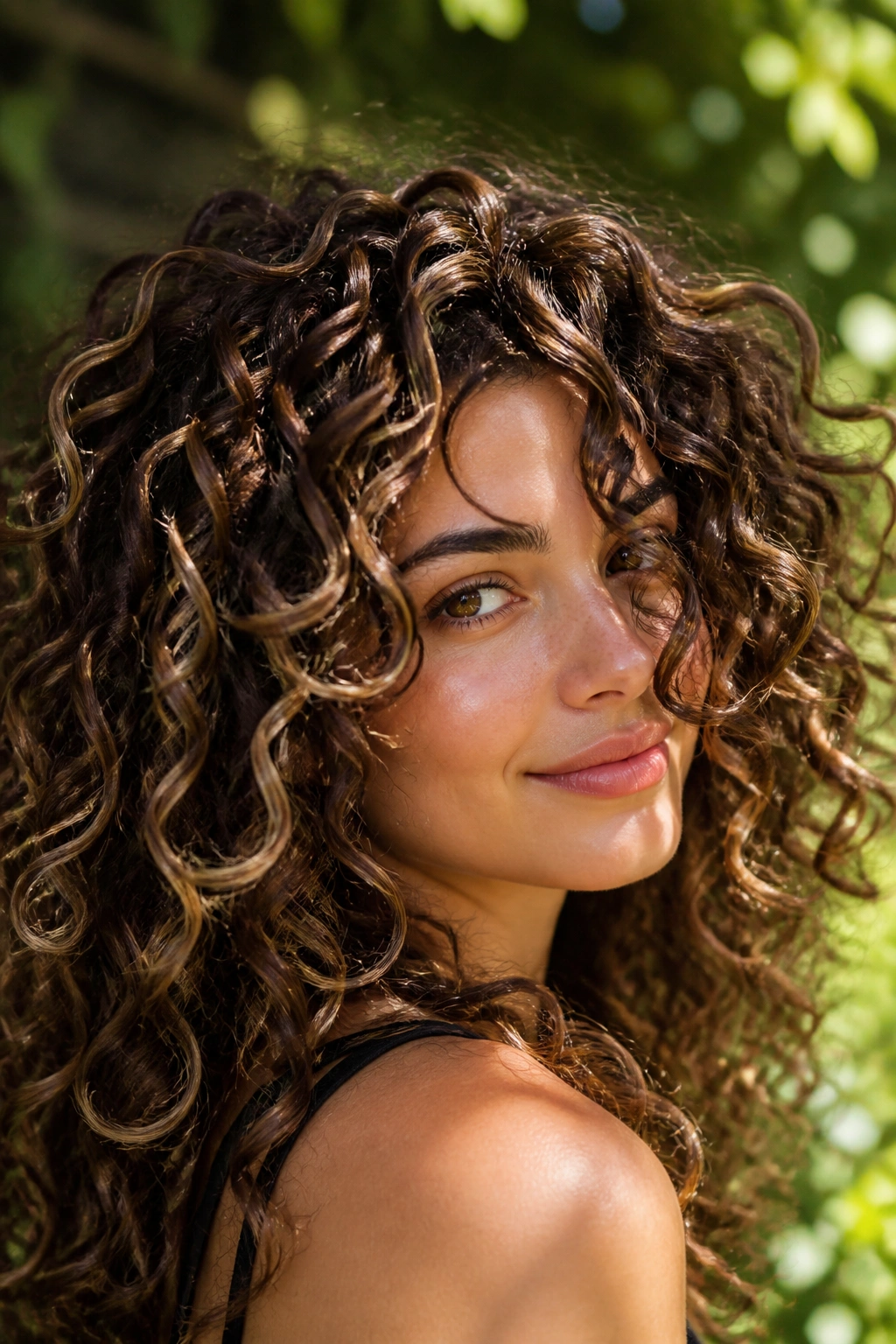
Curly brown hair and blonde ribbons are a beautiful pair when the highlights are thin and placed with the curl pattern in mind. Wide pieces can look blocky in curls. Fine ribbons move better and make the shape look fuller.
The Curl-Specific Approach
Curly hair needs brightness where the light naturally lands, not just where the part happens to be. That usually means painting around the outside of the curl clumps and leaving enough depth inside the pattern so the shape doesn’t go frizzy or over-light.
- Use micro-painted ribbons, not thick stripes.
- Keep the blonde slightly deeper at the root for softness.
- Ask for a hydrating gloss after lightening.
A good curly balayage should look different dry than wet, and that’s fine. In fact, it should. Wet curls compress the pieces; dry curls open them up and show the dimension.
16. Lob-Length Balayage with Micro Strokes
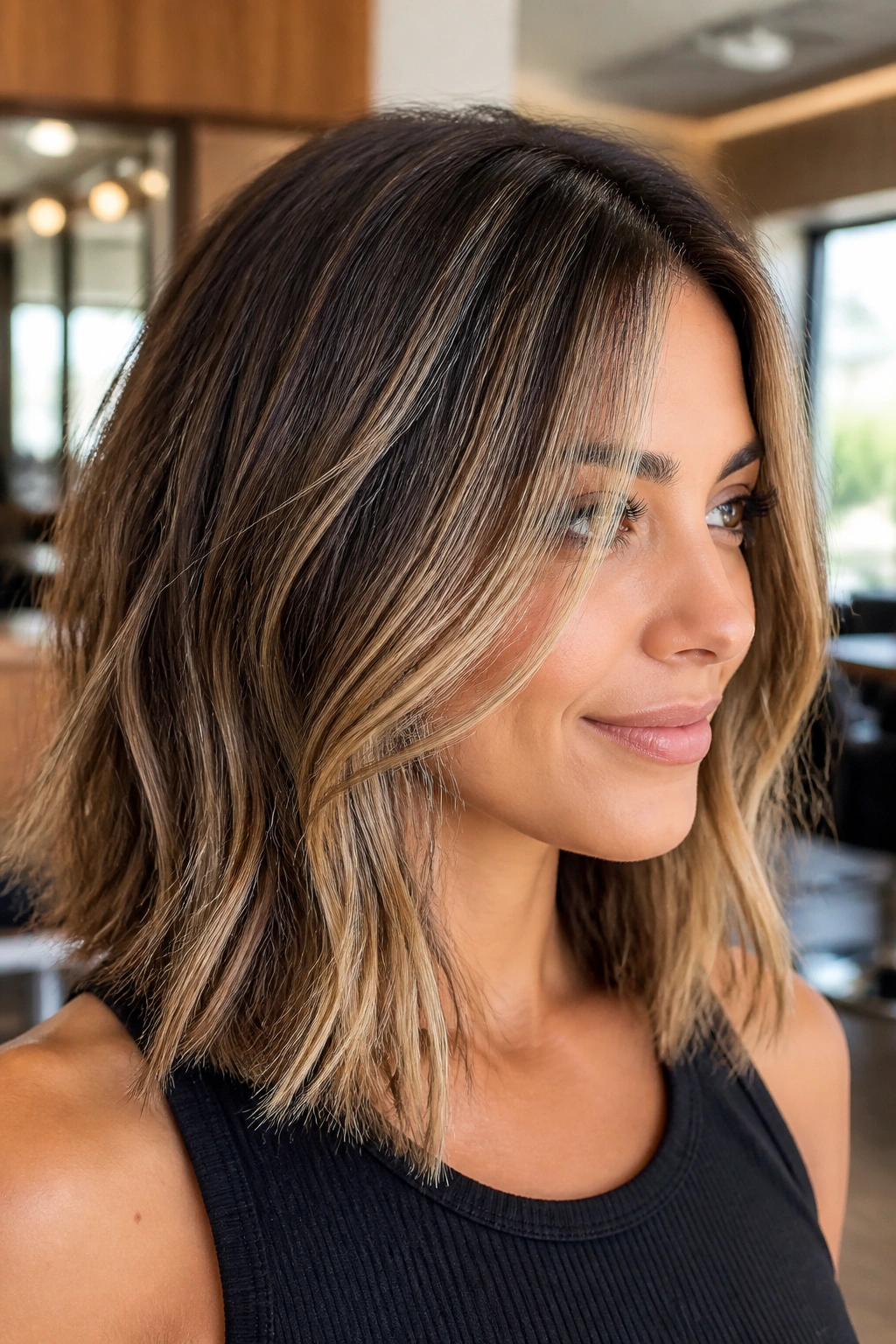
A lob can carry balayage better than people expect, especially when the blonde is applied in micro strokes rather than big panels. The shorter length means every painted section shows faster, so restraint helps.
This look is tidy, modern, and easy to wear. The blonde can sit around the face, through the top layers, and just into the ends. The result is movement without chaos. If you’ve ever looked at a short haircut and thought it needed “something,” this is usually the something.
Ask for lightness that stops before the ends look thin. Shorter hair can lose density fast if the blonde goes too high or too pale. A polished lob depends on keeping the shape solid.
17. Long Layers with Wide Sweeping Blonde Pieces
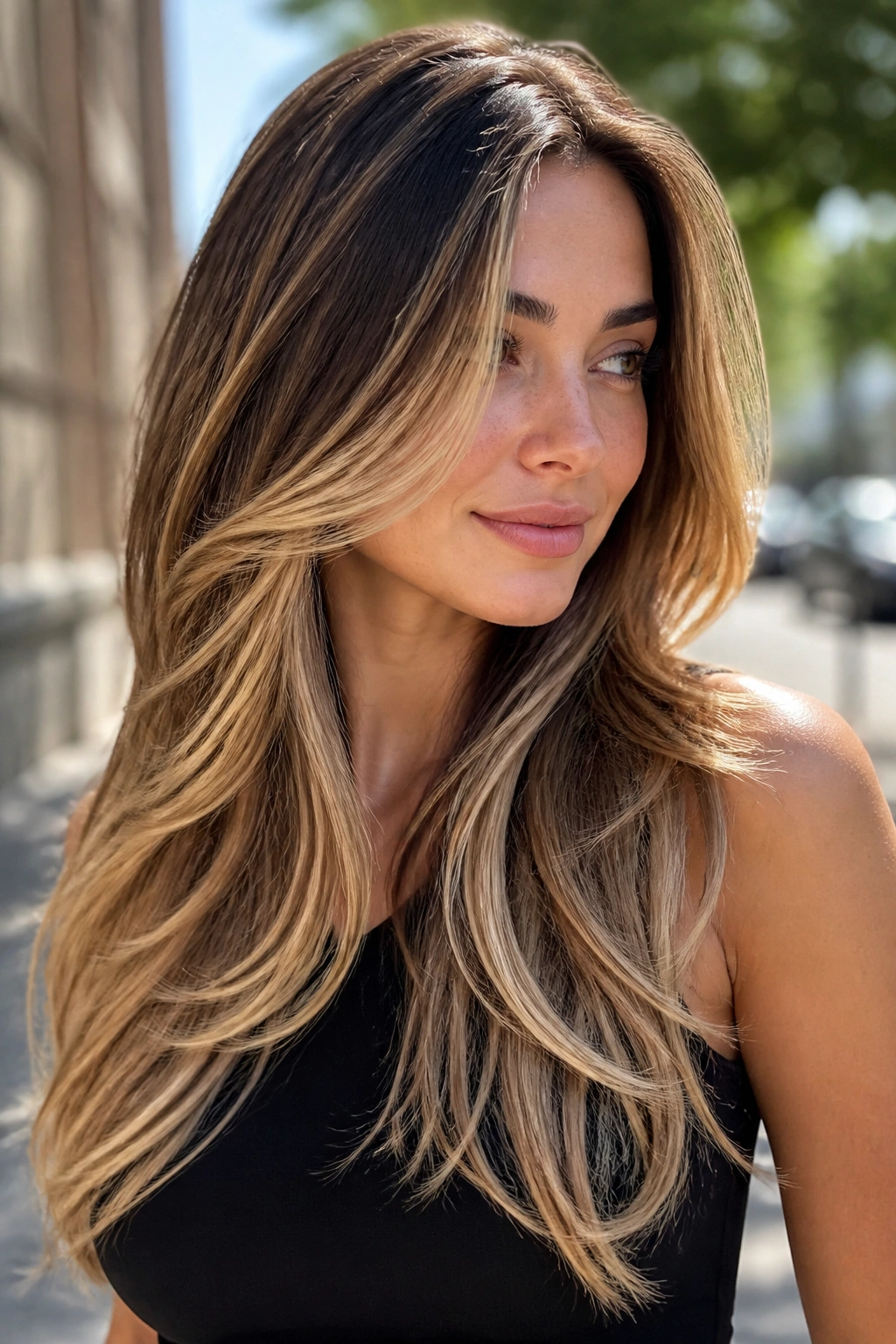
Long layers can handle bigger balayage pieces because the hair has enough length to show the color shift. Wide sweeping sections add drama in a way that fine highlights sometimes cannot. The color moves with the layers instead of hiding inside them.
This is the look for someone who wants visible blonde from a distance. It still needs balance, though. The brown base should remain strong enough to frame the blonde, otherwise the layers start to blend into one pale mass.
The best placement follows the haircut: light pieces over the top layers, a few brighter strokes around the front, and softer ends underneath. It’s a smart look when the goal is dimension that feels grown-out on purpose, not accidental.
18. Glossy Straight Hair with Seamless Blonde Blend
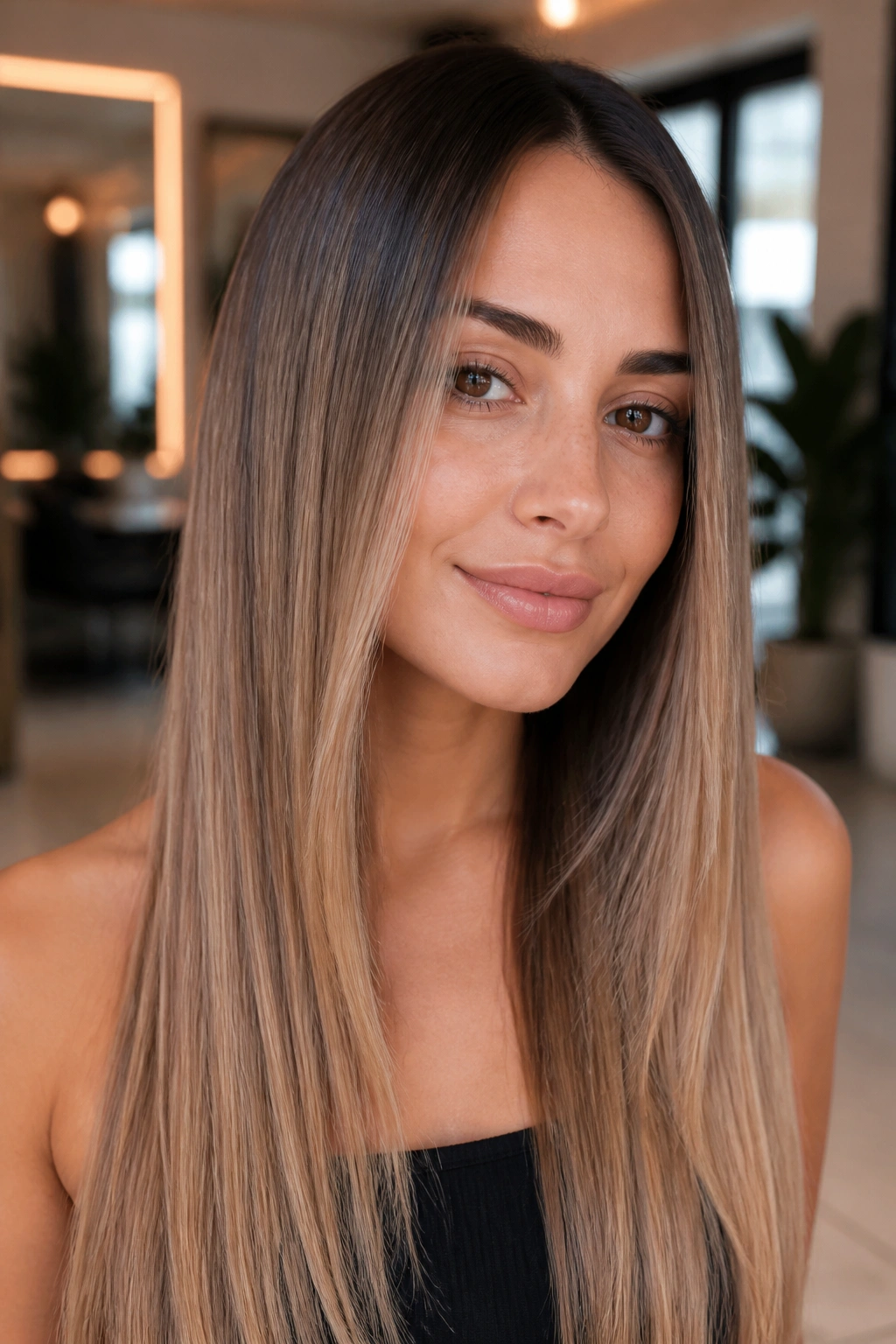
Straight hair can be brutally honest about color placement. That’s why a seamless blonde blend matters here. If the balayage is too stripey, straight hair shows it. If the blend is clean, the whole head looks sleek and expensive.
What Makes It Work
A straight style leaves little room for hiding mistakes, so the transition from brown to blonde has to be soft. The hair should read like one color family, not a top layer and a bottom layer arguing with each other.
- Keep the transition feathered and thin.
- Use a cooler gloss if the blonde looks too warm.
- Blow-dry smooth with a round brush so the color reflects evenly.
This look rewards shine. If your hair is dull, the blonde can look flat. A smooth finish fixes a lot.
19. Cocoa Brown with Wheat Blonde
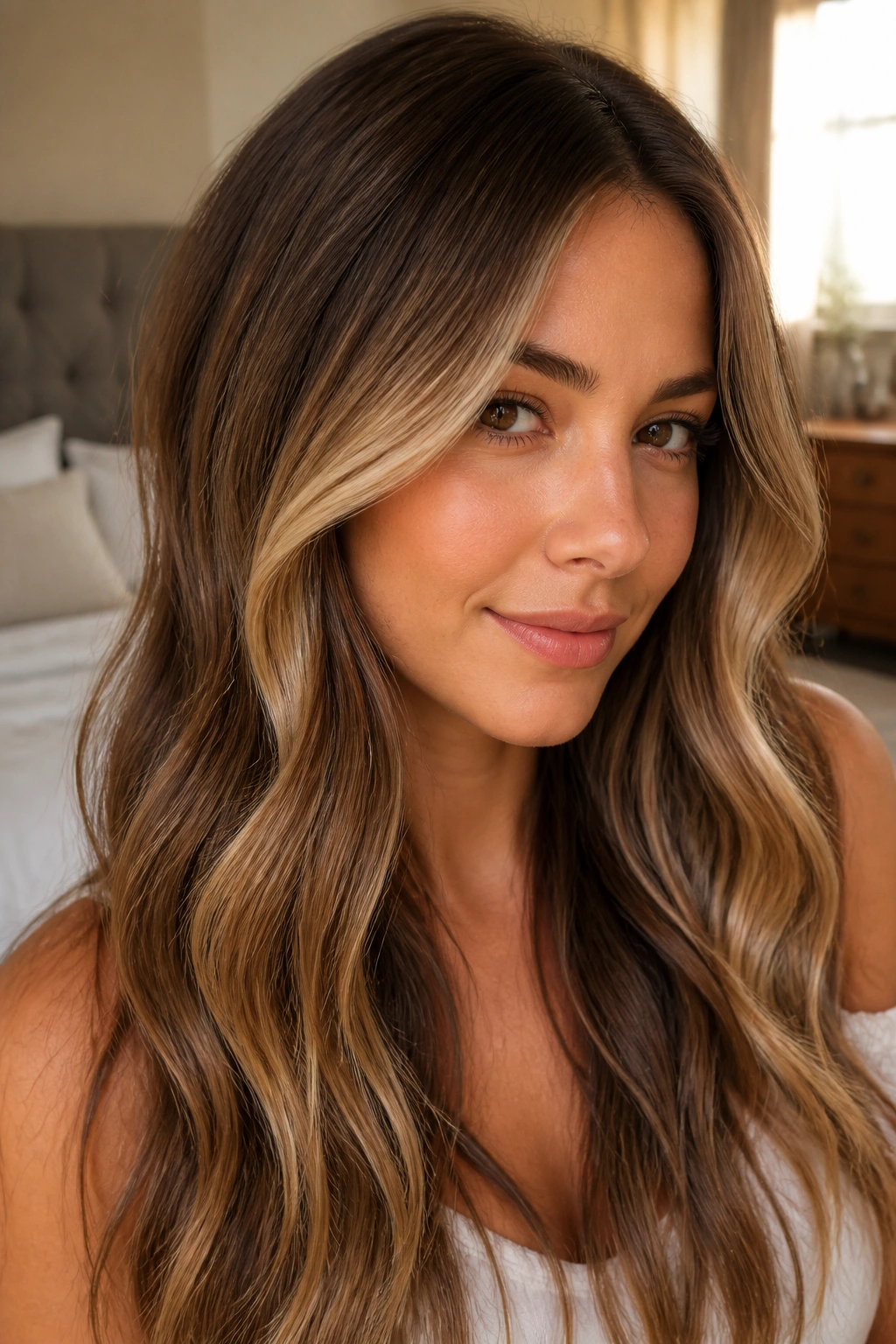
Cocoa brown and wheat blonde have a gentle, earthy feel that works well when you want brightness without a sharp jump in tone. Wheat blonde sits a little softer than true gold, which keeps the finish from looking rich and shiny in a heavy way.
This pairing is especially good for people who wear everyday makeup and don’t want their hair to outshine the rest of their face. It adds enough lift to matter, but it stays calm. Some looks shout. This one speaks in a normal voice.
Ask for fine placements through the top and sides, plus a few slightly stronger pieces at the front. That keeps the color from feeling one-note. Wheat blonde can also be a nice choice if honey tends to look too orange on your hair.
20. Mocha Brown with Champagne Veils
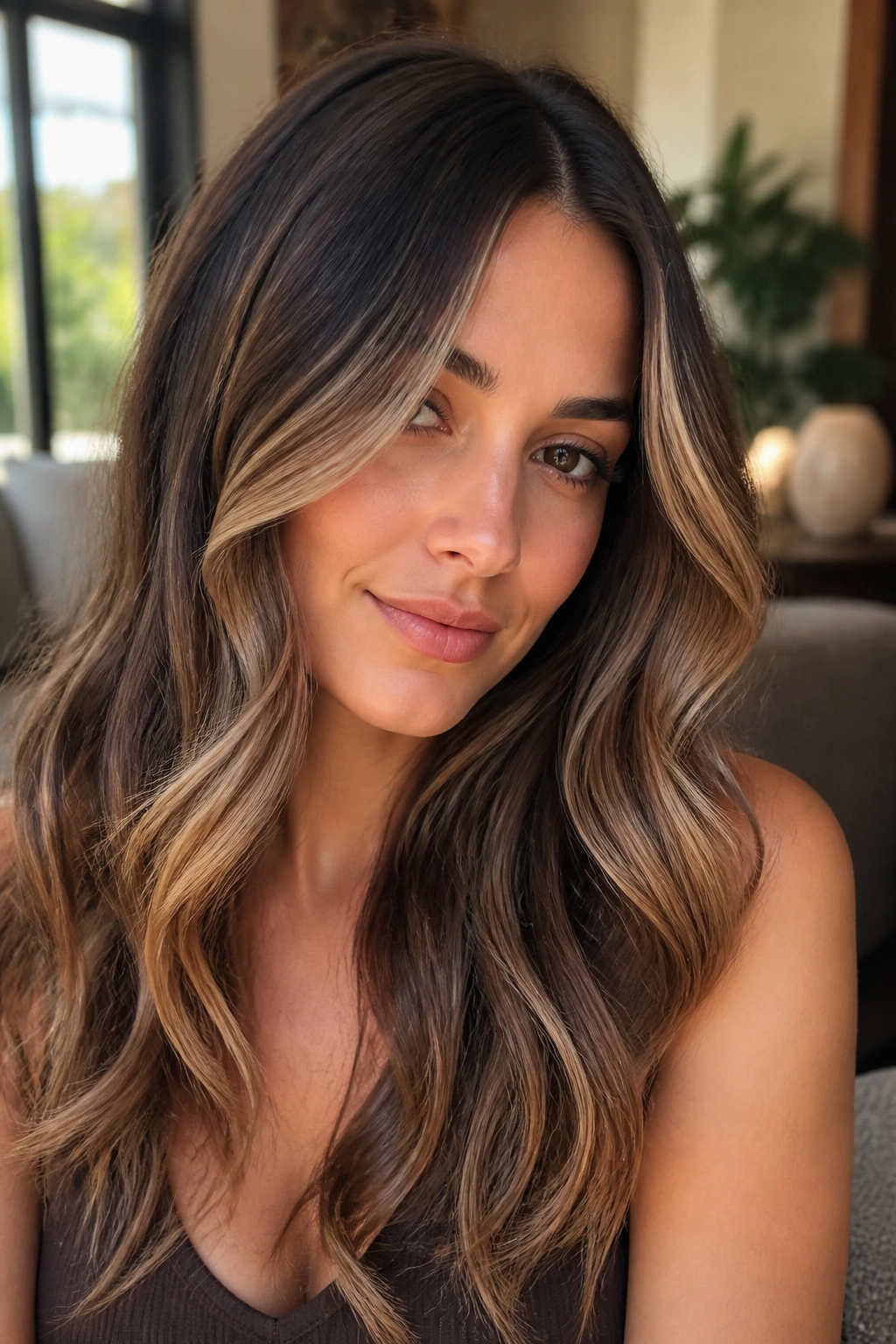
Mocha brown with champagne veils has a clean, polished finish that feels light without losing depth. The veils are thin enough to blend in, but the champagne tone still gives a noticeable glow. On a mocha base, that contrast feels elegant in a quiet way.
What I like here is the restraint. The blonde does not need to take over the whole head. It just needs to sit on the surface and around the face so the brown base stays rich. That keeps the hair from looking washed out.
If you wear it with a center part, the balance matters even more. The veils should frame both sides evenly so the color looks intentional, not lopsided. Small details. Big difference.
21. Auburn Brown with Warm Blonde Lifts
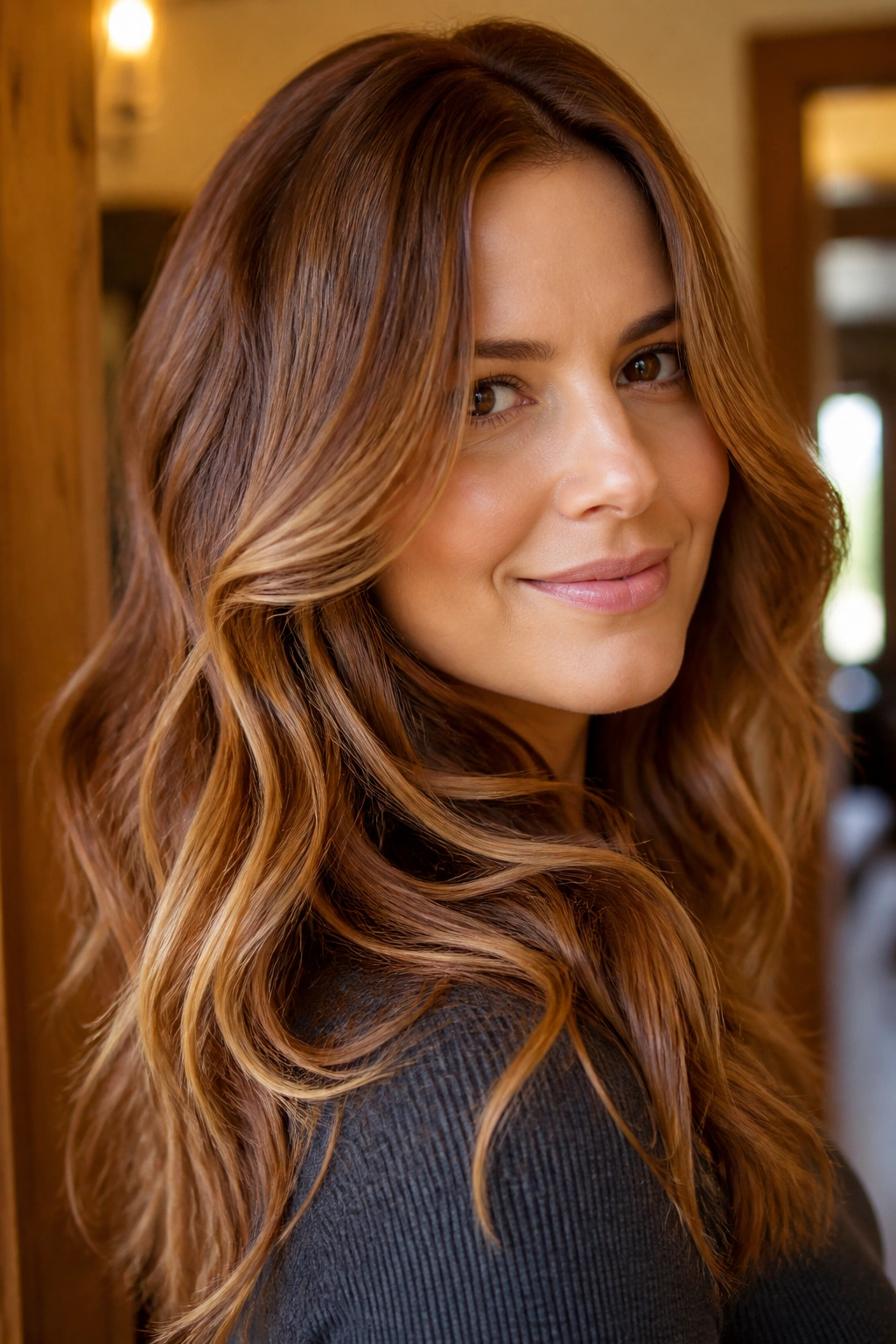
Auburn brown and warm blonde can be tricky, but when the tones are chosen well, the result is deep and glowing. The blonde should lean golden or honeyed, never pale and icy. That keeps the auburn base from looking muddy.
This look is for people who want warmth on warmth. There’s a richness to it that feels very alive in motion. The blonde catches the copper notes in the brown, and the whole head looks more dimensional than a single-tone auburn ever could.
A gloss is non-negotiable here. It keeps the reds and golds from fighting each other. If the blonde is too cool, the whole color may turn dull fast. Warm bases like this prefer warmth. That part is not negotiable.
22. Soft Ombré Balayage with Blonde Tips
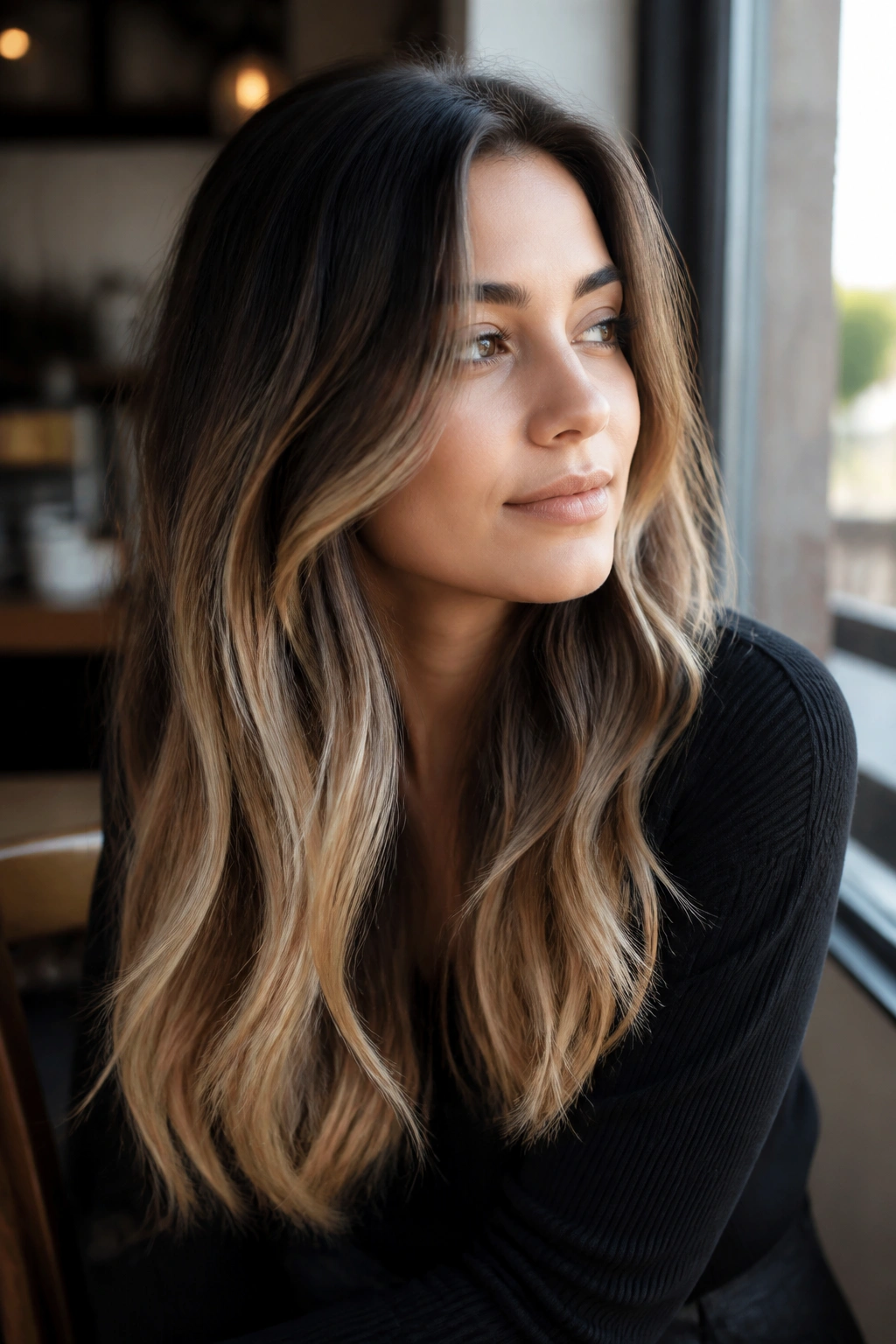
Soft ombré and balayage overlap nicely when the fade is gradual and the blonde lives mainly at the ends. On brown hair, this creates a low-stress grow-out because the root area can stay deep for a long time.
The look works best when the transition begins around the mid-lengths and the ends lift a few levels lighter. That gives the eye a clear gradient from brown to blonde. If the fade is abrupt, the hair can look dipped. Nobody wants that.
A soft ombré is handy if you like wearing your hair up. The darker top half looks neat in a bun or ponytail, while the blonde tips still give you a little movement when the hair is down. Simple. Effective.
23. Platinum-Leaning Ends for High Contrast
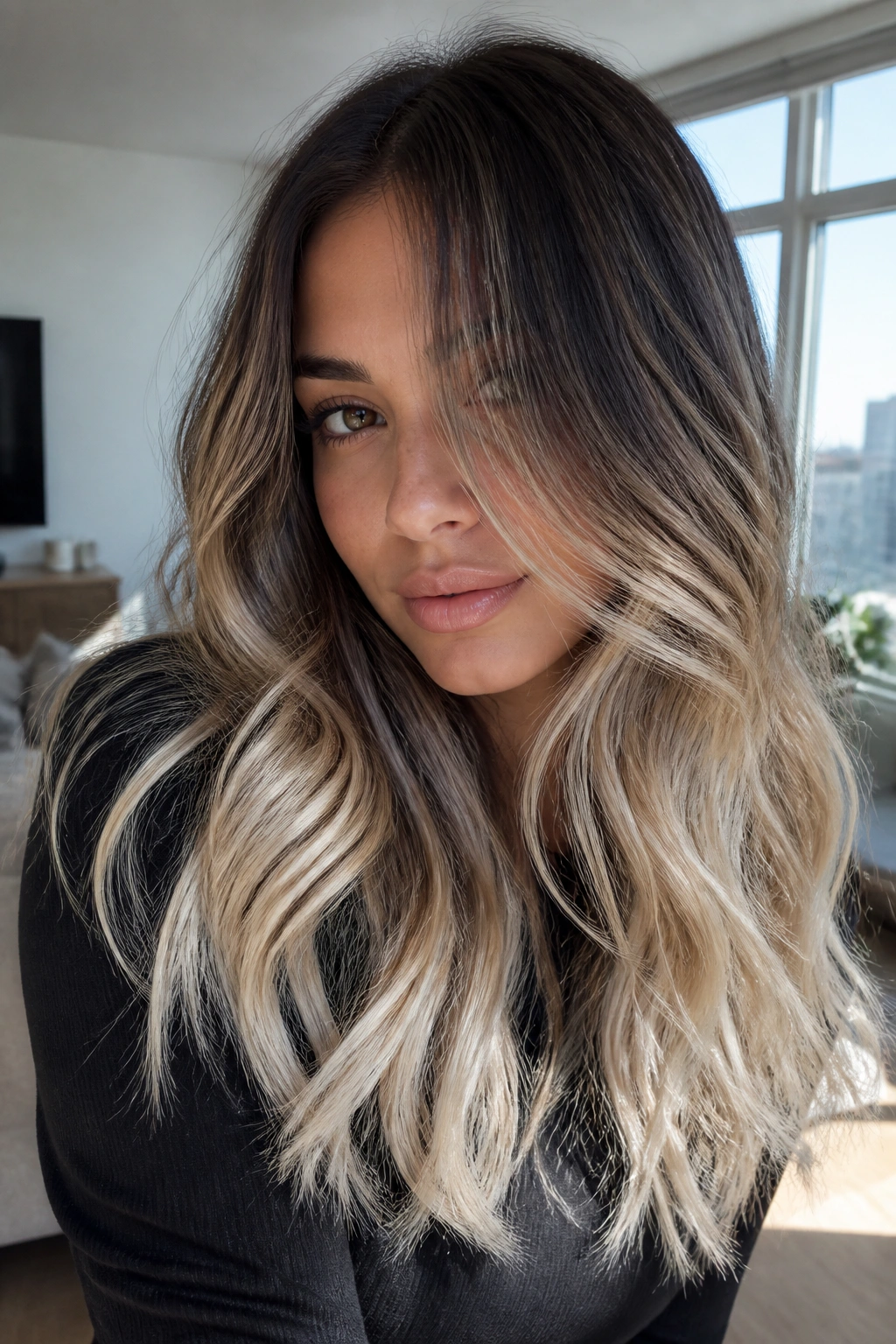
Platinum-leaning ends are not for the timid. On brown hair, they create a serious contrast, which can be gorgeous when the cut and tone are handled with care. The roots stay dark, and the ends go almost silver-blonde.
Best When You Want Drama
This style works best on healthy hair and on people who are fine with more upkeep. The lighter the ends, the more toner and moisture care they’ll need. That is just the deal.
- Keep the platinum mostly on the bottom third of the hair.
- Use bond care and deep conditioning regularly.
- Avoid too many super-light pieces near the scalp.
The payoff is striking. The dark-to-light shift has a sharp, graphic energy that looks especially good on layered waves and sleek straight hair. It’s bold. It also needs commitment.
24. Sunlit Money Piece and Soft Ends
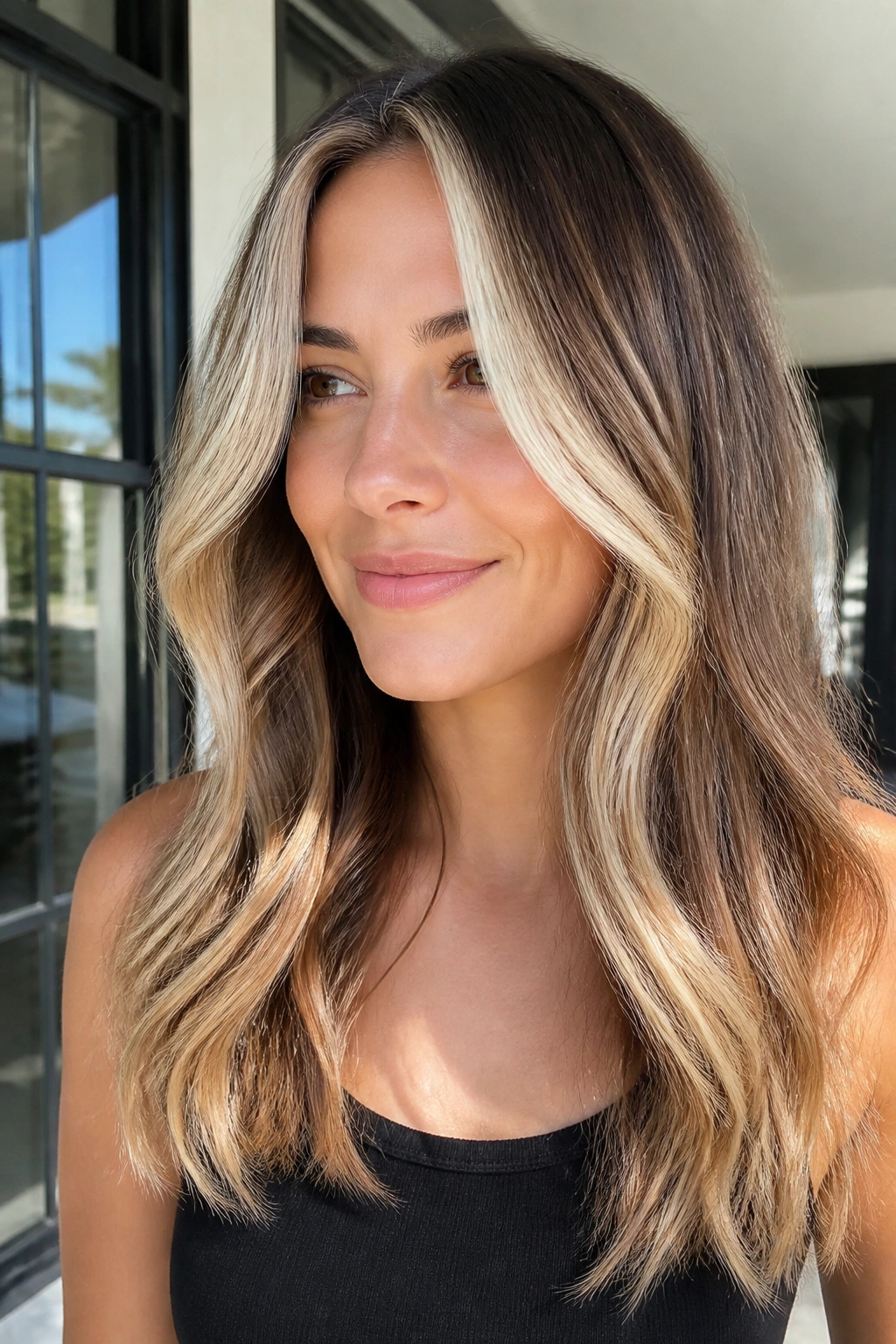
A bright money piece with softer ends gives you two levels of blonde in one look. The face frame delivers instant light, while the ends stay more restrained so the color doesn’t feel crowded. On brown hair, that combination can be especially flattering.
The front pieces should be the brightest area by design. The rest of the balayage can stay beige, honey, or neutral blonde depending on the base. That keeps the face bright and the lengths easy to wear. It’s a nice option if you like wearing your hair back because the front still does the heavy lifting.
This style works on a lot of textures, but it looks especially nice when the front pieces are styled away from the face. The bright frame opens things up. The softer ends keep it from becoming too much.
25. Balayage for Thick Brown Hair
Thick brown hair can carry more blonde than fine hair, but it also needs spacing. If the blonde is packed too tightly, the color can lose depth and the hair starts to look puffy instead of dimensional. Better to paint in controlled zones.
The goal is brightness with shadow left in place. Thick hair needs contrast more than it needs saturation. A mix of wider ribbons and darker interior sections helps keep the shape from turning into one giant light mass.
- Place blonde where the hair moves and bends.
- Leave some darker pieces underneath for depth.
- Ask for a stronger cut if the color starts to feel heavy.
This is one of the best places to use balayage in a very practical sense. The painting can reduce the visual bulk and make the haircut feel lighter.
26. Balayage for Fine Brown Hair
Fine brown hair can look fuller with balayage, but only if the lightening is delicate. Too much blonde too close together can make the hair look thinner because the eye loses the darker anchor it needs. Tiny, careful placement matters.
I’d keep the balayage airy and concentrated on the top layers, the face frame, and a few ends. That creates movement without stripping away density. A slightly deeper root shadow can also help the hair look thicker at the scalp, which is useful if your part is wide.
The finish should stay glossy. Fine hair shows rough texture quickly, so the toner and styling matter as much as the paint job. A clean blow-dry or soft wave can make the color seem twice as intentional.
27. Low-Maintenance Subtle Blonde Sweep
Sometimes the smartest blond balayage on brown hair is the one nobody has to stare at to understand. A subtle sweep of blonde through the mid-lengths and ends gives you brightness with a softer grow-out and less salon pressure.
Why Less Can Be Better
This look is built for normal life. You can wear it to work, tie it back, and let it grow without seeing a harsh line every few weeks. The blonde should look like it was there for a while, not like it was just switched on.
- Choose a tone close to your natural warmth level.
- Keep the blonde scattered, not dense.
- Refresh with a gloss instead of a full highlight session when possible.
It may not be the flashiest option on this list, but it is one of the easiest to live with. That counts for a lot.
28. High-Contrast Bright Blonde Balayage
High-contrast balayage is for the person who wants the blonde to be obvious. The brown stays dark. The blonde gets bright. The difference between the two is part of the appeal, and that’s the point.
This look needs precision because high contrast can turn messy fast. The sections should be deliberate, and the toner should keep the blonde from looking raw. If the placement is good, the result is bold in a clean way. If it’s sloppy, it looks patchy. There’s not much middle ground here.
Best on layered hair, especially when the styling shows texture. A flat iron can make the contrast feel sharper, while soft waves make the blonde pieces dance. Either way, the color has to be strong enough to hold its own.
29. Warm Sand Blonde Balayage with Soft Movement
Warm sand blonde gives brown hair a light, airy finish without pushing into brass. It sits between beige and gold, which makes it easier to wear than a very cool blonde for people whose skin likes warmer tones. The result feels easy, calm, and a little beachy without trying to be a theme.
How It Reads on Hair
This shade is nice because it doesn’t demand perfect lighting to look good. The tone stays soft indoors and brightens up nicely outside. On brown hair, that makes the overall color feel more natural than a pale blonde would.
The best placement is a mix of face-framing pieces, a few surface ribbons, and lighter ends. That combination keeps the color moving. If you want blonde that looks relaxed rather than formal, this is a strong pick.
30. Cinnamon Brown with Creamy Blonde Threads
Cinnamon brown with creamy blonde threads closes the list on a warmer, richer note. The base has a spicy brown-red quality, and the blonde threads add a creamy lift that keeps the color from feeling too dense. It’s pretty, but not sugary.
This is a nice choice if you like warmth but do not want to look obviously copper. The blonde should be soft and buttery, woven through in thin pieces so the cinnamon base stays visible. That balance is what makes it work. Too much blonde, and the cinnamon loses its depth. Too little, and you miss the point.
A wave or bend helps this color show up best because the creamy threads catch around the curves. Straight hair can wear it too, but the contrast is gentler. The look feels rich either way.
Final Thoughts
The best blond balayage for brown hair is the one that respects the base instead of bulldozing it. Warm browns usually prefer honey, caramel, buttercream, and sandier blondes. Cooler brunettes tend to look best with beige, ash, mushroom, or champagne tones. That simple match makes more difference than chasing the lightest blonde in the room.
Placement matters just as much. Face-framing pieces bring the color forward fast. Softer ends keep the grow-out easy. Wider ribbons make a statement, while fine strokes keep things quiet and natural. Pick the mood first, then the shade.
And if you’re stuck between two options, choose the one that works with your haircut and your routine. Hair color lives on the head, not on a mood board. That part tends to matter most.
