



Brown hair can look flat fast when the blonde is too bright or too chunky. The versions of blonde balayage for brown hair that age well are the ones that keep a little darkness at the root and let the light pieces drift through the midlengths and ends.
That balance is what makes brunette hair feel richer, not stripped. A good balayage doesn’t erase your base; it gives the eye something to follow, which is why hand-painted ribbons often look softer than foil-heavy highlights when they grow out.
I’m picky about tone here. Warm brunettes usually look best with caramel, honey, beige, or champagne pieces, while cooler brown bases can hold ash, icy beige, or mushroom-blonde accents without turning muddy. Too much gold on the wrong base can read brassy. Too much ash can go dull. Neither one is a compliment.
1. Caramel Blonde Balayage for Brown Hair
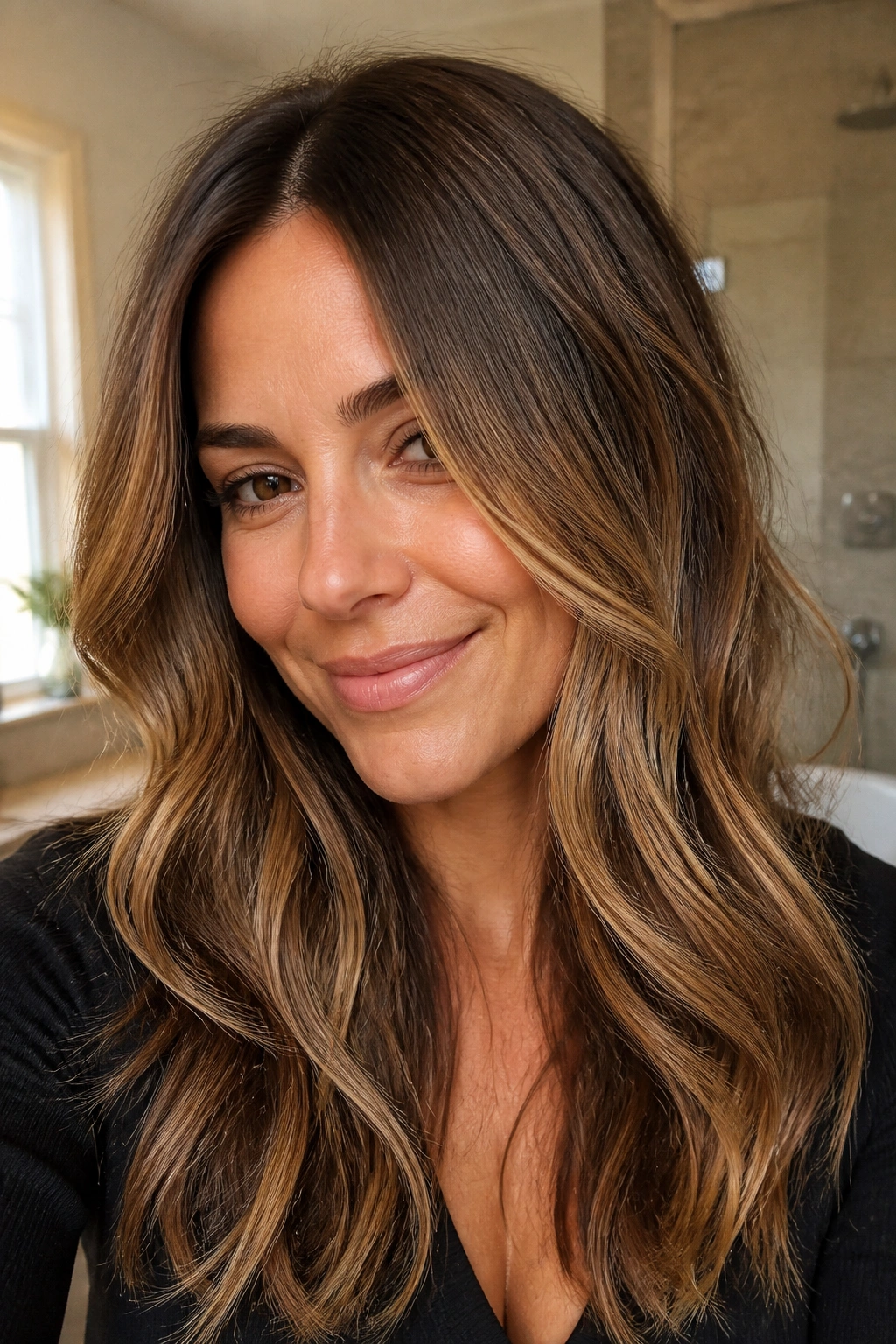
Caramel is the friendliest place to start if you want blonde balayage for brown hair without a hard jump. The color sits in that sweet spot between brunette depth and blonde brightness, so the result looks soft even when the light pieces are fairly visible.
Why it works
Caramel works because it mirrors the warmth already sitting in many brown bases. On level 4 or 5 hair, those ribbons can lift enough to look lighter without screaming “I had my hair colored yesterday.” That matters if you want something that still feels believable in daylight.
Ask for painted caramel pieces through the midlengths and ends, with a little extra brightness around the face. The root area should stay deeper, or the whole thing loses shape fast.
- Best on medium brown, chestnut brown, and warm espresso bases
- Easiest to maintain when the root stays at least 2 shades deeper than the ends
- Looks especially good on loose waves and round-brush blowouts
- Works well with a gloss that leans beige or gold
My strong opinion: caramel is never boring when it’s placed well. It fails only when every section gets the same amount of light.
2. Honey Blonde Balayage with a Soft Root Shadow
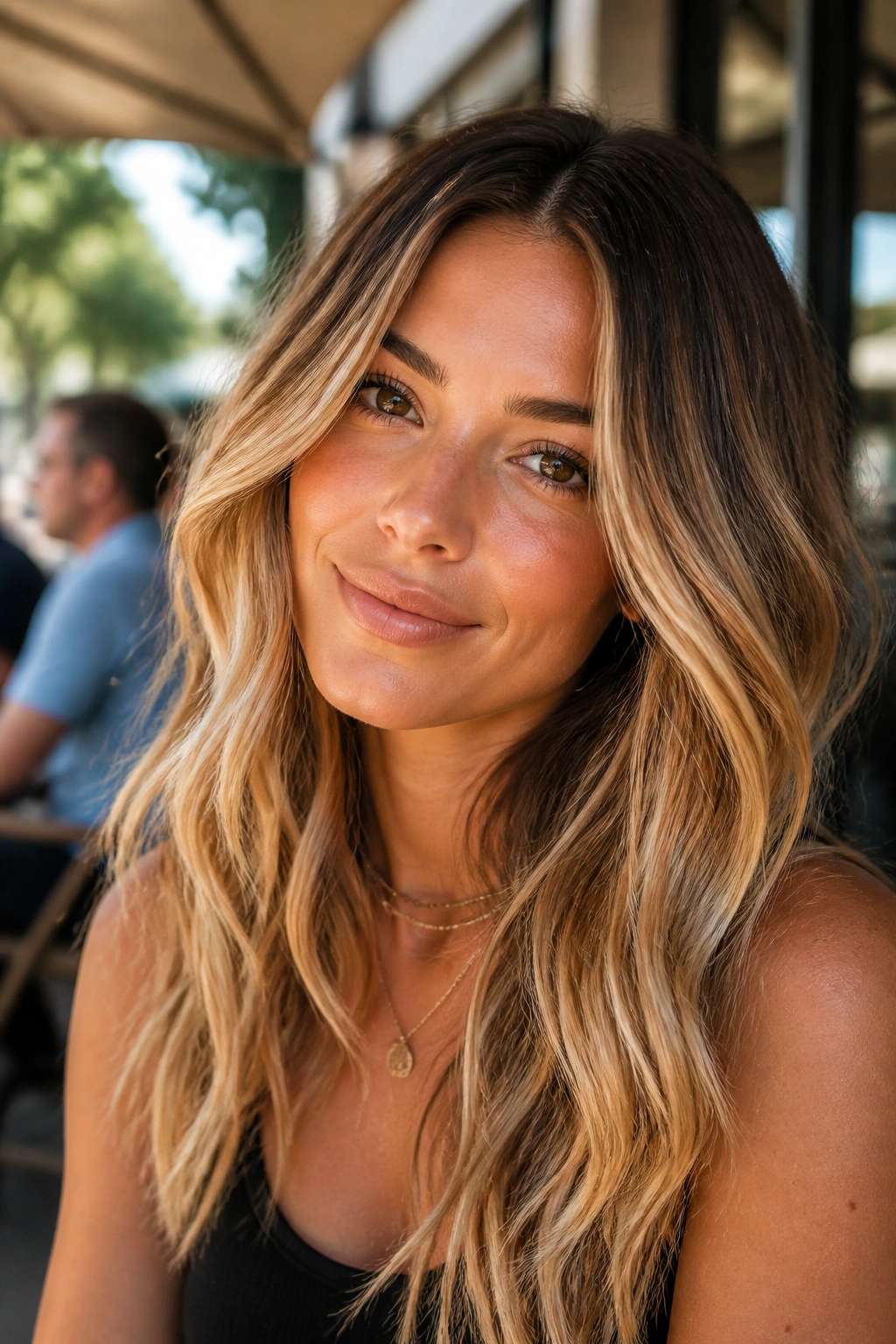
Honey blonde has more glow than caramel, and that glow can save a brown base that needs warmth around the face. The trick is to keep the root shadow soft so the blonde doesn’t look pasted on.
Why does that matter? Because honey reads bright fast. If the root is too light or too lifted, the whole color turns busy. A shaded root keeps the grow-out calm and gives the blonde room to feel creamy rather than stripy.
What to ask for
Tell your colorist you want honey ribbons with a seamless root shadow of about 1 to 2 levels darker than the lightest pieces. That keeps the color from popping too hard against brown hair. If you wear your hair wavy, ask for more saturation in the lower half; straight hair shows every placement choice, so the blend has to be cleaner.
This look flatters warm brown eyes and golden undertones especially well. It also behaves better than brighter blonde when your hair has a little natural red or copper in it.
3. Ash Blonde Balayage on Espresso Brown Hair
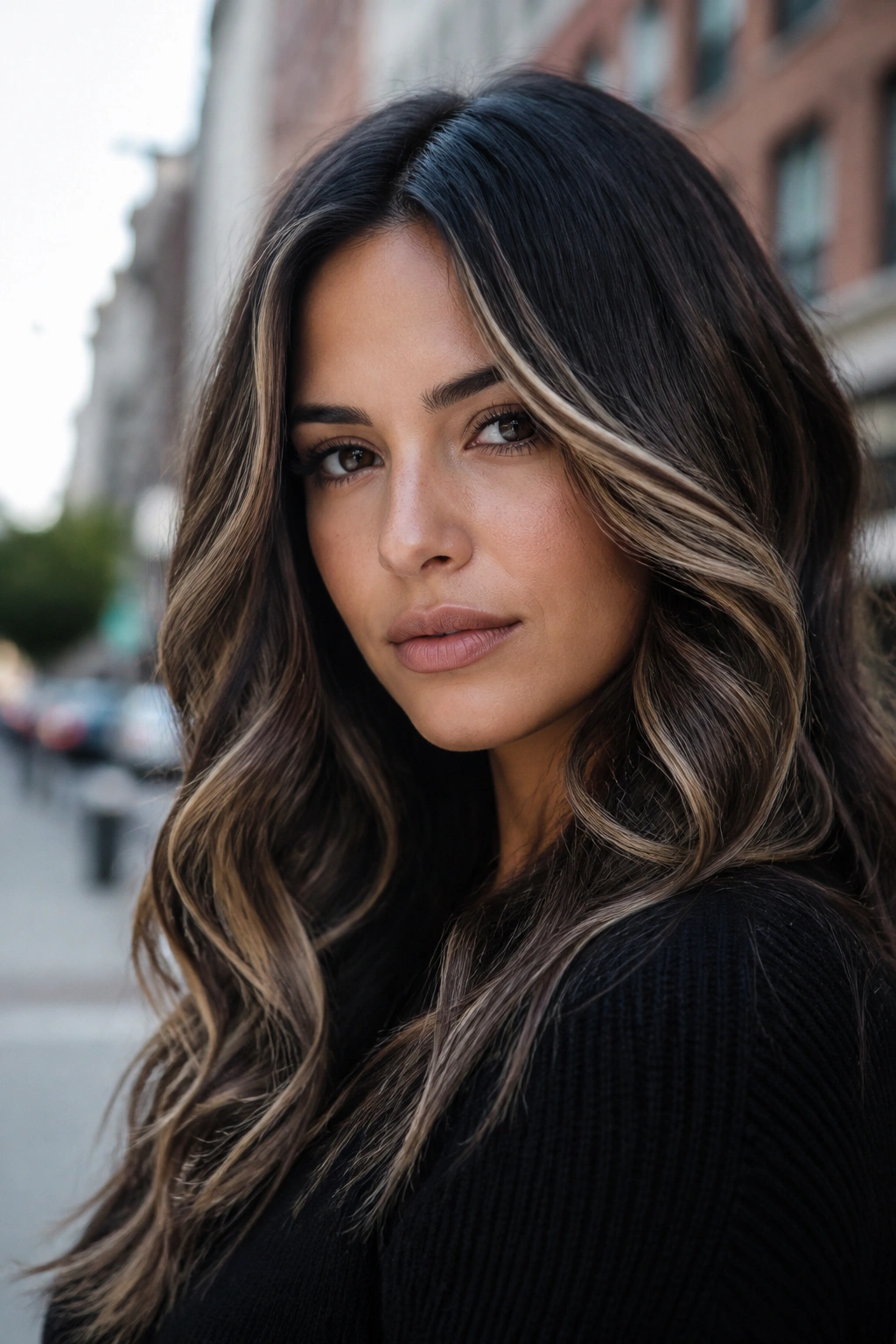
Cool brunette hair can take ash blonde without looking washed out, and that is not true for every brown base. Espresso hair, in particular, can carry the cool contrast better than lighter brunettes that already lean golden.
The result feels sharper. Not louder. Sharper.
How to keep it clean
Ash balayage needs a careful toner, not a heavy hand with lightener. If the blonde is lifted too far and then slapped with a gray toner, the ends can go flat or khaki. A soft pearl-ash gloss usually looks cleaner on dark brown hair than a dense slate tone.
- Best for cool or neutral undertones
- Works well when the light pieces are narrow, not chunky
- Needs purple shampoo only once every 1 to 2 weeks if the tone is balanced well
- Looks strongest on sleek styling or soft bends
If you want contrast without warmth, this is the lane. It feels modern without trying too hard.
4. Beige Blonde Money Piece on Brown Hair
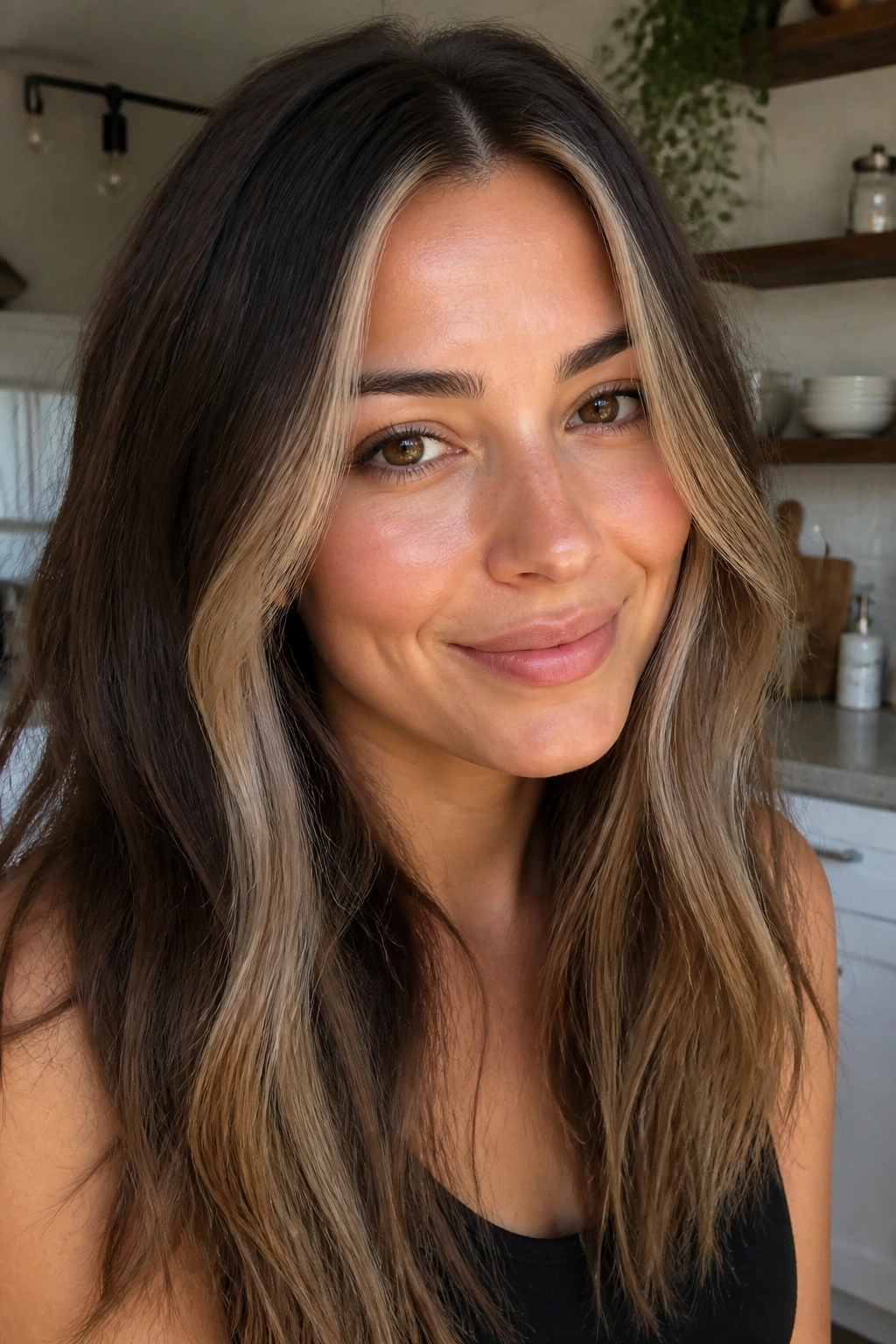
A beige money piece is the easiest way to make brown hair look brighter without bleaching the whole head. Two face-framing sections, lifted and toned to a soft beige, can change the whole mood of the cut.
Here’s the part people miss: the money piece should not be the brightest thing in the room unless you want a bolder look. If the front is too pale and the rest of the hair stays too dark, the color starts wearing the haircut instead of the other way around.
What to tell the salon
Ask for a soft beige face frame 1 to 3 shades lighter than the base, blended back into scattered balayage through the crown. Keep the ends lighter than the midsection so the color still has movement. A center part shows this placement well, but a deep side part can give it a more dramatic sweep.
This one is especially nice if you like your brown hair rich but want your face to look a little more awake. It does that job fast.
5. Mushroom Blonde Balayage for Brown Hair
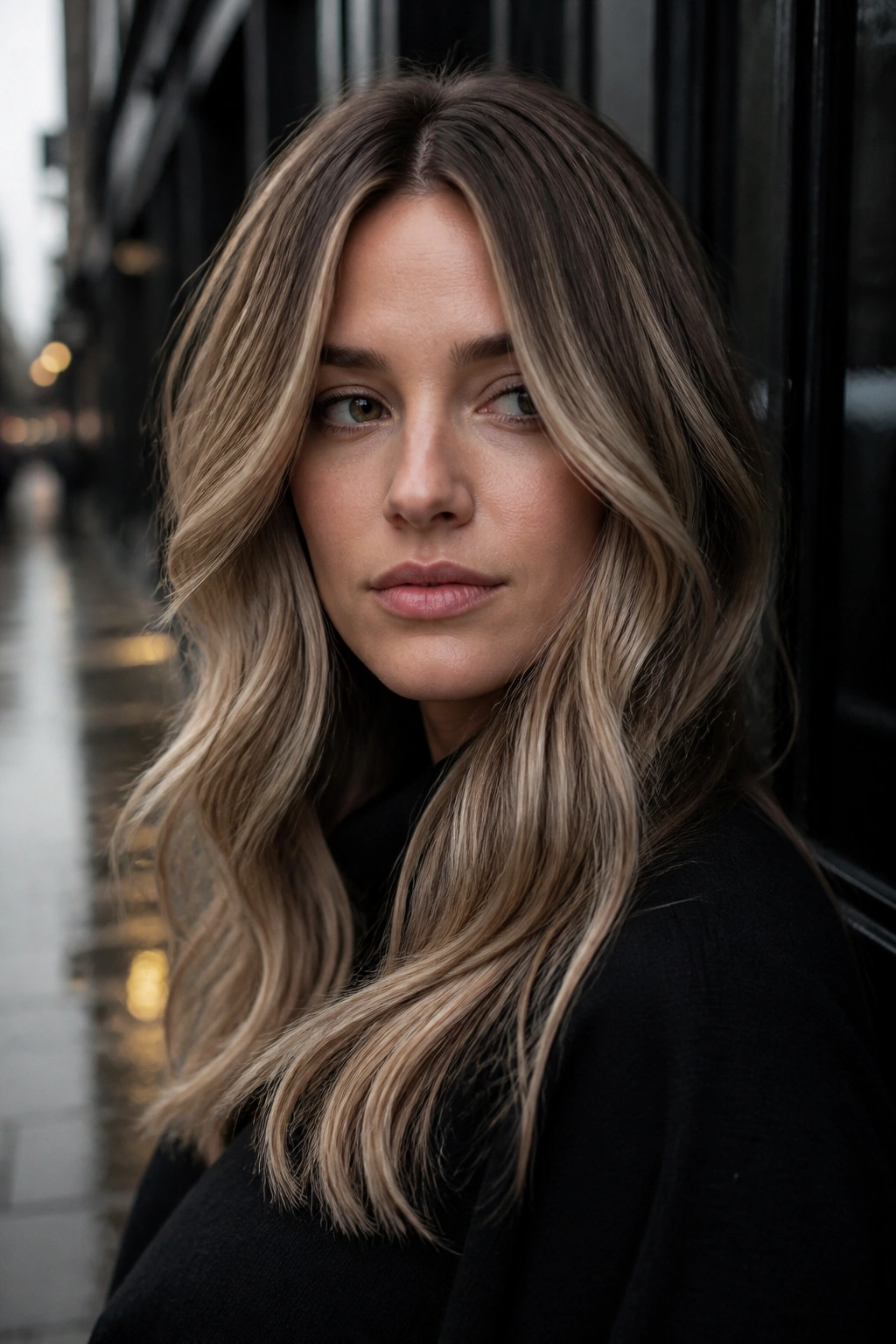
Mushroom blonde is the cooler cousin in the balayage family, and on brown hair it can look expensive in a low-key way. The tone sits between taupe, ash, and beige, which means it doesn’t fight with brunette depth.
It also solves a common problem. Warm blondes can turn too sunny on neutral brown hair, while mushroom tones keep the whole look grounded. That matters if your wardrobe leans black, gray, cream, or muted earth shades.
Why it stands out
The best mushroom balayage keeps the lighter pieces dusty, not yellow. That means your stylist should lift carefully and then tone with a beige-ash mix, not chase icy brightness. If the lightness level climbs too high, the mushroom effect disappears.
This look is strongest on medium brown and dark blonde-to-brown bases. It’s also a quiet winner for shoulder-length cuts, where the color can move without needing a lot of styling.
6. Champagne Blonde Balayage on Chocolate Brown Hair
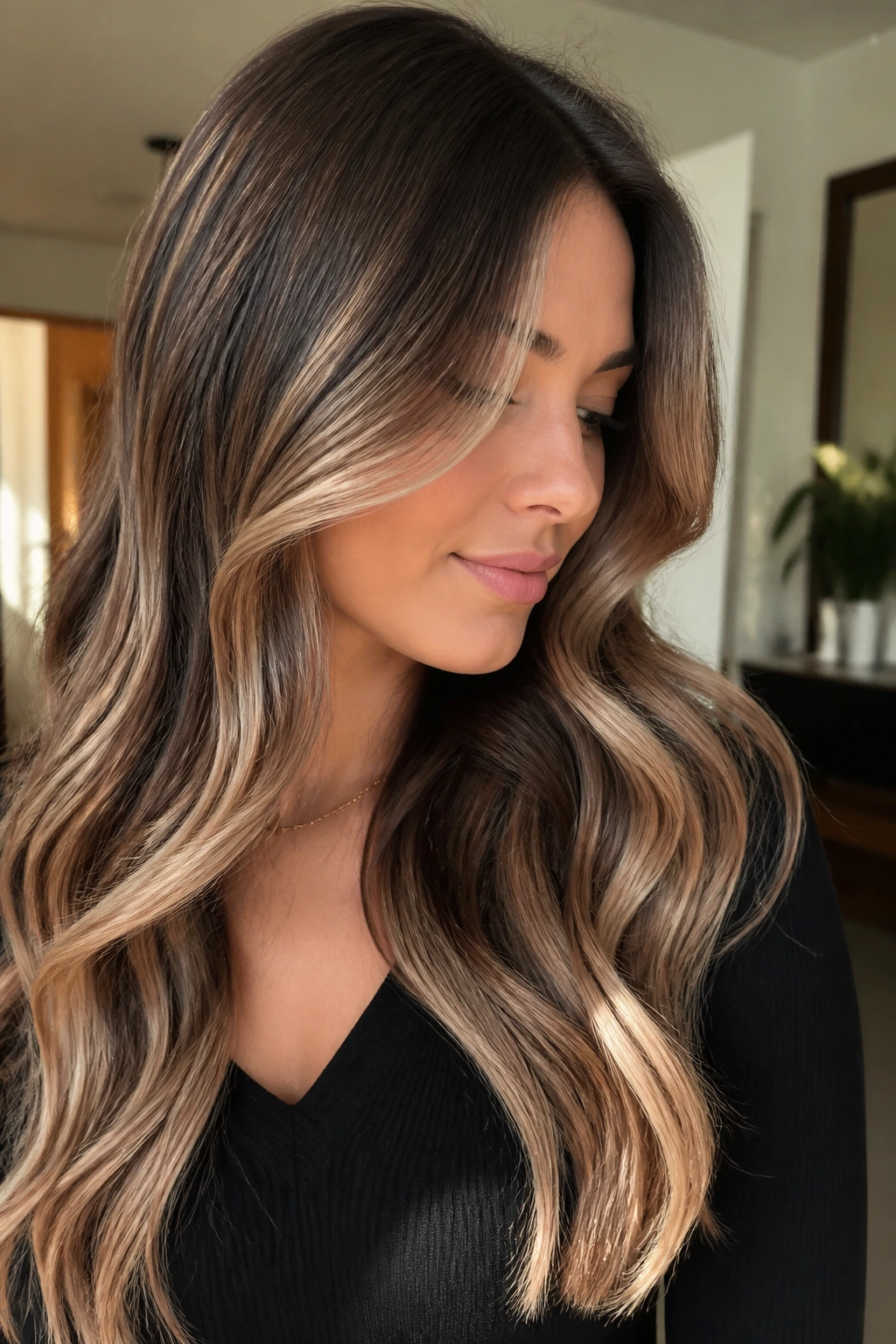
Champagne blonde has a little sparkle to it, but it should still look creamy on chocolate brown hair. Think soft glow, not metallic shine. The best versions are pale enough to brighten the hair but warm enough to keep the finish silky.
A small detail that matters
Champagne balayage looks better when the lightest pieces sit in ribbons, not blocks. That spacing keeps the hair from looking overprocessed, especially if your natural color is deep chocolate brown. The transition should feel airy around the face and slightly denser at the ends.
- Ask for pale beige-gold tones, not stark yellow
- Keep the root at least 2 levels deeper than the lightest blonde
- Add a gloss every 6 to 8 weeks if your hair pulls warm fast
- Blow-drying with a round brush helps the shade look smoother
Champagne is a good choice when you want brightness with polish. It can lean dressy or casual depending on how you style it.
7. Bronde Balayage with Barely-There Highlights
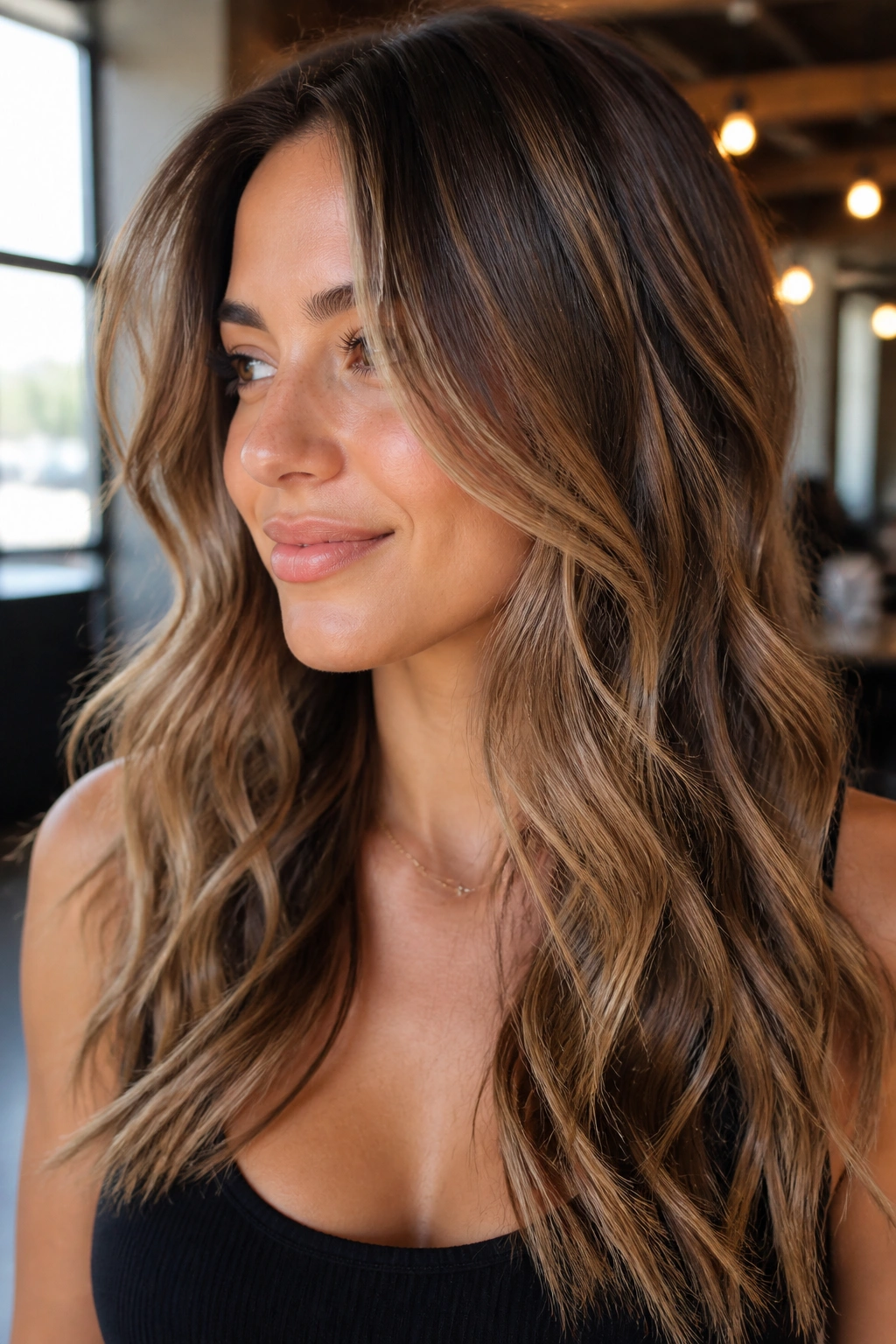
Bronde is what happens when brown hair doesn’t want to leave its own lane. Good bronde balayage gives you dimension first and blonde second, which is why it works so well for people who hate obvious streaks.
You can keep this look almost whisper-soft. The light pieces might only be 1 to 2 shades lighter than the base, but the placement still changes the way the hair moves. That’s the whole trick. The eye reads texture before it reads color.
What makes it different
Unlike high-contrast blonding, bronde usually relies on thinner painted sections and a soft gloss. It looks best when the hair has a little wave or bend, because the different tones catch each other and break up the surface.
If you want a low-drama update, this is one of the easiest wins. It grows out with fewer obvious lines and still gives brown hair that sunlit shift people notice without knowing why.
8. Platinum-leaning Balayage on Dark Brown Hair
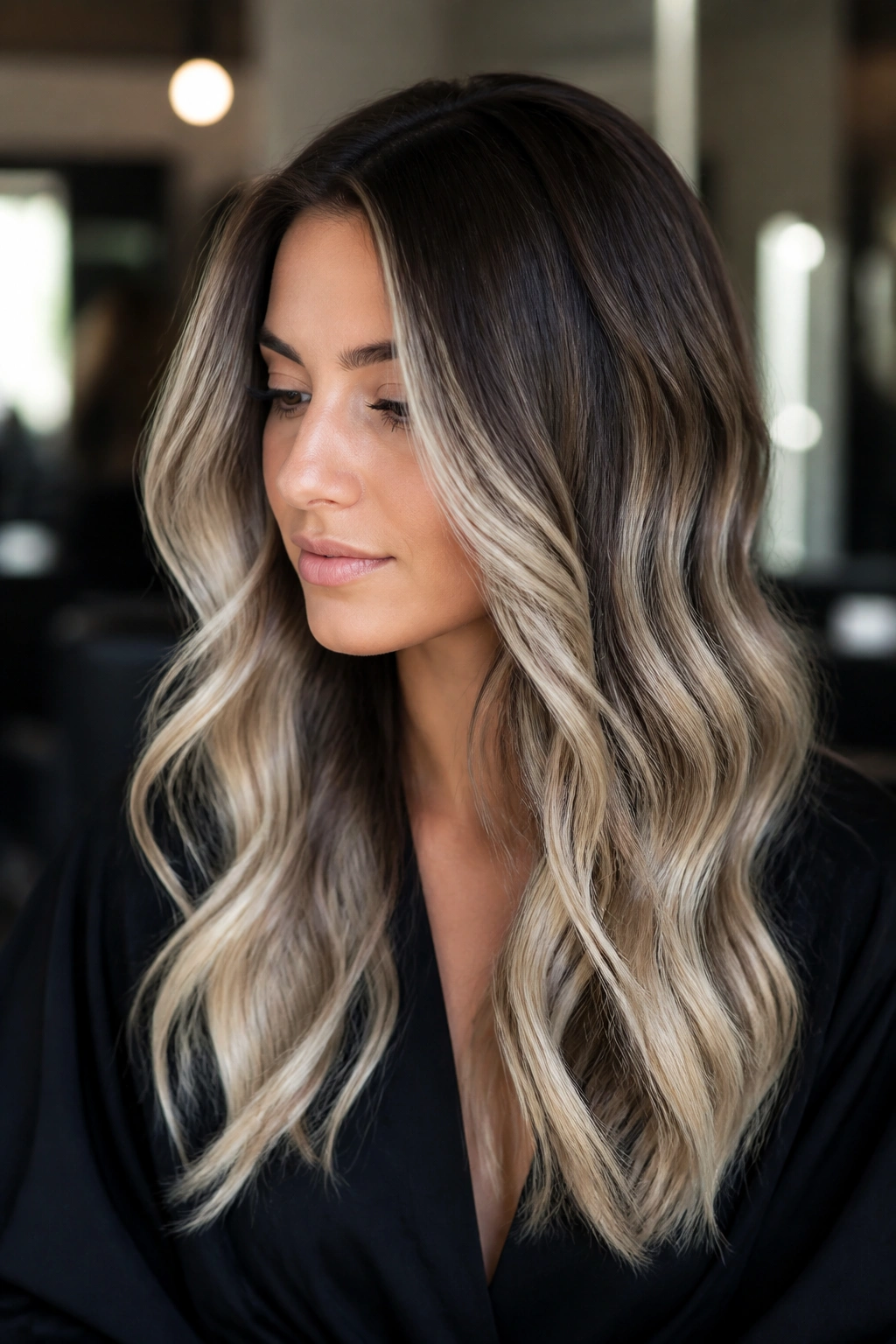
Platinum-leaning balayage on dark brown hair is not subtle. That’s the point. When the contrast is handled well, the result looks bold and glossy instead of stripy.
The danger is obvious: dark brown hair can turn orange or gold on the way up, and if the toner is too cool too soon, the ends can go muddy. You need patience, decent lift, and a colorist who knows when to stop lifting and let the toner do the rest.
For best results, keep the platinum pieces to the lower half of the hair and a narrow frame around the front. That way the brown base still anchors the look. It also makes the grow-out less brutal, which is worth caring about unless you like frequent salon visits.
9. Golden Blonde Balayage for Warm Brown Hair
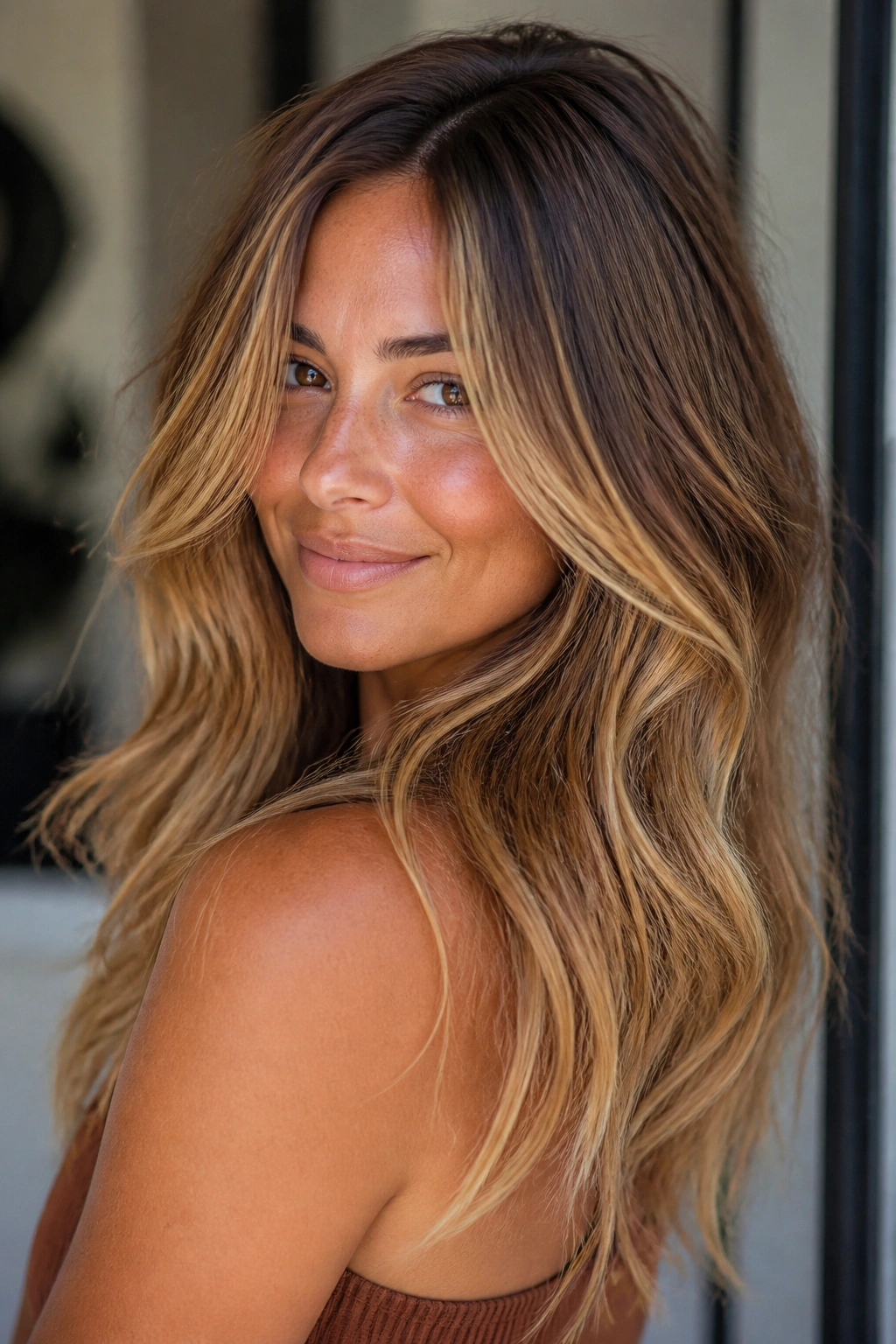
Warm brown hair and golden blonde balayage get along because they share the same sunny language. This is the look you pick when you want brightness that feels soft, not icy or fashion-y.
A good golden blend should look like the hair spent some time in real light. Not that fake streaky stuff people used to call “highlights.” The pieces should move from deeper caramel near the root into brighter gold at the ends, with no hard steps.
Best way to wear it
This tone loves layered cuts and loose waves. Straight, one-length hair can make the gold sit in flat bands if the placement is too even. If your base has natural copper or chestnut tones, golden balayage usually feels especially easy to wear.
I like this look for people who want warmth without red tones. It has enough shine to wake up the face, but it doesn’t turn orange if the toner is mixed right.
10. Curly Brown Hair with Scattered Blonde Ribbons
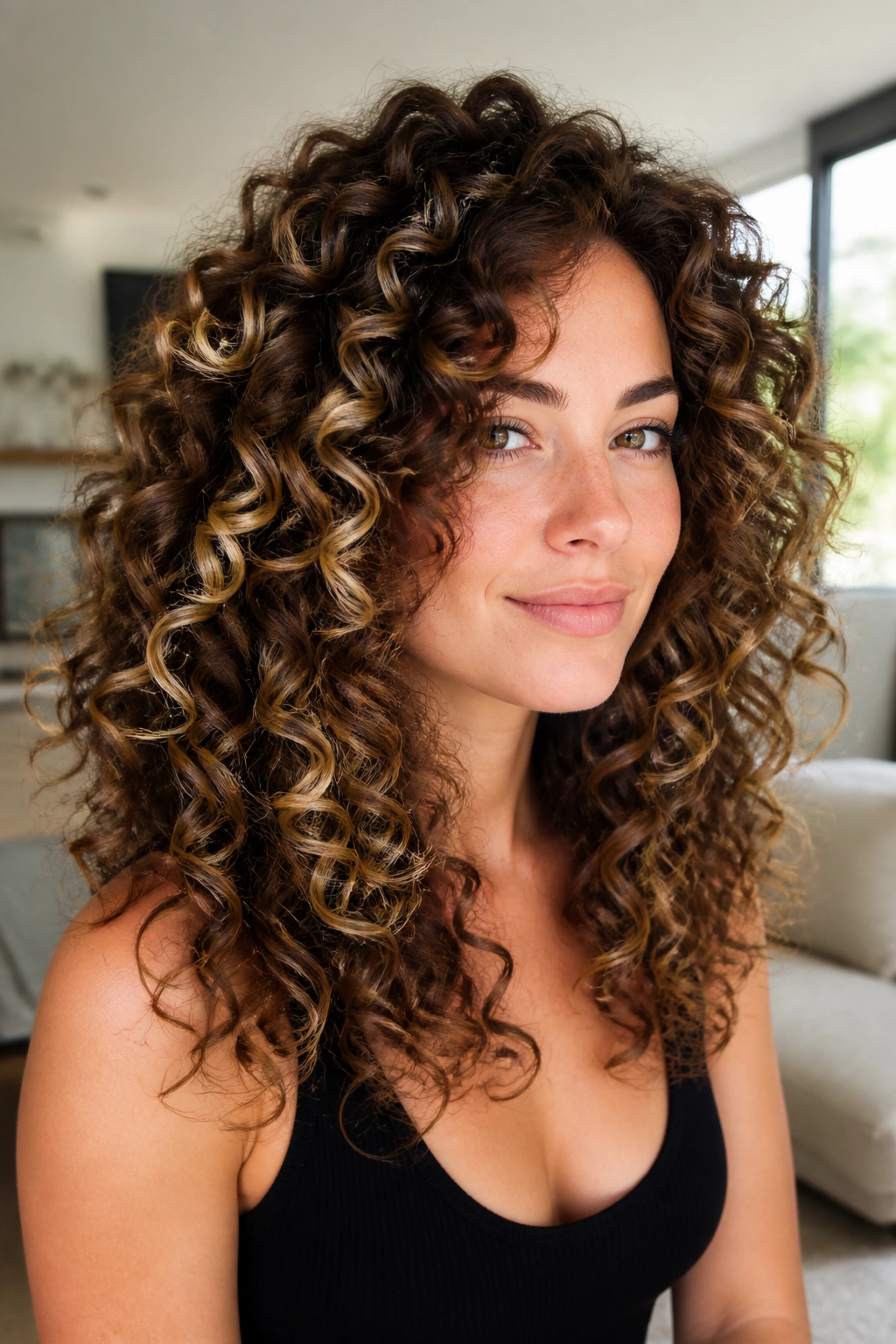
Curly hair needs a different hand, and balayage placement should respect the curl pattern instead of fighting it. Scattered blonde ribbons can make curls look fuller because the light hits different parts of the coil as the hair moves.
The key is spacing. Too many light pieces packed together make curls look fuzzy and dry. Too few, and the color disappears once the hair shrinks up. A good balance usually means painting the visible outer curl layers and leaving some depth underneath.
How to keep curls happy
- Lift only enough to show contrast; curls don’t need full platinum to look bright
- Use bond-building care after lightening
- Ask for face-framing pieces that follow the curl pattern
- Finish with a cream or gel that defines the curl, not a heavy oil that mutes the blonde
This look can be gorgeous on coils, waves, and spiral curls alike. It just needs placement that moves with the hair instead of sitting on top of it.
11. Lob-Length Blonde Balayage with Blunt Ends
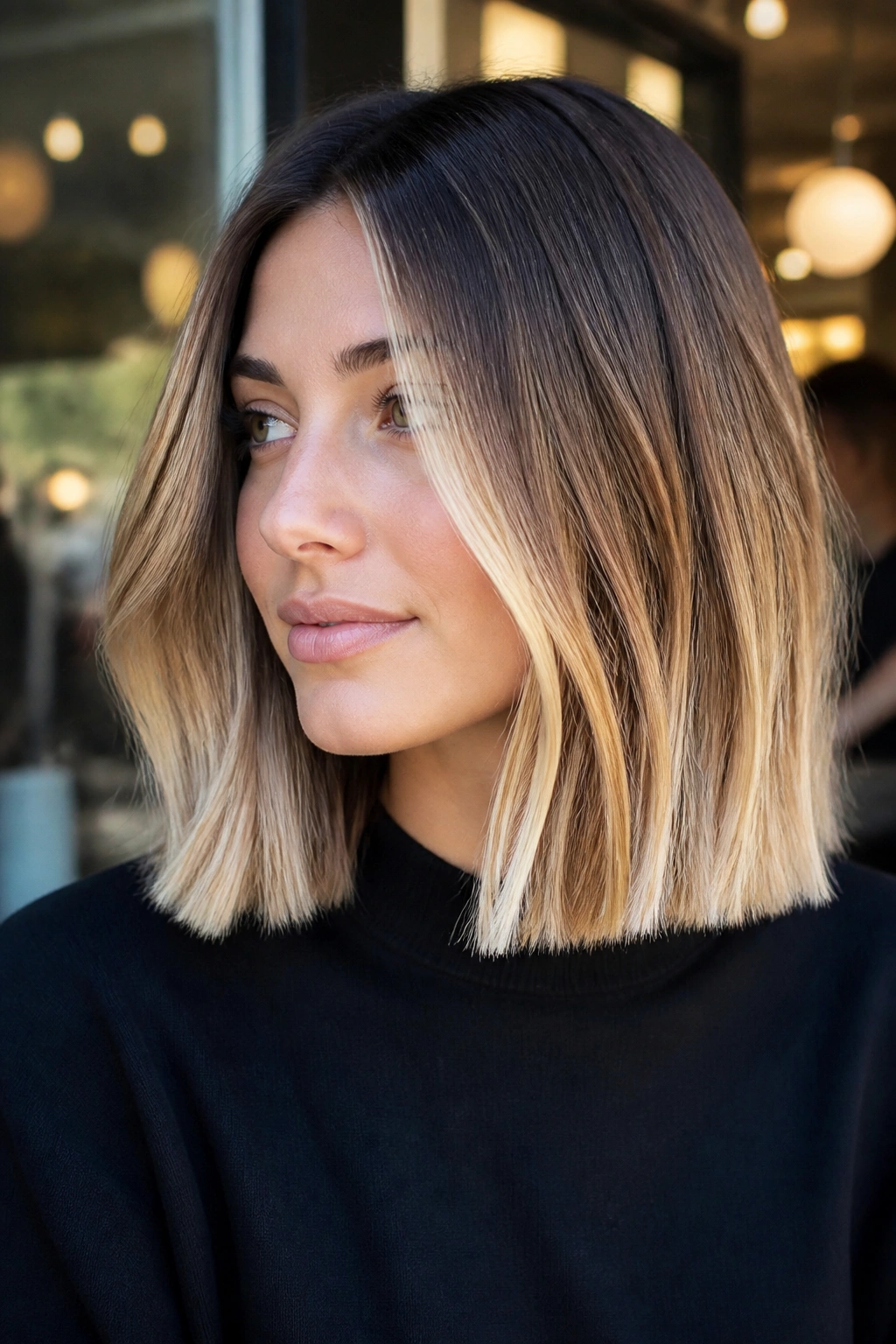
A lob gives blonde balayage a cleaner edge. Because the cut is shorter and the ends are blunt, the color can look sharper without becoming too busy.
That blunt line matters more than people think. On a lob, the blonde ends define the shape, especially if the base stays deep near the root. The contrast makes the haircut look deliberate, not like leftover color from a previous appointment.
If you wear your lob straight, ask for lighter saturation near the front and softer, airier pieces toward the back. Wavy styling can hide a lot, but a straight lob shows the placement in plain daylight. That’s not a bad thing. It just means the color has to be cleaner.
12. Long Layers with a Full Balayage Sweep
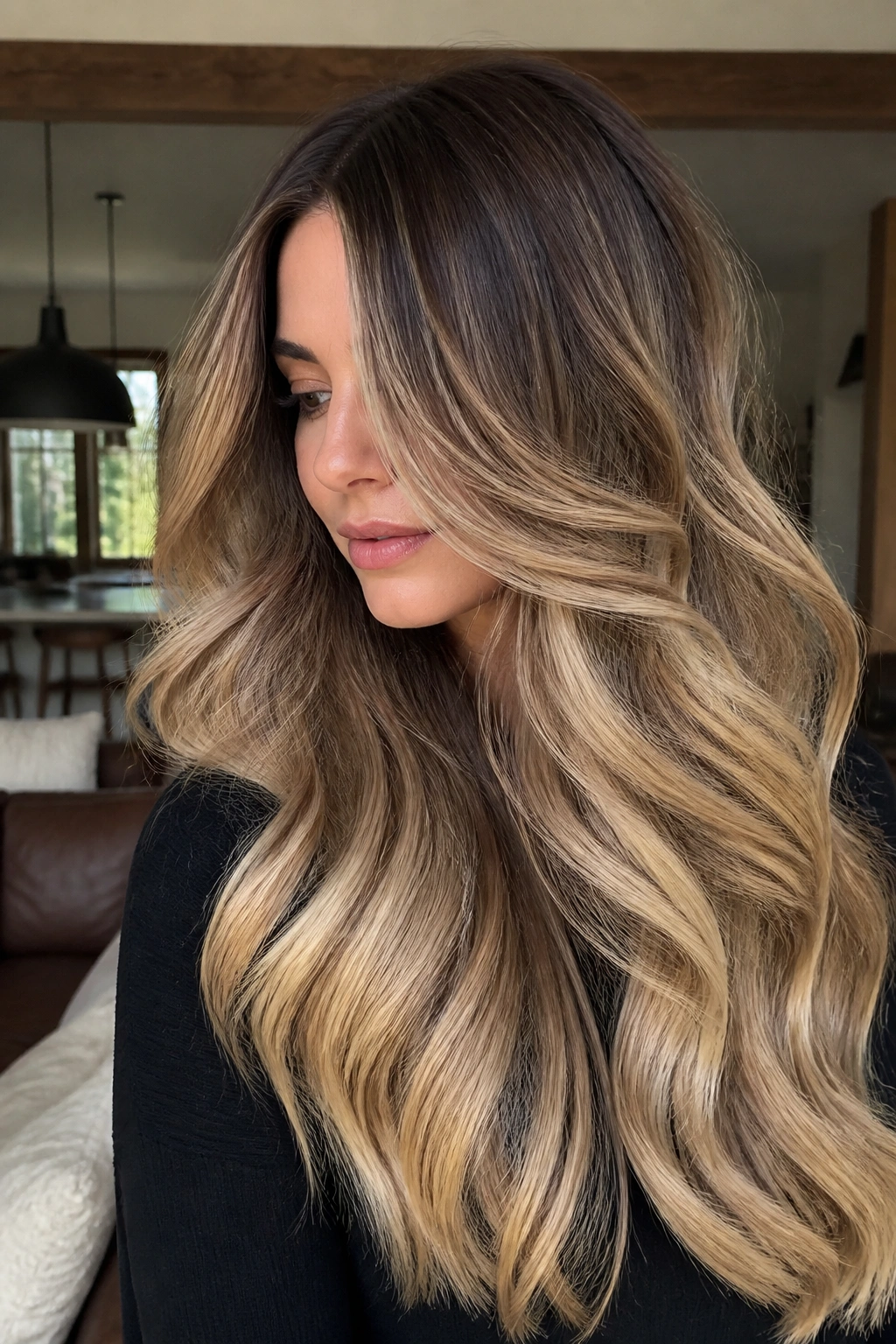
Long layers are practically made for balayage. Every layer catches a different amount of blonde, so the color looks like it’s moving even when the hair is still.
This is the look to choose when you want a lot of dimension without losing length. The top sections can stay richer brown, the midlengths can hold warm or neutral blonde, and the ends can carry the brightest work. That tiered structure keeps the hair from looking like one flat block.
Best for thick or heavy hair
Long layers stop balayage from feeling too heavy at the bottom. If your hair is thick, ask for painted pieces that start below the crown and get denser from cheekbone level down. That keeps the top from becoming too light while still giving the whole style enough lift.
I’d pick this over a uniform highlight pattern any day. It looks easier, and it usually is.
13. Chestnut Brown Hair with Toasted Almond Lights
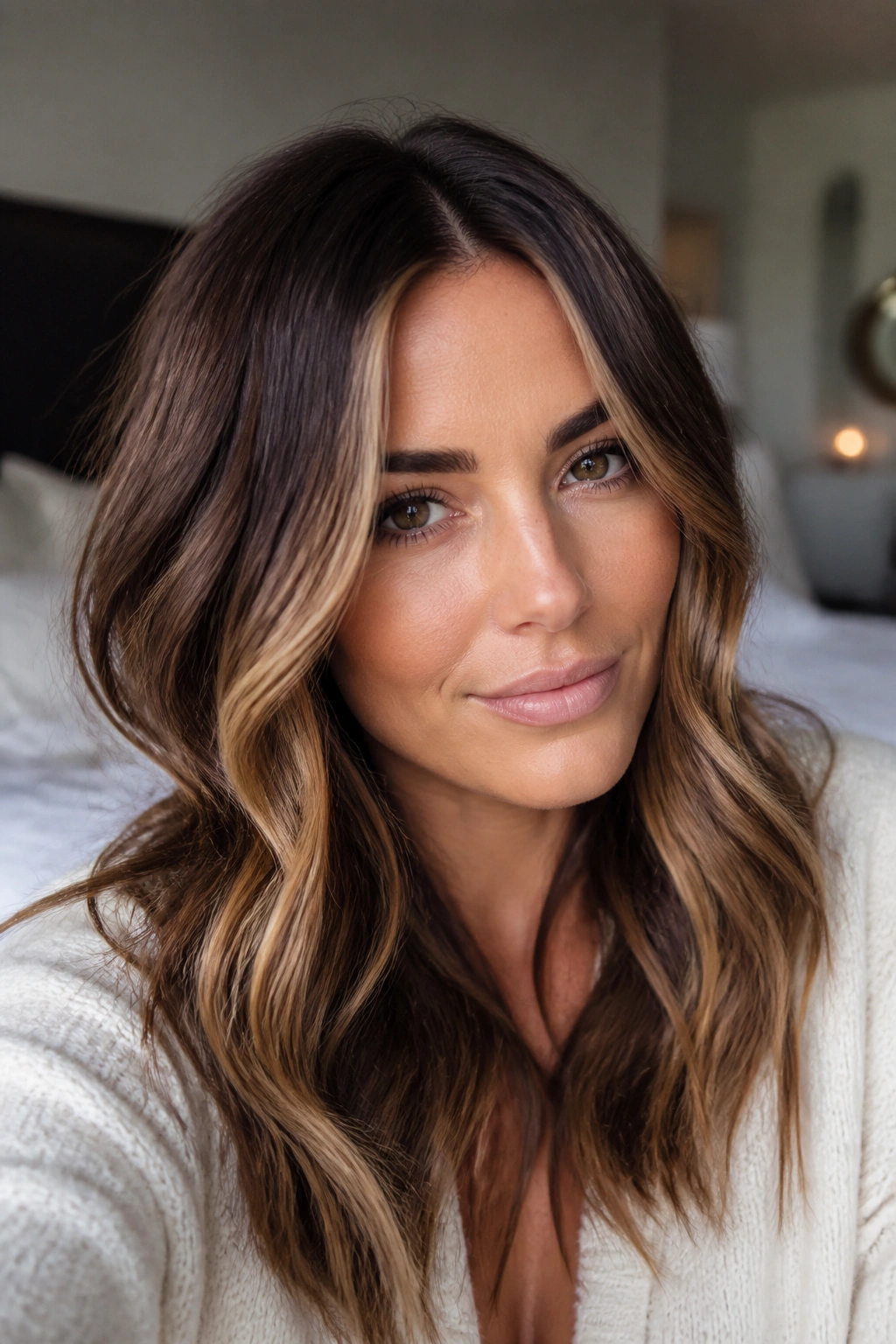
Chestnut brown already has warmth built into it, so toasted almond balayage can blend in without trying to dominate. That makes the color feel grown-in almost immediately.
The reason this look works is simple: the warmth stays in the same family. Instead of jumping to bright blonde, the light pieces hover in a soft almond zone that feels sun-kissed rather than bleached. This is the kind of color that looks good in messy buns, half-up clips, and a clean blowout.
It’s especially nice if you don’t want a huge maintenance routine. The grow-out doesn’t slap you in the face every time your roots show.
14. Sandy Blonde Balayage with a Soft Matte Finish
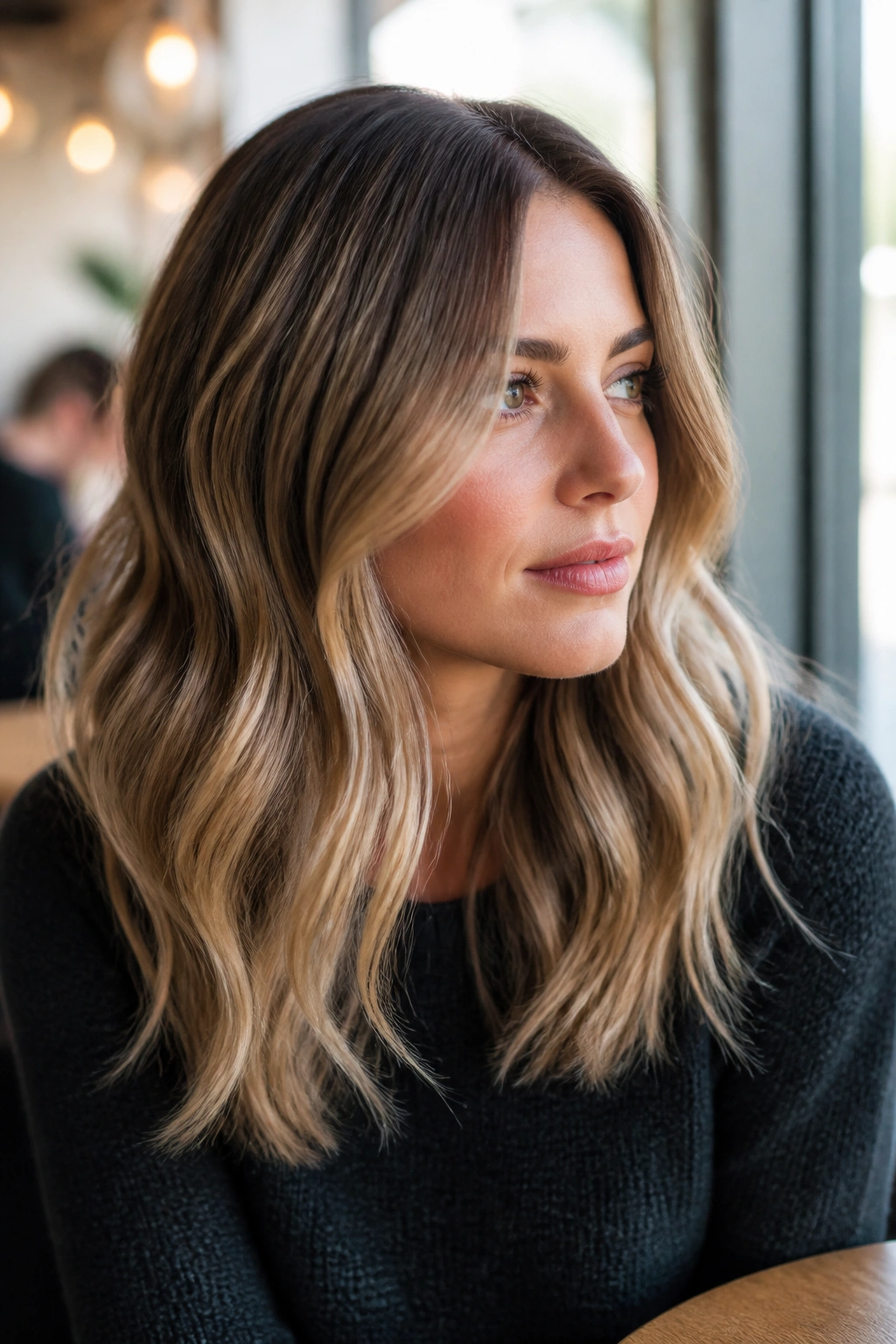
Sandy blonde is cooler than caramel, warmer than ash, and a little trickier than it sounds. That in-between tone is what makes it flattering on brown hair that sits near neutral.
The finish matters here. If the hair is too glossy and gold, sandy tones can vanish. A soft matte texture, whether from air-drying or a light texturizing spray, helps the pale beige pieces stand out in a more natural way.
Quick placement notes
- Keep sandy pieces around the perimeter and through the ends
- Use a beige toner instead of a yellow one
- Avoid very chunky front sections
- Works well on medium brown bases that look muddy with overt gold
This is one of those shades that looks expensive when it’s restrained. Push it too far, and it loses the whole point.
15. Face-Framing Halo Lights
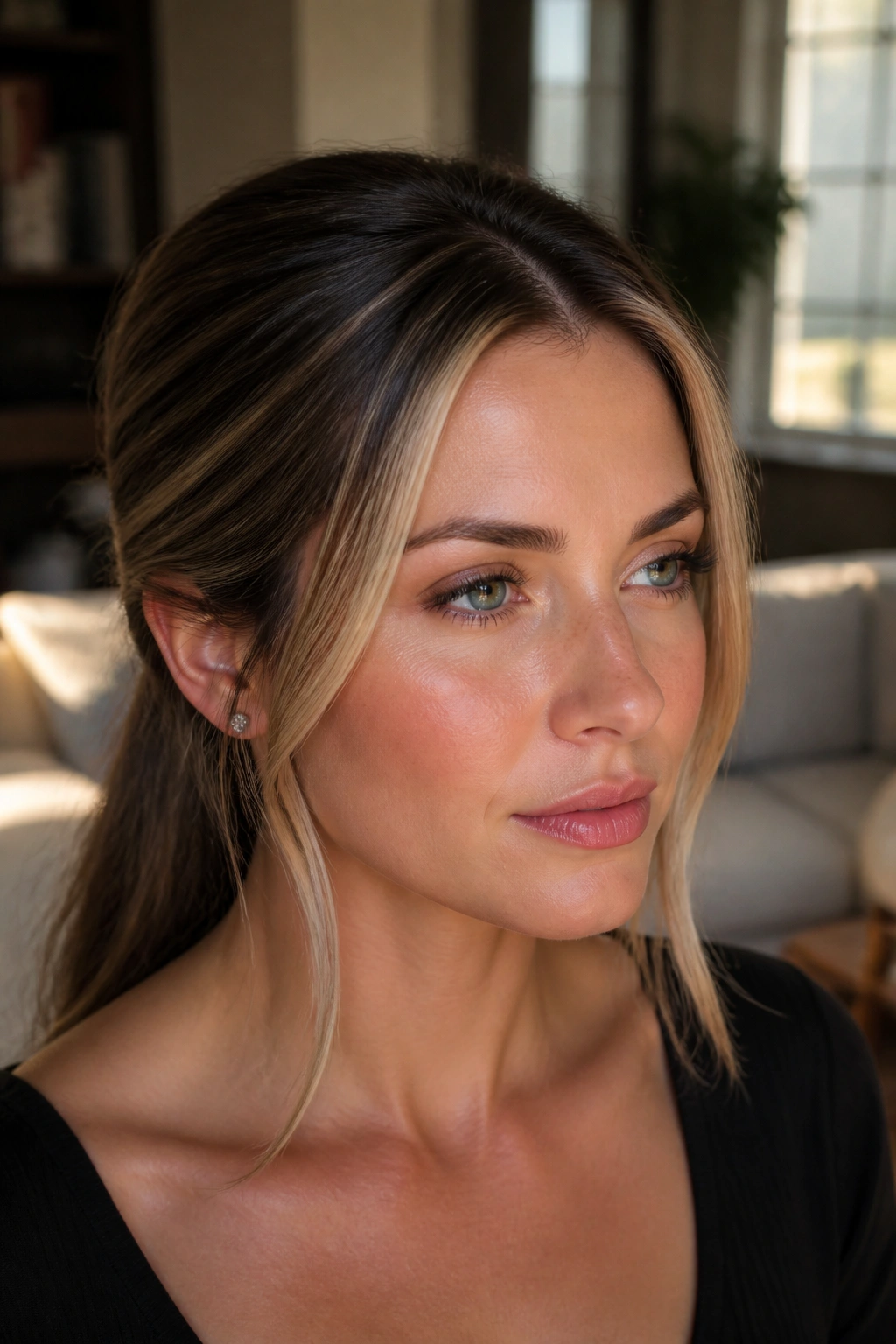
Halo lights are a neat trick when you want brightness without changing the whole head. The idea is simple: lightening arcs around the hairline and crown so the face gets a soft frame.
What makes this smart on brown hair is the way it draws attention upward. The rest of the hair can stay deeper and richer, which gives the blonde room to breathe. You end up with contrast where it matters most and less upkeep where it doesn’t.
Who should ask for it
This works well if you like wearing your hair up, pinned back, or tucked behind the ears. Halo lights still show when the hair moves, but they don’t depend on full coverage. A good colorist will blend the front pieces into the rest of the balayage so the line doesn’t look obvious when the hair parts shift.
It’s low-drama in the best way. Bright enough to notice. Soft enough to live with.
16. High-Contrast Ribbon Balayage
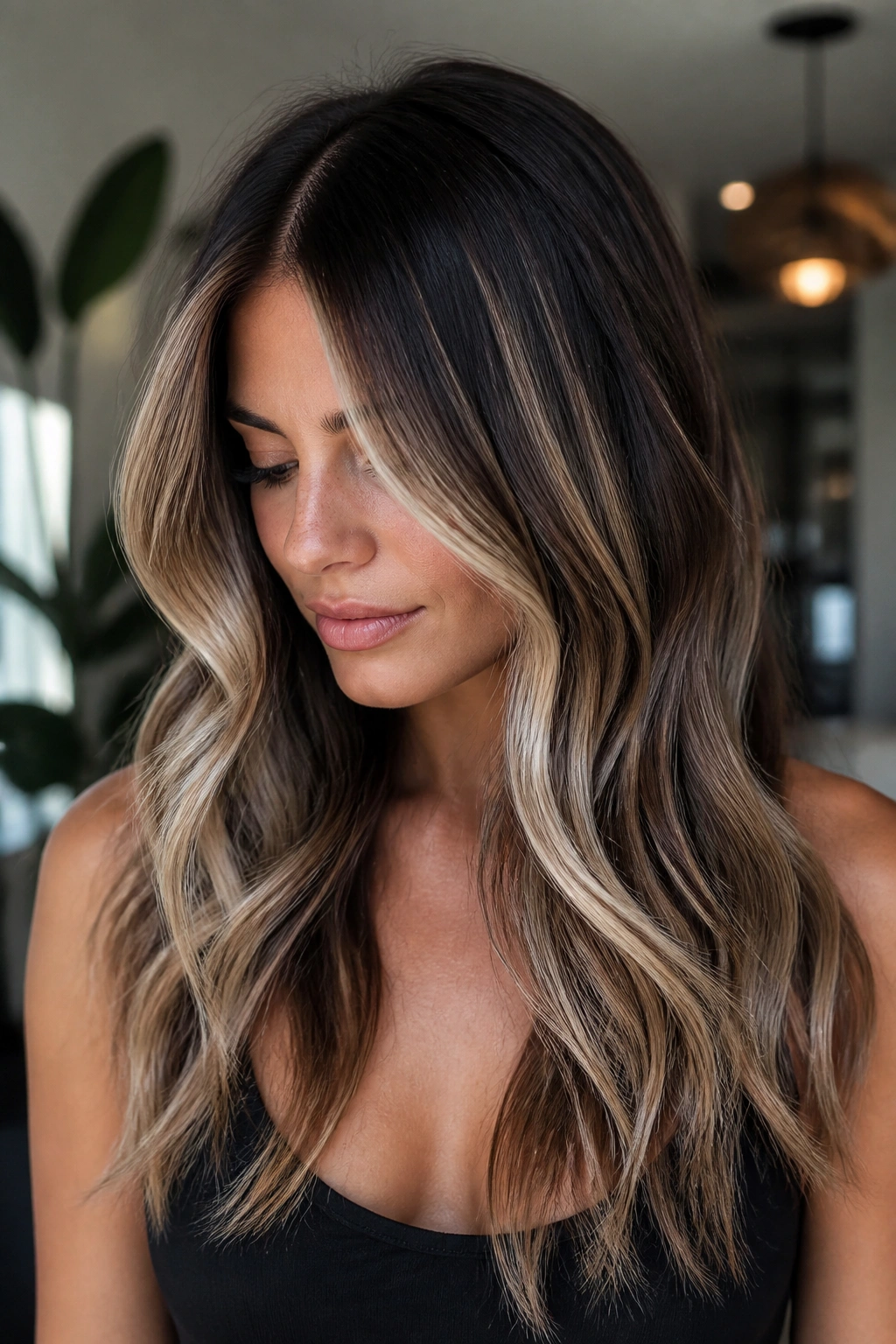
High contrast is for the brunette who wants people to notice the color from across the room. The trick is to keep the ribbons deliberate instead of random, because random highlights can look like a repair job.
You want a clean difference between the brown base and the blonde pieces. That means more separation, more visible ribbons, and a deeper root than usual. On brown hair, this reads best when the blonde lives in sweeping lines through the midlengths and ends rather than all over the top.
A style like this needs confidence. It also needs restraint. Too many light ribbons and the whole head loses its rhythm.
17. Icy Beige Balayage on Medium Brown Hair
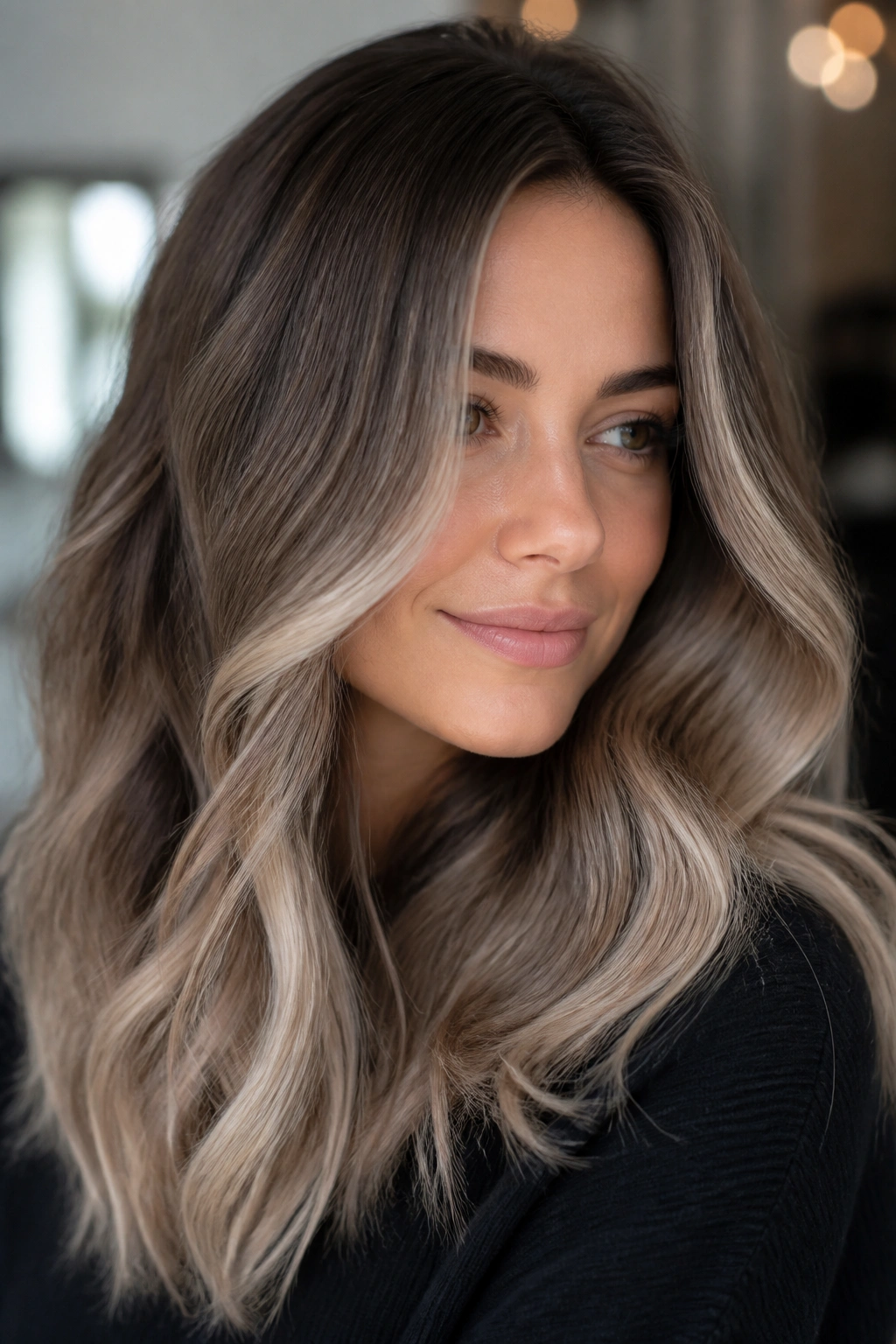
Icy beige sounds contradictory, and that’s exactly why it works. The beige keeps the tone wearable while the icy edge keeps it from drifting too warm.
Medium brown hair can usually carry this better than very dark brunette hair because the lift doesn’t have to work quite so hard. If your base is a level 5 or 6, this shade can look crisp without needing extreme bleaching. The result is clean, almost cashmere-like, especially on layered cuts.
What to watch for
The biggest mistake is over-toning. Push the ash too far and the hair can look dusty instead of cool. Push the beige too far and it turns creamy, which may be fine if that’s what you want, but it won’t read icy.
This is one of the few blonde balayage looks that can feel both soft and cool at the same time. That’s not easy to pull off.
18. Buttery Blonde Ends with Soft Lift
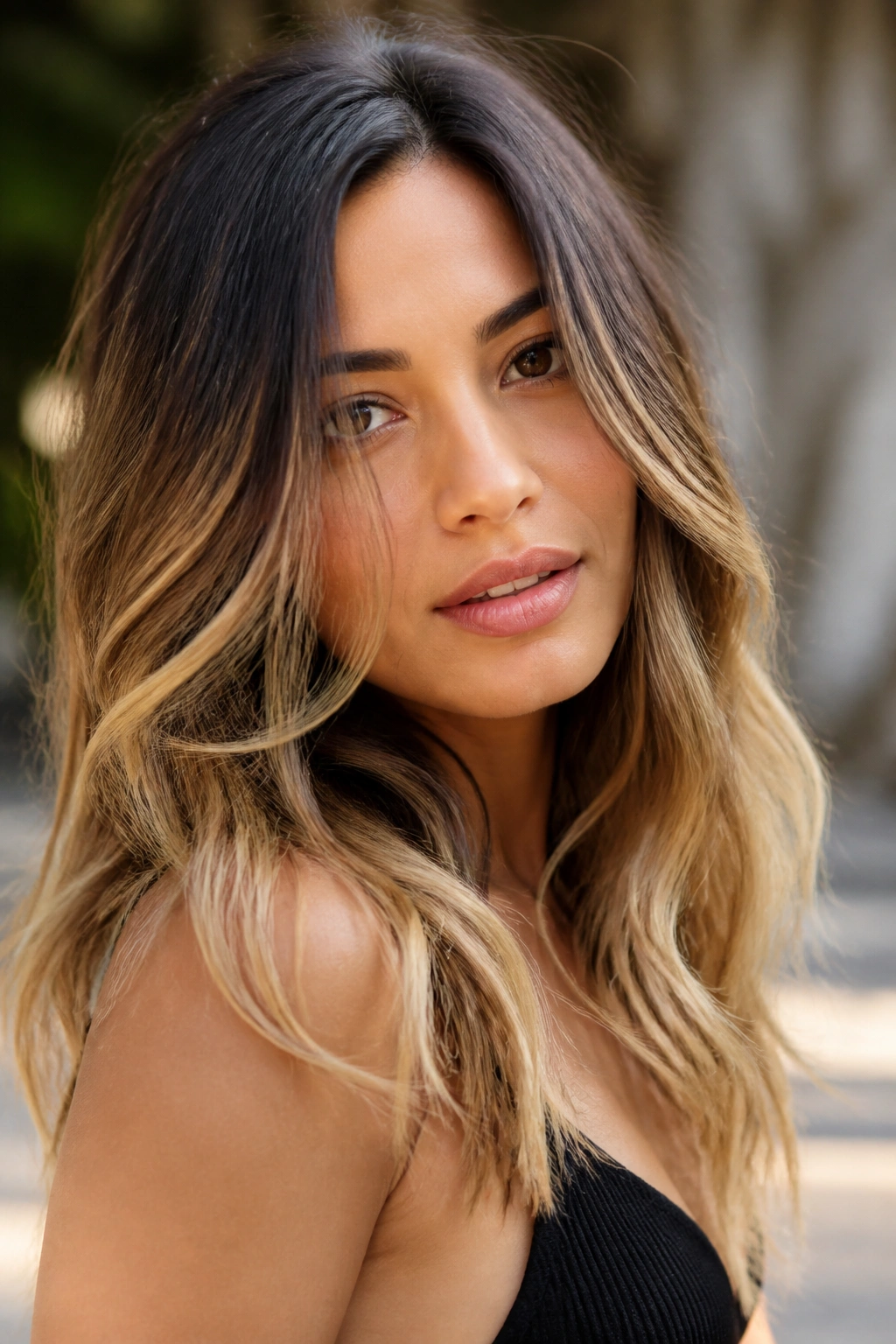
Buttery ends are for the person who wants the blonde to feel edible, not edgy. The tone is warmer and creamier than ash or beige, and it flatters brown hair that already likes a bit of gold.
The placement should keep the lift focused near the bottom third of the hair. That way the warmth pools where the eye expects brightness, and the top stays rooted enough to look rich. A soft lift is better than a dramatic one here because buttery blonde can go brassy if it gets too exposed.
This look shines on layered hair, especially if the ends move when you walk. It’s the kind of color that looks relaxed but still done.
19. Soft Ombré with Balayage Blending
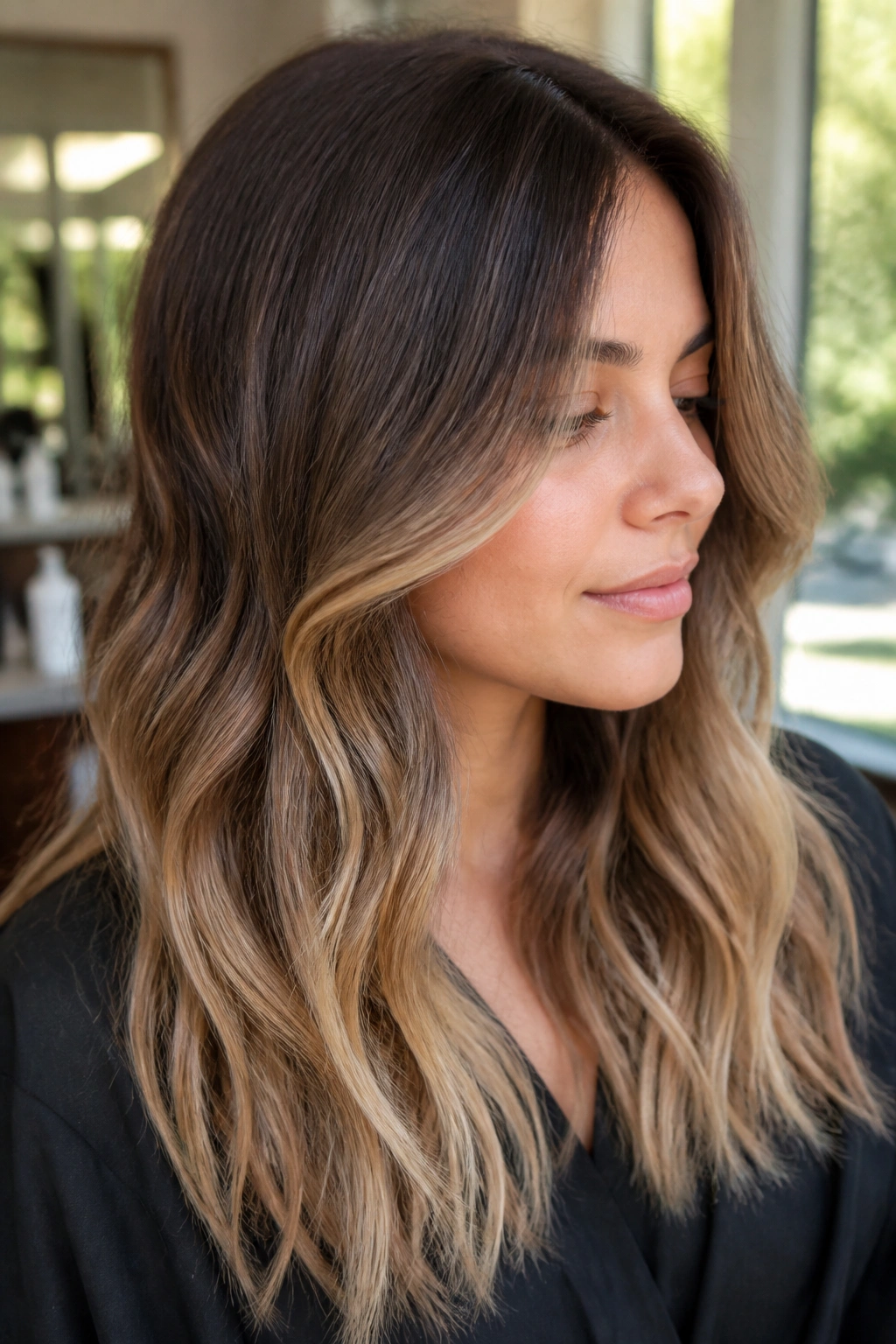
Soft ombré and balayage are close cousins, but they do not behave the same way. Ombré leans into a visible dark-to-light shift, while balayage blurs the transition so it feels hand-painted instead of dipped.
On brown hair, that distinction matters a lot. A soft ombré can keep the roots nearly untouched while the ends drift lighter in a gradual sweep. The color looks modern when the line between shades is broad and hazy, not sharp.
If you want less salon upkeep, this is a smart move. The root grow-out disappears into the design, and the ends still carry enough brightness to make the style feel intentional.
20. Partial Blonde Balayage for Low Maintenance Brown Hair
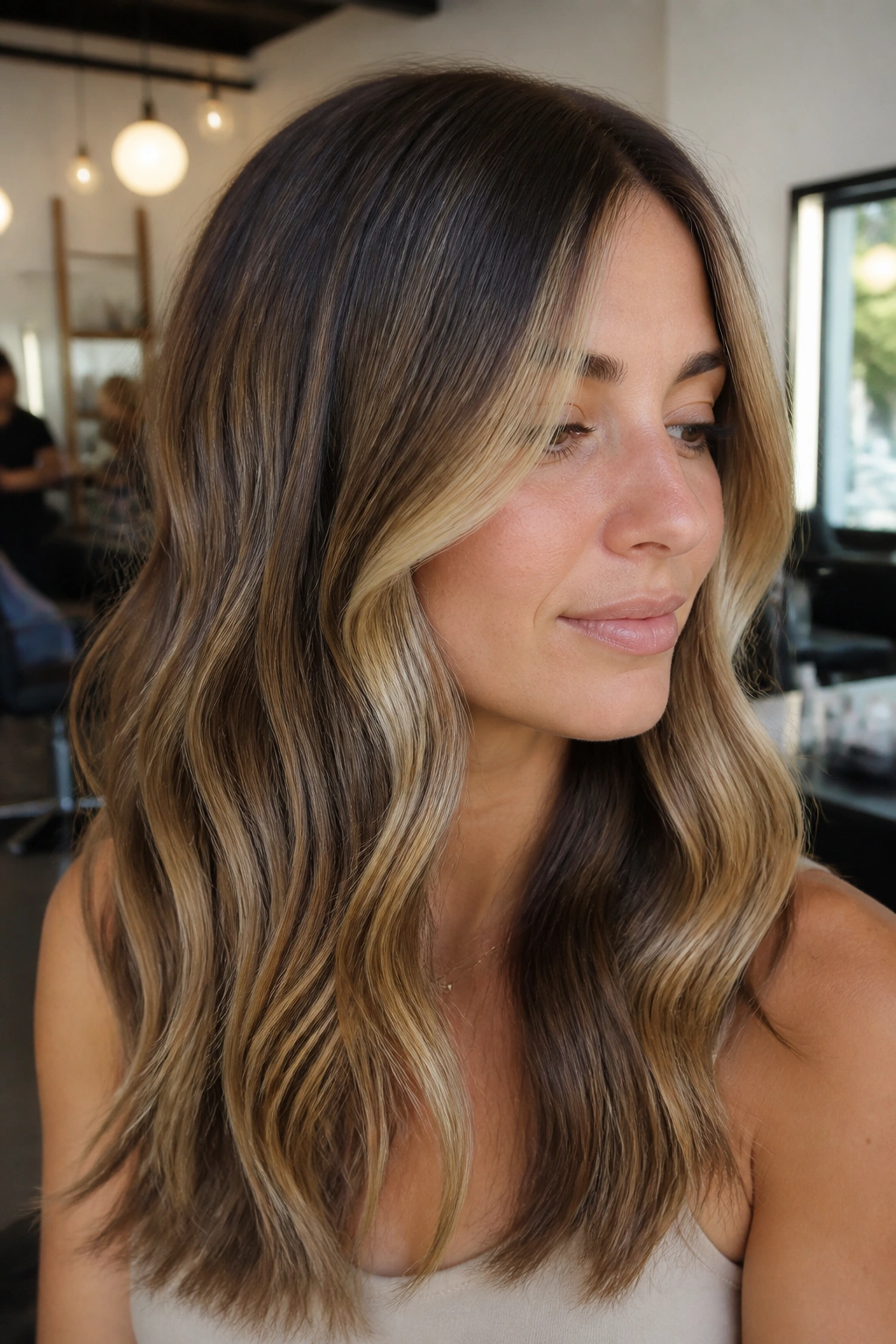
Partial balayage is the practical choice, and I mean that as a compliment. You can brighten the top layers, face frame, and a few interior pieces without spending time or money on full-head lightening.
That means fewer lifted sections, faster salon visits, and less chance of over-processing the hair. It also keeps the brown base stronger, which is useful if your hair is fine, fragile, or already a little dry at the ends.
Why people end up liking this more
- Grow-out is softer because fewer roots are lightened
- Hair usually feels fuller because the base stays visible
- It’s easier to refresh with a gloss than a full color service
- You can add more brightness later without starting from scratch
Some people assume partial balayage is a compromise. It isn’t. It’s a choice, and a sensible one.
21. Full-Head Brightness with Micro-Babylights
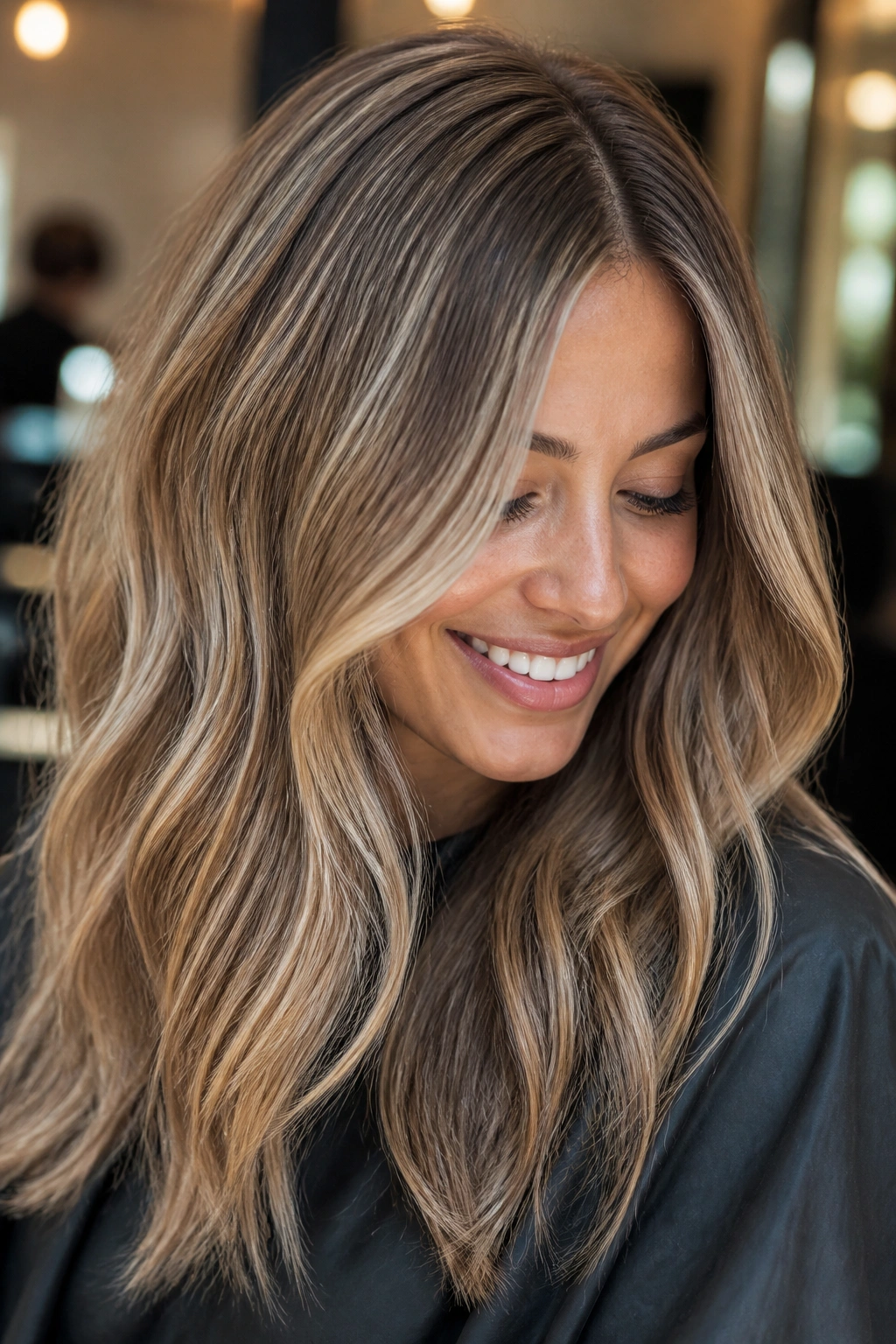
Micro-babylights are tiny, thin highlights that create brightness without chunky contrast. When they’re layered over balayage on brown hair, the result can look full and airy at the same time.
This is the route for someone who wants a lighter overall finish but doesn’t want obvious stripes. The blonde gets spread through small sections, which breaks up the brown base in a softer way. On straight hair, that fine texture can look especially polished; on wavy hair, it gives the color more shimmer.
The downside is time. This kind of work usually takes longer in the chair because the sections are so fine. The upside is the finish looks smoother and less patchy than broad highlights when it’s done well.
22. V-Cut Layers with Sweeping Blonde Placement
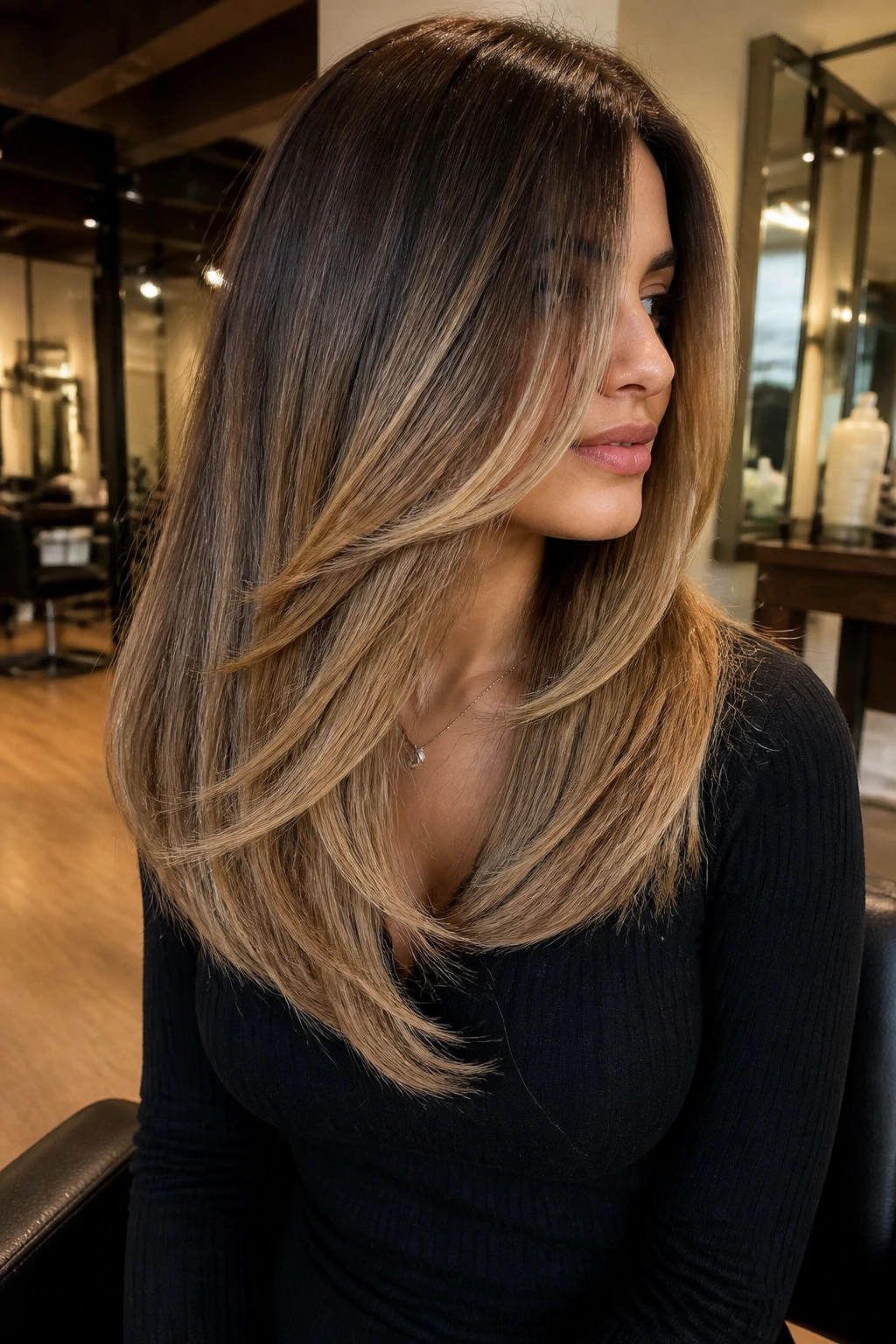
A V-cut gives balayage a built-in shape to follow. The longest layers at the back let the blonde sweep downward, which creates a nice visual line when the hair is worn loose.
This works because the eye follows the cut as much as the color. Blonde pieces placed along the V shape feel coordinated, not random, and the length helps the lighter ends show off. If the pieces are painted too high, though, the style can lose that tapered effect and start looking fluffy instead of sleek.
Ask for brightness that gets denser toward the bottom point of the V. That keeps the top area rich and the ends luminous, which is the whole reason this cut and color pairing looks so good together.
23. Curtain Bangs with Blonde Balayage
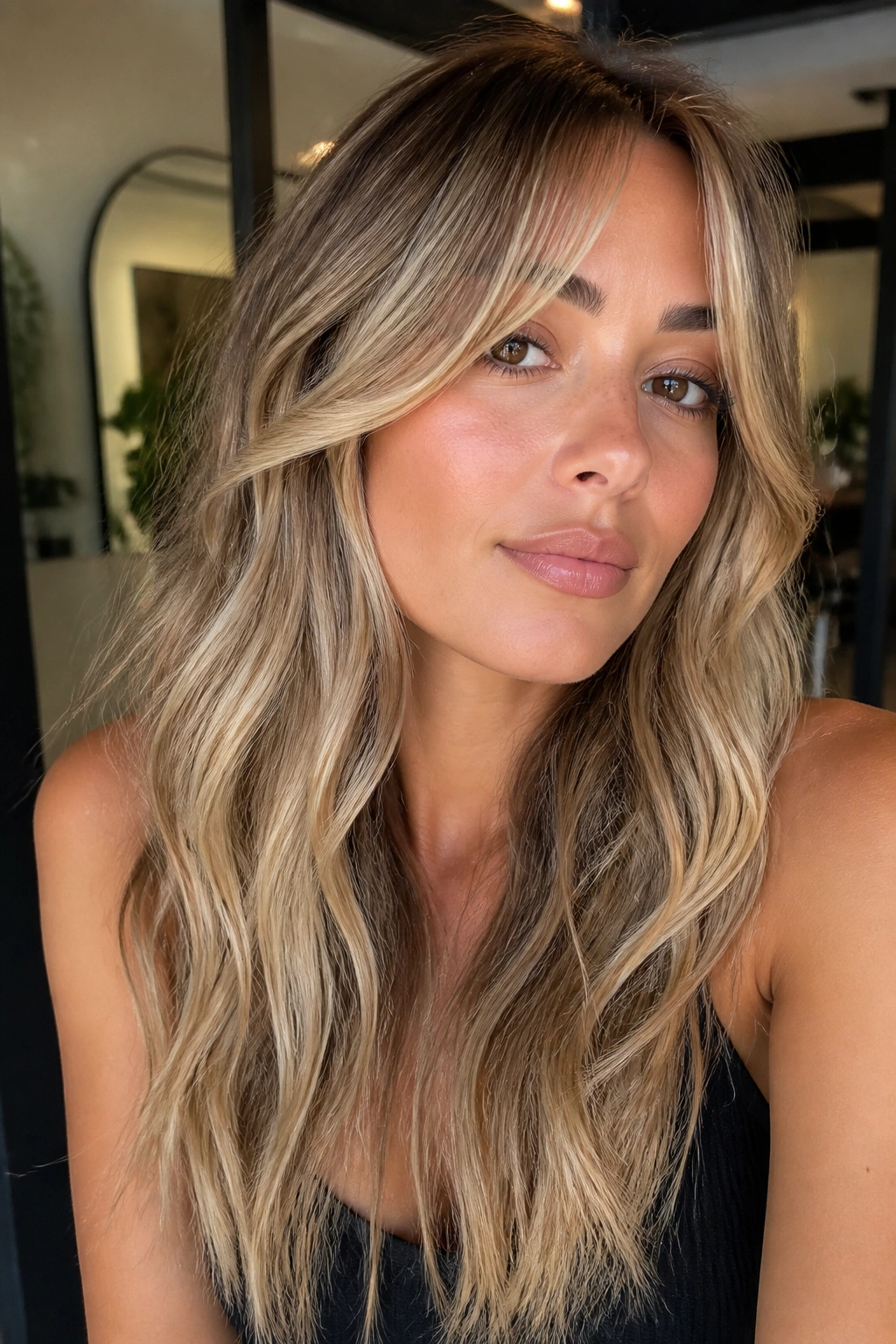
Curtain bangs can make blonde balayage feel fresh without changing the whole haircut. They pull the eye right to the face, which means even a small amount of brightness can do a lot of work.
The bangs should usually be a shade or two lighter than the surrounding front layers, not a totally separate blonde panel. If they’re disconnected, the cut looks split apart. A soft blend into the rest of the balayage keeps the fringe from looking like an afterthought.
Best way to style it
Blow-dry the bangs away from the face with a round brush or a medium-barrel brush, then let the ends bend back naturally. That little swoop makes the blonde catch light near the eyes and cheekbones without turning the front into a hard stripe.
This look is flattering because it frames, not overwhelms. That matters more than people think.
24. Cinnamon Brown to Blonde Fade
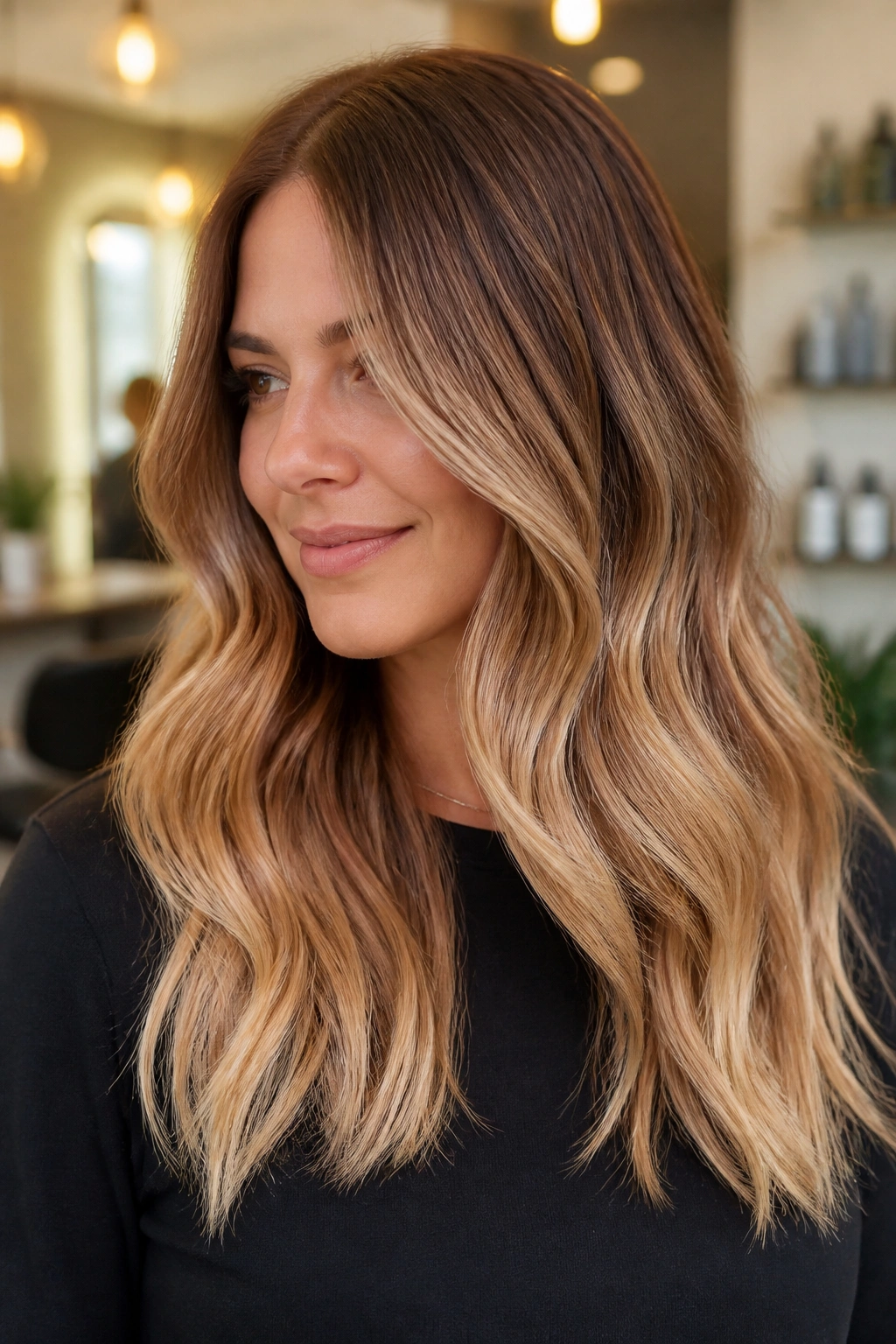
A cinnamon-to-blonde fade leans warm, but not in a sugary way. The cinnamon base gives the brown hair a spicy undertone, and the blonde pieces lift out of that warmth instead of fighting it.
The fade should start softly in the midlengths and build brightness near the ends. If the transition begins too high, the cinnamon base loses its richness. If it starts too low, the blonde can look disconnected from the haircut. The middle ground is what makes it feel natural.
This is a nice choice for people who already wear warm makeup shades, copper jewelry, or earthy clothes. The whole color story hangs together without needing much explanation.
25. Smoky Ash-Blonde Ribbons
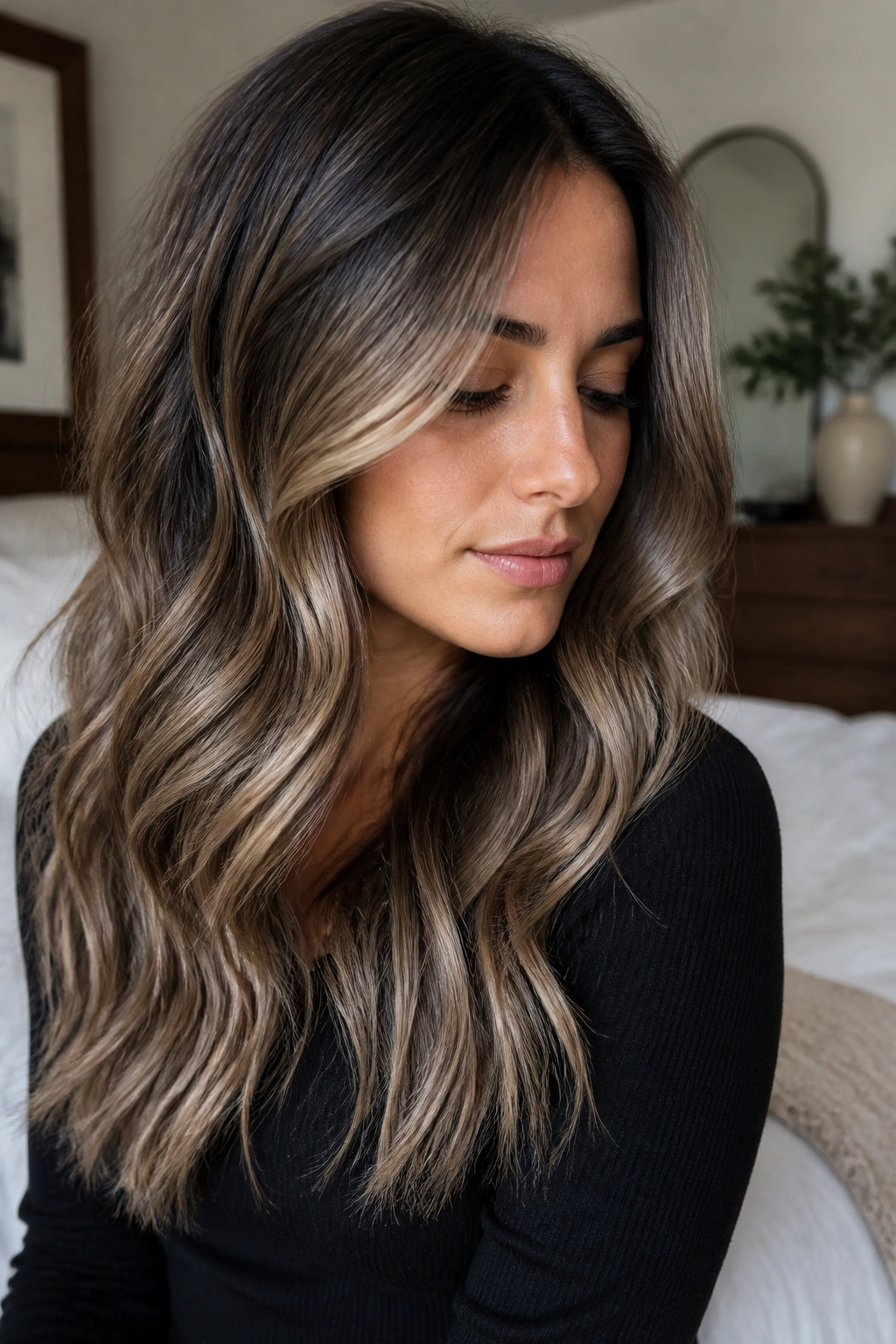
Smoky ash-blonde ribbons are for people who like their blonde with a little edge. The color reads cooler and slightly deeper than icy blonde, which makes it easier to wear on brown hair that doesn’t want to go pale.
The smoky part comes from tone, not darkness. That means the lightening still matters, but the final gloss keeps the blonde from looking too bright or yellow. On dark brown hair, these ribbons can create a moody, expensive-looking finish that pairs well with blunt cuts or long layers.
You do need good aftercare here. A cooler blonde can shift fast if your water is hard or your shampoo is harsh. A sulfate-free cleanser and a weekly color mask help the smoky tone stay put longer.
26. Glossy Beige-Gold Balayage on Straight Hair
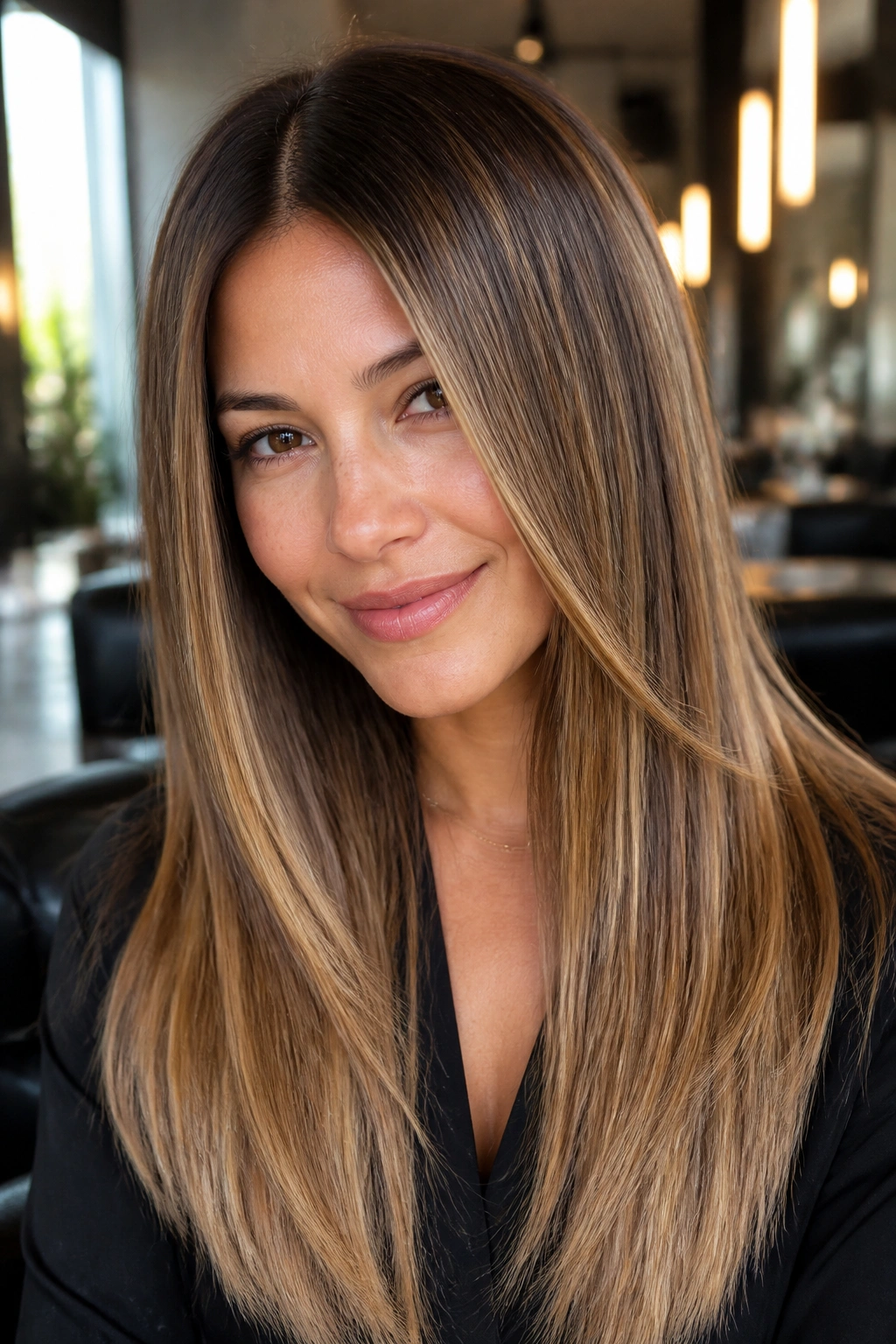
Straight hair can be unforgiving, which is why beige-gold balayage needs especially clean placement here. Every line shows. Every gap shows. There’s no curl pattern to hide behind.
That’s not a bad thing. It means the color can look sleek and expensive if the ribbons are painted with care. Beige-gold works well when the light pieces are narrower near the top and a little wider near the bottom, so the hair looks full but not packed with color.
The gloss makes a big difference. Straight hair reflects tone more than texture, so a smooth beige-gold finish can look richer than a brighter blonde that hasn’t been toned well. If the blonde looks brassy on straight strands, it will only look louder in motion.
27. Beachy Wave Balayage for Brown Hair
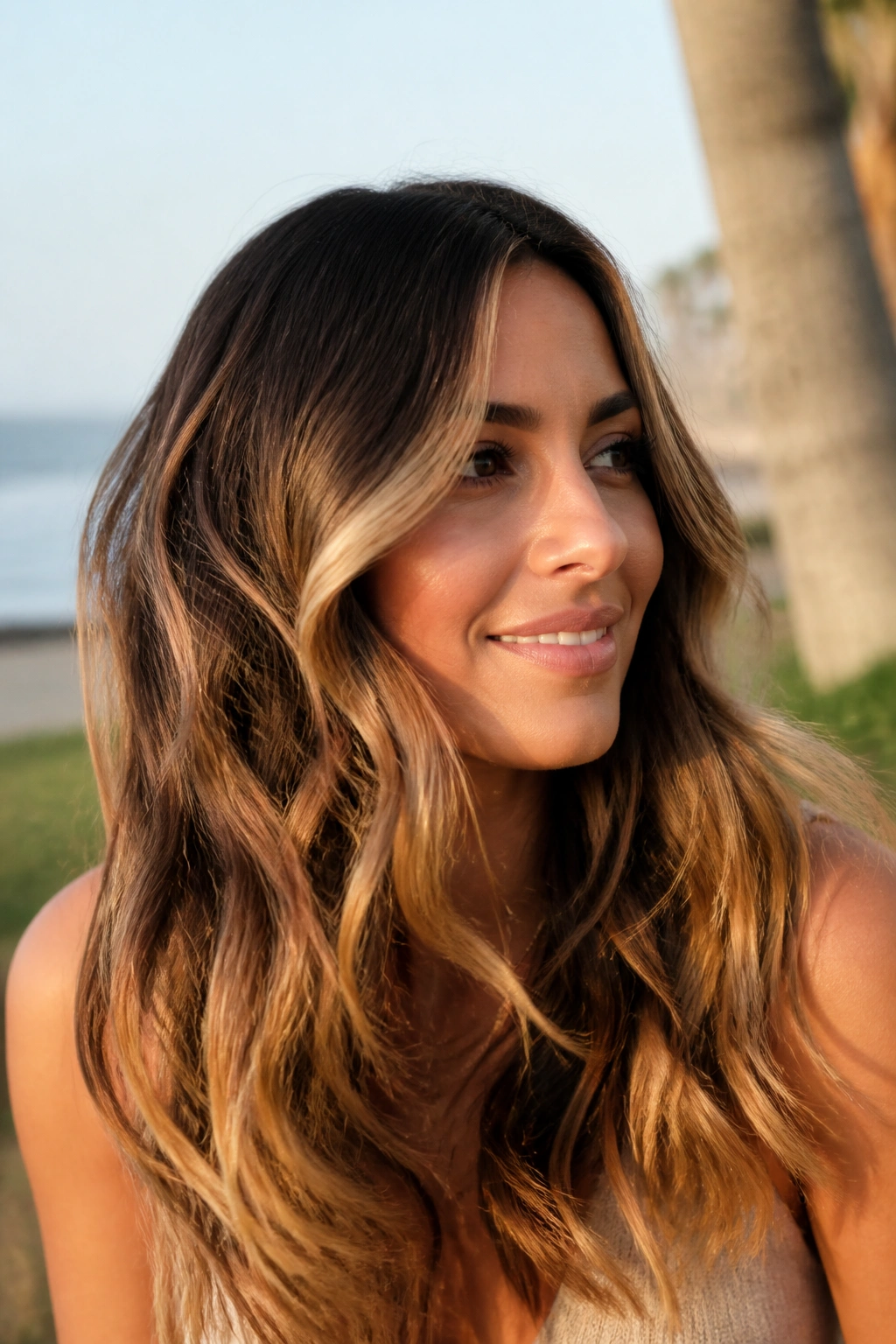
Beachy waves and balayage are natural partners, but the color still has to earn its place. A wave pattern breaks light across the hair, so the blonde should be placed where the bend happens, not just where it looks pretty in the bowl.
That means the front pieces, outer layers, and midlengths usually deserve the most attention. The blonde then flashes in movement, which gives the style that relaxed, sun-touched feel. Too much uniform brightness can kill the effect and make the hair look overworked.
I like this look because it hides grow-out better than straight styling does. The texture softens the root line, and the color keeps its shape longer between appointments.
28. Dimension-Heavy Balayage for Thick Brown Hair
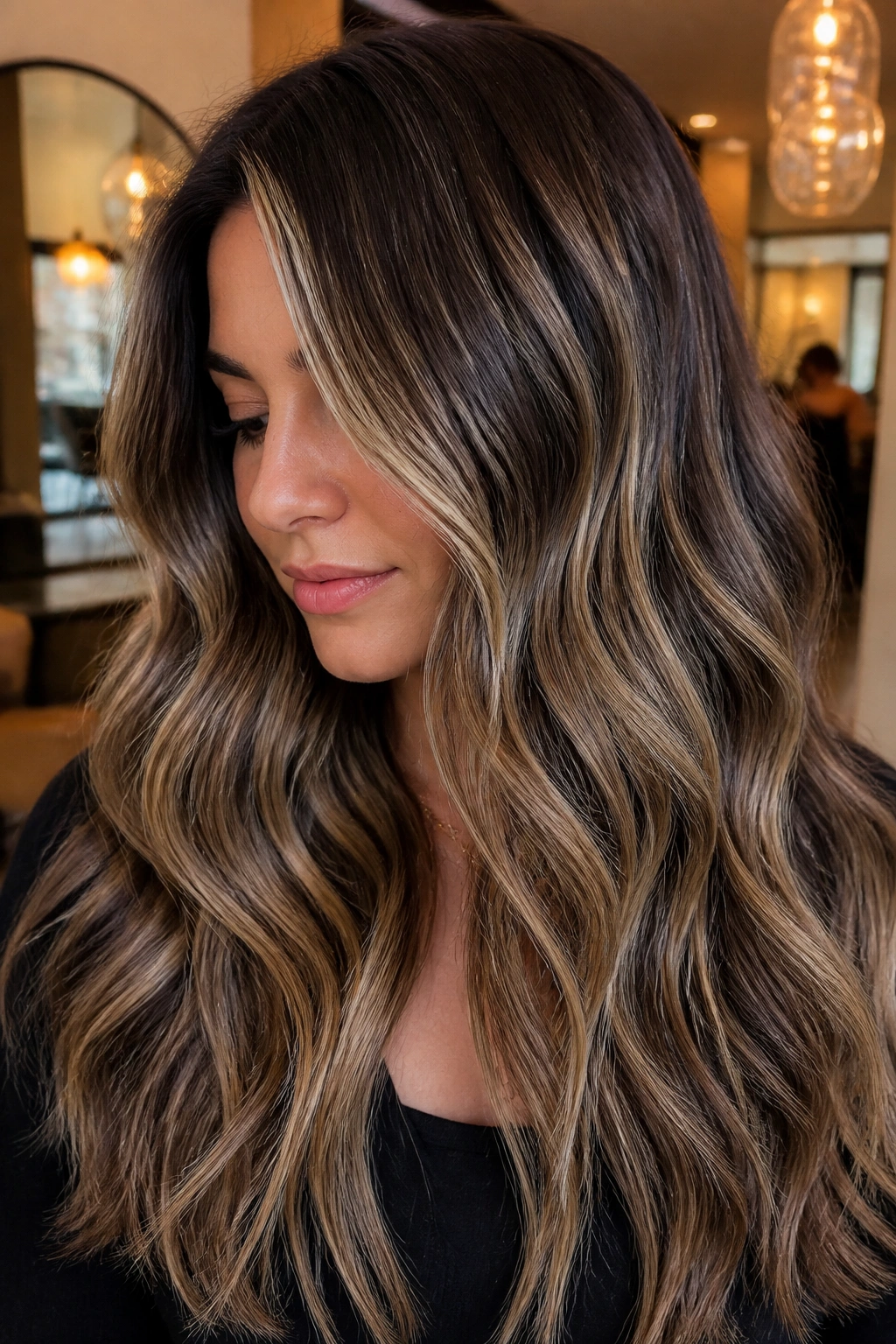
Thick hair can swallow weak color placement. If the blonde is too sparse, the whole thing reads flat; if it’s too dense, the hair can lose depth and look dry. Dimension-heavy balayage solves both problems by mixing brightness with strong brown panels.
How to keep the shape
- Keep some wide brown sections between painted blonde pieces
- Focus the lightness through the top layer and visible ends
- Use deeper ribbons underneath so the hair still feels full
- Ask for a gloss that softens the contrast without dulling it
This is one of the best uses for balayage, honestly. Thick brown hair has the body to hold several tones at once, and that gives the color room to breathe instead of sitting in one flat shade.
29. Minimalist Subtle Blonde Balayage
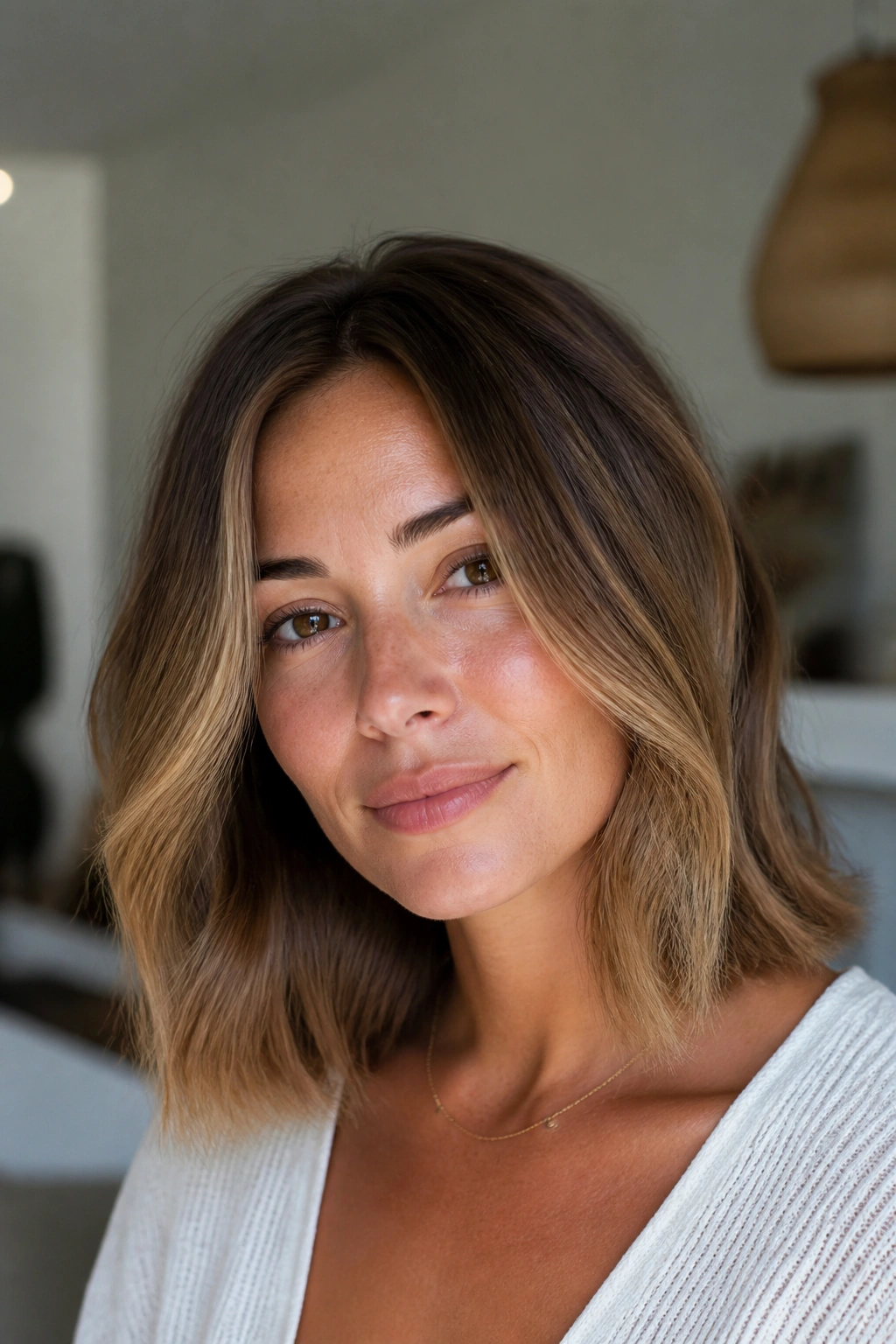
Subtle balayage is for the brunette who likes a clean look and does not want the color to announce itself. The blonde is there, but barely. It shifts the tone of the whole head by a small margin and still leaves brown as the main story.
That can be a smart move if your workplace is conservative, your hair is fine, or you simply prefer color that only shows in certain light. A few soft ribbons around the face and through the top layer can be enough. The rest of the hair stays rich and easy.
Why it holds up
Subtle placement tends to grow out better because the contrast is gentle from the start. It also lets the haircut do more of the visual work, which is useful if you wear bobs, lobs, or polished long layers. If you want a change that feels quiet instead of dramatic, this is the one.
30. Soft Root-Melt Blonde Balayage
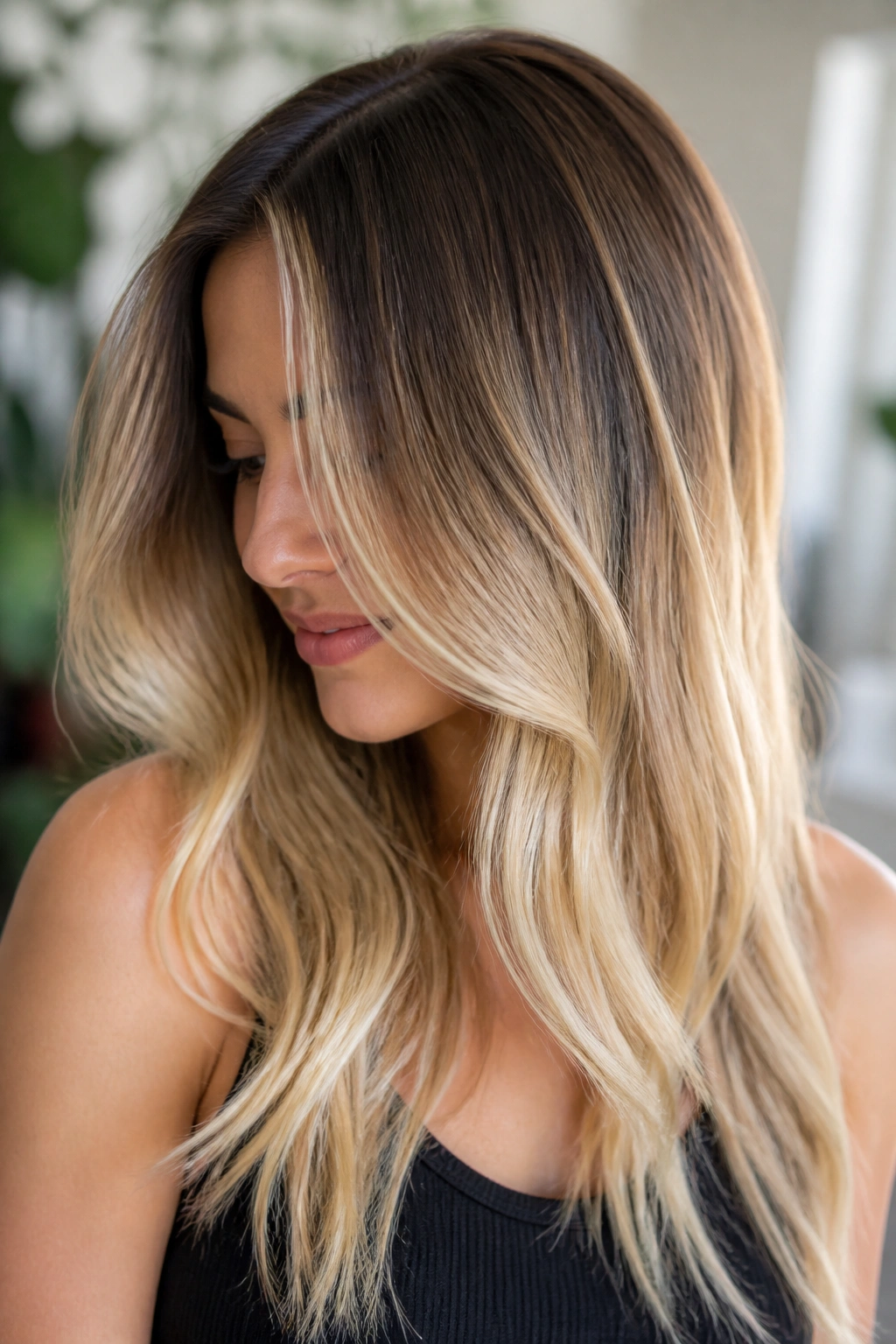
A root melt is the cleanest way to keep brown hair looking intentional as it grows. The darker root blends down into the blonde in a long, seamless stretch, so the color never looks chopped up.
This is probably the most wearable direction if you want blonde balayage for brown hair and you do not want to be tied to constant touch-ups. The melt can be warm, beige, ash, or golden, but the real magic is the transition. It should look like the shades belong together, not like one was added after the fact.
The best version of this style usually has the brightest pieces at the ends and around the face, with enough brown left at the top to keep the head shape rich. That’s the part that saves it from looking flat. Clean roots, soft mids, bright ends. Simple. And still very effective.
