



Brown hair can look flat in a hurry. A few hand-painted auburn copper balayage ribbons fix that faster than most people expect, especially when the base is kept one or two shades deeper than the warm pieces. That contrast is doing a lot of work. It gives the color movement, keeps the copper from looking pasted on, and lets the shine do the heavy lifting.
The part people get wrong is usually placement, not tone. Copper on brown hair can look soft and glossy, or it can look loud and uneven, and the line between those two outcomes is thinner than most salon photos suggest. A good colorist thinks about where light naturally hits your hair, how warm your skin reads, and how much maintenance you’ll actually tolerate between appointments.
I’ve always thought brunette balayage looks best when it has a little shadow left in it. Too much brightness from root to tip can flatten the shape and make the color feel busy. The looks below lean into that balance in different ways — some are barely-there and polished, others are spicy and high-contrast, and a few are the kind of shade that makes brown hair look expensive without trying too hard.
1. Soft Cinnamon Ribbon Balayage
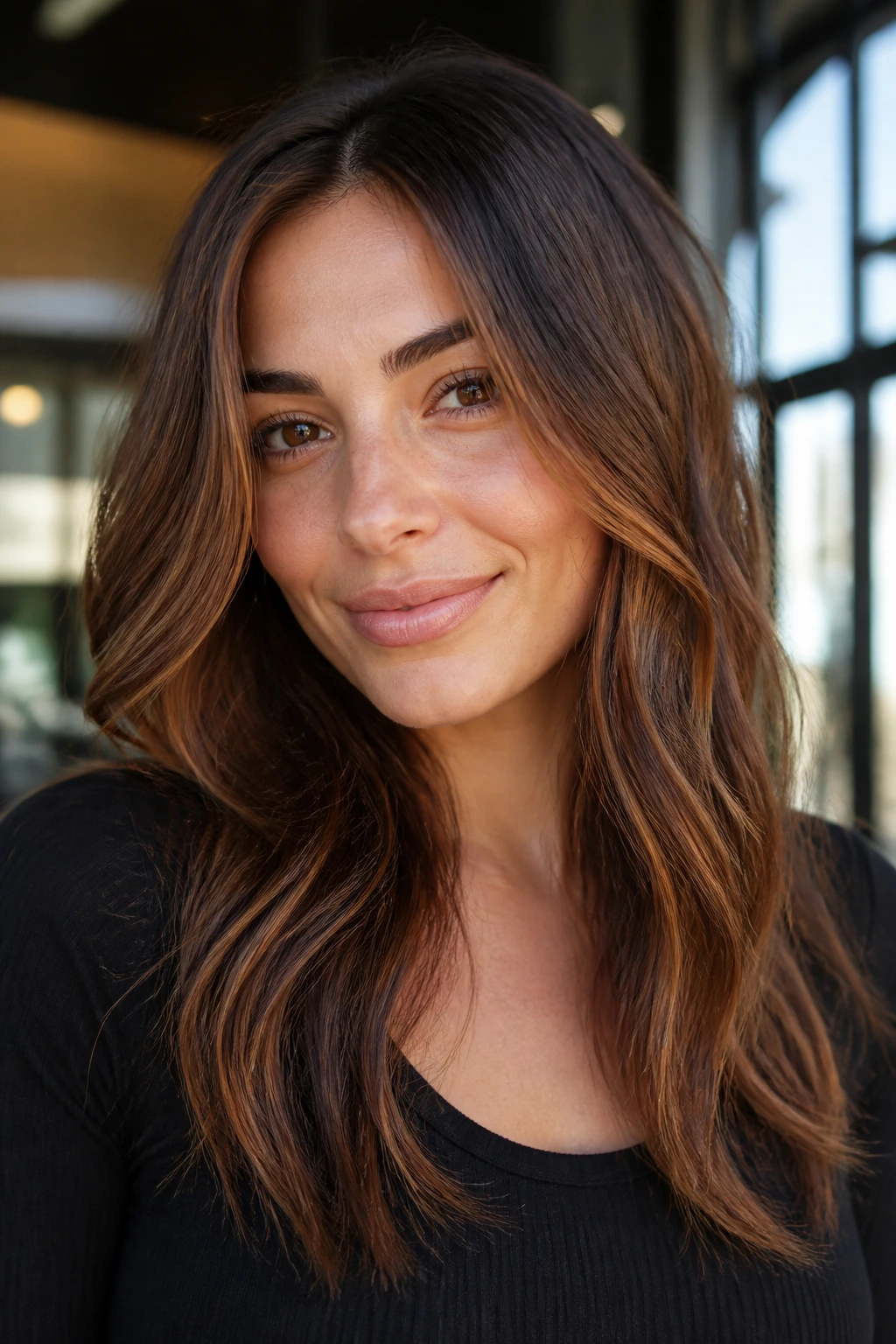
Soft cinnamon ribbons are the version I’d hand to someone who wants warmth without looking like they’ve dyed their hair copper by accident. The copper lives in thin, feathered streaks through the mids and ends, so the brown base still does most of the visual work. That makes the whole thing feel lighter, but not fragile.
Why it works so well on brunette hair
Cinnamon sits in that sweet spot between red and gold. On a medium brown base, it shows up as warmth and shine first, color second, which is exactly why it stays wearable.
The trick is keeping the light pieces narrow. Wide panels can look stripey. Thin ribbons move when the hair moves, and that movement is what sells the look.
- Best on level 5 to level 6 brown hair
- Works well with loose waves, soft bends, or a blowout
- Ask for microweaved balayage pieces if you want a more blended finish
- Pair with a warm gloss every 6 to 8 weeks to keep the cinnamon tone from going dull
Pro tip: If your hair already pulls orange fast, ask for a cinnamon-copper glaze rather than a bright copper lift. It stays prettier for longer.
2. Deep Auburn Money Piece Balayage
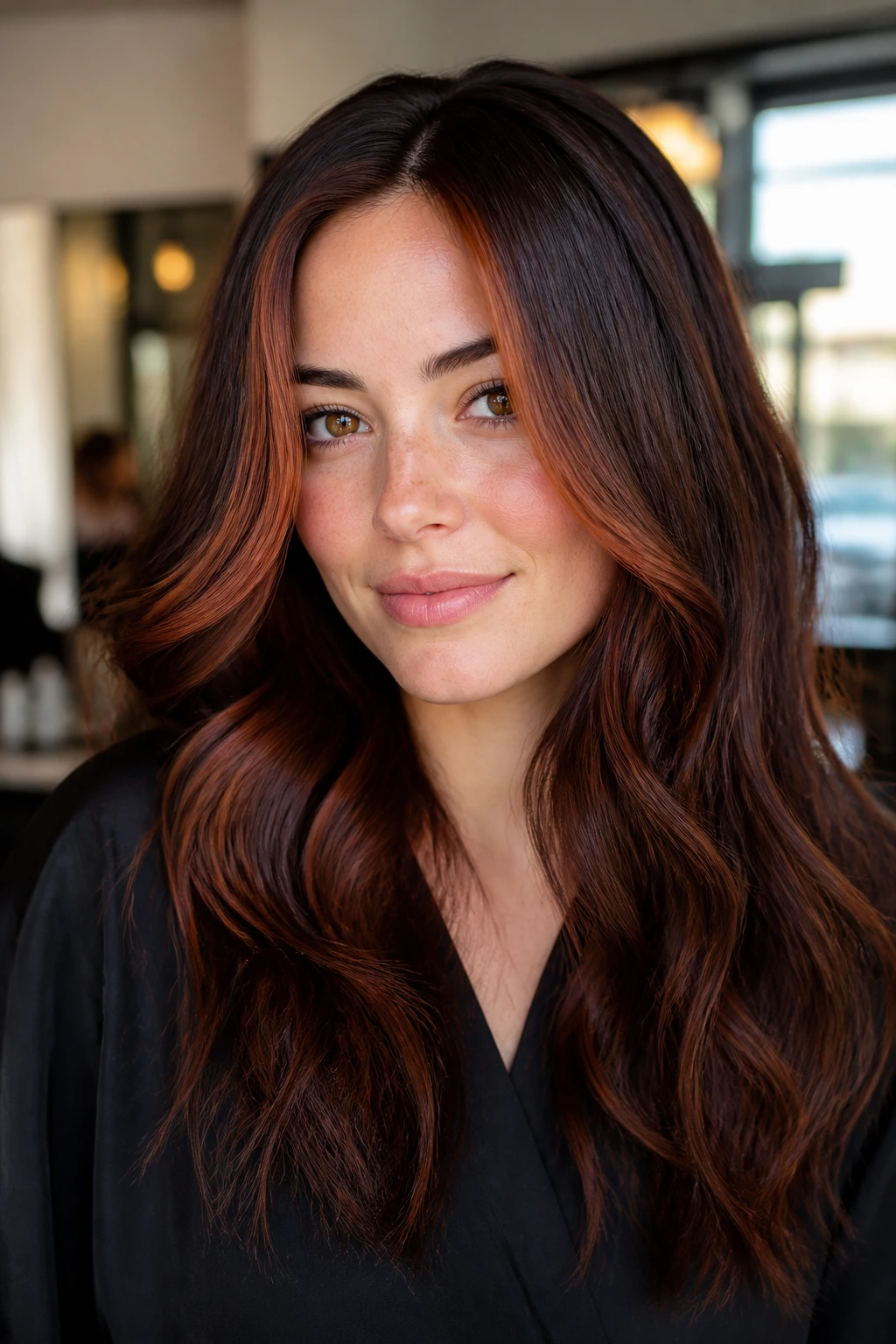
A bold money piece can rescue brown hair that feels sleepy. A deep auburn frame around the face gives instant shape, and because the rest of the color stays softer, it doesn’t read like chunks from the early dye-job era. Good news. We’ve moved on from that.
This look is for people who want their hair to do something noticeable the second they walk into a room. The money piece sits at the front, usually around the hairline and cheekbone area, where the light catches it hard. The auburn can be a little darker than copper — more wine, less penny — which keeps it flattering on deeper brunettes.
The rest of the head should stay understated. If everything is bright, nothing is bright. That contrast is the whole point. A center part makes the face frame look symmetrical, while a side part gives it a more dramatic sweep.
3. Copper Gloss on Espresso Brown Hair
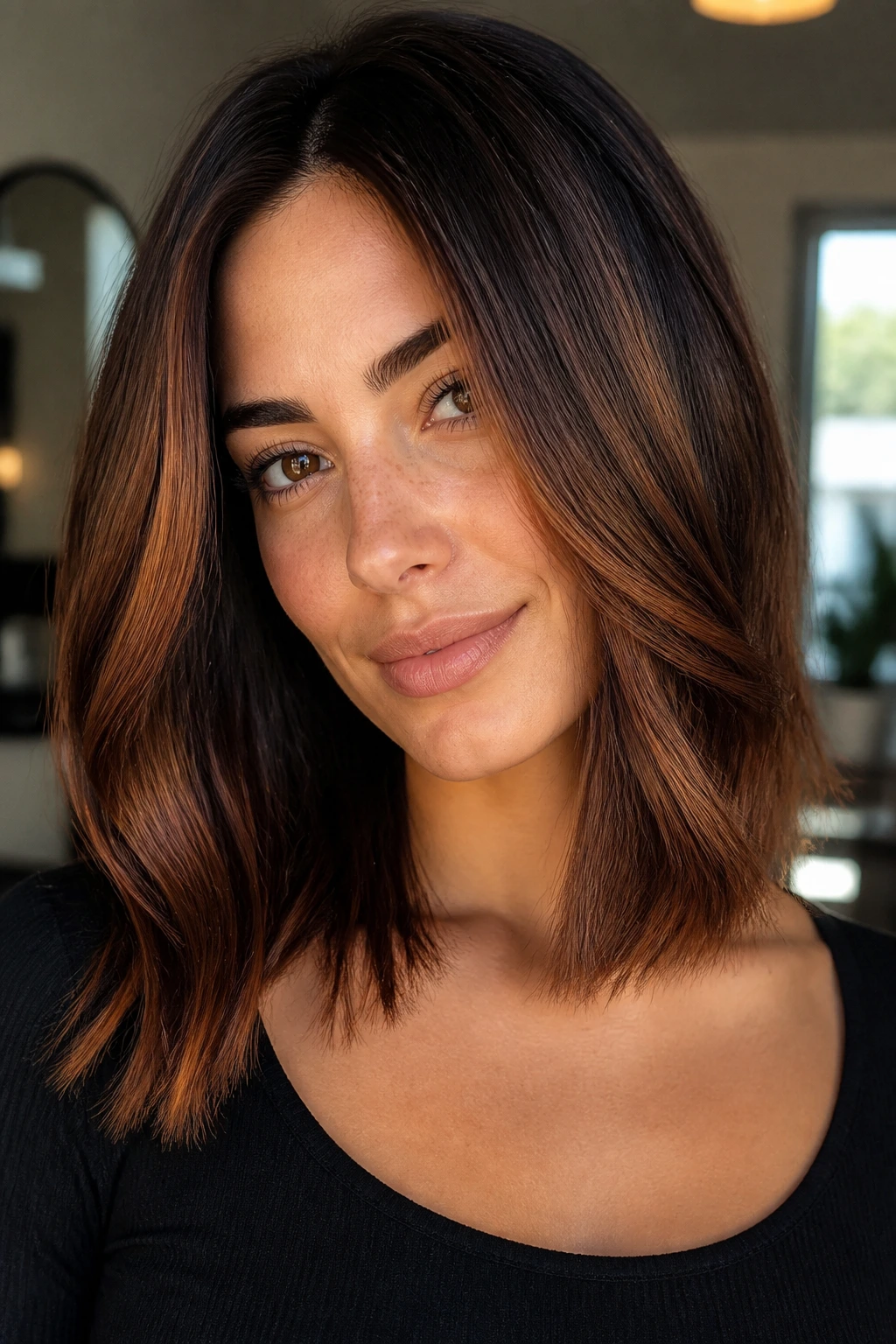
Can a simple gloss make a big difference? Absolutely. On espresso brown hair, a copper gloss can create that polished, reflective finish that looks expensive in daylight and almost velvety indoors.
This is not about bleaching the life out of dark hair. It’s about depositing warmth over a dark canvas so the surface catches light in a softer way. The result is subtle, but not boring. You’ll see amber and rust tones around the bends of the hair, especially if you wear a straight style or a soft S-wave.
How to wear it
Ask for a gloss that leans copper-amber rather than orange. The two are not the same. Amber gives you shine and depth; orange can get shouty fast on dark hair.
A shoulder-length cut makes this shade easy to read, but long hair works too if the ends are kept slightly lighter than the roots. If your brown base is very dark, this look usually stays more luminous than dramatic. That’s the appeal.
4. Chestnut-to-Copper Ombré
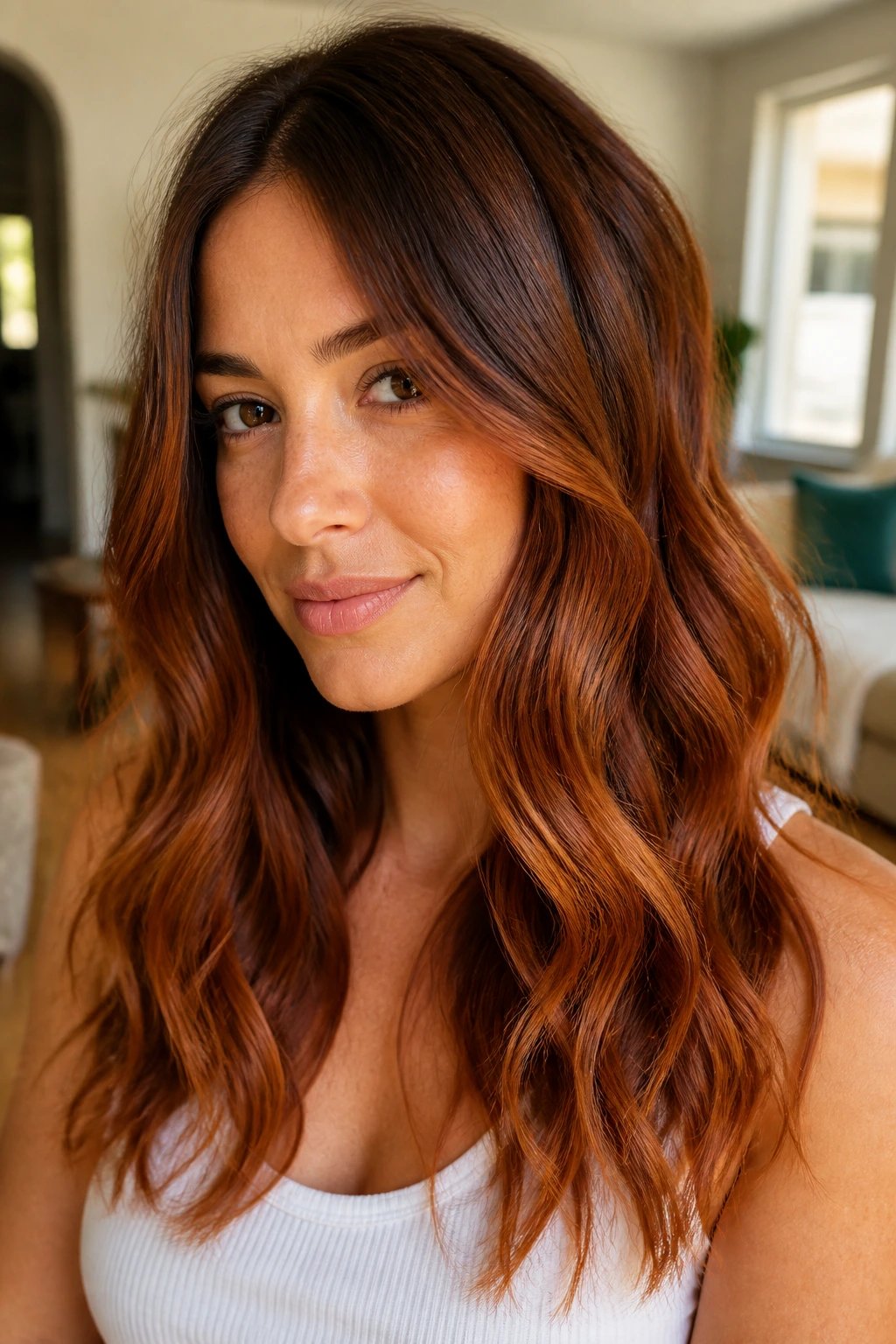
Chestnut into copper is one of those looks that makes sense the second you see it on a wave pattern. The root area stays grounded and earthy, then the color drifts warmer and brighter through the mids and ends. It feels natural, but not plain.
I like this version on layered hair because the color shift has room to show off. A blunt cut can make ombré look heavy. Layers soften the line where chestnut becomes copper and keep the ends from looking like they were dipped in one solid shade.
There’s a useful practical side here, too. If you don’t want visible regrowth every few weeks, ombré buys you breathing room. The darker top half can grow out gracefully. The brighter ends keep the whole head from feeling flat.
5. Curly Auburn Copper Balayage
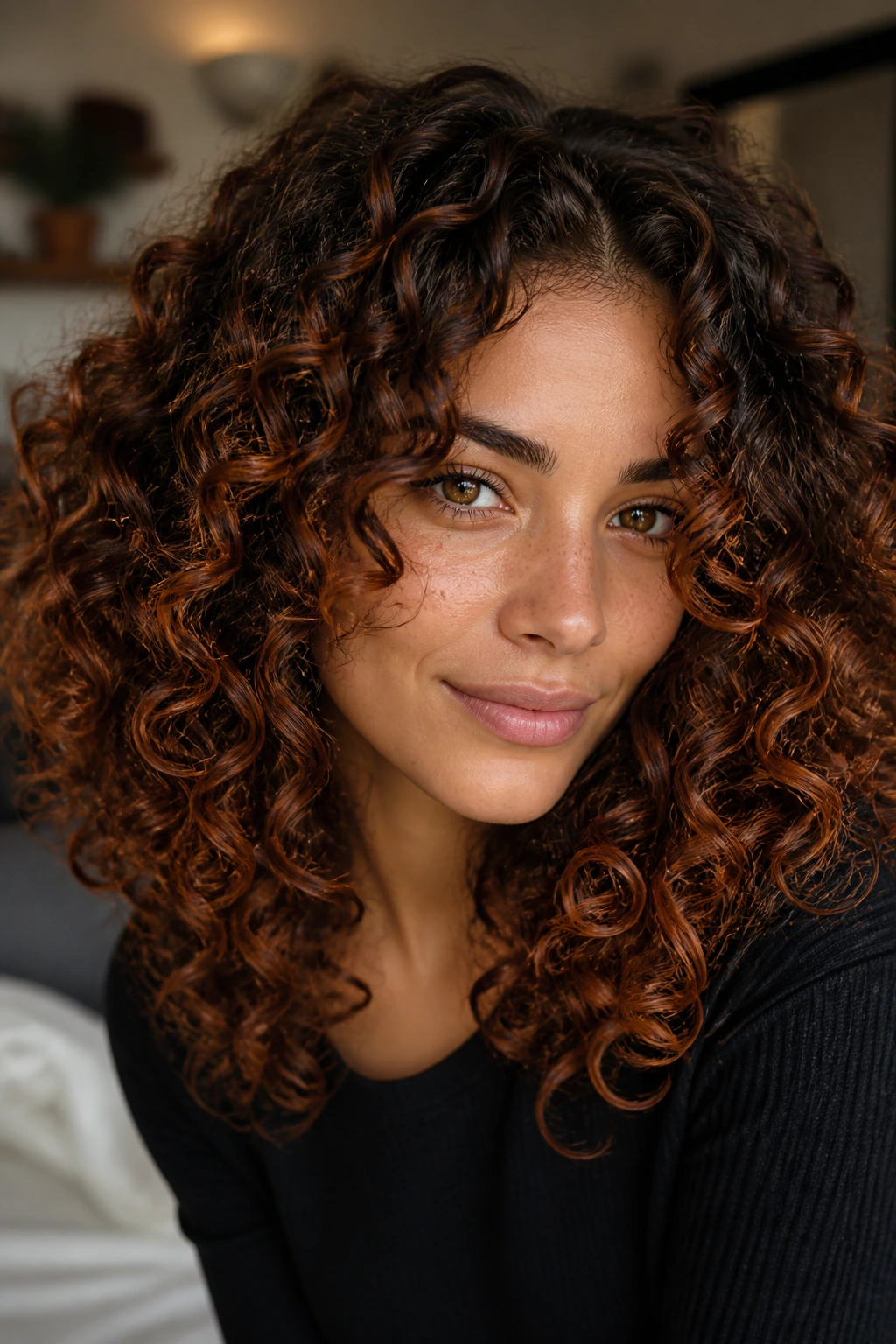
Curls and copper are a good match. The bend of the hair catches the lighter pieces at different angles, so the color looks deeper than it does on straight strands and far more dimensional than a single-process auburn ever could.
The best curly version keeps the brightest pieces around the outer curve of each curl cluster. That way, the light picks up the shape instead of sitting in random stripes. On tighter curls, the copper can be more concentrated at the ends and front edges. On looser curls, you can spread it higher through the mids.
Don’t overload the curl pattern. Too much lightener can make curls feel dry and fuzzy. The smarter move is a softer lift with a warm glaze on top. That keeps the curl’s bounce intact and gives you color that still looks good on day three, which matters more than people admit.
6. Rooty Mahogany Copper Melt
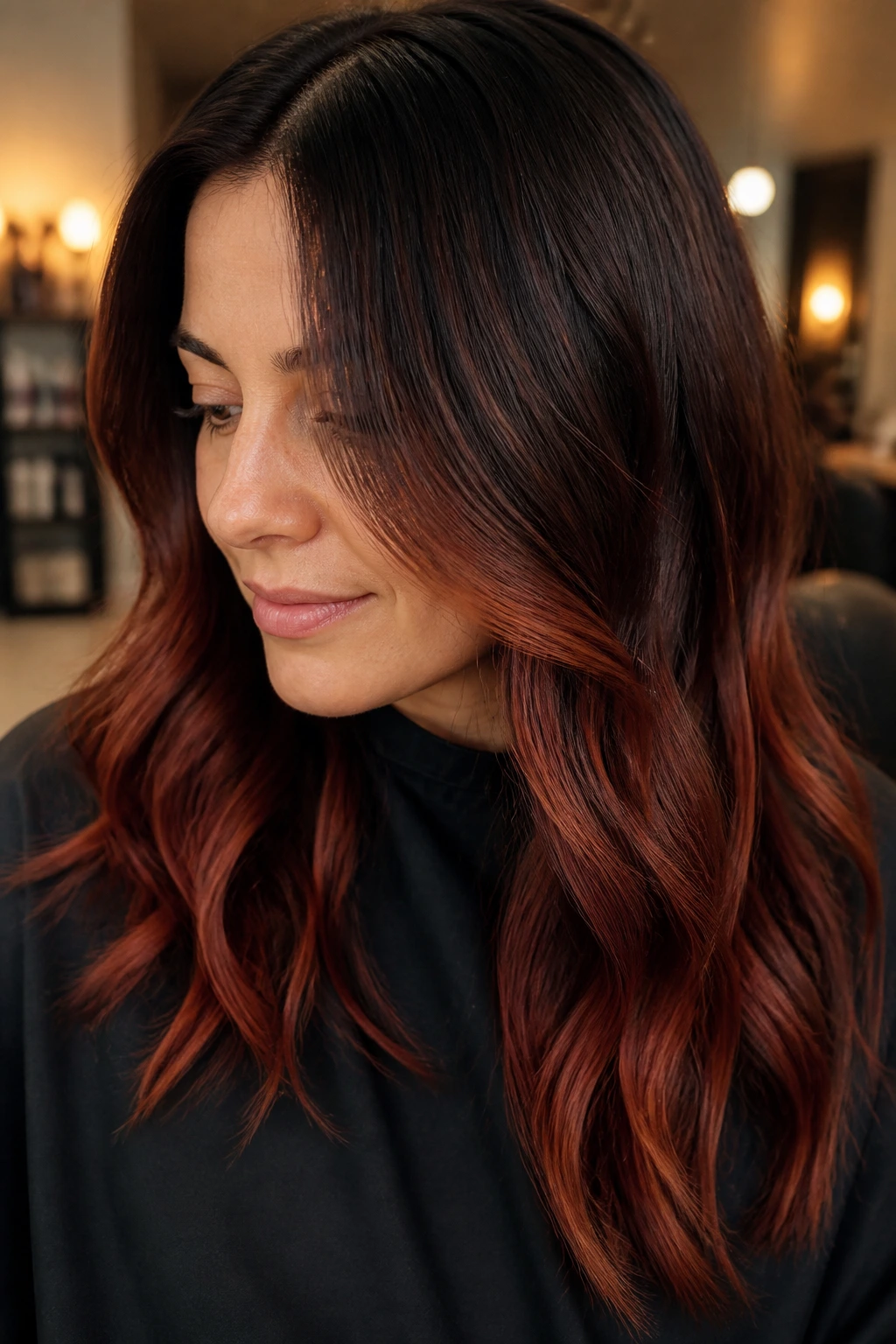
This one has attitude. The roots stay dark and smoky, then the brown melts into mahogany and copper through the lengths without a hard line anywhere. It’s a smart choice if you like warmth but hate a fussy grow-out.
Rooty color needs confidence. A lot of people panic when they see darker roots in a salon chair, but here they’re the point. They make the copper look richer and help the lighter ends feel intentional instead of overprocessed. The effect is especially good on shoulder-length cuts and long layers, where the color shift has enough space to breathe.
What makes it different
- Dark root shadow keeps the look low-maintenance
- Mahogany in the mids adds depth before the copper brightens
- Best on hair that already has a natural brown base
- Works well with a gloss that leans red-brown rather than orange
Watch for this: If the root shadow is too cool, the whole thing can look muddy. You want smoke, not ash.
7. Face-Framing Apricot Copper Strokes
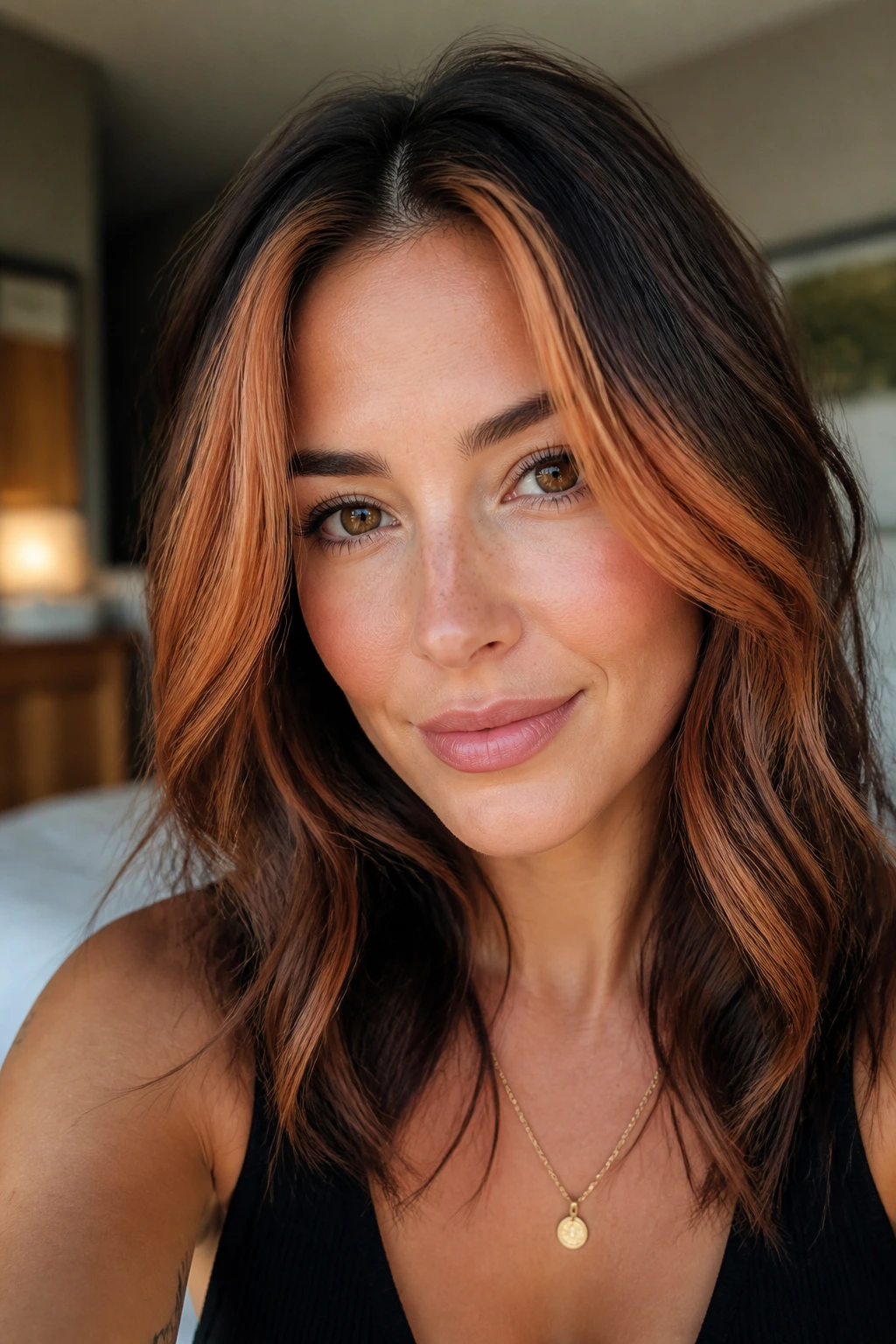
Apricot copper around the face is a sneaky-good move. It brightens the front of brown hair without asking the rest of the color to do much at all. That makes it a nice fit for someone who wants a change but doesn’t want to spend half the morning styling around it.
The front pieces should be soft and lifted, not chunky. Think of them as a wash of warm light, especially near the cheekbones and temples. Apricot is lighter and softer than deep auburn, so it gives a fresher look on neutral to warm brunettes. It also softens hard edges on layered cuts.
A middle part keeps the look clean. A curtain fringe makes it feel more lived-in. Either way, the color should blend into the brown base by the time it hits the mids. If the contrast is too sharp, the front can start to look disconnected from the rest of the hair.
8. Smoky Brown Base with Auburn Veil
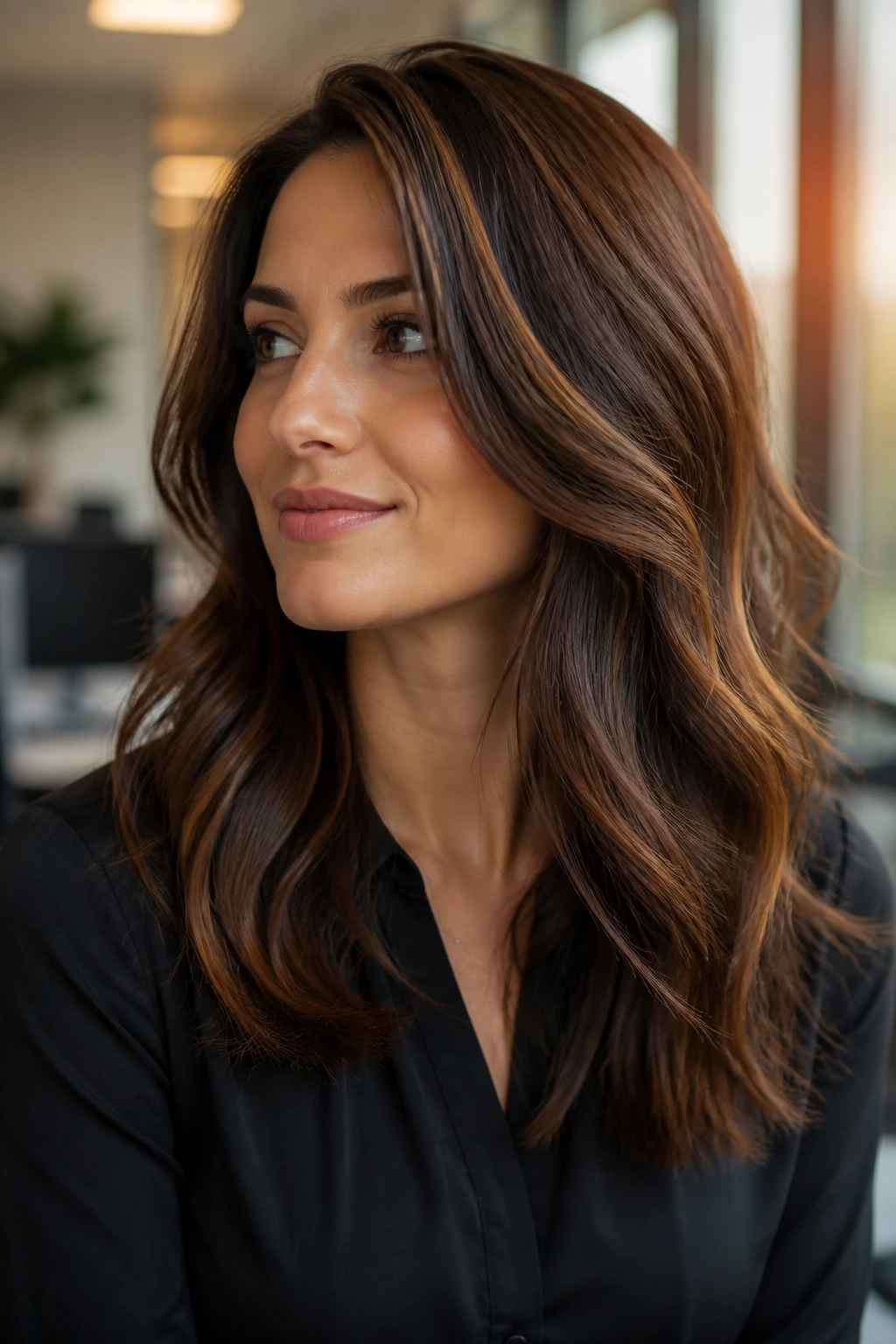
This is the look I recommend to people who say they “don’t want red hair” but still keep saving auburn balayage photos. The brown stays smoky and grounded, while the warmer pieces sit almost like a veil over the top layer. It’s understated, which is not the same thing as boring.
The veil effect works because the lighter copper is spread thinly and mostly through the surface layer. You get flashes of warmth when the hair moves, but the whole head doesn’t turn red. That restraint makes it especially good for office settings or anyone who prefers color that whispers instead of shouts.
A matte blowout dulls the tone too much. Use a round brush or loose waves. The shine matters here. Without it, the smoky base can swallow the warmth, and then the whole look loses its point.
9. Bright Copper Ends on a Lob
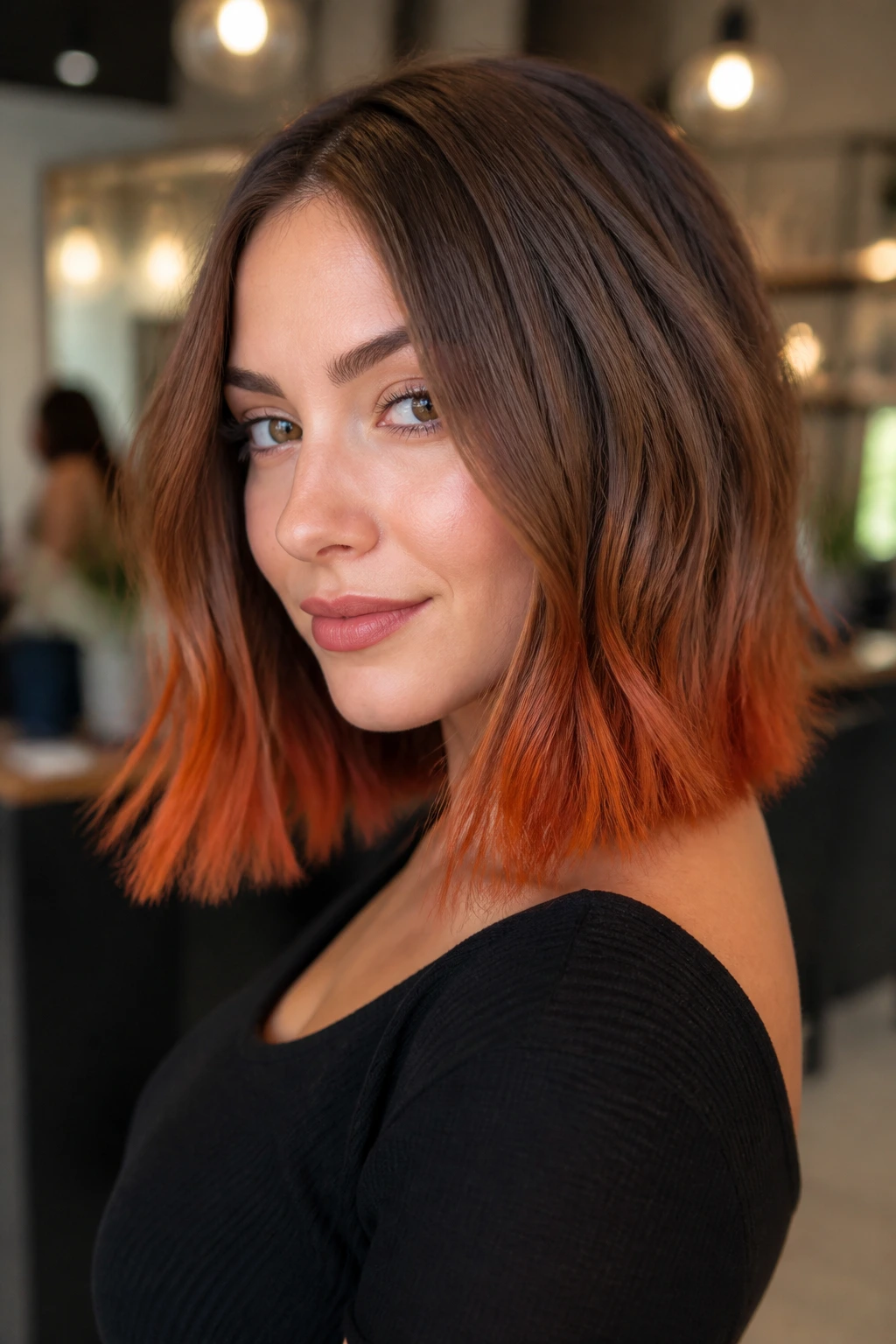
A lob gives copper somewhere to land. On shorter hair, bright ends look sharper and cleaner than they do on waist-length waves, and that crispness is part of the appeal. The base can stay medium brown, while the ends turn penny-bright or burnt copper.
This works because the cut and the color support each other. A lob already feels modern and neat; the copper keeps it from reading too safe. I especially like it with blunt ends that are just a little textured. Too much layering can scatter the brightness and make the color look thin.
One sentence says it best: bright ends need blunt shape.
If you wear your lob straight, ask for soft saturation through the bottom two inches. If you wear it wavy, keep the copper just above the edge of the perimeter so the movement shows the tone instead of hiding it.
10. Dimensional Brunette Balayage with Lowlights
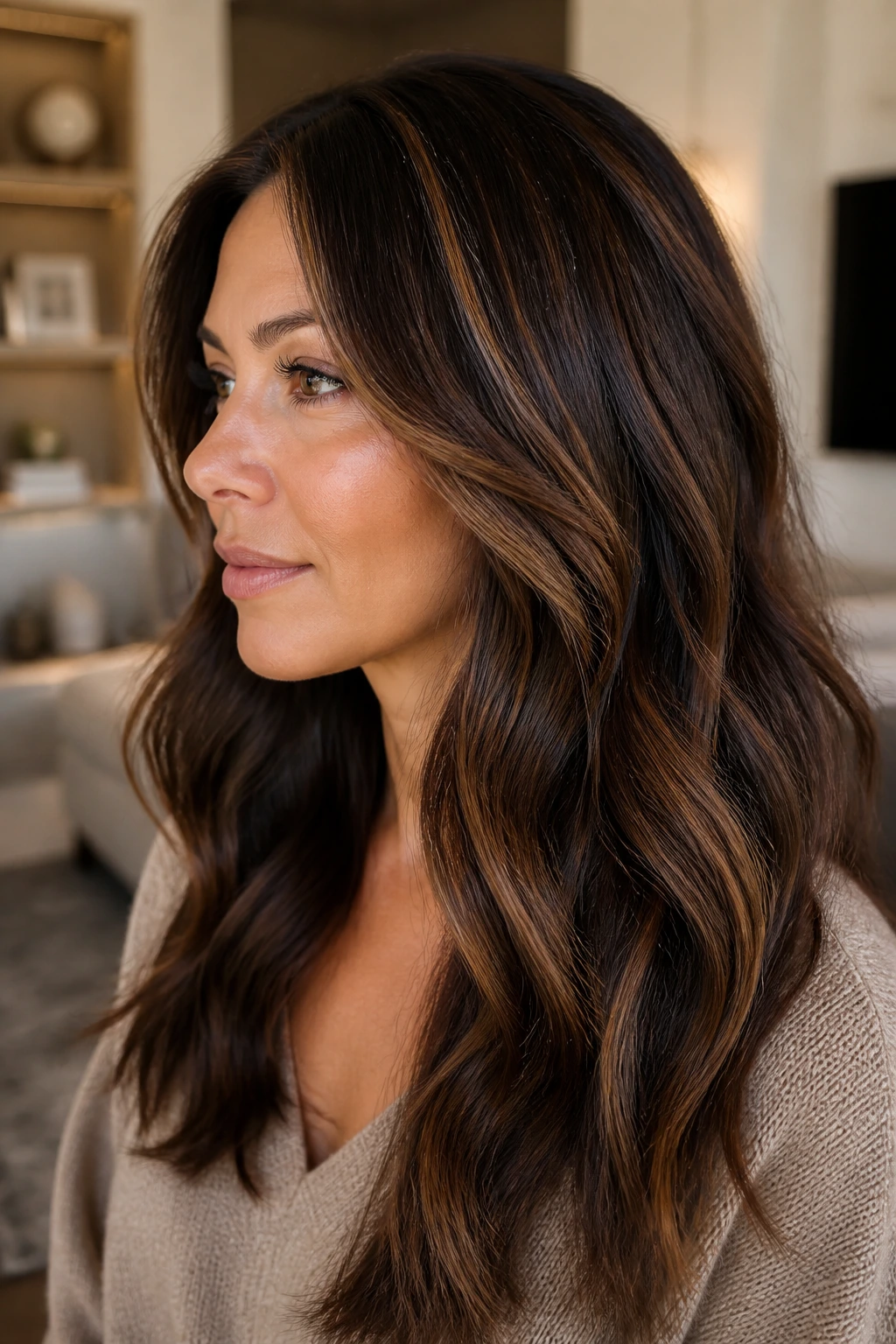
Why do some brunette balayage looks feel flat while others seem to have their own depth? Lowlights are the reason. They stop the copper from floating on top of the brown like a sticker, and they give the whole color scheme a little grit.
Here, the auburn and copper pieces are surrounded by deeper chestnut or mocha strands. That contrast matters. It makes the lighter tone look brighter without needing aggressive lift. On thick hair, lowlights also help stop the ends from turning into a heavy block of color.
A good stylist will keep the light pieces in motion zones — around the face, through the top layer, and along the outer curve of waves. The darker strands sit underneath and between those accents. That mix is what makes the color look expensive in person, not just pretty in photos.
11. Strawberry Auburn Blend
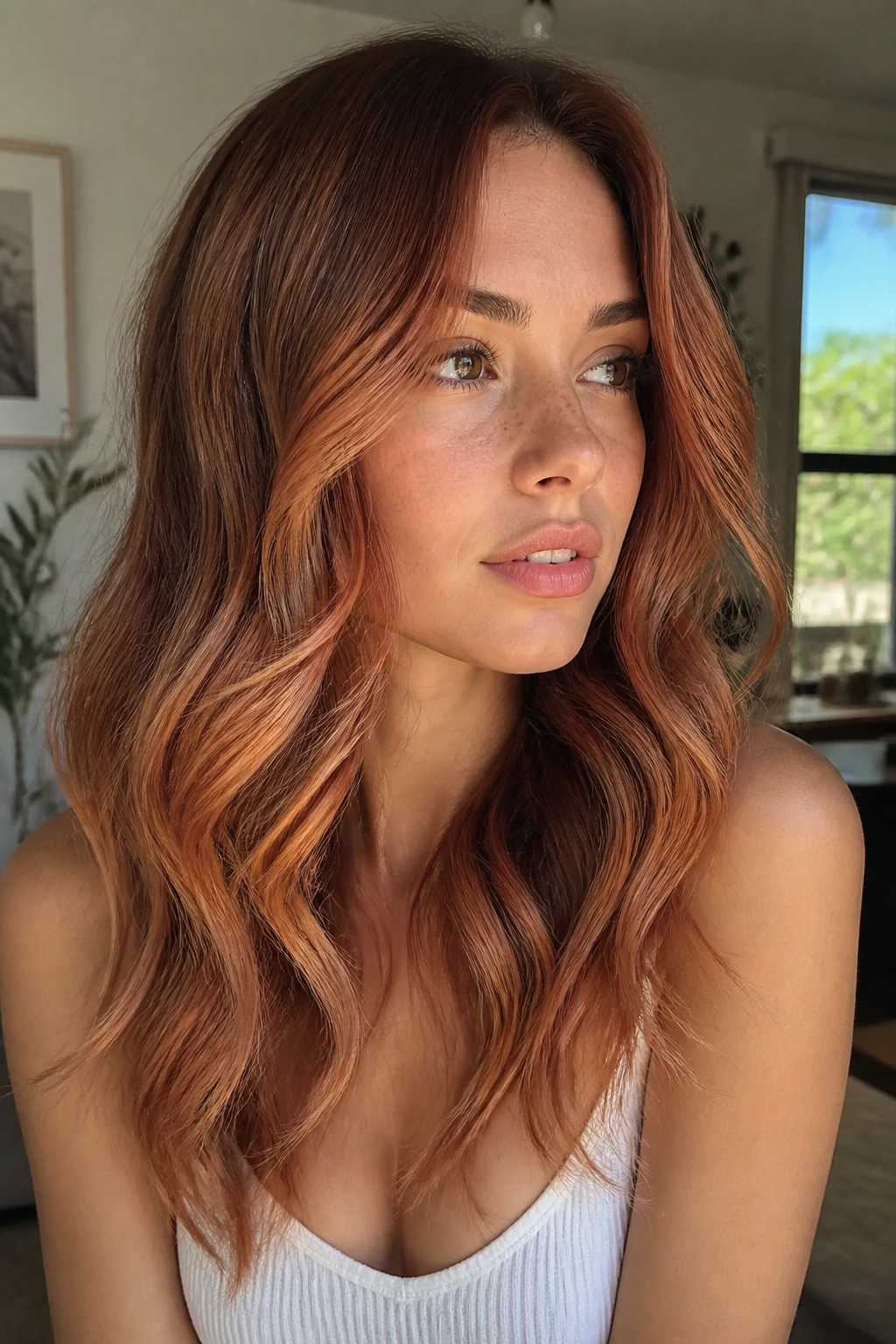
Strawberry auburn is warmer and softer than a full copper, and that softness can be a relief on brown hair. It has a little peach, a little red, a little gold. Nothing feels harsh. The color glides instead of slamming into view.
This version is especially nice on warmer brown bases that already have golden undertones. If your hair pulls orange easily, this blend can still work because it lives in a lighter, fruitier lane rather than a bright metal one. The finish should look glossy and airy, not dense.
It also behaves well on layered cuts. The lighter top layers pick up the peachy warmth, while the lower layers stay darker and keep the shape grounded. That means you can wear the color straight, curled, or in a half-up style without it falling apart visually.
12. Hidden Copper Panels
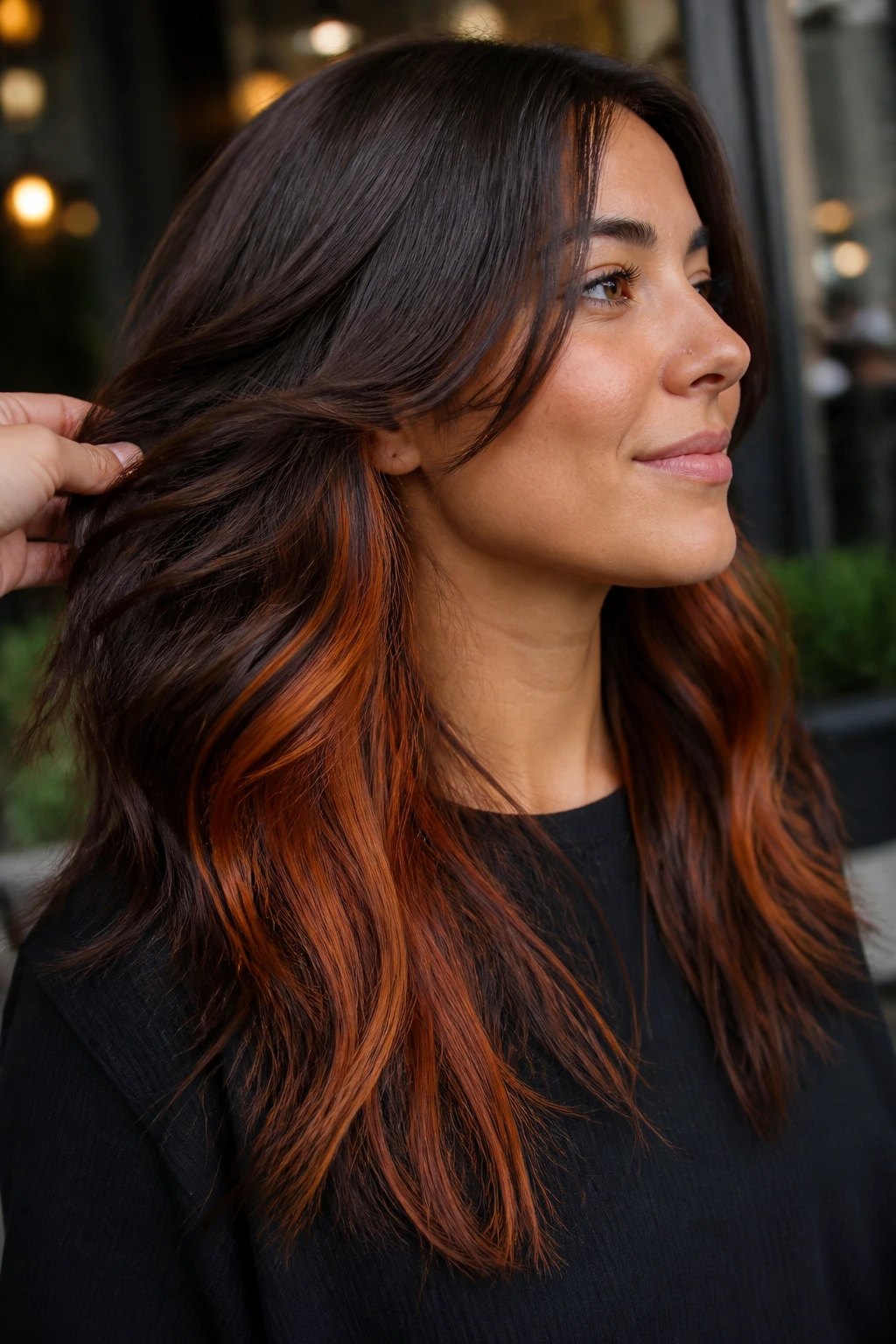
Hidden color is for people who want a little drama and no daytime explanation. The surface stays brown. The copper lives underneath in panels that show when the hair moves, gets tucked behind the ear, or is worn half up. It’s playful, but in a grown-up way.
The best hidden panels are placed where light naturally slips through the top layer. You don’t want them too chunky or too high, or they stop being hidden. Think of them like a secret the hair reveals only when it swings.
Where this look shines
- Straight styles show the hidden panels in clean slices
- Waves make the copper peek in and out
- Great for people who need a subdued top layer for work
- Easy to refresh because the hidden pieces don’t need constant touch-ups
A deep side part can expose more of the panels if you want a stronger look for evenings. Small detail, big payoff.
13. Mahogany-Copper Waves with Soft Melt
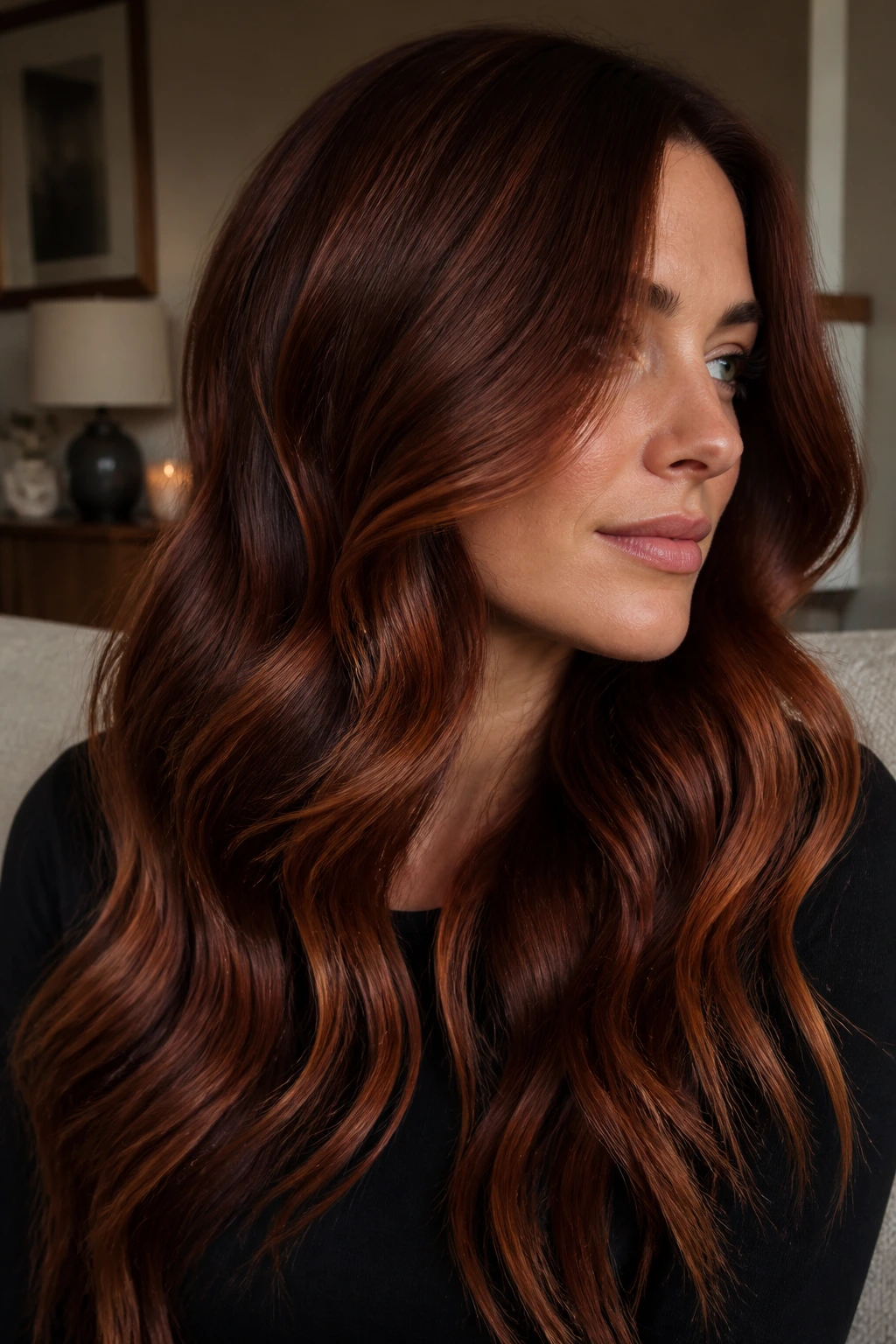
Mahogany-copper waves have a darker, moodier feel than bright auburn styles, and I like that. The shade leans red-brown first, copper second, which makes it flattering on a wide range of brunettes without pushing the hair into orange territory.
The melt should be soft. No hard line at the root, no obvious banding through the mids. A wave pattern helps the color look fluid because each bend catches the mahogany and copper differently. On long hair, that movement keeps the ends from looking heavy.
Why the melt matters
Without a soft transition, mahogany can read as flat and copper can read as loud. Put them together badly and the whole thing fights itself. Blend them properly and you get a tone that looks expensive in a low-key way.
This is a good choice if your hair is already a little porous. The deeper tones often hold better than very bright copper, and the finish tends to fade into a warm brown rather than a pale orange wash.
14. Mushroom Brown with Copper Flickers
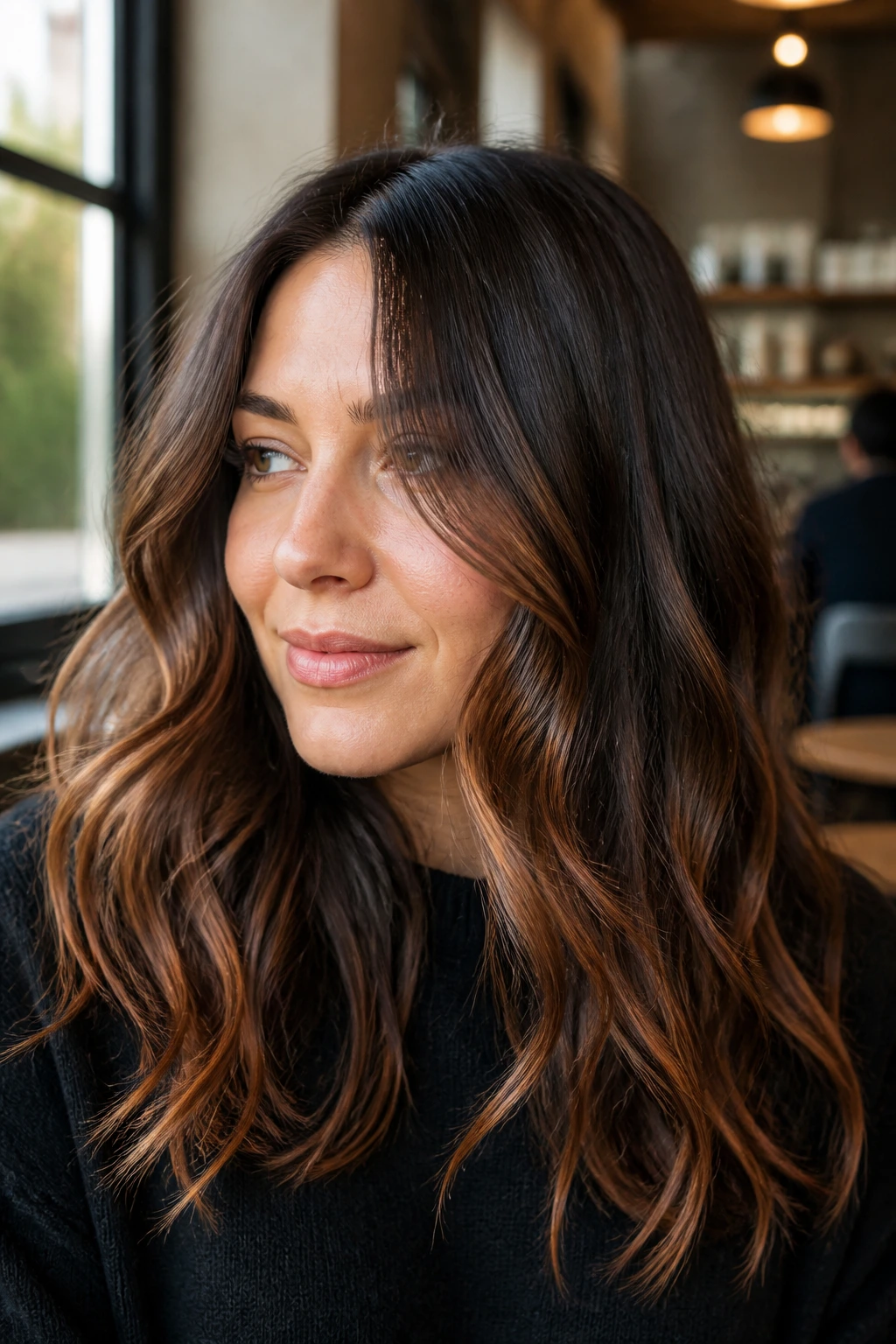
Mushroom brown usually leans cool and muted, which makes the copper flickers feel unexpected in the best way. The contrast is the whole game. You get that earthy, smoky base, then little strokes of warmth catch the light and break up the coolness.
This is not the right choice if you want loud red hair. It’s for someone who likes the idea of copper more than the full copper lifestyle. The flickers are thin and scattered, often concentrated at the ends and outer layers so they look like the color is emerging from inside the brown.
The cool base also keeps the copper from turning too orange. That balance can be tricky, though. Too much warmth and the mushroom effect disappears. Too little and the copper gets lost. The sweet spot is small, and that’s why this look usually needs a colorist who knows how to keep multiple tones from competing.
15. Glossy Rose-Auburn Balayage
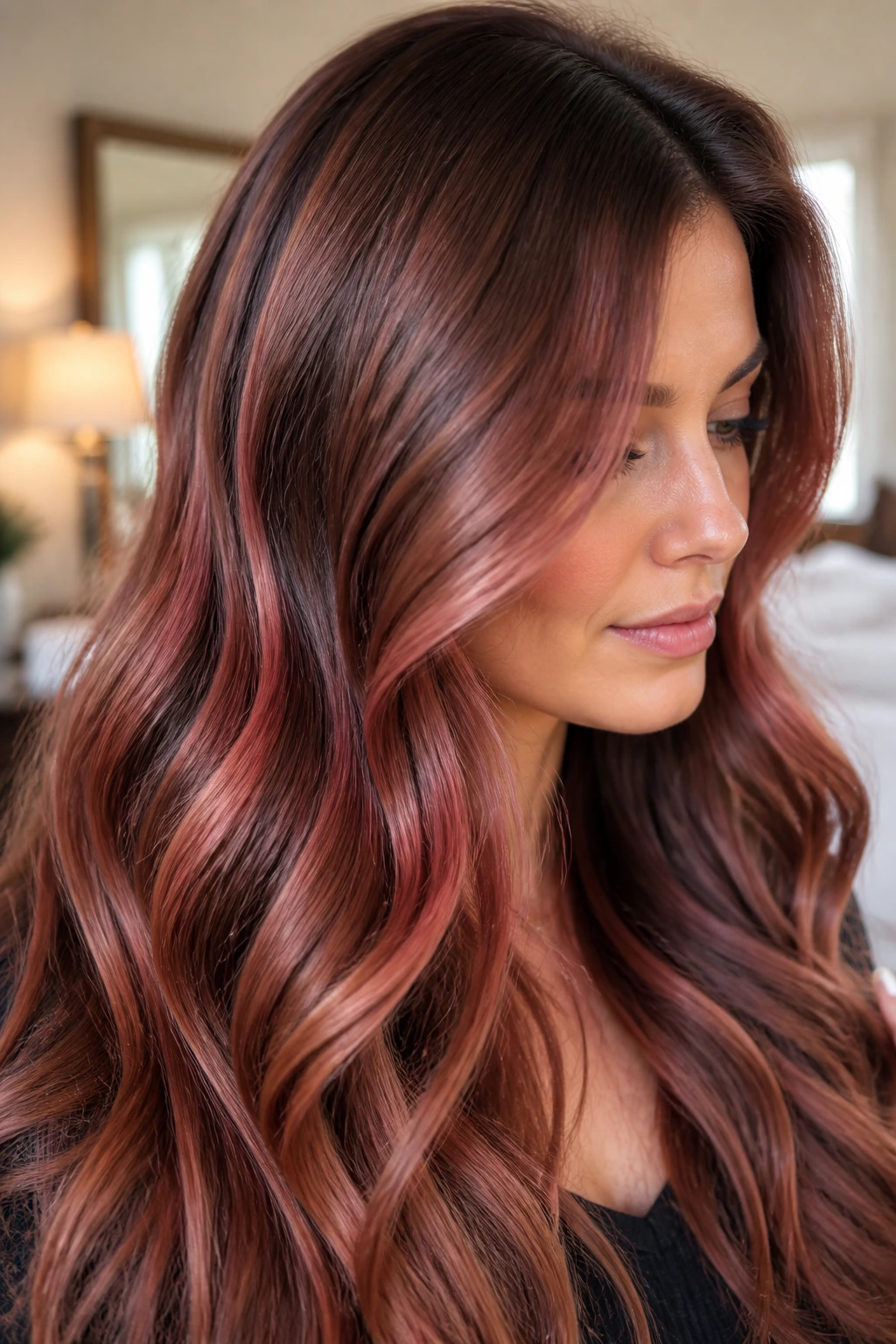
Rose-auburn sits in a nicer place than people expect. It is warmer than rose gold, darker than strawberry blonde, and more romantic than standard copper. On brown hair, it gives a rose-tinted glow that feels soft instead of sugary.
This look works best when the copper is toned with a touch of red-violet. That little shift keeps it from drifting into orange. The brown base then acts like a shadow behind the rose tones, which is what gives the color that plush, velvety finish.
How to style it
Loose curls show the rose tones best, especially on medium to long hair. A straight blowout gives the color more of a satin effect. Either way, you want shine. Dry hair kills this look fast.
A plain middle part can make the color feel sleek. A soft side part gives it more movement. Choose the one that matches your cut, not the one that looks best in a single photo.
16. Feathered Copper Tips on a Short Bob
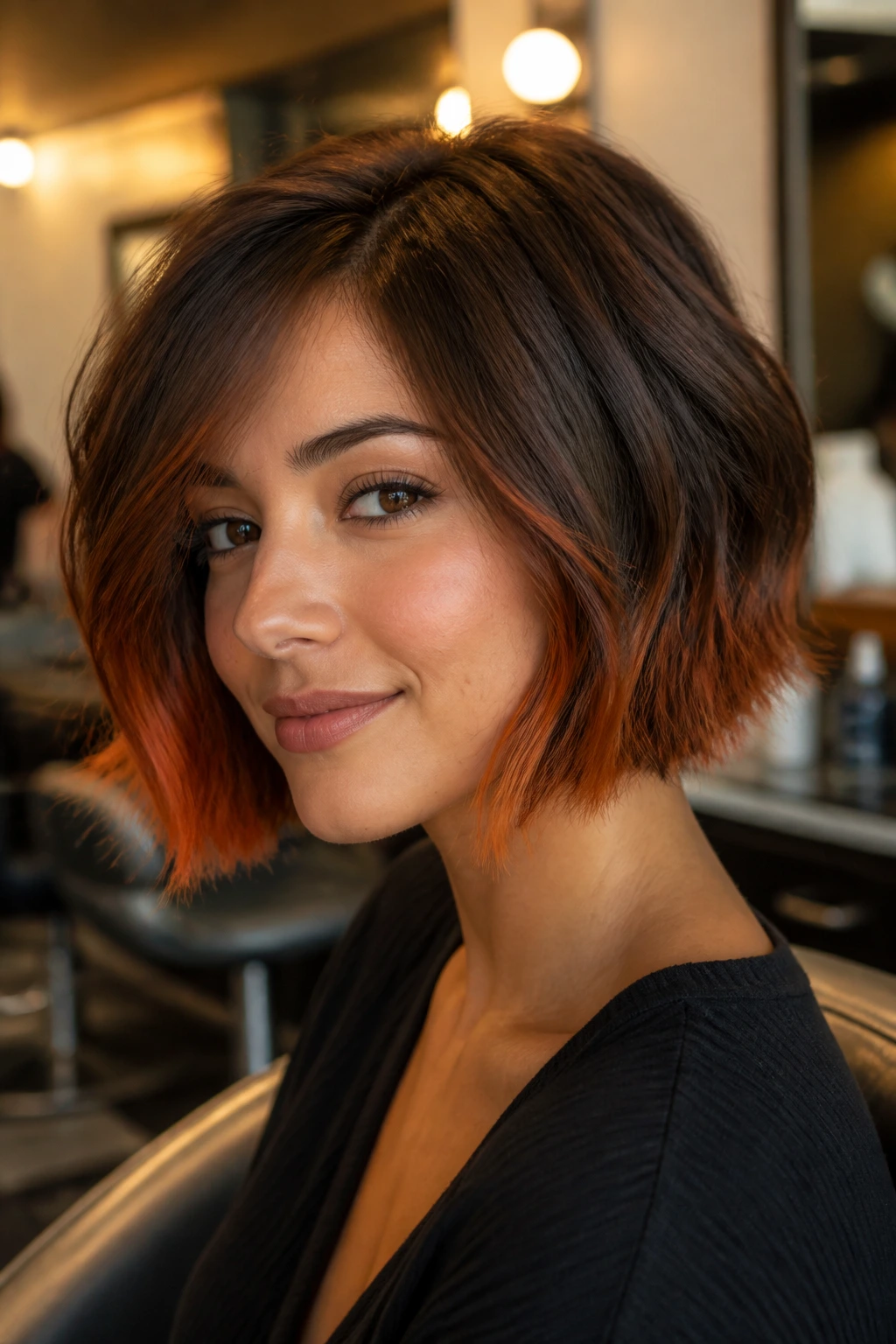
A short bob with copper tips has a sharp, airy feel that long hair can’t quite copy. The ends are where the warmth lives, and because the cut is compact, the color shows up fast. That makes the whole style feel deliberate.
Feathered tips are softer than blocky ends. The copper should look brushed through, not painted on like a cap. On a bob, this is especially useful because the color sits right near the face and jawline, where even a small change can alter the whole shape.
This version is easy to love if your hair is naturally fine. The lighter tips add a sense of body without adding much bulk. A blunt bob can also handle brighter copper better than a highly layered cut, which tends to scatter the finish.
Short hair keeps things honest. If the tone is good, you see it right away.
17. Sunlit Caramel-Auburn Hybrid

This one blends caramel softness with copper warmth, and that makes it more wearable than people expect. It’s less red than classic auburn and less gold than straight caramel. The two tones sit together in a way that looks sun-kissed without drifting into blonde territory.
I like this on medium brown hair that needs lightening but not a big color leap. The caramel opens up the face, while the auburn keeps the whole thing from looking washed out. On layered cuts, the hybrid tone gives each layer a slightly different read, which is a nice little bonus.
The style matters here. Beachy waves will make the caramel show more. A smooth blowout will let the auburn take over. That flexibility is useful if you get bored fast and want one color that can lean warm or soft depending on how you wear it.
18. Office-Friendly Subtle Auburn Brown Balayage
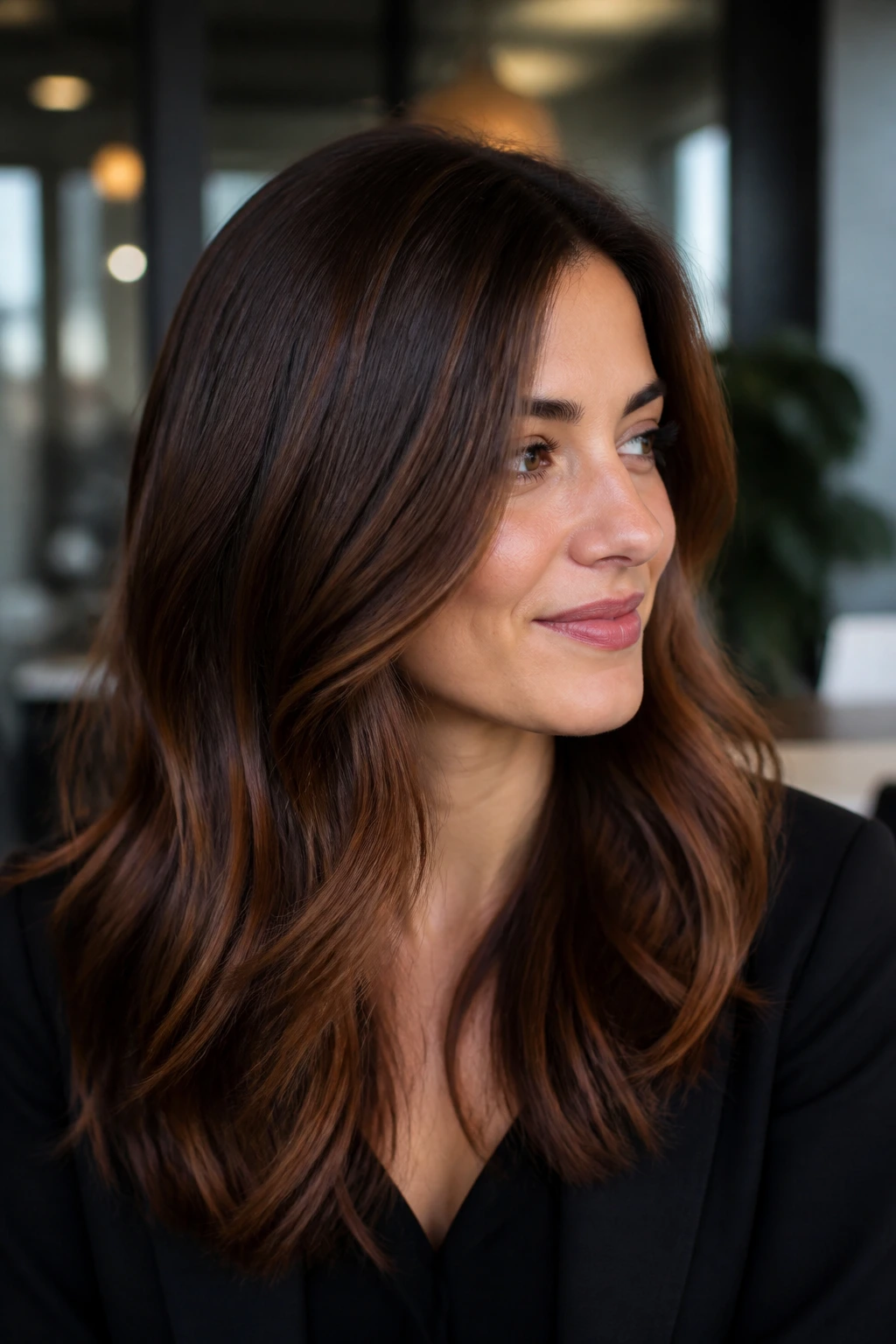
Some copper balayage is meant to be seen from across a room. This is not that. The office-friendly version keeps the warmth tucked into thin, muted pieces that read as dimension first and color second. It’s one of the safest ways to warm up brown hair without feeling like you’ve made a loud move.
The copper should stay close to the base tone — think toasted chestnut, amber brown, or a soft rust glaze. Nothing neon. Nothing overly bright. The goal is to catch the light in meetings and still look polished under fluorescents, which are not kind to bad color.
Good signs to ask for
- Thin placement through the top layer
- A root shadow that matches your natural brown
- A warm gloss instead of strong lift
- Ends that stay a half-step lighter than the mids
Best part: It grows out cleanly. That alone makes it worth considering if you don’t want a strict salon schedule.
19. High-Contrast Root Shadow with Bright Copper Ends
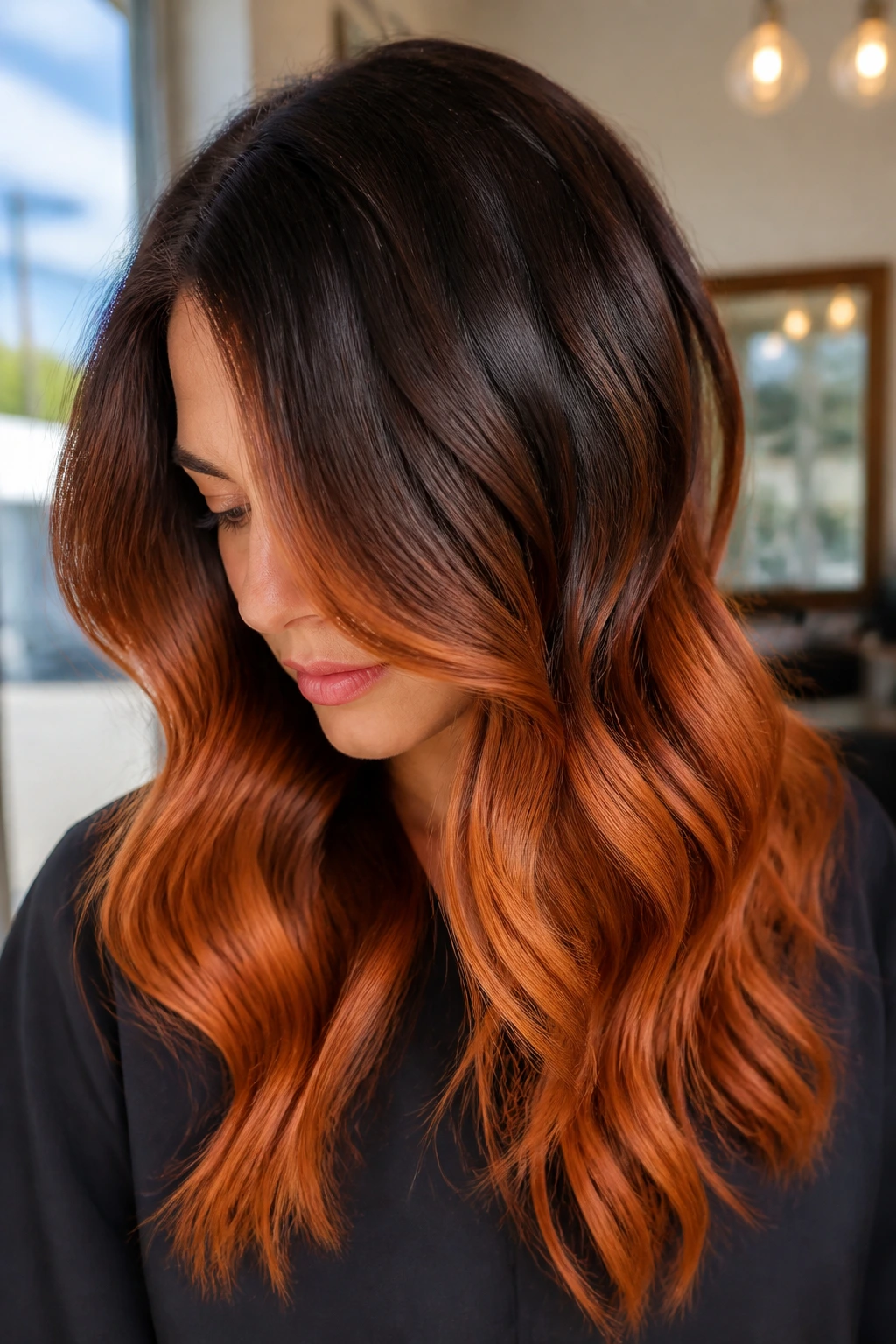
If you like drama, go here. The root shadow stays deep and rich, then the copper ends turn bright enough to make the whole head look lighter. It’s a bolder brunette balayage choice, and it works because the top and bottom are clearly different on purpose.
The root shadow gives the style structure. Without it, bright ends on brown hair can feel disconnected. With it, the contrast looks clean. The brighter ends also let you play with wave patterns, since the light color shows every bend more clearly.
How to keep it from looking harsh
Use a shade that stays in the brunette family at the top — espresso, cocoa, dark chestnut. The ends can then move into copper penny or vivid amber. The two should speak the same language, even if they’re different volumes.
This is the look that makes thick, long hair feel lighter. It also photographs well because the darker top gives the brighter ends a frame. Just don’t over-style it into perfect curls every day. A little mess makes the contrast feel lived-in.
20. Curtain Fringe with Auburn Copper Frame
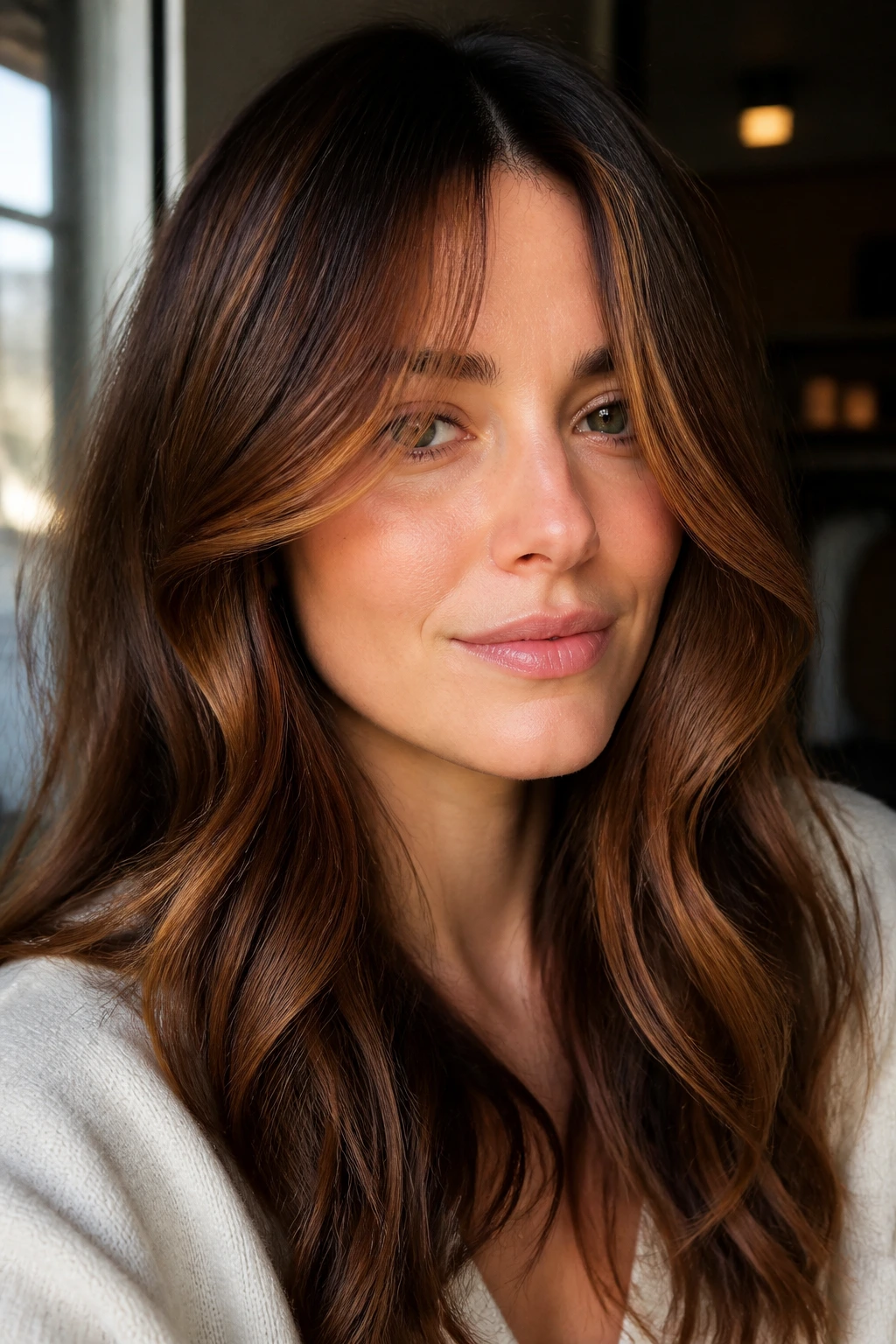
A curtain fringe gives auburn copper balayage a built-in focal point. The fringe splits at the center or just off-center, and the warm color around it makes the front of the hair look open and soft. It’s one of the easiest ways to freshen up brown hair without a full color overhaul.
The frame should follow the curtain fringe, not fight it. That means the lightest pieces live around the cheekbones and through the bend of the fringe, then fade back into the brown base. When the fringe swings, the copper shows. When it settles, the color still supports the cut.
This combination is especially good on medium-length hair. The fringe gives movement near the face, while the balayage keeps the rest of the style from looking static. You get shape and warmth at the same time, which is not a bad trade.
21. Cinnamon Copper Balayage for Thick Hair
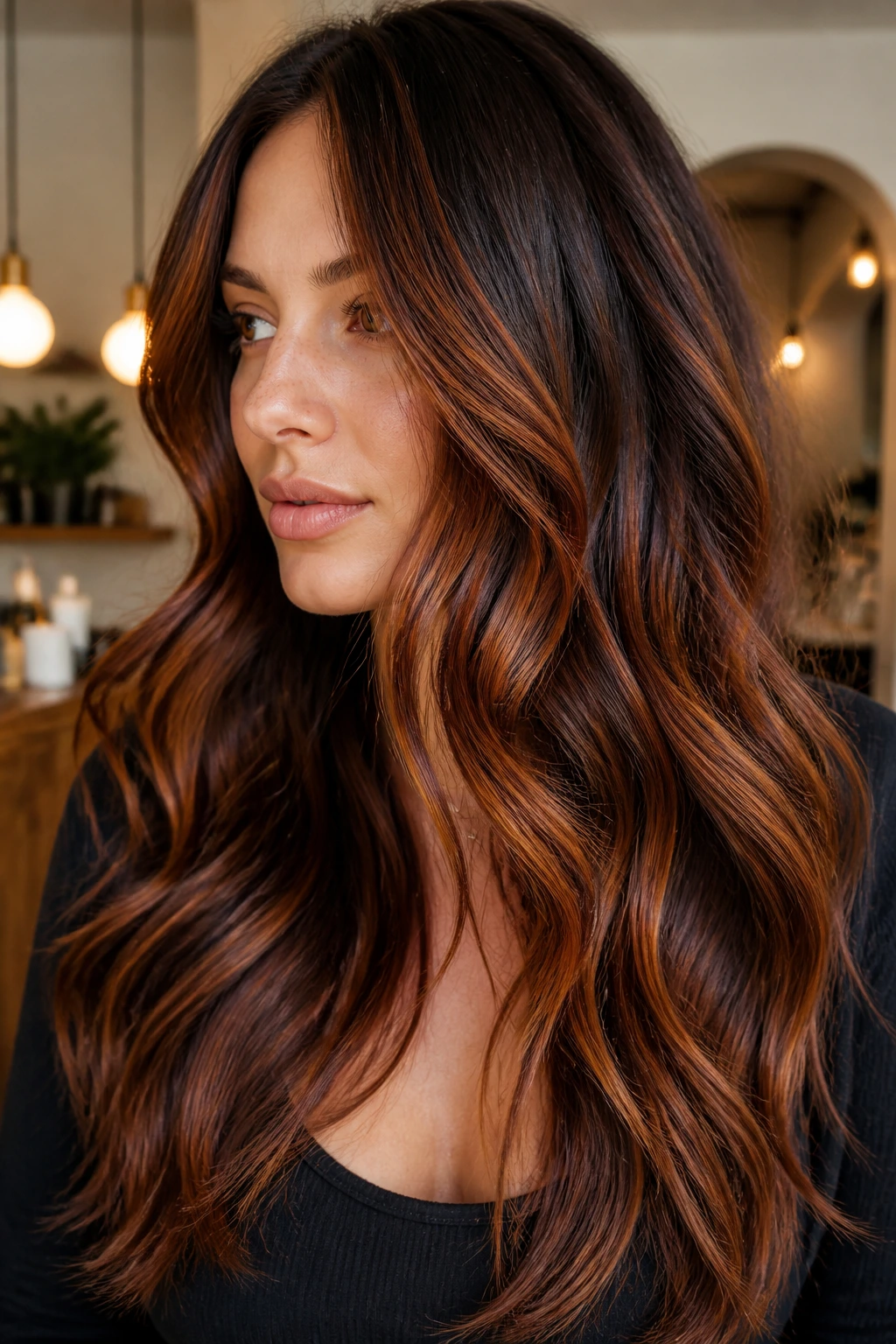
Thick hair can handle a lot of color, but that does not mean it should get a lot of everything. Cinnamon copper balayage works well here because the warm ribbons can be painted through the bulk without making the shape look heavy or overdone. The color moves with the density instead of fighting it.
A thick mane often needs more strategic placement than more brightness. Put the copper through the top layer, around the face, and in broad sections toward the ends. That keeps the hair from reading as one giant brown block. It also makes styling easier, because the warm pieces break up the mass even when the hair is just air-dried.
Practical styling notes
- Loose waves show dimension better than tight curls
- Blow-dried volume helps the copper separate from the brown base
- A lightweight gloss adds shine without flattening the body
- Heavy oils can mute the warm pieces fast
The best part? Thick hair gives cinnamon copper something to live in. Thin hair often needs precision. Thick hair needs rhythm.
22. Deep Brown Base with Amber Copper Finish
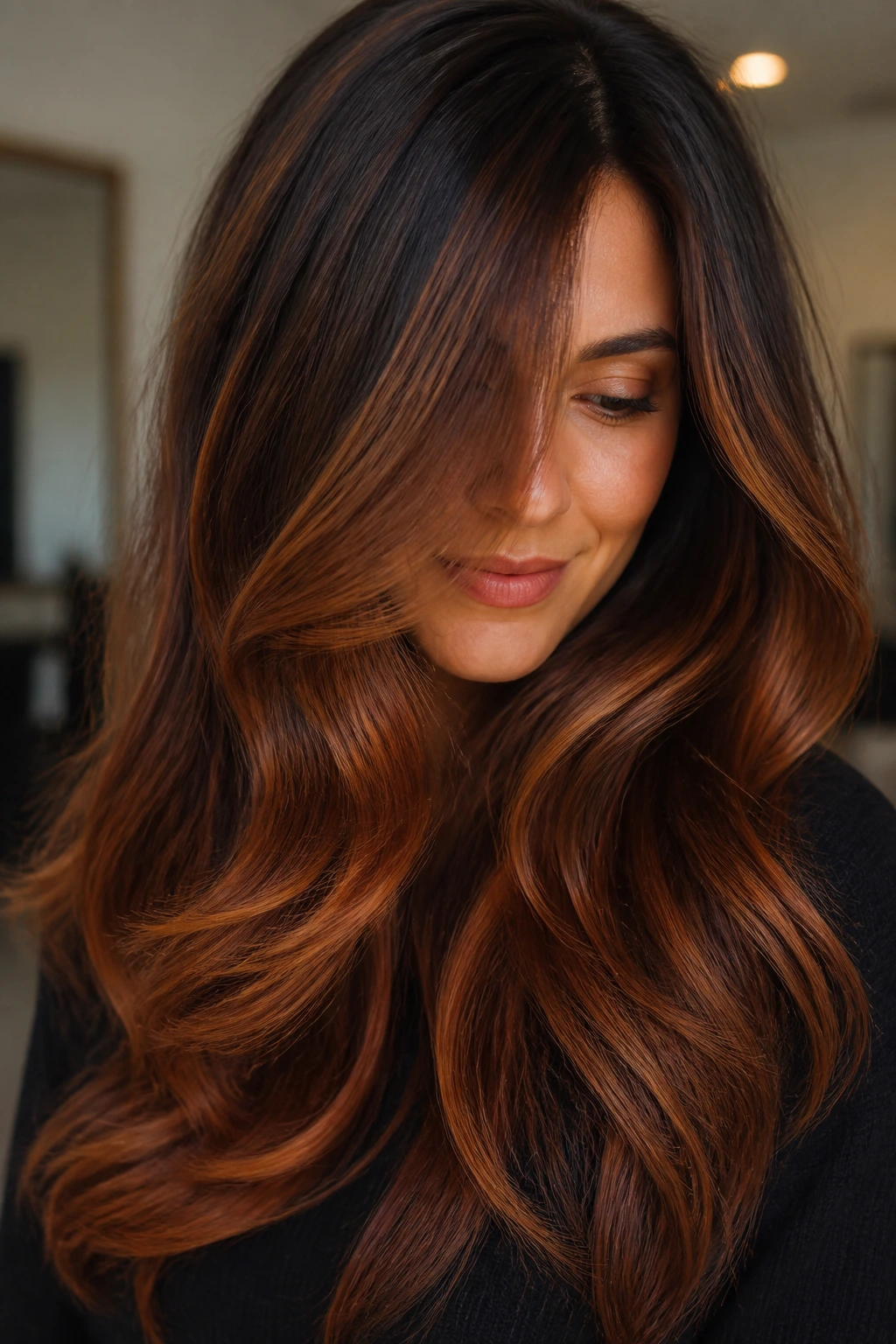
Amber copper is the quiet cousin of brighter auburn shades. On a deep brown base, it gives warmth that looks polished instead of fiery. The finish should feel like polished wood or amber glass — not flashy, just luminous.
This is a smart choice if you want copper but are nervous about going too red. Amber tones sit between gold and rust, which makes them flattering on dark brunettes and easier to keep looking soft between salon visits. The base remains the anchor, and the lighter finish sits on top like a sheen.
I like this look on long layers, but it works on shoulder-length hair too. The color catches movement better when the cut has some shape. Straight hair can wear it, but waves make the amber glow show up in a more natural way.
If I had to pick one word for this look, it would be balanced. Not bland. Balanced.
Final Note
Auburn copper balayage works because it gives brown hair something to do. It adds warmth, shape, and a little attitude without forcing the whole head into one flat color.
The best version for you depends on how much contrast you want to see in a mirror on a random Tuesday. Some of these looks are soft enough to fade gracefully. Others are sharper and brighter, and they make a stronger point. Both are valid. The only real mistake is asking for copper without thinking about placement, because placement is where the whole thing either comes alive or falls apart.
If you take one practical thing from all 22 looks, make it this: keep the root a shade or two deeper than the warm pieces. That small bit of shadow is what gives auburn copper balayage its depth, and it’s the reason the color still looks good after the first few washes.
