



Platinum blonde balayage on brown hair can look sharp, glossy, and expensive, but only when the light pieces are placed with restraint. Push the blonde too hard, too fast, and the whole thing turns brassy or stripy in a hurry. Keep the contrast measured, and the same color family starts reading polished instead of loud.
Brown hair gives you a head start on depth. It also gives you a fight, because the hair has to pass through red, orange, and gold before it gets anywhere near icy pale. That’s why the nicest platinum balayage often lives inside a soft root shadow, a beige toner, or a face frame that does the heavy lifting while the rest stays calmer.
I like this color family best when the brown is still doing a job. It frames the blonde, keeps the grow-out softer, and stops the whole head from flattening into one bright sheet. A good colorist knows that “platinum” is not one look; it can be whisper-thin ribbons, chunky contrast, a smoky melt, or a bright money piece that hits first and hardest.
The 20 looks below cover that whole range, from low-maintenance placement to high-drama contrast. Some are made for waves. Some wake up on a blunt bob. A few only work if the haircut has layers. That’s the part people miss, and it matters more than the tone chart on the counter.
1. Platinum Blonde Money Piece Balayage
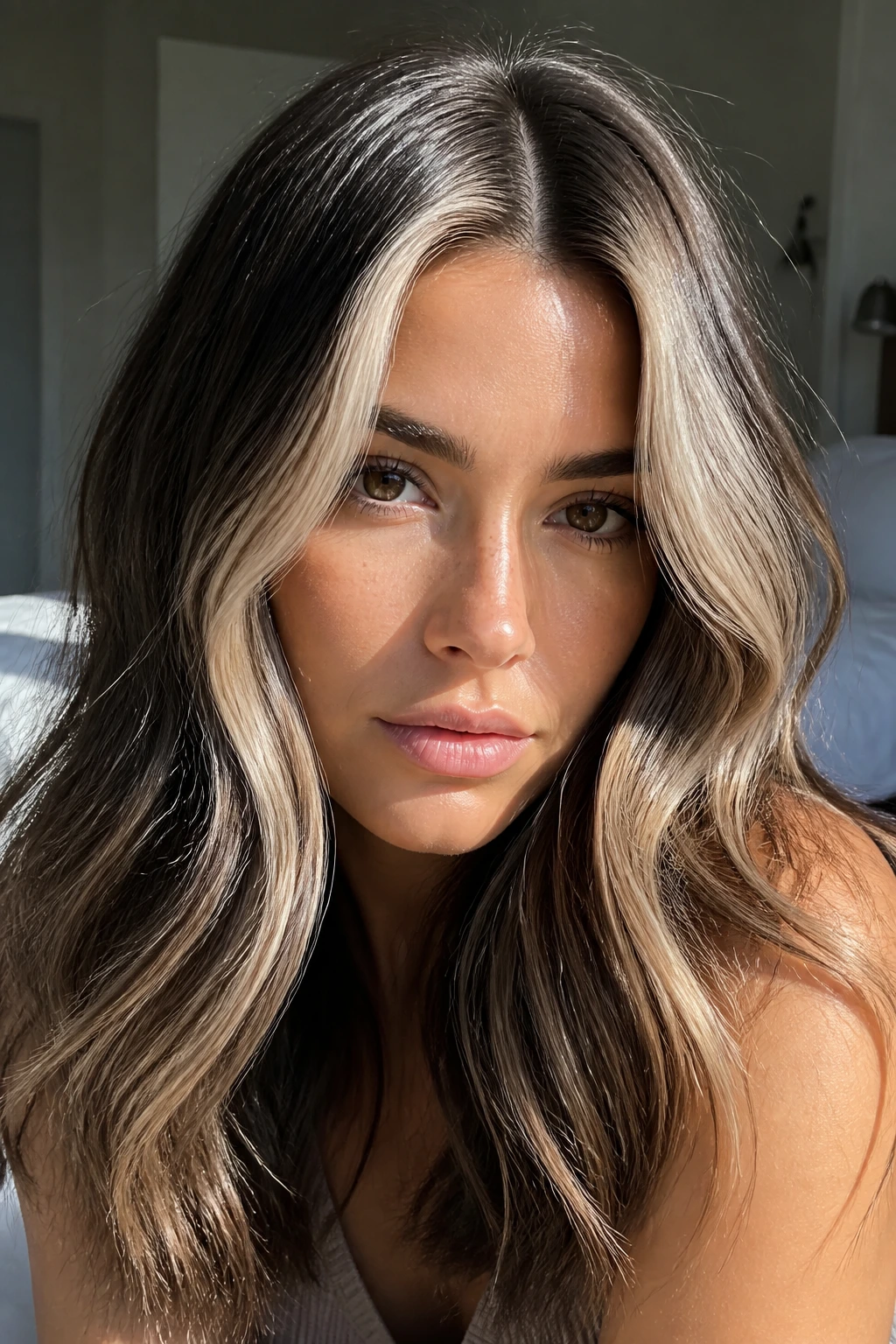
A bright money piece is the fastest way to make platinum blonde balayage on brown hair feel intentional. Instead of spreading the lightness everywhere, you keep most of the brunette base intact and flood the front with two brighter face-framing sections. It sharpens cheekbones, wakes up the eyes, and gives you that slightly editorial look without bleaching the whole head into submission.
Why It Flatters Brown Hair
Brown hair can handle a bolder front section better than people expect. The darker base keeps the blonde from looking washed out, and the brightness near the face gives you contrast where it matters most.
- Ask for the lightest lift around the face, with softer beige pieces through the mid-lengths.
- Keep the root area blurred, not solid.
- A center part makes the money piece feel dramatic; a soft side part makes it look less severe.
Pro tip: If your hair is already warm, ask for a toner that sits between pearl and beige. Pure ice can look harsh against deep brown.
2. Smoky Root Melt with Platinum Ends
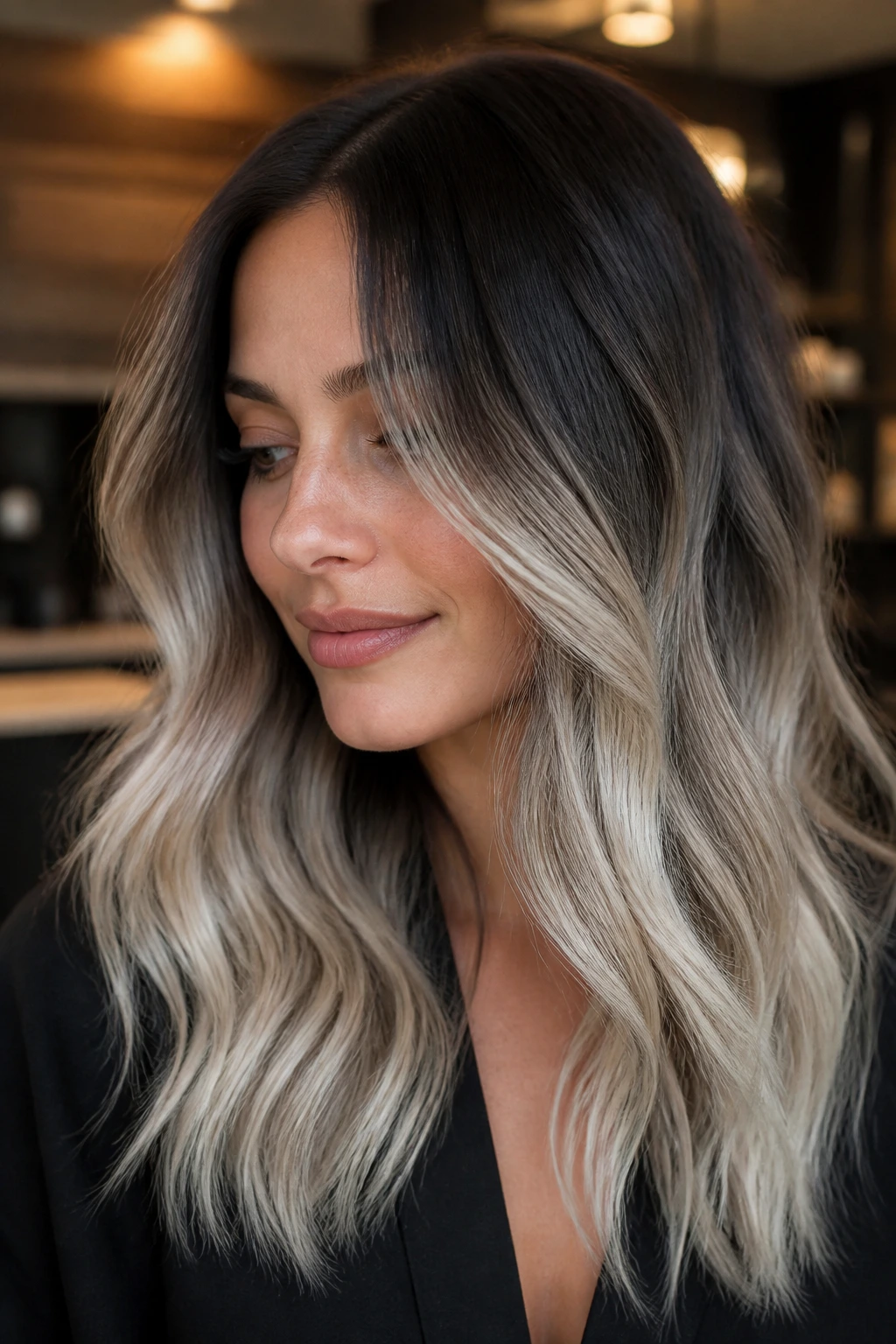
Why does a smoky root melt look so expensive on brown hair? Because it lets the brunette stay visible instead of fighting the blonde. The root shade gives the eye a place to rest, and the platinum ends arrive like the punch line.
This look is smart if you hate obvious regrowth. The root stays deep espresso, soft charcoal, or cool chestnut, then melts into a pale blonde that gets brighter as it drops. That gradient matters. Hard lines are the enemy here.
What to Ask For
- A shadow root one to two shades deeper than your natural brown.
- Balayage painted lower on the hair shaft, not packed at the scalp.
- Ends lifted to a pale yellow before toning, or the blonde can turn muddy.
A root melt is one of those styles that looks casual but takes discipline. Too much root shadow and it reads heavy. Too little and you lose the point. The sweet spot is a blur, not a stripe.
3. Icy Platinum Balayage on Long Brown Waves
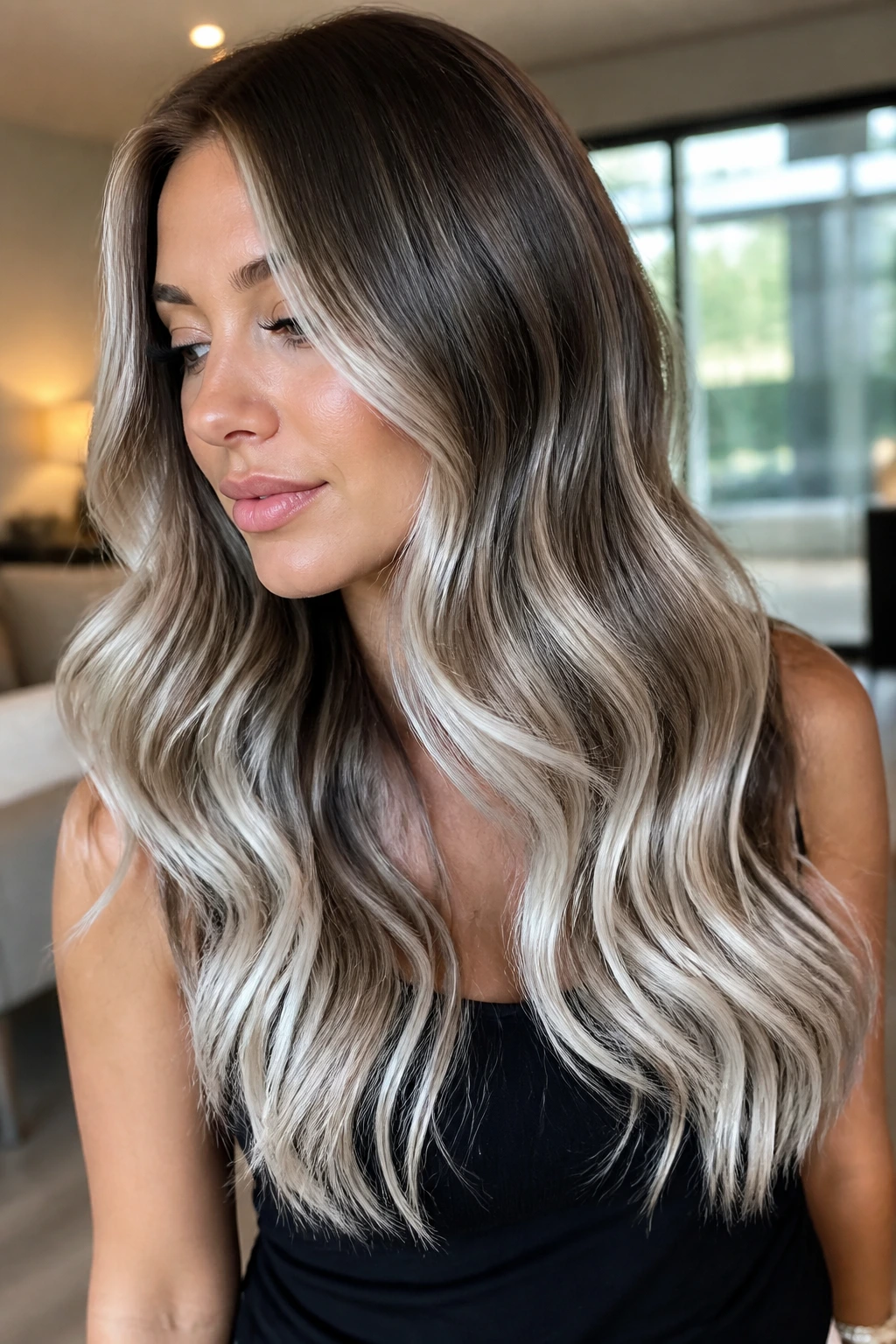
Long waves and icy platinum are a good match when you want the blonde to move. The curl pattern catches light in thin flashes, so the platinum does not sit there flat; it flickers. On brown hair, that movement is what keeps the color from feeling harsh.
Picture soft chestnut lengths with frost at the bends. That’s the effect. Not white-out blonde. Frosted ribbons. The ends usually carry the brightest pieces, while the upper layers stay a touch darker so the whole head keeps shape.
How to Wear It Well
- Best on hair past the shoulders.
- Works with large-barrel waves or a loose bend made with a flat iron.
- Needs a gloss every so often to keep the icy tone from drifting yellow.
One thing I like here: the waves can hide slight variation in tone, which is useful if your lift is not perfectly even from root to end. Straight hair is less forgiving. Curves do some of the work for you.
4. Fine Platinum Ribbons Through Dark Brown Hair
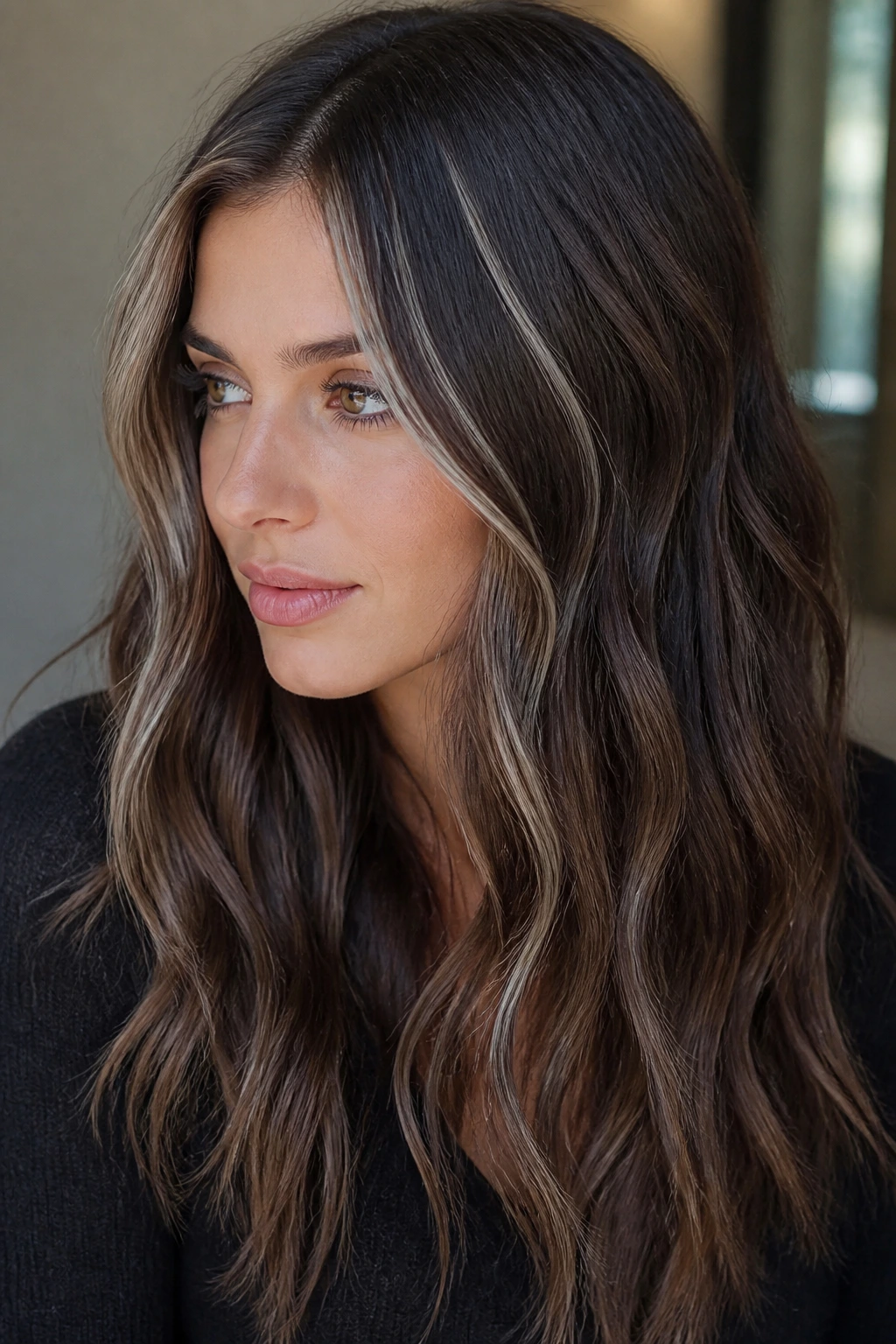
Fine ribbons are for people who want lightness without the obvious stripe effect. Instead of chunky blonde panels, the colorist paints thin, scattered strands through the brown base. The result is softer and more expensive-looking than it sounds on paper.
This style is especially good on fine hair. Heavy placement can overwhelm a narrow hair shaft, but delicate ribbons add dimension without making the ends feel see-through. You still get a bright finish, only it reads woven in rather than pasted on.
What Makes It Different
- Thin slices around the temples and crown.
- Soft lift through the mid-lengths.
- Less brightness at the very ends than a chunky balayage.
Use this if you want light that shows in motion. It looks quiet indoors and brighter outside, which is part of the charm. If you want a color that shouts from across the room, this is not it. If you want depth with a pale sheen, it lands well.
5. Mushroom Brown Balayage with Frosted Beige Ends
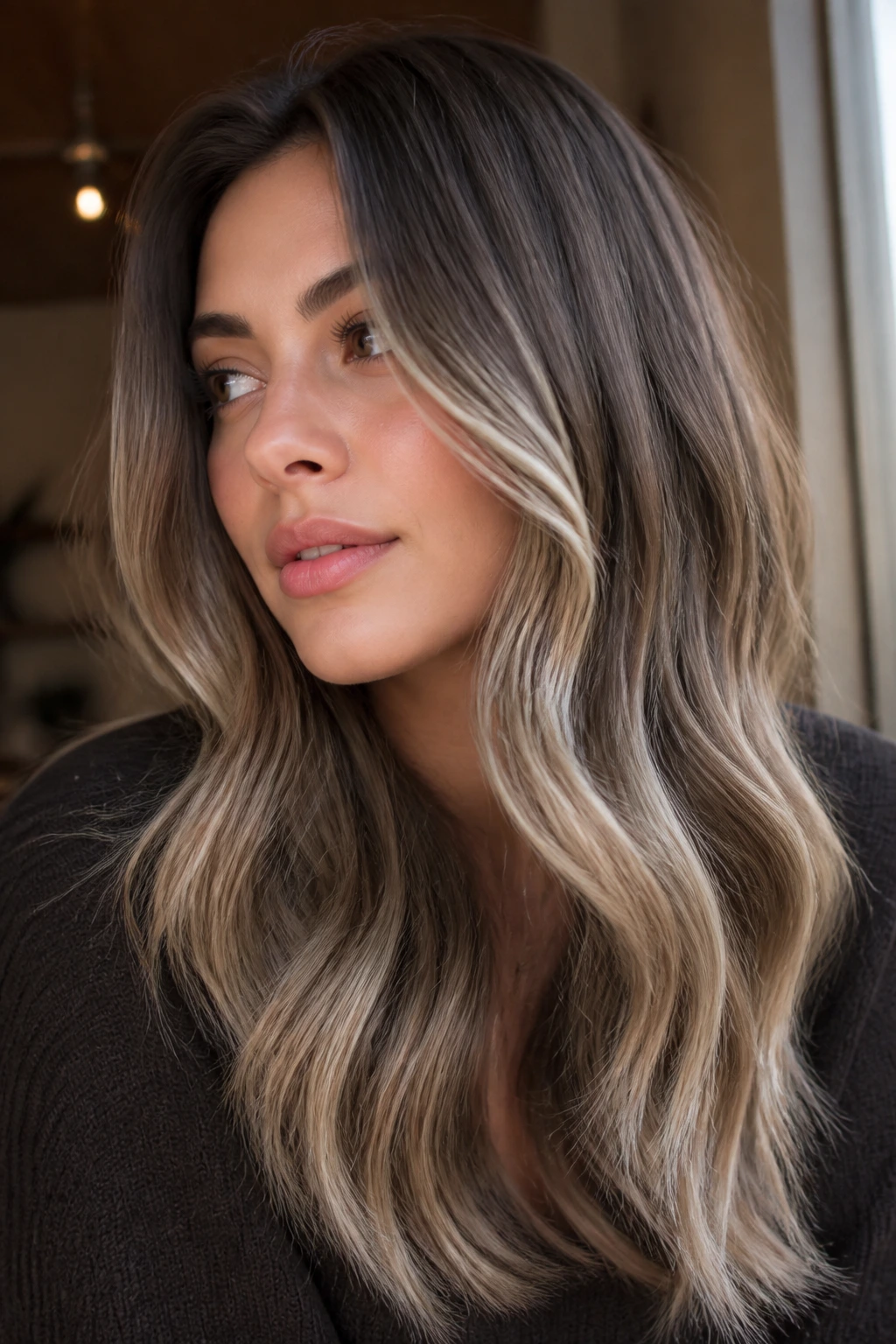
Mushroom brown and frost are a nice pair because both live in the cooler part of the color family. The base stays earthy and smoky, while the ends pick up a beige-platinum tone that feels softer than pure silver. It is a more wearable version of platinum for people who do not want that super-bright, high-contrast finish.
The key here is keeping the blonde beige enough to blend with the brown. If the ends go too white, they can fight the root and make the whole style look disconnected. With the right toner, the blonde sits in the same room as the brunette instead of arguing with it.
Good Fit For
- Medium brown hair with a naturally cool cast.
- People who like ash tones more than warm honey.
- Layered cuts, where the pale ends can fall in separate pieces.
I tend to prefer this look on hair that already has a bit of movement. Straight, one-length hair can make the cool tones feel denser. A soft bend breaks that up.
6. Chunky Platinum Blonde Balayage with 90s Contrast
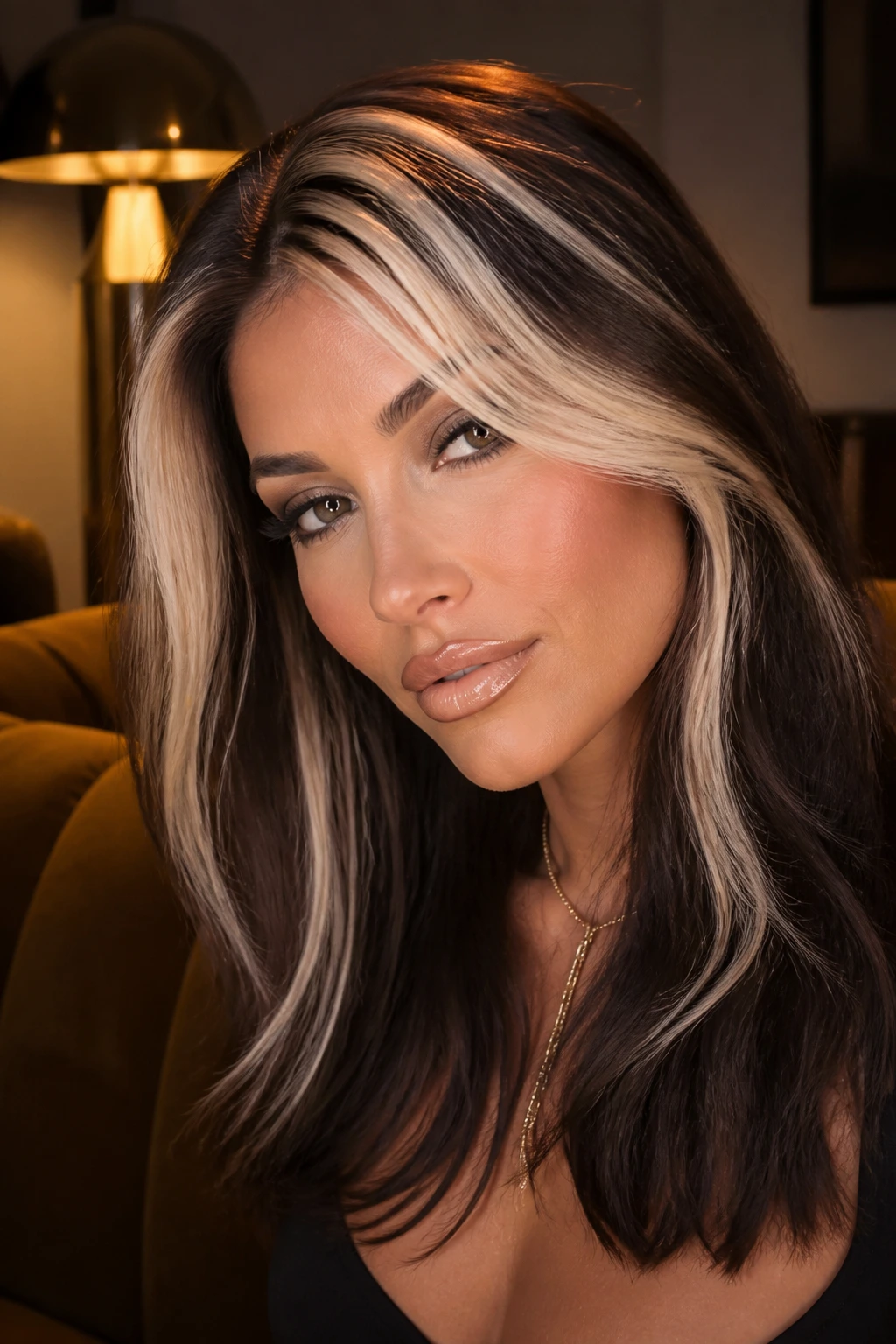
Chunky contrast is back for a reason: it has attitude. On brown hair, thicker platinum balayage pieces create a strong graphic line, and that line looks especially good if you want your color to feel a little nostalgic and a little sharp.
This is not the quiet version. It’s bolder, and it shows. The trick is not to scatter the light pieces everywhere. Keep them placed where the eye naturally lands — around the front, through the top layer, and in a few vertical ribbons so the blonde reads deliberate, not random.
Who Should Ask for It
- People with dense hair that can handle stronger contrast.
- Anyone who likes a strong part line and visible dimension.
- Shorter layers, where chunkier pieces have room to show.
Unlike soft baby lights, chunky placement gives you a clearer read from a distance. That can be fantastic on thick brown hair, which sometimes eats delicate highlights and makes them disappear. Here, the blonde gets to be seen.
7. Curly Brown Hair with Frosted Platinum Tips
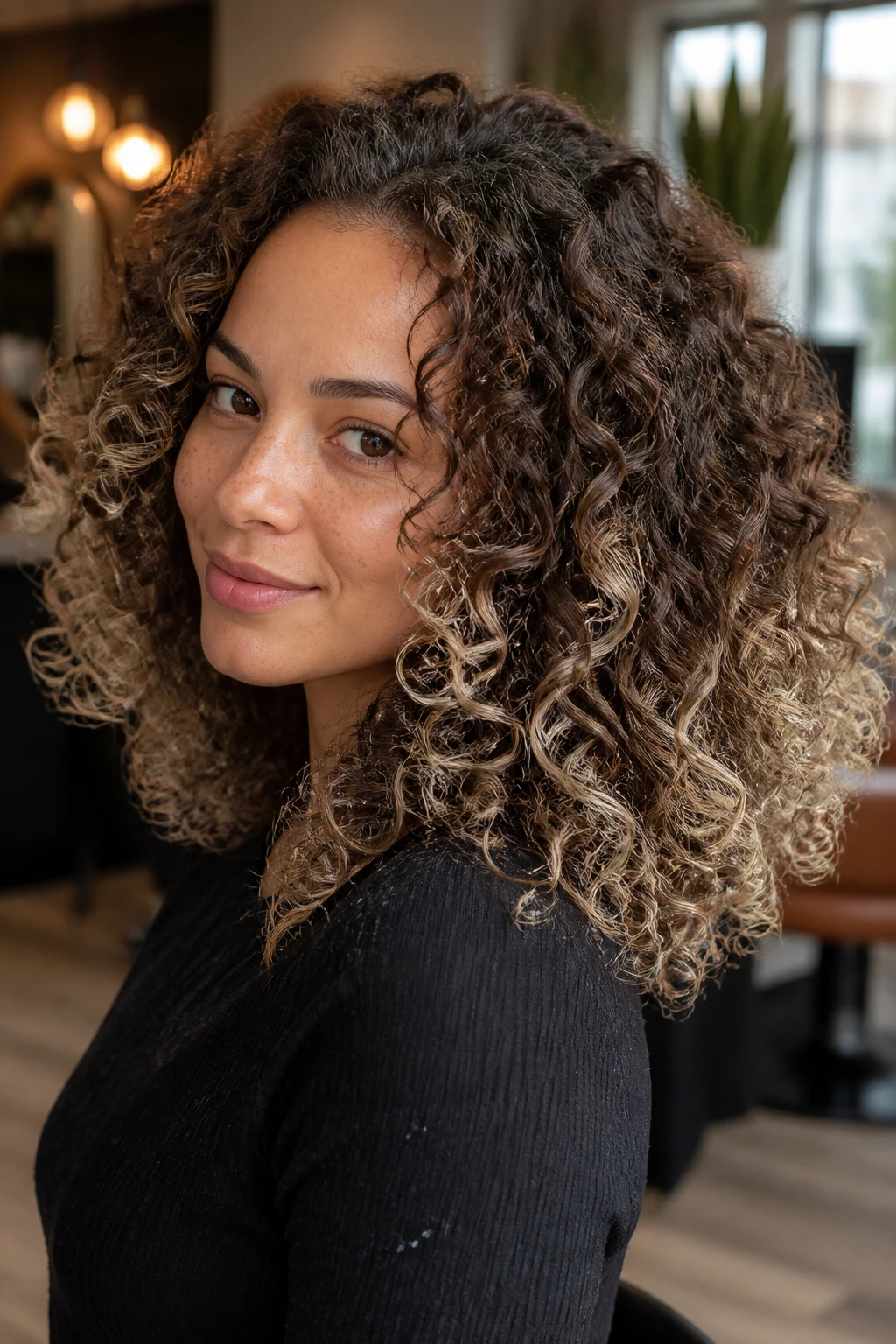
Curly hair changes everything. The blonde lands differently because every coil twists the color back on itself, so the finish looks softer and more dimensional than it would on straight strands. Frosted tips on brown curls can be gorgeous when the light pieces stay a touch lower and the roots keep their depth.
The biggest mistake is over-lightening too close to the scalp. Curly hair springs upward, and the blonde can suddenly look much higher than planned. Better to paint where the curl pattern opens naturally and let the shape do the rest.
Placement Notes
- Focus on the outer curve of the curl, not every interior coil.
- Keep the brightest pieces through the tips and top layer.
- Use a curl cream that does not dull the tone.
A good curly balayage should still look alive on day three. If it only looks nice right after a blowout, the placement was too dependent on styling. That is a letdown, and it happens more than it should.
8. Sleek Straight Balayage with a Silver Veil
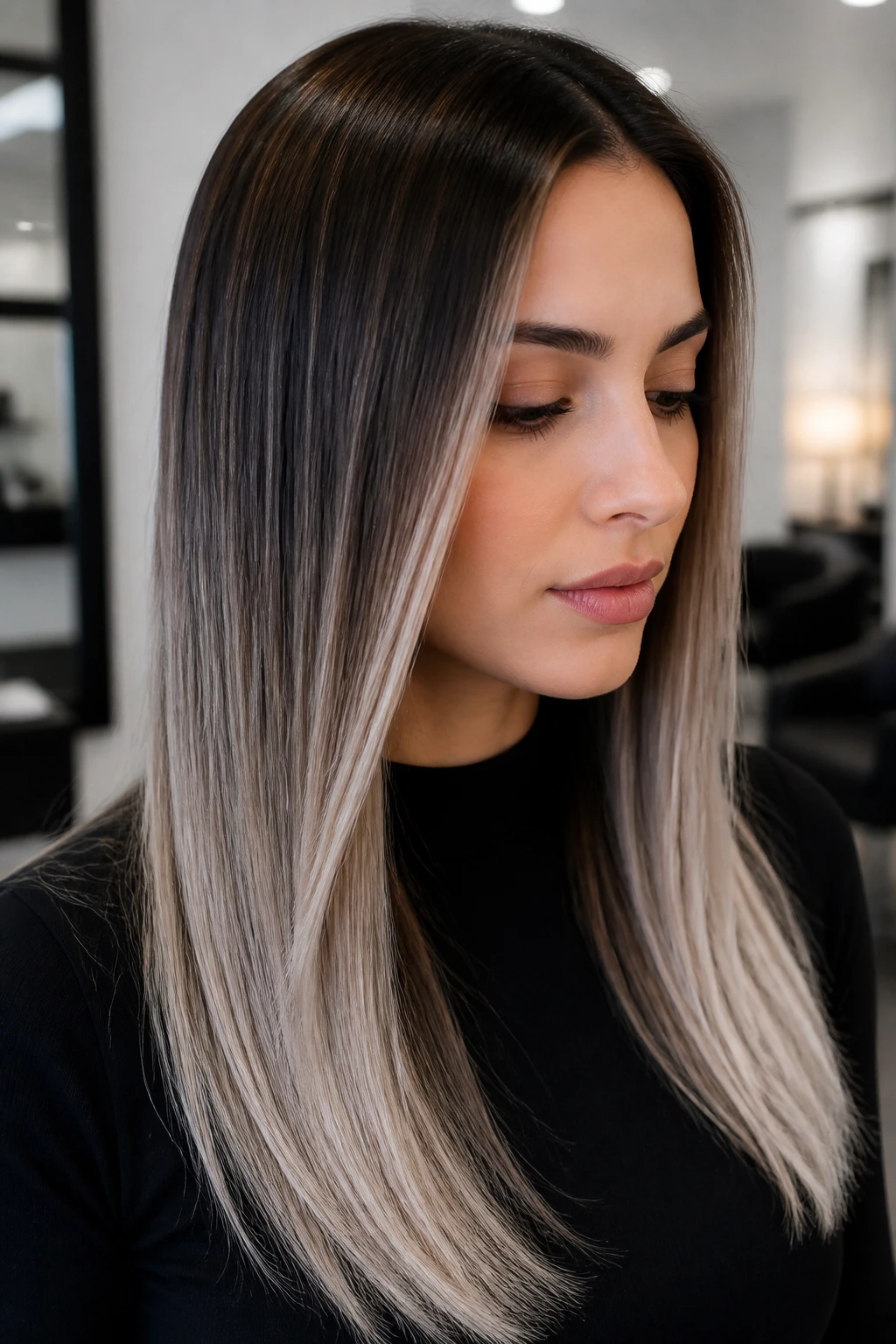
Straight hair shows every line. That’s why a silver-veiled platinum balayage can look so clean on brown hair when it is done well. There is nowhere to hide, which sounds harsh, but it also means the contrast reads crisp instead of blended into a blur.
The vibe here is sleek and deliberate. The blonde pieces often sit in long, narrow sections that start a little lower than you might expect, then taper into the ends. The overall look is cooler and more polished than beachy waves, and I mean that in the practical sense, not the glossy-magazine sense.
What To Watch For
- The transition from brown to blonde must be feathered.
- Toner needs to stay cool, or the silver effect disappears fast.
- Heat styling should be minimal if you want the finish to stay reflective.
One short note: this style can show damage faster than softer balayage. Dry ends make the silver look dull. A trim every so often helps more than people admit.
9. Butterfly Cut with Platinum Face Framing
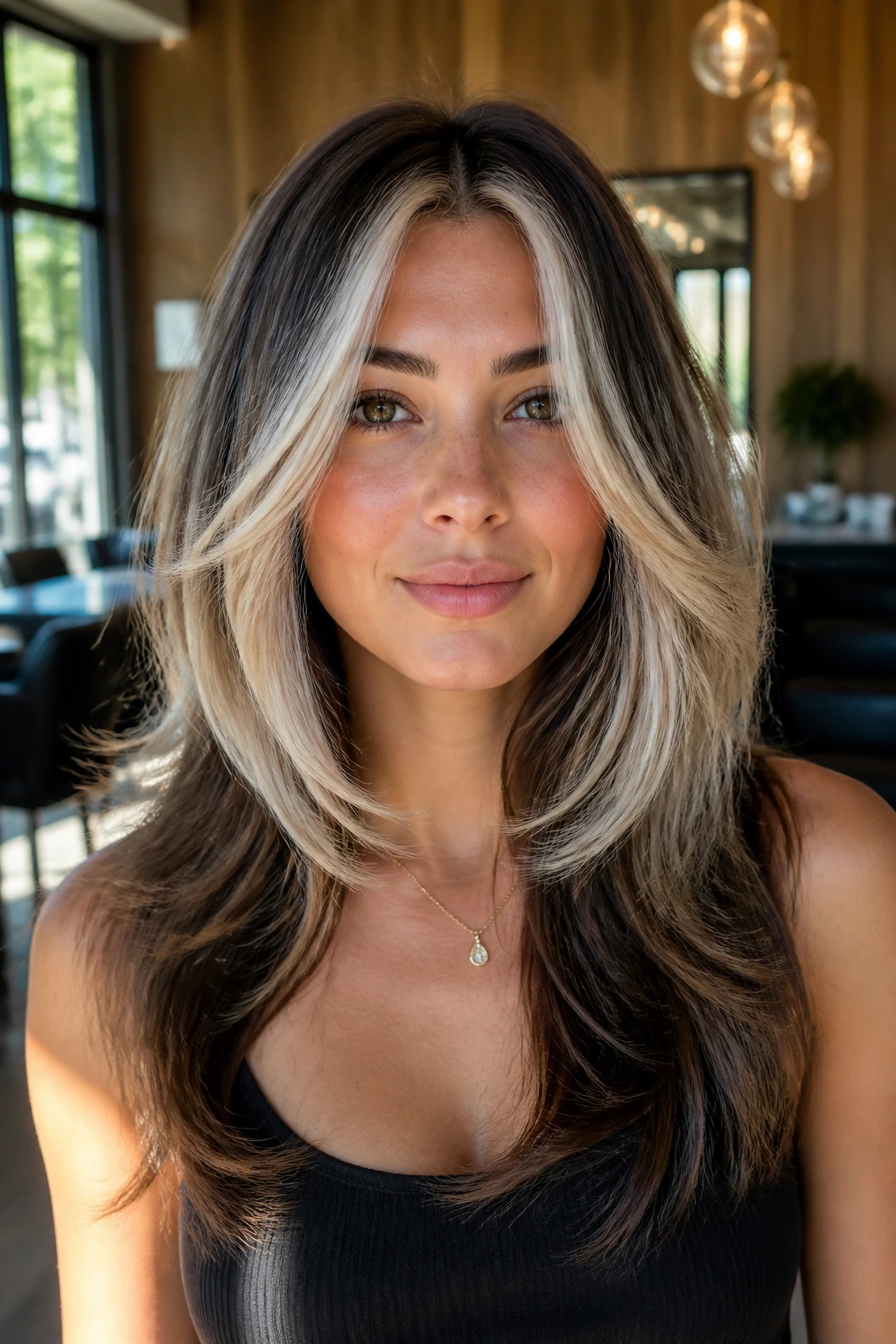
A butterfly cut gives you layers with a purpose, which is exactly what platinum balayage likes. The shorter face-framing layers catch the light first, and the longer lengths hold the deeper brown. That contrast is the whole point.
This cut adds movement, but it also gives the colorist a map. The brightest blonde can sit around the front and through the shorter top sections, while the back stays more brunette. The effect is airy around the face and grounded everywhere else.
Why It Works
- Layers stop the blonde from sitting in one block.
- Face-framing brightness gets lifted by the cut itself.
- Brown lengths underneath keep the style from looking thin.
If you have long hair that feels heavy, this is one of the smarter ways to wear platinum. The haircut does half the visual work, so the color does not need to carry the whole load. That’s a nice trade.
10. Brunette Bob with Bright Platinum Slices
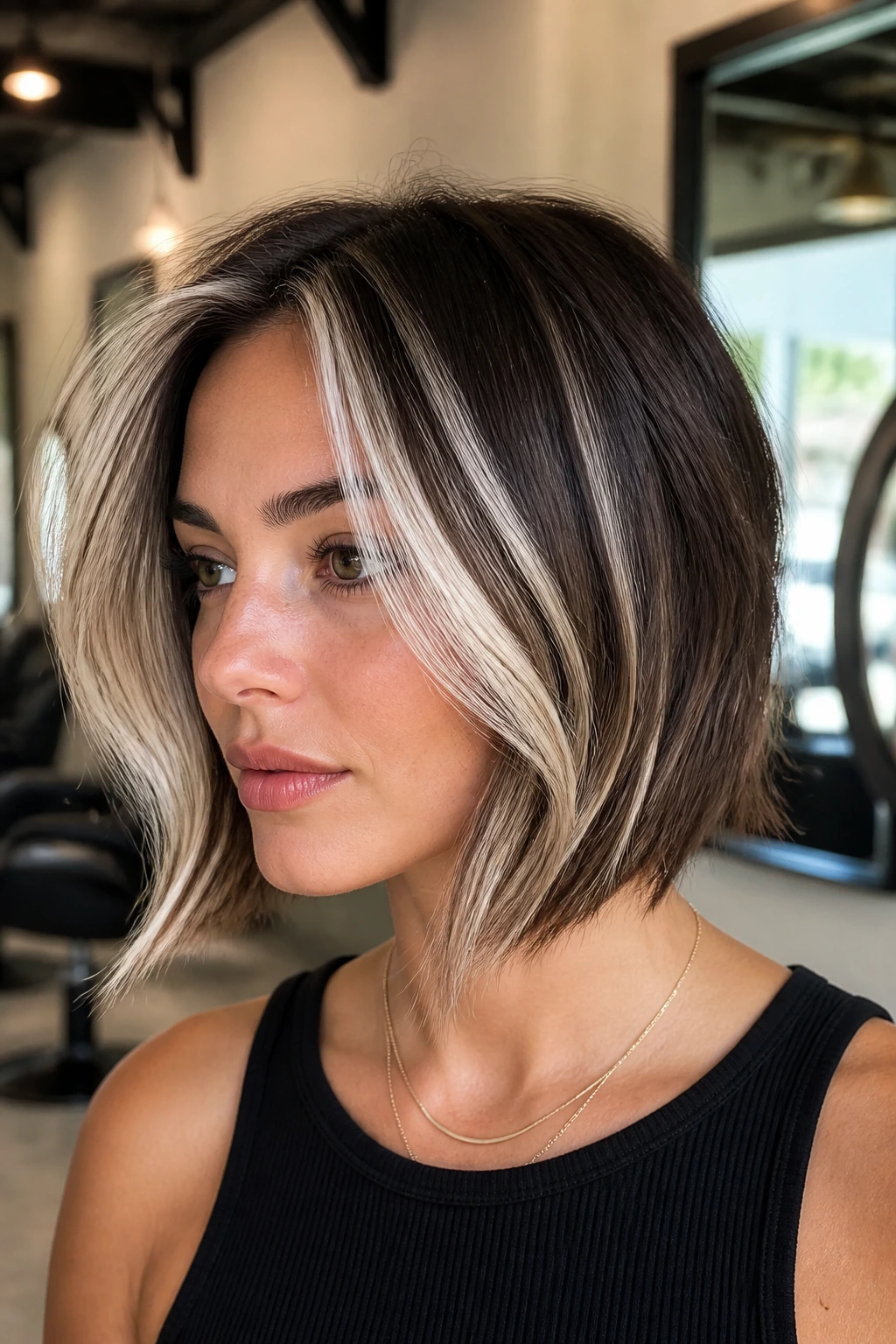
A bob changes the whole equation. There is less hair, less length, and far less room for the blonde to fade into the background. Bright platinum slices on a brunette bob can look crisp and modern, but they need clean placement because every strand is visible.
I like this look most when the slices are placed through the top and around the front, not all over. Too much lightness on a bob can make it puffier than you want. A few bold ribbons give shape and movement without turning the cut into a helmet.
Best Details to Ask For
- Keep the ends slightly darker for edge.
- Put the brightest pieces where the hair bends under or out.
- Ask for a gloss that keeps the platinum from going flat.
A bob also makes upkeep easier in one sense and trickier in another. The cut gets trimmed often, so old blonde gets cut away faster. The downside is that regrowth shows more clearly against a short shape.
11. Champagne Platinum Balayage for Brown Hair
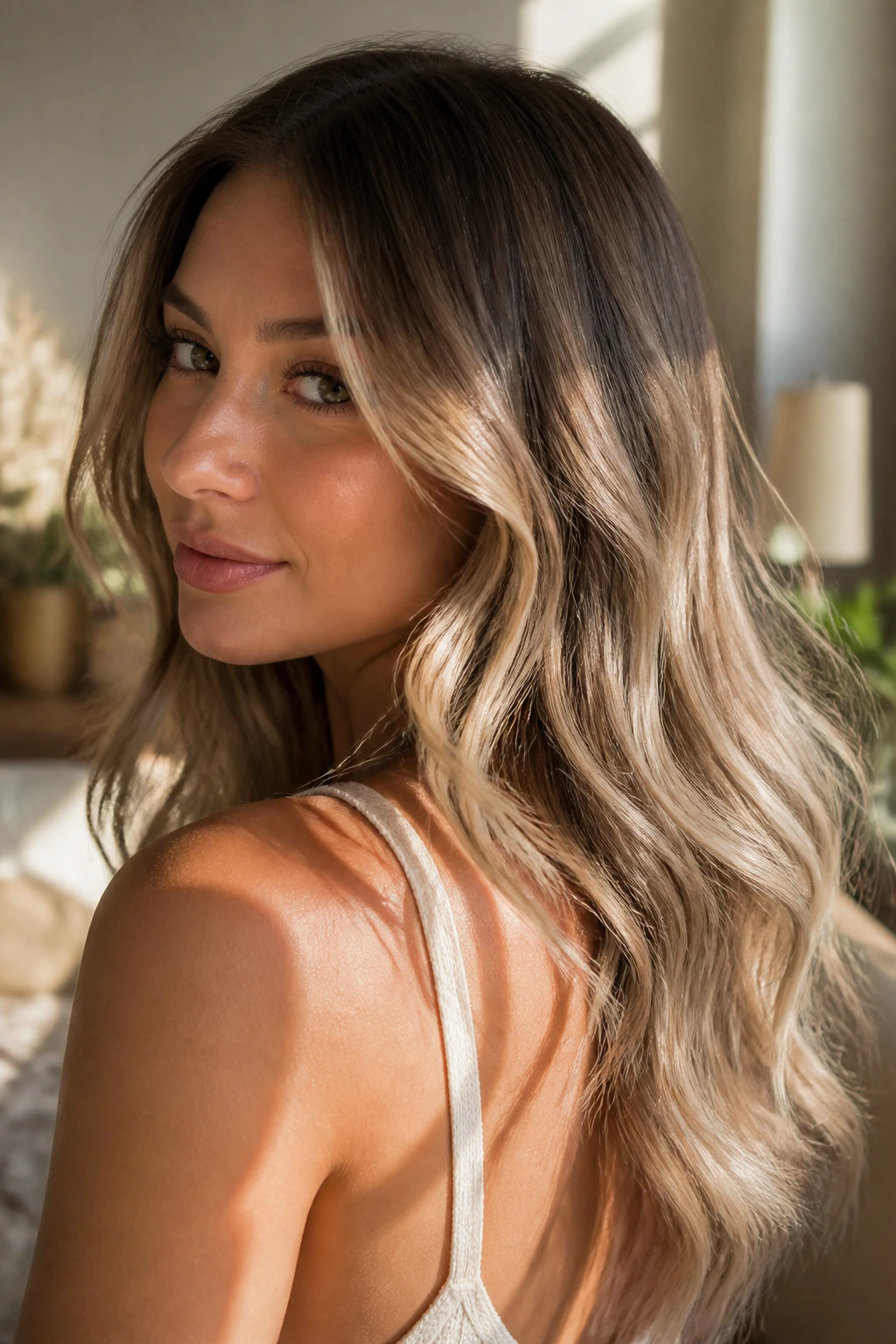
Champagne platinum sits in that sweet spot between icy and warm. On brown hair, it reads softer than stark white blonde and a little richer than plain ash. I prefer this tone when the brunette base has warmth in it, because the finish feels more natural and less forced.
This is the look for people who want brightness without the sharp chill of true ice. The blonde has a pale, creamy edge, but it still looks clean. If your hair tends to pull yellow or gold after lightening, champagne usually ages better than a bone-white toner.
How It Wears
- Feels softer around the face.
- Blends well with chestnut or cocoa bases.
- Works on straight, wavy, or loosely curled styles.
A lot of people chase the palest tone they can get. I think that is often the wrong move. Champagne blonde is easier on the eyes and usually kinder to the grow-out, which counts for more than a brag-worthy tone card.
12. Midnight Brown and Ice Blonde Contrast
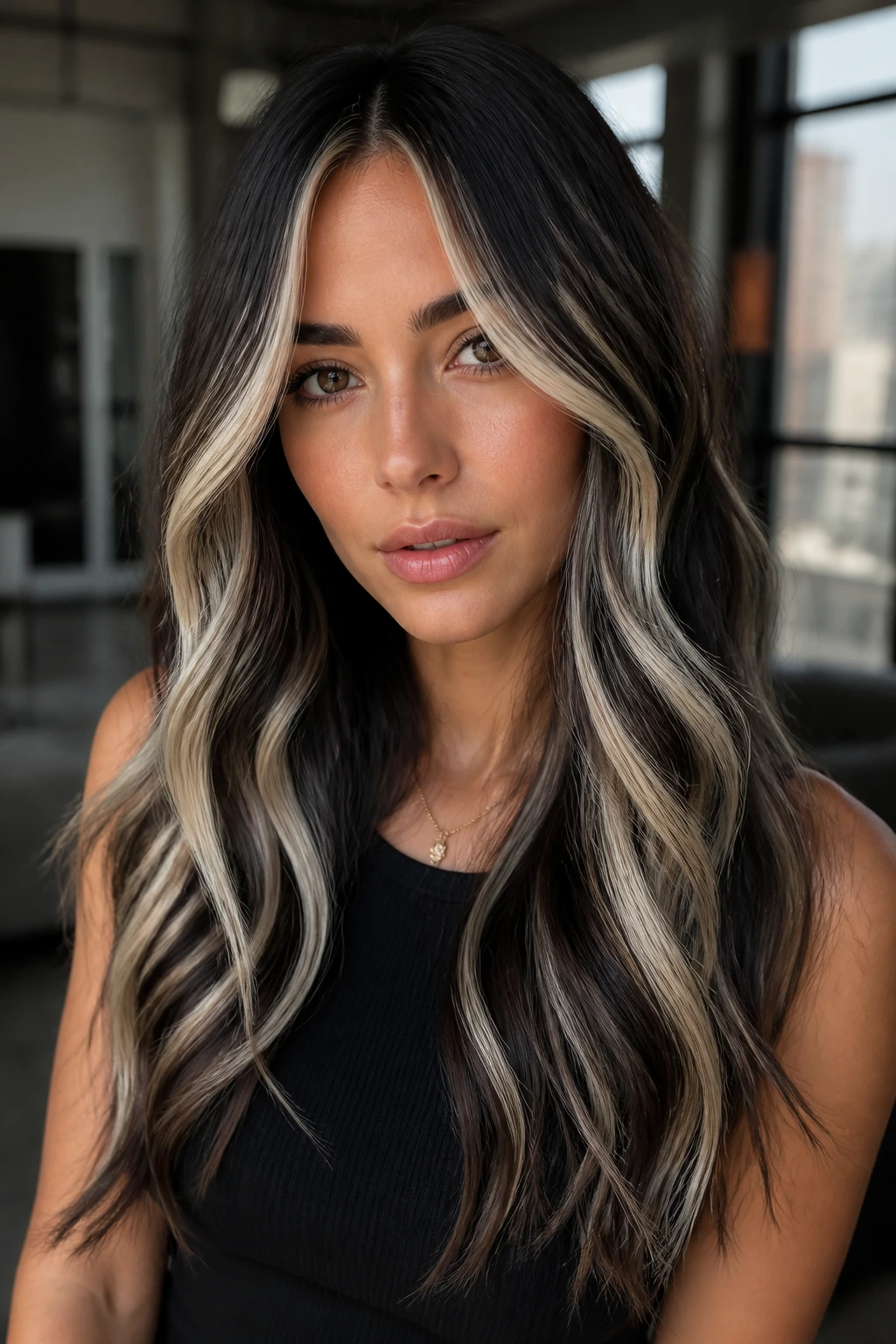
This is the bold one. Deep midnight brown with near-white platinum pieces gives you the biggest contrast in the lineup, and it does not try to hide that fact. If you want hair that reads dramatic from across the room, this is the lane.
The key is restraint in placement. A little ice goes a long way against a very dark base. Most of the brightness should sit around the face and through select ribbons in the top layer, or the look can start to feel busy. Too many pale pieces against a dark base lose the punch.
What Makes It Strong
- The brown base stays rich and glossy.
- The platinum pieces look brighter because the contrast is higher.
- A root shadow helps the blonde feel attached to the cut.
This is not the easiest maintenance choice. Dark regrowth against icy blonde is obvious fast. Still, when it is fresh, it has a kind of clean shock to it that softer balayage does not offer.
13. Partial Platinum Blonde Balayage for Low Maintenance Grow-Out
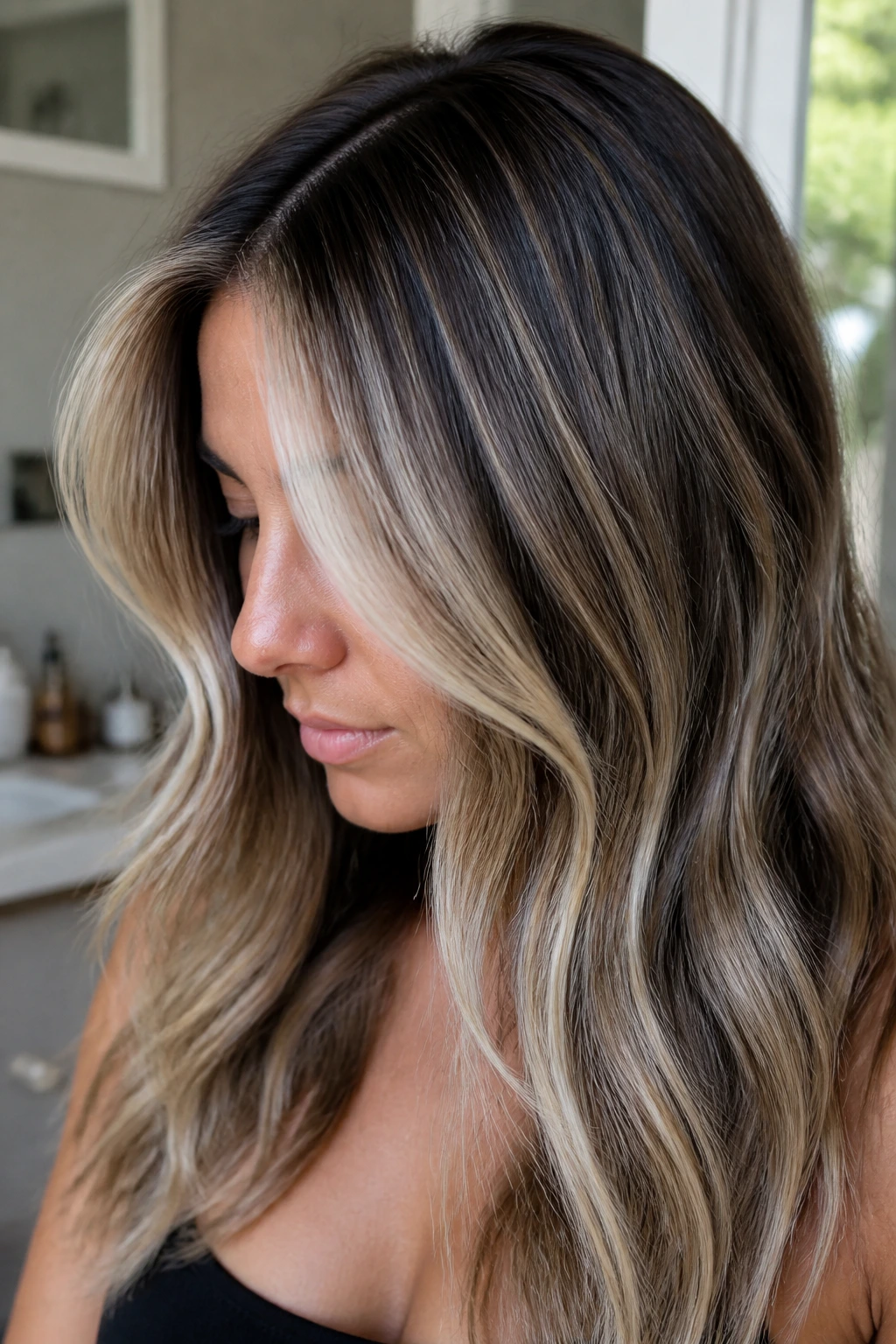
Can platinum blonde balayage be low maintenance? Yes, if you stop trying to brighten every inch. Partial placement keeps the lightness concentrated around the top layer, the front, and a few visible sections through the mid-lengths. The underside stays deeper brown, which makes the whole style easier to live with.
This is one of my favorite options for busy people because it gives you the look of blonde without the upkeep of a full-head service. The grow-out is softer, the salon visits are less urgent, and the hair usually stays healthier because fewer pieces are pushed all the way to pale blonde.
Good Zones to Lighten
- Around the hairline.
- Through the crown for movement.
- On the surface layer of the lengths.
The drawback is simple: from some angles, especially when the hair is pinned back, the blonde reads quieter. That is the trade. You lose some drama, but you gain time.
14. Full-Head Dimensional Platinum Balayage
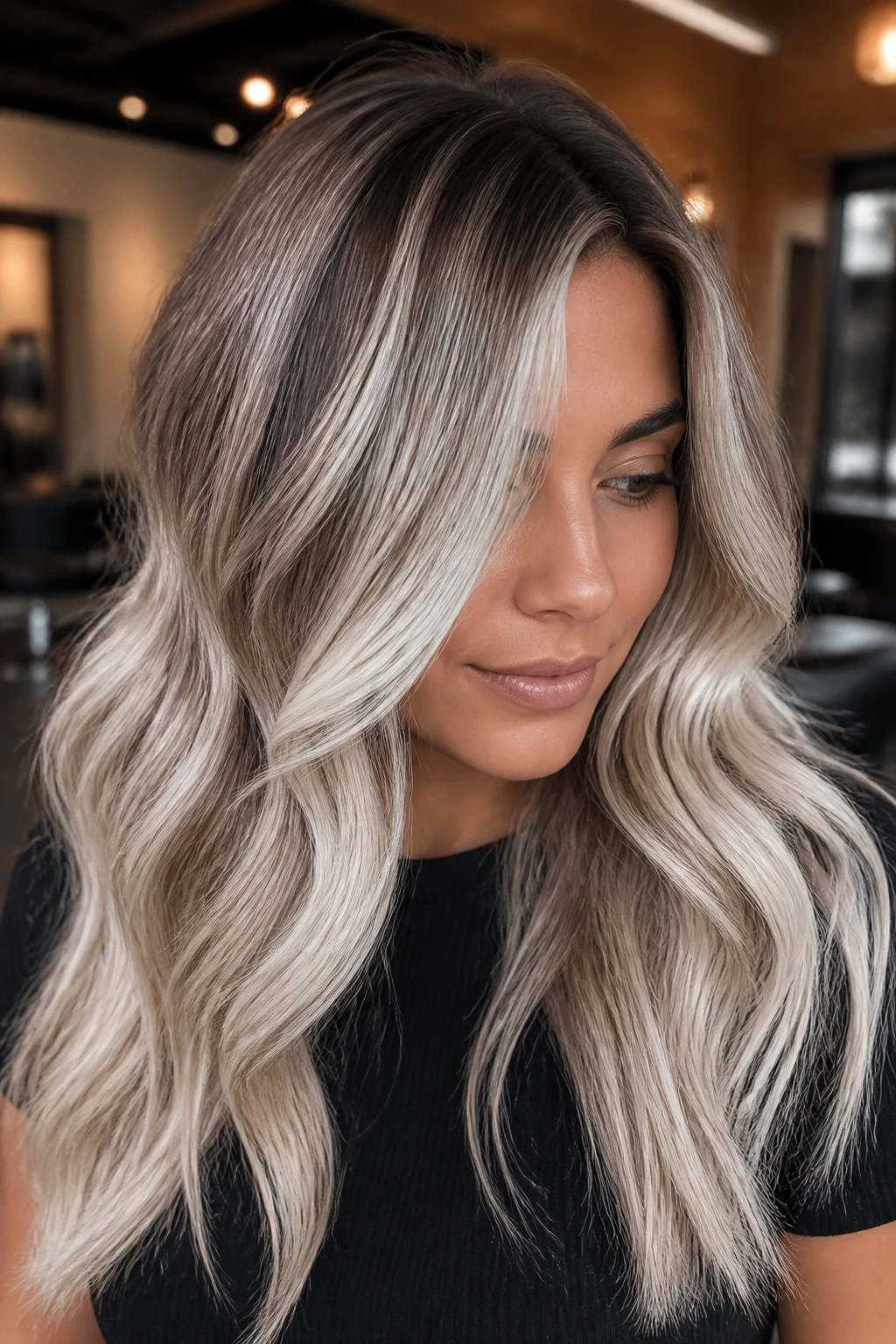
Full-head dimension is the opposite of the partial approach. Here, the blonde shows up across the sides, back, and top in a way that makes the entire head feel lighter. On brown hair, the result can be very rich if the pieces vary in width and brightness.
The mistake people make with full-head platinum is pushing everything to the same level. That creates a flat blonde helmet, which is nobody’s best day. Better to mix fine painted sections with a few brighter panels so the brown still peeks through and the cut keeps shape.
What To Ask For
- Vary the placement from fine to medium sections.
- Keep a deeper root for contrast.
- Use lowlights if the hair starts looking too pale.
This look is for someone who wants a lot of blonde and is ready to maintain it. It is not casual. But if you like a head of hair that reads lush and expensive, the extra work can pay off.
15. Ash Blonde Balayage on a Cool Brown Base
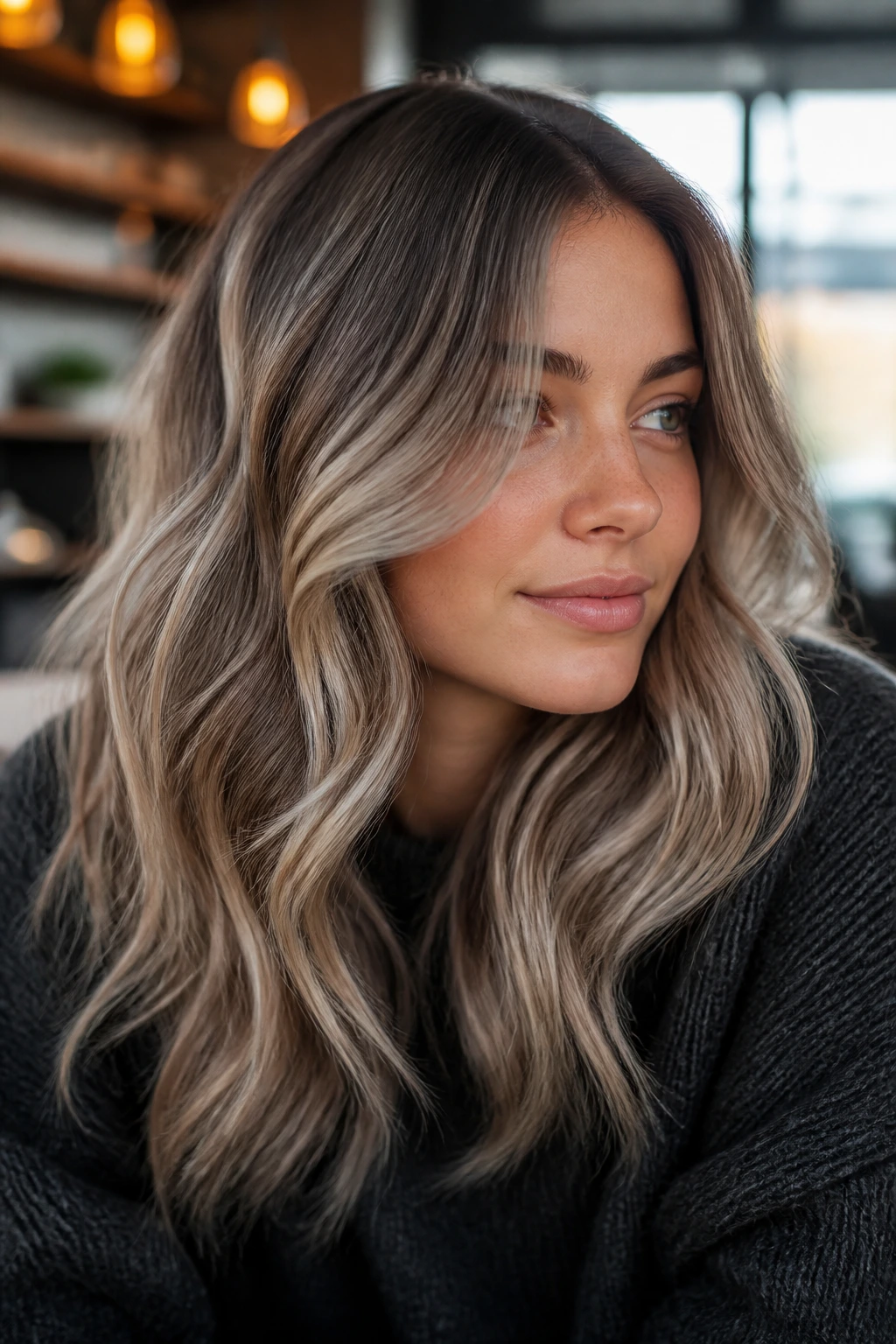
Ash blonde on a cool brown base can look almost velvet-like when the tones are handled well. The brown does not fight the blonde; it supports it. That matters, because ash tones can look flat if the base underneath is too warm or too light.
I reach for this look when the client wants something clean and smoky rather than bright and sunny. The blonde stays in the pale beige-to-ash range, and the brown base remains cool enough to keep the whole thing steady. It is a quieter kind of platinum, and I mean that as praise.
Tone Control Matters
- Blue shampoo helps with orange; purple shampoo handles yellow.
- A gloss between appointments keeps the ash from turning dull.
- Too much toner can make the blonde look dusty, so the mix needs a light hand.
If your hair likes brass, this style can be a little demanding. That said, when it lands, it looks calm in a way that warmer blondes never quite manage.
16. Platinum Peekaboo Layers Under Brown Hair
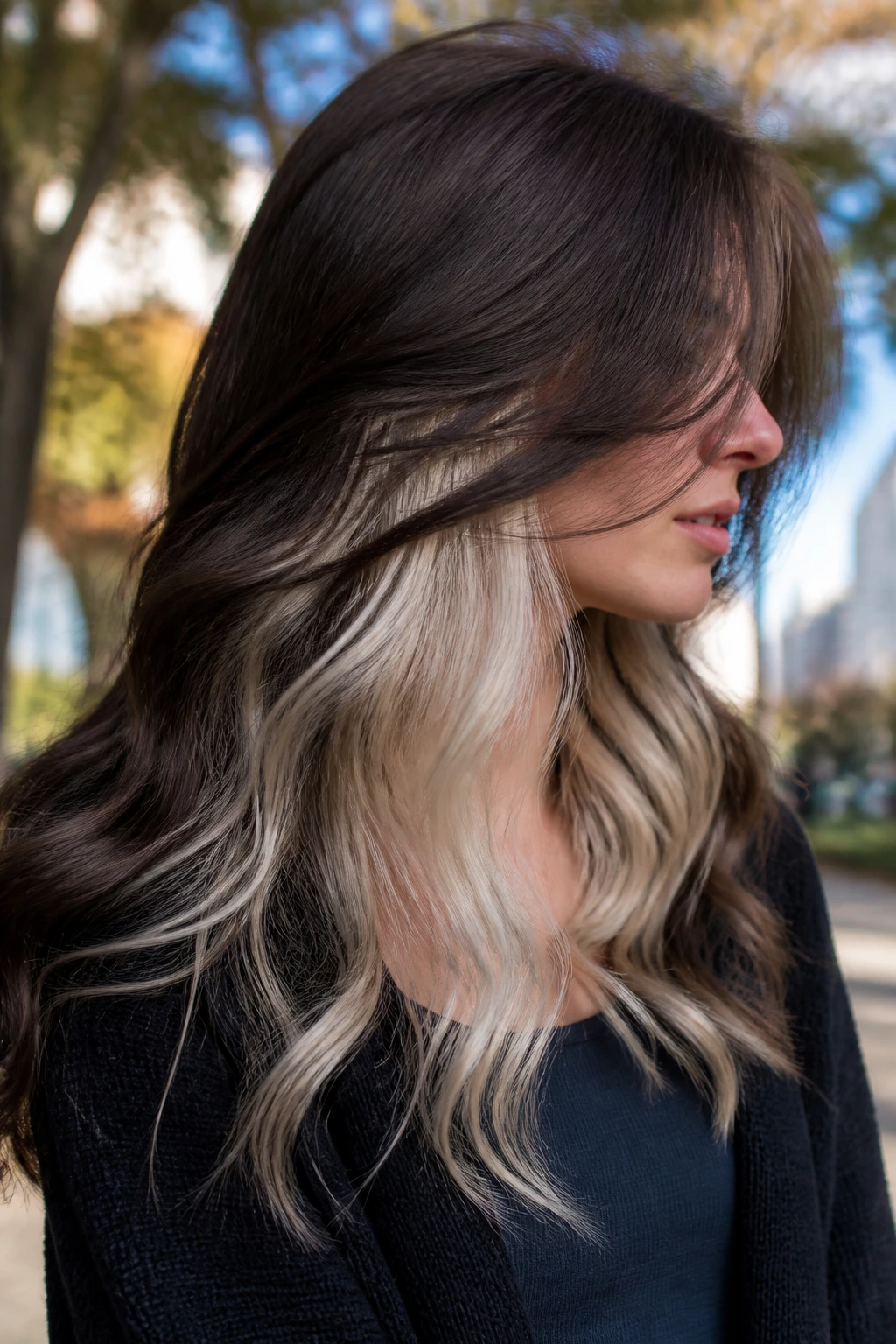
Peekaboo layers are fun because the blonde stays hidden until the hair moves. Brown hair on top keeps the look grounded, and the platinum underneath flashes through when you curl, tuck, or flip the layers. It has a little surprise built into it.
This is a smart choice if you want platinum but do not want it staring people in the face all day. The underlayer can take a stronger lift, while the surface stays brunette and glossy. That makes the style feel less exposed and easier to wear in a lot of settings.
Where It Shows Best
- In layered cuts with movement.
- When you wear your hair half-up.
- On curled ends, where the underpieces peek through naturally.
The only catch is that peekaboo blonde can disappear if the haircut is too blunt or the hair is too heavy. It needs space to show itself. Without that, it just sits there underneath, waiting for a better cut.
17. Curtain Bangs with a Bright Platinum Frame
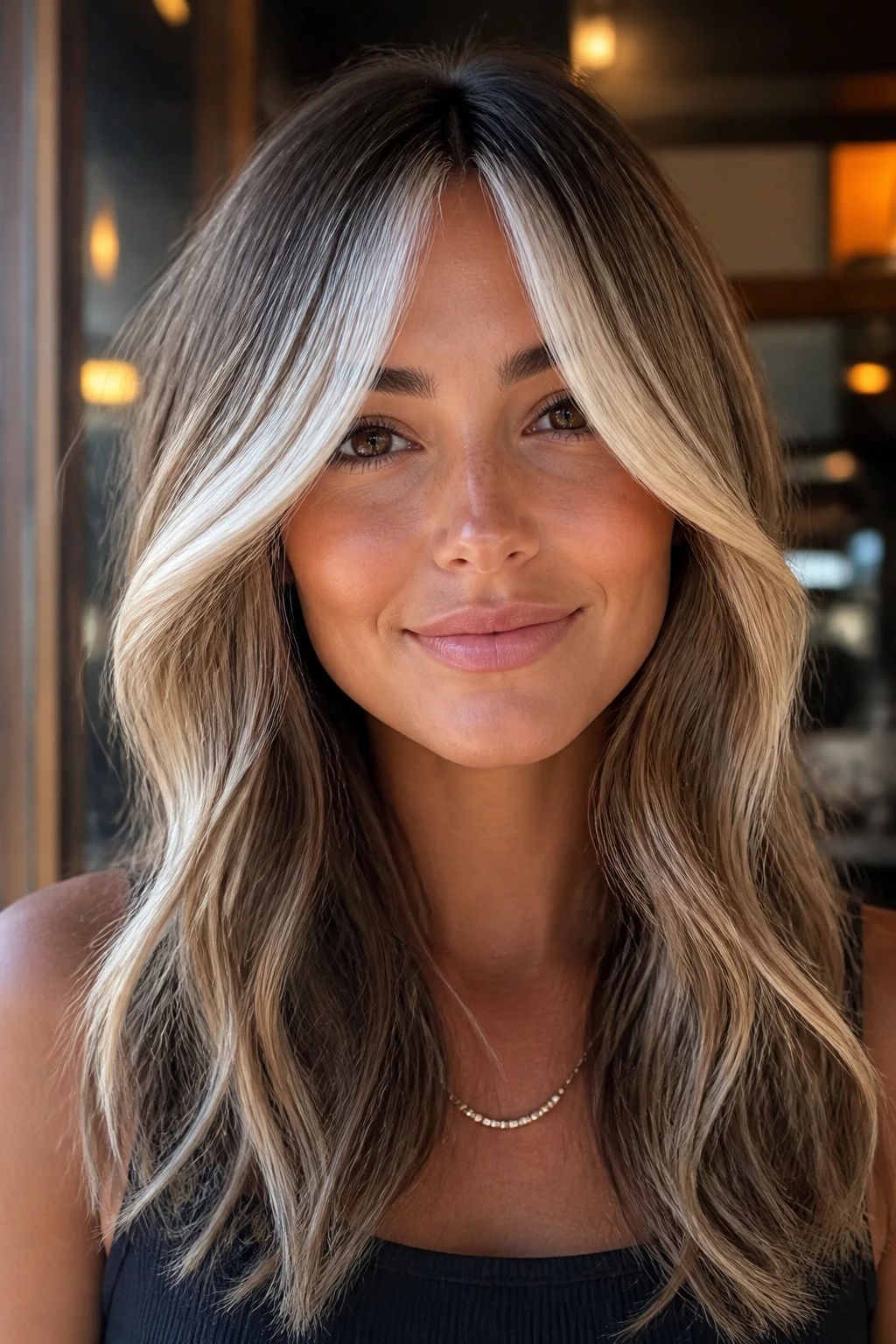
Curtain bangs and bright framing pieces are a very good pair. The bangs split the face in the middle, which gives the platinum a built-in opening to sit in. On brown hair, that front brightness can make the whole haircut feel lighter, even if the back stays fairly deep.
The best version keeps the frame bright but blurred. Hard blonde blocks around curtain bangs can look disconnected, and no one wants that. The color should start a little softer near the part and get brighter as it drops, so the bangs move instead of sitting like a stripe.
A Few Placement Details
- Brightest at the cheekbone, softer near the roots.
- Enough depth under the bangs to support them.
- A trim schedule that keeps the bangs from splitting into separate pieces.
This look has a lot of payoff for not much visible hair. That is part of the appeal. You get a strong color moment right where people look first.
18. Long Layered Balayage with a Soft Shadow Root
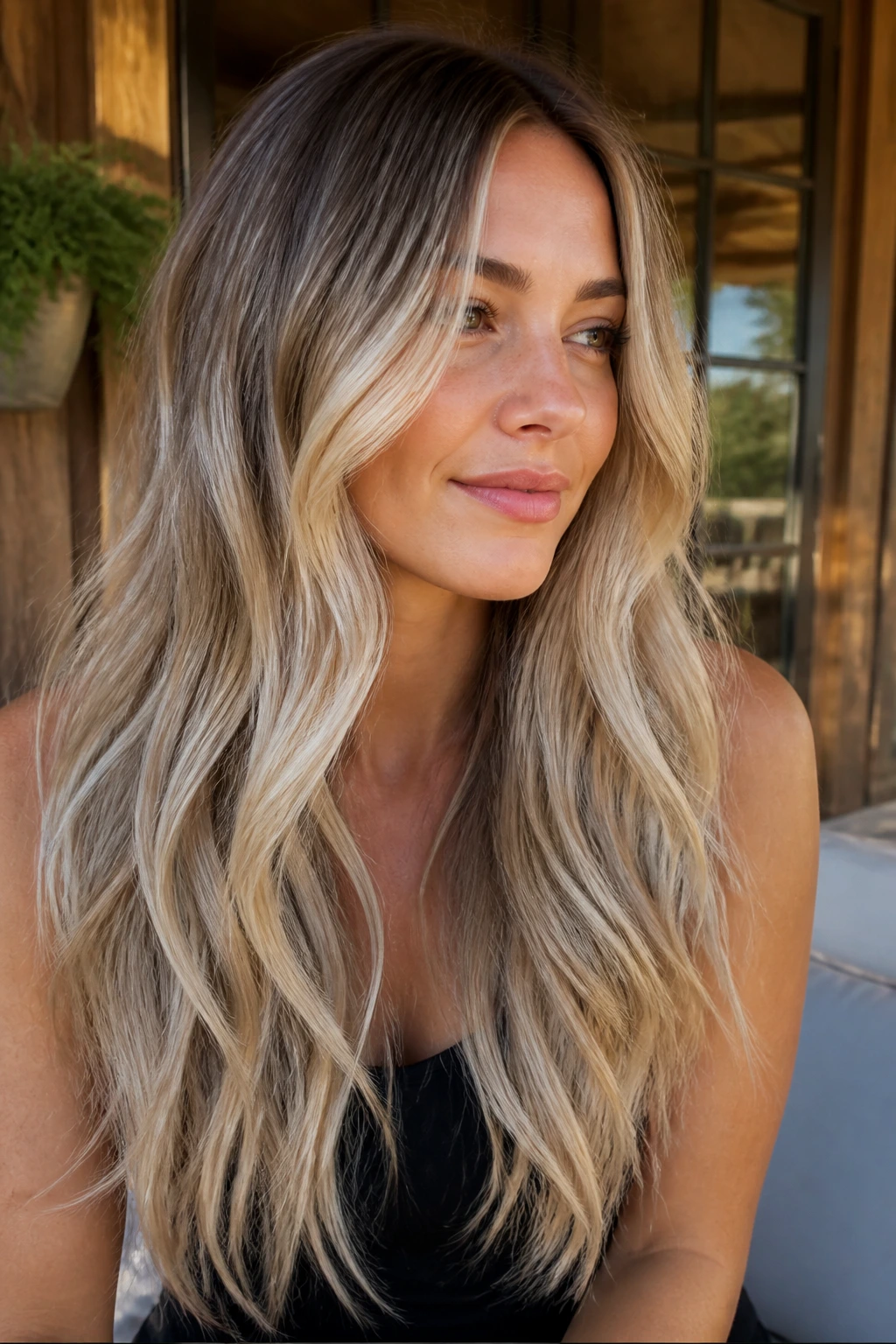
At waist length, the blonde should move like thread through fabric. That is the kind of long, layered platinum balayage that looks best on brown hair: not too thick, not too blocky, and never dead straight unless the cut is doing something interesting.
The shadow root is what keeps the style from looking overworked. It grounds the blonde, gives the crown some depth, and keeps the ends from floating away from the rest of the head. Long hair can swallow highlight placement if the light pieces are too timid, so the contrast usually needs to be a little stronger than people expect.
Layering Helps Here
- Layers let the platinum show in sections.
- A soft root keeps the length from looking stringy.
- Long hair benefits from a gloss because the ends can go dull fast.
This is one of those styles that looks best when it is touched, not just seen. The movement of layered hair lets the blonde appear and disappear as you turn your head, which keeps it interesting.
19. Beige Lowlights and Platinum Balayage Balance
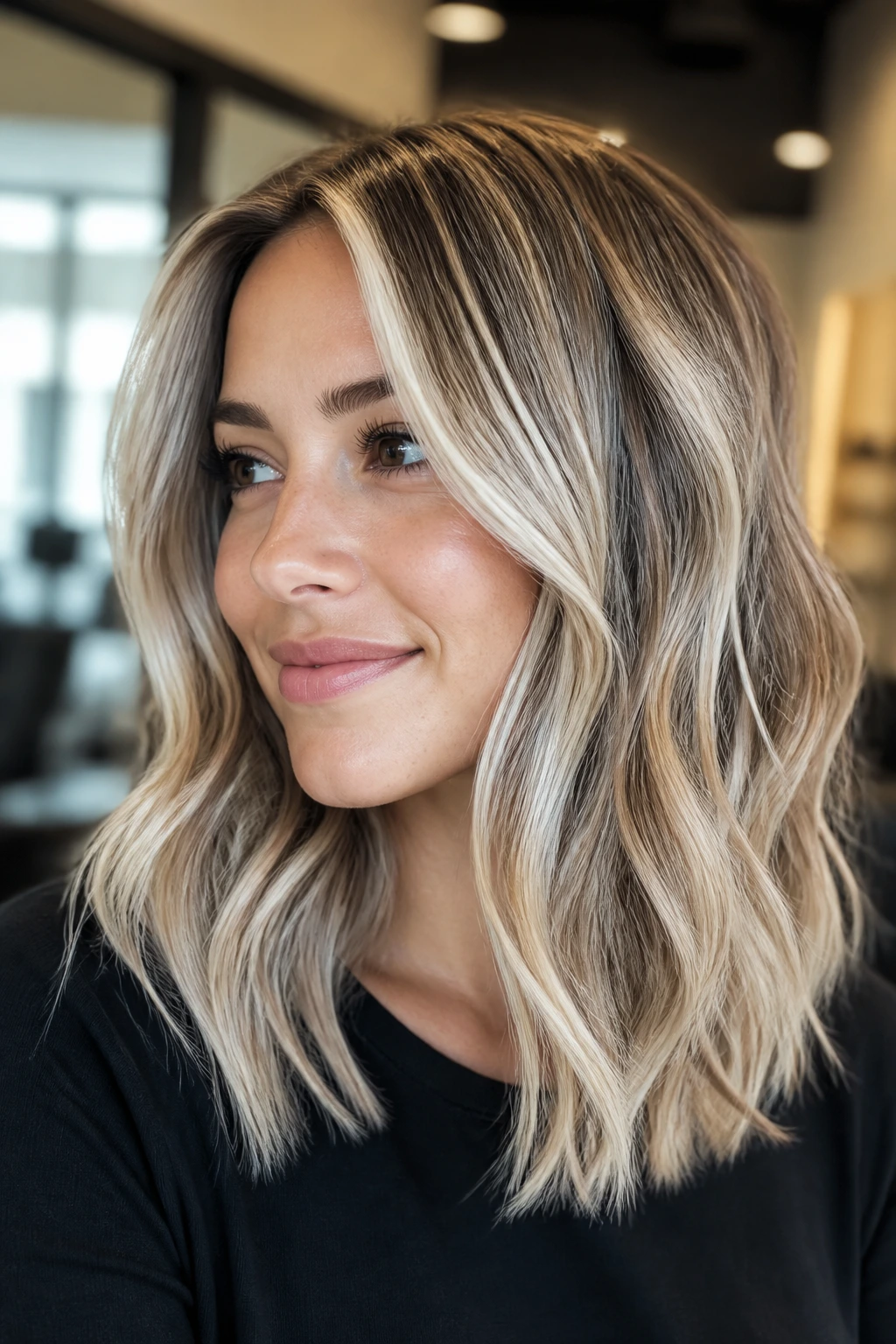
Too much brightness can flatten brown hair, which sounds backward until you see it happen. Beige lowlights fix that. They reintroduce depth between the platinum pieces, so the blonde looks brighter by comparison and the brunette keeps some texture.
I like this approach on hair that has been lightened more than once. Instead of chasing more and more pale blonde, you bring back a little beige or soft mocha to give the color room to breathe. That makes the finish look richer, not darker.
Why It Works
- The lowlights break up wide blonde areas.
- Beige tones soften the jump from brown to platinum.
- The hair looks fuller because the eye sees more layers of color.
This is a quiet fix that saves a lot of over-lightened hair. If your blonde has started to look thin or chalky, a little depth can do more than another round of toner ever will.
20. Deep Espresso Root with a Soft Ice Veil
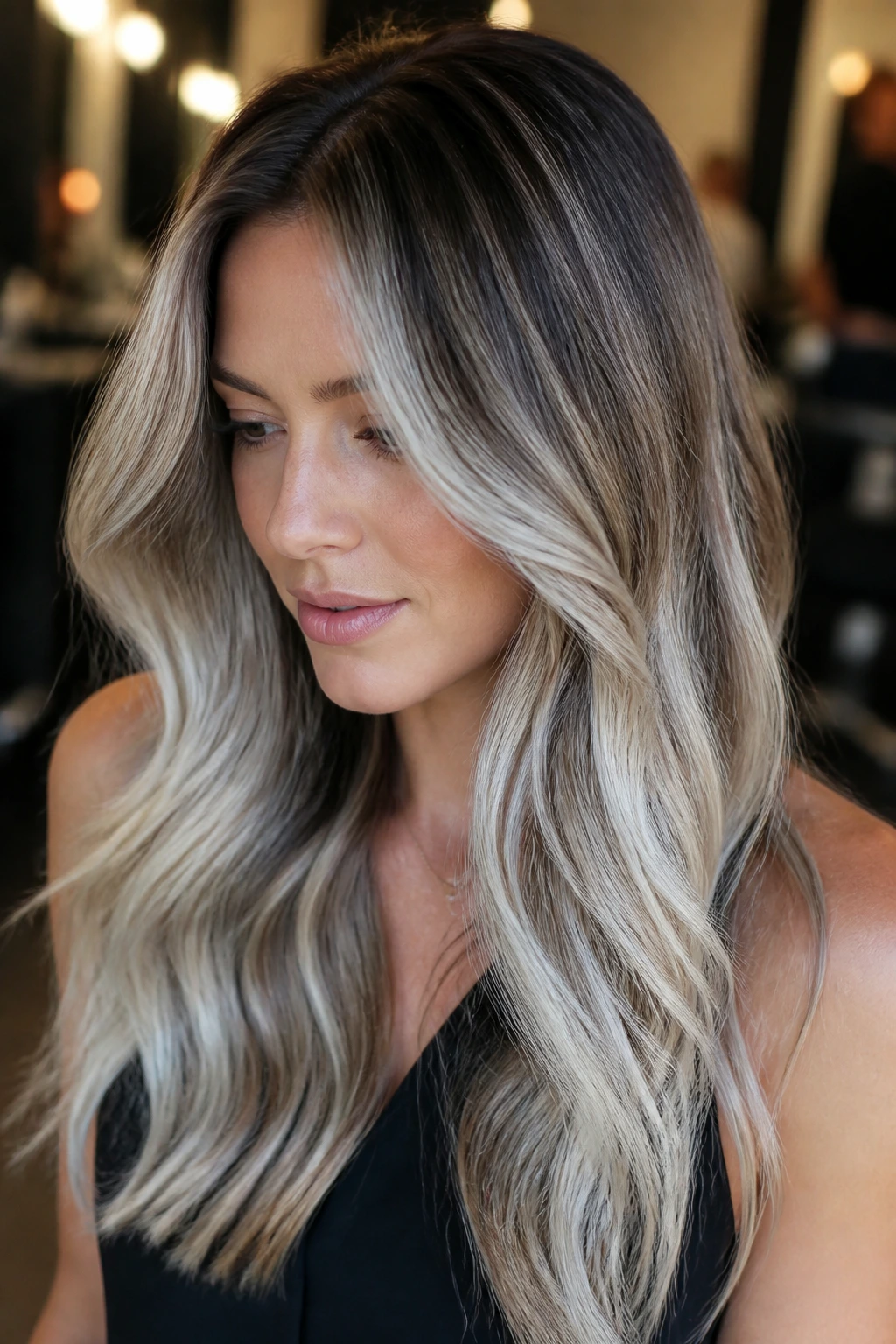
A deep espresso root with a soft ice veil is the version I’d pick for someone who wants the coolest finish without losing the strength of the brown base. The root stays rich and dark, and the platinum appears as a thin veil across the top and around the face. It is sleek, modern, and less obvious than a full icy head of hair.
The softness is what makes it work. Instead of bold white streaks, the blonde sits in a pale mist that catches the light without overpowering the brunette underneath. That balance is hard to fake. If the root is too light, the veil disappears. If the veil is too heavy, the espresso base gets buried.
Final Placement Thought
- Keep the root dark enough to frame the blonde.
- Let the brightest pieces live where the hair bends.
- Choose a toner that leans pearl, not yellow.
The smartest platinum blonde balayage on brown hair usually keeps some brown visible on purpose. That is what gives the blonde its bite.
