



Rose gold balayage on brown hair has a funny little problem: people think it’s one look, then they see ten different versions and can’t tell why some feel soft and rich while others lean neon or muddy. The difference usually comes down to three things — the depth of the brown base, how high the hair is lifted, and where the lighter pieces are placed. Get those right and the color looks expensive, dimensional, and wearable. Get them wrong and it can read flat fast.
Brown hair gives rose gold a better home than blonde hair does, honestly. The brunette base keeps the pink from floating away, while the gold and copper pieces stop it from looking icy or sugary. On chestnut, the shade can feel warm and creamy. On espresso, it looks deeper and moodier. On medium brown, it can hit that sweet spot where the color shows indoors but still looks believable in daylight.
The smartest rose gold balayage ideas don’t just change the tone — they change the delivery. Some are all about face-framing brightness. Others hide the pink in the ends, or weave it through curls so the movement does half the work. A good colorist usually thinks in ribbons, not blocks. That’s the real secret, and it’s not much of a secret once you see it in the right light.
1. Champagne Rose Ribbons on Chestnut Brown
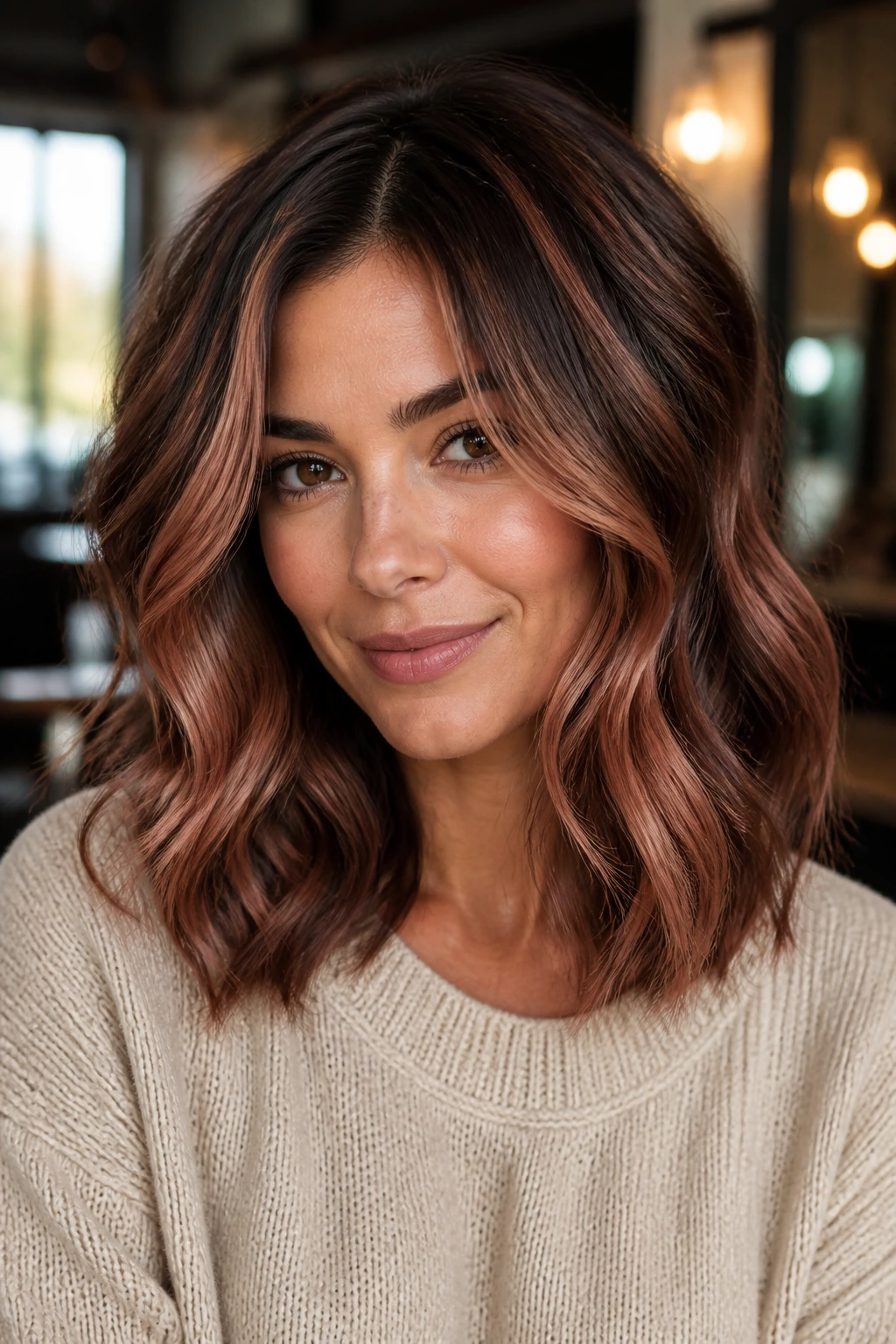
Champagne rose is the cleanest, softest place to start if you want rose gold balayage without a heavy pink hit. On chestnut brown, it reads like a pale blush-gold veil, especially when the ribbons are painted through the mid-lengths and around the face. The color looks refined rather than loud.
Why it works on chestnut
Chestnut brown already carries warmth, so the rose pieces don’t need to fight the base. A colorist can lift the lighter sections to around level 7 and then glaze them with a beige-pink toner, which keeps the finish soft and creamy instead of coppery. Loose waves show it best. Straight hair can look nice too, but the shimmer is easier to see when the hair bends.
- Ask for thin ribbons near the front and softer saturation through the back.
- Keep the root shadow close to your natural brown for an easy grow-out.
- Style with a 1-inch curling iron and brush the waves out lightly.
- Use a gloss every few weeks if the pink starts fading faster than the gold.
Best for: someone who wants color that looks polished in a braid, a ponytail, or a loose bend at the ends.
2. Peach Rose Money Piece on Dark Brown Hair
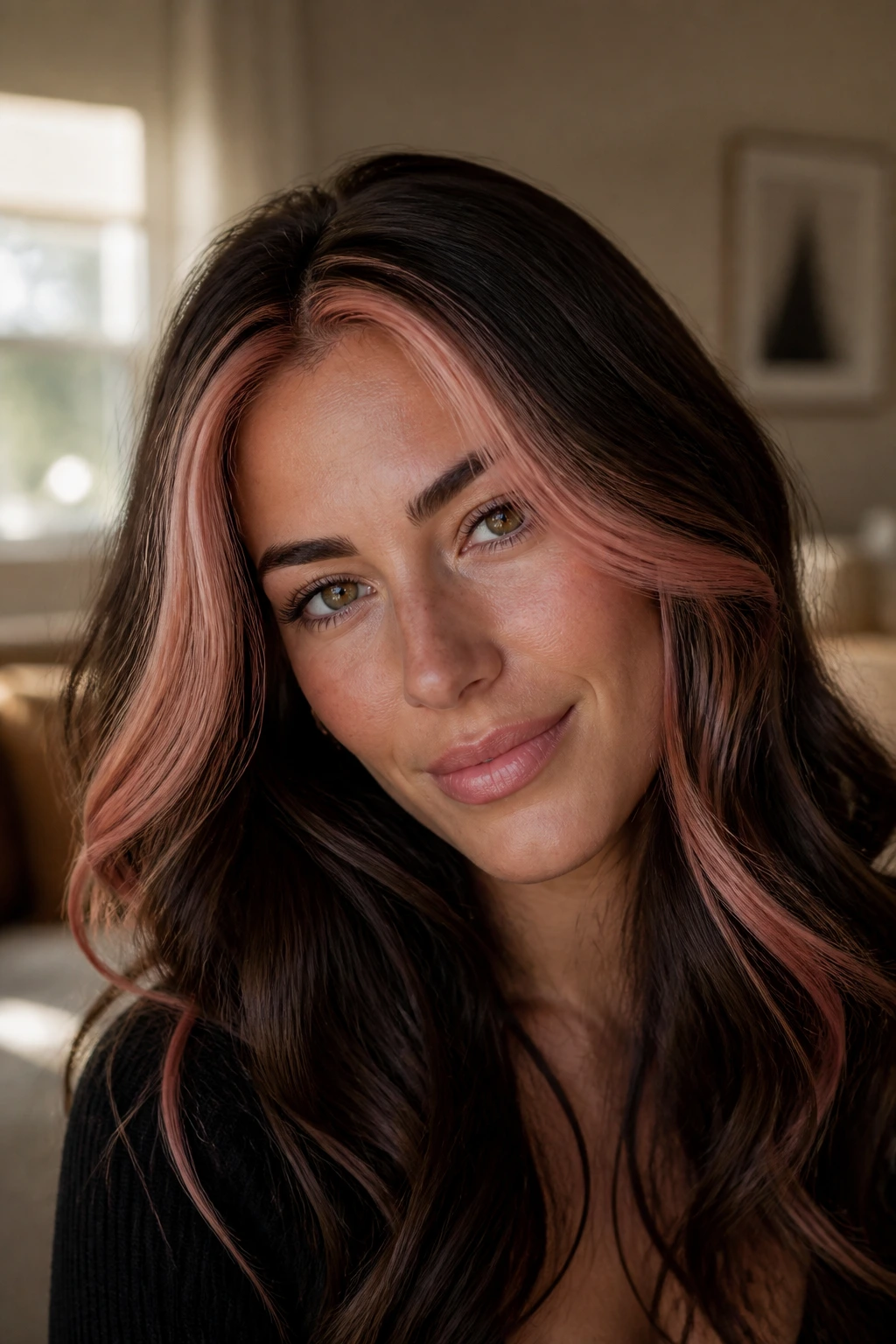
A bold money piece can make dark brown hair come alive fast. When the front sections are lifted and glazed into a peach-rose shade, the whole face picks up warmth, even if the rest of the hair stays deep espresso or cocoa. It’s a good choice if you want visible color without lighting up the entire head.
The trick is keeping the money piece broad enough to matter but not so wide that it looks like a stripe. Around the hairline, a slightly brighter peach-gold tone works better than a pure pink. Pure pink can look harsh against very dark brown. Peach rose feels warmer and easier to wear, especially if you usually wear your hair tucked behind the ears.
This is one of those looks that changes a lot with styling. Blow it smooth and it looks sleek. Add a bend at the cheekbone and the front pieces almost frame the face for you. If you like a little drama, this one delivers without needing high contrast everywhere else.
3. Smoky Rose Gold Melt on Espresso Brown
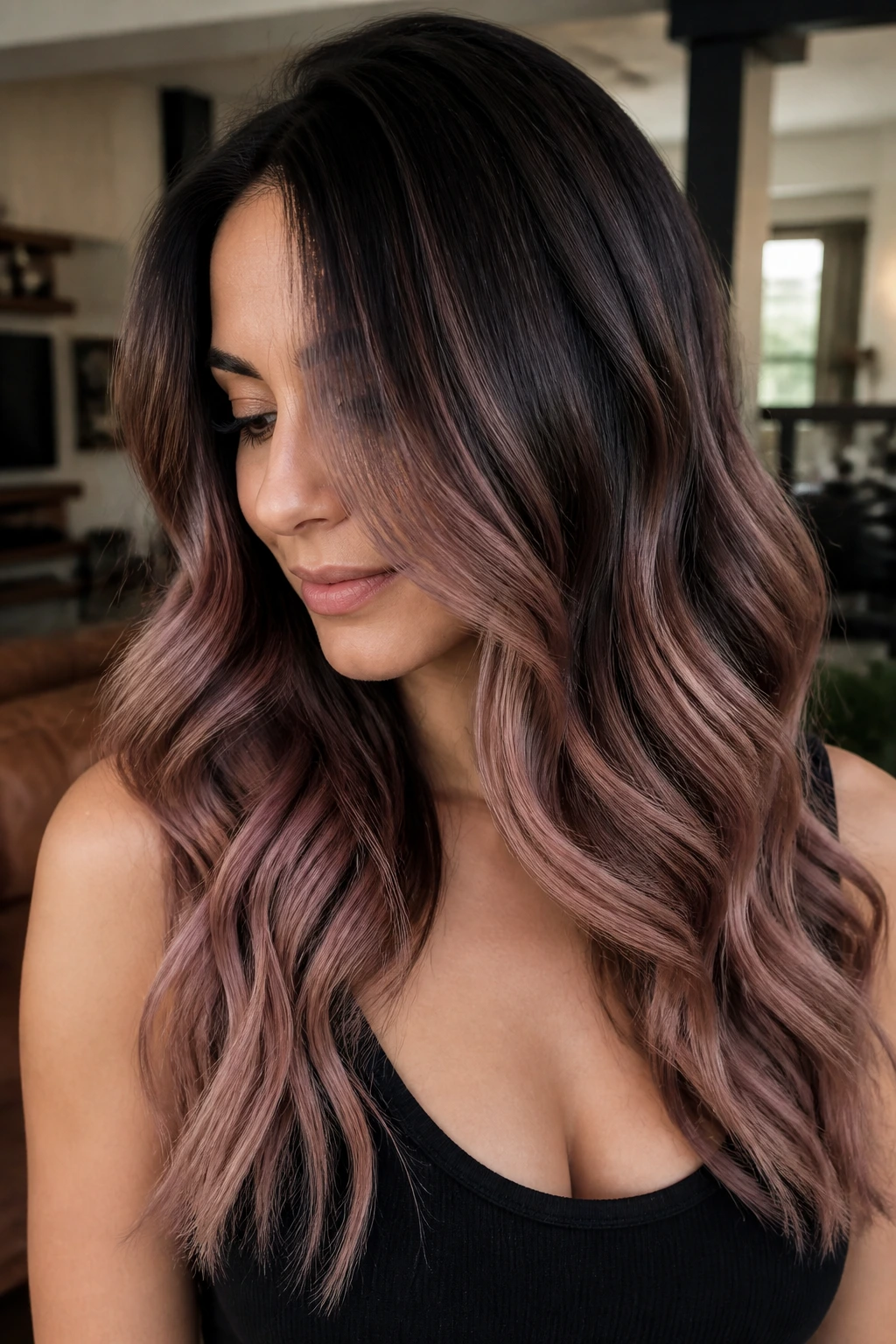
Why does this one look so polished? Because it barely announces itself at first glance. A smoky rose gold melt keeps the roots deep espresso, then lets the rose tone appear in the mid-lengths like a tint rather than a stripe. It’s the kind of color that looks expensive in a low-key way.
A cooler pink-beige glaze makes the transition softer, and that matters more on dark hair than people think. If the rose is too bright, the contrast between root and highlight can feel choppy. A smoky version blends better, especially on long layers where the color needs to travel through the hair instead of sitting in one obvious section.
How to wear it
- Choose soft curls or a large round brush blowout to show the melt.
- Keep the brightest pieces under the top layer so the color peeks through.
- Ask for a gloss that leans mauve-beige, not bubblegum.
- This works well if you want a grow-out that stays calm for months.
The whole point is restraint. A smoky melt gives you color that moves when you move, and that’s far more interesting than a blocky highlight ever will be.
4. Caramel-Rose Ribbon Highlights on Medium Brunette Hair
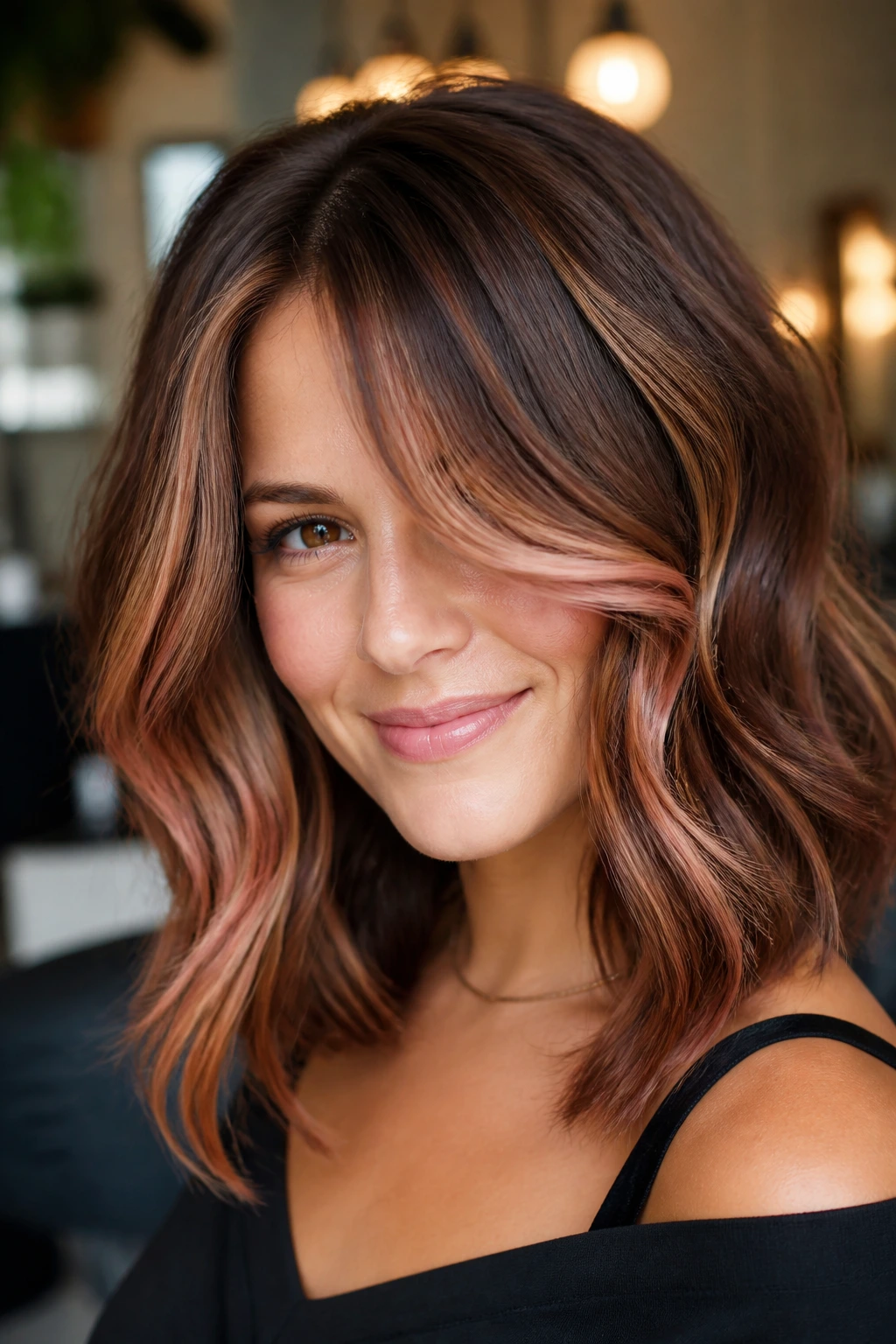
Picture medium brunette hair with narrow caramel and rose ribbons stitched through it, not stacked on top of it. That’s the charm here. The rose is present, but the caramel keeps it grounded, so the finish looks sunlit instead of pink-heavy.
This style is especially good if your brown hair sits in the middle range — not super dark, not light brown either. A colorist can paint wider pieces through the ends and leave the crown soft, which gives you brightness without losing the natural depth at the top. The result feels dimensional even when the hair is tied back.
- Use ribbon placement, not chunky panels.
- Keep a few brighter pieces near the cheekbones.
- Style with a soft bend from mid-length to ends.
- If your hair is fine, ask for fewer but slightly brighter pieces so the color doesn’t vanish.
I like this look on shoulder-length cuts. The movement lands fast, and the caramel-rose mix makes textured waves look fuller than they really are.
5. Dusty Rose Ends on Chocolate Brown
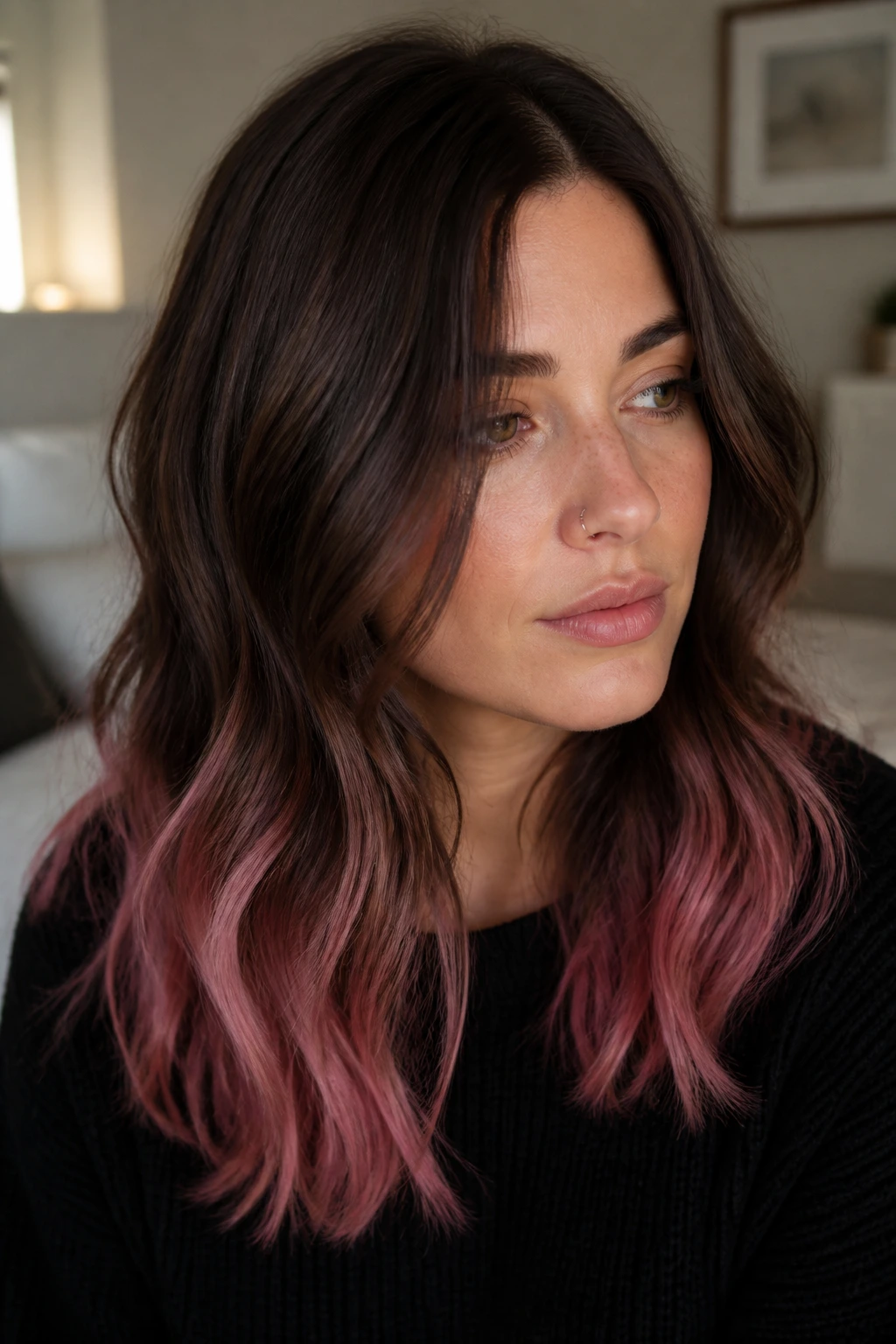
Dusty rose ends are the easiest way to test the pink side of rose gold balayage without committing to a full head of brightness. Chocolate brown hair gives the color a deep base, so the lighter ends show up like a faded blush stain rather than a costume shade. That’s a good thing.
The focus stays on the bottom 2 to 4 inches of hair. A colorist usually lifts the ends first, then tones them down with a muted rose gloss so the finish feels soft and slightly powdery. On straight hair, the ends can look crisp. On waves, they melt in more naturally and get a little more interesting.
This is a smart option if you wear your hair down often and want the color concentrated where people actually see it. It also makes trims more noticeable, which sounds odd, but it’s true. Every refresh brings the shape back to life.
6. Copper Rose Balayage on Warm Brunette Hair
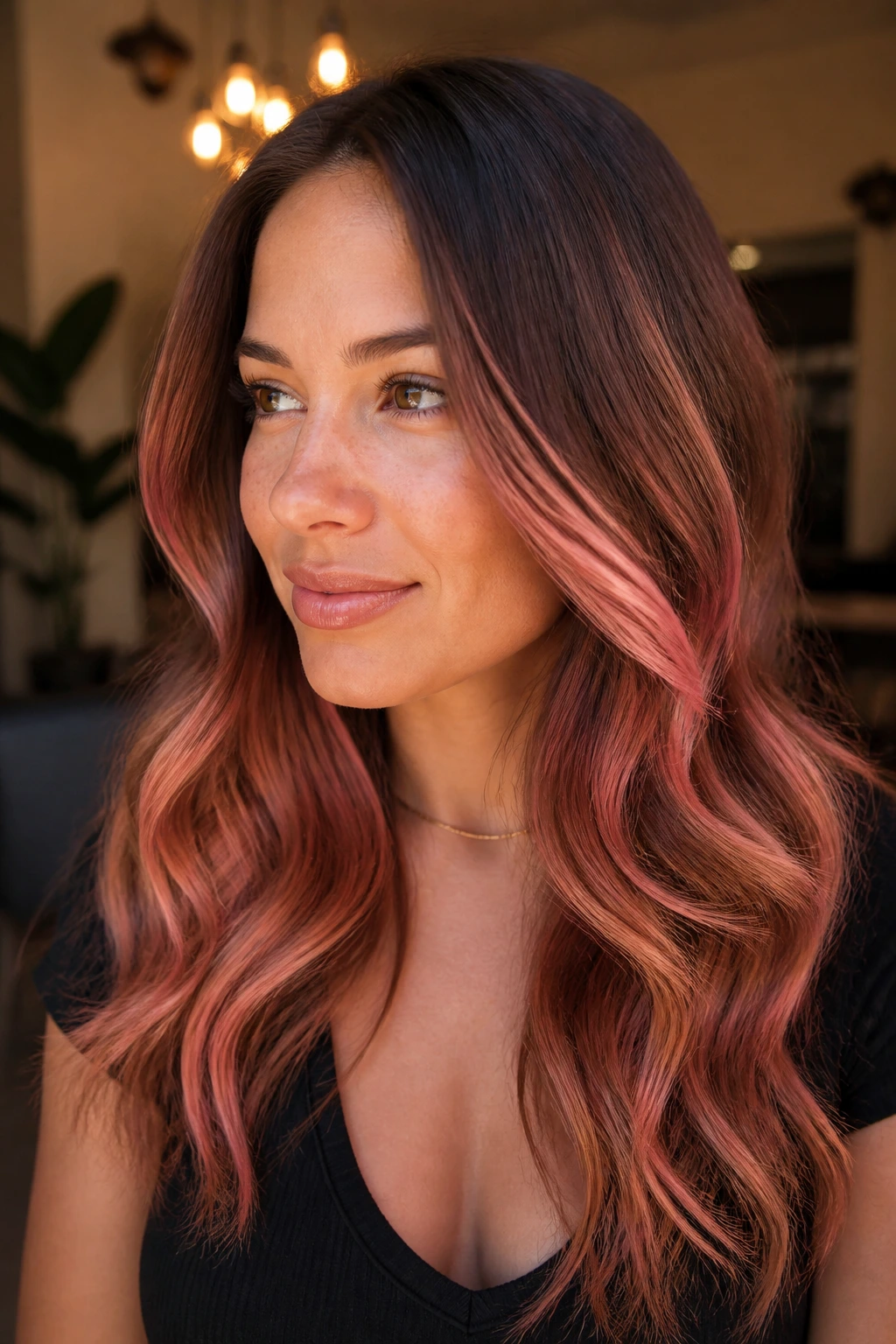
Copper rose is the warmer, richer cousin in the rose gold family. On warm brunette hair, it picks up the natural gold and cinnamon tones already hiding in the base, so the color feels bold but not out of place. It’s a good fit if your skin tends to like warm metals and amber-toned makeup.
The best version isn’t orange. That matters. You want copper at the edge of rose, not a vivid penny tone. When the glaze is handled well, the hair looks glossy and warm from root to tip, and the rose just nudges the color toward something more romantic. That little shift is what makes it work.
What to ask for at the salon
- A warm brunette base with rose-copper ribbons through the lengths.
- Medium brightness around the face, softer saturation through the back.
- A glaze that keeps the finish golden, not brassy.
- Soft layers, because the color looks better when it catches different lengths.
This is one of my favorites on wavy hair. The bends grab the copper, and the rose shows up in the spaces between the waves. It has energy.
7. Beige Rose Babylights on Neutral Brown
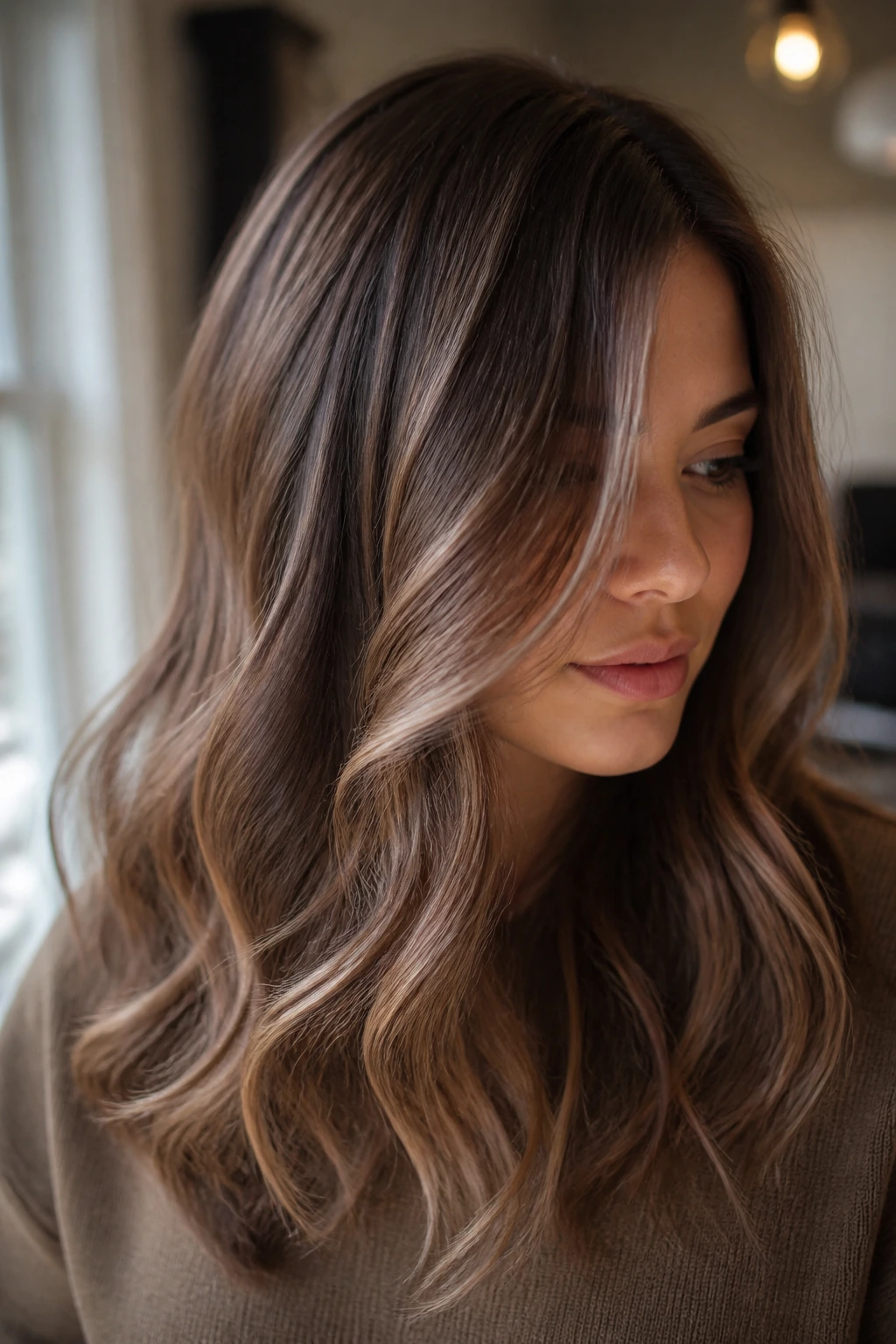
Babylights are the quiet ones. They’re ultra-fine, usually painted in tiny sections, and on neutral brown hair they create a veil of beige rose that shows up more as movement than as obvious color. If you want rose gold balayage that feels subtle from a distance, this is the one to study.
Neutral brown hair makes the best backdrop because it doesn’t push the rose too far warm or too far cool. The result sits right in the middle, which is where a lot of people want to live. The pink is there, but it looks softened by beige and just a touch of gold. Under indoor lighting, it glows. In daylight, it looks airy.
Best if you want movement, not streaks
- Keep the painted sections very fine, almost threadlike.
- Use a level 8 beige-pink toner for the softest finish.
- Add a few brighter pieces near the part line only.
- This grows out well because the contrast stays low.
There’s a reason stylists keep coming back to babylights. They make hair look fuller without screaming for attention, and on brown bases they can be unexpectedly flattering.
8. Strawberry Rose Balayage on Deep Brown Curls
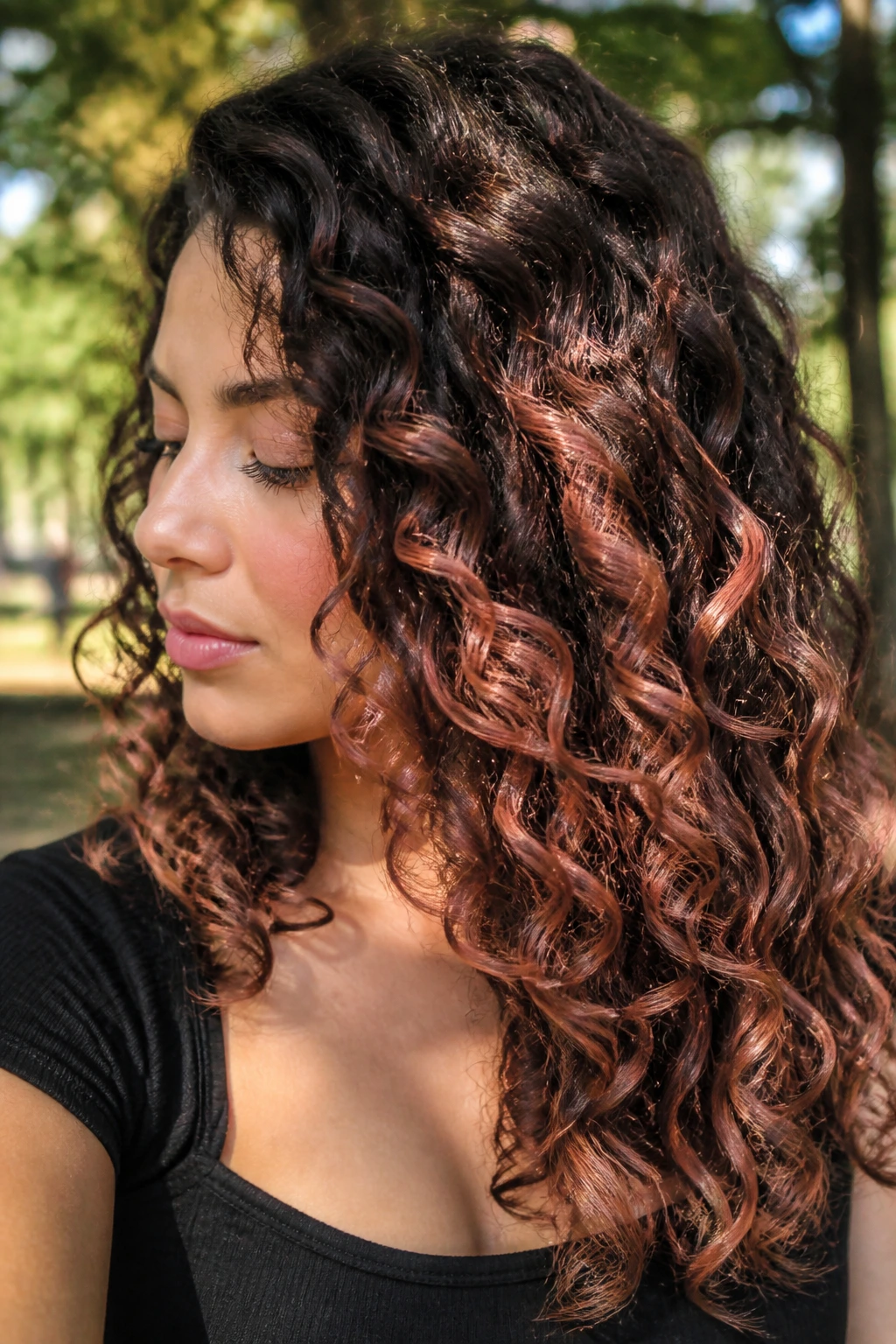
Strawberry rose on deep brown curls is one of those looks that makes people stop and look twice. The curls do half the work, because the color catches on the curves and turns into tiny flashes of pink-gold instead of one flat streak. If you’ve got texture, use it.
The rose tone here leans a little warmer and brighter than dusty rose. Not neon. Just enough strawberry warmth to show up against the darker base. A colorist usually paints the outer curve of each curl or coil so the light reflects where the hair naturally turns. That placement is smarter than painting every curl the same way.
One thing people get wrong: they try to flatten curly hair to judge the color. Don’t do that. Curly hair lives differently when it shrinks and springs back, and the balayage needs to be placed for the shape it actually has. When done right, this can look almost jewel-like.
9. Rose Gold Face Frame on Long Brunette Layers
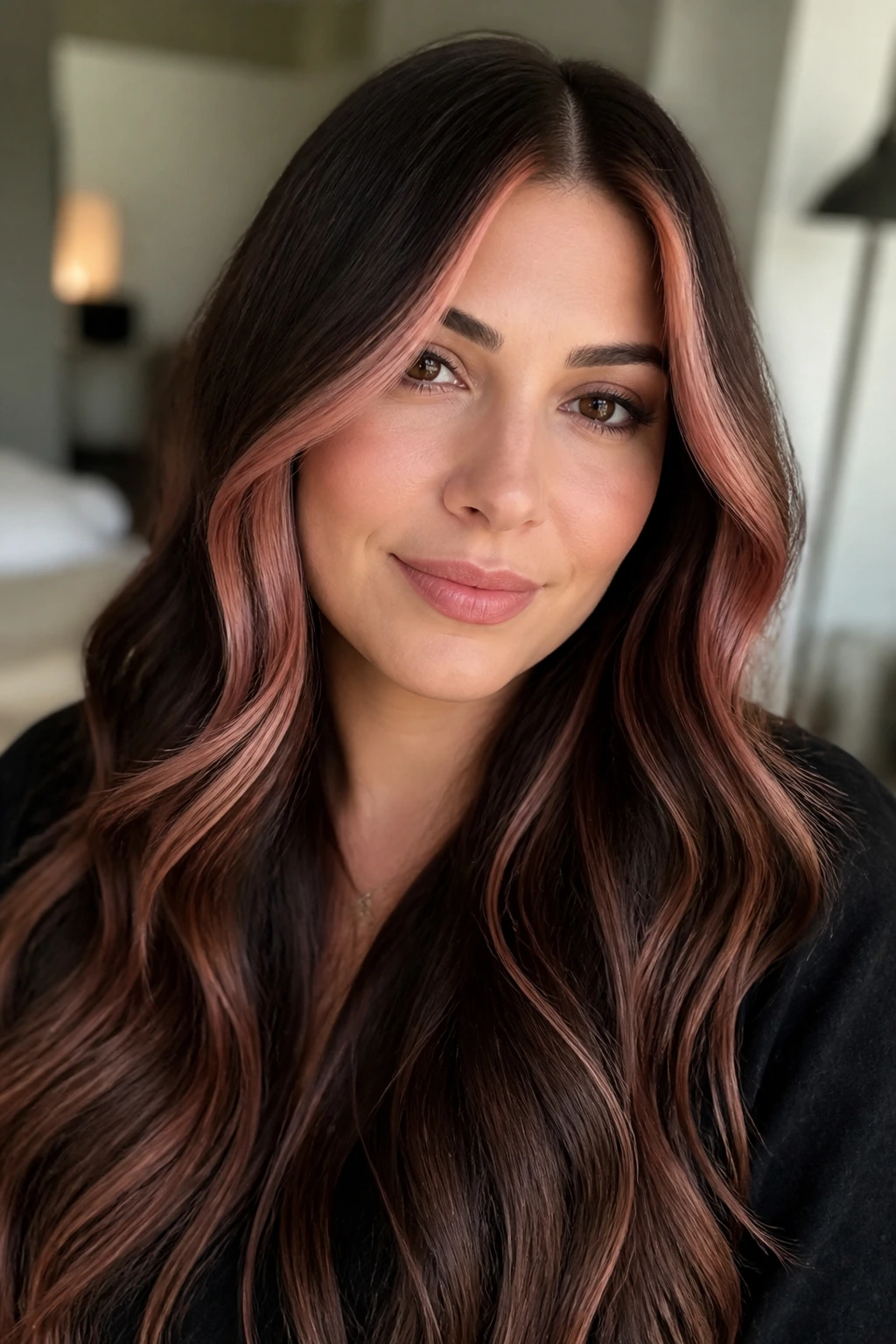
Do you want the color to show when you walk into a room, not only when you catch it in the mirror? A rose gold face frame does exactly that. Long brunette layers give the front pieces room to fall, and the lighter rose-gold sections land right where the eye goes first.
The rest of the hair can stay deeper, which keeps the overall look grounded. That contrast makes the face-framing pieces feel brighter than they are. Ask for a soft fade into the rest of the hair rather than a hard stop. Sharp lines can make the front look disconnected, and that’s not the point here.
What to ask for
- Brighter ribbons from the temples through the cheekbone area.
- A beige-rose glaze that softens the lift.
- Long layers so the front pieces have movement.
- A root shadow that blends into your natural brunette shade.
This works especially well if you like to wear one side tucked back. The color shows off the cut and gives the layers a bit of lift around the face.
10. Mahogany Rose Balayage on Auburn Brown
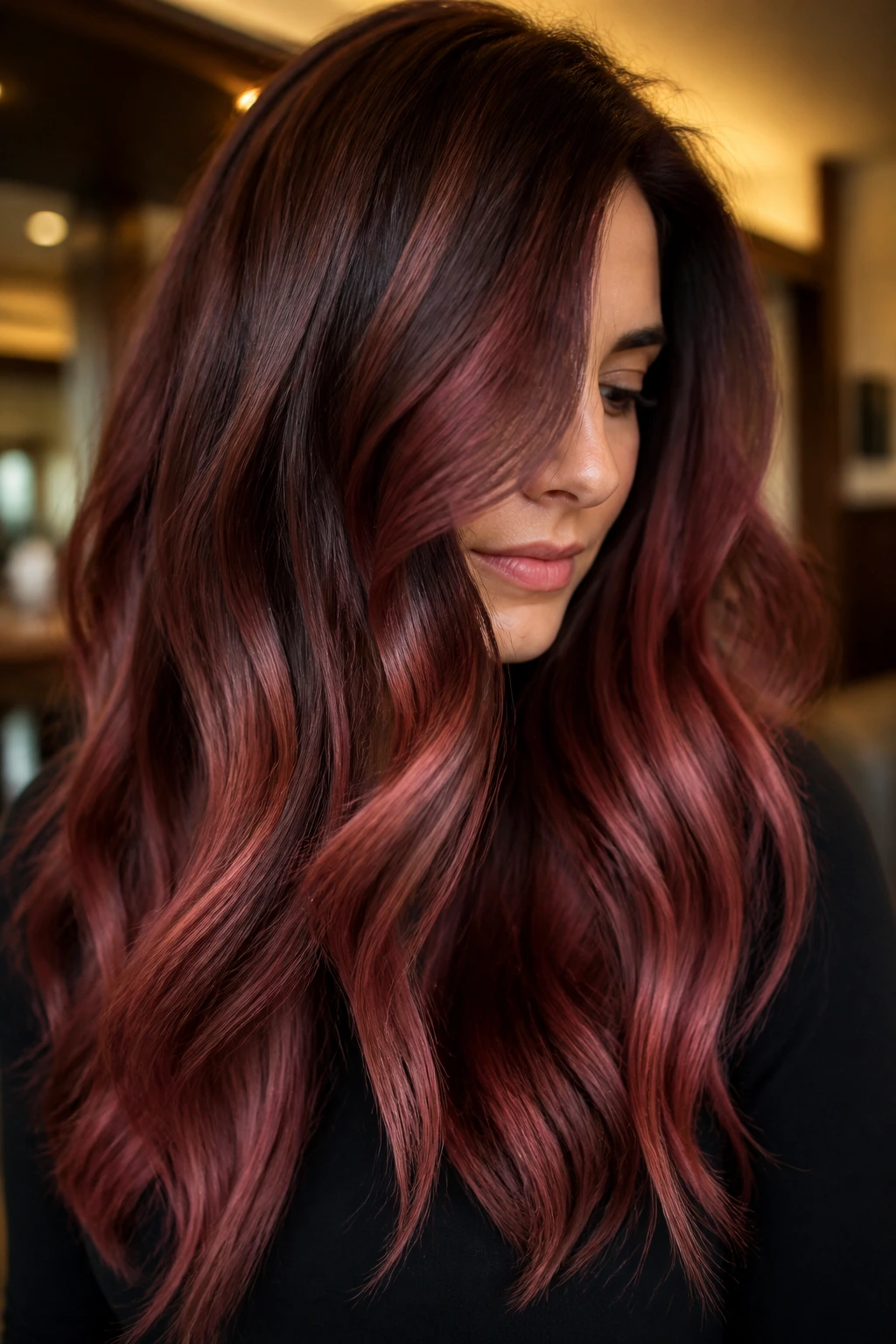
Mahogany rose sits in a delicious middle zone between red-brown and pink-gold. On auburn brown hair, it feels deep, wine-rich, and warmer than a classic blush shade. If you prefer color that looks grown-up rather than sweet, this is worth a close look.
The cool part is that the rose doesn’t need much brightness to show up. Auburn hair already carries red pigment, so the balayage can work with that existing warmth instead of fighting it. A glaze with mahogany, rose, and a hint of gold can make the hair look thicker because the tones are close enough to blend but different enough to read as dimension.
- Best on hair with natural red or copper undertones.
- Looks strong with polished waves and even stronger in a low twist.
- Keep the ends softer so the color doesn’t go heavy at the bottom.
- A shine spray helps here, because this shade loves reflection.
I’d call this the velvet version of rose gold. It has depth, and it has a little attitude.
11. Pastel Rose Dust on Lived-In Brown
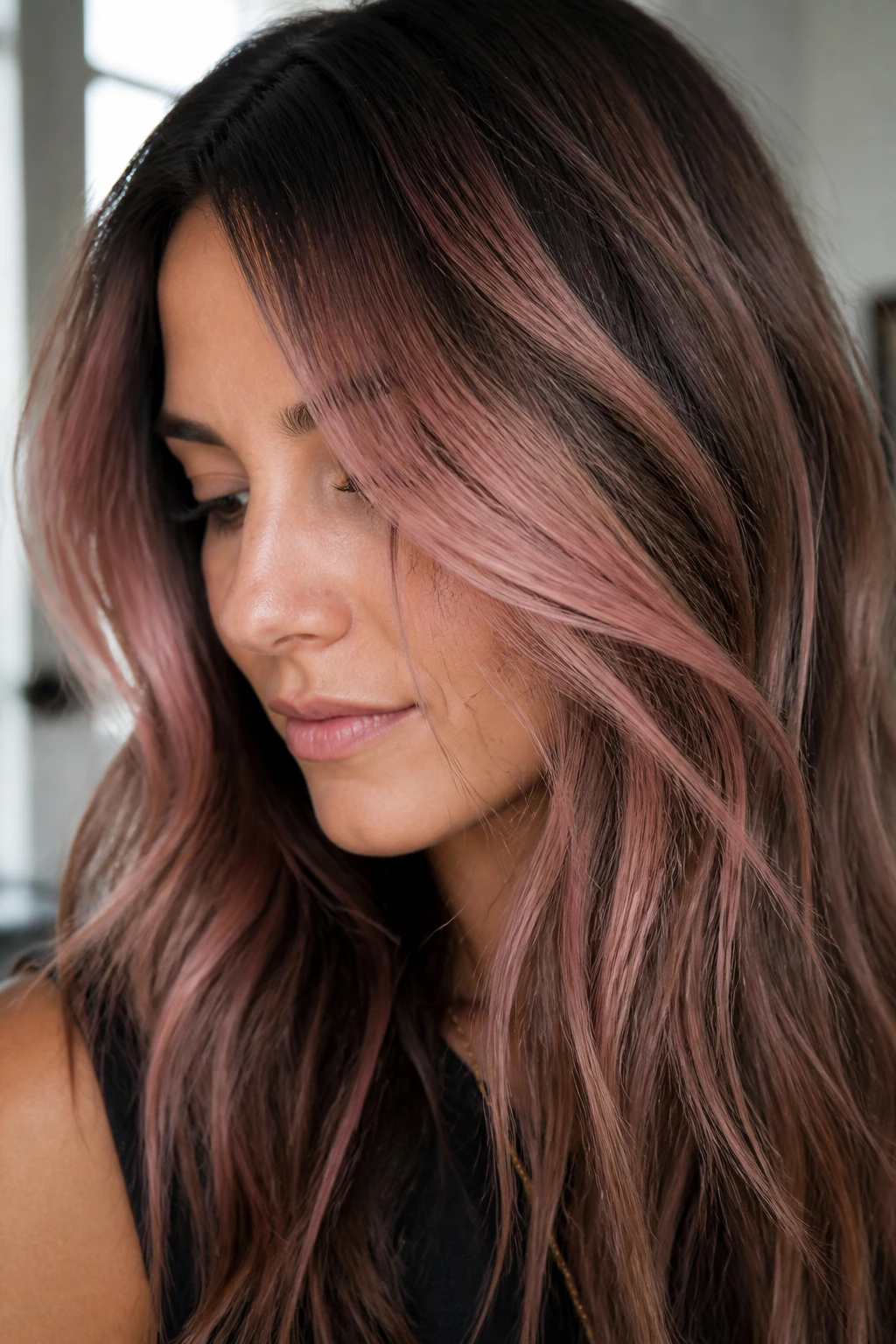
Pastel rose dust is for the person who wants the whisper of pink, not the speech. On lived-in brown hair, it feels light, airy, and slightly faded on purpose, which is part of the charm. The brown base stays in charge, and the rose lands on top like a thin glaze.
This look usually works best when the hair has already been lifted once or twice and doesn’t need a huge jump to read pink. A colorist can place the pale rose mostly through the top layers and around the face, then leave the underneath sections deeper. That gives you a soft contrast that doesn’t turn into a uniform block.
The nicest thing about this version is how forgiving it is when it fades. It often shifts from pink-beige to peach-gold instead of going dull, which means the grow-out still looks intentional. That’s rare, and I love it.
12. Rose-Edged Reverse Balayage on Honey Brown
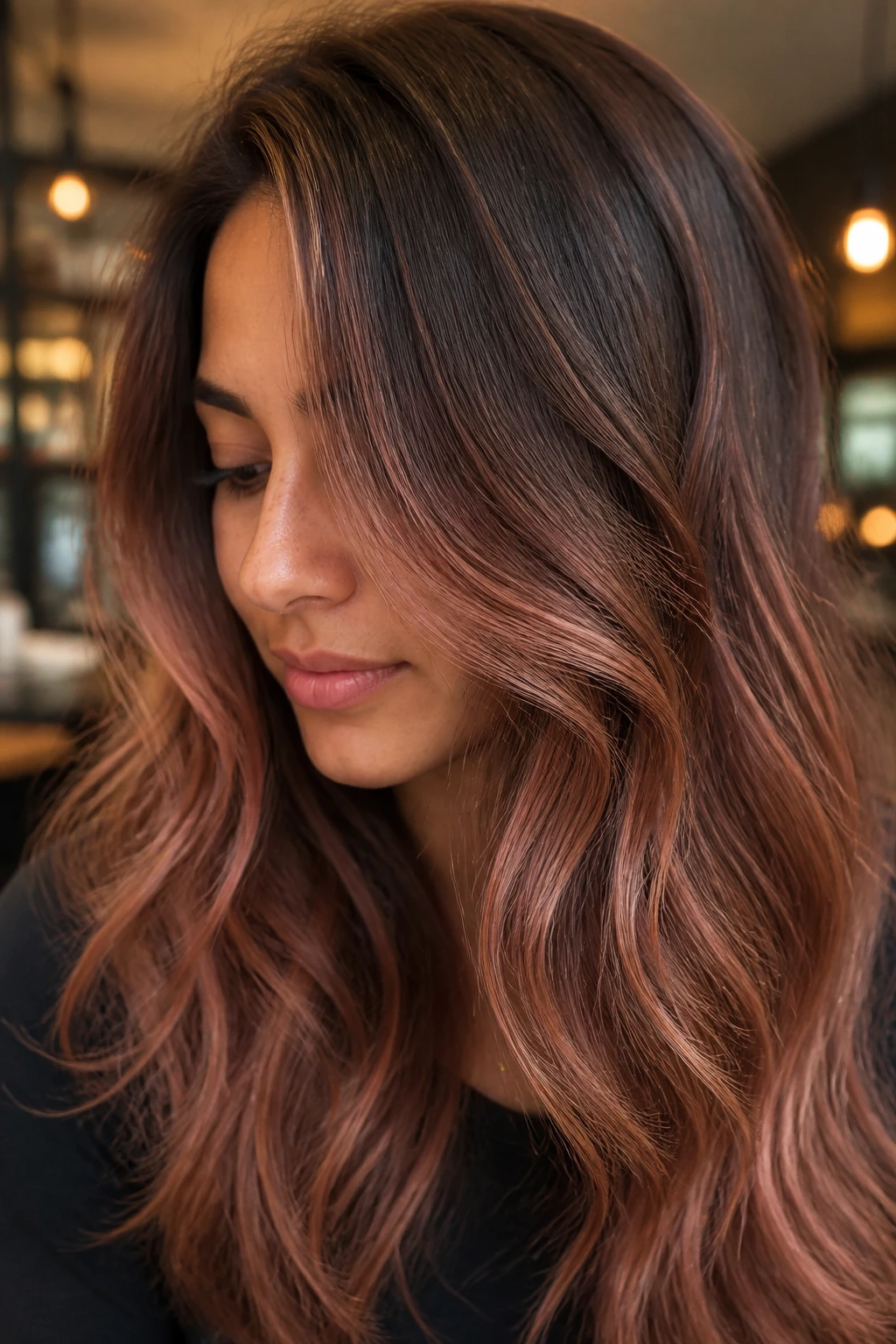
Reverse balayage usually darkens the hair with lowlights, so the rose part has to be handled with a light hand. On honey brown hair, the trick is to keep the base rich, add deeper ribbons for depth, then edge the lighter pieces with a rose-gold gloss. The color ends up layered, not flat.
This is a strong choice if your hair has gotten too bright and you want it to feel more grounded again. The honey brown base gives the rose something warm to sit on, while the lowlights create separation between sections. That separation is what makes the pink-gold finish pop without needing more bleach.
A lot of people overlook reverse balayage because it sounds like the opposite of what they want. Sometimes that’s exactly why it works. If your hair already has too much brightness, adding depth can make the rose look cleaner.
13. Rose Quartz Balayage on Ash Brown Hair
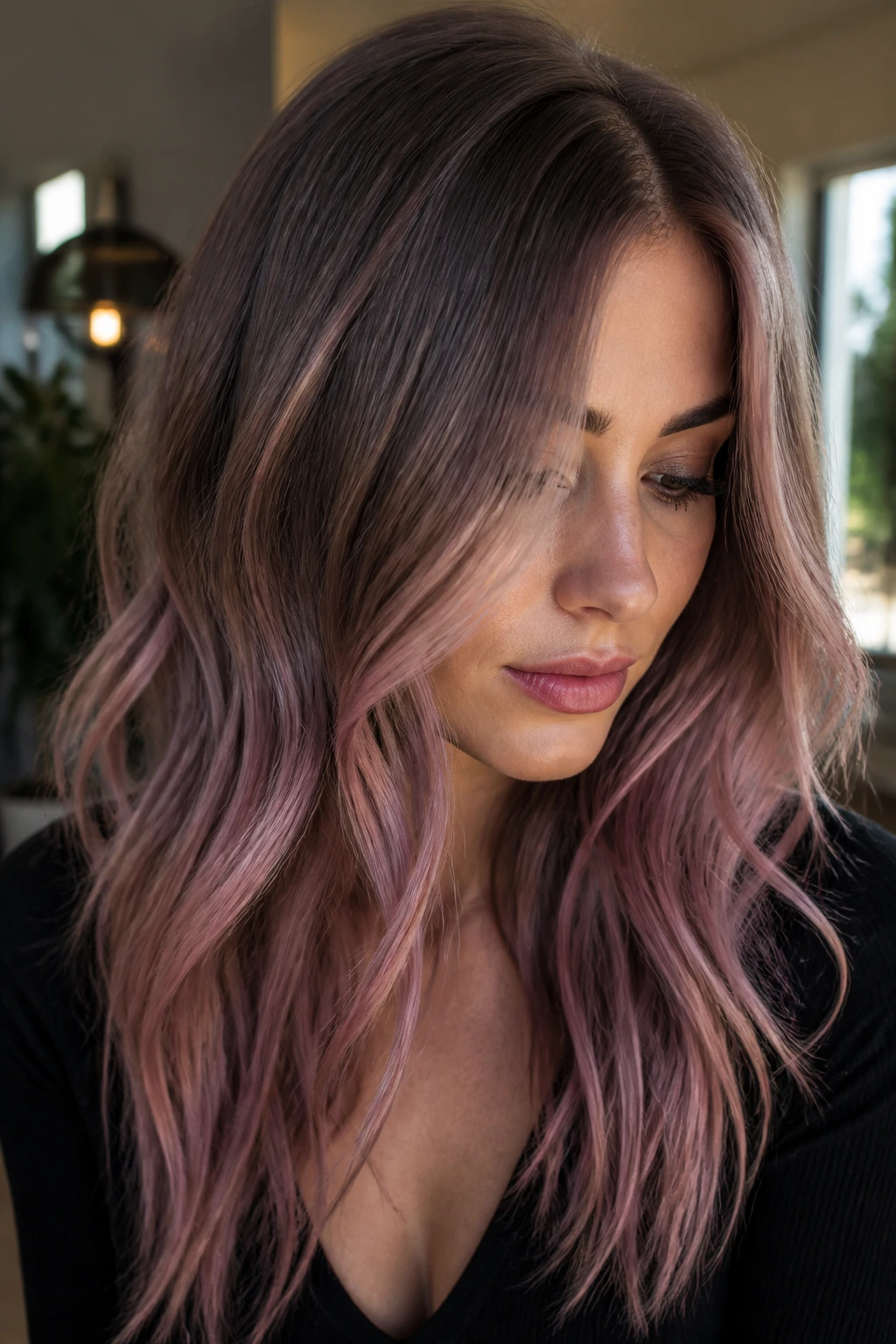
Rose quartz on ash brown hair is a sharper, cooler version of the trend. The ash base pulls the pink toward mauve and the gold toward beige, so the final result feels modern and a little moody. It’s not sugary at all.
Quick fit check
- Best for cooler skin tones or anyone who wears silver jewelry well.
- Ask for a mauve-rose toner so the warmth doesn’t take over.
- Keep the brightness moderate; too much lift will erase the ash contrast.
- Works well with blunt cuts because the color adds the movement the cut doesn’t have.
Here’s the thing: ash brown and rose gold can fight if the rose is too warm. If your colorist leans into beige-pink instead of copper-pink, the whole look settles in beautifully. Straight styles make the edge clean. Soft bends keep it from feeling too severe.
This is one of the more polished-looking versions on the list. Quiet, but not plain.
14. Sunset Rose Balayage on Wavy Mocha Hair
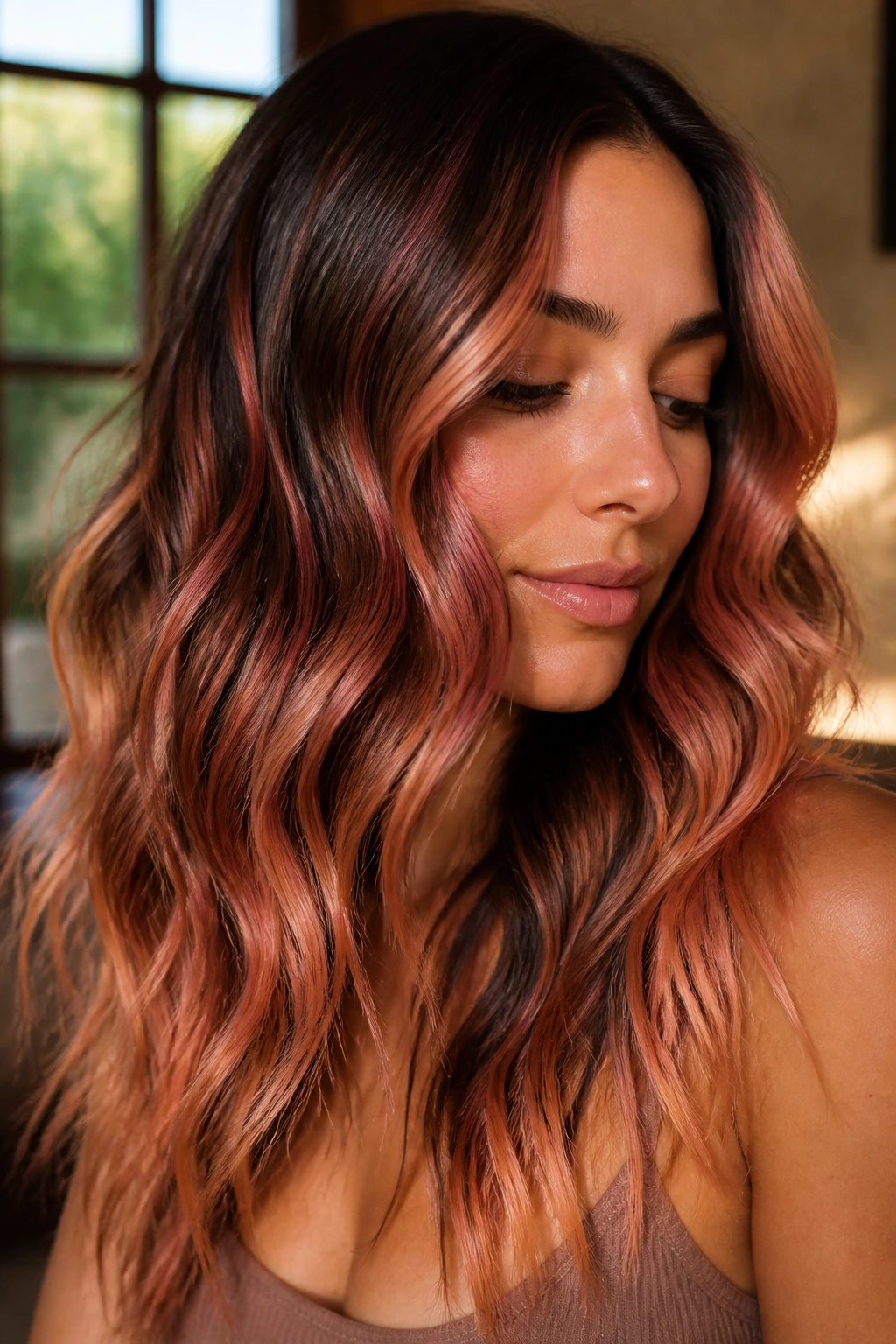
Why does sunset rose look so easy on wavy mocha hair? Because the waves already create soft shadows, and the rose-gold pieces can shift between peach, gold, and pink without ever showing the whole hand. Mocha gives the perfect mid-tone base for that kind of movement.
The color should be painted in broader ribbons than babylights but softer than chunky highlights. Think of it as layered warmth. A little copper here, a blush-gold piece there, and a rose glaze over the top. Done well, the hair looks like it changed color several times in different light, which is exactly the point.
How to keep it from going too orange
The rose tone should stay visible at the ends and slightly cooler near the crown. That balance keeps the look from tipping into all-copper territory. If your waves are loose and soft, this color will show every bend. If they’re tighter, the effect becomes more textured and a bit bolder.
15. Barely-There Rose Gold Gloss on Dark Brown Hair
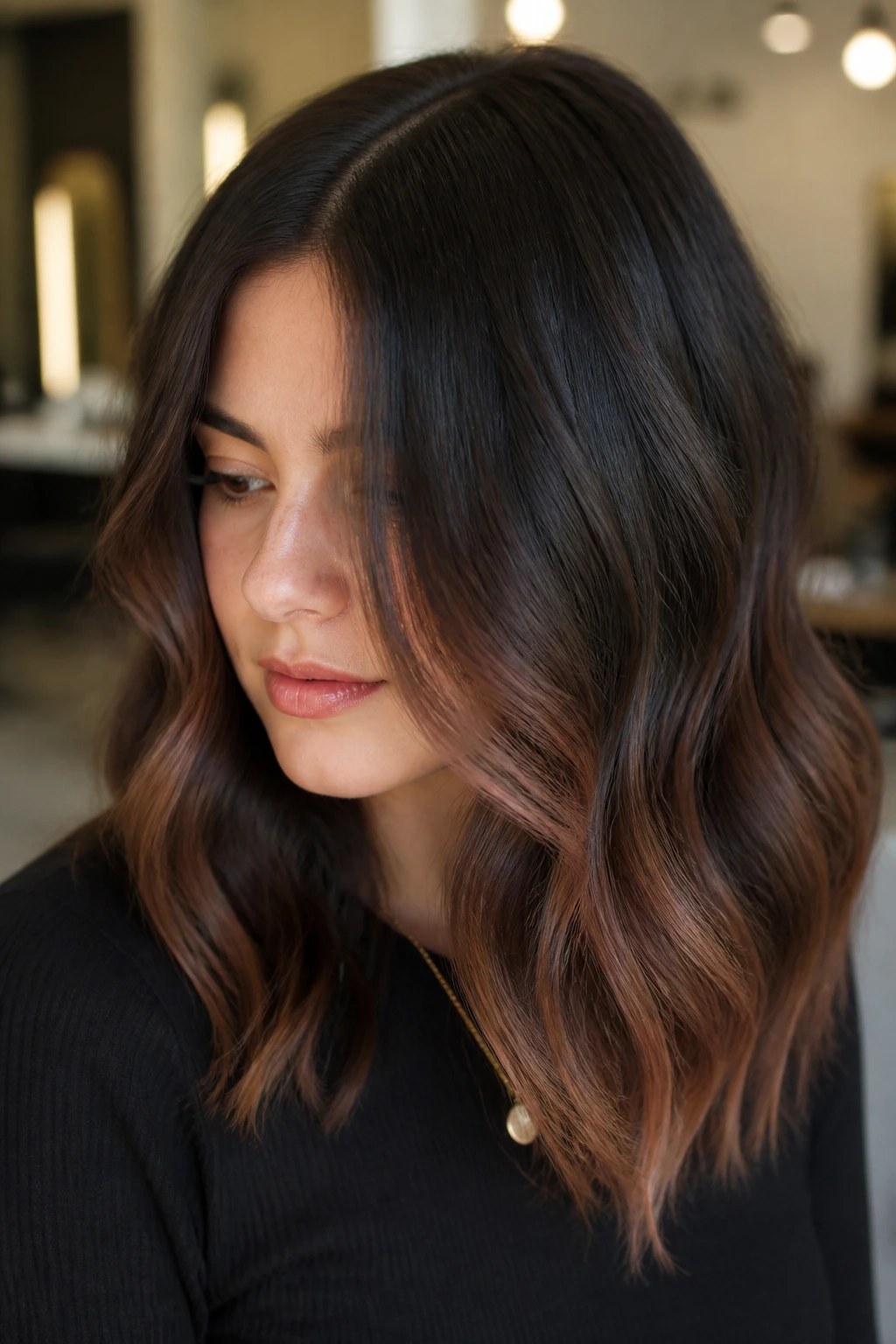
Barely-there rose gold gloss is for dark brown hair that doesn’t want a full highlight cycle. The color change is subtle, almost sneaky. A gloss alone can warm the ends, soften the mids, and leave a faint rose sheen that becomes visible when the hair moves.
This look works because it respects the base. Dark brown hair has a richness that can be ruined by over-lightening, and a gloss lets you keep that depth. You may get only a half-shade shift in some indoor light, but on sunny days the rose-gold tint shows its face. That little shift can be enough.
I like this option for people who wear sleek ponytails, claw clips, or smooth blowouts. The shine matters as much as the color. If you want something low-commitment that still feels intentional, this is a smart place to land.
16. Peekaboo Rose Panels on Brown Bob Hair
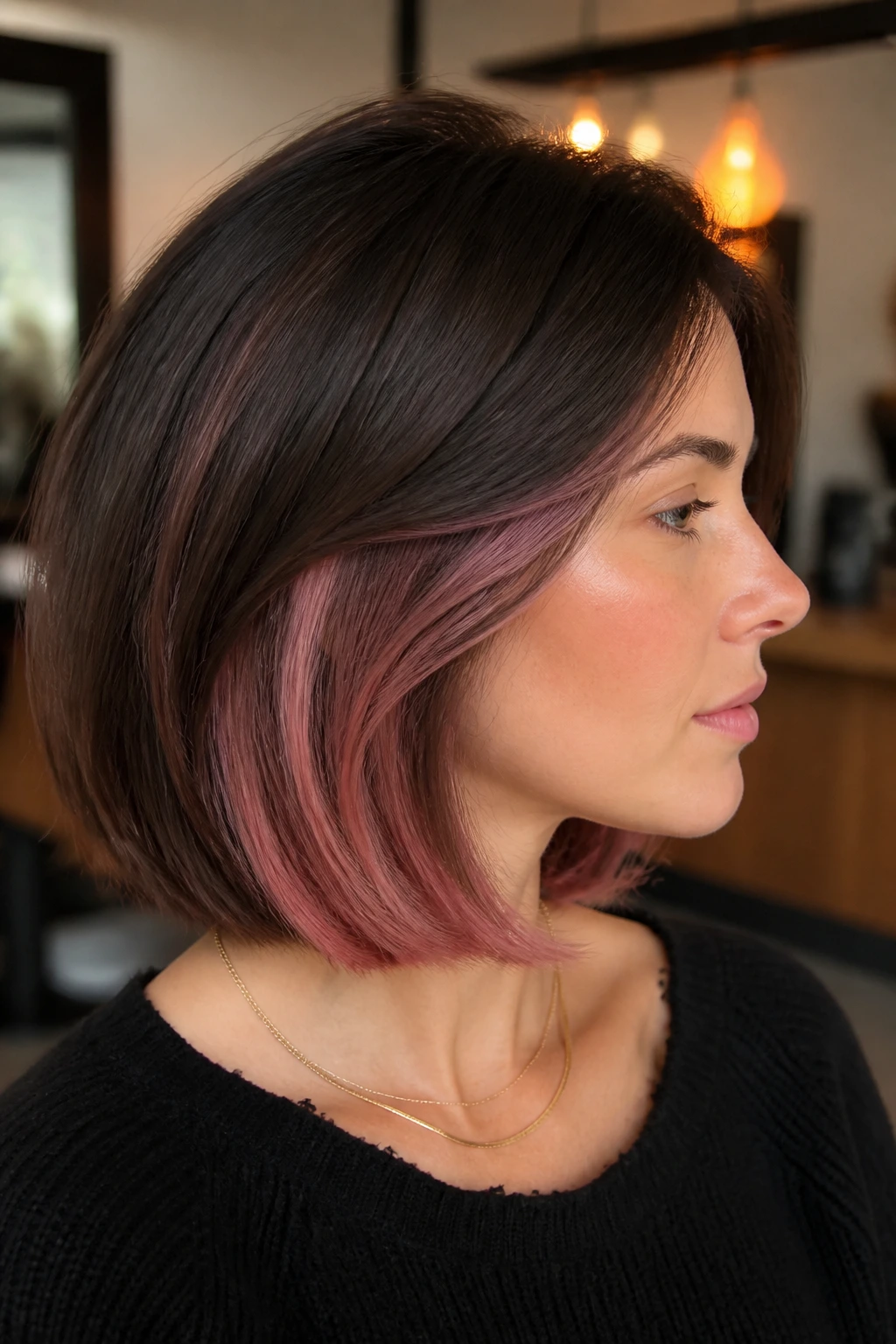
A bob with peekaboo rose panels is plain fun. The color hides under the top layer, then flashes out when the hair flips or when you tuck one side behind your ear. On brown bob hair, that contrast feels playful without taking over the whole haircut.
What makes it different
- The pink is placed under the top canopy, not across the whole head.
- You can make the panels wider if the bob is blunt, thinner if it’s choppy.
- A rose-gold gloss keeps the hidden color from looking too bright.
- The cut matters here; clean lines make the surprise effect sharper.
I’ve always liked this version for people who want color with a bit of personality but still need a calmer look day to day. It’s easier to hide, easier to grow out, and easier to refresh in small sections. That last part matters more than people think.
17. Rooted Rose Melt on Mid-Brown Lob Hair
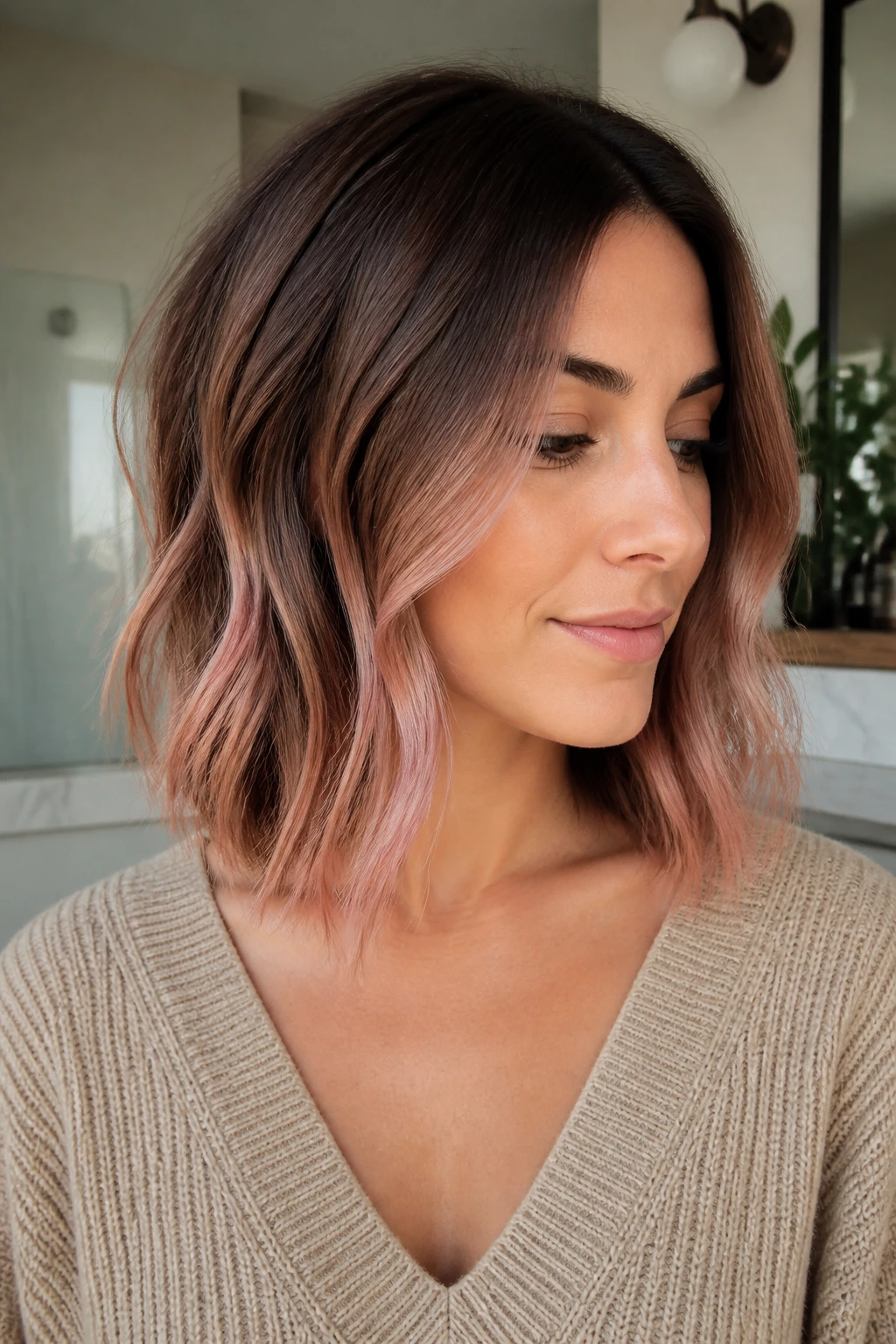
A rooted rose melt is the answer when you want visible rose gold but don’t want your roots to look abandoned two weeks later. On a mid-brown lob, the shadow root gives the hair structure, and the rose-gold mids and ends soften from there. It looks lived-in from the start.
The contrast is the whole point. The root stays close to natural brown, the middle lifts into pink-gold, and the ends fade into a softer beige-rose. That layered shift gives the lob movement even if the cut is simple. Blunt or slightly textured, it works either way.
This one is especially good if you like wearing hair behind one ear, because the color shows in the sweep. It also plays well with waves that start below the cheekbone. The rose melt bends with the hair instead of sitting on top of it.
18. Soft Coral-Rose on Chestnut Waves
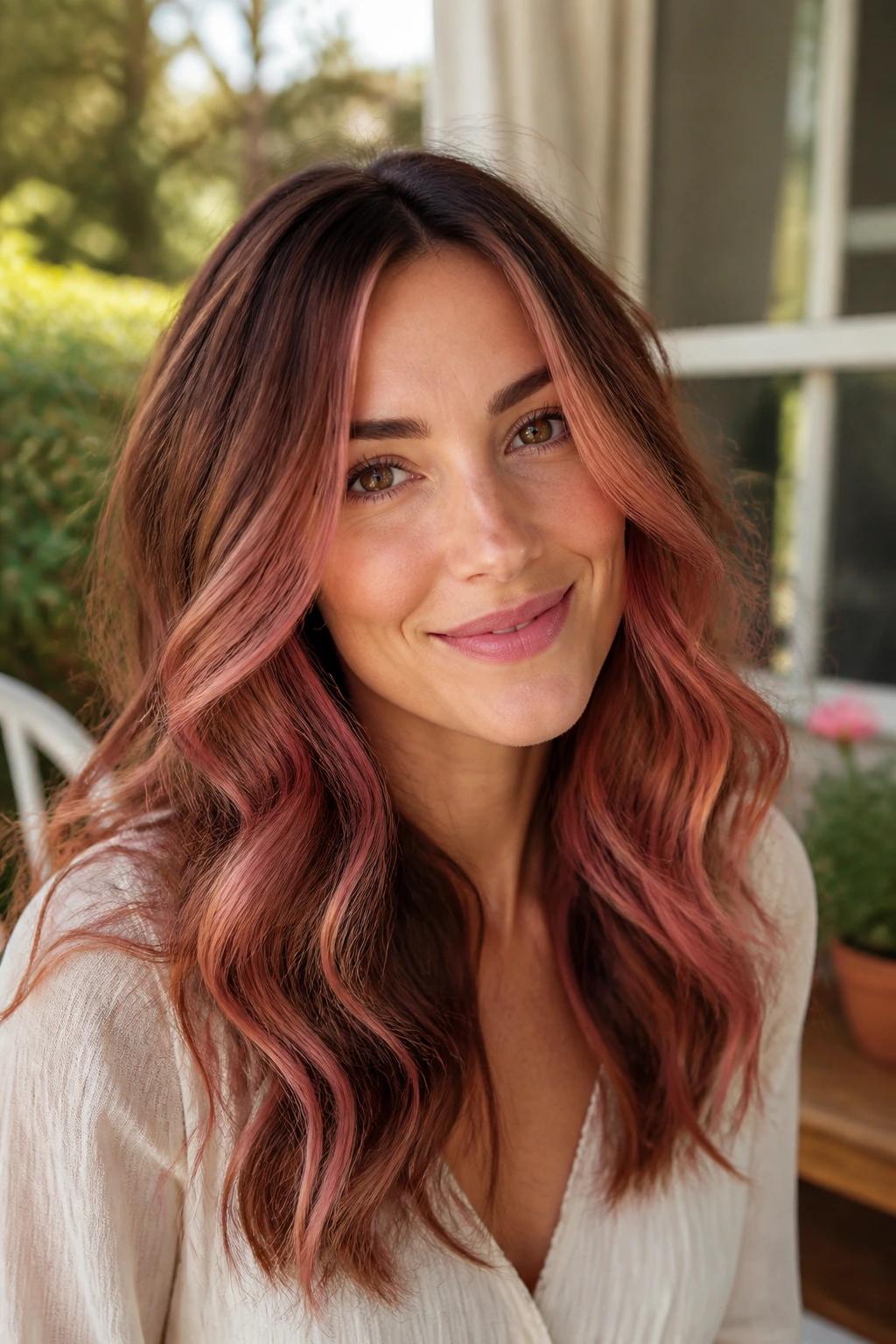
Can rose gold lean coral and still feel elegant? Yes, if the chestnut base is warm enough and the coral stays soft. This look sits a touch deeper than pastel pink and a touch brighter than classic champagne rose, which makes it lively without going loud.
Best way to wear it
A loose wave pattern gives the coral-rose pieces room to separate. On straight chestnut hair, the tone can look more uniform, which isn’t bad, just flatter. Ask for the brighter pieces to live around the face and through the lower half of the hair so the color builds as it moves down.
- Keep the coral note muted, not bright orange.
- Pair it with chestnut, not dark chocolate, for the cleanest blend.
- Use a light gloss on the ends if the warmth starts to fade.
- Works well with side parts and soft curtain bangs.
This version has a little more energy than the others. It feels fresh, and it still belongs on brown hair.
19. Metallic Rose Gold on Glossy Espresso Lengths
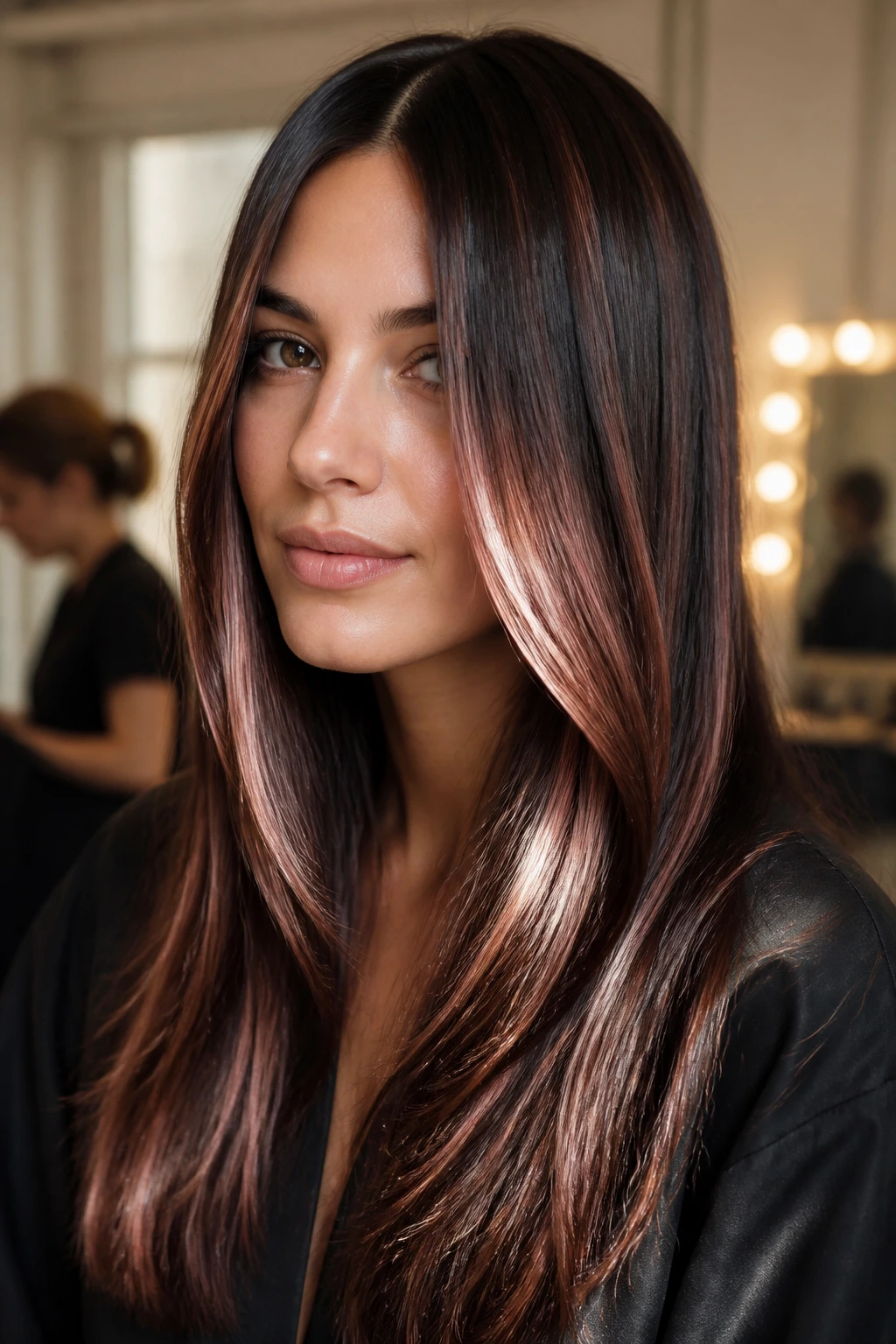
Metallic rose gold is the sleekest version here. On glossy espresso lengths, the shine does half the work, and the rose-gold ribbons look almost reflective. This is the look for someone who likes polish more than softness.
The hair needs real shine to sell it. A smooth blowout, a flat iron bend, or even a soft brush curl can make the metallic tones line up and catch the light in bands. The key is not overloading the hair with too much pink. Metallic rose gold looks better when it stays close to champagne and copper, with just enough rose to make the metal feel warm.
A few useful details
- Best on longer lengths where the ribbons have room to stretch.
- Works with center parts, sleek blowouts, and polished waves.
- A shine serum on the mids and ends helps a lot.
- Ask for a high-gloss finish, not a frosted one.
This is one of the few rose gold balayage looks that can feel almost jewelry-like. Very clean. Very deliberate.
20. Petal Rose Balayage on Brown Hair
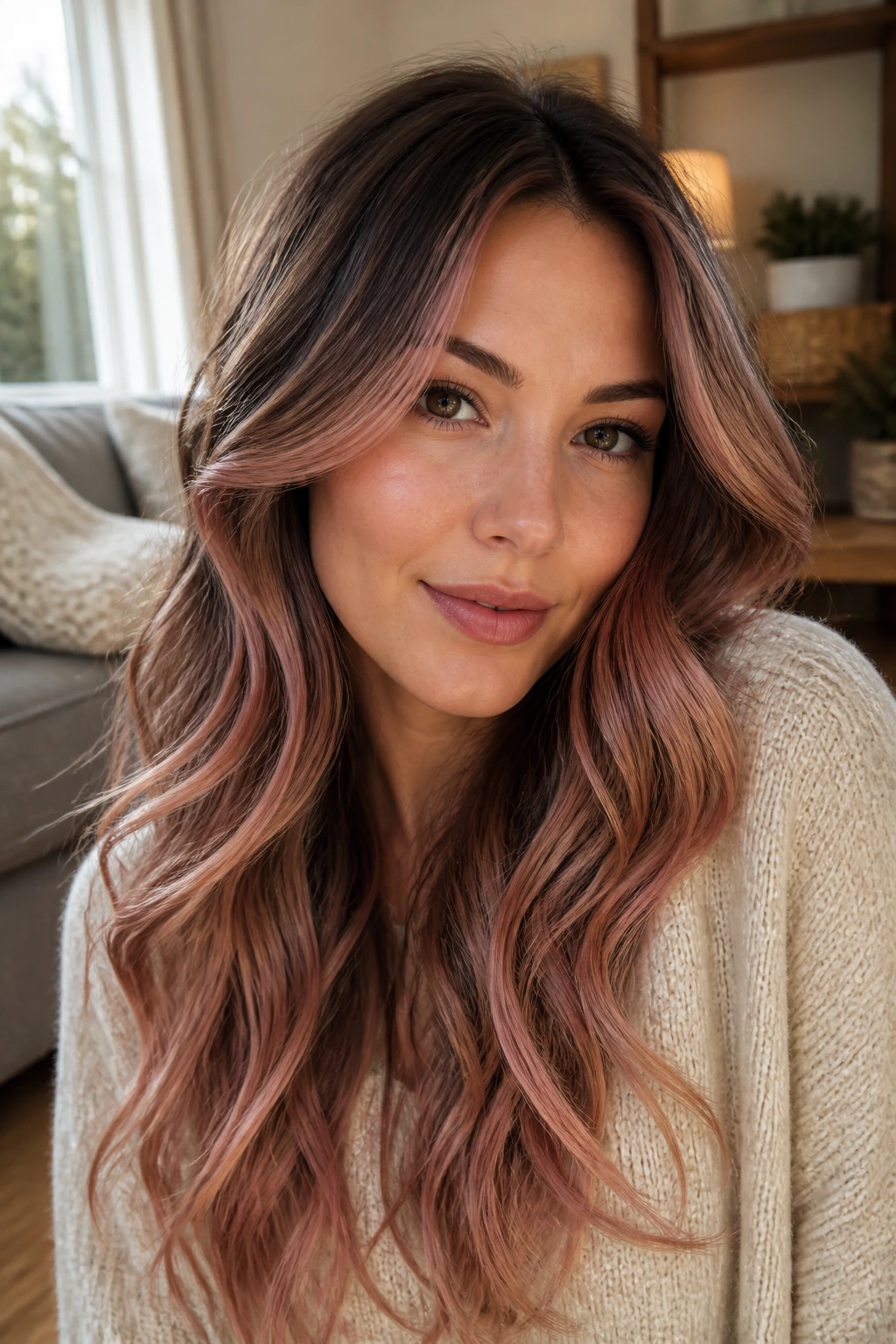
Petal rose is the softest ending point because it doesn’t try to prove anything. On brown hair, it looks like a faded blush glaze with a little gold warmth tucked inside. The result is gentle, pretty, and easy to wear even if you usually avoid bright color.
The best version keeps the lift modest and the placement loose. A colorist might paint more through the lower mid-lengths, then leave the crown nearly untouched so the brown base keeps the whole look calm. That approach makes the rose feel woven in, not pasted on. It also helps the grow-out stay graceful, which I care about more than the perfect day-one photo.
If you’re choosing between several rose gold balayage looks for brown hair, this is the one that asks the least of your wardrobe, makeup, and styling routine. It still has personality. It just doesn’t insist on being the only thing anyone sees.
