



Brown hair can make salt and pepper balayage look rich instead of harsh.
When the brunette base stays in the mix, the gray and silver pieces read like depth, not damage. That’s the whole trick, really. If the placement is good, the hair keeps its warmth and structure while the cooler strands bring in that smoky, lived-in contrast people keep asking for at the salon.
The hard part is restraint. Too much silver too high up can make brown hair look flat, and too many chunky pieces can tip it into zebra territory. Good color work sits in the middle: a little ash, a little pearl, a little slate, and enough brown left behind so the whole thing still feels grounded.
That balance shows up in a bunch of different ways, which is why this color family works on long waves, blunt bobs, soft curls, and even short pixies. Some looks lean subtle. Some lean bold. All of them depend on placement, tone, and how much contrast you’re willing to live with.
1. Soft Mushroom Brown Melt
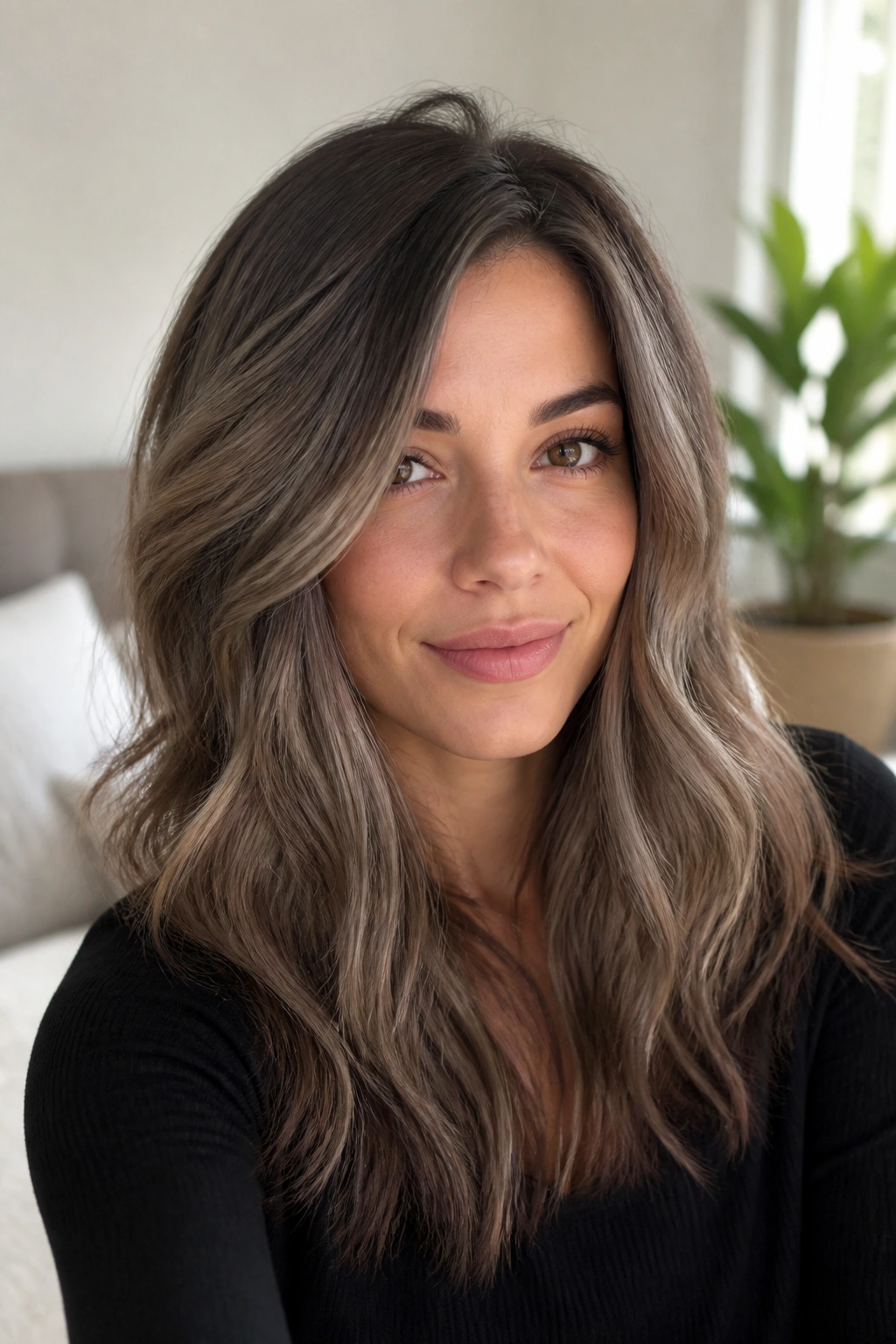
Soft mushroom brown is the calmest way to wear salt and pepper balayage on brown hair. It keeps the brunette base visible, then drifts into cool taupe, smoke, and a few silver threads near the mids and ends. The result feels understated, but not dull.
Why It Flatters Brown Hair
Mushroom tones work because they sit in the same cool family as gray without looking icy. On medium and dark brown hair, that keeps the color from shouting across the room. The pieces blend, and the blend matters more than the brightness.
This look is especially kind to layered hair. The movement opens up the painted strands, so you can see the contrast without needing thick stripes. It’s also a smart choice if your natural brown has a little warmth left in it. That warmth keeps the finish from going flat.
What To Ask For
- A level 5 to 6 brunette base with hand-painted pieces lifted softly to level 8 or 9.
- A neutral-cool toner that reads taupe, not blue-white.
- Fine placement through the mids and around the face, with less lightness at the crown.
- A soft root shadow so the grow-out stays smooth, not blunt.
Tip: If your ends are porous, keep the lightest toner away from the very tips. They’ll grab pigment fast and can go dull fast too.
2. Smoky Silver Money Piece
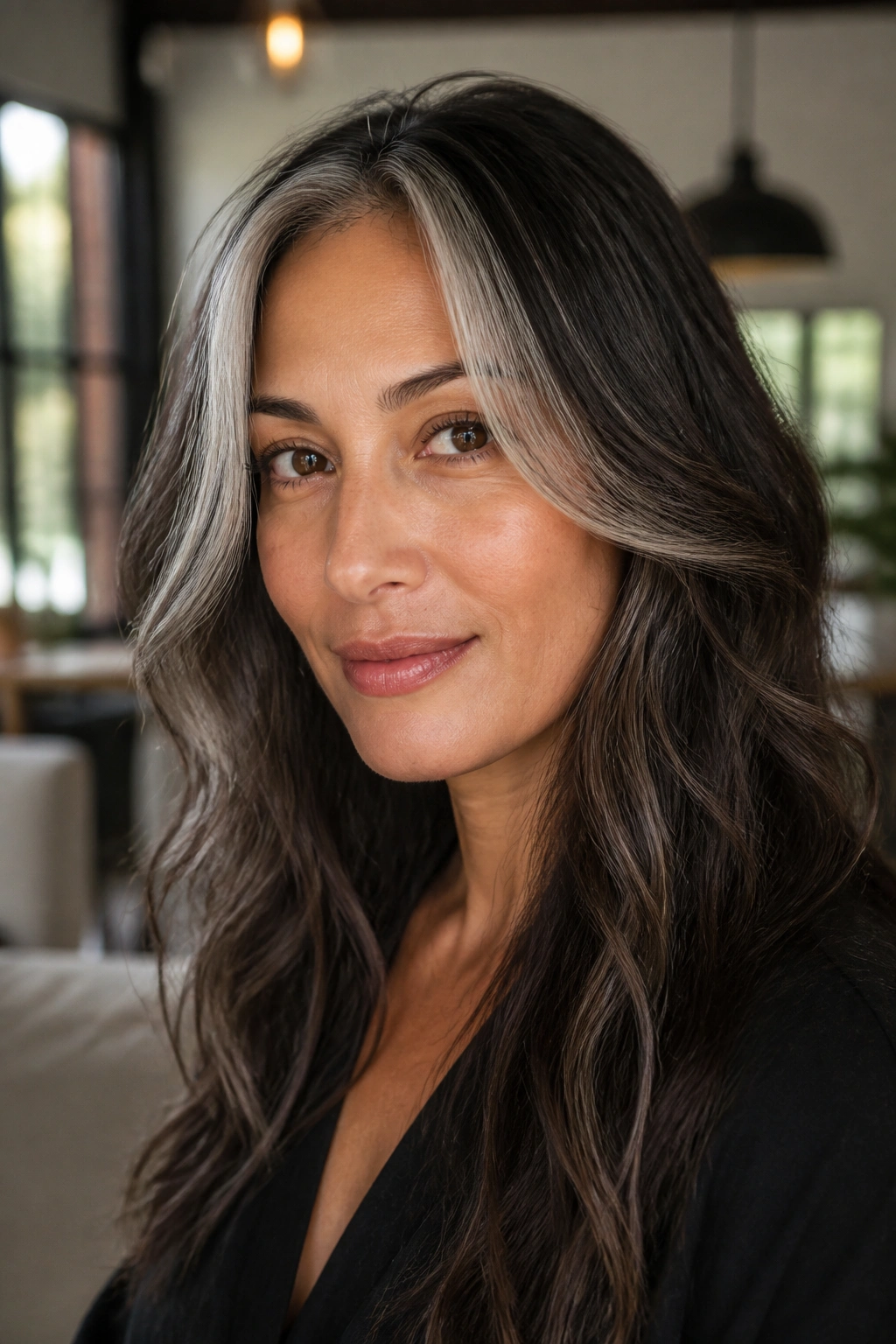
A brighter front piece changes the whole haircut. That’s why the smoky silver money piece is such a strong move on brown hair: you get visible contrast right where the eye lands first, while the rest of the hair stays deeper and quieter.
This look works best when the money piece is softened a little on the edges. You do not want a hard stripe sitting at the hairline. A few airy silver panels around the face, blended back into brown through the temple area, are enough to sharpen the features and wake up the whole style.
It’s a good fit for rounder faces, too, because the brightness can pull attention upward and outward. On longer layers, the front pieces look intentional. On one-length cuts, they can feel a bit stark unless the rest of the balayage is kept whisper-soft.
3. Ribboned Ash Balayage on Chocolate Waves
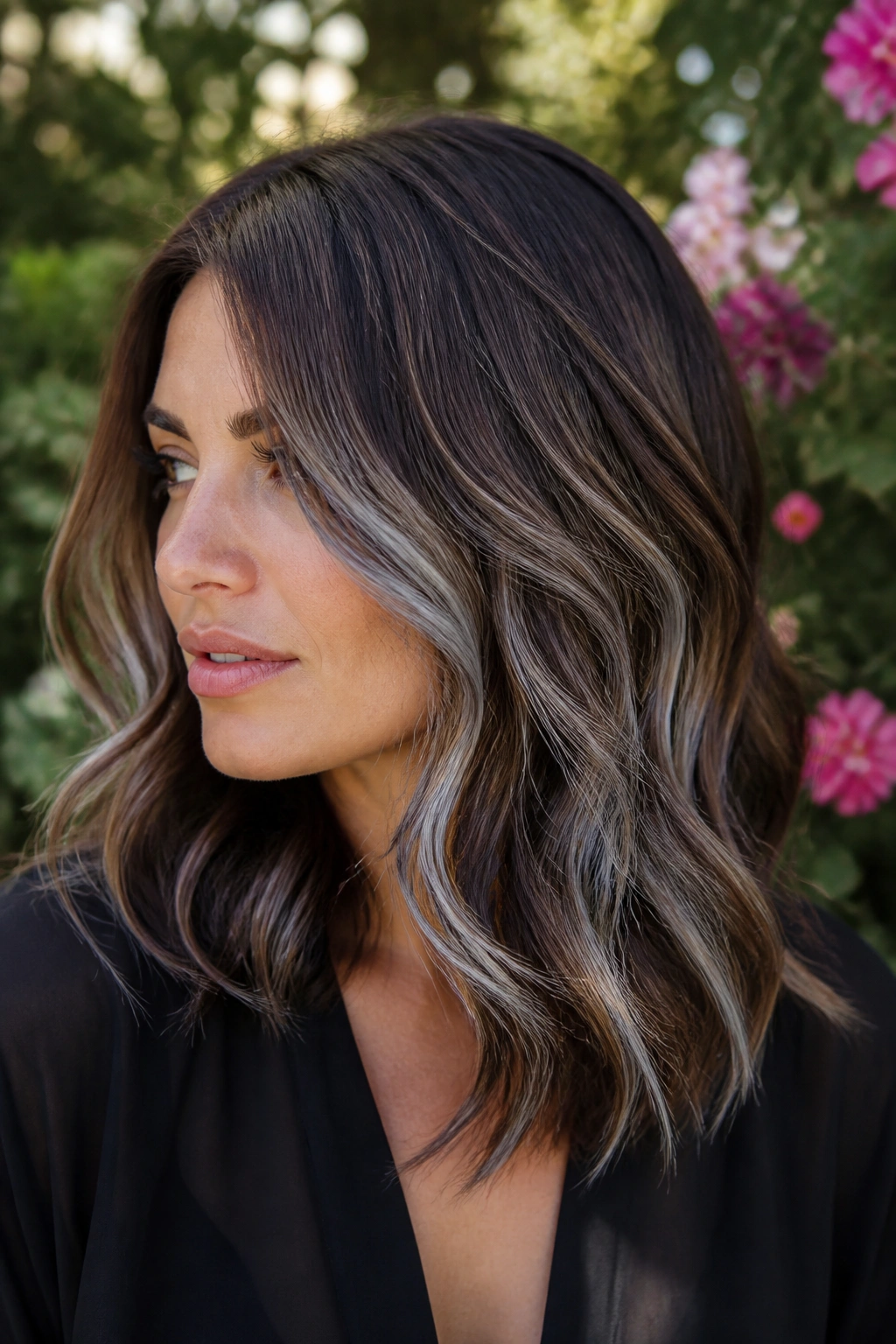
Why do ribbon highlights work so well here? Because waves break up the color into moving pieces instead of one solid block. On chocolate brown hair, thin ribbons of ash and silver catch each bend in the wave, so the finish feels dimensional from every angle.
The Shape Does Half the Work
If the hair has a soft wave pattern, the lighter strands sit on top of the darker base like threads in fabric. That gives the color more life than flat, all-over lightening ever could. The brown stays rich. The gray stays crisp. Nothing looks pasted on.
How To Style It
- Use a 1-inch iron or a large round brush to make loose bends, not tight curls.
- Focus the painted ribbons from the cheekbone down, so the face frame stays controlled.
- Keep the ends slightly cooler than the mids for a smoother fade.
- Finish with a light serum, not a heavy oil, or the silver pieces can look muted.
A look like this is a favorite for people who want movement more than drama. It’s quiet, but it is not boring.
4. Pearl-Gray Veil on Chestnut Hair
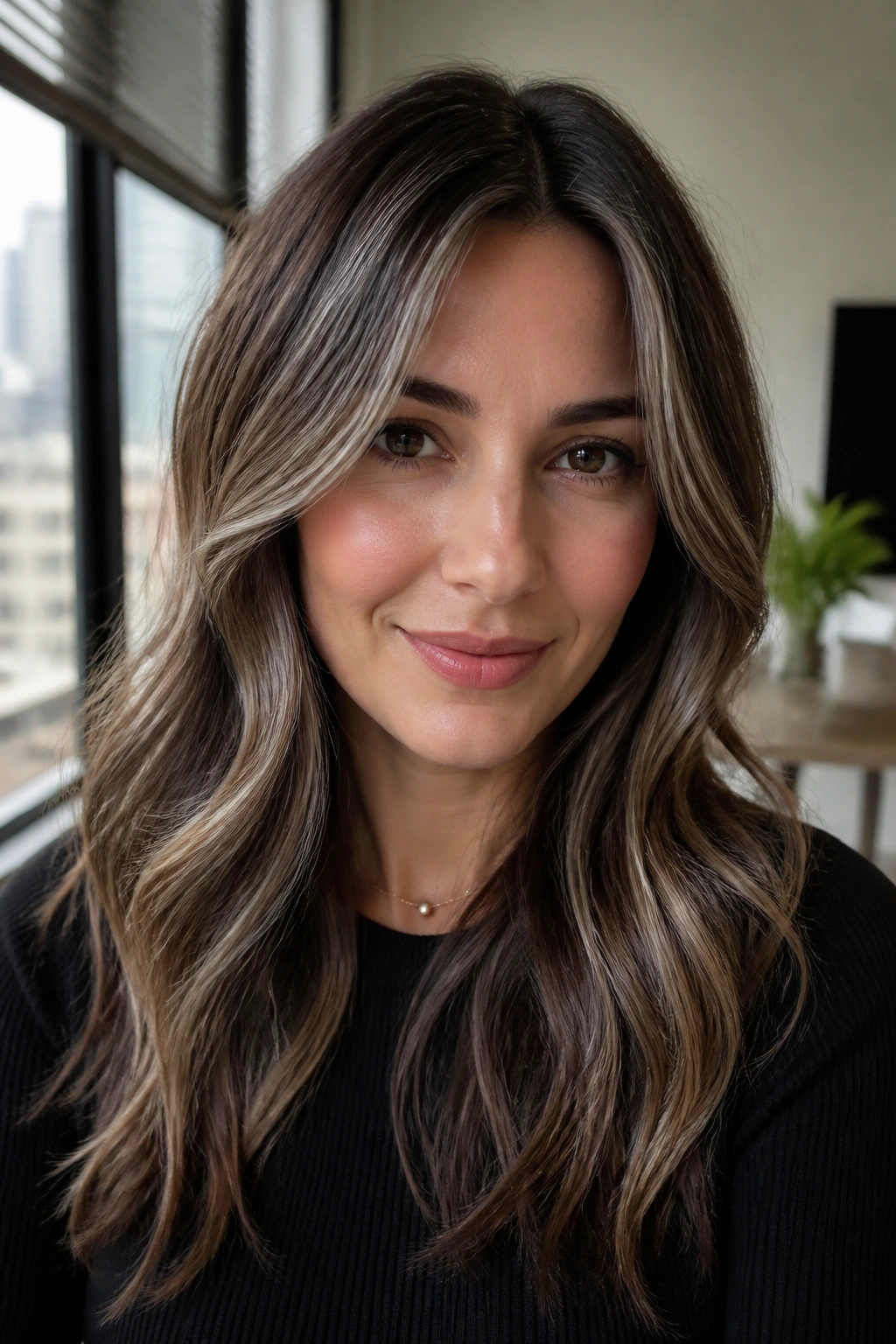
Picture chestnut brown with a thin veil of pearl-gray drifting over the surface. That’s the charm here. The change is gentle enough to wear in a work setting, but there’s enough lightness to keep the color from disappearing into the base.
This look depends on fine placement. Instead of painting big obvious panels, the stylist layers in narrow sections that sit just above and between the darker strands. The pearl tone softens the gray so it doesn’t lean too metallic. On chestnut hair, that matters.
- Best on level 4 to 5 chestnut brown with some natural warmth left.
- Ask for small hand-painted pieces around the crown and sides.
- Keep the toner soft and reflective, not flat and matte.
- Style it smooth or with a slight bend; both versions work.
Up close, it feels delicate. From across the room, it still reads as polished color.
5. Feathered Pepper Ends
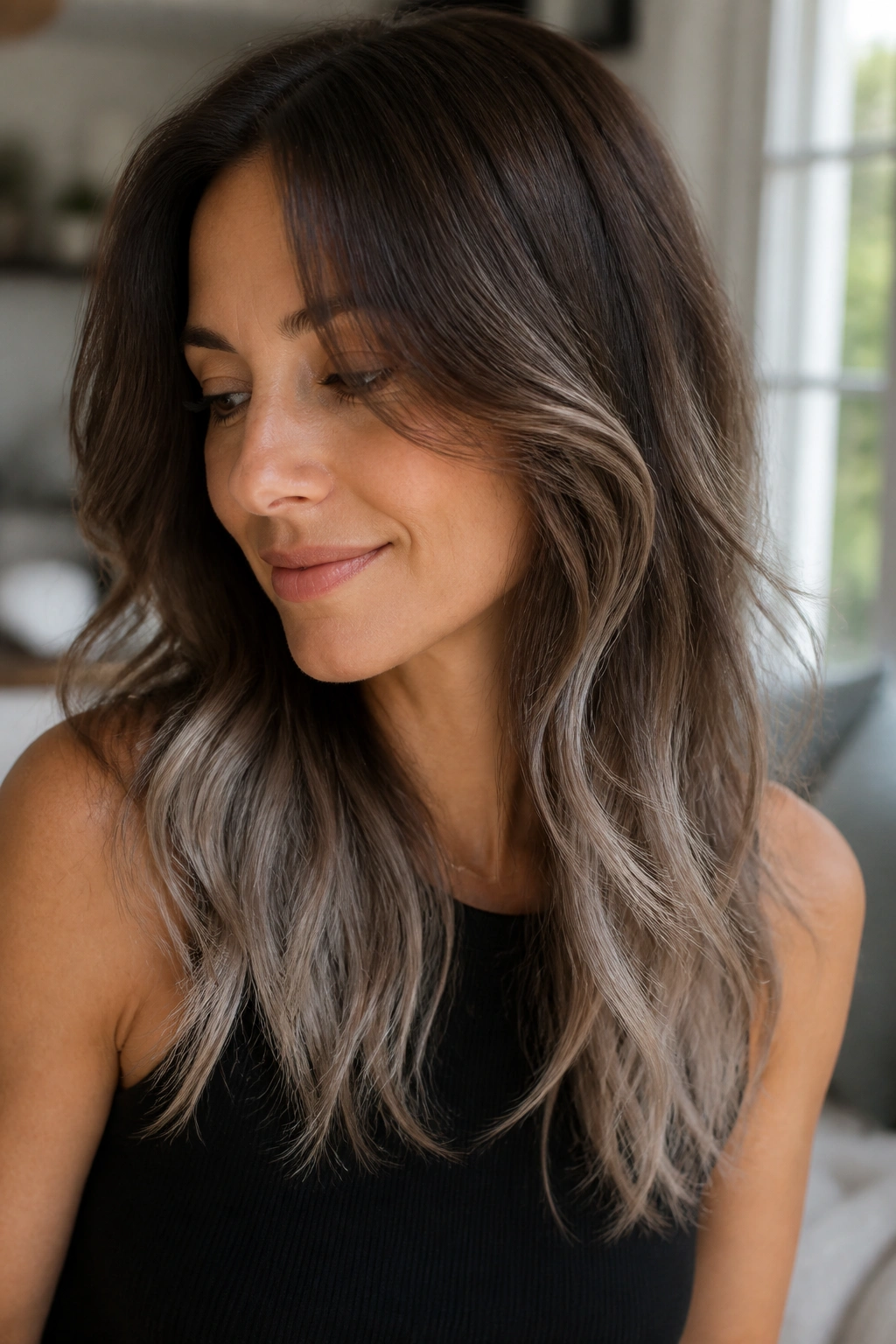
This one is for the person who wants gray to look intentional, not accidental. Feathered pepper ends keep the roots and mids brown, then push the cooler tones toward the bottom of the cut, where they can look smoky rather than streaky.
It works especially well on layered cuts. The feathering gives the ends movement, so the silver pieces sit lightly instead of dropping into a heavy block. That’s the part a lot of people miss. If the ends are blunt and thick, the cool tone can feel dense. If the ends are soft and broken up, the color looks airy.
There’s a practical upside too. Concentrating the lighter pieces lower down makes regrowth easier to live with. Your brown base keeps doing most of the talking, and the gray just peeks through when the hair moves. It’s a good call if you want a little edge without constant salon time.
6. Salt-and-Pepper Balayage Lob with Scattered Streaks
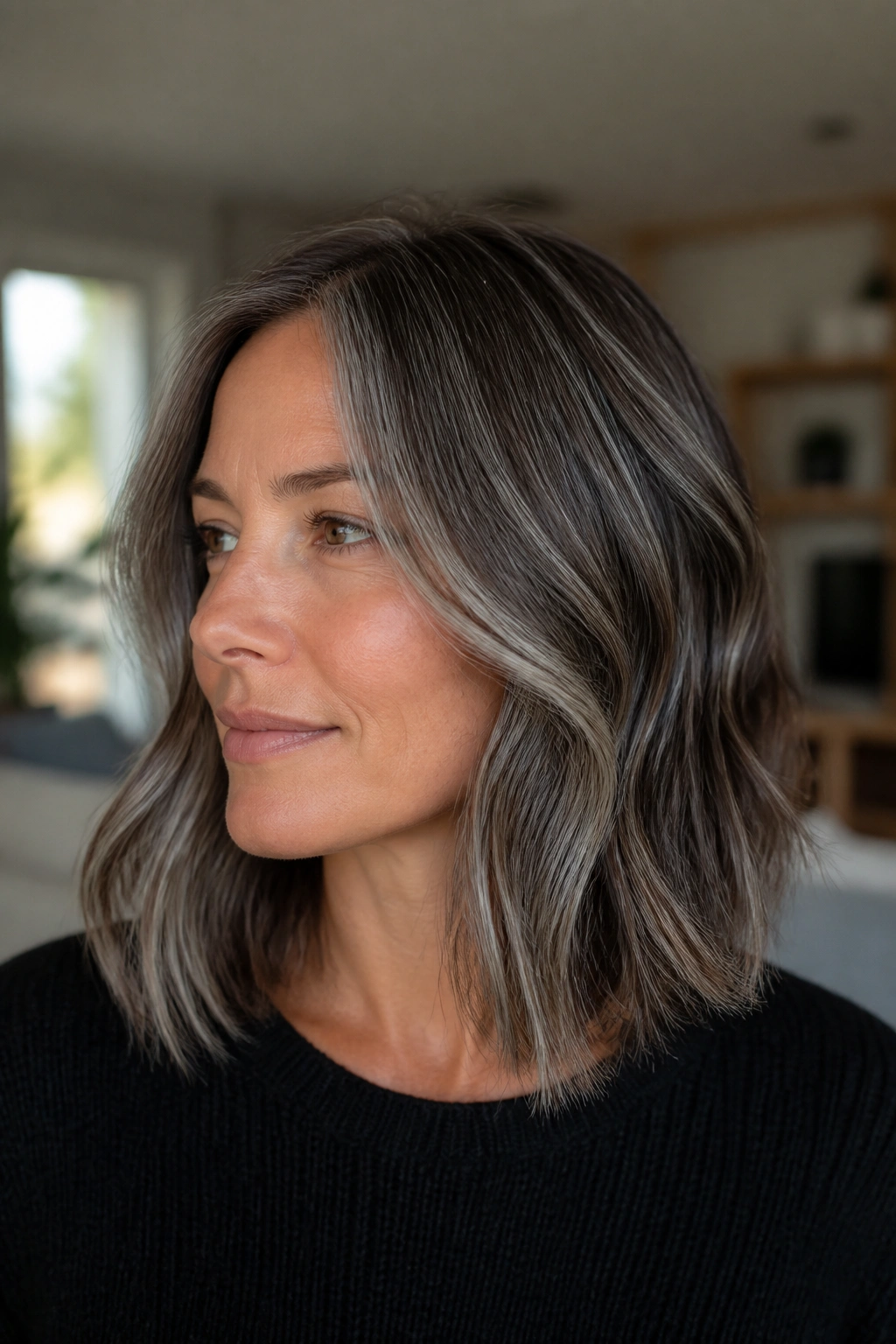
A lob gives you less room to hide bad placement, so the color has to earn its keep. Scattered streaks are the answer here. Instead of one heavy band of silver, the lightness is broken into irregular pieces through the mid-lengths and around the perimeter.
Unlike a single ombré line, this version keeps the shape airy. The lob still looks clean and modern, but the color adds texture to the cut rather than fighting it. On straight hair, the pieces create a neat rhythm. On waves, they soften into a smoky blur.
This is one of the easiest salt-and-pepper balayage looks for brown hair to wear day after day. It doesn’t need elaborate styling. A blow-dry with a slight underbend is enough. If you like a blunt cut but worry it will feel too severe, this scattered placement takes some of the weight out of the shape.
7. Temple-Gray Blending for First Grays
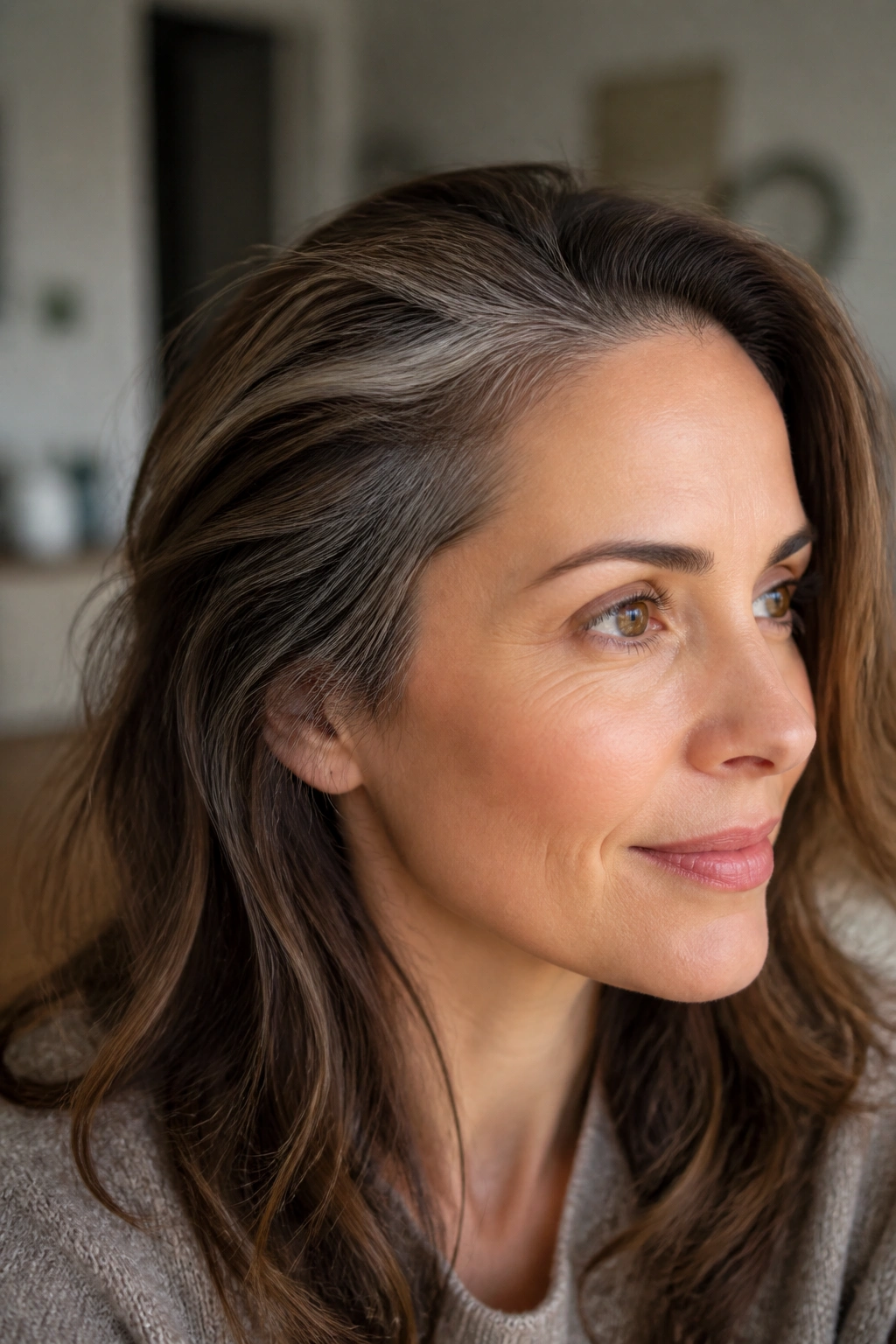
Temple grays are usually the first ones people notice, and frankly, they’re the easiest place to start. Blending them with fine balayage around the hairline makes the grow-out look planned instead of patchy.
Where the Lightest Pieces Should Sit
The safest placement is near the temples, along the part, and just behind the ears. Those are the areas where new silver strands show up fastest anyway, so the color mimics what the hair is already doing. You’re not fighting the gray. You’re lining up with it.
What Makes It Work
The brown base should stay dominant through the crown and back. If too much silver creeps upward, the style can stop feeling blended and start feeling streaked. A soft ash toner helps the natural grays and the painted pieces live in the same family, which keeps the whole look from turning harsh.
It’s also one of the most forgiving options for anyone who wants to stretch time between color appointments. The temple area grows out softly, and the rest of the hair keeps its depth. Clean, smart, low-drama. Hard to argue with that.
8. Bold Pepper Panels on Deep Brunette Hair
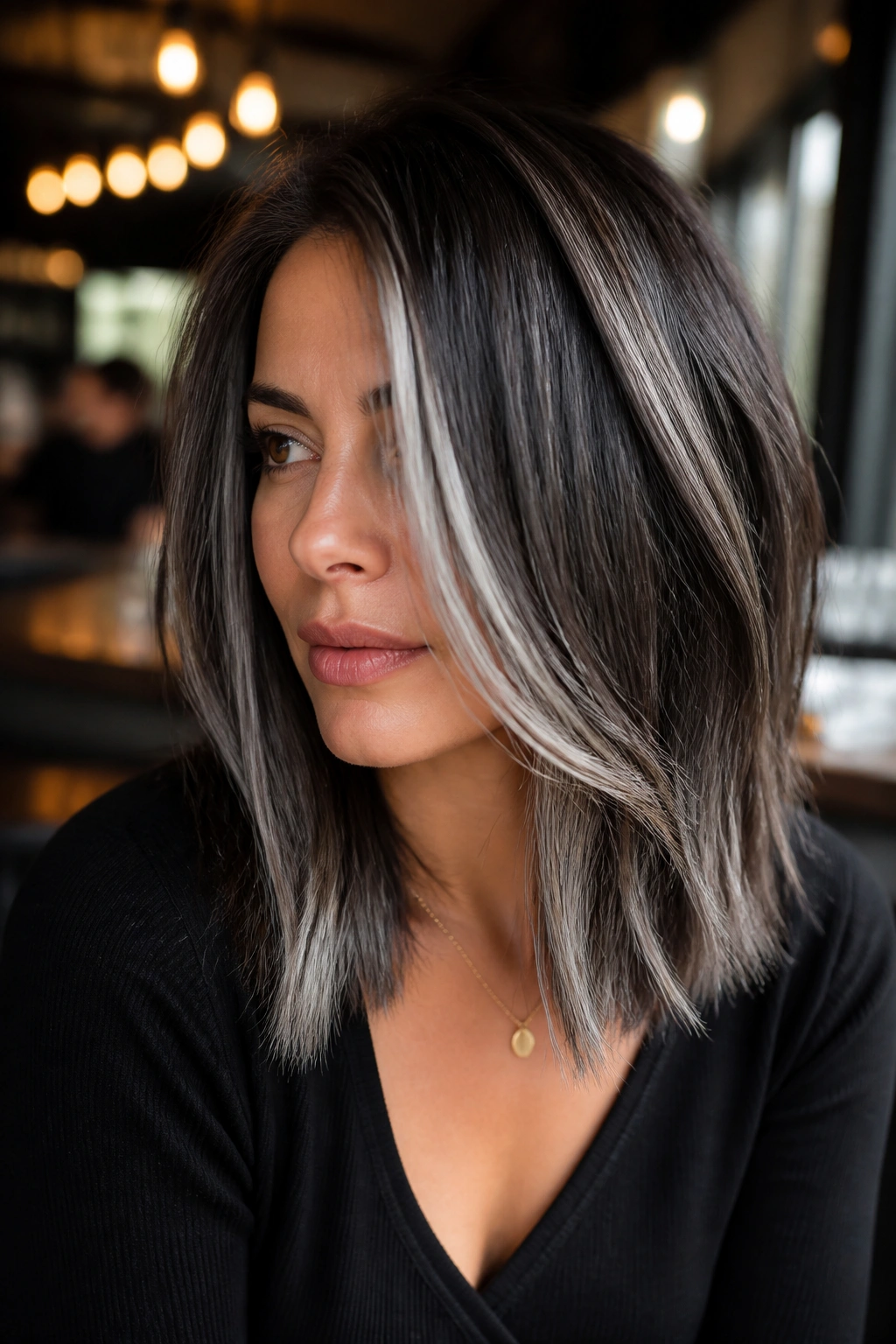
Chunky contrast is not subtle. That’s the point.
On deep brunette hair, bold pepper panels create a sharper, more graphic look than fine balayage ever could. The lighter sections are wider, the contrast is stronger, and the overall feel is closer to a fashion color story than a whisper blend. If you like visible streaks, this one has some attitude.
It works best on thick hair because the density can carry the contrast without looking thin or busy. A blunt bob, a strong shoulder-length cut, or a long layered shape with a lot of body all suit it. If the hair is fine, keep the panels fewer and more spaced out or the result can feel busy fast.
This is the look to choose when you want people to notice the color before they notice the cut. It’s bold, but not messy. There’s a difference.
9. Ash Beige Balayage on Warm Brown Bases
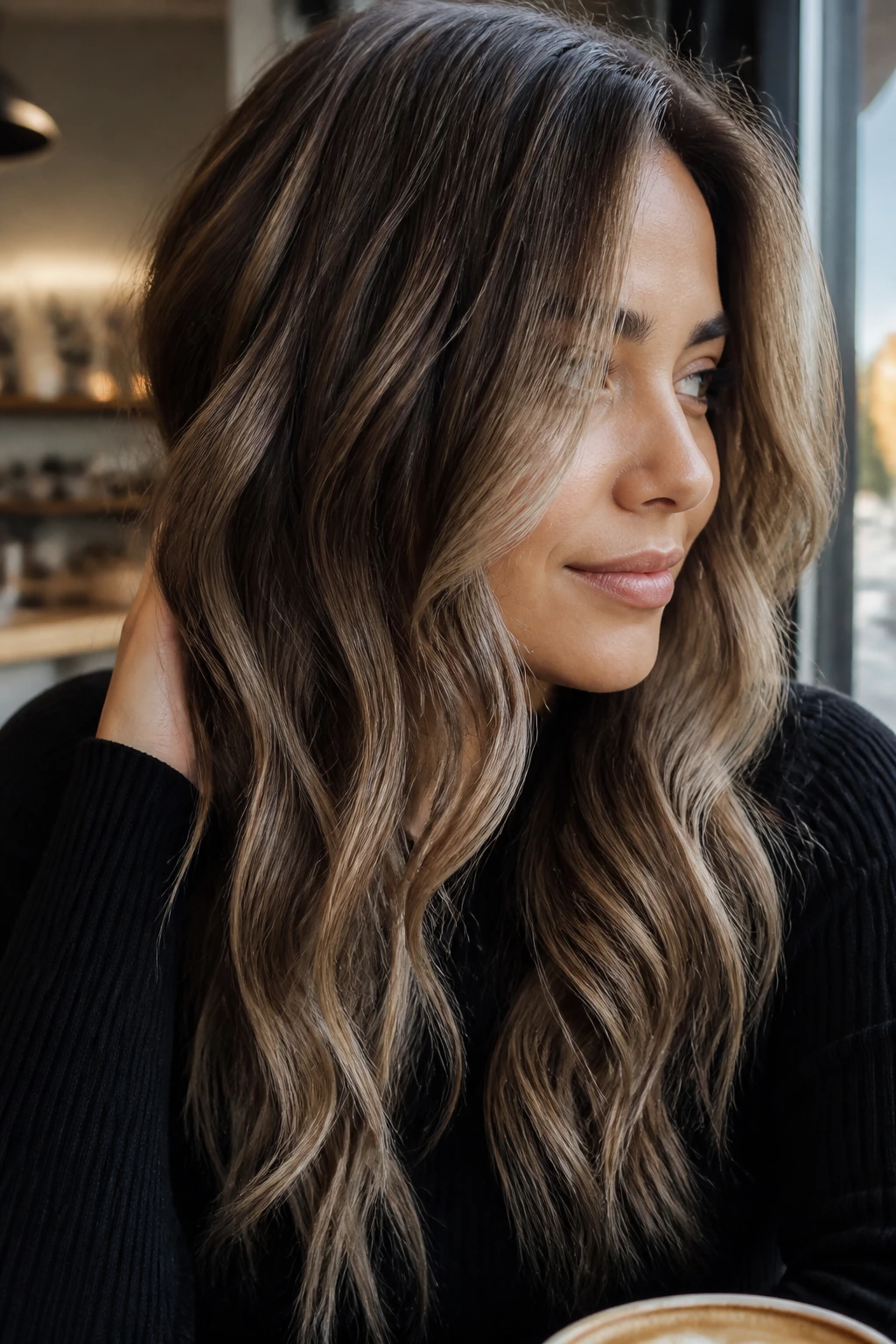
Warm brown hair can handle cool ash if the balance is right. Ash beige is the safer bridge between the two, because it cools down brass without draining the hair of life. On a golden chestnut or cinnamon brown base, that middle-ground tone looks much softer than pure silver.
How To Keep It From Going Muddy
The mistake people make is pushing the toner too far into gray on a warm base. That’s when the color starts to look flat or a little khaki. Beige keeps the finish readable. It still nods to the salt-and-pepper idea, but it doesn’t erase the warmth that makes brown hair look rich.
This look is good for people who like soft makeup and natural texture. It does not need a severe blowout to work. In fact, a loose bend makes the beige pieces look more expensive in the sense that they feel blended and quiet, not overworked. The brown base does the heavy lifting. The ash beige just cools the edges.
10. Shadow-Root Silver Fade
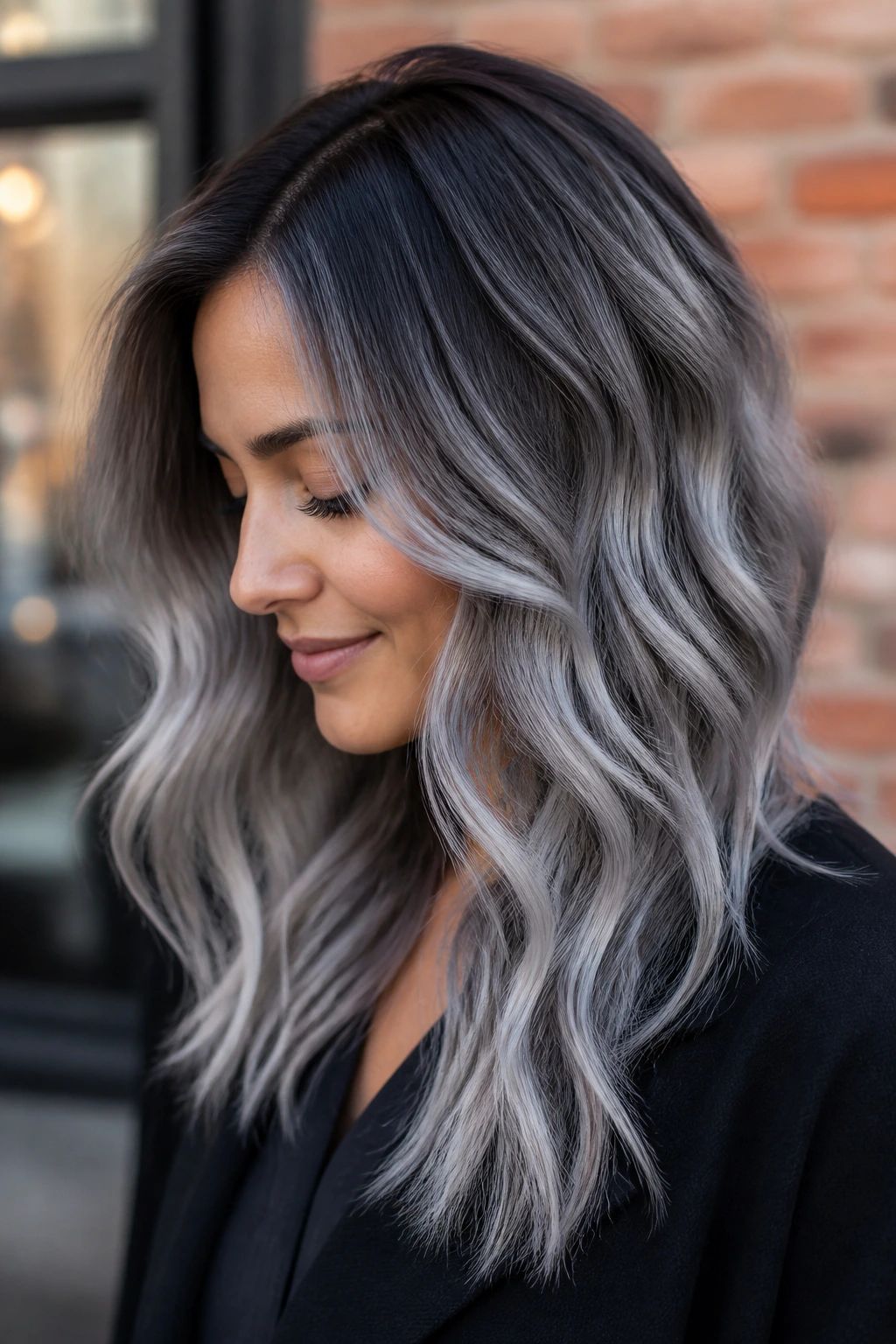
A shadow root does more than buy you time between appointments. It gives the silver somewhere to land.
With this look, the root stays deeper and closer to the natural brown, then the color fades into smoky silver through the mids and ends. That transition is what keeps the style from feeling disconnected. Without the shadow, the silver can look disconnected from the base. With it, the whole head reads as one color story.
This is a smart option if your natural roots are dark and you do not want to bleach them too high. The shadow root also helps if your hairline is a little uneven in tone. It softens the top, which makes the lighter pieces below look cleaner. On brown hair, that little bit of darkness at the root often makes the silver look brighter.
11. Woven Silver Strands for Curly Hair
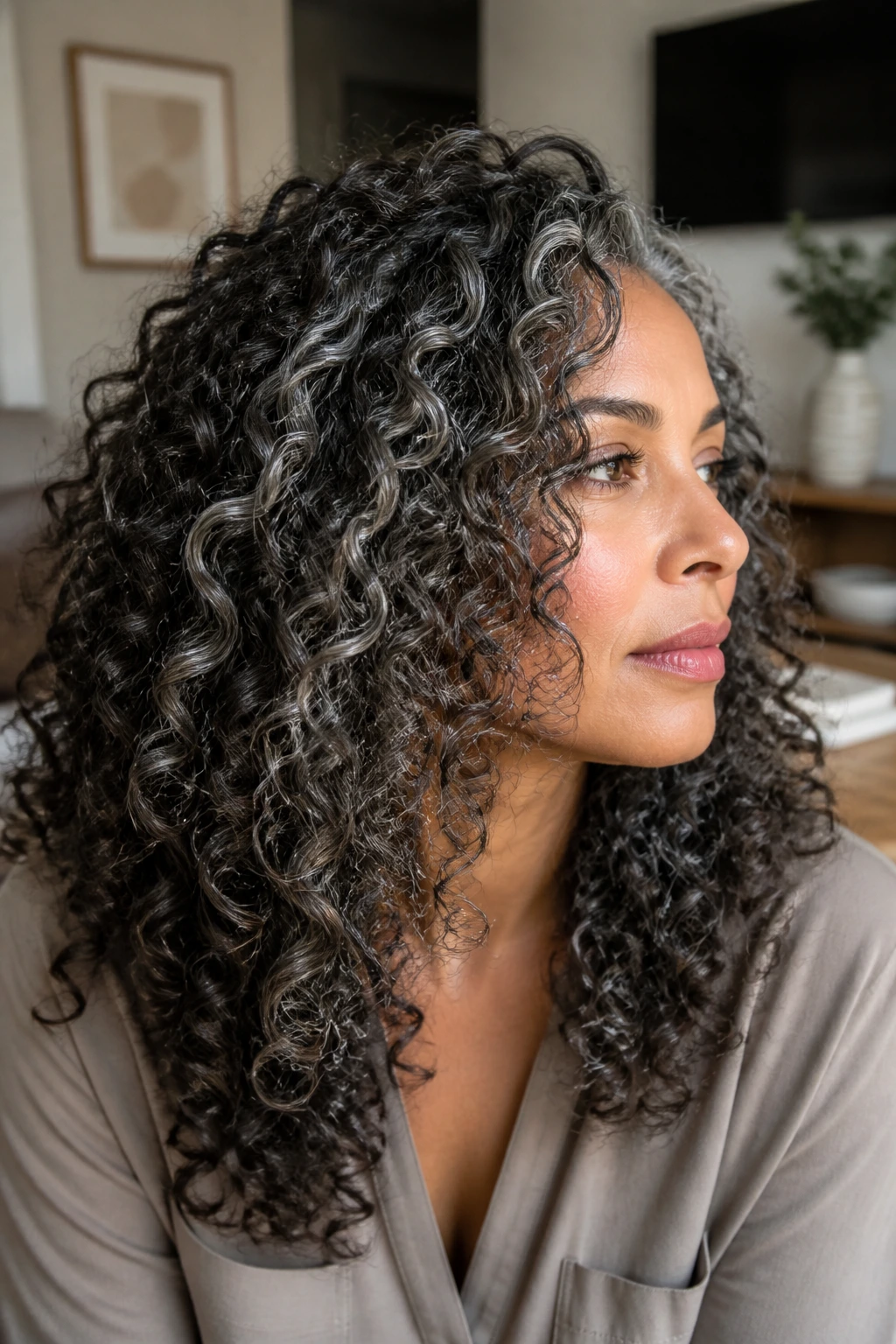
Curls make salt and pepper hair look richer, not busier. The key is weaving the silver strands through the curl pattern instead of dropping them on top of it like stripes.
Curly hair has its own roadmap. The stylist needs to follow the clumps, lifting pieces where the curls naturally separate and leaving other areas darker so the pattern can breathe. If every ringlet gets the same amount of lightness, the result can look frayed. A little restraint goes a long way.
The best versions of this look keep the silver a touch softer than you might expect. Curly hair already throws shadows and highlights on its own, so the tone only has to support the shape. A soft ash or pearl-gray glaze helps the curls catch light without turning them chalky. That little adjustment makes the whole style feel better behaved.
12. Mocha-to-Slate Ombré
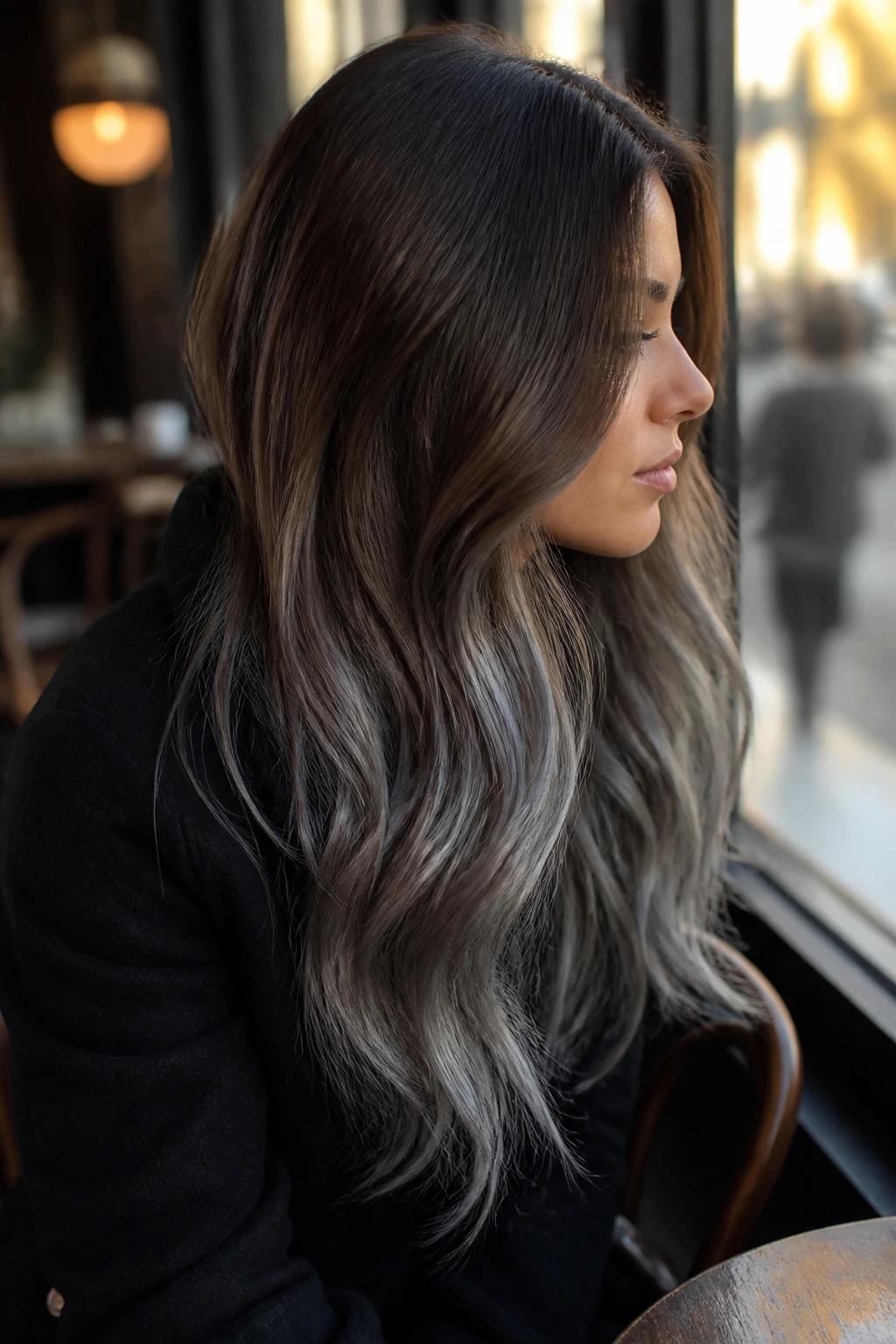
Mocha into slate is a prettier shift than it sounds. On brown hair, the color starts deep and warm at the top, then slides into a cooler slate-gray finish at the ends. The result is dramatic, but it still feels believable.
This works best on longer hair because the gradient needs room to breathe. If the hair is too short, the shift can happen too fast and look abrupt. On lengths past the shoulders, though, the fade gives you a long visual line that keeps the style sleek even when the hair is loose.
Best Cut Pairings
- Long layers that let the fade show from root to tip.
- A soft V-shape cut if you want the ends to feel lighter.
- Center parts if you want the ombré to read evenly.
- Side parts if you want the lighter slate to frame one side more strongly.
The biggest win here is softness at the transition point. If the fade is blurred well, the gray feels like a natural next step rather than a hard jump.
13. Piecey Pixie with Micro Lights
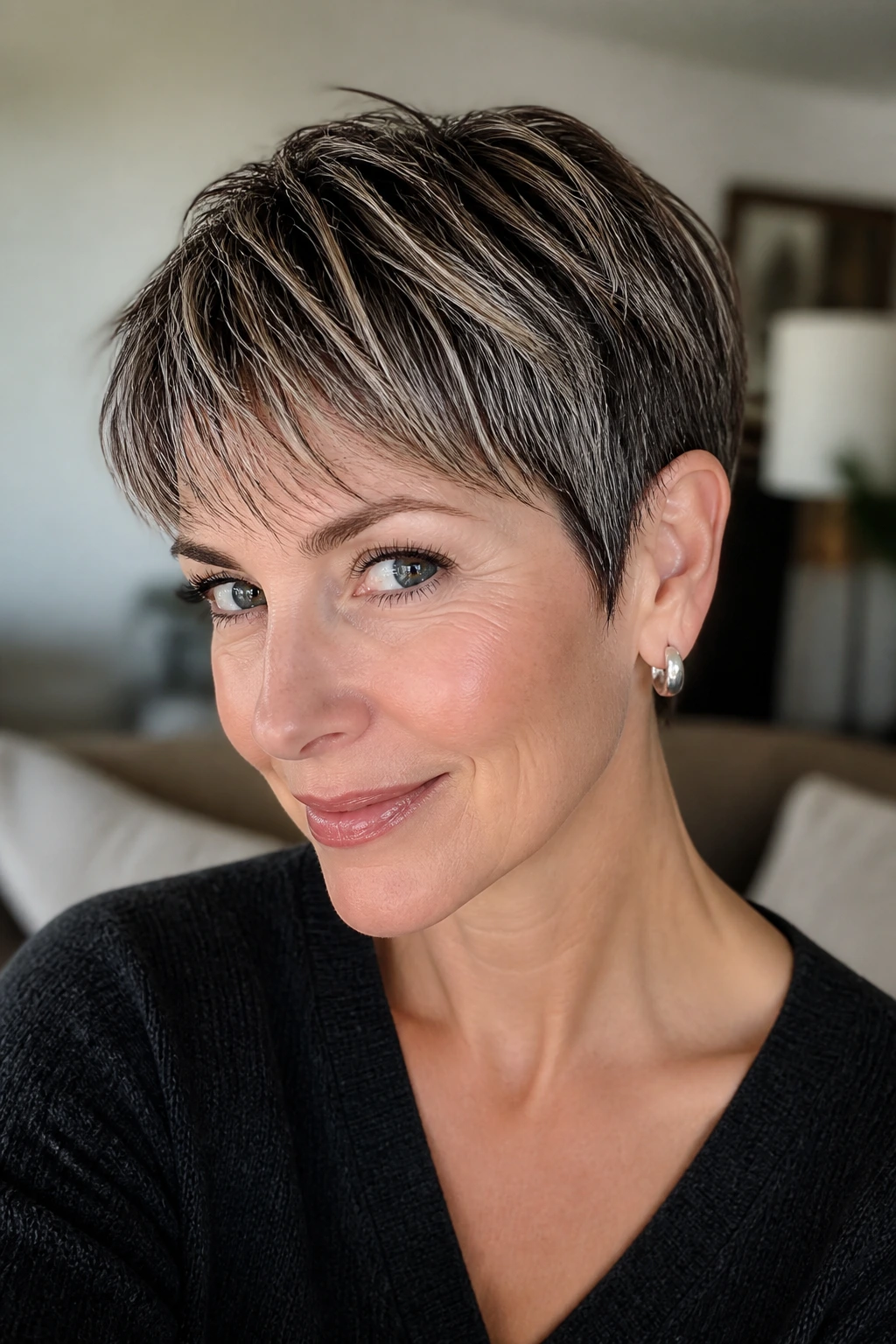
A pixie leaves no room for sloppy highlights.
That’s why micro lights work so well. Instead of big painted ribbons, the colorist uses tiny silver and ash pieces through the top and fringe, almost like a scatter of freckles. On brown hair, those small shifts give the short cut more texture without making it look busy.
Where the Lightness Belongs
The best spots are the crown, the fringe, and the little bit of hair that falls over the temples. That’s where short cuts show movement first. Keep the nape deeper and darker or the whole shape can start to look washed out.
Micro lights are especially good if you want your pixie to feel sharp rather than soft. They show off the cut line and keep the silhouette from disappearing. If you wear your hair with a side sweep, even better. The silver catches the angle and gives the shape a little extra snap.
14. Airy Halo Lights on Long Layers
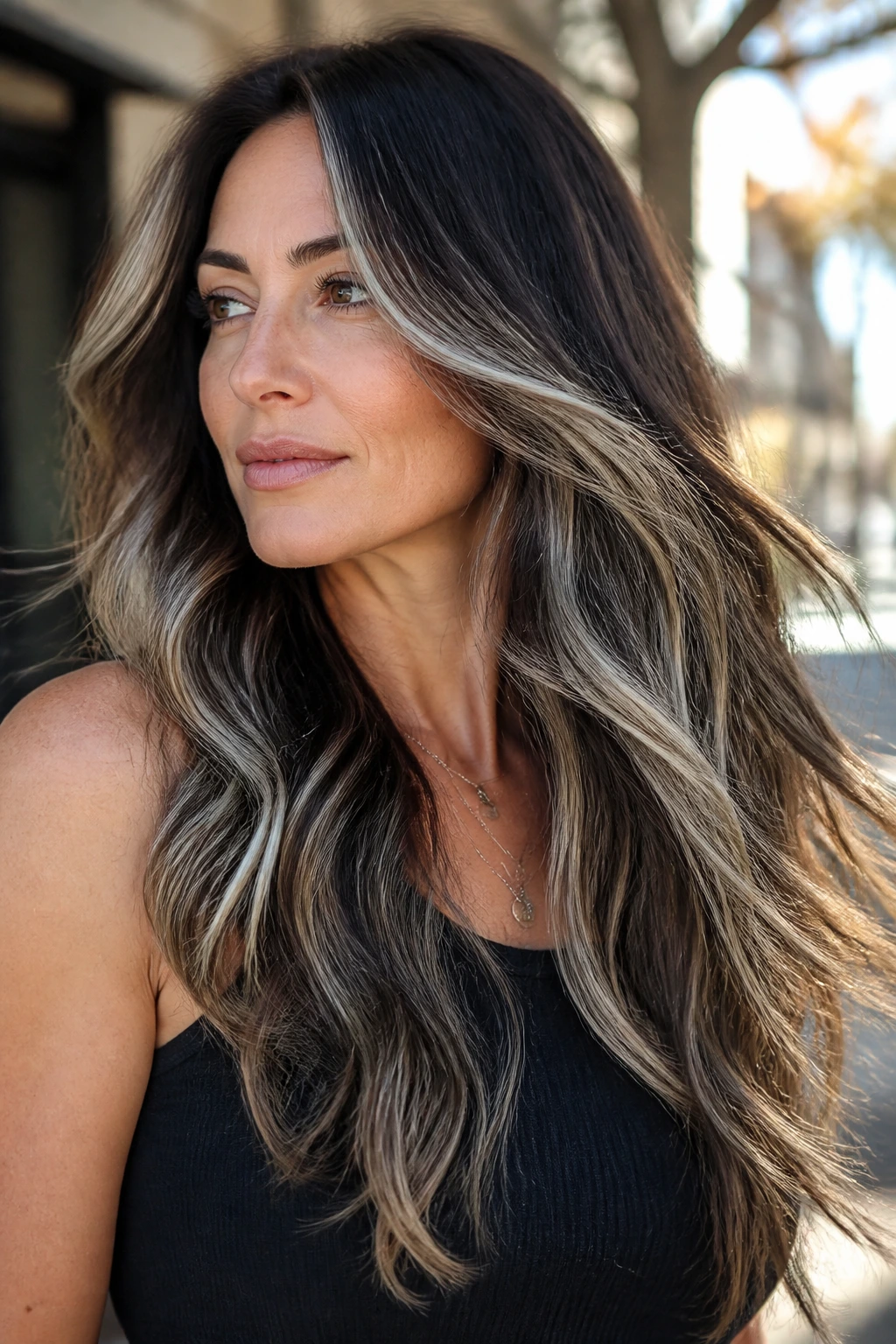
Long layers can carry a quieter version of salt and pepper balayage, and halo lights are the reason why. Instead of painting the whole head, the lighter strands sit mostly around the outer canopy and upper layers, where they catch the most movement.
This keeps the brunette base in control. The color feels lifted, but not overloaded. It’s a nice choice if you like hair that swings and opens up around the shoulders, because the lighter pieces show as the hair moves rather than sitting there in a fixed pattern. That can be a huge advantage on very long brown hair, which can otherwise look heavy.
A halo placement also makes the surface of the hair seem more dimensional. The inner layers stay deeper, almost like a frame, while the outer layer gets the silver and ash. That contrast gives the color depth without making it loud.
15. Butterfly Cut with Frosted Ribbons
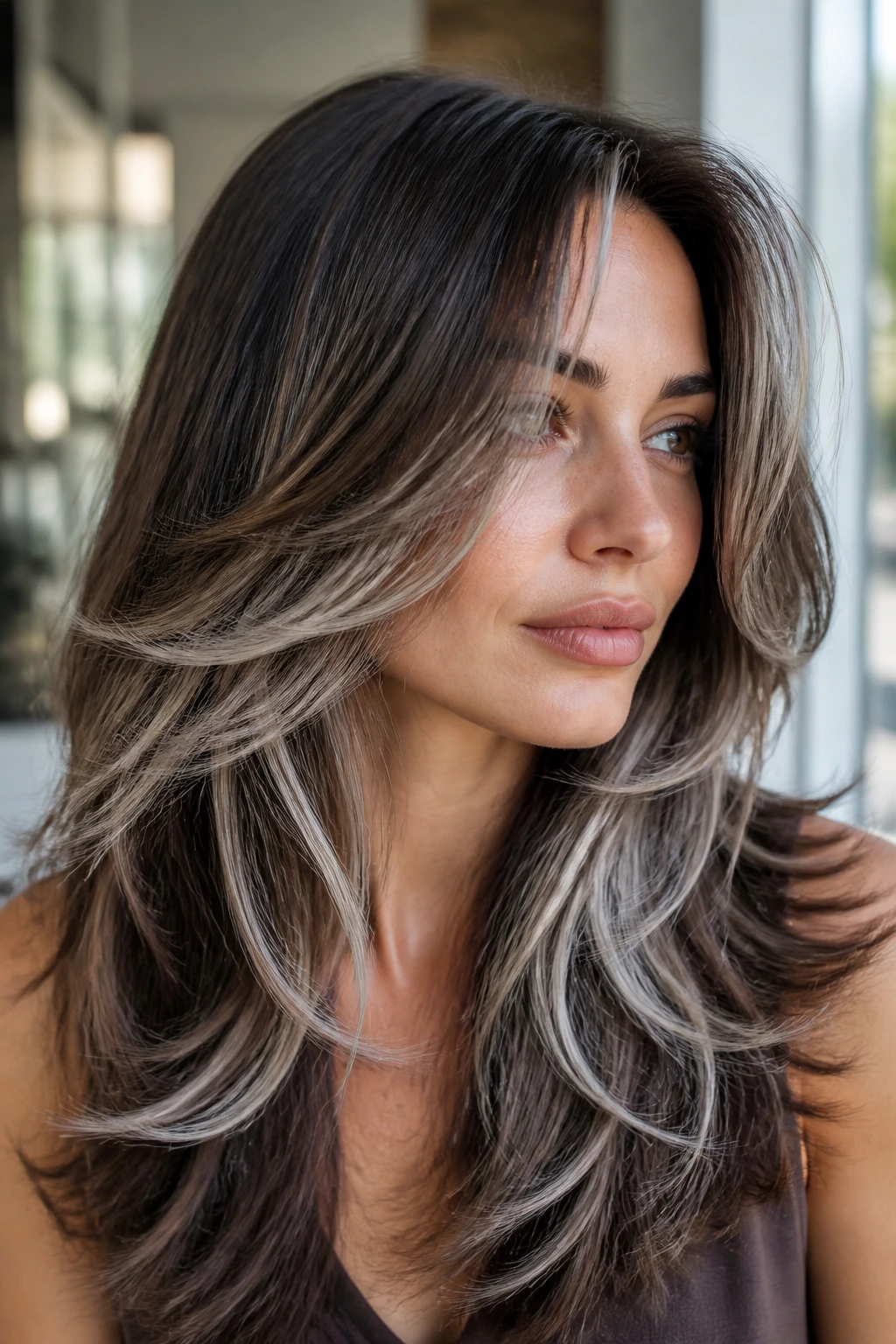
The butterfly cut earns its keep here. Those face-framing layers and long underlayers give frosted ribbons a place to live, which makes the whole color look more dynamic than it would on one-length hair.
Why the Ribbons Sit Well Here
The front pieces lift away from the face, so the silver strands get seen right away. The longer layers underneath hold the deeper brown, which keeps the style from feeling too light at the bottom. That split is what gives the haircut its movement.
The frosted ribbons should stay thin and directional. If they’re too broad, they can overpower the layered shape. Ask for pieces that echo the flow of the cut rather than crossing it. That little detail matters more than people think.
This is a good match for anyone who likes a blowout with bounce. The layers flip, the light catches, and the brown base anchors everything. It’s one of those looks that feels more expensive in motion than it does in a static photo.
16. Thick-Hair Brush Strokes with High Contrast
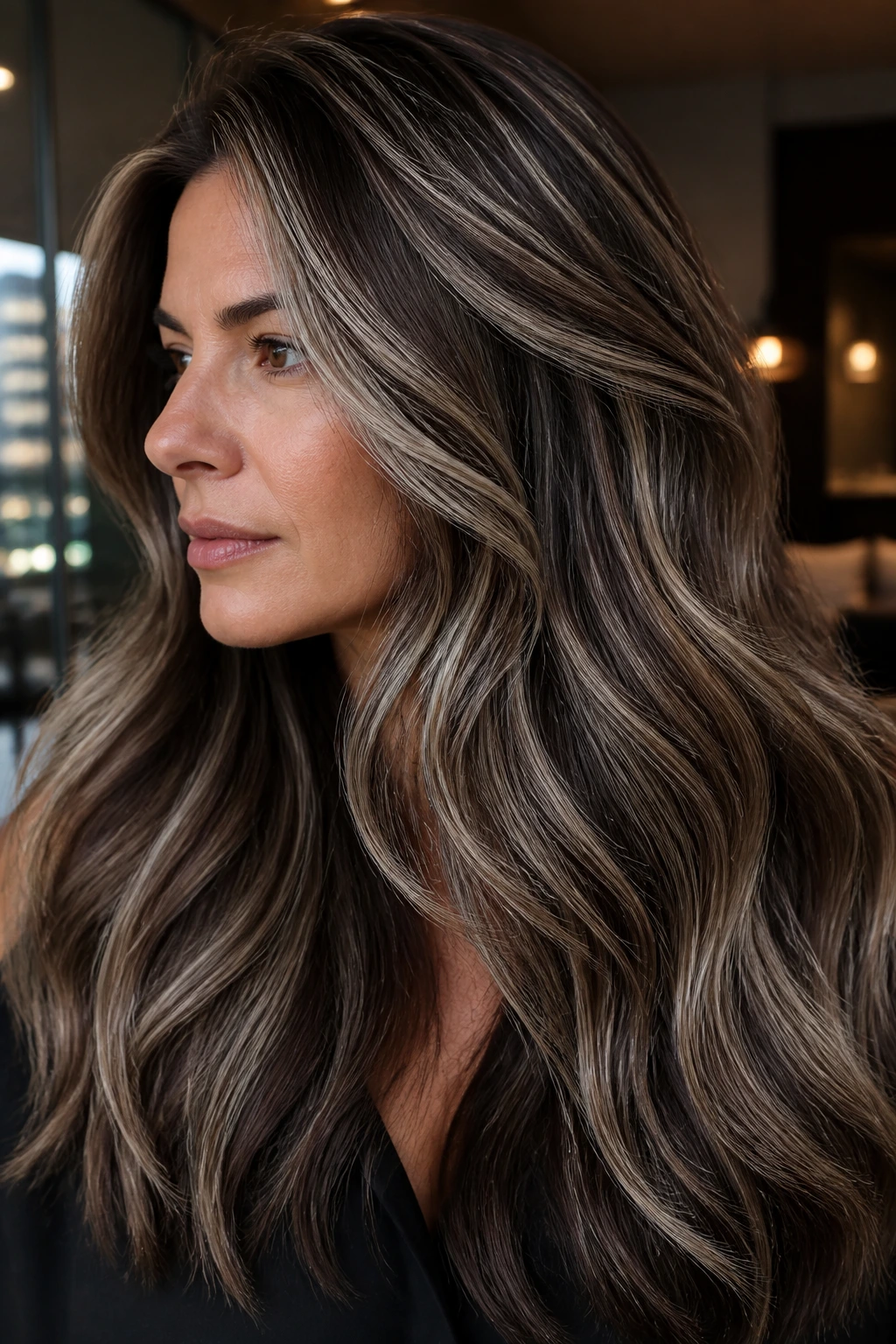
Thick hair can handle bigger brush strokes. In fact, sometimes it needs them.
When the hair is dense, tiny highlights can disappear inside the bulk. Broader strokes of silver, ash, and charcoal give the color enough room to show up. The contrast needs to be stronger too, because thick brown hair naturally eats some of the lightness. If you try to play it too safe, the balayage gets swallowed.
This look is best when the stylist places color on the outside layers and around the bends of the haircut. That way the light hits where the hair has body. It’s a solid choice for people with strong waves, coarse texture, or a lot of hair that tends to expand when dry.
The final result has a little more edge. Not in a harsh way. Just enough to keep the style from feeling heavy.
17. Curly Salt-and-Pepper Balayage
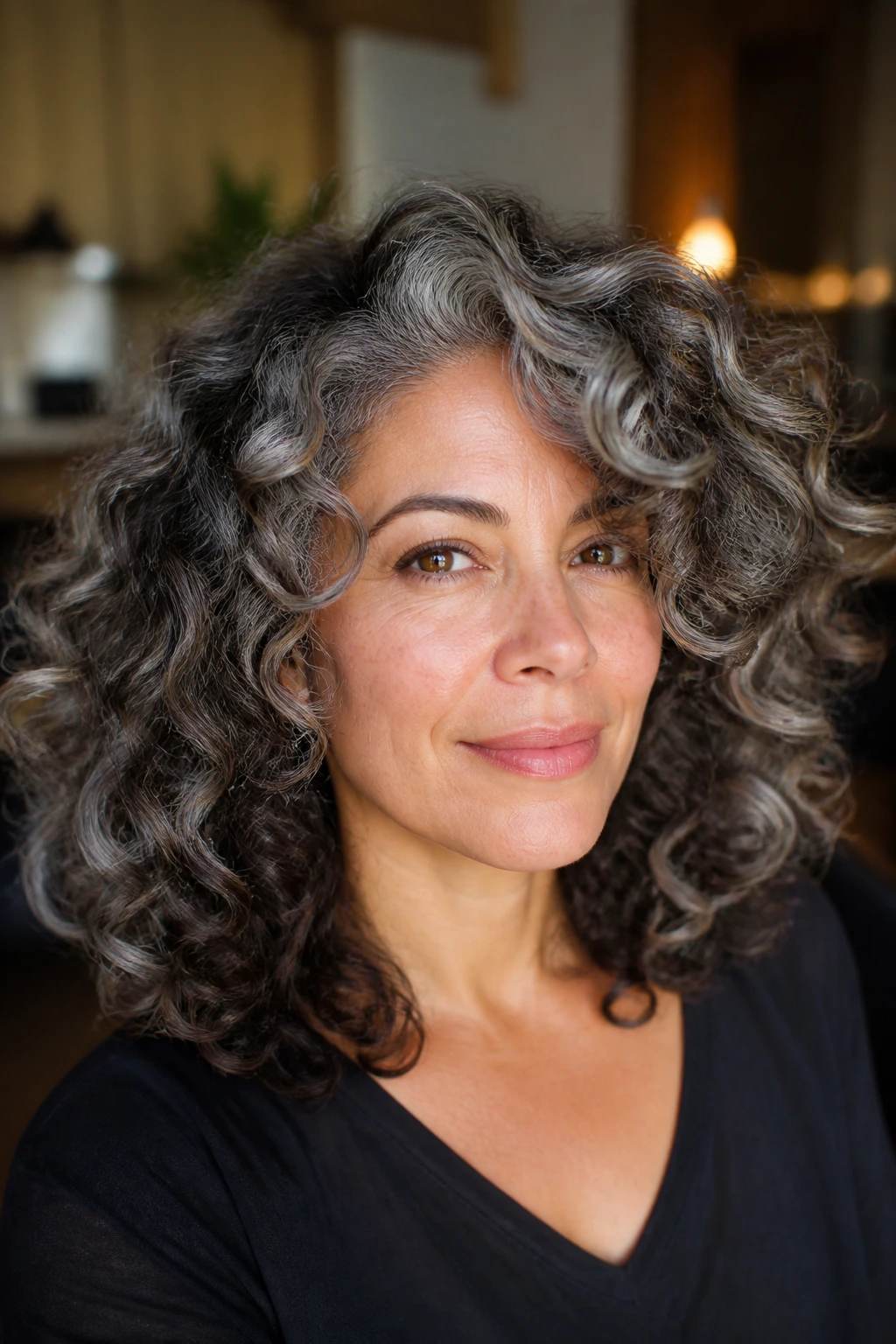
Curly hair needs placement that follows the coil, not the part.
That is the difference between a nice result and one that looks stripy. With curly salt-and-pepper balayage, the silver pieces should sit where the curl naturally curves outward, while the deeper brown stays tucked into the inner bends. When the curls dry, the light and dark pieces separate in a way that feels organic.
What To Avoid
- Don’t over-lighten every curl in the same pattern.
- Don’t push the toner so cool that the curls go flat.
- Don’t ignore shrinkage; curls tighten and the color can disappear if it’s placed too low.
- Don’t skip the face frame entirely, or the whole style can feel heavy near the front.
The best curly versions of this look are touchable and dimensional. They never feel pasted on. And because curls already make gray and brown blend in interesting ways, the color can stay softer than you might expect.
18. Sleek Straight Hair with Fine Silver Threads
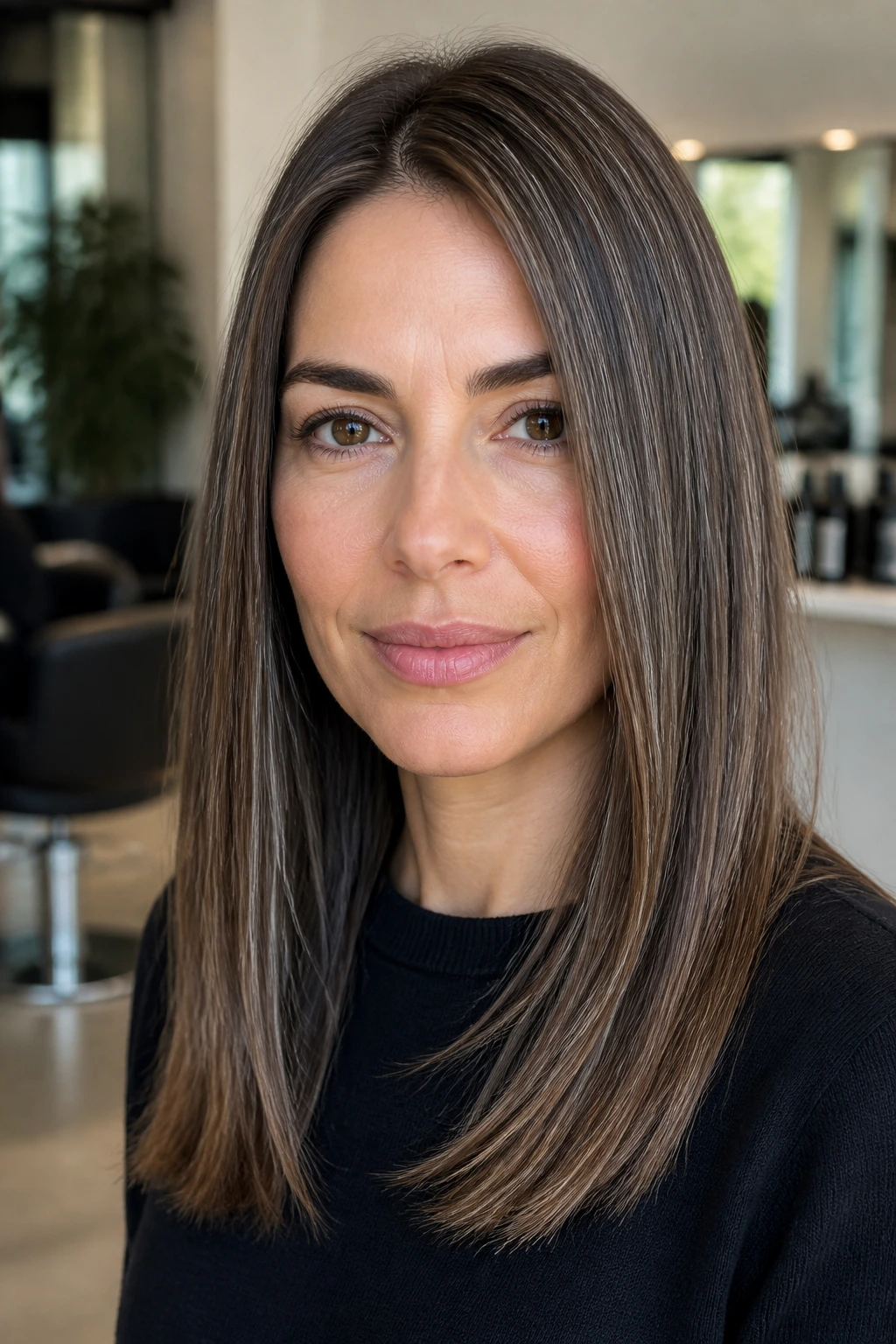
Straight hair shows every line.
That’s why fine silver threads are the right move here. They keep the color delicate and prevent the result from turning into obvious stripes. On brown hair, those threads can run through the mid-lengths and sides almost like pinstripes in a good suit—subtle, neat, and slightly sharper than a wave-based look.
This style works best when the blowout is smooth and the ends are clean. If the hair is frizzy or uneven, the silver can look scattered in the wrong way. But with a flat iron finish or a sleek round-brush blowout, the threads read cleanly. They also show off shine, which matters more on straight hair than people admit.
I like this look on blunt cuts. The geometry gives the silver something to sit against. Without that structure, the color can feel too loose.
19. Caramel Base with Frosted Ends
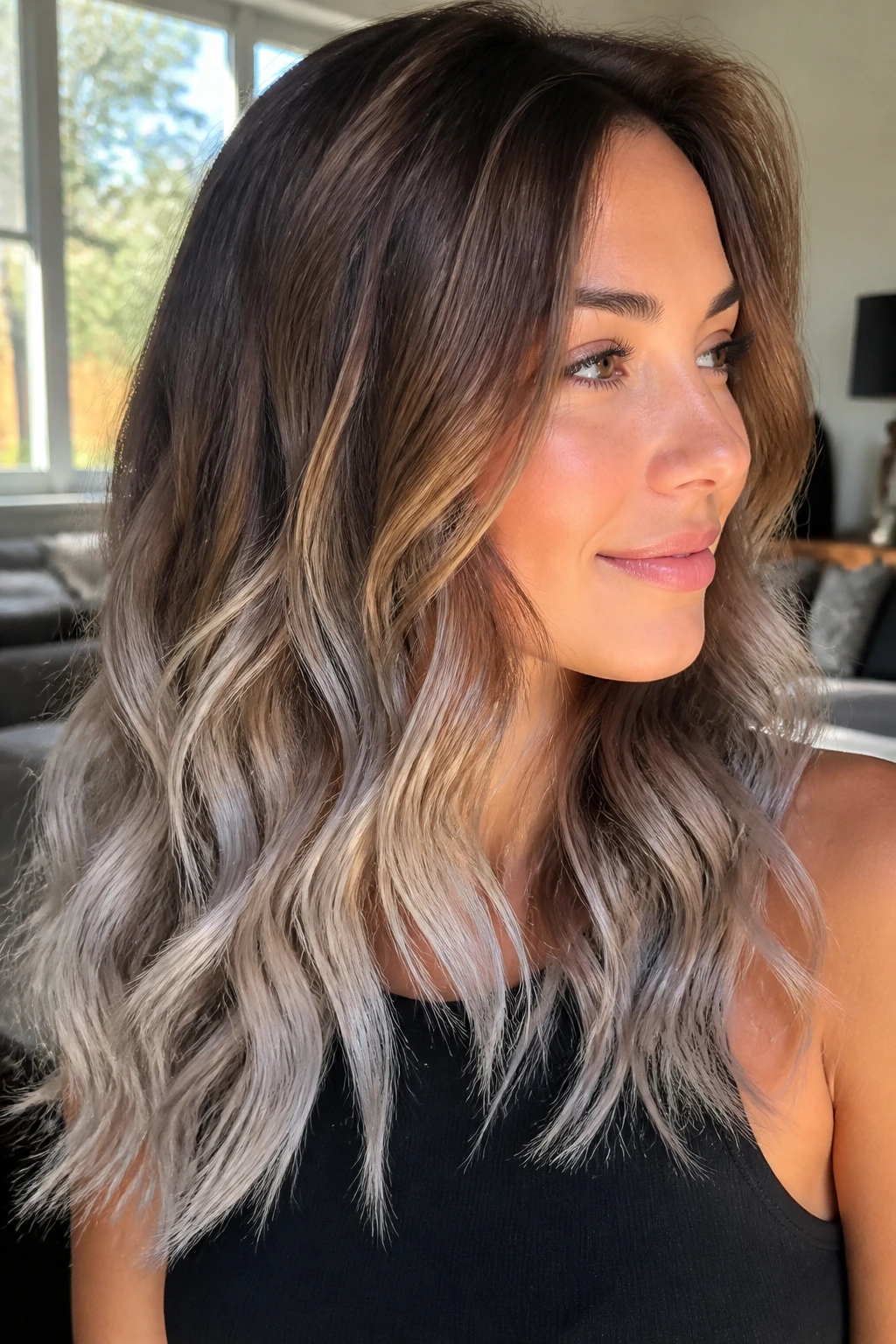
Caramel and frost can share the same head if the pieces are thin enough.
That’s what makes this look work on brown hair. The base stays warm and soft through the roots and mids, then the ends shift cooler with a frosted silver finish. The caramel keeps the color from feeling chilly, while the frost adds that salt-and-pepper edge at the bottom.
Why The Warmth Helps
Warm bases are easier to wear when the silver only shows up lower down. The eye sees the brown first, which keeps the style approachable. Then the icy ends kick in and give it some drama. That order matters.
This look is especially flattering on wavy hair because the waves keep the frosted ends from appearing too heavy. A smooth finish can still work, but the movement makes the contrast feel more natural. If you like your ends a little lighter than the rest of the head and you want a soft grow-out, this is a strong place to start.
20. Dimensional Brunette Bob with Ash Veils
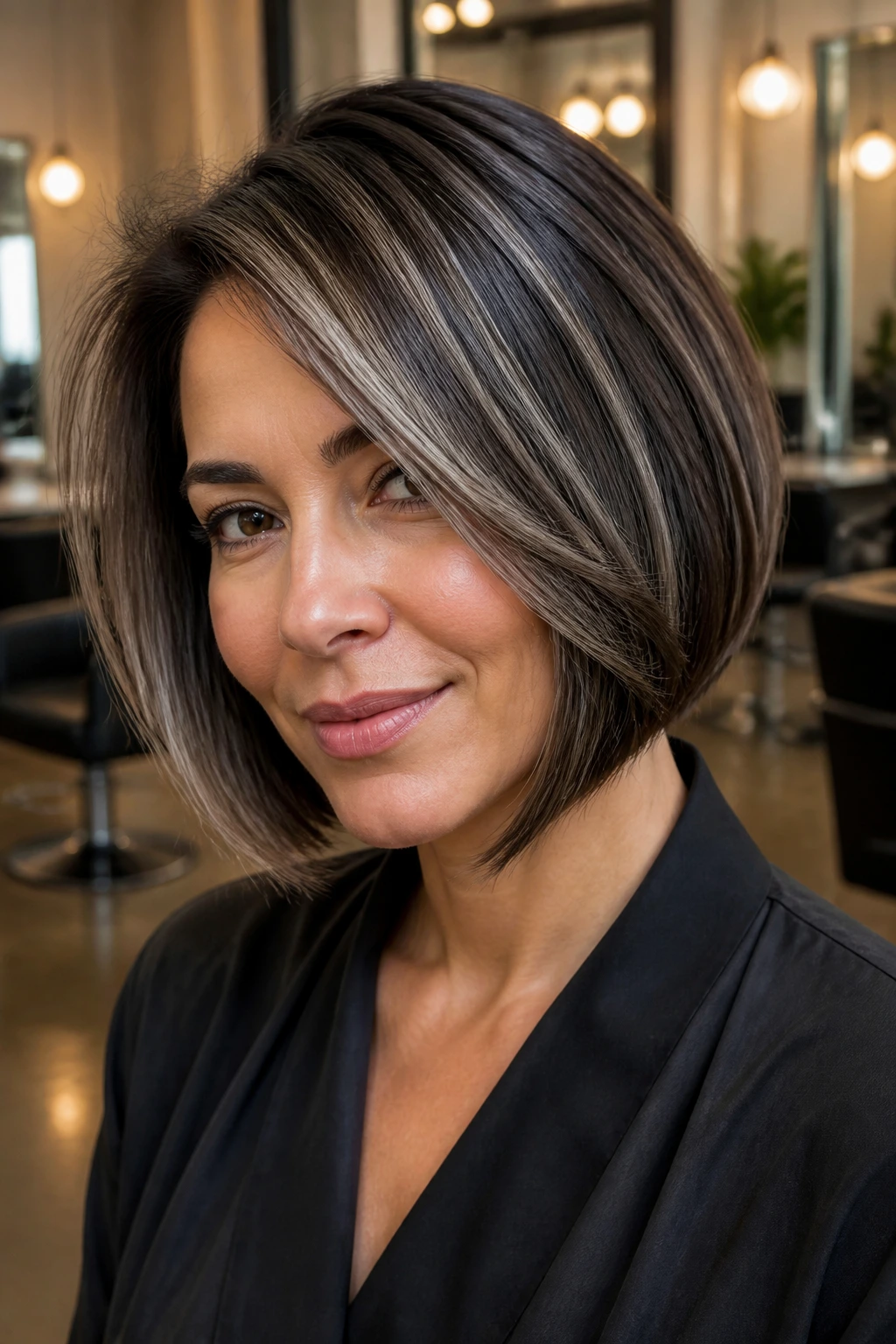
A bob sharpens silver in a way longer hair can’t.
Because the cut is compact, the color has to be more precise. Ash veils are perfect for that. They sit lightly over the brunette base, giving the bob a smoky surface without drowning the shape in too much lightness. On brown hair, that means the cut still looks like a bob, not a block of color.
The best placement usually sits around the outer edges and through the surface layers. Keep the interior darker. That depth gives the bob body and prevents it from looking thin. If the hair is fine, this is especially useful; the ash veils add texture without making the cut feel stringy.
A blunt or slightly angled bob works best. The clean line lets the silver pieces read as intentional brushwork instead of random light spots.
21. Dark Chocolate Hair with Slate Swirls
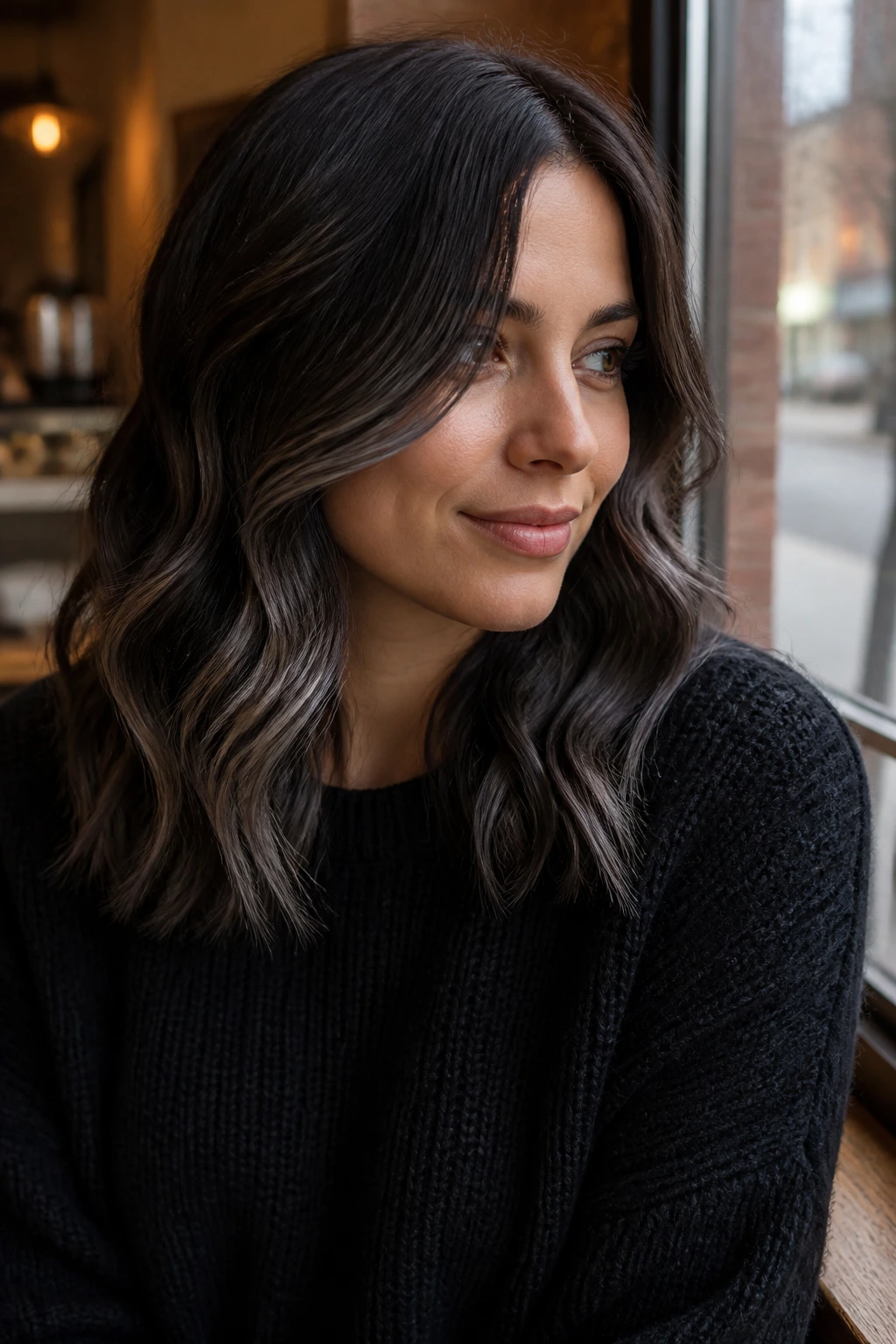
Why does slate look so good on dark chocolate hair? Because the depth of the brown gives the gray somewhere to sink in. Instead of floating on top, the cooler pieces twist through the darker base like smoke.
The Lift Has To Be Gentle
Orange is the enemy here. If dark brown hair is lifted too fast, the underlying warmth can turn the slate tone muddy. A careful lift, followed by a cool toner, keeps the gray pieces crisp. The stylist should aim for smoky, not pale.
Where It Looks Best
- Through long waves, where the slate can twist with the bend.
- Around the face, if you want the brightness to lift the features.
- In thicker sections near the ends, where the contrast can stay visible.
- On healthy hair, because brittle ends can make slate look patchy.
This is one of the moodier options in the list. It feels a little cooler, a little darker, and a little more dramatic than the softer brown-and-silver blends.
22. Face-Framing Gray and Beige Around the Front
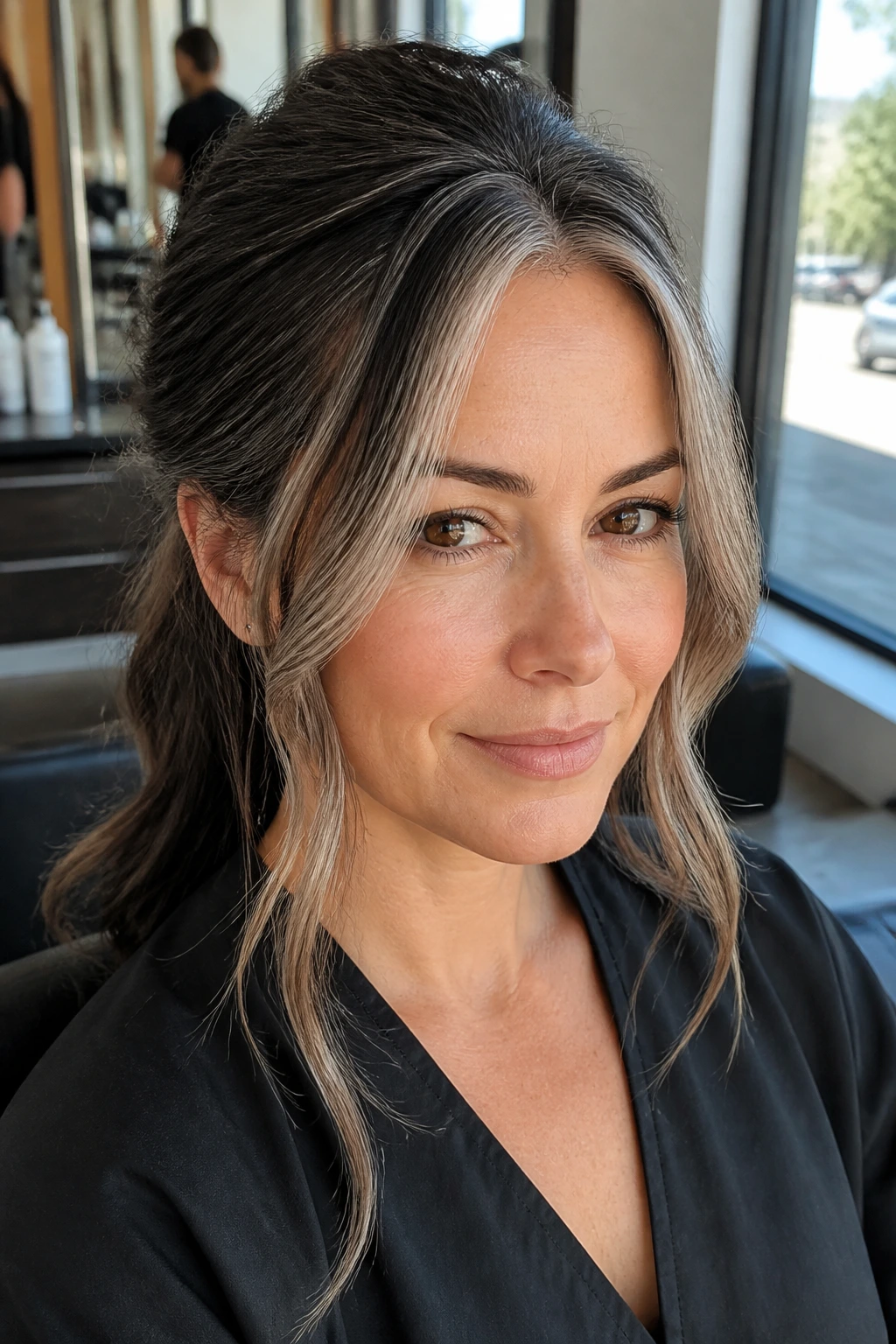
The front of the hairline is where most people start paying attention.
That makes face-framing gray and beige a smart move on brown hair. Instead of spreading the lightness all over, the color stays concentrated around the front pieces, where it brightens the eyes and softens the jawline. Beige keeps the tone wearable. Gray adds the salt-and-pepper note.
This is a nice choice if you want the look of balayage without a huge color shift through the back. The rest of the hair can stay deeper and calmer, which also helps the style grow out without obvious lines. If you wear your hair tucked behind the ears a lot, the front pieces still do the job.
It’s a clean option for anyone who wants a little lift without a full head of contrast. Sometimes that’s enough.
23. Hidden Underlayer Silver Balayage
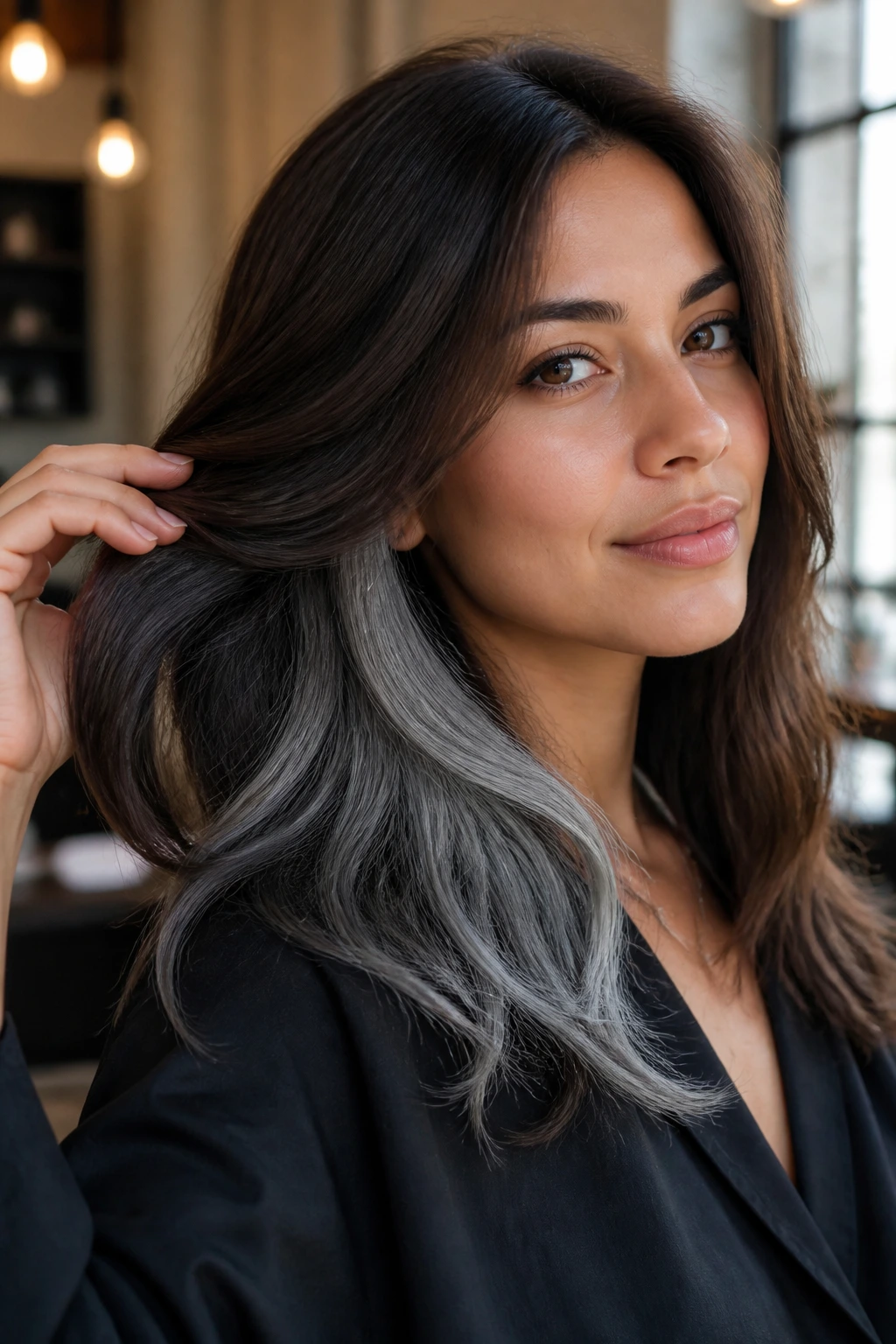
Hidden underlayer silver balayage is for the person who likes a surprise.
The top layer stays mostly brown, which keeps the style conservative from the front. The silver and ash live underneath, where they show when the hair moves, lifts, or gets put up. That makes it one of the most interesting salt and pepper balayage looks for brown hair, because it changes depending on the angle.
It’s also easy to wear in places where a loud color would feel out of place. From a distance, the hair looks rich and brunette. Up close, there’s a flash of cool light underneath. That contrast is the whole point. It feels a little private, which I like.
This placement works especially well on layered cuts. The movement reveals the underlayer naturally, so you don’t have to fight for the effect.
24. Low-Maintenance Salt-and-Pepper Grow-Out Blend
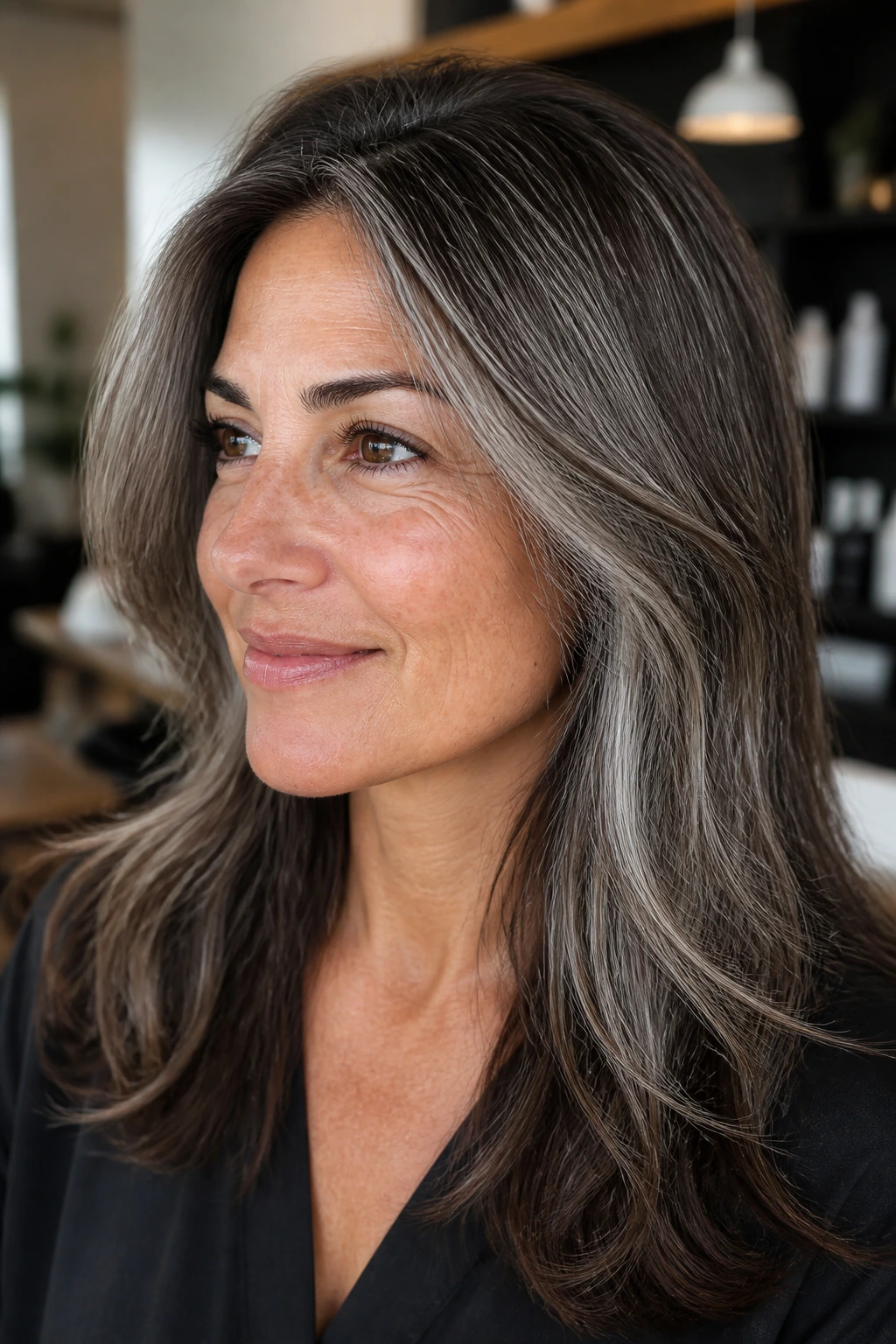
Low-maintenance color is not code for boring color.
A good grow-out blend keeps the root area soft, uses gray blending near the part, and avoids hard stops between brown and silver. On brown hair, that means you can let the natural base stay visible while the lighter pieces fade gently through the mids and ends. The result looks lived-in from day one.
What Makes It Easy to Wear
- The root shadow is kept soft, usually one or two levels deeper than the mids.
- The lightest pieces sit away from the scalp, so regrowth doesn’t scream.
- The toner stays neutral or cool, which helps the blend age well.
- Layers help because they break up the transition as the hair grows.
This is the look I’d point to for anyone tired of color that demands constant fixing. You still get the salt-and-pepper feel. You just don’t have to babysit it.
25. Soft Salt-and-Pepper Glam Waves
Loose waves soften salt and pepper better than pin-straight styling ever will.
The bend gives the silver pieces a chance to move, which is what makes this look feel polished instead of severe. On brown hair, the waves also keep the darker base visible between the lighter strands, so the whole style stays dimensional. It’s a good finishing choice for almost every look in this list.
Why the Bend Matters
A wave breaks up the contrast. That means the silver doesn’t sit in one obvious place, and the brown doesn’t disappear. The eye keeps moving, which is exactly what you want in a balayage look with multiple tones.
How To Style It
- Use a 1¼-inch iron or large rollers for a soft bend.
- Leave the ends a little straighter so the hair doesn’t look overdone.
- Mist lightly with shine spray, then brush it through.
- Avoid heavy texture spray; it can dull the silver pieces.
This finish works for dinners, events, and everyday wear. It’s the most forgiving way to show off the color without making it look stiff.
Final Thoughts
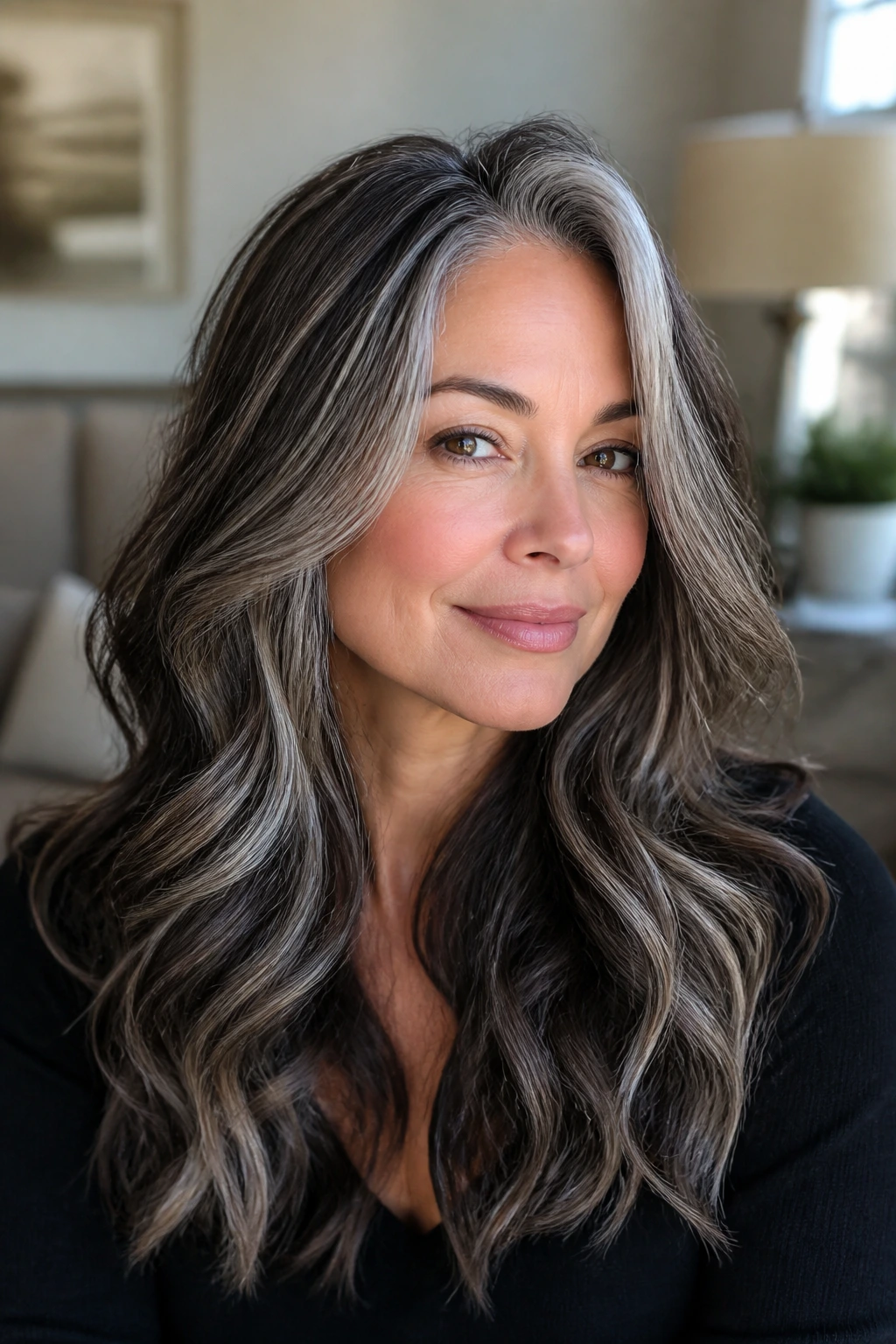
The strongest salt and pepper balayage looks for brown hair all do the same thing: they keep the brunette base alive. That base gives the silver somewhere to land, and it keeps the color from turning flat or fake.
If you want soft, go toward mushroom, pearl, or beige. If you want edge, lean into money pieces, chunkier panels, or slate swirls. The haircut matters just as much as the tone, though. A good cut gives the color movement, and without that movement, even the nicest gray placement can fall a little flat.
