



Brown hair can take red balayage in two very different directions. Done well, it looks warm, glossy, and dimensional; done lazily, it can read flat and stripey, like the color was painted on top instead of worked into the hair. The difference usually comes down to placement and tone.
The placement matters.
A good colorist doesn’t treat red like one single shade. Chestnut brown can wear copper and auburn without much effort. Dark espresso hair often looks stronger with burgundy, merlot, or cherry cola tones, because those shades hold their shape against the depth of the base. Medium brown sits in the sweet spot for the widest range, especially if you want the red to show in waves without taking over the whole head.
The most convincing red balayage for brown hair usually lives where the eye naturally lands: around the face, through the mid-lengths, and at the ends. That way the brown still does the heavy lifting, while the red shows up in ribbons, melts, and soft slices. It feels more expensive to the eye, though that’s not really the right word for it. It just looks considered.
And that’s the real trick. Not louder. Better placed.
1. Cherry Cola Melt
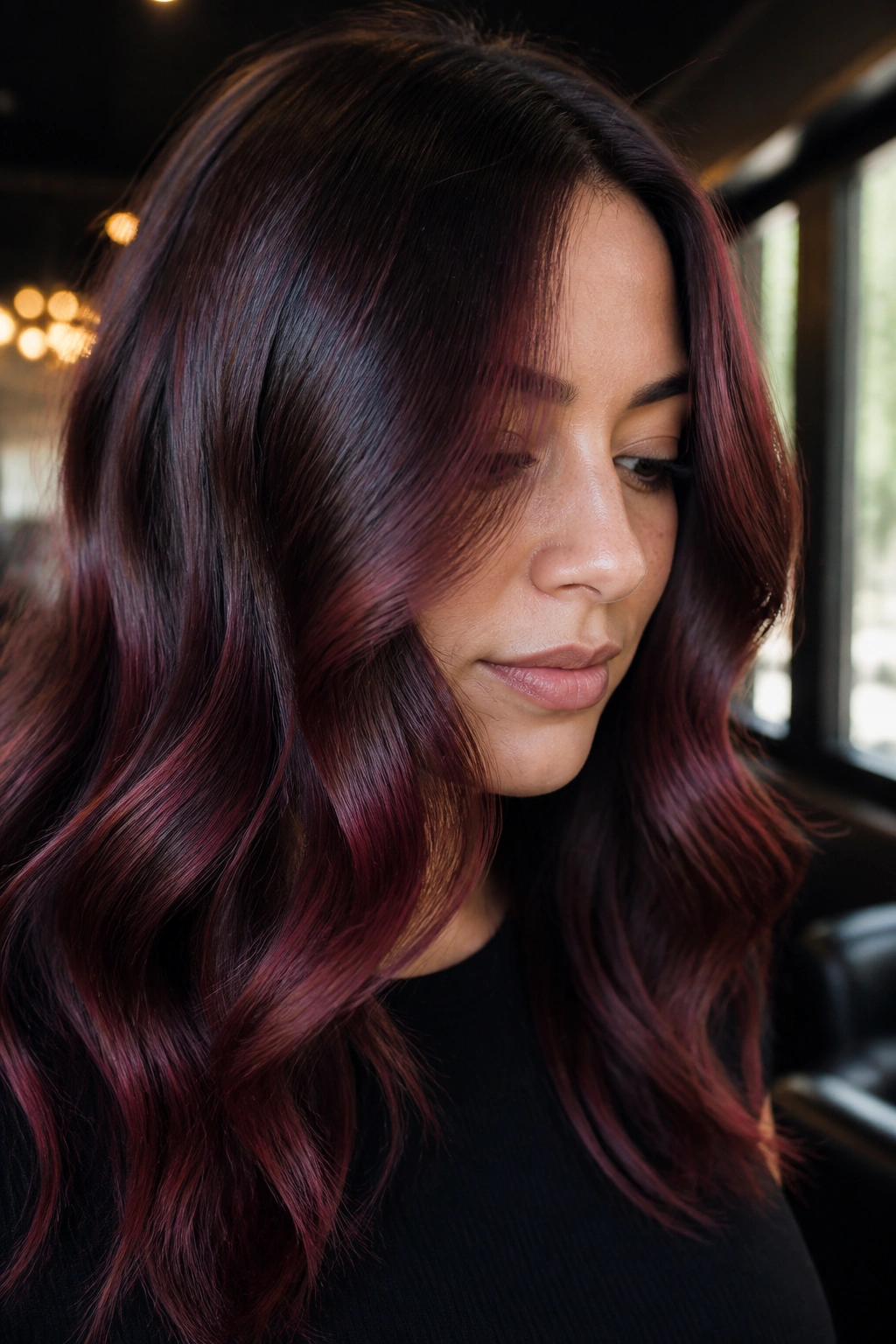
A cherry cola melt is one of those shades that looks like it was made for brown hair. The base stays deep and grounded, while the red reads as a rich cherry sheen that shows most clearly when the hair moves. It has a little sweetness, a little smoke, and none of the harshness you get when red is applied too evenly.
Why It Works on Brown Hair
The color shift is gradual, which keeps the brunette base from disappearing. The red starts softly near the mids and gets a touch stronger toward the ends, so the whole look feels blended instead of chunky. That matters a lot on brown hair, because brown can swallow lighter red tones if the formula is too timid.
- Best on medium brown to dark brown hair with a solid base.
- Looks strongest in loose waves or a soft blowout.
- Usually needs a gloss refresh every 6 to 8 weeks to keep the cherry tone from turning flat.
- Ask for a root shadow if you want softer grow-out.
Tip: keep the red slightly cooler if your brown base already runs warm, or the whole thing can veer orange fast.
2. Copper Ribbon Red Balayage for Brown Hair
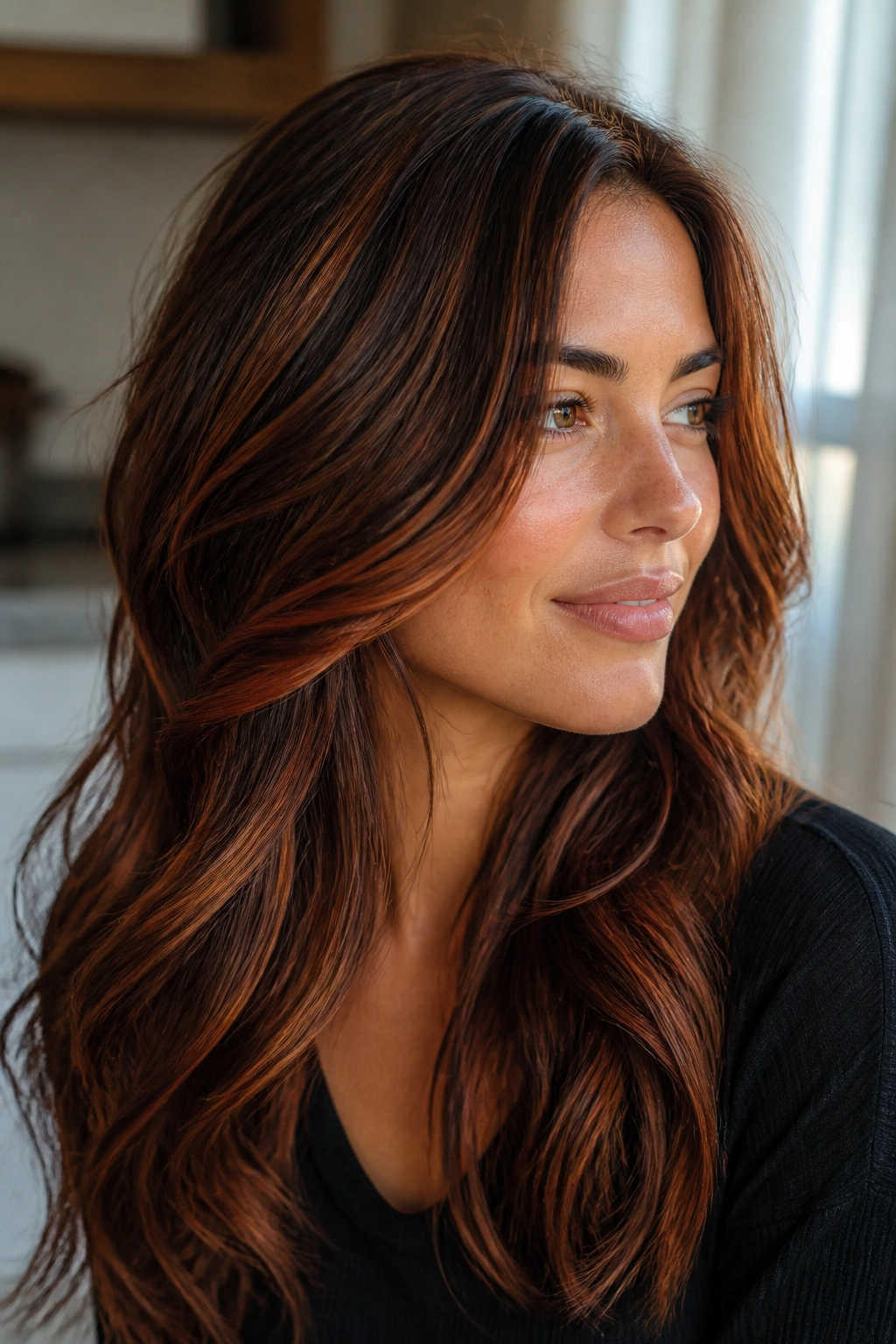
Copper ribbon balayage is the one I reach for when someone says they want red, but not a full red moment. The copper sits in thin ribbons through the brown, so the hair still looks like brunette first and red second. That’s why it works so well on layered cuts.
What Makes It Different
Copper has more light in it than burgundy or merlot, so it wakes up brown hair fast. A few painted pieces near the front and through the mid-lengths can change the whole mood of the cut without making the roots look busy. It’s the kind of color that reads warm from across the room and detailed up close.
How to Ask for It
- Request fine to medium ribbons, not chunky panels.
- Keep the root area deeper for a cleaner grow-out.
- Push the copper mostly through the face frame and outer layer.
- Use a color-safe shampoo and skip harsh clarifiers unless your stylist tells you to.
The payoff is shine. Copper loves brown hair because the contrast is enough to show, but not so sharp that it starts looking striped. That’s the sweet spot.
3. Mahogany Face-Framing Pieces
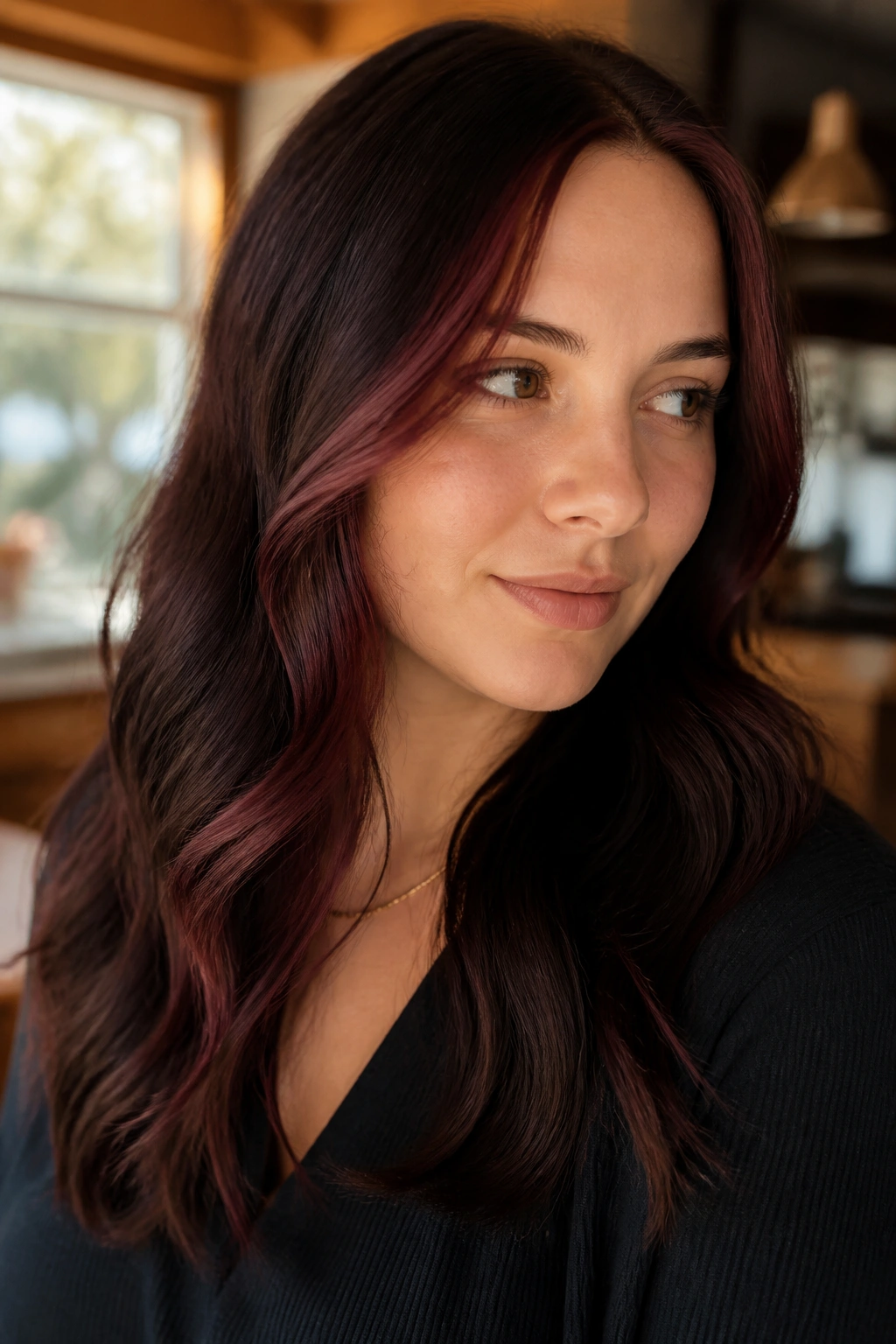
Mahogany face-framing pieces do a lot of work with very little color. If you want a red balayage look for brown hair that feels polished without shouting, this is the one I’d point to first. The red stays deep, almost wine-stained, while the front pieces brighten the face in a way that feels clean and intentional.
The thing people miss is how much impact a 1- to 2-inch money piece can have when it’s toned correctly. You do not need red everywhere. A few mahogany strands around the cheekbones, plus a subtle sweep through the crown, is often enough to make the whole haircut look more expensive and more finished.
This look is especially nice on brown hair that falls straight or only slightly wavy. The color doesn’t rely on curls to make sense. It just sits there, calm and rich, doing its job.
4. Auburn Slices on Chocolate Brown
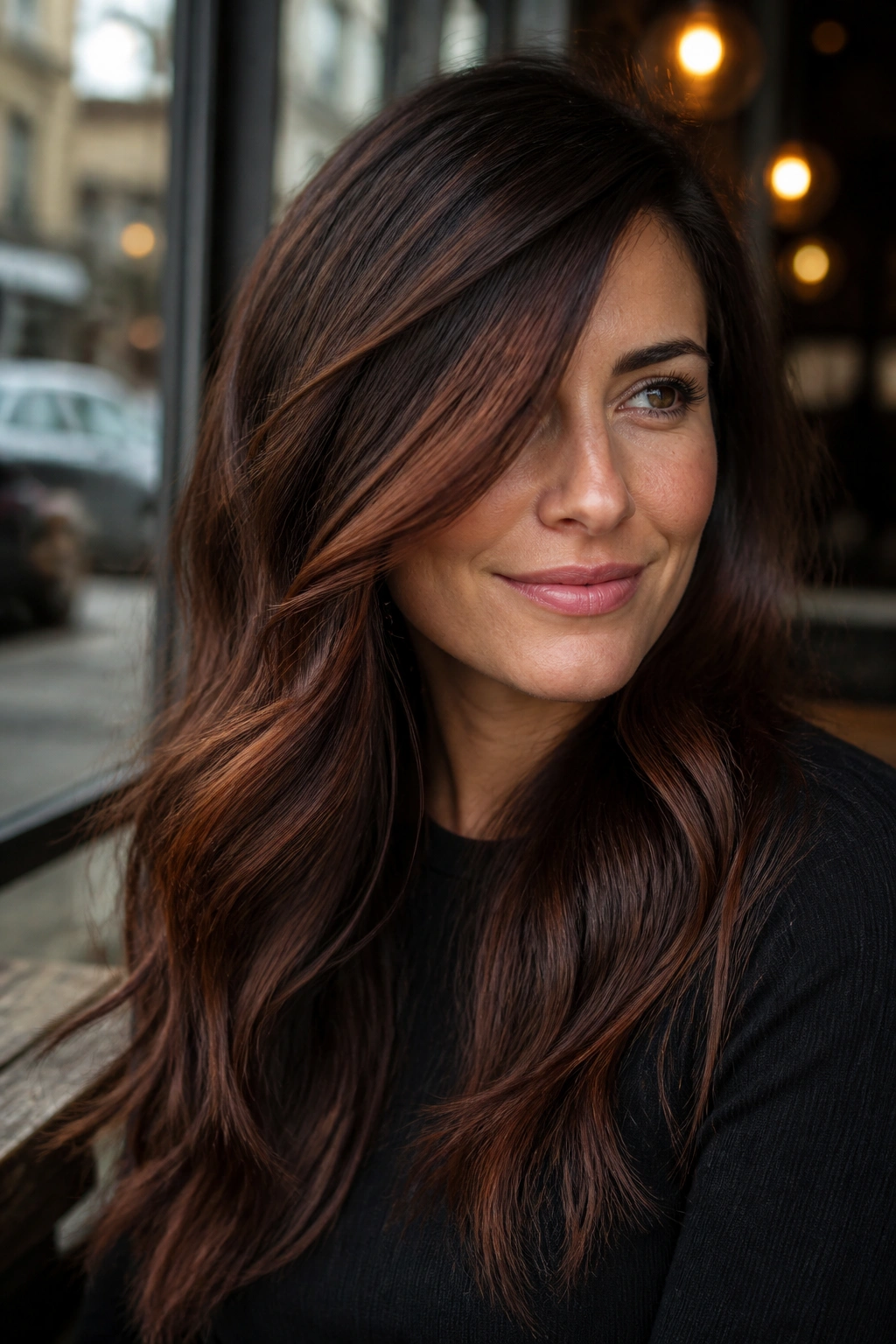
What happens when you want red but still want the brown to stay obvious? Auburn slices on chocolate brown are the answer. The auburn is placed in clean, diagonal sections, so the color shows through movement instead of shouting from every angle.
How to Wear It
The slices are narrow enough to keep the brunette base in charge. That makes this a smart choice if you wear your hair in a side part or like to tuck one side behind the ear. The auburn peeks out when the hair shifts, which feels much less precious than a solid all-over red.
If your hair has a blunt cut, ask for the auburn to sit a little lower on the length. If it’s layered, the color can be painted higher because the movement already breaks things up.
Styling Notes
- Works especially well with soft bends from a flat iron.
- Needs a shine spray, not a heavy oil.
- Looks strongest when the auburn is one or two levels lighter than the brown base.
Auburn can go brassy if it’s too bright, so I prefer it with a little depth. Better dark than loud.
5. Crimson Wine Balayage
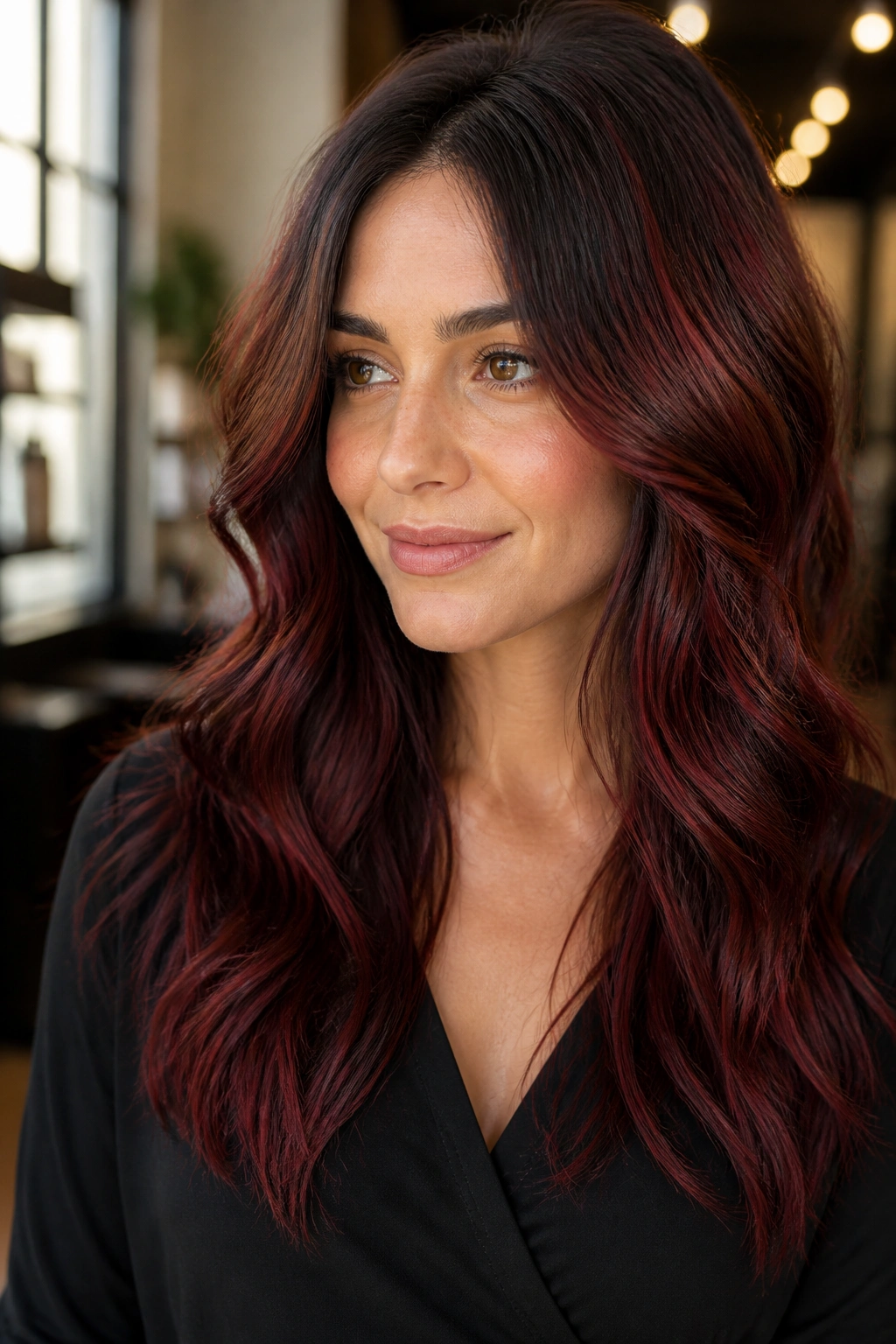
Crimson wine balayage has a quieter kind of drama. The red leans deeper, closer to wine and berry, so brown hair keeps its shape instead of getting overwhelmed. On cool brown bases, it can look almost velvet-like. On warmer brunettes, it lands with a darker cherry edge.
The reason this shade works so well is simple: it doesn’t chase brightness. It chases depth. That means the hair still looks brunette under indoor light, then picks up flashes of crimson when you move into daylight or step under a brighter lamp.
I like this look on longer hair because the red has room to stretch. Shorter cuts can wear it too, but the effect is different; on a bob, it feels sharper, almost editorial. On waves, it feels softer and more lived-in. Keep the finish glossy. Crimson gets dull fast if the hair is dry.
6. Rusty Cinnamon Ends
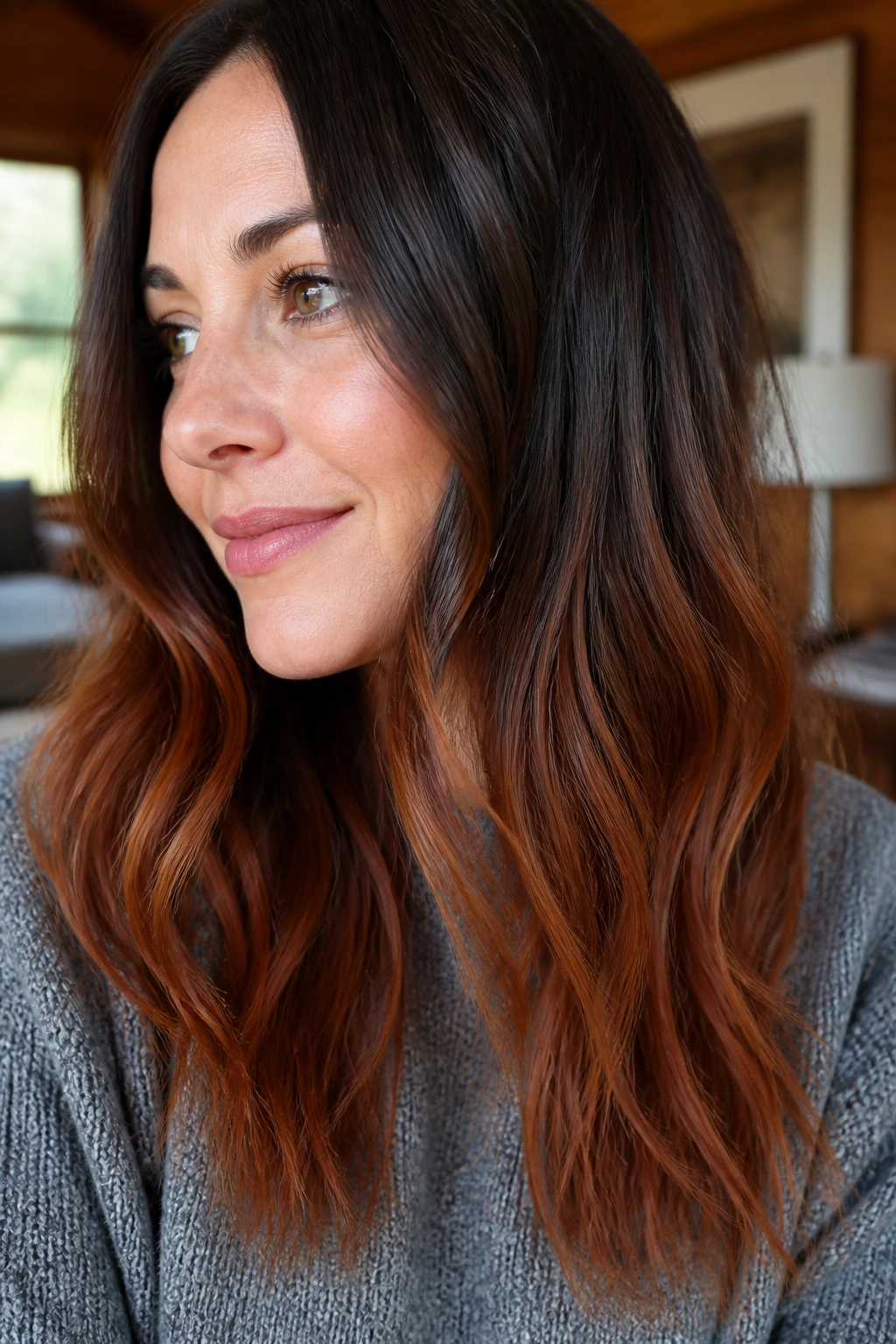
Rusty cinnamon ends are for the person who wants the easiest red balayage grow-out possible. Instead of painting red through the whole head, the color lives mostly in the last 3 to 4 inches. That keeps the brown base intact while giving the ends a warm, spicy finish.
Unlike an all-over copper or cherry melt, this style has a clear contrast point. The brown stays rich near the roots and mids, then the cinnamon warms up at the bottom. It works especially well on long layers because the ends already move separately. The color just follows that movement.
This is also a smart choice if your hair tends to pick up warmth fast. A deeper cinnamon shade keeps the red from turning orange too soon. Pair it with a loose braid or a big barrel wave, and the ends do most of the talking.
7. Burgundy Shadow Red Balayage
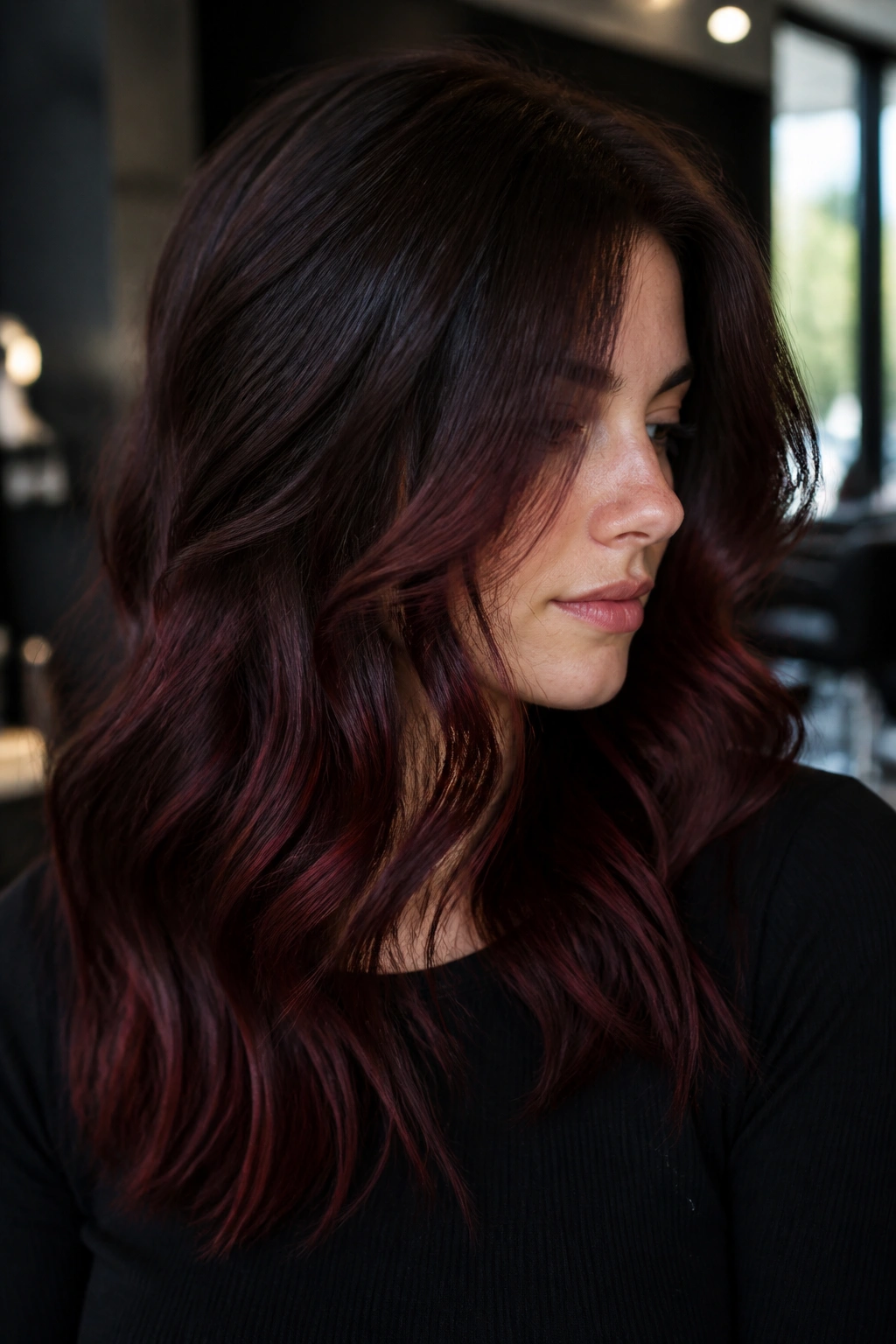
A burgundy shadow balayage is moody in the best way. The red never sits on top looking shiny and bright. Instead, it sinks into the brown base, so the whole head feels deeper, darker, and a bit more expensive-looking without being precious about it.
Placement Notes
The strongest burgundy usually belongs under the top layer, with a softer touch at the surface. That gives you depth when the hair moves and prevents the red from looking too obvious in flat light. If the brown base is medium or dark, the burgundy can start a little higher through the mid-lengths. On lighter brown hair, keep it lower so the contrast does not get too sharp.
What to Ask Your Colorist
- Ask for a shadow root to keep the top soft.
- Request burgundy through the interior layers first.
- Let the surface pieces stay a touch darker for better dimension.
- Use a cool-toned gloss if the red starts leaning too warm.
This is one of those shades that rewards patience. It doesn’t need to scream to be noticed.
8. Strawberry Copper Overlay
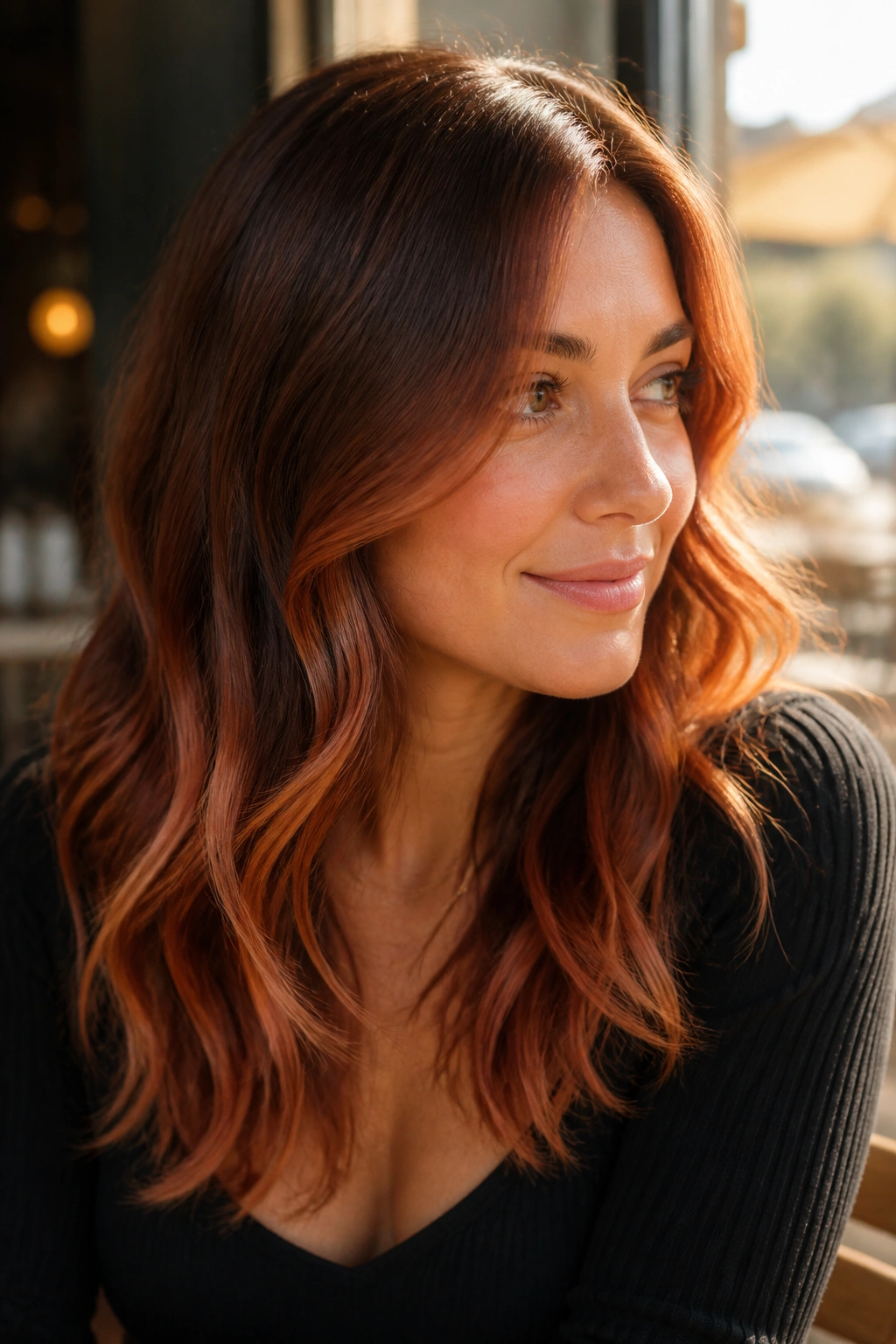
Strawberry copper overlay is a good fit when brown hair needs warmth, but not a heavy red shift. The color sits like a thin veil over the brunette base, which keeps the hair looking airy. On lighter brown hair, it can feel almost luminous. On deeper brown hair, it reads as a warm copper-red whisper.
The important part is restraint. Too much strawberry and the hair starts looking pink. Too much copper and it can edge into orange. The sweet spot is somewhere in between, with the red tucked into the mid-lengths and ends and only a few brighter pieces near the face.
A shoulder-length cut wears this well because the overlay shows without needing a ton of length. If you like to wear your hair straight, ask for very fine painting. If you love waves, the overlay can be a little bolder and still stay soft.
9. Red Velvet Balayage
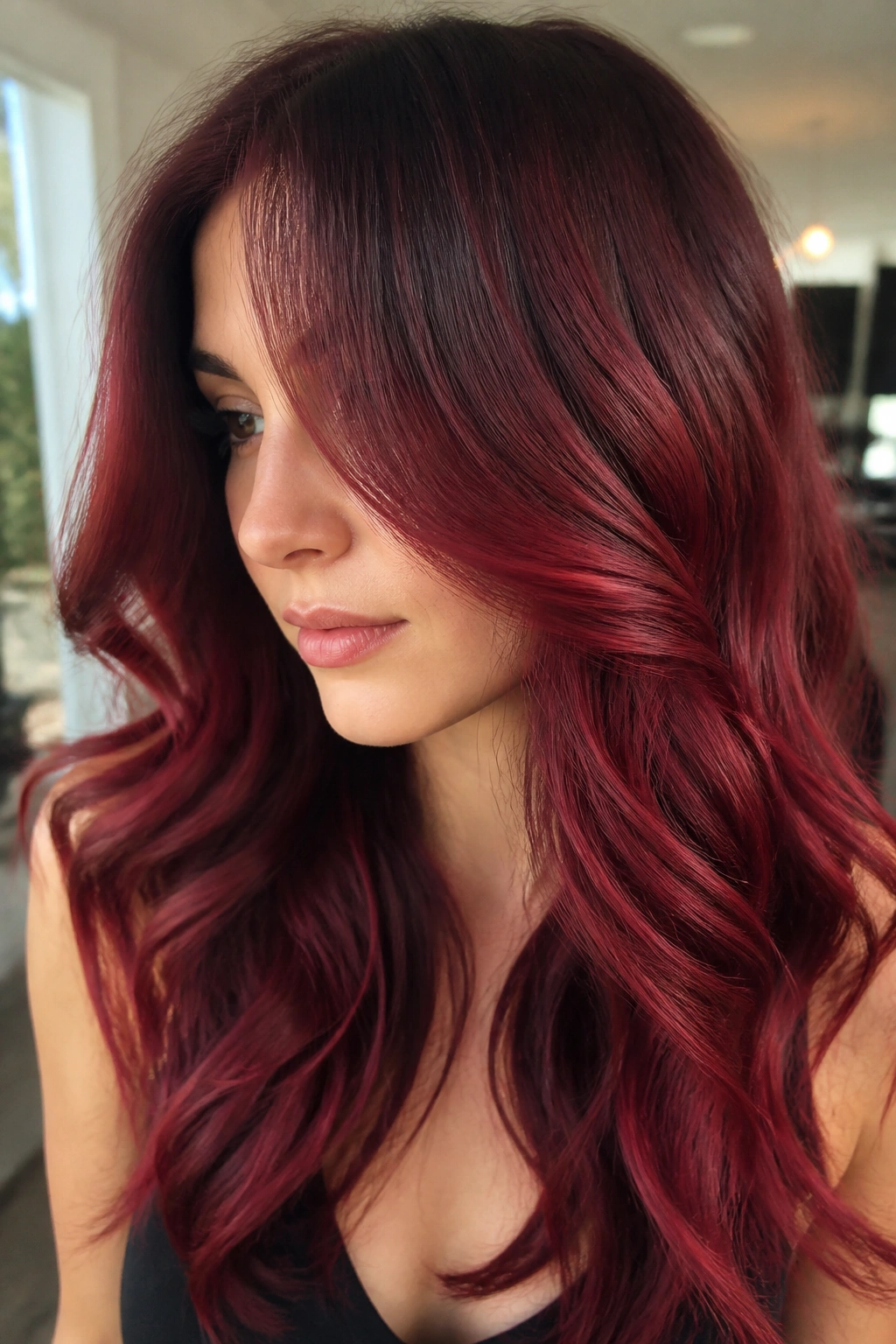
Red velvet balayage is the glossy one. Not the loudest, not the brightest, just the one that looks polished when the light hits it and even better once it starts moving. Brown hair gives it a nice base to sit on, so the red can feel plush instead of flat.
The tone usually leans toward deep ruby with a soft brown undertone, which keeps the whole head from drifting into candy-red territory. That matters on brunette hair, because a pure red formula can sometimes sit a little too clean and lose depth. Red velvet needs that murky richness underneath.
I like this shade with a smooth blowout or big brushed-out waves. The finish matters more than people think. If the hair is frizzy or dry, the color loses its velvet effect and starts to look rough around the edges. A good leave-in cream helps. So does a weekly mask that doesn’t weigh the hair down.
10. Brick Red Money Piece
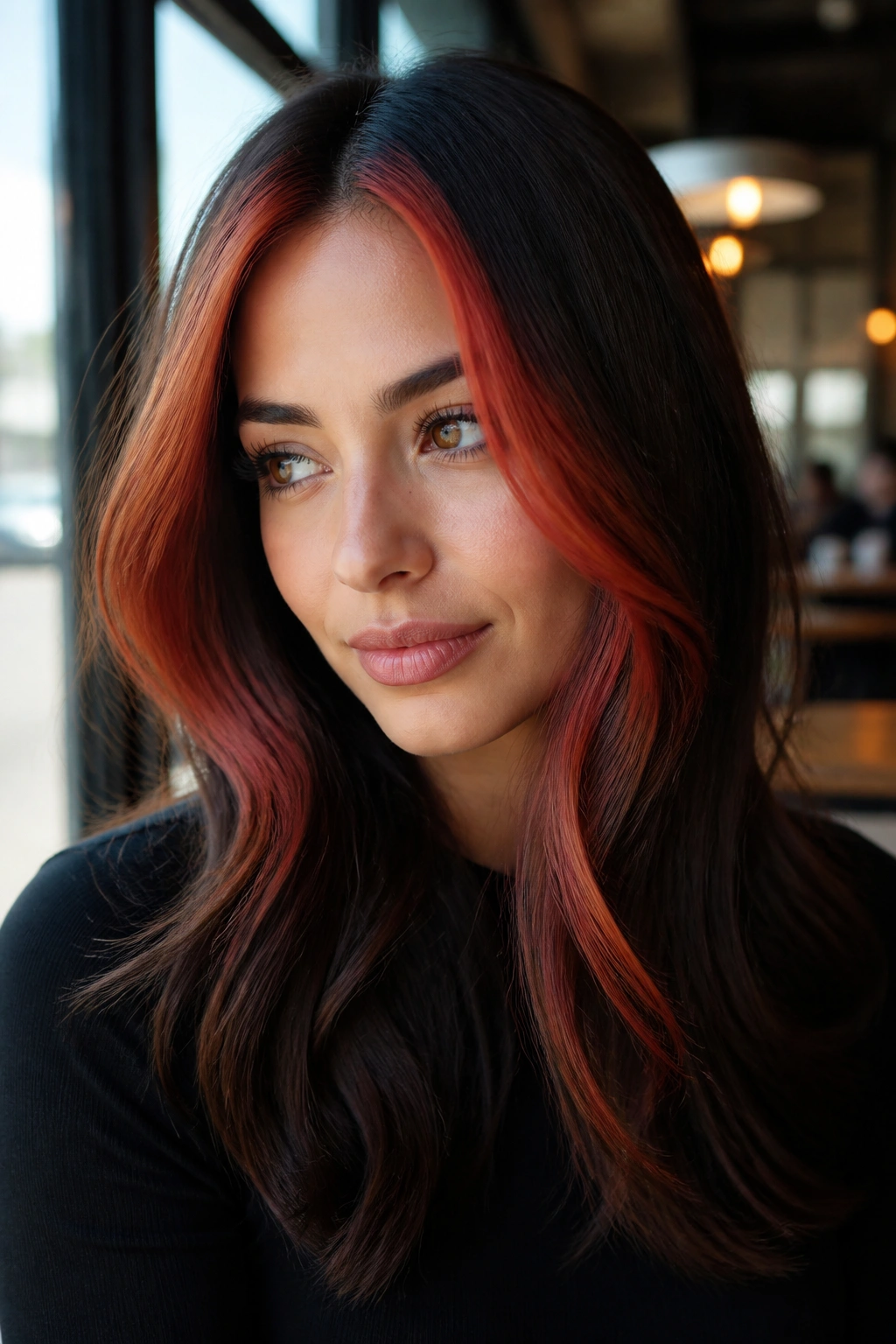
Can a brick red money piece change the whole haircut? Absolutely. It’s one of the fastest ways to bring red balayage into brown hair without committing to a full head of color. The front panels frame the face, then the rest of the hair stays much darker and quieter.
How to Ask for It
Tell your colorist you want the front pieces to be brick red with a slight brown shadow at the root. The brick tone should feel earthy, not neon. If the red is too clean, it starts fighting with the brown base instead of sitting inside it.
Why People Keep Coming Back to It
- The color shows first when you part your hair or tuck it behind one ear.
- It grows out with less pressure than all-over red.
- It works on curly, wavy, and straight hair because the placement does the heavy lifting.
- You can keep the rest of the head darker and save yourself a lot of upkeep.
If you want a color change that looks deliberate but not extreme, this is one of the most efficient ways to get there.
11. Firelight Balayage
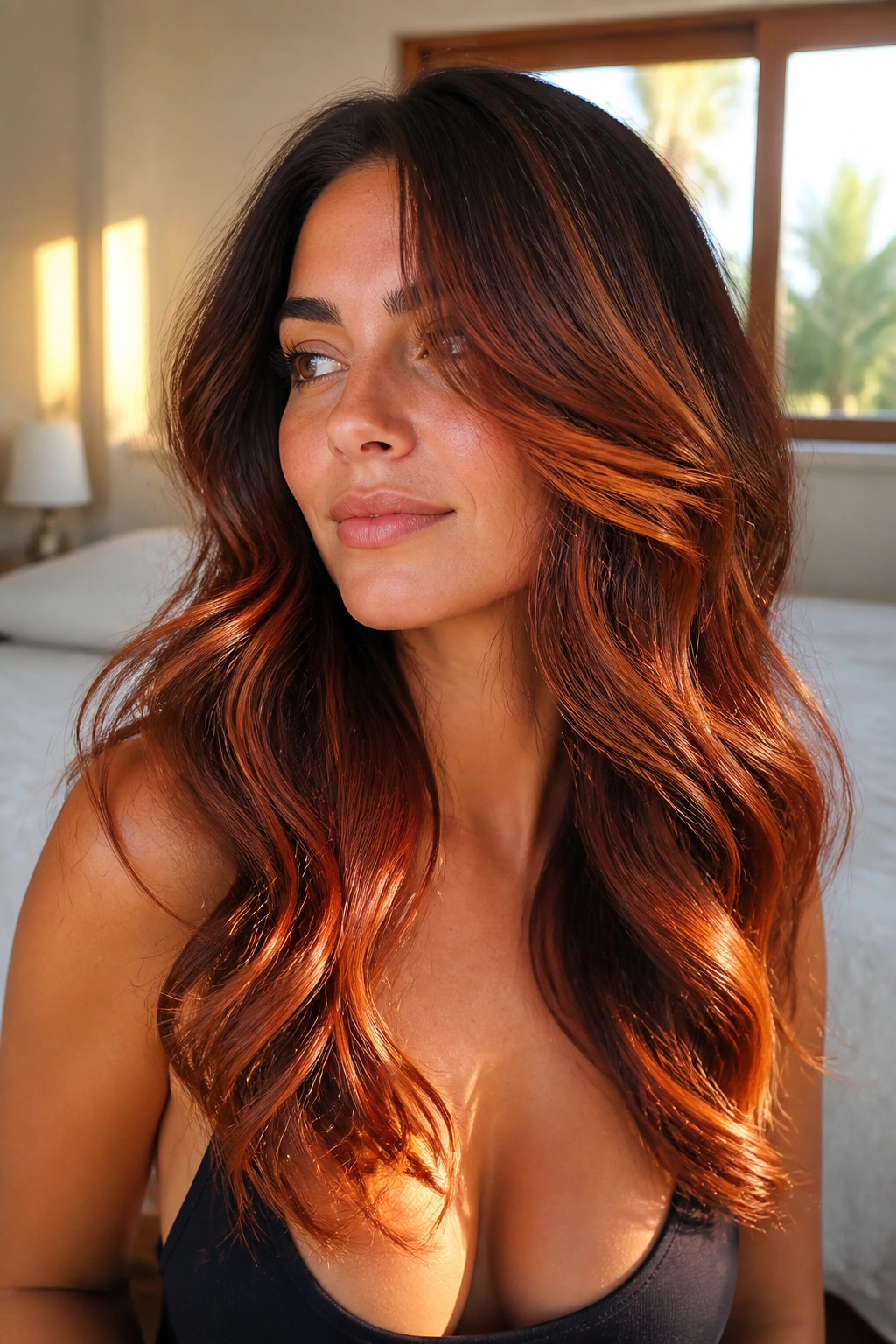
Firelight balayage feels like the warmest version of red on brown hair. It usually blends copper, amber, and red in a way that looks like the ends caught a little glow. On layered brunette hair, the effect can be dramatic in motion and surprisingly soft when the hair settles.
This shade works because it uses warmth in layers instead of one flat red note. The copper carries the brightness, the red gives depth, and the brown base keeps everything anchored. That three-part balance matters. Without it, the color can turn noisy fast.
Wear it with movement. Loose waves, a shaggy lob, or long layers all help the tones separate just enough to show off the blend. I’d avoid heavy, stiff styling with this one. It deserves a little air. A little bend. Even a rough-dried finish can look right if the pieces are placed well.
12. Merlot and Mocha Waves
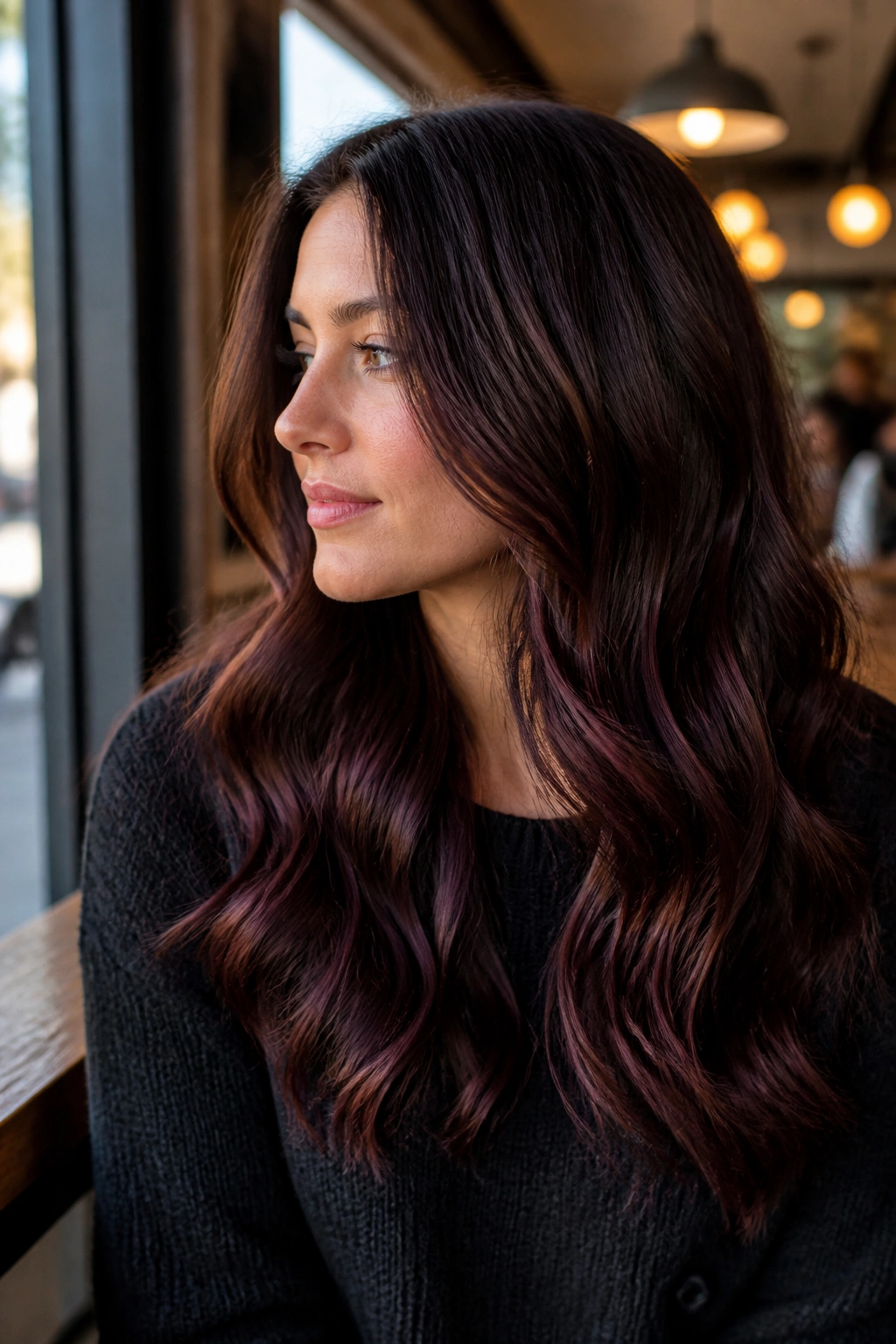
Merlot and mocha waves are for someone who likes their red balayage on brown hair darker, cooler, and a little more low-key. The merlot tone brings the red, but the mocha base keeps it quiet. That makes the whole look feel grounded instead of glossy in a loud way.
Unlike bright copper or cherry placements, this color doesn’t depend on light to make sense. It reads well indoors and outdoors because the contrast is built into the depth, not just the shine. That’s one reason it works so well on thick hair. There’s enough body for the color to sit inside instead of floating on top.
If your wardrobe leans black, charcoal, cream, or denim, this shade fits without fighting for attention. It’s one of the easier red balayage looks to wear if you want something moody but still unmistakably red when the hair moves.
13. Cinnamon-Rose Balayage
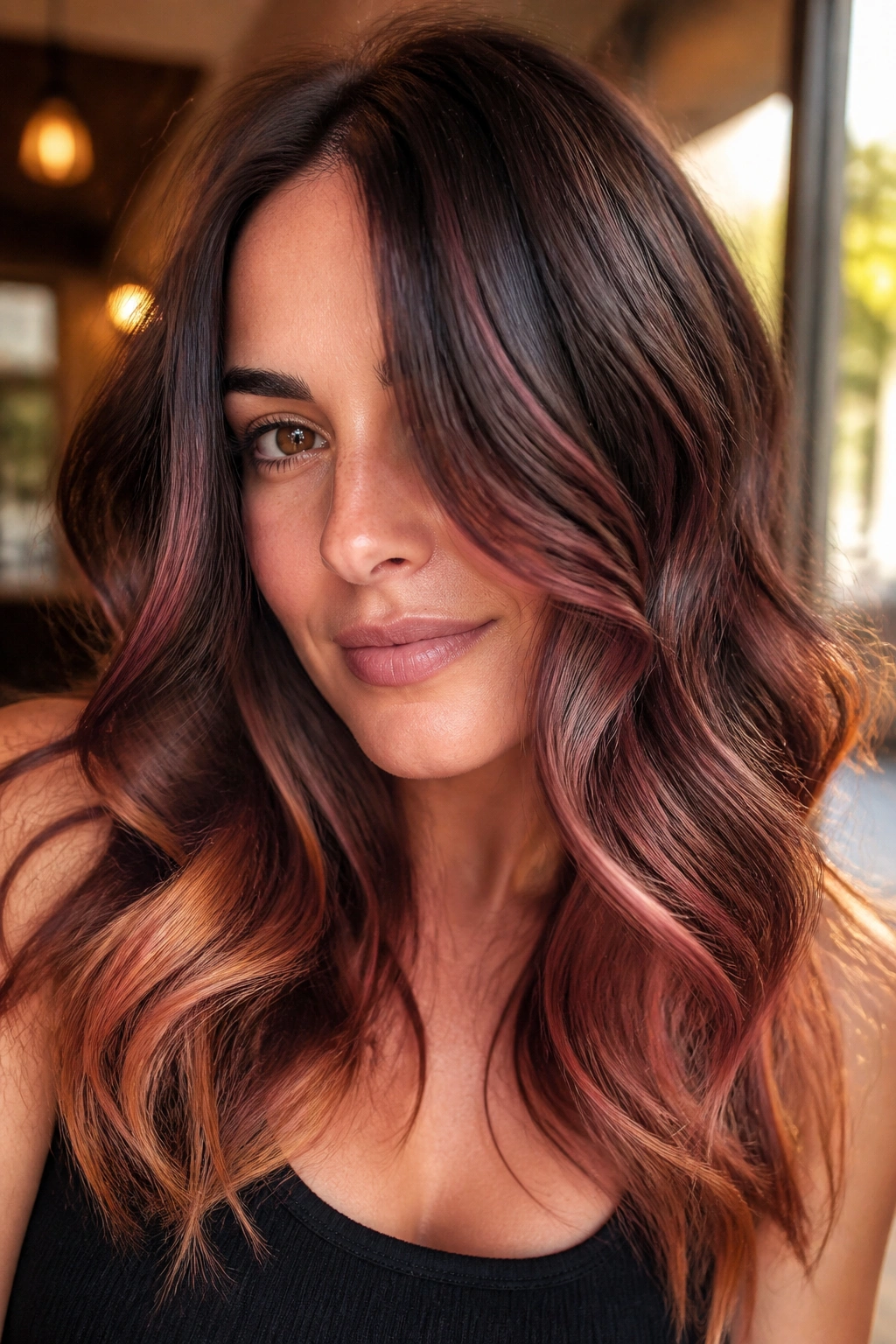
A cinnamon-rose balayage brings together two things brown hair tends to love: warmth and softness. The cinnamon gives the red structure, while the rose note keeps it from feeling too heavy. The result is a red balayage look that feels softer than cherry, but not as muted as rosewood.
The Tone Blend
The best version of this color lives in the middle ground. Too much cinnamon and it goes orange. Too much rose and it can lean pink on some brunettes. The trick is to keep the rose tucked inside the mid-lengths while the cinnamon shows more clearly near the ends and around the face.
Styling It Well
- Use a large round brush if you want the rose to read smoother.
- Keep the ends slightly textured if you want the cinnamon to show more.
- Ask for a soft root melt so the crown doesn’t pop too hard.
This is a good option if you like red, but you don’t want people to read your hair as “red hair” first. It still feels brunette. That’s the charm.
14. Scarlet Peekaboo Layers
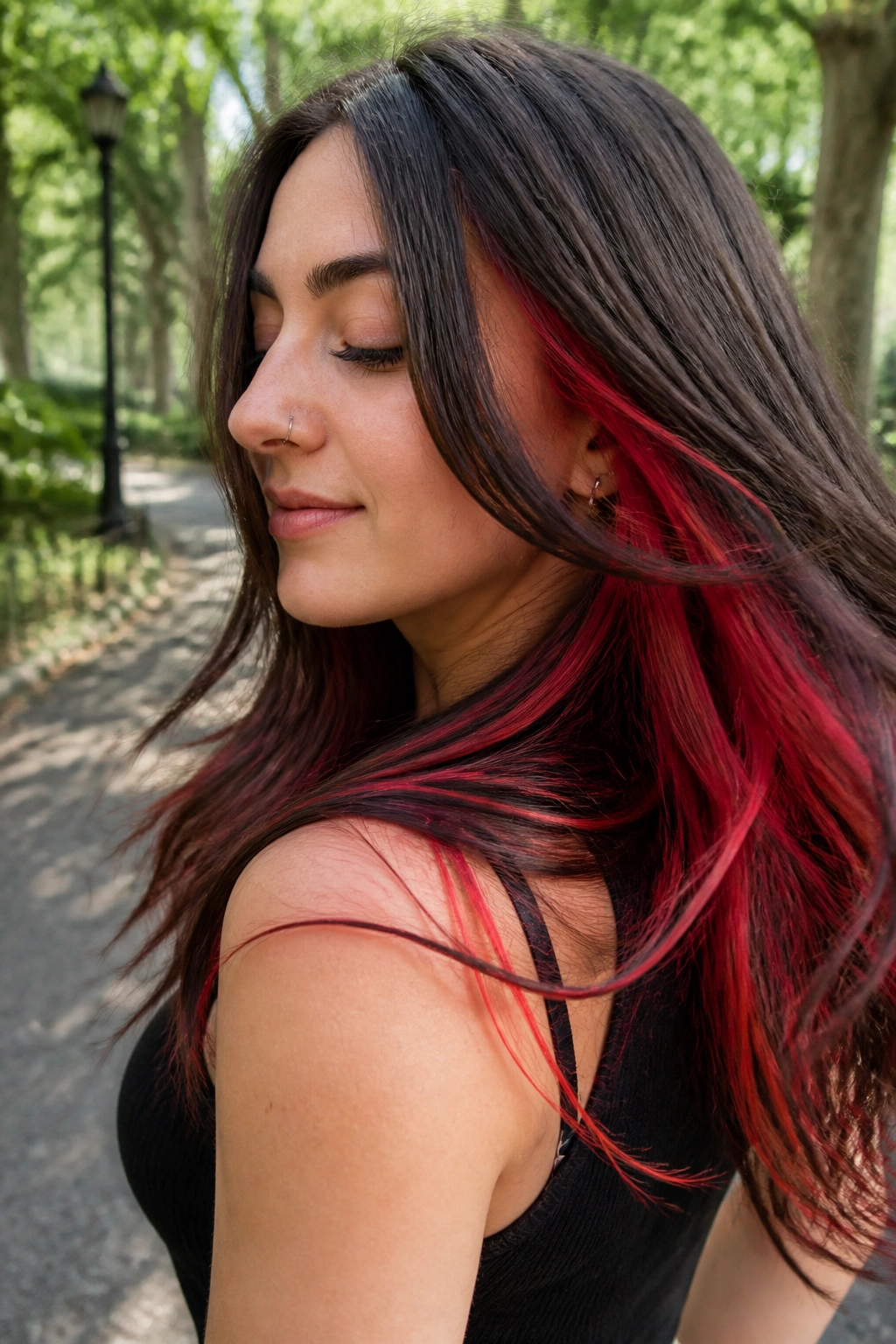
The first time you see scarlet peekaboo layers, it usually happens when someone turns their head and the hidden color flashes from underneath. That’s the appeal. Brown hair stays dominant on top, while the scarlet lives below the surface, tucked into the inner layers where it shows in movement.
Why It Looks So Good
The contrast is strong, but only when you want it to be. A ponytail, braid, or half-up style reveals much more of the red. Worn down, the look stays more restrained. That makes it fun without becoming high-maintenance in a social sense. You don’t have to broadcast the color every minute of the day.
The scarlet should be vivid enough to feel intentional, but not so bright that it looks like a strip of ribbon dropped in from another head of hair. A good colorist will place it under the canopy and soften the transition point.
Quick Details
- Works best on layered cuts.
- Shows more in braids and twists.
- Needs a color-depositing conditioner if the red starts fading early.
This is the sort of color you choose when you like a little secret in your hair. Not too secret, though.
15. Gingerbread-to-Red Melt
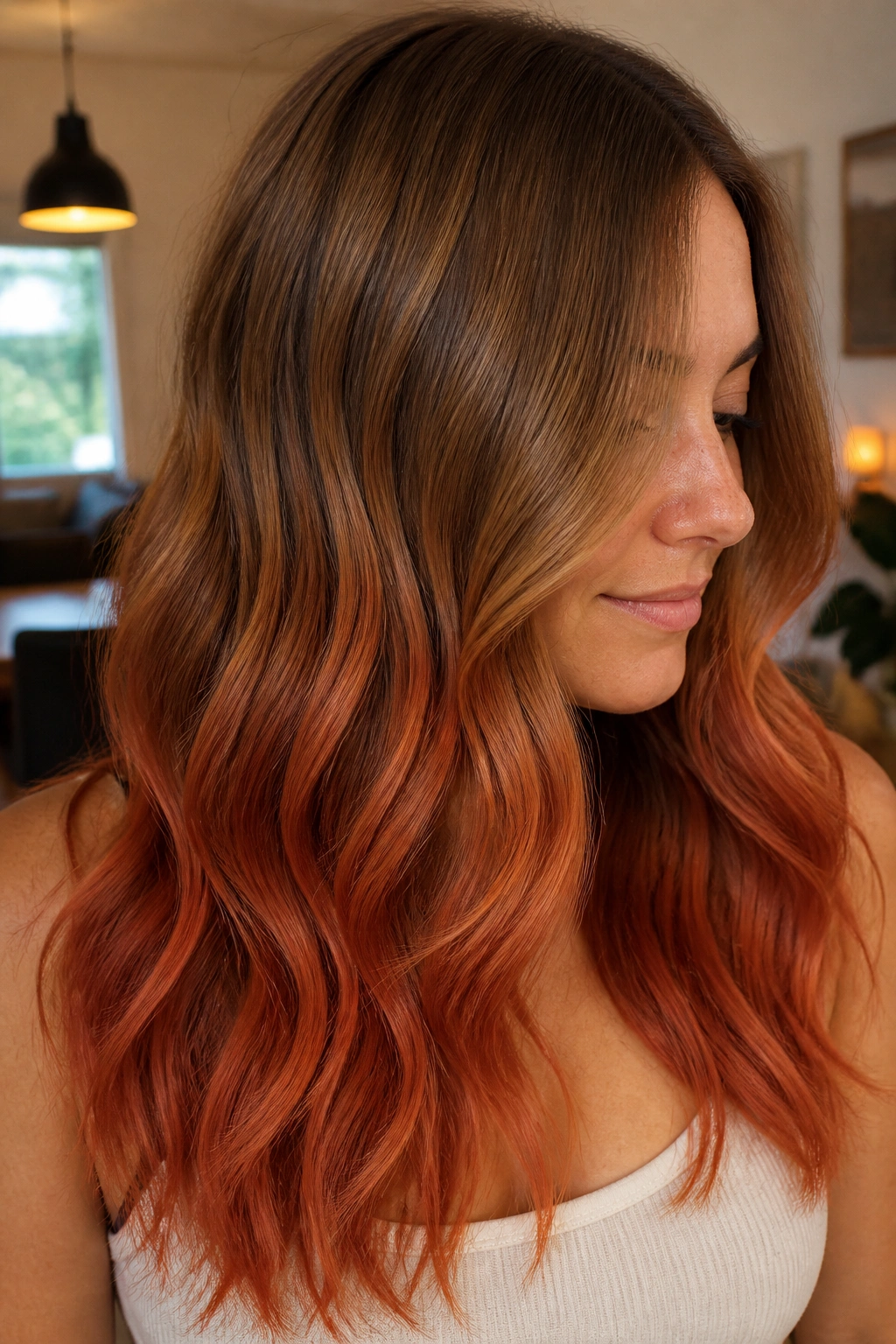
Gingerbread-to-red melt is a warm, gradual color shift that makes brown hair look richer without looking overdone. The roots and upper mids stay close to gingerbread brown, then the red builds slowly through the lengths. By the time you reach the ends, the tone can move into copper-red or soft cherry.
That gradient is what keeps the look believable. There’s no hard line where the color starts. The eye just travels down the hair and notices the temperature changing a little at a time. On brown hair, that kind of transition usually feels easier to wear than a sharp red panel.
It’s a nice option for people who want a clear seasonal change without repainting the whole head. The brown still matters here. The red is there to warm the shape, not erase it.
16. Sangria Balayage
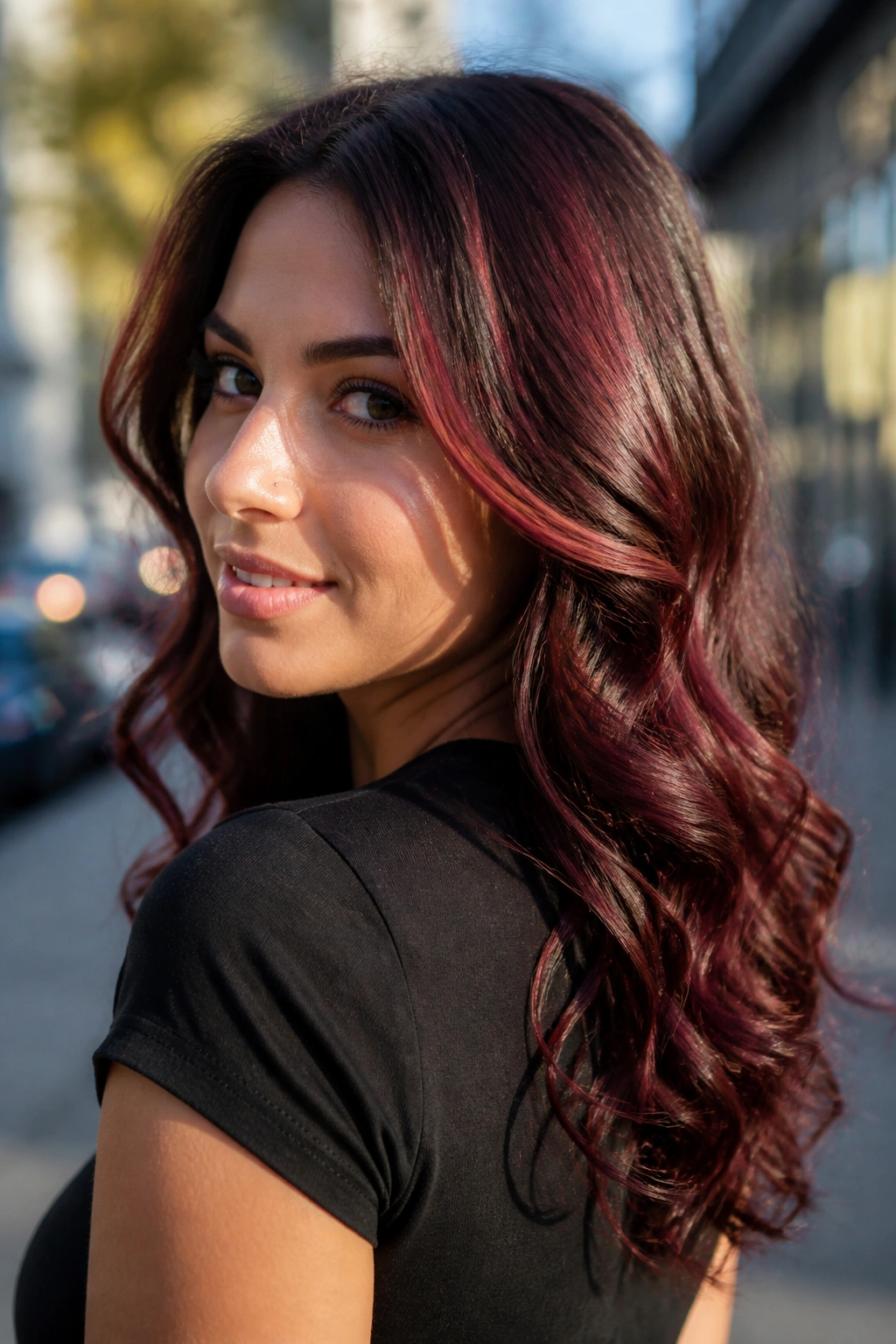
Want red balayage on brown hair with a little more edge? Sangria balayage gets there fast. The red is deeper than cherry and warmer than burgundy, so it lands in that dark, saturated middle where the color feels bold but not cartoonish.
How to Keep It From Going Flat
Sangria shades can lose life if they’re applied too uniformly. The best version has a darker root area, then richer red through the mid-lengths and ends. A few brighter strands near the front keep it from collapsing into one dark block. The movement of the hair does the rest.
Styling Choices That Help
- Choose soft curls or brushed waves over pin-straight styles.
- Use a shine serum in small amounts so the color looks glossy, not greasy.
- Ask for a slight red-violet lean if your brown base is very deep.
This look is strong enough for someone who wants the red to be noticed, but it still has a dark, moody feel. That balance is rare. And useful.
17. Toffee and Ruby Ribbons
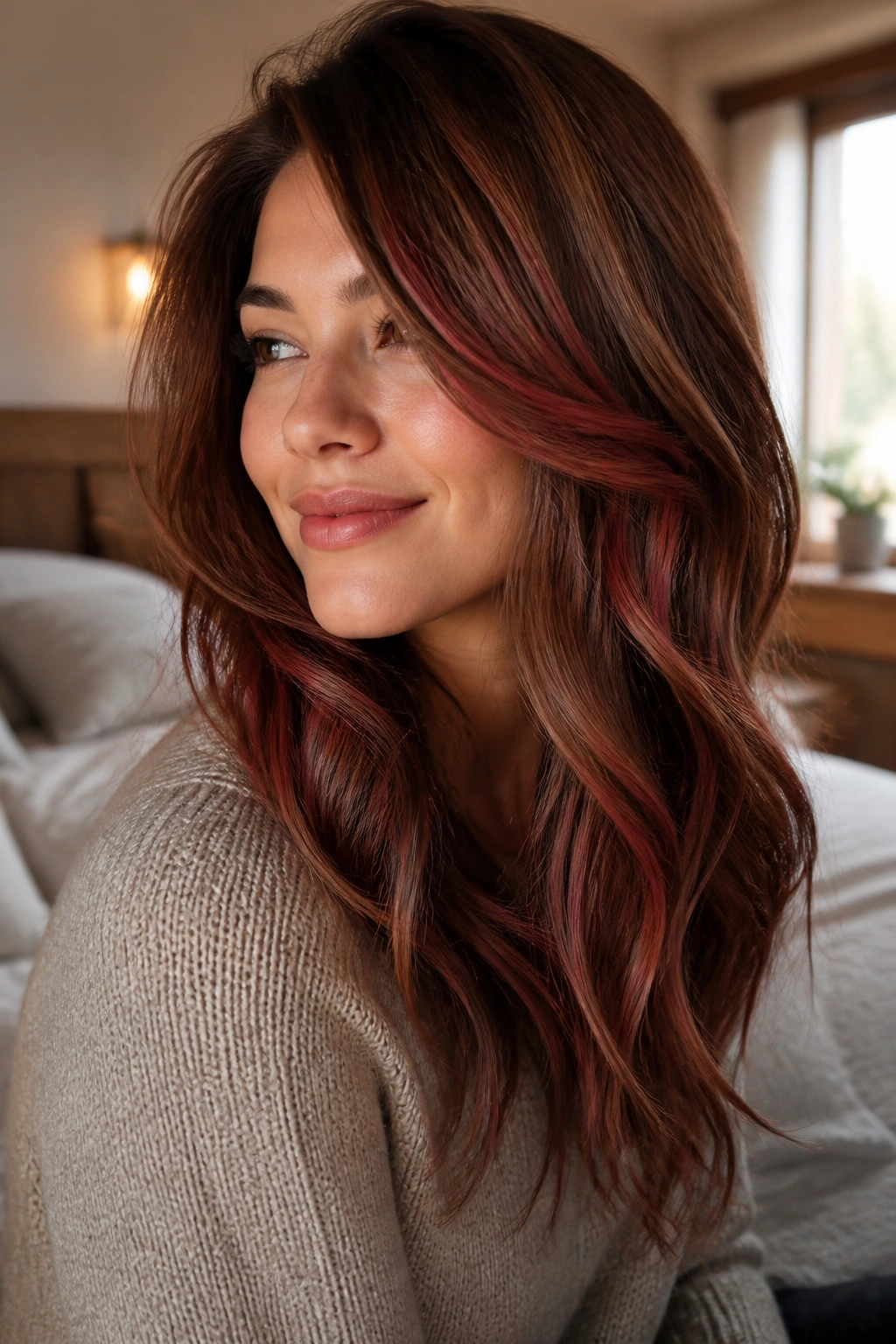
Toffee and ruby ribbons are a little more playful than the darker red looks, but they still suit brown hair beautifully. The toffee base keeps the overall feel warm and soft, while the ruby pieces bring in the richer red notes. It’s a smart mix if you want contrast without harsh lines.
The best part is how the ribbons move. On layered brown hair, the ruby pieces peek through the toffee as the hair shifts, so the color never sits in one boring place. The effect is more textured than a single melt. I’d reach for this on hair that already has some wave or bend, because the ribboning shows better when the cut has movement built in.
If your brown base is on the lighter side, the ruby can be a touch brighter. If it’s darker, keep the ruby deeper so it doesn’t disappear. The whole style depends on that small bit of balance.
18. Rosewood Balayage
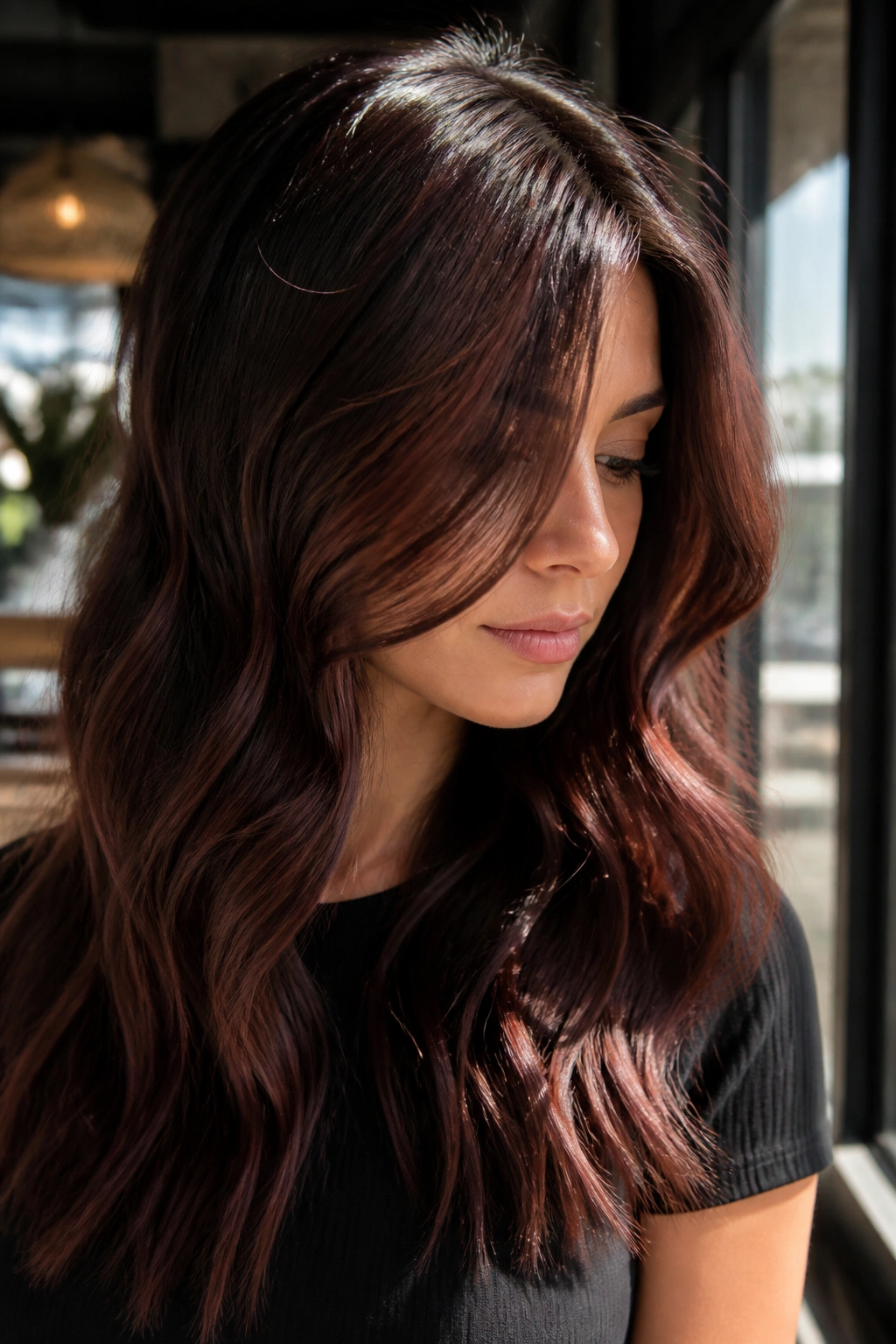
Rosewood balayage is the quieter cousin in the red family. It’s not copper. It’s not burgundy. It’s that muted red-brown that sits somewhere in the middle and makes brown hair look more finished without announcing itself from across the room.
This is the kind of color I’d point to if someone wants red but works in a setting where bright hair would feel like too much. Straight hair shows it well because the color reads like a polished sheen. Wavy hair gives it more movement and makes the rose undertone show at the ends.
What makes rosewood different is the lack of sparkle. That sounds strange, but I mean it in a good way. The shade doesn’t rely on lightness to feel interesting. It relies on depth. That’s why it tends to grow out gracefully and why a lot of brunettes keep circling back to it.
19. Pomegranate Ends
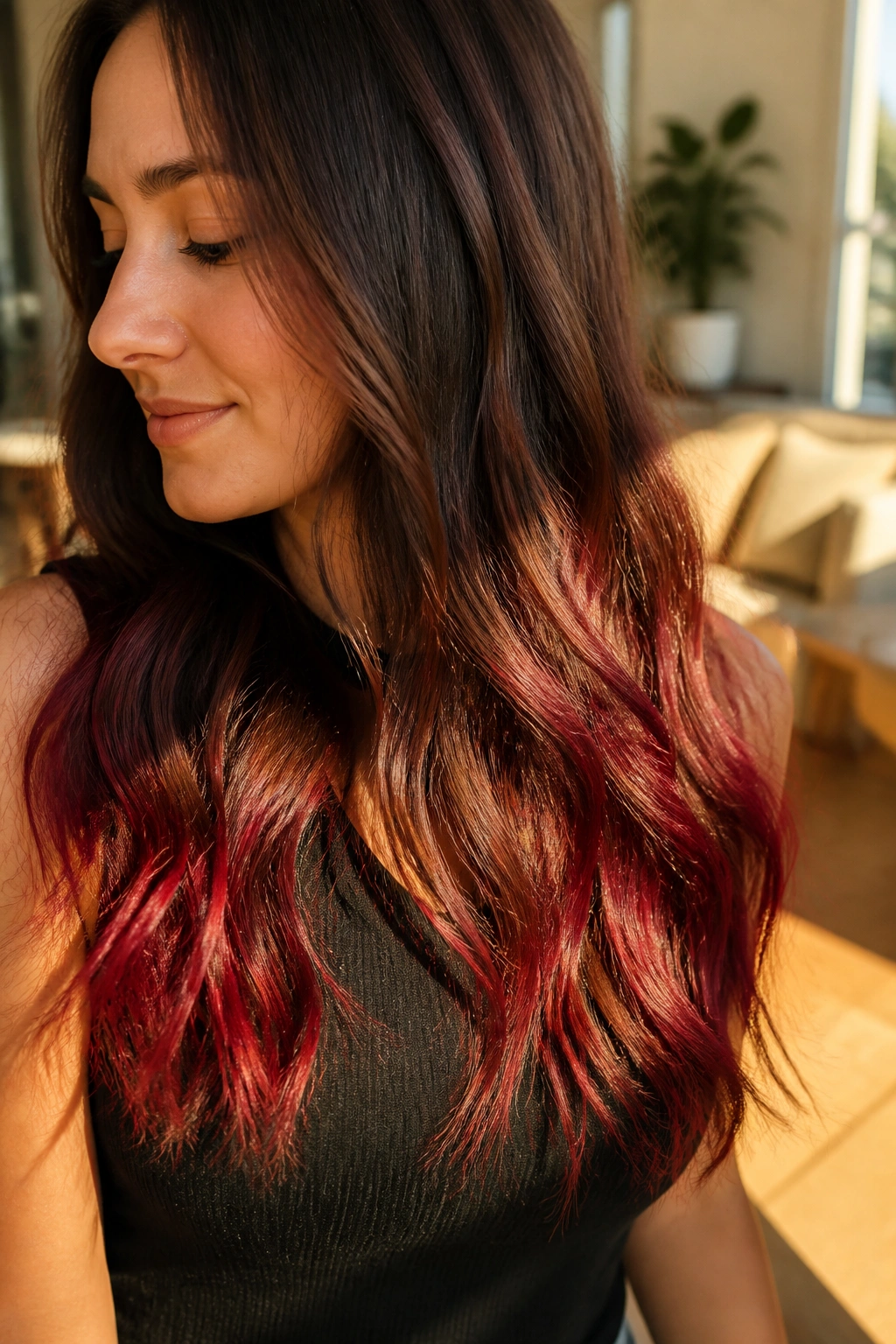
Pomegranate ends are for the person who wants the red to show at the bottom, not all over the hair. Brown hair keeps the crown and mid-lengths grounded, while the ends take on that deep, fruity red that looks richer when the hair swings.
Why the Ends Matter
Ends take color well because they’re where the eye naturally finishes. If you put the strongest red there, the whole style feels more intentional. You also get a cleaner grow-out, since the red doesn’t have to fight the root zone as much. That’s useful if you don’t want constant salon visits.
What to Watch For
- Don’t let the red get too thin at the very tips or it can look faded fast.
- Keep the shade deeper than cherry if your hair is porous.
- Use a heat protectant every time you style, because red ends can dull faster under high heat.
A curled finish shows this look nicely, but a straight finish works too. The color itself does the work.
20. Autumn Copper Sweep
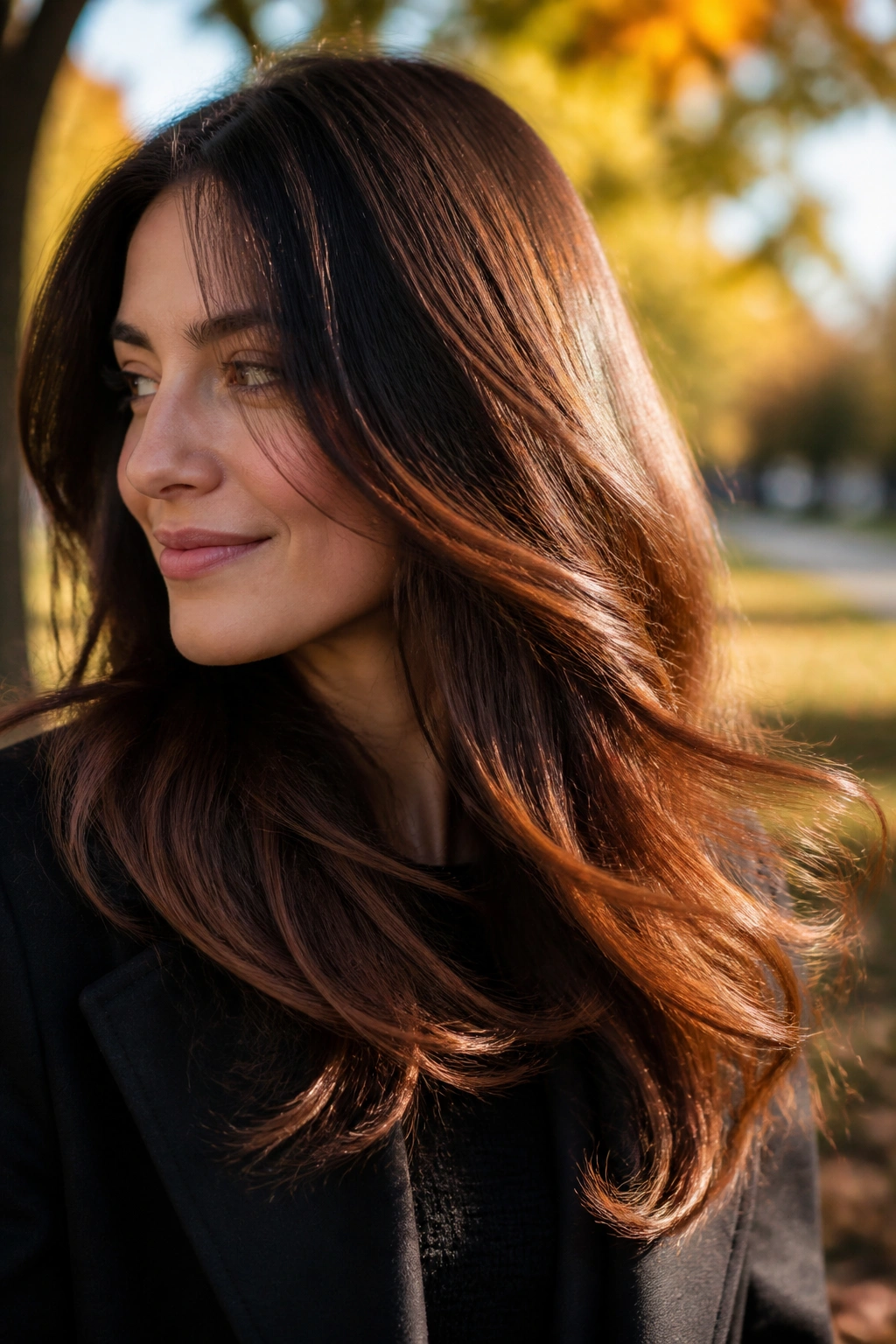
A warm copper sweep on brown hair can change the whole haircut in one pass. The red isn’t dropped in everywhere. It arcs through the outer layers and around the ends, almost like the color was brushed on by the shape of the cut rather than layered on top of it.
Why This Placement Works
A sweeping placement keeps the color from feeling boxed in. The outer pieces catch the copper first, then the darker interior keeps the brunette base visible. That gives you dimension even when the hair is worn flat. On waves, the effect becomes more obvious, because the copper breaks up against the brown in little flashes.
This style suits people who like movement more than precision. It’s looser than a money piece, softer than chunky slices, and easier to wear than a full red panel. If your hair has long layers or face-framing pieces, the sweep can follow that structure instead of fighting it.
21. Mulled Wine Balayage
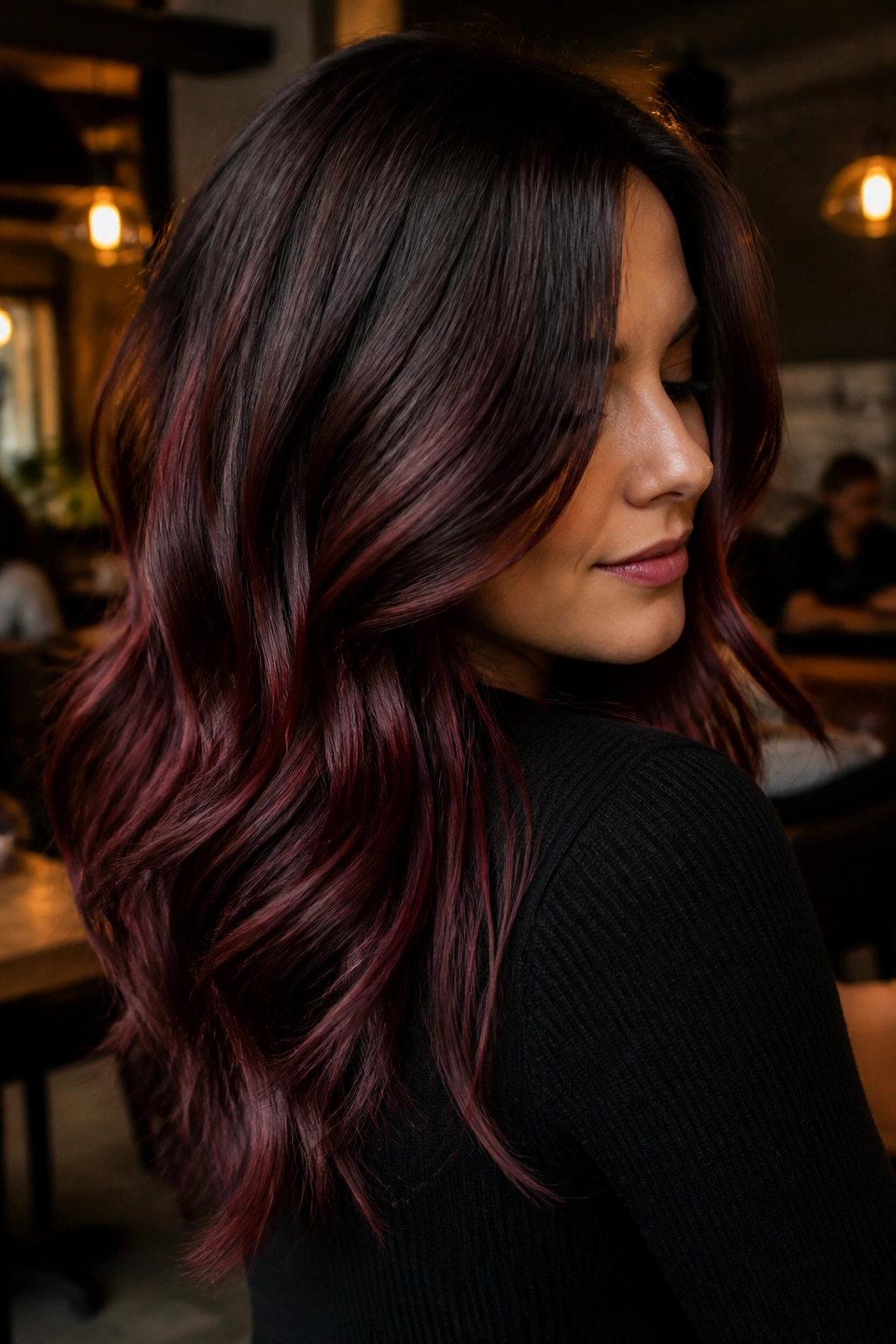
Mulled wine balayage is rich, dark, and a little spiced. On brown hair, it looks deeper than cherry but less severe than plum-black. That middle ground is what makes it so wearable. The red is there, but it sits inside the brunette base rather than floating above it.
The best mulled wine tones have a faint warmth to them. Too cool, and they can look muddy. Too bright, and they lose the whole moody effect. A good gloss is often what keeps this color alive, because the shine helps the deeper red pieces read clearly against the brown.
I like this look on thick hair and on cuts with plenty of movement. The saturation needs room to breathe. If the hair is too fine, the shade can collapse into one color block. On denser hair, the depth looks plush and deliberate.
22. Chili-Red Dimension
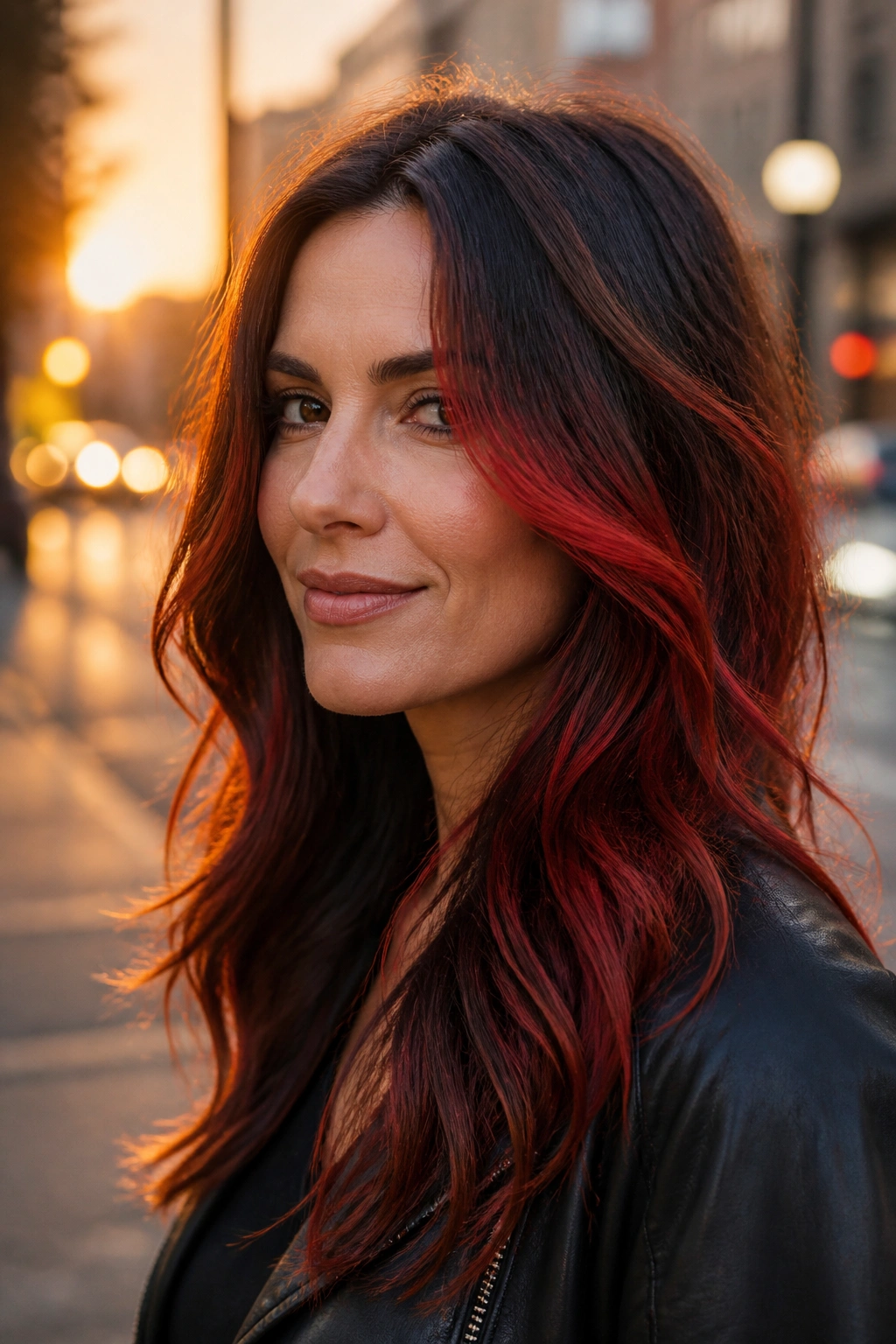
What if you want your red balayage to feel a little hotter? Chili-red dimension is the bold end of the brown-hair spectrum. The red comes forward more strongly here, but the brown base still keeps it wearable. That base is doing more work than people realize.
How It Stays Wearable
The key is dimension, not brightness everywhere. The red should be strongest in select painted pieces, especially through the face frame and outer layers, with darker brown left in the underside and root area. That stops the color from turning into one solid red sheet.
Who It Suits
- Brunettes who want a clear red read from a distance.
- Hair with natural wave or curl, since movement breaks up the red.
- People willing to keep up with regular glossing and a color-safe wash routine.
If you like your hair to make a point, this one does it. If you prefer subtlety, skip it and go deeper instead.
23. Rose Gold Red Balayage on Brown Hair
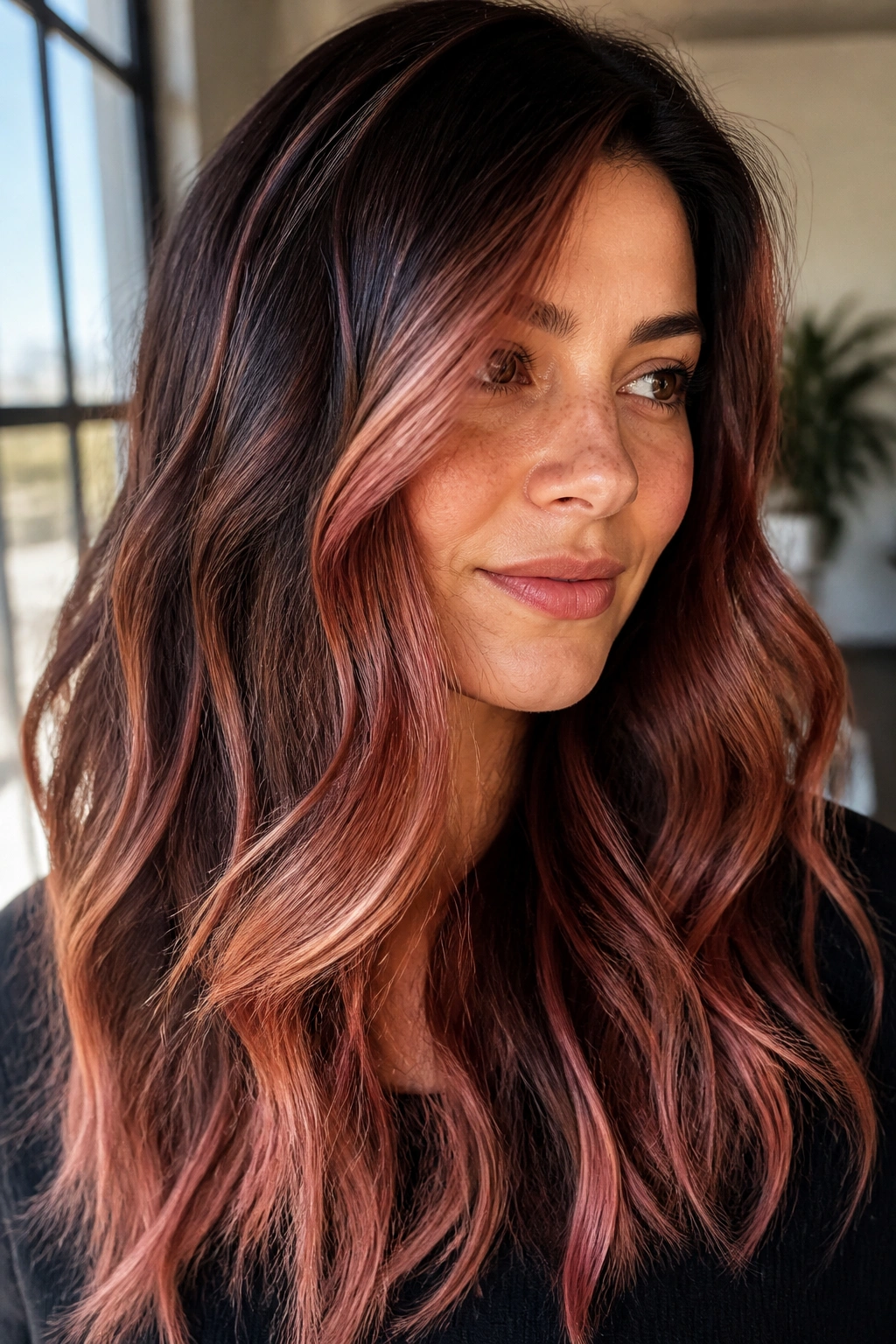
Rose gold red balayage is softer than most red looks, which is exactly why it works on brown hair. The red leans blushy and warm, with enough golden light to keep the overall feel airy. On lighter brown bases, the effect can be almost luminous. On darker brown hair, it reads as a warm rose-brown glow.
This shade suits people who want something feminine without tipping into pink hair territory. The brown base keeps it grounded. The rose gold gives the red a gentler edge. If the formula is balanced well, the color shifts between blush, copper, and soft red depending on the light.
I’d wear this with loose waves or a blown-out finish. The movement helps the different tones separate just enough. Straight hair can wear it too, but the effect is subtler. That may be exactly what you want.
24. Deep Aubergine Red Balayage
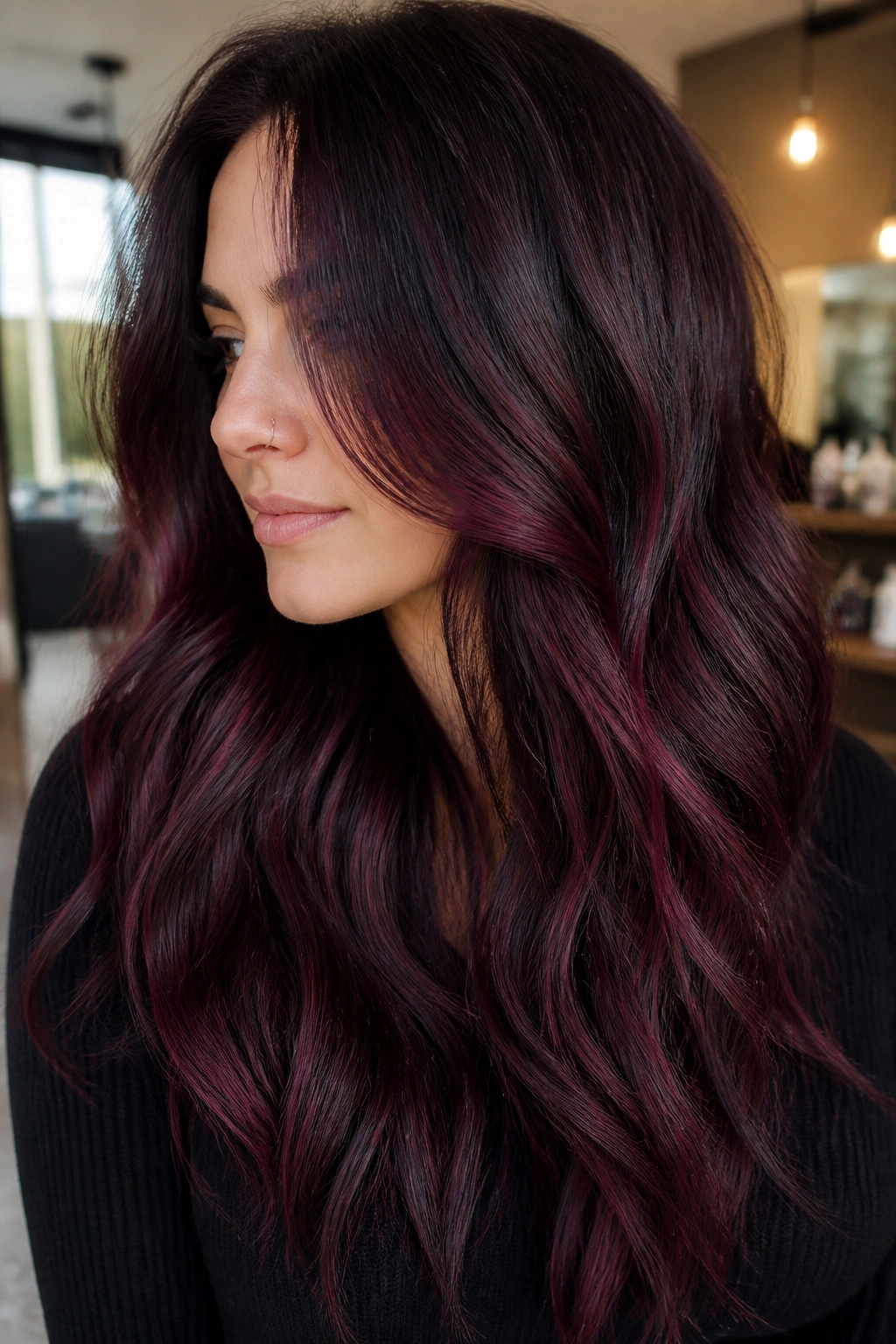
Deep aubergine red balayage sits on the darker side of red, which makes it a strong match for brown hair that already has depth. The color has plum in it, maybe even a little smoke, so it doesn’t fight the base. Instead, it slips into it and gives the hair a denser look.
Unlike brighter berry shades, aubergine doesn’t depend on daylight to make sense. It looks polished indoors and still shows movement outdoors. That’s useful if you don’t want your red to vanish under softer lighting.
This shade is a good choice for straight, blunt cuts and for longer hair that needs more body. The darker tone creates a visual weight at the mid-lengths and ends, which can make the haircut look fuller. It’s a smart pick when you want red, but you also want the brown to stay in charge.
25. Ember Fade Balayage
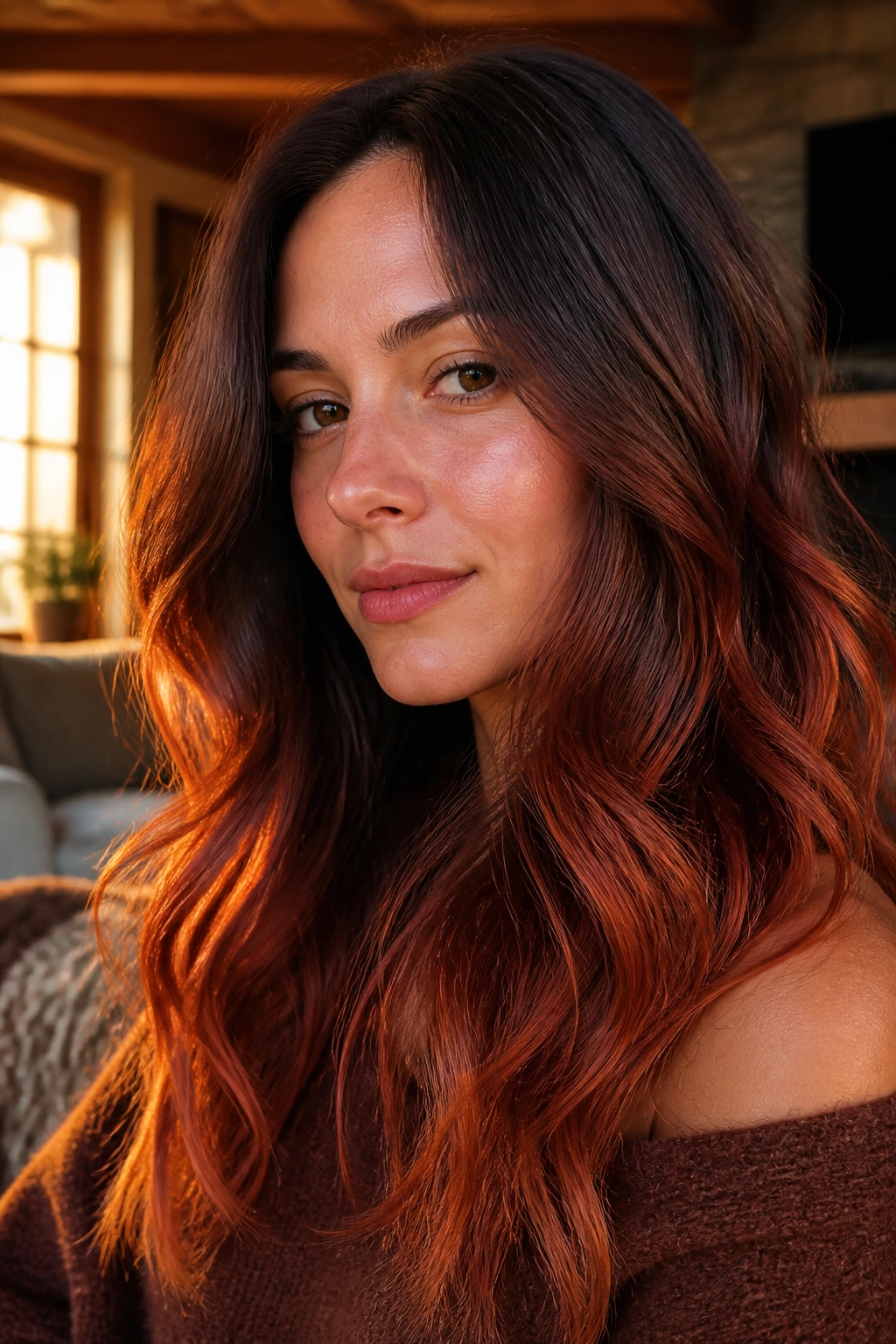
Ember fade balayage feels like the last glowing bit of a fire, and that description fits the color well. The roots stay smoky and brown, the mids hold onto a muted red-brown, and the ends burn a little brighter in copper or ember-red. Nothing about it feels harsh. It just warms up as it goes.
That slow fade is what makes it so good on brown hair. You keep the depth where you need it and build the color where the eye finishes. It’s one of the easier red balayage looks to wear if you like styles that grow out with a little grace instead of a hard line.
I’d ask for this if you want a color that still looks put-together when it starts to soften. A few face-framing pieces can brighten the front, but the real charm lives in the ends and lower lengths. Keep them hydrated, keep the tone rich, and let the ember effect do the rest.
