



Short hair over 50 can look sharper, softer, and more expensive with the right blonde highlights — but placement matters more than sheer brightness. A few well-placed ribbons around the face can wake up tired color fast; a heavy, streaky blonde can do the opposite and make a cropped cut feel blunt in all the wrong ways.
That’s why blonde highlights on short hair deserve a different approach than longer styles. There’s less length to hide a bad stripe, less room for patchy lifting, and a lot less margin for error when the haircut sits right at the jaw, cheekbone, or nape. The good news: short cuts are also easier to refresh, because a little color goes a long way.
I’ve always liked blonde work that respects the haircut. On short hair, the color should follow the shape, not fight it. That means a pixie can take a cool ribbon through the top, a bob can handle a soft money piece, and a shag can use blended veils that move when you do. The right choice often comes down to two things: how much contrast you want, and how much upkeep you’re willing to live with.
1. Soft Champagne Face-Framing Pieces
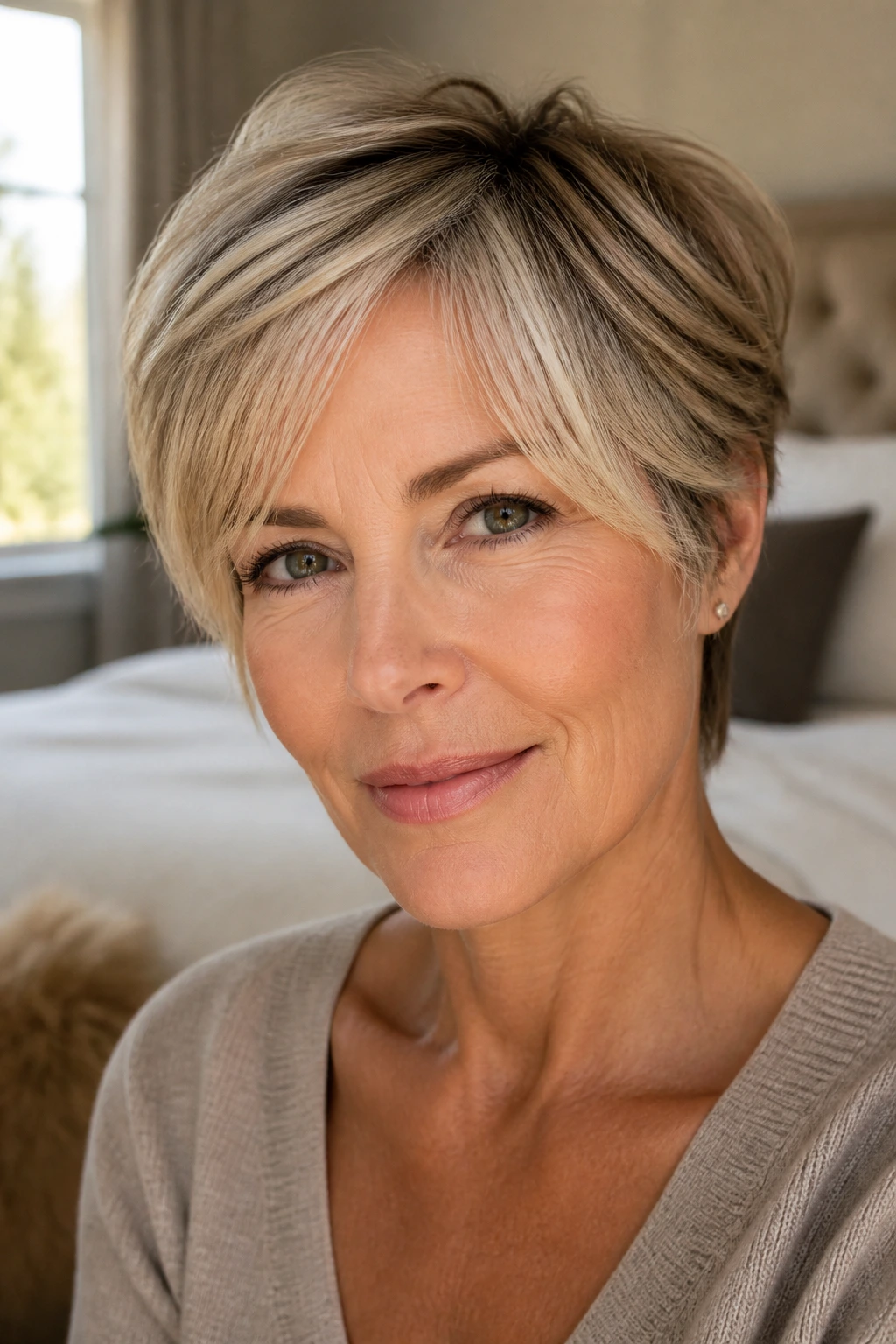
Champagne blonde is one of those shades that tends to flatter without trying too hard. It has enough warmth to keep the face from looking flat, but it still reads light and clean, which matters on short hair where every strand gets noticed.
Why This Works on Short Hair
A few face-framing pieces around the temples, cheekbones, and fringe area can make a cropped cut look fuller and more awake. On hair that’s already short, you do not need a blanket of blonde. You need light exactly where the eye lands first.
- Ask for fine foils or hand-painted pieces starting just off the hairline.
- Keep the brightest champagne at the front, not through the back.
- Ask for a soft root shadow if you want the grow-out to stay easy.
Best for: pixies, rounded bobs, and short layered cuts that need a softer edge.
2. Beige Balayage on a Layered Pixie
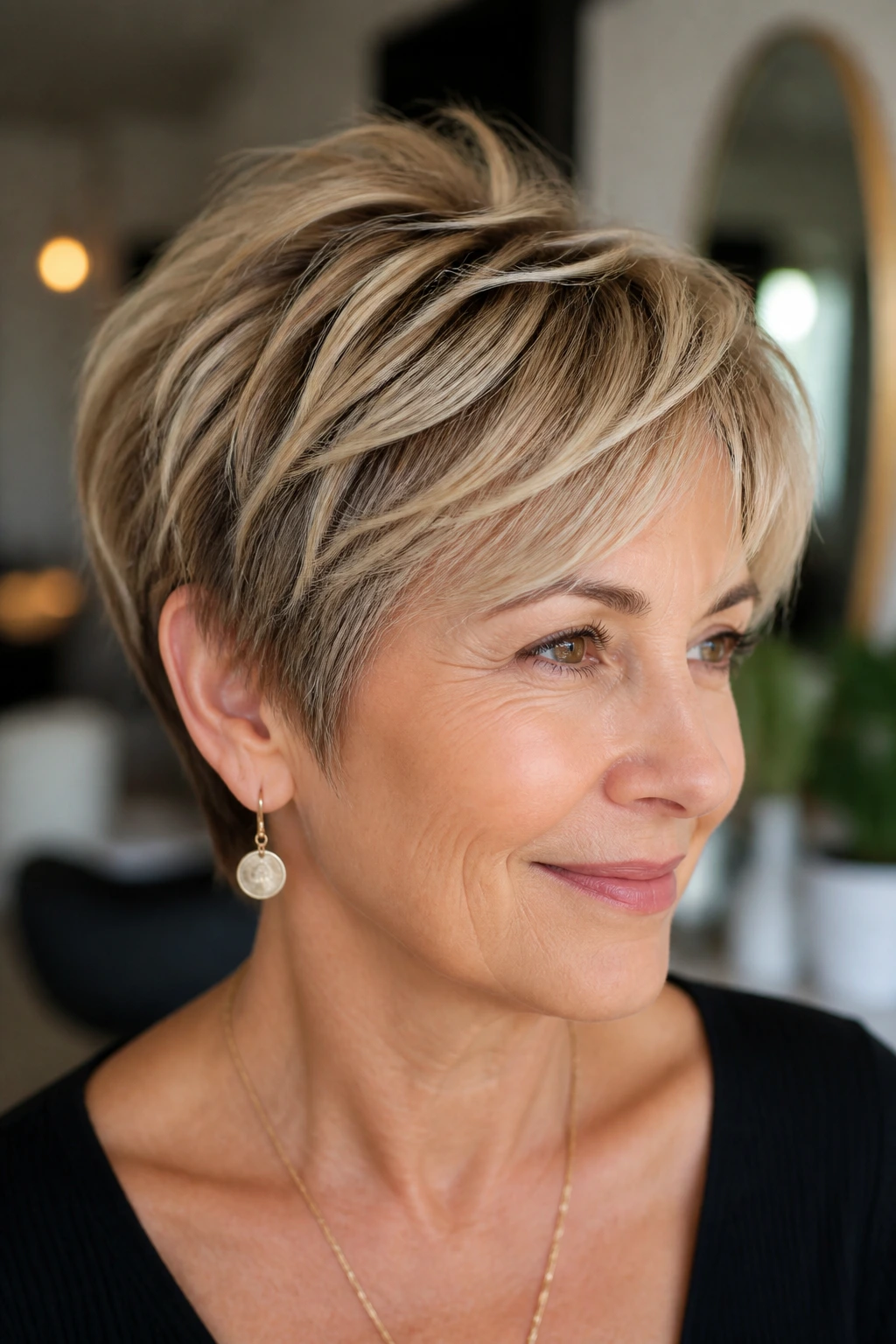
Beige balayage is one of my favorite answers when someone wants blonde but doesn’t want brass, streaks, or a high-drama grow-out. On a layered pixie, it softens the shape and keeps the cut from looking too hard around the crown.
The trick is to keep the lightness broken up. A pixie can go stripy fast if every piece is lifted to the same level. Beige tones work because they sit right between warm and cool, which gives the hair a calm, expensive-looking finish. No shouting. No harsh contrast.
This is the version I’d choose for fine hair that needs a little lift without looking overprocessed. It’s also easier to style than a fully icy blonde, because the color still has enough depth to show off the layers.
3. Silver-Blonde Ribbon Highlights for Pixie Cuts
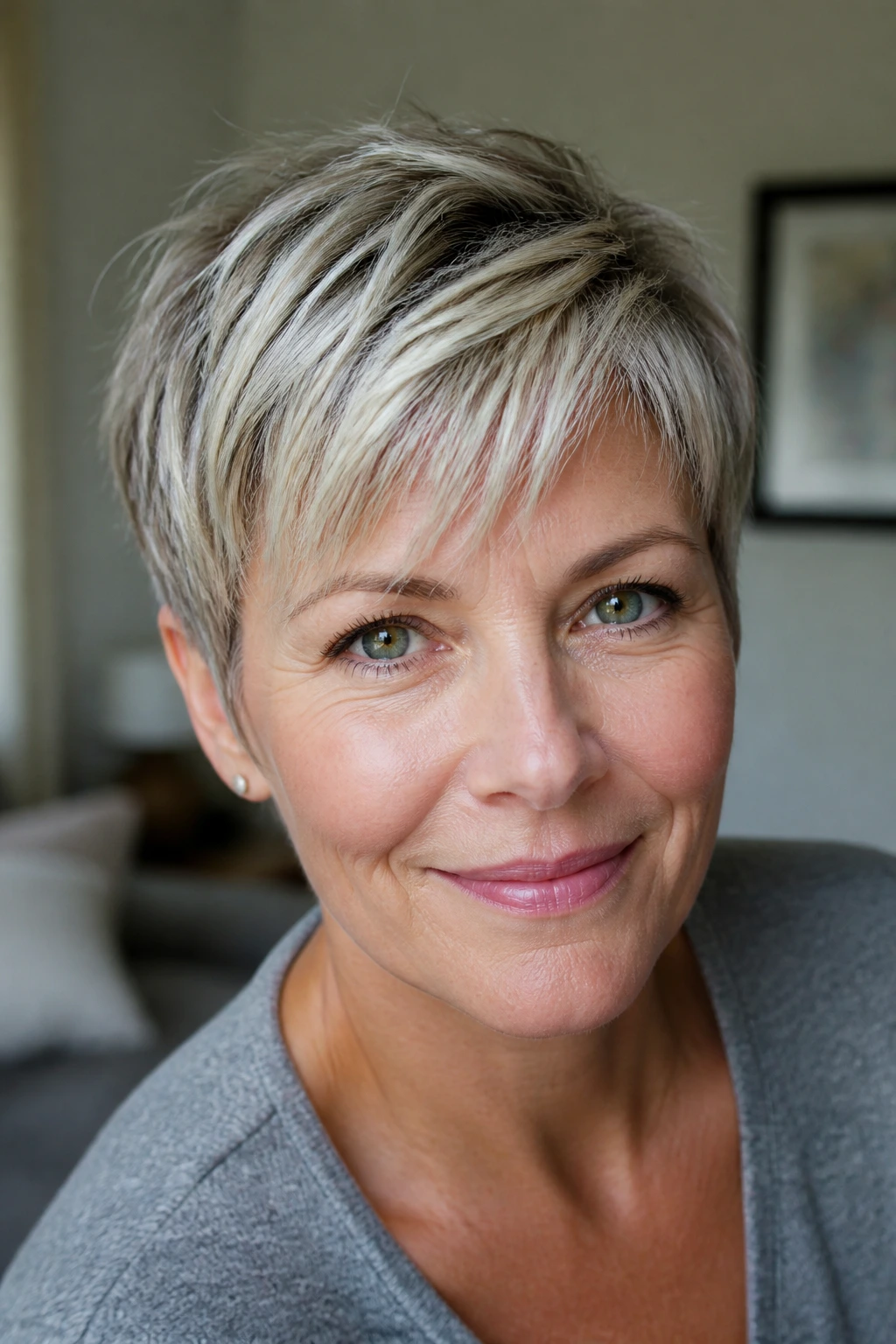
Want brightness without turning the whole cut pale? Silver-blonde ribbons do that job neatly. They thread light through a pixie in slim pieces, so the haircut still looks airy and modern instead of bleached flat.
What Makes It Different
Silver blonde is sharper than beige or champagne, but it doesn’t have to feel severe. If the ribbons are placed through the top layers and around the crown, they catch movement instead of sitting there like stripes. That’s the key.
How to Wear It
- Keep the sides a shade deeper for contrast.
- Place the lightest ribbons where your part naturally falls.
- Finish with a matte paste if you want texture, or a light cream if you want shine.
It’s a good pick for women who already have some gray and want the color to feel intentional, not covered up.
4. Honey Blonde Babylights on a Cropped Bob
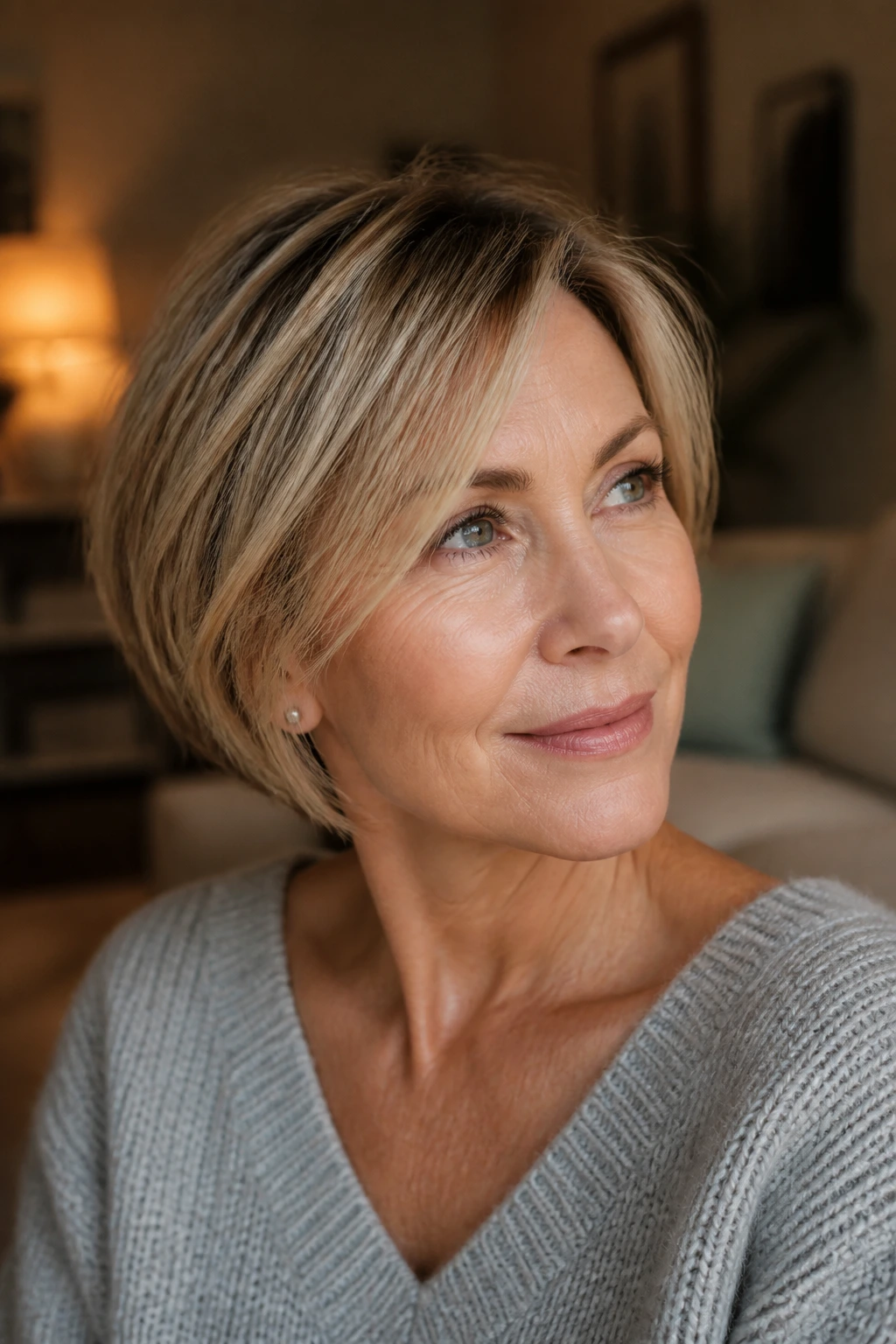
A cropped bob with honey blonde babylights has a gentle, polished feel that never looks overdone. Babylights are tiny, closely placed highlights, and on a short bob they blur into a soft glow instead of obvious streaks.
Picture a cut that ends around the jawline, with little flashes of gold tucked into the top and front sections. The result is warmth, not glare. Honey tones are especially kind to skin that likes a little color around the face, because they give back some of the warmth that gray hair can steal.
- Keep the highlights very fine so the bob stays smooth.
- Ask for more lightness near the front than the nape.
- A loose blowout or tucked-behind-the-ear style shows the color best.
5. Cool Ash Blonde Streaks on a Tapered Crop
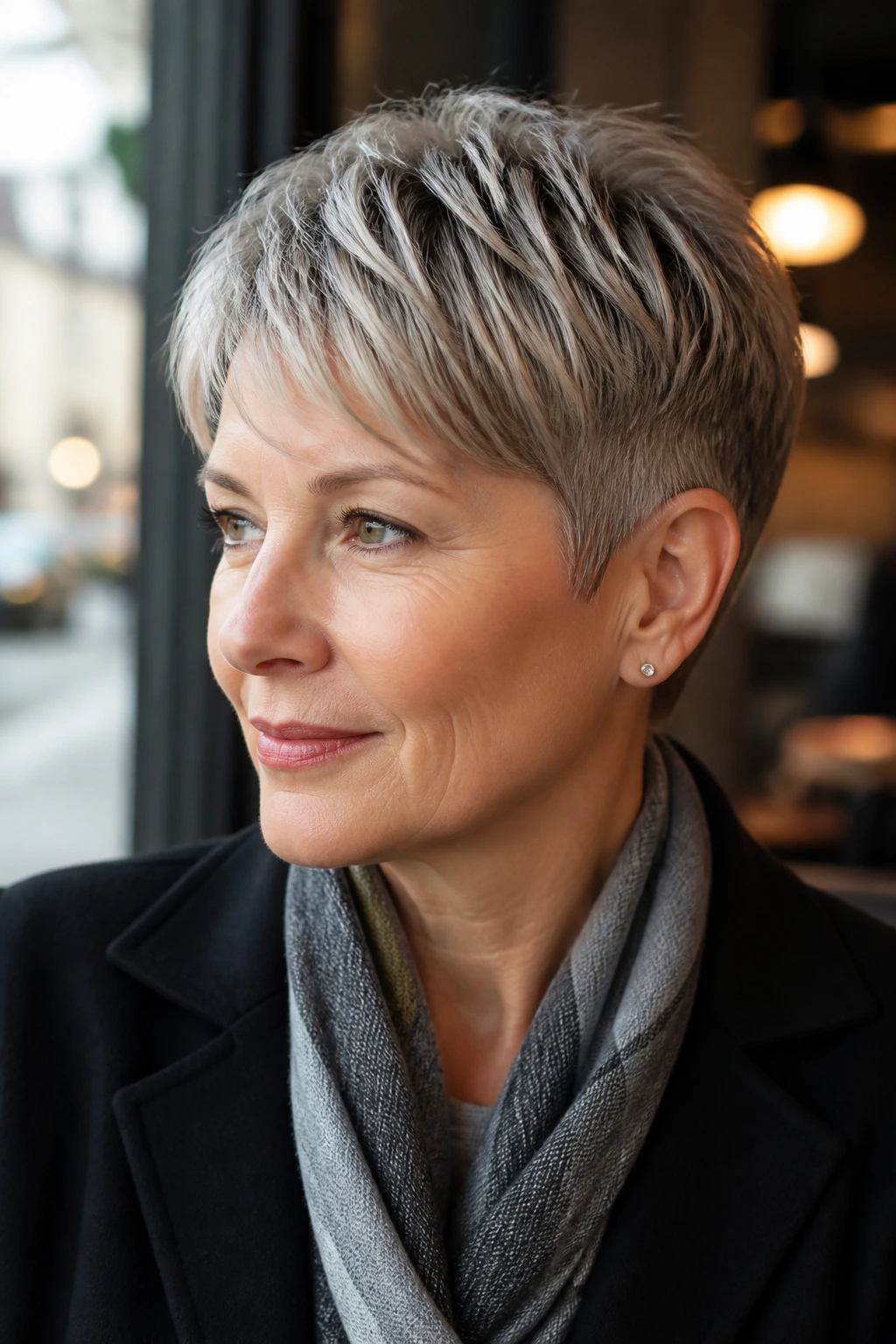
Cool ash blonde can look fantastic on a tapered crop, but only when it’s used with a light hand. On short hair, ash gives a crisp edge and a cleaner finish than warm blonde, especially if the haircut has a tight neckline or close-cropped sides.
This shade is useful when you want the top to stand out a little more than the sides. It also helps if your natural color tends to pull orange during lightening. Ash tones tame that warmth and keep the whole look calmer. The downside? If the tone goes too flat, it can read dull instead of cool. That’s why I’d rather see thin ash streaks than one solid ash overlay.
A small warning, since this comes up a lot: ash blonde can wash out some complexions. If your skin likes warmth, keep the ash in the ribbons and let the base stay beige or neutral.
6. Buttery Blonde Micro-Highlights on a Shaggy Bob
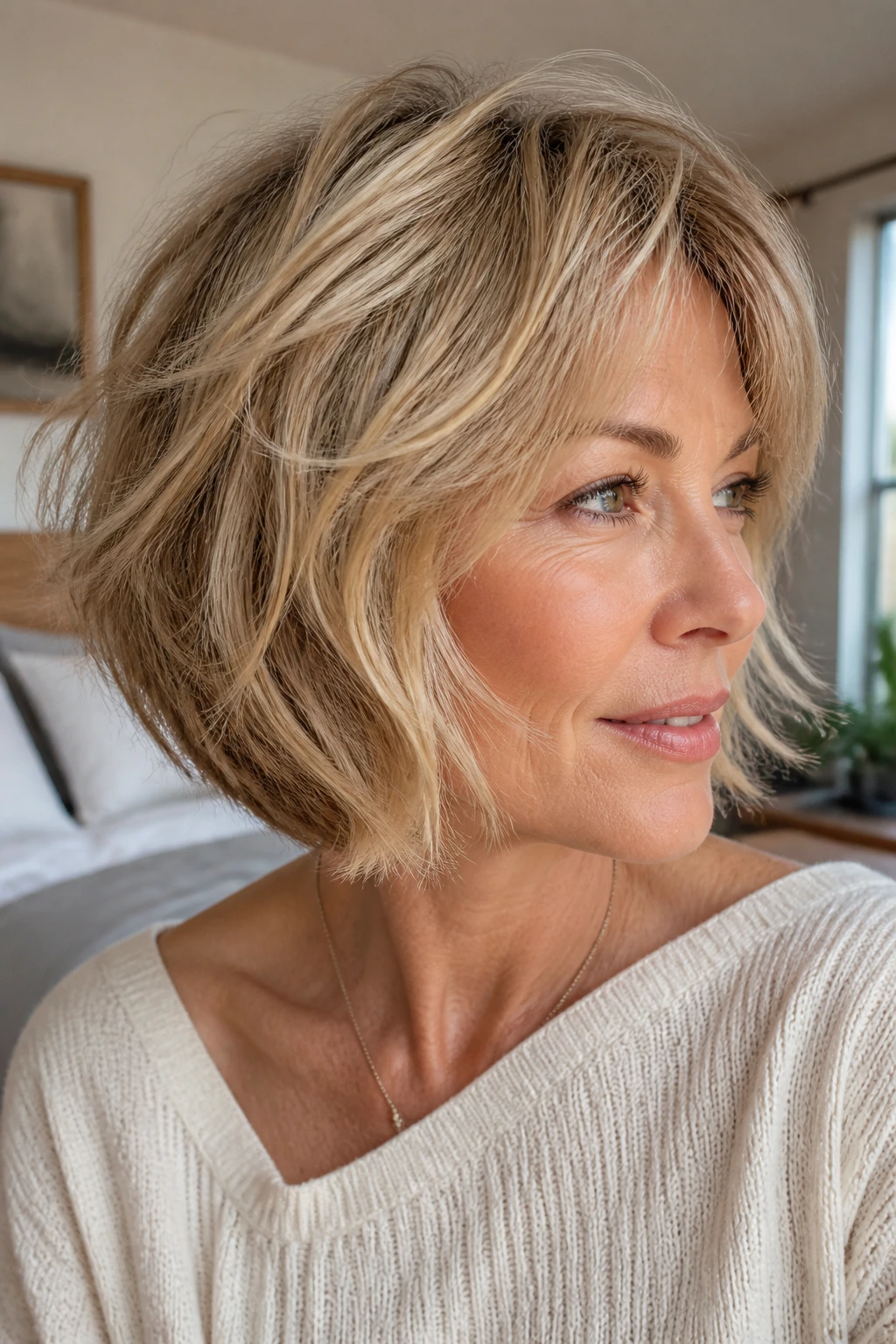
A shaggy bob asks for movement, and buttery blonde micro-highlights are one of the easiest ways to get it. Unlike chunky highlights, these tiny pieces melt into the haircut and make the layers look fuller from root to tip.
What Makes It Different
The buttery tone keeps the color soft. It has enough yellow-gold warmth to feel lively, but it stops short of looking brassy. On a shaggy bob, that matters because the haircut already has a lot going on — texture, fringe, broken ends, loose shape. The color should support all that, not compete with it.
Who It’s Best For
This is a smart choice if your bob air-dries with natural bend or wave. The highlights land where the layers move, which gives the cut more depth when it swings. It’s also a nice option if you dislike obvious regrowth lines.
Pro tip: Ask for the brightest pieces around the front and the crown, then let the underlayers stay a touch deeper.
7. Creamy Foilayage Around the Crown
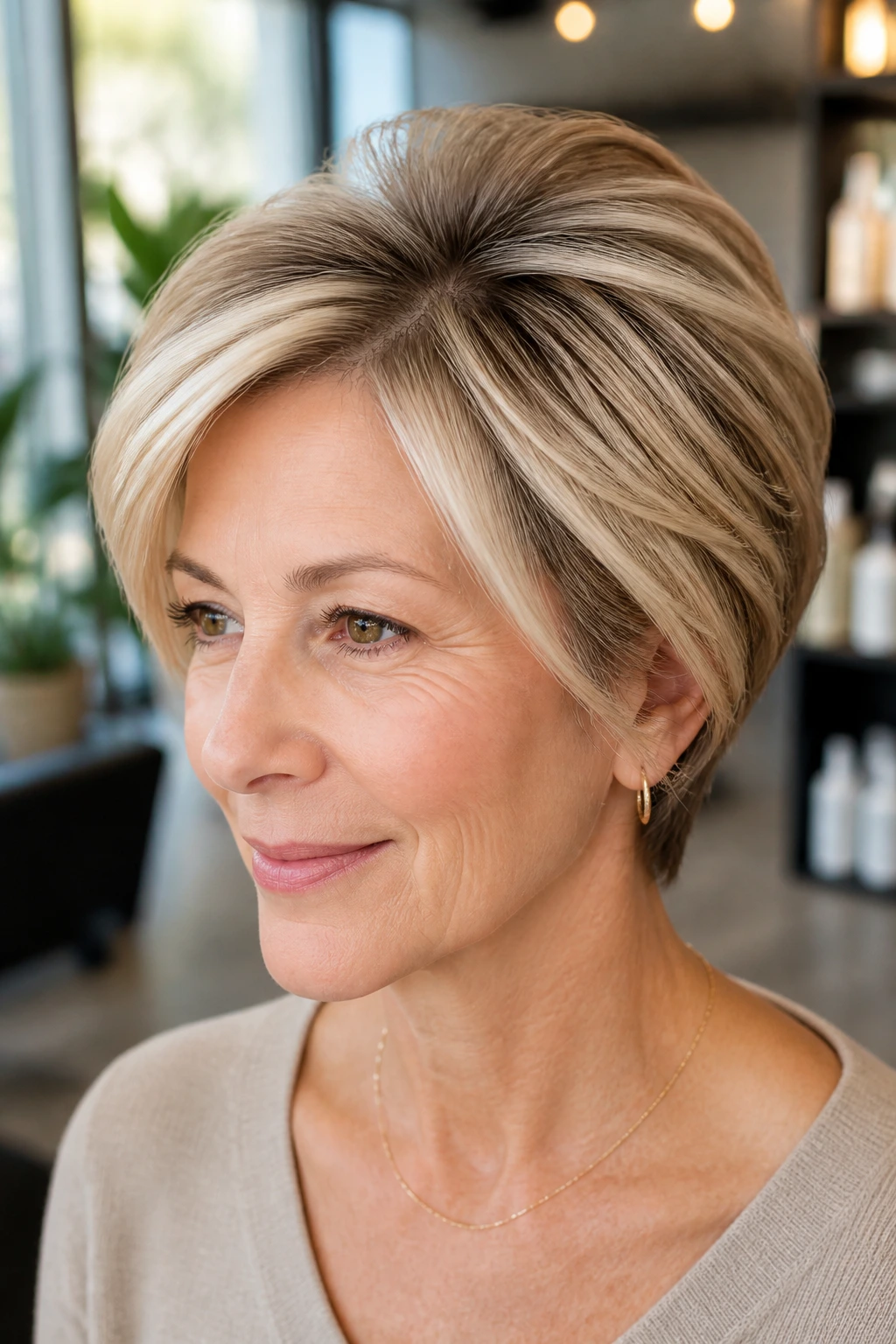
Creamy foilayage gives short hair a lifted, airy feel right where it needs it most: the top. Foilayage uses foils for more lift while keeping the painted, soft-looking placement you’d expect from balayage. On shorter styles, that combination is useful because the crown can sometimes sit flat.
Why It Works
The color at the crown creates the illusion of volume. Even a small amount of brightness there pulls the eye upward, which helps a short cut feel less heavy. Cream tones are especially flattering when you want shine without icy brightness.
How to Ask for It
- Request lightening mainly through the top panels and crown.
- Keep the back softer so the cut doesn’t lose shape.
- Ask for a creamy toner, not a stark white finish.
It’s a strong choice for bobs, crops, and longer pixies that need a bit more lift on top.
8. Sandy Blonde Money Piece on a Chin-Length Bob
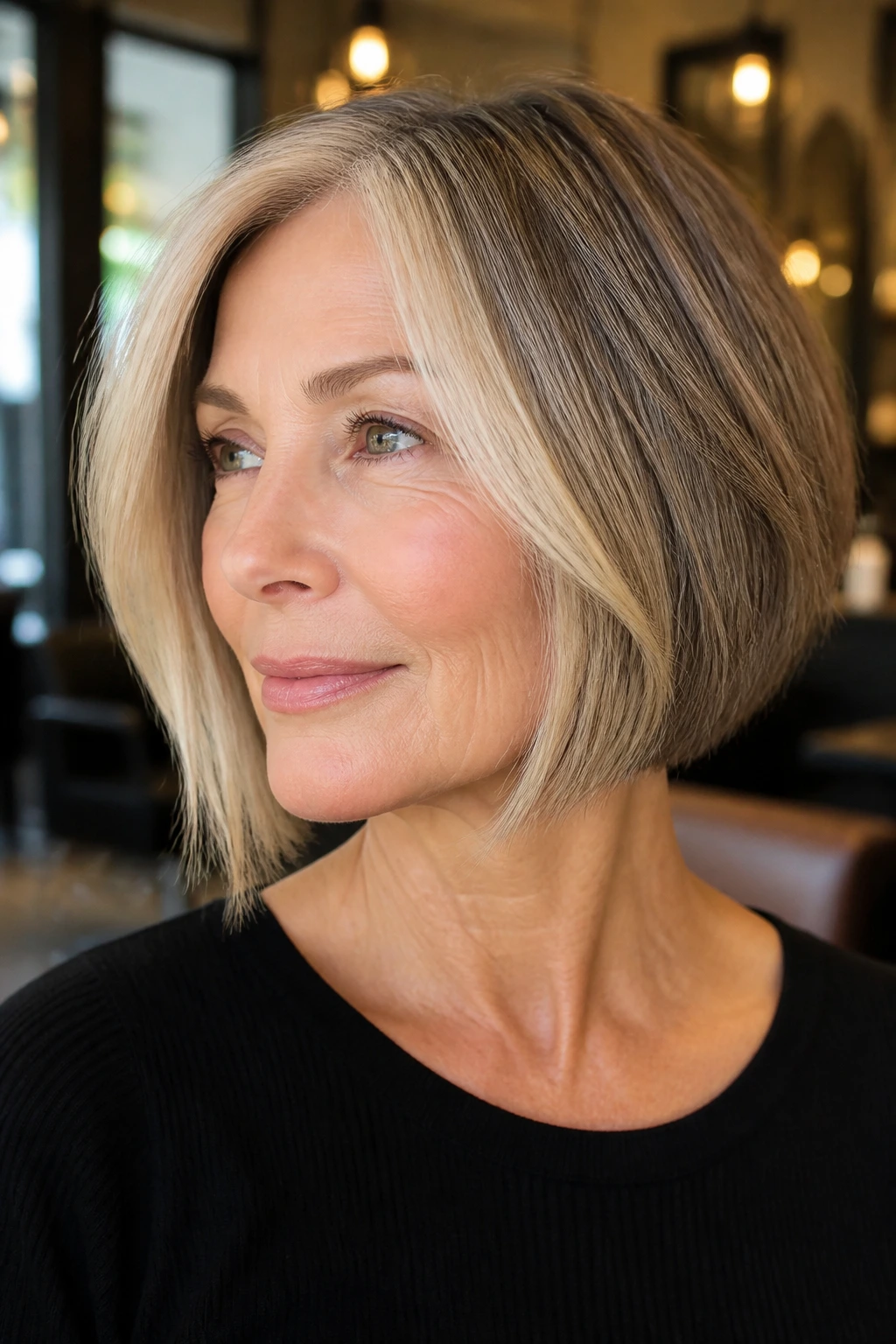
A sandy blonde money piece is one of the fastest ways to wake up a chin-length bob. The front sections are just light enough to brighten the face, while the rest of the bob can stay deeper and more natural.
I like this look because it doesn’t require a full-head transformation. The cut still reads like your own hair, only cleaner and brighter around the edges. Sandy blonde sits in that useful middle zone: not too gold, not too cool, and easy to wear with glasses, lipstick, or bare skin.
If your bob is parted to the side, this gets even better. The brighter side shows more movement, and the color follows the sweep of the haircut instead of sitting in a stiff frame. That makes the whole style feel more alive.
9. Pearl Blonde Highlights on a Short Crop
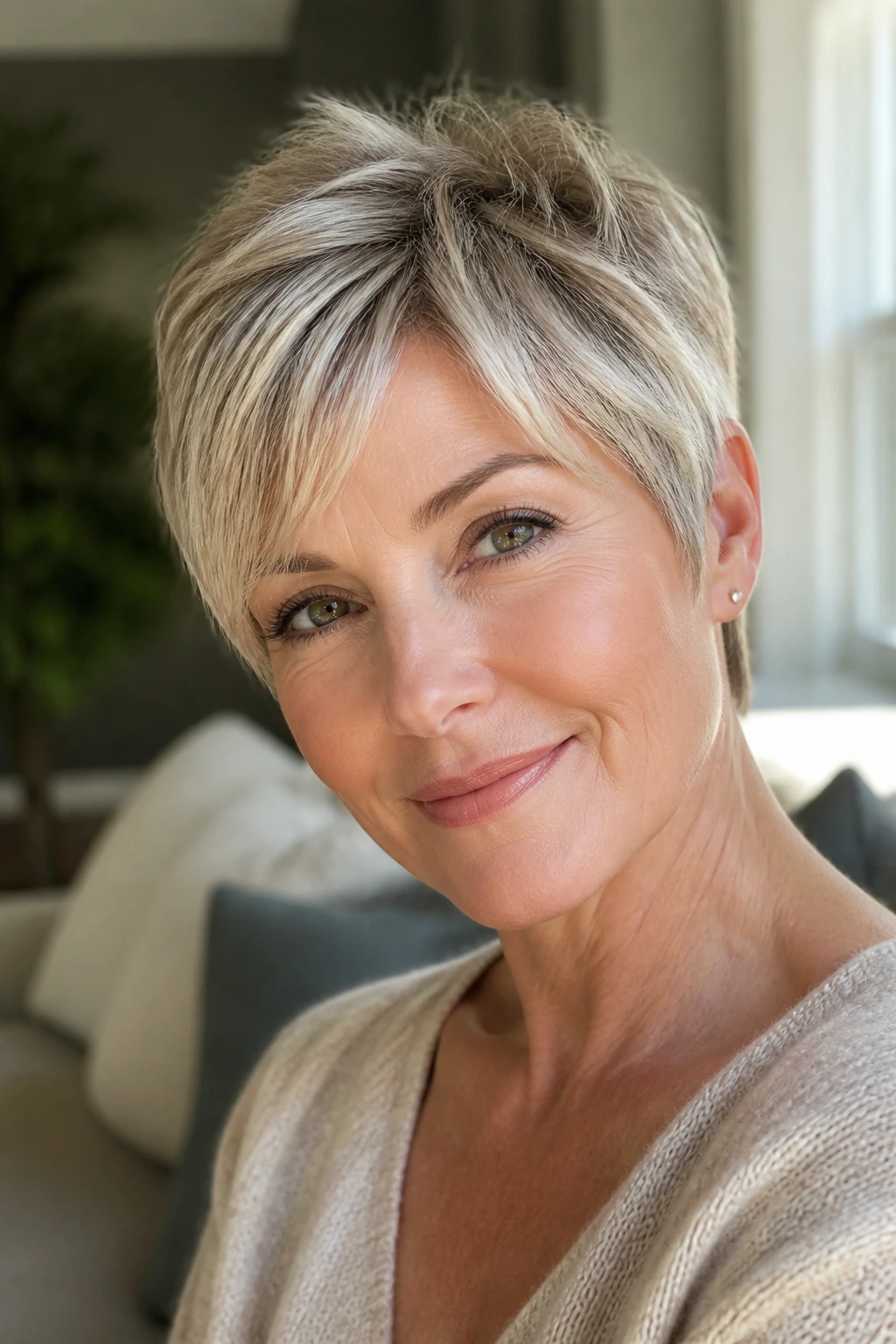
Pearl blonde has a soft sheen that can make a short crop look neat without feeling severe. It’s cooler than champagne, but not so pale that it turns chalky. That middle ground is exactly why it works on short hair over 50.
Why It Flatters
The shade reflects light in a quiet way. It doesn’t scream “highlighted,” which is a blessing on short cuts where obvious streaks can get fussy fast. Pearl blonde also pairs well with gray blending, because the tone can sit beside silver and white strands without looking accidental.
How to Keep It Fresh
- Use a gentle violet shampoo about once a week, not every wash.
- Keep the toner soft so the hair doesn’t go flat.
- Pair it with a cropped cut that has clean edges.
This is the blonde I’d pick for someone who wants polish first and brightness second.
10. Caramel-to-Blonde Balayage on Salt-and-Pepper Hair
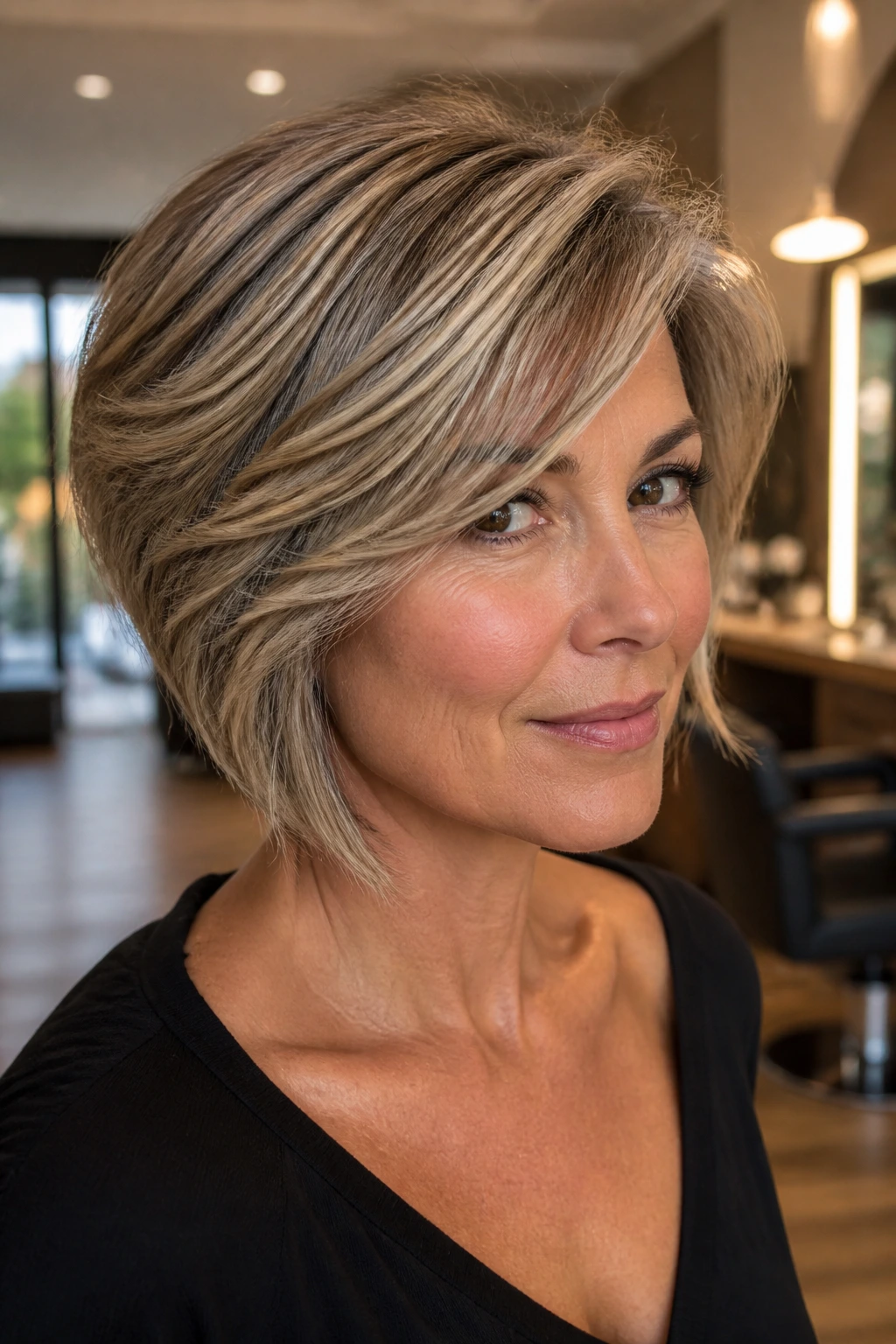
Salt-and-pepper hair can look incredibly good with caramel-to-blonde balayage because the blend respects the darker pieces instead of trying to erase them. You get a warm bridge from silver and charcoal into lighter ends, and that makes the whole head feel intentional.
The nice part is that this style grows out with a little grace. The darker natural strands stay part of the look, so regrowth doesn’t feel like a mistake. On short hair, that matters even more, because roots show faster and the cut can lose its shape if the color line is too sharp.
This works especially well on layered bobs and pixies where the pieces can move. The balayage follows that movement and gives the hair more depth when it’s tucked behind the ear or pushed off the face.
11. Ice Blonde Tips on a Textured Pixie
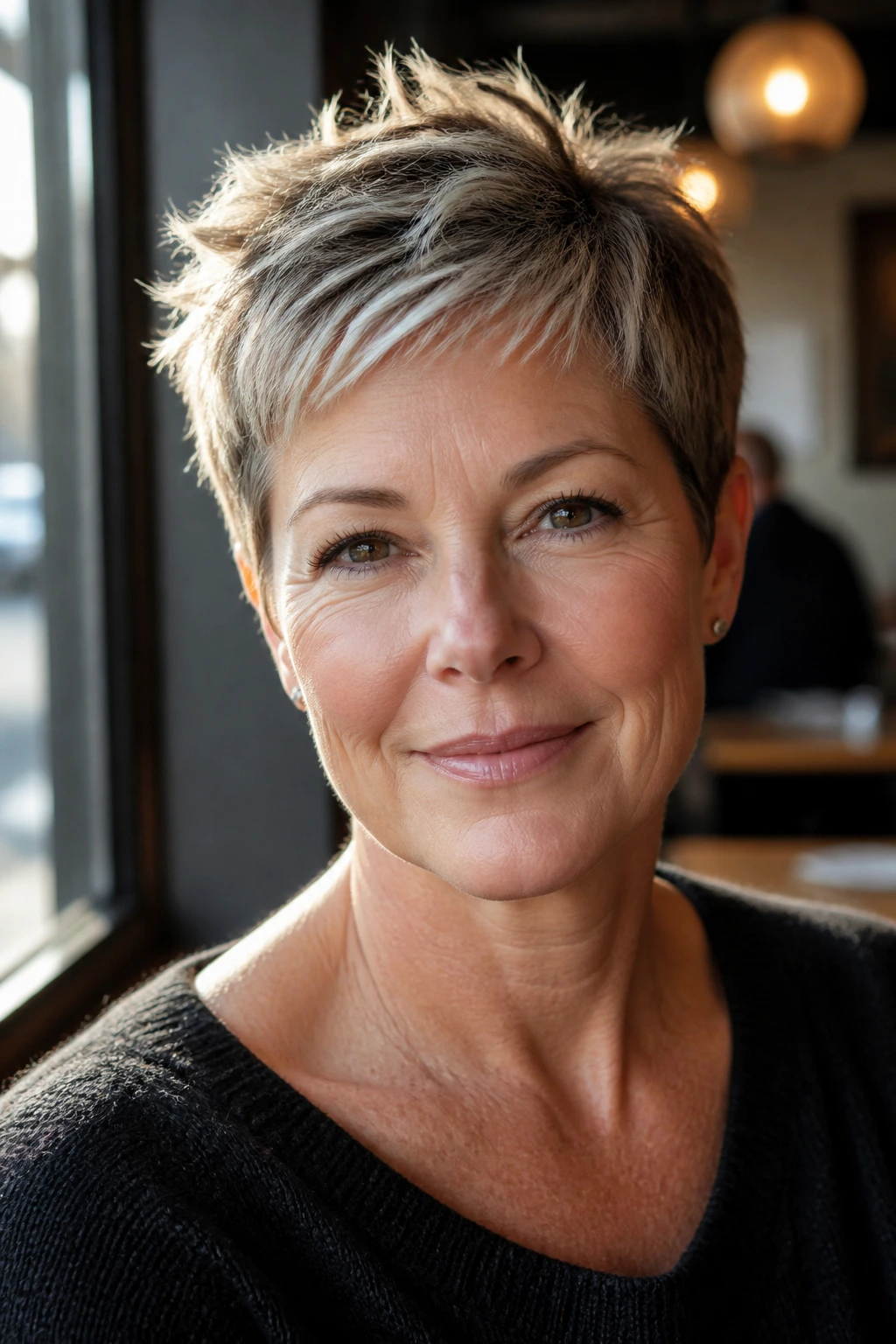
Ice blonde tips are for someone who wants a sharper, bolder finish on a textured pixie. Instead of lightening the whole head, the brightest color sits at the ends and tips of the layers, where it can sharpen the shape.
That look can be striking on thick hair, because the texture gives the pale ends something to sit on. The cut feels piecey and deliberate, not fuzzy. If the hair is fragile, though, I’d be careful here. Ice blonde asks a lot from the hair, and short styles still need strength to hold their shape.
Keep the sides darker if you try this. Otherwise the whole pixie can lose contrast and look washed out. A deeper base under pale tips gives the style its bite.
12. Mushroom Blonde Lowlights with Blonde Highlights
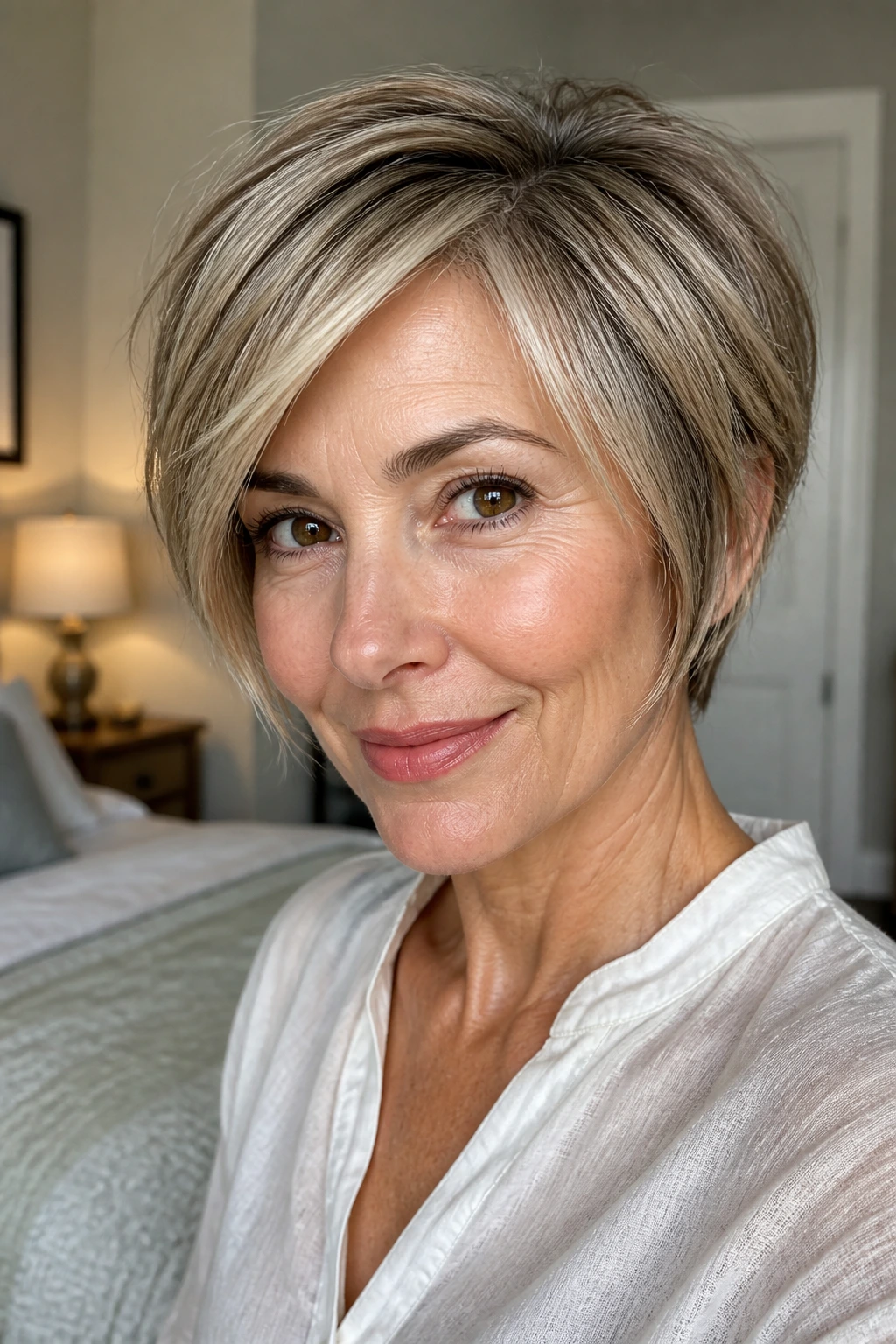
Mushroom blonde is a clever move for short hair that needs depth. It mixes cool taupe-brown notes with lighter blonde ribbons, so the color feels dimensional instead of flat. On shorter cuts, that dimension matters because there isn’t much length to show movement.
Unlike an all-over pale blonde, mushroom blonde keeps the base grounded. The lowlights create shadows in the right places, and the lighter pieces sit on top like flashes of brightness. The result is softer than a high-contrast highlight job, but more interesting than one flat shade.
This is a smart pick for finer hair that needs the illusion of thickness. It also plays nicely with gray, because the cooler neutral tones don’t fight silver strands the way warm gold sometimes can.
13. Champagne Blonde Over Silver Gray
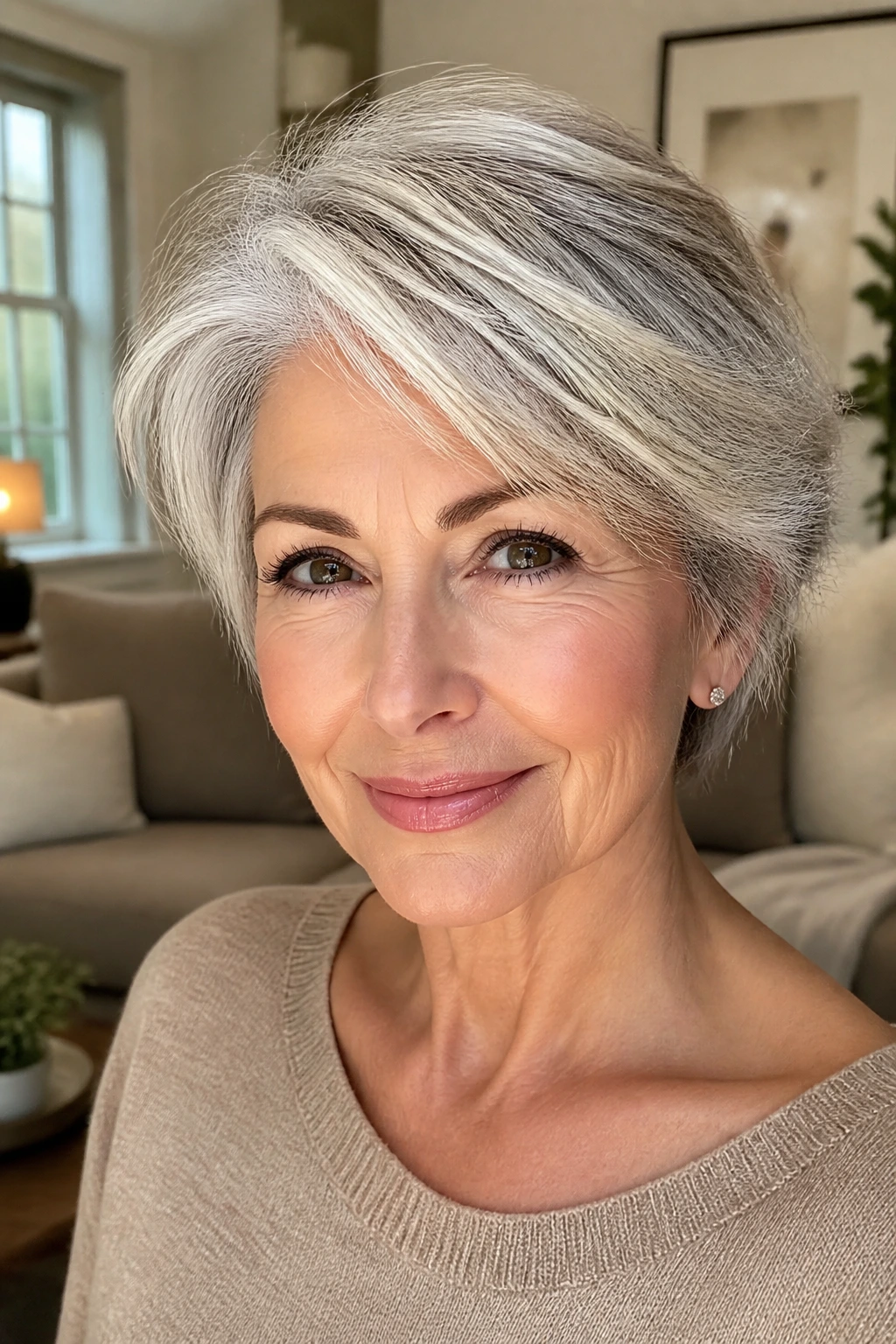
Champagne blonde over silver gray can look elegant in a way that feels easy, not fussy. The silver gives the hair brightness at the root and through the natural strands, while the champagne tone adds warmth and gloss on top. That combination keeps the color from reading flat.
What to Ask For
- Ask for a soft glaze or toner that adds champagne warmth.
- Keep some silver visible so the hair keeps its sparkle.
- Focus the brighter pieces around the hairline and top layers.
This works best when you want to blend instead of cover. If your natural gray is already coming in strongly, champagne can make the transition feel more deliberate and less abrupt.
The style is especially nice on cropped bobs and layered pixies, because the light and dark pieces can sit close together without looking busy.
14. Golden Wheat Highlights on a Feathered Pixie
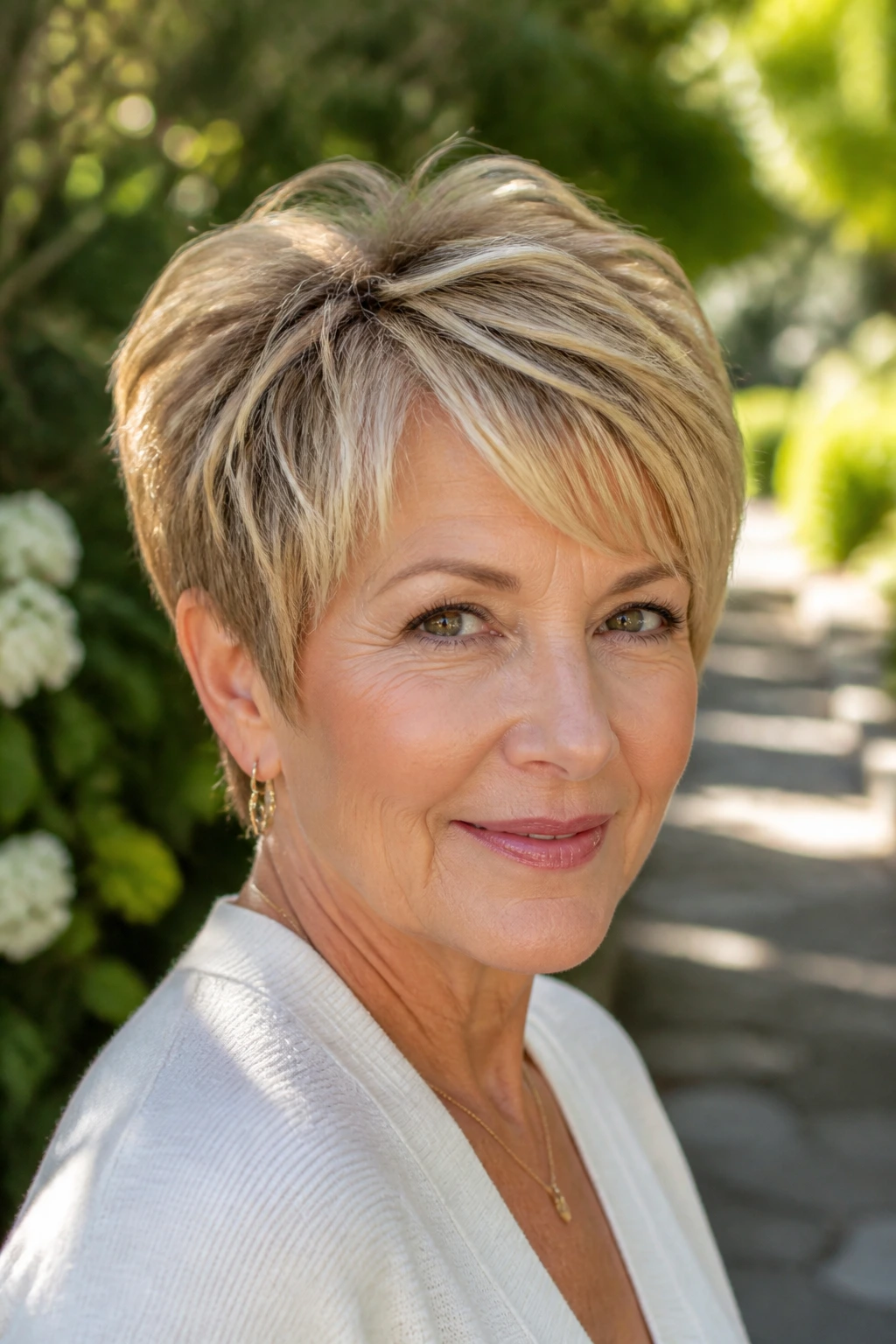
Golden wheat highlights are lovely on a feathered pixie because they follow the airy shape of the cut. Feathering creates soft edges and movement, and wheat blonde adds warmth that keeps the style from feeling too sharp.
I like this shade when the goal is fullness. Warm blonde tends to make short hair look a little thicker than cool blonde, especially if the strands are fine or there’s a lot of natural silver mixed in. The gold in the wheat tone gives the eye more to hold onto.
This style works best when the front fringe and crown carry the brightest pieces. The sides can stay a touch deeper. That balance keeps the whole pixie from looking like one bright helmet, which is the trap people fall into more often than they’d admit.
15. Face-Brightening Streaks on a Side-Swept Bob
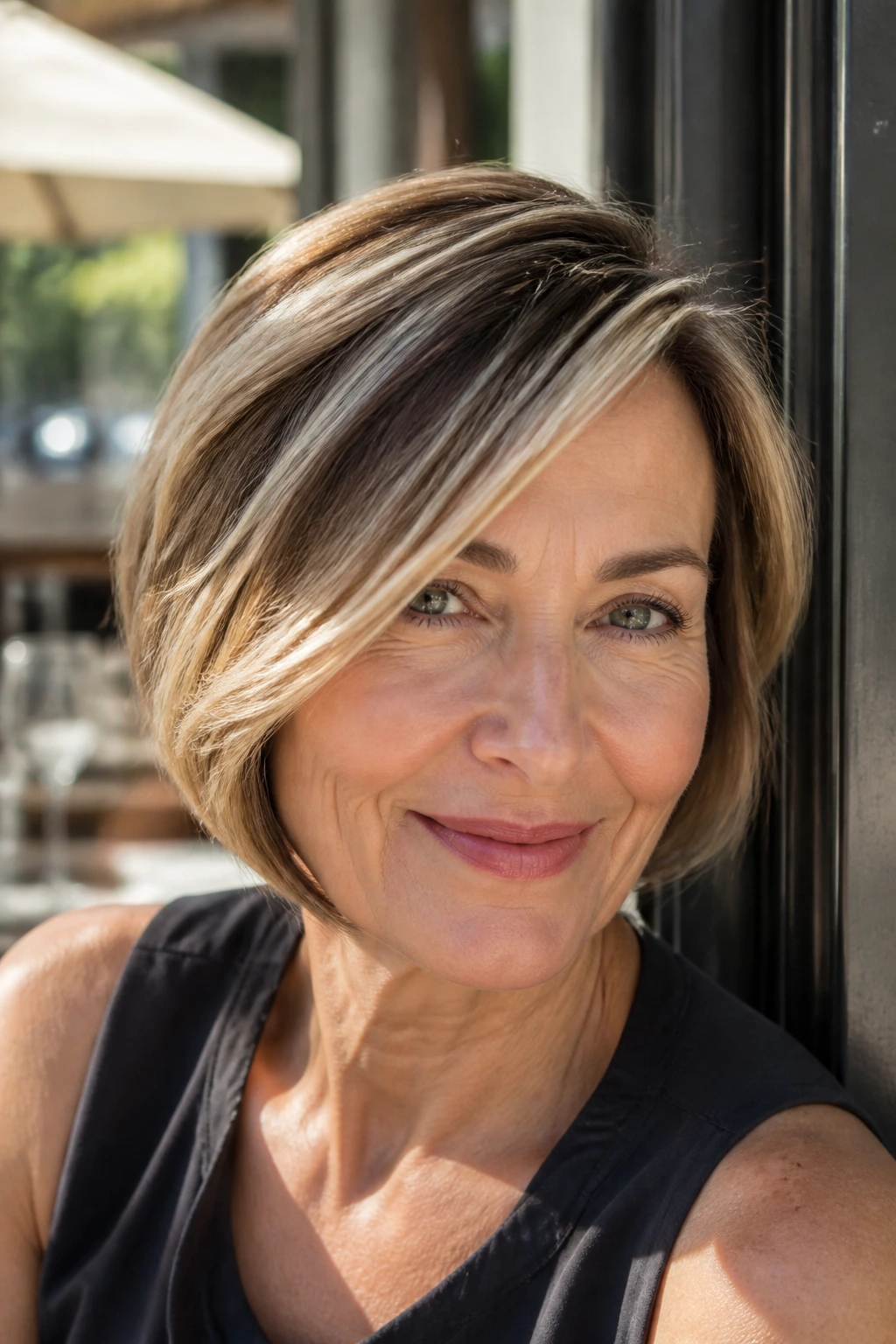
A side-swept bob gives you a built-in path for color, and face-brightening streaks can follow that line beautifully. Instead of scattering light all over the head, the highlight placement leans into the sweep of the cut. That makes the hair look intentional from the first glance.
How It Helps the Cut
The brighter streaks can sit from the part down toward the cheekbone, which pulls attention upward and inward. That’s useful if you want the face to feel softer or if you like wearing one side tucked back. The eye goes straight to the color, then to the shape of the bob.
How to Wear It
- Keep the streaks slim, not chunky.
- Place them where the hair naturally falls forward.
- Finish with a round brush or soft bend iron to show the movement.
This is a good choice when you want short hair to feel polished without looking stiff.
16. Soft Bronde for Short Hair
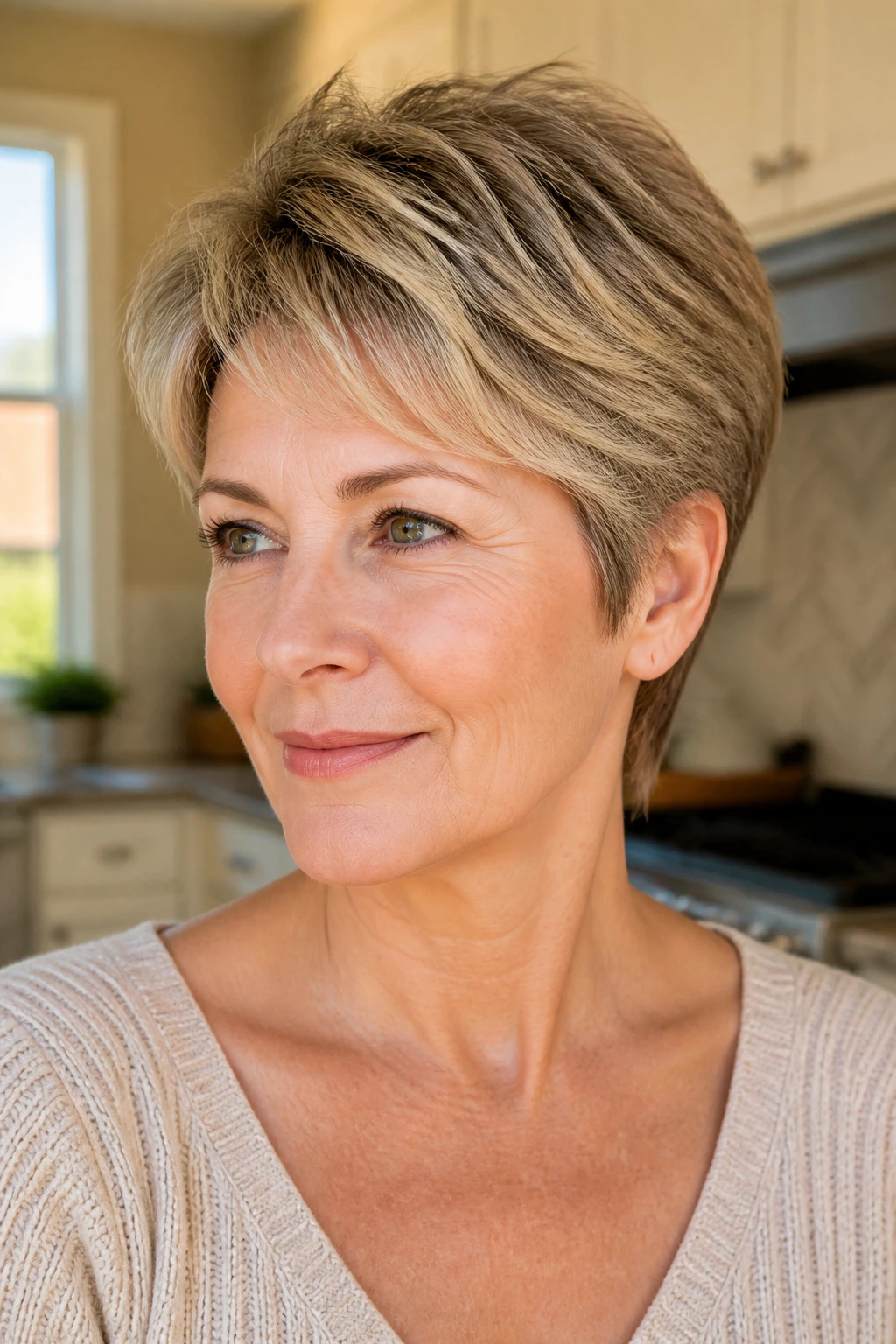
Bronde is a good answer when you like the idea of blonde but don’t want to leave your darker base behind. On short hair, a soft bronde blend keeps the overall look grounded while still adding enough lightness to freshen the cut.
The best bronde jobs don’t look painted on in one obvious strip. They move from brown to beige to light blonde in small changes, which is exactly what short hair needs if you want dimension. That little shift in tone makes the layers show up better, especially on a bob or shag with movement.
Quick Notes
- Use a neutral or beige base so the blonde doesn’t turn brassy.
- Ask for lightness mainly on the top and front.
- Bronde is kinder to grow-out than high-contrast blonde.
It’s one of the easiest shades to live with if you want softness over drama.
17. Vanilla Blonde Highlights on a Rounded Bob
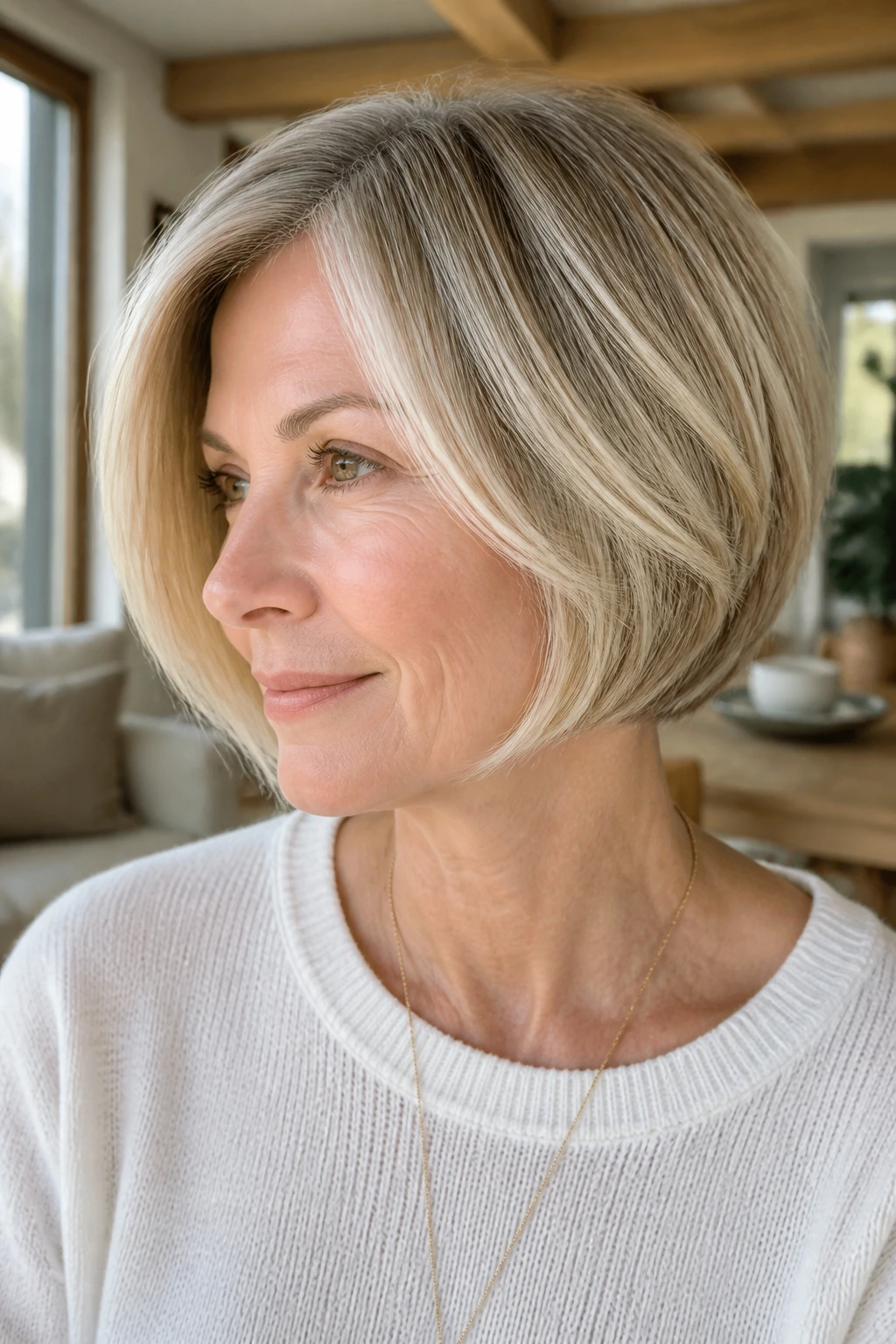
Vanilla blonde has a creamy, smooth look that suits a rounded bob beautifully. A rounded bob already has a soft outline, and vanilla highlights keep that shape gentle instead of harsh. The hair looks clean, but never harsh.
This is the kind of blonde I’d point to when someone wants brightness without losing elegance. It sits somewhere between beige and warm pale blonde, which makes it useful for skin that needs a little warmth but not yellow. The highlight placement should follow the curve of the cut, especially around the sides and front.
A rounded bob tends to shine best when the ends are polished. Vanilla blonde gives you that neat finish while still adding movement at the crown. It’s subtle, but it doesn’t disappear.
18. Dimensional Blonde Veils on a Chin-Length Shag
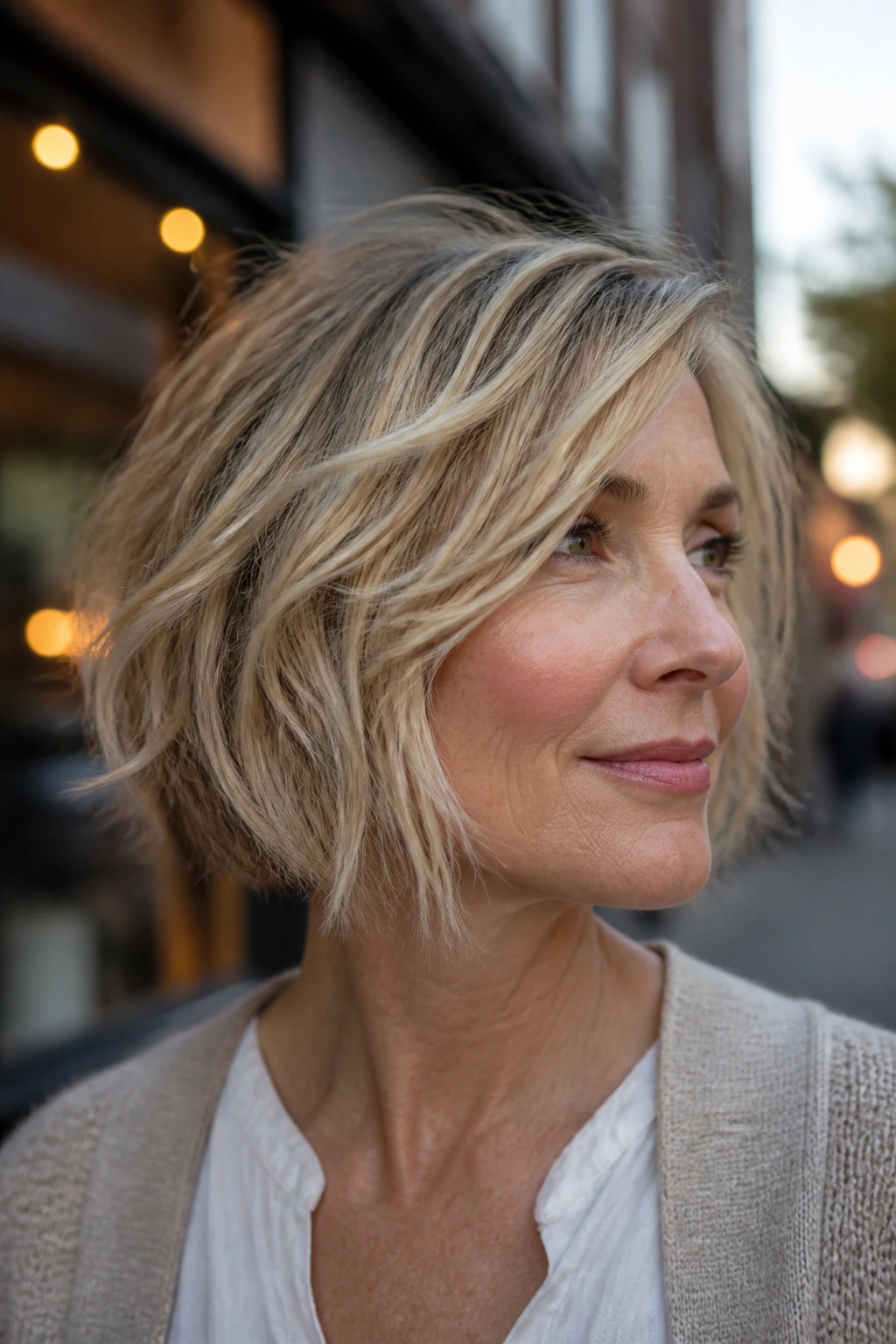
Dimensional blonde veils are a smart match for a chin-length shag because the color moves with the layers rather than sitting on top of them. Veils are softer than bold streaks; they look like translucent pieces of light drifting through the haircut.
Unlike a classic highlight set, veils don’t need to be evenly spaced or identical in width. They work better when they’re irregular. That makes the shag feel lived-in and easy, which is usually the point with this cut anyway. You want the hair to look like it’s doing something on its own.
This style is especially good if you air-dry or use a diffuser. The light catches the bends in the hair and gives the whole cut more shape. It’s one of those looks that gets better when the hair is slightly messy.
19. Frosted Blonde Crown Highlights for Lift
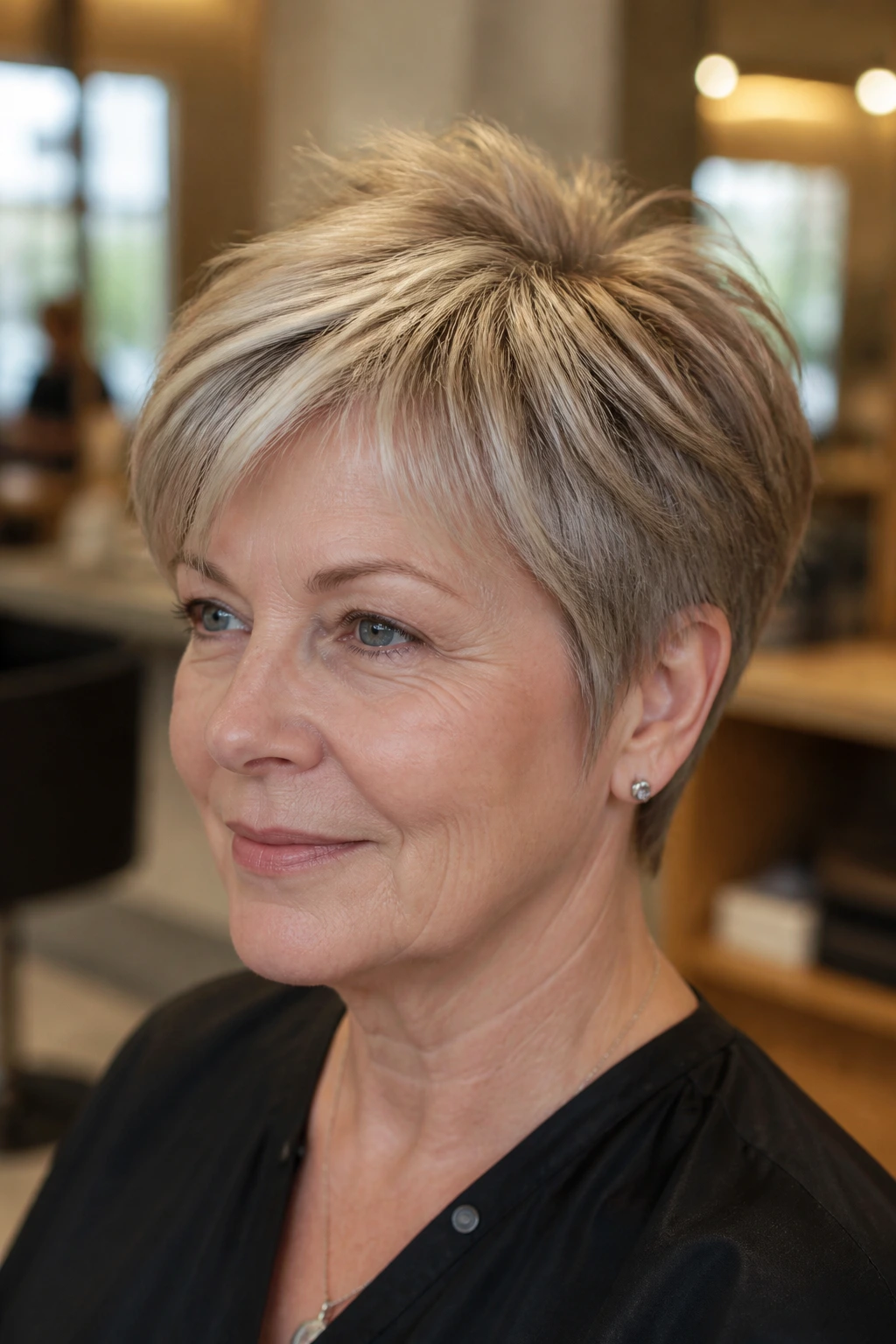
Frosted blonde at the crown is one of the simplest ways to create lift on short hair. The lightest pieces sit where the eye expects volume, so the cut feels a little taller and a little lighter on top.
Where to Put the Light
- Concentrate the brightest pieces at the top of the head and crown.
- Keep the sides less bright so the shape doesn’t balloon outward.
- Use a cool or neutral toner if you want the frost effect to stay clean.
This is a smart move for layered crops and pixies that can collapse near the part line. It gives the style a boost even before you reach for a brush. A little root lift spray helps, but the color does part of the work on its own.
If you like short hair that looks neat without looking flat, this is one of the best placements to ask for.
20. Beige Blonde Slices on a Razor Cut Pixie
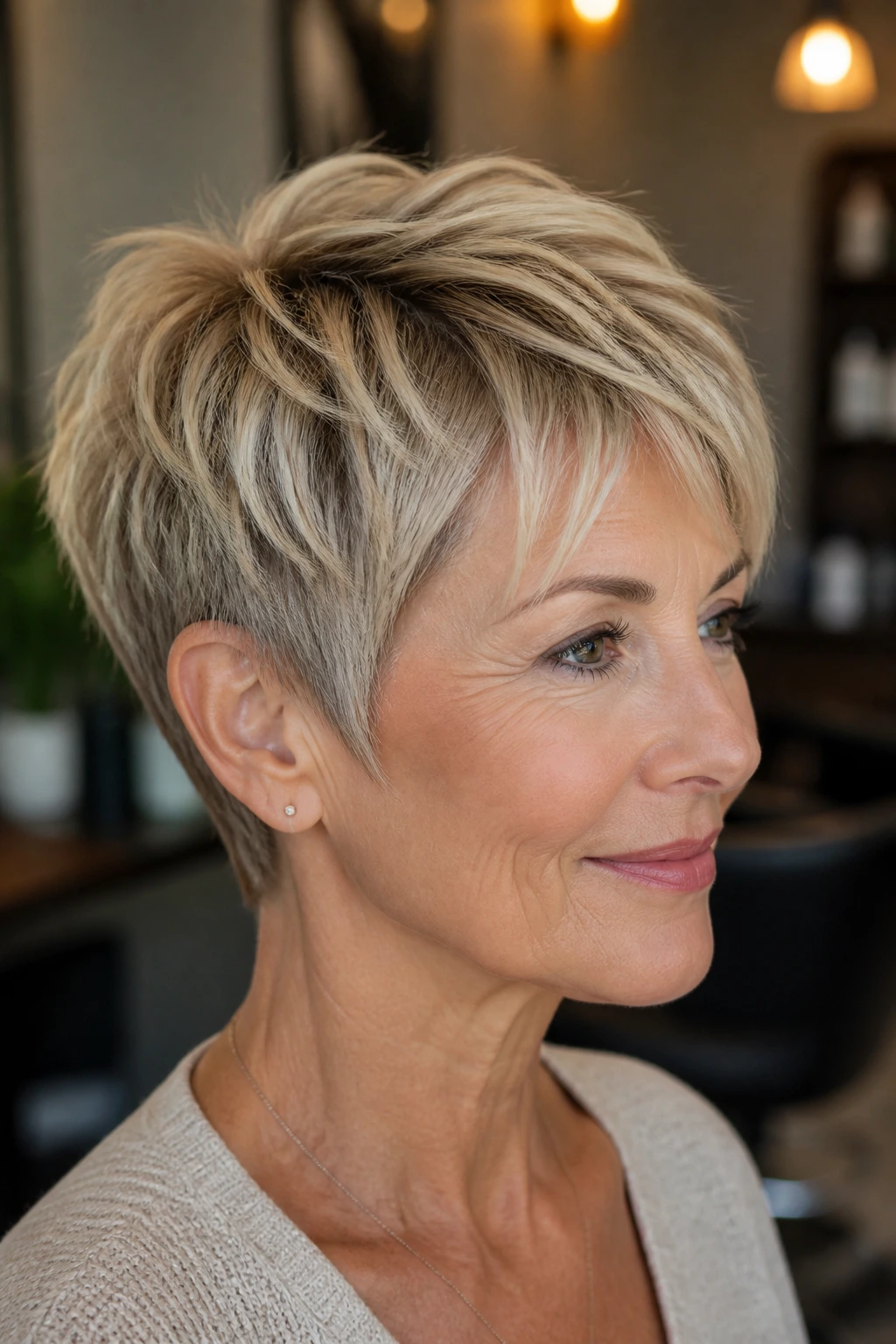
Beige blonde slices add clean shape to a razor cut pixie. Because razor cuts already have a sharper, more fragmented texture, sliced highlights can make the edges show up in a clearer way. The beige tone keeps the look soft enough to wear every day.
This is not the place for giant blocks of blonde. A pixie cut can lose its shape fast if the contrast gets too wide. Thin slices let the hair move, especially around the fringe and crown. They also help the cut look fuller without creating a heavy color band.
I like this on hair that has a little natural bend. The slices catch the texture and break up the silhouette. The cut ends up looking modern without trying too hard, which is usually the sweet spot.
21. Sun-Kissed Blonde Ends on a Short Crop
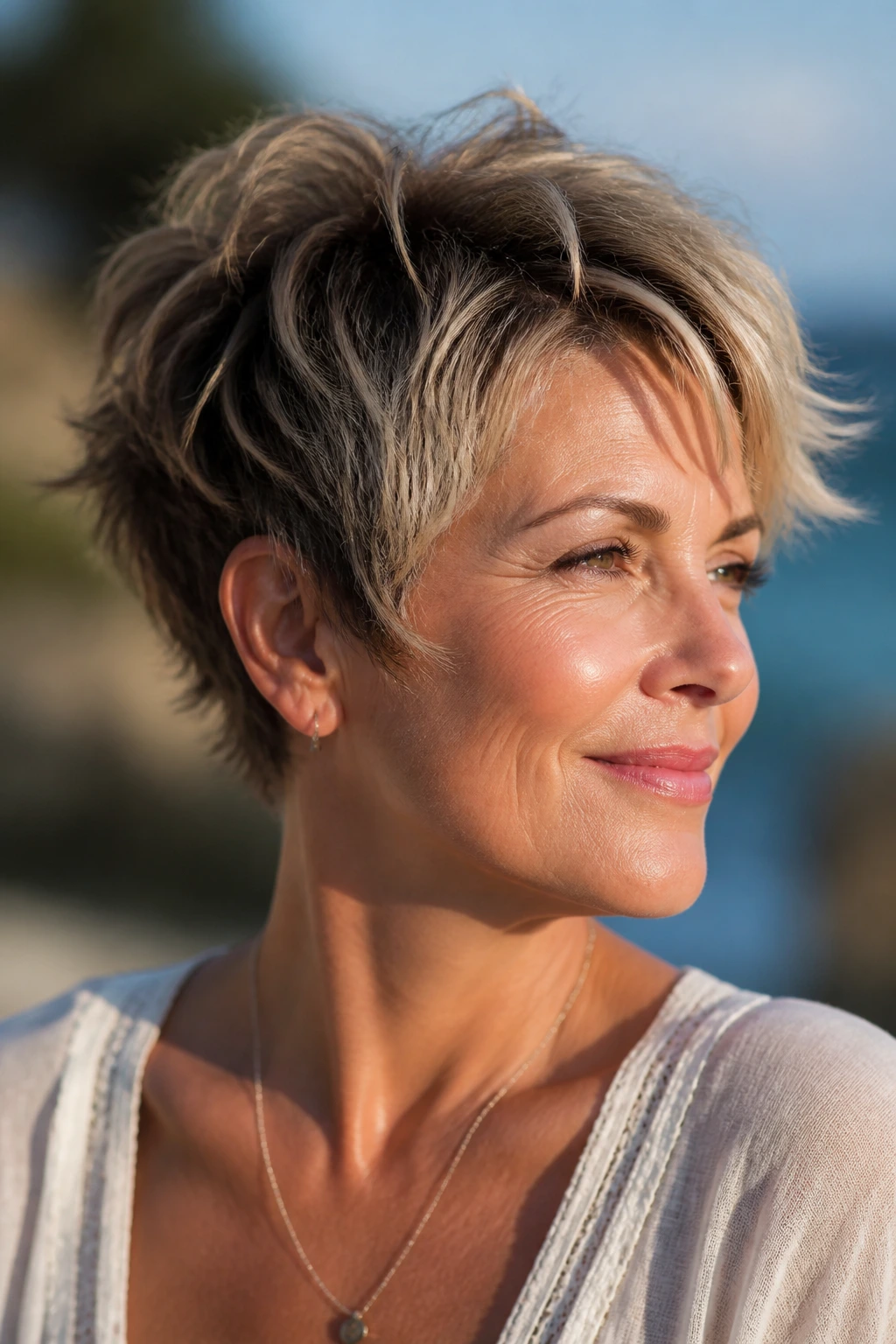
Sun-kissed ends are a good choice when you want short hair to look lighter without touching the roots much. The color concentrates at the ends of the top layers, so the cut gets a soft, grown-in brightness that feels easy.
Where It Works Best
A short crop with texture through the top can take this beautifully. The ends are where the movement lives, so that’s where the light should land. It’s also one of the lower-maintenance blonde looks on short hair, because the root area stays more natural.
How to Keep It Soft
- Keep the lightest pieces only on the outer layers.
- Ask for a beige-gold tone, not a hard platinum.
- Style with a little texture cream so the ends separate nicely.
This is a good option if you want a casual blonde that doesn’t look too formal or salon-perfect.
22. Cream Soda Blonde on Wavy Short Hair
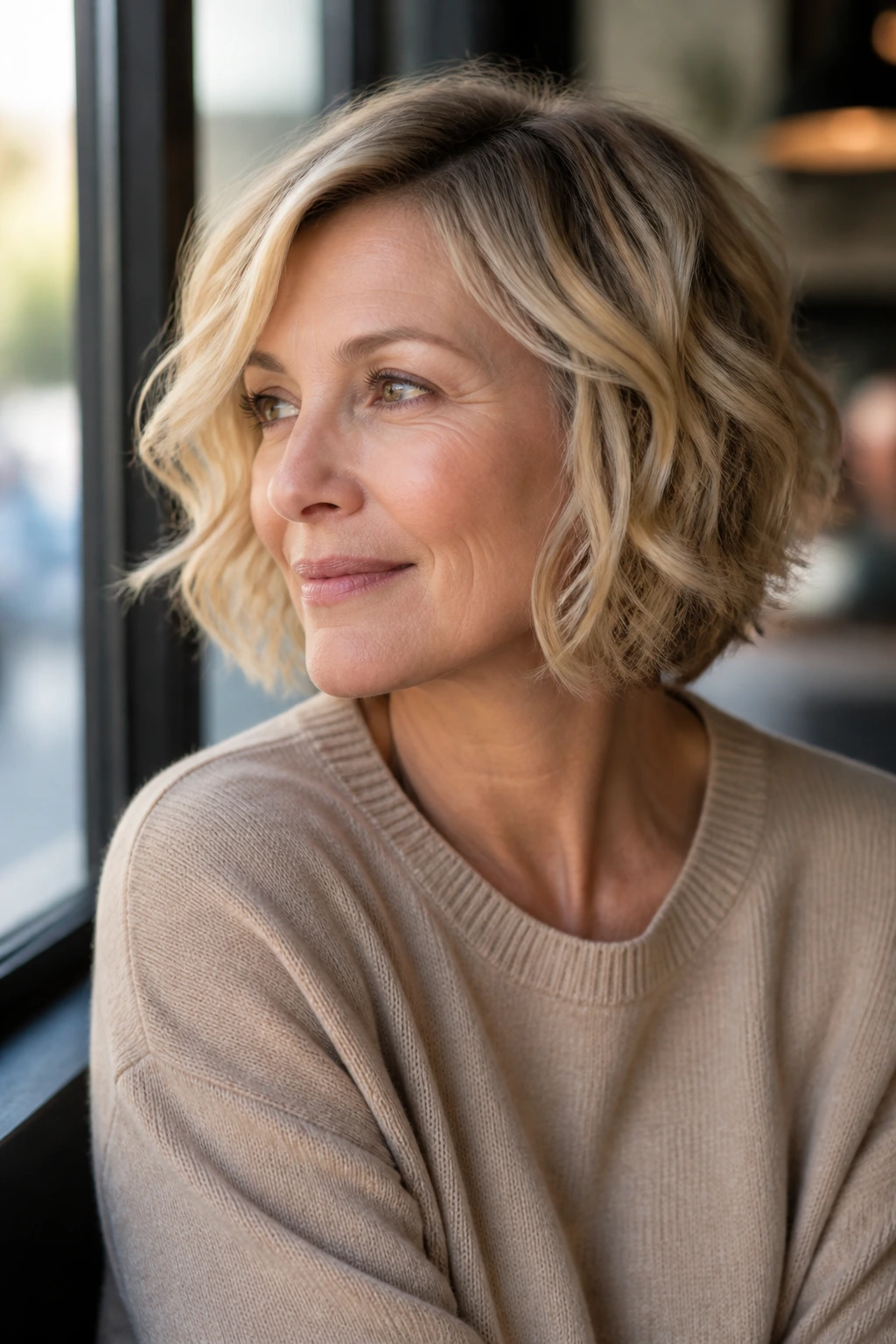
Cream soda blonde has a soft, slightly warm brightness that suits waves better than a stark cool blonde does. On short wavy hair, it gives the color a bit of bounce and keeps the shape from looking heavy.
The shade usually sits somewhere between beige, vanilla, and pale gold. That blend is useful because waves show color changes fast. A single flat tone can get lost, while cream soda gives the bend of the hair something to catch. I’d ask for a glossy finish rather than a dry, over-lightened one.
- Best on waves that move around the jaw or cheek.
- Use a soft root shadow for easier regrowth.
- Pair it with loose styling, not a stiff blowout.
This color has a friendly, easygoing feel that suits short hair well.
23. Warm Butter Blonde on a French Bob
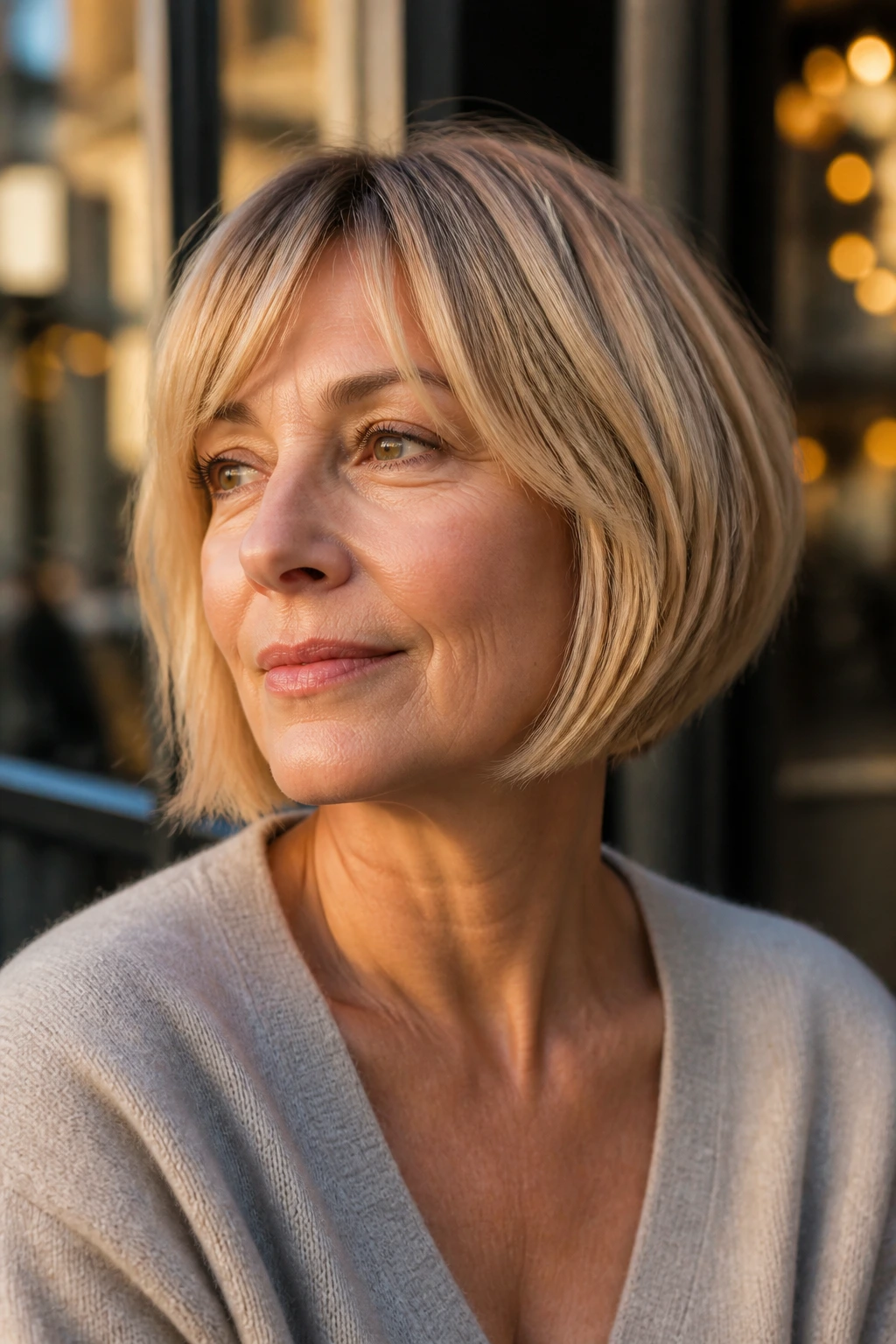
A French bob with warm butter blonde highlights is one of those pairings that just makes sense. The cut is blunt and chic; the color softens the line so it feels less severe and more wearable.
Butter blonde brings in enough gold to keep the bob from looking washed out, especially if the fringe sits near the brows. On short hair, that warmth can be a gift. It reflects light around the face and gives the skin a little glow without going orange. The key is to keep the highlights fine enough that the blunt edge of the bob still shows.
This shade works well if your natural base is medium brown, dark blonde, or a soft silver-brown mix. It doesn’t fight the cut. It just warms it up.
24. Platinum Peekaboo Highlights under Short Layers
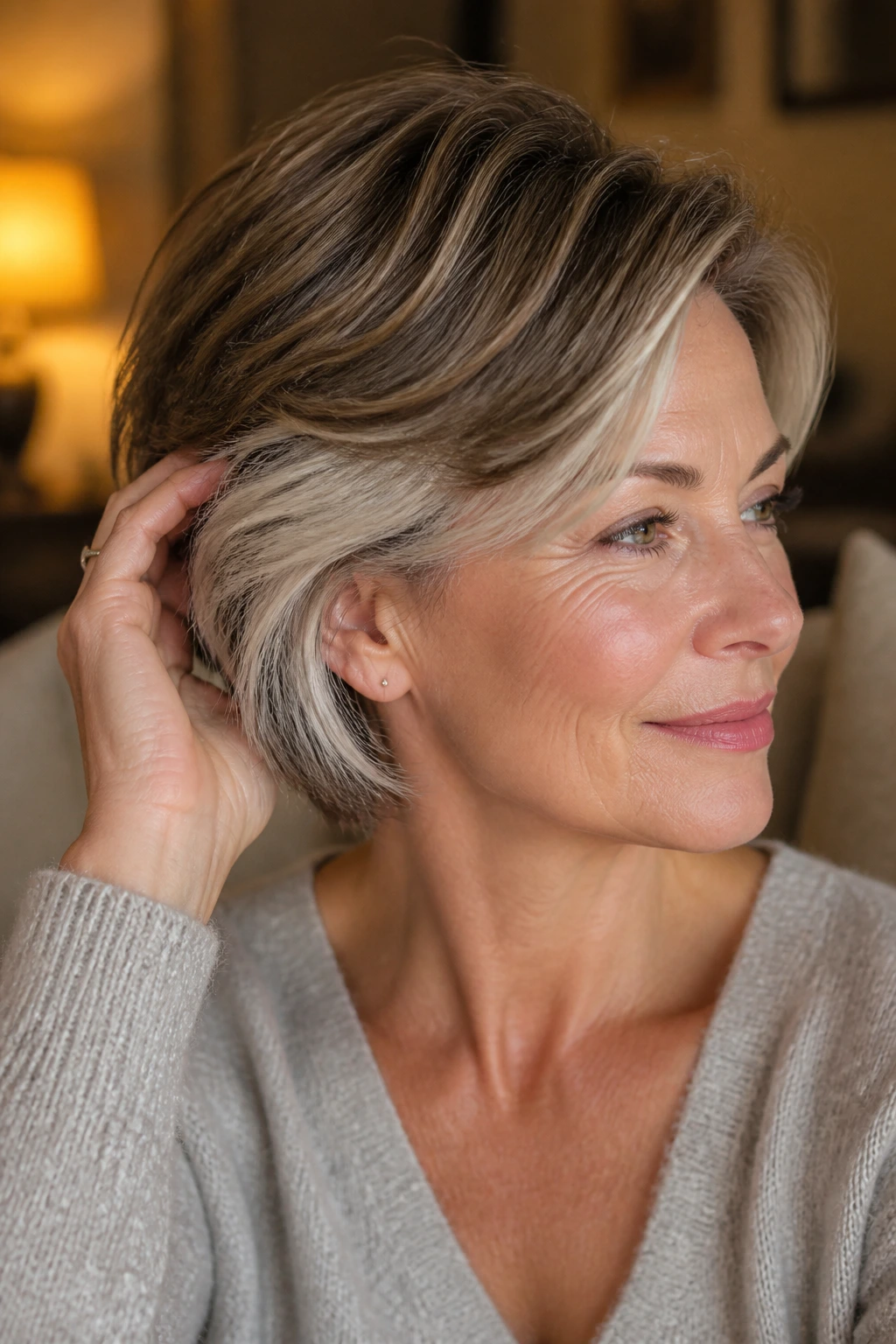
Platinum peekaboo highlights are for someone who wants brightness with a little surprise. Instead of putting the lightest pieces on top, they sit under the layers and show when the hair moves, flips, or gets tucked behind the ear.
That makes them easier to wear than full platinum, which can be unforgiving on short hair. Peekaboo placement lets the hair keep depth at the surface while still giving flashes of brightness underneath. It’s a clever choice for a short layered bob or a longer pixie with enough movement to reveal the color.
This look is strongest when the top stays neutral and the underside is lighter. Too much platinum on top can flatten the whole shape. Keep the surprise hidden, and the color feels sharper.
25. Neutral Blonde Halo Around the Hairline
A neutral blonde halo around the hairline can make a short cut look brighter in a very controlled way. The light wraps just around the face, near the temples, fringe, and part, so the rest of the hair can stay deeper and easier to manage.
Why It Flatter Short Cuts
The halo effect acts like a soft frame. It gives the skin a little lift and can make a bob or pixie seem more polished without changing the whole head. Neutral blonde is especially useful if you don’t want the color to lean too gold or too cool.
What to Ask For
- Keep the halo narrow — about 1/4 to 1/2 inch of brightness near the edge.
- Ask for a neutral toner so it stays balanced.
- Leave the back and underlayers softer for contrast.
This is one of the neatest, cleanest ways to brighten short hair.
26. Strawberry-Blonde Accent Pieces for Warm Complexions
Strawberry blonde is often misunderstood. It does not have to mean bright copper or anything theatrical. In short hair, a few strawberry-blonde accent pieces can add warmth, shine, and a little lift around the face without turning the cut orange.
That warmth is especially nice on complexions that like peach, gold, or rose tones. The color helps short hair look alive, which matters when the haircut is cropped close and every strand shows. A few accent pieces around the fringe or top layer are usually enough.
I’d choose this when the goal is softness, not contrast. It’s also a good bridge shade if you’re moving away from dark color but don’t want to go straight into pale blonde. The transition feels smoother, and the result is usually kinder to the skin.
27. Ash-Beige Balayage on a Curly Crop
Curly crops need color placement that respects the curl pattern, and ash-beige balayage does that well. The ash keeps the tone cool and controlled, while the beige keeps it from looking flat or muddy.
How to Ask for It
Ask for the lightest pieces to sit where the curls naturally bend and catch the light. That usually means the outer ring of the curl and the top layers, not every hidden section underneath. If the color is placed where the curl lives, the cut reads as textured instead of striped.
Why It Works
- It keeps curls from looking heavy at the roots.
- It adds shape without stripping out the natural pattern.
- It blends nicely with gray strands in curly hair.
This is a smarter choice than all-over blonde if you want the curls to stay springy and defined.
28. Champagne Foils through a Sleek Lob
A sleek lob can hold champagne foils beautifully because the cut gives the color a long, clean surface to show off. Even though a lob is the longest style on this list, it still counts as short hair for plenty of women, and the highlight idea works just as well.
Champagne foils give a polished shine that suits a straight blowout or a smooth bend at the ends. The foils can be placed in soft, narrow sections through the top and sides, which keeps the color from looking blocky. That’s especially helpful if you wear your hair behind one ear or part it deeply on one side.
- Use foils for sharper lift.
- Keep the tone warm-neutral.
- Finish with a light serum on the ends, not the roots.
It’s a clean, elegant option that feels easy to dress up.
29. Soft Gold Highlights in a Choppy Pixie
Soft gold highlights bring a choppy pixie to life because the pieces catch movement without needing a lot of length. The gold tone gives the cut warmth, and the choppiness does the rest. Together, they make the hair look fuller and more textured.
This is the blonde I’d reach for when the haircut has a lot of piecey layers and the goal is energy. Gold works nicely with short styles that are meant to look touched, separated, and a little undone. It can also soften a strong jawline or a very angular crop, which is useful if you want the cut to feel less severe.
Keep the pieces thin. Thick gold blocks can overwhelm a short pixie fast. Small flashes are enough, and they age better as the hair grows out.
30. Taupe and Blonde Blends for Seamless Gray Coverage
Taupe and blonde together make a surprisingly good pair for gray blending on short hair. Taupe gives you the middle tone that sits between silver, brown, and blonde, while the lighter pieces brighten the finish without creating a hard line.
Unlike a bright blonde that sits on top of gray, this blend works with the natural mix. That makes regrowth easier to live with, especially on cropped cuts where the roots show fast. The color also feels calmer than a high-contrast highlight job, which suits women who want polish without a lot of maintenance.
This is a practical choice if your gray grows in patchy or in streaks. Taupe helps tie it all together so the haircut looks intentional from every angle.
31. Bright Blonde Taper Lights at the Temples
Bright blonde temple lights are one of the most face-lifting placements on short hair. They sit right where the haircut curves around the face, so they can make the eyes look brighter and the whole style look more awake.
Where They Belong
Temple lights work best when they are slim and precise. You want brightness just above and around the temples, not a wide band that creeps into the side panels. The narrow placement keeps the cut looking clean.
How to Wear Them
- Pair them with a deeper base through the back and underlayers.
- Keep the tone bright but still wearable, not paper-white.
- Tuck one side behind the ear to show the contrast.
It’s a small detail that changes a lot. Short hair loves that kind of color trick.
32. Multi-Tonal Blonde Balayage for a Fresh, Lively Finish
Multi-tonal blonde balayage is the most forgiving choice when you want short hair to look rich, not flat. Instead of one blonde shade, you get two or three tones working together — maybe beige, champagne, and a little warm gold — so the haircut has movement even when it’s cut close.
That matters on short hair more than people think. A single pale tone can look striped or harsh if the cut is layered. Multiple blonde tones make the surface feel softer, and the light shifts as you turn your head. It’s a good way to keep a pixie, bob, or shag from feeling one-note.
Bring photos if you can, but show ones that match the placement and the tone family, not just the finished look. That gives your colorist something useful to work with, and it usually gets you much closer to the result you want.
