



A short blonde bob can go flat in one appointment. Money piece highlights fix that fast.
The trick is placement. On a bob, the front pieces sit beside the eyes, cheekbones, and jaw, so a half-inch shift can change the whole haircut. What looks soft on longer hair can look loud on a chin-length cut, and what seems subtle in the bowl can read much brighter once it’s styled and tucked behind the ear.
Tiny panels. Huge payoff.
A good blonde bob does not need light everywhere. It needs the right kind of brightness right where the face meets the haircut, then enough depth through the rest of the head to keep the color from turning flat and busy. That is why a money piece on short hair has to work with the cut line, not fight it.
Some versions are whisper-soft. Some are sharp and glossy. A few lean creamy and low-key; others are icy enough to stop traffic. The best part is that the same short bob can wear all of them, as long as the tone, width, and starting point are doing the right job.
1. Champagne Face-Frame for a Short Blonde Bob
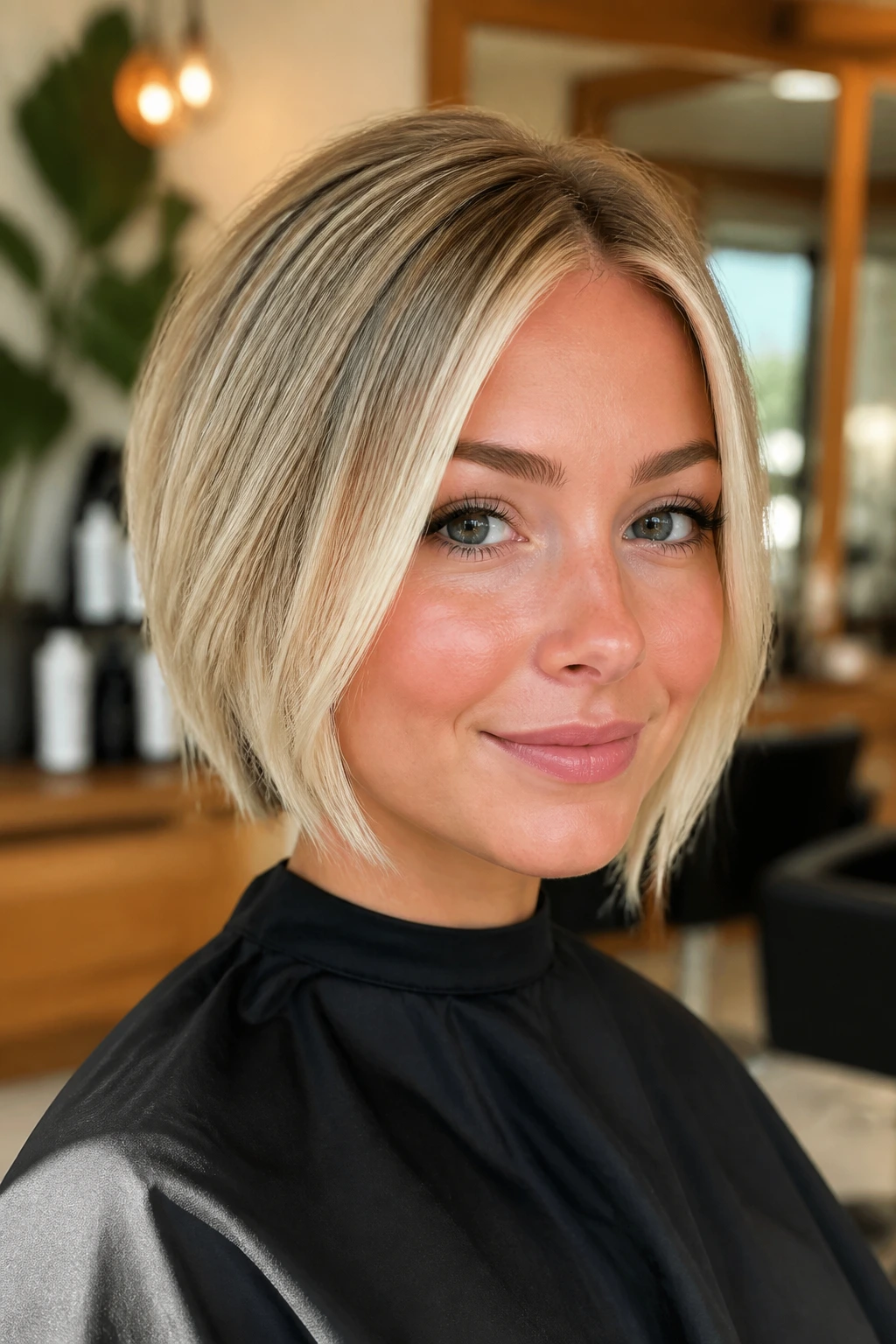
Champagne is the shade I reach for when a bob needs polish, not drama. It sits in that sweet spot between beige and gold, which keeps the front bright without making the whole head look over-processed.
On a short blonde bob, I like this placed as two slim face-framing pieces that start near the temple and taper toward the cheekbone. The effect is clean. It makes the haircut look intentional, especially if the rest of the blonde is a little softer and slightly deeper at the root.
What to ask for at the salon
Tell your colorist you want the front to be one level brighter than the surrounding blonde, not a heavy stripe. Ask for a beige-champagne toner so the finish stays soft instead of icy or brassy.
- Keep the slices narrow, about the width of a pinky finger.
- Let the brightness begin just above the cheekbone if you want lift around the eyes.
- Style with a round brush or a loose bend in the front so the color catches the movement.
- Use a gloss every so often if the champagne starts leaning gold.
I like this look on bobs that are blunt at the ends. The contrast between a neat cut line and a gentle champagne money piece feels expensive without trying too hard.
2. Platinum Cheekbone Money Piece
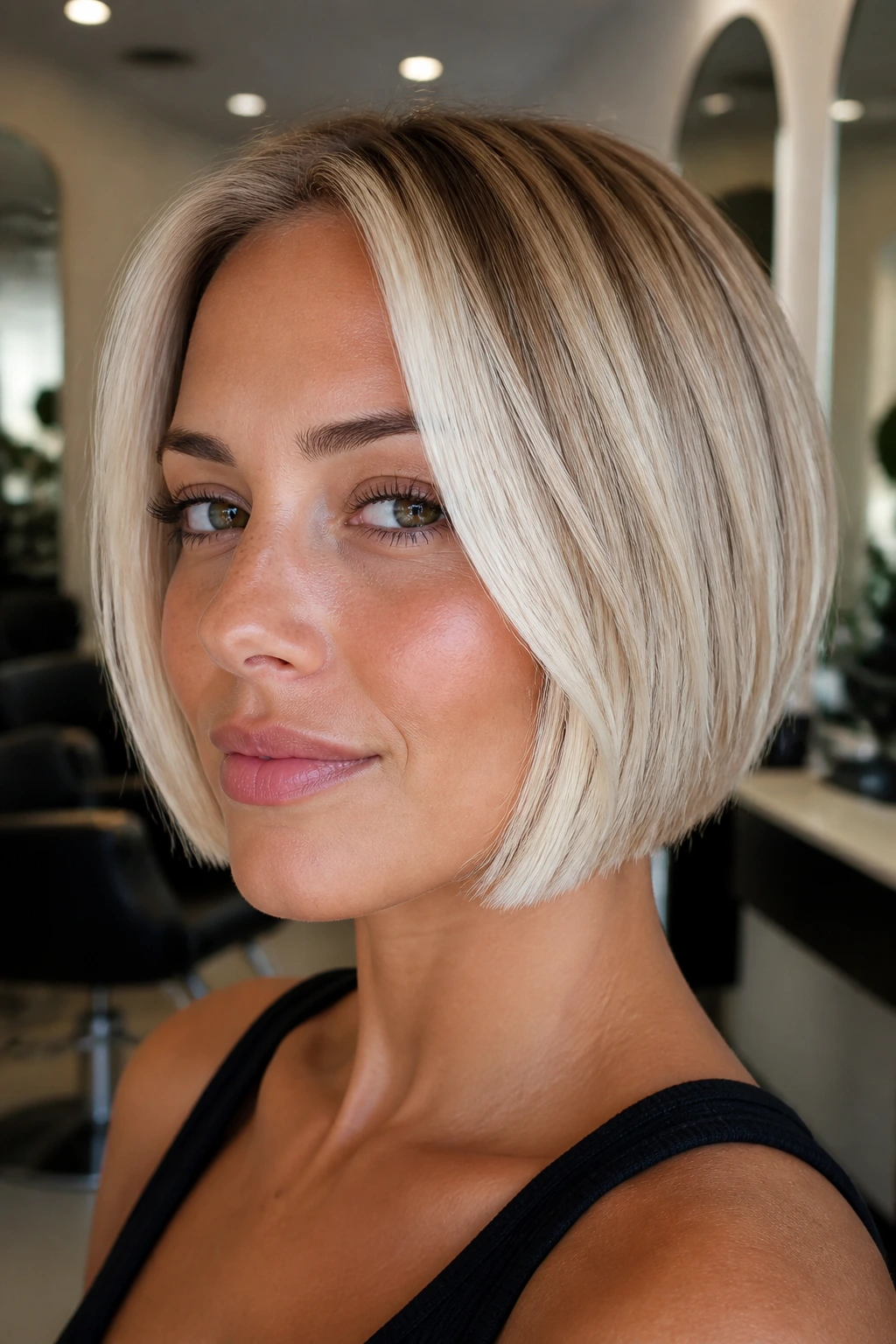
Want the front of a bob to read sharper without changing the whole head? Go platinum at the cheekbone. It is one of the most eye-catching money piece highlights for short blonde bobs, and it works because the haircut itself already gives the color a frame.
This version needs confidence. It is not subtle. The brighter strip should be placed so it skims the cheekbone and lands just beside the face, while the rest of the blonde stays a touch softer. That contrast is what makes the bob look crisp instead of just light.
The best versions of this are usually paired with a blunt edge or a slightly stacked shape in the back. Straight styling helps, too. A polished blowout shows the line of the light better than a messy, dry finish, though a tucked-behind-the-ear moment can look great if the piece is wide enough to hold its shape.
The one thing I would not do is let the platinum run too far back. That can make a short bob look striped. Keep the brightness focused at the front, tone it cool, and let the rest of the hair support the drama instead of competing with it.
3. Beige Ribbon Money Piece for Fine Hair
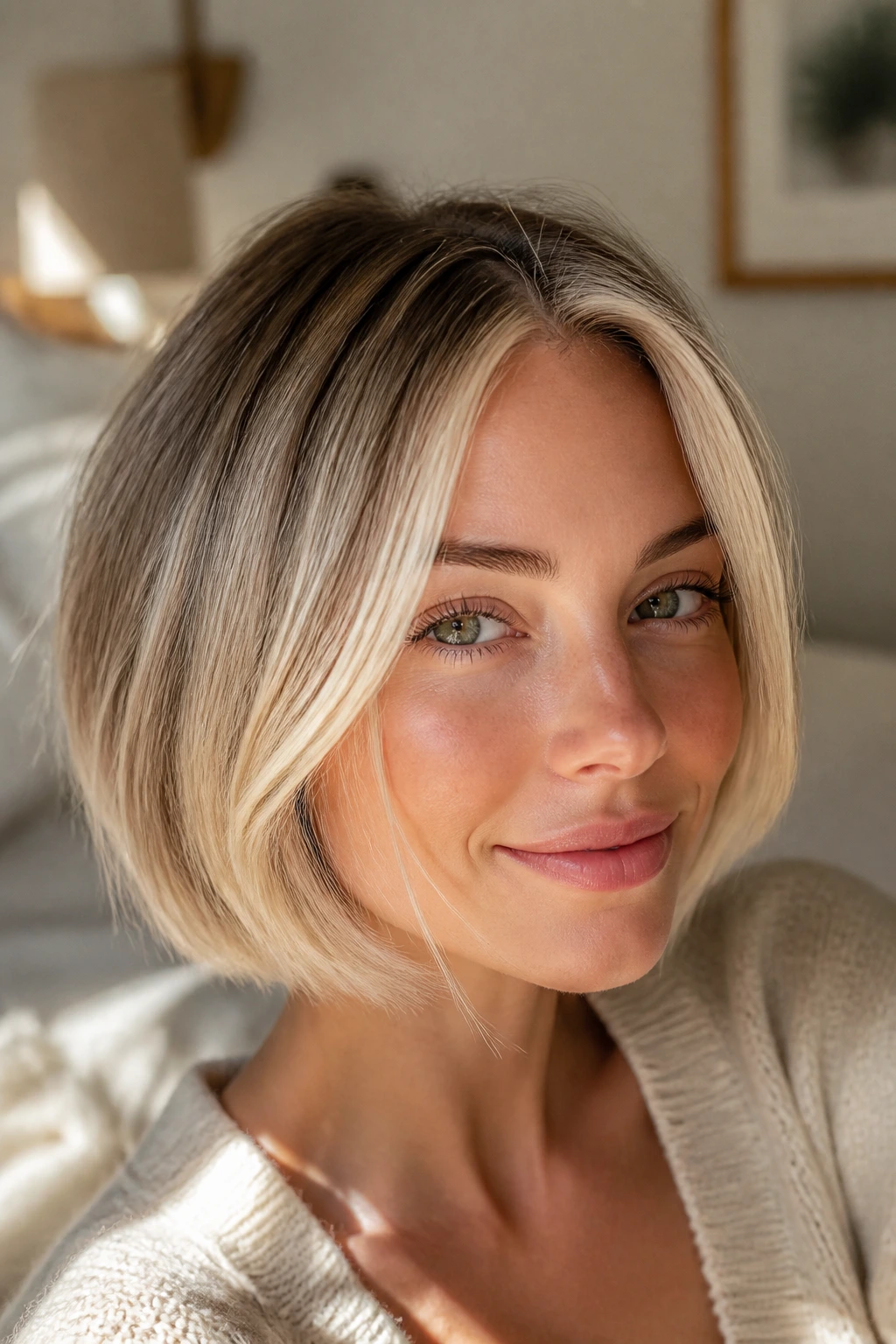
Fine hair tells on bad highlight placement. If the front piece is too thick, the scalp can peek through and the whole thing starts to look thinner, not brighter.
That is why a beige ribbon money piece is such a good move for small, short blonde bobs. The color should be sliced in tiny babylight sections, almost like a soft veil rather than a block. The result is a brighter face frame that still leaves the hair looking airy and full.
Why small slices matter
A single chunky panel can look flat on fine hair. Three or four fine slices, though, create a little shimmer every time the bob moves.
- Ask for babylights around the hairline and temple, not thick foils.
- Keep the lift mild if the base is already light.
- Use a beige or oat toner so the brightness looks creamy, not dry.
- Finish with a light root lift spray or a small round brush for extra body.
This look makes the cut feel fuller because the light is broken up. That matters on a short bob, where every strand is visible. I especially like it on hair that naturally falls limp around the temples, since the color helps fake density without turning the front into a stripe.
4. Rooted Butter Blonde Money Piece on a Side Part
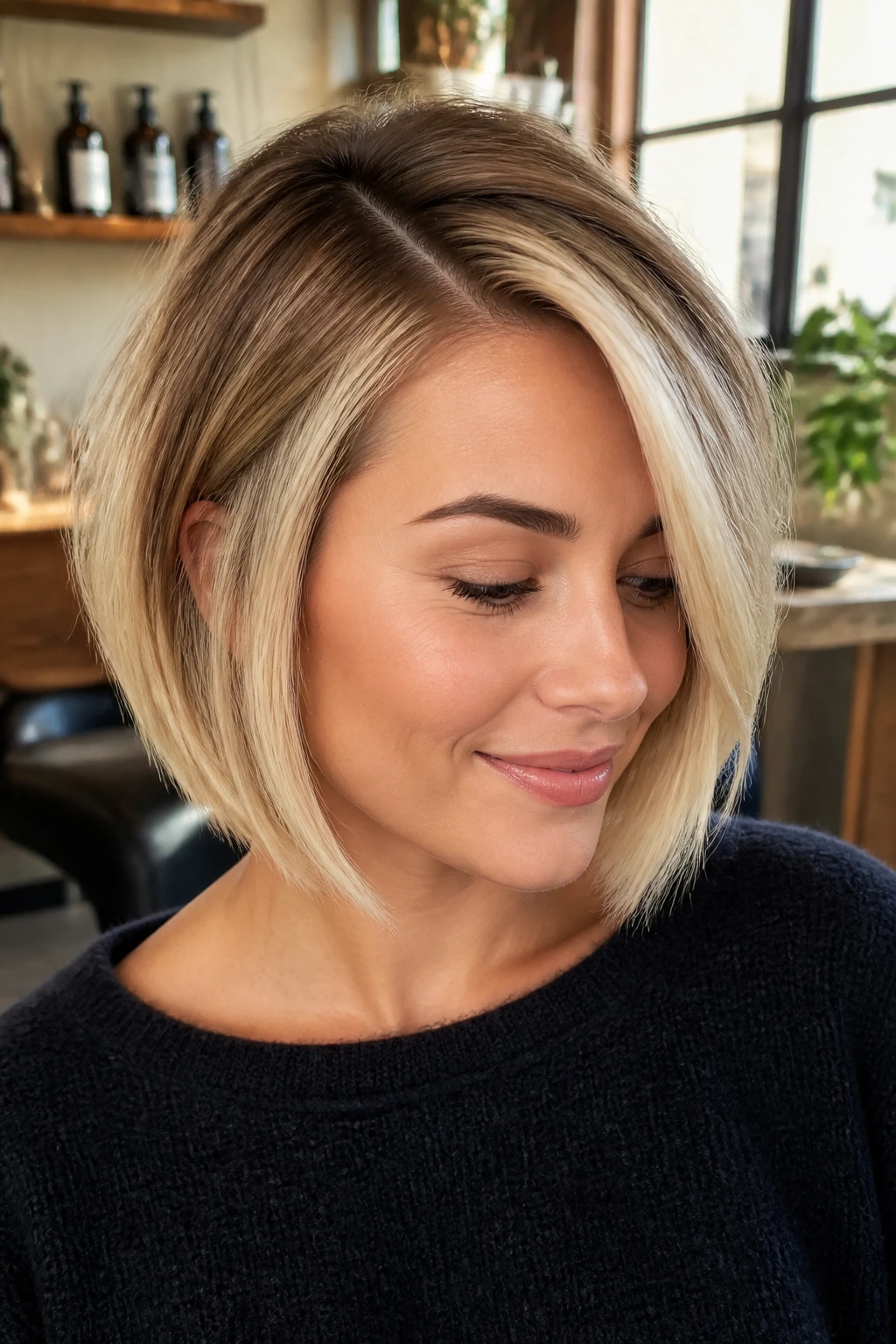
A side part does not need symmetry to look intentional. In fact, a rooted butter blonde money piece often looks better when it follows the part instead of trying to force both sides into the same shape.
The heavier side of the part usually deserves a little more brightness, while the lighter side can stay softer. That asymmetry helps the bob feel modern and lived-in. It also keeps the front from looking like two identical pieces glued to the face, which is a common mistake on short hair.
Butter blonde has a warm, creamy feel that flatters skin with a little warmth in it, but the root has to stay soft. A gentle shadow at the scalp keeps the highlight from looking pasted on. You want the front to brighten the face, not float above it.
This one shines on bobs that are tucked, flipped, or styled with a loose bend. The movement lets the warmer blonde show in flashes rather than all at once. When the part shifts, the color still makes sense. That is the whole point.
5. Curved Curtain Money Piece
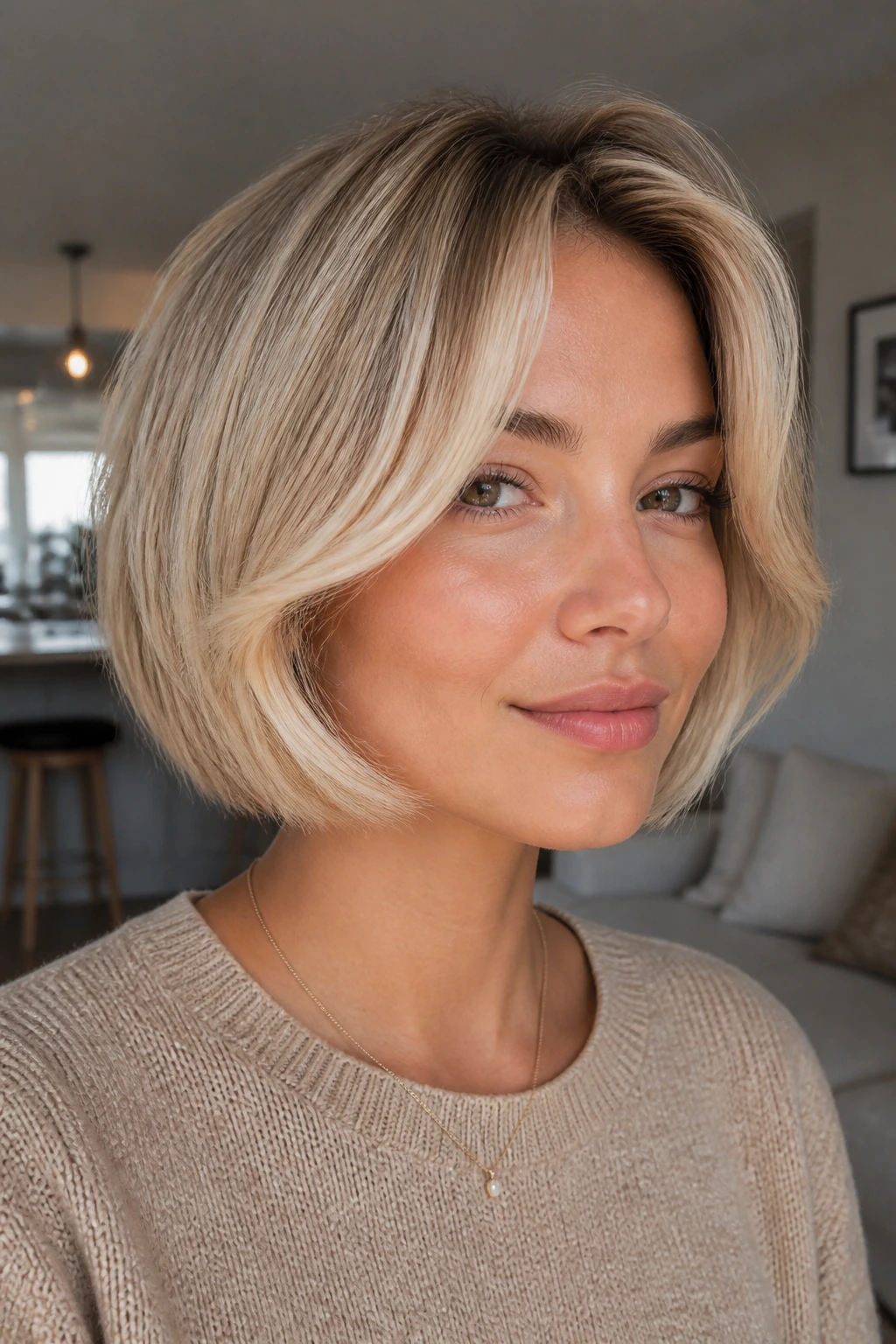
A curved front piece moves with the haircut. It starts near the temple, arcs around the eye, and softens toward the lower face so the color feels like part of the cut instead of a separate stripe.
That curve is especially nice on short blonde bobs with a little bend in the styling. The front pieces don’t sit straight down; they sweep out and then fold back in. When the light follows that line, the face frame looks softer and more expensive.
How the curve should sit
Think of the highlight as tracing the shape of the cheek and the edge of the jaw.
- Start the lightening near the temple, not too far back.
- Keep the inside edge soft so there isn’t a hard line near the part.
- Let the front corners stay a little brighter than the center for a lifted effect.
- Style with a round brush, then break up the bend with your fingers.
I like this version on bobs with movement in the ends. It works with air-drying, too, if the hair has a natural wave. The curve gives the face frame a softer shape than a straight vertical slice ever will. It feels flattering without shouting.
6. Ice Blonde Front Panels
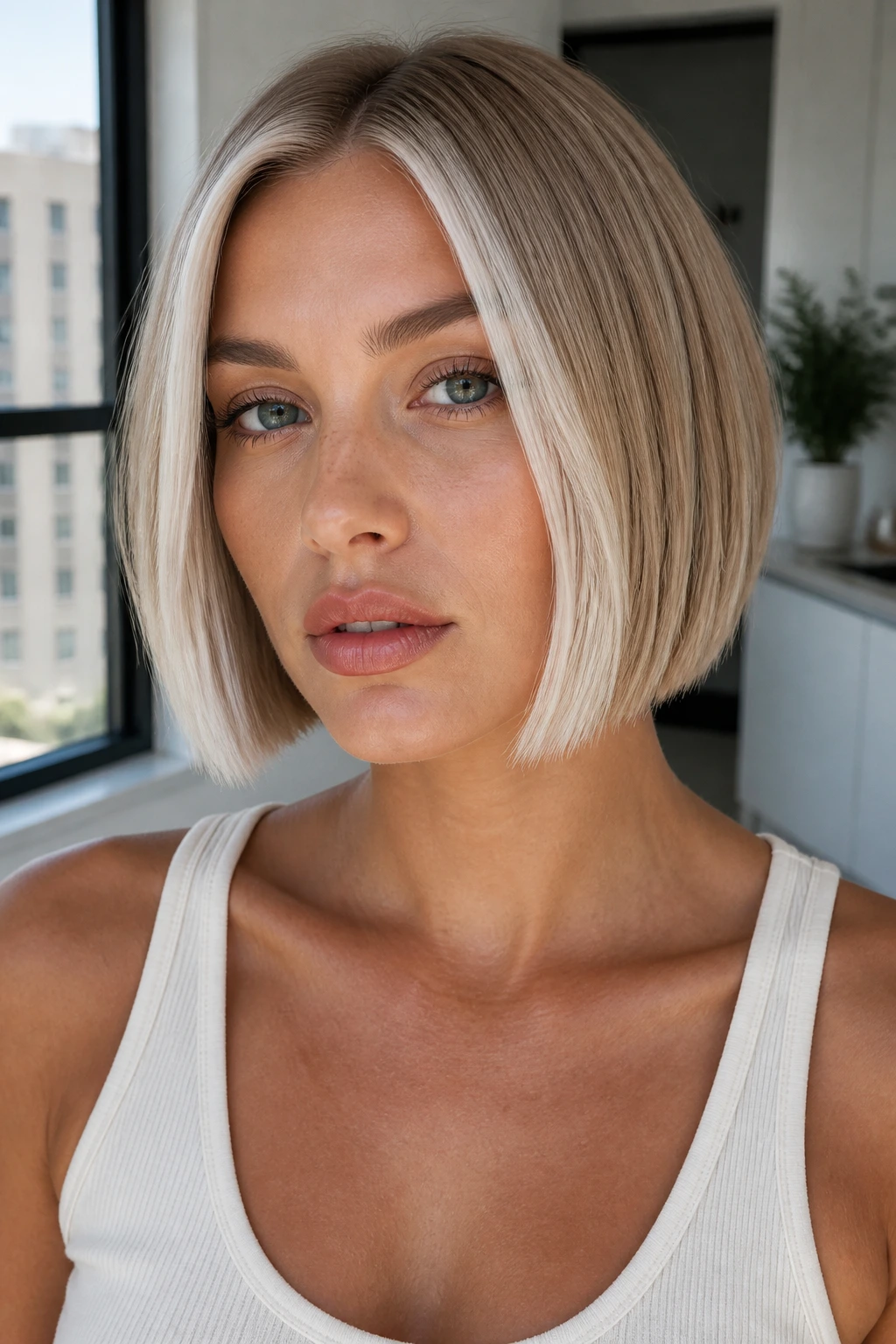
If your bob is blunt, icy front panels sharpen it. That is the simplest way to think about this look, and honestly, it is why it works so well on short cuts.
The contrast is the whole story. A cool, almost silver-blonde front panel makes the bob read graphic and clean, especially when the rest of the blonde is a touch deeper or slightly beige. On a jaw-length cut, that brightness lands right where people look first.
I would keep the toner cool but not flat gray. The best ice blonde still has shine. It should look crisp, not chalky. That usually means lifting cleanly and then glazing with a cool pearl or silver-beige formula that keeps the tone bright instead of muddy.
This version is happiest on straight styles, sharp parts, and hair that holds a bend well. It can be gorgeous with dark brows, too. The whole look feels deliberate. A little severe, maybe, but in a good way.
7. Honey Money Piece That Warms Cool Blonde
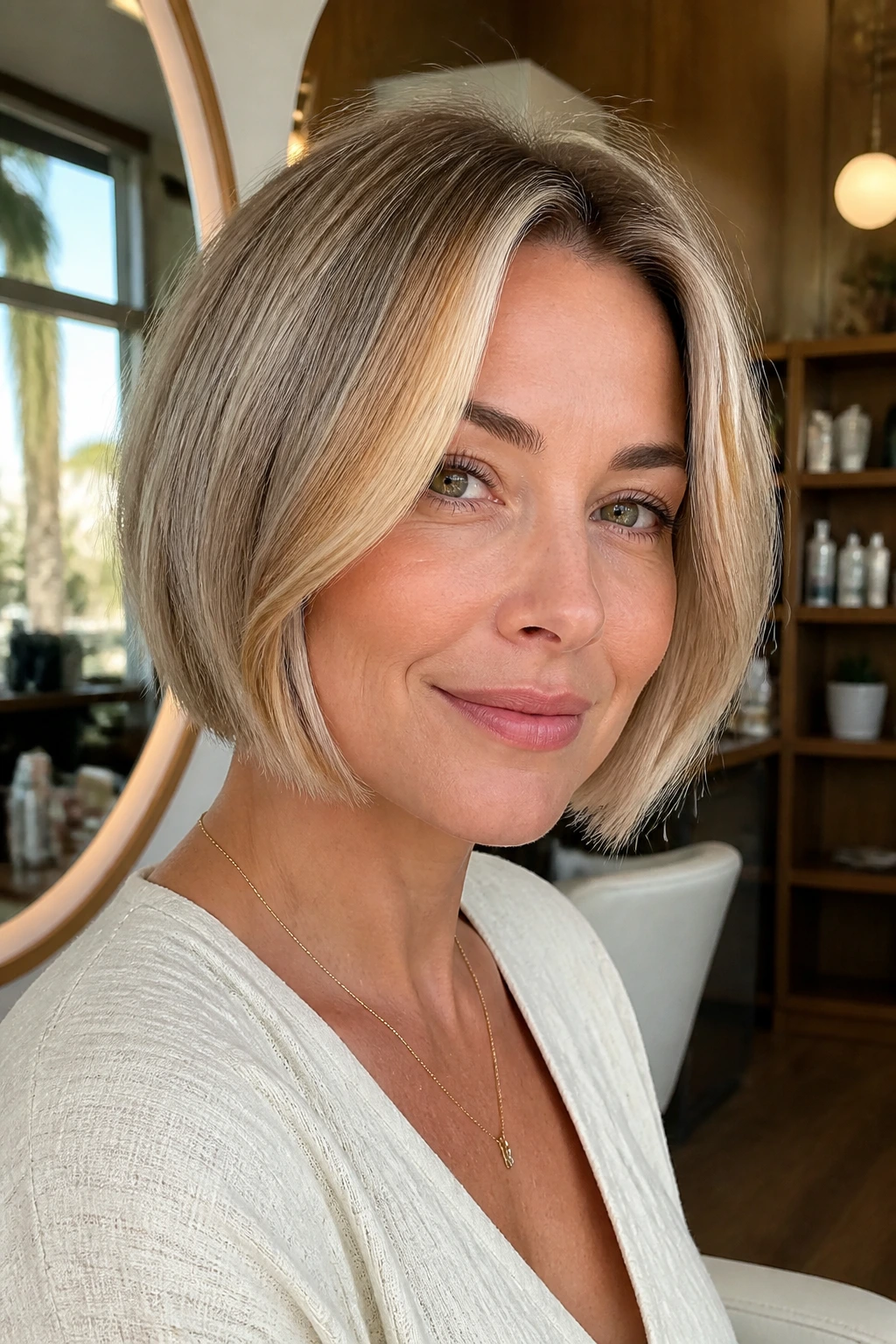
What if the blonde looks washed out next to your skin? Then honey is the better move.
Cool blonde can be beautiful, but short bobs sit so close to the face that too much ash can drain warmth from the skin. A honey money piece solves that by adding a soft golden note right where the eyes and cheeks sit. It is not yellow. It is not orange. It is just warm enough to stop the hair from looking pale and distant.
This version works especially well when the rest of the bob is already light and you want the front to feel friendlier. A honey glaze around the face can make blue or green eyes pop, and it tends to play nicely with neutral and olive skin. The key is restraint. Too much gold on a short bob can look brassy fast.
I like it when the front pieces are slightly brighter than the crown but still creamy. The difference should feel like light, not dye. If the cut has soft waves, even better. Honey catches bends in a way that reads plush and healthy.
8. Pearl Peekaboo Face Frame
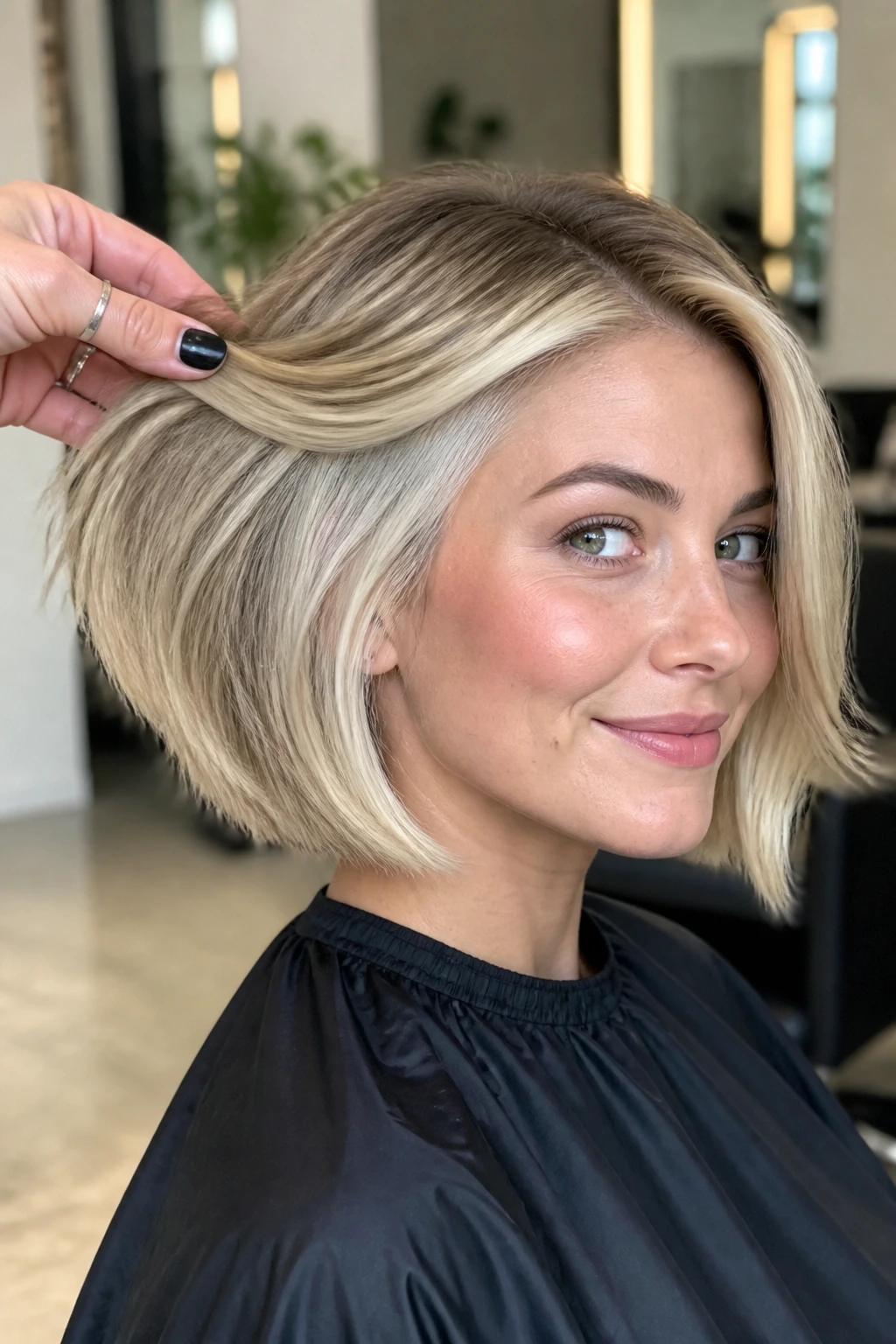
Some color clients want brightness only when the hair swings. Pearl peekaboo money piece highlights are made for that kind of restraint.
The lighter pieces sit underneath the top layer or just behind the front curtain, so the brightness shows in flashes rather than in a blunt block. On a short blonde bob, that hidden placement can be gorgeous because the haircut moves enough to reveal it, then hides it again. It feels a little secretive.
This is a smart choice for stacked bobs, layered bobs, or cuts with a little weight through the top. The top layer stays calm. The pearl pieces do the work underneath. When the hair flips or tucks behind the ear, the light appears exactly where you want it.
A pearl tone is softer than straight silver and cooler than beige. That makes it useful if you want dimension without the hard edge of platinum. It also grows out quietly, which I appreciate. A lot. Short hair can get fussy with obvious regrowth, and this avoids that problem.
9. Micro-Foil Hairline Glow
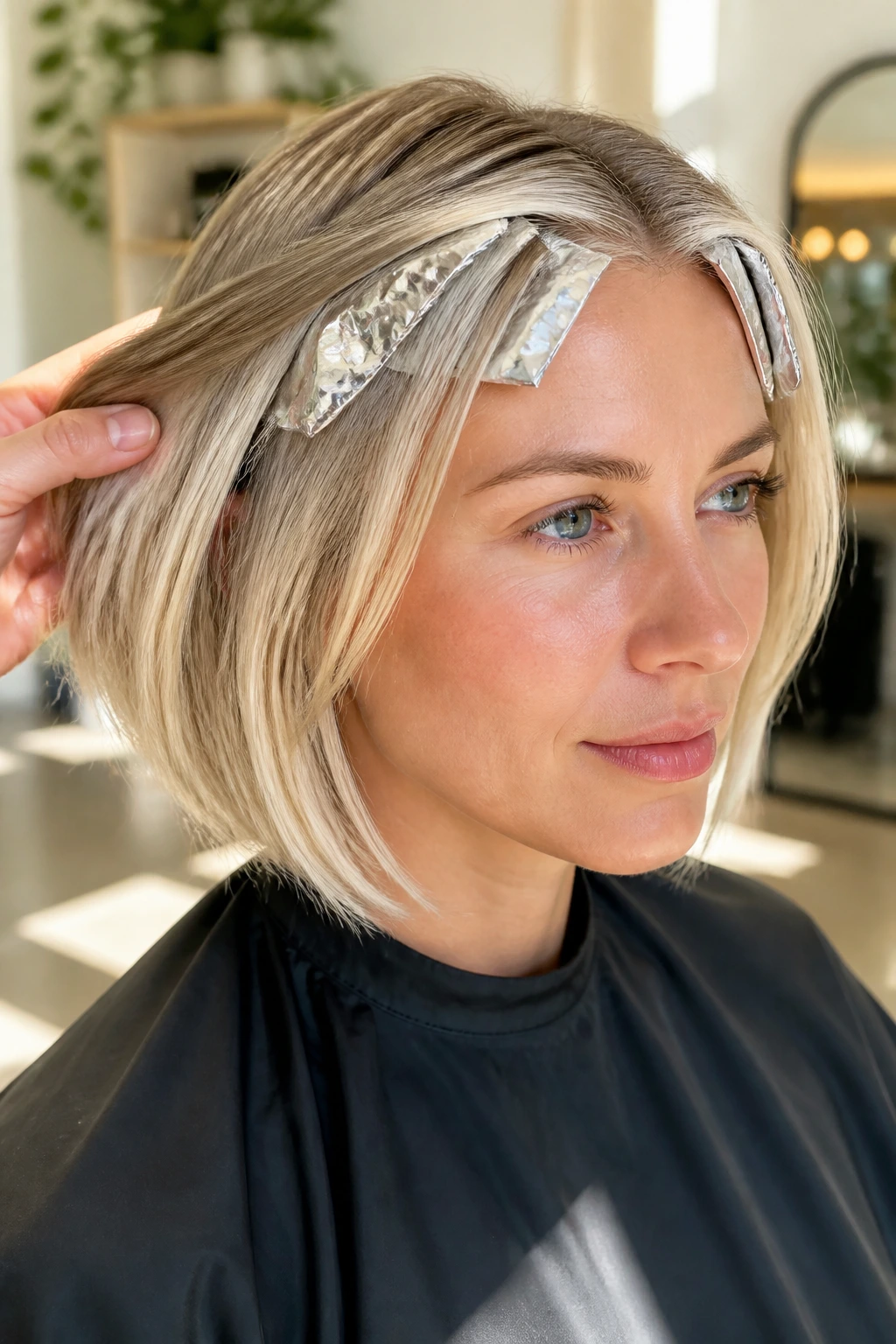
Tiny foils can do what one big money piece cannot. They make a short bob look fuller at the hairline.
This is one of my favorite ways to add light to finer or thinner blonde bobs. Instead of one wide panel, the colorist places three or four micro-foils on each side, often along the hairline and temple. The pieces are narrow enough to shimmer, but not so wide that they carve a line into the cut.
Why small foils look fuller
A hairline glow catches the eye in a softer way than a thick chunk. It also blends better when the bob is moved, tucked, or pushed back off the face.
- Keep each foil thin, closer to a pencil than a marker.
- Place the brightest pieces at the front edge, then fade back into lighter babylights.
- Choose a beige or pearly toner so the hairline doesn’t turn harsh.
- Blow-dry away from the face if you want the light to open up more.
This look is understated, but it is not boring. The little flashes at the edges of the face make the haircut feel denser and cleaner. It is especially good if your bob has a side part and you want the front to lift without screaming for attention.
10. Mushroom Ash Money Piece
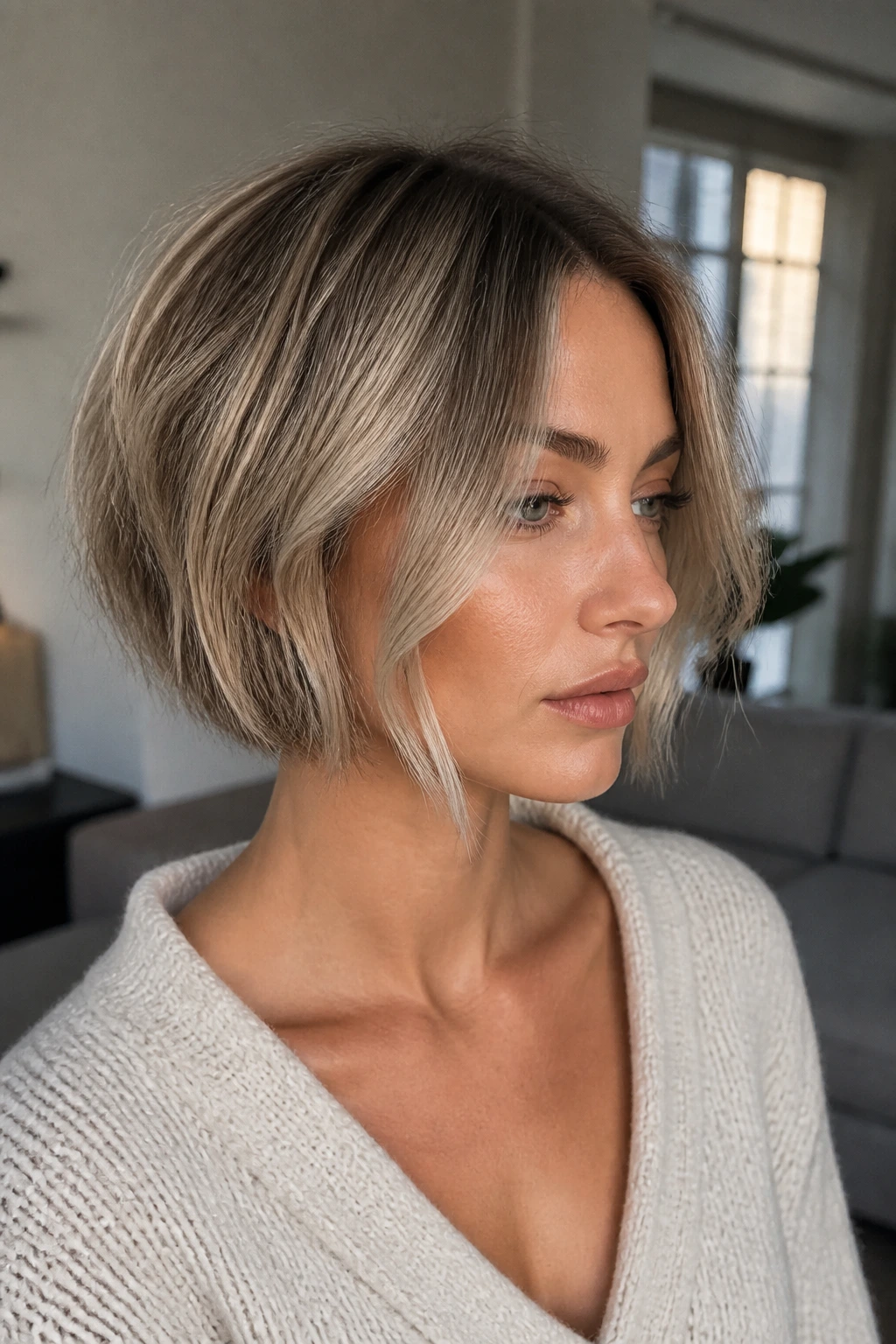
Not every blonde needs warmth. Some short bobs look better with a cooler, earthier edge, and mushroom ash does that job well.
Mushroom tones sit in the middle between beige, taupe, and soft ash. They do not feel gray in a scary way. They feel smoky. That makes them a nice option when the rest of the bob is already blonde but needs a little depth around the face so the color does not go flat.
This version works on short bobs with cool undertones in the skin, but it can also flatter neutral skin when the wearer wants something quieter than gold. The front piece should brighten the face without turning into a white stripe. A soft ash-beige glaze keeps it wearable.
I like mushroom ash when the haircut has a tucked shape or a narrow jawline. The muted color makes the face frame look refined, almost velvet-soft. It is not the loudest look on the list, which is exactly why some people love it. It feels controlled.
11. Chunky Retro Front Panels for a Bob
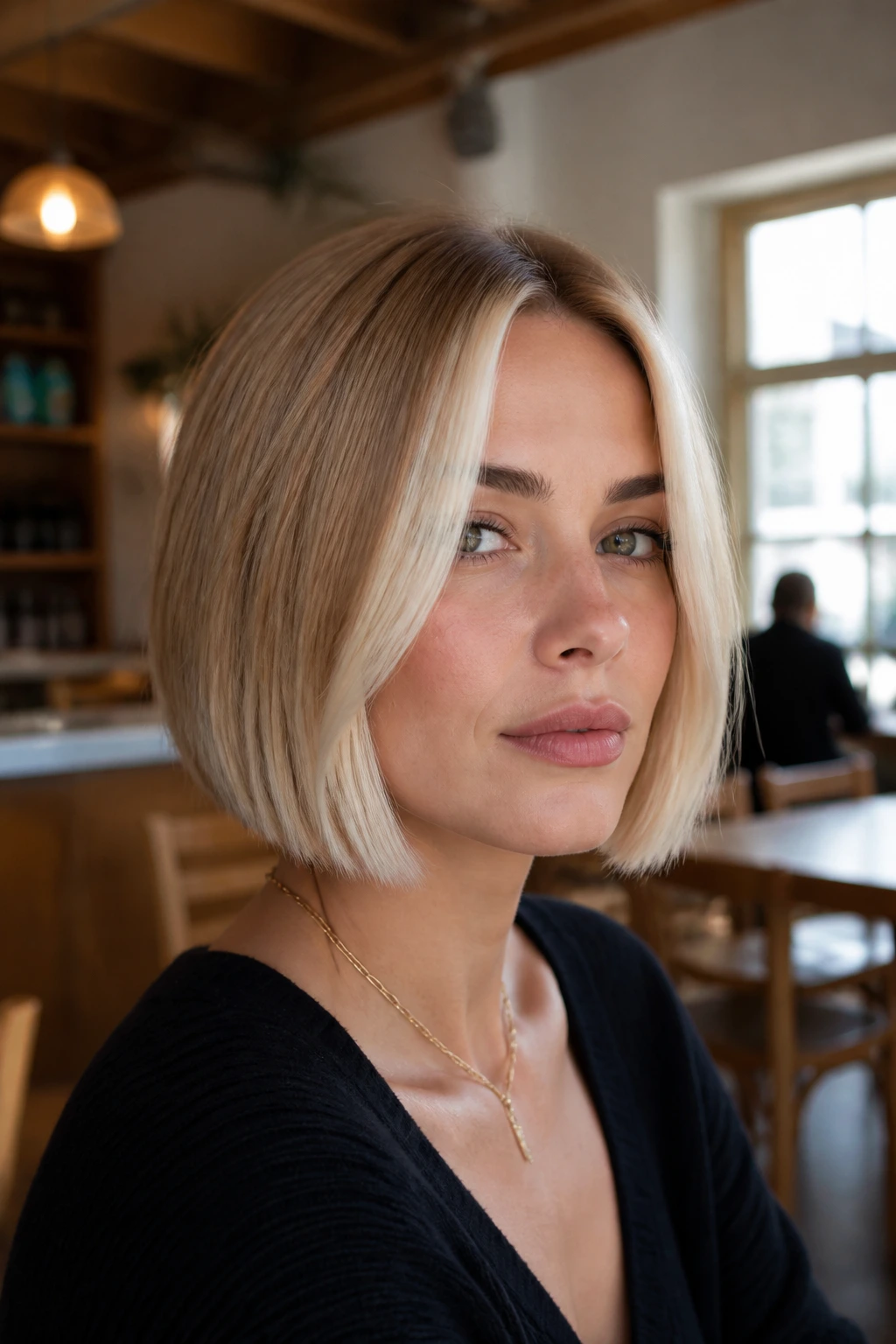
A blunt bob plus chunky front panels has a little attitude. Done well, it looks retro in the best way — the kind of blonde that nods to older highlights but gets cleaned up by a modern toner and a sharper cut.
The panel should be wide enough to read as a panel, not just a whisper. That said, I would still keep the edges soft. A harsh block on short hair can look dated fast. The charm comes from the contrast between the bolder front and the neat bob line.
This is a good choice if you wear your bob straight or with a slight bend under the ends. The color wants structure. It also tends to look better when the rest of the blonde has a little depth, because the front piece needs somewhere to stand out against.
A chunky front panel is not subtle, and that is the appeal. If you like a bob that feels styled even on an ordinary day, this one delivers. It is a little louder than the soft options, but not in a messy way.
12. Bang-Blend Money Piece Ribbon
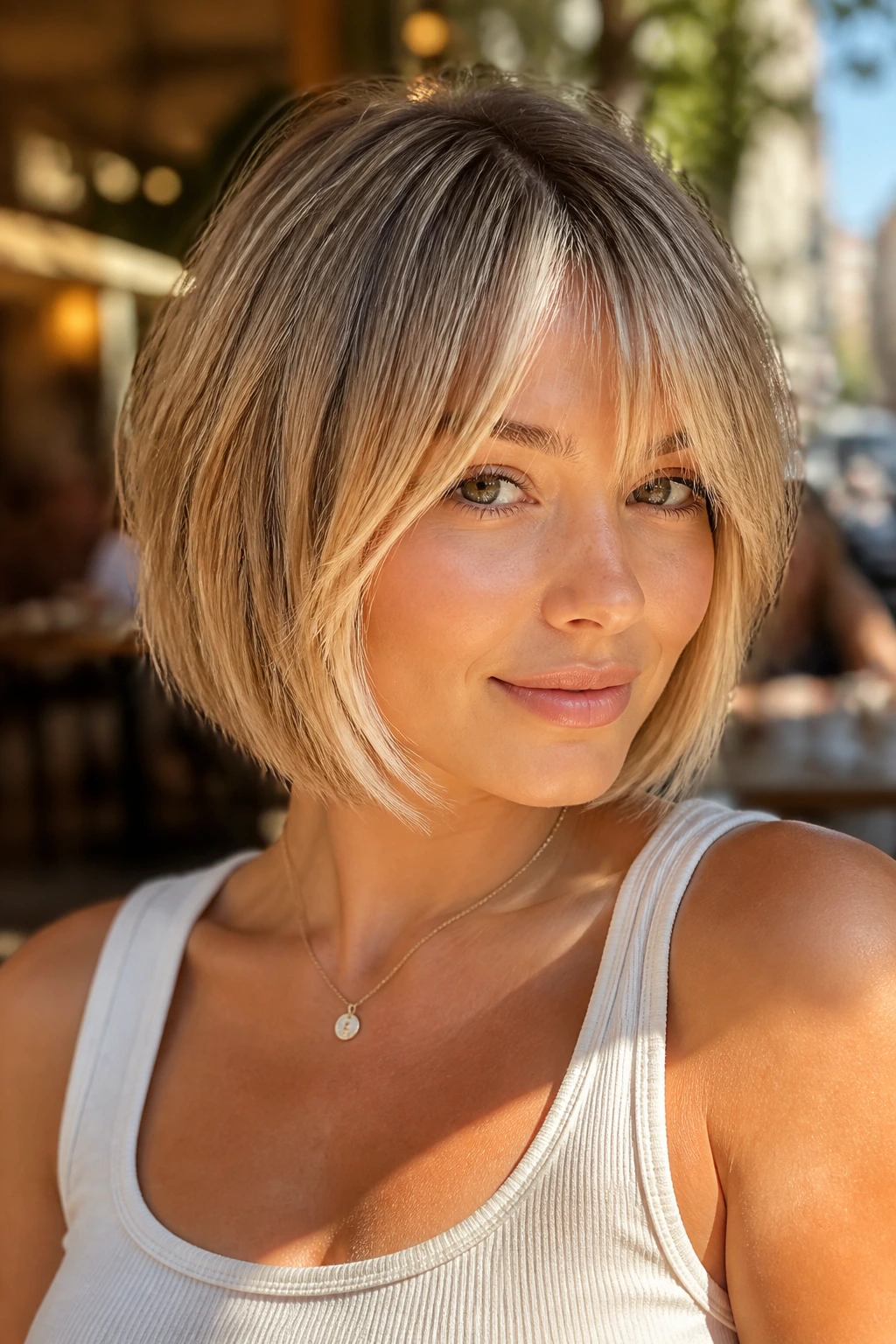
Wearing bangs with a short blonde bob? Then the front color has to do more than frame the face. It has to connect to the fringe.
A bang-blend ribbon weaves brightness into the area where the bangs meet the temples, so the fringe does not look like a dark block sitting on top of a light bob. That matters with curtain bangs, bottleneck bangs, and even a softer micro-fringe. The money piece should travel through the bang area in a controlled way.
Where the light should land
The best placement usually starts just off-center, then breaks into fine pieces through the outer fringe. That keeps the bangs light enough to lift the face without stripping away density.
- Keep the brightest bits near the part and outer bangs.
- Soften the middle of the fringe so it doesn’t split into stripes.
- Blend the side pieces into the bob’s front layers.
- Style with a small round brush or a quick bend from a flat iron.
This look is especially good if your bangs tend to disappear against a bright blonde base. A little ribbon of light gives the fringe shape and makes the haircut feel deliberate. It is one of those small color choices that changes the whole mood of the cut.
13. Crown-to-Front Balayage Melt
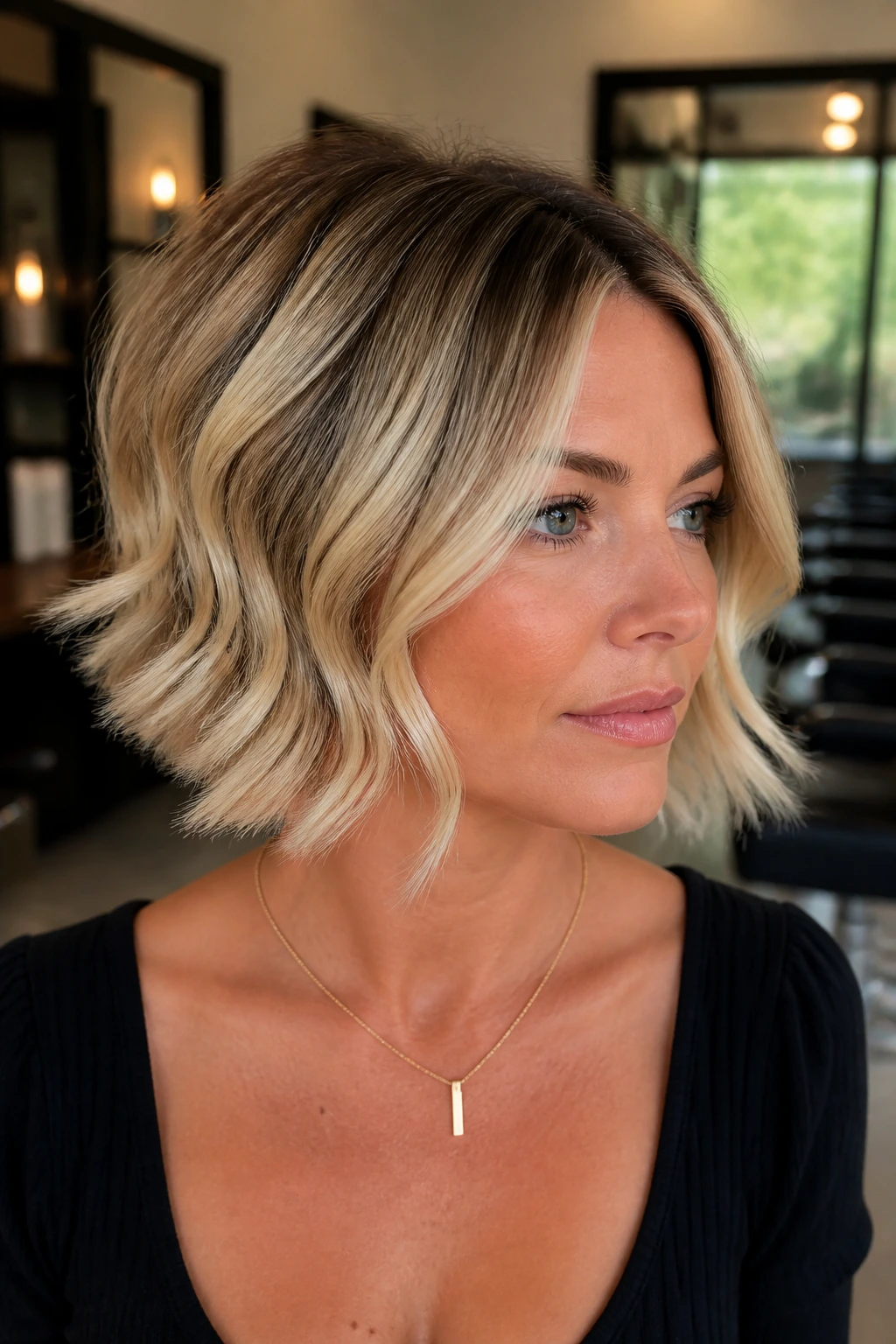
The cleanest money piece often starts higher than you think. A crown-to-front balayage melt lets the brightness come down from the top and land in the front with less obvious separation.
This is a smart option if you like balayage more than foils. The lightening begins around the crown or upper front, then drifts forward into the face frame. Because the transition is gradual, the highlight reads as part of the haircut rather than a separate strip. On a short bob, that smoothness matters.
I like this for people who wear a bit of texture in the style. Waves, bends, and soft flips all help the melt show itself. The front stays bright, but the color does not scream “fresh foil day.” It ages well as the root comes back in, which is a real plus on shorter hair that gets trimmed often enough already.
This look also gives the bob some lift at the top. That is a small thing until you see it in person. Then it becomes the whole reason the haircut feels fuller and more expensive.
14. Bright Face Frame with Shadow Root
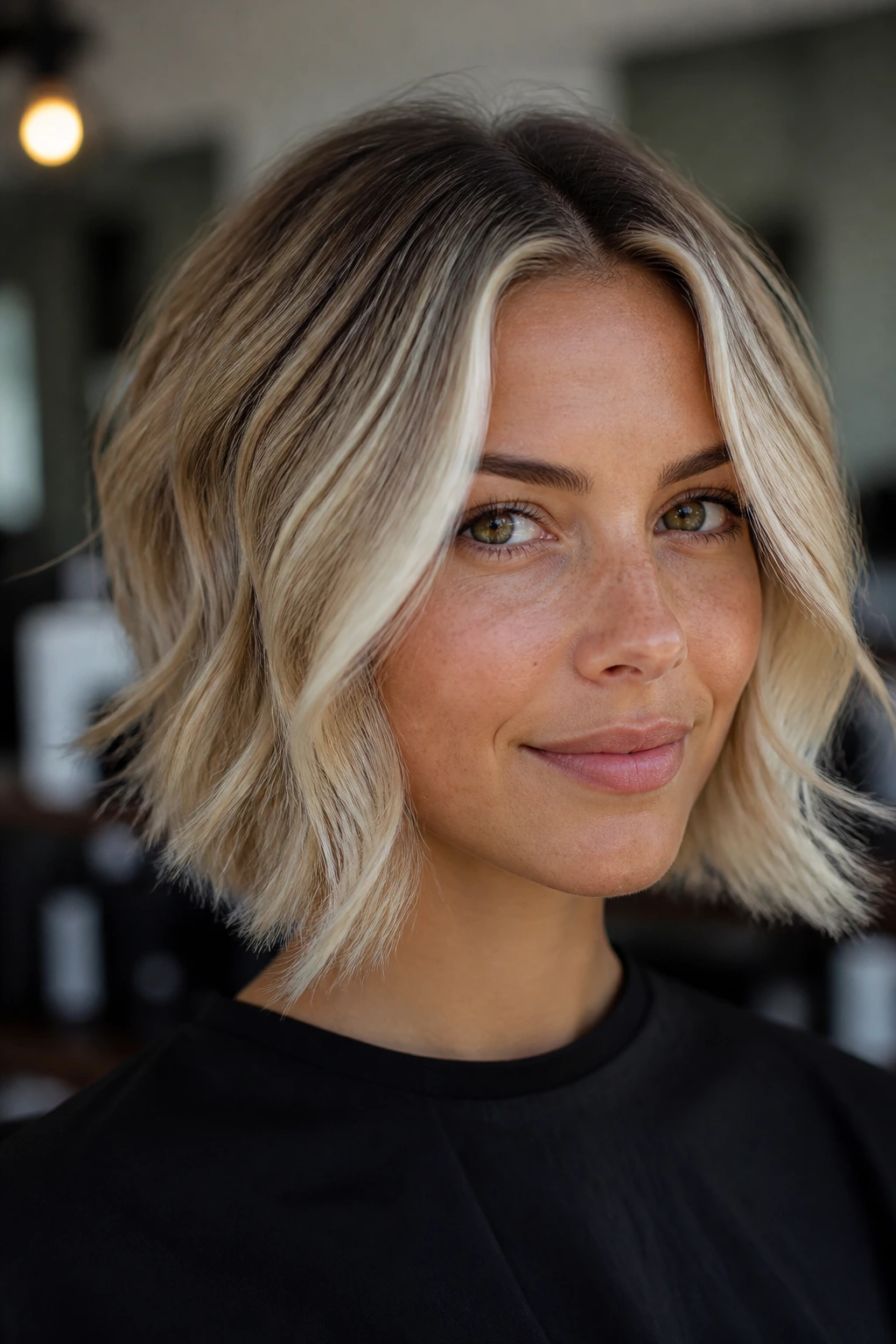
Bright front, soft root. That balance is what many short blonde bobs actually need.
A shadow root keeps the money piece from looking pasted on. It gives the front brightness a place to land, and it makes the regrowth softer when the color starts to move out. On a bob, where the hair sits so close to the eyes and jaw, that softness matters more than people think.
The face frame can still be quite light. The trick is to keep the root area one or two steps deeper so the front doesn’t float. That small dark-to-light shift creates depth right where the cut needs it most.
- Good for people who want brightness without a hard maintenance line.
- Helpful on bobs that are styled with a side part or slight wave.
- Useful when the base color is already a little cool and needs contrast.
- Easy to soften later with a gloss if the front feels too loud.
This is the version I recommend when someone wants a noticeable money piece but hates the idea of obvious grow-out. It gives you the lift around the face without making the color feel rigid.
15. Soft Grown-Out Finish for a Short Blonde Bob
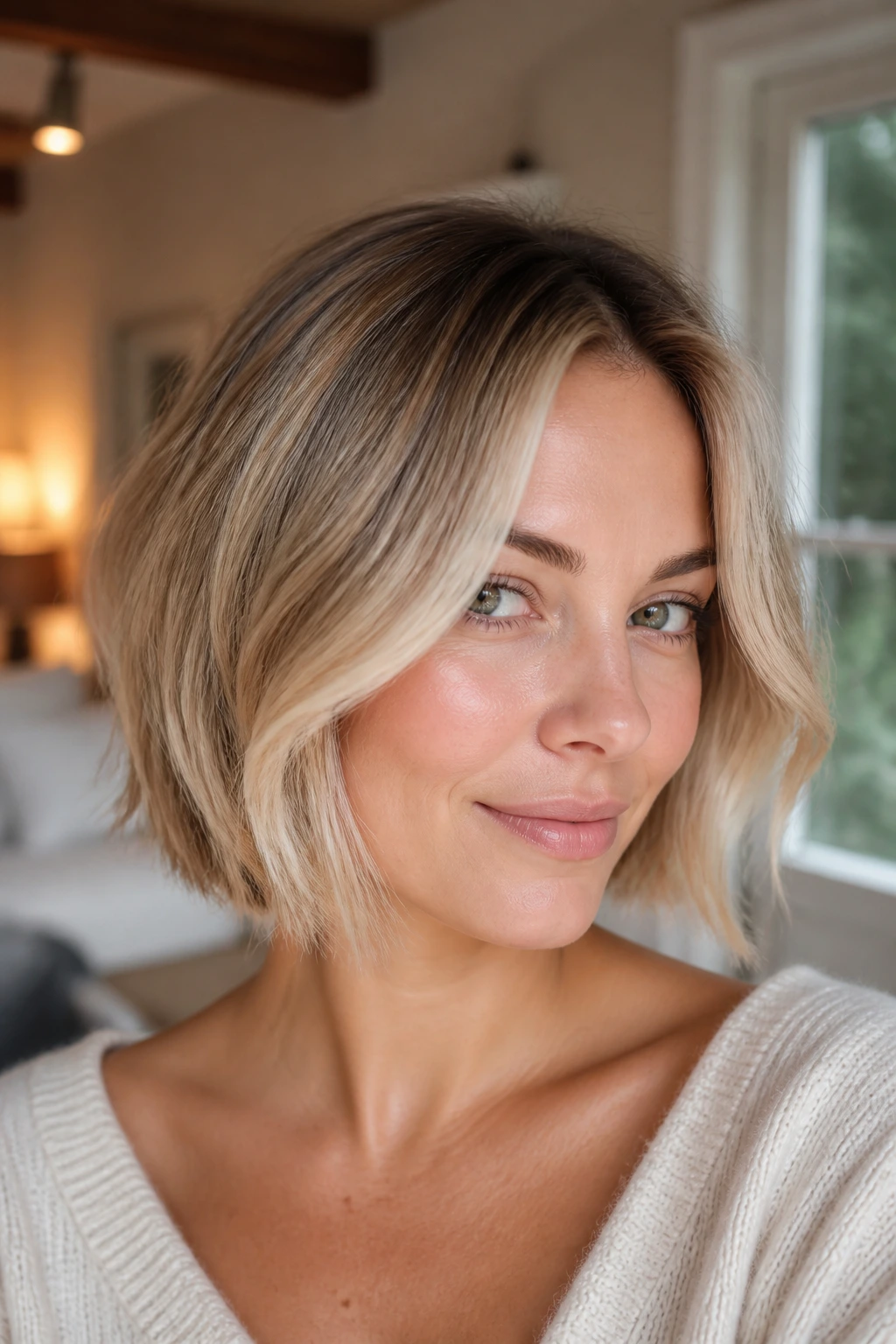
If you hate obvious regrowth, choose the softest version of the money piece. A short blonde bob can look polished for weeks when the face frame is built to soften instead of shout.
I would ask for brightness that stays close to the front hairline, with a beige or neutral glaze that keeps the tone calm. The key is not to chase the palest blonde in the room. It is to create a front piece that still looks good when the part shifts, the ends are tucked, and the root has started to show a little.
A good salon note helps here.
- Ask for a soft money piece, not a thick stripe.
- Keep the front no more than one to two levels brighter than the rest.
- Ask for a neutral-beige toner so the shade doesn’t drift too gold.
- Mention how often you style the bob straight, waved, or air-dried.
- Bring photos of short cuts, not long ones; the placement changes completely.
The smartest money piece on a short blonde bob is the one that still looks like hair after a few weeks. Bright at the face, soft at the root, and shaped to match the cut line. That version tends to stay in the mirror longer than the flashiest one.
